Results for "Îles+des+Princes+|+123+>+233"
54430 results found.
Retour des E.A.U / Émirats Arabes Unis sur le Costa Classica en mars 2013 de Dubaï à Marseille (vingt-deux jours) English translation pending
Voila le compte rendu est lancé!
Je commence par situer le contexte:l'année passée nous avions fait la transat retour des Caraîbes en mars avec une joyeuse équipe rencontrée "d'abord" sur VF et ensuite" à bord"(n'est ce pas roucoucou et Cie) La même équipe, plus des adeptes rajoutés , avait réservé le retour du Brésil pour cette année, nous l'avions déjà fait en 2011 et avions envie de découvrir les Emirats.D'autant plus que mon mari qui adore faire des surprises avait décidé d'en faire une à Patjojo, rencontré avec son épouse lors de la précédente équipée!
Nous voilà à Charles de Gaulle occupés à guetter l'arrivée de nos copains. Sacrée surprise pour eux , d'autant plus que mon mari leur avait envoyé des souhaits de bonnes vacances alors qu'ils étaient dans le Thallys direction Paris.
Bref, un super début. Voyage en avion Air France très agréable et descente vers Dubaï 6h plus tard dans le soleil couchant.
Ceux qui le peuvent coincent leur nez contre le hublot et essayent de deviner les tours qui s'illuminent et la fameuse île en forme de palmier...
Spectaculaire! Nous voilà dirigés par les premiers hommes en blanc vers les files de l'immigration et comme d'habitude au supermarché, nous tombons dans la meilleure, celle ou( à gauche et à droite )on est dépassés par des chanceux qui avancent eux!!
C'est mon tour et le préposé ( qui louche)après avoir compulsé mon passeport dans tous les sens, m'ordonne de regarder vers un objectif de caméra: ne souriez pas vous êtes filmés. Enfin le sésame , on peut récupérer ses valises de 23 kg et se diriger vers l'autocar.
Il est 10h du soir et il fait 25° cela change du matin ou on avait 4° tout rond!!!
Arrivée au pied de ce "vieux Classica" comité d'accueil habituel:on donne son passeport, on pose échevelé devant les paparazis qui insistent et nous voilà presqu'à bord. J'oublie nous avons fait connaissance du seul Hollandais de l'équipe d'animation: Pepijn (en français Pépin comme le mérovingien bien connu) le roi des danses de salon, maladroit mais tellement impliqué dans son rôle.Je crois qu'il vient de commencer son job.
Véloroute des bleuets: mon expérience (Saguenay, Lac-Saint-Jean) English translation pending
Bonjour,
J'ai fait 11 fois la Véloroute des Bleuets en 11 ans.
Pour renseigner les visiteurs, j'ai monté un petit site personnel sur le périple en question:
http://www.revolution-saglac.com/veloroute_des_bleuets.html
Si vous avez des questions, ne vous gêbez pas.
J'ai fait 11 fois la Véloroute des Bleuets en 11 ans.
Pour renseigner les visiteurs, j'ai monté un petit site personnel sur le périple en question:
http://www.revolution-saglac.com/veloroute_des_bleuets.html
Si vous avez des questions, ne vous gêbez pas.
Palawan ou îles Visayas? (Philippines) English translation pending
Bonsoir,
Nous partons le 27 décembre pour les Philippines et nous y restons 17 jours.
La première étape sera la région de Luzon dans laquelle nous séjournerons 4 ou 5 jours.
Ensuite, comme les jours sont comptés, nous hésitons entre Palawan et les Iles Visayas. Au départ nous voulions faire les deux mais je pense que ça va être trop rapide....
Je suis consciente que chacun à ses goûts mais j'aimerais être éclairée sur la destination que nous choisirons.
Nota : notre voyage se fera en sac à dos et nous n'aimons pas vraiment les sites trop touristiques. Nous recherchons les "vrais" Philippines.
Merci par avance de vos réponses.
Transport en bus de Puerto Princesa à El Nido (Philippines) English translation pending
Pour faire le trajet entre Puerto Princesa et El Nido sur l'île de Palawan, surtout n'utilisez pas les vans proposés par les hôtels. Cela peut coûter jusqu'à 700 pesos alors qu'avec un bon bus, confortable et aussi rapide que les vans on en a pour 350 pesos. On y est mieux que dans un van où ils entassent les gens à ne plus pouvoir respirer et dans lesquels on ne voit rien de la route. Il faut prendre les bus verts de la compagnie Rorobus. On a fait l'aller dans un van (on s'est donc fait avoir!) et le retour avec Rorobus.
Déplacements inter-îles aux Philippines (avion ou bateau)? English translation pending
salut à tous,
je pars aux philippines en mars 2013 et j'ai un peu de mal comprendre les déplacements inter iles (avion ou bateau ?).
1 re semaine : destination "busuanga island" hotel "Cashew Grove Beach Resort".
2eme semaine : destination "puerto galera" hotel "ABWonderdive Resort".
On arrive à Manille le 02 mars, comment aller sur "busuanga island" ?
pour la deuxième semaine comment aller de "busuanga island" ou "Coron" à "puerto galera" (bateau ou avion?).
Sur place peut on louer une moto (ou autres)?
ps: est-ce que mon choix de destination et hotel est bon?
Merci, Pascal
je pars aux philippines en mars 2013 et j'ai un peu de mal comprendre les déplacements inter iles (avion ou bateau ?).
1 re semaine : destination "busuanga island" hotel "Cashew Grove Beach Resort".
2eme semaine : destination "puerto galera" hotel "ABWonderdive Resort".
On arrive à Manille le 02 mars, comment aller sur "busuanga island" ?
pour la deuxième semaine comment aller de "busuanga island" ou "Coron" à "puerto galera" (bateau ou avion?).
Sur place peut on louer une moto (ou autres)?
ps: est-ce que mon choix de destination et hotel est bon?
Merci, Pascal
Prochaine croisière: îles grecques sur Celebrity Equinox English translation pending
Bonjour à tous !
Les problèmes de SPA du neoRomantica ont plongé Mme PAP dans une inquiétude sans bornes ! 😉😉
Alors pour lui redonner le moral, quoi de mieux que nos iles grecques préférées que sont Rhodes, Mykonos, Santorin... j'ai donc réservé pour le 16 novembre sur le Celebrity Equinox au départ de Rome... enfin, de Civitavecchia, et comme on y va en voiture, on n'ira pas jusqu'à Rome...
On sera pas dépaysés, sur ce jumeau du Solstice, puisqu'on aura la 1116, juste à côté de notre 1114 sur le Solstice... Avec des prix super-mini (les américains doivent penser que novembre dans les iles grecques, c'est la neige assurée... 😎 ), et encore modulés par ma "bonne agence#" numéro 2, qui a a remporté l'appel d'offres 🙂...
Croisière de 10 nuits qui fait :
Civitavecchia --> Messine --> en mer --> Le Pirée --> Kusadasi --> Santorin --> Rhodes --> Mykonos --> en mer --> Naples --> Civitavecchia
Alors, qui vient avec nous sur ce splendide bateau ? (pour l'instant personne sur le calendrier de Titi...)
En "garanties", les prix (par personne) sont vraiment très bas (le plus bas par jour, tous celebrity confondus) c'est parait-il une promo... 😛
- intérieure à partir de 729 € - extérieure balcon à partir de 850 € - extérieure balcon concierge class à partir de 898 € (48 € de plus seulement...) - extérieure balcon aquaclass (équivalent des "samsara") à partir de 1008 € - Sky suites à partir de 1530 € - et même la Celebrity Suite (équivalent d'une grande suite Costa, et donnant tous les Privilèges du Captain Club "Elite") à moins de 2000 € !
Apéritif PAPal offert pour les membres VF, bien sûr ! 😉 et le sourire revenu de Mme PAP, qui est pour moi le plus beau des cadeaux... 😉 😇
Bon, maintenant, va peut-être falloir qu'on se calme un peu... 😊 enfin, pour la première fois depuis longtemps (au moins 15 ans...), Mme PAP aura pris cette année *tous* ses congés annuels... et rien mis dans le CET... 🙂
Les problèmes de SPA du neoRomantica ont plongé Mme PAP dans une inquiétude sans bornes ! 😉😉
Alors pour lui redonner le moral, quoi de mieux que nos iles grecques préférées que sont Rhodes, Mykonos, Santorin... j'ai donc réservé pour le 16 novembre sur le Celebrity Equinox au départ de Rome... enfin, de Civitavecchia, et comme on y va en voiture, on n'ira pas jusqu'à Rome...
On sera pas dépaysés, sur ce jumeau du Solstice, puisqu'on aura la 1116, juste à côté de notre 1114 sur le Solstice... Avec des prix super-mini (les américains doivent penser que novembre dans les iles grecques, c'est la neige assurée... 😎 ), et encore modulés par ma "bonne agence#" numéro 2, qui a a remporté l'appel d'offres 🙂...
Croisière de 10 nuits qui fait :
Civitavecchia --> Messine --> en mer --> Le Pirée --> Kusadasi --> Santorin --> Rhodes --> Mykonos --> en mer --> Naples --> Civitavecchia
Alors, qui vient avec nous sur ce splendide bateau ? (pour l'instant personne sur le calendrier de Titi...)
En "garanties", les prix (par personne) sont vraiment très bas (le plus bas par jour, tous celebrity confondus) c'est parait-il une promo... 😛
- intérieure à partir de 729 € - extérieure balcon à partir de 850 € - extérieure balcon concierge class à partir de 898 € (48 € de plus seulement...) - extérieure balcon aquaclass (équivalent des "samsara") à partir de 1008 € - Sky suites à partir de 1530 € - et même la Celebrity Suite (équivalent d'une grande suite Costa, et donnant tous les Privilèges du Captain Club "Elite") à moins de 2000 € !
Apéritif PAPal offert pour les membres VF, bien sûr ! 😉 et le sourire revenu de Mme PAP, qui est pour moi le plus beau des cadeaux... 😉 😇
Bon, maintenant, va peut-être falloir qu'on se calme un peu... 😊 enfin, pour la première fois depuis longtemps (au moins 15 ans...), Mme PAP aura pris cette année *tous* ses congés annuels... et rien mis dans le CET... 🙂
Croisière Costa Fascinosa dans les îles grecques le 9 juillet English translation pending
Bonjour,
Ca sera pour notre 1ère croisière chez costa, on en a déjà fait 2 chez msc mais on a voulu changer un peu pour nous faire une idée de cette compagnie.
Je recherche des informations sur les escales voilà ce que j'ai pu trouver sur le forum vous pouvez me complétez ya pas de soucis je prend toute les idées.nous serons avec 2 enfants de 3 et 5 ans.
Bari j'ai vu qu'il y avait un petit train a 8euros par personnes ou bien visiter la ville à pied.
Katakolon à pied dans la ville.
Santorin on a 10h ça c génial je pense qu'on va prendre l'excurion village d'oia.quelqu'un sait l'heure du départ de l'excursion ?
Rhodes là je ne sais pas je sais que c'est faisable à pied mais que visiter là j'ai besoin d'un coup de pouce.
Dubrovnik ya le bus a 10 euros par personne mais c celui de costa ou un de la ville ? les tickets s'achetent ou si c pas une navette costa ?
Pour l'instant je n'ai pas trouver de photos des cabines, mais du bateau j'en ai vu un peu il a l'air pas mal. On sera au pont 1 cabine int pas trop le choix pour le prix qu'on voulait mettre jespère qu'on aura une bonne mer vu le pont ou l'on est ça risque d'etre mouvementé en cas de mer forte.
Pour nos fils c leur 1ère croisière est ce que le club enfants est bien ?et pour le mal de mer les cachets cocculine suffise t il ou faut il autrechose ?
Pour le parking a venise j'ai trouver les infos que je voulais sur le forum qui est très complet en informations.
Je vous remercie d'avance.
Ca sera pour notre 1ère croisière chez costa, on en a déjà fait 2 chez msc mais on a voulu changer un peu pour nous faire une idée de cette compagnie.
Je recherche des informations sur les escales voilà ce que j'ai pu trouver sur le forum vous pouvez me complétez ya pas de soucis je prend toute les idées.nous serons avec 2 enfants de 3 et 5 ans.
Bari j'ai vu qu'il y avait un petit train a 8euros par personnes ou bien visiter la ville à pied.
Katakolon à pied dans la ville.
Santorin on a 10h ça c génial je pense qu'on va prendre l'excurion village d'oia.quelqu'un sait l'heure du départ de l'excursion ?
Rhodes là je ne sais pas je sais que c'est faisable à pied mais que visiter là j'ai besoin d'un coup de pouce.
Dubrovnik ya le bus a 10 euros par personne mais c celui de costa ou un de la ville ? les tickets s'achetent ou si c pas une navette costa ?
Pour l'instant je n'ai pas trouver de photos des cabines, mais du bateau j'en ai vu un peu il a l'air pas mal. On sera au pont 1 cabine int pas trop le choix pour le prix qu'on voulait mettre jespère qu'on aura une bonne mer vu le pont ou l'on est ça risque d'etre mouvementé en cas de mer forte.
Pour nos fils c leur 1ère croisière est ce que le club enfants est bien ?et pour le mal de mer les cachets cocculine suffise t il ou faut il autrechose ?
Pour le parking a venise j'ai trouver les infos que je voulais sur le forum qui est très complet en informations.
Je vous remercie d'avance.
Croisière en Méditerranée orientale sur le Crown Princess, départ le 24 mai English translation pending
Bonjour à tous !
C'est la première fois que nous partons en croisère en mai prochain. J'ai donc plusieurs questions à vous poser :)
Voici l'itinéraire :
Venise Dubrovnik Corfou Katakolon Athènes Mykonos Kusadasi Rhodes Santorini En mer Naples Rome
- D'abord est-il possible (sur leur site ce genre de détails n'est pas inscrits) de connaître les quais de débarquement des navires, question de préparer nous-mêmes nos itinéraire de découvertes car, à ce que j'ai lu un peu partout, nous ne disposons pas de beaucoup de temps pour visiter durant les journées !..Par exemple, dans notre itinéraire, il y a Dubrovnik...est-ce vrai que le bateau reste au loin et que l'on débarque en chaloupe ?? (je vois mal 3000 personnes débarquées toutes en chaloupe, ça doit prendre des heures!)...alors si on sait le quai de débarquement des différents ports, ils nous est possible de voir si y a des taxis pas loin, si on doit marcher pas mal pour se rendre à un bus, bref ce genre de choses...
- Combien de temps, environ, ça prend à être sortir du bateau ? S'il arrive à quai à 7h am un matin, le temps de déjeuner, de sortir, bref ça doit pas laisser beaucoup de temps non ? ....et combien d'heures avant le départ on doit être remonté ? Y a t-il des heures fixes où on fait ce qu'on veut tant qu'on entre à temps avant le départ ?
- Comment savoir si Crown offre une navette pour se rendre des les centres villes à chaque arrivée ? Ca non plus c'est pas inscrit sur leur site qui, je trouve, manque beaucoup pour ces technicalités qui peuvent être très utiles !
- On a pris la formule nourriture "anytime" pour ne pas avoir à manger à des heures fixes...savez-vous si, à bord du Crown, cela est offert par tous les restaurants ?
- Je suis preneuse de conseils sur les visites à faire dans les villes de notre itinéraire inscrit plus haut....mais j'aimerais aussi avoir vos conseils sur la meilleure formule pour les visites, est-ce qu'on peut visiter seuls ou il est préférable de prendre les formules offertes à bord du bateau ? Mon conjoint pense qu'à 3000 personnes il est préférable de ne pas faire la queue pour suivre le groupe mais de, une fois débarqué, se débrouiller par nous-même pour voir ce qu'on a envie....cela suppose évidement que nous sachions OÙ on va débarquer.....je ne pense pas que chaque port et quai de débarquement soit aussi facile qu'à québec par exemple où les bateaux arrivent carrément dans le centre ville et qu'aucun taxi ou haute n'est nécessaire....
voilà .....merci à tous !! et si vous êtes à bord en meme temps que nous, merci de nous le signaler !
Christine
C'est la première fois que nous partons en croisère en mai prochain. J'ai donc plusieurs questions à vous poser :)
Voici l'itinéraire :
Venise Dubrovnik Corfou Katakolon Athènes Mykonos Kusadasi Rhodes Santorini En mer Naples Rome
- D'abord est-il possible (sur leur site ce genre de détails n'est pas inscrits) de connaître les quais de débarquement des navires, question de préparer nous-mêmes nos itinéraire de découvertes car, à ce que j'ai lu un peu partout, nous ne disposons pas de beaucoup de temps pour visiter durant les journées !..Par exemple, dans notre itinéraire, il y a Dubrovnik...est-ce vrai que le bateau reste au loin et que l'on débarque en chaloupe ?? (je vois mal 3000 personnes débarquées toutes en chaloupe, ça doit prendre des heures!)...alors si on sait le quai de débarquement des différents ports, ils nous est possible de voir si y a des taxis pas loin, si on doit marcher pas mal pour se rendre à un bus, bref ce genre de choses...
- Combien de temps, environ, ça prend à être sortir du bateau ? S'il arrive à quai à 7h am un matin, le temps de déjeuner, de sortir, bref ça doit pas laisser beaucoup de temps non ? ....et combien d'heures avant le départ on doit être remonté ? Y a t-il des heures fixes où on fait ce qu'on veut tant qu'on entre à temps avant le départ ?
- Comment savoir si Crown offre une navette pour se rendre des les centres villes à chaque arrivée ? Ca non plus c'est pas inscrit sur leur site qui, je trouve, manque beaucoup pour ces technicalités qui peuvent être très utiles !
- On a pris la formule nourriture "anytime" pour ne pas avoir à manger à des heures fixes...savez-vous si, à bord du Crown, cela est offert par tous les restaurants ?
- Je suis preneuse de conseils sur les visites à faire dans les villes de notre itinéraire inscrit plus haut....mais j'aimerais aussi avoir vos conseils sur la meilleure formule pour les visites, est-ce qu'on peut visiter seuls ou il est préférable de prendre les formules offertes à bord du bateau ? Mon conjoint pense qu'à 3000 personnes il est préférable de ne pas faire la queue pour suivre le groupe mais de, une fois débarqué, se débrouiller par nous-même pour voir ce qu'on a envie....cela suppose évidement que nous sachions OÙ on va débarquer.....je ne pense pas que chaque port et quai de débarquement soit aussi facile qu'à québec par exemple où les bateaux arrivent carrément dans le centre ville et qu'aucun taxi ou haute n'est nécessaire....
voilà .....merci à tous !! et si vous êtes à bord en meme temps que nous, merci de nous le signaler !
Christine
Choisir les Seychelles ou l'île Maurice avec un bébé de 9 mois? English translation pending
Hello la foule,
voila on aimerai faire un petit voyage avec notre petit prince et on hésite entre seychelles ou ile maurice.
de plus on a bcp lu que au seychelle mieux vaut prendre des petits pots es bien le cas??
si vous avez des adress pour l'hébergement nous somme preneurs 😉
merci de vos réponse
a+
si vous avez des adress pour l'hébergement nous somme preneurs 😉
merci de vos réponse
a+
Que mange-t-on à bord des bateaux Costa? English translation pending
Bonsoir
Que mange-t-on à bord des bateaux Costa ? Des spécialités du pays où l'on aborde ? Des spécialités italiennes (Costa est italien) ? Autres ?
Que mange-t-on à bord des bateaux Costa ? Des spécialités du pays où l'on aborde ? Des spécialités italiennes (Costa est italien) ? Autres ?
Départ le 8 janvier de Puerto Rico/Princess Carribean English translation pending
QUI SERA DU VOYAGE?
Magie des Caraïbes en janvier 2012 sur l'Atlantica English translation pending
Bonjour,
Nous avons prévu de faire cette croisière du 8 au 18 janvier 2012 sur l'atlantica
Y aurait-il des personnes aux mêmes dates que nous
Bien cordialement
Croisière transatlantique mer des Caraïbes départ le 27 avril 2012 à bord du Costa Luminosa English translation pending
Et voilà, à J- 8 mois 🙂😉 j'ouvre cette discussion pour préparer notre croisière qui aura donc lieu le 27 avril 2012.
Ce sera une croisière de 18 jours à bord du Costa Luminosa.
Nous prendrons l'avion à Marseille vers Paris puis de Paris vers Pointe à Pitre où nous embarquerons.
Les escales sont: - Guadeloupe départ 00h - Martinique 12h/22h - Saint-Martin 12h/18h - La Romana 13h/18h - Ile Catalina 09h/17h - Tortola 9h/18h - Antigua 8h/14h - 5 jours en mer - Santa Cruz de Ténérife (Iles Canaries) 8h/17h - Funchal - mer - Malaga - Mer - Savone transfert pour Nice gare
Nous ne connaissons ni le bateau ni les escales (n'ayant à notre actif qu'une croisière en Méditerrannée).
Tous vos avis, conseils et astuces sont les bienvenus 😎😉🙂
Nous serons avec nos 2 enfants de 8 ans et 2ans1/2 au moment du départ.
Vadijo (ami et membre VF) sera là aussi en famille avec leur enfant de 8 ans.
A bientôt 🙂
Ce sera une croisière de 18 jours à bord du Costa Luminosa.
Nous prendrons l'avion à Marseille vers Paris puis de Paris vers Pointe à Pitre où nous embarquerons.
Les escales sont: - Guadeloupe départ 00h - Martinique 12h/22h - Saint-Martin 12h/18h - La Romana 13h/18h - Ile Catalina 09h/17h - Tortola 9h/18h - Antigua 8h/14h - 5 jours en mer - Santa Cruz de Ténérife (Iles Canaries) 8h/17h - Funchal - mer - Malaga - Mer - Savone transfert pour Nice gare
Nous ne connaissons ni le bateau ni les escales (n'ayant à notre actif qu'une croisière en Méditerrannée).
Tous vos avis, conseils et astuces sont les bienvenus 😎😉🙂
Nous serons avec nos 2 enfants de 8 ans et 2ans1/2 au moment du départ.
Vadijo (ami et membre VF) sera là aussi en famille avec leur enfant de 8 ans.
A bientôt 🙂
Prix des carburants au Canada? English translation pending
quelqu'un peut il me dire le prix du carburant au Canada, j'ai regardé les sites mais je ne comprend pas, est-ce en litre? en Centimes ? suis dans le flou! merci d'avance les amis
Hébergement à Sipadan pour famille avec trois enfants? (Malaisie) English translation pending
Bonsoir!
Comme chaque année depuis maintenant 3 ans, je prépare nos futures vacances... et compte sur les connaissances des uns et des autres pour organiser au mieux cette séquence découverte...
Je souhaiterais découvrir cette année les îles du côté de Sipadan. Il semble que les fonds marins y soient magnifiques..?!
Quelqu'un peut-il me conseiller surl'hébergement sur placele trajet depuis KLy-a-t-il une contrainte pour le snorkelling, diving (un quota etc.)Pour finir, est-il possible d'aller en Indonésie depuis ce lieu?
D'avance, merci à vous de prendre le temps de me répondre.
Bonne soirée.
Mif
Je souhaiterais découvrir cette année les îles du côté de Sipadan. Il semble que les fonds marins y soient magnifiques..?!
Quelqu'un peut-il me conseiller surl'hébergement sur placele trajet depuis KLy-a-t-il une contrainte pour le snorkelling, diving (un quota etc.)Pour finir, est-il possible d'aller en Indonésie depuis ce lieu?
D'avance, merci à vous de prendre le temps de me répondre.
Bonne soirée.
Mif
Compte rendu d'une croisière de neuf jours dans les Caraïbes sur le Caribbean Princess English translation pending
Bonjour à tous
Voici mon deuxième C/R de notre périple de 4 croisières juin/juillet 2010. Celui ci concernera le Caribbean Princess, croisière 9 jours Caraïbes avec arrêts à: - Royal Dockyard, Bermudes - San Juan, Puerto Rico - St. Thomas, îles vierges Américaine - Grand Turk, îles Caïmans
Pour commencer, le Caribbean Princess est un navire de 3800 passagers et, pour cette croisière, il était complet avec en plus 900 enfants et ados! à savoir donc qu'une croisière vers les Caraïbes au départ de New York et en pleine saison de congés annuels est un risque si on aime le calme et la tranquillité! Nous savons désormais que sur certaines compagnies, nous éviterons juillet, aout pour les destinations les plus touristiques.
Cela dit, nous sommes montés sans encombre sur le bateau, l'embarquement s'est avéré très efficace. On sent que Princess est une compagnie super bien rodée.
Visite des ponts extérieurs et... un grand Waouw!
Je crois que ce sont les ponts extérieurs que je préfère de tous mes bateaux visités. 5 piscines dont une à l'arrière avec vue mer, bien entendu, une avec l'animation musicale (très moyen par contre le groupe musical), une autre exclusif enfants, une pour le spa (mais ouverte à tous) et une dernière avec un grand écran ou ils passent des concerts, films ou mach de foot (moundial oblige).
Cette dernière est entourée d'une barrière de vitres qui garde le son à l'intérieur, son qui s'est d'ailleurs avéré excellent, c'est juste comme au cinéma mais en plein air! Le soir, pour la projection, les transats sont équipés de couvertures spéciales, ce qui apporte un confort supplémentaire.
Nous avons aussi aimé le bar du haut, avec ses tabourets surplombant la piscine et la mer, les différents niveaux jusqu'au petit terrain de golf avec gazon synthétique d'où nous avions une vue imprenable ainsi que les différentes promenades faisant le tour complet du navire (y compris tout à l'avant!).
En plus des nombreuses tables situées autour des piscines, à la sortie arrière du buffet se trouve un bar et quelque tables ou l'on peut manger en plein air avec une superbe vue mer!
Beaucoup d'endroits également pour admirer la vue lors du départ ou à l'arrivée d'un port avec assez de place pour tous, ce qui n'est pas toujours le cas!
voila pour ce qui concerne les ponts extérieurs.
La suite (cabines, restaurants, animations, ...) d'ici peu.
voici déjà quelques photos ainsi qu'un lien vers mon album en ligne et une vidéo sur cette croisière. http://picasaweb.google.be/mlej5287/Princess?authkey=Gv1sRgCOnyxsWHmY3y0wE# http://picasaweb.google.be/mlej5287
Voici mon deuxième C/R de notre périple de 4 croisières juin/juillet 2010. Celui ci concernera le Caribbean Princess, croisière 9 jours Caraïbes avec arrêts à: - Royal Dockyard, Bermudes - San Juan, Puerto Rico - St. Thomas, îles vierges Américaine - Grand Turk, îles Caïmans
Pour commencer, le Caribbean Princess est un navire de 3800 passagers et, pour cette croisière, il était complet avec en plus 900 enfants et ados! à savoir donc qu'une croisière vers les Caraïbes au départ de New York et en pleine saison de congés annuels est un risque si on aime le calme et la tranquillité! Nous savons désormais que sur certaines compagnies, nous éviterons juillet, aout pour les destinations les plus touristiques.
Cela dit, nous sommes montés sans encombre sur le bateau, l'embarquement s'est avéré très efficace. On sent que Princess est une compagnie super bien rodée.
Visite des ponts extérieurs et... un grand Waouw!
Je crois que ce sont les ponts extérieurs que je préfère de tous mes bateaux visités. 5 piscines dont une à l'arrière avec vue mer, bien entendu, une avec l'animation musicale (très moyen par contre le groupe musical), une autre exclusif enfants, une pour le spa (mais ouverte à tous) et une dernière avec un grand écran ou ils passent des concerts, films ou mach de foot (moundial oblige).
Cette dernière est entourée d'une barrière de vitres qui garde le son à l'intérieur, son qui s'est d'ailleurs avéré excellent, c'est juste comme au cinéma mais en plein air! Le soir, pour la projection, les transats sont équipés de couvertures spéciales, ce qui apporte un confort supplémentaire.
Nous avons aussi aimé le bar du haut, avec ses tabourets surplombant la piscine et la mer, les différents niveaux jusqu'au petit terrain de golf avec gazon synthétique d'où nous avions une vue imprenable ainsi que les différentes promenades faisant le tour complet du navire (y compris tout à l'avant!).
En plus des nombreuses tables situées autour des piscines, à la sortie arrière du buffet se trouve un bar et quelque tables ou l'on peut manger en plein air avec une superbe vue mer!
Beaucoup d'endroits également pour admirer la vue lors du départ ou à l'arrivée d'un port avec assez de place pour tous, ce qui n'est pas toujours le cas!
voila pour ce qui concerne les ponts extérieurs.
La suite (cabines, restaurants, animations, ...) d'ici peu.
voici déjà quelques photos ainsi qu'un lien vers mon album en ligne et une vidéo sur cette croisière. http://picasaweb.google.be/mlej5287/Princess?authkey=Gv1sRgCOnyxsWHmY3y0wE# http://picasaweb.google.be/mlej5287
Enchanté de ma croisière dans les Caraïbes de l'Est sur l'Émerald Princess English translation pending
Je reviens tout juste de ma 1ere croisière dans les caraibe de l'est avec l'Émerald Princess et c'Était parfait !!!!!!!!! Et même encore mieux que ce que j'avais imaginé. Le bateau, le service, la propreté, la nourriture, les activités, les escales etc. TOUT était parfait !!
Merci à tout ceux et celles qui m'ont suggéré cette compagnie !! J'ai vraiment eu la piqure pour les croisières.
si vous avez des questions, ça va me faire plaisir de vous répondre !!
vanille007 !
Merci à tout ceux et celles qui m'ont suggéré cette compagnie !! J'ai vraiment eu la piqure pour les croisières.
si vous avez des questions, ça va me faire plaisir de vous répondre !!
vanille007 !
Bons plans pour quinze jours aux Philippines dès le 30 janvier? English translation pending
Nous partons le 30 janvier aux philippines pour 15 jours (5 pers.), la date approche et je ne sais plus ou donner de la tête 😕 !!! tous les conseils sont les bienvenus
Nous allons atterrir à Manille (9h30) et je pense prendre un vol pour Boracay dans cette même journée, ou dormir ? red coconut, nigi nigi nu noos, waling waling etc ... ? Ensuite direction Bohol pourriez vous me conseiller un hôtel sur Panglao alona beach si possible et des idées d'excursions et avec qui ? finir par Palawan alors là flou total ! je ne sais pas comment m'y prendre poerto Princessa rivière souterraine rejoindre el nido island hopping en voir le maximum ...
Je compte sur vous pour me donner des conseils et idées, il y a pas mal d'expert sur les Philippines dans ce forum
Pourriez vous me dire aussi le nombre de jour nécessaire sur chaque étape ?
Merci d'avance et bonnes fêtes a tous
Jeu des photos ça repart English translation pending
Salut,
bon ba voila, vu que certains se plaignent de la panne du jeu😛, je me dévoue avec une petite photo facile pour s'échauffer un peu!!!
Alors ou c'est??? La ville suffira!!!

A+
bon ba voila, vu que certains se plaignent de la panne du jeu😛, je me dévoue avec une petite photo facile pour s'échauffer un peu!!!
Alors ou c'est??? La ville suffira!!!
A+
Résumé d'une croisière sur le Grand Princess du 27 mars au 10 avril 2009 English translation pending
Bonjour à tous,
voilà mon résumé de ma croisière sur le Grand Princess du 27 mars au 10 avril 2009. Une croisière de 14 jours avec 9 escales.
Aruba-Curaçao-Grenade( en remplacement de Trinidad) Barbade-Saint-Vincent-Saint-Kitts- Saint Thomas-La Romana-Grand Turk
Pour les escales je ferai un résumé sur les activités aquatique car nous avons fait du snorkeling sur 8 îles. Pour en savoir plus je vous invite aussi sur notre blog Arrivé à Fort Lauderdale, un simple appel à l’hotel et 15 minutes plus tard la navette arrive et nous ammène à l’hotel en moins de 10 minutes. Nous avons aussi choisi un hotel Rodeway à Fort Lauderdale mais celui-ci est nettement supérieur à celui de Burlington : L’hotel semble plus récent et les chambre sont plus acceuillantes. Je recommande fortement cet hotel, autant pour sa propreté que son service impeccable.
Nous avons loué une voiture pour 24H00 afin de faire un peu de magasinage et visiter quelques boutiques de plongée : La première boutique visitée est le Divers Discount qui n’en valait vraiment pas la peine. Le propriétaire vous suit comme un petit chien de poche ce qui est quelque peu agressant et on a pas pu profiter de notre magasinage.La deuxième boutique visitée est le Divers Direct. Le paradis du plongeur. Le Wal Mart de la plongée. Grande superficie et beaucoup de matériel intéressant. On a acheté plusieurs petites choses utiles. Ce magasin vaut le détour autant pour la diversité de ses produits que le service courtois des employés.Demain (vendredi) est le grand jour. On doit se rendre au port pour 13H00 avec la navette de l’hotel et le bateau quitte le port à 17H00
Petite anecdote de voyage : Pour ceux qui aiment les restaurants bruyants au point d’en devenir agressif, essayez Anthony’s Coal Fired Pizza sur la US 1… Mal de tête garantie et si vous réussissez à entretenir une conversation avec votre conjoint, je vous paye une bière! C’est le restaurant le plus bruyant que j’ai jamais vu, pourtant il est tout petit.
Je vous redonnes des nouvelles à partir du bateau aussitôt que j’ai accès à une connexion Internet.
Enfin rendu à bord du Grand Princess. Le transfert de l’hotel c’est bien passé et encore une fois je recommande fortement le Rodeway Hotel à Fort Lauderdale.
L’embarquement sur le bateau était très bien organisé et c’est fait rapidement sans aucune attente et notre chambre était déjà prête.
Appréciation générale
Le grand Princess est une bateau très luxueux et reconnu pour la qualité de ses services. Mais pour ce qui est des chambres, nous sommes un peu déçus. La chambre est petite et très ordinaire et ce, malgré le fait que nous avons prit une chambre avec balcon. Le grand Princess est une vieux bateau (il a 11 ans et pour un bateau de croisière c’est vieux) et ça commence à parraître.
Service
Le service à l’embarquement était très bon, maisn nous avons reçus nos valises très tard. Le service au souper était aussi très bien. Par contre, à l’heure du coucher, pouxie voulait avoir un oreiller supplémentaire et ça été très difficile de rejoindre le service aux chambres et a prit plus qu’une heure avant de recevoir l’oreiller en question. J’ai vu des hotels 3 étoiles à Cuba avec un meilleur service que ça.
Nourriture
La nourriture était excellente et je doute avoir quelque chose à redire sur ce sujet. La majorité des bateaux de croisières sont reconnus pour leur expérience culinaires exceptionnelles.
Conclusion
Malgré sa réputation enviable et sont prix très élevé, je ne crois pas que le Grand Princess soit è la hauteur de NCL (Norwegian Cruise Line) avec qui nous avons vogués lors de notre première croisière.
Mais nous ne sommes pas des critiques de bateau mais plutôt des plongeurs amateurs. Notre première plongée se fera à Aruba le 30 mars en compagnie de Michel qui c’est gentiment offert pour nous accompagner lors de nos déplacements. Je vous reviendrai avec plus de détails après notre première sortie.
Pouxie😉
Arrivé à Fort Lauderdale, un simple appel à l’hotel et 15 minutes plus tard la navette arrive et nous ammène à l’hotel en moins de 10 minutes. Nous avons aussi choisi un hotel Rodeway à Fort Lauderdale mais celui-ci est nettement supérieur à celui de Burlington : L’hotel semble plus récent et les chambre sont plus acceuillantes. Je recommande fortement cet hotel, autant pour sa propreté que son service impeccable.
Nous avons loué une voiture pour 24H00 afin de faire un peu de magasinage et visiter quelques boutiques de plongée : La première boutique visitée est le Divers Discount qui n’en valait vraiment pas la peine. Le propriétaire vous suit comme un petit chien de poche ce qui est quelque peu agressant et on a pas pu profiter de notre magasinage.La deuxième boutique visitée est le Divers Direct. Le paradis du plongeur. Le Wal Mart de la plongée. Grande superficie et beaucoup de matériel intéressant. On a acheté plusieurs petites choses utiles. Ce magasin vaut le détour autant pour la diversité de ses produits que le service courtois des employés.Demain (vendredi) est le grand jour. On doit se rendre au port pour 13H00 avec la navette de l’hotel et le bateau quitte le port à 17H00
Petite anecdote de voyage : Pour ceux qui aiment les restaurants bruyants au point d’en devenir agressif, essayez Anthony’s Coal Fired Pizza sur la US 1… Mal de tête garantie et si vous réussissez à entretenir une conversation avec votre conjoint, je vous paye une bière! C’est le restaurant le plus bruyant que j’ai jamais vu, pourtant il est tout petit.
Je vous redonnes des nouvelles à partir du bateau aussitôt que j’ai accès à une connexion Internet.
Enfin rendu à bord du Grand Princess. Le transfert de l’hotel c’est bien passé et encore une fois je recommande fortement le Rodeway Hotel à Fort Lauderdale.
L’embarquement sur le bateau était très bien organisé et c’est fait rapidement sans aucune attente et notre chambre était déjà prête.
Appréciation générale
Le grand Princess est une bateau très luxueux et reconnu pour la qualité de ses services. Mais pour ce qui est des chambres, nous sommes un peu déçus. La chambre est petite et très ordinaire et ce, malgré le fait que nous avons prit une chambre avec balcon. Le grand Princess est une vieux bateau (il a 11 ans et pour un bateau de croisière c’est vieux) et ça commence à parraître.
Service
Le service à l’embarquement était très bon, maisn nous avons reçus nos valises très tard. Le service au souper était aussi très bien. Par contre, à l’heure du coucher, pouxie voulait avoir un oreiller supplémentaire et ça été très difficile de rejoindre le service aux chambres et a prit plus qu’une heure avant de recevoir l’oreiller en question. J’ai vu des hotels 3 étoiles à Cuba avec un meilleur service que ça.
Nourriture
La nourriture était excellente et je doute avoir quelque chose à redire sur ce sujet. La majorité des bateaux de croisières sont reconnus pour leur expérience culinaires exceptionnelles.
Conclusion
Malgré sa réputation enviable et sont prix très élevé, je ne crois pas que le Grand Princess soit è la hauteur de NCL (Norwegian Cruise Line) avec qui nous avons vogués lors de notre première croisière.
Mais nous ne sommes pas des critiques de bateau mais plutôt des plongeurs amateurs. Notre première plongée se fera à Aruba le 30 mars en compagnie de Michel qui c’est gentiment offert pour nous accompagner lors de nos déplacements. Je vous reviendrai avec plus de détails après notre première sortie.
Pouxie😉
Pour les escales je ferai un résumé sur les activités aquatique car nous avons fait du snorkeling sur 8 îles. Pour en savoir plus je vous invite aussi sur notre blog
Arrivé à Fort Lauderdale, un simple appel à l’hotel et 15 minutes plus tard la navette arrive et nous ammène à l’hotel en moins de 10 minutes. Nous avons aussi choisi un hotel Rodeway à Fort Lauderdale mais celui-ci est nettement supérieur à celui de Burlington : L’hotel semble plus récent et les chambre sont plus acceuillantes. Je recommande fortement cet hotel, autant pour sa propreté que son service impeccable.
Nous avons loué une voiture pour 24H00 afin de faire un peu de magasinage et visiter quelques boutiques de plongée : La première boutique visitée est le Divers Discount qui n’en valait vraiment pas la peine. Le propriétaire vous suit comme un petit chien de poche ce qui est quelque peu agressant et on a pas pu profiter de notre magasinage.La deuxième boutique visitée est le Divers Direct. Le paradis du plongeur. Le Wal Mart de la plongée. Grande superficie et beaucoup de matériel intéressant. On a acheté plusieurs petites choses utiles. Ce magasin vaut le détour autant pour la diversité de ses produits que le service courtois des employés.Demain (vendredi) est le grand jour. On doit se rendre au port pour 13H00 avec la navette de l’hotel et le bateau quitte le port à 17H00
Petite anecdote de voyage : Pour ceux qui aiment les restaurants bruyants au point d’en devenir agressif, essayez Anthony’s Coal Fired Pizza sur la US 1… Mal de tête garantie et si vous réussissez à entretenir une conversation avec votre conjoint, je vous paye une bière! C’est le restaurant le plus bruyant que j’ai jamais vu, pourtant il est tout petit.
Je vous redonnes des nouvelles à partir du bateau aussitôt que j’ai accès à une connexion Internet.
Enfin rendu à bord du Grand Princess. Le transfert de l’hotel c’est bien passé et encore une fois je recommande fortement le Rodeway Hotel à Fort Lauderdale.
L’embarquement sur le bateau était très bien organisé et c’est fait rapidement sans aucune attente et notre chambre était déjà prête.
Appréciation générale
Le grand Princess est une bateau très luxueux et reconnu pour la qualité de ses services. Mais pour ce qui est des chambres, nous sommes un peu déçus. La chambre est petite et très ordinaire et ce, malgré le fait que nous avons prit une chambre avec balcon. Le grand Princess est une vieux bateau (il a 11 ans et pour un bateau de croisière c’est vieux) et ça commence à parraître.
Service
Le service à l’embarquement était très bon, maisn nous avons reçus nos valises très tard. Le service au souper était aussi très bien. Par contre, à l’heure du coucher, pouxie voulait avoir un oreiller supplémentaire et ça été très difficile de rejoindre le service aux chambres et a prit plus qu’une heure avant de recevoir l’oreiller en question. J’ai vu des hotels 3 étoiles à Cuba avec un meilleur service que ça.
Nourriture
La nourriture était excellente et je doute avoir quelque chose à redire sur ce sujet. La majorité des bateaux de croisières sont reconnus pour leur expérience culinaires exceptionnelles.
Conclusion
Malgré sa réputation enviable et sont prix très élevé, je ne crois pas que le Grand Princess soit è la hauteur de NCL (Norwegian Cruise Line) avec qui nous avons vogués lors de notre première croisière.
Mais nous ne sommes pas des critiques de bateau mais plutôt des plongeurs amateurs. Notre première plongée se fera à Aruba le 30 mars en compagnie de Michel qui c’est gentiment offert pour nous accompagner lors de nos déplacements. Je vous reviendrai avec plus de détails après notre première sortie.
Pouxie😉Croisière dans les Caraïbes: visite lors des escales English translation pending
Bonjour à tous!
Nous ferons notre première croisière en 2008 ! J'aurais besoin de vos précieux conseils sur les choses à voir lord de nos escales.Voici notre trajet: San juan (Puerto Rico),
Saint-Thomas
Ile de Catalina
La Romana
Nassau
Tous vos commentaires seront les bienvenus! Merci beaucoup!🙂
Croisière sur le Costa Atlantica, Legend of the Seas ou Princess of the Sea? English translation pending
A l aide!!!
Je suis en plein magasinage de croisiere pour Fév 2008 et je sais qu il faut pas trop tarder si non oups!! plus rien .
Je m étais fait offrir le costa atlantica ( iles du vents) les destinations sont tres bien et je veut faire une semaine terre donc ont partirais de la Romana et une semaine a la Romana par la suite .Bon sa ca va !!
Mais la je me suis fait dire que c étais un petit bateau et qu il était préférable la croisiere sur le Legende of the sea Les destinations différentes mais bien aussi sauf une journée en mer.Mais il part de Santo domingo alors la je n ai plus ma semaine a la Romana.
Si non il y a aussi le princess of the sea que je n ai pas vérifier.
Qoi faire pour un bon choix, mettons que ces voyages ne se donne pas il faut faire le bon choix !!
J aimerais beaucoup avoir vos commentaires les habituer de croisieres. Quest ce vous en penssez ??
Merci de me venir en aide !! Stely !🤪
Qoi faire pour un bon choix, mettons que ces voyages ne se donne pas il faut faire le bon choix !!
J aimerais beaucoup avoir vos commentaires les habituer de croisieres. Quest ce vous en penssez ??
Merci de me venir en aide !! Stely !🤪
Suggestions pour le Nouveau-Brunswick, Ile du Prince-Edouard, Nouvelle-Ecosse English translation pending
Bonjour, nous avons prévu d'aller passer une semaine dans les provinces Maritimes cet été en juillet.
Dites moi ce qui est un incontournable et ce qui est un attrape touriste?
Nous ferons Nouveau-Brunswick/Ile du Prince Edouard/Nouvelle Ecosse.
Pas de Cape Breton pour cette fois-ci!
En passant nous ne sommes pas très sportifs!!!!😛
Merci! Manon
Dites moi ce qui est un incontournable et ce qui est un attrape touriste?
Nous ferons Nouveau-Brunswick/Ile du Prince Edouard/Nouvelle Ecosse.
Pas de Cape Breton pour cette fois-ci!
En passant nous ne sommes pas très sportifs!!!!😛
Merci! Manon
Croisière sur le Caribbean Princess English translation pending
Bonjour, Nous sommes 4 couples qui partirons sur le Caribbean Princess le 2 décembre 2007. Et nous aimerions avoir les commentaires de personne qui avez déja voyager avec ce navire, nous ne connaissons pas ce bateau ni Princess. merci
Preparing for Quebec: 1 month with the family
Hello everyone,
We’ve decided to head to Quebec next year—it’s been a dream for the whole family (after watching so many travel shows and the like...). There’ll be five of us: 2 adults, 2 teens (16 and 13), and a child (8 years old). We’re all pretty good walkers, though maybe the teens a little less so—it’s just that age, you know? 😊 That said, they’ve got no problem doing 15 km hikes, just not every single day.
We’re planning to go from July 23 to August 14, arriving and departing from Montreal, so almost 3 weeks. I’ve started looking into logistics and accommodation prices, but before I dive into bookings, I’d love some advice on the itinerary. I’ve read a few threads here and there. Our idea is to visit between 3 and 5 different places over the 3 weeks, so that means the same number of accommodations. The goal is to optimize travel as much as possible—I’ve realized that getting around can take a long time. I think the first two days will be in Montreal to adjust to the time difference, and the last two in Quebec City, though that’s not set in stone.
Anyway, I’m not really sure about the route. I’ve got time to plan everything, but I know the longer we wait, the more expensive and scarce accommodations will get. Same goes for budget—we’ve set aside a mid-range budget, flights included: 3k per person (1k for the flight). So if you’ve got any great tips or advice, we’re all ears!
I was thinking of going up the St. Lawrence River, but I’m not sure how long that takes or where to stop. Maybe there are other places worth visiting farther away...
Anyway, thanks for reading this far! If you’ve got any questions, don’t hesitate.
Thanks, everyone.
We’re planning to go from July 23 to August 14, arriving and departing from Montreal, so almost 3 weeks. I’ve started looking into logistics and accommodation prices, but before I dive into bookings, I’d love some advice on the itinerary. I’ve read a few threads here and there. Our idea is to visit between 3 and 5 different places over the 3 weeks, so that means the same number of accommodations. The goal is to optimize travel as much as possible—I’ve realized that getting around can take a long time. I think the first two days will be in Montreal to adjust to the time difference, and the last two in Quebec City, though that’s not set in stone.
Anyway, I’m not really sure about the route. I’ve got time to plan everything, but I know the longer we wait, the more expensive and scarce accommodations will get. Same goes for budget—we’ve set aside a mid-range budget, flights included: 3k per person (1k for the flight). So if you’ve got any great tips or advice, we’re all ears!
I was thinking of going up the St. Lawrence River, but I’m not sure how long that takes or where to stop. Maybe there are other places worth visiting farther away...
Anyway, thanks for reading this far! If you’ve got any questions, don’t hesitate.
Thanks, everyone.
Autumn trip from Puglia to Naples via Basilicata...
Hi everyone!!!
I’m finally getting around to writing about this 20-day trip to southern Italy: we didn’t travel this summer, and luckily, we found beautiful light and dreamy weather there at the end of September.
First, here’s the context of the trip: we’re both "confirmed seniors" but still curious and alert enough to enjoy the itinerary we’d imagined! We wanted a mix of discoveries—culture, cities, and nature—with guaranteed sunshine and the occasional short hike... We’re flying to Naples, round-trip, because the flight times work better for us. We rented a car online, picked it up at the airport (details to come... and it won’t be the highlight of the trip!), and booked our hotels in advance.
A quick overview of the itinerary: leaving Naples on September 15th, early in the morning, we’ll drive straight across the boot of Italy to Bari. After 11 days in Puglia, we’ll head back toward our starting point, taking our time: Matera in Basilicata, Maratea by the sea, and finally Paestum with its incredible temples.
Day 1: Brussels-Naples flight (Brussels Airlines) went smoothly; it landed an hour early, and we were thrilled, thinking we could use that time for a quick visit or two... Everything went well until we left the airport. We took the shuttle to the car rental offices, and at first glance, we realized this wouldn’t be smooth sailing!!! In front of every office (they’re side by side), there were already lines and kids sitting on suitcases—everyone looked exhausted... We resigned ourselves to waiting: nothing moved until tempers flared at the counters, and two people nearly came to blows. Things sped up a little, and after 2 (two...) hours of waiting, we finally got our chariot: a black Fiat Tipo, dirty, with a few dents and scratches that we made sure to note in the contract... but it ran!
Off to Bari, then: no time for sightseeing along the way! From there, we headed straight to our hotel in the countryside near Polignano a Mare.
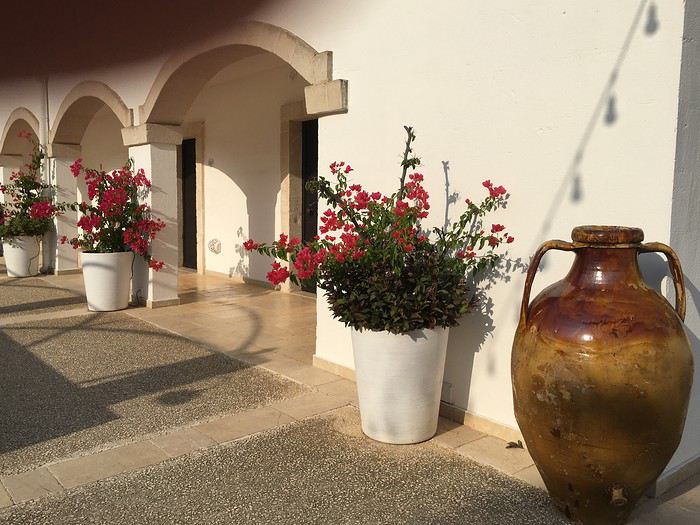
A recurring detail: this happened constantly during our travels. We’d installed our own GPS, fully updated... In recent years, many dirt roads have become drivable, and lots of hotels and hostels have opened in the outskirts of towns. It was extremely rare for our ‘guide’ to recognize the street—let alone the number—we entered. Often, we got by calling the hotel reception: it might seem like a small thing, but it happened so often it became frustrating. In hindsight, it seems like without Google Maps, we’d have been lost!
Anyway, we were beautifully settled, with a terrace overlooking olive groves and the sea in the distance: all was well.
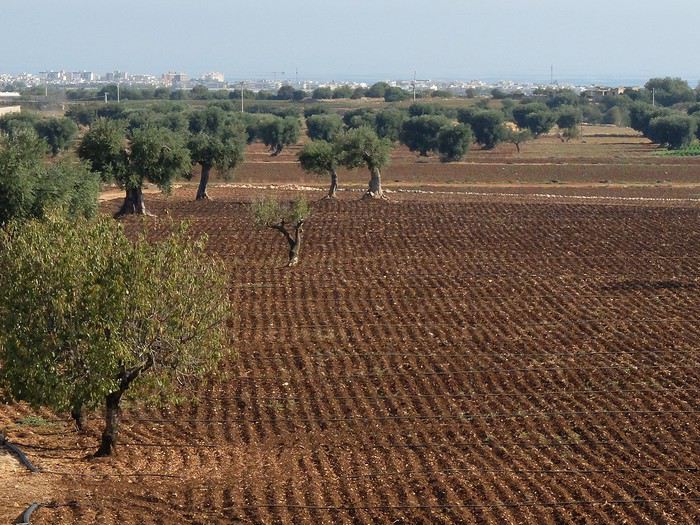
To be continued...
I’m finally getting around to writing about this 20-day trip to southern Italy: we didn’t travel this summer, and luckily, we found beautiful light and dreamy weather there at the end of September.
First, here’s the context of the trip: we’re both "confirmed seniors" but still curious and alert enough to enjoy the itinerary we’d imagined! We wanted a mix of discoveries—culture, cities, and nature—with guaranteed sunshine and the occasional short hike... We’re flying to Naples, round-trip, because the flight times work better for us. We rented a car online, picked it up at the airport (details to come... and it won’t be the highlight of the trip!), and booked our hotels in advance.
A quick overview of the itinerary: leaving Naples on September 15th, early in the morning, we’ll drive straight across the boot of Italy to Bari. After 11 days in Puglia, we’ll head back toward our starting point, taking our time: Matera in Basilicata, Maratea by the sea, and finally Paestum with its incredible temples.
Day 1: Brussels-Naples flight (Brussels Airlines) went smoothly; it landed an hour early, and we were thrilled, thinking we could use that time for a quick visit or two... Everything went well until we left the airport. We took the shuttle to the car rental offices, and at first glance, we realized this wouldn’t be smooth sailing!!! In front of every office (they’re side by side), there were already lines and kids sitting on suitcases—everyone looked exhausted... We resigned ourselves to waiting: nothing moved until tempers flared at the counters, and two people nearly came to blows. Things sped up a little, and after 2 (two...) hours of waiting, we finally got our chariot: a black Fiat Tipo, dirty, with a few dents and scratches that we made sure to note in the contract... but it ran!
Off to Bari, then: no time for sightseeing along the way! From there, we headed straight to our hotel in the countryside near Polignano a Mare.
A recurring detail: this happened constantly during our travels. We’d installed our own GPS, fully updated... In recent years, many dirt roads have become drivable, and lots of hotels and hostels have opened in the outskirts of towns. It was extremely rare for our ‘guide’ to recognize the street—let alone the number—we entered. Often, we got by calling the hotel reception: it might seem like a small thing, but it happened so often it became frustrating. In hindsight, it seems like without Google Maps, we’d have been lost!
Anyway, we were beautifully settled, with a terrace overlooking olive groves and the sea in the distance: all was well.
To be continued...
Visite du nord de Palawan avec enfants (autre que El Nido!) English translation pending
Bonjour,
En avril prochain nous finirons notre visite des Philippines par Palawan. J'ai déjà réservé 5 nuits à Coron. Il nous manque 3 nuits plutôt dans le nord je suppose (à voir) puis j'ai réservé 3 nuits à Port Barton. Je souhaite faire aussi 1 nuit à Sabang puis 1 nuit à Puerto avant de prendre l'avion pour notre prochain pays.
On m'a conseillé d'aller à Flower Island mais je trouve très cher (ce que j'ai vu en tout cas) et aussi Dumaran.
Je cherche - cherche et cherche encore un endroit ou passer ces 3 nuits du milieu. Nous voulons un endroit pas trop touristique mais quand même avec des choses à faire / voir. J'avais vu l'île de Modessa. Je ne sais plus trop quoi penser...
Si vous avez des bons plans - idées - suggestions, je suis preneuse !!!
Nous sommes avec 2 enfants de presque 7 et 5 ans.
Merciiiiii
Mam's Koala
En avril prochain nous finirons notre visite des Philippines par Palawan. J'ai déjà réservé 5 nuits à Coron. Il nous manque 3 nuits plutôt dans le nord je suppose (à voir) puis j'ai réservé 3 nuits à Port Barton. Je souhaite faire aussi 1 nuit à Sabang puis 1 nuit à Puerto avant de prendre l'avion pour notre prochain pays.
On m'a conseillé d'aller à Flower Island mais je trouve très cher (ce que j'ai vu en tout cas) et aussi Dumaran.
Je cherche - cherche et cherche encore un endroit ou passer ces 3 nuits du milieu. Nous voulons un endroit pas trop touristique mais quand même avec des choses à faire / voir. J'avais vu l'île de Modessa. Je ne sais plus trop quoi penser...
Si vous avez des bons plans - idées - suggestions, je suis preneuse !!!
Nous sommes avec 2 enfants de presque 7 et 5 ans.
Merciiiiii
Mam's Koala
Nouveau-Brunswick, Île-du-Prince-Édward et Nouvelle-Écosse English translation pending
Bonjour à tous,
Nous avons besoin de vos avis et aide concernant notre road trip Canadien.
Pour notre 2ème séjour au Canada, 1er en 2017, nous avons lʼintention de visiter le New Brunswick, lʼîle Prince Édouard et la Nouvelle Ecosse.
Vol Air France Bordeaux/Charles de Gaulle => Montréal
Départ le 16 août retour le 17 septembre
Notre AVE toujours valable.
Arrivée :
16/08 au 18/08 Montréal 3 nuits (déjà visitée)
19/08 voiture de location direction et nuit à Edmundston
20/08 au 21/08 Caraquet 2 nuits
22/08 au 25/08 Moncton 4 nuits (Hopewell Rocks, Fundy Park, Shediac)
26/08 au 28/08 Charlottetown PE 3 nuits, visites de lʼîle
29/08 Ferry, île de PE =>Caribou (doit-on réserver le ferry sur le site NFL ?)
29/08 au 31/08 Baddeck ou Sydney ? 3 nuits (Piste Cabot, Louisbourg)
1/09 au 5/09 5 nuits, Route côtière, Eastern Shore, depuis Halifax visite Peggy’s Cove et Lunenburg.
6/09 au 7/09 Digby 2 nuits
8/09 Ferry, Digby => St John (doit-on réserver le ferry ?)
8/09 au 10/09 3 nuits St John
11/09 au 12/09 2 nuits St Andrews, île Grand Manan
13/09 1 nuit Fredericton
14/09 au 16/09 3 nuits Quebec (déjà visitée)
17/09 Aéroport Montréal vol 19h30
Que pensez vous de notre circuit ? Nous « prenons » toutes vos remarques, conseils et bonnes adresses.
Nous avons évalué ce circuit à 5000 km, sur 34 jours.
Nous nʼavons pas noté les visites des parks Kouchibouguas, Kejimkujik et Cap Breton Highlands, qui sont prévues.
Merci pour votre contribution et votre aide.
Jacques
Kayaking in Greenland - Disko Bay: Circumnavigation of Arve Princess Island
After two rather rainy kayaking experiences in Alaska at the end of summer in recent years, we chose a slightly drier destination for this late August 2018: the west coast of Greenland. The temperature will certainly be a bit colder, especially at this time of year, but we’re betting on a beautiful end to the season. According to temperature charts, it should be around 5 to 10°C with a few night frosts. The tundra will already have its autumn colors, and by the end of the trip, we might be lucky enough to see the northern lights when the nights get darker.
We’re setting off as a group of three in two inflatable double-seater kayaks (Gumotex) brought from France. The plan is to spend two weeks circumnavigating Arve Princess Island, located north of Ilulissat in Disko Bay, with a possible boat drop-off at the southern tip of the island.
This seems like a fairly classic route in the area—we found several descriptions online (thanks to the authors). With their help and Google Earth, we identified all potential campsites and entered their coordinates into a GPS. The western part of the island, facing the bay, seems ideal for whale watching, while the more rugged eastern side offers access to several glacial walls. We’re somewhat familiar with the area from two winter expeditions on skis and pulkas.
Plus, the commitment is limited due to the island’s proximity to several small villages, including Qeqertaq, Oqaatsut, and even Ilulissat. In fact, we saw fishing boats almost every day. The distance suits us well: 200 kilometers in 16 full days on site, which should leave some leeway in case of bad weather or for hiking.
We booked our flights in June with Air Greenland to Ilulissat for the last week of August and the first week of September. On both the outbound and return trips, we stayed overnight in Copenhagen. The France-Copenhagen flight was with Air France.
We were allowed 3 x 20 kg in the hold. Each kayak with its accessories fits into a 20 kg bag; the last hold bag is for shared gear: tent, stoves, dry bags… We only brought 1.5 kg of semolina for food. In the end, we had 61 kg of gear, and no excess baggage was charged.
Individual gear (clothes and sleeping bags…) was distributed in the cabin luggage.
For the boat transfer, we contacted an agency: Blue Jay, which gave us a number to call upon arrival.
Day 0: Wednesday, August 22 Departure day. After work, I drove from Gap to Marseille’s Marignane Airport for the first leg of the trip to Copenhagen. I enjoyed the rather mild local temperatures: 35°C in the shade. After a layover in Paris, I arrived at the Copenhagen hotel, located two train stops from the airport, where my companions were already settled. No issues—everyone was on time with their luggage.
Day 1 The flight to Greenland was at 9 AM. We had a layover in Kangerlussuaq, where we changed planes, then stopped in Aasiaat before reaching Ilulissat Airport at 3 PM under beautiful sunshine.
We called Blue Jay for the boat transfer: they could take us to the island as early as 6 PM; otherwise, we’d have to wait until the next day. That left us 3 hours to prepare our gear and, most importantly, do our shopping for the two-week trip—it seemed tight, but we gave it a shot.
A quick taxi ride took us to Pisiffik, where we easily found everything we needed: bread, butter, cheese, cold cuts, rice, pasta, jam, muesli… There was no C fuel or methylated spirits for the stoves, but this time we knew the trick: at Stark, a bit uphill from the town, we found the precious liquids. Two hours later, we filled our dry bags and containers with our purchases, and by 5:30 PM, we met Klaus, the Blue Jay manager, directly at the port.
The vacation seemed to truly begin as we sped by boat through the icebergs toward Arve Princess Island. Forty-five minutes later, we spotted a beach lined with rocks where Klaus dropped us off quickly (he had another transfer to make right after).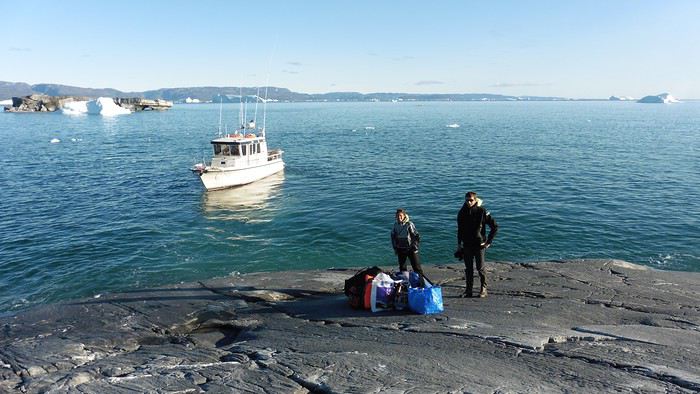
Here we were on the island, in the middle of nowhere, with all our luggage and food to organize, the tent to set up, and the kayaks to inflate—just 10 hours after leaving the Copenhagen hotel. We got to work, bothered by the flies. Despite our head nets, it was barely tolerable—there were so many of them. They swarmed by the dozens into every bag we opened. It was quite mild: 10°C.
Everything was ready by evening, and we were very happy to have completed all these transfers (planes and boat in a single day) as we slipped into our sleeping bags.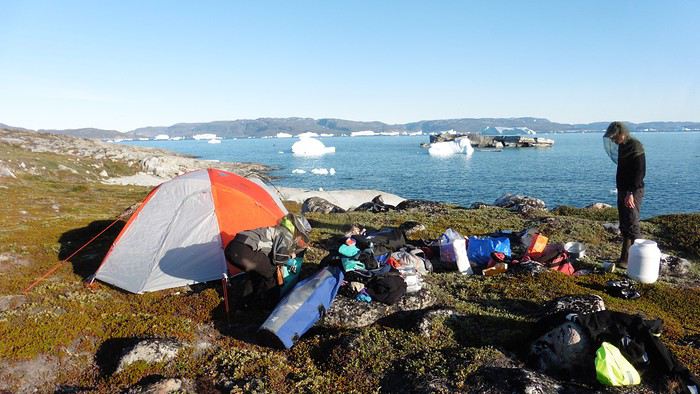
During the night, the wind picked up, and we went out several times to check the tent and kayak anchors. We noticed how bright it was—it was still quite twilight even at 1 AM.
Day 2 5:30 AM wake-up—the south wind was still strong, but since we were heading north, we decided to give it a try anyway.
This was also the moment we loaded the kayaks: since there were only three of us for two double-seater kayaks, we filled the hatch of one kayak, which allowed us to fit all our food. It would have been very difficult if there had been four of us for two kayaks.
Finally, we set off north along the western coast of the island. The conditions were far from ideal—the sea was rough, and the kayaks had a lot of wind resistance. But the main problem was the spray skirt: the gear on deck weighed it down, and the skirt kept coming off… We’d have to deal with it. Barely underway, and whales were already breaking the surface—it was our first time seeing them, and we were very impressed. Too bad the wind didn’t allow for longer contemplation; stopping paddling was impossible with such strong gusts.
We passed a few headlands and even considered stopping due to the conditions. To find some semblance of shelter, we had to hug the coast closely without cutting across the numerous bays, which significantly lengthened the journey. But as the morning went on, the wind died down, and the sea calmed. We spotted several whales and our first seals. It was almost pleasant during the picnic break. By late afternoon, we reached Kangerup Sarqâ Bay, where we had identified a great campsite with a very large beach and a river. But the wind had shifted—it was now coming from the north, making the last hour difficult due to fatigue and headwinds.
The campsite was ideal and beautiful, facing numerous icebergs grounded in the bay.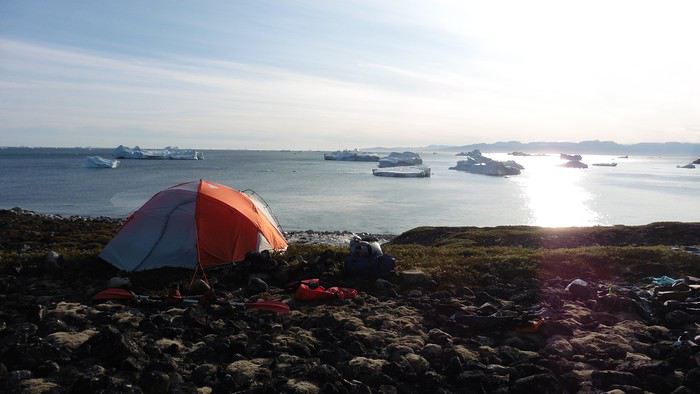
The GPS alerted us to another major drawback of inflatable kayaks: their slowness. It took us 7.5 hours of actual paddling (excluding breaks) to cover 28 km, averaging 3.7 km/h—somewhat disappointing. But we knew this before leaving, and once again, we’d have to make do!
Day 3 Surprise: at 6 AM wake-up, it was raining, foggy, with a south wind, and the sea was choppy even in the bay. It seemed wise to skip paddling, even though stopping on the second day was tough on morale. We went back to sleep, especially since the travel fatigue and the harsh conditions of the previous day had taken their toll.
At 11 AM, the navigation conditions weren’t any better—at the ends of the bay, we saw huge waves crashing onto the rocks, and giving up for the day became obvious. However, the rain had stopped, so we set off for a hike along the large lake bordering the bay. The wind hadn’t let up, and it was quite cold.
The tundra was starting to take on its autumn colors, and the contrast between the white lichens and the red vegetation was stunning. At the lake, we took out the fishing rods and quickly caught two beautiful Arctic char over 50 cm long.
As the afternoon wore on, the sun seemed closer. Along the beach, we gathered driftwood (mostly old planks) to cook our catch in foil over a fire. Eating our own food in such a beautiful place next to a good fire was comforting after the day’s setback.
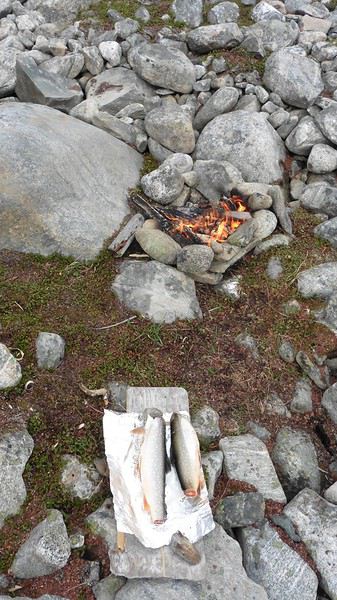
In the middle of the night, an Arctic fox entered the tent’s rear awning. It seemed barely intimidated when we shooed it away with loud shouts and then with stones.
Day 4 6:15 AM wake-up—3°C. We were on the water by 8 AM. The wind had dropped significantly, but the sea was shrouded in fog, and it was very cold in these damp conditions.
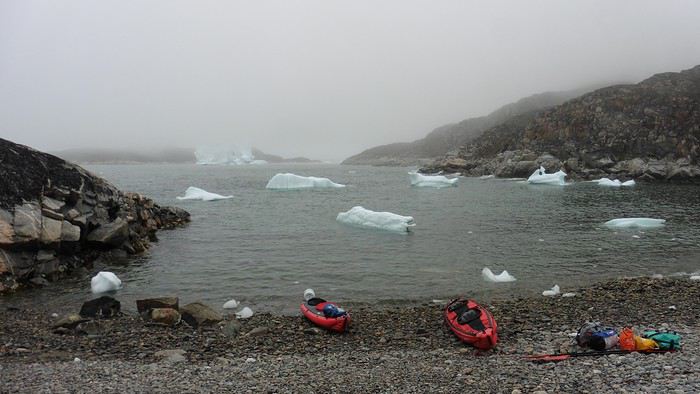
We passed the bay’s headland, Kangea, and headed toward the abandoned village of Agpat. The atmosphere was very austere—we hugged black rocks in fog that limited visibility to 50 meters, revealing large icebergs as we went.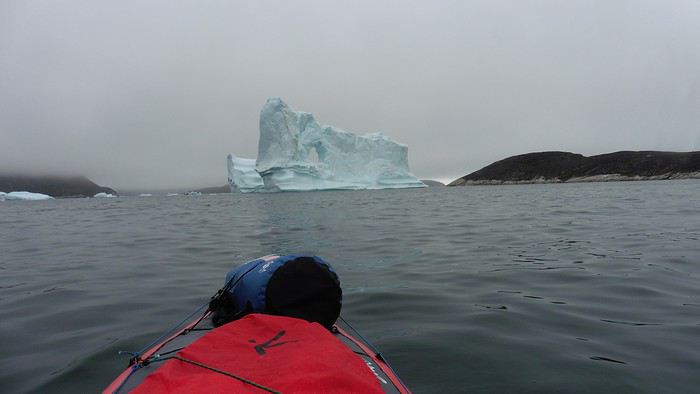
Suddenly, the water’s surface stirred in front of my kayak, and a huge gray back emerged from the sea. The collision was inevitable, but the whale seemed to understand and dove immediately, passing under the kayak and resurfacing a few meters away. I felt the kayak rock in the white foam and quickly paddled to escape the turbulence. What an emotion!
A light wind began to clear the fog, and the sun made beautiful appearances. Despite the cold, we stopped to visit the abandoned village, which left a strange impression. All the houses were still in good condition and wide open—some must have been very spacious in their time. We went back to sea, and in front of the large Kaangerdluk Bay, we hesitated—the headwind was strong, and large waves split the water. The next beach, from the island of Nua where we stopped to think, was over 8 km away. It was barely 2 PM, but caution led us to stop here for the day. We had covered 12 km—exactly the distance needed to stay on schedule. The afternoon was spent hiking on the island’s hills and gathering mussels and wood.
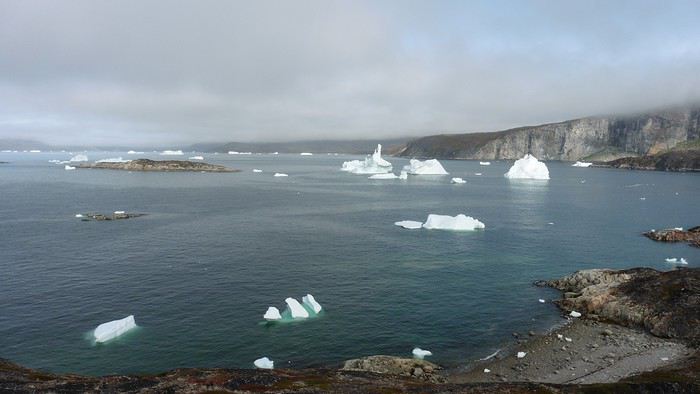
In the evening, we cooked these large Greenlandic mussels over a wood fire and savored them under the beautiful evening light. The weather was now fine, but the thermometer read -5°C in the sun…
Day 5 Bright sunshine, a glassy sea, and -8°C at 6 AM. Everything was green for setting off, even if putting on damp kayaking gear was a bit unpleasant in the cold. It was the first time we’d paddled on a flat sea since the start of the trip, and our average speed increased slightly.
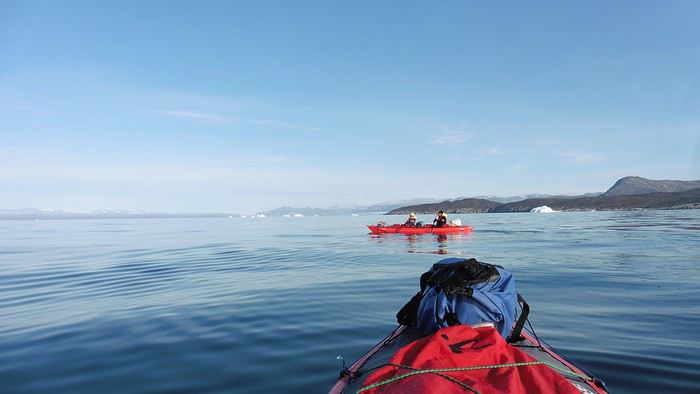
We entered the Smallesund Strait, marking the end of the island’s west coast. We were close to the large Torssukatak Fjord, where two glaciers flow. The access pass to the fjord was very narrow, and numerous ice chunks blocked access to the beaches. The wind had picked up and was now hitting us head-on (again). Just before entering the fjord, we landed on a steep beach made of large pebbles on Oqaitsut Island. It was very cold with the wind, and moving forward became difficult. We decided to stop for the day both because of the conditions and because the next campsite was far away, given how rugged the fjord was.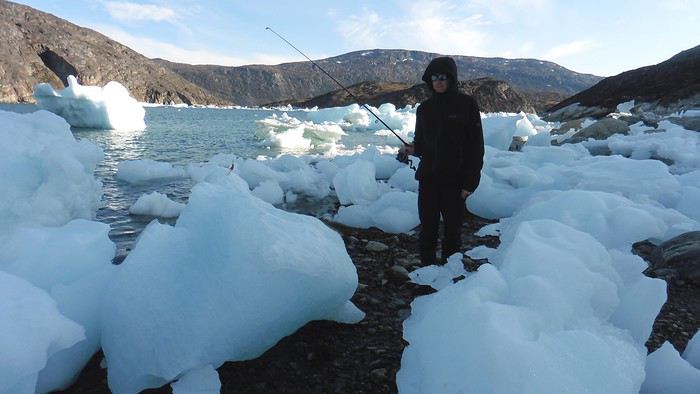
We eventually found a flat spot for the tent despite the steep slope. Even with the wind, the weather was beautiful, and we set off on foot for the northeastern cape of the island, overlooking the fjord. The view was far-reaching and exceptional—up close, the large fjord filled with ice and its steep granite cliffs, and in the distance, the ice cap and glacial walls.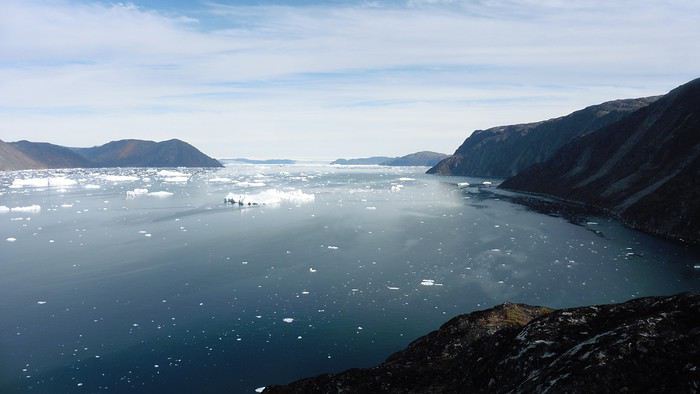
We spotted the village of Qeqertaq, whose network we could pick up, allowing us to check the weather forecast, which was rather good. While securing the kayaks in the evening, I noticed the strange behavior of one kayak at the end of the stage was due to the loss of the skeg—impossible to know where it detached. We’d have to do without it.
Day 6 Still that icy headwind from the northeast. We set off anyway for a long stage to reach the large pass connecting the Torssukatak and Ata Fjords.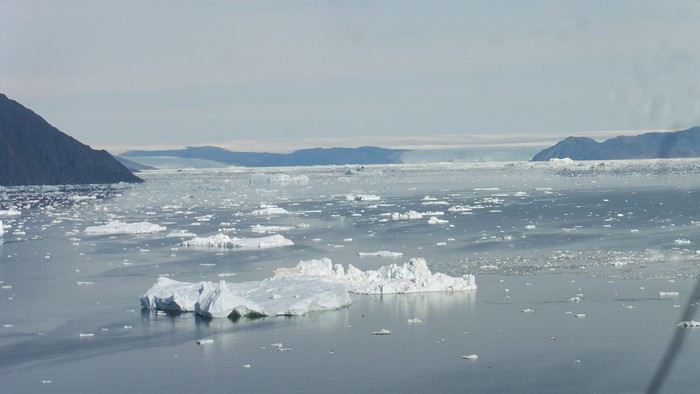
We advanced laboriously along the high cliffs of the fjord’s southern shore. They faced due north and blocked the sun. We felt the cold and dampness of the rock. It was really cold, especially in the extremities. We picnicked on the western cape of Qeqertakavasak Island. The cold didn’t allow us to stop for more than 20 minutes… But the wind dropped, and the sea was now very smooth. It was heavily cluttered with ice between the icebergs and old pack ice. The goal was to reach the large rocky promontory of Anapnuna, wedged between the Kujatdleq and Kangilerngata Glaciers, but the ice made progress difficult. We stopped to gain height on a small island and spot a passage of open water, but all we saw was white—passing seemed impossible. The currents were very complex, and entire sections of ice were being swept in one direction and then another at an impressive speed.
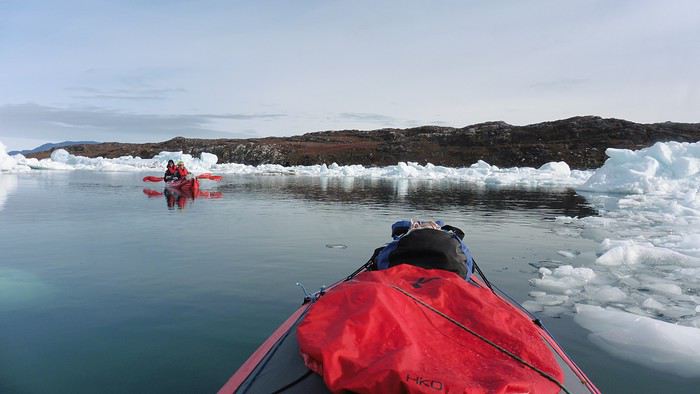
We wandered through this labyrinth until landing on a beach on the small island of Takissut, where we set up camp, exhausted from the 30 km covered and the vigilance required by the abundance of ice. The place was sublime under the evening sun—we were surrounded by ice and mountains, with the Kangilerngata Glacier in the distance. The summer contrasts were striking between the water, icebergs, sky, and flaming tundra—all colors were represented. Absolute calm reigned.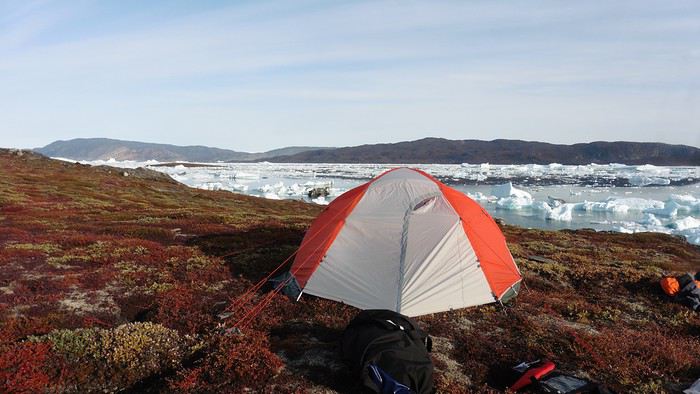
The lack of drinking water at this spot wasn’t too much of a constraint: as soon as we arrived on the beach, we placed containers under the icebergs stranded in the intertidal zone. They were all full by the time we finished setting up.
Day 7 We had to change our plans: we wouldn’t reach the rocky promontory, too well protected by the ice. We set off under the sun for Igdluluarssuit Island. Although we had spotted a passage just before launching, we quickly found ourselves surrounded by ice. It was everywhere, and finding water to paddle became complicated. We tried to force our way in every direction, even retracing our steps. Everything moved at an impressive speed—we were in the middle of a whirlpool of ice.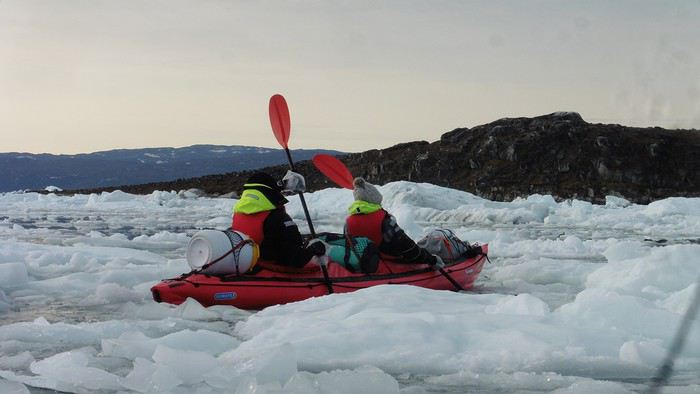
The tension rose, and each boat had its share of big scares. I was trapped against ice floes that dragged me toward an iceberg—the pressure on the kayak was enormous; it was going to capsize or puncture! But with a few strong strokes and paddling against the ice, I managed to free myself from the trap. Barely 10 minutes later, my companions were sandwiched perpendicularly between two icebergs that were closing in. The situation was desperate—the kayak was bending and twisting more and more, but with some strong paddle strokes, it finally freed itself. After these particularly unpleasant moments, we were completely blocked. The drifting ice floes had tightened, and the kayaks were no longer even in the water… The only solution: wait with the kayaks on these floes, which were too thin to walk on (even though we didn’t try). Within minutes, the situation cleared—a waterway opened, and we rushed into it. We paddled with one goal: find a larger pool of water. After going back and forth, our path took shape—we had to force the passage several times, attacking the ice directly with the kayaks, and finally, we escaped the worst of the labyrinth. We reached land on the west side of the island and saw that the rest would be easier. To reach the island, we just had to cross the Arsiviup Ikera Strait, which was lightly cluttered. We reached the eastern cape of the island, ideal for camping, even though we had only paddled for 3 hours. We set up camp and hiked to the island’s summit, which overlooks the entire pass and the glaciers.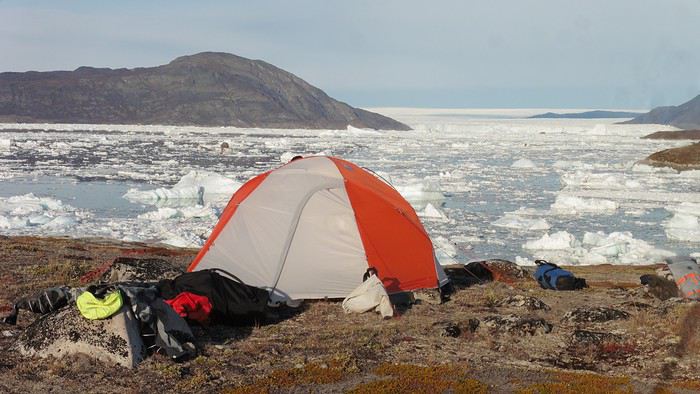
Everything was magnificent, no matter the direction. At 2 PM, we were at the summit—the beauty of the place and the picnic facing the glacier in the sun without wind made us forget the near-disaster from a few hours earlier. It would be impossible to approach the glacier by kayak, but from our summit on foot, it seemed so close, and contemplating it safely on solid ground was a great moment.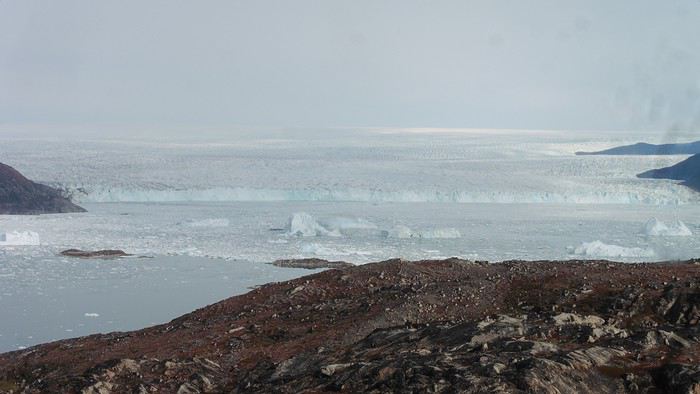
The pass was incredibly complex—everything was in motion, and an impassable passage could become open water within minutes. We were delighted when we returned to camp. A slightly lost whale among the ice accompanied us along the shore. The place was truly beautiful, but the temperature dropped again under the clear sky, preventing us from eating outside.
Day 8 Clear and cold at wake-up: -9°C. The sea had frozen in many places. We hesitated about the rest of the trip—should we start heading back to Ilulissat or linger in the pass, especially to approach the Eqi Glacier? After the incidents of the previous day, we decided to think carefully and paddled to the southern cape of our island to check the ice conditions toward Eqi. The weather had clouded over in the meantime, and the sky was quite gray. At the cape, we spotted the glacier’s wall, still 15 km away.
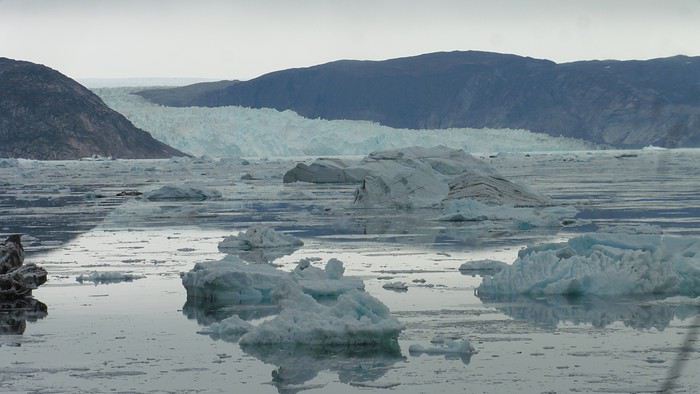
The fjord was quite cluttered, but it seemed passable. However, there was no guarantee the view would be much better 1 km from the glacier than 15 km away, especially since the front was quite active and therefore dangerous. We decided to head south without passing by the glacier. The cold temperatures encountered in the pass also motivated us to move away from the glaciers and the ice cap. We navigated under a threatening sky but without wind. The kayaks cut through the thin layer of ice on the surface with a crinkling paper sound. We reached the Ata campsite in the late afternoon after 5 hours of rowing without a single break…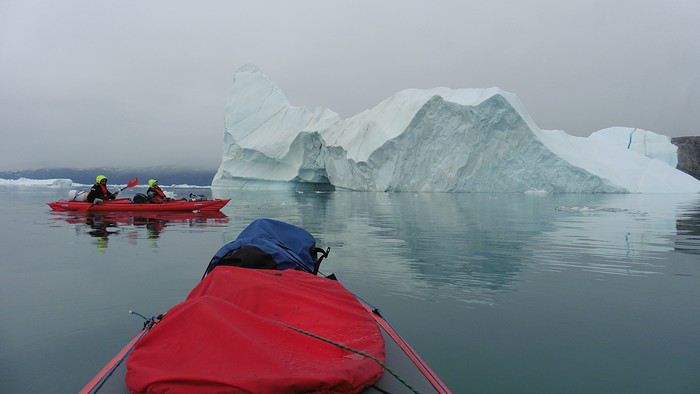
The wind had picked up, and we discovered a nice surprise: a refuge with a table and a comfortable bench lined with mattresses. Facing the worsening weather, we settled in comfortably. The kerosene stove was too complex for our three brains—we couldn’t get it started, too bad, as it was 0°C inside. The rest of the afternoon was spent fishing in the large lake, where we landed a beautiful Arctic char, more than enough for three. A good night’s sleep without the risk of foxes or the sound of a tent shaking in the wind.
Day 9 6 AM wake-up to the sound of rain hitting the cabin. The decision was made looking out the window—wind, rain, and fog obscured the sea: we went back to sleep.
New wake-up, and the rain had stopped—we could go out and stock up on fish. We set off on foot toward the lake, following its western shore. It was very overcast, and the wind encouraged us to keep moving. We made our way to a smaller lake at the end of the large one, where we caught a huge Arctic char. A small clearing brightened the picnic, and we headed back to our cabin.
This 20 km hike kept us busy all day: walking on slippery scree and the micro-relief of the peat bogs took time.
Day 10 The sky was clear, but a light south wind made paddling intense. We set off southeast to reach the opposite shore of the fjord. It was very cold, and it was impossible to stop paddling for even a moment without immediately losing ground due to the wind. We crossed the Kangerluarsuk Fjord. I recognized the cape I had reached on skis in the winter of 2017. We found a nice campsite on the southern shore of the fjord: Uiartag. It wasn’t even noon, but facing this headwind, we preferred to stop here rather than exhaust ourselves for a few extra kilometers. Like the previous ones, this campsite was very comfortable: the ground was covered with a thick layer of lichens and mosses, very pleasant to lie on.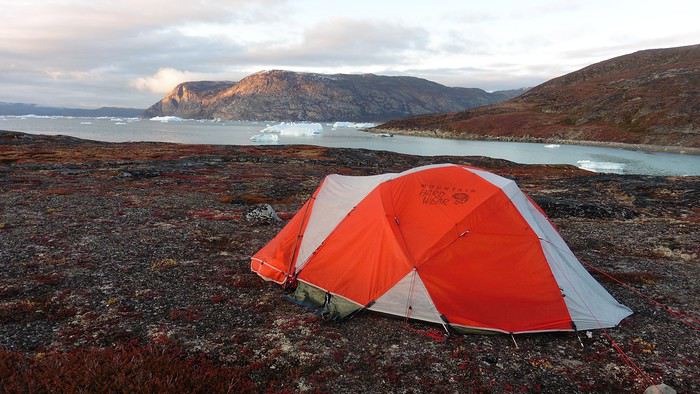
We set off on a hike to the heights of the cape, where the weather alternated between large clearings and snow showers. We noticed the loss of the thermometer, poorly attached to the backpack. On the way back, in the small bay of our beach, a whale swam calmly 10 meters from the shore—a beautiful surprise.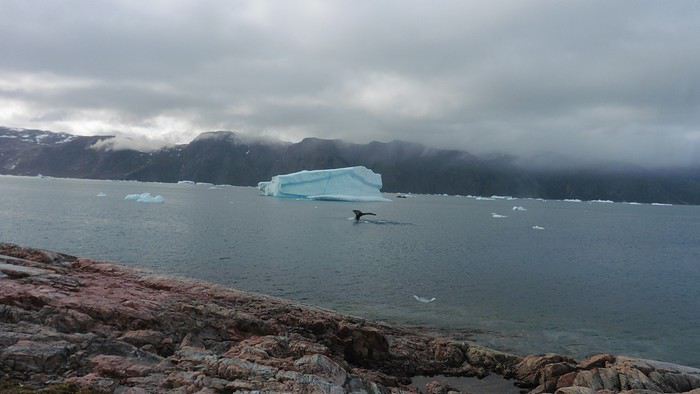
The sky cleared completely, and the temperature dropped as night approached.
We’re setting off as a group of three in two inflatable double-seater kayaks (Gumotex) brought from France. The plan is to spend two weeks circumnavigating Arve Princess Island, located north of Ilulissat in Disko Bay, with a possible boat drop-off at the southern tip of the island.
This seems like a fairly classic route in the area—we found several descriptions online (thanks to the authors). With their help and Google Earth, we identified all potential campsites and entered their coordinates into a GPS. The western part of the island, facing the bay, seems ideal for whale watching, while the more rugged eastern side offers access to several glacial walls. We’re somewhat familiar with the area from two winter expeditions on skis and pulkas.
Plus, the commitment is limited due to the island’s proximity to several small villages, including Qeqertaq, Oqaatsut, and even Ilulissat. In fact, we saw fishing boats almost every day. The distance suits us well: 200 kilometers in 16 full days on site, which should leave some leeway in case of bad weather or for hiking.
We booked our flights in June with Air Greenland to Ilulissat for the last week of August and the first week of September. On both the outbound and return trips, we stayed overnight in Copenhagen. The France-Copenhagen flight was with Air France.
We were allowed 3 x 20 kg in the hold. Each kayak with its accessories fits into a 20 kg bag; the last hold bag is for shared gear: tent, stoves, dry bags… We only brought 1.5 kg of semolina for food. In the end, we had 61 kg of gear, and no excess baggage was charged.
Individual gear (clothes and sleeping bags…) was distributed in the cabin luggage.
For the boat transfer, we contacted an agency: Blue Jay, which gave us a number to call upon arrival.
Day 0: Wednesday, August 22 Departure day. After work, I drove from Gap to Marseille’s Marignane Airport for the first leg of the trip to Copenhagen. I enjoyed the rather mild local temperatures: 35°C in the shade. After a layover in Paris, I arrived at the Copenhagen hotel, located two train stops from the airport, where my companions were already settled. No issues—everyone was on time with their luggage.
Day 1 The flight to Greenland was at 9 AM. We had a layover in Kangerlussuaq, where we changed planes, then stopped in Aasiaat before reaching Ilulissat Airport at 3 PM under beautiful sunshine.
We called Blue Jay for the boat transfer: they could take us to the island as early as 6 PM; otherwise, we’d have to wait until the next day. That left us 3 hours to prepare our gear and, most importantly, do our shopping for the two-week trip—it seemed tight, but we gave it a shot.
A quick taxi ride took us to Pisiffik, where we easily found everything we needed: bread, butter, cheese, cold cuts, rice, pasta, jam, muesli… There was no C fuel or methylated spirits for the stoves, but this time we knew the trick: at Stark, a bit uphill from the town, we found the precious liquids. Two hours later, we filled our dry bags and containers with our purchases, and by 5:30 PM, we met Klaus, the Blue Jay manager, directly at the port.
The vacation seemed to truly begin as we sped by boat through the icebergs toward Arve Princess Island. Forty-five minutes later, we spotted a beach lined with rocks where Klaus dropped us off quickly (he had another transfer to make right after).
Here we were on the island, in the middle of nowhere, with all our luggage and food to organize, the tent to set up, and the kayaks to inflate—just 10 hours after leaving the Copenhagen hotel. We got to work, bothered by the flies. Despite our head nets, it was barely tolerable—there were so many of them. They swarmed by the dozens into every bag we opened. It was quite mild: 10°C.
Everything was ready by evening, and we were very happy to have completed all these transfers (planes and boat in a single day) as we slipped into our sleeping bags.
During the night, the wind picked up, and we went out several times to check the tent and kayak anchors. We noticed how bright it was—it was still quite twilight even at 1 AM.
Day 2 5:30 AM wake-up—the south wind was still strong, but since we were heading north, we decided to give it a try anyway.
This was also the moment we loaded the kayaks: since there were only three of us for two double-seater kayaks, we filled the hatch of one kayak, which allowed us to fit all our food. It would have been very difficult if there had been four of us for two kayaks.
Finally, we set off north along the western coast of the island. The conditions were far from ideal—the sea was rough, and the kayaks had a lot of wind resistance. But the main problem was the spray skirt: the gear on deck weighed it down, and the skirt kept coming off… We’d have to deal with it. Barely underway, and whales were already breaking the surface—it was our first time seeing them, and we were very impressed. Too bad the wind didn’t allow for longer contemplation; stopping paddling was impossible with such strong gusts.
We passed a few headlands and even considered stopping due to the conditions. To find some semblance of shelter, we had to hug the coast closely without cutting across the numerous bays, which significantly lengthened the journey. But as the morning went on, the wind died down, and the sea calmed. We spotted several whales and our first seals. It was almost pleasant during the picnic break. By late afternoon, we reached Kangerup Sarqâ Bay, where we had identified a great campsite with a very large beach and a river. But the wind had shifted—it was now coming from the north, making the last hour difficult due to fatigue and headwinds.
The campsite was ideal and beautiful, facing numerous icebergs grounded in the bay.
The GPS alerted us to another major drawback of inflatable kayaks: their slowness. It took us 7.5 hours of actual paddling (excluding breaks) to cover 28 km, averaging 3.7 km/h—somewhat disappointing. But we knew this before leaving, and once again, we’d have to make do!
Day 3 Surprise: at 6 AM wake-up, it was raining, foggy, with a south wind, and the sea was choppy even in the bay. It seemed wise to skip paddling, even though stopping on the second day was tough on morale. We went back to sleep, especially since the travel fatigue and the harsh conditions of the previous day had taken their toll.
At 11 AM, the navigation conditions weren’t any better—at the ends of the bay, we saw huge waves crashing onto the rocks, and giving up for the day became obvious. However, the rain had stopped, so we set off for a hike along the large lake bordering the bay. The wind hadn’t let up, and it was quite cold.
The tundra was starting to take on its autumn colors, and the contrast between the white lichens and the red vegetation was stunning. At the lake, we took out the fishing rods and quickly caught two beautiful Arctic char over 50 cm long.
As the afternoon wore on, the sun seemed closer. Along the beach, we gathered driftwood (mostly old planks) to cook our catch in foil over a fire. Eating our own food in such a beautiful place next to a good fire was comforting after the day’s setback.
In the middle of the night, an Arctic fox entered the tent’s rear awning. It seemed barely intimidated when we shooed it away with loud shouts and then with stones.
Day 4 6:15 AM wake-up—3°C. We were on the water by 8 AM. The wind had dropped significantly, but the sea was shrouded in fog, and it was very cold in these damp conditions.
We passed the bay’s headland, Kangea, and headed toward the abandoned village of Agpat. The atmosphere was very austere—we hugged black rocks in fog that limited visibility to 50 meters, revealing large icebergs as we went.
Suddenly, the water’s surface stirred in front of my kayak, and a huge gray back emerged from the sea. The collision was inevitable, but the whale seemed to understand and dove immediately, passing under the kayak and resurfacing a few meters away. I felt the kayak rock in the white foam and quickly paddled to escape the turbulence. What an emotion!
A light wind began to clear the fog, and the sun made beautiful appearances. Despite the cold, we stopped to visit the abandoned village, which left a strange impression. All the houses were still in good condition and wide open—some must have been very spacious in their time. We went back to sea, and in front of the large Kaangerdluk Bay, we hesitated—the headwind was strong, and large waves split the water. The next beach, from the island of Nua where we stopped to think, was over 8 km away. It was barely 2 PM, but caution led us to stop here for the day. We had covered 12 km—exactly the distance needed to stay on schedule. The afternoon was spent hiking on the island’s hills and gathering mussels and wood.
In the evening, we cooked these large Greenlandic mussels over a wood fire and savored them under the beautiful evening light. The weather was now fine, but the thermometer read -5°C in the sun…
Day 5 Bright sunshine, a glassy sea, and -8°C at 6 AM. Everything was green for setting off, even if putting on damp kayaking gear was a bit unpleasant in the cold. It was the first time we’d paddled on a flat sea since the start of the trip, and our average speed increased slightly.
We entered the Smallesund Strait, marking the end of the island’s west coast. We were close to the large Torssukatak Fjord, where two glaciers flow. The access pass to the fjord was very narrow, and numerous ice chunks blocked access to the beaches. The wind had picked up and was now hitting us head-on (again). Just before entering the fjord, we landed on a steep beach made of large pebbles on Oqaitsut Island. It was very cold with the wind, and moving forward became difficult. We decided to stop for the day both because of the conditions and because the next campsite was far away, given how rugged the fjord was.
We eventually found a flat spot for the tent despite the steep slope. Even with the wind, the weather was beautiful, and we set off on foot for the northeastern cape of the island, overlooking the fjord. The view was far-reaching and exceptional—up close, the large fjord filled with ice and its steep granite cliffs, and in the distance, the ice cap and glacial walls.
We spotted the village of Qeqertaq, whose network we could pick up, allowing us to check the weather forecast, which was rather good. While securing the kayaks in the evening, I noticed the strange behavior of one kayak at the end of the stage was due to the loss of the skeg—impossible to know where it detached. We’d have to do without it.
Day 6 Still that icy headwind from the northeast. We set off anyway for a long stage to reach the large pass connecting the Torssukatak and Ata Fjords.
We advanced laboriously along the high cliffs of the fjord’s southern shore. They faced due north and blocked the sun. We felt the cold and dampness of the rock. It was really cold, especially in the extremities. We picnicked on the western cape of Qeqertakavasak Island. The cold didn’t allow us to stop for more than 20 minutes… But the wind dropped, and the sea was now very smooth. It was heavily cluttered with ice between the icebergs and old pack ice. The goal was to reach the large rocky promontory of Anapnuna, wedged between the Kujatdleq and Kangilerngata Glaciers, but the ice made progress difficult. We stopped to gain height on a small island and spot a passage of open water, but all we saw was white—passing seemed impossible. The currents were very complex, and entire sections of ice were being swept in one direction and then another at an impressive speed.
We wandered through this labyrinth until landing on a beach on the small island of Takissut, where we set up camp, exhausted from the 30 km covered and the vigilance required by the abundance of ice. The place was sublime under the evening sun—we were surrounded by ice and mountains, with the Kangilerngata Glacier in the distance. The summer contrasts were striking between the water, icebergs, sky, and flaming tundra—all colors were represented. Absolute calm reigned.
The lack of drinking water at this spot wasn’t too much of a constraint: as soon as we arrived on the beach, we placed containers under the icebergs stranded in the intertidal zone. They were all full by the time we finished setting up.
Day 7 We had to change our plans: we wouldn’t reach the rocky promontory, too well protected by the ice. We set off under the sun for Igdluluarssuit Island. Although we had spotted a passage just before launching, we quickly found ourselves surrounded by ice. It was everywhere, and finding water to paddle became complicated. We tried to force our way in every direction, even retracing our steps. Everything moved at an impressive speed—we were in the middle of a whirlpool of ice.
The tension rose, and each boat had its share of big scares. I was trapped against ice floes that dragged me toward an iceberg—the pressure on the kayak was enormous; it was going to capsize or puncture! But with a few strong strokes and paddling against the ice, I managed to free myself from the trap. Barely 10 minutes later, my companions were sandwiched perpendicularly between two icebergs that were closing in. The situation was desperate—the kayak was bending and twisting more and more, but with some strong paddle strokes, it finally freed itself. After these particularly unpleasant moments, we were completely blocked. The drifting ice floes had tightened, and the kayaks were no longer even in the water… The only solution: wait with the kayaks on these floes, which were too thin to walk on (even though we didn’t try). Within minutes, the situation cleared—a waterway opened, and we rushed into it. We paddled with one goal: find a larger pool of water. After going back and forth, our path took shape—we had to force the passage several times, attacking the ice directly with the kayaks, and finally, we escaped the worst of the labyrinth. We reached land on the west side of the island and saw that the rest would be easier. To reach the island, we just had to cross the Arsiviup Ikera Strait, which was lightly cluttered. We reached the eastern cape of the island, ideal for camping, even though we had only paddled for 3 hours. We set up camp and hiked to the island’s summit, which overlooks the entire pass and the glaciers.
Everything was magnificent, no matter the direction. At 2 PM, we were at the summit—the beauty of the place and the picnic facing the glacier in the sun without wind made us forget the near-disaster from a few hours earlier. It would be impossible to approach the glacier by kayak, but from our summit on foot, it seemed so close, and contemplating it safely on solid ground was a great moment.
The pass was incredibly complex—everything was in motion, and an impassable passage could become open water within minutes. We were delighted when we returned to camp. A slightly lost whale among the ice accompanied us along the shore. The place was truly beautiful, but the temperature dropped again under the clear sky, preventing us from eating outside.
Day 8 Clear and cold at wake-up: -9°C. The sea had frozen in many places. We hesitated about the rest of the trip—should we start heading back to Ilulissat or linger in the pass, especially to approach the Eqi Glacier? After the incidents of the previous day, we decided to think carefully and paddled to the southern cape of our island to check the ice conditions toward Eqi. The weather had clouded over in the meantime, and the sky was quite gray. At the cape, we spotted the glacier’s wall, still 15 km away.
The fjord was quite cluttered, but it seemed passable. However, there was no guarantee the view would be much better 1 km from the glacier than 15 km away, especially since the front was quite active and therefore dangerous. We decided to head south without passing by the glacier. The cold temperatures encountered in the pass also motivated us to move away from the glaciers and the ice cap. We navigated under a threatening sky but without wind. The kayaks cut through the thin layer of ice on the surface with a crinkling paper sound. We reached the Ata campsite in the late afternoon after 5 hours of rowing without a single break…
The wind had picked up, and we discovered a nice surprise: a refuge with a table and a comfortable bench lined with mattresses. Facing the worsening weather, we settled in comfortably. The kerosene stove was too complex for our three brains—we couldn’t get it started, too bad, as it was 0°C inside. The rest of the afternoon was spent fishing in the large lake, where we landed a beautiful Arctic char, more than enough for three. A good night’s sleep without the risk of foxes or the sound of a tent shaking in the wind.
Day 9 6 AM wake-up to the sound of rain hitting the cabin. The decision was made looking out the window—wind, rain, and fog obscured the sea: we went back to sleep.
New wake-up, and the rain had stopped—we could go out and stock up on fish. We set off on foot toward the lake, following its western shore. It was very overcast, and the wind encouraged us to keep moving. We made our way to a smaller lake at the end of the large one, where we caught a huge Arctic char. A small clearing brightened the picnic, and we headed back to our cabin.
This 20 km hike kept us busy all day: walking on slippery scree and the micro-relief of the peat bogs took time.
Day 10 The sky was clear, but a light south wind made paddling intense. We set off southeast to reach the opposite shore of the fjord. It was very cold, and it was impossible to stop paddling for even a moment without immediately losing ground due to the wind. We crossed the Kangerluarsuk Fjord. I recognized the cape I had reached on skis in the winter of 2017. We found a nice campsite on the southern shore of the fjord: Uiartag. It wasn’t even noon, but facing this headwind, we preferred to stop here rather than exhaust ourselves for a few extra kilometers. Like the previous ones, this campsite was very comfortable: the ground was covered with a thick layer of lichens and mosses, very pleasant to lie on.
We set off on a hike to the heights of the cape, where the weather alternated between large clearings and snow showers. We noticed the loss of the thermometer, poorly attached to the backpack. On the way back, in the small bay of our beach, a whale swam calmly 10 meters from the shore—a beautiful surprise.
The sky cleared completely, and the temperature dropped as night approached.
Voyage de 3 semaines en famille aux Philippines English translation pending
Bonjour tout le monde
Nous préparons un petit voyage de 3 semaines en famille avec 2 enfants aux Philippines du 1er au 21 avril prochain, mais plusieurs points restent encore obscurs ...
Ne risque-ton pas d'être en saison haute, avec tous les hôtels blindés ? Quid des fêtes de Paques ? On souhaitait se rendre dans le Nord pour les rizières, puis le volcan Mayon et enfin les iles Palawan. N'est ce pas trop gourmand ? Jouable en 3 semaines mais en glandant un peu quand même :-) ?
Merci d'avance ! Jean
Ne risque-ton pas d'être en saison haute, avec tous les hôtels blindés ? Quid des fêtes de Paques ? On souhaitait se rendre dans le Nord pour les rizières, puis le volcan Mayon et enfin les iles Palawan. N'est ce pas trop gourmand ? Jouable en 3 semaines mais en glandant un peu quand même :-) ?
Merci d'avance ! Jean