Results for "Promenade+Anglais+|+127"
23317 results found.
Hôtel Super Club Breezes Varadero?? English translation pending
Qui est allé? Comment c'était? Qu'est-ce qu'on peut faire a Varadero? Comment est l'ambiance au Club? C'est une bonne place pour 4 gars? N'importe quoi, gênez vous pas...
Visiter Puerto Vallarta? English translation pending
Bonjour à tous, je vais à Puerto Vallarta dans une semaine et je voudrais avoir des informations sur les choses à voir et faire dans cette ville et dans les alentours. Ouverte à toutes suggestions. Merci beaucoup
Valérie
Valérie
Coin tranquille en Thaïlande English translation pending
bonjour
si tt va bien cf message précédent, on part en Thailande ds une dizaine de jours.
Dans l'idéal, on voulait rayonner autour de chang mai (1 semaine) + trouver une île calme mais av suffisamment d'infrastructure pr trouver un club de plongée : quelqu'1 a-t-il 1 idée ? Koh Tao ? j'ai un peu peur d'1 île trop connue comme Koh samui ? mais p être y-a-t-il des endroits calmes partout ?
merci par avance
Mayotte, le plus grand lagon du Monde English translation pending
salut à tous,
Mayotte est encore très méconnue pourtant c'est bien le plus grand lagon du monde. A tout les passionnés de plongés ou aux futurs plongeurs, venez découvrir nos fonds marins. De nombreux club de plongé sont là pour vous aider. En plus le pays est magnifique a visité. Vous découvrirez un pays d'Afrique, Français, sur une île de l'Océan Indien. Situé dans l'archipel des Comores entre la Tanzanie et Madagascar. Mayotte accueillent tout les types de voyageurs. Du routard au tourisme de luxe. Un monde emprunt d'une culture local et endémique, vous découvrirez un nouvelle manière de vivre. Si vous êtes intéressés contactés moi pour des renseignements plus ciblés.
Mayotte est encore très méconnue pourtant c'est bien le plus grand lagon du monde. A tout les passionnés de plongés ou aux futurs plongeurs, venez découvrir nos fonds marins. De nombreux club de plongé sont là pour vous aider. En plus le pays est magnifique a visité. Vous découvrirez un pays d'Afrique, Français, sur une île de l'Océan Indien. Situé dans l'archipel des Comores entre la Tanzanie et Madagascar. Mayotte accueillent tout les types de voyageurs. Du routard au tourisme de luxe. Un monde emprunt d'une culture local et endémique, vous découvrirez un nouvelle manière de vivre. Si vous êtes intéressés contactés moi pour des renseignements plus ciblés.
La République Dominicaine avec un bébé English translation pending
salut,
je pars en RP au mois de mars et j'hésite à prendre ma fille de 19 mois avec moi car j'ai peur qu'elle soit malade pendant cette semaine de vacances.
De plus si certaines personnes pouvaient me conseiller sur les visites à faire là bas😉.
merci
je pars en RP au mois de mars et j'hésite à prendre ma fille de 19 mois avec moi car j'ai peur qu'elle soit malade pendant cette semaine de vacances.
De plus si certaines personnes pouvaient me conseiller sur les visites à faire là bas😉.
merci
Excursion Bavaro Runnes Safarie Aventure English translation pending
😊je vais à punta cana du 15 février au 29
j'ai entendu parlé d'une excursion Bavaro Runners Safarie Aventure. y-t-il quelqu'un qui connaît çà.
commentaires plus prix si possible
à bientôt
j'ai entendu parlé d'une excursion Bavaro Runners Safarie Aventure. y-t-il quelqu'un qui connaît çà.
commentaires plus prix si possible
à bientôt
Bons plaus dans la région de Bayahibe (République Dominicaine) English translation pending
conseils de visites pour la région de bayahibe et ses environs quelques bon plans restaurants sites façons de voyager ?
merci d avance
merci d avance
Hôtel Serenis Tropical (Punta Cana) English translation pending
Bonjour a tous nous partons en république Dominicaine a Punta Cana
nous partons le 08 02 04 a l'hotel Serenis tropical suite Si vous etes comme nous nous pourrions peut etre en parler a bientot
Myriam et Bruno😉
nous partons le 08 02 04 a l'hotel Serenis tropical suite Si vous etes comme nous nous pourrions peut etre en parler a bientot
Myriam et Bruno😉
Hôtel Canoa Coral (Bayahibe) English translation pending
Qui connaît cet hôtel? Des amis et moi pensons y aller pour nos prochaines vacances. J'ai vu le site internet et ça semble très bien, mais j'aimerais bien avoir vos commentaires.
Merci
Vicky
Merci
Vicky
Nouvelle Zélande et randonnée English translation pending
Bonjour à tous,
je projette de partir en Nouvelle Zélande en mars pour 3 semaines. Nous voudrions faire pas mal de randos, et déjà une question se pose : est-il facile de laisser les bagages en trop quelque part au début des randonnées, histoire de ne pas être obligé de marcher avec ses grosses chaussures de rando en ville par exemple, donc de pouvoir emmener des habits pas spécifiques à la rando?
Par ailleurs, faut il un bon sac de couchage pour le sud ou est-ce qu'un +5°C suffit?
Enfin, quelle compagnie avez vous utilisé pour voyager, et comment se passent les correspondances de 12h?
Merci d'avance
Sophie
Hôtel Marina Resort, climat en septembre? English translation pending
🙂 Nous irons en septembre 2004 à l'ile maurice côte Nord Hotel Marina Resort, qui connait? quel est le climat dans la 2ième quinzaine de septembre Que faut-il éviter, que faut-il absolument faire?
Merci
Merci
Palu, monastères et conseils sur le Népal English translation pending
Bonjour,
je pars dans 5 jours au Nepal et me demande s'il faut prendre un traitement anti palu ?
De plus, je n'es pas d'itinéraires précis, avez vous des conseils à me donner pas forcément pour les trecks, pour des visites de villes ou autres (je pars 3 semaines) ?
J'ai envie de voir des monastères à flan de montagne, où puis je voir cela ? Y a t il un treck spécial ?
Avez vous des bonnes adresses pour trouver de belles antiquités, bien sur pour pas trop cher !
MERCI D'AVANCE,
Benoît
Hébergement dans les Rocheuses canadiennes English translation pending
Salut à tous
Je pars ce mois d'aout dans les rocheuses. Pourrais t-on me conseiller des hebergements sur Jasper? et Edmonton merite t-il un détour?
Merci de vos reponses
Je pars ce mois d'aout dans les rocheuses. Pourrais t-on me conseiller des hebergements sur Jasper? et Edmonton merite t-il un détour?
Merci de vos reponses
Iberostar Bella Costa à Cuba? English translation pending
Je pars à Cuba en septembre 2003 précisement à Varadero, l'hôtel (Bella Costa) a été repris par la chaine Iberostar et j'aimerais connaitre les impressions de personnes y étant allées depuis son rachat.
Merci,
Bonne journée
Venise 😉
Merci,
Bonne journée
Venise 😉
Quel pays visiter en Europe? English translation pending
Bonjour à tous et à toutes,
Je suis Québécoise et je vais faire mon premier séjour en Europe!! Je passerai d'abord 3 semaines en Suisse. J'aimerais ensuite avoir des suggestions sur les beaux endroits à visiter partout en Europe (je n'ai aucune restriction!) J'aime beaucoup la nature, le camping, la randonnée et la plongée. (en apnée surtout) J'aimerais aussi recevoir des conseils sur le camping en Europe et aussi la meilleure façon de se déplacer (pendant plusieurs semaines) Se louer une voiture?? Train?? Autobus?
Si vous avez des suggestions, des conseils et des idées, veuillez s.v.p. m'en faire part. Merci infiniment!!!
Scuba-Isa 😉
Maroc en camping-car English translation pending
😏 bonjour, nous partons au Maroc en camping-car pour les vacances de Paques(zone b), avec nos 2 enfants, nous disposons en tout de 2 semaines.Nous prévoyons de visiter surtout le sud en passant par Fes, todra, dades, tafilalt, route des Kasbhas, draa, marakech, ......Si vous avez des tuyaux sur les campings, ou endroits pour dormir, les visites à ne pas manquer, le circuit....cela vaut-il le coup d'aller jusqu'à Mhamid pour voir les dunes, ou faut-il privilégier les dunes à Merzouga.Pour acheter ou trouver quelques fossiles, et roses des sables... ?
Sur les routes nous allons rencontrer beaucoup d'enfants, que peut-on leur offrir comme petits cadeaux, ainsi que pour les adultes si l'on est invité à partarger leur repas.
Tous vos conseils seront les bienvenus car nous ne connaissons pas du tout ce pays qui parait-il est très accueillant.
Je lance aussi un appel à d'autres camping-caristes qui partiraient à la meme période et qui chercheraient comme nous des compagnons de route, nous sommes partant.
D'avance merci.
Marie.
Vos suggestions pour le Népal English translation pending
😉salut à tous et à toutes
voila la situation, 1 pote et moi partons faire le tr des annapurnas, le trajet est fait mais, vous qui avez deja foulés le sol nepalais, je suis sur que vous pourriez ns filer ds plans bien sympas .dernier truc, si qqn connait le royal chitwan national park, j'aimerai avoir son opinion sur la faune qui s'y trouve
alors à vos clavier et merci d'avance pr vos reponse
New adventures from Perpignan to Ranchi (Jharkhand)
March 2nd — Departure by bus from Latour at 6:50 AM. The journey isn’t direct: we pass through Elne then Corneilla. In Perpignan, I switch to a BlablaBus heading to Barcelona’s northern bus station. Before reaching Le Perthus, French police stop us to check IDs. Several people aren’t in order, but after about fifteen minutes, we’re on our way again. We’re checked again at La Jonquera: this time, the wait lasts almost forty-five minutes while police identify those in violation and wait for a vehicle to pick them up. The driver then tries to make up for lost time; we finally arrive at our destination half an hour late.
I quickly head to the Arc de Triomphe metro station, located 200 meters away: you have to cross the bridge along the bus parking lot, then walk through a large garden; the station is on the right before the garden entrance. The trip to the airport isn’t direct: I have to change at Tomasso and take the line to the airport, where I arrive at 1 PM.
At the Emirates counter, I learn my flight was just canceled due to the war in Iran; they offer me another flight for the next day. I have to wait at the airport until 7 PM before being taken to a hotel; the next morning, I’ll take a flight to Vienna (with an 8-hour layover), then an Air India flight to Delhi, and finally a flight to Kolkata. I agree: I don’t know Vienna, so it’ll be an unexpected discovery.
At 7 PM, a small group is taken to the hotel, 35 minutes from the airport, where we’re served a light dinner upon arrival.
March 3rd — A taxi picks me up at 6:30 AM; the flight to Vienna takes off at 9:30 AM and arrives at noon. I’m free until 7 PM; the metro is direct to the city center. The weather is pleasant and not too cold, luckily, since my clothes are light.
When I exit the metro, I spot the St. Stephen’s Cathedral tower in the distance and approach it: the roof, made of glazed tiles, is remarkable.
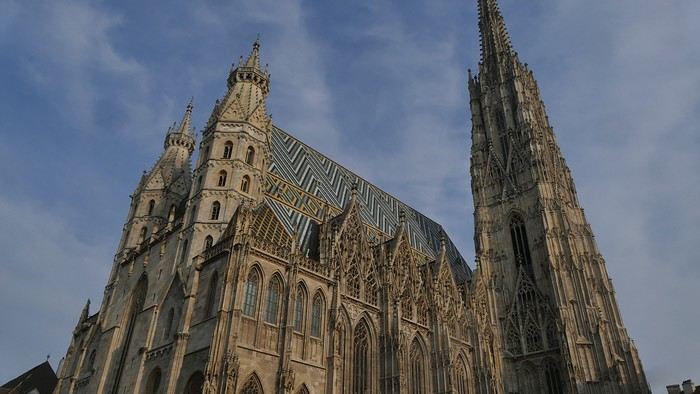
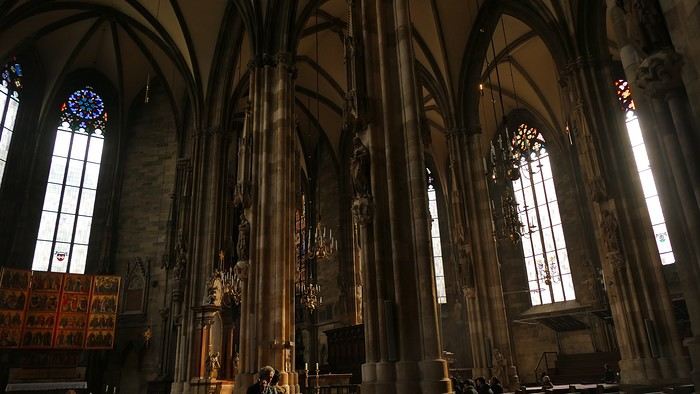
Entry is free, and the interior, a mix of Gothic and Baroque styles in the center, is stunning.
Not far from there is St. Anne’s Church
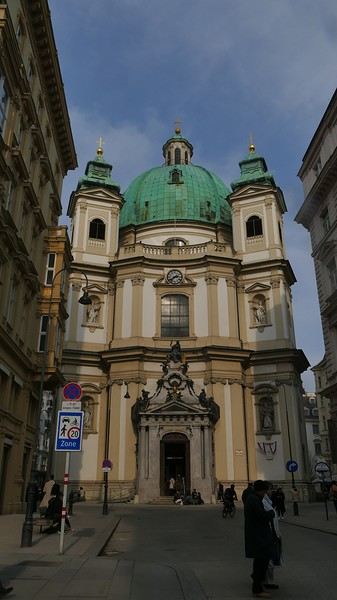
, also Baroque, adorned with beautiful frescoes
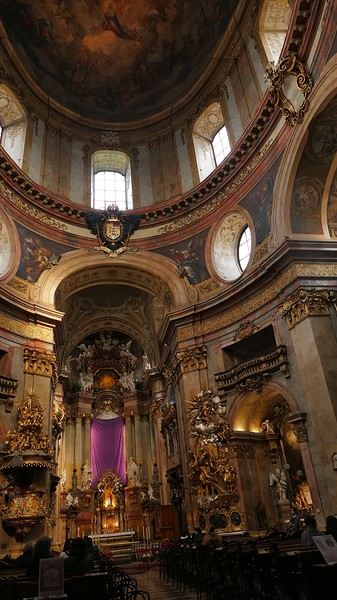
—a music concert adds an enchanting atmosphere to the visit. I continue my walk at random through the pedestrian streets lined with magnificent buildings: I’m charmed by the city.
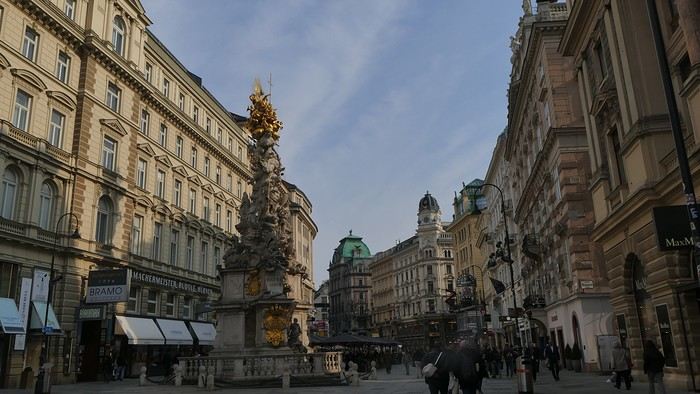
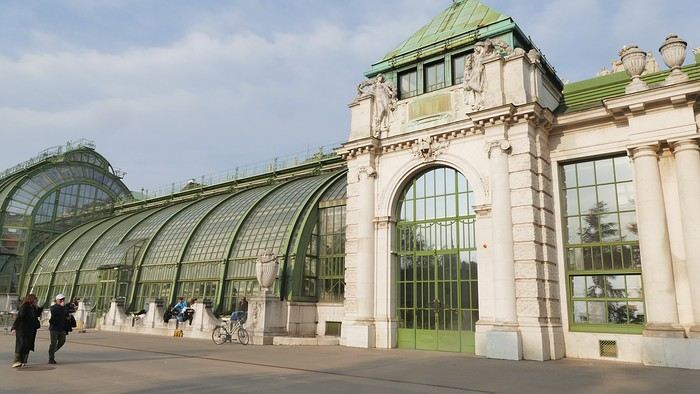
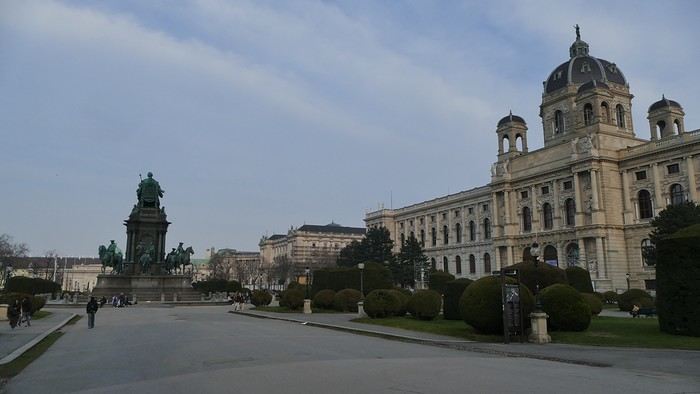
Before heading back to the airport, I stop at a lovely tea salon. My flight will eventually leave with a delay.
Wednesday, March 4th — Delhi and a little luggage scare We arrive in Delhi shortly after noon. Immigration is quick, and good news: my bag was checked through from Barcelona to Kolkata. I head to the connecting terminal and arrive half an hour before boarding: the flight goes smoothly. Upon arrival, the luggage comes out quickly… except mine. After filing a report, I’m told my bag is in Delhi—I have to retrieve it before taking another flight. I didn’t know (or had forgotten): with the delays, I wouldn’t have had time to pick it up and make the connection.
I take a taxi to the Ichamati Hotel. The welcome is warm, and the room is clean but very small. Without my bag, I feel a bit lost—I have nothing to change into.
Tonight, I’m dining with Raja and his friends at a beautiful restaurant, an old colonial house turned into a hotel.
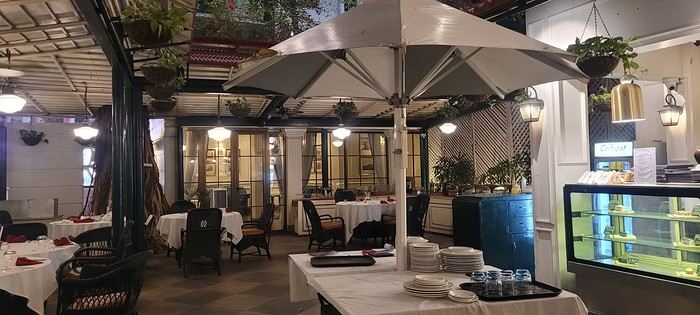
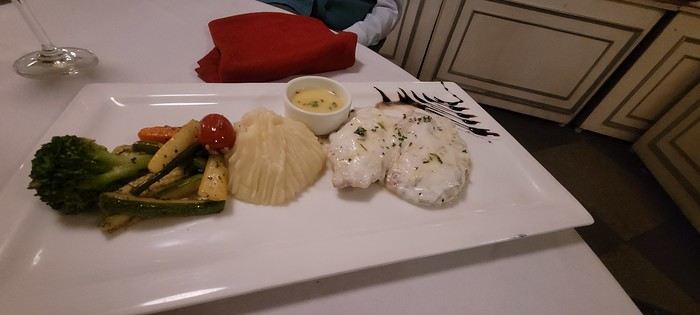
We’re happy to see each other and have a comforting evening together.
I quickly head to the Arc de Triomphe metro station, located 200 meters away: you have to cross the bridge along the bus parking lot, then walk through a large garden; the station is on the right before the garden entrance. The trip to the airport isn’t direct: I have to change at Tomasso and take the line to the airport, where I arrive at 1 PM.
At the Emirates counter, I learn my flight was just canceled due to the war in Iran; they offer me another flight for the next day. I have to wait at the airport until 7 PM before being taken to a hotel; the next morning, I’ll take a flight to Vienna (with an 8-hour layover), then an Air India flight to Delhi, and finally a flight to Kolkata. I agree: I don’t know Vienna, so it’ll be an unexpected discovery.
At 7 PM, a small group is taken to the hotel, 35 minutes from the airport, where we’re served a light dinner upon arrival.
March 3rd — A taxi picks me up at 6:30 AM; the flight to Vienna takes off at 9:30 AM and arrives at noon. I’m free until 7 PM; the metro is direct to the city center. The weather is pleasant and not too cold, luckily, since my clothes are light.
When I exit the metro, I spot the St. Stephen’s Cathedral tower in the distance and approach it: the roof, made of glazed tiles, is remarkable.
Entry is free, and the interior, a mix of Gothic and Baroque styles in the center, is stunning.
Not far from there is St. Anne’s Church
, also Baroque, adorned with beautiful frescoes
—a music concert adds an enchanting atmosphere to the visit. I continue my walk at random through the pedestrian streets lined with magnificent buildings: I’m charmed by the city.
Before heading back to the airport, I stop at a lovely tea salon. My flight will eventually leave with a delay.
Wednesday, March 4th — Delhi and a little luggage scare We arrive in Delhi shortly after noon. Immigration is quick, and good news: my bag was checked through from Barcelona to Kolkata. I head to the connecting terminal and arrive half an hour before boarding: the flight goes smoothly. Upon arrival, the luggage comes out quickly… except mine. After filing a report, I’m told my bag is in Delhi—I have to retrieve it before taking another flight. I didn’t know (or had forgotten): with the delays, I wouldn’t have had time to pick it up and make the connection.
I take a taxi to the Ichamati Hotel. The welcome is warm, and the room is clean but very small. Without my bag, I feel a bit lost—I have nothing to change into.
Tonight, I’m dining with Raja and his friends at a beautiful restaurant, an old colonial house turned into a hotel.
We’re happy to see each other and have a comforting evening together.
What to visit around Sousse?
Hello,
In September, my wife and I, along with another couple, will be traveling to Tunisia and staying at the Sheherasade Hotel near Sousse.
We’d love to hear your recommendations or tips on places to visit, as well as advice on taxis or other transportation options.
Thanks in advance!
Which island to choose in Thailand for a few days with my sister?
Hello, it’s been a while since I last asked for your help on this forum—I’ve really missed it! I hope you’re all doing well, whether you're new or returning members.
I’m planning a trip from February 6 to 18, 2027, with my sister (we’re 47 and 50—time flies!). I’ve got my eye on a flight from Paris that lands in Bangkok on February 7 at 3 PM, with a return flight from Bangkok on February 18 at noon.
My sister has never been to this destination, and it’ll be her first time in Asia. Her priorities: beaches, sunshine, and cocktails by the shore. For me, I love that too, but I also enjoy exploring, nature, forests, and a bit of comfort (mixing guesthouses and higher-end hotels with pools). A little evening entertainment would be great, but not too much—good cocktails in a nice atmosphere rather than a rave party ;-). And I can’t help but dream of taking her on a little trek through a tropical forest (guaranteed memories and laughs, though she might curse me at the time) and showing her some karst landscapes.
I’ve been to Thailand before, but it was 15 years ago...
The idea is to give her a taste of Bangkok for 1 or 2 nights, a few days on an island (but which one...?), a tropical forest excursion with 1 or 2 nights on-site (Khao Sok?), and then back to Bangkok.
For the "main" island, even after reading the *Guide du Routard*, I’m still undecided. It’s hard to find a place that ticks all the boxes without feeling as crowded as the French Riviera in August: Koh Lanta? Khao Lak (though it’s not an island)? Koh Tao (I could maybe get my PADI certification, but I’m afraid she’d get bored, and it might be better to save that for a solo trip)? Koh Yao Yai (I worry we’d be bored in the evenings)? What a dilemma!
Thank you if you’ve read this far! Feel free to share any advice—it’ll all be warmly welcomed.
Here’s a rough outline of the itinerary (I’d rather skip a night in Bangkok if needed):
· Saturday, February 6, 2027: departure (overnight flight) · Sunday, February 7, 2027: arrival at 3 PM, probably at the hotel by 6 PM, evening in Bangkok (overnight in Bangkok) · Monday, February 8, 2027: day in Bangkok (Wat Pho and a floating market?) (overnight in Bangkok) · Tuesday, February 9, 2027: travel to Koh Lanta or another island (flight to Phuket or Krabi?) (overnight on island "x") · Wednesday, February 10, 2027: beach and walks (overnight on island "x") · Thursday, February 11, 2027: beach and walks (overnight on island "x") · Friday, February 12, 2027: beach and walks (overnight on island "x") · Saturday, February 13, 2027: beach and walks (overnight on island "x") · Sunday, February 14, 2027: beach and walks (overnight on island "x") · Monday, February 15, 2027: travel to Khao Sok—nighttime excursion to Khao Sok (overnight in Khao Sok) · Tuesday, February 16, 2027: exploration and hike in Khao Sok (overnight in Khao Sok) · Wednesday, February 17, 2027: return trip to Bangkok (overnight in Bangkok) · Thursday, February 18, 2027: return flight to Paris at noon
A Week in Lanzarote in Late September
Lanzarote Travel Journal
Trip Planning My partner and I are heading to the Canary Islands for a week at the end of September, specifically to Lanzarote. We chose this island over the more crowded ones for its volcanic landscape and the variety of hikes it offers. I booked everything through Expedia: our hotel stay, car rental, and Ryanair flight tickets departing from Marseille. It was the only way to get a direct flight. To make getting around easier during our stay, I picked a hotel located in the center of the island from the wide selection available. It’s part of the Barceló chain, specifically the "Barceló Teguise Beach Adults Only" in Teguise Beach, which turned out to be an excellent choice.
The Trip
Sunday, September 21 - Monday, September 22 Departure It’s 2:15 PM, and we’re at the Avignon TGV station. Danielle picked us up earlier due to the weather—thunderstorms and heavy rain all the way to the station. The TGV was on time, and it only took 30 minutes to reach Marseille Saint-Charles. The shuttle to the airport is quick and convenient, right behind the station. The bus leaves for the airport in the middle of the storm, with flooded roads and cars stuck in some spots. We get soaked making our way to the terminal. Two hours to wait before the flight. The plane finally takes off at midnight, but just before landing, the pilot announces that the destination airport is closed, and we’re being diverted to Tenerife. Ryanair will re-route us as soon as possible. We end up waiting 2 hours, and Ryanair kindly gives us a 4 € voucher. We re-board around 5:15 AM and take off at 6:00 AM. About 45 minutes to reach Lanzarote. After collecting our luggage, we head to the car rental desk. The counter in the terminal is closed, and we’re directed to parking lot P4—it takes us a while to find it. I’m a bit worried about the rental company’s reaction since the car was supposed to be picked up 7 hours earlier, but it’s not a problem. A woman next to us is furious because she’s in the same situation, and her rental was canceled. Anne-Marie translates for her, but nothing changes. We pick up a brand-new Toyota Aigo and head to the hotel. After checking in, we cross the garden, walking alongside the large pool to reach our room. A lovely first-floor room with a jacuzzi and a sea view. It’s early, so we head to breakfast—a generously stocked and varied buffet with everything you could want. Afterward, we drive to Cueva de los Verdes, but it’s packed with people and a long wait. We decide to come back another day. Next, we visit Mirador Del Rio. This rocky viewpoint at the edge of the island has breathtaking cliffs plunging 500 meters into the ocean. The view is stunning and impressive. A panoramic bar lets you cool off while enjoying the scenery. We return to the hotel for a short walk around the neighborhood and enjoy the beautiful pool with its pleasant water temperature. Relaxing by the pool, sun loungers, and all. In the evening, a very varied buffet at the restaurant. Then early to bed to recover from the sleepless night before.
Tuesday, September 23 After a restful night, we enjoy another varied and hearty breakfast. The terrace seating is very pleasant. We take an inland road leading to Timanfaya National Park. The road near the park runs alongside vineyards where the vines are surrounded by lava stone walls to protect them from the prevailing winds. Our first stop is at the visitor center, where the island’s volcanic activity is well-documented. Next, we stop at an area where you can take a short camel ride—two seats are installed on either side of the camel’s hump. This little ride offers a great view of the volcanic landscape from a higher vantage point. A fair price of 11 € per seat for a 20-minute ride. We then head to the park entrance via the road leading to the parking lot, where only authorized buses can take the winding route inside the park. It’s crowded, and we wait about 45 minutes with several stops before reaching the parking lot. We board the bus, and the route offers beautiful views of this volcanic area and its many craters. The journey is very interesting, with several stops for photos. At the parking lot, a guide shows us how the heat from the rocks beneath the surface can ignite dry vegetation. Water poured into holes in the ground immediately creates geysers and jets of steam. The building next to the parking lot has a restaurant where meat is cooked using the heat from a well dug into the volcanic rock. On our way back, we drive to Playa Blanca, a seaside town with a small sandy beach.
Back at the hotel in the late afternoon for dinner.
Wednesday, September 24 We wake up early and have a quick breakfast—few people are around at this hour. Two days ago, we booked a 10:00 AM visit to Los Verdes, lava tunnels created by eruptions and lava flows from the La Corona volcano, which extended all the way to the coast. When the lava came into contact with the air, it solidified on the surface while continuing to flow underneath. The lava tunnels stretch for 8 kilometers to the volcano, but we only walk one kilometer. The inside of the tunnel is impressive, with narrow passages and larger chambers. You can see traces left by the flowing liquid lava—varied colors and twisted shapes. At the end of the path, a large chamber has been turned into a concert hall with perfect acoustics. Next, we visit Jameo Del Agua. This is a continuation of the lava tunnel, developed by Manrique. There are beautifully designed bar and restaurant areas, as well as an underground lake where you can see small blind white crabs—a protected species in this very pure water. Higher up, there’s a lovely space with a central pool that could double as a swimming area, surrounded by beautifully designed white pathways that contrast with the blue water. Further on, you reach a large space inside the lava tunnel, set up as a performance hall with perfect acoustics. Stairs let you view this beautiful space from above. A gap in the lava landscape reveals the ocean on the horizon. We head back toward the village of Yé, at the foot of the La Corona volcano. A 160-meter walk from the church, a path crosses vineyard plots and then climbs to the top of the volcano’s crater in about 30 minutes. It’s the island’s highest volcano. When you reach the edge of the crater, you see how deep it is, with steep slopes inside forming a large circular opening. The place is breathtaking and awe-inspiring. We drive back to the hotel via a road that climbs quickly, offering a beautiful view of the island’s northern part.
Thursday, September 25 After another enjoyable and varied breakfast, we head to the center of the island toward the volcano park and stop at a roadside parking lot where a path leads to the Montana Cuervo volcano. This is a crater that opened on one side. During an eruption, an explosion created a breach in the crater. Huge blocks of rock were thrown dozens of meters away. The path goes through the breach and descends into the crater, allowing you to walk around it. It’s impressive, and you really feel small and fragile in this environment. The crater walls, with their different colors, highlight the rock formations. The crater is surrounded by a sea of lava with sharp, jagged rocks. You can walk around the outside of the crater, but it’s not very interesting. We then head to the west coast, stopping at a spot with a small green lake next to a beautiful black sand beach. Next, we stop at Salinas de Janubio, a lovely viewpoint overlooking the salt marshes with different water colors. A small shop sells various local products. We then head to the famous Papagayo beach. The road ends at a booth where they charge 3 € to continue. From here, the land is private, and you have to pay to drive down a 3-kilometer rocky dirt road. Quite a few cars are driving along it, kicking up clouds of dust. The car gets a dusty makeover. We arrive at a large parking area, with several paths leading to different small beaches. We go to Papagayo, a small blonde sand beach surrounded by red rocks. The beach slopes gently into the water, which is a pleasant temperature. The setting is charming and peaceful. We stay for a while before heading back to the hotel.
Friday, September 26 We start with a visit to the César Manrique Foundation in Tahiche. This was originally one of his homes. The modern construction spans several levels and is integrated into the lava flow, using the gaps to create living spaces. Large windows make the rooms bright and open to the scenery. The place is pleasant, with flower-filled gardens outside. It’s well worth a visit. Next, we drive to Las Grietas, where a path leads to a narrow crack in the volcanic rock, forming a tight passage where only one person can walk at a time. The passage isn’t very long, but progress is slow due to the endless selfies being taken here. We then stop at Casa Del Camposino, a renovated farm that houses several artisan shops. We taste a local wine recommended by a charming woman and buy two bottles of Lanzarote red wine on her advice. Now, we head to Tamara beach, a beautiful and wide beach at the foot of high cliffs. There are always great waves here, making it a surfer’s paradise. On the way back to the hotel, we stop at the cactus garden, César Manrique’s final creation. Designed with a great sense of aesthetics around an old windmill, it features 4,500 varieties of cacti in various shapes, all in a beautiful setting. We return to the hotel in the late afternoon for the evening.
Saturday, September 27 After another hearty breakfast, we head north to Haria. We stumble upon another of César Manrique’s homes, where he lived for a long time. This house is more traditional than the previous one but still has large, modern, and very pleasant rooms. At the back of the garden is his large studio, where he created his works. Next, we visit the craft market—this was our original plan. Various stalls offer local items, and it’s very crowded. No room at the café terraces to sit down. We then return to Famara beach for a long stay. There are always great waves here, much to the surfers’ delight. The water temperature is pleasant, and we enjoy it. On the way back to the hotel, we stop at a gas station to refill the car, which has been very fuel-efficient. Gas is also much cheaper here than in France—1.16 € per liter of SP95. We also wash the car, which was very dusty after the long dirt road to Papagayo beach. At the hotel, we enjoy a farewell cocktail before dinner.
Sunday, September 28 We spend the morning by the hotel pool before checking out at noon. For lunch, we go to a restaurant called "Dona Lola," near the hotel, with a terrace offering a view of the coast. We order tuna carpaccio, which is delicious. We then head to the airport, just 15 minutes away. We return the rental car and go to the airport. A long line to check in our luggage. The return flight is on time. A shuttle bus takes us to Saint-Charles station. We then head to our overnight rental. The boulevard slopes down, making it easier with the suitcases. The rental is between the old port and the train station. Once there, we pick up the keys and make one last effort to carry the luggage up to the third floor. The studio is nice, clean, and simply equipped—perfect for one night.
Wildlife, Nature, and Culture in Zambia and Malawi
Off to Southern Africa again! This time, the trip wasn’t just about wildlife—it was also about the local cultures and the breathtaking landscapes Mother Nature has to offer. It was an emotional rollercoaster in every way, as you’ll see.
We visited two countries: Zambia, known for its reserves, and Malawi, which is less well-known but absolutely worth a visit. Our flight landed in Lilongwe, Malawi’s capital, where our vehicle was waiting—though with a 3-hour delay. It was a 4x4 without the rooftop tent this time, since we stayed in lodges (prices are very reasonable in Malawi). Just a heads-up: don’t exchange money at the airport or banks—the official rate was 1,750 Malawian kwacha to $1. On the black market, the rate was between 3,000 and 3,500 kwacha, making the cost of living much cheaper.
With that out of the way, our first stop was South Luangwa National Park in Zambia. The first hiccup came at the Malawi-Zambia border: we were missing a document the rental company had forgotten. After some back-and-forth, they sent it via WhatsApp ($20 to get it validated by the police). But things got worse—the car’s chassis number was off by one digit from the registered one. I thought our trip was over before it even started! After what felt like forever, we got through with a "tip" of $200. Total border crossing time: 3 hours, costing nearly $400. We arrived in South Luangwa after dark.
Thankfully, the next day made up for it with an incredible day in the park (check out the photos).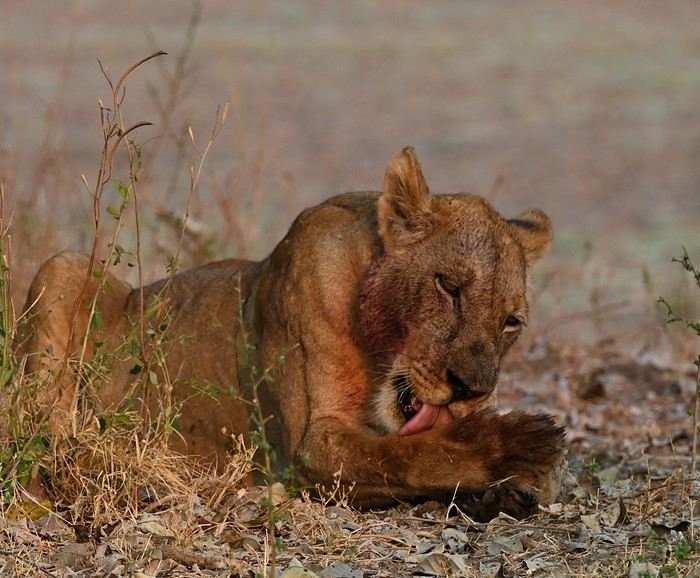

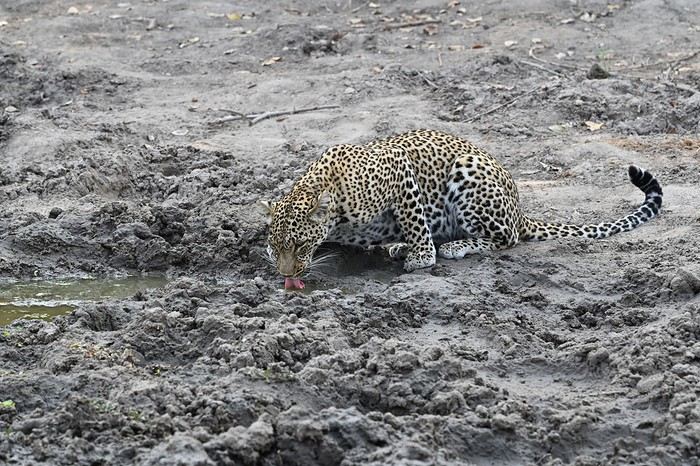
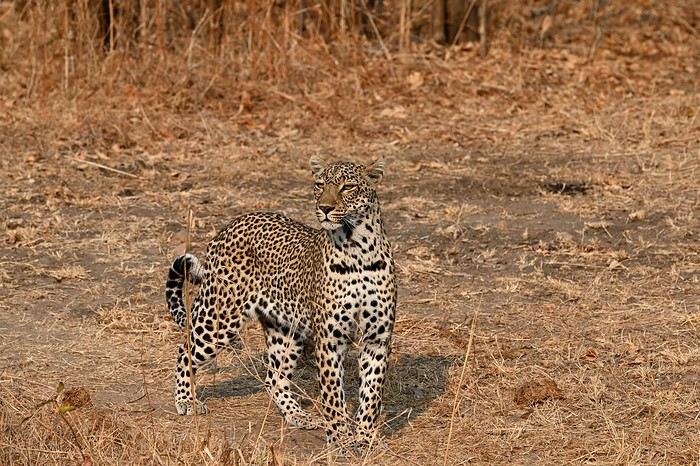
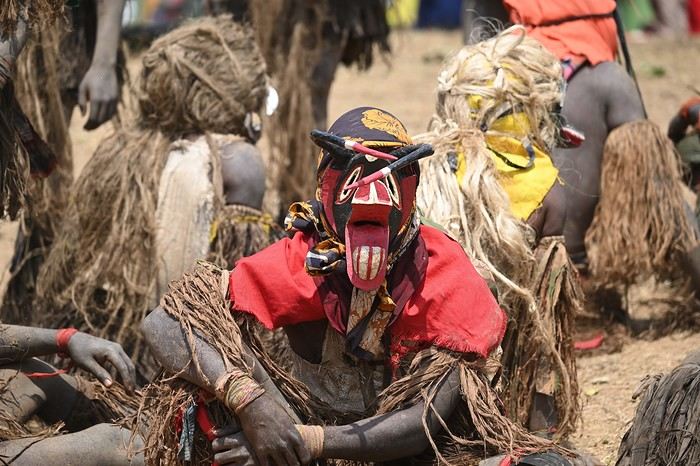
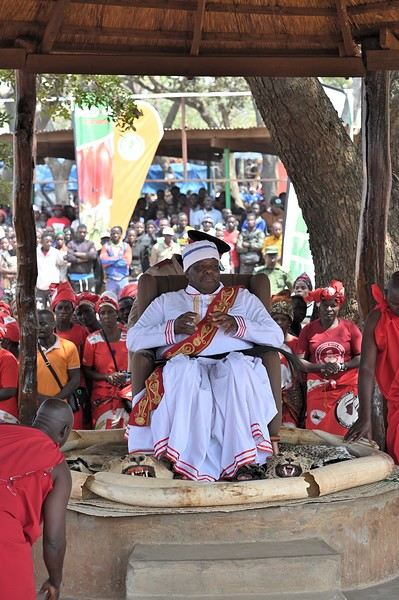
We spent two full days in South Luangwa before heading to Katete for the Kulamba ceremony. Kulamba is an annual event held at the end of August, celebrating the Chewa people, who live across Zambia, Malawi, and Mozambique. The Chewa king attends, and representatives from neighboring nations bring offerings. Thousands gather for dances, speeches, and a massive market. There are few tourists, making it a truly authentic experience.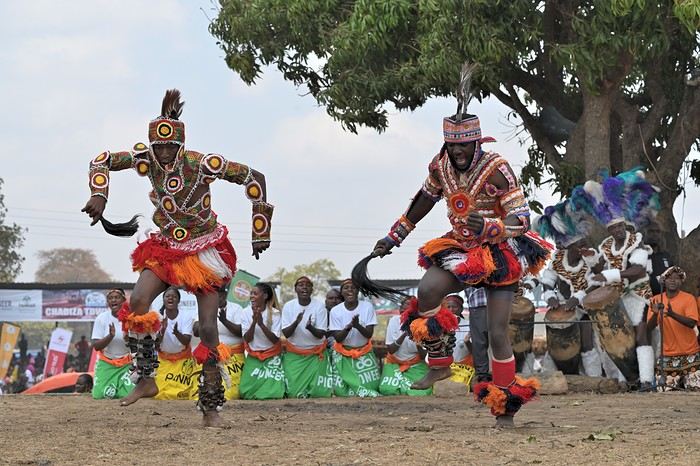
After a few days in Zambia, we returned to Malawi (the border crossing this time was smooth—just 45 minutes). Next stop: Lake Malawi. Lake Malawi covers over 20% of the country and stretches 580 km. It’s home to a family of fish called cichlids, some of which are endemic to the lake. I recommend taking a day trip from Cape Maclear for snorkeling and to watch the fishing eagles swoop down to catch fish.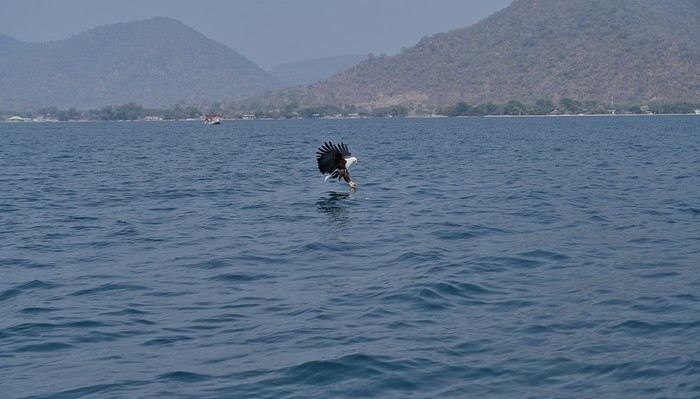
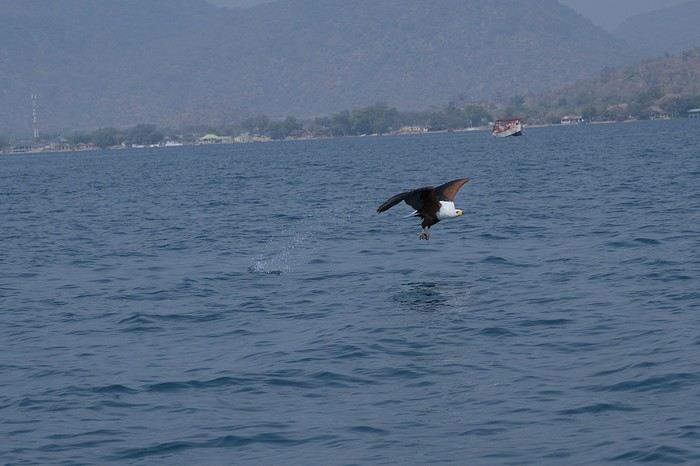
We hit the road again to visit Liwonde Reserve, where we had a few surprises. The lodge was on the other side of the river that borders the park, and the elephants didn’t seem to care. On the way from reception to our rooms, elephants blocked our path, and one even charged just before the stairs leading to our treehouse-style rooms.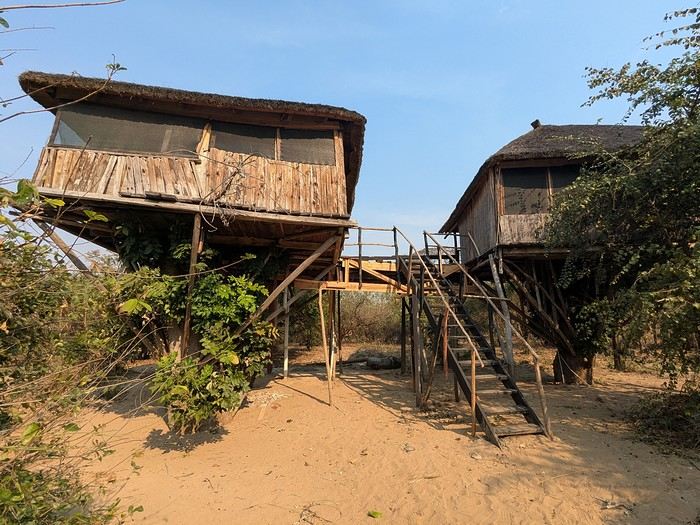
To top it off, monkeys ransacked our rooms, tearing through plastic bags for food. A mixed experience, but no real harm done. Next up: the mountains, specifically the Mulanje Massif. This is where Malawi’s tea is grown, and it’s also a great spot for day hikes or multi-day treks. The scenery is stunning, though sometimes the mist rolls in and hides it. After the mountains, we visited another reserve: Majete. The park is growing and now has more wildlife. We saw lions and even caught a fleeting glimpse of a leopard. And of course, the elephants got involved again—this time giving us a real scare. During the morning game drive with a guide, we stopped to watch a herd of elephants feeding. Everything was fine until, for some reason, a female got spooked—probably for her calf—and positioned herself in front of us on the track. After a few minutes, we thought the elephants would move on, but then a young one started provoking us. The problem? We had females and calves in front of us, but also two large adult males—one behind us and one to the side.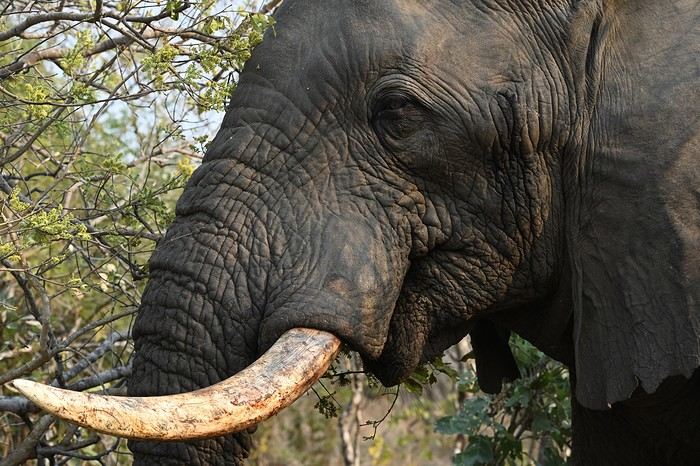 We were trapped, and even our guide looked nervous. After what felt like an eternity (though it was only a few minutes), the herd finally moved on, freeing the track. That afternoon, we did a self-drive safari and—you guessed it—we had zero interest in running into elephants again.
The next day, we headed back to Lilongwe for our flight home. It was a fantastic, varied trip with some intense moments (sometimes *too* intense). Malawi offers amazing opportunities for those who want more than just wildlife reserves.
We visited two countries: Zambia, known for its reserves, and Malawi, which is less well-known but absolutely worth a visit. Our flight landed in Lilongwe, Malawi’s capital, where our vehicle was waiting—though with a 3-hour delay. It was a 4x4 without the rooftop tent this time, since we stayed in lodges (prices are very reasonable in Malawi). Just a heads-up: don’t exchange money at the airport or banks—the official rate was 1,750 Malawian kwacha to $1. On the black market, the rate was between 3,000 and 3,500 kwacha, making the cost of living much cheaper.
With that out of the way, our first stop was South Luangwa National Park in Zambia. The first hiccup came at the Malawi-Zambia border: we were missing a document the rental company had forgotten. After some back-and-forth, they sent it via WhatsApp ($20 to get it validated by the police). But things got worse—the car’s chassis number was off by one digit from the registered one. I thought our trip was over before it even started! After what felt like forever, we got through with a "tip" of $200. Total border crossing time: 3 hours, costing nearly $400. We arrived in South Luangwa after dark.
Thankfully, the next day made up for it with an incredible day in the park (check out the photos).
We spent two full days in South Luangwa before heading to Katete for the Kulamba ceremony. Kulamba is an annual event held at the end of August, celebrating the Chewa people, who live across Zambia, Malawi, and Mozambique. The Chewa king attends, and representatives from neighboring nations bring offerings. Thousands gather for dances, speeches, and a massive market. There are few tourists, making it a truly authentic experience.
After a few days in Zambia, we returned to Malawi (the border crossing this time was smooth—just 45 minutes). Next stop: Lake Malawi. Lake Malawi covers over 20% of the country and stretches 580 km. It’s home to a family of fish called cichlids, some of which are endemic to the lake. I recommend taking a day trip from Cape Maclear for snorkeling and to watch the fishing eagles swoop down to catch fish.
We hit the road again to visit Liwonde Reserve, where we had a few surprises. The lodge was on the other side of the river that borders the park, and the elephants didn’t seem to care. On the way from reception to our rooms, elephants blocked our path, and one even charged just before the stairs leading to our treehouse-style rooms.
To top it off, monkeys ransacked our rooms, tearing through plastic bags for food. A mixed experience, but no real harm done. Next up: the mountains, specifically the Mulanje Massif. This is where Malawi’s tea is grown, and it’s also a great spot for day hikes or multi-day treks. The scenery is stunning, though sometimes the mist rolls in and hides it. After the mountains, we visited another reserve: Majete. The park is growing and now has more wildlife. We saw lions and even caught a fleeting glimpse of a leopard. And of course, the elephants got involved again—this time giving us a real scare. During the morning game drive with a guide, we stopped to watch a herd of elephants feeding. Everything was fine until, for some reason, a female got spooked—probably for her calf—and positioned herself in front of us on the track. After a few minutes, we thought the elephants would move on, but then a young one started provoking us. The problem? We had females and calves in front of us, but also two large adult males—one behind us and one to the side.
We were trapped, and even our guide looked nervous. After what felt like an eternity (though it was only a few minutes), the herd finally moved on, freeing the track. That afternoon, we did a self-drive safari and—you guessed it—we had zero interest in running into elephants again.
The next day, we headed back to Lilongwe for our flight home. It was a fantastic, varied trip with some intense moments (sometimes *too* intense). Malawi offers amazing opportunities for those who want more than just wildlife reserves.Tips for independent stopovers and excursions on a Mediterranean cruise
Hi everyone,
I’m going on a Mediterranean cruise in November and I’m looking for some "tips" to visit the cities of Naples, Messina, and Valletta in Malta without booking the ship’s excursions, which are really expensive.
Thanks so much for your advice and suggestions. We’re a group of 6 people.
Looking forward to hearing from you...
Best,
M
PS: We’re also stopping in Genoa and Barcelona—even though we know these two cities, we’d still love any tips for visiting them! Thanks
PS: We’re also stopping in Genoa and Barcelona—even though we know these two cities, we’d still love any tips for visiting them! Thanks
Road Trip - Canadian West
After exploring Dawson City, the final stop on our incredible road trip to the Yukon (see travel journal), it was time to head back to Quebec.
Instead of returning directly, we took advantage of this cross-country drive to make several stops in British Columbia and Alberta.
This part of the trip allowed us to discover some of the most beautiful attractions in Western Canada, from breathtaking landscapes to iconic natural sites that are must-sees in Canada.
Between majestic mountains, turquoise lakes, and jaw-dropping panoramas, every stop added a memorable touch to this already exceptional adventure.
A wonderful way to wrap up this journey across Canada while fully enjoying the richness and diversity of its vast landscapes.
In the upcoming posts, you’ll discover the highlights that marked our journey through Western Canada.
I invite you to watch the associated videos to fully experience the atmosphere, landscapes, and attractions we were lucky enough to explore.
To navigate to a specific post, here are the appropriate links:
Adventure on the Alaska Highway: Bald Eagles, Bison & Moose Adventure on the Alaska Highway: Bison, Caribou & Bears Yellowhead Highway (Alberta): Roche Miette, Jasper Lake & Emerald Pond Maligne Lake Road (Jasper) | Moose and Elk Exploring Mount Robson Provincial Park (BC) Must-Sees on the Icefields Parkway - Alberta David Thompson Highway11 (AB): A Stunning Scenic Route What to See in Yoho National Park (BC) Johnston Canyon: Hike to the Lower & Upper Falls Iconic Sites of East Kootenay, BC Lundbreck Falls - A Spectacular Waterfall in Southern Alberta Trails of Red Rock Canyon & Blakiston Falls - Waterton Waterton Village Under the Snow - A Unique Place Writing-on-Stone: A Park Famous for Its Hoodoos Red Rock Coulee Natural Area Alberta – A Supernatural Landscape Dinosaur Provincial Park Alberta - Mysterious Badlands Drumheller: Dinos, Hoodoos & Badlands Interpretive Trail Hike at Horsethief Canyon | Drumheller Badlands Red Deer: Public Art & Murals Downtown Calgary | Public Art, Skyline & Iconic Spots Medicine Hat | Public Art & Iconic Spots
Southern landscapes, northern wildlife: returning to South Africa
After a first trip in 2009 (already!) where, roughly, we did a circuit passing through Hazyview, a private reserve in Sabi Sands, Santa Lucia and Isimangaliso, Hluhluwe and the South African part of Kgalagadi Transfrontier Park, then a quick stop in 2013 to go to Lesotho, we wanted to come back to this country.
Why not the Cape region this time, but there was no way we were coming back to this part of the world without going on a safari. Mountain Zebra or the Karoo seem more about landscapes than animals, and Addo doesn’t excite me much either... So it’ll be Kruger.
Flight prices, schedules, and durations led us to a Paris-Cape Town, return Johannesburg-Paris with British Airways, via Heathrow.
Now we just had to figure out how to fit in quite a few things without driving too many kilometers or changing accommodation every day, at least in the Cape region. Here’s what we ended up with:
Arrival in Cape Town on Saturday, October 10 at 11 AM
2 nights in Hermanus
1 night in Franschhoek
2 nights at Mountceder in the Cederberg
3 nights in Hout Bay
Sunday: transition day—flight to Johannesburg, drive toward Kruger, night in Lydenburg.
Kruger: 1 night in Letaba, 2 in Satara, 1 in Lower Sabie.
Last night in Mbombela (formerly Nelspruit) before heading back to the airport for an early evening return flight.
For those who want to read the full story without interruptions, it’s here.
Friday, 10/9
A pretty stressful departure.
First, I woke up in the middle of the night, convinced I’d swapped my first and last names during check-in 🤪... Couldn’t get back to sleep, even though I knew British Airways wouldn’t answer before 9 AM.
Well, for them, everything was fine... but then they started talking about ETA... an ETA for England 😮? ?? Yes, it’s recent. Apparently, you don’t need one for an air-to-air transit... but you never know, it’s better to have it just in case. No one could give me a clear answer that it wasn’t necessary. In the end, we didn’t get it... and we didn’t need it.
But here’s the thing: our flight ended up leaving Paris 45 minutes late (10 minutes due to a schedule change and 35 minutes of actual delay), so our 2-hour layover shrank to 1 hour and 15 minutes. That should be doable, right? The board showed our flight at Gate B: great, it’s right next door! But at Gate B, three employees were just there to tell everyone who showed up that security had to be done at Gate A... and off we went, sprinting through the corridors, endless escalators going up and down, a little shuttle ride, security at Gate A ("You’re going to be cutting it close!" Oh really? 😠), then pretty much the same route back, only to end up just a few dozen meters from where we started! 😠
Boarding was already well underway, and after all that running, we were hot and thirsty, but phew! We made it onto the plane!
Saturday, 10/10 On the other hand, nothing to complain about on this London-Cape Town flight—it arrived early!
I booked a (small) Suzuki S-Presso because it seemed to have a higher ground clearance than its competitors. Unfortunately, we ended up with a Tata Tiago (yes, it exists), which is lower (and also smaller, with an even more sluggish engine... yes, we were able to compare because in Johannesburg, we *did* get an S-Presso). Somehow, we managed to fit everything in the trunk ("Whatever you do, don’t leave anything visible!") and off we went to our first accommodation in Hermanus, under a glorious sun.
Nikki welcomed us warmly, explained what there was to see in the area, and advised us to book a restaurant for that evening.
After dropping off our bags, we headed to the "cliff path," just 3 minutes from our place. This part of the coast is famous for its southern right whales from June to November. Let’s cut to the chase: there *were* whales, but they were very far away and very sleepy 😕. At best, we saw (photos taken at 600mm): A few ripples or a faint spray,
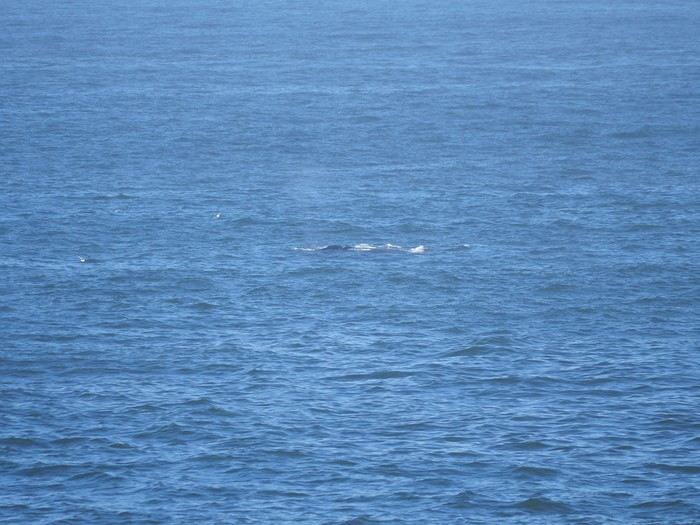
a bit of tail...
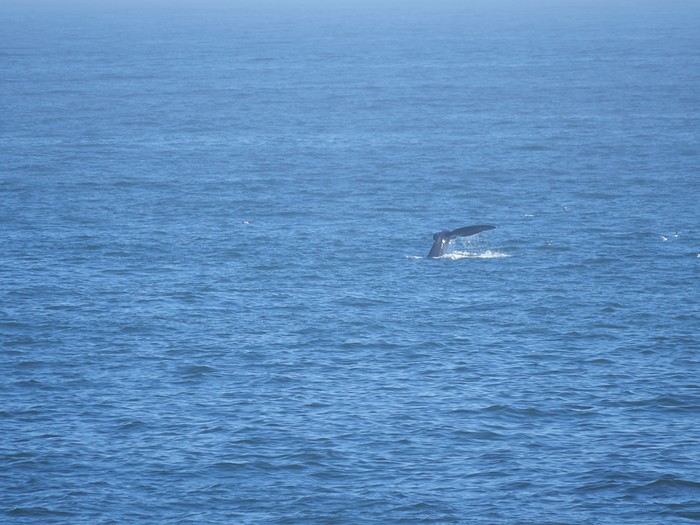
...or a bit of head.
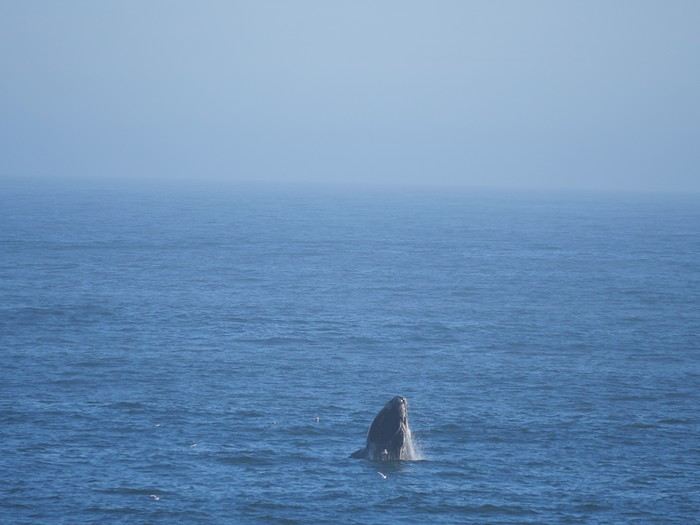
Too bad—the owner of our next accommodation told us she’d seen around thirty of them up close here in early September.
With no whales in sight, the dassies (or rock hyraxes) were everywhere... and fun to watch.
The other local star (when there are no whales 😏)
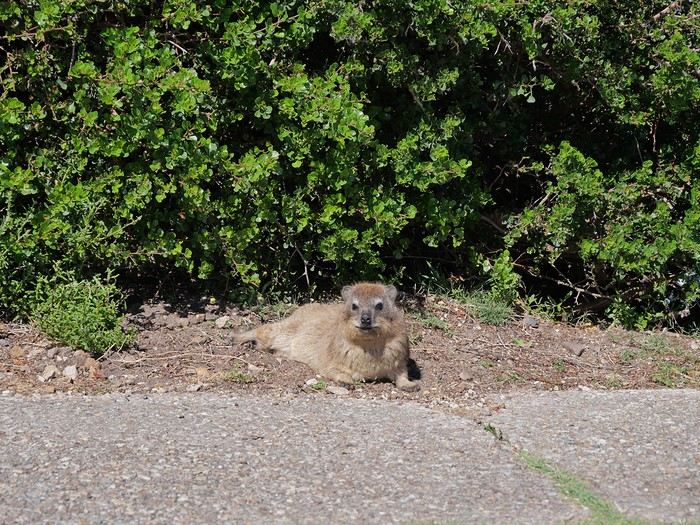
Why not the Cape region this time, but there was no way we were coming back to this part of the world without going on a safari. Mountain Zebra or the Karoo seem more about landscapes than animals, and Addo doesn’t excite me much either... So it’ll be Kruger.
Flight prices, schedules, and durations led us to a Paris-Cape Town, return Johannesburg-Paris with British Airways, via Heathrow.
Now we just had to figure out how to fit in quite a few things without driving too many kilometers or changing accommodation every day, at least in the Cape region. Here’s what we ended up with:
Arrival in Cape Town on Saturday, October 10 at 11 AM
2 nights in Hermanus
1 night in Franschhoek
2 nights at Mountceder in the Cederberg
3 nights in Hout Bay
Sunday: transition day—flight to Johannesburg, drive toward Kruger, night in Lydenburg.
Kruger: 1 night in Letaba, 2 in Satara, 1 in Lower Sabie.
Last night in Mbombela (formerly Nelspruit) before heading back to the airport for an early evening return flight.
For those who want to read the full story without interruptions, it’s here.
Friday, 10/9
A pretty stressful departure.
First, I woke up in the middle of the night, convinced I’d swapped my first and last names during check-in 🤪... Couldn’t get back to sleep, even though I knew British Airways wouldn’t answer before 9 AM.
Well, for them, everything was fine... but then they started talking about ETA... an ETA for England 😮? ?? Yes, it’s recent. Apparently, you don’t need one for an air-to-air transit... but you never know, it’s better to have it just in case. No one could give me a clear answer that it wasn’t necessary. In the end, we didn’t get it... and we didn’t need it.
But here’s the thing: our flight ended up leaving Paris 45 minutes late (10 minutes due to a schedule change and 35 minutes of actual delay), so our 2-hour layover shrank to 1 hour and 15 minutes. That should be doable, right? The board showed our flight at Gate B: great, it’s right next door! But at Gate B, three employees were just there to tell everyone who showed up that security had to be done at Gate A... and off we went, sprinting through the corridors, endless escalators going up and down, a little shuttle ride, security at Gate A ("You’re going to be cutting it close!" Oh really? 😠), then pretty much the same route back, only to end up just a few dozen meters from where we started! 😠
Boarding was already well underway, and after all that running, we were hot and thirsty, but phew! We made it onto the plane!
Saturday, 10/10 On the other hand, nothing to complain about on this London-Cape Town flight—it arrived early!
I booked a (small) Suzuki S-Presso because it seemed to have a higher ground clearance than its competitors. Unfortunately, we ended up with a Tata Tiago (yes, it exists), which is lower (and also smaller, with an even more sluggish engine... yes, we were able to compare because in Johannesburg, we *did* get an S-Presso). Somehow, we managed to fit everything in the trunk ("Whatever you do, don’t leave anything visible!") and off we went to our first accommodation in Hermanus, under a glorious sun.
Nikki welcomed us warmly, explained what there was to see in the area, and advised us to book a restaurant for that evening.
After dropping off our bags, we headed to the "cliff path," just 3 minutes from our place. This part of the coast is famous for its southern right whales from June to November. Let’s cut to the chase: there *were* whales, but they were very far away and very sleepy 😕. At best, we saw (photos taken at 600mm): A few ripples or a faint spray,
a bit of tail...
...or a bit of head.
Too bad—the owner of our next accommodation told us she’d seen around thirty of them up close here in early September.
With no whales in sight, the dassies (or rock hyraxes) were everywhere... and fun to watch.
The other local star (when there are no whales 😏)
South Africa with family (Kruger / Cape Town) - summer 2027 itinerary
Hi everyone,
I’m in the middle of planning our summer vacation (August 2027) with my family—two kids aged 4.5 (turning 5 in October 2027) and 9.5—and we’re leaning more and more toward South Africa, which seems to fit our budget. Here’s the itinerary we’ve put together:
Day 1 – 3: Arrival in Johannesburg at 10:30 AM. Head to Blyde River Canyon (4.5-hour drive). Activities: Panorama Route (God’s Window, Bourke’s Luck Potholes, Three Rondavels). 2 nights in Blyde River Canyon.
Day 4 – 7: Kruger National Park (2-hour drive) Activities: Self-drive safaris, pool time for the kids (weather permitting at this time of year). 4 nights in Satara and Skukuza/Lower Sabie (2 nights each).
Day 8 – 11: St Lucia and the Zulu Coast (6-hour drive—transition day) Activities: 2-hour estuary cruise among hippos and crocodiles, whale-watching boat trip (humpback whales), Zulu cultural immersion (Indlamu dances and traditional meal), Hluhluwe-iMfolozi Reserve (chance to see rhinos). 4 nights.
Day 12 – 15: Drakensberg (5-hour drive) Activities: On the way, the Dlinza Forest Aerial Boardwalk in Eshowe (1h15 from St Lucia), family-friendly hikes and waterfalls at the foot of basalt cliffs, Falcon Ridge raptor show, and Moments reptile farm. Relaxing mountain time (with an extra day in case of bad weather). 4 nights in Champagne Valley.
Day 16 - 19: Travel from Drakensberg to Durban Airport (2h45 drive) for a flight to Cape Town. Activities: Stop at the Nelson Mandela Capture Site and Howick Falls. Domestic flight from Durban to Cape Town (2h15). Activities: Cable car up Table Mountain, Robben Island excursion (ferry + prison tour and Mandela’s cell, if suitable for kids), day at Boulders Beach (penguins), then Cape of Good Hope and Chapman’s Peak coastal drive. Bad-weather alternative: Two Oceans Aquarium at the Waterfront and a stroll along the harbor. Anything else in the area? We’ll have a car. 4 nights in Cape Town.
Day 20: Final day and return flight (departure at 6:25 PM) Activities: Morning at the Boomslang treetop walkway in Kirstenbosch Gardens. Head to the airport around 2:30/3:00 PM.
What do you think?
Thanks,
List of Light Trails in Paris and Île-de-France 2026
Hi everyone,
I’m planning a tour of the light trails in Paris and Île-de-France this winter. I’ve compiled the events still running or coming up for the 2026–2027 season, with dates, times, and prices. Maybe this’ll help others!
In Paris L’Odyssée Lumineuse — Parc floral, Paris 12th From November 14, 2026, to January 24, 2027. 5:30 PM to 10:00 PM, last entry at 9:30 PM. Note: several closures during the week. Dated ticket: 13 € adult / 11 € child aged 3 to 12; free for under 3s. On the program: giant lanterns, illuminated fountains, and northern lights effects.
Nuits Indiennes — Jardin d’Acclimatation, Paris 16th From November 27, 2026, to February 21, 2027. 6:00 PM to 9:30 PM, last entry at 9:00 PM. Closed Mondays and Tuesdays outside Zone C school holidays. Announced prices: 18 € adult / 12 € child. A trail around India, with around 2,000 lanterns and light sculptures.
In Seine-et-Marne — 77 Lumigny Safari de Lumières — Lumigny-Nesles-Ormeaux From October 15, 2026, to January 3, 2027. 6:00 PM to 10:00 PM, last entry at 8:30 PM. Thursday to Sunday outside school holidays, with more dates during the holidays. Closed December 24, 25, and 31, as well as January 1. Night trail only: 16.90 € for ages 11+ / 14.90 € for ages 3 to 10; free for under 3s. Lanterns on themes of the deep sea, animals, and fantastical creatures.
Le Grand Noël de Vaux-le-Vicomte — Maincy From November 14, 2026, to January 3, 2027, according to the schedule. Generally from 10:30 AM to 8:00 PM, with some evenings until 9:00 PM. Reduced hours on December 24 and 31; closed December 25 and January 1. Château + gardens: from 25.90 € adult / 20.90 € child aged 3 to 17. Higher prices on weekends and during holidays. This isn’t a lantern festival *per se*: more of a visit to the decorated château and gardens, with illuminations and projections on the façade.
In Yvelines — 78 Thoiry Lumières Sauvages — Thoiry From October 17, 2026, to March 7, 2027, according to the schedule. Generally from 5:00 PM to 9:00 PM, last entry at 8:00 PM, but hours vary by date. Night trail only: 23 € adult, or 25 € from December 19 to January 2; 19 € child aged 3 to 10. Nearly 3 km of walking among light sculptures, on the theme “In the Footsteps of Pachamama.”
La Nuit des Géants — France Miniature, Élancourt From November 28, 2026, to January 3, 2027, according to the schedule. Entry slots from 5:30 PM, with last entries at 8:30 PM or 9:00 PM depending on the period. Tickets start at 18 €; prices vary by date and category. A new light trail among miniature monuments, showcasing Christmas traditions from French regions.
One extra one-off event Parade lumineuse des Allebrilles — La Villette, Paris 19th December 5, 2026, free. Check the time. A procession of light creatures and puppets, rather than a trail open all winter.
Prices are based on the info I gathered, but it’s best to check the schedule and session prices on each official site before heading out.
I’d also like to film these outings to prepare a recap video for YouTube. If anyone’s already done these trails with a camera or stabilizer, I’d love your feedback: how was the equipment welcome, crowd levels, ability to stop and film? I’m also checking with the organizers about broadcasting permissions.
Know any others like this in Île-de-France, or have feedback on these?
Staircases. Photo contest theme for May 2026.
Hello
This month’s photo contest theme for May 2026 is "Staircases"
Plural or singular? Does it really matter as long as you’re told you’ve gone up or down them well?
Anyway, it’s not that complicated, even though I’m sure some will manage to overcomplicate it—after all, why keep things simple when making them complicated is so much more fun (as an Indian proverb goes).
To participate: Submit your photos until Monday, May 25 at 11:59 PM You can post up to 3 photos, numbered and shared in separate messages, along with a short description of the location and the story behind it.
To vote: From Tuesday, May 26 at 12:01 AM until Saturday, May 30 at 11:59 PM After the deadline, it’s too late.
Please include the photo number, username, and the points awarded: Photo #1 = 3 pts Photo #2 = 2 pts Photo #3 = 1 pt
All VF members can vote (even those who didn’t submit photos). In case of a tie for first place, the winning photo will be the one with the most first-place votes, then second-place votes! The lucky winner will get to organize June 2026’s photo contest.
For discussions about the theme, click here: Discussion thread for May 2026’s theme: Staircases
Planning a 15-day trip to northern Morocco
Hi there, 🙂
This autumn’s trip should be in Morocco—barring any geopolitical issues between now and then.
After many trips to the south of Fès, I’m giving the north a try.
My plan is roughly to do a road trip loop from Rabat back to Rabat, passing through Asilah, Tangier, Tétouan, Chefchaouen, Akchour, Fès, Meknès, and Volubilis.
That’s a lot of cities. Probably a bit too many for our taste—we usually prefer more isolated spots...
So I’m looking for tips on little backroads, secluded beaches, half-day hikes, and offbeat places.
If you’ve also got recommendations for accommodation... (We’re open to splurging over 100 € if it’s a real favorite.)
Feel free to think outside the box—this is an open-ended plan! !😉
Thanks
Storm in the Canary Islands
15 days across Gran Canaria, El Hierro, and a dash of Tenerife under the storm Thérèse!
The planned itinerary will be slightly disrupted...
(The version without discussions is here)
The planned itinerary will be slightly disrupted...
(The version without discussions is here)