Results for "Peak+|+9+>+228"
2533 results found.
Conseils pour voyage de 4 semaines en Australie English translation pending
Salut à tous,
Congés négociés vendredi + destination choisie ce matin = organisation à l'arrache. 🙂 Mais bon, ça serait dommage de faire simple quand on peut faire ....
Je souhaites donc partir en Australie pour 4 semaines début Mars. J'ai rapidement feuilleté le Lonely aujourd'hui et .... c'est grand l'Australie ! J'espère donc glaner ici quelques infos pour me concocter un petit voyage sympa.
1) La compagnie ! Y-en a plusieurs ... Je compte arriver à Sydney. Gagne-t-on vraiment à prendre un vol Quantas pour profiter des pass locaux ? Sinon la Malaysian Airlines m'a l'air pas mal, z'êtes d'accord ?
2) J'envisageais un passage vers Cairns pour des randos dans l' "arrière-pays" ("Rainforest"). Le mois de Mars est-il (encore) trop pluvieux pour ce type de randos?
3) Les méduses ! Traînent-elles du du côté des plages de la côte Est (de Cairns à Sydney)? J'ai quand même envie de profiter de la plage et de la grande barrière ...
4) La Tasmanie, c'est sûr, c'est bien au Sud. Est-ce trop tard pour des randos sur place (trop froid, trop pluvieux) ?
5) Le Centre Rouge .... rien que le nom et le mystère est déjà là.🙂 J'ai un objectif (peut-être utopique): profiter des merveilles du coin (rando dans les McDonnell Ranges, Uluru) sans pour autant suivre des hordes de touriste. Y-en a-t-il un(e) parmi vous qui détienne le secret ?
6) Pour l'instant je voyage seul. Mais c'est aussi sympa de pouvoir partager les frais et les expériences. Trouve-t-on facilement des routards ou backpackers dans les auberges de jeunesse pour organiser une sortie / rando / visite, une fois arrivé dans un coin.
Bon, je m'arrête là car sinon, j'y serai encore demain....
En tout cas, je passerai sur Sydney ... donc si un soir y en a qui veulent des nouvelles fraîches du pays ou juste boire un coup, je paie ma tournée (limite fixée par mon banquier qui rit jaune ... déjà) 😉
Merci à vous et surtout bon voyage !
Pilou
Congés négociés vendredi + destination choisie ce matin = organisation à l'arrache. 🙂 Mais bon, ça serait dommage de faire simple quand on peut faire ....
Je souhaites donc partir en Australie pour 4 semaines début Mars. J'ai rapidement feuilleté le Lonely aujourd'hui et .... c'est grand l'Australie ! J'espère donc glaner ici quelques infos pour me concocter un petit voyage sympa.
1) La compagnie ! Y-en a plusieurs ... Je compte arriver à Sydney. Gagne-t-on vraiment à prendre un vol Quantas pour profiter des pass locaux ? Sinon la Malaysian Airlines m'a l'air pas mal, z'êtes d'accord ?
2) J'envisageais un passage vers Cairns pour des randos dans l' "arrière-pays" ("Rainforest"). Le mois de Mars est-il (encore) trop pluvieux pour ce type de randos?
3) Les méduses ! Traînent-elles du du côté des plages de la côte Est (de Cairns à Sydney)? J'ai quand même envie de profiter de la plage et de la grande barrière ...
4) La Tasmanie, c'est sûr, c'est bien au Sud. Est-ce trop tard pour des randos sur place (trop froid, trop pluvieux) ?
5) Le Centre Rouge .... rien que le nom et le mystère est déjà là.🙂 J'ai un objectif (peut-être utopique): profiter des merveilles du coin (rando dans les McDonnell Ranges, Uluru) sans pour autant suivre des hordes de touriste. Y-en a-t-il un(e) parmi vous qui détienne le secret ?
6) Pour l'instant je voyage seul. Mais c'est aussi sympa de pouvoir partager les frais et les expériences. Trouve-t-on facilement des routards ou backpackers dans les auberges de jeunesse pour organiser une sortie / rando / visite, une fois arrivé dans un coin.
Bon, je m'arrête là car sinon, j'y serai encore demain....
En tout cas, je passerai sur Sydney ... donc si un soir y en a qui veulent des nouvelles fraîches du pays ou juste boire un coup, je paie ma tournée (limite fixée par mon banquier qui rit jaune ... déjà) 😉
Merci à vous et surtout bon voyage !
Pilou
Trinidad et Tobago via Paramaribo (pour les Guyanais) English translation pending
Habitants à St-Laurent en Guyane française, Virginie et moi souhaitons partir sur les îles aux soleil et se baigner dans la mer bleu des Caraïbes. Il se trouve que tous les vols pour les Antilles françaises sont hyper cher et de plus, complets. Nous voilà donc en début de mois de décembre et nous n’avons toujours pas de destination en vue pour occuper nos vacances du 20 au 26 décembre 2003. A l’agence de St Laurent, on nous propose un vol pour Trinidad depuis Paramaribo. Sans trop réfléchir, on achète le billet.
Il nous faut donc faire nos visa multiple pour le transit via le Surinam. Il faut effectivement un visa multiple car on fait une entrée/sortie dans le sens aller et une entrée/sortie dans le sens retour. Attention, pour obtenir un visa multiple (valable 6 mois) il ne faut pas que votre passeport expire dans les 6 mois à compter de la date de demande du visa. Hélas, le passeport de Virginie expire le 24 février 2004. Elle fait donc un single visa pour l’aller depuis la Guyane et devra en faire un autre pour le retour depuis l’ambassade du Suriname à Port-of-Spain.
Samedi 20 décembre :
Traversée du Maroni en pirogue, 5 €. On arrive à Albina, c’est la cohue : les rabatteurs pour taxi nous sautent littéralement dessus, nous arrachent quasiment les sacs des mains pour les placer dans le taxi de leur copain… Bref, le piroguier nous branche avec son pote taxi, on monte dans la voiture, on va à la douane faire tamponner les visas puis on trace vers Paramaribo. Le taxi roule très très vite, il fait des pointes à 160 km/h, freine au dernier moment, évite les trous de justesses (mais lui au moins, il les évite, ce n’est pas le cas de son confrère dans le sens retour le 26 déc.) de cette route défoncée. Au bout de 2 heures, après avoir fait du change, nous voici à Paramaribo, on est samedi, tout est fermé. Le taxi nous lâche à l’hôtel Nobre, après nous avoir délesté de 30€ pour la course (c’est normalement 40€ pour la voiture, mais comme il a fait monté un pote à lui à Albina, il nous a pris que 30). L’hôtel est un peu cagneux, mais ça reste acceptable, vu le prix (70000 Gulden soit 20 €).
Dimanche 21 décembre :
Levé très tôt (3h30), on chope un taxi devant l’hôtel Nobre sans aucun mal (peut-être a-t-on eu de la chance ?) sur les coups de 4h30 du matin. Compter 45 minutes à une heure et 70000 Gulden (20€) pour rejoindre l’aéroport international Zanderij. A l’aéroport, on croise quelques St-Laurentais. Formalités de douanes, on grimpe dans l’avion, 1h15 plus tard, on atterrit à Port-of-Spain, capitale de Trinidad et Tobago. Il pleut salement. Comme on doit passer demain à l’ambassade du Surinam pour le single visa de Virginie, on choisi de rester sur Port-of-Spain cette nuit. Après avoir longuement tournoyé dans Port-of-Spain à la recherche d’un hôtel sympa, on tombe sur PEAK – YACHT SERVICES (55 $US la chambre double) à Chaguaramas. Il s’agit d’un port de plaisance privé. Hormis regarder les bateaux, il n’y a rien à faire dans ce coin là. On pensait pouvoir s’y baigner, mais la couleur de l’eau ne s’y prête pas. On profite d’une accalmie de pluie pour aller se balader en centre ville, sans trop savoir on atterrit dans Charlotte street – rien d’extraordinaire. On revient avant la nuit pour des questions de sécurité comme on nous l’a conseillé. Concernant la restauration, les 2 repas pris au Restaurant de chez PEAK ne sont pas exceptionnels, mais acceptables pour le prix (respectivement 110 TTD et 130 TTD ce qui fait environ 17€ et 19€).
Lundi 22 décembre :
Le Taxi d’hier vient nous chercher à PEAK comme convenu et nous amène au consulat du Surinam pour faire le single visa de Virginie, puis à la banque du consulat du Suriname pour payer le single visa (40$US) par virement (ce n’est pas pratique mais c’est comme ça).
Quand tout cela est fait, c’est à dire vers 11h00, on file vers Blanchisseuse, petit village sur la côte nord de Trinidad qu’on nous a recommandé pour son calme et sa beauté. Arrivé là bas, au terme d’une heure de route (très jolis paysages), on arrive dans Blanchisseuse. On va chez Almond Brooks, mais il y n’a personne. Le taxi insiste alors pour nous trouver une autre guest house, on tourne, on téléphone… Devant tant de bonne volonté de la part du taxi, on ne peut qu’accepter ses services. Au bout d’une heure, on trouve Second Spring, très belle guest house tenue par une française vraiment sympa (réservations possibles et conseillées sur www.secondspringtnt.com). On règle le taxi, la course annoncée au départ à 300 TTD nous coûte finalement 460 TTD (commercial ce taxi !). On déjeune chez Surf’s Country Inn, mais le repas est relativement décevant pour le prix. Le soir, on dinera chez Tandys, c’est bien mieux et moins cher. Il s’agit d’un tout petit boui-boui créole, il faut réserver avant d’y aller. Sinon, pour ce qui est de la plage de Blanchisseuse, la mer était relativement agitée lors de notre passage, par conséquent on ne s’est pas baigné. Ayant fait le tour du village, on décide de partir demain pour Tobago à la recherche de sable fin et d’eau turquoise.
Mardi 23 décembre :
On monte dans le pick up du livreur de journaux, il nous déposera à Port-of-Spain au départ du ferry car tous les vols pour Tobago sont complets aujourd’hui. On achète nos billets, on monte dans le bateau… puis on apprend qu’il n’y a pas de bateau les 24, 25 et 26 décembre à cause des fêtes. Ne sachant pas comment revenir sur Port-of-Spain pour prendre notre retour vers Paramaribo le 26 décembre, on décide de quitter le bateau. On file, à pied, en centre ville vers la BWIA afin de trouver un vol A/R vers Tobago pour demain. Il se trouve que tout les vols sont pleins pour la semaine, le moral est au plus bas. On décide alors d’aller à l’aéroport de Port-of-Spain et de s’inscrire sur les places « Stand-by ». C’est une liste d’attente qui permet de prendre les places éventuelles des personnes qui ont réservé leur vol mais qui ne se présentent pas à l’enregistrement. Il y a une douzaine de vol par jour en ce moment, ce qui offre pas mal de chance… cela dit, beaucoup de personnes sont également en stand by. Durant l’attente, on sympathisera avec un couple de « Tobagonians », Raquel et Mickëal. Ils ont pris un vol ce matin depuis Tobago pour faire un peu de shopping de noël dans Port-of-Spain. Ils se retrouvent bloqués, comme nous, alors qu’ils avaient prévu de rester seulement la journée. Bref, vers 22h30, après 5 heures d’attentes, nous voilà enfin dans l’avion, 15 minutes de vol suffiront pour arriver à Tobago. Raquel et Mickëal nous drive jusqu’à Banana quit, la guest house que Raquel nous a trouvé au terme de nombreux coups de fil sur son portable durant l’attente à l’aéroport à Port-of-Spain. Il se trouve que Banana Quit est fermé et que tout le monde dort. Raquel et Mickëal nous déposent alors à l’hôtel Indigo, il est à peu près minuit. L’hôtel est très sympas, la chambre annoncée au départ à 90$US tombe finalement à 60$US après un peu de négociation. On prend la chambre.
Mercredi 24décembre au vendredi 26 décembre – Crow Point :
On prend un taxi vers Crown Point, pour rejoindre Banana quit, la guest où on aurait dû atterrir hier soir. Le rapport qualité/prix est indéniable, 40$US, piscine privé (on en profitera pas une seule fois), studio avec kitchenette et salle de bain très correcte, tout ça à 5 minutes à pied depuis l’aéroport. On y reste jusqu’au 26 décembre.
Il se trouve que la zone de Crown Point est très touristique, cependant, il y a possibilité de trouver des plages de sable fin désertes en fouinant un peu. Evitez (Fuiez !!!) Pigeon Point, l’accès à la plage est payant, c’est bourré de touristes, ce n’est pas particulièrement beau, et les gens ne sont guère habitués à dire bonjour, merci, au revoir. Store Bay est plutôt sympa car accessible à pied depuis la guest, et peu de monde sur le côté gauche de la plage.
Un truck à faire, vraiment sympa, se faire déposer à Mt Irvine bay, ne pas y rester car trop touristique. Longer la côté en direction de Stone Heaven Bay. Un sentier longe la plage, passe un peu dans la forêt, puis retombe sur la plage - 20 minutes de marche pour accéder au paradis : Back Bay. La plage est longue, déserte, le sable est fin, l’eau est claire. C’est tout simplement le top ! Plusieurs personnes nous avaient averti qu’il y avait des risques de se faire voler les sacs pendant qu’on se baigne (les voleurs surgissent des bois, dérobent les sacs et repartent d’où ils sont venus) mais aucun problème pour nous. On croisera quelques locaux qui viennent se baigner une petite heure et repartent. A midi, on va manger dans un snack à Stone Heaven Bay, plage également touristique à éviter. Puis on revient à notre plage favorite où on passera le reste de la journée, vraiment le top.
Point de vue restaurant sur Crow Point, on a testé le Pelican Reef et le RU-B-Lou’S. Ni l’un ni l’autre n’est vraiment transcendant vu le prix, mais c’est quand même de qualité vu ce qu’on a mangé jusqu’à maintenant.
Voilà pour nos aventures à Trinidad et Tobago.
Pour le retour sur Paramaribo, on a dormi à l’hôtel Savhana (situé pas loin du luxueux Torarica) que je déconseille. On avait un grand lit… mais un petit drap. Les odeurs de remontées d’égouts un peu envahissantes… tout ça pour 93000 Gulden (30€). Le retour vers Albina en taxi, un peu mouvementé à cause des trous dans la route, nous coûtera 35 € (payé en Euro) pour 2. La pirogue pour traverser le Maroni nous coûtera 5 € par personne.
Ne pas hésiter à nous contacter par mail pour des renseignements complémentaires. Il nous reste un peu de documentation sur Trinidad et Tobago si vous êtes sur St-Laurent.
A+
Il nous faut donc faire nos visa multiple pour le transit via le Surinam. Il faut effectivement un visa multiple car on fait une entrée/sortie dans le sens aller et une entrée/sortie dans le sens retour. Attention, pour obtenir un visa multiple (valable 6 mois) il ne faut pas que votre passeport expire dans les 6 mois à compter de la date de demande du visa. Hélas, le passeport de Virginie expire le 24 février 2004. Elle fait donc un single visa pour l’aller depuis la Guyane et devra en faire un autre pour le retour depuis l’ambassade du Suriname à Port-of-Spain.
Samedi 20 décembre :
Traversée du Maroni en pirogue, 5 €. On arrive à Albina, c’est la cohue : les rabatteurs pour taxi nous sautent littéralement dessus, nous arrachent quasiment les sacs des mains pour les placer dans le taxi de leur copain… Bref, le piroguier nous branche avec son pote taxi, on monte dans la voiture, on va à la douane faire tamponner les visas puis on trace vers Paramaribo. Le taxi roule très très vite, il fait des pointes à 160 km/h, freine au dernier moment, évite les trous de justesses (mais lui au moins, il les évite, ce n’est pas le cas de son confrère dans le sens retour le 26 déc.) de cette route défoncée. Au bout de 2 heures, après avoir fait du change, nous voici à Paramaribo, on est samedi, tout est fermé. Le taxi nous lâche à l’hôtel Nobre, après nous avoir délesté de 30€ pour la course (c’est normalement 40€ pour la voiture, mais comme il a fait monté un pote à lui à Albina, il nous a pris que 30). L’hôtel est un peu cagneux, mais ça reste acceptable, vu le prix (70000 Gulden soit 20 €).
Dimanche 21 décembre :
Levé très tôt (3h30), on chope un taxi devant l’hôtel Nobre sans aucun mal (peut-être a-t-on eu de la chance ?) sur les coups de 4h30 du matin. Compter 45 minutes à une heure et 70000 Gulden (20€) pour rejoindre l’aéroport international Zanderij. A l’aéroport, on croise quelques St-Laurentais. Formalités de douanes, on grimpe dans l’avion, 1h15 plus tard, on atterrit à Port-of-Spain, capitale de Trinidad et Tobago. Il pleut salement. Comme on doit passer demain à l’ambassade du Surinam pour le single visa de Virginie, on choisi de rester sur Port-of-Spain cette nuit. Après avoir longuement tournoyé dans Port-of-Spain à la recherche d’un hôtel sympa, on tombe sur PEAK – YACHT SERVICES (55 $US la chambre double) à Chaguaramas. Il s’agit d’un port de plaisance privé. Hormis regarder les bateaux, il n’y a rien à faire dans ce coin là. On pensait pouvoir s’y baigner, mais la couleur de l’eau ne s’y prête pas. On profite d’une accalmie de pluie pour aller se balader en centre ville, sans trop savoir on atterrit dans Charlotte street – rien d’extraordinaire. On revient avant la nuit pour des questions de sécurité comme on nous l’a conseillé. Concernant la restauration, les 2 repas pris au Restaurant de chez PEAK ne sont pas exceptionnels, mais acceptables pour le prix (respectivement 110 TTD et 130 TTD ce qui fait environ 17€ et 19€).
Lundi 22 décembre :
Le Taxi d’hier vient nous chercher à PEAK comme convenu et nous amène au consulat du Surinam pour faire le single visa de Virginie, puis à la banque du consulat du Suriname pour payer le single visa (40$US) par virement (ce n’est pas pratique mais c’est comme ça).
Quand tout cela est fait, c’est à dire vers 11h00, on file vers Blanchisseuse, petit village sur la côte nord de Trinidad qu’on nous a recommandé pour son calme et sa beauté. Arrivé là bas, au terme d’une heure de route (très jolis paysages), on arrive dans Blanchisseuse. On va chez Almond Brooks, mais il y n’a personne. Le taxi insiste alors pour nous trouver une autre guest house, on tourne, on téléphone… Devant tant de bonne volonté de la part du taxi, on ne peut qu’accepter ses services. Au bout d’une heure, on trouve Second Spring, très belle guest house tenue par une française vraiment sympa (réservations possibles et conseillées sur www.secondspringtnt.com). On règle le taxi, la course annoncée au départ à 300 TTD nous coûte finalement 460 TTD (commercial ce taxi !). On déjeune chez Surf’s Country Inn, mais le repas est relativement décevant pour le prix. Le soir, on dinera chez Tandys, c’est bien mieux et moins cher. Il s’agit d’un tout petit boui-boui créole, il faut réserver avant d’y aller. Sinon, pour ce qui est de la plage de Blanchisseuse, la mer était relativement agitée lors de notre passage, par conséquent on ne s’est pas baigné. Ayant fait le tour du village, on décide de partir demain pour Tobago à la recherche de sable fin et d’eau turquoise.
Mardi 23 décembre :
On monte dans le pick up du livreur de journaux, il nous déposera à Port-of-Spain au départ du ferry car tous les vols pour Tobago sont complets aujourd’hui. On achète nos billets, on monte dans le bateau… puis on apprend qu’il n’y a pas de bateau les 24, 25 et 26 décembre à cause des fêtes. Ne sachant pas comment revenir sur Port-of-Spain pour prendre notre retour vers Paramaribo le 26 décembre, on décide de quitter le bateau. On file, à pied, en centre ville vers la BWIA afin de trouver un vol A/R vers Tobago pour demain. Il se trouve que tout les vols sont pleins pour la semaine, le moral est au plus bas. On décide alors d’aller à l’aéroport de Port-of-Spain et de s’inscrire sur les places « Stand-by ». C’est une liste d’attente qui permet de prendre les places éventuelles des personnes qui ont réservé leur vol mais qui ne se présentent pas à l’enregistrement. Il y a une douzaine de vol par jour en ce moment, ce qui offre pas mal de chance… cela dit, beaucoup de personnes sont également en stand by. Durant l’attente, on sympathisera avec un couple de « Tobagonians », Raquel et Mickëal. Ils ont pris un vol ce matin depuis Tobago pour faire un peu de shopping de noël dans Port-of-Spain. Ils se retrouvent bloqués, comme nous, alors qu’ils avaient prévu de rester seulement la journée. Bref, vers 22h30, après 5 heures d’attentes, nous voilà enfin dans l’avion, 15 minutes de vol suffiront pour arriver à Tobago. Raquel et Mickëal nous drive jusqu’à Banana quit, la guest house que Raquel nous a trouvé au terme de nombreux coups de fil sur son portable durant l’attente à l’aéroport à Port-of-Spain. Il se trouve que Banana Quit est fermé et que tout le monde dort. Raquel et Mickëal nous déposent alors à l’hôtel Indigo, il est à peu près minuit. L’hôtel est très sympas, la chambre annoncée au départ à 90$US tombe finalement à 60$US après un peu de négociation. On prend la chambre.
Mercredi 24décembre au vendredi 26 décembre – Crow Point :
On prend un taxi vers Crown Point, pour rejoindre Banana quit, la guest où on aurait dû atterrir hier soir. Le rapport qualité/prix est indéniable, 40$US, piscine privé (on en profitera pas une seule fois), studio avec kitchenette et salle de bain très correcte, tout ça à 5 minutes à pied depuis l’aéroport. On y reste jusqu’au 26 décembre.
Il se trouve que la zone de Crown Point est très touristique, cependant, il y a possibilité de trouver des plages de sable fin désertes en fouinant un peu. Evitez (Fuiez !!!) Pigeon Point, l’accès à la plage est payant, c’est bourré de touristes, ce n’est pas particulièrement beau, et les gens ne sont guère habitués à dire bonjour, merci, au revoir. Store Bay est plutôt sympa car accessible à pied depuis la guest, et peu de monde sur le côté gauche de la plage.
Un truck à faire, vraiment sympa, se faire déposer à Mt Irvine bay, ne pas y rester car trop touristique. Longer la côté en direction de Stone Heaven Bay. Un sentier longe la plage, passe un peu dans la forêt, puis retombe sur la plage - 20 minutes de marche pour accéder au paradis : Back Bay. La plage est longue, déserte, le sable est fin, l’eau est claire. C’est tout simplement le top ! Plusieurs personnes nous avaient averti qu’il y avait des risques de se faire voler les sacs pendant qu’on se baigne (les voleurs surgissent des bois, dérobent les sacs et repartent d’où ils sont venus) mais aucun problème pour nous. On croisera quelques locaux qui viennent se baigner une petite heure et repartent. A midi, on va manger dans un snack à Stone Heaven Bay, plage également touristique à éviter. Puis on revient à notre plage favorite où on passera le reste de la journée, vraiment le top.
Point de vue restaurant sur Crow Point, on a testé le Pelican Reef et le RU-B-Lou’S. Ni l’un ni l’autre n’est vraiment transcendant vu le prix, mais c’est quand même de qualité vu ce qu’on a mangé jusqu’à maintenant.
Voilà pour nos aventures à Trinidad et Tobago.
Pour le retour sur Paramaribo, on a dormi à l’hôtel Savhana (situé pas loin du luxueux Torarica) que je déconseille. On avait un grand lit… mais un petit drap. Les odeurs de remontées d’égouts un peu envahissantes… tout ça pour 93000 Gulden (30€). Le retour vers Albina en taxi, un peu mouvementé à cause des trous dans la route, nous coûtera 35 € (payé en Euro) pour 2. La pirogue pour traverser le Maroni nous coûtera 5 € par personne.
Ne pas hésiter à nous contacter par mail pour des renseignements complémentaires. Il nous reste un peu de documentation sur Trinidad et Tobago si vous êtes sur St-Laurent.
A+
Mal des montagnes! English translation pending
Voila qques infos sur le MAM!!!
Mal des montagnes : Il peut survenir au-dessus de 3000 mètres chez tout individu quelle que soit sa condition physique et évoluer jusqu'au décès par oedème cérébral ou oedème pulmonaire de haute altitude. Les premiers symptomes peuvent être des maux de tête, une fatigue inhabituelle par rapport à l'effort fourni, des oedèmes des extrémités ou de la face, la perte d'appétit et des insommnies. A un stade plus avancé, certaines personnes présentent une rétention d'urine, un essouflement au moindre effort, voire au repos. L'aggravation des symptomes se manifeste, dans le cas d'un oedème cérébral de haute altitude, par des céphalées violentes ne cédant pas à l'aspirine ou au paracétamol, des vomissements, une lassitude de plus en plus pénible, voire des troubles du comportement. Celui-ci peut entraîner la mort dans les 12 heures si rien n'est entrepris. Les signes d'un oedème pulmonaire de haute altitude sont un essouflement anormal à l'effort, une fatigue extrême, une toux sèche ou avec des crachats mousseux, voire un essouflement au repos. Celui-ci peut entraîner la mort dans les 6 heures si rien n'est entrepris. La prévention du mal des montagnes repose sur 4 règles essentielles: Respecter une ascension lente (pas plus de 400 m de dénivelé positif entre deux nuits consécutives à partir de 2500m) et bien s'hydrater. En cas de symptômes de mal des montagnes, arrêter l'ascension. Si les symptômes persistent ou empirent, redescendre, même de nuit. Ne jamais abandonner seul un camarade malade.
Mal des montagnes : Il peut survenir au-dessus de 3000 mètres chez tout individu quelle que soit sa condition physique et évoluer jusqu'au décès par oedème cérébral ou oedème pulmonaire de haute altitude. Les premiers symptomes peuvent être des maux de tête, une fatigue inhabituelle par rapport à l'effort fourni, des oedèmes des extrémités ou de la face, la perte d'appétit et des insommnies. A un stade plus avancé, certaines personnes présentent une rétention d'urine, un essouflement au moindre effort, voire au repos. L'aggravation des symptomes se manifeste, dans le cas d'un oedème cérébral de haute altitude, par des céphalées violentes ne cédant pas à l'aspirine ou au paracétamol, des vomissements, une lassitude de plus en plus pénible, voire des troubles du comportement. Celui-ci peut entraîner la mort dans les 12 heures si rien n'est entrepris. Les signes d'un oedème pulmonaire de haute altitude sont un essouflement anormal à l'effort, une fatigue extrême, une toux sèche ou avec des crachats mousseux, voire un essouflement au repos. Celui-ci peut entraîner la mort dans les 6 heures si rien n'est entrepris. La prévention du mal des montagnes repose sur 4 règles essentielles: Respecter une ascension lente (pas plus de 400 m de dénivelé positif entre deux nuits consécutives à partir de 2500m) et bien s'hydrater. En cas de symptômes de mal des montagnes, arrêter l'ascension. Si les symptômes persistent ou empirent, redescendre, même de nuit. Ne jamais abandonner seul un camarade malade.
Nouvelle cité au Pérou? English translation pending
Salut,
Il y a peu de temps une nouvelle cite a ete decouverte au Perou. Si vous avez des infos concernant cette nouvelle n hesitez pas, je suis actuellement moi meme entrain d en chercher.
A+ francois
Il y a peu de temps une nouvelle cite a ete decouverte au Perou. Si vous avez des infos concernant cette nouvelle n hesitez pas, je suis actuellement moi meme entrain d en chercher.
A+ francois
Trek au Népal version "hard" English translation pending
Salut a tous
J'ai vraiment une grosse envie de rando au Népal (projet 2004) mais je cherche un plan à forte dominante sportive(du genre "j'en chie mais c'est bon et en plus c'est beau ".
Physiquement très entrainé (Course de montagne et Trail de + de 10h avec 2000 + ou 3000+) par contre pas d'expérience de la "très" haute altitude (+de 4000). Envie de + de 6000 mais est-ce raisonnable sans pratique de l'escalade?
Quels plans pouvez vous me suggérer ?
Merci de vos réponses
Inde et Sri Lanka: transport, logement et nourriture English translation pending
bonjour
ns partons pr 6 mois en Inde et au Sri lanka en sac a dos afin de découvrir une autre culture. pourriez vous nous donner des infos sur les bon plans transports pour se loger et manger. ainsi que les plus beaux lieux qui vous ont marqué.merci d'avance😛
ns partons pr 6 mois en Inde et au Sri lanka en sac a dos afin de découvrir une autre culture. pourriez vous nous donner des infos sur les bon plans transports pour se loger et manger. ainsi que les plus beaux lieux qui vous ont marqué.merci d'avance😛
Sri Lanka - Avril 2003 English translation pending
Je rentre d'un voyage de 2 semaines au Sri Lanka. Un vrai régal 🙂 !! Voici quelques infos pratiques qui vous aideront peut-être à préparer ce magnifique voyage sans faire les mêmes erreurs que nous ... Je répondrai avec plaisir à toutes vos questions complémentaires.
NOTRE PERIPLE EN 2 SEMAINES :
Nous avons privilégié les sites culturels aux dépens des plages du Sud.
Ven 28/03 Paris --> Colombo (en avion - 790 Euros) + Colombo --> Anuradhapura (bus - 118 Rs) Sam Anuradhapura (en vélo) Dim Anuradhapura (en vélo) Lun Mihintale (en tuk tuk - 550 Rs) Mar Avukana - Sasseruwa - Ritigala (en voiture - 3000 Rs) Mer Polonnaruwa (en vélo) Jeu Medirigiriya (en voiture - 3000 Rs) Ven Sigiriya - Dambulla - Nalanda Gedige - Alu Vihara - Jardin d'épices (en voiture - 3000 Rs) Sam Kandy (à pied) // Jardin botanique - Temples de l'Ouest - Orphelinat d'éléphants (en voiture - 1700 Rs) Dim Kandy (à pied) Lun Kandy --> Haputale (en train - 79 Rs) Mar Liptons's Seat (bus - 10 Rs + rando 14km) Mer Horton Plains (voiture - 2250 Rs + rando 9km) // Diyaluma Falls - Buduruwagala - Ravana Falls - Ella Gap - Dowa Temple (en voiture - 3250 Rs) Jeu Haputale --> Colombo (en train - 294 Rs) + Colombo --> Negombo (en tuk tuk - 600 Rs) Ven Negombo (à pied et en tuk tuk) Sam Negombo (à pied et en tuk tuk) Dim Colombo --> Paris (en avion)
Cet itinéraire, fait de nombreux choix (impasse sur Colombo, Adam's Peak et la Côte Sud), nous a permis d'avoir un rythme agréable. Nous n'avons jamais eu l'impression de bâcler la visite d'un site. Nous étions généralement de retour à l'hôtel au plus tard vers 17h pour profiter d'une bonne douche "fraîche" réparatrice avant la soirée. La nuit tombe vers 19h. BUDGET :
100 Roupies Sri lankaises = 1 Euro en Avril 2003 Les Euros sont changés partout. Plusieurs banques à l'aéroport ouvertes dans la nuit. Taux intéressant. Paiement par CB peu répandu (uniquement les hôtels de prix moyens et certaines boutiques d'artisanat). Change possible dans certains hôtels à un taux moins intéressant (mais ça peut dépanner ...) Niveau de vie très peu élevé.
TRANSPORTS :1 - Vols Nous avons fait le choix de Sri Lankan Airlines qui proposent des vols directs pour éviter, en ces temps troublés, une escale à Amman, Koweit City ou Dubaï ... L'avion, à l'aller comme au retour, était d'ailleurs à moitié vide ... Billets achetés auprès de Voyageurs du Monde (Jagmohan SHARMA) : www.vdm.com/vdm/index.asp 2 mois à l'avance. 11 heures de vol direct. Bonnes prestations en vol. Horaires respectés. Inconvénient : arrivée et départ de Colombo en pleine nuit. Avantage : départ et arrivée à Paris en mi-jounée ... Prix : 790 Euros l'AR Taxe d'aéroport au retour = 1000 Rs (payable en Rs uniquement)2 - Sur place Je déconseille la location de voiture sans chauffeur, peu répandue (mais on en a vu ...). Plus encore en raison du manque d'indication qu'en raison de la conduite des locaux.
Nous avons panaché les moyens de transport ...Transferts aéroport en taxi (pas de bus à nos heures d'arrivée et de départ) : Taxi Aéroport --> Bus Station à Colombo : 1200 Rs (en prepaid) - 45 minutes - Taxi Negombo --> Aéroport : 1000 Rs - 20 minutes - A ces heures-là, les rues sont désertes (c'est bien le seul avantage !) Bus Colombo --> Anuradhapura : 118 Rs (pas AC) - 4 heures d'une conduite à toute allure - Préférez le train si vous le pouvez !... On a enchainé le bus de nuit dès la sortie de l'avion. C'est un peu fatigant mais ça nous a évité de dormir à Colombo et à 8h du matin, on était à pied d'oeuvre ! Et de nuit, il y a beaucoup moins de circulation ... ce qui nous a rassurés quand on a vu a quelle allure le bus roulait ! Train Kandy --> Haputale en 2nde classe : 79 Rs - 7 heures - Attention, beaucoup de monde - Nous avons eu la chance de voyager assis ... Il n'y avait plus de places dans le wagon panoramique quand on a voulu réserver (2 jours avant). Paysages magnifiques.Train Haputale --> Colombo en 1ère, wagon panoramique : 294 Rs - 8 heures - Place réservée - Paysages magnifiques tout le long du voyage ... On ne range pas l'appareil photos : pour 3 Euros, 8 heures de spectacle 🙂 !! Dans ce sens, plus facile d'avoir de la place dans le wagon panoramique ... Pour ceux qui manquent de temps : il existe aussi un train de nuit. Mais il faut réserver les couchettes longtemps à l'avance. Cela dit, on peut toujours le prendre en acceptant de voyager debout ... mais c'est tout de même 8 à 10 heures ... 🤪Voiture avec chauffeur : 3 jours (non continus) - Liaison inter villes en passant par quelques sites : d'Anuradhapura à Polonnaruwa de Polonnaruwa à Sigiriya de Sigiriya à Kandy 3000 Rs / jour (+ 1000 Rs de pourboire bien mérité au final) Bonnes prestations de Sisira, notre chauffeur, qui a répondu à nos attentes (on est resté totalement maître du parcours, il a respecté toutes nos demandes sans jamais chercher s'y soustraire, sans jamais nous imposer quelque durée de visite), il était fiable et ponctuel, de bons conseils, intéressant sans être envahissant, voire ... un peu timide. Nous avons trouvé ce chauffeur sans aucune difficulté à Anuradhapura : on a demandé à l'hôtel qui nous a mis en contact avec Sisira avec qui on s'est mis d'accord très rapidement pour le transfert du lendemain. Au départ, il devait juste nous emmener à Polonnaruwa en passant par 3 sites. Nous nous sommes ensuite mis d'accord pour 2 jours supplémentaires (après notre visite de Polonna, où nous n'avions pas besoin de lui). Ses coordonnées : Sisira JAYALATH à Anuradhapura tel : 025 25638. L'organisation sur place au jour le jour laisse plus de champ libre qu'une réservation à l'avance pour une durée convenue. Voiture Environs de Kandy (1 apm) : 1700 Rs - trouvée, sans chercher, près de la gare ferroviaire.Voiture Haputale --> Horton Plains et retour (1 matinée) : 2250 Rs (il parait que c'est plus cher ici parce que ce sont des routes de montagnes ..... hmmmm ....)Voiture Environs d'Haputale (1 apm) : 3250 Rs (trop cher pour les km parcourus. Négociez mieux que nous !) A mon sens (et après coup) on a payé trop cher 😕 ces 2 dernières prestations qui nous ont été vendues par Mohamed, responsable de la GuestHouse d'Haputale. Ah, il est gentil Mohamed .... et bon vendeur !... Bus Haputale --> Dembetana Tea Estate : 10 Rs (à 9h30 - Attention, se renseigner sur les horaires, il n'y en pas énormément ; ce sont des petits micro bus). Mohamed proposait de nous y emmener en taxi pour 300 Rs ...Vélo mis à disposition dans les hôtels d'Anuradhapura et Polonnaruwa pour visiter les sites. On n'a rien payé.
HEBERGEMENT :
Hôtellerie pour tous les budgets. Globalemement assez simple sur Haputale. Voici ceux qu'on a faits. Tous disposaient de sanitaires privés, ventilo et/ou AC (sauf Haputale où ce n'est pas nécessaire). L'eau chaude est un luxe totalement inutile (sauf à Haputale). Après coup, le seul qu'on conseille vraiment (bon rapport qualité/prix et bcp de charme), c'est celui d'Anuradhapura. Tous les prix indiqués sont pour une formule B&B.Anuradhapura : Tissawewa Rest House (29 US$) Tout près du site. Prête des vélos. Un peu vieillot ...Cadre très agréable, dans un grand jardin peuplé de nombreux singes. Chambre (ventilo et moustiquaire) assez sombre mais spacieuse au charme suranné, colonial. Balcons et vérandas très agréables. Pas de piscine.Excellent Rice&Curry au restaurant. Notre coup de coeur 🙂.Polonnaruwa : Sudu Araliya (48 US$) N'a pas le charme du précédent. C'est plus un hotel traditionnel de groupes mais il a quelques avantages. Bien situé, au sud du site. Prête des vélos. Cadre là aussi très agréable dans un jardin face au lac. Attention aux moustiques le soir. Chambre spacieuse, confortable (AC) et propre mais sans charme particulier. Petit déj sous forme buffet s'il y a du monde. Propose des messages ayurvédiques chers (body massage -45 min- 2000 Rs) mais agréablesSigiriya : Hotel Sigiriya (70 US$) Belle vue sur le rocher de Sigiriya que l'on rejoint à pied en 20 minutes. Piscine. Chambre AC très spacieuse avec beaucoup de charme (décorée de batiks ...). On a pris notre petit déjeuner (superbe buffet) et notre douche après avoir visité Sigiriya. Hôtel agréable mais encore bcp de groupes. Massage ayurvédique plus professionel (prise de tension ...) mais moins agréable .... (body massage -60 min- 1980 Rs) Kandy : Hotel Thilanka (50 US$) Permet de rejoindre le Temple de la Dent à pied. Piscine très agréable sur une terrasse donnant sur le lac. La baignade à 19h après une journée de visite, seuls dans la piscine survolée par les chauves-souris au crépuscule, restera un excellent souvenir ! Hôtel agréable. Très grande chambre AC avec un petit balcon. Petit déj buffet. Massage ayurvédique encore moins cher que les précédents - Pas testé - Je ne me souviens plus du prix ... Haputale : Sri Lak View Holiday Inn (1750 Rs) Sans e à Lak ... Sans doute le meilleur du village ... Plus une pension qu'un hôtel. Magnifique vue sur la vallée (quand il n'y a pas de brouillard !) Chambre (moustiquaire) et sanitaires (eau chaude) très très simples : il faut réclamer draps et serviettes ou venir avec son sac à viande. Propre sans être irréprochable ... Accueil familial, ambiance attentive. Peu de chambres, 6 je crois, (nous avions réservé depuis Kandy). Préférez celles donnant sur la vallée. Pas de groupes, des routards. Mohamed vient nous chercher à la gare. Bon Rice & Curry (peu de choix en ville). Petit déj très simple. Mohamed est charmant et de bons conseils. Attention, rien n'est gratuit .... même les cashew nuts fraîchement grillées qu'il propose avec la bière ... mais à ce prix-là, ça se comprend ! Negombo : Royal Oceanic Hotel (90 US$ et il a fallu bagarrer pour que ce prix exhorbitant comprenne le petit dej !) Hors de prix. D'autant plus qu'il n'avait plus qu'une chambre dans la partie ancienne. Il était tard ... on venait de se taper 8 heures de train ... il pleuvait ... et c'était la veille du Nouvel An donc beaucoup d'hôtels pleins. Evidemment, on ne le conseille pas 🙁... Vraiment trop cher pour la qualité de la chambre. Cela dit : excellent petit déj buffet (heureusement !), très belle piscine à l'ombre (et là, c'est appréciable !), belle plage bien propre. Et contrairement à ce qu'on craignait, les extras (bière, glace, coca, jus de fruit ...) n'y étaient pas chers. On n'y a pas mangé, Negombo offrant des tas de petits restaurants sympas.
Sauf à Haputale, on a toujours payé par carte Visa.
REPAS :
Rice & Curry : un énorme plat de riz accompagné de 4, 5 ..., 10 pour les plus copieux, bols de légumes (éventuellement de viande) cuisinés, épicés, plus ou moins pimentés. Jamais les mêmes : noix de coco rapée, aubergine, fruit du jacquier, citrouille, fleur de bananier, haricot vert ... Pas cher : entre 150 et 200 Rs Par manque d'appétit, nous n'avons pratiquement jamais déjeuné : on se contentait d'un bon petit déj et d'un bon diner.La grosse chaleur ambiante coupe la faim. Dans la rue : 1 bouteille d'eau (1, 5 l) = 60 Rs si elle sort du frigo, 40 sinon. 1 coca en bouteille = 20 Rs, en cannette = 50 Rs 1 bière (notre locale préférée : Lion - 620 ml ! - 4, 8°) = 150 à 200 Rs (elle est douce et toujours servie très fraiche dans les restaurants) 1 banane = 2 Rs 1 hopper à l'oeuf = 13 Rs (sorte de pancake en forme de bol à l'intérieur duquel ils cuisent un oeuf au plat - c'est délicieux !) 1 patisserie = 7 Rs (genre croissant) SITES :
Le forfait du Triangle Culturel (3120 Rs) donne accès aux sites de Anuradhapura, Polonnaruwa, Sigiriya, Kandy (hors Temple de la Dent), Nalanda, Medirigiriya, Ritigala. Hormis celui de Kandy (musée fermé), on les a tous utilisés. C'est donc vraiment rentable. Nous l'avons acheté à Anuradhapura, à l'entrée du Musée. Ce forfait est valable 14 jours. Chaque ticket n'est généralement valable que pour une seule journée. Pour Anuradhapura et Polonnaruwa, ça peut être un problème ... il faut se lever tôt (il fait bien meilleur, d'ailleurs !). Cela dit, à Anuradhapura, nous avons commencé la visite le samedi à 16h00. Le gardien l'a indiqué sur le billet et nous avons pu continuer le lendemain jusqu'à 16h00 ... Ici, tout a toujours une solution ...
Anuradhapura : compter une bonne journée de visite (à vélo). Au début on se perd un peu sur le site qui est très étendu ... mais on finit par s'y retrouver !
Polonnaruwa : là encore, une bonne journée, en vélo. Sous la chaleur accablante, le vélo a un effet rafraichissant. C'est extrêmement agréable et pas fatigant. Pour ceux qui manquent de temps : si vous devez faire un choix entre ces 2 grands sites, je conseillerai Polonnaruwa, plus mignon, plus soigné, plus varié.
Sur la route entre Anuradha et Polonna, quelques petits sites mineurs (il faut être motorisé) : Avukana, Sasseruwa, Ritigala. Sympas.
Mihintale (hors forfait - 250 Rs) : Site et panoramas superbes. Guide inutile - Compter 1 matinée. Partir tôt, il y a des marches ...
Medirigiriya : Magnifique reste d'un vatadage. 1 bonne heure. La route qui y mène depuis Polonnaruwa est splendide (petit canal enjambé de nombreux petits ponts de bois). Sigiriya : le site ouvre à 6h30. A cette heure là, il n'y a personne et il ne fait pas encore trop chaud : 2 conditions importantes pour gravir le rocher et voir les Demoiselles en toute tranquilité. De retour à l'hôtel vers 8h30, vous pourrez alors prendre douche et petit déjeuner.Dambulla (hors forfait - 500 Rs). C'est cher mais ça les vaut largement. Notre site préféré 🙂. Compter 2 heures de visite. Abris sous roche transformés en temples et couverts de peintures rupestres. Magnifique - Peu de touristes.
Sur la route entre Dambulla et Kandy, sites mineurs : Nalanda Gedige, Alu Vihara (il faut être motorisé). Vraiment de moindre importance.Kandy : Temple de la Dent. Compter 2 heures. 200 Rs + 100 Rs pour l'appareil photos (seul site où on paie pour l'appareil photos)
A l'Ouest de Kandy, quelques temples mineurs Kataragama, Lankatilaka, Gadaladeniya.
Buduruwagala : site mineur à l'est d'Haputale que j'ai beaucoup aimé : 7 grandes statues rupestres taillées finement dans la falaise. 20 minutes suffisent.
L'entrée de tous ces sites mineurs se situe généralement entre 100 et 150 Rs (par billet prix fixe ou par donation). Ils sont intéressants sans être incontournables ... Buduruwegala est le plus impressionnant.
Conseils :
Les sites se visitent pieds nus. Or, le sol est parfois brûlant. Pensez à apporter une vieille paire de chaussettes. Pensez également à avoir une paire de chaussures sans lacets (à la longue, ça lasse ...). Pour les petits sites, l'idéal ce sont des tongs (sans oublier dans ce cas, les chaussettes ...)
Compte tenu de la chaleur, on boit beaucoup (on trouve de l'eau fraîche capsulée partout). Nous avions emporté un porte-bouteille isolant qui nous a été très très utile ...
On a raté le spectacle de danse de Kandy (on a vu la dernière danse) au Kandy Lake Club (à côté de l'hôtel Thilanka). C'est bien dommage 😕, le peu qu'on en a vu nous a paru de très bonne qualité. Vérifiez les horaires !... NATURE :
Au coeur de l'ile, en altitude. Il y fait plus frais. C'est le seul moment de notre voyage où on a mis un gilet en soirée. Nous avions opté pour Haputale, faisant confiance à nos guides (Neos et Guide du Routard). Haputale est un petit bourg, magnifiquement situé face à des vallées profondes couvertes de plantations de thé. Néanmoins, le village en lui-même nous a déçus. Certes, c'est un village authentique et typique mais sans grand charme. Nous avons voulu éviter Nuwara Eliya ... peut-être avons nous eu tort 😕 ?... Nous avons passé 3 nuits à Haputale (2 jours pleins). 1 jour consacré à Lipton's Seat : on rejoint par bus la factory (Dembetana Tea Estate) où un vieux contremaître nous explique toute la fabrication du thé. C'est passionnant ! 100 Rs + pourboire. Ensuite, on peut faire une longue balade pour monter à un point de vue (Lipton's Seat). Ca grimpe gentiment sur 7 km à travers les plantations où les cueilleuses acceptent volontiers (quand elles ne le réclament pas !) de se faire prendre en photo. A notre arrivée, le panorama était totalement bouché par les nuages et la brume mais qu'importe, la balade se suffit à elle seule. Retour sur Haputale en empruntant de nouveau le bus des ouvriers. Une superbe balade 🙂 (14 km au total) quasi gratuite. Pas de difficulté majeure. Le lendemain, nous sommes partis à 5h du matin pour rejoindre Horton Plains. L'entrée de ce parc naturel est très très chère : 1550 Rs ! Bien sûr la balade en boucle de 9km à l'intérieur du parc est splendide mais ... ne vaut pas ce prix là. A ne faire donc que s'il fait très beau (pour les points de vue) et partir tôt pour avoir une chance de voir les animaux. Nous avons vu des sortes de daims à fourrure épaisse, des bear monkeys (désolée, je n'ai pas le nom en français), des lézards, ... mais pas de panthères (il y en une quinzaine dans ce pars). La végétation est très belle, le sentier sans ambiguité (9km faciles, à plat) et nous y étions seuls. Compter 2h30 à 3h de balade (en incluant le petit déj picnic en cours de route). L'après-midi, nous avons fait une grande boucle (en voiture) à l'est d'Haputale. Diyaluma Falls, le site de Buduruwagala (vraiment chouette - compter 20 minutes), Ravanna Falls (ces 2 chutes d'eau n'ont rien d'extraordinaires), Ella Gap (magnifique faille, paysages grandioses très impressionnants), Dowa Temple (sympa).
Mon conseil : ne pas manquer Lipton's Seat ni Ella Gap.
Nous avons passé les 2 derniers jours à Negombo qui présente l'avantage d'être tout proche de l'aéroport. Petite ville balnéaire assez sympathique. Beaucoup de petites boutiques d'artisanat pour les derniers achats (batik, sculptures sur bois, bijouterie, ...) Ne ratez pas les 2 marchés aux poissons (dans la péninsule de Duwa -pour le gros- et près du Fort) ! Haut en couleurs et en odeurs ! Plage propre, mer agréable, pas trop chaude (évidemment pas froide ! l'eau devait être à 28 ou 29 ° !). Agréable pour passer la dernière journée.
Nous n'avons pas fait les côtes. On a beaucoup aimé : 🙂
Le tiercé gagnant : nature, culture, accueil ! Pas de sollicitation agressive, ni des vendeurs, ni des faux-guides, ni des tuk-tuk ... Toute conclusion se fait par un sourire ! Portraits toujours faciles et gratuits (certains remercient même qu'on les ait pris en photos !) Le sourire des locaux. Ils le savent d'ailleurs et se font un point d'honneur à ne pas trahir leur réputation. Les fruits : ananas, petites bananes, mangoustans, petites mandarines ... Le Rice & Curry : c'est bon et sain. Pas de problème de tourista. Le guide NEOS (éditions Michelin) très complet.On a moins aimé : 😕
La chaleur moite ; les douches froides encore trop chaudes ! La conduite des chauffeurs de bus et de certains tuk-tuk L'orphelinat des éléphants de Pinnewala. Nous sommes arrivés pour le repas des éléphanteaux. Les gardiens proposent aux quelques touristes de tenir le biberon pour ensuite leur réclamer un pourboire. C'est sans intérêt (on pose la main sur le biberon ! tu parles !) mais surtout, ça fait très envie aux petits gamins locaux qui sont là et à qui bien sûr ils ne le proposent pas ! Ca m'a vraiment mise en colère 😠. Seule fois ....En conclusion, c'est un très très beau voyage, facile à organiser, facile à vivre grâce à la convivialité des gens, riche tant sur le plan culturel que naturel, qui ne revient pas cher. 2 semaines me paraissent être un minimum ... mais c'est toujours pareil : on a toujours le sentiment d'avoir trop peu de temps ...
NOTRE PERIPLE EN 2 SEMAINES :
Nous avons privilégié les sites culturels aux dépens des plages du Sud.
Ven 28/03 Paris --> Colombo (en avion - 790 Euros) + Colombo --> Anuradhapura (bus - 118 Rs) Sam Anuradhapura (en vélo) Dim Anuradhapura (en vélo) Lun Mihintale (en tuk tuk - 550 Rs) Mar Avukana - Sasseruwa - Ritigala (en voiture - 3000 Rs) Mer Polonnaruwa (en vélo) Jeu Medirigiriya (en voiture - 3000 Rs) Ven Sigiriya - Dambulla - Nalanda Gedige - Alu Vihara - Jardin d'épices (en voiture - 3000 Rs) Sam Kandy (à pied) // Jardin botanique - Temples de l'Ouest - Orphelinat d'éléphants (en voiture - 1700 Rs) Dim Kandy (à pied) Lun Kandy --> Haputale (en train - 79 Rs) Mar Liptons's Seat (bus - 10 Rs + rando 14km) Mer Horton Plains (voiture - 2250 Rs + rando 9km) // Diyaluma Falls - Buduruwagala - Ravana Falls - Ella Gap - Dowa Temple (en voiture - 3250 Rs) Jeu Haputale --> Colombo (en train - 294 Rs) + Colombo --> Negombo (en tuk tuk - 600 Rs) Ven Negombo (à pied et en tuk tuk) Sam Negombo (à pied et en tuk tuk) Dim Colombo --> Paris (en avion)
Cet itinéraire, fait de nombreux choix (impasse sur Colombo, Adam's Peak et la Côte Sud), nous a permis d'avoir un rythme agréable. Nous n'avons jamais eu l'impression de bâcler la visite d'un site. Nous étions généralement de retour à l'hôtel au plus tard vers 17h pour profiter d'une bonne douche "fraîche" réparatrice avant la soirée. La nuit tombe vers 19h. BUDGET :
100 Roupies Sri lankaises = 1 Euro en Avril 2003 Les Euros sont changés partout. Plusieurs banques à l'aéroport ouvertes dans la nuit. Taux intéressant. Paiement par CB peu répandu (uniquement les hôtels de prix moyens et certaines boutiques d'artisanat). Change possible dans certains hôtels à un taux moins intéressant (mais ça peut dépanner ...) Niveau de vie très peu élevé.
TRANSPORTS :1 - Vols Nous avons fait le choix de Sri Lankan Airlines qui proposent des vols directs pour éviter, en ces temps troublés, une escale à Amman, Koweit City ou Dubaï ... L'avion, à l'aller comme au retour, était d'ailleurs à moitié vide ... Billets achetés auprès de Voyageurs du Monde (Jagmohan SHARMA) : www.vdm.com/vdm/index.asp 2 mois à l'avance. 11 heures de vol direct. Bonnes prestations en vol. Horaires respectés. Inconvénient : arrivée et départ de Colombo en pleine nuit. Avantage : départ et arrivée à Paris en mi-jounée ... Prix : 790 Euros l'AR Taxe d'aéroport au retour = 1000 Rs (payable en Rs uniquement)2 - Sur place Je déconseille la location de voiture sans chauffeur, peu répandue (mais on en a vu ...). Plus encore en raison du manque d'indication qu'en raison de la conduite des locaux.
Nous avons panaché les moyens de transport ...Transferts aéroport en taxi (pas de bus à nos heures d'arrivée et de départ) : Taxi Aéroport --> Bus Station à Colombo : 1200 Rs (en prepaid) - 45 minutes - Taxi Negombo --> Aéroport : 1000 Rs - 20 minutes - A ces heures-là, les rues sont désertes (c'est bien le seul avantage !) Bus Colombo --> Anuradhapura : 118 Rs (pas AC) - 4 heures d'une conduite à toute allure - Préférez le train si vous le pouvez !... On a enchainé le bus de nuit dès la sortie de l'avion. C'est un peu fatigant mais ça nous a évité de dormir à Colombo et à 8h du matin, on était à pied d'oeuvre ! Et de nuit, il y a beaucoup moins de circulation ... ce qui nous a rassurés quand on a vu a quelle allure le bus roulait ! Train Kandy --> Haputale en 2nde classe : 79 Rs - 7 heures - Attention, beaucoup de monde - Nous avons eu la chance de voyager assis ... Il n'y avait plus de places dans le wagon panoramique quand on a voulu réserver (2 jours avant). Paysages magnifiques.Train Haputale --> Colombo en 1ère, wagon panoramique : 294 Rs - 8 heures - Place réservée - Paysages magnifiques tout le long du voyage ... On ne range pas l'appareil photos : pour 3 Euros, 8 heures de spectacle 🙂 !! Dans ce sens, plus facile d'avoir de la place dans le wagon panoramique ... Pour ceux qui manquent de temps : il existe aussi un train de nuit. Mais il faut réserver les couchettes longtemps à l'avance. Cela dit, on peut toujours le prendre en acceptant de voyager debout ... mais c'est tout de même 8 à 10 heures ... 🤪Voiture avec chauffeur : 3 jours (non continus) - Liaison inter villes en passant par quelques sites : d'Anuradhapura à Polonnaruwa de Polonnaruwa à Sigiriya de Sigiriya à Kandy 3000 Rs / jour (+ 1000 Rs de pourboire bien mérité au final) Bonnes prestations de Sisira, notre chauffeur, qui a répondu à nos attentes (on est resté totalement maître du parcours, il a respecté toutes nos demandes sans jamais chercher s'y soustraire, sans jamais nous imposer quelque durée de visite), il était fiable et ponctuel, de bons conseils, intéressant sans être envahissant, voire ... un peu timide. Nous avons trouvé ce chauffeur sans aucune difficulté à Anuradhapura : on a demandé à l'hôtel qui nous a mis en contact avec Sisira avec qui on s'est mis d'accord très rapidement pour le transfert du lendemain. Au départ, il devait juste nous emmener à Polonnaruwa en passant par 3 sites. Nous nous sommes ensuite mis d'accord pour 2 jours supplémentaires (après notre visite de Polonna, où nous n'avions pas besoin de lui). Ses coordonnées : Sisira JAYALATH à Anuradhapura tel : 025 25638. L'organisation sur place au jour le jour laisse plus de champ libre qu'une réservation à l'avance pour une durée convenue. Voiture Environs de Kandy (1 apm) : 1700 Rs - trouvée, sans chercher, près de la gare ferroviaire.Voiture Haputale --> Horton Plains et retour (1 matinée) : 2250 Rs (il parait que c'est plus cher ici parce que ce sont des routes de montagnes ..... hmmmm ....)Voiture Environs d'Haputale (1 apm) : 3250 Rs (trop cher pour les km parcourus. Négociez mieux que nous !) A mon sens (et après coup) on a payé trop cher 😕 ces 2 dernières prestations qui nous ont été vendues par Mohamed, responsable de la GuestHouse d'Haputale. Ah, il est gentil Mohamed .... et bon vendeur !... Bus Haputale --> Dembetana Tea Estate : 10 Rs (à 9h30 - Attention, se renseigner sur les horaires, il n'y en pas énormément ; ce sont des petits micro bus). Mohamed proposait de nous y emmener en taxi pour 300 Rs ...Vélo mis à disposition dans les hôtels d'Anuradhapura et Polonnaruwa pour visiter les sites. On n'a rien payé.
HEBERGEMENT :
Hôtellerie pour tous les budgets. Globalemement assez simple sur Haputale. Voici ceux qu'on a faits. Tous disposaient de sanitaires privés, ventilo et/ou AC (sauf Haputale où ce n'est pas nécessaire). L'eau chaude est un luxe totalement inutile (sauf à Haputale). Après coup, le seul qu'on conseille vraiment (bon rapport qualité/prix et bcp de charme), c'est celui d'Anuradhapura. Tous les prix indiqués sont pour une formule B&B.Anuradhapura : Tissawewa Rest House (29 US$) Tout près du site. Prête des vélos. Un peu vieillot ...Cadre très agréable, dans un grand jardin peuplé de nombreux singes. Chambre (ventilo et moustiquaire) assez sombre mais spacieuse au charme suranné, colonial. Balcons et vérandas très agréables. Pas de piscine.Excellent Rice&Curry au restaurant. Notre coup de coeur 🙂.Polonnaruwa : Sudu Araliya (48 US$) N'a pas le charme du précédent. C'est plus un hotel traditionnel de groupes mais il a quelques avantages. Bien situé, au sud du site. Prête des vélos. Cadre là aussi très agréable dans un jardin face au lac. Attention aux moustiques le soir. Chambre spacieuse, confortable (AC) et propre mais sans charme particulier. Petit déj sous forme buffet s'il y a du monde. Propose des messages ayurvédiques chers (body massage -45 min- 2000 Rs) mais agréablesSigiriya : Hotel Sigiriya (70 US$) Belle vue sur le rocher de Sigiriya que l'on rejoint à pied en 20 minutes. Piscine. Chambre AC très spacieuse avec beaucoup de charme (décorée de batiks ...). On a pris notre petit déjeuner (superbe buffet) et notre douche après avoir visité Sigiriya. Hôtel agréable mais encore bcp de groupes. Massage ayurvédique plus professionel (prise de tension ...) mais moins agréable .... (body massage -60 min- 1980 Rs) Kandy : Hotel Thilanka (50 US$) Permet de rejoindre le Temple de la Dent à pied. Piscine très agréable sur une terrasse donnant sur le lac. La baignade à 19h après une journée de visite, seuls dans la piscine survolée par les chauves-souris au crépuscule, restera un excellent souvenir ! Hôtel agréable. Très grande chambre AC avec un petit balcon. Petit déj buffet. Massage ayurvédique encore moins cher que les précédents - Pas testé - Je ne me souviens plus du prix ... Haputale : Sri Lak View Holiday Inn (1750 Rs) Sans e à Lak ... Sans doute le meilleur du village ... Plus une pension qu'un hôtel. Magnifique vue sur la vallée (quand il n'y a pas de brouillard !) Chambre (moustiquaire) et sanitaires (eau chaude) très très simples : il faut réclamer draps et serviettes ou venir avec son sac à viande. Propre sans être irréprochable ... Accueil familial, ambiance attentive. Peu de chambres, 6 je crois, (nous avions réservé depuis Kandy). Préférez celles donnant sur la vallée. Pas de groupes, des routards. Mohamed vient nous chercher à la gare. Bon Rice & Curry (peu de choix en ville). Petit déj très simple. Mohamed est charmant et de bons conseils. Attention, rien n'est gratuit .... même les cashew nuts fraîchement grillées qu'il propose avec la bière ... mais à ce prix-là, ça se comprend ! Negombo : Royal Oceanic Hotel (90 US$ et il a fallu bagarrer pour que ce prix exhorbitant comprenne le petit dej !) Hors de prix. D'autant plus qu'il n'avait plus qu'une chambre dans la partie ancienne. Il était tard ... on venait de se taper 8 heures de train ... il pleuvait ... et c'était la veille du Nouvel An donc beaucoup d'hôtels pleins. Evidemment, on ne le conseille pas 🙁... Vraiment trop cher pour la qualité de la chambre. Cela dit : excellent petit déj buffet (heureusement !), très belle piscine à l'ombre (et là, c'est appréciable !), belle plage bien propre. Et contrairement à ce qu'on craignait, les extras (bière, glace, coca, jus de fruit ...) n'y étaient pas chers. On n'y a pas mangé, Negombo offrant des tas de petits restaurants sympas.
Sauf à Haputale, on a toujours payé par carte Visa.
REPAS :
Rice & Curry : un énorme plat de riz accompagné de 4, 5 ..., 10 pour les plus copieux, bols de légumes (éventuellement de viande) cuisinés, épicés, plus ou moins pimentés. Jamais les mêmes : noix de coco rapée, aubergine, fruit du jacquier, citrouille, fleur de bananier, haricot vert ... Pas cher : entre 150 et 200 Rs Par manque d'appétit, nous n'avons pratiquement jamais déjeuné : on se contentait d'un bon petit déj et d'un bon diner.La grosse chaleur ambiante coupe la faim. Dans la rue : 1 bouteille d'eau (1, 5 l) = 60 Rs si elle sort du frigo, 40 sinon. 1 coca en bouteille = 20 Rs, en cannette = 50 Rs 1 bière (notre locale préférée : Lion - 620 ml ! - 4, 8°) = 150 à 200 Rs (elle est douce et toujours servie très fraiche dans les restaurants) 1 banane = 2 Rs 1 hopper à l'oeuf = 13 Rs (sorte de pancake en forme de bol à l'intérieur duquel ils cuisent un oeuf au plat - c'est délicieux !) 1 patisserie = 7 Rs (genre croissant) SITES :
Le forfait du Triangle Culturel (3120 Rs) donne accès aux sites de Anuradhapura, Polonnaruwa, Sigiriya, Kandy (hors Temple de la Dent), Nalanda, Medirigiriya, Ritigala. Hormis celui de Kandy (musée fermé), on les a tous utilisés. C'est donc vraiment rentable. Nous l'avons acheté à Anuradhapura, à l'entrée du Musée. Ce forfait est valable 14 jours. Chaque ticket n'est généralement valable que pour une seule journée. Pour Anuradhapura et Polonnaruwa, ça peut être un problème ... il faut se lever tôt (il fait bien meilleur, d'ailleurs !). Cela dit, à Anuradhapura, nous avons commencé la visite le samedi à 16h00. Le gardien l'a indiqué sur le billet et nous avons pu continuer le lendemain jusqu'à 16h00 ... Ici, tout a toujours une solution ...
Anuradhapura : compter une bonne journée de visite (à vélo). Au début on se perd un peu sur le site qui est très étendu ... mais on finit par s'y retrouver !
Polonnaruwa : là encore, une bonne journée, en vélo. Sous la chaleur accablante, le vélo a un effet rafraichissant. C'est extrêmement agréable et pas fatigant. Pour ceux qui manquent de temps : si vous devez faire un choix entre ces 2 grands sites, je conseillerai Polonnaruwa, plus mignon, plus soigné, plus varié.
Sur la route entre Anuradha et Polonna, quelques petits sites mineurs (il faut être motorisé) : Avukana, Sasseruwa, Ritigala. Sympas.
Mihintale (hors forfait - 250 Rs) : Site et panoramas superbes. Guide inutile - Compter 1 matinée. Partir tôt, il y a des marches ...
Medirigiriya : Magnifique reste d'un vatadage. 1 bonne heure. La route qui y mène depuis Polonnaruwa est splendide (petit canal enjambé de nombreux petits ponts de bois). Sigiriya : le site ouvre à 6h30. A cette heure là, il n'y a personne et il ne fait pas encore trop chaud : 2 conditions importantes pour gravir le rocher et voir les Demoiselles en toute tranquilité. De retour à l'hôtel vers 8h30, vous pourrez alors prendre douche et petit déjeuner.Dambulla (hors forfait - 500 Rs). C'est cher mais ça les vaut largement. Notre site préféré 🙂. Compter 2 heures de visite. Abris sous roche transformés en temples et couverts de peintures rupestres. Magnifique - Peu de touristes.
Sur la route entre Dambulla et Kandy, sites mineurs : Nalanda Gedige, Alu Vihara (il faut être motorisé). Vraiment de moindre importance.Kandy : Temple de la Dent. Compter 2 heures. 200 Rs + 100 Rs pour l'appareil photos (seul site où on paie pour l'appareil photos)
A l'Ouest de Kandy, quelques temples mineurs Kataragama, Lankatilaka, Gadaladeniya.
Buduruwagala : site mineur à l'est d'Haputale que j'ai beaucoup aimé : 7 grandes statues rupestres taillées finement dans la falaise. 20 minutes suffisent.
L'entrée de tous ces sites mineurs se situe généralement entre 100 et 150 Rs (par billet prix fixe ou par donation). Ils sont intéressants sans être incontournables ... Buduruwegala est le plus impressionnant.
Conseils :
Les sites se visitent pieds nus. Or, le sol est parfois brûlant. Pensez à apporter une vieille paire de chaussettes. Pensez également à avoir une paire de chaussures sans lacets (à la longue, ça lasse ...). Pour les petits sites, l'idéal ce sont des tongs (sans oublier dans ce cas, les chaussettes ...)
Compte tenu de la chaleur, on boit beaucoup (on trouve de l'eau fraîche capsulée partout). Nous avions emporté un porte-bouteille isolant qui nous a été très très utile ...
On a raté le spectacle de danse de Kandy (on a vu la dernière danse) au Kandy Lake Club (à côté de l'hôtel Thilanka). C'est bien dommage 😕, le peu qu'on en a vu nous a paru de très bonne qualité. Vérifiez les horaires !... NATURE :
Au coeur de l'ile, en altitude. Il y fait plus frais. C'est le seul moment de notre voyage où on a mis un gilet en soirée. Nous avions opté pour Haputale, faisant confiance à nos guides (Neos et Guide du Routard). Haputale est un petit bourg, magnifiquement situé face à des vallées profondes couvertes de plantations de thé. Néanmoins, le village en lui-même nous a déçus. Certes, c'est un village authentique et typique mais sans grand charme. Nous avons voulu éviter Nuwara Eliya ... peut-être avons nous eu tort 😕 ?... Nous avons passé 3 nuits à Haputale (2 jours pleins). 1 jour consacré à Lipton's Seat : on rejoint par bus la factory (Dembetana Tea Estate) où un vieux contremaître nous explique toute la fabrication du thé. C'est passionnant ! 100 Rs + pourboire. Ensuite, on peut faire une longue balade pour monter à un point de vue (Lipton's Seat). Ca grimpe gentiment sur 7 km à travers les plantations où les cueilleuses acceptent volontiers (quand elles ne le réclament pas !) de se faire prendre en photo. A notre arrivée, le panorama était totalement bouché par les nuages et la brume mais qu'importe, la balade se suffit à elle seule. Retour sur Haputale en empruntant de nouveau le bus des ouvriers. Une superbe balade 🙂 (14 km au total) quasi gratuite. Pas de difficulté majeure. Le lendemain, nous sommes partis à 5h du matin pour rejoindre Horton Plains. L'entrée de ce parc naturel est très très chère : 1550 Rs ! Bien sûr la balade en boucle de 9km à l'intérieur du parc est splendide mais ... ne vaut pas ce prix là. A ne faire donc que s'il fait très beau (pour les points de vue) et partir tôt pour avoir une chance de voir les animaux. Nous avons vu des sortes de daims à fourrure épaisse, des bear monkeys (désolée, je n'ai pas le nom en français), des lézards, ... mais pas de panthères (il y en une quinzaine dans ce pars). La végétation est très belle, le sentier sans ambiguité (9km faciles, à plat) et nous y étions seuls. Compter 2h30 à 3h de balade (en incluant le petit déj picnic en cours de route). L'après-midi, nous avons fait une grande boucle (en voiture) à l'est d'Haputale. Diyaluma Falls, le site de Buduruwagala (vraiment chouette - compter 20 minutes), Ravanna Falls (ces 2 chutes d'eau n'ont rien d'extraordinaires), Ella Gap (magnifique faille, paysages grandioses très impressionnants), Dowa Temple (sympa).
Mon conseil : ne pas manquer Lipton's Seat ni Ella Gap.
Nous avons passé les 2 derniers jours à Negombo qui présente l'avantage d'être tout proche de l'aéroport. Petite ville balnéaire assez sympathique. Beaucoup de petites boutiques d'artisanat pour les derniers achats (batik, sculptures sur bois, bijouterie, ...) Ne ratez pas les 2 marchés aux poissons (dans la péninsule de Duwa -pour le gros- et près du Fort) ! Haut en couleurs et en odeurs ! Plage propre, mer agréable, pas trop chaude (évidemment pas froide ! l'eau devait être à 28 ou 29 ° !). Agréable pour passer la dernière journée.
Nous n'avons pas fait les côtes. On a beaucoup aimé : 🙂
Le tiercé gagnant : nature, culture, accueil ! Pas de sollicitation agressive, ni des vendeurs, ni des faux-guides, ni des tuk-tuk ... Toute conclusion se fait par un sourire ! Portraits toujours faciles et gratuits (certains remercient même qu'on les ait pris en photos !) Le sourire des locaux. Ils le savent d'ailleurs et se font un point d'honneur à ne pas trahir leur réputation. Les fruits : ananas, petites bananes, mangoustans, petites mandarines ... Le Rice & Curry : c'est bon et sain. Pas de problème de tourista. Le guide NEOS (éditions Michelin) très complet.On a moins aimé : 😕
La chaleur moite ; les douches froides encore trop chaudes ! La conduite des chauffeurs de bus et de certains tuk-tuk L'orphelinat des éléphants de Pinnewala. Nous sommes arrivés pour le repas des éléphanteaux. Les gardiens proposent aux quelques touristes de tenir le biberon pour ensuite leur réclamer un pourboire. C'est sans intérêt (on pose la main sur le biberon ! tu parles !) mais surtout, ça fait très envie aux petits gamins locaux qui sont là et à qui bien sûr ils ne le proposent pas ! Ca m'a vraiment mise en colère 😠. Seule fois ....En conclusion, c'est un très très beau voyage, facile à organiser, facile à vivre grâce à la convivialité des gens, riche tant sur le plan culturel que naturel, qui ne revient pas cher. 2 semaines me paraissent être un minimum ... mais c'est toujours pareil : on a toujours le sentiment d'avoir trop peu de temps ...
Donne infos sur l'Australie English translation pending
Si comme moi, l'Australie vous à séduit(e), n'hésitez pas à venir partager vos souvenir dans ce forum...😎.
Et si vous chercher des renseignements sur le pays, je serai ravie de vous aider...Alors à bientôt!!!
Et si vous chercher des renseignements sur le pays, je serai ravie de vous aider...Alors à bientôt!!!
Hikes around Cape Town
Hi everyone!
My trip to South Africa is getting closer (still 2 months to go 😏), and I’m diving back into my itinerary: from Saturday to the following Sunday around Cape Town, then from Sunday to the following Saturday in Kruger.
For Cape Town, the plan was to avoid changing accommodation every day (we’ll do enough of that in the second part) but still see different landscapes. I know, I’m missing out on a lot, but you’ve got to make choices, and after all this time, I know what I like—and especially what I don’t (or like less) 😉
Here’s the breakdown:
Arrival Saturday at 11 AM: heading to Hermanus (2 nights). The idea is to stroll along the cliff path in the afternoon, and possibly drive to the Klein River Lagoon. Sunday: Stony Point, then depending on time and weather, a hike in Kogelberg Nature Reserve or Fernkloof Nature Reserve (which seems less scenic but has shorter walks). Monday: drive to Franschhoek (1 night). If everything lines up, a hike in Jonkershoek NR and a visit to a wine estate. Tuesday: drive to Mountceder Lodge in the Cederberg (2 nights). I’m thinking of visiting the Stadsaal Caves and the elephant paintings, and maybe one of the hikes listed on the lodge’s site or Maltese Cross. Thursday: heading to Hout Bay for 3 nights. In no particular order: a classic day trip around the peninsula, half a day at Kirstenbosch Gardens, and half a day at Lion’s Head. Sunday: flight to Johannesburg.
My questions are mostly about (short) hikes: Has anyone here done hikes in Kogelberg, Fernkloof, or Jonkershoek? At Mountceder Lodge (Michel, if you’re reading this… 😉), has anyone tried the hikes (guided or not) offered by the lodge? There’s still half a day to fill when we’re in Hout Bay—any ideas (not necessarily hikes)?
Lastly, regarding safety: the French foreign ministry (always alarmist, but still) recommends hiking in groups. Is it really risky in broad daylight? (I’m not sure a group of two women counts as a "group"…)
Thanks in advance for your answers, ideas, and comments!
My trip to South Africa is getting closer (still 2 months to go 😏), and I’m diving back into my itinerary: from Saturday to the following Sunday around Cape Town, then from Sunday to the following Saturday in Kruger.
For Cape Town, the plan was to avoid changing accommodation every day (we’ll do enough of that in the second part) but still see different landscapes. I know, I’m missing out on a lot, but you’ve got to make choices, and after all this time, I know what I like—and especially what I don’t (or like less) 😉
Here’s the breakdown:
Arrival Saturday at 11 AM: heading to Hermanus (2 nights). The idea is to stroll along the cliff path in the afternoon, and possibly drive to the Klein River Lagoon. Sunday: Stony Point, then depending on time and weather, a hike in Kogelberg Nature Reserve or Fernkloof Nature Reserve (which seems less scenic but has shorter walks). Monday: drive to Franschhoek (1 night). If everything lines up, a hike in Jonkershoek NR and a visit to a wine estate. Tuesday: drive to Mountceder Lodge in the Cederberg (2 nights). I’m thinking of visiting the Stadsaal Caves and the elephant paintings, and maybe one of the hikes listed on the lodge’s site or Maltese Cross. Thursday: heading to Hout Bay for 3 nights. In no particular order: a classic day trip around the peninsula, half a day at Kirstenbosch Gardens, and half a day at Lion’s Head. Sunday: flight to Johannesburg.
My questions are mostly about (short) hikes: Has anyone here done hikes in Kogelberg, Fernkloof, or Jonkershoek? At Mountceder Lodge (Michel, if you’re reading this… 😉), has anyone tried the hikes (guided or not) offered by the lodge? There’s still half a day to fill when we’re in Hout Bay—any ideas (not necessarily hikes)?
Lastly, regarding safety: the French foreign ministry (always alarmist, but still) recommends hiking in groups. Is it really risky in broad daylight? (I’m not sure a group of two women counts as a "group"…)
Thanks in advance for your answers, ideas, and comments!
Back to Swedish Lapland: Trekking the Kungsleden and Crossing Sarek
Summer 2022 left me with a sense of unfinished business, so here I am back in Swedish Lapland for summer 2024, ready to attempt the Sarek crossing again—and this time, tackle part of the Kungsleden too.
After much hesitation, my partner Jean Marie and I decided to start with the Kungsleden, which is, from what we’ve read, stunning but very busy (and it really is!!), and finish with the wilder option: SAREK! This park is known as Europe’s last true wilderness—sounds like a dream, right?! The downside of this plan is that there’s no way to resupply in Sarek, and the Kungsleden isn’t exactly set up for long-distance trekking either, so we’ll have to carry a lot of food for the first part of the trip with Sarek in mind. Oh well, we’re motivated!
Our plan is to start in Abisko (the classic route), head to Vakkotavare (also classic, but with some variations to avoid the official trail and the crowds), then continue the Kungsleden from Saltoluokta. Before reaching Aktse, we’ll set off on an east-to-west crossing of Sarek (weather-dependent, since aside from the Skarja hut in the center of the park, there’s no shelter if conditions turn bad). At least we’ll be on the right side of the park to climb Skierfe and enjoy the jaw-dropping view of Rappaladen if we have to bail on Sarek.
All in all, that’s 17 days of trekking, including 1 rest day and 1 buffer day for weather delays.
So if you’re interested, I invite you to follow our fully packed backpacks!
08/03 - Abisko – 5km before Abiskojaure Some info (guides we used for prep, SFT map, sending food to Saltoluokta) 08/04 – 5km before Abiskojaure - on the east shore of Lake Alisjavri 08/05 – East shore of Lake Alisjavri – just before Tjaktja 08/06 – Just before Tjaktja – above the Salka hut via Nallo 08/07 - Salka – just past Singi + side trip to Djalson Lake 08/08 - Singi – Teusajaure 08/09 - Teusajaure - Vakkotavare (end of the first section of the Kungsleden) 08/10 – rest day in Saltoluokta + round trip to the Sámi village of Pietjaure 08/11 – Saltoluokta – Sitojaure 08/12 - Sitojaure - Skierfe - Sarek or no Sarek? 08/13 – Skierfe – somewhere above Rapadalen 08/14 – Somewhere above Rapadalen – above the Skarki hut 08/15 – Above the Skarki hut - Skarja 08/16 – Camping at Skarja 08/17 – Ruohtesvagge 08/18 – Ruohtesvagge - Padjelantaleden 08/19 – Padjelantaleden - Ritsem – End of the trek 08/20–24 - End of the trip (Lullea - Stockholm) And of course, the recap
After much hesitation, my partner Jean Marie and I decided to start with the Kungsleden, which is, from what we’ve read, stunning but very busy (and it really is!!), and finish with the wilder option: SAREK! This park is known as Europe’s last true wilderness—sounds like a dream, right?! The downside of this plan is that there’s no way to resupply in Sarek, and the Kungsleden isn’t exactly set up for long-distance trekking either, so we’ll have to carry a lot of food for the first part of the trip with Sarek in mind. Oh well, we’re motivated!
Our plan is to start in Abisko (the classic route), head to Vakkotavare (also classic, but with some variations to avoid the official trail and the crowds), then continue the Kungsleden from Saltoluokta. Before reaching Aktse, we’ll set off on an east-to-west crossing of Sarek (weather-dependent, since aside from the Skarja hut in the center of the park, there’s no shelter if conditions turn bad). At least we’ll be on the right side of the park to climb Skierfe and enjoy the jaw-dropping view of Rappaladen if we have to bail on Sarek.
All in all, that’s 17 days of trekking, including 1 rest day and 1 buffer day for weather delays.
So if you’re interested, I invite you to follow our fully packed backpacks!
08/03 - Abisko – 5km before Abiskojaure Some info (guides we used for prep, SFT map, sending food to Saltoluokta) 08/04 – 5km before Abiskojaure - on the east shore of Lake Alisjavri 08/05 – East shore of Lake Alisjavri – just before Tjaktja 08/06 – Just before Tjaktja – above the Salka hut via Nallo 08/07 - Salka – just past Singi + side trip to Djalson Lake 08/08 - Singi – Teusajaure 08/09 - Teusajaure - Vakkotavare (end of the first section of the Kungsleden) 08/10 – rest day in Saltoluokta + round trip to the Sámi village of Pietjaure 08/11 – Saltoluokta – Sitojaure 08/12 - Sitojaure - Skierfe - Sarek or no Sarek? 08/13 – Skierfe – somewhere above Rapadalen 08/14 – Somewhere above Rapadalen – above the Skarki hut 08/15 – Above the Skarki hut - Skarja 08/16 – Camping at Skarja 08/17 – Ruohtesvagge 08/18 – Ruohtesvagge - Padjelantaleden 08/19 – Padjelantaleden - Ritsem – End of the trek 08/20–24 - End of the trip (Lullea - Stockholm) And of course, the recap
Off on a winter adventure in the American West!
Day 1 – February 14
We all have two lives. And the second one kicks off the day you realize you only have one, with the determination to spend the time you have left on what truly adds sparkle to your life, Kevin! I like to elegantly introduce a trip with a philosophical quote. First, it gives you the illusion that I’m some kind of deep thinker, and second, it lets me fill up the first few lines of my blank page when I don’t know how to tell you I’m diving back into what really lights up my life: another adventure beyond the horizon! And nearly every other year, like a toxic relationship, my horizon tends to take shape in Uncle Sam’s backyard. And this, despite his cousin Donald calling the shots. Speaking of which, it was partly that impulsive guy who pushed us to be just as impulsive and snag our four flight tickets at a ridiculously low price—a direct result of foreign tourism taking a hit from BetaMax’s repeated antics... Four tickets? Who are the other lucky ones? In this case, our lucky ones are actually lucky ladies: My Flo, always up for exploring the world with me on foot, camelback, or scooter, is obviously in on the fun. The other two seats went to our daughters, Sasha and Luna, both thrilled to be part of this new American adventure...
But what’s the American West like in February?... A gamble. Let’s call it Russian roulette since we’re not landing during peak weather season. That’s why we encouraged our transportation and accommodation to get cozy and produce a little camper van, so we can stay ultra-flexible in the face of any weather tantrums. We’ll be roaming in Kara the van with the motto "Follow the sun!" Bad weather? We bolt. Snow? We speed up. Sunny? We act like it was the plan all along and soak it up.
"Okay, but why keep coming back to the same corner of the globe? After ten American adventures, you must be tired of seeing the same things, right?" But I’m not crazy, you know!... The American West is like making love to your gorgeous wife over and over, always enjoying it just as much. And contrary to what you might think, the American West isn’t just the Grand Canyon, Monument Valley, Las Vegas, and Bryce Canyon. Proof is, after ten trips to the U.S., my retinas are still untouched by three-quarters of the places I scribbled on a napkin for this adventure... Oh, and add to that my wife, who I’ve easily converted to my religion, and boom... relapse is even easier! Because yes, we’ve landed in Los Angeles after a sunny flight over Greenland, still under Danish flag for now. And we’re already heading east through the XXL traffic of L.A.’s eight-lane highways, eager to dive into our first discoveries. But first, night is taking over the sky, and second, we’ve been officially awake for 24 hours, so I suggest wrapping up this intro. I’ll tell you more tomorrow morning. Sound good?

We all have two lives. And the second one kicks off the day you realize you only have one, with the determination to spend the time you have left on what truly adds sparkle to your life, Kevin! I like to elegantly introduce a trip with a philosophical quote. First, it gives you the illusion that I’m some kind of deep thinker, and second, it lets me fill up the first few lines of my blank page when I don’t know how to tell you I’m diving back into what really lights up my life: another adventure beyond the horizon! And nearly every other year, like a toxic relationship, my horizon tends to take shape in Uncle Sam’s backyard. And this, despite his cousin Donald calling the shots. Speaking of which, it was partly that impulsive guy who pushed us to be just as impulsive and snag our four flight tickets at a ridiculously low price—a direct result of foreign tourism taking a hit from BetaMax’s repeated antics... Four tickets? Who are the other lucky ones? In this case, our lucky ones are actually lucky ladies: My Flo, always up for exploring the world with me on foot, camelback, or scooter, is obviously in on the fun. The other two seats went to our daughters, Sasha and Luna, both thrilled to be part of this new American adventure...
But what’s the American West like in February?... A gamble. Let’s call it Russian roulette since we’re not landing during peak weather season. That’s why we encouraged our transportation and accommodation to get cozy and produce a little camper van, so we can stay ultra-flexible in the face of any weather tantrums. We’ll be roaming in Kara the van with the motto "Follow the sun!" Bad weather? We bolt. Snow? We speed up. Sunny? We act like it was the plan all along and soak it up.
"Okay, but why keep coming back to the same corner of the globe? After ten American adventures, you must be tired of seeing the same things, right?" But I’m not crazy, you know!... The American West is like making love to your gorgeous wife over and over, always enjoying it just as much. And contrary to what you might think, the American West isn’t just the Grand Canyon, Monument Valley, Las Vegas, and Bryce Canyon. Proof is, after ten trips to the U.S., my retinas are still untouched by three-quarters of the places I scribbled on a napkin for this adventure... Oh, and add to that my wife, who I’ve easily converted to my religion, and boom... relapse is even easier! Because yes, we’ve landed in Los Angeles after a sunny flight over Greenland, still under Danish flag for now. And we’re already heading east through the XXL traffic of L.A.’s eight-lane highways, eager to dive into our first discoveries. But first, night is taking over the sky, and second, we’ve been officially awake for 24 hours, so I suggest wrapping up this intro. I’ll tell you more tomorrow morning. Sound good?
June 2026 Photo Contest Theme: Such a Beautiful Landscape
Hello,
It might not be very original, but I see it hasn’t been suggested—or at least not for a very long time. I’d like to invite you to discover the beauty of the great outdoors through landscape photos. Whether they’re desert, sea, countryside, or mountain scenes—with or without other elements (people, buildings, animals, etc.)—they should make us want to dive right in without hesitation.
To participate: Photo submissions until Wednesday, June 24 at 11:59 PM You can post up to 3 photos, numbered and shared in separate messages, along with a short description of the place and the story behind it.
To vote: from Thursday, June 25 at 12:01 AM to Monday, June 29 at 11:59 PM After the deadline, it’s too late!
Please include the photo number, username, and the points awarded: Photo #1 = 3 pts Photo #2 = 2 pts Photo #3 = 1 pt
All VF members can vote (even those who didn’t submit photos). In case of a tie for first place, the winning photo will be the one with the most first-place votes, then second-place votes! The lucky winner will get to organize July 2026’s photo contest.
For discussions about the theme, it’s here: Discussion thread for June 2026’s theme: Such a Beautiful Landscape
Good luck to everyone!
Philippe
Chumphon, Thailand: Doi Tapang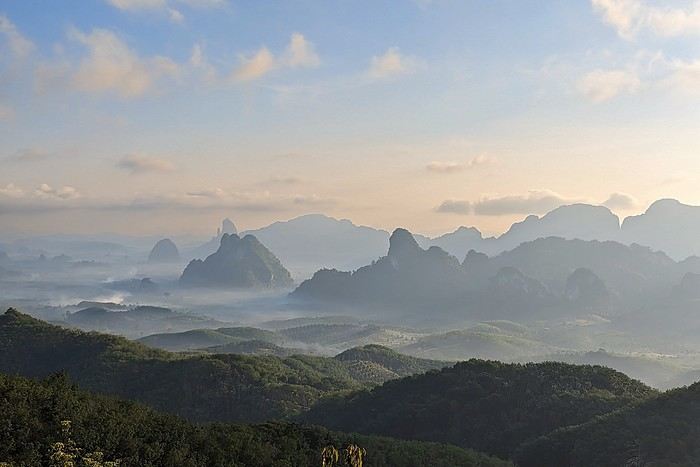
It might not be very original, but I see it hasn’t been suggested—or at least not for a very long time. I’d like to invite you to discover the beauty of the great outdoors through landscape photos. Whether they’re desert, sea, countryside, or mountain scenes—with or without other elements (people, buildings, animals, etc.)—they should make us want to dive right in without hesitation.
To participate: Photo submissions until Wednesday, June 24 at 11:59 PM You can post up to 3 photos, numbered and shared in separate messages, along with a short description of the place and the story behind it.
To vote: from Thursday, June 25 at 12:01 AM to Monday, June 29 at 11:59 PM After the deadline, it’s too late!
Please include the photo number, username, and the points awarded: Photo #1 = 3 pts Photo #2 = 2 pts Photo #3 = 1 pt
All VF members can vote (even those who didn’t submit photos). In case of a tie for first place, the winning photo will be the one with the most first-place votes, then second-place votes! The lucky winner will get to organize July 2026’s photo contest.
For discussions about the theme, it’s here: Discussion thread for June 2026’s theme: Such a Beautiful Landscape
Good luck to everyone!
Philippe
Chumphon, Thailand: Doi Tapang
Our road trip through the American Southwest for summer 2026
Hello! The itinerary is pretty much set for August 2026. Yeah, I know it’s gonna be *super* hot. But it’s the only time we can get away.
So, here’s the plan: Montpellier-CDG-Dallas.
Stay from July 31 to August 26, 2026: Car rental – check, Hotels – check, Itinerary – almost check, Photo gear – check, Budget – check, 🤪 Meal planning – meh, we’ll see... Walmart, of course, for the cooler when we arrive.
And now, without too much detail...
Fort Worth: The Longhorns and the Stockyards; JR’s ranch (for the missus); Medal of Honor Museum – Arlington.
Houston and NASA Space Center: See the Gulf of Mexico/America.
San Antonio and the missions.
Fort Stockton for an overnight stop.
El Paso via Guadalupe Mountains: El Paso and White Sands.
Tucson and the Pima Air & Space Museum: Tombstone, Bisbee.
Phoenix:
Still working on the program.
Sedona: Round trip around the area via Flagstaff and Williams, or the Grand Canyon (already done) – we’ll decide on the spot.
Albuquerque: Santa Fe, Turquoise Trail, Los Alamos.
Amarillo via Route 66: Old Route 66 in the city; Big Texas Ranch Steak 😏.
Dallas: JFK Museum; Perot Museum; West End district.
And through it all – the road, the road, and more road!!!
We’ll adapt day by day based on our mental and physical state (we’re not exactly spring chickens).
Return to France: Dallas-Montpellier via CDG.
Cheers!
So, here’s the plan: Montpellier-CDG-Dallas.
Stay from July 31 to August 26, 2026: Car rental – check, Hotels – check, Itinerary – almost check, Photo gear – check, Budget – check, 🤪 Meal planning – meh, we’ll see... Walmart, of course, for the cooler when we arrive.
And now, without too much detail...
Fort Worth: The Longhorns and the Stockyards; JR’s ranch (for the missus); Medal of Honor Museum – Arlington.
Houston and NASA Space Center: See the Gulf of Mexico/America.
San Antonio and the missions.
Fort Stockton for an overnight stop.
El Paso via Guadalupe Mountains: El Paso and White Sands.
Tucson and the Pima Air & Space Museum: Tombstone, Bisbee.
Phoenix:
Still working on the program.
Sedona: Round trip around the area via Flagstaff and Williams, or the Grand Canyon (already done) – we’ll decide on the spot.
Albuquerque: Santa Fe, Turquoise Trail, Los Alamos.
Amarillo via Route 66: Old Route 66 in the city; Big Texas Ranch Steak 😏.
Dallas: JFK Museum; Perot Museum; West End district.
And through it all – the road, the road, and more road!!!
We’ll adapt day by day based on our mental and physical state (we’re not exactly spring chickens).
Return to France: Dallas-Montpellier via CDG.
Cheers!
Off on an adventure in Sri Lanka
Day 1 – December 6
Our decision is our decision. And it’s firm and final. Next winter, our plane will spread its great wings toward the island of Ceylon! "Wait a minute... Ceylon... Ceylon... that name rings a bell, but I can’t quite place it on the globe Grandma gave me for Christmas! Ceylon... Oh right, I’ve got it: Ceylon is the name of my tea!" Exactly. But the name on your pretty tea box is also the one used until 1972 for this island nation, a speck on the Indian Ocean at the southern tip of the Indian subcontinent: Sri Lanka!
For this new adventure, I’m exceptionally leaving my Flo behind, cowardly replaced by a double dose of testosterone. To write the book of this journey with me, I’m bringing along my brother, who’s used to this kind of thing, and... a guest star: My model of resilience. My dad! All aboard! Or rather, all aboard our tuk-tuk! Yes, you read that right: A real tuk-tuk, a little colorful rolling box that putters along at two miles an hour. The idea? Well, Sri Lanka and its winding roads overlooking the vastness of lush nature are tailor-made for this kind of vehicle. And since it’s one of only two countries in the world that allow foreigners to rent and drive these mini speedsters, we’ll be crisscrossing the island in our two-square-meter rolling box. Plus, adopting this mode of transport is a surefire way to connect directly with the locals, who’ll surely be curious to see a foreigner driving their iconic vehicle. Not to mention the... let’s say... spicy anecdotes it might generate. I mean, heading into a subtropical zone with my jet-black dad and his unpredictable digestive flora while deliberately choosing the tuk-tuk as our *only* means of transport? That’s the winning combo for an unforgettable adventure! "More seriously, Dad, Sullivan, I’m already loving the idea of living this adventure together, the three of us—brothers and father..."
So, does the intro to this new adventure get your salivary glands going? Yes? Too bad. Because unfortunately, the program handed out by the lady at the entrance has been slightly... let’s say *crumpled*. Some might even say "scrunched up and nearly tossed in the trash." First, six days ago, as the countdown echoed in us like a call to adventure, Cyclone Ditwah grabbed Sri Lanka, played with it like a rag doll, and left it battered on the ground. The toll is devastating: over a thousand dead, thousands of homes wiped out by relentless rains, roads and railways swallowed by massive mudslides. A country wounded once again, after the civil war, the 2004 tsunami, and the post-Covid economic crisis.
But as if this weather disaster wasn’t enough to shake our unbreakable adventurer spirit, fate decided to mess with us further by cutting our trio down to two. The victim? My brother, violently turned away because of a simple date on his passport that didn’t match the border officials’ expectations. Return to sender!
So now it’s just the two of us allowed to board the Qatar Airways Airbus A380 for this trip. If he were here, Denis Brognart would say, "And in the end, only one remains!" Except I know you’ll be with us, following our adventures! Right?
Our decision is our decision. And it’s firm and final. Next winter, our plane will spread its great wings toward the island of Ceylon! "Wait a minute... Ceylon... Ceylon... that name rings a bell, but I can’t quite place it on the globe Grandma gave me for Christmas! Ceylon... Oh right, I’ve got it: Ceylon is the name of my tea!" Exactly. But the name on your pretty tea box is also the one used until 1972 for this island nation, a speck on the Indian Ocean at the southern tip of the Indian subcontinent: Sri Lanka!
For this new adventure, I’m exceptionally leaving my Flo behind, cowardly replaced by a double dose of testosterone. To write the book of this journey with me, I’m bringing along my brother, who’s used to this kind of thing, and... a guest star: My model of resilience. My dad! All aboard! Or rather, all aboard our tuk-tuk! Yes, you read that right: A real tuk-tuk, a little colorful rolling box that putters along at two miles an hour. The idea? Well, Sri Lanka and its winding roads overlooking the vastness of lush nature are tailor-made for this kind of vehicle. And since it’s one of only two countries in the world that allow foreigners to rent and drive these mini speedsters, we’ll be crisscrossing the island in our two-square-meter rolling box. Plus, adopting this mode of transport is a surefire way to connect directly with the locals, who’ll surely be curious to see a foreigner driving their iconic vehicle. Not to mention the... let’s say... spicy anecdotes it might generate. I mean, heading into a subtropical zone with my jet-black dad and his unpredictable digestive flora while deliberately choosing the tuk-tuk as our *only* means of transport? That’s the winning combo for an unforgettable adventure! "More seriously, Dad, Sullivan, I’m already loving the idea of living this adventure together, the three of us—brothers and father..."
So, does the intro to this new adventure get your salivary glands going? Yes? Too bad. Because unfortunately, the program handed out by the lady at the entrance has been slightly... let’s say *crumpled*. Some might even say "scrunched up and nearly tossed in the trash." First, six days ago, as the countdown echoed in us like a call to adventure, Cyclone Ditwah grabbed Sri Lanka, played with it like a rag doll, and left it battered on the ground. The toll is devastating: over a thousand dead, thousands of homes wiped out by relentless rains, roads and railways swallowed by massive mudslides. A country wounded once again, after the civil war, the 2004 tsunami, and the post-Covid economic crisis.
But as if this weather disaster wasn’t enough to shake our unbreakable adventurer spirit, fate decided to mess with us further by cutting our trio down to two. The victim? My brother, violently turned away because of a simple date on his passport that didn’t match the border officials’ expectations. Return to sender!
So now it’s just the two of us allowed to board the Qatar Airways Airbus A380 for this trip. If he were here, Denis Brognart would say, "And in the end, only one remains!" Except I know you’ll be with us, following our adventures! Right?
2-Month South Africa Itinerary
Hi,
We’re a young couple planning to travel to South Africa after spending about three weeks in Namibia. We’ll arrive in Cape Town around mid-December, with no fixed travel duration (though our budget will eventually set a limit).
After browsing through the forum, we’ve realized the country is packed with incredible spots, which makes choosing an itinerary tough. We’re looking for stunning landscapes, hikes, and so on. So, we’d love to hear your thoughts and experiences.
When we arrive in Cape Town, we’d like to settle in and take it easy until New Year’s, exploring at a relaxed pace. We know this period coincides with South African holidays—does that make finding accommodations (availability/prices) more difficult? Do you think it’s possible to stay in a nice place for about 15 days without aiming for the most upscale neighborhoods? Maybe somewhere a bit outside Cape Town, like Fish Hoek, and just visit the city occasionally.
After that, we’ll have plenty of time (about 2 to 2.5 months) to explore the country. We’d like to take our time. In your opinion, is it better to focus on the Cape Town region, or is it reasonable to consider more distant areas like the Drakensberg or Blyde River Canyon? Can everything be done by car if we take our time, or are domestic flights sometimes more practical?
Budget-wise, how much do car rentals cost? For accommodations, we usually look at Airbnb—are they affordable in South Africa? What’s the average nightly rate outside the biggest cities? Are there other platforms you’d recommend for saving on lodging?
Finally, regarding safety, are there any regions to avoid besides Johannesburg?
We know this is a lot of questions, but we’re still in the early planning stages!
Thanks in advance for your advice!
15-Day Road Trip Recap: Colorado and New Mexico
Hello, here’s a totally subjective recap of our 15-day road trip between Colorado and New Mexico, from late September to mid-October.
Our main interests are culture, museums, and landscapes—no hiking or trails for us. Personally, I’m pretty contemplative, and luckily, there’s always something to see out there! We’re pretty used to the US; we’ve been going there often for a long time (let’s just say we’re not exactly young anymore).
Budget: Even though we don’t set a strict budget beforehand, we try to keep costs as low as possible. This time, we managed to spend around 4000 € for two, all included. To do this: avoid expensive accommodations, staying between 60 and 120 € per night with an average of 90 €/night, mixing Airbnb and motels. And skip the “real” restaurants, which are pretty pricey in the US: sandwiches for lunch, takeout or cooking in the Airbnb in the evening. We shop at Sprouts or Whole Foods—organic-style chains that are pricier than Walmart but better. In the evenings, Sprouts has discounts on items that didn’t sell during the day. Also, avoid toll roads, paid parking, and overly expensive attractions or sites. The dispensary budget is separate…
Route: Denver/Colorado Springs/Alamosa/Raton/Santa Fe/Cuba/Cortez/Grand Junction/Glenwood Springs/Denver This wasn’t too planned in advance—we booked a few nights upon arrival and went with the flow. Flight from CDG to Denver with AF/Delta, car rental at Dollar for a standard SUV. The guy at the Dollar counter upsold me on extra insurance for flat tires (and since I knew we’d be off-roading, I took it). Without telling me, he upgraded me to a Jeep Sahara 4X4 Hybrid. Nice.
Listening to the news upon arrival, the anchor announced, “It’s officially fall now.” We hadn’t really thought about that before leaving, but yeah—it’s the time when the trees turn fluorescent yellow and red. Amazing.
Colorado Springs: Garden of the Gods is a free park with paved trails winding through red/orange rock formations. Magical at sunrise—groups of deer roam around, along with birds and rabbits. It’s small but wow! Didn’t try the Manitou Incline in Manitou Springs, a staircase with thousands of steps going straight up the mountain. Impressive from the bottom, but the parking is paid, which is a downside for those willing to tackle it. The Cog Railway goes up to the summit of Pikes Peak—around $100 when we were there. No thanks. And of course, the parking is paid too. For fans, Maggie’s Farm dispensary is great.
On Route 24, Eleven Mile Canyon Recreation Area is fly-fishing paradise—just like in the movie *A River Runs Through It*. Entry is $11, and a trail follows the river at the bottom of the canyon to the dam. Dozens of people in waders are in the water, casting their lines over and over. You can see the salmon in the clear water, and we had a picnic in the sun, imagining Brad Pitt catching a fish.
Buena Vista: A cute little tourist town with an Outdoor Fair that day—some pretty impressive vehicles for sale, set up for mountain living (like Juniper outfitting a RAM).
Alamosa: The closest town to Great Sand Dunes National Park, crossed by the Rio Grande (and let’s be real—it’s more of a stream than a river!). Park access was free because it was National Park Day. A park with massive dunes—climbing them is pretty exhausting, with lots of wind and sinking sand. Glad we didn’t do it in summer; I can’t imagine how tough it’d be in the heat. It’s a bit deceptive: it looks easy to get to the top of a dune, but it’s really not. The campsites were nice, and it was busy that weekend. We passed the “Point of No Return,” a sandy trail winding through the hills and connecting to Route 559 from above. Didn’t go all the way, but it’s possible the entrance is free from that side. However, you need a 4X4 with good ground clearance. After 1 or 2 km on the trail, you’re alone between the dunes and hills—hardly anyone around. But tricky to turn around or pass other vehicles; the trail isn’t wide. We crossed paths with a Hanomag (registered in the Netherlands—impressive!) coming down without stopping, or risking getting stuck.
On the way out, we took the small Route 403, which quickly turns into a trail crossing the mountain. Entire sections of forest were turning fluorescent yellow with patches of green and red—an incredible sight.
Raton: A small town that probably peaked in the late 19th century and has been in slow decline ever since. The Raton Pass Motor Inn is the kind of place that makes the US legendary—entirely 50s and 60s decor, really well done. I had the Betty Page room—too cool. Felt like we were on Route 66. Even better.
Santa Fe: A small city with no high-rises—almost all low-rise buildings, many in adobe, blending perfectly into the landscape. The old downtown is touristy but nice, with its plaza and church. There’s a really cool vibe—we loved it. For drinks, the bar at the top of La Fonda Hotel was packed for sunset, with a diverse crowd. Not overpriced for the location. SITE Santa Fe is a contemporary art space near the train station. It’s free, and the temporary exhibit was really good—high quality. Museum Hill is, as the name suggests, where several museums are located. We visited the Museum of Indian Art and Culture—great if you’re into “First Nations” history. Saw The Dandy Warhols at The Bridge—an outdoor venue, one of the last concerts of the season before winter makes it too cold. Oddly, there was no bag check, just an ID required (even though it was obvious we were over 21!). Tickets were reasonable, around $30 (concerts in the US can be crazy expensive). The band was good, with fewer than 300 people in front. A sign at the bar warned: Don’t forget you’re at 1,500 meters—alcohol hits harder up here!
Albuquerque: A sprawling city with an old historic center that feels a bit like Disneyland—too perfect for my taste. The real highlight is the Sandia Peak Tramway, which goes up to the old ski resort above the city. Tickets are around $35, and it’s worth it—the ride over the canyons is pretty wild. The ski resort is a bit abandoned; apparently, like elsewhere, there’s no snow anymore. I asked several people about the lack of snow, and the answer was always the same: “It’s cyclical.” Okay then. We arrived for the start of the International Balloon Fiesta (one of the world’s largest hot-air balloon gatherings), hoping to see hundreds of balloons in the sky. Nope—windy today, so no one took off. Bummer.
Las Vegas: New Mexico has its own Las Vegas, but it’s nothing like the other one—a sleepy little town with a perfectly preserved 19th-century Historic Plaza Hotel, brick buildings, and vintage streetlights. Everything is so well-preserved it’s often used as a filming location. NM attracts a lot of productions thanks to tax incentives and its Western landscapes—and it’s cheaper than California! That day, a huge Texas flag was flying in the wind: they were filming the second season of *Ransom Canyon* for Netflix in the town center. If we’d been dressed more “Western,” we could’ve been extras.
Jemez Springs: Its Jemez Hot Springs is super cute—several thermal pools at different temperatures, a New Age vibe. The pools are surrounded by big rocks, and you’re asked to speak softly. A place where you could spend hours. $50 for two hours for two.
Los Alamos: A town made legendary by the bomb, the movie, etc. Heads up: It’s still a research center, and to cross part of the town, you need to show ID. No stopping or taking photos allowed. Other than the Oppenheimer House (currently closed—only the neighboring house is open to visitors), there’s not much to see. There’s a replica of the camp entrance, but it’s been turned into restrooms.
Georgia O’Keeffe Trail (American painter, 1887–1986): Her museum in Santa Fe is pretty good, even if they don’t have tons of works. Entry is $20. Her house in Abiquiu is open for visits, but it’s way overpriced at $65. So we skipped it. You can get an idea of it by stopping at the Welcome Center on Route 84. Further down the same road, Ghost Ranch is worth a visit—beautiful setting, free to enter, with trails to explore and a great atmosphere.
Chaco Culture National Historical Park: A pretty isolated park—25 km of trails to get there, with only a small section paved. The road is decent except for the last few kilometers, which have potholes. I can’t imagine it being accessible after rain, though that doesn’t happen often! This park, in the middle of a desert plain with a few canyons, is one of the rare places where you can find multi-story structures from pre-Columbian civilizations—so, before the “current” tribes. But cruel disappointment: it’s been shut down for a few days. We met a Native ranger—tall, with long hair—who explained that even though he wasn’t being paid, he was still guarding the park and had closed all access to the sites. Darn. Turned around and headed back down the trail.
Same story in the next town, Aztec (a funny name, right?): Aztec Ruins National Monument was closed too.
We passed Ship Rock, the Navajo’s sacred mountain—really impressive. Couldn’t find a trail to get closer, but it’s better from a distance anyway! The town of Shiprock itself is pretty depressing—poor living conditions for some Natives, with rundown mobile homes and piles of junk cars.
Stopped in Cortez to visit Mesa Verde National Park. Ate at Denny’s—hadn’t been there in ages (though it’s the kind of place I should feel at home in!). The customers all looked like they’d stepped out of *The Addams Family*—a little creepy. Or funny, depending on your perspective. For Mesa Verde, after discussing it on this forum with the honorable member Caussat (who didn’t find it that amazing), we were on the fence. Problem solved: it was closed too. Back on the road.
Durango: Really nice with its Main Ave and its shops, cafés—touristy but with local life. Famous for its tourist train to Silverton, but we didn’t do it—way too expensive. Choice between a steam locomotive or diesel (which belches black, stinky smoke—yuck). The diesel should be replaced with electric as soon as they get the funds.
Million Dollar Highway: The road winds through the mountains, and every turn (and there are a lot) is breathtaking—unbelievable landscapes with fluorescent yellow, green, and snow-capped mountains. Just wow.
Silverton: A Western town nestled between two mountains, preserved in its original state despite the tourists arriving by train. Around it, abandoned mines and old wooden ties—must’ve been tough for the 19th-century miners.
Grand Junction: The city is surrounded by giant mesas—pretty impressive. The old downtown is *too* clean—almost sterile.
Colorado National Monument: Just outside the city, a winding road climbs between stunning canyons, with sweeping views of the valley. Entry was free that day due to the shutdown.
Route 330, which we took to get back to the highway, passes through a place called “Cowboy Country”—and it’s true. We saw guys in Stetsons with huge pickups, the road turned into a trail with cows wandering on it, and we had to honk to get them to move. The trail to I-70 was full of potholes—the 4X4 came in handy. Had a picnic by Vega Reservoir: the booth at the entrance was empty, but people left cash in envelopes for camping fees. Anyone passing by could’ve taken it, but it’s an example of US trust and honesty!
Glenwood Springs: A small town famous for its hot springs pool—they claim it’s the largest in the world. I don’t know about that, but it has a great look. Unfortunately, it was closed for maintenance those days! Blew our budget by staying at the Hotel Colorado, a huge 1893 building with a real atmosphere in its grand lobby and fake fireplaces. Fire pits in front of wooden chairs in the garden with mountain views—just really great.
Aspen: The billionaires’ ski resort, but surprisingly, parking was free for 2 hours. Rare to see a place for the super-rich that doesn’t scream “not for you” (like Palm Beach, for example). A former mining town completely redone, every shop occupied by a luxury brand. There’s even a thrift shop run by sweet retirees—funny as hell. Two ski lifts to start directly with your skis, but we didn’t see the price—they were still closed. Lots of houses that aren’t huge but are cute, though looking at real estate prices made us think, “Is there an extra zero on that listing?” A 6-bedroom villa for $52 million? Wow. The mountains around are gorgeous—no wonder it became what it is.
Another fancy resort nearby: Vail, more modern in its construction. The restaurants opted for a “Schwarzwald” decor—kind of odd.
Denver: Nothing really stood out for us in this city, except the Design Museum—the Kirkland, where a local painter collected furniture and supplies from Arts and Crafts to Postmodern. Just really great. Entry is included with a visit to the Denver Art Museum, which has diverse collections—from Impressionism (they have a Manet, a Van Gogh, a Cézanne, several Sisleys) to photography. The best part for me was the “Ancient Americas” totems—huge, impressive wooden sculptures, painted, the kind you’re more used to seeing in Polynesia or Easter Island. Personally, I didn’t know Natives made them too. That’s what museums are for!
Back at the airport, where I had to tag my own luggage (you have to do everything yourself with these US airlines). The tag said SLC/CDG! But we were supposed to connect through JFK. Turns out, they’d put us on a DEN/SLC/CDG flight without telling us. In the end, we gained 30 minutes on our original arrival time in Paris!
There you go—hope this inspires other travelers! !
Our main interests are culture, museums, and landscapes—no hiking or trails for us. Personally, I’m pretty contemplative, and luckily, there’s always something to see out there! We’re pretty used to the US; we’ve been going there often for a long time (let’s just say we’re not exactly young anymore).
Budget: Even though we don’t set a strict budget beforehand, we try to keep costs as low as possible. This time, we managed to spend around 4000 € for two, all included. To do this: avoid expensive accommodations, staying between 60 and 120 € per night with an average of 90 €/night, mixing Airbnb and motels. And skip the “real” restaurants, which are pretty pricey in the US: sandwiches for lunch, takeout or cooking in the Airbnb in the evening. We shop at Sprouts or Whole Foods—organic-style chains that are pricier than Walmart but better. In the evenings, Sprouts has discounts on items that didn’t sell during the day. Also, avoid toll roads, paid parking, and overly expensive attractions or sites. The dispensary budget is separate…
Route: Denver/Colorado Springs/Alamosa/Raton/Santa Fe/Cuba/Cortez/Grand Junction/Glenwood Springs/Denver This wasn’t too planned in advance—we booked a few nights upon arrival and went with the flow. Flight from CDG to Denver with AF/Delta, car rental at Dollar for a standard SUV. The guy at the Dollar counter upsold me on extra insurance for flat tires (and since I knew we’d be off-roading, I took it). Without telling me, he upgraded me to a Jeep Sahara 4X4 Hybrid. Nice.
Listening to the news upon arrival, the anchor announced, “It’s officially fall now.” We hadn’t really thought about that before leaving, but yeah—it’s the time when the trees turn fluorescent yellow and red. Amazing.
Colorado Springs: Garden of the Gods is a free park with paved trails winding through red/orange rock formations. Magical at sunrise—groups of deer roam around, along with birds and rabbits. It’s small but wow! Didn’t try the Manitou Incline in Manitou Springs, a staircase with thousands of steps going straight up the mountain. Impressive from the bottom, but the parking is paid, which is a downside for those willing to tackle it. The Cog Railway goes up to the summit of Pikes Peak—around $100 when we were there. No thanks. And of course, the parking is paid too. For fans, Maggie’s Farm dispensary is great.
On Route 24, Eleven Mile Canyon Recreation Area is fly-fishing paradise—just like in the movie *A River Runs Through It*. Entry is $11, and a trail follows the river at the bottom of the canyon to the dam. Dozens of people in waders are in the water, casting their lines over and over. You can see the salmon in the clear water, and we had a picnic in the sun, imagining Brad Pitt catching a fish.
Buena Vista: A cute little tourist town with an Outdoor Fair that day—some pretty impressive vehicles for sale, set up for mountain living (like Juniper outfitting a RAM).
Alamosa: The closest town to Great Sand Dunes National Park, crossed by the Rio Grande (and let’s be real—it’s more of a stream than a river!). Park access was free because it was National Park Day. A park with massive dunes—climbing them is pretty exhausting, with lots of wind and sinking sand. Glad we didn’t do it in summer; I can’t imagine how tough it’d be in the heat. It’s a bit deceptive: it looks easy to get to the top of a dune, but it’s really not. The campsites were nice, and it was busy that weekend. We passed the “Point of No Return,” a sandy trail winding through the hills and connecting to Route 559 from above. Didn’t go all the way, but it’s possible the entrance is free from that side. However, you need a 4X4 with good ground clearance. After 1 or 2 km on the trail, you’re alone between the dunes and hills—hardly anyone around. But tricky to turn around or pass other vehicles; the trail isn’t wide. We crossed paths with a Hanomag (registered in the Netherlands—impressive!) coming down without stopping, or risking getting stuck.
On the way out, we took the small Route 403, which quickly turns into a trail crossing the mountain. Entire sections of forest were turning fluorescent yellow with patches of green and red—an incredible sight.
Raton: A small town that probably peaked in the late 19th century and has been in slow decline ever since. The Raton Pass Motor Inn is the kind of place that makes the US legendary—entirely 50s and 60s decor, really well done. I had the Betty Page room—too cool. Felt like we were on Route 66. Even better.
Santa Fe: A small city with no high-rises—almost all low-rise buildings, many in adobe, blending perfectly into the landscape. The old downtown is touristy but nice, with its plaza and church. There’s a really cool vibe—we loved it. For drinks, the bar at the top of La Fonda Hotel was packed for sunset, with a diverse crowd. Not overpriced for the location. SITE Santa Fe is a contemporary art space near the train station. It’s free, and the temporary exhibit was really good—high quality. Museum Hill is, as the name suggests, where several museums are located. We visited the Museum of Indian Art and Culture—great if you’re into “First Nations” history. Saw The Dandy Warhols at The Bridge—an outdoor venue, one of the last concerts of the season before winter makes it too cold. Oddly, there was no bag check, just an ID required (even though it was obvious we were over 21!). Tickets were reasonable, around $30 (concerts in the US can be crazy expensive). The band was good, with fewer than 300 people in front. A sign at the bar warned: Don’t forget you’re at 1,500 meters—alcohol hits harder up here!
Albuquerque: A sprawling city with an old historic center that feels a bit like Disneyland—too perfect for my taste. The real highlight is the Sandia Peak Tramway, which goes up to the old ski resort above the city. Tickets are around $35, and it’s worth it—the ride over the canyons is pretty wild. The ski resort is a bit abandoned; apparently, like elsewhere, there’s no snow anymore. I asked several people about the lack of snow, and the answer was always the same: “It’s cyclical.” Okay then. We arrived for the start of the International Balloon Fiesta (one of the world’s largest hot-air balloon gatherings), hoping to see hundreds of balloons in the sky. Nope—windy today, so no one took off. Bummer.
Las Vegas: New Mexico has its own Las Vegas, but it’s nothing like the other one—a sleepy little town with a perfectly preserved 19th-century Historic Plaza Hotel, brick buildings, and vintage streetlights. Everything is so well-preserved it’s often used as a filming location. NM attracts a lot of productions thanks to tax incentives and its Western landscapes—and it’s cheaper than California! That day, a huge Texas flag was flying in the wind: they were filming the second season of *Ransom Canyon* for Netflix in the town center. If we’d been dressed more “Western,” we could’ve been extras.
Jemez Springs: Its Jemez Hot Springs is super cute—several thermal pools at different temperatures, a New Age vibe. The pools are surrounded by big rocks, and you’re asked to speak softly. A place where you could spend hours. $50 for two hours for two.
Los Alamos: A town made legendary by the bomb, the movie, etc. Heads up: It’s still a research center, and to cross part of the town, you need to show ID. No stopping or taking photos allowed. Other than the Oppenheimer House (currently closed—only the neighboring house is open to visitors), there’s not much to see. There’s a replica of the camp entrance, but it’s been turned into restrooms.
Georgia O’Keeffe Trail (American painter, 1887–1986): Her museum in Santa Fe is pretty good, even if they don’t have tons of works. Entry is $20. Her house in Abiquiu is open for visits, but it’s way overpriced at $65. So we skipped it. You can get an idea of it by stopping at the Welcome Center on Route 84. Further down the same road, Ghost Ranch is worth a visit—beautiful setting, free to enter, with trails to explore and a great atmosphere.
Chaco Culture National Historical Park: A pretty isolated park—25 km of trails to get there, with only a small section paved. The road is decent except for the last few kilometers, which have potholes. I can’t imagine it being accessible after rain, though that doesn’t happen often! This park, in the middle of a desert plain with a few canyons, is one of the rare places where you can find multi-story structures from pre-Columbian civilizations—so, before the “current” tribes. But cruel disappointment: it’s been shut down for a few days. We met a Native ranger—tall, with long hair—who explained that even though he wasn’t being paid, he was still guarding the park and had closed all access to the sites. Darn. Turned around and headed back down the trail.
Same story in the next town, Aztec (a funny name, right?): Aztec Ruins National Monument was closed too.
We passed Ship Rock, the Navajo’s sacred mountain—really impressive. Couldn’t find a trail to get closer, but it’s better from a distance anyway! The town of Shiprock itself is pretty depressing—poor living conditions for some Natives, with rundown mobile homes and piles of junk cars.
Stopped in Cortez to visit Mesa Verde National Park. Ate at Denny’s—hadn’t been there in ages (though it’s the kind of place I should feel at home in!). The customers all looked like they’d stepped out of *The Addams Family*—a little creepy. Or funny, depending on your perspective. For Mesa Verde, after discussing it on this forum with the honorable member Caussat (who didn’t find it that amazing), we were on the fence. Problem solved: it was closed too. Back on the road.
Durango: Really nice with its Main Ave and its shops, cafés—touristy but with local life. Famous for its tourist train to Silverton, but we didn’t do it—way too expensive. Choice between a steam locomotive or diesel (which belches black, stinky smoke—yuck). The diesel should be replaced with electric as soon as they get the funds.
Million Dollar Highway: The road winds through the mountains, and every turn (and there are a lot) is breathtaking—unbelievable landscapes with fluorescent yellow, green, and snow-capped mountains. Just wow.
Silverton: A Western town nestled between two mountains, preserved in its original state despite the tourists arriving by train. Around it, abandoned mines and old wooden ties—must’ve been tough for the 19th-century miners.
Grand Junction: The city is surrounded by giant mesas—pretty impressive. The old downtown is *too* clean—almost sterile.
Colorado National Monument: Just outside the city, a winding road climbs between stunning canyons, with sweeping views of the valley. Entry was free that day due to the shutdown.
Route 330, which we took to get back to the highway, passes through a place called “Cowboy Country”—and it’s true. We saw guys in Stetsons with huge pickups, the road turned into a trail with cows wandering on it, and we had to honk to get them to move. The trail to I-70 was full of potholes—the 4X4 came in handy. Had a picnic by Vega Reservoir: the booth at the entrance was empty, but people left cash in envelopes for camping fees. Anyone passing by could’ve taken it, but it’s an example of US trust and honesty!
Glenwood Springs: A small town famous for its hot springs pool—they claim it’s the largest in the world. I don’t know about that, but it has a great look. Unfortunately, it was closed for maintenance those days! Blew our budget by staying at the Hotel Colorado, a huge 1893 building with a real atmosphere in its grand lobby and fake fireplaces. Fire pits in front of wooden chairs in the garden with mountain views—just really great.
Aspen: The billionaires’ ski resort, but surprisingly, parking was free for 2 hours. Rare to see a place for the super-rich that doesn’t scream “not for you” (like Palm Beach, for example). A former mining town completely redone, every shop occupied by a luxury brand. There’s even a thrift shop run by sweet retirees—funny as hell. Two ski lifts to start directly with your skis, but we didn’t see the price—they were still closed. Lots of houses that aren’t huge but are cute, though looking at real estate prices made us think, “Is there an extra zero on that listing?” A 6-bedroom villa for $52 million? Wow. The mountains around are gorgeous—no wonder it became what it is.
Another fancy resort nearby: Vail, more modern in its construction. The restaurants opted for a “Schwarzwald” decor—kind of odd.
Denver: Nothing really stood out for us in this city, except the Design Museum—the Kirkland, where a local painter collected furniture and supplies from Arts and Crafts to Postmodern. Just really great. Entry is included with a visit to the Denver Art Museum, which has diverse collections—from Impressionism (they have a Manet, a Van Gogh, a Cézanne, several Sisleys) to photography. The best part for me was the “Ancient Americas” totems—huge, impressive wooden sculptures, painted, the kind you’re more used to seeing in Polynesia or Easter Island. Personally, I didn’t know Natives made them too. That’s what museums are for!
Back at the airport, where I had to tag my own luggage (you have to do everything yourself with these US airlines). The tag said SLC/CDG! But we were supposed to connect through JFK. Turns out, they’d put us on a DEN/SLC/CDG flight without telling us. In the end, we gained 30 minutes on our original arrival time in Paris!
There you go—hope this inspires other travelers! !
Road Trip USA 2023 - Part 2
HIGHWAY 1
Highway 1 runs along the Pacific coast of California from Leggett in the north to Dana Point in the south. It's the longest state route in California, stretching 1,050 km.
It's famous for its breathtaking ocean views. That’s actually why it’s become such a popular route for road trips, with tons of attractions and points of interest all along the way.
After crossing the U.S. interior on our way out (see Road Trip USA 2023 - Part 1), we’re starting our return trip along this route from Leggett.
Videos are embedded throughout the summary. Please click on the image to start the video. To jump to a specific post, here are the appropriate links:
CALIFORNIA:
Scenic Overlooks on Route 1 Between Leggett and Fort Bragg The Pudding Creek Trestle Bridge in Fort Bragg Glass Beach - Fort Bragg Jenner Lookout Point - Highway 1 Goat Rock Beach - Sonoma Coast State Park - Jenner Point Reyes National Seashore - White House Pool Trail Point Reyes National Seashore - Limantour Beach Point Reyes National Seashore - Point Reyes Shipwreck Point Reyes National Seashore - Kehoe Beach Trail Point Reyes National Seashore - McClures Beach Trail Point Reyes National Seashore - Cypress Tree Tunnel Point Reyes National Seashore - Point Reyes Beach North Point Reyes National Seashore - Elephant Seals on Drakes Beach Point Reyes National Seashore - Point Reyes Beach South Point Reyes National Seashore – Elephant Seals Overlooks Point Reyes National Seashore - Chimney Rock Trail Point Reyes National Seashore - Point Reyes Lighthouse Trail Point Reyes National Seashore – Tule Elk Observation Point Bonita Lighthouse Trail - Sausalito Hawk Hill - Sausalito Battery Spencer Trail - Sausalito Rodeo Beach - Sausalito Point Cavallo - Golden Gate View - Sausalito Exploring Downtown Sausalito Visiting Sausalito’s Houseboats Crossing the Golden Gate Bridge - San Francisco Golden Gate Bridge Viewpoints - San Francisco Cruise to Alcatraz Island - San Francisco Visiting Alcatraz Island - San Francisco Civic Center - Downtown San Francisco Market Street & Yerba Buena Gardens - Downtown San Francisco Union Square & Financial District - Downtown San Francisco Fisherman's Wharf, Pier 39 & Embarcadero - San Francisco Sea Lion Observation - Pier 39 - San Francisco Lombard Street & Cable Car - Russian Hill - San Francisco Macondray Lane Historic District - Russian Hill - San Francisco Grace Cathedral & Huntington Park - Nob Hill - San Francisco Telegraph Hill - San Francisco Chinatown - San Francisco Alamo Square & Painted Ladies - Western Addition - San Francisco Palace of Fine Arts - Marina District - San Francisco Presidio of San Francisco California Coastal Trail - Lincoln Park - San Francisco California Palace of the Legion of Honor - Lincoln Park - San Francisco Sutro Baths - Lincoln Park - San Francisco Queen Wilhelmina Garden - Golden Gate Park - San Francisco Bison Paddock - Golden Gate Park - San Francisco Portals of the Past - Golden Gate Park - San Francisco Strawberry Hill - Golden Gate Park – San Francisco Prayerbook Cross & Robin Williams Meadow - Golden Gate Park - San Francisco Hidden Garden Steps & 16th Avenue Tiled Steps - San Francisco Grandview Park - San Francisco Hike - Twin Peaks Three Summits - San Francisco Longboarding Down Twin Peaks Blvd in San Francisco Haight-Ashbury - San Francisco Corona Heights Park - San Francisco Mission Dolores - San Francisco Mural Frescoes (Part 1) - Mission District - San Francisco Mural Frescoes (Part 2) - Mission District - San Francisco Devil's Slide Bunker - Pacifica Mavericks Beach - Half Moon Bay Martins Beach - Half Moon Bay Pigeon Point Lighthouse State Historic Park - Pescadero What to See in Santa Cruz Visiting Capitola What to See in Monterey Carmel-by-the-Sea Lovers Point Park - Pacific Grove Castle Rock, Hurricane Point & Little Sur River Viewpoints Pfeiffer Falls Trail Julia Pfeiffer Burns State Park Vista Point & McWay Falls Highway 1 - Big Sur Viewpoints Salmon Creek Falls San Carpoforo Creek Trail Elephant Seal Vista Point - San Simeon San Simeon Pier Moonstone Beach Boardwalk Shipwreck - Estero Bluffs State Park Surfing Competition in Morro Bay Port San Luis Pier - San Luis Obispo Pismo Beach Monarch Butterfly Grove - Pismo State Beach Nojoqui Falls Park - Solvang Arroyo Hondo Vista Point Solvang, a Charming Danish Town in California Chumash Painted Cave - Santa Barbara Goleta San Marcos Rd & Cachuma Lake Vista Points - Santa Barbara Old Santa Barbara Mission Walking Tour of Santa Barbara’s Historic Downtown West Beach - Santa Barbara What to See in Ventura Paradise Falls - Wildwood Regional Park - Thousand Oaks Sandy Dune & El Matador State Beach - Malibu Point Dume Nature Reserve - Malibu Malibu Pier Road Trip in the Malibu Mountains Los Liones Trail - Santa Monica Santa Monica Pier Rodeo Drive - Beverly Hills Greystone Mansion - Beverly Hills Hollywood Walk of Fame - Los Angeles Griffith Observatory - Los Angeles Hollywood Forever Cemetery - Los Angeles What to See in Venice Beach Venice Beach Skatepark ShoreLine Aquatic Park - Long Beach Alamitos Beach - Long Beach Naples Island - Long Beach Crescent Bay Point Park & Helser Park Kiosk - Laguna Beach Shell Beach at Twin Points - Laguna Beach Prairie Dogs at Agra Vista Point Top Gun House & Oceanside Pier Annie's Canyon Trail - Solana Beach (Via North Rios Trailhead Loop) Old Town San Diego La Jolla Coastal Trail - San Diego Balboa Park - San Diego Pacific Beach - San Diego Mission Beach - San Diego Ocean Beach Tide Pools - San Diego Sunset Cliffs Natural Park - San Diego Tuna Harbor Park - San Diego Seaport Village & Embarcadero Marina Park - San Diego Gaslamp Quarter - Downtown San Diego Coronado Island - San Diego Dead Dolly Lane - Alpine Galleta Meadows Metal Sculptures - Borrego Springs What to See in Palm Springs Robolights - Palm Springs Andreas Canyon Trail - Indian Canyons - Palm Springs Palm Canyon Trail - Indian Canyons - Palm Springs West Fork Falls Trail - Indian Canyons - Palm Springs Tahquitz Canyon Loop Trail - Indian Canyons - Palm Springs Desert Christ Park - Yucca Valley Pioneertown Salvation Mountain - Niland Slab City - Niland
Highway 1 runs along the Pacific coast of California from Leggett in the north to Dana Point in the south. It's the longest state route in California, stretching 1,050 km.
It's famous for its breathtaking ocean views. That’s actually why it’s become such a popular route for road trips, with tons of attractions and points of interest all along the way.
After crossing the U.S. interior on our way out (see Road Trip USA 2023 - Part 1), we’re starting our return trip along this route from Leggett.
Videos are embedded throughout the summary. Please click on the image to start the video. To jump to a specific post, here are the appropriate links:
CALIFORNIA:
Scenic Overlooks on Route 1 Between Leggett and Fort Bragg The Pudding Creek Trestle Bridge in Fort Bragg Glass Beach - Fort Bragg Jenner Lookout Point - Highway 1 Goat Rock Beach - Sonoma Coast State Park - Jenner Point Reyes National Seashore - White House Pool Trail Point Reyes National Seashore - Limantour Beach Point Reyes National Seashore - Point Reyes Shipwreck Point Reyes National Seashore - Kehoe Beach Trail Point Reyes National Seashore - McClures Beach Trail Point Reyes National Seashore - Cypress Tree Tunnel Point Reyes National Seashore - Point Reyes Beach North Point Reyes National Seashore - Elephant Seals on Drakes Beach Point Reyes National Seashore - Point Reyes Beach South Point Reyes National Seashore – Elephant Seals Overlooks Point Reyes National Seashore - Chimney Rock Trail Point Reyes National Seashore - Point Reyes Lighthouse Trail Point Reyes National Seashore – Tule Elk Observation Point Bonita Lighthouse Trail - Sausalito Hawk Hill - Sausalito Battery Spencer Trail - Sausalito Rodeo Beach - Sausalito Point Cavallo - Golden Gate View - Sausalito Exploring Downtown Sausalito Visiting Sausalito’s Houseboats Crossing the Golden Gate Bridge - San Francisco Golden Gate Bridge Viewpoints - San Francisco Cruise to Alcatraz Island - San Francisco Visiting Alcatraz Island - San Francisco Civic Center - Downtown San Francisco Market Street & Yerba Buena Gardens - Downtown San Francisco Union Square & Financial District - Downtown San Francisco Fisherman's Wharf, Pier 39 & Embarcadero - San Francisco Sea Lion Observation - Pier 39 - San Francisco Lombard Street & Cable Car - Russian Hill - San Francisco Macondray Lane Historic District - Russian Hill - San Francisco Grace Cathedral & Huntington Park - Nob Hill - San Francisco Telegraph Hill - San Francisco Chinatown - San Francisco Alamo Square & Painted Ladies - Western Addition - San Francisco Palace of Fine Arts - Marina District - San Francisco Presidio of San Francisco California Coastal Trail - Lincoln Park - San Francisco California Palace of the Legion of Honor - Lincoln Park - San Francisco Sutro Baths - Lincoln Park - San Francisco Queen Wilhelmina Garden - Golden Gate Park - San Francisco Bison Paddock - Golden Gate Park - San Francisco Portals of the Past - Golden Gate Park - San Francisco Strawberry Hill - Golden Gate Park – San Francisco Prayerbook Cross & Robin Williams Meadow - Golden Gate Park - San Francisco Hidden Garden Steps & 16th Avenue Tiled Steps - San Francisco Grandview Park - San Francisco Hike - Twin Peaks Three Summits - San Francisco Longboarding Down Twin Peaks Blvd in San Francisco Haight-Ashbury - San Francisco Corona Heights Park - San Francisco Mission Dolores - San Francisco Mural Frescoes (Part 1) - Mission District - San Francisco Mural Frescoes (Part 2) - Mission District - San Francisco Devil's Slide Bunker - Pacifica Mavericks Beach - Half Moon Bay Martins Beach - Half Moon Bay Pigeon Point Lighthouse State Historic Park - Pescadero What to See in Santa Cruz Visiting Capitola What to See in Monterey Carmel-by-the-Sea Lovers Point Park - Pacific Grove Castle Rock, Hurricane Point & Little Sur River Viewpoints Pfeiffer Falls Trail Julia Pfeiffer Burns State Park Vista Point & McWay Falls Highway 1 - Big Sur Viewpoints Salmon Creek Falls San Carpoforo Creek Trail Elephant Seal Vista Point - San Simeon San Simeon Pier Moonstone Beach Boardwalk Shipwreck - Estero Bluffs State Park Surfing Competition in Morro Bay Port San Luis Pier - San Luis Obispo Pismo Beach Monarch Butterfly Grove - Pismo State Beach Nojoqui Falls Park - Solvang Arroyo Hondo Vista Point Solvang, a Charming Danish Town in California Chumash Painted Cave - Santa Barbara Goleta San Marcos Rd & Cachuma Lake Vista Points - Santa Barbara Old Santa Barbara Mission Walking Tour of Santa Barbara’s Historic Downtown West Beach - Santa Barbara What to See in Ventura Paradise Falls - Wildwood Regional Park - Thousand Oaks Sandy Dune & El Matador State Beach - Malibu Point Dume Nature Reserve - Malibu Malibu Pier Road Trip in the Malibu Mountains Los Liones Trail - Santa Monica Santa Monica Pier Rodeo Drive - Beverly Hills Greystone Mansion - Beverly Hills Hollywood Walk of Fame - Los Angeles Griffith Observatory - Los Angeles Hollywood Forever Cemetery - Los Angeles What to See in Venice Beach Venice Beach Skatepark ShoreLine Aquatic Park - Long Beach Alamitos Beach - Long Beach Naples Island - Long Beach Crescent Bay Point Park & Helser Park Kiosk - Laguna Beach Shell Beach at Twin Points - Laguna Beach Prairie Dogs at Agra Vista Point Top Gun House & Oceanside Pier Annie's Canyon Trail - Solana Beach (Via North Rios Trailhead Loop) Old Town San Diego La Jolla Coastal Trail - San Diego Balboa Park - San Diego Pacific Beach - San Diego Mission Beach - San Diego Ocean Beach Tide Pools - San Diego Sunset Cliffs Natural Park - San Diego Tuna Harbor Park - San Diego Seaport Village & Embarcadero Marina Park - San Diego Gaslamp Quarter - Downtown San Diego Coronado Island - San Diego Dead Dolly Lane - Alpine Galleta Meadows Metal Sculptures - Borrego Springs What to See in Palm Springs Robolights - Palm Springs Andreas Canyon Trail - Indian Canyons - Palm Springs Palm Canyon Trail - Indian Canyons - Palm Springs West Fork Falls Trail - Indian Canyons - Palm Springs Tahquitz Canyon Loop Trail - Indian Canyons - Palm Springs Desert Christ Park - Yucca Valley Pioneertown Salvation Mountain - Niland Slab City - Niland
Travel Journal - 28 Days in China in August 2025
Hi everyone! I’m sharing a modest travel journal from my trip to China in August 2025.
There wasn’t much room for improvisation on this trip—everything was planned in advance. Since August is peak season, I decided to book train tickets early, and once that was set, I reserved all the accommodations too. I got everything on Trip.com.
I bought the flight tickets back in March from Hainan Airlines. They were super expensive, but with these travel dates, I couldn’t exactly dream of a bargain!
I picked up e-SIMs valid for a month from Free just before departure: 10 € for the e-SIM + 19.90 € for a one-month plan with 35 GB of data abroad.
No need for a VPN with these e-SIMs, but D. still got one—a multi-device plan for 5 € with a discount from Let’s VPN, valid for a month. It was for evenings at the hotel on Wi-Fi to avoid burning through the 35 GB with video.
I downloaded Alipay, WeChat, Amap (Baidu Maps), and Trip.com. We also have Google Translate and Maps.me—absolute must-haves.
We’re ready to go!
I’ve been waiting for this day for nearly 15 years!! I travel a lot, but this one—this is MY TRIP 🙂 It’s been postponed so many times: because I wanted to do it with the right person, because I have a Turkish stamp in my passport and heard they don’t issue visas with that, because of COVID... and then China introduced a 30-day visa exemption, and that was the green light! Ugh, they forced us to take our vacation in August this year—far from ideal—but no more delays. Saturday, August 2, 2025: it’s finally the big day!
Days 1 and 2: We got dropped off at Charles de Gaulle at 9:30 AM. I supposedly checked in online, but only for the first flight and without getting the boarding pass... Might as well scrap online check-in in that case. So, we spent over an hour in line at the counter to get them. We didn’t have any checked luggage—just our backpacks as carry-ons—so this was a step we’d never had to deal with before, but whatever, it’s done. No wait at passport control, 5 minutes through security, a quick walk around the terminal, 10 minutes in the boarding area, and it was already time to board. Departure around 12:45 PM, arrival in Chongqing at 4:50 AM. We had a few hours of layover before our next flight. Went through immigration, connecting flight control, and security. Pro tip: check your next flight’s boarding gate right after immigration. We never saw it displayed again anywhere in the terminal.
The Free e-SIMs work—phew!
Took off at 9:30 AM, arrived in Guangzhou (Canton) at 11:20 AM in the rain. I love how Chongqing is translated as "Tchoung King" on the screens in the plane—very French!
During my first two trips to China, we paid for everything in cash, but this time, we’re going all-in on Alipay and WeChat. I still brought the leftover change from previous trips—it might come in handy. At the metro station, they showed us a QR code to buy tickets via WeChat. There were probably machines and even a ticket counter, but we didn’t see them, and buying via WeChat was pretty simple. 8 yuan to Changshu Lu, which is 22 stops. So far, so good. Then, we had to find the hotel, which wasn’t on Google Maps, Maps.me, or Amap... Easy 😎! We found it without too much hassle, though. Dropped off our stuff and went out to eat. 55 yuan for two claypots with fish/eel, rice, cabbage, and purple eggplant. When we left, it was pouring. We grabbed our umbrellas and set off to explore the neighborhood: Enning Road (we’ll come back later to check out a specific spot), Shangxiajiu (the pedestrian shopping street), Baohua Road... The area is pretty diverse—one street to the next, it’s like stepping into a different world.

There weren’t many people around, probably because of the rain. We grabbed a quick street food dinner and went to bed—we were exhausted. We struggled to stay awake until 11 PM to adjust to the time change as quickly as possible. There’s a 6-hour time difference.
There wasn’t much room for improvisation on this trip—everything was planned in advance. Since August is peak season, I decided to book train tickets early, and once that was set, I reserved all the accommodations too. I got everything on Trip.com.
I bought the flight tickets back in March from Hainan Airlines. They were super expensive, but with these travel dates, I couldn’t exactly dream of a bargain!
I picked up e-SIMs valid for a month from Free just before departure: 10 € for the e-SIM + 19.90 € for a one-month plan with 35 GB of data abroad.
No need for a VPN with these e-SIMs, but D. still got one—a multi-device plan for 5 € with a discount from Let’s VPN, valid for a month. It was for evenings at the hotel on Wi-Fi to avoid burning through the 35 GB with video.
I downloaded Alipay, WeChat, Amap (Baidu Maps), and Trip.com. We also have Google Translate and Maps.me—absolute must-haves.
We’re ready to go!
I’ve been waiting for this day for nearly 15 years!! I travel a lot, but this one—this is MY TRIP 🙂 It’s been postponed so many times: because I wanted to do it with the right person, because I have a Turkish stamp in my passport and heard they don’t issue visas with that, because of COVID... and then China introduced a 30-day visa exemption, and that was the green light! Ugh, they forced us to take our vacation in August this year—far from ideal—but no more delays. Saturday, August 2, 2025: it’s finally the big day!
Days 1 and 2: We got dropped off at Charles de Gaulle at 9:30 AM. I supposedly checked in online, but only for the first flight and without getting the boarding pass... Might as well scrap online check-in in that case. So, we spent over an hour in line at the counter to get them. We didn’t have any checked luggage—just our backpacks as carry-ons—so this was a step we’d never had to deal with before, but whatever, it’s done. No wait at passport control, 5 minutes through security, a quick walk around the terminal, 10 minutes in the boarding area, and it was already time to board. Departure around 12:45 PM, arrival in Chongqing at 4:50 AM. We had a few hours of layover before our next flight. Went through immigration, connecting flight control, and security. Pro tip: check your next flight’s boarding gate right after immigration. We never saw it displayed again anywhere in the terminal.
The Free e-SIMs work—phew!
Took off at 9:30 AM, arrived in Guangzhou (Canton) at 11:20 AM in the rain. I love how Chongqing is translated as "Tchoung King" on the screens in the plane—very French!
During my first two trips to China, we paid for everything in cash, but this time, we’re going all-in on Alipay and WeChat. I still brought the leftover change from previous trips—it might come in handy. At the metro station, they showed us a QR code to buy tickets via WeChat. There were probably machines and even a ticket counter, but we didn’t see them, and buying via WeChat was pretty simple. 8 yuan to Changshu Lu, which is 22 stops. So far, so good. Then, we had to find the hotel, which wasn’t on Google Maps, Maps.me, or Amap... Easy 😎! We found it without too much hassle, though. Dropped off our stuff and went out to eat. 55 yuan for two claypots with fish/eel, rice, cabbage, and purple eggplant. When we left, it was pouring. We grabbed our umbrellas and set off to explore the neighborhood: Enning Road (we’ll come back later to check out a specific spot), Shangxiajiu (the pedestrian shopping street), Baohua Road... The area is pretty diverse—one street to the next, it’s like stepping into a different world.
There weren’t many people around, probably because of the rain. We grabbed a quick street food dinner and went to bed—we were exhausted. We struggled to stay awake until 11 PM to adjust to the time change as quickly as possible. There’s a 6-hour time difference.
Feedback on my Colorado - New Mexico - Arizona road trip
Hi everyone,
Let me introduce myself. I’m 45 and traveling with my husband and my daughter, who’ll be 17 soon. We’re used to road-trip-style vacations, in the US or elsewhere. This will be our 5th trip to the US. We’ve already visited several states: New York, Massachusetts, Rhode Island, Washington DC, Florida, Wyoming, South Dakota, California, Utah, Nevada, and Arizona. I’d like to plan another trip starting from Denver to Colorado and New Mexico, which we haven’t explored yet, with a stop in a part of Arizona we haven’t visited before. So, I’d love to hear your thoughts on this itinerary if you’re familiar with the area. We’ll be traveling in the summer of 2026—admittedly not the best time for this route, but it’s the only time we can all get away for long enough. I’m also tied to the dates for Cheyenne Frontier Days, which we want to attend at the start of the trip. Thanks in advance for your input!
Day 1: Departure from Frankfurt > Arrival in Denver around 3 PM. Night in Denver
Day 2: Denver > Cheyenne Quick visit to Denver Drive to Cheyenne in the late afternoon 2-hour drive Night in Cheyenne Day 3: Cheyenne Frontier Days Night in Cheyenne
Day 4: Cheyenne > Estes Park (Rocky Mountains) Frontier Days during the day. Departure in the late afternoon for Estes Park 2-hour drive Night in Estes Park
Day 5: Hiking in the Rocky Mountains Nights in Estes Park
Day 6: Estes Park > Glenwood Springs We’ll take the day to drive the scenic route and stop at various viewpoints. Night in Glenwood Springs
Day 7: Glenwood Springs Hiking the Hanging Lake Trail + relaxing in the hot springs Night in Glenwood Springs
Day 8: Glenwood Springs > Montrose Visit Colorado NM along the way 3.5-hour drive Night in Montrose
Day 9: Black Canyon Night in Montrose
Day 10: Montrose > Farmington Visit Durango (without taking the train), Ouray, or Silverton along the way? 3.5-hour drive Night in Farmington
Day 11: Farmington > Chinle Bisti Badlands until early afternoon 3-hour drive Night in Chinle
Day 12: Chinle > Sedona Canyon de Chelly in the morning 4-hour drive Night in Sedona
Day 13 - 14: Hiking in Sedona Nights in Sedona
Day 15: Sedona > Tucson Saguaro West Park 3.5-hour drive Night at a ranch in Tucson
Day 16 - 17: Tucson City visit in the morning + ranch activities in the afternoon Nights at a ranch in Tucson
Day 18: > Wilcox Chiricahua NP 1-hour drive Night in Wilcox
Day 19: Wilcox > Alamogordo White Sands in the late afternoon 4.5-hour drive Night in Alamogordo
Day 20: Alamogordo > Carlsbad White Sands in the morning Bat viewing in the evening at Carlsbad 4.5-hour drive Night in Carlsbad
Day 21: Carlsbad > Albuquerque Cave visit in the morning Quick stop in Roswell 4.25-hour drive Night in Albuquerque Day 22: Albuquerque > Santa Fe Visit Albuquerque 1-hour drive Night in Santa Fe
Day 23: Santa Fe Kasha Katuwe Tent Rocks in the morning Visit Santa Fe in the afternoon Night in Santa Fe
Day 24: Santa Fe Bandelier in the morning Visit Santa Fe in the afternoon Night in Santa Fe
Day 25: Santa Fe > Alamosa Taos Pueblo along the way Great Sand Dunes in the late afternoon Zapata Falls Night in Alamosa
Day 26: Alamosa > Denver 4-hour drive Departure around 7 PM
Looking forward to your suggestions, corrections, and feedback!
Let me introduce myself. I’m 45 and traveling with my husband and my daughter, who’ll be 17 soon. We’re used to road-trip-style vacations, in the US or elsewhere. This will be our 5th trip to the US. We’ve already visited several states: New York, Massachusetts, Rhode Island, Washington DC, Florida, Wyoming, South Dakota, California, Utah, Nevada, and Arizona. I’d like to plan another trip starting from Denver to Colorado and New Mexico, which we haven’t explored yet, with a stop in a part of Arizona we haven’t visited before. So, I’d love to hear your thoughts on this itinerary if you’re familiar with the area. We’ll be traveling in the summer of 2026—admittedly not the best time for this route, but it’s the only time we can all get away for long enough. I’m also tied to the dates for Cheyenne Frontier Days, which we want to attend at the start of the trip. Thanks in advance for your input!
Day 1: Departure from Frankfurt > Arrival in Denver around 3 PM. Night in Denver
Day 2: Denver > Cheyenne Quick visit to Denver Drive to Cheyenne in the late afternoon 2-hour drive Night in Cheyenne Day 3: Cheyenne Frontier Days Night in Cheyenne
Day 4: Cheyenne > Estes Park (Rocky Mountains) Frontier Days during the day. Departure in the late afternoon for Estes Park 2-hour drive Night in Estes Park
Day 5: Hiking in the Rocky Mountains Nights in Estes Park
Day 6: Estes Park > Glenwood Springs We’ll take the day to drive the scenic route and stop at various viewpoints. Night in Glenwood Springs
Day 7: Glenwood Springs Hiking the Hanging Lake Trail + relaxing in the hot springs Night in Glenwood Springs
Day 8: Glenwood Springs > Montrose Visit Colorado NM along the way 3.5-hour drive Night in Montrose
Day 9: Black Canyon Night in Montrose
Day 10: Montrose > Farmington Visit Durango (without taking the train), Ouray, or Silverton along the way? 3.5-hour drive Night in Farmington
Day 11: Farmington > Chinle Bisti Badlands until early afternoon 3-hour drive Night in Chinle
Day 12: Chinle > Sedona Canyon de Chelly in the morning 4-hour drive Night in Sedona
Day 13 - 14: Hiking in Sedona Nights in Sedona
Day 15: Sedona > Tucson Saguaro West Park 3.5-hour drive Night at a ranch in Tucson
Day 16 - 17: Tucson City visit in the morning + ranch activities in the afternoon Nights at a ranch in Tucson
Day 18: > Wilcox Chiricahua NP 1-hour drive Night in Wilcox
Day 19: Wilcox > Alamogordo White Sands in the late afternoon 4.5-hour drive Night in Alamogordo
Day 20: Alamogordo > Carlsbad White Sands in the morning Bat viewing in the evening at Carlsbad 4.5-hour drive Night in Carlsbad
Day 21: Carlsbad > Albuquerque Cave visit in the morning Quick stop in Roswell 4.25-hour drive Night in Albuquerque Day 22: Albuquerque > Santa Fe Visit Albuquerque 1-hour drive Night in Santa Fe
Day 23: Santa Fe Kasha Katuwe Tent Rocks in the morning Visit Santa Fe in the afternoon Night in Santa Fe
Day 24: Santa Fe Bandelier in the morning Visit Santa Fe in the afternoon Night in Santa Fe
Day 25: Santa Fe > Alamosa Taos Pueblo along the way Great Sand Dunes in the late afternoon Zapata Falls Night in Alamosa
Day 26: Alamosa > Denver 4-hour drive Departure around 7 PM
Looking forward to your suggestions, corrections, and feedback!
Trip report: Our South Africa journey in July
Hi there,
We’re back from our 3-week trip to South Africa in July. It was a family trip with our four grown-up kids (ages 18 to 25).
First off, I’d like to thank everyone on this forum for their great tips—they really helped us plan this trip!
The trip: We spent 15 days between Port Elizabeth and Cape Town, then a week around Kruger (including Blyde River Canyon). We found South Africans to be welcoming and always ready to help. We never felt unsafe (just followed basic safety rules). The police are very visible, especially on the roads.
Logistics: We’d booked our accommodations in advance but made a few changes on the spot based on how we felt at the time. We rented two vehicles from Firefly (Hertz). No complaints—recent cars, quick returns, and the deposit wasn’t charged. We’d gotten our international driver’s permits... which stayed in France! Luckily, no one asked for them. Driving on the left wasn’t an issue (it wasn’t our first time). The roads we took were in good, even great, condition. Only a few tracks to lodges or parks were rough and required extra caution. Lots of pedestrians on the sides of roads, even highways. And plenty of very slow trucks. But they pull over to let you pass. It’s also common for cars to cross into the opposite lane to overtake, even with white lines. We took two domestic flights: one early in the morning (Johannesburg to Port Elizabeth) and one in the late afternoon (Cape Town to Johannesburg) to save time.
We had some highlights and a few disappointments—all part of the journey! More details coming soon.
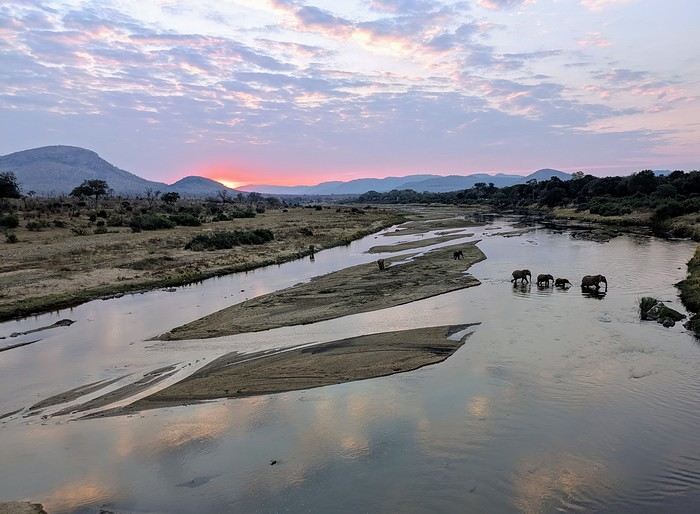
We’re back from our 3-week trip to South Africa in July. It was a family trip with our four grown-up kids (ages 18 to 25).
First off, I’d like to thank everyone on this forum for their great tips—they really helped us plan this trip!
The trip: We spent 15 days between Port Elizabeth and Cape Town, then a week around Kruger (including Blyde River Canyon). We found South Africans to be welcoming and always ready to help. We never felt unsafe (just followed basic safety rules). The police are very visible, especially on the roads.
Logistics: We’d booked our accommodations in advance but made a few changes on the spot based on how we felt at the time. We rented two vehicles from Firefly (Hertz). No complaints—recent cars, quick returns, and the deposit wasn’t charged. We’d gotten our international driver’s permits... which stayed in France! Luckily, no one asked for them. Driving on the left wasn’t an issue (it wasn’t our first time). The roads we took were in good, even great, condition. Only a few tracks to lodges or parks were rough and required extra caution. Lots of pedestrians on the sides of roads, even highways. And plenty of very slow trucks. But they pull over to let you pass. It’s also common for cars to cross into the opposite lane to overtake, even with white lines. We took two domestic flights: one early in the morning (Johannesburg to Port Elizabeth) and one in the late afternoon (Cape Town to Johannesburg) to save time.
We had some highlights and a few disappointments—all part of the journey! More details coming soon.
Back from Sri Lanka: itinerary and hikes
Hi there,
We’re just back from a three-week trip to Sri Lanka, from July 15 to August 11. A few random tips—if you’ve got more specific questions, just ask. If we know the answer, we’ll be happy to help!
What an amazing country! I had a small bias at first, wasn’t totally convinced, but that disappeared fast. Stunning coastal and mountain landscapes, cultural visits, hikes, and such a warm welcome.
Here’s our itinerary in order: Colombo-Anuradhapura-Trincomalee-Polonnaruwa-Dambulla-Sigiriya-Kandy-Haputale-Ella-Tangalle-Galle-Negombo.
Whenever we can, we travel only by public transport, and in Sri Lanka, it’s totally doable. Trains, of course, and buses all the time—everywhere and super cheap. We’d head to the bus station to get a seat, but they also stop along the route. From the airport to Colombo Fort, take bus 187—it’s parked on the right as you exit.
Weather-wise, despite it being the less favorable season for some regions, we only had two half-days of rain. That was one of our worries, but maybe we just got lucky.
For hiking, beyond the well-known climbs in all the guidebooks and blogs (which are great too), there’s a long-distance trail in the mountain region (Kandy, Ella, etc.) that’s really well marked. It’s called the Pekoe Trail, and there’s an app you can download (Pekoe Trail) that gives you the full route and details for each stage—25 in total, I think, ranging from 9 to 15 km. We did 4 of them, not in a row, but starting from our different accommodations. They’re not loops, but you can always find a bus, train, or tuk-tuk to get back or to reach the end of a stage and return. The landscapes are beautiful, the encounters plentiful, and tourists are rare—which is nice sometimes.
Happy travels!
What an amazing country! I had a small bias at first, wasn’t totally convinced, but that disappeared fast. Stunning coastal and mountain landscapes, cultural visits, hikes, and such a warm welcome.
Here’s our itinerary in order: Colombo-Anuradhapura-Trincomalee-Polonnaruwa-Dambulla-Sigiriya-Kandy-Haputale-Ella-Tangalle-Galle-Negombo.
Whenever we can, we travel only by public transport, and in Sri Lanka, it’s totally doable. Trains, of course, and buses all the time—everywhere and super cheap. We’d head to the bus station to get a seat, but they also stop along the route. From the airport to Colombo Fort, take bus 187—it’s parked on the right as you exit.
Weather-wise, despite it being the less favorable season for some regions, we only had two half-days of rain. That was one of our worries, but maybe we just got lucky.
For hiking, beyond the well-known climbs in all the guidebooks and blogs (which are great too), there’s a long-distance trail in the mountain region (Kandy, Ella, etc.) that’s really well marked. It’s called the Pekoe Trail, and there’s an app you can download (Pekoe Trail) that gives you the full route and details for each stage—25 in total, I think, ranging from 9 to 15 km. We did 4 of them, not in a row, but starting from our different accommodations. They’re not loops, but you can always find a bus, train, or tuk-tuk to get back or to reach the end of a stage and return. The landscapes are beautiful, the encounters plentiful, and tourists are rare—which is nice sometimes.
Happy travels!
Australia 2025: Discovering the 5th Continent
Hi everyone.
Because that’s also what sparks the desire in every traveler (well, at least for me) to set foot on Australian soil: discovering a new continent.
Right now, I’ve got some time on my hands—those who follow me know that. A nasty muscle tear (which really doesn’t want to heal) is keeping me grounded for another week, so I’ve decided to open a new travel journal, recounting my recent trip from December 14, 2024, to January 12, 2025, in Australia.
The origins of this trip started last May in Crete, an island I chose for a 10-day break. It’s really lovely, by the way, but that’s not the point… It’s around this time every year that we decide on our next winter destination, and Argentina was at the top of the list—Sydney wasn’t even on the radar… I’d been looking at flights to Buenos Aires for a while, and the prices were shocking… But by the pool one lazy afternoon, scrolling on my iPhone, a promo from Geneva to Sydney caught my eye. The deal ticked two boxes on my traveler’s bucket list: a flight to Australia and a flight with Singapore Airlines, often ranked as the world’s best airline. A quick chat with the missus (well, of course!) and the decision was made: off to the land of kangaroos! Now, once you add luggage and Economy Plus, it still comes to 1600 € per person, but that’s a reasonable price. Either way, we already know what we’re in for—Australia is a budget commitment!

Thanks to 123rf for the image loan 😛
Right now, I’ve got some time on my hands—those who follow me know that. A nasty muscle tear (which really doesn’t want to heal) is keeping me grounded for another week, so I’ve decided to open a new travel journal, recounting my recent trip from December 14, 2024, to January 12, 2025, in Australia.
The origins of this trip started last May in Crete, an island I chose for a 10-day break. It’s really lovely, by the way, but that’s not the point… It’s around this time every year that we decide on our next winter destination, and Argentina was at the top of the list—Sydney wasn’t even on the radar… I’d been looking at flights to Buenos Aires for a while, and the prices were shocking… But by the pool one lazy afternoon, scrolling on my iPhone, a promo from Geneva to Sydney caught my eye. The deal ticked two boxes on my traveler’s bucket list: a flight to Australia and a flight with Singapore Airlines, often ranked as the world’s best airline. A quick chat with the missus (well, of course!) and the decision was made: off to the land of kangaroos! Now, once you add luggage and Economy Plus, it still comes to 1600 € per person, but that’s a reasonable price. Either way, we already know what we’re in for—Australia is a budget commitment!
Thanks to 123rf for the image loan 😛
Short family trek options in Nepal?
I’m heading to Nepal at the end of April 2026 with my brother, the two kids, and my mom.
My mom is 75, in good shape, she walks but isn’t a big sports enthusiast. My daughter is 16, she’s not really into hiking but with the right vibe, she’ll step up.
I’m looking for a 5-6 day trek that’s not too difficult—around 4-5 hours of walking and 500-600m of elevation gain per day. What’s our goal?
Well, like everyone, we’d love something not too crowded. We want to experience Nepali village life away from the main routes—terraced fields, all that. Some encounters, authenticity, sharing... And if we can catch a glimpse of some high peaks, even better.
Any suggestions?
Back from 4 weeks in northern Laos, November 2023
Hi there,
I’m so glad the VoyageForum is back up. Reading 'Montagnard74’s' Laos trip report (which I read yesterday) made me want to share my own (which I already posted a year ago on another forum).
Here’s a little recap of our 3 weeks in northern Laos, plus a few days in Vientiane.
By the way, we could easily go back to the north—there’s so much to see and do; probably in a few years.
This was our 3rd trip to Laos after having already done:
1st trip in 2012 (3 weeks), a quick overview: Vientiane Vang Vieng Luang Prabang Plain of Jars
2nd trip in 2017 (1 month): Vientiane all the way to the 4,000 Islands via Thakhek, Kong Lor, the Bolaven Plateau, Savannakhet, Pakse...
Our 2023 itinerary (1 month): Vientiane Luang Prabang Muang Ngoi Nong Khiew Luang Namtha Muang Sing Boten Vang Vieng Vientiane
Some general info (2023): For those who’ve already been to Laos: everything has gone up a lot—I think prices have almost doubled for transport, accommodation, meals... everything. But Laos is still a budget-friendly country for us. As a couple, we spent 1,100 € for a month, all included (and we definitely didn’t skimp on massages :)).
Don’t trust the transport signs posted everywhere—at travel agencies, bus terminals, hotels... THEY’RE ALL WRONG (especially the schedules). They haven’t been updated since before Covid.
There are hardly any bikes for rent anymore, but scooters are easy to find everywhere. We switched our mode of transport toward the end of our stay: from bikes to scooters, which let us go farther. In Vientiane, we only saw one bike rental place, near Ong Teu Pagoda.
BCEL bank doesn’t charge a commission on foreign currency exchanges. Using ATMs is expensive due to fees. Outside Laos, Lao kip are basically worthless. There’s so much inflation that I couldn’t find a single bank or exchange office willing to swap the kip we had left. So, don’t exchange too much toward the end of your trip.
Some little tips from our experience (2023): The Muang Koua to Muang Ngoi boat still runs daily. At the dam, you have to get off and take a bus, then get back on the boat.
The boat from Muang Ngoi to Nong Khiew only leaves at 9:30 AM (don’t miss it or you’ll pay a lot for a private boat). From Nong Khiew to Muang Ngoi, there are at least two boats a day.
From Luang Namtha to Muang Sing: 4 to 5 buses a day, the last one leaves around 3:30 PM.
From Luang Namtha or Muang Sing to Nateuy or Boten (to catch the new train): 3 to 5 buses a day.
The new train is really hard to book—it’s often fully booked 48 hours in advance, even the local train (5 hours from Boten to Vientiane instead of 3 hours on the high-speed train). (That makes it tough to travel day by day, which we love... too bad.) For baggage checks: don’t bring anything flammable (sprays...) or sharp. My mosquito repellent (flammable but in a small plastic bottle) got through. Water bottles and a tiny pocketknife are okay. But it seems to depend on the station.
Some guesthouses prefer to be paid in dollars, otherwise the price is much higher.
If you’re entering Laos from Vietnam via Dien Bien Phu, you have to get your visa at the embassy in Hanoi—otherwise, you’ll be refused at the border (no e-visa or visa on arrival).
Apart from Luang Prabang, Vientiane, and Muang Ngoi/Nong Khiew, there are very few tourists.
Some bus prices (in addition to those mentioned in my trip report) (with pick-up) 2023: Luang Prabang to Luang Namtha: 320,000 kip per person, 9h LP to Phonesavan: 250,000 kip per person, 7h LP to Phongsaly: 450,000 kip per person, 13h LP to Huay Xai: 420,000 kip per person, 14h Train Nateuy to Vientiane: 400,000 kip per person LP to Chiang Rai: 780,000 kip per person, 18h LP to Hanoi: 900,000 kip per person, 24h LP to train station: 50,000 kip per person LP to airport: 100,000 kip per person Vientiane from train station: 180,000 kip by taxi
Boats: LP to Pak Beng: 300,000 kip per person, 1 day LP to Houay Xai: 500,000 kip per person, 2 days LP to Pak Ou: 180,000 kip per person, 5h
This was our 3rd trip to Laos after having already done:
1st trip in 2012 (3 weeks), a quick overview: Vientiane Vang Vieng Luang Prabang Plain of Jars
2nd trip in 2017 (1 month): Vientiane all the way to the 4,000 Islands via Thakhek, Kong Lor, the Bolaven Plateau, Savannakhet, Pakse...
Our 2023 itinerary (1 month): Vientiane Luang Prabang Muang Ngoi Nong Khiew Luang Namtha Muang Sing Boten Vang Vieng Vientiane
Some general info (2023): For those who’ve already been to Laos: everything has gone up a lot—I think prices have almost doubled for transport, accommodation, meals... everything. But Laos is still a budget-friendly country for us. As a couple, we spent 1,100 € for a month, all included (and we definitely didn’t skimp on massages :)).
Don’t trust the transport signs posted everywhere—at travel agencies, bus terminals, hotels... THEY’RE ALL WRONG (especially the schedules). They haven’t been updated since before Covid.
There are hardly any bikes for rent anymore, but scooters are easy to find everywhere. We switched our mode of transport toward the end of our stay: from bikes to scooters, which let us go farther. In Vientiane, we only saw one bike rental place, near Ong Teu Pagoda.
BCEL bank doesn’t charge a commission on foreign currency exchanges. Using ATMs is expensive due to fees. Outside Laos, Lao kip are basically worthless. There’s so much inflation that I couldn’t find a single bank or exchange office willing to swap the kip we had left. So, don’t exchange too much toward the end of your trip.
Some little tips from our experience (2023): The Muang Koua to Muang Ngoi boat still runs daily. At the dam, you have to get off and take a bus, then get back on the boat.
The boat from Muang Ngoi to Nong Khiew only leaves at 9:30 AM (don’t miss it or you’ll pay a lot for a private boat). From Nong Khiew to Muang Ngoi, there are at least two boats a day.
From Luang Namtha to Muang Sing: 4 to 5 buses a day, the last one leaves around 3:30 PM.
From Luang Namtha or Muang Sing to Nateuy or Boten (to catch the new train): 3 to 5 buses a day.
The new train is really hard to book—it’s often fully booked 48 hours in advance, even the local train (5 hours from Boten to Vientiane instead of 3 hours on the high-speed train). (That makes it tough to travel day by day, which we love... too bad.) For baggage checks: don’t bring anything flammable (sprays...) or sharp. My mosquito repellent (flammable but in a small plastic bottle) got through. Water bottles and a tiny pocketknife are okay. But it seems to depend on the station.
Some guesthouses prefer to be paid in dollars, otherwise the price is much higher.
If you’re entering Laos from Vietnam via Dien Bien Phu, you have to get your visa at the embassy in Hanoi—otherwise, you’ll be refused at the border (no e-visa or visa on arrival).
Apart from Luang Prabang, Vientiane, and Muang Ngoi/Nong Khiew, there are very few tourists.
Some bus prices (in addition to those mentioned in my trip report) (with pick-up) 2023: Luang Prabang to Luang Namtha: 320,000 kip per person, 9h LP to Phonesavan: 250,000 kip per person, 7h LP to Phongsaly: 450,000 kip per person, 13h LP to Huay Xai: 420,000 kip per person, 14h Train Nateuy to Vientiane: 400,000 kip per person LP to Chiang Rai: 780,000 kip per person, 18h LP to Hanoi: 900,000 kip per person, 24h LP to train station: 50,000 kip per person LP to airport: 100,000 kip per person Vientiane from train station: 180,000 kip by taxi
Boats: LP to Pak Beng: 300,000 kip per person, 1 day LP to Houay Xai: 500,000 kip per person, 2 days LP to Pak Ou: 180,000 kip per person, 5h
Tanzania 2019 - Polé Polé
KARIBUUU
Over 5 years later, I’m finally getting around to writing the travel journal for our first trip to East Africa: Tanzania. *Polé Polé*, as they say! 😎
A trip I’d started planning just 6 years ago, in February 2019, for my post-internship exam vacation. After returning to South Africa in July 2019 with my family, this trip, planned for September 2019, would be all about discovery and a few firsts: first trip with friends, first trek, first time in East Africa. I really wanted to attempt the Kilimanjaro ascent, try to still see some of its "eternal" ice, and Alison wanted to do as much safari as possible. Unlike with the Zulus, Himbas, or San, visiting a Maasai village wasn’t on the agenda. Thanks to the Kessy Brothers agency, who were super responsive, Sandy from VF, and other members who helped prepare our trip, we settled on the following itinerary:
Day -1 (8/30): Departure from Pointe-à-Pitre Day 0 (8/31): Departure from Paris Day 1 (9/01): Arrival at Kilimanjaro Airport / Ameg Lodge (Moshi) DAY 2 (9/02): Machame gate / Machame camp DAY 3 (9/03): Shira / Shira camp DAY 4 (9/04): Baranco / Baranco camp DAY 5 (9/05): Barafu / Barafu camp DAY 6 (9/06): Barafu + Summit at midnight / Mweka camp DAY 7 (9/07): Mweka gate / Sal Salnero Hotel (Moshi) DAY 8 (9/08): Arusha National Park / Kanga camp DAY 9 (9/09): Tarangire National Park / Kanga camp DAY 10 (9/10): Tarangire National Park / Twiga Lodge DAY 11 (9/11): Lake Manyara / Twiga Lodge DAY 12 (9/12): Ngorongoro Crater / Simba campsite DAY 13 (9/13): Serengeti National Park / Seronera campsite DAY 14 (9/14): Serengeti National Park - Uoga Kuria Camp DAY 15 (9/15): Serengeti National Park / Waso campsite DAY 16 (9/16): Lake Natron / Maasai Giraffe Ecolodge DAY 17 (9/17): Kilimanjaro Airport Day 18 (9/18): Zanzibar Day 19 (9/19): Zanzibar Day 20 (9/20): Zanzibar Day 21 (9/21): Zanzibar
As I mentioned in my first travel journal about our South Africa trip, I’ve had a special connection to Tanzania for a long time. Growing up in the Indian Ocean without ever visiting Africa, those wildlife documentaries on TV when I skipped my pharmacy classes... I imagined and dreamed about this land and country so much.
The original plan was to go just the two of us with Alison, but somehow—though I don’t quite remember how—we ended up organizing the trip with our friends Mélissa and Doriane, who joined us in Arusha after our Kilimanjaro trek for the last two weeks and their very first safari. I think it was Melissa who had the idea to crash our trip, and she was right to do so! 😉 Flights: Pointe-à-Pitre-Grand Case and Grand Case-Paris with Air Caraïbes. Flights: Paris-JRO and ZNZ-Paris with Kenya Airways (layover in Nairobi). Flight: JRO-ZNZ with Air Tanzania.
Safe travels! !
Over 5 years later, I’m finally getting around to writing the travel journal for our first trip to East Africa: Tanzania. *Polé Polé*, as they say! 😎
A trip I’d started planning just 6 years ago, in February 2019, for my post-internship exam vacation. After returning to South Africa in July 2019 with my family, this trip, planned for September 2019, would be all about discovery and a few firsts: first trip with friends, first trek, first time in East Africa. I really wanted to attempt the Kilimanjaro ascent, try to still see some of its "eternal" ice, and Alison wanted to do as much safari as possible. Unlike with the Zulus, Himbas, or San, visiting a Maasai village wasn’t on the agenda. Thanks to the Kessy Brothers agency, who were super responsive, Sandy from VF, and other members who helped prepare our trip, we settled on the following itinerary:
Day -1 (8/30): Departure from Pointe-à-Pitre Day 0 (8/31): Departure from Paris Day 1 (9/01): Arrival at Kilimanjaro Airport / Ameg Lodge (Moshi) DAY 2 (9/02): Machame gate / Machame camp DAY 3 (9/03): Shira / Shira camp DAY 4 (9/04): Baranco / Baranco camp DAY 5 (9/05): Barafu / Barafu camp DAY 6 (9/06): Barafu + Summit at midnight / Mweka camp DAY 7 (9/07): Mweka gate / Sal Salnero Hotel (Moshi) DAY 8 (9/08): Arusha National Park / Kanga camp DAY 9 (9/09): Tarangire National Park / Kanga camp DAY 10 (9/10): Tarangire National Park / Twiga Lodge DAY 11 (9/11): Lake Manyara / Twiga Lodge DAY 12 (9/12): Ngorongoro Crater / Simba campsite DAY 13 (9/13): Serengeti National Park / Seronera campsite DAY 14 (9/14): Serengeti National Park - Uoga Kuria Camp DAY 15 (9/15): Serengeti National Park / Waso campsite DAY 16 (9/16): Lake Natron / Maasai Giraffe Ecolodge DAY 17 (9/17): Kilimanjaro Airport Day 18 (9/18): Zanzibar Day 19 (9/19): Zanzibar Day 20 (9/20): Zanzibar Day 21 (9/21): Zanzibar
As I mentioned in my first travel journal about our South Africa trip, I’ve had a special connection to Tanzania for a long time. Growing up in the Indian Ocean without ever visiting Africa, those wildlife documentaries on TV when I skipped my pharmacy classes... I imagined and dreamed about this land and country so much.
The original plan was to go just the two of us with Alison, but somehow—though I don’t quite remember how—we ended up organizing the trip with our friends Mélissa and Doriane, who joined us in Arusha after our Kilimanjaro trek for the last two weeks and their very first safari. I think it was Melissa who had the idea to crash our trip, and she was right to do so! 😉 Flights: Pointe-à-Pitre-Grand Case and Grand Case-Paris with Air Caraïbes. Flights: Paris-JRO and ZNZ-Paris with Kenya Airways (layover in Nairobi). Flight: JRO-ZNZ with Air Tanzania.
Safe travels! !
The Great Ocean Road in Australia
Tuesday, December 5, 2023
Melbourne – Lorne
We pick up the car 500 meters away, in a Chinatown parking lot that the hotel has a deal with, then it’s off with a *vroom vroom* while listening to a podcast about the victim of a compulsive mythomaniac—who also happens to be her husband—leading a completely compartmentalized double life. Later, he discovers, after contacting his alter-ego from this parallel universe, that he was actually living a *third* life... and maybe even more? We arrive in Torquay, where we stretch our legs along the Koorie Cultural Walk with a view of Bells Beach...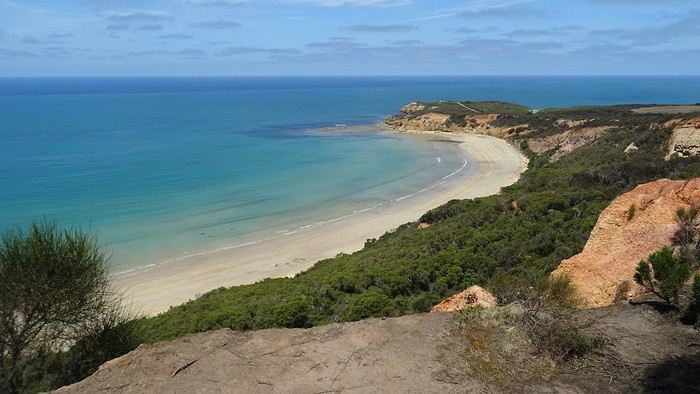
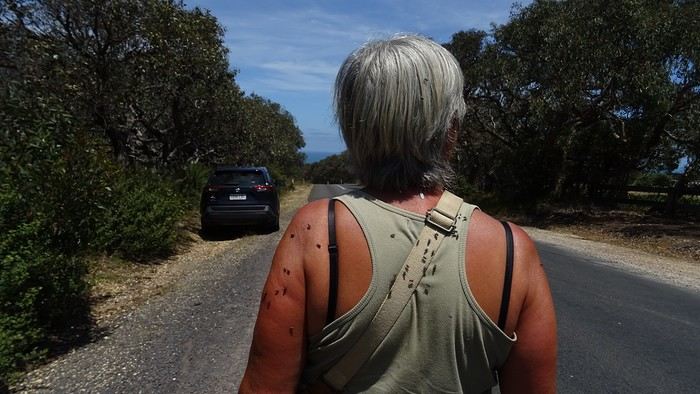
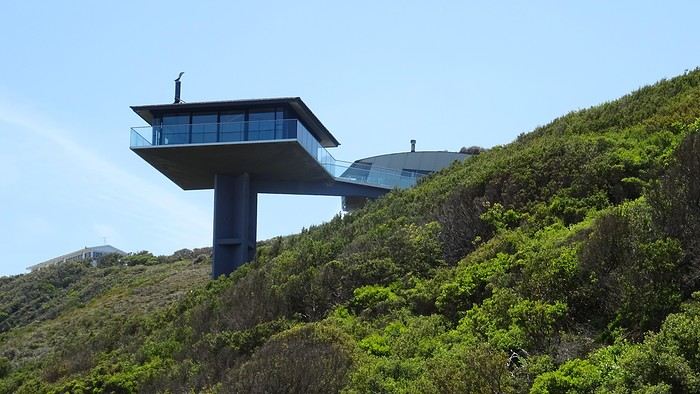
It’s here, just outside Lorne, that the Great Ocean Road officially begins...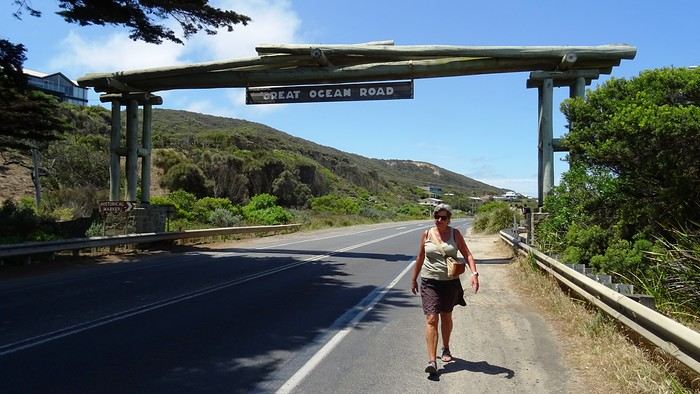
We arrive at our apartment, which is pretty nice—Dom and I are really particular about the quality of our terraces. I’ve never really talked about the practical quirks of daily life in Australia. For example, I could tell you that *every single* power outlet we used on this trip had a switch to turn it on or off. No exceptions, ever! Why? They must find it useful, but for us, it’s a total mystery... And of course, their power outlets require an adapter. Just one of many little peculiarities. Another odd observation: *every* toilet, even the most remote ones hidden deep in the bush, always had a roll of toilet paper available. No shortages here!
And then we’re greeted by a big family of cute sparrows...
Another odd observation: *every* toilet, even the most remote ones hidden deep in the bush, always had a roll of toilet paper available. No shortages here!
And then we’re greeted by a big family of cute sparrows...
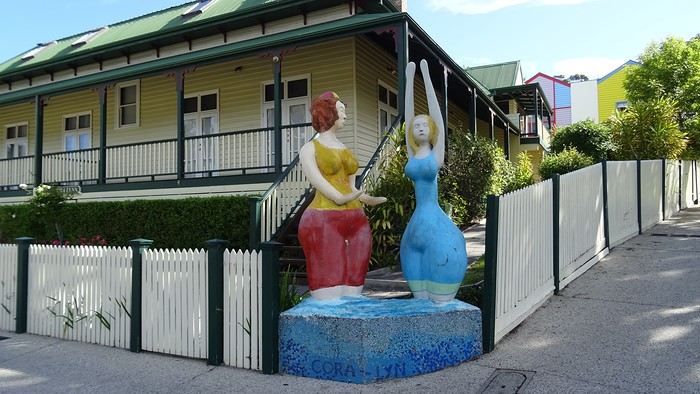
We spent a long time enjoying their pool before heading out for a walk—all the way to Erskine Falls, about ten kilometers away...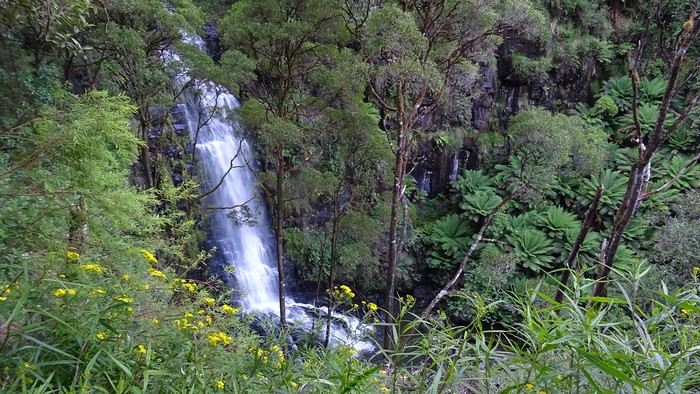
We pick up the car 500 meters away, in a Chinatown parking lot that the hotel has a deal with, then it’s off with a *vroom vroom* while listening to a podcast about the victim of a compulsive mythomaniac—who also happens to be her husband—leading a completely compartmentalized double life. Later, he discovers, after contacting his alter-ego from this parallel universe, that he was actually living a *third* life... and maybe even more? We arrive in Torquay, where we stretch our legs along the Koorie Cultural Walk with a view of Bells Beach...
It’s here, just outside Lorne, that the Great Ocean Road officially begins...
We arrive at our apartment, which is pretty nice—Dom and I are really particular about the quality of our terraces. I’ve never really talked about the practical quirks of daily life in Australia. For example, I could tell you that *every single* power outlet we used on this trip had a switch to turn it on or off. No exceptions, ever! Why? They must find it useful, but for us, it’s a total mystery... And of course, their power outlets require an adapter. Just one of many little peculiarities.
Another odd observation: *every* toilet, even the most remote ones hidden deep in the bush, always had a roll of toilet paper available. No shortages here!
And then we’re greeted by a big family of cute sparrows...We spent a long time enjoying their pool before heading out for a walk—all the way to Erskine Falls, about ten kilometers away...
Martine and DD in Colorado and Utah
Hello everyone! 🙂
So many silent months, and now Voyage Forum is accessible again. That’s cool because we can pick up our discussions for our mutual enjoyment.
I hope everyone is doing well and that you’ve been able to take some great trips, whether to the USA or elsewhere.
In September 2020, we had planned a round trip to explore Colorado, but unfortunately, a nasty virus messed up our plans, closing borders and keeping us stuck at home. Luckily for us, canceling the car, flights, and accommodations didn’t cost us a thing—everything was refunded.
In 2023, a loop from Las Vegas let us revisit places we’d seen in 2017 and discover new ones, this time spending more time at each stop with some lovely hikes.
In 2024, we finally revisited the 2020 plan, and I’ll start with that.
However, unforeseen circumstances mean I have much less time than before, so I’ll keep my trip reports shorter (ha ha ha—you’ll have less of my prose to endure).
Another change: for those who remember the "Gang of Four crazy sixty-somethings," it was just DD and me this time. Our dear Mimi and Maumau left the Var to focus on raising horses and can’t leave their little green paradise to join us anymore. We were unfortunately much tamer without them.
We traveled from September 11 to October 3.
The itinerary
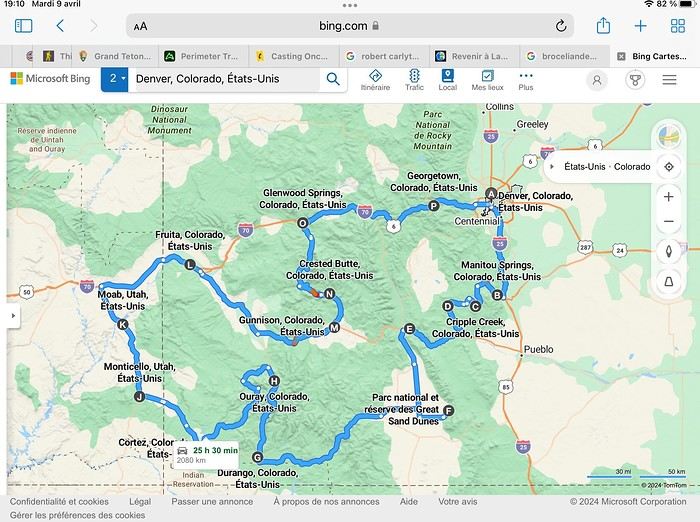
Day 1: Flight Marseille-Paris-Denver, then Manitou Springs (133 km) Day 2: Manitou Springs (49 km) Day 3: Cripple Creek (104 km) Day 4: Salida (254 km) Day 5: Great Sand Dunes (231 km) Day 6: Durango (283 km) Day 7: Durango (Durango-Silverton train) Day 8: Ouray (121 km) Day 9: Ouray (Perimeter Trail hike) Day 10: Cortez (213 km) Day 11: Cortez (Mesa Verde National Park, 134 km) Day 12: Monticello (268 km, detour to Chesler Park) Day 13: Moab (171 km, Delicate Arch) Day 14: Moab (98 km, Fisher Towers) Day 15: Moab (171 km, Canyonlands) Day 16: Fruita (210 km, Colorado National Monument) Day 17: Crested Butte (224 km via Kebler Pass) Day 18: Crested Butte (57 km) Day 19: Glenwood Springs (150 km) Day 20: Glenwood Springs (118 km, Rifle State Park) Day 21: Georgetown (258 km via Independence Pass) Day 22: Denver (123 km), then return flight
We speak very little English. We spent 21 nights there and covered a 3,400 km loop by car and 160 km on foot (we’re still trying to hike while we’re in shape) from Denver in September 2024. We wanted this road trip to help us explore Colorado a bit more—we’d only spent 6 nights there in 2019—and to see it during the fall foliage season. We also wanted to return to Utah (we love Moab) to enjoy its red rocks, which we adore.
In the prices you see (some in euros, others in dollars), I’ve included bank fees and exchange charges. The flights, car, and parking were paid by credit card when we booked in February. Usually, we book around November, but some obligations kept us from doing it earlier. We downloaded the MPC (Mobile Passport Control) app on our phone, which saved us time at immigration.
📊 **Budget: just under 8,500 € for both of us, all included**
📊 **Flights** Marseille-Paris (CDG)-Denver: 2,152 € for both of us, with one checked bag each
📊 **ESTA and America the Beautiful Pass** The ones from our 2023 road trip were still valid
📊 **Parking at Marseille airport: 122 €**
📊 **Car: Nissan Rogue (the French X-Trail) from Hertz: 1,165 €** By booking through Air France (and earning miles), we got a 15% discount. Hertz offers a free Hertz Gold Plus Rewards program, which gives us priority counter service.
📊 **Accommodation: 3,050 €** We stayed in motels and hotels of various ranges (from 100 € to 270 € per night, depending on the city), all booked through Hotels.com or Booking. Booking sometimes offers cheaper rates if you book via the "Booking mobile" app. We also got some preferential rates thanks to our Genius 2 status. Out of 21 nights, only one place didn’t include breakfast.
📊 **Other expenses (activities booked by credit card before leaving)** Durango-Silverton train: 210 € (we booked the enclosed vintage coach in March) Mesa Verde: Balcony House: 15.15 € (booked 14 days before the visit) Timed-entry passes for Arches National Park: 6 € for 3 days (booked June 1 for September entries via http://récreation.gov/). We booked three different days to play with the weather.
📊 **Supplementary insurance with AVA: 204 €** (due to our age 😅 and the high cost of medical consultations in the USA)
📊 **Cash: 1,540 €** We left with 1,000 € exchanged before departure and made two withdrawals (500 $ and 200 $). This cash was used to pay for: - Evening restaurants and tips (between 70 $ and 95 $ for two meals and two drinks) - Two state parks: Dead Horse State Park (20 $) and Rifle State Park (10 $) - The Monarch Pass gondola (24 $) - Midday picnics - Gas (slightly cheaper with cash): 204 $ for 3,400 km - Personal souvenirs and little treats.
Like in our previous road trips, we didn’t rent a GPS. We used the offline GPS app Here We Go, for which we’d downloaded maps of Colorado and Utah from France, as well as a new offline app called Organic Maps as a backup—though we didn’t end up needing it.
❤️❤️❤️ **Highlights (there are so many!)** 📍 The stunning landscapes of Colorado, especially with the fall colors 📍 A step back in time at the old farm in Florissant Fossil Beds National Monument 📍 The prairies of Cripple Creek and the mining remnants of the Vindicator Trail 📍 The cheeky chipmunks in the ghost town of St. Elmo 📍 Great Sand Dunes and its soft sand 📍 The steam train between Durango and Silverton: we’re glad we chose the round-trip because it rained heavily on the way there, but we got to enjoy the scenery on the way back when the sun came out 📍 The unexpected meet-up with Michèle from the group outside a restaurant in Durango 📍 The hot springs in Ouray 📍 Mesa Verde and its still-vibrant past 📍 The red rocks of Moab and Delicate Arch at sunset 📍 The lace-like Fisher Towers and the view from the end of the trail 📍 The gorgeous Route 128 leading to Colorado National Monument—small, easy to visit, and so beautiful 📍 The colors of the fabulous Kebler Pass, Crested Butte, and especially the hike through the golden aspens (Lower and Upper Loop) 📍 The waterfalls at Rifle State Park 📍 The tundra of Independence Pass 📍 The Halloween decorations in Georgetown and Idaho Springs
😞😞 **Flops (there are very few!)** 📍 The viewpoints we missed because they weren’t well-marked or we didn’t see the signs 📍 The closure of some hiking trails (Hanging Lake and parts of Canyonlands) and the Sal Mountain Loop road, which kept us from accessing it 📍😢 The Chesler Park hike we had to cut short due to poor time management—180 km between our stop in Cortez meant we didn’t arrive until 10:30 AM, way too late for a 17 km hike.
Hope this helps! Have a great evening, everyone, and see you soon! 😊
The itinerary
Day 1: Flight Marseille-Paris-Denver, then Manitou Springs (133 km) Day 2: Manitou Springs (49 km) Day 3: Cripple Creek (104 km) Day 4: Salida (254 km) Day 5: Great Sand Dunes (231 km) Day 6: Durango (283 km) Day 7: Durango (Durango-Silverton train) Day 8: Ouray (121 km) Day 9: Ouray (Perimeter Trail hike) Day 10: Cortez (213 km) Day 11: Cortez (Mesa Verde National Park, 134 km) Day 12: Monticello (268 km, detour to Chesler Park) Day 13: Moab (171 km, Delicate Arch) Day 14: Moab (98 km, Fisher Towers) Day 15: Moab (171 km, Canyonlands) Day 16: Fruita (210 km, Colorado National Monument) Day 17: Crested Butte (224 km via Kebler Pass) Day 18: Crested Butte (57 km) Day 19: Glenwood Springs (150 km) Day 20: Glenwood Springs (118 km, Rifle State Park) Day 21: Georgetown (258 km via Independence Pass) Day 22: Denver (123 km), then return flight
We speak very little English. We spent 21 nights there and covered a 3,400 km loop by car and 160 km on foot (we’re still trying to hike while we’re in shape) from Denver in September 2024. We wanted this road trip to help us explore Colorado a bit more—we’d only spent 6 nights there in 2019—and to see it during the fall foliage season. We also wanted to return to Utah (we love Moab) to enjoy its red rocks, which we adore.
In the prices you see (some in euros, others in dollars), I’ve included bank fees and exchange charges. The flights, car, and parking were paid by credit card when we booked in February. Usually, we book around November, but some obligations kept us from doing it earlier. We downloaded the MPC (Mobile Passport Control) app on our phone, which saved us time at immigration.
📊 **Budget: just under 8,500 € for both of us, all included**
📊 **Flights** Marseille-Paris (CDG)-Denver: 2,152 € for both of us, with one checked bag each
📊 **ESTA and America the Beautiful Pass** The ones from our 2023 road trip were still valid
📊 **Parking at Marseille airport: 122 €**
📊 **Car: Nissan Rogue (the French X-Trail) from Hertz: 1,165 €** By booking through Air France (and earning miles), we got a 15% discount. Hertz offers a free Hertz Gold Plus Rewards program, which gives us priority counter service.
📊 **Accommodation: 3,050 €** We stayed in motels and hotels of various ranges (from 100 € to 270 € per night, depending on the city), all booked through Hotels.com or Booking. Booking sometimes offers cheaper rates if you book via the "Booking mobile" app. We also got some preferential rates thanks to our Genius 2 status. Out of 21 nights, only one place didn’t include breakfast.
📊 **Other expenses (activities booked by credit card before leaving)** Durango-Silverton train: 210 € (we booked the enclosed vintage coach in March) Mesa Verde: Balcony House: 15.15 € (booked 14 days before the visit) Timed-entry passes for Arches National Park: 6 € for 3 days (booked June 1 for September entries via http://récreation.gov/). We booked three different days to play with the weather.
📊 **Supplementary insurance with AVA: 204 €** (due to our age 😅 and the high cost of medical consultations in the USA)
📊 **Cash: 1,540 €** We left with 1,000 € exchanged before departure and made two withdrawals (500 $ and 200 $). This cash was used to pay for: - Evening restaurants and tips (between 70 $ and 95 $ for two meals and two drinks) - Two state parks: Dead Horse State Park (20 $) and Rifle State Park (10 $) - The Monarch Pass gondola (24 $) - Midday picnics - Gas (slightly cheaper with cash): 204 $ for 3,400 km - Personal souvenirs and little treats.
Like in our previous road trips, we didn’t rent a GPS. We used the offline GPS app Here We Go, for which we’d downloaded maps of Colorado and Utah from France, as well as a new offline app called Organic Maps as a backup—though we didn’t end up needing it.
❤️❤️❤️ **Highlights (there are so many!)** 📍 The stunning landscapes of Colorado, especially with the fall colors 📍 A step back in time at the old farm in Florissant Fossil Beds National Monument 📍 The prairies of Cripple Creek and the mining remnants of the Vindicator Trail 📍 The cheeky chipmunks in the ghost town of St. Elmo 📍 Great Sand Dunes and its soft sand 📍 The steam train between Durango and Silverton: we’re glad we chose the round-trip because it rained heavily on the way there, but we got to enjoy the scenery on the way back when the sun came out 📍 The unexpected meet-up with Michèle from the group outside a restaurant in Durango 📍 The hot springs in Ouray 📍 Mesa Verde and its still-vibrant past 📍 The red rocks of Moab and Delicate Arch at sunset 📍 The lace-like Fisher Towers and the view from the end of the trail 📍 The gorgeous Route 128 leading to Colorado National Monument—small, easy to visit, and so beautiful 📍 The colors of the fabulous Kebler Pass, Crested Butte, and especially the hike through the golden aspens (Lower and Upper Loop) 📍 The waterfalls at Rifle State Park 📍 The tundra of Independence Pass 📍 The Halloween decorations in Georgetown and Idaho Springs
😞😞 **Flops (there are very few!)** 📍 The viewpoints we missed because they weren’t well-marked or we didn’t see the signs 📍 The closure of some hiking trails (Hanging Lake and parts of Canyonlands) and the Sal Mountain Loop road, which kept us from accessing it 📍😢 The Chesler Park hike we had to cut short due to poor time management—180 km between our stop in Cortez meant we didn’t arrive until 10:30 AM, way too late for a 17 km hike.
Hope this helps! Have a great evening, everyone, and see you soon! 😊
The "Must-Sees" of the American West
This adventure began during Covid... Yep, Covid turned a lot of things upside down, but most of all, it kept us cooped up for a few months and stopped us from traveling for a while—even longer for a die-hard fan of the American West like me.
While borders were closed, I started imagining what an ideal itinerary might look like—one that would string together all the Southwest must-sees in just two weeks, during the best time of year: September and October. When the U.S. announced in September 2021 that borders would reopen in the coming weeks, I regained hope and began scouting flight tickets for a departure in September 2022.
But here’s the thing: tackling solo hikes, each one tougher than the last, right in the heart of the Wilderness, could be a risky—even reckless—endeavor for a father of three. After a quick chat with some virtual friends who are just as passionate about the Southwest as I am, with good physical condition and nearly the same list of must-visit spots, Franck and his brother Sullivan were in! 🙂
In November, we snagged flight tickets from Nice to San Francisco for the modest sum of 400 €, and a few days later, I booked a Toyota Tacoma pickup for 840 € !
It’s not cheap for just 15 days, and a pickup isn’t exactly ideal for luggage, but the prices for full-size 4x4s have become totally outrageous! Due to border closures, rental companies had to offload a lot of these big 4x4s, which tourists love. Then, supply and demand did the rest !
Franck and I spent the winter and spring trying to cram the equivalent of three weeks of hikes into two. But even with physical limits, we had to stay reasonable! Three to four months before departure, we entered the lotteries for different must-see spots: The Subway, Coyote Buttes North (home to the famous Wave), and Coyote Buttes South (CBS).
The Wave is the holy grail for any Southwest enthusiast. Since 2015, we’ve tried our luck with the online and on-site lotteries about ten times, but the spots are unfortunately limited: just 20 per day. A glimmer of hope, though—since early 2022, that number has increased to 64 people allowed per day, with 48 spots awarded via the online lottery.
After all three of us tried our luck for The Wave, on June 1st at exactly 5 PM, I got an email that started with, "Congratulations! You were successful in the Coyote Buttes North (The Wave) September 2022 Permit Lottery at Coyote Buttes North (The Wave)...". At 5:01 PM, I called Franck, whose dream it’s been for over 20 years—ever since the first photos were published in a travel magazine! He didn’t believe me when I told him, and I had to forward the email for him to finally accept the unbelievable: we were going to The Wave and all the incredible spots scattered across the protected area of Coyote Buttes North.
I’ve already been to Coyote Buttes South twice, but there are areas I couldn’t explore in the middle of summer because they were too remote. So, I had no trouble letting my buddies convince me to go back for a third time. Plus, given how hard it is to access, we had no trouble securing a permit online as long as we logged in at exactly 8 PM on the dot!
For The Subway, all three of us struck out. No big deal—we won at CBN and CBS!
Among the sites to visit, there are two that I’m particularly attached to because I know my chances of wanting to see them again are slim. The first is Angel Arch, one of the most legendary arches in the Southwest, due to its remoteness from any trace of civilization. To get there, the recommended hike is Upper Salt Creek, and you’re looking at a 50 km round-trip in an area with no water (in September) and populated by bears.
The second site is the Hopi Salt Trail, in Navajo land, which, after a very tough hike, lets you marvel at the turquoise-blue waters of the Little Colorado before it meets the Colorado River. The Hopi Salt Trail is, like The Wave, the holy grail for any Southwest enthusiast, and the windows of opportunity to see the water in that magical color are very short each year. For this, you have to monitor the Little Colorado’s gauges downstream from Cameron: if the level stays at its lowest for 10 consecutive days—meaning no rain—you can hope for turquoise water. The ideal period rarely exceeds 30 days a year, and it’s usually in June that all the stars align.
But unfortunately, one month before departure, while the flow rate at Cameron looked promising, several storms in September dashed our hopes of doing the Hopi Salt Trail, even at the end of the road trip.
We still had two consolation prizes, though:
After a last-minute cancellation, while keeping an eye out for available spots for The Subway, it turned out that three spots opened up exactly on the day we’d planned to go—so we rushed to grab them!! Regarding the 4x4 rental, the prices for full-size models dropped by several hundred dollars, and we ended up finding a Chevrolet Tahoe for less than $1000. A steal and a serious boost in comfort, so we could store all our gear and food without worry!
Here’s the initial plan in a perfect world: D1 The White Domes - Camping D2 Sunrise at The White Domes - The Subway D3 Coyote Buttes North D4 Coyote Buttes South - White Pocket D5 Wahweap Hoodoos - Sidestep Canyon - Colourful Canyon - White Rocks - Sunset at Yellow Rock D6 Broken Bow Arch - Reflection Canyon D7 Coyote Gulch D8 The Volcano (or The Oasis - Zebra Slot Canyon if the weather’s good) - North Caineville Mesa D9 The Needles: Squaw Canyon - Lost Canyon combo - Druid Arch - Chesler Park D10 Upper Salt Creek Day 1 - Camping D11 Upper Salt Creek Day 2 D12 Hopi-Navajo Territory: Ha Ho No Geh Canyon, Coal Mine Canyon, Bends of the Little Colorado D13 Grand Canyon: South Kaibab Trail and Bright Angel Trail D14 Upper East Zion: East Temple Loop, Jughandle Arch, Center of the Universe, and Checkerboard Mesa Summit And several backup options in case of bad weather, including Spencer Trail, West Cove, and Buffington Pockets.
Enough talking—time for action!
While borders were closed, I started imagining what an ideal itinerary might look like—one that would string together all the Southwest must-sees in just two weeks, during the best time of year: September and October. When the U.S. announced in September 2021 that borders would reopen in the coming weeks, I regained hope and began scouting flight tickets for a departure in September 2022.
But here’s the thing: tackling solo hikes, each one tougher than the last, right in the heart of the Wilderness, could be a risky—even reckless—endeavor for a father of three. After a quick chat with some virtual friends who are just as passionate about the Southwest as I am, with good physical condition and nearly the same list of must-visit spots, Franck and his brother Sullivan were in! 🙂
In November, we snagged flight tickets from Nice to San Francisco for the modest sum of 400 €, and a few days later, I booked a Toyota Tacoma pickup for 840 € !
It’s not cheap for just 15 days, and a pickup isn’t exactly ideal for luggage, but the prices for full-size 4x4s have become totally outrageous! Due to border closures, rental companies had to offload a lot of these big 4x4s, which tourists love. Then, supply and demand did the rest !
Franck and I spent the winter and spring trying to cram the equivalent of three weeks of hikes into two. But even with physical limits, we had to stay reasonable! Three to four months before departure, we entered the lotteries for different must-see spots: The Subway, Coyote Buttes North (home to the famous Wave), and Coyote Buttes South (CBS).
The Wave is the holy grail for any Southwest enthusiast. Since 2015, we’ve tried our luck with the online and on-site lotteries about ten times, but the spots are unfortunately limited: just 20 per day. A glimmer of hope, though—since early 2022, that number has increased to 64 people allowed per day, with 48 spots awarded via the online lottery.
After all three of us tried our luck for The Wave, on June 1st at exactly 5 PM, I got an email that started with, "Congratulations! You were successful in the Coyote Buttes North (The Wave) September 2022 Permit Lottery at Coyote Buttes North (The Wave)...". At 5:01 PM, I called Franck, whose dream it’s been for over 20 years—ever since the first photos were published in a travel magazine! He didn’t believe me when I told him, and I had to forward the email for him to finally accept the unbelievable: we were going to The Wave and all the incredible spots scattered across the protected area of Coyote Buttes North.
I’ve already been to Coyote Buttes South twice, but there are areas I couldn’t explore in the middle of summer because they were too remote. So, I had no trouble letting my buddies convince me to go back for a third time. Plus, given how hard it is to access, we had no trouble securing a permit online as long as we logged in at exactly 8 PM on the dot!
For The Subway, all three of us struck out. No big deal—we won at CBN and CBS!
Among the sites to visit, there are two that I’m particularly attached to because I know my chances of wanting to see them again are slim. The first is Angel Arch, one of the most legendary arches in the Southwest, due to its remoteness from any trace of civilization. To get there, the recommended hike is Upper Salt Creek, and you’re looking at a 50 km round-trip in an area with no water (in September) and populated by bears.
The second site is the Hopi Salt Trail, in Navajo land, which, after a very tough hike, lets you marvel at the turquoise-blue waters of the Little Colorado before it meets the Colorado River. The Hopi Salt Trail is, like The Wave, the holy grail for any Southwest enthusiast, and the windows of opportunity to see the water in that magical color are very short each year. For this, you have to monitor the Little Colorado’s gauges downstream from Cameron: if the level stays at its lowest for 10 consecutive days—meaning no rain—you can hope for turquoise water. The ideal period rarely exceeds 30 days a year, and it’s usually in June that all the stars align.
But unfortunately, one month before departure, while the flow rate at Cameron looked promising, several storms in September dashed our hopes of doing the Hopi Salt Trail, even at the end of the road trip.
We still had two consolation prizes, though:
After a last-minute cancellation, while keeping an eye out for available spots for The Subway, it turned out that three spots opened up exactly on the day we’d planned to go—so we rushed to grab them!! Regarding the 4x4 rental, the prices for full-size models dropped by several hundred dollars, and we ended up finding a Chevrolet Tahoe for less than $1000. A steal and a serious boost in comfort, so we could store all our gear and food without worry!
Here’s the initial plan in a perfect world: D1 The White Domes - Camping D2 Sunrise at The White Domes - The Subway D3 Coyote Buttes North D4 Coyote Buttes South - White Pocket D5 Wahweap Hoodoos - Sidestep Canyon - Colourful Canyon - White Rocks - Sunset at Yellow Rock D6 Broken Bow Arch - Reflection Canyon D7 Coyote Gulch D8 The Volcano (or The Oasis - Zebra Slot Canyon if the weather’s good) - North Caineville Mesa D9 The Needles: Squaw Canyon - Lost Canyon combo - Druid Arch - Chesler Park D10 Upper Salt Creek Day 1 - Camping D11 Upper Salt Creek Day 2 D12 Hopi-Navajo Territory: Ha Ho No Geh Canyon, Coal Mine Canyon, Bends of the Little Colorado D13 Grand Canyon: South Kaibab Trail and Bright Angel Trail D14 Upper East Zion: East Temple Loop, Jughandle Arch, Center of the Universe, and Checkerboard Mesa Summit And several backup options in case of bad weather, including Spencer Trail, West Cove, and Buffington Pockets.
Enough talking—time for action!
On remonte le temps: Népal 2000, Camp de base de l'Everest English translation pending
Allez on se retrouve en Asie cette fois pour tutoyer le toit du monde 😛 Là internet commençait à pointer le bout de son nez, VF en 1999 je sais pas si ça existait, en tout cas je ne connaissait pas 🙂. Il y avait la possibilité de partir tout seul et de trouver un guide, des porteurs sur place ..... J'ai préféré passer par un agence spécialisée dans le trekking pour réaliser se voyage !
C'est un voyage de 22 jours que je vais vous conter !
Le groupe est constitué de 15 personnes, dont l'age va de 23 à 62 ans. Mise à part un couple particulièrement pénible tout le monde à fait les efforts nécessaires pour que le voyage se passe bien. Des parties acharnées de Uno tous les soirs ont grandement contribué à la bonne humeur du groupe et des porteurs qui ne comprenaient pas pourquoi un jeu de carte pouvait nous faire autant rire.
Le guide un accompagnateur en haute montagne, c'est en grande partie grâce à lui si le voyage c'est aussi bien passé il a toujours était disponible pour tout le monde et il a su désamorcer tous les petits conflits, inhérent à ce type de voyage, dans l’œuf.
Vendredi 21/04/2000 : Paris Katmandou
Le rendez vous est fixé 20 heures à l'aéroport Charles de Gaulle, pour un décollage à 23h30 la compagnie que nous allons prendre est Pakistan Airlines ce qui est loin d'être le top. Nous partons finalement avec 1 heure de retard. J'adore les consignes qui sont ponctués avec un à la grâce de dieu 🤪, J'ai dormi tout le long du vol, dors du sommeil du juste jusqu'à notre première escale Islamabad, capitale du Pakistan. Maintenant j'ai plus de mal à dormir en avion pas parce que j'en ai peur, mais avec l'age j'ai besoin d'un peux plus de confort 😇
Nous allons prendre notre deuxième avion à destination de Katmandou terminus de notre voyage, bonjour les formalités dans l'aéroport 4 contrôles de passeport et des bagages de soute, alors que nous sommes toujours dans la zone franche. Nous atterrissons à l'aéroport de Katmandou, un court transfert en car nous fait découvrir la ville, les premières impressions sont la pauvreté et la pollution qui entourent la ville, nous finissons par arriver dans un magnifique Hotel, dans le centre de la ville, vers 17 h 50. Le temps de déposer nos affaires, nous descendons manger et direction le lit.
Là vous vous dites quelle mémoire, ben non faut pas croire, j'ai pris des notes pour ce voyage et je les ai encore 🙂
Pour le moment mon record d'altitude ( 5 895 m) va-t-il être battu ? Vous le saurez en me suivant
A demain
C'est un voyage de 22 jours que je vais vous conter !
Le groupe est constitué de 15 personnes, dont l'age va de 23 à 62 ans. Mise à part un couple particulièrement pénible tout le monde à fait les efforts nécessaires pour que le voyage se passe bien. Des parties acharnées de Uno tous les soirs ont grandement contribué à la bonne humeur du groupe et des porteurs qui ne comprenaient pas pourquoi un jeu de carte pouvait nous faire autant rire.
Le guide un accompagnateur en haute montagne, c'est en grande partie grâce à lui si le voyage c'est aussi bien passé il a toujours était disponible pour tout le monde et il a su désamorcer tous les petits conflits, inhérent à ce type de voyage, dans l’œuf.
Vendredi 21/04/2000 : Paris Katmandou
Le rendez vous est fixé 20 heures à l'aéroport Charles de Gaulle, pour un décollage à 23h30 la compagnie que nous allons prendre est Pakistan Airlines ce qui est loin d'être le top. Nous partons finalement avec 1 heure de retard. J'adore les consignes qui sont ponctués avec un à la grâce de dieu 🤪, J'ai dormi tout le long du vol, dors du sommeil du juste jusqu'à notre première escale Islamabad, capitale du Pakistan. Maintenant j'ai plus de mal à dormir en avion pas parce que j'en ai peur, mais avec l'age j'ai besoin d'un peux plus de confort 😇
Nous allons prendre notre deuxième avion à destination de Katmandou terminus de notre voyage, bonjour les formalités dans l'aéroport 4 contrôles de passeport et des bagages de soute, alors que nous sommes toujours dans la zone franche. Nous atterrissons à l'aéroport de Katmandou, un court transfert en car nous fait découvrir la ville, les premières impressions sont la pauvreté et la pollution qui entourent la ville, nous finissons par arriver dans un magnifique Hotel, dans le centre de la ville, vers 17 h 50. Le temps de déposer nos affaires, nous descendons manger et direction le lit.
Là vous vous dites quelle mémoire, ben non faut pas croire, j'ai pris des notes pour ce voyage et je les ai encore 🙂
Pour le moment mon record d'altitude ( 5 895 m) va-t-il être battu ? Vous le saurez en me suivant
A demain
Camp de base Nord de l'Annapurna, boucle Thorung/Tilicho English translation pending
Allez, je me lance aussi dans un petit CR du trek réalisé du 4 au 24 septembre 2019.
2 parties distinctes dans l'itinéraire :
1. Le Camp de base Nord de l'Annapurna
Un projet prévu depuis longtemps, je souhaitais voir de mes yeux l'itinéraire emprunté par l'expédition française de 1950. En ajoutant la difficulté d'une reconnaissance sur un itinéraire imaginé par Pierre Martin via la Kalte Danda, une large crête qui remonte de la Kali Gandaki et qui poursuit sur l'arête SW des Nilgiris).
2. La boucle des 2(3) cols entre Manang et Jomsom
Un itinéraire sur un sentier classique mais qui n'est pas ou peu fait car l'acclimatation est indispensable avant de s'engager directement vers le plus haut-col du secteur. Le Mesokanto La (2e col) est plus sauvage et moins emprunté, mais y étant déjà passé 3 fois, je le connais assez bien. Ce 2e itinéraire me permettait d'allonger un peu mon séjour dans les Annapurnas en établissant une boucle intéressante.
L'itinéraire suivi fut celui-ci :
Première partie (Camp de base N de l'Annapurna)
Jour 1 : Transfert en bus de Pokhara à Tatopani Jour 2 : Tatopani (1250) - Kalte Danda Camp 1 (2500) Jour 3 : Kalte Danda Camp 1 - Kalte Danda Camp 2 (4000) Jour 4 : Kalte Danda Camp 2 - Thulobugin Pass (4450) - Nilgiri BC (4230) Jour 5 : Nilgiri BC - North Annapurna BC (4050) Jour 6 : North Annapurna BC - Miristi Khola Camp (3560) Jour 7 : Miristi Khola Camp - Nilgiri BC (4230) Jour 8 : Nilgiri BC - Thulobugin Pass - Kalopani (2520) Jour 9 : Kalopani - Jomsom (2740)
Séparation avec l'équipe. La première partie dédiée au camp de base N est réalisée, je n'ai donc plus besoin de l'équipe. Je poursuis seul sur des sentiers bien tracés, évidents et "relativement safe".
Deuxième Partie (boucle des 2 cols du Tour des Annapurnas)
Jour 10 : Jomsom - Jharkot (3520) en bus Jour 11 : Jharkot - Thorung La Camp (5000) Jour 12 : Thorung La Camp - Thorung La - Ledar (4220) Jour 13 : Ledar - Manang - Khangsar (3750) Jour 14 : Khangsar - Tilicho BC (4150) Jour 15 : Tilicho BC - Tilicho Lake Teahouse (5000) Jour 16 : Tilicho Lake Teahouse - Eastern Pass - Mesokanto La - Thinigaon (2870) Jour 17 : Thinigaon - Kagbeni (2840) Jour 18 : Kagbeni - Lupra - Kagbeni Jour 19 : Kagbeni - Jomsom Jour 20 : Vol Jomsom - Pokhara

2 parties distinctes dans l'itinéraire :
1. Le Camp de base Nord de l'Annapurna
Un projet prévu depuis longtemps, je souhaitais voir de mes yeux l'itinéraire emprunté par l'expédition française de 1950. En ajoutant la difficulté d'une reconnaissance sur un itinéraire imaginé par Pierre Martin via la Kalte Danda, une large crête qui remonte de la Kali Gandaki et qui poursuit sur l'arête SW des Nilgiris).
2. La boucle des 2(3) cols entre Manang et Jomsom
Un itinéraire sur un sentier classique mais qui n'est pas ou peu fait car l'acclimatation est indispensable avant de s'engager directement vers le plus haut-col du secteur. Le Mesokanto La (2e col) est plus sauvage et moins emprunté, mais y étant déjà passé 3 fois, je le connais assez bien. Ce 2e itinéraire me permettait d'allonger un peu mon séjour dans les Annapurnas en établissant une boucle intéressante.
L'itinéraire suivi fut celui-ci :
Première partie (Camp de base N de l'Annapurna)
Jour 1 : Transfert en bus de Pokhara à Tatopani Jour 2 : Tatopani (1250) - Kalte Danda Camp 1 (2500) Jour 3 : Kalte Danda Camp 1 - Kalte Danda Camp 2 (4000) Jour 4 : Kalte Danda Camp 2 - Thulobugin Pass (4450) - Nilgiri BC (4230) Jour 5 : Nilgiri BC - North Annapurna BC (4050) Jour 6 : North Annapurna BC - Miristi Khola Camp (3560) Jour 7 : Miristi Khola Camp - Nilgiri BC (4230) Jour 8 : Nilgiri BC - Thulobugin Pass - Kalopani (2520) Jour 9 : Kalopani - Jomsom (2740)
Séparation avec l'équipe. La première partie dédiée au camp de base N est réalisée, je n'ai donc plus besoin de l'équipe. Je poursuis seul sur des sentiers bien tracés, évidents et "relativement safe".
Deuxième Partie (boucle des 2 cols du Tour des Annapurnas)
Jour 10 : Jomsom - Jharkot (3520) en bus Jour 11 : Jharkot - Thorung La Camp (5000) Jour 12 : Thorung La Camp - Thorung La - Ledar (4220) Jour 13 : Ledar - Manang - Khangsar (3750) Jour 14 : Khangsar - Tilicho BC (4150) Jour 15 : Tilicho BC - Tilicho Lake Teahouse (5000) Jour 16 : Tilicho Lake Teahouse - Eastern Pass - Mesokanto La - Thinigaon (2870) Jour 17 : Thinigaon - Kagbeni (2840) Jour 18 : Kagbeni - Lupra - Kagbeni Jour 19 : Kagbeni - Jomsom Jour 20 : Vol Jomsom - Pokhara