Results for "Amber+|+7+>+8"
3267 results found.
Itinéraire, transport et hôtels en Californie English translation pending
j'ai trois semaine à passer hors de mon québec natal avec un budget restreint alors californie me voilà. j'hésite quant à l'itinéraire; ou bien je reste à san fransisco et je visite les alentours jusqu'au grand canyon, ou bien je descends judqu'à los angeles en passant par long beach et en longeant la côte. il semble tellement y avoir de choses à voir que je me sens perdue. j'ignore tout du système de transport en commun et je crois que le mieux serait de louer une voiture. si jamais vous avez des conseils, autant au sujet des coins à visiter et des endroits peu cher où loger que sur la façon de se déplacer faites moi savoir vos trucs. merci à l'avance.
Mamajuana (liqueur) de République Dominicaine English translation pending
Salut a tous,
😉 Quelqu'un connait-il le dosage pour la mamajuana (pas confondre😠) que j'ai ramané de Rep Dominicaine
Je sais que c'est : du miel, du rhum brun, du vin rouge, cependant il me manque les proportions.
Merci de m'aider
😉 Quelqu'un connait-il le dosage pour la mamajuana (pas confondre😠) que j'ai ramané de Rep Dominicaine
Je sais que c'est : du miel, du rhum brun, du vin rouge, cependant il me manque les proportions.
Merci de m'aider
Puerto plata en République Dominicaine English translation pending
Bonjour, je pars pour puerto plata
Je voudrais aller dans une petite ville a puerto plata est ce que quelqu'un pourrait me conseiller?
Comment je doit m'y rendre?
Ect ce que c'est dangereux?
Je voudrais aller dans une petite ville a puerto plata est ce que quelqu'un pourrait me conseiller?
Comment je doit m'y rendre?
Ect ce que c'est dangereux?
Prix des excursions ile de Saona et San Domingo English translation pending
Bonjour, J'aimerais savoir combien coûte ces excursions a Bayahibe, celle pour l'Ile Saona et l'autre pour la visite de Santo Domingo (en dollars US)? Car je prevoie partir pour le Palace ou l'Iberostar et j'aimerais prevoir le budget a avoir la-bas...
Merci pour vos reponses!!
Merci pour vos reponses!!
Retour du Camino del Sol (Paraiso del Sol) Cabarete English translation pending
Je suis de retour de la Rep Dom où j’ai passé de superbes vacances.
J’ai séjourné avec mon mari à l’hôtel Camino del Sol (Paraiso del Sol) à Cabarete.
L’hôtel est convenable, les chambres spacieuses, celles du Camino n’ont pas de clim mais juste des ventilos, on a trouvé ça suffisant et en plus c pratique pour éloigner les moustiques.
L’hôtel propose des excursions très chères, d’ailleurs dés le lendemain de notre arrivée, ils nous convoquent pour une réunion d’information durant laquelle ils décrivent les excursions et déconseillent d’aller voir les agences à l’extérieur .
Justement, à ce propos, 5 personnes se sont levées à 4h du matin pour faire une excursion avec l’hôtel et ont poireauté 2 heures 30 mais le bus n’est jamais venu les chercher. Conclusion : Ne prenez pas les excursions avec l’hôtel, 3 fois plus chères et pas assez bien organisées.
Je vous conseille l’agence Gaviota Tour qui est juste derrière le resto Micheal Angelo. Ils font de très bons prix et vous pouvez négocier quand vous prenez plusieurs excursions.
Nous, on en a fait 2 avec cette agence : Paraiso Island : tout simplement superbe, c une île de 1000m^2 au max entourée par des coraux, il ya des poissons avec pleins de couleurs. Sur cette île vous retrouvez vraiment les paysages de cartes postales. Samana et l’île Bacardi : idem, superbe plages.
Sinon, on a fait d’autres excursions mais en solo, en utilisant les guaguas : Rio San Juan, Laguna Gri Gri et Playa Caleton Puerto Plata : Musée de l’Ambre, Téléphérique, jardin botanique, Monte Cristi et le Fort San Felipe.
Il faut aussi visiter le village de Sosua, la plage est très jolie mais les vendeurs harcèlent trop les touristes. Par contre pour le shopping, je vous déconseille ces boutiques, il y en a une à Cabarete qui fait de très bons prix . L’hôtel proposent des navettes à Cabarete et Sosua. Donc pour cette boutique, elle est à gauche par rapport à là où vous dépose la navette et il y a des escaliers pour y accéder.
La plage de Cabarete est vraiment pour les surfeurs, grosses vagues et vents. Vous pouvez par contre faire le trajet Cabarete Camino del Sol à pieds, le long de la plage, c très agréable.
Je vous conseille de ne pas vous baigner en face de l’hôtel. Pendant, notre séjour, 5 personnes ont failli mourir à 5 mètres du bord à cause des courants de fond, il n’y avait personne pour les secourir.
Il y a eu aussi un vol dans les chambres. Les voleurs ont carrément arraché le coffre fort. Donc ce coffre fort qui coûte 15 dollars par semaine, n’est d’aucune utilité.
Voilà en gros la description de mon voyage. Je reste à votre disposition pour toutes vos questions. Je peux aussi vous envoyer des photos.
Rym ( un peu triste quand même d’être assise à ce bureau au boulot après de telles vacances).
😕
Sinon, on a fait d’autres excursions mais en solo, en utilisant les guaguas : Rio San Juan, Laguna Gri Gri et Playa Caleton Puerto Plata : Musée de l’Ambre, Téléphérique, jardin botanique, Monte Cristi et le Fort San Felipe.
Il faut aussi visiter le village de Sosua, la plage est très jolie mais les vendeurs harcèlent trop les touristes. Par contre pour le shopping, je vous déconseille ces boutiques, il y en a une à Cabarete qui fait de très bons prix . L’hôtel proposent des navettes à Cabarete et Sosua. Donc pour cette boutique, elle est à gauche par rapport à là où vous dépose la navette et il y a des escaliers pour y accéder.
La plage de Cabarete est vraiment pour les surfeurs, grosses vagues et vents. Vous pouvez par contre faire le trajet Cabarete Camino del Sol à pieds, le long de la plage, c très agréable.
Je vous conseille de ne pas vous baigner en face de l’hôtel. Pendant, notre séjour, 5 personnes ont failli mourir à 5 mètres du bord à cause des courants de fond, il n’y avait personne pour les secourir.
Il y a eu aussi un vol dans les chambres. Les voleurs ont carrément arraché le coffre fort. Donc ce coffre fort qui coûte 15 dollars par semaine, n’est d’aucune utilité.
Voilà en gros la description de mon voyage. Je reste à votre disposition pour toutes vos questions. Je peux aussi vous envoyer des photos.
Rym ( un peu triste quand même d’être assise à ce bureau au boulot après de telles vacances).
😕
Mongolie à vélo (septembre) English translation pending
salut à tous!!!
je pars en septembre en mongolie à vélo, pour un mois... y a t il des voyageurs qui ont prévu de découvrir ce beau pays à cette même période? je cherche des compagnons de route pour faire un bout de chemin ensemble (si vous êtes à vélo ou à cheval)... ou pour simplement se croiser!
à bientôt!
je pars en septembre en mongolie à vélo, pour un mois... y a t il des voyageurs qui ont prévu de découvrir ce beau pays à cette même période? je cherche des compagnons de route pour faire un bout de chemin ensemble (si vous êtes à vélo ou à cheval)... ou pour simplement se croiser!
à bientôt!
Budget quotidien au Costa Rica English translation pending
hello tout le monde!
je prépare un voyage au Costa Rica; j'aimerais savoir combien je devrais dépenser par jour environ pour l'hébergement et les repas, sachant que je choisis des hotels ou auberges 1er prix et que je mange dans les bouis-bouis du coin. Les transports longue distance sont-ils chers?
De plus, est-ce possible de rejoindre le Mexique par la route ou le rail, si oui en combien de temps et combien de changements?
Merci de m'éclaircir!
je prépare un voyage au Costa Rica; j'aimerais savoir combien je devrais dépenser par jour environ pour l'hébergement et les repas, sachant que je choisis des hotels ou auberges 1er prix et que je mange dans les bouis-bouis du coin. Les transports longue distance sont-ils chers?
De plus, est-ce possible de rejoindre le Mexique par la route ou le rail, si oui en combien de temps et combien de changements?
Merci de m'éclaircir!
Qu'avez-vous déjà mangé de particulier? English translation pending
Juste une petite question de curiosité.
On entend toujours à travers le monde que les français mangent des choses "ragoutantes" comme les escargots ou les cuisses de grenouilles.
Mais vous, n'avez vous pas eu à manger, à l'occasion d'un voyage, quelque viande ou spécialité un peu "particulière" voire "ragoutante" au premier abord ?
A vos souvenirs et si vous avez en plus une façon de la cuisiner ....
nathalie
Mais vous, n'avez vous pas eu à manger, à l'occasion d'un voyage, quelque viande ou spécialité un peu "particulière" voire "ragoutante" au premier abord ?
A vos souvenirs et si vous avez en plus une façon de la cuisiner ....
nathalie
Souvenirs à ramener du Vietnam? English translation pending
Je pars au Vietnam en avril.
Que faut-il ramener ?
Avez vous des idées originales ou quels sont les incontournables ?
D'avance merci
Que faut-il ramener ?
Avez vous des idées originales ou quels sont les incontournables ?
D'avance merci
Inde du Sud: comportements et conseils English translation pending
salut tout le monde
voila j'ai besoin de quelques conseils:je suis partie en inde du nord l'année dernière pendant 1 mois avec une amie( c'etait mon 1er voyage).maintenant je recommence l'expérience mais seule en inde du sud pour le mois d'aout 2004. je connais les règles d'hygiènes et vestimentaires.mais j'aurais besoin de votre expérience quant aux comportements qu'il faut adopter en generale avec la population. un exemple: quand un indien vous suit sur quelques mètres et vous propose de vous faire visiter la ville ou bien vous pose des tas de questions pour arriver à ses fins, que faites vous? ou alors, quand vous mangez une glace et qu'un petit bout de choux vous tire la manche pour avoir quelques roupis, et vous suit jusqu'a ce que vous craquiez....que faire:répondre(mais quoi?)et meme pour avoir tous les gamins autour de vous;continuer son chemin comme si de rien n'etait(mais pour moi l'indifference est dure), mais bon quand ca arrive tout les cent mètres....que dire, que faire, comment se conduire, comment reagir face à ca? entre autre j'arrive a madras a 3h00 du mat. et j'ai entendu parler des arnaques des rickshaws ou taxis qui vous attendent tres tot pour vous emmenez la ou vous ne voulez pas aller....comment trouver un hotel a cette heure la, sont ils ouverts a 3h? que me suggerez vous de faire ? que feriez vous si vous etiez a ma place? de plus, est ce dangereux pour une fille de voyager seule? quels problèmes peut on rencontrer? quels avertissements me donneriez vous? bref, comme vous pouvez le voir je me pose des tas de questions, j'ai un peu peur malgres que j'y sois déjà aller, mais je pense que c'est legitime. si jamais quelqu'un part au meme endroit et au meme date, peut etre pourrions nous nous rencontrer hitoire de partager et tchatcher quelques moments entre routardes-routards!!!😉 merci d'avance si vous me repondez.......car j'ai encore ds questions!!!! bisous a tous
béné 🙂
voila j'ai besoin de quelques conseils:je suis partie en inde du nord l'année dernière pendant 1 mois avec une amie( c'etait mon 1er voyage).maintenant je recommence l'expérience mais seule en inde du sud pour le mois d'aout 2004. je connais les règles d'hygiènes et vestimentaires.mais j'aurais besoin de votre expérience quant aux comportements qu'il faut adopter en generale avec la population. un exemple: quand un indien vous suit sur quelques mètres et vous propose de vous faire visiter la ville ou bien vous pose des tas de questions pour arriver à ses fins, que faites vous? ou alors, quand vous mangez une glace et qu'un petit bout de choux vous tire la manche pour avoir quelques roupis, et vous suit jusqu'a ce que vous craquiez....que faire:répondre(mais quoi?)et meme pour avoir tous les gamins autour de vous;continuer son chemin comme si de rien n'etait(mais pour moi l'indifference est dure), mais bon quand ca arrive tout les cent mètres....que dire, que faire, comment se conduire, comment reagir face à ca? entre autre j'arrive a madras a 3h00 du mat. et j'ai entendu parler des arnaques des rickshaws ou taxis qui vous attendent tres tot pour vous emmenez la ou vous ne voulez pas aller....comment trouver un hotel a cette heure la, sont ils ouverts a 3h? que me suggerez vous de faire ? que feriez vous si vous etiez a ma place? de plus, est ce dangereux pour une fille de voyager seule? quels problèmes peut on rencontrer? quels avertissements me donneriez vous? bref, comme vous pouvez le voir je me pose des tas de questions, j'ai un peu peur malgres que j'y sois déjà aller, mais je pense que c'est legitime. si jamais quelqu'un part au meme endroit et au meme date, peut etre pourrions nous nous rencontrer hitoire de partager et tchatcher quelques moments entre routardes-routards!!!😉 merci d'avance si vous me repondez.......car j'ai encore ds questions!!!! bisous a tous
béné 🙂
Recette Mamajuana English translation pending
Bonjour,
je suis revenue de RD avec la fameuse bouteille de mamajuana, mais impossible de me souvenir de la recette, je sais qu'il faut mettre du rhum, du miel, mais c'est tout.
Qui peut m'aider?😊
Merci!
Retour hôtel Le Santana à la Romana avec Switch English translation pending
Bonjour à tous,
Ca y est, fini les vacances, il faut se remettre au boulot...mais avec des couleurs pleins les yeux.
Je partais très stressée par les commentaires calamiteux que je lisais sur switch, mais tout s'est très très bien passé.
Alors je raconte dans l'ordre: Après avoir payé les vacances le 15/08, j'ai reçu le fax exactement une semaine avant le départ, sans avoir à les relancer. Départ le 15/09 de Orly, nous étions convoqué à 8h20 au guichet switch. Comme j'ai toujours peur d'être en retard, nous sommes arrivés à 7h45 et il y avait déja 2 hôtesses, nous avons donc récupéré nos papiers tout de suite et nous sommes allés directement à l'enregistrement qui a commencé vers 8h pour un vol Corsair à 11h20 Décollage à l'heure, le vol s'est passé sans problème. Arrivée à La Romana vers 14h15, comme prévu. Un peu le bazar pour payer (10 dollars US) et remplir les cartes de tourisme (on connait la légendaire patience des français qui sont prêts à se marcher dessus pour gagner une place dans la queue). Passage sans problème à l'immigration. Et nouveau bazar pour récupérer les bagages! A la sortie de l'aéroport, on est dirigés vers les bus switch où les représentants ont la liste des clients. Puis 40mn environ de bus vers l'hôtel Santana, avec déja du merengue dans le bus: bienvenue en république dominicaine!!! J1:Le Santana: très bel hôtel, bien entretenu, les chambres sont confortables et nettoyées tous les jours. Le personnel est très gentil, il suffit d'être poli et tout se passe bien, comme partout dans le pays d'ailleurs. La plage, bien qu'artificielle est agréable, il y a de la place pour tout le monde. Par contre, je confirme que la mer est dégueu et ne fait vraiment pas envie! L'équipe d'animation de l'hôtel est très présente et met de l'ambiance. La nourriture est plutôt bonne.Certes il y a parfois des mouches au buffet mais quand les clients laissent les vitres de protection ouvertes, ça paraît inévitable!! Et quand on ouvre pour se servir, c'est difficile d'empêcher les mouches de rentrer, mais bon, j'ai en vu 2 ou 3. J2: réunion d'information avec les représentants switch qui racontent des petites choses sur le pays, conseils pratiques(genre: "attention au lait de coco, c'est laxatif")...et décrivent les excursions. Personnellement, je n'ai pas eu tant que ça l'impression qu'ils faisaient passer les locaux pour des voleurs et le pays pour être très dangereux dans le but de vendre leurs excursions à eux. Ceci dit, c'est vrai que c'est assez cher. J3: il y avait le safari jeep de switch, ceux qui l'ont fait ont dit que c'est super, très intéressant. Nous, nous avons fait un safari mais en quad avec l'hôtel pour 35 dollars chacun pour 4 heures (moitié prix de switch, pour moitié de temps). C'était très sympa, nous sommes allés dans des villages... J4:certains sont allés à Catalina avec switch(catamaran, langoustes grillées sur la plage...). Nous, on y est allés aussi...mais avec l'hôtel pour moitié prix aussi (soit 35 dollars chacun). C'était une barque à moteur, marrant, pas de mal de mer. Nous avons plongé avec masques et tubas, d'autres avec bouteilles. Dans l'ensemble, tout le monde était plutôt déçu par la plage, qui est belle mais on nous annonce une pure merveille de la nature. Moi ce qui m'a embêté, c'est les vendeurs de souvenirs qui te sautent dessus dès que tu as un pied sur la plage. J5: Visite de Santo Domingo avec un guide de switch, pour nous, c'était Renato, un dominicain très sympa qui est resté avec nous pour tout le circuit. Il y a beaucoup de choses à voir, alors c'est vrai qu'on enchaîne les visites mais on a eu plus d'une heure dans le centre pour faire ce qu'on voulait. Pour ceux qui voudrait visiter tranquillement et flâner, je conseillerai d'y aller une journée seuls. La ville est jolie et survoltée à la fois, ça vaut le coup. Nous avons vu la grotte de los tres ojos, le musée de l'ambre, la calle conde, la cathédrale(visite commentée), l'alcazar colon(visite commentée), le mercado et l'aquarium et nous avons fait une pause devant le monument en hommage à Colon et le palais présidentiel. C'est donc une journée bien remplie et l'occasion d'acheter les souvenirs au meilleur prix je trouve. J6:départ en début d'après-midi pour Puerto plata, soit plusieurs heures de bus. C'est un peu long mais ça permet de voir le paysage, qui change quand on arrive dans les cordillères, c'est très beau. Nous avons fait un petit arrêt à Santiago pour voir le monument de la résistance, mais on ne voit pas grand chose de la ville. Arrivée à l'hôtel Paradise vers 19h, après un passage très rapide dans Puerto plata, malheureusement, il faisait déja nuit, donc on a pas vu beaucoup, dommage. Arrivée à L'hôtel Paradise vers 19h30. J7: l'hôtel est sympa mais je l'ai trouvé moins confortable et moins bien entretenu que le Santana. Certains ont fait du rafting, il parait que c'est sympa. Le temps était moins lourd qu'au sud, bien que l'ouragan Isabel soit passé quelques jours plus tôt, il y avait plus de vent, c'était très agréable. C'est là que nous avons eu droit au seisme qui nous a réveillé en pleine nuit, nous avons eu très peur, tout le monde s'est retrouvé autour de la piscine(après que les mecs de la sécurité aient fait sortir tt le monde des chambres), c'était un peu la panique. Il y a eu plusieurs répliques jusqu'au matin. J8, départ pour Samana en début d'apres-midi après avoir passé une mauvaise nuit! Le trajet dure plusieurs heures. Nous avons fait un arrêt à Cabarete, qui est sympa mais artificiel, le vrai village est un peu plus loin dans les terres. Quoi qu'il en soit, ça a l'air sympa pour des vacances, la plage est belle, c'est le paradis du windsurf et de la planche à voile, mais il n'y avait personne sur l'eau!!
L'hôtel se trouvant à Las Galeras, tout au bout de la péninsule, le trajet semble interminable! Mais la végétation luxuriante et le paysage sont magnifiques. C'est l'endroit que j'ai préféré, Samana, c'est le paradis sur terre. J9: l'hotel casa marina est grand et très beau. La plage est très belle, l'eau est turquoise. Les chambres sont très bien et propres, rien à dire. La nourriture est bien, rien d'exceptionnel mais c'est bon et assez varié.
L'après-midi, excursion à la playa rincon, une magnifique plage peu fréquentée, genre "seul au monde". On était presque les seuls, vu le trajet pour y aller, ça se comprend! c'est comme une expédition dans la jungle, avec au passage, traversée de petits villages et au détour des virages, on trouve une petite maison colorée, ou une vache au milieu de la route qui vous regarde d'un air nonchalant, j'ai adoré!! On a mangé des langoustes (pour 9 dollars par personne). On devait aller voir une carrière de marbre mais avec les seismes, ça a été annulé, parce qu'il y a des grottes et que guides et touristes avaient un peu peur!! J10: journée libre. Moi j'ai fait du cheval (en supplément contrairement à ce qui est annoncé: 300 pesos par heure). Nous sommes allés un peu dans les terres puis galoper sur une plage déserte et paradisiaque, ça valait le coup. J11: départ pour Punta Cana. Traversée en bateau de la baie de samana puis trajet en bus en faisant un détour vers le sud. Ca rallonge bien le trajet mais ça permet de voir d'autres paysages (cordillère), passage à Higüey et traversée de champs de cannes à sucre à perte de vue. Arrivée au sirenis en fin d'après-midi après quelques kilomètres d'une piste absolument pourrie, on n'en pouvait plus!!! J-12-13: journées libres au Sirenis, très bel hôtel, le soir, c'est illuminé, on dirait Las Vegas! Il y a plus d'américains que dans les autres hôtels(beaucoup plus...). Les chambres sont très bien, propres, la nourriture très variée, les buffets sont impressionnants! Nous avons testé le steak house, décevant et le mexicain, très bon; il paraît que le méditerranéen est super. J14: nous avons l'excursion switch à Saona, c'était génial. Trajet en bus d'1h environ jusqu'à Bayahibe. Là on prend une bateau rapide (très rapide) vers Saona, en route, on s'arrête dans une piscine naturelle, on est loin du rivage mais on a pied, l'eau est transparente et il y a de superbes étoiles de mer. Avant d'arriver à Saona, nous avons vu des dauphins, d'après le guide, il y a plus de chances de gagner au tiercé que de voir les dauphins...(je vais jouer!), c'est très émouvant, tout le monde voulait sauter du bateau!! Et puis Saona...ça, c'est une pure merveille. Une plage magnifique, des cocotiers, un vrai paysage de carte postale, il y a un peu de monde mais de la place pour tous. Je vous recommande d'y aller. Déjeuner sur la plage puis retour en catamaran, tranquillement. Par contre, le soleil tapait dur, c'était le dernier jour et c'est là que nous avons pris de gros coups de soleil (ça fait un souvenir...). Le soir, il y avait la soirée caraïbes et langoustes sur une plage à une heure de trajet de l'hôtel. Nous n'y sommes pas allés, parce qu'on avait mal à la tête après le soleil de saona mais les autres nous ont dit que c'était super et que les langoustes étaient très grosses et très bonnes! Pour le retour, nous sommes partis vers midi pour un vol prévu à 17h15. Il y a 1h30 de trajet. On pensait arriver trop tôt mais les clients du Santana étaient déja en train d'enregistrer. Le vol Corsair est parti avec un peu d'avance et s'est très bien passé. A l'arrivée, il faisait 10° à Paris, là on a bien compris que les vacances étaient finies!!!
Voila, c'était de très belles vacances. Il n'y a eu aucun problème avec switch, tout le monde était très content, c'était très bien organisé. Pendant les trajets ou les excursions, nous avions des commentaires intéressants.Nous avons juste regretté de ne pas faire plus d'arrêts dans les petits villages où nos sous auraient été bien accueillis au lieu des magasins de souvenirs à touristes où nous avons fait les arrêts pipi. Pour ce qui est des représentants switch dans les hôtels, je n'ai pas fait très attention mais une fois au sirenis, j'ai vu un mec au bureau switch qui était là à son poste mais il n'y avait pas de clients!!
Pour ceux qui aiment voir du pays, ce circuit est très bien, même s'il y a pas mal de bus, on voit vraiment beaucoup de choses différentes. Moi, malgré la longueur des trajets, je ne me suis jamais ennuyée, il y a tant à découvrir. Et puis, c'est un bon compromis entre visites et farniente. Je confirme ce que tout le monde sait déja: les dominicains sont adorables, toujours souriants, quelles que soient leurs conditions de vie et leur pauvreté, ils sont toujours accueillants.
Par contre, nous avons payé très cher pour envoyer des cartes postales en express, ça fait plus de 2 semaines, et toujours rien!!!
Voila, c'est un peu long mais après avoir apprécié les commentaires et conseils des autres avant mon départ, je me devais de participer! J'espère avoir rassuré ceux qui partent bientôt, si vous avez des questions, n'hésitez pas!
Alice
Ca y est, fini les vacances, il faut se remettre au boulot...mais avec des couleurs pleins les yeux.
Je partais très stressée par les commentaires calamiteux que je lisais sur switch, mais tout s'est très très bien passé.
Alors je raconte dans l'ordre: Après avoir payé les vacances le 15/08, j'ai reçu le fax exactement une semaine avant le départ, sans avoir à les relancer. Départ le 15/09 de Orly, nous étions convoqué à 8h20 au guichet switch. Comme j'ai toujours peur d'être en retard, nous sommes arrivés à 7h45 et il y avait déja 2 hôtesses, nous avons donc récupéré nos papiers tout de suite et nous sommes allés directement à l'enregistrement qui a commencé vers 8h pour un vol Corsair à 11h20 Décollage à l'heure, le vol s'est passé sans problème. Arrivée à La Romana vers 14h15, comme prévu. Un peu le bazar pour payer (10 dollars US) et remplir les cartes de tourisme (on connait la légendaire patience des français qui sont prêts à se marcher dessus pour gagner une place dans la queue). Passage sans problème à l'immigration. Et nouveau bazar pour récupérer les bagages! A la sortie de l'aéroport, on est dirigés vers les bus switch où les représentants ont la liste des clients. Puis 40mn environ de bus vers l'hôtel Santana, avec déja du merengue dans le bus: bienvenue en république dominicaine!!! J1:Le Santana: très bel hôtel, bien entretenu, les chambres sont confortables et nettoyées tous les jours. Le personnel est très gentil, il suffit d'être poli et tout se passe bien, comme partout dans le pays d'ailleurs. La plage, bien qu'artificielle est agréable, il y a de la place pour tout le monde. Par contre, je confirme que la mer est dégueu et ne fait vraiment pas envie! L'équipe d'animation de l'hôtel est très présente et met de l'ambiance. La nourriture est plutôt bonne.Certes il y a parfois des mouches au buffet mais quand les clients laissent les vitres de protection ouvertes, ça paraît inévitable!! Et quand on ouvre pour se servir, c'est difficile d'empêcher les mouches de rentrer, mais bon, j'ai en vu 2 ou 3. J2: réunion d'information avec les représentants switch qui racontent des petites choses sur le pays, conseils pratiques(genre: "attention au lait de coco, c'est laxatif")...et décrivent les excursions. Personnellement, je n'ai pas eu tant que ça l'impression qu'ils faisaient passer les locaux pour des voleurs et le pays pour être très dangereux dans le but de vendre leurs excursions à eux. Ceci dit, c'est vrai que c'est assez cher. J3: il y avait le safari jeep de switch, ceux qui l'ont fait ont dit que c'est super, très intéressant. Nous, nous avons fait un safari mais en quad avec l'hôtel pour 35 dollars chacun pour 4 heures (moitié prix de switch, pour moitié de temps). C'était très sympa, nous sommes allés dans des villages... J4:certains sont allés à Catalina avec switch(catamaran, langoustes grillées sur la plage...). Nous, on y est allés aussi...mais avec l'hôtel pour moitié prix aussi (soit 35 dollars chacun). C'était une barque à moteur, marrant, pas de mal de mer. Nous avons plongé avec masques et tubas, d'autres avec bouteilles. Dans l'ensemble, tout le monde était plutôt déçu par la plage, qui est belle mais on nous annonce une pure merveille de la nature. Moi ce qui m'a embêté, c'est les vendeurs de souvenirs qui te sautent dessus dès que tu as un pied sur la plage. J5: Visite de Santo Domingo avec un guide de switch, pour nous, c'était Renato, un dominicain très sympa qui est resté avec nous pour tout le circuit. Il y a beaucoup de choses à voir, alors c'est vrai qu'on enchaîne les visites mais on a eu plus d'une heure dans le centre pour faire ce qu'on voulait. Pour ceux qui voudrait visiter tranquillement et flâner, je conseillerai d'y aller une journée seuls. La ville est jolie et survoltée à la fois, ça vaut le coup. Nous avons vu la grotte de los tres ojos, le musée de l'ambre, la calle conde, la cathédrale(visite commentée), l'alcazar colon(visite commentée), le mercado et l'aquarium et nous avons fait une pause devant le monument en hommage à Colon et le palais présidentiel. C'est donc une journée bien remplie et l'occasion d'acheter les souvenirs au meilleur prix je trouve. J6:départ en début d'après-midi pour Puerto plata, soit plusieurs heures de bus. C'est un peu long mais ça permet de voir le paysage, qui change quand on arrive dans les cordillères, c'est très beau. Nous avons fait un petit arrêt à Santiago pour voir le monument de la résistance, mais on ne voit pas grand chose de la ville. Arrivée à l'hôtel Paradise vers 19h, après un passage très rapide dans Puerto plata, malheureusement, il faisait déja nuit, donc on a pas vu beaucoup, dommage. Arrivée à L'hôtel Paradise vers 19h30. J7: l'hôtel est sympa mais je l'ai trouvé moins confortable et moins bien entretenu que le Santana. Certains ont fait du rafting, il parait que c'est sympa. Le temps était moins lourd qu'au sud, bien que l'ouragan Isabel soit passé quelques jours plus tôt, il y avait plus de vent, c'était très agréable. C'est là que nous avons eu droit au seisme qui nous a réveillé en pleine nuit, nous avons eu très peur, tout le monde s'est retrouvé autour de la piscine(après que les mecs de la sécurité aient fait sortir tt le monde des chambres), c'était un peu la panique. Il y a eu plusieurs répliques jusqu'au matin. J8, départ pour Samana en début d'apres-midi après avoir passé une mauvaise nuit! Le trajet dure plusieurs heures. Nous avons fait un arrêt à Cabarete, qui est sympa mais artificiel, le vrai village est un peu plus loin dans les terres. Quoi qu'il en soit, ça a l'air sympa pour des vacances, la plage est belle, c'est le paradis du windsurf et de la planche à voile, mais il n'y avait personne sur l'eau!!
L'hôtel se trouvant à Las Galeras, tout au bout de la péninsule, le trajet semble interminable! Mais la végétation luxuriante et le paysage sont magnifiques. C'est l'endroit que j'ai préféré, Samana, c'est le paradis sur terre. J9: l'hotel casa marina est grand et très beau. La plage est très belle, l'eau est turquoise. Les chambres sont très bien et propres, rien à dire. La nourriture est bien, rien d'exceptionnel mais c'est bon et assez varié.
L'après-midi, excursion à la playa rincon, une magnifique plage peu fréquentée, genre "seul au monde". On était presque les seuls, vu le trajet pour y aller, ça se comprend! c'est comme une expédition dans la jungle, avec au passage, traversée de petits villages et au détour des virages, on trouve une petite maison colorée, ou une vache au milieu de la route qui vous regarde d'un air nonchalant, j'ai adoré!! On a mangé des langoustes (pour 9 dollars par personne). On devait aller voir une carrière de marbre mais avec les seismes, ça a été annulé, parce qu'il y a des grottes et que guides et touristes avaient un peu peur!! J10: journée libre. Moi j'ai fait du cheval (en supplément contrairement à ce qui est annoncé: 300 pesos par heure). Nous sommes allés un peu dans les terres puis galoper sur une plage déserte et paradisiaque, ça valait le coup. J11: départ pour Punta Cana. Traversée en bateau de la baie de samana puis trajet en bus en faisant un détour vers le sud. Ca rallonge bien le trajet mais ça permet de voir d'autres paysages (cordillère), passage à Higüey et traversée de champs de cannes à sucre à perte de vue. Arrivée au sirenis en fin d'après-midi après quelques kilomètres d'une piste absolument pourrie, on n'en pouvait plus!!! J-12-13: journées libres au Sirenis, très bel hôtel, le soir, c'est illuminé, on dirait Las Vegas! Il y a plus d'américains que dans les autres hôtels(beaucoup plus...). Les chambres sont très bien, propres, la nourriture très variée, les buffets sont impressionnants! Nous avons testé le steak house, décevant et le mexicain, très bon; il paraît que le méditerranéen est super. J14: nous avons l'excursion switch à Saona, c'était génial. Trajet en bus d'1h environ jusqu'à Bayahibe. Là on prend une bateau rapide (très rapide) vers Saona, en route, on s'arrête dans une piscine naturelle, on est loin du rivage mais on a pied, l'eau est transparente et il y a de superbes étoiles de mer. Avant d'arriver à Saona, nous avons vu des dauphins, d'après le guide, il y a plus de chances de gagner au tiercé que de voir les dauphins...(je vais jouer!), c'est très émouvant, tout le monde voulait sauter du bateau!! Et puis Saona...ça, c'est une pure merveille. Une plage magnifique, des cocotiers, un vrai paysage de carte postale, il y a un peu de monde mais de la place pour tous. Je vous recommande d'y aller. Déjeuner sur la plage puis retour en catamaran, tranquillement. Par contre, le soleil tapait dur, c'était le dernier jour et c'est là que nous avons pris de gros coups de soleil (ça fait un souvenir...). Le soir, il y avait la soirée caraïbes et langoustes sur une plage à une heure de trajet de l'hôtel. Nous n'y sommes pas allés, parce qu'on avait mal à la tête après le soleil de saona mais les autres nous ont dit que c'était super et que les langoustes étaient très grosses et très bonnes! Pour le retour, nous sommes partis vers midi pour un vol prévu à 17h15. Il y a 1h30 de trajet. On pensait arriver trop tôt mais les clients du Santana étaient déja en train d'enregistrer. Le vol Corsair est parti avec un peu d'avance et s'est très bien passé. A l'arrivée, il faisait 10° à Paris, là on a bien compris que les vacances étaient finies!!!
Voila, c'était de très belles vacances. Il n'y a eu aucun problème avec switch, tout le monde était très content, c'était très bien organisé. Pendant les trajets ou les excursions, nous avions des commentaires intéressants.Nous avons juste regretté de ne pas faire plus d'arrêts dans les petits villages où nos sous auraient été bien accueillis au lieu des magasins de souvenirs à touristes où nous avons fait les arrêts pipi. Pour ce qui est des représentants switch dans les hôtels, je n'ai pas fait très attention mais une fois au sirenis, j'ai vu un mec au bureau switch qui était là à son poste mais il n'y avait pas de clients!!
Pour ceux qui aiment voir du pays, ce circuit est très bien, même s'il y a pas mal de bus, on voit vraiment beaucoup de choses différentes. Moi, malgré la longueur des trajets, je ne me suis jamais ennuyée, il y a tant à découvrir. Et puis, c'est un bon compromis entre visites et farniente. Je confirme ce que tout le monde sait déja: les dominicains sont adorables, toujours souriants, quelles que soient leurs conditions de vie et leur pauvreté, ils sont toujours accueillants.
Par contre, nous avons payé très cher pour envoyer des cartes postales en express, ça fait plus de 2 semaines, et toujours rien!!!
Voila, c'est un peu long mais après avoir apprécié les commentaires et conseils des autres avant mon départ, je me devais de participer! J'espère avoir rassuré ceux qui partent bientôt, si vous avez des questions, n'hésitez pas!
Alice
Qui connait la Vallée des papillons en Crète? English translation pending
😉Bonjour à Tous.
Avant, notre périple africain, nous partons en Europe (et entre autre en Crêtre), fin de cet été.
Un collègue de boulot ...m'a dis de ne surtout pas rater la Vallée des Papillons en Crête (il paraît qu'on en voit des centaines). J'ai beau chercher dans les guides ... Je ne la trouve pas ? Peut-être porte-t-elle un autre nom ? L'un ou l'une d'entre vous peut me renseigner ?
PS : cela fait au moins 10 ans ... Qu'il y a été ?
Big Merci
Avant, notre périple africain, nous partons en Europe (et entre autre en Crêtre), fin de cet été.
Un collègue de boulot ...m'a dis de ne surtout pas rater la Vallée des Papillons en Crête (il paraît qu'on en voit des centaines). J'ai beau chercher dans les guides ... Je ne la trouve pas ? Peut-être porte-t-elle un autre nom ? L'un ou l'une d'entre vous peut me renseigner ?
PS : cela fait au moins 10 ans ... Qu'il y a été ?
Big Merci
Quoi voir en Californie et alentours? English translation pending
Bonjour j'aimerais trouver quelqu'un qui a déja visiter La Californie et ses alentours ou quelqu'un qui y vit en ce moment pour avoir des informations diverses..
Au revoir.Merci d'avance
Kimi😎
Au revoir.Merci d'avance
Kimi😎
August 2026 Photo Contest Theme: Religious Buildings
Since I don’t have time to come up with an original theme, I’m suggesting a broad, international topic: religious buildings around the world. Given how vast the subject is, I’d like us to focus on photos of exteriors—wide shots or details. Interiors, which are just as varied, could be the subject of another contest.
A few of my own photos, just to give you an idea: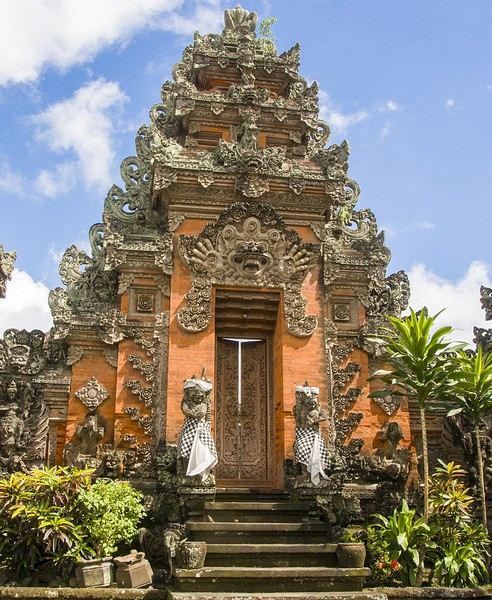
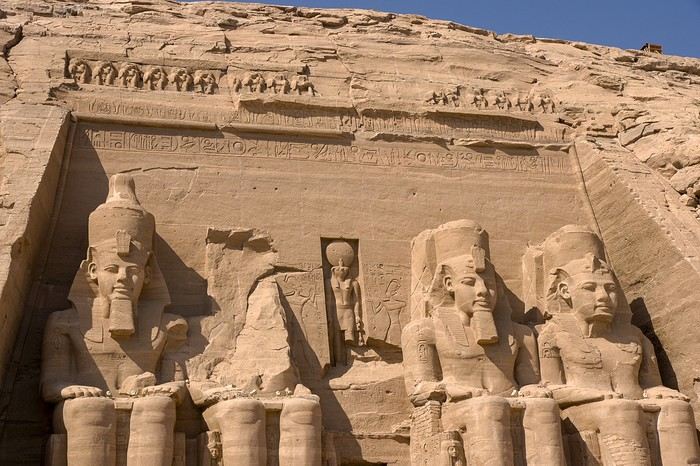
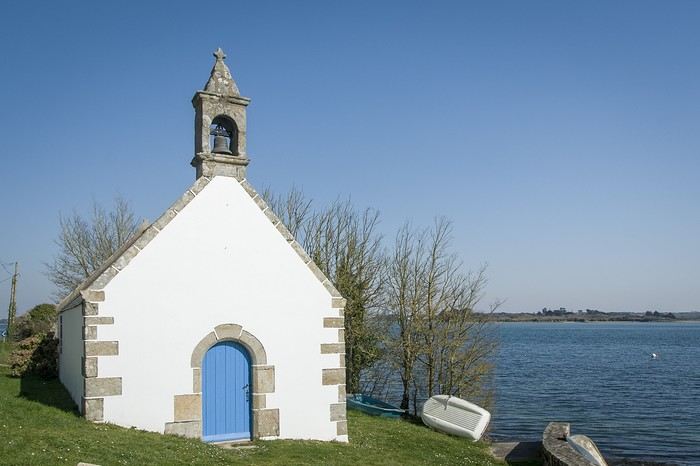
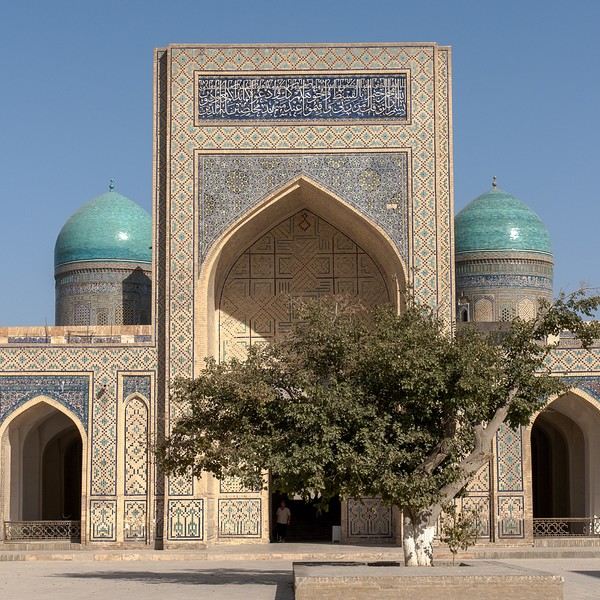
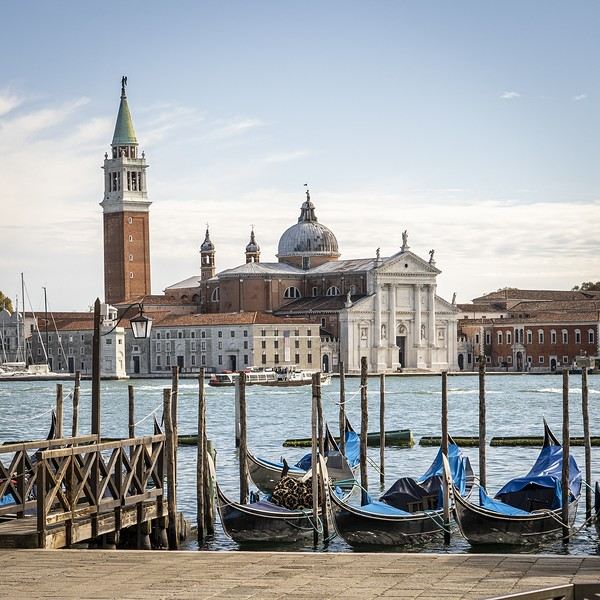

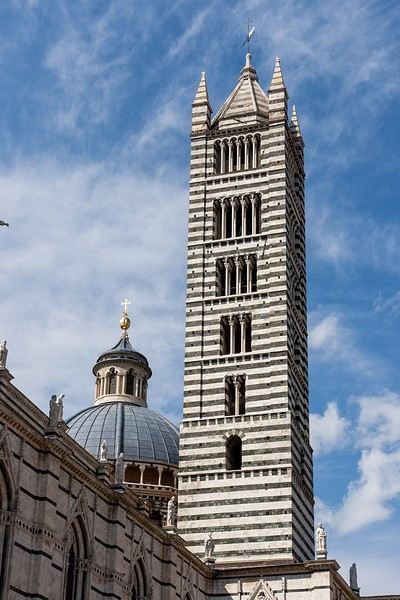
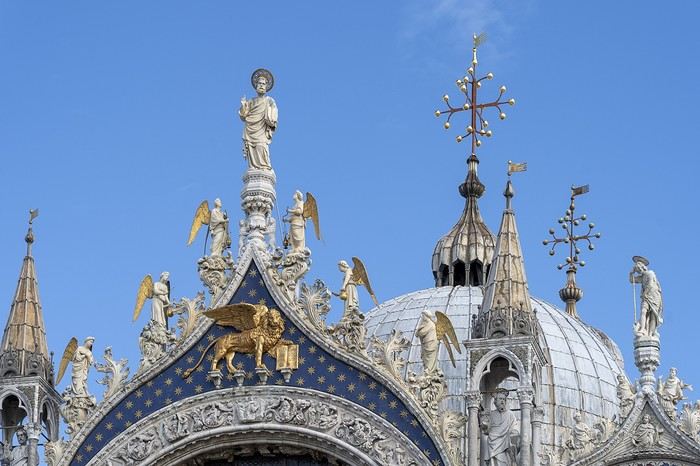
A few of my own photos, just to give you an idea:
Africa: A Heartfelt Love for a Continent
“When the Whites came to Africa, we had the land and they had the Bible. They taught us to pray with our eyes closed: when we opened them, the Whites had the land and we had the Bible.” Jomo Kenyatta (p.7)
The Maggi cube, an unchallenged hegemony, and so much more
“The hopeless continent,” headlined The Economist, a British magazine, in July 2000 about Africa. Eleven years later, the same magazine headlined “Africa rising” instead. Images of Africa in the prosperous North constantly oscillate between apocalyptic scenarios and enthusiastic projections. A key issue with such images lies in the generalization they entail. If you look at the continent, considerable contrasts emerge depending on space and time. It’s no surprise that a region of the world encompassing such diverse ecological zones, maintaining such varied ties with other continents, comprising nearly fifty nation-states in sub-Saharan Africa alone, and characterized by a great diversity of languages, belief systems, and historical paths, doesn’t share a single destiny.
And yet, for many people outside Africa, as well as for many Africans, the continent constitutes a single entity, defined by criteria such as skin color, a colonial past, poverty, and the art of survival. Until now, these perspectives were generally accompanied by the idea that Africa had to—or should have—followed a single path together, sometimes called development, sometimes modernization, sometimes liberation, then a market economy. None of these paths delivered on their promises.
The two writers Alain Mabanckou and Abdourahman Waberi—one from Congo, the other raised in Djibouti, both long settled in France and now professors at renowned North American universities (Los Angeles, Washington)—have had enough of pessimistic scenarios: “We are aware that Africa is in the world and the world is in Africa. The same goes for all other continents, as our destinies are inextricably linked for better or worse. We refuse to see Africa as a reservoir of misfortunes or a continent cursed by atavistic misfortune and characterized by ethnic conflicts. [...] It’s this passionate flame we wanted to capture in a book [...] a kind of stroll through African cultures, without any demands, each letter of the alphabet leading us to a notion, a practice, a concept, a moment in history, literature, painting, politics, economics, cuisine, etc.” (p.10-11). Africa, they write, is on the verge of “imposing a signature, a style, a way of being in the world and in relation to the rest of the world.” (p.11) To put words to the continent’s diversity and dynamism, the two authors created a “rambling ABC,” a kind of portrait—or more precisely, a mythography—that lets you see and feel the pulse of a vast continent whose cultural power is unfolding before our eyes. Once marginalized or even mocked, the voice and importance of the Continent in global affairs are now undeniable” (p.11), containing over a hundred entries, mostly concise, written in a relaxed and casual style. The optimistic, even exuberant tone is set from the brief introduction. The duo of authors wants to “sing a love song to the cultures of our continent, to its inhabitants past and present, to its exceptional resources and its spectacular globalization despite a certain pollution that still clouds our skies due to the unmatched duration of dictatorships in some of our regions.” (p.12) In doing so, they don’t want to be too distracted by today’s Afewerki-Biya-Bongo-Déby & Co. ...
Of course, you’ll find tributes to great precursors like Frantz Fanon (“[...] it was a love story and admiration that wasn’t dimmed by the four decades separating his birth from ours. Let’s add that we were born while the native of Fort-de-France had left the world’s stage four years earlier, in the prime of life” p.141), Mongo Beti (“You must read and reread Mongo Beti, a genius who used his fame to support often just causes in Africa, like defending oppressed groups. His place is already in History. His oppressors, like the dictators Ahmadou Ahidjo and Paul Biya, can’t compete in the same category” p.64), the Malian Amadou Hampâté Bâ
(“Posterity remembers him mainly as an tireless defender of African cultures. His plea for the collection and preservation of traditional African knowledge remains a major event for all men and women of good will. One day in 1960, at the UNESCO podium, the native of Bandiagara sounded the alarm: ‘[...] Since we’ve admitted that the humanity of each people is the heritage of all humanity, if African traditions aren’t collected in time and written down, they’ll one day be missing from the universal archives of humanity.’” p.51),
Kwame Nkrumah, “one of the founders of Pan-Africanism, father of Ghana’s independence” (p.239), as well as the historian Cheikh Anta Diop, the writer, poet, and politician Aimé Césaire, and the economist and thinker Samir Amin, but also very warm tributes to certain contemporary African intellectuals like Souleymane Bachir Diagne and Achille Mbembe
(“A few years ago, in dominant economic circles, a rumor often resurfaced, usually disguised as a cold and scientifically proven analysis: Africa is useless. It’s a burden for the rest of the human community. With its 2% share in world trade, it would disappear from stock market radars without anyone noticing. So? Maybe it’ll be pulled up by other continents. Wanting to surpass itself is a crazy bet for Africans, they concluded. Arrogant or clueless, President Nicolas Sarkozy declared before an audience of students and teachers at Cheikh Anta Diop University in Dakar: ‘The African man hasn’t entered history enough [...] He only knows the eternal repetition of time marked by the endless repetition of the same gestures and words.’ That was in 2007. For decades, armed only with reason, an intellectual often steps up to debunk prejudices, lazy readings, and dishonest frameworks used as false fronts by those who, like Nicolas Sarkozy or former journalist Stephen Smith, out of ignorance, contempt, or condescension, distort African reality. This intellectual is none other than the historian and political scientist Achille Mbembe. This heir of Frantz Fanon, Amílcar Cabral, Jean-Marc Ela, and Fabien Eboussi-Boulaga was born in 1957 in Cameroon, in the Bassa region. Marked early by the upheavals of a fratricidal war, Achille Mbembe became the guardian of the memory of martyrs. After brilliant studies in Paris, he went on to teach at the best American universities, but the call of the Continent was stronger than anything else. In Dakar, he once directed CODESRIA (Council for the Development of Social Science Research in Africa) before joining the University of the Witwatersrand in Johannesburg, South Africa. Even though the author of *Critique of Black Reason* (Éditions La Découverte, 2015) spends a few months at Duke University in North Carolina, his observation post remains South Africa. From Johannesburg, Achille Mbembe scrutinizes Africa and the whole world. A lucid observer with an elegant and generous pen, Achille Mbembe knows how to blend big and small history: ‘I was born one day in July, as the month was drawing to a close. It was 1957, in that part of Africa recently named ‘Cameroon,’ a memory of the wonder that seized Portuguese sailors in the 15th century when, sailing up the river near Douala, they couldn’t help but note the presence of a multitude of crustaceans, and named it *Rio dos Camarões*, meaning ‘River of Shrimp.’ I grew up in the shadow of this nameless land, since, in a way, the name it bears is only the product of someone else’s astonishment: a lexical mistake, if you will.’ From this mistake or wound, he made leaven, a springboard to compose a rich work, recognized worldwide. To denounce barriers and barbarians too. But that’s not enough. Among his peers in circles of thought and action, Achille Mbembe passionately and consistently defends human dignity and the beauty of the world. In doing so, he fulfills the mission Frantz Fanon entrusted to him.” (p.227-229),
as well as entries dedicated to lesser-known artists and intellectuals, like the French journalist and activist Rokhaya Diallo, daughter of Senegalese and Gambian parents, or the Ethiopian filmmaker Haile Gerima, who has long lived in the United States. Other names from politics, sports, music, art, and literature: Kofi Annan, p.36; Barack Obama, p.243; Thomas Sankara, p.277; Ousmane Sow, p.285; Yambo Ouologuem, p.250; Léopold Sédar Senghor, p.282; Muhammad Ali, p.30; Nuruddin Farah, p.146; Salif Keita, p.203; Ahmadou Kourouma, p.206; Ngũgĩ wa Thiong’o, p.236; Winnie Mandela, p.224; Kylian Mbappé, p.226 ...
The authors, who resolutely commit to a “mythography” (p.11) of Africa, also pay special attention to local social movements, cultural events, and aspects of daily life. *Y’en a marre*, “which also meant ‘we’re fed up with sitting on our hands’” (p.320-321), emerged about a decade ago in Senegal as a citizen movement of peaceful resistance and symbolizes, the authors emphasize, the fact that African youth are increasingly fed up “with the political circus deployed in Africa since independence, as our parents would say, ‘since the White man left’...” (p.321). A full entry is dedicated to the Maggi bouillon cube, which has flooded African markets for about forty years and enjoys immense popularity (“It’s everywhere in Africa, from Dakar to Djibouti, and from Tangier to Cape Town. It’s in every pot, every stew. Little hands put it in every sauce, every local or adapted dish. An unchallenged hegemony! You’ll find it in diasporas too. The culinary strolls in Paris, in the [...] neighborhood” p.90). Critics blame it not only for impoverishing the aromatic diversity of local dishes but also for being harmful to health. And yet, “he poorest Africans, those who eat only once a day, a few spoonfuls of white beans and a ball of *foufou*, for example, are the most fervent users of the magic cube.” (p.92-93)
For *fonio*, “the new trendy cereal. [...] From the millet family, fonio is probably the oldest cereal cultivated in West Africa, and mainly in its sub-Saharan part, for millennia. [...] Easy to grow, water-efficient, fonio grows everywhere except on clay soils. Long neglected because it was considered the poor man’s crop, fonio is now a source of pride for the farmers who cultivate it and cherish it like the apple of their eye” (p.156-157), the authors immediately offer a detailed recipe, letting the reader know that “e can’t resist sharing this fonio with chicken recipe from Mali with you:
Ingredients: 1 chicken 3 large ripe red tomatoes 4 tbsp tomato paste 4 large onions 1 garlic clove 1/2 cup oil 2 Maggi cubes or salt 2 large carrots 1 turnip 1 large cabbage 2 large potatoes 1 celery stalk 1 packet pre-cooked fonio 4 okra (or okra powder) salt, pepper
Preparation: 1. Prepare the sauce: wash and cut the chicken. Peel the onions, garlic, and vegetables. 2. In a pot, fry the chicken pieces. 3. Dice the onions, tomatoes, carrots, and turnip very small and add them to the pot. 4. Add the tomato paste, salt, and pepper. 5. Simmer for 15 min, then add 2 L of water and the cooked chicken pieces. 6. Simmer for 30 min, then add the crushed garlic and celery, plus the cabbage cut into 4 and the potatoes cut in half. 7. Prepare the fonio: cover it with warm water, let it rest for 15 min, and cook it over low heat. 8. In a small pot, boil the okra and crush them. 9. Mix the crushed okra with the cooked fonio, then salt. Serve hot.” (p.158-159)
The comedy *Black Mic Mac*, released in French theaters in 1986 and addressing France’s increasingly restrictive immigration policy at the time, also gets an entry, as do *Tintin in the Congo*, the popular comic, and *Jip’s Café* (“[...] a little Africa in the heart of Paris, with passersby stopping to admire the ‘ambianceurs’ on the dance floor or attend the cultural events offered by the place” (p.194), an African establishment in Paris that Alain Mabanckou already immortalized in one of his novels.
The duo of authors also tackles thorny subjects like jihadism (p.119), the Rwandan genocide (p.272), the CFA franc (p.82), and dictatorship (p.110). While the two strike the right tone here, many entries leave a slightly bitter taste. Two examples: why doesn’t the text on Barack Obama mention the great disappointment of many people in Africa, who expected more from the African policy of the first U.S. president with African roots than just occasional warm words? Why do the comments on Winnie Mandela gloss over the fact that she was a highly controversial icon of the anti-apartheid movement due to her involvement in kidnappings, acts of torture, and murders of alleged apartheid collaborators? Instead, there’s a compassion that brings tears to the eyes: “She was often reduced to a secondary role, the wife of a great man” or “When victory came, she didn’t taste its fruits. Divorced, isolated. She would never be a ‘first lady’ in an evening gown, posing before a bed of chrysanthemums. They’d keep her far from the circles of power” (p.224-225). At this point, I would’ve liked the authors to take a slightly more critical stance...
That said, these “weaknesses” (if you can call them that) shouldn’t overshadow the book as a whole. It remains an informative, sometimes very entertaining, and often even original work in its own way.
Book information (the original French and the German translation):
Alain Mabanckou/Abdourahman Waberi. Dictionnaire enjoué des cultures africaines. Fayard, 2019. Alain Mabanckou/Abdourahman Waberi. Der Puls Afrikas. Eine Liebeserklärung von A bis Z. Reclam, 2022.
Hery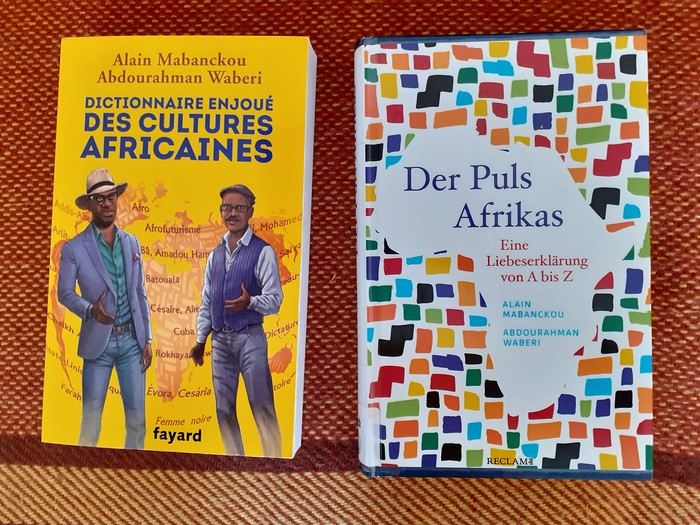
The Maggi cube, an unchallenged hegemony, and so much more
“The hopeless continent,” headlined The Economist, a British magazine, in July 2000 about Africa. Eleven years later, the same magazine headlined “Africa rising” instead. Images of Africa in the prosperous North constantly oscillate between apocalyptic scenarios and enthusiastic projections. A key issue with such images lies in the generalization they entail. If you look at the continent, considerable contrasts emerge depending on space and time. It’s no surprise that a region of the world encompassing such diverse ecological zones, maintaining such varied ties with other continents, comprising nearly fifty nation-states in sub-Saharan Africa alone, and characterized by a great diversity of languages, belief systems, and historical paths, doesn’t share a single destiny.
And yet, for many people outside Africa, as well as for many Africans, the continent constitutes a single entity, defined by criteria such as skin color, a colonial past, poverty, and the art of survival. Until now, these perspectives were generally accompanied by the idea that Africa had to—or should have—followed a single path together, sometimes called development, sometimes modernization, sometimes liberation, then a market economy. None of these paths delivered on their promises.
The two writers Alain Mabanckou and Abdourahman Waberi—one from Congo, the other raised in Djibouti, both long settled in France and now professors at renowned North American universities (Los Angeles, Washington)—have had enough of pessimistic scenarios: “We are aware that Africa is in the world and the world is in Africa. The same goes for all other continents, as our destinies are inextricably linked for better or worse. We refuse to see Africa as a reservoir of misfortunes or a continent cursed by atavistic misfortune and characterized by ethnic conflicts. [...] It’s this passionate flame we wanted to capture in a book [...] a kind of stroll through African cultures, without any demands, each letter of the alphabet leading us to a notion, a practice, a concept, a moment in history, literature, painting, politics, economics, cuisine, etc.” (p.10-11). Africa, they write, is on the verge of “imposing a signature, a style, a way of being in the world and in relation to the rest of the world.” (p.11) To put words to the continent’s diversity and dynamism, the two authors created a “rambling ABC,” a kind of portrait—or more precisely, a mythography—that lets you see and feel the pulse of a vast continent whose cultural power is unfolding before our eyes. Once marginalized or even mocked, the voice and importance of the Continent in global affairs are now undeniable” (p.11), containing over a hundred entries, mostly concise, written in a relaxed and casual style. The optimistic, even exuberant tone is set from the brief introduction. The duo of authors wants to “sing a love song to the cultures of our continent, to its inhabitants past and present, to its exceptional resources and its spectacular globalization despite a certain pollution that still clouds our skies due to the unmatched duration of dictatorships in some of our regions.” (p.12) In doing so, they don’t want to be too distracted by today’s Afewerki-Biya-Bongo-Déby & Co. ...
Of course, you’ll find tributes to great precursors like Frantz Fanon (“[...] it was a love story and admiration that wasn’t dimmed by the four decades separating his birth from ours. Let’s add that we were born while the native of Fort-de-France had left the world’s stage four years earlier, in the prime of life” p.141), Mongo Beti (“You must read and reread Mongo Beti, a genius who used his fame to support often just causes in Africa, like defending oppressed groups. His place is already in History. His oppressors, like the dictators Ahmadou Ahidjo and Paul Biya, can’t compete in the same category” p.64), the Malian Amadou Hampâté Bâ
(“Posterity remembers him mainly as an tireless defender of African cultures. His plea for the collection and preservation of traditional African knowledge remains a major event for all men and women of good will. One day in 1960, at the UNESCO podium, the native of Bandiagara sounded the alarm: ‘[...] Since we’ve admitted that the humanity of each people is the heritage of all humanity, if African traditions aren’t collected in time and written down, they’ll one day be missing from the universal archives of humanity.’” p.51),
Kwame Nkrumah, “one of the founders of Pan-Africanism, father of Ghana’s independence” (p.239), as well as the historian Cheikh Anta Diop, the writer, poet, and politician Aimé Césaire, and the economist and thinker Samir Amin, but also very warm tributes to certain contemporary African intellectuals like Souleymane Bachir Diagne and Achille Mbembe
(“A few years ago, in dominant economic circles, a rumor often resurfaced, usually disguised as a cold and scientifically proven analysis: Africa is useless. It’s a burden for the rest of the human community. With its 2% share in world trade, it would disappear from stock market radars without anyone noticing. So? Maybe it’ll be pulled up by other continents. Wanting to surpass itself is a crazy bet for Africans, they concluded. Arrogant or clueless, President Nicolas Sarkozy declared before an audience of students and teachers at Cheikh Anta Diop University in Dakar: ‘The African man hasn’t entered history enough [...] He only knows the eternal repetition of time marked by the endless repetition of the same gestures and words.’ That was in 2007. For decades, armed only with reason, an intellectual often steps up to debunk prejudices, lazy readings, and dishonest frameworks used as false fronts by those who, like Nicolas Sarkozy or former journalist Stephen Smith, out of ignorance, contempt, or condescension, distort African reality. This intellectual is none other than the historian and political scientist Achille Mbembe. This heir of Frantz Fanon, Amílcar Cabral, Jean-Marc Ela, and Fabien Eboussi-Boulaga was born in 1957 in Cameroon, in the Bassa region. Marked early by the upheavals of a fratricidal war, Achille Mbembe became the guardian of the memory of martyrs. After brilliant studies in Paris, he went on to teach at the best American universities, but the call of the Continent was stronger than anything else. In Dakar, he once directed CODESRIA (Council for the Development of Social Science Research in Africa) before joining the University of the Witwatersrand in Johannesburg, South Africa. Even though the author of *Critique of Black Reason* (Éditions La Découverte, 2015) spends a few months at Duke University in North Carolina, his observation post remains South Africa. From Johannesburg, Achille Mbembe scrutinizes Africa and the whole world. A lucid observer with an elegant and generous pen, Achille Mbembe knows how to blend big and small history: ‘I was born one day in July, as the month was drawing to a close. It was 1957, in that part of Africa recently named ‘Cameroon,’ a memory of the wonder that seized Portuguese sailors in the 15th century when, sailing up the river near Douala, they couldn’t help but note the presence of a multitude of crustaceans, and named it *Rio dos Camarões*, meaning ‘River of Shrimp.’ I grew up in the shadow of this nameless land, since, in a way, the name it bears is only the product of someone else’s astonishment: a lexical mistake, if you will.’ From this mistake or wound, he made leaven, a springboard to compose a rich work, recognized worldwide. To denounce barriers and barbarians too. But that’s not enough. Among his peers in circles of thought and action, Achille Mbembe passionately and consistently defends human dignity and the beauty of the world. In doing so, he fulfills the mission Frantz Fanon entrusted to him.” (p.227-229),
as well as entries dedicated to lesser-known artists and intellectuals, like the French journalist and activist Rokhaya Diallo, daughter of Senegalese and Gambian parents, or the Ethiopian filmmaker Haile Gerima, who has long lived in the United States. Other names from politics, sports, music, art, and literature: Kofi Annan, p.36; Barack Obama, p.243; Thomas Sankara, p.277; Ousmane Sow, p.285; Yambo Ouologuem, p.250; Léopold Sédar Senghor, p.282; Muhammad Ali, p.30; Nuruddin Farah, p.146; Salif Keita, p.203; Ahmadou Kourouma, p.206; Ngũgĩ wa Thiong’o, p.236; Winnie Mandela, p.224; Kylian Mbappé, p.226 ...
The authors, who resolutely commit to a “mythography” (p.11) of Africa, also pay special attention to local social movements, cultural events, and aspects of daily life. *Y’en a marre*, “which also meant ‘we’re fed up with sitting on our hands’” (p.320-321), emerged about a decade ago in Senegal as a citizen movement of peaceful resistance and symbolizes, the authors emphasize, the fact that African youth are increasingly fed up “with the political circus deployed in Africa since independence, as our parents would say, ‘since the White man left’...” (p.321). A full entry is dedicated to the Maggi bouillon cube, which has flooded African markets for about forty years and enjoys immense popularity (“It’s everywhere in Africa, from Dakar to Djibouti, and from Tangier to Cape Town. It’s in every pot, every stew. Little hands put it in every sauce, every local or adapted dish. An unchallenged hegemony! You’ll find it in diasporas too. The culinary strolls in Paris, in the [...] neighborhood” p.90). Critics blame it not only for impoverishing the aromatic diversity of local dishes but also for being harmful to health. And yet, “he poorest Africans, those who eat only once a day, a few spoonfuls of white beans and a ball of *foufou*, for example, are the most fervent users of the magic cube.” (p.92-93)
For *fonio*, “the new trendy cereal. [...] From the millet family, fonio is probably the oldest cereal cultivated in West Africa, and mainly in its sub-Saharan part, for millennia. [...] Easy to grow, water-efficient, fonio grows everywhere except on clay soils. Long neglected because it was considered the poor man’s crop, fonio is now a source of pride for the farmers who cultivate it and cherish it like the apple of their eye” (p.156-157), the authors immediately offer a detailed recipe, letting the reader know that “e can’t resist sharing this fonio with chicken recipe from Mali with you:
Ingredients: 1 chicken 3 large ripe red tomatoes 4 tbsp tomato paste 4 large onions 1 garlic clove 1/2 cup oil 2 Maggi cubes or salt 2 large carrots 1 turnip 1 large cabbage 2 large potatoes 1 celery stalk 1 packet pre-cooked fonio 4 okra (or okra powder) salt, pepper
Preparation: 1. Prepare the sauce: wash and cut the chicken. Peel the onions, garlic, and vegetables. 2. In a pot, fry the chicken pieces. 3. Dice the onions, tomatoes, carrots, and turnip very small and add them to the pot. 4. Add the tomato paste, salt, and pepper. 5. Simmer for 15 min, then add 2 L of water and the cooked chicken pieces. 6. Simmer for 30 min, then add the crushed garlic and celery, plus the cabbage cut into 4 and the potatoes cut in half. 7. Prepare the fonio: cover it with warm water, let it rest for 15 min, and cook it over low heat. 8. In a small pot, boil the okra and crush them. 9. Mix the crushed okra with the cooked fonio, then salt. Serve hot.” (p.158-159)
The comedy *Black Mic Mac*, released in French theaters in 1986 and addressing France’s increasingly restrictive immigration policy at the time, also gets an entry, as do *Tintin in the Congo*, the popular comic, and *Jip’s Café* (“[...] a little Africa in the heart of Paris, with passersby stopping to admire the ‘ambianceurs’ on the dance floor or attend the cultural events offered by the place” (p.194), an African establishment in Paris that Alain Mabanckou already immortalized in one of his novels.
The duo of authors also tackles thorny subjects like jihadism (p.119), the Rwandan genocide (p.272), the CFA franc (p.82), and dictatorship (p.110). While the two strike the right tone here, many entries leave a slightly bitter taste. Two examples: why doesn’t the text on Barack Obama mention the great disappointment of many people in Africa, who expected more from the African policy of the first U.S. president with African roots than just occasional warm words? Why do the comments on Winnie Mandela gloss over the fact that she was a highly controversial icon of the anti-apartheid movement due to her involvement in kidnappings, acts of torture, and murders of alleged apartheid collaborators? Instead, there’s a compassion that brings tears to the eyes: “She was often reduced to a secondary role, the wife of a great man” or “When victory came, she didn’t taste its fruits. Divorced, isolated. She would never be a ‘first lady’ in an evening gown, posing before a bed of chrysanthemums. They’d keep her far from the circles of power” (p.224-225). At this point, I would’ve liked the authors to take a slightly more critical stance...
That said, these “weaknesses” (if you can call them that) shouldn’t overshadow the book as a whole. It remains an informative, sometimes very entertaining, and often even original work in its own way.
Book information (the original French and the German translation):
Alain Mabanckou/Abdourahman Waberi. Dictionnaire enjoué des cultures africaines. Fayard, 2019. Alain Mabanckou/Abdourahman Waberi. Der Puls Afrikas. Eine Liebeserklärung von A bis Z. Reclam, 2022.
Hery
Off we go on an adventure in Puglia!
Hey there, VF crew!
After wrapping up our travel journal on Java (link below), we’re now diving into our recent adventure in Puglia! Happy reading... Off we go on an adventure in Java (and a bit of Bali) | Travel journal > Indonesia | Voyage Forum
Day 1 - October 19
When you tell your friends and family you’re itching to escape to the other side of the planet to mingle with the Mongols, you can usually expect a barrage of questionable jokes and terrible puns. For this new adventure, it’s a different destination but the same old story—this time, we’re visiting the "pouilleux" (the "scruffy" ones). We’re taking off straight for Puglia! If you need a cheat sheet to remember where this oddly named place is on a world map, just think of it this way: Puglia is the maiden name on the ID card of the heel of the Italian boot! Personally, I prefer to remember it as the land of creamy burrata, the smell of focaccia fresh from the oven, orecchiette shaped by mamas, golden olive oil that shines like the sun (which beams down here 300 days a year), amaretto that makes you happy, and those famous trulli—those little hobbit-like dry-stone houses straight out of a movie set...
But I’ll stop spoiling the rest of our trip and focus on a factual rundown of this first Puglian day. So, are you joining us on this new adventure beyond our Gallic borders? Either way, Sasha (my youngest) and Luna (Flo’s daughter) didn’t need much convincing to stick with us and keep up the pace!
Our plane drops our little crew in Bari, the site of a famously tragic battle lost in 1991. But revenge is sweet! After renting a motorized carriage, we escape the landing zone and head to our military base of operations: Ostuni, a strategic little town where we’ll set up camp for the next four days. Why Ostuni? First, for its central location, which lets us explore a region packed with must-see gems. Second, for its vibe and beauty, which have earned it quite the reputation. Perched high on a hill, the *città bianca* (the "White City") lives up to its nickname. It literally dazzles visitors. The reason? The whitewashed facades of its houses, a testament to the region’s rich architectural heritage.
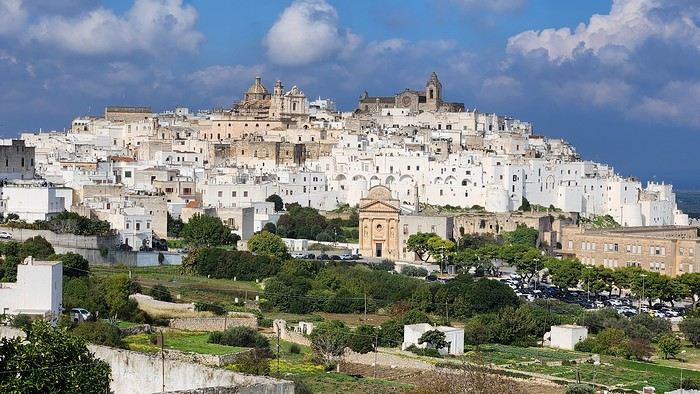
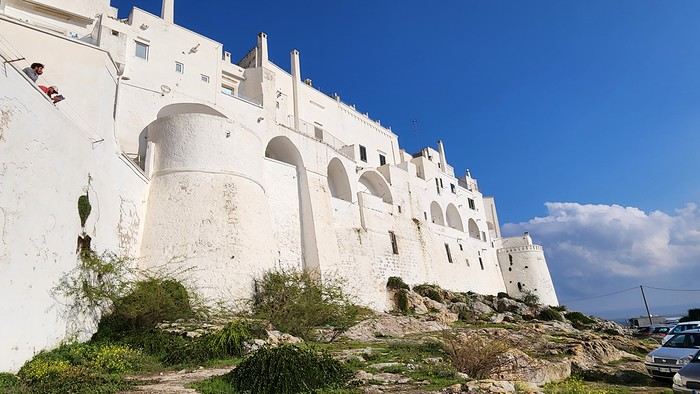
We arrived late last night, so only the two bravest soldiers volunteered to scout ahead at dawn, while the younger recruits stayed behind—for now. But not for long! After the first wave of streets and the next round of exploration, headquarters made the inevitable call to retreat. Reinforcements were needed! A few strategic errands, a breakfast ration, and our battalion marched in tight formation, flag held high, to conquer Ostuni the White! *Charge!* In my squadron leader’s memoirs, I’ll write that I didn’t expect Ostuni to put up such a fight. What I thought would take two hours to conquer turned into a humbling experience—we could only bow in respect to its beauty, its relentless charm. The alleys are whiter, more labyrinthine, narrower, and more photogenic than the last. *Veni, vidi, vici*—but what an entrance, my troops!
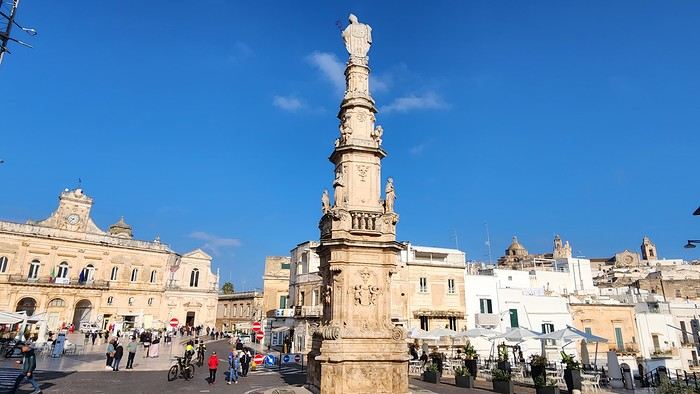
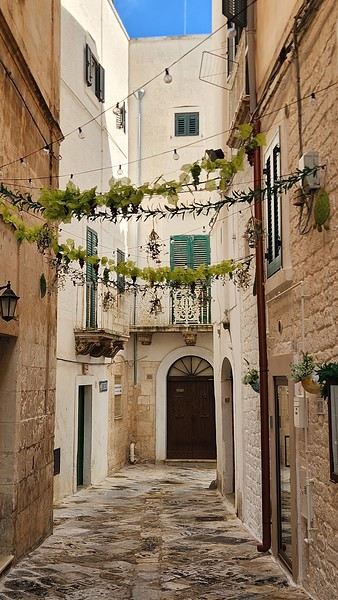
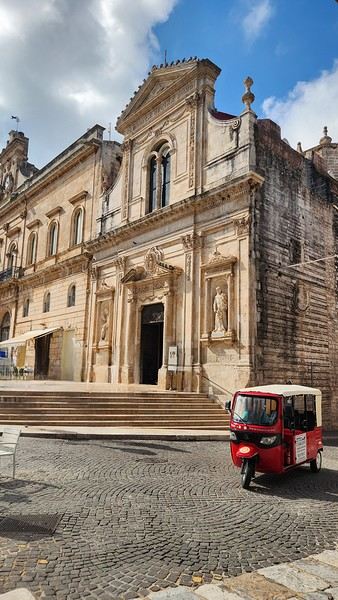
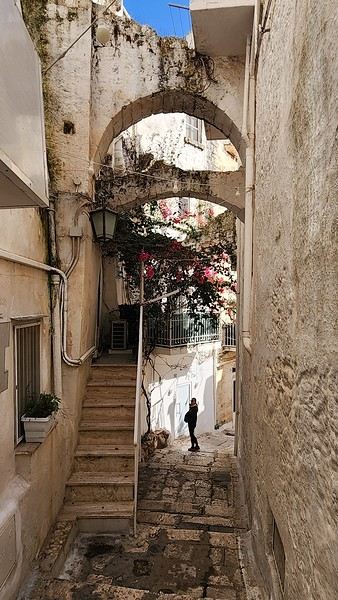
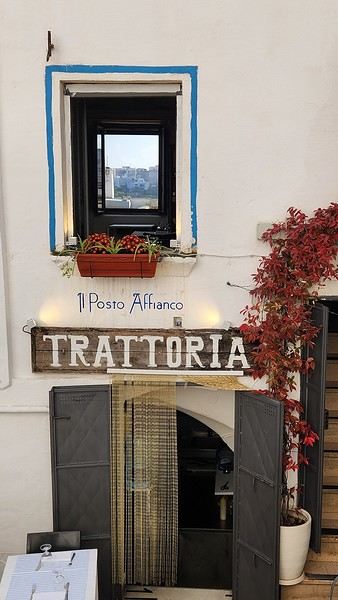
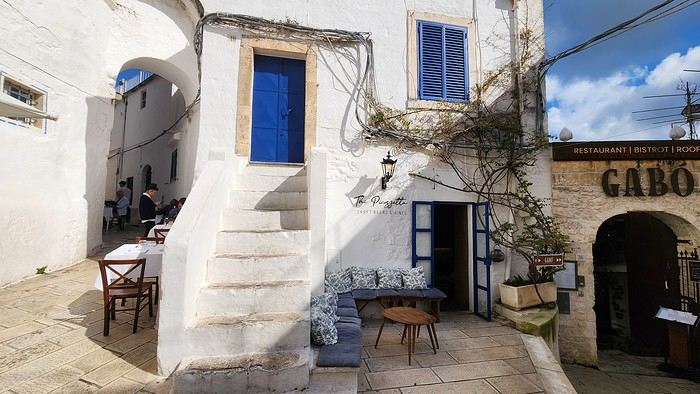
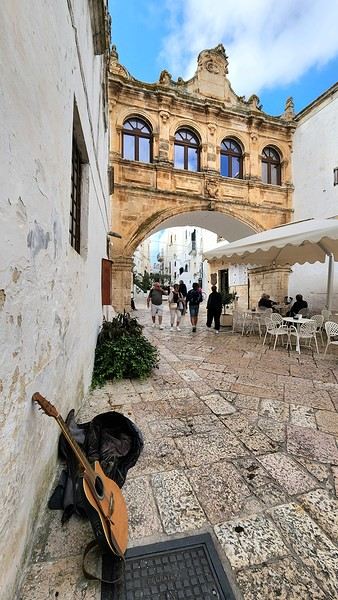
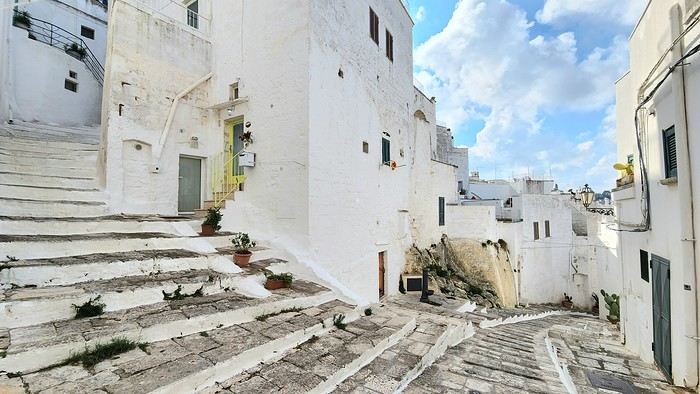
After wrapping up our travel journal on Java (link below), we’re now diving into our recent adventure in Puglia! Happy reading... Off we go on an adventure in Java (and a bit of Bali) | Travel journal > Indonesia | Voyage Forum
Day 1 - October 19
When you tell your friends and family you’re itching to escape to the other side of the planet to mingle with the Mongols, you can usually expect a barrage of questionable jokes and terrible puns. For this new adventure, it’s a different destination but the same old story—this time, we’re visiting the "pouilleux" (the "scruffy" ones). We’re taking off straight for Puglia! If you need a cheat sheet to remember where this oddly named place is on a world map, just think of it this way: Puglia is the maiden name on the ID card of the heel of the Italian boot! Personally, I prefer to remember it as the land of creamy burrata, the smell of focaccia fresh from the oven, orecchiette shaped by mamas, golden olive oil that shines like the sun (which beams down here 300 days a year), amaretto that makes you happy, and those famous trulli—those little hobbit-like dry-stone houses straight out of a movie set...
But I’ll stop spoiling the rest of our trip and focus on a factual rundown of this first Puglian day. So, are you joining us on this new adventure beyond our Gallic borders? Either way, Sasha (my youngest) and Luna (Flo’s daughter) didn’t need much convincing to stick with us and keep up the pace!
Our plane drops our little crew in Bari, the site of a famously tragic battle lost in 1991. But revenge is sweet! After renting a motorized carriage, we escape the landing zone and head to our military base of operations: Ostuni, a strategic little town where we’ll set up camp for the next four days. Why Ostuni? First, for its central location, which lets us explore a region packed with must-see gems. Second, for its vibe and beauty, which have earned it quite the reputation. Perched high on a hill, the *città bianca* (the "White City") lives up to its nickname. It literally dazzles visitors. The reason? The whitewashed facades of its houses, a testament to the region’s rich architectural heritage.
We arrived late last night, so only the two bravest soldiers volunteered to scout ahead at dawn, while the younger recruits stayed behind—for now. But not for long! After the first wave of streets and the next round of exploration, headquarters made the inevitable call to retreat. Reinforcements were needed! A few strategic errands, a breakfast ration, and our battalion marched in tight formation, flag held high, to conquer Ostuni the White! *Charge!* In my squadron leader’s memoirs, I’ll write that I didn’t expect Ostuni to put up such a fight. What I thought would take two hours to conquer turned into a humbling experience—we could only bow in respect to its beauty, its relentless charm. The alleys are whiter, more labyrinthine, narrower, and more photogenic than the last. *Veni, vidi, vici*—but what an entrance, my troops!
Langtang – Trekking in the Rain
We did the Langtang trek (hike) from September 10th to 17th, with the first and last days being the trip from Kathmandu and back—so 6 days of actual walking. It’s a fairly well-known trek but certainly not as famous or crowded as those in the Annapurna or Everest regions, which is why we chose it.
In theory, it’s mandatory to have a guide for this trek. In reality, it seems there are ways to bypass the regulations: we met at least two people hiking without a guide—a South Korean, a New Zealander, and possibly also a couple of English women and an American couple, though we’re not sure if they had a guide.
The agency we booked with had told us it was an affordable trek for relatively older people in good shape—which is our case (I’m 72 myself). I have to say upfront that we found it quite challenging, maybe because we didn’t have good weather—it was the end of the monsoon season. To be clear, no matter your fitness level, I’d say doing this trek in the middle of the monsoon season would be suicidal.
Day 1 – Journey from Kathmandu to Syapru Besi
On Monday, September 8th, there had been violent protests in Kathmandu against the government, which had, among other things, blocked access to social media and been accused of nepotism and corruption. There were 19 deaths. The situation was very tense on the day of our departure, Wednesday the 10th. The agency warned us that public transport was very unreliable. So, we decided to take a jeep, at an additional cost of $100 ($160 minus what was already budgeted for the bus).
We left a little before 7 a.m. and it took us a good hour just to reach the outskirts of Kathmandu. Along the way, we saw several houses and vehicles set on fire by protesters.
The road to Syapru Besi is only 120 km, but it’s frankly awful. It’s always narrow, winds through endless mountains, and the shoulders range from bad to confusing to nonexistent. Several sections are just dirt tracks. We didn’t regret opting for the jeep, as we could stop several times at our convenience—if only to let Y (my Thai partner) throw up everything she had. She’d taken her usual motion sickness medication, but the constant turns, accelerations, and braking eventually made her terribly carsick.
In Nuwakot, we stopped for breakfast at a nice little restaurant, Jimbu. It was around 8:30 a.m., and we’d barely covered 60 km. The restaurant has a lovely garden overlooking the Trishuli Ganga, the river flowing down from Syapru Besi. First photo: the river in the bottom right corner, mist and clouds over the mountain on the other side.
An hour later, my second photo: the hills along the Trishuli Ganga. You can see the different crops—lush green rice paddies in the lower right and corn, already yellowed and likely harvested, in the foreground on the left. And of course, the mist and clouds through which you can glimpse the mountain on the other side of the river.
In theory, it’s mandatory to have a guide for this trek. In reality, it seems there are ways to bypass the regulations: we met at least two people hiking without a guide—a South Korean, a New Zealander, and possibly also a couple of English women and an American couple, though we’re not sure if they had a guide.
The agency we booked with had told us it was an affordable trek for relatively older people in good shape—which is our case (I’m 72 myself). I have to say upfront that we found it quite challenging, maybe because we didn’t have good weather—it was the end of the monsoon season. To be clear, no matter your fitness level, I’d say doing this trek in the middle of the monsoon season would be suicidal.
Day 1 – Journey from Kathmandu to Syapru Besi
On Monday, September 8th, there had been violent protests in Kathmandu against the government, which had, among other things, blocked access to social media and been accused of nepotism and corruption. There were 19 deaths. The situation was very tense on the day of our departure, Wednesday the 10th. The agency warned us that public transport was very unreliable. So, we decided to take a jeep, at an additional cost of $100 ($160 minus what was already budgeted for the bus).
We left a little before 7 a.m. and it took us a good hour just to reach the outskirts of Kathmandu. Along the way, we saw several houses and vehicles set on fire by protesters.
The road to Syapru Besi is only 120 km, but it’s frankly awful. It’s always narrow, winds through endless mountains, and the shoulders range from bad to confusing to nonexistent. Several sections are just dirt tracks. We didn’t regret opting for the jeep, as we could stop several times at our convenience—if only to let Y (my Thai partner) throw up everything she had. She’d taken her usual motion sickness medication, but the constant turns, accelerations, and braking eventually made her terribly carsick.
In Nuwakot, we stopped for breakfast at a nice little restaurant, Jimbu. It was around 8:30 a.m., and we’d barely covered 60 km. The restaurant has a lovely garden overlooking the Trishuli Ganga, the river flowing down from Syapru Besi. First photo: the river in the bottom right corner, mist and clouds over the mountain on the other side.
An hour later, my second photo: the hills along the Trishuli Ganga. You can see the different crops—lush green rice paddies in the lower right and corn, already yellowed and likely harvested, in the foreground on the left. And of course, the mist and clouds through which you can glimpse the mountain on the other side of the river.
Off on an adventure to Java (and a bit of Bali)
Hey there, community! Back this weekend, below is my travel journal from my adventure in Indonesia. Enjoy the read!!!
Day 1 - August 10, 2025 New life downloading for three weeks! And for that, Flo and I launched a public tender... A public tender? What’s that got to do with a travel journal???... Well, when you think about it, few destinations tick all the boxes for an August adventure: Meaning, finding a place that’s exotic in the middle of August, not too expensive, not too packed with tourists, warm but not *too* warm, with postcard-perfect landscapes, dreamy beaches, tasty cuisine with a hint of exoticism, friendly and welcoming locals, where you’re free to sleep under the stars among the mosquitos, take transport surrounded by chickens, and even eat from a pig trough if you feel like it—well, turns out it’s not that easy to find! I’d even say, given how thick the list of requirements is, there’s a big risk the tender could be declared unsuccessful for failing to meet just one criterion. Let’s just say the candidates better submit a rock-solid proposal!
After reviewing all the responses and presentations from the candidates, the obvious choice for us is... Indonesia! Except that trying to explore a country as vast as Indonesia and its 17,504 islands in less than five years is a bit like reading the summary of a Proust novel without taking the time to savor each of its 950 pages! Don’t worry, I won’t name them all here. Besides, do they even all have names? No! Only 7,870 have been named—their parents clearly ran out of ideas for the rest. Anyway, our society, which worships the "work more to earn more" mantra, unfortunately limits our adventure time. So we’ll only get to see a small part of Indonesia, and we’ll have to make a tough choice to head for the best of the best in this archipelago of over seventeen thousand islands. Each one has its own selling points: Sumatra, Sulawesi, Java, the Celebes, Bali, Borneo, Papua, Timor, the Moluccas... So many names that smell of adventure... Another tender, another list of requirements, another review of proposals... Drumroll... Splash splash... And the lucky winner is... Ta-da... Java, Bali’s big sister, where I’ve already been eight years ago... Java the programming language. The Java of Broadway. We’re gonna *do* the Java. Java the coffee. And yes, Java is also an island!
This island, four times smaller than France, is home to 136 million people, making it the most populated island in the world! Fun fact: Indonesia, with its 260 million inhabitants, is just shy of the podium for the world’s most populated countries, after the winning trio of India, China, and the United States. And it’s on this island of Java that you’ll find Jakarta, the (soon-to-be-former) capital and main airport of the country, where we’ll soon land after our nineteen-hour flight! Yep, nineteen hours! I mean, Indonesia in general—and Java in particular—is a *tad* farther than going on vacation to Grandma Yoyo’s! Not sure where it is? Easy. Grab a map. Plant your finger on the big island at the bottom right—aka Australia for those who struggle with geography—move it up two centimeters, and bam, welcome to Indonesia!
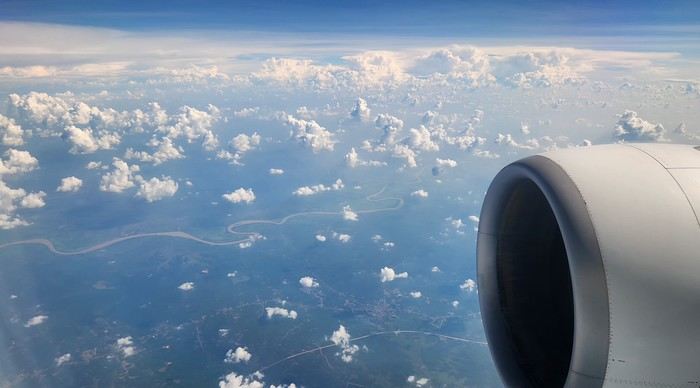
Nice transition, right? Because "Welcome to Indonesia" is exactly what the friendly flight attendant just said to me as we got off the plane! That’s it, our chakras are open, we’ve arrived at our (air)port. Time for rest, pool, cocktails, and a beach with our toes spread out... Wait, if you bought that, you clearly don’t know us yet! Since we still have energy to burn and need to adjust to the flight and time difference, we tackle the long administrative formalities to enter Indonesia, just to earn the right to hop in a 45-minute Grab taxi to the train station. The train station? What train station?... What do you usually do at a train station? Take a train, of course! Off we go for a three-hour train ride to Bandung, where we’ll officially start our adventure tomorrow after our first Indonesian night...
Unfortunately, we were a bit slow off the mark, which meant we missed the 6:25 PM train by two minutes. Oh well, we’ll have to wait until 11 PM. We take the opportunity to stretch our legs in Jakarta, soak up the atmosphere, and enjoy the delicious smells wafting from the *warungs*—those little typical street restaurants. A quick stop at the National Monument, a detour to a night market to devour our first *kwetiaw goreng* and *teh manis* for 60,000 rupiahs (that’s 3 € for two), and just like that, our penalty is lifted, and we’re allowed to hit the road again. Off to Bandung, where we arrive at 2 AM for... a *very* short night...
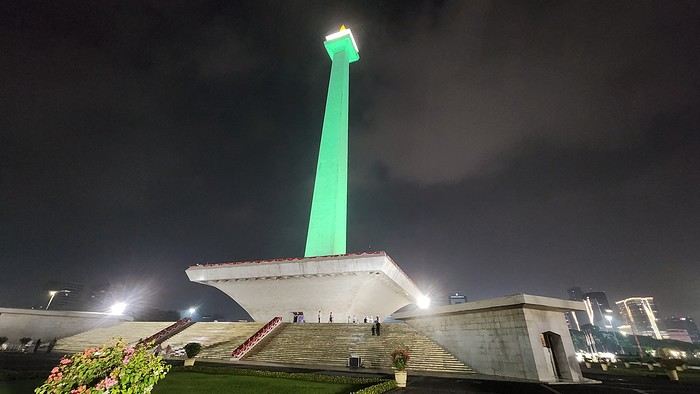
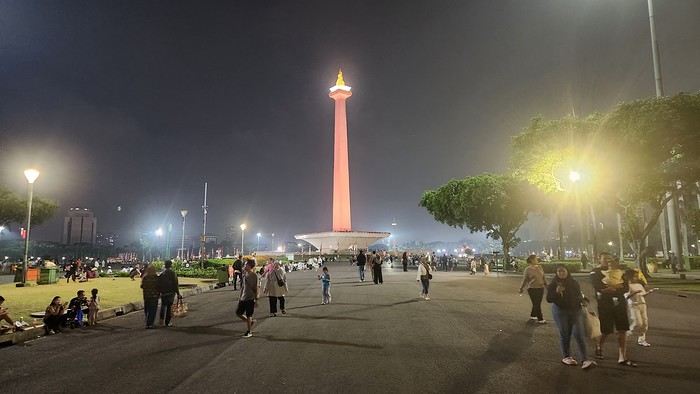
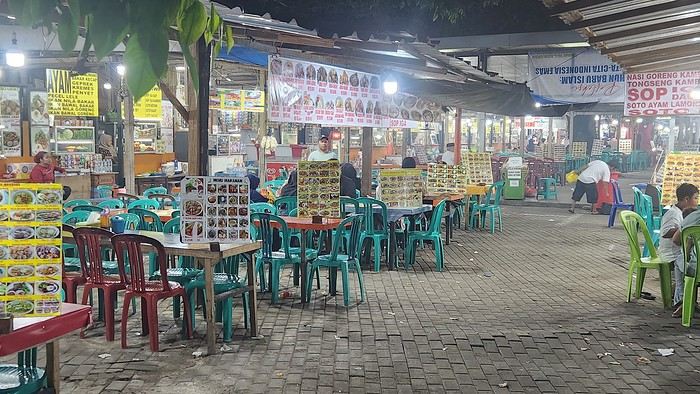
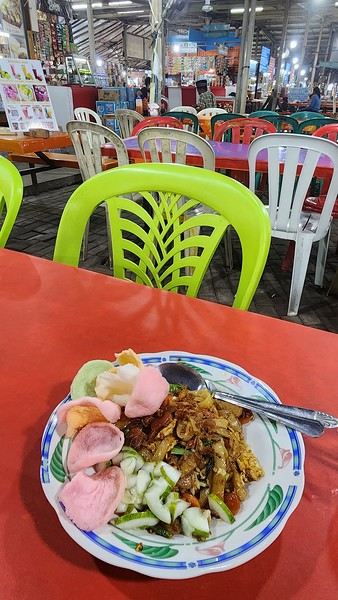
Day 1 - August 10, 2025 New life downloading for three weeks! And for that, Flo and I launched a public tender... A public tender? What’s that got to do with a travel journal???... Well, when you think about it, few destinations tick all the boxes for an August adventure: Meaning, finding a place that’s exotic in the middle of August, not too expensive, not too packed with tourists, warm but not *too* warm, with postcard-perfect landscapes, dreamy beaches, tasty cuisine with a hint of exoticism, friendly and welcoming locals, where you’re free to sleep under the stars among the mosquitos, take transport surrounded by chickens, and even eat from a pig trough if you feel like it—well, turns out it’s not that easy to find! I’d even say, given how thick the list of requirements is, there’s a big risk the tender could be declared unsuccessful for failing to meet just one criterion. Let’s just say the candidates better submit a rock-solid proposal!
After reviewing all the responses and presentations from the candidates, the obvious choice for us is... Indonesia! Except that trying to explore a country as vast as Indonesia and its 17,504 islands in less than five years is a bit like reading the summary of a Proust novel without taking the time to savor each of its 950 pages! Don’t worry, I won’t name them all here. Besides, do they even all have names? No! Only 7,870 have been named—their parents clearly ran out of ideas for the rest. Anyway, our society, which worships the "work more to earn more" mantra, unfortunately limits our adventure time. So we’ll only get to see a small part of Indonesia, and we’ll have to make a tough choice to head for the best of the best in this archipelago of over seventeen thousand islands. Each one has its own selling points: Sumatra, Sulawesi, Java, the Celebes, Bali, Borneo, Papua, Timor, the Moluccas... So many names that smell of adventure... Another tender, another list of requirements, another review of proposals... Drumroll... Splash splash... And the lucky winner is... Ta-da... Java, Bali’s big sister, where I’ve already been eight years ago... Java the programming language. The Java of Broadway. We’re gonna *do* the Java. Java the coffee. And yes, Java is also an island!
This island, four times smaller than France, is home to 136 million people, making it the most populated island in the world! Fun fact: Indonesia, with its 260 million inhabitants, is just shy of the podium for the world’s most populated countries, after the winning trio of India, China, and the United States. And it’s on this island of Java that you’ll find Jakarta, the (soon-to-be-former) capital and main airport of the country, where we’ll soon land after our nineteen-hour flight! Yep, nineteen hours! I mean, Indonesia in general—and Java in particular—is a *tad* farther than going on vacation to Grandma Yoyo’s! Not sure where it is? Easy. Grab a map. Plant your finger on the big island at the bottom right—aka Australia for those who struggle with geography—move it up two centimeters, and bam, welcome to Indonesia!
Nice transition, right? Because "Welcome to Indonesia" is exactly what the friendly flight attendant just said to me as we got off the plane! That’s it, our chakras are open, we’ve arrived at our (air)port. Time for rest, pool, cocktails, and a beach with our toes spread out... Wait, if you bought that, you clearly don’t know us yet! Since we still have energy to burn and need to adjust to the flight and time difference, we tackle the long administrative formalities to enter Indonesia, just to earn the right to hop in a 45-minute Grab taxi to the train station. The train station? What train station?... What do you usually do at a train station? Take a train, of course! Off we go for a three-hour train ride to Bandung, where we’ll officially start our adventure tomorrow after our first Indonesian night...
Unfortunately, we were a bit slow off the mark, which meant we missed the 6:25 PM train by two minutes. Oh well, we’ll have to wait until 11 PM. We take the opportunity to stretch our legs in Jakarta, soak up the atmosphere, and enjoy the delicious smells wafting from the *warungs*—those little typical street restaurants. A quick stop at the National Monument, a detour to a night market to devour our first *kwetiaw goreng* and *teh manis* for 60,000 rupiahs (that’s 3 € for two), and just like that, our penalty is lifted, and we’re allowed to hit the road again. Off to Bandung, where we arrive at 2 AM for... a *very* short night...
Yet Another Travel Journal in this (Too) Familiar Rajasthan, But with Family and Kids
Prologue
This journal recounts a trip to Rajasthan that’s already over a year old and that I’ve only now found the chance to write about. The summer of 2024 marked my return to India—my tenth trip—after six long years away since my last solo wanderings in Tamil Nadu in 2018 (the journal of which is published on this site). That absence was partly (but not only) due to the long COVID and post-COVID period, which saw a complete halt and then a major slowdown in global tourism. To top it off, Voyage Forum announced its closure in an end-of-the-world atmosphere. A sad time for our favorite social activity…
A few weeks after returning from Rajasthan, I tried to motivate myself to start writing a journal to publish on a forum claiming to be VF’s successor, which I’d eventually signed up for out of desperation. But I kept hesitating and putting the project off because, for one, I no longer have the time I used to. For another, the vibe wasn’t really taking off on that forum—it was overrun with ads and not very active, contrary to what its host’s name suggested. Despite its good intentions and commendable role as a stopgap, it also turned out to be very impractical to use, especially when you don’t have much time like me. I’ll admit I’d occasionally check back on VF to see if anything was happening. But all the discussions remained frozen in time, stuck in that fateful year, 2020. Then, rumors swirled online about shady reasons behind its closure, leaving little room for hope.
And then, one fine morning, I got a message at work from Marien informing me that VF had reopened. What a huge surprise! Even though the forum’s “end” had played out in a somewhat apocalyptic atmosphere, the memories of passionate and heated discussions, the frank debates, and the useful exchanges that made this site a traveler’s goldmine and a unique hub of conviviality all came rushing back to me like a breath of fresh air. I finally saw a sign and tried to motivate myself to find the time to publish the journal of this tenth trip to India and fifth to Rajasthan. But in the end, I got bogged down in professional and family obligations and never managed to find the time to get started. That’s now fixed, though, because I had two reasons for wanting to do it: I find that looking back on a trip to tell others about it is a highly beneficial introspective exercise. Also, I thought this journal could be useful to other travelers on a few points.
Because, “do we really need yet another journal about Rajasthan?” you might rightly ask! Especially in a time when so many journals about the “Land of Kings” have been published since VF’s return, not to mention the countless stories you can already find online about this region, one of India’s most touristy. And I’d add, why go back to Rajasthan for a fifth time, where I’ve already dragged my feet more than enough—through its forts, deserts, temples, cities, villages, bumpy roads, train stations, tasty street food stalls, cheap guesthouses, and more? Where some might see just another overhyped tourist destination full of the same old *Arabian Nights* clichés, worn to a thread, that I mentioned earlier, when there’s so much else to see in India? Well, first because it’s a magnificent country I never tire of, where I started an academic study and made so many connections. It’s also packed with places where you won’t find a single tourist (right, Marie-Jo?), even in the heart of well-trodden paths and classic itineraries. And most importantly, as I said earlier, things have changed in recent years. First, after six years without traveling far, the urge to go back to India was getting stronger. But this time, no more solo trips (often) or duo adventures (sometimes)—now it’s a team of four that has to come along! And even if you can argue with that, what better place than Rajasthan to introduce India to people who’ve never seen it? To kids you want to amaze? Plus, traveling with your new little family to your favorite country isn’t the same as going solo in often spartan conditions that only affect you. It’s a different challenge, but ultimately probably much harder. So, is it really reasonable to take two kids to India, including a two-year-old baby? That’s one of the main goals of this journal (but not the only one)—to try to answer that question.
As you can tell, it’s not so much the destination but the slightly unusual setup of this trip that, in my opinion, will make this journal interesting. Despite my experience and expertise (yes, I dare say it) in India, there were plenty of questions before we finalized the plan and said, “Alright, let’s go!” The questions were flying for us parents. Is it wise to travel to India with a two-year-old? What would we do (it happened) if the kids got very sick? Would they be able to handle a road trip on Rajasthan’s bumpy, dusty roads using public transport? Could they handle the shock of such a different world—the dirt, poverty, pollution, noise (…and the smell, as they say), the spicy food, monkeys, mosquitoes, snakes, tigers, leopards, and so on? In short, all the clichés that I usually joke about suddenly became potential realities. Another concern: as a mixed Franco-African family (not me, but my partner and her oldest), wouldn’t we risk not always being well received, given what you sometimes hear about that in India? How would Indians react to seeing a mixed-race family, the ultimate taboo in a country of purity and social segregation, which would undoubtedly raise many questions for them? Of course, not everything went as expected… Because, as you know, with India—and what makes it charming for some—there are always complications: sometimes where you don’t expect them… and sometimes where you do. I’ll go into detail about that in the journal to come (not right away) and in the final review (even later). These experiences could be useful to travelers who find themselves in similar situations and have the same questions we did before embarking on such a journey. And maybe it’ll spark the curiosity of those who aren’t concerned and will read yet another Rajasthan journal, but with its own unique twists.
Despite my unchanged constraints, which mean I have little time to write this, I don’t want to rush the story, so I’ll take my time. There will probably be lulls. I hope that won’t stop people from coming to react, debate, share their impressions, or ask for information.
This journal recounts a trip to Rajasthan that’s already over a year old and that I’ve only now found the chance to write about. The summer of 2024 marked my return to India—my tenth trip—after six long years away since my last solo wanderings in Tamil Nadu in 2018 (the journal of which is published on this site). That absence was partly (but not only) due to the long COVID and post-COVID period, which saw a complete halt and then a major slowdown in global tourism. To top it off, Voyage Forum announced its closure in an end-of-the-world atmosphere. A sad time for our favorite social activity…
A few weeks after returning from Rajasthan, I tried to motivate myself to start writing a journal to publish on a forum claiming to be VF’s successor, which I’d eventually signed up for out of desperation. But I kept hesitating and putting the project off because, for one, I no longer have the time I used to. For another, the vibe wasn’t really taking off on that forum—it was overrun with ads and not very active, contrary to what its host’s name suggested. Despite its good intentions and commendable role as a stopgap, it also turned out to be very impractical to use, especially when you don’t have much time like me. I’ll admit I’d occasionally check back on VF to see if anything was happening. But all the discussions remained frozen in time, stuck in that fateful year, 2020. Then, rumors swirled online about shady reasons behind its closure, leaving little room for hope.
And then, one fine morning, I got a message at work from Marien informing me that VF had reopened. What a huge surprise! Even though the forum’s “end” had played out in a somewhat apocalyptic atmosphere, the memories of passionate and heated discussions, the frank debates, and the useful exchanges that made this site a traveler’s goldmine and a unique hub of conviviality all came rushing back to me like a breath of fresh air. I finally saw a sign and tried to motivate myself to find the time to publish the journal of this tenth trip to India and fifth to Rajasthan. But in the end, I got bogged down in professional and family obligations and never managed to find the time to get started. That’s now fixed, though, because I had two reasons for wanting to do it: I find that looking back on a trip to tell others about it is a highly beneficial introspective exercise. Also, I thought this journal could be useful to other travelers on a few points.
Because, “do we really need yet another journal about Rajasthan?” you might rightly ask! Especially in a time when so many journals about the “Land of Kings” have been published since VF’s return, not to mention the countless stories you can already find online about this region, one of India’s most touristy. And I’d add, why go back to Rajasthan for a fifth time, where I’ve already dragged my feet more than enough—through its forts, deserts, temples, cities, villages, bumpy roads, train stations, tasty street food stalls, cheap guesthouses, and more? Where some might see just another overhyped tourist destination full of the same old *Arabian Nights* clichés, worn to a thread, that I mentioned earlier, when there’s so much else to see in India? Well, first because it’s a magnificent country I never tire of, where I started an academic study and made so many connections. It’s also packed with places where you won’t find a single tourist (right, Marie-Jo?), even in the heart of well-trodden paths and classic itineraries. And most importantly, as I said earlier, things have changed in recent years. First, after six years without traveling far, the urge to go back to India was getting stronger. But this time, no more solo trips (often) or duo adventures (sometimes)—now it’s a team of four that has to come along! And even if you can argue with that, what better place than Rajasthan to introduce India to people who’ve never seen it? To kids you want to amaze? Plus, traveling with your new little family to your favorite country isn’t the same as going solo in often spartan conditions that only affect you. It’s a different challenge, but ultimately probably much harder. So, is it really reasonable to take two kids to India, including a two-year-old baby? That’s one of the main goals of this journal (but not the only one)—to try to answer that question.
As you can tell, it’s not so much the destination but the slightly unusual setup of this trip that, in my opinion, will make this journal interesting. Despite my experience and expertise (yes, I dare say it) in India, there were plenty of questions before we finalized the plan and said, “Alright, let’s go!” The questions were flying for us parents. Is it wise to travel to India with a two-year-old? What would we do (it happened) if the kids got very sick? Would they be able to handle a road trip on Rajasthan’s bumpy, dusty roads using public transport? Could they handle the shock of such a different world—the dirt, poverty, pollution, noise (…and the smell, as they say), the spicy food, monkeys, mosquitoes, snakes, tigers, leopards, and so on? In short, all the clichés that I usually joke about suddenly became potential realities. Another concern: as a mixed Franco-African family (not me, but my partner and her oldest), wouldn’t we risk not always being well received, given what you sometimes hear about that in India? How would Indians react to seeing a mixed-race family, the ultimate taboo in a country of purity and social segregation, which would undoubtedly raise many questions for them? Of course, not everything went as expected… Because, as you know, with India—and what makes it charming for some—there are always complications: sometimes where you don’t expect them… and sometimes where you do. I’ll go into detail about that in the journal to come (not right away) and in the final review (even later). These experiences could be useful to travelers who find themselves in similar situations and have the same questions we did before embarking on such a journey. And maybe it’ll spark the curiosity of those who aren’t concerned and will read yet another Rajasthan journal, but with its own unique twists.
Despite my unchanged constraints, which mean I have little time to write this, I don’t want to rush the story, so I’ll take my time. There will probably be lulls. I hope that won’t stop people from coming to react, debate, share their impressions, or ask for information.
From Southern Shikoku, between land and sea, to the blue waters of Miyakojima and finally the Tokyo metropolis
From Southern Shikoku, between land and sea, to the blue waters of Miyakojima and finally Tokyo’s megacity
Hi everyone,
I have to admit, I really hesitated before deciding to write this travel journal... Writing one takes a lot of time and energy, and since this is my 4th trip, I wondered if it would actually interest anyone other than myself (both for the discovery and the writing). But after a few "Are you going to write a journal?" requests and especially the renewed pleasure from reading other travelers’ travel journals about Japan or elsewhere on this forum or elsewhere, I’ve decided to share this 4th installment in the Land of the Rising Sun here.
The itinerary: 27 full days, from late May to late June 2025, right in the middle of the rainy season, including:
-->13 days in Shikoku, from Kochi (Kochi Prefecture) to Matsuyama (Ehime Prefecture)
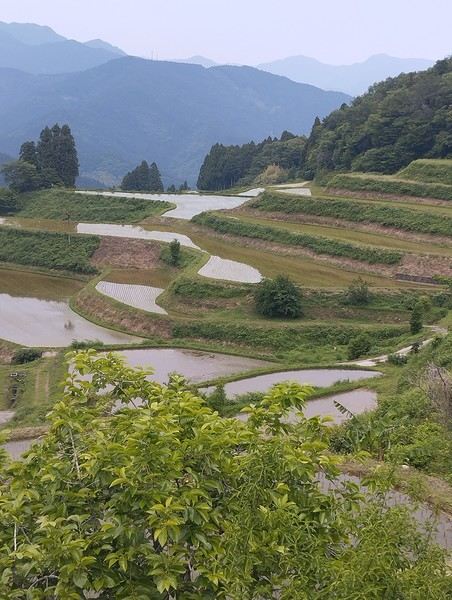
-->7 days in Miyakojima (Okinawa Prefecture)
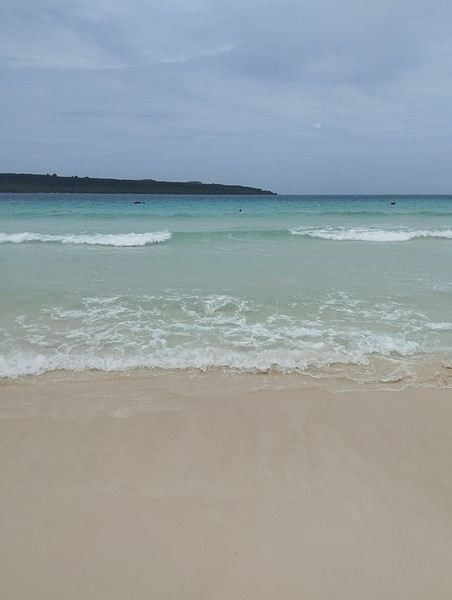
-->7 days in Tokyo
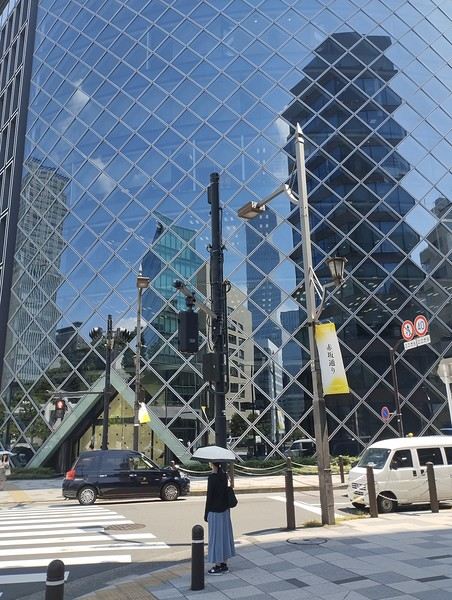
The trip was decided on fairly last-minute this year, as usual.
I regularly check flight prices to track fluctuations for this destination, even without concrete plans. Finding a slightly cheaper direct flight (900 €) than what I’d seen in previous months (around 1,200–1,400 € on average) for a Paris-Tokyo route with Japanese airline ANA was too tempting to resist the urge to return to this enchanting country. After long hesitations between exploring the San’in region (Matsue, Tottori, Yamaguchi) and southern Shikoku, the decision was made—I took the plunge! The tickets are booked: Paris to Kochi with a layover in Tokyo, all with ANA, the airline I’d been dreaming of... for 1,120 € per person. Okay, it’s not cheap, but it’s still better than in 2023.
We leave in 2 weeks!! Now it’s just a matter of getting everything ready!
Intense work ahead in these 2 weeks to:
finalize a more precise itinerary and reach an agreement—yep, because even though we both love Japan, our preferences differ slightly, and we have to choose between exploring new places or taking time to revisit beloved spots... decide how much time to spend in each selected area without rushing while still exploring research places that might interest us and watch videos about Japan book accommodations: yes, it’s possible to do this on the spot as we go, but last year, we noticed that last-minute options were pretty expensive, so we’re booking ahead—even if it means keeping a few options open while we decide or see if better deals pop up later reserve rental cars order yen check the weather regularly and wonder if choosing the *tsuyu* (rainy season) was really a good idea—and whether we’ll be stuck in non-stop rain???
What a tough job, right? Traveling to Japan for a month—such a hard life! Despite this being my 4th trip, the excitement is just as intense as the first time.
The only small downside is that when we booked the flight tickets, there were only a few seats left, so we’re only sitting together on the international return flight. Plus, on the outbound flight, we’ve got the middle seats. Another lingering question: what French-language films will be available? According to the internet, the selection seems limited. Oh well, these are just minor details—it’s almost time to fly!
PS: I’ll be posting slowly and irregularly... so for those interested, be patient or maybe set an alert...
Hi everyone,
I have to admit, I really hesitated before deciding to write this travel journal... Writing one takes a lot of time and energy, and since this is my 4th trip, I wondered if it would actually interest anyone other than myself (both for the discovery and the writing). But after a few "Are you going to write a journal?" requests and especially the renewed pleasure from reading other travelers’ travel journals about Japan or elsewhere on this forum or elsewhere, I’ve decided to share this 4th installment in the Land of the Rising Sun here.
The itinerary: 27 full days, from late May to late June 2025, right in the middle of the rainy season, including:
-->13 days in Shikoku, from Kochi (Kochi Prefecture) to Matsuyama (Ehime Prefecture)
-->7 days in Miyakojima (Okinawa Prefecture)
-->7 days in Tokyo
The trip was decided on fairly last-minute this year, as usual.
I regularly check flight prices to track fluctuations for this destination, even without concrete plans. Finding a slightly cheaper direct flight (900 €) than what I’d seen in previous months (around 1,200–1,400 € on average) for a Paris-Tokyo route with Japanese airline ANA was too tempting to resist the urge to return to this enchanting country. After long hesitations between exploring the San’in region (Matsue, Tottori, Yamaguchi) and southern Shikoku, the decision was made—I took the plunge! The tickets are booked: Paris to Kochi with a layover in Tokyo, all with ANA, the airline I’d been dreaming of... for 1,120 € per person. Okay, it’s not cheap, but it’s still better than in 2023.
We leave in 2 weeks!! Now it’s just a matter of getting everything ready!
Intense work ahead in these 2 weeks to:
finalize a more precise itinerary and reach an agreement—yep, because even though we both love Japan, our preferences differ slightly, and we have to choose between exploring new places or taking time to revisit beloved spots... decide how much time to spend in each selected area without rushing while still exploring research places that might interest us and watch videos about Japan book accommodations: yes, it’s possible to do this on the spot as we go, but last year, we noticed that last-minute options were pretty expensive, so we’re booking ahead—even if it means keeping a few options open while we decide or see if better deals pop up later reserve rental cars order yen check the weather regularly and wonder if choosing the *tsuyu* (rainy season) was really a good idea—and whether we’ll be stuck in non-stop rain???
What a tough job, right? Traveling to Japan for a month—such a hard life! Despite this being my 4th trip, the excitement is just as intense as the first time.
The only small downside is that when we booked the flight tickets, there were only a few seats left, so we’re only sitting together on the international return flight. Plus, on the outbound flight, we’ve got the middle seats. Another lingering question: what French-language films will be available? According to the internet, the selection seems limited. Oh well, these are just minor details—it’s almost time to fly!
PS: I’ll be posting slowly and irregularly... so for those interested, be patient or maybe set an alert...
Croatia, Montenegro – two victims of overtourism?
Mid-June, two Auvergnats on the starting blocks—off we go to the former Yugoslavia!
We’d already explored some nooks and crannies of northern Croatia back in 2019, so we’re keeping the momentum going by planning a trip to the south of the country and then Montenegro.
On the way back, we’ll drift into Bosnia-Herzegovina just to mix things up a bit!
We’re a little unsure about what to expect in terms of tourist crowds.
Dubrovnik has a reputation for being the hardest-hit city by overtourism, and Kotor and the whole Dalmatian coast aren’t exactly empty...
Luckily, most European countries haven’t started school holidays yet, and some measures seem to have been put in place to limit the flow (like restrictions on the number of cruise ships allowed to dock at the same time).
Maybe we’ll manage to escape the promised hell?
For now, we’re slamming the doors of the Scirocco and heading off to our first stop: northern Italy!
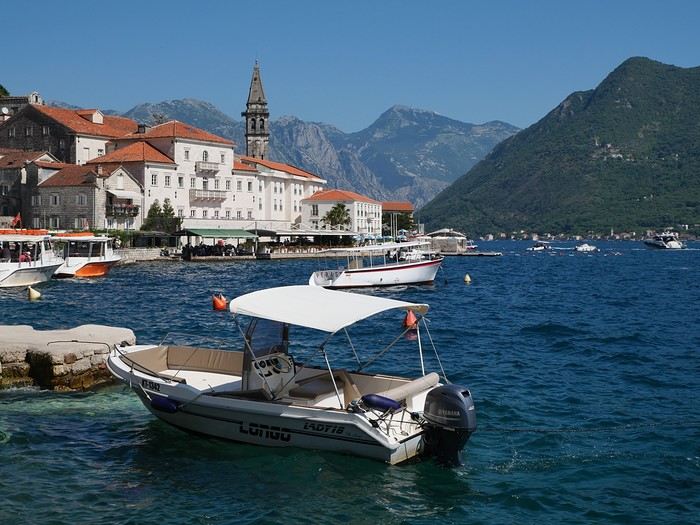
On the way back, we’ll drift into Bosnia-Herzegovina just to mix things up a bit!
We’re a little unsure about what to expect in terms of tourist crowds.
Dubrovnik has a reputation for being the hardest-hit city by overtourism, and Kotor and the whole Dalmatian coast aren’t exactly empty...
Luckily, most European countries haven’t started school holidays yet, and some measures seem to have been put in place to limit the flow (like restrictions on the number of cruise ships allowed to dock at the same time).
Maybe we’ll manage to escape the promised hell?
For now, we’re slamming the doors of the Scirocco and heading off to our first stop: northern Italy!
Kattegat Tour and Norway’s Majestic Fjords – 32 Days (Denmark, Sweden, Norway)
Kattegat isn’t just the name of the village in the TV series *Vikings*—it’s also the stretch of water separating Denmark from Sweden... the sea, basically! And further north, you’ve got Norway and its fjords!
Originally, I’d planned to just do a loop around Kattegat, with the *Under* restaurant in Lindesnes as our anniversary treat... but along the way, we thought, why not "push" a little further north, keeping an eye on the budget since we’d chosen to travel by car in June 2025 through Scandinavia.
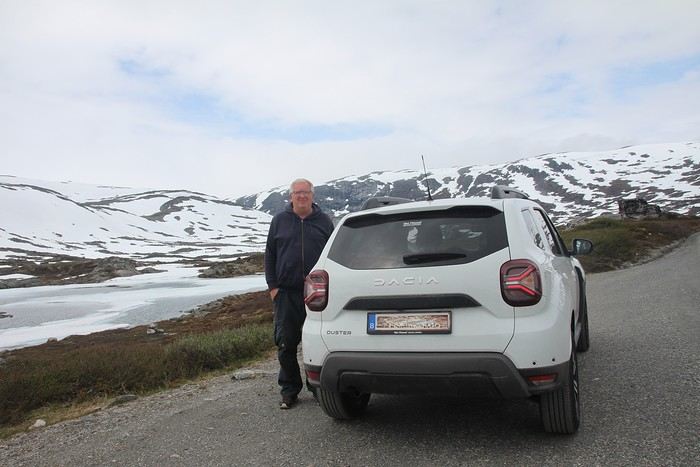
Why by car when most travelers opt for a camper van, while others prefer the comfort of cruises? Well, because we don’t own a camper van, renting one is pricey, and then you’ve got to add fuel costs (those things guzzle gas!), ferry fees, and other "tolls." All things considered, we went for mostly rentals—especially since there were four of us at the start of the trip. We spent the first week in Denmark with our daughter and son-in-law. Then they flew back to Belgium, and we continued our adventure as a couple. For accommodation, we mainly booked Airbnb apartments, which helped keep costs down and, most importantly, let us prepare our own meals (diet, diet!). In this travel journal, you’ll discover (or rediscover, for those who followed my older ones) our unbridled love for theme parks, museums, unique experiences, and—especially in Denmark—Legos! Unfortunately, we didn’t do any hikes this year because the unpredictable weather had made the trails slippery, and since I’d already taken three tumbles during the trip, I didn’t want to risk another! In the end, we traveled for 32 days, covered 6,200 km, and most importantly, discovered the charming country of Denmark, marveled at Norway’s breathtaking fjords—all without suffering the heatwave that hit France and Belgium that June! If you’ve got any questions, don’t hesitate to ask!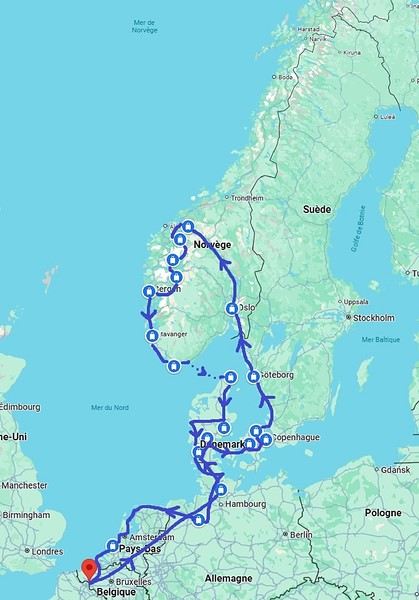
Why by car when most travelers opt for a camper van, while others prefer the comfort of cruises? Well, because we don’t own a camper van, renting one is pricey, and then you’ve got to add fuel costs (those things guzzle gas!), ferry fees, and other "tolls." All things considered, we went for mostly rentals—especially since there were four of us at the start of the trip. We spent the first week in Denmark with our daughter and son-in-law. Then they flew back to Belgium, and we continued our adventure as a couple. For accommodation, we mainly booked Airbnb apartments, which helped keep costs down and, most importantly, let us prepare our own meals (diet, diet!). In this travel journal, you’ll discover (or rediscover, for those who followed my older ones) our unbridled love for theme parks, museums, unique experiences, and—especially in Denmark—Legos! Unfortunately, we didn’t do any hikes this year because the unpredictable weather had made the trails slippery, and since I’d already taken three tumbles during the trip, I didn’t want to risk another! In the end, we traveled for 32 days, covered 6,200 km, and most importantly, discovered the charming country of Denmark, marveled at Norway’s breathtaking fjords—all without suffering the heatwave that hit France and Belgium that June! If you’ve got any questions, don’t hesitate to ask!
Uzbek notes
The Afrosiyob races through a premature twilight, lashed by a blizzard of thick snow. In the endless gray, a monumental industrial complex occasionally emerges, ghostly. Here and there, in the middle of nowhere, a human silhouette appears (a soldier?), standing motionless by the tracks. On the screen mounted in the middle of the ceiling, a dashing Bollywood cat in vibrant colors writhes in all directions, throwing smoldering glances at a dancer on the verge of fainting. A server moves down the central aisle, offering crepes for sale—ones I suspect are stuffed with ground beef. I’m in Central Asia, in Uzbekistan, somewhere between Bukhara and Samarkand.
I chose the title "notes"—scattered thoughts, rough drafts. I’m not sure what I’ll write, but one thing’s certain: this won’t be a linear travel journal.
And a photo... there must be a photo, so here:
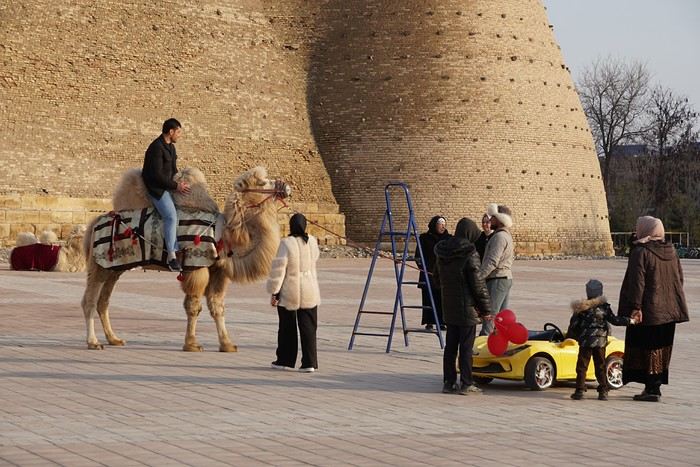
Local tourists between a Bactrian camel and an electric car, in front of ancient walls—it’ll do.
I chose the title "notes"—scattered thoughts, rough drafts. I’m not sure what I’ll write, but one thing’s certain: this won’t be a linear travel journal.
And a photo... there must be a photo, so here:
Local tourists between a Bactrian camel and an electric car, in front of ancient walls—it’ll do.
Northern Chile, Andean impressions.
Alright, this year, we're heading back to South America!
The initial plan was to retrace the route we imagined in the summer of 2020: a trip to northern Argentina starting from Córdoba.
Unfortunately, the flight to Córdoba no longer exists, and airfares to Javier Milei’s country are both outrageously priced and involve multiple layovers.
So, I tweaked Google Flights every which way and finally found a flight within my budget—departing from Clermont-Ferrand!
Not to Argentina, though...
Our transatlantic flight will cross the snow-capped Andes, landing in Santiago, Chile, with a return from Lima!
In between, two domestic flights and a big road trip loop starting from the coastal city of Arica to explore the treasures of northern Chile.
Our mode of transport: a pseudo 4x4 that won’t take us through sand dunes or devilish tracks but will let us tackle the entire secondary network, including unpaved main roads, while still being insured.
Is the suitcase packed with all-season clothes?
Are the driver’s license and passport ready?
Bank cards and a few euros too?
Off we go for just over 3 weeks of southern wanderings!
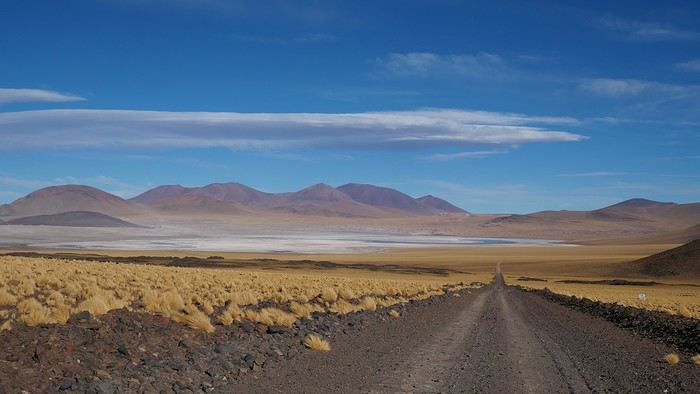
--/--
To keep all my esteemed readers on track, here are a few maps outlining the Arica-Arica loop!
1- From Arica to San Pedro de Atacama via Pica and the Salar de Huasco
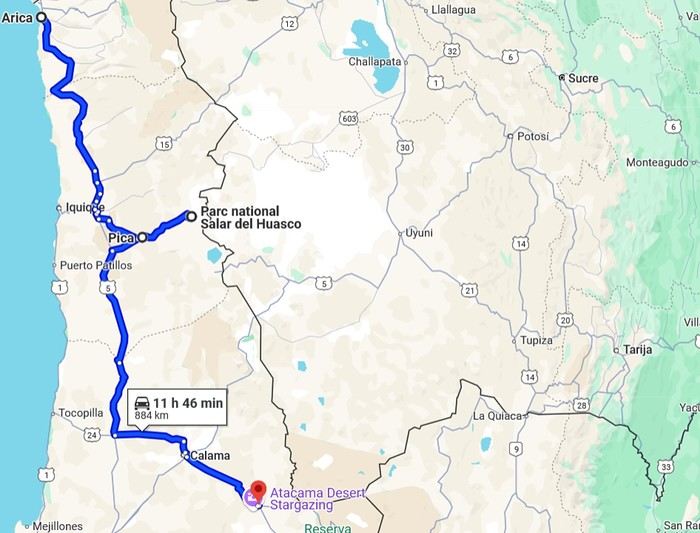 2- Around San Pedro
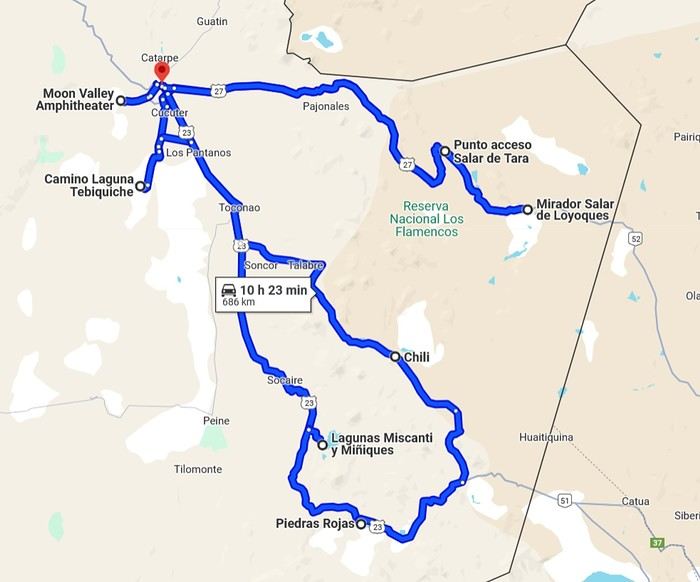
3- From San Pedro to Cariquima
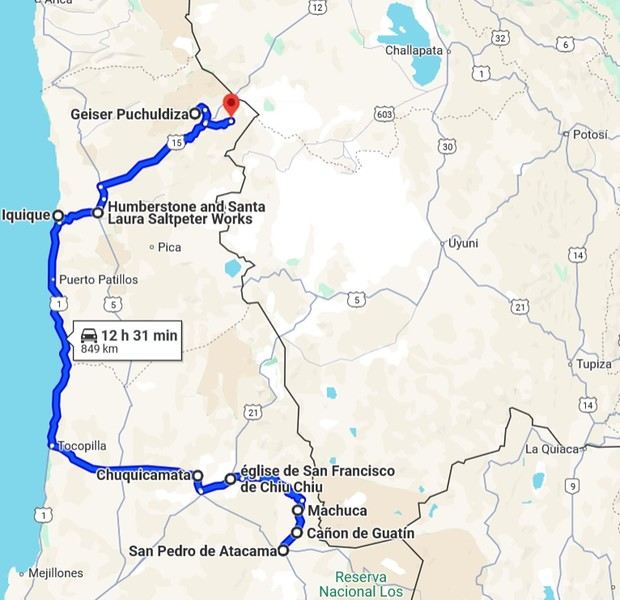
4- From Cariquima to Putre
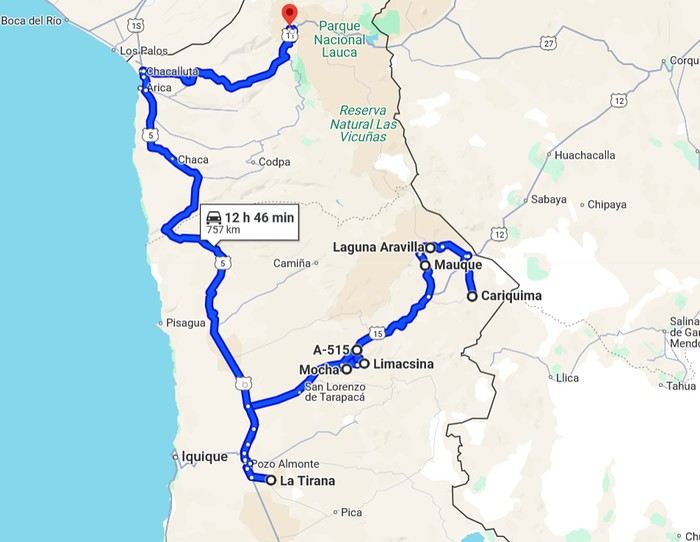
5 - From Putre to Arica
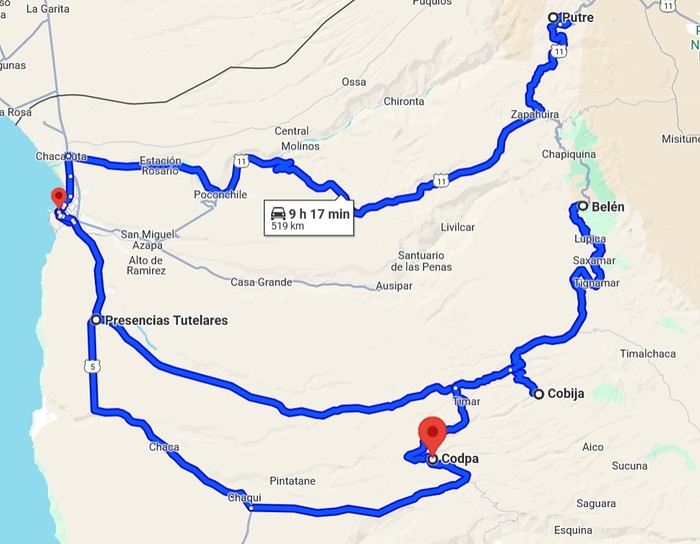
Gas stations in this part of Chile are located in Arica, Iquique, Pozo Almonte, Pica, Calama, and San Pedro de Atacama.
The initial plan was to retrace the route we imagined in the summer of 2020: a trip to northern Argentina starting from Córdoba.
Unfortunately, the flight to Córdoba no longer exists, and airfares to Javier Milei’s country are both outrageously priced and involve multiple layovers.
So, I tweaked Google Flights every which way and finally found a flight within my budget—departing from Clermont-Ferrand!
Not to Argentina, though...
Our transatlantic flight will cross the snow-capped Andes, landing in Santiago, Chile, with a return from Lima!
In between, two domestic flights and a big road trip loop starting from the coastal city of Arica to explore the treasures of northern Chile.
Our mode of transport: a pseudo 4x4 that won’t take us through sand dunes or devilish tracks but will let us tackle the entire secondary network, including unpaved main roads, while still being insured.
Is the suitcase packed with all-season clothes?
Are the driver’s license and passport ready?
Bank cards and a few euros too?
Off we go for just over 3 weeks of southern wanderings!
--/--
To keep all my esteemed readers on track, here are a few maps outlining the Arica-Arica loop!
1- From Arica to San Pedro de Atacama via Pica and the Salar de Huasco
2- Around San Pedro3- From San Pedro to Cariquima
4- From Cariquima to Putre
5 - From Putre to Arica
Gas stations in this part of Chile are located in Arica, Iquique, Pozo Almonte, Pica, Calama, and San Pedro de Atacama.
Kyushu between Fukuoka and Nagasaki in autumn 2024 (Japan)
Fellow travelers,
Don’t they say "never two without three"? It seems so. Here I am again on the forum to share—and let’s be honest, indulge a bit of selfish pleasure—by recounting the story of this third installment in the Land of the Rising Sun.
Where? It’s all in the title. On the island of Kyushu in southern Japan, more precisely in the northwest between Fukuoka and Nagasaki. I hope to take you along with me for 19 nights and 18 full days this autumn of 2024. On the itinerary: gastronomy, crafts, festivals, waterfalls, encounters, and leisurely strolls in all simplicity.
A last-minute flight booked just 7 days before departure, and the route evolved regularly based on whims and accommodation availability, eventually settling on this:
- 5 nights in Fukuoka: Fukuoka city, Ukiha, Itoshima, Dazaifu, Yanagawa - 4 nights in Hasami, Nagasaki Prefecture: Okawachiyama, Arita, Takeo, Kashima, Yobuko, Karatsu, Kabeshima - 6 nights in Nagasaki: Ureshino, Higashi-Sonogi, Nagasaki city, Unzen, Sotome - 4 nights in Fukuoka: Karatsu, Fukuoka city
Most of the trip was done by car for practical reasons—easier access to certain places and freedom of movement—but also for the sheer joy of it. Despite slow traffic at times, driving in rural Japan is a delight.
If the program interests you, see you soon for the start of the journey.
Don’t they say "never two without three"? It seems so. Here I am again on the forum to share—and let’s be honest, indulge a bit of selfish pleasure—by recounting the story of this third installment in the Land of the Rising Sun.
Where? It’s all in the title. On the island of Kyushu in southern Japan, more precisely in the northwest between Fukuoka and Nagasaki. I hope to take you along with me for 19 nights and 18 full days this autumn of 2024. On the itinerary: gastronomy, crafts, festivals, waterfalls, encounters, and leisurely strolls in all simplicity.
A last-minute flight booked just 7 days before departure, and the route evolved regularly based on whims and accommodation availability, eventually settling on this:
- 5 nights in Fukuoka: Fukuoka city, Ukiha, Itoshima, Dazaifu, Yanagawa - 4 nights in Hasami, Nagasaki Prefecture: Okawachiyama, Arita, Takeo, Kashima, Yobuko, Karatsu, Kabeshima - 6 nights in Nagasaki: Ureshino, Higashi-Sonogi, Nagasaki city, Unzen, Sotome - 4 nights in Fukuoka: Karatsu, Fukuoka city
Most of the trip was done by car for practical reasons—easier access to certain places and freedom of movement—but also for the sheer joy of it. Despite slow traffic at times, driving in rural Japan is a delight.
If the program interests you, see you soon for the start of the journey.
La Bretagne avec le Jacques Cartier "Ponant" du 18 au 25 juillet 2020 English translation pending
Bonjour
J'avais envisagé d'attendre début Octobre et notre retour à Rennes pour faire le C/R
de notre croisière " La Bretagne : entre côtes sauvages et phares "
Mais tout compte fait , je change d'avis et démarre ce C/R dès maintenant :
Au retour de notre 20 ème croisière , fin Novembre 2019 , ( Transat de Marseille à
Miami sur le MSC Divina ) , nous avions décidé de faire une (petite ) pause pour les
croisières et donc de ne rien réserver avant plusieurs mois .
Sage décision en fait au vu des évènements sanitaires du Printemps puisque nous
avons échappé aux problèmes subis par nombre de touristes qui se sont retrouvés
avec des avoirs qu'il ne pourront utiliser ( au mieux ) que dans plusieurs mois .
A la fin de l'an dernier , je m'étais inscrit à la newsletter de Ponant , plus pour rêver
qu'autre chose .
Mais début Juin , alors que toutes les croisières sont annulées les unes après les autres ,
Ponant , profitant notamment de la capacité réduite de ses navires et du retour en
France métropolitaine de presque tous , met en place 2 itinéraires en Méditerranée et
3 en Manche et Atlantique .
La croisière au départ de Nice pour contourner la Corse nous plaisait bien mais rejoindre
Nice posait , à ce moment là , problème .
Nous décidons donc de nous rabattre sur la croisière au départ de St Malo car là , pas de
souci pour nous y rendre 🙂
Les raisons de notre choix : de mémoire , St Malo est fréquemment une ville d'escale pour
les bateaux de croisière mais quasiment jamais une ville d'embarquement ( et là aussi
de débarquement ) , donc autant en profiter .
De plus l'itinéraire nous plait avec la visite d'iles connues ( mais que nous reverrons avec
plaisir ) et de vraies découvertes dont les Scilly , au large de la Cornouaille britannique .
Mi Juin , nous décidons de réserver la croisière au départ de St Malo du 18 Juillet , sachant
que nous avons la possibilité d'annuler , sans pénalités , jusqu'à 72 heures avant le départ .
L'annulation , nous y avons pensé quand , fin Juin , nous avons appris que l'escale aux
Scilly était supprimée 😠 , remplacée par Ouessant , une escale à Groix se substituant
à celle de Hoëdic .
Toutes les autres croisières étaient aussi affectées par la suppression des escales à l'étranger
pour raisons sanitaires ( jours de quarantaine )
Nous trouverons donc peut-être une autre occasion pour nous rendre aux Scilly
Comme d'habitude , je m'égare avec ce préambule un peu long .
Je vais donc faire une pause avant de vous embarquer sur le Jacques Cartier .
A plus
Jean-Pierre
Évasion en Thaïlande English translation pending
J'ai déjà expliqué ici le contexte de mes publications et pourquoi je remonte à ce point dans le temps. Cette fois-ci, on est en 2014. Je pars du présupposé que les choses n'ont pas considérablement changées et que ces voyages peuvent encore, malgré le temps passsé, en inspirer d'autres...
dimanche 30 novembre 2014 Mulhouse - Amsterdam
Bien sûr, tu le sais, ça fait des mois que j’en parle, ce matin on part vers Bangkok, Thaïlande. Pour Dom et moi, la voyago-thérapie : le must pour réduire à rien les agressions du moment, essentiellement liées à des histoires de boulot; mais je vais pas m'égarer là-dedans, ce n'est pas l'endroit!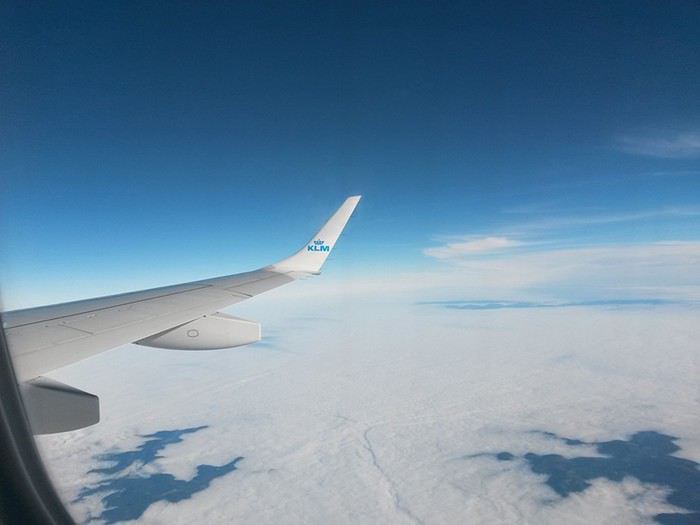
Escale à Amsterdam...
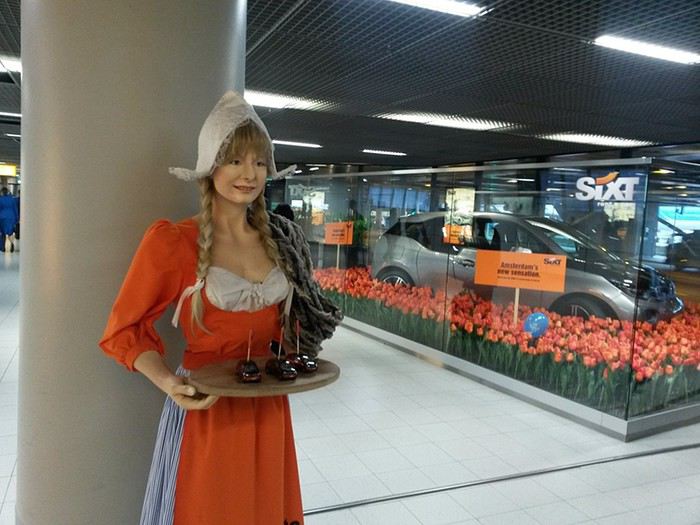
Lundi 1 décembre 2014 Bangkok
Même si c’est hautement probablement faux, on arrive à Bangkok alors qu’il m’a semblé n’avoir, à aucun moment, fermé l’œil. Les habituelles files d’attente à la douane présentent, il faut le souligner, des visages aimables… les bagages...Le taxi (rigolard comme ce n’est plus permis en occident :), l’hôtel...Nickel avec une magnifique terrasse au bord de la Navalaï River...Tous les flags sont au vert ! Tu nous connais, on traîne pas trop avant d’aller découvrir la ville ! On demande notre chemin à un type super accueillant qui hèle aussitôt un môme avec un « tuk tuk », une sorte de mobylette encarénée très appréciée des touristes because costless en diable ! Notre mentor négocie pour 40 baths (1 euro !), un tour des temples du nord. On se laisse driver sans discuter...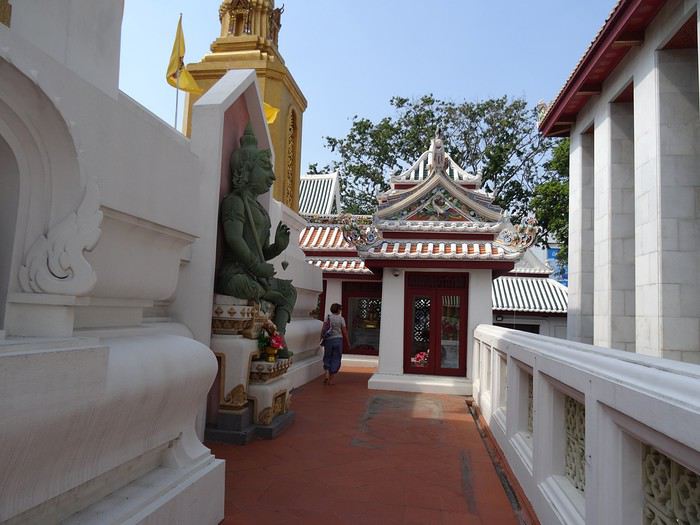
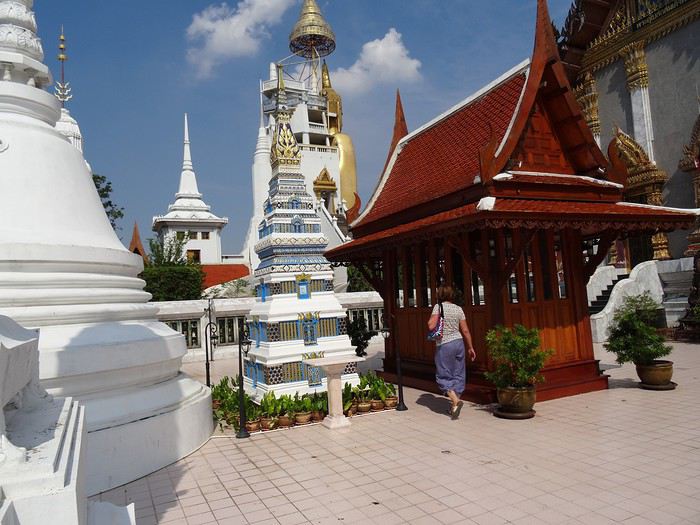
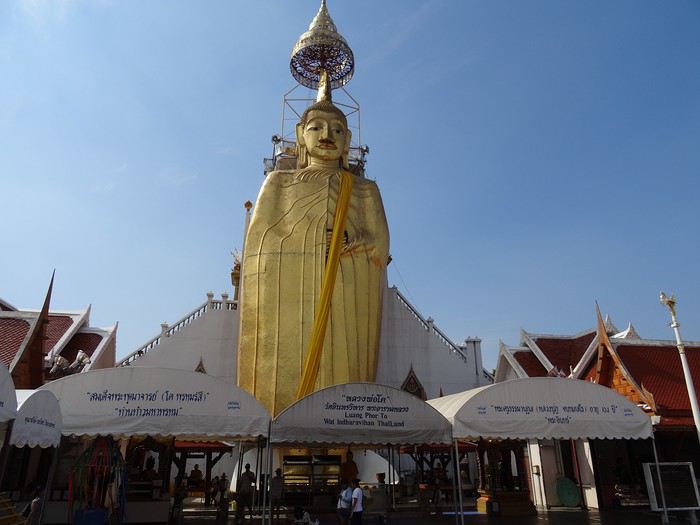
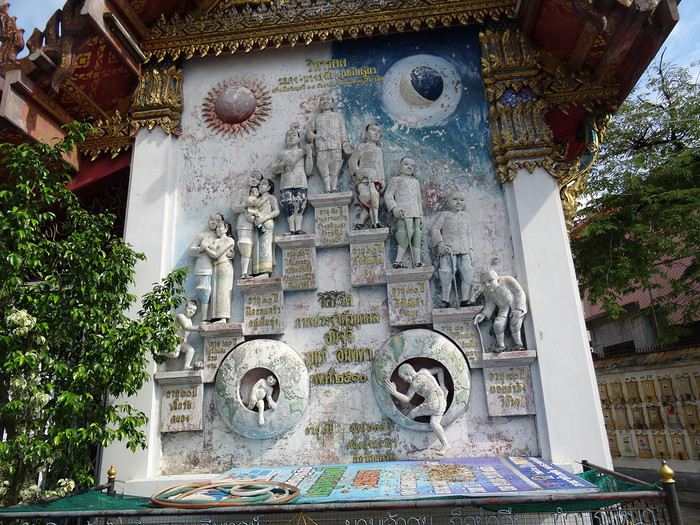
Après le troisième temple, le môme tourne bizarre. Il a arrêté d’être juste aimable. Nous presse. Puis, au milieu d’une visite, nous enjoint de le suivre, il veut nous montrer, dans une certaine urgence, quelque chose. Il nous emmène vers un homme d’âge respectable, une sorte de bonze aimable, affable, qui nous raconte, dans un français correct, sa jeunesse à Bordeaux, puis glisse insensiblement sur la théorie économique et ses inconstances, de la difficulté induite à placer le fruit de notre dur labeur dans quelque chose de pérenne. On le sentait venir. Devine où il est le plus sûr de placer son argent ? Dans la pierre précieuse, naturellement ! Et là, le monde est quand même bien fichu, figure toi que notre interlocuteur connait justement quelques joailliers d’art qui accepteraient de nous vendre à prix coûtant des saphirs de la région, et sans taxes encore! Bon. Le môme nous a embarqués dans un traquenard. On réussit cependant sans trop de difficulté à se débarrasser du fâcheux et reprenons l’expédition où nous l’avions laissée. Quand je demande au môme où se trouve la prochaine destination, je l’oblige à répéter plusieurs fois tant la chose me semble incongrue, mais c’est bien ça, sa réponse s’entend : « Thaï export !». On décide aussitôt d’abandonner la virée. On lâche 40 baths au gamin et sautons de sa mobylette au premier feu rouge. Ensuite, on a agité nos petites mains pour tenter d’attirer un taxi sous le cagnard, un Thaï d’un âge plus que respectable, nous a embarqué dans un véhicule qu’il a eu toute les peines du monde à maintenir sur la route, propulsés dans une sorte de jeu vidéo mortel, un grand thief auto à travers une circulation en délire… Mais ça va. Pour une poignée d’euros il nous a ramené à notre hôtel, sains et saufs ! Là, faut se remettre, pot au bord de la rivière... « Ça doit être possible de faire une ballade sur le fleuve, tu crois pas? » J’en parle à notre hôte à l’accueil, le truc est organisé dans la foulée ! Une efficacité qui laisse ébahi ! On a un bateau pour une virée d’une heure à travers la ville.
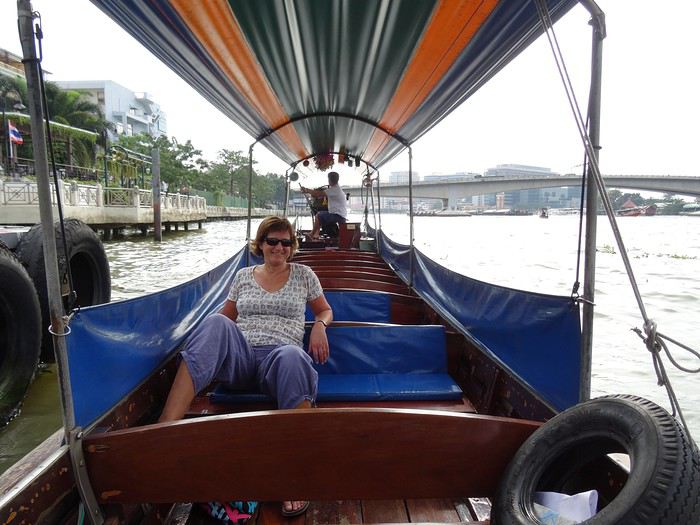
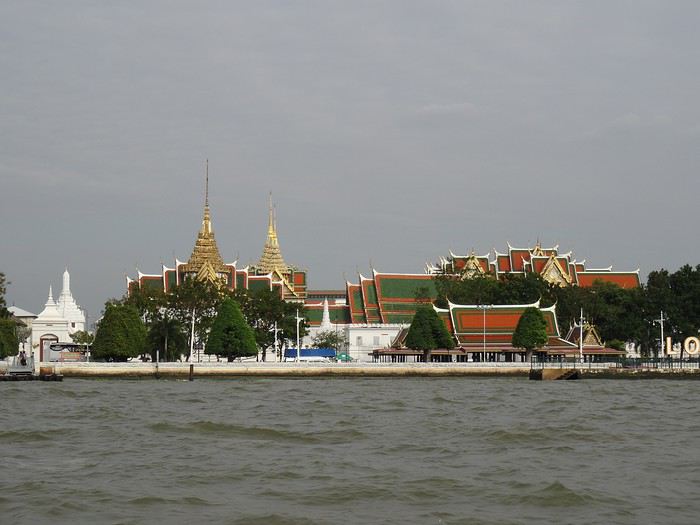
En traversant un petit village sur pilotis, je vois nager un drôle de truc, comme un chien. A force d’écarquiller les yeux, on distingue tout un groupe de Varans!
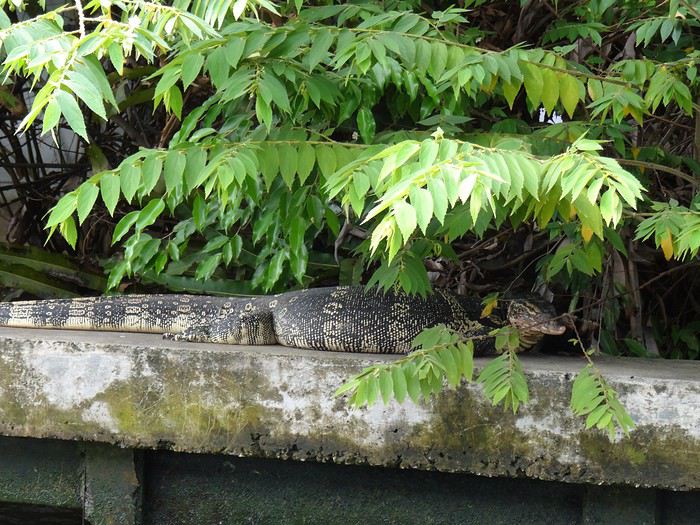
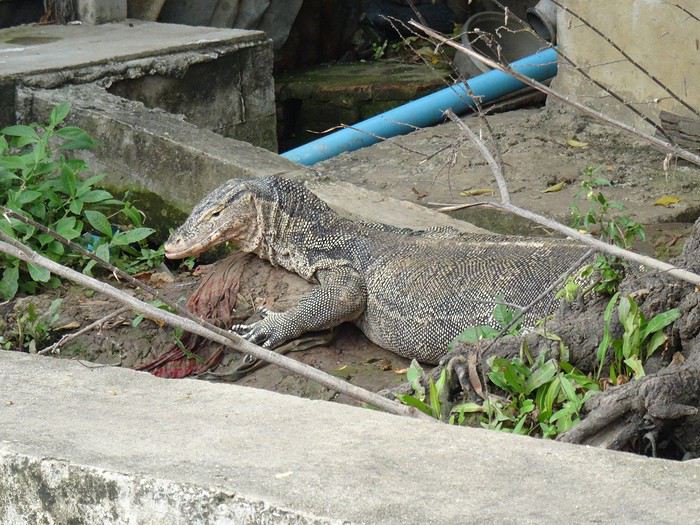
dimanche 30 novembre 2014 Mulhouse - Amsterdam
Bien sûr, tu le sais, ça fait des mois que j’en parle, ce matin on part vers Bangkok, Thaïlande. Pour Dom et moi, la voyago-thérapie : le must pour réduire à rien les agressions du moment, essentiellement liées à des histoires de boulot; mais je vais pas m'égarer là-dedans, ce n'est pas l'endroit!
Escale à Amsterdam...
Lundi 1 décembre 2014 Bangkok
Même si c’est hautement probablement faux, on arrive à Bangkok alors qu’il m’a semblé n’avoir, à aucun moment, fermé l’œil. Les habituelles files d’attente à la douane présentent, il faut le souligner, des visages aimables… les bagages...Le taxi (rigolard comme ce n’est plus permis en occident :), l’hôtel...Nickel avec une magnifique terrasse au bord de la Navalaï River...Tous les flags sont au vert ! Tu nous connais, on traîne pas trop avant d’aller découvrir la ville ! On demande notre chemin à un type super accueillant qui hèle aussitôt un môme avec un « tuk tuk », une sorte de mobylette encarénée très appréciée des touristes because costless en diable ! Notre mentor négocie pour 40 baths (1 euro !), un tour des temples du nord. On se laisse driver sans discuter...
Après le troisième temple, le môme tourne bizarre. Il a arrêté d’être juste aimable. Nous presse. Puis, au milieu d’une visite, nous enjoint de le suivre, il veut nous montrer, dans une certaine urgence, quelque chose. Il nous emmène vers un homme d’âge respectable, une sorte de bonze aimable, affable, qui nous raconte, dans un français correct, sa jeunesse à Bordeaux, puis glisse insensiblement sur la théorie économique et ses inconstances, de la difficulté induite à placer le fruit de notre dur labeur dans quelque chose de pérenne. On le sentait venir. Devine où il est le plus sûr de placer son argent ? Dans la pierre précieuse, naturellement ! Et là, le monde est quand même bien fichu, figure toi que notre interlocuteur connait justement quelques joailliers d’art qui accepteraient de nous vendre à prix coûtant des saphirs de la région, et sans taxes encore! Bon. Le môme nous a embarqués dans un traquenard. On réussit cependant sans trop de difficulté à se débarrasser du fâcheux et reprenons l’expédition où nous l’avions laissée. Quand je demande au môme où se trouve la prochaine destination, je l’oblige à répéter plusieurs fois tant la chose me semble incongrue, mais c’est bien ça, sa réponse s’entend : « Thaï export !». On décide aussitôt d’abandonner la virée. On lâche 40 baths au gamin et sautons de sa mobylette au premier feu rouge. Ensuite, on a agité nos petites mains pour tenter d’attirer un taxi sous le cagnard, un Thaï d’un âge plus que respectable, nous a embarqué dans un véhicule qu’il a eu toute les peines du monde à maintenir sur la route, propulsés dans une sorte de jeu vidéo mortel, un grand thief auto à travers une circulation en délire… Mais ça va. Pour une poignée d’euros il nous a ramené à notre hôtel, sains et saufs ! Là, faut se remettre, pot au bord de la rivière... « Ça doit être possible de faire une ballade sur le fleuve, tu crois pas? » J’en parle à notre hôte à l’accueil, le truc est organisé dans la foulée ! Une efficacité qui laisse ébahi ! On a un bateau pour une virée d’une heure à travers la ville.
En traversant un petit village sur pilotis, je vois nager un drôle de truc, comme un chien. A force d’écarquiller les yeux, on distingue tout un groupe de Varans!
Voyage avec 3 enfants: 23 jours au Pérou pour débuter notre tour du monde en juillet 2019 English translation pending
Nous sommes rentrés il y a quelques mois d'un tour du monde en famille avec nos 3 enfants et j'ai enfin pris le temps de rédiger au propre nos carnets de voyage. Voici pour commencer le récit de nos 23 jours au Pérou en juillet 2019.
Jour 1 Après un départ chaotique, une correspndance loupée à Madrid, une courte dans la capitale espagnole, un 2ème vol non prévu pour Amsterdam, nous décollons enfin pour Lima. 12h de vol plus tard, nous y voilà. Même s'il n'est que 18h là-bas quand nous arrivons, il est 1h du matin en France. On trouve nos bagages et un bus rapidement mais les enfants sont crevés et s'écroulent dans le bus. La ville est bien embouteillée et il nous faut 1h pour rejoindre notre quartier. Les 500 mètres à faire à pied sont compliqués, ça râle dans tous les sens ! Il faut dire qu’il fait nuit, il bruine, ça fait 10 fois qu’on réveille les enfants pendant leur sommeil, mais on n’a pas le choix ! Nous prenons rapidement nos chambres, pas le top du confort cette 1ère auberge mais ça fera l'affaire pour une nuit. Il est presque 21h, tout le monde dors.
Jour 2
Malgré la fatigue, le décalage horaire nous fait réveiller assez tôt. On en profite pour réserver notre bus pour le soir.
Après une petite discussion avec le gérant de l'auberge pour quelques conseils, on part à la recherche d'un endroit où prendre un petit déjeuner. On trouve un café local qui nous parait pas mal, de bons jus de fruits frais et quelques sandwichs. Nous ne sommes encore pas très à l'aise avec l'espagnol et comme la personne ne parle pas du tout anglais, on prend plusieurs choses au hasard et on se retrouve avec un sandwich au fromage, à l'œuf et à l'avocat. Surprenant mais très bon !
Nous n'avons pas beaucoup de temps à consacrer à Lima alors on se contente de se promener dans notre quartier, Miraflores. On va jusqu'à l'océan, on y trouve une aire de jeux pour les enfants.
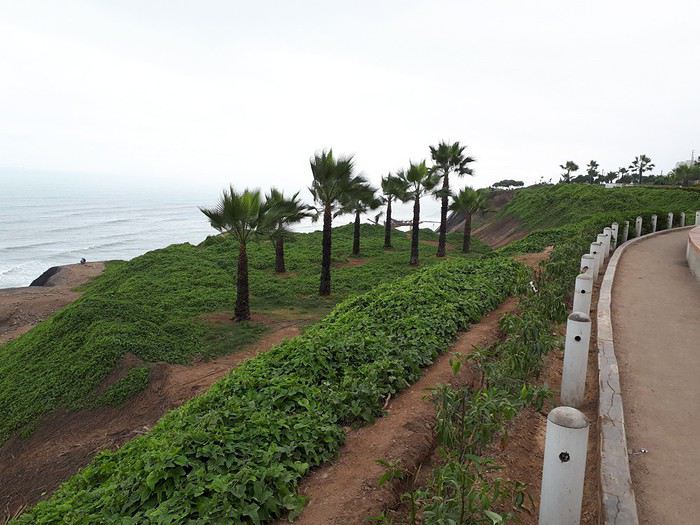
Retour à l’auberge, on saute dans un taxi direction la gare routière. On apprend que le repas du soir ainsi que le petit déjeuner sont servis à bord. On avait prévu quelques courses, tant pis ou tant mieux ! Nous embarquons donc pour Arequipa, notre prochaine étape, 19h de bus plus loin.
Jour 3
Nous nous réveillons en douceur dans le bus qui roule toujours. Les paysages qui défilent sont plutôt désertiques. On sait que la route est encore longue mais ça se passe bien. On nous sert un petit déjeuner basique mais appréciable. La grisaille laisse place peu à peu à un joli ciel bleu.
Il est midi lorsque nous arrivons à Arequipa. Un coup de taxi plus tard, nous découvrons notre hôtel pour les 3 prochaines nuits, une grande chambre confortable qui donne sur une jolie terrasse.
L’ambiance change complètement ici, il fait un grand soleil et une douce chaleur. Nous découvrons une ville plutôt calme avec des rues pavées et des bâtiments dans un style coloniale. C’est super sympa, on sent qu’on va s’y plaire ! Après avoir grignoté un morceau on part découvrir le centre-ville, on flâne, on boit du jus de fruit frais.
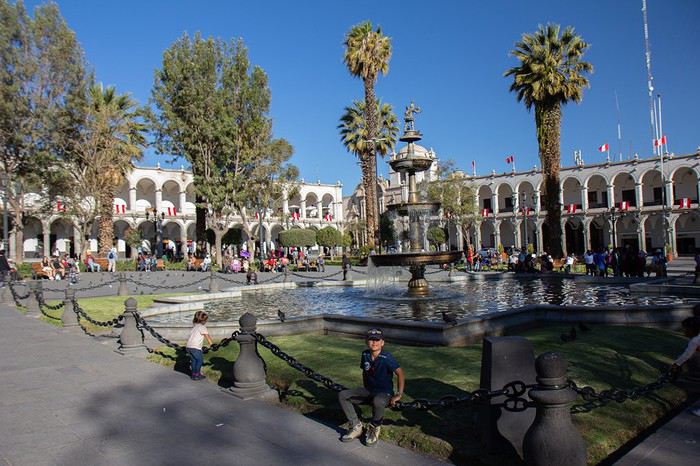
Le soir, on dîne dans un bar/restaurant qui diffuse la demi-finale de la Copa America, le Pérou joue contre le Chili, il y a de l’ambiance… Et c’est le Pérou qui se qualifie pour la finale 3-0 ! Déjà que les péruviens klaxonnent à longueur de journée, alors là c’était une symphonie !
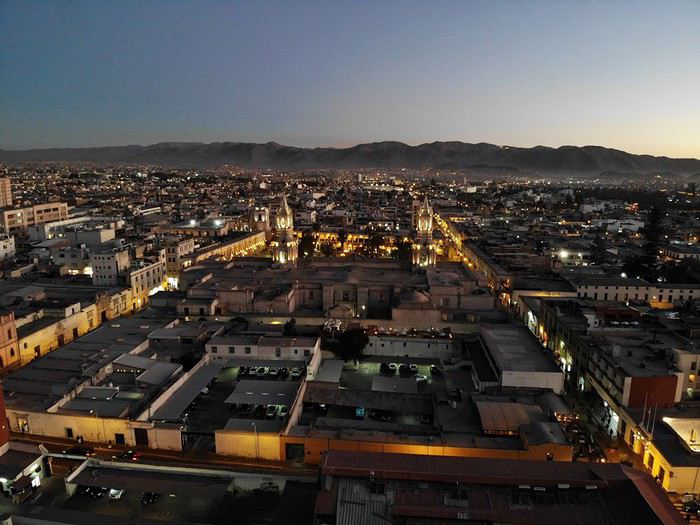
Jour 4
On découvre le copieux petit déjeuner de notre hôtel, on se régale et on prend des forces !
On part ensuite visiter le monastère Santa Catalina. C’était le lieu de résidences de religieuse jusqu’en 1969. Il est très bien préservé, ses murs sont colorés et l’endroit est très fleuri. C’est vraiment très beau. Les enfants ont aimé se perdre dans les nombreuses pièces qui communiquent entre-elles, jouer avec le grand lavoir ou encore se promener dans les étroites allées de ce beau monastère. On a bien pu se rendre compte de leurs conditions de vie.
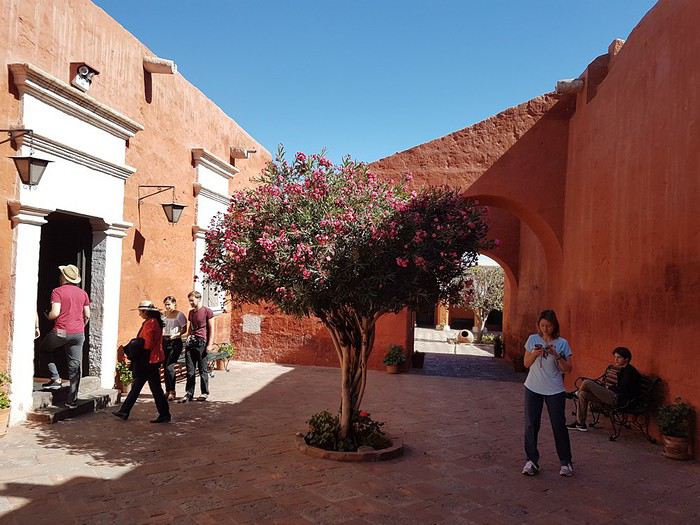
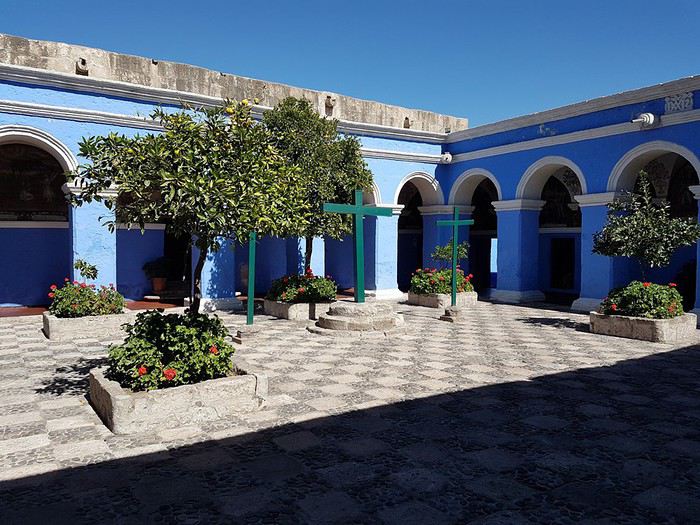
Pour le déjeuner, nous testons une adresse qui nous a été recommandé par d’autres voyageurs, le restaurant Ratatouille. Ils font de la cuisine française et les murs sont couverts de vieilles affiches de la côte d’Azur. On y mange très bien pour pas très cher. On reviendra !
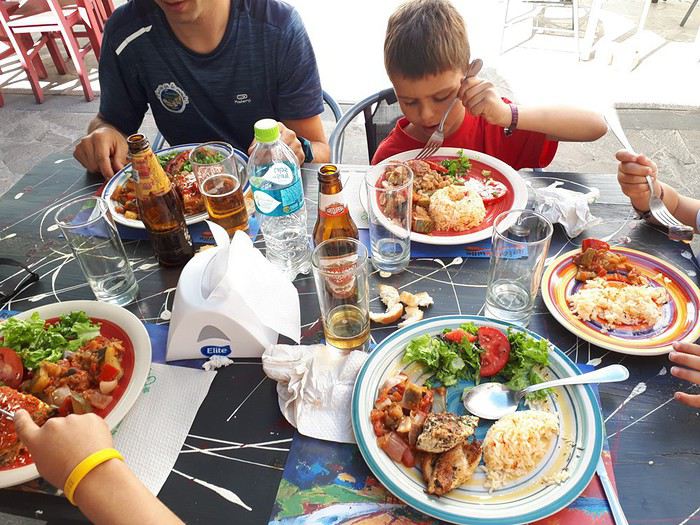
Les enfants fatiguent et on décide de rentrer pour une sieste. C’est l’occasion d’avancer les carnets de bord de chacun et pour d’autre de jouer avec le drone. On repart ensuite à la découverte des marchés couverts de souvenirs, un lieu de torture pour les enfants car ils voudraient tout acheter mais on ne peut plus rien mettre dans les sacs.
Jour 5
Nouveau petit déjeuner au calme sur notre terrasse. On se sent bien ici ! Ce matin, on décide de partir à la découverte d’un autre quartier d’Arequipa. On sort de la vieille ville. L’ambiance n’est pas la même, ça grouille de véhicules en tous genres, c’est bruyant et ça sent la pollution comme dirait Baptiste. On se dirige vers le quartier de Yanahueva qui a la particularité d’avoir une jolie petite place mais aussi un mirador avec une belle vue dégagée sur les volcans de la région. On confirme que la vue est superbe !
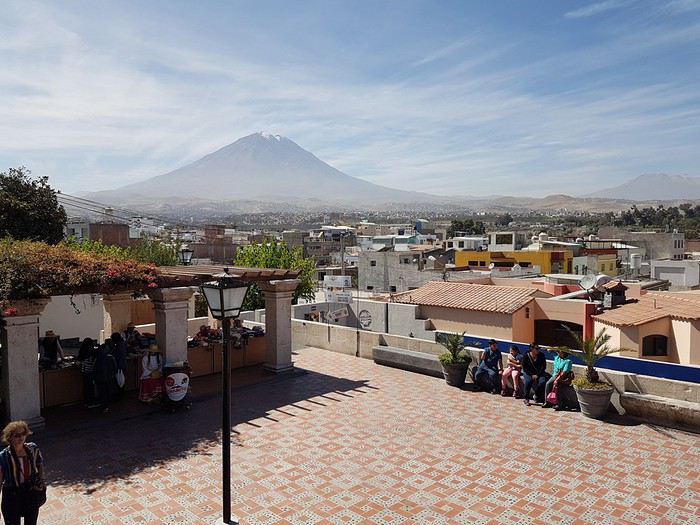
Puis les après-midis se suivent et se ressemblent, Julia fait la sieste, les garçons jouent aux cartes, on traîne et ça fait du bien après les semaines un peu speed d’avant le départ. On ressort ensuite se balader, cette ville est vraiment agréable, on découvre de nouveaux passages, on visite l’église de la Plaza de Armas.
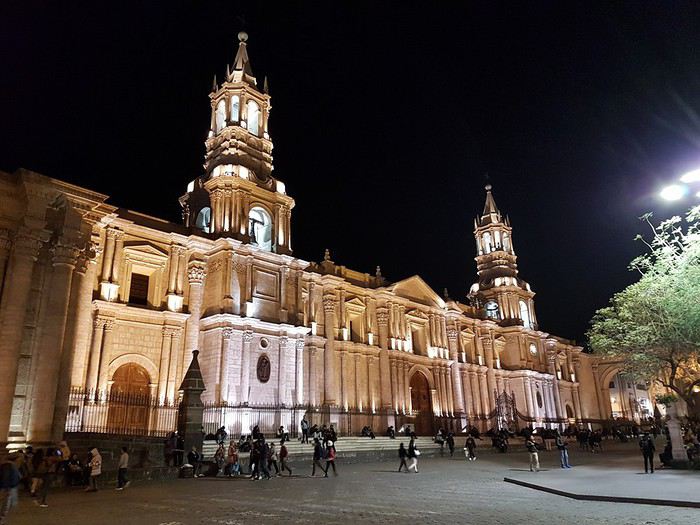
Puis il est temps de rentrer faire nos sacs, demain nous reprenons le bus pour une nouvelle destination : Yanque (dans un prochain article) !
Pour plus d'infos sur nos adresses et infos technique ICI.
Jour 1 Après un départ chaotique, une correspndance loupée à Madrid, une courte dans la capitale espagnole, un 2ème vol non prévu pour Amsterdam, nous décollons enfin pour Lima. 12h de vol plus tard, nous y voilà. Même s'il n'est que 18h là-bas quand nous arrivons, il est 1h du matin en France. On trouve nos bagages et un bus rapidement mais les enfants sont crevés et s'écroulent dans le bus. La ville est bien embouteillée et il nous faut 1h pour rejoindre notre quartier. Les 500 mètres à faire à pied sont compliqués, ça râle dans tous les sens ! Il faut dire qu’il fait nuit, il bruine, ça fait 10 fois qu’on réveille les enfants pendant leur sommeil, mais on n’a pas le choix ! Nous prenons rapidement nos chambres, pas le top du confort cette 1ère auberge mais ça fera l'affaire pour une nuit. Il est presque 21h, tout le monde dors.
Jour 2
Malgré la fatigue, le décalage horaire nous fait réveiller assez tôt. On en profite pour réserver notre bus pour le soir.
Après une petite discussion avec le gérant de l'auberge pour quelques conseils, on part à la recherche d'un endroit où prendre un petit déjeuner. On trouve un café local qui nous parait pas mal, de bons jus de fruits frais et quelques sandwichs. Nous ne sommes encore pas très à l'aise avec l'espagnol et comme la personne ne parle pas du tout anglais, on prend plusieurs choses au hasard et on se retrouve avec un sandwich au fromage, à l'œuf et à l'avocat. Surprenant mais très bon !
Nous n'avons pas beaucoup de temps à consacrer à Lima alors on se contente de se promener dans notre quartier, Miraflores. On va jusqu'à l'océan, on y trouve une aire de jeux pour les enfants.
Retour à l’auberge, on saute dans un taxi direction la gare routière. On apprend que le repas du soir ainsi que le petit déjeuner sont servis à bord. On avait prévu quelques courses, tant pis ou tant mieux ! Nous embarquons donc pour Arequipa, notre prochaine étape, 19h de bus plus loin.
Jour 3
Nous nous réveillons en douceur dans le bus qui roule toujours. Les paysages qui défilent sont plutôt désertiques. On sait que la route est encore longue mais ça se passe bien. On nous sert un petit déjeuner basique mais appréciable. La grisaille laisse place peu à peu à un joli ciel bleu.
Il est midi lorsque nous arrivons à Arequipa. Un coup de taxi plus tard, nous découvrons notre hôtel pour les 3 prochaines nuits, une grande chambre confortable qui donne sur une jolie terrasse.
L’ambiance change complètement ici, il fait un grand soleil et une douce chaleur. Nous découvrons une ville plutôt calme avec des rues pavées et des bâtiments dans un style coloniale. C’est super sympa, on sent qu’on va s’y plaire ! Après avoir grignoté un morceau on part découvrir le centre-ville, on flâne, on boit du jus de fruit frais.
Le soir, on dîne dans un bar/restaurant qui diffuse la demi-finale de la Copa America, le Pérou joue contre le Chili, il y a de l’ambiance… Et c’est le Pérou qui se qualifie pour la finale 3-0 ! Déjà que les péruviens klaxonnent à longueur de journée, alors là c’était une symphonie !
Jour 4
On découvre le copieux petit déjeuner de notre hôtel, on se régale et on prend des forces !
On part ensuite visiter le monastère Santa Catalina. C’était le lieu de résidences de religieuse jusqu’en 1969. Il est très bien préservé, ses murs sont colorés et l’endroit est très fleuri. C’est vraiment très beau. Les enfants ont aimé se perdre dans les nombreuses pièces qui communiquent entre-elles, jouer avec le grand lavoir ou encore se promener dans les étroites allées de ce beau monastère. On a bien pu se rendre compte de leurs conditions de vie.
Pour le déjeuner, nous testons une adresse qui nous a été recommandé par d’autres voyageurs, le restaurant Ratatouille. Ils font de la cuisine française et les murs sont couverts de vieilles affiches de la côte d’Azur. On y mange très bien pour pas très cher. On reviendra !
Les enfants fatiguent et on décide de rentrer pour une sieste. C’est l’occasion d’avancer les carnets de bord de chacun et pour d’autre de jouer avec le drone. On repart ensuite à la découverte des marchés couverts de souvenirs, un lieu de torture pour les enfants car ils voudraient tout acheter mais on ne peut plus rien mettre dans les sacs.
Jour 5
Nouveau petit déjeuner au calme sur notre terrasse. On se sent bien ici ! Ce matin, on décide de partir à la découverte d’un autre quartier d’Arequipa. On sort de la vieille ville. L’ambiance n’est pas la même, ça grouille de véhicules en tous genres, c’est bruyant et ça sent la pollution comme dirait Baptiste. On se dirige vers le quartier de Yanahueva qui a la particularité d’avoir une jolie petite place mais aussi un mirador avec une belle vue dégagée sur les volcans de la région. On confirme que la vue est superbe !
Puis les après-midis se suivent et se ressemblent, Julia fait la sieste, les garçons jouent aux cartes, on traîne et ça fait du bien après les semaines un peu speed d’avant le départ. On ressort ensuite se balader, cette ville est vraiment agréable, on découvre de nouveaux passages, on visite l’église de la Plaza de Armas.
Puis il est temps de rentrer faire nos sacs, demain nous reprenons le bus pour une nouvelle destination : Yanque (dans un prochain article) !
Pour plus d'infos sur nos adresses et infos technique ICI.
Découvrir la Pologne, oui, sans hésitation English translation pending
A force d'entendre toutes sortes de choses bizarres à propos de la Pologne, j'ai eu envie d'écrire un petit mot.
Je ne comprends pas pourquoi la Pologne a une image toute noire et arriérée dans la tête de beaucoup de Français. Je ne comprends pas pourquoi certain·e·s font plus de 2 500 km pour aller seulement à Auschwitz. Je ne comprends pas pourquoi on valorise celui-celle qui part en Espagne et on s'interroge sur la santé mentale de celui-celle qui va passer un moment de vacances en Pologne.
Bon, d'accord, la situation politique n'est pas idéale mais il faut aller s'asseoir sur un banc public qui diffuse du Chopin à Varsovie, se plonger dans la vie de Copernic à Torun... et, surtout, surtout, rencontrer les Polonais d'aujourd'hui. Aspects pratiques : le coût de la vie quotidienne est très avantageux pour les Français ;) et oui, oui, la frontière est ouverte, sans contraintes particulières https://reopen.europa.eu/fr/map/POL
Je ne cherche pas à faire la promotion du tourisme en Pologne, mais après y être retourné l'année dernière, je tente de modifier un peu des représentations qui me paraissent datées et injustes. Je ne veux pas allonger trop ce premier message. D'autres personnes viendront peut-être le compléter...
Je ne comprends pas pourquoi la Pologne a une image toute noire et arriérée dans la tête de beaucoup de Français. Je ne comprends pas pourquoi certain·e·s font plus de 2 500 km pour aller seulement à Auschwitz. Je ne comprends pas pourquoi on valorise celui-celle qui part en Espagne et on s'interroge sur la santé mentale de celui-celle qui va passer un moment de vacances en Pologne.
Bon, d'accord, la situation politique n'est pas idéale mais il faut aller s'asseoir sur un banc public qui diffuse du Chopin à Varsovie, se plonger dans la vie de Copernic à Torun... et, surtout, surtout, rencontrer les Polonais d'aujourd'hui. Aspects pratiques : le coût de la vie quotidienne est très avantageux pour les Français ;) et oui, oui, la frontière est ouverte, sans contraintes particulières https://reopen.europa.eu/fr/map/POL
Je ne cherche pas à faire la promotion du tourisme en Pologne, mais après y être retourné l'année dernière, je tente de modifier un peu des représentations qui me paraissent datées et injustes. Je ne veux pas allonger trop ce premier message. D'autres personnes viendront peut-être le compléter...