Results for "Palace+Fine+Arts+|+3+>+99"
206552 results found.
Birmanie - Novembre 2004 English translation pending
Je rentre d'un voyage de 3 semaines en Birmanie.
Voici quelques infos pratiques qui vous aideront peut-être à préparer votre voyage. Je répondrai avec plaisir à toutes vos questions complémentaires.
NOTRE PERIPLE EN 3 SEMAINES :
Comme souvent, nous avons pris l'option d'en faire moins (ni MraukU, ni trek, ni plage ...) pour bénéficier de longues étapes et visiter chaque région tranquillement. Ce rythme nous a permis d'encaisser facilement les très longs transferts en bus et de quitter chaque région avec nostalgie mais sans regret.
Ven 5 Nov - Vols Singapore Airlines et SilkAir Paris/Yangon via Singapour - Sam - Arrivée à Yangon vers midi Départ pour Mandalay à 18h00 (bus : 7$ - durée 15 heures) - Nuit dans le bus Dim - Arrivée à Mandalay à 8h40 Petit tour en ville et monastère de Shwé Nan Daw (vélo : 1 500 Ks) - Nuit à Mandalay Lun - Pagode Maha Muni - Amarapura (vélo) - Nuit à Mandalay Mar - Pagode Shwé Inbin - Inwa - Sagaing (taxi bleu : 10 000 Ks) - Nuit à Mandalay Mer - Po Win Daung (taxi : 50 $) - Nuit à Mandalay Jeu - Mingun (bateau : 1 500 Ks) - Pagodes au Nord de Mandalay (vélo) - Nuit à Mandalay Ven - Descente de l'Irrawady (Express Boat : 16 $ - durée 10 heures) - Nuit à Bagan Sam - Bagan (vélo : 1 000 Ks) - Nuit à Bagan Dim - Bagan (vélo) - Nuit à Bagan Lun - Bagan (vélo) - Nuit à Bagan Mar - Départ pour le lac Inlé à 5h00 (taxi : 100$ à 4 - durée 9 heures) - Mont Popa - Nuit à Nyaung Shwé Mer - Nyaung Shwé (vélo : 1 400 Ks) - Balade sur les canaux (canoë à rames : 1 500 Ks/h) - Nuit à Nyaung Shwé Jeu - Pindaya (taxi : 30 $) - Nuit à Nyaung Shwé Ven - Journée sur le lac (pirogue à moteur : 11 000 Ks) - Nuit à Nyaung Shwé Sam - Kakku - Festival de Taungyi (taxi : 35 $) - Nuit à Nyaung Shwé Dim - Départ pour Yangon à 13h (bus : 7 000 Ks - durée 20 heures) - Nuit dans le bus Lun - Arrivée à Yangon (downtown) vers 8h00 - Nuit à Yangon Mar - Rocher d'Or (bus : 2 500 Ks + camion-bus : 500 Ks/p) - Nuit à Kin Pun Camp Mer - Départ pour Yangon à 11h30 (bus : 2 500 Ks) - Nuit à Yangon Jeu - Marché Bogyoke - Musée - Pagode Shwé Dagon - Nuit à Yangon Ven - Marché indien - Pagode Shwé Dagon bis ... - Nuit à Yangon Sam 27 Nov - Vols SilkAir et Singapore Airlines Yangon/Paris via Singapour -
BUDGET :
Rappel : à ce jour, pas d'obligation de changer des US$ en FEC à l'arrivée toujours aucune transaction possible par carte bancaire (ni paiement, ni retrait) pas de change possible avec les traveler cheques. Vous l'avez compris, il faut venir avec du cash et rien que du cash ... Cela dit, rassurez-vous, on voyage serein tant le risque de vol est faible (soyez quand même attentifs mais ne vous inquiétez pas outre mesure ...) Nous n'avions pris que des $ en billets neufs : quelques grosses coupures de 100 $ pour le change et un bon paquet de petites coupures (20, 10 et 1$) pour le "quotidien". Je ne peux pas dire si l'Euro est facilement changeable, je ne m'en suis pas préoccupée ...
Nous avons changé 200 US$ à Mandalay et 100 US$ à Bagan au cours de 900 Kyats (Ks, prononcez tchiat) pour 1 US$. Change effectué à l'hôtel à chaque fois. Ca a couvert nos 3 semaines, les grosses dépenses (hôtels et taxi) étant payées directement en US$.
Sur place (et pour nous 2) 995 $ dépensés, répartis en 341 $ d'hôtel pour 19 nuits 120 $ d'entrée de sites 534 $ de repas, boissons, transport ... (je ne compte pas les achats de souvenirs)
GUIDES :
Guide du Routard 2004 - logistique - Très à jour. Pour une fois ! Lonely Planet version française 4è édition (Rocher d'Or en couverture) - N'est plus du tout à jour quant aux tarifs et aux informations générales : quasiment inutilisé. Guide Bleu Evasion 2002 - culturel - De bonnes infos logistiques également.
TRANSPORTS :
1 - Vols
Nous avons fait le choix de Singapore Airlines : bonne compagnie, fiable et confortable (écran individuel, grand choix de films, documentaires, jeux ...). L'escale à Singapour est toujours un vrai bonheur. Billets d'avion achetés en Juin sur Internet auprès de Go Voyages : http://www.govoyages.comRécupérés sans frais à leur agence rue de Cléry à Paris. Prix = 787 Euros l'A/R Taxe d'aéroport au retour : 10 $/p
2 - Bus
Yangon-Mandalay : 7$ par la compagnie Mann Shwe Pyi Express (durée 14, 5 heures) Achat du billet directement à la gare le jour même grâce à l'aide précieuse du chauffeur de taxi. Départ à 18h00 - Arrivée à 8h40 à la gare routière de Mandalay, à 11km du centre (3 000Ks en taxi bleu pour se rendre au centre) Bon confort - A/C - Bouteille d'eau fournie - Pas de vidéo ni de cassette à tue tête - Nous avons bien dormi et n'avons eu ni chaud, ni froid. Plusieurs arrêts pour se restaurer et se soulager.
Nous avons enchaîné le transfert en bus Yangon-Mandalay dès notre arrivée à Yangon. Pour éviter une nuit à Yangon, parce que nos bagages étaient déjà tout prêts, parce qu'on avait le rythme ... bref, ce qui sur le papier nous avait paru un peu fou s'est finalement fait tout seul ! On a dormi dans le bus, plutôt bien, et le dimanche à 9h, on était à l'hôtel, à Mandalay. On ne regrette pas cet effort qui finalement n'en fut un que dans la tête : celui de se dire, à l'atterrissage à Yangon, qu'on n'était pas encore arrivés ... Pour ce faire, nous avons demandé au chauffeur de taxi de nous emmener à la gare routière pour Mandalay. Il nous annonce que la gare routière proche de l'aéroport de Yangon est désormais fermée et qu'elle a été déplacée à l'Aung Mingalar Bus Stadium. Beaucoup plus loin. C'est cela, oui !... Très dubitatifs au départ, nous avons fini par nous laisser emmener quand même et, il s'est avéré que toutes nos arrivées à Yangon (de Inlé ou de Golden Rock) nous ont finalement ramenés dans cette "nouvelle" gare routière (qui n'a rien de neuf, d'ailleurs). On n'a jamais vu de gare routière près de l'aéroport ... On a donc fini par y croire 😛... N'ayant que des $ en poche, le chauffeur de taxi a payé nos billets de bus en Ks et nous l'avons remboursé en $.
Inlé-Yangon : 7 000 Ks par la compagnie Eastern State Express (durée 19 heures) Achat du billet par notre hôtel Départ à 13h00 à Shwé Nyaung, à qq km de Nyaung Shwé (5 000 Ks en taxi pour s'y rendre) Arrivée à Yangon, downtown, après s'être arrêté à l'Aung Mingalar Bus Stadium qu'on a reconnu (2 000 Ks en taxi pour se rendre à l'hôtel). Plus rustique - A/C - Bouteille d'eau - Vidéo assommante - Pas de pb de chaud ou de froid non plus. Plusieurs arrêts aussi bien sûr.
Yangon-Kin Pun Camp (Rocher d'Or) : 2 500 Ks par la compagnie Win Express (durée 4 heures) Achat du billet directement à la gare routière le jour même, juste avant d'embarquer. Départ à 7h00 de l'Aung Mingalar Bus Stadium (3 500 Ks de taxi depuis le centre ville) - Arrivée à KPC à 11h00 devant le Sea Sar, sympathique petit restaurant qui fait aussi guesthouse. Bon confort - A/C - Vidéos de karaoké assourdissantes (j'ai mis des boules Quiès !) Attention au retour. (Même prix - Achat du billet effectué par le jeune patron de notre guesthouse plein d'attentions). Nous sommes partis à 11h30. Nous avions choisi cet horaire pour pouvoir encore profiter de ce petit village avant de rentrer vers la bruyante capitale. Or, le bus ne disposait pas de rideaux aux fenêtres et nous avons énormément souffert. En plus, il a été plus lent qu'à l'alller, il a mis 4h30. Ce fut assez pénible.
PS1 - Les places des bus sont numérotées. Si vous le pouvez, évitez d'aller trop à l'arrière où l'on est davantage secoué. Pas d'embrouille, les réservations sont respectées. PS2. N'oubliez pas de prévoir votre papier toilette pour les arrêts, il n'y en a jamais 😛. Une lampe de poche peut aussi être utile ...
3 - Express Boat
Mandalay-Bagan : 16 $ (durée 10 heures) Achat du billet par l'hôtel Départ à 6h00 (transfert gracieux depuis l'hôtel) - Arrivée à 16h00 (transfert gracieux à l'hôtel puisqu'il était réservé) On n'a pas aimé ce transfert 🙁... Sans intérêt, bateau de touristes, quelques rares birmans, isolés. De plus, le voyage a peu d'intérêt, les paysages sont quelconques. Grosse, grosse déception ... Si c'était à refaire, on prendrait le bus depuis Mandalay ou peut-être depuis Po Win Daung (encore qu'il parait que l'hébergement à Po Win Daung est vraiment très spartiate). Bref, ça ne vaut pas les 16 $ investis ! Le bus, c'est beaucoup plus sympa.
4 - Taxi longue distance
Attention, pour les grandes distances, ça revient vite assez cher . Excursion à Po Win Daung depuis Mandalay : 50 $ (8 heures de route A/R) Bagan-Inlé via Mont Popa (arrêt de 2 heures) : 100 $ (9 heures de route) à partager, nous étions 2 couples - Partis à 5h00, arrivés à Nyaung Shwé vers 18h. Voiture genre microbus (7 places) -désolée, je suis nulle en marque de voiture, je n'ai pas noté ...- Confortable. Lors de nos périples dans Bagan, des rabatteurs nous proposaient ce même périple pour 70 $ ... Mais peut-être pas pour 4 personnes ce qui revient au même .... à vérifier ... Excursion Pindaya depuis Nyaung Shwé (Inlé) : 30 $ (7 heures de route A/R) Excursion Kakku depuis Nyaung Shwé (Inlé) : 35 $ (6 heures de route A/R) Partis à 11h, de retour à 19h car nous avons raté le festival de Taungyi (il nous a semblé (?) que le chauffeur ne savait pas vraiment où se tenaient les attractions de ballons, ou peut-être n'était-ce pas encore commencé ...) Bref, beaucoup de monde, trop à notre goût, trop longtemps à attendre avant ... on ne savait pas trop quoi ... un feu d'artifice peut-être ?... Bôf, on rentre ... Sans le festival deTaungyi, l'excursion aurait dû coûter moins cher (20$ peut-être ...) Un beau raté 😕 !
5 - Taxi en ville
A Yangon, ce sont des voitures avec enseigne sur le toit. Pas de compteur bien sûr ... Se mettre d'accord sur le prix avant la course. Aéroport - Gare routière (Aung Mingalar Bus Stadium) : 3 $ - Sortez de l'aéroport, évitez les prépaid et négociez bien à l'arrivée. Les chauffeurs proposent du change mais il n'est pas intéressant (enfin, ce n'est pas une grosse arnaque non plus : 850 Ks le $) - Bien sûr, ils acceptent d'être payés en $ mais du coup, la négociation est moins fine ... Centre ville - gare routière (Aung Mingalar Bus Stadium) : 3 500 Ks Centre ville - Aéroport : 3 000 Ks Course en ville : entre 800 et 2 000 Ks selon la distance
A Mandalay, ce sont des camionnettes bleues (blue taxi) où l'on monte à l'arrière Gare routière - centre ville (11 km) : 3 000 Ks Journée Inwa, Sagaing ... avec autant d'arrêts que l'on souhaite : 11 000 Ks Course en ville : 1 800 Ks Course Trishaw : 500 Ks (on a pris un trishaw chacun, ayant des scrupules ... nous sommes un peu plus lourds qu'eux ...)
A Nyaung Shwé, voiture particulière de l'hôtel Nyaung Shwé à Shwé Nyaung (pour prendre le bus vers Yangon) : 5 000 Ks. On n'a pas discuté mais, ça me parait beaucoup trop cher ...
6 - Vélo
1 500 Ks/j à Mandalay (loué à l'hôtel) 1 000 Ks/j à Bagan (loué à l'hôtel) 1 400 Ks/j à Nyaung Shwé (loué en ville) - Ceux-ci ��taient tout neufs ! Nous avons crevé régulièrement (1 fois par jour). Ce qui n'est pas un problème, on trouve partout des petits ateliers qui vous réparent votre vélo pour 50 ou 100 Ks (à votre bon coeur). Même en ville ... Pas de problème ! Les Birmans sont tellement serviables que l'un d'eux a été jusqu'à emmener notre vélo en camionnette auprès du mécano à quelques centaines de mètres. Gracieusement .... Ces petits inconvénients laissent vraiment de bons souvenirs !
HEBERGEMENT :
Nous avons recherché des hôtels en gamme de prix moyens. Chambres toujours spacieuses, sanitaires (douches et wc) privés, eau chaude, A/C sauf à Nyaung Shwé (où c'est inutile). Nous avons toujours payé en US$, les prix indiqués sont par nuit, ttc et petit déjeuner inclus. Sans doute à tort, nous n'avons jamais cherché à négocier les prix annoncés.
Mandalay : Le Golden Mandalay Hotel (20 $) - ref GDR 🙂🙂 Anciennement le Yadanar Su Pon. Tenu par U Ko Ko et son adorable fille Tanzy (je ne suis pas sûre de l'orthographe ...). Un vrai coup de coeur. Petit ensemble de quelques bungalows, face à une mare couverte de nénuphars et gardée bruyamment par Amélie et Amélia 😉, 2 oies blanches et jacassantes. Chambre très spacieuse et très joliment décorée de bambou. Petit déjeuner servi dans le jardin face à la mare. Eau en bouteille à volonté, offerte. Petite assiette de fruits frais au retour. Accueil et service très familial, sans lourdeur. Tanzy est souriante du matin au soir et se met en 4 pour répondre à tous vos besoins. Elle s'occupe de tout : elle vous trouve des vélos, elle vous réserve les taxis, le bateau, vous fait du change ... Un vrai bonheur. Elle fut notre premier contact avec la Birmanie (après nos 16 heures de bus depuis Yangon) et a illuminé notre séjour à Mandalay. La famille de U Ko Ko mérite de beaucoup la pub que je me suis promise de leur faire !
Bagan : Golden Express Hotel (20 $) à Wet Kyi Inn - recommandé et réservé par Tanzy. Grand complexe sans aucun charme (bungalows et hotel) avec plusieurs niveaux de chambre : 18, 20, 24 et 30 $. Nous avons choisi une chambre en bungalow. Literie et sanitaires propres. Petite piscine agréable. Location de vélos. Service d'e-mail (1$ par mail envoyé). Excellente situation pour visiter les temples.
Nyaung Shwé (Lac Inlé) : View Point Inn (12 $) - ref GDR 🙂 Sur le canal, 4 bungalows sur pilotis de 2 chambres chaque. Chambre spacieuse mais spartiate, sanitaires vétustes ... Petite terrasse devant la chambre donnant sur le canal. Petit déj (pancakes absolument délicieux !) servi sur une terrasse haute dominant le canal où il fait bon observer l'animation naissante du matin. Beaucoup de charme - Bien situé - Tour du lac organisé par l'hôtel très très bien. Beaucoup d'animation (donc de bruit dès 5h30) sur le canal ... Ça ne nous a pas gêné mais je préviens ... C'est pas là qu'il faut prévoir de faire des grasses mat'!
Kin Pun Camp (Rocher d'Or) : Sea Sar Guesthouse (13 $) - ref GDR 🙂 Restaurant du même nom face à l'arrêt du bus qui arrive de Yangon. On va manger et on repart avec une chambre ... C'est pratique. Le jeune patron est sympa. La chambre est très très propre et spacieuse. A/C ! Rien à redire ! Une bonne adresse. En plus, le petit village est très vivant. Etape bien agréable.
Yangon : Queen's Park Hotel (22 $) Grand hotel sans charme. Situé downtown à 25 minutes de Paya Sulé et de Bogyoke Market. Les 2 hôtels dans le coin cités par le GDR étaient complets ... Accueil chaleureux et serviable - Ils nous ont gardé nos bagages (gratuitement bien sûr) lors de notre excursion au Rocher d'Or) Propre - A/C - Eau chaude, très très chaude - Ici, nous avons payé notre eau ... (raisonnable 200Ks). C'est une bonne adresse à défaut ...
REPAS :
On trouve très facilement, en plus de la cuisine birmane, de la cuisine chinoise et parfois de la cuisine indienne.
Un repas birman est constitué de riz (à volonté), éventuellement d'un petit curry de viande (nous sommes toujours restés au poulet) : 3 ou 4 morceaux cuisinés dans une sauce parfumée et épicée (mais pas pimentée), d'un bouillon et d'une quantité impressionnante de petites assiettes garnies de légumes, d'épices, de condiments divers et variés. Certains sont délicieux, d'autres plus surprenants ... Attention à la pâte de crevettes, forte en goût et en odeur ! Dès qu'une assiette est vide, elle est regarnie ... Finalement, seule la viande n'est pas à volonté. C'est très sympathique et très convivial. Ce genre de repas est très économique, autour de 1 000 Ks. Le thé birman est gratuit, à disposition sur les tables. Bonne adresse : dans Old Bagan, le Mar Lar Thein Gi (GDR) ...
Les cartes chinoises proposent les traditionnels Fried Rice et Fried Noddles avec ou sans viande. C'est toujours extrêment copieux, parfois garnis d'un oeuf. Vous y trouverez aussi des légumes fris délicieux (brocolis, choux-fleurs, pois gourmands ...) Bonnes adresses : à Mandalay, le Myanmar Lion Restaurant ; à Wet Kyi Inn (Bagan), le Pyi Sone (juste à côté du Golden Express Hotel), goûtez le Coconut Rice 🙂 au poulet à commander la veille (2 500 Ks), c'est divin !
Enfin, vous trouverez de bons restaurants indiens proposant thali, biryanis, chapatis ... avec toujours le riz à volonté. Bonnes adresses : à Yangon, le New Dehli (GDR) ; à Nyaung Shwé, l'Aroma(GDR)
En résumé, on mange facilement, bien, (sans se régaler comme en Indonésie) et à un prix dérisoire. Clairement, ce qui coûte le plus cher dans les repas, ce sont les boissons (Coca ou bière - la Myanmar à la pression est une merveille de douceur et de fraîcheur ! Je suis sûre que Parvat ne me contredira pas 😉!!).
Nous n'avons jamais discuté les prix des plats dans les petites gargottes. Ils sont indiqués sur les cartes et sont relativement les mêmes partout :
1 canette de Coca : 450 (en superette) à 700 (dans la rue, au restau) Ks 1 bouteille de Star Cola (leur Coca Cola local) : 100 Ks (c'est plus sirupeux que le Coca mais pas mauvais du tout) 1 litre d'eau en bouteille : 100 (en superette) à 200 Ks (dans la rue, dans les gargottes) - La marque Alpine est bonne. 1 demi de Myanmar pression : 325 Ks (Amateurs de bière, ne la ratez pas, elle est vraiment bonne. Elle m'a rappelé la Grimbergen). 1 bouteille de bière Mandalay (620 ml !! Attention !) : 1200 à 2000 Ks 1 assiette de riz blanc (quand il est payant ...) : 100 à 200 Ks 1 fried rice ou fried noddle au poulet : 700 Ks 1 chicken curry : 500 à 1 700 Ks (selon la préparation et le type du restaurant) Ainsi, un repas simple dans une petite gargotte nous revenait pour nous 2, hors boisson à 1 500-2 000 Ks. Un "repas de fête" à Yangon, pour mon anniv, nous a couté 11 000 Ks (au Shan Kan (GDR) - très sympa le soir, vue sur Shwé Dagon - Excellent Roasted Duck) avec 2 bouteilles de bière (anniv oblige 😊!) incluses.
Pour un petit encas, vous trouverez dans les rues des vendeurs de fruits : pastèques, ananas, papaye (pas testé, on déteste tous les 2 la papaye ...). Ils découpent votre portion en petits quartiers et les servent dans une petite poche plastique avec un pic en bois. Pratique, rafraîchissant et délicieux. Vous trouverez aussi des vendeurs de noix de coco fraîches (buvez d'abord le lait, puis mangez la pulpe). Essayez aussi le jus de canne à sucre servis avec du citron vert et, à la demande, de la glace. C'est dynamisant. Toutes ces petites douceurs tournent toujours autour de 100 à 200 Ks ...
Dans les maisons de thé, vous trouverez ... du thé (au lait ou nature) et encore des petites gâteries. Des samossas, aux légumes ou aux oignons, des beignets à tremper dans une sauce pimentée ... Tout ça est très bon. Seul inconvénient : pour les grands et gros que nous sommes, la pause peut s'avérer compliquée car les tabourets sont miniatures et il faut ��tre adroits pour s'y asseoir et s'en relever sans s'étaler 😛 ... C'est bien connu : nous n'avons pas leur souplesse pour nous accroupir ... ce qui d'ailleurs les amuse beaucoup ...
SITES :
En Birmanie, il ne s'agit plus d'aimer seulement les vieilles pierres ... il faut aimer ... les pagodes !! Car, vous allez en voir ! Des anciennes, des récentes, des sobres, des moins sobres, des vraiment trop kitsches, des dorées ... Et des bouddhas !... Assis, dans la position de prise de la terre à témoin, parfois couchés, rarement debout ... Blancs, rouges, dorés ... voire boursouflés pour certains tellement ils sont couverts d'or ... Et c'est pieds nus que vous devrez voir toutes ces merveilles. Chaussez-vous en conséquence. Nous avions des sandales à scratch. Pratique tant pour faire du vélo que pour se déchausser facilement. Vous trouverez parfois des consignes à l'entrée des pagodes. On ne les a jamais utilisées : on laissait nos chaussures avec les tongs des Birmans, on les a toujours retrouvées.
Budget total entrées des sites : 60 $/p - Aucun supplément n'est demandé pour les appareils photo (sauf Pindaya).
Mandalay et ses environs Pass Mandalay : 10$ (validité 5 jours)dont Inwa Pass Sagaing/Mingun : 3 $ Mandalay : à ne pas rater, monastères Shwé Nandaw et Shwé Inbin et pagode Maha Muni. Nous n'avons pas visité le palais ... On s'est contenté d'admirer ses murailles. Nous ne sommes pas non plus monté en haut de la colline. J'ai bien aimé me promener en vélo dans cette ville facile et calme. Amarapura : prévoir 1 journée de vélo - Facile depuis Mandalay - La journée est d'ailleurs, à mon goût, plus intéressante pour la balade que pour les pagodes ... Nous avons déjeuné près du Pont U Bein dans une petite gargotte installée au bord du lac. Magnifique et reposant. Ne manquez pas la traversée du pont à pied (pas pieds nus !!). Nous y sommes revenus le lendemain (lors de notre excursion Inwa/Sagaing avec notre taxi bleu) en fin de journée pour profiter d'une plus belle lumière. Très photogénique. Inwa : on y a va en taxi bleu, puis on prend une barge qui traverse le fleuve (500 Ks/p) et accoste sur l'ile. Là, il faut négocier une calèche pour faire le tour. Nous avons demandé le grand tour (2h30) et payé 5 000 Ks pour nous 2. Belle promenade dans cette île très vivante et couverte de ... pagodes. Là encore, la balade au rythme du trot du cheval dans cette campagne enjouée est aussi intéressante si ce n'est plus que les pagodes en elles-mêmes. A ne pas rater. Sagaing : dans la même journée, on va en taxi bleu à Sagaing pour gravir un long escalier (à couvert) aboutissant à une pagode moderne et vraiment trop kitsch ! Certes, le panorama 360° est très beau mais ... on peut se passer de cette visite. Mingun : un bateau part à 9h et revient à 13h (1 heure à l'aller, 45 minutes au retour) : 1500 Ks/p Mingun est un beau site, présentant une pagode inachevée gigantesque et une autre éclatante de blancheur et d'une grande originalité. De nombreux artisans vous permettent de patienter jusqu'à 13h. Belles peintures (aquarelle, huile, pastel) à tous les prix (de qq milliers de Ks à plusieurs dizaines de $), certaines absolument magnifiques. Comme on regrette aujourd'hui de ne pas s'être laissés tenter !...
Po Win Daung Entrée = 2$ Excursion en taxi depuis Mandalay - 8 heures de taxi - 50 $ Attirés par un article paru dans un vieil exemplaire de Géo Magazine, nous tenions absolument à voir ce site. Des dizaines de grottes, plus ou moins grandes et dans chacune d'elles, des bouddhas, mais surtout des peintures murales magnifiques, très très bien conservées. La visite se fait avec un guide. J'aime mon autonomie mais là, je reconnais qu'il est indispensable. Trop de grottes pour savoir laquelle aller voir, laquelle ne pas rater, laquelle négliger. Lui sait les choisir avec un intérêt crescendo, la visite est bien menée. Anglais approximatif mais suffisant. Et comme toujours une grande sollicitude et une grande gentillesse. En 2 heures, on voit le principal. Organisée depuis Mandalay en taxi, c'est une excursion coûteuse en temps et en argent. Difficile de dire si ça les vaut ... nous, on n'a pas regretté mais c'est encore des bouddhas ...vous voila avertis.
Bagan Pass illimité 10$Musée 3$ Comme pour Angkor, nous avons loué des vélos ... Quel bonheur de visiter à son rythme, de prendre les chemins de traverse, de piocher dans ce champ de pagodes celle qui retient un peu plus notre attention et dont on va s'approcher ... Un bus de touristes ? Passons à la suivante, on y reviendra ! Mauvaise lumière ? On y repassera ce soir ! J'adore ces visites à vélo qui vous offrent cette liberté totale. Un bon plan (on en trouve partout à 500 Ks), une boussole (et encore !) et on trouve toutes les pagodes qu'on cherche. On n'a jamais eu aucune difficulté. On a même pris des raccourcis à travers les rizières. C'est fabuleux !... Les vélos possèdent un petit panier à l'avant, un antivol intégré, ils sont vieux et couinent beaucoup mais ils roulent. On crève ? Et alors ? Là, juste à côté, il y a un petit atelier en plein air qui va réparer en 10 minutes et 50 Ks la chambre à air ! Et c'est reparti ! "A demain, ami mécano pour la roue arrière !..." Nous avons passé 3 jours pleins à Bagan. 3 jours de bonheur. Nous avons vu le principal ... Mais Bagan a cela de commun avec Angkor qu'au dela de "voir le principal", il y a, après, l'envie de profiter de l'atmosphère. Et là on ne voit plus, on ressent ... Nous avions prévu d'y passer 1 jour de plus, pour le plaisir, pour l'ancrage comme je dis. Une opportunité de partager un taxi nous a fait revoir nos plans ... Un petit regret quand même ... je serais bien restée encore 1 jour ... La plus belle lumière, à mon goût (avis personnel !), était vers 16h00. Là le bleu du ciel, le rouge des briques des pagodes et le vert des rizières claquent vraiment ! Le matin, l'ambiance est magique mais c'est un peu voilé pour les photos. La nuit tombe vite, attention, à 18h00, il fait nuit noire ... Comme pour les pagodes en activité, il faut se déchausser. Les marchands du temple envahissent de plus en plus les pagodes. Ils vont maintenant jusqu'à l'intérieur. C'est un peu dommage ... Ils sont un peu collants, il faut l'avouer mais toujours souriants et très aimables. Aucune agressivité, jamais. Et puis, l'artisanat est beau, un artisanat de laques notamment pas mal du tout !... C'est ici, à Bagan que vous aurez le plus grand choix : achetez ici ! Nous on a trop attendu (toujours dans l'idée de voyager léger le plus longtemps possible) et on a regretté ! Boissons fraîches partout sur le site. Par contre, pas de toilettes.
Mont Popa Entrée = ?? Je n'ai rien noté et ne me souviens plus s'il s'agit ou non d'un oubli ... Bôf ... peut-être y sommes nous arrivés trop tôt (il était 6h30) ... les chappelles ouvraient à peine, personne en haut ... pas d'ambiance. Dans ces conditions, 1h30 nous ont largement suffi mais, encore une fois, je pense qu'on n'y était pas au meilleur moment. Tout au long de l'ascension (escalier facile, à couvert), vous serez accompagnés de dizaines de singes vifs et malicieux. Scènes de jeux très amusantes. Restez néanmoins sur vos gardes ... Il était donc 8h00 environ quand nous sommes redescendus et, là, nous avons adoré la vie, l'animation de début de journée de ce petit bourg. Les moines qui font leur tournée du matin, les boutiques de racines et d'herbes qui ouvrent ... Moment très agréable.
Pindaya Entrée = 3 $ + 200 Ks / app photos Une grande grotte (avec stalactites et stalacmites comme il se doit) encombrée de bouddhas dorés de toute taille. 8093 il parait. Excursion organisée depuis Nyaung Shwé à défaut d'avoir passé la nuit à Kalaw. Il me semble plus simple de passer la nuit à Kalaw et de faire Pindaya en allant de Kalaw à Nyaung Shwé. On y gagne en temps et en fatigue. C'est ce que nous avions prévu initialement (le chauffeur acceptait de passer la nuit à Kalaw en majorant son prix de 20$) mais l'opportunité de partager le taxi avec un autre couple nous a amenés à changer nos plans. Je reste convaincue que l'option "étape à Kalaw" aurait été plus confortable et moins redondante ... 1 bonne heure suffit pour compter les 8093 bouddhas.
Lac Inlé Accès : 3 $ (validité illimitée) Ah, quel régal ! Ah, quel bonheur ! Ah, quelle beauté, quelle sérénité ! Nous avons passé 5 nuits à Nyaung Shwé, petit bourg au Nord du lac. Là encore, j'aurais aimé y passer 1 journée de plus, pour le plaisir des yeux. Cette petite localité, à fleur d'eau, vit du tourisme : restau, quelques boutiques, guesthouses et hôtels, embarcadère pour les balades sur les canaux et sur le lac, location de vélo ... tout est facile. De Nyaung Shwé, nous avons aussi organisé les excursions vers Pindaya et Kakku. Nous avons passé 1 journée à nous promener dans Nyaung Shwé. Ne ratez pas le superbe monastère en bois Shwé Yan Pyay, qui abrite une communauté de bonzes jeunes et gais, à 2 km de la ville sur la route d'Hého et surtout la pagode juste à côté, toute décorée de motifs en pâte de verre et de bouddhas d'albâtre. On la dirait à l'abandon mais elle a une âme comme nous en avons rarement trouvé dans les pagodes. En vélo, c'est facile et tout plat. En plus, on longe des canaux où les familles se baignent. Belles images. Petite balade très sympa. Petits vendeurs de souvenirs en face où on a trouvé de jolies gravures sur bambous. Balade sur les canaux en canoë à rames : 1 500 Ks/h - On a fait 2h ... ça ne nous a pas transportés mais on aurait peut-ête dû mieux expliquer ce qu'on voulait : juste glisser sur des canaux entre les maisons sur pilotis pour profiter de la fin de journée. En fait, nous sommes passés d'une fabrique de cheerots, à un vieux stupas, à un monastère ... Nous avons passé autant de temps sur la terre ferme que dans la barque. Ce n'était pas l'idée que je m'en faisais .... Je n'avais qu'à le dire ! Pas grave, ce n'était quand même pas une galère non plus .... Et nous avons fait le tour du lac, en pirogue à moteur. Départ à 7h15 de l'hôtel (qui donne sur le canal), retour à 17h45 après le coucher du soleil - Grand tour avec Inn Dein : 11 000 Ks pour nous 2. Excursion réservée et organisée par l'hôtel (nous avions bien expliqué ce qu'on voulait voir et il n'y a eu aucune embrouille). Alors là, une journée magique !! La plus belle du voyage ! La plus esthétique, la plus sereine, la plus dépaysante ! Nous n'étions que tous les 2 dans la longue pirogue, petit luxe bien agréable ... La balade a duré toute la journée, à travers les villages de pêcheurs aux magnifiques maisons sur pilotis se réflétant dans une eau claire, à travers les lotus, à travers les jardins flottants et avec les arrêts chez les artisans que nous avions demandé à voir : ombelles, soie, bronze, argent, ... Un arrêt également à un marché semi-touristique semi-local où les locaux portent de beaux kramas (c'est le nom au Cambodge, peut-être n'est-ce pas le bon vocable ici) oranges sur la tête ... Le soir un arrêt au monastère des chats sauteurs, petite attraction amusante que nous avons ratée de peu tellement nous avions flâné ailleurs mais qu'un gentil bonze nous a montrée, pour nous, tout seuls : les chats sont dressés à sauter dans un cerceau. C'est mignon .... On rentre au soleil couchant, en ne manquant pas de photographier les Inthas qui rament en enroulant leur jambe autour de leur gaffe, en un geste à la fois gracieux et puissant. Une journée, en plein air (prévoyez la crème solaire, avec la réverbération sur la lac, ça tape !), dans un cadre naturel magnifique. C'est incontournable !!
Kakku Entrée = 3 $/p + 5 $ pour le guide obligatoire ... Ma petite excursion préférée ! Excursion organisée depuis Nyaung Shwé. ½ journée peut suffire. Sur la route, on s'arrête à Taungyi pour payer le droit d'entrée à Kakku et pour emmener un guide Pa O, obligatoire que l'on paye 5$ (pour nous 2). Le guide ne sert strictement à rien mais Kakku est géré par les PaO et le guide obligatoire fut la condition qu'ils ont posée pour ouvrir le site au plublic. Qu'importe. Nous voila en route pour 1h30 depuis Taungyi avec un guide qui, pensant nous plaire, parlait à moitié anglais, à moitié français ... Ce qui rendait son discours totalement incompréhensible ! Allez comprendre un mot mal prononcé en français quand vous supposez que c'est de l'anglais 🤪 !!... Arrivés à Kakku, ils nous a donné 2 mots d'explication et nous a lâchés sur ce site. Tant mieux finalement ... Des centaines de stupas alignés, plus ou moins décorés ... Certaines statues gardent encore de jolies traces de peintures. C'est vraiment fabuleux et on se promène dans ce dédale de stupas (pieds nus bien sûr) avec délices. La route pour y arriver traverse des villages de maisons de teck et de bambous harmonieusement tressés. On devine une région agricole un peu plus riche qu'ailleurs ... Ne ratez pas ça, c'est fabuleux et bien moins touristique que Pindaya.
Rocher d'Or Entrée = 6 $ En préparant notre voyage, nous avions hésité ... Cette excursion depuis Yangon nous paraissait bien galère pour ... peu de chose ... Au final, c'est ultra simple et intéressant. Pour y aller depuis Yangon, bus (voir § bus plus haut) puis à Kin Pun Camp, on s'installe confortablement 😛 dans la benne de ce qu'ils appellent le camion-bus, serrés avec 50 autres passagers ... Et c'est parti pour 30 minutes de montagnes russes ! Mieux qu'à Disney : ça dure plus longtemps et c'est moins cher mais je vous assure que les sensations y sont très semblables, les éclats de rire aussi ! Cette douce folie coûte 500 Ks. Le camion nous déverse au pied du Rocher que l'on gravit péniblement (c'est la montée la plus dure qu'on ait eu à faire) en 30-40 minutes. Là haut : le Rocher et toute la foule de pélerins venus s'y recueillir. L'ambiance y est très enjouée : les gamins jouent, les adultes rient, mangent, prient. Grande ferveur n'excluant pas une grande bonne humeur (mais ça c'est vrai partout en Birmanie : ils s'autorisent à prier et à rire dans un même lieu, mélange impie inconnu chez nous). Retour par le même manège à Kin Pun Camp vers 18h (la dernière benne -décidément, je n'arrive pas à appeler ça un camion-bus ! - part à 19h) où nous avions réservé notre petite chambre. Petite soirée agréable dans le petit bourg animé comme d'une fête foraine. Nuit au calme ... Le bilan : c'est une excursion qui prend du temps, certes (pas beaucoup d'argent) mais qui est intéressante. Le Rocher vaut d'être vu ... La vie dans le petit village est authentique. Cela dit, en tout honnêteté, je n'ai pas ressenti une grosse émotion. Si vous avez le temps (et en 3 semaines, on a le temps ! ), ne le manquez pas ; sinon ... Mais si c'était à refaire, n'aurais-je pas préféré passer 1 journée de plus à Bagan et 1 journée de plus à Inlé ?... Difficile ... Les durs choix des voyages ! Allez, il y a des décisions plus dures que ça dans la vie ! Haut les coeurs 🙂 !
Yangon Pagode Botahtaung : 2 $ Pagode Shwé Dagon : 5 $ Musée de Yangon : 5 $ Yangon, c'est la capitale ... Après 15 jours dans les champs, dans les villages, sur l'eau ... C'est moins agréable ... néanmoins, la vie n'y est pas stressante. Ne ratez pas la pagode Shwé Dagon et le marché Bogyoke, couvert, aéré, agréable. Le musée n'intéressera que les passionnés.
DIVERS :
Logistique : n'hésitez pas à vous adresser à votre hôtel pour tous vos besoins. Ils ont un sens du service hors du commun. Les photos : trop faciles ! Aucun pb pour les portraits, tous s'y prêtent volontiers, enfants, hommes, femmes, bonzes ... Sourire aux lèvres et nous remerciant après coup ! Du coup, tout le monde se remercie, c'est vraiment sympa ! Un vrai bonheur. Et personne n'a jamais réclamé de bakchich ... D'un point de vue pratique, je suis encore à l'argentique. J'ai pris du 200 Asa et aucun filtre. Je suis très satisfaite du résultat, la Birmanie est très photogénique et les couleurs pètent ! Le palu : après de longues hésitations et pour éviter le Lariam, nous avons fini par prendre de la Doxycycline, recommandé par l'institut Pasteur. C'est en fait un antibiotique (il faut donc une ordonnance médicale et s'y prendre à l'avance, la pharmacie renâclant à fournir toutes les boites d'un seul coup). Aucun effet secondaire (pour l'instant !). Consultez le site de l'Institut Pasteur pour plus de détails : http://www.pasteur.fr/externe L'artisanat : attention, n'attendez pas Yangon pour faire vos achats, vous le regretteriez. Nous avons vu les plus belles marionnettes à Mandalay (en face de la Shwé NanDaw ou sur la route d'Inwa) ; les plus belles laques à Bagan (visitez un workshop dans New Bagan, c'est instructif et sympa) ; les plus belles aquarelles à Mingun et près du Pont Ubein. Nous avons trouvé de jolies sculptures sur bois à Yangon, dans la pagode Shwé Dagon. Et des tas de bricoles partout, pour 3 francs 6 sous ... On est revenu avec un sac plein !! Prévoyez de la place ! C'est un régal. Globalement, nous avons payé nos achats 1/3 de moins que le prix initial. Marchandage facile et sans agressivité. Gardez toujours le sourire, ça facilite énormément la négociation. Petite astuce : si les ombrelles en papier vous intéressent (vous en verrez de jolies à Pindaya et sur le lac Inlé), sachez que j'ai trouvé (totalement par hasard !) dans une superette à Yangon une authentique ombrelle de moine, rouge, grande, pour 800 Ks ... A acheter sans doute en dernier car c'est un peu pénible à transporter ....mais quel effet dans le salon ! Info de toute dernière minute ... J'ai porté ce week end un petit ensemble en coton que j'ai acheté à Bagan (petite tunique col mao et pantalon à ceinture coulissante). Pas de mauvaise surprise au lavage et je confirme qu'ils disent vrai quand ils affirment que le coton s'assouplit au lavage. Agréable à porter, pour 4 000 Ks, c'est du plus bel effet !
On a beaucoup aimé : Leur jovialité, leur amabilité, leur gentillesse et leur sollicitude vis à vis de nous ... Pouvoir se promener dans les villages ou dans les villes, à pied ou à vélo, à toute heure, en toute sécurité et en toute sérénité. La beauté du Lac Inlé. Les nombreux chiens et chats, qui vivent en bonne entente avec les gens. Les chevaux et les buffles sont également bien traités. La Myanmar Beer à la pression !
On a moins aimé : Les crachats rouges dûs au bétel. L'odeur et le goût de la pâte de crevette.
En conclusion ... La junte militaire a eu raison de l'évolution économique de ce pays mais pas du sourire des gens ! Un accueil, une serviabilité, une sollicitude, rencontrées nulle part ailleurs, ont rendu ce voyage facile et émouvant. Un voyage où l'on partage, un court instant, leur mode vie et où l'on profite de leurs richesses culturelles et naturelles. Pagodes, maisons sur pilotis et éclats de rire sont désormais, pour moi, associés au Myanmar. Un des voyages les plus enrichissants et les plus dépaysants qu'on ait faits.
NOTRE PERIPLE EN 3 SEMAINES :
Comme souvent, nous avons pris l'option d'en faire moins (ni MraukU, ni trek, ni plage ...) pour bénéficier de longues étapes et visiter chaque région tranquillement. Ce rythme nous a permis d'encaisser facilement les très longs transferts en bus et de quitter chaque région avec nostalgie mais sans regret.
Ven 5 Nov - Vols Singapore Airlines et SilkAir Paris/Yangon via Singapour - Sam - Arrivée à Yangon vers midi Départ pour Mandalay à 18h00 (bus : 7$ - durée 15 heures) - Nuit dans le bus Dim - Arrivée à Mandalay à 8h40 Petit tour en ville et monastère de Shwé Nan Daw (vélo : 1 500 Ks) - Nuit à Mandalay Lun - Pagode Maha Muni - Amarapura (vélo) - Nuit à Mandalay Mar - Pagode Shwé Inbin - Inwa - Sagaing (taxi bleu : 10 000 Ks) - Nuit à Mandalay Mer - Po Win Daung (taxi : 50 $) - Nuit à Mandalay Jeu - Mingun (bateau : 1 500 Ks) - Pagodes au Nord de Mandalay (vélo) - Nuit à Mandalay Ven - Descente de l'Irrawady (Express Boat : 16 $ - durée 10 heures) - Nuit à Bagan Sam - Bagan (vélo : 1 000 Ks) - Nuit à Bagan Dim - Bagan (vélo) - Nuit à Bagan Lun - Bagan (vélo) - Nuit à Bagan Mar - Départ pour le lac Inlé à 5h00 (taxi : 100$ à 4 - durée 9 heures) - Mont Popa - Nuit à Nyaung Shwé Mer - Nyaung Shwé (vélo : 1 400 Ks) - Balade sur les canaux (canoë à rames : 1 500 Ks/h) - Nuit à Nyaung Shwé Jeu - Pindaya (taxi : 30 $) - Nuit à Nyaung Shwé Ven - Journée sur le lac (pirogue à moteur : 11 000 Ks) - Nuit à Nyaung Shwé Sam - Kakku - Festival de Taungyi (taxi : 35 $) - Nuit à Nyaung Shwé Dim - Départ pour Yangon à 13h (bus : 7 000 Ks - durée 20 heures) - Nuit dans le bus Lun - Arrivée à Yangon (downtown) vers 8h00 - Nuit à Yangon Mar - Rocher d'Or (bus : 2 500 Ks + camion-bus : 500 Ks/p) - Nuit à Kin Pun Camp Mer - Départ pour Yangon à 11h30 (bus : 2 500 Ks) - Nuit à Yangon Jeu - Marché Bogyoke - Musée - Pagode Shwé Dagon - Nuit à Yangon Ven - Marché indien - Pagode Shwé Dagon bis ... - Nuit à Yangon Sam 27 Nov - Vols SilkAir et Singapore Airlines Yangon/Paris via Singapour -
BUDGET :
Rappel : à ce jour, pas d'obligation de changer des US$ en FEC à l'arrivée toujours aucune transaction possible par carte bancaire (ni paiement, ni retrait) pas de change possible avec les traveler cheques. Vous l'avez compris, il faut venir avec du cash et rien que du cash ... Cela dit, rassurez-vous, on voyage serein tant le risque de vol est faible (soyez quand même attentifs mais ne vous inquiétez pas outre mesure ...) Nous n'avions pris que des $ en billets neufs : quelques grosses coupures de 100 $ pour le change et un bon paquet de petites coupures (20, 10 et 1$) pour le "quotidien". Je ne peux pas dire si l'Euro est facilement changeable, je ne m'en suis pas préoccupée ...
Nous avons changé 200 US$ à Mandalay et 100 US$ à Bagan au cours de 900 Kyats (Ks, prononcez tchiat) pour 1 US$. Change effectué à l'hôtel à chaque fois. Ca a couvert nos 3 semaines, les grosses dépenses (hôtels et taxi) étant payées directement en US$.
Sur place (et pour nous 2) 995 $ dépensés, répartis en 341 $ d'hôtel pour 19 nuits 120 $ d'entrée de sites 534 $ de repas, boissons, transport ... (je ne compte pas les achats de souvenirs)
GUIDES :
Guide du Routard 2004 - logistique - Très à jour. Pour une fois ! Lonely Planet version française 4è édition (Rocher d'Or en couverture) - N'est plus du tout à jour quant aux tarifs et aux informations générales : quasiment inutilisé. Guide Bleu Evasion 2002 - culturel - De bonnes infos logistiques également.
TRANSPORTS :
1 - Vols
Nous avons fait le choix de Singapore Airlines : bonne compagnie, fiable et confortable (écran individuel, grand choix de films, documentaires, jeux ...). L'escale à Singapour est toujours un vrai bonheur. Billets d'avion achetés en Juin sur Internet auprès de Go Voyages : http://www.govoyages.comRécupérés sans frais à leur agence rue de Cléry à Paris. Prix = 787 Euros l'A/R Taxe d'aéroport au retour : 10 $/p
2 - Bus
Yangon-Mandalay : 7$ par la compagnie Mann Shwe Pyi Express (durée 14, 5 heures) Achat du billet directement à la gare le jour même grâce à l'aide précieuse du chauffeur de taxi. Départ à 18h00 - Arrivée à 8h40 à la gare routière de Mandalay, à 11km du centre (3 000Ks en taxi bleu pour se rendre au centre) Bon confort - A/C - Bouteille d'eau fournie - Pas de vidéo ni de cassette à tue tête - Nous avons bien dormi et n'avons eu ni chaud, ni froid. Plusieurs arrêts pour se restaurer et se soulager.
Nous avons enchaîné le transfert en bus Yangon-Mandalay dès notre arrivée à Yangon. Pour éviter une nuit à Yangon, parce que nos bagages étaient déjà tout prêts, parce qu'on avait le rythme ... bref, ce qui sur le papier nous avait paru un peu fou s'est finalement fait tout seul ! On a dormi dans le bus, plutôt bien, et le dimanche à 9h, on était à l'hôtel, à Mandalay. On ne regrette pas cet effort qui finalement n'en fut un que dans la tête : celui de se dire, à l'atterrissage à Yangon, qu'on n'était pas encore arrivés ... Pour ce faire, nous avons demandé au chauffeur de taxi de nous emmener à la gare routière pour Mandalay. Il nous annonce que la gare routière proche de l'aéroport de Yangon est désormais fermée et qu'elle a été déplacée à l'Aung Mingalar Bus Stadium. Beaucoup plus loin. C'est cela, oui !... Très dubitatifs au départ, nous avons fini par nous laisser emmener quand même et, il s'est avéré que toutes nos arrivées à Yangon (de Inlé ou de Golden Rock) nous ont finalement ramenés dans cette "nouvelle" gare routière (qui n'a rien de neuf, d'ailleurs). On n'a jamais vu de gare routière près de l'aéroport ... On a donc fini par y croire 😛... N'ayant que des $ en poche, le chauffeur de taxi a payé nos billets de bus en Ks et nous l'avons remboursé en $.
Inlé-Yangon : 7 000 Ks par la compagnie Eastern State Express (durée 19 heures) Achat du billet par notre hôtel Départ à 13h00 à Shwé Nyaung, à qq km de Nyaung Shwé (5 000 Ks en taxi pour s'y rendre) Arrivée à Yangon, downtown, après s'être arrêté à l'Aung Mingalar Bus Stadium qu'on a reconnu (2 000 Ks en taxi pour se rendre à l'hôtel). Plus rustique - A/C - Bouteille d'eau - Vidéo assommante - Pas de pb de chaud ou de froid non plus. Plusieurs arrêts aussi bien sûr.
Yangon-Kin Pun Camp (Rocher d'Or) : 2 500 Ks par la compagnie Win Express (durée 4 heures) Achat du billet directement à la gare routière le jour même, juste avant d'embarquer. Départ à 7h00 de l'Aung Mingalar Bus Stadium (3 500 Ks de taxi depuis le centre ville) - Arrivée à KPC à 11h00 devant le Sea Sar, sympathique petit restaurant qui fait aussi guesthouse. Bon confort - A/C - Vidéos de karaoké assourdissantes (j'ai mis des boules Quiès !) Attention au retour. (Même prix - Achat du billet effectué par le jeune patron de notre guesthouse plein d'attentions). Nous sommes partis à 11h30. Nous avions choisi cet horaire pour pouvoir encore profiter de ce petit village avant de rentrer vers la bruyante capitale. Or, le bus ne disposait pas de rideaux aux fenêtres et nous avons énormément souffert. En plus, il a été plus lent qu'à l'alller, il a mis 4h30. Ce fut assez pénible.
PS1 - Les places des bus sont numérotées. Si vous le pouvez, évitez d'aller trop à l'arrière où l'on est davantage secoué. Pas d'embrouille, les réservations sont respectées. PS2. N'oubliez pas de prévoir votre papier toilette pour les arrêts, il n'y en a jamais 😛. Une lampe de poche peut aussi être utile ...
3 - Express Boat
Mandalay-Bagan : 16 $ (durée 10 heures) Achat du billet par l'hôtel Départ à 6h00 (transfert gracieux depuis l'hôtel) - Arrivée à 16h00 (transfert gracieux à l'hôtel puisqu'il était réservé) On n'a pas aimé ce transfert 🙁... Sans intérêt, bateau de touristes, quelques rares birmans, isolés. De plus, le voyage a peu d'intérêt, les paysages sont quelconques. Grosse, grosse déception ... Si c'était à refaire, on prendrait le bus depuis Mandalay ou peut-être depuis Po Win Daung (encore qu'il parait que l'hébergement à Po Win Daung est vraiment très spartiate). Bref, ça ne vaut pas les 16 $ investis ! Le bus, c'est beaucoup plus sympa.
4 - Taxi longue distance
Attention, pour les grandes distances, ça revient vite assez cher . Excursion à Po Win Daung depuis Mandalay : 50 $ (8 heures de route A/R) Bagan-Inlé via Mont Popa (arrêt de 2 heures) : 100 $ (9 heures de route) à partager, nous étions 2 couples - Partis à 5h00, arrivés à Nyaung Shwé vers 18h. Voiture genre microbus (7 places) -désolée, je suis nulle en marque de voiture, je n'ai pas noté ...- Confortable. Lors de nos périples dans Bagan, des rabatteurs nous proposaient ce même périple pour 70 $ ... Mais peut-être pas pour 4 personnes ce qui revient au même .... à vérifier ... Excursion Pindaya depuis Nyaung Shwé (Inlé) : 30 $ (7 heures de route A/R) Excursion Kakku depuis Nyaung Shwé (Inlé) : 35 $ (6 heures de route A/R) Partis à 11h, de retour à 19h car nous avons raté le festival de Taungyi (il nous a semblé (?) que le chauffeur ne savait pas vraiment où se tenaient les attractions de ballons, ou peut-être n'était-ce pas encore commencé ...) Bref, beaucoup de monde, trop à notre goût, trop longtemps à attendre avant ... on ne savait pas trop quoi ... un feu d'artifice peut-être ?... Bôf, on rentre ... Sans le festival deTaungyi, l'excursion aurait dû coûter moins cher (20$ peut-être ...) Un beau raté 😕 !
5 - Taxi en ville
A Yangon, ce sont des voitures avec enseigne sur le toit. Pas de compteur bien sûr ... Se mettre d'accord sur le prix avant la course. Aéroport - Gare routière (Aung Mingalar Bus Stadium) : 3 $ - Sortez de l'aéroport, évitez les prépaid et négociez bien à l'arrivée. Les chauffeurs proposent du change mais il n'est pas intéressant (enfin, ce n'est pas une grosse arnaque non plus : 850 Ks le $) - Bien sûr, ils acceptent d'être payés en $ mais du coup, la négociation est moins fine ... Centre ville - gare routière (Aung Mingalar Bus Stadium) : 3 500 Ks Centre ville - Aéroport : 3 000 Ks Course en ville : entre 800 et 2 000 Ks selon la distance
A Mandalay, ce sont des camionnettes bleues (blue taxi) où l'on monte à l'arrière Gare routière - centre ville (11 km) : 3 000 Ks Journée Inwa, Sagaing ... avec autant d'arrêts que l'on souhaite : 11 000 Ks Course en ville : 1 800 Ks Course Trishaw : 500 Ks (on a pris un trishaw chacun, ayant des scrupules ... nous sommes un peu plus lourds qu'eux ...)
A Nyaung Shwé, voiture particulière de l'hôtel Nyaung Shwé à Shwé Nyaung (pour prendre le bus vers Yangon) : 5 000 Ks. On n'a pas discuté mais, ça me parait beaucoup trop cher ...
6 - Vélo
1 500 Ks/j à Mandalay (loué à l'hôtel) 1 000 Ks/j à Bagan (loué à l'hôtel) 1 400 Ks/j à Nyaung Shwé (loué en ville) - Ceux-ci ��taient tout neufs ! Nous avons crevé régulièrement (1 fois par jour). Ce qui n'est pas un problème, on trouve partout des petits ateliers qui vous réparent votre vélo pour 50 ou 100 Ks (à votre bon coeur). Même en ville ... Pas de problème ! Les Birmans sont tellement serviables que l'un d'eux a été jusqu'à emmener notre vélo en camionnette auprès du mécano à quelques centaines de mètres. Gracieusement .... Ces petits inconvénients laissent vraiment de bons souvenirs !
HEBERGEMENT :
Nous avons recherché des hôtels en gamme de prix moyens. Chambres toujours spacieuses, sanitaires (douches et wc) privés, eau chaude, A/C sauf à Nyaung Shwé (où c'est inutile). Nous avons toujours payé en US$, les prix indiqués sont par nuit, ttc et petit déjeuner inclus. Sans doute à tort, nous n'avons jamais cherché à négocier les prix annoncés.
Mandalay : Le Golden Mandalay Hotel (20 $) - ref GDR 🙂🙂 Anciennement le Yadanar Su Pon. Tenu par U Ko Ko et son adorable fille Tanzy (je ne suis pas sûre de l'orthographe ...). Un vrai coup de coeur. Petit ensemble de quelques bungalows, face à une mare couverte de nénuphars et gardée bruyamment par Amélie et Amélia 😉, 2 oies blanches et jacassantes. Chambre très spacieuse et très joliment décorée de bambou. Petit déjeuner servi dans le jardin face à la mare. Eau en bouteille à volonté, offerte. Petite assiette de fruits frais au retour. Accueil et service très familial, sans lourdeur. Tanzy est souriante du matin au soir et se met en 4 pour répondre à tous vos besoins. Elle s'occupe de tout : elle vous trouve des vélos, elle vous réserve les taxis, le bateau, vous fait du change ... Un vrai bonheur. Elle fut notre premier contact avec la Birmanie (après nos 16 heures de bus depuis Yangon) et a illuminé notre séjour à Mandalay. La famille de U Ko Ko mérite de beaucoup la pub que je me suis promise de leur faire !
Bagan : Golden Express Hotel (20 $) à Wet Kyi Inn - recommandé et réservé par Tanzy. Grand complexe sans aucun charme (bungalows et hotel) avec plusieurs niveaux de chambre : 18, 20, 24 et 30 $. Nous avons choisi une chambre en bungalow. Literie et sanitaires propres. Petite piscine agréable. Location de vélos. Service d'e-mail (1$ par mail envoyé). Excellente situation pour visiter les temples.
Nyaung Shwé (Lac Inlé) : View Point Inn (12 $) - ref GDR 🙂 Sur le canal, 4 bungalows sur pilotis de 2 chambres chaque. Chambre spacieuse mais spartiate, sanitaires vétustes ... Petite terrasse devant la chambre donnant sur le canal. Petit déj (pancakes absolument délicieux !) servi sur une terrasse haute dominant le canal où il fait bon observer l'animation naissante du matin. Beaucoup de charme - Bien situé - Tour du lac organisé par l'hôtel très très bien. Beaucoup d'animation (donc de bruit dès 5h30) sur le canal ... Ça ne nous a pas gêné mais je préviens ... C'est pas là qu'il faut prévoir de faire des grasses mat'!
Kin Pun Camp (Rocher d'Or) : Sea Sar Guesthouse (13 $) - ref GDR 🙂 Restaurant du même nom face à l'arrêt du bus qui arrive de Yangon. On va manger et on repart avec une chambre ... C'est pratique. Le jeune patron est sympa. La chambre est très très propre et spacieuse. A/C ! Rien à redire ! Une bonne adresse. En plus, le petit village est très vivant. Etape bien agréable.
Yangon : Queen's Park Hotel (22 $) Grand hotel sans charme. Situé downtown à 25 minutes de Paya Sulé et de Bogyoke Market. Les 2 hôtels dans le coin cités par le GDR étaient complets ... Accueil chaleureux et serviable - Ils nous ont gardé nos bagages (gratuitement bien sûr) lors de notre excursion au Rocher d'Or) Propre - A/C - Eau chaude, très très chaude - Ici, nous avons payé notre eau ... (raisonnable 200Ks). C'est une bonne adresse à défaut ...
REPAS :
On trouve très facilement, en plus de la cuisine birmane, de la cuisine chinoise et parfois de la cuisine indienne.
Un repas birman est constitué de riz (à volonté), éventuellement d'un petit curry de viande (nous sommes toujours restés au poulet) : 3 ou 4 morceaux cuisinés dans une sauce parfumée et épicée (mais pas pimentée), d'un bouillon et d'une quantité impressionnante de petites assiettes garnies de légumes, d'épices, de condiments divers et variés. Certains sont délicieux, d'autres plus surprenants ... Attention à la pâte de crevettes, forte en goût et en odeur ! Dès qu'une assiette est vide, elle est regarnie ... Finalement, seule la viande n'est pas à volonté. C'est très sympathique et très convivial. Ce genre de repas est très économique, autour de 1 000 Ks. Le thé birman est gratuit, à disposition sur les tables. Bonne adresse : dans Old Bagan, le Mar Lar Thein Gi (GDR) ...
Les cartes chinoises proposent les traditionnels Fried Rice et Fried Noddles avec ou sans viande. C'est toujours extrêment copieux, parfois garnis d'un oeuf. Vous y trouverez aussi des légumes fris délicieux (brocolis, choux-fleurs, pois gourmands ...) Bonnes adresses : à Mandalay, le Myanmar Lion Restaurant ; à Wet Kyi Inn (Bagan), le Pyi Sone (juste à côté du Golden Express Hotel), goûtez le Coconut Rice 🙂 au poulet à commander la veille (2 500 Ks), c'est divin !
Enfin, vous trouverez de bons restaurants indiens proposant thali, biryanis, chapatis ... avec toujours le riz à volonté. Bonnes adresses : à Yangon, le New Dehli (GDR) ; à Nyaung Shwé, l'Aroma(GDR)
En résumé, on mange facilement, bien, (sans se régaler comme en Indonésie) et à un prix dérisoire. Clairement, ce qui coûte le plus cher dans les repas, ce sont les boissons (Coca ou bière - la Myanmar à la pression est une merveille de douceur et de fraîcheur ! Je suis sûre que Parvat ne me contredira pas 😉!!).
Nous n'avons jamais discuté les prix des plats dans les petites gargottes. Ils sont indiqués sur les cartes et sont relativement les mêmes partout :
1 canette de Coca : 450 (en superette) à 700 (dans la rue, au restau) Ks 1 bouteille de Star Cola (leur Coca Cola local) : 100 Ks (c'est plus sirupeux que le Coca mais pas mauvais du tout) 1 litre d'eau en bouteille : 100 (en superette) à 200 Ks (dans la rue, dans les gargottes) - La marque Alpine est bonne. 1 demi de Myanmar pression : 325 Ks (Amateurs de bière, ne la ratez pas, elle est vraiment bonne. Elle m'a rappelé la Grimbergen). 1 bouteille de bière Mandalay (620 ml !! Attention !) : 1200 à 2000 Ks 1 assiette de riz blanc (quand il est payant ...) : 100 à 200 Ks 1 fried rice ou fried noddle au poulet : 700 Ks 1 chicken curry : 500 à 1 700 Ks (selon la préparation et le type du restaurant) Ainsi, un repas simple dans une petite gargotte nous revenait pour nous 2, hors boisson à 1 500-2 000 Ks. Un "repas de fête" à Yangon, pour mon anniv, nous a couté 11 000 Ks (au Shan Kan (GDR) - très sympa le soir, vue sur Shwé Dagon - Excellent Roasted Duck) avec 2 bouteilles de bière (anniv oblige 😊!) incluses.
Pour un petit encas, vous trouverez dans les rues des vendeurs de fruits : pastèques, ananas, papaye (pas testé, on déteste tous les 2 la papaye ...). Ils découpent votre portion en petits quartiers et les servent dans une petite poche plastique avec un pic en bois. Pratique, rafraîchissant et délicieux. Vous trouverez aussi des vendeurs de noix de coco fraîches (buvez d'abord le lait, puis mangez la pulpe). Essayez aussi le jus de canne à sucre servis avec du citron vert et, à la demande, de la glace. C'est dynamisant. Toutes ces petites douceurs tournent toujours autour de 100 à 200 Ks ...
Dans les maisons de thé, vous trouverez ... du thé (au lait ou nature) et encore des petites gâteries. Des samossas, aux légumes ou aux oignons, des beignets à tremper dans une sauce pimentée ... Tout ça est très bon. Seul inconvénient : pour les grands et gros que nous sommes, la pause peut s'avérer compliquée car les tabourets sont miniatures et il faut ��tre adroits pour s'y asseoir et s'en relever sans s'étaler 😛 ... C'est bien connu : nous n'avons pas leur souplesse pour nous accroupir ... ce qui d'ailleurs les amuse beaucoup ...
SITES :
En Birmanie, il ne s'agit plus d'aimer seulement les vieilles pierres ... il faut aimer ... les pagodes !! Car, vous allez en voir ! Des anciennes, des récentes, des sobres, des moins sobres, des vraiment trop kitsches, des dorées ... Et des bouddhas !... Assis, dans la position de prise de la terre à témoin, parfois couchés, rarement debout ... Blancs, rouges, dorés ... voire boursouflés pour certains tellement ils sont couverts d'or ... Et c'est pieds nus que vous devrez voir toutes ces merveilles. Chaussez-vous en conséquence. Nous avions des sandales à scratch. Pratique tant pour faire du vélo que pour se déchausser facilement. Vous trouverez parfois des consignes à l'entrée des pagodes. On ne les a jamais utilisées : on laissait nos chaussures avec les tongs des Birmans, on les a toujours retrouvées.
Budget total entrées des sites : 60 $/p - Aucun supplément n'est demandé pour les appareils photo (sauf Pindaya).
Mandalay et ses environs Pass Mandalay : 10$ (validité 5 jours)dont Inwa Pass Sagaing/Mingun : 3 $ Mandalay : à ne pas rater, monastères Shwé Nandaw et Shwé Inbin et pagode Maha Muni. Nous n'avons pas visité le palais ... On s'est contenté d'admirer ses murailles. Nous ne sommes pas non plus monté en haut de la colline. J'ai bien aimé me promener en vélo dans cette ville facile et calme. Amarapura : prévoir 1 journée de vélo - Facile depuis Mandalay - La journée est d'ailleurs, à mon goût, plus intéressante pour la balade que pour les pagodes ... Nous avons déjeuné près du Pont U Bein dans une petite gargotte installée au bord du lac. Magnifique et reposant. Ne manquez pas la traversée du pont à pied (pas pieds nus !!). Nous y sommes revenus le lendemain (lors de notre excursion Inwa/Sagaing avec notre taxi bleu) en fin de journée pour profiter d'une plus belle lumière. Très photogénique. Inwa : on y a va en taxi bleu, puis on prend une barge qui traverse le fleuve (500 Ks/p) et accoste sur l'ile. Là, il faut négocier une calèche pour faire le tour. Nous avons demandé le grand tour (2h30) et payé 5 000 Ks pour nous 2. Belle promenade dans cette île très vivante et couverte de ... pagodes. Là encore, la balade au rythme du trot du cheval dans cette campagne enjouée est aussi intéressante si ce n'est plus que les pagodes en elles-mêmes. A ne pas rater. Sagaing : dans la même journée, on va en taxi bleu à Sagaing pour gravir un long escalier (à couvert) aboutissant à une pagode moderne et vraiment trop kitsch ! Certes, le panorama 360° est très beau mais ... on peut se passer de cette visite. Mingun : un bateau part à 9h et revient à 13h (1 heure à l'aller, 45 minutes au retour) : 1500 Ks/p Mingun est un beau site, présentant une pagode inachevée gigantesque et une autre éclatante de blancheur et d'une grande originalité. De nombreux artisans vous permettent de patienter jusqu'à 13h. Belles peintures (aquarelle, huile, pastel) à tous les prix (de qq milliers de Ks à plusieurs dizaines de $), certaines absolument magnifiques. Comme on regrette aujourd'hui de ne pas s'être laissés tenter !...
Po Win Daung Entrée = 2$ Excursion en taxi depuis Mandalay - 8 heures de taxi - 50 $ Attirés par un article paru dans un vieil exemplaire de Géo Magazine, nous tenions absolument à voir ce site. Des dizaines de grottes, plus ou moins grandes et dans chacune d'elles, des bouddhas, mais surtout des peintures murales magnifiques, très très bien conservées. La visite se fait avec un guide. J'aime mon autonomie mais là, je reconnais qu'il est indispensable. Trop de grottes pour savoir laquelle aller voir, laquelle ne pas rater, laquelle négliger. Lui sait les choisir avec un intérêt crescendo, la visite est bien menée. Anglais approximatif mais suffisant. Et comme toujours une grande sollicitude et une grande gentillesse. En 2 heures, on voit le principal. Organisée depuis Mandalay en taxi, c'est une excursion coûteuse en temps et en argent. Difficile de dire si ça les vaut ... nous, on n'a pas regretté mais c'est encore des bouddhas ...vous voila avertis.
Bagan Pass illimité 10$Musée 3$ Comme pour Angkor, nous avons loué des vélos ... Quel bonheur de visiter à son rythme, de prendre les chemins de traverse, de piocher dans ce champ de pagodes celle qui retient un peu plus notre attention et dont on va s'approcher ... Un bus de touristes ? Passons à la suivante, on y reviendra ! Mauvaise lumière ? On y repassera ce soir ! J'adore ces visites à vélo qui vous offrent cette liberté totale. Un bon plan (on en trouve partout à 500 Ks), une boussole (et encore !) et on trouve toutes les pagodes qu'on cherche. On n'a jamais eu aucune difficulté. On a même pris des raccourcis à travers les rizières. C'est fabuleux !... Les vélos possèdent un petit panier à l'avant, un antivol intégré, ils sont vieux et couinent beaucoup mais ils roulent. On crève ? Et alors ? Là, juste à côté, il y a un petit atelier en plein air qui va réparer en 10 minutes et 50 Ks la chambre à air ! Et c'est reparti ! "A demain, ami mécano pour la roue arrière !..." Nous avons passé 3 jours pleins à Bagan. 3 jours de bonheur. Nous avons vu le principal ... Mais Bagan a cela de commun avec Angkor qu'au dela de "voir le principal", il y a, après, l'envie de profiter de l'atmosphère. Et là on ne voit plus, on ressent ... Nous avions prévu d'y passer 1 jour de plus, pour le plaisir, pour l'ancrage comme je dis. Une opportunité de partager un taxi nous a fait revoir nos plans ... Un petit regret quand même ... je serais bien restée encore 1 jour ... La plus belle lumière, à mon goût (avis personnel !), était vers 16h00. Là le bleu du ciel, le rouge des briques des pagodes et le vert des rizières claquent vraiment ! Le matin, l'ambiance est magique mais c'est un peu voilé pour les photos. La nuit tombe vite, attention, à 18h00, il fait nuit noire ... Comme pour les pagodes en activité, il faut se déchausser. Les marchands du temple envahissent de plus en plus les pagodes. Ils vont maintenant jusqu'à l'intérieur. C'est un peu dommage ... Ils sont un peu collants, il faut l'avouer mais toujours souriants et très aimables. Aucune agressivité, jamais. Et puis, l'artisanat est beau, un artisanat de laques notamment pas mal du tout !... C'est ici, à Bagan que vous aurez le plus grand choix : achetez ici ! Nous on a trop attendu (toujours dans l'idée de voyager léger le plus longtemps possible) et on a regretté ! Boissons fraîches partout sur le site. Par contre, pas de toilettes.
Mont Popa Entrée = ?? Je n'ai rien noté et ne me souviens plus s'il s'agit ou non d'un oubli ... Bôf ... peut-être y sommes nous arrivés trop tôt (il était 6h30) ... les chappelles ouvraient à peine, personne en haut ... pas d'ambiance. Dans ces conditions, 1h30 nous ont largement suffi mais, encore une fois, je pense qu'on n'y était pas au meilleur moment. Tout au long de l'ascension (escalier facile, à couvert), vous serez accompagnés de dizaines de singes vifs et malicieux. Scènes de jeux très amusantes. Restez néanmoins sur vos gardes ... Il était donc 8h00 environ quand nous sommes redescendus et, là, nous avons adoré la vie, l'animation de début de journée de ce petit bourg. Les moines qui font leur tournée du matin, les boutiques de racines et d'herbes qui ouvrent ... Moment très agréable.
Pindaya Entrée = 3 $ + 200 Ks / app photos Une grande grotte (avec stalactites et stalacmites comme il se doit) encombrée de bouddhas dorés de toute taille. 8093 il parait. Excursion organisée depuis Nyaung Shwé à défaut d'avoir passé la nuit à Kalaw. Il me semble plus simple de passer la nuit à Kalaw et de faire Pindaya en allant de Kalaw à Nyaung Shwé. On y gagne en temps et en fatigue. C'est ce que nous avions prévu initialement (le chauffeur acceptait de passer la nuit à Kalaw en majorant son prix de 20$) mais l'opportunité de partager le taxi avec un autre couple nous a amenés à changer nos plans. Je reste convaincue que l'option "étape à Kalaw" aurait été plus confortable et moins redondante ... 1 bonne heure suffit pour compter les 8093 bouddhas.
Lac Inlé Accès : 3 $ (validité illimitée) Ah, quel régal ! Ah, quel bonheur ! Ah, quelle beauté, quelle sérénité ! Nous avons passé 5 nuits à Nyaung Shwé, petit bourg au Nord du lac. Là encore, j'aurais aimé y passer 1 journée de plus, pour le plaisir des yeux. Cette petite localité, à fleur d'eau, vit du tourisme : restau, quelques boutiques, guesthouses et hôtels, embarcadère pour les balades sur les canaux et sur le lac, location de vélo ... tout est facile. De Nyaung Shwé, nous avons aussi organisé les excursions vers Pindaya et Kakku. Nous avons passé 1 journée à nous promener dans Nyaung Shwé. Ne ratez pas le superbe monastère en bois Shwé Yan Pyay, qui abrite une communauté de bonzes jeunes et gais, à 2 km de la ville sur la route d'Hého et surtout la pagode juste à côté, toute décorée de motifs en pâte de verre et de bouddhas d'albâtre. On la dirait à l'abandon mais elle a une âme comme nous en avons rarement trouvé dans les pagodes. En vélo, c'est facile et tout plat. En plus, on longe des canaux où les familles se baignent. Belles images. Petite balade très sympa. Petits vendeurs de souvenirs en face où on a trouvé de jolies gravures sur bambous. Balade sur les canaux en canoë à rames : 1 500 Ks/h - On a fait 2h ... ça ne nous a pas transportés mais on aurait peut-ête dû mieux expliquer ce qu'on voulait : juste glisser sur des canaux entre les maisons sur pilotis pour profiter de la fin de journée. En fait, nous sommes passés d'une fabrique de cheerots, à un vieux stupas, à un monastère ... Nous avons passé autant de temps sur la terre ferme que dans la barque. Ce n'était pas l'idée que je m'en faisais .... Je n'avais qu'à le dire ! Pas grave, ce n'était quand même pas une galère non plus .... Et nous avons fait le tour du lac, en pirogue à moteur. Départ à 7h15 de l'hôtel (qui donne sur le canal), retour à 17h45 après le coucher du soleil - Grand tour avec Inn Dein : 11 000 Ks pour nous 2. Excursion réservée et organisée par l'hôtel (nous avions bien expliqué ce qu'on voulait voir et il n'y a eu aucune embrouille). Alors là, une journée magique !! La plus belle du voyage ! La plus esthétique, la plus sereine, la plus dépaysante ! Nous n'étions que tous les 2 dans la longue pirogue, petit luxe bien agréable ... La balade a duré toute la journée, à travers les villages de pêcheurs aux magnifiques maisons sur pilotis se réflétant dans une eau claire, à travers les lotus, à travers les jardins flottants et avec les arrêts chez les artisans que nous avions demandé à voir : ombelles, soie, bronze, argent, ... Un arrêt également à un marché semi-touristique semi-local où les locaux portent de beaux kramas (c'est le nom au Cambodge, peut-être n'est-ce pas le bon vocable ici) oranges sur la tête ... Le soir un arrêt au monastère des chats sauteurs, petite attraction amusante que nous avons ratée de peu tellement nous avions flâné ailleurs mais qu'un gentil bonze nous a montrée, pour nous, tout seuls : les chats sont dressés à sauter dans un cerceau. C'est mignon .... On rentre au soleil couchant, en ne manquant pas de photographier les Inthas qui rament en enroulant leur jambe autour de leur gaffe, en un geste à la fois gracieux et puissant. Une journée, en plein air (prévoyez la crème solaire, avec la réverbération sur la lac, ça tape !), dans un cadre naturel magnifique. C'est incontournable !!
Kakku Entrée = 3 $/p + 5 $ pour le guide obligatoire ... Ma petite excursion préférée ! Excursion organisée depuis Nyaung Shwé. ½ journée peut suffire. Sur la route, on s'arrête à Taungyi pour payer le droit d'entrée à Kakku et pour emmener un guide Pa O, obligatoire que l'on paye 5$ (pour nous 2). Le guide ne sert strictement à rien mais Kakku est géré par les PaO et le guide obligatoire fut la condition qu'ils ont posée pour ouvrir le site au plublic. Qu'importe. Nous voila en route pour 1h30 depuis Taungyi avec un guide qui, pensant nous plaire, parlait à moitié anglais, à moitié français ... Ce qui rendait son discours totalement incompréhensible ! Allez comprendre un mot mal prononcé en français quand vous supposez que c'est de l'anglais 🤪 !!... Arrivés à Kakku, ils nous a donné 2 mots d'explication et nous a lâchés sur ce site. Tant mieux finalement ... Des centaines de stupas alignés, plus ou moins décorés ... Certaines statues gardent encore de jolies traces de peintures. C'est vraiment fabuleux et on se promène dans ce dédale de stupas (pieds nus bien sûr) avec délices. La route pour y arriver traverse des villages de maisons de teck et de bambous harmonieusement tressés. On devine une région agricole un peu plus riche qu'ailleurs ... Ne ratez pas ça, c'est fabuleux et bien moins touristique que Pindaya.
Rocher d'Or Entrée = 6 $ En préparant notre voyage, nous avions hésité ... Cette excursion depuis Yangon nous paraissait bien galère pour ... peu de chose ... Au final, c'est ultra simple et intéressant. Pour y aller depuis Yangon, bus (voir § bus plus haut) puis à Kin Pun Camp, on s'installe confortablement 😛 dans la benne de ce qu'ils appellent le camion-bus, serrés avec 50 autres passagers ... Et c'est parti pour 30 minutes de montagnes russes ! Mieux qu'à Disney : ça dure plus longtemps et c'est moins cher mais je vous assure que les sensations y sont très semblables, les éclats de rire aussi ! Cette douce folie coûte 500 Ks. Le camion nous déverse au pied du Rocher que l'on gravit péniblement (c'est la montée la plus dure qu'on ait eu à faire) en 30-40 minutes. Là haut : le Rocher et toute la foule de pélerins venus s'y recueillir. L'ambiance y est très enjouée : les gamins jouent, les adultes rient, mangent, prient. Grande ferveur n'excluant pas une grande bonne humeur (mais ça c'est vrai partout en Birmanie : ils s'autorisent à prier et à rire dans un même lieu, mélange impie inconnu chez nous). Retour par le même manège à Kin Pun Camp vers 18h (la dernière benne -décidément, je n'arrive pas à appeler ça un camion-bus ! - part à 19h) où nous avions réservé notre petite chambre. Petite soirée agréable dans le petit bourg animé comme d'une fête foraine. Nuit au calme ... Le bilan : c'est une excursion qui prend du temps, certes (pas beaucoup d'argent) mais qui est intéressante. Le Rocher vaut d'être vu ... La vie dans le petit village est authentique. Cela dit, en tout honnêteté, je n'ai pas ressenti une grosse émotion. Si vous avez le temps (et en 3 semaines, on a le temps ! ), ne le manquez pas ; sinon ... Mais si c'était à refaire, n'aurais-je pas préféré passer 1 journée de plus à Bagan et 1 journée de plus à Inlé ?... Difficile ... Les durs choix des voyages ! Allez, il y a des décisions plus dures que ça dans la vie ! Haut les coeurs 🙂 !
Yangon Pagode Botahtaung : 2 $ Pagode Shwé Dagon : 5 $ Musée de Yangon : 5 $ Yangon, c'est la capitale ... Après 15 jours dans les champs, dans les villages, sur l'eau ... C'est moins agréable ... néanmoins, la vie n'y est pas stressante. Ne ratez pas la pagode Shwé Dagon et le marché Bogyoke, couvert, aéré, agréable. Le musée n'intéressera que les passionnés.
DIVERS :
Logistique : n'hésitez pas à vous adresser à votre hôtel pour tous vos besoins. Ils ont un sens du service hors du commun. Les photos : trop faciles ! Aucun pb pour les portraits, tous s'y prêtent volontiers, enfants, hommes, femmes, bonzes ... Sourire aux lèvres et nous remerciant après coup ! Du coup, tout le monde se remercie, c'est vraiment sympa ! Un vrai bonheur. Et personne n'a jamais réclamé de bakchich ... D'un point de vue pratique, je suis encore à l'argentique. J'ai pris du 200 Asa et aucun filtre. Je suis très satisfaite du résultat, la Birmanie est très photogénique et les couleurs pètent ! Le palu : après de longues hésitations et pour éviter le Lariam, nous avons fini par prendre de la Doxycycline, recommandé par l'institut Pasteur. C'est en fait un antibiotique (il faut donc une ordonnance médicale et s'y prendre à l'avance, la pharmacie renâclant à fournir toutes les boites d'un seul coup). Aucun effet secondaire (pour l'instant !). Consultez le site de l'Institut Pasteur pour plus de détails : http://www.pasteur.fr/externe L'artisanat : attention, n'attendez pas Yangon pour faire vos achats, vous le regretteriez. Nous avons vu les plus belles marionnettes à Mandalay (en face de la Shwé NanDaw ou sur la route d'Inwa) ; les plus belles laques à Bagan (visitez un workshop dans New Bagan, c'est instructif et sympa) ; les plus belles aquarelles à Mingun et près du Pont Ubein. Nous avons trouvé de jolies sculptures sur bois à Yangon, dans la pagode Shwé Dagon. Et des tas de bricoles partout, pour 3 francs 6 sous ... On est revenu avec un sac plein !! Prévoyez de la place ! C'est un régal. Globalement, nous avons payé nos achats 1/3 de moins que le prix initial. Marchandage facile et sans agressivité. Gardez toujours le sourire, ça facilite énormément la négociation. Petite astuce : si les ombrelles en papier vous intéressent (vous en verrez de jolies à Pindaya et sur le lac Inlé), sachez que j'ai trouvé (totalement par hasard !) dans une superette à Yangon une authentique ombrelle de moine, rouge, grande, pour 800 Ks ... A acheter sans doute en dernier car c'est un peu pénible à transporter ....mais quel effet dans le salon ! Info de toute dernière minute ... J'ai porté ce week end un petit ensemble en coton que j'ai acheté à Bagan (petite tunique col mao et pantalon à ceinture coulissante). Pas de mauvaise surprise au lavage et je confirme qu'ils disent vrai quand ils affirment que le coton s'assouplit au lavage. Agréable à porter, pour 4 000 Ks, c'est du plus bel effet !
On a beaucoup aimé : Leur jovialité, leur amabilité, leur gentillesse et leur sollicitude vis à vis de nous ... Pouvoir se promener dans les villages ou dans les villes, à pied ou à vélo, à toute heure, en toute sécurité et en toute sérénité. La beauté du Lac Inlé. Les nombreux chiens et chats, qui vivent en bonne entente avec les gens. Les chevaux et les buffles sont également bien traités. La Myanmar Beer à la pression !
On a moins aimé : Les crachats rouges dûs au bétel. L'odeur et le goût de la pâte de crevette.
En conclusion ... La junte militaire a eu raison de l'évolution économique de ce pays mais pas du sourire des gens ! Un accueil, une serviabilité, une sollicitude, rencontrées nulle part ailleurs, ont rendu ce voyage facile et émouvant. Un voyage où l'on partage, un court instant, leur mode vie et où l'on profite de leurs richesses culturelles et naturelles. Pagodes, maisons sur pilotis et éclats de rire sont désormais, pour moi, associés au Myanmar. Un des voyages les plus enrichissants et les plus dépaysants qu'on ait faits.
Je vous aide en italien English translation pending
salut, je suis un garçon italien...
si vous avez besoin d'un aide en italien contactez-moi!
ciao a tutti
gianluca
si vous avez besoin d'un aide en italien contactez-moi!
ciao a tutti
gianluca
Privilégiés... English translation pending
Tiré d’une émission de radio-canada " Les refrains d’abord "
" Si nous comparons l’humanité entière à un village de 100 habitants en tenant compte de tous les peuples existants, ce village serait composés de : 57 asiatiques 21 européens 14 américains du Nord et du Sud 8 africains
52 seraient des femmes 48 seraient des hommes
30 seraient blancs, 70 non
30 seraient chrétiens, 70 non-chrétiens 89 seraient hétérosexuels, 11 homosexuels
6 personnes posséderaient 59% de la richesse mondiale 6 personnes parmi ceux-ci viendraient des USA
80 n’auraient pas de logement, 70 seraient analphabètes 50 seraient dépendants de quelqu’un
1 mourrait, 2 serait mis au monde
1 aurait un micro-ordinateur
1 serait diplômé
Si on voit le monde de cette manière, il devient clair que la compréhension, l’acceptation, et les études sont nécessaires.
Si tu t’es réveillé ce matin et que tu n’es pas malade, tu es plus heureux qu’un million de personnes qui vont mourir dans les prochains jours.
Si tu n’as jamais vécu de guerre, la solitude, la souffrance des blessés ou la faim, alors tu es plus heureux que 500 millions de personnes dans le monde.
Si tu trouves à manger dans to frigo, que tu es habillé, que tu as un toit, un lit, tu es plus riche que 75% des habitants de ce monde.
Si tu peux aller à l’église sans la crainte qu’on te menace, qu’on t’arrête ou te tues, tu es plus heureux que 3 millions de personnes au monde.
Si tu as un compte en banque, un peu d’argent dans ton portefeuille ou un peu de monnaie dans une petite boîte, tu fais partie des 8% de personnes les plus riches au monde.
Si tu lis cette information, tu es doublement béni car :
1- quelqu’un a pensé à toi 2- tu ne fais pas partie des 2 milliards de personnes qui ne savent pas lire
Quelqu’un a dit un jour :
" Travaille comme si tu n’avais pas d’argent, Aime comme si jamais personne ne t’avait blessé Danse comme si personne ne te regardait Chante comme si personne ne t’écoutait Vis comme si le paradis était sur terre. "
Comme ça relativise les choses….
Myrielle
" Si nous comparons l’humanité entière à un village de 100 habitants en tenant compte de tous les peuples existants, ce village serait composés de : 57 asiatiques 21 européens 14 américains du Nord et du Sud 8 africains
52 seraient des femmes 48 seraient des hommes
30 seraient blancs, 70 non
30 seraient chrétiens, 70 non-chrétiens 89 seraient hétérosexuels, 11 homosexuels
6 personnes posséderaient 59% de la richesse mondiale 6 personnes parmi ceux-ci viendraient des USA
80 n’auraient pas de logement, 70 seraient analphabètes 50 seraient dépendants de quelqu’un
1 mourrait, 2 serait mis au monde
1 aurait un micro-ordinateur
1 serait diplômé
Si on voit le monde de cette manière, il devient clair que la compréhension, l’acceptation, et les études sont nécessaires.
Si tu t’es réveillé ce matin et que tu n’es pas malade, tu es plus heureux qu’un million de personnes qui vont mourir dans les prochains jours.
Si tu n’as jamais vécu de guerre, la solitude, la souffrance des blessés ou la faim, alors tu es plus heureux que 500 millions de personnes dans le monde.
Si tu trouves à manger dans to frigo, que tu es habillé, que tu as un toit, un lit, tu es plus riche que 75% des habitants de ce monde.
Si tu peux aller à l’église sans la crainte qu’on te menace, qu’on t’arrête ou te tues, tu es plus heureux que 3 millions de personnes au monde.
Si tu as un compte en banque, un peu d’argent dans ton portefeuille ou un peu de monnaie dans une petite boîte, tu fais partie des 8% de personnes les plus riches au monde.
Si tu lis cette information, tu es doublement béni car :
1- quelqu’un a pensé à toi 2- tu ne fais pas partie des 2 milliards de personnes qui ne savent pas lire
Quelqu’un a dit un jour :
" Travaille comme si tu n’avais pas d’argent, Aime comme si jamais personne ne t’avait blessé Danse comme si personne ne te regardait Chante comme si personne ne t’écoutait Vis comme si le paradis était sur terre. "
Comme ça relativise les choses….
Myrielle
Votre avis sur l'Irlande English translation pending
Salut,
L'Irlande est un pays que j'ai jamais visité et j'aimerais bien le faire pour cela j'aimerais avoir votre avis sur ce pays ??
Merci
L'Irlande est un pays que j'ai jamais visité et j'aimerais bien le faire pour cela j'aimerais avoir votre avis sur ce pays ??
Merci
Iles Gili au départ de bali? English translation pending
Hello,
je pars 3 sem a bali en sept et j'ai tres envie d'aller sur les iles GILI.
quel est le meilleur moyen de s'y rendre depuis bali (par ou faut-il passer)? combien de temps faut-il et quel budget prévoir?
laquelle des 3 iles me conseillez-vous?
merci d'avance de vos réponses... 😉
je pars 3 sem a bali en sept et j'ai tres envie d'aller sur les iles GILI.
quel est le meilleur moyen de s'y rendre depuis bali (par ou faut-il passer)? combien de temps faut-il et quel budget prévoir?
laquelle des 3 iles me conseillez-vous?
merci d'avance de vos réponses... 😉
Rencontre en Belgique le vendredi 30 juillet 2004 English translation pending
Alors une fois, c'est pour quand cette rencontre au plat pays? 😎
Ch'propose le vendredi 30 juillet en fin de journée, je vais voir après un "petit" resto bien sympa :)
On peut aussi se voir plus tôt, et faire une petite visite de Bruxelles?
Envoyez vos idées, vos envies :)
Ceux qui veulent passer le weekend, ya un super festival de world musique le 31/7 et le 1/8 "http://www.esperanzah.be/"; Avec entre autre... Susheela Raman, lasha, et tant et tant d'autres...
"Les 30, 31 juillet et 1er août 2004, Esperanzah! fera, pour la troisième année consécutive, vibrer les murs et les jardins de l'abbaye de Floreffe, près de Namur (Belgique).
Véritable souk musical et gastronomique, ouvert sur la découverte et la convivialité, en trois jours, Esperanzah! fait le tour du monde des musiques festives, engagées, nomades et plurielles.
La troisième édition d'Esperanzah! promet d'être encore plus festive, engagée et colorée que les deux premières éditions.
La programmation continuera à encourager les métissages musicaux, les points de rencontre entre le traditionnel et le moderne, entre artistes confirmés et nouveaux artistes en recherche, entre les musiques d'origines et les musiques actuelles, les musiques de partage, d'échanges, ouvertes, généreuses, engagées, tolérantes…
Esperanzah!, un festival pour ceux qui rêvent d'un autre monde, pour ceux qui croient qu'il est possible de croire en l'Homme à travers la musique… Esperanzah!, la révolte tranquille.
En collaboration avec le Centre National de la Coopération au Développement, le Comité pour l'Annulation de la Dette du Tiers Monde et Credal, Esperanzah! a choisi pour thématique de sa troisième édition l'annulation de la dette du tiers-monde.
Du vendredi au dimanche, interventions spéciales et animations associatives sensibiliseront le public à la nécessité d'un changement radical du système financier international.
A l'issue du Festival, l'équipe se propose d'organiser, à la demande de quelques artistes africains, une première assemblée de musiciens : " Le Forum des Musiciens Africains solidaires ".
Outre la programmation musicale, Esperanzah! regorgera d'animations, de restos et de stands associatifs et humanitaires aux revendications diverses, ajoutant au festival une nouvelle dimension."
Et puis l'Abbaye de Floreffe, c'est aussi...
http://www.abbaye-de-floreffe.be/fr_new/produit.htm 😉
Ya un camping, des chambres d'hôtes, tickets online, tgv Paris Namur puis navette, etc...
Qui sera là vendredi? j'espère
Simba P'tite Marie Solette (?) Parvat.................
Ceux qui veulent passer le weekend, ya un super festival de world musique le 31/7 et le 1/8 "http://www.esperanzah.be/"; Avec entre autre... Susheela Raman, lasha, et tant et tant d'autres...
"Les 30, 31 juillet et 1er août 2004, Esperanzah! fera, pour la troisième année consécutive, vibrer les murs et les jardins de l'abbaye de Floreffe, près de Namur (Belgique).
Véritable souk musical et gastronomique, ouvert sur la découverte et la convivialité, en trois jours, Esperanzah! fait le tour du monde des musiques festives, engagées, nomades et plurielles.
La troisième édition d'Esperanzah! promet d'être encore plus festive, engagée et colorée que les deux premières éditions.
La programmation continuera à encourager les métissages musicaux, les points de rencontre entre le traditionnel et le moderne, entre artistes confirmés et nouveaux artistes en recherche, entre les musiques d'origines et les musiques actuelles, les musiques de partage, d'échanges, ouvertes, généreuses, engagées, tolérantes…
Esperanzah!, un festival pour ceux qui rêvent d'un autre monde, pour ceux qui croient qu'il est possible de croire en l'Homme à travers la musique… Esperanzah!, la révolte tranquille.
En collaboration avec le Centre National de la Coopération au Développement, le Comité pour l'Annulation de la Dette du Tiers Monde et Credal, Esperanzah! a choisi pour thématique de sa troisième édition l'annulation de la dette du tiers-monde.
Du vendredi au dimanche, interventions spéciales et animations associatives sensibiliseront le public à la nécessité d'un changement radical du système financier international.
A l'issue du Festival, l'équipe se propose d'organiser, à la demande de quelques artistes africains, une première assemblée de musiciens : " Le Forum des Musiciens Africains solidaires ".
Outre la programmation musicale, Esperanzah! regorgera d'animations, de restos et de stands associatifs et humanitaires aux revendications diverses, ajoutant au festival une nouvelle dimension."
Et puis l'Abbaye de Floreffe, c'est aussi...
http://www.abbaye-de-floreffe.be/fr_new/produit.htm 😉
Ya un camping, des chambres d'hôtes, tickets online, tgv Paris Namur puis navette, etc...
Qui sera là vendredi? j'espère
Simba P'tite Marie Solette (?) Parvat.................
Air Canada English translation pending
Le 15 avril, Air Canada devrait être défénitivement sorti de la protection sur la loi des créanciers.
J'espère que cela ne vous incommode pas dans votre choix pour prendre des billets avec ce transporteur. Beaucoup de gens ont peur de voir partir en poussière leur billets si jamais la cie fait faillite.
C'est la cie la plus sécuritaire au Canada, et la maintenance de leurs avions se fait rigoureusement avec des travailleurs qualifiés dans le garage d'air canada. Beaucoup d'autres compagnies font faire la maintenance de leurs avions là-bas. Dans le monde, Air Canada est réputé pour être la cie aérienne la plus techniquement sécuritaire au monde.
Ce serait dommage qu'une compagnie qui fait notre fierté aux yeux de la terre entière soit en dégringolade.
Moi je laisse de côté Air transat et jets go et tout le tralala, en attendant.
J'encourage notre joyaux en matière de locomotion céleste.
J'espère que cela ne vous incommode pas dans votre choix pour prendre des billets avec ce transporteur. Beaucoup de gens ont peur de voir partir en poussière leur billets si jamais la cie fait faillite.
C'est la cie la plus sécuritaire au Canada, et la maintenance de leurs avions se fait rigoureusement avec des travailleurs qualifiés dans le garage d'air canada. Beaucoup d'autres compagnies font faire la maintenance de leurs avions là-bas. Dans le monde, Air Canada est réputé pour être la cie aérienne la plus techniquement sécuritaire au monde.
Ce serait dommage qu'une compagnie qui fait notre fierté aux yeux de la terre entière soit en dégringolade.
Moi je laisse de côté Air transat et jets go et tout le tralala, en attendant.
J'encourage notre joyaux en matière de locomotion céleste.
Conseils sur la Thaïlande English translation pending
Bonjour je m'adresse à toutes celles et tous ceux qui ont des tuyaux à me donner concernant ce pays. C'est ma première fois en Asie et je pars en principe du 13.04 au 11.06 là-bas (2 mois).
Si vous avez des adresses, des trucs à éviter ou à faire à tout prix, n'hésitez surtout pas à m'en faire part, je prends toutes les expériences.
Pour l'info, je voyagerai à la baroude : sac au dos et appareil photo en poche.
Merci pour le coup de main. 😛
Si vous avez des adresses, des trucs à éviter ou à faire à tout prix, n'hésitez surtout pas à m'en faire part, je prends toutes les expériences.
Pour l'info, je voyagerai à la baroude : sac au dos et appareil photo en poche.
Merci pour le coup de main. 😛
Carnet de voyage live d'Afrique Australe English translation pending
😎 Salut à tous, c'est maintenant J - 5 avant mon tour de l'Afrique australe pendant 3 mois.
Voila toutes les paperasses et autres trucs obligatoires avant départ sont faites ( Passeport valide, vaccins, etc.... )
Les derniers billets d'avion en poche depuis ce matin il me tarde maintenant de refouler la terre ocre du bush austral.
Je vous tiendrai au courrant de mes périgrinations et de mes rencontres en live sur ce post une fois par semaine environ. Je ne manquerai pas d'y mettre les bons plans.
Bonne suite à tous les projets de nos VFistes.
Voila toutes les paperasses et autres trucs obligatoires avant départ sont faites ( Passeport valide, vaccins, etc.... )
Les derniers billets d'avion en poche depuis ce matin il me tarde maintenant de refouler la terre ocre du bush austral.
Je vous tiendrai au courrant de mes périgrinations et de mes rencontres en live sur ce post une fois par semaine environ. Je ne manquerai pas d'y mettre les bons plans.
Bonne suite à tous les projets de nos VFistes.
Mar Del Sur, rassurez-moi! English translation pending
Salut à tous!
J'ai acheté un forfait de dernière minute à l'hotel Mar Del Sur à Varadero car c'est tout ce qu'il restait de pas trop cher en occ. simple pour 2 semaines (départ le 17 janvier). Je sais que c'est un 1½*, alors je ne m'attends pas à de la grande bouffe mais ça ne me dérange pas trop. La mer et la plage sont-elles belles? Les chambres sont-elles propres?
Si vous y avez séjourné ou connaissez qq'un qui y est allé, j'aimerais beaucoup avoir vos impressions!
J'ai vraiment besoin d'être rassurée!!!
Merci beaucoup!
J'ai acheté un forfait de dernière minute à l'hotel Mar Del Sur à Varadero car c'est tout ce qu'il restait de pas trop cher en occ. simple pour 2 semaines (départ le 17 janvier). Je sais que c'est un 1½*, alors je ne m'attends pas à de la grande bouffe mais ça ne me dérange pas trop. La mer et la plage sont-elles belles? Les chambres sont-elles propres?
Si vous y avez séjourné ou connaissez qq'un qui y est allé, j'aimerais beaucoup avoir vos impressions!
J'ai vraiment besoin d'être rassurée!!!
Merci beaucoup!
Hotel Oasis Cancun English translation pending
Bonjour,
j'aimerais avoir des informations sur l'Oasis cancun à savoir si c'est un endroit que vous recommendez. La nourriture, la temperature en debut janvier, animation et employés de l'hotel, la plage et les choses a faire ou a visiter a cet endroit, qualité de la chambre et hotel, qualité du service, rapport qualité prix...
J'aimerais avoir votre opinion et description de votre voyage, points positifs et negatifs...
Nous partons 4 gars et nous sommes a la mi vingtaine... Merci beaucoup de votre attention!
Nous partons 4 gars et nous sommes a la mi vingtaine... Merci beaucoup de votre attention!
La Jamaique, dangereuse?? English translation pending
Bonjour!
Je fais des recherches pour un éventuel voyage avec mon conjoint et nos 2 filles.
Je m'intéressais à la Jamaique, et j'ai meme découvert un club qui semblait tres interessant : http://www.fdrholidays.com/
Mais suite à d'autres lectures, je m'inquiète de la sécurité "relative" de l'île et des touristes. http://www.all-jamaica.com/jamaica/dangers.html
Qu'en pensez-vous? Iriez-vous là-bas avec de jeunes enfants? J'ai pas envie de les mettre en danger de quelque façon que ce soit. Ni même ma propre personne d'ailleurs! 😉
N.B. Je ne parle pas de simple "vol à la tire" ou autres, présents dans n'importe quel voyage à l'étranger. Je m'inquiète du niveau de criminalité qui semble être très élevé...)
Merci! 🙂
Mais suite à d'autres lectures, je m'inquiète de la sécurité "relative" de l'île et des touristes. http://www.all-jamaica.com/jamaica/dangers.html
Qu'en pensez-vous? Iriez-vous là-bas avec de jeunes enfants? J'ai pas envie de les mettre en danger de quelque façon que ce soit. Ni même ma propre personne d'ailleurs! 😉
N.B. Je ne parle pas de simple "vol à la tire" ou autres, présents dans n'importe quel voyage à l'étranger. Je m'inquiète du niveau de criminalité qui semble être très élevé...)
Merci! 🙂
Visas et entrées multiples en Asie du Sud-Est English translation pending
Bonjour,
Je dispose d'un billet d'avion Paris <-> Bangkok. La durée totale de mon voyage est de 12 semaines environ. Ce voyage est de type course et course contre la montre, peu importe...😄
Les chiffres ci-dessous ne sont donnés qu'à titre indicatif. Ne vous en préoccupez pas trop. L'important pour moi n'est pas là.
Le terme "par voie terrestre" désigne par bus, à pieds, ou en train.
Mes finances ne me permettent pas d'utiliser l'avion comme moyen de transport entre les pays.
Je souhaite me procurer les visas seulement lors du passage aux frontières, selon possibilité.
Mon voyage est le suivant (ordre chronologique; de fin février à fin mai):
1- Paris -> Bangkok. 2- Séjour 2 semaines en Thaïlande. 3- Passage Thaïlande -> Laos par voie terrestre. 4- Séjour de quelques jours au Laos. 5- Passage Laos -> Viêtnam par voie terrestre. 6- Séjour 3 semaines au Viêtnam. 7- Passage Viêtnam -> Cambodge par voie terrestre. 8- Séjour de quelques jours au Cambodge. 9- Passage Cambodge -> Thaïlande par voie terrestre. 10- Séjour 2 semaines en Thaïlande. 11- Passage Thaïlande -> Malaisie par voie terrestre. 12- Séjour de quelques jours en Malaisie. 13- Passage Malaisie -> Indonésie (Sumatra) en bateau. 14- Séjour de 3-4 semaines en Indonésie.
Ensuite, selon l'état de mes finances, 2 choix:
a)
15- Avion Indonésie (Jakarta ou Denpasar, Bali) -> Bangkok. 16- Quelques jours à Bangkok et allentours. 17- Bangkok -> Paris.
ou
b)
15- Retour sans arrêt véritable Indonésie -> Singapour (bateau) -> Malaisie (voie terrestre) -> Thaïlande (voie terrestre). 16- Quelques jours à Bangkok et allentours. 17- Bangkok -> Paris.
Ma question est simple: Quels visas me sont nécessaires et où puis-je les obtenir (je veux dire où SUR PLACE, pas en France; de préférence lors du passage des frontières) ? Problèmes/difficultés en vue ou pas ?
Notez que ce voyage nécessite 3 entrées en Thaïlande et, dans le cas b), 2 entrées en malaisie.
Notez aussi que je souhaite économiser le plus possible sur le coût des visas et sur leur délais d'obtention, quand c'est possible.
Info *utile* à savoir: Je voyagerais avec un bonne quantité de matériel photo (1 app photo argentique + 2 optiques, 1 app photo numérique réflex, 1 app photo numérique compact, accessoires pour optique, 1 disque dur externe pour décharge des cartes mémoires APN (petite taille), 1 graveur CDrom externe pour sauvegarde des photos numériques (petite taille), 20-30 CDs pour les gravures, 30-50 pellicules photo argentique, matériel pour recharger les accus des divers accessoires), et peut-être aussi avec un camescope numérique (+15-20 K7). Je ne suis pas journaliste ou autre, juste quelqu'un qui aime beaucoup la photo et la vidéo. 200 photos en moyenne par jour.
Autre question: Un billet d'avion Bangkok -> Paris constitue t'il, hors Thaïlande, un justificatif de poursuite de voyage aux frontières terrestres, fluviales et maritimes (billet retour ou justificatif de poursuite de voyage parfois demandé aux frontières) ?
Merci pour votre aide. 🙂
Michaël
Je dispose d'un billet d'avion Paris <-> Bangkok. La durée totale de mon voyage est de 12 semaines environ. Ce voyage est de type course et course contre la montre, peu importe...😄
Les chiffres ci-dessous ne sont donnés qu'à titre indicatif. Ne vous en préoccupez pas trop. L'important pour moi n'est pas là.
Le terme "par voie terrestre" désigne par bus, à pieds, ou en train.
Mes finances ne me permettent pas d'utiliser l'avion comme moyen de transport entre les pays.
Je souhaite me procurer les visas seulement lors du passage aux frontières, selon possibilité.
Mon voyage est le suivant (ordre chronologique; de fin février à fin mai):
1- Paris -> Bangkok. 2- Séjour 2 semaines en Thaïlande. 3- Passage Thaïlande -> Laos par voie terrestre. 4- Séjour de quelques jours au Laos. 5- Passage Laos -> Viêtnam par voie terrestre. 6- Séjour 3 semaines au Viêtnam. 7- Passage Viêtnam -> Cambodge par voie terrestre. 8- Séjour de quelques jours au Cambodge. 9- Passage Cambodge -> Thaïlande par voie terrestre. 10- Séjour 2 semaines en Thaïlande. 11- Passage Thaïlande -> Malaisie par voie terrestre. 12- Séjour de quelques jours en Malaisie. 13- Passage Malaisie -> Indonésie (Sumatra) en bateau. 14- Séjour de 3-4 semaines en Indonésie.
Ensuite, selon l'état de mes finances, 2 choix:
a)
15- Avion Indonésie (Jakarta ou Denpasar, Bali) -> Bangkok. 16- Quelques jours à Bangkok et allentours. 17- Bangkok -> Paris.
ou
b)
15- Retour sans arrêt véritable Indonésie -> Singapour (bateau) -> Malaisie (voie terrestre) -> Thaïlande (voie terrestre). 16- Quelques jours à Bangkok et allentours. 17- Bangkok -> Paris.
Ma question est simple: Quels visas me sont nécessaires et où puis-je les obtenir (je veux dire où SUR PLACE, pas en France; de préférence lors du passage des frontières) ? Problèmes/difficultés en vue ou pas ?
Notez que ce voyage nécessite 3 entrées en Thaïlande et, dans le cas b), 2 entrées en malaisie.
Notez aussi que je souhaite économiser le plus possible sur le coût des visas et sur leur délais d'obtention, quand c'est possible.
Info *utile* à savoir: Je voyagerais avec un bonne quantité de matériel photo (1 app photo argentique + 2 optiques, 1 app photo numérique réflex, 1 app photo numérique compact, accessoires pour optique, 1 disque dur externe pour décharge des cartes mémoires APN (petite taille), 1 graveur CDrom externe pour sauvegarde des photos numériques (petite taille), 20-30 CDs pour les gravures, 30-50 pellicules photo argentique, matériel pour recharger les accus des divers accessoires), et peut-être aussi avec un camescope numérique (+15-20 K7). Je ne suis pas journaliste ou autre, juste quelqu'un qui aime beaucoup la photo et la vidéo. 200 photos en moyenne par jour.
Autre question: Un billet d'avion Bangkok -> Paris constitue t'il, hors Thaïlande, un justificatif de poursuite de voyage aux frontières terrestres, fluviales et maritimes (billet retour ou justificatif de poursuite de voyage parfois demandé aux frontières) ?
Merci pour votre aide. 🙂
Michaël
Le Maroc, terre d'accueil? English translation pending
Bonjour tout le monde,
depuis quelques jours, je m 'etais mis dans la tete d'aller decouvrir un peu le Maroc, etant donné que je vais au sud du portugal.
J'ai donc fait mon passeport aujourd hui et visité pas mal de sites pour me renseigner sur les endroits a visiter etc... Disons que j'etais super branché pour me louer un 4x4 et aller un peu dans le desert, moi qui n'ai jamais vu le desert et qui ne suis jamais sorti d'europe, j'étais tres enthousiaste.
Cependant, au fil de mes lectures, je me rends compte qu'aller au Maroc, c'est se soumettre à toutes leurs croyances et us. Ok, mais pour moi vacances, ca veut dire s'eclater un minimum, et ne pas faire attention a tout ce que je fais. Or je me rends compte que ma copine pourra pas mettre de jupes courtes, je pourrai pas rouler la nuit sur les routes, hors de question pour moi de ramener une boulette de shit si je veux fumer des joints, impossible de boire de l'alcool, de plus, je comptais y aller avec ma voiture (un peu tappe a l oeil, c est une cabriolet) et je me rends compte que le simple fait de la prendre, c'est risquer de la perdre, bref, comme j'ai pas envie d'aller en prison marocaine pour avoir fumé un joint ou emmené une boulette de shit la bas, et bien je vais me rabattre sur l'espagne (Ibiza) mais sincerement je trouve cela nul. Je vois deja beaucoup d'entre vous dire "t as qu a pas fumer" mais bon, apparemment ces gens la ne font pas la difference entre un consommateur et un dealeur ou passeur alors tant pis... Mais c'est bien dommage, surtout pour un pays producteur de hashish... Cherchez la logique...
@+
depuis quelques jours, je m 'etais mis dans la tete d'aller decouvrir un peu le Maroc, etant donné que je vais au sud du portugal.
J'ai donc fait mon passeport aujourd hui et visité pas mal de sites pour me renseigner sur les endroits a visiter etc... Disons que j'etais super branché pour me louer un 4x4 et aller un peu dans le desert, moi qui n'ai jamais vu le desert et qui ne suis jamais sorti d'europe, j'étais tres enthousiaste.
Cependant, au fil de mes lectures, je me rends compte qu'aller au Maroc, c'est se soumettre à toutes leurs croyances et us. Ok, mais pour moi vacances, ca veut dire s'eclater un minimum, et ne pas faire attention a tout ce que je fais. Or je me rends compte que ma copine pourra pas mettre de jupes courtes, je pourrai pas rouler la nuit sur les routes, hors de question pour moi de ramener une boulette de shit si je veux fumer des joints, impossible de boire de l'alcool, de plus, je comptais y aller avec ma voiture (un peu tappe a l oeil, c est une cabriolet) et je me rends compte que le simple fait de la prendre, c'est risquer de la perdre, bref, comme j'ai pas envie d'aller en prison marocaine pour avoir fumé un joint ou emmené une boulette de shit la bas, et bien je vais me rabattre sur l'espagne (Ibiza) mais sincerement je trouve cela nul. Je vois deja beaucoup d'entre vous dire "t as qu a pas fumer" mais bon, apparemment ces gens la ne font pas la difference entre un consommateur et un dealeur ou passeur alors tant pis... Mais c'est bien dommage, surtout pour un pays producteur de hashish... Cherchez la logique...
@+
Moeurs au Cambodge English translation pending
Bonjour,
Nous sommes un jeune couple et allons probablement aller au cambodge pendant 1 mois (eventuellement un peu plus). Ma copine est d'origine cambodgienne (de parents cambodgiens habitant en france, elle n'est jamais alle au cambodge) et moi francais. Nous allons y aller avec son pere, sa mere, son frere, sa soeur et le fiance de sa soeur (francais comme moi). J'aimerai avoir des informations et l'avis de personnes cambodgiennes (mais tout commentaire est bienvenue) sur quelques points. Une de mes premieres questions concerne mes cheveux ! et oui. Car j'ai les cheveux longs, j'ai lu et remarque (avec ses parents) que les cambodgiens n'aiment pas vraiment cela. Est ce que je pourrai avoir des problemes de ce cote la ? je vais rester dans la famille de ma copine, donc cambodgienne (ils sont assez puritains, ex: certains marriages arranges, marriage/relations entre un francais et un cambodgien pas toujours accepte au debut etc..). Quels problemes pensez vous que je puisse rencontrer ? Le pere de ma copine lui avait dit d'une maniere (Certes avec humour mais quand meme) qu'il lui avait enventuellement trouve un mari, mais qu'elle aurait quand meme le choix ! Je voudrai savoir si les marriages arranges sont encore de vigeur ? et egalement si pour beaucoup de cambodgiens ou certains une relation/fiancailles entre une cambodgienne (mais quand meme ayant vecu toute sa vie en france) et un etranger sont mal vus etc.. ? (je sais que ca depend des personnes, c'est pareille dans tout les pays, mais on prefere se rassurer, car l'avis de son pere n'est pas toujours fiable). Nous seront dans la banlieue de Phnom Penh, et peut etre un peu bouger dans le pays pour visiter et voir de la famille
Ces questions peuvent parraitre stupide ou anodine, mais j'aimerai bien que si un cambodgien residant au cambodge passe par la, puisse nous repondre ! merci
Nous sommes un jeune couple et allons probablement aller au cambodge pendant 1 mois (eventuellement un peu plus). Ma copine est d'origine cambodgienne (de parents cambodgiens habitant en france, elle n'est jamais alle au cambodge) et moi francais. Nous allons y aller avec son pere, sa mere, son frere, sa soeur et le fiance de sa soeur (francais comme moi). J'aimerai avoir des informations et l'avis de personnes cambodgiennes (mais tout commentaire est bienvenue) sur quelques points. Une de mes premieres questions concerne mes cheveux ! et oui. Car j'ai les cheveux longs, j'ai lu et remarque (avec ses parents) que les cambodgiens n'aiment pas vraiment cela. Est ce que je pourrai avoir des problemes de ce cote la ? je vais rester dans la famille de ma copine, donc cambodgienne (ils sont assez puritains, ex: certains marriages arranges, marriage/relations entre un francais et un cambodgien pas toujours accepte au debut etc..). Quels problemes pensez vous que je puisse rencontrer ? Le pere de ma copine lui avait dit d'une maniere (Certes avec humour mais quand meme) qu'il lui avait enventuellement trouve un mari, mais qu'elle aurait quand meme le choix ! Je voudrai savoir si les marriages arranges sont encore de vigeur ? et egalement si pour beaucoup de cambodgiens ou certains une relation/fiancailles entre une cambodgienne (mais quand meme ayant vecu toute sa vie en france) et un etranger sont mal vus etc.. ? (je sais que ca depend des personnes, c'est pareille dans tout les pays, mais on prefere se rassurer, car l'avis de son pere n'est pas toujours fiable). Nous seront dans la banlieue de Phnom Penh, et peut etre un peu bouger dans le pays pour visiter et voir de la famille
Ces questions peuvent parraitre stupide ou anodine, mais j'aimerai bien que si un cambodgien residant au cambodge passe par la, puisse nous repondre ! merci
Livres à ne pas lire quand on est déjà mordu English translation pending
Bonjour
je propose ce nouveau sujet de discussion.
Parlez des livres que vous avez lu, qui traitent du voyage, et qui donnent encore plus envie de partir.
Je sais, c'est pas bien de faire ça, c'est malsain, parce qu'on a tous suffisamment envie de se barrer, mais c'est plus fort que nous, n'est-ce pas?
J'ouvre, avec l'Usage du Monde de Nicolas Bouvier.
Entre 1951 et 1953, Nicolas Bouvier est parti avec un ami peintre (Thierry Vernet) en fiat facile à réparer qui tombe tout le temps en panne à travers l'Europe Balkanique, puis la Turquie, le Kurdistan, l'Iran, l'Afganistan. Il raconte ses souvenirs et ses analyses d'une manière simple et très émouvante. Les rencontres et les moments insolites donnent particulièrement envie de vivre des instants similaires, même s'ils ont quand même pas mal galéré. Mais la galère est un véhicule comme un autre...
Donc voilà, pour ceux qui n'aiment pas voyager, lisez ce bouquin, les autres, surtout, abstenez vous, sinon, vous serez irrémédiablement perdus, korzéam.
Back to Swedish Lapland: Trekking the Kungsleden and Crossing Sarek
Summer 2022 left me with a sense of unfinished business, so here I am back in Swedish Lapland for summer 2024, ready to attempt the Sarek crossing again—and this time, tackle part of the Kungsleden too.
After much hesitation, my partner Jean Marie and I decided to start with the Kungsleden, which is, from what we’ve read, stunning but very busy (and it really is!!), and finish with the wilder option: SAREK! This park is known as Europe’s last true wilderness—sounds like a dream, right?! The downside of this plan is that there’s no way to resupply in Sarek, and the Kungsleden isn’t exactly set up for long-distance trekking either, so we’ll have to carry a lot of food for the first part of the trip with Sarek in mind. Oh well, we’re motivated!
Our plan is to start in Abisko (the classic route), head to Vakkotavare (also classic, but with some variations to avoid the official trail and the crowds), then continue the Kungsleden from Saltoluokta. Before reaching Aktse, we’ll set off on an east-to-west crossing of Sarek (weather-dependent, since aside from the Skarja hut in the center of the park, there’s no shelter if conditions turn bad). At least we’ll be on the right side of the park to climb Skierfe and enjoy the jaw-dropping view of Rappaladen if we have to bail on Sarek.
All in all, that’s 17 days of trekking, including 1 rest day and 1 buffer day for weather delays.
So if you’re interested, I invite you to follow our fully packed backpacks!
08/03 - Abisko – 5km before Abiskojaure Some info (guides we used for prep, SFT map, sending food to Saltoluokta) 08/04 – 5km before Abiskojaure - on the east shore of Lake Alisjavri 08/05 – East shore of Lake Alisjavri – just before Tjaktja 08/06 – Just before Tjaktja – above the Salka hut via Nallo 08/07 - Salka – just past Singi + side trip to Djalson Lake 08/08 - Singi – Teusajaure 08/09 - Teusajaure - Vakkotavare (end of the first section of the Kungsleden) 08/10 – rest day in Saltoluokta + round trip to the Sámi village of Pietjaure 08/11 – Saltoluokta – Sitojaure 08/12 - Sitojaure - Skierfe - Sarek or no Sarek? 08/13 – Skierfe – somewhere above Rapadalen 08/14 – Somewhere above Rapadalen – above the Skarki hut 08/15 – Above the Skarki hut - Skarja 08/16 – Camping at Skarja 08/17 – Ruohtesvagge 08/18 – Ruohtesvagge - Padjelantaleden 08/19 – Padjelantaleden - Ritsem – End of the trek 08/20–24 - End of the trip (Lullea - Stockholm) And of course, the recap
After much hesitation, my partner Jean Marie and I decided to start with the Kungsleden, which is, from what we’ve read, stunning but very busy (and it really is!!), and finish with the wilder option: SAREK! This park is known as Europe’s last true wilderness—sounds like a dream, right?! The downside of this plan is that there’s no way to resupply in Sarek, and the Kungsleden isn’t exactly set up for long-distance trekking either, so we’ll have to carry a lot of food for the first part of the trip with Sarek in mind. Oh well, we’re motivated!
Our plan is to start in Abisko (the classic route), head to Vakkotavare (also classic, but with some variations to avoid the official trail and the crowds), then continue the Kungsleden from Saltoluokta. Before reaching Aktse, we’ll set off on an east-to-west crossing of Sarek (weather-dependent, since aside from the Skarja hut in the center of the park, there’s no shelter if conditions turn bad). At least we’ll be on the right side of the park to climb Skierfe and enjoy the jaw-dropping view of Rappaladen if we have to bail on Sarek.
All in all, that’s 17 days of trekking, including 1 rest day and 1 buffer day for weather delays.
So if you’re interested, I invite you to follow our fully packed backpacks!
08/03 - Abisko – 5km before Abiskojaure Some info (guides we used for prep, SFT map, sending food to Saltoluokta) 08/04 – 5km before Abiskojaure - on the east shore of Lake Alisjavri 08/05 – East shore of Lake Alisjavri – just before Tjaktja 08/06 – Just before Tjaktja – above the Salka hut via Nallo 08/07 - Salka – just past Singi + side trip to Djalson Lake 08/08 - Singi – Teusajaure 08/09 - Teusajaure - Vakkotavare (end of the first section of the Kungsleden) 08/10 – rest day in Saltoluokta + round trip to the Sámi village of Pietjaure 08/11 – Saltoluokta – Sitojaure 08/12 - Sitojaure - Skierfe - Sarek or no Sarek? 08/13 – Skierfe – somewhere above Rapadalen 08/14 – Somewhere above Rapadalen – above the Skarki hut 08/15 – Above the Skarki hut - Skarja 08/16 – Camping at Skarja 08/17 – Ruohtesvagge 08/18 – Ruohtesvagge - Padjelantaleden 08/19 – Padjelantaleden - Ritsem – End of the trek 08/20–24 - End of the trip (Lullea - Stockholm) And of course, the recap
Off on a winter adventure in the American West!
Day 1 – February 14
We all have two lives. And the second one kicks off the day you realize you only have one, with the determination to spend the time you have left on what truly adds sparkle to your life, Kevin! I like to elegantly introduce a trip with a philosophical quote. First, it gives you the illusion that I’m some kind of deep thinker, and second, it lets me fill up the first few lines of my blank page when I don’t know how to tell you I’m diving back into what really lights up my life: another adventure beyond the horizon! And nearly every other year, like a toxic relationship, my horizon tends to take shape in Uncle Sam’s backyard. And this, despite his cousin Donald calling the shots. Speaking of which, it was partly that impulsive guy who pushed us to be just as impulsive and snag our four flight tickets at a ridiculously low price—a direct result of foreign tourism taking a hit from BetaMax’s repeated antics... Four tickets? Who are the other lucky ones? In this case, our lucky ones are actually lucky ladies: My Flo, always up for exploring the world with me on foot, camelback, or scooter, is obviously in on the fun. The other two seats went to our daughters, Sasha and Luna, both thrilled to be part of this new American adventure...
But what’s the American West like in February?... A gamble. Let’s call it Russian roulette since we’re not landing during peak weather season. That’s why we encouraged our transportation and accommodation to get cozy and produce a little camper van, so we can stay ultra-flexible in the face of any weather tantrums. We’ll be roaming in Kara the van with the motto "Follow the sun!" Bad weather? We bolt. Snow? We speed up. Sunny? We act like it was the plan all along and soak it up.
"Okay, but why keep coming back to the same corner of the globe? After ten American adventures, you must be tired of seeing the same things, right?" But I’m not crazy, you know!... The American West is like making love to your gorgeous wife over and over, always enjoying it just as much. And contrary to what you might think, the American West isn’t just the Grand Canyon, Monument Valley, Las Vegas, and Bryce Canyon. Proof is, after ten trips to the U.S., my retinas are still untouched by three-quarters of the places I scribbled on a napkin for this adventure... Oh, and add to that my wife, who I’ve easily converted to my religion, and boom... relapse is even easier! Because yes, we’ve landed in Los Angeles after a sunny flight over Greenland, still under Danish flag for now. And we’re already heading east through the XXL traffic of L.A.’s eight-lane highways, eager to dive into our first discoveries. But first, night is taking over the sky, and second, we’ve been officially awake for 24 hours, so I suggest wrapping up this intro. I’ll tell you more tomorrow morning. Sound good?

We all have two lives. And the second one kicks off the day you realize you only have one, with the determination to spend the time you have left on what truly adds sparkle to your life, Kevin! I like to elegantly introduce a trip with a philosophical quote. First, it gives you the illusion that I’m some kind of deep thinker, and second, it lets me fill up the first few lines of my blank page when I don’t know how to tell you I’m diving back into what really lights up my life: another adventure beyond the horizon! And nearly every other year, like a toxic relationship, my horizon tends to take shape in Uncle Sam’s backyard. And this, despite his cousin Donald calling the shots. Speaking of which, it was partly that impulsive guy who pushed us to be just as impulsive and snag our four flight tickets at a ridiculously low price—a direct result of foreign tourism taking a hit from BetaMax’s repeated antics... Four tickets? Who are the other lucky ones? In this case, our lucky ones are actually lucky ladies: My Flo, always up for exploring the world with me on foot, camelback, or scooter, is obviously in on the fun. The other two seats went to our daughters, Sasha and Luna, both thrilled to be part of this new American adventure...
But what’s the American West like in February?... A gamble. Let’s call it Russian roulette since we’re not landing during peak weather season. That’s why we encouraged our transportation and accommodation to get cozy and produce a little camper van, so we can stay ultra-flexible in the face of any weather tantrums. We’ll be roaming in Kara the van with the motto "Follow the sun!" Bad weather? We bolt. Snow? We speed up. Sunny? We act like it was the plan all along and soak it up.
"Okay, but why keep coming back to the same corner of the globe? After ten American adventures, you must be tired of seeing the same things, right?" But I’m not crazy, you know!... The American West is like making love to your gorgeous wife over and over, always enjoying it just as much. And contrary to what you might think, the American West isn’t just the Grand Canyon, Monument Valley, Las Vegas, and Bryce Canyon. Proof is, after ten trips to the U.S., my retinas are still untouched by three-quarters of the places I scribbled on a napkin for this adventure... Oh, and add to that my wife, who I’ve easily converted to my religion, and boom... relapse is even easier! Because yes, we’ve landed in Los Angeles after a sunny flight over Greenland, still under Danish flag for now. And we’re already heading east through the XXL traffic of L.A.’s eight-lane highways, eager to dive into our first discoveries. But first, night is taking over the sky, and second, we’ve been officially awake for 24 hours, so I suggest wrapping up this intro. I’ll tell you more tomorrow morning. Sound good?
Storm in the Canary Islands
15 days across Gran Canaria, El Hierro, and a dash of Tenerife under the storm Thérèse!
The planned itinerary will be slightly disrupted...
(The version without discussions is here)
The planned itinerary will be slightly disrupted...
(The version without discussions is here)
A Bold Combo: Southern Peru, Bolivia, and Northern Chile
Hello everyone,
For our latest 3-week family trip (yes, the kids are growing up, and two of them are about to enter the working world), we’re heading to South America! For our first time on this continent, I had planned a classic 3-week loop in Peru.
But since we won’t be returning to this part of the world anytime soon, I thought: why not follow in the footsteps of Franck, aka Bibouns51, who, in 18 days, didn’t just stick to Peru but also added two of the planet’s most stunning landscapes to his itinerary... the Salar de Uyuni in Bolivia and its neighbor, the fabulous Atacama Desert in northern Chile !!
So, I set about the tricky task of limiting the regions we’d visit in Peru to those we considered must-sees, to avoid rushing too much. The visit schedules were optimized, including several comfortable overnight buses that have the huge advantage of letting us hop between regions.
So, we’re off on a somewhat adventurous trip with three domestic flights (two on the first day and one on the last), two overnight buses for quick hops, several car rentals, the services of a few drivers to make the trip more comfortable, and even a tour operator for crossing the Salar...
Our main concern is altitude sickness, and we’re bringing Diamox, aspirin, etc., just in case.
Our second worry before departure was not even getting off the ground... Yes, for once, we’re leaving from France—Marseille, to be exact. The week before our departure, with the surprise air traffic controllers’ strike, I remembered why we usually prefer to leave from abroad, like Turin or Barcelona... In the end, it wasn’t the air traffic controllers who made us nervous but the early July wildfires that paralyzed the airport a few days before our departure. Fortunately, the fires were quickly brought under control, and on the big day, everything was smooth sailing!
Detailed itinerary (which changed on Day 1 due to departure hiccups): Day 0: Flight Marseille - Madrid - Lima PERU Theoretical and abandoned Day 1: Flight Lima - Cuzco and visit Cuzco (Puka Pukara, Tambomachay, Cristo Blanco Observatory, Sacsayhuaman sunset) - Night in Cuzco Day 2: Taxi -> Chinchero - Moray - Maras Salt Mines - Ollantaytambo - Train to Aguas Calientes Day 3: Machu Picchu - Return train to Ollantaytambo Day 4: 2-day taxi -> Pisac - Tipon - Andahuaylillas - Huaro - Night in San Pedro Day 5: Palcoyo - Checacupe - Vinicunca - Return and night in Cuzco Day 6: Day in Cuzco (catch-up on Sacsayhuaman, San Blas district, Temple of the Sun) - Overnight bus to Arequipa Day 7: Rental car -> On the road to Colca Canyon, night in Cabanaconde Day 8: Descent to the bottom of Colca Canyon, night at Oasis Sangalle Day 9: Ascent from the canyon - Maca - Chivay - Return and night in Arequipa Day 10: Visit Arequipa (Santa Catalina Convent, La Recoleta Church and Monastery, La Compañía Church, Cathedral) - Overnight bus to Puno Day 11: Lake Titicaca - Night in Puno BOLIVIA Day 12: Shared taxi -> Road to La Paz, visit downtown La Paz - Night 1 in La Paz Day 13: Moon Valley and Las Animas Valley - Night 2 in La Paz Day 14: Day in La Paz - Night 3 in La Paz Day 15: Flight to Uyuni - Day 1 of Salar de Uyuni tour - Night at the edge of the Salar Day 16: Crossing the Lipez region and lagoons - Night near Laguna Colorada Day 17: Sol de Mañana CHILE Day 17 cont.: Pre-booked transfer to SPDA - 4x4 rental - Pukara de Quitor - Stargazing tour - Night 1 in SPDA Day 18: Death Valley and Moon Valley - Night 2 in SPDA Day 19: Miscanti and Miniques Lagoons, Salar de Aguas Calientes and its Piedra Roja, Tebenquiche Lagoon and Quebrada del Diablo - Night 3 in SPDA Day 20: Rainbow Valley and swim in the Puritama River - Night 4 in SPDA Day 21: Tebenquiche Lagoon - Bus to Calama - Flight to Santiago Day 22: Return Santiago - Madrid - Marseille
Day 0 - 11/07: Destination Lima
Our first flight from Marseille went smoothly to our Iberia layover in Madrid.
In Madrid, just after getting off the plane around 8 PM, and as we were walking through the terminal, we got a rude awakening!!
We saw the word "Cancelled" next to our flight number on the display boards. Thinking it must be a glitch, we checked another screen, but the system was stubborn, and the same dreaded word appeared !
So, we headed to the Iberia counter, where an agent confirmed that our Friday evening flight was canceled and rescheduled for the next morning. The reason? A breakdown and no replacement plane, even though we were in Madrid, Iberia’s home base!
To make matters worse, I remembered our super-tight schedule, planned to the minute, with no buffer day in Lima. Since I’m a bit phobic of megacities and hadn’t found anything appealing in the Peruvian capital in our guidebooks, we’d planned to leave Lima as soon as possible for Cusco, the heart of the Sacred Valley, to spend our first day there.
Bad idea, because we already knew the 4-hour buffer wouldn’t be enough, and we’d miss the domestic flight, which was, of course, non-refundable and non-changeable. So, we had to call LATAM from Madrid to find another flight for Saturday evening and negotiate a rate to recover some of our initial outlay.
After an hour on the phone with customer service, several endless holds, and three failed attempts to dictate our credit card number over the phone to a Spaniard speaking English with a thick accent, we finally managed to confirm the transaction, securing our new flight tickets for a moderate extra cost of just 150 € total.
At first, we were pretty bummed about losing a day and incurring extra fees to reschedule the domestic flight, but then, when we learned from an Iberia customer service rep that we’d receive the max compensation of 600 € per traveler, we even ended up grinning... because 3000 € in refunds for only losing the first day in Cusco? We’d sign up for that 10 times over!!
Iberia then took care of us, putting us up in a hotel where we had dinner before a short 5-hour night and an early morning departure. I took the opportunity to improvise a quick day of sightseeing in Lima, focusing on the Barranco and Miraflores districts.
For our latest 3-week family trip (yes, the kids are growing up, and two of them are about to enter the working world), we’re heading to South America! For our first time on this continent, I had planned a classic 3-week loop in Peru.
But since we won’t be returning to this part of the world anytime soon, I thought: why not follow in the footsteps of Franck, aka Bibouns51, who, in 18 days, didn’t just stick to Peru but also added two of the planet’s most stunning landscapes to his itinerary... the Salar de Uyuni in Bolivia and its neighbor, the fabulous Atacama Desert in northern Chile !!
So, I set about the tricky task of limiting the regions we’d visit in Peru to those we considered must-sees, to avoid rushing too much. The visit schedules were optimized, including several comfortable overnight buses that have the huge advantage of letting us hop between regions.
So, we’re off on a somewhat adventurous trip with three domestic flights (two on the first day and one on the last), two overnight buses for quick hops, several car rentals, the services of a few drivers to make the trip more comfortable, and even a tour operator for crossing the Salar...
Our main concern is altitude sickness, and we’re bringing Diamox, aspirin, etc., just in case.
Our second worry before departure was not even getting off the ground... Yes, for once, we’re leaving from France—Marseille, to be exact. The week before our departure, with the surprise air traffic controllers’ strike, I remembered why we usually prefer to leave from abroad, like Turin or Barcelona... In the end, it wasn’t the air traffic controllers who made us nervous but the early July wildfires that paralyzed the airport a few days before our departure. Fortunately, the fires were quickly brought under control, and on the big day, everything was smooth sailing!
Detailed itinerary (which changed on Day 1 due to departure hiccups): Day 0: Flight Marseille - Madrid - Lima PERU Theoretical and abandoned Day 1: Flight Lima - Cuzco and visit Cuzco (Puka Pukara, Tambomachay, Cristo Blanco Observatory, Sacsayhuaman sunset) - Night in Cuzco Day 2: Taxi -> Chinchero - Moray - Maras Salt Mines - Ollantaytambo - Train to Aguas Calientes Day 3: Machu Picchu - Return train to Ollantaytambo Day 4: 2-day taxi -> Pisac - Tipon - Andahuaylillas - Huaro - Night in San Pedro Day 5: Palcoyo - Checacupe - Vinicunca - Return and night in Cuzco Day 6: Day in Cuzco (catch-up on Sacsayhuaman, San Blas district, Temple of the Sun) - Overnight bus to Arequipa Day 7: Rental car -> On the road to Colca Canyon, night in Cabanaconde Day 8: Descent to the bottom of Colca Canyon, night at Oasis Sangalle Day 9: Ascent from the canyon - Maca - Chivay - Return and night in Arequipa Day 10: Visit Arequipa (Santa Catalina Convent, La Recoleta Church and Monastery, La Compañía Church, Cathedral) - Overnight bus to Puno Day 11: Lake Titicaca - Night in Puno BOLIVIA Day 12: Shared taxi -> Road to La Paz, visit downtown La Paz - Night 1 in La Paz Day 13: Moon Valley and Las Animas Valley - Night 2 in La Paz Day 14: Day in La Paz - Night 3 in La Paz Day 15: Flight to Uyuni - Day 1 of Salar de Uyuni tour - Night at the edge of the Salar Day 16: Crossing the Lipez region and lagoons - Night near Laguna Colorada Day 17: Sol de Mañana CHILE Day 17 cont.: Pre-booked transfer to SPDA - 4x4 rental - Pukara de Quitor - Stargazing tour - Night 1 in SPDA Day 18: Death Valley and Moon Valley - Night 2 in SPDA Day 19: Miscanti and Miniques Lagoons, Salar de Aguas Calientes and its Piedra Roja, Tebenquiche Lagoon and Quebrada del Diablo - Night 3 in SPDA Day 20: Rainbow Valley and swim in the Puritama River - Night 4 in SPDA Day 21: Tebenquiche Lagoon - Bus to Calama - Flight to Santiago Day 22: Return Santiago - Madrid - Marseille
Day 0 - 11/07: Destination Lima
Our first flight from Marseille went smoothly to our Iberia layover in Madrid.
In Madrid, just after getting off the plane around 8 PM, and as we were walking through the terminal, we got a rude awakening!!
We saw the word "Cancelled" next to our flight number on the display boards. Thinking it must be a glitch, we checked another screen, but the system was stubborn, and the same dreaded word appeared !
So, we headed to the Iberia counter, where an agent confirmed that our Friday evening flight was canceled and rescheduled for the next morning. The reason? A breakdown and no replacement plane, even though we were in Madrid, Iberia’s home base!
To make matters worse, I remembered our super-tight schedule, planned to the minute, with no buffer day in Lima. Since I’m a bit phobic of megacities and hadn’t found anything appealing in the Peruvian capital in our guidebooks, we’d planned to leave Lima as soon as possible for Cusco, the heart of the Sacred Valley, to spend our first day there.
Bad idea, because we already knew the 4-hour buffer wouldn’t be enough, and we’d miss the domestic flight, which was, of course, non-refundable and non-changeable. So, we had to call LATAM from Madrid to find another flight for Saturday evening and negotiate a rate to recover some of our initial outlay.
After an hour on the phone with customer service, several endless holds, and three failed attempts to dictate our credit card number over the phone to a Spaniard speaking English with a thick accent, we finally managed to confirm the transaction, securing our new flight tickets for a moderate extra cost of just 150 € total.
At first, we were pretty bummed about losing a day and incurring extra fees to reschedule the domestic flight, but then, when we learned from an Iberia customer service rep that we’d receive the max compensation of 600 € per traveler, we even ended up grinning... because 3000 € in refunds for only losing the first day in Cusco? We’d sign up for that 10 times over!!
Iberia then took care of us, putting us up in a hotel where we had dinner before a short 5-hour night and an early morning departure. I took the opportunity to improvise a quick day of sightseeing in Lima, focusing on the Barranco and Miraflores districts.
From the Awakening to Travel to Morocco in the 90s
As I’ve mentioned elsewhere, I inherited my love of travel from my parents and some of my grandparents. A strong passion, but one that was unfortunately limited by our family’s modest resources. Back then, living in northern Alsace, a simple trip to the southern part of the region—with the Wine Route as our destination—felt like an extraordinary journey to a land of plenty for the little boy I was in the late 60s and early 70s.
Everything seemed so huge when you were still just a kid.
Back then, I was overwhelmed by countless sensations—I was already highly sensitive, with a keen mind and a nose and taste buds that were developing like a pro’s. Which, as I’d later realize, wasn’t always an advantage.
Those magical days always began with a gentle late-spring or midsummer morning. The interior of the white Peugeot 404, license plate 210 LZ 67, had already soaked up the sun before the engine purred to life, and the cabin gave off a scent I could still recognize today—a fragrance I found so pleasant. Back then, I had no idea it was just the smell of warm plastic from the car’s interior. Yes, the scents of the 404 on sunny days became my madeleine de Proust... What’s more, the whole family was unusually cheerful because those moments of relaxation and leisure were rare. Everyone worked, and no one had an easy job or was well paid. Without the *Trente Glorieuses*, these experiences might never have happened.
Once we crossed the canton’s borders, I felt like I was light-years away from my everyday surroundings, and every kilometer plunged me deeper into *terra incognita*. It was thrilling. Far from my so-called "medium-sized" town, wheat fields, cornfields, and cabbage patches stretched out, punctuated by tall poles connected by long wires and topped with vegetation—like giant clotheslines without laundry, where magical beanstalks might grow to touch the sky. Back then, I was still far from tasting their product, which was simply beer. At the time, there was still a significant local hop production. Fun fact: it wasn’t until 2002 that Anglo-Saxon scientists proved hops and cannabis belong to the same biological family.
After the fields, the landscape took another step up as it rolled past the little boy’s eyes, often glued to the windows. First came modest hills, then a succession of rolling slopes that soon formed an unbroken chain. Their 700 meters in altitude felt like Himalayan peaks to me—impressive, inert giants, a whole new world. Gazing at them, an intense emotion welled up somewhere between my stomach and lungs, nearly taking my breath away. What mysteries, what treasures did these heights hold? And then there were the cherries on top—the crowning touch that made the scene even more magical: proud, majestic castles perched on the summits like impassive sentinels. Monuments from the past, yet firmly rooted in the present on their rocky spurs. The little boy’s eyes sparkled—he’d been given a castle for Christmas, complete with battlements, towers, a drawbridge, and fully armed knights. He’d watched and lived *Ivanhoe* on the only French TV channel that existed back then.
Only once did my paternal grandfather join us on one of these trips. A tall, intelligent man with a face that could shift from stern to mischievous, clearly full of humor and charisma. Sadly, his relationship with alcohol had taken a toll on his life and, by extension, those of his loved ones. He had a strong personality—if his boss crossed the line, he wouldn’t hesitate to punch him, which meant he went through a lot of different jobs. Back then, you could quit one job and easily find another. It was quite something to see him in his final stages, hallucinating pink elephants and even drinking perfume when he had nothing else left. The last time I saw him, he’d slipped away from the doctors and nurses while hospitalized in pretty bad shape—at least, I assume his liver was the issue. We were sitting down for a family lunch when the door burst open, and there he stood in his pajamas, eyes twinkling with mischief, clearly pleased with the dramatic entrance. That theatrical moment didn’t spare us from burying him a few months later at the age of 71. One day, my mother told me the family doctor had quietly remarked that it was a shame—with his robust constitution, he could’ve lived to be a hundred. Yes, the family doctor—this was the man who’d come treat you any day, at almost any hour, just for a phone call. It really existed, it’s not a myth!
That day, his wife—my paternal grandmother—was also along for the ride. Everyone agreed that Jeannette was a good woman. She worked as a waitress at *Le Tigre*, the biggest brasserie in town, right in the center. Most customers preferred to be served by her, including local dignitaries and even the mayor. As a kid, I didn’t find her very fun, open, or warm—she seemed a bit stern. Back then, women in their fifties already had the face and build of grandmothers. Same went for men, don’t get me wrong. I had no idea about the struggles she faced because of her husband. I didn’t know that 30 years earlier, she’d had to flee Alsace while pregnant, under threat from Nazi fighter-bombers. I didn’t know she’d had several miscarriages, and that my father—her only surviving child, born prematurely in March 1940 at the other end of France—weighed less than a kilo at birth and was so tiny he could fit in a shoebox. Hard to imagine he’d grow into a strapping man nearly 1.80 meters tall, tipping the scales at 100 kilos. When you come back from summer camp in early August and ask why she didn’t pick you up with your parents, and they gently tell you she’s "in heaven," you don’t realize she passed away at 54 after suffering greatly from stomach cancer that had spread.
Back to that family outing, that enchanted parenthesis. I even remembered where we’d had lunch when I passed through Dambach-la-Ville decades later. One of those charming, flower-filled towns Alsace produces in abundance—and preserves so well. This one sits high on a hill, and I was a bit stunned on the parking lot because the view stretched far, revealing the Alsace plain below—its fields, villages, hills, and forests. The world seemed so vast and enticing that day, even though I was only glimpsing a tiny fraction of it.
The region was already very touristy, but I wouldn’t notice the downsides until much later. That Sunday noon, I discovered a large restaurant filled with diners. I can still see the enormous piece of meat they served me, decorated with a little wooden skewer topped with a flag. I kept that one for a long time. Those were the golden days of rich, flowing, thick sauces—so flavorful—and the era of the world’s best fries, made on the spot with the best potatoes. To top it off, I was *exceptionally* allowed a small bottle of apple juice, Orangina, or—even better if possible—Sinalco. Yes, Sinalco—like Orangina, but better. A brand that must’ve disappeared in the 70s, but why, and what a shame! Since then, Orangina’s little bubbles have taken the brand to the other side of the planet—it’s now Japanese.
Year after year, I’d eagerly await that ecstatic moment when the most beautiful castle in Alsace, the Haut-Koenigsbourg, appeared in my field of vision. The perfect model, the archetype that blended into the landscape at the height of a child’s dreams. The trip home always felt like a reality check—less jarring than an alarm clock, but more diffuse and melancholic. From then on, there was only one wish: *When do we leave again?*
Those magical days always began with a gentle late-spring or midsummer morning. The interior of the white Peugeot 404, license plate 210 LZ 67, had already soaked up the sun before the engine purred to life, and the cabin gave off a scent I could still recognize today—a fragrance I found so pleasant. Back then, I had no idea it was just the smell of warm plastic from the car’s interior. Yes, the scents of the 404 on sunny days became my madeleine de Proust... What’s more, the whole family was unusually cheerful because those moments of relaxation and leisure were rare. Everyone worked, and no one had an easy job or was well paid. Without the *Trente Glorieuses*, these experiences might never have happened.
Once we crossed the canton’s borders, I felt like I was light-years away from my everyday surroundings, and every kilometer plunged me deeper into *terra incognita*. It was thrilling. Far from my so-called "medium-sized" town, wheat fields, cornfields, and cabbage patches stretched out, punctuated by tall poles connected by long wires and topped with vegetation—like giant clotheslines without laundry, where magical beanstalks might grow to touch the sky. Back then, I was still far from tasting their product, which was simply beer. At the time, there was still a significant local hop production. Fun fact: it wasn’t until 2002 that Anglo-Saxon scientists proved hops and cannabis belong to the same biological family.
After the fields, the landscape took another step up as it rolled past the little boy’s eyes, often glued to the windows. First came modest hills, then a succession of rolling slopes that soon formed an unbroken chain. Their 700 meters in altitude felt like Himalayan peaks to me—impressive, inert giants, a whole new world. Gazing at them, an intense emotion welled up somewhere between my stomach and lungs, nearly taking my breath away. What mysteries, what treasures did these heights hold? And then there were the cherries on top—the crowning touch that made the scene even more magical: proud, majestic castles perched on the summits like impassive sentinels. Monuments from the past, yet firmly rooted in the present on their rocky spurs. The little boy’s eyes sparkled—he’d been given a castle for Christmas, complete with battlements, towers, a drawbridge, and fully armed knights. He’d watched and lived *Ivanhoe* on the only French TV channel that existed back then.
Only once did my paternal grandfather join us on one of these trips. A tall, intelligent man with a face that could shift from stern to mischievous, clearly full of humor and charisma. Sadly, his relationship with alcohol had taken a toll on his life and, by extension, those of his loved ones. He had a strong personality—if his boss crossed the line, he wouldn’t hesitate to punch him, which meant he went through a lot of different jobs. Back then, you could quit one job and easily find another. It was quite something to see him in his final stages, hallucinating pink elephants and even drinking perfume when he had nothing else left. The last time I saw him, he’d slipped away from the doctors and nurses while hospitalized in pretty bad shape—at least, I assume his liver was the issue. We were sitting down for a family lunch when the door burst open, and there he stood in his pajamas, eyes twinkling with mischief, clearly pleased with the dramatic entrance. That theatrical moment didn’t spare us from burying him a few months later at the age of 71. One day, my mother told me the family doctor had quietly remarked that it was a shame—with his robust constitution, he could’ve lived to be a hundred. Yes, the family doctor—this was the man who’d come treat you any day, at almost any hour, just for a phone call. It really existed, it’s not a myth!
That day, his wife—my paternal grandmother—was also along for the ride. Everyone agreed that Jeannette was a good woman. She worked as a waitress at *Le Tigre*, the biggest brasserie in town, right in the center. Most customers preferred to be served by her, including local dignitaries and even the mayor. As a kid, I didn’t find her very fun, open, or warm—she seemed a bit stern. Back then, women in their fifties already had the face and build of grandmothers. Same went for men, don’t get me wrong. I had no idea about the struggles she faced because of her husband. I didn’t know that 30 years earlier, she’d had to flee Alsace while pregnant, under threat from Nazi fighter-bombers. I didn’t know she’d had several miscarriages, and that my father—her only surviving child, born prematurely in March 1940 at the other end of France—weighed less than a kilo at birth and was so tiny he could fit in a shoebox. Hard to imagine he’d grow into a strapping man nearly 1.80 meters tall, tipping the scales at 100 kilos. When you come back from summer camp in early August and ask why she didn’t pick you up with your parents, and they gently tell you she’s "in heaven," you don’t realize she passed away at 54 after suffering greatly from stomach cancer that had spread.
Back to that family outing, that enchanted parenthesis. I even remembered where we’d had lunch when I passed through Dambach-la-Ville decades later. One of those charming, flower-filled towns Alsace produces in abundance—and preserves so well. This one sits high on a hill, and I was a bit stunned on the parking lot because the view stretched far, revealing the Alsace plain below—its fields, villages, hills, and forests. The world seemed so vast and enticing that day, even though I was only glimpsing a tiny fraction of it.
The region was already very touristy, but I wouldn’t notice the downsides until much later. That Sunday noon, I discovered a large restaurant filled with diners. I can still see the enormous piece of meat they served me, decorated with a little wooden skewer topped with a flag. I kept that one for a long time. Those were the golden days of rich, flowing, thick sauces—so flavorful—and the era of the world’s best fries, made on the spot with the best potatoes. To top it off, I was *exceptionally* allowed a small bottle of apple juice, Orangina, or—even better if possible—Sinalco. Yes, Sinalco—like Orangina, but better. A brand that must’ve disappeared in the 70s, but why, and what a shame! Since then, Orangina’s little bubbles have taken the brand to the other side of the planet—it’s now Japanese.
Year after year, I’d eagerly await that ecstatic moment when the most beautiful castle in Alsace, the Haut-Koenigsbourg, appeared in my field of vision. The perfect model, the archetype that blended into the landscape at the height of a child’s dreams. The trip home always felt like a reality check—less jarring than an alarm clock, but more diffuse and melancholic. From then on, there was only one wish: *When do we leave again?*
Mamoudzou, Mayotte - December 2025
There exists a rare land where life expresses itself, a land where everything is destroyed, patched up, where everything is dirty and faded, yet paradoxically, each passing day is synonymous with light and joy. Seen from the sea, magnified by its translucent waters, the island is splendid; seen from inland, ochre and green dress a landscape one would wish to be pristine. As you approach the coast with the tides, countless boat wrecks never finish dying; returning from a hike, you know you’re nearing the city by the increasingly obvious proliferation of all kinds of trash. Overflowing the towns, makeshift homes made of corrugated iron stand here and there, wherever the eye lands; from a height, looking toward the horizon, you find the calm blue of the ocean and the beauty of infinity.
But where does all this corrugated iron come from? Blue, gray, red, or black, you find it pretty much everywhere—except, of course, on the island’s heights, where the heat is such that all life seems impossible. Yet, a few kilometers from the capital, more than an hour’s walk away, the corrugated iron is very much there, omnipresent, guaranteeing a land registry as hypothetical for us Europeans as it is very real for those who live there, far from civilization and comfort. I keep climbing. I’m precisely looking to meet these people who live on very little, if not nothing.
- Jéjé Mogné (Hello, sir in Shimahorais)! Where do you get water here, in this place? How do you drink, irrigate your plants?
- I wait for the rain. We have tanks that fill up well with each rainfall. But right now, it’s not raining much.
At the top of the next hill, lost in the bushes, it’s easier for me to guess the distant city, Mamoudzou, than the rest of the path, a remnant of a magnificent GR called the Island Tour, abandoned for the most part, sometimes maintained between two lost hamlets. The city, the pulse, water. Below, the ocean, running water, drinking water—despite regular interruptions; here, up high, an hour and a half’s walk away, tanks, arbitrariness. On other slopes, however, during another hike, I saw the water supply network, made of sturdy pipes tangled in the earth, right there by the path. It seems there are places where water climbs. Others not. Each to their own karma. In 2025. In a French department.
A path of misfortune, lost and regained, thanks to a sign, an inscription, or the compass’s directions. No one walks here anymore, except those who live here or come to harvest their crops. I remember that breathtaking hike in 2013, when I connected Bandrélé to Mamoudzou, passing by the peaks of Bénara (660m) and Bépilipili (643m), barely pausing at Tsararano and Vahibé: 34 km of intense effort on a rollercoaster path, along a trail that was still discernible. Today, it’s as if everything had disappeared. By also destroying the paths and vegetation, Chido* broke the last momentum of these cautious hikers: insecurity has made its way across the archipelago, and Sunday strolls are no longer the norm. Me, I keep going. I will have walked here and there during these three weeks to get an idea of the places, the people, the landscapes, and the superhuman effort required to move forward in over 40°C. To tell the truth, during my last hike, I cut my plans short and let myself be carried by a group of young people heading back to the city. The path is now just an inextricable network of small trails, the specter of Providence** comes to mind. True wisdom is knowing when to give up. I leave.
* A cyclone named "desire" (in Shona), which ravaged the island of Mayotte on December 14, 2024. ** June 2023, a very poorly prepared hike on Providence Island (Caribbean) from which I miraculously escaped.
On Petite-Terre, Marie takes me to visit some locals, white people who have lived there for a long time and make a living from their art; jewelry for her, all kinds of objects for him. We love this little shop, this oasis amid the chaos that embodies Dostoevsky’s phrase: "Beauty will save the world." It’s clean and tidy, beautiful, well-kept. Invariably, the question of insecurity resurfaces in the middle of the conversation. The woman says:
- I know someone who slipped in their bathtub. Still, I keep taking baths…
So, is this insecurity a myth or reality? I hear stories that are often true but sometimes seemingly exaggerated through the lens of misunderstanding and one-upmanship. Like that of this midwife assaulted one evening (it gets dark early) on her way home from work. Sometimes she was attacked on the path, dragged by the hair for several meters, sometimes she made it home, but it was her roommate who let the two men in. One version talks about a snatched phone and gratuitous violence, another about violence outright. In short, one thing is certain: walking around at night flaunting your phone isn’t a good idea, no more in Mamoudzou than in the rough neighborhoods of Nantes. Also, I played it safe: nothing flashy, nothing bling-bling, and always something to give if needed. I was never approached. It’s not easy to get a sense of the realities, between the hazy reports from journalists sensationalizing everything and the real lives of real people. But I know I can’t rely on these few ideas I’ve formed: I’m nobody, and above all, I don’t live here. What I do know, however, is that since my last visit to the island in 2017, over 80,000 babies have been born, and tens of thousands of immigrants have reached the archipelago’s shores. What’s also obvious is that poverty, hunger, and—let’s say it—indignity foster delinquency and insecurity. So, without taking journalists’ alarmist speeches at face value, we’ll try to keep in mind that a young person rendered orphaned by circumstances (parents expelled), poor and often hungry, involved more or less against their will in village wars and fueled by synthetic drugs*, will readily turn to violence when they truly have nothing to lose. We can trace the origin of this despair to the fact that in Mayotte, those without legal existence have virtually no hope of accessing anything.
* "Chimique" is a series of synthetic cannabinoids
Meanwhile, in the evening, it’s good to go home before the time of stone-throwing. From time to time, along the roads, gangs throw stones at vehicles and school buses, but mostly at police cars—almost all the white Dusters on the island! In front of the Mamoudzou police station, all parked vehicles—mostly Dusters—bear the scars of these attacks. Maybe it’s only at night that gangs unleash and all the burglaries happen? I saw nothing, heard nothing. I lived three weeks in a sort of bunker with no real access to outside light, protected by a fake wooden door doubled with a real metal door, both locked at all times. You don’t tempt fate. You endure it differently.
Today, extraordinarily, it’s raining. Yet, it’s the rainy season! But with my karma helping (what selfishness to want to walk dry when so many souls live off the rain) or is it climate change? The rain only falls once I’ve put on my horrible green pajamas. In front of the board outlining the program, I’m told that out of the six scheduled C-sections today (sic), they’ll probably only do two, maybe three. Because it’s raining. And when it rains, people don’t move around. Not for lack of will. Rather, for lack of means. And that ties into those sad days when the police patrol around the hospital: patients don’t come. They’ll come back tomorrow. To compensate, I’m happy at the thought of tackling the abscess program, but the sterilization unit is acting up and blocking the instrument trays. When it’s not the rain, it’s the unions. And when both finally quiet down, there’s always someone to find fault with the order of operations. You have to imagine an operating room where the question of urgency reigns supreme. Here, no surgery is scheduled more than 24 hours in advance—only emergencies, nothing but emergencies. So, following that reasonable adage that what’s done is no longer to be done, it’s sheer madness when the rain meets the interests of Force Ouvrière and the bad will of some combines with the laziness of others. To tell the truth, I’ve never seen so much energy expended to… do nothing. Hallucinating. But who am I, a small-time striver, an islander in my spare time, a temporary worker at the end of the world? I came, I saw, I was disappointed? Not really. Here again, I can’t judge a system in so little time. I can barely utter a few bitter words in front of obvious facts. But nothing will take away my joy of being here for three weeks. Here, they heal with somewhat outdated but still functional means. You do what you can with what you have, 8,000 km from the Métropole. Yes, the operating room doors hesitate, and the operating tables stutter, but in this blessed period, we lack neither medicines nor supplies. So we examine, anesthetize, and repair, far more undocumented people than French—if I may play with somewhat borderline statistics here; we deliver babies, dress wounds, and relieve pain in this hospital at the end of the world where neither white women nor Mahorais women would ever consider giving birth or getting treated.
What’s the solution? The obstetrician talks to the woman during a C-section under spinal anesthesia:
- Bouéni! (Madame, in Shimahorais) You need to think about tubal ligation. This is your fourth C-section. Your uterus is like tissue paper. Your next pregnancy will be very risky.
No answer. Culture. It’s all about culture. The funniest thing is that France also gets bogged down with the idea of other cultures’… cultures. The woman in question arrived illegally a few years ago to give birth to her first child. Since then, rejecting the very idea of contraception—her husband, for his part, will invoke God or Allah to refuse a vasectomy—she comes back every 12-14 months. And the obstetrician explains to me how his idea of making information about permanent contraception mandatory was deemed racist by associations. It’s always the same story. I suggest to the associations that they take charge of all these extra births, not only the medical costs but also the entire education, not just financial, of all these children doomed to live a life of misery on this forsaken archipelago. The probability that one of these offspring will emerge as a gifted, sensitive, and fiercely happy individual must truly be weighed against the degradation and abandonment that will invariably afflict the thousands of others living around him. In reality, simply mentioning a very real danger to the mother should be enough to impose sterilization. But we are a country whose greatness of soul is measured by the number of heads cut off to uphold the famous rights of man... Already a proponent at home of ending family allowances after the third child—you can’t subscribe to a certain idea of society and, at the same time, accept that tens of thousands of children are sacrificed on the altar of thoughtlessness and financial interest*—I will weakly advocate here for a controlled right to have children. Well, what will they say about me when I express the idea of imposing sterilization on women in irregular situations after the birth of their third child? National solidarity funds the noblest ideals? In Mayotte? Let’s be serious. It’s so much easier to hide behind the inalienable right of women to control their bodies than to acknowledge one’s own powerlessness to assume the consequences of such a policy. Because after 18 years of struggles as a second-class citizen, the young stateless person will have no choice but to live in hiding: faced with the impossibility of claiming birthright citizenship**, they will be deportable. In Mayotte, there aren’t enough schools, not enough housing, not enough projects for youth, not enough jobs, not enough money, not enough future… In Mayotte, an average of 5 children are born per woman. In reality, we never ask about the right of children to control their own lives.
* Single parent with 4 children: RSA at 1937 € + family allowances… ** Law of May 12, 2025 aiming to strengthen the conditions for accessing French nationality in Mayotte.
I live in the city in a clean apartment where air conditioning eases my aches and sweat, and where water flows abundantly, thanks to huge tanks that fill up between water cuts. On the hills of Koungou, I was struck by this image: there, women (a matriarchal society?) do the dishes in a miserable stream. Upstream of the same stream, the same image as downstream: disgusting water with bits of foam floating on it. A little further, however, there are taps with running water that children play with. Strange. In any case, water is a question. They tell me it’s drinkable; I doubt it. A system that’s regularly cut doesn’t seem reliable to me. In any case, I can’t help but think of the Canary Islands and their chronic water shortage, especially in Lanzarote. Without entering the debate on desalination plants—I’m quite ignorant about environmental repercussions—I’ll just say that in the Canary Islands, you can buy 8 L jugs of purified water for less than 2 €. Here, in Mayotte, the price of water—as is the price of gasoline—is the same everywhere: 0.65 € for a bottle of Cristaline (1 €/L)*. While I was walking up there with a couple of farmers shuttling between two remote spots, I know I hit the mark by offering them one of my two bottles I’d brought for the occasion.
* At home, we find Cristaline at 1.14 € for a 9 L pack, i.e., 0.13 € per liter.
Outside, everything is broken, abandoned, old, worn, torn, faded, heavy, dirty, forsaken. But life goes on. And that’s fascinating. At home, at 5:45 PM, people close their shutters and watch cable TV, sometimes late into the night, emptying the streets of any salutary clamor, unwittingly extinguishing the necessary pulse of life. At home, we die of boredom. In Mamoudzou, between two dying trash cans, metal frames laid on the ground are covered by the elements of a broken garden set. A bare concrete staircase, without railings, provides access to the upper floor of a dwelling. On the steps, you can read: Private space - Please take your trash with you. Metal rods protrude from the said dwelling. On the ground, it’s a festival of screws and nails… A cat passes by. It doesn’t look great. A madwoman crosses the street dancing. A slightly hurried driver brakes. A six- or seven-year-old boy comes out in his underwear from his low house made of corrugated iron. He smiles. He’s having fun doing acrobatic figures over an old mattress on the sidewalk. Forward roll, backward roll. You wonder if he eats enough. Different culture. Different customs.
I will remember for a long time this blinding morning light, a raw, vital, striking light. I almost forgot where I came from, the grayness and boredom of that continental European country where nothing really happens anymore. Here, I could join Camus, contemplating these people placed halfway between misery and the sun, resigned for the most part and, for the other part, not too unhappy with their lot. But the Mahorais discourse is unanimous: "France really screwed us over!" Today, more than half of the island’s inhabitants are undocumented; a tremendous amount of energy is spent expelling 20,000 to 25,000 of them each year; colossal sums are swallowed up to care for all these people, and the island is drifting. I talk with some gendarmes. One of them tells me:
- They intercept one kwassa* out of three… Can you explain to me why they can’t catch everyone? It’s 2025! Can’t they put the necessary boats in place?
Clearly, and this is also my opinion, this whole mess serves interests beyond us. For who can believe for a second that this glaring incompetence isn’t orchestrated? Shared interests between secret France and the Union of the Comoros? A desire to bring insecurity to its peak, either by the Comoros to eventually take back control of Mayotte, or by our own government, in a deliberate effort to see all the white people leave the archipelago and let the Mahorais fend for themselves? At one point, I’m even told about an extraordinary deposit beneath Mayotte’s soil, a promise of infinite wealth**. Not to infringe on human rights, to do some cleaning from time to time, to calm things down to avoid implosion, while waiting to go after this providential bounty? Decidedly, Mayotte hasn’t said its last word!
*What’s paradoxical is that in the early 2010s, to revive traditional fishing activity, the UN financed in Anjouan the construction of a factory to produce these light boats, 7-10m long and 1m wide, which largely served the interests of smugglers. This skiff owes its name to a Congolese dance known for being as rhythmic as it is jerky, much like the navigation experience offered during a crossing to Mayotte. ** A 2025 study revealed the existence of a gigantic magmatic reservoir located 23km beneath the archipelago. If the Icelandic experiment succeeds (Project KMT, see here), Mayotte will then possess almost unlimited energy.
Hell on earth. Paradise at sea. The world’s largest lagoon offering spectacular marine depths, Mayotte’s coral reef suffers less from the abundance of tourists* than from tropical storms**. So, let’s admit that Mayotte is best appreciated when approached from the lagoon. The heights are for old hands like me. The sea spray is rather for the snobs who shun the sun god Ra, risking too much exposure and ending up on sick leave for sunstroke! But I’m not exclusive: I twice don my snob attire and head out to tackle the waves, the seabeds, and the elusive. Because yes, underwater, we leave our landlubber reflexes behind, and flying over corals and other magnificent drop-offs, it’s as if we’re soaring, keeping in memory only what our eyes can store. Multicolored, even phosphorescent fish, sharks, rays, the immensity of the blue, and then, there, dolphins, just a few meters from me, underwater. Incredible.
* 70,000 tourists annually, mostly affinity tourism (links with family or an expatriate). ** Present almost at the water’s surface, the reefs were largely destroyed by Chido.
Paradise at sea? When you think that Mayotte comes from the Arabic Jazirat al Mawet—literally, Island of Death—because of its double coral barrier where many skiffs have run aground and continue to do so… Paradise. Eldorado. The Comoros now face an unprecedented influx of immigrants from the African Great Lakes. And Mayotte, for its part, continues to attract relentlessly, thanks to the evolution of the law*. In reality, whether hidden interests exist or not, France remains bound hand and foot by international, European, and French rules: it can’t do much. Barely has it boarded a kwassa when the one who flees by swimming cries attempted murder; barely has one been sent back to the Comoros when an association will look into their detention conditions and find a loophole; barely has one told a bouéni how her next pregnancy could be fatal when so-called human voices cry scandal.
* Regarding the Métropole, the rights of squatters and other bad payers against the notion of private property, legally violated in favor of the right to housing… ** You can read about France being condemned for its illegal practices of expelling Comorian minors. Inhumane treatment, arbitrary detention, collective expulsion.
Everyone forms their own idea of justice, and no one can claim a monopoly on good thinking. So, as long as I treat without prejudice, as long as my hands are sincerely guided by the love I bear for our humanity, I’ll allow myself to think what I think, understanding that I’m rather open to dialogue and that my opinions evolve with time and events. Today, Mayotte represents for me the failure of a model, a European one in this case, where opulence quickly meets its limits. For it’s not wrong to think that our society can’t share more than it produces, nor is it wrong to think that every human being has a right to their share of the pie; in Mayotte, you’ll find the proven result of our civilization: it doesn’t work. Exclusively financed by the right, the ideas of the left jam in Mayotte more than anywhere else: national solidarity coupled with a sense of guilt creates chaos. Political courage, or true social justice, would be to offer a future to those who have no choice—the one who’s already here, the child to be born—not to offer a present to those who can choose or to whom one can give keys to understanding—the woman of childbearing age, the candidate for exile. Ultimately, the Comoros’ coup d’état over France comes at the cost of many innocent victims, starting with the children*.
* Tens of thousands of deaths by drowning between Anjouan and Mayotte, tens of thousands of children left to fend for themselves and doomed to a non-existent future.
On the evening of the 31st, I go for my usual run and notice near a roundabout a fool in rags pedaling the wrong way. A police car passes by: the guy gets stopped. A rather quick identity check. The guy is taken away. Would he still be among us if he had ridden the right way? In the evening, the line is long in front of the club near the dock. Me, I’m just passing by, greeting my friends of the season, much more inclined to savor rest than to exhaust myself on an overheated dance floor. There, a man, thirty or forty years old, clearly in a world of his own, is searching the trash for something to eat. He’s barefoot. I console myself by thinking that at least he won’t die of cold. Out of ten children born in Mayotte, I can reasonably think that only one will be able to afford an existence that minimally meets any of our criteria.
It’s time to go home. After sweating and thinking so much about this gem of the Mozambique Channel, I spend peaceful hours by the pool at a hotel next to the airport. We checked out at 8 AM, and the flight is at 7 PM. The perfect opportunity to slack off and chat a bit more. I’m happy to get to know one of the co-pilots of tonight’s flight, staying at this hotel, while one of my flight attendant friends from this airline had already recommended me to the crew. But it’s not the captain’s day, who’s in a rather gloomy mood. I’ll travel in the back, up to the vertical of Cairo. Midnight has just struck; it’s January 2nd, my name day. Concerned about solving an unsolvable problem with a passenger, the crew asks me to give up my exit row seat and takes me to the front for the last four hours of the flight. In the end, the captain gave in? I laugh to myself: if there’s one thing I mustn’t forget, it’s that God never abandons me!
But where does all this corrugated iron come from? Blue, gray, red, or black, you find it pretty much everywhere—except, of course, on the island’s heights, where the heat is such that all life seems impossible. Yet, a few kilometers from the capital, more than an hour’s walk away, the corrugated iron is very much there, omnipresent, guaranteeing a land registry as hypothetical for us Europeans as it is very real for those who live there, far from civilization and comfort. I keep climbing. I’m precisely looking to meet these people who live on very little, if not nothing.
- Jéjé Mogné (Hello, sir in Shimahorais)! Where do you get water here, in this place? How do you drink, irrigate your plants?
- I wait for the rain. We have tanks that fill up well with each rainfall. But right now, it’s not raining much.
At the top of the next hill, lost in the bushes, it’s easier for me to guess the distant city, Mamoudzou, than the rest of the path, a remnant of a magnificent GR called the Island Tour, abandoned for the most part, sometimes maintained between two lost hamlets. The city, the pulse, water. Below, the ocean, running water, drinking water—despite regular interruptions; here, up high, an hour and a half’s walk away, tanks, arbitrariness. On other slopes, however, during another hike, I saw the water supply network, made of sturdy pipes tangled in the earth, right there by the path. It seems there are places where water climbs. Others not. Each to their own karma. In 2025. In a French department.
A path of misfortune, lost and regained, thanks to a sign, an inscription, or the compass’s directions. No one walks here anymore, except those who live here or come to harvest their crops. I remember that breathtaking hike in 2013, when I connected Bandrélé to Mamoudzou, passing by the peaks of Bénara (660m) and Bépilipili (643m), barely pausing at Tsararano and Vahibé: 34 km of intense effort on a rollercoaster path, along a trail that was still discernible. Today, it’s as if everything had disappeared. By also destroying the paths and vegetation, Chido* broke the last momentum of these cautious hikers: insecurity has made its way across the archipelago, and Sunday strolls are no longer the norm. Me, I keep going. I will have walked here and there during these three weeks to get an idea of the places, the people, the landscapes, and the superhuman effort required to move forward in over 40°C. To tell the truth, during my last hike, I cut my plans short and let myself be carried by a group of young people heading back to the city. The path is now just an inextricable network of small trails, the specter of Providence** comes to mind. True wisdom is knowing when to give up. I leave.
* A cyclone named "desire" (in Shona), which ravaged the island of Mayotte on December 14, 2024. ** June 2023, a very poorly prepared hike on Providence Island (Caribbean) from which I miraculously escaped.
On Petite-Terre, Marie takes me to visit some locals, white people who have lived there for a long time and make a living from their art; jewelry for her, all kinds of objects for him. We love this little shop, this oasis amid the chaos that embodies Dostoevsky’s phrase: "Beauty will save the world." It’s clean and tidy, beautiful, well-kept. Invariably, the question of insecurity resurfaces in the middle of the conversation. The woman says:
- I know someone who slipped in their bathtub. Still, I keep taking baths…
So, is this insecurity a myth or reality? I hear stories that are often true but sometimes seemingly exaggerated through the lens of misunderstanding and one-upmanship. Like that of this midwife assaulted one evening (it gets dark early) on her way home from work. Sometimes she was attacked on the path, dragged by the hair for several meters, sometimes she made it home, but it was her roommate who let the two men in. One version talks about a snatched phone and gratuitous violence, another about violence outright. In short, one thing is certain: walking around at night flaunting your phone isn’t a good idea, no more in Mamoudzou than in the rough neighborhoods of Nantes. Also, I played it safe: nothing flashy, nothing bling-bling, and always something to give if needed. I was never approached. It’s not easy to get a sense of the realities, between the hazy reports from journalists sensationalizing everything and the real lives of real people. But I know I can’t rely on these few ideas I’ve formed: I’m nobody, and above all, I don’t live here. What I do know, however, is that since my last visit to the island in 2017, over 80,000 babies have been born, and tens of thousands of immigrants have reached the archipelago’s shores. What’s also obvious is that poverty, hunger, and—let’s say it—indignity foster delinquency and insecurity. So, without taking journalists’ alarmist speeches at face value, we’ll try to keep in mind that a young person rendered orphaned by circumstances (parents expelled), poor and often hungry, involved more or less against their will in village wars and fueled by synthetic drugs*, will readily turn to violence when they truly have nothing to lose. We can trace the origin of this despair to the fact that in Mayotte, those without legal existence have virtually no hope of accessing anything.
* "Chimique" is a series of synthetic cannabinoids
Meanwhile, in the evening, it’s good to go home before the time of stone-throwing. From time to time, along the roads, gangs throw stones at vehicles and school buses, but mostly at police cars—almost all the white Dusters on the island! In front of the Mamoudzou police station, all parked vehicles—mostly Dusters—bear the scars of these attacks. Maybe it’s only at night that gangs unleash and all the burglaries happen? I saw nothing, heard nothing. I lived three weeks in a sort of bunker with no real access to outside light, protected by a fake wooden door doubled with a real metal door, both locked at all times. You don’t tempt fate. You endure it differently.
Today, extraordinarily, it’s raining. Yet, it’s the rainy season! But with my karma helping (what selfishness to want to walk dry when so many souls live off the rain) or is it climate change? The rain only falls once I’ve put on my horrible green pajamas. In front of the board outlining the program, I’m told that out of the six scheduled C-sections today (sic), they’ll probably only do two, maybe three. Because it’s raining. And when it rains, people don’t move around. Not for lack of will. Rather, for lack of means. And that ties into those sad days when the police patrol around the hospital: patients don’t come. They’ll come back tomorrow. To compensate, I’m happy at the thought of tackling the abscess program, but the sterilization unit is acting up and blocking the instrument trays. When it’s not the rain, it’s the unions. And when both finally quiet down, there’s always someone to find fault with the order of operations. You have to imagine an operating room where the question of urgency reigns supreme. Here, no surgery is scheduled more than 24 hours in advance—only emergencies, nothing but emergencies. So, following that reasonable adage that what’s done is no longer to be done, it’s sheer madness when the rain meets the interests of Force Ouvrière and the bad will of some combines with the laziness of others. To tell the truth, I’ve never seen so much energy expended to… do nothing. Hallucinating. But who am I, a small-time striver, an islander in my spare time, a temporary worker at the end of the world? I came, I saw, I was disappointed? Not really. Here again, I can’t judge a system in so little time. I can barely utter a few bitter words in front of obvious facts. But nothing will take away my joy of being here for three weeks. Here, they heal with somewhat outdated but still functional means. You do what you can with what you have, 8,000 km from the Métropole. Yes, the operating room doors hesitate, and the operating tables stutter, but in this blessed period, we lack neither medicines nor supplies. So we examine, anesthetize, and repair, far more undocumented people than French—if I may play with somewhat borderline statistics here; we deliver babies, dress wounds, and relieve pain in this hospital at the end of the world where neither white women nor Mahorais women would ever consider giving birth or getting treated.
What’s the solution? The obstetrician talks to the woman during a C-section under spinal anesthesia:
- Bouéni! (Madame, in Shimahorais) You need to think about tubal ligation. This is your fourth C-section. Your uterus is like tissue paper. Your next pregnancy will be very risky.
No answer. Culture. It’s all about culture. The funniest thing is that France also gets bogged down with the idea of other cultures’… cultures. The woman in question arrived illegally a few years ago to give birth to her first child. Since then, rejecting the very idea of contraception—her husband, for his part, will invoke God or Allah to refuse a vasectomy—she comes back every 12-14 months. And the obstetrician explains to me how his idea of making information about permanent contraception mandatory was deemed racist by associations. It’s always the same story. I suggest to the associations that they take charge of all these extra births, not only the medical costs but also the entire education, not just financial, of all these children doomed to live a life of misery on this forsaken archipelago. The probability that one of these offspring will emerge as a gifted, sensitive, and fiercely happy individual must truly be weighed against the degradation and abandonment that will invariably afflict the thousands of others living around him. In reality, simply mentioning a very real danger to the mother should be enough to impose sterilization. But we are a country whose greatness of soul is measured by the number of heads cut off to uphold the famous rights of man... Already a proponent at home of ending family allowances after the third child—you can’t subscribe to a certain idea of society and, at the same time, accept that tens of thousands of children are sacrificed on the altar of thoughtlessness and financial interest*—I will weakly advocate here for a controlled right to have children. Well, what will they say about me when I express the idea of imposing sterilization on women in irregular situations after the birth of their third child? National solidarity funds the noblest ideals? In Mayotte? Let’s be serious. It’s so much easier to hide behind the inalienable right of women to control their bodies than to acknowledge one’s own powerlessness to assume the consequences of such a policy. Because after 18 years of struggles as a second-class citizen, the young stateless person will have no choice but to live in hiding: faced with the impossibility of claiming birthright citizenship**, they will be deportable. In Mayotte, there aren’t enough schools, not enough housing, not enough projects for youth, not enough jobs, not enough money, not enough future… In Mayotte, an average of 5 children are born per woman. In reality, we never ask about the right of children to control their own lives.
* Single parent with 4 children: RSA at 1937 € + family allowances… ** Law of May 12, 2025 aiming to strengthen the conditions for accessing French nationality in Mayotte.
I live in the city in a clean apartment where air conditioning eases my aches and sweat, and where water flows abundantly, thanks to huge tanks that fill up between water cuts. On the hills of Koungou, I was struck by this image: there, women (a matriarchal society?) do the dishes in a miserable stream. Upstream of the same stream, the same image as downstream: disgusting water with bits of foam floating on it. A little further, however, there are taps with running water that children play with. Strange. In any case, water is a question. They tell me it’s drinkable; I doubt it. A system that’s regularly cut doesn’t seem reliable to me. In any case, I can’t help but think of the Canary Islands and their chronic water shortage, especially in Lanzarote. Without entering the debate on desalination plants—I’m quite ignorant about environmental repercussions—I’ll just say that in the Canary Islands, you can buy 8 L jugs of purified water for less than 2 €. Here, in Mayotte, the price of water—as is the price of gasoline—is the same everywhere: 0.65 € for a bottle of Cristaline (1 €/L)*. While I was walking up there with a couple of farmers shuttling between two remote spots, I know I hit the mark by offering them one of my two bottles I’d brought for the occasion.
* At home, we find Cristaline at 1.14 € for a 9 L pack, i.e., 0.13 € per liter.
Outside, everything is broken, abandoned, old, worn, torn, faded, heavy, dirty, forsaken. But life goes on. And that’s fascinating. At home, at 5:45 PM, people close their shutters and watch cable TV, sometimes late into the night, emptying the streets of any salutary clamor, unwittingly extinguishing the necessary pulse of life. At home, we die of boredom. In Mamoudzou, between two dying trash cans, metal frames laid on the ground are covered by the elements of a broken garden set. A bare concrete staircase, without railings, provides access to the upper floor of a dwelling. On the steps, you can read: Private space - Please take your trash with you. Metal rods protrude from the said dwelling. On the ground, it’s a festival of screws and nails… A cat passes by. It doesn’t look great. A madwoman crosses the street dancing. A slightly hurried driver brakes. A six- or seven-year-old boy comes out in his underwear from his low house made of corrugated iron. He smiles. He’s having fun doing acrobatic figures over an old mattress on the sidewalk. Forward roll, backward roll. You wonder if he eats enough. Different culture. Different customs.
I will remember for a long time this blinding morning light, a raw, vital, striking light. I almost forgot where I came from, the grayness and boredom of that continental European country where nothing really happens anymore. Here, I could join Camus, contemplating these people placed halfway between misery and the sun, resigned for the most part and, for the other part, not too unhappy with their lot. But the Mahorais discourse is unanimous: "France really screwed us over!" Today, more than half of the island’s inhabitants are undocumented; a tremendous amount of energy is spent expelling 20,000 to 25,000 of them each year; colossal sums are swallowed up to care for all these people, and the island is drifting. I talk with some gendarmes. One of them tells me:
- They intercept one kwassa* out of three… Can you explain to me why they can’t catch everyone? It’s 2025! Can’t they put the necessary boats in place?
Clearly, and this is also my opinion, this whole mess serves interests beyond us. For who can believe for a second that this glaring incompetence isn’t orchestrated? Shared interests between secret France and the Union of the Comoros? A desire to bring insecurity to its peak, either by the Comoros to eventually take back control of Mayotte, or by our own government, in a deliberate effort to see all the white people leave the archipelago and let the Mahorais fend for themselves? At one point, I’m even told about an extraordinary deposit beneath Mayotte’s soil, a promise of infinite wealth**. Not to infringe on human rights, to do some cleaning from time to time, to calm things down to avoid implosion, while waiting to go after this providential bounty? Decidedly, Mayotte hasn’t said its last word!
*What’s paradoxical is that in the early 2010s, to revive traditional fishing activity, the UN financed in Anjouan the construction of a factory to produce these light boats, 7-10m long and 1m wide, which largely served the interests of smugglers. This skiff owes its name to a Congolese dance known for being as rhythmic as it is jerky, much like the navigation experience offered during a crossing to Mayotte. ** A 2025 study revealed the existence of a gigantic magmatic reservoir located 23km beneath the archipelago. If the Icelandic experiment succeeds (Project KMT, see here), Mayotte will then possess almost unlimited energy.
Hell on earth. Paradise at sea. The world’s largest lagoon offering spectacular marine depths, Mayotte’s coral reef suffers less from the abundance of tourists* than from tropical storms**. So, let’s admit that Mayotte is best appreciated when approached from the lagoon. The heights are for old hands like me. The sea spray is rather for the snobs who shun the sun god Ra, risking too much exposure and ending up on sick leave for sunstroke! But I’m not exclusive: I twice don my snob attire and head out to tackle the waves, the seabeds, and the elusive. Because yes, underwater, we leave our landlubber reflexes behind, and flying over corals and other magnificent drop-offs, it’s as if we’re soaring, keeping in memory only what our eyes can store. Multicolored, even phosphorescent fish, sharks, rays, the immensity of the blue, and then, there, dolphins, just a few meters from me, underwater. Incredible.
* 70,000 tourists annually, mostly affinity tourism (links with family or an expatriate). ** Present almost at the water’s surface, the reefs were largely destroyed by Chido.
Paradise at sea? When you think that Mayotte comes from the Arabic Jazirat al Mawet—literally, Island of Death—because of its double coral barrier where many skiffs have run aground and continue to do so… Paradise. Eldorado. The Comoros now face an unprecedented influx of immigrants from the African Great Lakes. And Mayotte, for its part, continues to attract relentlessly, thanks to the evolution of the law*. In reality, whether hidden interests exist or not, France remains bound hand and foot by international, European, and French rules: it can’t do much. Barely has it boarded a kwassa when the one who flees by swimming cries attempted murder; barely has one been sent back to the Comoros when an association will look into their detention conditions and find a loophole; barely has one told a bouéni how her next pregnancy could be fatal when so-called human voices cry scandal.
* Regarding the Métropole, the rights of squatters and other bad payers against the notion of private property, legally violated in favor of the right to housing… ** You can read about France being condemned for its illegal practices of expelling Comorian minors. Inhumane treatment, arbitrary detention, collective expulsion.
Everyone forms their own idea of justice, and no one can claim a monopoly on good thinking. So, as long as I treat without prejudice, as long as my hands are sincerely guided by the love I bear for our humanity, I’ll allow myself to think what I think, understanding that I’m rather open to dialogue and that my opinions evolve with time and events. Today, Mayotte represents for me the failure of a model, a European one in this case, where opulence quickly meets its limits. For it’s not wrong to think that our society can’t share more than it produces, nor is it wrong to think that every human being has a right to their share of the pie; in Mayotte, you’ll find the proven result of our civilization: it doesn’t work. Exclusively financed by the right, the ideas of the left jam in Mayotte more than anywhere else: national solidarity coupled with a sense of guilt creates chaos. Political courage, or true social justice, would be to offer a future to those who have no choice—the one who’s already here, the child to be born—not to offer a present to those who can choose or to whom one can give keys to understanding—the woman of childbearing age, the candidate for exile. Ultimately, the Comoros’ coup d’état over France comes at the cost of many innocent victims, starting with the children*.
* Tens of thousands of deaths by drowning between Anjouan and Mayotte, tens of thousands of children left to fend for themselves and doomed to a non-existent future.
On the evening of the 31st, I go for my usual run and notice near a roundabout a fool in rags pedaling the wrong way. A police car passes by: the guy gets stopped. A rather quick identity check. The guy is taken away. Would he still be among us if he had ridden the right way? In the evening, the line is long in front of the club near the dock. Me, I’m just passing by, greeting my friends of the season, much more inclined to savor rest than to exhaust myself on an overheated dance floor. There, a man, thirty or forty years old, clearly in a world of his own, is searching the trash for something to eat. He’s barefoot. I console myself by thinking that at least he won’t die of cold. Out of ten children born in Mayotte, I can reasonably think that only one will be able to afford an existence that minimally meets any of our criteria.
It’s time to go home. After sweating and thinking so much about this gem of the Mozambique Channel, I spend peaceful hours by the pool at a hotel next to the airport. We checked out at 8 AM, and the flight is at 7 PM. The perfect opportunity to slack off and chat a bit more. I’m happy to get to know one of the co-pilots of tonight’s flight, staying at this hotel, while one of my flight attendant friends from this airline had already recommended me to the crew. But it’s not the captain’s day, who’s in a rather gloomy mood. I’ll travel in the back, up to the vertical of Cairo. Midnight has just struck; it’s January 2nd, my name day. Concerned about solving an unsolvable problem with a passenger, the crew asks me to give up my exit row seat and takes me to the front for the last four hours of the flight. In the end, the captain gave in? I laugh to myself: if there’s one thing I mustn’t forget, it’s that God never abandons me!
Trip to Thailand and Laos
Hello! 🙂
January 2026 Here we go again for new adventures and the pleasure of sharing them with you here! First of all, I’d like to thank everyone who helped me with the preparations, even with some last-minute improvisations just days before departure. Thanks to Montagnard74, Jojoone1, Songsam, Attila, Dennis2, NadegerFERM, and the authors whose travel journals about Laos inspired me (Montagnard74, Muriel18, Mavietongs...).
In this story, written by Richard and illustrated by me, we’ll tell you about the journey of four friends: Catherine, Richard, Nathalie, and Bruno. A reinvented but overall successful trip, filled with discoveries and surprises, the scents of spices and frangipani flowers, (too) spicy food, sunsets, and... one big mess.
January 2026 Here we go again for new adventures and the pleasure of sharing them with you here! First of all, I’d like to thank everyone who helped me with the preparations, even with some last-minute improvisations just days before departure. Thanks to Montagnard74, Jojoone1, Songsam, Attila, Dennis2, NadegerFERM, and the authors whose travel journals about Laos inspired me (Montagnard74, Muriel18, Mavietongs...).
In this story, written by Richard and illustrated by me, we’ll tell you about the journey of four friends: Catherine, Richard, Nathalie, and Bruno. A reinvented but overall successful trip, filled with discoveries and surprises, the scents of spices and frangipani flowers, (too) spicy food, sunsets, and... one big mess.
Langtang – Trekking in the Rain
We did the Langtang trek (hike) from September 10th to 17th, with the first and last days being the trip from Kathmandu and back—so 6 days of actual walking. It’s a fairly well-known trek but certainly not as famous or crowded as those in the Annapurna or Everest regions, which is why we chose it.
In theory, it’s mandatory to have a guide for this trek. In reality, it seems there are ways to bypass the regulations: we met at least two people hiking without a guide—a South Korean, a New Zealander, and possibly also a couple of English women and an American couple, though we’re not sure if they had a guide.
The agency we booked with had told us it was an affordable trek for relatively older people in good shape—which is our case (I’m 72 myself). I have to say upfront that we found it quite challenging, maybe because we didn’t have good weather—it was the end of the monsoon season. To be clear, no matter your fitness level, I’d say doing this trek in the middle of the monsoon season would be suicidal.
Day 1 – Journey from Kathmandu to Syapru Besi
On Monday, September 8th, there had been violent protests in Kathmandu against the government, which had, among other things, blocked access to social media and been accused of nepotism and corruption. There were 19 deaths. The situation was very tense on the day of our departure, Wednesday the 10th. The agency warned us that public transport was very unreliable. So, we decided to take a jeep, at an additional cost of $100 ($160 minus what was already budgeted for the bus).
We left a little before 7 a.m. and it took us a good hour just to reach the outskirts of Kathmandu. Along the way, we saw several houses and vehicles set on fire by protesters.
The road to Syapru Besi is only 120 km, but it’s frankly awful. It’s always narrow, winds through endless mountains, and the shoulders range from bad to confusing to nonexistent. Several sections are just dirt tracks. We didn’t regret opting for the jeep, as we could stop several times at our convenience—if only to let Y (my Thai partner) throw up everything she had. She’d taken her usual motion sickness medication, but the constant turns, accelerations, and braking eventually made her terribly carsick.
In Nuwakot, we stopped for breakfast at a nice little restaurant, Jimbu. It was around 8:30 a.m., and we’d barely covered 60 km. The restaurant has a lovely garden overlooking the Trishuli Ganga, the river flowing down from Syapru Besi. First photo: the river in the bottom right corner, mist and clouds over the mountain on the other side.
An hour later, my second photo: the hills along the Trishuli Ganga. You can see the different crops—lush green rice paddies in the lower right and corn, already yellowed and likely harvested, in the foreground on the left. And of course, the mist and clouds through which you can glimpse the mountain on the other side of the river.
In theory, it’s mandatory to have a guide for this trek. In reality, it seems there are ways to bypass the regulations: we met at least two people hiking without a guide—a South Korean, a New Zealander, and possibly also a couple of English women and an American couple, though we’re not sure if they had a guide.
The agency we booked with had told us it was an affordable trek for relatively older people in good shape—which is our case (I’m 72 myself). I have to say upfront that we found it quite challenging, maybe because we didn’t have good weather—it was the end of the monsoon season. To be clear, no matter your fitness level, I’d say doing this trek in the middle of the monsoon season would be suicidal.
Day 1 – Journey from Kathmandu to Syapru Besi
On Monday, September 8th, there had been violent protests in Kathmandu against the government, which had, among other things, blocked access to social media and been accused of nepotism and corruption. There were 19 deaths. The situation was very tense on the day of our departure, Wednesday the 10th. The agency warned us that public transport was very unreliable. So, we decided to take a jeep, at an additional cost of $100 ($160 minus what was already budgeted for the bus).
We left a little before 7 a.m. and it took us a good hour just to reach the outskirts of Kathmandu. Along the way, we saw several houses and vehicles set on fire by protesters.
The road to Syapru Besi is only 120 km, but it’s frankly awful. It’s always narrow, winds through endless mountains, and the shoulders range from bad to confusing to nonexistent. Several sections are just dirt tracks. We didn’t regret opting for the jeep, as we could stop several times at our convenience—if only to let Y (my Thai partner) throw up everything she had. She’d taken her usual motion sickness medication, but the constant turns, accelerations, and braking eventually made her terribly carsick.
In Nuwakot, we stopped for breakfast at a nice little restaurant, Jimbu. It was around 8:30 a.m., and we’d barely covered 60 km. The restaurant has a lovely garden overlooking the Trishuli Ganga, the river flowing down from Syapru Besi. First photo: the river in the bottom right corner, mist and clouds over the mountain on the other side.
An hour later, my second photo: the hills along the Trishuli Ganga. You can see the different crops—lush green rice paddies in the lower right and corn, already yellowed and likely harvested, in the foreground on the left. And of course, the mist and clouds through which you can glimpse the mountain on the other side of the river.
Madagascar - June 2025
Five years of an unintended break... The closure of VF, COVID... What a joy to rediscover the pleasure of sharing!
I’ve stayed true to my habits: the following account is a collection of practical tips rather than a travel journal...
Madagascar is as big as France and Belgium combined. In three weeks, choices have to be made! It was the Great Tsingy that inspired our trip. We decided to focus on the southwest and the RN7. We skipped the Deep South and the North. Oh well...
OUR ITINERARY IN 3 WEEKS:
Fri 6 June – Direct AF flight to Tana – Flight arrives at 10:30 PM – Tana Sat – Antsirabe Sun – Miandrivazo Mon – Drive to the Masiakampy pier – Descent of the Tsiribihina River by pirogue - Bivouac Tue – Descent of the Tsiribihina River by pirogue - Bivouac Wed – Descent of the Tsiribihina River by pirogue – Bekopaka Thu – Pirogue on the Manambolo River and Small Tsingy of Bemaraha – Bekopaka Fri – Great Tsingy of Bemaraha – Bekopaka Sat – Avenue of the Baobabs – Morondava Sun – Belo sur Mer Mon – Free day – Belo sur Mer Tue – Manja Wed – Andavadoaka Thu – Free day – Andavadoaka Fri – Salary Lagoon – Mangily Sat – Ranohira Sun – Isalo National Park - Ranohira Mon – Anja Reserve - Ambalavao - Fianarantsoa Tue – FCE train canceled – Visit to a Tanala village - Manakara Wed – Pirogue on the Pangalanes Canal – Ranomafana Thu – Ranomafana NP – Ranomafana Fri – Ambositra – Antsirabe Sat 28 June – AF flight to Paris – Flight departs at 11:55 PM
TRIP ORGANIZATION: I prepared my trip using the usual guides (LP and Rough Guide), the internet, and the Freytag & Berndt map (1:1,000,000). I’m old-school—I still love visualizing my route on a paper map, even though in Madagascar, it’s misleading because some National Roads are only national in name!...
The agency: Since we couldn’t deal directly with a driver-guide (we lacked reliable info to take the plunge), we went through an agency to organize the logistics of our trip. We didn’t feel like using bush taxis (not enough time) or driving a 4x4 ourselves (neither the skills nor the boldness). The French agency connected us with a local agency, to whom I sent my detailed itinerary by email. A few exchanges via email and WhatsApp calls allowed us to finalize everything quickly after some adjustments. As you’ve gathered... we multiplied the commissions, which inflated the budget. That said, in the end, we were thrilled with our decision and our choice. Our trip was booked by the end of 2024, and reservations were made immediately. No bad surprises: the bookings in the planned hotels were honored, often with one of the best rooms. On our last day in Tana, before departure, we were lucky enough to meet the director I’d been communicating with, who helped build and validate our circuit. A very warm debriefing.
The driver-guide: The agency assigned us Faly, 33, a driver-guide for over 10 years. He stayed with us from start to finish: he picked us up at the airport on arrival and dropped us off 23 days later. A very experienced driver (which is important here), an open and cultured guide, reliable, punctual, and a great companion. And a provider of good advice throughout the trip. We made the most of the long stretches on dirt roads or highways to listen to him talk about daily life, rituals, wildlife, and flora... No time wasted! With a great playlist in the background, we combined business with pleasure! Faly’s accommodation and meals were included (quite often, hotels offer free lodging and meals to driver-guides who bring clients), as was the fuel. That didn’t stop us from inviting Faly to share a beer or our evening meal sometimes. He didn’t always accept, wanting to let us "enjoy our romantic evenings," as he put it. Present without being intrusive! Faly is fully capable of organizing a tailor-made trip directly. I recommend him without any hesitation—we were delighted with his service. I’ll gladly share his contact details via PM to anyone who asks.
Local guides: It’s the national guide’s prerogative to choose the local guides (mandatory in the parks). Thanks to his experience, Faly always booked us amazing, competent, and interesting local guides.
Hotels: I told the agency I wanted charming, comfortable accommodations, without falling into flashy luxury. We loved all the hotels (except the Hôtel Kanto in Manja). The rooms, mostly bungalows, were always spacious and clean. Unfortunately, I can’t give the prices—I didn’t get the details. Breakfast is always included, usually fresh and hearty. Very often, a small bottle of water is provided in the room.
Tana Hôtel Les 3 Métis Power cuts are common (!) in Tana. Bring a headlamp.
Antsirabe Ecolodge – Les chambres du voyageur Maybe our favorite! A few bungalows, beautifully arranged in a splendid tropical garden. The dog Kodak welcomes us warmly.
Miandrivazo Hôtel Princesse Tsiribihina Magnificent view of the valley.
Bekopaka Hôtel Orchidée du Bemaraha 2 (yes, 2) beautiful pools, a large open common room.
Morondava Hôtel Baobab Café Brand new or at least, according to Faly, just renovated. Very comfortable but without much charm (international style).
Belo sur Mer Ecolodge du Menabe The bungalows, all made of wood, bamboo, and thatch, are set on the beach. Very spacious and fully equipped! Large open-air restaurant by the sea. No hot water from the tap—it’s available in plastic bottles heated by the sun in front of each bungalow. Actually, we never used it... Another very, very beautiful spot.
Manja Hôtel Kanto The only hotel on this leg of the journey, so no choice. The owner knows it and, as a result, doesn’t bother. It’s a real dive! Tiny, dark room, a sordid bathroom with only a trickle of water—we skipped the shower! Clean sheets, though. Obviously, no Wi-Fi. The only place where I didn’t leave a tip. We were well warned about the discomfort of this stop, both by the agency and Faly. We weren’t surprised, and it even became a running joke during the trip. On the other hand, we found a nice little market in town.
Andavadoaka Manga Lodge What bliss! Especially after the horrible Hôtel Kanto. A paradise-like spot, overlooking three beautiful deserted white-sand beaches. Meals are served on the terrace facing the sea. Stunning sunset. We loved spending a day lounging here! We were the only guests and were pampered.
Mangily (Ifaty) Mangily is the "suburb" of Ifaty. Hôtel Vovo Telo A large beachfront bungalow complex. More touristy but pleasant—we spent a lovely evening there with our feet in the sand.
Ranohira Le Relais de la Reine A splendid resort built by a Frenchman, at the foot of the rocks, very well integrated into the environment. Beautiful marked trail starting from the garden.
Fianarantsoa Villa Sylvestre Contrary to what its name suggests, it’s a hotel right in the city center. Quite decent, though.
Manakara Parthenay Club Pretty bungalows in a large garden by the sea, but swimming isn’t safe—the water is too dangerous and rough.
Ranomafana Hôtel Thermal Very spacious rooms.
Meals: Not all our meals were included. It’s really not expensive. 1 meat or fish dish: around 35,000 Ar 1 full menu (starter, main, dessert): around 70,000 Ar 1 large THB beer (65 cl): between 8,000 and 12,000 Ar 1 piña colada: 15,000 Ar 1 flavored rum: 6,000 Ar (sometimes free) 1 glass of baobab juice (!): 5,000 Ar
We always ate very well. Rice is everywhere, served in large quantities. Zebu meat is quite good if not overcooked. Personally, I prefer fish, and I feasted: grouper, captain, crab, small lobsters...
We happily discovered baobab juice (especially in Belo, on the west coast). And of course, flavored rums!
We bought 2 packs of 6 bottles of mineral water at Carrefour (!) (about 5,000 Ar per large bottle) at the start of our trip. That was enough, especially since we often got water in the bungalows.
We had a few picnics included in our trip. Instead of picking up the hotel’s lunchbox, Faly prepared delicious, fresh, and varied picnics for us: tuna pasta salad, fried rice with eggs, grilled vegetables, and avocado...
An exceptional address not to miss: Mad Zébu – Belo sur Tsiribihina A highly reputed restaurant, a favorite of LP and Rough Guide, and rightly so! Gourmet cuisine, refined and elegant. Barely more expensive than elsewhere, and it’s worth it. We stopped there on our way up to Bekopaka and the Tsingy NP. Fully booked! So Faly reserved for our return, three days later. We’re still thanking him! What a treat!
THE BUDGET: Ariary exchange rate: 5,000 Ar = 1 €
Pre-trip expenses: Direct Air France flights: 930 € per person round trip Cost of the circuit with the agency: 2,880 € per person
The visa: Issued on arrival, very quickly. 35 € per person for a stay under 30 days. Super simple. Super fast.
On-site expenses: As soon as we arrived at the airport (it was nearly midnight), Faly advised us to exchange our euros for all our needs. There are few opportunities on our route to find an ATM or an open bank with a good rate. To be more comfortable, he took us to a small office under military protection just outside the airport. I exchanged 1,200 € (I had asked the agency for advice on the amount to bring) at a rate of 4,750 Ar and became a millionaire. Faly recounted all the stacks. That covered all our expenses (meals, drinks, tips) without ever feeling deprived. Personal purchases were made at the end of the trip. Convenient—it served as an adjustment variable. We spent our last million (200 €) on marquetry and vanilla. Tip: We asked for 200,000 Ar in 5,000 Ar bills for tips. That wasn’t too much—I even ran short of small bills in the last two days.
Tips: Madagascar is a poor country where every service deserves a small reward. While not mandatory, it’s customary. But no one ever demanded or expected it openly. On the contrary, I sometimes had to remind a porter to give them my small bill. We never carried our luggage—porters were always present when the car arrived or waiting at our door to watch for our departure. I gave each of them 5,000 Ar. In restaurants, I rounded up to the nearest ten and left the change. Local guides also expect a tip: I gave around 20,000 Ar per day for the two of us. Finally, the national guide also expects a gratuity. I had read online to budget 5 € per day per person. I added more since we were so happy with his services. The tip was given at the end of the trip, in euros, outside the budget.
Total budget all included (excluding personal purchases): 8,690 € Clearly, Madagascar is a country where life isn’t expensive, but travel costs add up quickly due to the need to rent a 4x4 with a driver.
HIGHLIGHTS:
· The dirt roads Yes, I’m listing them among the highlights! We loved those long hours spent driving at 20 km/h on rocky, muddy, white, red, or gray sand tracks... surrounded by tropical vegetation, palm trees, pandanus, mango trees... The experiences were sometimes thrilling: crossing a river on a ferry (just planks of wood fixed on two motorized pirogues side by side) or crossing a river without a ferry, with just a kid running ahead of the 4x4 to show the way; soft sand where the 4x4 easily gets stuck... The tracks are quite narrow, and crossing paths with a bush taxi, a zebu cart, or a herd of goats is always epic. So many beautiful images, so many beautiful photos! Much more beautiful than on asphalt. So yes, we loved those long stretches on dirt roads. For us, it was clearly part of the journey. Faly was particularly careful, and the 4x4 was comfortable. No injuries, no fatigue, even after 7 or 8 hours on rough tracks. The national roads (including the famous RN7) are badly damaged by cyclones, huge trucks, and lack of maintenance. Potholes have turned into ostrich nests, and we didn’t drive much faster than on the dirt roads.
· The landscapes, villages, encounters... We crossed a variety of stunning landscapes: mountains with slopes covered in terraced crops, rice fields from apple green to emerald green, sugarcane fields, then tropical forests, baobab forests (they deserve a special paragraph below), traveler’s tree forests. And then coastlines with white sand dunes against a backdrop of blue hues!... Magical! We also passed through many villages with houses whose architecture varied by region. The Betsileo houses display beautiful decorative brick reliefs. On the west coast, the houses are more precarious, made of bamboo with palm-thatched roofs. In the Highlands region, we found solid houses with pastel plaster. Each region has its own landscape, crops, habitat, and clothing. Zebu carts are often the only means of transport in remote villages. We saw them very frequently. Again, the cart’s decoration depends on the region. And then, we met many villagers coming out of the bush and walking to the next market, carrying their crops on their heads or shoulders. More beautiful photos!
· The descent of the Tsiribihina River We boarded around 9 AM in a long pirogue with Gana, the local guide, and two pirogue men. So, five of us. The pirogue is long but narrow, about 65 cm wide. We sat one behind the other at the front on seats padded with what would become our mattresses during the bivouacs. We only took the bare essentials for two nights. A little goodbye to Faly, whom we’d see again in three days! Don’t forget us! The river is silty—meaning orange, opaque but clean. We glided along silently. Gana showed us the trees, birds, crocodiles (we saw five—apparently, we were lucky). The pirogue men rowed to get us as close as possible to these crocs sunbathing on the roots of big trees. Yeah, right!... as soon as we got too close, *splash*, they disappeared into the water. We marveled at the mini rice fields lining the river. Every tiny plot, no matter how small, is cultivated. Above them, banana fields. And on the water, a whole life of fishermen and villagers living with and from the river. Gana warned us we’d eat on the pirogue because the journey was long. So, I expected chips... But no—fried rice and zebu steak, cooked right in the pirogue!! Incredible! In the middle of the afternoon, we reached a small beach where we disembarked. Gana led us about a hundred meters to a sublime waterfall. We were alone there. We had time to swim. We’d brought our swimsuits and a towel (bought at the Carrefour in Antsirabe on Faly’s wise advice!). This swim in this paradise-like spot remains one of our best memories. We found our pirogue again and set off until our first bivouac. We’d sailed for 7 hours today. The tents were set up on a wide beach, without a single tree. A moment of solitude... Uh, where can we go to the bathroom?... Especially since it was a full moon, so we felt like we were in the spotlight. Anyway... we did as everyone else—walked away, dug a hole, and the others turned their backs. A hearty meal on the beach before a comfortable and silent night. The next day, same program, with slightly different landscapes. The gorges widened, the trees were different. But still many colorful birds. Again, we ate on the pirogue: grilled chicken and vegetables. 9 hours of sailing. A similar bivouac. This time, we got it. On the third day, we finished the descent with 5 hours of sailing. So, 7 hours, 9 hours, 5 hours... doing nothing. It might sound boring... but it wasn’t. Like the dirt roads, these were contemplative moments. It glides, it’s calm, relaxing, and there’s a lot of life on this river, animal and human. Contemplation. Suspended time. On arrival, we disembarked at a sort of joyful, bustling river port. Of course, Faly was already there to pick us up.
· The Tsingy de Bemaraha NP (Small and Great) I have vertigo. During my research, several agencies advised me against visiting the Great Tsingy. "Stick to the Small ones," they said. Grrr, no, not what I wanted—we’ve dreamed of this for years! The agency we chose also warned me but didn’t discourage me. So we started with the Small Tsingy, quite close to Bekopaka, guided by Alisha. This forest of sharp limestone rocks is impressive. No vertigo issues here. The day was completed with a short pirogue ride on the Manambolo River and a visit to two caves with pretty formations. The next day, Faly and Alisha drove us to the Great Tsingy (a good hour on a terrible track). Arriving at the park entrance, Alisha equipped us with harnesses, carabiners, and gave us some safety instructions. Faly was also equipped. Wait? He’s coming with us? I quickly understood he was there for me—if I got stuck, he could go back with me, and Philippe could continue with Alisha. A wise precaution that delighted and reassured me. In the end, it was unnecessary since the famous bridge crossing was fully secured by the harness and carabiners. 18 meters on planks, one by one, it didn’t sway too much—I walked looking straight ahead, not a glance down. I even managed to smile in the middle of the crossing—I have a photo to prove it! I was overjoyed! The circuit in the Great Tsingy is a loop, so we didn’t have to cross the bridge again. We climbed to viewpoints offering breathtaking panoramic views. It’s extraordinary, unique, incredible. All this to say that if you have vertigo, don’t hesitate! It’s doable! It’s completely safe and really worth pushing your limits a bit! For those who’ve done treetop adventure courses, it’s similar. Also, no need to be a great athlete—just a bit of agility to climb a few ladders and high steps. Don’t censor yourself! I even had a small regret—the loop was a bit short (about 2 hours). I would’ve liked to continue or even redo it, with less apprehension. Tip: Do the Small Tsingy before the Great ones, or not at all. And if you can only do one, do the Great ones without hesitation.
· Canoeing in the Belo mangrove The Belo sur Mer ecolodge lends small individual canoes for free to go to the mangrove. We left at high tide, paddled for about twenty minutes to reach a fairly sparse forest where we could easily venture in. Very shallow water, crystal clear—we could see the roots of all these trees, schools of tiny fish... It was quite surprising. Until then, I only knew impenetrable, tangled mangroves. Here, nothing like that—we walked through an aquatic forest. We loved this adventure so much we left a bit late. The tide had gone out, and we had to carry our canoes for the last few meters... Of course, the staff came to help (probably laughing silently!). The lodge owners gave all the necessary explanations and lent a waterproof bag for the phone (because yes, it’s worth taking photos!). A very useful precaution—the canoes are small, low in the water, and paddling quickly soaks you. Again, this isn’t just for Tony Estanguet! It didn’t cause us any problems, not even sore muscles the next day. A great experience. It’ll take about 2 hours.
· Isalo NP Big surprise when we saw this huge rocky massif appear on the RN7! A massif of colored sandstone, carved with crevasses giving it a ruined look. Le Relais de la Reine is a little gem cleverly nestled in the heart of these rocks. A small marked trail starts from the garden. We picked up the description at reception and set off. Without a guide, alone following the markers, it took us 2 hours to complete this magnificent little trail, giving us a first glimpse of the massif before the hike the next day. And we enjoyed being completely alone for this walk. It’s free, easy, and well-signposted. Don’t miss it. In the evening, Faly took us to the so-called Isalo Window site—a hole in a wall through which we could see the sunset. We met all the tourists in the area here. We weren’t blown away by the show... The next day, we left early to reach the start of the hike. We met Zozoly at the guides’ office in the small town of Ranohira. During this hike, we climbed through the rocks to a viewpoint offering stunning 360° views of the massif. Then we reached a site called the "natural pool," breathtakingly beautiful, especially since we were alone again. A sort of oasis, a cascading waterfall, palm trees and tree ferns, fine sand, all nestled at the bottom of a small canyon. Paradise-like. We resisted swimming, but it was really tempting. A long walk on the plateaus then led us to a well-equipped picnic site where a local team prepared grills. Concrete tables were tiered in a spacious, shady clearing where a whole family of ring-tailed lemurs frolicked. They knew the tourists’ habits and tried to snatch food. Playful and not very shy, they amused us with their antics! We had to resist not luring them with a piece of banana!! Thousands of photos!! After the meal, we set off again with Zozoly for another landscape. This time, we were by a small river at the bottom of a canyon with high walls covered in vegetation. The trail was narrow and slippery, on a ledge of the wall. We progressed carefully. No danger, though. We first reached the Blue Pool, which only turns blue in photos (surprise!), then the Black Pool fed by a shower of waterfalls. Two magnificent spots that showed us a completely different aspect of the massif.
· Anja Reserve This ficus forest is home to many groups of lemurs. Used to humans, whom they don’t fear, they move around us, ignoring us completely. It’s almost annoying... The best place on our trip to see lemurs.
· The FCE train To the great regret of Manakara’s inhabitants, the FCE train hasn’t reached here for over a year and a half. As a result, there are far fewer tourists—the train was part of the experience. We drove there and didn’t regret coming to this port on the east coast.
· Visit to a Tanala village This visit wasn’t part of our program—it was added by the agency to compensate for the train not running. Which was the case. Not big fans of this kind of visit, where we feel like we’re at a zoo, voyeuristic, lacking authenticity, we followed the local guide with some skepticism and exchanged dubious looks. And yet... the guide’s explanations about village life and the warm, smiling welcome from the villagers charmed us and dispelled all our concerns. We learned a lot, met smiling families, and were able to enter these beautiful bamboo houses. A very pleasant surprise, rich in lessons.
· The Pangalanes Canal Arriving in Manakara, we crossed a bridge overlooking the Pangalanes Canal. A cry of surprise: the water is turquoise! We took a short pirogue ride with a team of three pirogue men and Joël, a local guide who explained the drama caused by the train’s halt. We stopped in a fishing village where Joël bought fish for the barbecue. We ended up on a beach where the team prepared the meal while we went to watch the fishermen return on the nearby beach. We admired the fishermen’s dexterity in untangling their nets, sorting their fish, cleaning their gear. On our return, we found a small table set up on the beach, in the shade of palm trees and casuarinas. Lobsters, captain fish, grilled vegetables, sautéed potatoes. A real feast (included in the trip cost).
· Ranomafana NP A 4-5 hour hike (some climbing) in a dense secondary forest to look for lemurs. As usual, we were accompanied by a local guide who, while waiting to find our furry friends, gave us lots of info on the vegetation, birds, and Tanala ethnic rituals. In the forest, we met 4 or 5 trackers, armed with radios to alert guides of their findings. In the end, we saw several lemurs of different types. Quite far, quite high... A nice complement to our lemur encounters in Isalo. Here, it rains 200 days a year. We started the hike in thick fog, but the forest’s density protected us from the humidity. Be careful—it can be a bit frustrating to see the lemurs so far away, so high. Nothing like the Anja Reserve or Isalo NP. Here, what’s fun is the hunt.
· The baobabs We were captivated by these kings of the forest, noble, imposing, majestic. We spotted them from very far away, towering over the rest of the vegetation. Alone, in small groups, or in forests, our trip allowed us to see hundreds of them! Mainly on the west coast. All different—bald, hairy, shaggy, short and stout, tall and thin, like Laurel and Hardy. Philippe took to naming them. Respectfully!
OUR FAVORITES: · The variety of landscapes. · The Tsingy NP.
OUR DISAPPOINTMENTS: · The Avenue of the Baobabs, very overrated and the only place where we saw crowds. We saw many other "forests" of baobabs that were much more impressive. · It’s hard to approach the population calmly as swarms of children run up as soon as we arrive, asking for sweets. Without any aggression, their smiles and laughter quickly made us forget this small inconvenience. We never gave out candy, clothes, or money. We left pens at a school and clothes with Faly.
IF WE WERE TO DO IT AGAIN: · Same period, same duration, same pace, same itinerary, but if we were to do it again today, I’d go through Faly directly! · Maybe we should’ve stayed in Ambalavao instead of Fianarantsoa. · Plan a longer loop in the Great Tsingy—it felt a bit too short.
MISCELLANEOUS: The welcome: ‘Samala Vazaha,’ there are many, many kids, sometimes overwhelming, never aggressive. We were impressed by the villagers’ smiles and good humor, towards us or even among themselves—laughter was everywhere. Safety: No problems. Out of (excessive?) caution, we spread all our money across several bags that we padlocked whenever we left the hotel. Bribes: We were stopped several times on the road by police or gendarmes. They checked our papers, sometimes our passports. Faly was perfectly in order. No discussion, no bribes, a cordial greeting from the officers. However, several times we found ourselves at small "tolls" on the tracks for villagers who had leveled the road or filled a hole, or for the young guy who ran through the river to show the way... Faly complied without discussion: every service deserves a small bill. Language: French is still widely spoken. Credit card: Unused. Cash: You need it! The climate at this time: Ideal—blue skies, sunshine, and mild temperatures (20-25°C) throughout our trip. Temperatures started to drop by our departure—winter was setting in. Clothing: T-shirt or polo and a vest sometimes in the evening, sandals on our feet, hiking shoes for all the hikes. Tip: We left a bag in the car (completely safe) with things we didn’t need daily and dirty laundry. The two bags to take out at each stop were much lighter. Before leaving, we left several polos and T-shirts with Faly, which, once washed, will make a few people happy. Tourist crowds at this time: Low—we were sometimes the only guests at the hotel. Faly explained that at the Isalo picnic site, in high season, you have to queue for a table, whereas we had our pick. Photos: Lots! Too many! That’s the problem with digital—we take so many! Health issues: Nothing serious, just the usual mild traveler’s diarrhea. Mosquitoes: They’re voracious. We took anti-malaria treatment. I’m still not sure if it was the right thing to do... I’m always very skeptical about such precautions. Internet: Free Wi-Fi at the lodges’ reception (except at Hôtel Kanto!), sometimes (rarely) in the bungalows. Phone: We didn’t try to get a local SIM card—the evening Wi-Fi was enough for us to make calls and send messages via WhatsApp. Make sure to turn off mobile data and switch to airplane mode (I activated it a bit late—received calls, spam ones at that, were charged...). Electricity: French plugs. Personal purchases: Beautiful wooden objects (sculptures and marquetry) or zebu horn items in Ambositra. 1 kg of vanilla (400,000 Ar – 80 € per kg) in Tana.
IN CONCLUSION: A trip of contemplation. A pause for admiration, as our local guide in Isalo NP said. Nothing else to do but walk, look, and enjoy. Here, there are no old stones, no museums—it’s a trip where nature reigns supreme. And what nature!
I’ve stayed true to my habits: the following account is a collection of practical tips rather than a travel journal...
Madagascar is as big as France and Belgium combined. In three weeks, choices have to be made! It was the Great Tsingy that inspired our trip. We decided to focus on the southwest and the RN7. We skipped the Deep South and the North. Oh well...
OUR ITINERARY IN 3 WEEKS:
Fri 6 June – Direct AF flight to Tana – Flight arrives at 10:30 PM – Tana Sat – Antsirabe Sun – Miandrivazo Mon – Drive to the Masiakampy pier – Descent of the Tsiribihina River by pirogue - Bivouac Tue – Descent of the Tsiribihina River by pirogue - Bivouac Wed – Descent of the Tsiribihina River by pirogue – Bekopaka Thu – Pirogue on the Manambolo River and Small Tsingy of Bemaraha – Bekopaka Fri – Great Tsingy of Bemaraha – Bekopaka Sat – Avenue of the Baobabs – Morondava Sun – Belo sur Mer Mon – Free day – Belo sur Mer Tue – Manja Wed – Andavadoaka Thu – Free day – Andavadoaka Fri – Salary Lagoon – Mangily Sat – Ranohira Sun – Isalo National Park - Ranohira Mon – Anja Reserve - Ambalavao - Fianarantsoa Tue – FCE train canceled – Visit to a Tanala village - Manakara Wed – Pirogue on the Pangalanes Canal – Ranomafana Thu – Ranomafana NP – Ranomafana Fri – Ambositra – Antsirabe Sat 28 June – AF flight to Paris – Flight departs at 11:55 PM
TRIP ORGANIZATION: I prepared my trip using the usual guides (LP and Rough Guide), the internet, and the Freytag & Berndt map (1:1,000,000). I’m old-school—I still love visualizing my route on a paper map, even though in Madagascar, it’s misleading because some National Roads are only national in name!...
The agency: Since we couldn’t deal directly with a driver-guide (we lacked reliable info to take the plunge), we went through an agency to organize the logistics of our trip. We didn’t feel like using bush taxis (not enough time) or driving a 4x4 ourselves (neither the skills nor the boldness). The French agency connected us with a local agency, to whom I sent my detailed itinerary by email. A few exchanges via email and WhatsApp calls allowed us to finalize everything quickly after some adjustments. As you’ve gathered... we multiplied the commissions, which inflated the budget. That said, in the end, we were thrilled with our decision and our choice. Our trip was booked by the end of 2024, and reservations were made immediately. No bad surprises: the bookings in the planned hotels were honored, often with one of the best rooms. On our last day in Tana, before departure, we were lucky enough to meet the director I’d been communicating with, who helped build and validate our circuit. A very warm debriefing.
The driver-guide: The agency assigned us Faly, 33, a driver-guide for over 10 years. He stayed with us from start to finish: he picked us up at the airport on arrival and dropped us off 23 days later. A very experienced driver (which is important here), an open and cultured guide, reliable, punctual, and a great companion. And a provider of good advice throughout the trip. We made the most of the long stretches on dirt roads or highways to listen to him talk about daily life, rituals, wildlife, and flora... No time wasted! With a great playlist in the background, we combined business with pleasure! Faly’s accommodation and meals were included (quite often, hotels offer free lodging and meals to driver-guides who bring clients), as was the fuel. That didn’t stop us from inviting Faly to share a beer or our evening meal sometimes. He didn’t always accept, wanting to let us "enjoy our romantic evenings," as he put it. Present without being intrusive! Faly is fully capable of organizing a tailor-made trip directly. I recommend him without any hesitation—we were delighted with his service. I’ll gladly share his contact details via PM to anyone who asks.
Local guides: It’s the national guide’s prerogative to choose the local guides (mandatory in the parks). Thanks to his experience, Faly always booked us amazing, competent, and interesting local guides.
Hotels: I told the agency I wanted charming, comfortable accommodations, without falling into flashy luxury. We loved all the hotels (except the Hôtel Kanto in Manja). The rooms, mostly bungalows, were always spacious and clean. Unfortunately, I can’t give the prices—I didn’t get the details. Breakfast is always included, usually fresh and hearty. Very often, a small bottle of water is provided in the room.
Tana Hôtel Les 3 Métis Power cuts are common (!) in Tana. Bring a headlamp.
Antsirabe Ecolodge – Les chambres du voyageur Maybe our favorite! A few bungalows, beautifully arranged in a splendid tropical garden. The dog Kodak welcomes us warmly.
Miandrivazo Hôtel Princesse Tsiribihina Magnificent view of the valley.
Bekopaka Hôtel Orchidée du Bemaraha 2 (yes, 2) beautiful pools, a large open common room.
Morondava Hôtel Baobab Café Brand new or at least, according to Faly, just renovated. Very comfortable but without much charm (international style).
Belo sur Mer Ecolodge du Menabe The bungalows, all made of wood, bamboo, and thatch, are set on the beach. Very spacious and fully equipped! Large open-air restaurant by the sea. No hot water from the tap—it’s available in plastic bottles heated by the sun in front of each bungalow. Actually, we never used it... Another very, very beautiful spot.
Manja Hôtel Kanto The only hotel on this leg of the journey, so no choice. The owner knows it and, as a result, doesn’t bother. It’s a real dive! Tiny, dark room, a sordid bathroom with only a trickle of water—we skipped the shower! Clean sheets, though. Obviously, no Wi-Fi. The only place where I didn’t leave a tip. We were well warned about the discomfort of this stop, both by the agency and Faly. We weren’t surprised, and it even became a running joke during the trip. On the other hand, we found a nice little market in town.
Andavadoaka Manga Lodge What bliss! Especially after the horrible Hôtel Kanto. A paradise-like spot, overlooking three beautiful deserted white-sand beaches. Meals are served on the terrace facing the sea. Stunning sunset. We loved spending a day lounging here! We were the only guests and were pampered.
Mangily (Ifaty) Mangily is the "suburb" of Ifaty. Hôtel Vovo Telo A large beachfront bungalow complex. More touristy but pleasant—we spent a lovely evening there with our feet in the sand.
Ranohira Le Relais de la Reine A splendid resort built by a Frenchman, at the foot of the rocks, very well integrated into the environment. Beautiful marked trail starting from the garden.
Fianarantsoa Villa Sylvestre Contrary to what its name suggests, it’s a hotel right in the city center. Quite decent, though.
Manakara Parthenay Club Pretty bungalows in a large garden by the sea, but swimming isn’t safe—the water is too dangerous and rough.
Ranomafana Hôtel Thermal Very spacious rooms.
Meals: Not all our meals were included. It’s really not expensive. 1 meat or fish dish: around 35,000 Ar 1 full menu (starter, main, dessert): around 70,000 Ar 1 large THB beer (65 cl): between 8,000 and 12,000 Ar 1 piña colada: 15,000 Ar 1 flavored rum: 6,000 Ar (sometimes free) 1 glass of baobab juice (!): 5,000 Ar
We always ate very well. Rice is everywhere, served in large quantities. Zebu meat is quite good if not overcooked. Personally, I prefer fish, and I feasted: grouper, captain, crab, small lobsters...
We happily discovered baobab juice (especially in Belo, on the west coast). And of course, flavored rums!
We bought 2 packs of 6 bottles of mineral water at Carrefour (!) (about 5,000 Ar per large bottle) at the start of our trip. That was enough, especially since we often got water in the bungalows.
We had a few picnics included in our trip. Instead of picking up the hotel’s lunchbox, Faly prepared delicious, fresh, and varied picnics for us: tuna pasta salad, fried rice with eggs, grilled vegetables, and avocado...
An exceptional address not to miss: Mad Zébu – Belo sur Tsiribihina A highly reputed restaurant, a favorite of LP and Rough Guide, and rightly so! Gourmet cuisine, refined and elegant. Barely more expensive than elsewhere, and it’s worth it. We stopped there on our way up to Bekopaka and the Tsingy NP. Fully booked! So Faly reserved for our return, three days later. We’re still thanking him! What a treat!
THE BUDGET: Ariary exchange rate: 5,000 Ar = 1 €
Pre-trip expenses: Direct Air France flights: 930 € per person round trip Cost of the circuit with the agency: 2,880 € per person
The visa: Issued on arrival, very quickly. 35 € per person for a stay under 30 days. Super simple. Super fast.
On-site expenses: As soon as we arrived at the airport (it was nearly midnight), Faly advised us to exchange our euros for all our needs. There are few opportunities on our route to find an ATM or an open bank with a good rate. To be more comfortable, he took us to a small office under military protection just outside the airport. I exchanged 1,200 € (I had asked the agency for advice on the amount to bring) at a rate of 4,750 Ar and became a millionaire. Faly recounted all the stacks. That covered all our expenses (meals, drinks, tips) without ever feeling deprived. Personal purchases were made at the end of the trip. Convenient—it served as an adjustment variable. We spent our last million (200 €) on marquetry and vanilla. Tip: We asked for 200,000 Ar in 5,000 Ar bills for tips. That wasn’t too much—I even ran short of small bills in the last two days.
Tips: Madagascar is a poor country where every service deserves a small reward. While not mandatory, it’s customary. But no one ever demanded or expected it openly. On the contrary, I sometimes had to remind a porter to give them my small bill. We never carried our luggage—porters were always present when the car arrived or waiting at our door to watch for our departure. I gave each of them 5,000 Ar. In restaurants, I rounded up to the nearest ten and left the change. Local guides also expect a tip: I gave around 20,000 Ar per day for the two of us. Finally, the national guide also expects a gratuity. I had read online to budget 5 € per day per person. I added more since we were so happy with his services. The tip was given at the end of the trip, in euros, outside the budget.
Total budget all included (excluding personal purchases): 8,690 € Clearly, Madagascar is a country where life isn’t expensive, but travel costs add up quickly due to the need to rent a 4x4 with a driver.
HIGHLIGHTS:
· The dirt roads Yes, I’m listing them among the highlights! We loved those long hours spent driving at 20 km/h on rocky, muddy, white, red, or gray sand tracks... surrounded by tropical vegetation, palm trees, pandanus, mango trees... The experiences were sometimes thrilling: crossing a river on a ferry (just planks of wood fixed on two motorized pirogues side by side) or crossing a river without a ferry, with just a kid running ahead of the 4x4 to show the way; soft sand where the 4x4 easily gets stuck... The tracks are quite narrow, and crossing paths with a bush taxi, a zebu cart, or a herd of goats is always epic. So many beautiful images, so many beautiful photos! Much more beautiful than on asphalt. So yes, we loved those long stretches on dirt roads. For us, it was clearly part of the journey. Faly was particularly careful, and the 4x4 was comfortable. No injuries, no fatigue, even after 7 or 8 hours on rough tracks. The national roads (including the famous RN7) are badly damaged by cyclones, huge trucks, and lack of maintenance. Potholes have turned into ostrich nests, and we didn’t drive much faster than on the dirt roads.
· The landscapes, villages, encounters... We crossed a variety of stunning landscapes: mountains with slopes covered in terraced crops, rice fields from apple green to emerald green, sugarcane fields, then tropical forests, baobab forests (they deserve a special paragraph below), traveler’s tree forests. And then coastlines with white sand dunes against a backdrop of blue hues!... Magical! We also passed through many villages with houses whose architecture varied by region. The Betsileo houses display beautiful decorative brick reliefs. On the west coast, the houses are more precarious, made of bamboo with palm-thatched roofs. In the Highlands region, we found solid houses with pastel plaster. Each region has its own landscape, crops, habitat, and clothing. Zebu carts are often the only means of transport in remote villages. We saw them very frequently. Again, the cart’s decoration depends on the region. And then, we met many villagers coming out of the bush and walking to the next market, carrying their crops on their heads or shoulders. More beautiful photos!
· The descent of the Tsiribihina River We boarded around 9 AM in a long pirogue with Gana, the local guide, and two pirogue men. So, five of us. The pirogue is long but narrow, about 65 cm wide. We sat one behind the other at the front on seats padded with what would become our mattresses during the bivouacs. We only took the bare essentials for two nights. A little goodbye to Faly, whom we’d see again in three days! Don’t forget us! The river is silty—meaning orange, opaque but clean. We glided along silently. Gana showed us the trees, birds, crocodiles (we saw five—apparently, we were lucky). The pirogue men rowed to get us as close as possible to these crocs sunbathing on the roots of big trees. Yeah, right!... as soon as we got too close, *splash*, they disappeared into the water. We marveled at the mini rice fields lining the river. Every tiny plot, no matter how small, is cultivated. Above them, banana fields. And on the water, a whole life of fishermen and villagers living with and from the river. Gana warned us we’d eat on the pirogue because the journey was long. So, I expected chips... But no—fried rice and zebu steak, cooked right in the pirogue!! Incredible! In the middle of the afternoon, we reached a small beach where we disembarked. Gana led us about a hundred meters to a sublime waterfall. We were alone there. We had time to swim. We’d brought our swimsuits and a towel (bought at the Carrefour in Antsirabe on Faly’s wise advice!). This swim in this paradise-like spot remains one of our best memories. We found our pirogue again and set off until our first bivouac. We’d sailed for 7 hours today. The tents were set up on a wide beach, without a single tree. A moment of solitude... Uh, where can we go to the bathroom?... Especially since it was a full moon, so we felt like we were in the spotlight. Anyway... we did as everyone else—walked away, dug a hole, and the others turned their backs. A hearty meal on the beach before a comfortable and silent night. The next day, same program, with slightly different landscapes. The gorges widened, the trees were different. But still many colorful birds. Again, we ate on the pirogue: grilled chicken and vegetables. 9 hours of sailing. A similar bivouac. This time, we got it. On the third day, we finished the descent with 5 hours of sailing. So, 7 hours, 9 hours, 5 hours... doing nothing. It might sound boring... but it wasn’t. Like the dirt roads, these were contemplative moments. It glides, it’s calm, relaxing, and there’s a lot of life on this river, animal and human. Contemplation. Suspended time. On arrival, we disembarked at a sort of joyful, bustling river port. Of course, Faly was already there to pick us up.
· The Tsingy de Bemaraha NP (Small and Great) I have vertigo. During my research, several agencies advised me against visiting the Great Tsingy. "Stick to the Small ones," they said. Grrr, no, not what I wanted—we’ve dreamed of this for years! The agency we chose also warned me but didn’t discourage me. So we started with the Small Tsingy, quite close to Bekopaka, guided by Alisha. This forest of sharp limestone rocks is impressive. No vertigo issues here. The day was completed with a short pirogue ride on the Manambolo River and a visit to two caves with pretty formations. The next day, Faly and Alisha drove us to the Great Tsingy (a good hour on a terrible track). Arriving at the park entrance, Alisha equipped us with harnesses, carabiners, and gave us some safety instructions. Faly was also equipped. Wait? He’s coming with us? I quickly understood he was there for me—if I got stuck, he could go back with me, and Philippe could continue with Alisha. A wise precaution that delighted and reassured me. In the end, it was unnecessary since the famous bridge crossing was fully secured by the harness and carabiners. 18 meters on planks, one by one, it didn’t sway too much—I walked looking straight ahead, not a glance down. I even managed to smile in the middle of the crossing—I have a photo to prove it! I was overjoyed! The circuit in the Great Tsingy is a loop, so we didn’t have to cross the bridge again. We climbed to viewpoints offering breathtaking panoramic views. It’s extraordinary, unique, incredible. All this to say that if you have vertigo, don’t hesitate! It’s doable! It’s completely safe and really worth pushing your limits a bit! For those who’ve done treetop adventure courses, it’s similar. Also, no need to be a great athlete—just a bit of agility to climb a few ladders and high steps. Don’t censor yourself! I even had a small regret—the loop was a bit short (about 2 hours). I would’ve liked to continue or even redo it, with less apprehension. Tip: Do the Small Tsingy before the Great ones, or not at all. And if you can only do one, do the Great ones without hesitation.
· Canoeing in the Belo mangrove The Belo sur Mer ecolodge lends small individual canoes for free to go to the mangrove. We left at high tide, paddled for about twenty minutes to reach a fairly sparse forest where we could easily venture in. Very shallow water, crystal clear—we could see the roots of all these trees, schools of tiny fish... It was quite surprising. Until then, I only knew impenetrable, tangled mangroves. Here, nothing like that—we walked through an aquatic forest. We loved this adventure so much we left a bit late. The tide had gone out, and we had to carry our canoes for the last few meters... Of course, the staff came to help (probably laughing silently!). The lodge owners gave all the necessary explanations and lent a waterproof bag for the phone (because yes, it’s worth taking photos!). A very useful precaution—the canoes are small, low in the water, and paddling quickly soaks you. Again, this isn’t just for Tony Estanguet! It didn’t cause us any problems, not even sore muscles the next day. A great experience. It’ll take about 2 hours.
· Isalo NP Big surprise when we saw this huge rocky massif appear on the RN7! A massif of colored sandstone, carved with crevasses giving it a ruined look. Le Relais de la Reine is a little gem cleverly nestled in the heart of these rocks. A small marked trail starts from the garden. We picked up the description at reception and set off. Without a guide, alone following the markers, it took us 2 hours to complete this magnificent little trail, giving us a first glimpse of the massif before the hike the next day. And we enjoyed being completely alone for this walk. It’s free, easy, and well-signposted. Don’t miss it. In the evening, Faly took us to the so-called Isalo Window site—a hole in a wall through which we could see the sunset. We met all the tourists in the area here. We weren’t blown away by the show... The next day, we left early to reach the start of the hike. We met Zozoly at the guides’ office in the small town of Ranohira. During this hike, we climbed through the rocks to a viewpoint offering stunning 360° views of the massif. Then we reached a site called the "natural pool," breathtakingly beautiful, especially since we were alone again. A sort of oasis, a cascading waterfall, palm trees and tree ferns, fine sand, all nestled at the bottom of a small canyon. Paradise-like. We resisted swimming, but it was really tempting. A long walk on the plateaus then led us to a well-equipped picnic site where a local team prepared grills. Concrete tables were tiered in a spacious, shady clearing where a whole family of ring-tailed lemurs frolicked. They knew the tourists’ habits and tried to snatch food. Playful and not very shy, they amused us with their antics! We had to resist not luring them with a piece of banana!! Thousands of photos!! After the meal, we set off again with Zozoly for another landscape. This time, we were by a small river at the bottom of a canyon with high walls covered in vegetation. The trail was narrow and slippery, on a ledge of the wall. We progressed carefully. No danger, though. We first reached the Blue Pool, which only turns blue in photos (surprise!), then the Black Pool fed by a shower of waterfalls. Two magnificent spots that showed us a completely different aspect of the massif.
· Anja Reserve This ficus forest is home to many groups of lemurs. Used to humans, whom they don’t fear, they move around us, ignoring us completely. It’s almost annoying... The best place on our trip to see lemurs.
· The FCE train To the great regret of Manakara’s inhabitants, the FCE train hasn’t reached here for over a year and a half. As a result, there are far fewer tourists—the train was part of the experience. We drove there and didn’t regret coming to this port on the east coast.
· Visit to a Tanala village This visit wasn’t part of our program—it was added by the agency to compensate for the train not running. Which was the case. Not big fans of this kind of visit, where we feel like we’re at a zoo, voyeuristic, lacking authenticity, we followed the local guide with some skepticism and exchanged dubious looks. And yet... the guide’s explanations about village life and the warm, smiling welcome from the villagers charmed us and dispelled all our concerns. We learned a lot, met smiling families, and were able to enter these beautiful bamboo houses. A very pleasant surprise, rich in lessons.
· The Pangalanes Canal Arriving in Manakara, we crossed a bridge overlooking the Pangalanes Canal. A cry of surprise: the water is turquoise! We took a short pirogue ride with a team of three pirogue men and Joël, a local guide who explained the drama caused by the train’s halt. We stopped in a fishing village where Joël bought fish for the barbecue. We ended up on a beach where the team prepared the meal while we went to watch the fishermen return on the nearby beach. We admired the fishermen’s dexterity in untangling their nets, sorting their fish, cleaning their gear. On our return, we found a small table set up on the beach, in the shade of palm trees and casuarinas. Lobsters, captain fish, grilled vegetables, sautéed potatoes. A real feast (included in the trip cost).
· Ranomafana NP A 4-5 hour hike (some climbing) in a dense secondary forest to look for lemurs. As usual, we were accompanied by a local guide who, while waiting to find our furry friends, gave us lots of info on the vegetation, birds, and Tanala ethnic rituals. In the forest, we met 4 or 5 trackers, armed with radios to alert guides of their findings. In the end, we saw several lemurs of different types. Quite far, quite high... A nice complement to our lemur encounters in Isalo. Here, it rains 200 days a year. We started the hike in thick fog, but the forest’s density protected us from the humidity. Be careful—it can be a bit frustrating to see the lemurs so far away, so high. Nothing like the Anja Reserve or Isalo NP. Here, what’s fun is the hunt.
· The baobabs We were captivated by these kings of the forest, noble, imposing, majestic. We spotted them from very far away, towering over the rest of the vegetation. Alone, in small groups, or in forests, our trip allowed us to see hundreds of them! Mainly on the west coast. All different—bald, hairy, shaggy, short and stout, tall and thin, like Laurel and Hardy. Philippe took to naming them. Respectfully!
OUR FAVORITES: · The variety of landscapes. · The Tsingy NP.
OUR DISAPPOINTMENTS: · The Avenue of the Baobabs, very overrated and the only place where we saw crowds. We saw many other "forests" of baobabs that were much more impressive. · It’s hard to approach the population calmly as swarms of children run up as soon as we arrive, asking for sweets. Without any aggression, their smiles and laughter quickly made us forget this small inconvenience. We never gave out candy, clothes, or money. We left pens at a school and clothes with Faly.
IF WE WERE TO DO IT AGAIN: · Same period, same duration, same pace, same itinerary, but if we were to do it again today, I’d go through Faly directly! · Maybe we should’ve stayed in Ambalavao instead of Fianarantsoa. · Plan a longer loop in the Great Tsingy—it felt a bit too short.
MISCELLANEOUS: The welcome: ‘Samala Vazaha,’ there are many, many kids, sometimes overwhelming, never aggressive. We were impressed by the villagers’ smiles and good humor, towards us or even among themselves—laughter was everywhere. Safety: No problems. Out of (excessive?) caution, we spread all our money across several bags that we padlocked whenever we left the hotel. Bribes: We were stopped several times on the road by police or gendarmes. They checked our papers, sometimes our passports. Faly was perfectly in order. No discussion, no bribes, a cordial greeting from the officers. However, several times we found ourselves at small "tolls" on the tracks for villagers who had leveled the road or filled a hole, or for the young guy who ran through the river to show the way... Faly complied without discussion: every service deserves a small bill. Language: French is still widely spoken. Credit card: Unused. Cash: You need it! The climate at this time: Ideal—blue skies, sunshine, and mild temperatures (20-25°C) throughout our trip. Temperatures started to drop by our departure—winter was setting in. Clothing: T-shirt or polo and a vest sometimes in the evening, sandals on our feet, hiking shoes for all the hikes. Tip: We left a bag in the car (completely safe) with things we didn’t need daily and dirty laundry. The two bags to take out at each stop were much lighter. Before leaving, we left several polos and T-shirts with Faly, which, once washed, will make a few people happy. Tourist crowds at this time: Low—we were sometimes the only guests at the hotel. Faly explained that at the Isalo picnic site, in high season, you have to queue for a table, whereas we had our pick. Photos: Lots! Too many! That’s the problem with digital—we take so many! Health issues: Nothing serious, just the usual mild traveler’s diarrhea. Mosquitoes: They’re voracious. We took anti-malaria treatment. I’m still not sure if it was the right thing to do... I’m always very skeptical about such precautions. Internet: Free Wi-Fi at the lodges’ reception (except at Hôtel Kanto!), sometimes (rarely) in the bungalows. Phone: We didn’t try to get a local SIM card—the evening Wi-Fi was enough for us to make calls and send messages via WhatsApp. Make sure to turn off mobile data and switch to airplane mode (I activated it a bit late—received calls, spam ones at that, were charged...). Electricity: French plugs. Personal purchases: Beautiful wooden objects (sculptures and marquetry) or zebu horn items in Ambositra. 1 kg of vanilla (400,000 Ar – 80 € per kg) in Tana.
IN CONCLUSION: A trip of contemplation. A pause for admiration, as our local guide in Isalo NP said. Nothing else to do but walk, look, and enjoy. Here, there are no old stones, no museums—it’s a trip where nature reigns supreme. And what nature!
Skyscrapers, Markets, Ice Cubes, Tourism, and Waterfalls... Thailand's Excesses
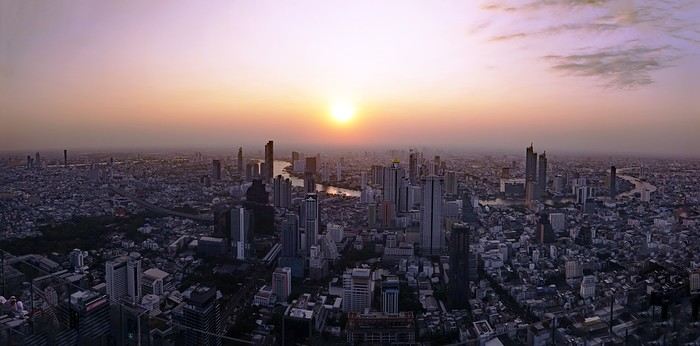
A somewhat lengthy title... I could have simply written: from Bangkok to Chiang Rai, via Chiang Mai, since that was my route. But when poets embellish our travel journals with their verbal flourishes, you’ve got to try not to be too ordinary.
Skyscrapers of excess? You’ll have gathered that from the photo illustrating this journal—though it might change as the trip goes on.
The excess of markets—not so much in their size, though... Chatuchak... But in their sheer number. Day markets, night markets, floating markets, fresh produce markets, fish markets, meat markets, spice markets, fabric markets... and even... amulet markets... For luck, good fortune, protection. Not to mention, sadly, the market for girls—and boys, incidentally. I’ve even heard they’re displayed in windows. I’ve heard about that one, like you have, but I didn’t set foot in it, so I can’t say anything about it. Some even claim there’s a black-market trade in children. Disgusting! It reminded me of the book *The Parcel* by Anosh Irani, which I recommended in another journal. The story is set in India, but I’ve been told it exists in Thailand too. So, the "famous Thai markets" we’re bombarded with in paper and online guides—sure, they amazed me in the first few days, and I don’t regret visiting them. But no matter how big they were, I quickly got my fill since you saw the same things at every stall...
I had a market overdose.
Excess of tourism? I should say *tourists*, since I saw them literally swarming in the streets and those famous markets. I’d forgotten about them. I’d lost the habit, living in an Indian city for so long...
Waterfalls are a bit like markets. At this time of year, they’re not particularly spectacular, but they’re everywhere. There are the ones everyone goes to see. For example, Erawan, which I decided to skip even though it was in my original itinerary—I guessed it’d be a nightmare with the selfie circus. On the other hand, you come across them all over the place, hidden in the mountains and forests, not listed in any guide. Not to mention the ones you can find in temples or even private homes... Yes, really! Thais love waterfalls, so they install them in their gardens—and I even saw one in the middle of the city, right on the street! Sometimes they’re tiny, but very photogenic.
But what do ice cubes have to do with this? Why the excess of ice cubes? Not only are they everywhere by the ton, but they put them in *everything* you drink. You’d think they’d even put them in soup! And it’s not just one or two ice cubes—no! They fill the container to the brim, whatever it is, then pour the liquid on top to fill the gaps. They’ll make you an excellent coffee right in front of you, piping hot, then—bam! An avalanche of ice cubes in the glass. Okay, I’m exaggerating a little. They *do* sometimes ask if you prefer your coffee—or tea—hot. Everything edible, and especially everything drinkable, is refrigerated: vegetables, fruit, hot drinks (I mean, drinks that are *usually* hot), but meat and fish are left out in the open. They just wave a little whisk to shoo away the flies when they get too eager. Mind you, I never put fruit, cheese, eggs, or water in the fridge in France, but I do in India. And I refrigerate meat and fish too... Though sometimes one of those little flies sneaks into the fridge...
You won’t find practical or technical details in this journal, like addresses or prices. Others do that better than me. You also won’t find the names of obscure or unknown places I discovered, or directions to get there.
I don’t really feel like recounting what I saw day by day, following my schedule and route. There might be flashbacks, projections into the future. It’ll depend on my memories, what I felt, what I hated, what comes back to me—and maybe your questions and our exchanges. And for those who’ve never read me before, you’ll have to get used to my parentheses and digressions, maybe on a completely different subject, as my thoughts wander. Stories within stories. There’ll also be long, endless sentences—but still punctuated, so you can follow along. Though I used to curse Proust and his sentences that started on one page and ended on the next, sometimes even further. I’d have to reread them twenty times to follow and understand what he was saying. I hated Proust. But hey, I was 20. Maybe I’d like him now?
See? The digressions are starting already. Forgive me.
You’ll find few photos here. First, the number is limited, and second, photos aren’t the main purpose of either VF or a travel journal. They’re too often used to mask the poverty of the text. And, sorry to say it, but so many of them are just plain ugly! If you really want to see photos, I’ll share some links where you can browse them at your leisure
Family Road Trip from Salt Lake City to Salt Lake City
Hello fellow travel forum members,
This time, it's real, concrete stuff.
We’ll be going on a road trip in September this year (if all goes well, yes, I know it’s a bit superstitious, but I can’t help it, especially with the current family circumstances).
There’ll be four of us: my husband, our two grown kids (20 and 24), and me.
The flights aren’t booked yet because I’m still hesitating over the dates (it’s down to a day or two). They should be finalized by the end of this week or sometime next week.
J1 - Friday, August 29: Brussels-SLC via Amsterdam with KLM (I’d love your opinions on this airline since I’ve never flown with them before) – arrival scheduled for early afternoon. J2 - Saturday, August 30: SLC-Moab J3 - Sunday, August 31: Arches – we’ll see if we can get tickets; otherwise, we’ll wake up at dawn (entries possible without a reservation before 7 am) J4 - Monday, September 1: Arches J5 - Tuesday, September 2: Moab - Grand Teton – night booked J6 - Wednesday, September 3: Grand Teton – night booked J7 - Thursday, September 4: Grand Teton - Jackson J8 - Friday, September 5: Jackson J9 - Saturday, September 6: Jackson – evening: Rodeo (tickets booked) J10 - Sunday, September 7: Jackson - Yellowstone – night booked at Lake Yellowstone J11 - Monday, September 8: Yellowstone – night booked at Canyon Lodge J12 - Tuesday, September 9: Yellowstone – night booked at Canyon Lodge J13 - Wednesday, September 10: Yellowstone – night booked at Old Faithful Snow J14 - Thursday, September 11: Yellowstone – night booked at Old Faithful Snow J15 - Friday, September 12: Yellowstone - SLC J16 - Saturday, September 13: departure from SLC J17 - Sunday, September 14: arrival in Brussels
As I mentioned in the intro, the departure and return dates aren’t set in stone yet. Normally, we’d leave on August 29, which would mean visiting Moab and Arches. Otherwise, we’d leave on August 30 and stay in SLC. Around SLC, we’d explore the area, but I’ll admit I’m a bit stuck on what to do there.
For the return, we’d leave SLC on Saturday, September 13, or Sunday, September 14. Our youngest starts classes on Monday, September 15, but he doesn’t mind starting a day later.
Some things are already booked and paid for and can’t be changed (or only with difficulty), so please keep that in mind in your comments. 😕
I’d love to hear about your experiences with a few questions:
* Is it too ambitious to include Arches in the road trip? Especially since the drives are long, particularly the Moab-Grand Teton stretch.
* What do you recommend doing around SLC?
* Same for Jackson. We’ve decided to spend two full days there to take a break between the national parks.
* For the return, I was wondering if spending a day in SLC before heading back to Europe might be a good idea.
Thanks so much in advance for your advice!
Patricia
This time, it's real, concrete stuff.
We’ll be going on a road trip in September this year (if all goes well, yes, I know it’s a bit superstitious, but I can’t help it, especially with the current family circumstances).
There’ll be four of us: my husband, our two grown kids (20 and 24), and me.
The flights aren’t booked yet because I’m still hesitating over the dates (it’s down to a day or two). They should be finalized by the end of this week or sometime next week.
J1 - Friday, August 29: Brussels-SLC via Amsterdam with KLM (I’d love your opinions on this airline since I’ve never flown with them before) – arrival scheduled for early afternoon. J2 - Saturday, August 30: SLC-Moab J3 - Sunday, August 31: Arches – we’ll see if we can get tickets; otherwise, we’ll wake up at dawn (entries possible without a reservation before 7 am) J4 - Monday, September 1: Arches J5 - Tuesday, September 2: Moab - Grand Teton – night booked J6 - Wednesday, September 3: Grand Teton – night booked J7 - Thursday, September 4: Grand Teton - Jackson J8 - Friday, September 5: Jackson J9 - Saturday, September 6: Jackson – evening: Rodeo (tickets booked) J10 - Sunday, September 7: Jackson - Yellowstone – night booked at Lake Yellowstone J11 - Monday, September 8: Yellowstone – night booked at Canyon Lodge J12 - Tuesday, September 9: Yellowstone – night booked at Canyon Lodge J13 - Wednesday, September 10: Yellowstone – night booked at Old Faithful Snow J14 - Thursday, September 11: Yellowstone – night booked at Old Faithful Snow J15 - Friday, September 12: Yellowstone - SLC J16 - Saturday, September 13: departure from SLC J17 - Sunday, September 14: arrival in Brussels
As I mentioned in the intro, the departure and return dates aren’t set in stone yet. Normally, we’d leave on August 29, which would mean visiting Moab and Arches. Otherwise, we’d leave on August 30 and stay in SLC. Around SLC, we’d explore the area, but I’ll admit I’m a bit stuck on what to do there.
For the return, we’d leave SLC on Saturday, September 13, or Sunday, September 14. Our youngest starts classes on Monday, September 15, but he doesn’t mind starting a day later.
Some things are already booked and paid for and can’t be changed (or only with difficulty), so please keep that in mind in your comments. 😕
I’d love to hear about your experiences with a few questions:
* Is it too ambitious to include Arches in the road trip? Especially since the drives are long, particularly the Moab-Grand Teton stretch.
* What do you recommend doing around SLC?
* Same for Jackson. We’ve decided to spend two full days there to take a break between the national parks.
* For the return, I was wondering if spending a day in SLC before heading back to Europe might be a good idea.
Thanks so much in advance for your advice!
Patricia
Discovering South India: Tamil Nadu and Kerala
Hello everyone!
We're off! After exploring the north, the four friends have now discovered the south. We’re excited to share this new travel journal, dedicated to our little group and our strong friendship, written by Richard and illustrated with Kate’s photos. I’ll chime in from time to time with practical tips.
First of all, a big thank you to everyone on VoyageForum who helped us plan this trip. It would’ve been quite different if we’d just relied on guidebooks.
The itinerary lasted just over 3 weeks: Mahabalipuram, Pondicherry, Thanjavur, the Chettinad region, Madurai, Munnar, Munroe Island, Cochin, and Chennai. We traveled by train, taxi, and private car with a driver, took a domestic flight, and stayed in guesthouses, Airbnb apartments, and hotels. For each of us, including flights, the total budget barely reached 2000 €, and we didn’t hold back—knowing we avoid resorts and love street food and small Indian restaurants.
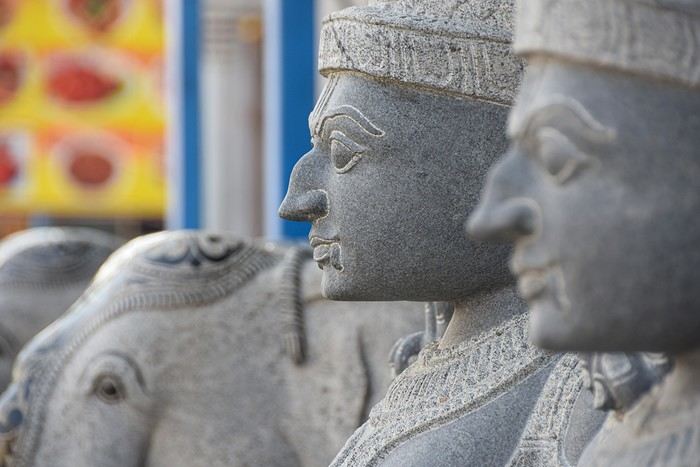
We're off! After exploring the north, the four friends have now discovered the south. We’re excited to share this new travel journal, dedicated to our little group and our strong friendship, written by Richard and illustrated with Kate’s photos. I’ll chime in from time to time with practical tips.
First of all, a big thank you to everyone on VoyageForum who helped us plan this trip. It would’ve been quite different if we’d just relied on guidebooks.
The itinerary lasted just over 3 weeks: Mahabalipuram, Pondicherry, Thanjavur, the Chettinad region, Madurai, Munnar, Munroe Island, Cochin, and Chennai. We traveled by train, taxi, and private car with a driver, took a domestic flight, and stayed in guesthouses, Airbnb apartments, and hotels. For each of us, including flights, the total budget barely reached 2000 €, and we didn’t hold back—knowing we avoid resorts and love street food and small Indian restaurants.
So where are they and what are they doing?
This catchy and somewhat mysterious title comes from several questions I’ve been asking myself.
VF has been back open for a reasonable number of weeks and months now. The number of visitors overall matches past averages, but the number of members online in the last 24 hours seems relatively lower than what we used to see.
Yet, to my surprise, I’m seeing fewer travel journals, way fewer messages, and way fewer questions. I don’t see many new registered users online, and I notice a number of members who are logged in but either aren’t participating or have stopped participating.
Something’s not adding up for me because, in my opinion, VF is still appealing, and I don’t see which other sites could really compete.
Was there a real break between pre- and post-Covid? Does it just take more time for some people to discover the site or learn that it’s active again? Do people now prefer quick consumption on sites like FB or others I’m not familiar with? Where have the site’s old-timers gone, and what are they doing with their time now? What’s really going on here?
VF has been back open for a reasonable number of weeks and months now. The number of visitors overall matches past averages, but the number of members online in the last 24 hours seems relatively lower than what we used to see.
Yet, to my surprise, I’m seeing fewer travel journals, way fewer messages, and way fewer questions. I don’t see many new registered users online, and I notice a number of members who are logged in but either aren’t participating or have stopped participating.
Something’s not adding up for me because, in my opinion, VF is still appealing, and I don’t see which other sites could really compete.
Was there a real break between pre- and post-Covid? Does it just take more time for some people to discover the site or learn that it’s active again? Do people now prefer quick consumption on sites like FB or others I’m not familiar with? Where have the site’s old-timers gone, and what are they doing with their time now? What’s really going on here?
Tanzania 2019 - Polé Polé
KARIBUUU
Over 5 years later, I’m finally getting around to writing the travel journal for our first trip to East Africa: Tanzania. *Polé Polé*, as they say! 😎
A trip I’d started planning just 6 years ago, in February 2019, for my post-internship exam vacation. After returning to South Africa in July 2019 with my family, this trip, planned for September 2019, would be all about discovery and a few firsts: first trip with friends, first trek, first time in East Africa. I really wanted to attempt the Kilimanjaro ascent, try to still see some of its "eternal" ice, and Alison wanted to do as much safari as possible. Unlike with the Zulus, Himbas, or San, visiting a Maasai village wasn’t on the agenda. Thanks to the Kessy Brothers agency, who were super responsive, Sandy from VF, and other members who helped prepare our trip, we settled on the following itinerary:
Day -1 (8/30): Departure from Pointe-à-Pitre Day 0 (8/31): Departure from Paris Day 1 (9/01): Arrival at Kilimanjaro Airport / Ameg Lodge (Moshi) DAY 2 (9/02): Machame gate / Machame camp DAY 3 (9/03): Shira / Shira camp DAY 4 (9/04): Baranco / Baranco camp DAY 5 (9/05): Barafu / Barafu camp DAY 6 (9/06): Barafu + Summit at midnight / Mweka camp DAY 7 (9/07): Mweka gate / Sal Salnero Hotel (Moshi) DAY 8 (9/08): Arusha National Park / Kanga camp DAY 9 (9/09): Tarangire National Park / Kanga camp DAY 10 (9/10): Tarangire National Park / Twiga Lodge DAY 11 (9/11): Lake Manyara / Twiga Lodge DAY 12 (9/12): Ngorongoro Crater / Simba campsite DAY 13 (9/13): Serengeti National Park / Seronera campsite DAY 14 (9/14): Serengeti National Park - Uoga Kuria Camp DAY 15 (9/15): Serengeti National Park / Waso campsite DAY 16 (9/16): Lake Natron / Maasai Giraffe Ecolodge DAY 17 (9/17): Kilimanjaro Airport Day 18 (9/18): Zanzibar Day 19 (9/19): Zanzibar Day 20 (9/20): Zanzibar Day 21 (9/21): Zanzibar
As I mentioned in my first travel journal about our South Africa trip, I’ve had a special connection to Tanzania for a long time. Growing up in the Indian Ocean without ever visiting Africa, those wildlife documentaries on TV when I skipped my pharmacy classes... I imagined and dreamed about this land and country so much.
The original plan was to go just the two of us with Alison, but somehow—though I don’t quite remember how—we ended up organizing the trip with our friends Mélissa and Doriane, who joined us in Arusha after our Kilimanjaro trek for the last two weeks and their very first safari. I think it was Melissa who had the idea to crash our trip, and she was right to do so! 😉 Flights: Pointe-à-Pitre-Grand Case and Grand Case-Paris with Air Caraïbes. Flights: Paris-JRO and ZNZ-Paris with Kenya Airways (layover in Nairobi). Flight: JRO-ZNZ with Air Tanzania.
Safe travels! !
Over 5 years later, I’m finally getting around to writing the travel journal for our first trip to East Africa: Tanzania. *Polé Polé*, as they say! 😎
A trip I’d started planning just 6 years ago, in February 2019, for my post-internship exam vacation. After returning to South Africa in July 2019 with my family, this trip, planned for September 2019, would be all about discovery and a few firsts: first trip with friends, first trek, first time in East Africa. I really wanted to attempt the Kilimanjaro ascent, try to still see some of its "eternal" ice, and Alison wanted to do as much safari as possible. Unlike with the Zulus, Himbas, or San, visiting a Maasai village wasn’t on the agenda. Thanks to the Kessy Brothers agency, who were super responsive, Sandy from VF, and other members who helped prepare our trip, we settled on the following itinerary:
Day -1 (8/30): Departure from Pointe-à-Pitre Day 0 (8/31): Departure from Paris Day 1 (9/01): Arrival at Kilimanjaro Airport / Ameg Lodge (Moshi) DAY 2 (9/02): Machame gate / Machame camp DAY 3 (9/03): Shira / Shira camp DAY 4 (9/04): Baranco / Baranco camp DAY 5 (9/05): Barafu / Barafu camp DAY 6 (9/06): Barafu + Summit at midnight / Mweka camp DAY 7 (9/07): Mweka gate / Sal Salnero Hotel (Moshi) DAY 8 (9/08): Arusha National Park / Kanga camp DAY 9 (9/09): Tarangire National Park / Kanga camp DAY 10 (9/10): Tarangire National Park / Twiga Lodge DAY 11 (9/11): Lake Manyara / Twiga Lodge DAY 12 (9/12): Ngorongoro Crater / Simba campsite DAY 13 (9/13): Serengeti National Park / Seronera campsite DAY 14 (9/14): Serengeti National Park - Uoga Kuria Camp DAY 15 (9/15): Serengeti National Park / Waso campsite DAY 16 (9/16): Lake Natron / Maasai Giraffe Ecolodge DAY 17 (9/17): Kilimanjaro Airport Day 18 (9/18): Zanzibar Day 19 (9/19): Zanzibar Day 20 (9/20): Zanzibar Day 21 (9/21): Zanzibar
As I mentioned in my first travel journal about our South Africa trip, I’ve had a special connection to Tanzania for a long time. Growing up in the Indian Ocean without ever visiting Africa, those wildlife documentaries on TV when I skipped my pharmacy classes... I imagined and dreamed about this land and country so much.
The original plan was to go just the two of us with Alison, but somehow—though I don’t quite remember how—we ended up organizing the trip with our friends Mélissa and Doriane, who joined us in Arusha after our Kilimanjaro trek for the last two weeks and their very first safari. I think it was Melissa who had the idea to crash our trip, and she was right to do so! 😉 Flights: Pointe-à-Pitre-Grand Case and Grand Case-Paris with Air Caraïbes. Flights: Paris-JRO and ZNZ-Paris with Kenya Airways (layover in Nairobi). Flight: JRO-ZNZ with Air Tanzania.
Safe travels! !