Results for "Roche+Guyon+|+127"
26117 results found.
Hôtel Akumal Beach Resort English translation pending
Bonjour à tous,
Je recherche des informations sur l'hotel Akumal Beach resort au Mexique ??Est ce quelqu'un ai deja aller ou bien aurai des infos sur cet hotel ?
Merci
Je recherche des informations sur l'hotel Akumal Beach resort au Mexique ??Est ce quelqu'un ai deja aller ou bien aurai des infos sur cet hotel ?
Merci
Vos trois plus beaux treks...en photo si possible! English translation pending
Salut amis trekkers !😉
Venez tous nous parler de vos 3 plus beaux treks, cela nous donnera des idées pour nos prochaines randonnées !
Bon ... Je commence ...
1 - Le tour des Annapurna : Le plus varié
Pour moi c'est le plus beau trek. Tout d'abord il accuse un dénivelé de 4700 m. L'on commence à 700 m d'altitude dans la jungle tropicale, pour finir dans le monde minéral et glaciaire du col du Thorong-La ! L'on travers toutes les climats et totes les strates végétales... rizières, forêts de rhododendrons, forêts tempérées, alpages, parterre de fleurs de haute altitude ... L'on habite et mange chez l'habitant, chez ces multiples ethnies qui jalonnent le parcours avec lesquelles on partage un peu de nos vies. Bien sûr ce parcours est aussi le plus beau pour le passage du col du Thorong, tout d'abord pour sa difficulté physique, mais surtout pour le panorama unique qu'il offre sur les massifs de l'Annapurna et du Dhaulagiri. Egalement un plus, la traversée du bas-Mustang, le royaume interdit où l'on peut déguster de la viande de Yak séchée arrosée de Tchang !
2 - Le tour du Nanga-Parbat : Le plus sauvage
Tout d'abord pour la vue imposante qu'offre le massif depuis Tarshing. Ensuite parce qu'il est sauvage. L'on traverse d'immenses glaciers, croise de petits villages coupés du monde, et des villageois farouches (surtout ceux de la tribu Yashkin). Ce n'est pas un "Apple pie trek" comme les Annapurna. Les habitants vivent en autosubsistance, dans un habitat précaire hors du temps. L'on se croit parfois projeté 1000 ou 2000 ans en arrière. Ensuite la difficulté technique du col du Mazeno-La à 5399 m et sa vue sur les innombrables glaciers géants environnants. Une expérience parfois dangereuse, mais à vivre absolument.
3 - Le tour du Mont Blanc : Très physique !
C'est un trek qui a de nombreux atouts. Tout d'abord c'est près de chez nous ( ... sauf pour nos amis Canadiens du site, c'est sûr ! 🤪) Il nous fait traverser 3 pays, la France, l'Italie et la Suisse. De plus je le trouve très physique, si on le fait en autonomie ! En effet, ça monte et ça descend tout le temps, souvent sur des sentiers de transhumance. Très beau aussi pour l'odeur des fleurs d'alpage, très présente, et le côtoiement des troupeaux de vaches. Enfin il permet de voir le Mont Blanc sous toutes ses facettes (ah non, pas du coté Suisse, dommage ! )
à vous amis trekkers, parlez nous de vos plus beaux treks et donnez nous des idées pour nos prochaines randonnées !
@ + 😉
Beub le trekker
Venez tous nous parler de vos 3 plus beaux treks, cela nous donnera des idées pour nos prochaines randonnées !
Bon ... Je commence ...
1 - Le tour des Annapurna : Le plus varié
Pour moi c'est le plus beau trek. Tout d'abord il accuse un dénivelé de 4700 m. L'on commence à 700 m d'altitude dans la jungle tropicale, pour finir dans le monde minéral et glaciaire du col du Thorong-La ! L'on travers toutes les climats et totes les strates végétales... rizières, forêts de rhododendrons, forêts tempérées, alpages, parterre de fleurs de haute altitude ... L'on habite et mange chez l'habitant, chez ces multiples ethnies qui jalonnent le parcours avec lesquelles on partage un peu de nos vies. Bien sûr ce parcours est aussi le plus beau pour le passage du col du Thorong, tout d'abord pour sa difficulté physique, mais surtout pour le panorama unique qu'il offre sur les massifs de l'Annapurna et du Dhaulagiri. Egalement un plus, la traversée du bas-Mustang, le royaume interdit où l'on peut déguster de la viande de Yak séchée arrosée de Tchang !
2 - Le tour du Nanga-Parbat : Le plus sauvage
Tout d'abord pour la vue imposante qu'offre le massif depuis Tarshing. Ensuite parce qu'il est sauvage. L'on traverse d'immenses glaciers, croise de petits villages coupés du monde, et des villageois farouches (surtout ceux de la tribu Yashkin). Ce n'est pas un "Apple pie trek" comme les Annapurna. Les habitants vivent en autosubsistance, dans un habitat précaire hors du temps. L'on se croit parfois projeté 1000 ou 2000 ans en arrière. Ensuite la difficulté technique du col du Mazeno-La à 5399 m et sa vue sur les innombrables glaciers géants environnants. Une expérience parfois dangereuse, mais à vivre absolument.
3 - Le tour du Mont Blanc : Très physique !
C'est un trek qui a de nombreux atouts. Tout d'abord c'est près de chez nous ( ... sauf pour nos amis Canadiens du site, c'est sûr ! 🤪) Il nous fait traverser 3 pays, la France, l'Italie et la Suisse. De plus je le trouve très physique, si on le fait en autonomie ! En effet, ça monte et ça descend tout le temps, souvent sur des sentiers de transhumance. Très beau aussi pour l'odeur des fleurs d'alpage, très présente, et le côtoiement des troupeaux de vaches. Enfin il permet de voir le Mont Blanc sous toutes ses facettes (ah non, pas du coté Suisse, dommage ! )
à vous amis trekkers, parlez nous de vos plus beaux treks et donnez nous des idées pour nos prochaines randonnées !
@ + 😉
Beub le trekker
Excursions Puerto Plata English translation pending
Bonjour,
Je part pour Puerto Plata le 26 janvier 2004 et j'aimerais savoir si il y a quelque chose à faire et que nous devons absolument pas manquer 😎
Ou une activité ? promenade, club, équitation, plongée ... etc
J'ai entendu parlé du Outback Safari ? Est-ce que quelqu'un l'a fait et le suggère ?
MERCI 😉
Niki
Je part pour Puerto Plata le 26 janvier 2004 et j'aimerais savoir si il y a quelque chose à faire et que nous devons absolument pas manquer 😎
Ou une activité ? promenade, club, équitation, plongée ... etc
J'ai entendu parlé du Outback Safari ? Est-ce que quelqu'un l'a fait et le suggère ?
MERCI 😉
Niki
Palladium Kantenah Resort / Reef Club Coco Beach English translation pending
Je compte partir avec deux couples d'amis courant 11/04 sur la Riviera Maya. Nous hésitons entre l'hotel PALLADIUM KANTENAH RESORT et l'hotel REEF CLUB COCO BEACH implantés tous deux à PLAYA DEL CARMEN. Pouvez-vous nous conseiller ?
Pouvez-vous nous indiquer quelques visites sympa à faire sans accompagnateurs? Quel temps😛 pouvons nous espérer rencontrer?
MERCI pour vos conseils ?
Pouvez-vous nous indiquer quelques visites sympa à faire sans accompagnateurs? Quel temps😛 pouvons nous espérer rencontrer?
MERCI pour vos conseils ?
Traversée de la Réunion English translation pending
Je pars traverser la Réunion le 16 décembre.
Pour ceux qui y connaissent quelques coins de paradis sur place, conseillez moi je vous enverrai les photos sur mon site. A +
Karavane :)
Pour ceux qui y connaissent quelques coins de paradis sur place, conseillez moi je vous enverrai les photos sur mon site. A +
Karavane :)
Tibet: épopée très longue avec photos English translation pending
En fait avec Marsu (c Ivo qui ecrit la), on a ete faire un tour au Tibet, et on s'est dit qu'on allait raconter toutes ces belles choses. Alors on s'est laisse aller sur un clavier, il y a 6 pages. On espere que ca va vous plaire, et surtout vous donner envie d'aller faire un tour sur le pays du toit du monde.
Un rayon matinal éclaire doucement les terrasses de la vallée de KTM. Le vert éclatant mélangé aux couleurs dorées des tiges de riz coupées accompagnent notre regard sur la longue route menant à la terre interdite du Tibet. Nos corps ballottés de tous côtés sentent à peine les vibrations du bus tellement nos sens sont en éveil. Partout où notre regard se pose, nos yeux volent un instant de vie, captent un geste, un sourire, une moue pleine de rides jetant un regard tendre sur un petit enfant. Le travail des champs ne peux attendre, le riz doit être battu. D’un mouvement habile une femme au corps velouté dans son sari chatoyant, fait tournoyer autour de sa tête un long bâton, qu’elle abat de manière régulière sur les gerbes de riz posées a ses pieds. Mouvement lent, langoureusement rythmé, simplement naturel.
C’est le début du voyage, on a oublié la course poursuite dans Thamel, les taxis, la poussière, les combats de klaxons, les Tata imposants dans la lumière matinale, l’agitation qui les entoure, les visages curieux fixés sur les quelques occidentaux que nous sommes. Le Tata, c’est un monstre moderne qui trimballe les voyageurs et la marchandise, qui passe partout ou presque, coloré et chromé, au klaxon puissant, moyen de transport fonctionnel et multiforme, qui s’impose par sa présence à l’arrêt comme sur la route.
Des gens partout, sur les sièges, debout dans la travée, assis sur le toit, des hommes au teint couleur terre, des femmes portant des tissus aux milles nuances, des enfants souriants dans le vide, nous détaillant. Ce sont pour la plupart des gens de la terre, aux paniers chargés et aux mains calleuses, qui voyagent à travers le pays. L’aide du chauffeur, qui fait office de contrôleur, rameute les voyageurs en criant par la porte entrouverte, accroché d’une main, penché au dessus de la route. Il monte sur le toit pour encaisser le trajet, les billets croisés entre ses doigts, tape du poing sur la cabine pour signifier les arrêts au chauffeur, siffle pour aider à la manœuvre dans les parties délicates. Il est jeune et agile, son visage et lisse et souriant, il a de la prestance lorsqu’il se glisse par la porte. À l’approche d’un village, une jeune fille s’apprête à descendre : elle est jeune aussi, porte une robe punjabi aux couleurs miroitantes, elle se tient à coté de la porte, ses cheveux longs lâchés brillent dans le courant d’air, elle tient son sac d’une main, se tenant de l’autre, son bras frôlant le visage du jeune qui regarde dehors. Le Tata file, loin dessous c’est la rivière, des parcelles de riz, devant un village s’approche. Klaxon tonitruant, on rentre a vive allure, le jeune tape du poing. Freinage brusque, balancement des corps dans tout le bus, le coude de la jeune fille vient frapper le visage du jeune. Dans le même élan, elle descend du bus, son bras tendu vient laisser une caresse douce sur la joue du garçon, avec tendresse, pour s’excuser du choc, et plus encore car tout deux sont jeunes, mais enfermés dans la rigueur d’une société. Une fois sortie, c’est le plus beau de ses sourires qu’elle lui offre. Témoignage d’une jeunesse cloîtrée qui demande à vivre, ailleurs que dans l’instant furtif.
Un nuage de poussière s’élève devant nous laissant passer un rayon de lumière qui éclaire les montagnes drues et arides. Les strates semblables à des coulées de lave forment les montagnes des plateaux tibétains. La lumière glisse langoureusement dans les sillons de l’érosion de la dernière saison des pluies.
On a changé de monde, même si on garde en tête la longue montée dans la gorge, la rivière plusieurs centaines de mètres en contre bas, les pentes escarpées et encore boisées, la piste sinueuse accrochée aux flancs, l’eau qui ruisselle sur la roche. À quel moment sont apparues les premières pierres, quand ont disparus arbres, bambous plantes, terre grasse? L’aridité prend le dessus, la poussière s’élève derrière le véhicule, et malgré les cahots, les yeux parcourent chaque détail de ce nouveau monde, de ce grand vide qui nous aspire, de cet instant sorti du néant des mémoires et de l’imagination. Le toit du monde est sec, recouvrant d’une toile bleue tendue vers l’infini des pierres semées par un petit Poucet errant depuis l’éternité, laissant à penser que ici tout est sans repères. Ce petit Poucet, c’est celui que vous croiserez au bord de la route, jouant avec une roue de vélo, tirant sur un mégot ou bien que vous apercevrez sous l’habit d’un petit berger fouettant un âne, dirigeant un troupeau de chèvres, flattant un yack. C’est peut être la petite fille venant vous voir dans un village avec sa petite figure sale, ses yeux noirs de profondeur, mais éclatants d’une beauté intérieure. Le petit Poucet, c’est celui qui marche au fond de vous, qui vous cherche.
Shigatse
À l’aurore, l’air est frais à 4200 mètres, les rayons de soleil bataillent doucement pour réchauffer les parcelles de terre gelée. L’immense allée de bowling de 987 mètres de long par 24 de large, flanquée de part et d’autre de boutiques en tous genres, se dresse devant nous en jurant dans le décor. Lorsqu’on jette un coup d’œil à l’intérieur, nos yeux se butent sur des locaux vides, derrières les belles devantures à la gloire du communisme, les dépotoirs s’accumulent. Les tibétains avec leur allure rustre et sans façons font presque vulgaires dans ce décor aseptisé, leur beauté naturelle rehaussée par les rouges, turquoises et ambres ornant leurs cheveux n’arrivant pas à compenser cette incongruité. Caché entre deux majestueuses devantures, un discret bouiboui pointe devant une bande de joyeux nomades jouant avec ardeur à un jeu de dés sans signification pour nous. Ils font peu cas de notre passage, l’attrait du jeu étant plus fort. Nos pas nous mènent de nouveau devant une grande allée, plus sobre, bordée de pèlerins aux coiffures complexes et aux habits divers. Les moulins tournent, les Om mani padme hum fusent et sous nos yeux éblouis par la forte lumière des couleurs ocres, blanches et jaunes, le monastère de TashiLompo s’élève fier et majestueux devant nous.
Le chemin des pèlerins parsemé d’arbres divers nous entraîne dans son sillage, à l’assaut d’une bâtisse orange feu, précédée d’un escalier pentu et glissant menant à une porte masquée d’une tenture. Dans le désordre, les pèlerins surgissent du passage, le visage composé en prosternations, les lèvres marmonnant les Om mani padme hum de façon incessante, aucune cohésion dans la descente, tout le monde se lance de manière désordonnée, concentrés dans leur dévotion. On attaque l’escalier essayant de se faire un chemin au travers des pèlerins, intrus que nous sommes, je ressens une forme de rejet, spécialement lorsque nous arrivons à l’intérieur et que je nous sens coincés entre l’énorme Bouddha de 26 mètres et les pèlerins qui sont tous à leur adoration. Impressionnée par le regard perçant de Bouddha et l’émotion de la ferveur des pèlerins, je suis assaillie d’un sentiment de gène et de voyeurisme, qui me pousse à contourner respectueusement par la gauche et avec humilité cette immense force de spiritualité pour retourner à ma place, au grand air.
Un groupe attire le regard, ils sont une dizaine entre enfants, adultes et le Monk de la famille. Ils tranchent parmi les autres avec leurs cheveux scintillants finement tressés, ornés de parures de turquoises et d’ambres pour les femmes. Les hommes portent entremêlés dans leur grosses tresses de minces fils rouges ou noirs qui attirent l’œil comme un aimant, parfois au centre un énorme anneau en os de yack est glissé dans l’enroulement complexe de leur chevelure. Les gros manteaux doublés en fourrure de yack sont portés avec élégance, leurs habits sont simples mais raffinés, nomades de l’est ils se doivent d’être à l’abris des intempéries et des vents violents, ils sont beaux, plein de prestance, se tiennent droit pour montrer qu’ils sont fiers de leurs origines. Une seule manche couvre leur corps tandis que l’autre est artistiquement nouée autour de la taille. Difficile de deviner leur forme sous ces épaisseurs mais on arrive tout de même à percevoir leur grâce.
Parmi eux une petite princesse des hauts plateaux virevolte en tous sens avec espièglerie comme tous les enfants de son âge. Un petit manteau de soie rose lui cintre la taille, tombant en cascade de froufrou sur ses frêles chevilles. Ses délicates tresses remontées comme ceux de la princesse Léa contraste avec les cheveux noirs de jais du reste de la troupe par un semblant de reflets blond-roux. Un sourire resplendissant d’innocence reste suspendu à ses lèvres pendant qu’elle titille sa grand-mère au regard attendri appuyée sur un bâton qui supporte le poids de son âge.
Contraste entre âge et innocence, entre technologie et temps passé, entre Occident et Asie qui se mélangent dans une même dévotion. À leur suite deux personnes arrivent pour continuer le pèlerinage, pour mettre les dissemblances plus en évidence. Une jeune fille aux habits modernes, jeans moulant, pull échancré, coupe stylé, tient dans une main le beurre de yack qui sert à entretenir le feu des offrandes. De l’autre, elle soutient avec tendresse une autre main, plus usée, plus foncée, plus marquée par la vie. Lorsqu’on lève les yeux sur cette main on découvre une femme sans âge, aux rides souriantes cachées derrière une grosse paire de lunettes sortie d’une autre époque. Elle prend son bol nacré usé par les années pour puiser l’eau de la fontaine sacrée tandis que la jeune fille utilise sans broncher une vieille bouteille de Pepsi machouillée pour exécuter le même geste.
Les pas résonnent dans les petites ruelles du monastère, nous voilà entourés de jeunes, de vieux, de tibétains sans âge. Des voix rauques, des yeux curieux, une odeur de yack rance emplit leur aura comme une deuxième peau. Le croisement Asie-Occident se soude, les sourires se font hésitants, puis plein de franchise à la limite de la rigolade de part et d’autre. Échange de mots via le guide, échange d’écriture, curiosité dans les deux camps. L’un essayant de prononcer tant bien que mal dans la langue de l’autre. Intérêt des différences, les piercing, les cheveux blonds, les bijoux lourds, les vêtements tout est susceptible d’attirer l’attention de l’autre sans permettre d’en comprendre les significations profondes. Jeunesse insouciante qui prend le temps de connaître l’autre, de lire au fond de lui pour y trouver ce qu’il y a de meilleur, qui porte une attention sincère sans arrière pensée. Les adieux sont émouvants, l’impression d’avoir touché un bout de vie, d’âme, d’avoir trouvé des amis sincères qui n’attendent rien d’autre qu’un sourire provenant du cœur.
La cœur lourd, la tête pleine de sourire, de joie on découvre sous un nuage de poussière la petite ville de Gyatse. Ici tout est simple et grandiose de simplicité. Pas de fioriture à l’essence chinoise, juste la simplicité tibétaine malgré l’imposant fort dominant la ville. Le monastère dégage une atmosphère de grandeur, de sérénité qui nous prend dans ses filets. Les murs noirs aux mille représentations de Bouddha nous clouent sur place, nos petites lampes arrivent à peine a rendre la splendeur du lieu. Les pèlerins profitent de cette parcelle de lumière pour vénérer avec encore plus d’émotion ce dieu de la générosité.
Lhassa
Cinq jours que nos corps subissent les contre coups de la piste défoncée que notre jeep suit sans fin. Un sourire éclaire tout a coup le visage de notre chauffeur sans nom car malgré nos efforts la communication est impossible. Un sourire parce que devant nous se dresse enfin Lhassa, le but ultime de cette longue route. On a eu beau se le faire dire, on a essayé de se préparer mentalement mais le choc est grand, Lhassa n’est pas le reflet d’une petite ville paisible avec un temple aux consonances magiques, nous ramenant aux textes féeriques de Henrich Harrer ou Alexandra David-Neel, flanqué au centre de la ville comme on l’imaginait. C’est la première ville du Tibet autonome où il y a le moins de tibétains, son centre et ses environs sont remplis de chinois, l’allure en est chinoise. Cachées derrière les grandes devantures de magasins à rayons vides de monde, se dressent les petites rues sinueuses et pleines de vie du quartier tibétain dans une ville dite tibétaine. Découvrir les grandes artères chinoises nous donne l’impression de vivre dans deux univers parallèles, où les longs trottoirs luisants sont habités par les nomades mendiants qui regardent devant eux les fringues des boutiques de luxe comme s’il s’agissait d’habits d’extra-terrestre.
Une petite porte s’ouvre sur un grand couloir à ciel ouvert, la pénombre se mélange à la fumée et semble nous envelopper dans un doux cocon . Une rumeur s’élève au loin presque indescriptible, un petit chant imperceptible, des mots éparses incompréhensibles, les mains rudes pleines de sillons, sales, presque sans forme, se tendent vers nous. Dans l’autre main dans un tourbillon incessant, un moulin à prière tourne presque sans effort comme si une force ultime aidait au roulement. Au bout de la voie une essence de pin s’insinue dans nos narines, des dizaines de pèlerins assis de façon éparse, en structure finie mais chaotique, tournent d’un même rythme lancinant leur moulins tout en répétant de manière imperceptible le chant de leurs offrandes. Leurs regards sont souriants et accueillants, nos pas glissent doucement entre eux comme si nous nous promenions sur un nuage, le bien-être s’emparent de nous, sans nous sentir intrus ou malvenus. Nous laissons nos regards se fondre dans leurs yeux malins où toute une vie tient. Leur peau mate, durcie par le soleil, recueille les mystères d’une vie de nomade perdu au milieu des plateaux vides et silencieux. Les mains tendues égrainant les chapelets nous dirigent avec bonté vers l’immense moulin à prière tourné avec ferveur par des doigts calleux. De nouveau la pénombre nous oblige a plisser les yeux pour voir et sentir au travers des effluves les pèlerins assis en rond autour des moines à la voix sourde entonnant les prières. Des sourires invitant nous attirent a l’intérieur pour un tour dans un autre monde…..
On touche le cœur du Tibet, celui des anciens et des fervents religieux, force tranquille et combien reposante quand on connaît l’histoire ensanglantée du pays. Ces gens, cette cours des miracles fantastique, leur nombre, le mouvement des moulins omniprésent dans les yeux, leur son dans les oreilles, le balancement des corps, les bouches qui ruminent et mâchent, glaviots et chicots. Rentrer dans ce lieu, c’est renouer avec le Tibet antique, avec ses couleurs et ses traditions religieuses : il y a un sentiment très fort a vivre cela, a sentir tous ces regards pointés sur soi, cette bienveillance dont ils sont chargés alors que nous sommes des intrus. La bâche qui recouvre l’assemblée devient une tenture, les chaudrons fument de thé salé, et partout tournent les moulins, les tissus sont des trônes, les cartons deviennent tapis, ils sont beaux de leur age, de leur saleté, de leur difformités, et nous, nous sommes choquant de notre modernité, de notre regard pacifique et si éloigné de ce qu’ils connaissent. Nous sommes bercés du son des moulins, de ce marmonnement sorti de ces nombreuses bouches, de ces regards encore et toujours fixés sur nous. Cette tranquillité qu’ils sont capables de transmettre, laminant tout ce que nous croyons savoir, sur nous, sur les autres. Mon souhait le plus profond a alors été de ressentir cela au plus profond de moi, d’être en communion avec cette assemblée, en paix avec moi même également, avec les raisons du voyage. Nous n’avons pas su comment décrire, transmettre cet instant, ou bien plutôt ces instant, si forts que nous y sommes revenus, de même que nous n’avons pas voulu trahir le bien-être et la confiance de ces pèlerins en prenant des images qui n’auraient été que des reflets vides de sens.
Soir
On roule depuis des heures, les kilomètres s’accumulent au ralenti, la vallée s’allonge loin devant nous, bordée de collines. Des collines devant, des montagnes derrières, des sommets posés sur l’infini du plateau tibétain. Nous sommes assis, le programme télé dans le pare-brise est différent de celui des vitres arrières et des portières, le ronronnement du moteur, les vibrations et les cahots encore et toujours sont les seuls éléments réels. Dehors, c’est l’explosion des teintes, le grand feu d’artifice pour notre retour dans les plaines du Népal, la route du retour que nous avions parcourue au petit matin il y a peu, vers l’avant, en direction de Lhassa. Les rivières sont sages, gelées dans leur lit, les berges blanches de glace sont le présage d’un hiver proche et rude, bloquant la route et les cols, isolant cette partie du monde sous une cloche de froidure. On se croirait sur Mars, la planète rouge, le sol parsemé de caillasses, de rochers, modulé par les glissements de terrain sur les pentes arides, aux lignes cassées par les empilements en équilibres sur les promontoires, et si ce n’était des ruines ou bien des troupeaux éparpillés, on pourrait croire toute vie absente. Il faut imaginer une sorte de couloir, le fond de vallée, qui s’étire langoureusement en de larges virages, cerné par une haute dentelle décharnée, accessible par des pentes empierrées, des talus abrupts. Ces broderies semblent avoir été arrachées par des doigts géants, déchirées d’un mouvement brusque, laissant des cicatrices dans chaque profil de la roche, ouvrant des brèches, déformant les strates colorées, remontant du plus profond de la terre des couleurs chaudes et douces. Le soleil couchant renforce la teinte qui se nuance à l’infini, palette magique et folle, oxyde de fer, érosion, terres soulevées durant des siècles, offertes en pâture aux éléments naturels, aujourd`hui spectacle magique pour touristes en mal de vie. L’homme comme nous le connaissons ne peut vivre ici, mais on ne s’étonne plus de trouver ses maisons colorées, ses troupeaux éparpillés dans les collines, des enfants marchant dans la poussière, un panier en osier sur le dos. On regarde avec normalité un chariot chargé, un tracteur transportant vers nulle part une quinzaine de personnes, un cavalier tendu sur sa montures, des bottes colorées aux pieds. Mais nous nous émerveillons toujours autant, le charme agit toujours, comme des enfants à qui on raconte encore une même histoire. Nous sommes sans voix face à ce dernier cadeau, à ces couleurs, ces ombres, ces nappes de soleil surgissant dans un recoin, isolées dans l’ombre. Le lendemain, c’est le dernier col, les derniers nomades, devant nous en arc de cercle et chargés de blanc, les sommets du Tibet, du Népal et de l’Inde, pesant de tout leur poids sur le tissus de velours qui se tend au sol, creux et rondeurs, courbes de femme allongée, la peau brunie par le soleil, lissée par les ages. Pas de vent, les drapeaux de prières se laissent aller dans cet instant de répit, attendant la neige prochaine et le calme du plateau durant la période d’hiver. Quant à nous, nous amorçons notre descente vers la frontière, les gorges embrumées, les arbres suspendus au dessus du vide, les rizières et nous nous réjouissons de retrouver le Népal, avec au fond de la bouche, des yeux et du cœur des sensations éternelles.
Escapade au Tibet, 3 novembre - 15 novembre 2003
Marsu et Ivo pour Luc, Maeva, Ismaël, Chantal, Yves 😉
Un rayon matinal éclaire doucement les terrasses de la vallée de KTM. Le vert éclatant mélangé aux couleurs dorées des tiges de riz coupées accompagnent notre regard sur la longue route menant à la terre interdite du Tibet. Nos corps ballottés de tous côtés sentent à peine les vibrations du bus tellement nos sens sont en éveil. Partout où notre regard se pose, nos yeux volent un instant de vie, captent un geste, un sourire, une moue pleine de rides jetant un regard tendre sur un petit enfant. Le travail des champs ne peux attendre, le riz doit être battu. D’un mouvement habile une femme au corps velouté dans son sari chatoyant, fait tournoyer autour de sa tête un long bâton, qu’elle abat de manière régulière sur les gerbes de riz posées a ses pieds. Mouvement lent, langoureusement rythmé, simplement naturel.
C’est le début du voyage, on a oublié la course poursuite dans Thamel, les taxis, la poussière, les combats de klaxons, les Tata imposants dans la lumière matinale, l’agitation qui les entoure, les visages curieux fixés sur les quelques occidentaux que nous sommes. Le Tata, c’est un monstre moderne qui trimballe les voyageurs et la marchandise, qui passe partout ou presque, coloré et chromé, au klaxon puissant, moyen de transport fonctionnel et multiforme, qui s’impose par sa présence à l’arrêt comme sur la route.
Des gens partout, sur les sièges, debout dans la travée, assis sur le toit, des hommes au teint couleur terre, des femmes portant des tissus aux milles nuances, des enfants souriants dans le vide, nous détaillant. Ce sont pour la plupart des gens de la terre, aux paniers chargés et aux mains calleuses, qui voyagent à travers le pays. L’aide du chauffeur, qui fait office de contrôleur, rameute les voyageurs en criant par la porte entrouverte, accroché d’une main, penché au dessus de la route. Il monte sur le toit pour encaisser le trajet, les billets croisés entre ses doigts, tape du poing sur la cabine pour signifier les arrêts au chauffeur, siffle pour aider à la manœuvre dans les parties délicates. Il est jeune et agile, son visage et lisse et souriant, il a de la prestance lorsqu’il se glisse par la porte. À l’approche d’un village, une jeune fille s’apprête à descendre : elle est jeune aussi, porte une robe punjabi aux couleurs miroitantes, elle se tient à coté de la porte, ses cheveux longs lâchés brillent dans le courant d’air, elle tient son sac d’une main, se tenant de l’autre, son bras frôlant le visage du jeune qui regarde dehors. Le Tata file, loin dessous c’est la rivière, des parcelles de riz, devant un village s’approche. Klaxon tonitruant, on rentre a vive allure, le jeune tape du poing. Freinage brusque, balancement des corps dans tout le bus, le coude de la jeune fille vient frapper le visage du jeune. Dans le même élan, elle descend du bus, son bras tendu vient laisser une caresse douce sur la joue du garçon, avec tendresse, pour s’excuser du choc, et plus encore car tout deux sont jeunes, mais enfermés dans la rigueur d’une société. Une fois sortie, c’est le plus beau de ses sourires qu’elle lui offre. Témoignage d’une jeunesse cloîtrée qui demande à vivre, ailleurs que dans l’instant furtif.
Un nuage de poussière s’élève devant nous laissant passer un rayon de lumière qui éclaire les montagnes drues et arides. Les strates semblables à des coulées de lave forment les montagnes des plateaux tibétains. La lumière glisse langoureusement dans les sillons de l’érosion de la dernière saison des pluies.
On a changé de monde, même si on garde en tête la longue montée dans la gorge, la rivière plusieurs centaines de mètres en contre bas, les pentes escarpées et encore boisées, la piste sinueuse accrochée aux flancs, l’eau qui ruisselle sur la roche. À quel moment sont apparues les premières pierres, quand ont disparus arbres, bambous plantes, terre grasse? L’aridité prend le dessus, la poussière s’élève derrière le véhicule, et malgré les cahots, les yeux parcourent chaque détail de ce nouveau monde, de ce grand vide qui nous aspire, de cet instant sorti du néant des mémoires et de l’imagination. Le toit du monde est sec, recouvrant d’une toile bleue tendue vers l’infini des pierres semées par un petit Poucet errant depuis l’éternité, laissant à penser que ici tout est sans repères. Ce petit Poucet, c’est celui que vous croiserez au bord de la route, jouant avec une roue de vélo, tirant sur un mégot ou bien que vous apercevrez sous l’habit d’un petit berger fouettant un âne, dirigeant un troupeau de chèvres, flattant un yack. C’est peut être la petite fille venant vous voir dans un village avec sa petite figure sale, ses yeux noirs de profondeur, mais éclatants d’une beauté intérieure. Le petit Poucet, c’est celui qui marche au fond de vous, qui vous cherche.
Shigatse
À l’aurore, l’air est frais à 4200 mètres, les rayons de soleil bataillent doucement pour réchauffer les parcelles de terre gelée. L’immense allée de bowling de 987 mètres de long par 24 de large, flanquée de part et d’autre de boutiques en tous genres, se dresse devant nous en jurant dans le décor. Lorsqu’on jette un coup d’œil à l’intérieur, nos yeux se butent sur des locaux vides, derrières les belles devantures à la gloire du communisme, les dépotoirs s’accumulent. Les tibétains avec leur allure rustre et sans façons font presque vulgaires dans ce décor aseptisé, leur beauté naturelle rehaussée par les rouges, turquoises et ambres ornant leurs cheveux n’arrivant pas à compenser cette incongruité. Caché entre deux majestueuses devantures, un discret bouiboui pointe devant une bande de joyeux nomades jouant avec ardeur à un jeu de dés sans signification pour nous. Ils font peu cas de notre passage, l’attrait du jeu étant plus fort. Nos pas nous mènent de nouveau devant une grande allée, plus sobre, bordée de pèlerins aux coiffures complexes et aux habits divers. Les moulins tournent, les Om mani padme hum fusent et sous nos yeux éblouis par la forte lumière des couleurs ocres, blanches et jaunes, le monastère de TashiLompo s’élève fier et majestueux devant nous.
Le chemin des pèlerins parsemé d’arbres divers nous entraîne dans son sillage, à l’assaut d’une bâtisse orange feu, précédée d’un escalier pentu et glissant menant à une porte masquée d’une tenture. Dans le désordre, les pèlerins surgissent du passage, le visage composé en prosternations, les lèvres marmonnant les Om mani padme hum de façon incessante, aucune cohésion dans la descente, tout le monde se lance de manière désordonnée, concentrés dans leur dévotion. On attaque l’escalier essayant de se faire un chemin au travers des pèlerins, intrus que nous sommes, je ressens une forme de rejet, spécialement lorsque nous arrivons à l’intérieur et que je nous sens coincés entre l’énorme Bouddha de 26 mètres et les pèlerins qui sont tous à leur adoration. Impressionnée par le regard perçant de Bouddha et l’émotion de la ferveur des pèlerins, je suis assaillie d’un sentiment de gène et de voyeurisme, qui me pousse à contourner respectueusement par la gauche et avec humilité cette immense force de spiritualité pour retourner à ma place, au grand air.
Un groupe attire le regard, ils sont une dizaine entre enfants, adultes et le Monk de la famille. Ils tranchent parmi les autres avec leurs cheveux scintillants finement tressés, ornés de parures de turquoises et d’ambres pour les femmes. Les hommes portent entremêlés dans leur grosses tresses de minces fils rouges ou noirs qui attirent l’œil comme un aimant, parfois au centre un énorme anneau en os de yack est glissé dans l’enroulement complexe de leur chevelure. Les gros manteaux doublés en fourrure de yack sont portés avec élégance, leurs habits sont simples mais raffinés, nomades de l’est ils se doivent d’être à l’abris des intempéries et des vents violents, ils sont beaux, plein de prestance, se tiennent droit pour montrer qu’ils sont fiers de leurs origines. Une seule manche couvre leur corps tandis que l’autre est artistiquement nouée autour de la taille. Difficile de deviner leur forme sous ces épaisseurs mais on arrive tout de même à percevoir leur grâce.
Parmi eux une petite princesse des hauts plateaux virevolte en tous sens avec espièglerie comme tous les enfants de son âge. Un petit manteau de soie rose lui cintre la taille, tombant en cascade de froufrou sur ses frêles chevilles. Ses délicates tresses remontées comme ceux de la princesse Léa contraste avec les cheveux noirs de jais du reste de la troupe par un semblant de reflets blond-roux. Un sourire resplendissant d’innocence reste suspendu à ses lèvres pendant qu’elle titille sa grand-mère au regard attendri appuyée sur un bâton qui supporte le poids de son âge.
Contraste entre âge et innocence, entre technologie et temps passé, entre Occident et Asie qui se mélangent dans une même dévotion. À leur suite deux personnes arrivent pour continuer le pèlerinage, pour mettre les dissemblances plus en évidence. Une jeune fille aux habits modernes, jeans moulant, pull échancré, coupe stylé, tient dans une main le beurre de yack qui sert à entretenir le feu des offrandes. De l’autre, elle soutient avec tendresse une autre main, plus usée, plus foncée, plus marquée par la vie. Lorsqu’on lève les yeux sur cette main on découvre une femme sans âge, aux rides souriantes cachées derrière une grosse paire de lunettes sortie d’une autre époque. Elle prend son bol nacré usé par les années pour puiser l’eau de la fontaine sacrée tandis que la jeune fille utilise sans broncher une vieille bouteille de Pepsi machouillée pour exécuter le même geste.
Les pas résonnent dans les petites ruelles du monastère, nous voilà entourés de jeunes, de vieux, de tibétains sans âge. Des voix rauques, des yeux curieux, une odeur de yack rance emplit leur aura comme une deuxième peau. Le croisement Asie-Occident se soude, les sourires se font hésitants, puis plein de franchise à la limite de la rigolade de part et d’autre. Échange de mots via le guide, échange d’écriture, curiosité dans les deux camps. L’un essayant de prononcer tant bien que mal dans la langue de l’autre. Intérêt des différences, les piercing, les cheveux blonds, les bijoux lourds, les vêtements tout est susceptible d’attirer l’attention de l’autre sans permettre d’en comprendre les significations profondes. Jeunesse insouciante qui prend le temps de connaître l’autre, de lire au fond de lui pour y trouver ce qu’il y a de meilleur, qui porte une attention sincère sans arrière pensée. Les adieux sont émouvants, l’impression d’avoir touché un bout de vie, d’âme, d’avoir trouvé des amis sincères qui n’attendent rien d’autre qu’un sourire provenant du cœur.
La cœur lourd, la tête pleine de sourire, de joie on découvre sous un nuage de poussière la petite ville de Gyatse. Ici tout est simple et grandiose de simplicité. Pas de fioriture à l’essence chinoise, juste la simplicité tibétaine malgré l’imposant fort dominant la ville. Le monastère dégage une atmosphère de grandeur, de sérénité qui nous prend dans ses filets. Les murs noirs aux mille représentations de Bouddha nous clouent sur place, nos petites lampes arrivent à peine a rendre la splendeur du lieu. Les pèlerins profitent de cette parcelle de lumière pour vénérer avec encore plus d’émotion ce dieu de la générosité.
Lhassa
Cinq jours que nos corps subissent les contre coups de la piste défoncée que notre jeep suit sans fin. Un sourire éclaire tout a coup le visage de notre chauffeur sans nom car malgré nos efforts la communication est impossible. Un sourire parce que devant nous se dresse enfin Lhassa, le but ultime de cette longue route. On a eu beau se le faire dire, on a essayé de se préparer mentalement mais le choc est grand, Lhassa n’est pas le reflet d’une petite ville paisible avec un temple aux consonances magiques, nous ramenant aux textes féeriques de Henrich Harrer ou Alexandra David-Neel, flanqué au centre de la ville comme on l’imaginait. C’est la première ville du Tibet autonome où il y a le moins de tibétains, son centre et ses environs sont remplis de chinois, l’allure en est chinoise. Cachées derrière les grandes devantures de magasins à rayons vides de monde, se dressent les petites rues sinueuses et pleines de vie du quartier tibétain dans une ville dite tibétaine. Découvrir les grandes artères chinoises nous donne l’impression de vivre dans deux univers parallèles, où les longs trottoirs luisants sont habités par les nomades mendiants qui regardent devant eux les fringues des boutiques de luxe comme s’il s’agissait d’habits d’extra-terrestre.
Une petite porte s’ouvre sur un grand couloir à ciel ouvert, la pénombre se mélange à la fumée et semble nous envelopper dans un doux cocon . Une rumeur s’élève au loin presque indescriptible, un petit chant imperceptible, des mots éparses incompréhensibles, les mains rudes pleines de sillons, sales, presque sans forme, se tendent vers nous. Dans l’autre main dans un tourbillon incessant, un moulin à prière tourne presque sans effort comme si une force ultime aidait au roulement. Au bout de la voie une essence de pin s’insinue dans nos narines, des dizaines de pèlerins assis de façon éparse, en structure finie mais chaotique, tournent d’un même rythme lancinant leur moulins tout en répétant de manière imperceptible le chant de leurs offrandes. Leurs regards sont souriants et accueillants, nos pas glissent doucement entre eux comme si nous nous promenions sur un nuage, le bien-être s’emparent de nous, sans nous sentir intrus ou malvenus. Nous laissons nos regards se fondre dans leurs yeux malins où toute une vie tient. Leur peau mate, durcie par le soleil, recueille les mystères d’une vie de nomade perdu au milieu des plateaux vides et silencieux. Les mains tendues égrainant les chapelets nous dirigent avec bonté vers l’immense moulin à prière tourné avec ferveur par des doigts calleux. De nouveau la pénombre nous oblige a plisser les yeux pour voir et sentir au travers des effluves les pèlerins assis en rond autour des moines à la voix sourde entonnant les prières. Des sourires invitant nous attirent a l’intérieur pour un tour dans un autre monde…..
On touche le cœur du Tibet, celui des anciens et des fervents religieux, force tranquille et combien reposante quand on connaît l’histoire ensanglantée du pays. Ces gens, cette cours des miracles fantastique, leur nombre, le mouvement des moulins omniprésent dans les yeux, leur son dans les oreilles, le balancement des corps, les bouches qui ruminent et mâchent, glaviots et chicots. Rentrer dans ce lieu, c’est renouer avec le Tibet antique, avec ses couleurs et ses traditions religieuses : il y a un sentiment très fort a vivre cela, a sentir tous ces regards pointés sur soi, cette bienveillance dont ils sont chargés alors que nous sommes des intrus. La bâche qui recouvre l’assemblée devient une tenture, les chaudrons fument de thé salé, et partout tournent les moulins, les tissus sont des trônes, les cartons deviennent tapis, ils sont beaux de leur age, de leur saleté, de leur difformités, et nous, nous sommes choquant de notre modernité, de notre regard pacifique et si éloigné de ce qu’ils connaissent. Nous sommes bercés du son des moulins, de ce marmonnement sorti de ces nombreuses bouches, de ces regards encore et toujours fixés sur nous. Cette tranquillité qu’ils sont capables de transmettre, laminant tout ce que nous croyons savoir, sur nous, sur les autres. Mon souhait le plus profond a alors été de ressentir cela au plus profond de moi, d’être en communion avec cette assemblée, en paix avec moi même également, avec les raisons du voyage. Nous n’avons pas su comment décrire, transmettre cet instant, ou bien plutôt ces instant, si forts que nous y sommes revenus, de même que nous n’avons pas voulu trahir le bien-être et la confiance de ces pèlerins en prenant des images qui n’auraient été que des reflets vides de sens.
Soir
On roule depuis des heures, les kilomètres s’accumulent au ralenti, la vallée s’allonge loin devant nous, bordée de collines. Des collines devant, des montagnes derrières, des sommets posés sur l’infini du plateau tibétain. Nous sommes assis, le programme télé dans le pare-brise est différent de celui des vitres arrières et des portières, le ronronnement du moteur, les vibrations et les cahots encore et toujours sont les seuls éléments réels. Dehors, c’est l’explosion des teintes, le grand feu d’artifice pour notre retour dans les plaines du Népal, la route du retour que nous avions parcourue au petit matin il y a peu, vers l’avant, en direction de Lhassa. Les rivières sont sages, gelées dans leur lit, les berges blanches de glace sont le présage d’un hiver proche et rude, bloquant la route et les cols, isolant cette partie du monde sous une cloche de froidure. On se croirait sur Mars, la planète rouge, le sol parsemé de caillasses, de rochers, modulé par les glissements de terrain sur les pentes arides, aux lignes cassées par les empilements en équilibres sur les promontoires, et si ce n’était des ruines ou bien des troupeaux éparpillés, on pourrait croire toute vie absente. Il faut imaginer une sorte de couloir, le fond de vallée, qui s’étire langoureusement en de larges virages, cerné par une haute dentelle décharnée, accessible par des pentes empierrées, des talus abrupts. Ces broderies semblent avoir été arrachées par des doigts géants, déchirées d’un mouvement brusque, laissant des cicatrices dans chaque profil de la roche, ouvrant des brèches, déformant les strates colorées, remontant du plus profond de la terre des couleurs chaudes et douces. Le soleil couchant renforce la teinte qui se nuance à l’infini, palette magique et folle, oxyde de fer, érosion, terres soulevées durant des siècles, offertes en pâture aux éléments naturels, aujourd`hui spectacle magique pour touristes en mal de vie. L’homme comme nous le connaissons ne peut vivre ici, mais on ne s’étonne plus de trouver ses maisons colorées, ses troupeaux éparpillés dans les collines, des enfants marchant dans la poussière, un panier en osier sur le dos. On regarde avec normalité un chariot chargé, un tracteur transportant vers nulle part une quinzaine de personnes, un cavalier tendu sur sa montures, des bottes colorées aux pieds. Mais nous nous émerveillons toujours autant, le charme agit toujours, comme des enfants à qui on raconte encore une même histoire. Nous sommes sans voix face à ce dernier cadeau, à ces couleurs, ces ombres, ces nappes de soleil surgissant dans un recoin, isolées dans l’ombre. Le lendemain, c’est le dernier col, les derniers nomades, devant nous en arc de cercle et chargés de blanc, les sommets du Tibet, du Népal et de l’Inde, pesant de tout leur poids sur le tissus de velours qui se tend au sol, creux et rondeurs, courbes de femme allongée, la peau brunie par le soleil, lissée par les ages. Pas de vent, les drapeaux de prières se laissent aller dans cet instant de répit, attendant la neige prochaine et le calme du plateau durant la période d’hiver. Quant à nous, nous amorçons notre descente vers la frontière, les gorges embrumées, les arbres suspendus au dessus du vide, les rizières et nous nous réjouissons de retrouver le Népal, avec au fond de la bouche, des yeux et du cœur des sensations éternelles.
Escapade au Tibet, 3 novembre - 15 novembre 2003
Marsu et Ivo pour Luc, Maeva, Ismaël, Chantal, Yves 😉
Se chauffer au bois: mode d'emploi English translation pending
Je désirerai avoir votre expérience sur la possibilité de se chauffer avec un poêle à bois dans un camping car : quel modèle choisir, comment l'installer et évacuer les fumées, etc. Grandement merci
Hôtel Reef Playacar (Riviera Maya) English translation pending
bonjour, en janvier au début comment est la température et est-ce que l, hotel est bien
Vacances à Varadero English translation pending
Bonjour à vous tous,
Je suis sur le point de planifier un voyage à Varadero. J'y suis allé en 1999, donc je prévois refaire le même voyage car la dernière fois j'y suis aller avec ma mère et mes déplacements étaient limités. Maintenant j'y retourne avec mon conjoint et lui aime beaucoup visiter. Ma préférence est Varadero, 4 étoiles et plus, adulte seulement ou 16 ans et plus.
J'aimerais vos suggestion.
En 99 j'hébergais au Las Sirenas Varadero que j'ai beaucoup apprécier.
Maintenant je voudrais autre chose.
P.S. besoin suggestion d'un bon resto de fruits mer ( Langouste )
J'attend avec impatience vos commentaires
Je suis sur le point de planifier un voyage à Varadero. J'y suis allé en 1999, donc je prévois refaire le même voyage car la dernière fois j'y suis aller avec ma mère et mes déplacements étaient limités. Maintenant j'y retourne avec mon conjoint et lui aime beaucoup visiter. Ma préférence est Varadero, 4 étoiles et plus, adulte seulement ou 16 ans et plus.
J'aimerais vos suggestion.
En 99 j'hébergais au Las Sirenas Varadero que j'ai beaucoup apprécier.
Maintenant je voudrais autre chose.
P.S. besoin suggestion d'un bon resto de fruits mer ( Langouste )
J'attend avec impatience vos commentaires
Quoi voir en Grèce en octobre? English translation pending
Bonjour à tous,
Voilà on voudrait partir en grêce au mois d'octobre et j'ai plusieurs questions:
est-ce la bonne période ( je voudrais éviter la pluie si c'était possible!!)?😎
que visiter là-bas?
quels sont les bons plans pour voyager pas trop cher (mais pas en camping!!)?😛
merci d'avance pour vos réponses
Voilà on voudrait partir en grêce au mois d'octobre et j'ai plusieurs questions:
est-ce la bonne période ( je voudrais éviter la pluie si c'était possible!!)?😎
que visiter là-bas?
quels sont les bons plans pour voyager pas trop cher (mais pas en camping!!)?😛
merci d'avance pour vos réponses
France: randonnée dans le Vercors English translation pending
Hello
Après avoir vu le film "Les Papillons" avec Michel Serrault, j'ai très envie de découvrir le Vercors... Je ne connais absolument pas... Je cherche des info sur cette région, surtout au niveau de la randonnée pédestre.... Alors tous vos conseils, avis, photos etc sont les bienvenus... Y a-t-il des camping dans la région ?
Merci d'avance 🙂
FeeBleue
Après avoir vu le film "Les Papillons" avec Michel Serrault, j'ai très envie de découvrir le Vercors... Je ne connais absolument pas... Je cherche des info sur cette région, surtout au niveau de la randonnée pédestre.... Alors tous vos conseils, avis, photos etc sont les bienvenus... Y a-t-il des camping dans la région ?
Merci d'avance 🙂
FeeBleue
A Week in Lanzarote in Late September
Lanzarote Travel Journal
Trip Planning My partner and I are heading to the Canary Islands for a week at the end of September, specifically to Lanzarote. We chose this island over the more crowded ones for its volcanic landscape and the variety of hikes it offers. I booked everything through Expedia: our hotel stay, car rental, and Ryanair flight tickets departing from Marseille. It was the only way to get a direct flight. To make getting around easier during our stay, I picked a hotel located in the center of the island from the wide selection available. It’s part of the Barceló chain, specifically the "Barceló Teguise Beach Adults Only" in Teguise Beach, which turned out to be an excellent choice.
The Trip
Sunday, September 21 - Monday, September 22 Departure It’s 2:15 PM, and we’re at the Avignon TGV station. Danielle picked us up earlier due to the weather—thunderstorms and heavy rain all the way to the station. The TGV was on time, and it only took 30 minutes to reach Marseille Saint-Charles. The shuttle to the airport is quick and convenient, right behind the station. The bus leaves for the airport in the middle of the storm, with flooded roads and cars stuck in some spots. We get soaked making our way to the terminal. Two hours to wait before the flight. The plane finally takes off at midnight, but just before landing, the pilot announces that the destination airport is closed, and we’re being diverted to Tenerife. Ryanair will re-route us as soon as possible. We end up waiting 2 hours, and Ryanair kindly gives us a 4 € voucher. We re-board around 5:15 AM and take off at 6:00 AM. About 45 minutes to reach Lanzarote. After collecting our luggage, we head to the car rental desk. The counter in the terminal is closed, and we’re directed to parking lot P4—it takes us a while to find it. I’m a bit worried about the rental company’s reaction since the car was supposed to be picked up 7 hours earlier, but it’s not a problem. A woman next to us is furious because she’s in the same situation, and her rental was canceled. Anne-Marie translates for her, but nothing changes. We pick up a brand-new Toyota Aigo and head to the hotel. After checking in, we cross the garden, walking alongside the large pool to reach our room. A lovely first-floor room with a jacuzzi and a sea view. It’s early, so we head to breakfast—a generously stocked and varied buffet with everything you could want. Afterward, we drive to Cueva de los Verdes, but it’s packed with people and a long wait. We decide to come back another day. Next, we visit Mirador Del Rio. This rocky viewpoint at the edge of the island has breathtaking cliffs plunging 500 meters into the ocean. The view is stunning and impressive. A panoramic bar lets you cool off while enjoying the scenery. We return to the hotel for a short walk around the neighborhood and enjoy the beautiful pool with its pleasant water temperature. Relaxing by the pool, sun loungers, and all. In the evening, a very varied buffet at the restaurant. Then early to bed to recover from the sleepless night before.
Tuesday, September 23 After a restful night, we enjoy another varied and hearty breakfast. The terrace seating is very pleasant. We take an inland road leading to Timanfaya National Park. The road near the park runs alongside vineyards where the vines are surrounded by lava stone walls to protect them from the prevailing winds. Our first stop is at the visitor center, where the island’s volcanic activity is well-documented. Next, we stop at an area where you can take a short camel ride—two seats are installed on either side of the camel’s hump. This little ride offers a great view of the volcanic landscape from a higher vantage point. A fair price of 11 € per seat for a 20-minute ride. We then head to the park entrance via the road leading to the parking lot, where only authorized buses can take the winding route inside the park. It’s crowded, and we wait about 45 minutes with several stops before reaching the parking lot. We board the bus, and the route offers beautiful views of this volcanic area and its many craters. The journey is very interesting, with several stops for photos. At the parking lot, a guide shows us how the heat from the rocks beneath the surface can ignite dry vegetation. Water poured into holes in the ground immediately creates geysers and jets of steam. The building next to the parking lot has a restaurant where meat is cooked using the heat from a well dug into the volcanic rock. On our way back, we drive to Playa Blanca, a seaside town with a small sandy beach.
Back at the hotel in the late afternoon for dinner.
Wednesday, September 24 We wake up early and have a quick breakfast—few people are around at this hour. Two days ago, we booked a 10:00 AM visit to Los Verdes, lava tunnels created by eruptions and lava flows from the La Corona volcano, which extended all the way to the coast. When the lava came into contact with the air, it solidified on the surface while continuing to flow underneath. The lava tunnels stretch for 8 kilometers to the volcano, but we only walk one kilometer. The inside of the tunnel is impressive, with narrow passages and larger chambers. You can see traces left by the flowing liquid lava—varied colors and twisted shapes. At the end of the path, a large chamber has been turned into a concert hall with perfect acoustics. Next, we visit Jameo Del Agua. This is a continuation of the lava tunnel, developed by Manrique. There are beautifully designed bar and restaurant areas, as well as an underground lake where you can see small blind white crabs—a protected species in this very pure water. Higher up, there’s a lovely space with a central pool that could double as a swimming area, surrounded by beautifully designed white pathways that contrast with the blue water. Further on, you reach a large space inside the lava tunnel, set up as a performance hall with perfect acoustics. Stairs let you view this beautiful space from above. A gap in the lava landscape reveals the ocean on the horizon. We head back toward the village of Yé, at the foot of the La Corona volcano. A 160-meter walk from the church, a path crosses vineyard plots and then climbs to the top of the volcano’s crater in about 30 minutes. It’s the island’s highest volcano. When you reach the edge of the crater, you see how deep it is, with steep slopes inside forming a large circular opening. The place is breathtaking and awe-inspiring. We drive back to the hotel via a road that climbs quickly, offering a beautiful view of the island’s northern part.
Thursday, September 25 After another enjoyable and varied breakfast, we head to the center of the island toward the volcano park and stop at a roadside parking lot where a path leads to the Montana Cuervo volcano. This is a crater that opened on one side. During an eruption, an explosion created a breach in the crater. Huge blocks of rock were thrown dozens of meters away. The path goes through the breach and descends into the crater, allowing you to walk around it. It’s impressive, and you really feel small and fragile in this environment. The crater walls, with their different colors, highlight the rock formations. The crater is surrounded by a sea of lava with sharp, jagged rocks. You can walk around the outside of the crater, but it’s not very interesting. We then head to the west coast, stopping at a spot with a small green lake next to a beautiful black sand beach. Next, we stop at Salinas de Janubio, a lovely viewpoint overlooking the salt marshes with different water colors. A small shop sells various local products. We then head to the famous Papagayo beach. The road ends at a booth where they charge 3 € to continue. From here, the land is private, and you have to pay to drive down a 3-kilometer rocky dirt road. Quite a few cars are driving along it, kicking up clouds of dust. The car gets a dusty makeover. We arrive at a large parking area, with several paths leading to different small beaches. We go to Papagayo, a small blonde sand beach surrounded by red rocks. The beach slopes gently into the water, which is a pleasant temperature. The setting is charming and peaceful. We stay for a while before heading back to the hotel.
Friday, September 26 We start with a visit to the César Manrique Foundation in Tahiche. This was originally one of his homes. The modern construction spans several levels and is integrated into the lava flow, using the gaps to create living spaces. Large windows make the rooms bright and open to the scenery. The place is pleasant, with flower-filled gardens outside. It’s well worth a visit. Next, we drive to Las Grietas, where a path leads to a narrow crack in the volcanic rock, forming a tight passage where only one person can walk at a time. The passage isn’t very long, but progress is slow due to the endless selfies being taken here. We then stop at Casa Del Camposino, a renovated farm that houses several artisan shops. We taste a local wine recommended by a charming woman and buy two bottles of Lanzarote red wine on her advice. Now, we head to Tamara beach, a beautiful and wide beach at the foot of high cliffs. There are always great waves here, making it a surfer’s paradise. On the way back to the hotel, we stop at the cactus garden, César Manrique’s final creation. Designed with a great sense of aesthetics around an old windmill, it features 4,500 varieties of cacti in various shapes, all in a beautiful setting. We return to the hotel in the late afternoon for the evening.
Saturday, September 27 After another hearty breakfast, we head north to Haria. We stumble upon another of César Manrique’s homes, where he lived for a long time. This house is more traditional than the previous one but still has large, modern, and very pleasant rooms. At the back of the garden is his large studio, where he created his works. Next, we visit the craft market—this was our original plan. Various stalls offer local items, and it’s very crowded. No room at the café terraces to sit down. We then return to Famara beach for a long stay. There are always great waves here, much to the surfers’ delight. The water temperature is pleasant, and we enjoy it. On the way back to the hotel, we stop at a gas station to refill the car, which has been very fuel-efficient. Gas is also much cheaper here than in France—1.16 € per liter of SP95. We also wash the car, which was very dusty after the long dirt road to Papagayo beach. At the hotel, we enjoy a farewell cocktail before dinner.
Sunday, September 28 We spend the morning by the hotel pool before checking out at noon. For lunch, we go to a restaurant called "Dona Lola," near the hotel, with a terrace offering a view of the coast. We order tuna carpaccio, which is delicious. We then head to the airport, just 15 minutes away. We return the rental car and go to the airport. A long line to check in our luggage. The return flight is on time. A shuttle bus takes us to Saint-Charles station. We then head to our overnight rental. The boulevard slopes down, making it easier with the suitcases. The rental is between the old port and the train station. Once there, we pick up the keys and make one last effort to carry the luggage up to the third floor. The studio is nice, clean, and simply equipped—perfect for one night.
Trip Planning My partner and I are heading to the Canary Islands for a week at the end of September, specifically to Lanzarote. We chose this island over the more crowded ones for its volcanic landscape and the variety of hikes it offers. I booked everything through Expedia: our hotel stay, car rental, and Ryanair flight tickets departing from Marseille. It was the only way to get a direct flight. To make getting around easier during our stay, I picked a hotel located in the center of the island from the wide selection available. It’s part of the Barceló chain, specifically the "Barceló Teguise Beach Adults Only" in Teguise Beach, which turned out to be an excellent choice.
The Trip
Sunday, September 21 - Monday, September 22 Departure It’s 2:15 PM, and we’re at the Avignon TGV station. Danielle picked us up earlier due to the weather—thunderstorms and heavy rain all the way to the station. The TGV was on time, and it only took 30 minutes to reach Marseille Saint-Charles. The shuttle to the airport is quick and convenient, right behind the station. The bus leaves for the airport in the middle of the storm, with flooded roads and cars stuck in some spots. We get soaked making our way to the terminal. Two hours to wait before the flight. The plane finally takes off at midnight, but just before landing, the pilot announces that the destination airport is closed, and we’re being diverted to Tenerife. Ryanair will re-route us as soon as possible. We end up waiting 2 hours, and Ryanair kindly gives us a 4 € voucher. We re-board around 5:15 AM and take off at 6:00 AM. About 45 minutes to reach Lanzarote. After collecting our luggage, we head to the car rental desk. The counter in the terminal is closed, and we’re directed to parking lot P4—it takes us a while to find it. I’m a bit worried about the rental company’s reaction since the car was supposed to be picked up 7 hours earlier, but it’s not a problem. A woman next to us is furious because she’s in the same situation, and her rental was canceled. Anne-Marie translates for her, but nothing changes. We pick up a brand-new Toyota Aigo and head to the hotel. After checking in, we cross the garden, walking alongside the large pool to reach our room. A lovely first-floor room with a jacuzzi and a sea view. It’s early, so we head to breakfast—a generously stocked and varied buffet with everything you could want. Afterward, we drive to Cueva de los Verdes, but it’s packed with people and a long wait. We decide to come back another day. Next, we visit Mirador Del Rio. This rocky viewpoint at the edge of the island has breathtaking cliffs plunging 500 meters into the ocean. The view is stunning and impressive. A panoramic bar lets you cool off while enjoying the scenery. We return to the hotel for a short walk around the neighborhood and enjoy the beautiful pool with its pleasant water temperature. Relaxing by the pool, sun loungers, and all. In the evening, a very varied buffet at the restaurant. Then early to bed to recover from the sleepless night before.
Tuesday, September 23 After a restful night, we enjoy another varied and hearty breakfast. The terrace seating is very pleasant. We take an inland road leading to Timanfaya National Park. The road near the park runs alongside vineyards where the vines are surrounded by lava stone walls to protect them from the prevailing winds. Our first stop is at the visitor center, where the island’s volcanic activity is well-documented. Next, we stop at an area where you can take a short camel ride—two seats are installed on either side of the camel’s hump. This little ride offers a great view of the volcanic landscape from a higher vantage point. A fair price of 11 € per seat for a 20-minute ride. We then head to the park entrance via the road leading to the parking lot, where only authorized buses can take the winding route inside the park. It’s crowded, and we wait about 45 minutes with several stops before reaching the parking lot. We board the bus, and the route offers beautiful views of this volcanic area and its many craters. The journey is very interesting, with several stops for photos. At the parking lot, a guide shows us how the heat from the rocks beneath the surface can ignite dry vegetation. Water poured into holes in the ground immediately creates geysers and jets of steam. The building next to the parking lot has a restaurant where meat is cooked using the heat from a well dug into the volcanic rock. On our way back, we drive to Playa Blanca, a seaside town with a small sandy beach.
Back at the hotel in the late afternoon for dinner.
Wednesday, September 24 We wake up early and have a quick breakfast—few people are around at this hour. Two days ago, we booked a 10:00 AM visit to Los Verdes, lava tunnels created by eruptions and lava flows from the La Corona volcano, which extended all the way to the coast. When the lava came into contact with the air, it solidified on the surface while continuing to flow underneath. The lava tunnels stretch for 8 kilometers to the volcano, but we only walk one kilometer. The inside of the tunnel is impressive, with narrow passages and larger chambers. You can see traces left by the flowing liquid lava—varied colors and twisted shapes. At the end of the path, a large chamber has been turned into a concert hall with perfect acoustics. Next, we visit Jameo Del Agua. This is a continuation of the lava tunnel, developed by Manrique. There are beautifully designed bar and restaurant areas, as well as an underground lake where you can see small blind white crabs—a protected species in this very pure water. Higher up, there’s a lovely space with a central pool that could double as a swimming area, surrounded by beautifully designed white pathways that contrast with the blue water. Further on, you reach a large space inside the lava tunnel, set up as a performance hall with perfect acoustics. Stairs let you view this beautiful space from above. A gap in the lava landscape reveals the ocean on the horizon. We head back toward the village of Yé, at the foot of the La Corona volcano. A 160-meter walk from the church, a path crosses vineyard plots and then climbs to the top of the volcano’s crater in about 30 minutes. It’s the island’s highest volcano. When you reach the edge of the crater, you see how deep it is, with steep slopes inside forming a large circular opening. The place is breathtaking and awe-inspiring. We drive back to the hotel via a road that climbs quickly, offering a beautiful view of the island’s northern part.
Thursday, September 25 After another enjoyable and varied breakfast, we head to the center of the island toward the volcano park and stop at a roadside parking lot where a path leads to the Montana Cuervo volcano. This is a crater that opened on one side. During an eruption, an explosion created a breach in the crater. Huge blocks of rock were thrown dozens of meters away. The path goes through the breach and descends into the crater, allowing you to walk around it. It’s impressive, and you really feel small and fragile in this environment. The crater walls, with their different colors, highlight the rock formations. The crater is surrounded by a sea of lava with sharp, jagged rocks. You can walk around the outside of the crater, but it’s not very interesting. We then head to the west coast, stopping at a spot with a small green lake next to a beautiful black sand beach. Next, we stop at Salinas de Janubio, a lovely viewpoint overlooking the salt marshes with different water colors. A small shop sells various local products. We then head to the famous Papagayo beach. The road ends at a booth where they charge 3 € to continue. From here, the land is private, and you have to pay to drive down a 3-kilometer rocky dirt road. Quite a few cars are driving along it, kicking up clouds of dust. The car gets a dusty makeover. We arrive at a large parking area, with several paths leading to different small beaches. We go to Papagayo, a small blonde sand beach surrounded by red rocks. The beach slopes gently into the water, which is a pleasant temperature. The setting is charming and peaceful. We stay for a while before heading back to the hotel.
Friday, September 26 We start with a visit to the César Manrique Foundation in Tahiche. This was originally one of his homes. The modern construction spans several levels and is integrated into the lava flow, using the gaps to create living spaces. Large windows make the rooms bright and open to the scenery. The place is pleasant, with flower-filled gardens outside. It’s well worth a visit. Next, we drive to Las Grietas, where a path leads to a narrow crack in the volcanic rock, forming a tight passage where only one person can walk at a time. The passage isn’t very long, but progress is slow due to the endless selfies being taken here. We then stop at Casa Del Camposino, a renovated farm that houses several artisan shops. We taste a local wine recommended by a charming woman and buy two bottles of Lanzarote red wine on her advice. Now, we head to Tamara beach, a beautiful and wide beach at the foot of high cliffs. There are always great waves here, making it a surfer’s paradise. On the way back to the hotel, we stop at the cactus garden, César Manrique’s final creation. Designed with a great sense of aesthetics around an old windmill, it features 4,500 varieties of cacti in various shapes, all in a beautiful setting. We return to the hotel in the late afternoon for the evening.
Saturday, September 27 After another hearty breakfast, we head north to Haria. We stumble upon another of César Manrique’s homes, where he lived for a long time. This house is more traditional than the previous one but still has large, modern, and very pleasant rooms. At the back of the garden is his large studio, where he created his works. Next, we visit the craft market—this was our original plan. Various stalls offer local items, and it’s very crowded. No room at the café terraces to sit down. We then return to Famara beach for a long stay. There are always great waves here, much to the surfers’ delight. The water temperature is pleasant, and we enjoy it. On the way back to the hotel, we stop at a gas station to refill the car, which has been very fuel-efficient. Gas is also much cheaper here than in France—1.16 € per liter of SP95. We also wash the car, which was very dusty after the long dirt road to Papagayo beach. At the hotel, we enjoy a farewell cocktail before dinner.
Sunday, September 28 We spend the morning by the hotel pool before checking out at noon. For lunch, we go to a restaurant called "Dona Lola," near the hotel, with a terrace offering a view of the coast. We order tuna carpaccio, which is delicious. We then head to the airport, just 15 minutes away. We return the rental car and go to the airport. A long line to check in our luggage. The return flight is on time. A shuttle bus takes us to Saint-Charles station. We then head to our overnight rental. The boulevard slopes down, making it easier with the suitcases. The rental is between the old port and the train station. Once there, we pick up the keys and make one last effort to carry the luggage up to the third floor. The studio is nice, clean, and simply equipped—perfect for one night.
Peru: A Childhood Dream Finally Fulfilled
Preamble
I could have titled my travel journal like Carmen: "Some trips are born twice." Indeed, we had considered this destination back in February 2020. However, an honest tour operator advised us against traveling at that time due to the climate. So, we gave up and opted for Guatemala instead (see "On the Mayan Lands" on this site).
So, why this title? When I was in primary school, over 65 years ago, the illustrations in my history books (Machu Picchu) and geography books (Lake Titicaca) made me dream, and those images stayed in my mind. It took until 2026 to finally make this dream come true!
We prepared our trip with Tout Pérou, a French-speaking "agency." Everything was handled via email and WhatsApp exchanges with our contact: Laurent, who was both competent, friendly, and full of good advice. For 200 €, Tout Pérou provided us with drivers and guides whenever we wanted, helped us buy our domestic flights (cheaper when purchased in Peru), booked shuttles between airports and hotels, and got us a discount on the train ride to Aguas Calientes, as well as on the buses between Chivay and Puno and between Puno and Cusco. In short, Laurent took care of all the logistics and the Machu Picchu tickets. It was up to us to book our hotels. Tout Pérou provided a list, but we weren’t obliged to follow it. Another advantage of the package: we didn’t have to pay in advance; we paid the service providers directly day by day.
We didn’t meet Laurent in person because he was on vacation in Europe. Before his departure, he gave us a briefing, provided a summary table with the entire program, the service providers, their phone numbers, their fees, the schedules, and gave us plenty of advice (money, exchange, safety, etc.). After returning at the end of our stay, he kept checking in on us.
Lastly, we had also gathered information from Arnaud Lagadec, who runs a hotel in Cusco and offers tours of the region. He gave us a lot of useful information. Another contact: Thomas Montaigne, very friendly, who runs an agency in Arequipa (Agence Pérou Exclusif).
Day 1 – Paris to Lima
Foreword I’ll share our trip without any pretension—I don’t have the talent of some contributors on this forum—and I’ll illustrate it with a few photos (taken with an ordinary smartphone). My comments are personal and only reflect my own views. So, please be kind! Feel free to comment on my story as you like, but let’s avoid pointless debates.
Even though we live in the south of the Paris region, true to our habits when the flight is in the morning, we chose to spend the night before our departure in a hotel near CDG and parked our car in a parking lot in Garches. This way, we avoid the stress that often comes with traveling around Paris (accidents, roadworks, traffic jams, etc.).
Check-in and border control went smoothly on that Sunday morning. Our Air France flight was uneventful. In Lima, border control took a particularly long time, and for the first time, we didn’t get an entry visa stamped in our passports.
As planned, a driver took us to the Miraflores district, where our hotel was located. We were surprised by the numerous signs about possible tsunamis, having forgotten that Peru is prone to such events and regularly experiences earthquakes. We’d see the consequences of these during our journey.
Exhausted from the early wake-up, the 13-hour flight, and the 7-hour time difference, we had dinner at the hotel before a restful night.
Note that this day was Peru’s presidential election day. As a result, we weren’t served beer—the sale of alcohol was banned that Sunday.
I could have titled my travel journal like Carmen: "Some trips are born twice." Indeed, we had considered this destination back in February 2020. However, an honest tour operator advised us against traveling at that time due to the climate. So, we gave up and opted for Guatemala instead (see "On the Mayan Lands" on this site).
So, why this title? When I was in primary school, over 65 years ago, the illustrations in my history books (Machu Picchu) and geography books (Lake Titicaca) made me dream, and those images stayed in my mind. It took until 2026 to finally make this dream come true!
We prepared our trip with Tout Pérou, a French-speaking "agency." Everything was handled via email and WhatsApp exchanges with our contact: Laurent, who was both competent, friendly, and full of good advice. For 200 €, Tout Pérou provided us with drivers and guides whenever we wanted, helped us buy our domestic flights (cheaper when purchased in Peru), booked shuttles between airports and hotels, and got us a discount on the train ride to Aguas Calientes, as well as on the buses between Chivay and Puno and between Puno and Cusco. In short, Laurent took care of all the logistics and the Machu Picchu tickets. It was up to us to book our hotels. Tout Pérou provided a list, but we weren’t obliged to follow it. Another advantage of the package: we didn’t have to pay in advance; we paid the service providers directly day by day.
We didn’t meet Laurent in person because he was on vacation in Europe. Before his departure, he gave us a briefing, provided a summary table with the entire program, the service providers, their phone numbers, their fees, the schedules, and gave us plenty of advice (money, exchange, safety, etc.). After returning at the end of our stay, he kept checking in on us.
Lastly, we had also gathered information from Arnaud Lagadec, who runs a hotel in Cusco and offers tours of the region. He gave us a lot of useful information. Another contact: Thomas Montaigne, very friendly, who runs an agency in Arequipa (Agence Pérou Exclusif).
Day 1 – Paris to Lima
Foreword I’ll share our trip without any pretension—I don’t have the talent of some contributors on this forum—and I’ll illustrate it with a few photos (taken with an ordinary smartphone). My comments are personal and only reflect my own views. So, please be kind! Feel free to comment on my story as you like, but let’s avoid pointless debates.
Even though we live in the south of the Paris region, true to our habits when the flight is in the morning, we chose to spend the night before our departure in a hotel near CDG and parked our car in a parking lot in Garches. This way, we avoid the stress that often comes with traveling around Paris (accidents, roadworks, traffic jams, etc.).
Check-in and border control went smoothly on that Sunday morning. Our Air France flight was uneventful. In Lima, border control took a particularly long time, and for the first time, we didn’t get an entry visa stamped in our passports.
As planned, a driver took us to the Miraflores district, where our hotel was located. We were surprised by the numerous signs about possible tsunamis, having forgotten that Peru is prone to such events and regularly experiences earthquakes. We’d see the consequences of these during our journey.
Exhausted from the early wake-up, the 13-hour flight, and the 7-hour time difference, we had dinner at the hotel before a restful night.
Note that this day was Peru’s presidential election day. As a result, we weren’t served beer—the sale of alcohol was banned that Sunday.
July 2026 Photo Contest Theme: Bridges of the World
The theme for this July’s photo contest is:
Bridges of the World
 Vasco da Gama Bridge in Lisbon
Here’s the definition of a bridge: “A structure, typically made of stone, wood, or metal, that spans a depression or obstacle (such as a transportation route or waterway) by connecting the two sides or crossing over the obstacle.”
Viaducts, aqueducts, and footbridges will all be accepted.
 Millau Viaduct
To allow for as many original photos as possible, the bridge can be photographed from the side, below, or above—the main thing is that it’s the focal point of the image.
 Bridge in the Algarve
 Pont du Gard from below
Details are also welcome, as long as you can still recognize it’s a bridge 😊
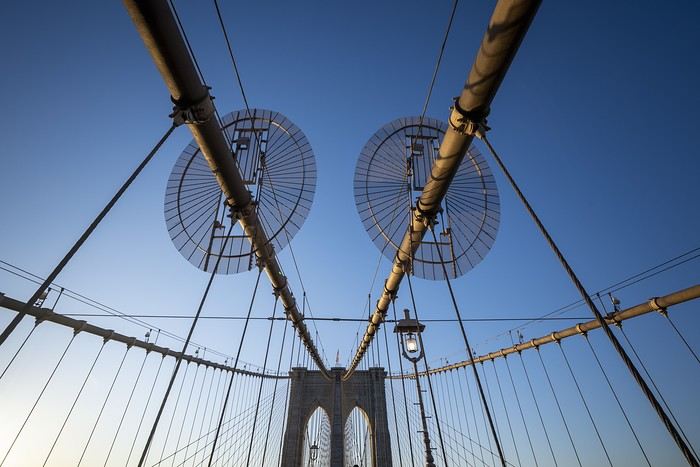 Brooklyn Bridge
Practical details:
Participation: Each VF member can submit up to 3 photos, until Sunday, 26/07 at 11:59 PM Paris time. Each photo must be posted in a separate message, with its number (1, 2, or 3). Don’t forget to add a little explanation (comment, location, etc.).
Voting: Each VF member can vote for the 3 photos they consider the best, based on their own criteria and the theme.
Voting will take place from Monday, 27/07 to Friday, 31/07 at 11:59 PM Paris time.
Selected photos should be listed in order of preference: - 1st photo: 3 points - 2nd photo: 2 points - 3rd photo: 1 point
The winner is the photographer whose photo receives the most points.
Results will be announced on 01/08. In case of a tie, the number of first-place votes will decide. The winner will have the honor of organizing August 2026’s contest.
Photos that have already been nominated (1st, 2nd, or 3rd place) in another contest are not eligible to participate in this one.
This thread is exclusively for contest submissions. Any discussions or comments should be posted in the following thread: Here
Vasco da Gama Bridge in LisbonHere’s the definition of a bridge: “A structure, typically made of stone, wood, or metal, that spans a depression or obstacle (such as a transportation route or waterway) by connecting the two sides or crossing over the obstacle.”
Viaducts, aqueducts, and footbridges will all be accepted.
Millau ViaductTo allow for as many original photos as possible, the bridge can be photographed from the side, below, or above—the main thing is that it’s the focal point of the image.
Bridge in the Algarve
Pont du Gard from belowDetails are also welcome, as long as you can still recognize it’s a bridge 😊
Brooklyn BridgePractical details:
Participation: Each VF member can submit up to 3 photos, until Sunday, 26/07 at 11:59 PM Paris time. Each photo must be posted in a separate message, with its number (1, 2, or 3). Don’t forget to add a little explanation (comment, location, etc.).
Voting: Each VF member can vote for the 3 photos they consider the best, based on their own criteria and the theme.
Voting will take place from Monday, 27/07 to Friday, 31/07 at 11:59 PM Paris time.
Selected photos should be listed in order of preference: - 1st photo: 3 points - 2nd photo: 2 points - 3rd photo: 1 point
The winner is the photographer whose photo receives the most points.
Results will be announced on 01/08. In case of a tie, the number of first-place votes will decide. The winner will have the honor of organizing August 2026’s contest.
Photos that have already been nominated (1st, 2nd, or 3rd place) in another contest are not eligible to participate in this one.
This thread is exclusively for contest submissions. Any discussions or comments should be posted in the following thread: Here
3 weeks in Laos, stress-free
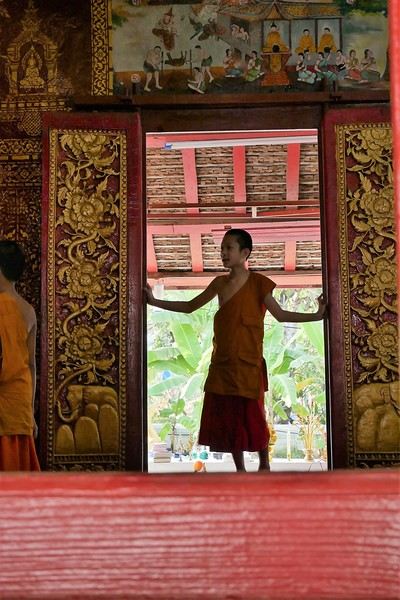 Come along, I'm taking you to this country where it's so nice to wander and slow down...
This trip was in 2023, but when I wanted to write my travel journal, VF was still closed to contributions... So, now that I've just finished my Japan travel journal here, I figured it was high time to honor this destination we came back from so enchanted. Disclaimer 1: This is a written travel journal. There’ll be text! Too much, for some! Disclaimer 2: This is an illustrated travel journal. There’ll be photos! Too many, for some!
I have to say, every time I try to discipline myself, to keep it shorter, to include fewer photos... I end up adding more. It feels like my dear Aunt Nicole, who exhausted us with her slide-show evenings in the 70s/80s, decided to take her revenge. The upside for you, readers, is that you can slip away anytime without offending Aunt Nicole. I won’t even notice!
Anyway, since I love maps, here’s one to give you an idea of where I’m taking you. As you can see, we only saw a tiny part of Laos (the areas circled in red); we only had 3 weeks for ourselves (my husband’s newly retired, I still work), and we prefer taking our time over rushing around like crazy.
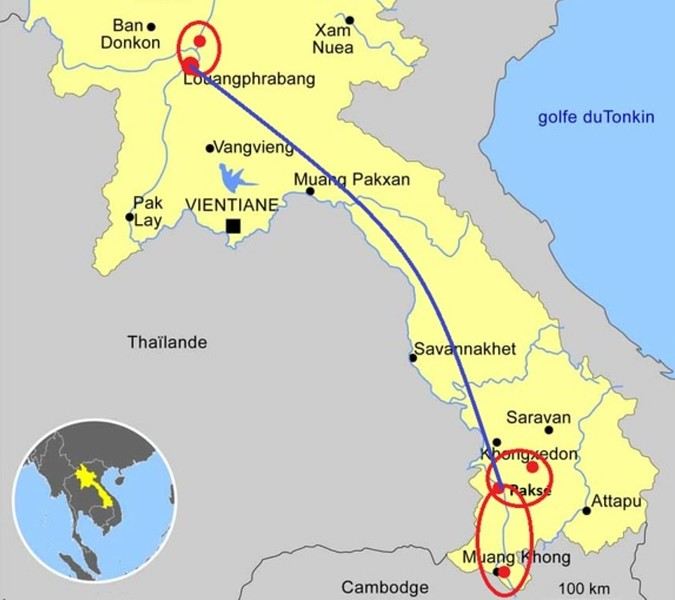
In broad strokes, it was very classic:
First, we “settled in” at Luang Prabang (8 days), because we wanted and needed to. From there, we took three days to venture a little further north—not far in kilometers, but as we know, distances aren’t just about km! Then we flew south to Paksé, letting ourselves drift down to the 4,000 Islands while stopping by the pre-Angkorian archaeological sites. We wrapped up with the Bolaven Plateau.
A few practical notes: We arrived via Bangkok, then took a Bangkok-Luang Prabang flight, having picked up our luggage in Bangkok to check it in for Luang Prabang. No issues—the Bangkok airport, which many of you know, is very well organized. We got our visas on arrival in Luang Prabang. Quick, but to be fair, we were on a “small” plane, and the big flights had arrived earlier, so we weren’t too crowded in line! At the end of our trip, we didn’t fly out of Paksé but from the nearby airport in Thailand, Ubon Ratchathani (a 2.5-hour drive from Paksé), then Bangkok and Paris. You’ll notice we skipped Vientiane to stay longer in Luang Prabang. That said, there’s now a high-speed train between Vientiane and Luang Prabang—good to know—and soon the (Chinese) train will go all the way to Bangkok and even Kuala Lumpur!
With that intro out of the way, let’s dive into the heart of the matter. To be continued: Slowing down the pace... in Luang Prabang
Two weeks under the Puglia sun
After a pretty disastrous weather-wise trip to Gran Canaria, we’re hoping this time the sun will shine in Puglia.
It’s not a sure thing, though—the weather’s been awful all over Europe in early May.
For those who’d like to (re)read the story without the digressions, it’s here.
Saturday, May 16: This time we’re flying out of Charleroi (Brussels South): the ticket prices, flight times, and proximity all worked for us. The airport (Ryanair) was recently renovated... but it’s still not very well organized. There are hardly any seats in the boarding areas, and... the restrooms cost money!!! The flight goes smoothly, though, and we land in Bari a little late.
We quickly pick up our rental car, a very local-looking Pandina (even more so than the Fiat 500 in this region), and hit the Italian roads... and their unique driving quirks (like the fact that the countless road signs along the streets and in towns are purely decorative 😏, and that Italian cars don’t have turn signals 😮... except for rental cars).
About an hour later, we arrive at our first accommodation, right in the middle of the countryside near Monopoli. The owner isn’t there, but they’ve left us a ton of info via messages and even turned on the space heater, which is a nice touch. We explore the property:
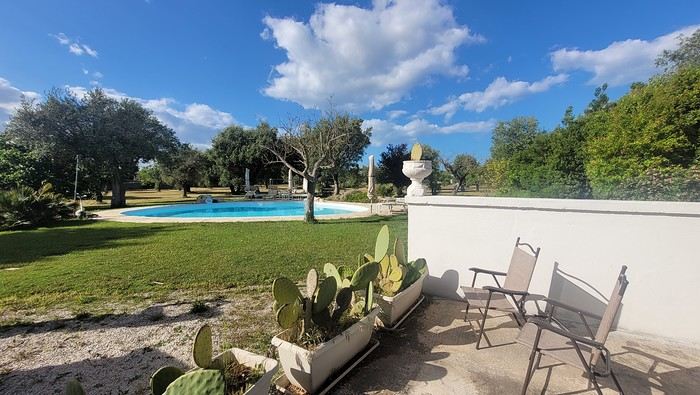
And the next morning before breakfast, its immediate surroundings:
Sunday, May 17: After our "seaside" experience in Gran Canaria last weekend (packed with people and locals), we decide to start inland. After a hearty breakfast,
we head toward Alberobello, a super touristy village famous for its trulli—those stone houses with conical roofs. We easily find a free parking spot on a street near the Aia Piccola district, where some trulli are still lived in year-round.
We almost immediately come across the Trullo Sovrano (the only two-story one), which you can visit (but we skip it—it’s opening time, and there’s already a line).
From there, we head down toward the Basilica of Cosma e Damiano... but we don’t go in because there’s a mass.
Now we’re on the main Piazza del Popolo, which connects the two districts of Alberobello: Rione Aia Piccola and Rione Monti, the more touristy one.
For those who’d like to (re)read the story without the digressions, it’s here.
Saturday, May 16: This time we’re flying out of Charleroi (Brussels South): the ticket prices, flight times, and proximity all worked for us. The airport (Ryanair) was recently renovated... but it’s still not very well organized. There are hardly any seats in the boarding areas, and... the restrooms cost money!!! The flight goes smoothly, though, and we land in Bari a little late.
We quickly pick up our rental car, a very local-looking Pandina (even more so than the Fiat 500 in this region), and hit the Italian roads... and their unique driving quirks (like the fact that the countless road signs along the streets and in towns are purely decorative 😏, and that Italian cars don’t have turn signals 😮... except for rental cars).
About an hour later, we arrive at our first accommodation, right in the middle of the countryside near Monopoli. The owner isn’t there, but they’ve left us a ton of info via messages and even turned on the space heater, which is a nice touch. We explore the property:
And the next morning before breakfast, its immediate surroundings:
Sunday, May 17: After our "seaside" experience in Gran Canaria last weekend (packed with people and locals), we decide to start inland. After a hearty breakfast,
we head toward Alberobello, a super touristy village famous for its trulli—those stone houses with conical roofs. We easily find a free parking spot on a street near the Aia Piccola district, where some trulli are still lived in year-round.
We almost immediately come across the Trullo Sovrano (the only two-story one), which you can visit (but we skip it—it’s opening time, and there’s already a line).
From there, we head down toward the Basilica of Cosma e Damiano... but we don’t go in because there’s a mass.
Now we’re on the main Piazza del Popolo, which connects the two districts of Alberobello: Rione Aia Piccola and Rione Monti, the more touristy one.
June 2026 Photo Contest Theme: Such a Beautiful Landscape
Hello,
It might not be very original, but I see it hasn’t been suggested—or at least not for a very long time. I’d like to invite you to discover the beauty of the great outdoors through landscape photos. Whether they’re desert, sea, countryside, or mountain scenes—with or without other elements (people, buildings, animals, etc.)—they should make us want to dive right in without hesitation.
To participate: Photo submissions until Wednesday, June 24 at 11:59 PM You can post up to 3 photos, numbered and shared in separate messages, along with a short description of the place and the story behind it.
To vote: from Thursday, June 25 at 12:01 AM to Monday, June 29 at 11:59 PM After the deadline, it’s too late!
Please include the photo number, username, and the points awarded: Photo #1 = 3 pts Photo #2 = 2 pts Photo #3 = 1 pt
All VF members can vote (even those who didn’t submit photos). In case of a tie for first place, the winning photo will be the one with the most first-place votes, then second-place votes! The lucky winner will get to organize July 2026’s photo contest.
For discussions about the theme, it’s here: Discussion thread for June 2026’s theme: Such a Beautiful Landscape
Good luck to everyone!
Philippe
Chumphon, Thailand: Doi Tapang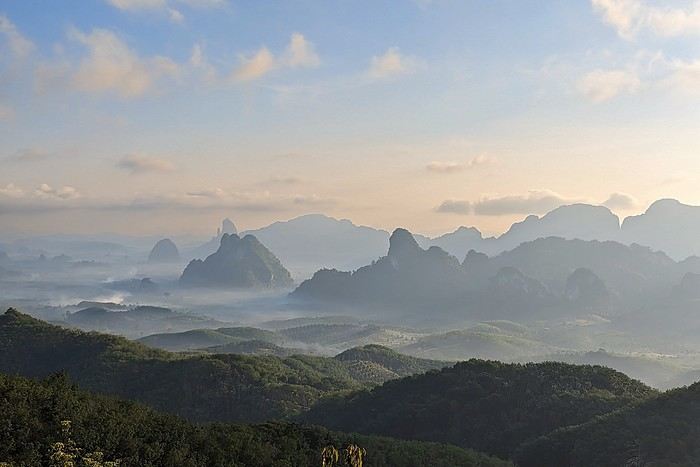
It might not be very original, but I see it hasn’t been suggested—or at least not for a very long time. I’d like to invite you to discover the beauty of the great outdoors through landscape photos. Whether they’re desert, sea, countryside, or mountain scenes—with or without other elements (people, buildings, animals, etc.)—they should make us want to dive right in without hesitation.
To participate: Photo submissions until Wednesday, June 24 at 11:59 PM You can post up to 3 photos, numbered and shared in separate messages, along with a short description of the place and the story behind it.
To vote: from Thursday, June 25 at 12:01 AM to Monday, June 29 at 11:59 PM After the deadline, it’s too late!
Please include the photo number, username, and the points awarded: Photo #1 = 3 pts Photo #2 = 2 pts Photo #3 = 1 pt
All VF members can vote (even those who didn’t submit photos). In case of a tie for first place, the winning photo will be the one with the most first-place votes, then second-place votes! The lucky winner will get to organize July 2026’s photo contest.
For discussions about the theme, it’s here: Discussion thread for June 2026’s theme: Such a Beautiful Landscape
Good luck to everyone!
Philippe
Chumphon, Thailand: Doi Tapang
Storm in the Canary Islands
15 days across Gran Canaria, El Hierro, and a dash of Tenerife under the storm Thérèse!
The planned itinerary will be slightly disrupted...
(The version without discussions is here)
The planned itinerary will be slightly disrupted...
(The version without discussions is here)
Back in Tunisia (live account)
Hi there,
On this forum, I shared my first trip to Tunisia from mid-February to early March (https://voyageforum.com/forum/impressions-tunisiennes-en-direct-d11460662/), a stay I enjoyed so much that six weeks later, I’m back in Tunisia for a full 15 days (I return on April 27).
This time, I landed in Monastir on a direct flight from Nice, again with Tunisair. We left about ten minutes late, and the flight lasted around 1 hour 30 minutes. A meal was served on board (cucumber salad with Edam-like cheese, carrots, and two small portions of dishes I couldn’t identify—semolina with peppers, olives, and parsley, two small rolls, a square of processed cheese, and a chocolate cake). It’s worth noting because it’s not common on flights this short.
In February, France and Tunisia were in the same time zone, but now Tunisia is one hour behind. This time difference and the flight duration work perfectly for a short 15-day trip since it takes me a few days to adjust to jet lag.
Luckily, I’d asked my hotel about the taxi fare from the airport because the drivers (there were several around me) didn’t hesitate to quote outrageous prices. The actual fare is 20 dinars, but one asked for 120 dinars. I refused, and another offered 60 dinars. I replied, "That’s too expensive—I’ll take the metro!" (Having tried the Tunis metro, I had no desire to repeat the experience in Monastir with a suitcase!). I started walking toward the metro, and one of the drivers caught up with me, saying, "20 dinars is fine!" I’ll skip the details, but the negotiation took a little while. When I arrived at the hotel, I told the receptionist someone had asked for 120 dinars. He put his hands to his head and said, "They’re awful!" He remembered our phone call two days earlier when I’d booked (he’s the one who told me I could take the metro).
The Mezri Hotel isn’t expensive. I got a sea-view room for 75 dinars (22 €). (I’d booked a balcony room for 90 dinars but wouldn’t have had time to enjoy it.) It’s well-located but noisy because there’s no double glazing. The receptionist is a very kind older gentleman. He called a friend whose wife is from Tozeur to find out if I should take a bus or a *louage* tomorrow and what time.
I arrived at the hotel around 7:00 PM and had time to stroll along the corniche to the ribat. Despite some run-down buildings, the seaside seemed livelier and cheerier than Sousse’s.
Monastir is the hometown of former president Bourguiba. I passed his mausoleum by taxi. There are Tunisian flags along the avenue by the sea because every year on April 6—the anniversary of Habib Bourguiba’s death—the president of the Republic visits the Bourguiba Mausoleum in Monastir to pay respects.
The taxi driver mentioned other Tunisian presidents. He complained about rising prices and insecurity, blaming President Kaïs Saïed (I’d already heard that security was better under Ben Ali).
At the end of my stay, I’ll take time to explore Monastir, but tomorrow morning, I’m off to Tozeur—a long bus ride awaits me.
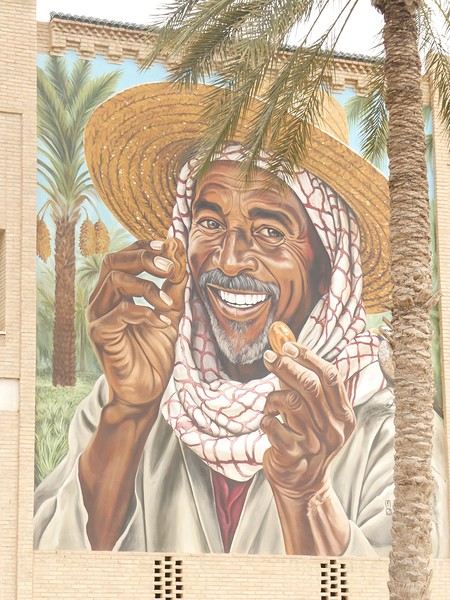

TO BE CONTINUED....
On this forum, I shared my first trip to Tunisia from mid-February to early March (https://voyageforum.com/forum/impressions-tunisiennes-en-direct-d11460662/), a stay I enjoyed so much that six weeks later, I’m back in Tunisia for a full 15 days (I return on April 27).
This time, I landed in Monastir on a direct flight from Nice, again with Tunisair. We left about ten minutes late, and the flight lasted around 1 hour 30 minutes. A meal was served on board (cucumber salad with Edam-like cheese, carrots, and two small portions of dishes I couldn’t identify—semolina with peppers, olives, and parsley, two small rolls, a square of processed cheese, and a chocolate cake). It’s worth noting because it’s not common on flights this short.
In February, France and Tunisia were in the same time zone, but now Tunisia is one hour behind. This time difference and the flight duration work perfectly for a short 15-day trip since it takes me a few days to adjust to jet lag.
Luckily, I’d asked my hotel about the taxi fare from the airport because the drivers (there were several around me) didn’t hesitate to quote outrageous prices. The actual fare is 20 dinars, but one asked for 120 dinars. I refused, and another offered 60 dinars. I replied, "That’s too expensive—I’ll take the metro!" (Having tried the Tunis metro, I had no desire to repeat the experience in Monastir with a suitcase!). I started walking toward the metro, and one of the drivers caught up with me, saying, "20 dinars is fine!" I’ll skip the details, but the negotiation took a little while. When I arrived at the hotel, I told the receptionist someone had asked for 120 dinars. He put his hands to his head and said, "They’re awful!" He remembered our phone call two days earlier when I’d booked (he’s the one who told me I could take the metro).
The Mezri Hotel isn’t expensive. I got a sea-view room for 75 dinars (22 €). (I’d booked a balcony room for 90 dinars but wouldn’t have had time to enjoy it.) It’s well-located but noisy because there’s no double glazing. The receptionist is a very kind older gentleman. He called a friend whose wife is from Tozeur to find out if I should take a bus or a *louage* tomorrow and what time.
I arrived at the hotel around 7:00 PM and had time to stroll along the corniche to the ribat. Despite some run-down buildings, the seaside seemed livelier and cheerier than Sousse’s.
Monastir is the hometown of former president Bourguiba. I passed his mausoleum by taxi. There are Tunisian flags along the avenue by the sea because every year on April 6—the anniversary of Habib Bourguiba’s death—the president of the Republic visits the Bourguiba Mausoleum in Monastir to pay respects.
The taxi driver mentioned other Tunisian presidents. He complained about rising prices and insecurity, blaming President Kaïs Saïed (I’d already heard that security was better under Ben Ali).
At the end of my stay, I’ll take time to explore Monastir, but tomorrow morning, I’m off to Tozeur—a long bus ride awaits me.
TO BE CONTINUED....
April 2026 Theme Discussion: Feeling Peachy?
Hey there!
This is the spot where we can chill and chat about fishing at sea worldwide 😊
Here are two charming fishermen taking a well-deserved break near Zanzibar!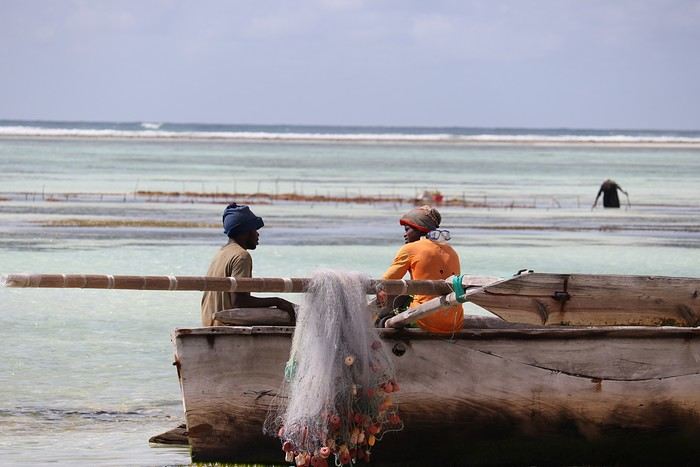
This is the spot where we can chill and chat about fishing at sea worldwide 😊
Here are two charming fishermen taking a well-deserved break near Zanzibar!
Some trips are born twice - Peru April - May 2025
Some trips are born twice.
Ours was supposed to happen in 2020. Everything was ready: the itinerary, the flight tickets, hotel reservations and Machu Picchu, the rental car, dreams of high altitudes and wide-open spaces. And then the world stopped.
Like so many other plans, our trip to Peru was put on hold. Disappointment was followed by a more concrete reality: paperwork, endless back-and-forth, and battles to recover some of the costs we’d already paid.
The years went by. Life moved on, with its shifting priorities and unexpected twists. Rescheduling this trip wasn’t possible until 2025.
The itinerary stayed mostly true to what we’d imagined five years earlier. One major difference, though—in 2020, we’d planned to rent a car and explore the roads completely independently. Most importantly, we hadn’t included the three-day Ausangate trek, due to lack of time.
For 2025, our plans evolved. 4x4 rental prices had skyrocketed, and when we looked at our schedule more closely, we realized quite a few days didn’t actually need a vehicle. So we made a different choice and opted for private drivers instead. A decision we never regretted. Always punctual, thoughtful, and available... they were so much more than just drivers.
All our reservations were made in January, except for the trek, which we booked in February.
Finding reliable drivers on our own was tough, so we asked Laurent from Tout Pérou to handle it for us. Going through Tout Pérou also gave us a discount on the train ride to Aguas Calientes, so Laurent booked those tickets too. He also bought our Machu Picchu entrance tickets at the same price we would’ve paid on the official website. When comparing domestic flight prices, we found it was cheaper to book from Peru, so Laurent took care of those as well.
This time, nothing was going to stop us. Peru was waiting. And we were ready. 🙂
Ours was supposed to happen in 2020. Everything was ready: the itinerary, the flight tickets, hotel reservations and Machu Picchu, the rental car, dreams of high altitudes and wide-open spaces. And then the world stopped.
Like so many other plans, our trip to Peru was put on hold. Disappointment was followed by a more concrete reality: paperwork, endless back-and-forth, and battles to recover some of the costs we’d already paid.
The years went by. Life moved on, with its shifting priorities and unexpected twists. Rescheduling this trip wasn’t possible until 2025.
The itinerary stayed mostly true to what we’d imagined five years earlier. One major difference, though—in 2020, we’d planned to rent a car and explore the roads completely independently. Most importantly, we hadn’t included the three-day Ausangate trek, due to lack of time.
For 2025, our plans evolved. 4x4 rental prices had skyrocketed, and when we looked at our schedule more closely, we realized quite a few days didn’t actually need a vehicle. So we made a different choice and opted for private drivers instead. A decision we never regretted. Always punctual, thoughtful, and available... they were so much more than just drivers.
All our reservations were made in January, except for the trek, which we booked in February.
Finding reliable drivers on our own was tough, so we asked Laurent from Tout Pérou to handle it for us. Going through Tout Pérou also gave us a discount on the train ride to Aguas Calientes, so Laurent booked those tickets too. He also bought our Machu Picchu entrance tickets at the same price we would’ve paid on the official website. When comparing domestic flight prices, we found it was cheaper to book from Peru, so Laurent took care of those as well.
This time, nothing was going to stop us. Peru was waiting. And we were ready. 🙂
Veneto: Dolomites and Opera
I'm starting a new travel journal in Italy.
It's about a month-long trip (from September 3, 2025, to October 4, 2025), or rather a part of it. This section matches the title: an opera festival in Verona (one evening) and the Dolomites in the Veneto region.
I'm posting the part of the trip I think will interest French-speaking readers the most (since this is where I saw the most French travelers).
Here’s a quick summary:
- Trip in September 2025
- Solo travel with camping (caravan)
- Small geographic area: besides Verona, the surroundings of the Marmolada massif and Cortina d'Ampezzo.
- Main but not exclusive activity: hiking.
Since I have limited internet access where I am now, I’ll be writing slowly. Here we go!
Day 1: Thursday, September 4, 2025
I arrived in Veneto under the sun and with warm weather. I drove to Verona and tried to find a spot at the campsite (Verona Village) located south of the city. Unfortunately, it was full. Booking on the website was mandatory, but when I tried to reserve a few days ago, the site never moved from the "reservation" step to the "payment" step (I don’t know why—it’s always like that in these cases). I found another solution over the phone; the drive from southern Verona to the northeast was a bit long, but I finally settled at the "Oro Verde" campsite. It’s an "agricampeggio" (farm camping or rural campsite) on the outskirts of the city, and its name (green gold) suggests they produce olives there. Since it wasn’t late, I biked to the Adige River, following the recommended route into the city.
Since I have limited internet access where I am now, I’ll be writing slowly. Here we go!
Day 1: Thursday, September 4, 2025
I arrived in Veneto under the sun and with warm weather. I drove to Verona and tried to find a spot at the campsite (Verona Village) located south of the city. Unfortunately, it was full. Booking on the website was mandatory, but when I tried to reserve a few days ago, the site never moved from the "reservation" step to the "payment" step (I don’t know why—it’s always like that in these cases). I found another solution over the phone; the drive from southern Verona to the northeast was a bit long, but I finally settled at the "Oro Verde" campsite. It’s an "agricampeggio" (farm camping or rural campsite) on the outskirts of the city, and its name (green gold) suggests they produce olives there. Since it wasn’t late, I biked to the Adige River, following the recommended route into the city.
In the midst of Kenya's wildlife, October 2025
Hello everyone,
After sharing some safari photos from southern Tanzania, I’d like to show you those from our latest safari in Kenya in October 2025.
First, I’d like to thank Sylvie56, whose previous travel journals about this country inspired our trip choices. Thanks also for the info you sent us via PM. THANK YOU!
The following account is from a simple wildlife enthusiast. You won’t find anything here but images of landscapes, mammals, and birds. The stated purpose of this trip was purely and solely wildlife-focused. (It was in no way a discovery of the country or its people).
This stay/safari began (and ended) in Nairobi, with flights between France and Kenya operated by Qatar Airways departing from Nice.
Over two weeks, we first visited the reserves of Tsavo West and Tsavo East, then after a long road trip, the two reserves of Buffalo Springs and Samburu.
= Please wait until the end of the journal to ask any specific questions (or send them via PM) to keep the story flowing without interruptions or off-topic comments.
Thanks for your understanding.
...
Previous Kenya safari trip in 2017, here:
http://www.image-nature.com/forum/viewtopic.php?f=162&t=61119
...
After sharing some safari photos from southern Tanzania, I’d like to show you those from our latest safari in Kenya in October 2025.
First, I’d like to thank Sylvie56, whose previous travel journals about this country inspired our trip choices. Thanks also for the info you sent us via PM. THANK YOU!
The following account is from a simple wildlife enthusiast. You won’t find anything here but images of landscapes, mammals, and birds. The stated purpose of this trip was purely and solely wildlife-focused. (It was in no way a discovery of the country or its people).
This stay/safari began (and ended) in Nairobi, with flights between France and Kenya operated by Qatar Airways departing from Nice.
Over two weeks, we first visited the reserves of Tsavo West and Tsavo East, then after a long road trip, the two reserves of Buffalo Springs and Samburu.
= Please wait until the end of the journal to ask any specific questions (or send them via PM) to keep the story flowing without interruptions or off-topic comments.
Thanks for your understanding.
...
Previous Kenya safari trip in 2017, here:
http://www.image-nature.com/forum/viewtopic.php?f=162&t=61119
...
Trip to Morocco in September-October 2025, in our camper van
Hi everyone,
We’re just back from a month-long trip to Morocco in our camper van.
After crossing France (we left from the Nantes area) and Spain, we arrived in Algeciras where we bought our boat tickets to Tangier. When we got to Tangier, as we were going through customs, you can imagine our surprise when the customs officer took our road map of Morocco and pointed out the label "Western Sahara" (just like in the forum’s destination section, by the way!).
He wanted it to say "Moroccan Sahara" instead!!! But there was nothing we could do—it was an old map... He wouldn’t listen, and after long discussions with the other (younger) customs officers, he finally gave it back and let us through... Unbelievable! Later, we heard that other travelers had their maps confiscated outright.
So, hide it well if you want to keep yours!!!
Anyway, we skirted around Tangier’s suburbs—pretty grim—and finally arrived in Asilah.
Following the coast and the long promenade along the beach, we reached the campsite. It was a bit crowded, not much shade, but it wasn’t far from the medina or the beach, and it wasn’t expensive. There’s some life here: Moroccan families seem to live on-site, in tents or basic bungalows. A woman was cooking tagine on a brazier—we were right in the atmosphere! The night was quiet, and we slept well. We set off on foot, walking along the seafront to the medina... We’d already been here in 2009. It was less touristy back then! Still, at this early hour, the little streets inside were very quiet. The walls had been freshly whitewashed, and there were even more murals than before. Around 11:30 AM, we strolled along the ramparts by the sea. There was a nice breeze! And a lot more people around. We enjoyed a milkshake on the terrace of a café overlooking the beach that stretches out at the foot of the medina. Some young guys were having fun diving off the rocks—and even off the top of the wall!
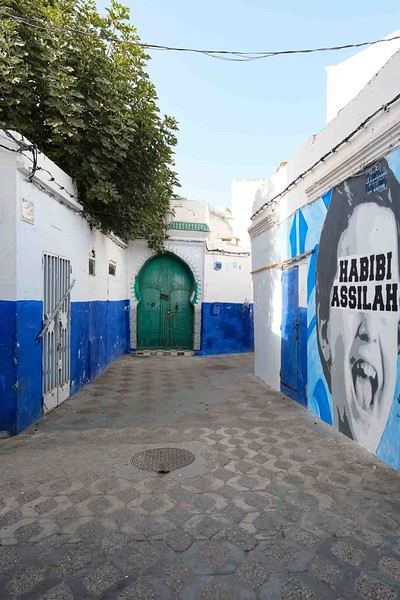
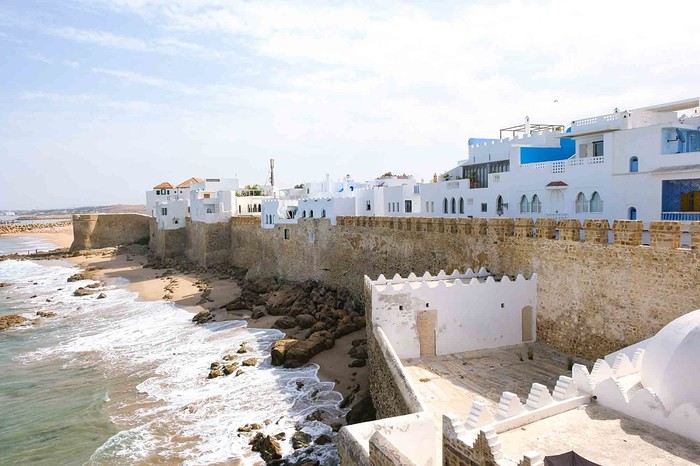
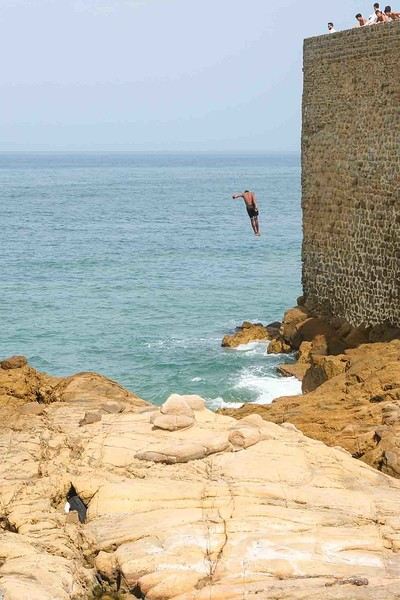
Anyway, we skirted around Tangier’s suburbs—pretty grim—and finally arrived in Asilah.
Following the coast and the long promenade along the beach, we reached the campsite. It was a bit crowded, not much shade, but it wasn’t far from the medina or the beach, and it wasn’t expensive. There’s some life here: Moroccan families seem to live on-site, in tents or basic bungalows. A woman was cooking tagine on a brazier—we were right in the atmosphere! The night was quiet, and we slept well. We set off on foot, walking along the seafront to the medina... We’d already been here in 2009. It was less touristy back then! Still, at this early hour, the little streets inside were very quiet. The walls had been freshly whitewashed, and there were even more murals than before. Around 11:30 AM, we strolled along the ramparts by the sea. There was a nice breeze! And a lot more people around. We enjoyed a milkshake on the terrace of a café overlooking the beach that stretches out at the foot of the medina. Some young guys were having fun diving off the rocks—and even off the top of the wall!
Martine from DD in Arizona and New Mexico
Good evening everyone! 🙂
We’re back from our September 2025 road trip, this time to explore Arizona and New Mexico, and it’s time for me to start my travel journal—especially since everything’s already booked for another trip in September 2026 (to California), and I need to get started on the planning.
I was a little worried this new visit to Uncle Sam’s country might not be as "wow" as the others, but we still discovered some incredible places.
For those who don’t know us, we’re a couple in our seventies who speak very little English, but that didn’t stop us from fully enjoying our stay.
For this 6th road trip in the U.S., we spent 21 nights there, drove 4,160 km by car, and walked nearly 160 km in a loop starting from Phoenix.
We’d been to Arizona before (but not this side) and never to New Mexico. This whole road trip was a huge discovery for us.
In the prices mentioned (some in euros, others in dollars), bank fees and exchange charges are included. The flights, car rental, and parking were all paid for in December 2024 when we booked.
We’d downloaded the MPC (Mobile Passport Control) app, but there wasn’t a dedicated line at Phoenix Airport. Still, we got through quickly with friendly, smiling agents.
I don’t drive at all (I hate it), so the stops were chosen based on activities but also, for some, to limit daily mileage for the sole driver. The kilometers listed in the itinerary are the daily distances.
We traveled from September 9th to 22nd, unfortunately once again without our dear friends Mimi and Maumau.
The itinerary
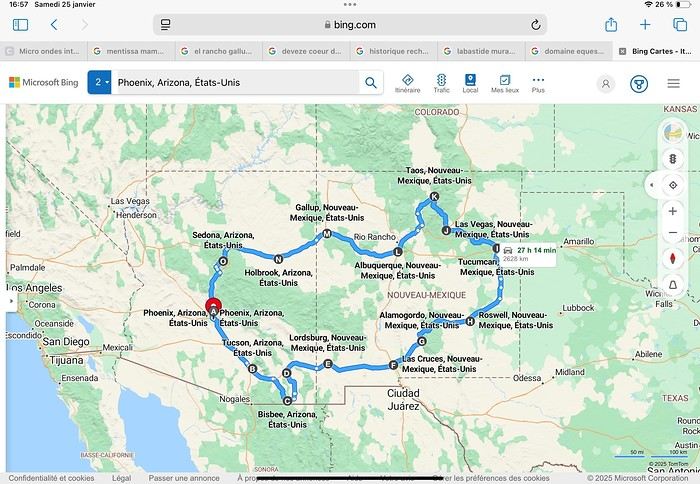
Day 1: Flight Marseille-Paris-Phoenix, then Gold Canyon (133 km) Day 2: Tucson (271 km) Lost Dutchman State Park Day 3: Tucson (155 km) Day 4: Tucson (34 km) Day 5: Bisbee (182 km) Day 6: Lordsburg (345 km) Day 7: Las Cruces (253 km) Day 8: Alamogordo (162 km) Day 9: Roswell (264 km) Day 10: Tucumcari (369 km) Day 11: Las Vegas (281 km) – the one in New Mexico Day 12: Taos (213 km) Day 13: Santa Fe (224 km) Day 14: Albuquerque (123 km) Day 15: Gallup (246 km) Day 16: Holbrook (224 km) Day 17: Flagstaff (179 km) Day 18: Sedona (118 km) Day 19: Sedona (48 km) Day 20: Sedona (41 km) Day 21: Phoenix (256 km) Day 22: Phoenix Airport (35 km)
📊 **Budget**: A little over 7,500 € for both of us, all included. The exchange rate was in our favor (1.17 dollars to 1 €). 📊 **Flights**: Marseille-Paris Charles de Gaulle-Phoenix: 1,787 € for two, with one checked bag each (Air France) 📊 **ESTA**: $42 📊 **America the Beautiful Pass**: $80 📊 **Parking**: 134 € (super eco at Marseille) 📊 **Car rental (Hertz)**: 865 €. Since there were no SUVs left in the reserved category (Nissan Rogue), we got an upgrade (4x4 Ford Explorer). We booked through Air France (15% discount). We’d originally reserved it in December for 1,140 €, but since prices dropped in March, we canceled and rebooked for 865 €. Hertz offers a free Hertz Gold Plus Rewards program, which gives you priority counter service when picking up the car. 📊 **Accommodation**: 2,400 € We stayed in hotels and motels of varying standards (from 60 to 203 € per night, depending on the city), all booked through Booking.com or Hotels.com. Out of 21 nights, only two didn’t include breakfast in the price. Booking.com sometimes offers slightly cheaper rates if you book by phone using the mobile app, and our Genius 3 status on the site also got us some preferential rates. 📊 **Supplementary insurance**: AVA 200 € for medical care if needed 📊 **Cash**: $2,078. We left with 1,000 € exchanged before departure and made two withdrawals of $500. This cash covered: - Evening restaurants and tips - Midday picnics - Gas: $298 for 4,160 km - Museum and private park entries (per person): - Lost Dutchman: $10 - Arizona-Sonora Desert Museum: $28 - Bird Cage Theater: $16 - Tombstone Shootout: $8 - New Mexico Farm & Ranch Museum: $12 - Roswell International UFO Museum: $5 - Billy the Kid Museum: $7 - Rancho de Taos: $22 - West Fork Oak Creek Trail entry: $15 We got a few discounts thanks to our senior age (+65). - Souvenirs and little treats
Like on our previous road trips, we didn’t rent a GPS. We got around using offline GPS apps Here WeGo and Organic Maps, with maps of the states we visited downloaded before we left (on our phones).
❤️❤️❤️ **Highlights** (there are so many!) 📍 Goldfield Ghost Town (even if it’s a reconstruction) 📍 The standing army of Saguaro cacti at Saguaro National Park West 📍 Diving into the cowboy universe of Tombstone 📍 The welcome from Rick and Henry at our guesthouse in Bisbee (Garden at Mile High Ranch) 📍 The tangled rocks of Chiricahua National Monument 📍 The flavored pistachios from Dwayne’s Fresh Jerky and Mac Ginnis Pistachioland 📍 Restaurants: La Posta (Las Cruces), Diner 66 (Albuquerque), and the Haunted Hamburger (Jerome) 📍 The old plazas of New Mexico 📍 The solitude and beauty of the white dunes at White Sands National Park 📍 Stepping back in time at the Billy the Kid Museum (Fort Stanton) 📍 Sections of historic Route 66 and the old motels of Tucumcari, especially at night when all the neon lights are on 📍 Taos Pueblo and diving into Native American culture 📍 After the Rio Grande Bridge, the descent via NM 567 to the very bottom of the Rio Grande Gorge, then the road along the riverbanks to Taos 📍 The tranquility of the Chimayo Sanctuary 📍 Discovering the ingenious native dwellings at Bandelier National Monument and Walnut Canyon National Park 📍 The small towns along the Turquoise Trail 📍 The red rocks of Red Rock Park and the Painted Desert 📍 The extraordinary colors of the petrified trees at Petrified Forest National Park 📍 Sedona, its red rocks, and the reward of the viewpoints at the end of hikes (Devil’s Bridge, The Subway, and West Fork Oak Creek) 📍 The immersion in Mexico when visiting Tlaquepaque 📍 The almost-ghost town of Jerome and its terraced streets 📍 The incredible kindness of Americans, always ready to help and up for a chat ❤️
☹️☹️☹️ **Flops** (there are very few) 📍 Several museums and churches being closed, so we couldn’t visit them 📍 Some museums and visitor centers opening late (10 AM) and closing early (4 PM) 📍 A 64 € phone roaming charge because we got near the Mexican border and picked up their cell tower 📍 The outrageous price ($5.99) for a gallon of gas at the Shell near Phoenix Airport
I hope this helps! Anyway, thanks for reading my long post. Don’t hesitate to reach out, even via PM, if you see I haven’t replied and you’d like more details. Have a great evening, everyone! 🙂
We’re back from our September 2025 road trip, this time to explore Arizona and New Mexico, and it’s time for me to start my travel journal—especially since everything’s already booked for another trip in September 2026 (to California), and I need to get started on the planning.
I was a little worried this new visit to Uncle Sam’s country might not be as "wow" as the others, but we still discovered some incredible places.
For those who don’t know us, we’re a couple in our seventies who speak very little English, but that didn’t stop us from fully enjoying our stay.
For this 6th road trip in the U.S., we spent 21 nights there, drove 4,160 km by car, and walked nearly 160 km in a loop starting from Phoenix.
We’d been to Arizona before (but not this side) and never to New Mexico. This whole road trip was a huge discovery for us.
In the prices mentioned (some in euros, others in dollars), bank fees and exchange charges are included. The flights, car rental, and parking were all paid for in December 2024 when we booked.
We’d downloaded the MPC (Mobile Passport Control) app, but there wasn’t a dedicated line at Phoenix Airport. Still, we got through quickly with friendly, smiling agents.
I don’t drive at all (I hate it), so the stops were chosen based on activities but also, for some, to limit daily mileage for the sole driver. The kilometers listed in the itinerary are the daily distances.
We traveled from September 9th to 22nd, unfortunately once again without our dear friends Mimi and Maumau.
The itinerary
Day 1: Flight Marseille-Paris-Phoenix, then Gold Canyon (133 km) Day 2: Tucson (271 km) Lost Dutchman State Park Day 3: Tucson (155 km) Day 4: Tucson (34 km) Day 5: Bisbee (182 km) Day 6: Lordsburg (345 km) Day 7: Las Cruces (253 km) Day 8: Alamogordo (162 km) Day 9: Roswell (264 km) Day 10: Tucumcari (369 km) Day 11: Las Vegas (281 km) – the one in New Mexico Day 12: Taos (213 km) Day 13: Santa Fe (224 km) Day 14: Albuquerque (123 km) Day 15: Gallup (246 km) Day 16: Holbrook (224 km) Day 17: Flagstaff (179 km) Day 18: Sedona (118 km) Day 19: Sedona (48 km) Day 20: Sedona (41 km) Day 21: Phoenix (256 km) Day 22: Phoenix Airport (35 km)
📊 **Budget**: A little over 7,500 € for both of us, all included. The exchange rate was in our favor (1.17 dollars to 1 €). 📊 **Flights**: Marseille-Paris Charles de Gaulle-Phoenix: 1,787 € for two, with one checked bag each (Air France) 📊 **ESTA**: $42 📊 **America the Beautiful Pass**: $80 📊 **Parking**: 134 € (super eco at Marseille) 📊 **Car rental (Hertz)**: 865 €. Since there were no SUVs left in the reserved category (Nissan Rogue), we got an upgrade (4x4 Ford Explorer). We booked through Air France (15% discount). We’d originally reserved it in December for 1,140 €, but since prices dropped in March, we canceled and rebooked for 865 €. Hertz offers a free Hertz Gold Plus Rewards program, which gives you priority counter service when picking up the car. 📊 **Accommodation**: 2,400 € We stayed in hotels and motels of varying standards (from 60 to 203 € per night, depending on the city), all booked through Booking.com or Hotels.com. Out of 21 nights, only two didn’t include breakfast in the price. Booking.com sometimes offers slightly cheaper rates if you book by phone using the mobile app, and our Genius 3 status on the site also got us some preferential rates. 📊 **Supplementary insurance**: AVA 200 € for medical care if needed 📊 **Cash**: $2,078. We left with 1,000 € exchanged before departure and made two withdrawals of $500. This cash covered: - Evening restaurants and tips - Midday picnics - Gas: $298 for 4,160 km - Museum and private park entries (per person): - Lost Dutchman: $10 - Arizona-Sonora Desert Museum: $28 - Bird Cage Theater: $16 - Tombstone Shootout: $8 - New Mexico Farm & Ranch Museum: $12 - Roswell International UFO Museum: $5 - Billy the Kid Museum: $7 - Rancho de Taos: $22 - West Fork Oak Creek Trail entry: $15 We got a few discounts thanks to our senior age (+65). - Souvenirs and little treats
Like on our previous road trips, we didn’t rent a GPS. We got around using offline GPS apps Here WeGo and Organic Maps, with maps of the states we visited downloaded before we left (on our phones).
❤️❤️❤️ **Highlights** (there are so many!) 📍 Goldfield Ghost Town (even if it’s a reconstruction) 📍 The standing army of Saguaro cacti at Saguaro National Park West 📍 Diving into the cowboy universe of Tombstone 📍 The welcome from Rick and Henry at our guesthouse in Bisbee (Garden at Mile High Ranch) 📍 The tangled rocks of Chiricahua National Monument 📍 The flavored pistachios from Dwayne’s Fresh Jerky and Mac Ginnis Pistachioland 📍 Restaurants: La Posta (Las Cruces), Diner 66 (Albuquerque), and the Haunted Hamburger (Jerome) 📍 The old plazas of New Mexico 📍 The solitude and beauty of the white dunes at White Sands National Park 📍 Stepping back in time at the Billy the Kid Museum (Fort Stanton) 📍 Sections of historic Route 66 and the old motels of Tucumcari, especially at night when all the neon lights are on 📍 Taos Pueblo and diving into Native American culture 📍 After the Rio Grande Bridge, the descent via NM 567 to the very bottom of the Rio Grande Gorge, then the road along the riverbanks to Taos 📍 The tranquility of the Chimayo Sanctuary 📍 Discovering the ingenious native dwellings at Bandelier National Monument and Walnut Canyon National Park 📍 The small towns along the Turquoise Trail 📍 The red rocks of Red Rock Park and the Painted Desert 📍 The extraordinary colors of the petrified trees at Petrified Forest National Park 📍 Sedona, its red rocks, and the reward of the viewpoints at the end of hikes (Devil’s Bridge, The Subway, and West Fork Oak Creek) 📍 The immersion in Mexico when visiting Tlaquepaque 📍 The almost-ghost town of Jerome and its terraced streets 📍 The incredible kindness of Americans, always ready to help and up for a chat ❤️
☹️☹️☹️ **Flops** (there are very few) 📍 Several museums and churches being closed, so we couldn’t visit them 📍 Some museums and visitor centers opening late (10 AM) and closing early (4 PM) 📍 A 64 € phone roaming charge because we got near the Mexican border and picked up their cell tower 📍 The outrageous price ($5.99) for a gallon of gas at the Shell near Phoenix Airport
I hope this helps! Anyway, thanks for reading my long post. Don’t hesitate to reach out, even via PM, if you see I haven’t replied and you’d like more details. Have a great evening, everyone! 🙂
Review of an Aegean Sea cruise on Ponant's Bougainville from November 1-8, 2025
Hello everyone,
If you'd like, I invite you to join me for a week-long cruise to northern Greece, visiting ports that are often less crowded with cruise ships.
Itinerary: Athens, Skiathos, Volos, Thessaloniki, Kavala, Limnos, Hydra, Athens
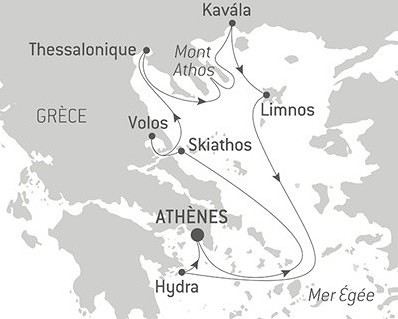
If you'd like, I invite you to join me for a week-long cruise to northern Greece, visiting ports that are often less crowded with cruise ships.
Itinerary: Athens, Skiathos, Volos, Thessaloniki, Kavala, Limnos, Hydra, Athens
Off we go on an adventure in Puglia!
Hey there, VF crew!
After wrapping up our travel journal on Java (link below), we’re now diving into our recent adventure in Puglia! Happy reading... Off we go on an adventure in Java (and a bit of Bali) | Travel journal > Indonesia | Voyage Forum
Day 1 - October 19
When you tell your friends and family you’re itching to escape to the other side of the planet to mingle with the Mongols, you can usually expect a barrage of questionable jokes and terrible puns. For this new adventure, it’s a different destination but the same old story—this time, we’re visiting the "pouilleux" (the "scruffy" ones). We’re taking off straight for Puglia! If you need a cheat sheet to remember where this oddly named place is on a world map, just think of it this way: Puglia is the maiden name on the ID card of the heel of the Italian boot! Personally, I prefer to remember it as the land of creamy burrata, the smell of focaccia fresh from the oven, orecchiette shaped by mamas, golden olive oil that shines like the sun (which beams down here 300 days a year), amaretto that makes you happy, and those famous trulli—those little hobbit-like dry-stone houses straight out of a movie set...
But I’ll stop spoiling the rest of our trip and focus on a factual rundown of this first Puglian day. So, are you joining us on this new adventure beyond our Gallic borders? Either way, Sasha (my youngest) and Luna (Flo’s daughter) didn’t need much convincing to stick with us and keep up the pace!
Our plane drops our little crew in Bari, the site of a famously tragic battle lost in 1991. But revenge is sweet! After renting a motorized carriage, we escape the landing zone and head to our military base of operations: Ostuni, a strategic little town where we’ll set up camp for the next four days. Why Ostuni? First, for its central location, which lets us explore a region packed with must-see gems. Second, for its vibe and beauty, which have earned it quite the reputation. Perched high on a hill, the *città bianca* (the "White City") lives up to its nickname. It literally dazzles visitors. The reason? The whitewashed facades of its houses, a testament to the region’s rich architectural heritage.
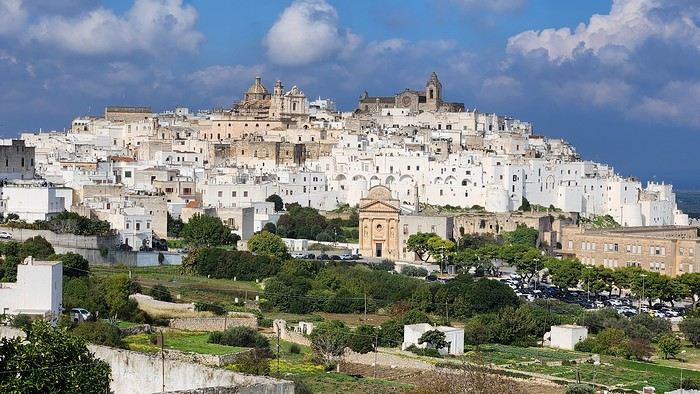
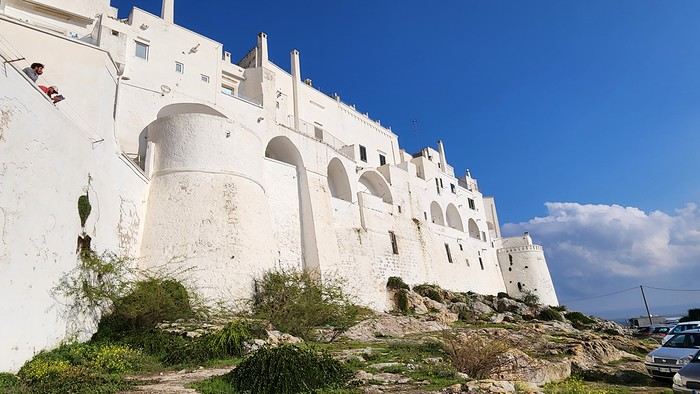
We arrived late last night, so only the two bravest soldiers volunteered to scout ahead at dawn, while the younger recruits stayed behind—for now. But not for long! After the first wave of streets and the next round of exploration, headquarters made the inevitable call to retreat. Reinforcements were needed! A few strategic errands, a breakfast ration, and our battalion marched in tight formation, flag held high, to conquer Ostuni the White! *Charge!* In my squadron leader’s memoirs, I’ll write that I didn’t expect Ostuni to put up such a fight. What I thought would take two hours to conquer turned into a humbling experience—we could only bow in respect to its beauty, its relentless charm. The alleys are whiter, more labyrinthine, narrower, and more photogenic than the last. *Veni, vidi, vici*—but what an entrance, my troops!
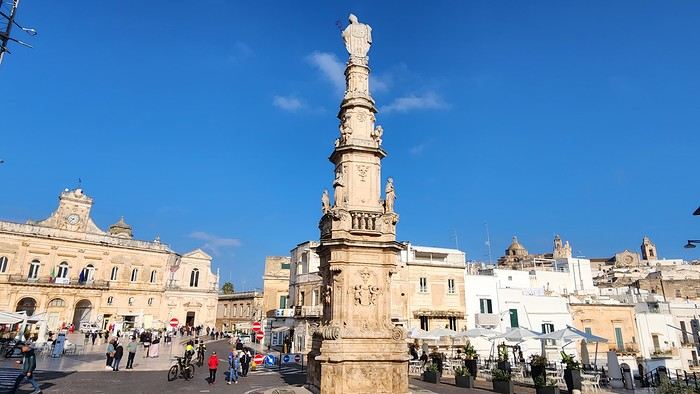
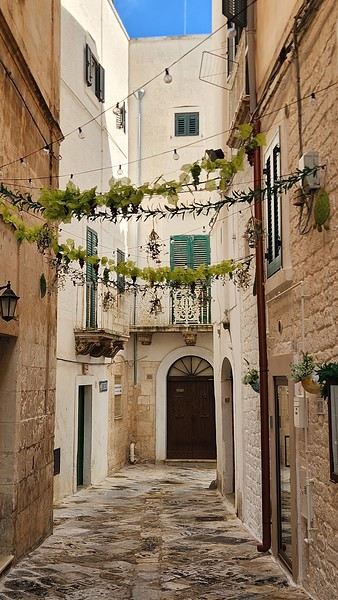
After wrapping up our travel journal on Java (link below), we’re now diving into our recent adventure in Puglia! Happy reading... Off we go on an adventure in Java (and a bit of Bali) | Travel journal > Indonesia | Voyage Forum
Day 1 - October 19
When you tell your friends and family you’re itching to escape to the other side of the planet to mingle with the Mongols, you can usually expect a barrage of questionable jokes and terrible puns. For this new adventure, it’s a different destination but the same old story—this time, we’re visiting the "pouilleux" (the "scruffy" ones). We’re taking off straight for Puglia! If you need a cheat sheet to remember where this oddly named place is on a world map, just think of it this way: Puglia is the maiden name on the ID card of the heel of the Italian boot! Personally, I prefer to remember it as the land of creamy burrata, the smell of focaccia fresh from the oven, orecchiette shaped by mamas, golden olive oil that shines like the sun (which beams down here 300 days a year), amaretto that makes you happy, and those famous trulli—those little hobbit-like dry-stone houses straight out of a movie set...
But I’ll stop spoiling the rest of our trip and focus on a factual rundown of this first Puglian day. So, are you joining us on this new adventure beyond our Gallic borders? Either way, Sasha (my youngest) and Luna (Flo’s daughter) didn’t need much convincing to stick with us and keep up the pace!
Our plane drops our little crew in Bari, the site of a famously tragic battle lost in 1991. But revenge is sweet! After renting a motorized carriage, we escape the landing zone and head to our military base of operations: Ostuni, a strategic little town where we’ll set up camp for the next four days. Why Ostuni? First, for its central location, which lets us explore a region packed with must-see gems. Second, for its vibe and beauty, which have earned it quite the reputation. Perched high on a hill, the *città bianca* (the "White City") lives up to its nickname. It literally dazzles visitors. The reason? The whitewashed facades of its houses, a testament to the region’s rich architectural heritage.
We arrived late last night, so only the two bravest soldiers volunteered to scout ahead at dawn, while the younger recruits stayed behind—for now. But not for long! After the first wave of streets and the next round of exploration, headquarters made the inevitable call to retreat. Reinforcements were needed! A few strategic errands, a breakfast ration, and our battalion marched in tight formation, flag held high, to conquer Ostuni the White! *Charge!* In my squadron leader’s memoirs, I’ll write that I didn’t expect Ostuni to put up such a fight. What I thought would take two hours to conquer turned into a humbling experience—we could only bow in respect to its beauty, its relentless charm. The alleys are whiter, more labyrinthine, narrower, and more photogenic than the last. *Veni, vidi, vici*—but what an entrance, my troops!
A summer in the sun in... Iceland!!
Ah, Iceland and us—it’s quite the story, or rather, a long wait... The first time we considered going was already 7-8 years ago, after reading travel journals describing breathtaking landscapes, countless active and dormant volcanoes, glaciers, and waterfalls with extraordinary flows. In short, this island, made of fire and ice, right at Europe’s doorstep with its own unique culture, had nothing but advantages, and it was urgent to visit without delay 😇
My *Routard* guidebook is actually from 2016. So why did Iceland make us wait so long before we finally gave in to its charms? Yes, why indeed?
Simply because reading other travel journals revealed the cost of living there—and especially the harsh climate, even in the middle of July 🤪! Some journals described entire weeks of rain and foggy weather, making it tricky to explore the island. The budget wasn’t spared either, because in the most touristy areas, especially in the south and around Myvatn, accommodation prices are downright indecent—even outright robbery. 😕
Plus, in the Highlands, there’s literally no permanent lodging, and the only way to spend several nights there is to camp. And camping in winter conditions wasn’t exactly part of our plans... 😄
So, year after year, this trip kept getting postponed...
until August 2023, when prices for Southern Africa, North or South America, or even Asia were all way too high for summer 2024!
That’s when I turned my attention back to the Land of Fire and Ice and scoured all the comparison sites for the best accommodation deals across the country. Planning for 20 nights, I found 13 nights in "proper" lodging for 5 people at an average cost of under 200 €! A miracle, considering that in the southern glacier region, around Vik or Myvatn, prices range from 300 to 1000 € per night 😮 😮!
Still, that means we’ll have to camp for 7 nights, mostly in the Highlands, near Askja or Landmannalaugar. 😎
For once, I built the daily itinerary entirely around the decently priced lodgings I found 11 months in advance! The shortage of places to stay in some areas forced me to plan a few long transition days and make some tough choices. No big deal, though—there’s so much to do on this island 🙂!
Once the main itinerary was set, everyone agreed to the plan: 2/3 in proper lodging and 1/3 camping, even the most camping-averse among us! *Follow my gaze...*
By the time we bought the flight tickets, I had to tweak the itinerary a bit because one or two places were already booked! Plus, it was impossible to wait for a more refined plan to adjust reservations, since almost all bookings are non-refundable!! The harsh law of supply and demand...
For the car rental, we booked a Hyundai Tucson, approved for the Highlands, from Lava Car Rental—a company I’d read good reviews about in a Facebook group—for a cool 2500 € with full insurance. A real 4x4, like a Defender, would’ve been more than double...! Welcome to Iceland 😕...
Activities and excursions also required some tough choices. We had two must-dos: whale watching in Húsavík (60 € pp on Getyourguide) and a Glacier and Summer Treasure Glacier Walk with BlueIceland (165 € pp with discount codes on Getyourguide).
For the baths, we skipped the Blue Lagoon—too expensive—in favor of the Secret Lagoon and the Myvatn Baths, the Blue Lagoon’s equivalent but half the price.
Two baths for the price of one... and even more, since I spotted several free hot-water swimming spots.
Itinerary: Day 1: Arrival in Reykjavik - Hraunfossar Waterfall - Surtshellir Cave Day 2: Grábrók Crater - Snæfellsnes Peninsula Day 3: Stykkishólmur - Sturlungalaug Hot Springs Day 4: Northwest Coast - Akureyri - Goðafoss Day 5: Myvatn Day 6: Myvatn - Dettifoss - Selfoss - Rauðhólar Day 7: Húsavík Whale Watching - Dettifoss - Selfoss Day 8: Stuðlagil Canyon - Seyðisfjörður Day 9: Puffin colony - Störurð Hike Day 10: Hengifoss - East Fjords, Mjóifjörður Day 11: Viking Village - Jökulsárlón - Fjallsárlón Day 12: Glacier Excursion - Svartifoss Day 13: Fjaðrárgljúfur Canyon - Vík Day 14: Þakgil - Lava Show Vík Day 15: Southern Waterfalls Day Day 16: Landmannalaugar - Skalli Hike Day 17: Landmannalaugar - Bláhnjúkur - Brennisteinsalda Day 18: Secret Lagoon, Kerlingarfjöll, and Gullfoss Day 19: Geysir - Reykjavik Day 20: Bruarfoss - Þingvellir - Kerid Crater - Krýsuvík Geothermal Area Day 21: Reykjanes Peninsula
Friday, July 5, 2024, is our last workday before driving up to Alsace overnight to leave the cockers at Grandpa’s for boarding. Then, at 1:30 AM, we’ll head to Frankfurt, where a direct flight to Iceland awaits.
We arrive at 4 AM. Since we leave at 7 AM, the "night" will only last the equivalent of a 30-minute nap 🤪... just enough to get us in the road-trip mood 😏!!
My *Routard* guidebook is actually from 2016. So why did Iceland make us wait so long before we finally gave in to its charms? Yes, why indeed?
Simply because reading other travel journals revealed the cost of living there—and especially the harsh climate, even in the middle of July 🤪! Some journals described entire weeks of rain and foggy weather, making it tricky to explore the island. The budget wasn’t spared either, because in the most touristy areas, especially in the south and around Myvatn, accommodation prices are downright indecent—even outright robbery. 😕
Plus, in the Highlands, there’s literally no permanent lodging, and the only way to spend several nights there is to camp. And camping in winter conditions wasn’t exactly part of our plans... 😄
So, year after year, this trip kept getting postponed...
until August 2023, when prices for Southern Africa, North or South America, or even Asia were all way too high for summer 2024!
That’s when I turned my attention back to the Land of Fire and Ice and scoured all the comparison sites for the best accommodation deals across the country. Planning for 20 nights, I found 13 nights in "proper" lodging for 5 people at an average cost of under 200 €! A miracle, considering that in the southern glacier region, around Vik or Myvatn, prices range from 300 to 1000 € per night 😮 😮!
Still, that means we’ll have to camp for 7 nights, mostly in the Highlands, near Askja or Landmannalaugar. 😎
For once, I built the daily itinerary entirely around the decently priced lodgings I found 11 months in advance! The shortage of places to stay in some areas forced me to plan a few long transition days and make some tough choices. No big deal, though—there’s so much to do on this island 🙂!
Once the main itinerary was set, everyone agreed to the plan: 2/3 in proper lodging and 1/3 camping, even the most camping-averse among us! *Follow my gaze...*
By the time we bought the flight tickets, I had to tweak the itinerary a bit because one or two places were already booked! Plus, it was impossible to wait for a more refined plan to adjust reservations, since almost all bookings are non-refundable!! The harsh law of supply and demand...
For the car rental, we booked a Hyundai Tucson, approved for the Highlands, from Lava Car Rental—a company I’d read good reviews about in a Facebook group—for a cool 2500 € with full insurance. A real 4x4, like a Defender, would’ve been more than double...! Welcome to Iceland 😕...
Activities and excursions also required some tough choices. We had two must-dos: whale watching in Húsavík (60 € pp on Getyourguide) and a Glacier and Summer Treasure Glacier Walk with BlueIceland (165 € pp with discount codes on Getyourguide).
For the baths, we skipped the Blue Lagoon—too expensive—in favor of the Secret Lagoon and the Myvatn Baths, the Blue Lagoon’s equivalent but half the price.
Two baths for the price of one... and even more, since I spotted several free hot-water swimming spots.
Itinerary: Day 1: Arrival in Reykjavik - Hraunfossar Waterfall - Surtshellir Cave Day 2: Grábrók Crater - Snæfellsnes Peninsula Day 3: Stykkishólmur - Sturlungalaug Hot Springs Day 4: Northwest Coast - Akureyri - Goðafoss Day 5: Myvatn Day 6: Myvatn - Dettifoss - Selfoss - Rauðhólar Day 7: Húsavík Whale Watching - Dettifoss - Selfoss Day 8: Stuðlagil Canyon - Seyðisfjörður Day 9: Puffin colony - Störurð Hike Day 10: Hengifoss - East Fjords, Mjóifjörður Day 11: Viking Village - Jökulsárlón - Fjallsárlón Day 12: Glacier Excursion - Svartifoss Day 13: Fjaðrárgljúfur Canyon - Vík Day 14: Þakgil - Lava Show Vík Day 15: Southern Waterfalls Day Day 16: Landmannalaugar - Skalli Hike Day 17: Landmannalaugar - Bláhnjúkur - Brennisteinsalda Day 18: Secret Lagoon, Kerlingarfjöll, and Gullfoss Day 19: Geysir - Reykjavik Day 20: Bruarfoss - Þingvellir - Kerid Crater - Krýsuvík Geothermal Area Day 21: Reykjanes Peninsula
Friday, July 5, 2024, is our last workday before driving up to Alsace overnight to leave the cockers at Grandpa’s for boarding. Then, at 1:30 AM, we’ll head to Frankfurt, where a direct flight to Iceland awaits.
We arrive at 4 AM. Since we leave at 7 AM, the "night" will only last the equivalent of a 30-minute nap 🤪... just enough to get us in the road-trip mood 😏!!
CAPE VERDE 2025: 3 weeks, 4 islands.
And we still haven’t seen everything!
Before setting off for new horizons at the end of this year, it’s time for me to share my trip to Cape Verde this summer 2025.
I particularly love these spontaneous trips, and our stay in Cape Verde is one of those because it was only at the beginning of April that we decided on this getaway, which had been catching our eye for a while, given our love for the mountains.
As always—well, when it’s open—I turned to VF, and I want to immediately thank Marie, aka ptitortue, who helped me a lot in planning this trip through her travel journals and our exchanges!
Because Cape Verde is both small and vast! We decided not to rush from one airport to another, to enjoy the places and the people, but also to relax, since the work backlog from being stuck in May (see my previous travel journal 😅) had to be caught up on in June.
So, 4 islands will be our winners from 06/28 to 07/19:
Santiago first for logistical reasons, as round-trip flights from the capital Praia were the cheapest (650 €/person from Lyon via Lisbon with TAP, still!)
São Vicente, because it’s the gateway to the next one but ultimately more than that...
Santo Antão, pretty much the main goal of the trip since Marie (and the photos) had really sold it to me.
And finally, Sal Island, for some rest—a non-negotiable condition for my other half—and we’ll see that I should’ve listened to Marie...
That said, what a chatterbox I am—buckle up, flight attendants at the doors, off we go on new beautiful escapes! (Thanks to Sophie for the easy loan)
Last note for my eager fan club 😏: yes, there will be alcohol—how could there not be in the land of grogue!
It starts here:
https://voyageforum.com/v.f?post=10790234;a=10790234
I particularly love these spontaneous trips, and our stay in Cape Verde is one of those because it was only at the beginning of April that we decided on this getaway, which had been catching our eye for a while, given our love for the mountains.
As always—well, when it’s open—I turned to VF, and I want to immediately thank Marie, aka ptitortue, who helped me a lot in planning this trip through her travel journals and our exchanges!
Because Cape Verde is both small and vast! We decided not to rush from one airport to another, to enjoy the places and the people, but also to relax, since the work backlog from being stuck in May (see my previous travel journal 😅) had to be caught up on in June.
So, 4 islands will be our winners from 06/28 to 07/19:
Santiago first for logistical reasons, as round-trip flights from the capital Praia were the cheapest (650 €/person from Lyon via Lisbon with TAP, still!)
São Vicente, because it’s the gateway to the next one but ultimately more than that...
Santo Antão, pretty much the main goal of the trip since Marie (and the photos) had really sold it to me.
And finally, Sal Island, for some rest—a non-negotiable condition for my other half—and we’ll see that I should’ve listened to Marie...
That said, what a chatterbox I am—buckle up, flight attendants at the doors, off we go on new beautiful escapes! (Thanks to Sophie for the easy loan)
Last note for my eager fan club 😏: yes, there will be alcohol—how could there not be in the land of grogue!
It starts here:
https://voyageforum.com/v.f?post=10790234;a=10790234
Which hikes should we prioritize in Réunion?
Hello,
I’m heading to Réunion in early October with my girlfriend for two weeks.
Out of the 15 days, we’d like to do about 5 days of hiking—maybe a 3-day/2-night trek and two day hikes.
I’ve seen tons of hiking options online, but I’m a bit overwhelmed when it comes to choosing. Hikes like the Tour de Mafate trek, Piton des Neiges, Piton de la Fournaise… we’d love to do those too.
We’ll have a rental car if needed. No problem walking for 6 hours a day (we’re pretty active).
Which hikes would you recommend?
Thanks in advance!
I’ve seen tons of hiking options online, but I’m a bit overwhelmed when it comes to choosing. Hikes like the Tour de Mafate trek, Piton des Neiges, Piton de la Fournaise… we’d love to do those too.
We’ll have a rental car if needed. No problem walking for 6 hours a day (we’re pretty active).
Which hikes would you recommend?
Thanks in advance!