Results for "Roses+|+123+>+202"
25074 results found.
Tarifs et départ des ferry Détroit de Gilbratar-Maroc? English translation pending
SALUT, SALUT
EST CE QUE QQU UN POURRAIT ME RENSEIGNER SUR LES TARIFS ET LES DEPARTS DES CAR-FERRY QUI TRAVRSENT LE DETROIT DE GIBRALTAR VERS LE MAROC. JE PRECISE QUE C EST AVEC UN VEHICULE VOLUMINEUX. OU PREND ON LES BILLETS, QUEL EST LE BON PRIX, EST CE QU IL FAUT MIEUX PRENDRE TOUT DE SUITE UN ALLER-RETOUR MEME SI ON NE CONNAIT PAS LA DATE DE RETOUR ? ET JUSTEMENT EST CE QUE LA DATE DU RETOUR PEUT ETRE LIBRE COMME POUR UN BILLET D AVION ? IL Y A PLUSIEURS PORT POUR LA TRAVERSEE : ALGESIRA, TARIFA, ... QUELLE EST LA DIFFERENCE ? JE PARS EN DEBUT D ANNEE PROCHAINE.
MERCI NANI
EST CE QUE QQU UN POURRAIT ME RENSEIGNER SUR LES TARIFS ET LES DEPARTS DES CAR-FERRY QUI TRAVRSENT LE DETROIT DE GIBRALTAR VERS LE MAROC. JE PRECISE QUE C EST AVEC UN VEHICULE VOLUMINEUX. OU PREND ON LES BILLETS, QUEL EST LE BON PRIX, EST CE QU IL FAUT MIEUX PRENDRE TOUT DE SUITE UN ALLER-RETOUR MEME SI ON NE CONNAIT PAS LA DATE DE RETOUR ? ET JUSTEMENT EST CE QUE LA DATE DU RETOUR PEUT ETRE LIBRE COMME POUR UN BILLET D AVION ? IL Y A PLUSIEURS PORT POUR LA TRAVERSEE : ALGESIRA, TARIFA, ... QUELLE EST LA DIFFERENCE ? JE PARS EN DEBUT D ANNEE PROCHAINE.
MERCI NANI
Palladium Kantenah Resort / Reef Club Coco Beach English translation pending
Je compte partir avec deux couples d'amis courant 11/04 sur la Riviera Maya. Nous hésitons entre l'hotel PALLADIUM KANTENAH RESORT et l'hotel REEF CLUB COCO BEACH implantés tous deux à PLAYA DEL CARMEN. Pouvez-vous nous conseiller ?
Pouvez-vous nous indiquer quelques visites sympa à faire sans accompagnateurs? Quel temps😛 pouvons nous espérer rencontrer?
MERCI pour vos conseils ?
Pouvez-vous nous indiquer quelques visites sympa à faire sans accompagnateurs? Quel temps😛 pouvons nous espérer rencontrer?
MERCI pour vos conseils ?
Cuisine réunionnaise English translation pending
Si vous avez été charmé par les carris et les rougails, ou que vous aimeriez tenter l'expérience, rien de plus simple que la cuisine créole!
Un repas créole commence avec un bon riz. La plupart du temps, c'est aliment pas trés appréçié, mais il faut savoir le faire cuire 😏
D'un point de vue qualité, le riz basmati est incontestablement le meilleur. Pour la cuisson, à défaut de posséder un rice cooker, une marmite à fond plutot épais fera l'affaire. Il suffit de doser votre riz, de bien le laver, en le brassant sous l'eau dans la marmite à plusieurs reprises jusqu'à ce que l'eau devienne claire. Une fois le riz lavé, le débarasser de l'eau pour pouvoir doser correctement: pour la cuisson, il faut autant d'eau que de riz. Ajoutez un peu de sel, et surtout laissez à couvert sur feu moyen, le riz cuit à la vapeur! Jetez un coup d'oeil de tps en tps pour verifier que le riz ne brule pas. Il est cuit lorsque toute l'eau a été absorbée par les grains, c'est à dire aprés une vingtaine de minute environ, mais cela dépend de la quantité.
Une fois le riz cuit, on peut s'attaquer à préparer un carri.
Je vous propose le plus simple, le
Carri Poulet
Ingrédients:
Un poulet de bonne qualité pour ne pas qu'il se décharne à la cuisson - 3-4 petites tomates - 2-3 oignons - 7-8 gousses d'ail - 1 petit morceau de gingembre - curcuma - clous de girofle - huile de mais ou de tournesol
1- coupez le poulet en morceaux et les faites revenir dans l'huile à feu vif jusqu'à ce qu'ils soient bien dorées sans trop cuire. Otez du feu, reservez.
2-dans la meme huile, sur feu moyen, faites fondre les oignons émincés, l'ail, le gingembre, et deux clous de goroflele tt mixés mais sans enfaire une purée, il faut que se soit en petits morceaux. Ajoutez un pincée de curcuma et enfin les tomates épépinées et coupés en dés. Salez, poivrez. Laissez mijoter quelques minutes à feu doux.
3-Ajoutez les morceaux de poulet dans la sauce, tjrs sur feu doux, tournez pour qu'ils soient impregnés. Couvrez pour laisser cuire à feu doux afin que tous les parfums s'expriment.
4-Lorsque la sauce est réduite et onctueuse, la viande moelleuse, c'est prêt!
Dressez une belle asiette avec du riz, un morceau ou deux de poulet et sa sauce. On accompagne généralement de haricots rouges ou rosés, communément appelés "grains". On fait revenir un peu d'ail et d'oignon émincé, on ajoute une branche de thym, les haricots, on couvre d'eau, salez et poivrez au gout et on laisse cuire.(Cette préparation s'applique aussi pour les lentilles, et les gros pois)
Faites moi part de vos remarques, et n'hésitez pas à me demandez d'autres recettes ou renseignements, je reponds avec plaisir 😉
Sur ce, bon apétit!
Un repas créole commence avec un bon riz. La plupart du temps, c'est aliment pas trés appréçié, mais il faut savoir le faire cuire 😏
D'un point de vue qualité, le riz basmati est incontestablement le meilleur. Pour la cuisson, à défaut de posséder un rice cooker, une marmite à fond plutot épais fera l'affaire. Il suffit de doser votre riz, de bien le laver, en le brassant sous l'eau dans la marmite à plusieurs reprises jusqu'à ce que l'eau devienne claire. Une fois le riz lavé, le débarasser de l'eau pour pouvoir doser correctement: pour la cuisson, il faut autant d'eau que de riz. Ajoutez un peu de sel, et surtout laissez à couvert sur feu moyen, le riz cuit à la vapeur! Jetez un coup d'oeil de tps en tps pour verifier que le riz ne brule pas. Il est cuit lorsque toute l'eau a été absorbée par les grains, c'est à dire aprés une vingtaine de minute environ, mais cela dépend de la quantité.
Une fois le riz cuit, on peut s'attaquer à préparer un carri.
Je vous propose le plus simple, le
Carri Poulet
Ingrédients:
Un poulet de bonne qualité pour ne pas qu'il se décharne à la cuisson - 3-4 petites tomates - 2-3 oignons - 7-8 gousses d'ail - 1 petit morceau de gingembre - curcuma - clous de girofle - huile de mais ou de tournesol
1- coupez le poulet en morceaux et les faites revenir dans l'huile à feu vif jusqu'à ce qu'ils soient bien dorées sans trop cuire. Otez du feu, reservez.
2-dans la meme huile, sur feu moyen, faites fondre les oignons émincés, l'ail, le gingembre, et deux clous de goroflele tt mixés mais sans enfaire une purée, il faut que se soit en petits morceaux. Ajoutez un pincée de curcuma et enfin les tomates épépinées et coupés en dés. Salez, poivrez. Laissez mijoter quelques minutes à feu doux.
3-Ajoutez les morceaux de poulet dans la sauce, tjrs sur feu doux, tournez pour qu'ils soient impregnés. Couvrez pour laisser cuire à feu doux afin que tous les parfums s'expriment.
4-Lorsque la sauce est réduite et onctueuse, la viande moelleuse, c'est prêt!
Dressez une belle asiette avec du riz, un morceau ou deux de poulet et sa sauce. On accompagne généralement de haricots rouges ou rosés, communément appelés "grains". On fait revenir un peu d'ail et d'oignon émincé, on ajoute une branche de thym, les haricots, on couvre d'eau, salez et poivrez au gout et on laisse cuire.(Cette préparation s'applique aussi pour les lentilles, et les gros pois)
Faites moi part de vos remarques, et n'hésitez pas à me demandez d'autres recettes ou renseignements, je reponds avec plaisir 😉
Sur ce, bon apétit!
Départ en Bolivie, adresses d'associations humanitaires English translation pending
Bonjour,
Me préparant à partir seule en Bolivie (le 8 octobre 2003) pour une durée d'un mois, je souhaiterai avoir des conseils (et adresses d'associations humanitaires françaises présentes en Bolivie) de personnes ayant voyagé seul en Bolivie.
Je vous remercie d'avance pour toute l'aide que vous pourrez m'apporter.
Marcia
Me préparant à partir seule en Bolivie (le 8 octobre 2003) pour une durée d'un mois, je souhaiterai avoir des conseils (et adresses d'associations humanitaires françaises présentes en Bolivie) de personnes ayant voyagé seul en Bolivie.
Je vous remercie d'avance pour toute l'aide que vous pourrez m'apporter.
Marcia
Quel hôtel en République Dominicaine (novembre) English translation pending
Bonjour, nous souhaitons partir en républic dominicaine la première semaine de Novembre mais il y'a tellement d'hotels que l'on ne sait lequel choisir.
Nous cherchons un bon confort, une belle plage, de bons restaurants et des excursions sympa. Les activités ne sont pas notre priorité.
Merci de vos conseils.
Nous cherchons un bon confort, une belle plage, de bons restaurants et des excursions sympa. Les activités ne sont pas notre priorité.
Merci de vos conseils.
Règne immobile, muet... English translation pending
Bonjour à tous.
Je voulais vous dire que j'ai pris un immense plaisir à lire tous vos textes. Un tour du monde émotionnel sans que cela me coûte un radis et sans bouger le cul de mon bureau. Avouons que ce n'est pas commun!
Cependant ...si peu de textes pour autant de voyageurs?
Non ce n'est pas possible. Je sais, tout le monde ne tiens pas un carnet de bord quotidien et précis lors de ses virées, moi non plus, mais on trouve toujours sur quoi griffonner quelques mots un soir d'inspiration ou les notes de circonstances particulières que l'on reprend par la suite.
Alors? Fouillez dans vos cartons, ressortez vos notes, vos cartes griffonnées, revivez vos souvenirs, je suis sûr que vous trouverez de quoi nous faire rêver et nous donner envie, si ce n'est de faire le tour du monde, au moins de découvrir ce petit coin que chacun de vous, de nous, a un jour déniché à quelques encablures, ou dizaines d'heures de chez lui.
Avec toute ma sympathie, voici une nouvelle page.
José
Règne immobile, muet, de la terre enracinée dans un silence que seul vient troubler quelques fois le bruissement des ailes d’un insecte. Pas un cri, pas un chant d’oiseau tous semblent avoir fui cet espace nu de tout courant dans lequel se laisser porter. Seul le soleil loin dans les centigrades, et un nuage, blanc, accroché à l’immobilité de l’instant, fatigué peut-être par tant de terres survolées et résigné dans l’attente de l’ultime instant, le dernier souffle de vent qui le projettera vers son mektoub, ces dernières vapeurs s’étiolant dans un ciel pâli par la chaleur ou peut-être un dernier voyage à la rencontre de ses semblables au-dessus de terres plus reconnaissantes qu’ils gratifieront de leur eau bienfaisante .
Après … ? Tiens c’est bon signe, je commence à perdre la notion du temps. Depuis quand somme-nous partis ? Dans les cinq semaines ? Peu importe, « Ici le temps n’a de prise que sur les récoltes » aiment à dire les berbères et pour nous c’est un bonheur de ne pas avoir à nous soucier du calendrier, seulement de notre pitance. Après donc environ cinq semaines d’itinérance dans le Moyen-Atlas, nous revoilà à l’extrémité du plateau d’Imilchil, à une quinzaine de kilomètres de la piste Imilchil-Aghabala, loin des touristes motorisés qui commencent à hanter les parages. Le mulet, immobile et paisible, face au lac d’Isly ne semble pas s’émouvoir de la paix presque irréelle qui règne en ces lieux. Ici même, à l’aller, ce fidèle compagnon et porteur présentait une plus triste mine. Les fortes pluies de la nuit et l’orage de grêle qui suivit au petit matin, l’avaient fortement affecté. Ou était-ce le coup de blues causé par le départ vers des cieux plus cléments de la formation de flamants roses en migration qui nous avait émerveillés de son ballet sans fin toute la journée de la veille ? Mais je doute des sentiments que peut lier ce type de quadrupède avec ses voisins volatiles et opte plutôt pour l’hypothèse climatique.
Notre tente est dressée dans un décor grandiose d’austérité . Les montagnes pelées, plissées, dénudées par des siècles d’abattage d’un bois aussi indispensable que l’eau mais ici devenu plus rare, forment une barrière naturelle érodée qui enferme ce plateau d’altitude. Nous sommes à 2500 mètres, sur la terre de transhumance des Ayt Hadidou acquise de haute lutte en des temps anciens contre les Ayt Atta, une autre puissante confédération nomade et guerrière qui occupait la quasi totalité du Haut-Atlas oriental.
L’accès à ces pâturages est toujours régit par un ²conseil² qui décide des dates de transhumance selon les conditions météorologiques de l’année. J’espérais rencontrer à notre retour les familles en transhumance, mais pour l’heure l’endroit est encore désert. Nous sommes en avance sur la date d’ouverture des pâturages. Dans quelques jours les caravanes défileront en de longues files de mulets, ânes, dromadaires et éleveurs. Les khaïmas se dresseront sur le plateau, les flûtes des petits bergers disperseront leurs notes aiguës, et des milliers de dents ovines et caprines raseront jusqu’à la racine ce qui est encore une prairie.
Nous serons déjà partis, à regrets. Les impératifs du ravitaillement obligent, pour nous et notre asserdoun qui ne pourra assurer son rôle ingrat de porteur sans sa ration d’orge et de paille quotidienne.
La vallée d’Anergui, ²notre² belle terre d’accueil, doit commencer à prendre les douces teintes jaune et cuivre des céréales qui finissent de mûrir. Nous y passerons les quelques jours dans l’attente des premières moissons d’orge, et reprendrons une nouvelle ²errance². La boucle d’été, qui nous mènera cette fois vers l’Ouest, au cœur du Haut-Atlas central.
Dans quatre ou cinq jours, du haut du Tizi n’ Darri, nous apercevrons la marqueterie dorée des parcelles au milieu des seguias, les douars et les maisons isolées de chaque coté de la rivière bordée de peupliers et d’arbres fruitiers sous l’ombre desquels Saadiya et ses cousines rêvent … de Casablanca.
Je voulais vous dire que j'ai pris un immense plaisir à lire tous vos textes. Un tour du monde émotionnel sans que cela me coûte un radis et sans bouger le cul de mon bureau. Avouons que ce n'est pas commun!
Cependant ...si peu de textes pour autant de voyageurs?
Non ce n'est pas possible. Je sais, tout le monde ne tiens pas un carnet de bord quotidien et précis lors de ses virées, moi non plus, mais on trouve toujours sur quoi griffonner quelques mots un soir d'inspiration ou les notes de circonstances particulières que l'on reprend par la suite.
Alors? Fouillez dans vos cartons, ressortez vos notes, vos cartes griffonnées, revivez vos souvenirs, je suis sûr que vous trouverez de quoi nous faire rêver et nous donner envie, si ce n'est de faire le tour du monde, au moins de découvrir ce petit coin que chacun de vous, de nous, a un jour déniché à quelques encablures, ou dizaines d'heures de chez lui.
Avec toute ma sympathie, voici une nouvelle page.
José
Règne immobile, muet, de la terre enracinée dans un silence que seul vient troubler quelques fois le bruissement des ailes d’un insecte. Pas un cri, pas un chant d’oiseau tous semblent avoir fui cet espace nu de tout courant dans lequel se laisser porter. Seul le soleil loin dans les centigrades, et un nuage, blanc, accroché à l’immobilité de l’instant, fatigué peut-être par tant de terres survolées et résigné dans l’attente de l’ultime instant, le dernier souffle de vent qui le projettera vers son mektoub, ces dernières vapeurs s’étiolant dans un ciel pâli par la chaleur ou peut-être un dernier voyage à la rencontre de ses semblables au-dessus de terres plus reconnaissantes qu’ils gratifieront de leur eau bienfaisante .
Après … ? Tiens c’est bon signe, je commence à perdre la notion du temps. Depuis quand somme-nous partis ? Dans les cinq semaines ? Peu importe, « Ici le temps n’a de prise que sur les récoltes » aiment à dire les berbères et pour nous c’est un bonheur de ne pas avoir à nous soucier du calendrier, seulement de notre pitance. Après donc environ cinq semaines d’itinérance dans le Moyen-Atlas, nous revoilà à l’extrémité du plateau d’Imilchil, à une quinzaine de kilomètres de la piste Imilchil-Aghabala, loin des touristes motorisés qui commencent à hanter les parages. Le mulet, immobile et paisible, face au lac d’Isly ne semble pas s’émouvoir de la paix presque irréelle qui règne en ces lieux. Ici même, à l’aller, ce fidèle compagnon et porteur présentait une plus triste mine. Les fortes pluies de la nuit et l’orage de grêle qui suivit au petit matin, l’avaient fortement affecté. Ou était-ce le coup de blues causé par le départ vers des cieux plus cléments de la formation de flamants roses en migration qui nous avait émerveillés de son ballet sans fin toute la journée de la veille ? Mais je doute des sentiments que peut lier ce type de quadrupède avec ses voisins volatiles et opte plutôt pour l’hypothèse climatique.
Notre tente est dressée dans un décor grandiose d’austérité . Les montagnes pelées, plissées, dénudées par des siècles d’abattage d’un bois aussi indispensable que l’eau mais ici devenu plus rare, forment une barrière naturelle érodée qui enferme ce plateau d’altitude. Nous sommes à 2500 mètres, sur la terre de transhumance des Ayt Hadidou acquise de haute lutte en des temps anciens contre les Ayt Atta, une autre puissante confédération nomade et guerrière qui occupait la quasi totalité du Haut-Atlas oriental.
L’accès à ces pâturages est toujours régit par un ²conseil² qui décide des dates de transhumance selon les conditions météorologiques de l’année. J’espérais rencontrer à notre retour les familles en transhumance, mais pour l’heure l’endroit est encore désert. Nous sommes en avance sur la date d’ouverture des pâturages. Dans quelques jours les caravanes défileront en de longues files de mulets, ânes, dromadaires et éleveurs. Les khaïmas se dresseront sur le plateau, les flûtes des petits bergers disperseront leurs notes aiguës, et des milliers de dents ovines et caprines raseront jusqu’à la racine ce qui est encore une prairie.
Nous serons déjà partis, à regrets. Les impératifs du ravitaillement obligent, pour nous et notre asserdoun qui ne pourra assurer son rôle ingrat de porteur sans sa ration d’orge et de paille quotidienne.
La vallée d’Anergui, ²notre² belle terre d’accueil, doit commencer à prendre les douces teintes jaune et cuivre des céréales qui finissent de mûrir. Nous y passerons les quelques jours dans l’attente des premières moissons d’orge, et reprendrons une nouvelle ²errance². La boucle d’été, qui nous mènera cette fois vers l’Ouest, au cœur du Haut-Atlas central.
Dans quatre ou cinq jours, du haut du Tizi n’ Darri, nous apercevrons la marqueterie dorée des parcelles au milieu des seguias, les douars et les maisons isolées de chaque coté de la rivière bordée de peupliers et d’arbres fruitiers sous l’ombre desquels Saadiya et ses cousines rêvent … de Casablanca.
Une fille en rouge et or... English translation pending
Au pied d’un genévrier, les doigts de pied en bouquet de violettes.
Une fille en rouge et or traverse un champ de luzerne. Un vieil homme irrigue ses champs, l’eau… la vie, pain et fourrage assurés. Au bord de la séguia une femme danse sur un pierre plate, une épaisse mousse grise sous ses pieds. Burnous et couvertures seront propres ce soir. Comme un frisbee lancé d’un coin du ciel, un grand rollier bleu plane au ras de l’eau. Panique chez les libellules. Des enfants pèchent dans la rivière. Immobiles ça et là, des mulets hument la brise déjà chaude et parfumée.
C’est jour de souk. Jaky se charge des achats. Je bulle et médite sur les hauteurs d’Anergui, loin du chahut, loin du chaos et de mes repères d’occidental qui sont ici bien superflus. Loin des rumeurs de la ville où l’on ne peut que partager son temps entre des rêves sublimes et la routine souvent monotone du quotidien. Loin du vacarme qui prétend nous faire honte de vouloir savoir plus du printemps, des ruisseaux, des couleurs, des nuages que des potins de l’art, de la mode ou de la littérature et des cours de la bourse.
La brillante lumière d’automne qui baignait le versant ouest et le fond de la vallée depuis le lever du jour, gagne peu à peu la barrière du Mourik face à la maison. Elle dévoile insidieusement dans la pente le relief et les détails masqués jusque-là dans le gris brumeux du contre jour. Ravins, corniches, pierriers, vires, thuyas centenaires et genévriers noueux suspendus dans le vide, accrochés désespérément à la moindre faille, apparaissent graduellement.
Je me laisse aller facilement à la contemplation, cette « écriture de l’esprit que nul ne lira jamais, même à l’aide d’un scanner ». Formule dont je ne revendique pas la paternité.
Le maïs est à hauteur d’homme. C’est la fin d’une tranche de vie commencée il y a cinq mois. Blé et orge sont engrangés. Les vallées sont au repos dans l’attente de la deuxième récolte.
Deux chiens se parlent dans le lointain. La caravane ne passe pas. Heureusement car ils aboient toute la nuit. Toutes les nuits. Mais on s’y fait ! C’est comme le beurre rance, pourtant triste souvenir, fondu, diversement épicé et bien relevé au piment, j’ai fini par apprécier. Même au petit déjeuner ! Et puis il y a les mouches… auxquelles on ne se fait pas. Génocide au torchon. Fuite. Elles reviennent. Insecticide. Chute, agonie bourdonnante. Je ne pleure pas la mort. Mortes. Et puis le soleil. Sieste ! Ne reste que le corps à l’ombre. La tête est partie, dans les rêves, loin dans les centigrades.
Un carnet sous la main, j’écris. J’écris je ne sais quoi. Des mots pour le temps qui passe, qui ne donne sa force qu’à ceux qui ont du temps à vivre. Pas à pleurer. Les os sont au repos et l’esprit en paix. Et pourtant, bientôt sera pour moi le temps du souvenir ; le son lourd des taadlount, un sourire, des yeux de braise un soir de fête, les couleurs des écheveaux de laine au soleil, les aboiements des chiens dans la nuit, les chants des lavandières, les feux des campements, la volupté de la fumée portée par les étoiles, une théière sur les braises, les parfum de timija, les rires d’enfants dans la rivière, le retour des troupeaux au coucher du soleil, l’appel à la prière. Mais aussi la mort qui emporte les enfants malades ou les mères mal accouchées car c’était écrit … dans les nuages, dans le cours des rivières, dans les saisons et les étoiles. Mektoub.
Il est dix heures du matin et du haut de mon observatoire je sens déjà tafouït annoncer clairement ses intentions : briller haut et fort jusqu’à la prière du soir ; la dernière des cinq incantations quotidiennes, et autant d’invitations à la prosternation face au soleil levant. Des scènes devant lesquelles je ne peux rester insensible même si je suis persuadé de l’inutilité concrète de cet acte dans le devenir de ces êtres reclus, et dans le même temps ne cesse de m’étonner de leur crédulité et de leur simplicité. Et si c’était la foi, cette foi si profonde qui leur faisait supporter leur indigence comme s’il s’agissait d’un don du « Tout puissant » ?
Questionnements, sensations diverses, profondes émotions. Cent cinquante jours d’une tranche de vie hors du commun, de notre commun. Redécouverte de la générosité, de l’humilité, de la simplicité. Humblement, faire ou voir, pétrir le pain, moissonner, labourer, laver la laine fraîchement tondue, filer, tisser, chanter, servir le thé…
Nous avons vécu ici des jours précieux, oubliant le temps futur et ses incertitudes. Que de visages marqués par le temps, la dureté de l’existence sur cette terre oubliée par le commandeur des croyants et ses serviteurs, soumis à ses lois, sans se poser de questions car la réponse existe avant la question : Mektoub.
Et malgré tout que de sourires chaleureux. Jamais vu tant de sourires, de rires, sur toutes les lèvres d’un soleil levant à l’autre ; fascination des regards pleins des lueurs de la vie.
Alors j’écris « Vie », toujours, dans tout ce qui m’entoure. dans les objets, les êtres et leurs gestes. Dans la couleur des tapis sur les métiers à tisser. Dans la mélodie d’une flûte aux lèvres d’un berger. Dans la brise chaude qui te prend parfois dès l’aube. Dans les épis dorés sur les aires de battage. Dans un ballet de flamants roses sur les eaux sombres d’un lac. Dans les chants quotidiens sortis de toutes les bouches, moissonneurs, muletier, tisseuse, lavandière, laboureur ou chercheuse d’eau.
Dans…
Mais le périple prend fin.
Trois jours, trois nuits encore avant de réapprendre à matérialiser le temps qui passe, retrouver les principes élémentaires de notre société et toutes les contraintes oubliées durant ce séjour dans les montagnes berbères. Dans trois jours nous quitterons cette vallée pour « l’ autre monde ». Notre « vagabondage » s’achève là où il commença, dans cette vallée d’Anergui où les hommes ont choisi la liberté intérieure dans la soumission à la nature, au ciel et parfois à Dieu. Mais seul ce dernièr saurait conduire leur destinée, pourvu qu’on y croie et qu’on lui fît confiance… « l’année prochaine la récolte sera meilleure. Inch Allah. »
De plaisir en générosité, de partage en offrandes, nous vivions ensemble, citoyens du monde, comme des frères. La paix, le calme n’ont cessé de nous accompagner durant cette aventure merveilleuse. Corps et esprit rassasiés, je regagnerai la ville avec force et sérénité. Fini l’insouciance, l’errance. Resteront les images, l’amitié, les émotions, comme mille et un témoins, si besoin était, de ces moments vécus pleinement. Vécus au présent.
Le rollier s’est posé sur le pin voisin, il s’est secoué, reposé quelques secondes, puis il est reparti, éclair bleu à travers les branches. Il n’a même pas pensé à chanter un petit peu. Dommage. Peut-être était-il pressé d’aller chanter ailleurs, sur une autre terre où l’homme aurait perdu l’espoir.
Va ! … les hommes et les femmes d’Anergui espèrent encore en la terre nourricière, et d’autres oiseaux d’autres couleurs entretiennent cet espoir. La hauteur des blés aussi.
Et dans cet espoir vibrent les rouges, les safrans, le gris-bleu des regards quand le khôl est présent, le noir, le vert ou le grenat des habits des femmes et des filles … autant de fleurs dans les champs …
Et les sourires … à vendre mulet et sac à dos pour constituer la dot.
Trois jours, trois nuits encore, "encore", pas "seulement", qui fileront comme l’eau de source entre les doigts. Tu ne te rends compte de rien et déjà la main est vide sans que la soif soit apaisée. Alors il faudra recommencer. Replonger dans cette eau claire et froide.
Mais les sources sont trop rares...
Que revienne le temps du souvenir. Que revienne vite le temps de l'errance.
La fille en rouge et or quitte son champ de luzerne.
Je jette ce crayon pour toujours…
Une fille en rouge et or traverse un champ de luzerne. Un vieil homme irrigue ses champs, l’eau… la vie, pain et fourrage assurés. Au bord de la séguia une femme danse sur un pierre plate, une épaisse mousse grise sous ses pieds. Burnous et couvertures seront propres ce soir. Comme un frisbee lancé d’un coin du ciel, un grand rollier bleu plane au ras de l’eau. Panique chez les libellules. Des enfants pèchent dans la rivière. Immobiles ça et là, des mulets hument la brise déjà chaude et parfumée.
C’est jour de souk. Jaky se charge des achats. Je bulle et médite sur les hauteurs d’Anergui, loin du chahut, loin du chaos et de mes repères d’occidental qui sont ici bien superflus. Loin des rumeurs de la ville où l’on ne peut que partager son temps entre des rêves sublimes et la routine souvent monotone du quotidien. Loin du vacarme qui prétend nous faire honte de vouloir savoir plus du printemps, des ruisseaux, des couleurs, des nuages que des potins de l’art, de la mode ou de la littérature et des cours de la bourse.
La brillante lumière d’automne qui baignait le versant ouest et le fond de la vallée depuis le lever du jour, gagne peu à peu la barrière du Mourik face à la maison. Elle dévoile insidieusement dans la pente le relief et les détails masqués jusque-là dans le gris brumeux du contre jour. Ravins, corniches, pierriers, vires, thuyas centenaires et genévriers noueux suspendus dans le vide, accrochés désespérément à la moindre faille, apparaissent graduellement.
Je me laisse aller facilement à la contemplation, cette « écriture de l’esprit que nul ne lira jamais, même à l’aide d’un scanner ». Formule dont je ne revendique pas la paternité.
Le maïs est à hauteur d’homme. C’est la fin d’une tranche de vie commencée il y a cinq mois. Blé et orge sont engrangés. Les vallées sont au repos dans l’attente de la deuxième récolte.
Deux chiens se parlent dans le lointain. La caravane ne passe pas. Heureusement car ils aboient toute la nuit. Toutes les nuits. Mais on s’y fait ! C’est comme le beurre rance, pourtant triste souvenir, fondu, diversement épicé et bien relevé au piment, j’ai fini par apprécier. Même au petit déjeuner ! Et puis il y a les mouches… auxquelles on ne se fait pas. Génocide au torchon. Fuite. Elles reviennent. Insecticide. Chute, agonie bourdonnante. Je ne pleure pas la mort. Mortes. Et puis le soleil. Sieste ! Ne reste que le corps à l’ombre. La tête est partie, dans les rêves, loin dans les centigrades.
Un carnet sous la main, j’écris. J’écris je ne sais quoi. Des mots pour le temps qui passe, qui ne donne sa force qu’à ceux qui ont du temps à vivre. Pas à pleurer. Les os sont au repos et l’esprit en paix. Et pourtant, bientôt sera pour moi le temps du souvenir ; le son lourd des taadlount, un sourire, des yeux de braise un soir de fête, les couleurs des écheveaux de laine au soleil, les aboiements des chiens dans la nuit, les chants des lavandières, les feux des campements, la volupté de la fumée portée par les étoiles, une théière sur les braises, les parfum de timija, les rires d’enfants dans la rivière, le retour des troupeaux au coucher du soleil, l’appel à la prière. Mais aussi la mort qui emporte les enfants malades ou les mères mal accouchées car c’était écrit … dans les nuages, dans le cours des rivières, dans les saisons et les étoiles. Mektoub.
Il est dix heures du matin et du haut de mon observatoire je sens déjà tafouït annoncer clairement ses intentions : briller haut et fort jusqu’à la prière du soir ; la dernière des cinq incantations quotidiennes, et autant d’invitations à la prosternation face au soleil levant. Des scènes devant lesquelles je ne peux rester insensible même si je suis persuadé de l’inutilité concrète de cet acte dans le devenir de ces êtres reclus, et dans le même temps ne cesse de m’étonner de leur crédulité et de leur simplicité. Et si c’était la foi, cette foi si profonde qui leur faisait supporter leur indigence comme s’il s’agissait d’un don du « Tout puissant » ?
Questionnements, sensations diverses, profondes émotions. Cent cinquante jours d’une tranche de vie hors du commun, de notre commun. Redécouverte de la générosité, de l’humilité, de la simplicité. Humblement, faire ou voir, pétrir le pain, moissonner, labourer, laver la laine fraîchement tondue, filer, tisser, chanter, servir le thé…
Nous avons vécu ici des jours précieux, oubliant le temps futur et ses incertitudes. Que de visages marqués par le temps, la dureté de l’existence sur cette terre oubliée par le commandeur des croyants et ses serviteurs, soumis à ses lois, sans se poser de questions car la réponse existe avant la question : Mektoub.
Et malgré tout que de sourires chaleureux. Jamais vu tant de sourires, de rires, sur toutes les lèvres d’un soleil levant à l’autre ; fascination des regards pleins des lueurs de la vie.
Alors j’écris « Vie », toujours, dans tout ce qui m’entoure. dans les objets, les êtres et leurs gestes. Dans la couleur des tapis sur les métiers à tisser. Dans la mélodie d’une flûte aux lèvres d’un berger. Dans la brise chaude qui te prend parfois dès l’aube. Dans les épis dorés sur les aires de battage. Dans un ballet de flamants roses sur les eaux sombres d’un lac. Dans les chants quotidiens sortis de toutes les bouches, moissonneurs, muletier, tisseuse, lavandière, laboureur ou chercheuse d’eau.
Dans…
Mais le périple prend fin.
Trois jours, trois nuits encore avant de réapprendre à matérialiser le temps qui passe, retrouver les principes élémentaires de notre société et toutes les contraintes oubliées durant ce séjour dans les montagnes berbères. Dans trois jours nous quitterons cette vallée pour « l’ autre monde ». Notre « vagabondage » s’achève là où il commença, dans cette vallée d’Anergui où les hommes ont choisi la liberté intérieure dans la soumission à la nature, au ciel et parfois à Dieu. Mais seul ce dernièr saurait conduire leur destinée, pourvu qu’on y croie et qu’on lui fît confiance… « l’année prochaine la récolte sera meilleure. Inch Allah. »
De plaisir en générosité, de partage en offrandes, nous vivions ensemble, citoyens du monde, comme des frères. La paix, le calme n’ont cessé de nous accompagner durant cette aventure merveilleuse. Corps et esprit rassasiés, je regagnerai la ville avec force et sérénité. Fini l’insouciance, l’errance. Resteront les images, l’amitié, les émotions, comme mille et un témoins, si besoin était, de ces moments vécus pleinement. Vécus au présent.
Le rollier s’est posé sur le pin voisin, il s’est secoué, reposé quelques secondes, puis il est reparti, éclair bleu à travers les branches. Il n’a même pas pensé à chanter un petit peu. Dommage. Peut-être était-il pressé d’aller chanter ailleurs, sur une autre terre où l’homme aurait perdu l’espoir.
Va ! … les hommes et les femmes d’Anergui espèrent encore en la terre nourricière, et d’autres oiseaux d’autres couleurs entretiennent cet espoir. La hauteur des blés aussi.
Et dans cet espoir vibrent les rouges, les safrans, le gris-bleu des regards quand le khôl est présent, le noir, le vert ou le grenat des habits des femmes et des filles … autant de fleurs dans les champs …
Et les sourires … à vendre mulet et sac à dos pour constituer la dot.
Trois jours, trois nuits encore, "encore", pas "seulement", qui fileront comme l’eau de source entre les doigts. Tu ne te rends compte de rien et déjà la main est vide sans que la soif soit apaisée. Alors il faudra recommencer. Replonger dans cette eau claire et froide.
Mais les sources sont trop rares...
Que revienne le temps du souvenir. Que revienne vite le temps de l'errance.
La fille en rouge et or quitte son champ de luzerne.
Je jette ce crayon pour toujours…
Punta Cana ou les Cayo? English translation pending
On arrive de Holguin et on pense déjà retourner dans les Antilles en juillet 2004. On voudrait explorer un autre coin. On hésite entre Punta Cana et les Cayos (CoCo ou Guillermo) de Cuba comme prochaine destination. Avez-vous des préférences ou des suggestions d'hôtel ou de sites?
On arrive du Playa Pesquero et on a adoré; c'est très bien organisé pour les familles avec ados de 12 et 14 ans et la bouffe est excellente - pour Cuba!-
Si on peut trouver un resort d'aussi bonne qualité dans un autre coin, ça nous ferait un beau voyage 2004 avec nos kids avec des horizons différents.
Vos commentaires et suggestions seraient appréciés.
On arrive du Playa Pesquero et on a adoré; c'est très bien organisé pour les familles avec ados de 12 et 14 ans et la bouffe est excellente - pour Cuba!-
Si on peut trouver un resort d'aussi bonne qualité dans un autre coin, ça nous ferait un beau voyage 2004 avec nos kids avec des horizons différents.
Vos commentaires et suggestions seraient appréciés.
Le Maroc en octobre English translation pending
Intéressé par une découverte du Maroc sac à dos en octobre, je suis à la recherche de bons plan afin de rester le + longtemps sur place.
Je pense prendre le ferry Sète-Tanger, est-ce la meilleur solution?
Pour une immersion totale, je compte voyager seul durant la majeur partie du voyage, mais je serai heureux de partager quelques jours dans ce magnifique pays (c'est mon premier trip au Maroc).
De plus, si vous avez un super plan pour découvrir les portes du desert pendant 3 à 4 jours, j'en serai ravie, merci...
Hôtel en République Dominicaine vers Punta Cana? English translation pending
Quelqu'un pourrait il me dire quel hotel choisir du coté de Punta Cana sachant que le budjet serrait de 2500€ maximum
Merci d'avance pour les réponses
Jen4
Merci d'avance pour les réponses
Jen4
Amazonie du Pérou ou du Brésil? English translation pending
Et bien voilà, je quitte pour l'Amérique du Sud dans quelques jours à peine en débutant par l'Île de Pâque qui fais plutôt parti du Sud Pacifique, mais bon, par la suite le Pérou et je suis hésitant à savoir si il est préférable de visiter l'Amazonie par le Pérou ou par le Brésil, destination final de mon périple d'ou je quitte via Sao Paolo. Alors toute information sur l'Amazonie serait grandement apprécié, sinon j'improviserai sur place!
merci,
love, light and Rock n' roll!!
merci,
love, light and Rock n' roll!!
Hôtels, transports et visites à Saint Domingue English translation pending
Que faut il voir absolument à Santo Domingo ?
Comment s'y rendre depuis les hotels, bus, taxis, collectivos ???
Quelqu'un aurait il quelques bonnes adresses, bar, resto??
D'avance merci
EUSKADI
Comment s'y rendre depuis les hotels, bus, taxis, collectivos ???
Quelqu'un aurait il quelques bonnes adresses, bar, resto??
D'avance merci
EUSKADI
What itineraries can I do with a mild disability in South America or elsewhere?
Hello, I’d like to take a trip for my 70th birthday this winter, but I’m looking for itineraries with a few days (1 or 2) at each stop to rest. I’ve recently had a stroke and, unfortunately, can’t travel the way I used to. So, I’m looking for itineraries that aren’t too demanding but still let me and my husband explore something new. We’ve traveled quite a bit before and would love to do one last trip (South America…). Thanks for your help!
Car rental at SIXT Funchal: a scam
Outrageous and completely unacceptable experience with SIXT Funchal! JUNE 2026
During our trip to Madeira, we had pre-booked and prepaid a deposit online for a vehicle to pick up at the SIXT agency in Funchal via the "discovercar.com" website.
Upon arrival, we were faced with an employee whose behavior was unacceptable, aggressive, disdainful, and completely contrary to what you’d expect from a hospitality professional. She outright refused to hand over the vehicle, claiming that my husband’s paper driving license wasn’t allowed under SIXT’s rules.
The most shocking part is that the explanations given on the spot seemed dishonest and in bad faith. We’ve rented vehicles in several European Union countries with this same license without ever encountering any issues.
If SIXT doesn’t accept paper licenses, this condition should have been clearly stated before booking—and especially before taking our money. We only discovered this so-called condition once we were there, after traveling and having already paid part of the rental.
What followed was particularly painful: we had to return to the agency to get a refusal certificate. Fortunately, we had recorded the conversation, which allowed us to keep proof of the exchanges and push forward with our complaints. After many back-and-forths and three months of waiting, we finally got our money back thanks to discover.com’s customer service, who supported us in our efforts—otherwise, the SIXT agency would have continued to deny our visit, and we would have considered legal action.
This situation is simply scandalous. When you arrive in Madeira for a vacation, you certainly don’t expect to be greeted with such aggression, disdain, and bad faith.
We sincerely hope this person will no longer be in contact with customers, as her behavior was particularly shocking and seriously ruined our experience.
We strongly advise against using the SIXT agency in Funchal. If you want to avoid bad surprises, conflicts, and a terrible customer experience, steer clear.
For our part, SIXT Funchal:
NEVER AGAIN!
Mexico Trip Report – July 2026
My partner and I traveled from Sunday, July 5, 2026, to Wednesday, July 22, 2026.
We spent a long time debating whether to rent a car or use public transportation. In the end, after reading so many posts about travelers getting scammed by police or rental companies—even those recommended by blogs and reviews—we decided to stick with public transport. It worked out really well. Sure, we had a little less freedom to go where we wanted, but it was way less stressful for us.
Sunday, July 5:
Arrived at Cancun Airport. Withdrew cash from the ATM in the terminal just before exiting. The ADO bus counter (they pronounce it "A-Jee-O") is right behind you when you're facing the ATM. Bus to downtown Cancun cost 145 pesos per person. Stayed at "Rose 5," booked on Booking. The studio was super clean and perfect for one night. The owner’s instructions for accessing the place were very precise, with photos included. Check-in was self-service with a code. The ADO bus terminal isn’t far, and there are shops and restaurants nearby. We really appreciated that the AC was already on when we arrived. By the way, I’d recommend always booking places with AC—it’s *really* hot in Mexico.
Monday, July 6:
Bought a SIM card with data from a TELCEL store. My partner, who’s on Free Mobile, was able to use her regular plan. Just so you know, I found the network pretty unstable. As soon as we left the cities, neither of us—me with TELCEL or her with Free—had any signal. Another thing to watch out for: roaming charges. I had to turn my SIM back on for less than 30 seconds to get a bank SMS code, and my phone apparently connected to the internet—resulting in an 8-euro roaming fee. Left on an ADO bus to Chiquila for 278 pesos per person. During our trip, ADO buses were always on time, comfortable, and clean. The AC is *cranked* though, so bring something to cover up with—it gets cold. Some routes were fully booked even in the low season, so try to reserve 1 or 2 days in advance either via the app (when it works) or at the counter. When we arrived at the ADO terminal in Chiquila, the ferry company counters were right next to it. Ferries leave every 30 minutes, alternating between companies, so no need to book ahead. Just take whichever one is leaving next (330 pesos per person). When we got to Holbox (pronounced "Hol-bosh"), we’d booked a place via Booking called "Casa de Nana." It was a huge studio with a fridge, cooking plate, and utensils. The best part? The *location*. It was 100 meters from the beach and 200 meters from a Chedraui supermarket. They provided bath towels and beach towels, and the AC worked perfectly. There’s a key box so you can leave your keys inside when you go out. The only downside was that no one was there to let us in when we arrived, so we had to wait a while. The Wi-Fi was good, which was lucky because during our 4-day stay in Holbox, the phone network *never* worked. According to locals, that’s pretty common in Holbox, along with water outages. Luckily, I’d had the good idea to download an offline map, which helped us find our way back to the place more easily. You can walk there from the dock.
The restaurant next to our place (La Barracuda) was great if you like seafood—I’d recommend their octopus dishes.
Tuesday, July 7:
We did a kayak tour in Holbox’s mangroves at 6 AM. We were looking for a sunrise kayak tour with a French-speaking guide. That’s exactly what we got with "Kayaking Holbox," where Diego, the owner, speaks English and French. He was joined by Gustavo, another guide. We’d booked for a group tour, but we were the only ones. Diego still went ahead with it instead of canceling due to lack of participants, so we got a private tour at the group rate—really professional of him. They showed us this amazing ecosystem for over 3 hours. We saw all kinds of birds: pink flamingos, pelicans, egrets, frigatebirds... rays, a horseshoe crab, and a little crocodile that was *so* well hidden. Diego and Gustavo have a real eye for spotting animals—I could’ve passed by the crocodile 100 times and never seen it, it blended in so well. Their explanations about the flora and fauna were super interesting. We also got a little break where we tasted mangoes and bananas that taste *nothing* like the ones in France. A real treat—those little Mexican yellow mangoes! I’d definitely recommend Diego and his agency for a French-language kayak tour (1000 pesos per person). In the evening, we walked to Punta Coco to see the bioluminescence. No need for a guided tour—if you really don’t want to walk, you can take a taxi. At Punta Coco, you have to pass the beach bar/restaurant and then go left into a kind of inlet that forms a lagoon. You have to wiggle your feet or move your hands in the water to create movement, which makes the light appear. Just don’t expect the kind of photos you’ve seen online—they’re all edited! It’s fun to see, but you won’t be dazzled by the light...
Wednesday, July 8:
Whale shark tour with "My Holbox Tours." Why recommend this agency over others for swimming with whale sharks? Simply because Valérie surrounds herself with top professionals to make your experience unforgettable. We were with Captain Fernando, who does everything to position the boat perfectly and make your swim easier. In the water, we were with Humberto, who also goes above and beyond to make sure you have an incredible time. He doesn’t just "supervise" like some guides from other companies who leave you on your own. No, Humberto reads the whale shark’s trajectory and guides you—all you have to do is follow him. He really puts in the effort, even holding your hand to guide you through this quick but intense encounter. Humberto also films the moment and will offer to show you the videos and sell them to you. His footage is really high quality. Fernando and Humberto also prepared food for us. Special mention for their guacamole! Valérie is there to make sure everything goes smoothly on the boat and to answer your questions in French, English, or Spanish about these animals. If you choose My Holbox Tours, you can be sure you’ll get a top-notch experience. About the tour itself: before you go, you should know that the sharks can be *really* far away. The day we went, it took 3.5 hours by boat to reach them. The boats are small, and let me tell you—on the way there, when we weren’t going with the waves, it was *rough*. Out of 9 passengers, 4 got seasick. But once you’re face-to-face with the shark, you forget all about that. Even if swimming with a whale shark isn’t exactly a walk in the park—they swim pretty fast, so you need some endurance to keep up. You’ll usually get 2 turns. Our first swim lasted a little over 4 minutes, and the second about 2 minutes because the shark was moving fast and we were still tired from the first swim. It might seem short, but when you’re swimming, it feels *long*. Either way, it’s an experience you *have* to do—but choose your company wisely. On the way back, there’s a stop at Cabo Catoche. Honestly, the snorkeling is pretty disappointing if you’ve done it elsewhere in the world. But the lunch stop at Cabo Catoche is really nice for relaxing (white sand and hammocks).
Thursday, July 9:
Short morning walk to Punta Mosquito at 6 AM. Really nice. Ferry to Chiquila (330 pesos per person) + ADO bus to Valladolid (300 pesos per person).
In Valladolid, we booked "Casa Lucia" via Booking. The hotel is gorgeous, with a colonial style, and very close to the ADO bus terminal and downtown. It’s super quiet and clean. There’s a shared kitchen you can use with a fridge, microwave, and water dispenser, plus a big table by the pool and a nice indoor terrace. Breakfast was simple but included. The only small downsides were the tiny room and bathroom, no mirror in the room, and a noisy fan.
Friday, July 10:
Not far from the ADO bus terminal is the colectivo station for Chichen Itza. They offer a round-trip to Chichen Itza with an option to stop at Ik Kil cenote on the way back and then drop you off in Valladolid for 370 pesos per person (Ik Kil entrance included). For the Chichen Itza visit, we’d booked a tour with a guide often mentioned in groups—his name is Juan Pat. He’s a Maya who lives near the site and speaks excellent French. He reserves spots in advance for you and queues up to be the first on-site. It cost 500 pesos per person + entrance fees. His tour lasts 2 hours and focuses mainly on the main pyramid and the ball court. He’s passionate and fascinating, even if some of his claims, as a Maya, might be a little biased. I think it’s *really* important to have a guide—otherwise, you’ll miss so much. You can contact Juan Pat on WhatsApp at +52 985 121 2381. Afterward, we went to Ik Kil cenote (showers and life jackets mandatory, lockers available). It’s *very* crowded, but still really beautiful with its lush vegetation.
Saturday, July 11:
Since we didn’t have a car but still wanted to visit other cenotes that seemed hard to reach by public transport, we decided to book a taxi for the day. We agreed on 1200 pesos to take us to 3 different cenotes and wait for us at each one. (To find taxis, just look where they park near the ADO bus station.) He picked us up at Zaci cenote, which we’d walked to. We got there at opening time and were the first ones there—had the place to ourselves for a while! 150 pesos per person. A pretty cenote in the city center with lush vegetation. It’s a bit like Ik Kil but without the deep cylindrical effect.
Cenote Xcanahaltun: the most beautiful cenote we visited. Entry 250 pesos per person. It’s a closed cenote with a hole that lets light in—a cave-like setting. You can kayak inside. There are little fish at the edge that nibble dead skin off your feet. Since it’s closed, the water is *freezing*!
Cenote Palomitas: entry 250 pesos per person. Another stunning closed cenote, even more enclosed than Xcanahaltun. The hole in the ceiling is smaller, so it was pretty dark when we arrived—kind of an eerie vibe. But when the staff turned on the lights, it looked like a "Gothic cathedral" full of bright stalactites.
Cenote Sac Aua: entry 290 pesos per person. The ticket includes a guided cave tour (tip-based). This cenote is really unique with its central island and way less crowded than Suytun. Just so you know, the water is *really* cold in cenotes. In these three, in July, we had the place to ourselves for a while and never saw more than 2 families at once—so peaceful!
Sunday, July 12:
ADO bus to Bacalar (536 pesos per person). In Bacalar, we stayed via Airbnb with a host named Luli, who offers several rooms with shared bathroom and kitchen.
The room is nicely decorated in a pleasant setting. It’s ideally located near the lagoon and downtown. The shared kitchen is handy. The mosquito net over the bed is useful because there are *a lot* of mosquitoes in Bacalar. Luli provides a water jug, which is really nice. The only big downside is the lack of water pressure in the shower—we had to rinse off by filling a bucket. Also, there’s no real door separating the room from the bathroom. We never met Luli in person, but she was very responsive via messages. The terrace in the middle of the vegetation is lovely. From the ADO terminal to the place, we took a taxi for 40 pesos. Since this driver was honest about the price (we’d checked beforehand), we decided to use him every time we needed a taxi in Bacalar. Here’s his WhatsApp: +52 983 184 3585.
Monday, July 13:
We did a boat tour on the lagoon with "Bacalar Francophone Activities." Since we were just the two of us, it cost 3500 pesos. If we’d managed to be 4 people, it would’ve been 1000 pesos per person. We had a private 4-hour tour on the lagoon with Steeve and his very comfortable boat. He’s from Quebec, so his French is perfect. During those 4 hours, Steeve showed us the lagoon’s iconic spots *and* places other boats don’t go. He told us about the lagoon’s history and gave great tips on where to go and where to eat. As a little bonus, he gave us a video taken with his drone during our swimming break.
Tuesday, July 14:
We went to Los Rapidos by taxi (400 pesos round trip) and entry was 225 pesos per person. It’s *very* touristy but really beautiful. You can eat there (expensive), relax, and go down the "rapids" as many times as you want. It’s worth it if you spend a few hours there. You can’t bring in food or drinks—you leave them at the entrance and pick them up on the way out.
Wednesday, July 15:
On Wednesdays, navigation is banned on Bacalar Lagoon, so we’d planned another excursion. Visit to Calakmul from Bacalar with ABCtours (WhatsApp +52 983 319 8359). This agency organized a trip from Bacalar to Calakmul with a French-speaking guide. Communication beforehand via WhatsApp was smooth. Mr. Checo, the driver, and Fernando, the guide (who spoke great French), picked us up on the day. Mr. Checo drove very carefully on the long road and always made sure we were comfortable. Fernando is passionate about flora and fauna—he’s a biologist with a degree in ornithology, so he knows *everything* about animals. The slightest sound or song, and he knows what it is. He’s got an eye for spotting them, from the biggest to the smallest. During the trip, we stopped at km 27 for a short forest walk, then went to see the two main pyramids on the site. On the way back, we stopped at the bat cave for the magical spectacle of millions of bats flying out at dusk. In the end, we saw or glimpsed (some briefly) spider monkeys, howler monkeys, a toucan, 2 tapirs, turkeys, 2 deer, and lots of birds. If, like us, you’re more into flora and fauna than archaeology, I’d *highly* recommend this agency and tour with Fernando. It’s not cheap, but the road between Bacalar and the site is *long* (3.5 hours). Price: 3900 pesos per person for 2 (3500 for 3, 3200 for 4).
Thursday, July 16:
ADO bus to Playa del Carmen (614 pesos per person). In Playa del Carmen, we stayed in an Airbnb. The building is on the town hall square, next to the casino. The best thing about this place is the *location*—super close to Fifth Avenue (La Quinta). The kitchen is pretty basic, but the fridge works well. There are supermarkets nearby. The rooftop pool is really nice. The two big downsides, though, are the soundproofing (you can *hear* the neighbor’s alarm and all the events on the square) and the *total* lack of water pressure in the shower. We had to fill a trash can with water to pour over ourselves. When we told the owner, he said it wasn’t normal and someone would come fix it, but we never heard back. Based on previous reviews, this seems to be a known issue that never gets resolved. Playa del Carmen is *very* touristy on Fifth Avenue, but in a fun, musical vibe—we never felt unsafe. There are *tons* of little souvenir shops for tourists on this street. There’s a beautiful monumental sculpture on the beach (the two figures meeting in the air), next to which you can see the Voladores show (men climbing a pole, tying themselves with ropes, and descending headfirst while "flying" around the pole). The show is tip-based and happens several times a day. In our opinion, Calle 38 is prettier than Fifth Avenue—it’s lush, green, and quieter, with the sea at the end. Great for an early evening stroll. We had really good meals at great prices at "El Tio Noy" tacos, just a few meters from Fifth Avenue in a side street. For souvenirs, we’d recommend going to Walmart instead of Fifth Avenue—you’ll find skulls, tequila, mezcal, keychains, mugs, glasses... at good, fixed prices.
Friday, July 17:
We did the excursion to Isla Contoy. Isla Contoy is an uninhabited, highly protected island. Only 200 people are allowed to land per day on a rotating basis, so only a few companies have permission to dock there. Most agencies subcontract the day to a third-party company. We booked through VRM (Viviendo Riviera Maya), but it was Ocean Tours Mexico that handled the tour. Contoy is a little paradise. We were accompanied by multilingual guides, including French speakers, throughout the day. Steffy gave us info about the island during a short walk on the marked trails, and Leño Tlatemoa kept the mood up on the boat rides with music and dancing. Isla Contoy is *truly* stunning, and the lunch was delicious: grilled fish and chicken, guacamole and tortilla chips, rice, fruit, drinks (everything is brought and taken back by the guides). The snorkeling part was pretty disappointing if you’ve done it in Cozumel, though. The stop at Isla Mujeres isn’t very interesting either—it’s too short to explore, and the island is *extremely* touristy. Still, the excursion was very well organized, and we had a great day (2970 pesos per person).
Saturday, July 18:
We wanted to go snorkeling in Cozumel but thought the prices from French-speaking agencies were too high. Plus, for snorkeling, we figured we didn’t *need* a French-speaking guide. So we found a much cheaper solution by taking the ferry from Playa del Carmen ourselves and choosing an agency in Playa. The round-trip ferry cost 663.50 pesos per person. Then we took a taxi to the snorkeling boat (100 pesos). The agency we chose is called Mystic Snorkel—they don’t have a physical office. The tour cost 1400 pesos per person. It was a small boat, but that day we were the only ones, so we got a private tour at the group rate. We stopped at 4 different sites, all very different and beautiful. We saw all kinds of fish, corals, a nurse shark, and turtles. El Cielo, with its huge starfish, is *exceptional*. If you’re going snorkeling in the Yucatan Peninsula, this is *the* tour to do—the other sites are pretty "poor" in comparison.
Sunday, July 19:
Morning dive with Triton Diving. I chose the Cozumel dive option. Great experience. Booking via WhatsApp was easy. On the day of the dive, Selene, who speaks French, was our guide. She’s *very* attentive to the group’s safety. The briefings are clear and precise. In Cozumel, we did 2 very different sites: the first was a drift dive with lots of life—beautiful corals and fish. The second was a wreck, the C53, a 56-meter boat you can enter. Not much marine life, but a beautiful wreck intentionally sunk for divers—still in great condition. An unforgettable moment. Selene even took videos during the dive, which the club sends you for free afterward. I’d *highly* recommend this club.
Just so you know, in Playa del Carmen, the beaches were full of sargassum during our stay, despite barriers and daily cleanup. Locals told us the problem is getting worse and the sargassum is arriving earlier in the season. Tourism has taken a *big* hit this summer, and they’re wondering if tourism can even survive the sargassum season anymore. A lot of tourists are heading to the islands—Isla Mujeres and Cozumel—to enjoy the beaches, as the west side of those islands is sargassum-free.
Monday, July 20:
Colectivo to Puerto Morelos. First, a colectivo toward Cancun that drops you off between Puerto Morelos town and Puerto Morelos beach (40 pesos per person), then another from that junction to the beach (10 pesos per person). In Puerto Morelos, we’d booked a room via Airbnb at "Piedra del Caribe." *Best* place we stayed in Mexico. It’s an aparthotel. Our room was ready before check-in, so they let us in early. The place matched the description—spacious, with a comfortable king-size bed. The shower had *great* pressure, which isn’t a given in Mexico. The staff was super friendly and welcoming. They let us use the pool, restrooms, and rooftop shower after check-out while we waited for our ride to Cancun Airport. They even kept our luggage. I *highly* recommend this place. In Puerto Morelos, there was *way* less sargassum than in Playa del Carmen—it was actually swimmable. We did the snorkeling tour with the fishermen’s cooperative for 450 pesos per person for 2 hours. The reef is close to the beach (you’re not allowed to swim there), so the boat ride is short. It’s not as pretty as Cozumel, but it’s nice and affordable. On Puerto Morelos’s page, you can also access a small, not-very-well-preserved reef. There’s also a cenote in the sea where fresh water mixes with saltwater—the water is murky there. We had a great dinner and excellent cocktails at "La Choza del Puerto."
Tuesday, July 21:
Wandered around Puerto Morelos (check out the church and read everything—it’s entertaining!), relaxed by the hotel pool, and left for Cancun Airport by taxi (400 pesos) booked via InDrive to head back to France.
Our highlights: - Holbox - The whale shark tour - The cenotes - The local flora and fauna (so present!) - Isla Contoy - Cabo Catoche (except for the snorkeling)
What we liked least: - The bioluminescence (barely visible despite good conditions) - The food—we found it not very diverse in taquerias - The constant tipping - The lack of water pressure in showers (fixed, wall-mounted, no hose or showerhead)
Don’t hesitate to ask if you have any questions while it’s still fresh in our minds.
Sunday, July 5:
Arrived at Cancun Airport. Withdrew cash from the ATM in the terminal just before exiting. The ADO bus counter (they pronounce it "A-Jee-O") is right behind you when you're facing the ATM. Bus to downtown Cancun cost 145 pesos per person. Stayed at "Rose 5," booked on Booking. The studio was super clean and perfect for one night. The owner’s instructions for accessing the place were very precise, with photos included. Check-in was self-service with a code. The ADO bus terminal isn’t far, and there are shops and restaurants nearby. We really appreciated that the AC was already on when we arrived. By the way, I’d recommend always booking places with AC—it’s *really* hot in Mexico.
Monday, July 6:
Bought a SIM card with data from a TELCEL store. My partner, who’s on Free Mobile, was able to use her regular plan. Just so you know, I found the network pretty unstable. As soon as we left the cities, neither of us—me with TELCEL or her with Free—had any signal. Another thing to watch out for: roaming charges. I had to turn my SIM back on for less than 30 seconds to get a bank SMS code, and my phone apparently connected to the internet—resulting in an 8-euro roaming fee. Left on an ADO bus to Chiquila for 278 pesos per person. During our trip, ADO buses were always on time, comfortable, and clean. The AC is *cranked* though, so bring something to cover up with—it gets cold. Some routes were fully booked even in the low season, so try to reserve 1 or 2 days in advance either via the app (when it works) or at the counter. When we arrived at the ADO terminal in Chiquila, the ferry company counters were right next to it. Ferries leave every 30 minutes, alternating between companies, so no need to book ahead. Just take whichever one is leaving next (330 pesos per person). When we got to Holbox (pronounced "Hol-bosh"), we’d booked a place via Booking called "Casa de Nana." It was a huge studio with a fridge, cooking plate, and utensils. The best part? The *location*. It was 100 meters from the beach and 200 meters from a Chedraui supermarket. They provided bath towels and beach towels, and the AC worked perfectly. There’s a key box so you can leave your keys inside when you go out. The only downside was that no one was there to let us in when we arrived, so we had to wait a while. The Wi-Fi was good, which was lucky because during our 4-day stay in Holbox, the phone network *never* worked. According to locals, that’s pretty common in Holbox, along with water outages. Luckily, I’d had the good idea to download an offline map, which helped us find our way back to the place more easily. You can walk there from the dock.
The restaurant next to our place (La Barracuda) was great if you like seafood—I’d recommend their octopus dishes.
Tuesday, July 7:
We did a kayak tour in Holbox’s mangroves at 6 AM. We were looking for a sunrise kayak tour with a French-speaking guide. That’s exactly what we got with "Kayaking Holbox," where Diego, the owner, speaks English and French. He was joined by Gustavo, another guide. We’d booked for a group tour, but we were the only ones. Diego still went ahead with it instead of canceling due to lack of participants, so we got a private tour at the group rate—really professional of him. They showed us this amazing ecosystem for over 3 hours. We saw all kinds of birds: pink flamingos, pelicans, egrets, frigatebirds... rays, a horseshoe crab, and a little crocodile that was *so* well hidden. Diego and Gustavo have a real eye for spotting animals—I could’ve passed by the crocodile 100 times and never seen it, it blended in so well. Their explanations about the flora and fauna were super interesting. We also got a little break where we tasted mangoes and bananas that taste *nothing* like the ones in France. A real treat—those little Mexican yellow mangoes! I’d definitely recommend Diego and his agency for a French-language kayak tour (1000 pesos per person). In the evening, we walked to Punta Coco to see the bioluminescence. No need for a guided tour—if you really don’t want to walk, you can take a taxi. At Punta Coco, you have to pass the beach bar/restaurant and then go left into a kind of inlet that forms a lagoon. You have to wiggle your feet or move your hands in the water to create movement, which makes the light appear. Just don’t expect the kind of photos you’ve seen online—they’re all edited! It’s fun to see, but you won’t be dazzled by the light...
Wednesday, July 8:
Whale shark tour with "My Holbox Tours." Why recommend this agency over others for swimming with whale sharks? Simply because Valérie surrounds herself with top professionals to make your experience unforgettable. We were with Captain Fernando, who does everything to position the boat perfectly and make your swim easier. In the water, we were with Humberto, who also goes above and beyond to make sure you have an incredible time. He doesn’t just "supervise" like some guides from other companies who leave you on your own. No, Humberto reads the whale shark’s trajectory and guides you—all you have to do is follow him. He really puts in the effort, even holding your hand to guide you through this quick but intense encounter. Humberto also films the moment and will offer to show you the videos and sell them to you. His footage is really high quality. Fernando and Humberto also prepared food for us. Special mention for their guacamole! Valérie is there to make sure everything goes smoothly on the boat and to answer your questions in French, English, or Spanish about these animals. If you choose My Holbox Tours, you can be sure you’ll get a top-notch experience. About the tour itself: before you go, you should know that the sharks can be *really* far away. The day we went, it took 3.5 hours by boat to reach them. The boats are small, and let me tell you—on the way there, when we weren’t going with the waves, it was *rough*. Out of 9 passengers, 4 got seasick. But once you’re face-to-face with the shark, you forget all about that. Even if swimming with a whale shark isn’t exactly a walk in the park—they swim pretty fast, so you need some endurance to keep up. You’ll usually get 2 turns. Our first swim lasted a little over 4 minutes, and the second about 2 minutes because the shark was moving fast and we were still tired from the first swim. It might seem short, but when you’re swimming, it feels *long*. Either way, it’s an experience you *have* to do—but choose your company wisely. On the way back, there’s a stop at Cabo Catoche. Honestly, the snorkeling is pretty disappointing if you’ve done it elsewhere in the world. But the lunch stop at Cabo Catoche is really nice for relaxing (white sand and hammocks).
Thursday, July 9:
Short morning walk to Punta Mosquito at 6 AM. Really nice. Ferry to Chiquila (330 pesos per person) + ADO bus to Valladolid (300 pesos per person).
In Valladolid, we booked "Casa Lucia" via Booking. The hotel is gorgeous, with a colonial style, and very close to the ADO bus terminal and downtown. It’s super quiet and clean. There’s a shared kitchen you can use with a fridge, microwave, and water dispenser, plus a big table by the pool and a nice indoor terrace. Breakfast was simple but included. The only small downsides were the tiny room and bathroom, no mirror in the room, and a noisy fan.
Friday, July 10:
Not far from the ADO bus terminal is the colectivo station for Chichen Itza. They offer a round-trip to Chichen Itza with an option to stop at Ik Kil cenote on the way back and then drop you off in Valladolid for 370 pesos per person (Ik Kil entrance included). For the Chichen Itza visit, we’d booked a tour with a guide often mentioned in groups—his name is Juan Pat. He’s a Maya who lives near the site and speaks excellent French. He reserves spots in advance for you and queues up to be the first on-site. It cost 500 pesos per person + entrance fees. His tour lasts 2 hours and focuses mainly on the main pyramid and the ball court. He’s passionate and fascinating, even if some of his claims, as a Maya, might be a little biased. I think it’s *really* important to have a guide—otherwise, you’ll miss so much. You can contact Juan Pat on WhatsApp at +52 985 121 2381. Afterward, we went to Ik Kil cenote (showers and life jackets mandatory, lockers available). It’s *very* crowded, but still really beautiful with its lush vegetation.
Saturday, July 11:
Since we didn’t have a car but still wanted to visit other cenotes that seemed hard to reach by public transport, we decided to book a taxi for the day. We agreed on 1200 pesos to take us to 3 different cenotes and wait for us at each one. (To find taxis, just look where they park near the ADO bus station.) He picked us up at Zaci cenote, which we’d walked to. We got there at opening time and were the first ones there—had the place to ourselves for a while! 150 pesos per person. A pretty cenote in the city center with lush vegetation. It’s a bit like Ik Kil but without the deep cylindrical effect.
Cenote Xcanahaltun: the most beautiful cenote we visited. Entry 250 pesos per person. It’s a closed cenote with a hole that lets light in—a cave-like setting. You can kayak inside. There are little fish at the edge that nibble dead skin off your feet. Since it’s closed, the water is *freezing*!
Cenote Palomitas: entry 250 pesos per person. Another stunning closed cenote, even more enclosed than Xcanahaltun. The hole in the ceiling is smaller, so it was pretty dark when we arrived—kind of an eerie vibe. But when the staff turned on the lights, it looked like a "Gothic cathedral" full of bright stalactites.
Cenote Sac Aua: entry 290 pesos per person. The ticket includes a guided cave tour (tip-based). This cenote is really unique with its central island and way less crowded than Suytun. Just so you know, the water is *really* cold in cenotes. In these three, in July, we had the place to ourselves for a while and never saw more than 2 families at once—so peaceful!
Sunday, July 12:
ADO bus to Bacalar (536 pesos per person). In Bacalar, we stayed via Airbnb with a host named Luli, who offers several rooms with shared bathroom and kitchen.
The room is nicely decorated in a pleasant setting. It’s ideally located near the lagoon and downtown. The shared kitchen is handy. The mosquito net over the bed is useful because there are *a lot* of mosquitoes in Bacalar. Luli provides a water jug, which is really nice. The only big downside is the lack of water pressure in the shower—we had to rinse off by filling a bucket. Also, there’s no real door separating the room from the bathroom. We never met Luli in person, but she was very responsive via messages. The terrace in the middle of the vegetation is lovely. From the ADO terminal to the place, we took a taxi for 40 pesos. Since this driver was honest about the price (we’d checked beforehand), we decided to use him every time we needed a taxi in Bacalar. Here’s his WhatsApp: +52 983 184 3585.
Monday, July 13:
We did a boat tour on the lagoon with "Bacalar Francophone Activities." Since we were just the two of us, it cost 3500 pesos. If we’d managed to be 4 people, it would’ve been 1000 pesos per person. We had a private 4-hour tour on the lagoon with Steeve and his very comfortable boat. He’s from Quebec, so his French is perfect. During those 4 hours, Steeve showed us the lagoon’s iconic spots *and* places other boats don’t go. He told us about the lagoon’s history and gave great tips on where to go and where to eat. As a little bonus, he gave us a video taken with his drone during our swimming break.
Tuesday, July 14:
We went to Los Rapidos by taxi (400 pesos round trip) and entry was 225 pesos per person. It’s *very* touristy but really beautiful. You can eat there (expensive), relax, and go down the "rapids" as many times as you want. It’s worth it if you spend a few hours there. You can’t bring in food or drinks—you leave them at the entrance and pick them up on the way out.
Wednesday, July 15:
On Wednesdays, navigation is banned on Bacalar Lagoon, so we’d planned another excursion. Visit to Calakmul from Bacalar with ABCtours (WhatsApp +52 983 319 8359). This agency organized a trip from Bacalar to Calakmul with a French-speaking guide. Communication beforehand via WhatsApp was smooth. Mr. Checo, the driver, and Fernando, the guide (who spoke great French), picked us up on the day. Mr. Checo drove very carefully on the long road and always made sure we were comfortable. Fernando is passionate about flora and fauna—he’s a biologist with a degree in ornithology, so he knows *everything* about animals. The slightest sound or song, and he knows what it is. He’s got an eye for spotting them, from the biggest to the smallest. During the trip, we stopped at km 27 for a short forest walk, then went to see the two main pyramids on the site. On the way back, we stopped at the bat cave for the magical spectacle of millions of bats flying out at dusk. In the end, we saw or glimpsed (some briefly) spider monkeys, howler monkeys, a toucan, 2 tapirs, turkeys, 2 deer, and lots of birds. If, like us, you’re more into flora and fauna than archaeology, I’d *highly* recommend this agency and tour with Fernando. It’s not cheap, but the road between Bacalar and the site is *long* (3.5 hours). Price: 3900 pesos per person for 2 (3500 for 3, 3200 for 4).
Thursday, July 16:
ADO bus to Playa del Carmen (614 pesos per person). In Playa del Carmen, we stayed in an Airbnb. The building is on the town hall square, next to the casino. The best thing about this place is the *location*—super close to Fifth Avenue (La Quinta). The kitchen is pretty basic, but the fridge works well. There are supermarkets nearby. The rooftop pool is really nice. The two big downsides, though, are the soundproofing (you can *hear* the neighbor’s alarm and all the events on the square) and the *total* lack of water pressure in the shower. We had to fill a trash can with water to pour over ourselves. When we told the owner, he said it wasn’t normal and someone would come fix it, but we never heard back. Based on previous reviews, this seems to be a known issue that never gets resolved. Playa del Carmen is *very* touristy on Fifth Avenue, but in a fun, musical vibe—we never felt unsafe. There are *tons* of little souvenir shops for tourists on this street. There’s a beautiful monumental sculpture on the beach (the two figures meeting in the air), next to which you can see the Voladores show (men climbing a pole, tying themselves with ropes, and descending headfirst while "flying" around the pole). The show is tip-based and happens several times a day. In our opinion, Calle 38 is prettier than Fifth Avenue—it’s lush, green, and quieter, with the sea at the end. Great for an early evening stroll. We had really good meals at great prices at "El Tio Noy" tacos, just a few meters from Fifth Avenue in a side street. For souvenirs, we’d recommend going to Walmart instead of Fifth Avenue—you’ll find skulls, tequila, mezcal, keychains, mugs, glasses... at good, fixed prices.
Friday, July 17:
We did the excursion to Isla Contoy. Isla Contoy is an uninhabited, highly protected island. Only 200 people are allowed to land per day on a rotating basis, so only a few companies have permission to dock there. Most agencies subcontract the day to a third-party company. We booked through VRM (Viviendo Riviera Maya), but it was Ocean Tours Mexico that handled the tour. Contoy is a little paradise. We were accompanied by multilingual guides, including French speakers, throughout the day. Steffy gave us info about the island during a short walk on the marked trails, and Leño Tlatemoa kept the mood up on the boat rides with music and dancing. Isla Contoy is *truly* stunning, and the lunch was delicious: grilled fish and chicken, guacamole and tortilla chips, rice, fruit, drinks (everything is brought and taken back by the guides). The snorkeling part was pretty disappointing if you’ve done it in Cozumel, though. The stop at Isla Mujeres isn’t very interesting either—it’s too short to explore, and the island is *extremely* touristy. Still, the excursion was very well organized, and we had a great day (2970 pesos per person).
Saturday, July 18:
We wanted to go snorkeling in Cozumel but thought the prices from French-speaking agencies were too high. Plus, for snorkeling, we figured we didn’t *need* a French-speaking guide. So we found a much cheaper solution by taking the ferry from Playa del Carmen ourselves and choosing an agency in Playa. The round-trip ferry cost 663.50 pesos per person. Then we took a taxi to the snorkeling boat (100 pesos). The agency we chose is called Mystic Snorkel—they don’t have a physical office. The tour cost 1400 pesos per person. It was a small boat, but that day we were the only ones, so we got a private tour at the group rate. We stopped at 4 different sites, all very different and beautiful. We saw all kinds of fish, corals, a nurse shark, and turtles. El Cielo, with its huge starfish, is *exceptional*. If you’re going snorkeling in the Yucatan Peninsula, this is *the* tour to do—the other sites are pretty "poor" in comparison.
Sunday, July 19:
Morning dive with Triton Diving. I chose the Cozumel dive option. Great experience. Booking via WhatsApp was easy. On the day of the dive, Selene, who speaks French, was our guide. She’s *very* attentive to the group’s safety. The briefings are clear and precise. In Cozumel, we did 2 very different sites: the first was a drift dive with lots of life—beautiful corals and fish. The second was a wreck, the C53, a 56-meter boat you can enter. Not much marine life, but a beautiful wreck intentionally sunk for divers—still in great condition. An unforgettable moment. Selene even took videos during the dive, which the club sends you for free afterward. I’d *highly* recommend this club.
Just so you know, in Playa del Carmen, the beaches were full of sargassum during our stay, despite barriers and daily cleanup. Locals told us the problem is getting worse and the sargassum is arriving earlier in the season. Tourism has taken a *big* hit this summer, and they’re wondering if tourism can even survive the sargassum season anymore. A lot of tourists are heading to the islands—Isla Mujeres and Cozumel—to enjoy the beaches, as the west side of those islands is sargassum-free.
Monday, July 20:
Colectivo to Puerto Morelos. First, a colectivo toward Cancun that drops you off between Puerto Morelos town and Puerto Morelos beach (40 pesos per person), then another from that junction to the beach (10 pesos per person). In Puerto Morelos, we’d booked a room via Airbnb at "Piedra del Caribe." *Best* place we stayed in Mexico. It’s an aparthotel. Our room was ready before check-in, so they let us in early. The place matched the description—spacious, with a comfortable king-size bed. The shower had *great* pressure, which isn’t a given in Mexico. The staff was super friendly and welcoming. They let us use the pool, restrooms, and rooftop shower after check-out while we waited for our ride to Cancun Airport. They even kept our luggage. I *highly* recommend this place. In Puerto Morelos, there was *way* less sargassum than in Playa del Carmen—it was actually swimmable. We did the snorkeling tour with the fishermen’s cooperative for 450 pesos per person for 2 hours. The reef is close to the beach (you’re not allowed to swim there), so the boat ride is short. It’s not as pretty as Cozumel, but it’s nice and affordable. On Puerto Morelos’s page, you can also access a small, not-very-well-preserved reef. There’s also a cenote in the sea where fresh water mixes with saltwater—the water is murky there. We had a great dinner and excellent cocktails at "La Choza del Puerto."
Tuesday, July 21:
Wandered around Puerto Morelos (check out the church and read everything—it’s entertaining!), relaxed by the hotel pool, and left for Cancun Airport by taxi (400 pesos) booked via InDrive to head back to France.
Our highlights: - Holbox - The whale shark tour - The cenotes - The local flora and fauna (so present!) - Isla Contoy - Cabo Catoche (except for the snorkeling)
What we liked least: - The bioluminescence (barely visible despite good conditions) - The food—we found it not very diverse in taquerias - The constant tipping - The lack of water pressure in showers (fixed, wall-mounted, no hose or showerhead)
Don’t hesitate to ask if you have any questions while it’s still fresh in our minds.
June 2026 Photo Contest Theme: Such a Beautiful Landscape
Hello,
It might not be very original, but I see it hasn’t been suggested—or at least not for a very long time. I’d like to invite you to discover the beauty of the great outdoors through landscape photos. Whether they’re desert, sea, countryside, or mountain scenes—with or without other elements (people, buildings, animals, etc.)—they should make us want to dive right in without hesitation.
To participate: Photo submissions until Wednesday, June 24 at 11:59 PM You can post up to 3 photos, numbered and shared in separate messages, along with a short description of the place and the story behind it.
To vote: from Thursday, June 25 at 12:01 AM to Monday, June 29 at 11:59 PM After the deadline, it’s too late!
Please include the photo number, username, and the points awarded: Photo #1 = 3 pts Photo #2 = 2 pts Photo #3 = 1 pt
All VF members can vote (even those who didn’t submit photos). In case of a tie for first place, the winning photo will be the one with the most first-place votes, then second-place votes! The lucky winner will get to organize July 2026’s photo contest.
For discussions about the theme, it’s here: Discussion thread for June 2026’s theme: Such a Beautiful Landscape
Good luck to everyone!
Philippe
Chumphon, Thailand: Doi Tapang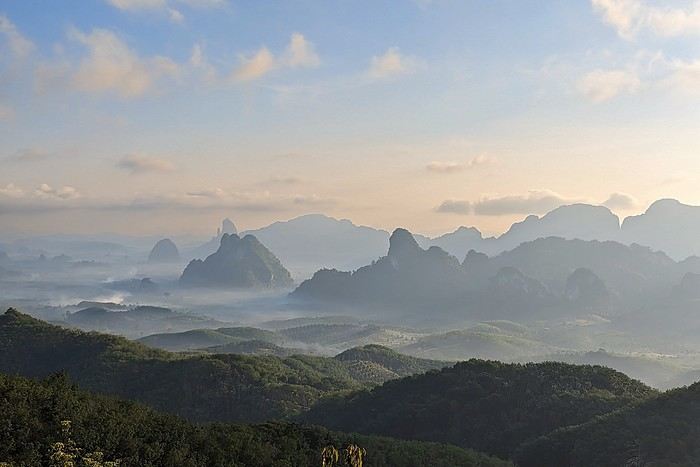
It might not be very original, but I see it hasn’t been suggested—or at least not for a very long time. I’d like to invite you to discover the beauty of the great outdoors through landscape photos. Whether they’re desert, sea, countryside, or mountain scenes—with or without other elements (people, buildings, animals, etc.)—they should make us want to dive right in without hesitation.
To participate: Photo submissions until Wednesday, June 24 at 11:59 PM You can post up to 3 photos, numbered and shared in separate messages, along with a short description of the place and the story behind it.
To vote: from Thursday, June 25 at 12:01 AM to Monday, June 29 at 11:59 PM After the deadline, it’s too late!
Please include the photo number, username, and the points awarded: Photo #1 = 3 pts Photo #2 = 2 pts Photo #3 = 1 pt
All VF members can vote (even those who didn’t submit photos). In case of a tie for first place, the winning photo will be the one with the most first-place votes, then second-place votes! The lucky winner will get to organize July 2026’s photo contest.
For discussions about the theme, it’s here: Discussion thread for June 2026’s theme: Such a Beautiful Landscape
Good luck to everyone!
Philippe
Chumphon, Thailand: Doi Tapang
Back in Tunisia (live account)
Hi there,
On this forum, I shared my first trip to Tunisia from mid-February to early March (https://voyageforum.com/forum/impressions-tunisiennes-en-direct-d11460662/), a stay I enjoyed so much that six weeks later, I’m back in Tunisia for a full 15 days (I return on April 27).
This time, I landed in Monastir on a direct flight from Nice, again with Tunisair. We left about ten minutes late, and the flight lasted around 1 hour 30 minutes. A meal was served on board (cucumber salad with Edam-like cheese, carrots, and two small portions of dishes I couldn’t identify—semolina with peppers, olives, and parsley, two small rolls, a square of processed cheese, and a chocolate cake). It’s worth noting because it’s not common on flights this short.
In February, France and Tunisia were in the same time zone, but now Tunisia is one hour behind. This time difference and the flight duration work perfectly for a short 15-day trip since it takes me a few days to adjust to jet lag.
Luckily, I’d asked my hotel about the taxi fare from the airport because the drivers (there were several around me) didn’t hesitate to quote outrageous prices. The actual fare is 20 dinars, but one asked for 120 dinars. I refused, and another offered 60 dinars. I replied, "That’s too expensive—I’ll take the metro!" (Having tried the Tunis metro, I had no desire to repeat the experience in Monastir with a suitcase!). I started walking toward the metro, and one of the drivers caught up with me, saying, "20 dinars is fine!" I’ll skip the details, but the negotiation took a little while. When I arrived at the hotel, I told the receptionist someone had asked for 120 dinars. He put his hands to his head and said, "They’re awful!" He remembered our phone call two days earlier when I’d booked (he’s the one who told me I could take the metro).
The Mezri Hotel isn’t expensive. I got a sea-view room for 75 dinars (22 €). (I’d booked a balcony room for 90 dinars but wouldn’t have had time to enjoy it.) It’s well-located but noisy because there’s no double glazing. The receptionist is a very kind older gentleman. He called a friend whose wife is from Tozeur to find out if I should take a bus or a *louage* tomorrow and what time.
I arrived at the hotel around 7:00 PM and had time to stroll along the corniche to the ribat. Despite some run-down buildings, the seaside seemed livelier and cheerier than Sousse’s.
Monastir is the hometown of former president Bourguiba. I passed his mausoleum by taxi. There are Tunisian flags along the avenue by the sea because every year on April 6—the anniversary of Habib Bourguiba’s death—the president of the Republic visits the Bourguiba Mausoleum in Monastir to pay respects.
The taxi driver mentioned other Tunisian presidents. He complained about rising prices and insecurity, blaming President Kaïs Saïed (I’d already heard that security was better under Ben Ali).
At the end of my stay, I’ll take time to explore Monastir, but tomorrow morning, I’m off to Tozeur—a long bus ride awaits me.
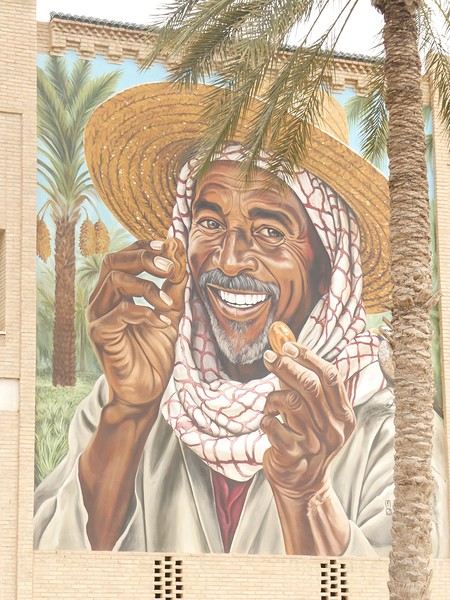

TO BE CONTINUED....
On this forum, I shared my first trip to Tunisia from mid-February to early March (https://voyageforum.com/forum/impressions-tunisiennes-en-direct-d11460662/), a stay I enjoyed so much that six weeks later, I’m back in Tunisia for a full 15 days (I return on April 27).
This time, I landed in Monastir on a direct flight from Nice, again with Tunisair. We left about ten minutes late, and the flight lasted around 1 hour 30 minutes. A meal was served on board (cucumber salad with Edam-like cheese, carrots, and two small portions of dishes I couldn’t identify—semolina with peppers, olives, and parsley, two small rolls, a square of processed cheese, and a chocolate cake). It’s worth noting because it’s not common on flights this short.
In February, France and Tunisia were in the same time zone, but now Tunisia is one hour behind. This time difference and the flight duration work perfectly for a short 15-day trip since it takes me a few days to adjust to jet lag.
Luckily, I’d asked my hotel about the taxi fare from the airport because the drivers (there were several around me) didn’t hesitate to quote outrageous prices. The actual fare is 20 dinars, but one asked for 120 dinars. I refused, and another offered 60 dinars. I replied, "That’s too expensive—I’ll take the metro!" (Having tried the Tunis metro, I had no desire to repeat the experience in Monastir with a suitcase!). I started walking toward the metro, and one of the drivers caught up with me, saying, "20 dinars is fine!" I’ll skip the details, but the negotiation took a little while. When I arrived at the hotel, I told the receptionist someone had asked for 120 dinars. He put his hands to his head and said, "They’re awful!" He remembered our phone call two days earlier when I’d booked (he’s the one who told me I could take the metro).
The Mezri Hotel isn’t expensive. I got a sea-view room for 75 dinars (22 €). (I’d booked a balcony room for 90 dinars but wouldn’t have had time to enjoy it.) It’s well-located but noisy because there’s no double glazing. The receptionist is a very kind older gentleman. He called a friend whose wife is from Tozeur to find out if I should take a bus or a *louage* tomorrow and what time.
I arrived at the hotel around 7:00 PM and had time to stroll along the corniche to the ribat. Despite some run-down buildings, the seaside seemed livelier and cheerier than Sousse’s.
Monastir is the hometown of former president Bourguiba. I passed his mausoleum by taxi. There are Tunisian flags along the avenue by the sea because every year on April 6—the anniversary of Habib Bourguiba’s death—the president of the Republic visits the Bourguiba Mausoleum in Monastir to pay respects.
The taxi driver mentioned other Tunisian presidents. He complained about rising prices and insecurity, blaming President Kaïs Saïed (I’d already heard that security was better under Ben Ali).
At the end of my stay, I’ll take time to explore Monastir, but tomorrow morning, I’m off to Tozeur—a long bus ride awaits me.
TO BE CONTINUED....
A Bold Combo: Southern Peru, Bolivia, and Northern Chile
Hello everyone,
For our latest 3-week family trip (yes, the kids are growing up, and two of them are about to enter the working world), we’re heading to South America! For our first time on this continent, I had planned a classic 3-week loop in Peru.
But since we won’t be returning to this part of the world anytime soon, I thought: why not follow in the footsteps of Franck, aka Bibouns51, who, in 18 days, didn’t just stick to Peru but also added two of the planet’s most stunning landscapes to his itinerary... the Salar de Uyuni in Bolivia and its neighbor, the fabulous Atacama Desert in northern Chile !!
So, I set about the tricky task of limiting the regions we’d visit in Peru to those we considered must-sees, to avoid rushing too much. The visit schedules were optimized, including several comfortable overnight buses that have the huge advantage of letting us hop between regions.
So, we’re off on a somewhat adventurous trip with three domestic flights (two on the first day and one on the last), two overnight buses for quick hops, several car rentals, the services of a few drivers to make the trip more comfortable, and even a tour operator for crossing the Salar...
Our main concern is altitude sickness, and we’re bringing Diamox, aspirin, etc., just in case.
Our second worry before departure was not even getting off the ground... Yes, for once, we’re leaving from France—Marseille, to be exact. The week before our departure, with the surprise air traffic controllers’ strike, I remembered why we usually prefer to leave from abroad, like Turin or Barcelona... In the end, it wasn’t the air traffic controllers who made us nervous but the early July wildfires that paralyzed the airport a few days before our departure. Fortunately, the fires were quickly brought under control, and on the big day, everything was smooth sailing!
Detailed itinerary (which changed on Day 1 due to departure hiccups): Day 0: Flight Marseille - Madrid - Lima PERU Theoretical and abandoned Day 1: Flight Lima - Cuzco and visit Cuzco (Puka Pukara, Tambomachay, Cristo Blanco Observatory, Sacsayhuaman sunset) - Night in Cuzco Day 2: Taxi -> Chinchero - Moray - Maras Salt Mines - Ollantaytambo - Train to Aguas Calientes Day 3: Machu Picchu - Return train to Ollantaytambo Day 4: 2-day taxi -> Pisac - Tipon - Andahuaylillas - Huaro - Night in San Pedro Day 5: Palcoyo - Checacupe - Vinicunca - Return and night in Cuzco Day 6: Day in Cuzco (catch-up on Sacsayhuaman, San Blas district, Temple of the Sun) - Overnight bus to Arequipa Day 7: Rental car -> On the road to Colca Canyon, night in Cabanaconde Day 8: Descent to the bottom of Colca Canyon, night at Oasis Sangalle Day 9: Ascent from the canyon - Maca - Chivay - Return and night in Arequipa Day 10: Visit Arequipa (Santa Catalina Convent, La Recoleta Church and Monastery, La Compañía Church, Cathedral) - Overnight bus to Puno Day 11: Lake Titicaca - Night in Puno BOLIVIA Day 12: Shared taxi -> Road to La Paz, visit downtown La Paz - Night 1 in La Paz Day 13: Moon Valley and Las Animas Valley - Night 2 in La Paz Day 14: Day in La Paz - Night 3 in La Paz Day 15: Flight to Uyuni - Day 1 of Salar de Uyuni tour - Night at the edge of the Salar Day 16: Crossing the Lipez region and lagoons - Night near Laguna Colorada Day 17: Sol de Mañana CHILE Day 17 cont.: Pre-booked transfer to SPDA - 4x4 rental - Pukara de Quitor - Stargazing tour - Night 1 in SPDA Day 18: Death Valley and Moon Valley - Night 2 in SPDA Day 19: Miscanti and Miniques Lagoons, Salar de Aguas Calientes and its Piedra Roja, Tebenquiche Lagoon and Quebrada del Diablo - Night 3 in SPDA Day 20: Rainbow Valley and swim in the Puritama River - Night 4 in SPDA Day 21: Tebenquiche Lagoon - Bus to Calama - Flight to Santiago Day 22: Return Santiago - Madrid - Marseille
Day 0 - 11/07: Destination Lima
Our first flight from Marseille went smoothly to our Iberia layover in Madrid.
In Madrid, just after getting off the plane around 8 PM, and as we were walking through the terminal, we got a rude awakening!!
We saw the word "Cancelled" next to our flight number on the display boards. Thinking it must be a glitch, we checked another screen, but the system was stubborn, and the same dreaded word appeared !
So, we headed to the Iberia counter, where an agent confirmed that our Friday evening flight was canceled and rescheduled for the next morning. The reason? A breakdown and no replacement plane, even though we were in Madrid, Iberia’s home base!
To make matters worse, I remembered our super-tight schedule, planned to the minute, with no buffer day in Lima. Since I’m a bit phobic of megacities and hadn’t found anything appealing in the Peruvian capital in our guidebooks, we’d planned to leave Lima as soon as possible for Cusco, the heart of the Sacred Valley, to spend our first day there.
Bad idea, because we already knew the 4-hour buffer wouldn’t be enough, and we’d miss the domestic flight, which was, of course, non-refundable and non-changeable. So, we had to call LATAM from Madrid to find another flight for Saturday evening and negotiate a rate to recover some of our initial outlay.
After an hour on the phone with customer service, several endless holds, and three failed attempts to dictate our credit card number over the phone to a Spaniard speaking English with a thick accent, we finally managed to confirm the transaction, securing our new flight tickets for a moderate extra cost of just 150 € total.
At first, we were pretty bummed about losing a day and incurring extra fees to reschedule the domestic flight, but then, when we learned from an Iberia customer service rep that we’d receive the max compensation of 600 € per traveler, we even ended up grinning... because 3000 € in refunds for only losing the first day in Cusco? We’d sign up for that 10 times over!!
Iberia then took care of us, putting us up in a hotel where we had dinner before a short 5-hour night and an early morning departure. I took the opportunity to improvise a quick day of sightseeing in Lima, focusing on the Barranco and Miraflores districts.
For our latest 3-week family trip (yes, the kids are growing up, and two of them are about to enter the working world), we’re heading to South America! For our first time on this continent, I had planned a classic 3-week loop in Peru.
But since we won’t be returning to this part of the world anytime soon, I thought: why not follow in the footsteps of Franck, aka Bibouns51, who, in 18 days, didn’t just stick to Peru but also added two of the planet’s most stunning landscapes to his itinerary... the Salar de Uyuni in Bolivia and its neighbor, the fabulous Atacama Desert in northern Chile !!
So, I set about the tricky task of limiting the regions we’d visit in Peru to those we considered must-sees, to avoid rushing too much. The visit schedules were optimized, including several comfortable overnight buses that have the huge advantage of letting us hop between regions.
So, we’re off on a somewhat adventurous trip with three domestic flights (two on the first day and one on the last), two overnight buses for quick hops, several car rentals, the services of a few drivers to make the trip more comfortable, and even a tour operator for crossing the Salar...
Our main concern is altitude sickness, and we’re bringing Diamox, aspirin, etc., just in case.
Our second worry before departure was not even getting off the ground... Yes, for once, we’re leaving from France—Marseille, to be exact. The week before our departure, with the surprise air traffic controllers’ strike, I remembered why we usually prefer to leave from abroad, like Turin or Barcelona... In the end, it wasn’t the air traffic controllers who made us nervous but the early July wildfires that paralyzed the airport a few days before our departure. Fortunately, the fires were quickly brought under control, and on the big day, everything was smooth sailing!
Detailed itinerary (which changed on Day 1 due to departure hiccups): Day 0: Flight Marseille - Madrid - Lima PERU Theoretical and abandoned Day 1: Flight Lima - Cuzco and visit Cuzco (Puka Pukara, Tambomachay, Cristo Blanco Observatory, Sacsayhuaman sunset) - Night in Cuzco Day 2: Taxi -> Chinchero - Moray - Maras Salt Mines - Ollantaytambo - Train to Aguas Calientes Day 3: Machu Picchu - Return train to Ollantaytambo Day 4: 2-day taxi -> Pisac - Tipon - Andahuaylillas - Huaro - Night in San Pedro Day 5: Palcoyo - Checacupe - Vinicunca - Return and night in Cuzco Day 6: Day in Cuzco (catch-up on Sacsayhuaman, San Blas district, Temple of the Sun) - Overnight bus to Arequipa Day 7: Rental car -> On the road to Colca Canyon, night in Cabanaconde Day 8: Descent to the bottom of Colca Canyon, night at Oasis Sangalle Day 9: Ascent from the canyon - Maca - Chivay - Return and night in Arequipa Day 10: Visit Arequipa (Santa Catalina Convent, La Recoleta Church and Monastery, La Compañía Church, Cathedral) - Overnight bus to Puno Day 11: Lake Titicaca - Night in Puno BOLIVIA Day 12: Shared taxi -> Road to La Paz, visit downtown La Paz - Night 1 in La Paz Day 13: Moon Valley and Las Animas Valley - Night 2 in La Paz Day 14: Day in La Paz - Night 3 in La Paz Day 15: Flight to Uyuni - Day 1 of Salar de Uyuni tour - Night at the edge of the Salar Day 16: Crossing the Lipez region and lagoons - Night near Laguna Colorada Day 17: Sol de Mañana CHILE Day 17 cont.: Pre-booked transfer to SPDA - 4x4 rental - Pukara de Quitor - Stargazing tour - Night 1 in SPDA Day 18: Death Valley and Moon Valley - Night 2 in SPDA Day 19: Miscanti and Miniques Lagoons, Salar de Aguas Calientes and its Piedra Roja, Tebenquiche Lagoon and Quebrada del Diablo - Night 3 in SPDA Day 20: Rainbow Valley and swim in the Puritama River - Night 4 in SPDA Day 21: Tebenquiche Lagoon - Bus to Calama - Flight to Santiago Day 22: Return Santiago - Madrid - Marseille
Day 0 - 11/07: Destination Lima
Our first flight from Marseille went smoothly to our Iberia layover in Madrid.
In Madrid, just after getting off the plane around 8 PM, and as we were walking through the terminal, we got a rude awakening!!
We saw the word "Cancelled" next to our flight number on the display boards. Thinking it must be a glitch, we checked another screen, but the system was stubborn, and the same dreaded word appeared !
So, we headed to the Iberia counter, where an agent confirmed that our Friday evening flight was canceled and rescheduled for the next morning. The reason? A breakdown and no replacement plane, even though we were in Madrid, Iberia’s home base!
To make matters worse, I remembered our super-tight schedule, planned to the minute, with no buffer day in Lima. Since I’m a bit phobic of megacities and hadn’t found anything appealing in the Peruvian capital in our guidebooks, we’d planned to leave Lima as soon as possible for Cusco, the heart of the Sacred Valley, to spend our first day there.
Bad idea, because we already knew the 4-hour buffer wouldn’t be enough, and we’d miss the domestic flight, which was, of course, non-refundable and non-changeable. So, we had to call LATAM from Madrid to find another flight for Saturday evening and negotiate a rate to recover some of our initial outlay.
After an hour on the phone with customer service, several endless holds, and three failed attempts to dictate our credit card number over the phone to a Spaniard speaking English with a thick accent, we finally managed to confirm the transaction, securing our new flight tickets for a moderate extra cost of just 150 € total.
At first, we were pretty bummed about losing a day and incurring extra fees to reschedule the domestic flight, but then, when we learned from an Iberia customer service rep that we’d receive the max compensation of 600 € per traveler, we even ended up grinning... because 3000 € in refunds for only losing the first day in Cusco? We’d sign up for that 10 times over!!
Iberia then took care of us, putting us up in a hotel where we had dinner before a short 5-hour night and an early morning departure. I took the opportunity to improvise a quick day of sightseeing in Lima, focusing on the Barranco and Miraflores districts.
Some trips are born twice - Peru April - May 2025
Some trips are born twice.
Ours was supposed to happen in 2020. Everything was ready: the itinerary, the flight tickets, hotel reservations and Machu Picchu, the rental car, dreams of high altitudes and wide-open spaces. And then the world stopped.
Like so many other plans, our trip to Peru was put on hold. Disappointment was followed by a more concrete reality: paperwork, endless back-and-forth, and battles to recover some of the costs we’d already paid.
The years went by. Life moved on, with its shifting priorities and unexpected twists. Rescheduling this trip wasn’t possible until 2025.
The itinerary stayed mostly true to what we’d imagined five years earlier. One major difference, though—in 2020, we’d planned to rent a car and explore the roads completely independently. Most importantly, we hadn’t included the three-day Ausangate trek, due to lack of time.
For 2025, our plans evolved. 4x4 rental prices had skyrocketed, and when we looked at our schedule more closely, we realized quite a few days didn’t actually need a vehicle. So we made a different choice and opted for private drivers instead. A decision we never regretted. Always punctual, thoughtful, and available... they were so much more than just drivers.
All our reservations were made in January, except for the trek, which we booked in February.
Finding reliable drivers on our own was tough, so we asked Laurent from Tout Pérou to handle it for us. Going through Tout Pérou also gave us a discount on the train ride to Aguas Calientes, so Laurent booked those tickets too. He also bought our Machu Picchu entrance tickets at the same price we would’ve paid on the official website. When comparing domestic flight prices, we found it was cheaper to book from Peru, so Laurent took care of those as well.
This time, nothing was going to stop us. Peru was waiting. And we were ready. 🙂
Ours was supposed to happen in 2020. Everything was ready: the itinerary, the flight tickets, hotel reservations and Machu Picchu, the rental car, dreams of high altitudes and wide-open spaces. And then the world stopped.
Like so many other plans, our trip to Peru was put on hold. Disappointment was followed by a more concrete reality: paperwork, endless back-and-forth, and battles to recover some of the costs we’d already paid.
The years went by. Life moved on, with its shifting priorities and unexpected twists. Rescheduling this trip wasn’t possible until 2025.
The itinerary stayed mostly true to what we’d imagined five years earlier. One major difference, though—in 2020, we’d planned to rent a car and explore the roads completely independently. Most importantly, we hadn’t included the three-day Ausangate trek, due to lack of time.
For 2025, our plans evolved. 4x4 rental prices had skyrocketed, and when we looked at our schedule more closely, we realized quite a few days didn’t actually need a vehicle. So we made a different choice and opted for private drivers instead. A decision we never regretted. Always punctual, thoughtful, and available... they were so much more than just drivers.
All our reservations were made in January, except for the trek, which we booked in February.
Finding reliable drivers on our own was tough, so we asked Laurent from Tout Pérou to handle it for us. Going through Tout Pérou also gave us a discount on the train ride to Aguas Calientes, so Laurent booked those tickets too. He also bought our Machu Picchu entrance tickets at the same price we would’ve paid on the official website. When comparing domestic flight prices, we found it was cheaper to book from Peru, so Laurent took care of those as well.
This time, nothing was going to stop us. Peru was waiting. And we were ready. 🙂
Arusha, Tanzania - October 2025
I would wish never to go to bed where I had woken up, to wander my tent from the shores of Egypt to those of the Persian Gulf; to have no goal for the evening other than the evening itself; to traverse on foot, with my eyes and my heart, all these unknown lands, all these races of people so different from my own; to contemplate humanity, God’s finest creation, in all its forms.
Lamartine in Fatalla Sayeghir’s Account (1861)
As soon as it’s about flying, I lose all willpower. Being reasonable and thoughtful, I still lose all my composure at the mere possibility of a flight—especially if it’s piloted by F.—and even more so if that flight can take me to unexplored lands. I’ve long wanted to unravel the mystery of animal tourism, and why not in Tanzania, following up on my trip from four years ago, when I was already questioning the glaring inequalities in Zanzibar: the coastal strip sacrificed to capitalism, and the inland areas, just a hundred meters from the waves, where you find—though a bit more peaceful than elsewhere on the continent—the chaos of Africa.
I’m an adventurer at heart. When it comes to the terrain, though, it’s a whole different story. I see people setting off for months at a time; I know my endurance doesn’t last beyond three days. It’s not that I’m afraid of this unfamiliar environment when it comes to embracing different realities. I’m mostly afraid of myself—of this heightened sensitivity that makes me see things I’d rather not see and understand others that sometimes overwhelm me.
After an absolutely fantastic daytime flight, I land in Zanzibar and have to resign myself—this is the whole point of the trip—to what feels like a real spacewalk. I’m alone. My lucky star, backed up by my phone, will serve as my lifeline. I step out of the airport and breathe in the scent of Africa full-on: a mix of exotic perfumes, baked earth, and poorly refined fuel, inevitably mingled with the smell of wood smoke. So many images come flooding back. So many stories. Another world.
I head to Arusha the very next day. The gateway to the country’s northern national parks, this city of half a million offers one of those rare breath-holding dives that Africa keeps secret. As the only white person walking the streets, I know I’m visible and vulnerable, yet I move forward confidently, barely bothered. But where are all my fellow Westerners? While this city draws countless tourists, I only cross paths with one white couple in nearly three hours of walking. Because you have to hold on tight to wander here. You have to stay alert. The traffic is dense and erratic—don’t even trust the fact that in Tanzania, people drive on the left. That can change from one minute to the next, especially with motorbikes. With barely centimeters between vehicles, I weave my way through the urban jungle, trying not to stumble into the huge ditch on my left or get sideswiped by cars brushing past me on the right. Speakers blare music, ads, or political speeches at will—the explosion of yellow and green tells us we’re on the eve of the presidential election—but they barely compete with the calls to prayer, nearly nonstop on this holy Friday. The vital space is as saturated as the sound. Imagine an unbroken line of shops and stalls of every kind—supermarkets haven’t made it here yet—where you can find just about anything: phones, copper pipes, Chinese-made hardware, shoes, clothes, basins, and professional tools… The luckiest own a big store; others spend their lives trying to survive on the profits from selling toothbrushes one at a time on the streets. But maybe it’s more lucrative than spending the day slumped on the sidewalk, preferably missing a limb, trusting your survival to the mercy of passersby.
I think I’ll escape the street by slipping into the narrow alleys of the central market. Here, I know I won’t run into anyone like me! The vendors’ stalls start at waist height; the sellers, perched higher up, haggle or not while discussing prices. Here, colorful fruits and vegetables; there, huge piles of dried fish. Spices, seeds, roots. Smells. Noises. Africa. Life. Further on, the fresh fish aisle makes a right angle with the butchers’. Everywhere, flies—everywhere, the same gesture from vendors swatting blindly at these relentless pests. Aware that I’ll be eating this same meat within the hour, displayed with total disregard for basic hygiene, I reassure myself that Arusha sits at 1400m altitude. Yes, we can probably do without a fridge.
*
It’s time to leave the city and go wildlife spotting in the surrounding parks. To that end, I’ve negotiated a package deal with a local agency that prides itself on grouping solo travelers into a vehicle meant for seven. We leave behind the imposing masses of Mount Meru and Kilimanjaro, peaking at 4565m and 5895m respectively, and head west to conquer Tarangire and Ngorongoro parks. I’ve been promised a spectacle; I remain cautious. I’ve read rave reviews; I know how to temper my expectations. Above all, I know what I came for—and paradoxically, my hopes are less about animals than strictly anthropological. So I’m sure I won’t go home disappointed.
I’m in the thick of it. Since 2021, tourism has been booming: I’m one of the two million tourists who come here every year seeking thrills. I also contribute, in a small way, to the 20% of the country’s GDP generated by tourism revenue. Around 3 billion € annually… Tanzania has 16 national parks, twice as many reserves; it charges meticulously for every entry, every night, every activity, to the tune of several dozen euros. I calculated that Tarangire Park alone rakes in around 15 million € a year. Mind-boggling. Yet to get there, a dusty, rickety old track is used daily by hundreds of vehicles that literally saturate the surrounding area with white dust and exhaust fumes. At the park entrance, we wait a good hour while the driver pays the entry fees. Then it’s a free-for-all: dozens of 4x4s try to enter at the same time through the single access point, to the left of the building, while the three barriers are stuck due to a computer glitch. It’s pure chaos: no way to buy your ticket in advance—the QR code revolution hasn’t arrived; no smart layout before the barriers; nothing smooth, nothing practical, everything improvised.
So, the animals? Given the time and money involved, I’d be tempted to say it’s not worth the hassle and there’s really no need to break five legs off one of the too-many zebras we pass. Hours and hours of travel to get to Tanzania, specifically Arusha; hours and hours on the road—up to 12 hours a day—to spend barely three in the parks; at least 200 € per day for the most basic option, so 400 € in my case, and up to several thousand for those wealthy couples opting for the luxury package with a private vehicle. Sure, I saw zebras and elephants in their natural habitat, wildebeest, buffalo, and a few hippos, but I didn’t feel the thrill touted in the articles or even by my two-day trip organizer. Would I have been more satisfied if I’d seen the lion, the leopard, and the rhino? Maybe. But the story won’t be rewritten in light of those assumptions.
Yet I’m not disappointed. As I said earlier: I know what I came for. I wanted to see the world as it is with my own eyes. And the safari world fascinates me more for its anthropological aspect than for what it offers. Yes, the fact that people from all over the world come here, juggling hotels and big 4x4s—while notably avoiding the streets of cities and villages—truly fascinates me. Two worlds coexist on either side of a barely porous border. As soon as the tourist sets foot in the airport, they’re whisked away, sight unseen, into a tourist vehicle. Dropped off at the hotel, they rest there, shielded from view, until the 4x4 departs. Then they speed through those same cities and villages they scorn out of fear or disdain, leaving on the roadside the Maasai herding their flocks and all those poignant or mundane scenes that make up daily African life. In the evening, in their lodge, far from the city’s pulse, they fall asleep thinking about the images they’ve collected, those long hours on the road, the wait for the animals. And the days go by… Maybe the term *luxury*, whether for food or accommodation, refers to what we experience as utterly ordinary in the West? Forgetting that you’re there, in Africa, just steps away from poverty and a certain arbitrariness. And at the end of the journey: back to the airport, back to normal life.
Maybe we need to take a broader view. All that money seems invisible, yet it must serve the population at some point, right? The main roads are passable, the power grid seems well-maintained—I can tell by the excellent condition of the high-voltage transmission towers. Is it really too expensive to significantly improve all the infrastructure? I hoped this windfall would truly serve the people’s interests. The driver taking me back to the airport on the last evening dashes my sweet illusions: « All this is bad. Africa is bad. But you have no choice. The hospitals don’t work, the schools don’t work, the roads don’t work (just as he says this, roadworks force us onto a terrible detour for several kilometers—a rutted track, in fact), and if you say anything, if you speak up too much, they come for you and then you disappear. » That’s just one opinion. Nothing empirical. But I don’t need to be a West Point graduate to realize how rampant corruption is in these regions: while the muezzin bellows the greatness of Allah, I consider the dilapidated equipment and the energy expended by the masses just to survive here. But maybe all that money keeps the country afloat by paying civil servants’ salaries? Meanwhile, one thing is certain: regardless of where the profits go, tourism supports millions of people, and I’m in no position to judge this system too harshly. Maybe I’m too much of an aesthete to appreciate the almost exclusive use of corrugated iron at its true value…
*
I’ll give this system credit for one thing: the chance to set foot in spaces impossible to visit otherwise. At one point, in the heart of the Ngorongoro Crater—a vast 20km-wide plain topped by a 600m-high caldera—I was simply happy to be there. Barely bothered by the constant ballet of 4x4s—the space is vast—I contemplate the simple life of the local animals. Buffalo, wildebeest, zebras as numerous as the flamingos patiently standing on one leg, waiting for the day to pass. Over there, you can make out a few hyenas with vultures circling above. Finally, in a large body of water, hippos surface at regular intervals. I’m aware of my luck. I’m especially aware that, unlike all the people I’ve met there, a lot of money and a little resourcefulness greatly favor the luck factor.
I’m heading home. I soak up the last images of this improbable Africa as night falls quickly over the countryside. I’m fascinated by the number of Maasai herding their livestock along the main road. Some pass the time, globalization obliges, on an old phone; others, sometimes as young as my eldest—barely 10 years old—watch us pass, indifferent. We overtake or are overtaken; the two-lane road is the stage for a majestic ballet of semi-trailers, *dalas-dalas*, and other 4x4s, as numerous as the names of their companies: Leopard Tours, Climbing Kilimanjaro, Smiling Zebra, Nomad Life Enhanced, Elephant Roaming, Mountain Warrior, Master of the Ambush… They drop me off at the hotel, where I have an hour to shower and change into clean clothes before my return flight. Already, I’m slipping back into my own world without really seeing it, leaving behind the hotel’s glass window that African life to which nothing truly binds me. Then that chaotic, suffocating nighttime drive to the airport. Check-in; the stupid questions (« Where are you going? »); the slow police officer who, in the end, stamps my passport anywhere; the idiocy of the security agent (my empty 33cl bottle is forbidden); the rather shabby lounge at Kilimanjaro Airport. Then the return to the vessel—to the Air France plane that left Zanzibar an hour earlier—after this 72-hour spacewalk without a real lifeline. I’ve never been so happy to see F. again.
As soon as it’s about flying, I lose all willpower. Being reasonable and thoughtful, I still lose all my composure at the mere possibility of a flight—especially if it’s piloted by F.—and even more so if that flight can take me to unexplored lands. I’ve long wanted to unravel the mystery of animal tourism, and why not in Tanzania, following up on my trip from four years ago, when I was already questioning the glaring inequalities in Zanzibar: the coastal strip sacrificed to capitalism, and the inland areas, just a hundred meters from the waves, where you find—though a bit more peaceful than elsewhere on the continent—the chaos of Africa.
I’m an adventurer at heart. When it comes to the terrain, though, it’s a whole different story. I see people setting off for months at a time; I know my endurance doesn’t last beyond three days. It’s not that I’m afraid of this unfamiliar environment when it comes to embracing different realities. I’m mostly afraid of myself—of this heightened sensitivity that makes me see things I’d rather not see and understand others that sometimes overwhelm me.
After an absolutely fantastic daytime flight, I land in Zanzibar and have to resign myself—this is the whole point of the trip—to what feels like a real spacewalk. I’m alone. My lucky star, backed up by my phone, will serve as my lifeline. I step out of the airport and breathe in the scent of Africa full-on: a mix of exotic perfumes, baked earth, and poorly refined fuel, inevitably mingled with the smell of wood smoke. So many images come flooding back. So many stories. Another world.
I head to Arusha the very next day. The gateway to the country’s northern national parks, this city of half a million offers one of those rare breath-holding dives that Africa keeps secret. As the only white person walking the streets, I know I’m visible and vulnerable, yet I move forward confidently, barely bothered. But where are all my fellow Westerners? While this city draws countless tourists, I only cross paths with one white couple in nearly three hours of walking. Because you have to hold on tight to wander here. You have to stay alert. The traffic is dense and erratic—don’t even trust the fact that in Tanzania, people drive on the left. That can change from one minute to the next, especially with motorbikes. With barely centimeters between vehicles, I weave my way through the urban jungle, trying not to stumble into the huge ditch on my left or get sideswiped by cars brushing past me on the right. Speakers blare music, ads, or political speeches at will—the explosion of yellow and green tells us we’re on the eve of the presidential election—but they barely compete with the calls to prayer, nearly nonstop on this holy Friday. The vital space is as saturated as the sound. Imagine an unbroken line of shops and stalls of every kind—supermarkets haven’t made it here yet—where you can find just about anything: phones, copper pipes, Chinese-made hardware, shoes, clothes, basins, and professional tools… The luckiest own a big store; others spend their lives trying to survive on the profits from selling toothbrushes one at a time on the streets. But maybe it’s more lucrative than spending the day slumped on the sidewalk, preferably missing a limb, trusting your survival to the mercy of passersby.
I think I’ll escape the street by slipping into the narrow alleys of the central market. Here, I know I won’t run into anyone like me! The vendors’ stalls start at waist height; the sellers, perched higher up, haggle or not while discussing prices. Here, colorful fruits and vegetables; there, huge piles of dried fish. Spices, seeds, roots. Smells. Noises. Africa. Life. Further on, the fresh fish aisle makes a right angle with the butchers’. Everywhere, flies—everywhere, the same gesture from vendors swatting blindly at these relentless pests. Aware that I’ll be eating this same meat within the hour, displayed with total disregard for basic hygiene, I reassure myself that Arusha sits at 1400m altitude. Yes, we can probably do without a fridge.
*
It’s time to leave the city and go wildlife spotting in the surrounding parks. To that end, I’ve negotiated a package deal with a local agency that prides itself on grouping solo travelers into a vehicle meant for seven. We leave behind the imposing masses of Mount Meru and Kilimanjaro, peaking at 4565m and 5895m respectively, and head west to conquer Tarangire and Ngorongoro parks. I’ve been promised a spectacle; I remain cautious. I’ve read rave reviews; I know how to temper my expectations. Above all, I know what I came for—and paradoxically, my hopes are less about animals than strictly anthropological. So I’m sure I won’t go home disappointed.
I’m in the thick of it. Since 2021, tourism has been booming: I’m one of the two million tourists who come here every year seeking thrills. I also contribute, in a small way, to the 20% of the country’s GDP generated by tourism revenue. Around 3 billion € annually… Tanzania has 16 national parks, twice as many reserves; it charges meticulously for every entry, every night, every activity, to the tune of several dozen euros. I calculated that Tarangire Park alone rakes in around 15 million € a year. Mind-boggling. Yet to get there, a dusty, rickety old track is used daily by hundreds of vehicles that literally saturate the surrounding area with white dust and exhaust fumes. At the park entrance, we wait a good hour while the driver pays the entry fees. Then it’s a free-for-all: dozens of 4x4s try to enter at the same time through the single access point, to the left of the building, while the three barriers are stuck due to a computer glitch. It’s pure chaos: no way to buy your ticket in advance—the QR code revolution hasn’t arrived; no smart layout before the barriers; nothing smooth, nothing practical, everything improvised.
So, the animals? Given the time and money involved, I’d be tempted to say it’s not worth the hassle and there’s really no need to break five legs off one of the too-many zebras we pass. Hours and hours of travel to get to Tanzania, specifically Arusha; hours and hours on the road—up to 12 hours a day—to spend barely three in the parks; at least 200 € per day for the most basic option, so 400 € in my case, and up to several thousand for those wealthy couples opting for the luxury package with a private vehicle. Sure, I saw zebras and elephants in their natural habitat, wildebeest, buffalo, and a few hippos, but I didn’t feel the thrill touted in the articles or even by my two-day trip organizer. Would I have been more satisfied if I’d seen the lion, the leopard, and the rhino? Maybe. But the story won’t be rewritten in light of those assumptions.
Yet I’m not disappointed. As I said earlier: I know what I came for. I wanted to see the world as it is with my own eyes. And the safari world fascinates me more for its anthropological aspect than for what it offers. Yes, the fact that people from all over the world come here, juggling hotels and big 4x4s—while notably avoiding the streets of cities and villages—truly fascinates me. Two worlds coexist on either side of a barely porous border. As soon as the tourist sets foot in the airport, they’re whisked away, sight unseen, into a tourist vehicle. Dropped off at the hotel, they rest there, shielded from view, until the 4x4 departs. Then they speed through those same cities and villages they scorn out of fear or disdain, leaving on the roadside the Maasai herding their flocks and all those poignant or mundane scenes that make up daily African life. In the evening, in their lodge, far from the city’s pulse, they fall asleep thinking about the images they’ve collected, those long hours on the road, the wait for the animals. And the days go by… Maybe the term *luxury*, whether for food or accommodation, refers to what we experience as utterly ordinary in the West? Forgetting that you’re there, in Africa, just steps away from poverty and a certain arbitrariness. And at the end of the journey: back to the airport, back to normal life.
Maybe we need to take a broader view. All that money seems invisible, yet it must serve the population at some point, right? The main roads are passable, the power grid seems well-maintained—I can tell by the excellent condition of the high-voltage transmission towers. Is it really too expensive to significantly improve all the infrastructure? I hoped this windfall would truly serve the people’s interests. The driver taking me back to the airport on the last evening dashes my sweet illusions: « All this is bad. Africa is bad. But you have no choice. The hospitals don’t work, the schools don’t work, the roads don’t work (just as he says this, roadworks force us onto a terrible detour for several kilometers—a rutted track, in fact), and if you say anything, if you speak up too much, they come for you and then you disappear. » That’s just one opinion. Nothing empirical. But I don’t need to be a West Point graduate to realize how rampant corruption is in these regions: while the muezzin bellows the greatness of Allah, I consider the dilapidated equipment and the energy expended by the masses just to survive here. But maybe all that money keeps the country afloat by paying civil servants’ salaries? Meanwhile, one thing is certain: regardless of where the profits go, tourism supports millions of people, and I’m in no position to judge this system too harshly. Maybe I’m too much of an aesthete to appreciate the almost exclusive use of corrugated iron at its true value…
*
I’ll give this system credit for one thing: the chance to set foot in spaces impossible to visit otherwise. At one point, in the heart of the Ngorongoro Crater—a vast 20km-wide plain topped by a 600m-high caldera—I was simply happy to be there. Barely bothered by the constant ballet of 4x4s—the space is vast—I contemplate the simple life of the local animals. Buffalo, wildebeest, zebras as numerous as the flamingos patiently standing on one leg, waiting for the day to pass. Over there, you can make out a few hyenas with vultures circling above. Finally, in a large body of water, hippos surface at regular intervals. I’m aware of my luck. I’m especially aware that, unlike all the people I’ve met there, a lot of money and a little resourcefulness greatly favor the luck factor.
I’m heading home. I soak up the last images of this improbable Africa as night falls quickly over the countryside. I’m fascinated by the number of Maasai herding their livestock along the main road. Some pass the time, globalization obliges, on an old phone; others, sometimes as young as my eldest—barely 10 years old—watch us pass, indifferent. We overtake or are overtaken; the two-lane road is the stage for a majestic ballet of semi-trailers, *dalas-dalas*, and other 4x4s, as numerous as the names of their companies: Leopard Tours, Climbing Kilimanjaro, Smiling Zebra, Nomad Life Enhanced, Elephant Roaming, Mountain Warrior, Master of the Ambush… They drop me off at the hotel, where I have an hour to shower and change into clean clothes before my return flight. Already, I’m slipping back into my own world without really seeing it, leaving behind the hotel’s glass window that African life to which nothing truly binds me. Then that chaotic, suffocating nighttime drive to the airport. Check-in; the stupid questions (« Where are you going? »); the slow police officer who, in the end, stamps my passport anywhere; the idiocy of the security agent (my empty 33cl bottle is forbidden); the rather shabby lounge at Kilimanjaro Airport. Then the return to the vessel—to the Air France plane that left Zanzibar an hour earlier—after this 72-hour spacewalk without a real lifeline. I’ve never been so happy to see F. again.
Chatting by the water
For those who want to chat quietly by the riverbanks, this is the place!
February contest theme: lakes and ponds around the world
Let’s stick with the water theme—it’s definitely the season (maybe a bit *too* much for some of those dealing with floods 😕).
After the flowing waters (with varying energy levels), let’s take it easy with still waters:
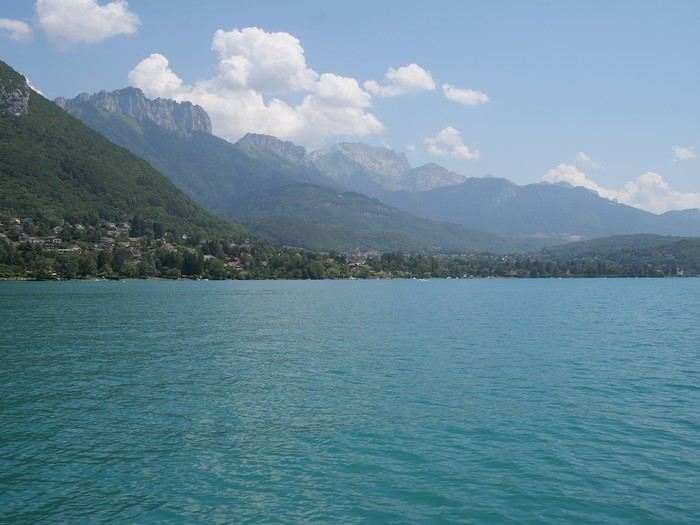 Lakes (Annecy)
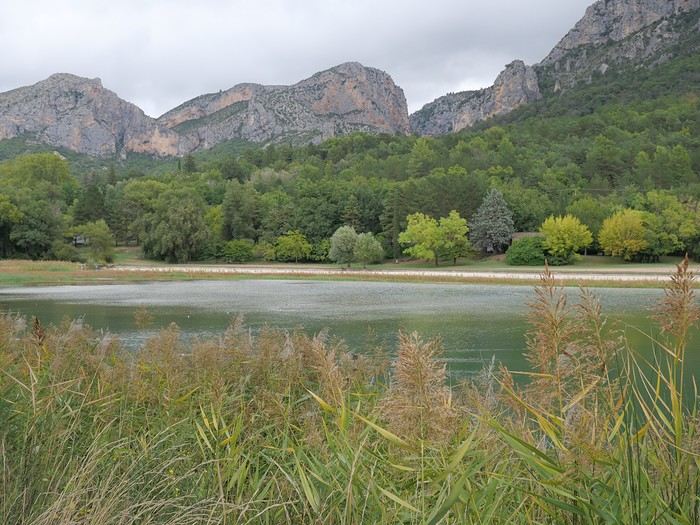 Ponds (near Moustiers Saint Marie)
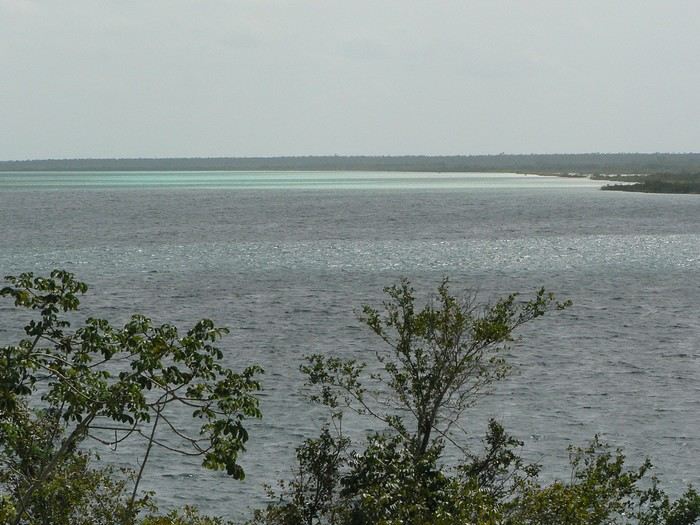 Lagoons (Bacalar)
If you’ve got nice photos of a pond—or even a puddle—why not? Natural bodies of water only: no pools or fountains (reservoir lakes are accepted… because they often look like natural lakes ).
The contest rules are the same as always 😉: Up to 3 photos per member, one photo per post (a little explanation is better), and past winning photos from other VF contests aren’t allowed. You have until Sunday, February 22nd at 11:59 PM (Paris time) to post your photos. Voting starts Monday the 23rd at midnight—rank your top 3 photos in order (3, 2, and 1 points). Voting ends Saturday, February 28th at 11:59 PM. Results will be announced on March 1st. The winning photo is the one with the most points (in case of a tie, the photo ranked first the most times wins). The lucky winner gets to organize March’s contest 😎.
Dig into your archives…
Lakes (Annecy)
Ponds (near Moustiers Saint Marie)
Lagoons (Bacalar)If you’ve got nice photos of a pond—or even a puddle—why not? Natural bodies of water only: no pools or fountains (reservoir lakes are accepted… because they often look like natural lakes ).
The contest rules are the same as always 😉: Up to 3 photos per member, one photo per post (a little explanation is better), and past winning photos from other VF contests aren’t allowed. You have until Sunday, February 22nd at 11:59 PM (Paris time) to post your photos. Voting starts Monday the 23rd at midnight—rank your top 3 photos in order (3, 2, and 1 points). Voting ends Saturday, February 28th at 11:59 PM. Results will be announced on March 1st. The winning photo is the one with the most points (in case of a tie, the photo ranked first the most times wins). The lucky winner gets to organize March’s contest 😎.
Dig into your archives…
7 weeks and 150 years between us on a southern Morocco road trip
We arrive in the evening in Marrakesh, and a taxi arranged by our friendly Riad is waiting for us. The driver takes us to the door, where we’re briefly greeted by our hosts. The room is heated—phew—because it’s really cold on this January 17th for our arrival. Riad Alisma, where we’re staying for 2 nights. The next morning, it’s pouring rain when we wake up, but after a good breakfast, the rain has calmed down. Off we go to the medersa, which allows for a relatively sheltered visit. We’d visited this palace 15 years ago—it’s been renovated since then.
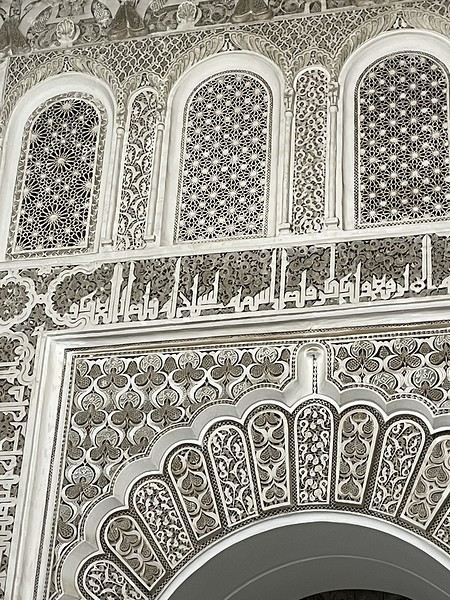
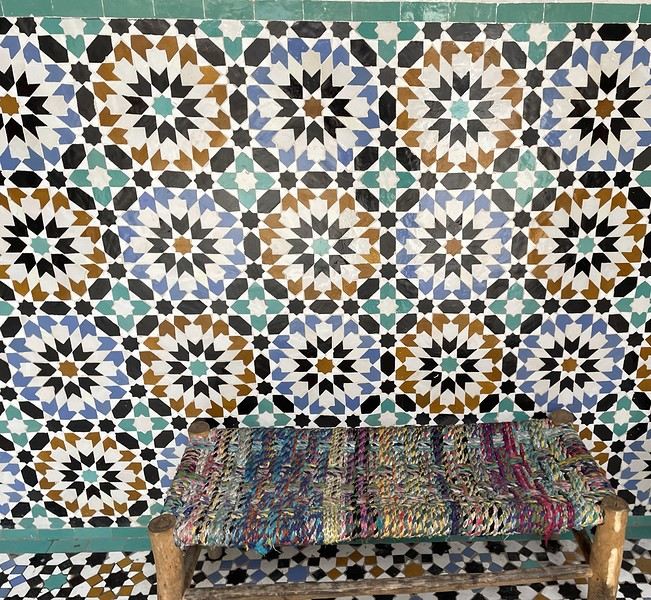
From there, without the rain, we wander aimlessly and eventually end up near the tanneries, but it’s Sunday, and there’s very little activity. Of course, we get hassled by a tout.
Here, the hides after being treated with lime—I love the colors.
We part ways a bit annoyed. He gets a little revenge by giving us bad directions, and we end up outside the city walls. We decide to take a taxi to the new modern art museum—60 dirhams for the 5 km, which is nothing when you think about it. That tout, who we didn’t ask for anything and made it clear we weren’t buying anything, dragged us into a shop supposedly only open that day and demanded 50 dirhams for his "services"! Let’s forget that bad moment and enjoy the exhibition at the MACAL.
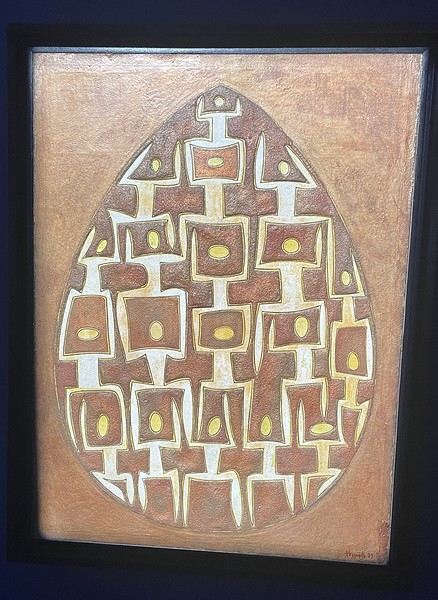
The taxi on the way back drops us off at Place des Ferblantiers, not far from our Riad. We’re a little peckish—it’s worth mentioning that at lunchtime, we only ate a plate of beans from a street vendor. So, we buy a bunch of little sweets, each more delicious than the last, at Ajar. We snack while sipping mint tea and watching life go by around us. A final visit to the Museum of Moroccan Cuisine on our way back helps us dodge a few more showers. Then it’s back to the Riad. The atmosphere in the city is heating up—it’s the AFCON final tonight. The temperatures, though? Not so much. We ordered a meal at the Riad, and it was a good call—not only was it really tasty, but the rain also picked up again. Our day in Marrakesh ends under the covers with a good book and some photo sorting. Still, we managed 10,750 steps. View of our Riad
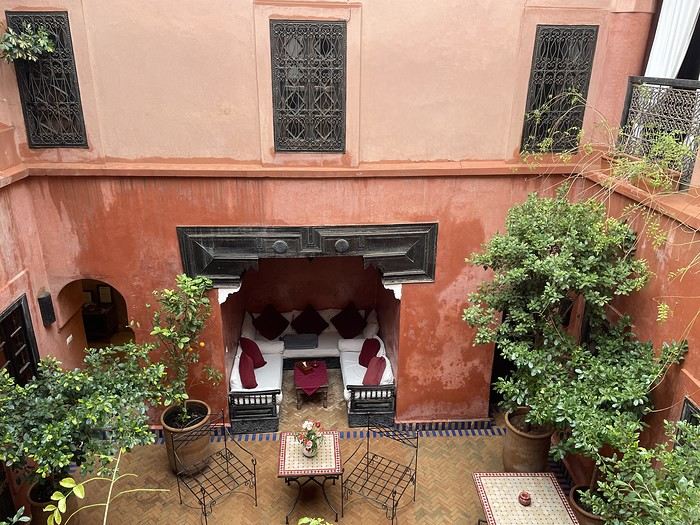
Tomorrow, we’ll pick up our rental car from Medloc and head to Essaouira.
From there, without the rain, we wander aimlessly and eventually end up near the tanneries, but it’s Sunday, and there’s very little activity. Of course, we get hassled by a tout.
Here, the hides after being treated with lime—I love the colors.
We part ways a bit annoyed. He gets a little revenge by giving us bad directions, and we end up outside the city walls. We decide to take a taxi to the new modern art museum—60 dirhams for the 5 km, which is nothing when you think about it. That tout, who we didn’t ask for anything and made it clear we weren’t buying anything, dragged us into a shop supposedly only open that day and demanded 50 dirhams for his "services"! Let’s forget that bad moment and enjoy the exhibition at the MACAL.
The taxi on the way back drops us off at Place des Ferblantiers, not far from our Riad. We’re a little peckish—it’s worth mentioning that at lunchtime, we only ate a plate of beans from a street vendor. So, we buy a bunch of little sweets, each more delicious than the last, at Ajar. We snack while sipping mint tea and watching life go by around us. A final visit to the Museum of Moroccan Cuisine on our way back helps us dodge a few more showers. Then it’s back to the Riad. The atmosphere in the city is heating up—it’s the AFCON final tonight. The temperatures, though? Not so much. We ordered a meal at the Riad, and it was a good call—not only was it really tasty, but the rain also picked up again. Our day in Marrakesh ends under the covers with a good book and some photo sorting. Still, we managed 10,750 steps. View of our Riad
Tomorrow, we’ll pick up our rental car from Medloc and head to Essaouira.
In the midst of Kenya's wildlife, October 2025
Hello everyone,
After sharing some safari photos from southern Tanzania, I’d like to show you those from our latest safari in Kenya in October 2025.
First, I’d like to thank Sylvie56, whose previous travel journals about this country inspired our trip choices. Thanks also for the info you sent us via PM. THANK YOU!
The following account is from a simple wildlife enthusiast. You won’t find anything here but images of landscapes, mammals, and birds. The stated purpose of this trip was purely and solely wildlife-focused. (It was in no way a discovery of the country or its people).
This stay/safari began (and ended) in Nairobi, with flights between France and Kenya operated by Qatar Airways departing from Nice.
Over two weeks, we first visited the reserves of Tsavo West and Tsavo East, then after a long road trip, the two reserves of Buffalo Springs and Samburu.
= Please wait until the end of the journal to ask any specific questions (or send them via PM) to keep the story flowing without interruptions or off-topic comments.
Thanks for your understanding.
...
Previous Kenya safari trip in 2017, here:
http://www.image-nature.com/forum/viewtopic.php?f=162&t=61119
...
After sharing some safari photos from southern Tanzania, I’d like to show you those from our latest safari in Kenya in October 2025.
First, I’d like to thank Sylvie56, whose previous travel journals about this country inspired our trip choices. Thanks also for the info you sent us via PM. THANK YOU!
The following account is from a simple wildlife enthusiast. You won’t find anything here but images of landscapes, mammals, and birds. The stated purpose of this trip was purely and solely wildlife-focused. (It was in no way a discovery of the country or its people).
This stay/safari began (and ended) in Nairobi, with flights between France and Kenya operated by Qatar Airways departing from Nice.
Over two weeks, we first visited the reserves of Tsavo West and Tsavo East, then after a long road trip, the two reserves of Buffalo Springs and Samburu.
= Please wait until the end of the journal to ask any specific questions (or send them via PM) to keep the story flowing without interruptions or off-topic comments.
Thanks for your understanding.
...
Previous Kenya safari trip in 2017, here:
http://www.image-nature.com/forum/viewtopic.php?f=162&t=61119
...
55 days with the family in the Yucatán, including a side trip to Belize...
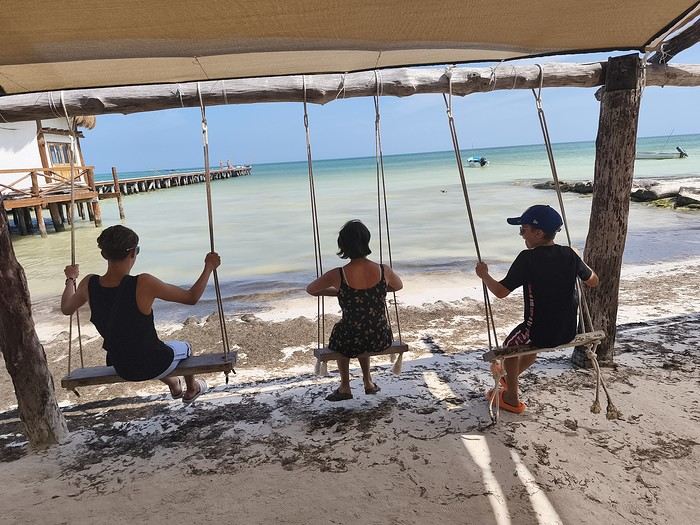
Hi everyone!
That was about all the Spanish I could speak before we left... Luckily, Tom, 15 and in high school, gets by just fine! And Caroline did a year of Duolingo before we took off... Anyway, after 55 days in the American West three years ago, it’s Mexico’s turn for this second long adventure.
A quick intro to the crew:
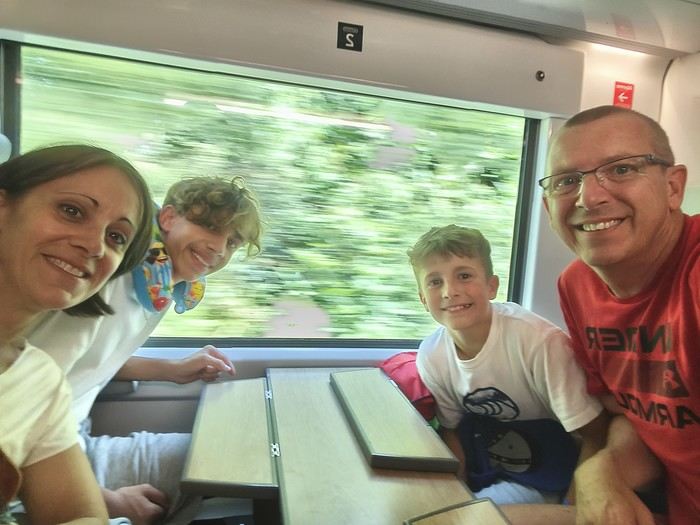

- Oscar, 10, a sporty and lively little boy who loves swimming and basketball, - Tom, 15, a high schooler, sporty and tall, who loves swimming and American football, - Caroline, 47, a PE teacher, sporty , loves hiking and snorkeling, - and me, Sylvain, 50, a science teacher, sporty, loves traveling and always has a possible next trip in mind
We mostly travel by swapping our house to discover beautiful France and the world: 135 swaps over the last 13 years.....
Our itinerary is pretty classic since it’s our first time in the Yucatán, and we’ll make a little 10-day detour to Belize...
See you soon...
4-Week Itinerary in South Africa
Hello,
We’re a group of four seventy-something retirees and we’re planning a 4-week trip to South Africa. We’re seasoned "adventurers" used to multi-week stays (we’ve been to India seven times, Mexico, Thailand, Laos, Myanmar, Australia, etc.).
For South Africa, we’re thinking of covering most of the trip in a private vehicle and taking flights for inter-state transfers. We’re interested in meeting people, learning about the country’s evolution, exploring major cities, visiting traditional villages, and seeing wildlife.
Here’s the itinerary we’re considering: Johannesburg – 2 days (we’ll pass through again later) Pretoria – 2 days Blyde River Canyon and Graskop – 1 day Acornhoek – 1 day Letaba – 2 days Lobamba – 2 days Johannesburg – 1 day
Flight to Cape Town
Cape Town – 3 days Cape of Good Hope – 1 day Stellenbosch – 1 day Hermanus – 1 day Mossel Bay – 2 days Oudtshoorn Wilderness – 2 days Knysna Port Elizabeth – 2 days Addo Elephant Park
Flight back to Johannesburg
Johannesburg – 1 day
Return to Paris
Could you share your thoughts on this itinerary? We’ll be renting a vehicle to explore both regions. We can easily add 4–5 more days to the trip if needed.
We’re looking at traveling either between April and May 2026 or in October/November 2026.
I’ll follow up later to discuss the best safari options and get a rough budget estimate.
Thanks to everyone who takes the time to read this and share their thoughts!
For South Africa, we’re thinking of covering most of the trip in a private vehicle and taking flights for inter-state transfers. We’re interested in meeting people, learning about the country’s evolution, exploring major cities, visiting traditional villages, and seeing wildlife.
Here’s the itinerary we’re considering: Johannesburg – 2 days (we’ll pass through again later) Pretoria – 2 days Blyde River Canyon and Graskop – 1 day Acornhoek – 1 day Letaba – 2 days Lobamba – 2 days Johannesburg – 1 day
Flight to Cape Town
Cape Town – 3 days Cape of Good Hope – 1 day Stellenbosch – 1 day Hermanus – 1 day Mossel Bay – 2 days Oudtshoorn Wilderness – 2 days Knysna Port Elizabeth – 2 days Addo Elephant Park
Flight back to Johannesburg
Johannesburg – 1 day
Return to Paris
Could you share your thoughts on this itinerary? We’ll be renting a vehicle to explore both regions. We can easily add 4–5 more days to the trip if needed.
We’re looking at traveling either between April and May 2026 or in October/November 2026.
I’ll follow up later to discuss the best safari options and get a rough budget estimate.
Thanks to everyone who takes the time to read this and share their thoughts!
Langtang – Trekking in the Rain
We did the Langtang trek (hike) from September 10th to 17th, with the first and last days being the trip from Kathmandu and back—so 6 days of actual walking. It’s a fairly well-known trek but certainly not as famous or crowded as those in the Annapurna or Everest regions, which is why we chose it.
In theory, it’s mandatory to have a guide for this trek. In reality, it seems there are ways to bypass the regulations: we met at least two people hiking without a guide—a South Korean, a New Zealander, and possibly also a couple of English women and an American couple, though we’re not sure if they had a guide.
The agency we booked with had told us it was an affordable trek for relatively older people in good shape—which is our case (I’m 72 myself). I have to say upfront that we found it quite challenging, maybe because we didn’t have good weather—it was the end of the monsoon season. To be clear, no matter your fitness level, I’d say doing this trek in the middle of the monsoon season would be suicidal.
Day 1 – Journey from Kathmandu to Syapru Besi
On Monday, September 8th, there had been violent protests in Kathmandu against the government, which had, among other things, blocked access to social media and been accused of nepotism and corruption. There were 19 deaths. The situation was very tense on the day of our departure, Wednesday the 10th. The agency warned us that public transport was very unreliable. So, we decided to take a jeep, at an additional cost of $100 ($160 minus what was already budgeted for the bus).
We left a little before 7 a.m. and it took us a good hour just to reach the outskirts of Kathmandu. Along the way, we saw several houses and vehicles set on fire by protesters.
The road to Syapru Besi is only 120 km, but it’s frankly awful. It’s always narrow, winds through endless mountains, and the shoulders range from bad to confusing to nonexistent. Several sections are just dirt tracks. We didn’t regret opting for the jeep, as we could stop several times at our convenience—if only to let Y (my Thai partner) throw up everything she had. She’d taken her usual motion sickness medication, but the constant turns, accelerations, and braking eventually made her terribly carsick.
In Nuwakot, we stopped for breakfast at a nice little restaurant, Jimbu. It was around 8:30 a.m., and we’d barely covered 60 km. The restaurant has a lovely garden overlooking the Trishuli Ganga, the river flowing down from Syapru Besi. First photo: the river in the bottom right corner, mist and clouds over the mountain on the other side.
An hour later, my second photo: the hills along the Trishuli Ganga. You can see the different crops—lush green rice paddies in the lower right and corn, already yellowed and likely harvested, in the foreground on the left. And of course, the mist and clouds through which you can glimpse the mountain on the other side of the river.
In theory, it’s mandatory to have a guide for this trek. In reality, it seems there are ways to bypass the regulations: we met at least two people hiking without a guide—a South Korean, a New Zealander, and possibly also a couple of English women and an American couple, though we’re not sure if they had a guide.
The agency we booked with had told us it was an affordable trek for relatively older people in good shape—which is our case (I’m 72 myself). I have to say upfront that we found it quite challenging, maybe because we didn’t have good weather—it was the end of the monsoon season. To be clear, no matter your fitness level, I’d say doing this trek in the middle of the monsoon season would be suicidal.
Day 1 – Journey from Kathmandu to Syapru Besi
On Monday, September 8th, there had been violent protests in Kathmandu against the government, which had, among other things, blocked access to social media and been accused of nepotism and corruption. There were 19 deaths. The situation was very tense on the day of our departure, Wednesday the 10th. The agency warned us that public transport was very unreliable. So, we decided to take a jeep, at an additional cost of $100 ($160 minus what was already budgeted for the bus).
We left a little before 7 a.m. and it took us a good hour just to reach the outskirts of Kathmandu. Along the way, we saw several houses and vehicles set on fire by protesters.
The road to Syapru Besi is only 120 km, but it’s frankly awful. It’s always narrow, winds through endless mountains, and the shoulders range from bad to confusing to nonexistent. Several sections are just dirt tracks. We didn’t regret opting for the jeep, as we could stop several times at our convenience—if only to let Y (my Thai partner) throw up everything she had. She’d taken her usual motion sickness medication, but the constant turns, accelerations, and braking eventually made her terribly carsick.
In Nuwakot, we stopped for breakfast at a nice little restaurant, Jimbu. It was around 8:30 a.m., and we’d barely covered 60 km. The restaurant has a lovely garden overlooking the Trishuli Ganga, the river flowing down from Syapru Besi. First photo: the river in the bottom right corner, mist and clouds over the mountain on the other side.
An hour later, my second photo: the hills along the Trishuli Ganga. You can see the different crops—lush green rice paddies in the lower right and corn, already yellowed and likely harvested, in the foreground on the left. And of course, the mist and clouds through which you can glimpse the mountain on the other side of the river.
Spring getaway in search of Moroccan sunshine
Hey fellow travelers!
This isn’t meant to be a full-on travel journal—just a little springtime dip into the Moroccan coast (and maybe a bit more if we click).
For our third trip to this country, we set off for 8 days in early June 2025, *sure* we’d be greeted by non-stop sunshine...
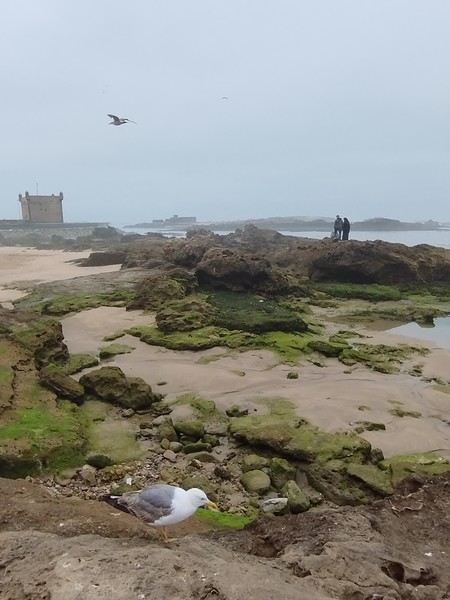
...and well, that didn’t happen! The gray stuck around for a day, then two, then three (while back home in the Landes, we had gorgeous sunshine 🤦♂️😂).
Now, unlike us, the Morocco experts here probably already know this, but apparently, it’s pretty common—especially in spring—when the warm air from inland meets the cool ocean breeze. Locals even have to warm up with hot water bottles, can you believe it? 😄!
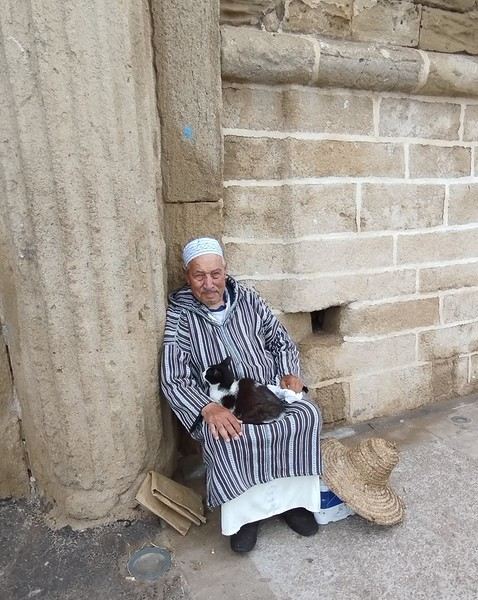
And of course, it had to happen now, since our plan is to follow the coast from Essaouira to Mirleft!!
Oh well, we’ll see how it goes—but luckily, this first stunning sunset made up for the weather 🌅.
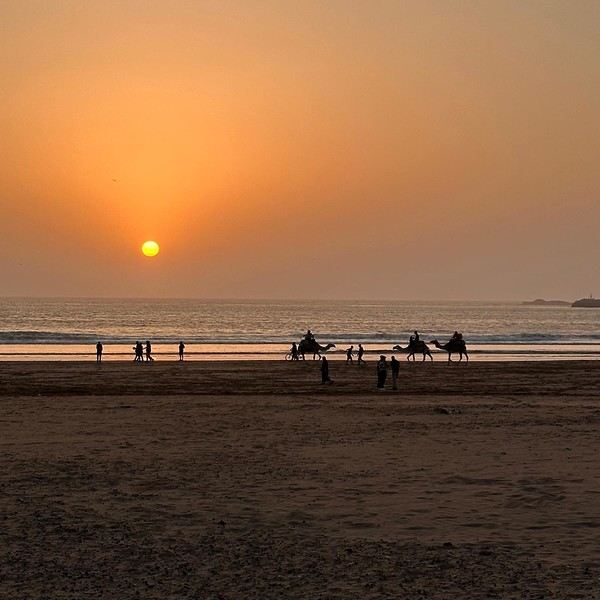
See you soon to anyone who’s up for it! 😊
This isn’t meant to be a full-on travel journal—just a little springtime dip into the Moroccan coast (and maybe a bit more if we click).
For our third trip to this country, we set off for 8 days in early June 2025, *sure* we’d be greeted by non-stop sunshine...
...and well, that didn’t happen! The gray stuck around for a day, then two, then three (while back home in the Landes, we had gorgeous sunshine 🤦♂️😂).
Now, unlike us, the Morocco experts here probably already know this, but apparently, it’s pretty common—especially in spring—when the warm air from inland meets the cool ocean breeze. Locals even have to warm up with hot water bottles, can you believe it? 😄!
And of course, it had to happen now, since our plan is to follow the coast from Essaouira to Mirleft!!
Oh well, we’ll see how it goes—but luckily, this first stunning sunset made up for the weather 🌅.
See you soon to anyone who’s up for it! 😊
My life in Camargue, my homeland, and in Colombia, my heart's country
My two bullfighting traditions when I'm back home in Camargue (France) and in Colombia (Caribbean) every time I return. 🤠
Details:
Bullfights (corridas) aren’t part of my two bullfighting traditions, but I respect those who attend them!!!
In these two ancestral bullfighting traditions—which aren’t bullfights—the Bulls and Toros aren’t killed or tortured, as some might think.
These are bull games where the animals return to their pastures afterward and only come back to the Arenas 2–3 times a year at most.
They spend 15 minutes in the ring for the Camarguais and 5 minutes for the Toros in the Colombian Corralejas.
They’re cared for and pampered. They’ll die of old age in miles of open fields.
The young people who face them are professionals, risking their lives to support their families and live their Passion for the Toro!!! 😄
https://youtu.be/yYKQer42HoQ
Colombian Corraleja in the link below (hope it works) 🤪
https://fb.watch/BMfmuCgQpG/
From Southern Shikoku, between land and sea, to the blue waters of Miyakojima and finally the Tokyo metropolis
From Southern Shikoku, between land and sea, to the blue waters of Miyakojima and finally Tokyo’s megacity
Hi everyone,
I have to admit, I really hesitated before deciding to write this travel journal... Writing one takes a lot of time and energy, and since this is my 4th trip, I wondered if it would actually interest anyone other than myself (both for the discovery and the writing). But after a few "Are you going to write a journal?" requests and especially the renewed pleasure from reading other travelers’ travel journals about Japan or elsewhere on this forum or elsewhere, I’ve decided to share this 4th installment in the Land of the Rising Sun here.
The itinerary: 27 full days, from late May to late June 2025, right in the middle of the rainy season, including:
-->13 days in Shikoku, from Kochi (Kochi Prefecture) to Matsuyama (Ehime Prefecture)
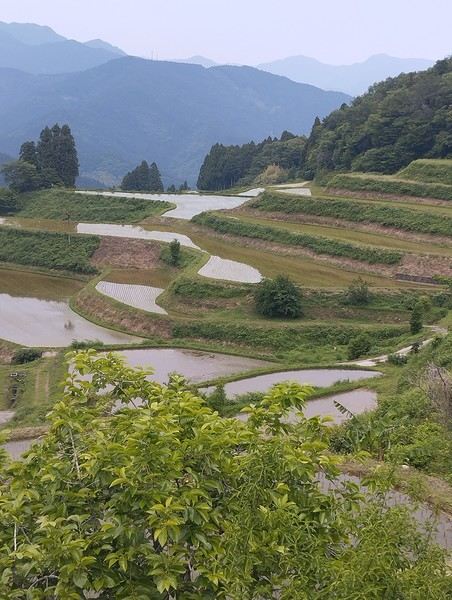
-->7 days in Miyakojima (Okinawa Prefecture)
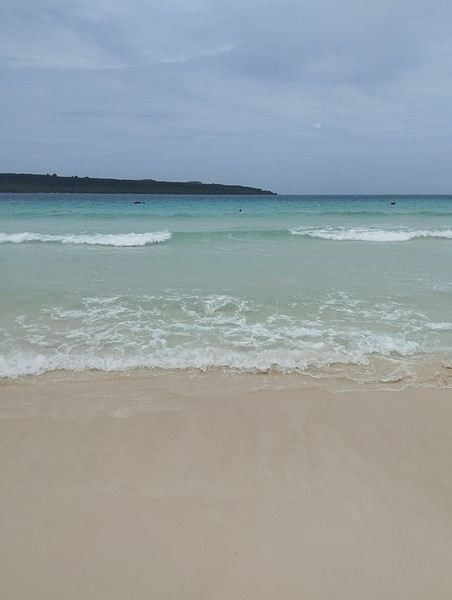
-->7 days in Tokyo
The trip was decided on fairly last-minute this year, as usual.
I regularly check flight prices to track fluctuations for this destination, even without concrete plans. Finding a slightly cheaper direct flight (900 €) than what I’d seen in previous months (around 1,200–1,400 € on average) for a Paris-Tokyo route with Japanese airline ANA was too tempting to resist the urge to return to this enchanting country. After long hesitations between exploring the San’in region (Matsue, Tottori, Yamaguchi) and southern Shikoku, the decision was made—I took the plunge! The tickets are booked: Paris to Kochi with a layover in Tokyo, all with ANA, the airline I’d been dreaming of... for 1,120 € per person. Okay, it’s not cheap, but it’s still better than in 2023.
We leave in 2 weeks!! Now it’s just a matter of getting everything ready!
Intense work ahead in these 2 weeks to:
finalize a more precise itinerary and reach an agreement—yep, because even though we both love Japan, our preferences differ slightly, and we have to choose between exploring new places or taking time to revisit beloved spots... decide how much time to spend in each selected area without rushing while still exploring research places that might interest us and watch videos about Japan book accommodations: yes, it’s possible to do this on the spot as we go, but last year, we noticed that last-minute options were pretty expensive, so we’re booking ahead—even if it means keeping a few options open while we decide or see if better deals pop up later reserve rental cars order yen check the weather regularly and wonder if choosing the *tsuyu* (rainy season) was really a good idea—and whether we’ll be stuck in non-stop rain???
What a tough job, right? Traveling to Japan for a month—such a hard life! Despite this being my 4th trip, the excitement is just as intense as the first time.
The only small downside is that when we booked the flight tickets, there were only a few seats left, so we’re only sitting together on the international return flight. Plus, on the outbound flight, we’ve got the middle seats. Another lingering question: what French-language films will be available? According to the internet, the selection seems limited. Oh well, these are just minor details—it’s almost time to fly!
PS: I’ll be posting slowly and irregularly... so for those interested, be patient or maybe set an alert...
Hi everyone,
I have to admit, I really hesitated before deciding to write this travel journal... Writing one takes a lot of time and energy, and since this is my 4th trip, I wondered if it would actually interest anyone other than myself (both for the discovery and the writing). But after a few "Are you going to write a journal?" requests and especially the renewed pleasure from reading other travelers’ travel journals about Japan or elsewhere on this forum or elsewhere, I’ve decided to share this 4th installment in the Land of the Rising Sun here.
The itinerary: 27 full days, from late May to late June 2025, right in the middle of the rainy season, including:
-->13 days in Shikoku, from Kochi (Kochi Prefecture) to Matsuyama (Ehime Prefecture)
-->7 days in Miyakojima (Okinawa Prefecture)
-->7 days in Tokyo
The trip was decided on fairly last-minute this year, as usual.
I regularly check flight prices to track fluctuations for this destination, even without concrete plans. Finding a slightly cheaper direct flight (900 €) than what I’d seen in previous months (around 1,200–1,400 € on average) for a Paris-Tokyo route with Japanese airline ANA was too tempting to resist the urge to return to this enchanting country. After long hesitations between exploring the San’in region (Matsue, Tottori, Yamaguchi) and southern Shikoku, the decision was made—I took the plunge! The tickets are booked: Paris to Kochi with a layover in Tokyo, all with ANA, the airline I’d been dreaming of... for 1,120 € per person. Okay, it’s not cheap, but it’s still better than in 2023.
We leave in 2 weeks!! Now it’s just a matter of getting everything ready!
Intense work ahead in these 2 weeks to:
finalize a more precise itinerary and reach an agreement—yep, because even though we both love Japan, our preferences differ slightly, and we have to choose between exploring new places or taking time to revisit beloved spots... decide how much time to spend in each selected area without rushing while still exploring research places that might interest us and watch videos about Japan book accommodations: yes, it’s possible to do this on the spot as we go, but last year, we noticed that last-minute options were pretty expensive, so we’re booking ahead—even if it means keeping a few options open while we decide or see if better deals pop up later reserve rental cars order yen check the weather regularly and wonder if choosing the *tsuyu* (rainy season) was really a good idea—and whether we’ll be stuck in non-stop rain???
What a tough job, right? Traveling to Japan for a month—such a hard life! Despite this being my 4th trip, the excitement is just as intense as the first time.
The only small downside is that when we booked the flight tickets, there were only a few seats left, so we’re only sitting together on the international return flight. Plus, on the outbound flight, we’ve got the middle seats. Another lingering question: what French-language films will be available? According to the internet, the selection seems limited. Oh well, these are just minor details—it’s almost time to fly!
PS: I’ll be posting slowly and irregularly... so for those interested, be patient or maybe set an alert...