Results for "Montpellier+|+127"
3936 results found.
The Foam of Days
Now that the curtain has fallen on the past year, it’s time to see what’s happening around here.
It seems pretty quiet, but I’ll read more in detail later.
First, I need to tell you all an anecdote.
My eldest little girl, in her third year of law school, was really scared she wouldn’t pass the year. I told her: “Trust yourself, you’ve worked so hard, and worst case, if you fail, you’ll just redo the year.” “But I don’t think I’ll make it—they changed the rules, and if I mess up even one unit, I have to start all over.” I knew her grades weren’t exactly stellar, and with what I was about to say, I wasn’t taking much of a risk. “Here’s the deal, sweetheart: if you pass, I promise I’ll take you to India, just the two of us.” I have to admit, India is a country I’ve talked about so much to all my grandchildren that in their minds, it’s become a magical, mythical place (hmm).
July had barely begun when my phone rang, her name flashing on the screen. “Mamido, I did it!” My promise came rushing back—oh no, oh no, oh no! “Congratulations, sweetheart!” A little shyly, she said: “Is the India trip still on?”
And me, replying: “Of course it is!”
And that’s that—a promise is a promise, or you risk losing that precious trust that keeps hearts warm and at peace.
We’re leaving in February. Only 8 days—yikes, the carbon footprint! But we can’t miss her tutorials, or she’ll be kicked out. Personally, that works just fine for me.
Going to India has become a challenge for me. It’s far, it’s exhausting, I sweat, I hate mosquitoes, the spices bother my mouth when I used to love them. There’s noise all the time—at night, the dogs bark nonstop, and we almost get run over. I’ll get lost in the streets because my sense of direction has vanished. I don’t like rice anymore. All that chaos and those cultural differences that once enchanted me now just overwhelm me. But I promised.
The upside—and it’s a big one—Raman, the same driver I’ve had forever, will be at the airport with a sign with our names. We’ll stop at the same little shop for chai (or tea, plain and simple) with that aroma that intoxicates me, halfway through the trip.
It’ll be a tiny trip—staying with friends, I’ll show her a few places I love: Chidambaram, Mamallapuram, and the clinic where I worked. Then we’ll head back. My little girl will go home to her parents.
As for me, I’ll leave right away for our Scottish island with Homme for our chilly winter.
How can you love a country so much you want to live there, then suddenly reject it, no longer able to appreciate what once made it special? That’s the mystery of love, I guess.
First, I need to tell you all an anecdote.
My eldest little girl, in her third year of law school, was really scared she wouldn’t pass the year. I told her: “Trust yourself, you’ve worked so hard, and worst case, if you fail, you’ll just redo the year.” “But I don’t think I’ll make it—they changed the rules, and if I mess up even one unit, I have to start all over.” I knew her grades weren’t exactly stellar, and with what I was about to say, I wasn’t taking much of a risk. “Here’s the deal, sweetheart: if you pass, I promise I’ll take you to India, just the two of us.” I have to admit, India is a country I’ve talked about so much to all my grandchildren that in their minds, it’s become a magical, mythical place (hmm).
July had barely begun when my phone rang, her name flashing on the screen. “Mamido, I did it!” My promise came rushing back—oh no, oh no, oh no! “Congratulations, sweetheart!” A little shyly, she said: “Is the India trip still on?”
And me, replying: “Of course it is!”
And that’s that—a promise is a promise, or you risk losing that precious trust that keeps hearts warm and at peace.
We’re leaving in February. Only 8 days—yikes, the carbon footprint! But we can’t miss her tutorials, or she’ll be kicked out. Personally, that works just fine for me.
Going to India has become a challenge for me. It’s far, it’s exhausting, I sweat, I hate mosquitoes, the spices bother my mouth when I used to love them. There’s noise all the time—at night, the dogs bark nonstop, and we almost get run over. I’ll get lost in the streets because my sense of direction has vanished. I don’t like rice anymore. All that chaos and those cultural differences that once enchanted me now just overwhelm me. But I promised.
The upside—and it’s a big one—Raman, the same driver I’ve had forever, will be at the airport with a sign with our names. We’ll stop at the same little shop for chai (or tea, plain and simple) with that aroma that intoxicates me, halfway through the trip.
It’ll be a tiny trip—staying with friends, I’ll show her a few places I love: Chidambaram, Mamallapuram, and the clinic where I worked. Then we’ll head back. My little girl will go home to her parents.
As for me, I’ll leave right away for our Scottish island with Homme for our chilly winter.
How can you love a country so much you want to live there, then suddenly reject it, no longer able to appreciate what once made it special? That’s the mystery of love, I guess.
Very short layover at Doha Airport
Hi there
I completely forgot the transit procedure at Doha Airport and I’m a bit worried because I only have 1h30 to change planes, since my first flight was rescheduled. My flights: Barcelona/Doha: arrival at 6:15 AM Doha/Bangkok: departure at 7:50 AM
We only have carry-on luggage. Will they be checked again? Do we have to go through security again? Are the connections smooth and well signposted? Finally, is it common in this situation to ask a flight attendant for help?
Thanks! 🙂
I completely forgot the transit procedure at Doha Airport and I’m a bit worried because I only have 1h30 to change planes, since my first flight was rescheduled. My flights: Barcelona/Doha: arrival at 6:15 AM Doha/Bangkok: departure at 7:50 AM
We only have carry-on luggage. Will they be checked again? Do we have to go through security again? Are the connections smooth and well signposted? Finally, is it common in this situation to ask a flight attendant for help?
Thanks! 🙂
The Two of Us in Istanbul: A Turkish Blue Round
Hello everyone,
I’m not really a regular contributor to VoyageForum, but every time Kate and I travel, she encourages me to write a travel journal and publish it. And I must admit, it’s a very enjoyable intellectual exercise, though not always easy. As a VF contributor whose journals I’ve read once said, this retrospective work not only helps preserve memories but also provides a fruitful moment of introspection by bringing back emotions and feelings.
Kate and I spent a week in Istanbul. For her, who had already visited, it was a return; for me, it was a discovery.
As we’ve now made a habit of, I write the texts, and she posts her photos. We hope this illustrated story, crafted together, will revive beautiful sensations for those who know the city and inspire others to discover it. Here we go!
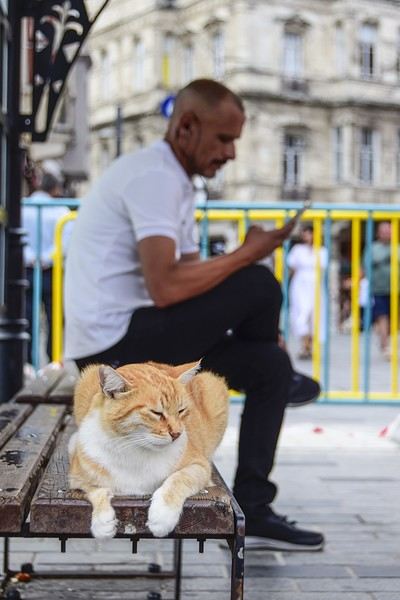
I’m not really a regular contributor to VoyageForum, but every time Kate and I travel, she encourages me to write a travel journal and publish it. And I must admit, it’s a very enjoyable intellectual exercise, though not always easy. As a VF contributor whose journals I’ve read once said, this retrospective work not only helps preserve memories but also provides a fruitful moment of introspection by bringing back emotions and feelings.
Kate and I spent a week in Istanbul. For her, who had already visited, it was a return; for me, it was a discovery.
As we’ve now made a habit of, I write the texts, and she posts her photos. We hope this illustrated story, crafted together, will revive beautiful sensations for those who know the city and inspire others to discover it. Here we go!
Hitchhiking in the 70s-80s
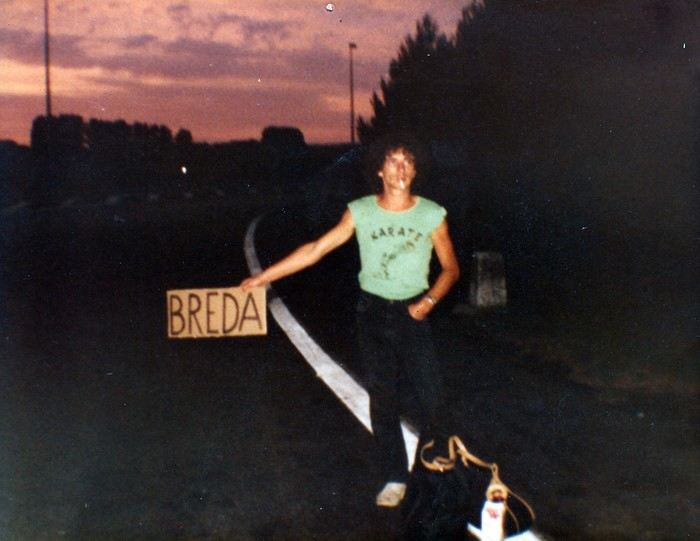
“Hey, your Marker... - My Marker? - The one you used to make hitchhiking signs.”
The marker in question is sitting proudly on the kitchen table. Marielle found it at the bottom of a moving box.
I’ve been meaning to tell the long story of my love affair with hitchhiking for years. Here we go.
To be honest, I’m not quite sure when it started. My earliest memory goes back to a fair with a bike race in my maternal grandparents’ village. I was with my cousin, my little sister, and three girl cousins. There were six of us, ages ranging from six or seven to thirteen or fourteen. Our parents stayed at the fair, and we’d had enough. So we decided to walk home. Only it was four kilometers away. So we hitchhiked. A guy driving an old car picked us all up and dropped us off at the farm. He probably found it amusing to see us thumbing a ride by the side of the road, but maybe it also worried him a bit. With everything you read in the papers...
Around fifteen or sixteen, I started hitchhiking regularly, alone or with a friend, to go to the nearby town. But it was especially when I started boarding school in Orléans that it became more regular. The first year, I’d leave Monday morning and come back Saturday noon by bus. It was an old, uncomfortable bus where we froze in winter. To make matters worse, I often got motion sickness if, as was too often the case, I ended up sitting in the back. In the spring, a high school friend suggested I hitchhike back. It meant a slight detour, but the advantage was taking only national roads.
So that’s how, from the end of tenth grade to twelfth grade, I’d thumb a ride every Saturday on the Pont de Bourgogne. Drivers were used to seeing young people hitchhiking, and it worked pretty well. Our biggest fear? Soldiers! At that time, military service was still mandatory, and on weekends, it wasn’t rare to see them competing with us. They’d keep their uniforms on to go home. That gave people confidence—with everything you read in the papers—and they’d rarely wait more than five minutes. We, with our long hair, were definitely less popular. From time to time, three big red-faced guys in a van coming back from a construction site would flip us off, yelling things like “go get a haircut, you bums!” Those were the good old days.
We still had a good laugh, though. Patrice, the friend I’d hitchhike back from school with on Saturdays, is a musician—I’d later discover he’s an excellent composer. A die-hard Beatles fan, he knows their repertoire by heart and spends his time singing at the top of his lungs while we thumb a ride. One Saturday late morning, we’d been waiting for a while at the exit of Châteauneuf-sur-Loire when a little lady came up to him and asked if he could please sing a little quieter: a baby was sleeping in the house. He put on the most sorry face: “Oh, sorry ma’am, we didn’t realize.” No sooner had the lady gone back inside than he started again. Luckily, a car stopped just then, sparing me the embarrassment of seeing the lady come back out.
Saturday was also the day when the cigarette pack was dangerously low. So before leaving, we’d go buy some “Parisiennes,” the “P4s” as we called them back then. They were slightly thinner cigarettes with a mix of tobacco scraps. Sometimes they tasted like light tobacco, sometimes like dark. Not great, but by the end of the week, our pocket money was gone. They were sold in small packs of four, hence the name P4. We’d only pay 20 centimes. On Saturdays, it was rare for the two of us to manage to scrape together 1.50 F to buy a whole pack of Gauloises...
The last twenty kilometers, I’d usually do alone, Patrice having reached his destination. From time to time, luck would smile on me: an acquaintance would just happen to pass by and stop. One January Saturday, at the exit of Gien, I ran into another guy from Argenton whom I knew a little. That day, the weather was nice, but the temperature was well below zero. It was around noon, and it was the off-peak hour. We were shivering, stamping our feet by the side of the road, when a Citroën “Tube” arrived: it was his father’s boss’s, a mason. They were both sitting in the front, but since they were obese, they had us climb onto the open back. Even though we huddled against the cab to shelter from the wind, the twenty kilometers felt very long, especially since we were only going sixty kilometers an hour. Our hands and cheeks were blue when we finally arrived.
The year I took my baccalaureate, a friend with a 2CV would take me Monday mornings with one or two others we’d pick up in nearby villages. We’d share the gas costs, but it was still cheaper than the bus. And in winter, the bus was my nightmare. You had to get up at five to catch it at six. Not enough sleep, and outside it was freezing or raining—or both. The 2CV was luxury. Plus, Philippe would pick me up at home. On the other hand, since I didn’t have class Saturday mornings—well, I did, but we only had PE the first two hours and nothing after—I’d skip class and slip out right after breakfast to thumb a ride at the Pont de Bourgogne.
Those three high school years were formative in this optional subject that was hitchhiking. Little by little, I learned the rules of the game. First, you shouldn’t walk along the road while thumbing. Cars go too fast and can’t stop easily. Accepting a ride that’s too short is also a no-go. The guy who offers to take you a little way but drops you off at some vague crossroads in the middle of nowhere? No thanks. You need to get dropped off in a town. If it’s a fairly big city, you often have to cross it from one end to the other, but it’s better. At the exit, you have to choose your spot well. Actually, you have to put yourself in the driver’s shoes: they need to see you early enough, not be going too fast, and be able to stop easily without risking an accident. So when leaving a city, it’s better not to go too far. It’s wiser to find a spot where cars go slowly and can stop easily. And preferably near a café. The café is for when you still have a few coins for a coffee and need to warm up. From time to time, you’d run into someone nice who’d make a detour to drop you off at a better spot to start again. Finally, if possible, avoid hitchhiking on Sundays. Cars are packed with whole families who, most of the time, aren’t going far. And then there’s the little worry of those people who rarely leave home: with everything you read in the papers...
During those high school years, it was only short trips, rarely exceeding a hundred kilometers. Later, I aimed bigger, and things were a bit different. In 1973-74, I crossed part of France for the first time on two or three occasions, coming back from the German border or returning to Bordeaux, where we lived briefly. Since there weren’t many highways back then, we took national roads. It was during these trips that I realized it was better to leave in the evening. As I said earlier, Sunday is to be avoided, but on weekdays, there’s another problem: if you leave in the morning, you only make short hops. First, it often takes longer to get going because drivers are people going to work nearby. Which brings us back to those who drop you off in a bad spot, far from everything. There, you have to know how to refuse. You thank the driver for stopping—oh, if only everyone could be like you—while explaining why you’d rather stay put. People don’t take offense, by the way. Those who pick up hitchhikers often hitchhiked themselves when they were in the military or before they had a car. In the late afternoon, you’d often run into salespeople or truckers, in other words, people who drive a lot. At that time, salespeople no longer had appointments and were more relaxed. They wanted to talk about something other than the merits of their products. On the radio, it was time for *Les Grosses Têtes*. You’d also quite often run into small business owners, professionals, or even hippies. The conversations were pleasant and often enriching. A little later in the evening, truckers would take over. They’d already driven a few hundred kilometers, and the depot or customs was still far away. So they’d gladly take a hitchhiker to stay awake at the wheel and chat. The radio with Max Ménier’s show *Les routiers sont sympas*, you’d eventually get tired of it. So a hitchhiker was a change. Others, who’d hit the road at midnight to be at their destination by morning, were nice and offered to let you lie down on the bunk while they drove. When you’d been hitchhiking since six in the evening, freezing in the wind between two vehicles, you weren’t unhappy to take a little nap.
Speaking of Max Ménier, he’d often make announcements for hitchhikers. One evening, I called him. It was getting late, and I still had quite a way to go. No luck: the show had ended for good the day before!
In short, it’s better not to rush, sleep in, and leave after lunch, or better yet, in the late afternoon. Obviously, I’m talking about when you have several hundred kilometers to cover. That’s when you have to play it pro.
First thing, especially at night, but it also applies in the middle of summer when the light is blinding: dress to be seen from far away. I’ll admit I have an advantage over most other hitchhikers: I’m small and don’t scare people. To balance that out, racist drivers often take me for an Arab and are less likely to pick me up, but overall, the balance tips in my favor. Back to the need to be seen: at night, I wear light-colored clothes. In headlights, you can see me from far away.
Second thing: travel light. Forget the big backpack with a frame. Drivers don’t always have room in the trunk or on the back seat, especially if it’s rained and the ground is wet. Plus, it forces them to get out of the car. If they’re nice enough to pick up a hitchhiker, you shouldn’t ask for too much either.
Third thing: bring a cardboard sign and a big marker—like the ones in the photo at the start of this post—to write the name of your destination. In the early 80s, I ran a tourist house in the Cher, but I lived in the Netherlands. In the off-season, it was only open on weekends. On Fridays, I’d leave Holland and return on Mondays. 1200 km round trip. On the way there, in Paris, I’d stand at Porte de la Chapelle. At that spot, the road is very wide, and drivers could stop easily. Obviously, on the sign, I didn’t write Eindhoven, which not everyone knows, and even less Amsterdam because of its seedy reputation. In that case, you’d expect to see a police car stop and two officers in kepis ask for your papers. So as a first destination, I’d write Compiègne. We were well out of Paris, and since it wasn’t too far, a trucker or salesperson was less reluctant to stop. Once past Compiègne, I’d take out my Lille sign. Once in Belgium, it wasn’t really necessary to use a sign anymore, since everyone was going in the same direction. Usually, the guy who picked me up at Porte de la Chapelle would say he wasn’t going far but could take me a little way. Before that, I’d still ask if there was a gas station on the highway where he could drop me off before exiting. While talking, the guy would realize he wasn’t dealing with a dangerous criminal. He’d pretend to check his watch, think for a moment, then say that actually, he was going to Belgium and could take me to the border or a little beyond. To leave Paris on the way back, I’d take the train to Melun, where it was easier to hitchhike than at Porte d’Italie.
Over all those years, I think I was pretty lucky. Or maybe philosophical enough not to imagine a car would stop after a few minutes. An hour’s wait was average. Sure, I sometimes waited three, four, or five hours. Most often at odd hours and in terrible weather. When it doesn’t work, it doesn’t work. But there’s always a moment when things pick up. Sure, when you’re soaked in freezing rain in the early morning after a sleepless night, you’re less philosophical than when I’m writing these lines comfortably at my computer, but it still holds true.
Earlier, I mentioned clothing and the importance of being well-rested before leaving. When you’ve eaten well and just gotten out of the shower, shaved, you’re in a better mood. And somehow, drivers sense it. Or at least, that’s the impression I’ve always had. It’s better to look in shape than disgusted at standing there, half-heartedly thumbing a ride. In short, when I’d start to get fed up with waiting, I’d go into the first café I saw for a coffee. Coming back out, I’d be refreshed, and most of the time, a car would stop within minutes. I’ve often said that when I stood by the side of the road thumbing a ride, I felt a bit like a gambler in front of a slot machine. It was a matter of giving luck a chance. And well, it worked out pretty well.
Then, there are countries where hitchhiking works really well and others where it’s harder. In the 70s-80s, it worked best in Germany and England. In the late afternoon, it wasn’t rare to be invited for tea. Well, that was in England. Tea meant being offered room and board. In Germany, they’d offer you coffee. Once there, they’d first show you the guest room and point out the bathroom before sitting you down in front of a big plate of cold cuts. In the evening, they’d go out in town, and the next morning, they’d usually drop you off at a good spot for hitchhiking. On the other hand, in Mediterranean and Scandinavian countries, you’d better be patient. In Spain or Italy, it’s better to take the train, which was dirt cheap back then. However, if you’re a couple traveling light, it’s already easier in most countries.
In 1982, I went on a trip around Turkey with my girlfriend. We only had two small bags, which was plenty. It was November-December, and we wore our warm, bulky clothes. Leaving Eindhoven at nine in the morning, we arrived in Graz, near the Yugoslav border, at eleven at night. 1300 km in a day! In just four or five vehicles. One to the German border, about fifty kilometers from Eindhoven, the second to Hagen in the Ruhr, the third to Salzburg, and the last to Graz at the Yugoslav border. Record broken. During the night crossing of Yugoslavia, we ran into a trucker close to retirement who lent us the truck’s bunk. So we arrived fresh and rested near Skopje the next morning. We continued to Thessaloniki in northern Greece before taking the train to Istanbul. In Turkey, we traveled a good part of the country by hitchhiking too. With truckers in old, overloaded, slow trucks that climbed hills at fifteen kilometers an hour, but also in cars where five or six people were already crammed in. And every time, we were invited for tea. Once, we were even picked up by a big shot in his Mercedes with a chauffeur. Until then, the average speed was around fifty kilometers an hour. There, we were going two hundred. On a national road, not a nice European highway.
I’ve also hitchhiked in Nepal, from Lumbini, Buddha’s birthplace, to a village on the way to Pokhara. It must have been midday. No bus until the next day. I gave it a try. A small truck overloaded with rice sacks, with two or three young people already perched on top, stopped. I rode on the roof of the cab. At fifty kilometers an hour when it was going well, with a breathtaking view. Coming back from India, I also crossed part of Iran by hitchhiking, from Tehran to the Turkish border. I did this trip with an Austrian I met at the hotel who, like me, had to watch his pennies. We gave it a shot. There was almost no traffic, but to our great surprise, the first car that passed in the area would always stop. They’d just ask for a modest contribution for gas, and it cost next to nothing.
Sometimes, you get scared too. After leaving Turkey in early December 82, we spent about two weeks in the southern Peloponnese harvesting olives. A few days before Christmas, we hitchhiked back to Holland. A girl picked us up in her little Fiat 500. We were driving on a mountain road, and that morning there was a bit of black ice. After crossing a pass, we saw the old Ford Taunus ahead of us at fifty meters start to skid. The driver let out a “heeee!” while grabbing my knees. I reflexively grabbed the wheel. Finally, the Taunus got back on track. And we didn’t swerve. But those few seconds felt very long.
In January 77, while I’d been living in Germany for a few months, I decided to spend a few days in Italy. By hitchhiking, of course. I left in the early afternoon, and by ten at night, I wasn’t far from Frankfurt. I saw a big Mercedes stop. The four or five young people crammed inside were listening to Schlager at full volume. Beer cans littered the floor. They didn’t have a precise destination, and as long as they were going south, that was fine with me. They’d finished their military service that very day and had clearly already celebrated their discharge. The driver was going 160, zigzagging dangerously from one side of the highway to the other. I should have realized he wasn’t entirely sober either. Luckily, there was almost no traffic. Finally, I managed to get dropped off at a gas station just before Frankfurt, relieved. I hope their trip didn’t end tragically.
Another time, coming back from Holland with my wife, we were picked up early in the morning near Senlis by two guys from Lille. They were going to work near Tours and could drop us off at Porte d’Italie. Apparently, they were coworkers but barely knew each other. The driver offered us a beer—at six in the morning, sure!—before opening another can for himself. He was clearly having trouble staying in the right lane. We politely declined, the passenger too. Everyone was tense. Luckily, it was rush hour on the ring road, and we were going slowly. When we got out of the car, the passenger said goodbye with the look of a guy being offered the condemned man’s rum and cigarette.
Finally, there are the annoying remarks from drivers who are either gay when you’re alone or turned on by the sight of your girlfriend when you’re a couple. In those cases, I’d get in the back so the guy wouldn’t feel too confident. And if the conversation got a little too suggestive, we’d deflect until we got dropped off.
And luckily, there are the times, not so rare after all, when you run into really nice people who invite you to eat and sleep at their place and drive you to a good spot the next morning. In Germany and England, that was common. And then there are the big strokes of luck, like during our trip to Turkey when we crossed most of Germany in one car, or that other time when some Germans drove me from the exit of Geneva all the way to the Costa Brava.
Going back to “with everything you read in the papers” and its variant “with everything you see on TV”—and now on the internet—it’s always left me perplexed. Personally, I’ve never heard of hitchhikers assaulting drivers, even if it may have happened. On the other hand, what was most common were hitchhikers being assaulted, especially girls. Anyway, even armed, it seems a bit stupid to assault the driver—wouldn’t that risk causing an accident?
Finally, since that time, I’ve occasionally wanted to hitchhike somewhere far away in France. Most often, too busy with work, it never happened, but the nostalgia hasn’t completely disappeared.
* * *
Other Hitchhikers
And then one day, I... settled down to become a driver myself. Ten years had passed, and you saw fewer and fewer hitchhikers. Or maybe I saw fewer because I had a regular job and wasn’t traveling the same way. And then I understood a few things.
Several times, I was tempted to pick up a hitchhiker, but they didn’t meet the required conditions. They were walking along the road instead of staying at the exit of the previous town. Hard to stop without risking an accident. Or the guy looked really scruffy. Or he was sulking, if not both. Then you think of that famous “with everything you read in the papers.” Not that I was scared, but unfortunately, the few hitchhikers I did pick up later were rarely interesting.
A few years ago, we picked up a young guy at the exit of a small town in Sologne. Not an easy spot for hitchhiking. Bad luck, he was a pretentious little jerk. He was barely 20 or 25 and talked like a bitter old man. He was a waiter in a restaurant. According to him, it was lucky he was there, otherwise the boss would have closed up shop long ago. You’d think he had thirty or forty years of professional experience behind him. As we approached Blois, he started ranting about Arabs, blaming them for all evils. And he laid it on thick. That morning, we were going to a teenager’s funeral who had just committed suicide, so he really got on our nerves, Mr. Know-It-All. Out of anger, I dropped him off next to a shopping center a few kilometers from downtown. Not nice, but it felt good.
Some time ago, we were driving around the Limousin on a Sunday to try out the used Twingo we’d just bought. We picked up a guy in his forties. A German who spoke French well. He started talking about the environment. He was a green Khmer. He got worked up all by himself with his pseudo-eco rant and, after a few kilometers, was almost yelling at us. As we were about to leave the main road for a small one, I dropped him off at a crossroads in the middle of nowhere. Normally, I would have made a little detour to take him to a better spot, but this time, I didn’t feel like doing the... eco-warrior a favor.
On the other hand, I’ve still done my good deed a few times. One June morning, coming back from Orléans, I saw a man in his sixties hitchhiking. The poor guy had had a rough time. He was from Montpellier and was coming back from Caen, where he’d been promised a job. Once there, they bluntly told him the position was already taken, and he had to go back. Except he didn’t have enough money left for the train. He’d spent the night hitchhiking without success. I could only take him as far as Lamotte-Beuvron, where I dropped him off near the fire station. Apparently, there was some vague shelter there or something, but it only opened a few hours later. In the meantime, he settled on the grass in a corner to sleep a little. While he was doing that, I quickly went to the train station to check the price of a ticket to Montpellier. It was within my means. Since he was sound asleep, I slipped the train ticket and 100 francs into his pocket. I couldn’t imagine him continuing to hitchhike all the way to Montpellier. And I bet he didn’t even have a piece of cardboard and a marker!
When we go to Brazil, we usually rent a small car. One day, we were coming back from Paracuru to Fortaleza when we saw a whole family hitchhiking. Two adults and two or three small children. Here near the equator, the sun sets very quickly, and it would soon be night. There was little traffic, and trucks wouldn’t stop because there was no room in the cab. As for the rich people driving big 4x4s, they wouldn’t stoop to picking up the lower classes. The only hope for this kind of family was usually a farmer or artisan who’d let them ride in the back of his pickup. Obviously, they were a bit surprised to see us. Everyone crammed in as best they could in the back of our little car. When we dropped them off, we got a whole string of “Deus lhes abençõe”—God bless you.
Still in Brazil, we were on the road from Barreirinhas to São Luís do Maranhão. About 150 km of deserted road with an isolated mud house here and there. A young woman flagged us down. She was very pregnant and had to get to the clinic twenty or thirty kilometers away to give birth. Someone was supposed to drive her, but the first signs of labor started earlier than expected, and the driver was unavailable. Even driving fast, we weren’t feeling great: it would be just our luck if she gave birth in the car!
Today, we’re in the age of smartphones and carpooling apps. Safety. With everything you see on TV... Three or four years ago, we signed up on a platform. Our first, and only, “client” was a little jerk who didn’t say a word the whole trip. No hello, no goodbye, and certainly no thank you. The next day, we found his Ray-Bans in the car. We didn’t run after him to give them back. Ha!
A Scandinavian Tour - Summer 2025
Off on new adventures!!!
For my wife’s 60th birthday, I’m really making her happy. While I usually pick warm, sunny destinations, she’s more tempted by places where you don’t suffer from the heat.
So, it’s off to Norway!! A real challenge for me—a southern guy who’s as cold-sensitive as they come.
I keep telling anyone who’ll listen (well, just myself, really) that these aren’t the countries for me, that rain will be our travel companion, that we’ll have to face polar bears, navigate between icebergs, that there are still Vikings around, and all sorts of other things.
Of course, not wanting to make it easy, we’re driving from the Lyon area where we live.
Friends who’ve visited the country told us it’s pretty expensive to eat out (among other things), so we’re bringing supplies—especially enough for apéritifs the whole trip!!!
It’s not a camper van, but a "hotel-car" we’ll be doing! We’ll see how it goes!
As usual, I’ll try to narrate the journey with my two-cent comments, plus some little tips to avoid our mistakes—assuming I don’t lose any fingers to the cold!
Every night, I’ll count them to make sure I still have all ten! We’re not in *Ch’tis* territory but even farther Noooorth (as Galabru would say).
Note that I’m traveling with a synovial effusion in my knee! The old man’s not in great shape!!
Here we go!!
PS: As always, I’m a filmmaker, so I’ve made an effort with a few photos from my phone.
PS: As always, I’m a filmmaker, so I’ve made an effort with a few photos from my phone.
What budget should I plan for 3 weeks on the US West Coast?
Hi everyone,
I’m a total USA addict. I’ve already done several road trips, including the East Coast and West Coast. I’m here today because I’m planning to go back for another road trip on the West Coast. Possibly with one of my sisters and a couple of friends. It’s still just a plan for now, but I’m working on an itinerary in the meantime. Ideally, I’d leave in 2026, but I don’t have the exact dates yet—maybe April-May or September-October. My last trip to the West Coast was in September 2014. We went for 2 weeks, but this time it’d be 3 weeks. What made me want to go back was simply a colleague who just left today. As I’m writing this, he’s on the plane. I’m so happy for him, but now all I can think about is going back.
Since I recently went to NY, I noticed that prices have really gone up. I assume the same is true for the West Coast? For 2 people over 3 weeks, what budget should I expect? We’re the type to watch our spending and find great tips. I think we’ll arrive in San Francisco like the first time and leave from either Los Angeles or Las Vegas.
Thanks to everyone for your advice and help.
I’m a total USA addict. I’ve already done several road trips, including the East Coast and West Coast. I’m here today because I’m planning to go back for another road trip on the West Coast. Possibly with one of my sisters and a couple of friends. It’s still just a plan for now, but I’m working on an itinerary in the meantime. Ideally, I’d leave in 2026, but I don’t have the exact dates yet—maybe April-May or September-October. My last trip to the West Coast was in September 2014. We went for 2 weeks, but this time it’d be 3 weeks. What made me want to go back was simply a colleague who just left today. As I’m writing this, he’s on the plane. I’m so happy for him, but now all I can think about is going back.
Since I recently went to NY, I noticed that prices have really gone up. I assume the same is true for the West Coast? For 2 people over 3 weeks, what budget should I expect? We’re the type to watch our spending and find great tips. I think we’ll arrive in San Francisco like the first time and leave from either Los Angeles or Las Vegas.
Thanks to everyone for your advice and help.
West USA Road Trip August 2022
Hello everyone,
I’m starting a travel journal about the amazing round trip I took in August 2022 with a big circuit through the US West.
Here’s what I posted on another travel forum back when VoyageForum hadn’t yet regained its freedom. 😉
Hello!
We got back yesterday in the middle of the afternoon, and here’s a quick first take on the 2022 round trip.
Has America changed? You could say that, yeah. For better? For worse? Who knows. A massive circuit—nearly 8,000 kilometers, actually around 5,000–6,000 miles.
Round-trip flights went smoothly, except for Air France on the way back, which let a rather large dog in the cabin with an owner who let it roam around the plane. Cool, Air France... Outrageous!
The rough itinerary: Salt Lake City. Jackson Hole–Grand Teton. Yellowstone. Cody. Rock Springs. Moab–Arches–Canyonlands. Monument Valley. Grand Canyon. Bryce Canyon. Zion Park. Las Vegas. Death Valley. Mammoth Lakes. Tioga Road. Mariposa. Yosemite Valley. San Francisco.
Tourists on site—a sociological study:
Italians: Always nice but just as loud as ever! Hispanics: Same as the Italians, just a different language. Germans: *Ein, zwei, ach mein Gott!* Order and discipline! Americans: Still no manners whatsoever. Pathetic. I’m only talking about the tourists, not the locals who work there. Quebecers: Pure joy! English-speaking Canadians: Same as the Americans. Asians: For the Japanese, it’s perfect. But the others from the Middle Kingdom... Let’s not start a war over this. There’s already Ukraine going on. And yet... Israelis: Still no manners. The Kibbutz kids are the bane of this country. French: Some excellent, some very good, some good, and some... not much.
Note that tourists in the northern part of the trip were much better behaved than those in the south. "Hello," "Goodbye," offering a hand? Etc. Few Asians in Grand Teton and Yellowstone. Lots of locals. The same goes for hotel staff in the northern part—more attentive. Really cool!
On the other hand, we were pretty surprised not to encounter any African-American locals in Montana, Wyoming, Utah, or even Arizona—whether tourists or employees. It’s quite striking, to be honest.
The Hotels:
Holiday Inn - 206 South West Temple, Salt Lake City, UT 84101, United States. A modern but soulless hotel. Basically, a place to pass through. Minimal breakfast.
Miller Park Lodge - 155 North Jackson Street - Jackson Hole, Wyoming. Not a hotel but a luxury motel. 750 € for two nights!! No breakfast. Huge room where you could hold a tea dance!! Well-located. No staff. Only room of the month-long stay that was fully redone during those two days.
Best Western Weston Inn. 103 Gibbon Avenue, West Yellowstone, MT 59758 Well-located, not far from the park entrance. Minimal breakfast. Friendly staff. Room refreshed every two days.
Best Western Sunset Inn. 1601 8th St, Cody, 82414-4134 Very good. Quiet. Good breakfast. Friendly staff.
Baymont by Wyndham 2717 Dewar Drive, Rock Springs, WY 82901 Very good. Quiet. Good breakfast. Friendly staff. Too many pets that should be "not allowed." Hello, hygiene!
Wingate by Wyndham Moab. 126 South Highway 191, Moab, 84532 End of the "family" hotels. Start of the tourist hotels. Too many pets that should be "not allowed." Hello, hygiene! Minimal breakfast.
Hampton Inn Kayenta. US Highway 160, Kayenta, AZ 86033, United States A stopover hotel run by the Navajos. Friendly staff wearing masks. Lots of people. Too many pets that should be "not allowed." Hello, hygiene! Minimal breakfast.
La Quinta by Wyndham Williams. 1100 Cataract Lake Rd, Williams, AZ 86046, United States Finally, Route 66 for 500 meters! The staff is there. Nothing more. Too many pets that should be "not allowed." Hello, hygiene! Minimal breakfast.
BEST WESTERN PLUS Ruby's Inn. 26 South Main Street, Bryce Canyon City, UT 84764, United States A factory!!! Great Hispanic or Romanian staff! A liquor store in the hotel! Awesome! Very good breakfast, but go early because the crowd—and the jerks—are there! Too many pets that should be "not allowed." Hello, hygiene!
BEST WESTERN Casino Royale - 3411 Las Vegas Boulevard South, Strip, Las Vegas Good hotel at a reasonable price. No breakfast, but Denny’s is next door. Quiet hotel despite the casino. Friendly staff. No memory of seeing any pets!
Shilo Inn Mammoth Lake. 2963 Main Street, Mammoth Lake Disastrous! Ineffective security system. Fire doors propped open with wooden wedges. Tiny breakfast room. No staff in the room. Tables not cleaned. Minimal breakfast. Gross pool. Rooms need work. No, the whole hotel needs to be redone. They say they’re renovating. They’d be better off tearing it down. Too many pets that should be "not allowed." Hello, hygiene! Very bad memory. Apparently, there’s supposed to be staff in this hotel.
Quality Inn Yosemite Valley Gateway. 4994 Bullion Street, Mariposa, CA 95338 Hotel or motel? Booking should clean up its listings! No room refresh! Minimal breakfast. The staff is there. Nothing more.
Comfort Inn by the Bay. 775 Van Ness Avenue, Marina District, San Francisco No room refresh in four days! Minimal breakfast. Friendly and helpful staff. Well-located. Depends on what for, but well-located.
And then there are those who steal apples from the breakfast to put in their bags in the morning, those who fill up their famous US water bottles with orange juice from the breakfast pump, those who don’t clear their tables—I could go on. And also, those who don’t say hello or respond to a greeting!
Met some super nice French people (in the northern parks)! They’ll recognize themselves!
And the magic phrase that opens doors with Americans: "Do you speak French? OK, good!" Laughter guaranteed!
Don’t try that with Asians who run souvenir shops in big cities—they have no sense of humor unless it’s about the color of the green bill.
The park rangers are always available! Great!
And 5,000 photos to sort and organize, plus a few hours of dashcam videos!
See you soon.
Until the next update...
I’m starting a travel journal about the amazing round trip I took in August 2022 with a big circuit through the US West.
Here’s what I posted on another travel forum back when VoyageForum hadn’t yet regained its freedom. 😉
Hello!
We got back yesterday in the middle of the afternoon, and here’s a quick first take on the 2022 round trip.
Has America changed? You could say that, yeah. For better? For worse? Who knows. A massive circuit—nearly 8,000 kilometers, actually around 5,000–6,000 miles.
Round-trip flights went smoothly, except for Air France on the way back, which let a rather large dog in the cabin with an owner who let it roam around the plane. Cool, Air France... Outrageous!
The rough itinerary: Salt Lake City. Jackson Hole–Grand Teton. Yellowstone. Cody. Rock Springs. Moab–Arches–Canyonlands. Monument Valley. Grand Canyon. Bryce Canyon. Zion Park. Las Vegas. Death Valley. Mammoth Lakes. Tioga Road. Mariposa. Yosemite Valley. San Francisco.
Tourists on site—a sociological study:
Italians: Always nice but just as loud as ever! Hispanics: Same as the Italians, just a different language. Germans: *Ein, zwei, ach mein Gott!* Order and discipline! Americans: Still no manners whatsoever. Pathetic. I’m only talking about the tourists, not the locals who work there. Quebecers: Pure joy! English-speaking Canadians: Same as the Americans. Asians: For the Japanese, it’s perfect. But the others from the Middle Kingdom... Let’s not start a war over this. There’s already Ukraine going on. And yet... Israelis: Still no manners. The Kibbutz kids are the bane of this country. French: Some excellent, some very good, some good, and some... not much.
Note that tourists in the northern part of the trip were much better behaved than those in the south. "Hello," "Goodbye," offering a hand? Etc. Few Asians in Grand Teton and Yellowstone. Lots of locals. The same goes for hotel staff in the northern part—more attentive. Really cool!
On the other hand, we were pretty surprised not to encounter any African-American locals in Montana, Wyoming, Utah, or even Arizona—whether tourists or employees. It’s quite striking, to be honest.
The Hotels:
Holiday Inn - 206 South West Temple, Salt Lake City, UT 84101, United States. A modern but soulless hotel. Basically, a place to pass through. Minimal breakfast.
Miller Park Lodge - 155 North Jackson Street - Jackson Hole, Wyoming. Not a hotel but a luxury motel. 750 € for two nights!! No breakfast. Huge room where you could hold a tea dance!! Well-located. No staff. Only room of the month-long stay that was fully redone during those two days.
Best Western Weston Inn. 103 Gibbon Avenue, West Yellowstone, MT 59758 Well-located, not far from the park entrance. Minimal breakfast. Friendly staff. Room refreshed every two days.
Best Western Sunset Inn. 1601 8th St, Cody, 82414-4134 Very good. Quiet. Good breakfast. Friendly staff.
Baymont by Wyndham 2717 Dewar Drive, Rock Springs, WY 82901 Very good. Quiet. Good breakfast. Friendly staff. Too many pets that should be "not allowed." Hello, hygiene!
Wingate by Wyndham Moab. 126 South Highway 191, Moab, 84532 End of the "family" hotels. Start of the tourist hotels. Too many pets that should be "not allowed." Hello, hygiene! Minimal breakfast.
Hampton Inn Kayenta. US Highway 160, Kayenta, AZ 86033, United States A stopover hotel run by the Navajos. Friendly staff wearing masks. Lots of people. Too many pets that should be "not allowed." Hello, hygiene! Minimal breakfast.
La Quinta by Wyndham Williams. 1100 Cataract Lake Rd, Williams, AZ 86046, United States Finally, Route 66 for 500 meters! The staff is there. Nothing more. Too many pets that should be "not allowed." Hello, hygiene! Minimal breakfast.
BEST WESTERN PLUS Ruby's Inn. 26 South Main Street, Bryce Canyon City, UT 84764, United States A factory!!! Great Hispanic or Romanian staff! A liquor store in the hotel! Awesome! Very good breakfast, but go early because the crowd—and the jerks—are there! Too many pets that should be "not allowed." Hello, hygiene!
BEST WESTERN Casino Royale - 3411 Las Vegas Boulevard South, Strip, Las Vegas Good hotel at a reasonable price. No breakfast, but Denny’s is next door. Quiet hotel despite the casino. Friendly staff. No memory of seeing any pets!
Shilo Inn Mammoth Lake. 2963 Main Street, Mammoth Lake Disastrous! Ineffective security system. Fire doors propped open with wooden wedges. Tiny breakfast room. No staff in the room. Tables not cleaned. Minimal breakfast. Gross pool. Rooms need work. No, the whole hotel needs to be redone. They say they’re renovating. They’d be better off tearing it down. Too many pets that should be "not allowed." Hello, hygiene! Very bad memory. Apparently, there’s supposed to be staff in this hotel.
Quality Inn Yosemite Valley Gateway. 4994 Bullion Street, Mariposa, CA 95338 Hotel or motel? Booking should clean up its listings! No room refresh! Minimal breakfast. The staff is there. Nothing more.
Comfort Inn by the Bay. 775 Van Ness Avenue, Marina District, San Francisco No room refresh in four days! Minimal breakfast. Friendly and helpful staff. Well-located. Depends on what for, but well-located.
And then there are those who steal apples from the breakfast to put in their bags in the morning, those who fill up their famous US water bottles with orange juice from the breakfast pump, those who don’t clear their tables—I could go on. And also, those who don’t say hello or respond to a greeting!
Met some super nice French people (in the northern parks)! They’ll recognize themselves!
And the magic phrase that opens doors with Americans: "Do you speak French? OK, good!" Laughter guaranteed!
Don’t try that with Asians who run souvenir shops in big cities—they have no sense of humor unless it’s about the color of the green bill.
The park rangers are always available! Great!
And 5,000 photos to sort and organize, plus a few hours of dashcam videos!
See you soon.
Until the next update...
Louisiana - Mississippi - Tennessee - Arkansas - April 2024
The context:
The urge to return to the USA, to explore a new part of the country. I don’t need much convincing to go back to Uncle Sam’s land. My wife’s on board too.
So, off we go for my 9th trip to the USA! (I didn’t take notes, so this is from memory)
Day 1: The departure: Flight with two layovers. I usually avoid layovers in the US before the final destination because of immigration. This time, my flight was Lyon/Munich, then Munich/Chicago, and finally Chicago/New Orleans. The layover in Chicago was 3 hours, and since I’d been through this airport twice before and found it super efficient both times, I wasn’t too worried when I booked my tickets—especially with Lufthansa. Unfortunately, there were several flight changes before departure, the last one leaving us with only a 2h14 layover in Chicago. I called Lufthansa to check if that would be enough, and they told me immigration in Chicago takes about an hour and 45 minutes (according to their calculations). So, I left feeling confident. A 15-minute delay leaving Lyon, then a 1-hour delay leaving Munich—now I’m starting to worry. When we arrived in Chicago, we rushed, cut in line, and made it to immigration. And then—an impossible queue. Game over, we missed our last flight. Of course, Lufthansa rebooked us for the next morning, arriving around 10 AM, and booked us a hotel. I found someone to call Alamo in New Orleans to make sure my rental car would still be there. Everything’s sorted—except our luggage, which we have no idea where it is! My little worry is that we land at 9:45 AM the next morning, and we’ve booked a tour at 11 AM at Laura Plantation, which is about an hour’s drive away! Wait and see…
The +: We're back in the USA The -: Once again, flight delays
Day 1: The departure: Flight with two layovers. I usually avoid layovers in the US before the final destination because of immigration. This time, my flight was Lyon/Munich, then Munich/Chicago, and finally Chicago/New Orleans. The layover in Chicago was 3 hours, and since I’d been through this airport twice before and found it super efficient both times, I wasn’t too worried when I booked my tickets—especially with Lufthansa. Unfortunately, there were several flight changes before departure, the last one leaving us with only a 2h14 layover in Chicago. I called Lufthansa to check if that would be enough, and they told me immigration in Chicago takes about an hour and 45 minutes (according to their calculations). So, I left feeling confident. A 15-minute delay leaving Lyon, then a 1-hour delay leaving Munich—now I’m starting to worry. When we arrived in Chicago, we rushed, cut in line, and made it to immigration. And then—an impossible queue. Game over, we missed our last flight. Of course, Lufthansa rebooked us for the next morning, arriving around 10 AM, and booked us a hotel. I found someone to call Alamo in New Orleans to make sure my rental car would still be there. Everything’s sorted—except our luggage, which we have no idea where it is! My little worry is that we land at 9:45 AM the next morning, and we’ve booked a tour at 11 AM at Laura Plantation, which is about an hour’s drive away! Wait and see…
The +: We're back in the USA The -: Once again, flight delays
3 weeks in Colombia (August 2023)
Why Colombia?
It's quite simple. For the past few years, my daughter has been living with a Colombian from Bogotá. The idea was to discover his country, meet his family, and do part of the trip all four of us together.
We’re heading out first as scouts, then they’ll join us to continue the journey.
The itinerary was shared in another post—now it’s time for the impressions.
No photos, as for me, it’s video and nothing more!
Day 1: The big departure What was planned: A flight from Lyon Saint-Exupéry late morning heading to Frankfurt. Two hours of waiting in Frankfurt (just enough time to eat a pretzel!!) and then off to Bogotá for an arrival around 7 PM local time. I hadn’t done the Check-Mig (to be done 72 hours before the flight). I did it on my phone, giving a fake arrival date in Colombia, and the attendant told me there wouldn’t be any issues in Bogotá. Actually, two hours of delay at departure in Lyon because a sick passenger was on the plane—they had to evacuate him, and the ambulance that was supposed to be there didn’t have permission to come near the plane. Ah, French administrative formalities!!!!! Flight to Frankfurt with Lufthansa went smoothly. A sprint through the airport—very well organized. Connection secured, so we boarded the plane, and two hours later than scheduled, we took off for an 11-hour flight! Arrival in Bogotá, and the immigration process took over an hour and a half because of the crowds. However, no issues with the Check-Mig—they barely glanced at it. Our daughter’s father-in-law ended up waiting over 3 hours at the airport because of this!!! Surprise: No luggage. Luckily, we had packed essentials in our carry-ons! Quick administrative paperwork, and Lufthansa informed me our bags would be on the next flight, so no big deal. Off to our hotel in La Candelaria and a good night’s rest.
The plus: We’re in Bogotá! The minus: Flight delays are becoming more and more common.
Day 1: The big departure What was planned: A flight from Lyon Saint-Exupéry late morning heading to Frankfurt. Two hours of waiting in Frankfurt (just enough time to eat a pretzel!!) and then off to Bogotá for an arrival around 7 PM local time. I hadn’t done the Check-Mig (to be done 72 hours before the flight). I did it on my phone, giving a fake arrival date in Colombia, and the attendant told me there wouldn’t be any issues in Bogotá. Actually, two hours of delay at departure in Lyon because a sick passenger was on the plane—they had to evacuate him, and the ambulance that was supposed to be there didn’t have permission to come near the plane. Ah, French administrative formalities!!!!! Flight to Frankfurt with Lufthansa went smoothly. A sprint through the airport—very well organized. Connection secured, so we boarded the plane, and two hours later than scheduled, we took off for an 11-hour flight! Arrival in Bogotá, and the immigration process took over an hour and a half because of the crowds. However, no issues with the Check-Mig—they barely glanced at it. Our daughter’s father-in-law ended up waiting over 3 hours at the airport because of this!!! Surprise: No luggage. Luckily, we had packed essentials in our carry-ons! Quick administrative paperwork, and Lufthansa informed me our bags would be on the next flight, so no big deal. Off to our hotel in La Candelaria and a good night’s rest.
The plus: We’re in Bogotá! The minus: Flight delays are becoming more and more common.
Flight ticket reservation confirmation issue: what to do?
Hi there,
I’m starting this thread to ask for your advice on a tricky situation I recently ran into. Maybe you’ve been through something similar?
After booking my tickets for this summer, I realized I never received an email, payment confirmation, or reservation number (well, the number did appear on the page after payment, but I didn’t write it down, assuming I’d get it in the confirmation email that usually arrives right after). Even though I was charged, I have no other proof of purchase since I don’t have anything to back it up...
At the time, I wasn’t too worried—email delays had happened to me before. Worst case, I’d get it an hour later.
Except after a full day, I still hadn’t received anything, and the reservation still doesn’t show up in my personal account on the airline’s website.
What should I do?
I contacted support via message: still no reply (and they guarantee a response within two hours). I called them, but no one picked up (and on top of that, I was charged 7.5 € for 15 minutes on hold). Now I’m starting to lose my patience...
Has this ever happened to you?
Thanks in advance,
I’m starting this thread to ask for your advice on a tricky situation I recently ran into. Maybe you’ve been through something similar?
After booking my tickets for this summer, I realized I never received an email, payment confirmation, or reservation number (well, the number did appear on the page after payment, but I didn’t write it down, assuming I’d get it in the confirmation email that usually arrives right after). Even though I was charged, I have no other proof of purchase since I don’t have anything to back it up...
At the time, I wasn’t too worried—email delays had happened to me before. Worst case, I’d get it an hour later.
Except after a full day, I still hadn’t received anything, and the reservation still doesn’t show up in my personal account on the airline’s website.
What should I do?
I contacted support via message: still no reply (and they guarantee a response within two hours). I called them, but no one picked up (and on top of that, I was charged 7.5 € for 15 minutes on hold). Now I’m starting to lose my patience...
Has this ever happened to you?
Thanks in advance,
Alleppey - Dental Tourism - Testimonial (India)
Given the extreme difficulty of getting a dentist appointment in my area (Lot/Aveyron—even traveling 2 hours each way by train to Toulouse, even with the dentist I’ve been a client of for years in my small town of Capdenac)—and considering the cost of dental implants in France, I decided to get a full dental overhaul during my annual stay of several months in Kerala (I’ve been spending time in Alleppey from late October to late March for several years now).
My Indian friends in Alleppey recommended a private dental clinic (I was pleasantly surprised that this clinic was qualified to place implants, as I thought I’d have to make multiple trips to Ernakulam/Cochin—60 km each way on a road that’s pretty rough right now due to massive construction stretching for dozens of kilometers). Results of the check-up on November 5, 2024: - 1 canine and an adjacent premolar slightly chipped at the top → need root canal treatment before covering them with a crown - 1 molar next to those two teeth already had a root canal → also needs a crown - 1 other canine broken deep down → needs to be extracted and replaced with an implant - 4 molars completely extracted years ago → 4 dental implants.
Here are the procedures I’ve already had (from November 5 to 22, 2024): - First session: initial assessment by the lead dentist (multiple X-rays displayed on a large screen, which he used to explain what he could do and what he recommended. For each implant, he showed me the required bone depth, and since I have very strong jaws, he remarked that I was an ideal candidate for implants). A dental assistant then outlined the proposed treatment timeline and the cost of each major procedure on a piece of paper (I took a photo of the notes so I wouldn’t lose track of the details). - Second session: placement of dental implants on the 4 molars in about an hour and a half (under local anesthesia—long but not painful at all during the procedure, though I had a bad headache all day afterward and a dull but manageable ache for a few days. Medication to take for 5 days, including an antibiotic. Obviously, no chewing hard foods for a while—soup, mashed potatoes, rice, yogurt for two days, then gradually more varied meals). Stitches for the gums around the 4 molars. - Third session: root canal treatment for a canine and a premolar (very long but absolutely painless under local anesthesia) + extraction of the deeply broken canine (a bit painful despite the anesthesia, but bearable—the lead dentist had to apply force and try three times. An assistant held my head from behind, but it was more unsettling than painful). - Fourth session: preparation of the canine, premolar, and adjacent molar for two crowns and a bridge. Removal of stitches around the 4 implants already placed. - Fifth session: impressions for the 2 crowns and bridge - Sixth session: placement of the 2 crowns and bridge - Seventh session scheduled for December 6: placement of a 5th implant where the canine was extracted - Late February: placement of the 5 crowns on the 5 implants
Meanwhile, my 85-year-old mother had a loose tooth extracted that had been bothering her since mid-September 2024 (her French dentist wouldn’t give her an appointment before January 2025, and she even traveled to a dentist in Toulouse who ultimately refused to extract it, even though the tooth was barely holding on and I’d sent the list of medications she takes in advance. My mother was furious about the wasted trip, and so was I, though I tried to stay calm!). At the Alleppey dental clinic, the assistants reviewed her medication list, looked them up online to identify them, and weren’t concerned. Another dentist extracted her tooth (under local anesthesia, of course) in barely 30 seconds. My mother immediately trusted them and decided on the spot to get a full lower denture. It was delivered to her definitively on Friday, November 22 (I think it took 4 or 5 sessions total). After two days of use, she’s happy with it and has a follow-up appointment next week for a check-up and adjustments if needed (though major modifications aren’t possible after the teeth are fixed to the denture). The session where the young dentist shaped the denture in real time was impressively precise and professional (the base had already been made from an impression, and the dentist added at least ten layers of softened paste with a flame, testing each addition in her mouth. Each time, he asked her to move her tongue from cheek to cheek, stick out her tongue, talk for 15 seconds, and swallow to ensure the denture wasn’t uncomfortable—about 45 minutes total).
Ballpark costs of the procedures: - Tooth extraction: around 2000 ₹ - Root canal treatment: around 5000 ₹ - Ceramic crown placement: around 15,000 ₹ - Titanium implant placement (made by Nobel Biocare): around 35,000 ₹ (Total for implant + tooth: around 50,000 ₹) - Lower denture fabrication: just under 20,000 ₹. Three material options—my mother chose the best for a rigid denture. She didn’t want to get 2 implants to secure it better (she didn’t feel the need with her old, very worn denture).
General impressions: This dental clinic is very well-regarded in Alleppey (according to all my Indian friends). There are two operating chairs on the ground floor and at least four on the first floor. The lead dentist (quite young) owns the clinic and handles the most delicate procedures (like implants) while occasionally overseeing work done by colleagues (after another dentist performed the root canal on my two teeth, he not only visually inspected it but also gave it a final touch with the drill). How many dentists handle more routine procedures? I’m not sure, but they’re all fairly young—men and a few young women. There are also many assistants: some prepare tools or operate the saliva suction, while others, more qualified, process images (X-rays or scans) on screen and explain things to me using those images. Others spent ten minutes briefing my mother in the waiting room on how to use and care for her new denture. During more delicate procedures, the operating dentist is assisted by two others. Two receptionists handle payments and appointments at the front desk. The welcome is always efficient and attentive, thanks to the dental assistants who guide us and provide explanations (the two receptionists don’t speak English). Appointments are always quick, even though the clinic seems busy (the waiting room is often full of Indian clients, though patients rarely come alone—they’re usually accompanied by a family member who stays close during the procedure). All the dentists speak English (since my mother doesn’t, I sat near the operating chair during each session to translate). So far, no complaints—I’m looking forward to March 2025 for the final result after the 5 teeth are placed on my 5 implants (the two crowns and bridge already fitted are perfect for me). 🙂
My Indian friends in Alleppey recommended a private dental clinic (I was pleasantly surprised that this clinic was qualified to place implants, as I thought I’d have to make multiple trips to Ernakulam/Cochin—60 km each way on a road that’s pretty rough right now due to massive construction stretching for dozens of kilometers). Results of the check-up on November 5, 2024: - 1 canine and an adjacent premolar slightly chipped at the top → need root canal treatment before covering them with a crown - 1 molar next to those two teeth already had a root canal → also needs a crown - 1 other canine broken deep down → needs to be extracted and replaced with an implant - 4 molars completely extracted years ago → 4 dental implants.
Here are the procedures I’ve already had (from November 5 to 22, 2024): - First session: initial assessment by the lead dentist (multiple X-rays displayed on a large screen, which he used to explain what he could do and what he recommended. For each implant, he showed me the required bone depth, and since I have very strong jaws, he remarked that I was an ideal candidate for implants). A dental assistant then outlined the proposed treatment timeline and the cost of each major procedure on a piece of paper (I took a photo of the notes so I wouldn’t lose track of the details). - Second session: placement of dental implants on the 4 molars in about an hour and a half (under local anesthesia—long but not painful at all during the procedure, though I had a bad headache all day afterward and a dull but manageable ache for a few days. Medication to take for 5 days, including an antibiotic. Obviously, no chewing hard foods for a while—soup, mashed potatoes, rice, yogurt for two days, then gradually more varied meals). Stitches for the gums around the 4 molars. - Third session: root canal treatment for a canine and a premolar (very long but absolutely painless under local anesthesia) + extraction of the deeply broken canine (a bit painful despite the anesthesia, but bearable—the lead dentist had to apply force and try three times. An assistant held my head from behind, but it was more unsettling than painful). - Fourth session: preparation of the canine, premolar, and adjacent molar for two crowns and a bridge. Removal of stitches around the 4 implants already placed. - Fifth session: impressions for the 2 crowns and bridge - Sixth session: placement of the 2 crowns and bridge - Seventh session scheduled for December 6: placement of a 5th implant where the canine was extracted - Late February: placement of the 5 crowns on the 5 implants
Meanwhile, my 85-year-old mother had a loose tooth extracted that had been bothering her since mid-September 2024 (her French dentist wouldn’t give her an appointment before January 2025, and she even traveled to a dentist in Toulouse who ultimately refused to extract it, even though the tooth was barely holding on and I’d sent the list of medications she takes in advance. My mother was furious about the wasted trip, and so was I, though I tried to stay calm!). At the Alleppey dental clinic, the assistants reviewed her medication list, looked them up online to identify them, and weren’t concerned. Another dentist extracted her tooth (under local anesthesia, of course) in barely 30 seconds. My mother immediately trusted them and decided on the spot to get a full lower denture. It was delivered to her definitively on Friday, November 22 (I think it took 4 or 5 sessions total). After two days of use, she’s happy with it and has a follow-up appointment next week for a check-up and adjustments if needed (though major modifications aren’t possible after the teeth are fixed to the denture). The session where the young dentist shaped the denture in real time was impressively precise and professional (the base had already been made from an impression, and the dentist added at least ten layers of softened paste with a flame, testing each addition in her mouth. Each time, he asked her to move her tongue from cheek to cheek, stick out her tongue, talk for 15 seconds, and swallow to ensure the denture wasn’t uncomfortable—about 45 minutes total).
Ballpark costs of the procedures: - Tooth extraction: around 2000 ₹ - Root canal treatment: around 5000 ₹ - Ceramic crown placement: around 15,000 ₹ - Titanium implant placement (made by Nobel Biocare): around 35,000 ₹ (Total for implant + tooth: around 50,000 ₹) - Lower denture fabrication: just under 20,000 ₹. Three material options—my mother chose the best for a rigid denture. She didn’t want to get 2 implants to secure it better (she didn’t feel the need with her old, very worn denture).
General impressions: This dental clinic is very well-regarded in Alleppey (according to all my Indian friends). There are two operating chairs on the ground floor and at least four on the first floor. The lead dentist (quite young) owns the clinic and handles the most delicate procedures (like implants) while occasionally overseeing work done by colleagues (after another dentist performed the root canal on my two teeth, he not only visually inspected it but also gave it a final touch with the drill). How many dentists handle more routine procedures? I’m not sure, but they’re all fairly young—men and a few young women. There are also many assistants: some prepare tools or operate the saliva suction, while others, more qualified, process images (X-rays or scans) on screen and explain things to me using those images. Others spent ten minutes briefing my mother in the waiting room on how to use and care for her new denture. During more delicate procedures, the operating dentist is assisted by two others. Two receptionists handle payments and appointments at the front desk. The welcome is always efficient and attentive, thanks to the dental assistants who guide us and provide explanations (the two receptionists don’t speak English). Appointments are always quick, even though the clinic seems busy (the waiting room is often full of Indian clients, though patients rarely come alone—they’re usually accompanied by a family member who stays close during the procedure). All the dentists speak English (since my mother doesn’t, I sat near the operating chair during each session to translate). So far, no complaints—I’m looking forward to March 2025 for the final result after the 5 teeth are placed on my 5 implants (the two crowns and bridge already fitted are perfect for me). 🙂
Travel health insurance (Uzbekistan)
Hi there,
I feel like a total newbie—I’ve never really thought about this before, beyond repatriation—what happens if I get seriously ill or injured abroad? Thankfully, it’s never happened to me.
But now I’d like to cover my bases.
Do you know of any insurance providers, or where to look and how to choose one, that covers potential hospitalization costs, specifically in Uzbekistan?
I don’t even know if this kind of coverage is tied to a specific destination, in Europe (France?), or if it’s arranged directly in the country... 🤪
Catherine
I feel like a total newbie—I’ve never really thought about this before, beyond repatriation—what happens if I get seriously ill or injured abroad? Thankfully, it’s never happened to me.
But now I’d like to cover my bases.
Do you know of any insurance providers, or where to look and how to choose one, that covers potential hospitalization costs, specifically in Uzbekistan?
I don’t even know if this kind of coverage is tied to a specific destination, in Europe (France?), or if it’s arranged directly in the country... 🤪
Catherine
How surprising this Sultanate of Oman is
Hey fellow travelers,
We’re a couple in our fifties who’ve been traveling independently for ages—mostly in Asia, a bit in Africa, very little in the Americas, and never ever in West Asia until November 2023, when we discovered the Sultanate of Oman.
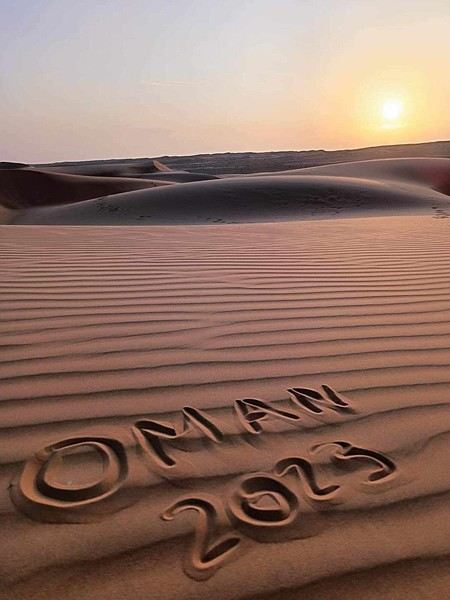
If we waited so long to explore this part of the world, it’s because a few questions were nagging at us, like: Can two Landais party lovers like us survive 15 days without apéro 😄? Or, more seriously: Can a feminist like me enjoy traveling in such a conservative country?
That is the question (and I feel your pain with this unbearable suspense 😅).
Ready to dive in?
PS: Apologies in advance for the casual tone of this travel journal—it’s the one I shared with our loved ones in real time, which explains everything.
We’re a couple in our fifties who’ve been traveling independently for ages—mostly in Asia, a bit in Africa, very little in the Americas, and never ever in West Asia until November 2023, when we discovered the Sultanate of Oman.
If we waited so long to explore this part of the world, it’s because a few questions were nagging at us, like: Can two Landais party lovers like us survive 15 days without apéro 😄? Or, more seriously: Can a feminist like me enjoy traveling in such a conservative country?
That is the question (and I feel your pain with this unbearable suspense 😅).
Ready to dive in?
PS: Apologies in advance for the casual tone of this travel journal—it’s the one I shared with our loved ones in real time, which explains everything.
Circulation dans les villes en Sicile English translation pending
Bonjour. Je viens de prendre connaissance des "ZTL" en Italie. Est ce que cela veut dire que si vous avez réservé un hôtel en ville, vous ne pouvez pas y accède avec votre véhicule? La règle est-elle la même pour les voitures et les motos? Le radar flasche-t-il par devant ou derrière? merci de vos retour d'exérience
Discussion sur le thème (concours septembre 2020): lieux, scènes de départ ou d'arrivée English translation pending
Rebonjour, 🙂
C'est ici que l'on discute , échange, sur le thème: lieux, scènes de départ ou d'arrivée.
Pour revenir au concours, c'est ici
Hambourg-Vienne-Munich en vélo solo, malgré la covid English translation pending
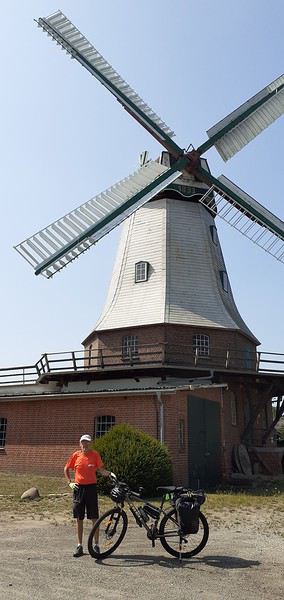 Trop frustré de projets avortés et en manque de raids au long cours à cause de cette saloperie de virus, j'ai décidé de partir quand même. Ce sera donc la suite de ma transeuropéenne démarrée il y a un an à Oslo. Voir carnet Oslo - Hambourg.
Rêve de faire un tour du monde à vélo English translation pending
Bonjour à tous,
Mon rêve serait de faire un tour du monde à vélo, et est fais plusieurs estimations, en notant les endroits où je voulais absolument aller, le parcours le moment propice de ma vie...
Bref, j'ai compté à peu près 3 ans. Il faudrait que je n'ai pas encore d'enfant donc, on va dire avant 35 ans et si j'ai un travail il est impossible de partir 3 ans comme ça. Donc la seule fenêtre serait après mes études que je pense terminer à 23 ans. Le hic est le suivant : quelles seront les conséquences de partir 3 ans et d'avoir un aussi gros gouffre dans le CV pour trouver un travail ? Si je réalise ce rêve j'en assumerai toutes les conséquences, mais je voulais savoir à quelle point c'est compliquée de retrouver une vie normale et donc un boulot après 3 ans d'absence.
Je peux, au pire, coupé ce voyage et le transformer en 2 ans, puis en prenant une Année sabbatique par la suite mais je préférerais vraiment tout réaliser d'un coup, navoir à penser qu'à soi pendant 3 ans, ne plus avoir les tâches quotidienne... Bref je veux une vrai coupure avec le quotidien et la vie "normale" donc pus c'est long mieux c'est.
Merci beaucoup de vos réponses.
Ps: je pense faire des études dans un domaine très demander d'où la difficulté de trouver du travail dans ce domaine après 3 ans de vide. Mais au pire je peux faire totalement autre chose et patienter avant de trouver un poste. Encore merci !!
Ps: je pense faire des études dans un domaine très demander d'où la difficulté de trouver du travail dans ce domaine après 3 ans de vide. Mais au pire je peux faire totalement autre chose et patienter avant de trouver un poste. Encore merci !!
Quel vélo Gravel choisir en 2020? English translation pending
Bonjour,
J'ai acheté il y a 4 jours un gravel croix de fer Genesis 20, que je me suis fait vélo hier !!! J'avoue avoir eu un coup de coeur pour ce vélo.... mais depuis ce vol je me suis mise à nouveau en quête de recherche car j'ai à nouveau comparé les prix et les équipements et à nouveau le doute plane. Le problème du croix de fer c'est la dimension du cadre il faut avoir un buste assez long pour avoir un minimum de confort ou alors raccourcir la potence mais le guidon devient nerveux et la tenue de route se dégrade selon avis d'expert ! Alors toutes les questions sont là pour un budget entre 1000 et 1500e grand max car l'assurance heureusement va me rembourser mais je vais perdre de billes ! : - cadre acier ou alu - choisir un cadre et faire monter son vélo // cadre ll city par exemple // - choix de la transition - choix des freins - pneu en 700 de quelle marque ? car il paraît qu'on ne fait pas assez attention aux pneus quand on achète son vélo alors que ce sont eux qui après le cadre offre une belle adhérence et confort route
déjà une bonne base si je pouvais avoir vos avis d'expert ....! voire quelques modèles en exemple ....
Bonne journée à tous, Anne
J'ai acheté il y a 4 jours un gravel croix de fer Genesis 20, que je me suis fait vélo hier !!! J'avoue avoir eu un coup de coeur pour ce vélo.... mais depuis ce vol je me suis mise à nouveau en quête de recherche car j'ai à nouveau comparé les prix et les équipements et à nouveau le doute plane. Le problème du croix de fer c'est la dimension du cadre il faut avoir un buste assez long pour avoir un minimum de confort ou alors raccourcir la potence mais le guidon devient nerveux et la tenue de route se dégrade selon avis d'expert ! Alors toutes les questions sont là pour un budget entre 1000 et 1500e grand max car l'assurance heureusement va me rembourser mais je vais perdre de billes ! : - cadre acier ou alu - choisir un cadre et faire monter son vélo // cadre ll city par exemple // - choix de la transition - choix des freins - pneu en 700 de quelle marque ? car il paraît qu'on ne fait pas assez attention aux pneus quand on achète son vélo alors que ce sont eux qui après le cadre offre une belle adhérence et confort route
déjà une bonne base si je pouvais avoir vos avis d'expert ....! voire quelques modèles en exemple ....
Bonne journée à tous, Anne
Randonnée Le Puy - Saint-Guilhem - Saint-Gilles - Le Puy English translation pending
Bonjour,
Cherchant un plan B pour randonner cet été je commence à m'intéresser à une boucle Le Puy - St Guilhem le Désert - St Gilles du Gard - Le Puy en empruntant pour commencer le chemin de St-Guilhem qui ne serait balisé qu'en direction du Sud, puis le GR 653 et enfin le GR700 pour remonter jusqu'au Puy en Velay.
En théorie les GR 653 et GR 700 devraient avoir un balisage permettant de les suivre dans les deux sens.
Qu'en est-il du balisage sur ces chemins? Est-il suffisamment correct pour qu'on puisse s'y passer de cartes?
Quid de l'hébergement? Trouve-t-on suffisamment de gîtes d'étape sur ces 3 chemins pour pouvoir s'abstenir de prendre une tente?
Cherchant un plan B pour randonner cet été je commence à m'intéresser à une boucle Le Puy - St Guilhem le Désert - St Gilles du Gard - Le Puy en empruntant pour commencer le chemin de St-Guilhem qui ne serait balisé qu'en direction du Sud, puis le GR 653 et enfin le GR700 pour remonter jusqu'au Puy en Velay.
En théorie les GR 653 et GR 700 devraient avoir un balisage permettant de les suivre dans les deux sens.
Qu'en est-il du balisage sur ces chemins? Est-il suffisamment correct pour qu'on puisse s'y passer de cartes?
Quid de l'hébergement? Trouve-t-on suffisamment de gîtes d'étape sur ces 3 chemins pour pouvoir s'abstenir de prendre une tente?
Littérature de voyage, échos du changement English translation pending
Bonjour,
Et si finalement on donnait la parole à d'autres ?
Aux écrivains qui nous sont chers, à tous ceux qui dans leurs livres ont évoqué bien mieux que nous les interrogations, les doutes, le changement, la mue et l'adaptation dans le voyage ?
Et si leur expérience et leurs mots à eux, en quelques paragraphes ou phrases isolées que vous publierez ici, éclairaient un peu notre lanterne pour les mois ou les années à venir ?
L.
--
Nicolas Bouvier. Retour d'Inde. Publié dans " Bleu Immortel. Voyages en Afghanistan ". Editions Zoe. 2003.
--
" Revenir d'Asie pose des problèmes très précis. En Suisse, retour d'Inde et du Japon, je me suis longtemps senti mal à l'aise. Les magasins, les rues m'inspiraient une répulsion irraisonnée. Noël qui approchait, la foule des acheteurs, les farces tartinées de santé, le bruit des sous, la couperose me donnaient le cafard. Le seul endroit où je respirais, où je croisais de vrais regards c'était -- tenez-vous bien -- l'hôpital. Pourtant, c'était mon pays que je m'étais réjoui de revoir, pourtant on m'avait partout accueilli avec une gentillesse qui ne se démentait pas. Alors ? Je crois que c'était l'argent qui me gênait. L'argent engorgeait tout. Et à cause de cet argent, il n'y avait plus de foule ; elle était rompue, divisée comme une étendue de sable par les mailles éparses d'un filet. Il n'y avait que de petites fortunes, de petites coquilles, de petites solitudes meublées, feutrées, équipées, mais solitudes quand même. Dans les salles de billard, dans les autobus, j'entendais souvent cette phrase qui me paraissait stupéfiante : " Moi, je n'ai besoin de personne. " La communauté n'existait plus -- communauté : le sentiment profond que le sort de n'importe lequel de vos semblables vous concerne et vous affecte en quelque façon, la conscience d'une interdépendance -- , et pour qu'elle se recrée il fallait un de ces chocs -- accident mortel sur la route, révolution hongroise -- qui montrent bien que l'argent n'est pas tout et que ce qui nous rapproche le plus des autres est plus fondamental que ce qui nous en éloigne. Autrement, et en temps normal, on n'avait besoin de personne. Ce n'était que trop vrai, et quelle indigence. L'Hindou et le Chinois exposés en permanence à manquer de riz et de galette ont perpétuellement besoin du voisin, et le voisin d'eux. Le paysan du Dekkan a beau avoir l'oeil vide et feindre l'indifférence ; mendier de la farine, prêter de la farine, voir -- à cause d'une rivière qui déborde à 200 kilomètres de là -- sa maison soudain remplie d'inconnus, et pour longtemps, il ne connaît que ça, c'est son ordinaire. Voilà qui fait des foules. La misère se partage, et c'est grâce à cela que les misérables vivent encore. L'égoïsme n'est pas dans leurs moyens, trop coûteux. La prospérité ne se partage pas. Il faut cependant quitter la misère. Les Indiens y travaillent et on leur souhaite de réussir. Je leur souhaite aussi de conserver alors le coeur qu'ils avaient quand ils n'avaient que ça. "
Et si finalement on donnait la parole à d'autres ?
Aux écrivains qui nous sont chers, à tous ceux qui dans leurs livres ont évoqué bien mieux que nous les interrogations, les doutes, le changement, la mue et l'adaptation dans le voyage ?
Et si leur expérience et leurs mots à eux, en quelques paragraphes ou phrases isolées que vous publierez ici, éclairaient un peu notre lanterne pour les mois ou les années à venir ?
L.
--
Nicolas Bouvier. Retour d'Inde. Publié dans " Bleu Immortel. Voyages en Afghanistan ". Editions Zoe. 2003.
--
" Revenir d'Asie pose des problèmes très précis. En Suisse, retour d'Inde et du Japon, je me suis longtemps senti mal à l'aise. Les magasins, les rues m'inspiraient une répulsion irraisonnée. Noël qui approchait, la foule des acheteurs, les farces tartinées de santé, le bruit des sous, la couperose me donnaient le cafard. Le seul endroit où je respirais, où je croisais de vrais regards c'était -- tenez-vous bien -- l'hôpital. Pourtant, c'était mon pays que je m'étais réjoui de revoir, pourtant on m'avait partout accueilli avec une gentillesse qui ne se démentait pas. Alors ? Je crois que c'était l'argent qui me gênait. L'argent engorgeait tout. Et à cause de cet argent, il n'y avait plus de foule ; elle était rompue, divisée comme une étendue de sable par les mailles éparses d'un filet. Il n'y avait que de petites fortunes, de petites coquilles, de petites solitudes meublées, feutrées, équipées, mais solitudes quand même. Dans les salles de billard, dans les autobus, j'entendais souvent cette phrase qui me paraissait stupéfiante : " Moi, je n'ai besoin de personne. " La communauté n'existait plus -- communauté : le sentiment profond que le sort de n'importe lequel de vos semblables vous concerne et vous affecte en quelque façon, la conscience d'une interdépendance -- , et pour qu'elle se recrée il fallait un de ces chocs -- accident mortel sur la route, révolution hongroise -- qui montrent bien que l'argent n'est pas tout et que ce qui nous rapproche le plus des autres est plus fondamental que ce qui nous en éloigne. Autrement, et en temps normal, on n'avait besoin de personne. Ce n'était que trop vrai, et quelle indigence. L'Hindou et le Chinois exposés en permanence à manquer de riz et de galette ont perpétuellement besoin du voisin, et le voisin d'eux. Le paysan du Dekkan a beau avoir l'oeil vide et feindre l'indifférence ; mendier de la farine, prêter de la farine, voir -- à cause d'une rivière qui déborde à 200 kilomètres de là -- sa maison soudain remplie d'inconnus, et pour longtemps, il ne connaît que ça, c'est son ordinaire. Voilà qui fait des foules. La misère se partage, et c'est grâce à cela que les misérables vivent encore. L'égoïsme n'est pas dans leurs moyens, trop coûteux. La prospérité ne se partage pas. Il faut cependant quitter la misère. Les Indiens y travaillent et on leur souhaite de réussir. Je leur souhaite aussi de conserver alors le coeur qu'ils avaient quand ils n'avaient que ça. "
Été 2017: trois semaines en Colombie en famille English translation pending
Comment la Colombie nous est venue à l’esprit ?
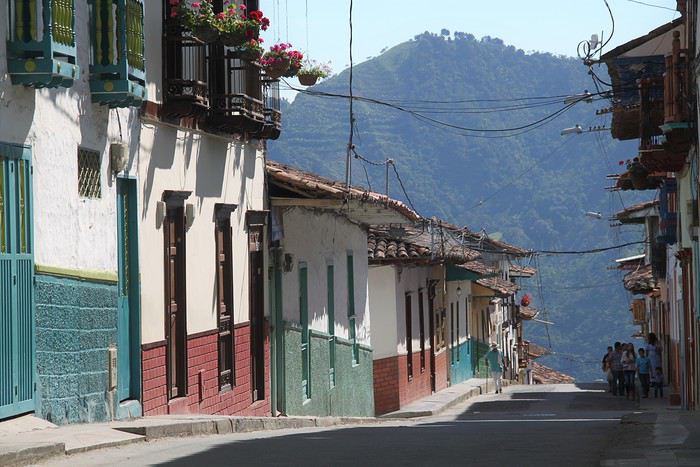
La première fois que j’ai entendu parler de la Colombie – comme destination touristique, j’entends –, c’était lors de notre voyage en Equateur au cours de notre hâlte à La Rana canto(que je recommande chaleureusement d’ailleurs pour qui voudrait faire un stop à la campagne. C’est vraiment très bien). Nadine et Pascal nous ont dit qu’ils commençaient à accueillir des backpackers venant de Colombie et que ces derniers trouvaient cela vraiment super.
Puis un podcast de Voyageurs du Monde m’a persuadée que la Colombie était le pays à visiter rapidement.
Ma fille (19 ans à l’époque) n’a pas été difficile à convaincre. Elle adore l’Amérique latine et une de ses meilleures amies a passé de nombreuses années en Colombie. Les garçons (mon tendre et cher, et notre fils - 17 ans) étaient loin d’être convaincus. Il faut dire que le site du ministère des affaires étrangères était tout sauf rassurant avec plein de rouge partout et un peu de jaune. Mais grâce à un travail de lobbying acharné et astucieux des filles, la promesse de bien rester dans les zones jaunes, ils ont fini par se laisser entraîner. (Entre notre décision et le voyage, le rouge du MAE a été largement réduit).
Restait à établir le parcours. La Colombie c’est grand, très grand. Et les routes sont lentes, très lentes. Pas question de vouloir trop en faire. Notre choix s’est porté sur la région du café, Medellin, Carthagène - parce que Carthagène a beau être très touristique, il nous paraissait difficilement envisageable de passer outre – et la Santander (avec Saint-Gil) que nous avons privilégié au parc de Tayrona (qui nous paraissait davantage semblable à ce que nous avions pu découvrir au cours de nos précédents voyages).
J’ai été guidée dans mes choix par les posts de Intothetrees -merci mille fois à lui- et le blog de Mars56 - merci aussi mille fois. Quelques blogs de voyageurs en tour du monde aussi (peu de sites évoquaient la Colombie à l’époque et j’ai découvert que les blogs de TDM étaient une bonne source d’information dans ce cas).
Pour optimiser les trajets, j’ai choisi une arrivée dans la région du café et un départ de Bogota. Trouver les billets au meilleur prix a été un peu compliqué et j’ai dû me résoudre à passer par un site de grossiste, chose que je ne fais jamais, en croisant les doigts pour ne pas avoir de problèmes. Deux vols intérieurs (Medellin – Carthagène et Carthagène – Bucaramanga) ont permis d’alléger les trajets.
Pour les hôtels, je n’ai pas eu le temps de potasser et puis à vrai dire, il n’y avait pas vraiment de quoi potasser. Je les ai choisis quelques jours à l’avance sur Booking en fonction des différents commentaires. Bien m’en a pris : en réservant depuis l’étranger – et Booking fait partie de « réserver depuis l’étranger », même nous étions déjà en Colombie lors de la réservation – on ne paye pas la TVA.
Au final, le trajet a donné cela.
5 août : trajet Paris - Perreira 6 août : Trajet pour Salamina – Salamina 7 août : Salamina - Balade aux alentours 8 août : Salamina - San Felix-vallée de Samaria 9 août : en route pour Jardin de Antoquia 10 août : Jardin de Antoquia 11 août : Jardin de Antoquia 12 août : trajet pour Medellín - musée de Antoquia 13 août : Guatape 14 août : Medellín - Free tour- Metrocable et Comuna 13 15 août : trajet pour Carthagène - Carthagène 16 août : Carthagène 17 août : Carthagène – les îles de Rosaire 18 août : Carthagène – La Boquhttp://illa 19 août : En route pour San Gil. Non ! pour Bogota ! 20 août : San Gil 21 août : Barichara- Guane 22 août : Rafting à San Gil 23 août : San Gil- Guadalupe 24 août : Guadalupe 25 août : Trajet pour Bogotá 26 août : Bogotá – bike tour – La calendelaria- musée de l’or 27 août : Bogotá - Montserrat- retour sur Paris
Tant pis pour la carte que j'ai faite sur Google earth : je ne peux pas la télécharger, pas assez de pixels!!
Nous avons donc adopté un rythme cool, nous laissant le temps de la découverte mais aussi du repos entre des trajets qui ont été souvent chaotiques voire complétement chamboulés. J’y reviendrai.
Un petit bilan, avant de passer au détail du récit : nous avons tout quatre bien apprécié la Colombie et les Colombiens. Le très bon espagnol de notre fille nous a beaucoup aidé à la fois pour nous débrouiller – mais nous aurions pu faire sans – mais aussi pour échanger avec les gens, notamment dans le bus. Le Colombie est un pays vraiment très chouette et mon seul regret, partagé par au moins un autre membre de la famille (je vous laisse deviner lequel), est de ne pas avoir eu plus de temps pour, par exemple, aller à Mompox ou encore Mongi.
Quant à la sécurité, souvent source d’interrogations, jamais nous ne nous sommes sentis menacés. Bien sûr nous avons pris les précautions d’usage et, dans les villes, Medellín et Bogotá, j’avais choisi pour nous loger les quartiers les plus sécures, peut-être moins typiques mais plus simples à gérer. Evidemment, cela ne veut pas dire qu’il n’y pas de problèmes, mais nous n’avons pas eu de soucis pour voyager. Dans la région du café, nous avons croisé maints militaires dûment armés, un peu impressionnant quand même.
La première fois que j’ai entendu parler de la Colombie – comme destination touristique, j’entends –, c’était lors de notre voyage en Equateur au cours de notre hâlte à La Rana canto(que je recommande chaleureusement d’ailleurs pour qui voudrait faire un stop à la campagne. C’est vraiment très bien). Nadine et Pascal nous ont dit qu’ils commençaient à accueillir des backpackers venant de Colombie et que ces derniers trouvaient cela vraiment super.
Puis un podcast de Voyageurs du Monde m’a persuadée que la Colombie était le pays à visiter rapidement.
Ma fille (19 ans à l’époque) n’a pas été difficile à convaincre. Elle adore l’Amérique latine et une de ses meilleures amies a passé de nombreuses années en Colombie. Les garçons (mon tendre et cher, et notre fils - 17 ans) étaient loin d’être convaincus. Il faut dire que le site du ministère des affaires étrangères était tout sauf rassurant avec plein de rouge partout et un peu de jaune. Mais grâce à un travail de lobbying acharné et astucieux des filles, la promesse de bien rester dans les zones jaunes, ils ont fini par se laisser entraîner. (Entre notre décision et le voyage, le rouge du MAE a été largement réduit).
Restait à établir le parcours. La Colombie c’est grand, très grand. Et les routes sont lentes, très lentes. Pas question de vouloir trop en faire. Notre choix s’est porté sur la région du café, Medellin, Carthagène - parce que Carthagène a beau être très touristique, il nous paraissait difficilement envisageable de passer outre – et la Santander (avec Saint-Gil) que nous avons privilégié au parc de Tayrona (qui nous paraissait davantage semblable à ce que nous avions pu découvrir au cours de nos précédents voyages).
J’ai été guidée dans mes choix par les posts de Intothetrees -merci mille fois à lui- et le blog de Mars56 - merci aussi mille fois. Quelques blogs de voyageurs en tour du monde aussi (peu de sites évoquaient la Colombie à l’époque et j’ai découvert que les blogs de TDM étaient une bonne source d’information dans ce cas).
Pour optimiser les trajets, j’ai choisi une arrivée dans la région du café et un départ de Bogota. Trouver les billets au meilleur prix a été un peu compliqué et j’ai dû me résoudre à passer par un site de grossiste, chose que je ne fais jamais, en croisant les doigts pour ne pas avoir de problèmes. Deux vols intérieurs (Medellin – Carthagène et Carthagène – Bucaramanga) ont permis d’alléger les trajets.
Pour les hôtels, je n’ai pas eu le temps de potasser et puis à vrai dire, il n’y avait pas vraiment de quoi potasser. Je les ai choisis quelques jours à l’avance sur Booking en fonction des différents commentaires. Bien m’en a pris : en réservant depuis l’étranger – et Booking fait partie de « réserver depuis l’étranger », même nous étions déjà en Colombie lors de la réservation – on ne paye pas la TVA.
Au final, le trajet a donné cela.
5 août : trajet Paris - Perreira 6 août : Trajet pour Salamina – Salamina 7 août : Salamina - Balade aux alentours 8 août : Salamina - San Felix-vallée de Samaria 9 août : en route pour Jardin de Antoquia 10 août : Jardin de Antoquia 11 août : Jardin de Antoquia 12 août : trajet pour Medellín - musée de Antoquia 13 août : Guatape 14 août : Medellín - Free tour- Metrocable et Comuna 13 15 août : trajet pour Carthagène - Carthagène 16 août : Carthagène 17 août : Carthagène – les îles de Rosaire 18 août : Carthagène – La Boquhttp://illa 19 août : En route pour San Gil. Non ! pour Bogota ! 20 août : San Gil 21 août : Barichara- Guane 22 août : Rafting à San Gil 23 août : San Gil- Guadalupe 24 août : Guadalupe 25 août : Trajet pour Bogotá 26 août : Bogotá – bike tour – La calendelaria- musée de l’or 27 août : Bogotá - Montserrat- retour sur Paris
Tant pis pour la carte que j'ai faite sur Google earth : je ne peux pas la télécharger, pas assez de pixels!!
Nous avons donc adopté un rythme cool, nous laissant le temps de la découverte mais aussi du repos entre des trajets qui ont été souvent chaotiques voire complétement chamboulés. J’y reviendrai.
Un petit bilan, avant de passer au détail du récit : nous avons tout quatre bien apprécié la Colombie et les Colombiens. Le très bon espagnol de notre fille nous a beaucoup aidé à la fois pour nous débrouiller – mais nous aurions pu faire sans – mais aussi pour échanger avec les gens, notamment dans le bus. Le Colombie est un pays vraiment très chouette et mon seul regret, partagé par au moins un autre membre de la famille (je vous laisse deviner lequel), est de ne pas avoir eu plus de temps pour, par exemple, aller à Mompox ou encore Mongi.
Quant à la sécurité, souvent source d’interrogations, jamais nous ne nous sommes sentis menacés. Bien sûr nous avons pris les précautions d’usage et, dans les villes, Medellín et Bogotá, j’avais choisi pour nous loger les quartiers les plus sécures, peut-être moins typiques mais plus simples à gérer. Evidemment, cela ne veut pas dire qu’il n’y pas de problèmes, mais nous n’avons pas eu de soucis pour voyager. Dans la région du café, nous avons croisé maints militaires dûment armés, un peu impressionnant quand même.
Voyage à vélo prévu ce printemps, qu'envisagez vous? English translation pending
Bonjour,
nous devions partir mi avril pour un voyage à vélo ces jours mais le confinement nous fait repousser la date de départ.
Êtes vous dans ce cas également?
Comment envisagez vous la suite ?
Où et quand partir selon le déconfinement ?
Un mois au Mozambique: logistique et réflexions English translation pending
Bonjour
Les retours de voyages au Mozambique sont peu nombreux sur VF, aussi je propose le mien qui s’est déroulé du 1 février au 29 février 2020. C’est la saison des pluies, ce n’est pas la saison touristique, on rencontre très peu de touristes, voire aucun, mais il y a beaucoup de soleil.
Je vais d’abord présenter la logistique, puis proposer quelques réflexions plus tard.
Visa. J’ai obtenu le visa très facilement au consulat de Mozambique à Zanzibar en 7 jours, le temps de visiter tranquillement l’île. Le visa a une durée de 90 jours, pour une visite de 30 jours maximum, il coûte 60 euros. Il semble que le e-visa soit pas facile à obtenir; en Europe, il faut se rendre au consulat du pays. Le visa à la frontière terrestre n’est pas possible.
Les gens. La population, bien que très pauvre, est d’un naturel souriant, aimable et serviable. On vous propose souvent de l’aide de façon désintéressée. La politesse est de mise en toutes circonstances. Aucune insécurité dans les campagnes ni même dans les villes, mais nous ne sortions pas le soir. Ce qui ne veut pas dire que le dangé soit inexistant, simplement qu’il y a moyen de l’éviter. La promiscuité très grande dans les chapas n’engendre aucun geste déplacé envers les femmes. Bien que la langue officielle soit le portugais, la plupart des gens parlent des dialectes bantous différents selon les régions. Il est parfois nécessaire de recourir au langage des signes en plus de quelques mots portugais. Sauf dans les hôtels et les comptoirs qui vendent les billets de bus, l’anglais est rarement pratiqué, mais les chauffeurs de chapas et les petits commerçants se débrouillent avec quelques mots. Les enfants vous lanceront spontanément des « how are you » auxquels il convient de répondre. On nous appelle Papa ou Mama – nous sommes les deux retraités -, une formule à la fois familière et respectueuse. Comme partout en Afrique, on vit dehors. Une occasion pour le voyageur d’observer respectueusement les comportements et de se comporter en conséquence.
Les livres. On avait deux livres, l’un excellent, le Bradt (éd.2017), l’autre minable : le Petit Futé (PF). Pour le montrer, je prends un seul exemple. Page 231 du PF, édition 2017 - celle vendue pour l’édition 2019-2020 -, on lit : « Pour aller vers le Sud, la route est relativement longue, avec un obstacle de taille : le Zambèze. En effet, il lui manquerait un pont [ … ] de nombreux chapas direction Beira attendent tous les futés ( je souligne ) qui ont décidé de ne pas rester assis deux heures inutilement dans le bus. ». Or il y a un pont qui permet de traverser le Zambèze depuis 2009 ! CQFD.
Les sous. Tous les ATM ne conviennent pas aux touristes. Millennium (en couleur rose) accepte les cartes visa et master étrangères, retrait de 10 000 meticals (mzn) maximum, 200 mzn de frais fixes. Du coup on n’a pas essayé d’autres banques, ces conditions sont excellentes, Millennium est partout présent au Mozambique. On peut payer sans frais avec sa carte bancaire dans de nombreux hôtels, restaurants et magasins, même pour quelques euros. Si on privilégie ce mode de paiement, alors les mzn retirés dans les ATM deviennent de l’argent de poche, pour les achats sur les marchés, payer les chapas, etc… ; ainsi on limite le recours aux ATM et on minimise les frais.
Le transport. Pour les machibombos (de grands bus confortables) on nous demande de venir à 5 h du matin. Il faut comprendre que la vente des billets restants se fait à partir de 5 h ; le bus est susceptible de partir dès qu’il est plein, à défaut, il partira à 6 h au plus tard et prendra des passagers en route. Les gens qui ont pris leur billet la veille arrivent vers les 5h 45. Si vous n’avez pas de billet, venir tôt permet d’obtenir les meilleures places libres.
Pour les chapas, idem, sauf qu’ils se remplissent plus vite. On achète le billet toujours sur place ou dans le chapa. Il y a de nombreux chapas le matin, ils se font plus rares l’après-midi. Le nombre de passagers n’est pas limité. Les meilleures places sont celles à partir du deuxième rang, côté vitre, ainsi vous ne serez pas gênés par les nombreuses sorties-entrées des passagers et vous aurez un peu d‘air si la vitre s’ouvre. Les 2 places de devant sont les meilleures. Contrairement à ce que j’ai lu sur VF, on n’a jamais rien payé pour les bagages.
Le logement. On choisit des logements corrects, dans la catégorie « prix moyen », avec une bonne literie, une chambre toujours très propre - draps et serviettes de bains changés -, la wifi, une salle de bain non partagée, l’eau chaude, la climatisation - à défaut un ventilateur, souvent les deux à la fois -, une moustiquaire, mais sans personnalité, pour un prix correct, autour de 3 000 mzn pour une chambre double, soit 40 euros. Mais on peut se loger pour beaucoup moins cher, dans des dortoirs ou des chambres moins bien équipées, voire camper. Le Mozambique peut être une destination pour routards.
La météo. L’été austral est la saison des pluies. Sauf en cas de dépression – comme ce fut le cas fin janvier dans la partie nord – les pluies peuvent être fortes mais elles ne durent jamais longtemps. Il y a surtout du soleil, ainsi on n’a eu que peu ou pas de pluie au total et beaucoup de soleil. Le jour se lève tôt, le soleil frappe fort assez rapidement, il fait très chaud dès le matin ; aussi les Mozambicains se lèvent tôt. C’est surtout la chaleur et le soleil, bien plus que la pluie, qui peuvent rendre les conditions du voyage difficiles sauf pour la route.
Le passage de la frontière. On vient de Tanzanie et nous traversons la frontière par la côte, à Kiranbo. Nous passons notre dernière nuit tanzanienne à Mtwara, au Lole grand lodge : 30000 tsh, breakfast inclus ; chambre un peu petite mais confortable ; excellent wifi ; bon breakfast ; bonne situation ; bon rapport qualité prix. De l’hôtel nous réservons un dalla dalla pour le lendemain matin 5 heures (h) qui ne viendra pas. L’unique dalla-dalla qui va à la frontière stationne dans une rue à droite de l’entrée de la gare routière des dalla-dalla. A 5 h effectivement, là, un taxi collectif attend les passagers. Il part à 6 h sans être plein, aussi il passe à la gare routière des bus pour finir de se remplir.
Le dalla-dalla s’arrête pour les formalités au poste frontière, puis continue jusqu’à la rivière Ruvuma, son terminus où attend une embarcation. Ici le Bradt conseille de faire le change, pour mon malheur. Le prix de la traversée est de 1 000 shillings (tsh), payable en tsh « uniquement ». Comme j’avais changé tous mes tsh, j’ai voulu payer en USD, et ce fut une palabre des plus désagréables pour y arriver.
Du côté Mozambique on arrive au milieu de nulle part. Il faut marcher sur un sentier rendu glissant par la pluie pour atteindre la route. Les militaires font une première vérification méticuleuse de nos papiers et bagages. On monte dans un taxi collectif qui attend. Il stoppe un peu plus loin au vrai poste frontière en dur - nouvelles vérifications méticuleuses – et va jusqu’à Mocimboa da Praia son terminus. La route en terre est épouvantable jusqu’à Palma, ensuite on trouve le goudron. Le prix du trajet revient à 1 000 mzn, le chauffeur nous demandera 2 500 mzn, après discussion, on paiera 1 500 mzn chacun.
On ne s’est pas arrêté à Palma où l’on voit quelques guest houses correctes de l’extérieur. La route est longue jusqu’à Mocimboa, le taxi assez confortable, mais on n’a pas à changer de véhicule, un avantage certain. On a été trop souvent arrêtés par l’armée sur ce tronçon avec à chaque fois une vérification minutieuse de nos passeports. Un des postes a été jusqu’à téléphoner au consulat de Zanzibar ! A croire que les touristes qui viennent par la frontière tanzanienne sont suspects. Cependant, le climat politique dans la province du Cabo Delgado explique cette suspicion.
Le Nord.
Mocimboa da praia. On descend au Vumba complex, seul hôtel convenable à notre avis : 3750 mzn breakfast inclus ; chambre immense, mais tout est déglingué dans la salle de bains : ni eau, ni électricité, seau d’eau et lampe de poche. En revanche, très bon restaurant-bar avec wifi. Le prix trop élevé. L’environnement est misérable, la plage une décharge, l’hôtel loin du centre. La ville ne présente pas d’intérêt particulier, sauf le soir son petit marché et l’ATM Millennium.
Macomia. Pour rejoindre le village étape, on doit faire un détour par Mueda, à cause de l’état de la route, nous dit-on. Pas de chapa, on prend le premier petit camion bâché avec les chèvres et les bidons d’essence. À Mueda on reste de longues heures à attendre que l’on puisse monter à l’arrière d’un camion non bâché, surchargé de voyageurs, dans des conditions précaires. La route pour rejoindre la nationale est en fin de construction, aussi seuls les camions 4X4 peuvent circuler sur le bas-côté. Sur la nationale on doit changer de chapa pour traverser le Rio Messalo (nom incertain) sur une pirogue traditionnelle (100 mzn) : il n’y a pas de pont. On arrive à Macomia à la nuit. On nous recommande le 2M hôtel : 2000 mzn sans breakfast ; chambre moderne avec salle de bains récente, très bonne douche ; mais le tout très humide et oppressant ; wifi. Le village est tout simple, on trouve des marchands de brochettes et d’autres en-cas, et aussi de la bière - la 2 M, qui est bonne -
Pemba. La route ne se fait qu’en chapa, le pont de la rivière Montepuez (nom certain) s’est cassé à la dernière dépression. On arrive 1 h avant que les embarcations officielles s’activent. On prend place dans la file indienne, sous un soleil qui tue, dans une chaleur moite, c’est le quotidien de la population. Une fois la rivière traversée (gratuit), il faut suivre un sentier boueux et chaotique, pour prendre un nouveau chapa qui va à Pemba. (À la fin du séjour, à Maputo, nous avons vu à la TV l’inauguration d’une digue permettant de traverser le Rio à sec. Digue qui était en préparation lors de notre passage.)
À Pemba on a choisi l’Hôtel Saruma : 3000 mzn par nuit au lieu de 3 200, breakfast inclus. L’hôtel est moderne avec piscine ; confort moyen ; problèmes wifi résolus le deuxième jour ; bon restaurant ; breakfast de base gratuit mais payant si on ajoute une commande… Situation en bout de plage qui rend l’hôtel plus attractif que ceux de la ville moite et poussiéreuse. Proximité Shoprite (Hyper). Loin de la gare routière et du centre-ville, le trajet se fait cependant facilement en chapa pour quelques mzn. Pemba possède une plage qui pourrait être agréable si elle était propre.
On prend la veille les billets de bus pour Namialo, dans une rue juste avant la place des héros. On nous demande d’être près de l’aéroport à 5h et de fait le bus part à l’heure, sauf qu’il retourne en ville pour prendre les passagers et attend pour se remplir, de sorte que ce n’est que vers 6 h que nous partons vraiment.
À partir de Pemba il est possible de prendre des machibombos pour les longs trajets, puis les chapas pour les terminer, un luxe sans pareil. On refusera de monter dans les camions, même si l’on doit attendre un peu plus de temps, l’expérience de Mueda nous a totalement dégoûtés.
Isla de Mozambique. Pour se rendre dans l’ile, on s’arrête à Namiolo et on termine le trajet en chapa. Il faut faire attention parce que tous les chapas crient Isla ! Cependant ils ne vont pas tous à Isla, certains vont à Quixaxe et vous déposent au carrefour pour Isla, ou encore, un peu plus loin à un autre carrefour pour Isla s’ils vont à Nacala. De là il faudra prendre un autre chapa ou un camion alors que d’autres chapas vont directement de Namiolo à Isla ; il faut donc demander le terminus du chapa. On a dû finir le trajet en camion non bâché… le dernier !
Puis on prend un autre véhicule pour le pont et parcourir la ville. Nous sommes descendus au Café central : 3000 mzn au lieu de 3200, Breakfast inclus. Magnifique maison ancienne superbement restaurée par un Autrichien des plus sympathiques parlant le français – mais l’hôtel est très humide ; piscine ; wifi dans la chambre. Très agréable, si on excepte l’humidité. Restaurant et bar excellents, breakfast somptueux ; service impeccable.
Isla de Mozambique est inscrite à l’Unesco ce qui se justifie. On a surtout apprécié la visite du musée dans le palais Sao Paulo et sa très belle chapelle ; les balades dans l’ile ; moins le fort qui est vide - la restauration est incomplète, voire laissée à l’abandon -. Isla possède un énorme potentiel architectural. Je souligne la nette séparation du village autochtone avec la partie touristique de l’ile. Il est agréable de prendre une bière face à la mer.
NB. Un beau documentaire sur Isla Mozambique a été diffusé sur la chaîne Ô : https://www.france.tv/documentaires/voyages/1319865-a-la-decouverte-de-l-ile-de-mozambique.html
Le centre
Nampula. Vers 5 h on prend un chapa pour rejoindre le continent. Le chapa cherche de rares clients et fait plusieurs fois le tour de l’Ile. Puis il s’arrête encore, on est dans le chapa depuis 1 h. On décide de le quitter pour se mettre à l’entrée du pont, où une moto nous prend rapidement. Dans la foulée, sur le continent, un autre chapa ira directement à Nampula. On trouvera l’Hôtel Lucio, un peu au culot : 3000 mzn obtenus du patron - un marocain qui parle bien le français - au lieu de 4000, breakfast inclus ; situation centrale ; bon confort ; wifi dans la chambre ; breakfast un peu basique et solennel mais correct. Nampula est la première vraie ville où on s’arrête, avec de larges avenues. On a apprécié la visite du musée et le restaurant Copacabana.
Ici nous nous séparons, mon amie et moi. Elle préfère prendre l’avion pour Beira, 1 000 km plus loin, moins fatigant, plus sécuritaire. Moi je continue en bus, 2 fois 500 Km, avec un arrêt à Quelimane.
Quelimane. Je prends un bus qui part à 6 h (j’y étais comme tous les autres à 5 h) pour 6 heures de trajet. J’arrive donc à destination à midi. Je m’installe à la Pensao ideal, 1 500 mzn, chambre petite, clim, salle de bain correcte mais basique. L’hôtel est en rénovation. Je pensais rester 2 nuits pour me reposer une journée entre deux trajets en bus, la ville ne le mérite même pas. La vieille église ne se visite plus. Je suis surpris de voir des immeubles totalement glauques et repoussants, pourtant habités - j’ai eu cette impression en Russie -. Il semble que cet état soit dû aux cyclones qui ont pourri ces immeubles ; à côté, il y a des bâtiments modernes. De plus c’est dimanche, il n’y a personne dans la ville, tout est fermé. Aussi, face à l’ambiance pesante de la ville, je décide de repartir le lendemain, en bus, pour Beira.
En Avion. De son côté, mon amie prend le vol Nampula-Maputo, avec une escale à Beira : Ethiopian Airlines, un petit avion neuf, 9000 mzn, le billet est pris à l’aéroport sans réservation. L’aéroport de Nampula est moderne avec une bonne organisation, alors que mon amie s’attendait à un vieux coucou et une atmosphère chaotique. En fait les lignes intérieures mozambicaines sont bien développées, les gens qui le peuvent les empruntent de préférence aux bus. Le temps est dégagé, le paysage est magnifique, notamment le delta du Zambèze. À Beira, seulement deux personnes descendent, aéroport endormi, pas de chapa pour la ville, 10km plus loin. Le taxi revient à 800 mzn, prix affiché, on a intérêt à être plusieurs…
Beira. Je retrouve mon amie au VIP Inn : 4000 mzn au lieu de 4500, breakfast inclus ; hôtel classe un peu triste (parce que vide, hors saison ?) ; chambre et salle de bains impeccables ; wifi dans la chambre ; restaurant tristounet et breakfast aussi, mais tout est très correct. L’environnement est décourageant, route en mauvais état, immeubles en ruine, ordures à ciel ouvert, et le VIP INN apparaît comme un havre de luxe au milieu de cette désolation. Le centre-ville a dû être très agréable autrefois pour une promenade. Elle a, nous a-t-on dit, souffert du cyclone dévastateur de 2019 et la reconstruction est lente. Il reste quelques vestiges coloniaux intéressants. Les livres conseillent la visite de la maison de la culture que l’on repère de loin par des tags sur les murs : bof, tout est vide, un peu triste, sauf 2 pièces qui exposent des objets à vendre. Comme la maison de la culture est en retrait de la route, c’est agréable de prendre une bière, au calme, avant de repartir. Quand on s’écarte du centre-ville, pour rejoindre la plage, on retrouve ces immeubles délabrés comme ceux de Quelimane. L’ensemble ressemble plus à un « bidonville » qu’à une « résidence », face à une plage sale, très sale. Tout cela est bien triste.
Le sud, les plages
Vilankulo. On fait le trajet Beira-Vilankulo en machibombo. On descend au Baobab Backpackers : 3 000 mzn au lieu de 3200, breakfast payant ; paillote super confortable en bord de plage, salon terrasse. Restaurant et bar agréables ; très bonne cuisine ; wifi capricieuse au bar, magasin ; service agréable. Un magnifique endroit, à conseiller. Possibilité de dortoirs. Un peu loin du centre et de la gare routière. Pour y arriver, au T - qui est aussi un carrefour -, prendre à droite jusqu’au marché, puis la 2 ème rue à gauche. Ensuite c’est vaguement indiqué. Assez loin, devant une ruine, prendre le chemin de sable en face, enfin après une petite boutique, prendre à droite, vous y êtes tout de suite La plage est immense, tout en longueur à marée haute, tout en profondeur à marée basse. Comme certaines plages de Zanzibar, la mer se retire très loin. La plage alors devient un jeu de couleur, le vert et le bleu dominant dans un dégradé infini, un paysage pour les peintres impressionnistes. Sur la plage quelques bateaux se reposent ou flottent. Quand la mer est haute, les pêcheurs reviennent de la pêche.
Tofo. Certains posts sur VF expliquent bien que, venant de Beira, il faut descendre à Maxixe pour embarquer sur une coquille de noix surchargée afin de rejoindre Inhambane, un raccourci. De là un gros bus de ville, surchargé aussi, va à Tofo. Le trajet en bus a été pénible à cause des secousses de la route - on est debout –, et de la chaleur. La récompense fut Liquid dive (tout près du Fatima’s Nest, un centre de plongée ; 6 300 mzn, breakfast inclus. Bungalow en dur tout confort, en face de la plage, le rêve. Excellents restaurant (végétarien) et breakfast ; piscine ; activités diverses en rapport avec la plongée, wifi à la réception. Le village de Tofo est minuscule et très agréable. La plage est immense, avec du sable blanc fin, les dunes une bonne surprise, une plage très différente de celle de Vilankulo. On peut regretter la proximité des hôtels qui mangent la plage.
Imhabane. Comme on n’a pas visité la ville à l’aller, que faire le trajet Tofo-Imhabane pour attraper un bus pour Xai-Xai tôt le matin est impossible, on en profite pour ne pas se presser. La visite de la ville se justifie par sa bibliothèque, sa baie, ses maisons, son petit musée, dense, intéressant, à la gloire du parti Frelimo et de ses leaders. On descend à l’Hôtel Africa Tropical : 3 000 mzn, breakfast inclus ; chambre agréable dans un jardin, tout correct ; wifi dans la chambre ; le week-end musique en live dans le café-restaurant. On n’a pas profité du breakfast, départ matinal. On a acheté le billet de bus la veille avec l’aide d’un policier ; il sera là pour nous indiquer le bus à prendre à 5 h du matin ; une fois installés le bus démarre. Incroyable, il nous attendait ! Le bus nous dépose à l’entrée de Xai Xai, pour prendre un chapa en direction de la plage, 10 km.
Xai Xai. On descend au Complex Halley 3000 mzn au lieu de 3500 breakfast inclus, centre de vacances à la plage, vide parce que hors saison. Un semblant de luxe agréable ; excellent restaurant un peu cher ; wifi dans la chambre ; service stylé. La plage de Xai Xai est particulière. Elle est vaste et déserte en cette saison, le sable un peu granulé et épais, pas comme celui de Tofo. Une barre de rochers délimite un bassin plus tranquille où jouent les enfants qui semblent ignorer l’école. La mer est sauvage surtout au-delà de la barre, les vagues s’écrasant sur les rochers de façon spectaculaire. La localité se compose de résidences secondaires et de quelques ruines. Tout est fermé. Petit magasin au village local, loin de la mer. Atmosphère pour films nostalgiques, pas pour nous déplaire.
Maputo. De la plage de Xai Xai, on prend un chapa pour rejoindre la ville de Xai Xai, il nous dépose à la sortie de la ville, près du pont du Limpopo, où on attend le bus confortable que nous avons pris il y a 2 jours, venant d’Imhabane. Le bus s’arrête à la demande … on sait qu’il passe vers 9h, le chauffeur nous reconnaît. Vous devez refuser toutes les propositions de chapas, nettement moins pratiques, sans doute moins chers ; le bus les dépassera sur la route. La gare routière de Maputo, du moins celle où s’arrête le bus, est à la périphérie du bidonville que nous avons traversé et qui encercle la capitale. On a pris un taxi collectif pour se rendre à l’hôtel et négocié le prix. On s’installe à l’hôtel Santa Cruz, 2500 mzn au lieu de 2800 à condition de réserver 5 nuits, breakfast inclus. La situation centrale est idéale pour visiter la ville. Wifi dans la chambre ; ascenseur. Confort correct mais chambre petite et salle de bains trop petite et vieillotte. Breakfast basique. Dîner très moyen. Bon rapport qualité prix mais pas très classe On a apprécié la découverte de la vieille ville, les musées, le marché artisanal idéal pour les cadeaux, les vestiges de la colonisation portugaise, la gare avec son très intéressant musée qui explique le développement du pays par le développement du chemin de fer, le fort, la ville moderne et ses grandes avenues. Maputo a plusieurs visages, quartiers résidentiels, quartiers défavorisés, comme toute grande ville, mais somme toute une ville agréable. La plage – Costa do sol - est une longue barre de sable qui s’étend très loin à marée basse, déserte à cette période de l’année. Il semble que cette plage soit le lieu de la future croissance de Maputo : on y trouve déjà un casino, des grandes enseignes d’hyper, des immeubles d’habitation, souvent vides. Se déplacer en transport en commun est facile, il y a des plans affichés à chaque arrêt de bus : les bus et chapas ont souvent leur terminus à la gare. Pour se rendre vers le N-E de Maputo, où se trouvent : - le marché artisanal ; - la Présidence ; - l’hôtel Polana Serena magnifique par son architecture, son histoire, sa situation ; - la Costa do Sol ; on prend un bus ou un chapa indiquant do Sol, sur l’avenida Eduardo Mondlane, et on descend au bon arrêt, par exemple, pour le marché artisanal, le premier arrêt sur avenida Julius Nyerere, et continuer à pied, les chauffeurs vous aideront. Toutefois, la ville historique (Baixa) se visite facilement à pied.
Ponta do Ouro. Mon amie est retournée chez elle, fatiguée : les 2500 km parcourus ont été une épreuve, qui aujourd’hui l’étonnent de s’être si bien comportée. Il me reste quelques jours et je décide de visiter la dernière plage du sud du pays avant mon passage en Afrique du Sud (AS). Je quitte l’hôtel Santa Cruz pour prendre un autre hôtel juste à côté du Musée de la Monnaie – j’ai oublié le nom -, rue Bagamoyo. L’hôtel a accepté de garder mon sac à dos avant de prendre la chambre. Je me rends à la Gare pour un bus en direction de Catembe, avant 7 h. Je descends au grand rond-point après le grand pont suspendu où arrive bientôt le bus de ville qui se rend à Ouro - départ régulier toutes les heures, aussi la visite de Ouro peut-elle se faire dans la journée de Maputo, ce qui est suffisant - ; le bus passe d’abord par la frontière. Au retour pareil : on descend à ce grand rond-point (le bus Maputo-Ouro ne passe pas par la gare) pour prendre la correspondance gratuite pour la gare, c’est la même compagnie. À Ouro, je m’installe au Underwater Explorer, pas cher, 12 euros, une petite chambre très basique pour backpacker, avec douches partagées, ventilateur, mais cuisine et réfrigérateur, la plage juste derrière ; c’est surtout un centre de plongée. La plage do Ouro est très belle, l’océan agité, du déjà vu. Le fait marquant vient de ce que l’on est déjà « plus tout à fait » au Mozambique mais « déjà un peu » en AS tant la présence des Sud-Africains est visible par leurs « gros tubes 4x4 », ou encore par leur vedette-hors-bord qu’ils font glisser sur le sable en sortant de l’eau à toute vitesse : bonjour les « musclors ». Certains SA possèdent des maisons secondaires à Ouro. Un peu comme à Las Vegas, on est dans un environnement surfait.
L'Afrique su Sud. De retour à Maputo, avec le bus Intercape, je passe en AS. La formalité à la frontière est simple … juste un tampon sur le passeport. Un mot pour souligner l’incroyable différence entre les deux pays. L’AS est bien le pays le plus développé de l’Afrique australe, c’est une évidence dès les premiers Km dans le pays, en regardant par la fenêtre les champs de maïs ou de bananes bien alignés, bien entretenus.
Limites. On n’a pas visité les réserves, fermées ; ni la région de Tete pour notre sécurité, à cause aussi de la saison des pluies qui devait rendre les déplacements difficiles – même par temps sec comme l’indiquent certains posts sur VF les transports sont épuisants - ; ni le train qui nous a bien tentés ; ni les îles qui sont hors de prix pour nous. Nous ne parlons pas le portugais, nos échanges avec la population étaient limités, on a beaucoup appris par l’observation cependant.
Remerciements. Je remercie Alice2017, Emersmile, Bof et tous les autres forumistes pour leurs carnets qui m’ont aidé dans la préparation du voyage.
Les retours de voyages au Mozambique sont peu nombreux sur VF, aussi je propose le mien qui s’est déroulé du 1 février au 29 février 2020. C’est la saison des pluies, ce n’est pas la saison touristique, on rencontre très peu de touristes, voire aucun, mais il y a beaucoup de soleil.
Je vais d’abord présenter la logistique, puis proposer quelques réflexions plus tard.
Visa. J’ai obtenu le visa très facilement au consulat de Mozambique à Zanzibar en 7 jours, le temps de visiter tranquillement l’île. Le visa a une durée de 90 jours, pour une visite de 30 jours maximum, il coûte 60 euros. Il semble que le e-visa soit pas facile à obtenir; en Europe, il faut se rendre au consulat du pays. Le visa à la frontière terrestre n’est pas possible.
Les gens. La population, bien que très pauvre, est d’un naturel souriant, aimable et serviable. On vous propose souvent de l’aide de façon désintéressée. La politesse est de mise en toutes circonstances. Aucune insécurité dans les campagnes ni même dans les villes, mais nous ne sortions pas le soir. Ce qui ne veut pas dire que le dangé soit inexistant, simplement qu’il y a moyen de l’éviter. La promiscuité très grande dans les chapas n’engendre aucun geste déplacé envers les femmes. Bien que la langue officielle soit le portugais, la plupart des gens parlent des dialectes bantous différents selon les régions. Il est parfois nécessaire de recourir au langage des signes en plus de quelques mots portugais. Sauf dans les hôtels et les comptoirs qui vendent les billets de bus, l’anglais est rarement pratiqué, mais les chauffeurs de chapas et les petits commerçants se débrouillent avec quelques mots. Les enfants vous lanceront spontanément des « how are you » auxquels il convient de répondre. On nous appelle Papa ou Mama – nous sommes les deux retraités -, une formule à la fois familière et respectueuse. Comme partout en Afrique, on vit dehors. Une occasion pour le voyageur d’observer respectueusement les comportements et de se comporter en conséquence.
Les livres. On avait deux livres, l’un excellent, le Bradt (éd.2017), l’autre minable : le Petit Futé (PF). Pour le montrer, je prends un seul exemple. Page 231 du PF, édition 2017 - celle vendue pour l’édition 2019-2020 -, on lit : « Pour aller vers le Sud, la route est relativement longue, avec un obstacle de taille : le Zambèze. En effet, il lui manquerait un pont [ … ] de nombreux chapas direction Beira attendent tous les futés ( je souligne ) qui ont décidé de ne pas rester assis deux heures inutilement dans le bus. ». Or il y a un pont qui permet de traverser le Zambèze depuis 2009 ! CQFD.
Les sous. Tous les ATM ne conviennent pas aux touristes. Millennium (en couleur rose) accepte les cartes visa et master étrangères, retrait de 10 000 meticals (mzn) maximum, 200 mzn de frais fixes. Du coup on n’a pas essayé d’autres banques, ces conditions sont excellentes, Millennium est partout présent au Mozambique. On peut payer sans frais avec sa carte bancaire dans de nombreux hôtels, restaurants et magasins, même pour quelques euros. Si on privilégie ce mode de paiement, alors les mzn retirés dans les ATM deviennent de l’argent de poche, pour les achats sur les marchés, payer les chapas, etc… ; ainsi on limite le recours aux ATM et on minimise les frais.
Le transport. Pour les machibombos (de grands bus confortables) on nous demande de venir à 5 h du matin. Il faut comprendre que la vente des billets restants se fait à partir de 5 h ; le bus est susceptible de partir dès qu’il est plein, à défaut, il partira à 6 h au plus tard et prendra des passagers en route. Les gens qui ont pris leur billet la veille arrivent vers les 5h 45. Si vous n’avez pas de billet, venir tôt permet d’obtenir les meilleures places libres.
Pour les chapas, idem, sauf qu’ils se remplissent plus vite. On achète le billet toujours sur place ou dans le chapa. Il y a de nombreux chapas le matin, ils se font plus rares l’après-midi. Le nombre de passagers n’est pas limité. Les meilleures places sont celles à partir du deuxième rang, côté vitre, ainsi vous ne serez pas gênés par les nombreuses sorties-entrées des passagers et vous aurez un peu d‘air si la vitre s’ouvre. Les 2 places de devant sont les meilleures. Contrairement à ce que j’ai lu sur VF, on n’a jamais rien payé pour les bagages.
Le logement. On choisit des logements corrects, dans la catégorie « prix moyen », avec une bonne literie, une chambre toujours très propre - draps et serviettes de bains changés -, la wifi, une salle de bain non partagée, l’eau chaude, la climatisation - à défaut un ventilateur, souvent les deux à la fois -, une moustiquaire, mais sans personnalité, pour un prix correct, autour de 3 000 mzn pour une chambre double, soit 40 euros. Mais on peut se loger pour beaucoup moins cher, dans des dortoirs ou des chambres moins bien équipées, voire camper. Le Mozambique peut être une destination pour routards.
La météo. L’été austral est la saison des pluies. Sauf en cas de dépression – comme ce fut le cas fin janvier dans la partie nord – les pluies peuvent être fortes mais elles ne durent jamais longtemps. Il y a surtout du soleil, ainsi on n’a eu que peu ou pas de pluie au total et beaucoup de soleil. Le jour se lève tôt, le soleil frappe fort assez rapidement, il fait très chaud dès le matin ; aussi les Mozambicains se lèvent tôt. C’est surtout la chaleur et le soleil, bien plus que la pluie, qui peuvent rendre les conditions du voyage difficiles sauf pour la route.
Le passage de la frontière. On vient de Tanzanie et nous traversons la frontière par la côte, à Kiranbo. Nous passons notre dernière nuit tanzanienne à Mtwara, au Lole grand lodge : 30000 tsh, breakfast inclus ; chambre un peu petite mais confortable ; excellent wifi ; bon breakfast ; bonne situation ; bon rapport qualité prix. De l’hôtel nous réservons un dalla dalla pour le lendemain matin 5 heures (h) qui ne viendra pas. L’unique dalla-dalla qui va à la frontière stationne dans une rue à droite de l’entrée de la gare routière des dalla-dalla. A 5 h effectivement, là, un taxi collectif attend les passagers. Il part à 6 h sans être plein, aussi il passe à la gare routière des bus pour finir de se remplir.
Le dalla-dalla s’arrête pour les formalités au poste frontière, puis continue jusqu’à la rivière Ruvuma, son terminus où attend une embarcation. Ici le Bradt conseille de faire le change, pour mon malheur. Le prix de la traversée est de 1 000 shillings (tsh), payable en tsh « uniquement ». Comme j’avais changé tous mes tsh, j’ai voulu payer en USD, et ce fut une palabre des plus désagréables pour y arriver.
Du côté Mozambique on arrive au milieu de nulle part. Il faut marcher sur un sentier rendu glissant par la pluie pour atteindre la route. Les militaires font une première vérification méticuleuse de nos papiers et bagages. On monte dans un taxi collectif qui attend. Il stoppe un peu plus loin au vrai poste frontière en dur - nouvelles vérifications méticuleuses – et va jusqu’à Mocimboa da Praia son terminus. La route en terre est épouvantable jusqu’à Palma, ensuite on trouve le goudron. Le prix du trajet revient à 1 000 mzn, le chauffeur nous demandera 2 500 mzn, après discussion, on paiera 1 500 mzn chacun.
On ne s’est pas arrêté à Palma où l’on voit quelques guest houses correctes de l’extérieur. La route est longue jusqu’à Mocimboa, le taxi assez confortable, mais on n’a pas à changer de véhicule, un avantage certain. On a été trop souvent arrêtés par l’armée sur ce tronçon avec à chaque fois une vérification minutieuse de nos passeports. Un des postes a été jusqu’à téléphoner au consulat de Zanzibar ! A croire que les touristes qui viennent par la frontière tanzanienne sont suspects. Cependant, le climat politique dans la province du Cabo Delgado explique cette suspicion.
Le Nord.
Mocimboa da praia. On descend au Vumba complex, seul hôtel convenable à notre avis : 3750 mzn breakfast inclus ; chambre immense, mais tout est déglingué dans la salle de bains : ni eau, ni électricité, seau d’eau et lampe de poche. En revanche, très bon restaurant-bar avec wifi. Le prix trop élevé. L’environnement est misérable, la plage une décharge, l’hôtel loin du centre. La ville ne présente pas d’intérêt particulier, sauf le soir son petit marché et l’ATM Millennium.
Macomia. Pour rejoindre le village étape, on doit faire un détour par Mueda, à cause de l’état de la route, nous dit-on. Pas de chapa, on prend le premier petit camion bâché avec les chèvres et les bidons d’essence. À Mueda on reste de longues heures à attendre que l’on puisse monter à l’arrière d’un camion non bâché, surchargé de voyageurs, dans des conditions précaires. La route pour rejoindre la nationale est en fin de construction, aussi seuls les camions 4X4 peuvent circuler sur le bas-côté. Sur la nationale on doit changer de chapa pour traverser le Rio Messalo (nom incertain) sur une pirogue traditionnelle (100 mzn) : il n’y a pas de pont. On arrive à Macomia à la nuit. On nous recommande le 2M hôtel : 2000 mzn sans breakfast ; chambre moderne avec salle de bains récente, très bonne douche ; mais le tout très humide et oppressant ; wifi. Le village est tout simple, on trouve des marchands de brochettes et d’autres en-cas, et aussi de la bière - la 2 M, qui est bonne -
Pemba. La route ne se fait qu’en chapa, le pont de la rivière Montepuez (nom certain) s’est cassé à la dernière dépression. On arrive 1 h avant que les embarcations officielles s’activent. On prend place dans la file indienne, sous un soleil qui tue, dans une chaleur moite, c’est le quotidien de la population. Une fois la rivière traversée (gratuit), il faut suivre un sentier boueux et chaotique, pour prendre un nouveau chapa qui va à Pemba. (À la fin du séjour, à Maputo, nous avons vu à la TV l’inauguration d’une digue permettant de traverser le Rio à sec. Digue qui était en préparation lors de notre passage.)
À Pemba on a choisi l’Hôtel Saruma : 3000 mzn par nuit au lieu de 3 200, breakfast inclus. L’hôtel est moderne avec piscine ; confort moyen ; problèmes wifi résolus le deuxième jour ; bon restaurant ; breakfast de base gratuit mais payant si on ajoute une commande… Situation en bout de plage qui rend l’hôtel plus attractif que ceux de la ville moite et poussiéreuse. Proximité Shoprite (Hyper). Loin de la gare routière et du centre-ville, le trajet se fait cependant facilement en chapa pour quelques mzn. Pemba possède une plage qui pourrait être agréable si elle était propre.
On prend la veille les billets de bus pour Namialo, dans une rue juste avant la place des héros. On nous demande d’être près de l’aéroport à 5h et de fait le bus part à l’heure, sauf qu’il retourne en ville pour prendre les passagers et attend pour se remplir, de sorte que ce n’est que vers 6 h que nous partons vraiment.
À partir de Pemba il est possible de prendre des machibombos pour les longs trajets, puis les chapas pour les terminer, un luxe sans pareil. On refusera de monter dans les camions, même si l’on doit attendre un peu plus de temps, l’expérience de Mueda nous a totalement dégoûtés.
Isla de Mozambique. Pour se rendre dans l’ile, on s’arrête à Namiolo et on termine le trajet en chapa. Il faut faire attention parce que tous les chapas crient Isla ! Cependant ils ne vont pas tous à Isla, certains vont à Quixaxe et vous déposent au carrefour pour Isla, ou encore, un peu plus loin à un autre carrefour pour Isla s’ils vont à Nacala. De là il faudra prendre un autre chapa ou un camion alors que d’autres chapas vont directement de Namiolo à Isla ; il faut donc demander le terminus du chapa. On a dû finir le trajet en camion non bâché… le dernier !
Puis on prend un autre véhicule pour le pont et parcourir la ville. Nous sommes descendus au Café central : 3000 mzn au lieu de 3200, Breakfast inclus. Magnifique maison ancienne superbement restaurée par un Autrichien des plus sympathiques parlant le français – mais l’hôtel est très humide ; piscine ; wifi dans la chambre. Très agréable, si on excepte l’humidité. Restaurant et bar excellents, breakfast somptueux ; service impeccable.
Isla de Mozambique est inscrite à l’Unesco ce qui se justifie. On a surtout apprécié la visite du musée dans le palais Sao Paulo et sa très belle chapelle ; les balades dans l’ile ; moins le fort qui est vide - la restauration est incomplète, voire laissée à l’abandon -. Isla possède un énorme potentiel architectural. Je souligne la nette séparation du village autochtone avec la partie touristique de l’ile. Il est agréable de prendre une bière face à la mer.
NB. Un beau documentaire sur Isla Mozambique a été diffusé sur la chaîne Ô : https://www.france.tv/documentaires/voyages/1319865-a-la-decouverte-de-l-ile-de-mozambique.html
Le centre
Nampula. Vers 5 h on prend un chapa pour rejoindre le continent. Le chapa cherche de rares clients et fait plusieurs fois le tour de l’Ile. Puis il s’arrête encore, on est dans le chapa depuis 1 h. On décide de le quitter pour se mettre à l’entrée du pont, où une moto nous prend rapidement. Dans la foulée, sur le continent, un autre chapa ira directement à Nampula. On trouvera l’Hôtel Lucio, un peu au culot : 3000 mzn obtenus du patron - un marocain qui parle bien le français - au lieu de 4000, breakfast inclus ; situation centrale ; bon confort ; wifi dans la chambre ; breakfast un peu basique et solennel mais correct. Nampula est la première vraie ville où on s’arrête, avec de larges avenues. On a apprécié la visite du musée et le restaurant Copacabana.
Ici nous nous séparons, mon amie et moi. Elle préfère prendre l’avion pour Beira, 1 000 km plus loin, moins fatigant, plus sécuritaire. Moi je continue en bus, 2 fois 500 Km, avec un arrêt à Quelimane.
Quelimane. Je prends un bus qui part à 6 h (j’y étais comme tous les autres à 5 h) pour 6 heures de trajet. J’arrive donc à destination à midi. Je m’installe à la Pensao ideal, 1 500 mzn, chambre petite, clim, salle de bain correcte mais basique. L’hôtel est en rénovation. Je pensais rester 2 nuits pour me reposer une journée entre deux trajets en bus, la ville ne le mérite même pas. La vieille église ne se visite plus. Je suis surpris de voir des immeubles totalement glauques et repoussants, pourtant habités - j’ai eu cette impression en Russie -. Il semble que cet état soit dû aux cyclones qui ont pourri ces immeubles ; à côté, il y a des bâtiments modernes. De plus c’est dimanche, il n’y a personne dans la ville, tout est fermé. Aussi, face à l’ambiance pesante de la ville, je décide de repartir le lendemain, en bus, pour Beira.
En Avion. De son côté, mon amie prend le vol Nampula-Maputo, avec une escale à Beira : Ethiopian Airlines, un petit avion neuf, 9000 mzn, le billet est pris à l’aéroport sans réservation. L’aéroport de Nampula est moderne avec une bonne organisation, alors que mon amie s’attendait à un vieux coucou et une atmosphère chaotique. En fait les lignes intérieures mozambicaines sont bien développées, les gens qui le peuvent les empruntent de préférence aux bus. Le temps est dégagé, le paysage est magnifique, notamment le delta du Zambèze. À Beira, seulement deux personnes descendent, aéroport endormi, pas de chapa pour la ville, 10km plus loin. Le taxi revient à 800 mzn, prix affiché, on a intérêt à être plusieurs…
Beira. Je retrouve mon amie au VIP Inn : 4000 mzn au lieu de 4500, breakfast inclus ; hôtel classe un peu triste (parce que vide, hors saison ?) ; chambre et salle de bains impeccables ; wifi dans la chambre ; restaurant tristounet et breakfast aussi, mais tout est très correct. L’environnement est décourageant, route en mauvais état, immeubles en ruine, ordures à ciel ouvert, et le VIP INN apparaît comme un havre de luxe au milieu de cette désolation. Le centre-ville a dû être très agréable autrefois pour une promenade. Elle a, nous a-t-on dit, souffert du cyclone dévastateur de 2019 et la reconstruction est lente. Il reste quelques vestiges coloniaux intéressants. Les livres conseillent la visite de la maison de la culture que l’on repère de loin par des tags sur les murs : bof, tout est vide, un peu triste, sauf 2 pièces qui exposent des objets à vendre. Comme la maison de la culture est en retrait de la route, c’est agréable de prendre une bière, au calme, avant de repartir. Quand on s’écarte du centre-ville, pour rejoindre la plage, on retrouve ces immeubles délabrés comme ceux de Quelimane. L’ensemble ressemble plus à un « bidonville » qu’à une « résidence », face à une plage sale, très sale. Tout cela est bien triste.
Le sud, les plages
Vilankulo. On fait le trajet Beira-Vilankulo en machibombo. On descend au Baobab Backpackers : 3 000 mzn au lieu de 3200, breakfast payant ; paillote super confortable en bord de plage, salon terrasse. Restaurant et bar agréables ; très bonne cuisine ; wifi capricieuse au bar, magasin ; service agréable. Un magnifique endroit, à conseiller. Possibilité de dortoirs. Un peu loin du centre et de la gare routière. Pour y arriver, au T - qui est aussi un carrefour -, prendre à droite jusqu’au marché, puis la 2 ème rue à gauche. Ensuite c’est vaguement indiqué. Assez loin, devant une ruine, prendre le chemin de sable en face, enfin après une petite boutique, prendre à droite, vous y êtes tout de suite La plage est immense, tout en longueur à marée haute, tout en profondeur à marée basse. Comme certaines plages de Zanzibar, la mer se retire très loin. La plage alors devient un jeu de couleur, le vert et le bleu dominant dans un dégradé infini, un paysage pour les peintres impressionnistes. Sur la plage quelques bateaux se reposent ou flottent. Quand la mer est haute, les pêcheurs reviennent de la pêche.
Tofo. Certains posts sur VF expliquent bien que, venant de Beira, il faut descendre à Maxixe pour embarquer sur une coquille de noix surchargée afin de rejoindre Inhambane, un raccourci. De là un gros bus de ville, surchargé aussi, va à Tofo. Le trajet en bus a été pénible à cause des secousses de la route - on est debout –, et de la chaleur. La récompense fut Liquid dive (tout près du Fatima’s Nest, un centre de plongée ; 6 300 mzn, breakfast inclus. Bungalow en dur tout confort, en face de la plage, le rêve. Excellents restaurant (végétarien) et breakfast ; piscine ; activités diverses en rapport avec la plongée, wifi à la réception. Le village de Tofo est minuscule et très agréable. La plage est immense, avec du sable blanc fin, les dunes une bonne surprise, une plage très différente de celle de Vilankulo. On peut regretter la proximité des hôtels qui mangent la plage.
Imhabane. Comme on n’a pas visité la ville à l’aller, que faire le trajet Tofo-Imhabane pour attraper un bus pour Xai-Xai tôt le matin est impossible, on en profite pour ne pas se presser. La visite de la ville se justifie par sa bibliothèque, sa baie, ses maisons, son petit musée, dense, intéressant, à la gloire du parti Frelimo et de ses leaders. On descend à l’Hôtel Africa Tropical : 3 000 mzn, breakfast inclus ; chambre agréable dans un jardin, tout correct ; wifi dans la chambre ; le week-end musique en live dans le café-restaurant. On n’a pas profité du breakfast, départ matinal. On a acheté le billet de bus la veille avec l’aide d’un policier ; il sera là pour nous indiquer le bus à prendre à 5 h du matin ; une fois installés le bus démarre. Incroyable, il nous attendait ! Le bus nous dépose à l’entrée de Xai Xai, pour prendre un chapa en direction de la plage, 10 km.
Xai Xai. On descend au Complex Halley 3000 mzn au lieu de 3500 breakfast inclus, centre de vacances à la plage, vide parce que hors saison. Un semblant de luxe agréable ; excellent restaurant un peu cher ; wifi dans la chambre ; service stylé. La plage de Xai Xai est particulière. Elle est vaste et déserte en cette saison, le sable un peu granulé et épais, pas comme celui de Tofo. Une barre de rochers délimite un bassin plus tranquille où jouent les enfants qui semblent ignorer l’école. La mer est sauvage surtout au-delà de la barre, les vagues s’écrasant sur les rochers de façon spectaculaire. La localité se compose de résidences secondaires et de quelques ruines. Tout est fermé. Petit magasin au village local, loin de la mer. Atmosphère pour films nostalgiques, pas pour nous déplaire.
Maputo. De la plage de Xai Xai, on prend un chapa pour rejoindre la ville de Xai Xai, il nous dépose à la sortie de la ville, près du pont du Limpopo, où on attend le bus confortable que nous avons pris il y a 2 jours, venant d’Imhabane. Le bus s’arrête à la demande … on sait qu’il passe vers 9h, le chauffeur nous reconnaît. Vous devez refuser toutes les propositions de chapas, nettement moins pratiques, sans doute moins chers ; le bus les dépassera sur la route. La gare routière de Maputo, du moins celle où s’arrête le bus, est à la périphérie du bidonville que nous avons traversé et qui encercle la capitale. On a pris un taxi collectif pour se rendre à l’hôtel et négocié le prix. On s’installe à l’hôtel Santa Cruz, 2500 mzn au lieu de 2800 à condition de réserver 5 nuits, breakfast inclus. La situation centrale est idéale pour visiter la ville. Wifi dans la chambre ; ascenseur. Confort correct mais chambre petite et salle de bains trop petite et vieillotte. Breakfast basique. Dîner très moyen. Bon rapport qualité prix mais pas très classe On a apprécié la découverte de la vieille ville, les musées, le marché artisanal idéal pour les cadeaux, les vestiges de la colonisation portugaise, la gare avec son très intéressant musée qui explique le développement du pays par le développement du chemin de fer, le fort, la ville moderne et ses grandes avenues. Maputo a plusieurs visages, quartiers résidentiels, quartiers défavorisés, comme toute grande ville, mais somme toute une ville agréable. La plage – Costa do sol - est une longue barre de sable qui s’étend très loin à marée basse, déserte à cette période de l’année. Il semble que cette plage soit le lieu de la future croissance de Maputo : on y trouve déjà un casino, des grandes enseignes d’hyper, des immeubles d’habitation, souvent vides. Se déplacer en transport en commun est facile, il y a des plans affichés à chaque arrêt de bus : les bus et chapas ont souvent leur terminus à la gare. Pour se rendre vers le N-E de Maputo, où se trouvent : - le marché artisanal ; - la Présidence ; - l’hôtel Polana Serena magnifique par son architecture, son histoire, sa situation ; - la Costa do Sol ; on prend un bus ou un chapa indiquant do Sol, sur l’avenida Eduardo Mondlane, et on descend au bon arrêt, par exemple, pour le marché artisanal, le premier arrêt sur avenida Julius Nyerere, et continuer à pied, les chauffeurs vous aideront. Toutefois, la ville historique (Baixa) se visite facilement à pied.
Ponta do Ouro. Mon amie est retournée chez elle, fatiguée : les 2500 km parcourus ont été une épreuve, qui aujourd’hui l’étonnent de s’être si bien comportée. Il me reste quelques jours et je décide de visiter la dernière plage du sud du pays avant mon passage en Afrique du Sud (AS). Je quitte l’hôtel Santa Cruz pour prendre un autre hôtel juste à côté du Musée de la Monnaie – j’ai oublié le nom -, rue Bagamoyo. L’hôtel a accepté de garder mon sac à dos avant de prendre la chambre. Je me rends à la Gare pour un bus en direction de Catembe, avant 7 h. Je descends au grand rond-point après le grand pont suspendu où arrive bientôt le bus de ville qui se rend à Ouro - départ régulier toutes les heures, aussi la visite de Ouro peut-elle se faire dans la journée de Maputo, ce qui est suffisant - ; le bus passe d’abord par la frontière. Au retour pareil : on descend à ce grand rond-point (le bus Maputo-Ouro ne passe pas par la gare) pour prendre la correspondance gratuite pour la gare, c’est la même compagnie. À Ouro, je m’installe au Underwater Explorer, pas cher, 12 euros, une petite chambre très basique pour backpacker, avec douches partagées, ventilateur, mais cuisine et réfrigérateur, la plage juste derrière ; c’est surtout un centre de plongée. La plage do Ouro est très belle, l’océan agité, du déjà vu. Le fait marquant vient de ce que l’on est déjà « plus tout à fait » au Mozambique mais « déjà un peu » en AS tant la présence des Sud-Africains est visible par leurs « gros tubes 4x4 », ou encore par leur vedette-hors-bord qu’ils font glisser sur le sable en sortant de l’eau à toute vitesse : bonjour les « musclors ». Certains SA possèdent des maisons secondaires à Ouro. Un peu comme à Las Vegas, on est dans un environnement surfait.
L'Afrique su Sud. De retour à Maputo, avec le bus Intercape, je passe en AS. La formalité à la frontière est simple … juste un tampon sur le passeport. Un mot pour souligner l’incroyable différence entre les deux pays. L’AS est bien le pays le plus développé de l’Afrique australe, c’est une évidence dès les premiers Km dans le pays, en regardant par la fenêtre les champs de maïs ou de bananes bien alignés, bien entretenus.
Limites. On n’a pas visité les réserves, fermées ; ni la région de Tete pour notre sécurité, à cause aussi de la saison des pluies qui devait rendre les déplacements difficiles – même par temps sec comme l’indiquent certains posts sur VF les transports sont épuisants - ; ni le train qui nous a bien tentés ; ni les îles qui sont hors de prix pour nous. Nous ne parlons pas le portugais, nos échanges avec la population étaient limités, on a beaucoup appris par l’observation cependant.
Remerciements. Je remercie Alice2017, Emersmile, Bof et tous les autres forumistes pour leurs carnets qui m’ont aidé dans la préparation du voyage.
Compte rendu Cuba 2020 English translation pending
🙂
En ces temps difficiles, rien que une bonne lecture évasive à la maison CUBA 2020
>>>14 jours >>>5 villes coloniale >>>1500 kms en Ford 195 >>>4 sites UNESCO >>>8 casas particulares utilisées >>>beaucoup de langoustes
Références : Application MAPS.ME Page FB : Je pars à Cuba Page FB : Les français à Cuba Page FB : Cuba : conseils pour bien préparer son voyage www.cubanoscope.com www.jeparsacuba.com Carte Cuba 1.1000000 BORCH plastifiée Guide du Routard CUBA 2019
JOUR 1 : PARIS>>>LA HAVANE 10h de vol 25° (samedi 18/01/2020) Voilà c’est le départ tant attendu, direction l’aéroport d’Orly pour un vol direct à destination de la Havane, capitale de CUBA. Nous sommes à l’aéroport vers 08h00 pour un décollage à 10h00 sur la compagnie Air Caraïbes que nous testons pour la première fois. Nous sommes dans une boutique DutyFree, pour quelques achats, lorsqu’une annonce retentit et nous concerne. Notre vol est retardé de 2h30 ! Bon bin, il va falloir attendre, on finit nos achats, qui seront gardés à Orly, jusqu’à notre retour (pratique). Nous sommes en salle d’embarquement F21, on nous remet une attestation de retard de la part de la compagnie, et on nous sert un petit piquenique. La raison invoquée par Air Caraïbes, est qu’ils ont dû changer d’appareil, alors que depuis 08h00 que nous sommes là, en porte F21, il y a un avion Air Caraïbes qui est au stationnement, il y restera jusqu’à notre décollage qui sera effectif à 13h20, soit 3h20 de retard au décollage (ce changement d’appareil a-t-il eu lieu>>>mystère….).
J’ai eu le temps de prévenir 2 personnes à La Havane, de notre retard, une qui doit nous donner des réservations faites en ligne, et notre chauffeur Pavel, qui nous attend à l’aéroport. Les 10h30 de vol se passent très bien, on a trouvé les services à bord d’un bon niveau, équipage agréable et divertissements très variés. On se pose donc à 17h30 heure locale au lieu de 14h40. Il y a pas mal de monde aux guichets immigration, mais nous passons assez rapidement la douane munis de notre carte de tourisme (visa) en main, un tampon de plus dans le passeport et nous passons (notre assurance rapatriement ne nous a pas été demandée, mais elle est obligatoire). Nous n’avons pas de bagages en soute, alors nous nous dirigeons vers la sortie, tout en constatant qu’il faudrait un papier bleu rempli, que nous n’avons pas. Une personne récupère ce papier, un papier pour une famille, un peu perdus, on suit un peu tout le monde, la personne est un peu submergée, et nous passons avec d’autres personnes.
Un fois sortis, nous repérons facilement Pavel (notre chauffeur privé pour 2 semaines) avec la pancarte à nos noms. Nous allons directement échanger en espagnol, et cela pour toute la durée du voyage. Voulant faire du change, je lui demande où cela est possible, et il y a un guichet à droite en sortant. Mais, il me propose de le faire avec lui, et au même taux, c’est parfait. Il m’expliquera que cela l’intéresse d’avoir des euros ou des dollars pour acheter des pièces de voitures au cas où, et qu’il paie cela dans une de ces deux monnaies.
FOCUS MONNAIE A CUBA : Bon à savoir, à Cuba il existe 2 monnaies en vigueur, un peso national (CUP) pour les cubains et un peso convertible (CUC) pour les touristes, ces 2 monnaies ne sont pas récupérables en dehors du territoire cubain, donc il faut arriver avec des espèces, attention une commission supplémentaire est prise en cas de change avec des dollars américains. Et avoir sa CB pour des retraits possibles en ville.
Et un des moments tant attendus arrive, nous découvrons notre voiture, une FORD 1953 Customline Sedan bleu, Pavel la tient de son père, et elle a été entièrement refaite. Et nous voici partis vers la ville, on voit déjà énormément de voitures américaines des années 50 et 60, il y en a partout en fait. La nuit tombe maintenant, puisque nous sommes arrivés en retard, et Pavel gentiment nous propose un tour de ville vers les spots illuminés de La Havane, on est vraiment dans le bain, le Capitolio, le théâtre national, nous remontons le Paseo del Prado, on en avait rêvé, on y est !!!
Pavel nous dépose ensuite à notre hébergement, nous sommes chez l’habitant (et cela durera 2 semaines). Nous sommes à la Casa Esperanza, chez Henri, français et Esperanza, cubaine sa femme. Il s’agit d’une maison de 1910 entièrement rénovée en 11 mois !
FOCUS HEBERGEMENT A CUBA : Cuba étant pendant longtemps un pays assez fermé, l’offre en hébergement touristique est restée faible et d’état, l’hôtellerie n’est pas dans le meilleur des états et n’est pas bien rénovée faute d’argent. Ainsi, face à la demande touristique grandissante, dès 1997, Fidel Castro a ainsi autorisé les particuliers à louer deux chambres maximum à des étrangers. En 2011, le régime a dû libéraliser cette location. Il est désormais légal de louer plus de deux chambres par logement voire même une maison entière. (Tarifs moyens 15 à 40 CUC par nuit, environ 13,50 à 36€). Il y a environ aujourd’hui à La Havane plus de 800 casa particular.
Nous laissons Pavel pour ce soir et nous le retrouverons lundi matin. Henri nous indique un petit itinéraire pour aller se restaurer. Notre hébergement est dans le quartier de la vieille Havane, pratique où tout peut se faire à pied. Nous allons donc partir à pied, il fait nuit, les cubains sont très souvent dehors et dans la rue, ce que nous remarquons de suite, c’est l’état déplorable, ou en ruine, de pas mal de maisons coloniales ou début XXème. A pied, on peut vraiment avoir l’impression d’être en insécurité, il fait nuit, on voit de tout, ruines, animaux et cubains, et en fait il n’en est rien du tout, c’est très sécuritaire malgré la vision que nous percevons. A 5mn, nous rejoignons la Plaza Vieja, superbe place coloniale rénovée aux façades authentiques, plusieurs restaurants, et surtout ce que nous rêvions aussi, on est samedi soir, la musique cubaine est là, dans les maisons ou dans la rue, on y est !!! On trouve un petit resto et notre premier mojito ! Retour à l’hébergement, il est 21h30, on commence à absorber le jetlag, bonne nuit.
>>>14 jours >>>5 villes coloniale >>>1500 kms en Ford 195 >>>4 sites UNESCO >>>8 casas particulares utilisées >>>beaucoup de langoustes
Références : Application MAPS.ME Page FB : Je pars à Cuba Page FB : Les français à Cuba Page FB : Cuba : conseils pour bien préparer son voyage www.cubanoscope.com www.jeparsacuba.com Carte Cuba 1.1000000 BORCH plastifiée Guide du Routard CUBA 2019
JOUR 1 : PARIS>>>LA HAVANE 10h de vol 25° (samedi 18/01/2020) Voilà c’est le départ tant attendu, direction l’aéroport d’Orly pour un vol direct à destination de la Havane, capitale de CUBA. Nous sommes à l’aéroport vers 08h00 pour un décollage à 10h00 sur la compagnie Air Caraïbes que nous testons pour la première fois. Nous sommes dans une boutique DutyFree, pour quelques achats, lorsqu’une annonce retentit et nous concerne. Notre vol est retardé de 2h30 ! Bon bin, il va falloir attendre, on finit nos achats, qui seront gardés à Orly, jusqu’à notre retour (pratique). Nous sommes en salle d’embarquement F21, on nous remet une attestation de retard de la part de la compagnie, et on nous sert un petit piquenique. La raison invoquée par Air Caraïbes, est qu’ils ont dû changer d’appareil, alors que depuis 08h00 que nous sommes là, en porte F21, il y a un avion Air Caraïbes qui est au stationnement, il y restera jusqu’à notre décollage qui sera effectif à 13h20, soit 3h20 de retard au décollage (ce changement d’appareil a-t-il eu lieu>>>mystère….).
J’ai eu le temps de prévenir 2 personnes à La Havane, de notre retard, une qui doit nous donner des réservations faites en ligne, et notre chauffeur Pavel, qui nous attend à l’aéroport. Les 10h30 de vol se passent très bien, on a trouvé les services à bord d’un bon niveau, équipage agréable et divertissements très variés. On se pose donc à 17h30 heure locale au lieu de 14h40. Il y a pas mal de monde aux guichets immigration, mais nous passons assez rapidement la douane munis de notre carte de tourisme (visa) en main, un tampon de plus dans le passeport et nous passons (notre assurance rapatriement ne nous a pas été demandée, mais elle est obligatoire). Nous n’avons pas de bagages en soute, alors nous nous dirigeons vers la sortie, tout en constatant qu’il faudrait un papier bleu rempli, que nous n’avons pas. Une personne récupère ce papier, un papier pour une famille, un peu perdus, on suit un peu tout le monde, la personne est un peu submergée, et nous passons avec d’autres personnes.
Un fois sortis, nous repérons facilement Pavel (notre chauffeur privé pour 2 semaines) avec la pancarte à nos noms. Nous allons directement échanger en espagnol, et cela pour toute la durée du voyage. Voulant faire du change, je lui demande où cela est possible, et il y a un guichet à droite en sortant. Mais, il me propose de le faire avec lui, et au même taux, c’est parfait. Il m’expliquera que cela l’intéresse d’avoir des euros ou des dollars pour acheter des pièces de voitures au cas où, et qu’il paie cela dans une de ces deux monnaies.
FOCUS MONNAIE A CUBA : Bon à savoir, à Cuba il existe 2 monnaies en vigueur, un peso national (CUP) pour les cubains et un peso convertible (CUC) pour les touristes, ces 2 monnaies ne sont pas récupérables en dehors du territoire cubain, donc il faut arriver avec des espèces, attention une commission supplémentaire est prise en cas de change avec des dollars américains. Et avoir sa CB pour des retraits possibles en ville.
Et un des moments tant attendus arrive, nous découvrons notre voiture, une FORD 1953 Customline Sedan bleu, Pavel la tient de son père, et elle a été entièrement refaite. Et nous voici partis vers la ville, on voit déjà énormément de voitures américaines des années 50 et 60, il y en a partout en fait. La nuit tombe maintenant, puisque nous sommes arrivés en retard, et Pavel gentiment nous propose un tour de ville vers les spots illuminés de La Havane, on est vraiment dans le bain, le Capitolio, le théâtre national, nous remontons le Paseo del Prado, on en avait rêvé, on y est !!!
Pavel nous dépose ensuite à notre hébergement, nous sommes chez l’habitant (et cela durera 2 semaines). Nous sommes à la Casa Esperanza, chez Henri, français et Esperanza, cubaine sa femme. Il s’agit d’une maison de 1910 entièrement rénovée en 11 mois !
FOCUS HEBERGEMENT A CUBA : Cuba étant pendant longtemps un pays assez fermé, l’offre en hébergement touristique est restée faible et d’état, l’hôtellerie n’est pas dans le meilleur des états et n’est pas bien rénovée faute d’argent. Ainsi, face à la demande touristique grandissante, dès 1997, Fidel Castro a ainsi autorisé les particuliers à louer deux chambres maximum à des étrangers. En 2011, le régime a dû libéraliser cette location. Il est désormais légal de louer plus de deux chambres par logement voire même une maison entière. (Tarifs moyens 15 à 40 CUC par nuit, environ 13,50 à 36€). Il y a environ aujourd’hui à La Havane plus de 800 casa particular.
Nous laissons Pavel pour ce soir et nous le retrouverons lundi matin. Henri nous indique un petit itinéraire pour aller se restaurer. Notre hébergement est dans le quartier de la vieille Havane, pratique où tout peut se faire à pied. Nous allons donc partir à pied, il fait nuit, les cubains sont très souvent dehors et dans la rue, ce que nous remarquons de suite, c’est l’état déplorable, ou en ruine, de pas mal de maisons coloniales ou début XXème. A pied, on peut vraiment avoir l’impression d’être en insécurité, il fait nuit, on voit de tout, ruines, animaux et cubains, et en fait il n’en est rien du tout, c’est très sécuritaire malgré la vision que nous percevons. A 5mn, nous rejoignons la Plaza Vieja, superbe place coloniale rénovée aux façades authentiques, plusieurs restaurants, et surtout ce que nous rêvions aussi, on est samedi soir, la musique cubaine est là, dans les maisons ou dans la rue, on y est !!! On trouve un petit resto et notre premier mojito ! Retour à l’hébergement, il est 21h30, on commence à absorber le jetlag, bonne nuit.
Discussion autour du concours du mois de mars 2020: Seul(e) au monde ou la solitude English translation pending
Bonjour 😉
C'est ici - et uniquement ici - qu'on discute à propos de la thématique du mois : Seul(e) au monde - concours photo du mois de Mars 2020
C'est ici - et uniquement ici - qu'on discute à propos de la thématique du mois : Seul(e) au monde - concours photo du mois de Mars 2020
Show off our bikes!
Some people have questions about choosing a touring bike, so those who are equipped can post a photo here and describe their ride—its strengths and, of course, its flaws.
I’ll go first!
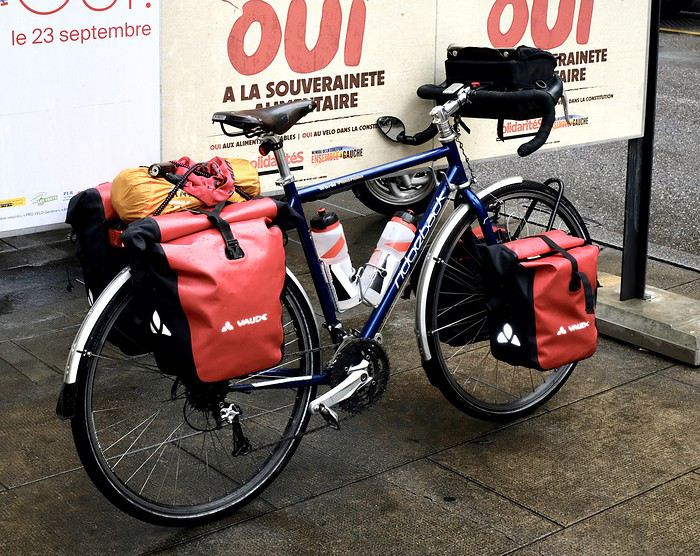
Here’s the beast: a Ridgeback Panorama model, around 10 years old, bought second-hand from a cyclist who’d picked the wrong size. Steel frame in Reynolds 725 (it’s written on it, but I doubt the whole set is that series). Gear ranges from XT for the rear derailleur to some cheaper parts. Three chainrings and sturdy but heavy wheels. Here with 35mm tires—plenty for gravel paths and the occasional rougher trail (as long as you don’t ride like a sausage!).
What I’ve modified: - Upgraded from 9 to 10 speeds when I changed the cassette - Installed two Tubus racks—the rear replaced the original aluminum one (which got bent) - Moved the shifters to the frame instead of the brake/shift combos, which were getting in the way of my handlebar bag - Swapped the saddle for a Brooks B17 (the original one didn’t suit me at all) Over time, some wear-and-tear parts have been replaced.
It’s comfy and sturdy but heavy (almost 14kg). Downsides? It’s a bit sluggish when you stand up to pedal—the chainring rubs against the front derailleur cage (the bottom bracket lacks rigidity). Definitely not a climber’s bike! The cantilever brakes are a tad weak—you get used to them, but you’ve gotta anticipate.
We’ve had some great rides together, but it’ll soon be on the market since I’m replacing it with a custom Cattin. I won’t sell it for much—it’ll make someone happy...
I’ll go first!
Here’s the beast: a Ridgeback Panorama model, around 10 years old, bought second-hand from a cyclist who’d picked the wrong size. Steel frame in Reynolds 725 (it’s written on it, but I doubt the whole set is that series). Gear ranges from XT for the rear derailleur to some cheaper parts. Three chainrings and sturdy but heavy wheels. Here with 35mm tires—plenty for gravel paths and the occasional rougher trail (as long as you don’t ride like a sausage!).
What I’ve modified: - Upgraded from 9 to 10 speeds when I changed the cassette - Installed two Tubus racks—the rear replaced the original aluminum one (which got bent) - Moved the shifters to the frame instead of the brake/shift combos, which were getting in the way of my handlebar bag - Swapped the saddle for a Brooks B17 (the original one didn’t suit me at all) Over time, some wear-and-tear parts have been replaced.
It’s comfy and sturdy but heavy (almost 14kg). Downsides? It’s a bit sluggish when you stand up to pedal—the chainring rubs against the front derailleur cage (the bottom bracket lacks rigidity). Definitely not a climber’s bike! The cantilever brakes are a tad weak—you get used to them, but you’ve gotta anticipate.
We’ve had some great rides together, but it’ll soon be on the market since I’m replacing it with a custom Cattin. I won’t sell it for much—it’ll make someone happy...
Qui pour l'Algérie à vélo cette année? English translation pending
Salut,
Alors voilà, tout est dans le titre 😉
Appli web pour préparer ses itinéraires internationaux à vélo English translation pending
Salut à tous.
Voilà un bout de temps que je travaille sur ce projet, et maintenant j'aimerais le partager ici.
Il s'agit d'une application web qui vise à aider les voyageurs à vélo dans la préparation de leurs itinéraires internationaux. Ça vous permet d'estimer combien de temps il vous faut pour vous rendre d'un endroit à un autre, et quel devrait être le climat quand vous arrivez là-bas.
C'est 100% gratuit et sans pub. Je l'avais initialement conçu pour mon propre usage ; et puis j'ai voulu en faire profiter les autres. Ça se trouve sur https://talaria.ingirum.net
En retour, j'aimerais demander une seule chose : des commentaires. L'application est toujours en cours de développement. Il y a encore beaucoup de choses que j'aimerais améliorer. Alors si vous décelez des bugs, si vous rencontrez des difficultés, ou si vous avez des idées ou des suggestions, je serais très content que vous m'en fassiez part.
Bons préparatifs, bonne route, bon voyage !
https://talaria.ingirum.net
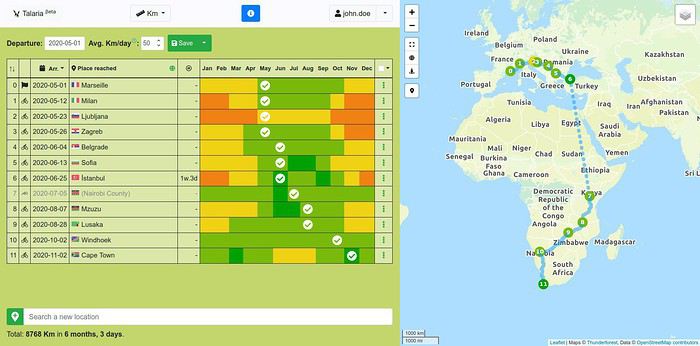
Voilà un bout de temps que je travaille sur ce projet, et maintenant j'aimerais le partager ici.
Il s'agit d'une application web qui vise à aider les voyageurs à vélo dans la préparation de leurs itinéraires internationaux. Ça vous permet d'estimer combien de temps il vous faut pour vous rendre d'un endroit à un autre, et quel devrait être le climat quand vous arrivez là-bas.
C'est 100% gratuit et sans pub. Je l'avais initialement conçu pour mon propre usage ; et puis j'ai voulu en faire profiter les autres. Ça se trouve sur https://talaria.ingirum.net
En retour, j'aimerais demander une seule chose : des commentaires. L'application est toujours en cours de développement. Il y a encore beaucoup de choses que j'aimerais améliorer. Alors si vous décelez des bugs, si vous rencontrez des difficultés, ou si vous avez des idées ou des suggestions, je serais très content que vous m'en fassiez part.
Bons préparatifs, bonne route, bon voyage !
https://talaria.ingirum.net
Quel vélo choisir pour l'EV6 jusqu'en Roumanie? English translation pending
Bonjour à tous,
Je me suis lancée avec une amie, le défi d'aller jusqu'à Costanta en Roumanie, via l'EV6. Nous partions au alentour du 14 juillet 2020 depuis Mulhouse.
Nous sommes toutes les deux extrêmement novices en vélo, j'y passe quand même des heures à chercher des informations. Concernant les aspects techniques du vélo, je crois avoir déjà assimilés le vocabulaire (houhou on commence déjà quelque part!)
Idéalement, il nous faudrait un vélo qui puisse tenir la route jusque la Roumanie (soit environ 3500km). J'ai un budget d'environ 400-500€ (je suis en service civique et mon salaire n'est pas franchement mirobolant!) avec des améliorations possible (mon papa et les ateliers participatifs vont être mes amis!). J'ai noté que des améliorations nécessaires type freins, pneus doivent être envisagés.
Est-ce qu'un RIVERSIDE 900 (Décathlon) ferait l'affaire pour commencer : https://www.decathlon.fr/p/velo-tout-chemin-riverside-900/_/R-p-300794?mc=8405264&c=GRIS ou bien j'ai trouvé ça mais je sais pas ce que ça vaut : https://www.probikeshop.fr/vtc-serious-cedar-hybrid-noir/161648.html?gclid=CjwKCAiAx_DwBRAfEiwA3vwZYtO6DO9jEFsySzGMfuU3yjrecy7X-n-Zb4XZDp_cciyxKctwtDigWhoCtAgQAvD_BwE&gshop=FR&ef_id=CjwKCAiAx_DwBRAfEiwA3vwZYtO6DO9jEFsySzGMfuU3yjrecy7X-n-Zb4XZDp_cciyxKctwtDigWhoCtAgQAvD_BwE:G:s
Si quelqu'un pouvait m'aider/conseiller ce serait super chouette ! Je vous remercie grandement :-)
MERCI ! Belle journée du Pays basque... :-)
Je me suis lancée avec une amie, le défi d'aller jusqu'à Costanta en Roumanie, via l'EV6. Nous partions au alentour du 14 juillet 2020 depuis Mulhouse.
Nous sommes toutes les deux extrêmement novices en vélo, j'y passe quand même des heures à chercher des informations. Concernant les aspects techniques du vélo, je crois avoir déjà assimilés le vocabulaire (houhou on commence déjà quelque part!)
Idéalement, il nous faudrait un vélo qui puisse tenir la route jusque la Roumanie (soit environ 3500km). J'ai un budget d'environ 400-500€ (je suis en service civique et mon salaire n'est pas franchement mirobolant!) avec des améliorations possible (mon papa et les ateliers participatifs vont être mes amis!). J'ai noté que des améliorations nécessaires type freins, pneus doivent être envisagés.
Est-ce qu'un RIVERSIDE 900 (Décathlon) ferait l'affaire pour commencer : https://www.decathlon.fr/p/velo-tout-chemin-riverside-900/_/R-p-300794?mc=8405264&c=GRIS ou bien j'ai trouvé ça mais je sais pas ce que ça vaut : https://www.probikeshop.fr/vtc-serious-cedar-hybrid-noir/161648.html?gclid=CjwKCAiAx_DwBRAfEiwA3vwZYtO6DO9jEFsySzGMfuU3yjrecy7X-n-Zb4XZDp_cciyxKctwtDigWhoCtAgQAvD_BwE&gshop=FR&ef_id=CjwKCAiAx_DwBRAfEiwA3vwZYtO6DO9jEFsySzGMfuU3yjrecy7X-n-Zb4XZDp_cciyxKctwtDigWhoCtAgQAvD_BwE:G:s
Si quelqu'un pouvait m'aider/conseiller ce serait super chouette ! Je vous remercie grandement :-)
MERCI ! Belle journée du Pays basque... :-)
Un "Esta" bientôt nécessaire pour se rendre au Royaume-Uni? English translation pending
Visiblement, les autorités britanniques auraient dans l'idée de mettre en place un système d'Esta identique à celui existant pour les USA pour tous les voyageurs actuellement dispensés de visa (y compris donc les ressortissants de l'U.E.) souhaitant se rendre dans le pays une fois le Brexit effectif (s'il le devient un jour...).
Lire la suite...