Results for "Abattoirs+|+127"
300 results found.
Climat en août en Nouvelle-Calédonie English translation pending
Je renouvelle ma demande... (et oui, je m'accroche!!!) car personne ne m'a répondu...🙁 Je suis sûre qu'il y a quelqu'un sur cette terre qui pourrait me dire si un voyage en Nouvelle Calédonie vaudrait le coup au mois d'Août (c'est un sacré budget pour partir là bas alors ce serait dommage d'avoir froid...🤪) Je serais vraiment très heureuse de recevoir vos conseils alors n'hésitez pas à remplir ma boîte!!!!🙂
Merci d'avance!!!!
Merci d'avance!!!!
Tarifs pour nager avec les dauphins en République Dominicaine ou Cuba English translation pending
J'aimerais bien savoir si quelqu'un connait les tarifs pour nager avec les dauphins en Republique Dominicaine ou a Cuba..merci beaucoup isabelle25
La déforestation comme curiosité touristique (Laos) English translation pending
Dernièrement, Comptoirs du Monde dans leur dernière lettre d'information (donc comme invitation au voyage) présentaient l'existence d'une minorité au Laos du nord, les Akhas. Ils citaient "...une de leurs pratiques agricoles d' abattis-brûlis qui consiste à brûler les forêts afin de créer des champs pour y cultiver du riz de montagne. Ainsi, découvrir leur manière de vivre ".
Or, cette pratique agricole est condamnable car elle est la cause principale de déforestation, de menace pour la biodiversité, et source de NON DEVELOPPEMENT car à 85% aucune action concrète pour corriger ceci n'est appliquée. Présenter donc une telle pratique comme " curiosité touristique ou découverte " est fort choquant !
Il est souhaitable que les occidentaux, censés détenir une information d'avance et éduquer par-là même les pays pauvres, pensent et n'agissent pas en contre-sens du développement.
Franchement, il n'y a pas de quoi vanter le spectacle désolant de surfaces de terre, auparavant entièrement vertes et arborées, devenues des années après nues, car on parle bien du futur, ne laissant plus de place à aucune vie !
Esquiver les entourloupes en Inde! English translation pending
Bonjour les gens :)
Je compte partir en inde avec ma copine pour le Holi de l'année prochaine et elle commence un peu a flipper... (du coup si vous avez des astuces pour la rassurer je suis preneur 🙂 )
Elle m'a fait lire cet article super intéressant sur les arnaques en inde:
www.chauffeurpriveeninde.com/2019/03/petit-guide-pour-esquiver-les-entourloupes-en-inde/
Et je me demandais, si vous aussi vous avez des anecdotes à nous raconter sur le sujet :)
merci 😉
Je compte partir en inde avec ma copine pour le Holi de l'année prochaine et elle commence un peu a flipper... (du coup si vous avez des astuces pour la rassurer je suis preneur 🙂 )
Elle m'a fait lire cet article super intéressant sur les arnaques en inde:
www.chauffeurpriveeninde.com/2019/03/petit-guide-pour-esquiver-les-entourloupes-en-inde/
Et je me demandais, si vous aussi vous avez des anecdotes à nous raconter sur le sujet :)
merci 😉
Huit cents cinquante jours à vélo couché English translation pending
Salut Tout le monde,
Voici mon nouveau site sur mon tour du monde en velo couche.
Je doit encore ajouter des rubriques comme le test matos...
J espere que ce aidera la preparation de certains, si vous avez des questions ou des idees pour le site n hesiter pas !
Bon vent
Mikael
www.mikaellavorel.blogspot.com
Voici mon nouveau site sur mon tour du monde en velo couche.
Je doit encore ajouter des rubriques comme le test matos...
J espere que ce aidera la preparation de certains, si vous avez des questions ou des idees pour le site n hesiter pas !
Bon vent
Mikael
www.mikaellavorel.blogspot.com
Circuit Look Voyage "indispensable ouest" English translation pending
Bonsoir a tous, je recherche des témoignages concernant le circuit les indispensables ouest proposé par look voyage. Mon conjoint et moi voudrions partir à l automne prochain. Est ce que look voyage est une bonne agence? Le circuit en bus est il confortable? Les hôtels proposés sont ils correct?... Je suis toute ouïe! Merci d avance. Marion.
Visiter Toulouse en une après-midi? English translation pending
Bonjour,
Je passe par Toulouse que je voudrai enfin visiter 😎 Le problème c'est que je resterai qu'une après midi + début de soirée et j'arriverai un dimanche ! Il y a beaucoup de choses à voir et je n'ai qu'une demi-journée. Que me conseillerez-vous de voir en priorité ? J'ai listé pas mal de sites : place du capitole, canal du Midi, les différents jardins... J'aurai jamais pensé que Toulouse était si riche en monuments et sites 😮
Je louerai un vélo histoire de faire un ptit tour plus facilement. Par contre arrivant un dimanche où est ce que vous me conseillerez d'aller pour trouver des resto sympa d'ouverts.
Merci pour votre aide !
Karima
Je passe par Toulouse que je voudrai enfin visiter 😎 Le problème c'est que je resterai qu'une après midi + début de soirée et j'arriverai un dimanche ! Il y a beaucoup de choses à voir et je n'ai qu'une demi-journée. Que me conseillerez-vous de voir en priorité ? J'ai listé pas mal de sites : place du capitole, canal du Midi, les différents jardins... J'aurai jamais pensé que Toulouse était si riche en monuments et sites 😮
Je louerai un vélo histoire de faire un ptit tour plus facilement. Par contre arrivant un dimanche où est ce que vous me conseillerez d'aller pour trouver des resto sympa d'ouverts.
Merci pour votre aide !
Karima
Se rendre à l'aéroport d'Orly depuis Paris à vélo? English translation pending
Bonjour,
Connaissez-vous un moyen de sen rendre à Orly depuis Paris à vélo ?
🙂
Connaissez-vous un moyen de sen rendre à Orly depuis Paris à vélo ?
🙂
Randonnée dans le Sentier des Caps à Charlevoix (Québec) English translation pending
J'aimerais aller faire une randonnée d'une journée dans ce parc. Ils offrent 8 trajets : http://www.sentierdescaps.com/fr/rpsug.php?style=j&parcours=1 Au dela des durées estimées, j'aimerais avoir des commentaires et impressions de gens qui les ont déja fréquenté. Ce que je recherche, c'est un sentier relativement facile ( on a déja été plus en forme 🙁 ) offrant les paysages les plus spectaculaires et une diversité de peuplements forestiers offrant notamment des opportunités d'observation ornithologique.
D'autre part, même si je compte vérifier par téléphone juste avant d'y aller, j'aimerais avoir votre impression sur l'état des sentiers vers le 20 mai, lors du congé de la fête du Dollard de la Reine Victoria 😉
Merci pour vos commentaires !
Yvon LeD
Voyage autour des 5 sens English translation pending
Les 5 sens:
L'ouïe😏
Le toucher😊
Le goût😛
L'odorat😄
La vue🙂
Pour chacun d'eux, quels sont vos plus forts souvenirs de voyage?
L'ouïe😏
Le toucher😊
Le goût😛
L'odorat😄
La vue🙂
Pour chacun d'eux, quels sont vos plus forts souvenirs de voyage?
Bike trip: from Carcans Maubuisson to Plaisir (Yvelines)
Monday, August 21, 2023 - Rochefort - Marans
No journal for the first two days. Day 1 - CARCANS-ROYAN Day 2 - ROYAN - ROCHEFORT Tonight I'm in MARANS in the "dry marsh" according to the campsite manager—it’s the first time I’ve heard of a "dry marsh"?!
Photos from the first two days
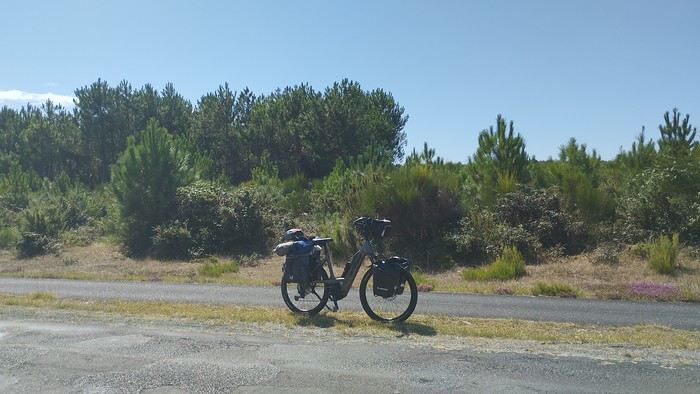 My gear
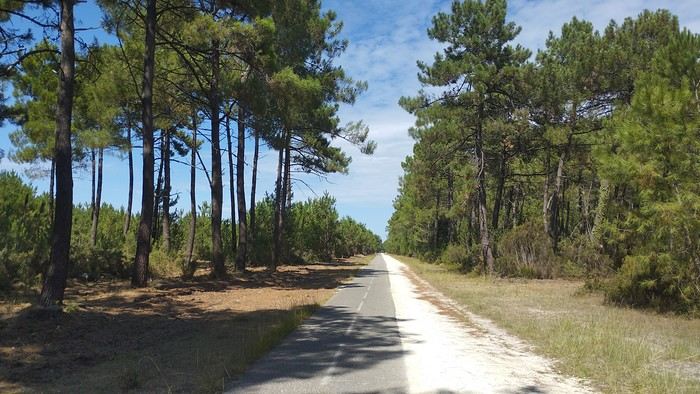
The Landes region—nothing extraordinary, but the calm and serenity are nice.

Le Verdon
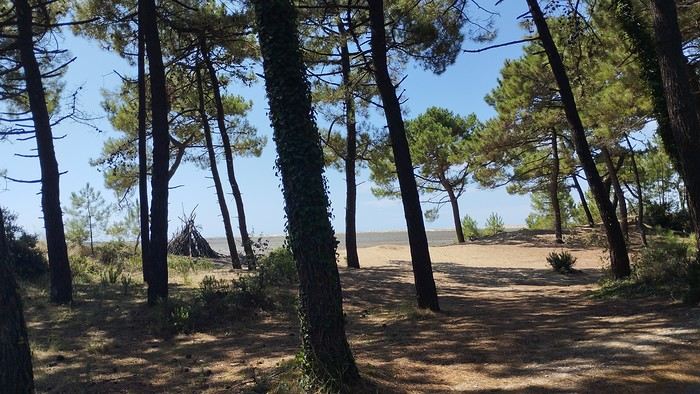
The wild coast
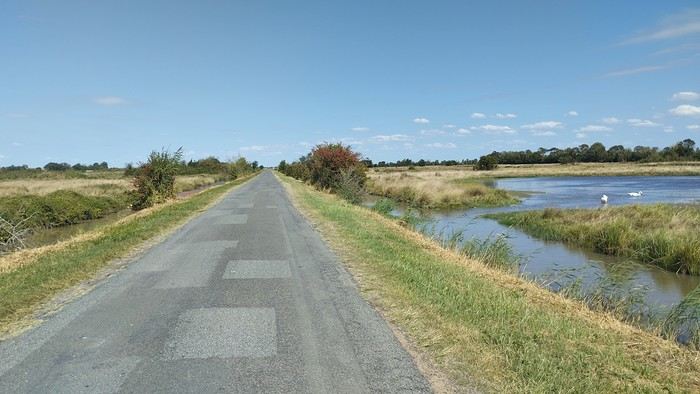
This marsh isn’t dry, though.
Today is the third day of my trip, and I’m writing to you from a campsite in Marans. I’ve set out to bike from Carcans Maubuisson back to Plaisir. Why Carcans? Because we spent a week there as a family—a great week that lets everyone reconnect for a long stretch. Also, on Saturday, we all headed home—some by car, and me by bike. This journey is about 850 km via bike paths and small cycling roads. It’s not a sporting feat, just a nice long ride for fun. As the old Chinese sage says, "The destination doesn’t matter—it’s the journey that counts." But he also told me, "Traveling is great, but what’s the point if you don’t share it?" You see, this old sage has told me a lot of things—he often keeps me company when I’m biking. Of course, he doesn’t pedal, but we travel in harmony. Sure, he can be a bit annoying sometimes, but we still get along. All this to say I’ve created a group to share my story. I’d be happy to share this experience with you—it’s an adventure for me. On Saturday, I wasn’t sure I’d even leave because I’d been dealing with sciatica for days. Luckily, Juliette, a friend of the old Chinese sage, recommended a lifesaving remedy: Alternately stretching your legs with an elastic band under your foot. Obviously, a jam jar rubber band won’t cut it.
From Marans - The mosquitoes are attacking; time to head back to shelter.
The first two legs took me to Royan and then Rochefort. The Sèvre Niortaise flows nearby, and I followed a canal from La Rochelle. You could say the area is as dry as the marsh, judging by the state of the crops.
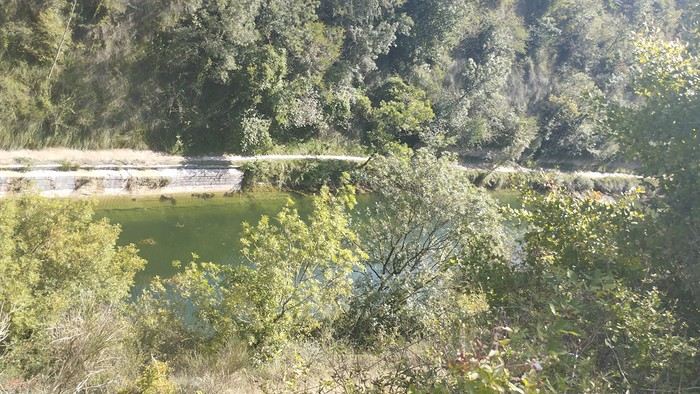
As I mentioned, it’s the third day, and if Jesus rose again on this day, for me it was more like the crucifixion. The scorching heat—only bearable when you’re moving—combined with rough trail conditions, and the old Chinese sage says, "Terrible roads, slow speed, and watch your limbs." I set out to do 60 km but ended up doing 80, and the last 20 were tough. I kept checking the GPS to see how much farther until the campsite. Today: Rochefort to Marans, sticking to the coast until La Rochelle, then no notable towns after that—just a constant canal. But since the sky isn’t too low, it hasn’t gotten lost. I’ve still got plenty of anecdotes to share, but it’s pitch black out, and the mosquitoes are still around. This morning, I counted ten in my tent, all full of my blood. Yesterday, at the end of the leg to Rochefort, I was really looking forward to crossing the Charente using the transporter bridge, but a sneaky GPS conspiracy led me far from it. I ended up crossing the Charente on a completely ordinary bridge, watching the transporter bridge in the distance with disappointment.
End of the first episode. Until tomorrow, if you’d like!
No journal for the first two days. Day 1 - CARCANS-ROYAN Day 2 - ROYAN - ROCHEFORT Tonight I'm in MARANS in the "dry marsh" according to the campsite manager—it’s the first time I’ve heard of a "dry marsh"?!
Photos from the first two days
My gearThe Landes region—nothing extraordinary, but the calm and serenity are nice.
Le Verdon
The wild coast
This marsh isn’t dry, though.
Today is the third day of my trip, and I’m writing to you from a campsite in Marans. I’ve set out to bike from Carcans Maubuisson back to Plaisir. Why Carcans? Because we spent a week there as a family—a great week that lets everyone reconnect for a long stretch. Also, on Saturday, we all headed home—some by car, and me by bike. This journey is about 850 km via bike paths and small cycling roads. It’s not a sporting feat, just a nice long ride for fun. As the old Chinese sage says, "The destination doesn’t matter—it’s the journey that counts." But he also told me, "Traveling is great, but what’s the point if you don’t share it?" You see, this old sage has told me a lot of things—he often keeps me company when I’m biking. Of course, he doesn’t pedal, but we travel in harmony. Sure, he can be a bit annoying sometimes, but we still get along. All this to say I’ve created a group to share my story. I’d be happy to share this experience with you—it’s an adventure for me. On Saturday, I wasn’t sure I’d even leave because I’d been dealing with sciatica for days. Luckily, Juliette, a friend of the old Chinese sage, recommended a lifesaving remedy: Alternately stretching your legs with an elastic band under your foot. Obviously, a jam jar rubber band won’t cut it.
From Marans - The mosquitoes are attacking; time to head back to shelter.
The first two legs took me to Royan and then Rochefort. The Sèvre Niortaise flows nearby, and I followed a canal from La Rochelle. You could say the area is as dry as the marsh, judging by the state of the crops.
As I mentioned, it’s the third day, and if Jesus rose again on this day, for me it was more like the crucifixion. The scorching heat—only bearable when you’re moving—combined with rough trail conditions, and the old Chinese sage says, "Terrible roads, slow speed, and watch your limbs." I set out to do 60 km but ended up doing 80, and the last 20 were tough. I kept checking the GPS to see how much farther until the campsite. Today: Rochefort to Marans, sticking to the coast until La Rochelle, then no notable towns after that—just a constant canal. But since the sky isn’t too low, it hasn’t gotten lost. I’ve still got plenty of anecdotes to share, but it’s pitch black out, and the mosquitoes are still around. This morning, I counted ten in my tent, all full of my blood. Yesterday, at the end of the leg to Rochefort, I was really looking forward to crossing the Charente using the transporter bridge, but a sneaky GPS conspiracy led me far from it. I ended up crossing the Charente on a completely ordinary bridge, watching the transporter bridge in the distance with disappointment.
End of the first episode. Until tomorrow, if you’d like!
Transports collectifs de Tiznit à Amtoudi English translation pending
Bonjour,
Quelqun.e aurait des idées pour rejoindre Amtoudi à partir de Tiznit sans redescendre sur Guelmim ? En transports collectifs
Merci de vos lumières, 😊
Agence Belimar Insolites Vacances English translation pending
cette agence de voyage , qui est en fait aussi Insolites vacances ou Belisud est une énorme arnaque pratiquée à Marrakech. 3 arnaques en 1, s'adresse aux retraités est un abus de faiblesse.....
la 1ere porte sur le changement de Riad déclassé bien sûr ! au dernier moment
la 2nd au RV du pot d'accueil (un verre de thé !) ils veulent vous vendre des excursions trouvées sur Tripavdsor 3 fois moins chères ( 20 E au lieu de 80 E)
la 3ème consiste à une vente forcée de temps partagé au Maroc
nous avons rencontré 2 autres couples qui ont vécu la même mésaventure
Pour couronner le tout , nous n'avons pas eu le transfert prévu pour le retour. J'ai eu un accident, ils n'ont pas pris la peine de me demander si j'avais besoin d'aide....
Cuir au Maroc English translation pending
Bonjour Ami voyageur,
Je suis artisan du cuir en maroquinerie et je cherche quelqu'un (e) qui pourrait m'indiquer des bon plans pour se procurer des peaux finis de cuir au Maroc, en tannage végétal de préférence si ça existe, j'ai entendu parler de souk aux enchères qui ont lieu dans certaines villes de 5 à 6 heures du mat, quelqu'un peut-il m'en dire plus où cela se localise? je cherche peaux mouton, vachette, boeuf même dromadaire pour la confection de ceintures, sac à main, porte monnaie, porte feuille, bracelets... quelqu'un aurait-il des adresses où des contacts de confiance ?
Je suis allé souvent au Maroc c'est 15 dernières années, j'aime ce pays...
Merci pour la solidarité, Bien à vous 🙂
Gino création cuir
Je suis artisan du cuir en maroquinerie et je cherche quelqu'un (e) qui pourrait m'indiquer des bon plans pour se procurer des peaux finis de cuir au Maroc, en tannage végétal de préférence si ça existe, j'ai entendu parler de souk aux enchères qui ont lieu dans certaines villes de 5 à 6 heures du mat, quelqu'un peut-il m'en dire plus où cela se localise? je cherche peaux mouton, vachette, boeuf même dromadaire pour la confection de ceintures, sac à main, porte monnaie, porte feuille, bracelets... quelqu'un aurait-il des adresses où des contacts de confiance ?
Je suis allé souvent au Maroc c'est 15 dernières années, j'aime ce pays...
Merci pour la solidarité, Bien à vous 🙂
Gino création cuir
Fête de l'Aid El Kebir au Maroc: ça se passe comment? English translation pending
Bonsoir,
Nous serons au Maroc Mi Novembre ( Marrakech, Skoura et Zagora ), et j'ai lu qu'aux alentours du 17 Novembre il y avait la fête de l'Aid El Kebir. Comment se déroule cette fête : un jour, plusieurs jours, dans tous les villages, dans les villes, y a t il des choses particulières à faire ou à voir ?. Je sais seulement que celà se passe environ 70 jours après la fin du ramadan. J'ai lu sur le Lonely Planet que les commerces et restaurants pouvaient être fermés pendant plusieurs jours, est ce vrai, a t on vraiment des difficultées pour se restaurer, les souks, les commerces sont ils tous fermés ?. Merci pour toutes vos infos.
Nous serons au Maroc Mi Novembre ( Marrakech, Skoura et Zagora ), et j'ai lu qu'aux alentours du 17 Novembre il y avait la fête de l'Aid El Kebir. Comment se déroule cette fête : un jour, plusieurs jours, dans tous les villages, dans les villes, y a t il des choses particulières à faire ou à voir ?. Je sais seulement que celà se passe environ 70 jours après la fin du ramadan. J'ai lu sur le Lonely Planet que les commerces et restaurants pouvaient être fermés pendant plusieurs jours, est ce vrai, a t on vraiment des difficultées pour se restaurer, les souks, les commerces sont ils tous fermés ?. Merci pour toutes vos infos.
Rabat: cherche lieux insolites, décalés, hors du commun, marchés, bars, restos English translation pending
Bonjour,
Je vais à Rabat pour la mi-novembre et j'aime voyager hors des sentiers battus. Quels sont vos coups de coeur ? J'aime les lieux avec des jardins, les marchés, les livres, le dessin, la typo, la belle architecture, les fous, les conteurs, la belle lumière, les terrasses, les expos, la bonne bouffe inventive ... Et aussi y a t il un endroit dédié au dessin ? où l'on puisse acheter de la peinture et des pinceaux? Egalement connaissez vous des imprimeurs textiles ? des sérigraphistes ? Merci d'avance pour vos partages ... Amicalement votre
Je vais à Rabat pour la mi-novembre et j'aime voyager hors des sentiers battus. Quels sont vos coups de coeur ? J'aime les lieux avec des jardins, les marchés, les livres, le dessin, la typo, la belle architecture, les fous, les conteurs, la belle lumière, les terrasses, les expos, la bonne bouffe inventive ... Et aussi y a t il un endroit dédié au dessin ? où l'on puisse acheter de la peinture et des pinceaux? Egalement connaissez vous des imprimeurs textiles ? des sérigraphistes ? Merci d'avance pour vos partages ... Amicalement votre
Climat et pluies en février ou juin dans le grand nord du Laos? English translation pending
Bonjour,
Je cherche à me renseigner sur le temps en février dans le nord du Laos, essentiellement zones montagneuses Luang Namtha - Udomxai - Phongsaly (et seulement cette zone). J'y suis déjà passé 2 fois, beaucoup de marche en montagne, à chaque fois au mois de mai - et beaucoup de pluies à chaque fois.
Maintenant j'ai le choix entre y retourner le mois prochain, février, sachant qu'il y aura peut-être moins de pluie, mais apparemment il peut faire vraiment froid en montagne.... Quelqun en sait-il plus sur la région de Phongsaly ? Ca peut tomber près de zéro ? Quid des paysages ?
Sinon je pars en juin, mais là j'ai peur qu'il y ait vraiment trop de pluies et que les chemins soit difficilement praticables.
Merci de votre aide !
Je cherche à me renseigner sur le temps en février dans le nord du Laos, essentiellement zones montagneuses Luang Namtha - Udomxai - Phongsaly (et seulement cette zone). J'y suis déjà passé 2 fois, beaucoup de marche en montagne, à chaque fois au mois de mai - et beaucoup de pluies à chaque fois.
Maintenant j'ai le choix entre y retourner le mois prochain, février, sachant qu'il y aura peut-être moins de pluie, mais apparemment il peut faire vraiment froid en montagne.... Quelqun en sait-il plus sur la région de Phongsaly ? Ca peut tomber près de zéro ? Quid des paysages ?
Sinon je pars en juin, mais là j'ai peur qu'il y ait vraiment trop de pluies et que les chemins soit difficilement praticables.
Merci de votre aide !
Région de l'Atlantique Sud au Nicaragua English translation pending
Bonjour,
Y-a-t'il quelqun qui a fait le tour de la région de l'atlantique sud au Nica. J'ai l'intention d'y aller en avril prochain, El Rama, aguna de perlas, Isla de maiz, bluefields etc...
Si quelqun a des infos. le tout serait apprécié.
Si quelqun a des infos. le tout serait apprécié.
Vivre en Algérie près d'Annaba English translation pending
bonjour,
Je suis sur le point d'etre a la retraite et souhaite m'installer en Algerie.
J'aimerais etre dans une petite ville proche d'Annaba.
Qui pourrait me donner des renseignements sur la region et me renseigner sur le cout de la vie (essentiellement le prix pour la location d'une petite maison)?
Merci
bea
Je suis sur le point d'etre a la retraite et souhaite m'installer en Algerie.
J'aimerais etre dans une petite ville proche d'Annaba.
Qui pourrait me donner des renseignements sur la region et me renseigner sur le cout de la vie (essentiellement le prix pour la location d'une petite maison)?
Merci
bea
Viande de dromadaire au Maroc English translation pending
J'ai souvent entendu dire que la viande de dromadaire entrait dans la composition de plats marocains. Je serai en avril au Maroc (Essaouira+Marrakech+Vallée du Drâa et Merzouga) et j'ai bon chercher dans les guides, je ne trouve aucun endroit ou manger cette viande. Quelqu'un connaitrai-t-il un endroit où je puisse la trouver ?
Par avance, merci
Laos, aux confins de la province de Phongsaly, quarante jours de lentes balades à pied English translation pending
Laos, aux confins de la province de Phongsaly, quarante jours de lentes balades à pied
En compagnie des Akha, des Hô et des Lolo, des Hmong, des Yao, des Sila...
~
« Je constatai ici encore combien l'argument de l'intérêt commun mène plus vite à la confiance que les cadeaux, par exemple, qui ne font bien souvent que fortifier la méfiance. » H. A. Bernatzik
~
Un an plus tôt, à l'extrême nord du Laos, une première expédition de trente-quatre journées, effectuée seul, à pied et sans guide, au cœur des montagnes qui s'étendent sur la fascinante province de Phongsaly, me permettait d'y effectuer de nombreux repérages. Retour sur les lieux l'année suivante pour me diriger, à nouveau sans accompagnateur et uniquement à pied, vers les confins de la province, étonnantes enclaves isolées du monde, et même du reste du pays. Après cette fois au total quarante-huit journées sur place, dont quarante et autant de nuits passées exclusivement chez l'habitant, en compagnie des innombrables minorités ethniques montagnardes présentes dans la région, il en subsiste quelques anecdotes, que je propose de relater ici.
Parmi celles-ci, une étourdissante journée de navigation sur la portion la plus sauvage de la rivière Nam Ou, des offices chamaniques de guérison chez les Hô et chez les Hmong, le sacrifice rituel simultané d'une chèvre, cinq cochons, deux poules et douze poussins dans un village Akha, la récolte de l'opium puis "l'art" de le fumer, l'exténuante technique agraire dite de friche sur abattis-brûlis pratiquée sur les pentes par les montagnards, les pieds réduits d'une grand-mère "chinoisante", des huttes de l'ethnie Hmong abritant plus de cinquante personnes, le cœur de la très méconnue réserve naturelle de Phou Den Din, des marchands de cheveux itinérants chinois, une rencontre avec la très minoritaire et discrète ethnie Sila, un trafic transfrontalier de papillons, les délirants accoutrements des femmes Akha, des geysers d'étincelles lors d'une fête bouddhiste rurale, la première présence d'un falang, d'un Blanc occidental, dans certains villages depuis près de vingt ans, et fort probablement premier touriste depuis toujours.
~
« Je constatai ici encore combien l'argument de l'intérêt commun mène plus vite à la confiance que les cadeaux, par exemple, qui ne font bien souvent que fortifier la méfiance. » H. A. Bernatzik
~
Un an plus tôt, à l'extrême nord du Laos, une première expédition de trente-quatre journées, effectuée seul, à pied et sans guide, au cœur des montagnes qui s'étendent sur la fascinante province de Phongsaly, me permettait d'y effectuer de nombreux repérages. Retour sur les lieux l'année suivante pour me diriger, à nouveau sans accompagnateur et uniquement à pied, vers les confins de la province, étonnantes enclaves isolées du monde, et même du reste du pays. Après cette fois au total quarante-huit journées sur place, dont quarante et autant de nuits passées exclusivement chez l'habitant, en compagnie des innombrables minorités ethniques montagnardes présentes dans la région, il en subsiste quelques anecdotes, que je propose de relater ici.
Parmi celles-ci, une étourdissante journée de navigation sur la portion la plus sauvage de la rivière Nam Ou, des offices chamaniques de guérison chez les Hô et chez les Hmong, le sacrifice rituel simultané d'une chèvre, cinq cochons, deux poules et douze poussins dans un village Akha, la récolte de l'opium puis "l'art" de le fumer, l'exténuante technique agraire dite de friche sur abattis-brûlis pratiquée sur les pentes par les montagnards, les pieds réduits d'une grand-mère "chinoisante", des huttes de l'ethnie Hmong abritant plus de cinquante personnes, le cœur de la très méconnue réserve naturelle de Phou Den Din, des marchands de cheveux itinérants chinois, une rencontre avec la très minoritaire et discrète ethnie Sila, un trafic transfrontalier de papillons, les délirants accoutrements des femmes Akha, des geysers d'étincelles lors d'une fête bouddhiste rurale, la première présence d'un falang, d'un Blanc occidental, dans certains villages depuis près de vingt ans, et fort probablement premier touriste depuis toujours.
Compagnie Corsair pour la Martinique English translation pending
Bonjour,
Merci à vous de me donner votre avis sur Corsair. Je pars à la Martinique en novembre et le souvenir que j'ai de cette compagnie utilisée en 2005 est bien peu agréable. 747 plein, siège étroit, on voyageait entassé comme des sardines. Personnel de bord peu agréable 🏴☠️ et peu souriant et service à bord déplorable et minimaliste😕, au point que j'avais préféré prendre Air Caraibes dont le personnel était au petit soin pour les passagers éco. Qu'en est-il depuis pour vous qui avez utilisé Corsair récemment, votre avis m'interesse car le transport en avion est le début de vacances réussies.
Au plaisir de vous lire.
Cuisiner du kangourou? English translation pending
bonjour
on va me ramener de la viande de kangourou mais je ne sais absolument pas comment le cuisiner ni même avec quoi il s accorde comme garniture ou sauce.Pourriez vous m aider sil vous plait, avant qu il arrive pour pas avoir l air trop bête😊....Merci
Emmener ses chiens au Maroc? English translation pending
J'aimerais obtenir des renseignements sur un séjour que nous projetons mon mari et moi au Maroc.
J'ai deux chiens que j'emmène partout et je voudrais donc savoir quelles sont les formalités pour voyager dans ce pays avec mes chiens.
On m'a parlé d'une quarantaine? Quelqu'un pourrait-il m'expliquer en quoi cela consiste.
Tous les renseignements sur ce pays seront les bienvenus.
Spitsbergen – A Night with the Walruses on Lågøya
Spitsbergen, 80° North latitude. A lost archipelago on the edge of the world, northeast of Greenland, the last lands before the pole. I’m aboard the *Grigoriy Mikheev*, a Russian ship from the Murmansk Polar Research Institute. Russian flag, Russian crew. Chartered by OceanWide Expeditions.
Last night, we were stuck in drifting pack ice in the long Hinlopen Strait. This incident led to an unforgettable barbecue and party on the ship’s foredeck, but we had to abandon our plan to head south and circle Spitsbergen. This summer, there’s too much ice in the strait, and it’s too thick. At dawn, the tide turned, allowing us to break free and head north again. The ship is now moving slowly through sea ice density that satellite maps estimate at around five-tenths. Our progress is punctuated by dull thuds: the ship’s bow constantly shoves and fractures enormous ice floes.
At breakfast, Tarik, our expedition leader, informs us that our program will be significantly altered. Since we can’t cross the strait, we’ll turn back and head north. To kick off our Plan B, Tarik plans a landing tonight on the small island of Låg (Lågøya), at 80°10' North. Last summer, he saw a large walrus colony there and hopes we’ll find them again. The weather is perfect—glorious sunshine—and walruses are truly addicted to sunbathing on the beaches.
We’ve now exited the strait and are sailing far from the coast. In case the walrus colony is there, we don’t want the ship’s approach to scare them into the water before we even see them. So, we scan the shore methodically with binoculars. We pass several bays, round a cape, and examine several shorelines littered with driftwood, but no walruses in sight. Several times, clusters of large rounded rocks trigger false alarms… but no, they’re just rocks…
Suddenly, Tarik spots them through his binoculars! On an isolated peninsula, our expedition leader’s highly trained eye has picked out, among those brown masses, the shape and white color of the enormous tusks of what he calls "the heavyweights of the Arctic!" Now, fifteen or twenty pairs of binoculars are pointed in the indicated direction… Sure enough, I see them now! They’re there, huge, sprawled in the sun on the beach. Without Tarik’s sharp eye, we might have missed them. They’re so tightly packed together that they really look like a mass of brown rocks. Only the white, saber-shaped tusks and the occasional furtive movements hint that they’re animals.
It’s 11 PM, and on the deck of the *Grigoriy Mikheev*, as you can imagine, excitement has ramped up several notches. Several of us have already rushed to our cabins to gear up, pulling on boots and life jackets in anticipation of a landing that promises to be absolutely amazing. Tarik reins in our enthusiasm a bit: Okay, so we were lucky to find them, but now we need to think about how to approach them. Not that they’re dangerous—at least not on land… Their enormous bulk and their pseudo-feet (flippers) only allow for very limited mobility. But when they feel threatened, their first instinct is to head for the water, where their perfect ease keeps them safe. So, the challenge will be not to scare them off, to avoid them bolting into the water in the first few seconds! That’s exactly what would happen if we arrived by Zodiac right in front of them.
So, Tarik decides we’ll make a wide detour to land on the other side of the peninsula where they are. From there, we’ll leave the Zodiacs on the beach and cross the peninsula on foot, about a kilometer and a half. That way, we’ll approach the herd from behind. This approach will also keep us downwind of them. There you go—with a few precautions, they shouldn’t hear us coming or catch our scent.
Everyone is geared up now and practically bursting with impatience… While the Zodiacs are being lowered into the water, Tarik and Delphine recap the approach rules: absolute silence, communication only by signs, no dragging feet on the rocks, watch your step, and strict coordination with slow movements.
Here we go… we’re off now! Spray flying from the Zodiac’s bow, icy air whipping our faces, gloves gripping the side ropes, freezing splashes, pure emotion… Ahh, I love this! We describe a wide curve offshore to round the peninsula. Ahead of us, the magnificent landscape of this intensely blue sea unfolds, with the hills of Lågøya and, in the distance, the ice-covered mountains of Nordaustlandet under the sun. It’s midnight now. In July, at 80 degrees North, the sun is just like midday.
This navigation takes us far from the walruses, on the other side of the cape. Easy landing on a shoreline of large pebbles covered in giant seaweed brought in by the currents. They look like long strips of plastic—sometimes translucent, sometimes white, beige, or orange. In places, there are huge tangled layers of it. Our boots sink into this material, which gives off a strong iodine smell. Unfortunately, there’s also some plastic waste—fishing floats and net debris. Seeing this here is crazy… A little farther on, in a cove, tides and storms have piled up numerous tree trunks from Siberia.
We begin crossing the peninsula on foot, staying close together. We’re walking on a nearly deserted polar tundra. We’re only ten degrees of latitude from the North Pole here. The violent winds and extreme temperatures that dominate this island for nine months of the year allow only a few rare plants to grow, close to the ground, between the rocks. In places, rocks are covered with large patches of black lichen.
Gérard, rifle slung over his shoulder, constantly scans the terrain. Tarik and Delphine are also very vigilant. We know no one ever lands here, and although this environment isn’t ideal for bears, you never know—better to be cautious. The terrain is mostly flat, but whenever a small rise blocks our view, Gérard moves ahead and only signals us to proceed when he’s sure there’s no "big man in fur" (tradition dictates we don’t name the polar bear).
After a few hundred meters, we find an enormous whale vertebra. Judging by the state of the bone, it’s likely a relic from the whaling era that ravaged this area in the 17th century and all over northern Spitsbergen. A little farther on, the remains of a grave catch our attention. The only human trace on this remote island, this burial is surely very old, also likely dating from the whalers’ time. But this whaler’s final resting place didn’t shelter him for long—there’s not much left, just a piece of skull and a few broken bones. Due to the permafrost, the body could only be buried a few dozen centimeters deep, between some planks held in place by large stones. This makeshift grave was probably ravaged by a bear shortly after the burial. Several stone blocks are overturned, the planks are broken open. We only linger for a minute to pay our respects to this whaler, whose poor remains now merge with the mineral landscape.
A slight rise bulges in the center of the peninsula, and here we are at the highest point. If our orientation is correct, we’re heading straight for the walrus colony. A moment of emotion… my heart’s pounding. Yes, they’re there, about three hundred meters ahead of us! They haven’t moved since we spotted them from the *Grigoriy Mikheev*’s deck. They’re sprawled in a heap, packed tightly together in the sun, on the shingle beach. The light breeze blowing in our faces confirms we’re on the right track—not to be sniffed out from afar by the big beasts.
By signs, Tarik tells us we’ll approach slowly, in stages, moving about thirty meters at a time, making as little noise as possible with our boots, then freezing completely for a minute or two, crouching down to let them forget us. This strategy proves excellent. We’re now less than a hundred meters away, and it doesn’t seem like our presence is perceived as a threat by the "heavyweights of the Arctic." At this distance, let’s not kid ourselves: we’re certainly spotted, but our way of approaching must seem reassuring—or at least manageable—since they’re only a few meters from the water and know they could dash into it in seconds if they felt the need.
We now advance in shorter stages—twenty meters at a time, then just ten, crouching, then freezing like statues, our breathing nearly held from emotion and concentration. We’re now thirty meters from the mastodons. Our presence must be starting to stress them because they’re moving more. While still sprawled against each other, some suddenly rear up on their flipper-feet, grunting and snorting like monstrous pigs. Their head shakes make their two enormous ivory sabers sway. They jab them into the fat of their neighbors, who in turn stir and emit irritated snorts.
At Tarik’s signal, we move a few more meters, "on velvet paws"… We’re right there now. I hold my breath, throat tight… Intense emotion, a fantastic spectacle—these enormous Arctic animals sprawled in the sun, with the magnificent backdrop of snow-covered mountains across the sound. I think to myself: *I’m here… this can’t be real!* It’s nearly 2 AM now, the air is crystal clear, and the Arctic sun bathes this scene in what might be the most beautiful light I’ve ever seen. We’re about fifteen meters away now. Tarik signals that we won’t go any closer. The walruses are still lying down, but occasionally, our close presence and the clicking of cameras trigger bouts of agitation that ripple through the herd, causing some jostling. They’re so tightly packed and tangled that it’s a bit hard to count them. In the end, we tally sixteen, plus one "little one," half-crushed in the general mass.
Seen from here, they’re truly impressive! The "sumo wrestlers of the Arctic!" According to Tarik, they must weigh about a ton—slightly more for the males than the females—and the "little one" must already be around 200 kg. When the weather’s nice like today, they love sprawling on the beaches to soak up the sun.
Walruses are marvels of Arctic adaptation. They can modify their blood circulation depending on thermal conditions. They withstand extreme cold by directing most of their circulation to vital organs (heart, lungs) and minimizing peripheral blood flow (skin and limbs) to prevent heat loss. Conversely, when they sunbathe, they direct most of their blood flow to the skin, turning themselves into true solar collectors.
At this latitude, there’s practically no difference in sunlight between day and night. Noon or midnight, the sun’s angle barely changes. Walruses make the most of these fair-weather phases by sprawling in the sun 23 hours out of 24… Enough to make siesta lovers dream, right? Twenty-three hours of lounging… and the twenty-fourth for eating!
And when we say "eating," what a feast! The proverb *"Who sleeps dines"* is fully justified here: when a walrus decides to feed, it gulps down between 50 and 60 kg of shellfish in an hour! Its food consists of large bivalve mollusks, which it tears from the seabed with its tusks and sucks up nonstop! A 50 kg meal certainly justifies a 23-hour nap for digestion, right? And speaking of digestion—it’s what the "big guys" in front of us are doing right now! You might wonder how we know this… Well, I’ll tell you: if you were here, downwind (or should I say *down the winds!*) of these marine giants, you’d have no doubt! Pfft… what flatulence! I can confirm that today’s scent is called *"Morsanus, from the North"* (*"Because I’m worth it!"*). Mmm, yeah… Tarik, you had a great idea putting us upwind… at least *they* can’t smell us, but we sure can!
But… heepp! Delphine discreetly signals to get our attention—she’s just spotted something: in the smooth water of the bay, a small V-shaped ripple runs along the beach, then turns toward the shore… So the colony wasn’t complete on the beach… Here’s an 800 kg bather stepping ashore now, right before our astonished eyes! She lifts her head and stays like that for a long moment, her enormous tusks half out of the water. She looks exhausted, resting a bit before coming out. Or more likely, she’s hesitating to climb onto the beach because she’s seen us… The shapeless head stays still for a moment, then violently snorts like a clogged drain! A misshapen head where you can’t make out anything that usually makes a head! No eyes, no ears, no mouth… A sort of monstrous cabbage! But the temptation to join the warmth of the "sunbathers" is too strong! Here’s our pachyderm bather climbing the few meters of the shore and sprawling right in the middle of her companions, who greet her with jostling, grunts, and tusk jabs! Then everything settles back into order—800 kg of fat and flesh added to the fifteen or so tons of local biomass. Welcome to the club!
It seems the walruses have gotten a bit used to us now. They’re moving and grunting much less. I realize it wasn’t obvious to approach them like this without scaring them into the water… It’s thanks to Tarik and Delphine’s advice that we managed it. It’s also, let’s be honest, because we’re all passionate here, and there’s been total discipline and cohesion from the start of this approach.
It’s past 2 AM now—time to head back… We’ll leave them to their wild world, to their life at the beginning of the world. We’re happy to have disturbed them as little as possible and not to have disrupted their nap too much. We leave stealthily, first backing up a few meters, then turning around and crossing the peninsula again, walking slowly, avoiding making noise with our boots as long as we’re still close.
We find the Zodiacs on the shoreline with the giant kelp. The sea is like a lake—easy boarding. We make another wide loop to round the cape, passing offshore. The sharp cold stings my cheeks and ears again—I put my hat back on. The cold—I hadn’t thought about it at all during our encounter with the walruses. In the Zodiac, with the engine noise, no one speaks. The faces and smiles are those of men and women who’ve just crossed an inner frontier—the one that separates dream from reality. But tonight, that frontier was porous, and the dream entered reality.
We return to the *Grigoriy Mikheev*, waiting at anchor. It’s past 3 AM, but I don’t feel any fatigue. A few minutes later, I’m in my bunk, rocked by a gentle swell and the hum of the engines. In the soft warmth of the blanket, a strange sleep overtakes me… A sleep filled with luminous, icy landscapes, with large beasts bearing saber-like tusks. Large beasts that sleep, snore, snort, grunt, and jostle in their sleep… in *my* sleep. An unforgettable memory. It was July 2004, in Spitsbergen.
Chris51.
Last night, we were stuck in drifting pack ice in the long Hinlopen Strait. This incident led to an unforgettable barbecue and party on the ship’s foredeck, but we had to abandon our plan to head south and circle Spitsbergen. This summer, there’s too much ice in the strait, and it’s too thick. At dawn, the tide turned, allowing us to break free and head north again. The ship is now moving slowly through sea ice density that satellite maps estimate at around five-tenths. Our progress is punctuated by dull thuds: the ship’s bow constantly shoves and fractures enormous ice floes.
At breakfast, Tarik, our expedition leader, informs us that our program will be significantly altered. Since we can’t cross the strait, we’ll turn back and head north. To kick off our Plan B, Tarik plans a landing tonight on the small island of Låg (Lågøya), at 80°10' North. Last summer, he saw a large walrus colony there and hopes we’ll find them again. The weather is perfect—glorious sunshine—and walruses are truly addicted to sunbathing on the beaches.
We’ve now exited the strait and are sailing far from the coast. In case the walrus colony is there, we don’t want the ship’s approach to scare them into the water before we even see them. So, we scan the shore methodically with binoculars. We pass several bays, round a cape, and examine several shorelines littered with driftwood, but no walruses in sight. Several times, clusters of large rounded rocks trigger false alarms… but no, they’re just rocks…
Suddenly, Tarik spots them through his binoculars! On an isolated peninsula, our expedition leader’s highly trained eye has picked out, among those brown masses, the shape and white color of the enormous tusks of what he calls "the heavyweights of the Arctic!" Now, fifteen or twenty pairs of binoculars are pointed in the indicated direction… Sure enough, I see them now! They’re there, huge, sprawled in the sun on the beach. Without Tarik’s sharp eye, we might have missed them. They’re so tightly packed together that they really look like a mass of brown rocks. Only the white, saber-shaped tusks and the occasional furtive movements hint that they’re animals.
It’s 11 PM, and on the deck of the *Grigoriy Mikheev*, as you can imagine, excitement has ramped up several notches. Several of us have already rushed to our cabins to gear up, pulling on boots and life jackets in anticipation of a landing that promises to be absolutely amazing. Tarik reins in our enthusiasm a bit: Okay, so we were lucky to find them, but now we need to think about how to approach them. Not that they’re dangerous—at least not on land… Their enormous bulk and their pseudo-feet (flippers) only allow for very limited mobility. But when they feel threatened, their first instinct is to head for the water, where their perfect ease keeps them safe. So, the challenge will be not to scare them off, to avoid them bolting into the water in the first few seconds! That’s exactly what would happen if we arrived by Zodiac right in front of them.
So, Tarik decides we’ll make a wide detour to land on the other side of the peninsula where they are. From there, we’ll leave the Zodiacs on the beach and cross the peninsula on foot, about a kilometer and a half. That way, we’ll approach the herd from behind. This approach will also keep us downwind of them. There you go—with a few precautions, they shouldn’t hear us coming or catch our scent.
Everyone is geared up now and practically bursting with impatience… While the Zodiacs are being lowered into the water, Tarik and Delphine recap the approach rules: absolute silence, communication only by signs, no dragging feet on the rocks, watch your step, and strict coordination with slow movements.
Here we go… we’re off now! Spray flying from the Zodiac’s bow, icy air whipping our faces, gloves gripping the side ropes, freezing splashes, pure emotion… Ahh, I love this! We describe a wide curve offshore to round the peninsula. Ahead of us, the magnificent landscape of this intensely blue sea unfolds, with the hills of Lågøya and, in the distance, the ice-covered mountains of Nordaustlandet under the sun. It’s midnight now. In July, at 80 degrees North, the sun is just like midday.
This navigation takes us far from the walruses, on the other side of the cape. Easy landing on a shoreline of large pebbles covered in giant seaweed brought in by the currents. They look like long strips of plastic—sometimes translucent, sometimes white, beige, or orange. In places, there are huge tangled layers of it. Our boots sink into this material, which gives off a strong iodine smell. Unfortunately, there’s also some plastic waste—fishing floats and net debris. Seeing this here is crazy… A little farther on, in a cove, tides and storms have piled up numerous tree trunks from Siberia.
We begin crossing the peninsula on foot, staying close together. We’re walking on a nearly deserted polar tundra. We’re only ten degrees of latitude from the North Pole here. The violent winds and extreme temperatures that dominate this island for nine months of the year allow only a few rare plants to grow, close to the ground, between the rocks. In places, rocks are covered with large patches of black lichen.
Gérard, rifle slung over his shoulder, constantly scans the terrain. Tarik and Delphine are also very vigilant. We know no one ever lands here, and although this environment isn’t ideal for bears, you never know—better to be cautious. The terrain is mostly flat, but whenever a small rise blocks our view, Gérard moves ahead and only signals us to proceed when he’s sure there’s no "big man in fur" (tradition dictates we don’t name the polar bear).
After a few hundred meters, we find an enormous whale vertebra. Judging by the state of the bone, it’s likely a relic from the whaling era that ravaged this area in the 17th century and all over northern Spitsbergen. A little farther on, the remains of a grave catch our attention. The only human trace on this remote island, this burial is surely very old, also likely dating from the whalers’ time. But this whaler’s final resting place didn’t shelter him for long—there’s not much left, just a piece of skull and a few broken bones. Due to the permafrost, the body could only be buried a few dozen centimeters deep, between some planks held in place by large stones. This makeshift grave was probably ravaged by a bear shortly after the burial. Several stone blocks are overturned, the planks are broken open. We only linger for a minute to pay our respects to this whaler, whose poor remains now merge with the mineral landscape.
A slight rise bulges in the center of the peninsula, and here we are at the highest point. If our orientation is correct, we’re heading straight for the walrus colony. A moment of emotion… my heart’s pounding. Yes, they’re there, about three hundred meters ahead of us! They haven’t moved since we spotted them from the *Grigoriy Mikheev*’s deck. They’re sprawled in a heap, packed tightly together in the sun, on the shingle beach. The light breeze blowing in our faces confirms we’re on the right track—not to be sniffed out from afar by the big beasts.
By signs, Tarik tells us we’ll approach slowly, in stages, moving about thirty meters at a time, making as little noise as possible with our boots, then freezing completely for a minute or two, crouching down to let them forget us. This strategy proves excellent. We’re now less than a hundred meters away, and it doesn’t seem like our presence is perceived as a threat by the "heavyweights of the Arctic." At this distance, let’s not kid ourselves: we’re certainly spotted, but our way of approaching must seem reassuring—or at least manageable—since they’re only a few meters from the water and know they could dash into it in seconds if they felt the need.
We now advance in shorter stages—twenty meters at a time, then just ten, crouching, then freezing like statues, our breathing nearly held from emotion and concentration. We’re now thirty meters from the mastodons. Our presence must be starting to stress them because they’re moving more. While still sprawled against each other, some suddenly rear up on their flipper-feet, grunting and snorting like monstrous pigs. Their head shakes make their two enormous ivory sabers sway. They jab them into the fat of their neighbors, who in turn stir and emit irritated snorts.
At Tarik’s signal, we move a few more meters, "on velvet paws"… We’re right there now. I hold my breath, throat tight… Intense emotion, a fantastic spectacle—these enormous Arctic animals sprawled in the sun, with the magnificent backdrop of snow-covered mountains across the sound. I think to myself: *I’m here… this can’t be real!* It’s nearly 2 AM now, the air is crystal clear, and the Arctic sun bathes this scene in what might be the most beautiful light I’ve ever seen. We’re about fifteen meters away now. Tarik signals that we won’t go any closer. The walruses are still lying down, but occasionally, our close presence and the clicking of cameras trigger bouts of agitation that ripple through the herd, causing some jostling. They’re so tightly packed and tangled that it’s a bit hard to count them. In the end, we tally sixteen, plus one "little one," half-crushed in the general mass.
Seen from here, they’re truly impressive! The "sumo wrestlers of the Arctic!" According to Tarik, they must weigh about a ton—slightly more for the males than the females—and the "little one" must already be around 200 kg. When the weather’s nice like today, they love sprawling on the beaches to soak up the sun.
Walruses are marvels of Arctic adaptation. They can modify their blood circulation depending on thermal conditions. They withstand extreme cold by directing most of their circulation to vital organs (heart, lungs) and minimizing peripheral blood flow (skin and limbs) to prevent heat loss. Conversely, when they sunbathe, they direct most of their blood flow to the skin, turning themselves into true solar collectors.
At this latitude, there’s practically no difference in sunlight between day and night. Noon or midnight, the sun’s angle barely changes. Walruses make the most of these fair-weather phases by sprawling in the sun 23 hours out of 24… Enough to make siesta lovers dream, right? Twenty-three hours of lounging… and the twenty-fourth for eating!
And when we say "eating," what a feast! The proverb *"Who sleeps dines"* is fully justified here: when a walrus decides to feed, it gulps down between 50 and 60 kg of shellfish in an hour! Its food consists of large bivalve mollusks, which it tears from the seabed with its tusks and sucks up nonstop! A 50 kg meal certainly justifies a 23-hour nap for digestion, right? And speaking of digestion—it’s what the "big guys" in front of us are doing right now! You might wonder how we know this… Well, I’ll tell you: if you were here, downwind (or should I say *down the winds!*) of these marine giants, you’d have no doubt! Pfft… what flatulence! I can confirm that today’s scent is called *"Morsanus, from the North"* (*"Because I’m worth it!"*). Mmm, yeah… Tarik, you had a great idea putting us upwind… at least *they* can’t smell us, but we sure can!
But… heepp! Delphine discreetly signals to get our attention—she’s just spotted something: in the smooth water of the bay, a small V-shaped ripple runs along the beach, then turns toward the shore… So the colony wasn’t complete on the beach… Here’s an 800 kg bather stepping ashore now, right before our astonished eyes! She lifts her head and stays like that for a long moment, her enormous tusks half out of the water. She looks exhausted, resting a bit before coming out. Or more likely, she’s hesitating to climb onto the beach because she’s seen us… The shapeless head stays still for a moment, then violently snorts like a clogged drain! A misshapen head where you can’t make out anything that usually makes a head! No eyes, no ears, no mouth… A sort of monstrous cabbage! But the temptation to join the warmth of the "sunbathers" is too strong! Here’s our pachyderm bather climbing the few meters of the shore and sprawling right in the middle of her companions, who greet her with jostling, grunts, and tusk jabs! Then everything settles back into order—800 kg of fat and flesh added to the fifteen or so tons of local biomass. Welcome to the club!
It seems the walruses have gotten a bit used to us now. They’re moving and grunting much less. I realize it wasn’t obvious to approach them like this without scaring them into the water… It’s thanks to Tarik and Delphine’s advice that we managed it. It’s also, let’s be honest, because we’re all passionate here, and there’s been total discipline and cohesion from the start of this approach.
It’s past 2 AM now—time to head back… We’ll leave them to their wild world, to their life at the beginning of the world. We’re happy to have disturbed them as little as possible and not to have disrupted their nap too much. We leave stealthily, first backing up a few meters, then turning around and crossing the peninsula again, walking slowly, avoiding making noise with our boots as long as we’re still close.
We find the Zodiacs on the shoreline with the giant kelp. The sea is like a lake—easy boarding. We make another wide loop to round the cape, passing offshore. The sharp cold stings my cheeks and ears again—I put my hat back on. The cold—I hadn’t thought about it at all during our encounter with the walruses. In the Zodiac, with the engine noise, no one speaks. The faces and smiles are those of men and women who’ve just crossed an inner frontier—the one that separates dream from reality. But tonight, that frontier was porous, and the dream entered reality.
We return to the *Grigoriy Mikheev*, waiting at anchor. It’s past 3 AM, but I don’t feel any fatigue. A few minutes later, I’m in my bunk, rocked by a gentle swell and the hum of the engines. In the soft warmth of the blanket, a strange sleep overtakes me… A sleep filled with luminous, icy landscapes, with large beasts bearing saber-like tusks. Large beasts that sleep, snore, snort, grunt, and jostle in their sleep… in *my* sleep. An unforgettable memory. It was July 2004, in Spitsbergen.
Chris51.
Selfie à Auschwitz English translation pending
Bonjour à tous,
Le hasard total de mes "promenades " sur le net m'ont amené à un article du Huffington post qui explique que le centre mémorial d'Auschwitz a été contraint de faire un " rappel à l'ordre " devant la recrudescence des visiteurs ( comme si on visitait en ce lieu ! ) faisant des selfies devant la porte, devant les bâtiments, devant des photos de prisonniers décharnés, sur les rails....
J'ai eu peine à le croire et en regardant sur G images en tapant selfie Auschwitz, j'ai pu constater le summum de la honte ! Déjà, cette mode des selfies m'agace un peu, mais alors là, cela dépasse mon entendement et le respect qui doit prévaloir en ce lieu.
C'était mon " coup de gueule de ce soir,
Respect à vous toutes et tous et bonne soirée.
Le hasard total de mes "promenades " sur le net m'ont amené à un article du Huffington post qui explique que le centre mémorial d'Auschwitz a été contraint de faire un " rappel à l'ordre " devant la recrudescence des visiteurs ( comme si on visitait en ce lieu ! ) faisant des selfies devant la porte, devant les bâtiments, devant des photos de prisonniers décharnés, sur les rails....
J'ai eu peine à le croire et en regardant sur G images en tapant selfie Auschwitz, j'ai pu constater le summum de la honte ! Déjà, cette mode des selfies m'agace un peu, mais alors là, cela dépasse mon entendement et le respect qui doit prévaloir en ce lieu.
C'était mon " coup de gueule de ce soir,
Respect à vous toutes et tous et bonne soirée.
Touristikis à la crème de solaris English translation pending
Comme j'ai un peu de temps, je vous livre le récit d'un voyage de 2018 qui traînait sur mon ordinateur :
Il était une fois, par delà les pandémies et les crises économiques, un temps où nous pouvions voyager : 2018. En cette année béni(t)e, il n’y eut pour nous point de virée nord-atlantique dans la chaleur estivale au programme, point de douches gratuites rafraîchissantes, point de températures vivifiantes, point de gastronomie douteuse et point de prix déments. En passant, félicitations à l’Islande et ses pizzas caoutchouteuse à 30 euros. En 2018, non, on va dans un vrai pays où l’on sait ce que signifie avoir chaud, manger et glander à une terrasse : la Grèce. Et comme nous ne sommes quand même pas des stakhanovistes du 40° à l’ombre, nous avons choisi le printemps, avril plus précisément. Pour le terrain de jeu, il s'agira d'Athènes et du Péloponnèse sur un peu plus de deux semaines. A nous, les petites églises, les ruines romantiques et les oliviers scintillants !
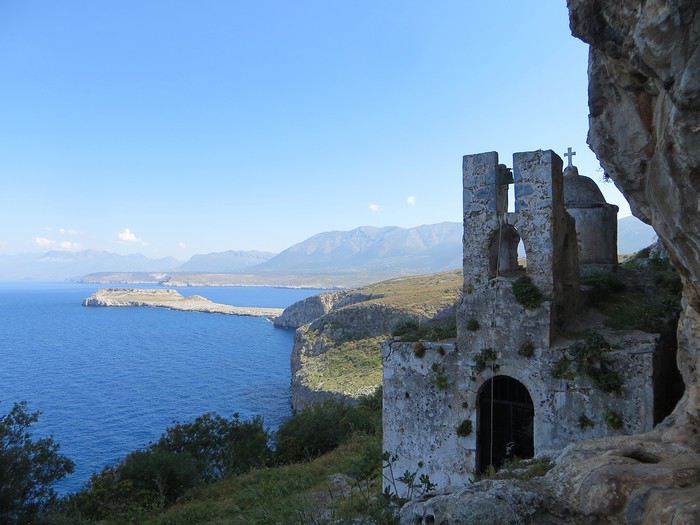 Bien choisir sa photo d'appel pour attirer le chaland. Un bon point et toute mon estime pour celui qui devine où c'est.
Avec la Grèce - pour ceux qui ont lu mes autres carnets qui sont tellement merveilleux qu’il faut les lire immédiatement et que votre vie s’en trouvera changée et éblouie - tout est chamboulé : fini les campings, les dortoirs et les piques-niques miteux de nos voyages dans le nord, place aux hôtels, aux b&b et aux restos. Et en plus, les Grecs ont le bon goût d’être accueillants.
Laissons la parole à du Ballay, parrainé par Alain Deloin et Jean-Michel Apeupré :
Heureux qui comme Ulysse a fait un beau voyage (en Grèce), Ou comme celui-là qui vit le Parthénon, Et puis est retourné, plein d'image et pâmoison, Vivre exubérant le reste de son âge
Et avant d'attaquer le vif du sujet, quelques annonces pour le public innocent : Avertissement : vous lisez ce compte-rendu à vos risques et périls. Toute indignation n’est pas de ma responsabilité. Avertissement bis : non je ne suis pas raciste non je n’ai rien contre les Néerlandais, j’ai d’ailleurs un ami néerlandais non les Grecs ne sont pas des feignants oui les Allemands ont pour passe-temps l’invasion… Ah mince une rechute.
Jour 1
Ayé, c’est parti pour une journée de transport translation Lyon-Athènes via Munich en empruntant la Lufthansa. Le vol est sans encombre, une conversation s’engage avec un voisin grec sympathique autour de la qualité douteuse de la bouffe allemande. J'en profite pour avoir une illumination : la nourriture, voilà ce qui unit les Européens (enfin ceux du sud) ! Eclair de génie, j’ai trouvé comment sauver l’Union européenne « tous unis contre la vie beurk ». Malheureusement, ça risque d’exclure les riches du nord. D’ailleurs c’est peut-être un signe : faut-il mal manger pour être riche ? Faudrait exclure les Japonais de l’équation mais sinon ça marche (pays germaniques, scandinaves et anglo-saxons même combat). Revenons au voisin grec, je tente de donner un tour sportif à la conversation mais malheureusement il n’aime pas le foot « football is shit »… Arrgghh, de quoi vais-je bien pouvoir parler alors ?! Du coup, je parle plus. Alors qu’un petit débat sur le scandale du moment, le président du PAOK Salonique et son flingue, ça, ça aurait été fun .
L’atterrissage se passe sans encombre dans cet aéroport d’Athènes qui a changé de place depuis mon unique passage dans le coin et s’est éloigné du centre-ville. Première prise de contact avec l’alphabet grec, on avait essayé pour le fun de potasser les équivalences mais c’est loin d’être évident ! Combien d'équivalents du O ont-ils dans cet alphabet ?!
Le trajet jusqu’au centre d’Athènes est long, très long et le métro/train se remplit progressivement jusqu’à être bondé à ras bord. Nous sommes tassés, compressés et pour sortir de cette fournaise, c’est la lutte finale, poussons-nous et demain, l’air sera le sauveur du genre humain (note à moi-même : éviter la prochaine fois d’arriver au moment de la sortie du travail)
La chambre chez l’habitant est bien placée, en plein centre sans être très bruyante. On profite de notre premier soir pour une approche de la cuisine grecque et un mauvais choix de commande (que de la friture…). On enchaîne sur une petite balade nocturne pour revenir sur l’impression née du voyage précédent (ie dans les années 90 la voiture reine, une ville bruyante et désagréable). Eh bien en fait, une partie du centre-ville s’est piétonnisé, il y a de la vie, des restos et des cafés avec des terrasses partout, c’est très agréable finalement.
Il était une fois, par delà les pandémies et les crises économiques, un temps où nous pouvions voyager : 2018. En cette année béni(t)e, il n’y eut pour nous point de virée nord-atlantique dans la chaleur estivale au programme, point de douches gratuites rafraîchissantes, point de températures vivifiantes, point de gastronomie douteuse et point de prix déments. En passant, félicitations à l’Islande et ses pizzas caoutchouteuse à 30 euros. En 2018, non, on va dans un vrai pays où l’on sait ce que signifie avoir chaud, manger et glander à une terrasse : la Grèce. Et comme nous ne sommes quand même pas des stakhanovistes du 40° à l’ombre, nous avons choisi le printemps, avril plus précisément. Pour le terrain de jeu, il s'agira d'Athènes et du Péloponnèse sur un peu plus de deux semaines. A nous, les petites églises, les ruines romantiques et les oliviers scintillants !
Bien choisir sa photo d'appel pour attirer le chaland. Un bon point et toute mon estime pour celui qui devine où c'est.Avec la Grèce - pour ceux qui ont lu mes autres carnets qui sont tellement merveilleux qu’il faut les lire immédiatement et que votre vie s’en trouvera changée et éblouie - tout est chamboulé : fini les campings, les dortoirs et les piques-niques miteux de nos voyages dans le nord, place aux hôtels, aux b&b et aux restos. Et en plus, les Grecs ont le bon goût d’être accueillants.
Laissons la parole à du Ballay, parrainé par Alain Deloin et Jean-Michel Apeupré :
Heureux qui comme Ulysse a fait un beau voyage (en Grèce), Ou comme celui-là qui vit le Parthénon, Et puis est retourné, plein d'image et pâmoison, Vivre exubérant le reste de son âge
Et avant d'attaquer le vif du sujet, quelques annonces pour le public innocent : Avertissement : vous lisez ce compte-rendu à vos risques et périls. Toute indignation n’est pas de ma responsabilité. Avertissement bis : non je ne suis pas raciste non je n’ai rien contre les Néerlandais, j’ai d’ailleurs un ami néerlandais non les Grecs ne sont pas des feignants oui les Allemands ont pour passe-temps l’invasion… Ah mince une rechute.
Jour 1
Ayé, c’est parti pour une journée de transport translation Lyon-Athènes via Munich en empruntant la Lufthansa. Le vol est sans encombre, une conversation s’engage avec un voisin grec sympathique autour de la qualité douteuse de la bouffe allemande. J'en profite pour avoir une illumination : la nourriture, voilà ce qui unit les Européens (enfin ceux du sud) ! Eclair de génie, j’ai trouvé comment sauver l’Union européenne « tous unis contre la vie beurk ». Malheureusement, ça risque d’exclure les riches du nord. D’ailleurs c’est peut-être un signe : faut-il mal manger pour être riche ? Faudrait exclure les Japonais de l’équation mais sinon ça marche (pays germaniques, scandinaves et anglo-saxons même combat). Revenons au voisin grec, je tente de donner un tour sportif à la conversation mais malheureusement il n’aime pas le foot « football is shit »… Arrgghh, de quoi vais-je bien pouvoir parler alors ?! Du coup, je parle plus. Alors qu’un petit débat sur le scandale du moment, le président du PAOK Salonique et son flingue, ça, ça aurait été fun .
L’atterrissage se passe sans encombre dans cet aéroport d’Athènes qui a changé de place depuis mon unique passage dans le coin et s’est éloigné du centre-ville. Première prise de contact avec l’alphabet grec, on avait essayé pour le fun de potasser les équivalences mais c’est loin d’être évident ! Combien d'équivalents du O ont-ils dans cet alphabet ?!
Le trajet jusqu’au centre d’Athènes est long, très long et le métro/train se remplit progressivement jusqu’à être bondé à ras bord. Nous sommes tassés, compressés et pour sortir de cette fournaise, c’est la lutte finale, poussons-nous et demain, l’air sera le sauveur du genre humain (note à moi-même : éviter la prochaine fois d’arriver au moment de la sortie du travail)
La chambre chez l’habitant est bien placée, en plein centre sans être très bruyante. On profite de notre premier soir pour une approche de la cuisine grecque et un mauvais choix de commande (que de la friture…). On enchaîne sur une petite balade nocturne pour revenir sur l’impression née du voyage précédent (ie dans les années 90 la voiture reine, une ville bruyante et désagréable). Eh bien en fait, une partie du centre-ville s’est piétonnisé, il y a de la vie, des restos et des cafés avec des terrasses partout, c’est très agréable finalement.
Tahiti - Croisière aux Iles Marquises et Huahine English translation pending
Bonjour tout le monde
Je viens partager avec vous le magnifique voyage que nous avons fait en Polynésie Française du 3 au 23 Novembre 2019
Depuis de très nombreuses années nous avions envie d’aller en Polynésie Française, mais le nombre d’heures de voyage pour y arriver ainsi que le décalage horaire nous rebutait un peu, voir beaucoup. L’an passé nous avons fait 18 heures de voyage ça c’est très bien passé, alors pourquoi pas aller en Polynésie.
Des personnes rencontrées au cours de nos différents voyages, nous parlaient d’une croisière qu’ils avaient faite aux Iles Marquises sur un cargo mixte L’Aranui et qu’ils en étaient revenus enchantés. Une croisière sur ce bateau nous tentait bien. Régulièrement on reparlait de ce voyage, donc courant 2018 je ressors donc les guides, me renseigne sur le trajet du bateau, sa durée, etc.. Nous aimerions aussi passer 4 nuits et 3 jours pleins à Papeete pour nous remettre du voyage, du décallage horaire, visiter l’île tranquillement, ensuite nous ferions la croisière aux Iles Marquises et finirions par 2 nuits et une journée complète à Huahine. Yapuka à articuler tout ça.
Début Octobre 2018 je me renseigne auprès de Voyageurs du Monde pour avoir un devis. nous pensions faire ce voyage en Septembre 2019 mais il n’y avait plus de place dans la catégorie de cabine que je voulais, ce sera donc pour début Novembre 2019. Bon nous allons casser la tirelire, mais c’est maintenant où jamais.
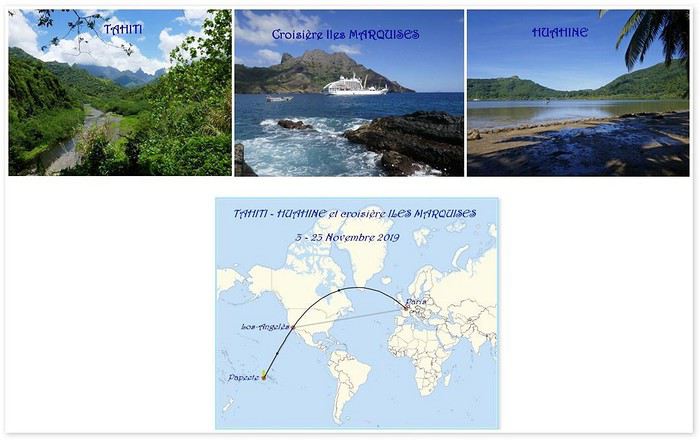 Voilà notre trajet
Paris – Papeete (Tahiti) Iles de la Société Papeete Vallée de la Papenoo Tour de l’ile Embarquement sur l’Aranui Fakarava Iles des Tuamotu En mer Hiva Oa – Tahuata Iles Marquises Fatu Hiva (Omoa-Hananave) Hiva Oa – (Tahuata (plage) Ua Huka (Vaipaee – Hokatu) Nuku-Hiva Ua Pou En mer Rangiroa Iles Tuamotu Bora-Bora Iles de la Société Papeete – Huahine Huahine Huhaine – Papeete Papeete - Paris
Pour plus de photos c'est ici.
à suivre
Je viens partager avec vous le magnifique voyage que nous avons fait en Polynésie Française du 3 au 23 Novembre 2019
Depuis de très nombreuses années nous avions envie d’aller en Polynésie Française, mais le nombre d’heures de voyage pour y arriver ainsi que le décalage horaire nous rebutait un peu, voir beaucoup. L’an passé nous avons fait 18 heures de voyage ça c’est très bien passé, alors pourquoi pas aller en Polynésie.
Des personnes rencontrées au cours de nos différents voyages, nous parlaient d’une croisière qu’ils avaient faite aux Iles Marquises sur un cargo mixte L’Aranui et qu’ils en étaient revenus enchantés. Une croisière sur ce bateau nous tentait bien. Régulièrement on reparlait de ce voyage, donc courant 2018 je ressors donc les guides, me renseigne sur le trajet du bateau, sa durée, etc.. Nous aimerions aussi passer 4 nuits et 3 jours pleins à Papeete pour nous remettre du voyage, du décallage horaire, visiter l’île tranquillement, ensuite nous ferions la croisière aux Iles Marquises et finirions par 2 nuits et une journée complète à Huahine. Yapuka à articuler tout ça.
Début Octobre 2018 je me renseigne auprès de Voyageurs du Monde pour avoir un devis. nous pensions faire ce voyage en Septembre 2019 mais il n’y avait plus de place dans la catégorie de cabine que je voulais, ce sera donc pour début Novembre 2019. Bon nous allons casser la tirelire, mais c’est maintenant où jamais.
Voilà notre trajetParis – Papeete (Tahiti) Iles de la Société Papeete Vallée de la Papenoo Tour de l’ile Embarquement sur l’Aranui Fakarava Iles des Tuamotu En mer Hiva Oa – Tahuata Iles Marquises Fatu Hiva (Omoa-Hananave) Hiva Oa – (Tahuata (plage) Ua Huka (Vaipaee – Hokatu) Nuku-Hiva Ua Pou En mer Rangiroa Iles Tuamotu Bora-Bora Iles de la Société Papeete – Huahine Huahine Huhaine – Papeete Papeete - Paris
Pour plus de photos c'est ici.
à suivre
Visites des "tribus" en Afrique et dans le monde en général English translation pending
je me pose la question sur les visites aux "tribus" en afrique et dans le monde en general
nicolas hulot a ete le premier a faire des emissions a grande ecoute sur la vallee de l omo les himbas les san et autres nous donnant l impression a l epoque que tout ca n etait pas accessible
maintenant ca l est
des flopees de touristes defilent tous les ans a travers ces musees humains
on va se faire les himbas visiter les villages san
les autorites des pays interesses se foutent de ces minorites qu ils aimeraient voir disparaitre
l afrique en "marche" ce n est pas ces sauvages
mais bon si ca amene des touristes pourquoi pas
demande t on a ces gens si ils veulent nous voir
parce que on les payent d une certaine facon argent petits cadeaux produits de premiere necessite, notre necessite
je ne suis pas donneuse de lecons
j etais en equateur il y a 30 ans dans les marches ruraux mais je n ai pas ose prendre de photos etant les seuls touristes j etais genee
j ai ete dans la vallee de l omo il y a 25 ans quand le to m a dit qu il fallait se munir de billets de 1 birr pour prendre les photos alors la c etait le pompon j admire l inde qui pour des raisons que j ignore interdit l acces a une partie des andaman ou vivent des gens de l age de pierre
je prone l interdiction de certaines zones de cette planete y compris l antarctique
je ne suis pas militante mais j ai beaucoup voyage
depuis 16 ans au botswana je ne bouge plus
Faut-il boycotter la France? English translation pending
N'etant pas francais et ne vivant pas en France, je me pose la question de la necessité de boycotter ce pays en tout cas au niveau touristique.
En plus d'un acceuil des plus merdiques (on trouve bien mieux ailleurs), une insecurité constatée a de multiples reprises (je connais Paris), actuellement le pays est en climat semi-insurrectionnel. De nombreux sites deconseillent la France comme pays de tourisme (y compris Colombie, les US ont elevé leur niveau d'alerte concernant la France). A Paris de nombreux reportages ont demontré le foutage de gueule complet envers les touristes.
Les dernieres fois ou j'ai ete en France, c'etait la deception totale
les branleurs de la SNCF eux sont toujours en greve, AIr France a oublié la noition de service
ceci est aussi valable pour les DOM-TOM francais qui n'ont jamais ete une bonne affaire mais a eviter