Bonjour à tous, savez-vous si on peut dormir au monastère d Dzogchen ou s'il faut redescendre à Manigango ?
Même question pour le Gompa Darjay.
Merci beaucoup pour votre aide !
Je suis a Garze, en périple depuis Lanzhou (par Labrang, Zoige, barkam, Larung Gar, Seda) n'hésitez pas si vous avez des questions sur ces coin-là,
Camille
Alors... À toutes fins utiles :
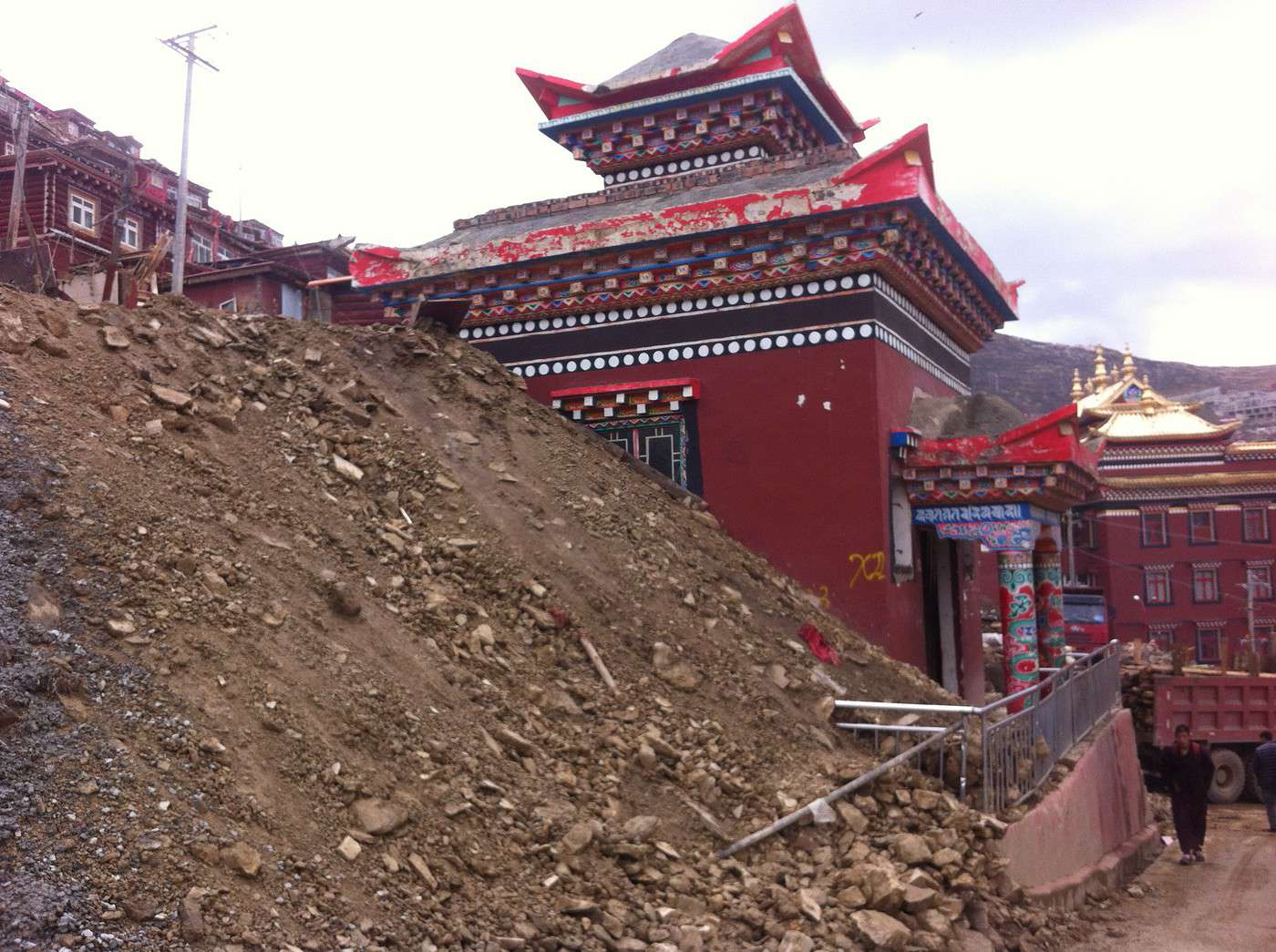
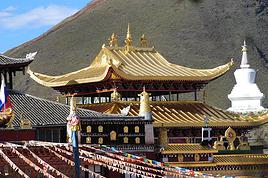
J'ai pu dormir dans une petite pension (une chambre dans une famille) au village qui se trouve au pied du monastère de Dzogchen. L'endroit est magnifique. Monastère immense, tout neuf, mais quel site dans cette vallée déserte au pied des monts enneigés. Le village a énormément de caractère.
Coup de cœur particulier pour Gompa Darjay (prononcer "tadji Gompa") et surtout pour le petit monastère attenant oû l'on peut dormir. Tenu par 3 moines des plus accueillants, un charme extraordinaire, au milieu d'une large vallée cultivée. Pas un bloc de béton à l'horizon, pas un bruit de chantier, le rêve pour passer plusieurs jours (à moins d'être chaudement habillé, fin avril il fait encore très froid) !
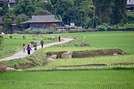
En partant, j'ai descendu la vallée à pied sur une vingtaine de kilomètres par un petit chemin loin de la route et qui traverse de très beaux petits villages. Derniers kilomètres pour rallier Ganze en stop.
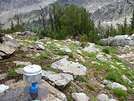
J'ai vu ton message un peu tard. A toutes fins utiles pour les suivants, il existe aussi une gueshouse au niveau du monastère (c'était le cas en 2014). Confort rustique: bâtiment en béton récent mais déjà un peu délabré. Pas de salle d'eau bien sûr, juste un robinet dans la cour et des latrines à l'extérieur de la cour du bâtiment.
Voilà voilà!
Bonjour camille
je reponds un peut tard sans doute mais tant pis , je rentre d'un voyage dans toute cette région et suis entrain de remplir mon carnet de voyage sur VF
Oui, tu peux dormir à Dzogchen et y prendre le repas , il y a un petit hôtel bans le village avant d'arriver au monastère , je l'ai vu mais n'y suis pas resté , j'étais à Manigango au Pani Manigango Hotel le seul autorisé aux étrangers . rutique mais sympa et de là je te conseille d'aller au lac LHatso à environ 20 Km de Manigango sur la route de Dergé
a ta dispo pour plus de renseignements
bonjour, je vois que tu as mentionné larung gar, tu n'as pas eu de contrôle policier interdisant l'acces? nous avons demandé des renseignements sur les bus a tagong et on nous a dit que le lieu etait interdit aux etrangers.
Nous n'avons eu aucun contrôle en allant à YACHEM GAR , nous ne sommes pas allés à Larun Gar
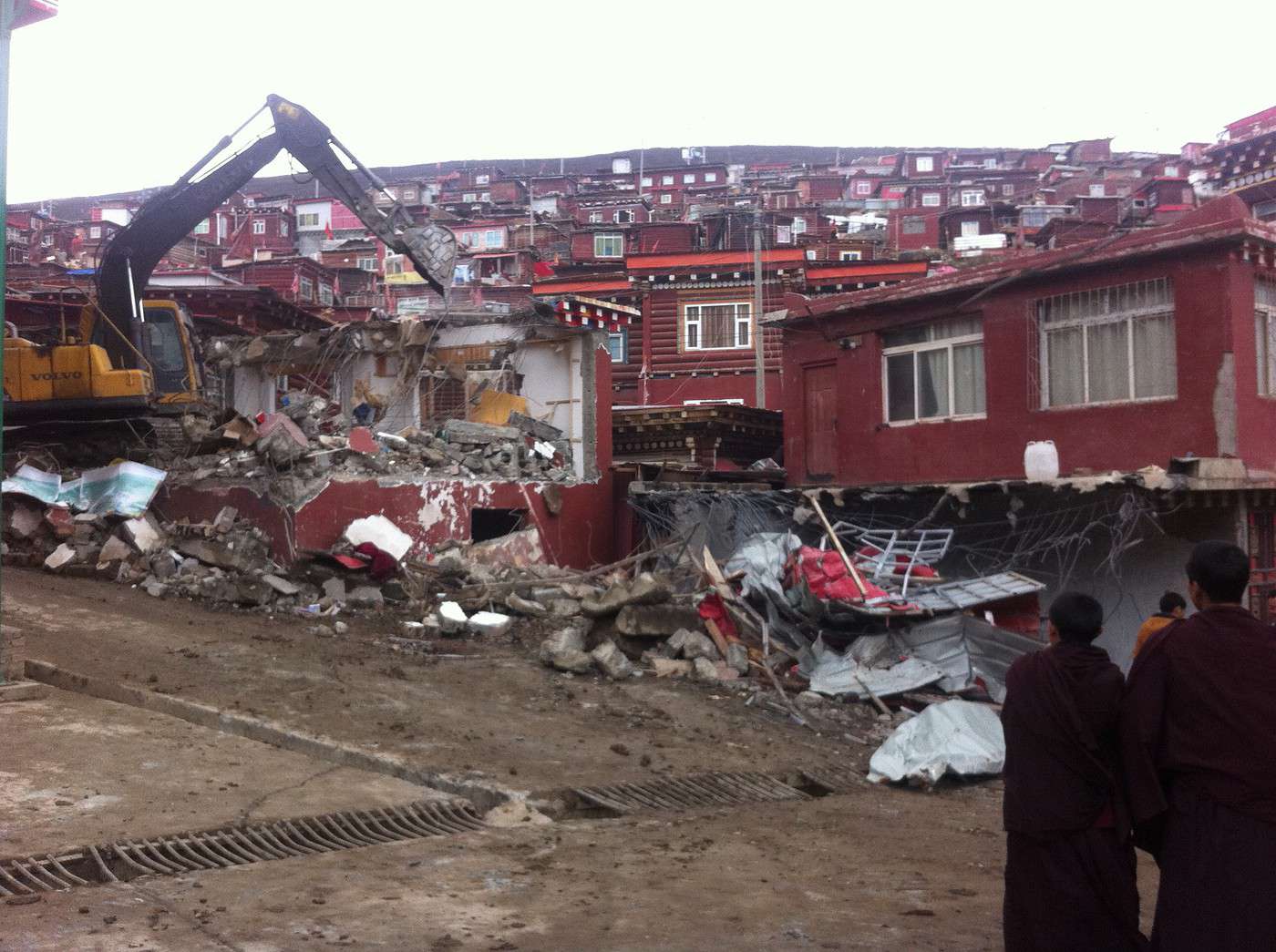
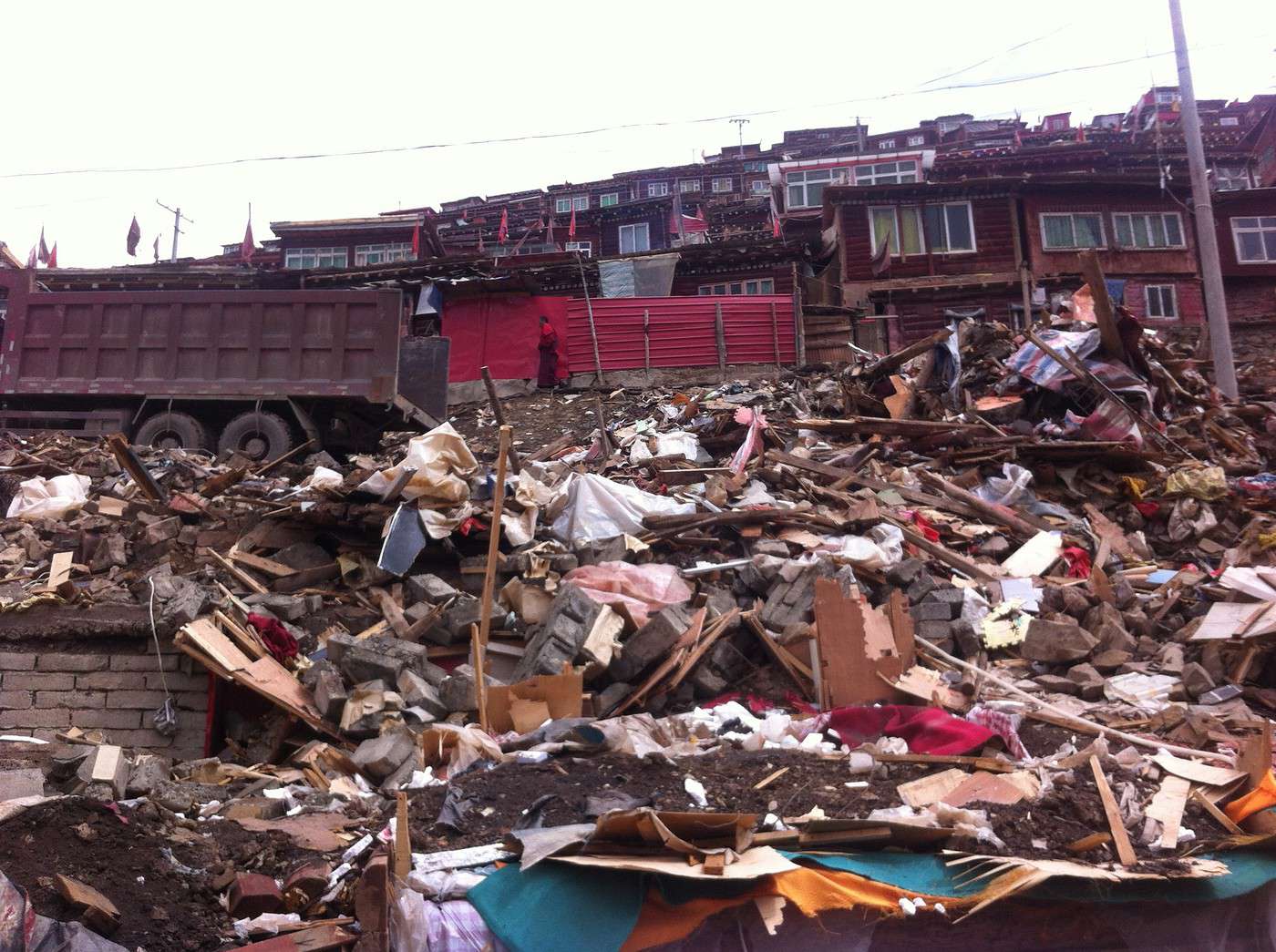
au cour de notre presence dans cette zone en oct 2016 il y avait effectivement des "mises dehors" à Larun gar où il devrait y avoir environ 2500 moines de refoulés , c'est tout ce que je peux te dire
bonne soirée
Bonjour,
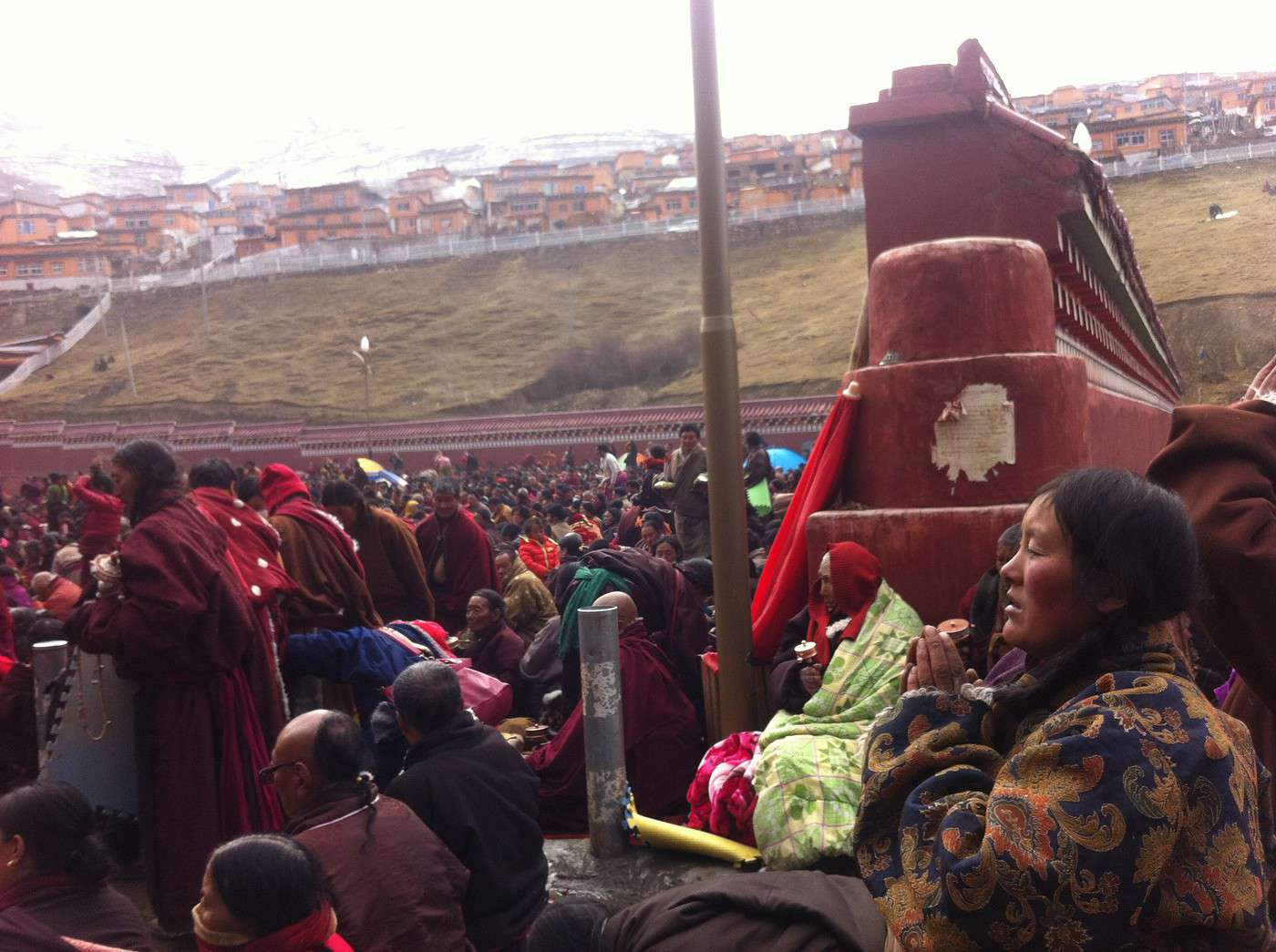
Non bizarrement je n'ai pas été arrêtée par la police, pourtant omniprésente à l'entrée de la petite route montant au Larung Gar. Ils n'ont pas pu ne pas me voir portant... Je n'ai vu aucun autre étranger. Il y avait pas mal de touristes chinois. Je suis montee a l'hôtel sur la crête (je ne me rappelle pas du nom) : là, la none de l'accueil m'a refoulée : hotel interdit aux étrangers. J'ai donc passe la journée sac (heureusement petit) sur le dos à crapahuter. En fin d'aprem j'ai rejoint le village au nord. Là, la police m'est rapidement tombée dessus, fort courtoisement mais fermement : poste / questions / rappel de l'interdiction d'aller au Larung Gar (hé hé mon pote, trop tard j'en viens !) et demande express de quitter la ville le lendemain à la première heure. Pour finir ils m'ont conduite (en voiture de police blindée) dans une guest house pour passer la nuit. Là, une jeune chinoise (qui parlait anglais !) m'a demandée comment j'avais obtenu l'autorisation de dormir ici, ses amis anglais s'étaient fait dégager la veille... Bref pas très organisée la police, ou alors j'ai vraiment eu de la chance !
Super interessant. En effet on voit a ta description qu'ils sont quand meme tendu.
Je pense comme tu le dis qu'ils ne sont pas tres organise (ce qui m'etonne pas trop), ce qui explique que tu sois passe entre les mailles au moins quelques heures. Par contre on voit que la nonne ne prend pas de risque de loger des etrangers. C'est quoi que t'appele le village a nord, "Sertar"?
C'est peut etre plus facile de passer lorsqu'on s'arrete pas a Sertar mais passe par Luho.
Si t'as des photos a partager de Larung Gar... Je me demandais si les travaux etaient tres visible ou non sur place, etant donne qu'il y a quand meme du tourisme chinois.
Je suis effectivement arrivée par le sud, en auto stop depuis Markang, j'ai dormi chez des gens je ne sais pas trop où, quelque part vers l'intersection entre la route principale (Markang / Luhuo) et la route qui mène à Sertar au nord. Je suis donc arrivée au Larung Gar assez tôt (vers 7 heures du matin) et par le sud. Peut-être que cela m'a aidé, je ne sais pas.
voici quelques photos, qui ne sont pas de bonne qualité, je voyage sans appareil, juste avec mon téléphone...
Je pense clairement que c'est parce que t'es passe par le sud (et en plus tot le matin) que t'es passe. C'est ce qu'on comptait faire aussi mais on serait peut etre pas arrive aussi tot et apres le probleme c'est pour dormir.
Par Sertar, c'est peut etre faisable aussi mais c'est un point plus facilement controlable pour la police.
Surtout quand tu t'y arrete pour changer de bus ou dormir. Facile alors pour la police de t'arreter.
Merci pour les photos. C'est pas tres gaie tout ca, j'espere que la population va trouver des alternatives, je ne pense pas que le gouvernement changera ses plans.
Bonjour,
Je n'ai vu aucun touriste étranger dans les endroits décris plus haut. J'ai vu des étrangers uniquement à Tagong.
Je ne comprends pas trop pourquoi ne pas vouloir croiser d'étrangers, nous en sommes bien nous, lol ;)
Sur mes traces ?... ah, mais je ne suis pas un guide... Ecoute je ne sais pas trop quoi te dire... Si tu ne veux pas préparer ton voyage toi-même il faut t'adresser à une agence.
Et si tu ne veux pas croiser d'étranger, c'est rigolo de t'adresser à ces mêmes étrangers pour avoir des infos sur où aller...
Je peux juste te dire comment j'ai préparé le mien. Je connaissais mon point d'entrée, Labrang, mon point de sortie, Chengdu, et la durée, 3 semaines. Bien en amont, une grande partie du plaisir réside là, 'ai acheté une carte de la région, glané des infos ici et là, pas mal sur ce forum dont je remercie au passage tous les contributeurs. ça m'a permis de rêver, de me raconter des histoires, d'entourer sur la carte les quelques endroits qui me semblaient fantastiques. je n'ai arrêté aucun parcours à l'avance puisque plusieurs inconnues dans l'équation : l'état des routes, les temps de trajet, les coups de coeur ou déceptions à prévoir.
Je voyage avec le minimum vital dans un sac aussi léger que possible, pas de bivouac : ni l'équipement ni les compétences, et une chose qu'un ami m'a dit il y a fort longtemps : "voyager, c'est fraterniser avec la providence."
Ce qui est facile au Sichuan : l'autostop marche très bien. On peut dormir à peu près n'importe où : tu trouveras toujours une chambre à louer chez les gens ou dans les monastères.
Ce qui est difficile : la langue ! échaudée par un précédent voyage en Chine, j'avais fait traduire avant de partir par une amie sinophone quelques mots et phrases clé sans lesquelles les choses peuvent devenir vraiment compliquées, voir infernales. genre "ou est la gare de bus ? à quelle heure part le bus, etc."
J'ai eu mon lot de surprises, merveilleuses, et quelques sueurs froides aussi. le frisson du voyage qui est finalement comme une drogue ;)
Je voulais seulement des infos des astuces ou conseils. J'ai traversé le Sahara seul à vélo. J'ai pas besoin de guide. Le forum sert à cela non ? Je monte à litang et derge. Bonsoir excuse moi de t'avoir déranger
Et je crois que Je t’ai donné les infos que j’ai pu. Simplement t’indiquer « un treck de 10 jours », bah désolée je sais pas.
Je te souhaite un bon voyage.
Vois mon carnet de voyages sur VF : "de kangding à Dergé , les monastères historiques du Kham il t'en dira plus que tout sur cette region
bon voyage
DOBLEDOU
Bonjour de Dergué ou je dois avoir rencontré la seule tibétaine (une policière) parlant anglais. Le gouvernement a le projet de détruire la vieille ville comme partout au Tibet pour améliorer les conditions sanitaires.... J'ai pris tunnel de 5 ou 6 km à 4300 m...
Bonjour à tous, savez-vous si on peut dormir au monastère d Dzogchen ou s'il faut redescendre à Manigango ?
Même question pour le Gompa Darjay.
Merci beaucoup pour votre aide !
Je suis a Garze, en périple depuis Lanzhou (par Labrang, Zoige, barkam, Larung Gar, Seda) n'hésitez pas si vous avez des questions sur ces coin-là,
Camille
Bonjour Camille
je souhaite partir au monastère Dzogchen en juillet et août 2020
comme tu as déjà été dans cette région j'espère que tu auras ce message pour me donner des indications
Merci d'avance
mahalia
Bonjour Mahalia,
Quelle bonne idée, ce coin du monde est vraiment magnifique et surprenant.
Comme je le disais plus haut, dans la région je me suis déplacée essentiellement en auto stop, qui marche très bien, parfois en bus quand il y en avait. Pour Dzogchen il n’y a pas de bus, en tous cas à ce que j’en ai compris.
On peut dormir vraiment partout, les tibétains eux-mêmes voyagent beaucoup (essentiellement pour des pèlerinages semble-t-il), on trouve des chambres à louer chez l’habitant, il suffit de demander.
La communication n’est vraiment pas facile. Avec les Tibétains on s’en sort toujours à peu près car ils sont très aimables et ont a coeur d’essayer de te comprendre et t’aider dans la mesure du possible. Avec les Chinois, en tous cas ceux qui officient dans les gares de bus, c’est souvent plus compliqué... si tu as la possibilité, je te conseille de demander à un Chinois de t’ecrire dans un carnet quelques phrases types qui pourront te sauver de bien des situations (a quelle heure part le bus ? Où est la gare de bus ? Aujourd’hui ? Demain ? Je cherche un hôtel, etc.)
Précision enfin qu’en tant que femme, ça l’a carrément fait de voyager seule.
Bonjour,
Juste pour préciser on peut aller a pas mal d'endroit en minibus. On a aussi fait un peu de stop mais vraiment pas souvent. On est reparti en minibus de Dzongchen, mais c'est vrai que quand on a demande a la guesthouse, la femme nous disait qu'il y en avait pas...
Et comme dit Camille c'est complique d'avoir une vrai conversation si tu parles pas chinois ou tibétain ;)
J'ai écrit des récits de voyage si tu veux avoir une idée : récits de voyages sichuan / kham / amdo
merci beaucoup,
je vais lire les récits de voyage
je souhaite me rendre dans la région de Dzachoukha qui fut le lieu de vie d'un Maitre tibétain "Patrul Rinpoché" que j'affectionne tout particulièrement.
Je souhaite me rendre à Karchong Khormo Olou, le lieu de sa naissance et celui de sa mort.
Je souhaite également visiter la grotte de Yamantaka où il est resté longtemps en retraite qui je crois est située au dessus du Monastère Dzogchen,
le mur de Mani à Palgué
Je me permettrai de vous poser quelques questions
mon voyage est prévu pour juillet et aout.
Qu'en est il de la nécessité de voyager avec un guide chinois ?
est toujours une obligation ?
Bonne journée
Mahalia
En dehors du Tibet central, pas d'obligation d’avoir un guide. Comme tu seras entre le Sichuan et le Qinghai, tu peux normalement voyager seule, en prenant en compte les conditions évoquées précédemment : presque personne ne parle anglais dans ces régions donc ce n’est pas forcément évident pour le transport et pour trouver des lieux spécifiques si tu ne parles pas la langue. A minima, il faut essayer de faire écrire en chinois ou en tibétain le nom des lieux où tu souhaites te rendre.
Tu peux aussi envisager de prendre une agence juste pour une partie de ton voyage par exemple, pour t'aider à trouver les lieux que tu recherches. Plusieurs agences locales sont répertoriées ici : https://tibetecotravel.com/responsible-tour-operators-in-tibet/ Kham Utpala, Jimpa Travel et Gesar Tour sont à minima de bonnes références (le site de Gesar Tour ne fonctionne plus, à vérifier si ils exercent encore car ce serait les plus proches).
Le mur de Mani à Palgué est probablement celui que l’on a appelé sur le blog le Bage Mani (autre difficulté : la plupart des lieux ont des noms chinois et tibétain différents et les translitérations des deux peuvent être très variées !). Ce n’est pas très loin du monastère de Sershu (à ne pas confondre avec la ville de Sershu), lui même à qq heures de route de Yushu (Jyekundo).
Pour répondre à ton autre post, depuis la France tu peux envisager de prendre un vol international directement pour Chengdu puis partir par la route vers Kangding puis Gandze, etc., ou prendre un vol interne pour Yushu. La première solution est a priori mieux pour l’acclimatation à l'altitude; si tu prends un vol intérieur, prévois un peu de temps pour t’acclimater là-bas.
Je te souhaite un très beau voyage !
Reviens ici à ton retour pour partager les détails pratiques à jour :)
bonjour,
merci d'avoir pris la peine d'écrire et mis des photos, tous ces renseignements sont bien utiles et m'aideront.
Le mur à Mani se trouve au nord de la région Dzachouka à 80 km au nord du Monastère de Dzogchen et Sechen
Je vais en effet faire traduire par écrit en chinois et tibétain pas mal de choses pour tenter d'avoir des réponses sur les directions.
Est il possible de dormir chez l'habitant ?
Quel temps fait il en juillet et aout ?
L'endroit où je souhaite aller se trouve à environ 4000 m d'altitude.
je me passerai de guide humain cependant connaissez vous un guide écrit pour bien repérer les routes
Merci +++
En dehors du Tibet central, pas d'obligation d’avoir un guide. Comme tu seras entre le Sichuan et le Qinghai, tu peux normalement voyager seule, en prenant en compte les conditions évoquées précédemment : presque personne ne parle anglais dans ces régions donc ce n’est pas forcément évident pour le transport et pour trouver des lieux spécifiques si tu ne parles pas la langue. A minima, il faut essayer de faire écrire en chinois ou en tibétain le nom des lieux où tu souhaites te rendre.
Tu peux aussi envisager de prendre une agence juste pour une partie de ton voyage par exemple, pour t'aider à trouver les lieux que tu recherches. Plusieurs agences locales sont répertoriées ici : https://tibetecotravel.com/responsible-tour-operators-in-tibet/ Kham Utpala, Jimpa Travel et Gesar Tour sont à minima de bonnes références (le site de Gesar Tour ne fonctionne plus, à vérifier si ils exercent encore car ce serait les plus proches).
Le mur de Mani à Palgué est probablement celui que l’on a appelé sur le blog le Bage Mani (autre difficulté : la plupart des lieux ont des noms chinois et tibétain différents et les translitérations des deux peuvent être très variées !). Ce n’est pas très loin du monastère de Sershu (à ne pas confondre avec la ville de Sershu), lui même à qq heures de route de Yushu (Jyekundo).
Pour répondre à ton autre post, depuis la France tu peux envisager de prendre un vol international directement pour Chengdu puis partir par la route vers Kangding puis Gandze, etc., ou prendre un vol interne pour Yushu. La première solution est a priori mieux pour l’acclimatation à l'altitude; si tu prends un vol intérieur, prévois un peu de temps pour t’acclimater là-bas.
Je te souhaite un très beau voyage !
Reviens ici à ton retour pour partager les détails pratiques à jour :)
En juillet/août vous devriez avoir beau temps, il peut faire frais du fait de l’altitude, le plus simple c’est d’adopter la technique des couches ! (manches courtes/manches longues/polaire).
Côté guide papier, le Lonely manquera un peu de détail. Le Footprint Tibet est assez complet mais date de 2009 donc les routes ne sont plus à jour (ça nous a valu de petites surprises en Amdo)... Si vous trouvez autre chose, je suis preneuse :)
J'ai eu le bonheur de séjourner au Talam Khang, petit monastère / guesthouse attenant au Darjay Gompa près de Ganze, Sichuan, en mai dernier. J'aimerais faire…
J'ai un projet d'aller au Tibet en Juin 2005, arrivée à KTM, puis par la route, retour idem, le tout en 3 semaine c'est jouable? Le visa chinois coute combien?…
Qqn sait il si on peut se procurer en 2025 une carte sim au Tibet, sinon comment utiliser internet sur place avec un tél français. Merci et bonne journée.…
Nous avons l'intention de nous rendre au Tibet sans agence de voyage j'a entendu dire que cela est possible au départ de la chine quelqu'un a t il des infos de…
J’aurai besoin de votre aide pour nous aider à finaliser notre voyage au japon. On part 3 semaines avec ma compagne, à partir du 10 novembre, et notre idée était de faire Tokyo, Kyoto et entre les 2 plusieurs étapes (bon rien de vraiment original pour le moment…).
Par contre, on est plutôt nature et randonnée donc même si on compte bien visiter Tokyo et Kyoto, on veut faire un maximum d’étapes nature entre les 2, et on avait prévu initialement des zones comme Kamikochi mais ce n’est pas possible si tard dans la saison si j’ai bien compris. Du coup voici notre itinéraire actuel :
Je suis encore en train de regarder si c’est vraiment faisable niveau temps, on aimerait profiter un max de chaque endroit, profiter de la nourriture et des onsen, et faire un Ryokan dans une des étapes.
Hi there,
I’d like to do this cycling route over 2 or 3 days. I’m struggling to figure out and find a (good) bike rental that lets me start in Onomichi and drop off in Imabari. Can anyone help with great tips for rentals and accommodations along the route? How do I get back to Onomichi afterward?
Next year, we’re celebrating 20 years of marriage (and travel 🙂), and we’re looking for something new, pretty legendary, and something the teens will enjoy too.
The family council has settled on Japan for now. And it’d have to be a summer trip—no choice there.
The catch: I keep reading that August isn’t the right season for southern Japan. It’s hot, humid, and there’s a risk of typhoons… Okay, but what does that *actually* mean in practice? Are there any travelers who’ve been there during this time? Is it *that* unbearable?
We’re pretty familiar with Southeast Asia—last year, we dealt with scorching heat in Vietnam and insane humidity, plus a typhoon we experienced from a distance, and visiting Angkor in the blazing sun. Is it worse than that?
I’m back with my detailed itinerary for 20 days in South Korea—it’s my first trip to the country. Our idea is to experience a more rural and cultural Korea. Here’s the rough plan: Seoul for 4 nights at the start and 1 night at the end, Gurye for 4 nights, Suncheon for 4 nights, Namhae for 4 nights, and Gyeongju for 2 nights. The goal is to pick a base and explore the surrounding areas. What do you think of this itinerary? Anything you’d change?
thanks
hi everyone, we're heading out for a 12-day trek in the Japanese Alps. We're bringing freeze-dried meals like we always do. We just found out that importing meat is banned, even freeze-dried. Is that true? We already bought them. They're commercially made freeze-dried meals. Online, it's not specified that they have to be "commercially made" because you can make your own freeze-dried food. And since we've heard they're really strict in Japan, can anyone confirm this for us? thanks
I haven’t found what I’m looking for despite my searches!
For a 15-day trip next spring, I’d like to buy a card (preferably an eSIM, but a physical SIM is fine too) that also lets me make calls in the country (to contact a hotel, a tourist spot, etc.).
You can easily find options just for data, but I haven’t come across any that include calls, texts, or even MMS.
Could you recommend something?
hi there
I’m planning a trip in September—here’s my rough itinerary. What do you think? Is it easy to rent a car to get around between my stops? Thanks so much!
Philippe
StopNightsFull daysSeoul44Gurye (Jirisan)43Suncheon43Namhae43Gyeongju21Seoul1—
Hi,
July 2026: I’m writing to you from Dali.
First, I got scammed on Booking—AI-retouched photos. No tourists at this hotel (Yishanju Designer Hotel), and the reality was horrible: dirty, with a disgusting breakfast. It’s better to use Trip.com here.
Next, the old town was an infernal cacophony, packed with tourists who shoved past without a care. Some vendors harassed you to buy things. All the stalls sold the same cheap plastic junk or other uninteresting stuff. The beautiful scenery was ruined by vendors lining 100% of the alleys. Impossible to walk, crushing heat, nothing good to eat except fresh fruit. Horrible experience.
Day 2: We went to Cangshan Mountain by cable car—the ride was short and nothing spectacular. We were at 2,600 m.
My plan was to see Erhai Lake. Unfortunately, I followed the advice of an AI chatbot: take the boat at Langkan Dock. The Didi dropped us off in the nearest area, which was full of charming little alleys but packed with Chinese tourists. The three-wheeled yellow cabs zoomed through the narrow streets, forcing you to hug the walls, on top of the scooters and other pedestrians to deal with. Crossing the neighborhood was hellish and suffocating. Once out, we hit the "corniche," which was also packed with Chinese tourists. The lake’s edge was all pebbles, and everyone was standing around taking photos. I was with my 5-year-old son. I would’ve liked to sit down and let him play with stones by the water, but it was clear we didn’t belong. They were even shoving each other for a shot! There were no boats in sight. In short, we’d had enough, and there was nothing interesting there either.
On the way back, we had to cross that maze again under the scorching sun. My son was braver than me—I even had a little dizzy spell from all the chaos. Add to that Dali’s altitude (2,200 m), so altitude insomnia, fatigue, and vulnerability during the day...
The restaurants weren’t inviting—the staff served sticky rice in a little bucket. The dishes were wrapped, and you had to figure it out yourself. After that, they ignored you completely, even if you were the only tourist.
On the 3rd day, it was time to leave for Shaxi. I hope to see beautiful villages. But honestly, I’m exhausted by this atmosphere where everything is complicated, communication is never smooth, noise is everywhere, and the behavior of some Chinese people is abusive...
Silver lining: not a drop of rain in 4 days and blue skies.
I couldn’t visit the villages in southern Yunnan because of rain and storms there...
But I was expecting to see a few more tourists.
We’re planning a 17-day trip to South Korea in October 2026 with my husband and our daughters, who’ll be 9 years old.
I’d love to get your thoughts on our draft itinerary.
First, some key details:
1/ Jeju Island is a must for us. I’ve personally dreamed of going there for years after reading a novel about it.
2/ Our girls are used to road-trip style travel since they were born, so this kind of trip won’t be an issue for them.
3/ We plan to travel by train, except on Jeju where we’ll rent a car (we already have an international driver’s permit).
Itinerary:
Seoul: 1 arrival day at 10 AM + 4 full days
Gyeongju: 2 days
Busan: 3 days
Jeju: 4 days
Seoul: 2 days
Hi there,
My girlfriend (23) and I (24) are heading to Japan for the first time from October 20th to November 6th. Here’s our itinerary:
6 nights in Tokyo
1 night in Hakone (ryokan already booked)
4 nights in Kyoto (hotel already booked)
2 nights in Osaka
4 nights back in Tokyo
I’d like to book hotels for Tokyo (both stays) and Osaka, but I’ve gotten so many different recommendations.
I’ve read that Shinjuku is the place to be for its huge hub, accessibility, and things to do, but I’ve also heard about Shibuya, Asakusa, and Ueno.
I’ve looked at hotels, and first off, I’m surprised by the prices compared to what I’ve seen on forums (I guess inflation’s hit here too… and maybe I’m late to the booking game?). I’m feeling a bit overwhelmed with all the options.
For our first stay in Tokyo, I’d prefer a hotel (not a residence or Airbnb) since we’ll be arriving at night, and it’s our first time in Japan. It’d be great to have a place with a reception, staff who speak at least a little English, and can give us some guidance. For the second stay, we could consider other options if it’s better.
Budget-wise, we can go up to 150–180 € per night, but if we can save some money to spend elsewhere, that’d be amazing!
I’m open to all recommendations, hotel suggestions, or any other tips for Tokyo (first stay), Osaka, and Tokyo (second stay).
I’m starting to look at neighborhoods in Seoul, and I’m leaning toward staying in a hotel in Insa-Dong—I’ve spotted one really close to Unhyeongung.
Is this a good area—nice and convenient for exploring the city?
Otherwise, I’ve also found another hotel in Yongsan-Gu, right near the station of the same name. Is that station useful for getting around Seoul?
Since I’ll be in South Korea for nearly two months, I plan to spend at least a week in Seoul to recover from jet lag (it takes me a while to adjust...). So, I’d love a neighborhood that’s pleasant and a hotel not too far from a subway station.
Hi there,
I’m getting ready for a classic tourist trip to China in May 2026.
The "Terres Lointaines" itinerary looks good to me, and the price is interesting.
Has anyone traveled with them before? Any feedback?
Is there a better option?
Thanks so much for sharing your experiences on this!
Michel
I just booked my hotel in Seoul—it’ll be near Unhyeongung, on Samil-Daero 30-Gil—and I’m wondering if there’s public transport from the airport to this address (bus or subway)? If not, what’s the taxi fare? I read it’s around 50 or 60 €.
I’m traveling to Japan with a young adult with autism (ASD) from July 28 to August 8, following a pretty classic route: Osaka, Hiroshima, Kyoto, and Tokyo. I’m looking for a schedule of the most spectacular fireworks displays during that time. So far, the dates for the major *hanabi* events aren’t available online yet. If anyone has them, I’d really appreciate it if you could share!
We’ll be doing a self-drive trip using public transport in May 2026.
On Day 6, we’ll arrive in Hakone by train from Tokyo in late morning. We’ll spend the night in Hakone before heading to Kyoto.
The main goal of this stop is clearly the view (no hiking) of Mount Fuji, not so much exploring Hakone, where the sights seem limited.
I’ve read on the forum that the view is great from Gotemba, but it also takes a good hour by bus to get there. And, apart from that view, there’s nothing else to see in Gotemba!
So, I’m not sure what to choose. Any thoughts? Or alternatives to suggest?
Maybe some spots in Hakone or Gotemba for a great view?
Hi everyone, I’m Julien!
This summer, from late June to late July, I’m planning a one-month solo trip to Japan—my first time!
I’d love to hear your thoughts and advice on the itinerary I’ve put together to explore this amazing country.
Here are the routes I’m considering:
**Option 1: More mountain and nature-focused**
Tokyo: 8 nights, with day trips to Nikko and maybe the Izu Peninsula
Kawaguchiko (Lake Kawaguchi/Mt. Fuji): 1 night. The place looks stunning, but I’m worried Mt. Fuji might not be visible due to the weather
Kyoto: 6–7 nights (including a trip to Nara)
Osaka: 1–2 nights, where I’d like to drop off my things to make the Kumano Kodo easier
Kumano Kodo: 3 nights—an experience I haven’t seen much elsewhere, but I thought it sounded really interesting
Hiroshima: 2 nights
Miyajima: 1 night
Takayama: 3 days
Kanazawa: 3 days (From what I understand, the Osaka–Takayama–Kanazawa–Tokyo route is convenient for transport)
Tokyo: 1 night (return)
**Option 2: More varied but a bit vague in parts**
Tokyo: 8 nights
Kyoto: 7 nights (+ Nara)
Osaka: 2 nights
Kobe + Himeji: just passing through—I’m not sure if it’s worth a night
Naoshima: 1 night—still pretty unclear for me
Takamatsu: 2 nights. An interesting city, but I’m not sure how long to stay
Shimanami Kaido: biking from Imabari to Onomichi, then heading to Hiroshima
Hiroshima: 2 nights
Miyajima: 1 night
Kyushu road trip (Aso + onsens + Fukuoka): 5 nights (also pretty vague—I could fly from Fukuoka back to Tokyo)
Tokyo: 1 night
**Option 3: More balanced/simplified**
Tokyo: 8 nights
Kawaguchiko: 1 night
Kyoto: 7 nights (+ Nara)
Osaka: 2 nights
Koya-san: 1 night
Kumano Kodo: 3 nights
Takayama: 3 nights
Kanazawa: 3 nights
Tokyo: 1 night
A few key points:
I haven’t made any reservations yet, except for the flight tickets.
I know my plans are too packed and will need to be adjusted.
I’m specifically looking for advice on which stops to cut or shorten.
Hello everyone,
Like Cedric13600, I’ve booked a flight ticket for 30 days / 29 nights in September 2026, from Beijing to Shanghai. We’re a couple in our sixties who love independent road trips.
I’d like to draw inspiration from the following private itinerary suggested by a travel agency:
Day 1: Arrival in Beijing
Day 2 to 4: Beijing
Day 5: Datong
Day 6 & 7: Pingyao
Day 8 to 10: Xi'an
Day 11: Luoyang
Day 12: Dengfeng
flight
Day 13 & 14: Chongqing
flight
Day 15 & 16: Lijiang
Day 17: Dali
Day 18: Kunming
Day 19: Jianshui
Day 20 & 21: Yuanyang
Day 22: Travel via Guilin
Day 23 & 24: Yangshuo
Day 25: Guilin
Day 26 & 27: Zhangjiajie
flight
Day 28 & 29: Shanghai
Day 30: Departure from Shanghai
But to do this itinerary independently:
1. This schedule seems very ambitious to me—what do you think?
2. If it’s too packed, what would you remove as a priority?
Thanks so much in advance for your help.
I’m planning a 5-week trip between Yunnan and Sichuan from mid-October to the end of November 2026:
Arriving in Kunming, I’ll do a loop in the far south of Yunnan via Thonghai, Jhiansu, Zhemi, Yuanyang, Nafa, Jinping, Mengzi, and Shilin (visiting markets, villages, and hiking), then head to northern Yunnan/southern Sichuan on the same theme (passing through Kunming again) via Dongchuan, Huize, Qiaojia, Puge, Xichang, Lanba, Butuo, Huolie, Dimo, Riha, Niuniuba, Meigu, Mabian, and Leshan, before arriving in Chengdu (where I’ll take my return flight to Paris).
This would be a trip with a strong ethnic/rural focus. Since I’ve never traveled in China, I’d love to hear your thoughts on doing this solo. Are there public transport options in the region? What tips do you have for traveling through this area as smoothly and enjoyably as possible? I’ve done quite a bit of backpacking in the mountains of northern Vietnam and really enjoyed using local motorbike drivers. Is something like that available in this region (through local tourist agencies or hotels)?
What should I be cautious about? Are local tourist agencies (or hotels) offering tours and guides reliable? If you know of any specialized sites sharing tips or experiences, or names of local agencies, hotels, etc., please don’t hesitate to share them! :)
In short, all your advice (on any topic that comes to mind!) is very welcome.
Thanks so much!
While researching South Korea, I came across the term "templestay," which refers to a Korean program that lets you stay in a traditional temple to discover Buddhism and Korean culture by living like the temple residents and doing activities like making lanterns.
A templestay isn’t just for foreign tourists—on the booking site, I saw that some temples are more geared toward foreigners, with English-speaking monks.
I was wondering if it’s still worth it, especially in temples where the monks don’t speak English?
I'm 69 years old and heading to China, where most tourist sites are free or discounted for me. However, trip.com either refuses to let me book because the sites are free or doesn’t apply the discount. Does WeChat apply this discount if I book through them? How can I just reserve without paying and pay on-site? Is that possible?
I’d love to get some feedback on our 30-day / 29-night itinerary in China. We’ll be there in September as a family with two kids (6 and 10 years old).
Do you think I should cut a few nights between Wulingyuan (Avatar Mountain) and Yangshuo? I’ve planned 15 nights total there.
We’ll be on a round-the-world trip starting May 2026 and will need to do schoolwork with the kids. Hoping to fit it in during train rides!!
Ever since I started planning this China itinerary, I’ve been discovering completely mind-blowing places I’d never heard of before—30 days feels way too short for China!!!
Here’s our itinerary:
Beijing - 4 nights
Forbidden City
Great Wall of China
Temple of Heaven
Xi’an - 3 nights
Terracotta Army
Muslim Quarter & Great Mosque
Chengdu - 3 nights
Zoo - Research Base of Giant Panda Breeding
Wenshu Yuan Temple
Hi there,
We just got back from a 2-week trip to China as a couple, and before we left, the budget was the hardest thing to picture concretely. We found plenty of info on visas, apps, transport, and itineraries, but way fewer detailed breakdowns of what you *actually* spend on the ground.
So, we took the time to share our real budget for 14 days. In our case, we spent around 1,800 € per person, with a big chunk of that going toward round-trip flights at about 600 € per person. We were also pretty surprised by how affordable China can be once you’re there—transport is often cheap, and a lot of everyday expenses stay reasonable.
The trickiest part, in the end, was figuring out how to pay while you’re there, since it’s not always obvious if you’re not prepared. But once everything’s set up and you get the hang of it, it’s really smooth.
If this can help other travelers get a better idea before they go, we’ve broken it all down here:
https://aventures-sans-mesaventure.com/budget-2-semaines-de-voyage-en-chine/
Hi everyone,
I’ve been planning several itineraries for a trip to Japan with my wife but would love your insights before we start booking!
In short, we want to go during Golden Week, see late-blooming cherry trees, and have the freedom to get around with a rental car.
Here’s the plan:
18-day itinerary in Japan (April 25 → May 12)
Goal: freedom, late cherry blossoms, culture & nature
---
Days 1–3: Tokyo (April 25–27)
Arrival and adjustment (no car needed yet).
Neighborhoods to visit: Shinjuku, Asakusa, Meiji Jingu, Shibuya, Odaiba.
Suggested activities: Ghibli Museum, Sumida River cruise, izakaya meals.
Late cherry blossoms (yaezakura) possible at Shinjuku Gyoen.
Pick up the rental car on the morning of April 27.
---
Days 4–5: Mount Fuji & Hakone (April 27–28)
Route: Tokyo → Kawaguchiko/Hakone (~2 h).
Activities:
Lake Kawaguchi, Chureito Pagoda (Fuji views + late cherry blossoms)
Onsen baths, Hakone Open-Air Museum.
Stay: ryokan with onsen and views of Mount Fuji.
Activities:
Preserved old town, sake breweries, UNESCO village of Shirakawa-go.
Stay: traditional minshuku (thatched-roof house).
Cherry blossoms are finishing at this altitude — beautiful mountain/nature contrasts.
---
Days 8–10: Kyoto & Nara (May 1–3)
Route: Takayama → Kyoto (~4 h 30).
Activities in Kyoto:
Fushimi Inari (red torii gates), Golden Pavilion, Arashiyama, Gion (geisha district).
Day trip to Nara:
Free-roaming deer in Nara Park, Todai-ji Temple, Kasuga Taisha Shrine.
Stay: Kyoto (3 nights).
---
Day 11: Osaka or Himeji (May 4)
Route: Kyoto → Osaka (~1 h) or Himeji (~1 h 30).
Option 1: Osaka → modern vibe, street food, castle.
Option 2: Himeji → stunning UNESCO-listed castle.
Stay: Osaka.
---
Days 12–13: Kanazawa (May 5–6)
Route: Osaka → Kanazawa (~4 h 30).
hi! Is it easy to use for paying for all the small purchases at the markets? INSTALLATION AND USE WITHOUT ISSUES—do you also need a VPN for China?
Secondly, for using phone and internet, I have Orange—is it reliable, or should I go with Airalo instead?
The info I found on the forum is a bit outdated, so I’m asking again!
1) What budget should I plan for 15 days, given that hotels with breakfast, transfers, and transport are already paid for? I know it depends on the person, but I’d love a rough idea. For meals, we’re thinking simple street food or small local restaurants.
2) I’ve heard that credit cards (we each have a Revolut + 1 Visa Premier) aren’t widely used and that it’s better to have cash. Can you confirm?
3) Are foreign credit cards still not accepted at bank ATMs? Still 7-Eleven or the Post Office? And what about American Express?
I'm planning a 19-day itinerary in Japan this summer.
For a first trip, Kyoto seems like a must. For the rest, I'm torn between:
- Matsumoto, Takayama, Kanazawa for 5 to 6 days
- Kyoto 4 days
- Nara 2 days
- Koyasan 1 day
- Hakone/Mount Fuji 2 to 3 days
- Tokyo 3 days
Or dedicating the first 6 days to Kyushu.
Maybe there’s less traditional Japan in Kyushu compared to the Japanese Alps?
Maybe Kyushu is less crowded?
Thanks for your thoughts!