Une communauté musulmane peu connue peuple depuis cinq siècles le royaume khmer. Répartis en 372 villages, les Chams et les Chveas, musulmans du Cambodge, représentent 4 % de la population du petit pays bouddhique, soit un demi-million de personnes. Malgré leur implantation très ancienne, ils n'échappent pas aux problèmes contemporains de l'islam minoritaire.
Les musulmans du Cambodge connaissent un formidable renouveau religieux depuis le début des années 90 après deux décennies de guerre et de persécution.
« Les Chams vivent une situation exceptionnelle au Cambodge. Jamais une minorité musulmane n'a été aussi bien traitée. Le gouvernement a pris des mesures de discrimination positive pour les aider à sortir de la pauvreté en leur offrant des postes qui leur étaient inaccessibles. C'est un cas exemplaire d'intégration. Je visite beaucoup nos pays voisins et je n'ai jamais rien vu de comparable », ainsi s'exprime Zakaryya Adam, secrétaire d'État cham au ministère des Cultes et des Religions. Il est le chaud défenseur de la symbiose entre les Cambodgiens, car les Chams ont su s'intégrer en adoptant les métiers tabous des Khmers. En effet, les bouddhistes pouvant manger des animaux mais n'étant pas autorisés à les tuer, les Chams ont embrassé des carrières d'équarrisseurs et de bouchers, tout en perpétuant leur traditionnelle profession de marins pêcheurs.
Malgré leur statut de minorité, leur rôle dans la société cambodgienne est donc loin d'être négligeable. Bien accueillis par les souverains khmers à mesure qu'ils immigraient dans le pays, Chams et Chveas ont, malgré quelques épisodes insurrectionnels, fait allégeance à la royauté et ont accédé à des fonctions importantes au sein de l'État, de l'administration et de l'armée. Au XVIIe siècle, ils furent même à l'origine de la conversion d'un roi khmer à l'islam, Ramadhipati Ier, qui prit le nom d'Ibrahim. Actuellement une vingtaine de Chams siègent au Parlement, au gouvernement, à la tête de l'armée et de la police.
La Malaïsation des Chams
Les Chams, originaires de l'ancien royaume indianisé du Champa (moitié sud du Vietnam actuel), sont arrivés au Cambodge par vagues successives fuyant les attaques de l'armée vietnamienne lors de son expansion vers le Sud du XVe au XIXe siècle. Même s'ils vivent au Cambodge depuis plusieurs siècles, seuls les jeunes Chams se considèrent comme réellement Cambodgiens, beaucoup préfèrent encore se définir comme des réfugiés dans un pays d'accueil. Devant l'impossibilité de recouvrer leur territoire mythique du Champa, la religion musulmane a rapproché les Chams du monde malais islamisé auquel ils appartiennent d'un point de vue ethnolinguistique. Ce sont les marchands malais, présents sur les côtes cambodgiennes dès le XIVe siècle, qui ont converti les Chams à l'islam châfiite (l'une des quatre écoles juridiques du sunnisme, majoritaire en Asie du Sud-Est) à leur arrivée au Cambodge. L'islam malais leur a permis de conserver leur identité dans l'immigration face à l'acculturation dont les menaçait la culture bouddhique khmère anciennement hindouisée proche de celle du Champa. Un doyen du village de Phum Roka s'est un jour exclamé : « Si nous n'étions pas musulmans, nous serions devenus des Khmers. » Il exprimait ainsi clairement son attachement à l'islam comme moyen de préservation de son identité ethnique.
Un traumatisme nommé Pol Pot
Les Chams ont particulièrement souffert sous le régime des Khmers rouges dirigé par Pol Pot de 1975 à 1979 qui a provoqué la mort de près de deux millions de Cambodgiens. Ben Kiernan, chercheur australien et directeur du Cambodian Genocide Program de l'université de Yale, estime à 90 000 le nombre de Chams morts sous Pol Pot pour une population musulmane de 250 000 personnes avant 1975. Sur les 113 imams de village d'avant la guerre, seuls 21 ont survécu et 85 % des mosquées furent rasées. Ysa Osman, Cham et chercheur au DC-Cam (Documentation Center of Cambodia) de Phnom Penh, défend la thèse d'une volonté préméditée d'exterminer tous les Chams et explique cet acharnement par l'islam qui leur a conféré une plus grande résistance à l'injustice que les autres. C'est ainsi par l'islam qu'ils furent humiliés, forcés de manger du porc et de transformer leurs mosquées en porcheries. Cet islam, qui avait joué le rôle de conservation de leur ethnicité en les protégeant de l'assimilation à leur arrivée au Cambodge, humilié sous la dictature khmère rouge, allait faire l'objet d'un grand renouveau religieux.
La reconstruction de la communauté
Dès les élections législatives de 1993 organisées sous l'égide de l'Onu, des Chams nouvellement nommés à des postes gouvernementaux ont lancé un vaste appel à tous les pays musulmans par le biais de leurs ONG respectives, afin d'obtenir une aide matérielle pour reconstruire une communauté musulmane moribonde au sortir de la guerre et après dix ans d'occupation vietnamienne. C'est ainsi que des États du Golfe comme le Koweït, Dubai et l'Arabie saoudite, ainsi que la Malaisie, ont fait leur entrée dans le pays par l'intermédiaire de fonds privés pour financer des pèlerinages à La Mecque ainsi que plusieurs programmes d'aide humanitaire. En outre, des mosquées et centres islamiques ont été bâtis au Cambodge directement par des organisations étrangères, comme la Revival of Islamic Heritage Society (RIHS), une ONG basée au Koweït qui a financé huit centres-orphelinats pour garçons dotés chacun d'une mosquée. Des organisations saoudiennes sont également présentes au Cambodge afin d'aider les familles musulmanes les plus pauvres.
Onze ans après l'appel du gouvernement pour la reconstruction de la communauté, celle-ci offre un bon exemple de vitalité. Les mosquées neuves qui s'imposent à un rythme régulier sur la route de Phnom Penh à Oudong, ainsi que sur les bords du Tonlé Sap vers Kompong Chhnang, témoignent d'un véritable renouveau islamique au Cambodge. D'une vingtaine de mosquées dans les années 80 ayant résisté à la destruction des Khmers rouges, le pays en compte aujourd'hui 280.
Mais relativement peu de musulmans suivent l'influence de ces généreux donateurs, Koweït, Dubaï et Arabie saoudite, que les Chams eux-mêmes nomment tout simplement « Koweït ». La majorité des villages chams et chveas revendiquent leur appartenance à un autre mouvement d'une plus grande ampleur, le courant international du Tabligh issu de l'aire indo-pakistanaise.
La déferlante Dakhwa
Beaucoup de mouvements prosélytes, basés sur le concept de dakhwa (prédication, prononcer dawa), ont fleuri dans le Sud-Est asiatique dans les années 70. Le Jamaa at Tabligh est le mouvement dakhwa qui a réalisé la meilleure percée au Cambodge, où il a pénétré dès 1991, date des Accords de Paris qui ont consacré la pacification du pays. Il s'est ensuite répandu à peu près partout dans le Cambodge. Piétiste, ce mouvement doit son succès à son prosélytisme bénévole, obligatoire et militant, mais aussi à son vêtement strictement calqué sur celui du prophète qui répond aux quêtes identitaires des jeunes. Créé en Inde par Muhammad Ilyas en 1927, il serait aujourd'hui le plus grand mouvement religieux mondial. Près de quatre millions de personnes de quarante nationalités différentes se sont rassemblées les 4 et 5 décembre derniers pour le pèlerinage annuel de Tongi au Bangladesh.
Chaque tablighi, membre du Tabligh, doit consacrer son temps et une partie de ses revenus à propager l'islam selon un emploi du temps très codifié. Trois jours chaque mois, quarante jours par an, enfin trois mois pour les plus chevronnés, ils effectuent le khourouj, la sortie en groupe qu'ils autofinancent et qui consiste à partir sur les routes ramener les musulmans qu'ils rencontrent à la pratique religieuse assidue. À la tête de ce nouveau réseau de villages musulmans figure un personnage unanimement respecté, hajji Suleiman, qui a construit dans son village natal de Phum Trea (province de Kompong Cham) l'un des plus grands centres islamiques et œuvré à la diffusion du Tabligh dans le pays. Après lui, Abdulcoyaume, médecin francophone, est considéré comme l'intellectuel du mouvement, il a traduit en khmer des extraits du Fazail-e-Amal (Les mérites des pratiques), l'ouvrage canonique du Tabligh qui inculque les obligations et les interdictions qui doivent régler tous les moments de la journée et les bénéfices qu'en tirent les croyants.
Une difficile assise dans la modernité
Une grande évolution s'est donc effectuée chez les Chams du Cambodge depuis le début des années 90 où deux grands courants contemporains se sont affirmés : l'islam du Golfe caritatif et le prosélytisme du Tabligh, surnommés Koweït et Dakhwa. Une nouvelle ferveur religieuse a gagné la communauté musulmane qui n'est pourtant pas parvenue à faire totalement sa place dans la société cambodgienne. Car malgré leur reconnaissance officielle et leur participation à la vie économique du pays, les Chams souffrent d'une certaine exclusion. Relégués dans les quartiers et les villages où ils se sont regroupés, ils suscitent la méfiance que les attentats du 11 septembre 2001 aux États-Unis sont venus renforcer. La fermeture de l'école islamique Om-al-Qora par les autorités cambodgiennes en mai 2003, ainsi que l'arrestation de son directeur égyptien et de deux professeurs musulmans thaïlandais, soupçonnés de complicité avec Al-Qaida, ont fini de jeter le trouble sur cette communauté, nouvelle victime de l'amalgame entre islam et terrorisme.
Samedi 17 Juin 2006
Agnès De Féo
Suite à une demande en MP, je propose ce texte à votre connaissance... je ne suis d'ailleurs pas d'accord avec tous les points de ce texte qui est neanmoins une des rares references sur la question Cham...
Salut Roger,
merci pour ces informations précieuses très intéressantes.
Lorsqu'il est noté :
Car malgré leur reconnaissance officielle et leur participation à la vie économique du pays, les Chams souffrent d'une certaine exclusion
Au vu de la vitalité et des moyens que les Chams mettent pour reviver leur communauté, ce qui est certainement une bonne chose, n'est ce pas non plus une auto-exclusion ?
Qu'en penses-tu ?
A plus.
Un peu d'infos suplementaires...les chams sont reliés à l'histoire du Champa...il eurent leur heure de gloire puisqu'ils dominerent meme ANGKOR durant quelques decennies, ils s'etendent aujourd'hui sur une bande territoriale allant en gros de KOMPONG CHAM (je suppose un lien avec le nom :la ville des chams)en direction du vietnam jusqu'à la mer de chine !
Tous les chams ne sont pas musulmans et a en coire les cartographies de populations tous les musulmans sont consideres comme Cham (ce que je ne pense pas)...mais l'histoire de minorité dans les minorités n'est certainement pas encore d'actualité au Cambodge...
Car malgré leur reconnaissance officielle et leur participation à la vie économique du pays, les Chams souffrent d'une certaine exclusion
Une chose m'a frappée durant tous mes voyages hors terres musulmanes sur l'image negative qu'ont les populations par rapport aux croyants de cette religion .Rajoutons que ces communautés se regoupent, se melangent peu, sont en general economiquement faibles (et on connait l'importance particulière de l'argent en ASIE), et nous avons les ingredients d'une exclusion sociale...
Sur le deuxieme aspect :auto exclusion...il est clair que cette minorité (environ 4/100 au cambodge) recoit des aides specifiques des etats musulmans...et qu'elle represente aussi un enjeu politique en interne...Elle n'a donc aucun interet à se noyer dans la masse!
le proselytisme en cours trouve certainement une base de depart dans cette communauté mais n'a rien à voir avec la tradition cham, il s'agit d'une vitalité d'importation
Je ne suis qu'en train d'exprimer un ressenti et je peux me tromper !
Complement d'infos:
Un Islam insolite
Dans les conflits religieux qui embrasent la planète, il existe quelque part, dans le Sud-Est du Vietnam, dans un paysage de dunes, de sable et de mer, une civilisation d'exception : l'ancien royaume du Champa, annexé par le Vietnam au milieu du dix-neuvième siècle. La population est en grande partie brahmaniste, religion d'origine hindoue, mais un tiers des villages chams se disent musulmans. Les Chams musulmans s'appellent Chams bani, " bani " en référence à " ben ", fils de Dieu… Ces quelques 30.000 musulmans pratiquent un islam insolite : il est dominé par une classe de dignitaires. alors que dans l'islam sunnite majoritaire, il n'existe pas de clergé. Ici, les femmes ne portent jamais le voile et ce sont elles qui participent au rite. Seuls les dignitaires accomplissent le Ramadan. Comme les Chams brahmanistes, les Bani pratiquent le culte des ancêtres qui est interdit dans l'islam traditionnel. L'excision des fillettes, une pratique courante dans l'islam de l'Asie du Sud-Est, est inconnue des Chams banis. Alors que l'islam orthodoxe interdit toute association avec d'autres religions, les musulmans Bani ont intégré des symboles d'autres cultures : yin et yang chinois, dragons, svastikas d'origine hindoue, qui voisinent avec Allah et Mahomet sur les mosquées… Cette assimilation est liée à l'histoire du Champa, depuis toujours un carrefour entre les civilisations indienne, chinoise, cambodgienne et vietnamienne. Le brahmanisme, d'origine indienne, est arrivé vers le 7e siècle, tandis que l'islam, apporté par les marchands indiens, a commencé à se répandre au 16e siècle. La tradition rapporte que le roi Po Romé, mort en 1651, aurait imposé aux brahmanistes et aux musulmans d'accepter les divinités de l'autre communauté pour les réconcilier. Bien que pratiquant le rite brahmaniste, il fréquentait aussi la mosquée. Depuis, il est vénéré par tous les Chams, brahmanistes et banis, pour leur avoir permis de vivre pacifiquement et celà, depuis trois siècles. .
Le dernier royaume
de la Déesse
La déesse-mère Po Nagar est vénérée par les deux communautés qui vivent dans l'ancien royaume du Champa, aujourd'hui province du Vietnam. C'est une des dernières régions au monde à vénérer une divinité féminine. Elle symbolise la matrilinéarité, coutume fondée sur la transmission par la lignée maternelle, autrefois répandue dans les peuples d'Asie du Sud-Est, et qui a plus ou moins disparu avec l'introduction du bouddhisme et de l'islam. Sauf au Champa, où la matrilinéarité est toujours en usage. L'héritage passe de mère en fille, contrairement au droit musulman où le garçon reçoit les deux tiers de l'héritage et la fille un tiers. Les marchands hindous ont semé leurs dieux au Champa. Accompagnés de leurs architectes, ils ont enseigné aux Chams à modeler leurs temples selon l'esthétique indienne. Parmi leurs rites religieux, dirigés par une caste héréditaire de prêtres, les Chams ont adopté le culte du linga-yoni, la représentation classique du dieu Shiva... Alors que les chercheurs français de l’époque coloniale craignaient au XIXe siècle la disparition des Chams, plus d’un siècle plus tard, ils sont toujours bien vivants. Ils ont traversé la guerre d'Indochine, la guerre du Vietnam puis la réunification du pays sans jamais perdre leur identité. Ils ont su préserver leur culture, conserver leur langue, leur écriture, leur artisanat, leurs chants et leurs danses…
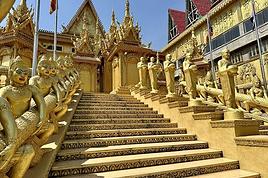
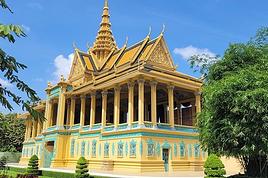
Après le texte, les photos !...elles sont super !...
Hommage rendu à cette communauté dont on n'avait jamais parlé dans VF!...
C'est fini l'etonnement de voir une mosquée au Cambodge !...Eh oui !😏😏
Un des axes de reflexion sur : integration -exclusion pourrait etre sur le principe (qui s'est opere de maniere identique) de "conversion" a la religion musulmane ou au boudhisme : la persistance du substrat initial c'est a dire l'animisme comme lien fondamental de l'homme au monde qui l'entoure...
Après le texte, les photos !...elles sont super !...
Hommage rendu à cette communauté dont on n'avait jamais parlé dans VF!...
C'est fini l'etonnement de voir une mosquée au Cambodge !...Eh oui !😏😏
Un des axes de reflexion sur : integration -exclusion pourrait etre sur le principe (qui s'est opere de maniere identique) de "conversion" a la religion musulmane ou au boudhisme : la persistance du substrat initial c'est a dire l'animisme comme lien fondamental de l'homme au monde qui l'entoure...
BY!
Je comprends, mais l'animisme est encore bien présent et coexiste avec ces 2 religions, c'est une "soft" conversion, rien à voir avec les persécutions sur d'autres continents au nom de la religion.
Merci pour ces infos.
Hello everyone! I’m heading off solo in February and wanted to share my rough itinerary with you. Does this sound doable?
PS: I’m not really into beaches.
D1 Departure on February 17, 2027
D2 Arrival in Kuala Lumpur – stroll through Chinatown and visit the Petronas Towers
D3: Kuala Lumpur – Chow Kit Market, Batu Caves, Little India, Bukit Bintang downtown area
D4: Early morning bus to Malacca. Explore Malacca in the afternoon and evening
D5: Another 2–3 hours in Malacca in the morning, then bus back to Kuala Lumpur. Merdeka Square area. Stay in Chinatown
D6: Bus trip to Kuala Tahan. Night tour
D7: Morning – canopy walk and Bukit Terisek hike. Afternoon – off to Lata Berkoh
D8 & D9: 2-day jungle trek in Taman Negara National Park
D10: Head to Cameron Highlands
D11: Morning hike through the plantations. Afternoon still to be decided
D12: Morning – excursion to Mossy Forest and Sungei Plantation. Afternoon bus to Ipoh
D13: Morning – Mirror Lake / Sam Poh Temple area. Afternoon – explore downtown Ipoh
D14: Morning train to Penang. Afternoon – wander around Georgetown
D15: Morning – Penang Hill and Keh Loh Temple. Afternoon – Georgetown
D16: Bus to Butterfly Garden and Spice Garden. Late afternoon – Burmese and Thai temples
D17: Morning flight to Singapore. Afternoon – Chinatown and Marina Bay tour
D18: Morning – Gardens by the Bay area. Afternoon – Boat Quay, Clarke Quay, Kampong Glam
D19: Morning – The Ridges area and Botanical Garden. Afternoon – Little India, then back to Chinatown before 11:15 PM return flight
D20: Morning arrival
Has anyone traveled with the Laos travel agency ADV ?
I’m planning a trip to Laos and have received several quotes. Among them, this agency’s seem very reasonable, and so far, the interactions have been positive.
I’ve found a few positive reviews online, but I’d love to hear from travelers who’ve actually booked with them: how’s the organization, guide quality, accommodations, on-the-ground responsiveness, etc.
Thanks for sharing your experiences!
First stop on our discovery of the peninsula: Amphawa. It’s our first night in Thailand (we arrived at Suvarnabhumi at 8:50 AM).
Our initial plan was to explore the area before heading further south. The Mae Klong Railway Market is tempting... but what else is there to do????
We’ll be there on a Wednesday, and from what I’ve read on the forum, some say there’s absolutely nothing to do during the week—no floating market, barely any shops open, no restaurants, etc.
Others, though, say the place is actually more charming without the weekend crowds.
Could you share your thoughts? Missing the floating market is one thing, but if it’s really a ghost town on Wednesdays, I might just drop our bags somewhere else.
Amphawa seemed like a good first stop, just 1.5 hours from the airport, but I’d still like to settle somewhere a bit lively for our first evening.
We’ll be there at the end of October.
Thanks!
Hi,
I wanted to visit the plantations in the morning with GetYourGuide or by just showing up.
How much time should I really plan for?
I’d like to catch either the 3 PM or 5 PM bus back to KL.
Thanks
Hi,
I wanted to get some info about the cable car and the bridge—I see lots of different options...
How much time should we allow for these two activities? If we arrive around 4 PM, will we have enough time to visit without rushing?
Thanks
Hi there,
I didn’t plan to return to Thailand this year, but my health conditions mean it’ll be the best place for me to stay between two trips to India. The tourism setup there is so well-organized that it’s the most "comfortable" country for a short visit. Thailand feels too sanitized for my taste, and there’s too much religion, Buddha, and the King, but it’s still the best option given how my health has been evolving. I’d considered two weeks in ThaTon for hiking, but I got too sick from the burn-offs during my trips to the mountains around Chiang Rai. So I’m not sure where to go this year. Definitely not the sea, touristy spots, or the mountains with burn-offs...
Hi,
On September 1st, we're heading to Kalimantan for six weeks, probably from Pontianak to the Derawan Islands.
I've scoured this site, which is usually my go-to 😉, and others like VoyageForum, but recent info is pretty scarce.
I'd love any tips on places you've visited—our itinerary is still a work in progress.
We're two couples traveling with backpacks, using buses, boats, guesthouses, and homestays.
Thanks in advance!
Hi fellow travelers,
First trip to Vietnam.
We’ll be arriving in Ho Chi Minh City during Tet.
Is it complicated to find accommodation and get around during this period?
Any tips would be welcome.
Thanks for your replies.
Hi! I’d like to split my trip into two parts: 15 days in Phuket and 15 days in Krabi. Do you know if I can rent a car and drop it off in Krabi when I fly back to France?
Thanks for your feedback!
Have a great Sunday!
Martine
Hello,
After 1 night in Khao Sok, I’d like to find a 2 Days 1 Night package on the lake.
After reading a lot, I decided to "break the bank" and treat ourselves to a private tour—mainly to avoid the crowds.
But after contacting several operators, they offer "private tours" that are very expensive (around 700 €), yet in the details, the boats can only leave from the pier at 10 AM like everyone else. (I was hoping to leave much earlier.) The morning program is the same for everyone too (private or not). They drop us off at noon at our floating hotel (I’d chosen Phupha Waree). Free afternoon (swimming or kayaking in front of the hotel). We head back by boat for a 1-hour sunset ride. And the next morning, we leave the hotel at 8 AM to be at the pier by 9:30 AM at the latest—end of the trip.
So basically, we’re paying a lot for a private tour just to do the same thing as everyone else at the same time.
Or maybe I just had bad luck in my search.
I contacted Panida Ladi, who’s very popular on forums. We’d agreed on a private tour that matched my request (departure from the pier at 8 AM, very personalized itinerary). We settled on the itinerary and price, she asked for a Wise transfer for a 30% deposit, confirmed receipt of the deposit. Then 30 minutes later, she messaged me to say she was canceling everything because it was impossible to do the requested tour—and promised a quick refund of my deposit.
So here’s my question: Who’s done a *real* private tour on this lake? Who can recommend a reliable agency? Is it even really possible to do a private tour here?
I’m searching for a real gem for my 3rd stay in Koh Lanta: a lovely, high-quality hotel right by an easily accessible beach in a lively spot.
If you know of anything that fits what I’m looking for and want to share, don’t hesitate!
Hi, is anyone there in Flores right now? According to some websites, everything is closed and the situation is tough. But our guide says it's fine. Who should we believe? We're supposed to leave on September 2nd. Thanks to anyone in Flores at the moment!
Hi dear community,
I'm planning to visit Cambodia this winter, right after Christmas, for my first solo trip and my first trip to Asia. For two weeks (yes, I know it's short, but I really can't do more...). I have two main desires: Siem Reap and the countryside, the villages, the Mekong...
What do you think of this itinerary? Arrival in Siem Reap, departure from Phnom Penh.
SR: 5 days (1 day for arrival, 3 for the temples, 1 for the lake and its villages)
Kratie (stop on the way to Mondolkiri): 3 days (1 day of travel, 2 days there)
Mondolkiri/Sen Monorom: 4 days (1 day of travel, 1 day there, 2 days of treks)
PP: 3 days (1 day of travel, 2 days of sightseeing)
I think I need to cut one day somewhere if I travel from Saturday to Saturday or Sunday to Sunday. In Kratie, maybe? Or in PP? And I'll miss the boat trip that everyone recommends (SR-Battambang), but I don't see where to fit it in. Unless I do a PP-PP loop starting in the east, skip Kratie or just stay one night, then SR, then PP.
In my timing, Mondolkiri seems closer than Ratanakiri, which also tempted me a lot! Will it be too complicated alone? I'm thinking of using local guides or a small local agency for a nature and village getaway.
I've read that Siem Reap is very crowded between Christmas and New Year's. I could also do the circuit in the opposite direction. But I thought it would be easier to get familiar with the country by arriving in a touristy area—I might be wrong...
Thanks for your advice and opinions!
Hi everyone.
I’m planning my trip, and based on all the posts I’ve read, this country is amazing.
Of course, I’ve got a ton of questions for you.
Here’s a possible itinerary: Vientiane - Vang Vieng - Phonsavan - Sam Neua - Nong Khiaw + villages - Phongsali - Luang Namtha and the area - Udomxai - Huay Xai - Luang Prabang and back to Vientiane.
What do you think?
We’re planning to prioritize local transport—is it possible to do this loop?
We’d also love to go kayaking, but I’m not sure if the season’s right or where the best spot is.
For trekking—I read that Phongsali is the most authentic spot to visit villages and see wildlife. Do you know of a reliable agency and a guesthouse with reasonable prices?
Is it worth taking a slow boat for a stretch on the Mekong, and if so, which route?
For accommodations, is it better to book through Booking.com and Agoda or look when we arrive?
Are mosquitoes bad in Laos, and should we take malaria prophylaxis?
What’s the average daily budget (accommodation, food, visits)?
Is renting scooters a good option for exploring towns, and if so, which ones?
From what I’ve read, it’s best to carry cash—euros or dollars? Is it risky to walk around with that much cash?
I’ve still got tons of questions. Thanks to anyone who can help, and I’m open to all tips, info, etc.
Thanks again
Hi there,
I’m planning a trip to Vietnam in February, specifically Da Nang and Hoi An.
Does anyone know a French-speaking guide in the area?
Thanks for your help
Hi there,
I’m planning a family trip (my wife and I, both 47, and our two sons, aged 5 and 12) to Malaysia for the last week of June and the first two weeks of July 2027.
We used to love road trips as a couple, then as a trio, but since our second child arrived, we’ve taken a break with "camping village" style trips.
Now feels like the right time to get back to our old habits, while adjusting the pace for the kids.
We’re craving Asia. We’ve been lucky enough to visit Thailand, Indonesia (Bali and Lombok), and Sri Lanka before.
Friends have raved about Malaysia, so we’re definitely tempted.
For those who know and love Malaysia, what would be a good itinerary starting from Kuala Lumpur, with a maximum of 3-4 stops? We’d like a mix of culture, nature, and relaxation (just to clarify, we’re not big beach fans). All of this without rushing, of course.
Hello,
We’re a family of four with two teens aged 16 and 18. We’re heading to Thailand this summer. We’ll arrive in Bangkok and plan to take a flight to Luang Prabang.
I’ve seen there are some great visits and excursions to do (temples, markets, waterfalls) and maybe even venture a bit north to places like Nong Khiaw, Muang Xay, Muang Ngoy, or Oudom Xay.
But I’ve also heard about the Bokeo region with the Gibbon Experience.
Since we won’t be able to do everything, I’d love to hear about your experiences, impressions, and advice on the two options I’m considering, especially since we’ll be meeting family in Chiang Mai, Thailand, afterward.
Option 1: A loop from Luang Prabang heading slightly north, then a flight from Luang Prabang to Chiang Mai.
Option 2: A few days in Luang Prabang, exploring within a few dozen kilometers around, then heading to Bokeo province for the 2-day/1-night Gibbon Experience. For this option, I saw on Rome2Rio that it’s possible to book a ferry trip on the Mekong from Luang Prabang to Huay Xay—they mention about 8 hours. But is that realistic? What type of boat is it?
Then, to get to Chiang Mai, there aren’t many options—bus or minivan—but how does crossing the border work?
Finally, for those of you who’ve been to Laos in August, what was the weather like?
We’ve already visited Thailand, Vietnam, and Cambodia during the same period over the past four years and weren’t really bothered by bad weather.
I’m starting a discussion about guides in the Mekong Delta because we’ve just finished our trip in this region and had a hard time finding a French-speaking guide. We had Thanh—she speaks French really well and travels all over the delta region, including Ho Chi Minh City. She’s super friendly and flexible. I recommend her wholeheartedly. If it can help someone...
Feel free to contact us for her number.
Hi everyone,
I couldn’t find any recent info on Kuching.
Can anyone recommend a hotel or guesthouse for under 100 RM that’s nice and affordable? No dorms, please.
Also, does it rain a lot in November, and is it still worth visiting Semenggoh or Bako?
We’ll be arriving in Phnom Penh this coming January and we’re thinking of starting our trip with a stop in Kampong Cham, then Kratie.
After Kratie, we’re considering heading toward Siem Reap with a stop in Kampong Thom.
That said, I’m not really sure how long the Kratie–Kampong Thom journey might take or how complicated it is.
Does this stop on the way to Siem Reap seem like a good idea to you?
If we don’t visit the Sambor Prei Kuk site, are there still any walks or sights worth checking out in Kampong Thom?
Silly question—backpack or hard-shell suitcase for the Sepilok, Kinabatangan, Tioman, KL trip?
I’m struggling to fit all my son’s and my stuff into the 70L backpack... and I’m thinking a suitcase would be easier, but I’m not sure if it’ll work for getting around.
After a stay on Koh Phayam this coming November, I’d like to spend 2 or 3 days on Koh Phra Thong before heading further south.
Do you think it’s doable to leave Koh Phayam early enough to catch the 10 AM boat from Khura Buri to Koh Phra Thong? The next one isn’t until 4 PM, which would cost me a whole day.
I’m planning a trip to Indonesia, specifically Sulawesi and Java, in September for 10 days.
I don’t know this part of the world at all—any advice is welcome!
I’ll be traveling solo and would also love tips on meeting other travelers or locals.
Hello everyone,
Not long ago, I used to travel as a couple, but my husband has since passed away, and I’ve decided to set off again. The trip I took to Cambodia in January 2025 did me a world of good.
I’m now considering Thailand, a destination we never included in our plans because even 15 years ago, people said it was too touristy. Still, I’m thinking about the itinerary below, but I don’t feel up to arranging buses, trains, or guides on my own while I’m there. I’m looking for one or more drivers and have been in touch with an agency, but their offers are just copy-paste group tours that I don’t want.
So, if you have any contacts, experiences, or advice, I’d be so grateful if you’d share them with me. Here’s my rough plan:
Arrival in Bangkok
Ayutthaya (2 nights)
Kanchanaburi (2 or 3 nights)
Sangkhlaburi/Sai Yok (3 nights)
Sukhothai (2 nights)
Lampang (I’ve planned 3 nights, but that might be a bit much—it depends on what time I arrive in the city)
Chiang Mai
Chiang Dao
Pai
Chiang Rai
I was thinking about the Mae Hong Son loop—thoughts?
What do you think about staying overnight at the Golden Triangle?
When I look online, of course, I can find agencies that organize tours to national parks, etc.
I’m retired but in great physical shape. I’d rather go hiking than sit in hot springs with crowds of tourists who’ve all arranged meet-ups. I don’t want to spend a day at an elephant camp, and I don’t want to visit Karen villages.
I’d love to hear your advice.
Thank you all,
Hi everyone,
Could you share your thoughts on my 3-week itinerary?
We’re a small group (family + friends) of 12 people, planning to leave around January 21, 2027.
Here’s my itinerary:
3 nights in Bangkok
4 nights in Chiang Mai
3 nights on Koh Samui
3 nights on Koh Phangan
4 nights in Krabi
4 nights in Phuket
I’m also open to any great tips you might have...
Thanks, everyone! Alain.
Hi there,
We’re planning a 3-week family trip next summer with our three kids, who’ll be 8, 8, and 7 years old.
After some research, we’re leaning toward Malaysia to combine nature/forests and paradise beaches. The idea is to introduce our kids to the country’s culture, nature, and wildlife.
We want a great trip but without splurging on luxury options like high-end lodges and resorts. We’re looking for comfort with a touch of authenticity—basically, a good middle ground.
I’ve started putting together an itinerary and would love your expert advice and tips to help us build this amazing trip with our little ones.
Day 1: Departure from France
Day 2: Kuala Lumpur
Stay at a hotel near the airport or KL Sentral.
Just one night.
Day 3: Morning flight to Sandakan (Borneo).
Stay in Sepilok
Day 4: Sepilok:
* Orangutan Center
* Malayan Sun Bear Center
* Rainforest Discovery Centre
Day 5: Depart for Kinabatangan.
Boat safari in the late afternoon.
Day 6: Sunrise safari.
Jungle walk.
Evening safari.
Day 7: Final safari.
Return to Sandakan.
Flight to Kuala Lumpur, then to Kota Bharu (or overnight transit depending on schedules).
Day 8: Transfer to the port.
Boat to the Perhentian Islands.
Days 9 to 13: Perhentian Besar
5 full days.
* Snorkeling
* Hiking
* Turtle watching
* Wild beaches
* Relaxation
Day 14: Return to the mainland.
Bus or private car to Taman Negara.
Summer seems to be the best time weather-wise for Bali.
And since summer’s when we can take a long trip, let’s go for Bali... even though we know it’ll be *packed* with people!
So we’ll steer clear of the island’s south...
Our current plan (19 days on the ground, 7 stops):
- 4 Nights (3 days) in Ubud
2 days for rice terraces / activities (Tegallalang, Campuhan Ridge, Monkey Forest, Bird Park, coffee plantation, market (?), dance "pestacle," cooking class and/or spa)
1 day with a driver for the Temples (Pura Gunung Kawi, Tirta Empul Spring, Pura Mengening, Goa Gajah...)
- 2 nights in Sidemen (1 day for Pura Kehen + Batur Caldera + Pura Besakih and 1 day to relax in the rice terraces)
- 3 nights on Gili Meno (Rest and beaches) from Padangbai
- 2 nights in Amed (1 day from Padangbai with the Abang rice terrace and Tirta Gangga baths, and the next day a boat tour in Amed)
- 4 nights in Pemuteran (1 day for transfer and rest, 1 day to visit Kawah Ijen, and 2 days of snorkeling at Menjangan Island)
- 2 nights in Munduk (1 day with the Dayang rice terrace and the 3-waterfall hike, 1 day at Pura Ulun Danu Bratan)
- 2 nights in Jatiluwih (1 day in the rice terraces, and on the last day, we’ll stop by Pura Taman Ayun in Mengwi and Pura Tanah Lot before catching our red-eye flight).
Accommodations in homestays or hotels.
Transportation to be arranged on-site with the lodgings (?)
Boat to Gili Meno to book in advance (?)
Kawah Ijen excursion to plan ahead (?)—check with the homestay (?)
Thanks for your thoughts/comments to help us explore this destination...
After reading and researching, we're planning the following stops in Cambodia in January 2027:
- Phnom Penh
- Kampong Cham
- Kratie
- Siem Reap
- Battambang
- Kampot (round trip)
I'm wondering about the direction of these stops, which could also influence our international flights.
Either a round trip from Phnom Penh in the order above.
Or landing in Siem Reap with the following order:
This second option would save us the Battambang - PP - Kampot trip but means doing a round trip to Battambang from Siem Reap and placing the "highlight of the trip" (Angkor) at the beginning of our stay.