je dois repartir vers paris via le train tgv atlantique. je me trouve actuellement près de Royan.
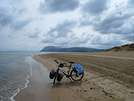
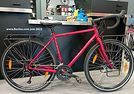
j'ai un nouveau velo ! pas recent, mais un vélo qui me permet enfin de ... faire du vélo (pour ceux qui me connaissent) !
c'est à dire qu'il a des developpements "potables", contrairement à l'ancien.
ce velo, je l'ai recuperé sur Royan où je suis venu passer quelques jours chez des amis... maintenant il s'agit de rentrer sur Paris, mais ce fichu tgv atlantique n'accepte pas le velos ! sauf demontés et emballés. ou alors en train de nuit au depart du terminus (hendaye) ... ou alors dans des trains moins rapides seulement ... y'en a pas en cette saison.
il paraitrait qu il faut le demonter et le mettre dans une housse !
j'ai pas envie d'acheter une housse. quelqu-un a t il déjà essayer d'emballer le velo dans du fil alimentaire ?
j ai une idée : j'avais vu des gens emballer des caisses de produits sur des palettes ! ça le fait ! en fait ce qui se passe c'est qu'il faut tourner autour de l'objet à emballer avec le/les rouleaux de film plastique !
sinon il y a aussi le papier bulle. j'ais lu quelque part sur le web que quelqu'un avait emballé son velo dans papier bulle pour prendre un avion.
pensez-vous que l'on m'empechera de monter dans le train si je ne le met pas dans une house ?
quelqu un a t il une expérience ?
c'est hyper casse-pied cette histoire de demontage ! il faut demonter les gardes-boues aussi. les pedales ... avoir les outils (je les ait pas ici)
Pas évident en effet de voyager avec sa fidèle monture...tu as aussi la possibilité de le faire embarquer comme "colis extérieur", un peu comme du fret.
Là, il ne voyage pas avec toi mais tu le retrouves à la gare de destination avec un délai raisonnable ( le lendemain si je me souviens bien).
A l'époque, ça coûtait 90 francs...
Renseignes toi auprès de nos amis du de la senecefe 😛
il va y avoir d des billets à -50 % sur le site de la sncf !
pour ceux qui ne sauraient pas. c'est tous les lundi à minuit. malheureusement ils proposent maintenant de plus en plus de billets en primiere classe. c'est interressant que pour des aller simples en général... mas bon, ça peut servir.
> cliquez sur 'offres de derniere minute' ->
j'ai moi aussi eu la même experience a la gare de marseille le controleur ne voulait pas que je monte dans le train car il n'accepte pas les velos. j'ai continuer d'avancer puis j'ai mis mon velo dans les cassiers a bagages un peu galére car le velo depasse est puis c'est passer. mais bon c'est vrai que pour les autres passager c'est un peu chiant mais je n'avait pas le choix et puis au prix du billet.
Alors voilà : quand je suis monté dans le tgv à Angoulême – en retard de 1h15 because mauvaises conditions climatiques actuelles, neige, etc. - le jeune contrôleur s'est pointé de suite un peu speedé pour s'enquérir de ce que contenait mon emballage.
je lui ai dit " un vélo emballé et demonté ". (roue avant, pedales, guidon pivoté et descendu, ainsi que la selle).
ce tgv n'accepte pas les vélos, il y a des tgv qui les acceptent, d'autres pas " me retorqua -t-il immediatement.
je me suis renseigné, on m’as dit que s’il était démonté et emballé y’avait pas de problèmes.
Non !
leger malaise.
moi :
en cette saison il n’y a AUCUN tgv qui prennne les velos (sauf un train de nuit hebdo hendaye-paris et inversement !)
apres m’avoir fait sentir un peu que c’était une tolérance de sa part donc, il me suggerait energiquement de deplacer quelques bagages se trouvant en bas, vers la grille au dessus, dans l’espace comprenant 3 niveaux dans le couloir, et de placer ensuite mon velo dans la longueur, plaqué avec un tendeur. (" puisque je vois que vous avez un tendeur… ") ... et de laisser tomber les bla blas aussi sous entendu. Pas tres agréable comme echange donc.
Donc -> Mes humbles CONSEILS, si vous devez vivre la même expérience :
1 Demontez bien tout comme indiqué plus haut.
Faites gaffe aux pédales : point sensible.
Les contrôleurs craignent tout baggages qui pourraient provoquer un accident quelconque. c'est leur responsabilité. Que les gens s’accrochent en passant, etc.
2 - essayez de ne pas faire un emballage trop moche. ça peut aider.
3 -je me suis inspiré de récits sur le web - lien indiqué par Roucky plus haut:
J’ai utilisé un bâche de jardin bleu de 2 m par 3 . c’est tout simple.
+ un rouleau d’adhesif large un peu costauds.
+ 2 petits tendeurs
+ 1 tendeur long (pour arrimer - à l’horizontale - ou bien accrocher - à la verticale - le vélo à une grille)
j’ai surveiller mon vélo à chaque arrêt du train. aussi.
La veille du départ j’ai donc plié la bâche dans le sens le plus long et j’ai ‘scotché’ avec l’adhesif une petite largeur et uniquement celle-là.
J’ai obtenu une sorte d’enveloppe longue de 2m par 1, 5 m, avec deux ouvertures.. impec pour y mettre le velo sur le quai, 30 minutes au moins avant le départ – faites gaffe, ça passe vite surtout si on manque de sommeil - roue avant démontée et plaquée au milieu par des tendeurs. FAUT TESTER la veille c’est indispensable.
J’ai d’ailleurs dû passer chez un velociste pour qu'il m'explique comment on demonte les pédales et aussi qu’il les desserre et les remette moins serrées. Impossible avec "courte" clé (plate) tellement c’était serré.
pédale droite : sens habituel de vissage/dévisssage.
pédale gauche : sens inversés
il faut donc se trimbaler clés Allen et plate pour lles pedales + la bache, etc., etc.
et surtout à l’arrivée à Montparnasse on pas tres frais en général. c’est donc un peu pénible de devoir remonter le vélo sur un quai balayé par un des courants d’air glaciaux . les autres sont egalement groggys : une femme a failli m’écraser le talon avec un chariot ! méfiance.
derniere remarque :
il semble donc que le controleur puisse eventuellement vous refuser la montée dans le train dans certains cas malgré tous vos efforts. alors je pense que si l'ont prevoit le passage d'un second tgv apres ça donne une solution de secours au pire.
consulte le site de la Fubicy :
http://fubicy.org et rubrique train + vélo
Le vélo et le TGV atlantique c'est la galère !
Il faut au minimum démonter les roues et si tu peux les pédales et tourner le guidon et en théorie le mettre dans une housse. La solution du plastique à bulles est intéressantes pas trop ruineux mais par contre il faut bien l'entourer de plastique et en particulier les parties fragiles comme le dérailleur. Par dessus le plastique à bulles tu l'emballes dans du plastique noir de jardin par exemple pour éviter qu'un contrôileur emmerdant ne voit que c'est un vélo ! Une fois je revenais de Paris avec mon Brompton ( vélo pliant qui rentre dans le casier à bagage standard du TGV ) je n'avais pas la housse, et bien le contrôleur m'a fait une réflexion que c'était dangereux pour les autres voyageurs !
Tu mets le tout dans un des grands casiers à bagages en bout de voiture. Et tu surveilles aux arrêts intermédiares ( on ne sait jamais )
Bonne chance !
Pas évident effectivement, mais le principal est que tu aies réussi...
C'est bien dommage cela dit que la SNCF n'adopte pas une politique plus souple vis à vis des cyclistes...Quand serons-nous assez puissants pour faire fléchir les grandes institutions?
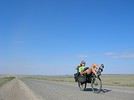
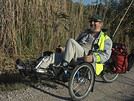
De retour à l’instant d’une randonnée cyclotouriste jusqu’aux rivages de la Grande Bleue, je vous fais part toutes affaires cessantes de la façon dont j’ai réglé l’épineux sujet du transport d’un vélo récliné par voie ferroviaire. Voici donc :
1 - Les données du problo
Dans la perspective d’une randonnée dans le Sud du pays (un parcours initiatique placé sous le double signe de l’ascèse et du dépouillement), il s’agissait d’assurer le pré acheminement de ma bicyclette sur la ligne Paris / Lyon en train, c'est-à-dire en TGV de type duplex, dans de bonnes conditions de sécurité pour les autres passagers ainsi que le matériel.
Pour autant, la collecte d’informations précises ne fut pas chose aisée :
- les agents oeuvrant au guichet de la Gare de Lyon n’étaient pas en mesure de me préciser si le duplex disposerait d’un compartiment réservé aux vélos. Ils ignoraient jusqu’à l’existence d’un correspondant train/vélo, pourtant affecté à chaque secteur du réseau ferré.
- la Sernam m’informait de ce qu’elle n’assurait pas le transport des vélos exotiques, tels tandems et V.P.H., au motif qu’ils ne sont pas adaptés à leurs cartons normalisés.
- contactée, la Fubicy.org ne m’en apprit guère plus, mais m’invita à lui faire part de mon expérience.
- enfin, la consultation des échanges sur les forums de voyages – et notamment celui-ci – me laissait très irrésolu, certains rédacteurs prédisant la chose à peu près irréalisable.
Plus que tout, je redoutais qu’un contrôleur vétilleux ne me refusât autoritairement l’accès au train, because les dimensions supérieures (et comment !) aux normes admises, soient 120 cm, brisant là mon projet de rando.
On le constate, il n’est guère aisé de militer pour la cyclodiversité.
2 - La méthode à pépère
Il convenait donc de préparer minutieusement ce transport, et en un mot d’anticiper les difficultés qui étaient susceptibles de se manifester.
Ainsi, je réservais 40 jours à l’avance des billets Prem’s sur le plus matinal des TGV, dans l’espoir qu’il ne serait pas bondé.
Parallèlement, je procédais à l’acquisition de matériel d’emballage : outre une paire de ciseaux, de sacs poub’s colorés et de grande taille, de rouleaux de ruban adhésif de largeurs variées, d’un tendeur avec crochets, j’achetais une vaste pièce de toile viscose (7 m) destinée à emballer m’sieur le Baron (pour les détails : voir les boutiques d’étoffes du quartier Montmartre – 1m linéaire par 140 cm de largeur à 1 euro). J’emballais minutieusement la poutre maîtresse du low racer (tout ce que je parviens à emballer désormais, c’est un cadre de vélo, on est tombé bien bas bien bas), puis les roues, et consignais dans un robuste sac à dos : les sacoches, le porte-bagages, enfin le siège et son coussin léopard (superbe !).
Toutes ces opérations supposent un brin d’organisation, quelques gouttes d’huile de coude et accessoirement une bordée de juron quand, comme ma pomme, on a deux mains gauches avec rien que des pouces !
3 - In situ
A l’heure du berger, chargé comme une mule, je gagne les rames du métropolitain puis les quais de la gare de Lyon. J’accède prestement au second étage du TGV duplex. Je range le sac à dos et les roues dans les compartiments idoines, et fixe le cadre emballé aux barreaux de la grille composant les étagères (en oblique, en raison de la dimension) au moyen d’un tendeur (love me tendeur).
Résultat : les contrôleurs, aussi bien à l’aller qu’au retour (Nîmes / Paris), progressant dans la voiture en binôme ou trinôme, ont traité par le mépris mon insolite emballage, ne distinguant pas le beau vélo (de Ravel) ressemblant en l’occurrence davantage à une statue d’albâtre.
En marge de ces précautions, je conseille – mais cela va de soi – d’adopter une attitude irréprochable vis à vis des contrôleurs : billets compostés ou pièce d’identité s’il s’agit d’un billet Prem’s, courtoisie, éviter les pinceaux sur les banquettes… en un mot, de ne pas tendre le bâton pour se faire battre.
Si c’était à refaire :
Il conviendrait de prévoir une bandoulière aux fins de transporter le cadre dans des conditions de confort acceptables
Il faudrait également étiqueter les bagages, formalité désormais exigée par la S.N.C.F.
Pour conclure, il est bien évident que ma réflexion ne prétend pas être exhaustive et que ma méthode - un brin lourde, je le concède bien volontiers - est susceptible d’amélioration. Toute suggestion judicieuse sera la bienvenue.
Voyager à vélo › France › Paris - Île de France / Sud-Ouest · 10 replies
Comme indiqué dans le titre, la ligne Paris Perpignan ne prend aucun vélo, cette ligne vers le sud ou le nord selon d'où on vient est une catastrophe pour le…
Je me demandais comment cela se passait avec les vélos dans les TER et TGV Français Démonté et dans un sac vélo c gratuit? Y a t'il des cas particuliers qui…
Quelle n'a pas été ma surprise en voulant réserver un billet Paris/... en TGV avec vélo non démonté quand j'ai constaté que les vélos n'étaient plus acceptés…
En mars dernier, constatant qu'on ne pouvait plus emporter un vélo non démonté pour aller dans l'Est, j'avais sollicité ma députée pour qu'elle soumette mes…
Voyager à vélo › France › Paris - Île de France · 125 replies
Mauvaise nouvelle les vélos non démontés ne sont plus admis dans les TGV entre Paris et les principales villes du grand Est.Cela devient très difficile de…
Hi,
I need to arrive in Thessaloniki by bike at the end of September and I plan to head to Istanbul along the coast.
Could anyone help me pick the best route? Safety, difficulty.
Thanks in advance.
Marc
Hi everyone! Thanks for welcoming me to the forum :)
I’m preparing for a long trip heading to Nepal, with stops along the way depending on my mood, work needs, and the season. I cycle a lot, but this will be my first big touring adventure. I’d like to camp regularly to keep costs down, so I’ll be riding on all kinds of surfaces: smooth and rough roads, main highways and rocky paths to find my camping spots, flat terrain and the occasional steep slopes.
For my bike model, I’m prioritizing durability, versatility, and repairability. From that perspective, I prefer a steel frame and fork with rim brakes since I’m used to them. I’ve narrowed my choices down to four models:
- The VSF Fahrradmanufaktur T-700 LTD (1400 €): steel frame, aluminum fork, hydraulic rim brakes, 28" wheels, 40mm tires, 36 spokes (2 mm), lightweight rear rack (max 20 kg), no front rack included, smallest gear ratio of 0.72, weight of 13.9 kg.
- The VSF Fahrradmanufaktur TX-400 (2200 €): steel frame and fork, hydraulic rim brakes, 26" wheels, 50mm tires, 36 spokes (2.34 mm), front and rear racks included (40+18 kg), smallest gear ratio of 0.71, weight of 15.9 kg.
- The Genesis Tour de Fer 30 (2150 €): steel frame and fork, mechanical disc brakes, 28" wheels, 36 spokes, 40mm tires, front and rear racks included (27+10 kg), smallest gear ratio of 0.77, weight of 15.9 kg.
- The Rockrider ADTV 900 from Decathlon (1700 €): aluminum frame and fork, mechanical disc brakes, USB port, 28" wheels, 47mm tires, 28 spokes, front and rear racks included (40+20 kg), smallest gear ratio of 0.71, weight of 17.1 kg. This is the successor to the Riverside Touring 900, which was a hit.
I’ve got a few questions:
1/ Should I go for 26" or 28" wheels for my trip? 26" wheels seem better for rough terrain, but 28" wheels feel more comfortable on roads. I’ve also read that 26" tires/tubes are easier to find.
2/ Do you recommend a steel frame and fork over aluminum? I’m guessing a high-quality aluminum frame and fork would be better than a low-quality steel one, right?
3/ Regarding the smallest gear ratio, is 0.71 a good number for a loaded bike in the mountains?
4/ Finally, what do you think of these four models for my project? My heart leans toward the TX-400—it seems to combine the versatility and robustness I’m looking for. But the price difference with the T-700 LTD is making me think twice!
Thanks so much for reading and sharing your thoughts!
Hi,
what are the easiest ways to get back from Nordkapp without pedaling—
train, boat, or plane?
Has anyone already done this?
Thanks for sharing your tips!
17 days, 1,400 km, and 17,500 m of elevation gain cycling in northern Vietnam! 🇻🇳 🚴🇻🇳
From the misty Fansipan to the breathtaking landscapes of the Ha Giang Loop, from remote villages to vibrant markets...
I cycled through the north of the country, getting up close with its people—through mud, heat, endless mountain passes, and unforgettable encounters.
Most importantly, I discovered a Vietnam far different from the usual tourist circuits.
Join me on this adventure through a video that captures these 17 days of travel. :)
If Vietnam calls to you, come ride a stretch with me!
Hi,
can anyone give us some tips on how to get to North Cape from Lyon Gerland?
What’s the best route to join the EuroVelo 7?
How many kilometers is it from Lyon to North Cape via EuroVelo 7?
The best month to leave—we’re thinking early May.
Thanks for any advice!
Looking for a female travel companion for a cycling trip (arriving by plane in Porto Alegre, Brazil, and cycling toward Montevideo, Uruguay, returning by plane to France from Buenos Aires, Argentina) – 1,500 km
Hello everyone!
I’m planning a cycling trip across Brazil, Uruguay, and Argentina, with a departure set for late October, November, or December. I’m looking for a travel companion to share this long-distance adventure with.
Experience:
I already have solid experience in bicycle touring in Georgia, Kazakhstan, and Kyrgyzstan. Currently, I maintain excellent physical condition by cycling an average of 250 km over 3 days per week (4 hours a day at 20 km/h).
The trip & the pace:
Daily pace: Between 50 and 80 km per day, to make steady progress while taking time to explore.
Accommodation: Flexible and authentic. We’ll alternate between wild camping, campsites, Warmshowers, small guesthouses, and budget hotels depending on opportunities and the weather.
Looking forward to reading your message and planning this amazing journey together!
I’m planning to leave Nice for Toulouse around 10/15 and I’m looking for tips / great deals regarding:
- The route: I was thinking of taking Nice - Grasse - Draguignan - Salernes - Cadarache - Cavaillon - Arles, then the Camargue, Sète, and the Canal du Midi to Toulouse. The idea is to avoid high-traffic roads and too many steep climbs. Are there any spots to avoid or must-see stops? Since it’s been a while since I’ve been on the road, I was thinking that sleeping indoors might be preferable. If you have any budget-friendly accommodation suggestions along part of the route, don’t hesitate!
Thanks in advance, and if you’re in the area around that time, we could ride together... Ciao.
Another long-time dream of Claudio’s: the Petit Mont Cenis pass and the dam at the eponymous lake.
A place where many Italians, including my father, worked in the 1950s–60s.
Faverges → St-Michel-de-Maurienne → Lanslebourg → Petit Mont Cenis → return. 315 km, 3 days. Bivouac at St-Michel-de-M.
Brouter link
Leg One: Faverges → St-Michel-de-Maurienne
Leg Two: St-Michel → Lanslebourg → Mont Cenis Lake → St-Michel
Leg Three: St-Michel → Faverges
And it finally happened in August 2026: in the Maurienne Valley about the famous cycle route known as the V67
🇷🇼 Cycling in Rwanda: 4 episodes, an off-the-beaten-path adventure
After 3 weeks and nearly 1,200 km by bike across Rwanda, I made 4 videos to share this adventure in a different way: the landscapes, the encounters, the villages… but above all, all those incredible scenes of everyday life.
The 4 episodes are available here:
👉 https://www.youtube.com/playlist?list=PLGnfbxjccWAg
The 4th episode focuses on rural Rwandan life: simple, authentic, and sometimes surprising scenes that you only truly discover when you take the time to travel by bike.
If you have a few minutes, let yourself be transported to Rwanda…
Hi, I'm looking for info on cycling to Nordkapp via the EuroVelo 7. Has anyone done it already, and where’s the best place to start the EuroVelo 7?
Thanks
Hi,
We bought the MSR bike tent model (2-person + large awning that can fit 2 bikes) back in 2005. It’s served us really well, especially during a year-long trip in Africa. Now, one of the poles is broken, and we’d love to replace it since that’s the only issue with the tent—we still love it! The poles are 9.35 mm in diameter, with 8 sections of 49 cm and 2 sections of 28 cm. Total length when assembled: 416 cm. Actually, two large sections are broken: one straight and one curved. It’s a pain to find replacements since this model is no longer sold anywhere.
Would anyone have this model lying around unused and be willing to sell me a pole?
Hi everyone,
In early April, I’m redoing the Vélo Francette (La Rochelle to Ouistreham), and then I’d like to cycle along the Cotentin Peninsula (which I don’t know at all), follow the coast up to Cherbourg, and then head back down to at least Saint-Malo. I’d love to know if it’s pleasant for cycling—are the roads nice? Not too windy? What are the must-see spots? Any great campsites? All your tips and advice are more than welcome, and I thank you in advance.
Hi there,
I’m planning to bike to meet some friends in Côte d’Ivoire in early November.
I’ll be starting in Abidjan and heading to Abengourou, which is close to the Ghana border.
I’d like to take the trails. Does anyone have recent info on eastern Côte d’Ivoire?
Any tips, safety advice, or must-see stops? I’m open to all suggestions.
Thanks in advance for your help!
Fx
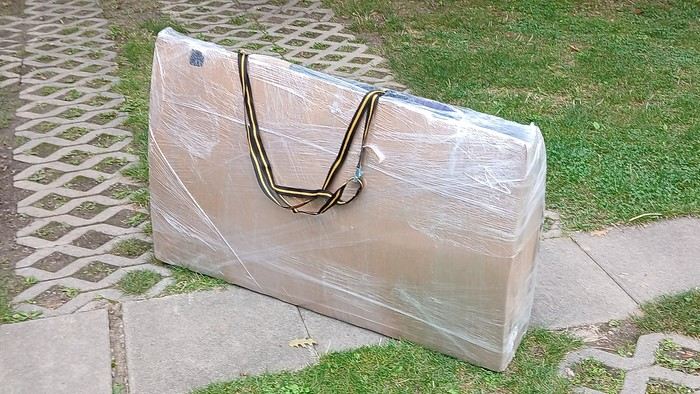
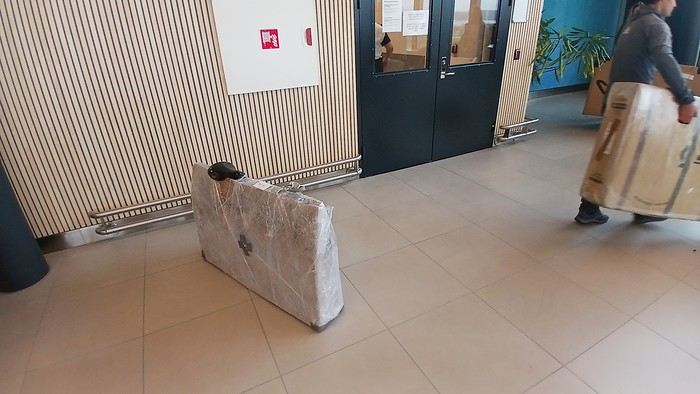
After testing it for three years across various modes of transport, I’m sharing this video of a bike packing case. It’s made from recycled cardboard and shrink-wrapped, with adjustable thickness and added bubble wrap depending on the level of protection you want.
Installing spacers at the fork and chainstays makes the packaging compact. With the fifteen-odd euros for shrink-wrapping at the airport, this case travels really well.
https://youtu.be/_GDJi-GqmkM
- Low bulk (1.10m x 0.70m x 0.25m for a large frame), it fits vertically in train luggage compartments and the total dimensions (x+y+z) don’t exceed 2.40m.
- Two carrying solutions for public transport and easy handling by airport staff (no more tears in the cardboard from openings).
- Discreet packaging when dealing with bus drivers and train conductors, as it looks like an ordinary parcel.
- No need to return to the starting point to retrieve the case from your outbound trip, which you’d otherwise have to store somewhere, or deal with a bulky cover to pack in your panniers.
- You can still check tire pressure through the plastic film without damaging the packaging too much.
Drawbacks: Around 3 hours for this lengthy and meticulous process—removing the wheels, pedals, handlebars, and derailleur without misaligning them, then securing all components to the frame.
If you get a chance to test it, send me your feedback for future improvements.
I just took a trip in Tunisia from Tozeur to Douz, skirting Chott el Jerid to the south. I’m back with the urge to keep going further south via the 4x4 tracks to connect Douz to Ksar Ghilane. Has anyone driven this route recently or explored southern Tunisia?
Thanks for your tips!
fix
😎Fellow traveling cyclists or not, all of you who love travel, the pleasure of physical effort, nature, beautiful machines, people with true passions they seek to fulfill, and who also enjoy reading great literature about all this—the *200* magazine is for you just as it is for me. I should mention I have no financial or other interest in this (in an era where we accuse our politicians of all sorts of vile interests, I prefer to take precautions). I’ve been subscribed since the beginning, and every three months, I get my 130 pages of dreams (the magazine just went from 110 to 130 pages).
It covers everything from the trans-America route to the TCR (Trans Continental Race) from Belgium to a small town in Turkey, with mind-blowing averages—4,000 km and 80,000 m of elevation gain in 8 days and 15 hours for the winner. Let that sink in, and all of it without assistance—accepting a patch could penalize you. There’s also a story about crossing Iran, encountering one of the world’s most welcoming populations, following in the footsteps of Nicolas Bouvier, as well as retirees leisurely traversing France. The common thread in all these stories? Beautiful writing. Take, for example, a stunning article: *"Passengers of the Cold: From Edinburgh to Thurso, at the very north of Scotland, 550 km of moors, coasts, and icy wind. In Thurso, the road ends at a quay, facing the Orkney Islands. We wanted a November trip, off-season. We wanted to surprise winter. Just before the snow."* A sublime piece on the experience of facing adversity and the chance encounters along the road and in the elements.
Before I embarked on my own bike trips, I dreamed a lot about them—from the Atacama to the Gobi, along the Mekong, and not forgetting France. And now, these 130 pages every quarter keep those dreamy vibes alive through stories written in the most beautiful prose.
I’ll stop here because it might sound like I’m advertising, but if you don’t know *200*, I invite you to discover it. It’ll give you wings for the most incredible challenges or simply reinforce your desire for slow rides with your eyes open to others and nature.
A little news to wrap up: Axel Carion and a friend just broke the record for crossing South America from Colombia to Ushuaia in 59 days. On its own, that doesn’t mean much, but I can’t help it—it makes me dream. You should see how he talks about it, the flashes of that wild nature he’s stored away: a snowstorm at Paso Jama and the surreal sight of the suddenly snow-covered Licancabur!
Luc
PS: The magazine is called *200* because a day’s ride starts at 200 km—well, I’ve never done a ride like that since my longest was 167 km (with 18 kg of luggage, mind you), but why not one day? The magazine will explain how to tackle your first 200, and then the question in conclusion: when will you do your first 300?😏
I’ve got my flight ticket sorted—departing in mid-November and returning in mid-March. I’ll arrive in Santiago and leave from Buenos Aires.
I’ve already been to southern Argentina, specifically Torres del Paine National Park, and I’d love to go back to do the full W trek (I only did the shorter version last time).
I also want to do some hiking and maybe even tackle a summit. I climb and occasionally do some mountaineering, so I’ll definitely be going with a guide.
I plan to start around Temuco in Chile, with the idea of heading toward the lakes, then taking the Carretera Austral.
I’m not sure if I’ll go all the way to Ushuaia—it’s supposed to not be *that* worth it, except for the bragging rights of saying you’ve been to the end of the world.
I saw there are lakes in Argentina too.
I don’t have a precise itinerary, but what I’d love is, once I reach the southernmost point of my trip, to take a mini-cruise to see some wildlife. Any tips for that?
What kind of sleeping bag did you take? Is a 0°C (32°F) one enough?
And one last question: white gas stove or can I get by with my gas stove?
I'm developing a free and open-source web app for planning walking and cycling trips (and even car trips). You can create a route by clicking directly on the map to add waypoints, and it can consist of multiple stages. The app provides tools to edit the stages and the overall route, and to display useful information (distances, altitudes, and elevation changes). A relief profile can be shown as a graph for a specific stage or the entire route.
Once the route is ready, it can be exported as a GPX file, which can then be used with a GPS or a mobile navigation app.
The app is built in JavaScript and runs entirely in the web browser. It uses the Leaflet library and several OpenStreetMap-based services. Initially developed for my personal needs (I enjoy hiking and cycle touring), I’d be happy to share it with anyone who might find it useful. It’s free to use, doesn’t require an account, and the source code is available.
hello fellow cycling enthusiasts
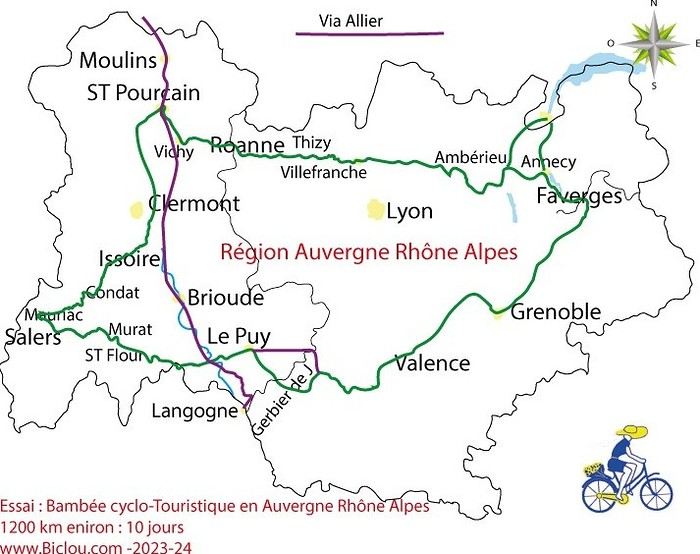
here’s a travel journal of the cycling tour through the Rhône-Alpes Auvergne region by Claudio
zouli
it was the plan
http://cbandiera.free.fr/parcours/auvergne-Ralpes/
the trip was completed
story being posted online soon
1100 km in 11 days
beautiful and varied regions
Hello,
We’d like to go on a 3- to 4-month bike trip starting in December, crossing from Assam (northeast India) to New Delhi via Nepal.
Are there routes with light traffic along the Brahmaputra and through Nepal?
We’re also looking for any info on accommodations, wild camping, local interactions, etc.
Thanks,
Michel
I’m planning to cycle from Morlaix to Brest (via Roscoff and the V45 coastal route). We’ll start riding on August 16th for 13 days (with stops for island visits, surfing, etc.). Is there a lot of traffic at this time of year? I’ve got two kids, 11 and 13, and we don’t like riding in the middle of cars (we’ve already done the Vélomaritime—Caen to Cherbourg—the Loire route from Orléans to Saumur, the Vélodyssée from Nantes to Royans, and the canals like the Nivernais and Bourgogne, where there were plenty of bike-only lanes, which isn’t the case on this route).
Thanks for your help if you’ve already done this route in late August!
Virginie
Hi there,
I’ve been road cycling for several years, and I’m about to switch to gravel in the next few days—I’m waiting for my bike, which should arrive this week.
I’m planning a bikepacking trip in a few weeks along the Véloroute V81, also known as the Vélosud, from Biarritz to Le Barcarès.
Has anyone here already done this route? Any info is welcome, whether it’s about the route itself, gear, or accommodation. I’ll prioritize staying with locals as much as possible. On that note, I just signed up for the brand-new site *Guidon et Couette* ((www.guidon-et-couette.fr)), which offers free accommodation between cyclists across the country, but there’s almost no one listed along my route!
Thanks in advance.
Laurent.
Hi there, I’m planning a cross-Canada bike trip, and I’ve got a question that might seem silly, but could someone tell me how to pack a bike (in a box, with a fragile sticker... I don’t know) for a flight? Thanks in advance!
This summer, we’re planning to cycle along the EV 19 that follows the Meuse River from Langres all the way to Rotterdam.
My question is about getting back to Nantes.
Do any of you know what the best return option might be? I’d love to hear about your experiences.
I saw that FlixBus doesn’t take bikes.
By train, I think it’s possible but would involve multiple local trains.
We were also wondering if there’s a boat from Rotterdam to Saint-Nazaire that could take passengers with bikes.
Any tips or experiences you can share would be really helpful—thanks in advance!
Have a great evening
I’ve gotten used to crossing Europe by bus to return by bike.
It was really convenient to take the bike without having to disassemble it.
But FlixBus no longer accepts bikes...
What alternatives do you know about?
Thanks.
Hi there,
I’m planning to ride the Dutch section of the EuroVelo 19, from Maastricht to Rotterdam.
Since it’s too complicated to bring my bike on the train, I’m looking to rent one locally.
I’d love any tips or bike rental shop recommendations—I’m struggling to find options even in Rotterdam.
The plan is to rent in Rotterdam, take the train to Maastricht with the bike, then cycle back to Rotterdam.
Thanks in advance for any advice or suggestions!
Nath