Je suis un jeune homme de 21 passionné par les langues et fasciné par les langues slaves.
Je n'ai pas un sous et j'ai décidé de tout laisser et partir faire un tour dans les quelques pays slaves d'europe ne nécessitant ni passeport ni VISA.
Je partirai le sac sur le dos, seul, sans argent. Je prévois de commencer par la Pologne en Poméranie rencontrer les Cachoubes, en passant par l'Allemagne (escale en Lusace pour voir des Sorabes?), repartir pour la Republique tchèque pour y découvrir ses dialectes, puis Slovaquie et Serbie, Croatie.
Je favoriserai les moyennes villes, ne cherchant pas les beaux edifices où les endroits touristiques classiques, mais l'habitant serein, peut-être inhabitué des visites, rustique, véritable. En effet si je puis decouvrir, apprendre ou aider a la sauvegarde d'un parler, dialecte méconnu ou menacé, cela en ferait mon bonheur.
Auriez-vous conseils, avis ou avertissements à me faire part? Toutes astuces (déplacements, alimentation, lois insolites à connaître... etc) seront bienvenues! Merci!
salut tu as parfaitement raison car l'Europe de l'Est c'est précisément une mosaïque de peuples...
je connais la Roumanie, au nord-ouest vers Oradea et Cluj il y a des magyarophones ( d'ailleurs un ancienc collègue roumain savait parler le Hongrois)
Sinon je suis allé dans un village au centre de la Roumanie il y avait des germanophones, les maisons avaient une architecture différente ; je sais que certaines populations parlent un dialecte allemand.
En tout cas si tu t'intéresses un minimum à l'ethnologie la Roumanie est vraiment un pays intéressant.
Excepté l'ex Yougoslavie je ne pense pas que les autres pays d'Europe de l'est possèdent autant de peuples différents.
Avant toute autre chose : ni la Pologne, ni l'Allemagne, ni la République Tchèque, ni la Slovaquie, ni la Serbie ni la Croatie ne sont en Europe de l'est. Seule la Roumanie s'y trouve (et encore, on pourrait ergoter sur ce point). Les pays de la liste ci-dessus n'ont pas tous d'histoire commune ou de points de ressemblance; la République Tchèque est par exemple nettement plus proche de l'Allemagne ou de la France que de la Pologne, la Slovaquie n'a pas grand chose à voir avec la Croatie etc.
Je favoriserai les moyennes villes, ne cherchant pas les beaux edifices où les endroits touristiques classiques, mais l'habitant serein, peut-être inhabitué des visites, rustique, véritable.
Vous voulez dire quoi par "rustique" et "véritable" ???
En effet si je puis decouvrir, apprendre ou aider a la sauvegarde d'un parler, dialecte méconnu ou menacé, cela en ferait mon bonheur.
Apprenez donc les patois français, ce sont les langues les plus menacées d'Europe (la plupart ayant déjà disparu au profit du seul français standardisé) 😛.
Plus sérieusement, avez-vous une connaissance préalable et solide d'au moins une langue slave en plus, éventuellement, de l'allemand ou du russe ? Si ce n'est pas le cas, vous n'aurez quasiment aucune chance pour ne serait-ce que différencier le tchèque du polonais du sorabe du slovaque des dialectes silésiens et bohémiens etc. À Paris se trouve l'INALCO où beaucoup de ces langues sont enseignées à divers degrés, en plus de l'extraordinaire BULAC et de ses ressources linguistiques sans équivalent en France.
La pire erreur que puisse faire un ethnologue ou un linguiste est de se poser en "sauveur". Méfiez-vous de ce biais !
Qui veut chasser une migraine n'a qu'à boire toujours du bon
En ce qui concerne la Roumanie, je ne projète pas de m'y rendre, malgré les emprunts slaves, le roumain est une langue romane et s'écarte de mon objectif.
Les patois français m'interessent également mais je ne compte pas les apprendre pour le moment.
Pour moi, les pays de l'Est sont ceux que j'ai cité. N'étant pas spécialiste en géographie, excusez ces déclarations faussées, je parle bel et bien des pays slaves.
Effectivement, je parle assez bien russe, je sais que le tchèque et le slovaque sont proches, le polonais differe un peu mais je l'ai étudié, le bulgare analytique avec ses articles, comme le macédonien, et le serbe et croate, tchékavien, jekavien etc. Je souhaite decouvrir la forme parlée du tchèque qui diffère de la forme officielle écrite.
Quand je parle d'habitants véritables ou rustiques, ce sont generalement les individus qui êparlent dans leur dialecte, dans leur petite ville tranquile. J'imagine que ceux parlant un dialecte sont en dehors des grandes villes. Je n'ai qu'une idée imaginée car je ne suis jamais partis. Les Sorabes tentent de sauvegarder leur dialecte en les ensiegnant
En ce qui concerne la Roumanie, je ne projète pas de m'y rendre, malgré les emprunts slaves, le roumain est une langue romane et s'écarte de mon objectif.
1 apparemment ce que j'ai écris a été zappé ou alors c'est que je m'exprime mal
En Roumanie il y a des gens qui parlent d'autres langues comme un dialecte allemand ou le Hongrois...
2 tu as tort c'est un des rares pays à avoir conservé son patrimoine
De la Pologne je ne connais que Poznan où j'ai passé quelques jours mais je crains que ça ne soit trop "moderne" comme pays
Apprenez donc les patois français, ce sont les langues les plus menacées d'Europe (la plupart ayant déjà disparu au profit du seul français standardisé) 😛.
ok c'est une possibilité mais le problème c'est que concernant les patois français il doit certainement exister des tas de spécialistes en France qui sont des poids-lourds dans ce domaine à l'image d'Alain Rey qui est un linguiste .
Donc si je me spécialise dans les patois français , je ne vois pas ce que je vais apporter de plus et comment je vais faire avancer le schmilblick;
les grandes bibliothèques régionales doivent certainement regorger de livres traitant de ce domaine écrits par des personnes très pointues.Si je vais à la bibliothèque de Toulouse ou de Perpignan je suis persuadé que je vais trouver des tonnes de livre traitant de la langue d'Oc ou à Strasbourg des livres sur l'Alsacien..ou à Brest traitant du breton.
c'est comme si je voulais écrire un livre sur le Moyen-Age alors que des tas de personnes sont passées avant moi à ce sujet...
concernant la philo, les sciences humaines et l'ethnologie, on n'a rien inventé depuis la Grèce Antique et notamment depuis Platon ou Aristote..😉
ceci dit oui on peut s'initier aux patois pour la beauté de la chose..
Pour moi, les pays de l'Est sont ceux que j'ai cité. N'étant pas spécialiste en géographie, excusez ces déclarations faussées, je parle bel et bien des pays slaves.
Ah ben oui mais aussi, si vous commencez par ne pas placer les langues et les cultures dans un cadre et un contexte historique et géographique qui n'est pas le leur, ça risque de poser des problèmes ! L'Europe centrale, dont l'existence a été quelque peu oubliée par certains à cause des quelques décennies de "bloc de l'est", est un terme qui a tout son sens et qu'il ne faut pas confondre avec l'Europe de l'est ! La preuve, les langues slaves d'Europe centrale sont les langues slaves dites occidentales, alors que l'Europe de l'est ne comprend que les langues slaves dites orientales.
Je souhaite decouvrir la forme parlée du tchèque qui diffère de la forme officielle écrite.
Vous vous apercevrez rapidement que le travail de normalisation de la langue entrepris en France depuis maintenant plusieurs siècles n'a pas d'équivalent en Europe. Le tchèque écrit, par exemple, peut très bien s'accommoder des termes et formes moraves (bon, la langue officielle est bien sûr le tchèque de Bohême centrale).
J'imagine que ceux parlant un dialecte sont en dehors des grandes villes. Je n'ai qu'une idée imaginée car je ne suis jamais partis
Détrompez vous ! D'où vient l'argot sinon de Paris ? En République Tchèque, Ostrava est connue pour son parler très facilement identifiable et influencé du silésien, tout comme Ceske Budejovice ou les districts de Zlin et Olomouc ou même Prague etc. C'est presque comme au Royaume-Uni : l'origine géographique des uns et des autres est vite trahie par les accents, intonations, termes, formes grammaticales etc utilisés.
Qui veut chasser une migraine n'a qu'à boire toujours du bon
ok c'est une possibilité mais le problème c'est que concernant les patois français il doit certainement exister des tas de spécialistes en France qui sont des poids-lourds dans ce domaine à l'image d'Alain Rey qui est un linguiste .
C'est ça le grand malheur : beaucoup des patois et des "langues régionales" ont été détruits avant qu'on ne s'y intéresse vraiment et que ne soit entrepris un travail de conservation. Et aujourd'hui encore, peu nombreux sont ceux qui se penchent là dessus, au delà des nouvelles trois ou quatre "langues régionales" qui survivotent encore.
les grandes bibliothèques régionales doivent certainement regorger de livres traitant de ce domaine écrits par des personnes très pointues.Si je vais à la bibliothèque de Toulouse ou de Perpignan je suis persuadé que je vais trouver des tonnes de livre traitant de la langue d'Oc ou à Strasbourg des livres sur l'Alsacien..ou à Brest traitant du breton.
Pas tant que ça, justement. Nombreux étaient les patois et les dialectes de tradition orale uniquement qui ne s'écrivaient pas ou peu. Ceux-là ont été perdus au nom de la République, à tel point qu'on ne pourrait plus les reconstituer même si on le voulait. Oh bien sûr, le breton et le basque sont bien documentés. C'est déjà moins le cas du périgourdin, du gallo ou du mayennais.
Bon après, pour les patois, c'était une boutade de ma part en réaction à la "sauvegarde" des langues slaves 🙂
concernant la philo, les sciences humaines et l'ethnologie, on n'a rien inventé depuis la Grèce Antique et notamment depuis Platon ou Aristote..😉
Fallait oser, quand même. C'est bien mal connaître l'anthropologie et l'ethnologie que de prétendre que ces disciplines n'ont pas évolué depuis l'antiquité, surtout qu'elles n'existaient pas à l'époque !
Qui veut chasser une migraine n'a qu'à boire toujours du bon
tu peux aussi aller aux Pays Baltes (Lituanie, Lettonie, Estonie) qui sont sans doutes les pays les plus slaves d'Europe. Sinon je recommande la Bulgarie et la Macédoine en plus de la Serbie pour l'écriture en lettres cyrilliques.
Bon voyage
Jeune voyageur qui prend la vie du bon côté. 40 pays visités en Europe et des tonnes de souvenirs :)
Aa. Okok, bon je ne sais pas, pour moi Est c'est là et ça n'est qu'un détail. Pays slaves quoi.
Oui Macedoine, Bulgarie si j'arrive a survivre de mon voyage sans sous ^^ j'aimerai bien aussi.
Par rapport à l'accent de cette ville Tchèque issuu silésien, cela m'interesse mais je prefere aller directement en silésie pour discerner les standards de la langue.
Les pays baltes, je verrai plus tard j'y ai déjà songé. Et pareil pour la Roumanie, je verrai lorsque je me pencherai sur la question romane. Après ce voyage qui consolidera je l'espère mes connaissances en slave.
Donc si quelqu'un peut citer les endroits où sont entendus/ en vigueur, des parlers, ou bien des villes, je ne sais pas. Merciiii!
bonjour
est ce que tu maîtrises un peu une langue slave ?
voire en balbuties le minimum?.
ce serait utile pour s'intégrer et trouver des bons plans hors chemins pour touristes (et dieu sait qu'ils sont forts dans le coin pour saigner le touriste)
parce que la mendicité est pas très très appréciée ni rentable hein ?
et qu'on privilégiera un autochtone à ta pomme pour nettoyer des carreaux de voiture hein ?
pour ma part je parle polonais par la famille (et depuis les journaux) et un peu russe après N années de lycée
accessoirement plutôt bien allemand - anglais par le lycée aussi, et les voyages.
il me manque juste l espingouin, le porto, l arabe, le chinois, mais ça c'est de l'hébreu pour moi ces langues là... et c'est pas utile en europe centrale
le tchèque, le slovaque, le serbe aussi, parlons pas du sorabe ou du kachoube, purs fantasmes , m'apparaissent comme l'italien à nous français.. voisin mais étrange(r). si tu as fait du latin*grec ?
le silésien c'est juste quelques termes marrants, comme "ça pègue" ou "dégun" chez nous dans le sud
je ne vois pas comment tu échapperas aux trucs a touristes.
mon tuyau bon plan en Pologne: les couvents abbayes monastères, il y en a dans toutes les villes un poil peuplées, genre chefs lieux de canton.
sauf qu'il faut savoir montrer patte blanche, faire croire qu'on y croit à leur bon dieu, donc causer un minimum. ils ont des antennes dans d'autre pays aussi (ukraine notamment, mais c'était la pologne avant)
Aa. Okok, bon je ne sais pas, pour moi Est c'est là et ça n'est qu'un détail. Pays slaves quoi.
Dites à un tchèque que globalement, sa culture et son histoire sont partagées avec celles des russes et vous verrez si vous êtes bien accueilli... 🤪
Ce genre d'amalgame, nonobstant l'histoire récente et douloureuse, est à peu près aussi pertinent que si je vous affirmais que roumains, français et portugais, tout ça c'est du pareil au même. Vous me diriez que je fais une grossière erreur, et vous auriez tout à fait raison.
Et pareil pour la Roumanie, je verrai lorsque je me pencherai sur la question romane.
Autre coin très intéressant et rural, puisque vous semblez craindre les villes (qui ne sont pas moins riches que les campagnes du point de vue de la langue mais soit) : la Transcarpathie, avec son curieux mélange de tchèque du 18ème siècle et d'ukrainien moderne. Vous trouverez aussi ce genre de curieux mélange dans le Banat, particulièrement côté roumain.
Qui veut chasser une migraine n'a qu'à boire toujours du bon
le silésien c'est juste quelques termes marrants, comme "ça pègue" ou "dégun" chez nous dans le sud
Ah non ! Que certains termes de silésien aient été intégrés au polonais, et encore à la sauce moquerie, un peu comme le berrichon en France, ne veut pas dire qu'il n'a pas (n'a pas eu) d'existence propre et que ce n'est pas un dialecte à part entière !
parlons pas du sorabe ou du kachoube, purs fantasmes
Pourquoi faudrait-il ne pas en parler ? C'est très bien, au contraire, particulièrement dans le cas du bas-sorabe (qui, lui, est réellement menacé et largement effacé au profit du haut-sorabe) !
est ce que tu maîtrises un peu une langue slave ?
Il dit avoir une certaine connaissance du russe. Bon par contre, pour communiquer avec monsieur ou madame tout le monde, le russe, en Europe centrale, c'est pas gégène.
Qui veut chasser une migraine n'a qu'à boire toujours du bon
bonjour monsieur kedor
(ian ?
si tu veux bien, on pourrait éventuellement se rencontrer en vrai en mai ? ou septembre ?
ou juste se téléphoner de vive voix ?
enfin comme tu veux
nb suis un quadragénaire hétéro hein
On projette un voyage de 15 J pour septembre et j'ai commencé à regarder les vols il y a très peu de directs avec des escales très longues; avez vous des…
Quelle est la moins chère compagnie Low Cost pour Paris / Varsovie Aller Simple???, Je cherche une Guest House pas trop chère à Varsovie, ''Clean and Cheap'',…
Partons du 19 au 24 avril 2016 a Cracovie la ou ce trouve notre hébergement. Nous avons 26ans 23ans et 50ans et nous ne louons pas de voiture déplacements…
Nous avons des billets pour la Grèce le 18 juillet (on atterrit à Athènes et on part dans les Cyclades). Quelqu'un peut-il m'informer sur les risques (ou non)…
Juste un petit post pour avertir les voyageurs, la Crete n est pas l endroit ou il faut se rendre en ce moment... Nous y sommes depuis plus d un mois, et nous…
Bonjour,
Je cherche un transfert privatif pour relier l’aéroport d’Istanbul au centre historique Serkeci, quelqu’un connaît t’il une compagnie, j’en ai trouvé plusieurs :
Getyourguide,
Istanbultour24.fr (plus interessant car ils proposent des transferts A/R moins chers
Si vous avez utilisé un de ces services, j’aimerais avoir votre avis
Merci d’avance
Hi,
I'm looking for info on the Pristina–Skopje bus route.
Can you leave from the main bus station in Pristina?
I’ve also heard about a bus station near the theater...
If anyone has details, I’d love to hear them—thanks!!!!
We want to book our tickets to visit the Acropolis site and the associated museum. For these reservations, we need to specify entry time slots.
For the Acropolis alone: the first slot is at 8:30 AM.
For the museum: 10 AM? 11 AM?
We like to wander around, so here’s our question: if we haven’t finished exploring the site after 1.5 hours, is it possible to go back in after leaving the museum?
We’ll be buying tickets from the official websites—audio guides are mentioned. Any feedback on those? On sites like Get Your Guide, the prices are much higher with the audio guide included, but does that mean better quality?
I'm currently planning a trip to Cyprus for late October. I have a few questions:
- I plan to visit Nicosia, Paphos, and Ayia Napa. What do you recommend in Ayia Napa?
- Is it easy to get around by bus from one city to another? Or do you have any private drivers to recommend?
- Do you have any hotels to recommend?
Any tips or advice is welcome!
Thanks in advance
Hello,
We're heading to Istanbul from October 7th to 12th. I’d love to do a dinner cruise on the Bosphorus on a more intimate boat (no show) with a private table and alcohol (wine, since it’s a birthday dinner). Could anyone recommend a reliable company (I’m not looking for a private yacht either) that organizes this kind of evening?
Thanks in advance,
Hi, I’d like to buy a ticket to go to Terezín from Prague using the Pid Litacka app, but I don’t know which zone to get the ticket for. Thanks for your help! 😊
Hi there,
After booking an Airbnb last January for this summer’s vacation in Sarajevo... My "host" canceled our reservation without any reason—this has never happened to me before.
Of course, now it’s impossible to find a place to stay at a "normal" price in Sarajevo with parking...
So we’re falling back on the capital of the Republika Srpska, Banja Luka, which had already crossed my mind before I booked Sarajevo.
I already have quite a few ideas in mind, without having dug too deep into the region yet.
But if anyone has already been there and has suggestions? Even for restaurants—I’m all ears!
And even if it’s not right next door, I’m planning to spend a day in Sarajevo!
Hi, I’m going to Turkey for 3 weeks. I’ve heard that you can’t book through Booking.com once you’re there and that everything has to be reserved in advance. Is it true that Booking.com doesn’t work in Turkey? Thanks to anyone who’s already been or is there—if it’s true, how do you handle bookings?
I’d love to get your opinions and advice on a destination.
It’s actually for my 19-year-old son who wants to go to Greece with his cousin, who’s the same age.
They’re looking at leaving on October 24th for 7 to 10 days.
For their trip, they want gorgeous beaches where they can swim, beautiful typical villages and historic cities, stunning landscapes, but also lively spots for their nights out. In short, they’re not just going there to laze around—they want to make the most of it...
But here’s the thing: will the weather be too iffy at that time, especially for swimming?
Also, would Crete be the best choice for what they’re looking for?
Then, a travel agent suggested Tenerife instead because of the weather at that time of year—he said the climate there is the same all year round. But will they find landscapes and beaches as beautiful as in Crete?
Hello!
I’m planning a trip to Greece in May or June 2027. We’re independent travelers.
We’ll rent a car after our stay in Athens and book accommodations through Booking or similar sites.
What do you think of this itinerary? We’re taking our time (beach and swimming if the weather allows in May—is the water too cold?)
Athens, 3 days
Nafplio, 3 days (Mycenae, Epidaurus, Archaia)
Mystras, 2 days or Monemvasia, 2 days (Laconia peninsula)?? Dilemma between the two
Return trip from the Peloponnese via the Rio-Antirrio bridge
Nafpaktos, 1 night
Arachova, 2 days (Delphi, Osios Loukas Monastery)
Return to Athens and departure
Is it crowded in May or June for visits to archaeological sites?
Thanks for your suggestions or corrections!
Hi there,
Our first trip to Greece as a couple. We're planning to spend 7 days in Greece from August 30th to September 5th. We'll reserve 2 days for Athens at the end of the trip. For the remaining 5 days, we want to visit an island—any recommendations? Thanks for your tips and details, we really appreciate it.
Hi,
What tips can you give me for dealing with a car rental scam attempt in Lithuania?
In our case, it’s the Avis-Budget agency in Vilnius trying to scam us.
We rented a car at Vilnius Airport for 2 weeks on July 28, 2019, to return it in Tallinn on August 11.
We brought it back on August 11 at the airport, in perfect condition, and with a full tank at the gas station right by Tallinn Airport.
On the parking lot, the receptionist’s booth was closed. So we had to leave the car in the lot and go to the counter inside the airport. The person at the counter told us their colleague had gone for lunch!
But they refused to come out and do the inspection with us because they were alone at the counter.
They told us we could leave and that everything was fine!!!!
Two days later, we got an email from Avis-Budget with two invoices saying the car was damaged—scratched on both sides—and charging us for a full tank of gas. That’s two bills totaling 800 €!!!! Coincidentally, the deposit was 900 €!
It’s clear this isn’t over!!
Have any of you been through the same nightmare? How did you handle it?
Thanks in advance!
I’m spending 2 weeks in Crete in September and will need a rental car.
I usually go with Europcar, but comparing their offer to what Aegean Rentals has, I see Europcar is charging no less than 400 € more for the same car and similar insurance!
I’d love to hear if others have experience with Aegean Rentals, and if so, whether it was a good one?
Hi,
We’re heading to Greece in early October and will be staying in Kineta, north of the Saronic Gulf, and renting a car.
Is it feasible to visit Acrocorinth, Mycenae, Nafplio, and Epidaurus in a single day?
Thanks for your recommendations!
Hi there!
I’m sharing our itinerary for May/June 2027—23 days. This is our first time in Greece, so we’re starting with the must-see spots. We’re planning another trip later to explore the north, Thessaloniki, Macedonia, and some islands.
- Athens, 4 nights
- Corinth area, 2 nights (Heraion of Perachora, Canal, Acrocorinth)
- Nafplio, 3 nights (Mycenae, Epidaurus, Methana peninsula)
- Gefira, 2 nights (Monemvasia)
- Areopoli, 2 nights (Mani). Maybe add an extra night and stay on the peninsula??? Based on my calculations, the Mani loop is about 100 km—doable in a day, but it’d be a quick trip.
- Sparta or Pikoulianika, 2 nights (Mystras)
- Dimitsana, 2 nights (Lousios Gorge, monasteries)
- Olympia, 2 nights (via Lagkadia?)
- Delphi or Arachova, 3 nights (via the west coast, Galaxidi bridge) (Delphi, Hosios Loukas Monastery)
- And back to Athens.
This is just a rough draft for now. We’re planning to stay in hotels or book through Booking.com. What do you think? Thanks for your feedback and suggestions!
Over the past twenty-five years, I’ve traveled the roads between France and Moldova a good ten times, sometimes via Central Europe, other times via the Balkans.
It was while traveling like this—what I call "hitting the road the slow way"—that I realized something simple: our neighbors' neighbors are very clearly our neighbors too. And that’s not insignificant.
After a break of a few years, I’m planning to hit the road again in September, this time heading to Kosovo, crossing through Bosnia-Herzegovina and Montenegro.
Having gotten a bit older, I’ve no intention of rushing—no need to speed ahead of the music! 😄
I’d rather take my time.
I’m not looking to see everything, but to soak in the atmosphere of the places, always leaving room for the unexpected and for encounters.
I’m especially drawn to culturally immersive, authentic, and welcoming regions: lively villages, backroads, preserved landscapes, markets, local festivals, traditions that are still very much alive... and, why not, a few offbeat, forgotten, or slightly secret spots.
If any of you know Bosnia-Herzegovina, Montenegro, or Kosovo a little, I’d love to hear your suggestions for itineraries, stops, backroads, homestays, village festivals, or local contacts, for example.
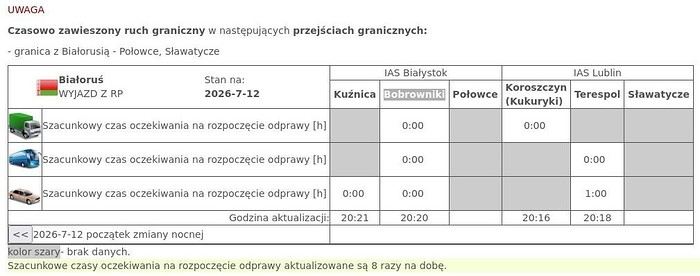
Planning to return to Belarus in mid-August, I just realized that since last September, Poland has reopened several border crossing points, and for buses, this means connections like Białystok-Grodno.
Several bus company routes, like on infobus.eu, take between 3 and 4 hours.
Trains from Warsaw to Białystok take about 1.5 to 2 hours.
This has the advantage of allowing comfortable train journeys with minimal time spent on a bus.
Also, the Terespol-Brest border might have shorter queues if you still prefer a Warsaw-Brest bus.
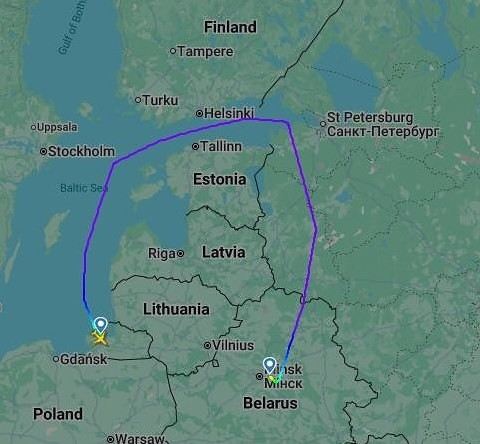
Note that another route to Minsk, if you have a paper Russian or Belarusian visa, is the Kaliningrad-Minsk train. It’s long—around ten or eleven hours—but you can lie down and sleep. An option if you fly into Gdańsk and then take a short bus to Kaliningrad.
There are also Belavia flights from Minsk to Kaliningrad, but they’re expensive. The route is scenic:
In any case, this adds a few more options compared to what’s been available over the last four years.
Hi there.
I’d like to know what the daily budget is for Greece in December. I’ll be landing in Athens and staying there for a week, then heading to some other islands—I don’t have a set itinerary yet. Also, I’ve heard that in December, or early January, the temperature is around 11–16°C. Is that accurate?
Finally, does anyone have a good recommendation for a cheap but clean hotel near the tourist sites? I don’t need a TV or any other extras. Also, is Greece gay-friendly?
I’d like to know the opening hours of physical stores between Germany and Austria, and between Austria and Slovenia, that sell the PAPER STICKER toll vignettes that still exist for 2026—non-digital ones. I don’t think they’re open 24/7, and I can’t find the info anywhere.
Thanks
Hi there,
We’re planning a 3-week trip in late September with our camper van to explore Bulgaria and Romania.
What routes would you recommend, starting from the South?
Is there an option to take a ferry in Italy, and is it worth it?
Thanks for all your tips!😊
Hi there, we’re a young couple and we’d love to go to the Blue Eye (Syri i Kalter) between today (26/06/26) and tomorrow (27/06/26).
Is anyone heading there and could give us a ride? We’re super friendly!
Thanks so much!
We're back. It's still a bit tough to get precise info, so here's a quick trip report!
A good starting point is Shkoder, a really pleasant city. You can easily explore Shkoder itself in a day or two.
Two accessible spots: Valbona and Theth.
In both cases, local travel agencies in Shkoder or online offer round-trip or one-way access packages. Super handy, especially for Valbona.
Valbona and Theth are both very steep! There aren’t many easy hikes for less sporty folks (like me!).
Valbona: The highlight is the amazing 2.5-hour boat ride across Lake Koman. There are day trips from Shkoder, but you’ll only get a short tour of the lake. The best option is to do the full crossing—so spend a night in Valbona (or two if you want to hike in the valley) and return.
Theth is deeply nestled in the mountains. The village at the end of the valley, which is a dead end, has lots of hotels, but they’re pricey. Other hostels are scattered along the mountainside road, but it’s a steep climb down to the village or to the start of the two easy hikes (waterfalls and the Blue Eye). For us, it was a one-hour descent (and ascent!). It’s fine if you have a car; otherwise, keep an eye out for a taxi (cheap) or try hitchhiking—it works really well.
Access from Shkoder to Theth is through an agency. The road is in great condition, and you can also rent a car for 2-3 days in Shkoder. If we did it again, that’s the option we’d choose.
We didn’t do the trek and returned to Shkoder each time. I can’t speak to its difficulty, but we were there in late May, and even experienced hikers had given up because of heavy rain and snow.
Hope this helps! It’s a stunning region you shouldn’t miss.
We’re a Canadian couple, both 77, and we’re already planning our vacation for fall 2027.
Timeframe: mid-September to mid-October... dates are flexible, and we might stay even longer.
Initially, I had planned this itinerary:
Athens (3), Naxos (4), Paros (4), Santorini (4), then a flight to Istanbul (7–10 days!!). This would let us maximize our flights and experience another culture.
That’s a lot of ferries, though... I’ve already cut out Milos.
Our second option would be to stay 2 x 15 days on two different islands, but I’d still keep Istanbul as our next destination... or maybe 30 days on one island that offers the chance to take day trips to other islands where the ferry ride is no more than 2 to 2.5 hours. For example, Naxos to Paros only takes 30 minutes. We could return the same evening or stay overnight.
Naxos seems like the best option!!!
For Istanbul, of course we want to do a day cruise on the Bosphorus and see Hagia Sophia. If we stay 6–7 days, what would be the other main attractions? Are there any points of interest we can reach by local bus?
Hi there!
We bought our tickets to Greece at the end of November 2025, and let’s just say the geopolitical climate has really taken a turn since then with the war started by the United States against Iran. Not to mention all the other conflicts happening around the world 😕... Anyway!
Our flight from Montreal is on May 1st, and I was wondering how things are currently being experienced in Greece.
We were planning to rent a car and had already booked accommodations on three Cyclades islands!!
The oil shortage is also worrying us...
If you could share some insights on this, that would be great!
A little trip report from an 11-day journey to Albania at the end of April 2026, with two friends in their early sixties and beyond...
Our route: Berat, Gjirokastër, Himarë, Tirana
Here are some opinions, tips, and great deals to share:
Flight Round-trip Beauvais-Tirana: Ryanair, 260 € with checked baggage (20 kg) and seat selection. Flight was fine and on time. 2h 30min flight.
Exchange: 1 € was worth 95 lek in April 2026. We were advised to exchange in the airport hall at the Illiria counter (98 lek outside the security zone), saying we wouldn’t find a better rate. However, the exchange rate was 93 lek for 1 euro, while in the city it was 95...
Car rental at Tirana airport for 9 days via Booking.com: 144 € (56 € for the car rental and 88 € for optional full insurance deductible waiver).
Wheego agency: the car was fine, but be careful when signing the contract—they tried to convince us that the insurance taken through Booking didn’t cover everything and insisted we take their own insurance for 250 €... We refused.
After reading about driving in Tirana, instead of starting our trip by visiting the capital, we decided to head straight to Berat upon arrival and return the car at the end of the trip to explore the city on foot. This turned out to be a great choice!
Accommodations: All our stays were booked via Booking.com. Everyone prefers to be paid in euros and in cash—they mention this when booking.
Berat: 2-hour drive from the airport.
Accommodation: Vila Arben Elezi: 135 € for 3 nights with breakfast and private parking. The room was decent and clean but a bit dark, located slightly below ground level near the parking. However, the breakfast on the rooftop was excellent, especially with the stunning view of the "city of a thousand windows." Great location.
Berat was our favorite—there are lovely walks through the different neighborhoods on both sides of the river, each with a very different vibe. The citadel visit is also fascinating, as it’s like a small town within the fortress.
The walk along the river is pleasant, with plenty of restaurant choices. Other restaurants in the old town are also very nice. The White House Restaurant, on the first floor along the road, is good and offers a great view of the Gorica district.
Gjirokastër:
Accommodation: Te Ajdini Guest House: 120 € for 3 nights with breakfast. A private home stay. There’s free parking just before entering the city, a 5-minute walk from the accommodation, which is very convenient since the cobblestone streets are narrow and parking is tricky. Yes, it’s a climb to get to the place, but everything in this city is uphill... The room was bright and clean. Breakfast was very good, hearty, and served in the courtyard with a view of the castle. The guesthouse is a 5-minute walk from the city center (the bazaar) but in a quiet area.
Restaurants: Rrapi and Kujtimi—good and affordable with their little pergolas.
The old town of Gjirokastër is charming but very touristy, with streets packed with souvenir shops and restaurant tables and chairs. Lots of people.
-The bunker visit (near the tourist office) is very interesting: Cold War Tunnel.
The castle offers a beautiful view of the city.
-Visit to the Ottoman house Skenduli: very well done. Don’t forget to climb the ladder facing a trapdoor in the ceiling to see the roof’s framework—it’s like a forest of beams: impressive!
-The bridge Ura e Ali Pasha: A steep 45-minute climb from the city to the site is worth it, but once you reach the viewpoint (which is stunning), you have to go back down a path to reach the bridge. You can drive to the viewpoint, but parking is very tricky.
Around Gjirokastër:
-Just outside the city: Lake Liqeni i Viroit: a nice, ordinary-looking lake, but at the end, there’s a natural spring making the water crystal clear and a brilliant blue—really spectacular, like photos of Blue Eye near Sarandë.
-Drive to Përmet along the gorges: beautiful viewpoints along the way and lovely countryside.
Himarë:
Accommodation: Vila Kosteli: 120 € for 2 nights with breakfast—slightly overpriced for this type of place but very close to a small beach and not far from the promenade with all the restaurants. Private parking, but very tight (4 cars on a tiny lot along the road). The "sea view" room is a bit obstructed by the building across the street. However, the rooftop breakfast view is beautiful. Friendly staff.
Himarë is a pleasant seaside resort, quite calm (but it was April...). There’s a cute promenade with restaurants along the beach. The castle on the heights of Himarë is worth a visit.
Around Himarë:
-Qeparo is worth a quick stop, but Qeparo village is really worth the detour: a village lost in the heights after a scenic drive up from the coastal road—narrow but well-maintained. Beautiful view from the top and a charming village.
-The Big Bunker and Llogora Panorama: take a right turn several kilometers after Dhermi—a road that climbs steeply from the start... A breathtaking winding road that reaches 900 meters in altitude. The view is stunning.
-Several small villages between Dhermi and Himarë are worth a quick stop.
-Porto Palermo Castle is somewhat disappointing.
Tirana:
Taxi from Tirana airport to the city center: 15 € with electric taxis (Green Taxi, Bee Taxi, Do Taxi).
Accommodation: Hotel Nevi Apartment: 63 € for 2 nights. A private apartment in an older building but very clean and well-equipped, with a kitchen and small enclosed balcony.
Great welcome and contact—the owner even booked a taxi for our departure. Very well located, close to the main square, shops, and restaurants. A small supermarket nearby is perfect for stocking up on breakfast supplies.
The city is lively and dynamic, with plenty of green spaces and promenades. Buildings are popping up everywhere, often with surprising architecture—like a building shaped like a face, a huge golden cube, and many others under construction.
-Sky Tower: at the top, a rotating bar offers a 360° view of the city and its buildings. Drinks are a bit pricier than usual, but it’s totally worth it (6 € for a beer or a glass of white wine, 3 € for coffee). We were there for sunset, and it was amazing! A must-do. Arrive early, as it fills up quickly.
-The House of Leaves: a house used for secret surveillance and interrogations during the dictatorship... A great way to learn about the surveillance systems of that era.
-Bunk’Art 2: a bunker in the heart of the city—very interesting, covering the dictatorship period and its system...
-The Pazari i Ri Bazaar: the new bazaar district. The large hall is worth a visit, but souvenir prices are often higher than elsewhere... The area is nice.
Restaurant: Kastrati Restaurant—a bit like a canteen with lots of traditional dishes. It’s on the first floor of a building. Excellent value for money, and the waitress explains the dishes in French.
That’s a little overview of our trip and my personal impressions!
Albania is a beautiful and pleasant country to visit.
If you have any questions, feel free to ask!
Hi everyone,
We’re thinking of spending 3 weeks in Crete between mid-August and early September, renting a car, quickly exploring a few spots in the east, and focusing on the west, southwest, and south.
I’m worried about the heavy tourist crowds. Is it really more noticeable than elsewhere in Greece? Is there a way to avoid the crowds without missing out on the iconic places, which I imagine are stunning in Crete? Thanks for your thoughts and experiences!
Hi,
I'm heading to Greece via Albania soon. Does anyone have info on transportation from Gjirokastër to Ioannina?
Which company, fares, and schedules—it's not very clear with Google.