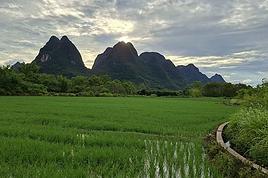
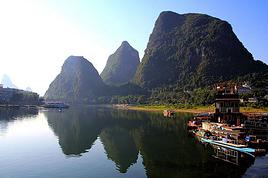
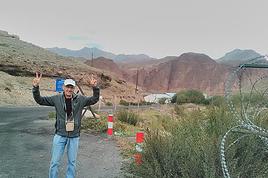
Which other provinces still have very beautiful sites?
Hi Anna,
For my very first trip to China, I explored the Chinese part of the Silk Road in September 2018, covering the provinces of Xinjiang (officially an autonomous region), Gansu, Qinghai, Ningxia, and Shaanxi.
My top cultural sites:
- The excavated temples of Mogao in Dunhuang (northern Gansu).
- Majishan, south of Tianshui (Gansu).
- Qutan Si Monastery (southeast of Xining, Qinghai).
- The excavated temples of Binglingsi (southern Gansu).
- The Gansu Provincial Museum in Lanzhou (Gansu).
- Ta'er Si Monastery (near Xining, Qinghai), despite heavy Han crowds.
- The Qing village of Dangjiacun.
- The Confucian temple in Hancheng.
My top natural sites:
- The Karakoram Highway, between Tashkorgan and Kashgar,
- The Danxia landforms northwest of Zhangye, packed with people but well-organized.
- The natural setting of Binglingsi (Gansu), with its cliffs along the Huang He (Yellow River).
- Mount Huashan,
- The Tianshan Canyon, north of Kuqa (Xinjiang).
Fabrice
Good evening Fabrice,
Thank you so much for taking the time to write down all this info—I’ll keep it in my China itinerary notebook. Every tip and piece of advice from fellow travelers is worth having.
I wish you many more amazing trips, though from your profile, it looks like you’ve already "seen a lot of the world," but there’s still so much out there.
Hi there,
Too bad—I’d planned the same trip for September 2018. But since I was going solo (couldn’t find a travel buddy), I switched regions and headed to southern China (Yúnnán) instead.
So now I’m planning for September 2020: the Silk Road, from Bishkek, Torugart, Kashgar, the Taklamakan Desert, and Ürümqi.
What are the must-see sites? Thanks for your reply.
See my reply at https://voyageforum.com/v.f?post=9176622;a=9176622.
If you enjoy road trips, you could add a loop through Tajikistan, including the Pamir Highway, to your itinerary. It’s now possible to enter China from Tajikistan via the Kulma Pass, which leads near Tashkurgan, where you can then descend the Karakoram Highway to Kashgar.
The Chinese are, above all, businesspeople who, like everywhere else, try to maximize their profits. Is your baker a crook? The Chinese practice bargaining—it’s a game you need to master to pay a fair price. Some see it as craftiness, but I don’t. It’s just a game, sometimes annoying, but they don’t have the same concept of time as we do. For some reason, the French struggle more than others to understand this logic.
The Chinese are, above all, businesspeople who try, like everywhere else, to maximize their profit. Is your baker a crook? The Chinese practice haggling. It's a game you need to master to pay the right price. Some see it as cunning. I don’t—it’s just a game, sometimes annoying, but they don’t have the same concept of time as we do. I don’t know why, but the French have a much harder time understanding this logic than others.
Good evening,
What you say is very true. In principle, a traveler sets out to meet other people with different customs and ways of life, to experience something new and broaden their knowledge. It’s true that some things abroad can shock us because they’re the opposite of our own habits, but you gain knowledge, and you’re not obliged to adopt them—just see and keep them in your travel memories.
Best regards,
What do you even know about me to lecture me? I’ve spent a hundred stays in China before settling down—six months now in Shanghai. For work, but also by choice; I could only come for periods at a time. What you’re saying is probably true, but personally, like tourists, I never take the metro given how cheap taxis are. You probably know places better than I do where neither I nor "ordinary" tourists will ever set foot. That’s your life; I’ve got mine. I’m 55, I’ve been around the world a bit, and I don’t need your advice to understand the difference between Hong Kong, Taipei, Shanghai, or Beijing.
These discussions are a bit pointless, but I’m glad I’ve taught some of you that we colonized China and that it was this colonization that sparked Mao’s revolt, which kicked us out like the thieves and scoundrels we were.
For the rest, dear readers, go where you dream of going and form your own opinions. But try not to "do China" in two weeks. If you behave respectfully, nothing unpleasant will happen to you.
When I mentioned scamming, I was actually thinking more about their innate (or learned?) lack of respect they show in queues, not their business practices.
As for haggling, no problem—it’s a staple in developing countries, so why shouldn’t they do it?
What do you even know about me to lecture me like this? I’ve made over a hundred trips to China before settling down—six months now in Shanghai. For work, but also by choice; I could still come for short stays. What you’re saying is probably true, but personally, like most tourists, I never take the metro given how cheap taxis are. You probably know places better than I do where neither I nor "ordinary" tourists would ever set foot. That’s your life; I’ve got mine. I’m 55, I’ve been around the world, and I don’t need your advice to understand the difference between Hong Kong, Taipei, Shanghai, or Beijing.
These discussions are a bit pointless, but I’m glad I’ve taught some of you that we colonized China and that it was this colonization that sparked Mao’s revolt, which kicked us out like the thieves and scoundrels we were.
For the rest, dear readers, go where you dream of going and form your own opinions. But try not to "do China" in two weeks. If you behave respectfully, nothing unpleasant will happen to you.
Good evening,
What’s gotten into you? I agreed with you and was just trying to expand on my point to keep the discussion going. And now you’re angry. Believe me, I wasn’t trying to lecture you at all. If that’s how you felt, please accept my apologies.
Best regards,
A thousand apologies, a misclick 😕 I thought I was replying to Yuean’s message below: (the late hour, no doubt)
Best regards
Yuean’s reply to Arcanan
Excuse me, but living in Shanghai for six months doesn’t mean you know China. It’s like living in NYC for six months and saying you know the US, or spending a little time in Paris and boasting that you know Europe (which, by the way, many Chinese people do)...
We’ll see what you say in six years. I spent three years in Shanghai and have been in Shenzhen for two. Shanghai isn’t China. The people there are much more refined, international, open-minded, and educated. Shanghai has its own history and culture, shaped by outside influences and a certain art of living. Other Chinese people are almost ashamed of it, while Shanghai locals are proud of it. You’ll see that when you leave Shanghai and speak Chinese to the general population—most Chinese people dislike Shanghai locals because they’re different, which touches on a certain complex... They’ll call them arrogant, pretentious, effeminate... when in reality, they’re just cleaner, more open-minded, and better educated.
I can tell you that outside Shanghai, you’re dealing with proud boors who spit everywhere, aren’t always honest, and are very nationalistic. I won’t even get into the mediocre service, which reflects the lack of respect given to anyone outside their inner circle.
Just last Friday, I asked the ticket counter to top up my metro pass. I’d barely handed my card to the clerk when a woman who couldn’t have been 40 pushed me aside without a second thought and slapped her card down, telling the employee, "Add 50." And there wasn’t even a line—just her and me. This is typical, everyday behavior: rude, pushy, "get out of my way, I’m here now, and I’m paying so I’m right." Yeah, well, I’m paying too, and the employee had already started helping me, so I think you can wait 40 seconds.
I see a lot of well-meaning folks painting a picture of a new generation calling out their elders for bad manners. Open your eyes—it’s nonsense. This happens because you’re a foreigner and it’s obvious you don’t live here. 90% of the time, people will walk all over you without a second thought, especially if they think they’re richer than you (a pretty relative criterion, but hey, it makes them so happy—no need to bruise their new-money pride).
Anyway, I’m rather amused reading so many comments from people who’ve only seen China through tourist eyes and yet defend the country wholeheartedly, even though they barely know it... and who don’t seem much more legitimate than the person who started this thread to judge the country, contrary to what they believe. Why start so aggressively when your experience is often just as relative as theirs?
Believe me, no Chinese person would bother defending your country the way you’re defending theirs. And when you’re treated well as a tourist, remember it’s just a commercial facade, a community reflex drilled into them by local propaganda. They’re constantly fed the idea that they must show their best face to foreigners because it serves the authorities’ strategy—they know you don’t catch flies with vinegar, and you don’t spit on a smiling face, even if everything it does is aimed at fleecing you and quietly gaining dominance over anything that moves.
So I’ll reiterate my agreement with the person who opened this topic. While Chinese people can be endearing and friendly, it’s undeniable that they’re also disrespectful, rude, and selfish—borderline egotistical. Not to mention their questionable hygiene standards.
As for the argument that "China is at the other end of the world, so it’s different"—sorry, but NO. Japan, Vietnam, Thailand, Mexico, and Australia are also far away, and that doesn’t stop them from being polite and respectful. The current behavior of Chinese people isn’t the result of cultural differences but of communism, which has wiped out culture, and a worship of money, which strips away respect for others. And let’s be honest—if they wanted to change, they could, but they seem pretty satisfied with themselves, so don’t hold your breath.
Excuse me, but living in Shanghai for 6 months doesn’t mean you know China. It’s like living in NYC for 6 months and saying you know the US, or spending a little time in Paris and boasting that you know Europe (which, by the way, many Chinese people do)...
We’ll see what you say in 6 years. I spent 3 years in Shanghai and have been in Shenzhen for 2 years. Shanghai isn’t China. The people there are much more refined, international, open-minded, and educated. Shanghai has its own history and culture, shaped by outside influences and a certain art of living. Other Chinese people are almost ashamed of it, while Shanghai residents are proud. You’ll see that when you leave Shanghai and speak Chinese to the locals, most Chinese people dislike Shanghai residents because they’re different—it touches on a certain complex. They’ll call them arrogant, pretentious, effeminate... when in reality, they’re just cleaner, more open-minded, and better educated.
I can tell you that outside Shanghai, you’re dealing with proud rustics who spit everywhere, aren’t always honest, and are very nationalistic. I won’t even get into the mediocre service, which reflects the lack of respect given to anyone outside their inner circle.
Just last Friday, I asked the ticket counter to top up my metro pass. I’d barely handed my card to the clerk when a woman who couldn’t have been 40 came out of nowhere, shoved me aside without a second thought, and slapped her card down, telling the employee, "Add 50." And there wasn’t even a line—just her and me. This is typical, everyday behavior: rude, "move over, it’s my turn," I’m paying so I’m right. Yeah, well, so am I, and the employee had already started helping me, so I think you can wait 40 seconds.
I see a lot of well-meaning people painting a picture of younger generations calling out their elders for bad manners. Open your eyes—it’s nonsense. This happens because you’re a foreigner and it’s obvious you don’t live here. 90% of the time, they’ll walk all over you without a second thought, no matter your age, especially if they think they’re richer than you (a pretty relative criterion, but hey, it makes them so happy, so let’s not bruise their new-money pride).
Anyway, I’m amused reading so many comments from people who’ve only seen China through tourist eyes, defending the country wholeheartedly when they barely know it... and who don’t seem much more legitimate than the person who started this thread to judge the country, contrary to what they believe. Why start so aggressively when your experience is often just as relative as theirs?
Believe me, no Chinese person would bother defending your country the way you’re defending theirs. And when you’re treated well as a tourist, remember it’s just a commercial facade, a community reflex from local propaganda. They drill it into their heads through various means that they must show foreigners their best face, because you don’t catch flies with vinegar, and you don’t spit on a smiling face—even if everything they do is aimed at swindling you and gaining dominance over anything that moves.
So I’ll reiterate my agreement with the person who opened this topic. While Chinese people can be endearing and friendly, it’s undeniable that they’re also disrespectful, rude, and selfish—bordering on egotistical. Not to mention their questionable hygiene standards.
As for the argument that "China is on the other side of the world, so it’s different"—sorry, but NO. Japan, Vietnam, Thailand, Mexico, and Australia are also far away, and that doesn’t stop them from being polite and respectful. The current behavior of Chinese people isn’t the result of cultural differences but of communism, which eradicated culture, and a worship of money, which strips away respect for others. And let’s be honest—if they wanted to change, they could, but they seem very satisfied with themselves, so don’t hold your breath.
xxxxxxxxxxxxxxxxxxxxxxxxxx
But what do you know about me to lecture me? I’ve made over a hundred trips to China before settling down, for the past 6 months in Shanghai with my Chinese wife and our two kids. What you’re saying is probably true, but personally, like tourists, I never take the metro given the price of taxis. You probably know places better than I do where neither I nor "ordinary" tourists will ever set foot. That’s your life—I have mine. I’m 55, I’ve been around the world, and I don’t need your advice to understand the difference between Hong Kong, Taipei, Shanghai, or Beijing.
These discussions are a bit pointless, but I’m glad I’ve taught some of you that we colonized China and that Mao’s revolt, which kicked us out like thieves, was born from that colonization.
For the rest, dear readers, go where you dream of going and form your own opinion. But try not to "do China" in two weeks. If you behave respectfully, nothing unpleasant will happen to you.
We introduced opium there to better enslave them. But the Chinese don’t hold it against us.
Two sentences, two mistakes and oversimplifications.
It wasn’t to enslave China that the British forcibly introduced opium produced in their Indian colony, but to restore a trade balance that had become catastrophically unbalanced: China exported a lot of goods (especially porcelain, silk, and tea) and imported almost nothing, thus accumulating a growing portion of Europe’s silver reserves, while the silver mines in Mexico and Peru were running dry.
Chinese government propaganda never misses an opportunity to harp on about the resentment over humiliations suffered in the 19th century. Western visitors usually don’t notice this, as this internal propaganda is never translated. Besides, it doesn’t seem to resonate with the Chinese either—across all social classes, they have an idealized vision of France, made of romance and luxury (how many times have I heard the cliché 法国人很浪漫 = the French are very romantic!).
Moreover, the summary of Alain Peyrefitte’s excellent book is strangely off compared to the text. While this encounter was indeed a missed opportunity (the word the author uses), it’s because the British were seeking purely commercial relations, whereas the Chinese saw this mission as the recognition of the vassalage of those distant foreigners. The Macartney mission was doomed to fail due to this mutual misunderstanding.
A thousand apologies if my summary, which only aimed to encourage people to read Peyrefitte’s book, was a bit off. I did, however, mention a clash of cultures. But culture, as you seem to know better than anyone, is like jam...
Normally, there’s never a culture clash—after all, we’re visiting others to discover them. Cultures just add up, plain and simple. Far from being colonialist, I blend right in. The only Western passenger happily takes public transport; it might take time, but I’ve got plenty and don’t keep track. The Chinese aren’t worse than many others, and I really like their reserve. Speak if you want, when you want.
Normal, right?
And if you want to consider yourselves as some kind of filthy descendants of awful thieves, good for you. The Chinese don’t ask for that—they actually need people like you to fuel their propaganda, portraying them as eternal, defenseless victims on the international stage. And you cost them less than a poster or a speech at the UN.
Go ask the Koreans or the Vietnamese what they think of the "kind" Chinese who enslaved them for centuries.
Ask the country’s minorities if they feel free and if they don’t feel like they’re living in human zoos.
Ask the Filipinos or the Vietnamese what they think of Chinese ships coming into their territory and declaring it’s their own...
Ask the countries in Southeast Asia or European business owners if they’re happy about the Chinese tidal waves (check out that really interesting Al Jazeera report on the behavior of Chinese tourists in Paris...).
Ask North Africans or other Africans if they’re satisfied with the Chinese presence in their countries—same goes for Australia or Western Canada.
In the meantime, I wish you lots of happiness in your new Chinese life. It’s true that defending a country where it’s normal to be disrespectful to others and where having no self-awareness is the norm is quite the evolution... Especially when, after spending so much time in the country, you don’t even have the excuse of being a wide-eyed foreigner seeing everything as fresh and beautiful.
Maybe spitting, screaming, brute force, and being forbidden to think for yourself suit you just fine. To each their own. I still say we’ll revisit this in 5 or 6 years.
And I still think it’s unfair to attack the person who started this thread, whose only mistake was reflecting on the incivility and passive aggression they witnessed here.
If you want to consider yourselves filthy descendants of awful thieves, that’s your prerogative. The Chinese don’t ask for that—they just need people like you to fuel their propaganda, painting them as eternal, defenseless victims on the international stage. And you’re cheaper than a billboard or a UN speech.
Go ask the Koreans or the Vietnamese what they think of the "kind" Chinese who enslaved them for centuries.
Ask the country’s minorities if they feel free and if they don’t feel like they’re living in human zoos.
Ask the Filipinos or the Vietnamese what they think of Chinese ships showing up in their territory and declaring it’s all theirs...
Ask the countries of Southeast Asia or European business owners if they’re happy about the Chinese tidal waves (see the really interesting Al Jazeera report on Chinese tourists’ behavior in Paris...).
Ask North Africans or other Africans if they’re satisfied with the Chinese presence in their countries—same goes for Australia or Western Canada.
In the meantime, I wish you lots of happiness in your new Chinese life. It’s true that defending a country where it’s normal to be disrespectful to others and where self-reflection is nonexistent is quite the evolution... Especially when, after spending so much time in the country, you can’t even use the excuse of being a wide-eyed foreigner seeing everything as fresh and beautiful.
Maybe spitting, screaming, brute force, and being forbidden to think for yourself suit you just fine. To each their own. I stand by what I said—we’ll revisit this in 5 or 6 years.
And I still think it’s unfair to attack the person who started this thread, whose only mistake was reflecting on the incivility and passive aggression they witnessed here.
Good evening,
Just a little aside. I saw a report on French TV about Chinese tourists in Paris, and it also showed some very happy shop owners—especially (those from luxury brands)—who explained that the Chinese spend huge sums in Paris at all the designer stores, and they do it in record time.
For everything flooding the market, it’s still *countries* that let Chinese goods in (bought at very low costs) to sell them cheaper in the West.
It’s still some of *our* companies that offshored production to manufacture at lower costs and resell here at big profits.
Basically, it’s like war—there are those who profit from it and those who suffer because of it. (That quote isn’t mine.)
Best regards,
PS: You’ll notice how surprising it is that in the 1960s, the Chinese Revolution was presented to the Chinese people primarily as a struggle against the rich, the educated, and landowners. Whereas today, it’s become a revolution against the foreign invader (who, between us, didn’t go very far, didn’t stay very long, and was mostly Japanese before becoming Western).
Some will see this shift in official discourse as a wonderful example of the "pragmatism" that China’s cheerleaders in France so often praise. Others will see it as pure manipulation and dangerous revisionism, conditioning 1 in 7 people on the planet to believe it’s their right to take revenge on anything foreign. And that newfound financial success and aggression justify everything.
Given the behavior of the government and the people both at home and abroad, I lean more toward the second analysis.
Actually, the only question that matters has already been asked, and you haven’t answered it: what are you doing in a country you hate, surrounded by people you hate? Leave quickly—the world is vast. Or maybe you’re just a total masochist 😎😎
I’ve just returned from a 12-day organized trip to Beijing, Xi’an, and Shanghai, which I enjoyed and went really smoothly.
The advantage of having a guide is that it solves communication issues, since almost no one speaks a language other than Mandarin in these big cities. Knowing how to say hello and thank you in Chinese opens doors for exchanges through gestures and a mix of words :)
I’d been told such things about the Chinese that I was a bit worried, but the reality is more "rosy": sure, they spit very loudly, but not too many people do it, and you get used to the jostling since it’s a tradition. Groups have a specific entrance at sites, so no cutting in line. At the end of my stay, I took a two-day solo extension and went by metro to People’s Square on National Day—an experience worth having! (It’s handy being tall in a compact crowd.)
The food is infinitely better than what we get in Chinese restaurants in the West—quite a pleasant surprise.
One day I’ll visit Hong Kong, and I might take the opportunity to return to Shanghai.
I’m currently in the process of booking my hotels.
I have a question about these two apps. I’m planning to use trips.com to book my trains (if I understood correctly, that’s the best way to do it).
Is there any advantage to booking hotels with trips.com, or can I keep using Booking? (I’m used to the interface.) My hidden question is whether it’ll work smoothly when I’m there (for new bookings or retrieving the ones I’ve already made).
I’m starting to think about a trip to Japan, though I haven’t yet decided on the exact duration or itinerary, and I have a few questions for those who know the country well or have traveled there recently.
First, about getting around: what do you think are the most economical and reliable ways to travel across Japan and move between cities? I’m thinking of trains, overnight buses, domestic flights, regional passes, etc. I’m not necessarily looking for the fastest option, but rather a good balance between cost, simplicity, and reliability.
I also have a question about the return ticket. Since I don’t yet know how long I’ll stay in Japan—or even if I’ll return directly to France (I might continue to another Asian country)—is it mandatory to have a return or exit ticket before entering Japan? Would a ticket to another Asian country suffice?
Regarding accommodation, I usually prefer staying in youth hostels rather than hotels. Are hostels easy to find all over Japan, including outside Tokyo, Kyoto, and Osaka? And what’s the average budget per night for something clean and well-located?
Finally, I’d like to get an idea of the overall budget for the trip. Is Japan still relatively affordable when traveling simply, or do expenses add up quickly? I’m mainly thinking about:
transportation between cities;
local transportation;
youth hostels;
food;
potential domestic flights.
My plan is to travel fairly freely, without necessarily booking everything in advance, so I can adjust my itinerary or stay longer in places I like.
If anyone has traveled this way in Japan, I’d love to hear about your experiences, tips, and maybe an idea of the daily budget to expect.
I’m currently planning a trip to Japan with my two kids.
Before going any further, my main question is about the budget. While flights are pretty straightforward—just compare prices—when it comes to daily expenses, I have no idea what to expect.
We’re thinking of traveling between mid-July (around the 19th, give or take 2-3 days) and mid-August (returning by August 20th at the latest).
Duration: 15 days (though we could stretch it by 2-3 days if it makes sense price-wise).
Family of 4, including two kids aged 9 and 12.
Before we had kids, we used to travel pretty "rough" and book things on the spot (we often took basic flights), but this time, it might be trickier. That said, we’re not looking for luxury—just somewhere decent to sleep and shower so we can save money for as many activities and sightseeing as possible.
For those who’ve recently had a family trip like this or are familiar with Japan, I’d love any advice—especially what a reasonable daily budget might look like (or at least the absolute minimum to make the trip feasible).
Thanks in advance!
P.S.: I’ll admit I struggled a bit with the categories, so if this post needs to be moved, no problem! ;-)
Hi,
My departure is coming up soon—two months backpacking in Taiwan, so much to discover! I’d love to hear about your travel experiences.
My main interests are meeting people, understanding how things work, hiking, and nature in general. I’ve also done a lot of reading about Taiwan’s complex situation.
I do stone sculpture.
I also want to visit Orchid Island for its history.
Marie
Hi there,
I’m planning my trip for May. Here’s my itinerary for 4.5 days in Seoul:
May 5: afternoon at Mangwon Market, Mangridan-gil, Han River
May 6: Gyeongbokgung, Tongin Market & Seochon, Bukchon, Insadong, Jogyesa Temple, and Ikseon-dong
May 7: Namdaemun Market, Deoksugung Palace, stroll along Cheonggyecheon, Seoullo 7017, Hongdae
May 8:Changdeokgung + Changgyeonggung, Gwangjang Market, Jongmyo Shrine, Jongno Boulevard for the big parade
May 9:Morning in Gangnam, Bongeunsa, Namsangol Hanok Village, N Seoul Tower Plaza
What do you think of this itinerary? Is there anything I should add, remove, or swap out? I tried to keep travel time to a minimum, but I might be missing something. I’d love to hear all your thoughts—thanks!
Philippe
According to my calculations, I’ll be in Zhangjiajie on Monday, November 16th. I adjusted my itinerary to avoid the weekend.
I’m wondering:
1- Do I need to book the park entrance in advance (like, is there a visitor limit?)
2- I plan to take the elevator and maybe a cable car (I’ll walk the rest—I’m in good shape). Should I book those too, or can I sort it out when I arrive?
3- On Wednesday, November 18th, I’m aiming for Tianmen Mountain. Same question—do I need to reserve? I read it’s under construction right now. And apparently, it’s line C.
3 bis - Also, is it possible to go all the way to the top by bus only, without the cable car, and finish on foot?
Hi everyone, I’m preparing for a one-month trip in October. I’m traveling solo and would love to explore the countryside, but I’m also wondering if there are any themed urban hikes or walks. In Japan, I did some themed city tours, especially by bike.
Thanks for any tips you can share!
Marie
Hi,
Our trip is planned for 20 days in Japan next April. We have a free subscription that would allow us to use 35 GB (I’m a bit confused), but we also need to be able to make phone calls with a French couple traveling with us for a few days, and that seems impossible due to cost... Any solutions for using GPS while keeping those 35 GB? Used to traveling in Southeast Asia, we usually rely on local SIM cards. Is it easy to do the same in Japan?
Thanks for your help!
Best,
Tialou
I’m looking for advice from seasoned travelers about a roughly one-month trip to Japan.
From late October to late November 2026.
We often travel in Southeast Asia but have never been to Japan.
Based on what I’ve read, I’d love to hear your thoughts on:
- Is traveling day-to-day, without booking hotels or trains in advance, possible in Japan?
(I’ve read many travel journals and blogs that say everything was booked way in advance… but that’s not how we usually travel.)
- Will the Japan Rail Pass be worth it for us?
(According to an old simulator, I’m looking at around 400 € for trains compared to 570 € for the JRP.)
Here’s our rough itinerary (which may change):
- Arrival Osaka: 3 nights with Nara
- Hiroshima and Miyajima Island: 3 nights
- Kurashiki or Naoshima: 2 nights
- Himeji: 1 night
- Kyoto: 4 nights
- Kanazawa: 2 nights
- Takayama and Shirakawa-go: 3 nights
- Around Mount Fuji: 3 nights
- Tokyo with Nikko: 6 nights (no theme parks)
Departure from Tokyo
I’ve booked my flight ticket to China, arriving in Hong Kong and departing from Chongqing.
I have 27 nights there.
Here’s my draft itinerary:
Hong Kong arrival (minimum 3 nights + 1 night for Macau)
Shenzhen (1 night – immigration, day and night city visit)
Guangzhou (2 nights – 2 days of sightseeing)
Yangshuo (3 nights – 2 full days)
Passing through Guilin (0 nights – 1 day)
Longsheng or Longji Rice Terraces Green (2 nights)
Sanjiang (1 night)
Kunming (1 night)
Dali (2 nights – 1 day of sightseeing)
Lijiang (2 nights – 1 day of sightseeing)
Shangri-La (1 night)
Chengdu (2 nights – 1 full day for Buddha)
Zhangjiajie (4 nights – 4 days)
Chongqing (2 nights)
I have an efficient travel style (I wake up very early and generally move quickly).
I don’t want to see the Stone Forest in Kunming because it looks too much like the Tsingy in Madagascar.
What do you think?
Thanks for any kind of feedback.
Hi,
July 2026: I’m writing to you from Dali.
First, I got scammed on Booking—AI-retouched photos. No tourists at this hotel (Yishanju Designer Hotel), and the reality was horrible: dirty, with a disgusting breakfast. It’s better to use Trip.com here.
Next, the old town was an infernal cacophony, packed with tourists who shoved past without a care. Some vendors harassed you to buy things. All the stalls sold the same cheap plastic junk or other uninteresting stuff. The beautiful scenery was ruined by vendors lining 100% of the alleys. Impossible to walk, crushing heat, nothing good to eat except fresh fruit. Horrible experience.
Day 2: We went to Cangshan Mountain by cable car—the ride was short and nothing spectacular. We were at 2,600 m.
My plan was to see Erhai Lake. Unfortunately, I followed the advice of an AI chatbot: take the boat at Langkan Dock. The Didi dropped us off in the nearest area, which was full of charming little alleys but packed with Chinese tourists. The three-wheeled yellow cabs zoomed through the narrow streets, forcing you to hug the walls, on top of the scooters and other pedestrians to deal with. Crossing the neighborhood was hellish and suffocating. Once out, we hit the "corniche," which was also packed with Chinese tourists. The lake’s edge was all pebbles, and everyone was standing around taking photos. I was with my 5-year-old son. I would’ve liked to sit down and let him play with stones by the water, but it was clear we didn’t belong. They were even shoving each other for a shot! There were no boats in sight. In short, we’d had enough, and there was nothing interesting there either.
On the way back, we had to cross that maze again under the scorching sun. My son was braver than me—I even had a little dizzy spell from all the chaos. Add to that Dali’s altitude (2,200 m), so altitude insomnia, fatigue, and vulnerability during the day...
The restaurants weren’t inviting—the staff served sticky rice in a little bucket. The dishes were wrapped, and you had to figure it out yourself. After that, they ignored you completely, even if you were the only tourist.
On the 3rd day, it was time to leave for Shaxi. I hope to see beautiful villages. But honestly, I’m exhausted by this atmosphere where everything is complicated, communication is never smooth, noise is everywhere, and the behavior of some Chinese people is abusive...
Silver lining: not a drop of rain in 4 days and blue skies.
I couldn’t visit the villages in southern Yunnan because of rain and storms there...
But I was expecting to see a few more tourists.
Next year, we’re celebrating 20 years of marriage (and travel 🙂), and we’re looking for something new, pretty legendary, and something the teens will enjoy too.
The family council has settled on Japan for now. And it’d have to be a summer trip—no choice there.
The catch: I keep reading that August isn’t the right season for southern Japan. It’s hot, humid, and there’s a risk of typhoons… Okay, but what does that *actually* mean in practice? Are there any travelers who’ve been there during this time? Is it *that* unbearable?
We’re pretty familiar with Southeast Asia—last year, we dealt with scorching heat in Vietnam and insane humidity, plus a typhoon we experienced from a distance, and visiting Angkor in the blazing sun. Is it worse than that?
Hey there,
In the sea of VPNs, I'm looking for one to use in China for just a month (free or paid). Which one should I pick? All the ones I've found are for several months or even a year.
Hi,
I’ve always been used to exchanging my money (€) in town no matter the country (with a "mini exchange" at the airport if needed).
I can’t find any recent posts on this topic from the last few years.
Does anyone have any insights on this? Intrinsic benefits, best places to exchange, etc.?
I arrive at Tokyo Haneda on a Friday around 12:30 PM, and my first night is very close to Shinjuku.
Thanks.
Here are some tips from our 6-week trip (summer 2026) to China, Vietnam, and Cambodia. We traveled as a family of four with two kids aged 15 and 12.
I hope these notes help other travelers!
CHINA
General
You’ll need to download and set up a few apps:
- Alipay and WeChat for payments (I didn’t withdraw a single bill the entire trip)
- Didi for taxis
- Amap = Chinese Maps (works great, especially for subways)
- A translation app (we used Papago, but it sometimes gave weird results)
- Google Lens for translating menus or signs—super handy.
- HelloRide for bikes
- Gemini and ChatGPT for everything: understanding daily life, enhancing visits, checking the weather, finding things.
- HomeExchange if you want to lower travel costs (few listings in Asia except in big cities, often expats)
- Trip.com is very useful, even essential, for trains, domestic flights, and hotels. Like Booking.com, the more you book with them, the more perks you get. So I’d even suggest checking flight tickets on this site, even if it’s a bit pricier. However, buying train tickets is complicated because (1) they only open 15 days in advance, and (2) they sell out fast. Trip.com just promises to buy them as soon as they’re available but doesn’t always succeed. It’s stressful and might force you to change your plans, especially if you’re aiming for a sleeper car and there are no seats left. Watch out for station names—many cities have multiple stations, including a high-speed rail one outside the city.
For internet, we got the Asia plan from Holafly. It worked but seemed much slower than Chinese internet. I regretted not buying a Chinese SIM card because without internet in China, everything is VERY complicated (money, transport, etc.).
For the firewall, we used ExpressVPN, but it wasn’t always reliable. A bit disappointing. Ask ChatGPT for tips with screenshots to improve the settings.
Since we only had one SIM card with internet, we couldn’t rent shared bikes. If I were to do it again, I’d get a SIM for each person, even the kids, because distances in cities are huge. We walked *a lot*. Same goes for buses—it’s tricky with just one internet connection. Better to have a phone per person with internet.
Book your visits as far in advance as possible—they often sell out.
Watch out for power banks: if they don’t explicitly say "3C," they’ll confiscate it. Even if there’s a little airplane logo.
Shanghai
In the evening, the streets leading to the Bund from the metro were so crowded that police were out in force blocking roads. Arrive early. We went around the north side.
Suzhou
Be careful—there are two stations (common in China), and the high-speed rail one is 45–50 minutes from the old town.
The Humble Administrator’s Garden was *packed*—we don’t recommend it. It turned into a marathon day from Shanghai (almost 4 hours from our hotel to the garden).
Beijing
Forbidden City: Don’t go—I know it’s a shame, but it’s too crowded. I couldn’t buy tickets on the official site because of the kids’ passports. We ended up with a guided tour, the only way to get in (tickets sell out fast). The visit was disappointing—bad guide *and* massive crowds. You’ll queue a lot to enter and see certain areas. You’ll be checked often, so pack your bags carefully.
Great Wall at Mutianyu: Crowded. Two hours by bus, and even though we arrived early, people were already leaving! I really think the best option is to leave your big bags in Beijing and stay overnight near the Wall. That way, you’ll have it to yourself a bit more. For transport: get off at Tiananmen Square metro and look for buses with official guides in bright yellow-green vests. No need to buy tickets online—they made me cancel mine to rebook on the spot. Buses leave when full. Note: the cable car and chairlift are separate—if you want to go up one side and down the other, you’ll need different tickets. The endless queue for the toboggan ride put us off.
Quick tip: Incredible swimming spot in Beijing—on the north shore of Houhai Lake, you can swim by crossing the barrier. We did it twice with about ten other people. Bring a swimsuit!
Shapotou Desert
Amazing, but it gets *very* hot in the afternoon. We had a tent (not an air-conditioned bungalow), which was unbearable during the day. We hung out in the restaurant.
The paid activities are fun, except the camels—they look sad. The real highlight is the evening and sunset. The only downside: you can’t explore the desert alone or far—they don’t rent 4x4s, for example.
We stayed at "The Desert Camping Hotel of the Proprietress of Shapotou." They were lovely.
Zhongwei
Gaomiao Temple and its underground: Fun and short—you’ll see quirky Buddhist hell paintings.
Xi’an
Terracotta Army: We took a Didi because for four people, a car was almost the same price as four shuttle tickets. It was packed—chaotic to see properly.
We visited the halls in order: 3, 2, then 1—a good choice.
Hua Shan Mountains: Left before sunrise to arrive when the ticket office opened (7 AM, I think). We were shocked to see so many people already coming down.
45 minutes by bus to the west cable car, then 15 minutes up.
We did the west, south, east, central, then north peaks (in that order) before taking the other cable car down (you can buy the ticket at the top). A beautiful day.
In the city, check out...
Chengdu
Panda Research Center: Like Hua Shan, plan to arrive when the ticket office opens. Already *tons* of people, and it moves fast to see the big pandas before their nap. Have them drop you at the west entrance (not south), or you’ll have to walk uphill.
Leshan Giant Buddha: Interesting. The trip is a bit long (metro, then train, then city bus, then shuttle on-site). We didn’t take the boat option but walked. In the end, you only spend a few minutes at the Buddha’s feet, but it’s a nice day out.
Hotel tip: Panda Enjoy Home Hotel Apartments (Chengdu East Railway Station Dongda Road Branch). The view is insane, and the neighborhood is super convenient and nice. 646 CNY for 2 nights.
Swimming: The municipal pool is an interesting experience, but don’t expect to swim—no one does. Everyone just splashes around where they can stand. The hours are a bit odd, with a break in the late afternoon.
Kunming
The bike path along Dian Lake is pretty and often well-protected from cars. But like everywhere in China, it’s *packed*. Not much to say about visits—the flower market is a wholesale market, not very interesting. The ethnic minorities museum closed right in front of us.
All the big malls are good for shopping.
Dali
We thought we could bike around the lake in two days. Wrong on two counts: First, the lake’s edge is blocked to traffic and reserved for bikes (or tourist mini-buses). So you’re stuck on the main road, which never gives you a view of the lake, with all the trucks and cars. Doing 120 km like that wouldn’t make sense, in our opinion. The rice fields around are nice but not as impressive as elsewhere, so Dali isn’t worth it for that.
The old town, all restored, is pretty but *packed*—thousands of people, especially in the evening.
Hekou (Vietnam border)
Comfortable train from Kunming. In the parking lot, a bus (not well-marked, but Didi is an option) takes you to the border in 15–20 minutes. Short wait at both border posts. Fun to see the two lampposts near the border line: the Chinese one is new, modern, with a surveillance camera (of course), while the Vietnamese one is old and a bit rusty.
VIETNAM
General:
- You’ll need the Grab app for taxis
- Very disappointed with 12Go—it doesn’t show all buses, never connects you with the company, and refuses refunds. Try booking directly with companies like FUTA Bus instead.
- Credit cards are often accepted (supermarkets and modern stores), otherwise, you’ll need cash
Lao Cai
2 km between the border and the train station.
The sleeper bus to Hanoi with Sao Viet is well-organized—it works.
Hanoi
Ho Chi Minh Mausoleum closes early (10:30 AM, I think).
Women’s Museum: Very good, not too long
Temple of Literature: Beautiful, fairly quick
This is where you should buy souvenirs, clothes, and knockoffs—the prices are reasonable, and the sellers are nicer than elsewhere. We recommend Cho Dong Xuan.
Tu Long Bay
We did 2 days, 1 night (so really 24 hours on the boat) with Parfum d’Automne (French-speaking agency), which put us on a Cycad Cruise boat. Cost: 300 € per person—expensive, but it was amazing, super luxurious, and the buffet meals were delicious. We don’t regret the splurge. The only downside: no swimming in the bay (but there’s a pool on the boat). To swim, you’d need a 3-day, 2-night trip to an area not protected by the maritime park.
Phong Nha
If you didn’t do the northern mountains due to time or weather (like us), Phong Nha is a great stop for a motorbike ride. It’s beautiful, especially the mountains west of the city toward the caves.
There are two (small) swimming spots at the Botanic Garden—a pleasant 45-minute walk without stops.
Hotel tip: Sunbeam Village (very friendly, pool, breakfast by the river, motorbike rentals)
Da Nang
Hotel tip: Meridians by Hsuite—you’ll have the beach almost to yourself. You’ll still need to walk 15–20 minutes to the hyper-touristy area if you want to rent surfboards (150–200k VND per hour).
The beach is beautiful, and the water is 30°C—great for a break on a long trip, especially since all transport goes through Da Nang.
Hoi An
45 minutes from Da Nang, so it’s easy to visit in a day, especially since the city isn’t that big and it’s *very* hot.
Cooking class: MS Hanh cooking class—great (the market tour is a bit useless). We don’t recommend the "basket boat" tour—it’s a bit sad on a big brown pond with elderly guides.
Ho Chi Minh City
Ben Thanh Market is a nightmare: starting prices are exorbitant, and the vendors are aggressive. Don’t go.
The War Remnants Museum can be really tough for kids.
Can Tho
Avoid this city. We made the mistake of going to see the floating market—don’t.
Chau Doc
No Grab in the city, but regular taxis.
One day is enough if you go early to the forest and the mountain in the late afternoon.
250k VND per person for the forest and its canals (45 minutes by motorbike)
The sunset at Victoria Nui Sam can be magnificent if the clouds cooperate.
Cheap and good restaurant: Quan Nem Nuong Sau Hiep
Hotel tip: Homestay Khoa (2,250,000 VND for 3 nights)—adorable hostess, full of tips, clean rooms.
The speedboat to Cambodia is more comfortable than a bus. Book with Hangchau a few days in advance—payment in cash on the day (1,640,000 đ).
CAMBODIA
General:
- Issues with the "Bakong Tourists" app—we had to go to a big bank to load money onto it. We barely used it afterward.
Phnom Penh
For us, a day and a half is enough if you want to spend more time elsewhere.
Markets close early (around 6 PM) and are less interesting than in Hanoi, for example.
The Royal Palace has a break from 11 AM to 2 PM, but there aren’t many people in the afternoon.
Siem Reap
Trip with Capitol company—the bus is basic but cheap. Departs at 10:15 AM, 7-hour ride.
Angkor entrance fee: 62 USD per person for a 3-day pass. Tickets are picked up at Angkor Enterprise.
Renting two 125cc motorbikes: 10 USD each, plus 7 USD for gas.
By bike, it took me 25 minutes to reach Angkor Wat’s pools. A basic city bike rental was 1 USD per hour.
Short circuit by motorbike (in reverse): 7 hours with stops everywhere.
Grand tour by tuk-tuk: Only 5 temples, 4.5 hours.
If you want to see lots of monkeys, they’re grouped west of Bayon.
For the temples, we asked Gemini (AI) at each stop to point out details that might interest kids (who can get bored with the repetition). It gave fun facts and things to look for—great for the little ones.
Hotel tip: The Five Senses, run by a Frenchman, Bruno, who knows Cambodia inside out and organizes tours.
Restaurant tip: Wild (only spring rolls, but *so* many varieties—delicious and cheap)
Watch out: 1 hour to the airport, 50 km from the city.
Show tip: The Phare Circus
We’re arriving as a group of three in Tokyo on Saturday, October 17th, then heading straight to Kyoto by direct train.
On Sunday and Monday, we’ll explore Kyoto, and in the evening, we’ll take a train to Osaka to spend the night.
On Tuesday, we’ll pick up a rental car at Itami Airport for a 6-day/5-night road trip around Shikoku:
- 2 nights in the Iya Valley
- Thursday morning, we’ll head to Matsuyama for 2 nights.
- Saturday, we’ll visit Mima (town, a few temples + overnight stay) and return on Sunday to drop off the car in Osaka.
We’ll leave very early on Monday the 26th by plane for Aomori in northern Honshu, where we’ll pick up another rental car at the airport for a 5-day/4-night trip:
- Day 1: Tsugaru Peninsula (Takayam Inari, Cape Tappi, Kanita); overnight in Kanita
- Day 2: Ferry transfer to the Mutsu Peninsula (cliffs, Lake Usori); overnight in Shimofuro
- Day 3: Head to the Hakkoda Mountains and onsens galore; overnight TBD
- Day 4: Return the car in Aomori by noon and explore the city before taking the train to Tokyo in the evening
We’ll spend Friday night in Tokyo, wander around on Saturday, and head home on Sunday.
Thoughts on the road feasibility of this trip? We’ll be there right in the middle of Koyo season, so it’ll be busy...
I know it’s a lot of driving, but there are two of us who can take turns. We’re not afraid of driving, even in the mountains and on the left side! Just wondering, are we going to be rushing, or is this manageable? AI says it’s all good, but it’s not the one driving...
Any tips for booking accommodations in the Iya Valley? Not many places have email addresses or websites (I know Booking.com exists, but not all listings are on there... and given the season, I think it’s better to book ahead!). Same question applies for northern Honshu.
For the rental car, I’m thinking of going with Alamo since at least it’s in French and straightforward, but are there any direct rental companies with user-friendly websites (Toyota Rentacar, ugh... 🏴☠️)?
Another question: With so many trains, is it even necessary to book them in advance? Can we just go to the ticket counter and grab seats on the spot?
For paying for the rental car, do we need a credit or debit card?
I booked my trip from May 5 to 26, 2027. I’m starting to plan my itinerary and look for hotels (I know it’s early!). While I’ve found some in Seoul and Busan, I’m noticing that elsewhere—like Yeosu—most hotels aren’t available (on Booking.com, for example, almost all are unavailable). AI tells me not to worry because hotels in South Korea only open bookings 6 months in advance, so it’s normal to see most of them unavailable on booking sites.
Could you confirm this for me and, of course, reassure me (!)? Thanks so much.
philippe
We’re back from a one-month trip to China and wanted to share our itinerary. Hopefully, this can give future travelers some ideas for exploring this beautiful country.
Beijing → Temple of Heaven / Forbidden City
Jinshanling → Great Wall
Zhangjiajie → Tianmen Mountain and Heaven’s Gate
Wulingyuan → Avatar Mountains / sandstone pillars
Fenghuang → riverside houses
Ping’an → terraced rice fields
Tiantouzhai → village / rice terraces
Yangshuo → Li River / karst mountains
Shanghai → skyline with the Oriental Pearl Tower
Our travel journal is available on our travel journal, written day by day. You’ll find lots of photos and some travel tips there.
I’m starting to look at neighborhoods in Seoul, and I’m leaning toward staying in a hotel in Insa-Dong—I’ve spotted one really close to Unhyeongung.
Is this a good area—nice and convenient for exploring the city?
Otherwise, I’ve also found another hotel in Yongsan-Gu, right near the station of the same name. Is that station useful for getting around Seoul?
Since I’ll be in South Korea for nearly two months, I plan to spend at least a week in Seoul to recover from jet lag (it takes me a while to adjust...). So, I’d love a neighborhood that’s pleasant and a hotel not too far from a subway station.
Hi there,
I’d like to do this cycling route over 2 or 3 days. I’m struggling to figure out and find a (good) bike rental that lets me start in Onomichi and drop off in Imabari. Can anyone help with great tips for rentals and accommodations along the route? How do I get back to Onomichi afterward?
I’m back with my detailed itinerary for 20 days in South Korea—it’s my first trip to the country. Our idea is to experience a more rural and cultural Korea. Here’s the rough plan: Seoul for 4 nights at the start and 1 night at the end, Gurye for 4 nights, Suncheon for 4 nights, Namhae for 4 nights, and Gyeongju for 2 nights. The goal is to pick a base and explore the surrounding areas. What do you think of this itinerary? Anything you’d change?
thanks
hi everyone, we're heading out for a 12-day trek in the Japanese Alps. We're bringing freeze-dried meals like we always do. We just found out that importing meat is banned, even freeze-dried. Is that true? We already bought them. They're commercially made freeze-dried meals. Online, it's not specified that they have to be "commercially made" because you can make your own freeze-dried food. And since we've heard they're really strict in Japan, can anyone confirm this for us? thanks
I haven’t found what I’m looking for despite my searches!
For a 15-day trip next spring, I’d like to buy a card (preferably an eSIM, but a physical SIM is fine too) that also lets me make calls in the country (to contact a hotel, a tourist spot, etc.).
You can easily find options just for data, but I haven’t come across any that include calls, texts, or even MMS.
Could you recommend something?