Que voir en Serbie ?
Pour préparer votre futur voyage, un aperçu des principaux sites et lieux à visiter dans le pays (carte).
1- Villes et patrimoine culturel Belgrade : la capitale serbe offre une belle architecture où se côtoient aussi bien le style austro-hongrois du XIXe siècle que des réalisations modernistes. La ville compte également nombre de parcs et musées, ainsi qu'une certaine animation et vie nocturne. A la périphérie de Belgrade, le Mont Avala abrite plusieurs monuments et mémoriaux militaires de différentes guerresCacak : une assez grande ville au centre du pays avec beaucoup d'églises et de monastères sur son périmètre ou ses abords.Château de Dundjerski : c'est un des plus fameux châteaux de la période austro-hongroise du pays.Drvengrad : appelé également Küstendorf, cet "ethno-village" a été construit par le réalisateur Emir Kusturica pour son film "La vie est un miracle" qui met également en valeur la ligne de train à vapeur Mokra Gora - Sargan située à côté.Forteresse de Golubac : cette belle forteresse du XIVe siècle surplombant le Danube marque l'entrée des gorges des Portes de Fer à la frontière entre la Roumanie et la Serbie.Gamzigrad : d'importants vestiges romains classés d'ailleurs au patrimoine mondial de l'UNESCO.Kragujevac : quatrième ville de Serbie avec "juste" quelques beaux édifices datant du XIXe siècle.Lepenski Vir : un des principaux sites archéologiques serbes datant de la préhistoire.Mausolée royal d'Oplenac : la nécropole de la dynastie des roi de Serbie située dans la bourgade de Topola.Monastères de Fruska Gora : dans le parc national du même nom on peut visiter 16 monastères orthodoxes (Privina Glava, Krusedol, Sisatovac...) ainsi que pas mal d'églises baroques dans de petits villages.Monastère de Studenica : c'est le plus grand et le plus beau de tous les monastères. Il est classé au patrimoine de l'UNESCO.Nis : troisième plus grande ville de Serbie. Elle possède encore quelques témoignage de son passé ottoman (dont sa forteresse) et nombre de bâtiments de la fin XIX - début XXe siècle de style baroque ou art déco. A sa périphérie ont peut également visiter le site romain de Mediana, les belles villas XIXe de Niska Banja, le camp de concentration de Crveni Krst ainsi que les gorges de Sicevo et les grottes de Cerjanska.Novi Pazar : grande ville majoritairement peuplée de bosniaques avec un certain nombre de monuments et d'édifices anciens. Les sites classés UNESCO de Stari Ras et Sopocani sont à une dizaine de kilomètres.Novi Sad : capitale de la Voïvodine et seconde agglomération du pays, Novi Sad possède un centre ancien dominé par une forteresse du XVIIe siècle. La ville est également une étape pour les bateau de croisières sur le Danube.Palic : avec ses villas de la fin du XIXe siècle, son grand parc urbain, ses sources minérales et surtout son lac aménagé, Palic attire pas mal de visiteurs.Route des vins de Serbie : essentiellement plusieurs circuits autour de Belgrade avec des vignobles et des propriétés à découvrir.Sokobanja : station thermale réputée et une des villes les plus visitées du pays. On peut y voir les vestiges d'une forteresse médiévale et randonner dans les montagnes alentours.Sombor : une belle ville du nord à l'architecture des XVIII et XIXe siècles.Smederevo : cette cité industrielle possède une imposante citadelle du XVe siècle construite en bord de Danube.Sremski Karlovci : à une dizaine de kilomètres de Novi Sad, cette ville aux valeurs culturelles et historiques offre son centre ancien à la visite avec ses musées, églises et de nombreux monuments.Stari Ras et Sopocani : deux sites voisins inscrits au patrimoine de l'UNESCO. Stari Ras présente les vestiges d'une des premières capitales de la Serbie médiévale, et Sopocani est un petit monastère orthodoxe.Subotica : ville située à la frontière hongroise à la belle architecture baroque du XVIIIe siècle. Palic et son lac sont juste à côté.Uzice : cette localité du sud-ouest est avant tout une base pour découvrir les Monts Tara et Zlatibor tout proche afin d'y pratiquer diverses activités outdoor.Viminacium : les vestiges d'une importante cité romaine.Vrsac : une ville moyenne proche de la Roumanie avec les restes d'une ancienne forteresse, deux monastères (Mesic et Srediste) ainsi que des vignobles en périphérie.Zrenjanin : grande ville de Voïvodine avec de nombreux édifices du XIXe siècle assez jolis.2- Patrimoine naturel Danube : comme dans les pays voisins le Danube demeure une voie navigable avec nombre de croisières plus ou moins longues possibles.Davolja Varos : d'étranges formations géologiques en forme de pyramides sculptées par l'érosionGrottes de Resava : ce sont les principales grottes à voir dans le pays.Lac de Palic : ce lac aménagé à la frontière hongroise est un des sites les plus visités du pays. On vient s'y baigner, s'y balader ou profiter de ses sources minérales. Monts Zlatibor : dans le prolongement du parc de Tara cette zone semi-montagneuse offre d'excellentes possibilités de randonnées, de ski (Tornik) et de pêche. Egalement, plusieurs vestiges à valeur culturelle avec des ruines romaines, de petites villages traditionnels (dont Sirogojno et son éco-musée), des églises en bois et le monastère de Raca. A voir aussi le très populaire train à vapeur Mokra Gora - Sargan et le village de Drvengrad construit par Emir Kusturica pour son film "La vie est un miracle".Obedska Bara : une zone marécageuse des environs de Belgrade avec beaucoup d'oiseaux.Parc national de Fruska Gora : ce parc montagneux en bord de Danube est situé pas loin de Novi Sad. Il abrite 16 monastères orthodoxes (Privina Glava, Krusedol, Sisatovac...), pas mal d'églises baroques dans de petits villages, et nombre de chemins de randonnées ou de VTT.Parc National de Kapaonik : à la limite avec le Kosovo ce parc montagneux a été aménagé pour le ski, le trekking et le VTT.Parc national de Tara : jouxtant la Bosnie ce parc forestier de moyenne montagne offre, avec les Monts Zlatibor voisins, des possibilités intéressantes de randonnées, de VTT, ou encore de raft (Gorges de la Drina). La faune y est également riche avec notamment des ours, des loups et beaucoup d'espèces d'oiseaux.Portes de Fer : c'est le nom donné aux superbes gorges du Danube à la frontière entre la Roumanie et la Serbie. La belle forteresse de Golubac est à l'entrée des gorges. Côté serbe le site est inclus dans le parc national de Djerdap.Réserve naturelle de Carska Bara : grande zone de tourbière de Voivodine. L'endroit est reconnu en matière d'ornithologie.3- Le plus apprécié...
Belgrade; Forteresse de Golubac; Monastères de Fruska Gora; Monastère de Studenica; Monts Zlatibor; Parc national de Fruska Gora; Parc national de Tara; Portes de Fer; Sremski Karlovci; Stari Ras et Sopocani.
Bonjour,
Merci pour votre excellent résumé. Je vais avoir la chance d'assister à un mariage à Belgrade le 19 juillet prochain. Je ne suis pas habituée de voyager en Europe (je suis allée à Paris seulement) et surtout pas d'organiser le tout par moi-même... Avez-vous des suggestions pour les meilleurs prix pour les vols? Est-ce mieux par exemple de prendre un vol jusqu'à Paris (la majorité des escale y sont...) et de faire le reste en train... Combien coûte le train et avez-vous un site recommandé pour réserver en ligne le train? Nous n'avons pas fait notre itinéraire encore pour la réservation d'hôtels. Comment procédez-vous pour vous simplifier la tâche? Quel hôtel est recommandé à Belgrade 3.5-4* à bon prix.
Par la suite, nous voudrions visiter des pays autour, que nous recommandez-vous? Il parraît que les plages de Croatie sont belles... Est-ce préférable des Euros ou la monnaie de la place (le Dinar)? Bref, je viens tout juste de l'apprendre et je commence mes recherches sur le sujet...
Merci pour votre aide...
Joyeuses fêtes
Pour le transport oubliez le train qui est lent et inconfortable en Europe du Sud. Il faut clairement privilégier l'avion. Il y a plusieurs moteurs de recherche sur internet, ils vous trouveront la meilleure correspondance. Paris n'est pas nécessairement l'option qui donne le meilleur prix, mais si vous voulez faire escale à Paris pour des raisons personnelles, sachez qu'il y a un vol low cost par WizzAir depuis l'aéroport de Beauvais (environ 1h de car pour y arriver depuis Paris) - au mois de mars vous pouvez trouver un Beauvais - Belgrade à 20 euros! D'autres compagnies low cost relient Belgrade aux grandes villes européennes: Germanwings, Easyjet, Fly Niki, Air Berlin et d'autres.
En ce qui concerne les hotels, le mieux c'est d'aller sur Tripadvisor ou alors booking.com et voir ce qui est recommandé par les internautes.
C'est clair que la Croatie est à visiter pour ses plages et sa nature et son héritage culturel, mais aussi la Serbie, la Bosnie-Herzégovine, le Monténegro... Je crois que vous devez passer du temps sur ce forum et découvrir, ou alors vous acheter un livre.
Pour l'argent les euros ça passe partout, des bureaux de change existent partout, et parfois on accepte les euros directement comme moyen de paiement. Sinon vous pouvez retirer de l'argent en monnaie locale aux guichets automatiques avec votre carte de crédit, mais des frais sont à prévoir (environ 5 euros par retrait). Mais si vous venez avec des dollars canadiens, ils seront aussi bien échangés dans les bureaux de change, et vous éviterez de payer deux fois la commission (de dollars en euro, et puis d'euro en dinars...). Par contre ce ne sera pas possible de payer directement avec des dollars canadiens.
Hello,
I’m looking for a snowy destination in Europe that’s accessible by car from Lille, not too expensive, and family-friendly. We have two kids aged 4 and almost 9. We don’t ski—we just want to soak up the Christmas vibe, go on short walks, and sled right outside our rental.
We’d considered Slovakia (the Tatras—but that’s 15 hours by car) or the Czech Republic (closer—Jizera Mountains, Korenov). We’re also hoping for some sightseeing (castles, monuments) and that festive Christmas atmosphere.
Do you think the Czech Republic would work for us for a week?
Thanks,
Hi there,
We're heading to Crete at the end of September, staying in a hotel near Agios Nikolaos—Zeus Premium Mirabello Bay.
Has anyone stayed there before, or at least in that area?
What are the possible outings?
Are there buses to get around easily?
Is the weather still pleasant then?
Thanks for your feedback!
Hi there, the island of Limnos (or Lemnos) looks like a great spot for a September trip: not too many tourists at that time, plenty of hiking opportunities, beaches, villages, etc. That said, guidebooks mention an airbase on the island, with some sources saying there are more or less frequent aircraft flyovers. For those who’ve been there—how’s the situation with this? Lots of air traffic or noise issues?
Thanks in advance
I'm currently planning a trip to Cyprus for late October. I have a few questions:
- I plan to visit Nicosia, Paphos, and Ayia Napa. What do you recommend in Ayia Napa?
- Is it easy to get around by bus from one city to another? Or do you have any private drivers to recommend?
- Do you have any hotels to recommend?
Any tips or advice is welcome!
Thanks in advance
Hi! I'm torn between these two destinations. If we go to Crete, we'll probably head to the Chania region and the south, which seems wilder. With 10 days and a car, it should work out. If we choose Sardinia, we haven't figured out the exact area yet. We love hiking, swimming, and eating well. We have 10 days at the end of September and prefer to avoid crowds this year. In May, we went to Menorca and really enjoyed it—great hikes, beautiful beaches, good food, and not too many cars.
Hi,
I'm looking for a private transfer from Istanbul Airport to the historic center of Sirkeci. Does anyone know a company? I've found a few:
GetYourGuide,
Istanbultour24.fr (more interesting because they offer round-trip transfers at a lower price).
If you've used any of these services, I'd love to hear your feedback.
Thanks in advance!
Hi,
I'm looking for info on the Pristina–Skopje bus route.
Can you leave from the main bus station in Pristina?
I’ve also heard about a bus station near the theater...
If anyone has details, I’d love to hear them—thanks!!!!
We want to book our tickets to visit the Acropolis site and the associated museum. For these reservations, we need to specify entry time slots.
For the Acropolis alone: the first slot is at 8:30 AM.
For the museum: 10 AM? 11 AM?
We like to wander around, so here’s our question: if we haven’t finished exploring the site after 1.5 hours, is it possible to go back in after leaving the museum?
We’ll be buying tickets from the official websites—audio guides are mentioned. Any feedback on those? On sites like Get Your Guide, the prices are much higher with the audio guide included, but does that mean better quality?
Hi there,
After booking an Airbnb last January for this summer’s vacation in Sarajevo... My "host" canceled our reservation without any reason—this has never happened to me before.
Of course, now it’s impossible to find a place to stay at a "normal" price in Sarajevo with parking...
So we’re falling back on the capital of the Republika Srpska, Banja Luka, which had already crossed my mind before I booked Sarajevo.
I already have quite a few ideas in mind, without having dug too deep into the region yet.
But if anyone has already been there and has suggestions? Even for restaurants—I’m all ears!
And even if it’s not right next door, I’m planning to spend a day in Sarajevo!
Hi, I’m going to Turkey for 3 weeks. I’ve heard that you can’t book through Booking.com once you’re there and that everything has to be reserved in advance. Is it true that Booking.com doesn’t work in Turkey? Thanks to anyone who’s already been or is there—if it’s true, how do you handle bookings?
I’d love to get your opinions and advice on a destination.
It’s actually for my 19-year-old son who wants to go to Greece with his cousin, who’s the same age.
They’re looking at leaving on October 24th for 7 to 10 days.
For their trip, they want gorgeous beaches where they can swim, beautiful typical villages and historic cities, stunning landscapes, but also lively spots for their nights out. In short, they’re not just going there to laze around—they want to make the most of it...
But here’s the thing: will the weather be too iffy at that time, especially for swimming?
Also, would Crete be the best choice for what they’re looking for?
Then, a travel agent suggested Tenerife instead because of the weather at that time of year—he said the climate there is the same all year round. But will they find landscapes and beaches as beautiful as in Crete?
Hi there,
Our first trip to Greece as a couple. We're planning to spend 7 days in Greece from August 30th to September 5th. We'll reserve 2 days for Athens at the end of the trip. For the remaining 5 days, we want to visit an island—any recommendations? Thanks for your tips and details, we really appreciate it.
Hi,
What tips can you give me for dealing with a car rental scam attempt in Lithuania?
In our case, it’s the Avis-Budget agency in Vilnius trying to scam us.
We rented a car at Vilnius Airport for 2 weeks on July 28, 2019, to return it in Tallinn on August 11.
We brought it back on August 11 at the airport, in perfect condition, and with a full tank at the gas station right by Tallinn Airport.
On the parking lot, the receptionist’s booth was closed. So we had to leave the car in the lot and go to the counter inside the airport. The person at the counter told us their colleague had gone for lunch!
But they refused to come out and do the inspection with us because they were alone at the counter.
They told us we could leave and that everything was fine!!!!
Two days later, we got an email from Avis-Budget with two invoices saying the car was damaged—scratched on both sides—and charging us for a full tank of gas. That’s two bills totaling 800 €!!!! Coincidentally, the deposit was 900 €!
It’s clear this isn’t over!!
Have any of you been through the same nightmare? How did you handle it?
Thanks in advance!
I’m spending 2 weeks in Crete in September and will need a rental car.
I usually go with Europcar, but comparing their offer to what Aegean Rentals has, I see Europcar is charging no less than 400 € more for the same car and similar insurance!
I’d love to hear if others have experience with Aegean Rentals, and if so, whether it was a good one?
Hi,
We’re heading to Greece in early October and will be staying in Kineta, north of the Saronic Gulf, and renting a car.
Is it feasible to visit Acrocorinth, Mycenae, Nafplio, and Epidaurus in a single day?
Thanks for your recommendations!
Hi there!
I’m sharing our itinerary for May/June 2027—23 days. This is our first time in Greece, so we’re starting with the must-see spots. We’re planning another trip later to explore the north, Thessaloniki, Macedonia, and some islands.
- Athens, 4 nights
- Corinth area, 2 nights (Heraion of Perachora, Canal, Acrocorinth)
- Nafplio, 3 nights (Mycenae, Epidaurus, Methana peninsula)
- Gefira, 2 nights (Monemvasia)
- Areopoli, 2 nights (Mani). Maybe add an extra night and stay on the peninsula??? Based on my calculations, the Mani loop is about 100 km—doable in a day, but it’d be a quick trip.
- Sparta or Pikoulianika, 2 nights (Mystras)
- Dimitsana, 2 nights (Lousios Gorge, monasteries)
- Olympia, 2 nights (via Lagkadia?)
- Delphi or Arachova, 3 nights (via the west coast, Galaxidi bridge) (Delphi, Hosios Loukas Monastery)
- And back to Athens.
This is just a rough draft for now. We’re planning to stay in hotels or book through Booking.com. What do you think? Thanks for your feedback and suggestions!
Over the past twenty-five years, I’ve traveled the roads between France and Moldova a good ten times, sometimes via Central Europe, other times via the Balkans.
It was while traveling like this—what I call "hitting the road the slow way"—that I realized something simple: our neighbors' neighbors are very clearly our neighbors too. And that’s not insignificant.
After a break of a few years, I’m planning to hit the road again in September, this time heading to Kosovo, crossing through Bosnia-Herzegovina and Montenegro.
Having gotten a bit older, I’ve no intention of rushing—no need to speed ahead of the music! 😄
I’d rather take my time.
I’m not looking to see everything, but to soak in the atmosphere of the places, always leaving room for the unexpected and for encounters.
I’m especially drawn to culturally immersive, authentic, and welcoming regions: lively villages, backroads, preserved landscapes, markets, local festivals, traditions that are still very much alive... and, why not, a few offbeat, forgotten, or slightly secret spots.
If any of you know Bosnia-Herzegovina, Montenegro, or Kosovo a little, I’d love to hear your suggestions for itineraries, stops, backroads, homestays, village festivals, or local contacts, for example.
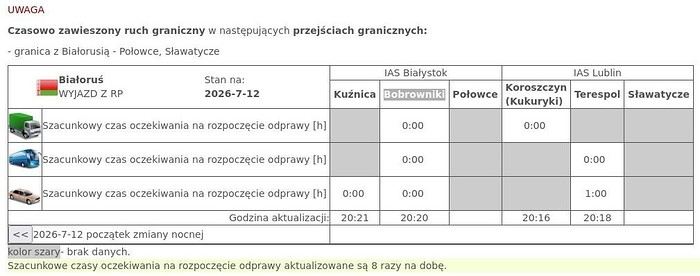
Planning to return to Belarus in mid-August, I just realized that since last September, Poland has reopened several border crossing points, and for buses, this means connections like Białystok-Grodno.
Several bus company routes, like on infobus.eu, take between 3 and 4 hours.
Trains from Warsaw to Białystok take about 1.5 to 2 hours.
This has the advantage of allowing comfortable train journeys with minimal time spent on a bus.
Also, the Terespol-Brest border might have shorter queues if you still prefer a Warsaw-Brest bus.
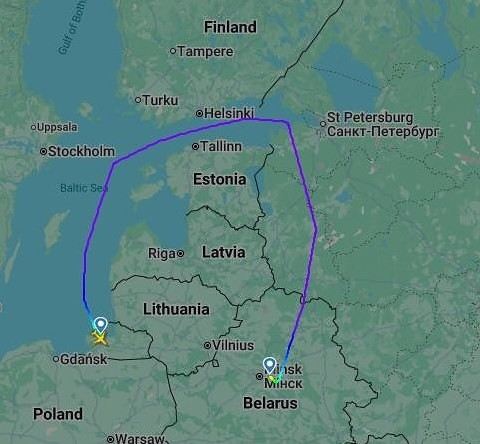
Note that another route to Minsk, if you have a paper Russian or Belarusian visa, is the Kaliningrad-Minsk train. It’s long—around ten or eleven hours—but you can lie down and sleep. An option if you fly into Gdańsk and then take a short bus to Kaliningrad.
There are also Belavia flights from Minsk to Kaliningrad, but they’re expensive. The route is scenic:
In any case, this adds a few more options compared to what’s been available over the last four years.
Hi there.
I’d like to know what the daily budget is for Greece in December. I’ll be landing in Athens and staying there for a week, then heading to some other islands—I don’t have a set itinerary yet. Also, I’ve heard that in December, or early January, the temperature is around 11–16°C. Is that accurate?
Finally, does anyone have a good recommendation for a cheap but clean hotel near the tourist sites? I don’t need a TV or any other extras. Also, is Greece gay-friendly?
I’d like to know the opening hours of physical stores between Germany and Austria, and between Austria and Slovenia, that sell the PAPER STICKER toll vignettes that still exist for 2026—non-digital ones. I don’t think they’re open 24/7, and I can’t find the info anywhere.
Thanks
Hi there,
We’re planning a 3-week trip in late September with our camper van to explore Bulgaria and Romania.
What routes would you recommend, starting from the South?
Is there an option to take a ferry in Italy, and is it worth it?
Thanks for all your tips!😊
Hi there, we’re a young couple and we’d love to go to the Blue Eye (Syri i Kalter) between today (26/06/26) and tomorrow (27/06/26).
Is anyone heading there and could give us a ride? We’re super friendly!
Thanks so much!
We're back. It's still a bit tough to get precise info, so here's a quick trip report!
A good starting point is Shkoder, a really pleasant city. You can easily explore Shkoder itself in a day or two.
Two accessible spots: Valbona and Theth.
In both cases, local travel agencies in Shkoder or online offer round-trip or one-way access packages. Super handy, especially for Valbona.
Valbona and Theth are both very steep! There aren’t many easy hikes for less sporty folks (like me!).
Valbona: The highlight is the amazing 2.5-hour boat ride across Lake Koman. There are day trips from Shkoder, but you’ll only get a short tour of the lake. The best option is to do the full crossing—so spend a night in Valbona (or two if you want to hike in the valley) and return.
Theth is deeply nestled in the mountains. The village at the end of the valley, which is a dead end, has lots of hotels, but they’re pricey. Other hostels are scattered along the mountainside road, but it’s a steep climb down to the village or to the start of the two easy hikes (waterfalls and the Blue Eye). For us, it was a one-hour descent (and ascent!). It’s fine if you have a car; otherwise, keep an eye out for a taxi (cheap) or try hitchhiking—it works really well.
Access from Shkoder to Theth is through an agency. The road is in great condition, and you can also rent a car for 2-3 days in Shkoder. If we did it again, that’s the option we’d choose.
We didn’t do the trek and returned to Shkoder each time. I can’t speak to its difficulty, but we were there in late May, and even experienced hikers had given up because of heavy rain and snow.
Hope this helps! It’s a stunning region you shouldn’t miss.
We’re a Canadian couple, both 77, and we’re already planning our vacation for fall 2027.
Timeframe: mid-September to mid-October... dates are flexible, and we might stay even longer.
Initially, I had planned this itinerary:
Athens (3), Naxos (4), Paros (4), Santorini (4), then a flight to Istanbul (7–10 days!!). This would let us maximize our flights and experience another culture.
That’s a lot of ferries, though... I’ve already cut out Milos.
Our second option would be to stay 2 x 15 days on two different islands, but I’d still keep Istanbul as our next destination... or maybe 30 days on one island that offers the chance to take day trips to other islands where the ferry ride is no more than 2 to 2.5 hours. For example, Naxos to Paros only takes 30 minutes. We could return the same evening or stay overnight.
Naxos seems like the best option!!!
For Istanbul, of course we want to do a day cruise on the Bosphorus and see Hagia Sophia. If we stay 6–7 days, what would be the other main attractions? Are there any points of interest we can reach by local bus?
Hi there!
We bought our tickets to Greece at the end of November 2025, and let’s just say the geopolitical climate has really taken a turn since then with the war started by the United States against Iran. Not to mention all the other conflicts happening around the world 😕... Anyway!
Our flight from Montreal is on May 1st, and I was wondering how things are currently being experienced in Greece.
We were planning to rent a car and had already booked accommodations on three Cyclades islands!!
The oil shortage is also worrying us...
If you could share some insights on this, that would be great!
A little trip report from an 11-day journey to Albania at the end of April 2026, with two friends in their early sixties and beyond...
Our route: Berat, Gjirokastër, Himarë, Tirana
Here are some opinions, tips, and great deals to share:
Flight Round-trip Beauvais-Tirana: Ryanair, 260 € with checked baggage (20 kg) and seat selection. Flight was fine and on time. 2h 30min flight.
Exchange: 1 € was worth 95 lek in April 2026. We were advised to exchange in the airport hall at the Illiria counter (98 lek outside the security zone), saying we wouldn’t find a better rate. However, the exchange rate was 93 lek for 1 euro, while in the city it was 95...
Car rental at Tirana airport for 9 days via Booking.com: 144 € (56 € for the car rental and 88 € for optional full insurance deductible waiver).
Wheego agency: the car was fine, but be careful when signing the contract—they tried to convince us that the insurance taken through Booking didn’t cover everything and insisted we take their own insurance for 250 €... We refused.
After reading about driving in Tirana, instead of starting our trip by visiting the capital, we decided to head straight to Berat upon arrival and return the car at the end of the trip to explore the city on foot. This turned out to be a great choice!
Accommodations: All our stays were booked via Booking.com. Everyone prefers to be paid in euros and in cash—they mention this when booking.
Berat: 2-hour drive from the airport.
Accommodation: Vila Arben Elezi: 135 € for 3 nights with breakfast and private parking. The room was decent and clean but a bit dark, located slightly below ground level near the parking. However, the breakfast on the rooftop was excellent, especially with the stunning view of the "city of a thousand windows." Great location.
Berat was our favorite—there are lovely walks through the different neighborhoods on both sides of the river, each with a very different vibe. The citadel visit is also fascinating, as it’s like a small town within the fortress.
The walk along the river is pleasant, with plenty of restaurant choices. Other restaurants in the old town are also very nice. The White House Restaurant, on the first floor along the road, is good and offers a great view of the Gorica district.
Gjirokastër:
Accommodation: Te Ajdini Guest House: 120 € for 3 nights with breakfast. A private home stay. There’s free parking just before entering the city, a 5-minute walk from the accommodation, which is very convenient since the cobblestone streets are narrow and parking is tricky. Yes, it’s a climb to get to the place, but everything in this city is uphill... The room was bright and clean. Breakfast was very good, hearty, and served in the courtyard with a view of the castle. The guesthouse is a 5-minute walk from the city center (the bazaar) but in a quiet area.
Restaurants: Rrapi and Kujtimi—good and affordable with their little pergolas.
The old town of Gjirokastër is charming but very touristy, with streets packed with souvenir shops and restaurant tables and chairs. Lots of people.
-The bunker visit (near the tourist office) is very interesting: Cold War Tunnel.
The castle offers a beautiful view of the city.
-Visit to the Ottoman house Skenduli: very well done. Don’t forget to climb the ladder facing a trapdoor in the ceiling to see the roof’s framework—it’s like a forest of beams: impressive!
-The bridge Ura e Ali Pasha: A steep 45-minute climb from the city to the site is worth it, but once you reach the viewpoint (which is stunning), you have to go back down a path to reach the bridge. You can drive to the viewpoint, but parking is very tricky.
Around Gjirokastër:
-Just outside the city: Lake Liqeni i Viroit: a nice, ordinary-looking lake, but at the end, there’s a natural spring making the water crystal clear and a brilliant blue—really spectacular, like photos of Blue Eye near Sarandë.
-Drive to Përmet along the gorges: beautiful viewpoints along the way and lovely countryside.
Himarë:
Accommodation: Vila Kosteli: 120 € for 2 nights with breakfast—slightly overpriced for this type of place but very close to a small beach and not far from the promenade with all the restaurants. Private parking, but very tight (4 cars on a tiny lot along the road). The "sea view" room is a bit obstructed by the building across the street. However, the rooftop breakfast view is beautiful. Friendly staff.
Himarë is a pleasant seaside resort, quite calm (but it was April...). There’s a cute promenade with restaurants along the beach. The castle on the heights of Himarë is worth a visit.
Around Himarë:
-Qeparo is worth a quick stop, but Qeparo village is really worth the detour: a village lost in the heights after a scenic drive up from the coastal road—narrow but well-maintained. Beautiful view from the top and a charming village.
-The Big Bunker and Llogora Panorama: take a right turn several kilometers after Dhermi—a road that climbs steeply from the start... A breathtaking winding road that reaches 900 meters in altitude. The view is stunning.
-Several small villages between Dhermi and Himarë are worth a quick stop.
-Porto Palermo Castle is somewhat disappointing.
Tirana:
Taxi from Tirana airport to the city center: 15 € with electric taxis (Green Taxi, Bee Taxi, Do Taxi).
Accommodation: Hotel Nevi Apartment: 63 € for 2 nights. A private apartment in an older building but very clean and well-equipped, with a kitchen and small enclosed balcony.
Great welcome and contact—the owner even booked a taxi for our departure. Very well located, close to the main square, shops, and restaurants. A small supermarket nearby is perfect for stocking up on breakfast supplies.
The city is lively and dynamic, with plenty of green spaces and promenades. Buildings are popping up everywhere, often with surprising architecture—like a building shaped like a face, a huge golden cube, and many others under construction.
-Sky Tower: at the top, a rotating bar offers a 360° view of the city and its buildings. Drinks are a bit pricier than usual, but it’s totally worth it (6 € for a beer or a glass of white wine, 3 € for coffee). We were there for sunset, and it was amazing! A must-do. Arrive early, as it fills up quickly.
-The House of Leaves: a house used for secret surveillance and interrogations during the dictatorship... A great way to learn about the surveillance systems of that era.
-Bunk’Art 2: a bunker in the heart of the city—very interesting, covering the dictatorship period and its system...
-The Pazari i Ri Bazaar: the new bazaar district. The large hall is worth a visit, but souvenir prices are often higher than elsewhere... The area is nice.
Restaurant: Kastrati Restaurant—a bit like a canteen with lots of traditional dishes. It’s on the first floor of a building. Excellent value for money, and the waitress explains the dishes in French.
That’s a little overview of our trip and my personal impressions!
Albania is a beautiful and pleasant country to visit.
If you have any questions, feel free to ask!
Hi everyone,
We’re thinking of spending 3 weeks in Crete between mid-August and early September, renting a car, quickly exploring a few spots in the east, and focusing on the west, southwest, and south.
I’m worried about the heavy tourist crowds. Is it really more noticeable than elsewhere in Greece? Is there a way to avoid the crowds without missing out on the iconic places, which I imagine are stunning in Crete? Thanks for your thoughts and experiences!