salut! j arrive en chine depuis le kazakhstan, destination xian, quelques infos et tuyaux, plans sympas dans la region autour de xian seraient les bienvenus. J ai rendez vous a vec une amie en chine nous devons nous retrouver quelque part, elle opte yunan et moi j arrive par xian, que choisir!!! merci pour vos conseils!!!
Choix intéressant s'il en est mais qui ne se ressemble pas trop... si tu veux jeter un oeil par ici, tu auras peut etre quelques idees supplementaires:Chine
si tu as besoin de plus....😉
bon voyage en tous cas !
Xian, il y a bien sur l'armée de terre cuite à faire absolument. Pour ma part, arrivant de Pingyao, je suis partie ensuite pour Kunming, et après le yunan c'est une région trés belle, Yangshuo, Dali Lijiang. Yangshuo est devenu hyper touristique, mais le coin est très très beau et il y a plein de balade à faire.
Ouf, du kazakhstan...à mon avis, le Yunan, ça me parait plus judicieux, à moins que t'ais envie de te retrouver directe dans le bain urbaniste de Xian ...
Xian...c'est horrible, je trouve. Oui, évidemment, l'armée en terre cuite est magnifique, bien qu'avec un toit au dessus assez laid, mais bon, y a que ça à faire vraiment (à part les gens), et dans les parrages, c'est pas l'extase, alors que le Yunnan...au nord, début du Tibet, Dali, Litang, au sud, le xixuenbanna (j'ai un trou de mémoire quant à l'écriture!). Y a la nature, et culturellement c'est riche...
Voilà mon avis!
pas facile de voir le soleil à xian, quel que soit le temps, et cette fameuse armée, et bah elle m'a ennuyé (bon j'étais malade). C'est aussi bien à voir à la télé.
Par contre les paysages du yunnan valent vraiment le détour, prendre les vélos impérativement et plonger hors des villes
Voici le copié collé d'un petit texte que j'avais écrit sur Xi An à l'intention d un VF -iste qui demandait des renseignement sur la ville.
Si je remets ce texte en circulation ce n'est pas que je le croie parfait ni exhaustif... Il
s'agit simplelent de contrecarrer les quelques reponses ci dessus du genre : xi an est affreux, y a rien à voir etc....
Quand on n' essaie pas de voir, on ne voit évidemment rien !
B.
* **********************************************
1° Terracota; (armée de Qinq shihuangdi)
Il y a deux agences sérieuses dans l'Hotel Bell Tower : CITS et Golden Bridge . Proposent un circuit de l'EST, qui comprend en général La Gde Oie, Banpo, les Thermes et l'armée enterrée. Prix dans les 300 yu. Pas trop speedé, sf pour la pagode de la gde Oie. Ca parait cher mais TOUT est compris, entrées, et un repas (très moyen).
Il y a d'autres agences, vers la Gare de chemin de fer. Prix beaucoup plus bas, mais bien voir si les entrées sont comprises.
Si tu n'as en tête que l'armée enterrée : Bus local......
( Un circuit de l'Ouest est proposé ici ou là. Attention ! Très très cher ds les agences ci dessus.Voir circuits chinois. J'ai personnellement pris pour un peu plus de 200 yu un circuit faisant Xianyang, Qianling, une maison troglodyte., Tombeau de Princesse Yong Tai et surtout Famensi... et (malheureusement beaucoup d'horreurs annexes ) .C'est un circuit long, passionnant mais ss doute pas pour une première visite.))
2°) En ville.
Quartier Hui et Mosquée. Très agréable et originale.La mosquée est pleine de curiosités. Autour boutiques de souvenirs délirants et bonne bouffe Hui
Musée : Le Musée "historique" est un des plus beaux de Chine ; à ne pas manquer si interessé à l'Archeo. Le Musée des stèles, pas ininteressant, dans un quartier "rénové / reconstitué " est un peu technique, Nestorianisme. (!)...
Temples. Je préfère de loin la Petite Oie (cadre, calme) à la Grande (froide, Beaucoup de monde).
le Temple des Huit Immortels, encore centre dao bien vivant. Tres chouette.Placette avec souvenirs divers, religieux entre autres, assez "authentiques" .Chants, musique.
Portes (Cloche//Tambour) . Remparts...Bof;
3° pour se nourrir . a-Quartier Hui déja dit. b- Pour un repas "nappe blanche" le resto du Bell Tower est très accueillant.
c-Un "snack chinois" près de la librairie XinHua , Dong Lu, propose d'excellents plats, certains assez élaborés... Ecrevisses, bière bien fraiche (pas donnée...)
4° circulation .Nombreux taxis. souvent honnetes.... Attention :distances souvent plus longues que prévu.
5° logement... Je dois avouer que lors d'un voyage en Chine qui passe par Xi'an, j'en fais tjs mon "étape de luxe" et loge, moi aussi au...Bell Tower. Superbement placé et accueil excellent....Dans les 5OO Yu. ( 'après discount) On y parle un peu fcs.
Je suis tout a fait d'accord avec toi le "Chinois", 😉
Xian n'est certes pas la plus belle ville de Chine mais bon, elle reste tres interessante et les alentours sont aussi tres jolis ;
On y rencontre des tas de gens interessants et ouverts et la cuulture de la region est fortement marquee pour le peu que l'on prenne le temps de se perdre dans les quartiers un peu moins proches du centre.
Pour les amoureux de la nature "Hua shan" reste malgre le monde une tres belle ballade (rester a dormir sur un des temples au sommet d'une montagne une bien belle experience.... )
Salut à toi Chinois.
A vrai dire, je ne suis pas très, très ville...et Xian n'a pas du arrivé au bon moment, après je ne sais plus combien d'heures de train, une maladie et une fatigue assez énorme de fin de voyage...peut être avais je trop d'attente. En fait, un temple planté au milieu d'une ville, ça me fait moins d'effet que de crapahuter en pleine nature pour y accéder. Question de gôut.
Tu as raison, j'aurais pas du dire horrible, je suis allée un peu loin. Je l'avoue complètement. J'ai pensé qu'à ma propre déception pas très objective.😊
Xi'an la ville dans l'ensemble n'est pas super belle, malgres que certains quartiers valent vraiment le detour...
mais autour de Xi'an regorge de petit tresor (je ne parle pas de l'armee de terre cuite!) a voir absolument... (tombeaux d'empereurs (Qian, Zhao...), villages avec maisons typique 1/2 cylindrique en terre, des paysages assez sympa quoique moins atypique qu'a Yangshuo, Hua Shan une des 5 montagne sacree...)..
Et les locaux sont dans l'ensemble assez sympa et moins interesse qu'a Yangshuo devenu hyper touristique... on peut presque y vivre a l'occidental..(a Yangshuo). On y trouve tous ce qu'il manque aux Europeens qui viennent en Chine.
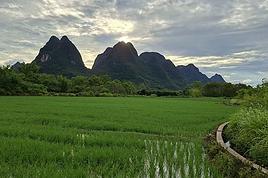
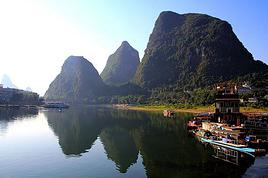
Cela dis, les paysages de Yangshuo sont magnifique, et typiquement chinois, il y a des pecheurs au cormoran sur des barque en bambou, des rizieres... Il faut aussi souvent payer pour prendre en photo les locaux...
Revenant de quatre jours à Xi’An, j’apporte mon petit écot, en espérant que ça aidera des gens. Il ne s’agit que de mon opinion, elle vaut ce qu’elle vaut…
Xi’An : une très agréable surprise, je me suis régalé à pieds pendant quatre jours. Je la mettrais dans mon top 3 des villes de province, après Xiamen quand même. Par contre c’est une ville très typique de Chine intérieure, donc très riche historiquement mais urbanistiquement très Chine post-78. Ce qui veut dire notamment que la ballade sur les Murailles n’est pas forcément une sinécure : vous aurez vue à l’intérieur sur des terrains vagues, à l’extérieur sur des tours grises de 30 étages.
Shaanxi Museum : un très beau bâtiment, une collection impressionnante, très bien documentée et tout en anglais, des vidéos de reconstitution, quelques œuvres exceptionnelles. On m’a demandé mon passeport à l’entrée, mais je n’ai pas payé : tarif d’hiver ou tarif étrangers ? En tout cas à ce "prix" là il faut y courir !
Small Goose Pagoda : la pagode est agréable, les jardins très calmes, l’ensemble un peu cher (50 RMB) mais donne accès au tout nouveau musée de la ville de Xi’An. Pas indispensable après le Shaanxi Museum (collection moins riche). Sortir par le côté musée, tourner à gauche et longer l’avenue vers le sud – après les terrains de basket sur l’autre trottoir à dix minutes vous trouverez un marché aux antiquités qui n’est pas indiqué dans les guides, avec peut-être quelques trouvailles pour vous ! Pas vue la Big Goose.
Tour de l’Est : j’ai décidé de passer par mon hôtel pour booker un tour (commodité) et me suis retrouvé avec cinq hommes chinois, pour une expérience toute particulière (poses sérieuses devant les pierres calligraphiées, magasins de souvenir etc). J’aime bien mais conçois que le voyageur type préfèrera éviter et organiser le tour lui-même. Ca n’avait pas l’air difficile. Huaqing Pool : amusant, noir de monde. Quelques beaux bâtiments.
La tombe de Qin Shi Huang est une agréable ballade : monter sur la colline permet de jouir du paysage et du vent ; les jardins tout autour ne sont pas à négliger. Je n’ai pas eu le temps de tout voir (tour oblige) mais les jardins « à la Versailles » sont truffés de petites pancartes en anglais très didactiques : chacune comporte une question (« pourquoi Qin Shihuang n’avait pas d’impératrice ? », « A-t-on vraiment enterré vivant des esclaves ? » etc) et sa réponse historique. Vivifiant par rapport aux explications chinoises classiques (dates et mensurations…). La reconstitution du tombeau lui-même est d’un kitsch à l’excès mais a un côté grandiose et solennel assez amusant. 15 RMB de plus.
Armée de terre cuite : comme tout le monde l’annonce, impossible de rien voir sur place car trop éloignées. Le hall en acier est impressionant. Les statues sont loin… Le Hall 3 en revanche, qui permet d’une part de voir une dizaine de statues de près sous leurs vitres, d’autre part de prendre la mesure du travail archéologique (statues encore brisées dans l’argile, traces de couleurs) est exceptionnel. Le site tout entier vaut la peine pour ce seul hall 3.
Temple des huit immortels : l’une des merveilles de la ville. Les indications du Lonely pour y accéder ne valent rien mais il est vrai que la rue de derrière (beihuoxiang, de mémoire), avec ses marchés et ses fortune tellers, est très sympa. Le temple est encore en activité, je suis tombé sur une cérémonie un samedi matin. Hommes et femmes se partagent étonnement les tâches de moine aspirant – les jeunes filles en tenue de moine taoïste sont hyper sexy (une jeune moine dans son monastère : mon nouveau fantasme 😛). A la sortie du temple, traverser le faux marché d’antiquités où somnolent des chatons, prendre à droite à la sortie et marcher jusqu’aux murailles de la ville. Vous passerez un marché aux oiseaux et un petit temple minuscule, seul survivant entre deux terrains vagues.
Murailles : très beau travail mais cher pour ce que c’est (40RMB). Leur préférer sans doute la promenade à l’extérieur des remparts. La promenade en vélo (100 min, +20 RMB) doit néanmoins donner un bon aperçu de la ville.
Porte sud / quartier des peintres : hyper touristique mais promenade toujours très agréable. Au rond-point de la porte sud, continuer tout droit vers l’ouest jusqu’au petit temple taoïste. Rue de bars un peu glauque à sa droite.
City God temple : peu d’intérêt mais cinq minutes magiques en prenant la petite rue qui file à droite du « temple » - sombre, destroy et très populaire, bon pour observer la vie des petites gens, puis émerveillement lorsque l’on débouche soudain sur xxx, en terre musulmane !
Quartier musulman : LA raison de visiter Xi’An. Des visages extraordinaires, une vie de quartier hyper active, des boucheries et des ateliers à en avoir le vertige. Traverser les deux rues principales pour le plaisir de manger mais s’en éloigner : j’ai découvert quatre mosquées cachées derrière les immeubles, dont deux de type arabe avec d’immenses dômes verts. Je recommande (de mémoire) xxxx xxx et xxx, seule rue de la ville où l’on trouve du hulatang après 10h (en face du Playboy shop). Tout au nord-ouest du quartier, j’ai trouvé une rue (xicang nanxiang) qui serpente à droite à gauche pendant une demi heure avec un marché où l’on achète en vrac des vases bleus, du viagra, des oiseaux, des peaux de lynx, des chaussons de mauvaise qualité, des couteaux et des serpents vivants.
Drum / Bell Towers : pas visité la tour de la cloche, étonnament posée au milieu du plus gros rond-point de la ville (bonjour la vue). A 200m à l’ouest, la tour du tambour est magnifique de l’extérieur comme de l’intérieur (expo de vieux tambours puis de meubles Qing sur deux étages). Bien supérieure à celle de Pékin.
Nourriture !! L’autre highlight de Xi’An. A tester en priorité : hulatang (velouté de légumes très épicé et consistant) ; yangrou baomo (soupe de mouton et morceaux de pain blanc) ; niurou lamian (soupe de nouilles) ; caoyang fenr (pas déterminé ce que c’était – ressemble à des patates frites mais ce doit être du tofu frit avec du piment) ; baozi du quartier musulman (énormes, trop fourrés : sucrés et salés) ; gâteau des Huit trésors vendus partout pour 1 yuan : exceptionnels ! les roujiamo en revanche (sortes de kebabs) sont beaucoup moins bons qu’à Pékin…
Hébergement : j’étais à la Ludao Youth Hostel. A trois minutes de la gare. Staff adorable si vous parlez chinois, hyper serviable. Sexshops et « salons de massage » aux néons violets et roses partout autour : elles ne vous mangeront pas mais ça donne un côté glauquy à la promenade du soir. Les deux autres IYH de la ville, sous les murailles sud, ont l’air beaucoup plus sympas.
Bilan : J’ai vraiment passé quatre jours admirables à marcher, marcher, marcher. Ville incontournable sur votre trajet. Incontournables : Terracotta hall n.3 / Temple des immmortels / Drum tower / Quartier musulman.
N’hésitez pas à me poser des questions en PM.
It's raining in Xi'an, and I'm taking the opportunity to jot down a few notes. Don t bother reading everything I m mostly writing this for my mom, who s hungry…
Next year, we’re celebrating 20 years of marriage (and travel 🙂), and we’re looking for something new, pretty legendary, and something the teens will enjoy too.
The family council has settled on Japan for now. And it’d have to be a summer trip—no choice there.
The catch: I keep reading that August isn’t the right season for southern Japan. It’s hot, humid, and there’s a risk of typhoons… Okay, but what does that *actually* mean in practice? Are there any travelers who’ve been there during this time? Is it *that* unbearable?
We’re pretty familiar with Southeast Asia—last year, we dealt with scorching heat in Vietnam and insane humidity, plus a typhoon we experienced from a distance, and visiting Angkor in the blazing sun. Is it worse than that?
Hi,
July 2026: I’m writing to you from Dali.
First, I got scammed on Booking—AI-retouched photos. No tourists at this hotel (Yishanju Designer Hotel), and the reality was horrible: dirty, with a disgusting breakfast. It’s better to use Trip.com here.
Next, the old town was an infernal cacophony, packed with tourists who shoved past without a care. Some vendors harassed you to buy things. All the stalls sold the same cheap plastic junk or other uninteresting stuff. The beautiful scenery was ruined by vendors lining 100% of the alleys. Impossible to walk, crushing heat, nothing good to eat except fresh fruit. Horrible experience.
Day 2: We went to Cangshan Mountain by cable car—the ride was short and nothing spectacular. We were at 2,600 m.
My plan was to see Erhai Lake. Unfortunately, I followed the advice of an AI chatbot: take the boat at Langkan Dock. The Didi dropped us off in the nearest area, which was full of charming little alleys but packed with Chinese tourists. The three-wheeled yellow cabs zoomed through the narrow streets, forcing you to hug the walls, on top of the scooters and other pedestrians to deal with. Crossing the neighborhood was hellish and suffocating. Once out, we hit the "corniche," which was also packed with Chinese tourists. The lake’s edge was all pebbles, and everyone was standing around taking photos. I was with my 5-year-old son. I would’ve liked to sit down and let him play with stones by the water, but it was clear we didn’t belong. They were even shoving each other for a shot! There were no boats in sight. In short, we’d had enough, and there was nothing interesting there either.
On the way back, we had to cross that maze again under the scorching sun. My son was braver than me—I even had a little dizzy spell from all the chaos. Add to that Dali’s altitude (2,200 m), so altitude insomnia, fatigue, and vulnerability during the day...
The restaurants weren’t inviting—the staff served sticky rice in a little bucket. The dishes were wrapped, and you had to figure it out yourself. After that, they ignored you completely, even if you were the only tourist.
On the 3rd day, it was time to leave for Shaxi. I hope to see beautiful villages. But honestly, I’m exhausted by this atmosphere where everything is complicated, communication is never smooth, noise is everywhere, and the behavior of some Chinese people is abusive...
Silver lining: not a drop of rain in 4 days and blue skies.
I couldn’t visit the villages in southern Yunnan because of rain and storms there...
But I was expecting to see a few more tourists.
I’m heading to Yunnan in February 2027.
We’ll be traveling exclusively by train since my daughter gets car sick.
Our itinerary includes:
Kunming
Jianshui
Dali
Shaxi
Lijiang
Shangri-La
I’d love any tips, especially other places to visit (without winding roads) or great hotel, guesthouse, or minsu recommendations.
Thanks!
Claudine
Hey there,
In the sea of VPNs, I'm looking for one to use in China for just a month (free or paid). Which one should I pick? All the ones I've found are for several months or even a year.
I’m planning an itinerary for Hokkaido but I’m struggling to decide if late May to early June will be the right time.
Too early for the flower fields but…
What do you think?
Hi,
Our trip is planned for 20 days in Japan next April. We have a free subscription that would allow us to use 35 GB (I’m a bit confused), but we also need to be able to make phone calls with a French couple traveling with us for a few days, and that seems impossible due to cost... Any solutions for using GPS while keeping those 35 GB? Used to traveling in Southeast Asia, we usually rely on local SIM cards. Is it easy to do the same in Japan?
Thanks for your help!
Best,
Tialou
Hi,
My departure is coming up soon—two months backpacking in Taiwan, so much to discover! I’d love to hear about your travel experiences.
My main interests are meeting people, understanding how things work, hiking, and nature in general. I’ve also done a lot of reading about Taiwan’s complex situation.
I do stone sculpture.
I also want to visit Orchid Island for its history.
Marie
Hi,
I’ve always been used to exchanging my money (€) in town no matter the country (with a "mini exchange" at the airport if needed).
I can’t find any recent posts on this topic from the last few years.
Does anyone have any insights on this? Intrinsic benefits, best places to exchange, etc.?
I arrive at Tokyo Haneda on a Friday around 12:30 PM, and my first night is very close to Shinjuku.
Thanks.
Here are some tips from our 6-week trip (summer 2026) to China, Vietnam, and Cambodia. We traveled as a family of four with two kids aged 15 and 12.
I hope these notes help other travelers!
CHINA
General
You’ll need to download and set up a few apps:
- Alipay and WeChat for payments (I didn’t withdraw a single bill the entire trip)
- Didi for taxis
- Amap = Chinese Maps (works great, especially for subways)
- A translation app (we used Papago, but it sometimes gave weird results)
- Google Lens for translating menus or signs—super handy.
- HelloRide for bikes
- Gemini and ChatGPT for everything: understanding daily life, enhancing visits, checking the weather, finding things.
- HomeExchange if you want to lower travel costs (few listings in Asia except in big cities, often expats)
- Trip.com is very useful, even essential, for trains, domestic flights, and hotels. Like Booking.com, the more you book with them, the more perks you get. So I’d even suggest checking flight tickets on this site, even if it’s a bit pricier. However, buying train tickets is complicated because (1) they only open 15 days in advance, and (2) they sell out fast. Trip.com just promises to buy them as soon as they’re available but doesn’t always succeed. It’s stressful and might force you to change your plans, especially if you’re aiming for a sleeper car and there are no seats left. Watch out for station names—many cities have multiple stations, including a high-speed rail one outside the city.
For internet, we got the Asia plan from Holafly. It worked but seemed much slower than Chinese internet. I regretted not buying a Chinese SIM card because without internet in China, everything is VERY complicated (money, transport, etc.).
For the firewall, we used ExpressVPN, but it wasn’t always reliable. A bit disappointing. Ask ChatGPT for tips with screenshots to improve the settings.
Since we only had one SIM card with internet, we couldn’t rent shared bikes. If I were to do it again, I’d get a SIM for each person, even the kids, because distances in cities are huge. We walked *a lot*. Same goes for buses—it’s tricky with just one internet connection. Better to have a phone per person with internet.
Book your visits as far in advance as possible—they often sell out.
Watch out for power banks: if they don’t explicitly say "3C," they’ll confiscate it. Even if there’s a little airplane logo.
Shanghai
In the evening, the streets leading to the Bund from the metro were so crowded that police were out in force blocking roads. Arrive early. We went around the north side.
Suzhou
Be careful—there are two stations (common in China), and the high-speed rail one is 45–50 minutes from the old town.
The Humble Administrator’s Garden was *packed*—we don’t recommend it. It turned into a marathon day from Shanghai (almost 4 hours from our hotel to the garden).
Beijing
Forbidden City: Don’t go—I know it’s a shame, but it’s too crowded. I couldn’t buy tickets on the official site because of the kids’ passports. We ended up with a guided tour, the only way to get in (tickets sell out fast). The visit was disappointing—bad guide *and* massive crowds. You’ll queue a lot to enter and see certain areas. You’ll be checked often, so pack your bags carefully.
Great Wall at Mutianyu: Crowded. Two hours by bus, and even though we arrived early, people were already leaving! I really think the best option is to leave your big bags in Beijing and stay overnight near the Wall. That way, you’ll have it to yourself a bit more. For transport: get off at Tiananmen Square metro and look for buses with official guides in bright yellow-green vests. No need to buy tickets online—they made me cancel mine to rebook on the spot. Buses leave when full. Note: the cable car and chairlift are separate—if you want to go up one side and down the other, you’ll need different tickets. The endless queue for the toboggan ride put us off.
Quick tip: Incredible swimming spot in Beijing—on the north shore of Houhai Lake, you can swim by crossing the barrier. We did it twice with about ten other people. Bring a swimsuit!
Shapotou Desert
Amazing, but it gets *very* hot in the afternoon. We had a tent (not an air-conditioned bungalow), which was unbearable during the day. We hung out in the restaurant.
The paid activities are fun, except the camels—they look sad. The real highlight is the evening and sunset. The only downside: you can’t explore the desert alone or far—they don’t rent 4x4s, for example.
We stayed at "The Desert Camping Hotel of the Proprietress of Shapotou." They were lovely.
Zhongwei
Gaomiao Temple and its underground: Fun and short—you’ll see quirky Buddhist hell paintings.
Xi’an
Terracotta Army: We took a Didi because for four people, a car was almost the same price as four shuttle tickets. It was packed—chaotic to see properly.
We visited the halls in order: 3, 2, then 1—a good choice.
Hua Shan Mountains: Left before sunrise to arrive when the ticket office opened (7 AM, I think). We were shocked to see so many people already coming down.
45 minutes by bus to the west cable car, then 15 minutes up.
We did the west, south, east, central, then north peaks (in that order) before taking the other cable car down (you can buy the ticket at the top). A beautiful day.
In the city, check out...
Chengdu
Panda Research Center: Like Hua Shan, plan to arrive when the ticket office opens. Already *tons* of people, and it moves fast to see the big pandas before their nap. Have them drop you at the west entrance (not south), or you’ll have to walk uphill.
Leshan Giant Buddha: Interesting. The trip is a bit long (metro, then train, then city bus, then shuttle on-site). We didn’t take the boat option but walked. In the end, you only spend a few minutes at the Buddha’s feet, but it’s a nice day out.
Hotel tip: Panda Enjoy Home Hotel Apartments (Chengdu East Railway Station Dongda Road Branch). The view is insane, and the neighborhood is super convenient and nice. 646 CNY for 2 nights.
Swimming: The municipal pool is an interesting experience, but don’t expect to swim—no one does. Everyone just splashes around where they can stand. The hours are a bit odd, with a break in the late afternoon.
Kunming
The bike path along Dian Lake is pretty and often well-protected from cars. But like everywhere in China, it’s *packed*. Not much to say about visits—the flower market is a wholesale market, not very interesting. The ethnic minorities museum closed right in front of us.
All the big malls are good for shopping.
Dali
We thought we could bike around the lake in two days. Wrong on two counts: First, the lake’s edge is blocked to traffic and reserved for bikes (or tourist mini-buses). So you’re stuck on the main road, which never gives you a view of the lake, with all the trucks and cars. Doing 120 km like that wouldn’t make sense, in our opinion. The rice fields around are nice but not as impressive as elsewhere, so Dali isn’t worth it for that.
The old town, all restored, is pretty but *packed*—thousands of people, especially in the evening.
Hekou (Vietnam border)
Comfortable train from Kunming. In the parking lot, a bus (not well-marked, but Didi is an option) takes you to the border in 15–20 minutes. Short wait at both border posts. Fun to see the two lampposts near the border line: the Chinese one is new, modern, with a surveillance camera (of course), while the Vietnamese one is old and a bit rusty.
VIETNAM
General:
- You’ll need the Grab app for taxis
- Very disappointed with 12Go—it doesn’t show all buses, never connects you with the company, and refuses refunds. Try booking directly with companies like FUTA Bus instead.
- Credit cards are often accepted (supermarkets and modern stores), otherwise, you’ll need cash
Lao Cai
2 km between the border and the train station.
The sleeper bus to Hanoi with Sao Viet is well-organized—it works.
Hanoi
Ho Chi Minh Mausoleum closes early (10:30 AM, I think).
Women’s Museum: Very good, not too long
Temple of Literature: Beautiful, fairly quick
This is where you should buy souvenirs, clothes, and knockoffs—the prices are reasonable, and the sellers are nicer than elsewhere. We recommend Cho Dong Xuan.
Tu Long Bay
We did 2 days, 1 night (so really 24 hours on the boat) with Parfum d’Automne (French-speaking agency), which put us on a Cycad Cruise boat. Cost: 300 € per person—expensive, but it was amazing, super luxurious, and the buffet meals were delicious. We don’t regret the splurge. The only downside: no swimming in the bay (but there’s a pool on the boat). To swim, you’d need a 3-day, 2-night trip to an area not protected by the maritime park.
Phong Nha
If you didn’t do the northern mountains due to time or weather (like us), Phong Nha is a great stop for a motorbike ride. It’s beautiful, especially the mountains west of the city toward the caves.
There are two (small) swimming spots at the Botanic Garden—a pleasant 45-minute walk without stops.
Hotel tip: Sunbeam Village (very friendly, pool, breakfast by the river, motorbike rentals)
Da Nang
Hotel tip: Meridians by Hsuite—you’ll have the beach almost to yourself. You’ll still need to walk 15–20 minutes to the hyper-touristy area if you want to rent surfboards (150–200k VND per hour).
The beach is beautiful, and the water is 30°C—great for a break on a long trip, especially since all transport goes through Da Nang.
Hoi An
45 minutes from Da Nang, so it’s easy to visit in a day, especially since the city isn’t that big and it’s *very* hot.
Cooking class: MS Hanh cooking class—great (the market tour is a bit useless). We don’t recommend the "basket boat" tour—it’s a bit sad on a big brown pond with elderly guides.
Ho Chi Minh City
Ben Thanh Market is a nightmare: starting prices are exorbitant, and the vendors are aggressive. Don’t go.
The War Remnants Museum can be really tough for kids.
Can Tho
Avoid this city. We made the mistake of going to see the floating market—don’t.
Chau Doc
No Grab in the city, but regular taxis.
One day is enough if you go early to the forest and the mountain in the late afternoon.
250k VND per person for the forest and its canals (45 minutes by motorbike)
The sunset at Victoria Nui Sam can be magnificent if the clouds cooperate.
Cheap and good restaurant: Quan Nem Nuong Sau Hiep
Hotel tip: Homestay Khoa (2,250,000 VND for 3 nights)—adorable hostess, full of tips, clean rooms.
The speedboat to Cambodia is more comfortable than a bus. Book with Hangchau a few days in advance—payment in cash on the day (1,640,000 đ).
CAMBODIA
General:
- Issues with the "Bakong Tourists" app—we had to go to a big bank to load money onto it. We barely used it afterward.
Phnom Penh
For us, a day and a half is enough if you want to spend more time elsewhere.
Markets close early (around 6 PM) and are less interesting than in Hanoi, for example.
The Royal Palace has a break from 11 AM to 2 PM, but there aren’t many people in the afternoon.
Siem Reap
Trip with Capitol company—the bus is basic but cheap. Departs at 10:15 AM, 7-hour ride.
Angkor entrance fee: 62 USD per person for a 3-day pass. Tickets are picked up at Angkor Enterprise.
Renting two 125cc motorbikes: 10 USD each, plus 7 USD for gas.
By bike, it took me 25 minutes to reach Angkor Wat’s pools. A basic city bike rental was 1 USD per hour.
Short circuit by motorbike (in reverse): 7 hours with stops everywhere.
Grand tour by tuk-tuk: Only 5 temples, 4.5 hours.
If you want to see lots of monkeys, they’re grouped west of Bayon.
For the temples, we asked Gemini (AI) at each stop to point out details that might interest kids (who can get bored with the repetition). It gave fun facts and things to look for—great for the little ones.
Hotel tip: The Five Senses, run by a Frenchman, Bruno, who knows Cambodia inside out and organizes tours.
Restaurant tip: Wild (only spring rolls, but *so* many varieties—delicious and cheap)
Watch out: 1 hour to the airport, 50 km from the city.
Show tip: The Phare Circus
Has anyone taken the bus recently, especially the Busda bus from Dongsi subway station to Mutianyu or the special tourist bus from Qianmen to Mutianyu? If so, I’d love to hear your feedback!
I’m traveling solo to China on September 18th and I’m completely overwhelmed by all the info out there.
This isn’t my first trip, but it’s still tough to make choices, so I’m open to outside perspectives.
This time, the plan is southern Kyushu with a slightly more off-the-beaten-path twist.
I’m not sure if you’ll be able to help since I’m skipping some of the classics in Kyushu, but you never know.
I’d love to hear your thoughts on whether this itinerary is realistic in terms of time spent in each place, travel time, and the overall pace of the road trip. Just to note, I already have my translated driver’s license.
Here’s the itinerary:
- **Day 1:** YAMAGA / overnight in Yamaga or Kumamoto
Depart from Osaka by train early in the morning to Kumamoto, pick up the rental car, then drive to Yamaga for a visit. Overnight in Yamaga or Kumamoto.
- **Days 2–4:** HITOYOSHI / overnight in Hitoyoshi
Drive to Hitoyoshi for 3 days and 3 nights, including a visit to the town, nearby waterfalls, a walk along the Kuma River, a tea producer visit, and some craft activities.
- **Day 5:** AYA / overnight in Miyazaki
Drive to Aya, visit the town, craft activities, the forest, and the suspension bridge.
- **Day 6:** AOSHIMA - NICHINAN COAST / overnight in Miyazaki
Udo Shrine + Aoshima + scenic drive along the coast.
- **Day 7:** MIYAKONOJO / overnight in Shibushi
Drive to a waterfall, then continue along the Nichinan Coast if there’s anything left to see, or visit Kojima Island.
- **Day 8:** SHIBUSHI
Walk around the port and along the Osumi Peninsula coast, maybe as far as the Kishira/Hetsuka coast, or visit a black pork producer, a market gardener, or a tea producer. Overnight at a farm?
- **Day 9:** KANOYA / overnight in Kagoshima
Visit Ogawara Waterfall, Nishiharadai Park, and Kannon Cave, then Sugawara Shrine, followed by the drive to Kagoshima.
- **Day 10:** KAGOSHIMA / overnight in Kagoshima
Explore the city + whisky distillery in Hioki.
- **Days 11–12:** KOSHIKISHIMA / 2 nights in Koshikishima
- **Day 13:** AKUNE OSHIMA / overnight in Akune
Ferry, then drive to Akune Oshima with a stop at Sendai Taki.
- **Days 14–15:** AMAKUSA / overnight in Amakusa
Drive via Nagashima and visit Shimoshima (Amakusa).
- **Day 16:** AMAKUSA / overnight in Fukuoka
Drive back toward Kumamoto with stops along the way, return the rental car, then take the train to Fukuoka.
- **Days 17–18:** FUKUOKA CITY / overnight in Fukuoka
Possible half-day excursion to Nokonoshima, Munakata, or Nanzoin.
Any thoughts or suggestions?
Too ambitious?
I could add an extra day but would prefer not to if it means less rushing around.
Hi everyone,
To simplify logistics, I'm considering renting a car for 5/6 days in the Japanese Alps before heading to Kyoto solo.
Is driving difficult or even risky in this region?
Thanks for your feedback!
Tara
We’re arriving as a group of three in Tokyo on Saturday, October 17th, then heading straight to Kyoto by direct train.
On Sunday and Monday, we’ll explore Kyoto, and in the evening, we’ll take a train to Osaka to spend the night.
On Tuesday, we’ll pick up a rental car at Itami Airport for a 6-day/5-night road trip around Shikoku:
- 2 nights in the Iya Valley
- Thursday morning, we’ll head to Matsuyama for 2 nights.
- Saturday, we’ll visit Mima (town, a few temples + overnight stay) and return on Sunday to drop off the car in Osaka.
We’ll leave very early on Monday the 26th by plane for Aomori in northern Honshu, where we’ll pick up another rental car at the airport for a 5-day/4-night trip:
- Day 1: Tsugaru Peninsula (Takayam Inari, Cape Tappi, Kanita); overnight in Kanita
- Day 2: Ferry transfer to the Mutsu Peninsula (cliffs, Lake Usori); overnight in Shimofuro
- Day 3: Head to the Hakkoda Mountains and onsens galore; overnight TBD
- Day 4: Return the car in Aomori by noon and explore the city before taking the train to Tokyo in the evening
We’ll spend Friday night in Tokyo, wander around on Saturday, and head home on Sunday.
Thoughts on the road feasibility of this trip? We’ll be there right in the middle of Koyo season, so it’ll be busy...
I know it’s a lot of driving, but there are two of us who can take turns. We’re not afraid of driving, even in the mountains and on the left side! Just wondering, are we going to be rushing, or is this manageable? AI says it’s all good, but it’s not the one driving...
Any tips for booking accommodations in the Iya Valley? Not many places have email addresses or websites (I know Booking.com exists, but not all listings are on there... and given the season, I think it’s better to book ahead!). Same question applies for northern Honshu.
For the rental car, I’m thinking of going with Alamo since at least it’s in French and straightforward, but are there any direct rental companies with user-friendly websites (Toyota Rentacar, ugh... 🏴☠️)?
Another question: With so many trains, is it even necessary to book them in advance? Can we just go to the ticket counter and grab seats on the spot?
For paying for the rental car, do we need a credit or debit card?
I saw there are several "authentic" villages about 90/100 km from Beijing.
Including: Lingshui, Liuliqu, Sangyu, Miaoying, and Cuandixia.
Has anyone visited any of them? I was thinking of choosing Cuandixia—what do you think?
Thanks in advance.
Hi everyone!
It seems there’s a flea market in Tianjin that’s way more interesting than the one in Beijing. I’ve been searching online but can’t find the right one… The one I’m looking for is called gu wan shi chang (my PC won’t display the Chinese characters…). Does anyone have the address and has anyone been there before? The one in Beijing has lost a lot of its charm over the past 10 years, so I wanted to find another. Thanks!
I’m looking for advice from seasoned travelers about a roughly one-month trip to Japan.
From late October to late November 2026.
We often travel in Southeast Asia but have never been to Japan.
Based on what I’ve read, I’d love to hear your thoughts on:
- Is traveling day-to-day, without booking hotels or trains in advance, possible in Japan?
(I’ve read many travel journals and blogs that say everything was booked way in advance… but that’s not how we usually travel.)
- Will the Japan Rail Pass be worth it for us?
(According to an old simulator, I’m looking at around 400 € for trains compared to 570 € for the JRP.)
Here’s our rough itinerary (which may change):
- Arrival Osaka: 3 nights with Nara
- Hiroshima and Miyajima Island: 3 nights
- Kurashiki or Naoshima: 2 nights
- Himeji: 1 night
- Kyoto: 4 nights
- Kanazawa: 2 nights
- Takayama and Shirakawa-go: 3 nights
- Around Mount Fuji: 3 nights
- Tokyo with Nikko: 6 nights (no theme parks)
Departure from Tokyo
I booked my trip from May 5 to 26, 2027. I’m starting to plan my itinerary and look for hotels (I know it’s early!). While I’ve found some in Seoul and Busan, I’m noticing that elsewhere—like Yeosu—most hotels aren’t available (on Booking.com, for example, almost all are unavailable). AI tells me not to worry because hotels in South Korea only open bookings 6 months in advance, so it’s normal to see most of them unavailable on booking sites.
Could you confirm this for me and, of course, reassure me (!)? Thanks so much.
philippe
We’re back from a one-month trip to China and wanted to share our itinerary. Hopefully, this can give future travelers some ideas for exploring this beautiful country.
Beijing → Temple of Heaven / Forbidden City
Jinshanling → Great Wall
Zhangjiajie → Tianmen Mountain and Heaven’s Gate
Wulingyuan → Avatar Mountains / sandstone pillars
Fenghuang → riverside houses
Ping’an → terraced rice fields
Tiantouzhai → village / rice terraces
Yangshuo → Li River / karst mountains
Shanghai → skyline with the Oriental Pearl Tower
Our travel journal is available on our travel journal, written day by day. You’ll find lots of photos and some travel tips there.
I’m starting to look at neighborhoods in Seoul, and I’m leaning toward staying in a hotel in Insa-Dong—I’ve spotted one really close to Unhyeongung.
Is this a good area—nice and convenient for exploring the city?
Otherwise, I’ve also found another hotel in Yongsan-Gu, right near the station of the same name. Is that station useful for getting around Seoul?
Since I’ll be in South Korea for nearly two months, I plan to spend at least a week in Seoul to recover from jet lag (it takes me a while to adjust...). So, I’d love a neighborhood that’s pleasant and a hotel not too far from a subway station.
Hi there,
I’d like to do this cycling route over 2 or 3 days. I’m struggling to figure out and find a (good) bike rental that lets me start in Onomichi and drop off in Imabari. Can anyone help with great tips for rentals and accommodations along the route? How do I get back to Onomichi afterward?
I’m back with my detailed itinerary for 20 days in South Korea—it’s my first trip to the country. Our idea is to experience a more rural and cultural Korea. Here’s the rough plan: Seoul for 4 nights at the start and 1 night at the end, Gurye for 4 nights, Suncheon for 4 nights, Namhae for 4 nights, and Gyeongju for 2 nights. The goal is to pick a base and explore the surrounding areas. What do you think of this itinerary? Anything you’d change?
thanks
hi everyone, we're heading out for a 12-day trek in the Japanese Alps. We're bringing freeze-dried meals like we always do. We just found out that importing meat is banned, even freeze-dried. Is that true? We already bought them. They're commercially made freeze-dried meals. Online, it's not specified that they have to be "commercially made" because you can make your own freeze-dried food. And since we've heard they're really strict in Japan, can anyone confirm this for us? thanks
I haven’t found what I’m looking for despite my searches!
For a 15-day trip next spring, I’d like to buy a card (preferably an eSIM, but a physical SIM is fine too) that also lets me make calls in the country (to contact a hotel, a tourist spot, etc.).
You can easily find options just for data, but I haven’t come across any that include calls, texts, or even MMS.
Could you recommend something?
hi there
I’m planning a trip in September—here’s my rough itinerary. What do you think? Is it easy to rent a car to get around between my stops? Thanks so much!
Philippe
StopNightsFull daysSeoul44Gurye (Jirisan)43Suncheon43Namhae43Gyeongju21Seoul1—

 , pourtant ça reste impressionant comme découverte.
 Petit temple au sommet du "Hua Shan" ...
 moi je trouve ca plutot pas mal ....
 Bon appetit !