Hello everyone,
For our latest 3-week family trip (yes, the kids are growing up, and two of them are about to enter the working world), we’re heading to South America!
For our first time on this continent, I had planned a classic 3-week loop in Peru.
But since we won’t be returning to this part of the world anytime soon, I thought: why not follow in the footsteps of Franck, aka Bibouns51, who, in 18 days, didn’t just stick to Peru but also added two of the planet’s most stunning landscapes to his itinerary... the Salar de Uyuni in Bolivia and its neighbor, the fabulous Atacama Desert in northern Chile !!
So, I set about the tricky task of limiting the regions we’d visit in Peru to those we considered must-sees, to avoid rushing too much. The visit schedules were optimized, including several comfortable overnight buses that have the huge advantage of letting us hop between regions.
So, we’re off on a somewhat adventurous trip with three domestic flights (two on the first day and one on the last), two overnight buses for quick hops, several car rentals, the services of a few drivers to make the trip more comfortable, and even a tour operator for crossing the Salar...
Our main concern is altitude sickness, and we’re bringing Diamox, aspirin, etc., just in case.
Our second worry before departure was not even getting off the ground... Yes, for once, we’re leaving from France—Marseille, to be exact. The week before our departure, with the surprise air traffic controllers’ strike, I remembered why we usually prefer to leave from abroad, like Turin or Barcelona... In the end, it wasn’t the air traffic controllers who made us nervous but the early July wildfires that paralyzed the airport a few days before our departure. Fortunately, the fires were quickly brought under control, and on the big day, everything was smooth sailing!
Detailed itinerary (which changed on Day 1 due to departure hiccups):
Day 0: Flight Marseille - Madrid - Lima
PERU
Theoretical and abandoned Day 1: Flight Lima - Cuzco and visit Cuzco (Puka Pukara, Tambomachay, Cristo Blanco Observatory, Sacsayhuaman sunset) - Night in Cuzco
Day 2: Taxi -> Chinchero - Moray - Maras Salt Mines - Ollantaytambo - Train to Aguas Calientes
Day 3: Machu Picchu - Return train to Ollantaytambo
Day 4: 2-day taxi -> Pisac - Tipon - Andahuaylillas - Huaro - Night in San Pedro
Day 5: Palcoyo - Checacupe - Vinicunca - Return and night in Cuzco
Day 6: Day in Cuzco (catch-up on Sacsayhuaman, San Blas district, Temple of the Sun) - Overnight bus to Arequipa
Day 7: Rental car -> On the road to Colca Canyon, night in Cabanaconde
Day 8: Descent to the bottom of Colca Canyon, night at Oasis Sangalle
Day 9: Ascent from the canyon - Maca - Chivay - Return and night in Arequipa
Day 10: Visit Arequipa (Santa Catalina Convent, La Recoleta Church and Monastery, La Compañía Church, Cathedral) - Overnight bus to Puno
Day 11: Lake Titicaca - Night in Puno
BOLIVIA
Day 12: Shared taxi -> Road to La Paz, visit downtown La Paz - Night 1 in La Paz
Day 13: Moon Valley and Las Animas Valley - Night 2 in La Paz
Day 14: Day in La Paz - Night 3 in La Paz
Day 15: Flight to Uyuni - Day 1 of Salar de Uyuni tour - Night at the edge of the Salar
Day 16: Crossing the Lipez region and lagoons - Night near Laguna Colorada
Day 17: Sol de Mañana
CHILE
Day 17 cont.: Pre-booked transfer to SPDA - 4x4 rental - Pukara de Quitor - Stargazing tour - Night 1 in SPDA
Day 18: Death Valley and Moon Valley - Night 2 in SPDA
Day 19: Miscanti and Miniques Lagoons, Salar de Aguas Calientes and its Piedra Roja, Tebenquiche Lagoon and Quebrada del Diablo - Night 3 in SPDA
Day 20: Rainbow Valley and swim in the Puritama River - Night 4 in SPDA
Day 21: Tebenquiche Lagoon - Bus to Calama - Flight to Santiago
Day 22: Return Santiago - Madrid - Marseille
Day 0 - 11/07: Destination Lima
Our first flight from Marseille went smoothly to our Iberia layover in Madrid.
In Madrid, just after getting off the plane around 8 PM, and as we were walking through the terminal, we got a rude awakening!!
We saw the word "Cancelled" next to our flight number on the display boards. Thinking it must be a glitch, we checked another screen, but the system was stubborn, and the same dreaded word appeared !
So, we headed to the Iberia counter, where an agent confirmed that our Friday evening flight was canceled and rescheduled for the next morning. The reason? A breakdown and no replacement plane, even though we were in Madrid, Iberia’s home base!
To make matters worse, I remembered our super-tight schedule, planned to the minute, with no buffer day in Lima. Since I’m a bit phobic of megacities and hadn’t found anything appealing in the Peruvian capital in our guidebooks, we’d planned to leave Lima as soon as possible for Cusco, the heart of the Sacred Valley, to spend our first day there.
Bad idea, because we already knew the 4-hour buffer wouldn’t be enough, and we’d miss the domestic flight, which was, of course, non-refundable and non-changeable. So, we had to call LATAM from Madrid to find another flight for Saturday evening and negotiate a rate to recover some of our initial outlay.
After an hour on the phone with customer service, several endless holds, and three failed attempts to dictate our credit card number over the phone to a Spaniard speaking English with a thick accent, we finally managed to confirm the transaction, securing our new flight tickets for a moderate extra cost of just 150 € total.
At first, we were pretty bummed about losing a day and incurring extra fees to reschedule the domestic flight, but then, when we learned from an Iberia customer service rep that we’d receive the max compensation of 600 € per traveler, we even ended up grinning... because 3000 € in refunds for only losing the first day in Cusco? We’d sign up for that 10 times over!!
Iberia then took care of us, putting us up in a hotel where we had dinner before a short 5-hour night and an early morning departure. I took the opportunity to improvise a quick day of sightseeing in Lima, focusing on the Barranco and Miraflores districts.
Original post
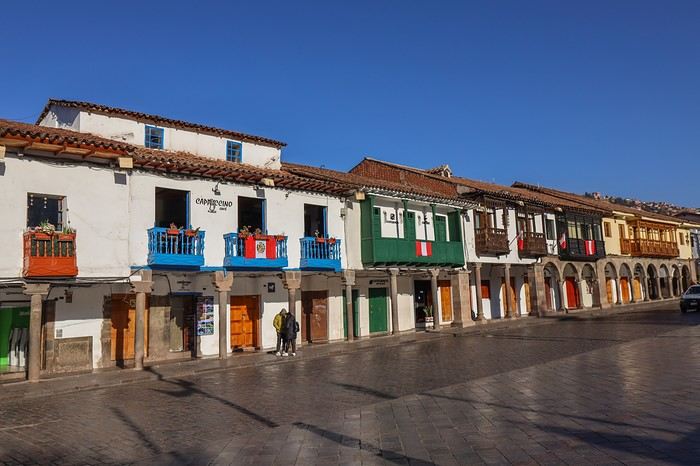
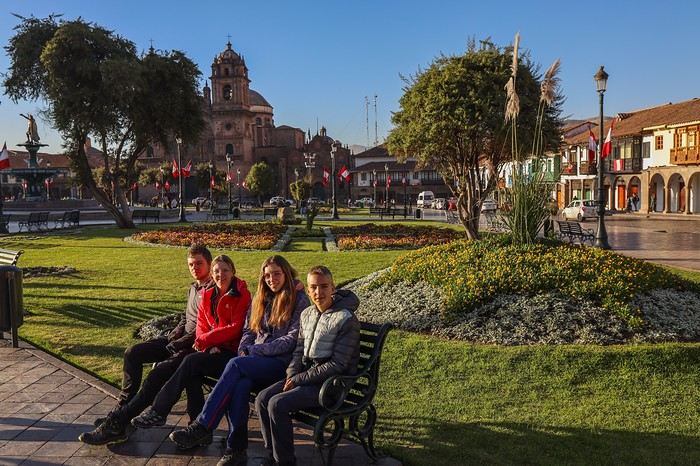
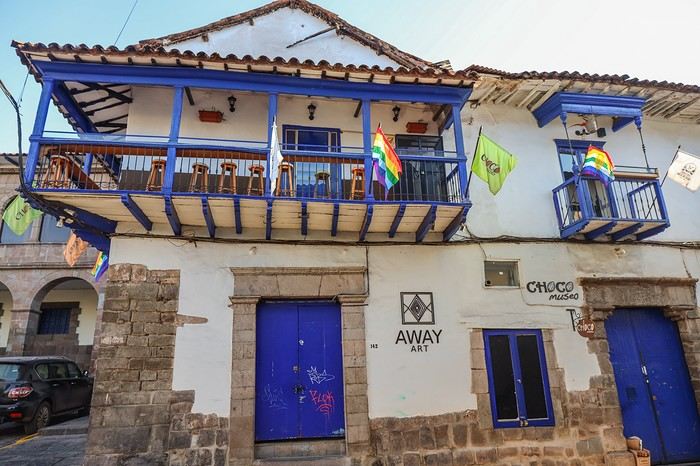 The Plaza de Armas was still half-asleep, and at 7 AM at 3,400 meters in the middle of winter, the cold really bites!
 We caught the attention of a vendor who offered us handmade wool hats, and of course, we couldn’t resist. It supports local business... even if one of our cockers later went to town on the pom-pom!!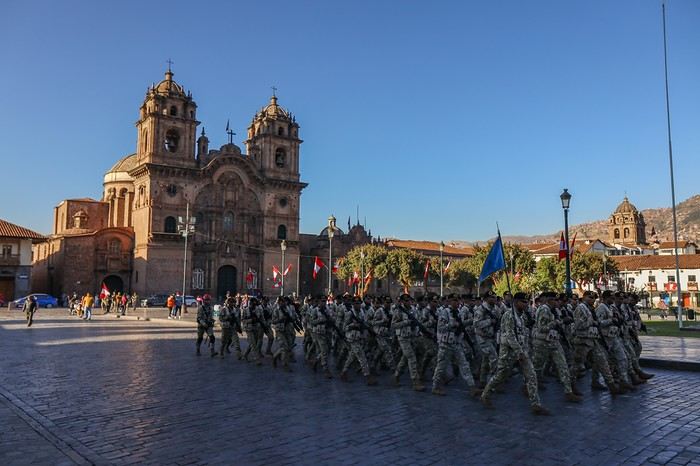
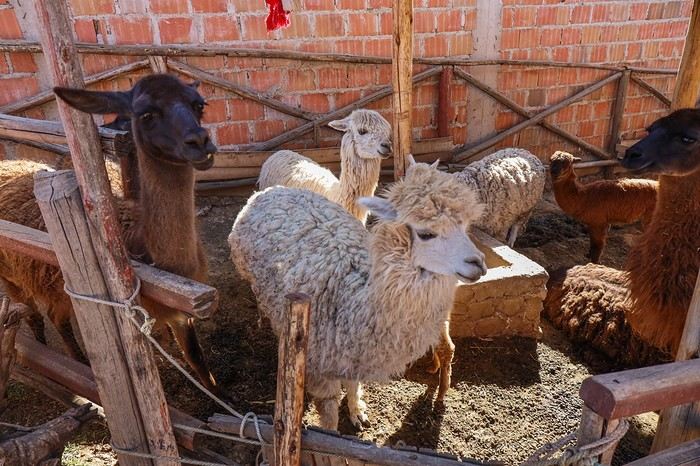 but mostly because the woman’s explanations about how different dyes are made were fascinating.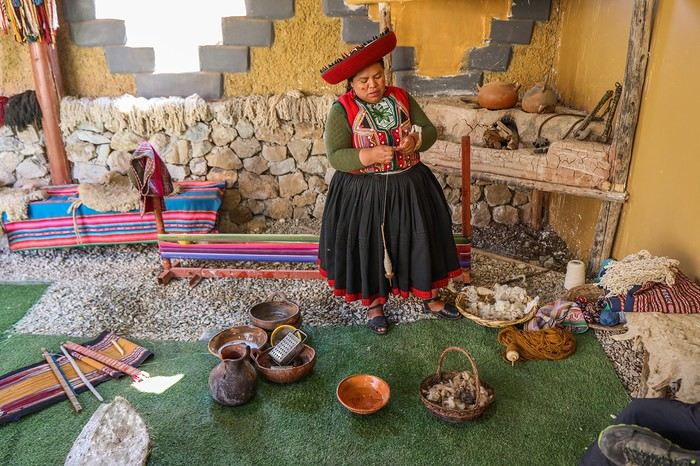
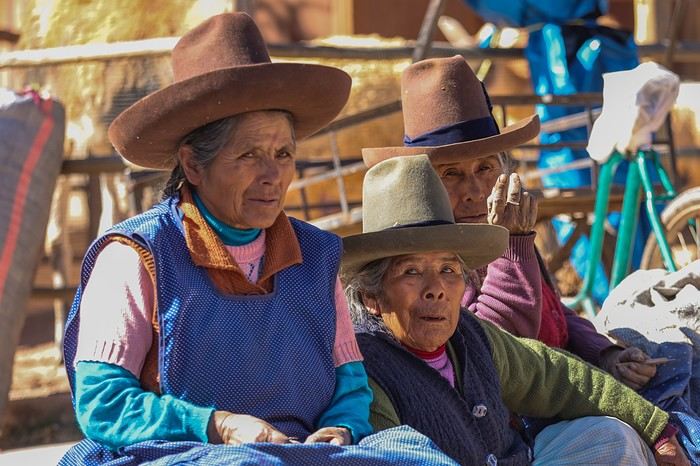
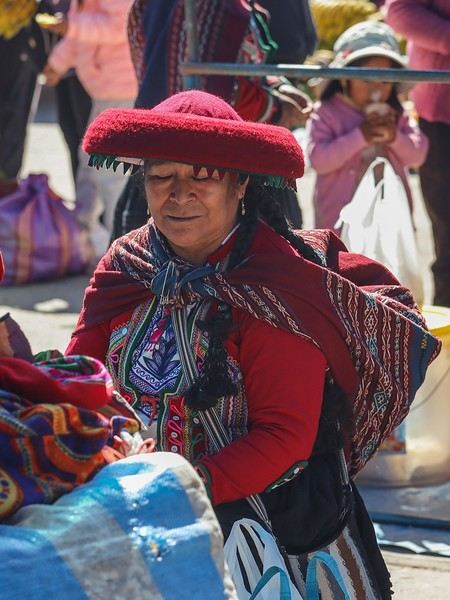 These women’s faces, marked by life and hard work,
 Looking back at the photos later, I realized that the famous market must’ve just been inside the ruins, at the entrance to the site.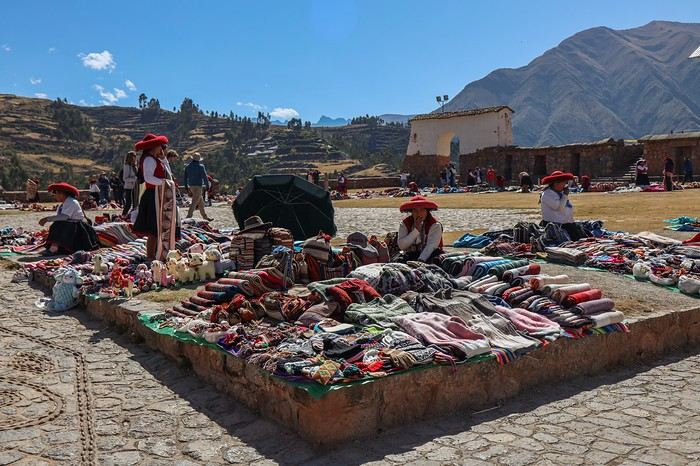
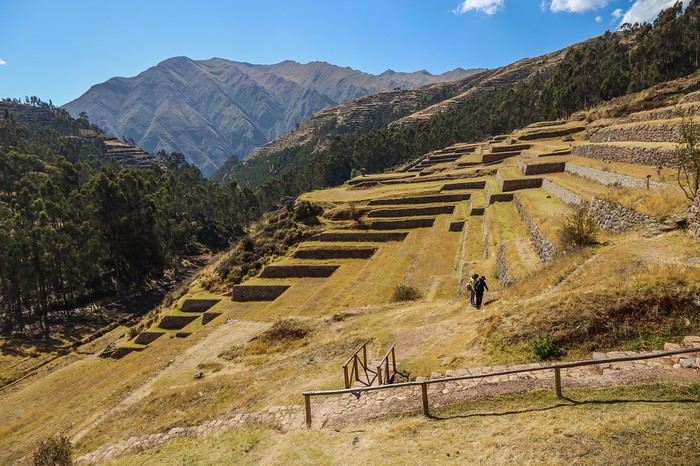
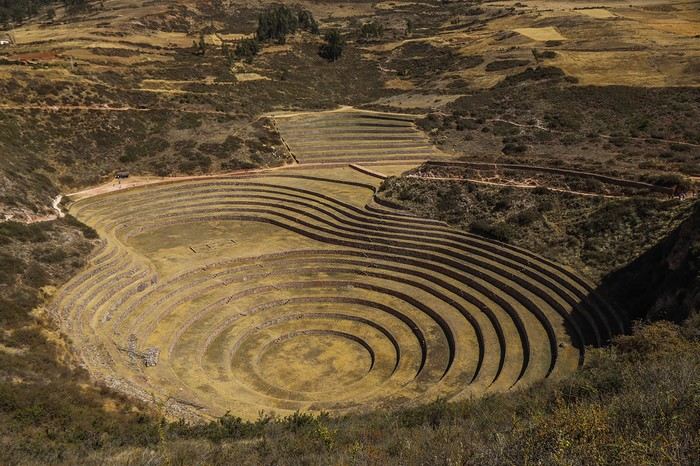
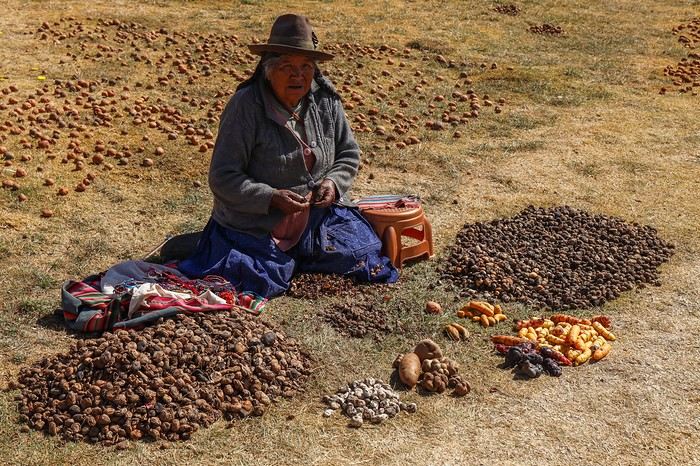 Next stop: the Moray agricultural research center, and right next to it, the Maras salt mines.
 Just a few kilometers from Moray, before even reaching the Maras salt mines, the access road offers a magnificent panoramic view of the entire site!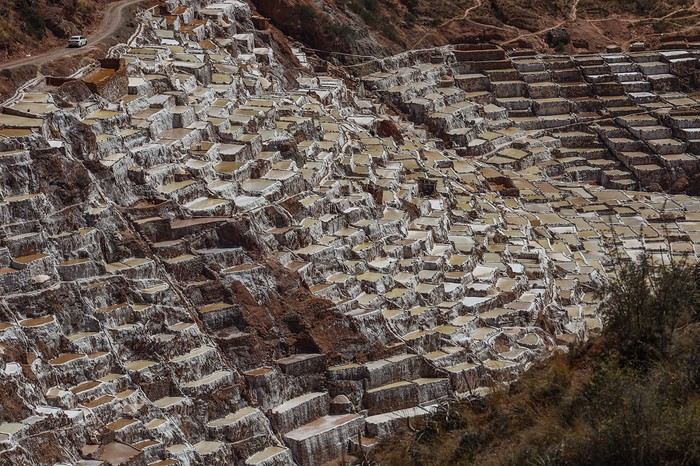
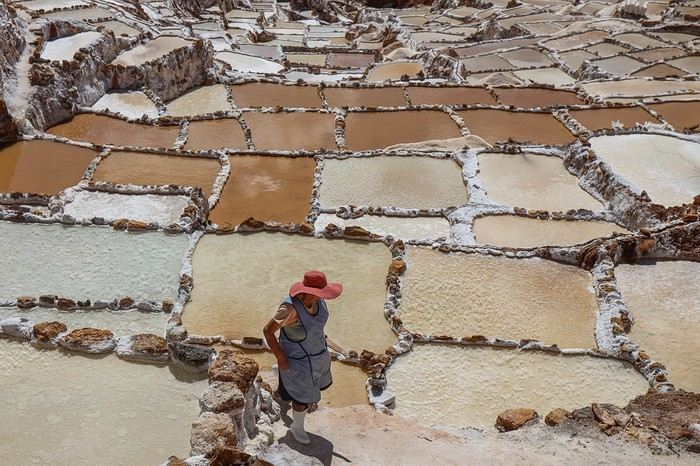
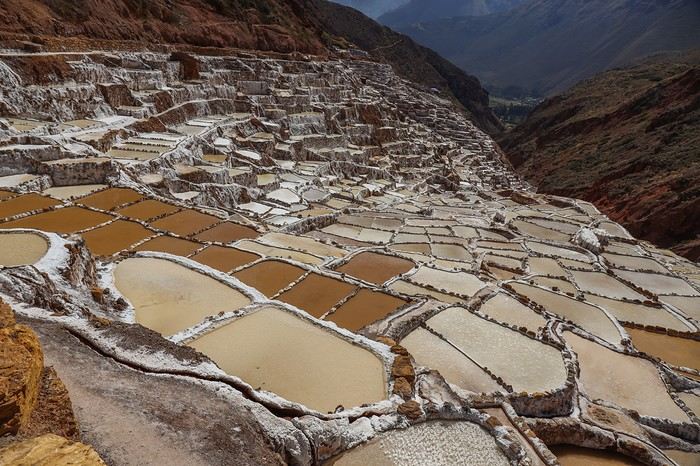 Since the start of the day, there have been quite a few people everywhere. Makes sense—we’re hitting the classic spots in the Sacred Valley!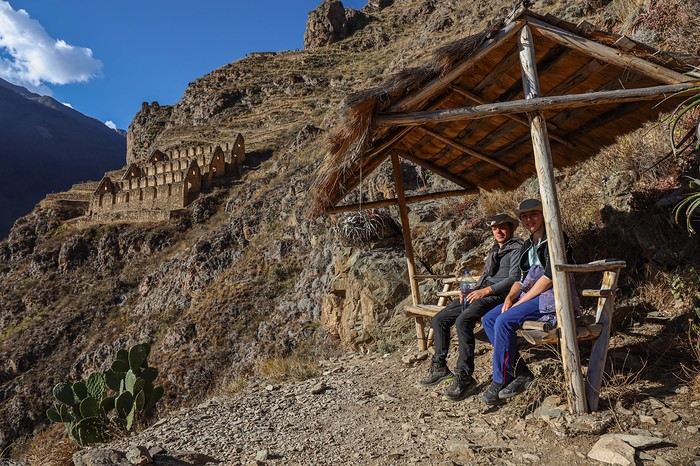
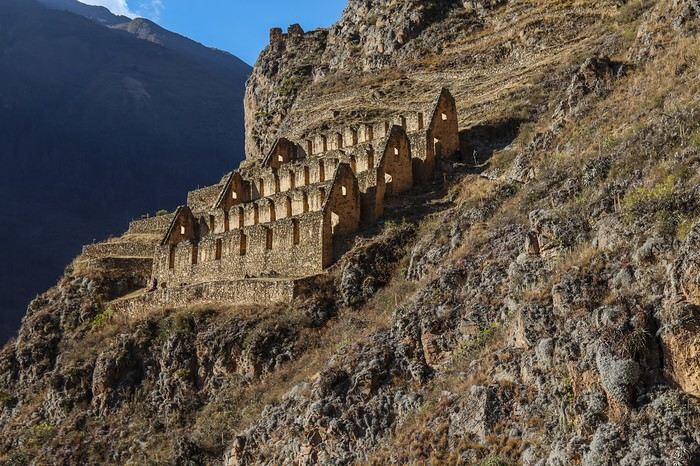 Once we reach the Pinkuylluna ruins, we have a great view of Ollantaytambo and the ruins across the way, facing east, which house the eponymous site.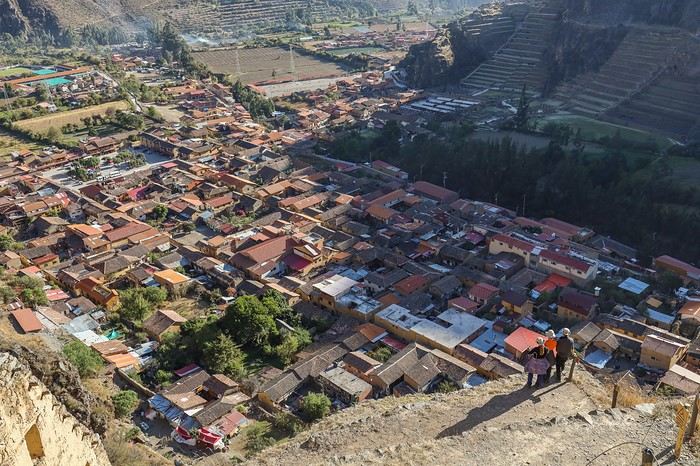
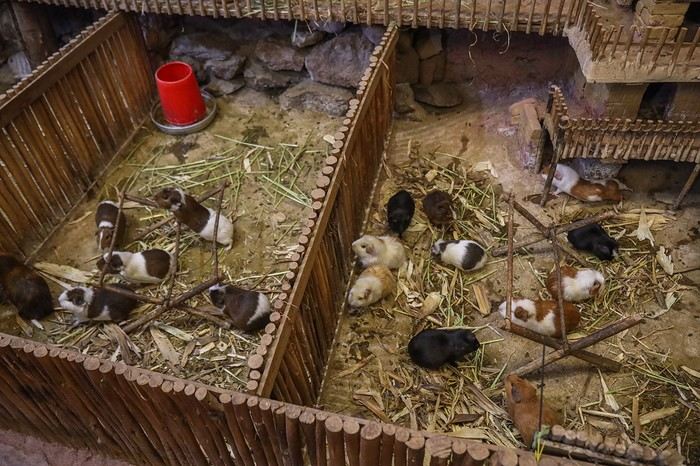


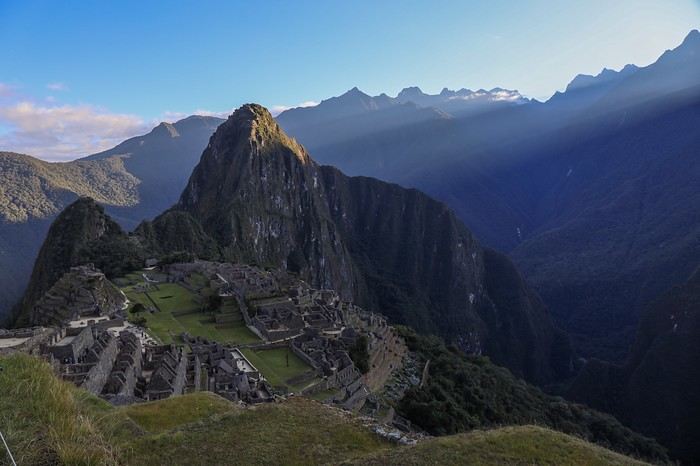
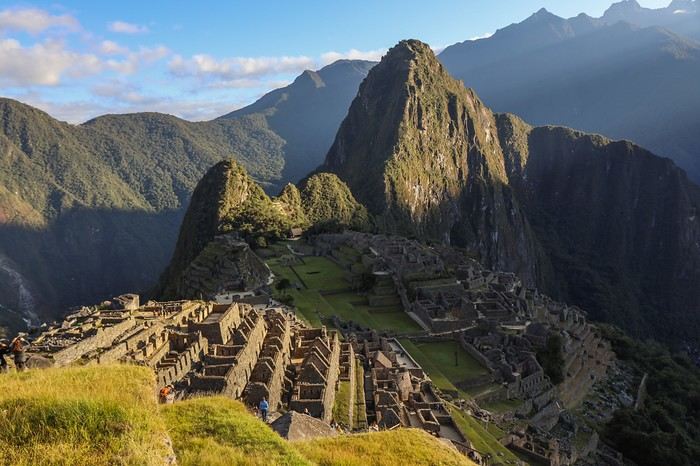
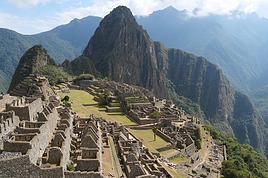
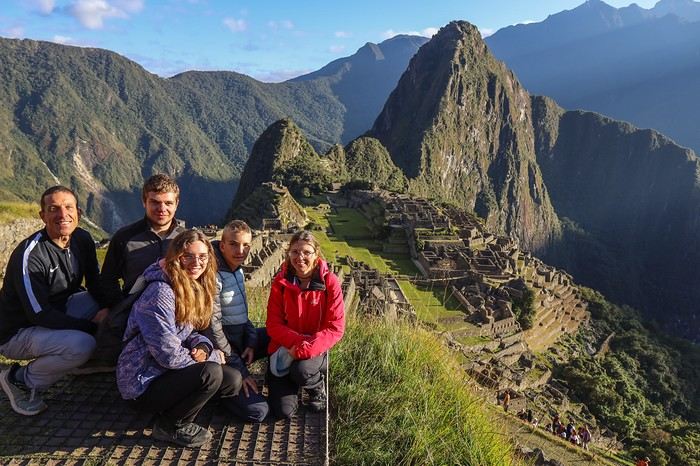 After a nice family photo session, we continue our guided tour and descend with Manu into the nobles’ quarter, with Wayna Picchu always in the background.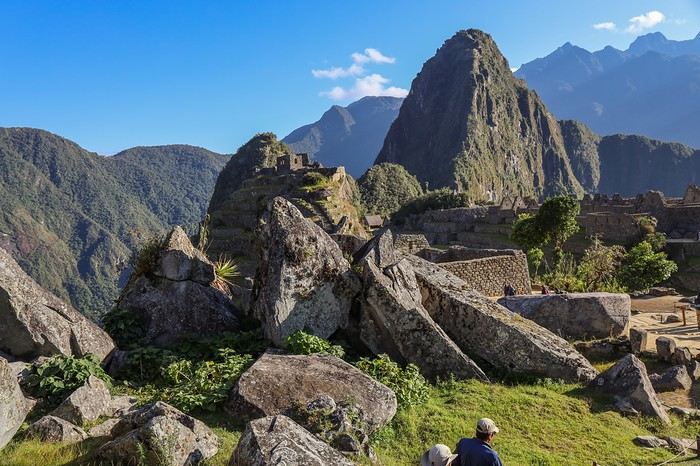
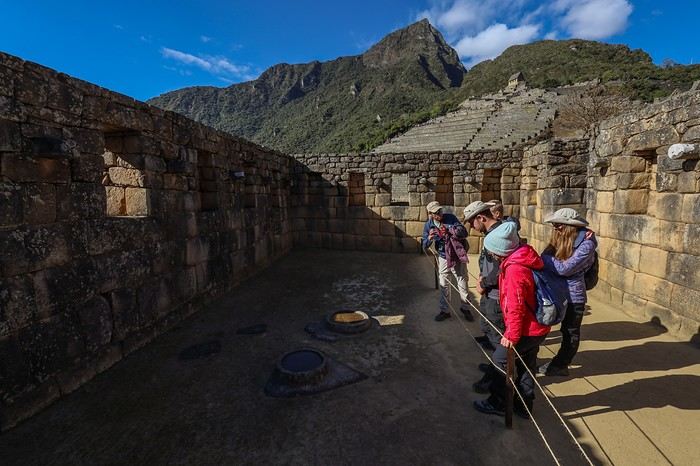
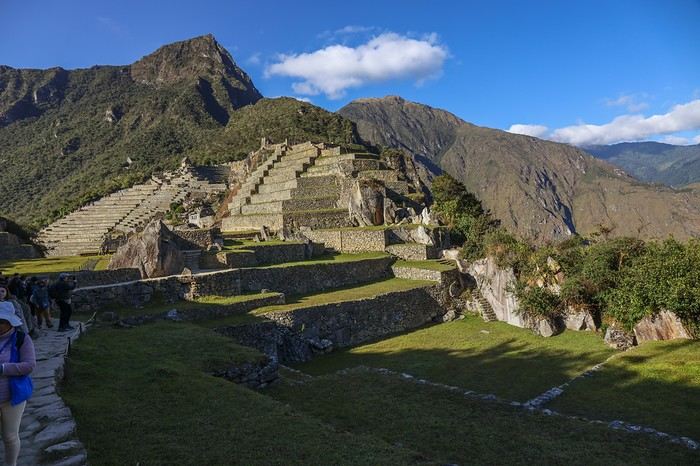 The return loop lets us visit the inside of several houses and understand the central role of the sun in the design and architecture of the temples, especially the Temple of the Sun.
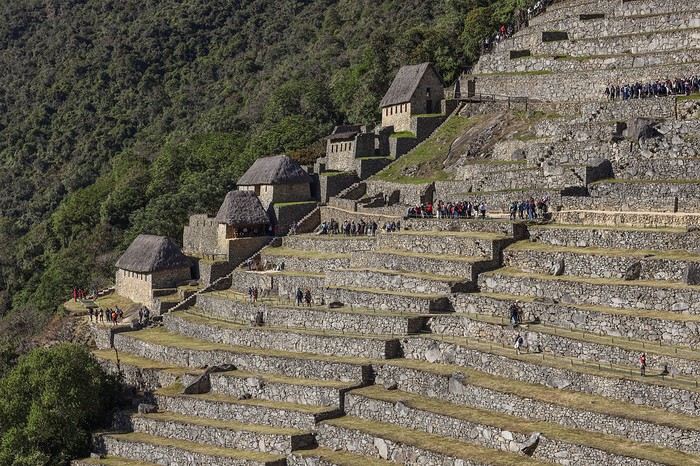
 Before heading back to the entrance, we cross through the agricultural terraces sector again.
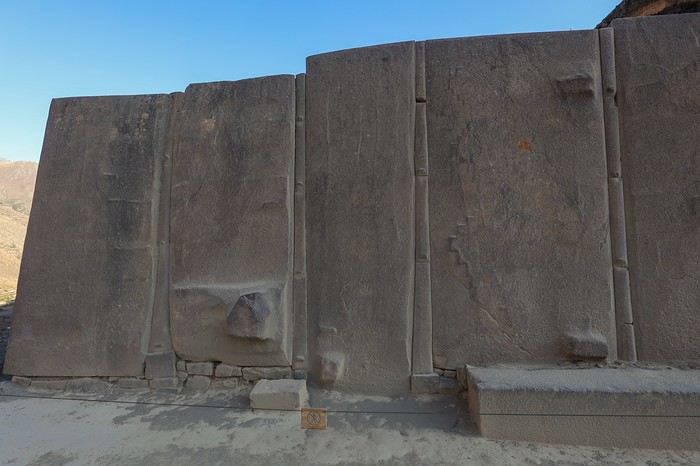
 We pass close to the Temple of the Sun, built on natural rock and recognizable from afar by its rounded shapes. Later, with the second circuit, we’ll get even closer.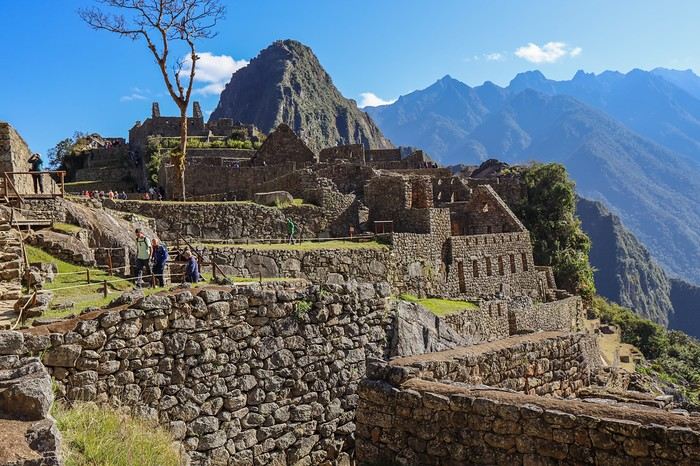
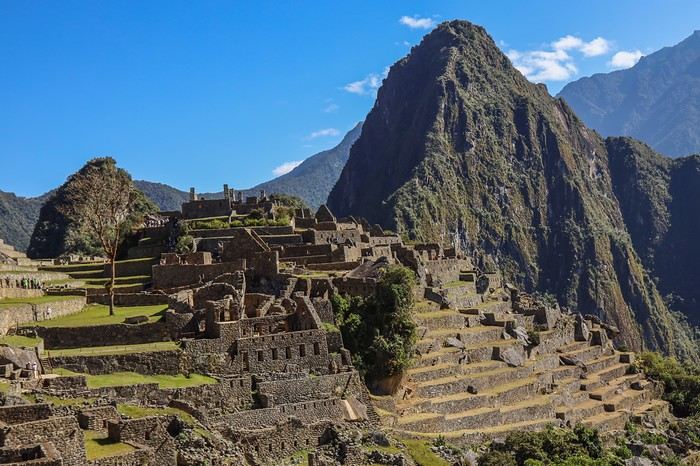 and we quickly reach the Temple of the Sun. Inside, the rock was used as an altar for solar worship rituals.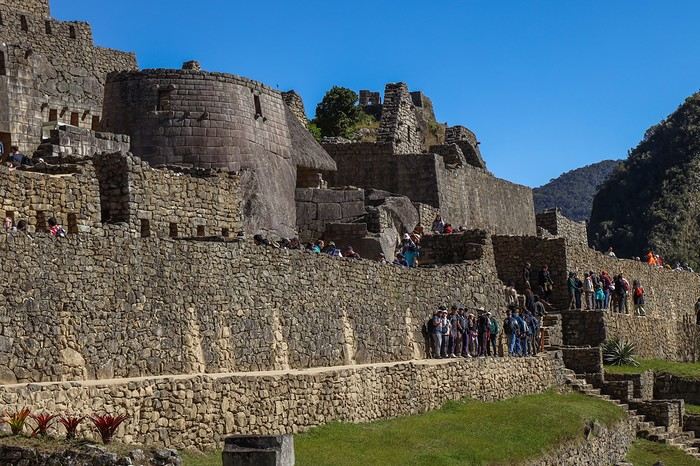
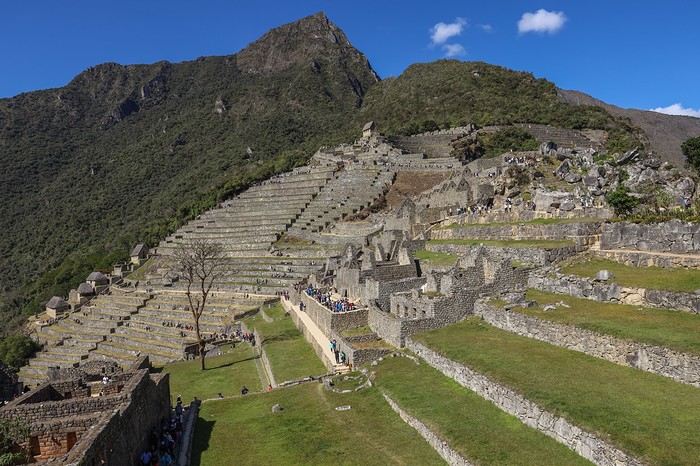 Next, we reach the checkpoint for another ticket scan.
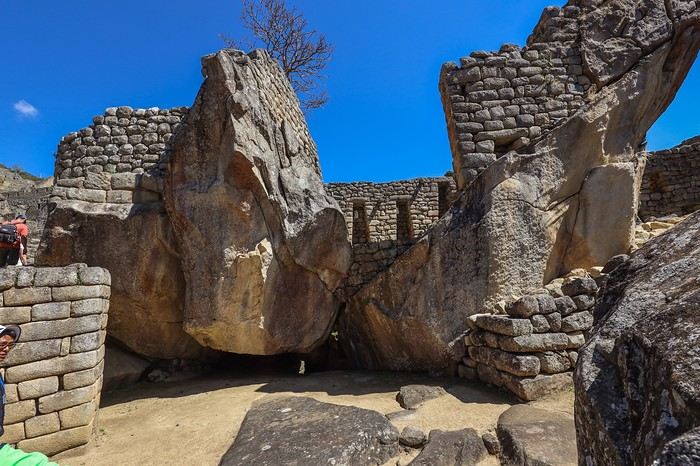
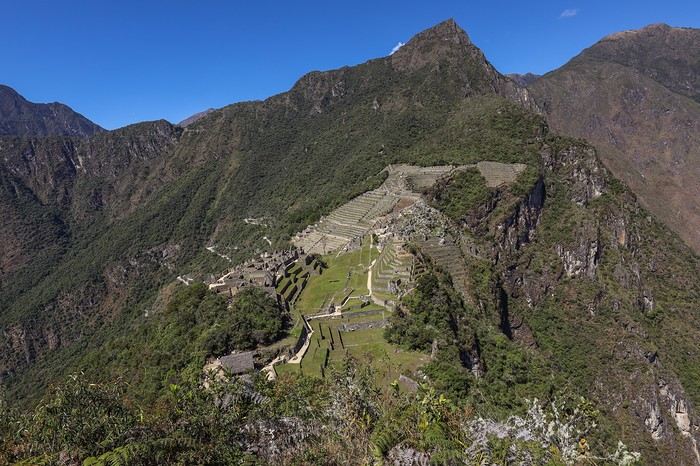 In the early afternoon, we finish our tour by visiting the Temple of the Condor, where you can make out the beak and ruff of a condor—or at least imagine it...
 We watch for the first rays of sunlight... Once at the top of the stairs, the sun finally peeks out!
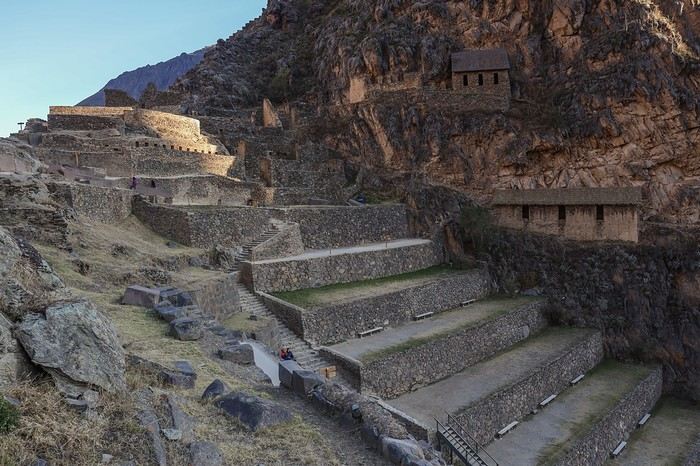 Turning around, we get a beautiful view of the rocky outcrop that houses the Pinkuylluna ruins and overlooks the village of Ollantaytambo.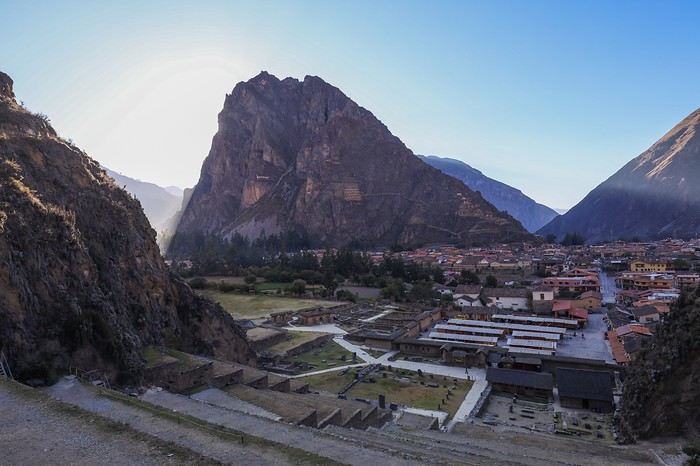
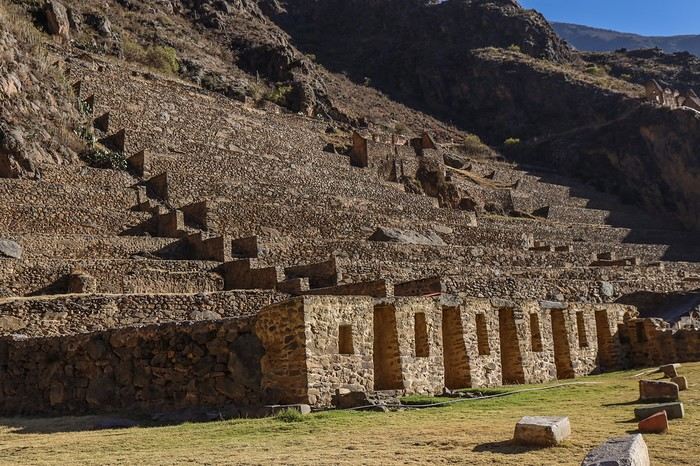
 By the time we leave the site, all the ruins are bathed in sunlight.
 As for us, we head back to our guesthouse for breakfast.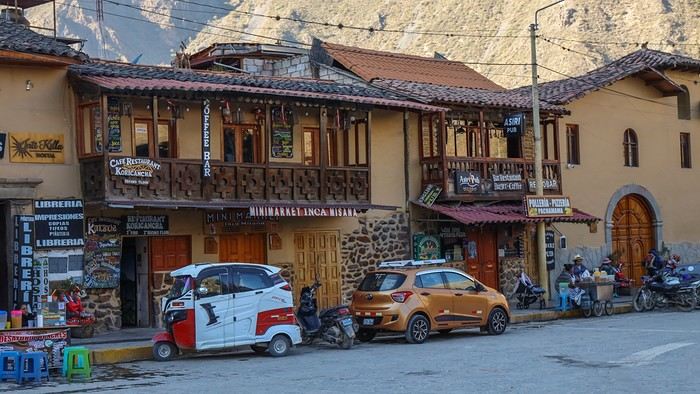
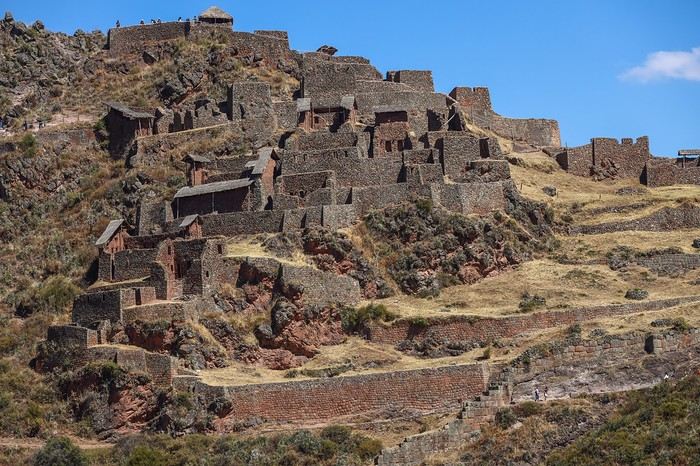 And agricultural terraces built in stone, in excellent condition.
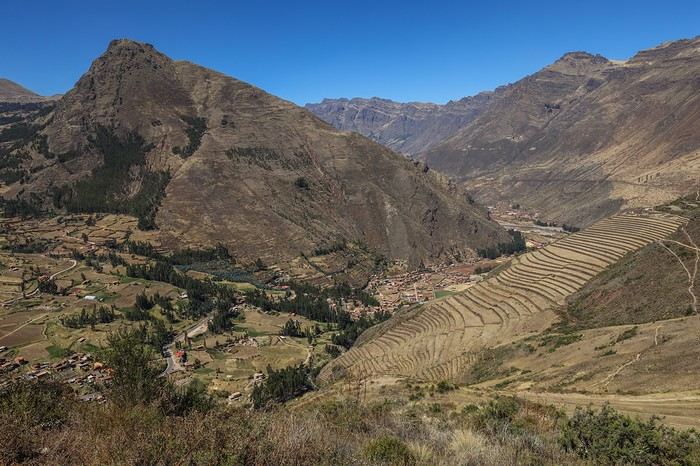
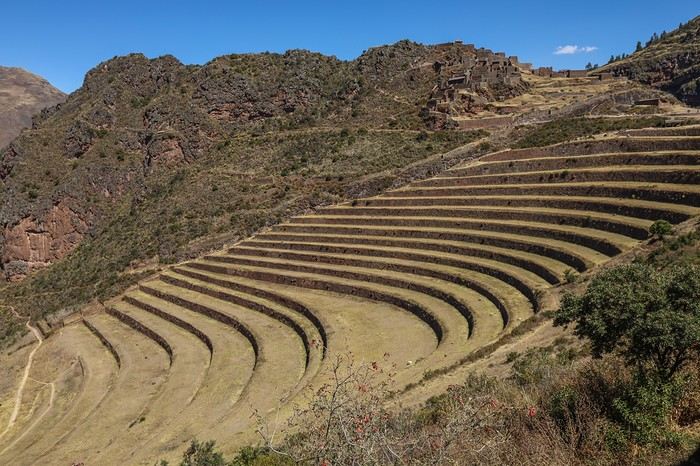 What a view 😇!!
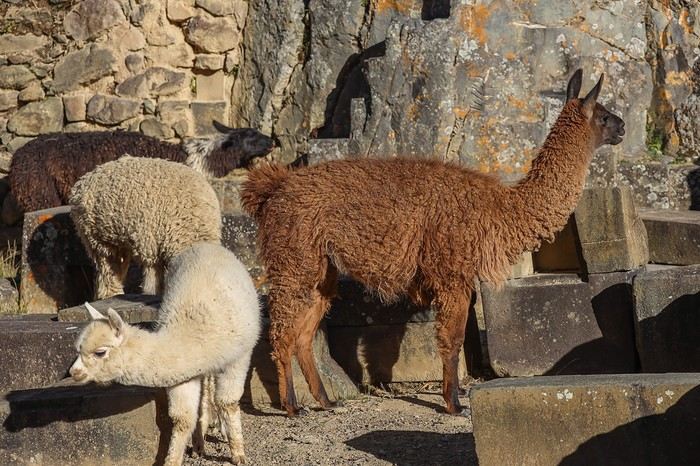
 On the upper platform, we come across several alpacas, used to people. Some of them have such a funny look!!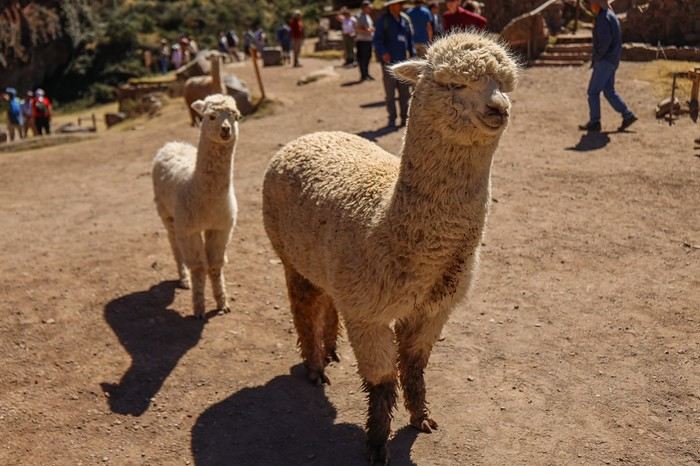
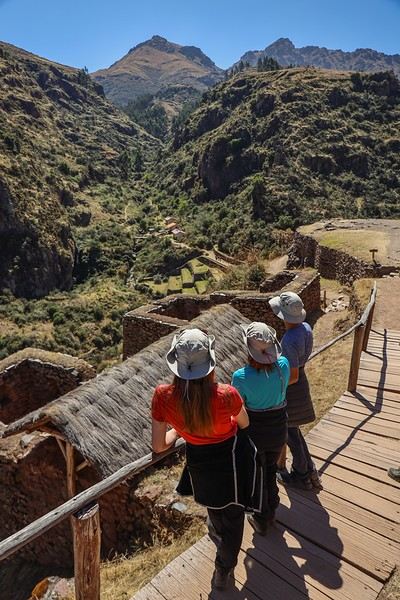
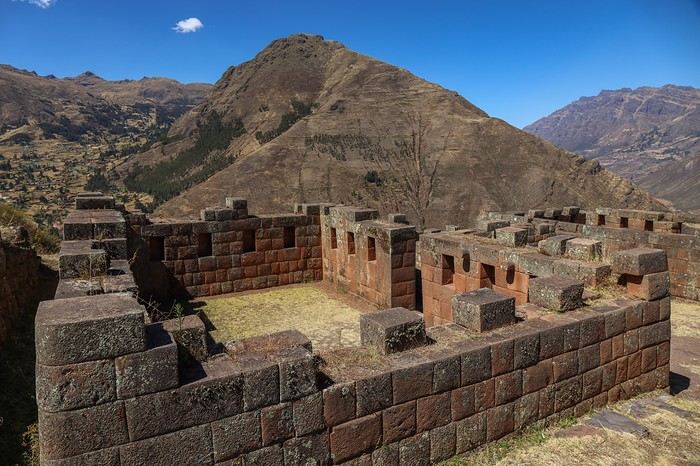
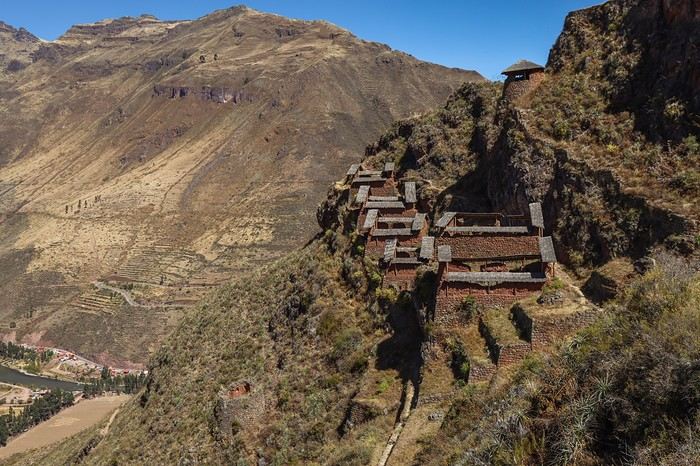
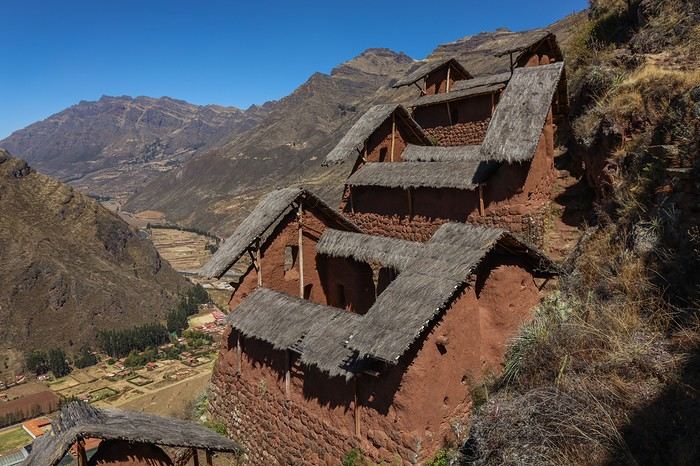 We’re getting hungry, so we shift into high gear to cover the last kilometers of the descent.
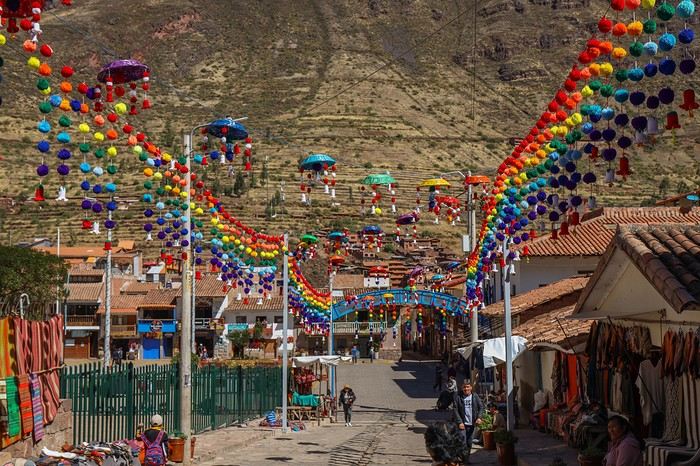
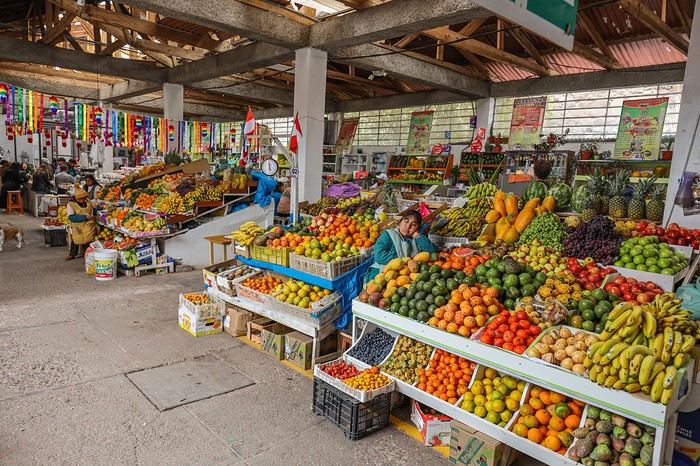
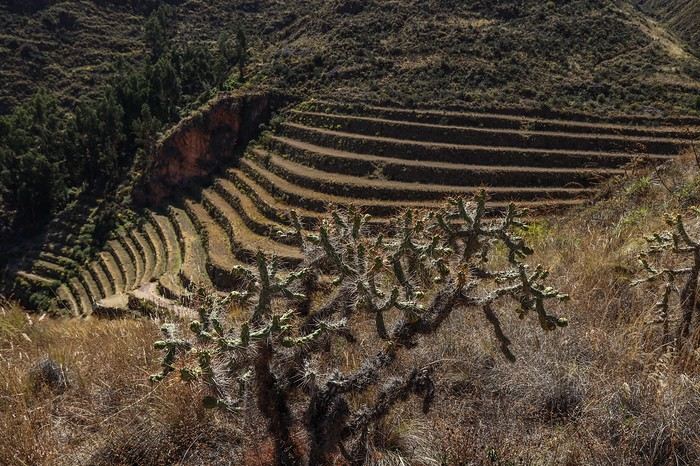 We arrive in Pisac, passing through its artisan market, which stands out from afar thanks to its brightly colored decorations.
 There are still beautiful traditional houses around the village’s central square.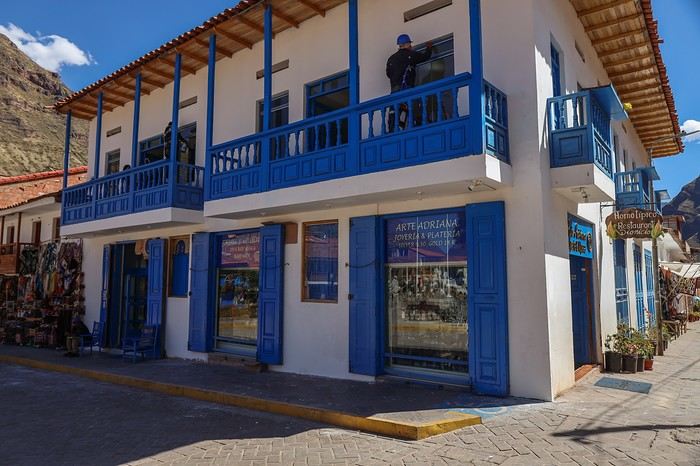
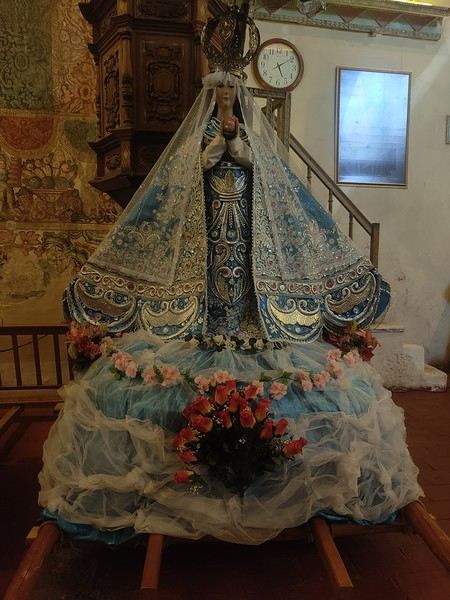
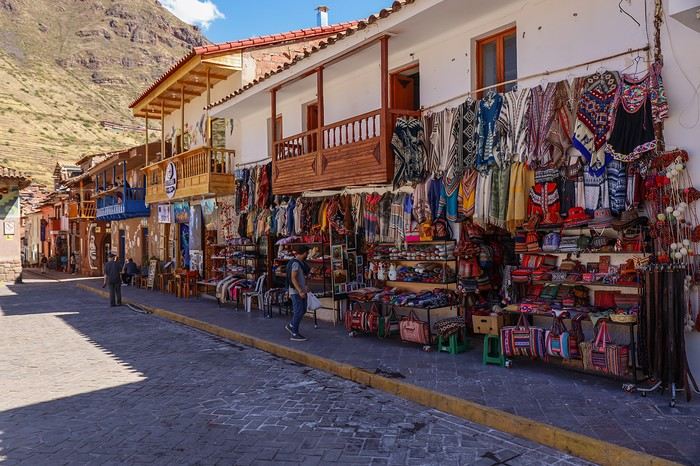 Once in Pisac, we grab a bite at the market for next to nothing, and just as we’re about to leave, Gonzalo tells us that a procession in honor of the Virgin of Carmen has just started 500 meters away!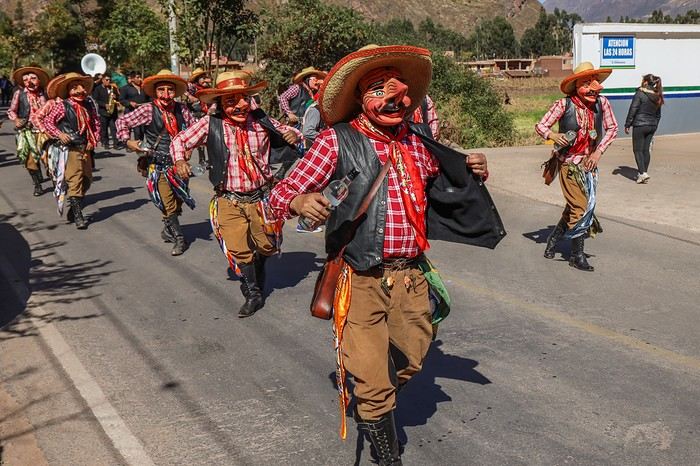
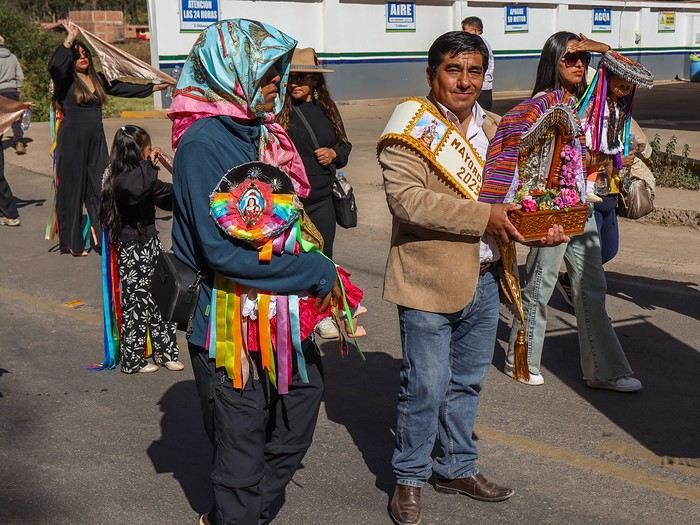
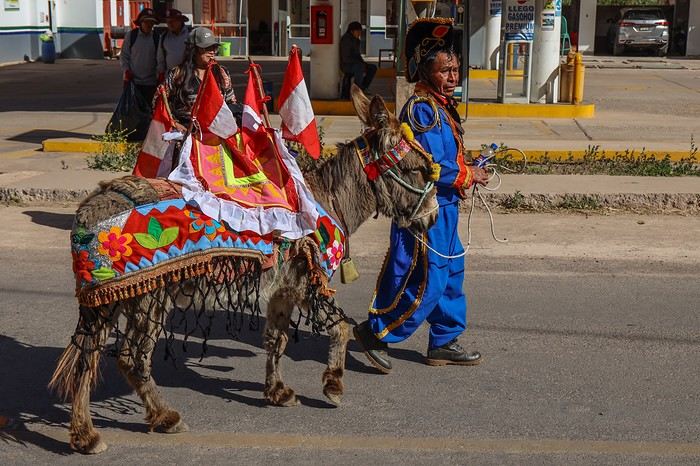
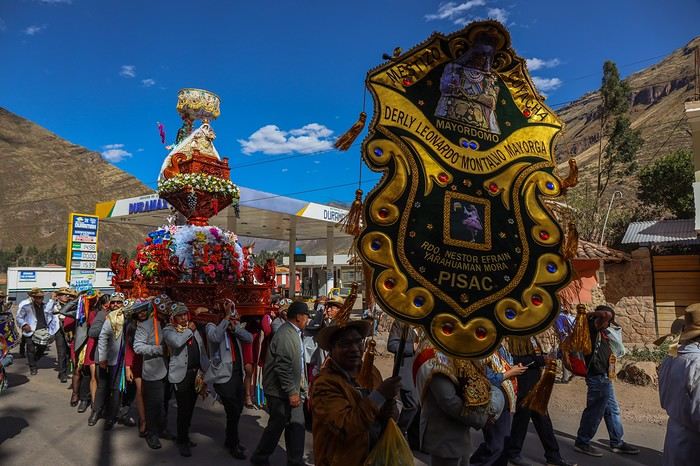 We hit the road again, heading toward San Pedro, a town near Palcoyo, which is on the agenda for the next day.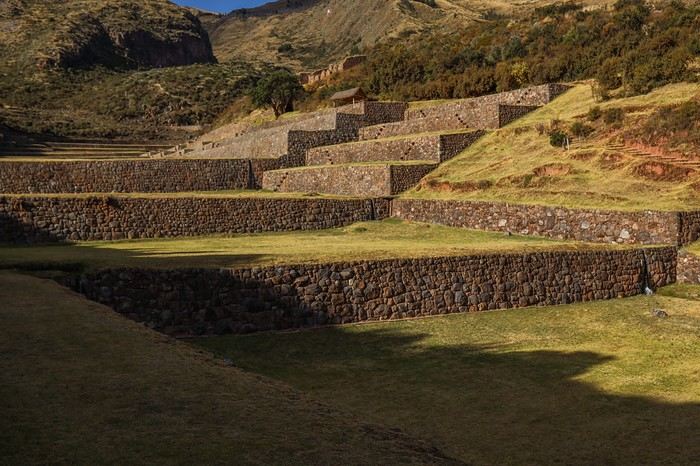
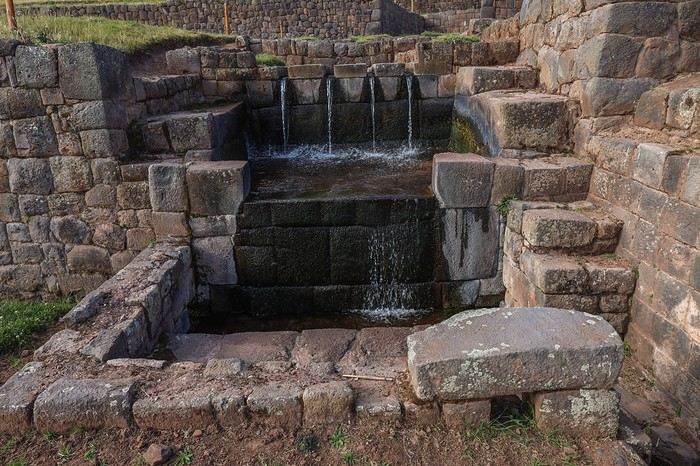
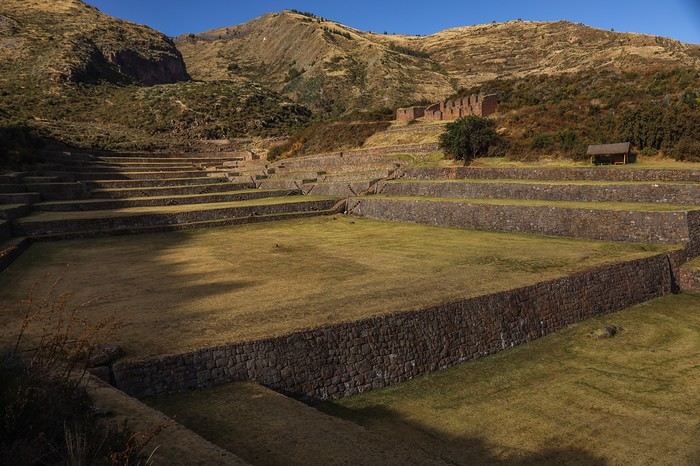 There’s also a temple and an entire network of incredibly clever irrigation canals!
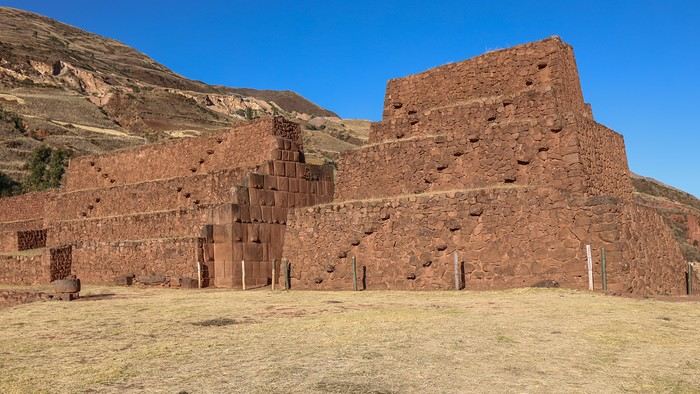
 Gonzalo then takes us to the shores of a lake he likes and to the ruins of Rumiqullqa. Since all these spots are off the beaten path, we have them all to ourselves.
 The last two stops are dedicated to visiting two neighboring churches, one in Andahuaylillas and the other in Huaro.
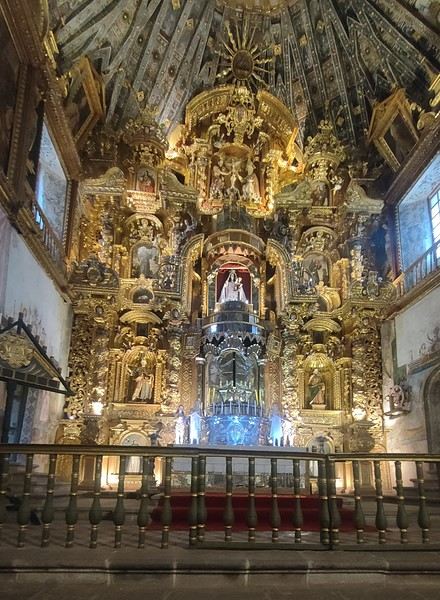 Just a few kilometers away, the temple in Huaro is another masterpiece, this time in Renaissance style. Photos are allowed here this time.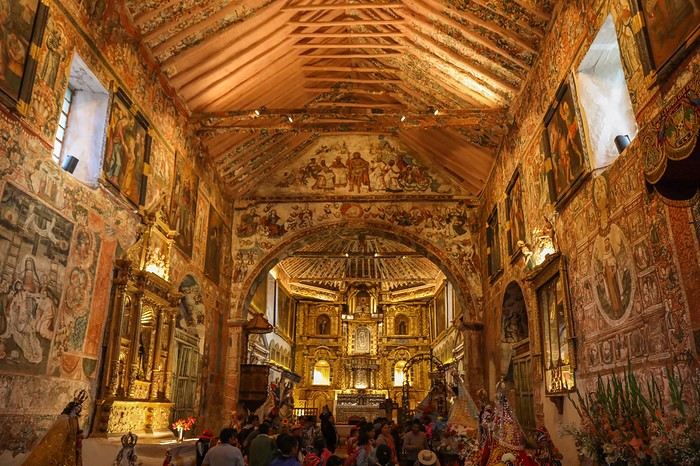
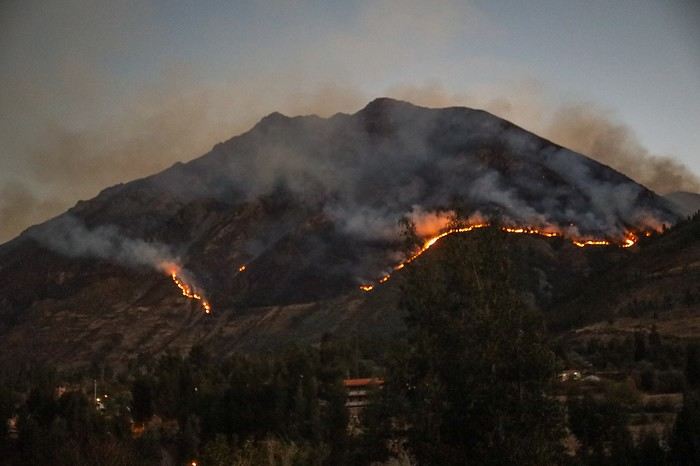
 Once night falls, on the road south, we pass by some impressive fires blazing on a mountainside—hopefully under control. Quite a sight...
 Then we have dinner in Combapata, each of us devouring a quarter chicken with fries and all-you-can-eat veggies.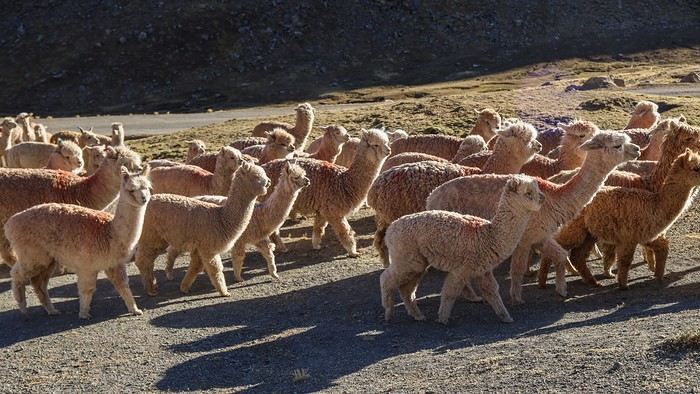
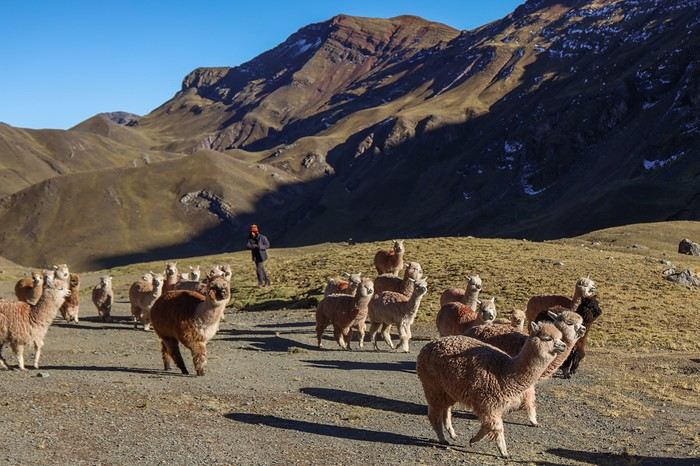
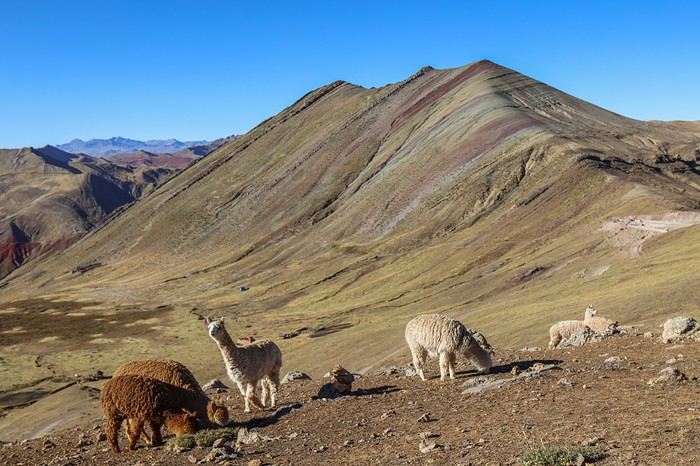
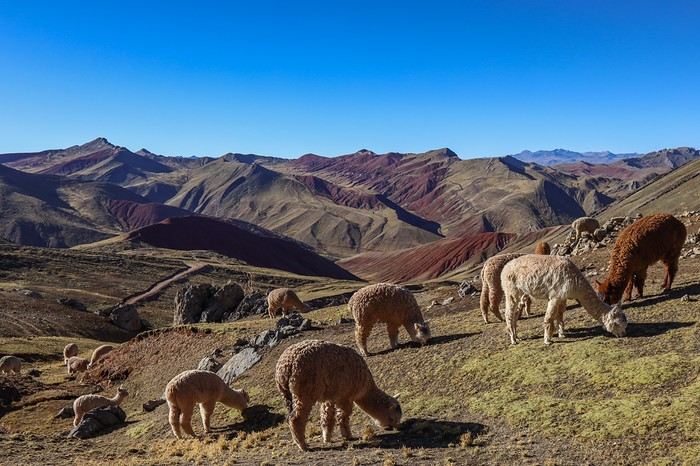
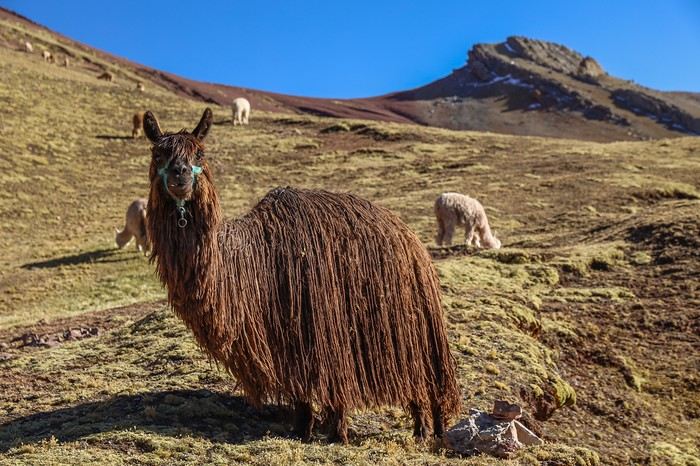
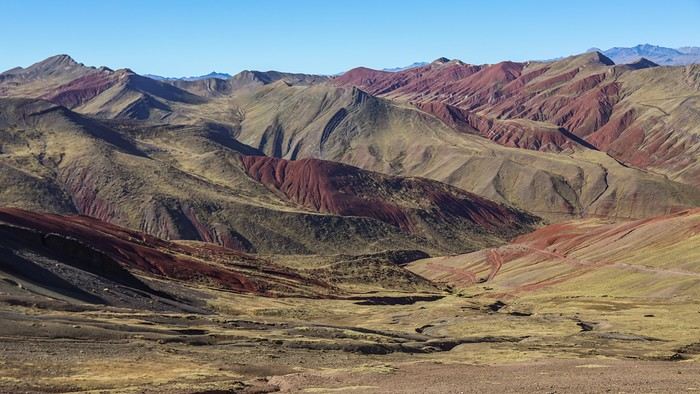 We reach a second viewpoint with rainbow colors.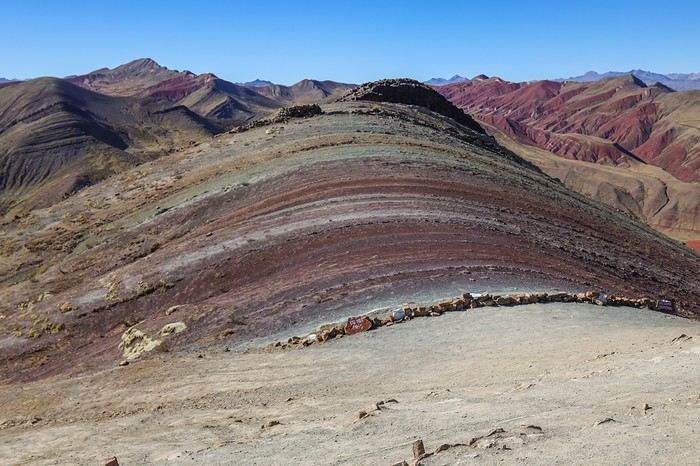
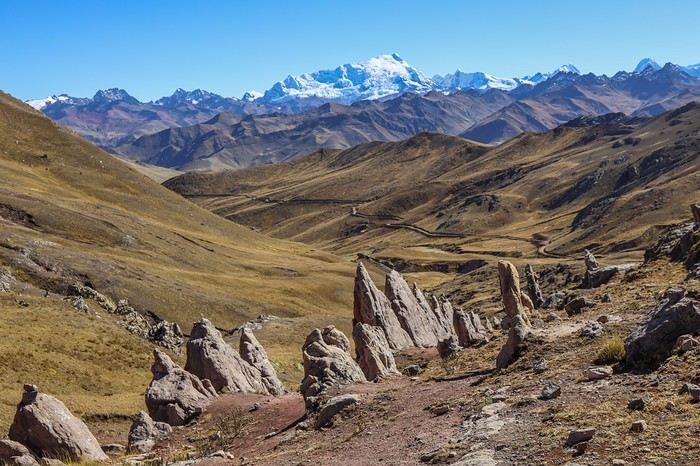 Around 4,930 meters, Tim reaches his limit with the altitude and starts feeling tingling in his forearms. He takes his time and won’t go all the way to the summit at 4,975 meters to avoid unnecessary risks.
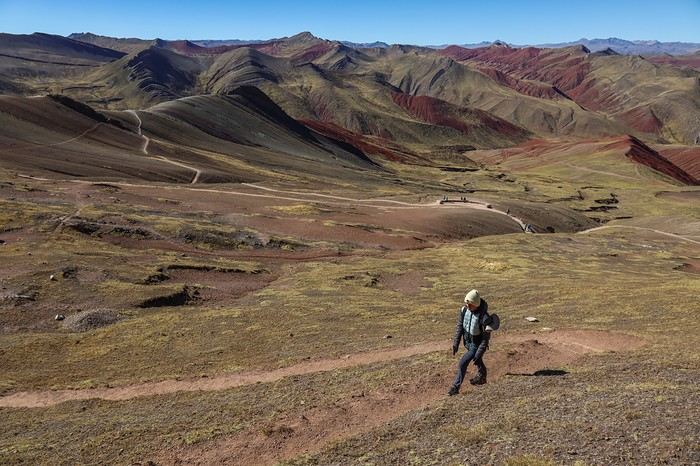 And here we are at the summit, 4,975 meters up! A great reward with more sculpted rocks and an exceptional panoramic view 🙂!
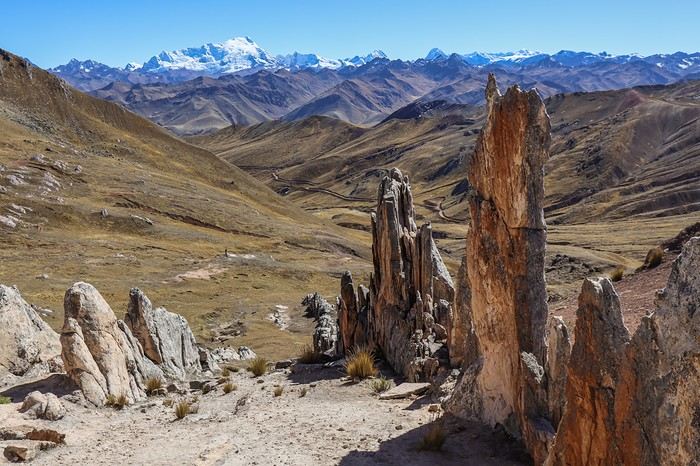 Then, we head back down to the car, still surrounded by alpacas everywhere.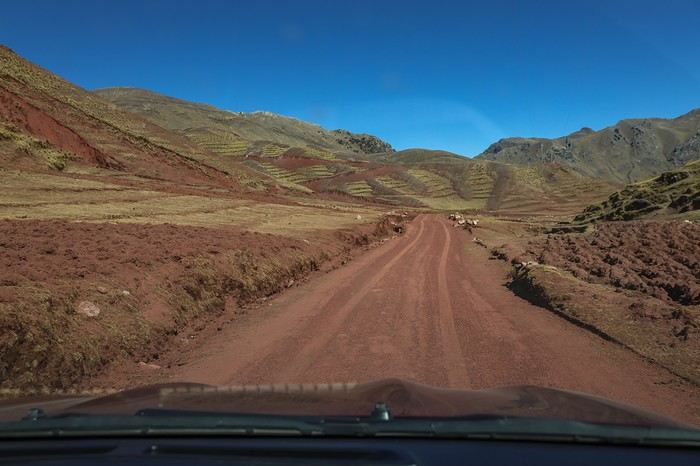
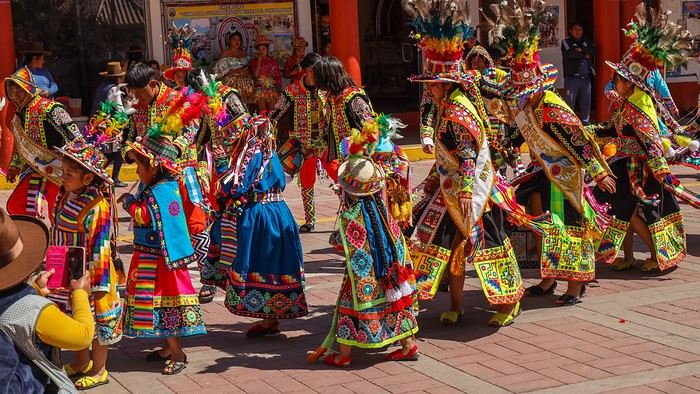
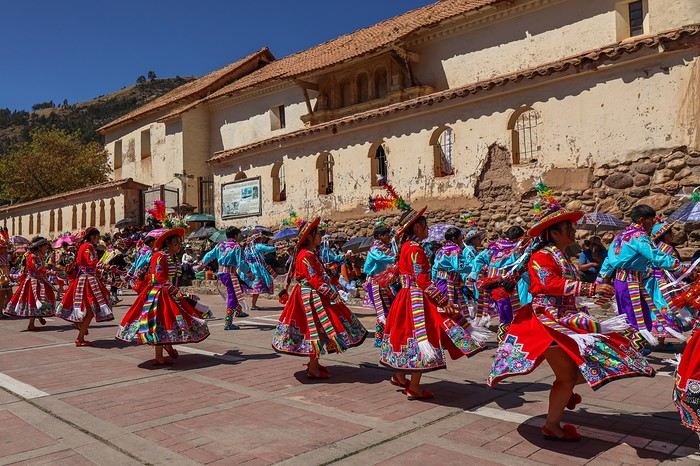
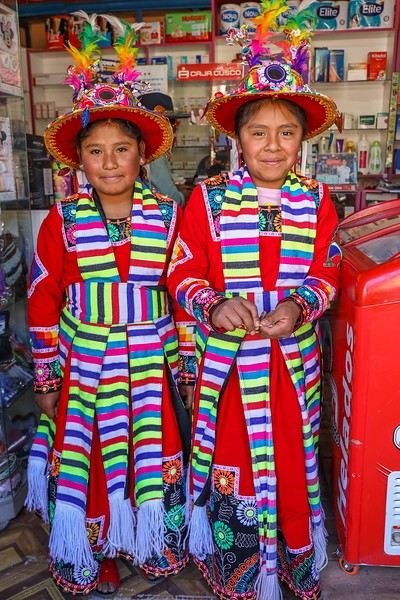
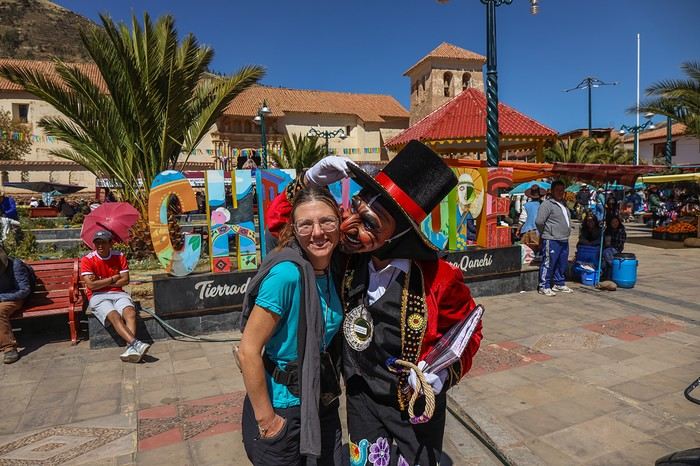 Another beautiful surprise—this local festival with authentic costumes and processions. It’s in moments like these that we realize there’s no point in desperately searching for "authenticity" in touristy spots like Lake Titicaca. Instead, "authenticity" finds us when we least expect it, without even trying...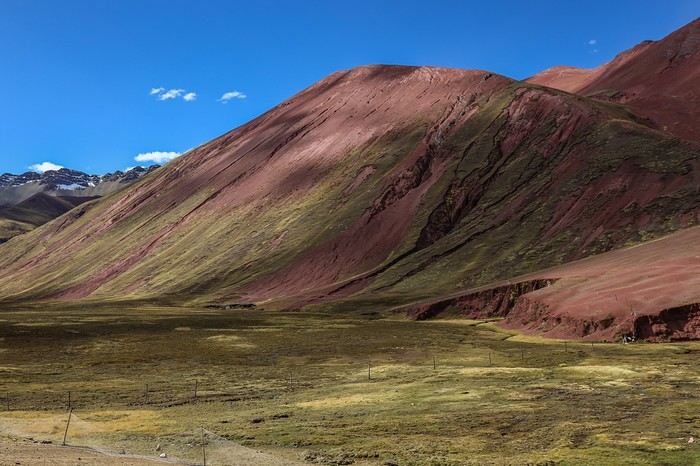
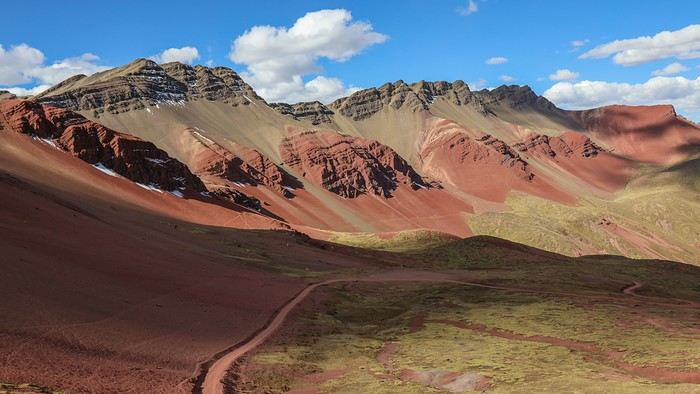 So, Gonzalo parks almost at the top of the Red Valley with a panoramic view without even walking 10 meters...
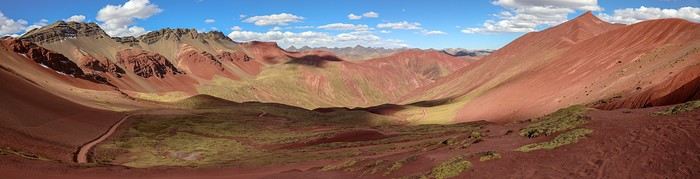 Gonzalo has his own private parking spot, slightly off the main track!!
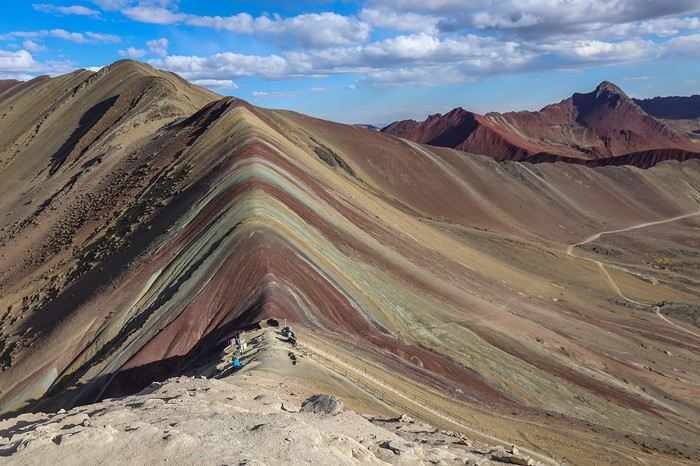 The panoramic views on either side are absolutely stunning, almost as much as the famous seven-color mountain 😇!!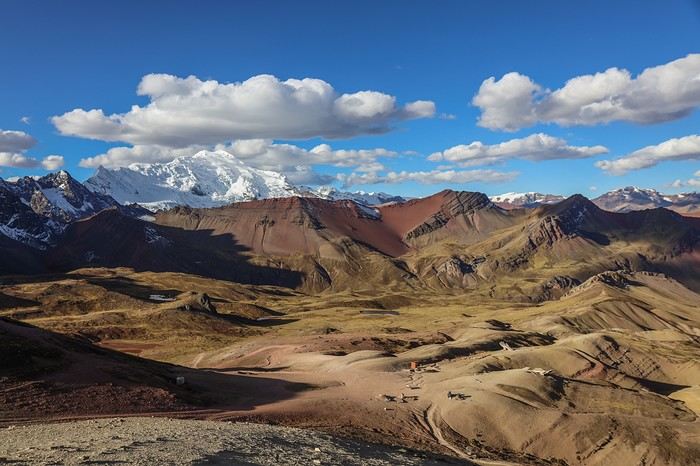
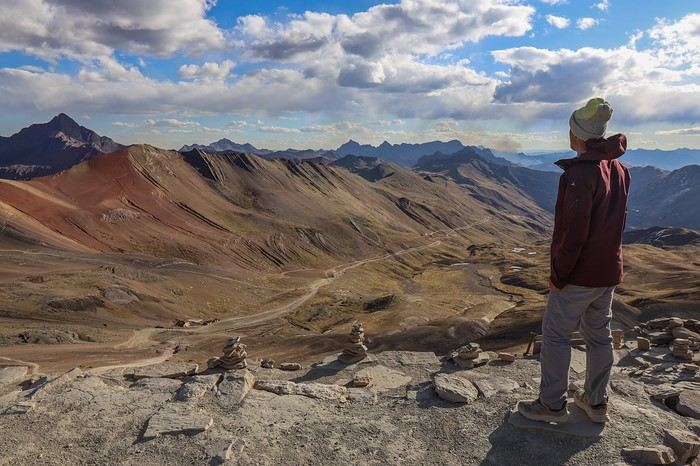 and we head back down to the Valle Rojo viewpoint.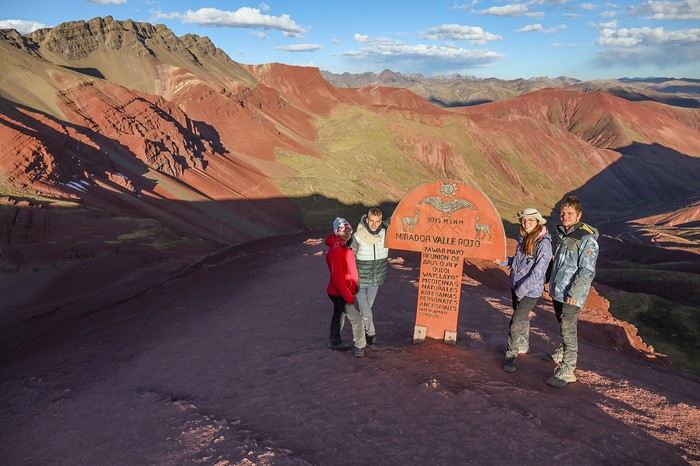

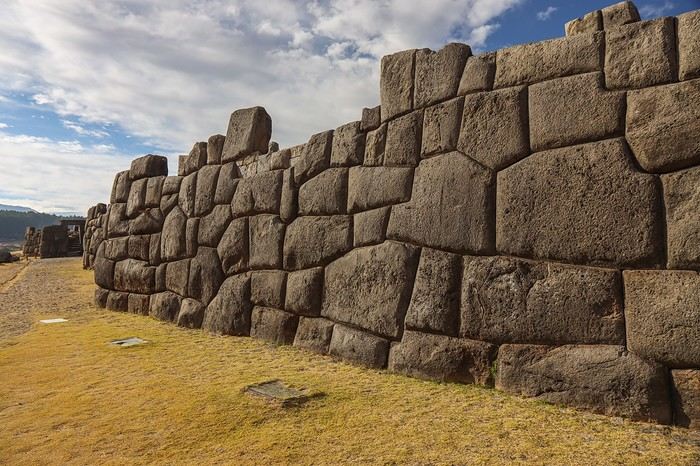
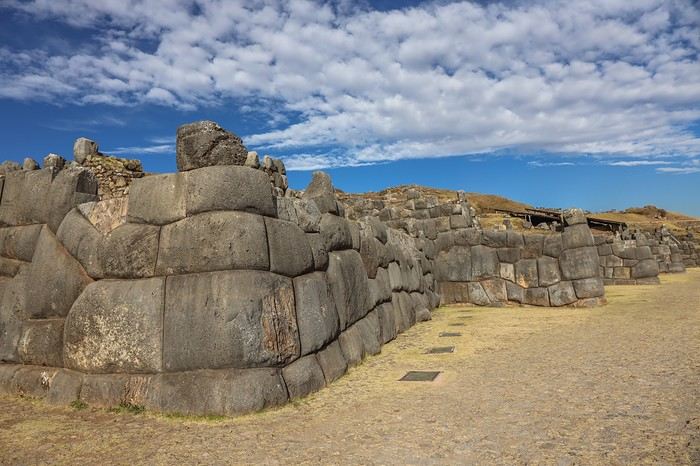 At the top, I’m rewarded with a beautiful 180° view of the city.
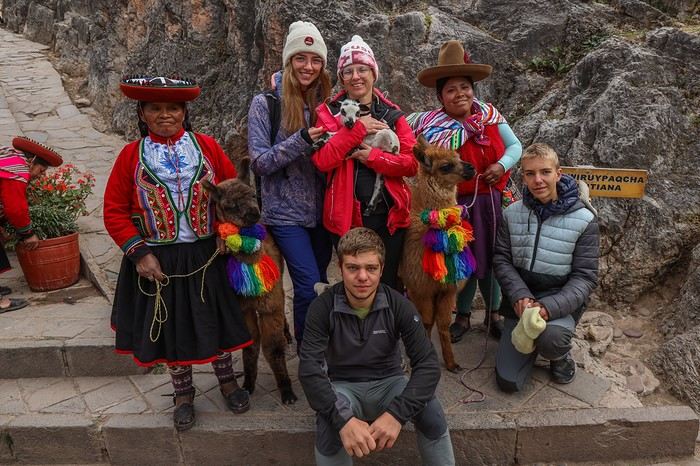
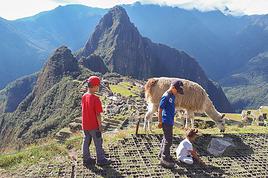
 After breakfast, we’re barely out on the street when we come across these two Peruvian women who take our photo with their llamas. It’s delightfully kitsch—you can see Maxime’s contagious joy—but the few soles we give in return help them make a living!
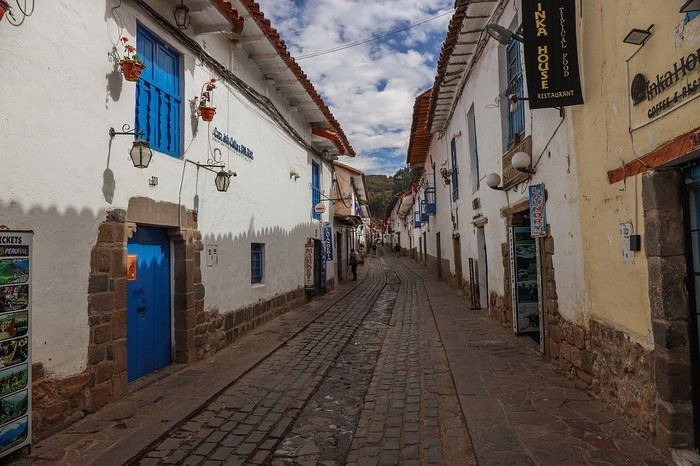
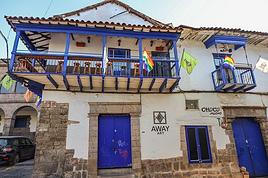
 It’s pleasant to stroll through the streets of downtown Cusco, in the San Blas neighborhood.
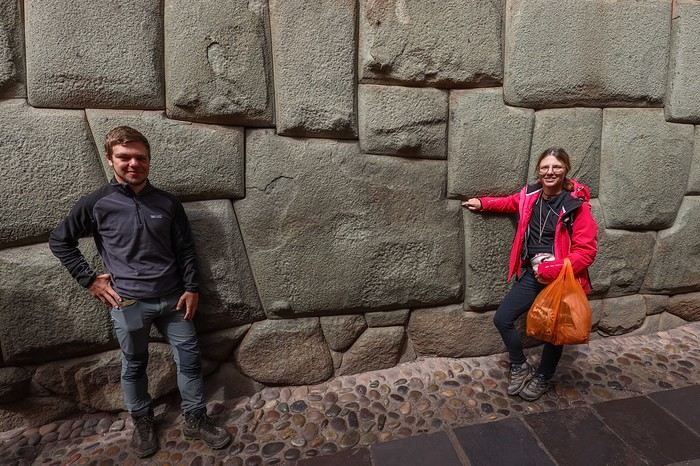
 In one of the alleys, we’re supposed to see a puma and a snake carved into the stone blocks assembled without mortar. We need the help of Peruvians to make out their shapes.
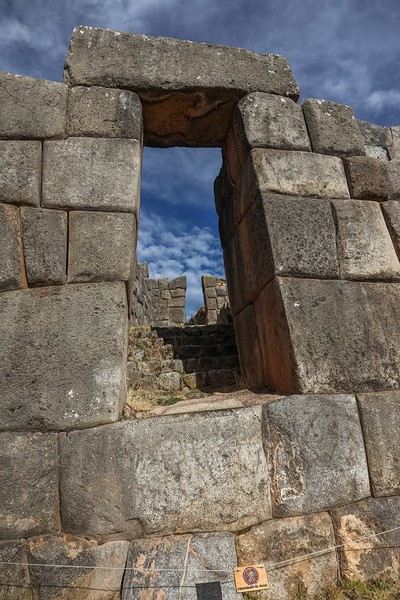
 There are other ruins to visit on the outskirts of Cusco, but our shortened stay—due to a canceled long-haul flight—won’t leave us time to see them. That said, we’ve already seen quite a few since arriving in Peru.
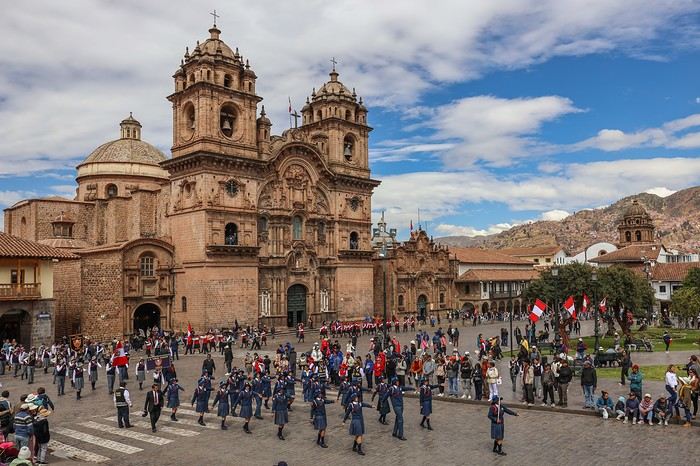 We head up Loreto Street,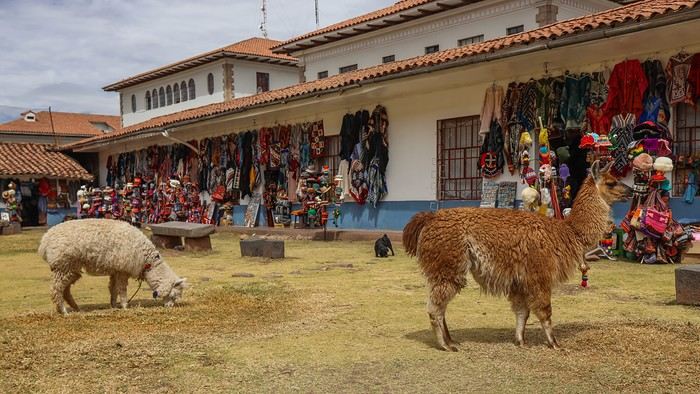
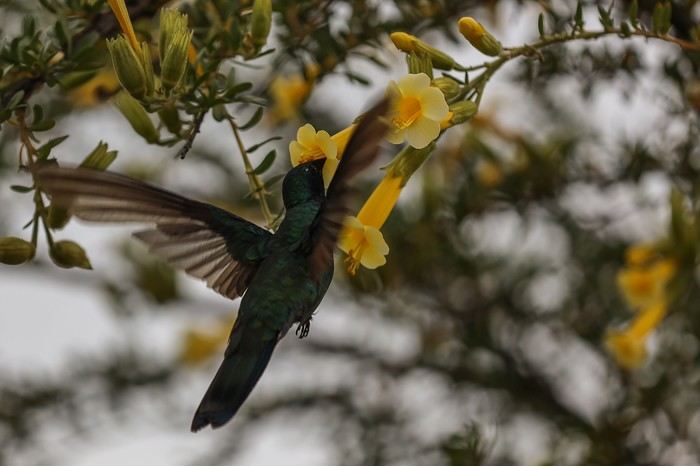
 A few hummingbirds come to feed in the garden.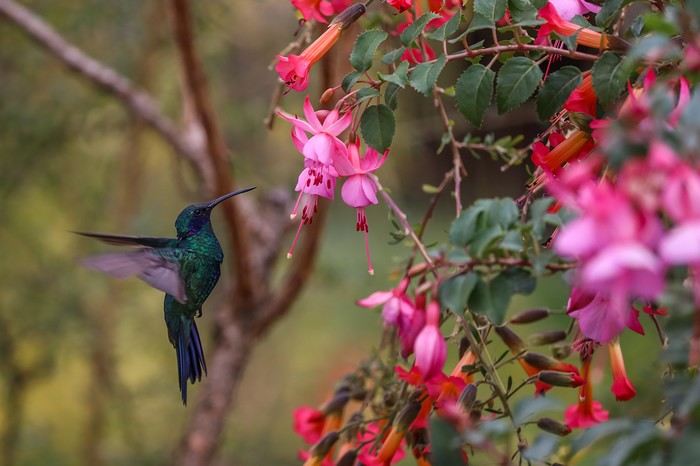
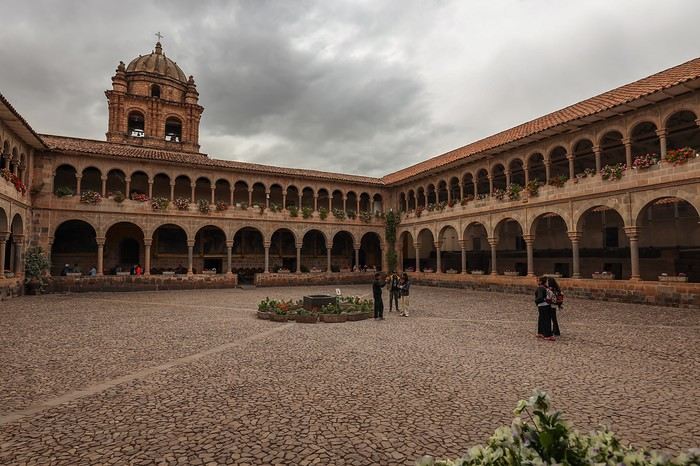
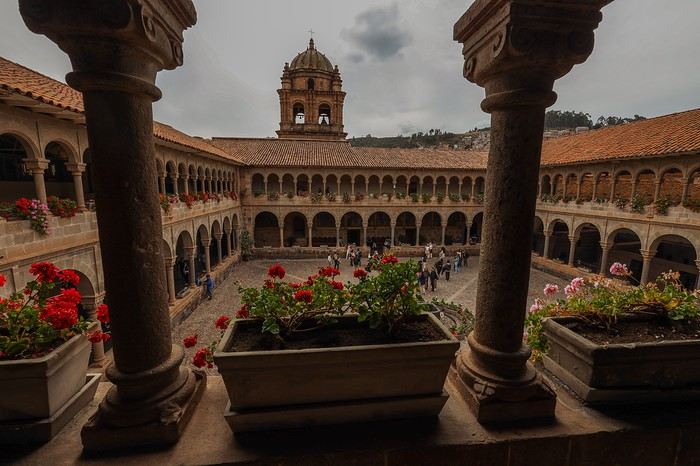
 It's hard to imagine what the Temple of the Sun was like, as it's entirely covered by the church and the convent cloister.
 Ultimately, it's more from the outside that you realize this building, marked by powerful walls with rounded shapes, dates back to the Inca era.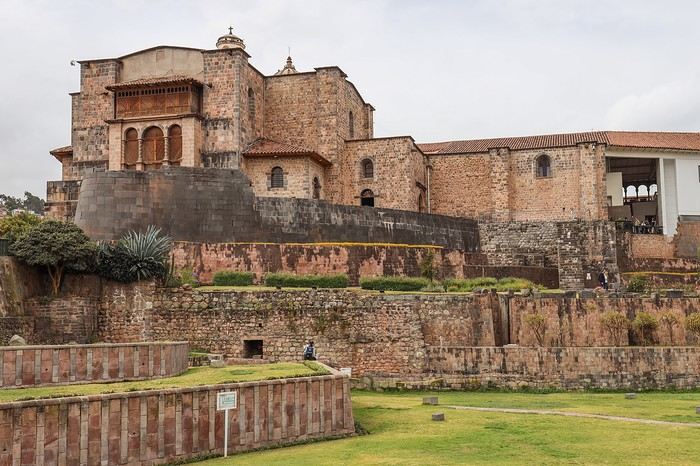
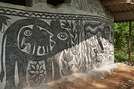
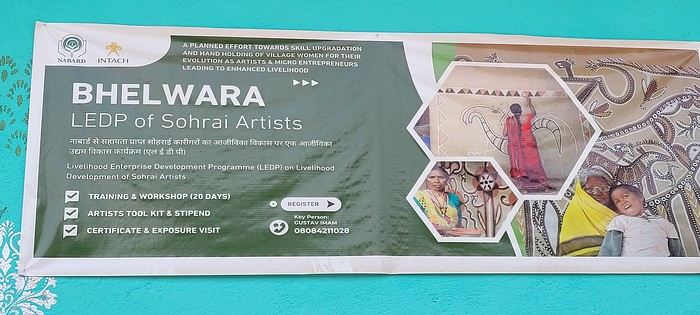
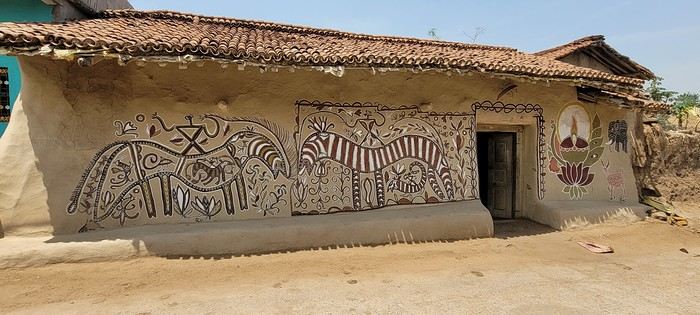
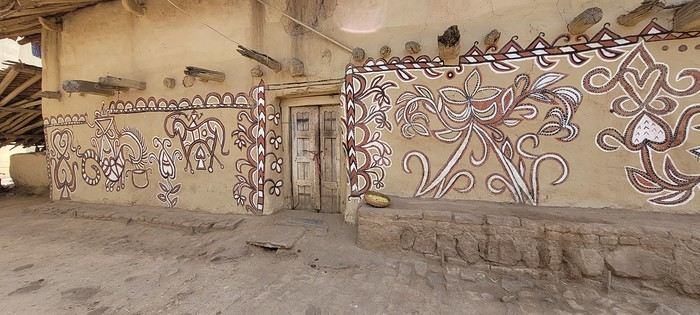
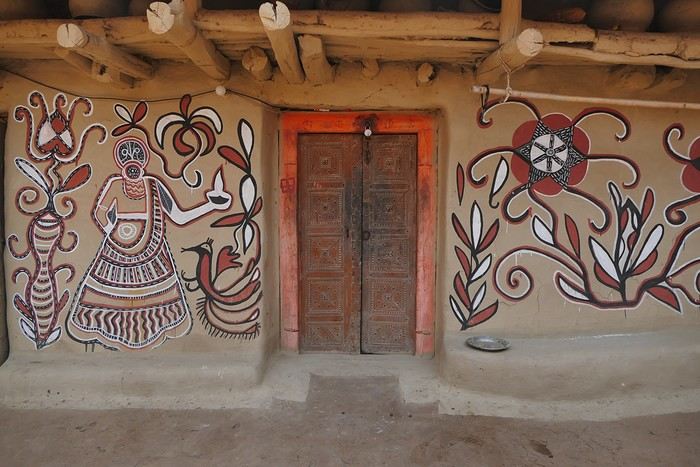
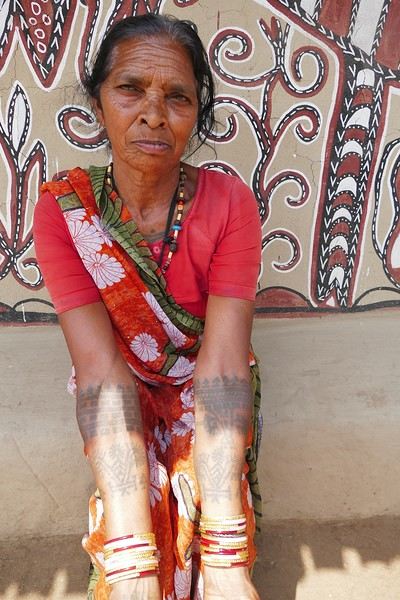
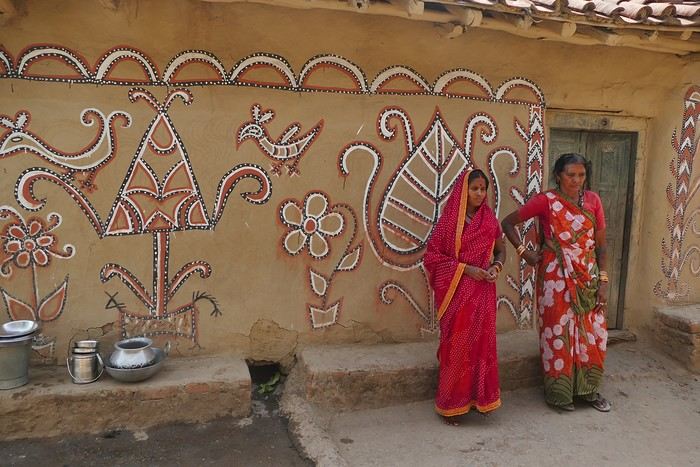
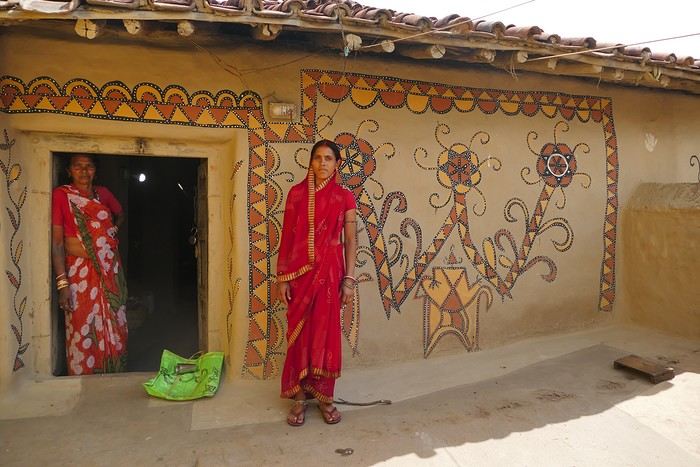
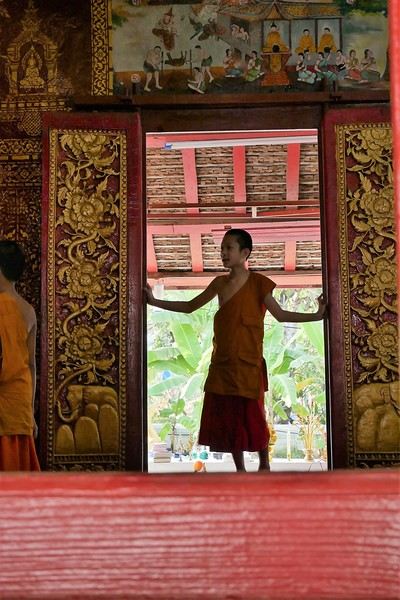
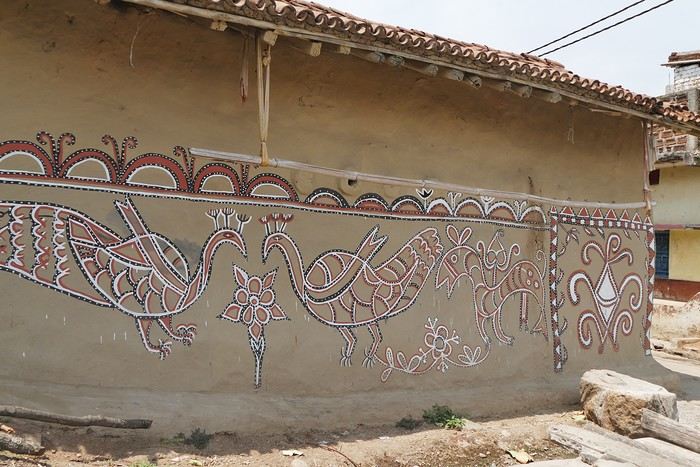 On some paintings, the scenes become almost narrative: you can make out figures, everyday gestures, like a memory of the village inscribed in the walls. The decorative frames around the doors aren’t left to chance either—they symbolically protect the house, like a boundary between the inside and the outside world.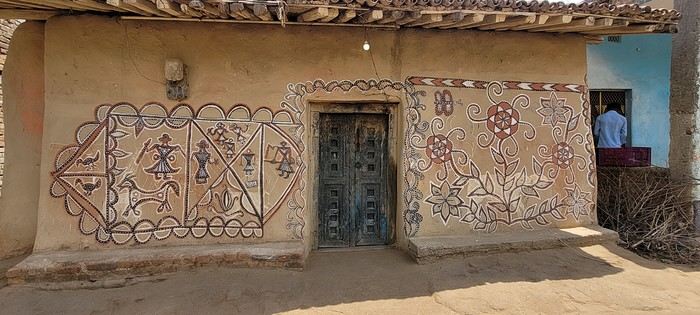
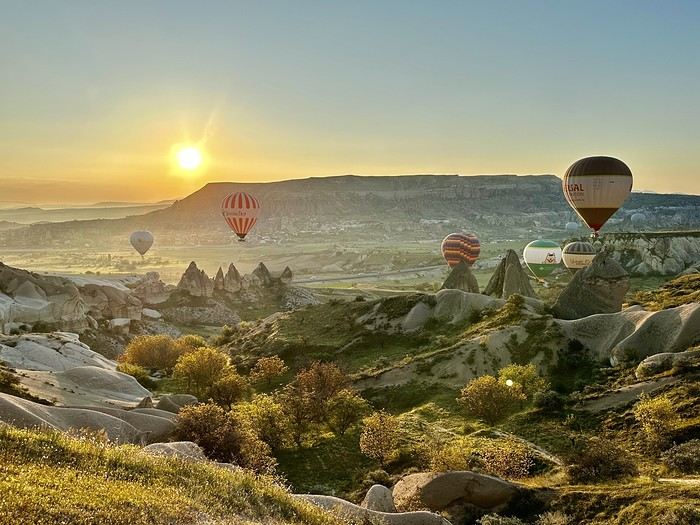 A little sneak peek?






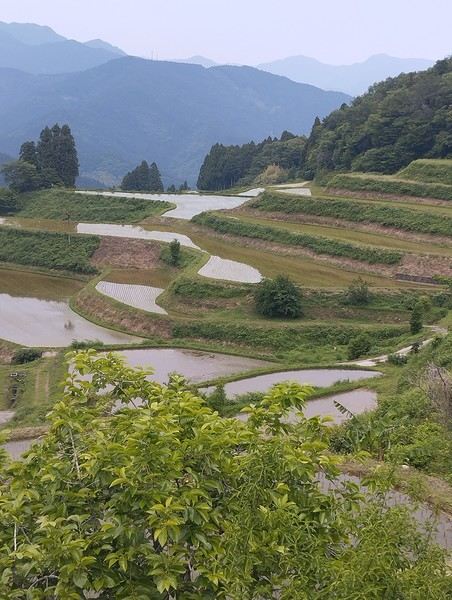
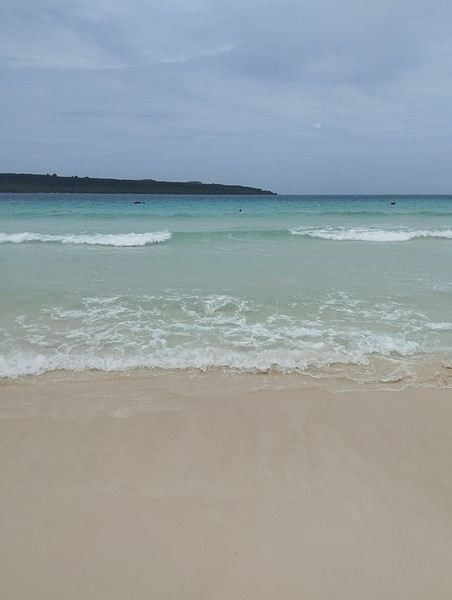
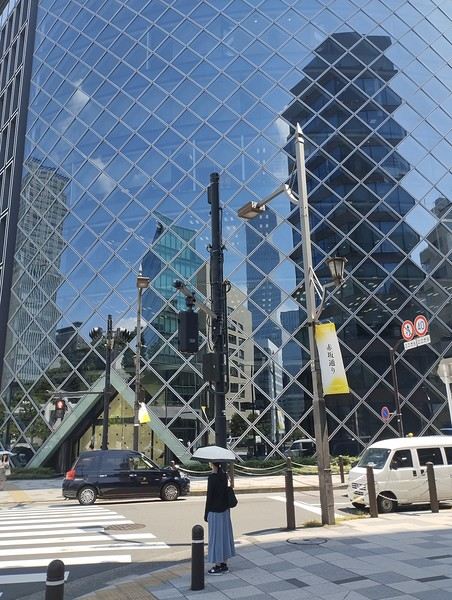

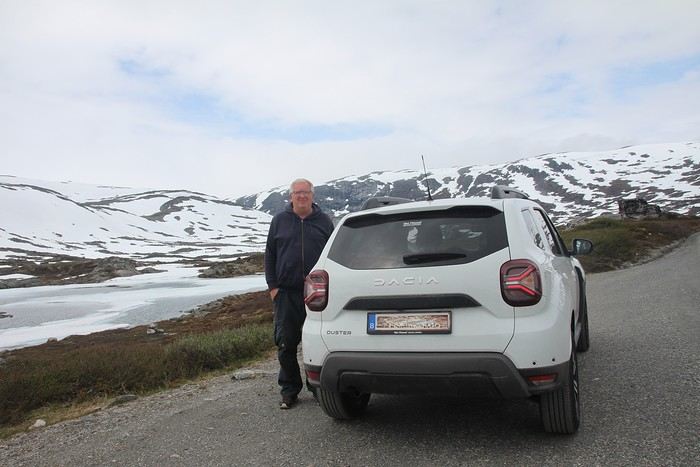

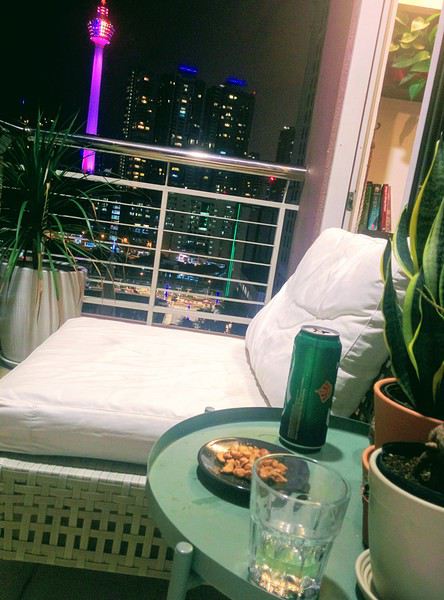
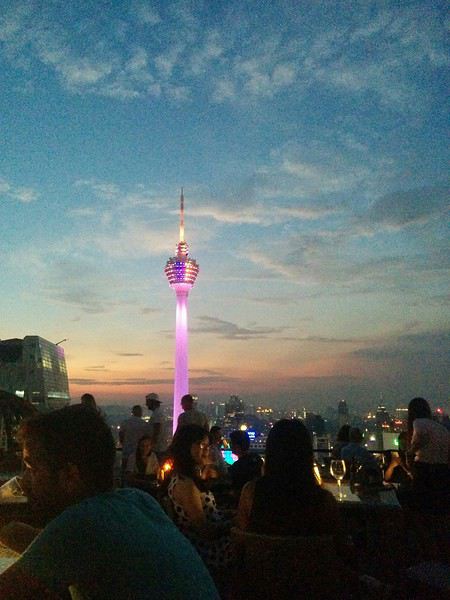
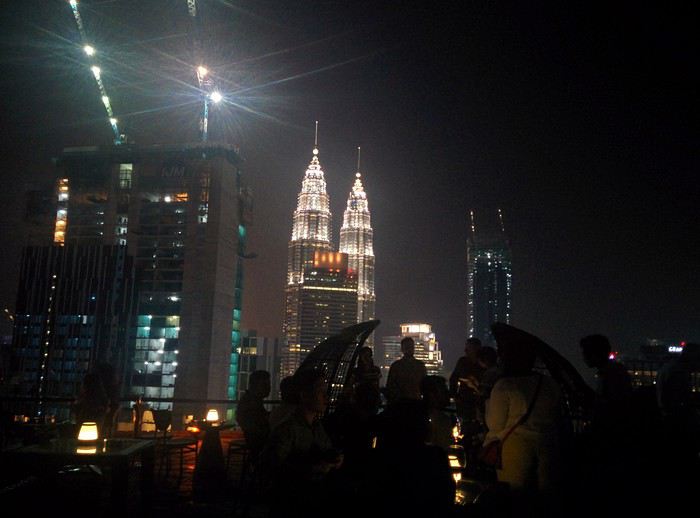
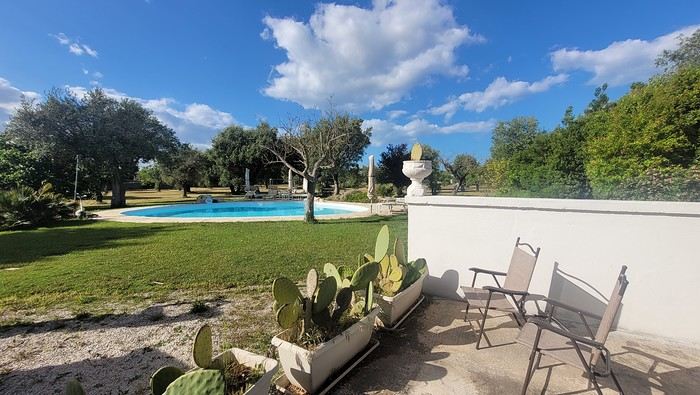
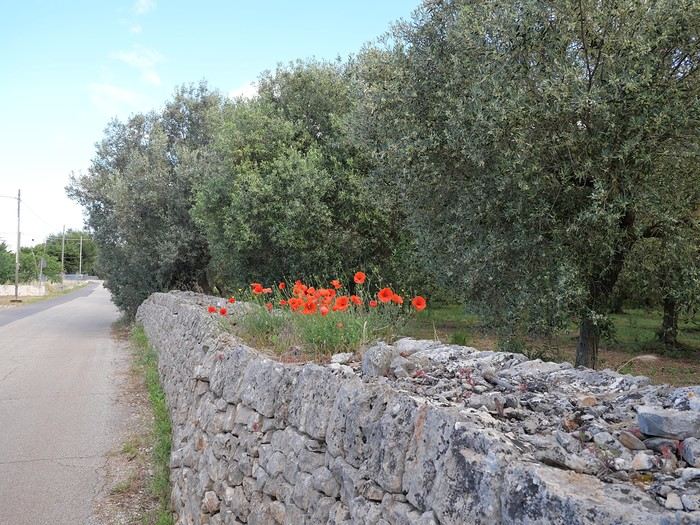
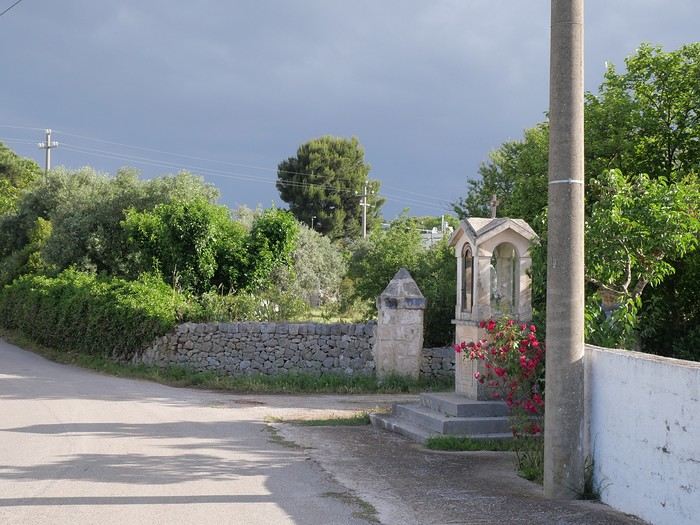
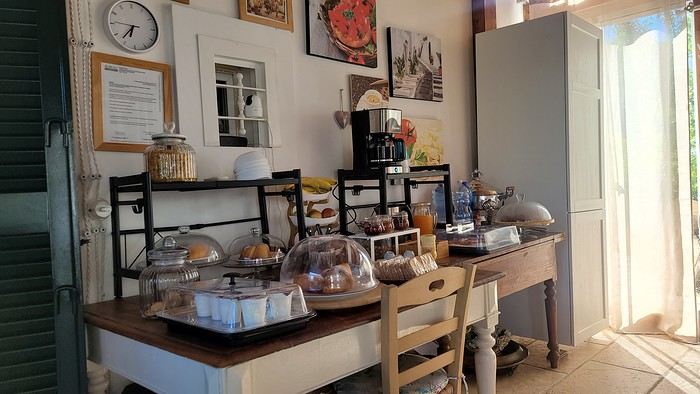
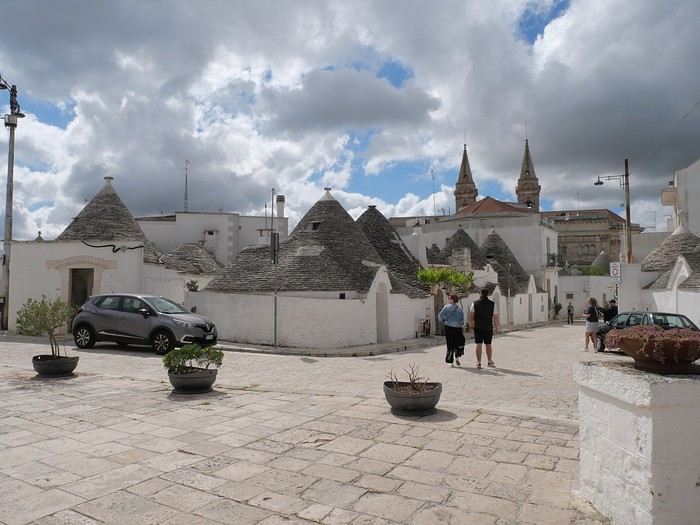
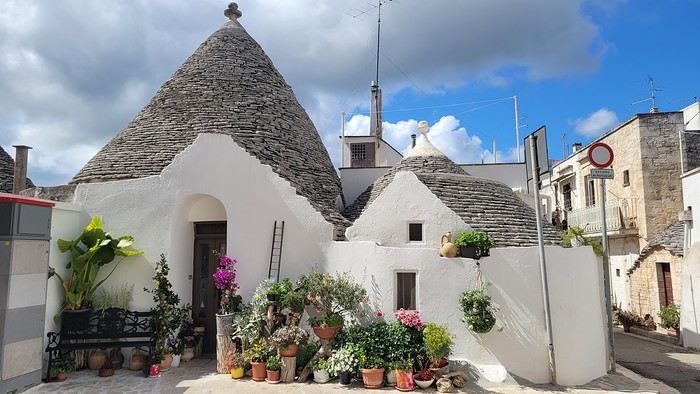
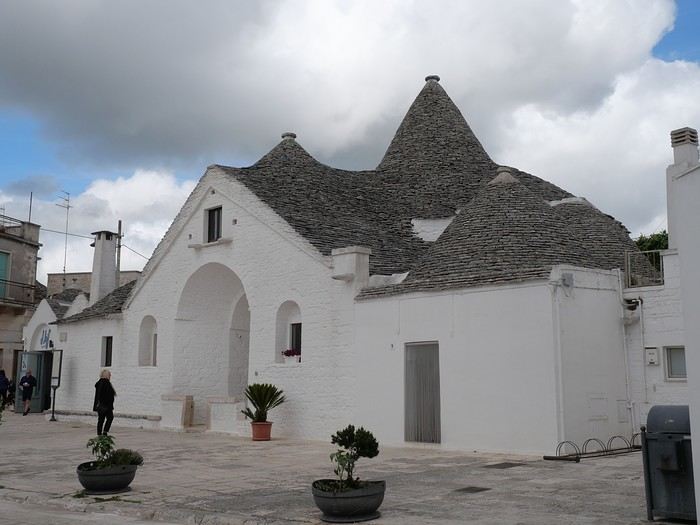
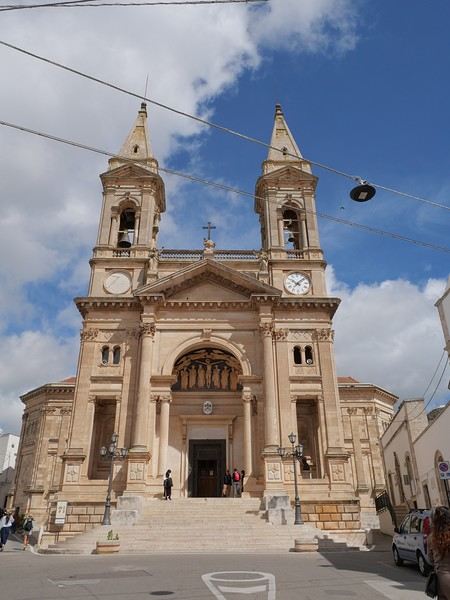
 Come along, I'm taking you to this country where it's so nice to wander and slow down...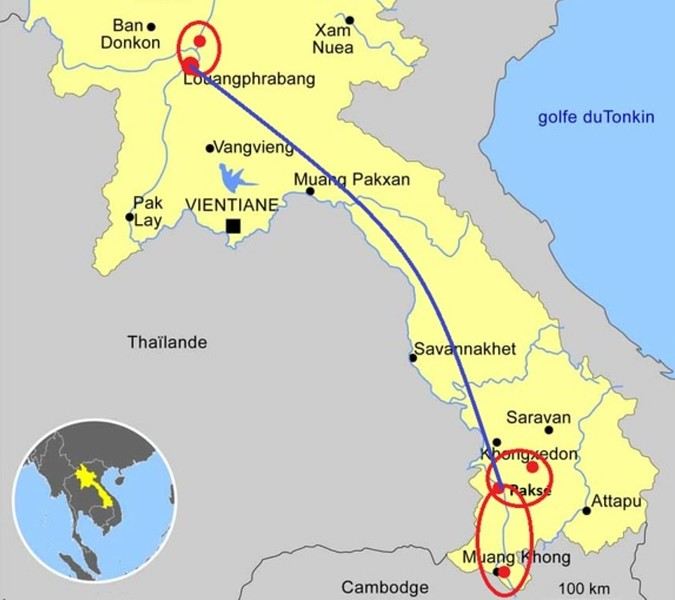
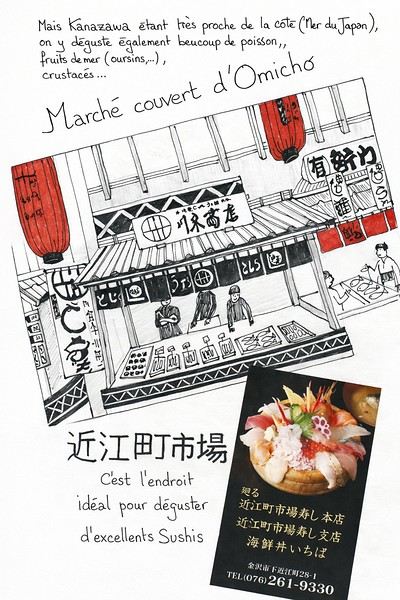
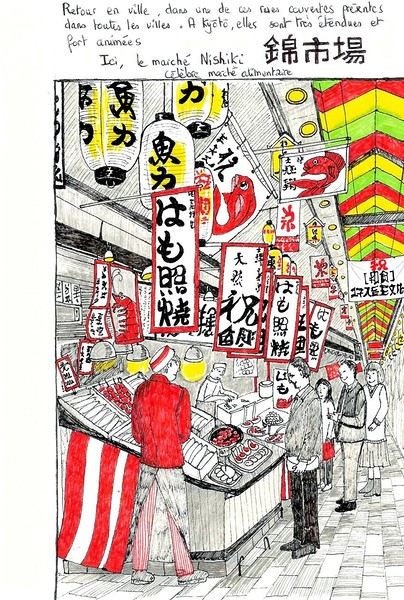
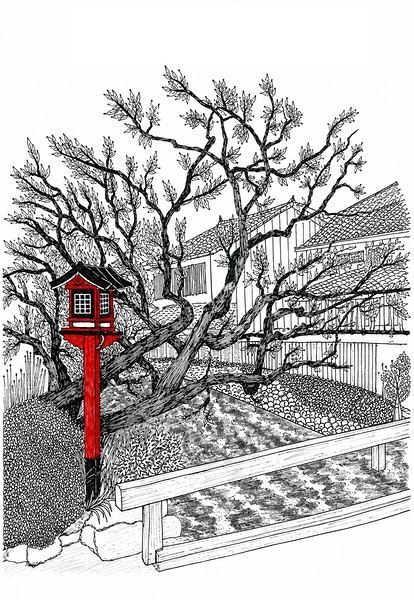 I’m inviting you on a stroll through my drawings—a completely subjective, far from exhaustive, and totally personal take, since it’s based on my own sketches. I put this travel journal together after returning in late 2024, mostly using felt-tip pens and pencils, with a few collages thrown in. I worked from our personal photos.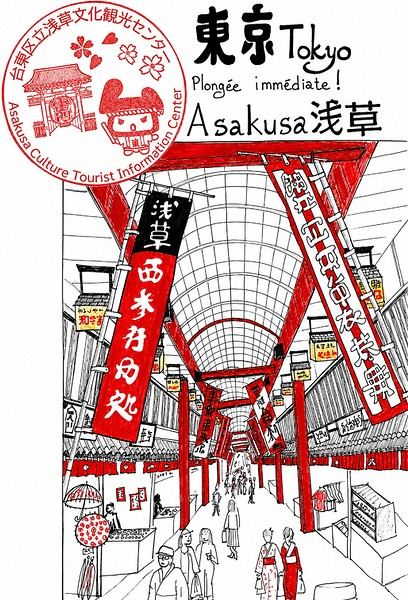
 And in Kyoto, Nishiki Market:
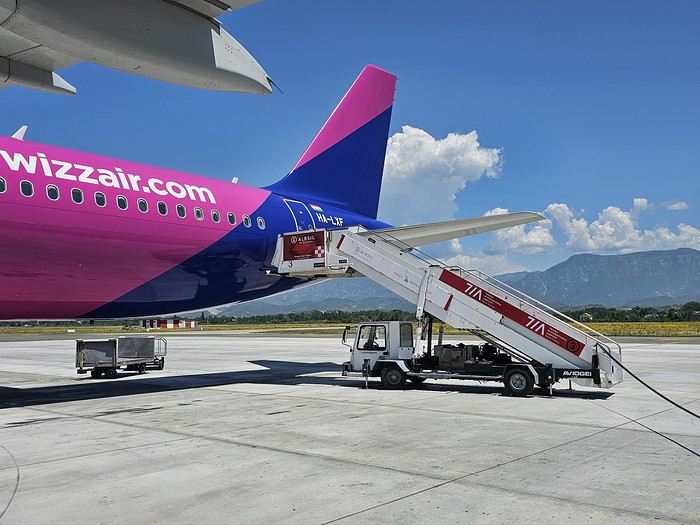 Since Albania isn’t part of Europe when it comes to phone service (at least not yet! :-)), we had to buy a physical SIM card—otherwise, the bill would’ve been sky-high if we’d used our French plan! We got one from Vodafone AL at the airport. You can buy online before leaving with a virtual SIM (e-SIM) for compatible phones, so you don’t have to swap cards. But given the uncertainty about choosing a plan online, we preferred buying one directly at Tirana Airport. Cost: 31 € for 100 GB. That’s way too much—100 GB is overkill. For 40 GB, it’s 27 €, and the plan lasts 21 days. The price difference isn’t huge, and it was cheaper than online. This plan covers all the countries along the Balkan range.
Money tip: All guesthouses and accommodations accept euros. The local currency in Albania is the LEK. In Montenegro, it’s the euro. Bank fees for withdrawing money from an ATM in Albania are pretty steep: 8 € for a withdrawal of 600–700 LEK (about 200 €)! So it’s better to withdraw cash (euros) in France. Oh, and we booked all our accommodations before leaving, but payment is always in cash. Budget around 400–500 € for 9 days of trekking.
Since Albania isn’t part of Europe when it comes to phone service (at least not yet! :-)), we had to buy a physical SIM card—otherwise, the bill would’ve been sky-high if we’d used our French plan! We got one from Vodafone AL at the airport. You can buy online before leaving with a virtual SIM (e-SIM) for compatible phones, so you don’t have to swap cards. But given the uncertainty about choosing a plan online, we preferred buying one directly at Tirana Airport. Cost: 31 € for 100 GB. That’s way too much—100 GB is overkill. For 40 GB, it’s 27 €, and the plan lasts 21 days. The price difference isn’t huge, and it was cheaper than online. This plan covers all the countries along the Balkan range.
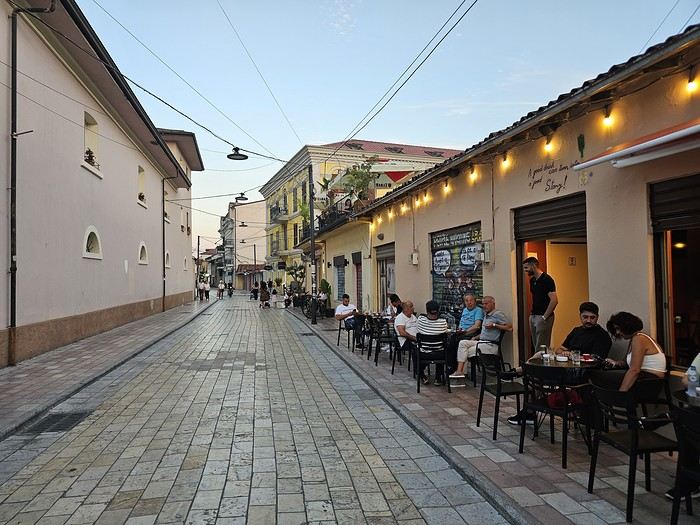
Money tip: All guesthouses and accommodations accept euros. The local currency in Albania is the LEK. In Montenegro, it’s the euro. Bank fees for withdrawing money from an ATM in Albania are pretty steep: 8 € for a withdrawal of 600–700 LEK (about 200 €)! So it’s better to withdraw cash (euros) in France. Oh, and we booked all our accommodations before leaving, but payment is always in cash. Budget around 400–500 € for 9 days of trekking.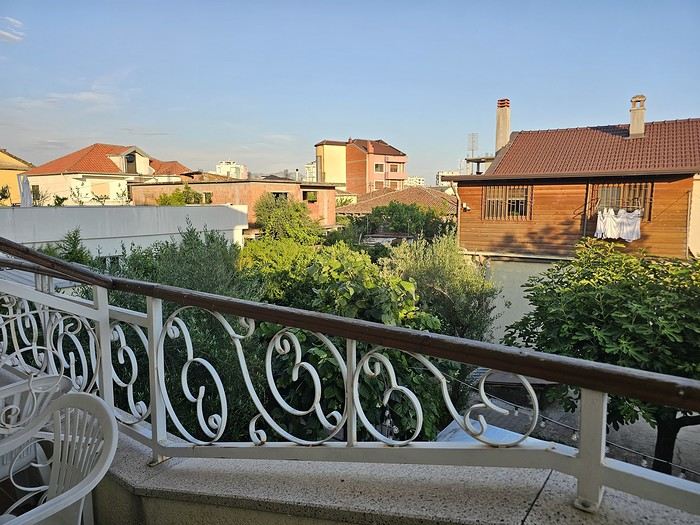 I really liked Shköder, especially its pedestrian street lined with restaurants and lit up at night. It’s a great place to stroll and eat. The food isn’t expensive—two big salads and two beers: 14 € :-) . Fruit prices are also very reasonable: 3 € for a kilo of cherries, compared to 9–10 € in France.
Religions coexist peacefully in these countries—Catholics and Muslims. From our balcony, my friend heard the call to prayer for the first time, coming from one of the city’s mosques.
I really liked Shköder, especially its pedestrian street lined with restaurants and lit up at night. It’s a great place to stroll and eat. The food isn’t expensive—two big salads and two beers: 14 € :-) . Fruit prices are also very reasonable: 3 € for a kilo of cherries, compared to 9–10 € in France.
Religions coexist peacefully in these countries—Catholics and Muslims. From our balcony, my friend heard the call to prayer for the first time, coming from one of the city’s mosques.
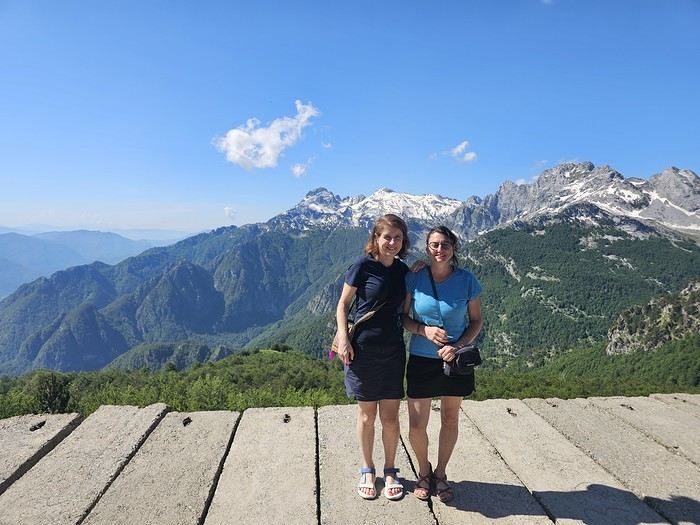
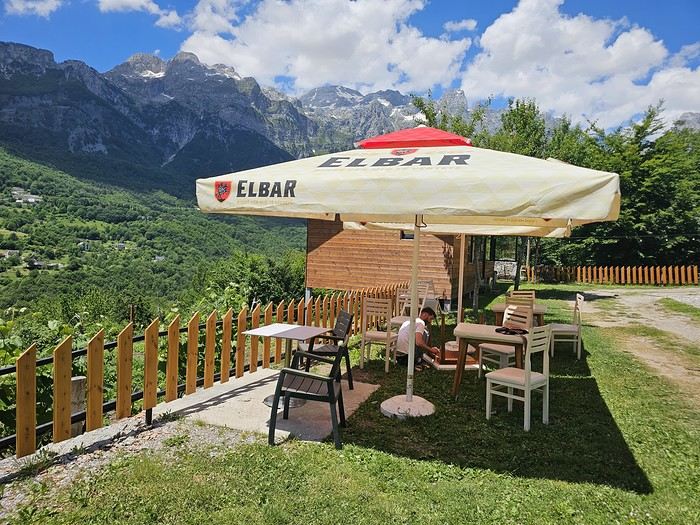
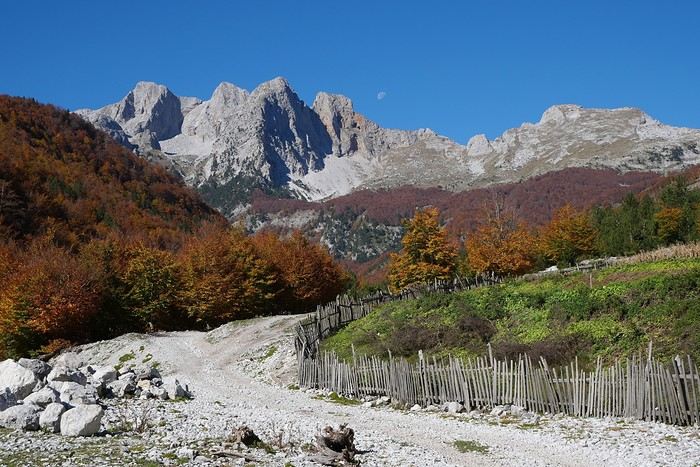
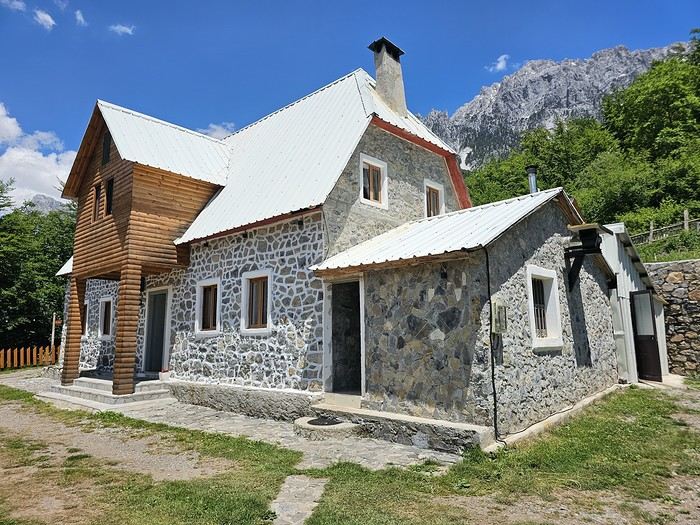 We slept in the heights of Theth at a new guesthouse, "Mountain Vista Shkafi," with an amazing view.