7 weeks and 150 years between us on a southern Morocco road trip
FR

Translated into English.

AN An5 Veteran ·
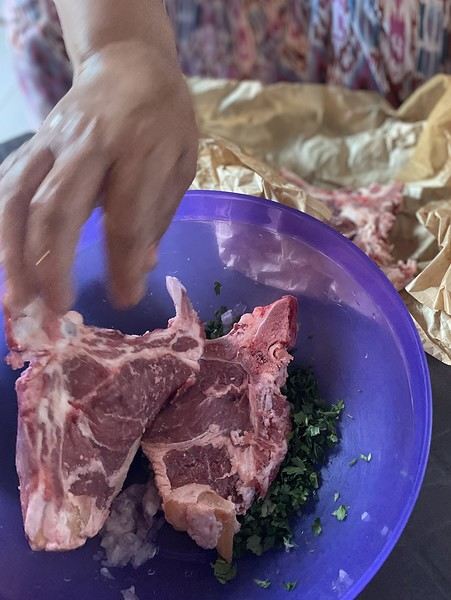
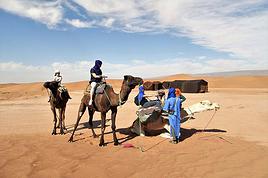
We leave the Atlantic and its mood swings behind to head east toward Guelmim. Or more precisely, to the Tighmert oasis. Our chosen retreat, recommended by other VF members, is La Maison de l’Homme Bleu. It’s beautiful, peaceful, and the meals are delicious. I might even take a little cooking class. Camel ribs for the evening grill—first time for us!


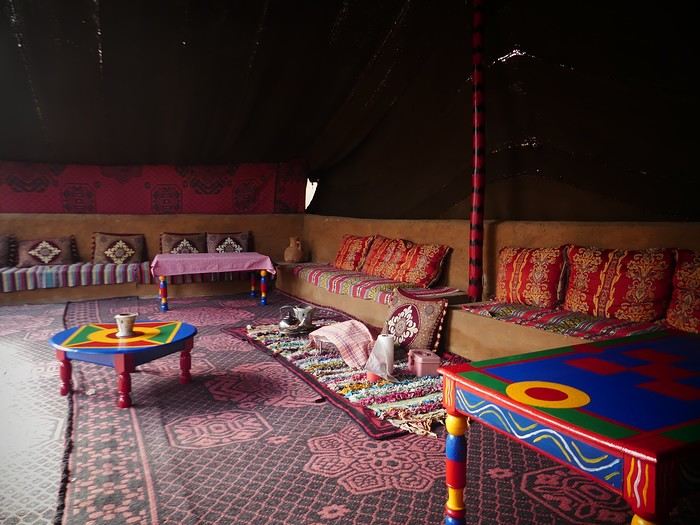
Plenty of spots invite you to relax—here, the tent is a great place for reading. The Wi-Fi isn’t great; apparently, fiber will be installed soon.


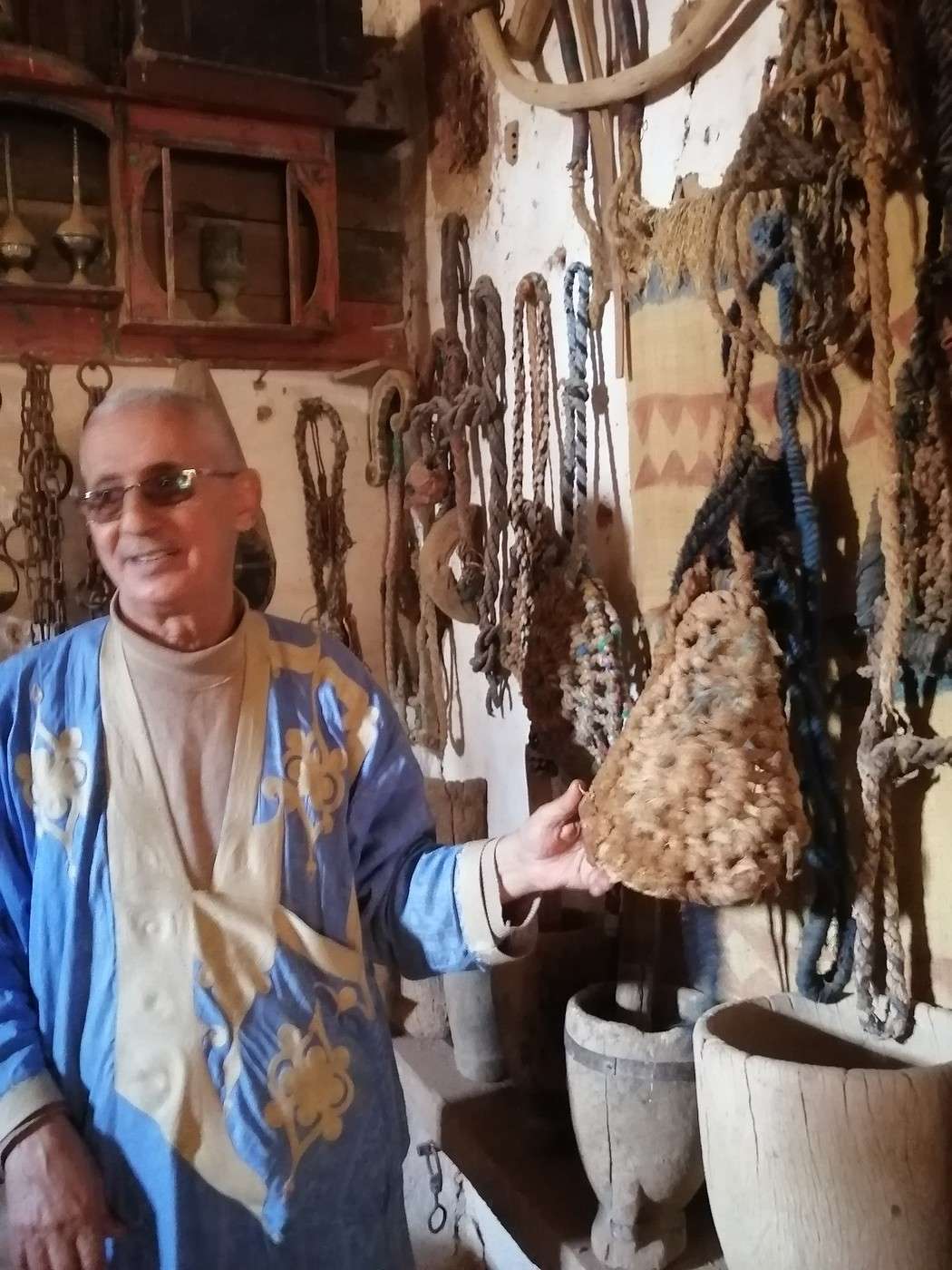
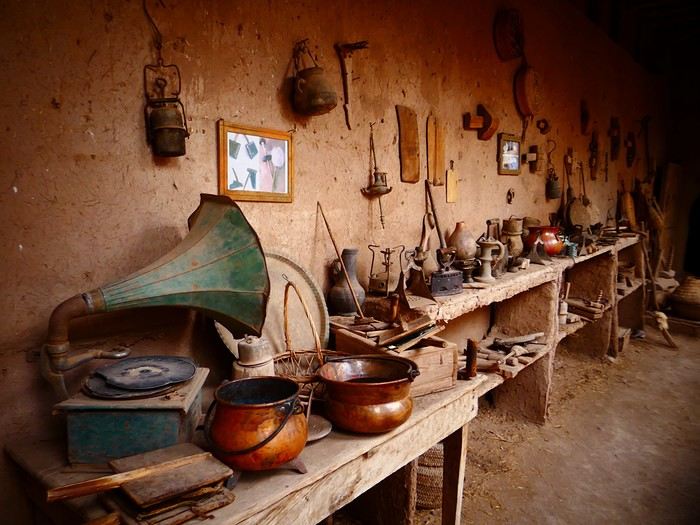
It’s not that we’re stressed, but the place is especially relaxing, and strolling through the oasis is a real pleasure. We visit the small nearby museum, where a bunch of artifacts from life in the old days are gathered, including the famous camel udder support designed to keep the baby from nursing.


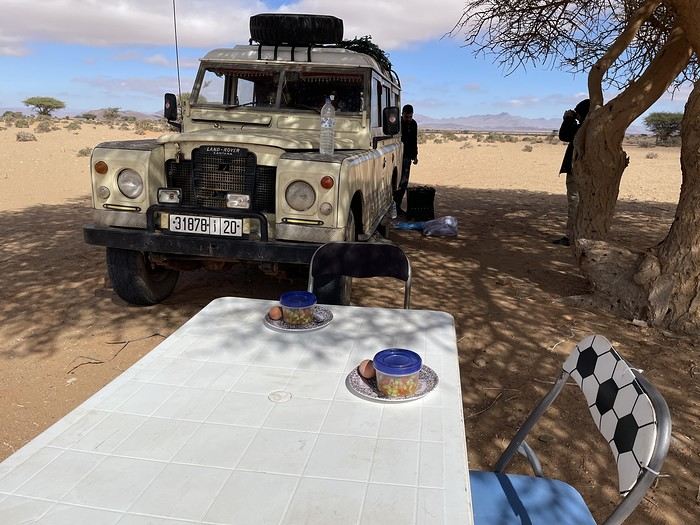
The highlight of our stay is a day trip into the desert. The old, quirky Land Rover is perfect for the expedition.


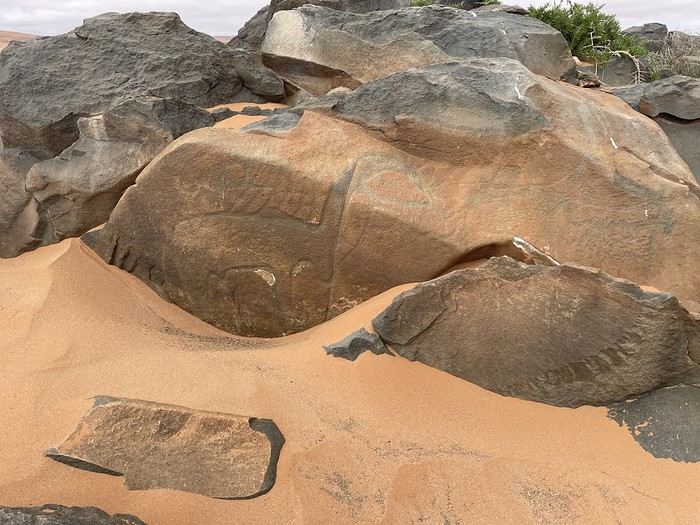
Our very interesting guide tells us about the medicinal virtues of plants and the medical beliefs tied to drinking camel milk, which is said to even cure cancer… To do this, you stay in the oasis for a month, eat nothing but rice, and drink camel milk flavored with the urine of a young female camel—and you leave cured! Several centenarians live here, including French people who arrived in poor health years ago. Consider yourselves warned! Abdel gives us geological insights, and we pick up some galena stones—it used to be an industry here. We also visit a small site to see some prehistoric engravings.


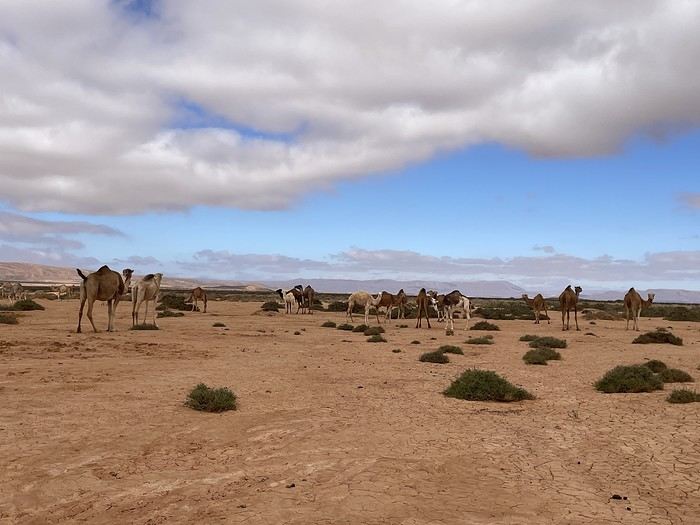
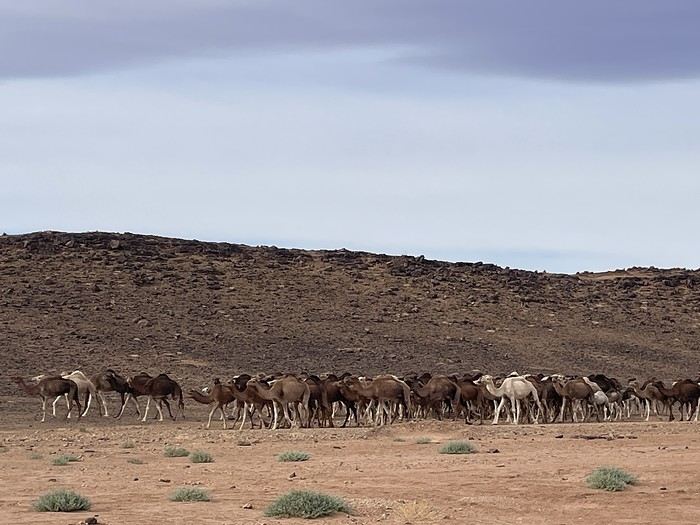
And of course, we discover the hot spring—a small pool of water at 40°C fed by a geyser. There are quite a few tourists around, and I’d only dip my feet in… A full day with even an encounter with a large herd of Sahara’s stars.


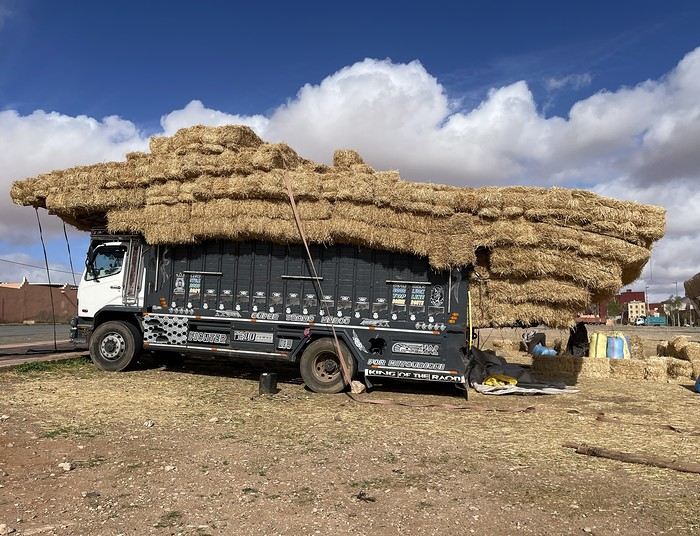
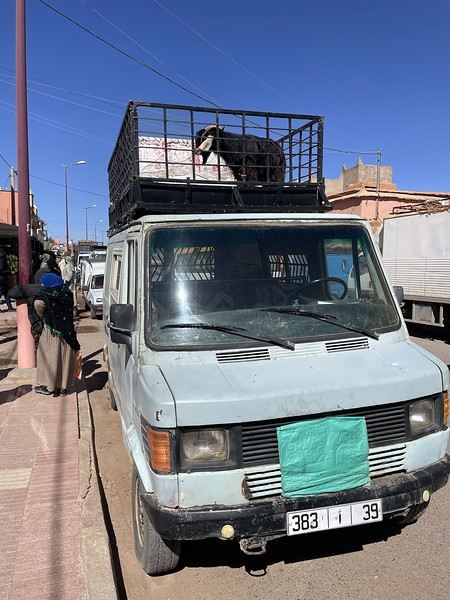
The next day, we return to Guelmim for the first time to see the camel market being set up. There are a few camels, and the trucks overloaded with bales of hay are impressive.


We wander around the city and watch djellaba embroiderers. The threads are stretched and operated by a machine, and the embroiderers’ speed is amazing—a short video would’ve been more explanatory.

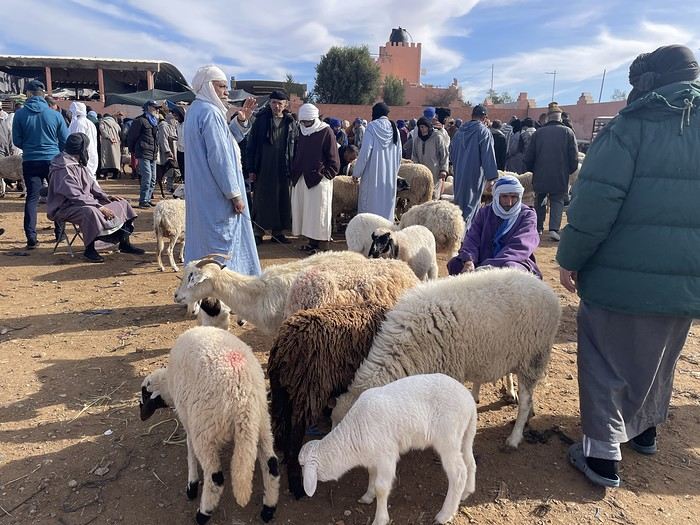
We’ll come back the next day, Saturday, when the vegetable market is especially rich. Here, you can buy sheep, goats, poultry, and just about anything else you can imagine.


We stop by Marjane, the Moroccan supermarket, and for the first time, we can withdraw up to 8,000 dirhams. Good to know, since everywhere else it’s no more than 2,000. Our long little stay at the oasis was really enjoyable—a place to remember.
KA Kate Globetrotter ·
Camel ribs for the evening grill. A first for us.

Oh?! And is it good? What does it taste like?
Mes photos sur Flickr: https://www.flickr.com/photos/153304262@N05/albums "Le Temps nous égare. Le Temps nous étreint. Le Temps nous est gare. Le Temps nous est train".
AO Aoreora1 Regular ·
Yeah, that works. It tastes like beef. As a tagine, as kefta... but of course, you'll find it more in the south.
AN An5 Veteran ·
The camel chops reminded me of lamb—it was really tender. Thanks Marie Mathilde and Jean for the Blue Man’s address.
VI Viovio2 Regular ·
I love this way of traveling. Being nomads, just for the vacation time. It's awesome! Thanks for sharing with us.
AN An5 Veteran ·
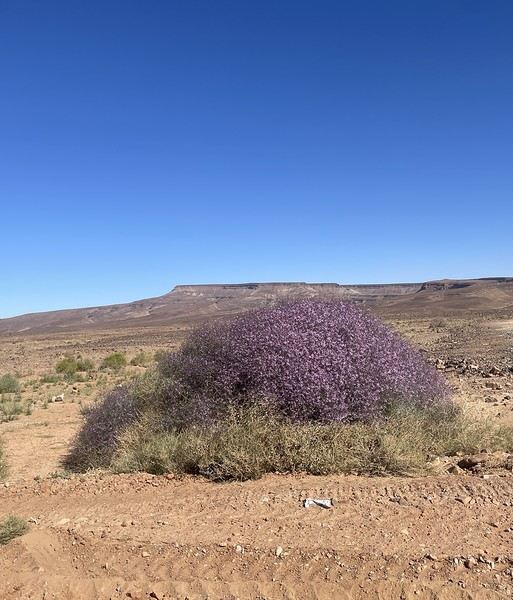
Hi Violette, It’s time to hit the road again—we’re leaving the oasis and heading toward Tata. The route is stunning and easy, with the Sahara stretching out ahead of us. There’s little life in these harsh lands.
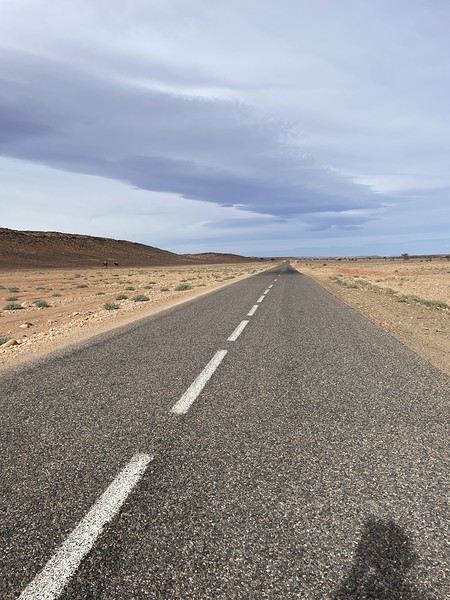
We pass a large herd of dromedaries.


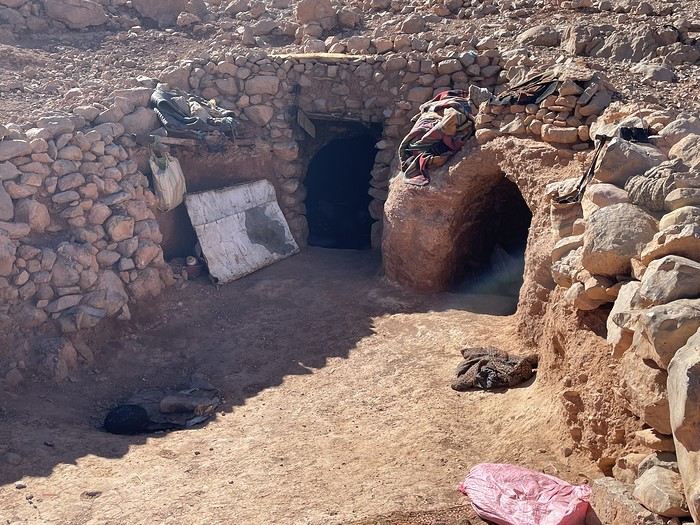
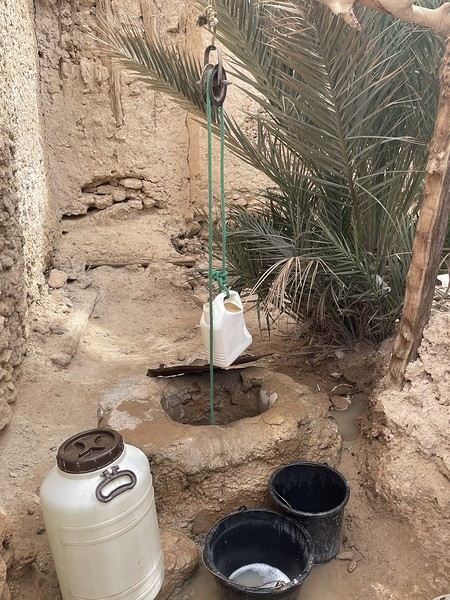
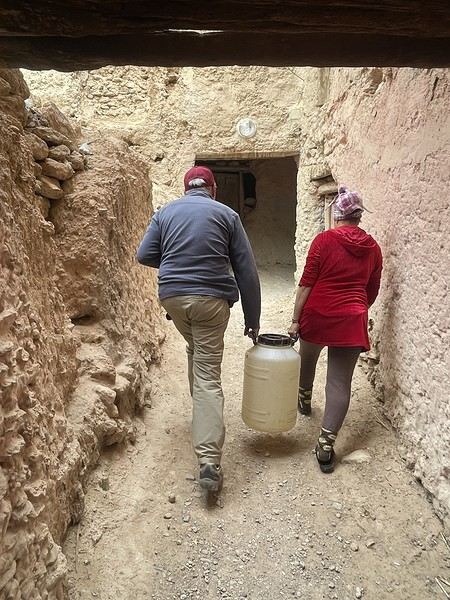
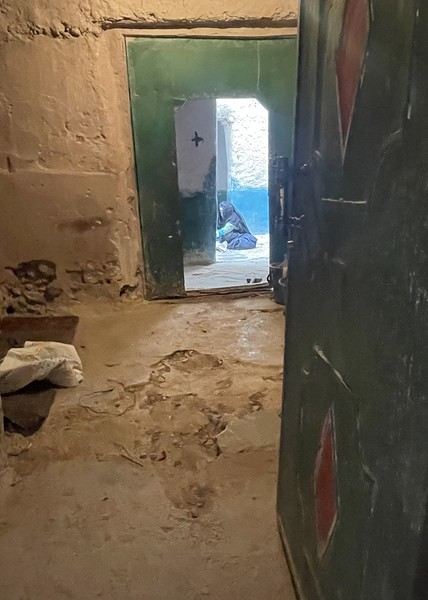
Stop at the underground village of Icht. A child guides us through the maze of alleys. It’s still inhabited, and comfort here is stripped down to the basics. Richard helps carry water drawn from the well.


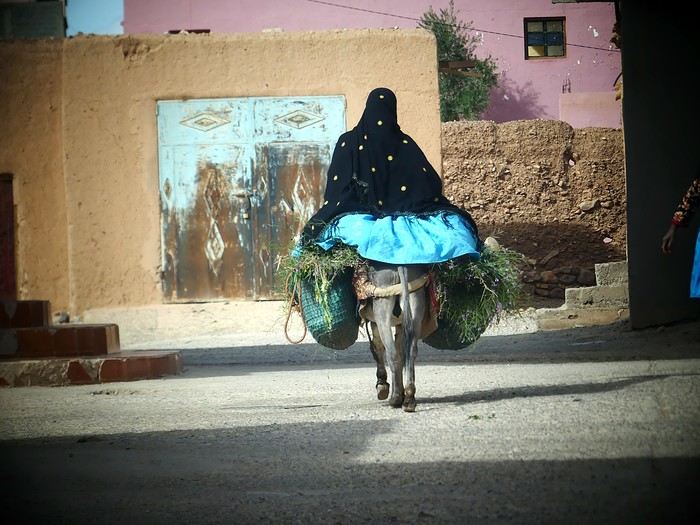
In Akka, we pick up a hitchhiker weighed down with bags and all sorts of containers. She has us stop after barely 1 km on the heights. It surprises us, but with all her stuff, we must’ve given her some relief. We get lost in narrow alleys that keep getting tighter. The women here wear skirts with two bright turquoise ruffles over their black veils, and when they ride their donkeys, the scene is really charming.


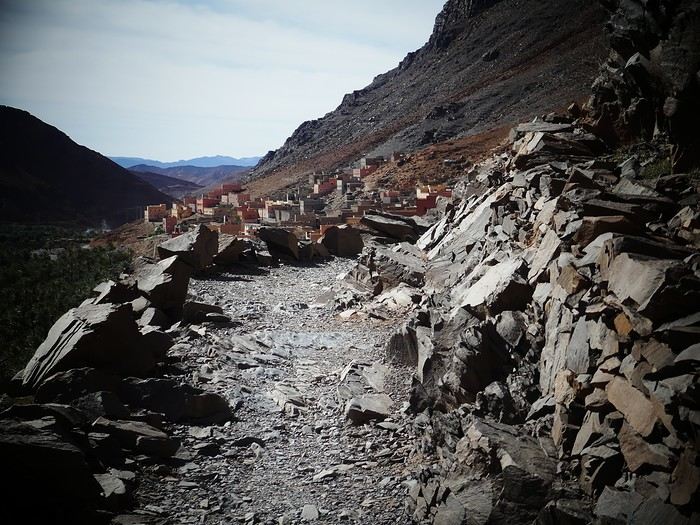
We can’t find the spot where we stopped 15 years ago, from which we’d explored the old village. There’s still some road ahead to reach Tata, where we’ve booked a campsite that also functions as a hotel. When we unload the car, we realize our hitchhiker took our fleeces, which were on the back seat. These fleeces are like a second skin—we’ve barely taken them off since arriving in Morocco. We’ll have our meal in the garden wearing our puffy jackets, but we’re a bit shocked. The next day, we decide to go for a walk in Agouliz. It’s a beautiful little hike along the mountainside, with a small oued flowing below. The road to get here has suffered major damage, and we have to drive on some pretty rocky tracks.


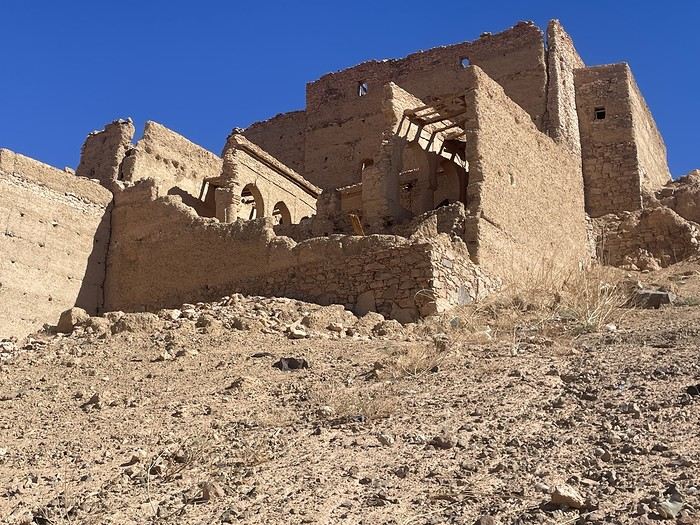
We end at the old Mellah, an abandoned Jewish quarter that’s quite crumbled. We walk—or rather climb—through piles of trash. The place doesn’t really charm us.


We decide to head into Tata for tea and try to find replacements for our fleeces. It’s starting to get really hot during the day, but mornings and evenings are still chilly. Our journey will continue toward Zagora.
SO Solene40 Globetrotter ·
Oh wow, Anne, my naivety took a hit with your hitchhiker story! Even though we know it can happen, it’s still so frustrating when it does. We’ve never had that happen to us, but once I wasn’t too comfortable with our bag in the back next to that day’s hitchhiker. In the end, nothing went wrong, and now we’re careful about what’s in the back before letting someone in.

In South Africa, we only picked up women because of the country’s reputation. Proof that it doesn’t prevent anything!

But despite the "risk," I really love these exchanges with locals. In some countries, it’s the only way we’ve found to talk to people other than hotel staff, servers, and taxi drivers. And I’ve kept some really touching encounters as memories 😊

Christelle
Le monde est comme un miroir, si tu lui souris, il te sourit aussi!
JE Jeeaan Globetrotter ·
I'm really sorry to hear that... I've often picked up hitchhikers but I've never had that kind of trouble. It's so disappointing. Thankfully, the sun is getting more and more present. Temperatures should rise a bit. All the best.
AN An5 Veteran ·
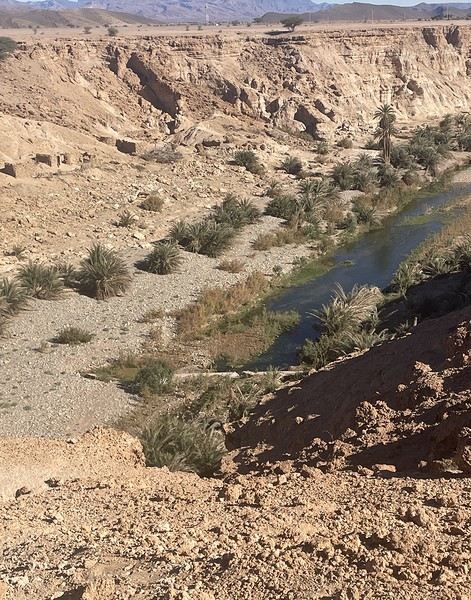
Bad luck, but we kept helping out here and there. No need to worry too much about it… And yes, the sun hasn’t left us! We’re back on the road in our Dacia, heading to our next stop, Agdz. The road is still great, and we’re driving through breathtaking landscapes. Villages are hidden below the road, like Tissint.
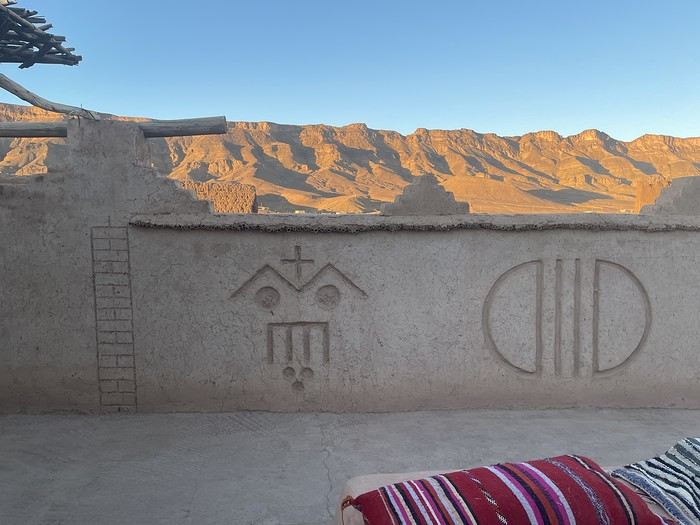
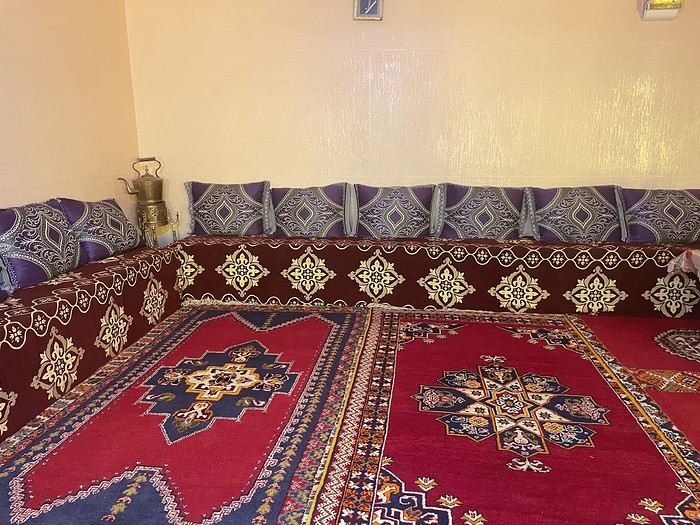
We stop in Foum Zguid for a bite to eat. The town looks almost touristy now—it’s a common stop for desert trips or, like us, for crossing toward Zagora. Still, we decide to take the mountain road north to Agdz. Along the way, while we’re taking photos, a man flags us down—he’s run out of gas and asks for a ride to his village. Of course, he offers us tea, giving us a chance to step inside a Moroccan home. He even invites us for couscous the next day, but we politely decline.


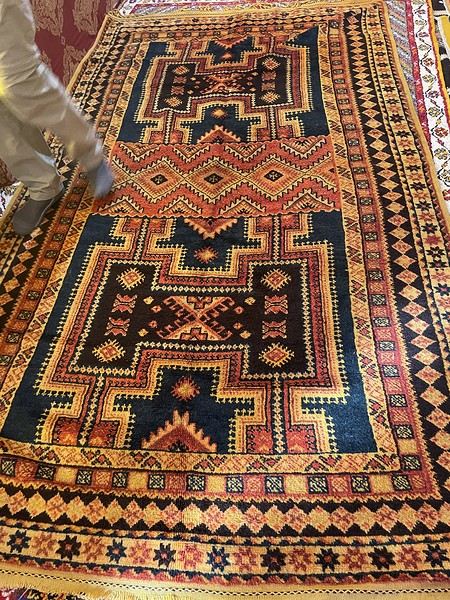
His wife weaves beautiful rugs. Each design is symbolic, and the dyes are natural. We probably could’ve gotten a good deal… Either way, we admire the craftsmanship.


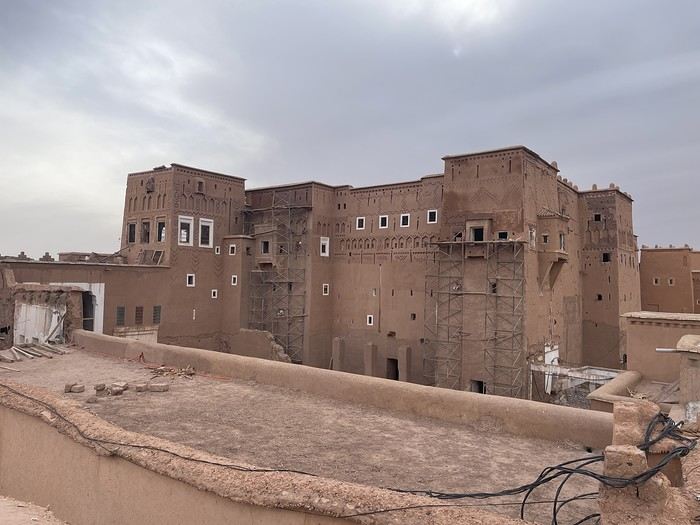
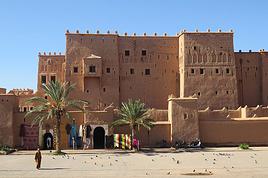
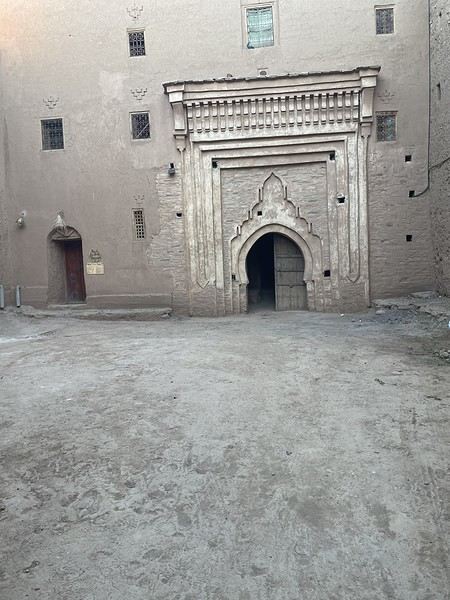
We drop him off at his car, and he’s over the moon. Thirty kilometers later, we reach Agdz—a town with little interest, but we push on to Tamegroute, where we’ve booked a stay at the Kasbah des Kaids. What an experience! First, we step under this archway and find ourselves in the dark.


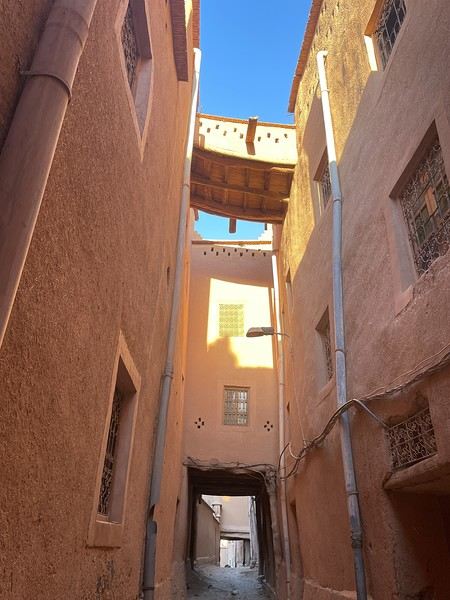
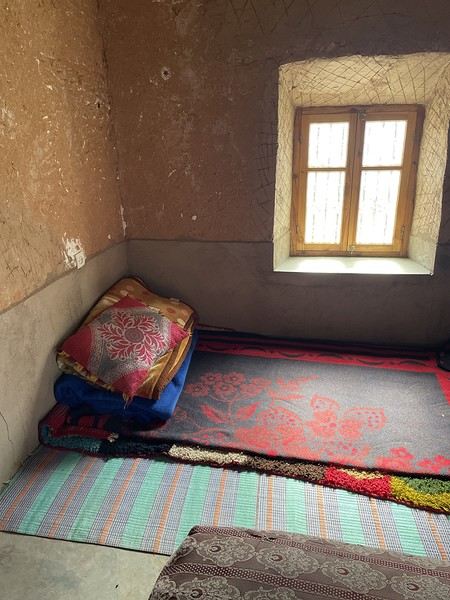
They assure us we’re in the right place—luckily, a guy shows up, and we follow him through what feels like a maze of hallways and staircases. We’ll get lost again even after two nights! We sleep in a room with a tiny window, but it’s perfectly cozy. Sure, the comfort is basic, but it feels like stepping back 100 years. This little stay will leave a mark. It’s pretty cool to help this young Moroccan restore his hotel-museum, and the food is great. We’ll visit the palm grove, pick up some supplies in Agdz, and head to the waterfalls. Agdz is a good stop to break up the drive before Zagora. View of the mountains from the kasbah’s terrace.

I’m posting this without previewing because the Wi-Fi is weak.
Léa83 Regular ·
The "fake breakdown" scam is really common in this region to get you to look at rugs. It happened to us too, a long time ago, when we were driving from Marrakech about twenty kilometers from Ouarzazate. Those rug merchants are *sly*. They’ll give it a shot. Now we know the trick. We don’t stop anymore when we see them on the side of the road with the car hood up...
Léa
JE Jeeaan Globetrotter ·
I’ve already fallen for that breakdown trick. We were supposed to drive the Mercedes driver to a mechanic, but we ended up at the "cousin’s" place—a rug merchant—sipping tea. They insisted on showing us rugs we had zero interest in. We told them exactly what we thought and hit the road again.

Since then, whenever we see a car "broken down" on the side of the road, we give a little wave to the driver trying to flag us down and keep going.

Not mean, just—we didn’t appreciate the scheme.
VI Viovio2 Regular ·
Awesome! I’m warned now! Thanks.
AN An5 Veteran ·
Maybe the rascal tried his luck, but he didn’t catch us. Some people really are master strategists. A well-informed forum member is worth ten!
AN An5 Veteran ·
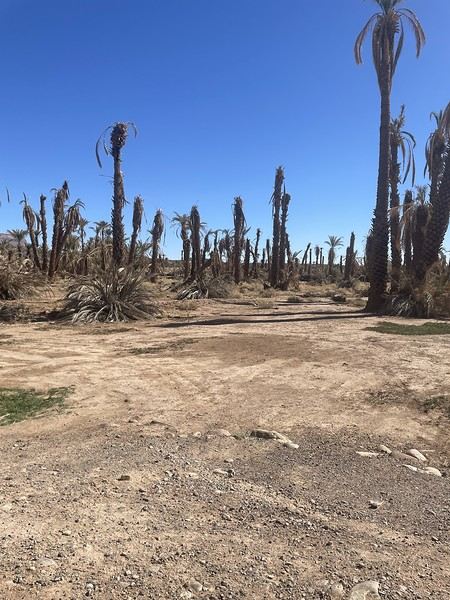
Zagora The main road to Zagora is pretty tedious, so we take the parallel route—though the palm trees are in sad shape.


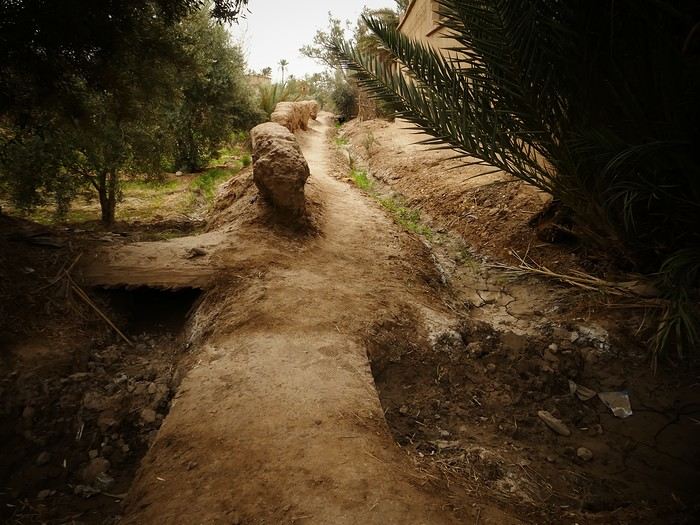
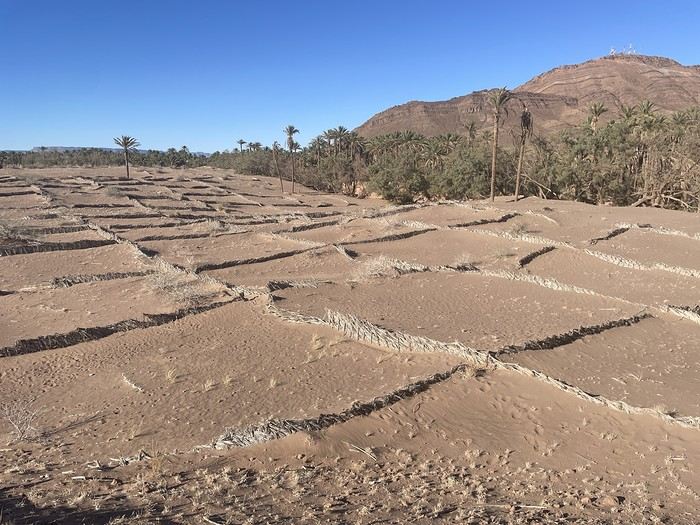
Google Maps points us to a place selling smoked ham!!! We follow the directions only to end up at a farm where the whole family comes out and clearly has no idea what we want. What a joke! We stop in the oasis at Amezrou, follow VF’s advice, and head to *Soleil du Monde*. We’re welcomed warmly. The hotel could use some updating—it’s not the cleanest—but we’re lucky to snag the last two beers in the fridge. We set off to explore our immediate surroundings and are quickly cornered by a guy who insists on guiding us for 1 €. We make it clear we’re just out for a walk and don’t need him, but he tags along anyway. Turns out he’s actually interesting, and as we go along, I can tell he’ll end up asking for more. We’d only planned a short stroll, but he takes us on a full tour of Amezrou village. We’re parched—the desert is right at the city’s edge. He shows us how the desert is encroaching on the palm grove, which locals are trying to slow with palm-branch barriers.

He tells us there used to be gardens here. And especially thick rammed-earth walls. Walking between them—often very high—isn’t unpleasant, though.
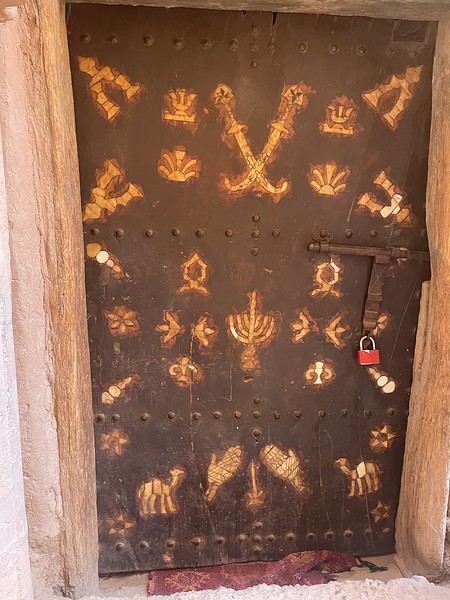
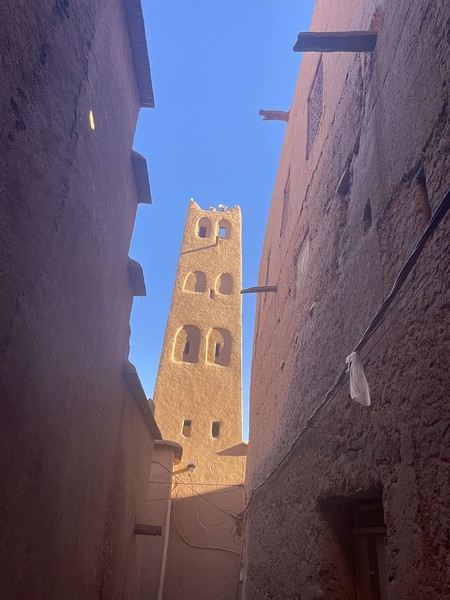
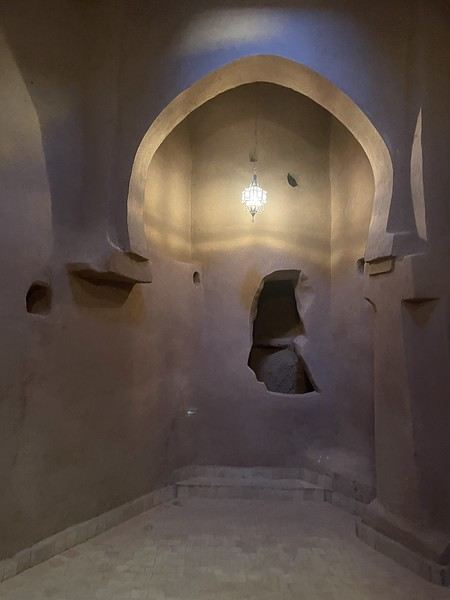
Our self-appointed guide shows us around the douar of Amezrou, sharing its history at the crossroads of multiple civilizations and religions, as is common in these southern towns. He points out the beautiful woodwork: doors intricately carved with bone inlays. This one is an example of syncretism, blending Jewish and Berber symbols.


Restoration of the old minaret


The Jews have left, but they’ve passed down their craftsmanship to the Berbers—whether in ironwork, woodwork, or jewelry. We visit the old synagogue, where a ceremony is still held every year, though I don’t remember its name.

No tourists here—you’d think we’re the only ones enjoying the village. But quietly, so as not to show off the restoration work on old doors, he leads us into an old caravanserai where a carpenter and his son are hard at work. It’s like Ali Baba’s cave, and I cave in, buying a pair of earrings after some tough haggling. He calls me a Berber!
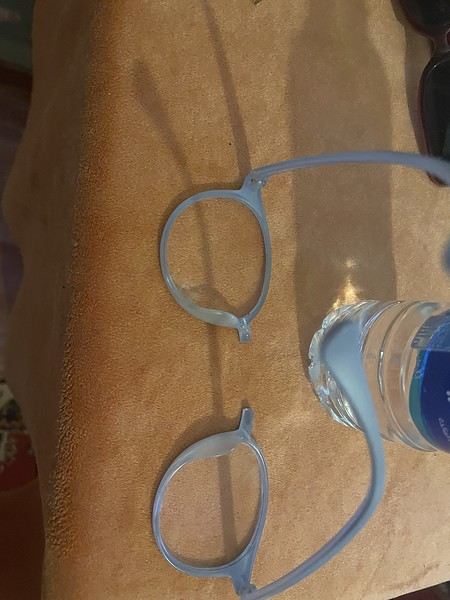
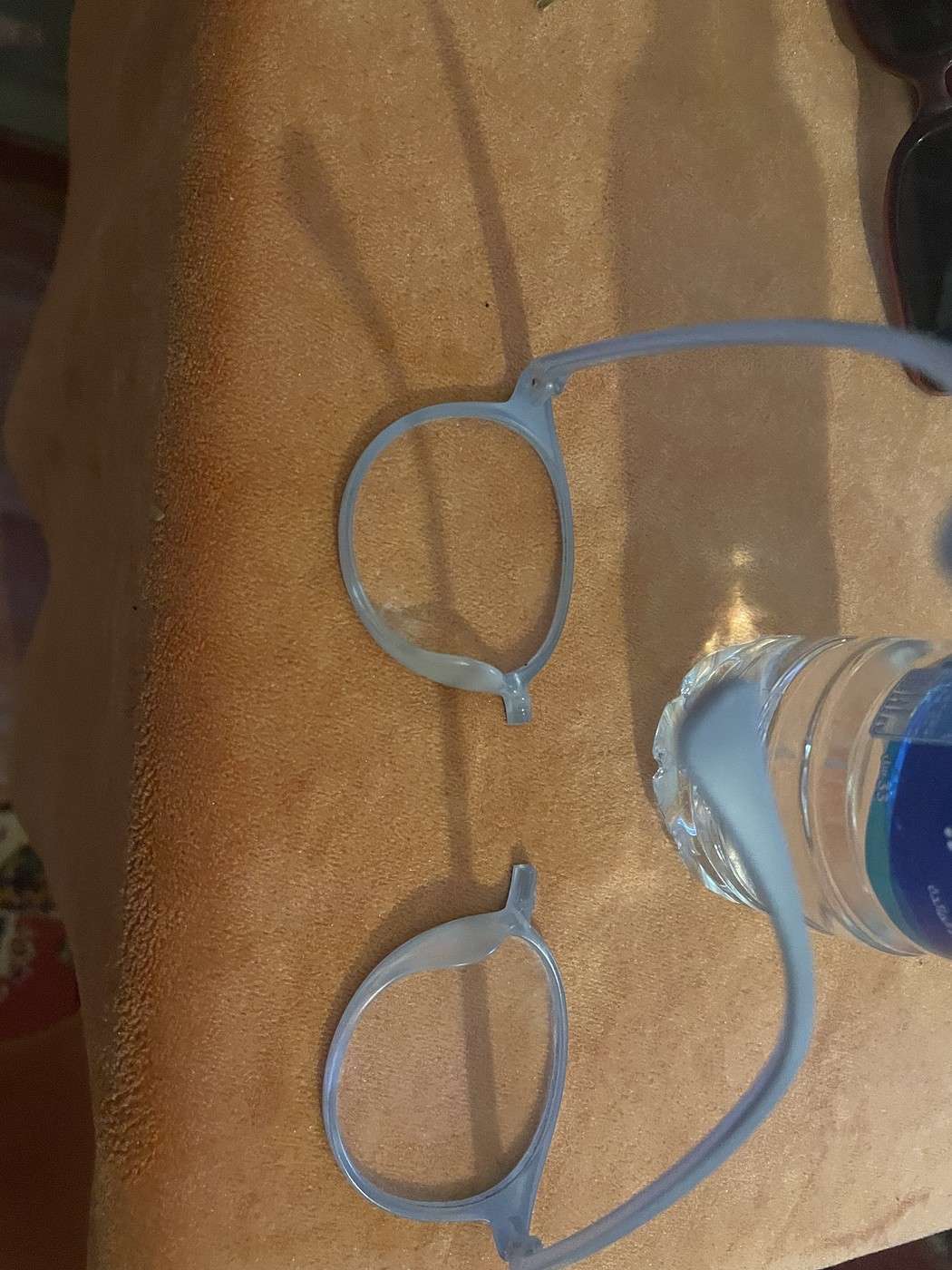
My glasses broke, but luckily I have my prescription sunglasses and reading glasses with me. Still, I’m pretty handicapped when night falls. The young hotel employee glues them back together, but it doesn’t even last 24 hours. We look for an optician, but it’s Friday—they’ve closed up shop.


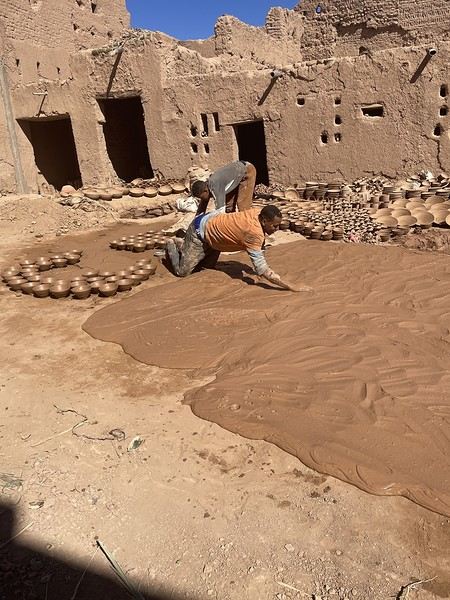
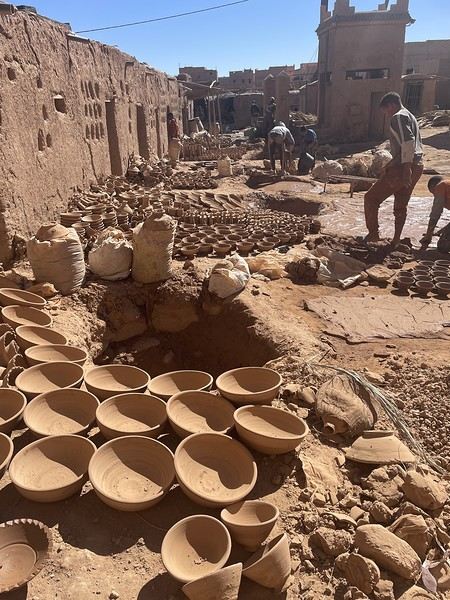
The next day, we head to the Quranic library in Tamgroute. We manage to shake off a fake guide, but not without difficulty. We run into a couple we’d met near Tata. Taking photos of the displayed books is impossible—too bad, since there are some beautiful calligraphies. The visit itself is a bit frustrating: little information, and everything’s under glass. We wander through the old town and its underground alleys, stopping to see the potters at work. As a ceramicist, I’m impressed by how they handle the clay and their kilns. I’m skeptical about the wheel-throwing, though—given the total production, I suspect the potters work from home and bring their pieces here. I can’t resist buying two small bowls.


We visit the Ksar Tissergate and its Museum of Art and Traditions. Unfortunately, the recommended guide isn’t there—still Friday. The museum is well-organized and informative, but I struggle to read in the dim light with my sunglasses. I miss the guide’s insightful explanations. We stroll through the douar, with its vaulted alleys—the Berber air conditioning. It’s still inhabited; sometimes you catch a glimpse of a woman who disappears just as quickly into the shadows. Back at our hotel for the late afternoon. Tomorrow, we’re off to Tinghir.
JE Jeeaan Globetrotter ·
I know exactly where Le Soleil du Monde is because we’re heading to La Petite Kasbah, which is right next door. Really nice spot—it’s great. And like you, I’m shocked when I see the state of the palm grove arriving in Zagora. Did they get any rain this winter?
AN An5 Veteran ·
I don’t have an answer, but there was definitely water because the plots were green with alfalfa, I think. Maybe it’s some kind of disease.
JE Jeeaan Globetrotter ·
Sometimes palm trees fall victim to bayoud, a fungus. To get rid of it, you have to superficially burn the trunks. But around Zagora, drought is wreaking havoc.
AN An5 Veteran ·
Yes, it’s totally doable—our next stop takes us to the palm grove of Tinghir, and our host will tell us about that parasite whose name I’d forgotten.
AN An5 Veteran ·
The hotel owner reassures us about the road to take—the track marked on the map is indeed paved and saves us several kilometers. We head to Nkob; it’s market day, which is always a great excuse for some unexpected photos. We love souks, and this one is particularly lively.


We continue from Nkob to Tinghir via the Tazazert Pass. The wind there is strong enough to blow the horns off bulls—we could barely stand upright, but what stunning landscapes once again! It’s a magnificent road we highly recommend, especially since it’s recent and nice and wide. Perfect for some amazing treks around here. There’s just about ten kilometers at the end where you have to take a track that runs alongside it, but the road will be finished soon, and the track is in good condition. The spring rains have made the scenery even more breathtaking.


In Tinghir, we head to Palmebella, recommended by a friend who volunteered in the area for years. Mohamed is a former guide, and his riad is unfortunately in bad shape—you can tell he’s struggling to maintain it. The place is aging, and the upkeep has been neglected, so it’s not looking great. He hasn’t managed to recover from the Covid crisis; he sold his animals and his car, which has left him worse off. But he’s got a heart of gold, and since we’re coming on his friend’s recommendation, he insists on guiding us for free. First, he takes care of my glasses issue—he takes me to his optician, who says they can’t be repaired but can put my lenses into another frame. The cost? Just 15 €! I also take the opportunity to change the frame of my reading glasses, which were about to break, and this time, she says it’s free! I really struggle to get her to accept 200 dirhams for both frames and the work. I’ll bring her a little piece of jewelry I have with me later. Saved—I can see properly again! From Palmebella, we walk through the beautiful palm grove to the town—it’s an instructive and fun little stroll. The palm trees have suffered from a parasite attack (see the comment above), so there are far fewer than before, and irrigated crops have taken their place. The plots are small because they’re subdivided with each inheritance. There are lots of olive trees growing very tall—you can’t prune them because they’d spread into the neighbors’ land.


Respect for each other’s property is very important here. Mohamed lets us taste his oil—it’s really good, pressed the old-fashioned way in a cooperative. Life in the palm grove is very active: harvesting olives that are sent to the cooperative, which maintains the canals and takes a small cut from the sales. The women don’t want to be photographed and are very attentive, but luckily, the donkeys are always up for it.


We visit the old town of Tinghir and get tons of explanations from our new friend. He emphasizes the strong sense of solidarity here and highlights how well everyone got along with the Jewish community before they left. He recommends we watch the film *Tinghir to Jerusalem*. The neighborhoods are often inhabited by the same family, and to move from one house to another, it’s as simple as crossing little bridges. The "telephone arabe" (word of mouth) works at full speed here—no one dares to step out of line.


A final little tea in the square, where a large space is dedicated to children for their enjoyment. Ramadan is starting, so this will be our last tea on a terrace.

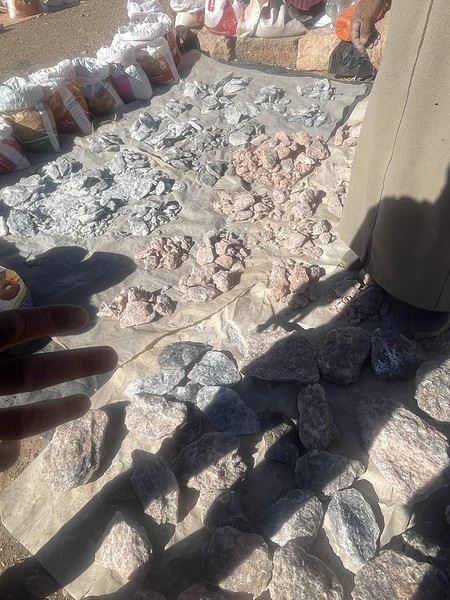
The next day, we wander through the very large souk. We discover salt being sold—depending on the color, it’s for human consumption or for animals. The pink salt is for the livestock.


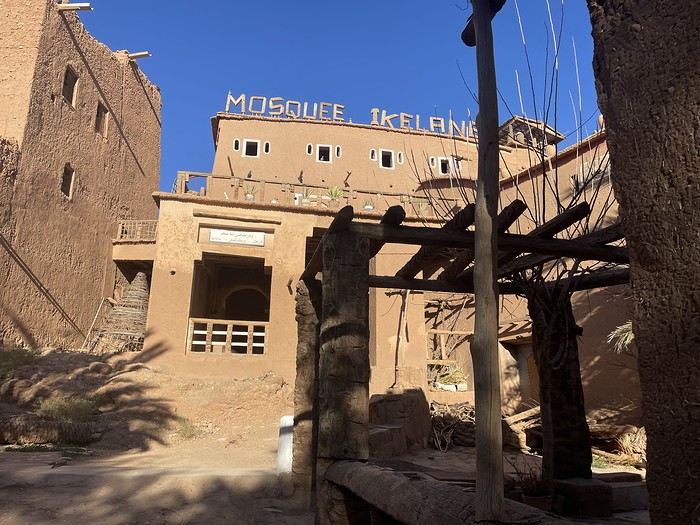
In Tinghir, there’s an old mosque you can visit. The guardian goes to incredible lengths to preserve it.


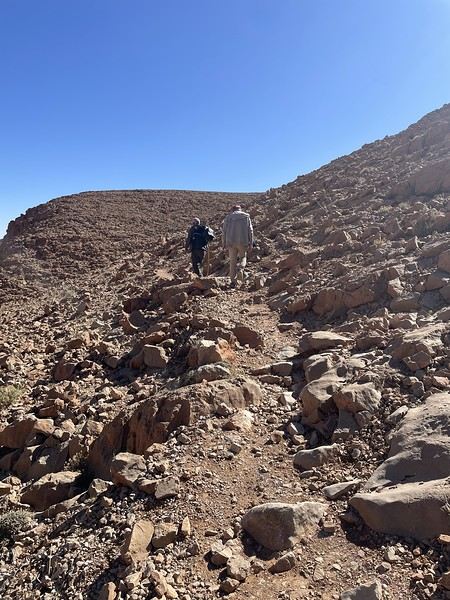
To thank Mohamed for his time, I buy enough meat for several days. Here, the meat is cut as it comes—no piece is better than another, and everything is the same price. We’re at the start of the Todra Valley, and we’ll do a trek that turns out to be quite challenging for our combined 151 years. We make it to the end, not without some suffering… but what a beautiful day! It allowed us to cross paths with a nomad camp.


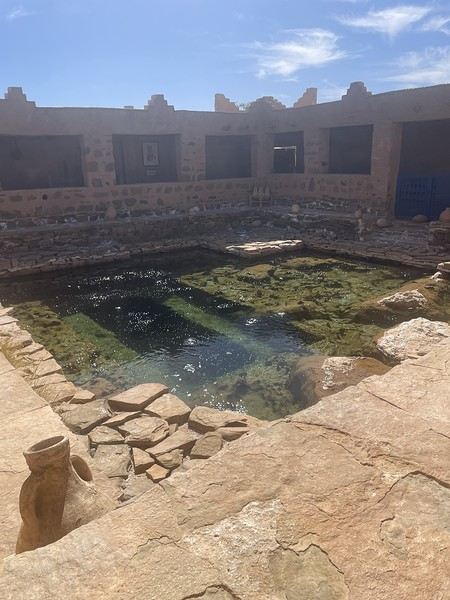
The next day, we drive to Tinjad to visit the Lala Mimouna springs. It’s well organized, with explanatory signs and lots of quotes honoring the gardens.


On the road, we get stopped by the gendarmes. We were driving slowly, as usual, but we should’ve stopped. Long story short, we get a ticket, but in the end, we don’t have to pay the 150 dirhams. Still, we’re a bit annoyed. Mohamed defended us well, but I wonder if it wasn’t because he was in the car that we had this issue. Until now, we’d always gotten through without a problem. This is a good reminder to talk about picking up hitchhikers again. He tells us that if the person doesn’t have their papers, isn’t wearing a seatbelt, or doesn’t have any dirhams, we’ll likely have to pay the fine.

I’ve reached my photo limit—the rest will have to wait for the next installment.
AN An5 Veteran ·
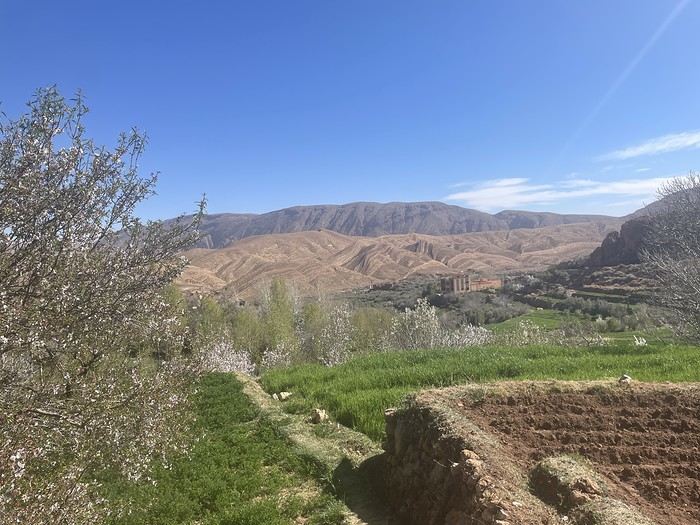
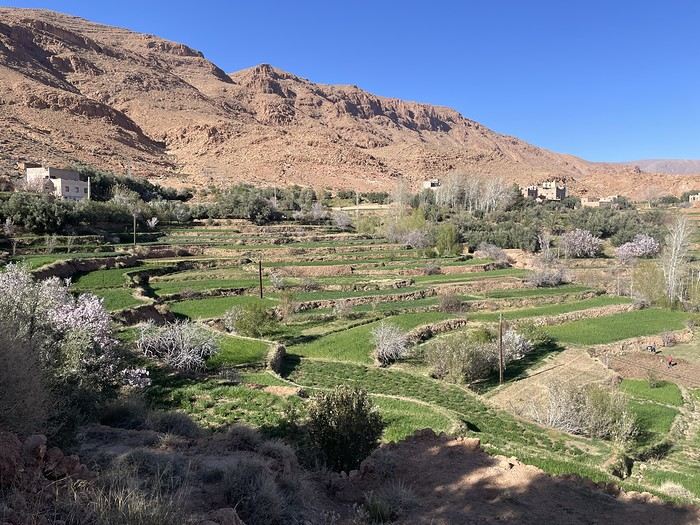
I’m really struggling with VF. This travel journal is taking me so much time because the site keeps freezing, and I have to start all over again. Finally, third try to finish my Tinghir page. We continue to the town of Tinejad, where Mohammed takes us on a road marked as a track on our map. We’re heading to the village of Abdhallou n’Kerdouz. In this village, the French imprisoned political opponents. They arrived in complete secrecy and were taken to their prison through underground tunnels, so they had no idea where they were. The road takes us through a few oases, but as always, it’s very rocky, so when we discover the viewpoint over Abdhallou, it’s breathtaking. The blooming almond trees and terraced fields create a stunning scene. This village is fed by a spring year-round.


The prison, on the other hand, disappoints us because there’s no testimony about what happened here. It’s more of a museum with objects under glass, portraits, and photos of Morocco’s history.


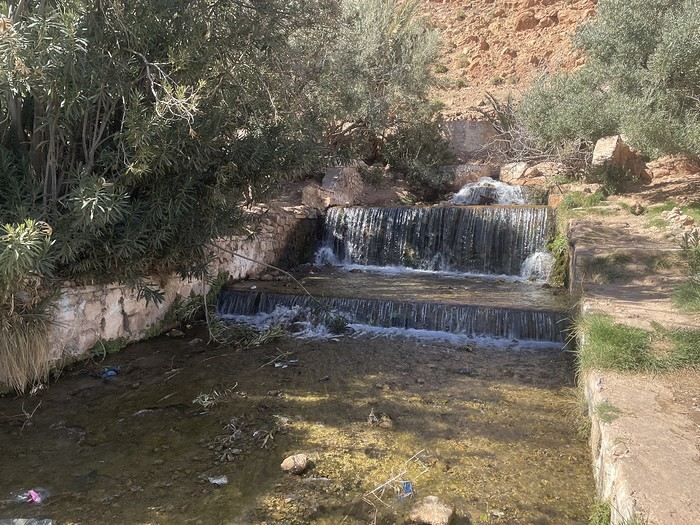
From this village, a brand-new road takes us to Ait Hani. All that’s left is to descend the Todra Gorge to reach Tinerghir. A full day indeed. Here’s a photo taken on the road where there’s another spring that’s always flowing. People come here to make wishes.

JE Jeeaan Globetrotter ·
Really interesting loop. Thanks! How long did it take you? It's mountainous... Wasn't it too hot in Aghballou N'Kerdous?
AN An5 Veteran ·
All in all, the whole day, this village is pretty easy to reach from the top of the Todgha Gorge, so!
JE Jeeaan Globetrotter ·
OK, I’ll check that out. Thanks.
LA Lagardevicto Veteran ·
In the area, in addition to this route from Tinejdad, there’s also the R 7103 from Goulmima that goes through Amellago, Assoul, and all the way to Aït Hani. It’s stunning, with gorgeous gorges and nomads living in the cliffs.
"Il vaut mieux faire des enfants quand on est vieux, on les em...de moins longtemps (Desproges)
AN An5 Veteran ·
There’s so much to see and revisit in this country—thanks for the info that’ll surely help other travelers, since our route is more classic. We’re partly retracing what we discovered 15 years ago, but taking our time this time. It lets us reconnect with old contacts, show them photos from all those years ago, and share them via phone.

We’re leaving Tinghir, goodbye to the family.

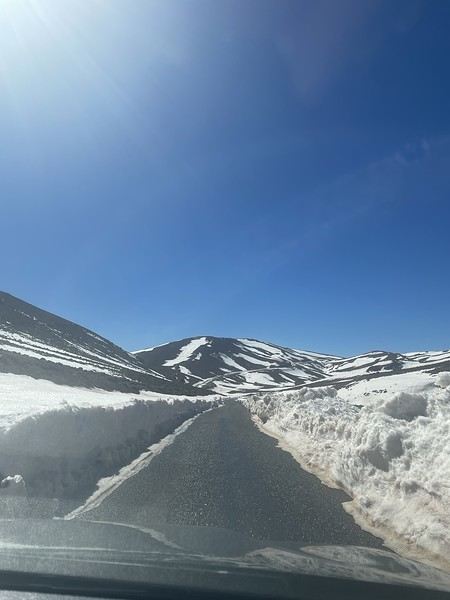
We head up the Dades Valley to Tamtatouchte again, miss the turn to Msemrir, and end up in the village of Ait Hani—it’s souk day. We pick up some mandarin spoons and bananas, then decide to keep going to Aglou and head back down toward the Dades. The road to Aglou is more or less fine, but on the way down, it’s marked as closed. We hesitate—we really don’t want to backtrack—but we push on. There’s no snow barrier blocking the way, and the road is actually in great condition. At the pass, though, it’s another story. We’re lucky not to cross anyone because we’re not sure how we would’ve managed. The photo here doesn’t capture the narrow parts since I can’t upload a video. A little stress, but definitely some memories in the making.


We leave the snow behind and keep admiring the landscapes.


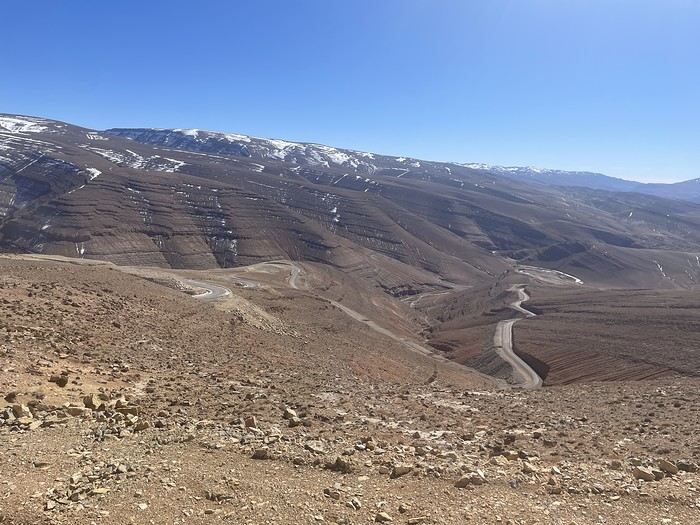
We cross the gorges, take the winding roads down to our hotel: *Les Quatre Saisons*. A cozy, comfortable little hotel with a chef-owner—definitely a place to remember. Since he used to be a guide, he’ll point us to a great hike to the Monkey Fingers, passing through an old village. We meet a kind man there; I ask about his work, and he invites us into his home to see the house he’s renovating. He offers us tea, but we decline—it’s Ramadan. Moroccans are incredibly hospitable.


The son’s room


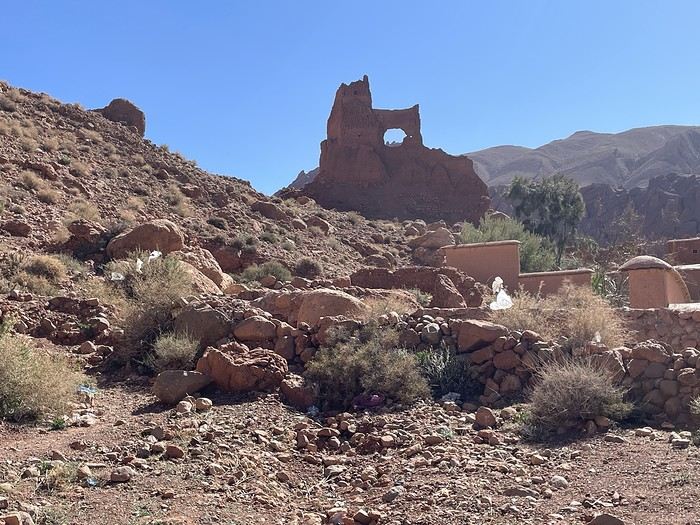
Walking through the partly ruined old village


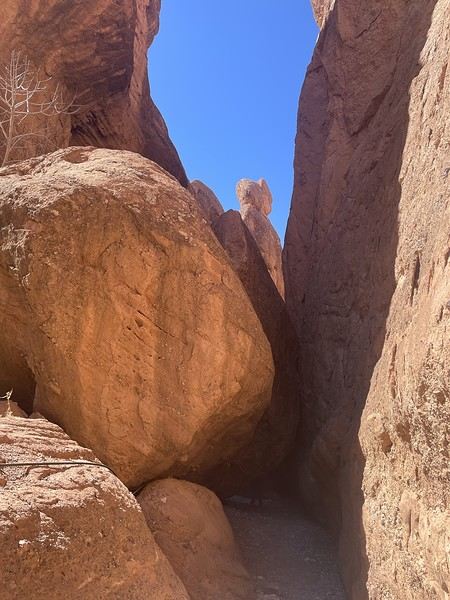
We wander among the rocks but don’t try to go all the way around.


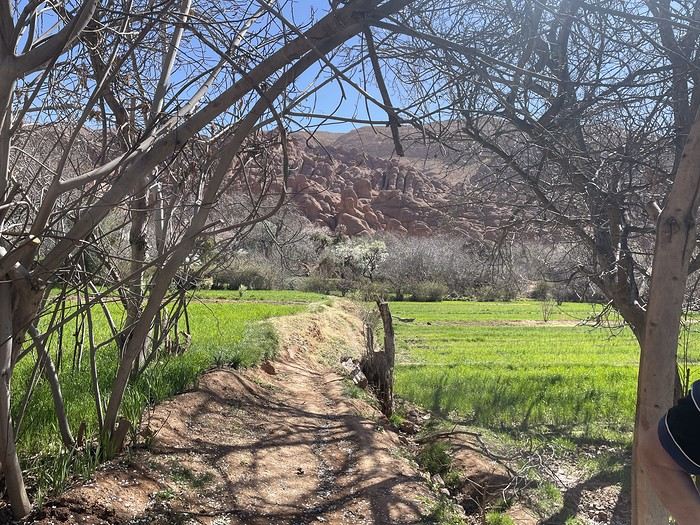
We return through the gardens, cross the oued again, and head back up to the car.


In the evening, we drive to Boulmane du Dades to fill up. There’s an ATM at the gas station, and I withdraw 5,000 dirhams. Plus, we can pay for gas by card—we feel rich! In Boulmane, we take a little stroll. The atmosphere is great as the fast is about to end. We wander through the smells of fresh bread, crepes, pastries, and doughnuts—it smells amazing! We can’t resist and buy two doughnuts, eating them discreetly in the car. They were so good—we really earned them after today’s hike! Still, we miss that little terrace tea.

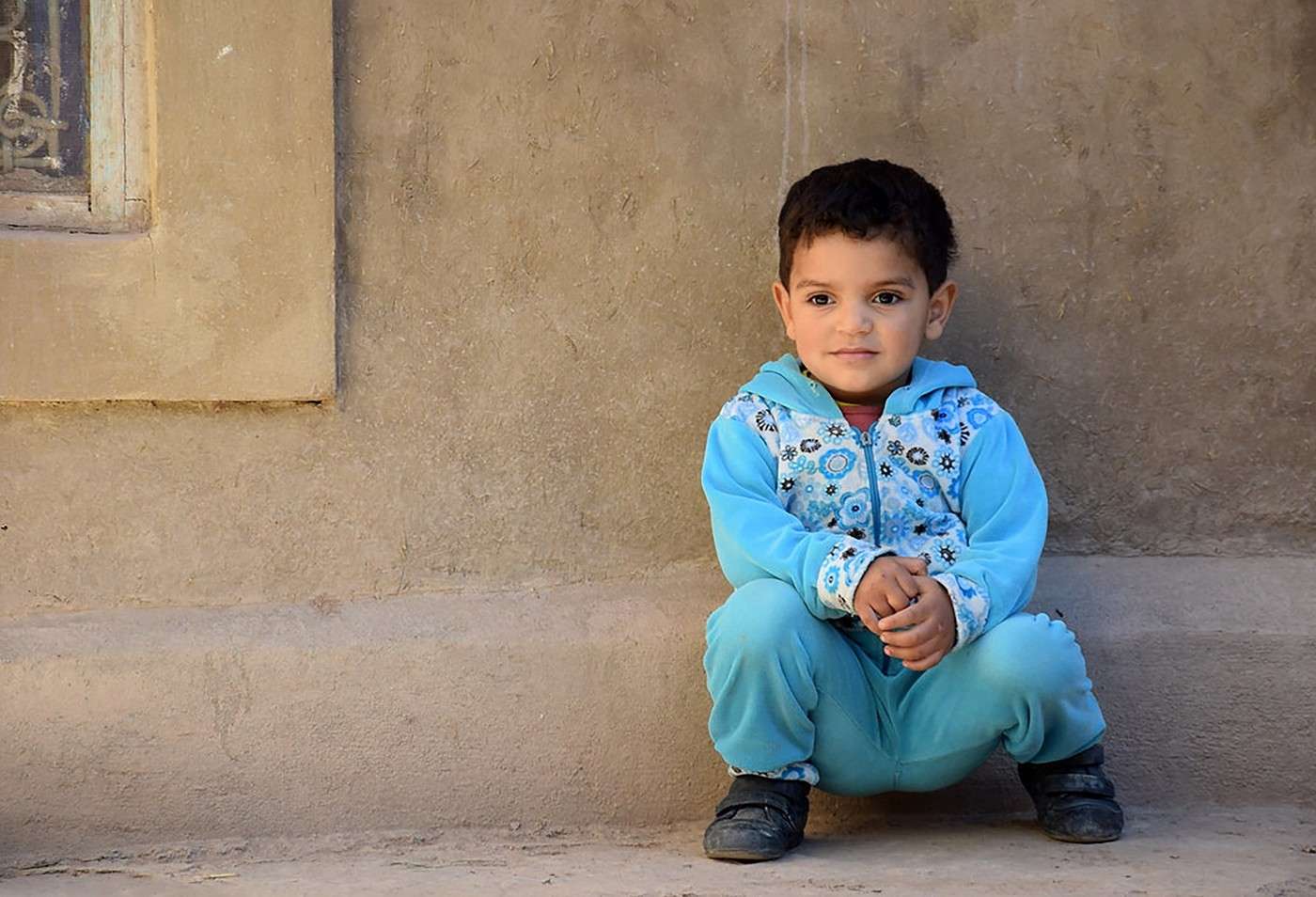
We head back to our hostel. The owner knows the young man in our photo. He tells us yes, he’s still around, so the next day, we go back through the gorges because Richard really wants to give Hassan his photos—we had such a great time with him 15 years ago! Hassan now runs a super-luxurious hotel and offers us a free room, he’s so happy to receive his photo. Tempting, but we decline.

One last short walk near a waterfall, and the day ends peacefully at this lovely hotel. Its only downside? The Wi-Fi reception is pretty bad. According to the owner, it’s partly because of the wind.


Tomorrow, we’re off to the Valley of the Roses.
LA Lagardevicto Veteran ·
I got caught out two years ago. Near M'semrir, I’d taken the precaution of double-checking what some forum members said about whether the road to Agoudal was supposedly "paved." Assuming it was, I set off, and just past Tilmi—disaster! The road wasn’t paved, and it was SINGLE-LANE. Of course, I then had to deal with two cars coming from Agoudal. I ended up with a few scratches and a broken taillight. The only way we could pass each other with my lifted VW was for me to climb pretty high onto the shoulder, and even then, it wasn’t easy with the drop-offs all around.
"Il vaut mieux faire des enfants quand on est vieux, on les em...de moins longtemps (Desproges)
AN An5 Veteran ·
If I can reassure fellow travelers, this road is paved—well, at least in the snowy section. We still had to drive through a few meters of mud though!
AN An5 Veteran ·
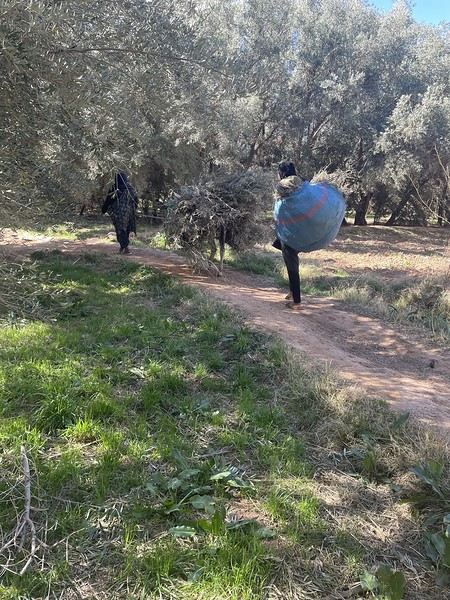
A new road leads to Bou Tharar high up in the Valley of the Roses. As always, a magnificent landscape unfolds before our wheels, animated here and there by shepherds and women still carrying wood or food for the animals. We only pass a few cars along the way.


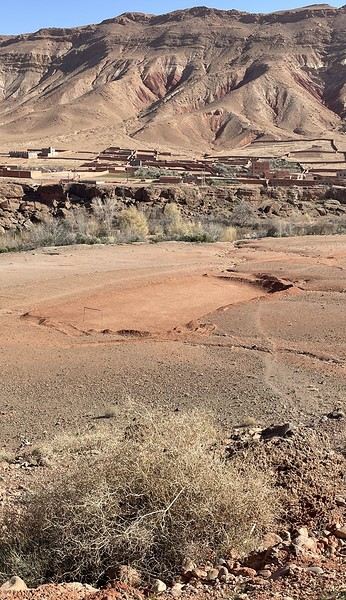
We’re going to stop at the Mont M’Goun hostel. Mohamed is sick and says his head hurts badly—he can’t take the medication I offer him because it’s Ramadan. He tells us about a really nice little hike. There are often soccer fields in the most unlikely places.


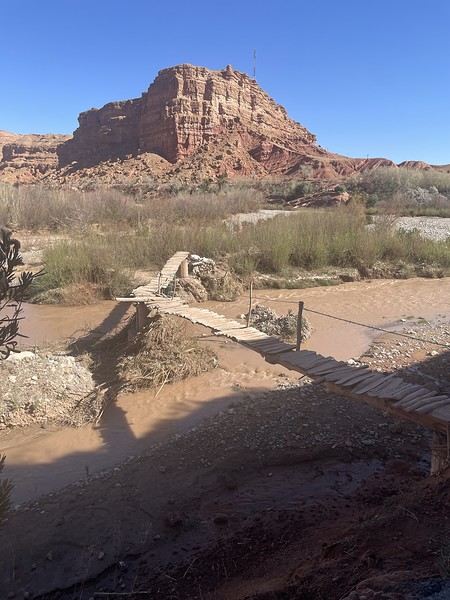
The other hikes don’t seem to be our level, and anyway, Mohamed can’t accompany us. It gets really cold here in the evening and at night, but the radiant heating lights up the room. For the same price as our half-board in the Dades, we’ve really downgraded. It’s odd, actually—since we’ve been traveling, for the same price, we’ve swung between very comfortable and very basic. Some meals are gourmet, while others are overcooked tajines that aren’t always tasty. We stay one night and decide to head back down the valley for a bit more warmth. Our destination is the Algouzi Hotel, spotted in the *Routard* guide, and for 600 dirhams for half-board, we’re very comfortably lodged, and an excellent cook is going to spoil us. The terraces are sunny, and since my cold has come back, I’m being pampered here—little tampons of nigella to inhale and crushed seeds in honey. A little local remedy that turns out to be effective. We’ll go on our first hike, which starts from a village a bit higher up in the valley. We have to cross the river on two makeshift bridges. We walk through gardens and villages, helped by the women working who understand exactly where we’re going.

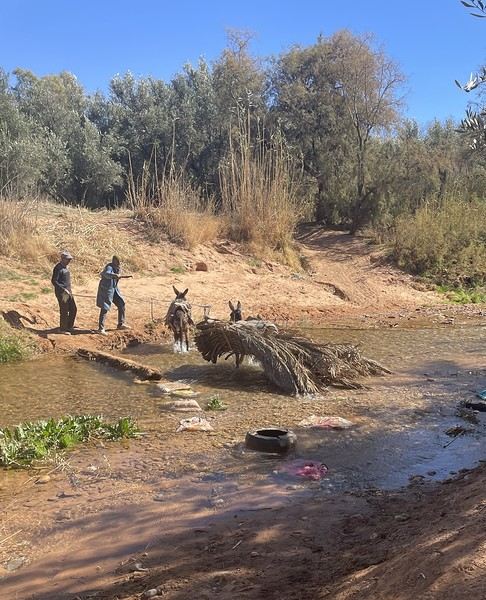
This one lost its safety railing. For this one, luckily a providential guide wasn’t far away! The technique is to step to the side and move forward step by step—like a dance in the end. With the guide holding my hand as my partner.
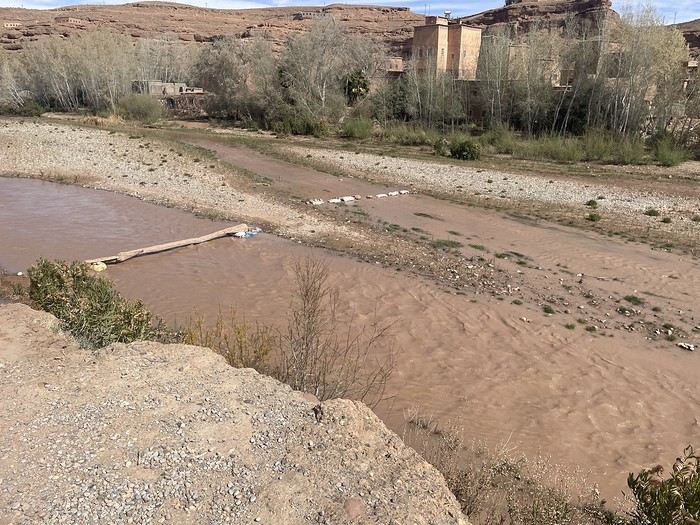
Not exactly a restful experience.
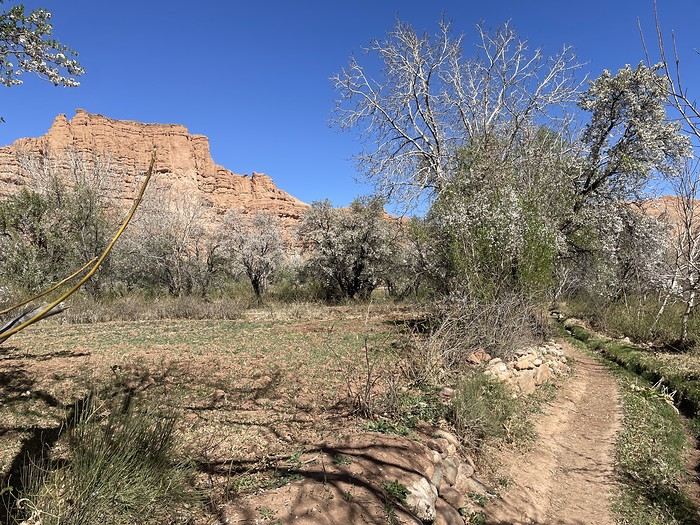
From the hotel, there are still some great little hikes. The gardens are lush, the rose bushes protect the plots, and as always, you have to balance a bit on the little earthen walls that separate the different crops. The walk is pleasant, and the “Salams” are always smiling. We pass through birch forests, almond trees in bloom, and old villages.


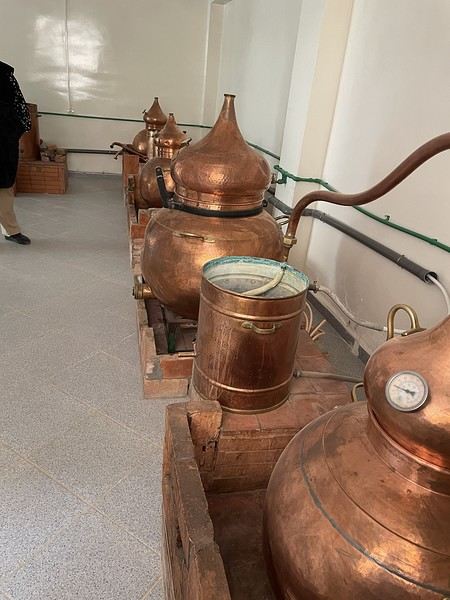
On our way to Skoura, we’ll see rose fields, much less bucolic this time. We visit a distillery recommended by Arlette. The young woman has serious training she learned in France—she distills roses and also orange peels in these stills that come from Portugal. They were designed for her production because roses must be processed within 4 hours of harvest or they lose their aromas, she says. I’ll obviously cave in. Floracina if you’re passing through.


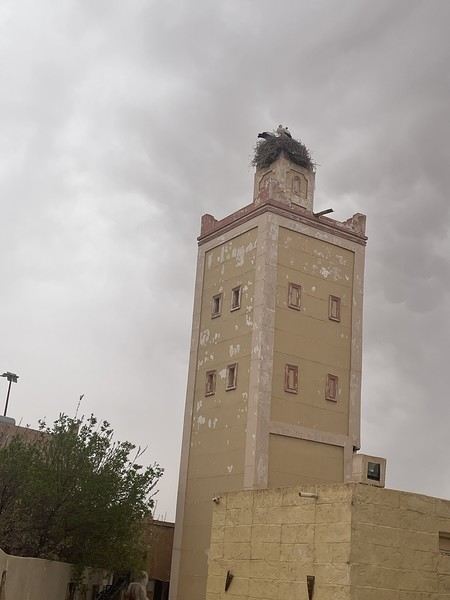
In this area, there are lots of stork nests perched on the minarets of mosques. They live here as long as it’s not too hot before migrating to our regions. Some even come almost from our place in Normandy, actually.
KA Kate Globetrotter ·
I’m still here and cheering you on to keep going because your illustrated stories bring back such great memories! 🙂
Mes photos sur Flickr: https://www.flickr.com/photos/153304262@N05/albums "Le Temps nous égare. Le Temps nous étreint. Le Temps nous est gare. Le Temps nous est train".
AN An5 Veteran ·
Thanks, because I really need perseverance with time flying by so fast—and also the loss of my job…
KA Kate Globetrotter ·
Me too, for my own travel journal I had a few mishaps—I lost everything several times just trying to preview
Mes photos sur Flickr: https://www.flickr.com/photos/153304262@N05/albums "Le Temps nous égare. Le Temps nous étreint. Le Temps nous est gare. Le Temps nous est train".
SO Solene40 Globetrotter ·
Ladies, you probably already know this, but the best thing is to write in the "notepad" on your phone or in a Word file and just copy/paste it into VF. Losing 2 lines is okay, but several paragraphs? Yikes! 😨😅. Christelle
Le monde est comme un miroir, si tu lui souris, il te sourit aussi!
KA Kate Globetrotter ·
Setting up the text—even if it’s already written in Word—proofreading, and uploading a dozen photos takes a bit of time, and when you do it twice, you crack 🏴‍☠️
Mes photos sur Flickr: https://www.flickr.com/photos/153304262@N05/albums "Le Temps nous égare. Le Temps nous étreint. Le Temps nous est gare. Le Temps nous est train".
AN An5 Veteran ·
Ladies, you probably know this already, but the best thing is to write in the "notepad" on your phone or in a Word file and just copy/paste it onto VF. Losing 2 lines is okay, but several paragraphs? What a mess 😨😅. Christelle

Copying and pasting my text is still manageable, but the photos sometimes take forever to upload, and on top of that, if you lose the connection, everything has to be redone. It’s a bit exhausting. I just tried posting the following message again—it’s gone! And yet, I’ve got Wi-Fi here. Oh well, we’re heading back tomorrow. I hope I’ll have time to finish my travel journal.
AL Aleph240758 Veteran ·
Thanks Anne for this beautiful travel journal that makes me want to go back to Morocco again. If I hadn’t been able to leave for India where I am now, I think I would’ve gone there instead. Next time for sure.
Qui a l'habitude de voyager sait qu'il vient toujours un moment où il faut partir... Paulo Coelho
AN An5 Veteran ·
Thanks Marie Jo, I really enjoyed your experiences and tips. Have a great trip in India—I’m not sure if I’ll go back, but it’s so rich and surprising that I feel a bit nostalgic. Morocco is beautiful and welcoming, though less disorienting. I’ll try to finish this travel journal while I’m still sort of there.
AN An5 Veteran ·
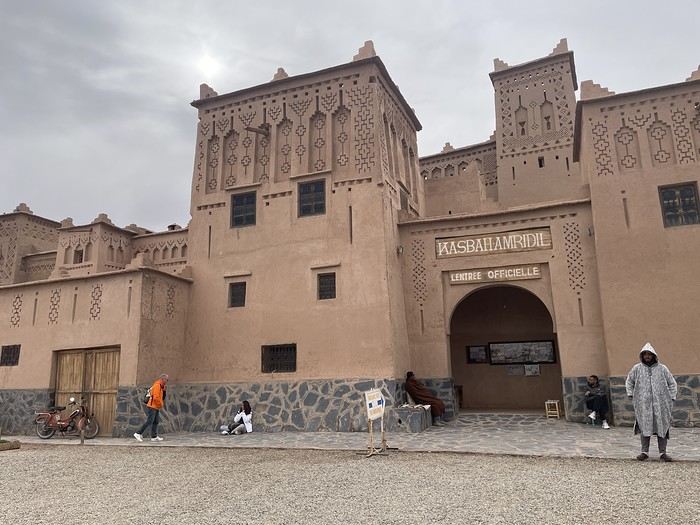
We arrive at the Palmeraie hotel almost at the same time as a French couple who get there by taxi. We pick them up to visit the Kasbah of Amridil. Mohamed tells us: "there are 2 entrances, take the one on the right." We refuse the guide and explore the place, which is well restored and offers a beautiful view of the Palmeraie. We hesitate but finally decide to enter the other part—the main entrance. It’s more authentic and turns out to be more interesting. 40 dirhams per entry. The inevitable bric-a-brac you often see but that brings the place to life.


Another divided heritage, split into 3 since there’s also a hotel in the left section.


Back at the hotel, it’s cold. Mohamed had mentioned lighting a fire in the fireplace, but he’s not around. We retreat to our room. In the evening, there’s indeed a wood fire lit for dinner.

The next morning, we get lost in the Palmeraie, which looks a little different here. The paths are more comfortable to walk on.


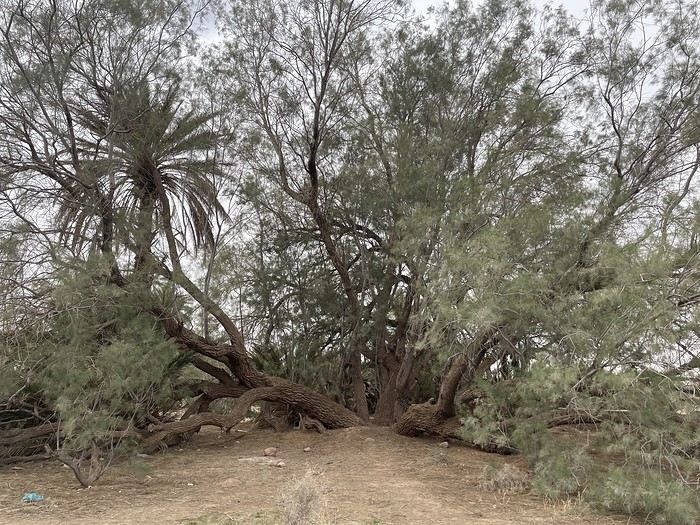
The palm trees aren’t that impressive, but there are some famous tamaris trees.


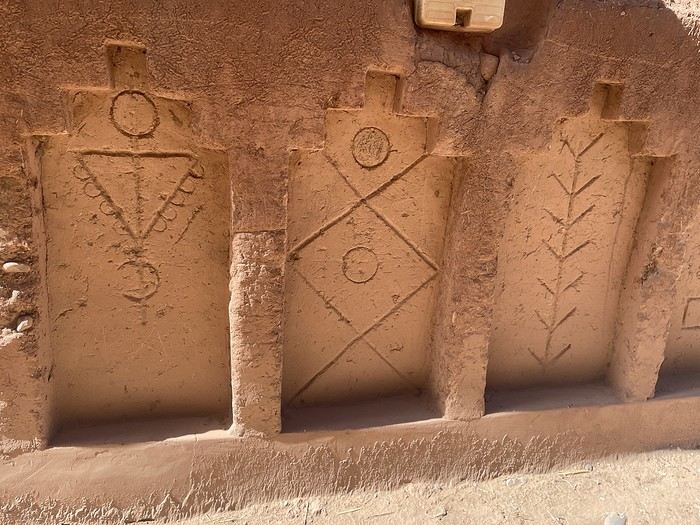
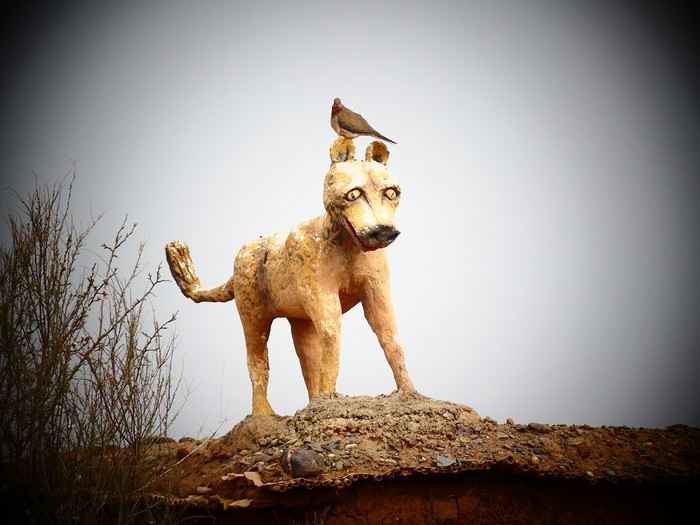
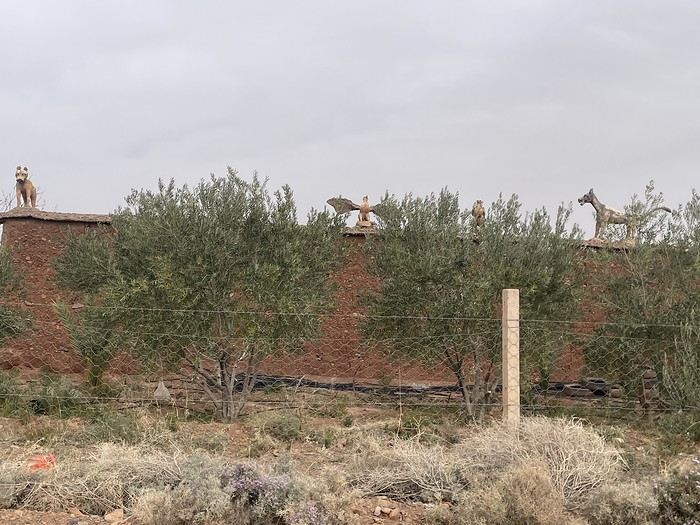
In the afternoon, I enjoy a bit of sunshine on the terrace, then we decide to visit the almond tree valley, recommended by Mohamed. His wife explains which road to take. Unfortunately, the almond trees have lost their flowers. Plus, they’re building a new road, which ruins the bucolic charm of the walk, so we turn back. The only curiosity of the trip is this house with sculptures on the walls, visible from the road.


We then head toward Sidi Flah but can’t find the gorges. Still, it’s nice to stroll through the gardens—let’s take comfort in that. The day was a bit disappointing; it happens sometimes. The weather is bad—rain, snow, and wind are forecast. We were thinking of heading toward Demnate, but we’ll have to change our plans. What to do? Tomorrow, we’ll go to Ouarzazate; it’ll take up our day. As long as we don’t go up in altitude, the temperature is mild. The cinema museum visit? Meh (we knew it…). Only the storks put on a show.


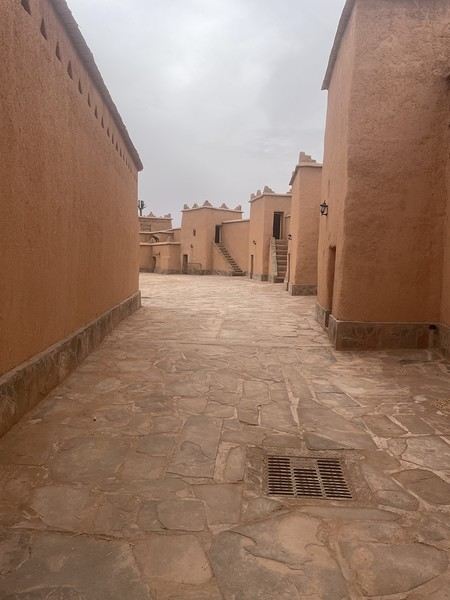
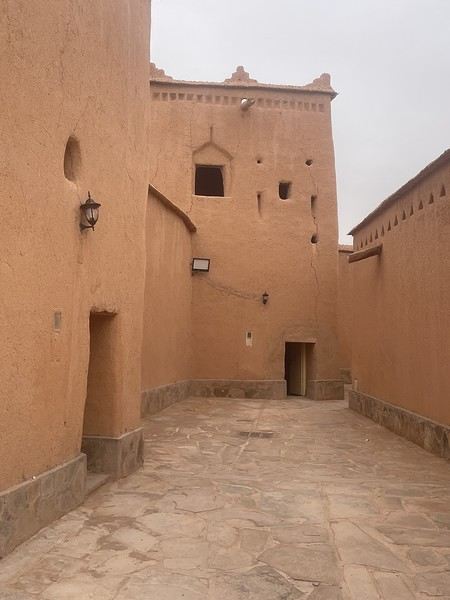
On the other hand, the visit to the Kasbah in its renovated section is interesting. We took a guide, and he brings the place to life with his explanations. A real labyrinth that takes you from one kasbah to another—you lose track of how many staircases you’ve climbed or how many terraces you’ve lingered on. Around the ramparts, they’ve restored the houses and streets. There’s still restoration work going on in another part of this large complex.


Back at La Palmeraie. We thought it over and decided to go to Ait Ben Haddou and see how the weather evolves. We’ll leave tomorrow. Skoura and its hotel won’t be the best moments—a lackluster welcome. We found Mohamed a bit absent. He does the bare minimum, but his wife is much friendlier. That’s life, I guess.
KA Kate Globetrotter ·
Ten years ago, I took this photo of their little one. They must have changed a lot by now! 😉
Mes photos sur Flickr: https://www.flickr.com/photos/153304262@N05/albums "Le Temps nous égare. Le Temps nous étreint. Le Temps nous est gare. Le Temps nous est train".
AN An5 Veteran ·
We just saw a little girl having a great time with two little French kids… that little boy in your photo is really cute.

Similar discussions

You might also like