Trip to Thailand and Laos
FR

Translated into English.

RI RichardXI Regular ·
Hi Pagal, It's great to have you following along. I hope our travel journal will inspire you to try an adventure in Laos. P.S. Kate’s been feeling a bit lost since you stopped your story about "the all-too-familiar Rajasthan" 😉 We’ll keep following you when you pick it back up. And you’re right—little comments, even short ones, are really encouraging and make us want to keep going 🙂
RI RichardXI Regular ·
A frustrating "Tak Bat," a fragrant market, a foaming waterfall, a revitalizing massage... That’s Luang Prabang!

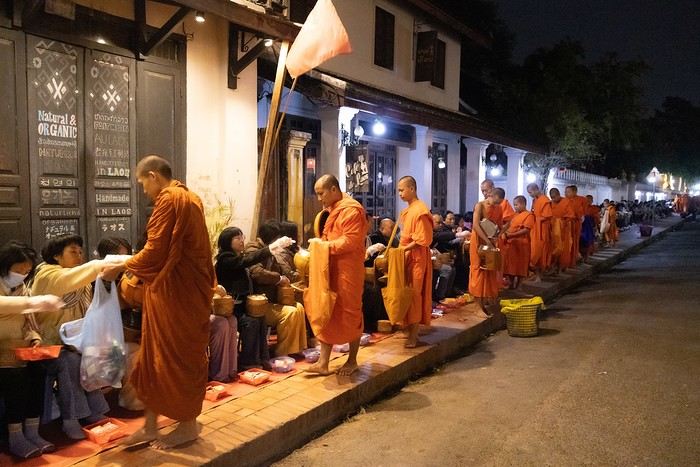
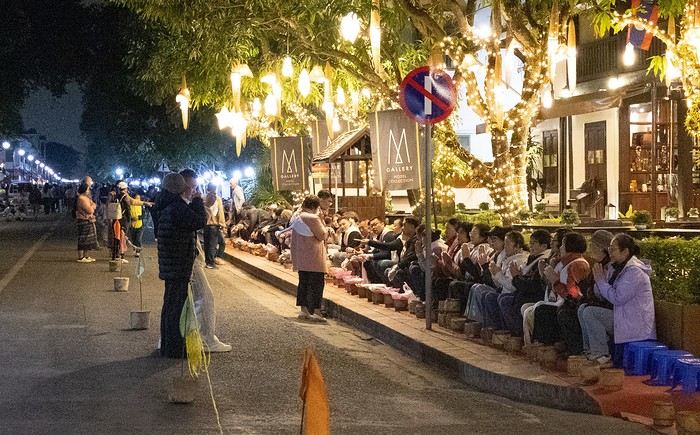
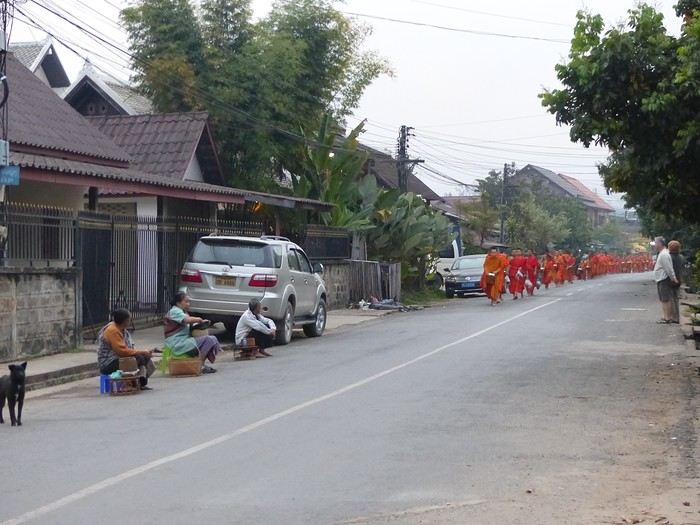
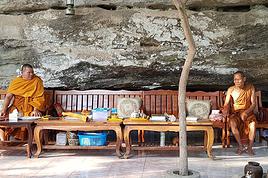
We wake up very early. The day hasn’t broken yet, and we head out into the cool morning air toward Luang Prabang’s main street to witness the monks’ procession. For centuries, the city’s monks have left their temples to receive alms from the faithful—an act of charity and faith. But this religious ceremony is turning into a folkloric spectacle because of the sheer number of tourist groups lining up alongside us on Sisavang Vong Road.

There’s hustle and bustle, chatter in every language. A real open-air Tower of Babel. The anticipation of the monks’ arrival builds the tension. It feels like waiting for the Tour de France. The jingle of bells announces the monks in their saffron-orange robes. Nathalie and Bruno wanted to take part in the ceremony respectfully. Kate tries to snap a few photos half-heartedly, while I swallow my disappointment—this procession didn’t evoke any emotion in me.

The mistake was positioning ourselves on the tourist avenue. A little farther away, in the quieter side streets, the atmosphere was more serene and solemn. Oh well, you don’t always get it right when traveling.


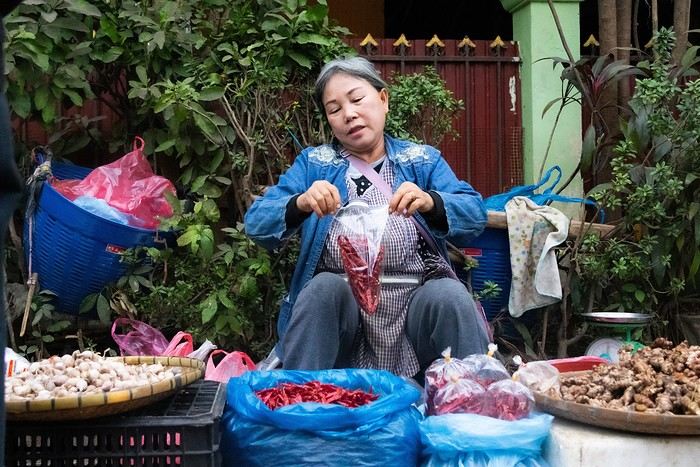
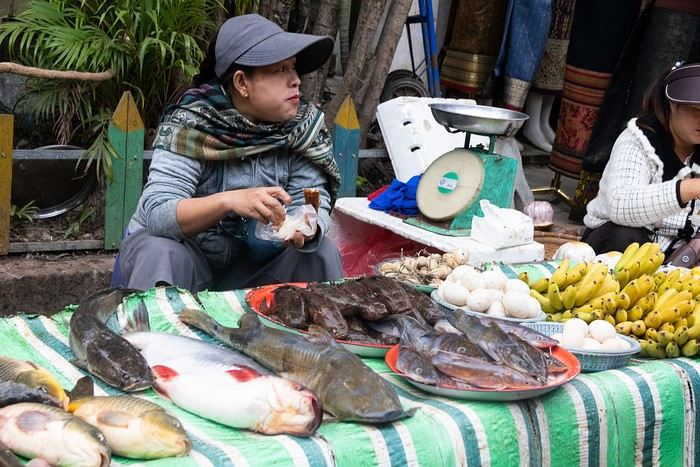
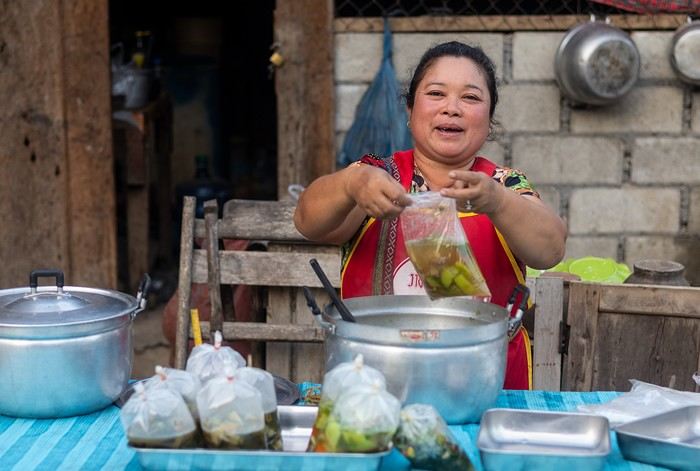
It’s still very early, and we decide to explore the Morning Market near Wat Mai. A real local market, just the way the four of us love them! We first walk down a narrow street packed with stalls set up right on the ground. Fruits, flowers, vegetables of all shapes and colors—some impossible to name. Few men in this section; mostly women, farmers coming to sell their produce in the city. A little farther down, other stalls with fish and chickens, mostly run by men, it seems. Kate politely asks for permission to take photos, no problem.

This colorful, fragrant stroll does us good and reconnects us with the Laos we wanted to discover.


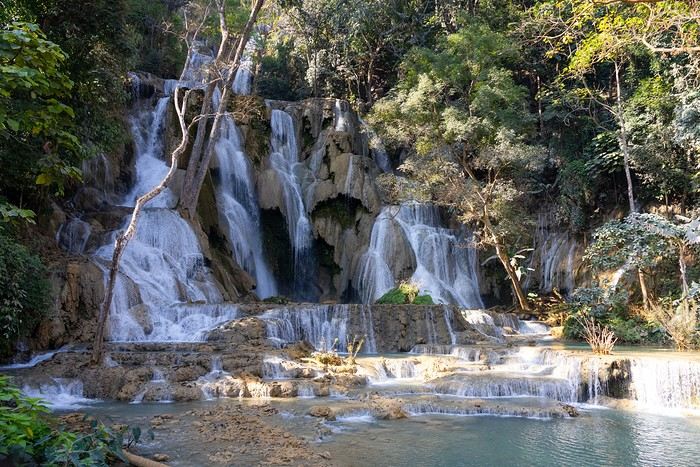
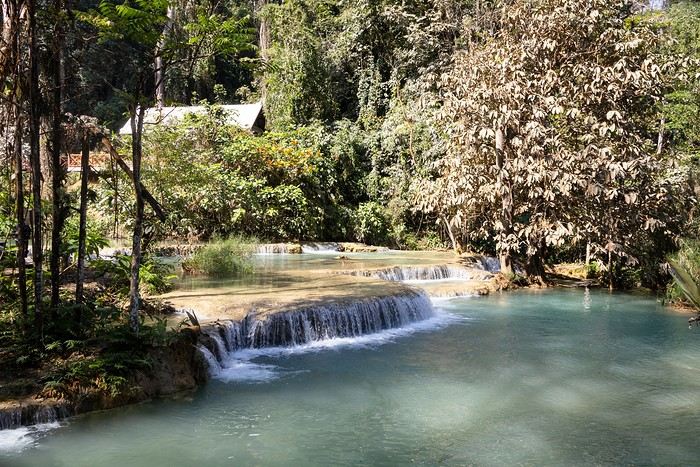
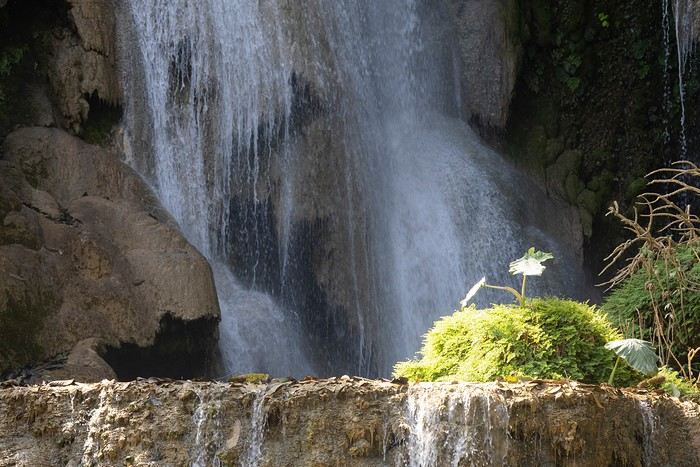
But time is moving on, and we have to return to our hotel, where a taxi is waiting to take us to the Kuang Si Falls, about 30 kilometers away. The place is, of course, very touristy but absolutely stunning. We wander through a lush, almost jungle-like setting before reaching a wide waterfall cascading translucent water into natural pools. To the left of the waterfall, I spot a steep metal staircase offering a panoramic view above the canopy—and maybe, we hope, a glimpse of the top of the falls.

542 steps! Nathalie and Bruno are up for it, but I’ll have to convince Kate... I downplay the number of steps to ease her in. I feel guilty, but I’ll pay for it later! A 25-minute climb filled with groans, grumbles, and complaints. We finally reach the top, where there’s a café perched in the trees. But we still have to climb more. The view from the canopy is beautiful, but there’s no sign of the waterfall... How do you say it? I’m in a tight spot.


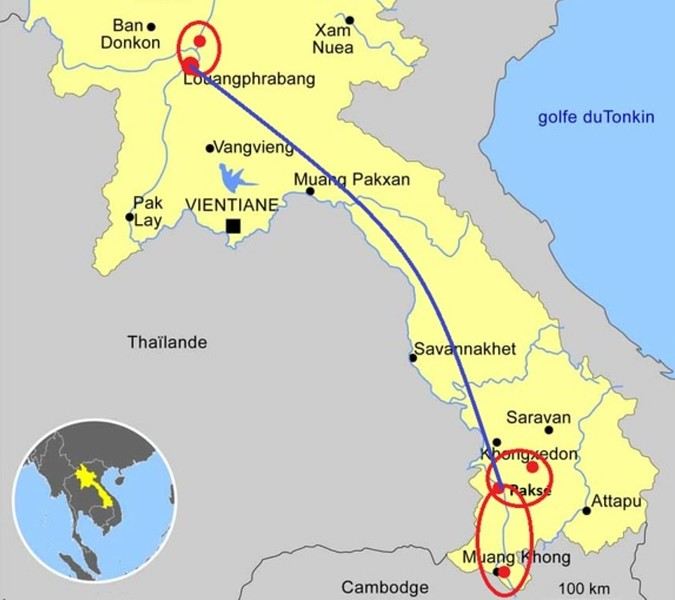
We return to Luang Prabang in the mid-afternoon. We liked our taxi driver so much that we negotiate with him for the trip to Nong Khiaw the next day.

To recover from our physical exertion, Kate suggests a Lao massage. Nathalie, Kate, and Bruno love it, but I’m more hesitant. It’s not that I mind being touched, but my past experiences in India didn’t convince me. One word keeps coming to mind: *kneading*.

The Lao experience confirms my feelings. My companions are delighted, relaxed, and rejuvenated. I don’t feel limp—just battered.

Tomorrow, we’re off to Nong Khiaw...


The rest is here
KA Kate Globetrotter ·
We liked the taxi driver so much that we negotiated with him for the next day’s ride to Nong Khiaw.

We were supposed to take a shared van. The price was around 16 € per person for a round trip. But the idea of a private taxi started growing on us... We leave when we want, stop where and when we want, and the road is rough—our poor bodies would’ve been battered, bouncing around in those packed vans In short, the nice taxi driver quoted us 200 € for the round trip for the four of us. We ended up accepting after shaving off about twenty euros. This "sacrifice" would be our little luxury (and time would prove we made the right call...)

Nathalie and Bruno are on board; now I just have to convince Kate... I break it to her gently, downplaying the number of steps. I’m ashamed, but I’ll pay for it later!

542 steps to see nothing And three days of calf pain 🏴‍☠️
Mes photos sur Flickr: https://www.flickr.com/photos/153304262@N05/albums "Le Temps nous égare. Le Temps nous étreint. Le Temps nous est gare. Le Temps nous est train".
KA Kate Globetrotter ·
The mistake was actually staying on the tourist avenue, when just a little further away in the side streets the atmosphere was more serene and solemn. Oh well, you don’t always get it right when traveling.

I’m posting this photo again (it’s not great), taken before the monks passed by—just so you get the idea I’m still skeptical though, because with so many tourists, the crowds will likely spread into the smaller streets soon. I remember a woman yelling instructions at her group, screaming right in my ears—I decided to escape and grab a coffee. Then someone came over and told her to calm down.


More here
Mes photos sur Flickr: https://www.flickr.com/photos/153304262@N05/albums "Le Temps nous égare. Le Temps nous étreint. Le Temps nous est gare. Le Temps nous est train".
MO Montagnard74 Globetrotter ·
In the end, based on your feedback, no regrets about not waking my sweetheart to attend that "ceremony," which over time and with the crowds seems more and more like a huge circus... The upside is that the monks must be well-endowed with donations...

I see you wandering around the morning market, but not a word about the night market? Did you try the little restaurants in the evening on the main square?

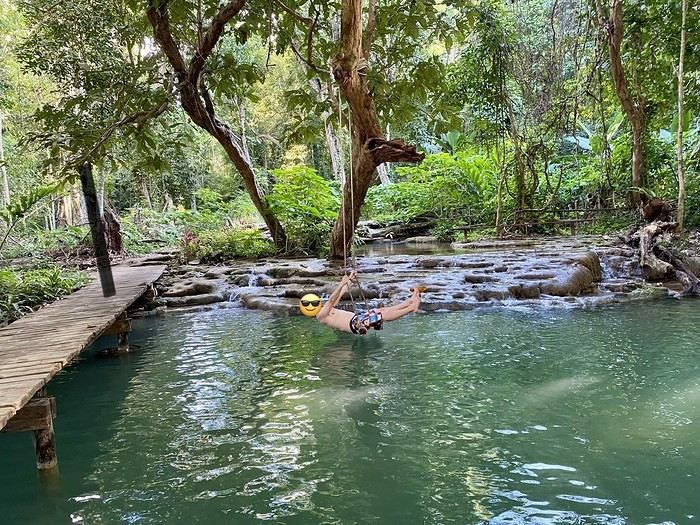
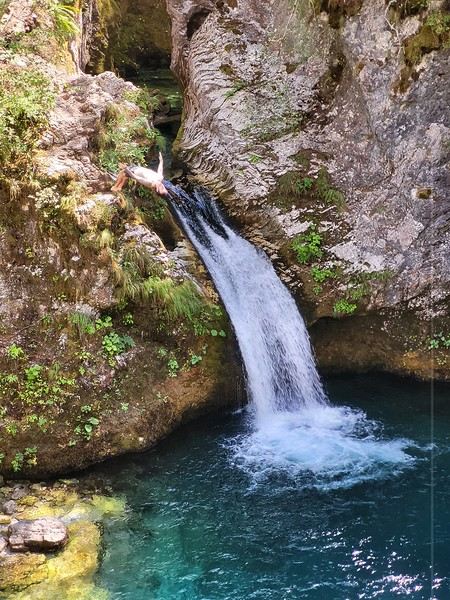
At the Kuang Si Falls, I was struck by how touristy the place was. We arrived in the middle of the afternoon, and the site was packed—it was quieter around 5 PM. For us, the access via the steps was blocked, so we took the path to the right of the waterfall, which was indeed very steep. But I enjoyed the tranquility of that part of the site, and the swim was really nice, despite the very cold water! But of course, at the top of the falls, there are no falls!


I even got to swing a little (promise, the only photo!)
"Le véritable voyage de découverte ne consiste pas à chercher de nouveaux paysages, mais à avoir de nouveaux yeux." Marcel Proust
MO Montagnard74 Globetrotter ·
We were supposed to take a shared van. The price was about 16 € per person for a round trip. But this idea of a private taxi sprouted in our minds... We leave when we want, we stop where and when we want, and the road is bad—our little bodies risk getting battered, tossed around in those packed vans

My worst experience in Laos, fortunately only on the way there—the return trip was more bearable... The advantage of traveling with 4 people is that privatizing transport becomes an option and makes trips more peaceful...

542 steps to see *nothing* And three days of calf pain 🏴‍☠️

*Nothing* seems a bit harsh—the site is still nice, after all.
"Le véritable voyage de découverte ne consiste pas à chercher de nouveaux paysages, mais à avoir de nouveaux yeux." Marcel Proust
KA Kate Globetrotter ·
I see you wandering around the morning market, but not a word about the night market? Did you try the little restaurants in the evening on the main square?

The evening we could have done it, we were tired and gave up along the way. Plus, we stumbled upon a super nice street food stall and wanted to go back the next day (we actually only spent 3 evenings in LP). Anyway, we probably missed out on some "great tips" and messed up the Tak Bat. But we made up for it later 😉

542 steps to see nothing And three days of calf pain 🏴‍☠️

Nothing, I think you're being harsh—the site is still nice.

No, there are just steps surrounded by trees. No view. And at the top, a bar in the trees with a blocked view Still a bit of a rip-off! Maybe it was better via the trail...
Mes photos sur Flickr: https://www.flickr.com/photos/153304262@N05/albums "Le Temps nous égare. Le Temps nous étreint. Le Temps nous est gare. Le Temps nous est train".
MU Muriel18 Globetrotter ·
I’m reposting this (ugly) photo, taken before the monks passed by—just so you get the idea

I’d read while planning the trip that Tak Bat had turned into a bit of a spectacle. We tried our luck on the streets near our hotel (My Dream Boutique Resort)—probably fewer monks, but only two other tourists 😎!

See, Bruno, you could’ve made the effort to get up!
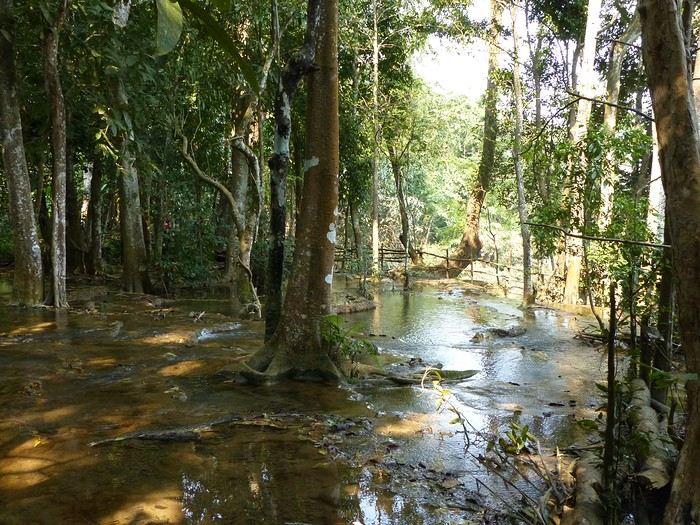
As for Kuang Si Falls, they’re still just as photogenic! We also hiked to the top of the falls (from what I remember, it was via a trail, not stairs—maybe the other side of the falls)… only to be disappointed: nothing to see up there! 😕


And when it comes to minivans, given our experiences , no doubt about it—a private taxi is way more comfortable! 😎
Si tu diffères de moi, mon frère, loin de me léser, tu m'enrichis (Saint Exupéry)
MO Montagnard74 Globetrotter ·
I had already read while preparing for the trip that the Tak Bat had become a spectacle. We tried our luck in the streets near the hotel (my dream boutique resort): probably fewer monks... but only 2 other tourists 😎!

You see, Bruno, you could have made the effort to get up! 😏
I never have a problem getting up early, especially if it's worth it. I see that we also frequent the same (excellent) places.

I think the discussion I had back then with a monk on the other side of the Mekong during a bike ride was a thousand times more enriching than this parade. Well, he spoke impeccable English, that helps a lot.

We also went up to the top of the falls (but from what I remember, it was via a trail, not stairs, maybe on the other side of the falls)... only to be disappointed: nothing to see!

Despite my attempts, no chance of rehabilitating the upper side of the falls
"Le véritable voyage de découverte ne consiste pas à chercher de nouveaux paysages, mais à avoir de nouveaux yeux." Marcel Proust
MO Montagnard74 Globetrotter ·
No, it's just steps surrounded by trees. No view. And at the top, a bar in the trees with a blocked view Pretty much a scam, though! Maybe it was better via the trail...

Alright, alright, I won’t insist 😄 You just don’t like the swing, that’s all.
"Le véritable voyage de découverte ne consiste pas à chercher de nouveaux paysages, mais à avoir de nouveaux yeux." Marcel Proust
AT Attila Globetrotter ·
No memory of Mount Phousi??? Nor the monks' procession, for that matter...

On the other hand, the expedition to the waterfall, oh yes! !😄 No road to get there back then... just 10 people on the site...

It's funny what sticks with you from a trip 25 years later.
Ponts du monde : concours de photos amical de juillet 2026 Rubrique Jeux Voyages C'est le moment de voter !
HE Henon21 Veteran ·
Hi there, No, you wouldn’t recognize Vientiane now—the markets are organized, the little street restaurants along the river have disappeared, and there’s a train station. That was my first trip in 2000. Luang Prabang has changed too, but since it’s a UNESCO World Heritage site, it’s evolved less and follows certain rules more strictly. Still full of charm, except for one touristy night market on the main street. Have a good evening!
HENON Eric
RI RichardXI Regular ·
Day 7 / Day 8 / Day 9 / Day 10: Nong Khiaw and the villages of the North

Heading to the small town of Nong Khiaw, we set off to discover a more rural side of Laos. From Luang, it takes nearly 5 hours to cover the 150 kilometers between the two towns. A real ordeal.

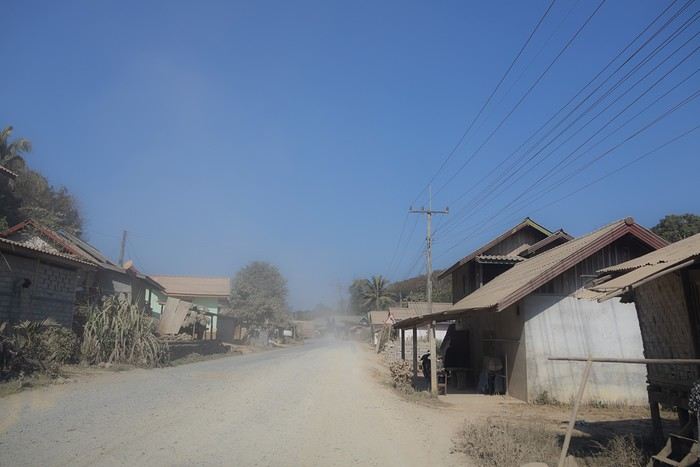
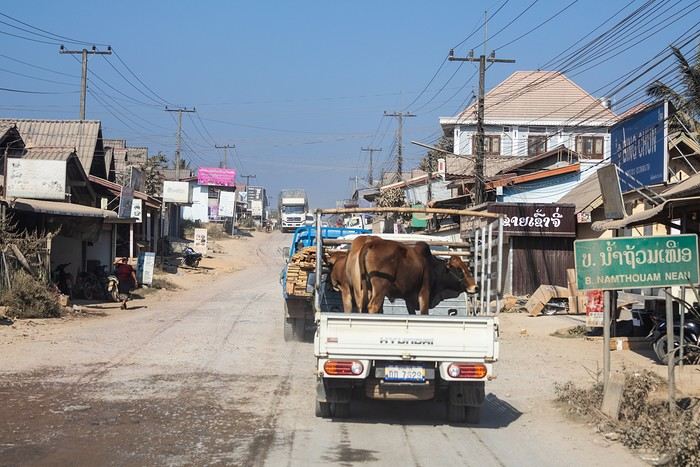
The route we take is undoubtedly the worst in Laos. The road is riddled with potholes that force the driver into constant zigzags, the asphalt is covered in a layer of dust that dirties all the roadside vegetation and reduces visibility. Yet it’s a busy route, crowded with trucks that are often in a big hurry. Fortunately, our driver is cautious and calm, and after bouncing along, we finally reach our destination. Bruised but safe and sound.


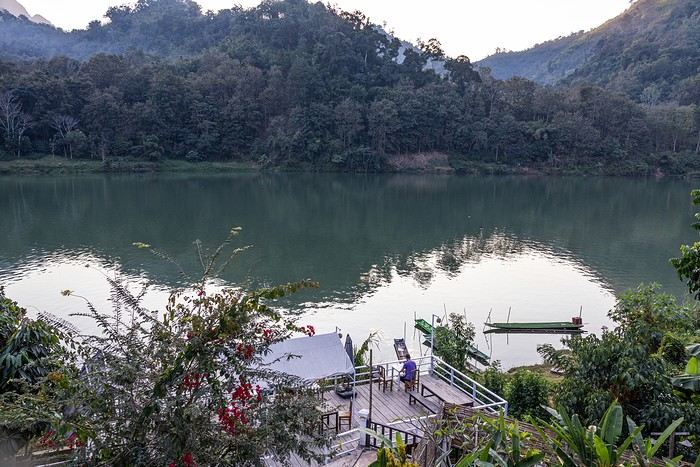
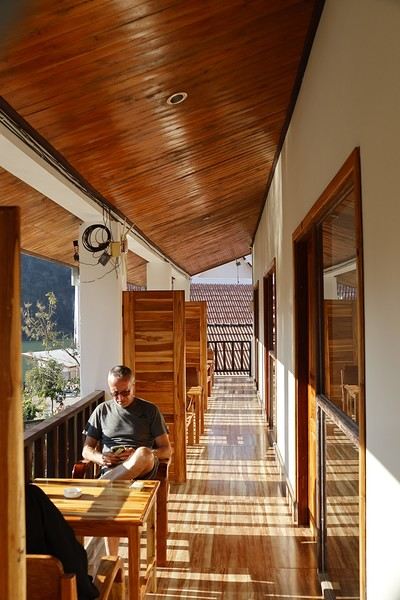
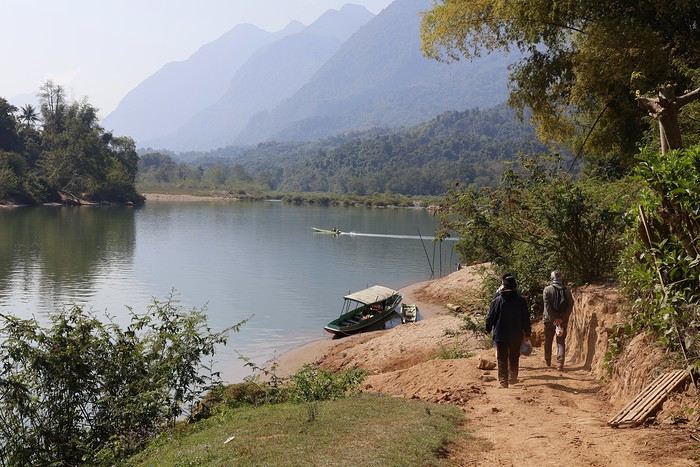
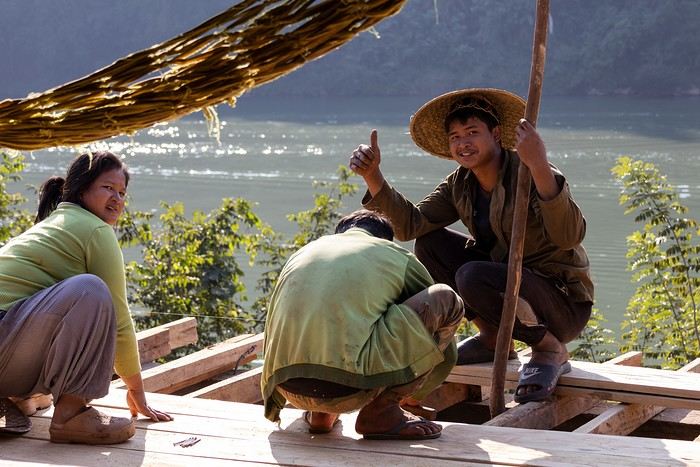
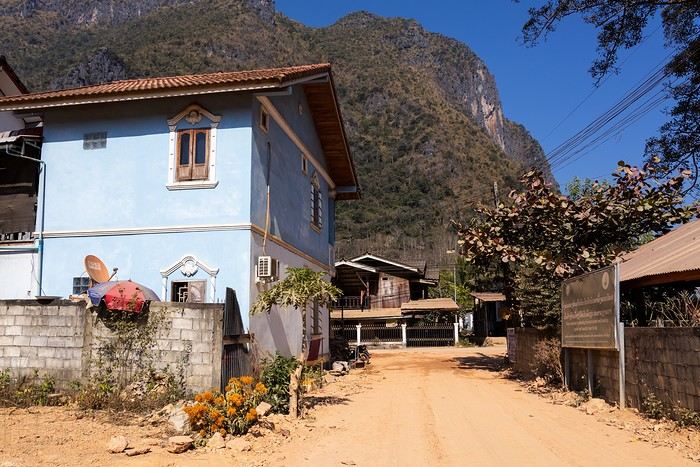
Nong Khiaw, a small urban center of 4,000 inhabitants, bathed by the beautiful Nam Ou, a major tributary of the Mekong. The Nam Ou View Villa is slightly elevated above the riverbank. The rooms line up on the first floor along a walkway. From there, we can admire the river stretching peacefully, bordered by lush jungle. A whole palette of greens unfolds before our eyes, from the emerald of the water to the deep green of the dense forest. Peace and beauty.


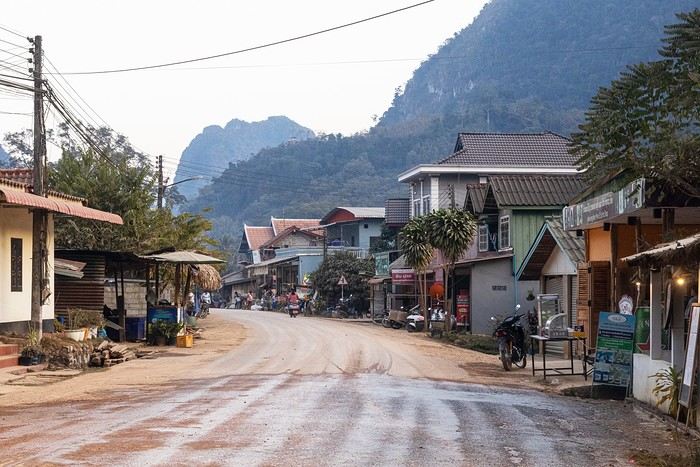
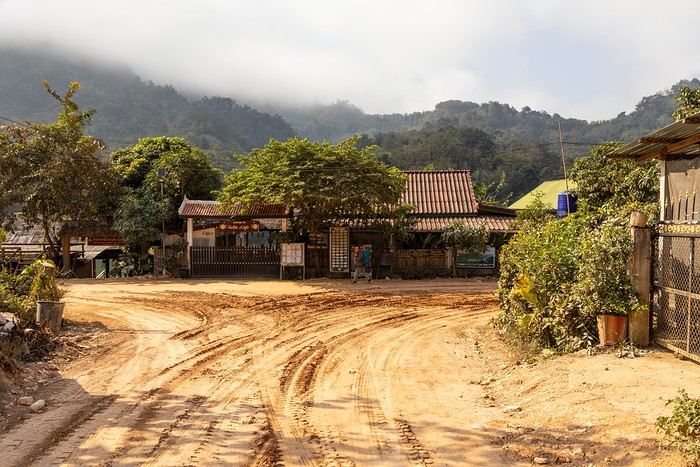
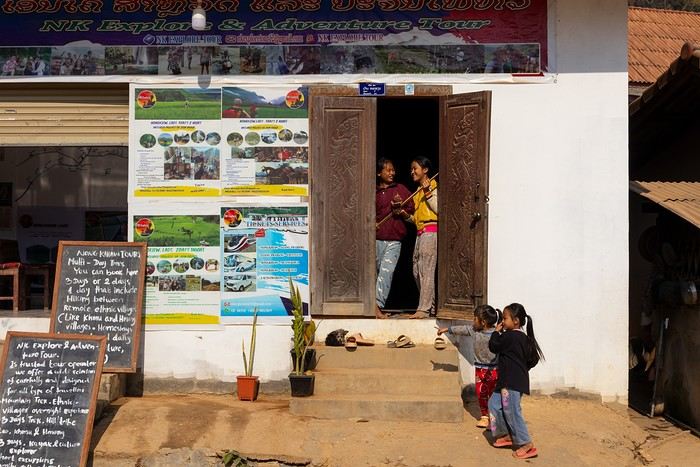
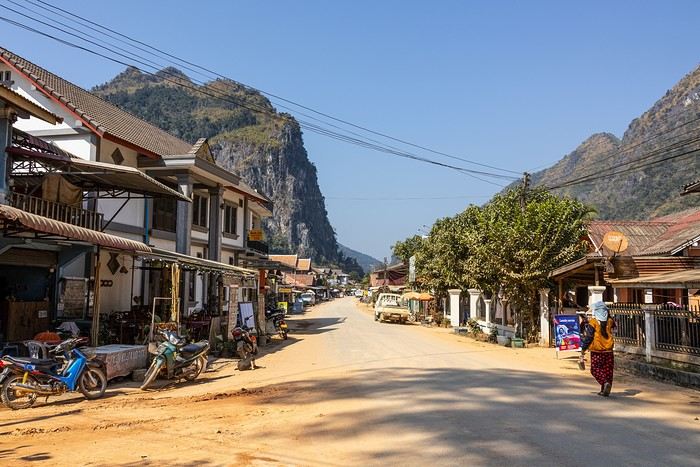
We’re on the right bank, and this part of town is organized around a long straight dirt road lined on both sides with small open-air shops—general stores, hardware shops, barbers, little street restaurants, as well as bars, tour agencies, and a few souvenir shops. A curious mix that blends local life with a moderate tourist presence. The vibe is very "Lao," "backpacker," and "slow travel," with lots of young travelers. As with every new arrival, it takes us a while to get our bearings, especially after such an exhausting journey. While Bruno and I stroll absentmindedly along the dusty avenue, Kate and Nathalie set off to find an agency to organize tomorrow’s outing. The plan is to head upriver to explore the small Kamu villages nestled in the heart of the forest. We chat in English with the young Lao people running the agency. We agree on a half-day canoe trip: visiting two Kamu villages, a walk through the forest and rice fields, lunch included, and a French-speaking guide. The program sounds great. Now we just need to negotiate the price. And our chief negotiator, Kate, takes charge. Two million two hundred fifty-five thousand kips (2,255,000). All those millions actually only amount to around 100 €, or 25 € per person. Good deal, Kate!


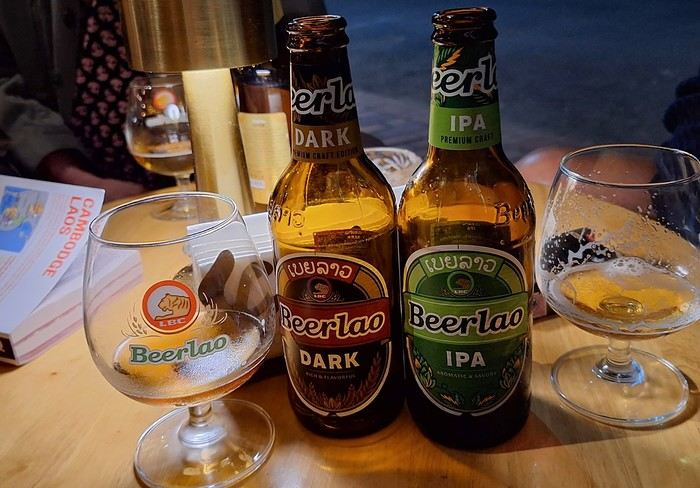
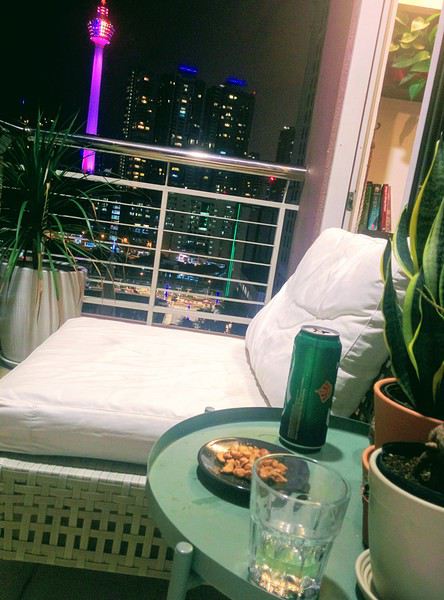
Night falls quickly in the tropics, and as soon as the sun dips behind the mountains, it starts to get chilly. But before dinner, we treat ourselves to an aperitif on the hotel’s small balcony. Lao beer all around! Tomorrow, departure at 9 AM.


The rest here
DJ Djalma Globetrotter ·
I assume we still pay in cash? Brings back memories of those millions of kips! To fly from Vientiane to Phongsaly, we had to pull out a huge wad of bills! As for the Nam Ou, we did the descent from Phongsaly over 3 days... Tough on the behind in that pirogue! Luckily, there were quite a few stops in villages along the way, including Nong Khiaw in the end.
https://www.youtube.com/watch?v=-XCOyB7WStI https://www.youtube.com/watch?v=g2eI67iCbKY
KA Kate Globetrotter ·
I guess we still pay in cash? Brings back memories, all those millions of kips!

Yeah, everything’s paid in cash. Sometimes taxis or hotels accept dollars. We didn’t know where to put all those millions of kips! When we exchanged our euros at the bank, the stack of bills for the four of us was bigger than a box of sugar cubes!

As for the Nam Ou, we did the descent from Phongsaly over 3 days... Tough on the butt in the pirogue!

So enjoyable but so uncomfortable! 😉
Mes photos sur Flickr: https://www.flickr.com/photos/153304262@N05/albums "Le Temps nous égare. Le Temps nous étreint. Le Temps nous est gare. Le Temps nous est train".
MO Montagnard74 Globetrotter ·
From Luang, you’ll need to allow nearly 5 hours to cover the 150 kilometers between the two towns. A real ordeal.

Whether in a private or shared van, this road is unanimously agreed upon. Against it.

Vibe that’s very much "Lao," "backpackers," and "slow travel" all at once,

I really loved NK—both for its atmosphere and the people I met while passing through. My best pizza in Laos, just to the right after the bridge! (A French guy, actually.)

And it’s our sales manager, Kate, who handles it. Two million two hundred fifty-five thousand kips (2,255,000). All those millions only amount to about 100 €, or 25 € per person. Good deal, Kate!

She takes photos, negotiates prices... A real Swiss Army knife, that woman!

Lao beer for everyone!

Ah, finally—about time! [;]
"Le véritable voyage de découverte ne consiste pas à chercher de nouveaux paysages, mais à avoir de nouveaux yeux." Marcel Proust
RI RichardXI Regular ·
. Lao beer for everyone!

Oh finally, it was about time! 😉

Yeah, you're right. While at home I tend to drink like a fish, when traveling I develop a kind of asceticism that could get annoying. But as you can see, my buddies here restore the balance. 😉
AT Attila Globetrotter ·
I haven’t been there myself, but I recognize "my" Laos! 😉

No mention of tasting Lao Lao, the drink that can make you go blind...?
Ponts du monde : concours de photos amical de juillet 2026 Rubrique Jeux Voyages C'est le moment de voter !
KA Kate Globetrotter ·
No tasting of Lao Lao, the drink that can make you go blind...?
That was a close one! But no, we were good 😉 But I almost regret not trying it.
Mes photos sur Flickr: https://www.flickr.com/photos/153304262@N05/albums "Le Temps nous égare. Le Temps nous étreint. Le Temps nous est gare. Le Temps nous est train".
AT Attila Globetrotter ·
That stuff was brutal...

And they served it like water...

Anyone who drank the whole glass probably didn’t walk straight afterward...
Ponts du monde : concours de photos amical de juillet 2026 Rubrique Jeux Voyages C'est le moment de voter !
MO Montagnard74 Globetrotter ·
No tasting of Lao Lao, the drink that can make you go blind...?
I still have good eyesight, even behind my glasses! 😉
"Le véritable voyage de découverte ne consiste pas à chercher de nouveaux paysages, mais à avoir de nouveaux yeux." Marcel Proust
MO Montagnard74 Globetrotter ·
Yeah, you're right. While at home I tend to drink like a fish, when traveling I develop a kind of asceticism that could get annoying. But as you can see, my buddies restore the balance. 😉

I’d tend to do the exact opposite, if only to soak up 😏 the local customs… And maybe also because my license is my job, and I keep an eye on it during my outings in France 😕
"Le véritable voyage de découverte ne consiste pas à chercher de nouveaux paysages, mais à avoir de nouveaux yeux." Marcel Proust
DJ Djalma Globetrotter ·
Yeah... Lao-lao in Laos, grogue in Cape Verde—aren’t these destinations targeted based on certain local customs?😉
https://www.youtube.com/watch?v=-XCOyB7WStI https://www.youtube.com/watch?v=g2eI67iCbKY
MO Montagnard74 Globetrotter ·
Yeah... Lao-Lao in Laos, grogue in Cape Verde—aren’t these destinations maybe chosen based on certain local customs?😉

And like every country, or even every region, has its own specialty, I’m not done with my travels yet!!!
"Le véritable voyage de découverte ne consiste pas à chercher de nouveaux paysages, mais à avoir de nouveaux yeux." Marcel Proust
RI RichardXI Regular ·
Discovering the Kamu villages

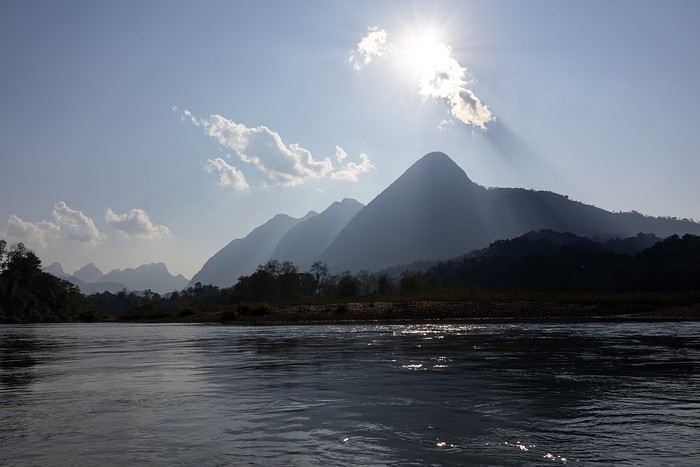
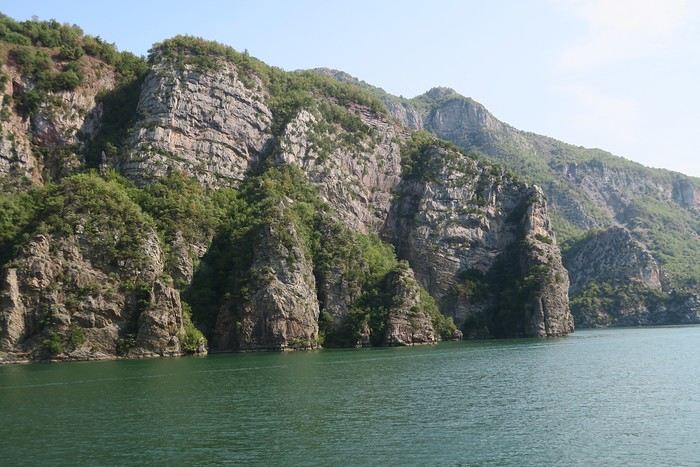
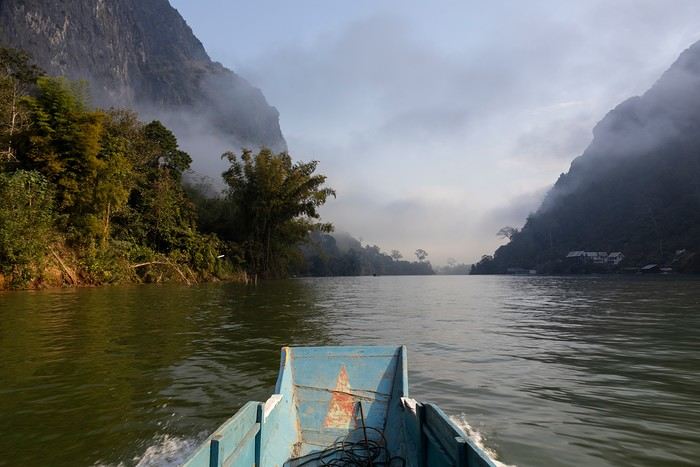
It's chilly this morning for breakfast on the terrace by the river. We were actually quite surprised in Nong Khiaw by the significant temperature swings—cool mornings and evenings, and intense heat during the day. 9 AM, the boat is docked. The young man from the agency greets us with a smile, Sabaïdii, and introduces us to an elderly gentleman with a venerable but sturdy appearance, wearing small round metal-rimmed glasses, one lens of which is chipped. He’ll be our guide. In fairly decent French, he welcomes us and explains the day’s itinerary. We board the boat. In the coolness of this still-misty morning, we shiver a little, but the air whipping against our faces is invigorating. The boat glides along the great liquid artery hemmed in by these mountains with their dense vegetation. Tall, but with rounded summits. They seem different in shape from the ones we’re used to back home. I’m not quite sure why, but to me, they’re emblematic of the natural landscapes of Southeast Asia as I imagine them. A throwback to movies or photographs?


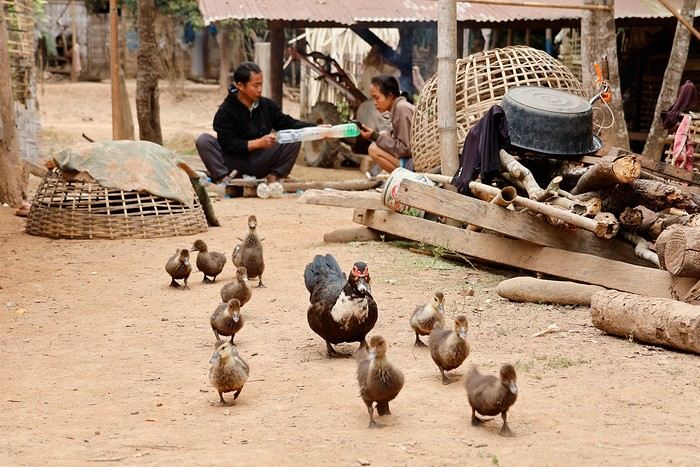
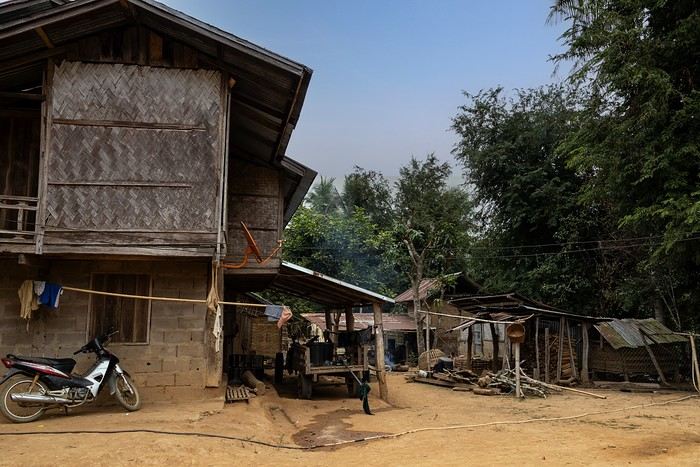
First stop after a good half-hour of navigation. We carefully disembark and climb a steep slope that leads us to the village. We’re among the Kamus, a minority ethnic group but still quite numerous in the mountains of northern Laos. Their language, different from Lao, and their traditional animist way of life make them a distinct group, partially integrated into modernity, even though in the village, the satellite dishes and mobile phones of the younger generation reveal inevitable changes in their way of life. Our guide, who seems to know the locals well, puts us at ease. Still, we feel a bit awkward. Isn’t our presence too intrusive? Aren’t we just visiting an "Indigenous village"? But the people don’t seem bothered; they’re used to these visits, which are frequent but not yet excessive—at least for now. They go about their business calmly, not really minding our arrival.


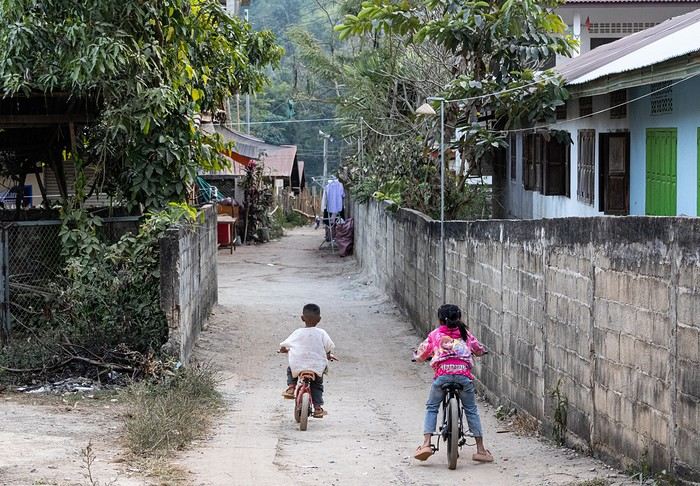
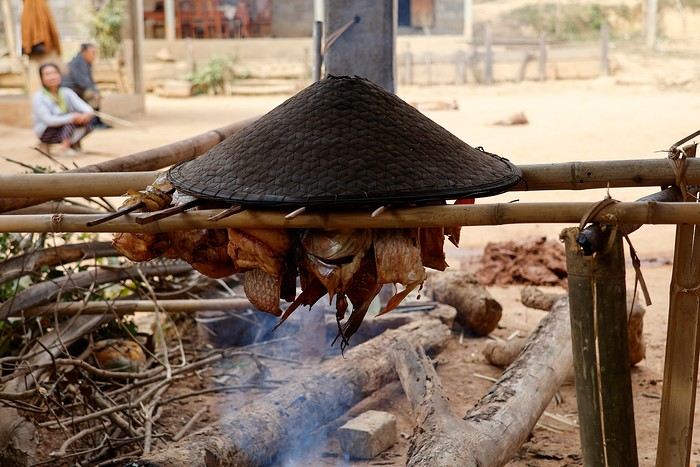
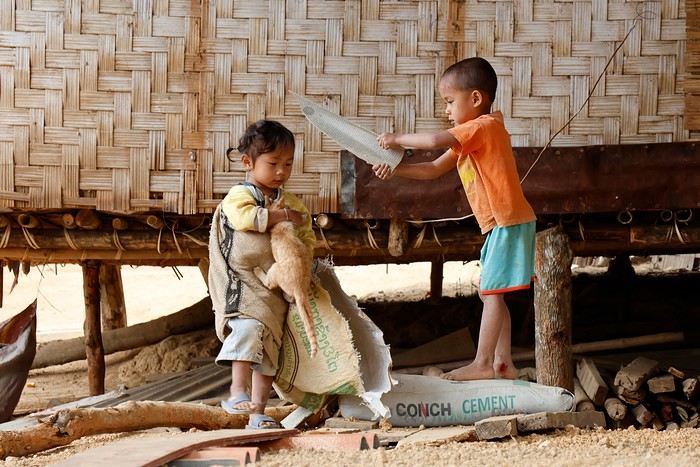
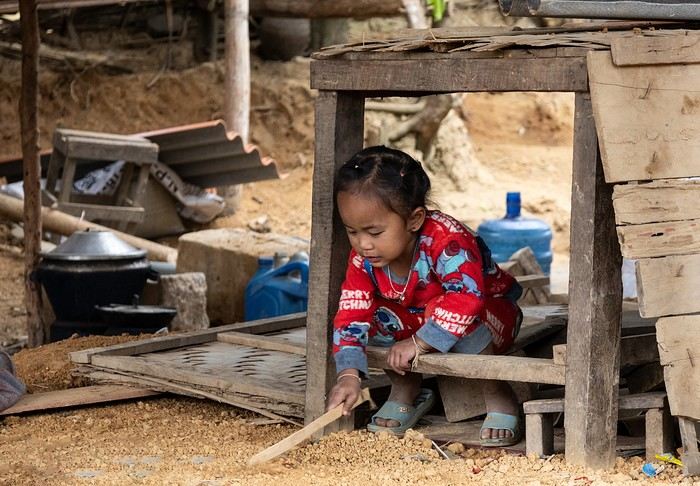
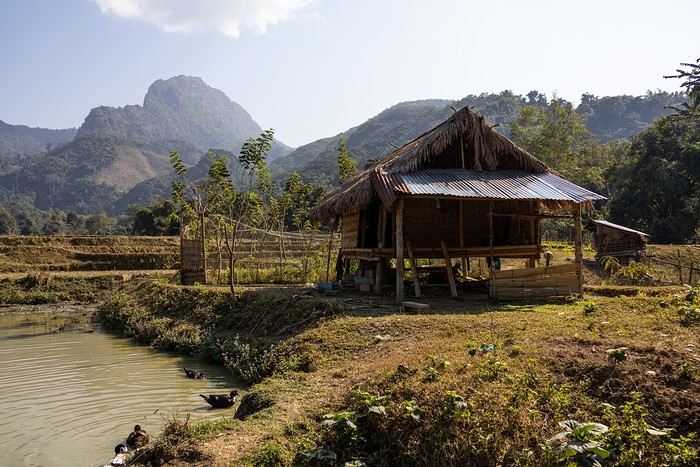
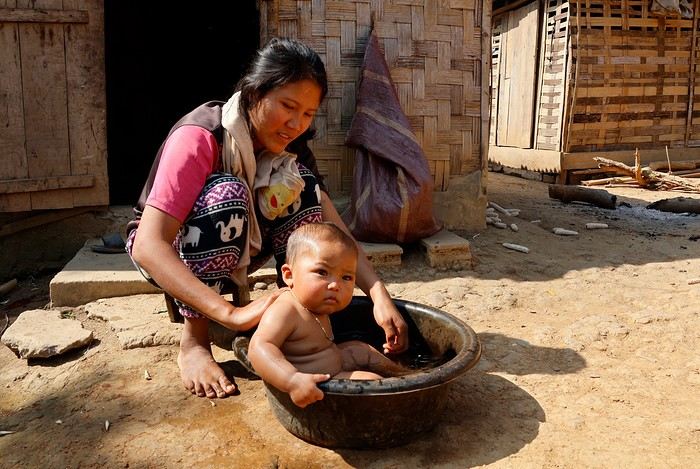
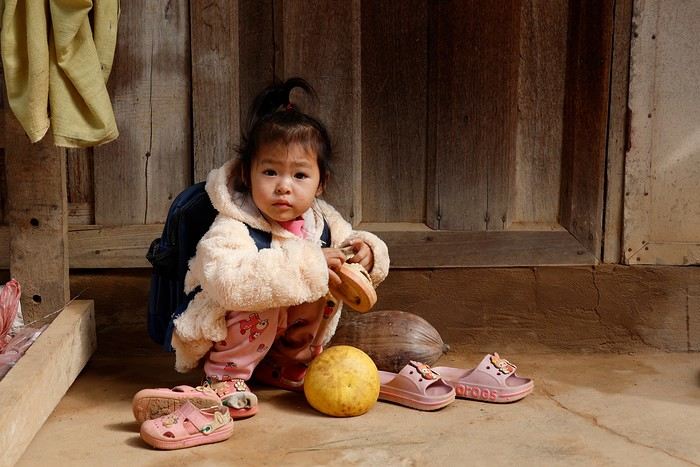
The settlement isn’t very dense; it sprawls along a large central dirt path. Some houses are built with traditional materials—woven bamboo facades, thatched roofs—but most have concrete foundations and corrugated metal roofs. While Bruno and I politely try to follow our guide’s explanations in increasingly broken Franglais, the girls, who seem to have tuned out, are more interested in the village life around them, especially the children. With her trained eye, Kate picks her subjects, particularly a mother bathing her little one on the porch of her house. A little further on, women are cooking rice the Lao way—very compact and sticky. The smell of grilled meat fills the air; chicken breasts are cooking over a wood fire under a "non la," the conical hat widespread in Vietnam and Laos. Steamed.


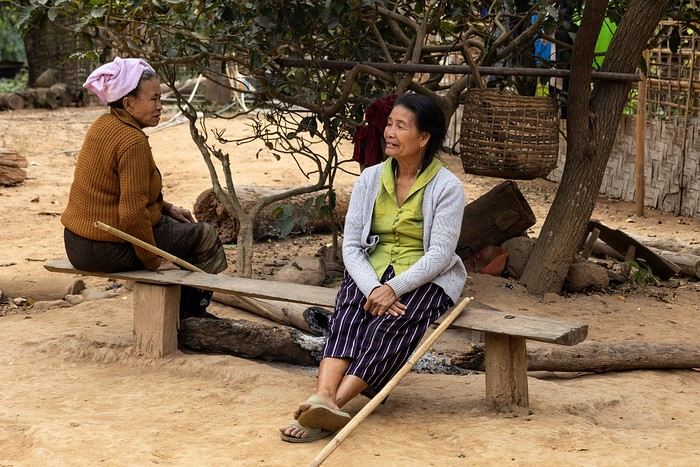
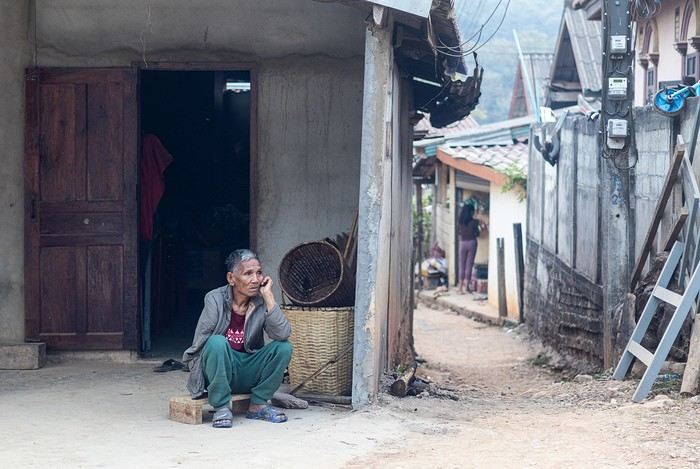
The walk continues, pleasant but a bit frustrating. Personally, I’d have liked to learn more about these people—their daily lives, their work, their social organization. But after all, we’re not ethnologists, and it would be pointless to pretend we can truly understand people we have no real interaction with. Under a tree, two grandmothers, sitting on a bench—or rather, a wooden plank—chat and soak up the sun. Their mannerisms remind me of my mother and her friend. Even on the most distant travels, there are human behaviors that touch on the universal. I don’t know why, but that thought comforts me. At the end of the main path stands the village school. Apparently, it’s recess time; the children are playing outside in a joyful, universal hubbub. In the courtyard, I spot a well-maintained flat area where young boys are playing. It’s a pétanque court! One of the legacies of French colonization. Apparently, Laotians are quite devoted to this sport and particularly skilled at it.


RI RichardXI Regular ·
It's time to head to the second village a little further upstream where we can have lunch.


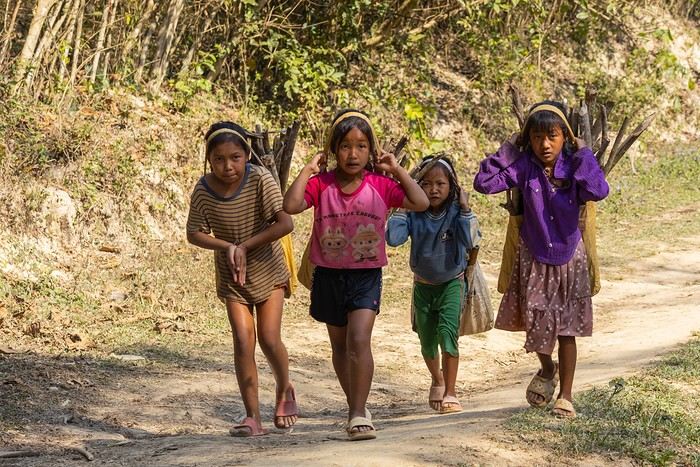
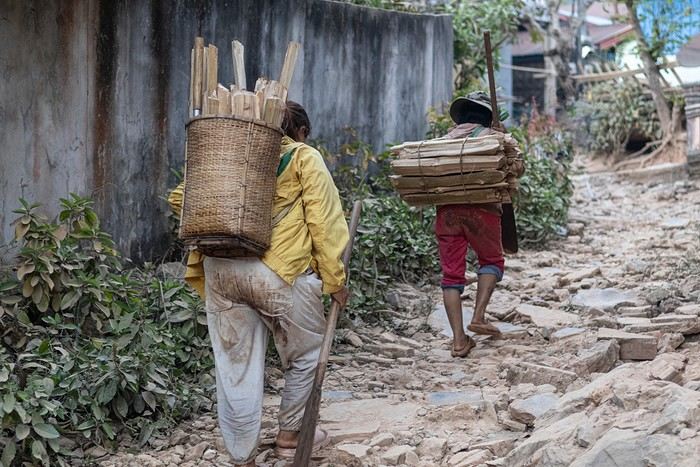
We were hoping to have a shared meal in this village, but we end up eating at a guesthouse overlooking the river—charming, sure, but clearly aimed at tourists. Still, it’s a bit of a letdown. Under the scorching afternoon sun, we first walk through the vast rice fields in the area. In January, the fields are already harvested, and the yellowed plots are only used for feeding livestock. Our guide explains that during the rainy season, some isolated farms are cut off from the world and live in complete self-sufficiency. On our way back to the village, we come across a group of very young girls carrying bundles of wood with a strap around their heads. They greet us politely. A little off to the side, I spot a Buddhist temple that looks abandoned. I ask our guide about it. I don’t quite catch his explanation, but I think I understand that the monks left due to a lack of regular religious practice among the locals. A word keeps coming up: “animism.” The Kamus, in fact, believe more in the spirits of the forest than in the Buddha’s teachings.


The day was beautiful, full of discoveries, but long under the sun, and we’re still happy to return to our hotel. And we’re a little disappointed that our very kind guide didn’t facilitate more interactions with the villagers. But maybe that was too much to ask. We board the boat again in silence as the daylight fades. It’s getting cool again... Tomorrow, no visits, no excursions. A free day, as they say in organized trips.


The rest here
MO Montagnard74 Globetrotter ·
I catch myself checking the travel journal for new posts to find out what happens next... The writing is perfect, made even better by Kate’s stunning photos—I love it!

Good news: the heat is (too?) present. And in the end, these riverside villages were a lovely detour.
"Le véritable voyage de découverte ne consiste pas à chercher de nouveaux paysages, mais à avoir de nouveaux yeux." Marcel Proust
KA Kate Globetrotter ·
Thanks Bruno, that’s sweet! 🙂

I’ll take this chance to add my two cents...

While Bruno and I politely tried to follow our guide’s explanations in increasingly broken Franglais, the girls, who seemed to have tuned out, were more interested in the village life scenes, especially the kids.

We didn’t understand a single thing! It would’ve been better in English. Seriously, you did your good deed, but we found him a bit weird from the start. As soon as we got off the boat, he ripped some leaves off a plant he claimed was aphrodisiac, shouting, « good, good, sex, woman, house, day, night » while miming with his body what everyone could easily guess. Grandpa was *really* into it!

And we’re a little disappointed this super nice guide didn’t help us connect more with the villagers.

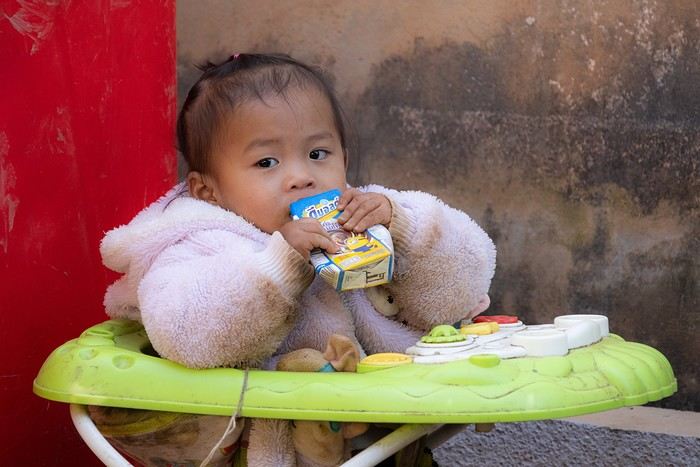
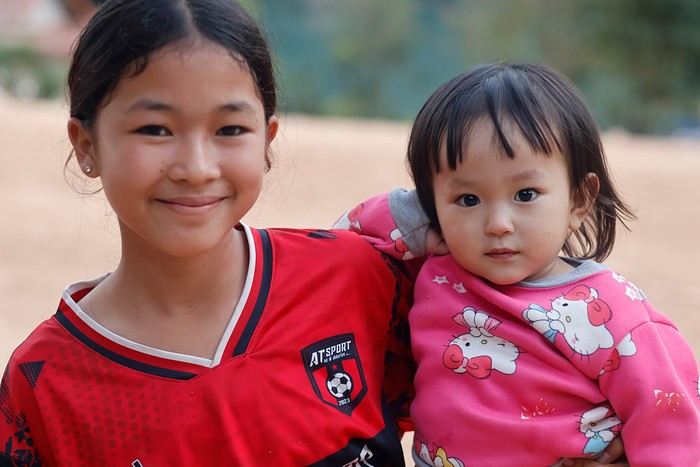
Without real conversations, photos let me have small interactions: glances, gestures, a few words... Nath and I spent a good while with a mom and her baby.


Mes photos sur Flickr: https://www.flickr.com/photos/153304262@N05/albums "Le Temps nous égare. Le Temps nous étreint. Le Temps nous est gare. Le Temps nous est train".
MO Montagnard74 Globetrotter ·
We didn’t understand a single thing! It would’ve been better in English.

At the same time, finding a French-speaking guide for the next day in the middle of nowhere in Laos—wasn’t that challenge just a *little* too ambitious?

I can just picture a Laotian trying to find a fellow countryman in the depths of the Auvergne (with all due respect to Agnes, of course)
"Le véritable voyage de découverte ne consiste pas à chercher de nouveaux paysages, mais à avoir de nouveaux yeux." Marcel Proust
GA Gaura Veteran ·
Those mountain silhouettes with sharply defined trees and misty clouds—we know them well from Chinese paintings... I used to think the Chinese painted imaginary, mythical mountains... until my first trip to Asia in northern Thailand, where I saw that kind of landscape "in real life."

I’m happily following along on this trip to Laos, a country I’ve visited partially twice before. The first time was in a small group back in the '90s with Nouvelles Frontières—it was quite the adventure. Between Luang Prabang and Vientiane, the driver and guide were worried about bandit attacks. In Vang Vieng, there were already guesthouses filled with young Europeans consuming illicit substances and riding truck inner tubes down the rapids. We took a beautiful two-day journey down the Mekong on a stunning wooden boat, with stops to meet ethnic groups the communist government was forcing to settle. We bought gorgeous textiles from Thai ethnic groups, silk dyed with plants, traditional jewelry, baskets... and *so many* photos—or rather, slides. It was a dream trip for me.

On my second trip in 2005, with friends, Luang Prabang was a UNESCO site, and the choice of accommodations and restaurants had improved significantly. There were still few tourists. I struggled to organize a circuit with a driver. The one who took us knew Nong Kiaw and the boats on the Nam Ou—it was a lovely excursion—but clearly, he’d never been to Muang Sin near the Chinese border, where a big regional market was held. The roads at the end of the world were in terrible shape, and we couldn’t find a driver in the morning to take us to the market far from our lodging. In the end, we walked to the market... only to find it was over. We saw a few stragglers heavily under the influence of local alcohol heading back to their mountains, and piles of trash. A gloomy return to Luang Prabang, where we had to catch a flight to Chiang Mai.

But overall, I’ve kept good memories of this country and its people. I love the architecture of the temples, with their curved roofs almost touching the ground.

As for the economic colonization by the Chinese, it had already begun—it’s only progressed since then!
gaura
AT Attila Globetrotter ·
At the same time, a French-speaking guide for the next day in the middle of nowhere in Laos—wasn’t that challenge just a tad too ambitious?

Back in the day, no, not after the past...

A travel agent was even relieved to switch to French when buying a flight ticket. Though he was quite old...

The Laotian diaspora in France is said to number around 140,000 people.
Ponts du monde : concours de photos amical de juillet 2026 Rubrique Jeux Voyages C'est le moment de voter !
MO Montagnard74 Globetrotter ·
You're absolutely right—I totally spaced on that historical aspect. Seems like it didn’t do our quartet any favors either…
"Le véritable voyage de découverte ne consiste pas à chercher de nouveaux paysages, mais à avoir de nouveaux yeux." Marcel Proust
RO Rouquine38 Globetrotter ·
You’re absolutely right—I’d completely overlooked that historical aspect.

Yes, French was indeed taught in Indochina. Even though Indochina no longer existed after 1954, the French presence remained significant for many years afterward. The education in Vientiane, where my husband went to school until he was 12, was provided by French nuns. The clinics where Laotians went for medical care and vaccinations were run by Médecins Sans Frontières.

apparently didn’t benefit our quartet...

Today, French is hardly used anymore—only the older generation still remembers a little 😅
"Voyager est un triple plaisir : l'attente, l'éblouissement et le souvenir." Ilka Chase
AT Attila Globetrotter ·
The old ones must be a bit too old to still be in operation today...
Ponts du monde : concours de photos amical de juillet 2026 Rubrique Jeux Voyages C'est le moment de voter !
RI RichardXI Regular ·
Hey Gaura,

You’re so right—what adventures! From what we could tell, Laos today is way more civilized (no bandit attacks 😉 ) and much better set up for tourism. But thankfully, it hasn’t yet been ruined by mass tourism. Thanks for sharing!
RO Rouquine38 Globetrotter ·
Thanks Kate for these amazing images of Lao countryside life. Thanks Richard for this story that really transports us there.

I see that life in the countryside hasn’t changed much in 10 years... I’d even say in 50 years (based on my husband’s memories).
"Voyager est un triple plaisir : l'attente, l'éblouissement et le souvenir." Ilka Chase
RI RichardXI Regular ·
@Attila, @Montagnard, @Rouquine

Yes, I can confirm that French is hardly spoken in Laos anymore. I’d like to give credit to the little gentleman whose daughters so meanly made fun of him—those little brats! He was about 70 years old, which means he was born around 1955, right at the time of decolonization. From what he told me (or at least what I understood), he hadn’t had the chance to pursue long studies and couldn’t learn French at school. He picked it up on the go, jotting down French words and expressions in a travel journal every time he had the opportunity to hear them. An impressive journal he showed me during the visit.

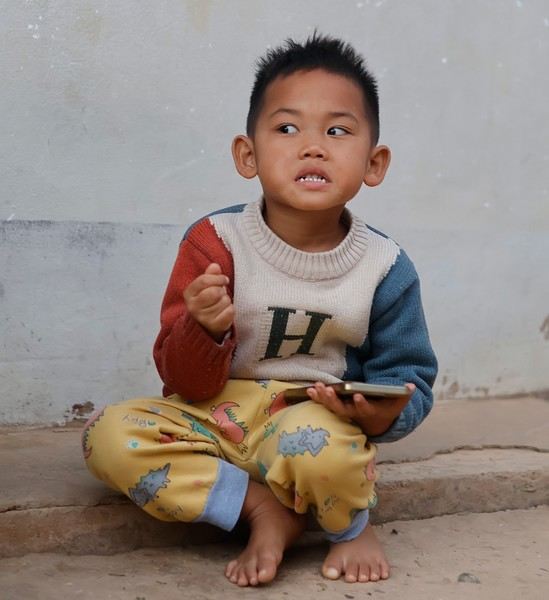
And it’s true that daily life in these villages, both in the North and on the Bolaven Plateau, seemed traditional or even ancestral to us—except for the kids using mobile phones 😉
DJ Djalma Globetrotter ·
During my trip to northern Laos (2017 or 2018), I found the Khmu villages along the Nam Ou much more affected by modernism than the Akha and Hmong villages in the Phongsaly area. The latter weren’t yet connected to a drivable road to Phongsaly town. They were only reachable by trails after several hours of walking
https://www.youtube.com/watch?v=-XCOyB7WStI https://www.youtube.com/watch?v=g2eI67iCbKY
JO Jojoone1 Globetrotter ·
We liked the taxi driver so much that we negotiated with him for the next day's trip to Nong Khiaw.

We were supposed to take a shared van. The price was around 16 € per person for a round trip. But the idea of a private taxi started growing on us... We leave when we want, stop where and when we want, and the road is rough—our little bodies might end up battered, tossed around in those packed vans 😇. In short, the friendly taxi driver quoted 200 € for the four of us. We ended up accepting after shaving off about twenty euros. This "sacrifice" would be our little luxury (and time would tell we made the right call...)

Nathalie and Bruno are on board; now we just have to convince Kate... I break it to her gently, downplaying the number of steps. I’m ashamed, but I’ll pay for it dearly!

542 steps to see nothing 🤪 And three days of sore calves 🏴‍☠️

Shame on Kate! In my travel journal at the time, I wrote that Françoise had done this climb... a few days after breaking a rib 😛

I was shocked when I saw you mention a 200 € fare for the taxi (for 140 km). That seemed way off. I checked with AI, and apparently the going rate should be between 80 and 100 €. I’d already read in the GDR that in Laos, they tend to charge inflated prices and aren’t very open to bargaining. One of the reasons we might not be in a hurry to go back. When you see some taxis charging less than 50 € for the 200 km from Bangkok to Hua Hin, for example...

Back in 2014, we weren’t using taxis yet and had taken the minivan. About 3 hours of travel, with the first part of the route in better condition than the second (150,000 kips per person for a one-way trip).

I’m circling back to the crowds of tourists, the cool mornings, the dry vegetation, and the waterfalls with low water levels. Since we always traveled in July, we’d never encountered these issues before. Sure, there was a lot less blue sky in our travel journals, but the experience on the ground felt much better. June, being the least rainy month of the wet season, is the one I’d recommend for a trip to Southeast Asia.
« Tout le monde s'interroge sur comment laisser une meilleure planète à nos enfants, mais on devrait plutôt penser à laisser de meilleurs enfants pour notre planète. » Clint Eastwood
KA Kate Globetrotter ·
I was shocked to see you mention a fare of 200 € for the taxi (for 140 km). That seemed abnormal to me. I checked with AI and apparently the right fare should be between 80 and 100 €.

Hey Jojo,

The 200 € was for the round trip (I just corrected it in my post)—the guy came back to pick us up. So we were apparently paying "normal" prices. The 5-hour drive was because of the stops we *wanted*: little errands, photos, bathroom breaks, coffee, lunch…

Thanks for following along! 🙂 The next part might bring back some memories—and not necessarily the best ones
Mes photos sur Flickr: https://www.flickr.com/photos/153304262@N05/albums "Le Temps nous égare. Le Temps nous étreint. Le Temps nous est gare. Le Temps nous est train".
JO Jojoone1 Globetrotter ·
Oh no, who tripped? 🤪
« Tout le monde s'interroge sur comment laisser une meilleure planète à nos enfants, mais on devrait plutôt penser à laisser de meilleurs enfants pour notre planète. » Clint Eastwood
MO Montagnard74 Globetrotter ·
The immediate sequel is going to bring back memories, and not necessarily the best ones 😇

The suspense is at its peak! I even read Joël’s travel journal (really interesting, by the way) to see what it was all about…
"Le véritable voyage de découverte ne consiste pas à chercher de nouveaux paysages, mais à avoir de nouveaux yeux." Marcel Proust
RI RichardXI Regular ·
Oh no!

Change of plans today. Originally, the idea was to leave this morning by canoe for the village of Nuang Moy and spend two nights there. After checking, it turns out this little town mainly serves as a base for the many treks to the mungs villages further north. And apart from those activities, there isn’t much to do or see there. So we decide to stay quietly in Nong Khiaw and plan a day trip to Nuang Moy the next day.

The morning is taken up with logistical and organizational questions. First, we need to change hotels since ours no longer has any rooms available. Check out, we move out. Check in, we settle in... at the guesthouse next door, Sabaidee Nam Ou River View. We scout out the public pier for the boat that will take us to Nuang Moy tomorrow morning.

After that, we wander rather lazily through the streets of Nong Khiaw, soaking up the peaceful atmosphere of the small town. I know comparisons aren’t always fair, but I can’t help thinking about the hustle and bustle of India—the noise, the crowds, the constant solicitations. There’s nothing like that in Laos, where everything seems more subdued, more inward. It’s true that India has an incredible, almost earthy energy that I don’t feel here. But I’m getting off track. We head back to the banks of the Nam Ou for lunch at a small restaurant—cute, sure, but the food quality is pretty mediocre this time.


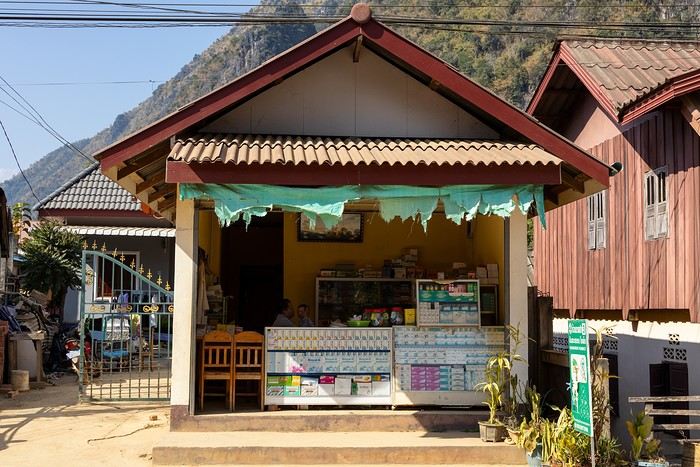
As always in Nong Khiaw, the heat becomes brutally intense in the early afternoon. Kate and I decide to go rest at the hotel. While waiting for Bruno and Nathalie, who are a few steps behind, we chat on the side of the street. A loud, sharp thud—the unmistakable sound of a body hitting the ground—followed by a cry of pain. Oh no, Nathalie just took a hard fall onto the dusty street, face down. We rush over, but Bruno is already helping her up. Her face is covered in blood, and before she presses a handkerchief to her temple, I catch a glimpse of the long gash on her forehead. Luckily, there’s a small pharmacy across the street. But the man running it seems even more panicked than we are, shouting in English, “Hospital! Hospital!” A hospital in Nong Khiaw? Maybe, but where? Fortunately, a taxi—alerted by a passerby, we assume—stops beside us and picks us up right away. When I say taxi, it’s more like a small truck, but it doesn’t matter. The young driver understands the situation and takes us to the medical center, just 5 minutes away. During the short ride, I glance quickly at Nathalie, trying to assess the situation and reassure myself. Bruno, calm and attentive, wipes her bloodied face. Nathalie, slightly bent forward, says nothing. She isn’t crying; she’s gritting her teeth, trying to endure the pain, the stress, the fear. With her head down and her body slightly hunched, I find her moving in her “mater dolorosa” stance. Like the rest of us, I’m struggling to sort out my feelings. Is the trip over? But in the end, what does it matter? As long as it’s not serious.

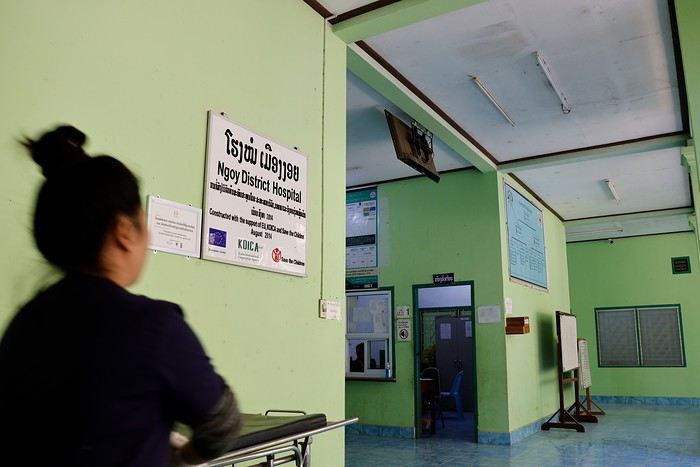
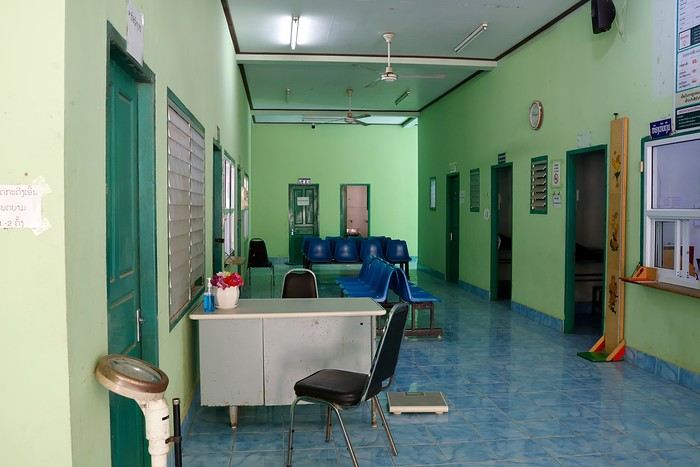
We arrive quickly at the small hospital. The young taxi driver acts as our guide and interpreter. Emergency section. Unbelievable—there’s no one there, no patients. When I think of how crowded ours always are! Nathalie is taken care of by a nurse who leads her into a small treatment room, with Bruno by her side. She comes out fairly quickly, her forehead covered with a large bandage hiding 6 stitches. Nathalie seems calmer, and we’re all relieved, feeling like we’ve avoided the worst. It turns out later that the consequences of this fall will be more disabling than expected, but I’ll come back to that... The young man who waited so patiently for us finally takes us back to the hotel. Phew! Time for everyone to rest and recover from this emotional and shocking episode.


Our evening plan included climbing Som Nang, one of the hills overlooking the town, to enjoy the sunset. Given the circumstances, I was about to go alone while Kate wandered the village streets, capturing scenes as she loves to do. But to my surprise, Bruno and Nathalie knock on the door and say they want to come with me. Nathalie, still unsteady but in “Warrior” mode, seems determined not to let the situation get the better of her. Well, bravo! A bit reckless, though, don’t you think? On the way down, Kate joins us. The day ends on a positive note, with the thought that we’ve still avoided what could have been a disaster. And that no matter how well-prepared a trip is, it can sometimes be at the mercy of bad luck that throws everything off. Just like life.

Tomorrow, a long boat ride on the Nam Ou to discover Nuang Moy.
KA Kate Globetrotter ·
I’m giving up on this climb, then (I’m short of breath—40 years of smoking 🏴‍☠️—but I’m fine on flat ground). I’m actually happy to wander alone and soak up these moments. I get lost in the alleys (love it!) and indulge in my favorite game: street photography.


Mes photos sur Flickr: https://www.flickr.com/photos/153304262@N05/albums "Le Temps nous égare. Le Temps nous étreint. Le Temps nous est gare. Le Temps nous est train".
HE Hermès1964 ·
So, Nathalie had no choice but to step in... to comment on the pretty accurate description of this "legendary" fall. The clinic where I was treated was efficient and reassuring, and my scar after a month is actually pretty decent... well, when I really step back and look at it 😅. The nurse had a real talent for sewing—15 minutes later: 6 stitches and 16 € (medication included), and I was out the door. My travel companions seemed reassured; me... a little less. But I haven’t yet grasped what’s coming next... That day, the sunset took on a special hue, and I had the feeling I’d avoided the worst. Thanks, my travel friends, for your support that day.
AT Attila Globetrotter ·
Well, what a day! 🏴‍☠️ An eternal memory for 16 €, but one we could’ve done without. 🤪
Ponts du monde : concours de photos amical de juillet 2026 Rubrique Jeux Voyages C'est le moment de voter !
MU Muriel18 Globetrotter ·
Oh no! The kind of silly accident that can mess up the rest of a trip 😕 I wouldn’t have thought there was a sort of hospital in Nong Kiaw... but that’s a relief!

But I haven’t yet gauged what comes next...

Hopefully it’s not too serious, though...
Si tu diffères de moi, mon frère, loin de me léser, tu m'enrichis (Saint Exupéry)
KA Kate Globetrotter ·
I wouldn’t have thought there was a kind of hospital in Nong Kiaw... but that’s great!

It’s more like a small district hospital, closer to a rural health clinic or dispensary. You can make a donation—it’s tax-deductible at 66% ;) https://www.helloasso.com/associations/nk-seeds/collectes/mission-medicale-fevrier-2026
Mes photos sur Flickr: https://www.flickr.com/photos/153304262@N05/albums "Le Temps nous égare. Le Temps nous étreint. Le Temps nous est gare. Le Temps nous est train".
GA Gaura Veteran ·
This episode confirms what a guide told me: we take precautions thinking about illnesses and health issues, but by far the most common risk is falls. We’re not used to the broken roads and sidewalks, and our eyes are first drawn to the local life and surroundings that are totally different from what we know, so we don’t watch where we’re stepping. By the way, the most serious risk is motorcycle accidents—our friend who worked at the embassy in Bangkok "forbade" us from riding motorbikes. He saw too many bodies being repatriated every year.

As an incorrigible photography enthusiast, I always worry about falling while carrying a big camera.

I imagine the wound getting infected... and I’m thinking about the big first-aid kit with antibiotics I’m carrying. I’m with you!
gaura
AT Attila Globetrotter ·
by far the most common risk is falls.

And other everyday accidents like cuts from a sharp knife during a picnic...

Falls don’t always happen outdoors. The bathroom is a real hazard zone!

Moving on, when we say "points," we mean points to undo...
Ponts du monde : concours de photos amical de juillet 2026 Rubrique Jeux Voyages C'est le moment de voter !

Similar discussions

You might also like