Compte rendu: De Rome à Cape Town sur l’Ocean Princess - Aventure en Afrique de l’Ouest
by MoniqueM
This discussion is in French, the community’s main language.
😉Merci pour les photos, j'espère y retourner pour visiter l'intérieur...
CARNIVAL-CELEBRITY-CLUB MED 2-COSTA-CROISIERES DE FRANCE-CUNARD-HOLLAND AMERICA LINE-MSC-NCL-OCEANIA-P&O-PONANT-PRINCESS-ROYAL CARIBBEAN-SEABOURN
Normalement, c'est fermé le vendredi.
Voir aussi : http://www.linternaute.com/voyage/maroc/casablanca/monument/la-mosquee-hassan-ii/
Mathilde
Bonjour Josiane,
Quelle équipe!
Merci pour ces belles photos qui enjolivent mon CR et le complètent superbement! On a même eu droit à une de tes belles compositions! 🙂
La qualité de tes photos est définitivement supérieure aux miennes 😐, mais tu y mets le temps qu'il faut... et l'art 😉
Nous avons visité l'intérieur de la mosquée Hassan II en 1990. Elle n'était pas encore complétée et nous avons eu la chance de voir le toit s'ouvrir: impressionnant! Mathilde a placé un lien au sujet de la mosquée. Merci!
Et revenons au navire... 😎
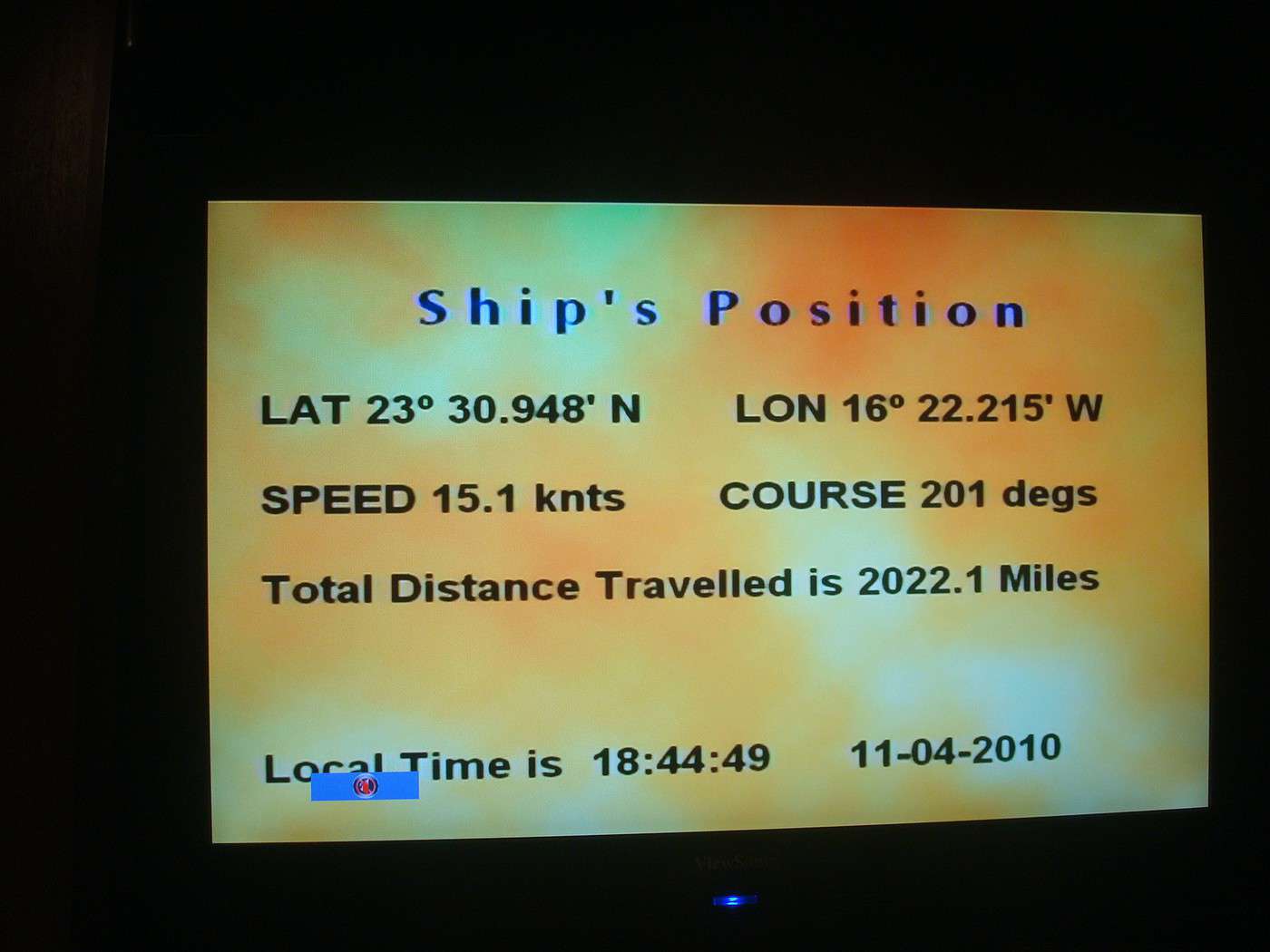
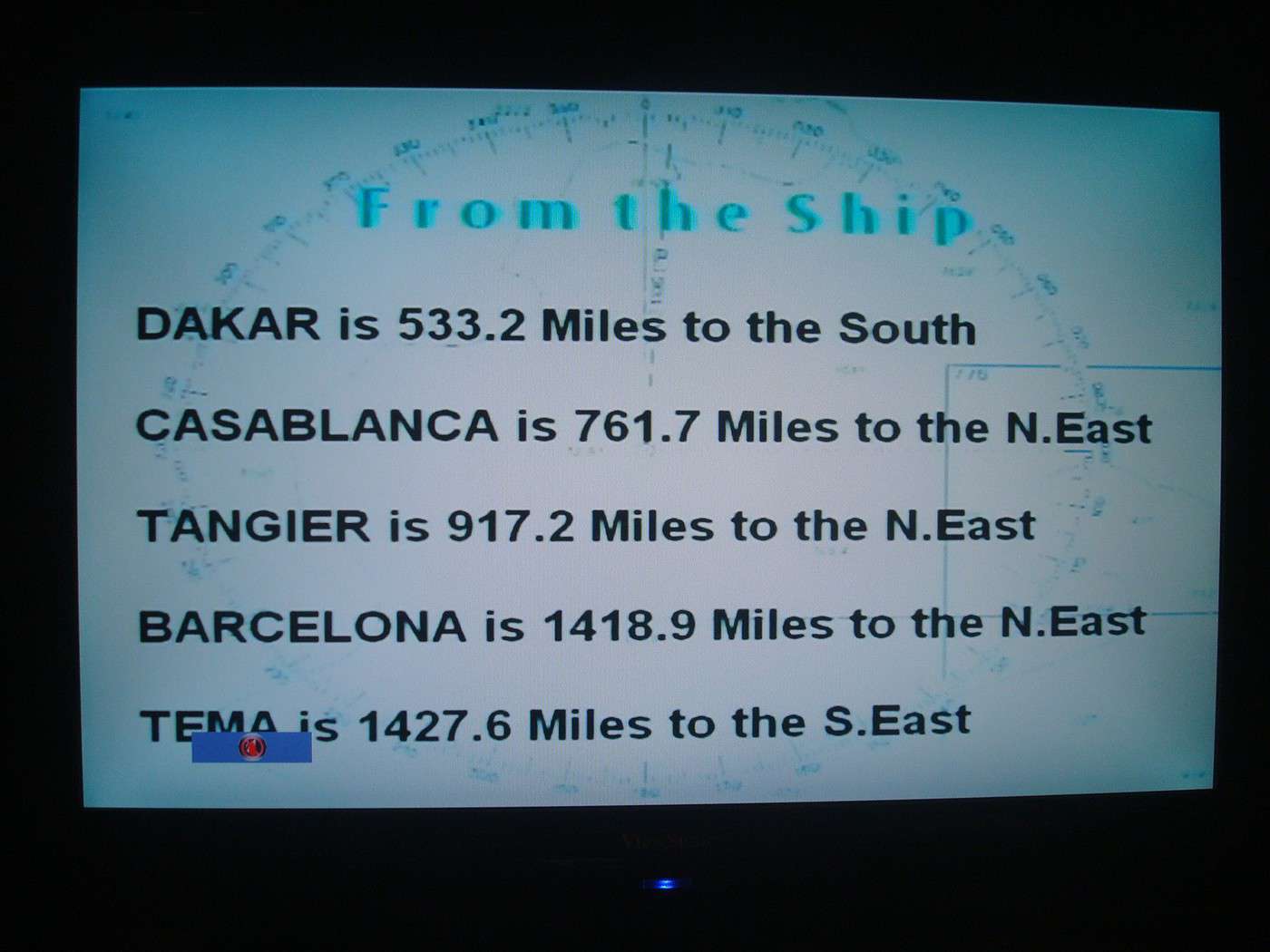
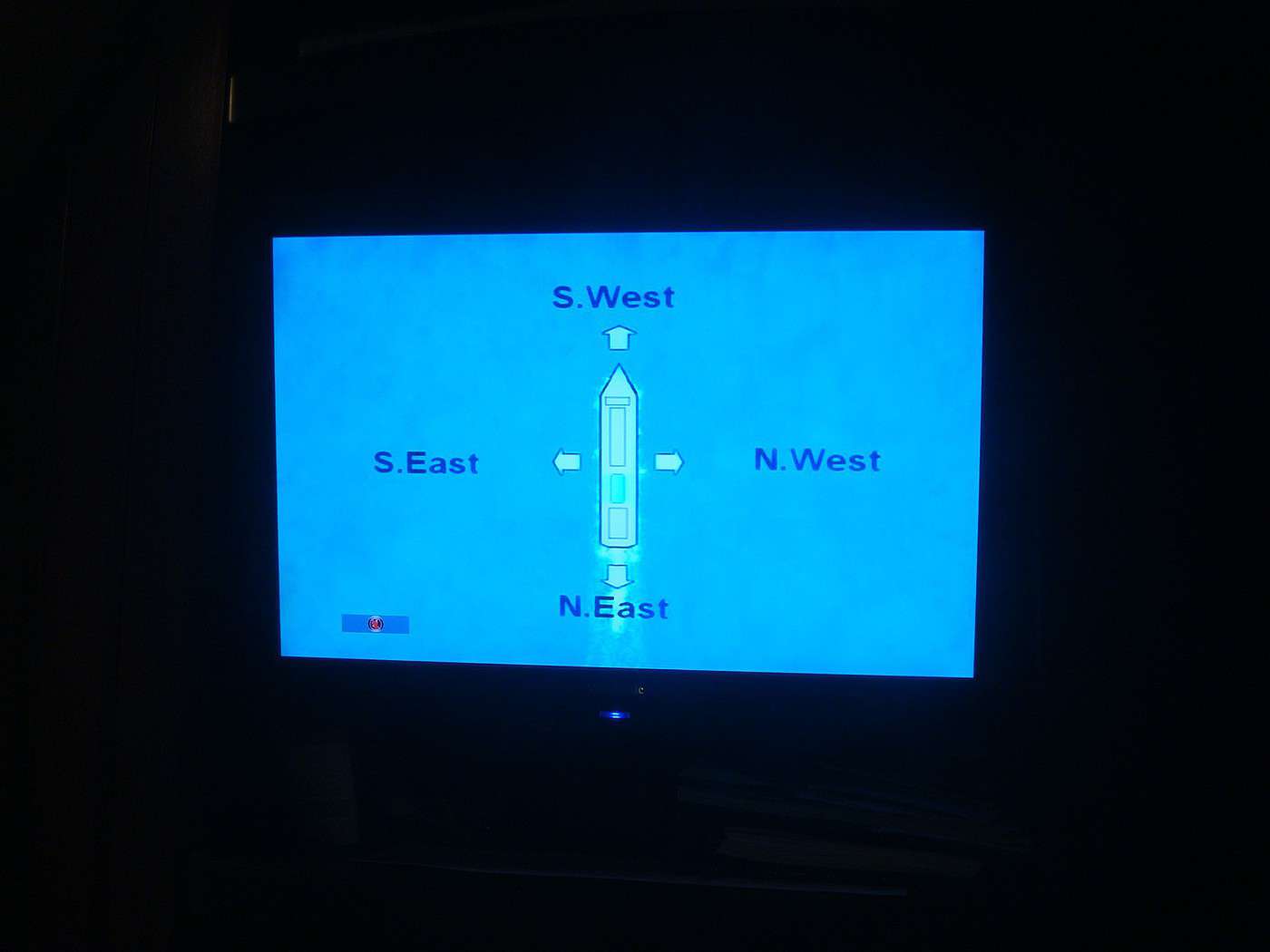
Jour 8-10 Journées de navigation 3 au 5 novembre 20 oC à 26 oC Navigation Sud-Ouest le long de la côte du Maroc en route vers Dakar, Sénégal Les stabilisateurs sont déployés…
Toujours heureuse de bénéficier de quelques journées en mer:
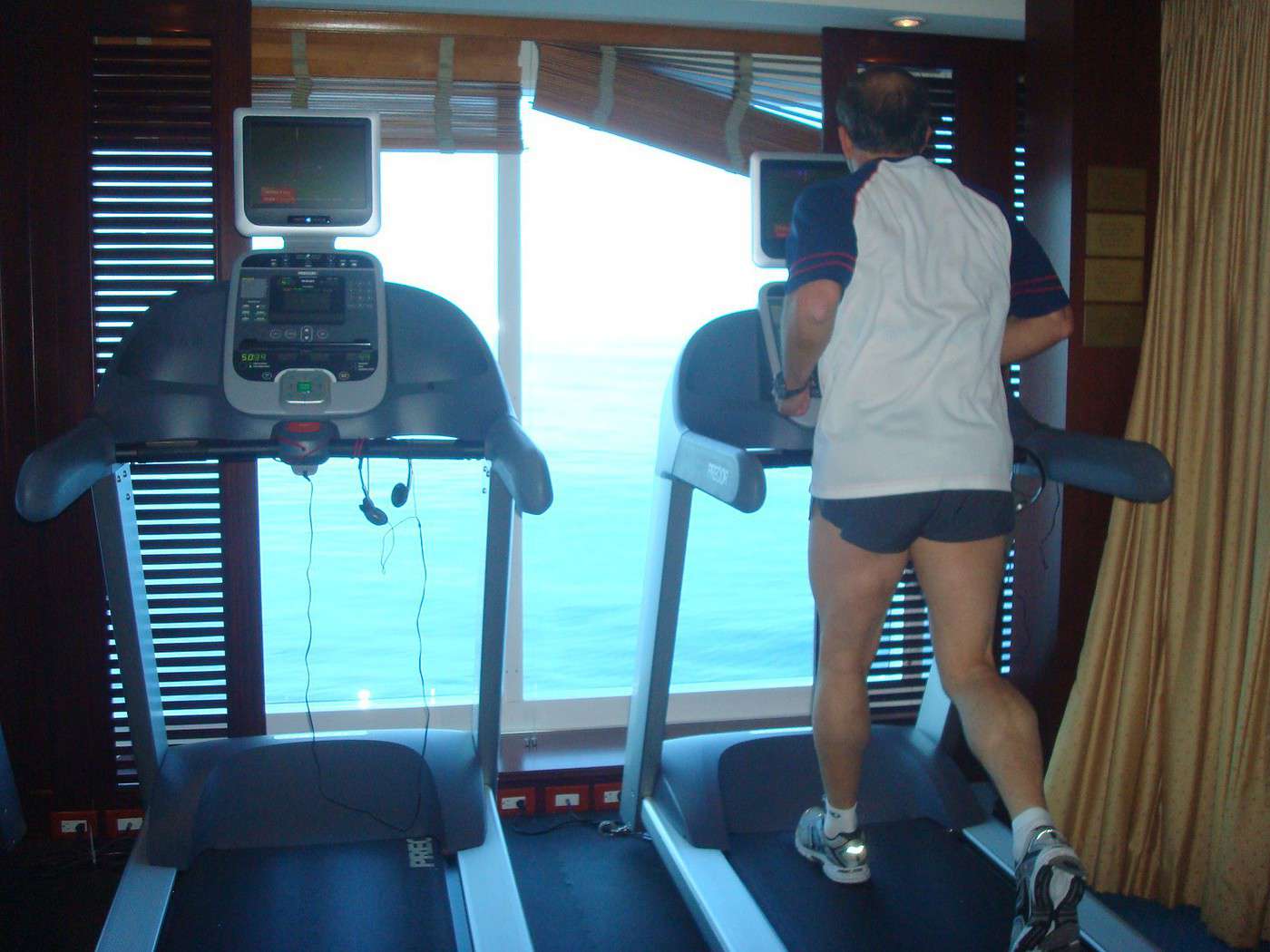
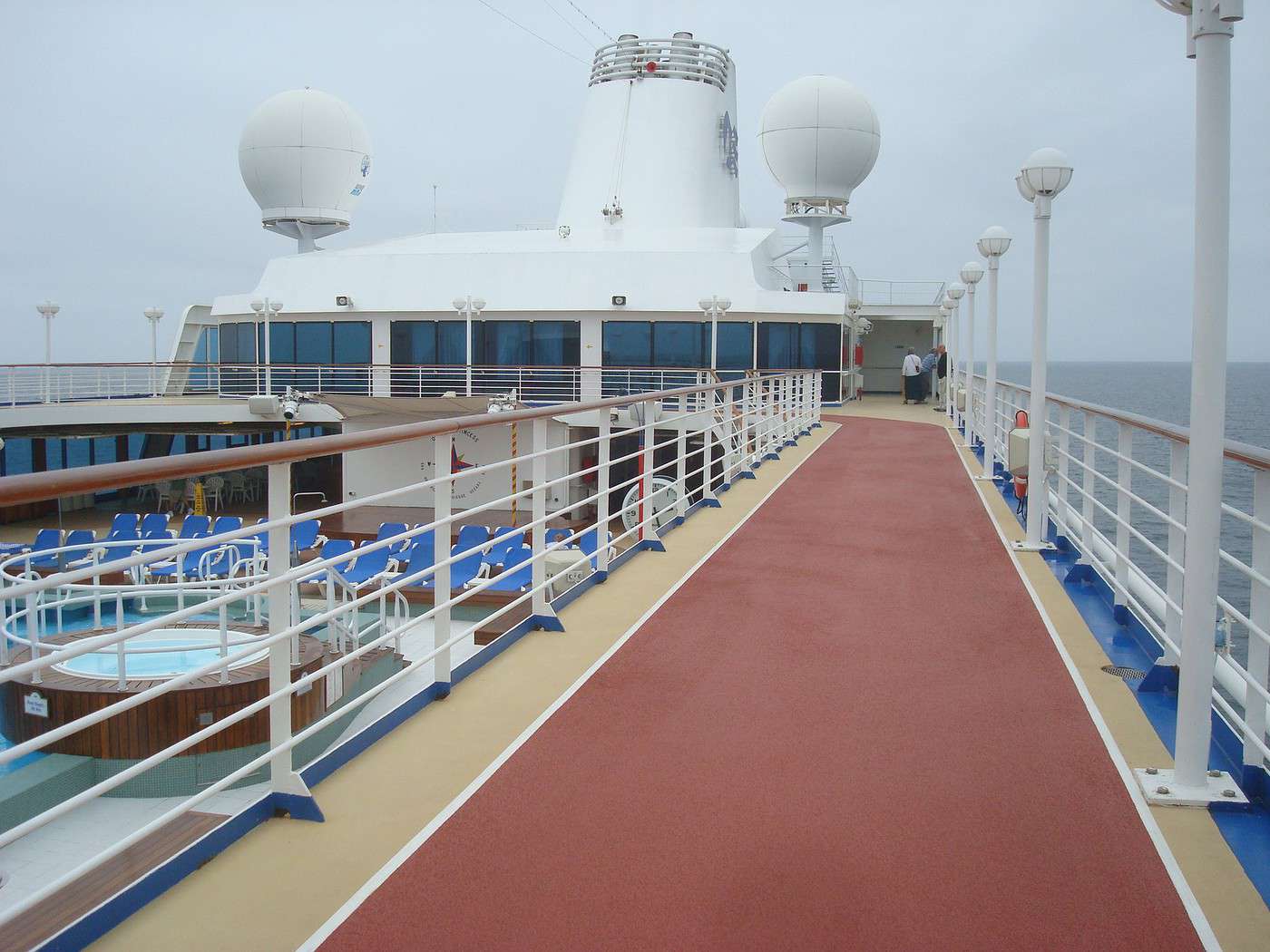
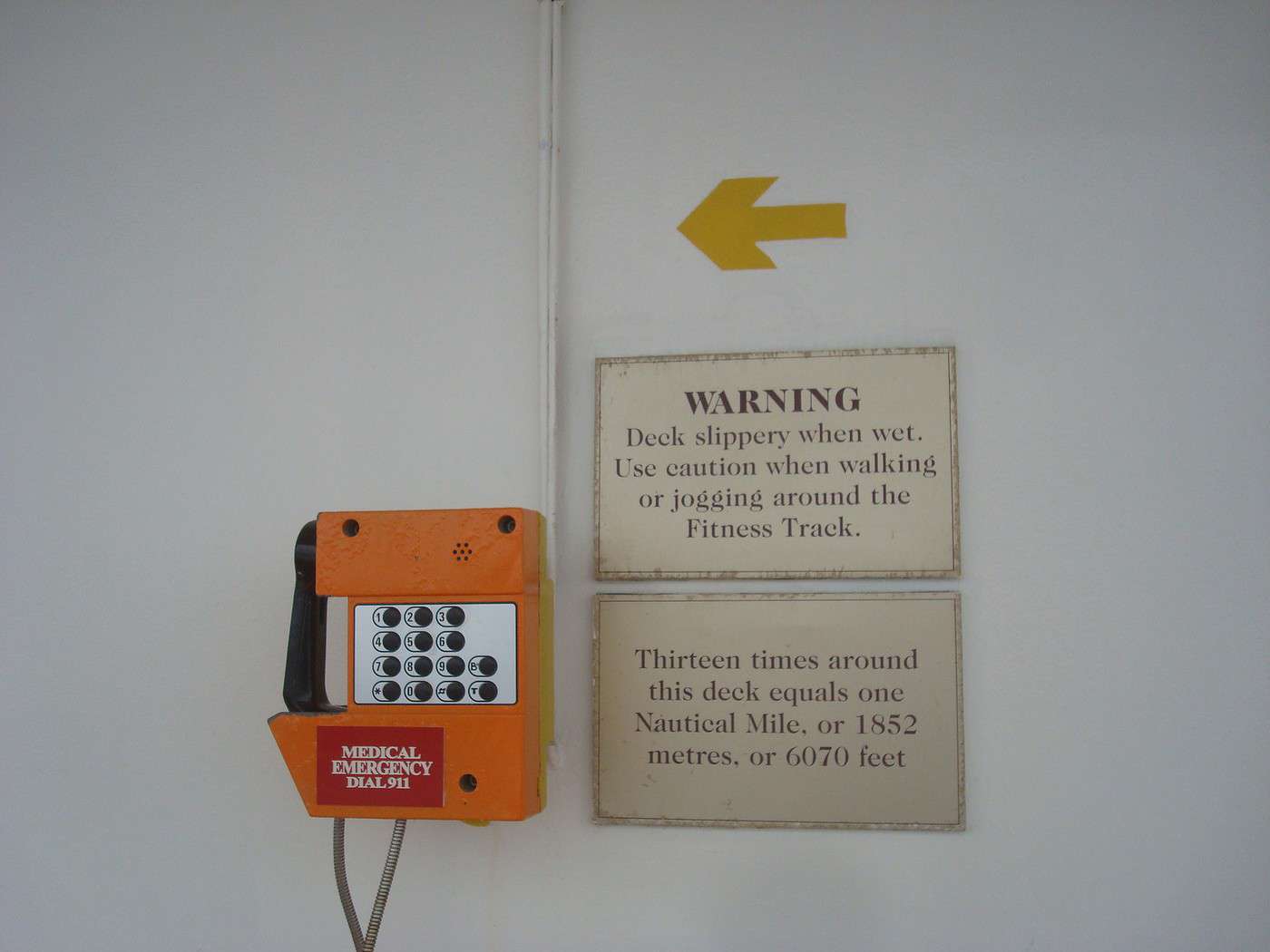
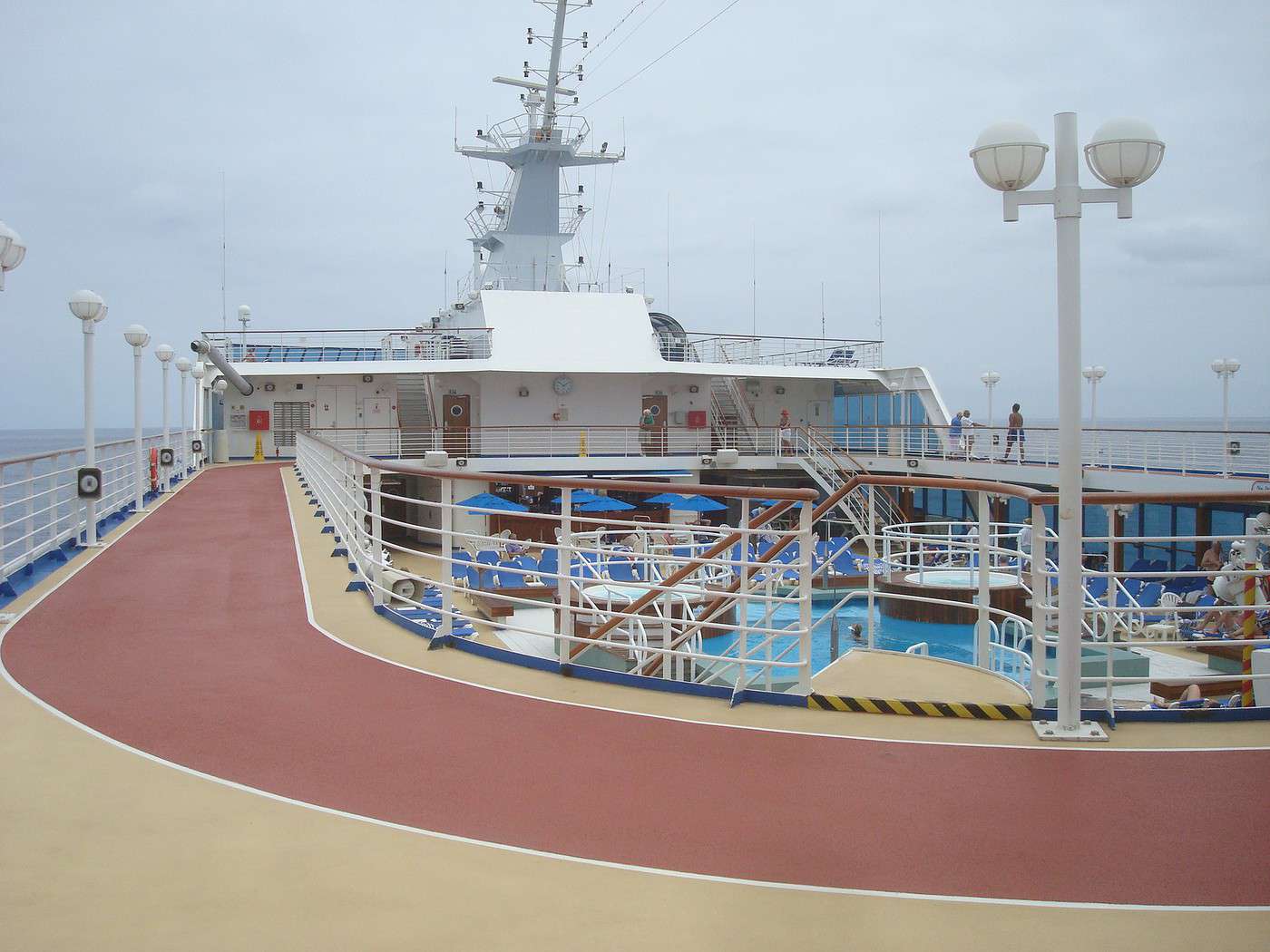
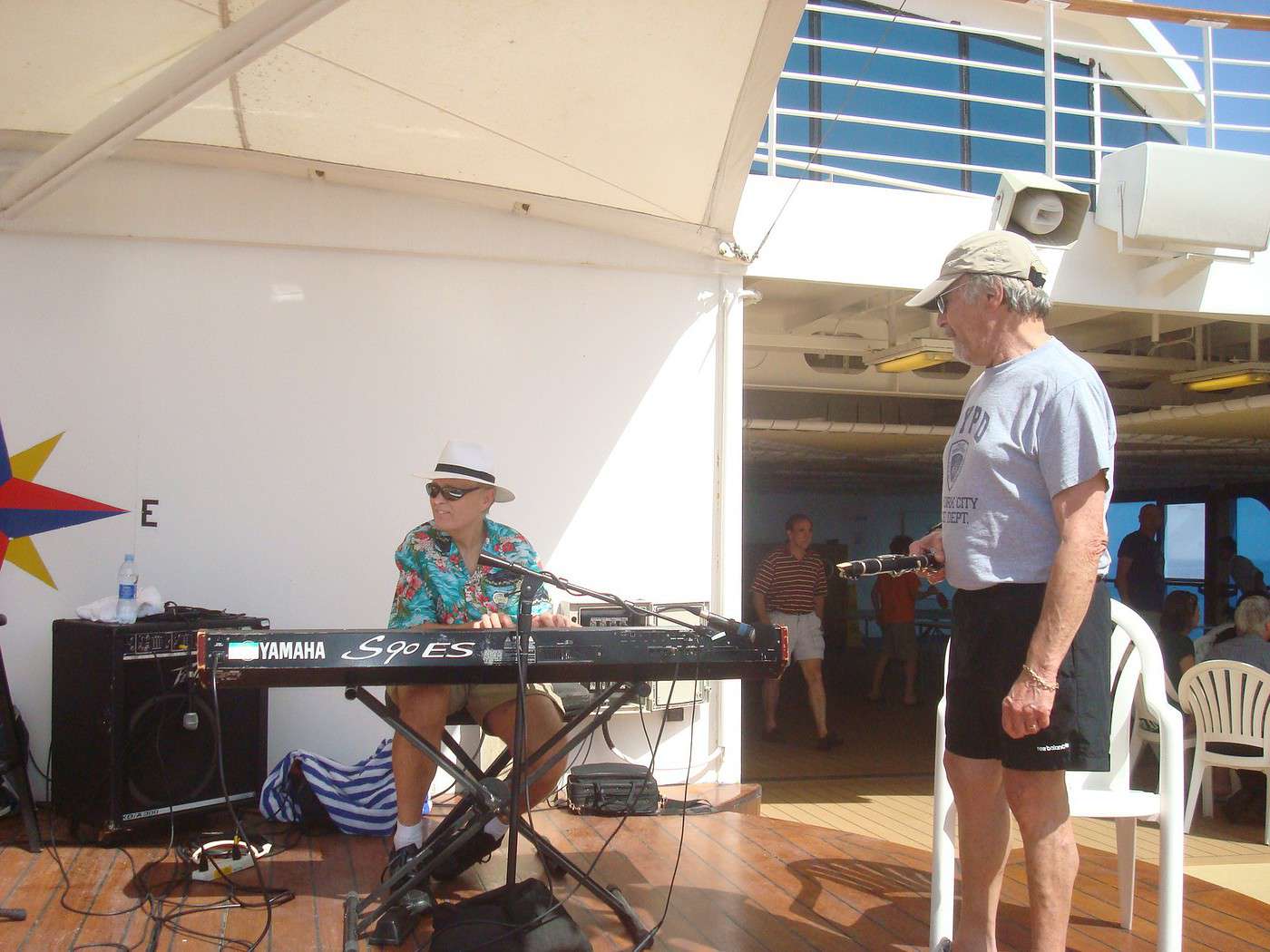
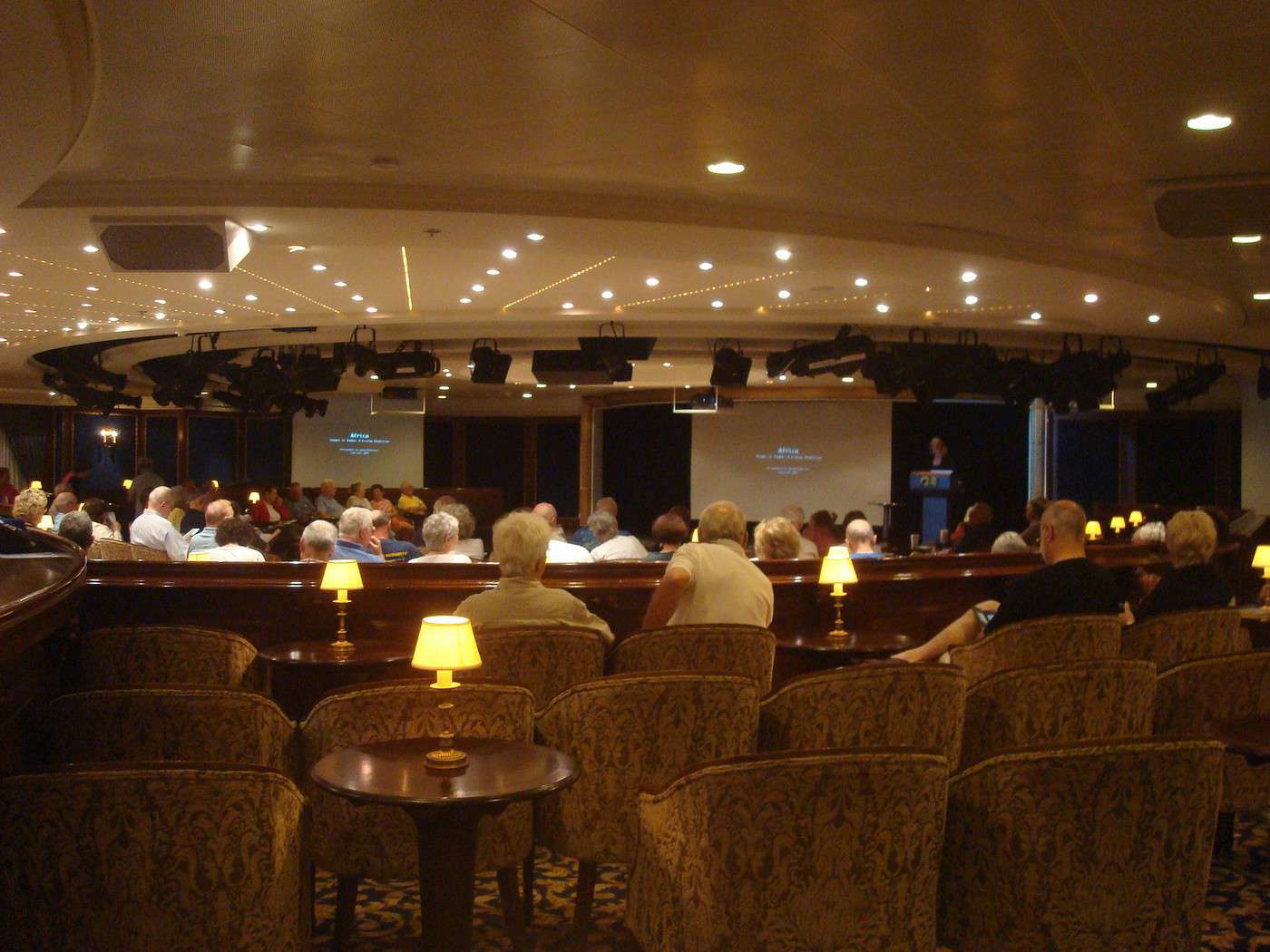
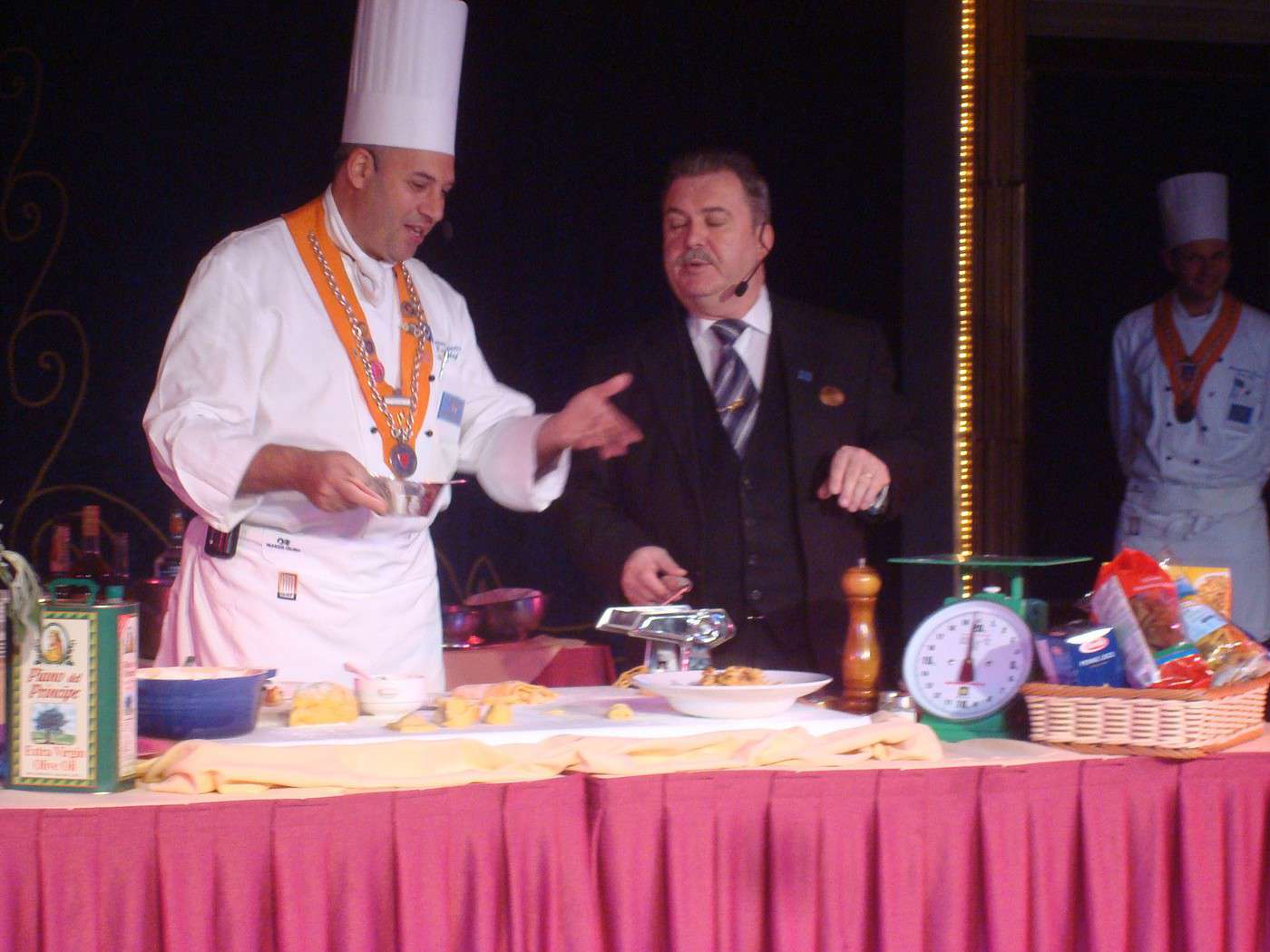
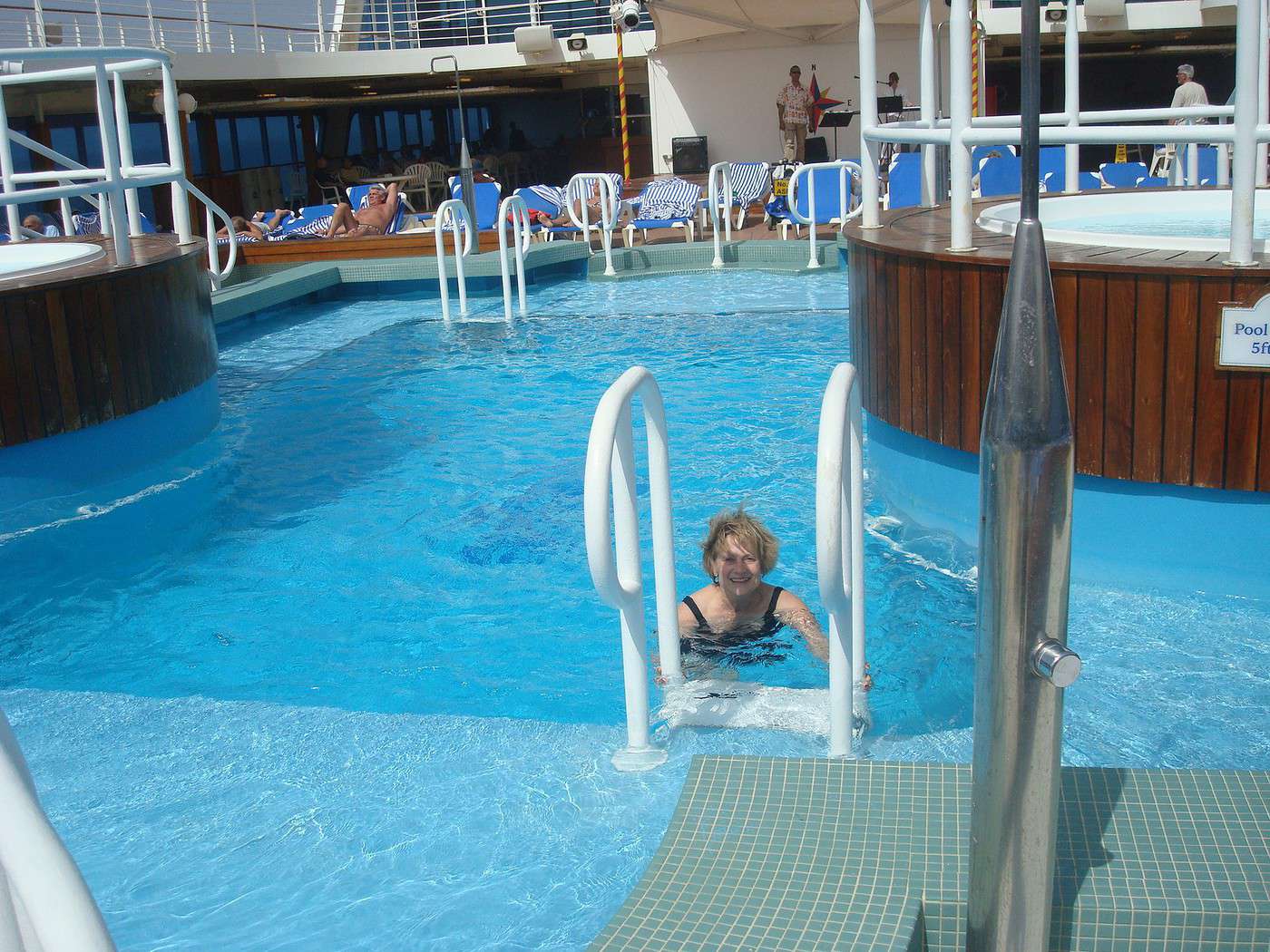
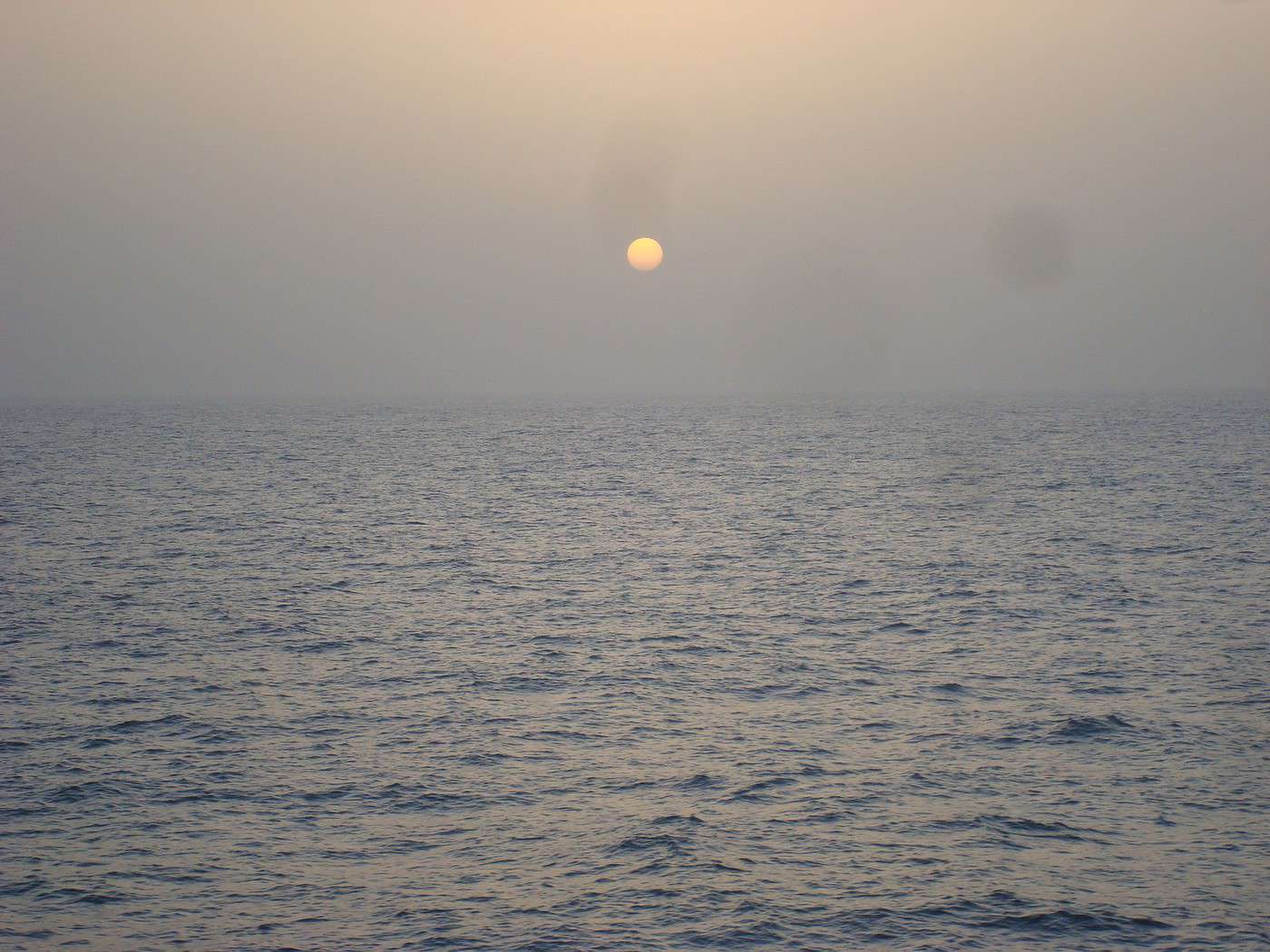
De tôt matin (9h00)😮 visite des cuisines (galley) Un peu de tapis roulant… suivi de jogging Lecture Conférence:«Les secrets pour le maintien et le perfectionnement des mariages, relations et romance» par Bradley A. Coates, avocat et auteur primé😉 Démonstration culinaire, dégustation de vins Baignade rafraîchissante… 26 0C Passage du Tropique du Cancer Et… le plus beau des spectacles! 🙂
Nous avons visité l'intérieur de la mosquée Hassan II en 1990. Elle n'était pas encore complétée et nous avons eu la chance de voir le toit s'ouvrir: impressionnant! Mathilde a placé un lien au sujet de la mosquée. Merci!
Et revenons au navire... 😎
Jour 8-10 Journées de navigation 3 au 5 novembre 20 oC à 26 oC Navigation Sud-Ouest le long de la côte du Maroc en route vers Dakar, Sénégal Les stabilisateurs sont déployés…
Toujours heureuse de bénéficier de quelques journées en mer:
De tôt matin (9h00)😮 visite des cuisines (galley) Un peu de tapis roulant… suivi de jogging Lecture Conférence:«Les secrets pour le maintien et le perfectionnement des mariages, relations et romance» par Bradley A. Coates, avocat et auteur primé😉 Démonstration culinaire, dégustation de vins Baignade rafraîchissante… 26 0C Passage du Tropique du Cancer Et… le plus beau des spectacles! 🙂
MoniqueM
« Emmenez- moi au bout de la terre
Emmenez-moi au pays des merveilles...»
Bonjour bleumarine,
Bienvenue! Je vois que vous êtes aussi amoureuse de Rome et de Barcelone que moi!😉
Le paysage de votre avatar est très joli: où est-ce?
Au plaisir,
MoniqueM
« Emmenez- moi au bout de la terre
Emmenez-moi au pays des merveilles...»
Bonjour Didier,
Jour 11 – Dakar, SÉNÉGAL (de 8h à 18h) 6 novembre 30oC Arrivée à 07:59 Quai #15 Dakar
Merci Didier de ton aide dans mes choix d’excursion. Ma journée a été superbe! J’ai apprécié chaque minute de cette escale. Toute info ou rectification sont les bienvenues!
Population du Sénégal : 14 100 000 Âge médian : 18,7 ans Indépendance : 4 avril 1960 (de la France) Musulmans 94% Chrétiens 5% Langue officielle : Français Langues nationales (~20) : Wolof, Sérère, etc. Port d’escale: Dakar Capitale : Dakar
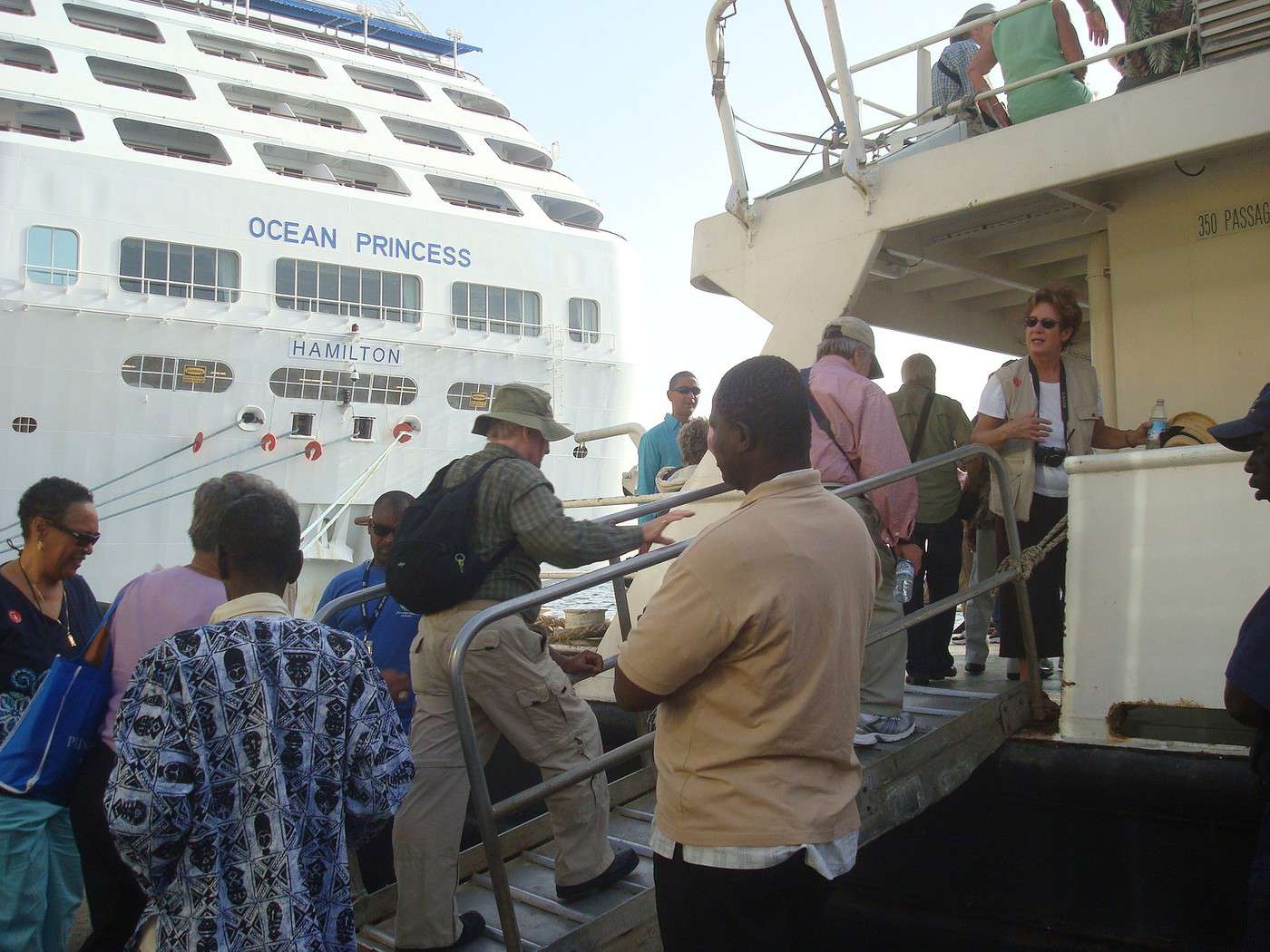
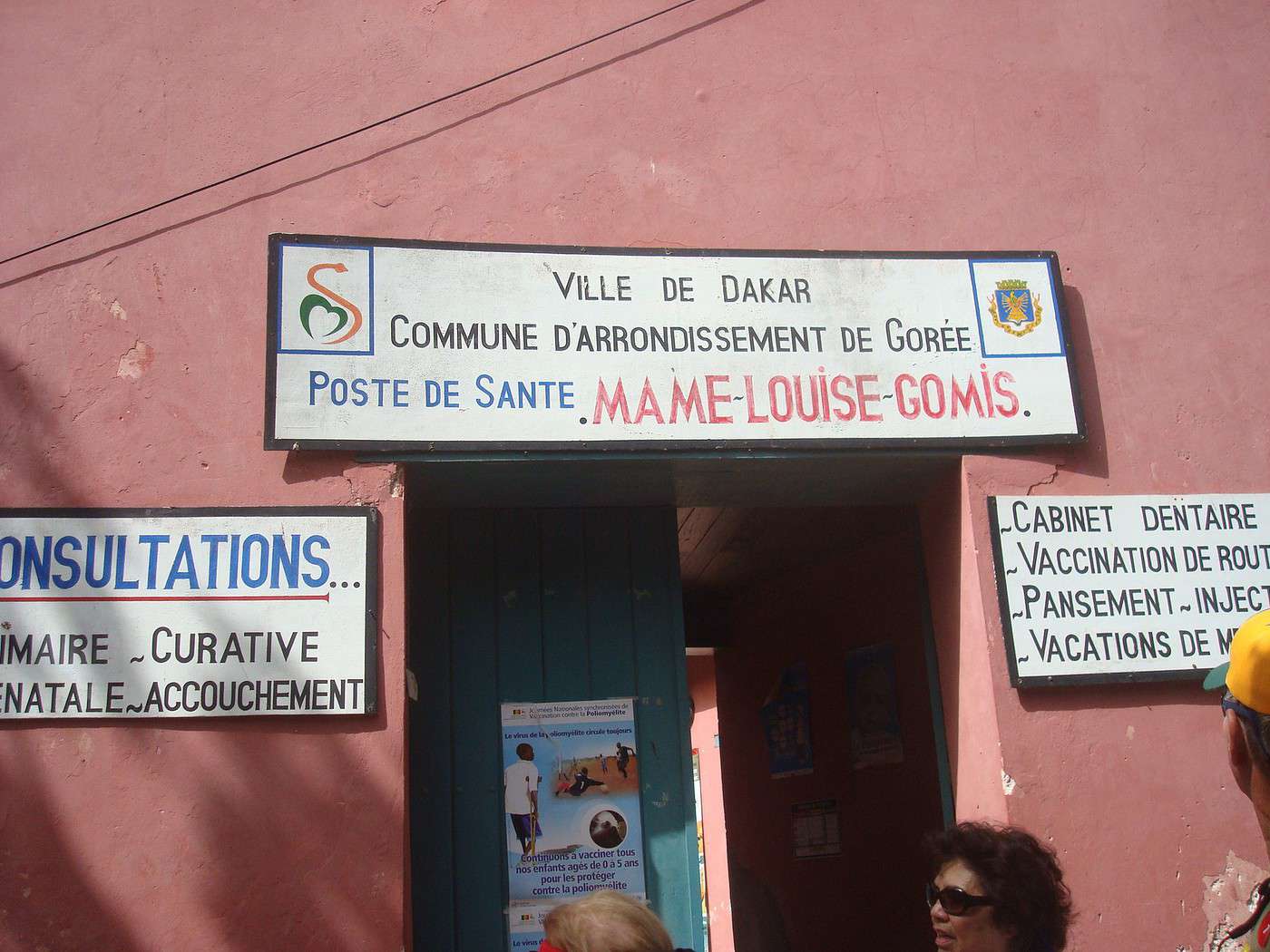
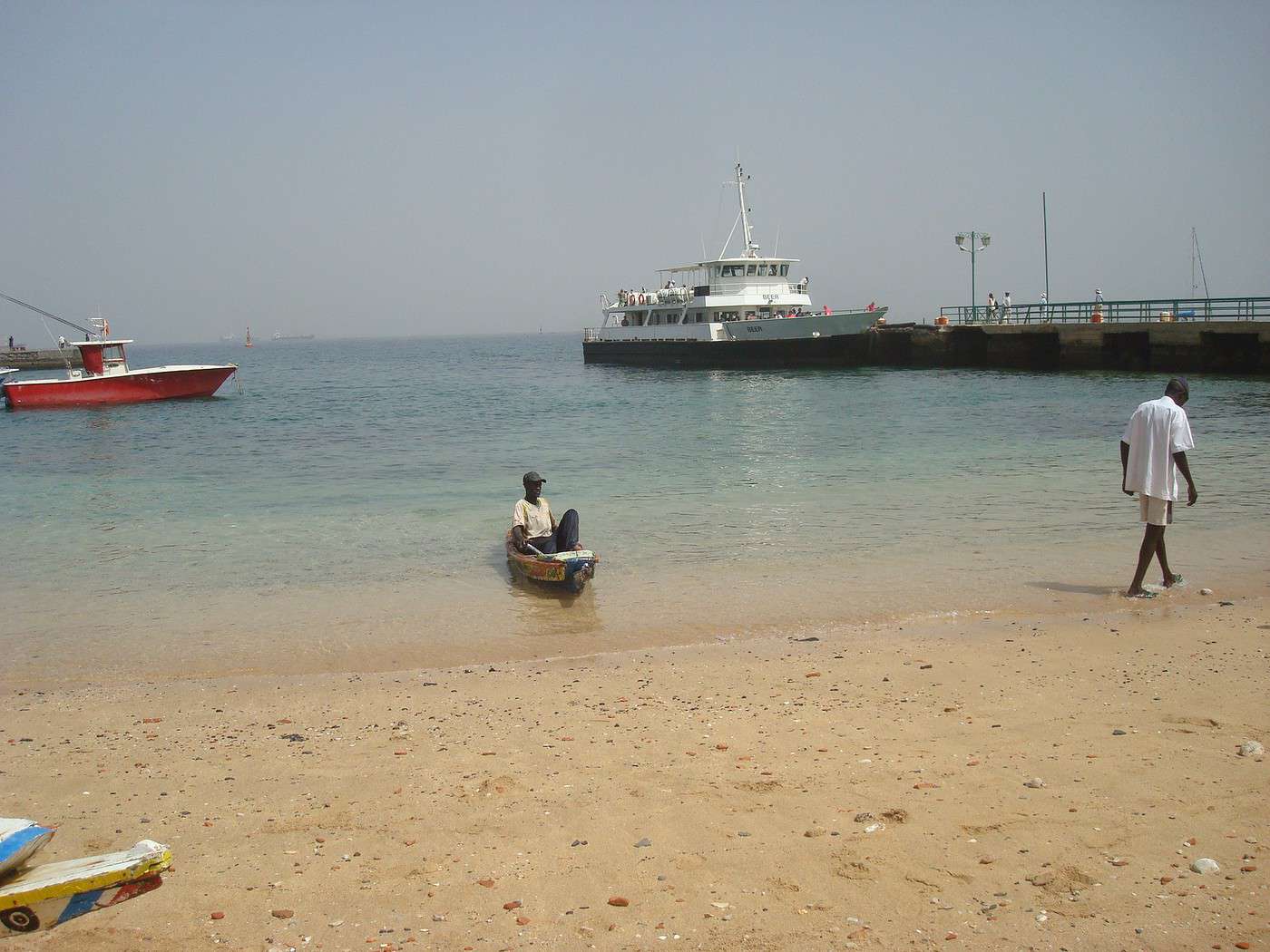
Sur tes conseils, Didier, j’ai choisi l’excursion «Île de Gorée» (3h½h). On aurait pu se rendre à l'île par nous-mêmes sans problème Croisifan ... mais on gagnait beaucoup de temps ainsi (à 2, c'est moins coûteux qu'avec la famille 😉). La chaloupe a accosté à côté de l’Ocean Princess (photo 1)... - on a été gâtés! L’île est à 4 km de Dakar à 20 minutes environ.
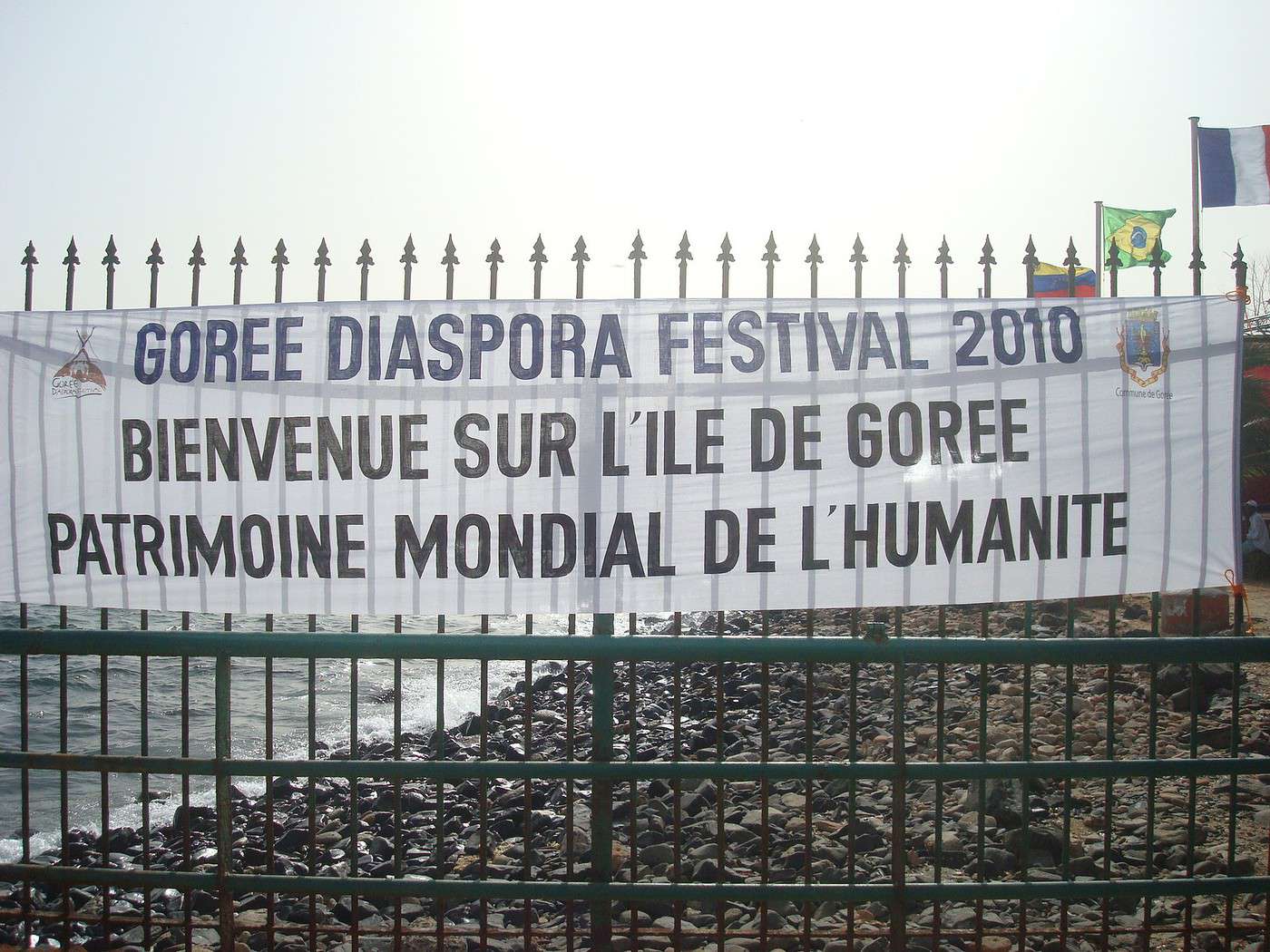
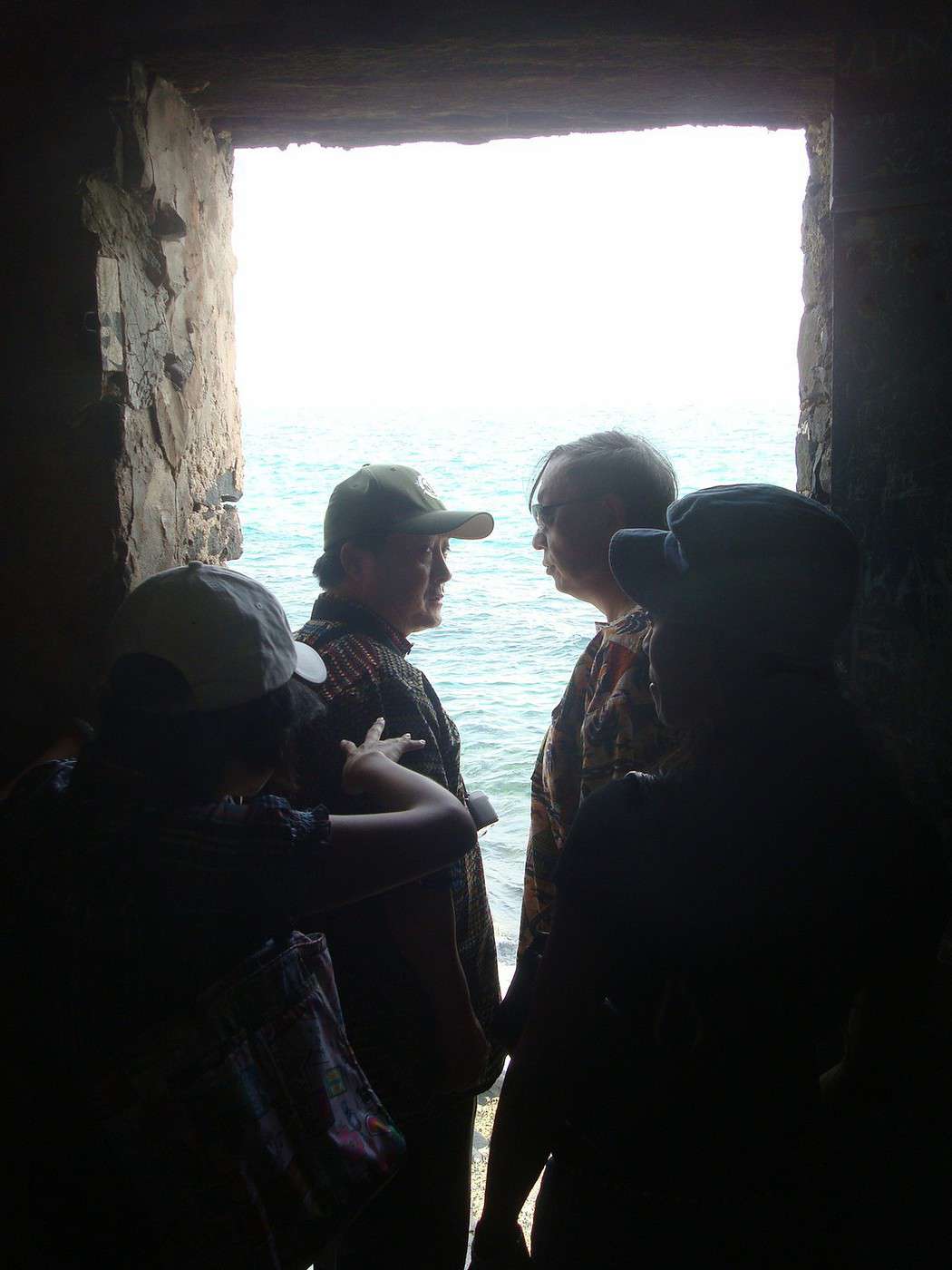
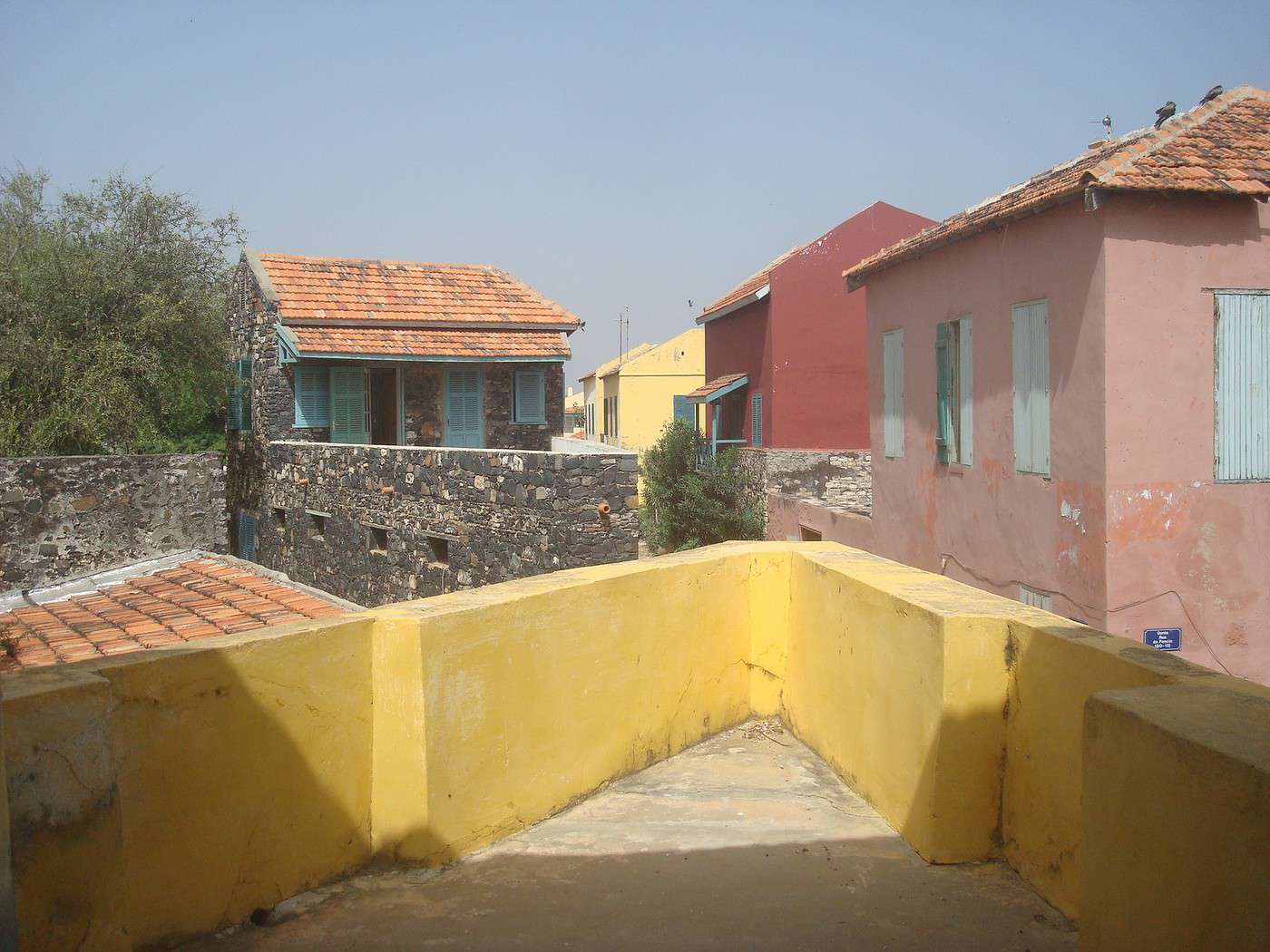
Patrimoine mondial de l’UNESCO, île sans voitures ni bicyclettes, maisons aux tons pastel, île d’art, Gorée est un lieu historique «qui demeure un symbole de l’exploitation humaine et un sanctuaire pour la réconciliation». Émouvant et calme, agréable promenade dans les rues de Gorée…
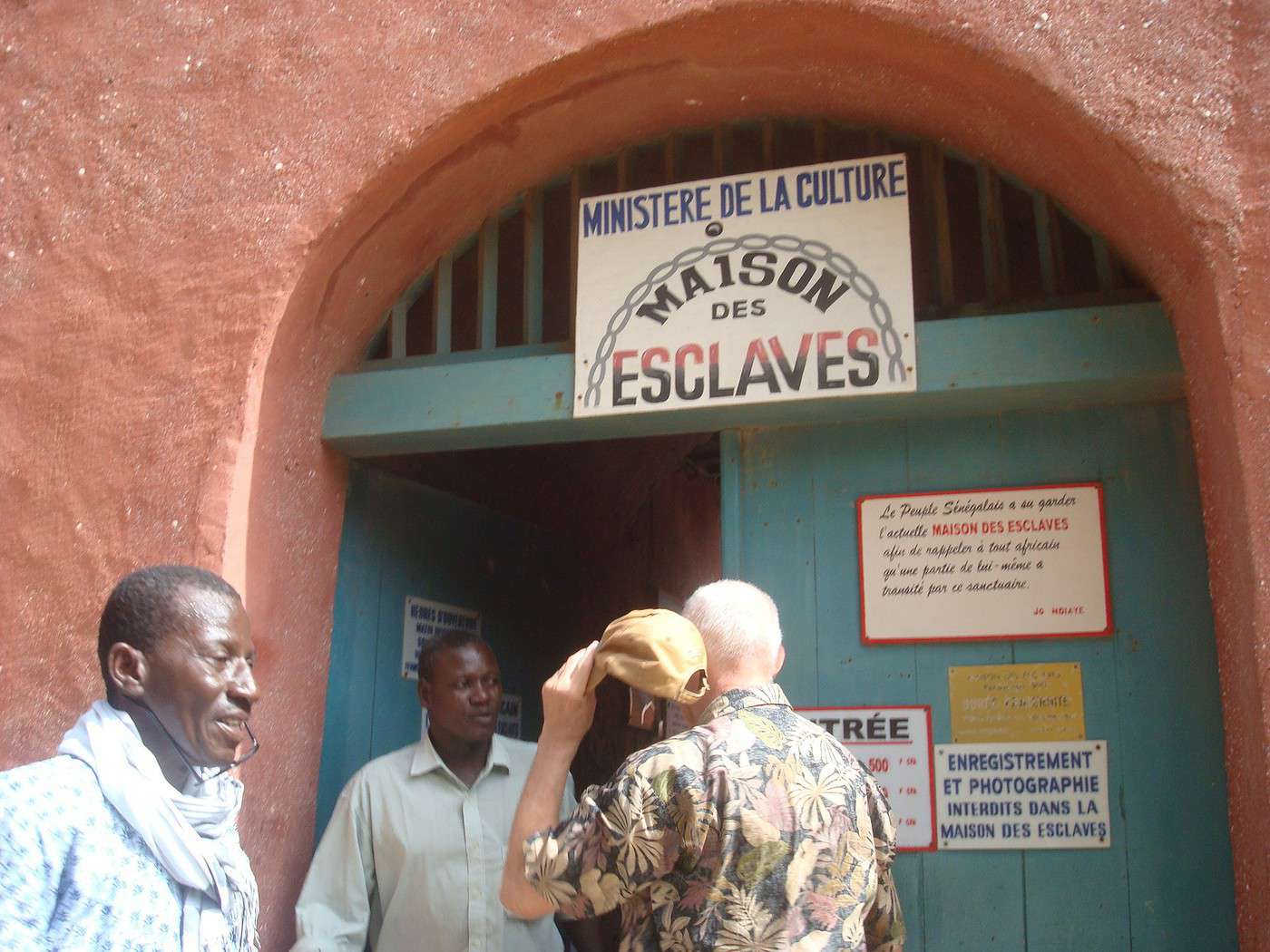
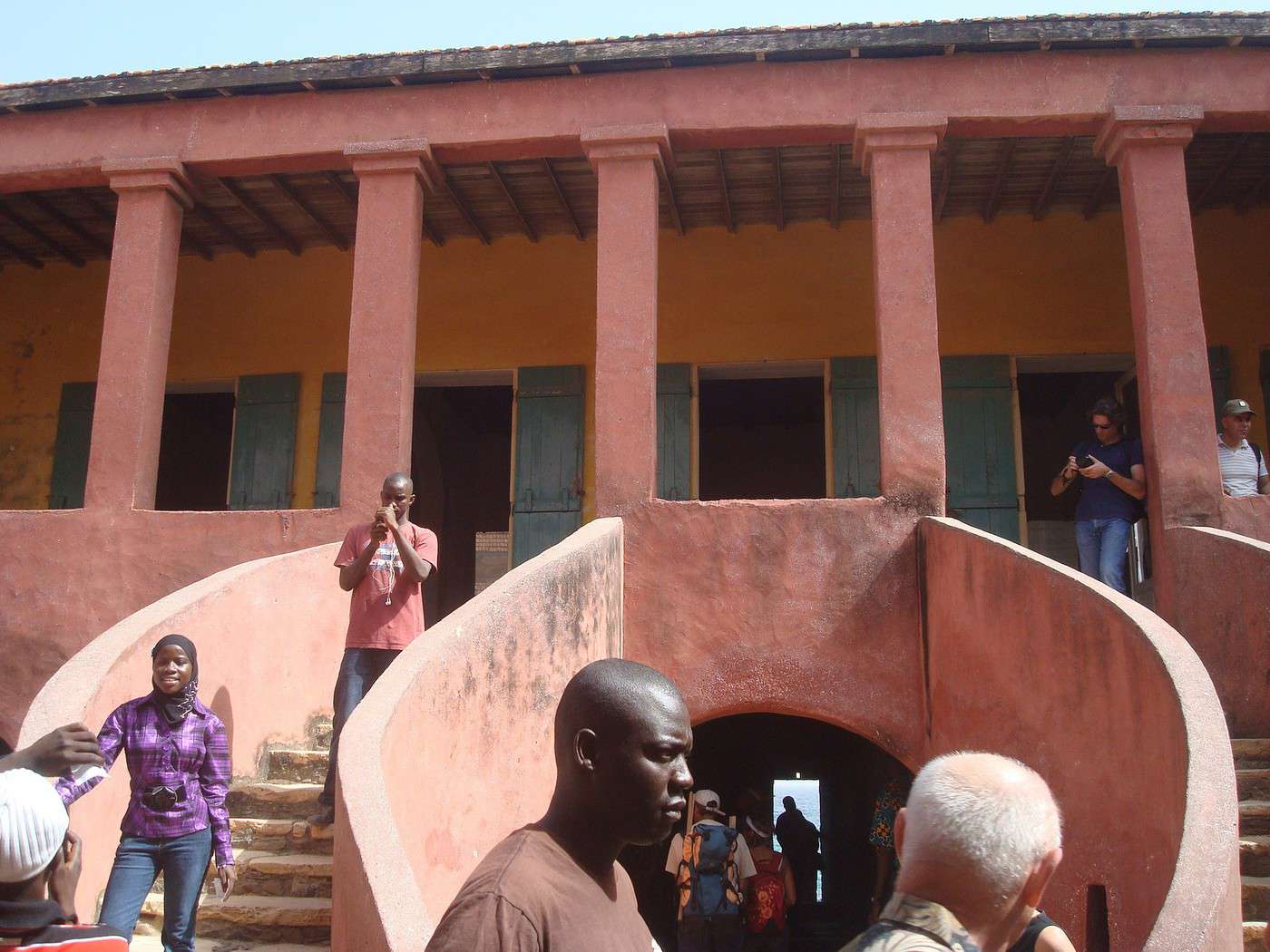
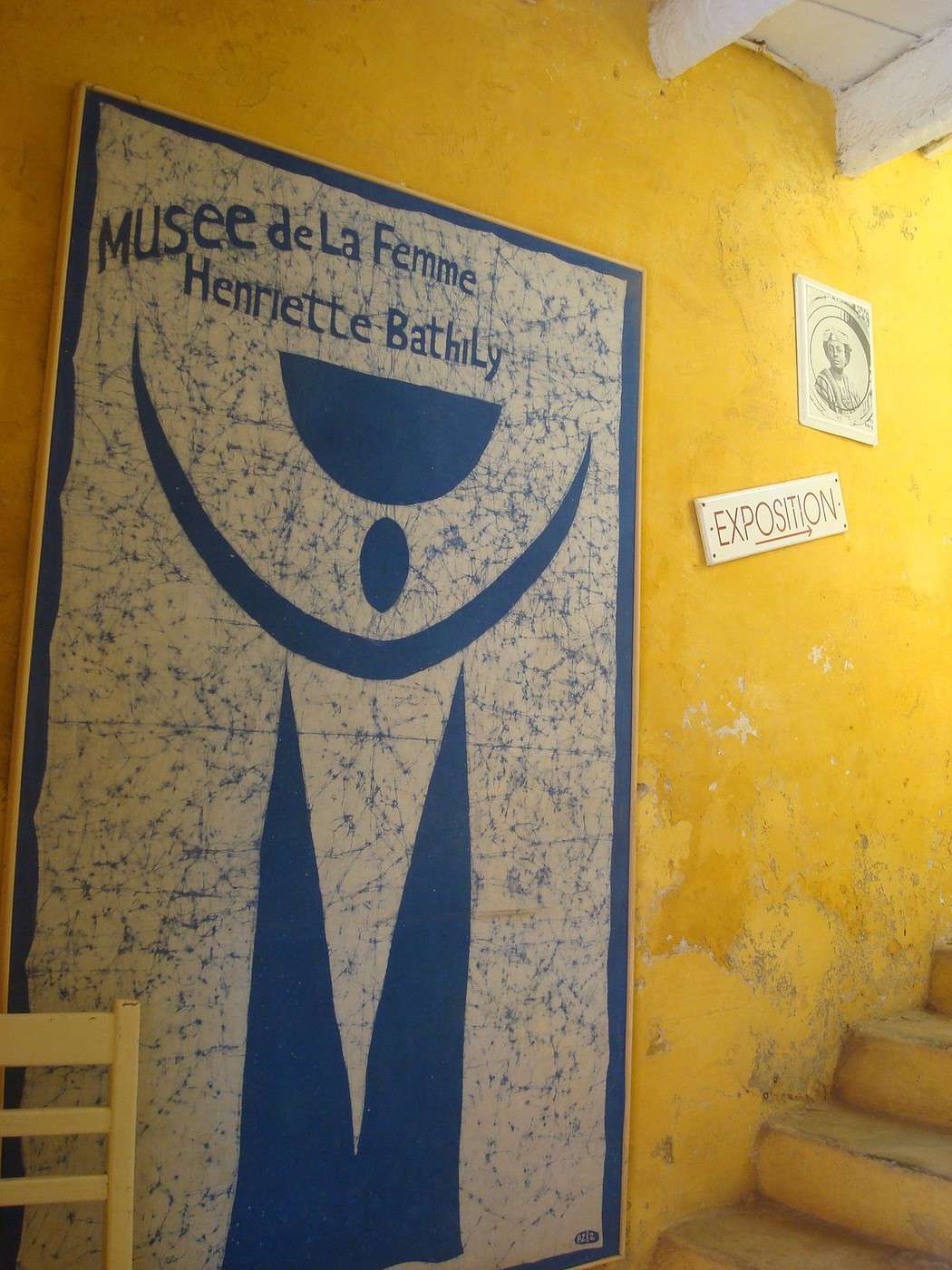
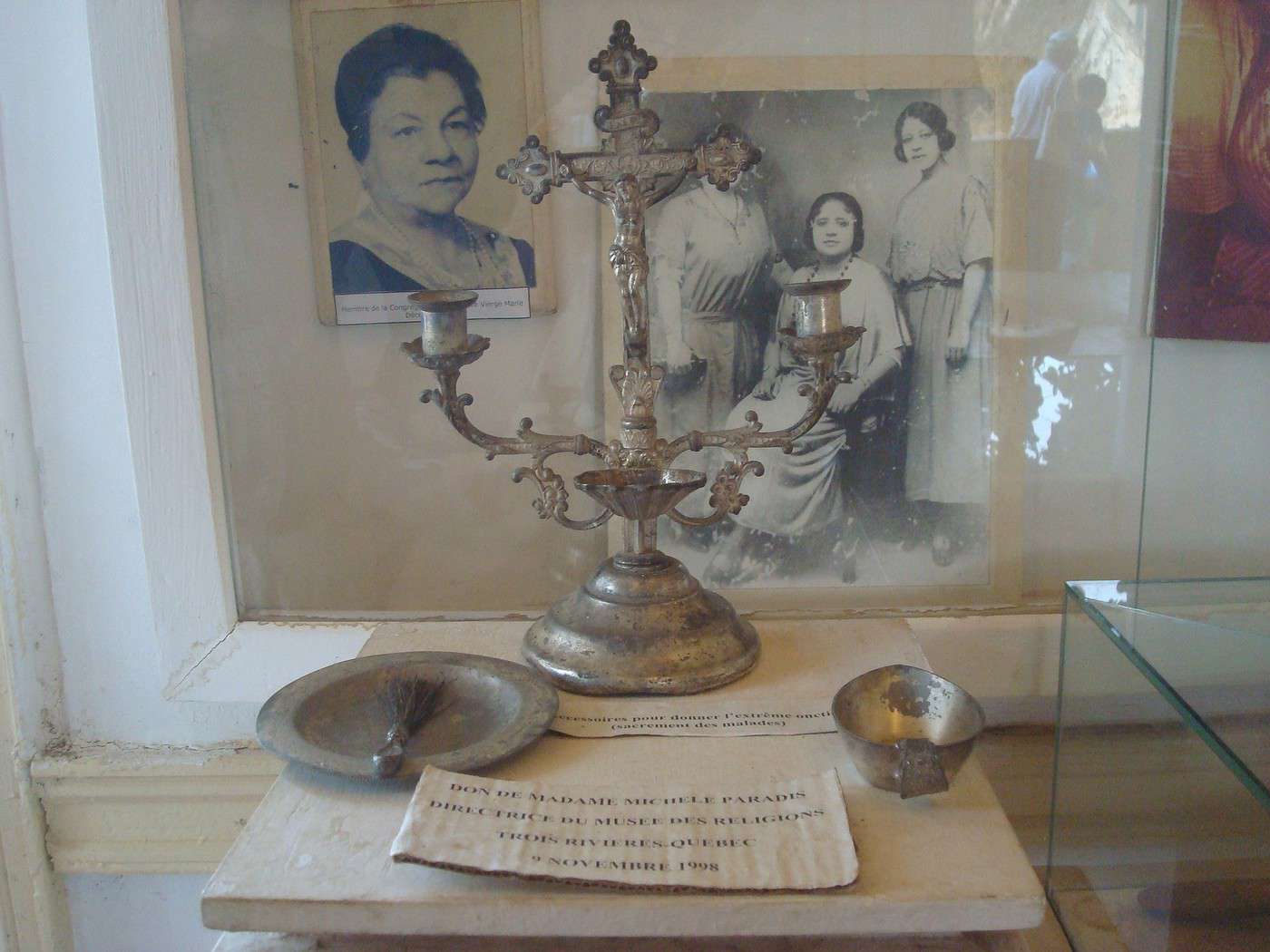
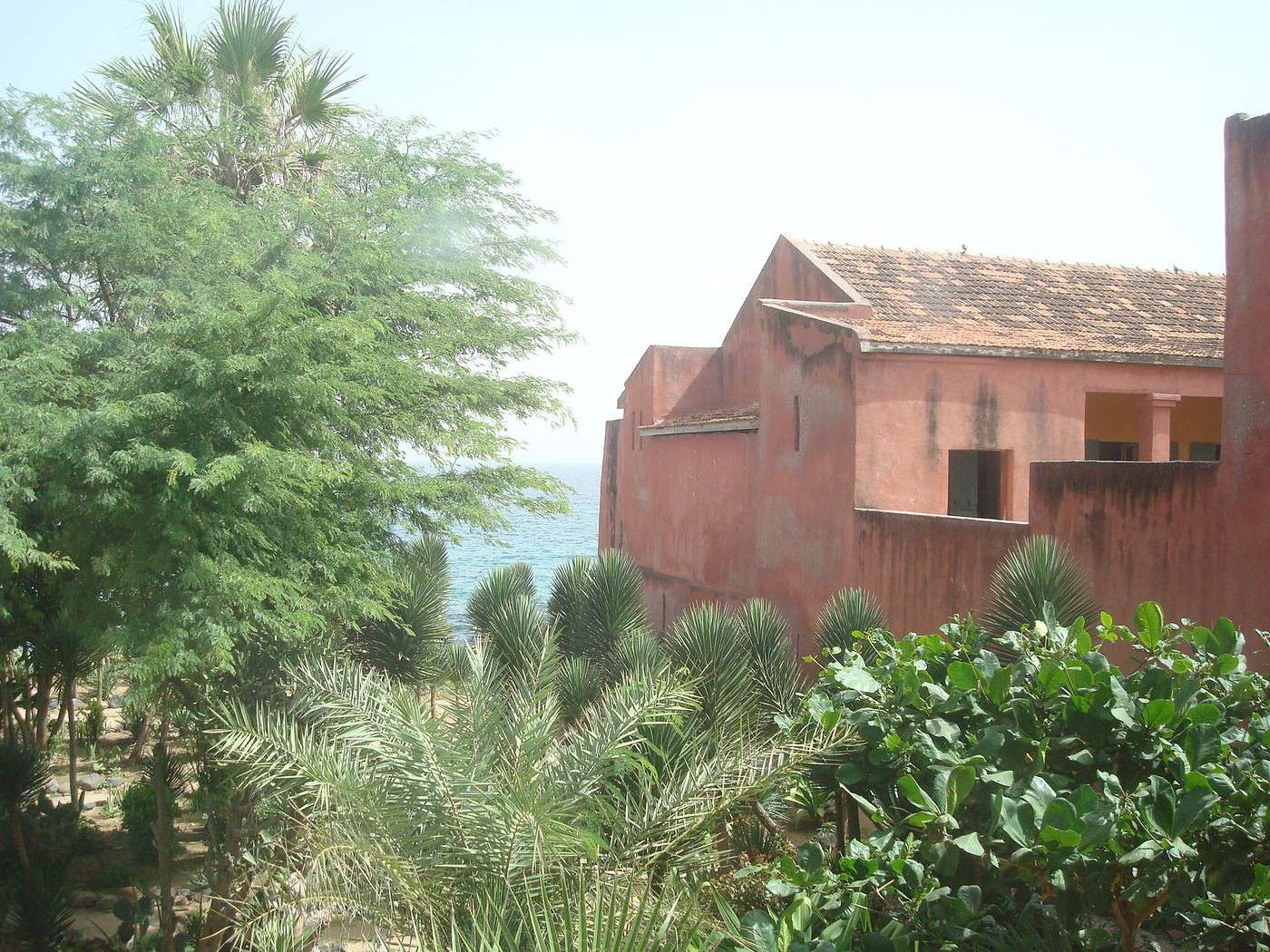
On a visité la Maison des Esclaves, jolie maison rose avec double escalier, ancienne demeure de la signare Anna Colas Pépin. Puis, le Musée historique sur la pointe nord de l’île dans l’ancien Fort d’Estrées (très peu d’exhibits); le Musée de la Femme, ouvert en 1994, aménagé dans l’ancienne demeure d’une autre riche dame, Victoria Albis (très intéressant!) et quelques jolies galeries d’art.
Au retour de Gorée, à Dakar, mon négociateur favori 😉 a repris son rôle avec brio : taxi pour visiter Dakar et les environs. Ouf! Un choc culturel, mais quel exotisme: trafic incroyable, vendeurs partout le long de la route, effervescence en vue de célébrer la plus grande fête religieuse du Sénégal : la Tabaski (Fête du sacrifice d’Abraham), qui dure 15 jours : http://www.senegal-online.com/...eligions/tabaski.htm
Le taxi frôlait des centaines de moutons et de chèvres confortablement installés au bord de la route, profitant de leurs derniers jours avant la Tabaski… Unique!
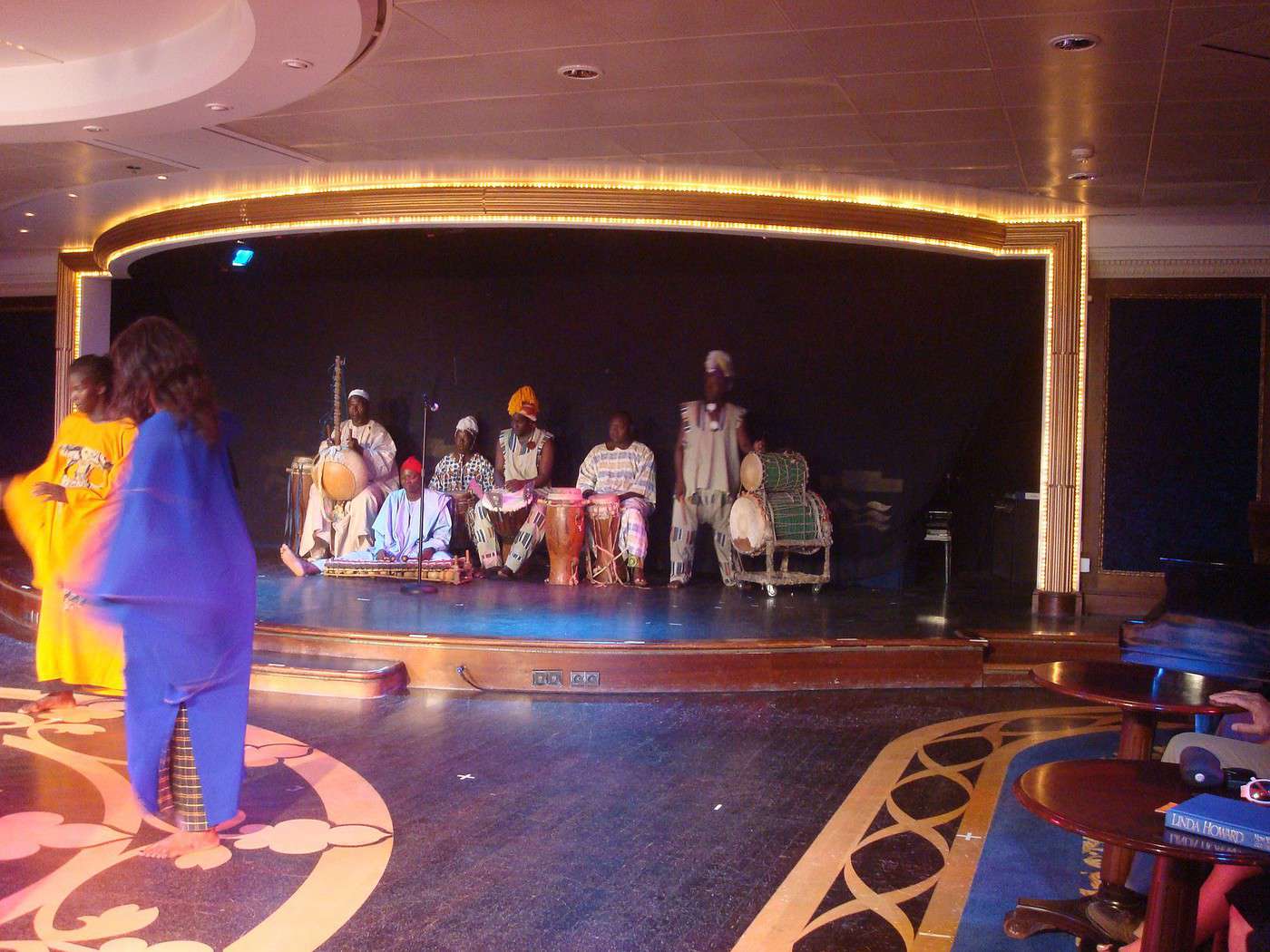
Au retour sur le bateau, avant le repas du soir, bonne bière bien fraîche et magnifique spectacle par des artistes sénégalais dont des danses vaudoues. Une journée magnifique - des souvenirs impérissables !
Quelques photos de l'île de Gorée
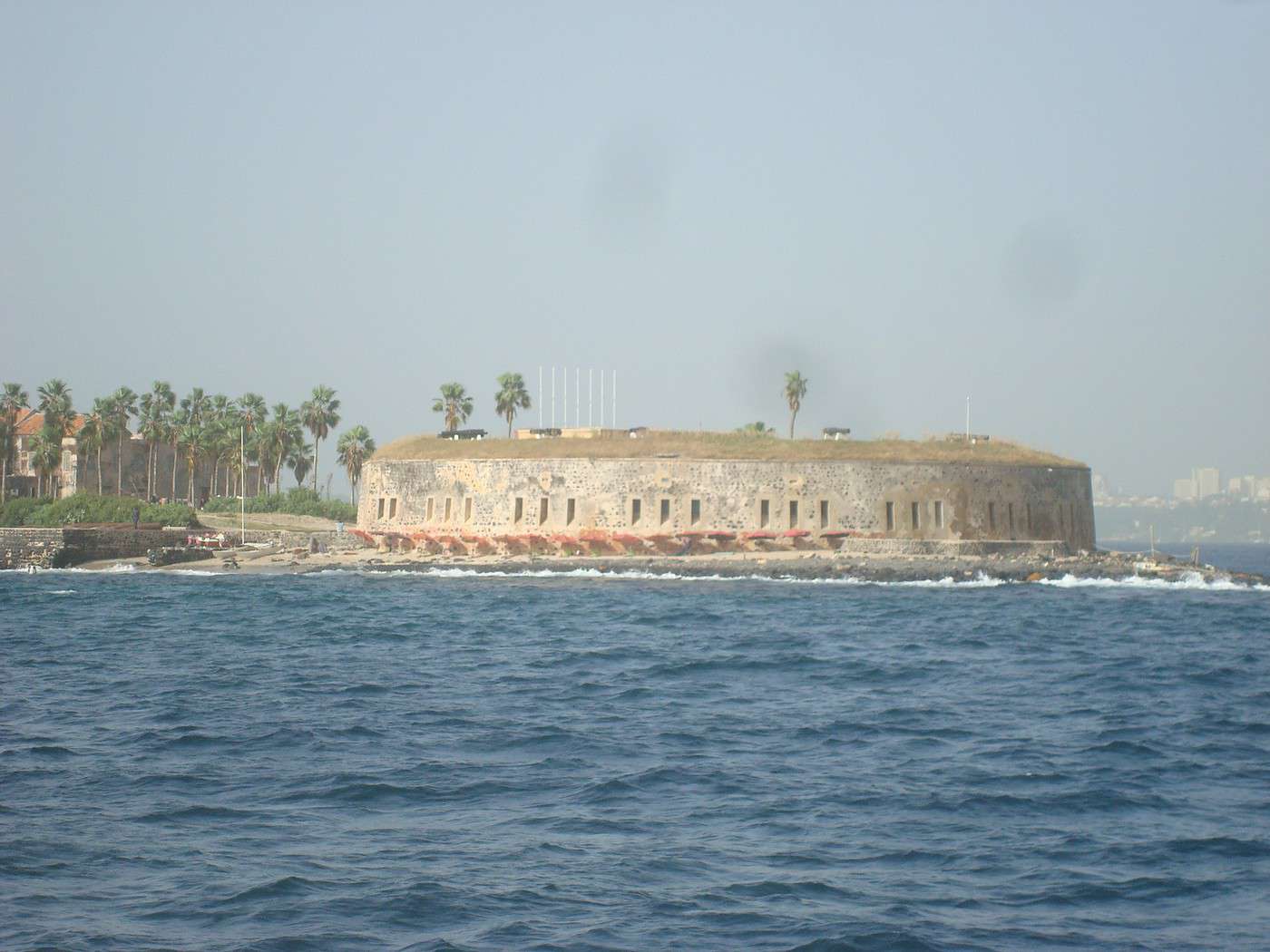
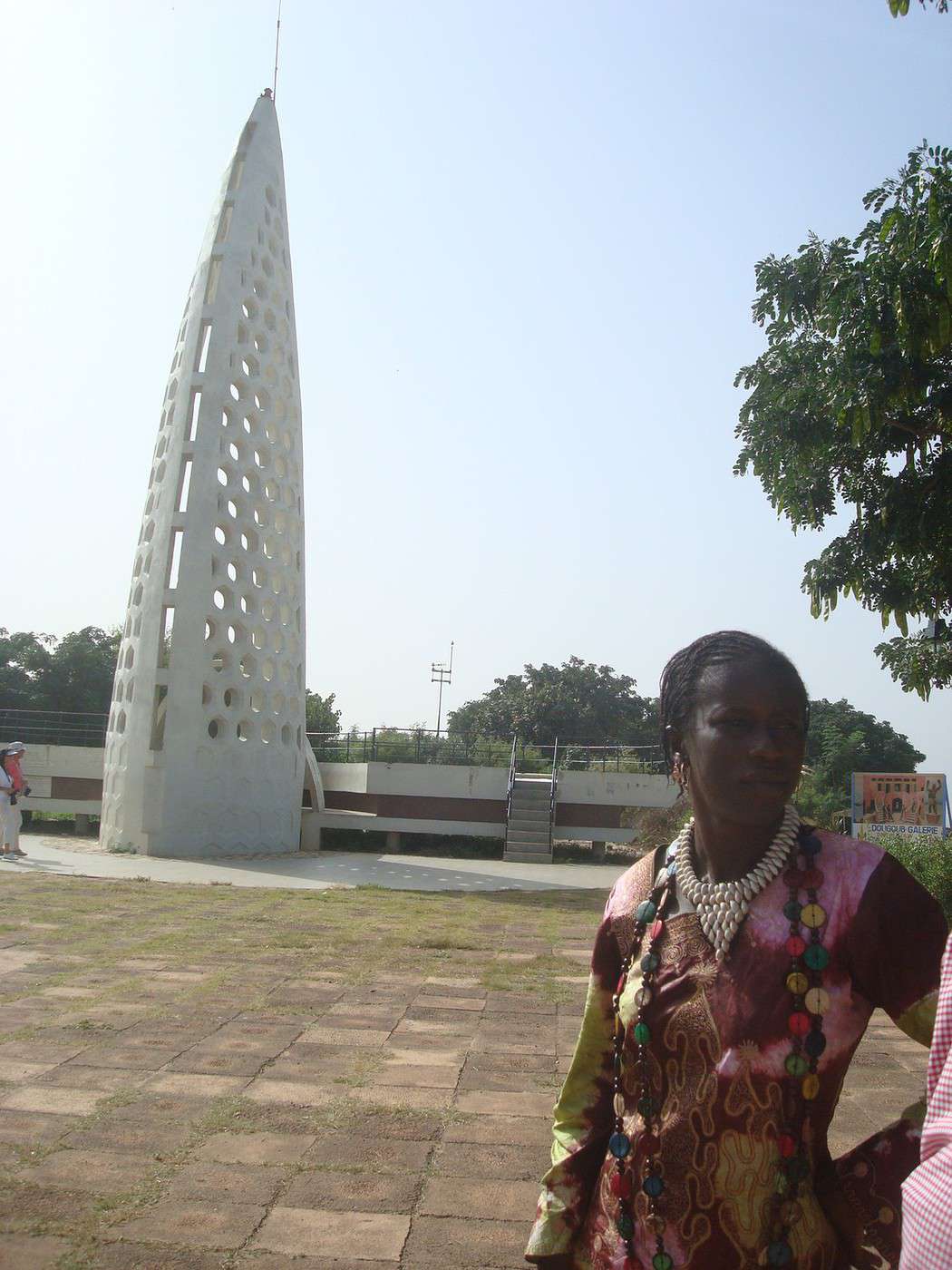
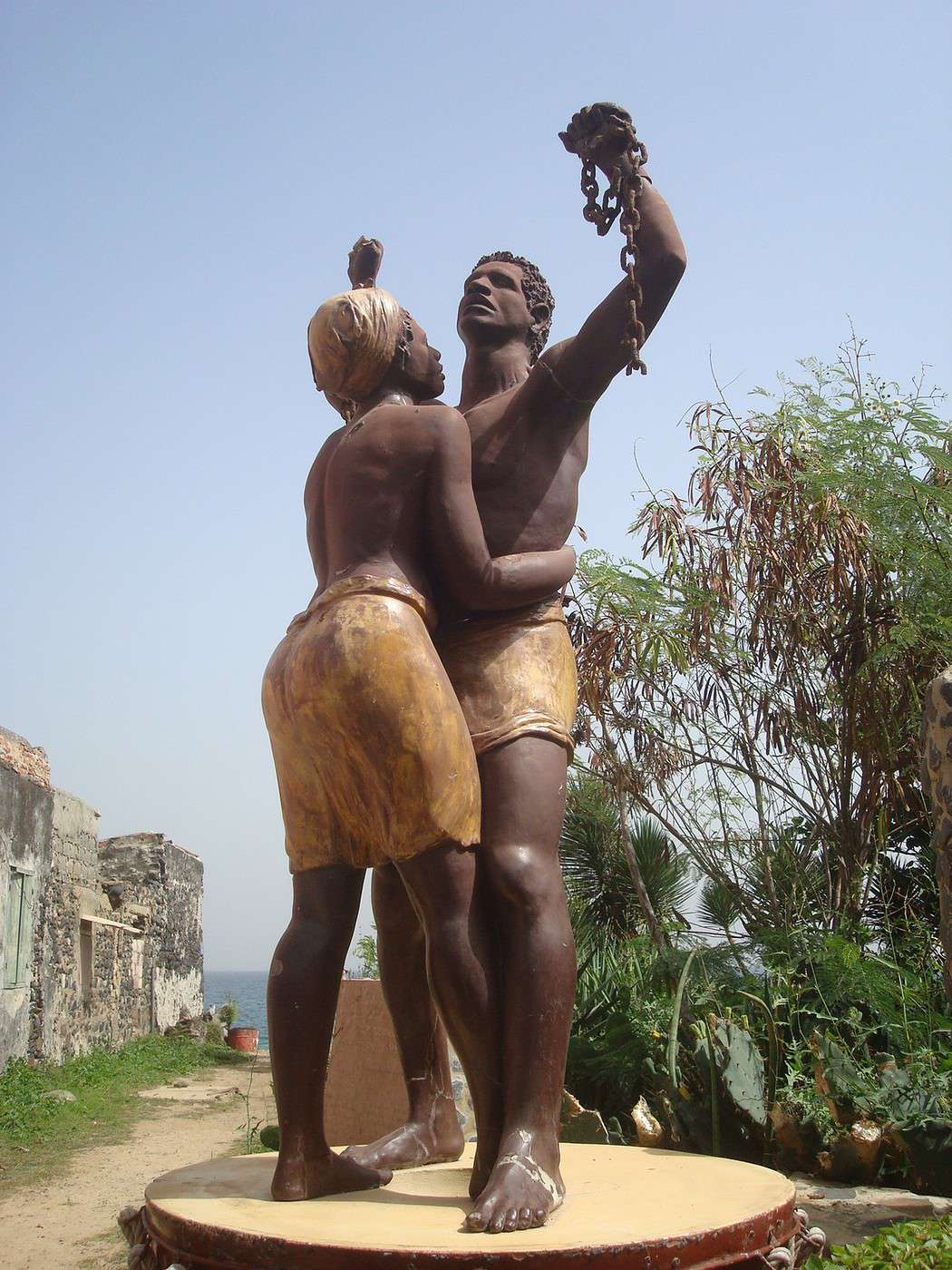
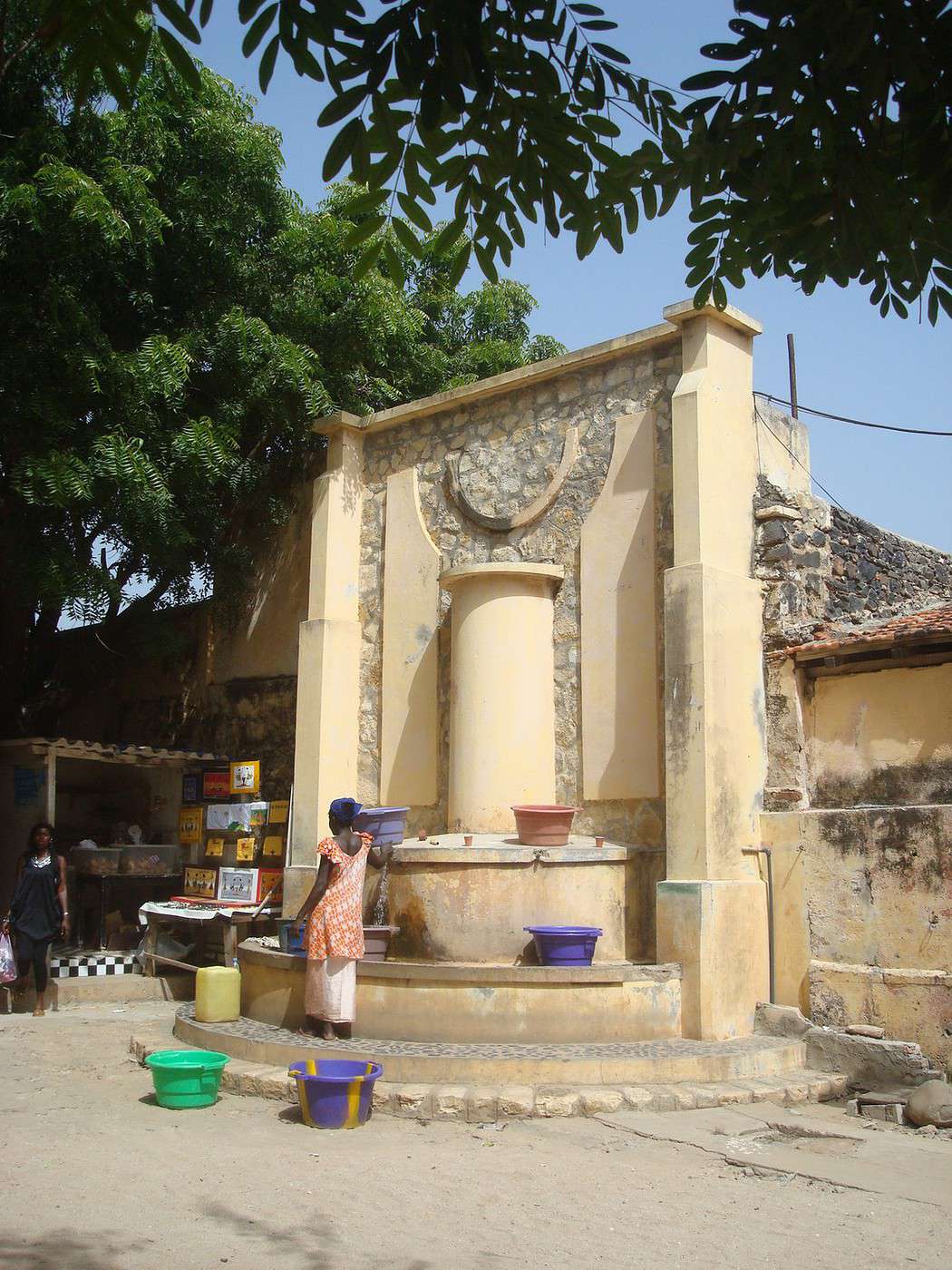
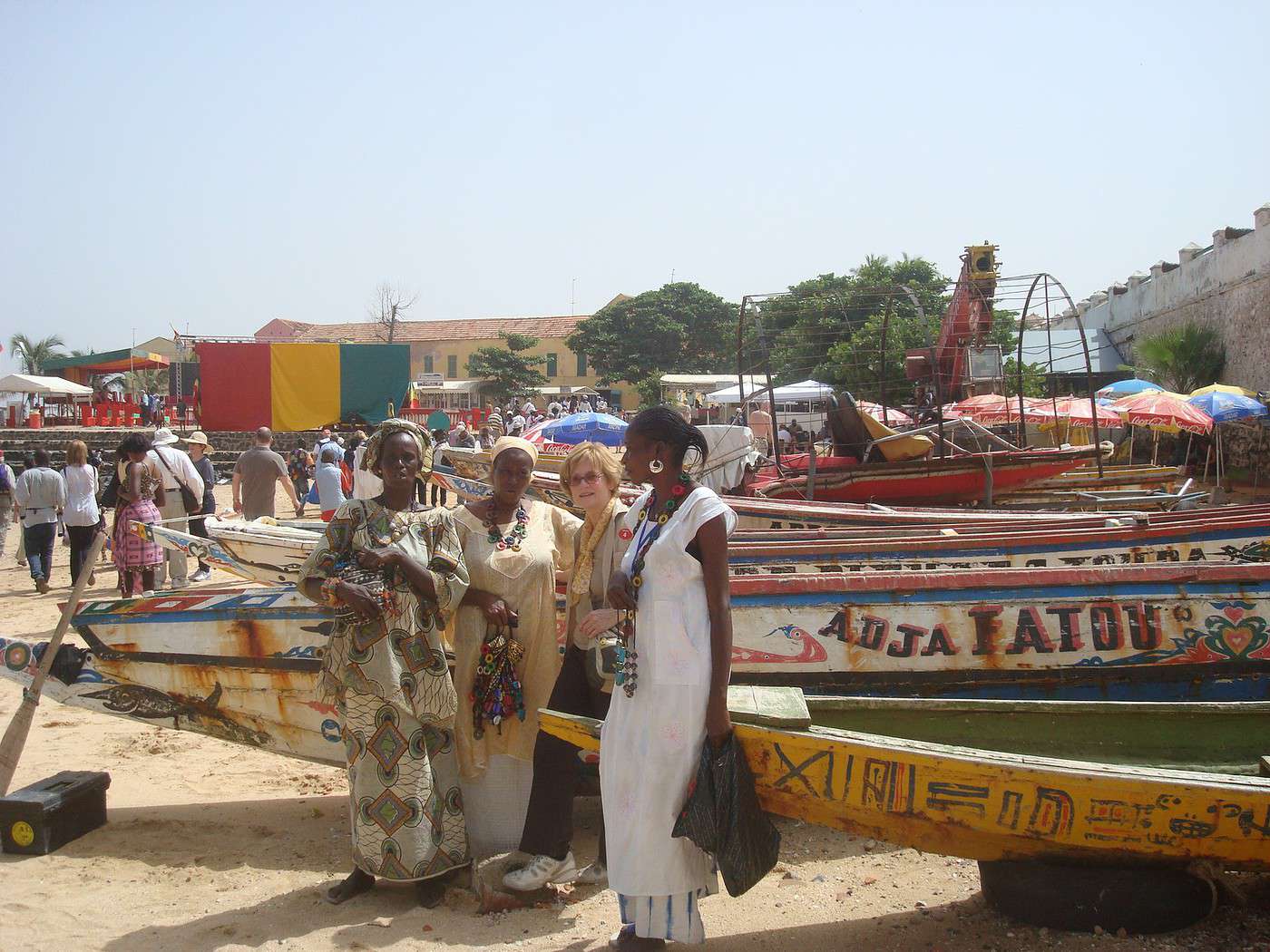
On entre dans la chaloupe - destination île de Gorée Première vue de l’île de Gorée : le Castel, pointe sud de l’île ou le Fort d’Estrée, pointe nord ? 😕 Promenade dans les rues de Gorée... Galeries d’art (Quelqu’un reconnait l’artiste?) Mémorial de Gorée (16 m.) Maison des Esclaves et son célèbre escalier Porte dite du non-retour Musée de la Femme Monument commémorant l’Esclavage, offert par la Guadeloupe Maisons typiques de l'île Fontaine publique De jolies Sénégalaises et la Dame au foulard rafraîchissant («Neck Body» - une petite merveille pour affronter les pires chaleurs…) Plage du Débarcadère à Gorée
Photos de Dakar (message suivant)
Jour 11 – Dakar, SÉNÉGAL (de 8h à 18h) 6 novembre 30oC Arrivée à 07:59 Quai #15 Dakar
Merci Didier de ton aide dans mes choix d’excursion. Ma journée a été superbe! J’ai apprécié chaque minute de cette escale. Toute info ou rectification sont les bienvenues!
Population du Sénégal : 14 100 000 Âge médian : 18,7 ans Indépendance : 4 avril 1960 (de la France) Musulmans 94% Chrétiens 5% Langue officielle : Français Langues nationales (~20) : Wolof, Sérère, etc. Port d’escale: Dakar Capitale : Dakar
Sur tes conseils, Didier, j’ai choisi l’excursion «Île de Gorée» (3h½h). On aurait pu se rendre à l'île par nous-mêmes sans problème Croisifan ... mais on gagnait beaucoup de temps ainsi (à 2, c'est moins coûteux qu'avec la famille 😉). La chaloupe a accosté à côté de l’Ocean Princess (photo 1)... - on a été gâtés! L’île est à 4 km de Dakar à 20 minutes environ.
Patrimoine mondial de l’UNESCO, île sans voitures ni bicyclettes, maisons aux tons pastel, île d’art, Gorée est un lieu historique «qui demeure un symbole de l’exploitation humaine et un sanctuaire pour la réconciliation». Émouvant et calme, agréable promenade dans les rues de Gorée…
On a visité la Maison des Esclaves, jolie maison rose avec double escalier, ancienne demeure de la signare Anna Colas Pépin. Puis, le Musée historique sur la pointe nord de l’île dans l’ancien Fort d’Estrées (très peu d’exhibits); le Musée de la Femme, ouvert en 1994, aménagé dans l’ancienne demeure d’une autre riche dame, Victoria Albis (très intéressant!) et quelques jolies galeries d’art.
Au retour de Gorée, à Dakar, mon négociateur favori 😉 a repris son rôle avec brio : taxi pour visiter Dakar et les environs. Ouf! Un choc culturel, mais quel exotisme: trafic incroyable, vendeurs partout le long de la route, effervescence en vue de célébrer la plus grande fête religieuse du Sénégal : la Tabaski (Fête du sacrifice d’Abraham), qui dure 15 jours : http://www.senegal-online.com/...eligions/tabaski.htm
Le taxi frôlait des centaines de moutons et de chèvres confortablement installés au bord de la route, profitant de leurs derniers jours avant la Tabaski… Unique!
Au retour sur le bateau, avant le repas du soir, bonne bière bien fraîche et magnifique spectacle par des artistes sénégalais dont des danses vaudoues. Une journée magnifique - des souvenirs impérissables !
Quelques photos de l'île de Gorée
On entre dans la chaloupe - destination île de Gorée Première vue de l’île de Gorée : le Castel, pointe sud de l’île ou le Fort d’Estrée, pointe nord ? 😕 Promenade dans les rues de Gorée... Galeries d’art (Quelqu’un reconnait l’artiste?) Mémorial de Gorée (16 m.) Maison des Esclaves et son célèbre escalier Porte dite du non-retour Musée de la Femme Monument commémorant l’Esclavage, offert par la Guadeloupe Maisons typiques de l'île Fontaine publique De jolies Sénégalaises et la Dame au foulard rafraîchissant («Neck Body» - une petite merveille pour affronter les pires chaleurs…) Plage du Débarcadère à Gorée
Photos de Dakar (message suivant)
MoniqueM
« Emmenez- moi au bout de la terre
Emmenez-moi au pays des merveilles...»
Photos de Dakar
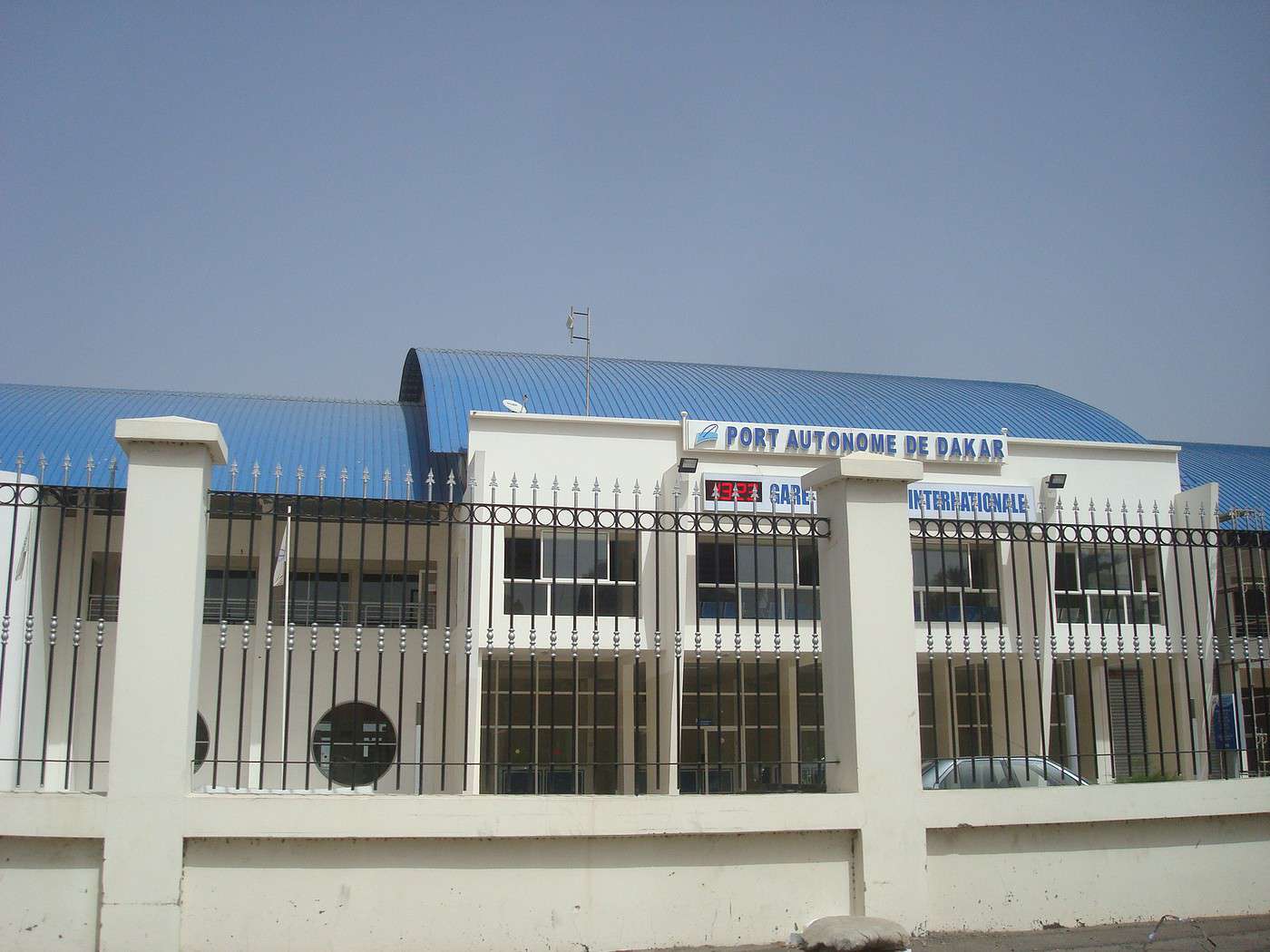
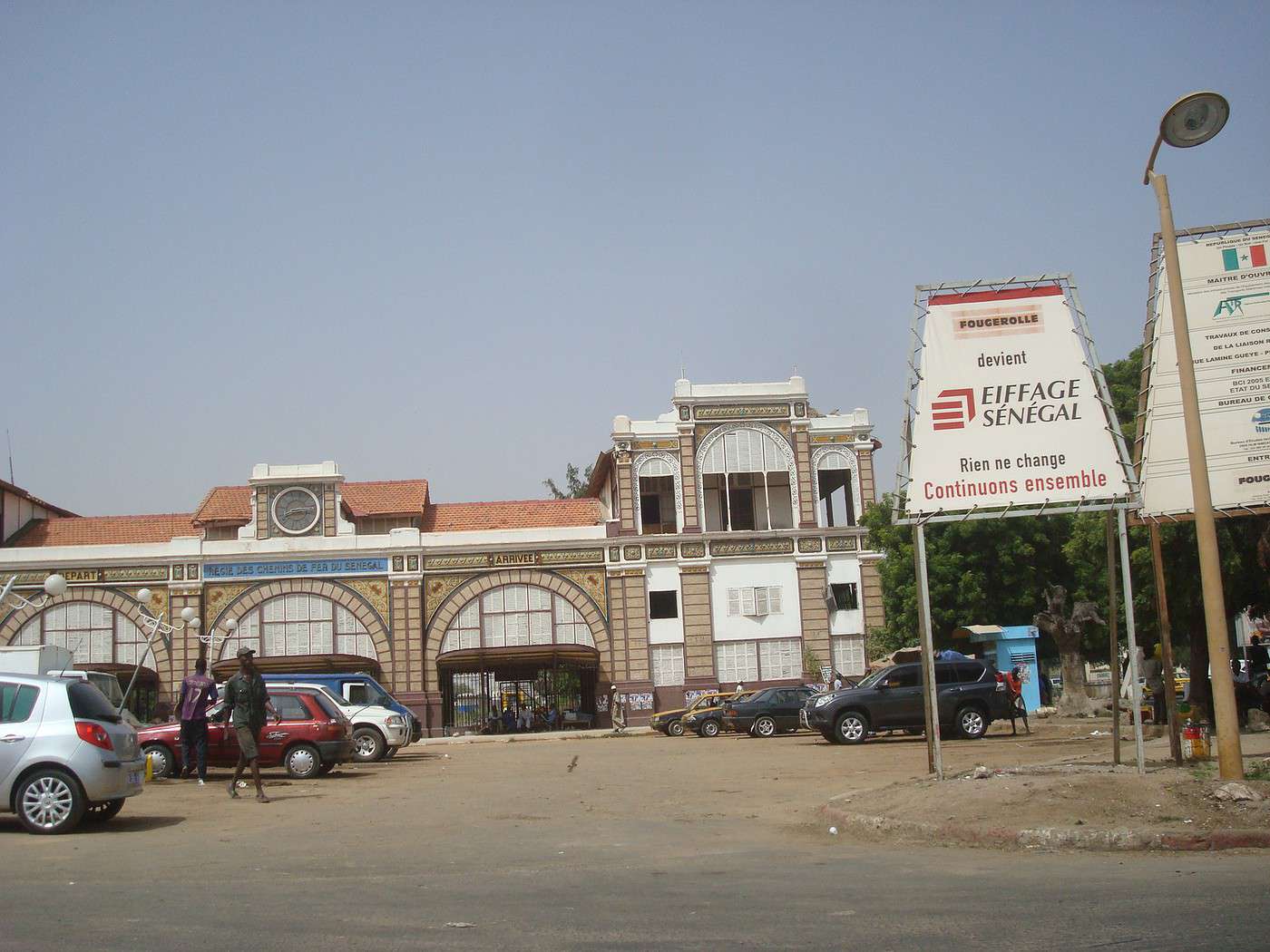
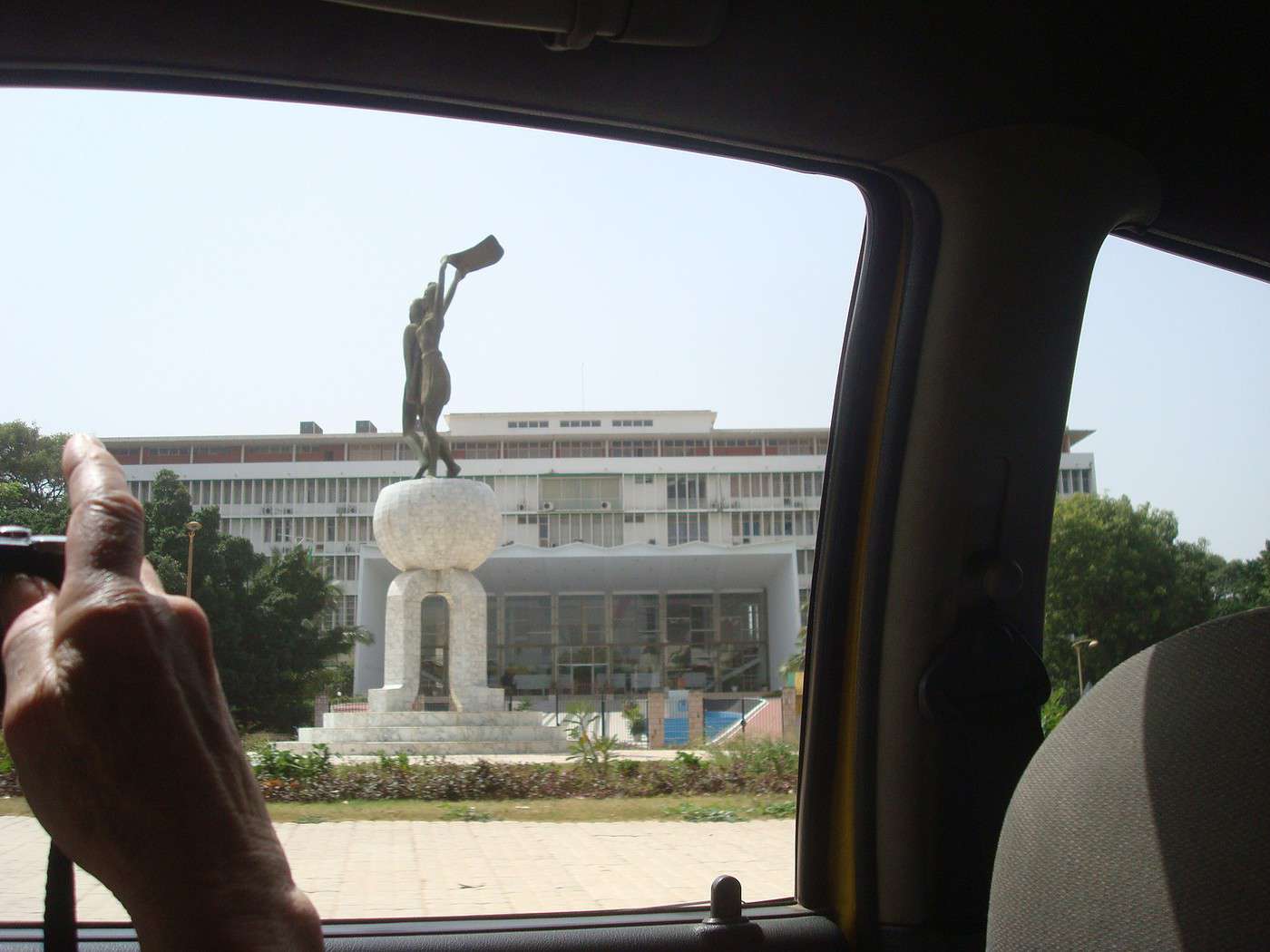
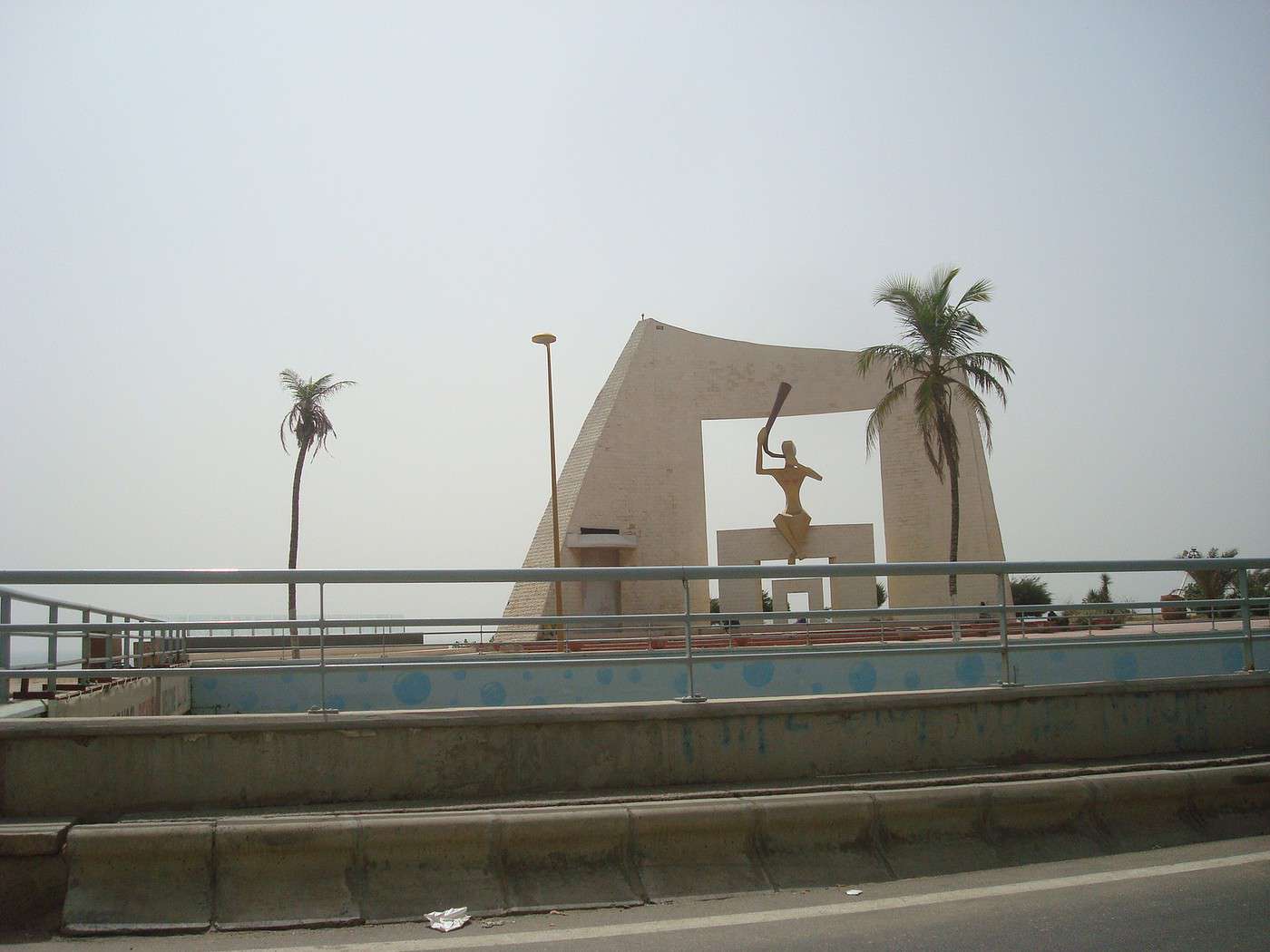
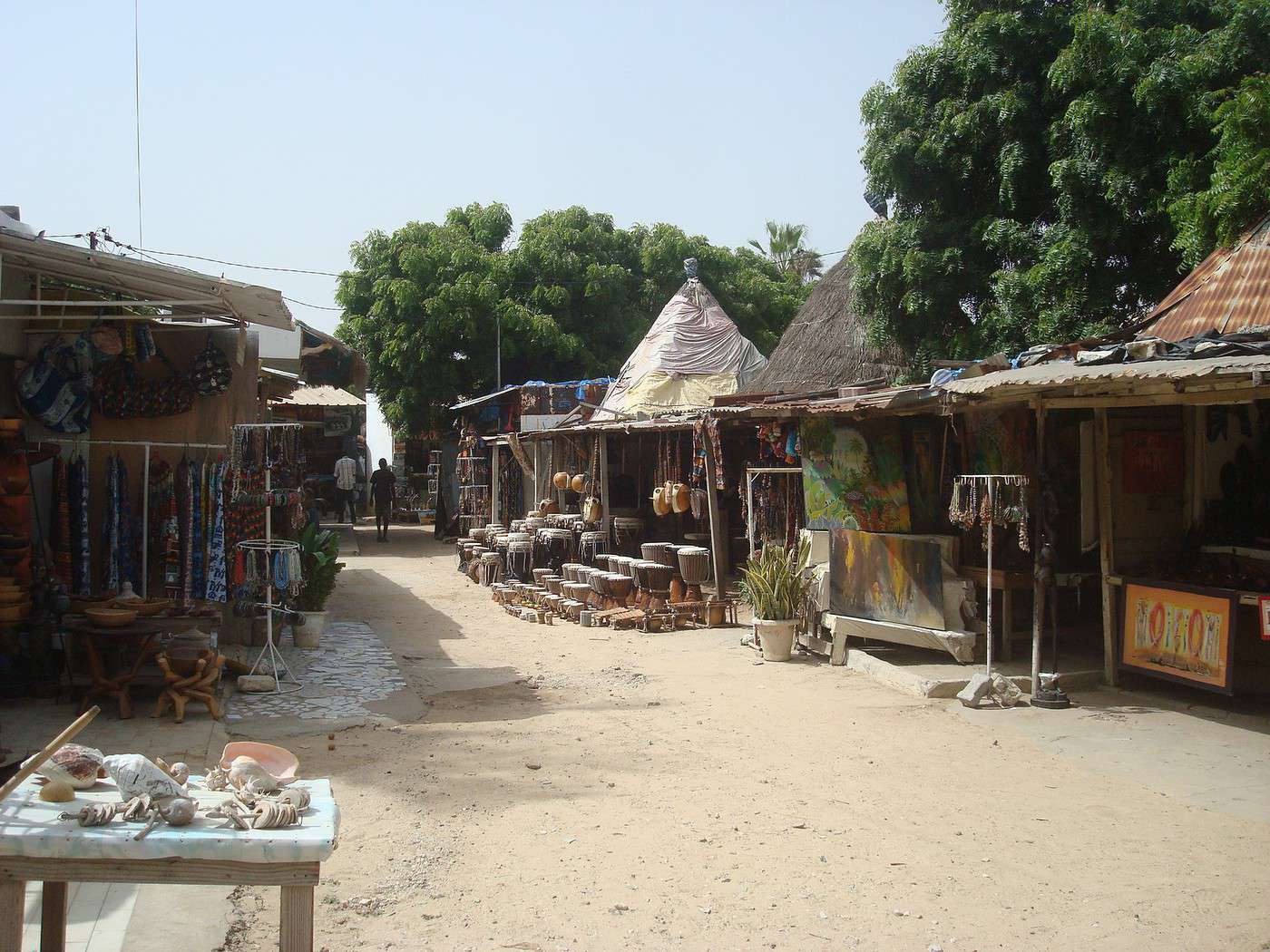
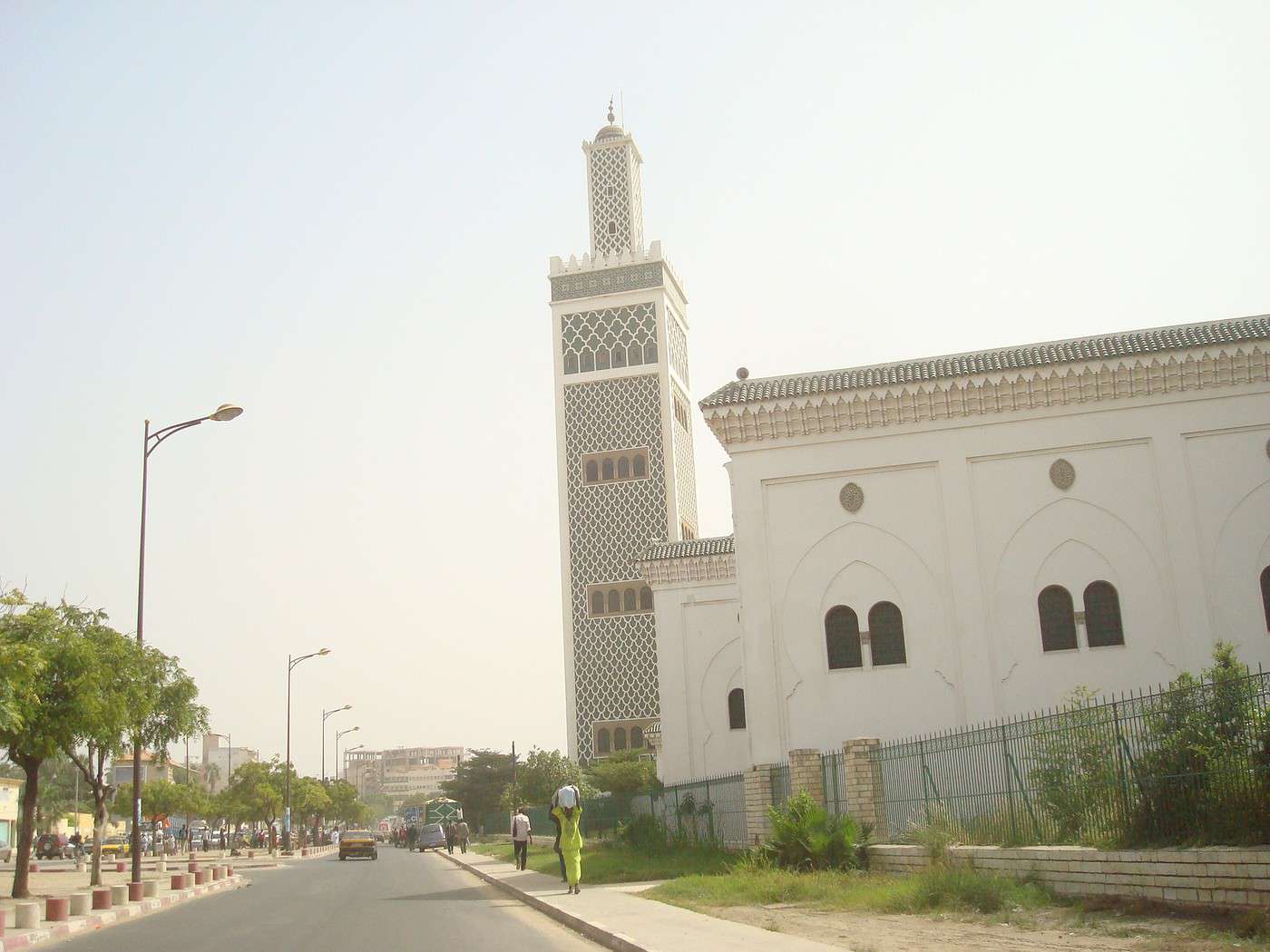
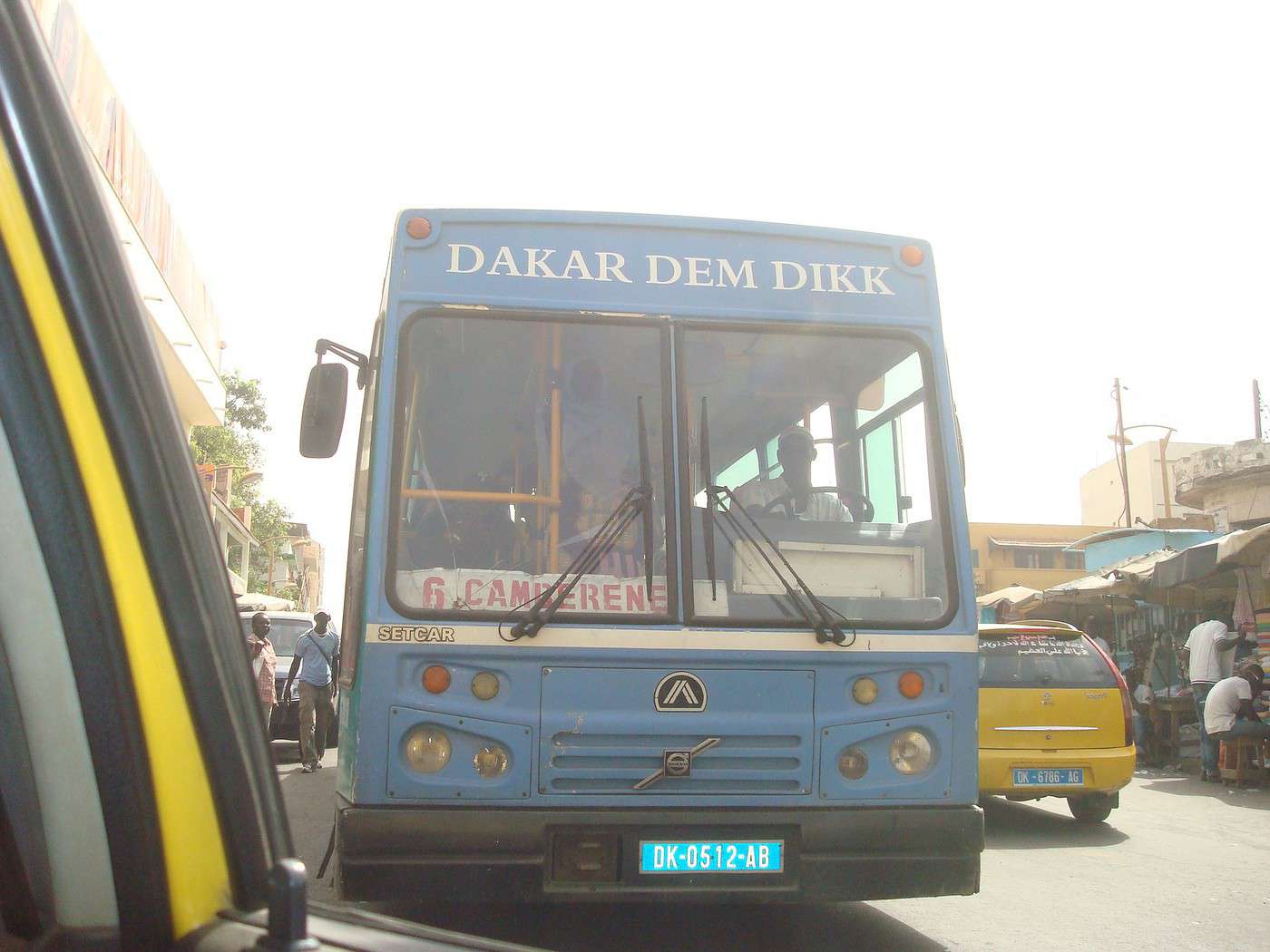
Port de Dakar Gare de Dakar Place de Soweto Porte du Troisième Millénaire «Yaye Boye» (maman chérie en wolof). Marché artisanal de Soumbedioune Grande Mosquée de Dakar Bus local
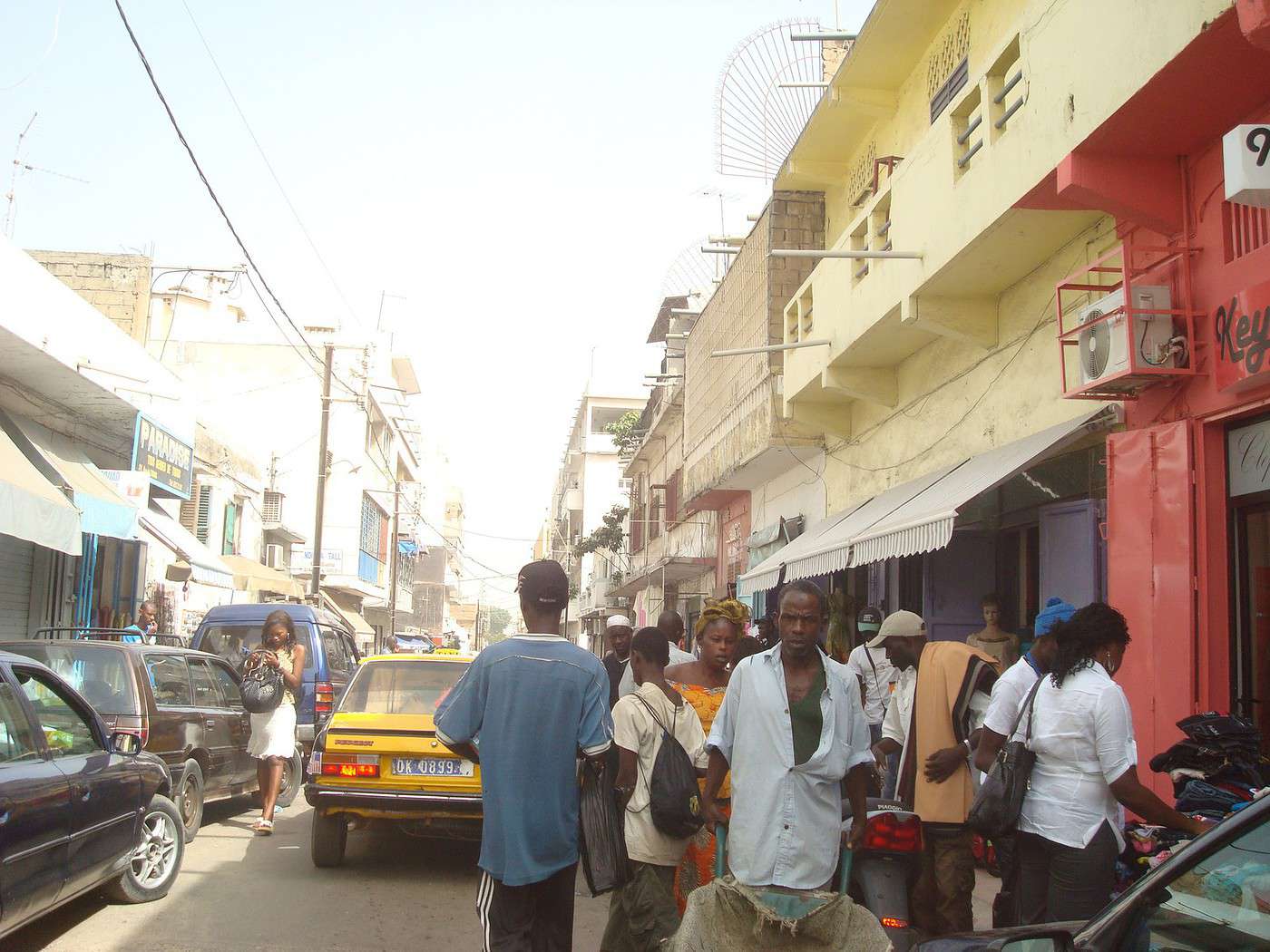
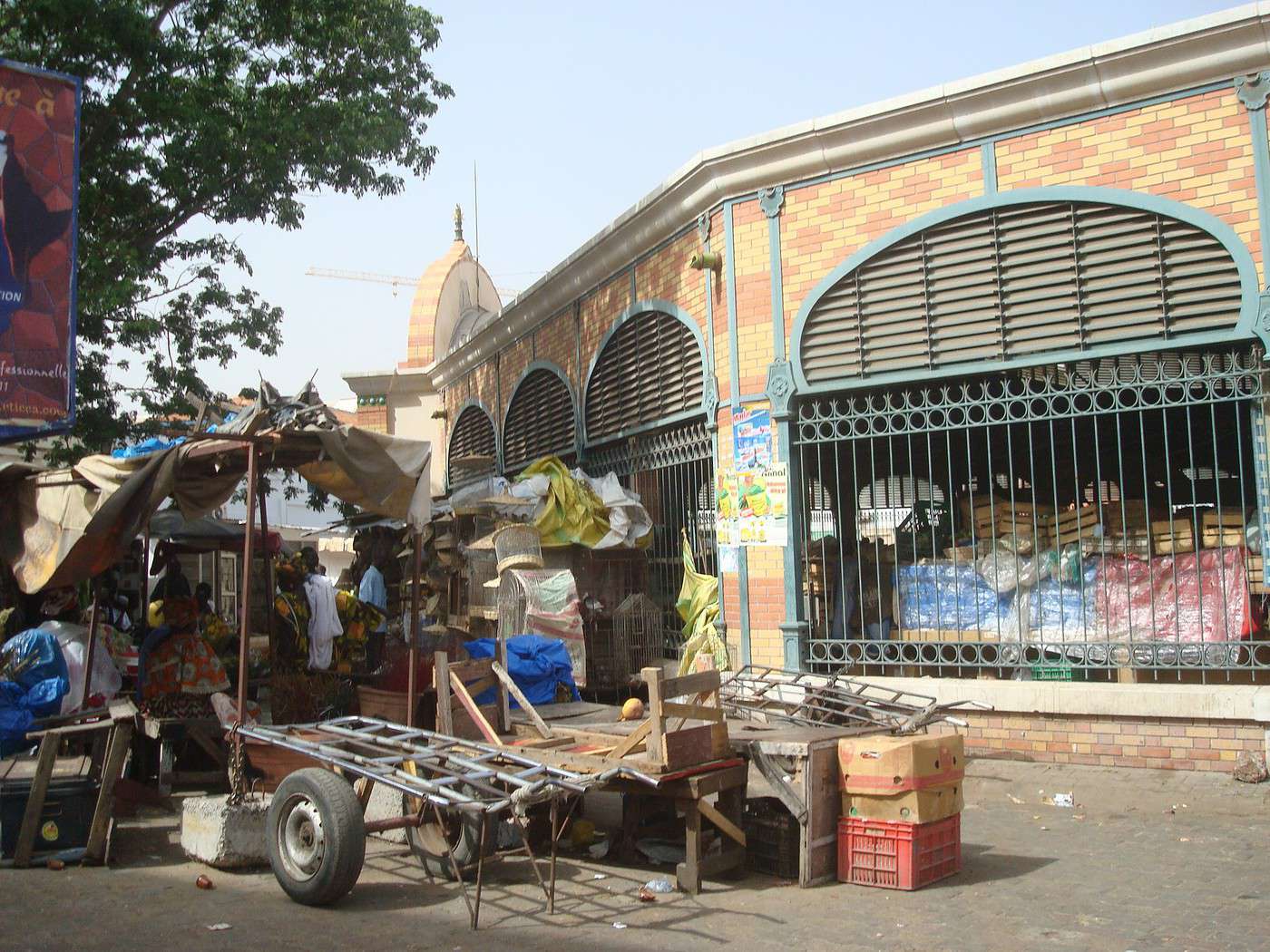
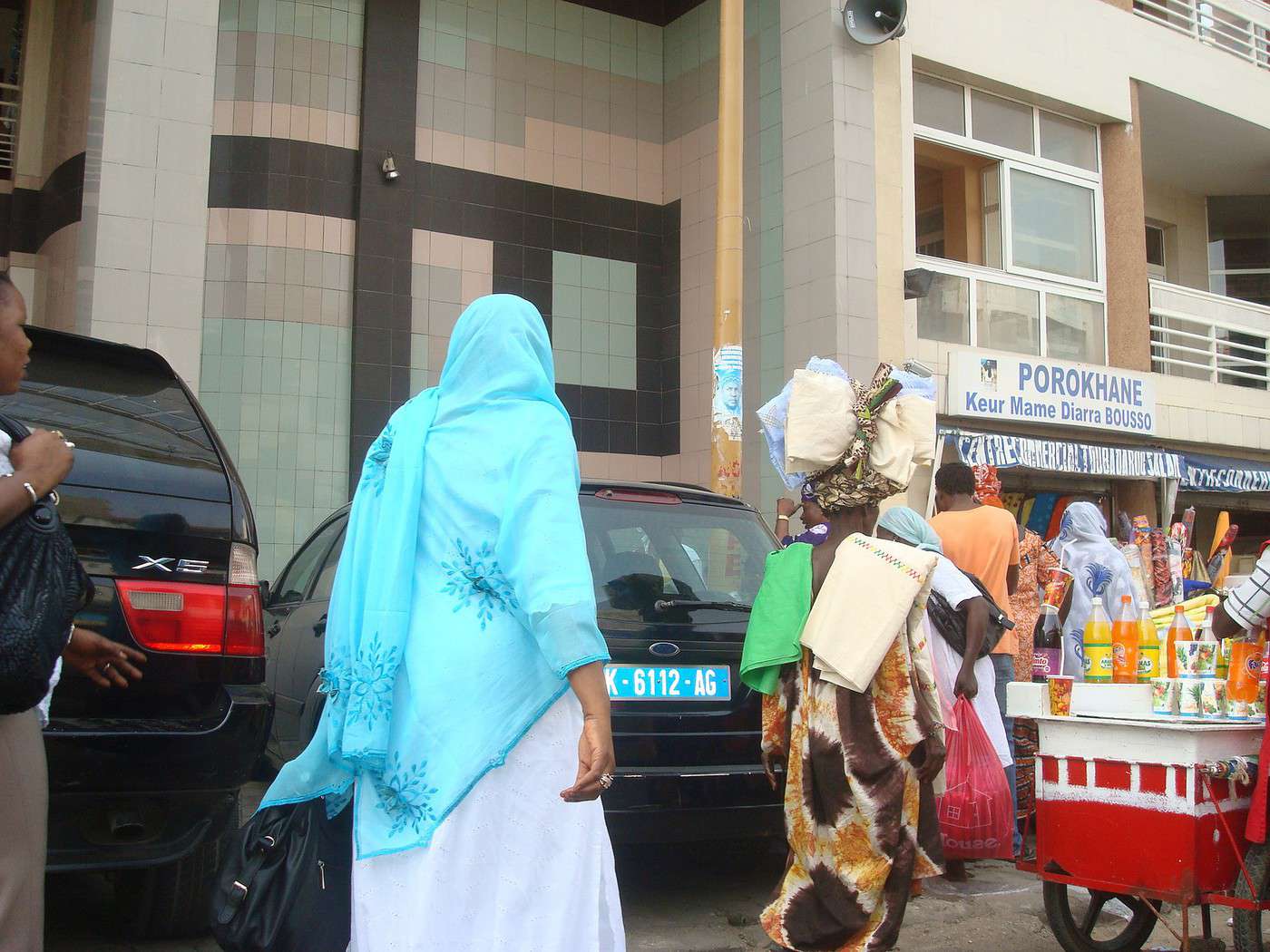
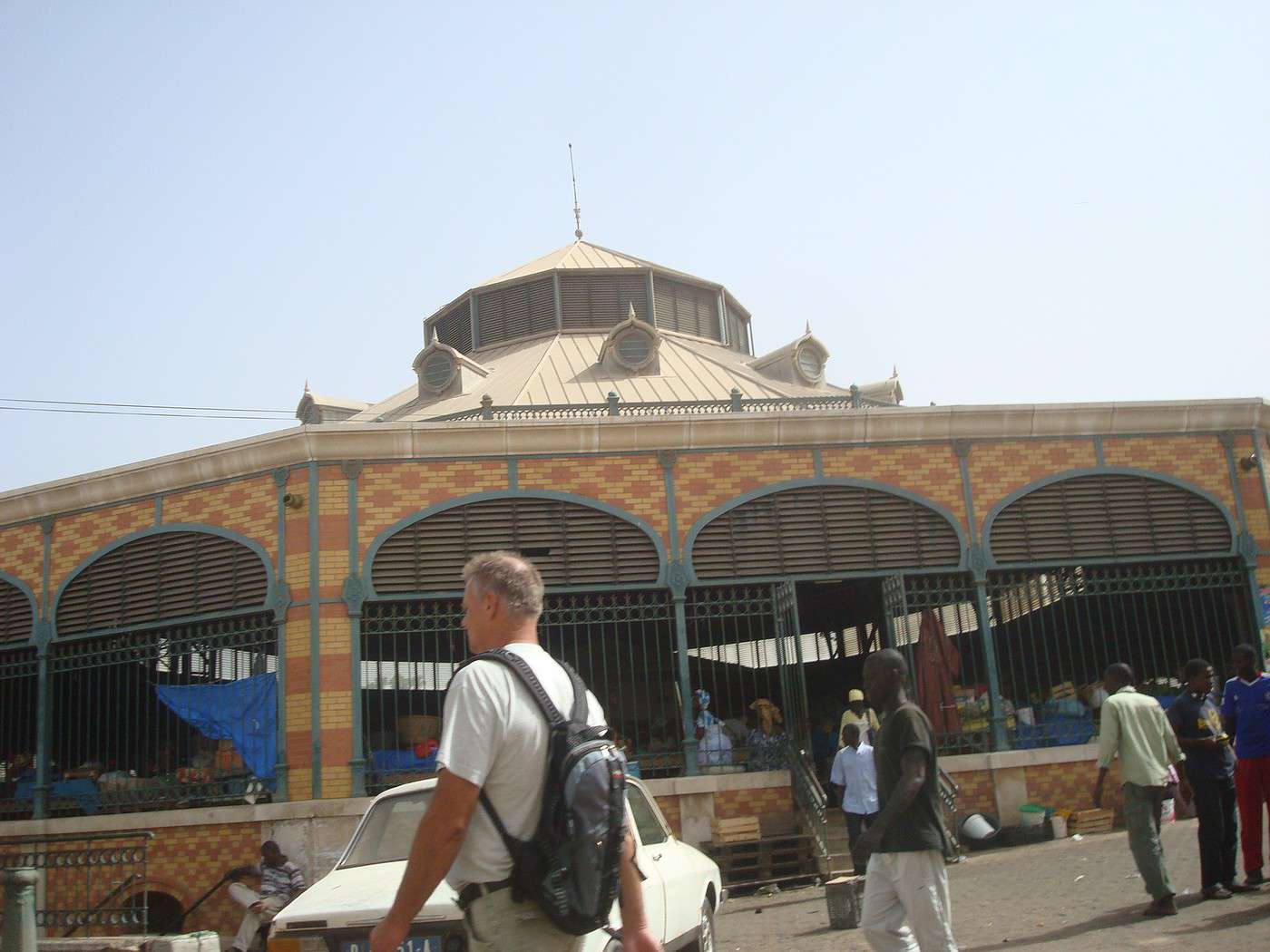
Rues de Dakar Marché de Kermel Spectacle de danses sénégalaises
Je n'ai pas de photos des animaux qui attendaient d'être vendus pour la Tabaski - je n'ai qu'un vidéo - c'était assez pittoresque...😏 Ils semblaient être très bien traités - Certains semblaient reposés sur des tapis...?!
Port de Dakar Gare de Dakar Place de Soweto Porte du Troisième Millénaire «Yaye Boye» (maman chérie en wolof). Marché artisanal de Soumbedioune Grande Mosquée de Dakar Bus local
Rues de Dakar Marché de Kermel Spectacle de danses sénégalaises
Je n'ai pas de photos des animaux qui attendaient d'être vendus pour la Tabaski - je n'ai qu'un vidéo - c'était assez pittoresque...😏 Ils semblaient être très bien traités - Certains semblaient reposés sur des tapis...?!
MoniqueM
« Emmenez- moi au bout de la terre
Emmenez-moi au pays des merveilles...»
Jours 12-14 Navigation en mer 7 au 9 novembre 28oC
Navigation Sud-Est vers Tema (Ghana)
Quelques renseignements concernant la réservation des excursions
Princess Cruises a un excellent système de réservation d’excursions.
On peut réserver toute excursion sur leur site Internet jusqu’à 6 ou 7 jours environ avant le début de la croisière. On peut annuler n’importe quel choix en tout temps sur le site; rien à payer à l’avance - rien n’est porté sur la carte de crédit ou de débit.
On fait nos choix, on obtient une liste informatique de ces choix qu’on peut imprimer. On nous donne confirmation immédiate ou on nous place sur une liste d’attente. On peut faire des choix incompatibles tels 2 excursions en même temps - on nous en avertit, mais c’est réservé. À nous de les annuler à temps... 😉
On reçoit les billets dans la cabine peu après l’embarquement. On les vérifie bien 🤪. On peut les échanger, les annuler, on ne paie qu’à la fin de la croisière. On a l’option d’annuler toute excursion sans frais et sans justification un ou 2 jours avant la dite excursion. À cette fin, on reçoit (avec les billets) un petit tableau indiquant pour chaque escale la date et l’heure de clôture pour l’annulation des tours. C’est habituellement la veille avant 18h ou l’avant-veille. C'est écrit aussi à chaque jour dans le «Patter».
Seules les excursions comprenant un véhicule privé ne sont pas remboursables.
On peut attendre pour réserver nos excursions de le faire sur le bateau: on remplit alors une fiche pour chaque escale qu'on dépose dans une boîte à cet effet ou on s’inscrit directement auprès du Bureau des excursions (Tour Office).
Les avantages du Princess Captain’s Circle
Gold Members – On devient membre Or après la première croisière : offres préférentielles, magazine, réception au cours de la croisière, épinglette
Platinum Members – de la 6e à la 15e croisière ou 51-150 jours de croisière : crédit Internet*, embarquement prioritaire, Cruise Atlas
Elite Members – À partir de la 16e croisière ou 151+ jours S’ajoutent aux autres bénéfices (crédit Internet*, offres préférentielles, magazine, embarquement et désembarquement prioritaires): Priorité pour les tenders (bateaux-navettes) Nettoyage à sec et lavage gratuits, polissage des souliers 10% de réduction dans les boutiques du bateau Séance de dégustation de vins Mini bar garni (tel que décrit sur leur site : mini bouteilles de cognac (2), gin (2), vodka(2), whiskey (2); bières (2); tonic water - on peut faire un certain choix Choix de canapés servis dans la cabine les soirs de gala (sur demande) Service quotidien du thé à l’Anglaise (gants blancs 😉 - sandwich de fantaisie, petits fours & scones) dans la cabine (sur demande) ou au Pont Promenade.
* Crédit Internet pour chaque membre Platine ou Elite (donc, x2 pour nous) :
Croisière de 7 jours ou moins: 150 minutes - Valeur de 75$US (env. 75 Euros) Croisière de 8 à 20 jours: 250 minutes - Valeur de 100$US Croisière de 21 jours et plus: 500 minutes - Valeur de 200$US
Quelques renseignements concernant la réservation des excursions
Princess Cruises a un excellent système de réservation d’excursions.
On peut réserver toute excursion sur leur site Internet jusqu’à 6 ou 7 jours environ avant le début de la croisière. On peut annuler n’importe quel choix en tout temps sur le site; rien à payer à l’avance - rien n’est porté sur la carte de crédit ou de débit.
On fait nos choix, on obtient une liste informatique de ces choix qu’on peut imprimer. On nous donne confirmation immédiate ou on nous place sur une liste d’attente. On peut faire des choix incompatibles tels 2 excursions en même temps - on nous en avertit, mais c’est réservé. À nous de les annuler à temps... 😉
On reçoit les billets dans la cabine peu après l’embarquement. On les vérifie bien 🤪. On peut les échanger, les annuler, on ne paie qu’à la fin de la croisière. On a l’option d’annuler toute excursion sans frais et sans justification un ou 2 jours avant la dite excursion. À cette fin, on reçoit (avec les billets) un petit tableau indiquant pour chaque escale la date et l’heure de clôture pour l’annulation des tours. C’est habituellement la veille avant 18h ou l’avant-veille. C'est écrit aussi à chaque jour dans le «Patter».
Seules les excursions comprenant un véhicule privé ne sont pas remboursables.
On peut attendre pour réserver nos excursions de le faire sur le bateau: on remplit alors une fiche pour chaque escale qu'on dépose dans une boîte à cet effet ou on s’inscrit directement auprès du Bureau des excursions (Tour Office).
Les avantages du Princess Captain’s Circle
Gold Members – On devient membre Or après la première croisière : offres préférentielles, magazine, réception au cours de la croisière, épinglette
Platinum Members – de la 6e à la 15e croisière ou 51-150 jours de croisière : crédit Internet*, embarquement prioritaire, Cruise Atlas
Elite Members – À partir de la 16e croisière ou 151+ jours S’ajoutent aux autres bénéfices (crédit Internet*, offres préférentielles, magazine, embarquement et désembarquement prioritaires): Priorité pour les tenders (bateaux-navettes) Nettoyage à sec et lavage gratuits, polissage des souliers 10% de réduction dans les boutiques du bateau Séance de dégustation de vins Mini bar garni (tel que décrit sur leur site : mini bouteilles de cognac (2), gin (2), vodka(2), whiskey (2); bières (2); tonic water - on peut faire un certain choix Choix de canapés servis dans la cabine les soirs de gala (sur demande) Service quotidien du thé à l’Anglaise (gants blancs 😉 - sandwich de fantaisie, petits fours & scones) dans la cabine (sur demande) ou au Pont Promenade.
* Crédit Internet pour chaque membre Platine ou Elite (donc, x2 pour nous) :
Croisière de 7 jours ou moins: 150 minutes - Valeur de 75$US (env. 75 Euros) Croisière de 8 à 20 jours: 250 minutes - Valeur de 100$US Croisière de 21 jours et plus: 500 minutes - Valeur de 200$US
MoniqueM
« Emmenez- moi au bout de la terre
Emmenez-moi au pays des merveilles...»
Jour 15 Tema (pour Accra), GHANA (de 7h00 à 18h00) 10 novembre 35 oC
Population du Ghana : 24 4000 000 Âge médian : 21,1 ans Indépendance : 6 mars 1957 (du Royaume-Uni) Chrétiens 69% Musulmans 16% Langue officielle : Anglais Capitale : Accra Sur le golfe de Guinée, juste au nord de l’Équateur Homme politique vénéré : Kwame Nkrumah (1909 – 1972)
Excursion choisie : «Accra Sampler» (7h½)
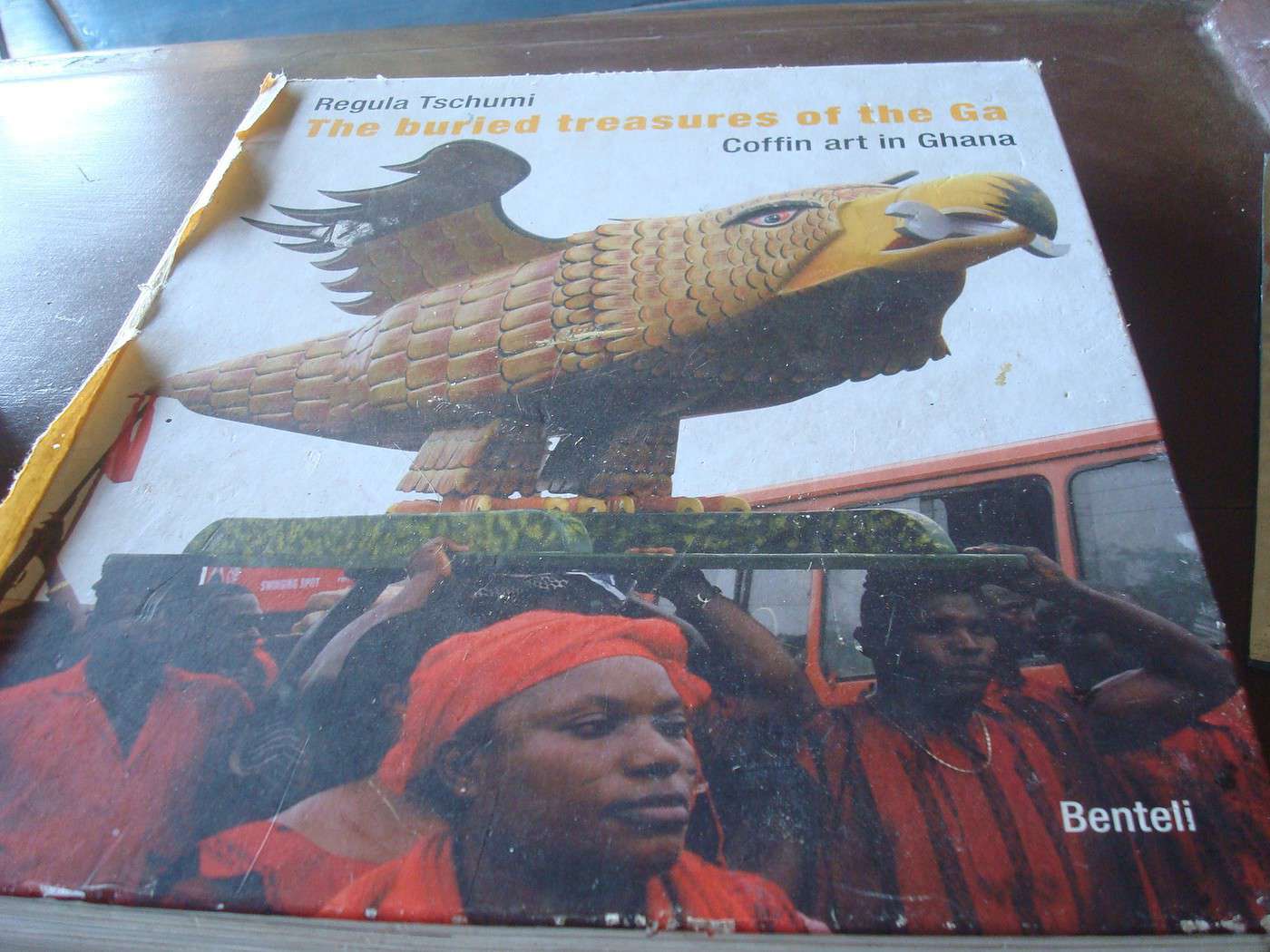
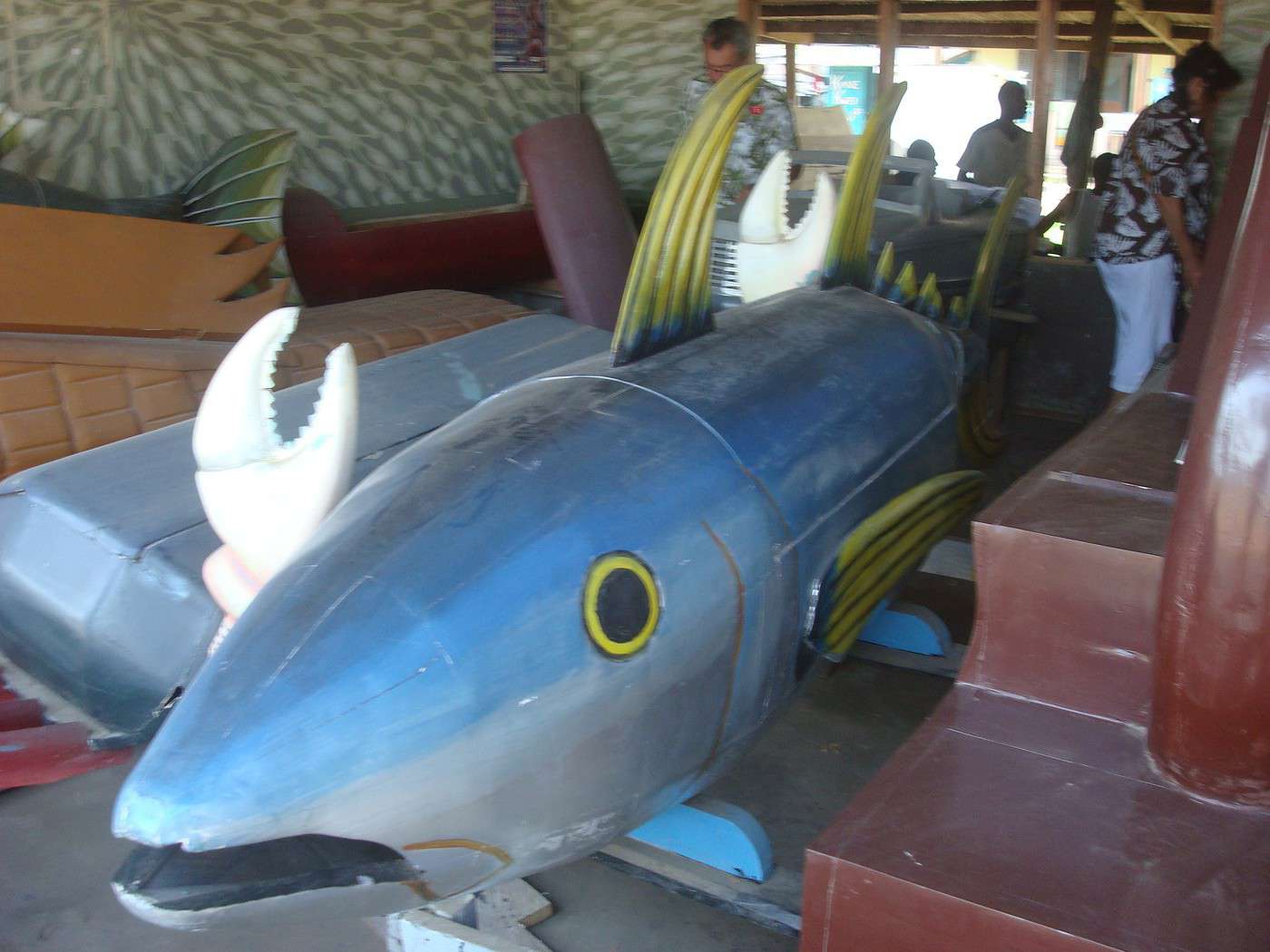
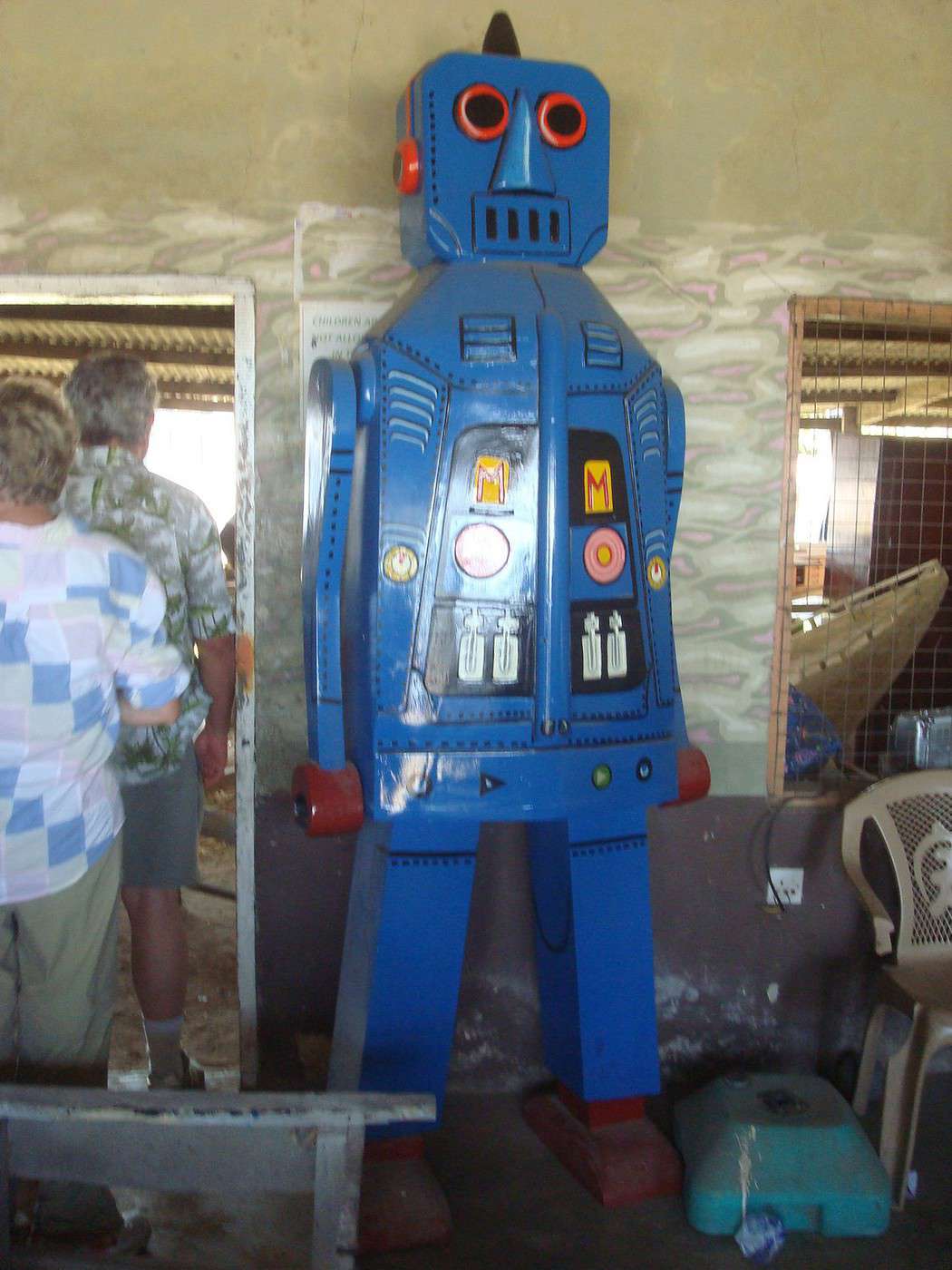
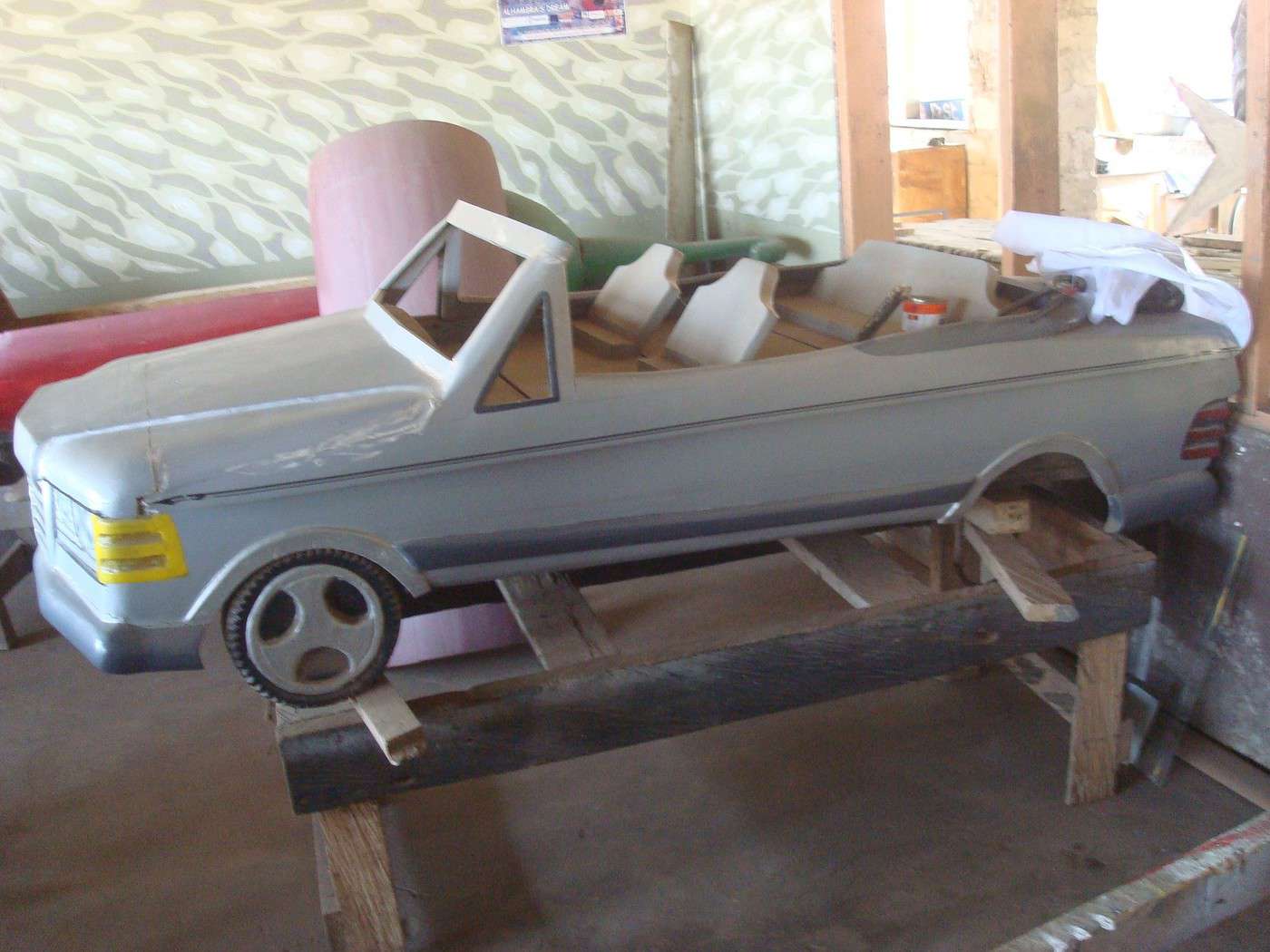
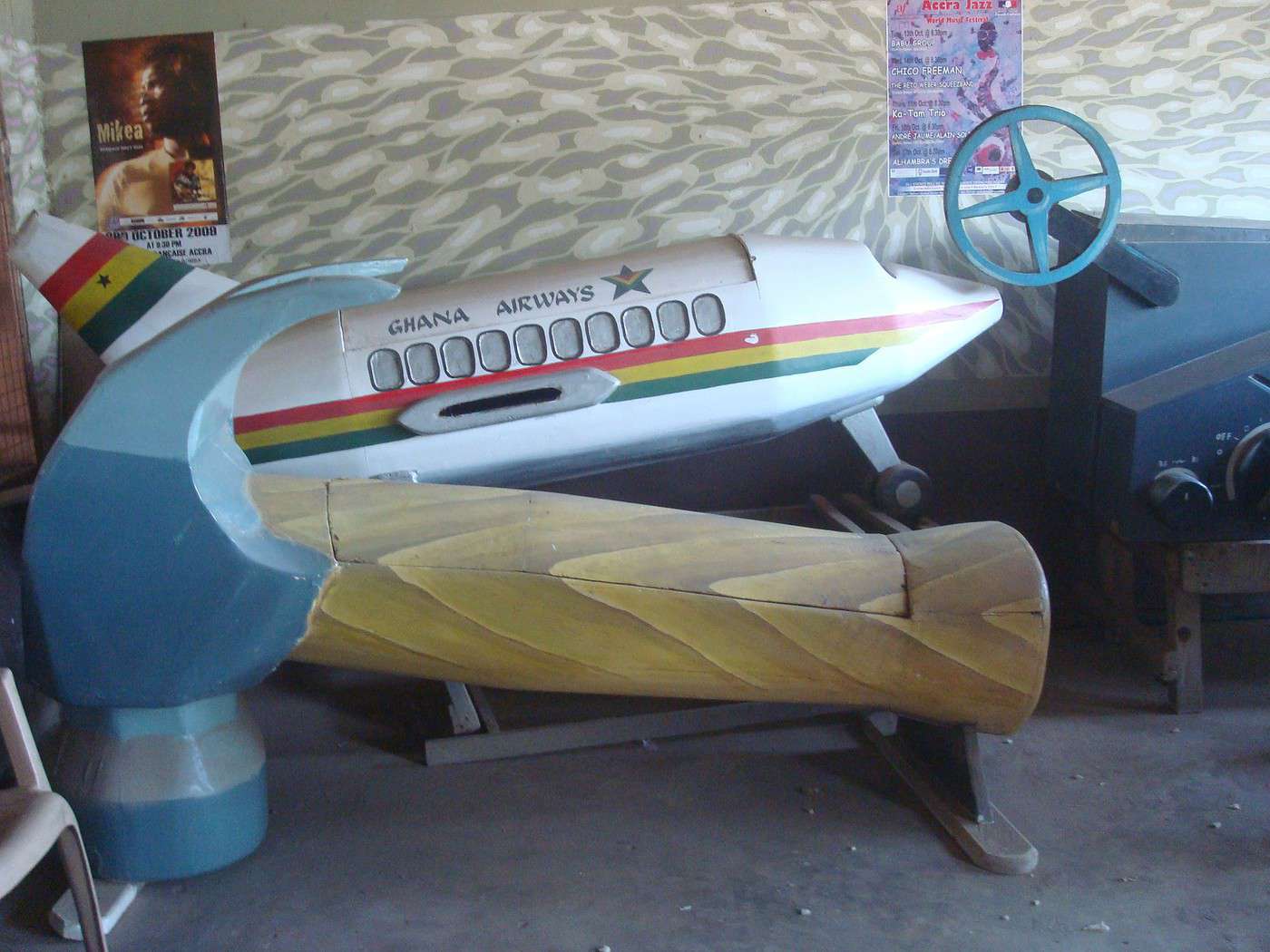
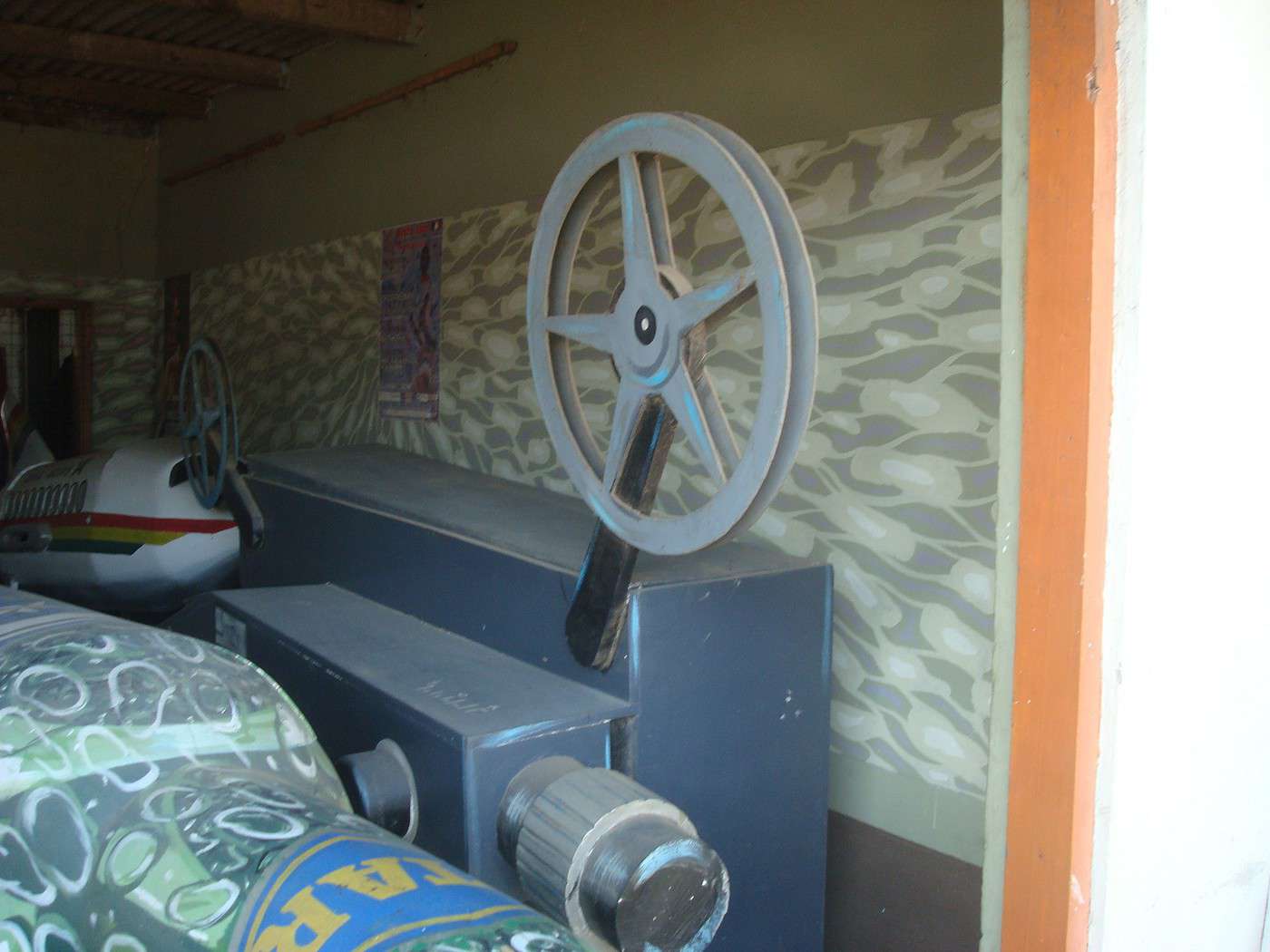
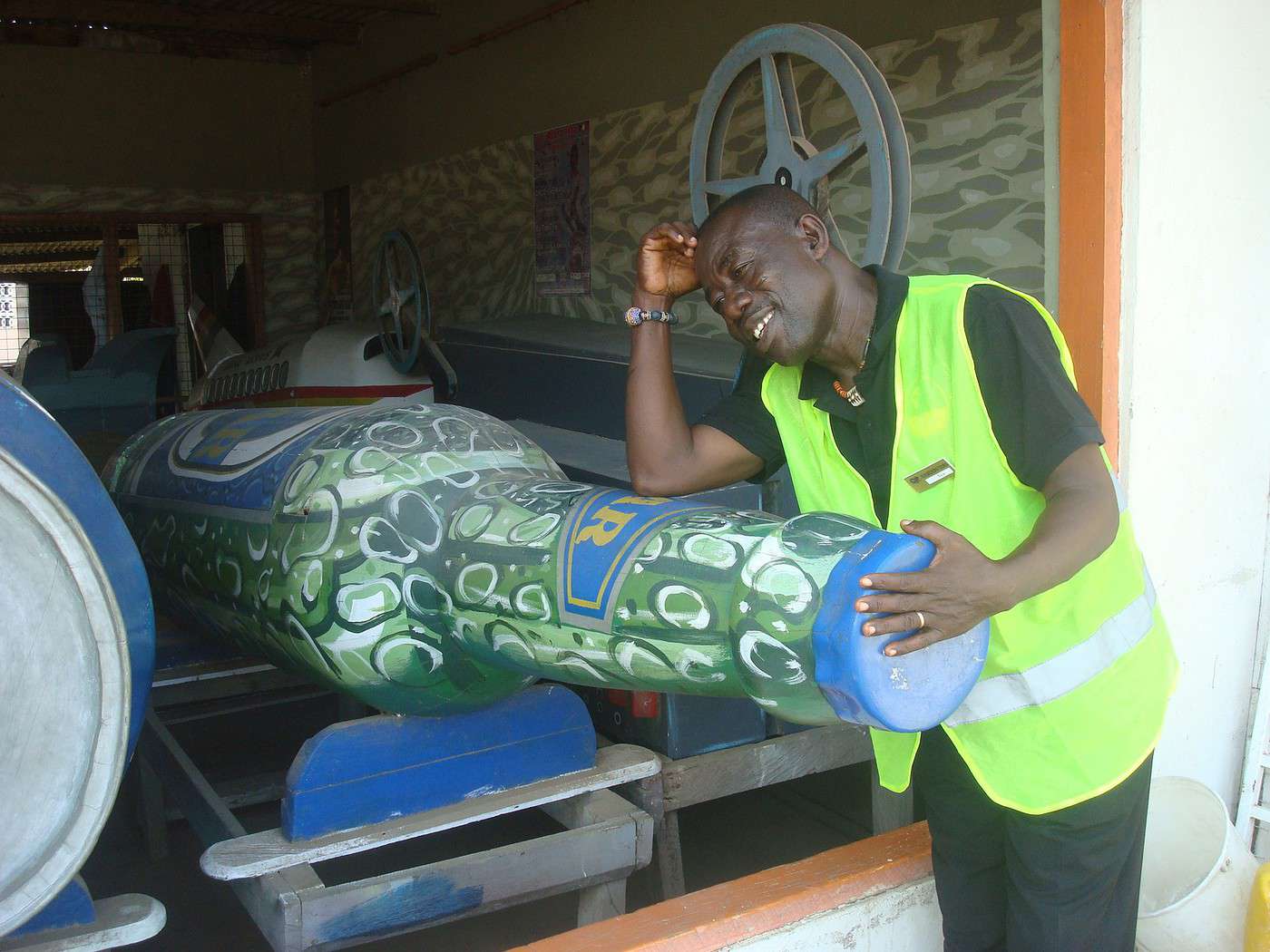
La majorité de la population du Ghana sait lire et écrire. Découverte de ressources pétrolières non négligeables récemment Économie basée sur l’agriculture, mais l’industrie y est développée. C’est l’une des places en Afrique où les gens aimeraient vivre. Développement récent assez spectaculaire Exemple d'Art ghanéen contemporain: 😮😮 😉 plutôt unique: les cercueils personnalisés de toute couleur (voir les photos) - en forme de poissons, bouteilles, avion, auto, Centre Pompidou !… selon la passion ou la volonté du défunt 😏 Fort original et pas du tout macabre!
Quelques photos
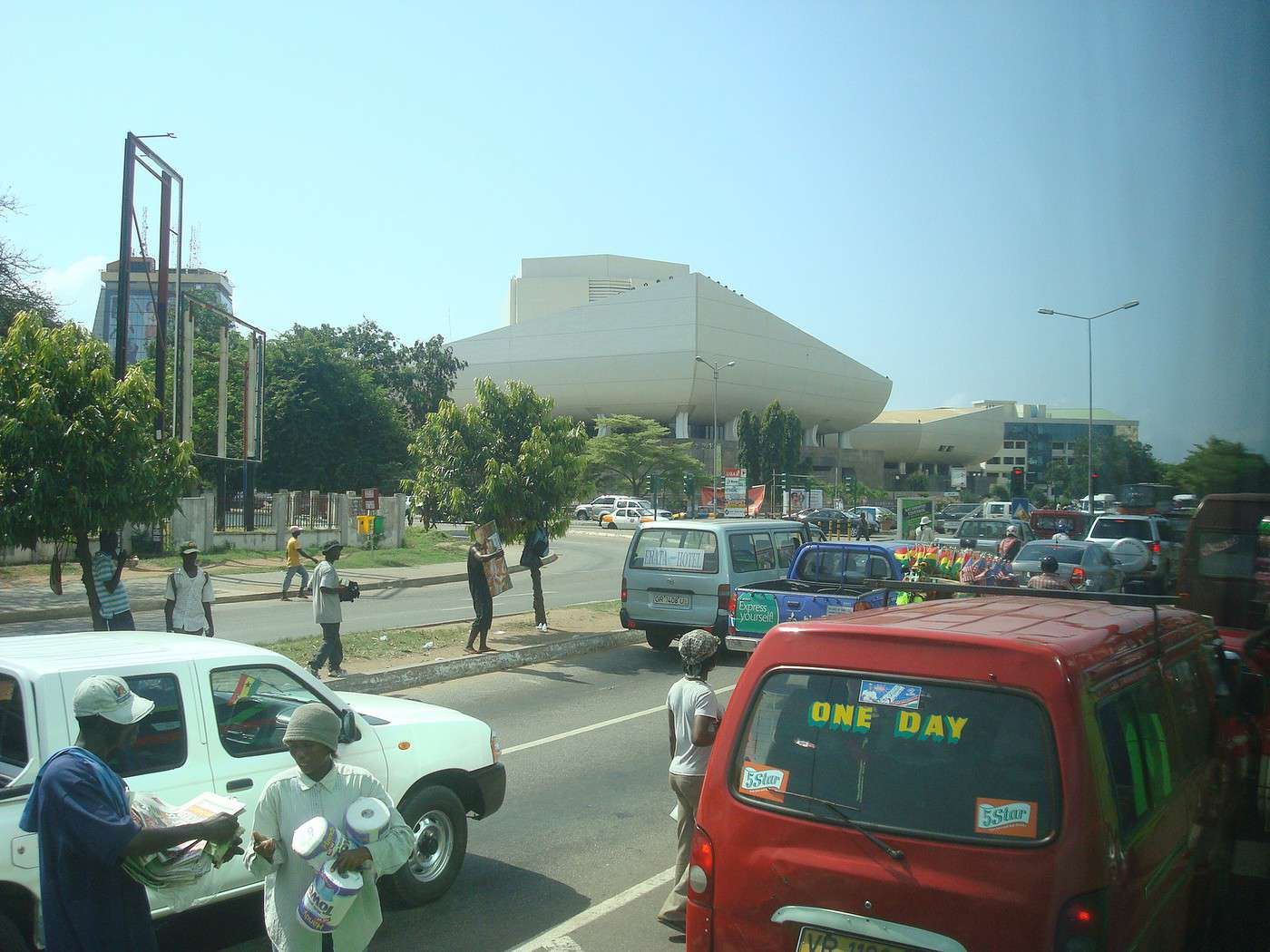
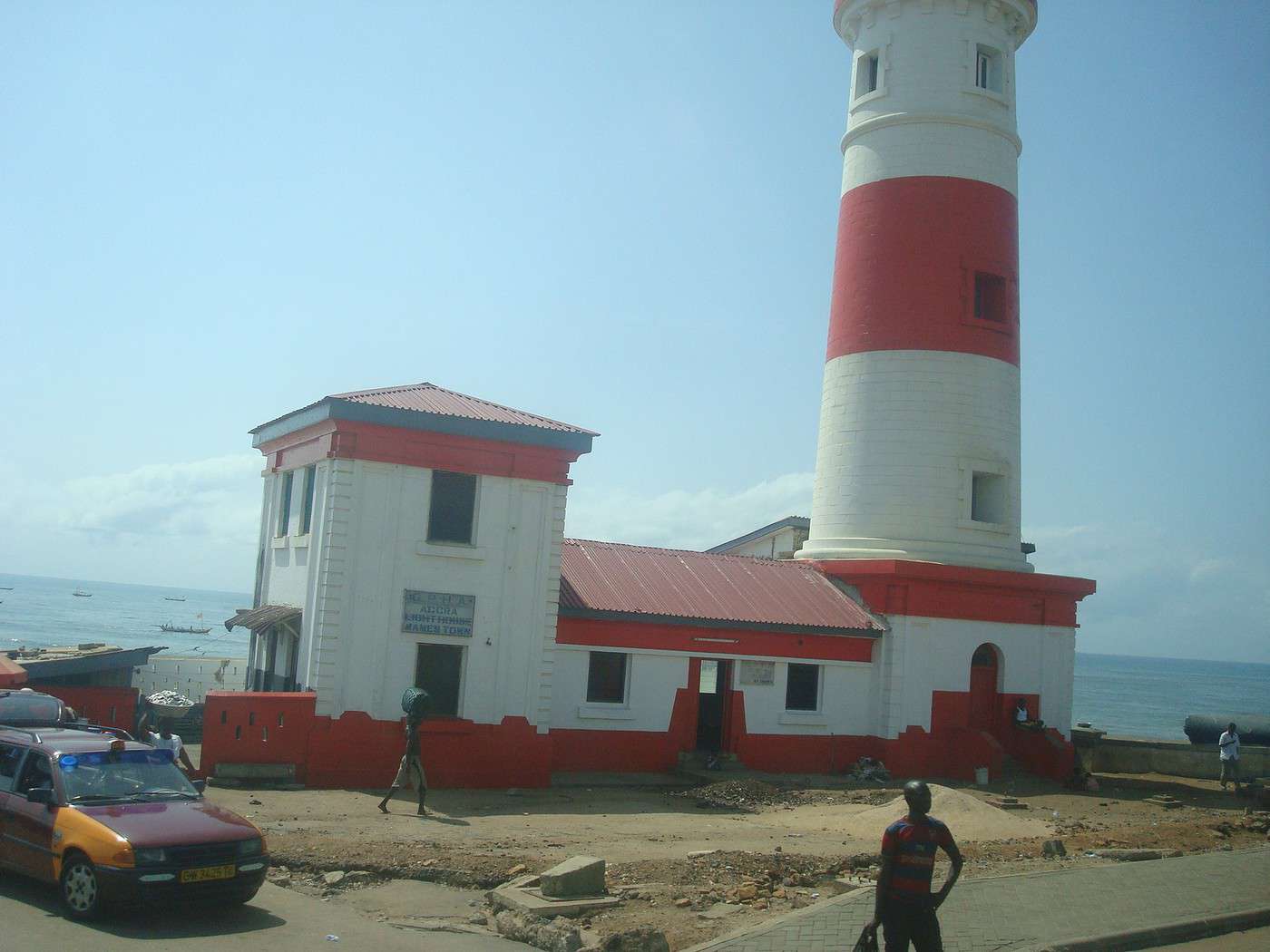
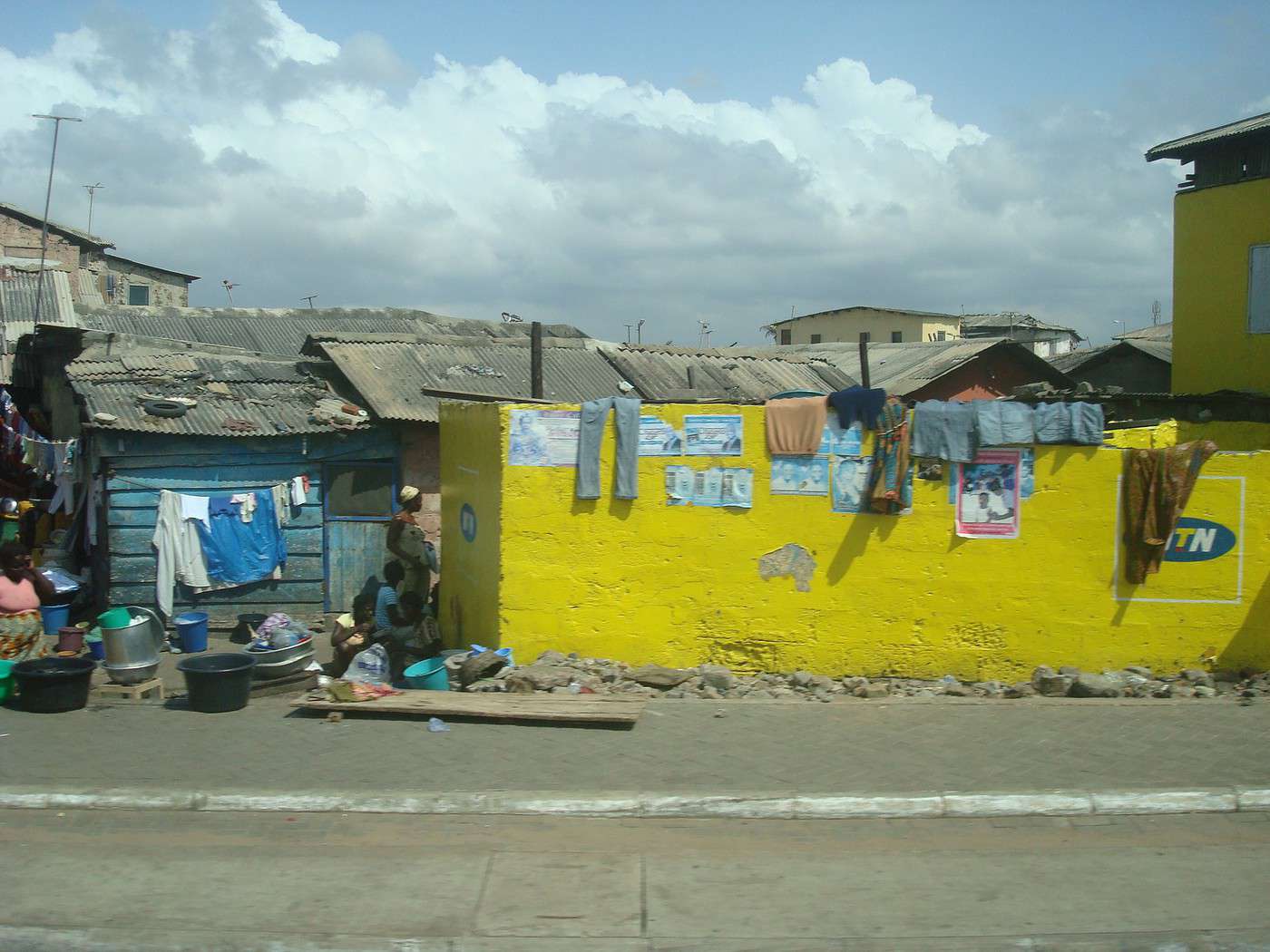
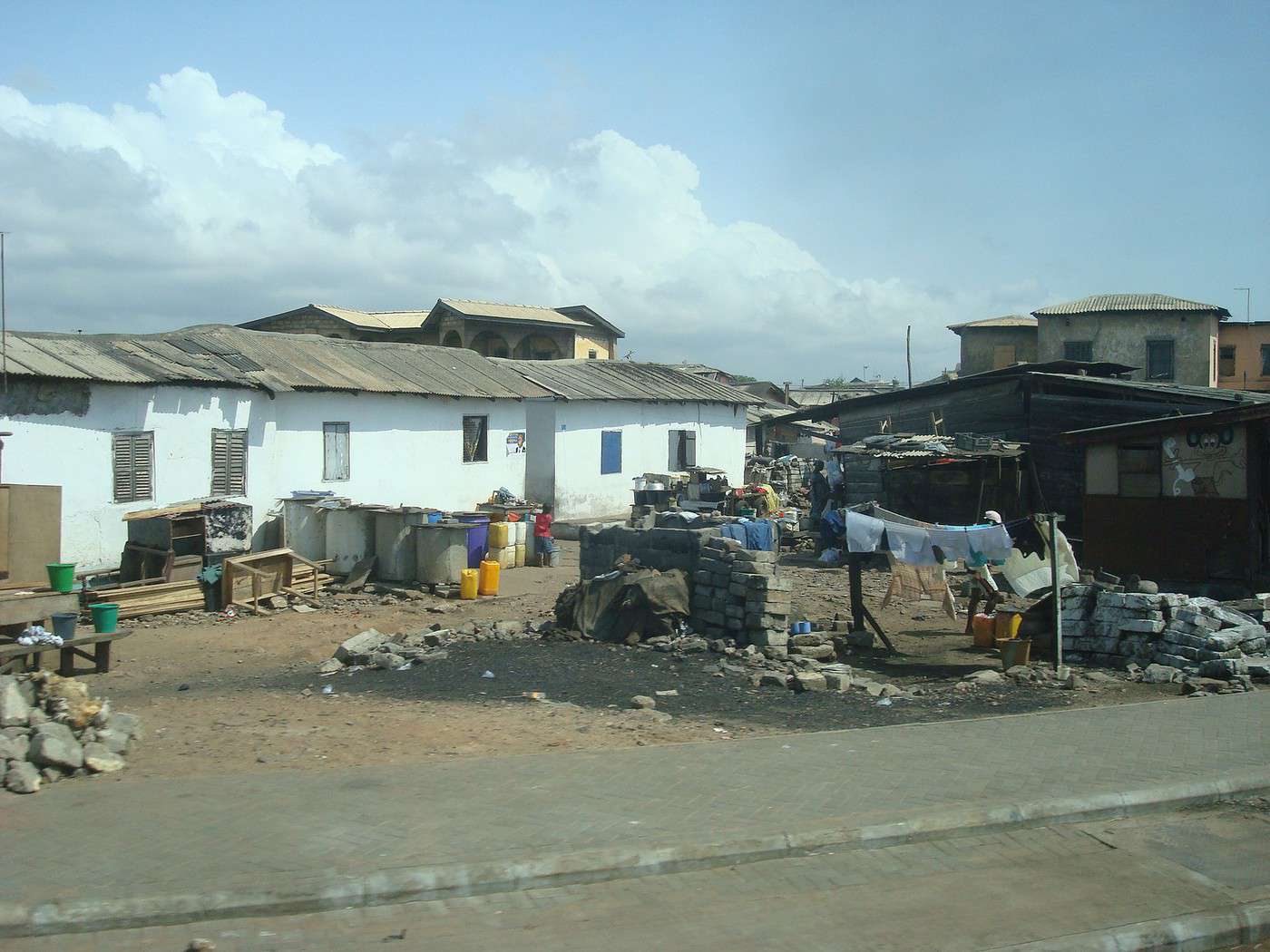
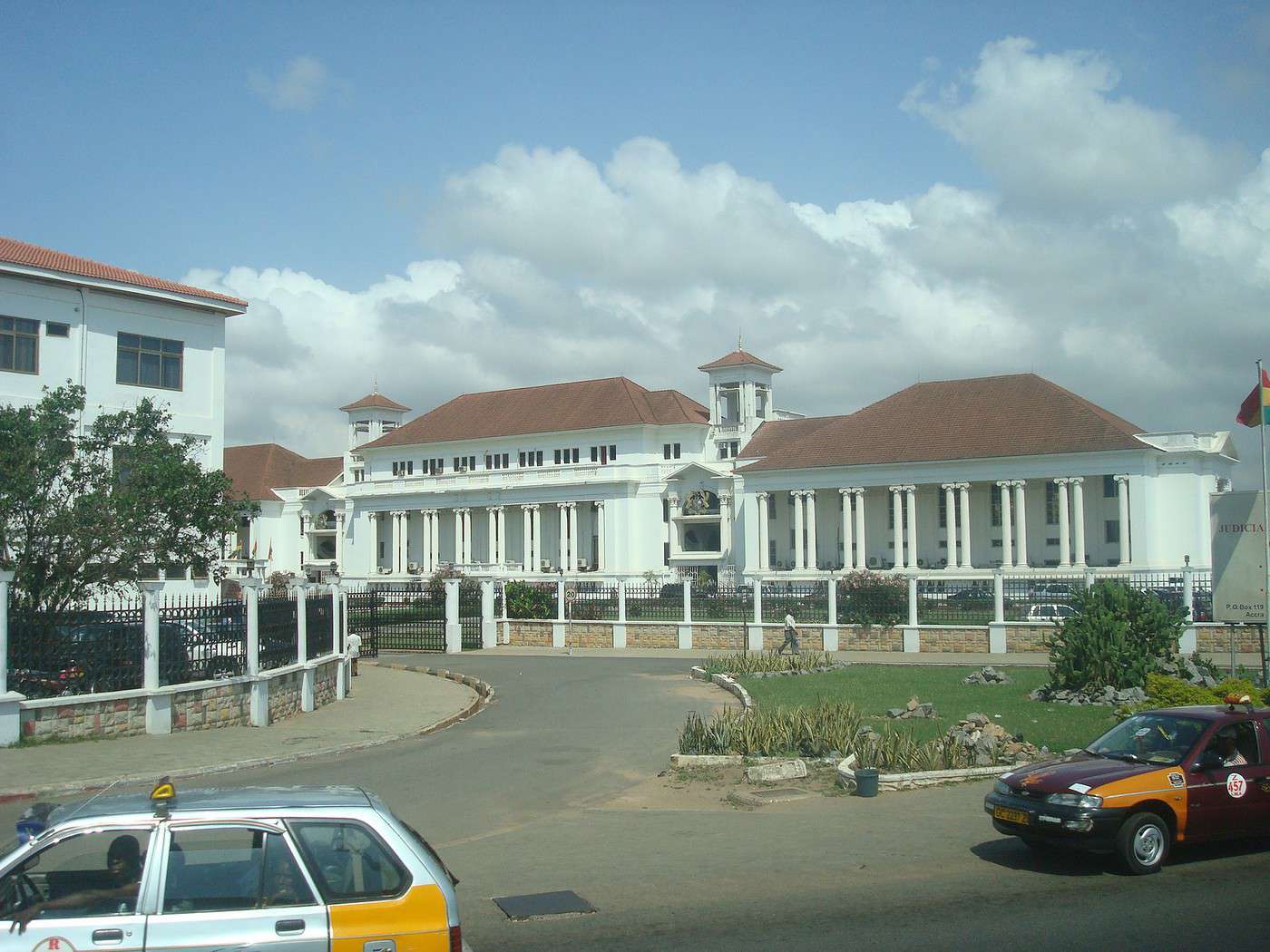
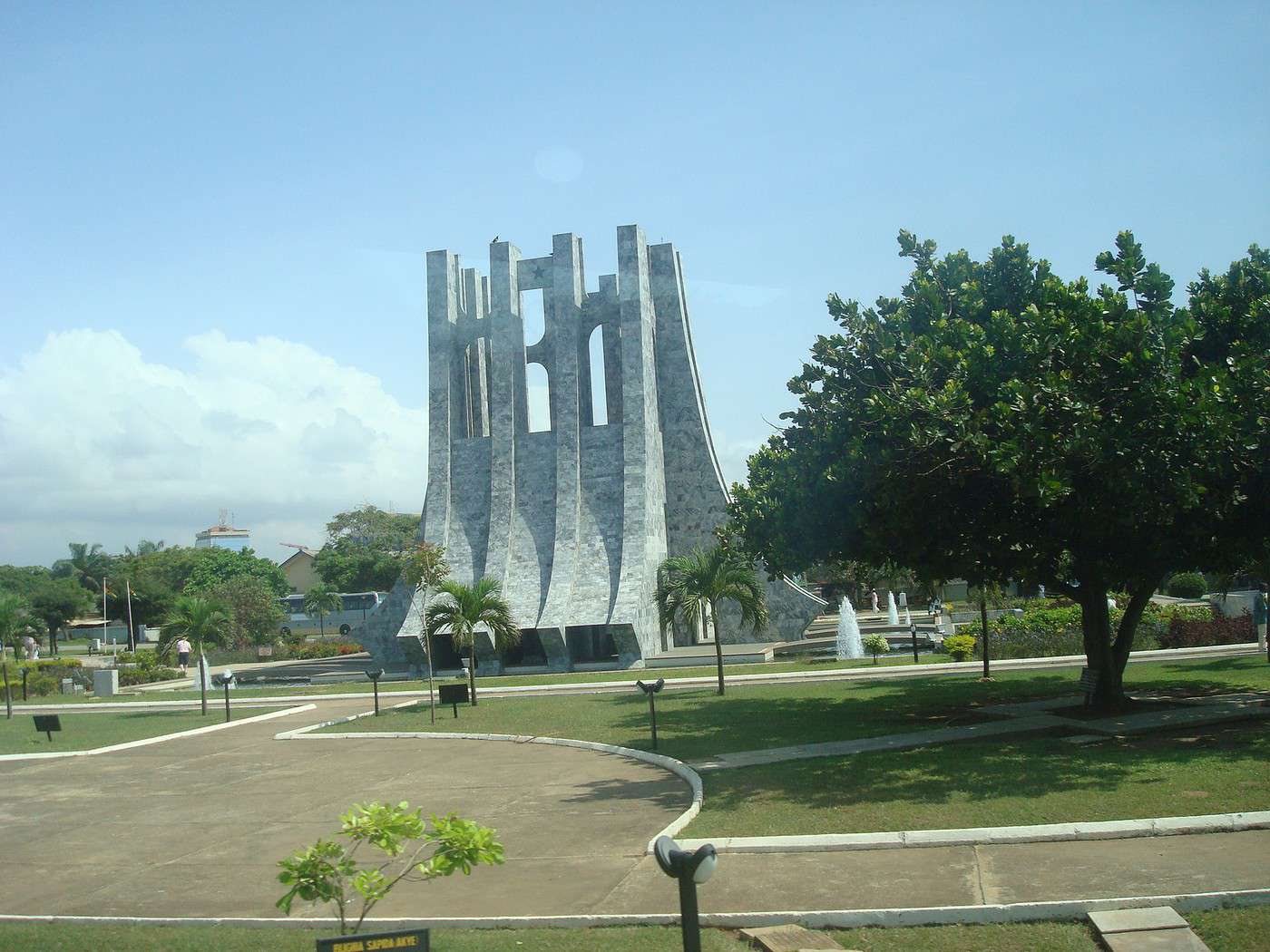
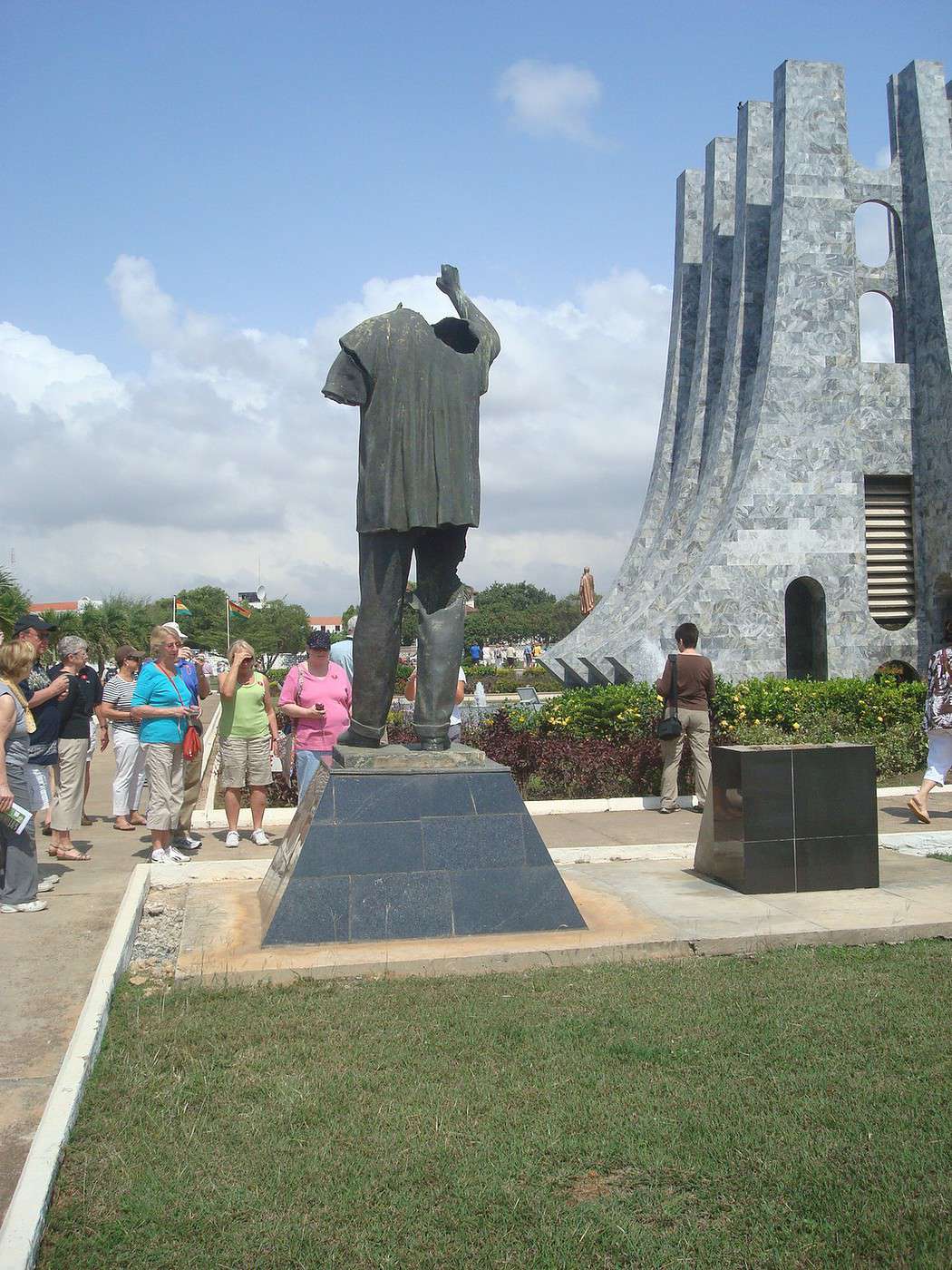
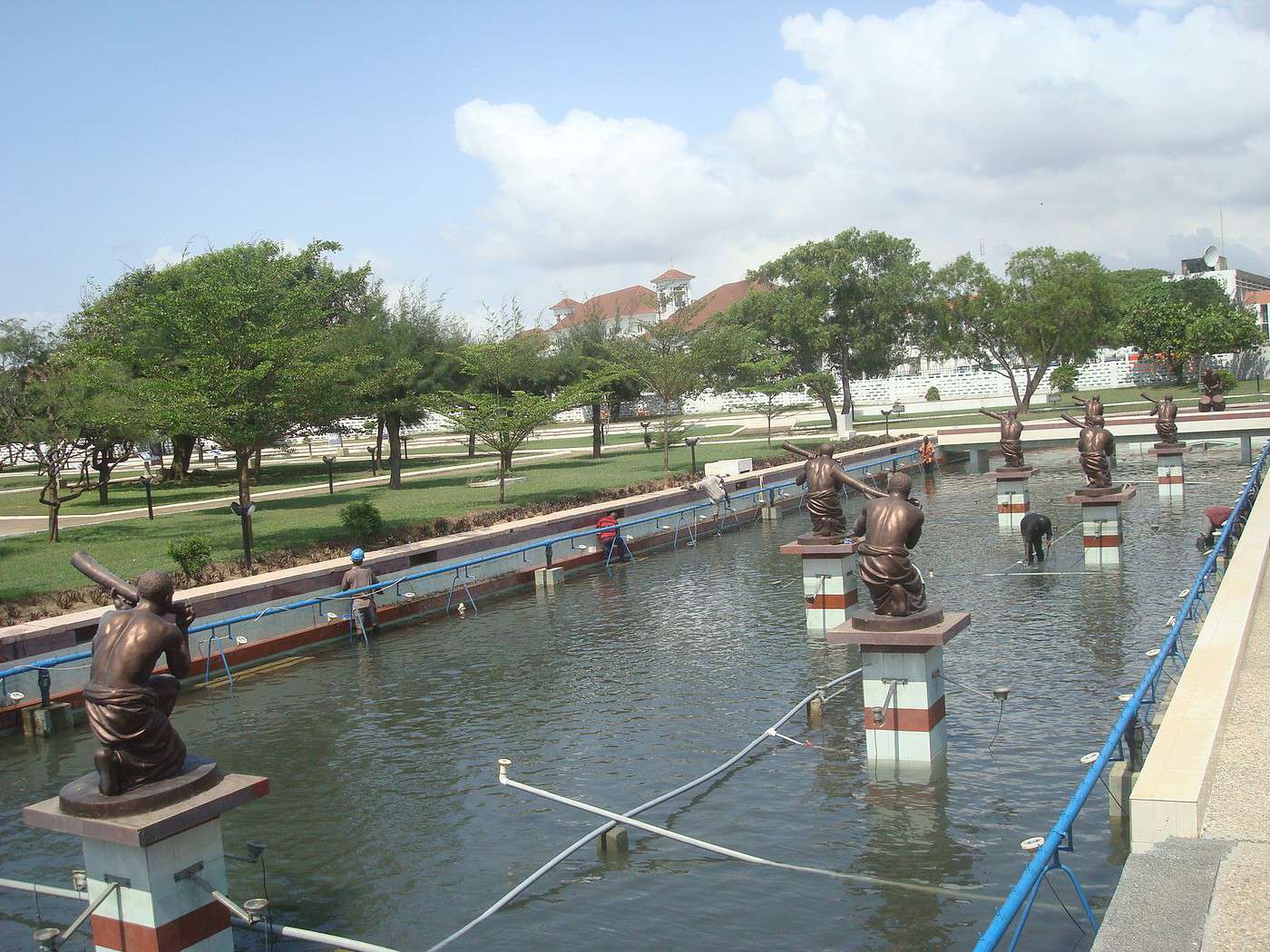
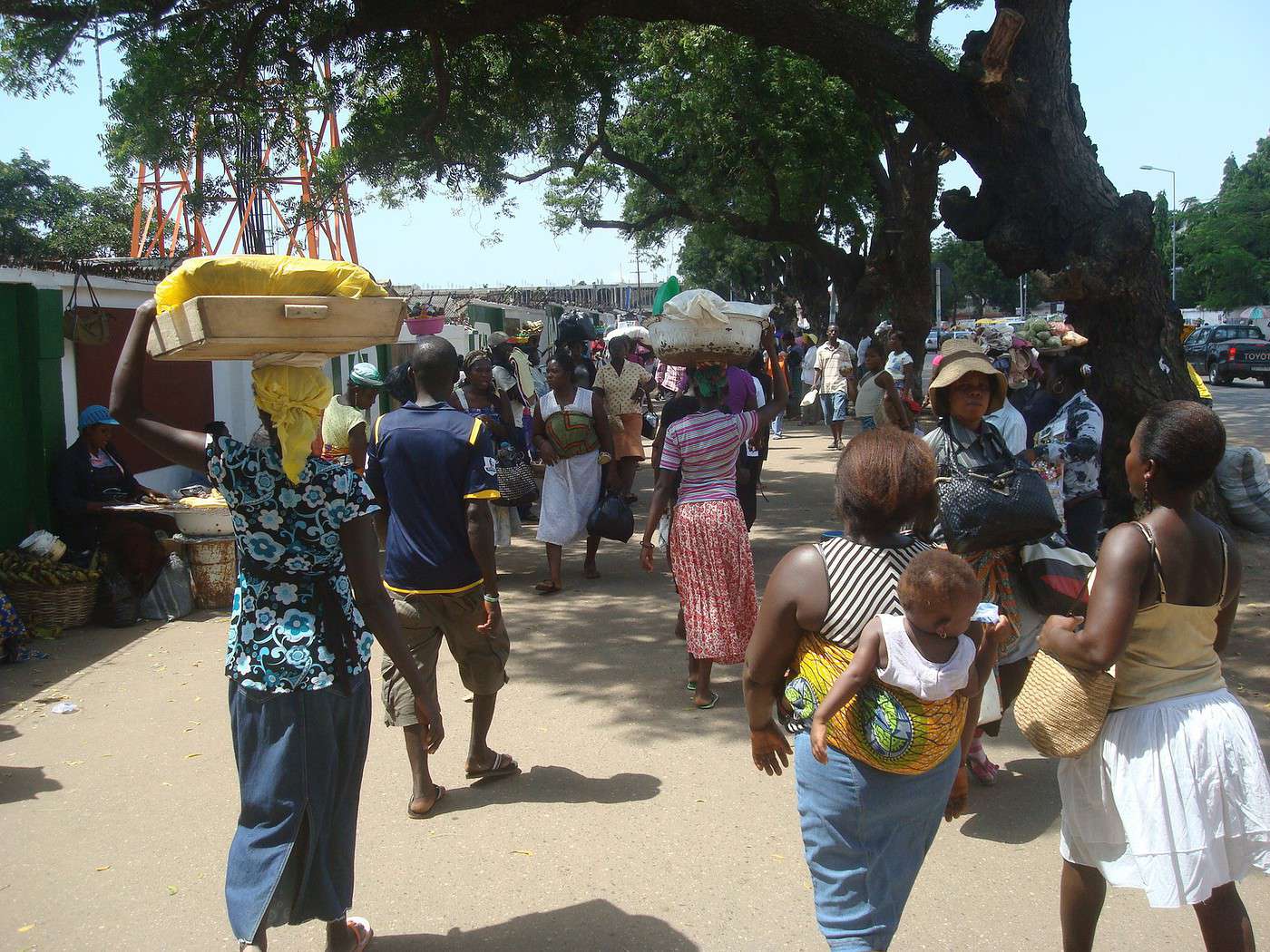
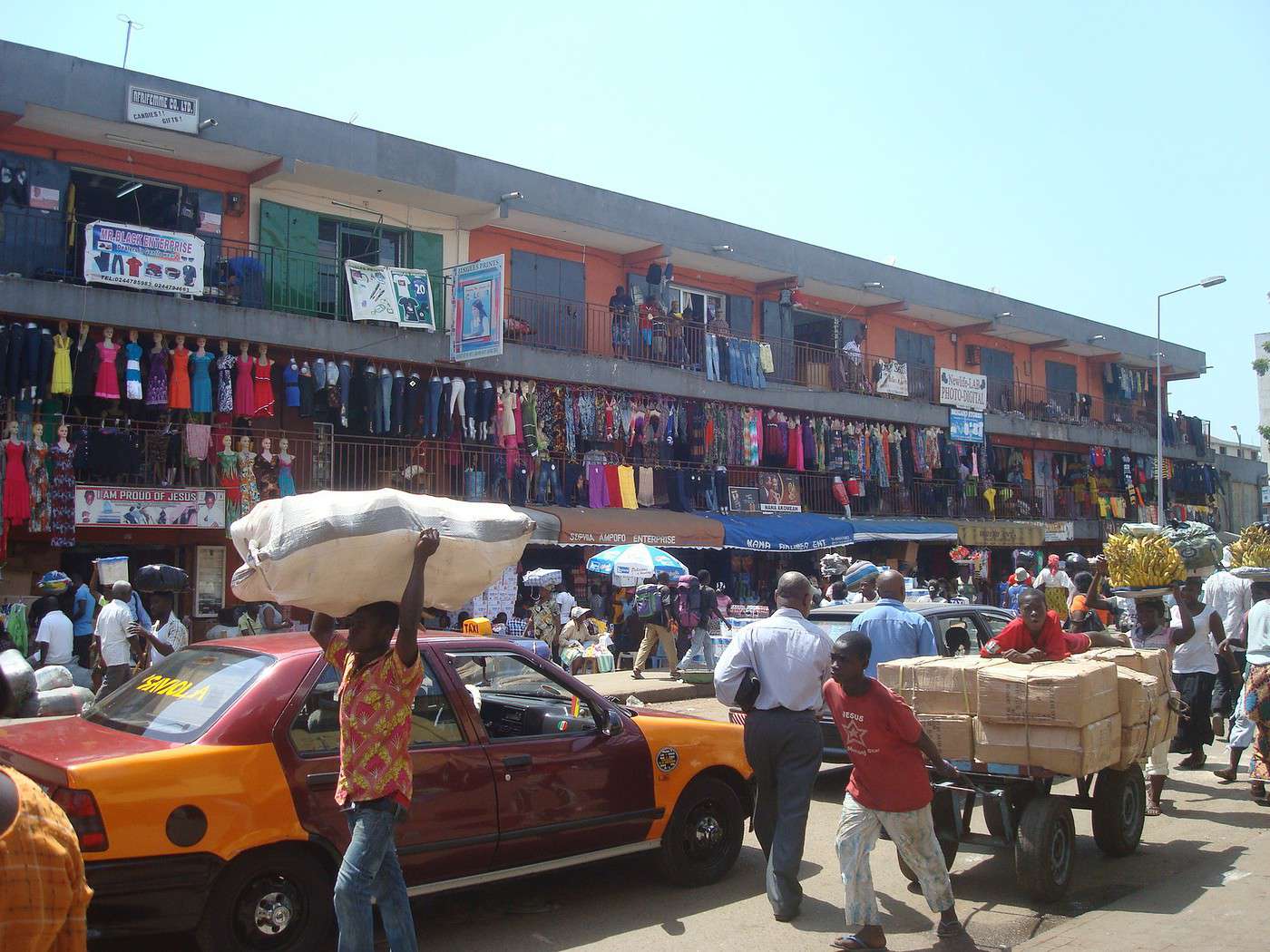
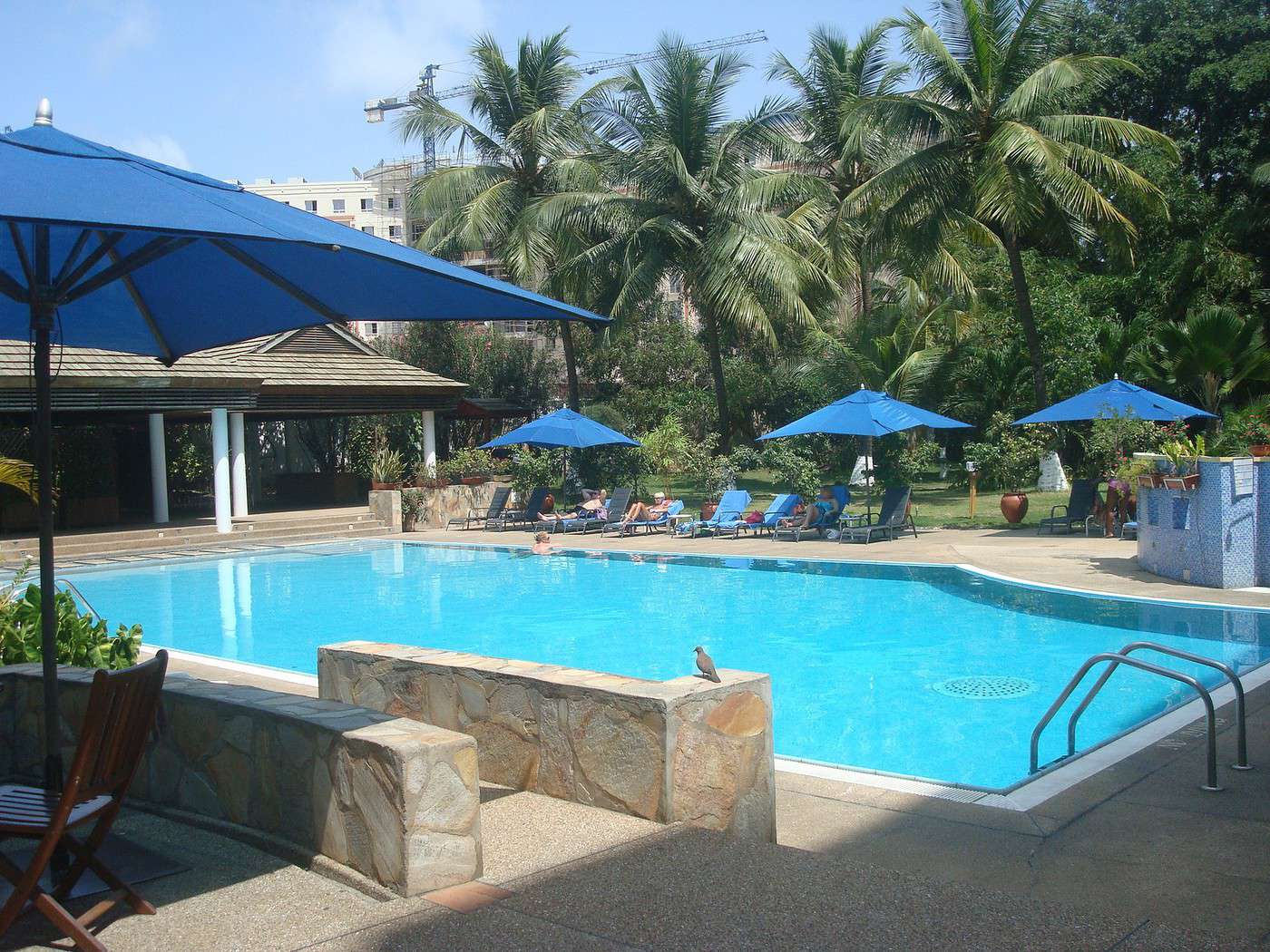
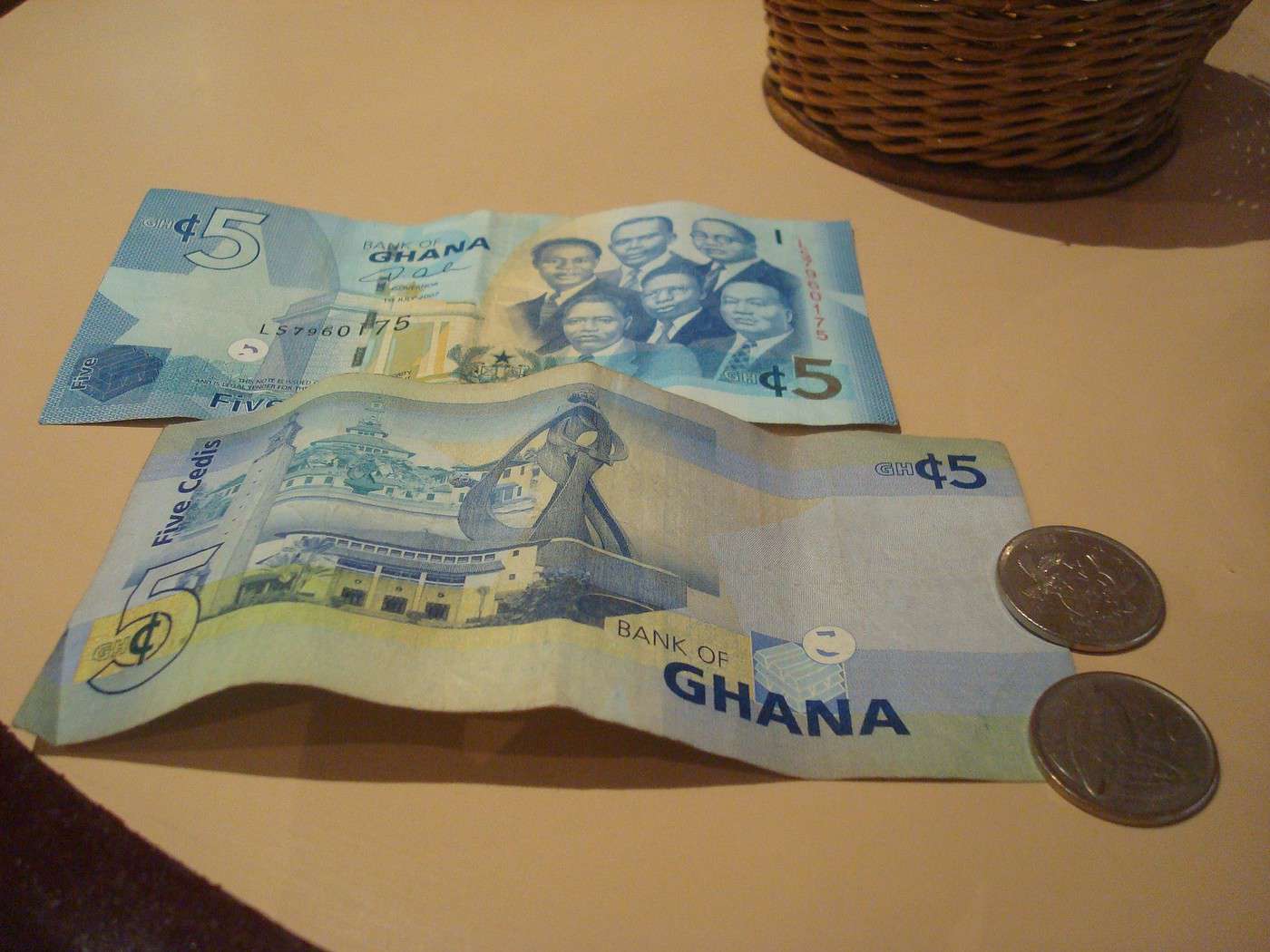
Port de Tema Rues de Tema Théâtre national dessiné par un architecte chinois (en forme de bateau) Fort de Jamestown Rue de Jamestown (population Ga) Court Suprême Parc Mémorial Kwame Nkrumah (3 photos) Rues d’Accra Marché Tu Du Piscine du Novotel Monnaie du Ghana : Cedis
Les boutiques de cercueils (prochain message)
Population du Ghana : 24 4000 000 Âge médian : 21,1 ans Indépendance : 6 mars 1957 (du Royaume-Uni) Chrétiens 69% Musulmans 16% Langue officielle : Anglais Capitale : Accra Sur le golfe de Guinée, juste au nord de l’Équateur Homme politique vénéré : Kwame Nkrumah (1909 – 1972)
Excursion choisie : «Accra Sampler» (7h½)
La majorité de la population du Ghana sait lire et écrire. Découverte de ressources pétrolières non négligeables récemment Économie basée sur l’agriculture, mais l’industrie y est développée. C’est l’une des places en Afrique où les gens aimeraient vivre. Développement récent assez spectaculaire Exemple d'Art ghanéen contemporain: 😮😮 😉 plutôt unique: les cercueils personnalisés de toute couleur (voir les photos) - en forme de poissons, bouteilles, avion, auto, Centre Pompidou !… selon la passion ou la volonté du défunt 😏 Fort original et pas du tout macabre!
Quelques photos
Port de Tema Rues de Tema Théâtre national dessiné par un architecte chinois (en forme de bateau) Fort de Jamestown Rue de Jamestown (population Ga) Court Suprême Parc Mémorial Kwame Nkrumah (3 photos) Rues d’Accra Marché Tu Du Piscine du Novotel Monnaie du Ghana : Cedis
Les boutiques de cercueils (prochain message)
MoniqueM
« Emmenez- moi au bout de la terre
Emmenez-moi au pays des merveilles...»
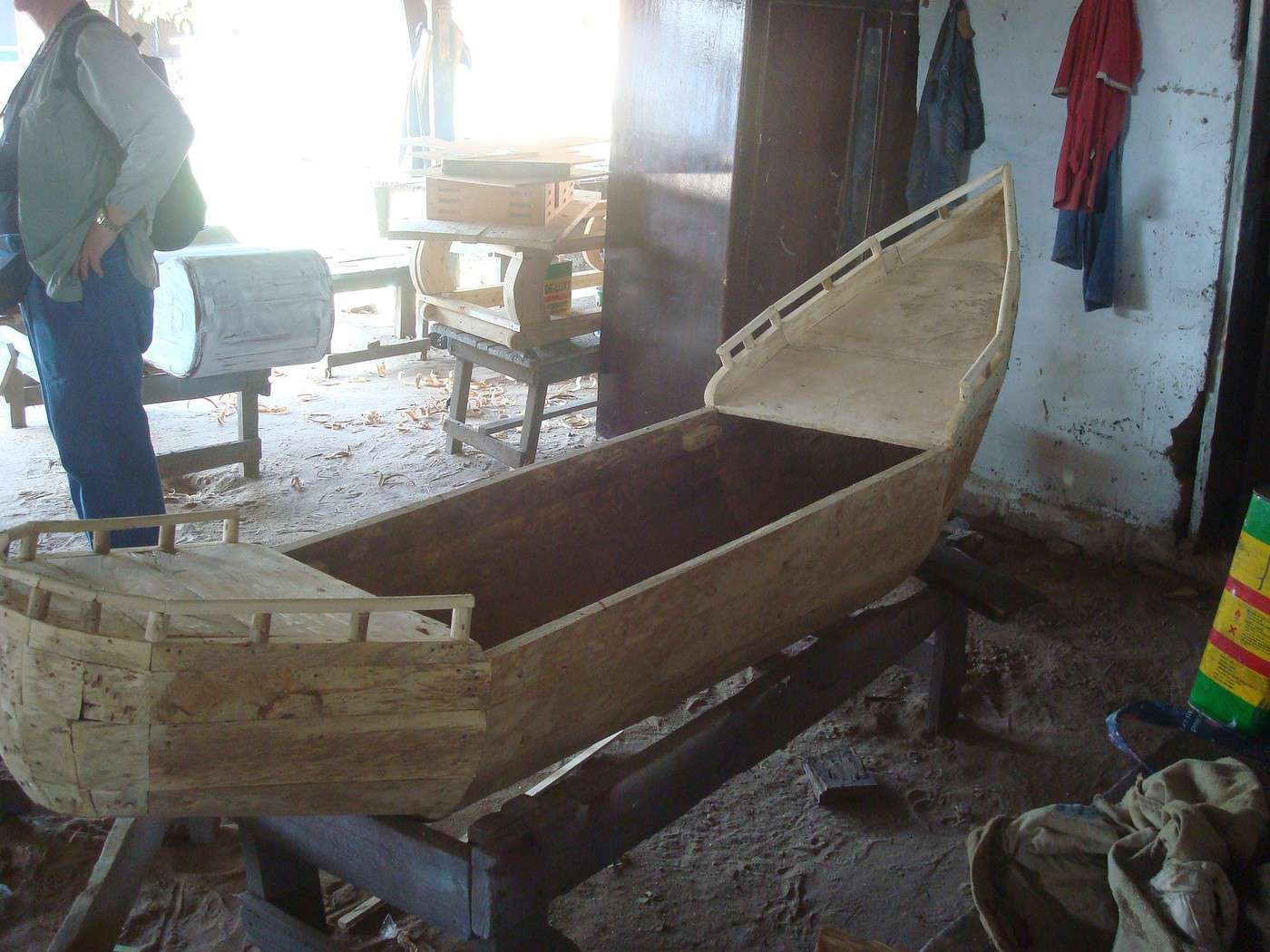
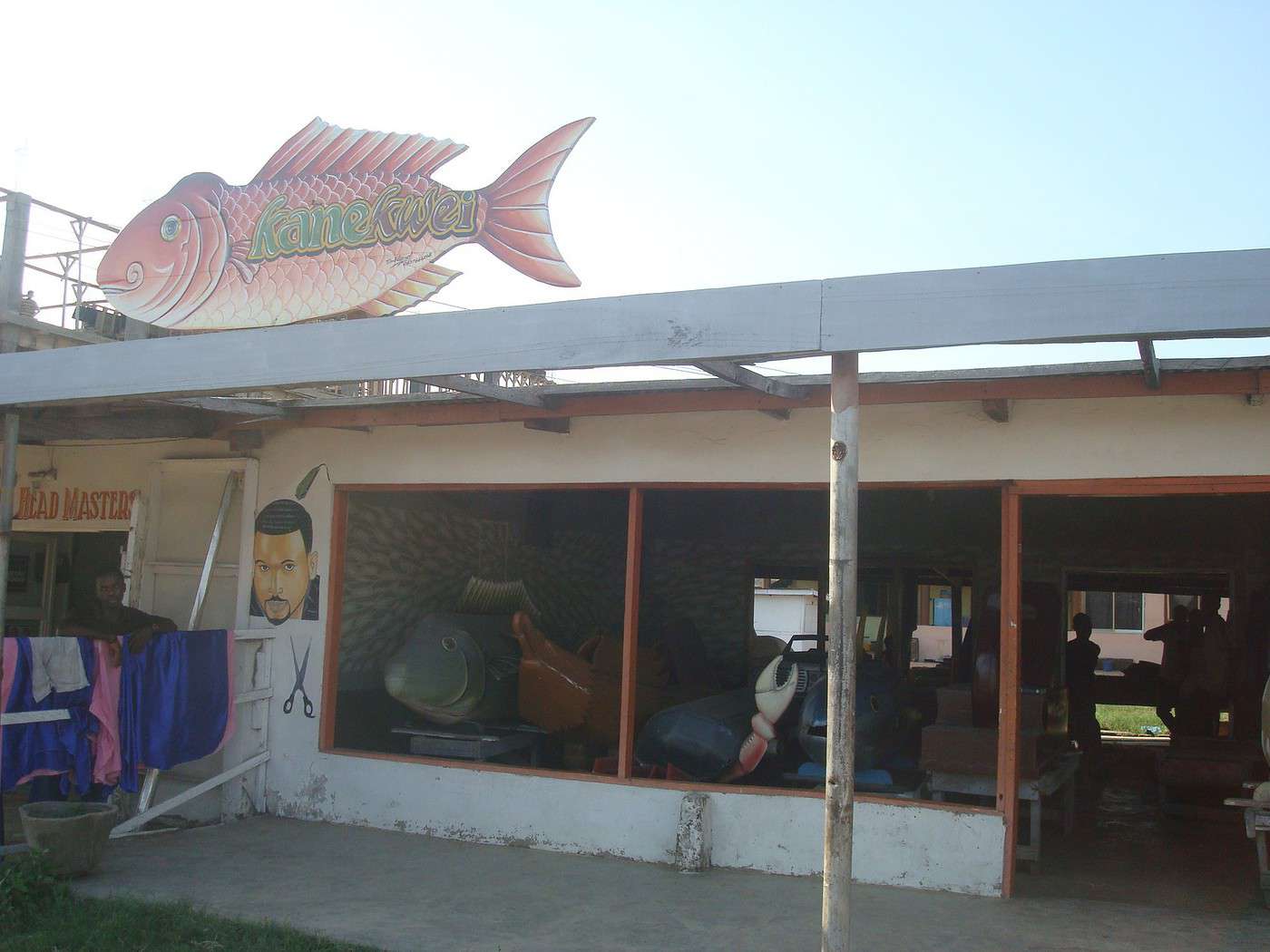
L'art des cercueils au Ghana est étonnant... On voit de nombreuses fabriques, appelées «Casket-Making Shop».
À première vue, on pense être en présence de gros jouets. Tout à coup, on réalise... des cercueils! Les gens souvent se privent pour acheter ces objets d'art pour leurs chers disparus... Habituellement, ils choisissent une forme qui rappelle la profession du disparu: menuisier, pêcheur... croyant qu'après la mort, il continue à exercer sa profession... ou sa fierté, sa passion...
Photos de Tema (Ghana) (suite)
À première vue, on pense être en présence de gros jouets. Tout à coup, on réalise... des cercueils! Les gens souvent se privent pour acheter ces objets d'art pour leurs chers disparus... Habituellement, ils choisissent une forme qui rappelle la profession du disparu: menuisier, pêcheur... croyant qu'après la mort, il continue à exercer sa profession... ou sa fierté, sa passion...
Photos de Tema (Ghana) (suite)
MoniqueM
« Emmenez- moi au bout de la terre
Emmenez-moi au pays des merveilles...»
Bonjour Monique,
Très intéressant ce voyage.
Je continue de te suivre.
A bientôt.
Pascal
"Ce qui est important, ce n'est pas d'arriver, mais d'aller vers..."
Saint Exupéry
Bonjour Monique
Elles sont superbes tes photos, et variées ! Tu es vraiment bien documentée pour les textes...comme mes cours d'histoire de l'Université. DAKAR me rappelle un souvenir : mon époux avait fait un séjour de 6 mois au Sénégal durant son service militaire. J'ai d'ailleurs d'anciennes photos en noir et blanc de Dakar et St Louis. Vingt ans plus tard, nous avions décidé de faire une croisière, avec la Cie Transtours je crois, depuis la France, détroit de Gibraltar, Canaries et Dakar. Nous avons dû annuler...et n'avons jamais pu la faire ensemble.
C'est vrai, que pour vous, citoyens du Nouveau Monde, l'Afrique est vraiment un dépaysement complet !
Présente pour la suite...😉
Bonne journée Josiane
Elles sont superbes tes photos, et variées ! Tu es vraiment bien documentée pour les textes...comme mes cours d'histoire de l'Université. DAKAR me rappelle un souvenir : mon époux avait fait un séjour de 6 mois au Sénégal durant son service militaire. J'ai d'ailleurs d'anciennes photos en noir et blanc de Dakar et St Louis. Vingt ans plus tard, nous avions décidé de faire une croisière, avec la Cie Transtours je crois, depuis la France, détroit de Gibraltar, Canaries et Dakar. Nous avons dû annuler...et n'avons jamais pu la faire ensemble.
C'est vrai, que pour vous, citoyens du Nouveau Monde, l'Afrique est vraiment un dépaysement complet !
Présente pour la suite...😉
Bonne journée Josiane
Romantica - Adriana - Galaxy - Wind NCL - Allegra - Orchestra - Solstice - Brilliance - Solstice - Liberty & Magnifica - Magnifica & Préziosa - Liberty & Eclipse - Allure - Symphony - Spectrum - Pandaw II - Harmonie - Edge - World europa - Diadema
Hello Monique !
Passionnant C/R... ça donne envie...
On a l’option d’annuler toute excursion sans frais et sans justification un ou 2 jours avant la dite excursion. À cette fin, on reçoit (avec les billets) un petit tableau indiquant pour chaque escale la date et l’heure de clôture pour l’annulation des tours. C’est habituellement la veille avant 18h ou l’avant-veille.
Ca, c'est un gros "plus" par rapport à Costa ou MSC... d'autant que c'est un "petit bateau"... Mais peut-être cette compagnie a-t-elle prévu de pouvoir "annuler des bus" à la dernière minute, vis à vis des Tour Operators locaux, ce que Costa, à ma connaissance, ne peut (sait ?) pas faaire.
C'est écrit aussi à chaque jour dans le «Patter».
Seules les excursions comprenant une véhicule privé ne sont pas remboursables.
On peut attendre pour réserver nos excursions de le faire sur le bateau : on remplit alors une fiche pour chaque escale qu'on dépose dans une boîte à cet effet ou on s’inscrit directement au Bureau des excursions (Tour Office).
Elite Members – À partir de la 16e croisière ou 151+ jours S’ajoutent aux autres bénéfices : Embarquement et désembarquement prioritaires Priorité pour les tenders (bateaux-navettes) Nettoyage à sec et lavage gratuits, polissage des souliers 10% de réduction dans les boutiques du bateau Séance de dégustation de vins Mini bar garni (tel que décrit sur leur site : mini bouteilles de cognac (2), gin (2), vodka(2), whiskey (2); bières (2); tonic water, etc. Choix de canapés servis dans la cabine les soirs de gala (sur demande) Service quotidien du thé à l’Anglaise (gants blancs - sandwich de fantaisie, petits fours & scones) dans la cabine (sur demande) ou au Pont Promenade.
tout ça ressemble terriblement au Yacht-Club de MSC (mais ce dès le 1er jour de croisière chez MSC...)
* 7 jours ou moins 150 minutes Valeur 75$US 8-20 jours 250 minutes Valeur 100$US (75 Euros) 21 jours et plus 500 minutes Valeur 200$US
Whaooo ! 😮 là, par contre, c'est horriblement cher par rapport à Costa ou MSC... 😕 24 heures me coûteraient pas loin de 600 $, alors que c'est 120 € chez MSC...
Passionnant C/R... ça donne envie...
On a l’option d’annuler toute excursion sans frais et sans justification un ou 2 jours avant la dite excursion. À cette fin, on reçoit (avec les billets) un petit tableau indiquant pour chaque escale la date et l’heure de clôture pour l’annulation des tours. C’est habituellement la veille avant 18h ou l’avant-veille.
Ca, c'est un gros "plus" par rapport à Costa ou MSC... d'autant que c'est un "petit bateau"... Mais peut-être cette compagnie a-t-elle prévu de pouvoir "annuler des bus" à la dernière minute, vis à vis des Tour Operators locaux, ce que Costa, à ma connaissance, ne peut (sait ?) pas faaire.
C'est écrit aussi à chaque jour dans le «Patter».
Seules les excursions comprenant une véhicule privé ne sont pas remboursables.
On peut attendre pour réserver nos excursions de le faire sur le bateau : on remplit alors une fiche pour chaque escale qu'on dépose dans une boîte à cet effet ou on s’inscrit directement au Bureau des excursions (Tour Office).
Elite Members – À partir de la 16e croisière ou 151+ jours S’ajoutent aux autres bénéfices : Embarquement et désembarquement prioritaires Priorité pour les tenders (bateaux-navettes) Nettoyage à sec et lavage gratuits, polissage des souliers 10% de réduction dans les boutiques du bateau Séance de dégustation de vins Mini bar garni (tel que décrit sur leur site : mini bouteilles de cognac (2), gin (2), vodka(2), whiskey (2); bières (2); tonic water, etc. Choix de canapés servis dans la cabine les soirs de gala (sur demande) Service quotidien du thé à l’Anglaise (gants blancs - sandwich de fantaisie, petits fours & scones) dans la cabine (sur demande) ou au Pont Promenade.
tout ça ressemble terriblement au Yacht-Club de MSC (mais ce dès le 1er jour de croisière chez MSC...)
* 7 jours ou moins 150 minutes Valeur 75$US 8-20 jours 250 minutes Valeur 100$US (75 Euros) 21 jours et plus 500 minutes Valeur 200$US
Whaooo ! 😮 là, par contre, c'est horriblement cher par rapport à Costa ou MSC... 😕 24 heures me coûteraient pas loin de 600 $, alors que c'est 120 € chez MSC...
bonjour Monique!! je réponds pendant que tu dors!tu t'es lachée là! un vrai grand plaisir de te lire, c'est tellement intéressant, et des pays qui ne ressemblent à nul autre (en dehors de leurs voisins, bien sur!)c'est très dépaysant!! es tu déja venue à paris? dans le 12e le marché d'aligre est dans la meme veine...mais pas le meme environnement .🤪... faut dire qu'on est plus habitués à des CR sur la méditerranée et ses environs!😉...serait ce toi dans la piscine du bateau ainsi qu'avec le groupe de dames qui se protègent le cou -(indispensable, sinon on est brulées!)?🙂à bientot pour la suite!BRAVO!
danièle
Bonjour Mathilde,
Oui, c'est fermé le vendredi et quand nous y étions, c'était un autre jour mais c'était aussi fermé...🤪
CARNIVAL-CELEBRITY-CLUB MED 2-COSTA-CROISIERES DE FRANCE-CUNARD-HOLLAND AMERICA LINE-MSC-NCL-OCEANIA-P&O-PONANT-PRINCESS-ROYAL CARIBBEAN-SEABOURN
Merciiiiiiiii pour toute cette suite geniale et sortie des sentiers battu de la mediterranée !!!
titi
Tu veux dire qu'au Yacht-Club de MSC, ils ont le lavage et nettoyage à sec gratuits et Internet gratuit???? comme les Elite de Princess dès la première croisière?
Je connais MSC - même catégorie que Costa, Carnival, etc, (Contemporary Cruise Lines). C'est quoi le Yacht-Club: l'équivalent du Captain' Club de Princess: Or, Platin, Elite? ou une sous-division chic plus chère???
MoniqueM
« Emmenez- moi au bout de la terre
Emmenez-moi au pays des merveilles...»
Bonjour Cat,
Le périple avance... Nous voici maintenant au Togo! 🙂
Jour 16 Lomé, TOGO (de 7h00 à 18h00) 11 novembre 32 oC
Population : 6 2000 000 Âge médian : 18,9 ans Indépendance : 27 avril 1960 Vaudou 51% Chrétiens 29% Musulmans 20% Langue officielle : Français (l’Anglais seconde langue de l’administration) 40 différents groupes ethniques (Ewe 32%, Kotokoli & Tchamba 22%, Kabye 22%…) Port d’escale: Lomé (à 6 km du centre de Lomé) Capitale : Lomé (pop. 800 000)
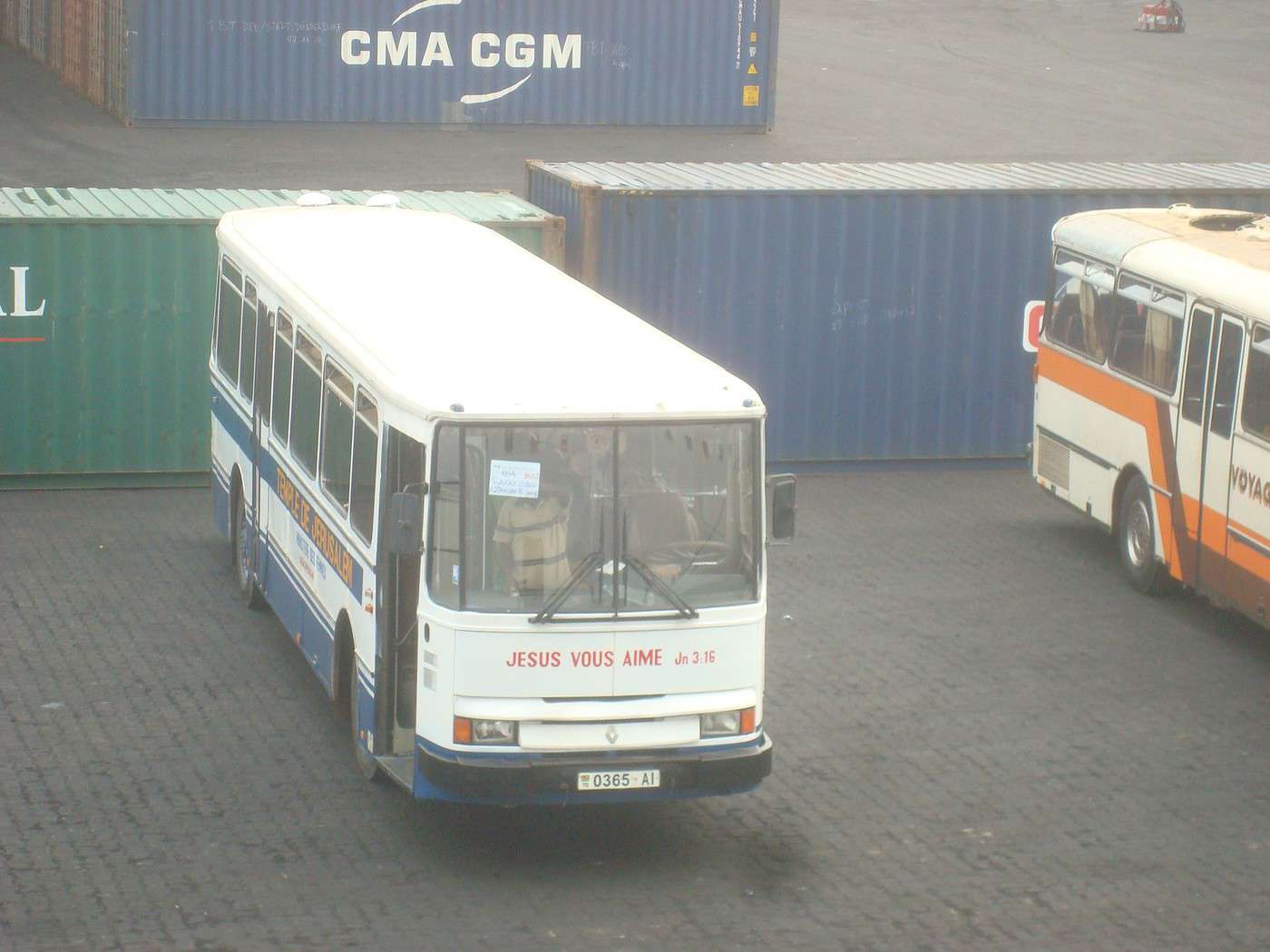
Le Togo est situé sur le golfe de Guinée entre le Ghana et le Bénin. Considéré comme un microcosme de l’Afrique de l'ouest, il offre une vaste étendue de paysages et de cultures. Le pays évolue à une vitesse fulgurante… Visite très dépaysante pour nous, c'est vrai! Les gens sont partout accueillants, souriants... J’ai remarqué 😉 qu’on retrouve un peu partout, sur les immeubles, sur les cars, des maximes religieuses … ! J’ai placé quelques exemples parmi les photos.
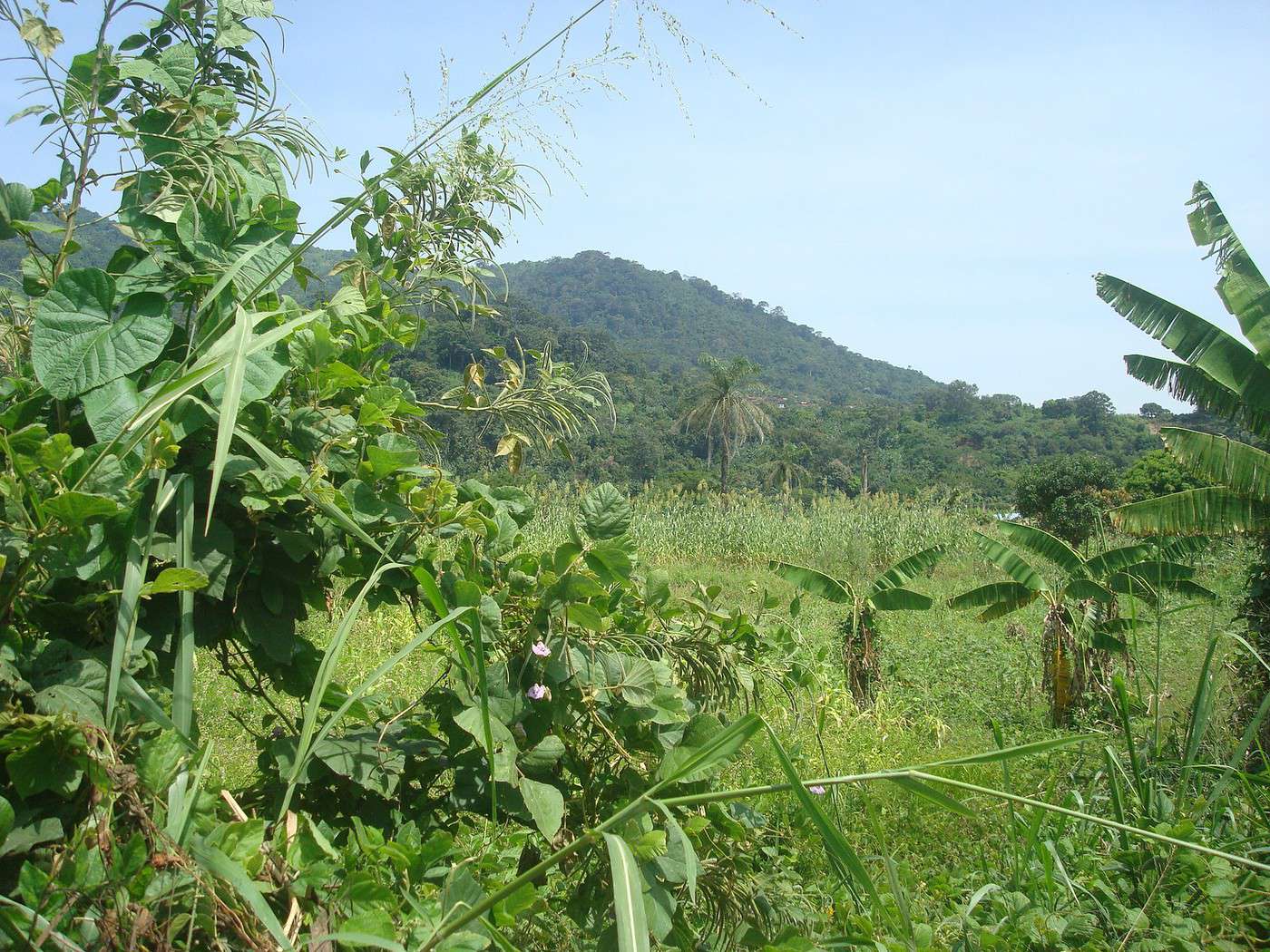
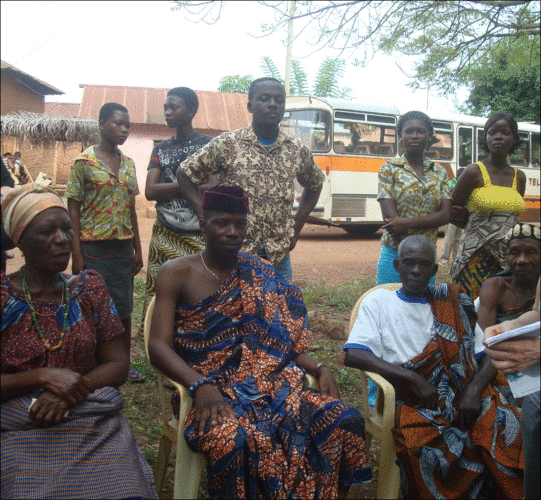
Donc, on visite: le Marché aux Fétiches / l'école primaire d'Akodessewa / Kpalimé, son centre artisanal, les beaux paysages au loin / Tové: rencontre du Chef du Canton et danses togolaises - intéressant leur système de Chef de Canton...
Note de lecture : Durant ce voyage, j’ai lu un superbe roman qui m’a aidée à mieux saisir l’histoire ou la situation socio-politique du Togo, ce pays que l’on dit «au vernis de normalité acquis» écrit par l’écrivain togolais Théo Ananissoh : «Ténèbres à midi» Continents noirs Gallimard 2010 (son 3e roman). Je le recommande pour tous ceux qui s’intéressent au Togo - roman subtil, courageux, lucide…
Excursion choisie : Lome Fetish Market & Kpalime (8h)
Photos
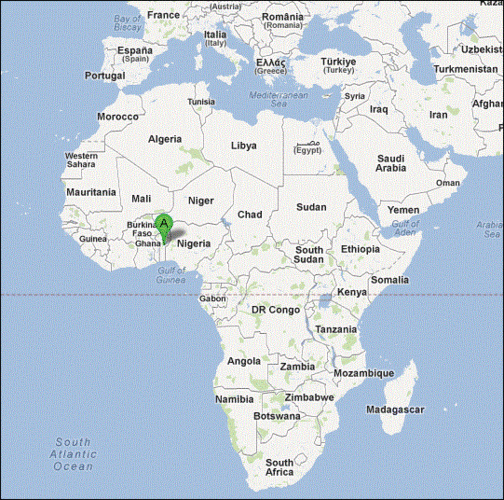
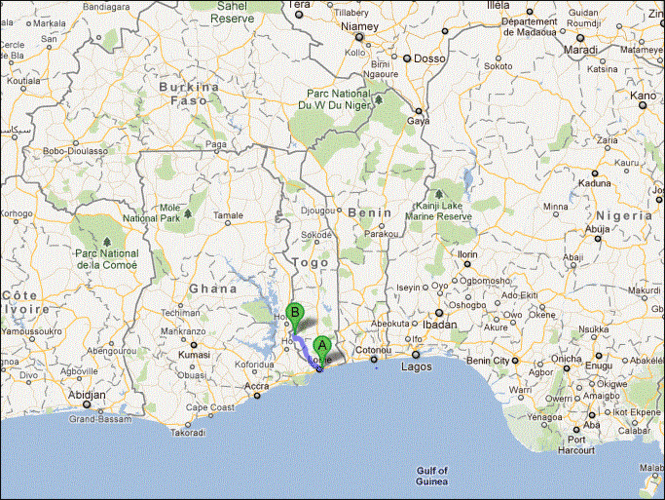
Carte du Ghana, Togo (Lomé A et Kpalimé B), Bénin: nos 3 escales sur le golfe de Guinée, Afrique occidententale
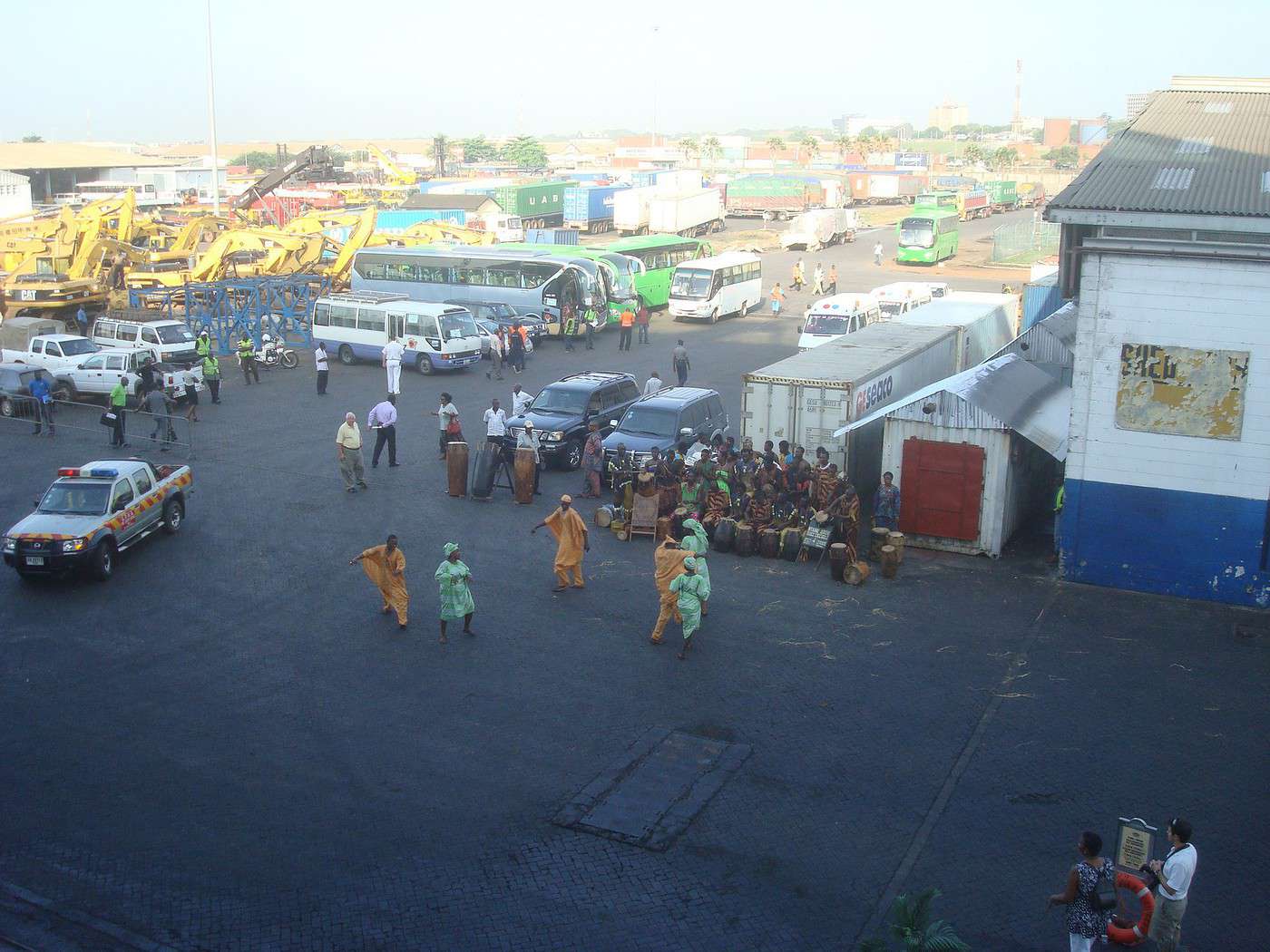
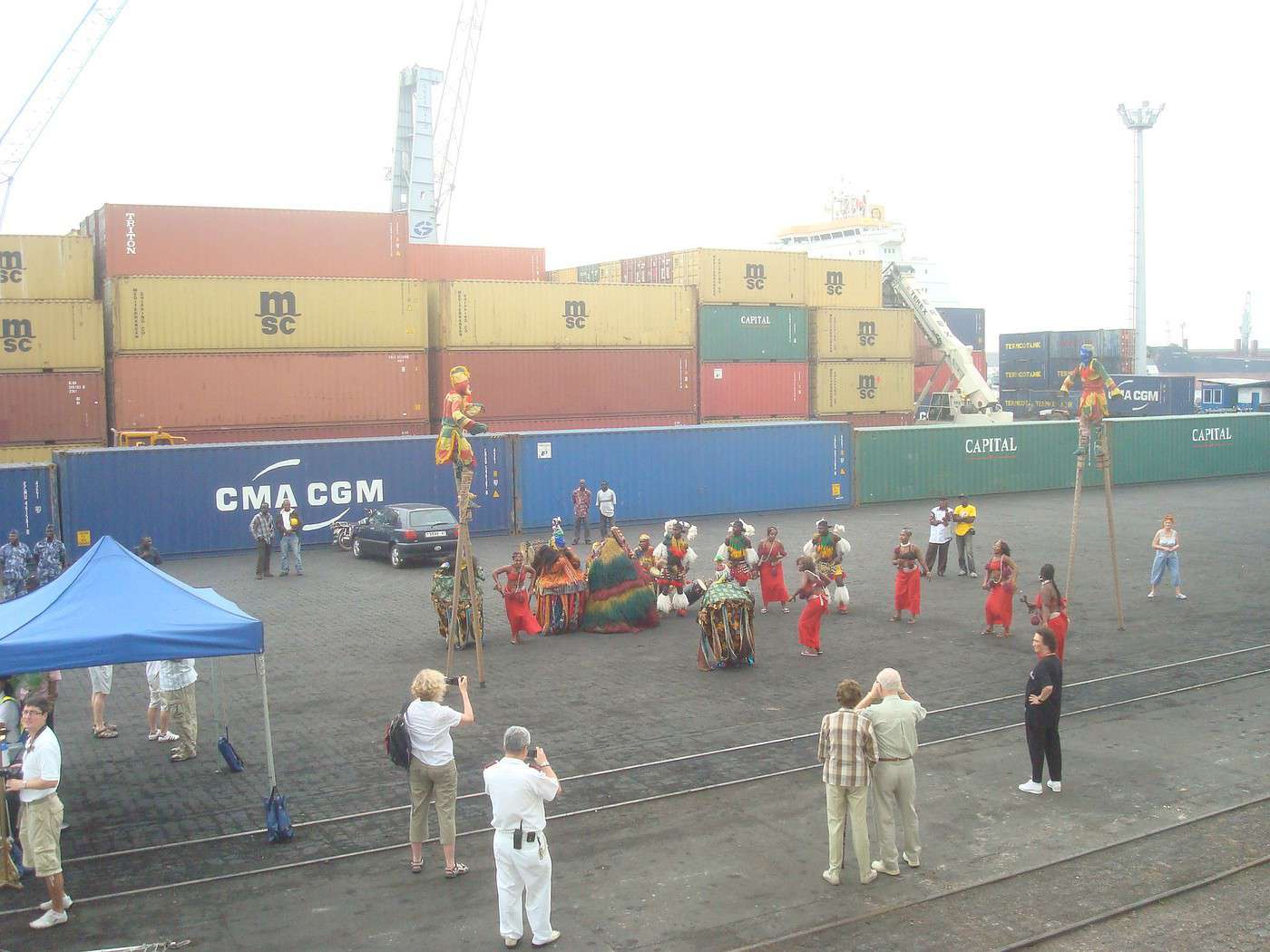
Spectaculaire accueil au Port de Lomé
Bus stationné dans le port de Lomé: «JESUS VOUS AIME»
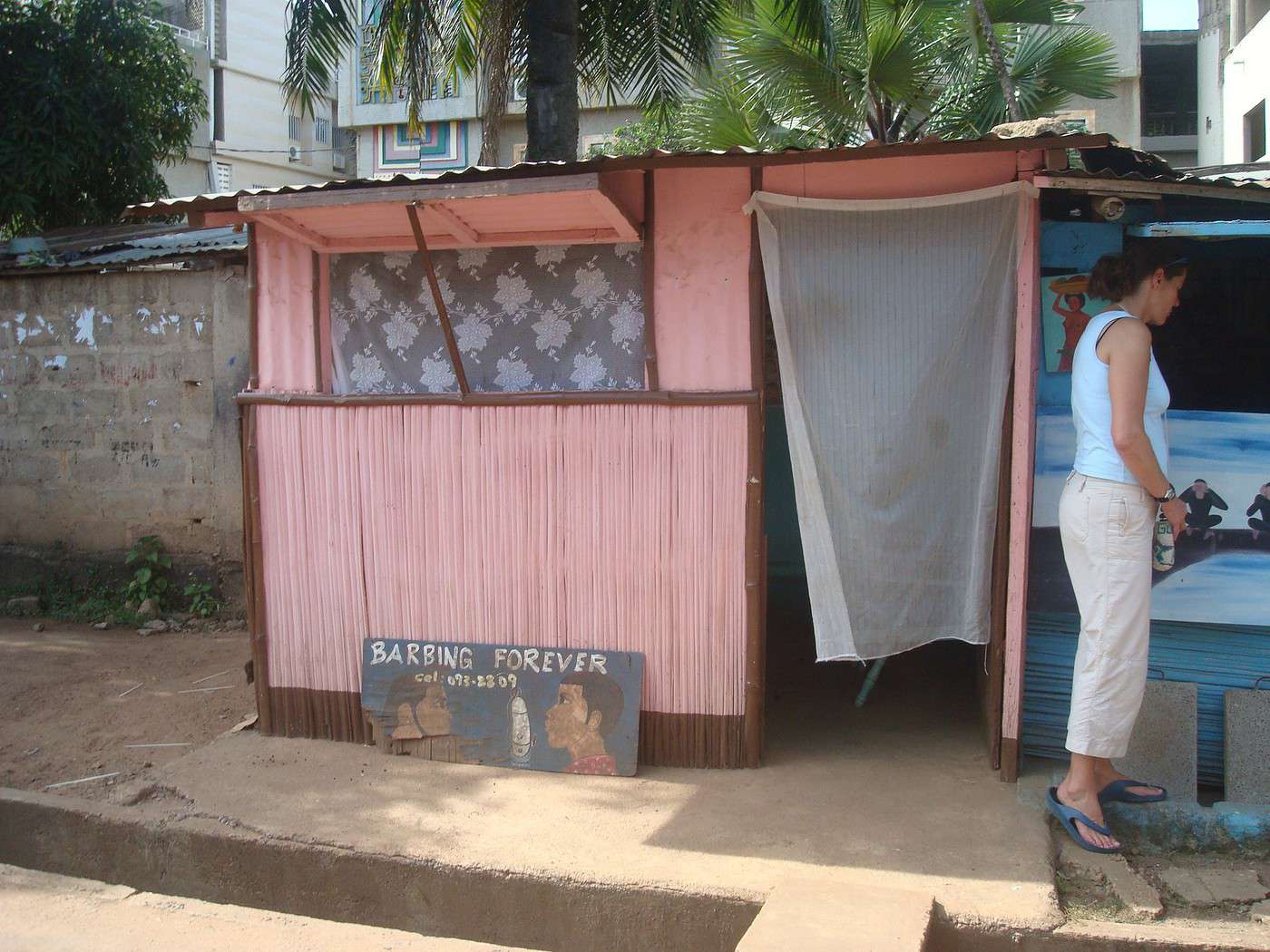
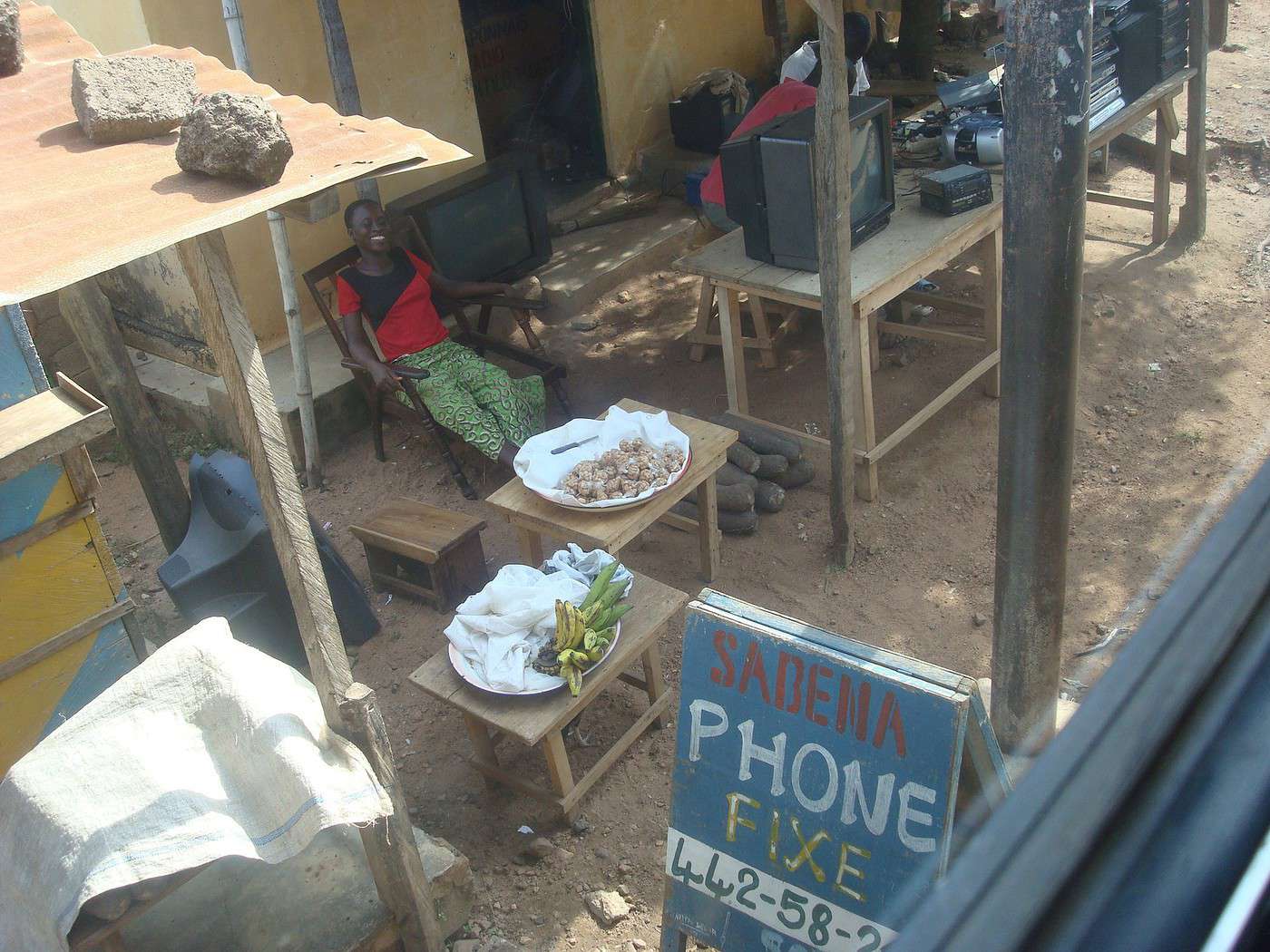
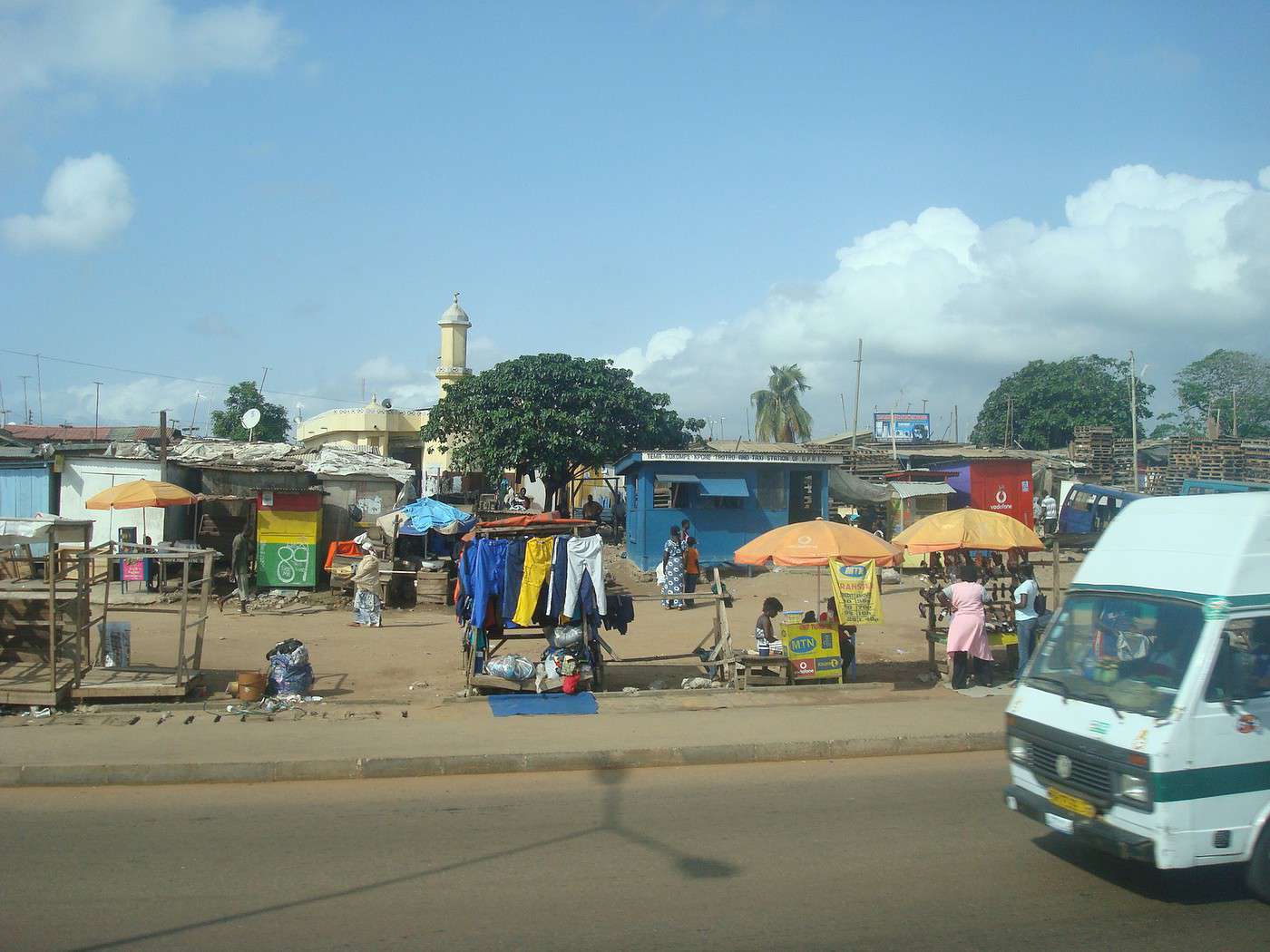
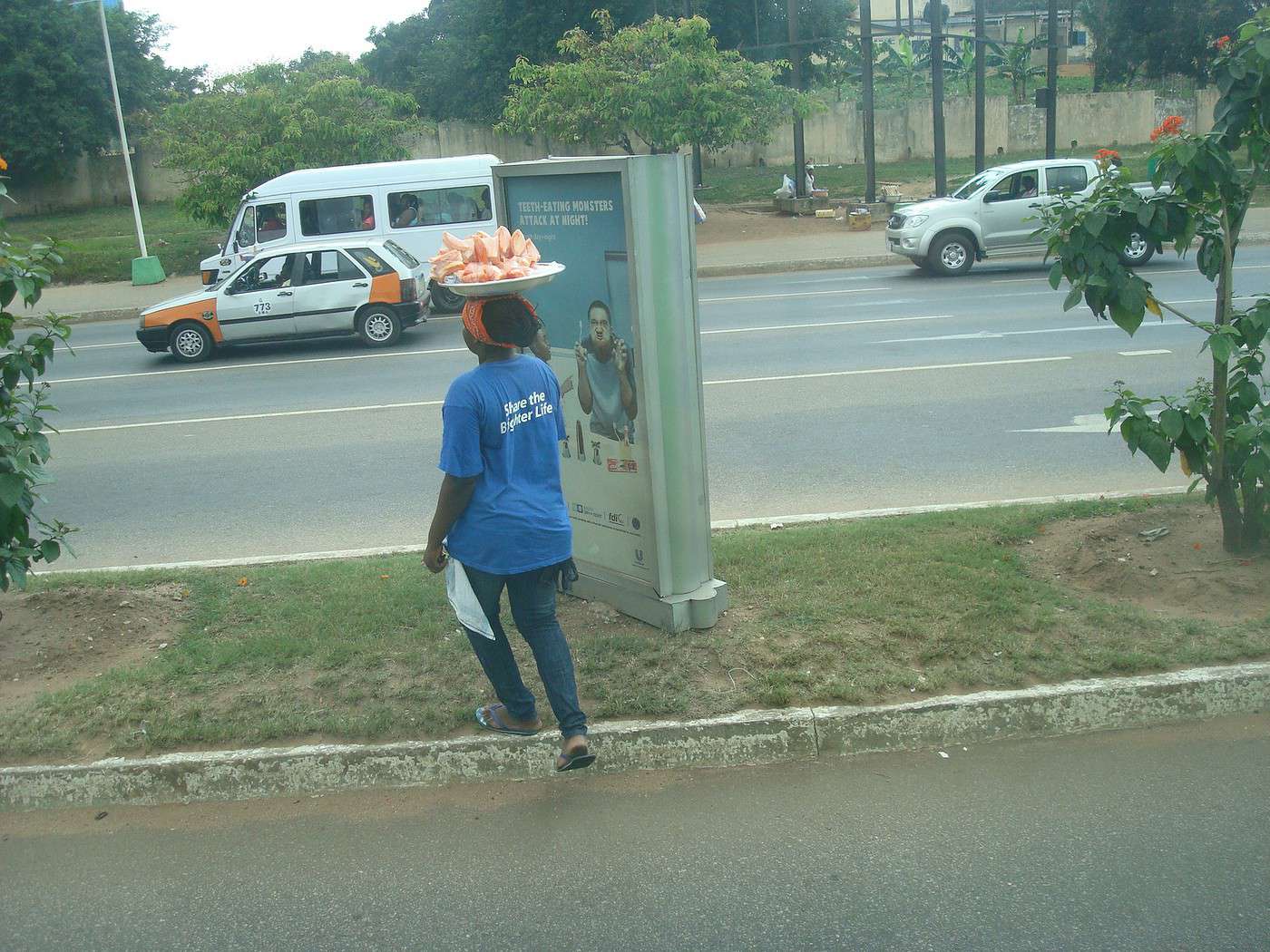
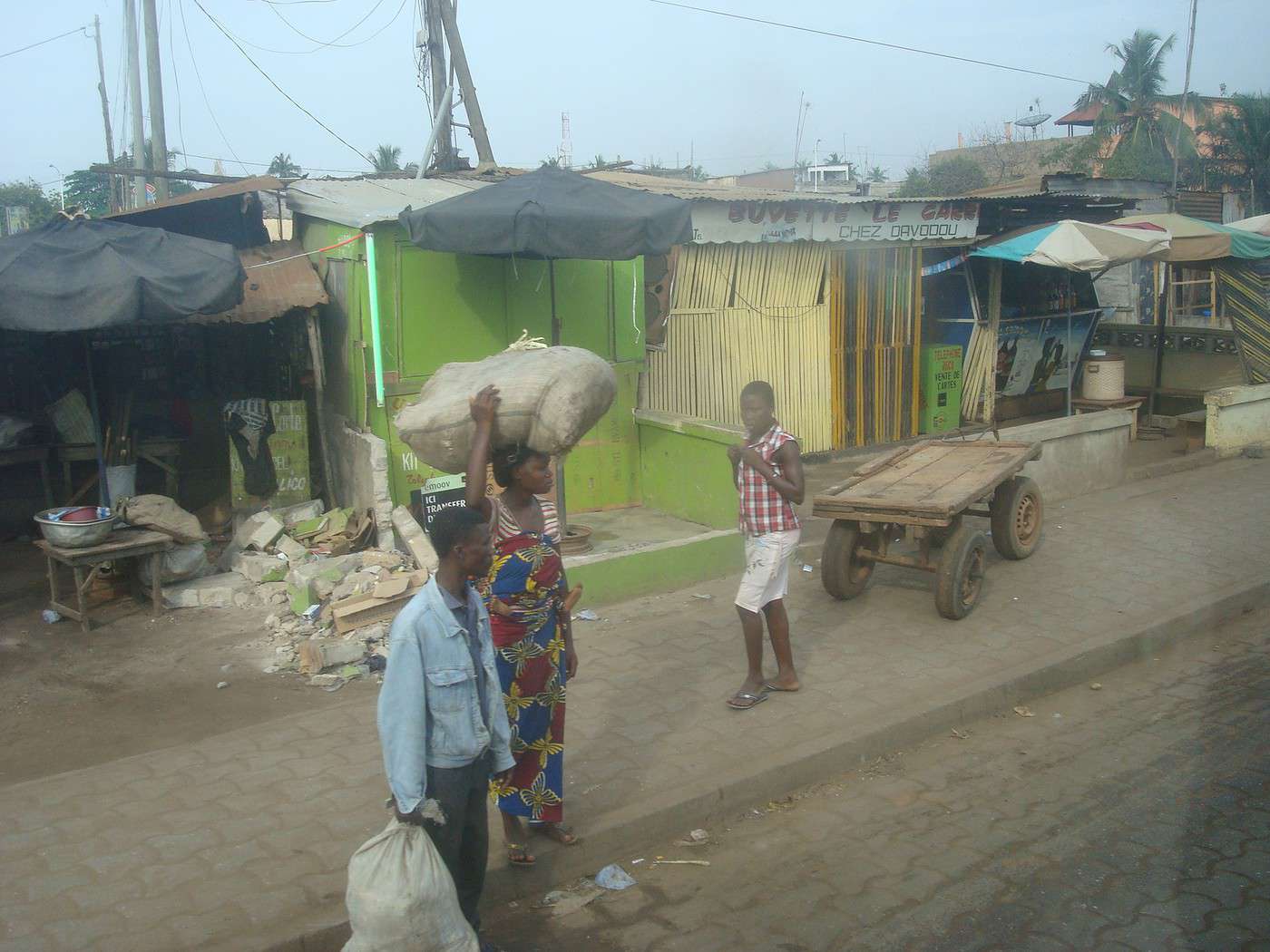
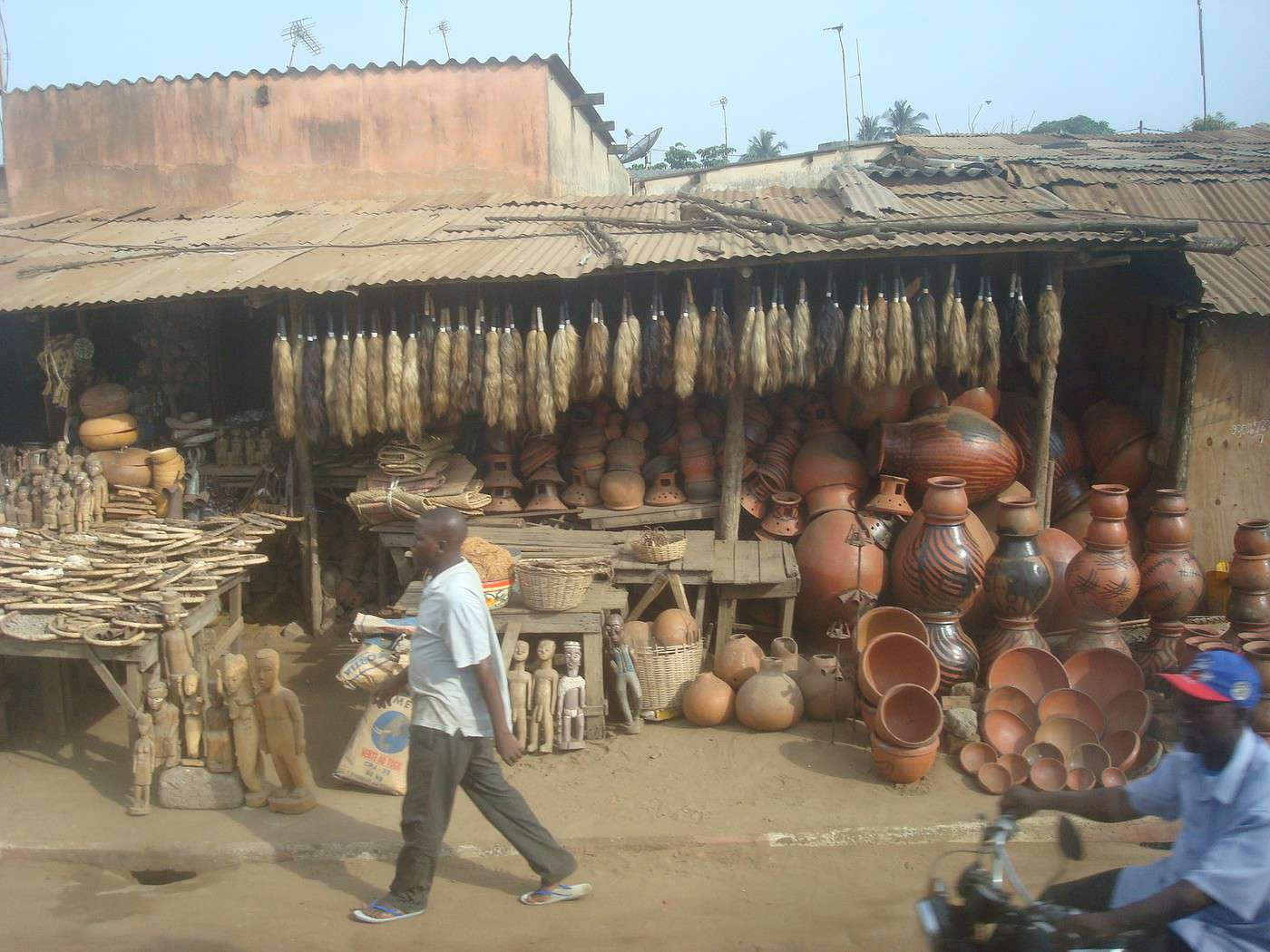
Scènes de la vie quotidienne en route vers le Marché aux Fétiches
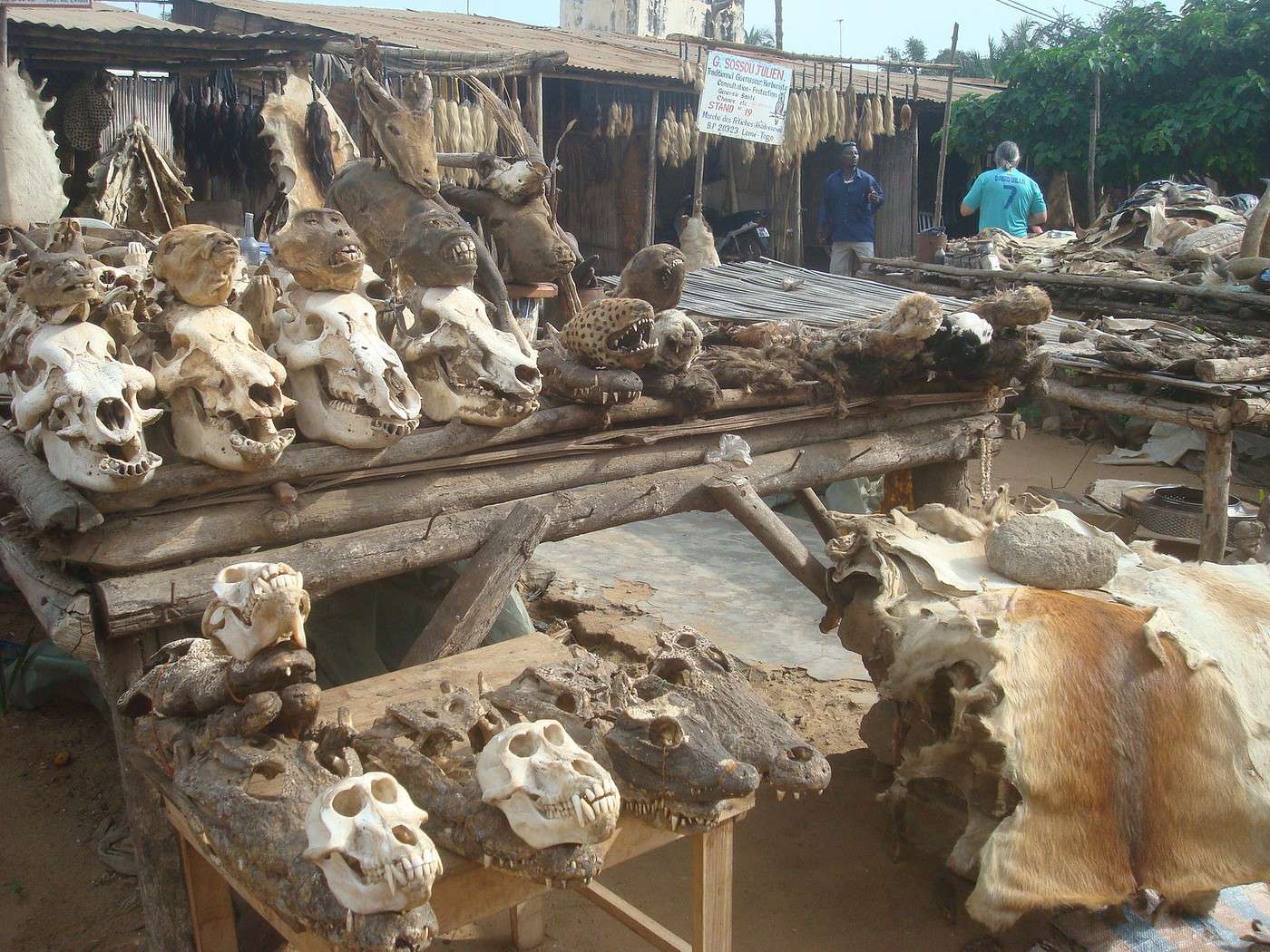
Le Marché aux Fétiches d'Akodessewa, à 4 km du centre de Lomé (photo 6)
En route vers Kpalimé - 140 km au nord de Lomé
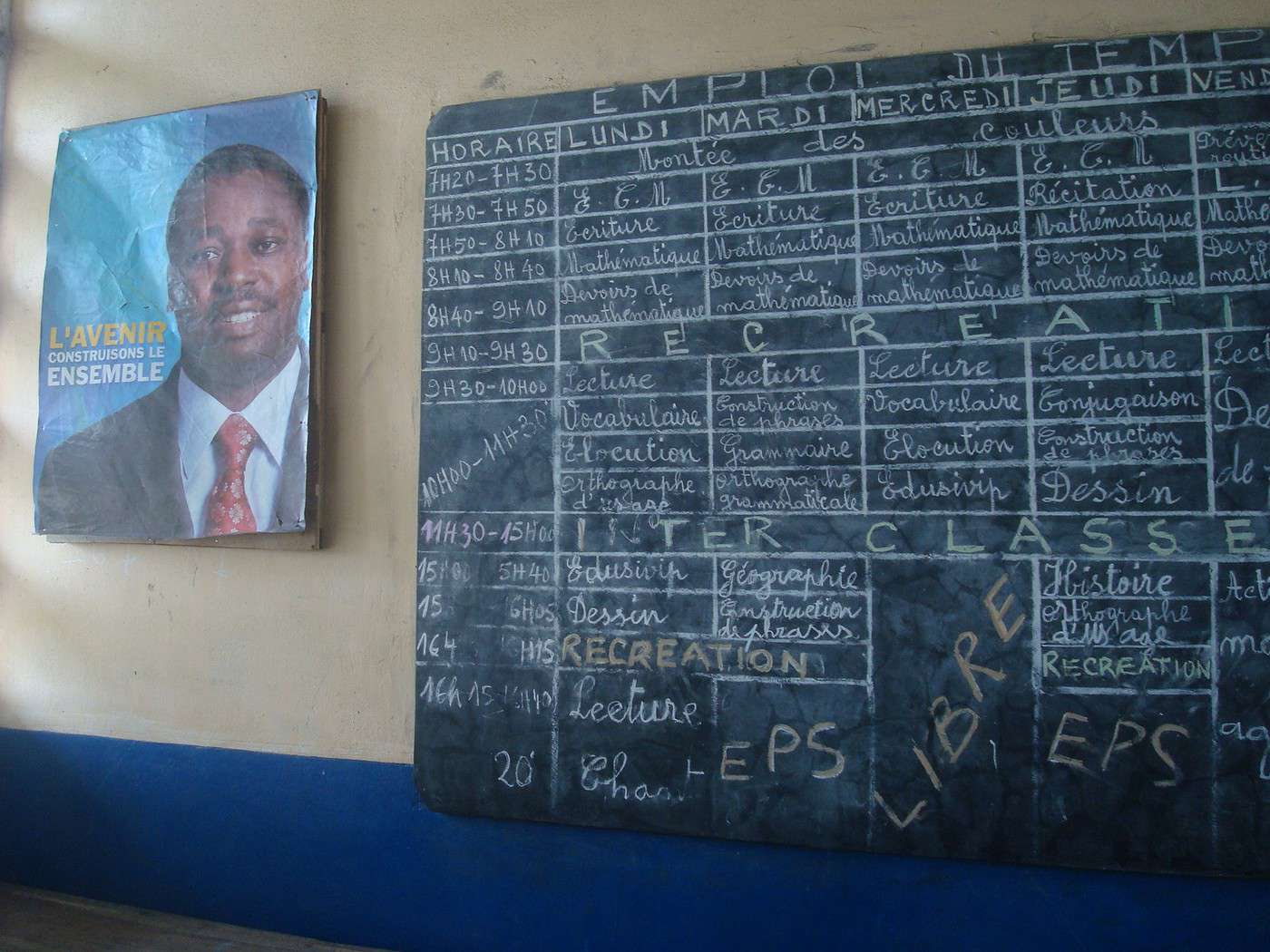
Visite d'une école primaire publique - Leçon de français : «Je suis élève» «Tu es élève»…
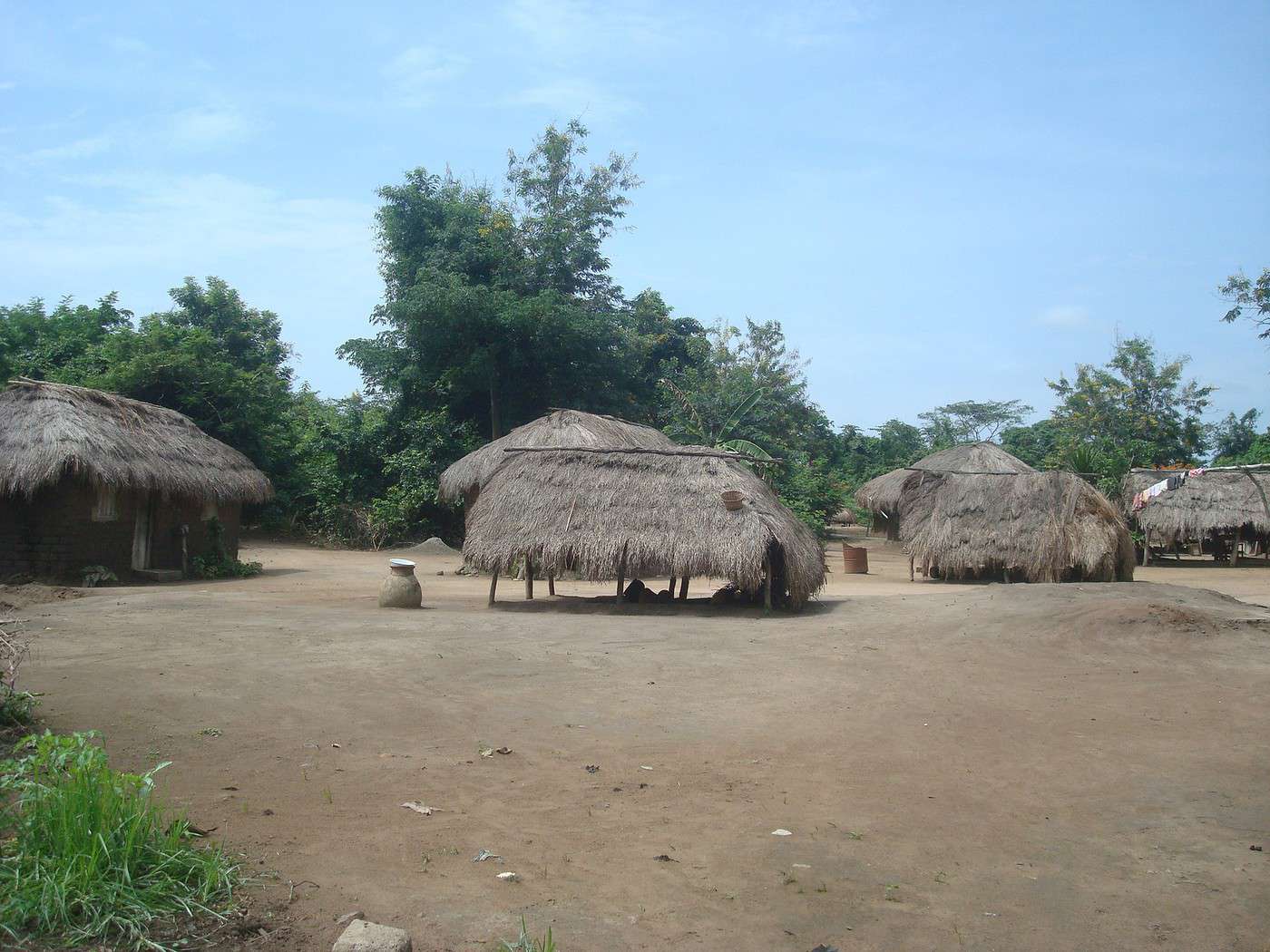
On rencontre plusieurs petits villages de ce type le long de la route Lomé-Kpalimé
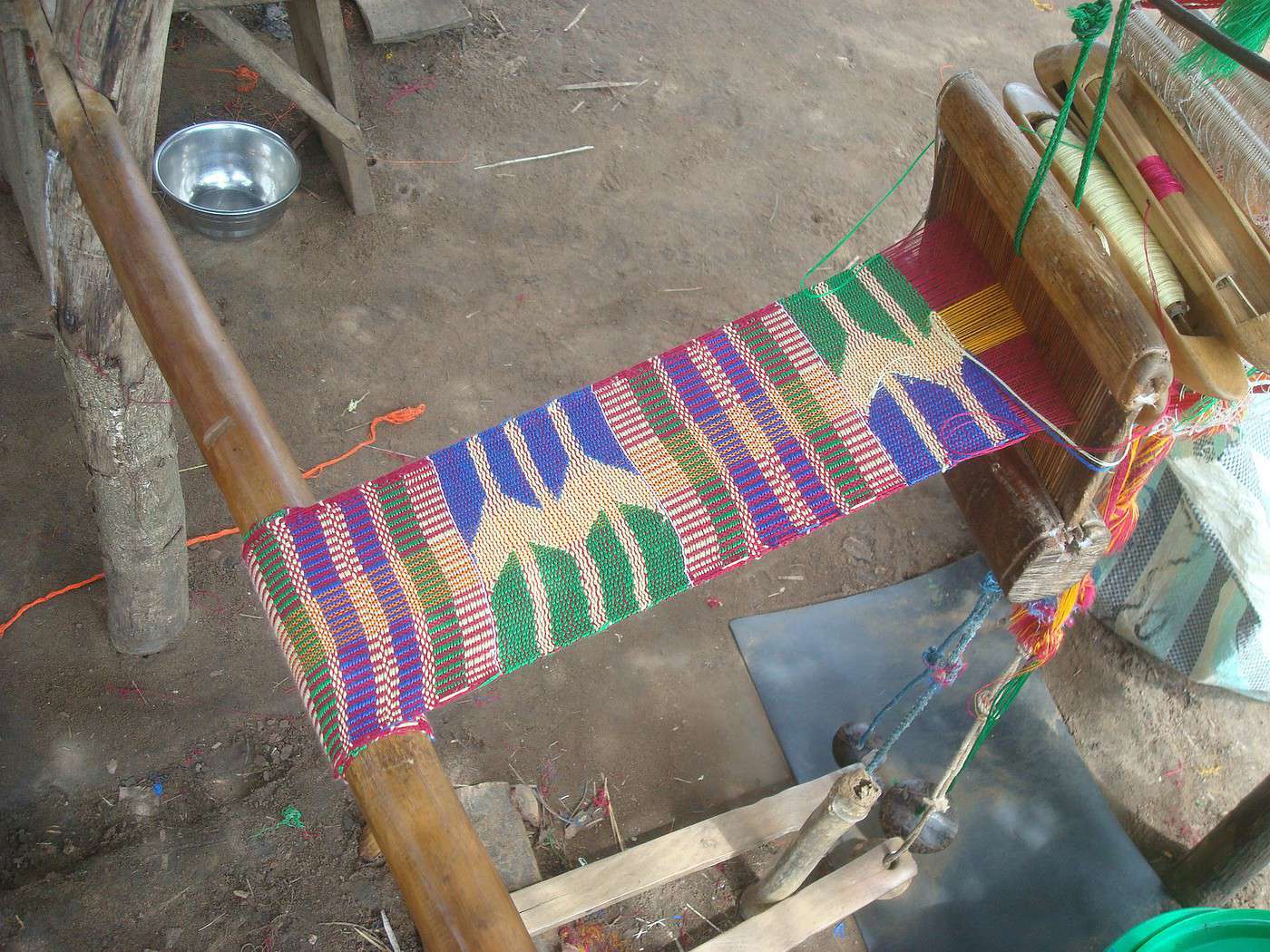
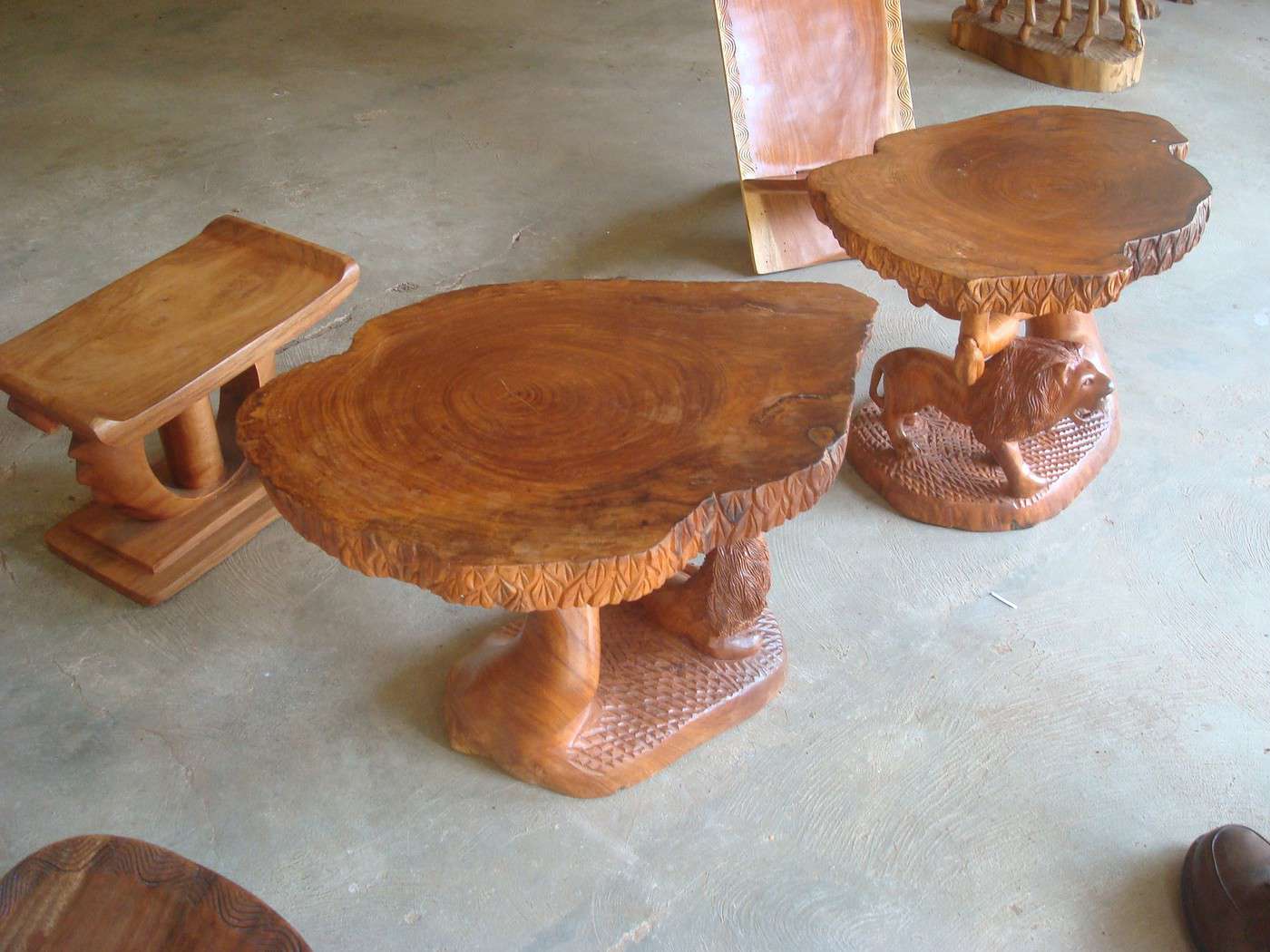
Marché artisanal togolais - Une de leurs spécialités: les tabourets sculptés
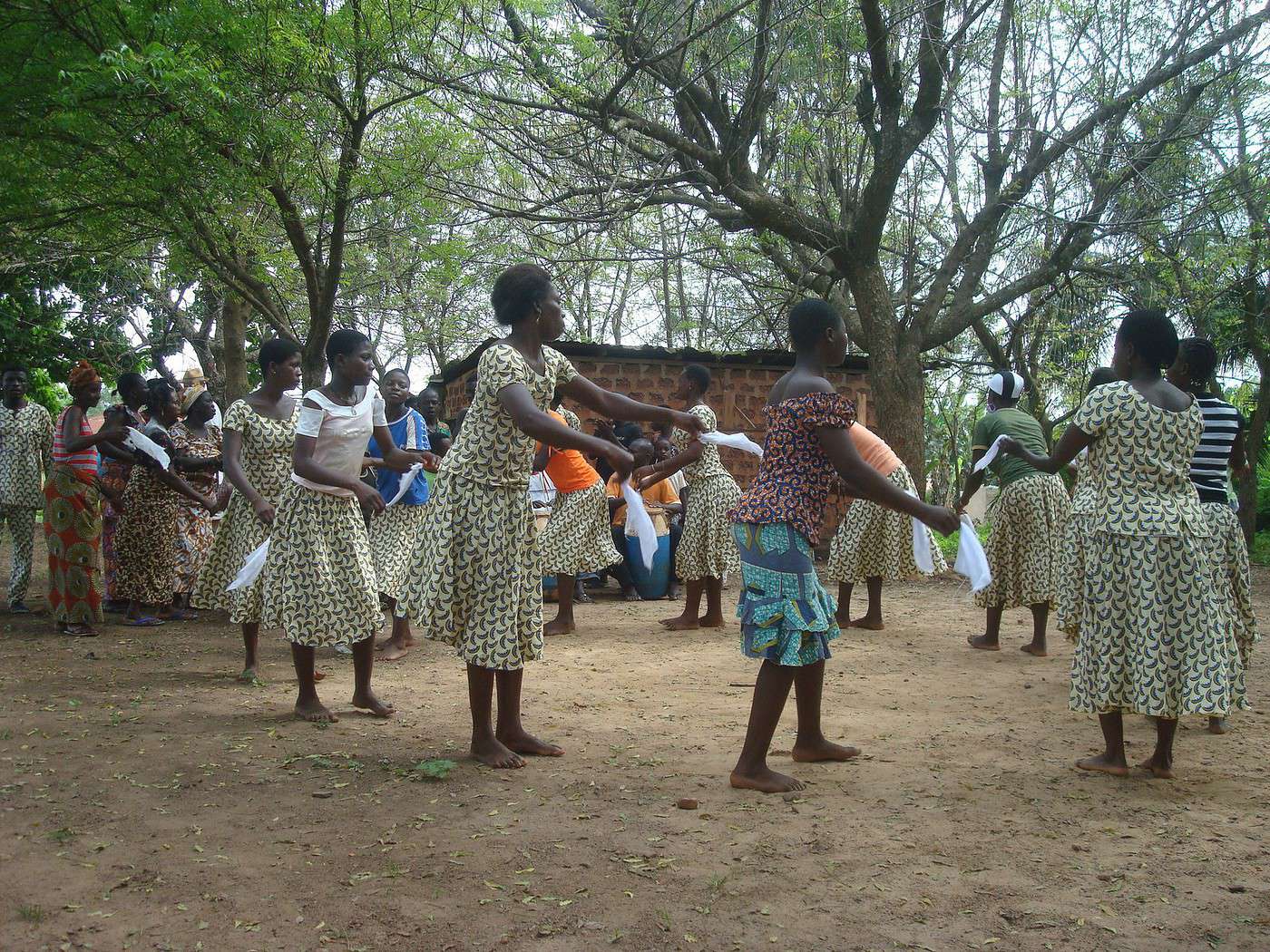
Danses togolaises en présence du Chef du Canton de Tové : Togbui Agbo XII
Jour 16 Lomé, TOGO (de 7h00 à 18h00) 11 novembre 32 oC
Population : 6 2000 000 Âge médian : 18,9 ans Indépendance : 27 avril 1960 Vaudou 51% Chrétiens 29% Musulmans 20% Langue officielle : Français (l’Anglais seconde langue de l’administration) 40 différents groupes ethniques (Ewe 32%, Kotokoli & Tchamba 22%, Kabye 22%…) Port d’escale: Lomé (à 6 km du centre de Lomé) Capitale : Lomé (pop. 800 000)
Le Togo est situé sur le golfe de Guinée entre le Ghana et le Bénin. Considéré comme un microcosme de l’Afrique de l'ouest, il offre une vaste étendue de paysages et de cultures. Le pays évolue à une vitesse fulgurante… Visite très dépaysante pour nous, c'est vrai! Les gens sont partout accueillants, souriants... J’ai remarqué 😉 qu’on retrouve un peu partout, sur les immeubles, sur les cars, des maximes religieuses … ! J’ai placé quelques exemples parmi les photos.
Donc, on visite: le Marché aux Fétiches / l'école primaire d'Akodessewa / Kpalimé, son centre artisanal, les beaux paysages au loin / Tové: rencontre du Chef du Canton et danses togolaises - intéressant leur système de Chef de Canton...
Note de lecture : Durant ce voyage, j’ai lu un superbe roman qui m’a aidée à mieux saisir l’histoire ou la situation socio-politique du Togo, ce pays que l’on dit «au vernis de normalité acquis» écrit par l’écrivain togolais Théo Ananissoh : «Ténèbres à midi» Continents noirs Gallimard 2010 (son 3e roman). Je le recommande pour tous ceux qui s’intéressent au Togo - roman subtil, courageux, lucide…
Excursion choisie : Lome Fetish Market & Kpalime (8h)
Photos
Carte du Ghana, Togo (Lomé A et Kpalimé B), Bénin: nos 3 escales sur le golfe de Guinée, Afrique occidententale
Spectaculaire accueil au Port de Lomé
Bus stationné dans le port de Lomé: «JESUS VOUS AIME»
Scènes de la vie quotidienne en route vers le Marché aux Fétiches
Le Marché aux Fétiches d'Akodessewa, à 4 km du centre de Lomé (photo 6)
En route vers Kpalimé - 140 km au nord de Lomé
Visite d'une école primaire publique - Leçon de français : «Je suis élève» «Tu es élève»…
On rencontre plusieurs petits villages de ce type le long de la route Lomé-Kpalimé
Marché artisanal togolais - Une de leurs spécialités: les tabourets sculptés
Danses togolaises en présence du Chef du Canton de Tové : Togbui Agbo XII
MoniqueM
« Emmenez- moi au bout de la terre
Emmenez-moi au pays des merveilles...»
Bonsoir PAP,
Re: coût de l'internet sur Princess, ces coûts sont pour les communs des mortels 🙁 - pas pour la papauté.... Ceux qui logent en grande classe: Suite (pas les mini suites), les autres catégories supérieures (s'il y en d'autres - à vérifier) ont Internet gratuit, je pense. Je sais qu'ils ont les mêmes avantages que les membres Elite (sauf l, Internet peut-être 😠. Sylviane (qui est en croisière actuellement jusqu'au 17 déc., je pense) me l'a dit; elle naviguera avec Princess en mars dans une Suite. 😉
Donc, c'est à suivre... ce sujet d'internet sur Princess.
Au plaisir,
MoniqueM
« Emmenez- moi au bout de la terre
Emmenez-moi au pays des merveilles...»
Hello Monique
Tu veux dire qu'au Yacht-Club de MSC, ils ont le lavage et nettoyage à sec gratuits et Internet gratuit???? 😕 comme les Elite de Princess dès la première croisière?
Non, pas Internet (mais c'était pas dans ta liste)... mais tout le reste de ta liste, oui. Et encore, le minibar semble plus plein que ta liste... A noter qu'en Yacht Club, la connexion réseau est en Ethernet, pas en wifi, donc bien plus rapide (pour ce qui est de la connexion au réseau du bateau. ce qui ne veut pas dire que l'internet soit significativement plus rapide, car dépendant de l'installation satellite...)
Je connais MSC - même catégorie que Costa, Carnival, etc, (Contemporary Cruise Lines).
Non, le MSC Yacht-Club est classé "premium" par Berlitz, alors que tous les autres sus-cités sont en "standard". Selon sa pub, c'est "un bateau dans le bateau"
C'est quoi le Yacht-Club: l'équivalent du Captain' Club de Princess: 0, Or, Platin, Elite? ou une sous-division chic plus chère???
je ne connais pas Princess... Le Yacht-Club, seulement sur les MSC les plus récents (Fantasia, Splendida, Divina, et "Khadafia" 😉 ), est un genre de "première classe", totalement indépendant du système des "cartes de fidélité", avec tout un espace du bateau strictement fermé, et réservé aux 71 (69 sur le Divina) suites soit à un gros maximum 150 passagers (qui ont tous les avantages évoqués même si c'est leur première croisière MSC, ce qui était mon cas, et nous n'étions qu'une centaine... en gros trois transats par personne sur le pont solarium 🙂), avec son pont solarium, tout en haut du bateau, avec bar, mini-buffet permanent, piscine, jaccuzzis, son grand salon (avec là encore un mini-buffet permanent), sa conciergerie-accueil, et son restaurant gastronomique sans horaires, matin (mais pas pour nous, on préfère toujours le p'tit déj en cabine), midi, et soir. Toutes les boissons *dans cet espace*, que ce soit au bar, au salon, au restaurant, sont gratuites (sauf Champagne et alcools notamment whiskies "haut de gamme" 😕 ce qui alourdit la note quand pour l'apéro Mme PAP est adepte du premier et moi du second...) et le contenu du mini-bar - plein à craquer - est gratuit et renouvelé tous les jours. En outre, il y a effectivement cirage, lingerie, nettoyage à sec, quotidien national en version papier offert chaque jour à 7 heures du matin sur la porte de la cabine, embarquement plus que "prioritaire", puisque "par un autre chemin, et au fur et à mesure des arrivées quelle que soit l'heure"), et pour les excursions, sortie personnalisée avec son majordome... Avec un majordome qui s'occupe *vraiment* de tout ce qu'on lui demande, et transport en limousine privée de l'hôtel au port... (les départs de Marseille sont couplés avec la soirée, le dîner et la nuit au SOFITEL vieux port ***** restaurant ** guide Michelin). Tout le reste du bateau est évidemment ouvert aux passagers YC, mais là, tout redevient "payant"... et pour manger des glaces bonnes à se damner 😇, y a pas le choix, c'est payant 😕... Les passagers Yacht-Club ont également d'autres "privilèges", comme le fait de "prioritiser" pour eux certains ascenseurs... Ainsi, du pont 5, avec ta carte MSC-YC, tu atteints directement les pont 16 et18 (pas de pont 17 chez MSC, le "17" porte malheur 🤪🤪 ), même si quelqu'un a appelé l'ascenseur aux ponts 6 et 8... et même des privilèges "stupides" comme des places au 1er rang au théâtre...🤪
Bref, la pub est là : http://www.mscyachtclub.com/yacht_club/index.aspx
et bien sûr mon compte rendu de ma croisière-test de mai 2011 (attention, doit y avoir pas loin de deux heures de lecture... 😉 ) est sur :
http://voyageforum.com/forum/france_msc_marseille_yacht_club_commence_au_sofitel_D4184724/
puis
http://voyageforum.com/forum/en_direct_une_croisiere_yacht_club_msc_fantasia_D4286913/
et je te fais grâce de toute la partie "audit", "analyse financière" comparative avec les grandes suites Costa... que j'ai publiée par ailleurs 😇😛
* 7 jours ou moins 150 minutes Valeur 75$US 8-20 jours 250 minutes Valeur 100$US (75 Euros) 21 jours et plus 500 minutes Valeur 200$US
Whaooo ! 😮 là, par contre, c'est horriblement cher par rapport à Costa ou MSC... 😕 24 heures me coûteraient pas loin de 600 $, alors que c'est 120 € chez MSC...
Mais c'est gratuit pour les membres Platine et Elite. Ils nous chargent ce montant sur la facture et l'annulle - à chaque jour 🤪
Ah bon, j'avais compris que les chiffres ci-dessus étaient le maximum offert pour la croisière selon la durée de croisière. Si je comprends bien, pour les "platine et "Elite", c'est offert en "illimité" ?
Ca, c'est bien pour des gens comme moi, qui consomme un peu plus de 12 heures à la semaine... Mais bon, le "forfait 24 heures, chez MSC", pas plus cher que deux forfait de 8 heures, me conviendrait bien pour une croisière de 10-12 nuits... Ca me coûte plus cher chez Costa, malgré les 20% de remise Costa-Club...
Tu veux dire qu'au Yacht-Club de MSC, ils ont le lavage et nettoyage à sec gratuits et Internet gratuit???? 😕 comme les Elite de Princess dès la première croisière?
Non, pas Internet (mais c'était pas dans ta liste)... mais tout le reste de ta liste, oui. Et encore, le minibar semble plus plein que ta liste... A noter qu'en Yacht Club, la connexion réseau est en Ethernet, pas en wifi, donc bien plus rapide (pour ce qui est de la connexion au réseau du bateau. ce qui ne veut pas dire que l'internet soit significativement plus rapide, car dépendant de l'installation satellite...)
Je connais MSC - même catégorie que Costa, Carnival, etc, (Contemporary Cruise Lines).
Non, le MSC Yacht-Club est classé "premium" par Berlitz, alors que tous les autres sus-cités sont en "standard". Selon sa pub, c'est "un bateau dans le bateau"
C'est quoi le Yacht-Club: l'équivalent du Captain' Club de Princess: 0, Or, Platin, Elite? ou une sous-division chic plus chère???
je ne connais pas Princess... Le Yacht-Club, seulement sur les MSC les plus récents (Fantasia, Splendida, Divina, et "Khadafia" 😉 ), est un genre de "première classe", totalement indépendant du système des "cartes de fidélité", avec tout un espace du bateau strictement fermé, et réservé aux 71 (69 sur le Divina) suites soit à un gros maximum 150 passagers (qui ont tous les avantages évoqués même si c'est leur première croisière MSC, ce qui était mon cas, et nous n'étions qu'une centaine... en gros trois transats par personne sur le pont solarium 🙂), avec son pont solarium, tout en haut du bateau, avec bar, mini-buffet permanent, piscine, jaccuzzis, son grand salon (avec là encore un mini-buffet permanent), sa conciergerie-accueil, et son restaurant gastronomique sans horaires, matin (mais pas pour nous, on préfère toujours le p'tit déj en cabine), midi, et soir. Toutes les boissons *dans cet espace*, que ce soit au bar, au salon, au restaurant, sont gratuites (sauf Champagne et alcools notamment whiskies "haut de gamme" 😕 ce qui alourdit la note quand pour l'apéro Mme PAP est adepte du premier et moi du second...) et le contenu du mini-bar - plein à craquer - est gratuit et renouvelé tous les jours. En outre, il y a effectivement cirage, lingerie, nettoyage à sec, quotidien national en version papier offert chaque jour à 7 heures du matin sur la porte de la cabine, embarquement plus que "prioritaire", puisque "par un autre chemin, et au fur et à mesure des arrivées quelle que soit l'heure"), et pour les excursions, sortie personnalisée avec son majordome... Avec un majordome qui s'occupe *vraiment* de tout ce qu'on lui demande, et transport en limousine privée de l'hôtel au port... (les départs de Marseille sont couplés avec la soirée, le dîner et la nuit au SOFITEL vieux port ***** restaurant ** guide Michelin). Tout le reste du bateau est évidemment ouvert aux passagers YC, mais là, tout redevient "payant"... et pour manger des glaces bonnes à se damner 😇, y a pas le choix, c'est payant 😕... Les passagers Yacht-Club ont également d'autres "privilèges", comme le fait de "prioritiser" pour eux certains ascenseurs... Ainsi, du pont 5, avec ta carte MSC-YC, tu atteints directement les pont 16 et18 (pas de pont 17 chez MSC, le "17" porte malheur 🤪🤪 ), même si quelqu'un a appelé l'ascenseur aux ponts 6 et 8... et même des privilèges "stupides" comme des places au 1er rang au théâtre...🤪
Bref, la pub est là : http://www.mscyachtclub.com/yacht_club/index.aspx
et bien sûr mon compte rendu de ma croisière-test de mai 2011 (attention, doit y avoir pas loin de deux heures de lecture... 😉 ) est sur :
http://voyageforum.com/forum/france_msc_marseille_yacht_club_commence_au_sofitel_D4184724/
puis
http://voyageforum.com/forum/en_direct_une_croisiere_yacht_club_msc_fantasia_D4286913/
et je te fais grâce de toute la partie "audit", "analyse financière" comparative avec les grandes suites Costa... que j'ai publiée par ailleurs 😇😛
* 7 jours ou moins 150 minutes Valeur 75$US 8-20 jours 250 minutes Valeur 100$US (75 Euros) 21 jours et plus 500 minutes Valeur 200$US
Whaooo ! 😮 là, par contre, c'est horriblement cher par rapport à Costa ou MSC... 😕 24 heures me coûteraient pas loin de 600 $, alors que c'est 120 € chez MSC...
Mais c'est gratuit pour les membres Platine et Elite. Ils nous chargent ce montant sur la facture et l'annulle - à chaque jour 🤪
Ah bon, j'avais compris que les chiffres ci-dessus étaient le maximum offert pour la croisière selon la durée de croisière. Si je comprends bien, pour les "platine et "Elite", c'est offert en "illimité" ?
Ca, c'est bien pour des gens comme moi, qui consomme un peu plus de 12 heures à la semaine... Mais bon, le "forfait 24 heures, chez MSC", pas plus cher que deux forfait de 8 heures, me conviendrait bien pour une croisière de 10-12 nuits... Ca me coûte plus cher chez Costa, malgré les 20% de remise Costa-Club...
.... c'est un bateau dans le bateau....
Merci PAP, je comprends maintenant; c'est le retour de la première classe à peu de choses près. Non, il n'y a pas l'équivalent chez Princess. J'irai lire tes 2 CR dès que j'aurai terminé celui-ci: la bouchée est grosse 😛. C'est une expérience...😉
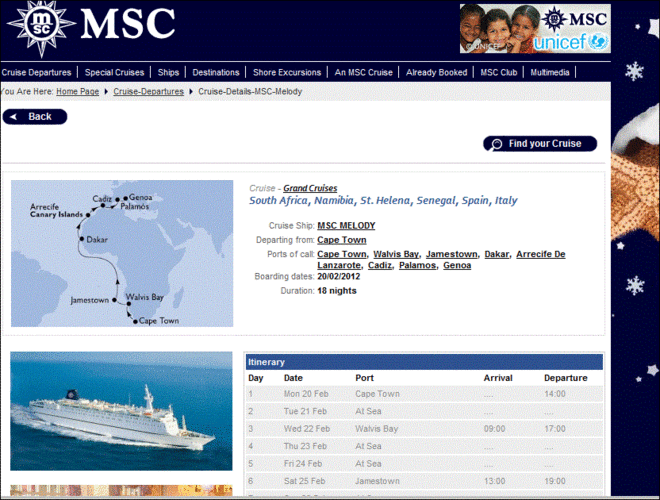
En regardant sur le lien MSC que tu m'as donné, j'ai vu que MSC offrait un itinéraire pas mal intéressant avec escales à Dakar, en Namibie et à Cape Town, escales de la présente discussion. Je n'ai pu voir les prix.
Je joins une photo de l'itinéraire sur le MSC Melody - sait-on jamais si ça peut intéresser un lecteur...🤪 mais pas de Yacht Club pour toi 😕. Bonne journée,
Merci PAP, je comprends maintenant; c'est le retour de la première classe à peu de choses près. Non, il n'y a pas l'équivalent chez Princess. J'irai lire tes 2 CR dès que j'aurai terminé celui-ci: la bouchée est grosse 😛. C'est une expérience...😉
En regardant sur le lien MSC que tu m'as donné, j'ai vu que MSC offrait un itinéraire pas mal intéressant avec escales à Dakar, en Namibie et à Cape Town, escales de la présente discussion. Je n'ai pu voir les prix.
Je joins une photo de l'itinéraire sur le MSC Melody - sait-on jamais si ça peut intéresser un lecteur...🤪 mais pas de Yacht Club pour toi 😕. Bonne journée,
MoniqueM
« Emmenez- moi au bout de la terre
Emmenez-moi au pays des merveilles...»
Coucou Monique,
Toujours aussi bien ce compte-rendu et les photos vraiment dépaysantes😉.
Tu as pris les excursions à chaque fois? Sais-tu si des passagers ont fait leurs escales eux-même et ce qu'ils en ont pensé? A bientôt pour la suite.
Toujours aussi bien ce compte-rendu et les photos vraiment dépaysantes😉.
Tu as pris les excursions à chaque fois? Sais-tu si des passagers ont fait leurs escales eux-même et ce qu'ils en ont pensé? A bientôt pour la suite.
CARNIVAL-CELEBRITY-CLUB MED 2-COSTA-CROISIERES DE FRANCE-CUNARD-HOLLAND AMERICA LINE-MSC-NCL-OCEANIA-P&O-PONANT-PRINCESS-ROYAL CARIBBEAN-SEABOURN
C'est bien ce que je disais... Dès qu'un itinéraire sort de l'ordinaire, les compagnies mettent toujours leur plus vieux (et plus petit, ça va souvent de pair) bateau...
Oui, tu as raison. C'est que les compagnies se basent sur ta classification...! 😇.
Pour toi, "visiteur"... c'est important la somptuosité du bateau et des installations Pour moi, "découvreur"... c'est l'itinéraire qui est primordial - la nouveauté ou la grosseur du bateau est nettement secondaire (découvreur acharné 90-10). Ce Qui Démontre le bon Fondement de ta classification: CQFD ~ 🤪😏
Oui, tu as raison. C'est que les compagnies se basent sur ta classification...! 😇.
Pour toi, "visiteur"... c'est important la somptuosité du bateau et des installations Pour moi, "découvreur"... c'est l'itinéraire qui est primordial - la nouveauté ou la grosseur du bateau est nettement secondaire (découvreur acharné 90-10). Ce Qui Démontre le bon Fondement de ta classification: CQFD ~ 🤪😏
MoniqueM
« Emmenez- moi au bout de la terre
Emmenez-moi au pays des merveilles...»
Coucou Monique,
Toujours aussi bien ce compte-rendu et les photos vraiment dépaysantes😉.
Tu as pris les excursions à chaque fois? Sais-tu si des passagers ont fait leurs escales eux-mêmes et ce qu'ils en ont pensé?
Bonjour croisifan,
Oui, j'ai pris une excursion dans chacun des 5 pays que je n'avais jamais encore visités: Sénégal, Ghana, Togo, Bénin, Namibie (aux 2 escales).
On aurait très bien pu faire par nous-mêmes l'excursion île de Gorée (Sénégal). Après l'excursion, on a pris un taxi à 2 (+ une invitée) et visité ce que je voulais voir dans Dakar et Soumbedioune. Nous sommes retournés au bateau pas mal d'avance car l'invitée en avait assez... (style "vacancier" 😉).
J'ai connu des gens qui ont visité l'île par eux-mêmes et ont bien aimé cela, certains étaient un peu nerveux... Mais on doit bien prévoir le tout- ça revient énormément moins cher. Les taxis sont peu coûteux, on s'entend sur un prix à l'avance, sinon, gare!😉
Au Ghana, même chose (shuttle du bateau puis taxi vers le centre d'Accra).
Au Togo, pas de problème pour visiter Lomé et les environs. mais d'aller à Kpalimé et d'arrêter comme on l'a fait voir les petits villages, non, c'est impossible lors d'une brève escale trop de danger de danger de manquer le bateau.
Au Bénin, c'est impossible de faire par nous-mêmes tout ce qu'on a visité lors de l'excursion. Il faut faire des choix. Une petite anecdote: un groupe de 20 personnes s'était loué une van et copié l'itinéraire de notre excursion. Chaque personne économisait ainsi quelques euros. Mais immédiatement, ils ont été pris dans un trafic intense. Découragés, ils ont fini par nous rattraper au prochain arrêt au programme. Ils se tenaient près de nous sans trop que ça paraisse... Pour le reste du temps, ils ont suivi notre convoi de bus qui était précédé par un policier en motocyclette (il y avait même un 2e policier dans le bus qui régulièrement descendait pour aider son collègue à nous frayer un chemin) - donc ils nous suivaient de près comme s'ils fermaient le convoi...- un peu honteux quand même. Une croisiériste de ce groupe m'a tout raconté leur supercherie le lendemain 😏.
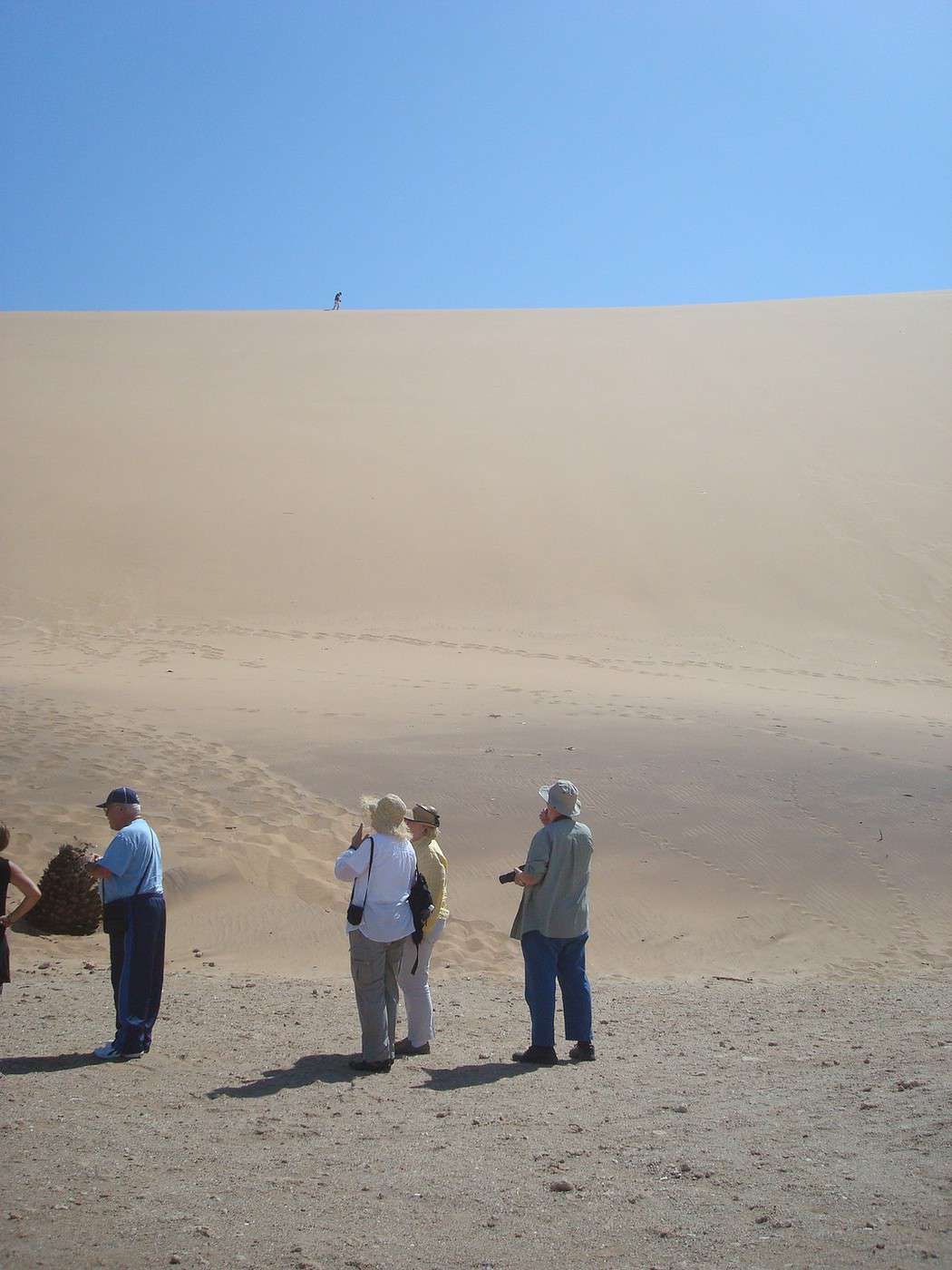
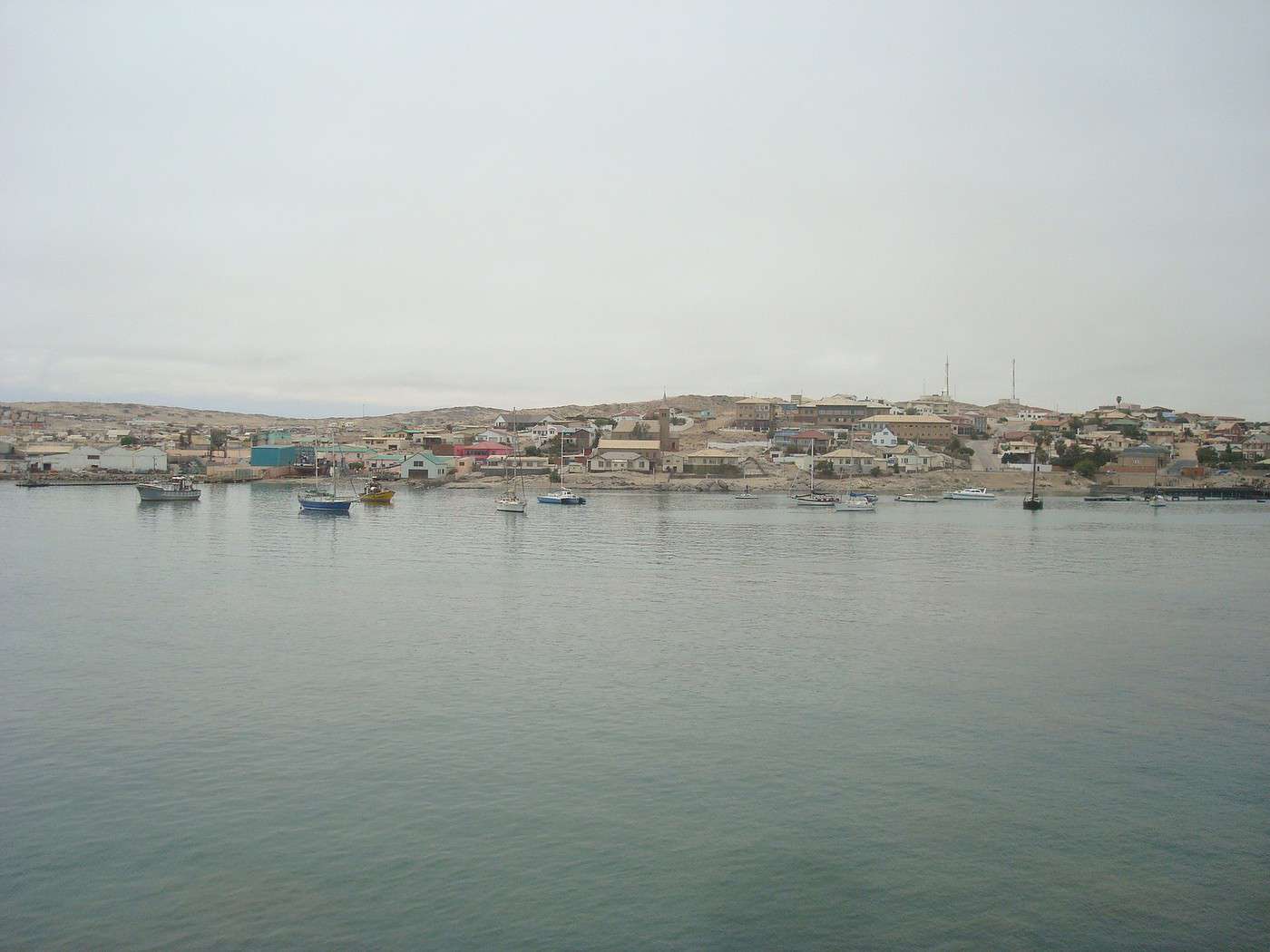
En Namibie, pas vraiment de problème, mais encore là bien savoir ce qu'on veut voir; la différence de prix n'est peut-être pas très grande. Les excursions que j'ai choisies ont été formidables; j'en reparlerai. On a visité par nous-mêmes la petite ville de Luderitz (le bateau accoste tout près...😉). Certains ont fait de très belles excursions par eux-mêmes et en ont été ravis - difficile en Namibie de ne pas être enchanté par ce pays... où j'aimerais revenir.
J'ai donc choisi la voie de la facilité i.e. pas de stress, on se laisse mener mais on visite tout ce qu'on désirait. Dis donc, dans quelle catégorie de croisiéristes t'es-tu placée?
Bonjour croisifan,
Oui, j'ai pris une excursion dans chacun des 5 pays que je n'avais jamais encore visités: Sénégal, Ghana, Togo, Bénin, Namibie (aux 2 escales).
On aurait très bien pu faire par nous-mêmes l'excursion île de Gorée (Sénégal). Après l'excursion, on a pris un taxi à 2 (+ une invitée) et visité ce que je voulais voir dans Dakar et Soumbedioune. Nous sommes retournés au bateau pas mal d'avance car l'invitée en avait assez... (style "vacancier" 😉).
J'ai connu des gens qui ont visité l'île par eux-mêmes et ont bien aimé cela, certains étaient un peu nerveux... Mais on doit bien prévoir le tout- ça revient énormément moins cher. Les taxis sont peu coûteux, on s'entend sur un prix à l'avance, sinon, gare!😉
Au Ghana, même chose (shuttle du bateau puis taxi vers le centre d'Accra).
Au Togo, pas de problème pour visiter Lomé et les environs. mais d'aller à Kpalimé et d'arrêter comme on l'a fait voir les petits villages, non, c'est impossible lors d'une brève escale trop de danger de danger de manquer le bateau.
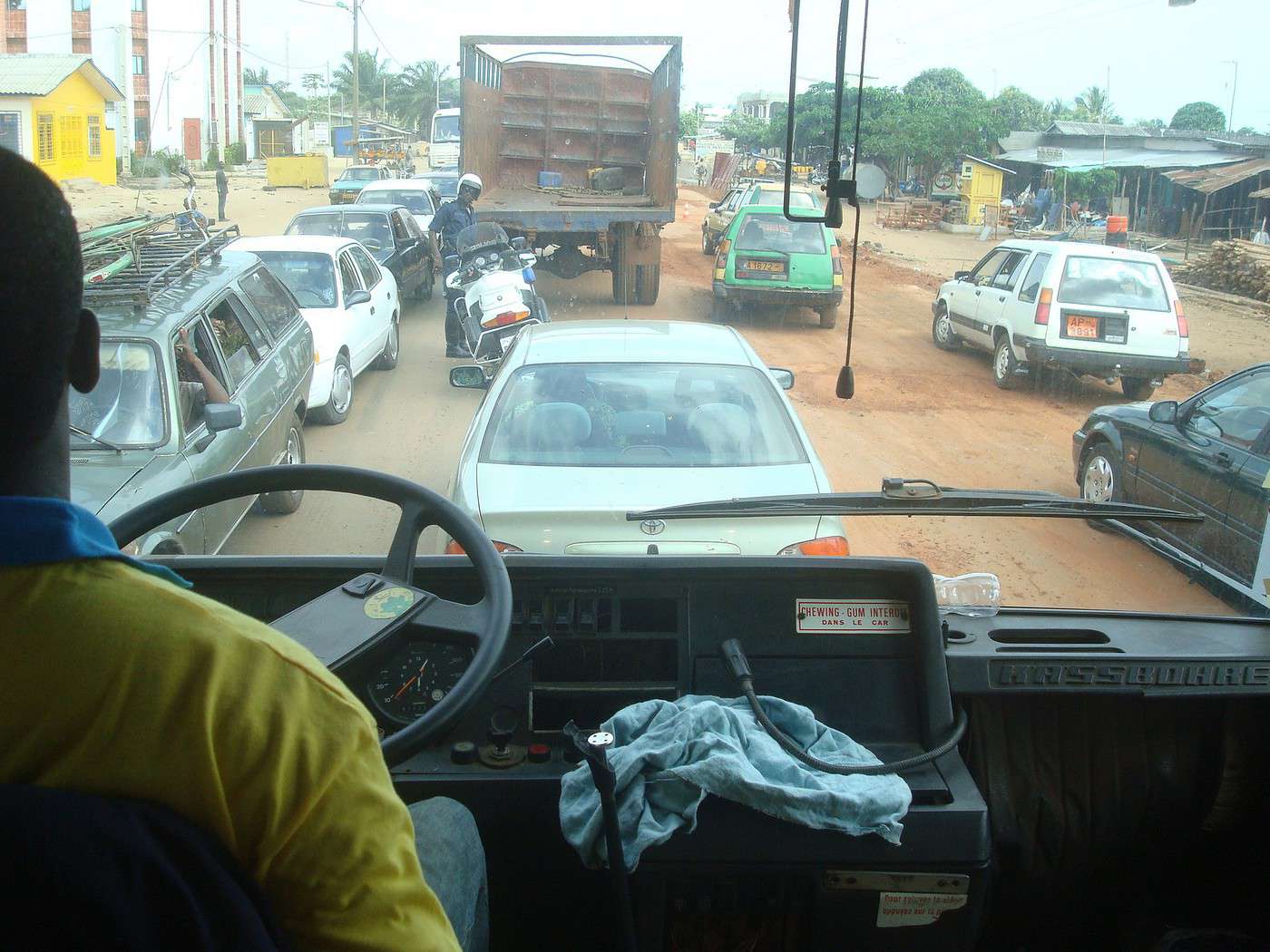
Au Bénin, c'est impossible de faire par nous-mêmes tout ce qu'on a visité lors de l'excursion. Il faut faire des choix. Une petite anecdote: un groupe de 20 personnes s'était loué une van et copié l'itinéraire de notre excursion. Chaque personne économisait ainsi quelques euros. Mais immédiatement, ils ont été pris dans un trafic intense. Découragés, ils ont fini par nous rattraper au prochain arrêt au programme. Ils se tenaient près de nous sans trop que ça paraisse... Pour le reste du temps, ils ont suivi notre convoi de bus qui était précédé par un policier en motocyclette (il y avait même un 2e policier dans le bus qui régulièrement descendait pour aider son collègue à nous frayer un chemin) - donc ils nous suivaient de près comme s'ils fermaient le convoi...- un peu honteux quand même. Une croisiériste de ce groupe m'a tout raconté leur supercherie le lendemain 😏.
En Namibie, pas vraiment de problème, mais encore là bien savoir ce qu'on veut voir; la différence de prix n'est peut-être pas très grande. Les excursions que j'ai choisies ont été formidables; j'en reparlerai. On a visité par nous-mêmes la petite ville de Luderitz (le bateau accoste tout près...😉). Certains ont fait de très belles excursions par eux-mêmes et en ont été ravis - difficile en Namibie de ne pas être enchanté par ce pays... où j'aimerais revenir.
J'ai donc choisi la voie de la facilité i.e. pas de stress, on se laisse mener mais on visite tout ce qu'on désirait. Dis donc, dans quelle catégorie de croisiéristes t'es-tu placée?
MoniqueM
« Emmenez- moi au bout de la terre
Emmenez-moi au pays des merveilles...»
Bonjour Pascal,
Malgré les préparatifs pour les Fêtes qui commencent à gruger notre précieux temps sur VF...😉, je continue mon CR...
La journée au Bénin a été superbe, extrêmement bien remplie. Riche en histoire et exotisme, c'est pauvre; les bâtiments nouveaux ne gagneraient certainement pas de prix pour l'architecture jusqu'à maintenant...😕 Si quelqu'un désire voir des photos de d'autres aspects du pays, n'hésitez pas...
Jour 17 Cotonou, BÉNIN (de 7h00 à 18h00) 12 novembre 29 oC
Population du Bénin : 9 100 000 Âge médian : 17,3 ans Indépendance : 1er août 1960 (de la France) Chrétiens 43% Musulmans 24% Vaudou 17% Langue officielle : Français Autres langues parlées (~50) : Fon (24%), Yorouba, Bariba, Goun, Ayizo (4%), etc. Port d’escale : Cotonou Capitale administrative : Porto-Novo (pop. 191 000)
Excursion choisie : Ouidah: Voodoo Capital & Ganvie (9h)
Cotonou (pop. 750 000) est la plus grande ville du Bénin; siège du gouvernement, centre commercial & économique. Le car quitte le port en se dirigeant vers la ville de Cococodji, un peu au nord-ouest, pour se rendre à Ouidah.
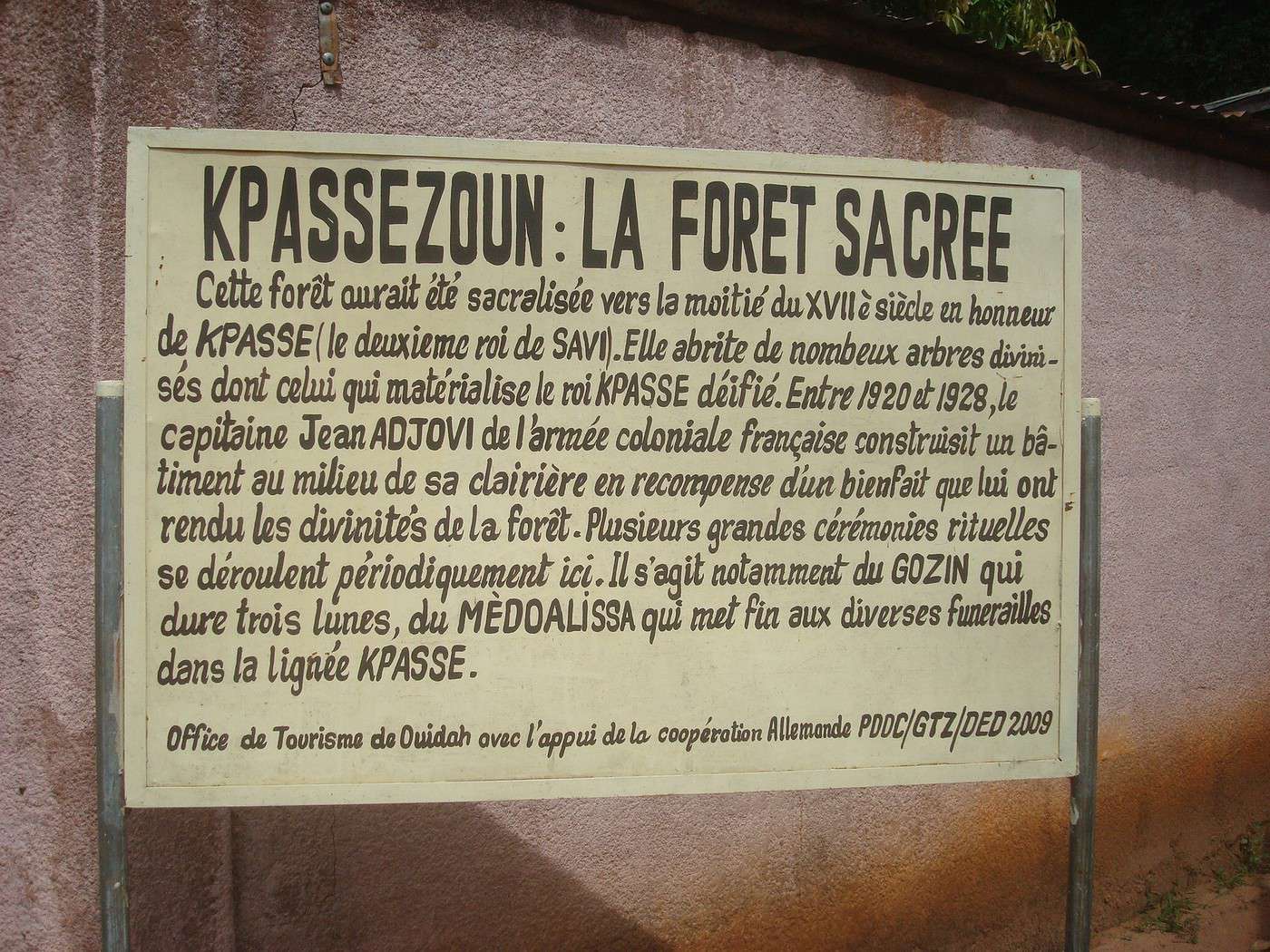
Ouidah (pop. 60 000) à 42 km à l’ouest de Cotonou; une des principales villes de la traite négrière occidentale au 18e s., point de vente et d’embarquement des esclaves. Ville candidate au patrimoine UNESCO. On visite Musée, Fôrêt sacrée, Temple... - Lunch Au retour de Ouidah, on emprunte la champêtre Route de Pêches qui longe la mer pour se rendre à Ganvié.
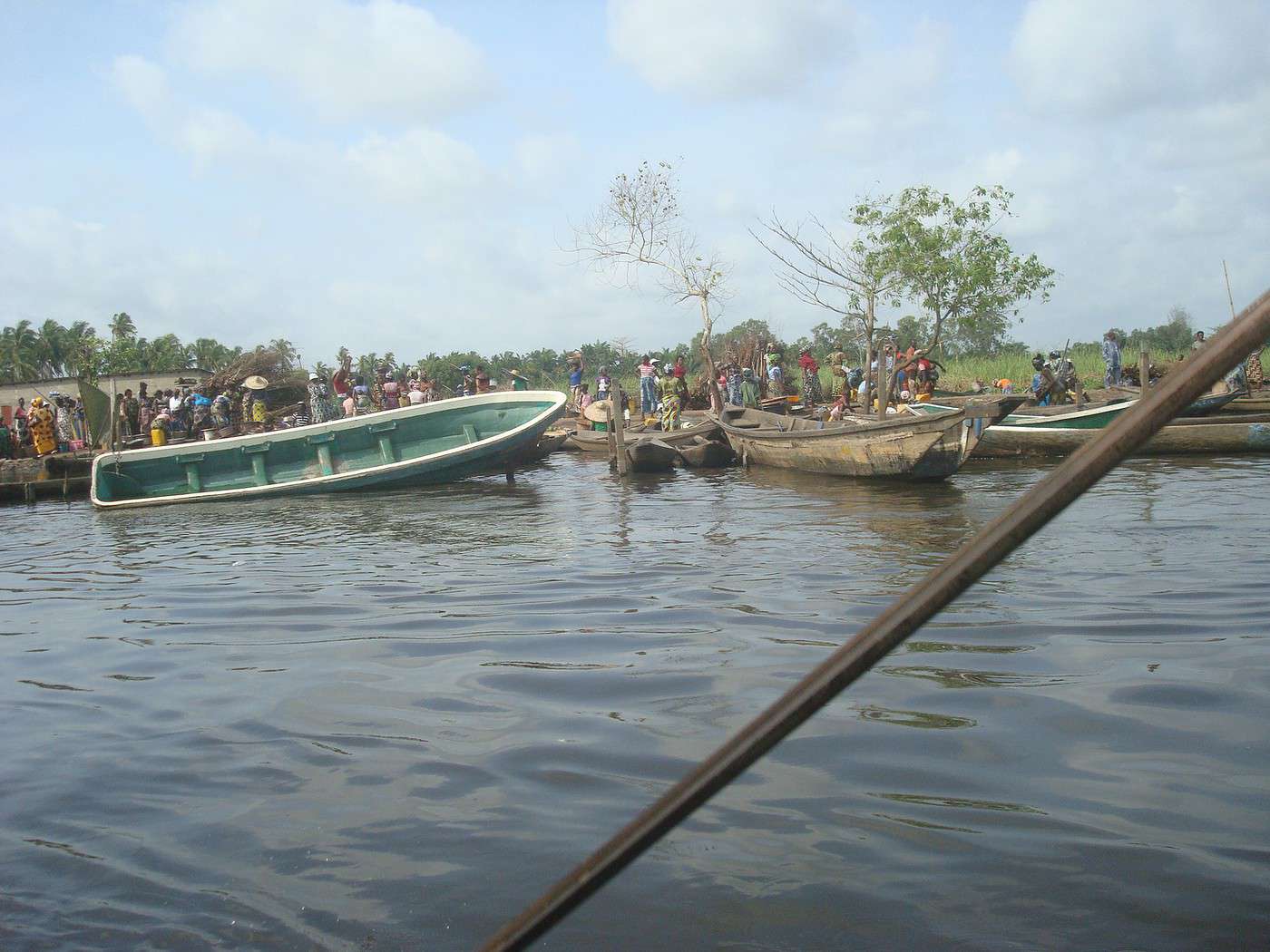
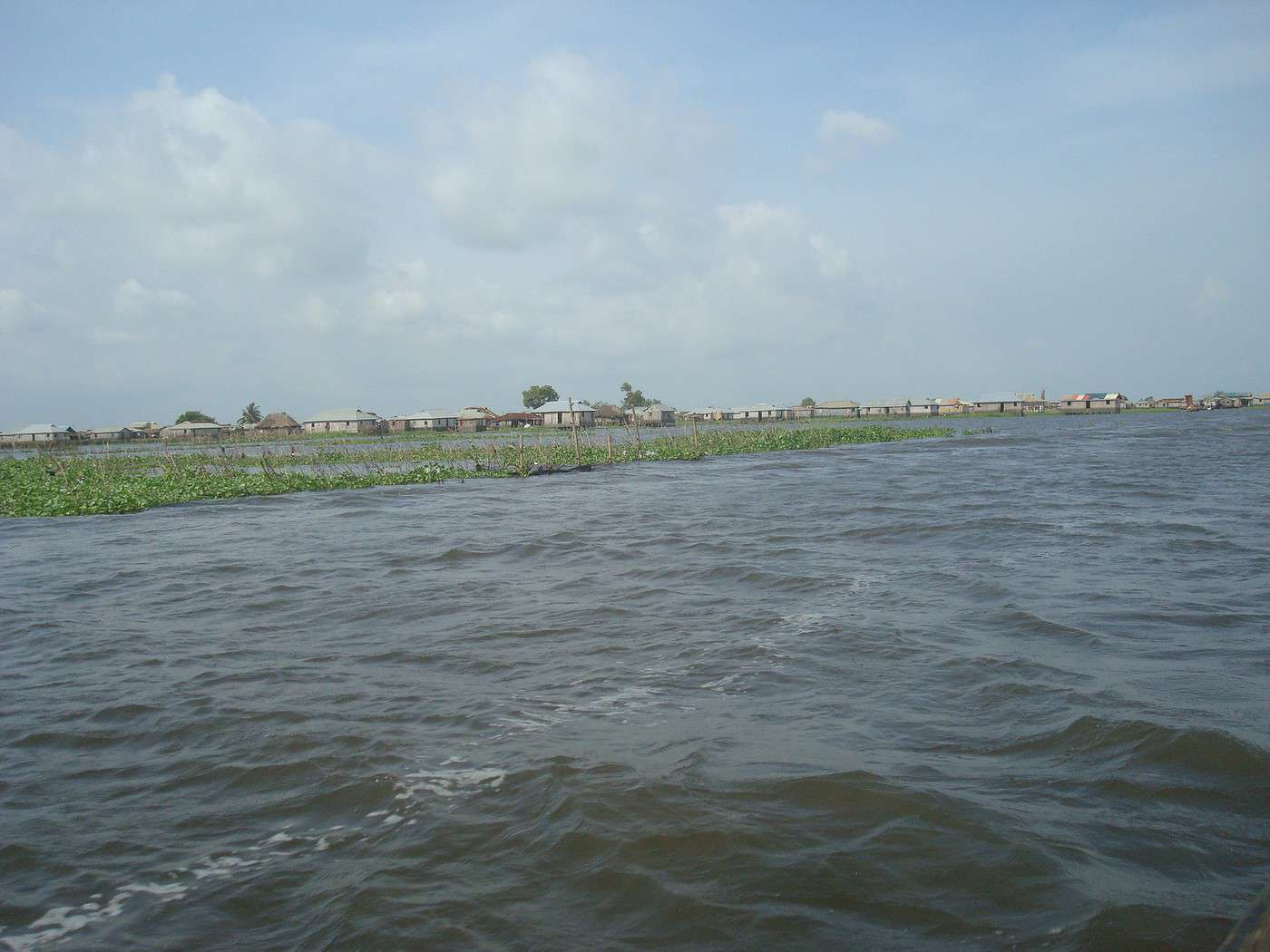
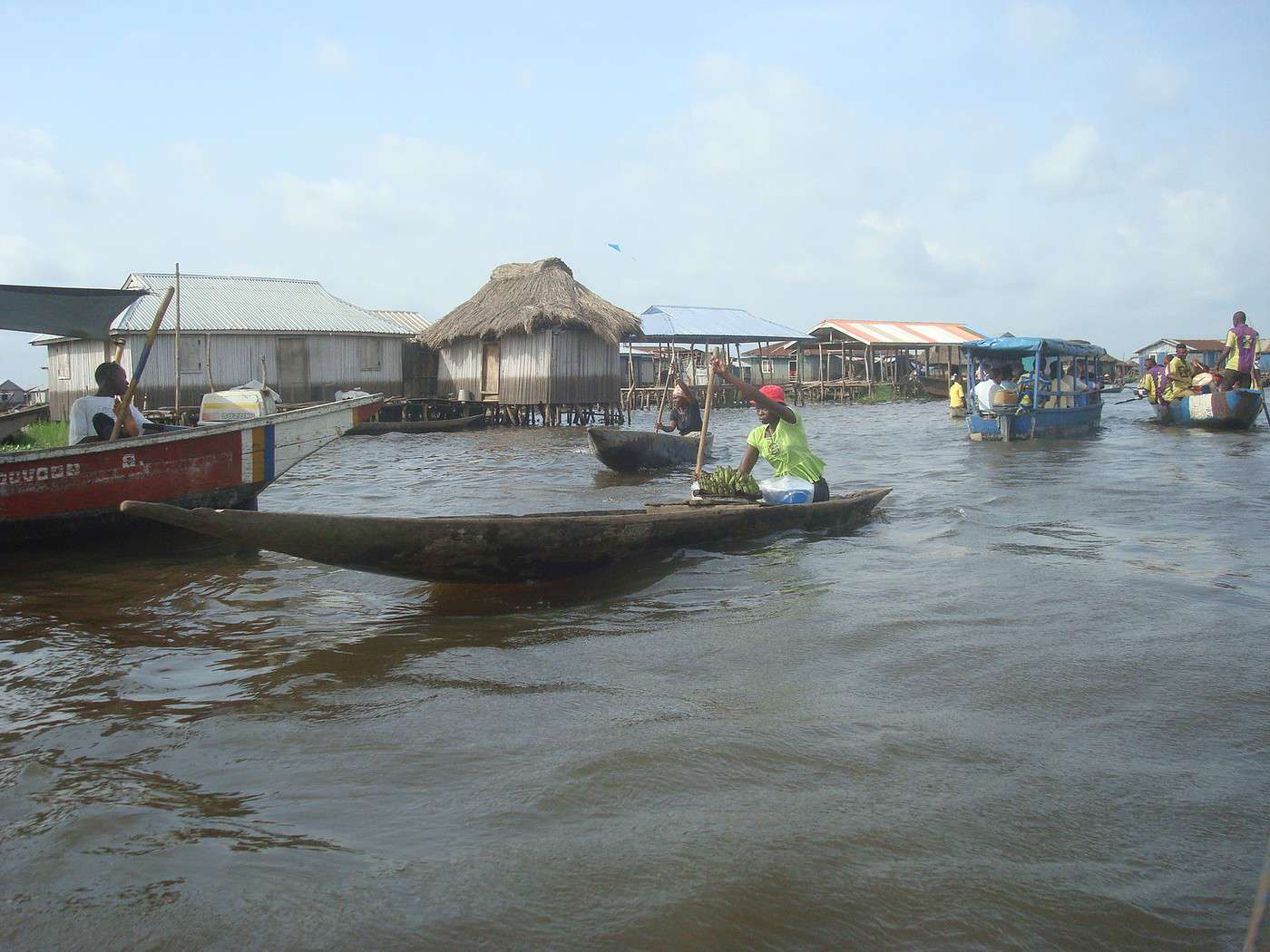
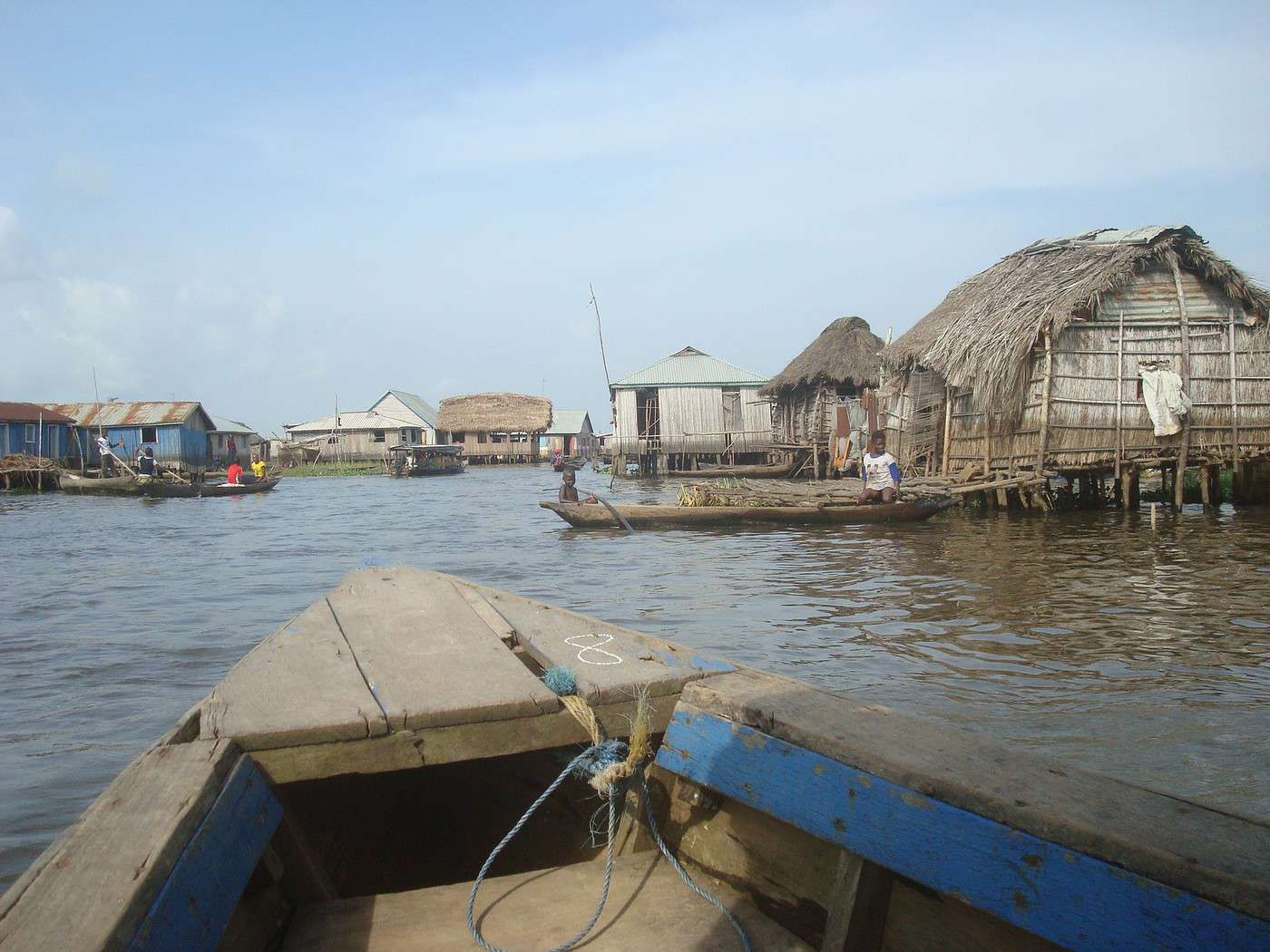
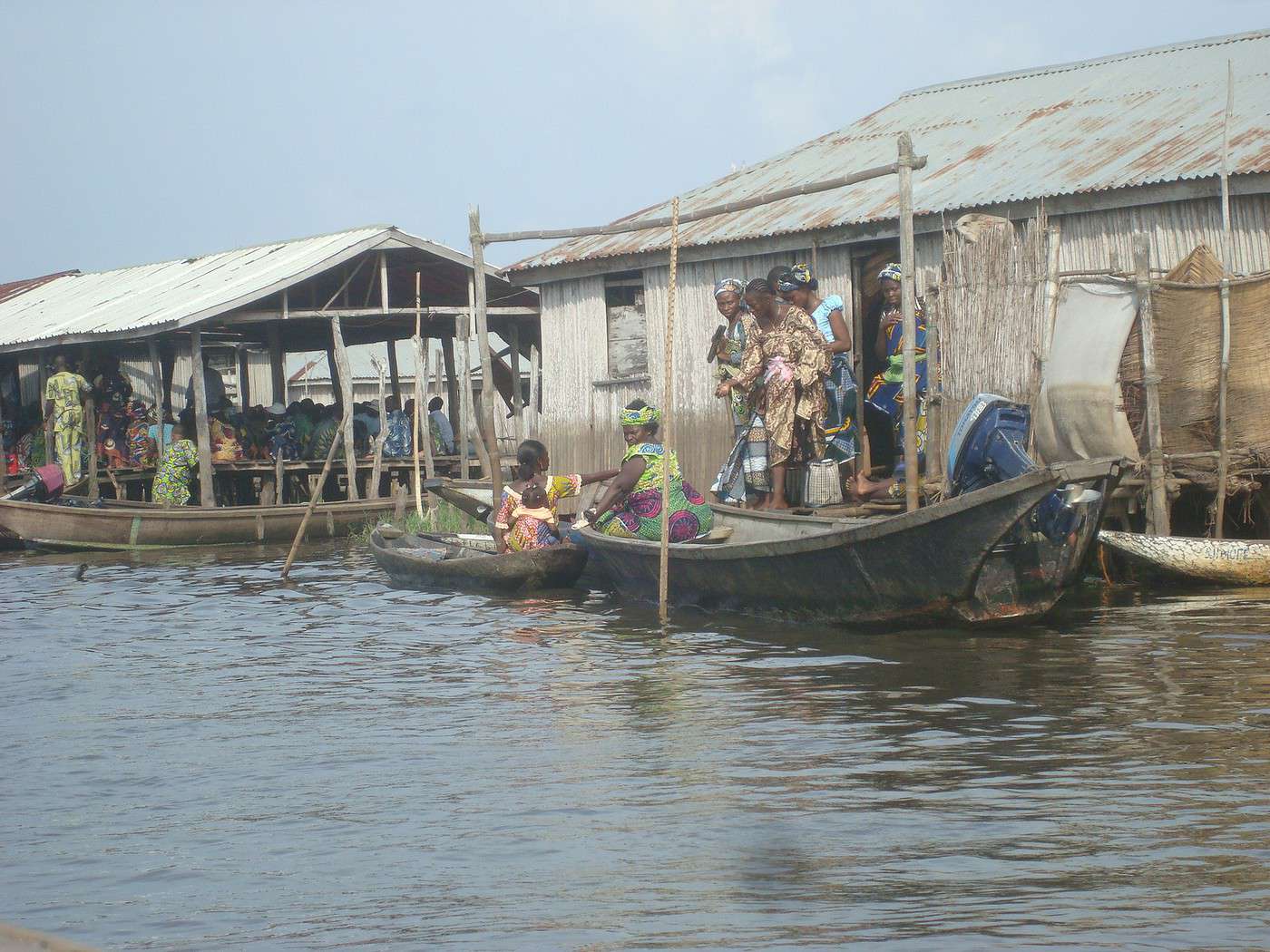
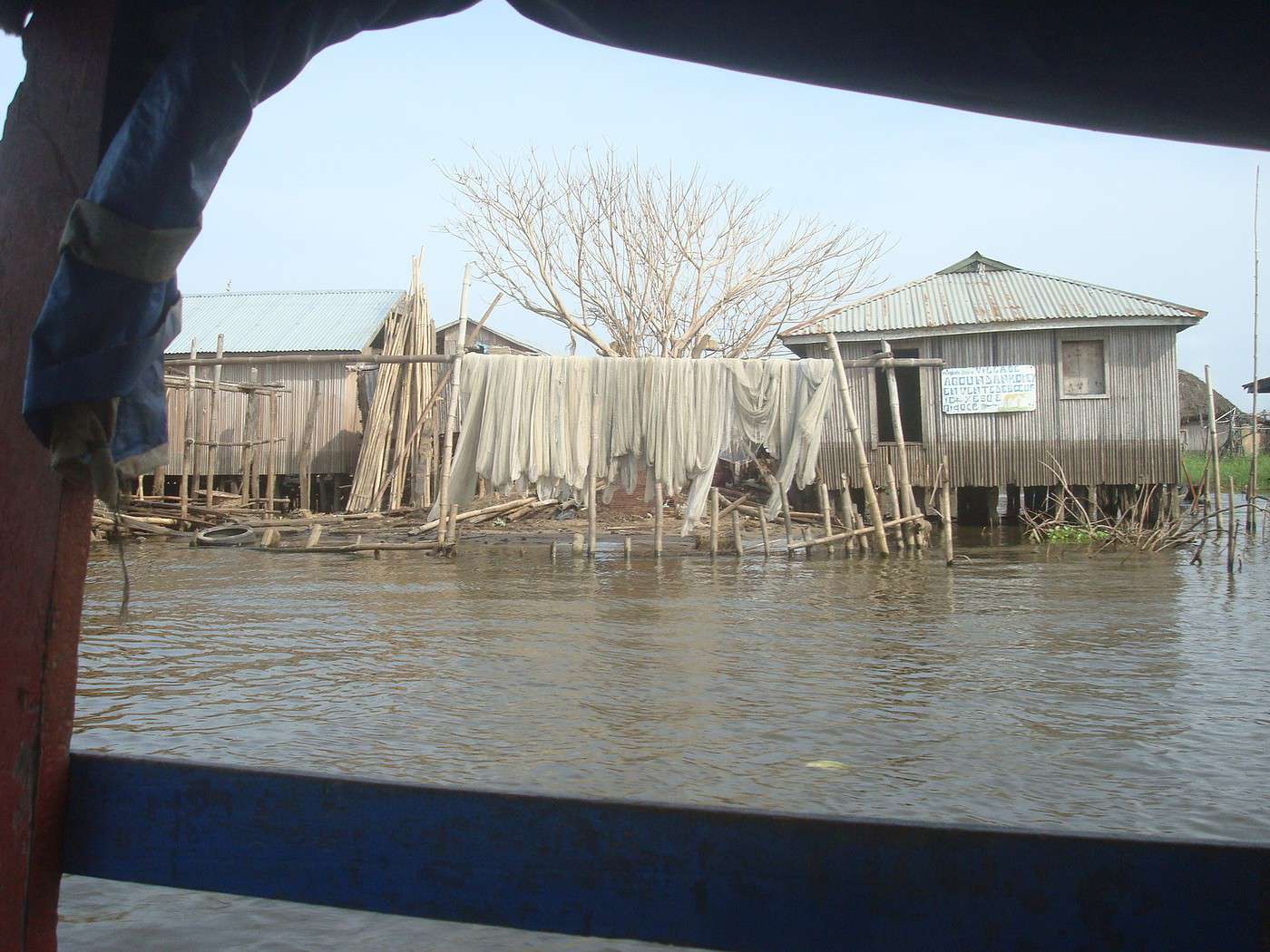
Ganvié, au nord de Cotonou, est un grand village lacustre appelé la «Venise de l’Afrique». Sa population (30 000) vit dans des maisons sur pilotis au-dessus des eaux du Lac Nokoué - à ne pas manquer! L’origine de ce village remonte au 18e s. et vient du fait que les gens se réfugiaient dans ces marécages afin d’échapper à l’esclavage. Candidat au patrimoine UNESCO.
Quelques photos
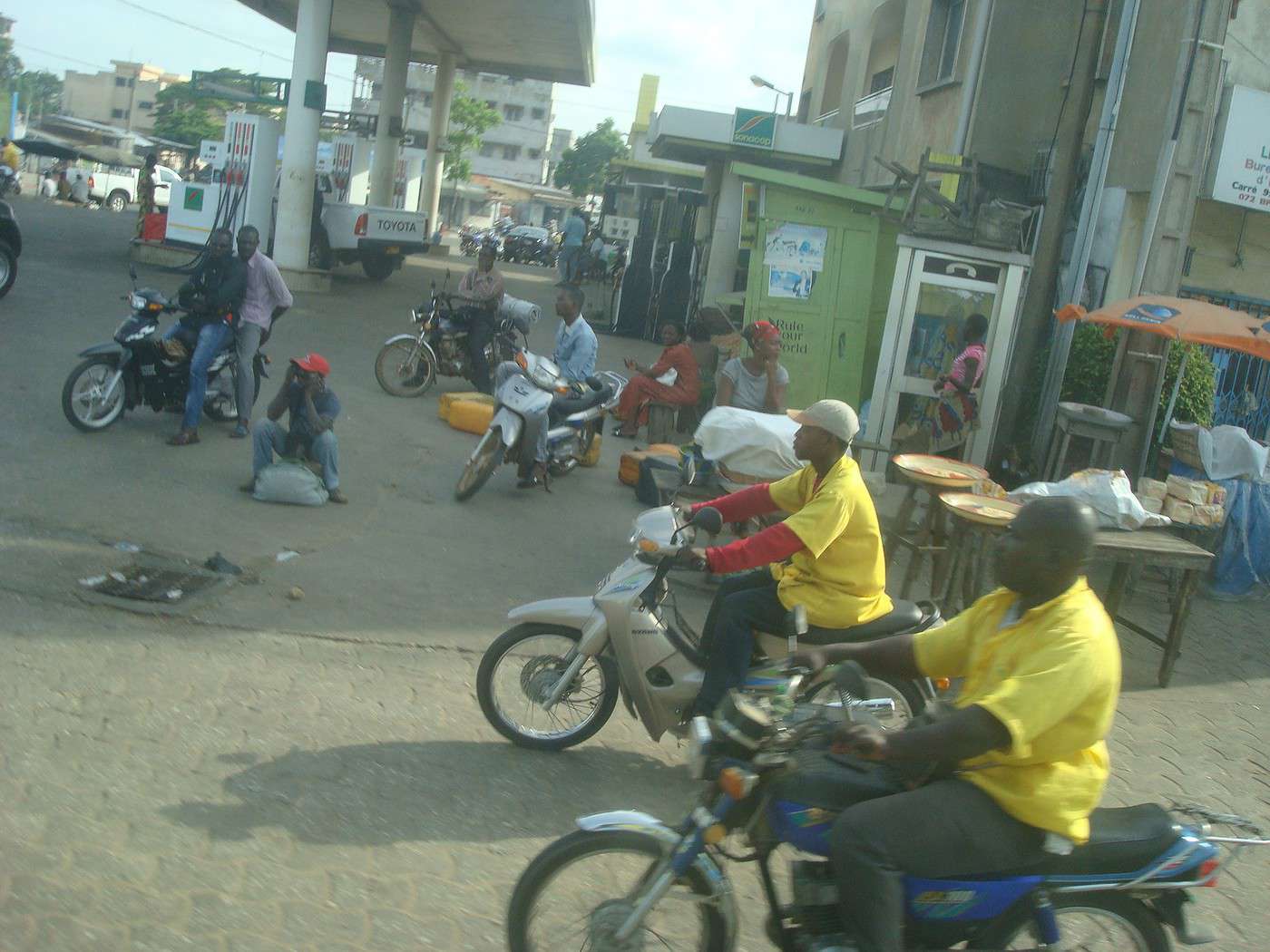
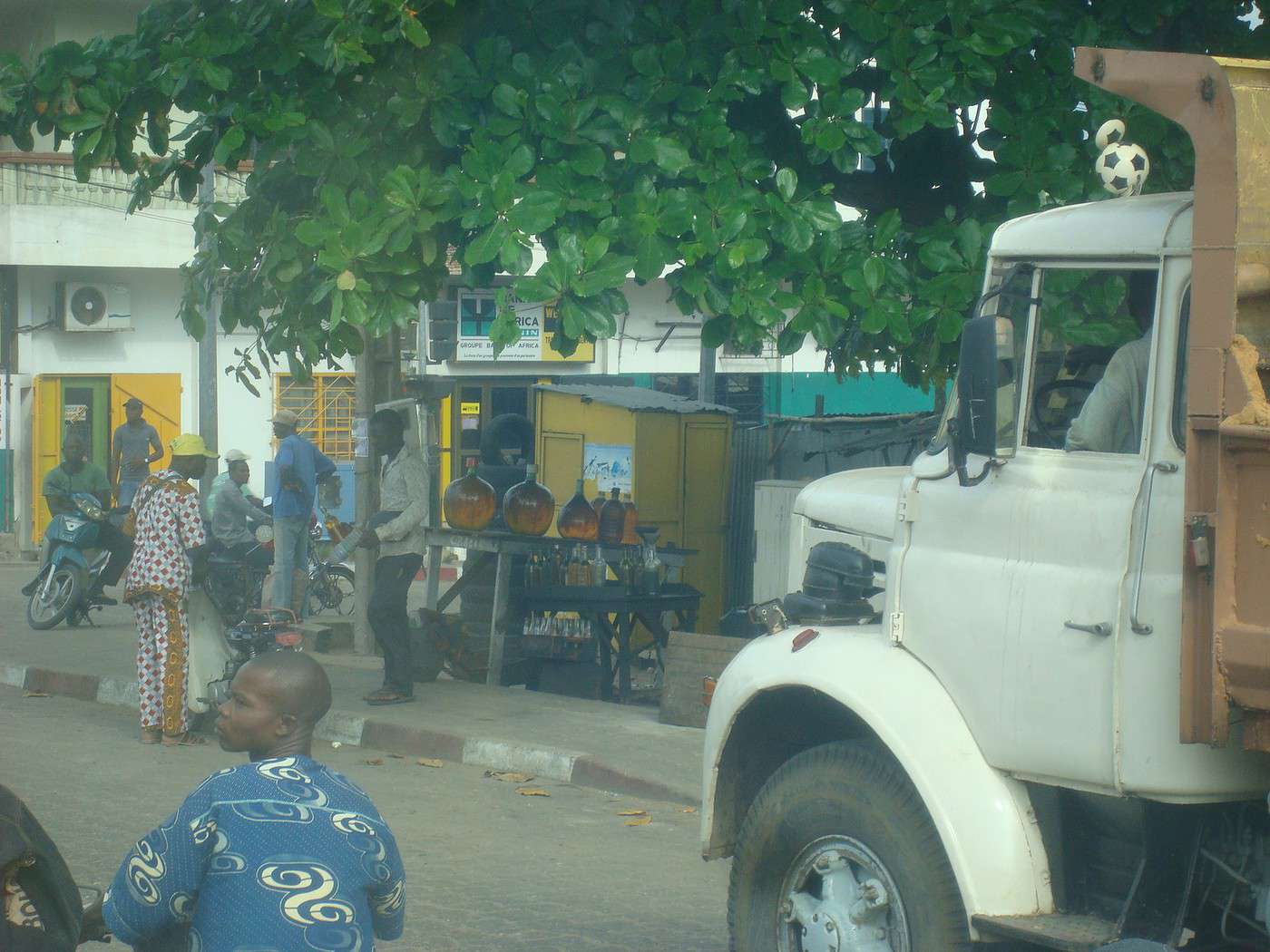
Cotonou 1. Départ pour Ouidah - Les «chemises jaunes» en moto sont des taxis. 2. Ville de Cococodji (nom chantant...) - Un peu partout, vente illégale de produits pétroliers illégaux
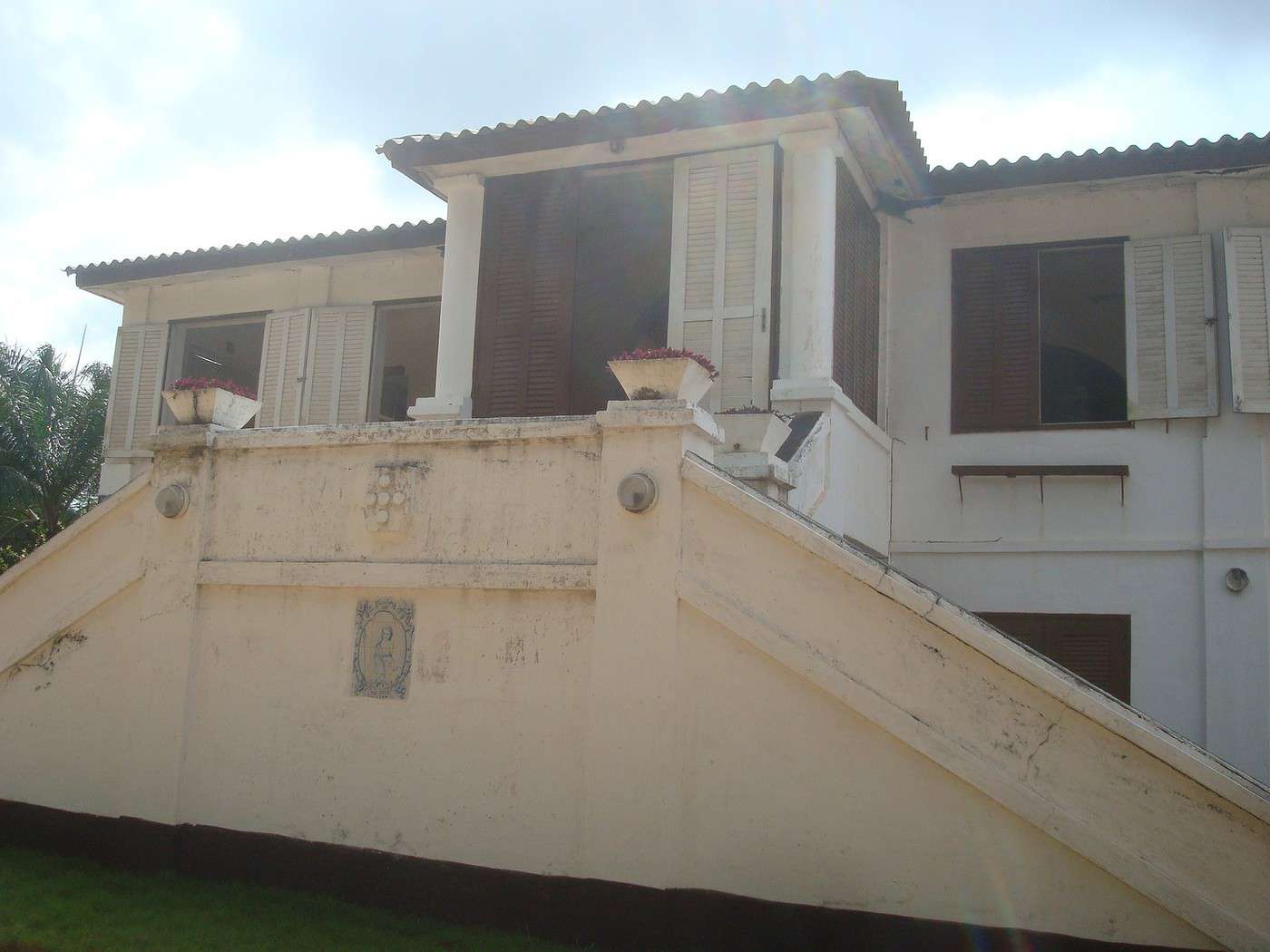
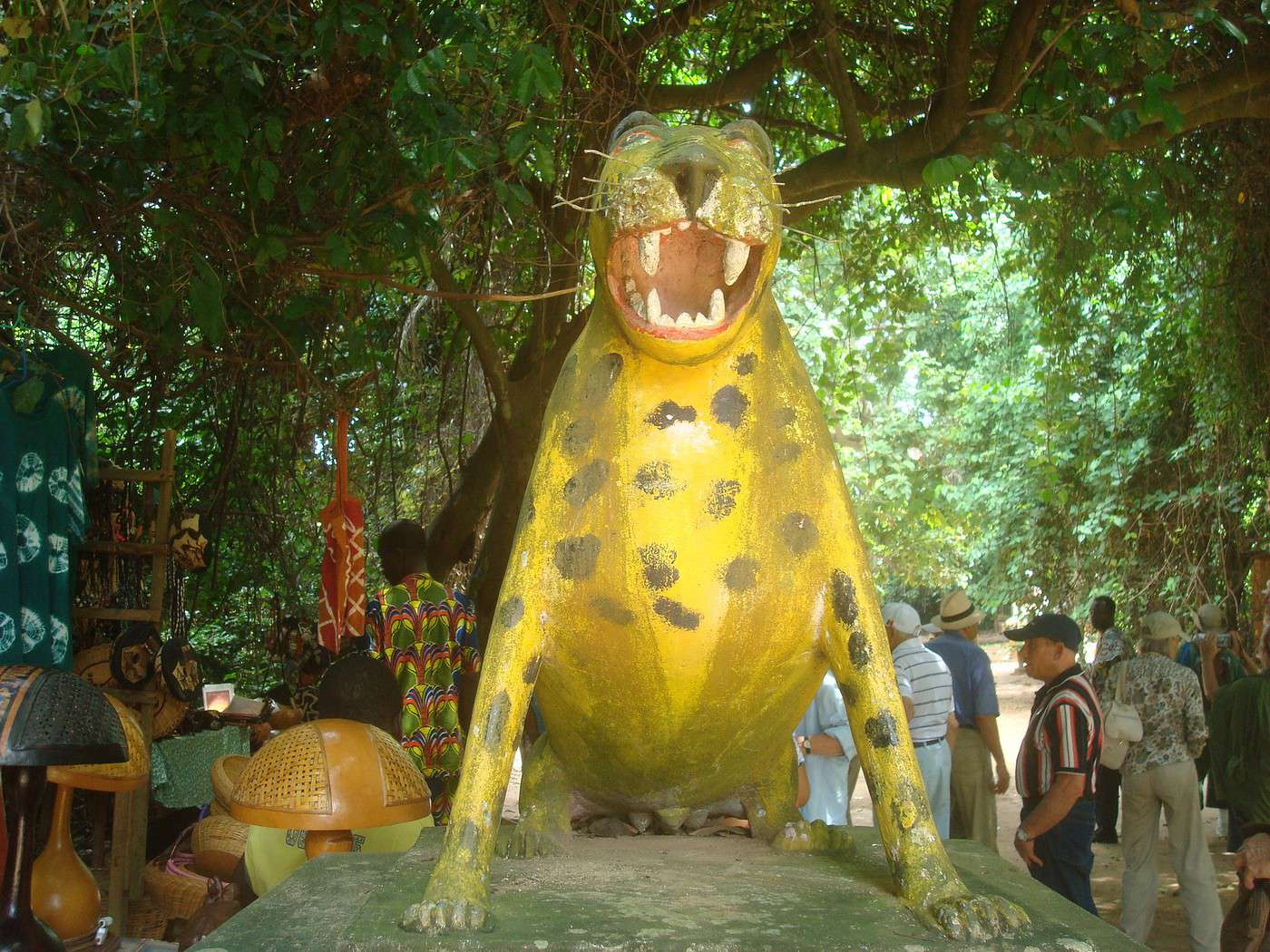
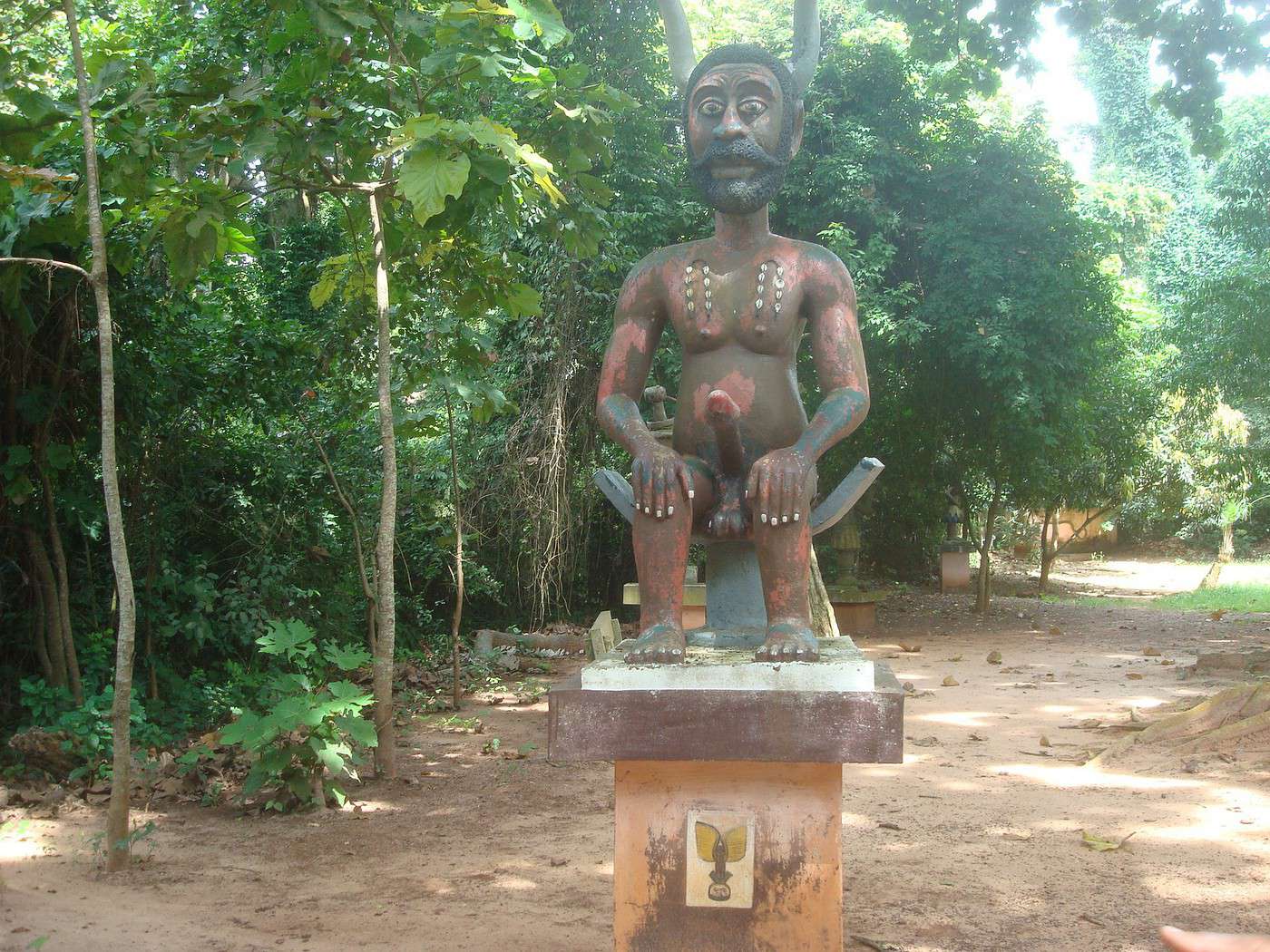
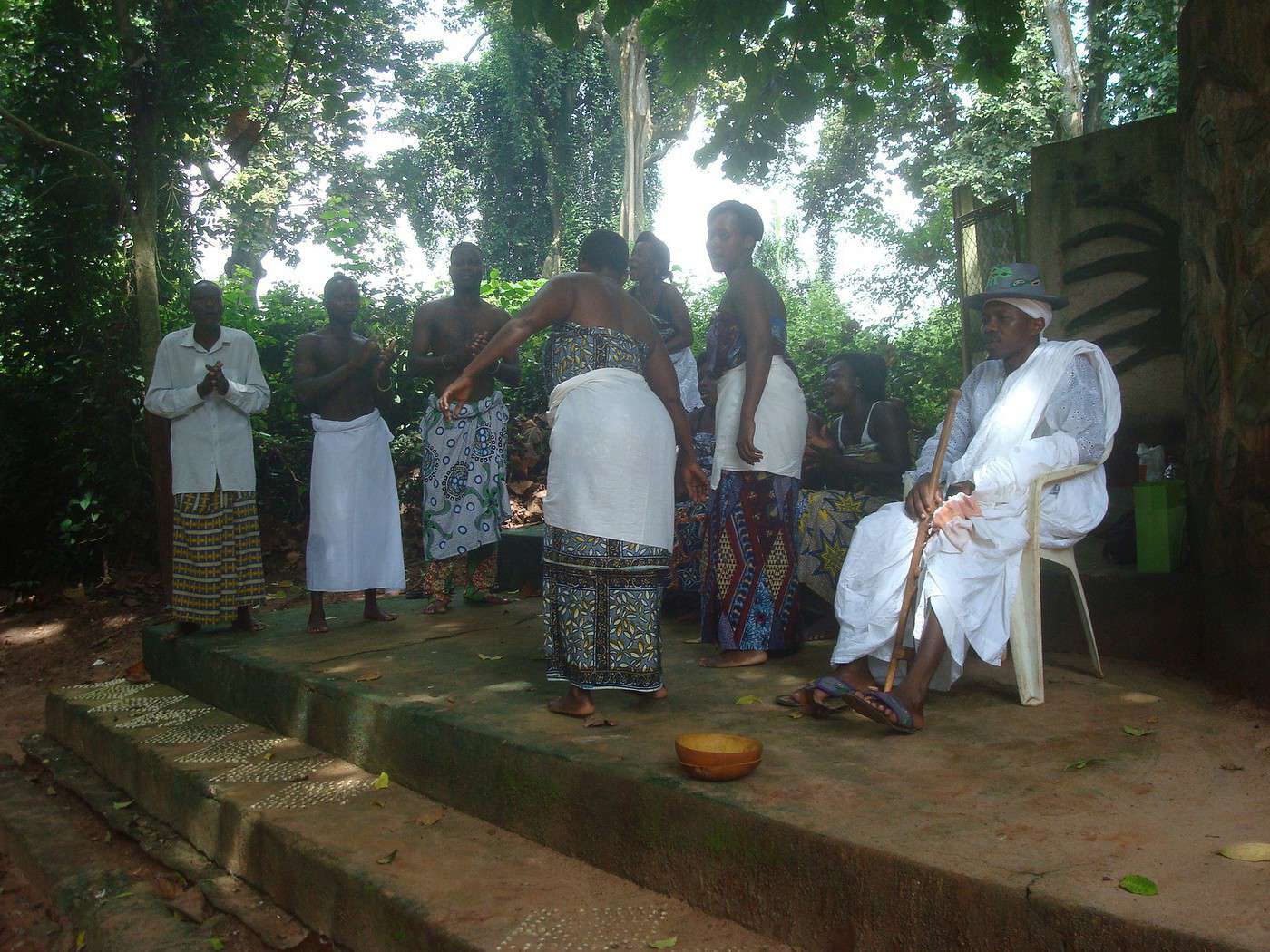
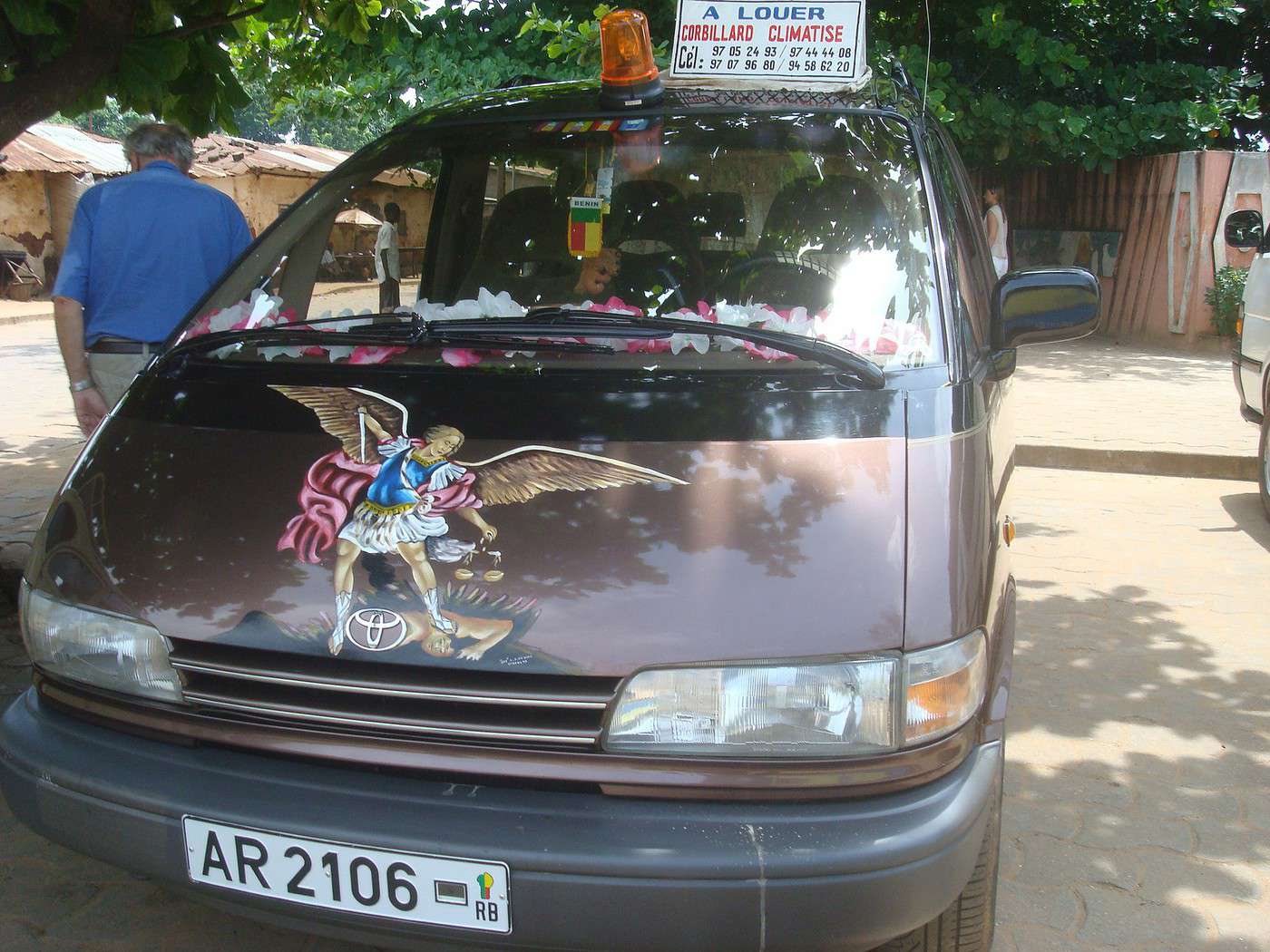
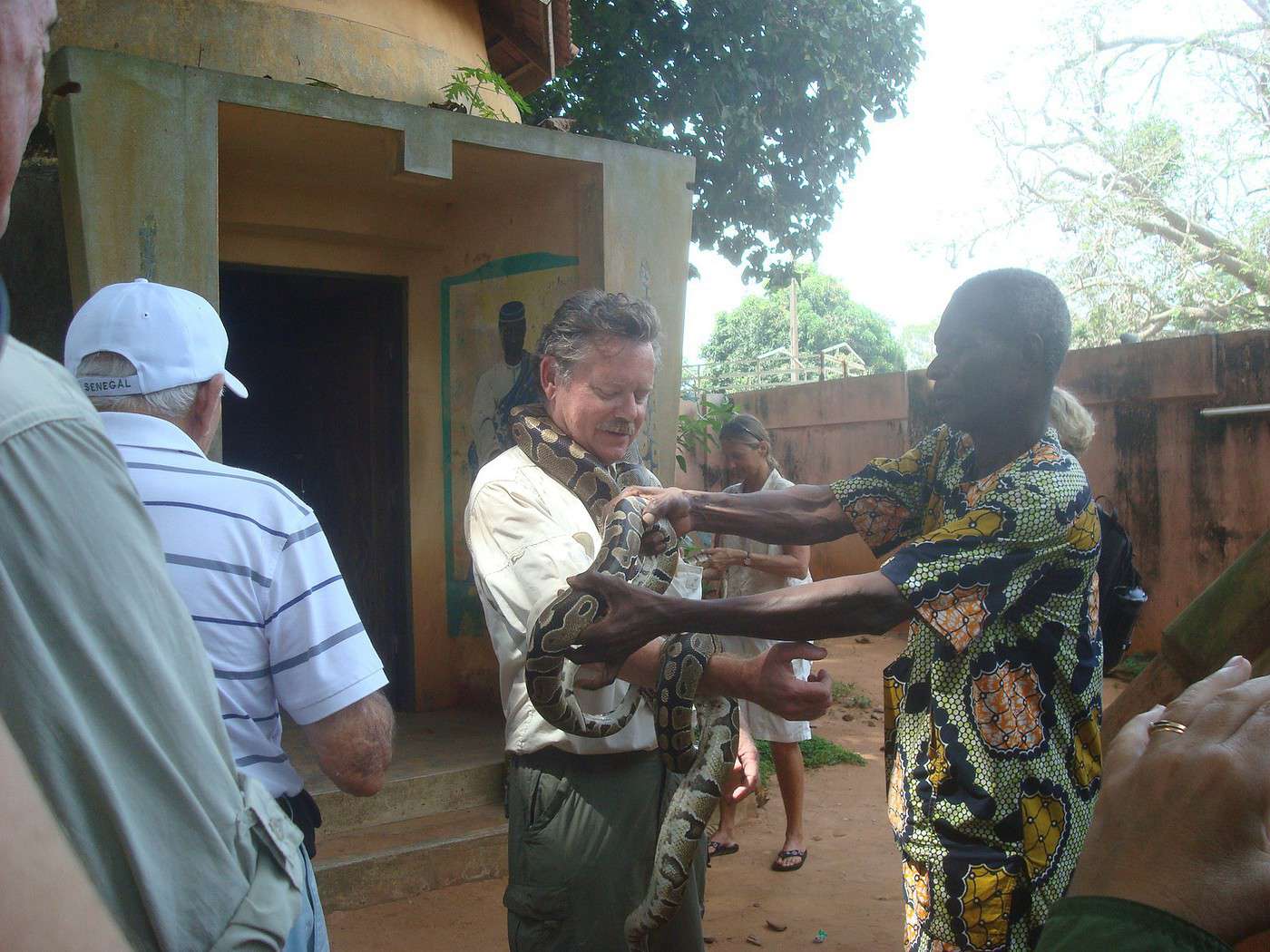
Ouidah 3. Musée d’histoire dans l’enceinte du Fort Portugais de Juda (ancien nom de Ouidah) 4. Forêt sacrée de Kpassezoun 5. et 6. Divinités vaudoues 7. Prêtre voodoo qui attend les demandes et les offrandes; il peut exaucer tous nos vœux… 😇 8. Corbillard climatisé à louer - dans les rues de Ouidah 9. Temple des Pythons à Ouidah
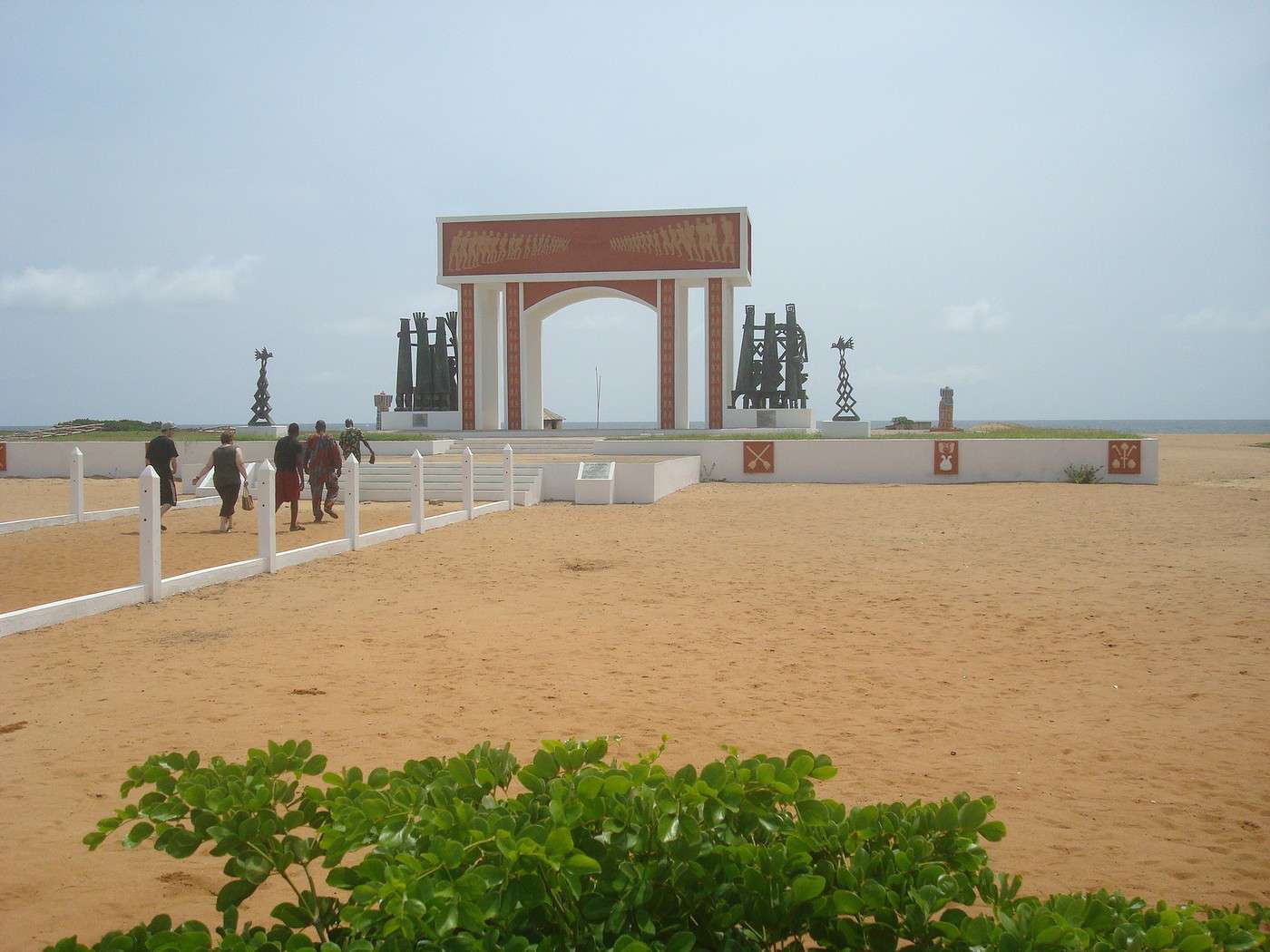
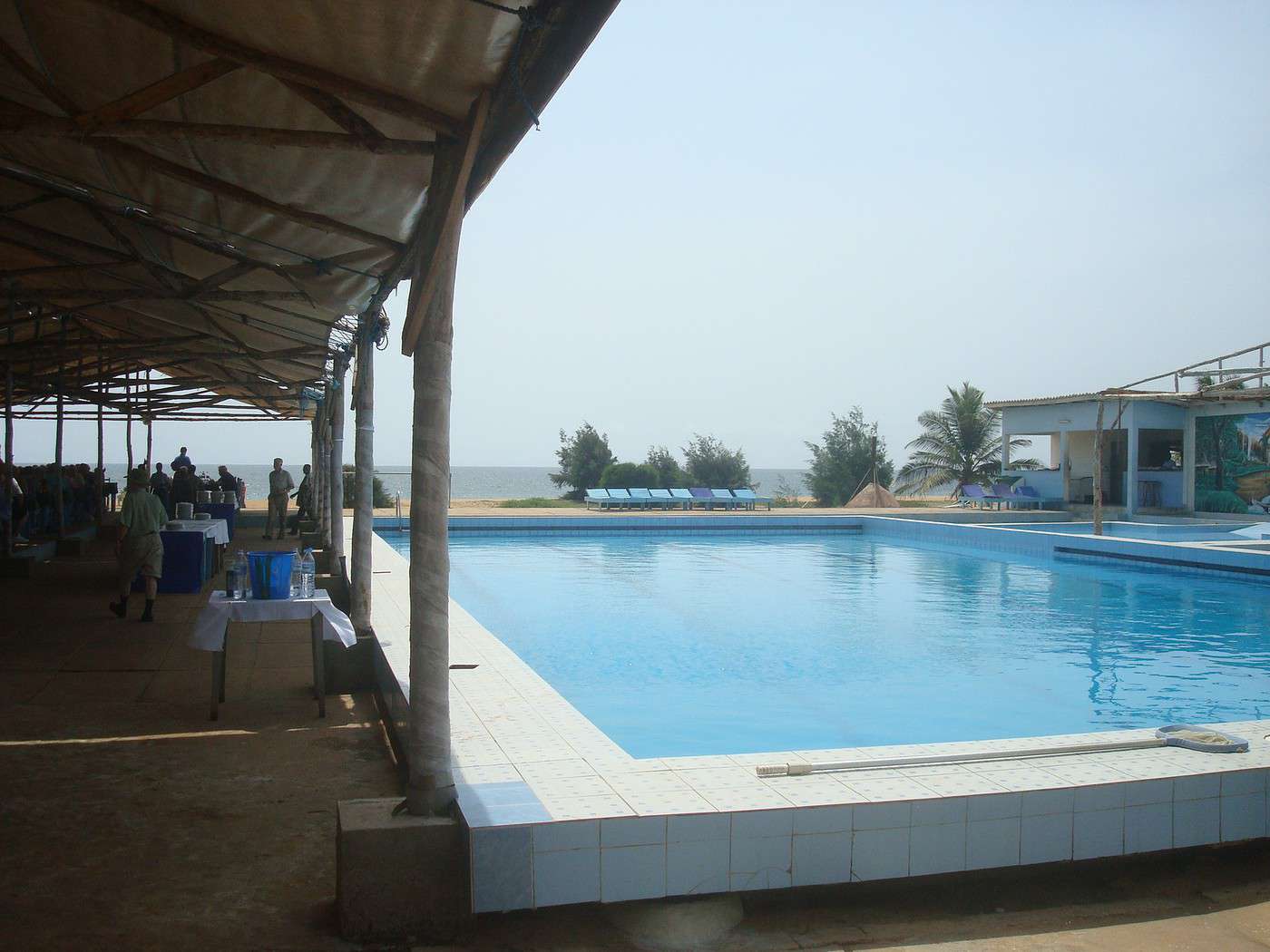
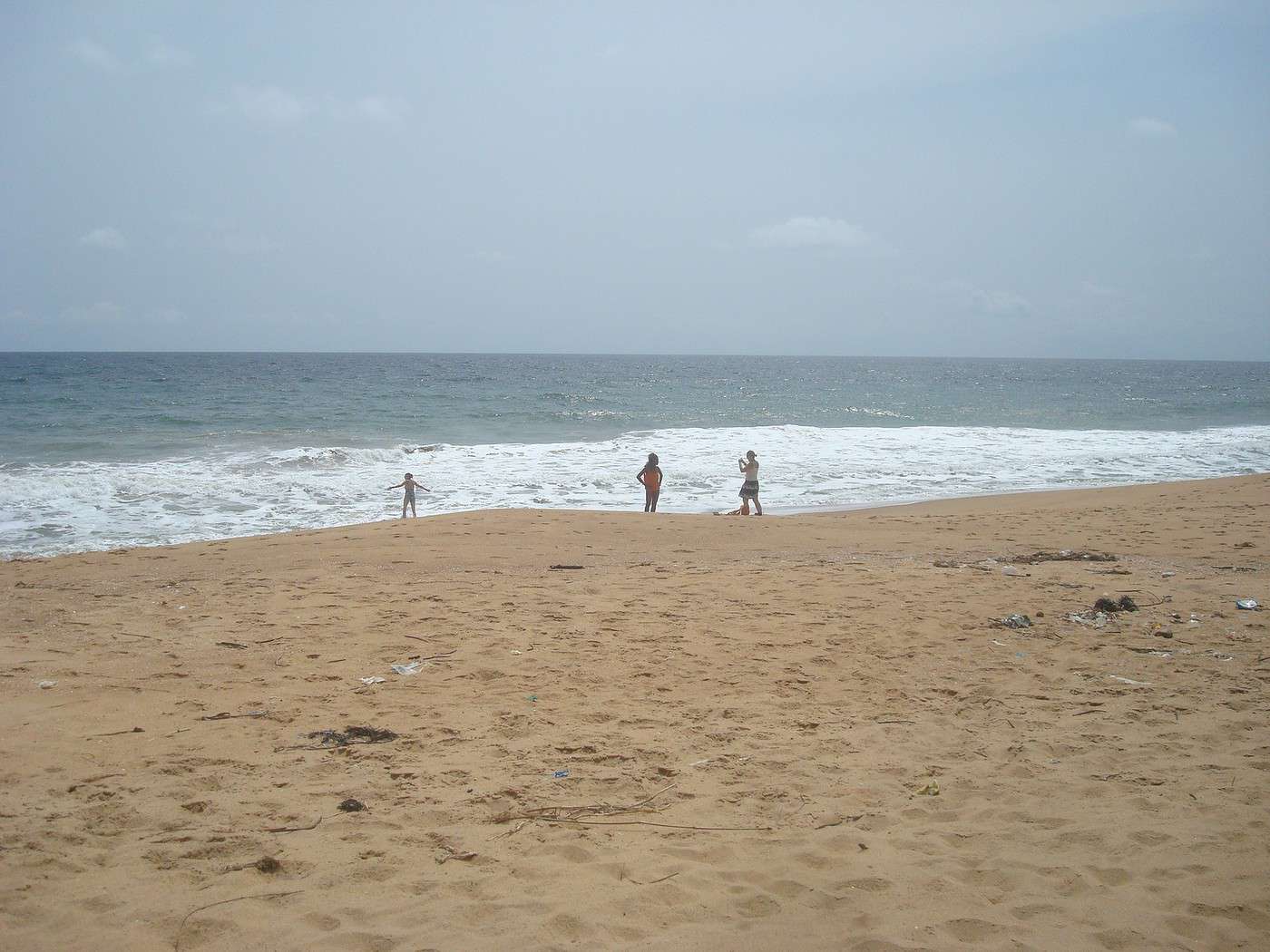
10. Route des Pêches – La Porte du Non Retour 11. et 12. Piscine du restaurant où on s’est arrêté pour le lunch : Le Jardin Brésilien de L’ Auberge de la Diaspora sur le bord de la mer - belle grande plage de sable
13. En route pour Ganvié - Notre essentielle escorte policière depuis Cotonou (+ un policier à bord du car). Il y avait un trafic incroyable à certains endroits; c’est bien grâce à cette escorte si on a pu faire cette superbe excursion de 9h, incroyablement bien organisée! Non, Croisifan, ne pense surtout pas à faire tout ça par toi-même en une escale… une partie, oui.
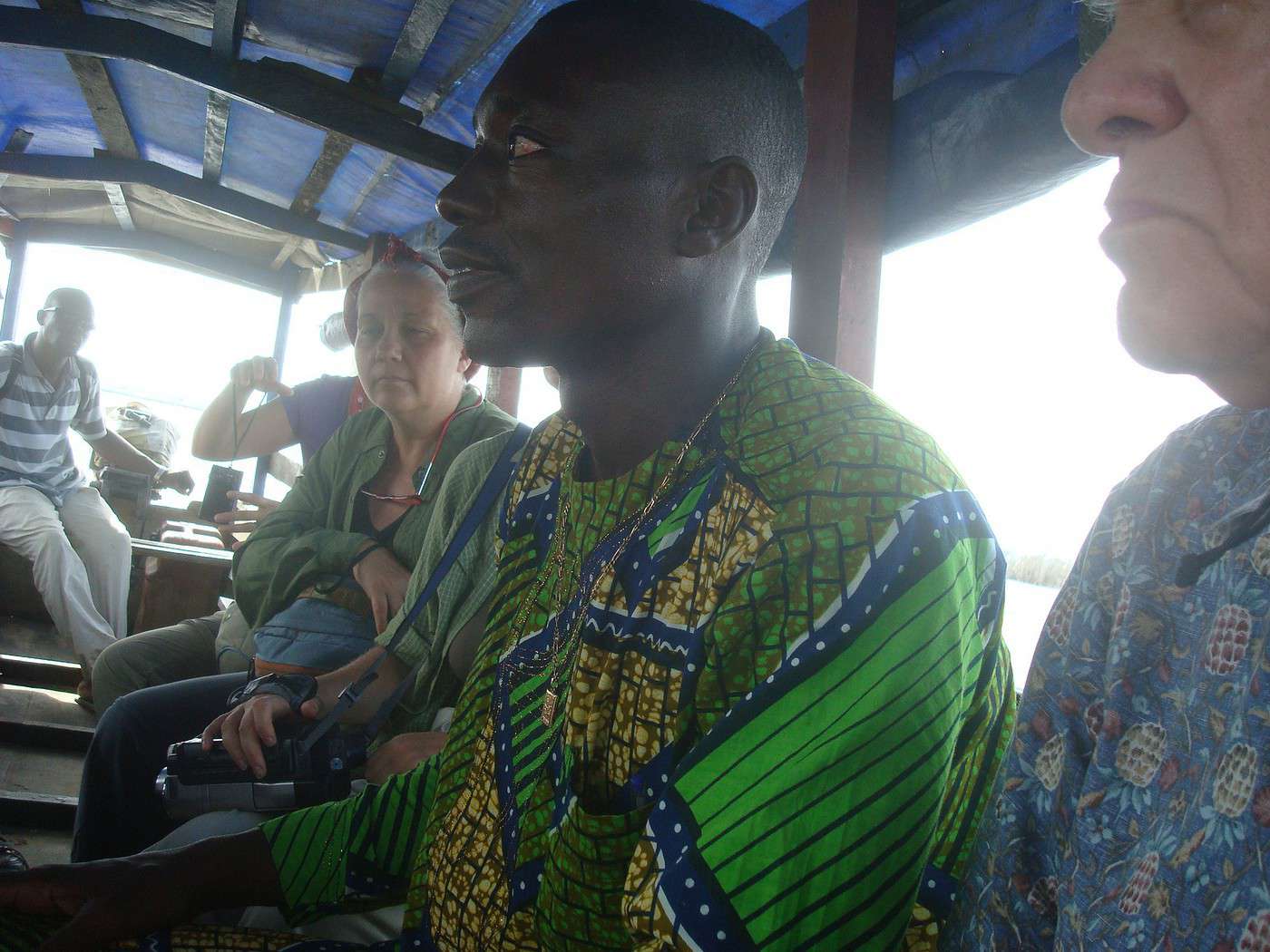
Ganvié 14. Pirogues de Ganvié 15. Dans la barque pour se rendre au village, notre guide Bienvenu. Il ne parle que le français et l’Ayizo à la maison; les passagers, sauf nous deux, ne comprennent que l’anglais. Mais à la grande joie de tous, MonsieurM a servi de traducteur ! (Décidément, il a tous les talents… 😉) 16. En route vers le village lacustre 17. et suivantes – Quelques scènes de la vie quotidienne à Ganvié – très pittoresques!
Retour à Cotonou après une autre journée palpitante et bien remplie Ce soir: «Dress Casual»!
Spectacle à 22h15 par la flûtiste Bettine Clemen - des scènes champêtres de ses concerts autour du monde sont projetées sur écran – reposant, intime et harmonieux!
Un grand MERCI à tous les membres VF qui m’ont aidée à choisir la meilleure excursion parmi les choix offerts. Pour voir cette discussion sur le Bénin, cliquer ici. Merci jef974, camboui45, LUJU, Marnad, BAKOFAMILIA, sergiobarezi.
Jour 17 Cotonou, BÉNIN (de 7h00 à 18h00) 12 novembre 29 oC
Population du Bénin : 9 100 000 Âge médian : 17,3 ans Indépendance : 1er août 1960 (de la France) Chrétiens 43% Musulmans 24% Vaudou 17% Langue officielle : Français Autres langues parlées (~50) : Fon (24%), Yorouba, Bariba, Goun, Ayizo (4%), etc. Port d’escale : Cotonou Capitale administrative : Porto-Novo (pop. 191 000)
Excursion choisie : Ouidah: Voodoo Capital & Ganvie (9h)
Cotonou (pop. 750 000) est la plus grande ville du Bénin; siège du gouvernement, centre commercial & économique. Le car quitte le port en se dirigeant vers la ville de Cococodji, un peu au nord-ouest, pour se rendre à Ouidah.
Ouidah (pop. 60 000) à 42 km à l’ouest de Cotonou; une des principales villes de la traite négrière occidentale au 18e s., point de vente et d’embarquement des esclaves. Ville candidate au patrimoine UNESCO. On visite Musée, Fôrêt sacrée, Temple... - Lunch Au retour de Ouidah, on emprunte la champêtre Route de Pêches qui longe la mer pour se rendre à Ganvié.
Ganvié, au nord de Cotonou, est un grand village lacustre appelé la «Venise de l’Afrique». Sa population (30 000) vit dans des maisons sur pilotis au-dessus des eaux du Lac Nokoué - à ne pas manquer! L’origine de ce village remonte au 18e s. et vient du fait que les gens se réfugiaient dans ces marécages afin d’échapper à l’esclavage. Candidat au patrimoine UNESCO.
Quelques photos
Cotonou 1. Départ pour Ouidah - Les «chemises jaunes» en moto sont des taxis. 2. Ville de Cococodji (nom chantant...) - Un peu partout, vente illégale de produits pétroliers illégaux
Ouidah 3. Musée d’histoire dans l’enceinte du Fort Portugais de Juda (ancien nom de Ouidah) 4. Forêt sacrée de Kpassezoun 5. et 6. Divinités vaudoues 7. Prêtre voodoo qui attend les demandes et les offrandes; il peut exaucer tous nos vœux… 😇 8. Corbillard climatisé à louer - dans les rues de Ouidah 9. Temple des Pythons à Ouidah
10. Route des Pêches – La Porte du Non Retour 11. et 12. Piscine du restaurant où on s’est arrêté pour le lunch : Le Jardin Brésilien de L’ Auberge de la Diaspora sur le bord de la mer - belle grande plage de sable
13. En route pour Ganvié - Notre essentielle escorte policière depuis Cotonou (+ un policier à bord du car). Il y avait un trafic incroyable à certains endroits; c’est bien grâce à cette escorte si on a pu faire cette superbe excursion de 9h, incroyablement bien organisée! Non, Croisifan, ne pense surtout pas à faire tout ça par toi-même en une escale… une partie, oui.
Ganvié 14. Pirogues de Ganvié 15. Dans la barque pour se rendre au village, notre guide Bienvenu. Il ne parle que le français et l’Ayizo à la maison; les passagers, sauf nous deux, ne comprennent que l’anglais. Mais à la grande joie de tous, MonsieurM a servi de traducteur ! (Décidément, il a tous les talents… 😉) 16. En route vers le village lacustre 17. et suivantes – Quelques scènes de la vie quotidienne à Ganvié – très pittoresques!
Retour à Cotonou après une autre journée palpitante et bien remplie Ce soir: «Dress Casual»!
Spectacle à 22h15 par la flûtiste Bettine Clemen - des scènes champêtres de ses concerts autour du monde sont projetées sur écran – reposant, intime et harmonieux!
Un grand MERCI à tous les membres VF qui m’ont aidée à choisir la meilleure excursion parmi les choix offerts. Pour voir cette discussion sur le Bénin, cliquer ici. Merci jef974, camboui45, LUJU, Marnad, BAKOFAMILIA, sergiobarezi.
MoniqueM
« Emmenez- moi au bout de la terre
Emmenez-moi au pays des merveilles...»
bravo monique!! c'est vraiment super dépaysant et la "venise" africaine est très curieuse à voir😏
danièle
Bonjour Monique
Super bien documenté, le récit de ton voyage😉
D'après mes souvenirs des cours d'histoire, le BENIN, est une ancienne colonie de l'Afrique occidentale française, dont l'ancien nom était le DAHOMEY. A bientôt Josiane
Super bien documenté, le récit de ton voyage😉
D'après mes souvenirs des cours d'histoire, le BENIN, est une ancienne colonie de l'Afrique occidentale française, dont l'ancien nom était le DAHOMEY. A bientôt Josiane
Romantica - Adriana - Galaxy - Wind NCL - Allegra - Orchestra - Solstice - Brilliance - Solstice - Liberty & Magnifica - Magnifica & Préziosa - Liberty & Eclipse - Allure - Symphony - Spectrum - Pandaw II - Harmonie - Edge - World europa - Diadema
Bonjour Monique,
Mon avatar est le port de Flam en Norvège lors de notre croisière dans le Grand Nord en juillet 2010. Un voyage superbe qui nous a laissé des superbes souvenirs, de paysages inoubliables...
J'aime découvrir "ailleurs", d'où mon plaisir de lire les C/R...et je voyage en rêve... A très bientôt
Marine🙂
Mon avatar est le port de Flam en Norvège lors de notre croisière dans le Grand Nord en juillet 2010. Un voyage superbe qui nous a laissé des superbes souvenirs, de paysages inoubliables...
J'aime découvrir "ailleurs", d'où mon plaisir de lire les C/R...et je voyage en rêve... A très bientôt
Marine🙂
Re-Bonjour Monique,
Je me régale avec votre voyage, tellement différent de ce que je connais. Plein d'anecdotes, de photos... j'adooooreee
Marine🙂
Je me régale avec votre voyage, tellement différent de ce que je connais. Plein d'anecdotes, de photos... j'adooooreee
Marine🙂
😉Bonjour Monique,
Et bien tu nous cachais tout celà !
J'en lis des petits bouts mais je vais mettre tout ça sous le coude et attendre que tu finisse pour lire d'une seule fois . J'aime mieux surtout en ce moment !
Bon courage bises à toi et à Pierre
Capucine
Et bien tu nous cachais tout celà !
J'en lis des petits bouts mais je vais mettre tout ça sous le coude et attendre que tu finisse pour lire d'une seule fois . J'aime mieux surtout en ce moment !
Bon courage bises à toi et à Pierre
Capucine
Merci Josiane,
Tes souvenirs sont tout à fait justes.
J’ai lu que le nom officiel «République populaire du Bénin» a remplacé celui de «Dahomey» en 1975.
Princess Cruises proposait une excursion à l’ancien royaume d’Abomey (devenu Dahomey) fondé en 1625 par les Fon. On y visitait la ville d’Abomey et son mémorial du roi Behanzin qui a lutté contre l'armée française coloniale… 😕 Mais surtout on y visitait les palais royaux d’Abomey, site du patrimoine mondial de l’UNESCO depuis 1985. Murs avec célèbres décorations en bas-relief, trônes de ses 12 rois successifs de 1695 à 1900. Ces palais sont toujours en usage pour des cérémonies rituelles et royales.
Inutile de te dire que j'’ai beaucoup hésité entre les 2 excursions bien sûr… 😉
Tes souvenirs sont tout à fait justes.
J’ai lu que le nom officiel «République populaire du Bénin» a remplacé celui de «Dahomey» en 1975.
Princess Cruises proposait une excursion à l’ancien royaume d’Abomey (devenu Dahomey) fondé en 1625 par les Fon. On y visitait la ville d’Abomey et son mémorial du roi Behanzin qui a lutté contre l'armée française coloniale… 😕 Mais surtout on y visitait les palais royaux d’Abomey, site du patrimoine mondial de l’UNESCO depuis 1985. Murs avec célèbres décorations en bas-relief, trônes de ses 12 rois successifs de 1695 à 1900. Ces palais sont toujours en usage pour des cérémonies rituelles et royales.
Inutile de te dire que j'’ai beaucoup hésité entre les 2 excursions bien sûr… 😉
MoniqueM
« Emmenez- moi au bout de la terre
Emmenez-moi au pays des merveilles...»
🙂 Bonjour Capucine,
Bien sûr, prends tout ton temps. Moi aussi, je suis prise dans le tourbillon de la préparation des Fêtes... 😏
Amitiés,
MoniqueM
« Emmenez- moi au bout de la terre
Emmenez-moi au pays des merveilles...»
Merci à vous, Marine. C'est gentil ... et encourageant.
J'irai lire avec plaisir votre CR de votre croisière dans le Grand Nord.
Bonne journée!
MoniqueM
« Emmenez- moi au bout de la terre
Emmenez-moi au pays des merveilles...»
J'ai donc choisi la voie de la facilité i.e. pas de stress, on se laisse mener mais on visite tout ce qu'on désirait mais à 2 c'est pas comme lorsqu'on voyage avec 2 ou 3 enfants...
A chacun selon ses envies et ses moyens...comme tu le dit justement
Dis donc, dans quelle catégorie de croisiéristes t'es-tu placée?
Alors si je suis bien le classement, pour moi ce serait plutôt découvreur mais avec la variante 70%pour les escales et 30%pour le bateau.
A chacun selon ses envies et ses moyens...comme tu le dit justement
Dis donc, dans quelle catégorie de croisiéristes t'es-tu placée?
Alors si je suis bien le classement, pour moi ce serait plutôt découvreur mais avec la variante 70%pour les escales et 30%pour le bateau.
CARNIVAL-CELEBRITY-CLUB MED 2-COSTA-CROISIERES DE FRANCE-CUNARD-HOLLAND AMERICA LINE-MSC-NCL-OCEANIA-P&O-PONANT-PRINCESS-ROYAL CARIBBEAN-SEABOURN
Non, Croisifan, ne pense surtout pas à faire tout ça par toi-même en une escale… une partie, oui.
L'avantage d'en voir moins lors d'une escale, c'est que tu as une excellente raison d'y revenir avec une autre croisière😉.
Superbes photos, on irait volontiers y voir de plus près.😎
L'avantage d'en voir moins lors d'une escale, c'est que tu as une excellente raison d'y revenir avec une autre croisière😉.
Superbes photos, on irait volontiers y voir de plus près.😎
CARNIVAL-CELEBRITY-CLUB MED 2-COSTA-CROISIERES DE FRANCE-CUNARD-HOLLAND AMERICA LINE-MSC-NCL-OCEANIA-P&O-PONANT-PRINCESS-ROYAL CARIBBEAN-SEABOURN
Dis donc, dans quelle catégorie de croisiéristes t'es-tu placée?
Alors si je suis bien le classement, pour moi ce serait plutôt découvreur mais avec la variante 70% pour les escales et 30% pour le bateau.
Bonjour Croisifan, Oui, c'est bien ça: découvreur! J'avais placé la variante à 80% pour les escales et 20% pour le bateau. En d'autres termes, on ne considère pas la grosseur ou la nouveauté d'un navire, mais bien l'itinéraire et la compagnie de croisière 😏 ... jusqu'à maintenant! (sauf si on y va avec les enfants et petits-enfants). Je t'aurais classifié 90% pour les escales, 10% pour le bateau).
Alors si je suis bien le classement, pour moi ce serait plutôt découvreur mais avec la variante 70% pour les escales et 30% pour le bateau.
Bonjour Croisifan, Oui, c'est bien ça: découvreur! J'avais placé la variante à 80% pour les escales et 20% pour le bateau. En d'autres termes, on ne considère pas la grosseur ou la nouveauté d'un navire, mais bien l'itinéraire et la compagnie de croisière 😏 ... jusqu'à maintenant! (sauf si on y va avec les enfants et petits-enfants). Je t'aurais classifié 90% pour les escales, 10% pour le bateau).
MoniqueM
« Emmenez- moi au bout de la terre
Emmenez-moi au pays des merveilles...»
Bonsoir
j'ai encore tout lu, on sort des sentiers, c'est génial, bon ben tu sais moi aussi "decouvreur" plus que jamais !!! je pense que en prenant des excursions, l'essentiel est abordé et n'est pas raté... c'est mieux dans ces pays pour une première approche, et à la deuxième on avise souvent autrement merci pour les photos aussi super en tout les cas ça donne bien envie !!! surtout l'itinéraire🙂🙂🙂😉😉😉 didier
Et toi? Je te classifierais: Découvreur - 90% escales et 10% bateau. J'ai hâte de recevoir ta réponse...😉
Tu me surestimes😉...je pense que je suis plutôt découvreur tranquille (70% territoire-visite/30%bateau-repos-bien être).
Par exemple, le MSC Melody fait des itinéraires qui sortent des sentiers battus, mais je n'ai pas une envie folle de l'essayer..., idem pour le Costa Allegra. Quant à prendre l'Aranui...ça m'étonnerait que je tienne le coup (dèjà qu'en rando., j'ai toujours préféré les douches chaudes à l'abreuvoir des vaches pour la toilette...😏). Bon après, ça dépend de ce que tu mets sous chaque rubrique : le bien-��tre, si c'est relatif au SPA et aux massages, ce n'est pas trop ce que je recherche mais si c'est buller au soleil sur le balcon de la cabine, là ça me va (pas trop longtemps quand même).
Tu me surestimes😉...je pense que je suis plutôt découvreur tranquille (70% territoire-visite/30%bateau-repos-bien être).
Par exemple, le MSC Melody fait des itinéraires qui sortent des sentiers battus, mais je n'ai pas une envie folle de l'essayer..., idem pour le Costa Allegra. Quant à prendre l'Aranui...ça m'étonnerait que je tienne le coup (dèjà qu'en rando., j'ai toujours préféré les douches chaudes à l'abreuvoir des vaches pour la toilette...😏). Bon après, ça dépend de ce que tu mets sous chaque rubrique : le bien-��tre, si c'est relatif au SPA et aux massages, ce n'est pas trop ce que je recherche mais si c'est buller au soleil sur le balcon de la cabine, là ça me va (pas trop longtemps quand même).
CARNIVAL-CELEBRITY-CLUB MED 2-COSTA-CROISIERES DE FRANCE-CUNARD-HOLLAND AMERICA LINE-MSC-NCL-OCEANIA-P&O-PONANT-PRINCESS-ROYAL CARIBBEAN-SEABOURN
Nous aussi quand on voyageait avec nos enfants, on prenait des taxis ou des bus locaux, car à 4 le coût des excursions était prohibitif...😠 Curieusement, on n'a jamais eu peur de manquer le bateau, mais on était en Europe - les distances entre les escales sont raisonnables...
MoniqueM
« Emmenez- moi au bout de la terre
Emmenez-moi au pays des merveilles...»
Merci Didier, ça fait plaisir de te lire.
Je délaisse un peu VF ces temps-ci car la maison est envahie par nos enfants & petits enfants (7 à dîner ce soir, 9 à coucher, 15 demain dimanche pour le brunch... les bonheurs de la retraite!🙂
Je craignais un peu... puis finalement, c'est une grande joie! Le CR reprendra mardi... pour la cérémonie du passage de l'Équateur.😎
Amitiés,
MoniqueM
« Emmenez- moi au bout de la terre
Emmenez-moi au pays des merveilles...»
Bonjour Monique
Bon dimanche ...un brunch en famille...quelle joie et quelle ambiance.😇 Une tradition nord-américaine que nous avons fort appréciée sur le Solstice.😛 Est-ce que Princess la respecte aussi ? Car pas au programme chez Royal Caribbean.😕
A bientôt au passage de l'Equateur...une tradition aussi dans la marine 😉
Amitiés Josiane
Bon dimanche ...un brunch en famille...quelle joie et quelle ambiance.😇 Une tradition nord-américaine que nous avons fort appréciée sur le Solstice.😛 Est-ce que Princess la respecte aussi ? Car pas au programme chez Royal Caribbean.😕
A bientôt au passage de l'Equateur...une tradition aussi dans la marine 😉
Amitiés Josiane
Romantica - Adriana - Galaxy - Wind NCL - Allegra - Orchestra - Solstice - Brilliance - Solstice - Liberty & Magnifica - Magnifica & Préziosa - Liberty & Eclipse - Allure - Symphony - Spectrum - Pandaw II - Harmonie - Edge - World europa - Diadema
Bonjour Josiane,
Non, pas de «brunch en famille» le dimanche sur Princess, mais j'ai déjà vu ça lors d'une croisière, sans me souvenir de quelle compagnie... Carnival peut-être...?
Le calme est revenu ici ce soir, mais quelle belle journée hier et aujourd'hui! Je reviens donc sur VF pour quelques instants - avant un dodo bien mérité...😏
MoniqueM
« Emmenez- moi au bout de la terre
Emmenez-moi au pays des merveilles...»
Jours 18 à 21 Navigation en mer 13 au 16 novembre 27 oC à 19 oC
On quitte le Bénin - navigation sud-ouest vers nos deux prochaines escales en Namibie.
Passage de l’Équateur
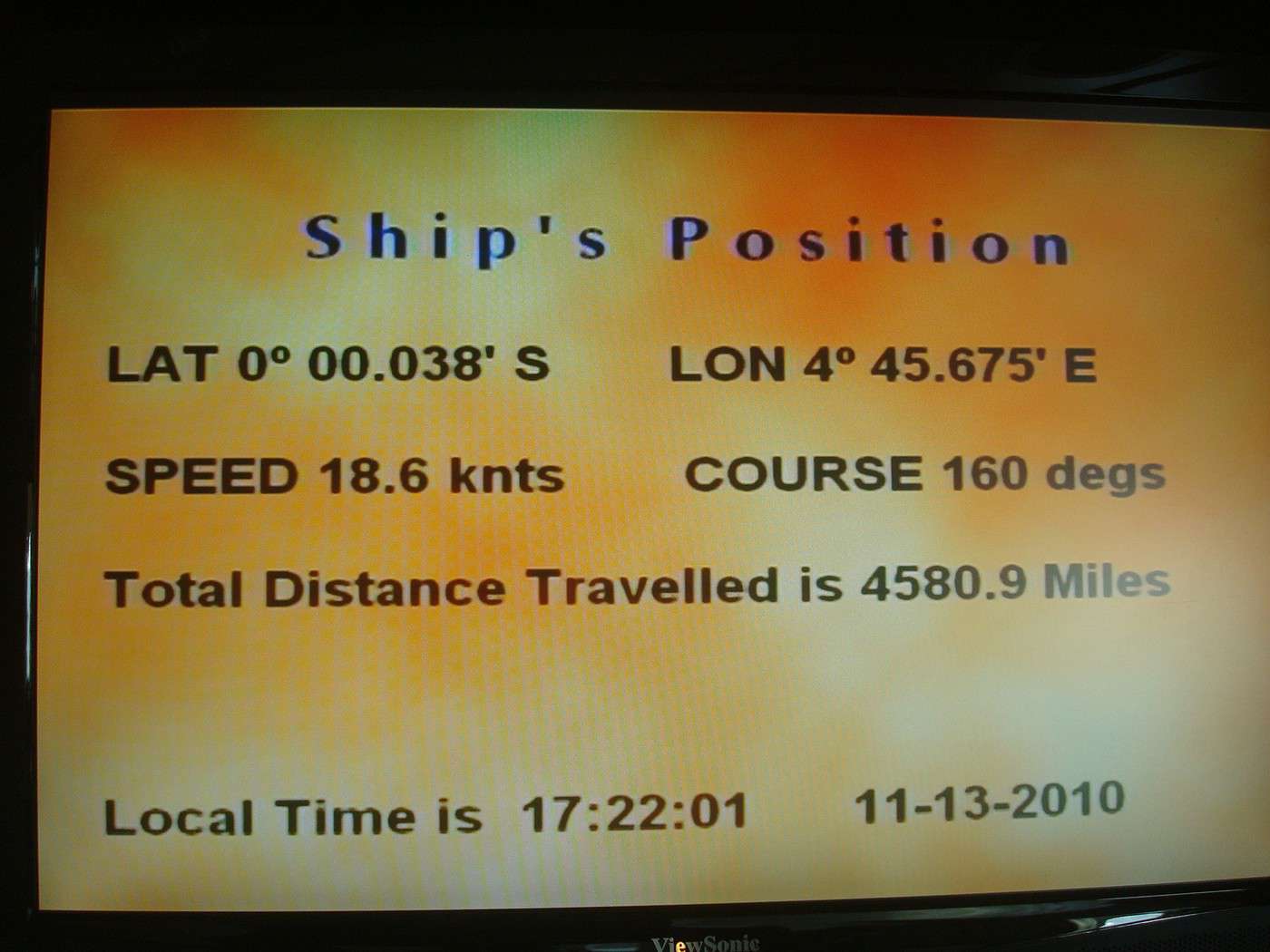
Entre 16h et 17h le 13, nous naviguons au large du Gabon, à 90 milles nautiques de la République démocratique de Sao Tomé-et-Principe, deux des 7 pays africains que traverse l’Équateur. À 17h22, on franchit la longue ligne rouge de l’Équateur toute enroulée autour de la terre à mi-chemin des pôles…😎 (photo 1). Sur l’écran qui défile à nos yeux : latitude 0 degré 00.000’! Vite, une photo - Clic! Nous sommes déjà dans l’hémisphère Sud (photo 2): on va fêter ça!
Qui parmi vous a déjà assisté à une Cérémonie du passage de l’Équateur... souvenirs inoubliables, n’est-ce pas?
Selon une très ancienne tradition de la Marine, le passage de l’Équateur donne lieu à un rituel immuable, à une sorte de baptême païen - sous l’égide du dieu Neptune - pour tous les marins qui franchissent la ligne pour la 1ere fois (les dits «néophytes») afin de s’assurer de leur capacité d’endurance par mer agitée... De nos jours, sur les bateaux de croisière, une étonnante «cérémonie du passage de l’Équateur» rappelle cette tradition à la grande joie des passagers. Cette cérémonie tire sans doute son origine d’anciens rites païens élaborés pour apaiser le dieu grec de la mer Poséidon, connu sous le nom de Neptune chez les Romains.
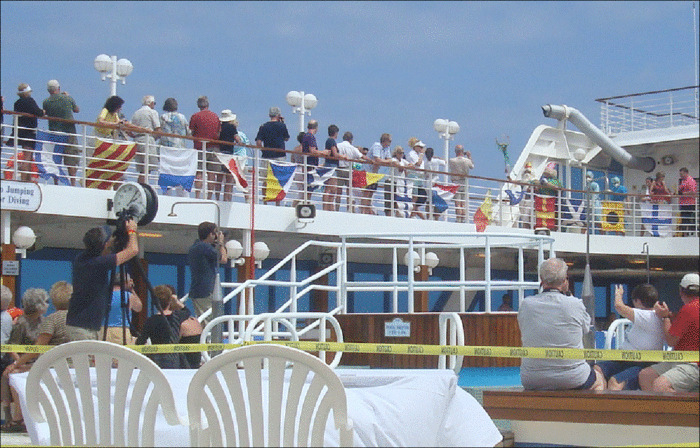
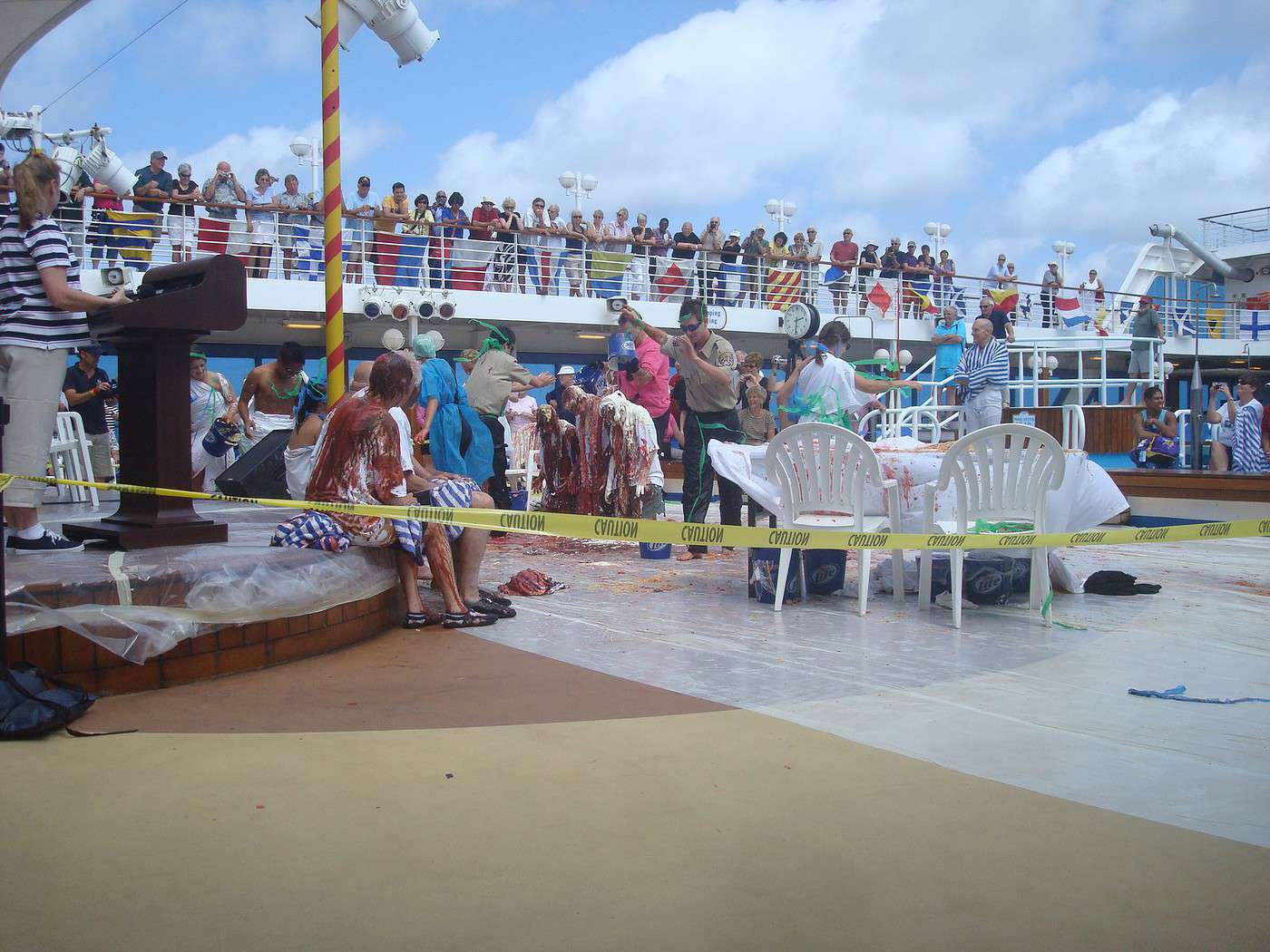
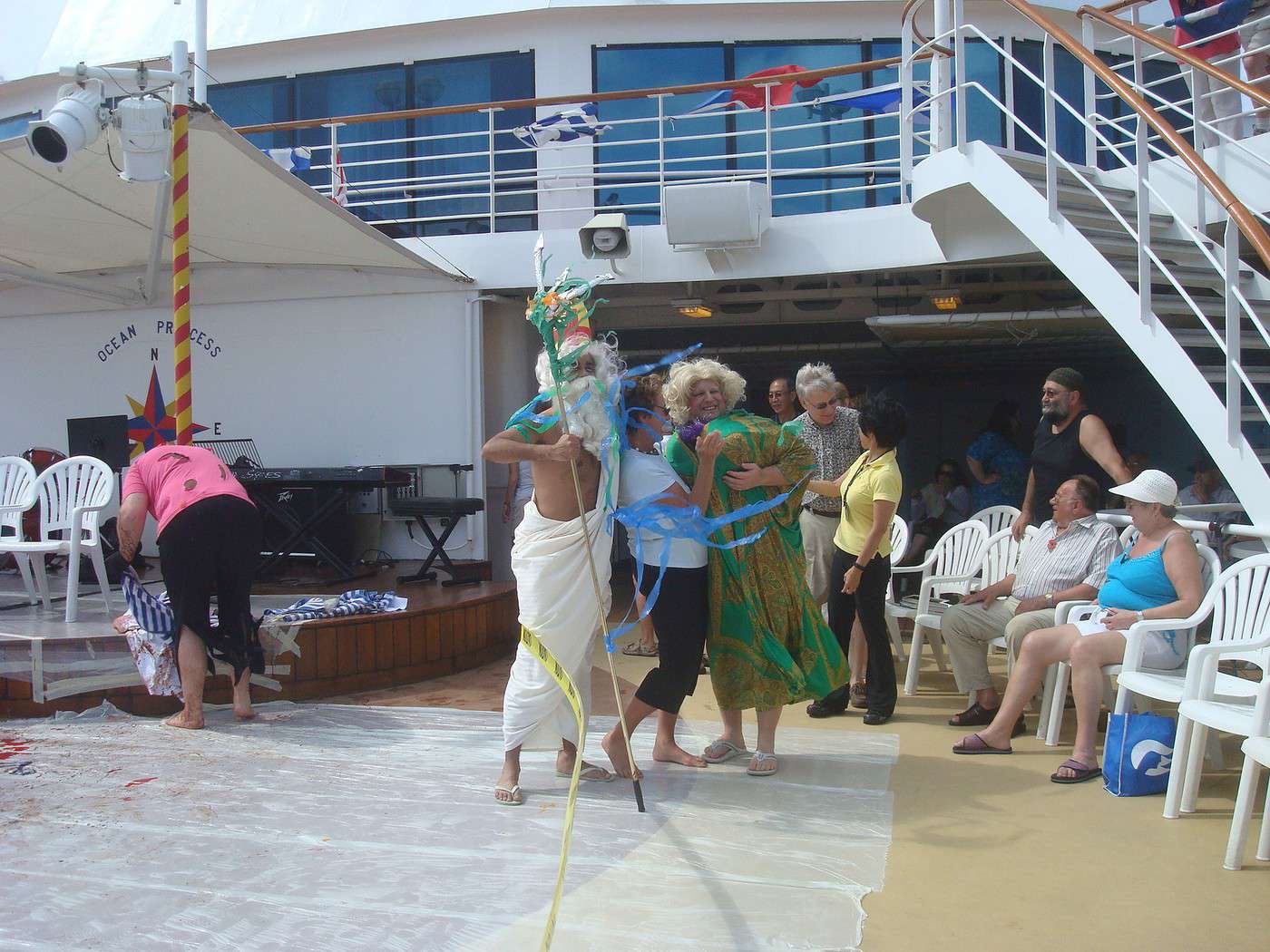
«Tremblez, néophytes!»… Le dieu Neptune, trident à la main, fait solennellement son entrée sur le pont supérieur (photo 3), accompagné de son épouse Amphitrite suivis de leur cortège de nymphes, juges, chirurgiens, artisans…
«Moi, Neptune qui suscite les tempêtes et commande les flots, je vous souhaite la bienvenue ô fiers navigateurs!…. Mais que vois-je?... Sont-ce des néophytes?…. Vile multitude, qui osez souiller ces lieux sacrés!... Juges, soyez implacables envers ces infâmes néos…, ces arrogants qui gâchent ma journée… Chirurgiens, extirpez le vilain… Infirmiers, appliquez les potions… Boulangers, appliquez la blanche pulvérulence et humectez-la bien de l’ovoïde produit de nos sociétés aviaires. Il faut que ça colle… Et vous, heureux mortels, profitez de ce jour de liesse en agréable compagnie… et savourez ces plaisirs raffinés…. …Que la fête commence…!»
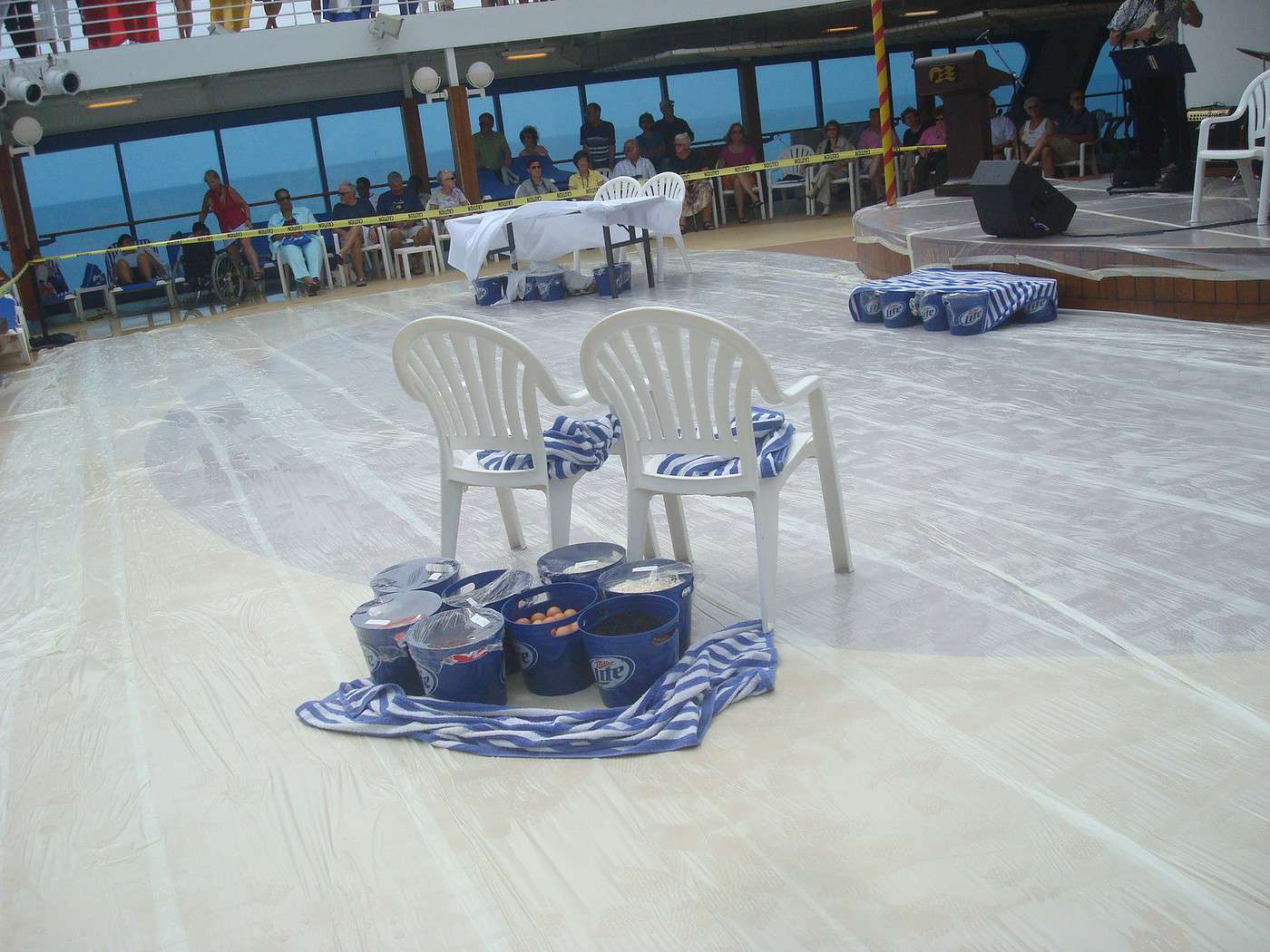
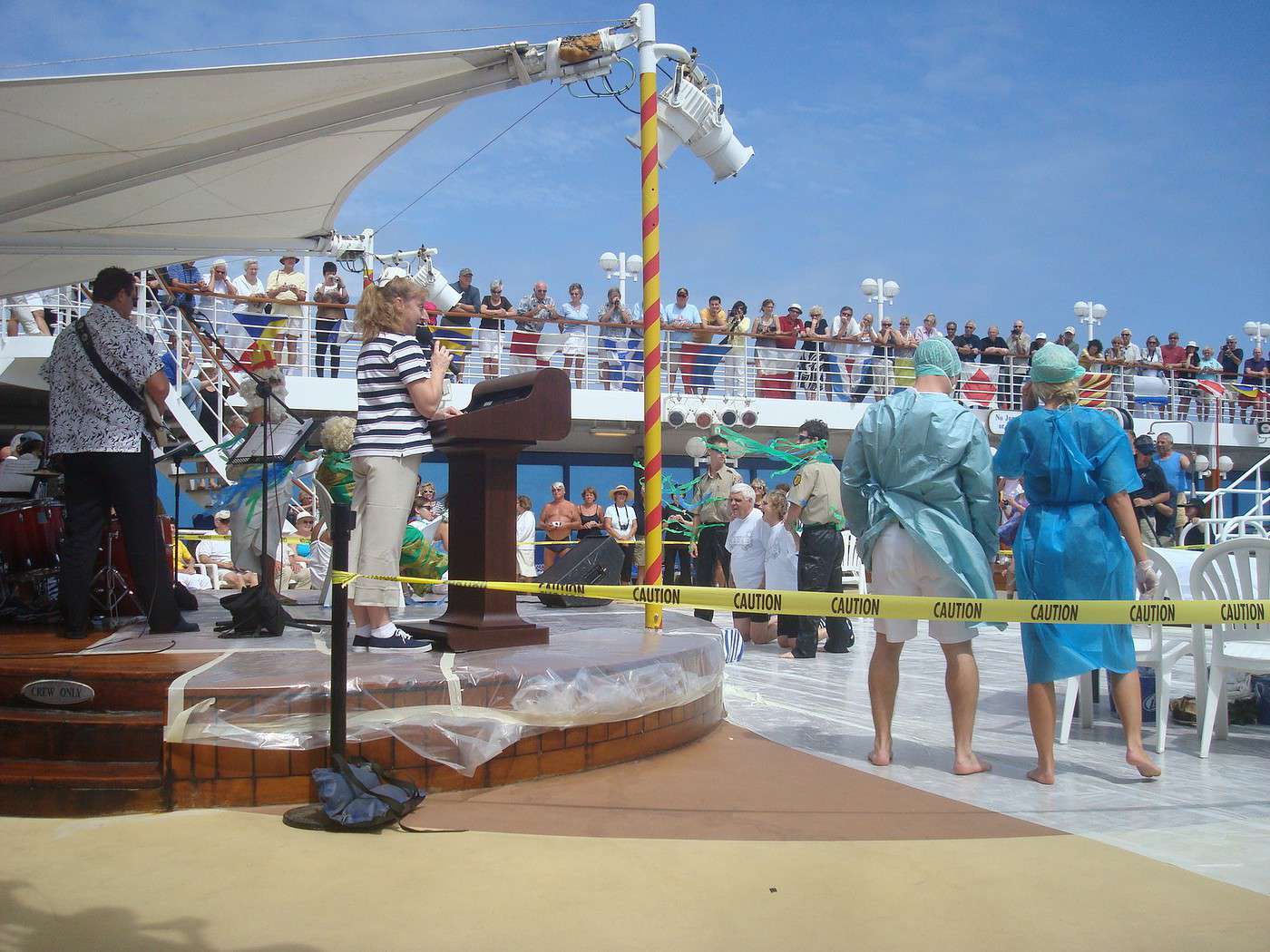
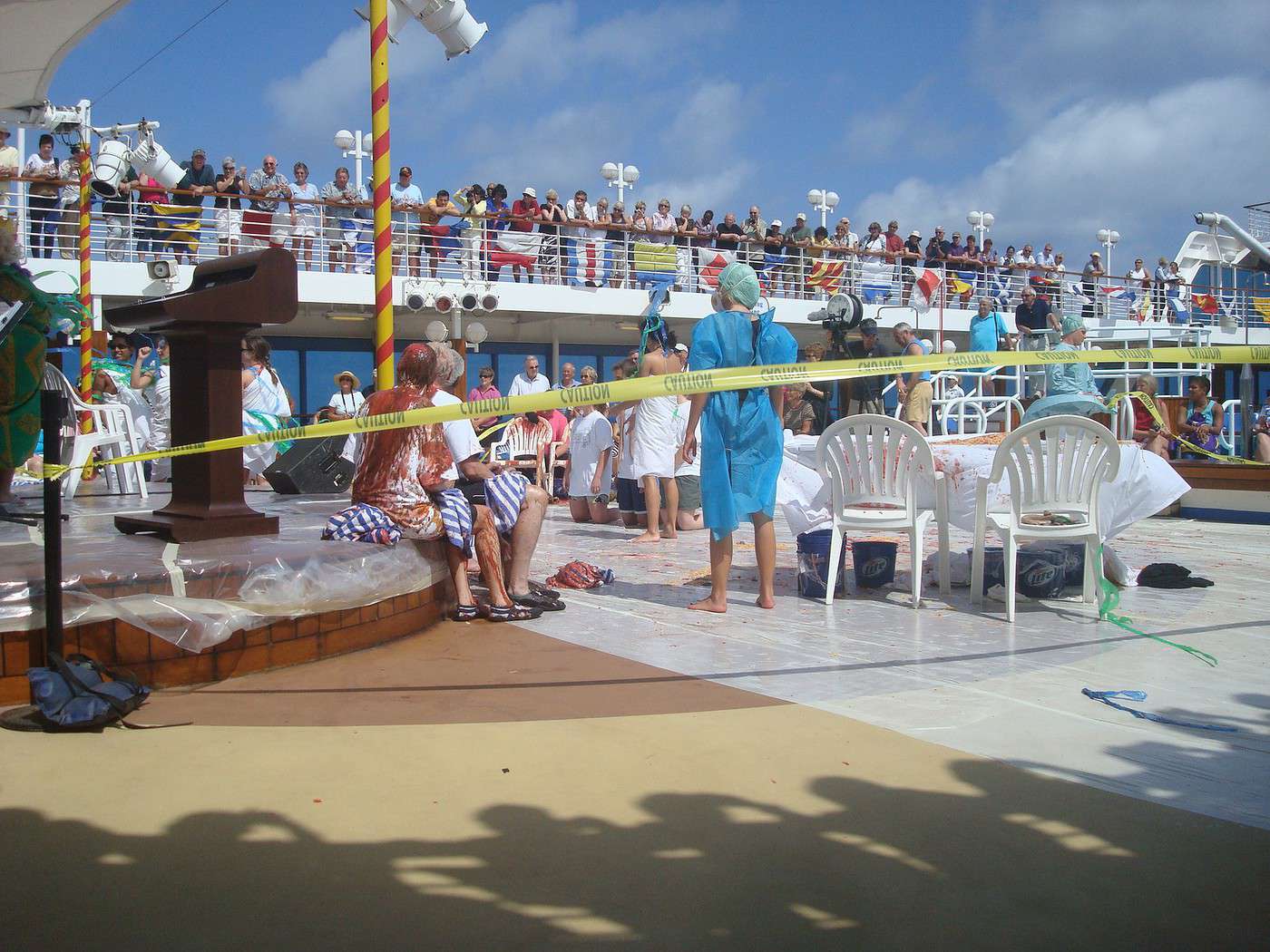
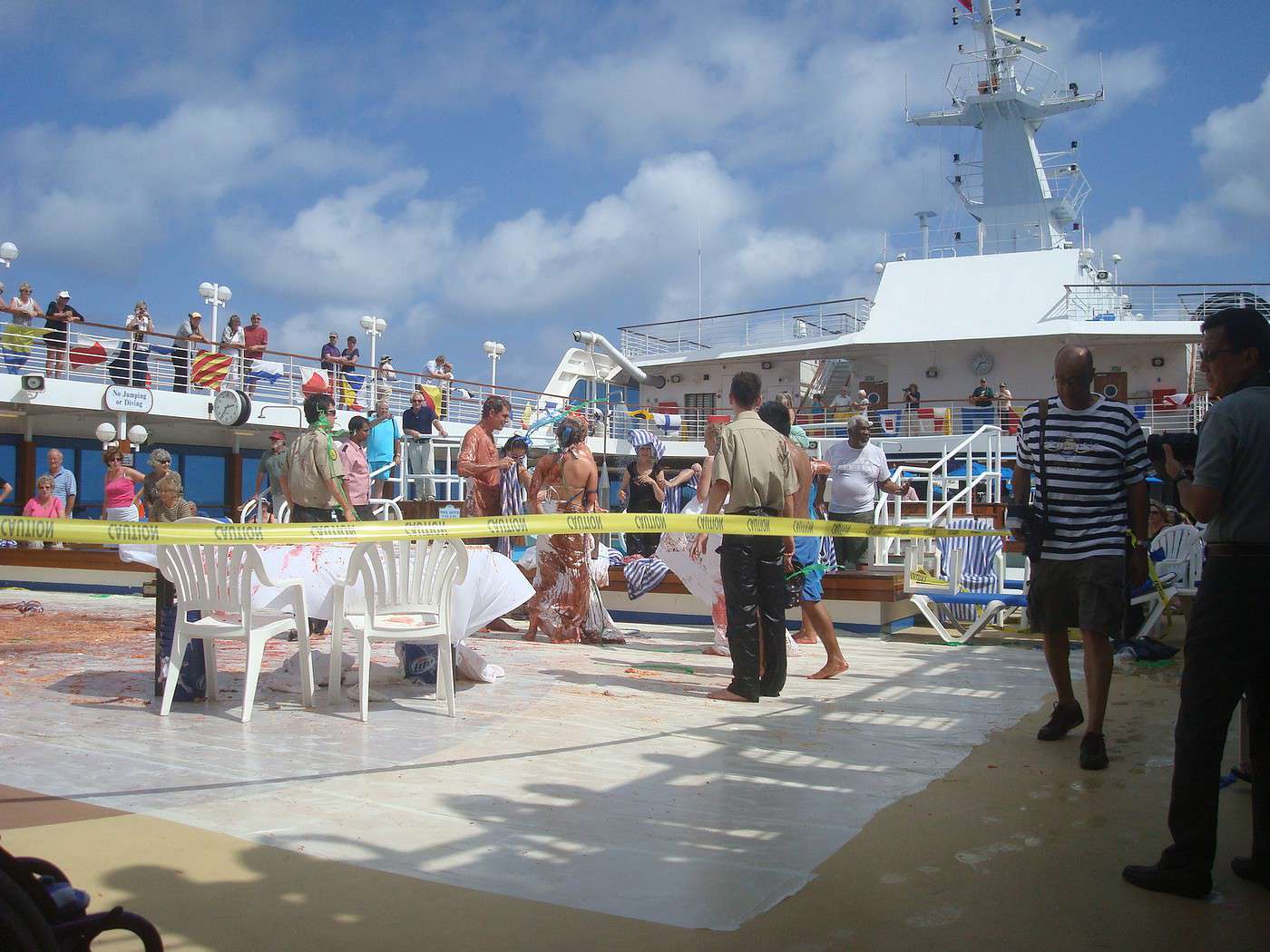
Quelques photos - Ligne rouge imaginaire de l’Équateur terrestre - Latitude : zéro degré…. on arrive dans l'hémisphère Sud - Tout est en place pour la cérémonie : farine, œufs, spaghetti, sauce aux tomate... 😉🏴☠️ - Sur le pont supérieur, tout à fait à droite, on peut voir Neptune à la barbe blanche, couronne jaune à croix rouge et trident à la main avec son épouse Amphitrite et son cortège, qui vienne vers nous… - Jugement des néophytes (heureusement par procuration) chandails blancs et à genoux entre 2 gardiens - On peut voir quelques néophytes châtiés - enduits de sauces gluantes… de la tête aux pieds 😮 😕 🏴☠️
Le reste de la cérémonie sera tenu… top secret! 😏
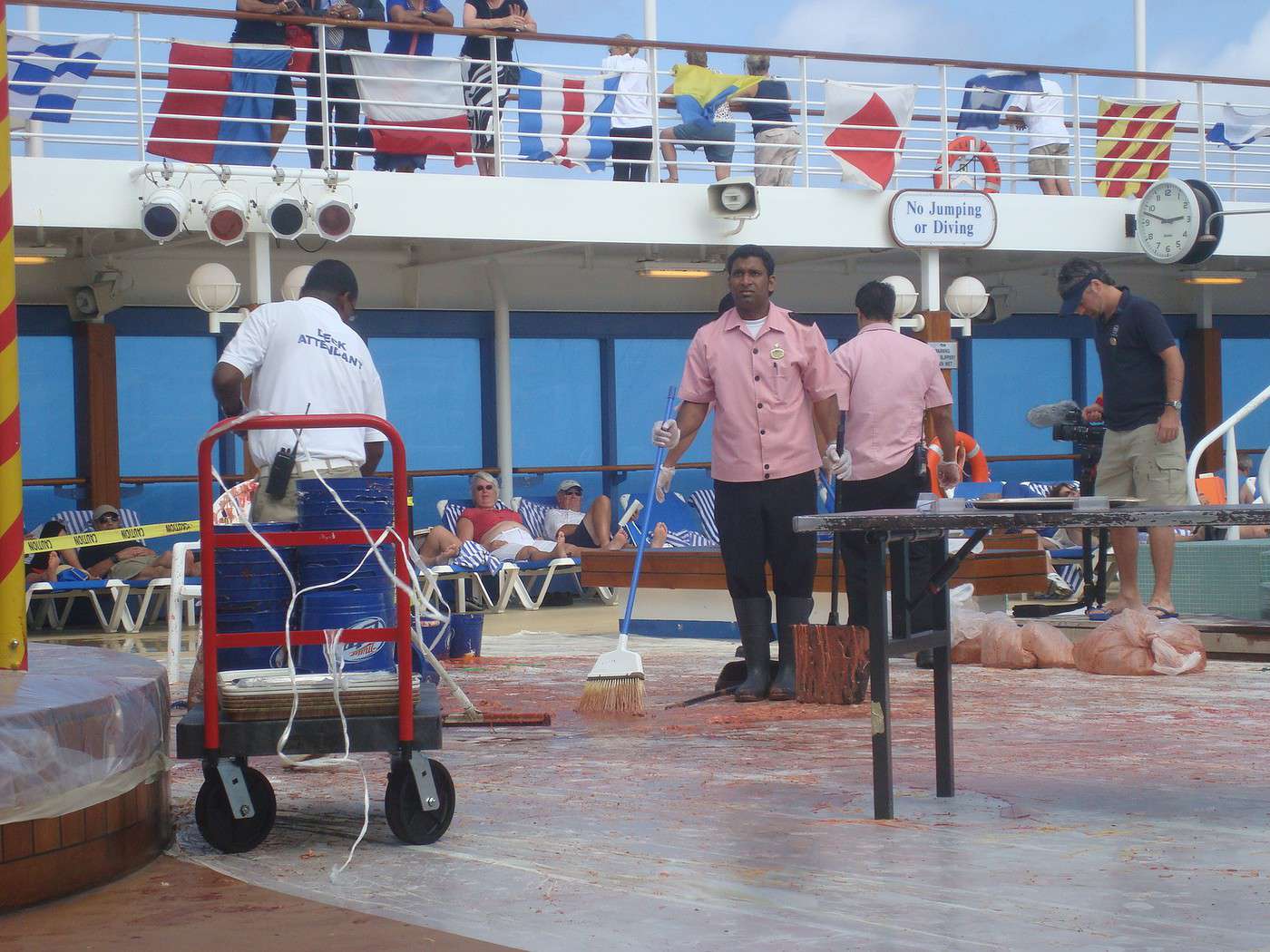
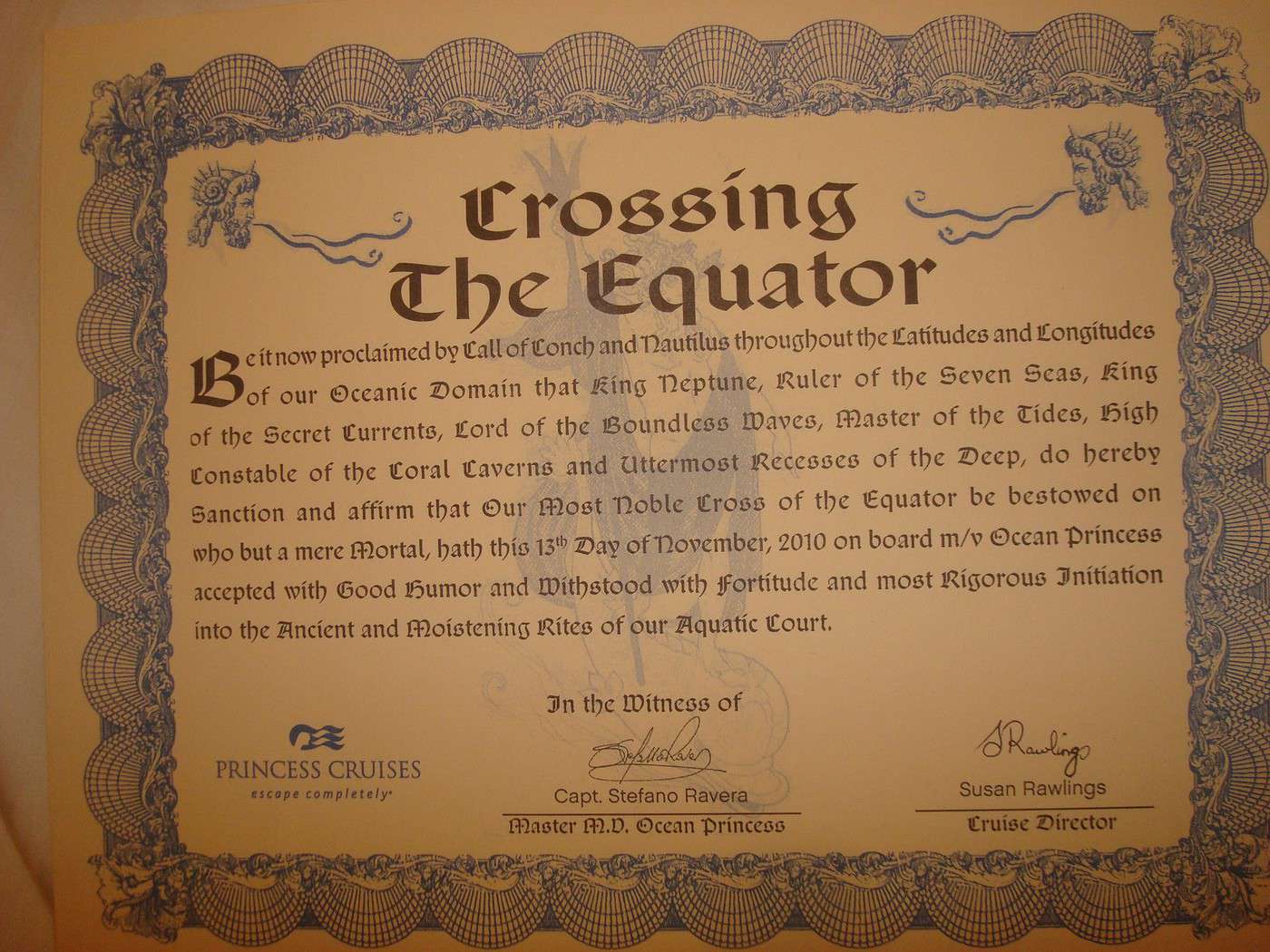
- À la fin de la cérémonie, séance de photos avec le dieu Neptune et son exubérante épouse Amphitrite… 😉 - Et c’est l’opération Grand Nettoyage du Pont!... - Chaque passager reçoit par la suite un diplôme – bien mérité 😉- pour souligner leur soumission et leur courage… Merci à nos valeureux proxys!...😏
Passage de l’Équateur
Entre 16h et 17h le 13, nous naviguons au large du Gabon, à 90 milles nautiques de la République démocratique de Sao Tomé-et-Principe, deux des 7 pays africains que traverse l’Équateur. À 17h22, on franchit la longue ligne rouge de l’Équateur toute enroulée autour de la terre à mi-chemin des pôles…😎 (photo 1). Sur l’écran qui défile à nos yeux : latitude 0 degré 00.000’! Vite, une photo - Clic! Nous sommes déjà dans l’hémisphère Sud (photo 2): on va fêter ça!
Qui parmi vous a déjà assisté à une Cérémonie du passage de l’Équateur... souvenirs inoubliables, n’est-ce pas?
Selon une très ancienne tradition de la Marine, le passage de l’Équateur donne lieu à un rituel immuable, à une sorte de baptême païen - sous l’égide du dieu Neptune - pour tous les marins qui franchissent la ligne pour la 1ere fois (les dits «néophytes») afin de s’assurer de leur capacité d’endurance par mer agitée... De nos jours, sur les bateaux de croisière, une étonnante «cérémonie du passage de l’Équateur» rappelle cette tradition à la grande joie des passagers. Cette cérémonie tire sans doute son origine d’anciens rites païens élaborés pour apaiser le dieu grec de la mer Poséidon, connu sous le nom de Neptune chez les Romains.
«Tremblez, néophytes!»… Le dieu Neptune, trident à la main, fait solennellement son entrée sur le pont supérieur (photo 3), accompagné de son épouse Amphitrite suivis de leur cortège de nymphes, juges, chirurgiens, artisans…
«Moi, Neptune qui suscite les tempêtes et commande les flots, je vous souhaite la bienvenue ô fiers navigateurs!…. Mais que vois-je?... Sont-ce des néophytes?…. Vile multitude, qui osez souiller ces lieux sacrés!... Juges, soyez implacables envers ces infâmes néos…, ces arrogants qui gâchent ma journée… Chirurgiens, extirpez le vilain… Infirmiers, appliquez les potions… Boulangers, appliquez la blanche pulvérulence et humectez-la bien de l’ovoïde produit de nos sociétés aviaires. Il faut que ça colle… Et vous, heureux mortels, profitez de ce jour de liesse en agréable compagnie… et savourez ces plaisirs raffinés…. …Que la fête commence…!»
Quelques photos - Ligne rouge imaginaire de l’Équateur terrestre - Latitude : zéro degré…. on arrive dans l'hémisphère Sud - Tout est en place pour la cérémonie : farine, œufs, spaghetti, sauce aux tomate... 😉🏴☠️ - Sur le pont supérieur, tout à fait à droite, on peut voir Neptune à la barbe blanche, couronne jaune à croix rouge et trident à la main avec son épouse Amphitrite et son cortège, qui vienne vers nous… - Jugement des néophytes (heureusement par procuration) chandails blancs et à genoux entre 2 gardiens - On peut voir quelques néophytes châtiés - enduits de sauces gluantes… de la tête aux pieds 😮 😕 🏴☠️
Le reste de la cérémonie sera tenu… top secret! 😏
- À la fin de la cérémonie, séance de photos avec le dieu Neptune et son exubérante épouse Amphitrite… 😉 - Et c’est l’opération Grand Nettoyage du Pont!... - Chaque passager reçoit par la suite un diplôme – bien mérité 😉- pour souligner leur soumission et leur courage… Merci à nos valeureux proxys!...😏
MoniqueM
« Emmenez- moi au bout de la terre
Emmenez-moi au pays des merveilles...»
Je n'ai pas passé l'Equateur en bateau, mais les cercles polaires arctiques (2 fois) et antarctique (une fois) sur des bateaux de Hurtigruten. Il y a également une cérémonie et un baptême présidé aussi par Neptune en personne. Le matériel à baptiser est moins gluant, mais nettement plus frais, et pour le coup ce n'est pas par procuration, chaque passager y passe vraiment! 😉
Merci pour votre compte-rendu très intéressant et bien documenté.
Mon blog de voyage : http://voyageterremer.blogspot.com
Avec Hurtigruten en Antarctique, en Norvège, au Spitzberg...
Bonjour Sophie,
Oui, j'avais lu qu'on faisait une telle cérémonie dans les cercles polaires. Je ne savais pas toutefois que chaque passager devait y passer parfois.... Heureusement pour vous que c'était moins gluant... Dans votre cas, le diplôme alors était bien mérité; félicitations!🙂 Nous, on n'a pas eu grand mérite...😏
La première fois que j'ai passé l'Équateur, ne sachant pas du tout à quoi m'attendre, quand j'ai reçu l'invitation à servir de proxy, j'avais donné mon consentement - quelle erreur! 😮 N'ayant pas été choisie, je l'ai échappé belle... mais j'ai vite compris que les proxys ne pouvaient être choisis au hasard, bien sûr... donc, je ne risquais pas grand chose...
J'ai lu votre CR sur le site internet lié à votre profil: magnifique, photos absolument spectaculaires et artistiques!
Merci pour votre message!
La première fois que j'ai passé l'Équateur, ne sachant pas du tout à quoi m'attendre, quand j'ai reçu l'invitation à servir de proxy, j'avais donné mon consentement - quelle erreur! 😮 N'ayant pas été choisie, je l'ai échappé belle... mais j'ai vite compris que les proxys ne pouvaient être choisis au hasard, bien sûr... donc, je ne risquais pas grand chose...
J'ai lu votre CR sur le site internet lié à votre profil: magnifique, photos absolument spectaculaires et artistiques!
Merci pour votre message!
MoniqueM
« Emmenez- moi au bout de la terre
Emmenez-moi au pays des merveilles...»
Bonjour Monique,
Nous avons passé l'Equateur mais de nuit donc pas possible de photographier l'écran. La cérémonie a bien eu lieu sur le bateau mais nous nous sommes tenus à l'écart😊, mais nous avons le diplome, tout comme celui du cercle polaire.
J'aime bien cette croisière, elle sort de l'ordinaire
Jour 22 Walvis Bay, NAMIBIE (de 7h à 17h) 17 novembre 18 oC
Population de la Namibie : 2 128 500 Âge médian : 21,4 ans Indépendance : 21 mars 1990 (de l’Afrique du Sud) Chrétiens 90% Langue officielle : Anglais (7%) Langues le plus souvent parlées : Afrikaans et Allemand. Port d’escale : Walvis Bay Capitale : Windhoek (à 220 km de Swakopmund)
Excursion choisie : «Skakopmund, Namib-Naukluft Park & Walvis Bay» (7h)
Une autre journée extrêmement bien remplie dans un pays remarquable par sa propreté et ses magnifiques paysages. On va d’abord voir un lagon de flamants roses dans la baie, puis la coquette ville balnéaire de Skakopmund à 30 km du port et enfin le désert du Namib, le plus vieux désert du monde qui s’étend sur 1900 km tout le long de la côte ouest de la Namibie avec ses immenses dunes de sable orangé qui dégagent une majesté grandiose…
Quel beau pays que la Namibie!
Quelques photos : Port de Namibie Lagon de flamants roses En route pour Swakopmund Swakopmund, jolie ville coloniale allemande Désert du Namib Agréable lunch dans le Parc Namib-Naukluft Plantes Welwitschia mirabilis, rares et uniques au désert du Namib – certains plants seraient vieux de 2000 ans Dunes de sable typiques du désert Namib entre Walvis Bay et Swakopmund, accessibles au public - parmi les plus stables et les plus fournies en végétation, dunes multi cycliques résultant de vents multidirectionnels
On n’aura vu qu’une toute petite partie de ce grand pays. Mais je me console car demain, on a une autre escale en Namibie!🙂 On n’aura pas le temps bien sûr de rencontrer la faune extraordinaire de ce pays. Toutefois, si vous désirez la connaître, je vous conseille de lire le récent carnet de voyage de jemaflor sur VF, intitulé «Namibie : Au cœur de la faune» : un récit poétique accompagné d’aussi poétiques photos...
Population de la Namibie : 2 128 500 Âge médian : 21,4 ans Indépendance : 21 mars 1990 (de l’Afrique du Sud) Chrétiens 90% Langue officielle : Anglais (7%) Langues le plus souvent parlées : Afrikaans et Allemand. Port d’escale : Walvis Bay Capitale : Windhoek (à 220 km de Swakopmund)
Excursion choisie : «Skakopmund, Namib-Naukluft Park & Walvis Bay» (7h)
Une autre journée extrêmement bien remplie dans un pays remarquable par sa propreté et ses magnifiques paysages. On va d’abord voir un lagon de flamants roses dans la baie, puis la coquette ville balnéaire de Skakopmund à 30 km du port et enfin le désert du Namib, le plus vieux désert du monde qui s’étend sur 1900 km tout le long de la côte ouest de la Namibie avec ses immenses dunes de sable orangé qui dégagent une majesté grandiose…
Quel beau pays que la Namibie!
Quelques photos : Port de Namibie Lagon de flamants roses En route pour Swakopmund Swakopmund, jolie ville coloniale allemande Désert du Namib Agréable lunch dans le Parc Namib-Naukluft Plantes Welwitschia mirabilis, rares et uniques au désert du Namib – certains plants seraient vieux de 2000 ans Dunes de sable typiques du désert Namib entre Walvis Bay et Swakopmund, accessibles au public - parmi les plus stables et les plus fournies en végétation, dunes multi cycliques résultant de vents multidirectionnels
On n’aura vu qu’une toute petite partie de ce grand pays. Mais je me console car demain, on a une autre escale en Namibie!🙂 On n’aura pas le temps bien sûr de rencontrer la faune extraordinaire de ce pays. Toutefois, si vous désirez la connaître, je vous conseille de lire le récent carnet de voyage de jemaflor sur VF, intitulé «Namibie : Au cœur de la faune» : un récit poétique accompagné d’aussi poétiques photos...
MoniqueM
« Emmenez- moi au bout de la terre
Emmenez-moi au pays des merveilles...»
Jour 23 Luderitz, NAMIBIE (de midi à 19h00) 18 novembre 19 oC
Vers 11h, l’Ocean Princess s’arrime au Nouveau Quai de ce petit port du bout du monde. Nous débarquons aussitôt et visitons à pied Luderitz, ville paisible, fraîche et accueillante. D’abord une visite au supermarché local pour renouveler nos provisions de vin…, 😏 puis on admire l’architecture : maisons de style colonial allemand aux façades pastel; on visite la Haus Goerke (1909), le petit Musée qui relate l’importance de la ville en ce qui a trait aux mines de diamants et à l’industrie de la pêche, puis la célèbre église luthérienne de style gothique au sommet de Diamond Hill, nommée Felsenkirche (1912), devenue symbole de Luderitz.
Puis, on retourne sur le bateau pour un lunch rapide (ce sera une pizza…) avant notre excursion à Kolmanskop, réservée pour 15 h.
Quelques photos Vue de la ville de Luderitz à l’arrivée - beau bateau pour toi, Mathilde 😉 Supermarché local : bel étalage, n'est-ce pas?… 😛 Maisons aux couleurs pastel, de style colonial allemand Au fond à g.: la Felsenkirche- son intérieur, ses vitraux Haus Goerke sur Diamantberg Street Musée de Luderitz Agence de voyage offrant aussi de jolis souvenirs d'artisanat et autres typiques de la Namibie Le front de mer
Vers 11h, l’Ocean Princess s’arrime au Nouveau Quai de ce petit port du bout du monde. Nous débarquons aussitôt et visitons à pied Luderitz, ville paisible, fraîche et accueillante. D’abord une visite au supermarché local pour renouveler nos provisions de vin…, 😏 puis on admire l’architecture : maisons de style colonial allemand aux façades pastel; on visite la Haus Goerke (1909), le petit Musée qui relate l’importance de la ville en ce qui a trait aux mines de diamants et à l’industrie de la pêche, puis la célèbre église luthérienne de style gothique au sommet de Diamond Hill, nommée Felsenkirche (1912), devenue symbole de Luderitz.
Puis, on retourne sur le bateau pour un lunch rapide (ce sera une pizza…) avant notre excursion à Kolmanskop, réservée pour 15 h.
Quelques photos Vue de la ville de Luderitz à l’arrivée - beau bateau pour toi, Mathilde 😉 Supermarché local : bel étalage, n'est-ce pas?… 😛 Maisons aux couleurs pastel, de style colonial allemand Au fond à g.: la Felsenkirche- son intérieur, ses vitraux Haus Goerke sur Diamantberg Street Musée de Luderitz Agence de voyage offrant aussi de jolis souvenirs d'artisanat et autres typiques de la Namibie Le front de mer
MoniqueM
« Emmenez- moi au bout de la terre
Emmenez-moi au pays des merveilles...»
(suite) Jour 23 Luderitz, NAMIBIE (de midi à 19h00) 18 novembre
Excursion choisie : «Kolmanskop – Ghost of The Namib» (2h)
Vers 15 h, excursion vers la ville fantôme de Kolmanskop à 8 km au sud-est de Luderitz dans la zone diamantifère maintenant interdite au public (permis obligatoire pour s’y rendre).
Ville faste du temps de la ruée vers les diamants de 1908 à 1940, Kolmanskop a été abandonnée en 1956, lentement brisée au gré du vent et envahie par les dunes de sable du Namib – unique et spooky! 😮
Même ma caméra a été envahie par le sable... (dernière photo... 😉)
Quelques photos de cette ville fantôme...
Excursion choisie : «Kolmanskop – Ghost of The Namib» (2h)
Vers 15 h, excursion vers la ville fantôme de Kolmanskop à 8 km au sud-est de Luderitz dans la zone diamantifère maintenant interdite au public (permis obligatoire pour s’y rendre).
Ville faste du temps de la ruée vers les diamants de 1908 à 1940, Kolmanskop a été abandonnée en 1956, lentement brisée au gré du vent et envahie par les dunes de sable du Namib – unique et spooky! 😮
Même ma caméra a été envahie par le sable... (dernière photo... 😉)
Quelques photos de cette ville fantôme...
MoniqueM
« Emmenez- moi au bout de la terre
Emmenez-moi au pays des merveilles...»
Log in first, then come back to this page.
You might also like
More discussions
Bonjour je suis en vacances du 31/10 au 7/11, je veux aller quelque part ou il fait beau, je pars de Toulouse maxi 5h de vol.
Avez vous des idées ?
Merci pour votre aide
Wednesday, April 1st
Hazaribagh I’ve got a meet-up with Adam Iman, a guide and painter. He picks me up from the hotel at 10 AM. Another traveler from Bangalore is supposed to join us, but while we wait for him to arrive, Adam takes me to see the paintings his mother and sister created at Hazaribagh station. The town became famous thanks to these murals, which can also be found in several surrounding villages. This art form has earned recognition and is now protected, a sign of its cultural importance. Once the visit is over, we go to pick up the other traveler and then head to our first village: Belwara, where Sohrai art is practiced. At the entrance, a sign proudly announces that we’re entering an artists’ village, where this art is created by women organized into micro-enterprises. Some even offer workshops for those who’d like to learn this tradition.

Sohrai art is tied to the harvest season, from October to mid-November. The motifs, in natural colors, celebrate fertility and abundance. The artists use pigments from the earth: red oxides, ochre, white kaolin, and black manganese. On the walls, you’ll see animals, fish, birds—all symbols of life and prosperity. As I look closer at the murals, I start to realize that each motif tells a story. Large animals like cows or bulls often take center stage. Their bodies are filled with intricate, almost hypnotic patterns. They symbolize wealth and prosperity for the household, as well as the deep respect for cattle, which are essential to daily life. On some facades, elephants stand out—massive and decorated with the same precision. They evoke quiet strength and protection. But it’s when I stop in front of one of the houses that I really take the time to look. The wall, a soft ochre, is entirely covered in murals. Two large animals stretch out on either side of the door, their elongated bodies fitting the length of the wall. Their silhouettes are filled with geometric patterns and incredibly fine curved lines, as if every space was patiently filled. Around them, stylized plants, flowers, and small decorative elements fill every gap. The door, dark and worn, becomes almost the silent center of the composition, framed by these living, protective forms. To the right, a more colorful motif catches the eye—a flower or a stylized lamp—like a touch of light on the earth. The whole thing gives an impression of perfect balance, between the rigor of the patterns and the freedom of the gesture.

Elsewhere, birds and freer forms bring movement. Peacocks, recognizable by their stylized silhouettes, embody beauty and vitality, while fish symbolize water, fertility, and the continuity of life.
On some paintings, the scenes become almost narrative: you can make out figures, everyday gestures, like a memory of the village inscribed in the walls. The decorative frames around the doors aren’t left to chance either—they symbolically protect the house, like a boundary between the inside and the outside world.


During the Sohrai festival, cattle are led into the jungle in the morning. Meanwhile, the women finish the *aripans*—these floor paintings—and continue the wall murals. Around noon, the animals return to the village, and the bulls’ horns are anointed with oil and vermilion in a gesture of gratitude, amid the vibrant colors adorning the houses. We visit several artists, including Parvat Devi, a well-known woman who has received many awards. Her arms are adorned with intriguing tattoos, which I’ll talk about in more detail later.

On another wall, the style changes completely. Here, no massive animals—just birds occupying the space, light and graceful, as if caught in mid-movement. Two silhouettes face each other, their long necks arched almost like mirrors, while their outstretched wings seem to vibrate with the patterns that compose them.

The design is more graphic, almost airy. The lines are smoother, more fluid, as if drawn in one confident stroke. The birds’ bodies aren’t solid—they’re filled with repetitive motifs like scales, stylized feathers, and spirals, giving a sense of continuous movement. Around them, everything comes to life: flowers burst open, arabesques swirl, and even the simplest shapes seem alive. What strikes me here is the sense of lightness. Where the large animals evoked stability and grounding, these birds bring something freer, almost joyful. They seem to embody movement, the circulation of life, like a breath flowing through the village.

The colors remain the same—deep reds, intense blacks, and chalky white—but the rhythm is different. Faster, more spontaneous. As if each wall had its own personality, while still speaking the same language.
That’s probably why I’m so moved. I’d heard about these paintings from my friend Raja, and last year, I saw an exhibition in a village near my home. That first encounter made me want to come here. But seeing them in person is a whole different experience. These paintings are unique. This ancient art is passed down from mother to daughter, or mother-in-law to daughter-in-law, in a quiet, deeply living continuity. At first glance, it might seem almost childlike in its simplicity and pared-down forms. And yet, everything is thought out, balanced, mastered. Nothing is left to chance.

That apparent simplicity, combined with such rich symbolism, touches me deeply. There’s something sincere and essential in these walls—and that’s what moves me.
Hazaribagh I’ve got a meet-up with Adam Iman, a guide and painter. He picks me up from the hotel at 10 AM. Another traveler from Bangalore is supposed to join us, but while we wait for him to arrive, Adam takes me to see the paintings his mother and sister created at Hazaribagh station. The town became famous thanks to these murals, which can also be found in several surrounding villages. This art form has earned recognition and is now protected, a sign of its cultural importance. Once the visit is over, we go to pick up the other traveler and then head to our first village: Belwara, where Sohrai art is practiced. At the entrance, a sign proudly announces that we’re entering an artists’ village, where this art is created by women organized into micro-enterprises. Some even offer workshops for those who’d like to learn this tradition.

Sohrai art is tied to the harvest season, from October to mid-November. The motifs, in natural colors, celebrate fertility and abundance. The artists use pigments from the earth: red oxides, ochre, white kaolin, and black manganese. On the walls, you’ll see animals, fish, birds—all symbols of life and prosperity. As I look closer at the murals, I start to realize that each motif tells a story. Large animals like cows or bulls often take center stage. Their bodies are filled with intricate, almost hypnotic patterns. They symbolize wealth and prosperity for the household, as well as the deep respect for cattle, which are essential to daily life. On some facades, elephants stand out—massive and decorated with the same precision. They evoke quiet strength and protection. But it’s when I stop in front of one of the houses that I really take the time to look. The wall, a soft ochre, is entirely covered in murals. Two large animals stretch out on either side of the door, their elongated bodies fitting the length of the wall. Their silhouettes are filled with geometric patterns and incredibly fine curved lines, as if every space was patiently filled. Around them, stylized plants, flowers, and small decorative elements fill every gap. The door, dark and worn, becomes almost the silent center of the composition, framed by these living, protective forms. To the right, a more colorful motif catches the eye—a flower or a stylized lamp—like a touch of light on the earth. The whole thing gives an impression of perfect balance, between the rigor of the patterns and the freedom of the gesture.

Elsewhere, birds and freer forms bring movement. Peacocks, recognizable by their stylized silhouettes, embody beauty and vitality, while fish symbolize water, fertility, and the continuity of life.
On some paintings, the scenes become almost narrative: you can make out figures, everyday gestures, like a memory of the village inscribed in the walls. The decorative frames around the doors aren’t left to chance either—they symbolically protect the house, like a boundary between the inside and the outside world.


During the Sohrai festival, cattle are led into the jungle in the morning. Meanwhile, the women finish the *aripans*—these floor paintings—and continue the wall murals. Around noon, the animals return to the village, and the bulls’ horns are anointed with oil and vermilion in a gesture of gratitude, amid the vibrant colors adorning the houses. We visit several artists, including Parvat Devi, a well-known woman who has received many awards. Her arms are adorned with intriguing tattoos, which I’ll talk about in more detail later.

On another wall, the style changes completely. Here, no massive animals—just birds occupying the space, light and graceful, as if caught in mid-movement. Two silhouettes face each other, their long necks arched almost like mirrors, while their outstretched wings seem to vibrate with the patterns that compose them.

The design is more graphic, almost airy. The lines are smoother, more fluid, as if drawn in one confident stroke. The birds’ bodies aren’t solid—they’re filled with repetitive motifs like scales, stylized feathers, and spirals, giving a sense of continuous movement. Around them, everything comes to life: flowers burst open, arabesques swirl, and even the simplest shapes seem alive. What strikes me here is the sense of lightness. Where the large animals evoked stability and grounding, these birds bring something freer, almost joyful. They seem to embody movement, the circulation of life, like a breath flowing through the village.

The colors remain the same—deep reds, intense blacks, and chalky white—but the rhythm is different. Faster, more spontaneous. As if each wall had its own personality, while still speaking the same language.
That’s probably why I’m so moved. I’d heard about these paintings from my friend Raja, and last year, I saw an exhibition in a village near my home. That first encounter made me want to come here. But seeing them in person is a whole different experience. These paintings are unique. This ancient art is passed down from mother to daughter, or mother-in-law to daughter-in-law, in a quiet, deeply living continuity. At first glance, it might seem almost childlike in its simplicity and pared-down forms. And yet, everything is thought out, balanced, mastered. Nothing is left to chance.

That apparent simplicity, combined with such rich symbolism, touches me deeply. There’s something sincere and essential in these walls—and that’s what moves me.
Here we go!!!
I left home at 4 AM on October 31st and headed to Barcelona. Driving through Barcelona on the ring road stresses me out a bit, but at 6 AM the traffic is smooth, and I arrive at the airport without any issues. I call the valet, who quickly comes to pick up my car. He takes photos of it from all angles before letting me go.
Baggage check-in hasn’t started yet, and there are already several of us waiting.
Once free, everything happens very quickly. The flight to Abu Dhabi is on time and goes smoothly. I’ve never had any problems with this airline, which I’ve been using for several years.
The flight to Bangkok arrives at 7 AM as scheduled. This is my first time in Thailand and Bangkok. I’m used to traveling in India, and I notice that everything here is well organized—the customs process is quick, and the luggage is already on the carousel.
I booked a taxi on Booking. All I have to do is find the right exit and door based on the agency’s instructions. A large sign with the names of people who booked is posted on a wall. A hostess greets me and calls the taxi, which arrives 5 minutes later. I booked one night at the Lost Inn BKK hotel in the Phra Nakhon district, and we arrive at 9 AM. The welcome isn’t warm, and I have to wait until noon, sitting on a chair, before I can check into my room. I’m exhausted, and sleeping sitting up isn’t ideal. Noon finally arrives—the room is small but clean, which is fine for one night. I quickly take a shower to wake up because I plan to spend the afternoon visiting the Grand Palace. First, I need to exchange some money, and the banks are all close together on the same street, which is very convenient. When I enter one, a hostess gives me a ticket and invites me to sit down. There are about twenty counters, and I wait quietly until my number is called. The exchange is quick, so I can head out to find the Royal Palace. It’s actually very easy, and the walk is pleasant.
Entry to the Royal Palace (500 baht).
It’s magnificent and grand, and there are quite a few of us visiting. The sky is gray, it’s very humid, and a shower interrupts the visit. It’s a vast complex of temples and palaces. The buildings are colorful and sparkling, with a great sense of serenity (without the tourists, of course). I quietly enjoy the place and try to take photos without tourists, which isn’t easy.
Very close to the Grand Palace is Wat Pho, one of the oldest Buddhist temples in the capital.
It’s very famous for its 46-meter-long reclining Buddha statue.
Walking around the temple, you can see different representations of Buddha, all covered in gold leaf.
Inside the temple, on one side, monks recite their prayers, while the other side is reserved for tourists who come to meditate in silence.
Before returning to the hotel, I have dinner at an Indian restaurant. I go to bed early because tomorrow’s wake-up call will be very early again.
Saturday, November 2nd Wake-up at 4 AM, departure from the hotel at 4:30 AM. The taxi I booked via Booking is waiting for me and takes me to the airport. The trip is fairly quick—he takes small roads, and at this hour, there’s no traffic.
The flight to Phnom Penh is on time. Before boarding, I realize I left my fleece jacket on the carousel, but it’s too late to go back for it.
The flight goes well, and customs is quick.
At the exit, I take a tuk-tuk to Julieka’s GH near the museum. The welcome is friendly. I won’t be able to check into my room until noon, so I take the opportunity to exchange some euros on the market street. The street is lined with restaurants, and I’ll have my first meal there.
The museum is right across the street, so I don’t waste any time visiting it.
The representations of Hindu deities are very different from those in India, and I don’t recognize them. Many beautiful Buddhas are on display.
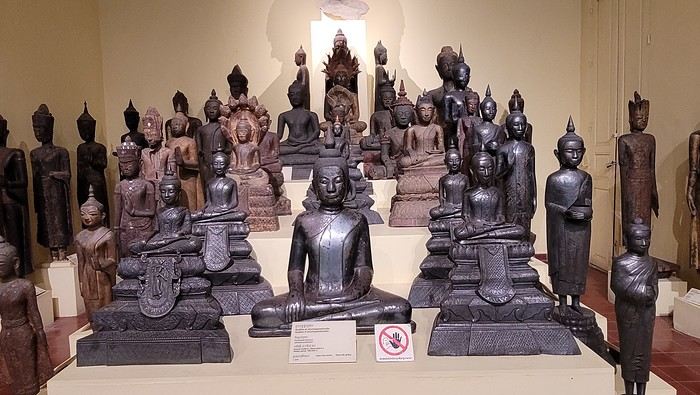
The museum is very pleasant, and there aren’t too many people, which is a plus.
At the exit, I return to the GH, settle into my room—which is decent and clean.
The Royal Palace is 1 km away. I walk along a garden, and at the end of the street is the Tonlé Sap, but I turn right. I arrive at a large esplanade and see the buildings with tiered roofs and glazed tiles. The entrance to the palace is a little further away.
At the entrance, I notice there isn’t the same crowd as at the one in BKK.
Khmer architecture is magnificent. The complex consists of gardens, palaces, pagodas with golden roofs, and slender spires.
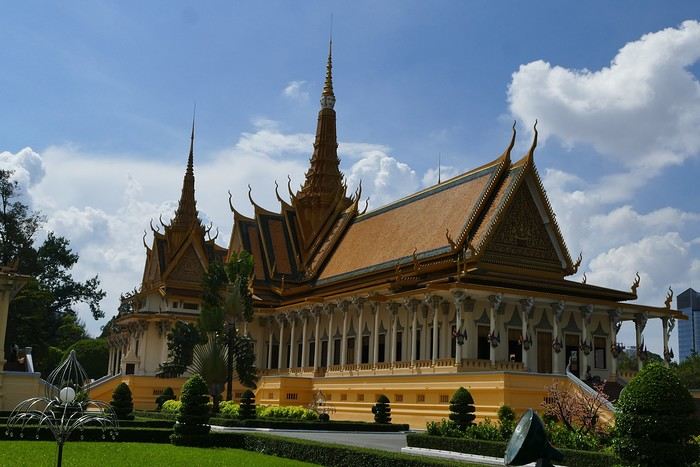
The Silver Pagoda houses the small Emerald Buddha, which is actually made of jade. The silver flooring is covered with carpets. Photos are not allowed.
The walls surrounding the pagoda are covered with frescoes depicting scenes from the Ramayana.
Baggage check-in hasn’t started yet, and there are already several of us waiting.
Once free, everything happens very quickly. The flight to Abu Dhabi is on time and goes smoothly. I’ve never had any problems with this airline, which I’ve been using for several years.
The flight to Bangkok arrives at 7 AM as scheduled. This is my first time in Thailand and Bangkok. I’m used to traveling in India, and I notice that everything here is well organized—the customs process is quick, and the luggage is already on the carousel.
I booked a taxi on Booking. All I have to do is find the right exit and door based on the agency’s instructions. A large sign with the names of people who booked is posted on a wall. A hostess greets me and calls the taxi, which arrives 5 minutes later. I booked one night at the Lost Inn BKK hotel in the Phra Nakhon district, and we arrive at 9 AM. The welcome isn’t warm, and I have to wait until noon, sitting on a chair, before I can check into my room. I’m exhausted, and sleeping sitting up isn’t ideal. Noon finally arrives—the room is small but clean, which is fine for one night. I quickly take a shower to wake up because I plan to spend the afternoon visiting the Grand Palace. First, I need to exchange some money, and the banks are all close together on the same street, which is very convenient. When I enter one, a hostess gives me a ticket and invites me to sit down. There are about twenty counters, and I wait quietly until my number is called. The exchange is quick, so I can head out to find the Royal Palace. It’s actually very easy, and the walk is pleasant.
Entry to the Royal Palace (500 baht).

It’s magnificent and grand, and there are quite a few of us visiting. The sky is gray, it’s very humid, and a shower interrupts the visit. It’s a vast complex of temples and palaces. The buildings are colorful and sparkling, with a great sense of serenity (without the tourists, of course). I quietly enjoy the place and try to take photos without tourists, which isn’t easy.

Very close to the Grand Palace is Wat Pho, one of the oldest Buddhist temples in the capital.

It’s very famous for its 46-meter-long reclining Buddha statue.


Walking around the temple, you can see different representations of Buddha, all covered in gold leaf.

Inside the temple, on one side, monks recite their prayers, while the other side is reserved for tourists who come to meditate in silence.

Before returning to the hotel, I have dinner at an Indian restaurant. I go to bed early because tomorrow’s wake-up call will be very early again.
Saturday, November 2nd Wake-up at 4 AM, departure from the hotel at 4:30 AM. The taxi I booked via Booking is waiting for me and takes me to the airport. The trip is fairly quick—he takes small roads, and at this hour, there’s no traffic.
The flight to Phnom Penh is on time. Before boarding, I realize I left my fleece jacket on the carousel, but it’s too late to go back for it.
The flight goes well, and customs is quick.
At the exit, I take a tuk-tuk to Julieka’s GH near the museum. The welcome is friendly. I won’t be able to check into my room until noon, so I take the opportunity to exchange some euros on the market street. The street is lined with restaurants, and I’ll have my first meal there.
The museum is right across the street, so I don’t waste any time visiting it.

The representations of Hindu deities are very different from those in India, and I don’t recognize them. Many beautiful Buddhas are on display.

The museum is very pleasant, and there aren’t too many people, which is a plus.
At the exit, I return to the GH, settle into my room—which is decent and clean.
The Royal Palace is 1 km away. I walk along a garden, and at the end of the street is the Tonlé Sap, but I turn right. I arrive at a large esplanade and see the buildings with tiered roofs and glazed tiles. The entrance to the palace is a little further away.
At the entrance, I notice there isn’t the same crowd as at the one in BKK.
Khmer architecture is magnificent. The complex consists of gardens, palaces, pagodas with golden roofs, and slender spires.

The Silver Pagoda houses the small Emerald Buddha, which is actually made of jade. The silver flooring is covered with carpets. Photos are not allowed.
The walls surrounding the pagoda are covered with frescoes depicting scenes from the Ramayana.
March 2nd — Departure by bus from Latour at 6:50 AM. The journey isn’t direct: we pass through Elne then Corneilla. In Perpignan, I switch to a BlablaBus heading to Barcelona’s northern bus station. Before reaching Le Perthus, French police stop us to check IDs. Several people aren’t in order, but after about fifteen minutes, we’re on our way again. We’re checked again at La Jonquera: this time, the wait lasts almost forty-five minutes while police identify those in violation and wait for a vehicle to pick them up. The driver then tries to make up for lost time; we finally arrive at our destination half an hour late.
I quickly head to the Arc de Triomphe metro station, located 200 meters away: you have to cross the bridge along the bus parking lot, then walk through a large garden; the station is on the right before the garden entrance. The trip to the airport isn’t direct: I have to change at Tomasso and take the line to the airport, where I arrive at 1 PM.
At the Emirates counter, I learn my flight was just canceled due to the war in Iran; they offer me another flight for the next day. I have to wait at the airport until 7 PM before being taken to a hotel; the next morning, I’ll take a flight to Vienna (with an 8-hour layover), then an Air India flight to Delhi, and finally a flight to Kolkata. I agree: I don’t know Vienna, so it’ll be an unexpected discovery.
At 7 PM, a small group is taken to the hotel, 35 minutes from the airport, where we’re served a light dinner upon arrival.
March 3rd — A taxi picks me up at 6:30 AM; the flight to Vienna takes off at 9:30 AM and arrives at noon. I’m free until 7 PM; the metro is direct to the city center. The weather is pleasant and not too cold, luckily, since my clothes are light.
When I exit the metro, I spot the St. Stephen’s Cathedral tower in the distance and approach it: the roof, made of glazed tiles, is remarkable.

Entry is free, and the interior, a mix of Gothic and Baroque styles in the center, is stunning.

Not far from there is St. Anne’s Church

, also Baroque, adorned with beautiful frescoes

—a music concert adds an enchanting atmosphere to the visit. I continue my walk at random through the pedestrian streets lined with magnificent buildings: I’m charmed by the city.


Before heading back to the airport, I stop at a lovely tea salon. My flight will eventually leave with a delay.
Wednesday, March 4th — Delhi and a little luggage scare We arrive in Delhi shortly after noon. Immigration is quick, and good news: my bag was checked through from Barcelona to Kolkata. I head to the connecting terminal and arrive half an hour before boarding: the flight goes smoothly. Upon arrival, the luggage comes out quickly… except mine. After filing a report, I’m told my bag is in Delhi—I have to retrieve it before taking another flight. I didn’t know (or had forgotten): with the delays, I wouldn’t have had time to pick it up and make the connection.
I take a taxi to the Ichamati Hotel. The welcome is warm, and the room is clean but very small. Without my bag, I feel a bit lost—I have nothing to change into.
Tonight, I’m dining with Raja and his friends at a beautiful restaurant, an old colonial house turned into a hotel.


We’re happy to see each other and have a comforting evening together.
I quickly head to the Arc de Triomphe metro station, located 200 meters away: you have to cross the bridge along the bus parking lot, then walk through a large garden; the station is on the right before the garden entrance. The trip to the airport isn’t direct: I have to change at Tomasso and take the line to the airport, where I arrive at 1 PM.
At the Emirates counter, I learn my flight was just canceled due to the war in Iran; they offer me another flight for the next day. I have to wait at the airport until 7 PM before being taken to a hotel; the next morning, I’ll take a flight to Vienna (with an 8-hour layover), then an Air India flight to Delhi, and finally a flight to Kolkata. I agree: I don’t know Vienna, so it’ll be an unexpected discovery.
At 7 PM, a small group is taken to the hotel, 35 minutes from the airport, where we’re served a light dinner upon arrival.
March 3rd — A taxi picks me up at 6:30 AM; the flight to Vienna takes off at 9:30 AM and arrives at noon. I’m free until 7 PM; the metro is direct to the city center. The weather is pleasant and not too cold, luckily, since my clothes are light.
When I exit the metro, I spot the St. Stephen’s Cathedral tower in the distance and approach it: the roof, made of glazed tiles, is remarkable.

Entry is free, and the interior, a mix of Gothic and Baroque styles in the center, is stunning.

Not far from there is St. Anne’s Church

, also Baroque, adorned with beautiful frescoes

—a music concert adds an enchanting atmosphere to the visit. I continue my walk at random through the pedestrian streets lined with magnificent buildings: I’m charmed by the city.


Before heading back to the airport, I stop at a lovely tea salon. My flight will eventually leave with a delay.
Wednesday, March 4th — Delhi and a little luggage scare We arrive in Delhi shortly after noon. Immigration is quick, and good news: my bag was checked through from Barcelona to Kolkata. I head to the connecting terminal and arrive half an hour before boarding: the flight goes smoothly. Upon arrival, the luggage comes out quickly… except mine. After filing a report, I’m told my bag is in Delhi—I have to retrieve it before taking another flight. I didn’t know (or had forgotten): with the delays, I wouldn’t have had time to pick it up and make the connection.
I take a taxi to the Ichamati Hotel. The welcome is warm, and the room is clean but very small. Without my bag, I feel a bit lost—I have nothing to change into.
Tonight, I’m dining with Raja and his friends at a beautiful restaurant, an old colonial house turned into a hotel.


We’re happy to see each other and have a comforting evening together.
Day 1 – February 14
We all have two lives. And the second one kicks off the day you realize you only have one, with the determination to spend the time you have left on what truly adds sparkle to your life, Kevin! I like to elegantly introduce a trip with a philosophical quote. First, it gives you the illusion that I’m some kind of deep thinker, and second, it lets me fill up the first few lines of my blank page when I don’t know how to tell you I’m diving back into what really lights up my life: another adventure beyond the horizon! And nearly every other year, like a toxic relationship, my horizon tends to take shape in Uncle Sam’s backyard. And this, despite his cousin Donald calling the shots. Speaking of which, it was partly that impulsive guy who pushed us to be just as impulsive and snag our four flight tickets at a ridiculously low price—a direct result of foreign tourism taking a hit from BetaMax’s repeated antics... Four tickets? Who are the other lucky ones? In this case, our lucky ones are actually lucky ladies: My Flo, always up for exploring the world with me on foot, camelback, or scooter, is obviously in on the fun. The other two seats went to our daughters, Sasha and Luna, both thrilled to be part of this new American adventure...
But what’s the American West like in February?... A gamble. Let’s call it Russian roulette since we’re not landing during peak weather season. That’s why we encouraged our transportation and accommodation to get cozy and produce a little camper van, so we can stay ultra-flexible in the face of any weather tantrums. We’ll be roaming in Kara the van with the motto "Follow the sun!" Bad weather? We bolt. Snow? We speed up. Sunny? We act like it was the plan all along and soak it up.
"Okay, but why keep coming back to the same corner of the globe? After ten American adventures, you must be tired of seeing the same things, right?" But I’m not crazy, you know!... The American West is like making love to your gorgeous wife over and over, always enjoying it just as much. And contrary to what you might think, the American West isn’t just the Grand Canyon, Monument Valley, Las Vegas, and Bryce Canyon. Proof is, after ten trips to the U.S., my retinas are still untouched by three-quarters of the places I scribbled on a napkin for this adventure... Oh, and add to that my wife, who I’ve easily converted to my religion, and boom... relapse is even easier! Because yes, we’ve landed in Los Angeles after a sunny flight over Greenland, still under Danish flag for now. And we’re already heading east through the XXL traffic of L.A.’s eight-lane highways, eager to dive into our first discoveries. But first, night is taking over the sky, and second, we’ve been officially awake for 24 hours, so I suggest wrapping up this intro. I’ll tell you more tomorrow morning. Sound good?


We all have two lives. And the second one kicks off the day you realize you only have one, with the determination to spend the time you have left on what truly adds sparkle to your life, Kevin! I like to elegantly introduce a trip with a philosophical quote. First, it gives you the illusion that I’m some kind of deep thinker, and second, it lets me fill up the first few lines of my blank page when I don’t know how to tell you I’m diving back into what really lights up my life: another adventure beyond the horizon! And nearly every other year, like a toxic relationship, my horizon tends to take shape in Uncle Sam’s backyard. And this, despite his cousin Donald calling the shots. Speaking of which, it was partly that impulsive guy who pushed us to be just as impulsive and snag our four flight tickets at a ridiculously low price—a direct result of foreign tourism taking a hit from BetaMax’s repeated antics... Four tickets? Who are the other lucky ones? In this case, our lucky ones are actually lucky ladies: My Flo, always up for exploring the world with me on foot, camelback, or scooter, is obviously in on the fun. The other two seats went to our daughters, Sasha and Luna, both thrilled to be part of this new American adventure...
But what’s the American West like in February?... A gamble. Let’s call it Russian roulette since we’re not landing during peak weather season. That’s why we encouraged our transportation and accommodation to get cozy and produce a little camper van, so we can stay ultra-flexible in the face of any weather tantrums. We’ll be roaming in Kara the van with the motto "Follow the sun!" Bad weather? We bolt. Snow? We speed up. Sunny? We act like it was the plan all along and soak it up.
"Okay, but why keep coming back to the same corner of the globe? After ten American adventures, you must be tired of seeing the same things, right?" But I’m not crazy, you know!... The American West is like making love to your gorgeous wife over and over, always enjoying it just as much. And contrary to what you might think, the American West isn’t just the Grand Canyon, Monument Valley, Las Vegas, and Bryce Canyon. Proof is, after ten trips to the U.S., my retinas are still untouched by three-quarters of the places I scribbled on a napkin for this adventure... Oh, and add to that my wife, who I’ve easily converted to my religion, and boom... relapse is even easier! Because yes, we’ve landed in Los Angeles after a sunny flight over Greenland, still under Danish flag for now. And we’re already heading east through the XXL traffic of L.A.’s eight-lane highways, eager to dive into our first discoveries. But first, night is taking over the sky, and second, we’ve been officially awake for 24 hours, so I suggest wrapping up this intro. I’ll tell you more tomorrow morning. Sound good?


Hi everyone, I’m Patrick, 67 years old, a seasoned traveler (already 22 trips outside Europe).
In autumn 2025, I took my first 3-week trip to Japan, with stops in Tokyo, Kamakura, Matsumoto, Kamikochi, Takayama, Kanazawa, Kyoto, Nara, Osaka, Koyasan, Tokyo again, and Nikko.
I wanted to go back in May 2026 and explore some lesser-known places to complement my first trip.
Last year, there were four of us traveling together to discover Japan (a fairly classic itinerary). This time, I’ll be traveling solo for part of the trip and with a couple of French friends for the rest.
The weather was gorgeous in May, averaging around 25°C, with two very hot days in Kyoto and only two rainy days.
As usual, I organized everything myself, gathering plenty of information from various sites, including this one.
Transportation: An ICOCA card is essential. I got a 5-day Kansai-Hiroshima pass because I took the shinkansen between Hiroshima and Osaka three times, and it paid for itself quickly.
Accommodations: Mostly through Booking. No issues at all. Average cost was 46 € per night.
Meals: For breakfast, I alternated between buying food at a konbini to eat in my room or on the train and grabbing something at local cafés. For lunch and dinner, I tried to vary my meals as much as possible—lots of sashimi, sushi, and ramen. Okonomiyaki in Osaka and Hiroshima. Oysters in every form (raw, grilled, fried) in Onomichi and Hiroshima. A variety of seafood (shrimp, shellfish) in Hiroshima and Matsumoto. Fish whose names often escaped me, but notably mackerel and eel (unagi). Tempura and gyoza. Chicken skewers (yakitori) and one teppanyaki meal. One omakase meal (9 different dishes). In the end, not much meat aside from a few yakitori skewers. No splurges on super expensive wagyu or Kobe beef. Average dinner cost: 4,800 yen, drinks included.
The Itinerary: Day 1: Departure from Brussels Day 2: Arrival in Osaka Day 3: To Himeji, then Kurashiki Day 4: To Fukuyama, then Tomo no Ura, then Onomichi Day 5: Cycling the Shimanami Kaido Day 6: To Takahara, then Hiroshima Day 7: To Kyoto to attend the Aoi Matsuri parade Day 8: To Miyajima Day 9: Hiroshima, then Kyoto Day 10: Southern Kyoto Day 11: Northern Kyoto Day 12: Final day in Kyoto, then to Nagatsugawa Day 13: Start of the Nakasendo Trail (Magome to Tsumago) Day 14: Second day of the trail (Kiso Fukushima) Day 15: Third day of the trail (Narai), then Matsumoto Day 16: To Mt. Fuji (Kawaguchiko) Day 17: To Tokyo Day 18: Excursion to Enoshima and Kamakura Day 19: Flight home, with a 10-hour layover in Hong Kong Day 20: Arrival in Brussels
Transportation: An ICOCA card is essential. I got a 5-day Kansai-Hiroshima pass because I took the shinkansen between Hiroshima and Osaka three times, and it paid for itself quickly.
Accommodations: Mostly through Booking. No issues at all. Average cost was 46 € per night.
Meals: For breakfast, I alternated between buying food at a konbini to eat in my room or on the train and grabbing something at local cafés. For lunch and dinner, I tried to vary my meals as much as possible—lots of sashimi, sushi, and ramen. Okonomiyaki in Osaka and Hiroshima. Oysters in every form (raw, grilled, fried) in Onomichi and Hiroshima. A variety of seafood (shrimp, shellfish) in Hiroshima and Matsumoto. Fish whose names often escaped me, but notably mackerel and eel (unagi). Tempura and gyoza. Chicken skewers (yakitori) and one teppanyaki meal. One omakase meal (9 different dishes). In the end, not much meat aside from a few yakitori skewers. No splurges on super expensive wagyu or Kobe beef. Average dinner cost: 4,800 yen, drinks included.
The Itinerary: Day 1: Departure from Brussels Day 2: Arrival in Osaka Day 3: To Himeji, then Kurashiki Day 4: To Fukuyama, then Tomo no Ura, then Onomichi Day 5: Cycling the Shimanami Kaido Day 6: To Takahara, then Hiroshima Day 7: To Kyoto to attend the Aoi Matsuri parade Day 8: To Miyajima Day 9: Hiroshima, then Kyoto Day 10: Southern Kyoto Day 11: Northern Kyoto Day 12: Final day in Kyoto, then to Nagatsugawa Day 13: Start of the Nakasendo Trail (Magome to Tsumago) Day 14: Second day of the trail (Kiso Fukushima) Day 15: Third day of the trail (Narai), then Matsumoto Day 16: To Mt. Fuji (Kawaguchiko) Day 17: To Tokyo Day 18: Excursion to Enoshima and Kamakura Day 19: Flight home, with a 10-hour layover in Hong Kong Day 20: Arrival in Brussels
I’m sharing our three-week trip to Japan from late October to mid-November 2025. There were four of us—my partner and a couple of friends.
I’ve traveled often with my friend Christian (Bolivia, Argentina, Costa Rica, Namibia, Laos), but this time our partners joined us.
The rough itinerary:
Arrival in Tokyo. Visiting Shinjuku/Shibuya districts + day trip to Kamakura
5 days in the Japanese Alps, from Matsumoto to Kanazawa (via Kamikochi, Hirayu Onsen, and Takayama)
5 days in Kyoto
Nara, Osaka, Koyasan
Return to Tokyo (Asakusa district), with a day trip to Nikko
We booked our flights well in advance (9 months ahead): the flight cost 1086 € per person. Compared to over 2000 € if we’d booked for the same dates just 3 months prior.
For accommodations, we mostly used Booking.com. The onsen was booked via Japanican, and in Kyoto, we stayed in an Airbnb.
We also made 5 train reservations a month in advance on Klook or directly on the train’s website.
Day 1: Departure from Brussels (October 24, 2025) Early morning takeoff at 6 AM to Munich (1.5-hour layover) with Lufthansa, then a 12-hour flight with ANA, arriving the next morning at 7 AM at Tokyo Haneda.
Day 2: Arrival in Tokyo Airport formalities were quick. The eSIM we bought before leaving activated as soon as we landed (10 GB plan with Saily—more than enough for our mobile internet needs, mainly Google Maps and Google Translate). We’d received 4 ICOCA cards from our neighbors, which we loaded with 15000 ¥ each. We took the Keihin train, then the Yamanote Line. It’s easy to navigate since everything is in English, and each station is announced on scrolling displays in English too.
We got off the Yamanote Line at the station just after Shinjuku because it’s easier to exit that massive station with our luggage. So we ended up in Shin-Okubo, right in the Korean district. A 10-minute walk took us to Villa Fontaine Hotel. A great hotel, well-located north of the Kabukichō district. The room even seemed bigger than we’d expected.
It was 15°C, but it rained—and kept raining on and off all day. Belgian weather, basically.
We went for a walk in Shinjuku Gyoen Park. Not as pretty in the rain, but the big greenhouse was interesting.

Then our first ramen (hearty and for 1000 ¥—pretty much the price of all our ramen during the trip). We headed back to the hotel since check-in was after 3 PM. Shower and relax before going out for dinner. Dinner was barbecue at Shichirin Yakiniku Anan (1700 ¥ each—good and cheap). Ordering via tablet wasn’t easy, but luckily it was in English.
We ended the evening with a stroll through Kabukichō before a well-deserved sleep.

Day 1: Departure from Brussels (October 24, 2025) Early morning takeoff at 6 AM to Munich (1.5-hour layover) with Lufthansa, then a 12-hour flight with ANA, arriving the next morning at 7 AM at Tokyo Haneda.
Day 2: Arrival in Tokyo Airport formalities were quick. The eSIM we bought before leaving activated as soon as we landed (10 GB plan with Saily—more than enough for our mobile internet needs, mainly Google Maps and Google Translate). We’d received 4 ICOCA cards from our neighbors, which we loaded with 15000 ¥ each. We took the Keihin train, then the Yamanote Line. It’s easy to navigate since everything is in English, and each station is announced on scrolling displays in English too.

We got off the Yamanote Line at the station just after Shinjuku because it’s easier to exit that massive station with our luggage. So we ended up in Shin-Okubo, right in the Korean district. A 10-minute walk took us to Villa Fontaine Hotel. A great hotel, well-located north of the Kabukichō district. The room even seemed bigger than we’d expected.

It was 15°C, but it rained—and kept raining on and off all day. Belgian weather, basically.
We went for a walk in Shinjuku Gyoen Park. Not as pretty in the rain, but the big greenhouse was interesting.

Then our first ramen (hearty and for 1000 ¥—pretty much the price of all our ramen during the trip). We headed back to the hotel since check-in was after 3 PM. Shower and relax before going out for dinner. Dinner was barbecue at Shichirin Yakiniku Anan (1700 ¥ each—good and cheap). Ordering via tablet wasn’t easy, but luckily it was in English.

We ended the evening with a stroll through Kabukichō before a well-deserved sleep.


Namaste!
Here I am live from Delhi, past midnight, at least 30 degrees....
I wanted to post the start of this France travel journal but couldn’t find the time, so here it is live!
Off we go for a third trip, but this time for double the duration—6 weeks with the goal of discovering Ladakh and Spiti, starting with a detour to Varanasi to meet up with Babeli and her family.
Phir milenge for the rest of the adventures...
This trip had been on my mind for about fifteen years.
But the discomfort of overnight stays, the difficulty of communication, and the prices of the few car rentals kept making me postpone the project.
And then, everything fell into place—I told myself, now’s the time!
Preparations took longer than usual; the destination is still far from mainstream.
A bit of Kazakhstan? Not in the end.
The south or not? Yes, in the end.
Pre-book or play it by ear? Only two stops were a leap into the unknown.
To help me find the ideal route, I made great use of this forum (thanks to everyone for patiently answering my questions!), pored over travel journals and blogs (Christian, Jeff), zoomed in on Google Maps and Yandex, and bought the guide published by OunTravela on this destination (the guide has been updated since).
---/---
You’ve got your passport, international driver’s license, bank cards, and euros?
Off we go to Lyon—just one night left before our early morning flight.
Tomorrow night, we’ll be sleeping in Bishkek! (‘Beefsteak’ for my partner’s mischievous nephews...)

You’ll find here a post with some practical info.
But the discomfort of overnight stays, the difficulty of communication, and the prices of the few car rentals kept making me postpone the project.
And then, everything fell into place—I told myself, now’s the time!
Preparations took longer than usual; the destination is still far from mainstream.
A bit of Kazakhstan? Not in the end.
The south or not? Yes, in the end.
Pre-book or play it by ear? Only two stops were a leap into the unknown.
To help me find the ideal route, I made great use of this forum (thanks to everyone for patiently answering my questions!), pored over travel journals and blogs (Christian, Jeff), zoomed in on Google Maps and Yandex, and bought the guide published by OunTravela on this destination (the guide has been updated since).
---/---
You’ve got your passport, international driver’s license, bank cards, and euros?
Off we go to Lyon—just one night left before our early morning flight.
Tomorrow night, we’ll be sleeping in Bishkek! (‘Beefsteak’ for my partner’s mischievous nephews...)

You’ll find here a post with some practical info.
I'm starting my first travel journal since VF reopened!
This will mostly be to share my impressions and some photos, with a few days' delay, but I'm starting this journal while I'm still here.
First, I'd like to thank those who helped me prepare for this trip.
I was able to organize this stay in one of the most expensive countries in the world thanks to the home-exchange principle. Not necessarily a direct swap, but through a points system, which is more practical for choosing where you want to go without it having to be a reciprocal exchange.
For this trip, there will already be two different accommodations. We'll see how it goes after that.
The first place is near Yverdon-les-Bains, close to Lake Neuchâtel.
So, we're going to explore this area!
We arrived under capricious weather that won’t leave us for the next few days!
We had dinner at a pizzeria recommended by *Le Routard* in Yverdon, then took a little nighttime stroll through the town center before heading inland to settle into our accommodation.
We discovered a very large, quiet house—and especially the cat that stayed behind! Funny for a couple of mice! He’ll be sleeping with us 😹
This will mostly be to share my impressions and some photos, with a few days' delay, but I'm starting this journal while I'm still here.
First, I'd like to thank those who helped me prepare for this trip.
I was able to organize this stay in one of the most expensive countries in the world thanks to the home-exchange principle. Not necessarily a direct swap, but through a points system, which is more practical for choosing where you want to go without it having to be a reciprocal exchange.
For this trip, there will already be two different accommodations. We'll see how it goes after that.
The first place is near Yverdon-les-Bains, close to Lake Neuchâtel.
So, we're going to explore this area!
We arrived under capricious weather that won’t leave us for the next few days!
We had dinner at a pizzeria recommended by *Le Routard* in Yverdon, then took a little nighttime stroll through the town center before heading inland to settle into our accommodation.
We discovered a very large, quiet house—and especially the cat that stayed behind! Funny for a couple of mice! He’ll be sleeping with us 😹
Hi everyone!
If you're looking for great tips and offbeat spots, if you love exploring uncharted parts of a country, if the exotic is your adrenaline, then move along!
Our 15 days in early May in this part of Turkey (a country I first discovered during a city trip to Istanbul in 2017) will only tread well-worn paths and revisit popular routes. Simply because I kept hoping until the very end that our flight to Jordan wouldn’t be canceled. Events in the Gulf proved me wrong, so we left with: Zero preparation. Not a single hotel booked (well, except the first one), no visits planned, just a flight ticket bought three weeks earlier. No guidebook, no app—just the desire to explore southern Turkey and Cappadocia, whose images and the chance to stretch our legs had caught my eye.
Oh, wait—I did bring along a new guide: Gemini! Yes, my friends, generative AI was my chief advisor throughout the trip for sites to visit, accommodations, routes, and even restaurants! An experiment I wanted to try to form my own opinion on using this new technology. And what better way to test it than a Turkish getaway?
The verdict? You’ll have to wait for the trip recap to find out!
The main idea of the trip is also relaxation.
So, the plan is Antalya for a few days, the Turkish Riviera for a few more, Cappadocia as the highlight, and a return via Antalya to wrap up the trip. And it was all planned by AI!
So, if you're ready, fasten your seatbelts—cabin crew, doors to automatic and cross check—boarding for Turkey now!
A little sneak peek?
If you're looking for great tips and offbeat spots, if you love exploring uncharted parts of a country, if the exotic is your adrenaline, then move along!
Our 15 days in early May in this part of Turkey (a country I first discovered during a city trip to Istanbul in 2017) will only tread well-worn paths and revisit popular routes. Simply because I kept hoping until the very end that our flight to Jordan wouldn’t be canceled. Events in the Gulf proved me wrong, so we left with: Zero preparation. Not a single hotel booked (well, except the first one), no visits planned, just a flight ticket bought three weeks earlier. No guidebook, no app—just the desire to explore southern Turkey and Cappadocia, whose images and the chance to stretch our legs had caught my eye.
Oh, wait—I did bring along a new guide: Gemini! Yes, my friends, generative AI was my chief advisor throughout the trip for sites to visit, accommodations, routes, and even restaurants! An experiment I wanted to try to form my own opinion on using this new technology. And what better way to test it than a Turkish getaway?
The verdict? You’ll have to wait for the trip recap to find out!
The main idea of the trip is also relaxation.
So, the plan is Antalya for a few days, the Turkish Riviera for a few more, Cappadocia as the highlight, and a return via Antalya to wrap up the trip. And it was all planned by AI!
So, if you're ready, fasten your seatbelts—cabin crew, doors to automatic and cross check—boarding for Turkey now!
A little sneak peek?We did the Langtang trek (hike) from September 10th to 17th, with the first and last days being the trip from Kathmandu and back—so 6 days of actual walking. It’s a fairly well-known trek but certainly not as famous or crowded as those in the Annapurna or Everest regions, which is why we chose it.
In theory, it’s mandatory to have a guide for this trek. In reality, it seems there are ways to bypass the regulations: we met at least two people hiking without a guide—a South Korean, a New Zealander, and possibly also a couple of English women and an American couple, though we’re not sure if they had a guide.
The agency we booked with had told us it was an affordable trek for relatively older people in good shape—which is our case (I’m 72 myself). I have to say upfront that we found it quite challenging, maybe because we didn’t have good weather—it was the end of the monsoon season. To be clear, no matter your fitness level, I’d say doing this trek in the middle of the monsoon season would be suicidal.
Day 1 – Journey from Kathmandu to Syapru Besi
On Monday, September 8th, there had been violent protests in Kathmandu against the government, which had, among other things, blocked access to social media and been accused of nepotism and corruption. There were 19 deaths. The situation was very tense on the day of our departure, Wednesday the 10th. The agency warned us that public transport was very unreliable. So, we decided to take a jeep, at an additional cost of $100 ($160 minus what was already budgeted for the bus).
We left a little before 7 a.m. and it took us a good hour just to reach the outskirts of Kathmandu. Along the way, we saw several houses and vehicles set on fire by protesters.
The road to Syapru Besi is only 120 km, but it’s frankly awful. It’s always narrow, winds through endless mountains, and the shoulders range from bad to confusing to nonexistent. Several sections are just dirt tracks. We didn’t regret opting for the jeep, as we could stop several times at our convenience—if only to let Y (my Thai partner) throw up everything she had. She’d taken her usual motion sickness medication, but the constant turns, accelerations, and braking eventually made her terribly carsick.
In Nuwakot, we stopped for breakfast at a nice little restaurant, Jimbu. It was around 8:30 a.m., and we’d barely covered 60 km. The restaurant has a lovely garden overlooking the Trishuli Ganga, the river flowing down from Syapru Besi. First photo: the river in the bottom right corner, mist and clouds over the mountain on the other side.
An hour later, my second photo: the hills along the Trishuli Ganga. You can see the different crops—lush green rice paddies in the lower right and corn, already yellowed and likely harvested, in the foreground on the left. And of course, the mist and clouds through which you can glimpse the mountain on the other side of the river.
In theory, it’s mandatory to have a guide for this trek. In reality, it seems there are ways to bypass the regulations: we met at least two people hiking without a guide—a South Korean, a New Zealander, and possibly also a couple of English women and an American couple, though we’re not sure if they had a guide.
The agency we booked with had told us it was an affordable trek for relatively older people in good shape—which is our case (I’m 72 myself). I have to say upfront that we found it quite challenging, maybe because we didn’t have good weather—it was the end of the monsoon season. To be clear, no matter your fitness level, I’d say doing this trek in the middle of the monsoon season would be suicidal.
Day 1 – Journey from Kathmandu to Syapru Besi
On Monday, September 8th, there had been violent protests in Kathmandu against the government, which had, among other things, blocked access to social media and been accused of nepotism and corruption. There were 19 deaths. The situation was very tense on the day of our departure, Wednesday the 10th. The agency warned us that public transport was very unreliable. So, we decided to take a jeep, at an additional cost of $100 ($160 minus what was already budgeted for the bus).
We left a little before 7 a.m. and it took us a good hour just to reach the outskirts of Kathmandu. Along the way, we saw several houses and vehicles set on fire by protesters.
The road to Syapru Besi is only 120 km, but it’s frankly awful. It’s always narrow, winds through endless mountains, and the shoulders range from bad to confusing to nonexistent. Several sections are just dirt tracks. We didn’t regret opting for the jeep, as we could stop several times at our convenience—if only to let Y (my Thai partner) throw up everything she had. She’d taken her usual motion sickness medication, but the constant turns, accelerations, and braking eventually made her terribly carsick.
In Nuwakot, we stopped for breakfast at a nice little restaurant, Jimbu. It was around 8:30 a.m., and we’d barely covered 60 km. The restaurant has a lovely garden overlooking the Trishuli Ganga, the river flowing down from Syapru Besi. First photo: the river in the bottom right corner, mist and clouds over the mountain on the other side.
An hour later, my second photo: the hills along the Trishuli Ganga. You can see the different crops—lush green rice paddies in the lower right and corn, already yellowed and likely harvested, in the foreground on the left. And of course, the mist and clouds through which you can glimpse the mountain on the other side of the river.
Summer 2022 left me with a sense of unfinished business, so here I am back in Swedish Lapland for summer 2024, ready to attempt the Sarek crossing again—and this time, tackle part of the Kungsleden too.
After much hesitation, my partner Jean Marie and I decided to start with the Kungsleden, which is, from what we’ve read, stunning but very busy (and it really is!!), and finish with the wilder option: SAREK! This park is known as Europe’s last true wilderness—sounds like a dream, right?! The downside of this plan is that there’s no way to resupply in Sarek, and the Kungsleden isn’t exactly set up for long-distance trekking either, so we’ll have to carry a lot of food for the first part of the trip with Sarek in mind. Oh well, we’re motivated!
Our plan is to start in Abisko (the classic route), head to Vakkotavare (also classic, but with some variations to avoid the official trail and the crowds), then continue the Kungsleden from Saltoluokta. Before reaching Aktse, we’ll set off on an east-to-west crossing of Sarek (weather-dependent, since aside from the Skarja hut in the center of the park, there’s no shelter if conditions turn bad). At least we’ll be on the right side of the park to climb Skierfe and enjoy the jaw-dropping view of Rappaladen if we have to bail on Sarek.
All in all, that’s 17 days of trekking, including 1 rest day and 1 buffer day for weather delays.
So if you’re interested, I invite you to follow our fully packed backpacks!
08/03 - Abisko – 5km before Abiskojaure Some info (guides we used for prep, SFT map, sending food to Saltoluokta) 08/04 – 5km before Abiskojaure - on the east shore of Lake Alisjavri 08/05 – East shore of Lake Alisjavri – just before Tjaktja 08/06 – Just before Tjaktja – above the Salka hut via Nallo 08/07 - Salka – just past Singi + side trip to Djalson Lake 08/08 - Singi – Teusajaure 08/09 - Teusajaure - Vakkotavare (end of the first section of the Kungsleden) 08/10 – rest day in Saltoluokta + round trip to the Sámi village of Pietjaure 08/11 – Saltoluokta – Sitojaure 08/12 - Sitojaure - Skierfe - Sarek or no Sarek? 08/13 – Skierfe – somewhere above Rapadalen 08/14 – Somewhere above Rapadalen – above the Skarki hut 08/15 – Above the Skarki hut - Skarja 08/16 – Camping at Skarja 08/17 – Ruohtesvagge 08/18 – Ruohtesvagge - Padjelantaleden 08/19 – Padjelantaleden - Ritsem – End of the trek 08/20–24 - End of the trip (Lullea - Stockholm) And of course, the recap
After much hesitation, my partner Jean Marie and I decided to start with the Kungsleden, which is, from what we’ve read, stunning but very busy (and it really is!!), and finish with the wilder option: SAREK! This park is known as Europe’s last true wilderness—sounds like a dream, right?! The downside of this plan is that there’s no way to resupply in Sarek, and the Kungsleden isn’t exactly set up for long-distance trekking either, so we’ll have to carry a lot of food for the first part of the trip with Sarek in mind. Oh well, we’re motivated!
Our plan is to start in Abisko (the classic route), head to Vakkotavare (also classic, but with some variations to avoid the official trail and the crowds), then continue the Kungsleden from Saltoluokta. Before reaching Aktse, we’ll set off on an east-to-west crossing of Sarek (weather-dependent, since aside from the Skarja hut in the center of the park, there’s no shelter if conditions turn bad). At least we’ll be on the right side of the park to climb Skierfe and enjoy the jaw-dropping view of Rappaladen if we have to bail on Sarek.
All in all, that’s 17 days of trekking, including 1 rest day and 1 buffer day for weather delays.
So if you’re interested, I invite you to follow our fully packed backpacks!
08/03 - Abisko – 5km before Abiskojaure Some info (guides we used for prep, SFT map, sending food to Saltoluokta) 08/04 – 5km before Abiskojaure - on the east shore of Lake Alisjavri 08/05 – East shore of Lake Alisjavri – just before Tjaktja 08/06 – Just before Tjaktja – above the Salka hut via Nallo 08/07 - Salka – just past Singi + side trip to Djalson Lake 08/08 - Singi – Teusajaure 08/09 - Teusajaure - Vakkotavare (end of the first section of the Kungsleden) 08/10 – rest day in Saltoluokta + round trip to the Sámi village of Pietjaure 08/11 – Saltoluokta – Sitojaure 08/12 - Sitojaure - Skierfe - Sarek or no Sarek? 08/13 – Skierfe – somewhere above Rapadalen 08/14 – Somewhere above Rapadalen – above the Skarki hut 08/15 – Above the Skarki hut - Skarja 08/16 – Camping at Skarja 08/17 – Ruohtesvagge 08/18 – Ruohtesvagge - Padjelantaleden 08/19 – Padjelantaleden - Ritsem – End of the trek 08/20–24 - End of the trip (Lullea - Stockholm) And of course, the recap
Preamble
June 2024. While hiking with my brother on the GR 36 Tour du Morvan, I catch sight now and then of strange rectangular markers fixed to tree trunks. Against a bright orange background, a deep black Greek tau topped with a white dove. My first encounter with the Assisi Way. The Way of St. Francis: a pilgrimage route linking Vézelay in Burgundy to Assisi in Italy, covering nearly 1,800 km. It felt like an obvious next step—I immediately knew I’d take it on, attempt the adventure solo.

In the months that followed, I talked about my project to everyone—family, friends, my partner. An avalanche of comments, more or less the same but varying depending on each person’s character and life experiences. But deep down, it all boiled down to one legitimate question: why?
And the answers? Hesitant, awkward, partial, even confused. I quickly realized they weren’t so easy to find. It was as if my project seemed more like a whim, a kind of intimate caprice, rather than a well-thought-out plan. Of course, I knew the reasons that pushed me to leave—you always have to give some. Loved ones need to understand to feel reassured, and that’s understandable. But I fear that when I list them, they’ll sound like the same old checklist anyone embarking on this kind of journey might give. Of all the reasons I could mention, I’ll highlight just one here: the call of the road, the solo adventure that brings a powerful sense of freedom. A bit like Monsieur Seguin’s goat, who from her comfortable pen gazes longingly at the unconstrained horizon of the mountain. But if I’m being honest, I think I didn’t really know what I was looking for—or, more importantly, what I’d find. Deep down, when I reflect on it, one word keeps coming up that explains nothing and everything at once: desire.
Now well past sixty, I know that when I ask myself who I am or where I’m going, two things bring me fully back to myself: hiking and writing. And my intention was also to anchor this adventure through words, day by day. Writing down my feelings, emotions, discoveries, and reflections each evening. The famous travel journal that grounds the daily experience in reality. When I discovered the app "Polarstep," which was initially just meant to keep my loved ones updated and reassured, inform them of my progress, and maintain a connection, I found an opportunity to do it a little differently than usual. No retrospective notes polished up after returning, but spontaneous writing—recounting everything that crossed my mind during the day and publishing it immediately. A journey lived in real time.
This text is the exact transcription of my daily writings. Rereading them, I didn’t change a thing—just corrected a few mistakes and tweaked some awkward phrasing here and there. Short texts, fitting the format imposed by this kind of app. Writing as if addressing others.
Now, all that was left was to walk. April 18, 2026 – Vézelay.

June 2024. While hiking with my brother on the GR 36 Tour du Morvan, I catch sight now and then of strange rectangular markers fixed to tree trunks. Against a bright orange background, a deep black Greek tau topped with a white dove. My first encounter with the Assisi Way. The Way of St. Francis: a pilgrimage route linking Vézelay in Burgundy to Assisi in Italy, covering nearly 1,800 km. It felt like an obvious next step—I immediately knew I’d take it on, attempt the adventure solo.

In the months that followed, I talked about my project to everyone—family, friends, my partner. An avalanche of comments, more or less the same but varying depending on each person’s character and life experiences. But deep down, it all boiled down to one legitimate question: why?
And the answers? Hesitant, awkward, partial, even confused. I quickly realized they weren’t so easy to find. It was as if my project seemed more like a whim, a kind of intimate caprice, rather than a well-thought-out plan. Of course, I knew the reasons that pushed me to leave—you always have to give some. Loved ones need to understand to feel reassured, and that’s understandable. But I fear that when I list them, they’ll sound like the same old checklist anyone embarking on this kind of journey might give. Of all the reasons I could mention, I’ll highlight just one here: the call of the road, the solo adventure that brings a powerful sense of freedom. A bit like Monsieur Seguin’s goat, who from her comfortable pen gazes longingly at the unconstrained horizon of the mountain. But if I’m being honest, I think I didn’t really know what I was looking for—or, more importantly, what I’d find. Deep down, when I reflect on it, one word keeps coming up that explains nothing and everything at once: desire.
Now well past sixty, I know that when I ask myself who I am or where I’m going, two things bring me fully back to myself: hiking and writing. And my intention was also to anchor this adventure through words, day by day. Writing down my feelings, emotions, discoveries, and reflections each evening. The famous travel journal that grounds the daily experience in reality. When I discovered the app "Polarstep," which was initially just meant to keep my loved ones updated and reassured, inform them of my progress, and maintain a connection, I found an opportunity to do it a little differently than usual. No retrospective notes polished up after returning, but spontaneous writing—recounting everything that crossed my mind during the day and publishing it immediately. A journey lived in real time.
This text is the exact transcription of my daily writings. Rereading them, I didn’t change a thing—just corrected a few mistakes and tweaked some awkward phrasing here and there. Short texts, fitting the format imposed by this kind of app. Writing as if addressing others.
Now, all that was left was to walk. April 18, 2026 – Vézelay.

You can post your personal photos in the following thread: https://voyageforum.com/forum/quelque-part-en-thailande-d10655574/
This travel journal is therefore intended solely for my photos, to present a consistent style. All the shots were taken with a simple Samsung Galaxy smartphone and with whatever was at hand.
All stays combined, I’ve spent the equivalent of a year at most in Thailand, and I’m no great expert. However, after many trips, lots of reading on VoyageForum and other sites, and conversations with many locals as well as expats, my view of the country is becoming clearer, though it’s constantly evolving. You never stop discovering and learning.
I guess I wanted to deliver a puzzle, mainly for those who want to get an idea of the country here and for those who feel nostalgic about it. I don’t know if this minimalist sharing will interest anyone, but it’ll do me good to put it together. After so many months without traveling and then these other long months with VF closed, there’s plenty of material available.
There’ll be a mix of places, periods, and subjects, but it might well be intentional.

I suspect many Thais have dogs because they make excellent guardians for the home. Nothing better to deter burglars or to signal the presence of a snake. You’ll often see Thais tapping the top of their dog’s head, but don’t be fooled: it’s a sign of affection from them. Judging by the dogs’ reactions, they’re used to it.
Thailand is one of the countries on the planet where rabies is still present, so keep that in mind. It’s not just bites that can be dangerous, so don’t let just any dog lick you. Especially on a wound, of course. Even though dogs often fear humans—this dangerous and unpredictable predator—we still need to stay cautious. Be careful when walking into alleys because the dog will defend its master’s big yard. Be careful at night, and be careful when they’re in packs. It sometimes crosses our minds that Thailand isn’t all that made for walking around, and dogs are one of the reasons. That said, it’s not uncommon to see them chasing bikes or scooters. Cars, though? Much rarer—they’re too big.
It seems Thais prefer to give their dogs freedom by not locking them behind gates. Though sometimes the gate is closed, the little side door is wide open. Oh, and sometimes there’s no gate in front of the property, or it’s been full of holes for years.
You’ll often see dogs sleeping on the roadside, sometimes right on the road. When you approach, they move aside nonchalantly—or not at all. It’s less funny when they suddenly appear from thick vegetation, reminding visitors not to drive too fast. As a result, you’ll notice that dogs with injuries or missing legs aren’t that rare.
Since they believe in reincarnation and respect for all forms of life, they don’t chase dog packs away too much, and they don’t sterilize them enough. When you see a small pack roaming freely in the countryside, you think twice about running into them at the edge of a field. A darker side of this is that euthanasia isn’t often practiced. Twice, we saw dogs at death’s door in temples, enduring terrible suffering with no one to help. The image (and the smell) of one of them, agonizing and exuding the stench of death, still comes back to me sometimes.
Some of you may have seen the YouTube vlog of a French woman living in Phuket who was given a little pig by her Thai friends. The animal, well-fed, quickly became a happy and enormous beast with its own garden. Yet it didn’t take long for it to fall seriously ill and become incurable. In her video, the French woman described how difficult it was to find a vet willing to perform euthanasia.
You’ll often see bowls by the side of the road. Thais leave food and water there for stray cats and dogs. Overall, they have a big heart for animals.
If you ever pop into a shopping mall, you might see people pushing their small dogs in strollers. It’s not just for fun—these strollers are provided for customers to put their pets in, otherwise you can’t bring them inside. It looks a bit odd when you expect to see a baby.
This travel journal is therefore intended solely for my photos, to present a consistent style. All the shots were taken with a simple Samsung Galaxy smartphone and with whatever was at hand.
All stays combined, I’ve spent the equivalent of a year at most in Thailand, and I’m no great expert. However, after many trips, lots of reading on VoyageForum and other sites, and conversations with many locals as well as expats, my view of the country is becoming clearer, though it’s constantly evolving. You never stop discovering and learning.
I guess I wanted to deliver a puzzle, mainly for those who want to get an idea of the country here and for those who feel nostalgic about it. I don’t know if this minimalist sharing will interest anyone, but it’ll do me good to put it together. After so many months without traveling and then these other long months with VF closed, there’s plenty of material available.
There’ll be a mix of places, periods, and subjects, but it might well be intentional.

I suspect many Thais have dogs because they make excellent guardians for the home. Nothing better to deter burglars or to signal the presence of a snake. You’ll often see Thais tapping the top of their dog’s head, but don’t be fooled: it’s a sign of affection from them. Judging by the dogs’ reactions, they’re used to it.
Thailand is one of the countries on the planet where rabies is still present, so keep that in mind. It’s not just bites that can be dangerous, so don’t let just any dog lick you. Especially on a wound, of course. Even though dogs often fear humans—this dangerous and unpredictable predator—we still need to stay cautious. Be careful when walking into alleys because the dog will defend its master’s big yard. Be careful at night, and be careful when they’re in packs. It sometimes crosses our minds that Thailand isn’t all that made for walking around, and dogs are one of the reasons. That said, it’s not uncommon to see them chasing bikes or scooters. Cars, though? Much rarer—they’re too big.
It seems Thais prefer to give their dogs freedom by not locking them behind gates. Though sometimes the gate is closed, the little side door is wide open. Oh, and sometimes there’s no gate in front of the property, or it’s been full of holes for years.
You’ll often see dogs sleeping on the roadside, sometimes right on the road. When you approach, they move aside nonchalantly—or not at all. It’s less funny when they suddenly appear from thick vegetation, reminding visitors not to drive too fast. As a result, you’ll notice that dogs with injuries or missing legs aren’t that rare.
Since they believe in reincarnation and respect for all forms of life, they don’t chase dog packs away too much, and they don’t sterilize them enough. When you see a small pack roaming freely in the countryside, you think twice about running into them at the edge of a field. A darker side of this is that euthanasia isn’t often practiced. Twice, we saw dogs at death’s door in temples, enduring terrible suffering with no one to help. The image (and the smell) of one of them, agonizing and exuding the stench of death, still comes back to me sometimes.
Some of you may have seen the YouTube vlog of a French woman living in Phuket who was given a little pig by her Thai friends. The animal, well-fed, quickly became a happy and enormous beast with its own garden. Yet it didn’t take long for it to fall seriously ill and become incurable. In her video, the French woman described how difficult it was to find a vet willing to perform euthanasia.
You’ll often see bowls by the side of the road. Thais leave food and water there for stray cats and dogs. Overall, they have a big heart for animals.
If you ever pop into a shopping mall, you might see people pushing their small dogs in strollers. It’s not just for fun—these strollers are provided for customers to put their pets in, otherwise you can’t bring them inside. It looks a bit odd when you expect to see a baby.
This travel journal summarizes a trip I took in March to Argentine and Chilean Patagonia. It starts in El Calafate and ends in Ushuaia. During my planning, I considered looking into the Australis cruise from Punta Arenas to Ushuaia, as well as the W trek in Torres del Paine National Park. In both cases, I was put off by the prices. Instead of the cruise, I found two interesting wildlife excursions from Punta Arenas: whale watching in the Strait of Magellan and observing king penguins in Tierra del Fuego. The journey to Ushuaia was by bus. For Torres del Paine, things were a bit confusing, so I reached out to two agencies. In the end, I went with a rental car option, overnight stays on-site, and day hikes. I shared my full itinerary with the agency and ended up being taken care of by a local Argentine agency and a Chilean one.
So, here we go...
From Southern Shikoku, between land and sea, to the blue waters of Miyakojima and finally Tokyo’s megacity
Hi everyone,
I have to admit, I really hesitated before deciding to write this travel journal... Writing one takes a lot of time and energy, and since this is my 4th trip, I wondered if it would even interest anyone other than myself (both for the discovery and the writing). But after a few people asked, "Are you going to write a journal?" and especially after rediscovering the joy of reading other travelers’ journals about Japan or elsewhere on this forum, I’ve decided to share my 4th installment in the Land of the Rising Sun here.
The itinerary: 27 full days, from late May to late June 2025, right in the middle of the rainy season, including:
-->13 days in Shikoku, from Kochi (Kochi Prefecture) to Matsuyama (Ehime Prefecture)

-->7 days in Miyakojima (Okinawa Prefecture)

-->7 days in Tokyo

The trip was decided on fairly last-minute again this year.
Since I regularly check flight prices to track fluctuations for this destination even without concrete plans, stumbling upon a slightly cheaper direct flight (900 €) than what I’d seen in previous months (around 1,200–1,400 € on average) for a Paris-Tokyo route with Japanese airline ANA was too tempting to resist the urge to return to this enchanting country. After much hesitation between exploring the San’in region (Matsue, Tottori, Yamaguchi) and Southern Shikoku, the decision was made—I took the plunge! The ticket is booked: Paris to Kochi with a layover in Tokyo, all with ANA, the airline I’d been dreaming of... for 1,120 € per person. Okay, it’s not cheap, but it’s better than in 2023.
Departure in 2 weeks! Now I just have to get everything ready!
Intense prep work over these next 2 weeks to:
finalize a more precise itinerary and reach an agreement—yep, because even though we both love Japan, our preferences differ slightly, and we have to choose between exploring new places or revisiting beloved spots... decide how much time to spend in each area without rushing while still exploring research places that might interest us and watch videos about Japan book accommodations: yes, it’s possible to do this on the spot, but last year, we realized that last-minute options were pretty expensive, so we’re booking ahead—though we’ll keep a few options open in case better deals pop up later reserve rental cars order yen check the weather regularly and wonder if choosing the *tsuyu* (rainy season) was really a good idea—are we going to be drenched the whole time???
"What hard work," you might say! Going to Japan for a month—what a tough life! Despite this being my 4th trip, the excitement is just as intense as the first time.
The only small downside is that when we booked the flight, there weren’t many seats left, so we’re only sitting together on the international return flight. Plus, on the way there, we have middle seats. Another lingering question: what French-language films will be available? According to the internet, the selection seems limited. Oh well, these are just minor details—it’s already time to fly! PS: I’ll be posting slowly and irregularly... so for those interested, be patient, and maybe set an alert...
Hi everyone,
I have to admit, I really hesitated before deciding to write this travel journal... Writing one takes a lot of time and energy, and since this is my 4th trip, I wondered if it would even interest anyone other than myself (both for the discovery and the writing). But after a few people asked, "Are you going to write a journal?" and especially after rediscovering the joy of reading other travelers’ journals about Japan or elsewhere on this forum, I’ve decided to share my 4th installment in the Land of the Rising Sun here.
The itinerary: 27 full days, from late May to late June 2025, right in the middle of the rainy season, including:
-->13 days in Shikoku, from Kochi (Kochi Prefecture) to Matsuyama (Ehime Prefecture)

-->7 days in Miyakojima (Okinawa Prefecture)

-->7 days in Tokyo

The trip was decided on fairly last-minute again this year.
Since I regularly check flight prices to track fluctuations for this destination even without concrete plans, stumbling upon a slightly cheaper direct flight (900 €) than what I’d seen in previous months (around 1,200–1,400 € on average) for a Paris-Tokyo route with Japanese airline ANA was too tempting to resist the urge to return to this enchanting country. After much hesitation between exploring the San’in region (Matsue, Tottori, Yamaguchi) and Southern Shikoku, the decision was made—I took the plunge! The ticket is booked: Paris to Kochi with a layover in Tokyo, all with ANA, the airline I’d been dreaming of... for 1,120 € per person. Okay, it’s not cheap, but it’s better than in 2023.
Departure in 2 weeks! Now I just have to get everything ready!
Intense prep work over these next 2 weeks to:
finalize a more precise itinerary and reach an agreement—yep, because even though we both love Japan, our preferences differ slightly, and we have to choose between exploring new places or revisiting beloved spots... decide how much time to spend in each area without rushing while still exploring research places that might interest us and watch videos about Japan book accommodations: yes, it’s possible to do this on the spot, but last year, we realized that last-minute options were pretty expensive, so we’re booking ahead—though we’ll keep a few options open in case better deals pop up later reserve rental cars order yen check the weather regularly and wonder if choosing the *tsuyu* (rainy season) was really a good idea—are we going to be drenched the whole time???
"What hard work," you might say! Going to Japan for a month—what a tough life! Despite this being my 4th trip, the excitement is just as intense as the first time.
The only small downside is that when we booked the flight, there weren’t many seats left, so we’re only sitting together on the international return flight. Plus, on the way there, we have middle seats. Another lingering question: what French-language films will be available? According to the internet, the selection seems limited. Oh well, these are just minor details—it’s already time to fly! PS: I’ll be posting slowly and irregularly... so for those interested, be patient, and maybe set an alert...
Kattegat isn’t just the name of the village in the TV series *Vikings*—it’s also the stretch of water separating Denmark from Sweden... the sea, basically! And further north, you’ve got Norway and its fjords!
Originally, I’d planned to just do a loop around Kattegat, with the *Under* restaurant in Lindesnes as our anniversary treat... but along the way, we thought, why not "push" a little further north, keeping an eye on the budget since we’d chosen to travel by car in June 2025 through Scandinavia.

Why by car when most travelers opt for a camper van, while others prefer the comfort of cruises? Well, because we don’t own a camper van, renting one is pricey, and then you’ve got to add fuel costs (those things guzzle gas!), ferry fees, and other "tolls." All things considered, we went for mostly rentals—especially since there were four of us at the start of the trip. We spent the first week in Denmark with our daughter and son-in-law. Then they flew back to Belgium, and we continued our adventure as a couple. For accommodation, we mainly booked Airbnb apartments, which helped keep costs down and, most importantly, let us prepare our own meals (diet, diet!). In this travel journal, you’ll discover (or rediscover, for those who followed my older ones) our unbridled love for theme parks, museums, unique experiences, and—especially in Denmark—Legos! Unfortunately, we didn’t do any hikes this year because the unpredictable weather had made the trails slippery, and since I’d already taken three tumbles during the trip, I didn’t want to risk another! In the end, we traveled for 32 days, covered 6,200 km, and most importantly, discovered the charming country of Denmark, marveled at Norway’s breathtaking fjords—all without suffering the heatwave that hit France and Belgium that June! If you’ve got any questions, don’t hesitate to ask!

Why by car when most travelers opt for a camper van, while others prefer the comfort of cruises? Well, because we don’t own a camper van, renting one is pricey, and then you’ve got to add fuel costs (those things guzzle gas!), ferry fees, and other "tolls." All things considered, we went for mostly rentals—especially since there were four of us at the start of the trip. We spent the first week in Denmark with our daughter and son-in-law. Then they flew back to Belgium, and we continued our adventure as a couple. For accommodation, we mainly booked Airbnb apartments, which helped keep costs down and, most importantly, let us prepare our own meals (diet, diet!). In this travel journal, you’ll discover (or rediscover, for those who followed my older ones) our unbridled love for theme parks, museums, unique experiences, and—especially in Denmark—Legos! Unfortunately, we didn’t do any hikes this year because the unpredictable weather had made the trails slippery, and since I’d already taken three tumbles during the trip, I didn’t want to risk another! In the end, we traveled for 32 days, covered 6,200 km, and most importantly, discovered the charming country of Denmark, marveled at Norway’s breathtaking fjords—all without suffering the heatwave that hit France and Belgium that June! If you’ve got any questions, don’t hesitate to ask!

Hi there,
Here’s our account of our trip to Malaysia from September 11th to 27th. I hope our tips can help others as much as this forum has helped us!
Day 0:
Departure from Nantes with a transfer in Amsterdam via KLM (720 €).
Day 1:
We arrive at KLIA1 in the early afternoon. First challenge: figuring out where to pick up our luggage. Turns out the answer is right under our noses—we need to take the airport’s internal metro! Once we’ve got our bags, we withdraw some cash from a Maybank ATM right there. Next up: SIM card! Just outside the arrivals hall, several kiosks offer them. We go for a Celcom 5 GB card (70 RM). Then it’s taxi time to get to KL, in the Bukit Bintang area—about 85 RM in a slightly old taxi with weak air conditioning. We check into our Airbnb apartment, which is clean, more spacious than a hotel room, and—best of all—has a charming balcony with a gorgeous nighttime view!

We end up hanging out on that balcony, reviewing our plans for the next day. After dark, we take the monorail just a short walk away to enjoy our first evening on a rooftop at the 34th floor: Hélipad (Raja Chulan station—you have to enter the Menara Tower at the base of the station) with a panoramic view of the city and its iconic towers.


Finally, we head to Jalan Alor to grab a bite in this super busy street. Big sleep ahead! 😴
Here’s our account of our trip to Malaysia from September 11th to 27th. I hope our tips can help others as much as this forum has helped us!
Day 0:
Departure from Nantes with a transfer in Amsterdam via KLM (720 €).
Day 1:
We arrive at KLIA1 in the early afternoon. First challenge: figuring out where to pick up our luggage. Turns out the answer is right under our noses—we need to take the airport’s internal metro! Once we’ve got our bags, we withdraw some cash from a Maybank ATM right there. Next up: SIM card! Just outside the arrivals hall, several kiosks offer them. We go for a Celcom 5 GB card (70 RM). Then it’s taxi time to get to KL, in the Bukit Bintang area—about 85 RM in a slightly old taxi with weak air conditioning. We check into our Airbnb apartment, which is clean, more spacious than a hotel room, and—best of all—has a charming balcony with a gorgeous nighttime view!

We end up hanging out on that balcony, reviewing our plans for the next day. After dark, we take the monorail just a short walk away to enjoy our first evening on a rooftop at the 34th floor: Hélipad (Raja Chulan station—you have to enter the Menara Tower at the base of the station) with a panoramic view of the city and its iconic towers.


Finally, we head to Jalan Alor to grab a bite in this super busy street. Big sleep ahead! 😴
After a pretty disastrous weather-wise trip to Gran Canaria, we’re hoping this time the sun will shine in Puglia.
It’s not a sure thing, though—the weather’s been awful all over Europe in early May.
For those who’d like to (re)read the story without the digressions, it’s here.
Saturday, May 16: This time we’re flying out of Charleroi (Brussels South): the ticket prices, flight times, and proximity all worked for us. The airport (Ryanair) was recently renovated... but it’s still not very well organized. There are hardly any seats in the boarding areas, and... the restrooms cost money!!! The flight goes smoothly, though, and we land in Bari a little late.
We quickly pick up our rental car, a very local-looking Pandina (even more so than the Fiat 500 in this region), and hit the Italian roads... and their unique driving quirks (like the fact that the countless road signs along the streets and in towns are purely decorative 😏, and that Italian cars don’t have turn signals 😮... except for rental cars).
About an hour later, we arrive at our first accommodation, right in the middle of the countryside near Monopoli. The owner isn’t there, but they’ve left us a ton of info via messages and even turned on the space heater, which is a nice touch. We explore the property:

And the next morning before breakfast, its immediate surroundings:


Sunday, May 17: After our "seaside" experience in Gran Canaria last weekend (packed with people and locals), we decide to start inland. After a hearty breakfast,

we head toward Alberobello, a super touristy village famous for its trulli—those stone houses with conical roofs. We easily find a free parking spot on a street near the Aia Piccola district, where some trulli are still lived in year-round.


We almost immediately come across the Trullo Sovrano (the only two-story one), which you can visit (but we skip it—it’s opening time, and there’s already a line).

From there, we head down toward the Basilica of Cosma e Damiano... but we don’t go in because there’s a mass.

Now we’re on the main Piazza del Popolo, which connects the two districts of Alberobello: Rione Aia Piccola and Rione Monti, the more touristy one.
For those who’d like to (re)read the story without the digressions, it’s here.
Saturday, May 16: This time we’re flying out of Charleroi (Brussels South): the ticket prices, flight times, and proximity all worked for us. The airport (Ryanair) was recently renovated... but it’s still not very well organized. There are hardly any seats in the boarding areas, and... the restrooms cost money!!! The flight goes smoothly, though, and we land in Bari a little late.
We quickly pick up our rental car, a very local-looking Pandina (even more so than the Fiat 500 in this region), and hit the Italian roads... and their unique driving quirks (like the fact that the countless road signs along the streets and in towns are purely decorative 😏, and that Italian cars don’t have turn signals 😮... except for rental cars).
About an hour later, we arrive at our first accommodation, right in the middle of the countryside near Monopoli. The owner isn’t there, but they’ve left us a ton of info via messages and even turned on the space heater, which is a nice touch. We explore the property:

And the next morning before breakfast, its immediate surroundings:


Sunday, May 17: After our "seaside" experience in Gran Canaria last weekend (packed with people and locals), we decide to start inland. After a hearty breakfast,

we head toward Alberobello, a super touristy village famous for its trulli—those stone houses with conical roofs. We easily find a free parking spot on a street near the Aia Piccola district, where some trulli are still lived in year-round.


We almost immediately come across the Trullo Sovrano (the only two-story one), which you can visit (but we skip it—it’s opening time, and there’s already a line).

From there, we head down toward the Basilica of Cosma e Damiano... but we don’t go in because there’s a mass.

Now we’re on the main Piazza del Popolo, which connects the two districts of Alberobello: Rione Aia Piccola and Rione Monti, the more touristy one.

Come along, I'm taking you to this country where it's so nice to wander and slow down...This trip was in 2023, but when I wanted to write my travel journal, VF was still closed to contributions... So, now that I've just finished my Japan travel journal here, I figured it was high time to honor this destination we came back from so enchanted. Disclaimer 1: This is a written travel journal. There’ll be text! Too much, for some! Disclaimer 2: This is an illustrated travel journal. There’ll be photos! Too many, for some!
I have to say, every time I try to discipline myself, to keep it shorter, to include fewer photos... I end up adding more. It feels like my dear Aunt Nicole, who exhausted us with her slide-show evenings in the 70s/80s, decided to take her revenge. The upside for you, readers, is that you can slip away anytime without offending Aunt Nicole. I won’t even notice!
Anyway, since I love maps, here’s one to give you an idea of where I’m taking you. As you can see, we only saw a tiny part of Laos (the areas circled in red); we only had 3 weeks for ourselves (my husband’s newly retired, I still work), and we prefer taking our time over rushing around like crazy.

In broad strokes, it was very classic:
First, we “settled in” at Luang Prabang (8 days), because we wanted and needed to. From there, we took three days to venture a little further north—not far in kilometers, but as we know, distances aren’t just about km! Then we flew south to Paksé, letting ourselves drift down to the 4,000 Islands while stopping by the pre-Angkorian archaeological sites. We wrapped up with the Bolaven Plateau.
A few practical notes: We arrived via Bangkok, then took a Bangkok-Luang Prabang flight, having picked up our luggage in Bangkok to check it in for Luang Prabang. No issues—the Bangkok airport, which many of you know, is very well organized. We got our visas on arrival in Luang Prabang. Quick, but to be fair, we were on a “small” plane, and the big flights had arrived earlier, so we weren’t too crowded in line! At the end of our trip, we didn’t fly out of Paksé but from the nearby airport in Thailand, Ubon Ratchathani (a 2.5-hour drive from Paksé), then Bangkok and Paris. You’ll notice we skipped Vientiane to stay longer in Luang Prabang. That said, there’s now a high-speed train between Vientiane and Luang Prabang—good to know—and soon the (Chinese) train will go all the way to Bangkok and even Kuala Lumpur!
With that intro out of the way, let’s dive into the heart of the matter. To be continued: Slowing down the pace... in Luang Prabang
Here’s a little story about my first trip to Japan with my partner.
We went for our first visit from October 29 to November 13, 2024.
I had planned this entire trip back in November 2020, but given the health situation at the time, I had to cancel...
Here’s the classic route we took:
We booked everything ourselves and got a regional pass for the area from Kyoto to Hiroshima. The hotels were reserved 3 months in advance on Book... and Agod... (1030 € for 2 people for 13 nights = 80 €/night). For the flight, we chose a Qatar Airways flight with a layover to break up the long journey (950 € per person). We also got a pass on the same site (Japan-Experience) to take the train connecting Narita Airport to Shibuya Station (the N'EX Narita Express). Since the airport is 75 km from central Tokyo, we opted for this mode of transport, even though there are cheaper alternatives. After reading various posts on VoyageForum, I understood how important it was to have a Welcome Suica card to pay for public transport (subway, tram, bus, boat throughout the country), and we were able to buy one at Narita Airport. It turned out to be super useful! After a long but smooth journey, we found ourselves at Narita Airport in the evening. Even though we had a pass for the Narita Express, we had to go to a counter to make a reservation for the train (mandatory). Then, once we arrived at Shibuya Station, we took the subway for 2 stops and finally reached our hotel, exhausted (Hotel Asia Center of Japan – 270 € for 3 nights with breakfast included).
I had planned this entire trip back in November 2020, but given the health situation at the time, I had to cancel...
Here’s the classic route we took:

We booked everything ourselves and got a regional pass for the area from Kyoto to Hiroshima. The hotels were reserved 3 months in advance on Book... and Agod... (1030 € for 2 people for 13 nights = 80 €/night). For the flight, we chose a Qatar Airways flight with a layover to break up the long journey (950 € per person). We also got a pass on the same site (Japan-Experience) to take the train connecting Narita Airport to Shibuya Station (the N'EX Narita Express). Since the airport is 75 km from central Tokyo, we opted for this mode of transport, even though there are cheaper alternatives. After reading various posts on VoyageForum, I understood how important it was to have a Welcome Suica card to pay for public transport (subway, tram, bus, boat throughout the country), and we were able to buy one at Narita Airport. It turned out to be super useful! After a long but smooth journey, we found ourselves at Narita Airport in the evening. Even though we had a pass for the Narita Express, we had to go to a counter to make a reservation for the train (mandatory). Then, once we arrived at Shibuya Station, we took the subway for 2 stops and finally reached our hotel, exhausted (Hotel Asia Center of Japan – 270 € for 3 nights with breakfast included).

Hi there!
I’m inviting you on a stroll through my drawings—a completely subjective, far from exhaustive, and totally personal take, since it’s based on my own sketches. I put this travel journal together after returning in late 2024, mostly using felt-tip pens and pencils, with a few collages thrown in. I worked from our personal photos.
Let’s start with the shotengai...

Our first "wow" moment came as we stepped out of the subway in Asakusa, the Tokyo neighborhood where we’d booked our hotel for our first five nights. Exhausted after our long flight, we finally arrived and took an exit that led straight into a shotengai—one of those covered shopping streets that pop up in city centers and flourished between the 1950s and 1980s.
It was an instant aesthetic shock, like a close encounter of the third kind between the modern city, a typical Asian market with its street stalls, the vintage vibe of the arcade, the sheer abundance of goods, and the bustling crowd—a mix of tourists, pilgrims (thanks to nearby Senso-ji Temple), and locals (it’s a very working-class area). In the end, it set the tone for a feeling we’d experience throughout the trip. Wherever we went, shotengai turned out to be fantastic spots for finding little restaurants, shops, or even fresh produce. Some are like real mazes, like in Kyoto, where we spent ages trying to relocate a restaurant we’d loved ;-)
In Kanazawa, the Omicho Market:
And in Kyoto, Nishiki Market:

To be continued...
I’m inviting you on a stroll through my drawings—a completely subjective, far from exhaustive, and totally personal take, since it’s based on my own sketches. I put this travel journal together after returning in late 2024, mostly using felt-tip pens and pencils, with a few collages thrown in. I worked from our personal photos.Let’s start with the shotengai...

Our first "wow" moment came as we stepped out of the subway in Asakusa, the Tokyo neighborhood where we’d booked our hotel for our first five nights. Exhausted after our long flight, we finally arrived and took an exit that led straight into a shotengai—one of those covered shopping streets that pop up in city centers and flourished between the 1950s and 1980s.
It was an instant aesthetic shock, like a close encounter of the third kind between the modern city, a typical Asian market with its street stalls, the vintage vibe of the arcade, the sheer abundance of goods, and the bustling crowd—a mix of tourists, pilgrims (thanks to nearby Senso-ji Temple), and locals (it’s a very working-class area). In the end, it set the tone for a feeling we’d experience throughout the trip. Wherever we went, shotengai turned out to be fantastic spots for finding little restaurants, shops, or even fresh produce. Some are like real mazes, like in Kyoto, where we spent ages trying to relocate a restaurant we’d loved ;-)
In Kanazawa, the Omicho Market:
And in Kyoto, Nishiki Market:

To be continued...
Hi everyone,
With my girlfriend Christelle, we’ve chosen South Africa for our first trip to Southern Africa, focusing on safaris—after a long debate with a Cape Town/Kruger combo. But that would’ve meant cutting out St Lucia, which would’ve been harder to fit into another trip. And St Lucia—thanks to Michel and all those travel journals—we really wanted to go there.
So our 11-night itinerary ended up like this, mostly shaped by school holidays: - 3 nights in St Lucia - 1 night in Hluhluwe - 1 night at Mkhaya Game Reserve (Eswatini) - 1 night at Hlane Royal National Park (Eswatini) - 3 nights in Kruger (Berg en Dal / Satara / Tamboti) - 1 night at Shindzela Tented Camp in the Timbavati private reserve - 1 final night in Kruger at Lower Sabie
All of this in the off-season and rainy season, just a month after catastrophic floods that killed over 150 people and seriously damaged Kruger’s infrastructure.
I’ll jump straight to St Lucia and skip the loooong journey to get there (with a layover in Frankfurt, landing in Johannesburg, a domestic flight to Durban, and the rest by rental SUV—First Car Rental, perfect, no complaints).
To motivate readers—especially some familiar faces here—I’ll drop in a first photo.

With my girlfriend Christelle, we’ve chosen South Africa for our first trip to Southern Africa, focusing on safaris—after a long debate with a Cape Town/Kruger combo. But that would’ve meant cutting out St Lucia, which would’ve been harder to fit into another trip. And St Lucia—thanks to Michel and all those travel journals—we really wanted to go there.
So our 11-night itinerary ended up like this, mostly shaped by school holidays: - 3 nights in St Lucia - 1 night in Hluhluwe - 1 night at Mkhaya Game Reserve (Eswatini) - 1 night at Hlane Royal National Park (Eswatini) - 3 nights in Kruger (Berg en Dal / Satara / Tamboti) - 1 night at Shindzela Tented Camp in the Timbavati private reserve - 1 final night in Kruger at Lower Sabie
All of this in the off-season and rainy season, just a month after catastrophic floods that killed over 150 people and seriously damaged Kruger’s infrastructure.
I’ll jump straight to St Lucia and skip the loooong journey to get there (with a layover in Frankfurt, landing in Johannesburg, a domestic flight to Durban, and the rest by rental SUV—First Car Rental, perfect, no complaints).
To motivate readers—especially some familiar faces here—I’ll drop in a first photo.

We went to Albania in August 2025.
Our itinerary included adventure (sporty activities, site visits), naps on the beach interspersed with swims, incredible natural sites, and a bit of culture.
I booked all our accommodations on Booking.com. Note: almost all places ask to be paid in cash!! You can obviously withdraw from banks, but the fees are pretty high. Luckily, we had plenty of cash, and the country is very safe. You can pay in euros most of the time, which avoids exchange fees. We started in Tirana. I’d read a really interesting post about Albania’s bunkers (link in my profile). We chose to visit Bunk’Art with a guide from the agency that wrote the post. It was fascinating—not only to better understand the country’s history but also because her grandfather was repressed by the regime, and she shared her family’s experience with us.
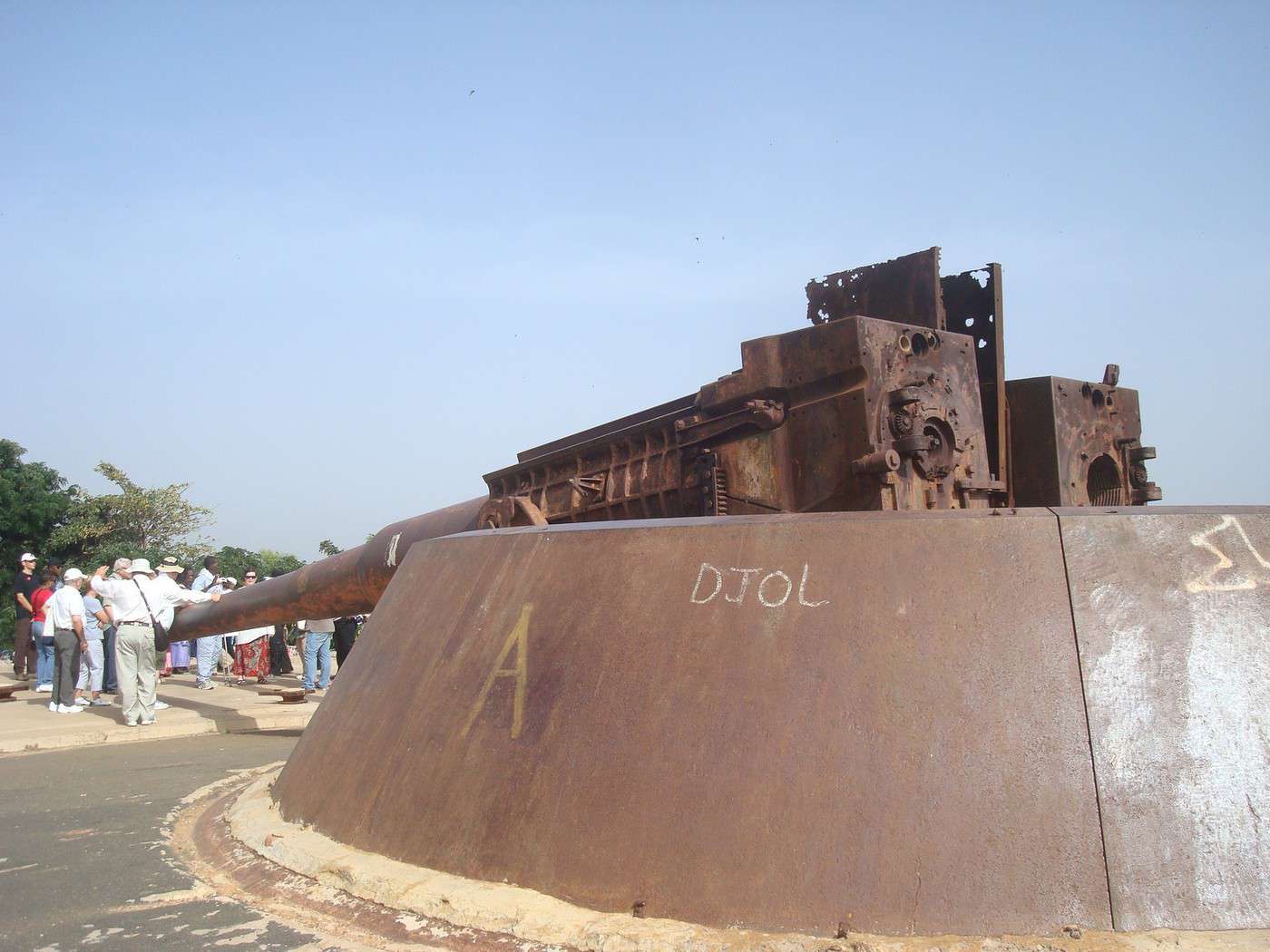
Bunkers are everywhere! In Tirana, Bunk’Art is the most interesting and largest. You’ll see the dictator Enver Hoxha’s office, where he would’ve taken refuge in case of an attack on the country. Bring a sweater—it’s really cold in the underground tunnels and their huge corridors. You can visit other bunkers around the country, in Tirana and elsewhere. Almost all are just abandoned. The cable car up Mount Dajti is right next to Bunk’Art. The view is stunning—you realize Tirana is so close to the mountains and the sea... But otherwise, it’s not that exciting for older teens (17 and 19) and their parents. We picked up a rental car in Tirana—it’d be ours for the next three weeks. We used Goalbania’s agency to avoid any hassles. First, there aren’t many cars available in Albania in summer. Second, French credit cards can be a nightmare abroad. So we preferred to sort that out in advance. After Tirana, we headed to Permet. Just a heads-up: the roads are in great condition except in the mountains. And Albanian drivers aren’t stressful to deal with. Though you might suddenly encounter a herd of goats crossing the road—haha—but if you’re not going too fast, it’s fine. In Permet, I’d been dreaming of rafting on the Vjosa, one of Europe’s last wild rivers. And we did it with a local agency! It’s beautiful, accessible to everyone, not too physical but still a bit lively—just how we like it. You can even jump into the river in some spots. In Permet, we also hiked through a canyon and visited a lovely little church.

And we took a workshop to make their local culinary pride: gliko. It’s a jam with whole fruits inside. We’d seen it on Goalbania’s site, and it was really fun. We were with a family where the secret to making gliko has been passed down for generations... Next, we headed to Gjirokastër. A city we loved: its old traditional houses (Skendulli and Zekate), its grand castle, the Ali Pasha Bridge. Along the way, we stopped for artisanal ice cream at a little shop run by a grandmother who’s been making it herself for ages.

One afternoon, my husband *had* to go to the coast in the south, to Ksamil (he’d read it was better than Sarandë). Verdict: we didn’t like it. Parking is a nightmare, the beaches are super noisy and crowded. The sea is packed with jet skis, boats, pedalos, and ropes. Avoid it.
On the other hand, we really liked Himarë, where we went next. We stayed at a campsite where we rented tents with mattresses and sheets inside. Right by the sea, on a low cliff (about 2 meters high). You can hear the waves at night... Magical!! To swim, you either jump straight into the sea (almost from the tent) or climb down a ladder, which you’ll need to climb back up to get out.

I was a little worried the campsite wouldn’t be very comfortable, so afterward, I’d booked a small place in Gjilek. Turns out, the place was really tiny (one room for four, no kitchen) and pretty expensive (over 100 € a night). We’d drive to the beach or restaurants—it’s on a steep slope, so not very accessible. Parking near the sea is tricky. But the (private) beaches were nice—we’d rent an umbrella not too close to the music and spend the day there. We also went to a wilder beach, harder to reach, via a long path. Behind the beach, there’s an amazing canyon where we’d sometimes climb using ropes (already in place, no need to bring your own) over big boulders rolled around by the stream, which must swell a lot in spring. So, the sea in Albania: it’s nice if you like swimming and relaxing, but it’s not the most interesting part of the country. There are so many other amazing things to see and discover—so many stunning sites! Maybe an agency could’ve helped us find more practical accommodations and avoid Ksamil and its surroundings. We left the coast to head to the beautiful city of Berat and its "thousand windows." We explored the city, its fortress, and its icon museum.

Then we discovered the Osum Canyon—it’s incredible. The view from the top is breathtaking. And at the bottom, it’s magical. There’s little water in summer, so rafting isn’t an option. We weren’t tempted by the big-tube descent offered by an agency—it looked fun, but the group had 40 people. We preferred hiking on our own as a family of four. We scouted the area on Google Maps... and found where to descend. We walked in the water, then it rose to our waists, then our shoulders... We weren’t moving fast. And how to get back up?? Eventually, we followed a group with a guide—the path was hard to find.

After that unforgettable hike, we visited the Bogovë Waterfalls. It’s pretty, and we swam, but the water was *really* cold. We passed through Tirana again and then headed to Shkodër. We explored a bit—its charming little streets, the Rozafa Fortress. There’s a tiny museum where you can see *huge* Ottoman stone cannonballs. And they tell you the (charming) story of the young woman who was walled alive in the castle’s foundations to ensure its strength... Shkodër is mostly a stopover to head into the mountains and discover Theth. Our goal: hiking in the Valbona Valley, from Valbona to Theth. We organized the trip ourselves, without an agency, but it took some time to figure everything out. So I’ll save you the trouble—haha. Book your tickets on the Komanilakeferry website. The ticket includes: 🙂 minibus transfer from downtown Shkodër to Koman 🙂 ferry ticket from Koman to Fierze. This ferry ride is *gorgeous*—between mountain slopes covered in pine trees, and sometimes a little house with a few fields...

🙂 minibus ticket from Fierze to Valbona. Now you’re in the mountains! The minibus drops you off near your accommodation—pick one as close as possible to the start of the hike (if that’s your goal!). The ones at the far end of the village add up to 1.5 hours of walking. Our choice: Guesthouse Dioni. The host is really lovely, it’s in the woods, and it’s basic but great. After a day of hiking, we arrived in Theth. What beautiful mountains! Then we explored Theth and the surrounding area. It’s pretty busy, but you can still enjoy the Blue Eye of Theth and its swim. It’s *so* cold! But so beautiful!
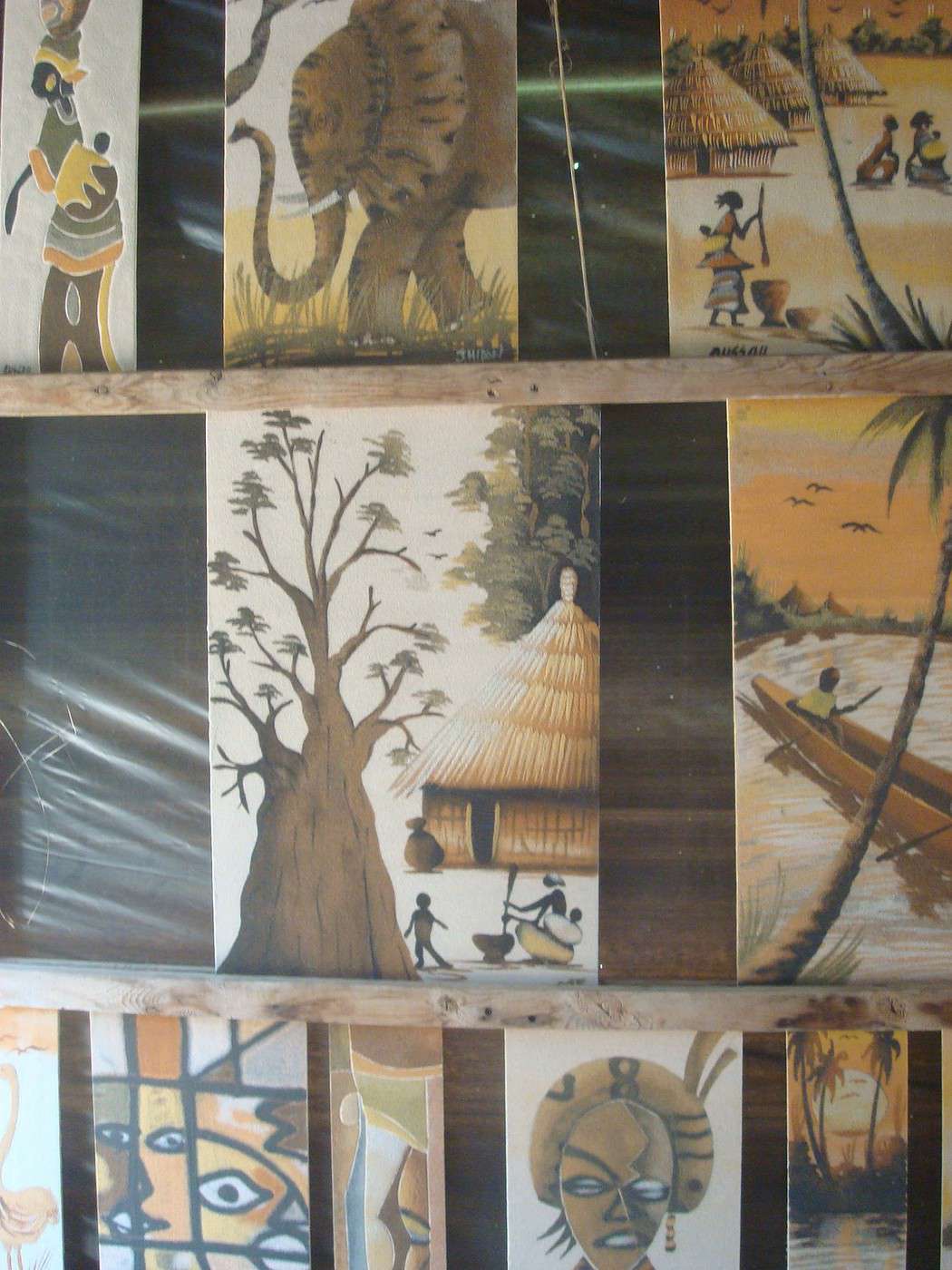
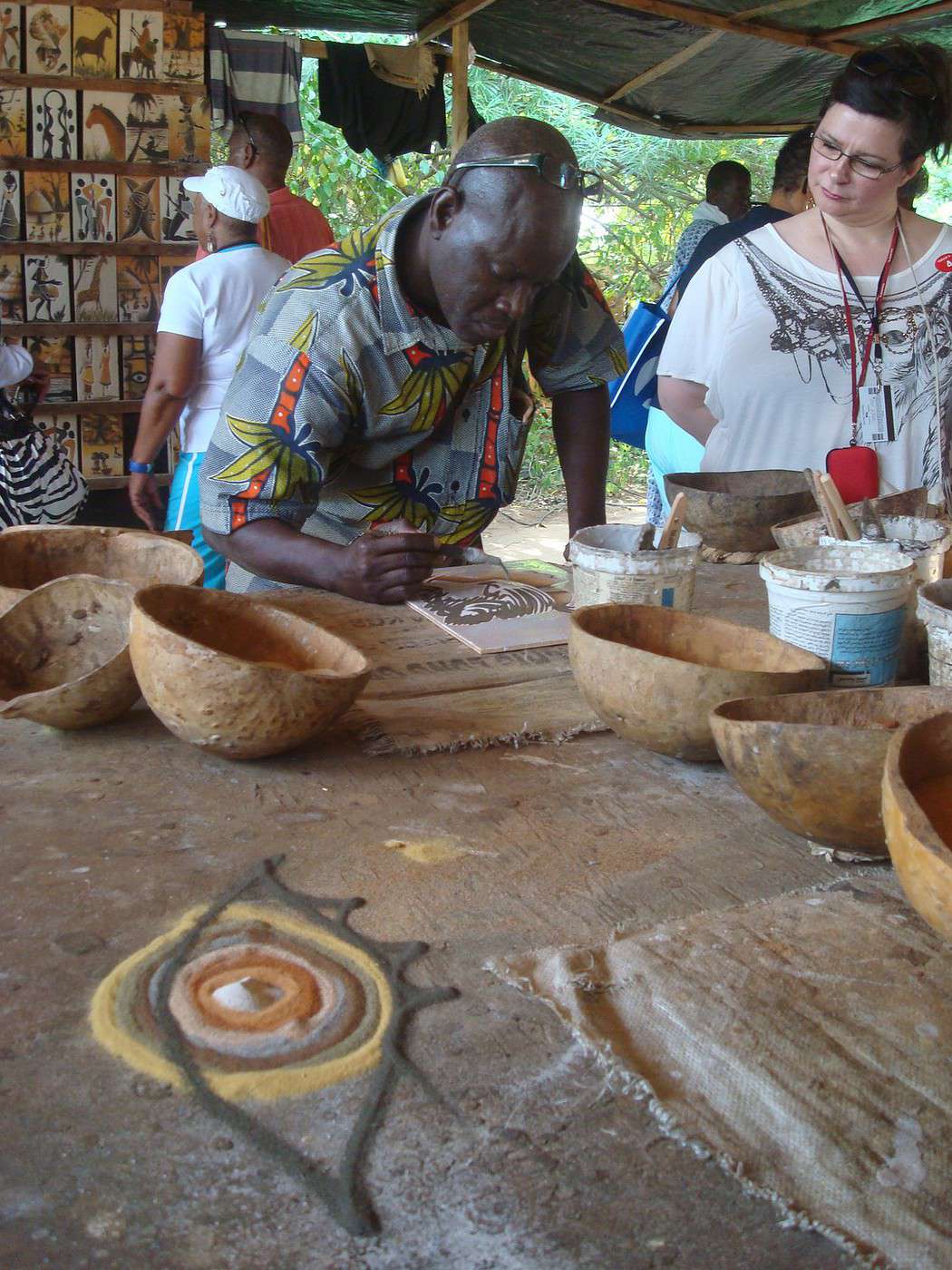
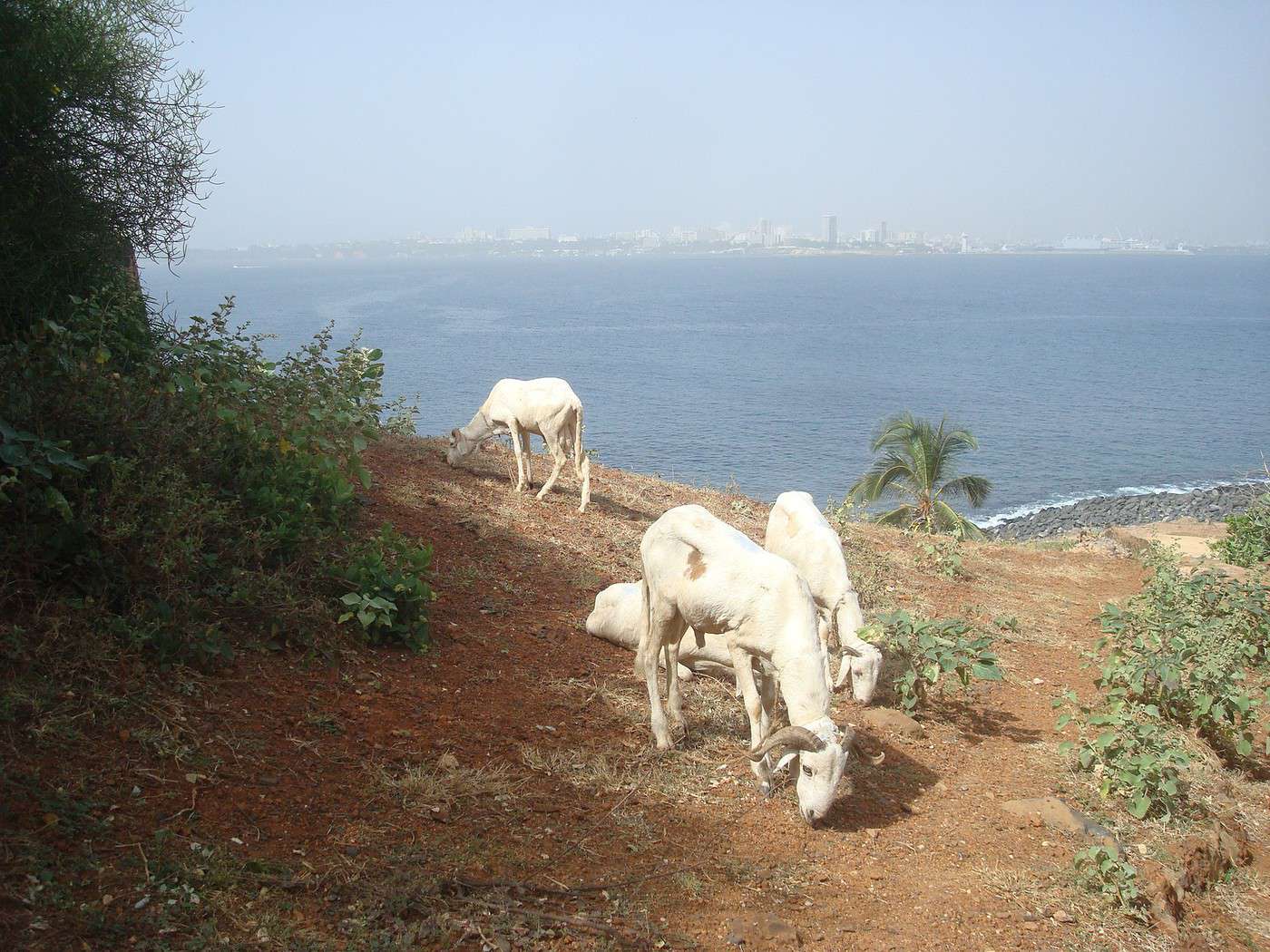
🙂 minibus ticket from Theth back to Shkodër. After a night in Shkodër, we drove to Kepi i Rodonit. A guidebook (I forget which one) raved about its beauty. And it *is* beautiful!

But the view is ruined by plastic bottles and other trash in the bushes, along the paths, and of course on the beaches. The only peaceful spot: the private beach at Kepi i Rodonit, which is cleaned. You can rent an umbrella and have lunch there. That’s where we spent our last few days—very relaxing. In short... Albania turned out to be perfect for us and our teens!
I booked all our accommodations on Booking.com. Note: almost all places ask to be paid in cash!! You can obviously withdraw from banks, but the fees are pretty high. Luckily, we had plenty of cash, and the country is very safe. You can pay in euros most of the time, which avoids exchange fees. We started in Tirana. I’d read a really interesting post about Albania’s bunkers (link in my profile). We chose to visit Bunk’Art with a guide from the agency that wrote the post. It was fascinating—not only to better understand the country’s history but also because her grandfather was repressed by the regime, and she shared her family’s experience with us.
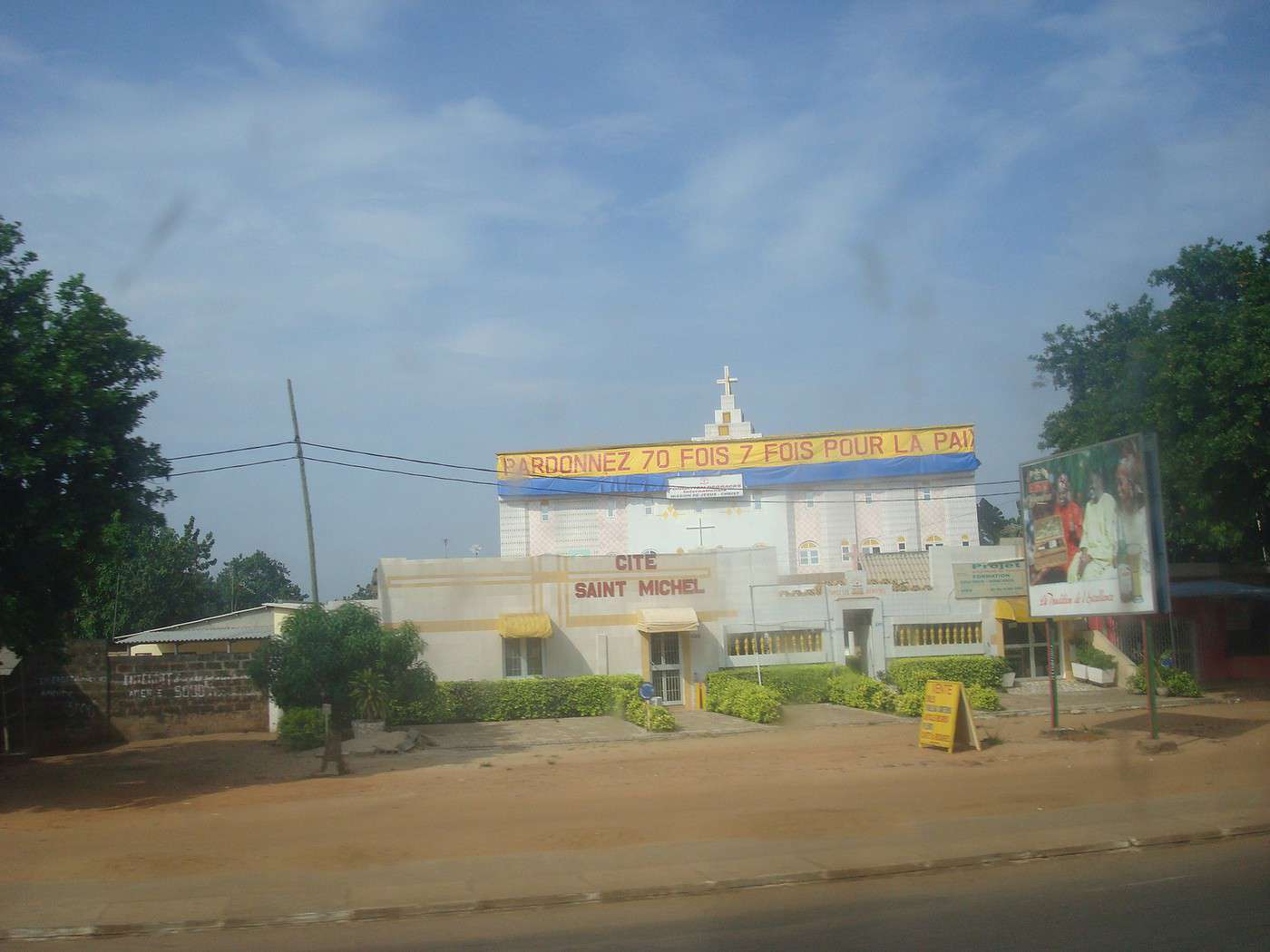
Bunkers are everywhere! In Tirana, Bunk’Art is the most interesting and largest. You’ll see the dictator Enver Hoxha’s office, where he would’ve taken refuge in case of an attack on the country. Bring a sweater—it’s really cold in the underground tunnels and their huge corridors. You can visit other bunkers around the country, in Tirana and elsewhere. Almost all are just abandoned. The cable car up Mount Dajti is right next to Bunk’Art. The view is stunning—you realize Tirana is so close to the mountains and the sea... But otherwise, it’s not that exciting for older teens (17 and 19) and their parents. We picked up a rental car in Tirana—it’d be ours for the next three weeks. We used Goalbania’s agency to avoid any hassles. First, there aren’t many cars available in Albania in summer. Second, French credit cards can be a nightmare abroad. So we preferred to sort that out in advance. After Tirana, we headed to Permet. Just a heads-up: the roads are in great condition except in the mountains. And Albanian drivers aren’t stressful to deal with. Though you might suddenly encounter a herd of goats crossing the road—haha—but if you’re not going too fast, it’s fine. In Permet, I’d been dreaming of rafting on the Vjosa, one of Europe’s last wild rivers. And we did it with a local agency! It’s beautiful, accessible to everyone, not too physical but still a bit lively—just how we like it. You can even jump into the river in some spots. In Permet, we also hiked through a canyon and visited a lovely little church.

And we took a workshop to make their local culinary pride: gliko. It’s a jam with whole fruits inside. We’d seen it on Goalbania’s site, and it was really fun. We were with a family where the secret to making gliko has been passed down for generations... Next, we headed to Gjirokastër. A city we loved: its old traditional houses (Skendulli and Zekate), its grand castle, the Ali Pasha Bridge. Along the way, we stopped for artisanal ice cream at a little shop run by a grandmother who’s been making it herself for ages.

One afternoon, my husband *had* to go to the coast in the south, to Ksamil (he’d read it was better than Sarandë). Verdict: we didn’t like it. Parking is a nightmare, the beaches are super noisy and crowded. The sea is packed with jet skis, boats, pedalos, and ropes. Avoid it.
On the other hand, we really liked Himarë, where we went next. We stayed at a campsite where we rented tents with mattresses and sheets inside. Right by the sea, on a low cliff (about 2 meters high). You can hear the waves at night... Magical!! To swim, you either jump straight into the sea (almost from the tent) or climb down a ladder, which you’ll need to climb back up to get out.

I was a little worried the campsite wouldn’t be very comfortable, so afterward, I’d booked a small place in Gjilek. Turns out, the place was really tiny (one room for four, no kitchen) and pretty expensive (over 100 € a night). We’d drive to the beach or restaurants—it’s on a steep slope, so not very accessible. Parking near the sea is tricky. But the (private) beaches were nice—we’d rent an umbrella not too close to the music and spend the day there. We also went to a wilder beach, harder to reach, via a long path. Behind the beach, there’s an amazing canyon where we’d sometimes climb using ropes (already in place, no need to bring your own) over big boulders rolled around by the stream, which must swell a lot in spring. So, the sea in Albania: it’s nice if you like swimming and relaxing, but it’s not the most interesting part of the country. There are so many other amazing things to see and discover—so many stunning sites! Maybe an agency could’ve helped us find more practical accommodations and avoid Ksamil and its surroundings. We left the coast to head to the beautiful city of Berat and its "thousand windows." We explored the city, its fortress, and its icon museum.

Then we discovered the Osum Canyon—it’s incredible. The view from the top is breathtaking. And at the bottom, it’s magical. There’s little water in summer, so rafting isn’t an option. We weren’t tempted by the big-tube descent offered by an agency—it looked fun, but the group had 40 people. We preferred hiking on our own as a family of four. We scouted the area on Google Maps... and found where to descend. We walked in the water, then it rose to our waists, then our shoulders... We weren’t moving fast. And how to get back up?? Eventually, we followed a group with a guide—the path was hard to find.

After that unforgettable hike, we visited the Bogovë Waterfalls. It’s pretty, and we swam, but the water was *really* cold. We passed through Tirana again and then headed to Shkodër. We explored a bit—its charming little streets, the Rozafa Fortress. There’s a tiny museum where you can see *huge* Ottoman stone cannonballs. And they tell you the (charming) story of the young woman who was walled alive in the castle’s foundations to ensure its strength... Shkodër is mostly a stopover to head into the mountains and discover Theth. Our goal: hiking in the Valbona Valley, from Valbona to Theth. We organized the trip ourselves, without an agency, but it took some time to figure everything out. So I’ll save you the trouble—haha. Book your tickets on the Komanilakeferry website. The ticket includes: 🙂 minibus transfer from downtown Shkodër to Koman 🙂 ferry ticket from Koman to Fierze. This ferry ride is *gorgeous*—between mountain slopes covered in pine trees, and sometimes a little house with a few fields...

🙂 minibus ticket from Fierze to Valbona. Now you’re in the mountains! The minibus drops you off near your accommodation—pick one as close as possible to the start of the hike (if that’s your goal!). The ones at the far end of the village add up to 1.5 hours of walking. Our choice: Guesthouse Dioni. The host is really lovely, it’s in the woods, and it’s basic but great. After a day of hiking, we arrived in Theth. What beautiful mountains! Then we explored Theth and the surrounding area. It’s pretty busy, but you can still enjoy the Blue Eye of Theth and its swim. It’s *so* cold! But so beautiful!
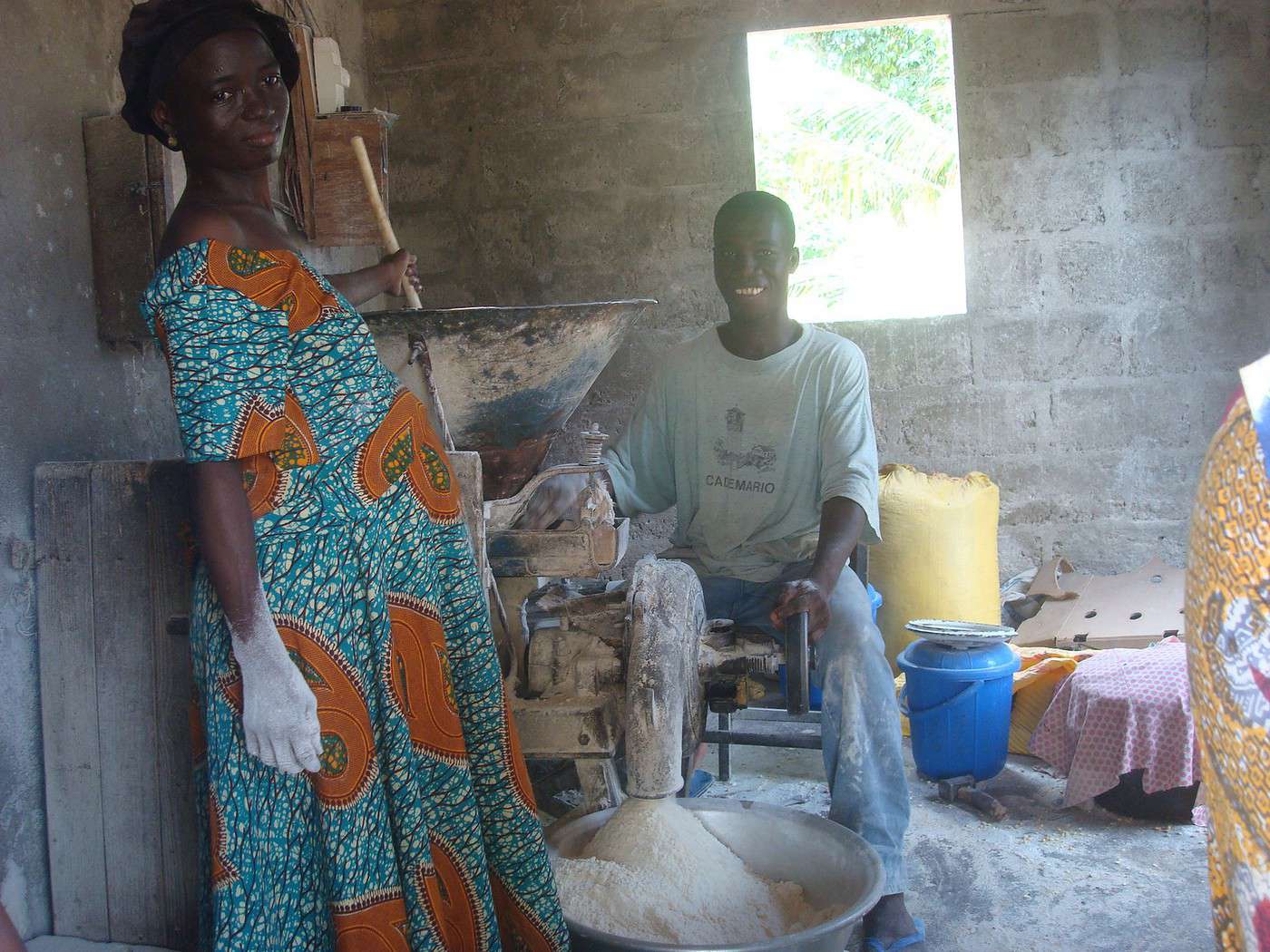
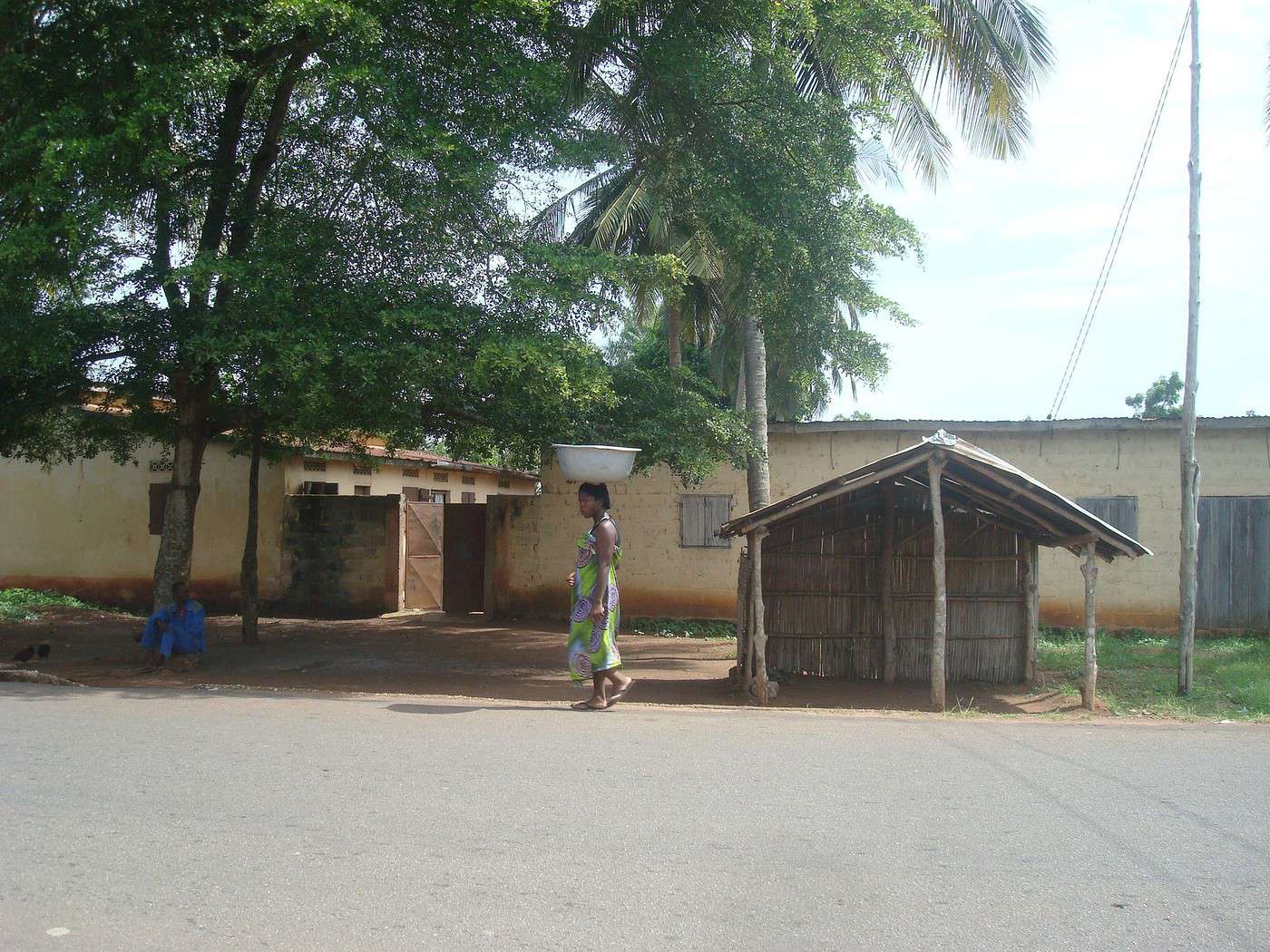
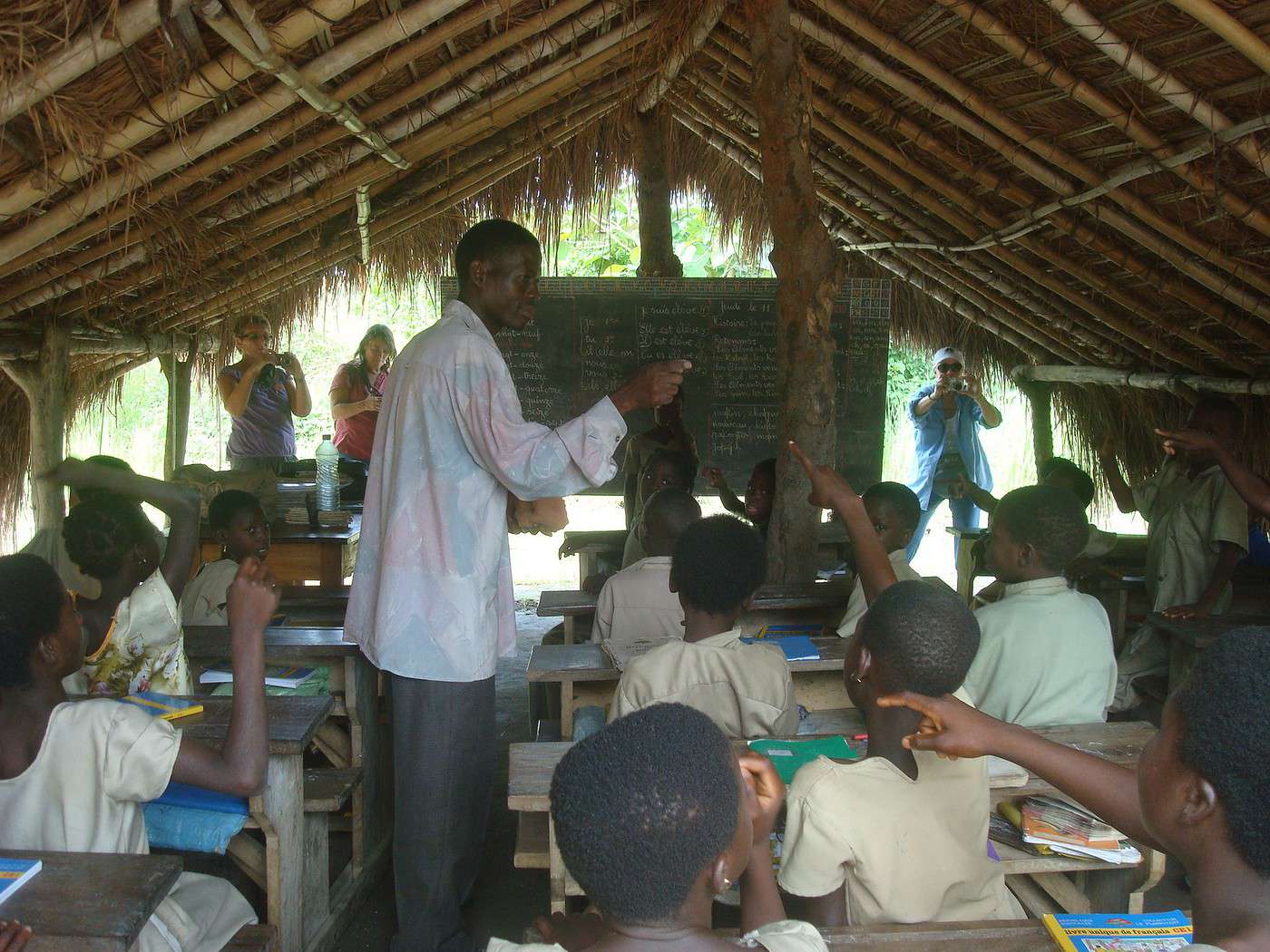
🙂 minibus ticket from Theth back to Shkodër. After a night in Shkodër, we drove to Kepi i Rodonit. A guidebook (I forget which one) raved about its beauty. And it *is* beautiful!

But the view is ruined by plastic bottles and other trash in the bushes, along the paths, and of course on the beaches. The only peaceful spot: the private beach at Kepi i Rodonit, which is cleaned. You can rent an umbrella and have lunch there. That’s where we spent our last few days—very relaxing. In short... Albania turned out to be perfect for us and our teens!
A new work assignment means our vacation dates can't stay the same.
We had planned to go to the Canary Islands, but flight prices are skyrocketing with this new holiday schedule.
So, I’m looking for an alternative to Gran Canaria and El Hierro and found two round-trip flights with Wizz Air to Tirana.
398 €, including baggage and seats—perfect!
Plus, the departure and return times are great, which is pretty rare for a low-cost flight!
All that’s left is to rent a car, plan the route, and book accommodations.
With two weeks, we’ll have to make some choices!
Here’s the final itinerary: Shkodra (2 nights), Valbonë (3 nights), Tirana (1 night), Lake Ohrid (1 night), Korçë (1 night), Përmet (1 night), Gjirokastër (1 night), Himarë (2 nights), Berat (2 nights), and Krujë (1 night).
A mix of countryside and small towns, a bit of the Mediterranean, and some mountains!
Late October isn’t the best season, so let’s keep our fingers crossed for the rest...

We had planned to go to the Canary Islands, but flight prices are skyrocketing with this new holiday schedule.
So, I’m looking for an alternative to Gran Canaria and El Hierro and found two round-trip flights with Wizz Air to Tirana.
398 €, including baggage and seats—perfect!
Plus, the departure and return times are great, which is pretty rare for a low-cost flight!
All that’s left is to rent a car, plan the route, and book accommodations.
With two weeks, we’ll have to make some choices!
Here’s the final itinerary: Shkodra (2 nights), Valbonë (3 nights), Tirana (1 night), Lake Ohrid (1 night), Korçë (1 night), Përmet (1 night), Gjirokastër (1 night), Himarë (2 nights), Berat (2 nights), and Krujë (1 night).
A mix of countryside and small towns, a bit of the Mediterranean, and some mountains!
Late October isn’t the best season, so let’s keep our fingers crossed for the rest...

Hi there,
I’m diving into a recap of our loop—pretty classic, really—Denver-Yellowstone-Denver this past summer, from July 24 to August 17. Given the sheer number of trip reports already out there (or in the works), and since I don’t have the writing chops or the photography skills of many of you, I’ll keep it practical—well, I’ll try, at least—to share our take on some of the less-visited parks and spots.
First off, a huge thank you to everyone whose trip reports, blogs, websites, comments, and more helped us put together this itinerary. Looking back, it could’ve been even better optimized: a few disappointments when we missed out on some great discoveries, often because we were short on time. Plenty of reasons to come back to the area!
We’re traveling with our four (almost) teens—18, 16, 14, and nearly 12 years old. To keep the trip enjoyable for everyone, we had to make compromises on both sides: cutting a visit short to spend more time swimming, waking up at dawn, and so on. But logistics also played a big role—things like laundry, grocery shopping, and keeping luggage organized could’ve quickly become time-consuming without a little planning. And honestly, I think we visited every Walmart along the way! Blame it on the lack of fridges in some accommodations and, more importantly, the *very* limited space in the car, which made it impossible to bring a proper cooler. I’ll come back to the car saga later.
For accommodations, this year we alternated between basic cabins in KOA campgrounds and Yellowstone (when staying more than one night in the same place) and hotels. Always with a pool (except in Yellowstone, of course), which let the kids burn off energy—because they always have reserves, even after packed days!—and, let’s be honest, gave us a chance to relax. No Wi-Fi issues either; we all had plans with 25 GB of data (a big thanks to Gilles for the amazing deal at 0.99 €). It worked perfectly, even for texts and calls between phones—no extra charges.
Now, onto our route: as I mentioned, a classic Denver-Yellowstone-Denver loop. To avoid rushing through the parks or spending all our time on the road, we prioritized staying as close to them as possible, with at least two nights in each place. And I’ve got to say, it’s really nice to settle in, even if it’s just for two nights. It also helped us deal with the weather, which wasn’t always great during this trip. The trade-off? With vacation time being limited, some driving days ended up being long. We knew that going in, but since we kept a relaxed pace with no time constraints (don’t ask me for timings—I don’t keep track of the clock on vacation, except in the morning to get everyone up before noon!), we sometimes ended up with marathon days.
With that said, I’ll dive into the trip itself in the next post.
I’m diving into a recap of our loop—pretty classic, really—Denver-Yellowstone-Denver this past summer, from July 24 to August 17. Given the sheer number of trip reports already out there (or in the works), and since I don’t have the writing chops or the photography skills of many of you, I’ll keep it practical—well, I’ll try, at least—to share our take on some of the less-visited parks and spots.
First off, a huge thank you to everyone whose trip reports, blogs, websites, comments, and more helped us put together this itinerary. Looking back, it could’ve been even better optimized: a few disappointments when we missed out on some great discoveries, often because we were short on time. Plenty of reasons to come back to the area!
We’re traveling with our four (almost) teens—18, 16, 14, and nearly 12 years old. To keep the trip enjoyable for everyone, we had to make compromises on both sides: cutting a visit short to spend more time swimming, waking up at dawn, and so on. But logistics also played a big role—things like laundry, grocery shopping, and keeping luggage organized could’ve quickly become time-consuming without a little planning. And honestly, I think we visited every Walmart along the way! Blame it on the lack of fridges in some accommodations and, more importantly, the *very* limited space in the car, which made it impossible to bring a proper cooler. I’ll come back to the car saga later.
For accommodations, this year we alternated between basic cabins in KOA campgrounds and Yellowstone (when staying more than one night in the same place) and hotels. Always with a pool (except in Yellowstone, of course), which let the kids burn off energy—because they always have reserves, even after packed days!—and, let’s be honest, gave us a chance to relax. No Wi-Fi issues either; we all had plans with 25 GB of data (a big thanks to Gilles for the amazing deal at 0.99 €). It worked perfectly, even for texts and calls between phones—no extra charges.
Now, onto our route: as I mentioned, a classic Denver-Yellowstone-Denver loop. To avoid rushing through the parks or spending all our time on the road, we prioritized staying as close to them as possible, with at least two nights in each place. And I’ve got to say, it’s really nice to settle in, even if it’s just for two nights. It also helped us deal with the weather, which wasn’t always great during this trip. The trade-off? With vacation time being limited, some driving days ended up being long. We knew that going in, but since we kept a relaxed pace with no time constraints (don’t ask me for timings—I don’t keep track of the clock on vacation, except in the morning to get everyone up before noon!), we sometimes ended up with marathon days.
With that said, I’ll dive into the trip itself in the next post.
15 days across Gran Canaria, El Hierro, and a dash of Tenerife under the storm Thérèse!
The planned itinerary will be slightly disrupted...
(The version without discussions is here)
The planned itinerary will be slightly disrupted...
(The version without discussions is here)
And we still haven’t seen everything!
Before setting off for new horizons at the end of this year, it’s time for me to share my trip to Cape Verde this summer 2025.
I particularly love these spontaneous trips, and our stay in Cape Verde is one of those because it was only at the beginning of April that we decided on this getaway, which had been catching our eye for a while, given our love for the mountains.
As always—well, when it’s open—I turned to VF, and I want to immediately thank Marie, aka ptitortue, who helped me a lot in planning this trip through her travel journals and our exchanges!
Because Cape Verde is both small and vast! We decided not to rush from one airport to another, to enjoy the places and the people, but also to relax, since the work backlog from being stuck in May (see my previous travel journal 😅) had to be caught up on in June.
So, 4 islands will be our winners from 06/28 to 07/19:
Santiago first for logistical reasons, as round-trip flights from the capital Praia were the cheapest (650 €/person from Lyon via Lisbon with TAP, still!)
São Vicente, because it’s the gateway to the next one but ultimately more than that...
Santo Antão, pretty much the main goal of the trip since Marie (and the photos) had really sold it to me.
And finally, Sal Island, for some rest—a non-negotiable condition for my other half—and we’ll see that I should’ve listened to Marie...
That said, what a chatterbox I am—buckle up, flight attendants at the doors, off we go on new beautiful escapes! (Thanks to Sophie for the easy loan)
Last note for my eager fan club 😏: yes, there will be alcohol—how could there not be in the land of grogue!
It starts here:
https://voyageforum.com/v.f?post=10790234;a=10790234

I particularly love these spontaneous trips, and our stay in Cape Verde is one of those because it was only at the beginning of April that we decided on this getaway, which had been catching our eye for a while, given our love for the mountains.
As always—well, when it’s open—I turned to VF, and I want to immediately thank Marie, aka ptitortue, who helped me a lot in planning this trip through her travel journals and our exchanges!
Because Cape Verde is both small and vast! We decided not to rush from one airport to another, to enjoy the places and the people, but also to relax, since the work backlog from being stuck in May (see my previous travel journal 😅) had to be caught up on in June.
So, 4 islands will be our winners from 06/28 to 07/19:
Santiago first for logistical reasons, as round-trip flights from the capital Praia were the cheapest (650 €/person from Lyon via Lisbon with TAP, still!)
São Vicente, because it’s the gateway to the next one but ultimately more than that...
Santo Antão, pretty much the main goal of the trip since Marie (and the photos) had really sold it to me.
And finally, Sal Island, for some rest—a non-negotiable condition for my other half—and we’ll see that I should’ve listened to Marie...
That said, what a chatterbox I am—buckle up, flight attendants at the doors, off we go on new beautiful escapes! (Thanks to Sophie for the easy loan)
Last note for my eager fan club 😏: yes, there will be alcohol—how could there not be in the land of grogue!
It starts here:
https://voyageforum.com/v.f?post=10790234;a=10790234

Hello,
Since I enjoy not only the countryside but also everything related to rail travel, I’m starting this photo thread dedicated to trains in Thailand (I’d guess most of us have taken one at some point...).
Feel free to post your pictures here as long as they fit the theme: rolling stock**, stations**, platforms, tracks (even without a train on them), technical equipment, engineering structures (bridges, viaducts), etc.—all in Thailand.
For each photo, I’ll (or you can) note the station or line where it was taken.
Comments and questions are welcome.
* train ** interiors or exteriors
All aboard!
* train ** interiors or exteriors
All aboard!