In the Land of the Tswana (Botswana)
FR

Translated into English.

PY Pygmalion19 Veteran ·
Hi Ludo,

A bit late to the party—I hope there’s still a spot for me in your carriage🙂! Your story is such a vivid and precise read. How lucky to have seen that brown hyena in KTP! Are the tracks in Moremi manageable, or are they best left to experienced off-roaders? I’m eagerly waiting for the next part of your travel journal.
pygmalion
OL OldPlatypus Regular ·
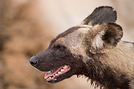
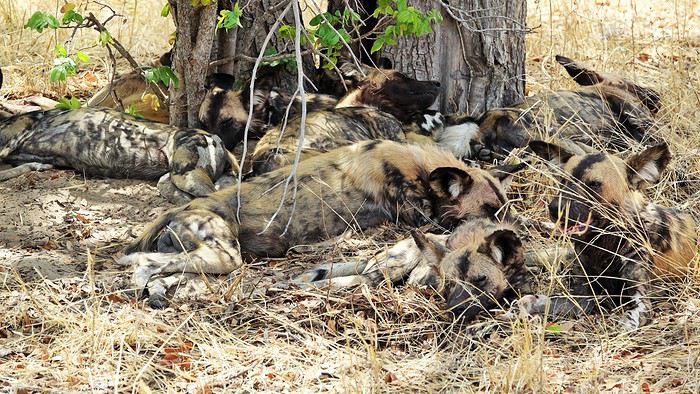
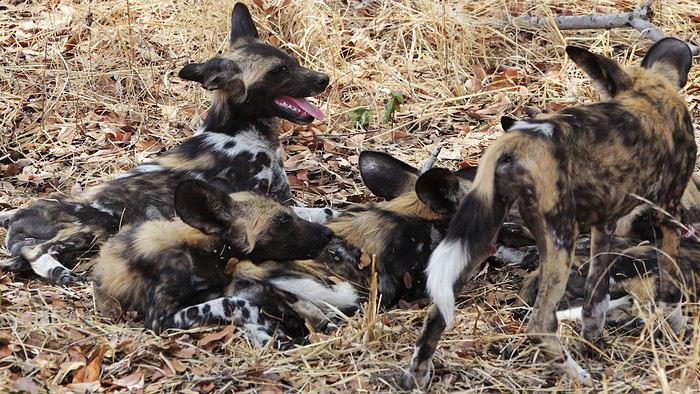
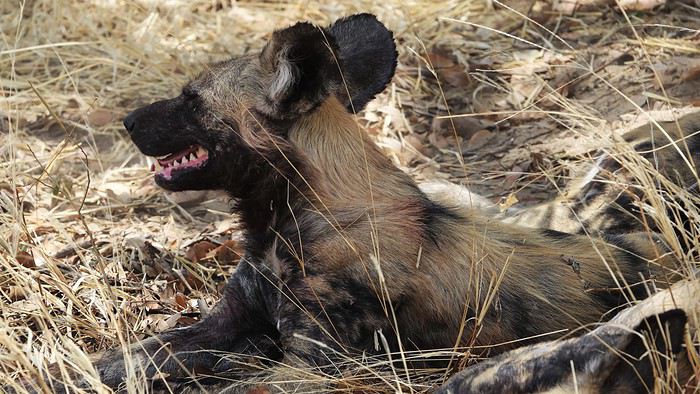
It's true that for a first encounter with African wild dogs, we were really lucky to see so many, so close, and for so long.
Mon voyage au Botswana : https://voyageforum.com/discussion/pays-tswanas-botswana-d9819920/
OL OldPlatypus Regular ·
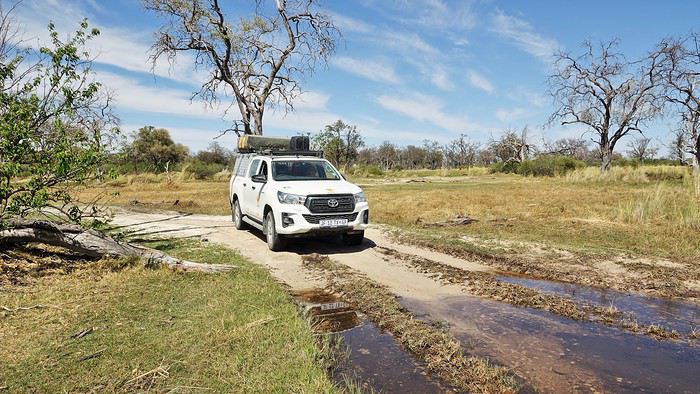
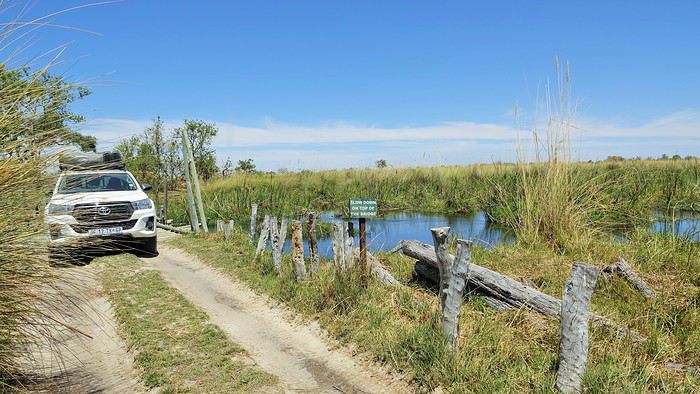
When we were there, at the end of the dry season, the tracks weren’t flooded, even at the bridges. We were completely inexperienced and didn’t run into any particular problems, though some tracks were trickier than others.
Mon voyage au Botswana : https://voyageforum.com/discussion/pays-tswanas-botswana-d9819920/
OL OldPlatypus Regular ·
09/28/2019 (Part 2): Moremi

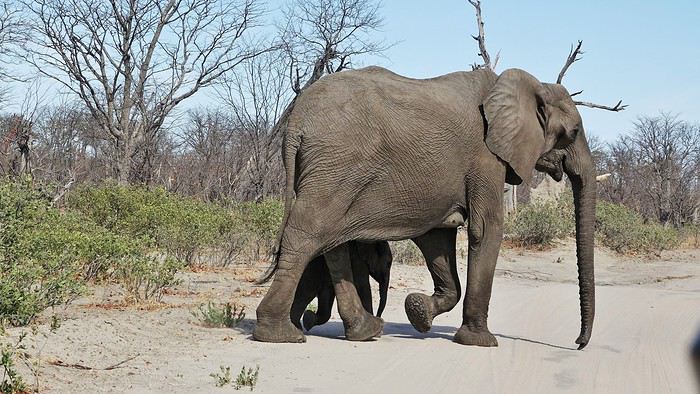
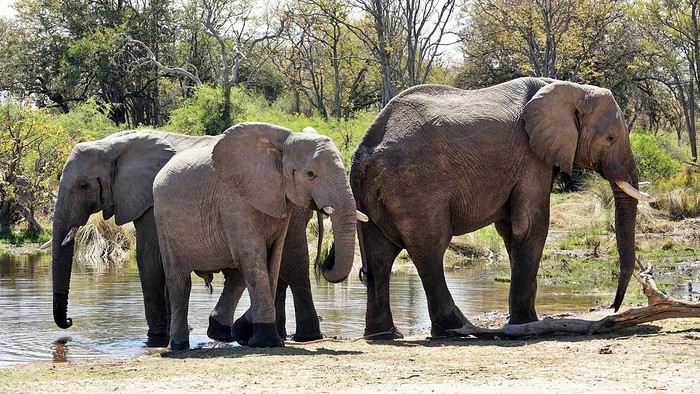
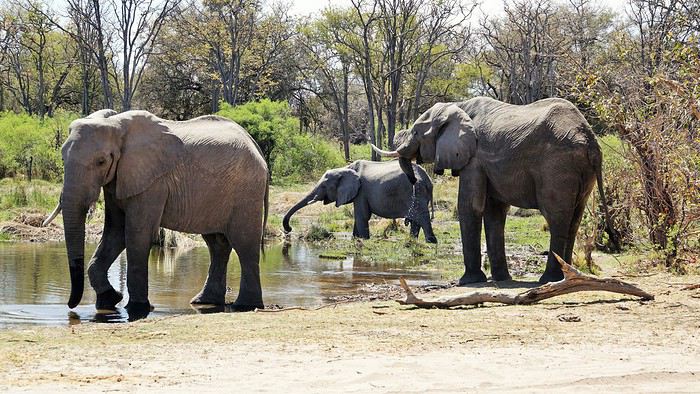
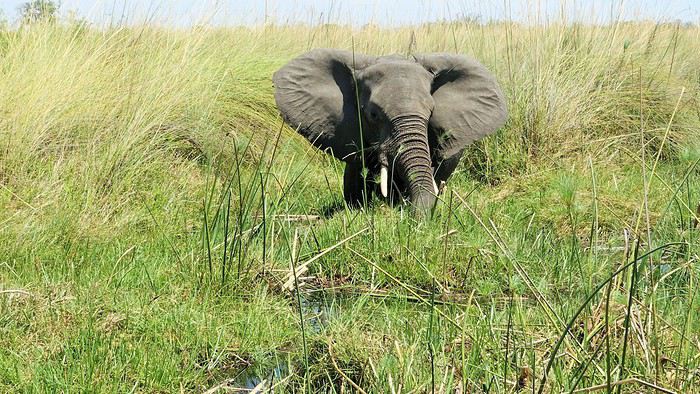
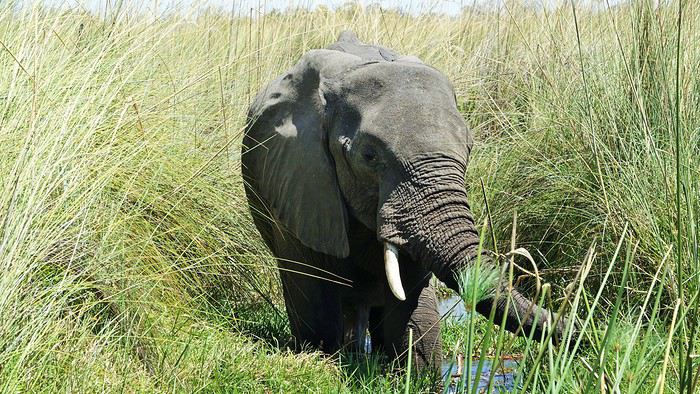
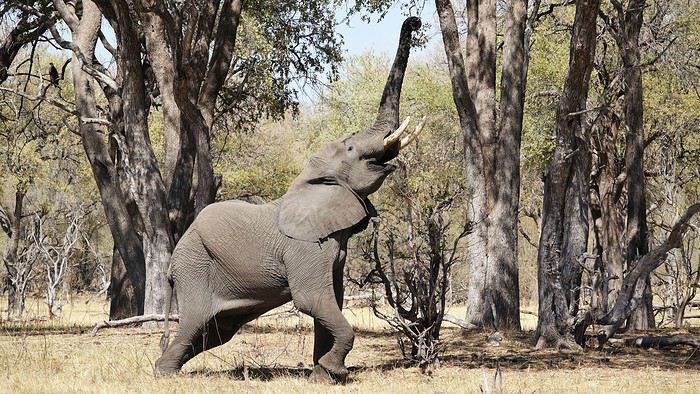
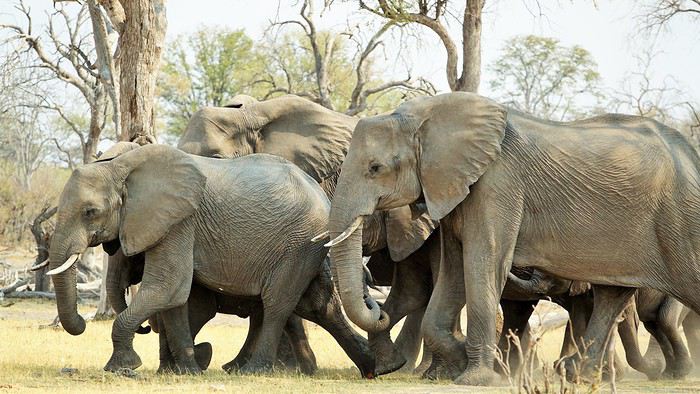
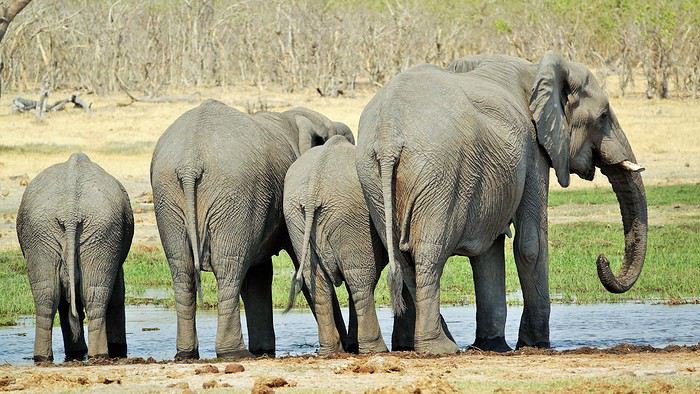
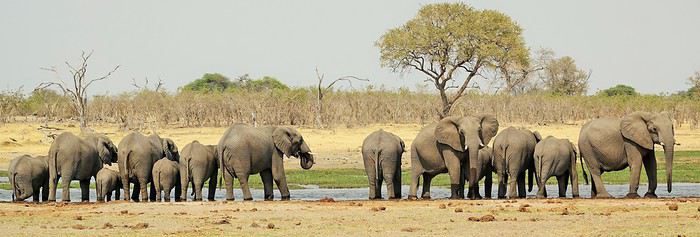
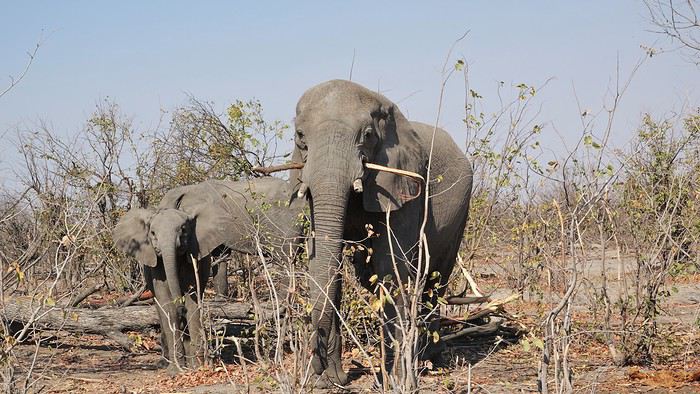
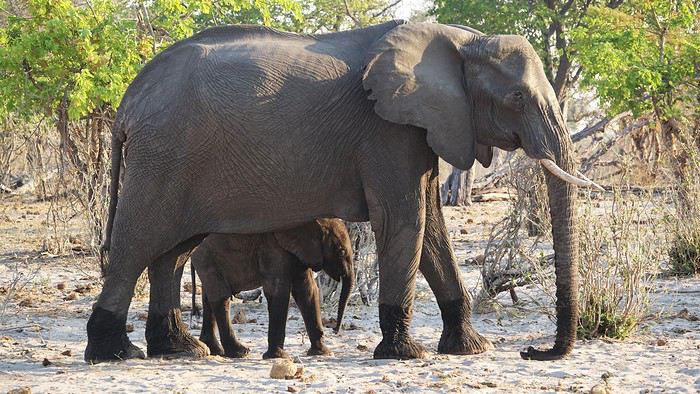
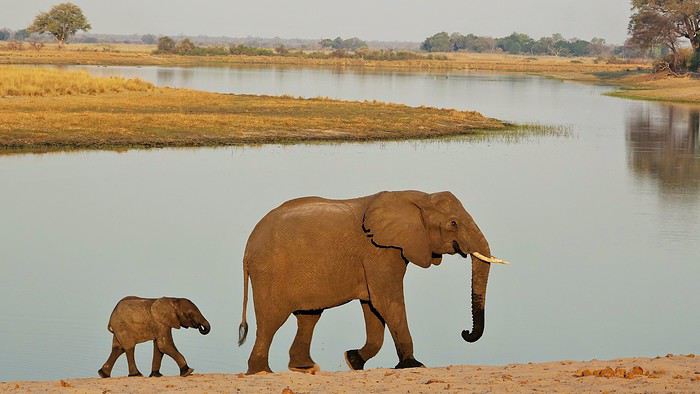
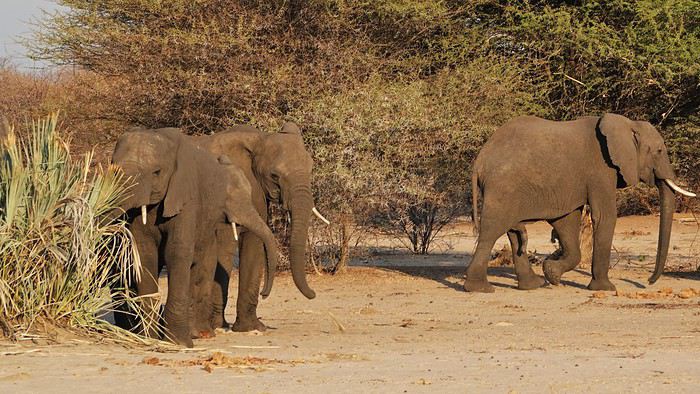
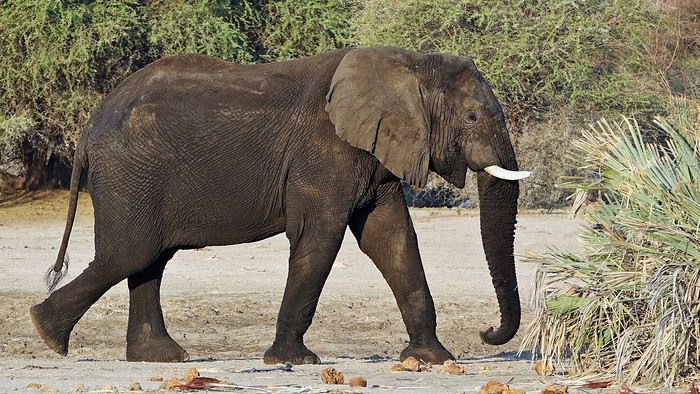
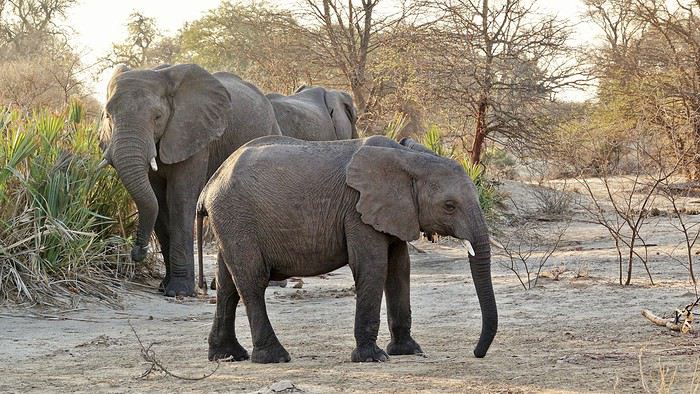
We continue the track toward the west of Moremi. No matter the animal species, there are lots of babies, and the number of elephants we’ve seen is incredible.


We finally reach the third bridge, which isn’t submerged by water. We really regret not being able to book a campsite at Xakanaxa or Third Bridge because this western part of Moremi is truly stunning. We take a little coffee break at Third Bridge campsite and even manage to grab a shower (better than at Mbudi Camp ;)).


We would’ve loved to circle Mboma Island, but worried about running out of time, we decide to skip it. We continue our route via the second bridge, then the first bridge, and go around the Bodomatau wetland area. In this part, the track is really winding and narrow, often with very deep sand and lots of vegetation scratching the car. Sometimes, the track is flooded, and we have to find an alternative (thanks, Maps.me). In short, we found the area tough, and on top of that, we didn’t see many animals.


We’re really happy to reach the Xakanaxa area and its slightly easier tracks.

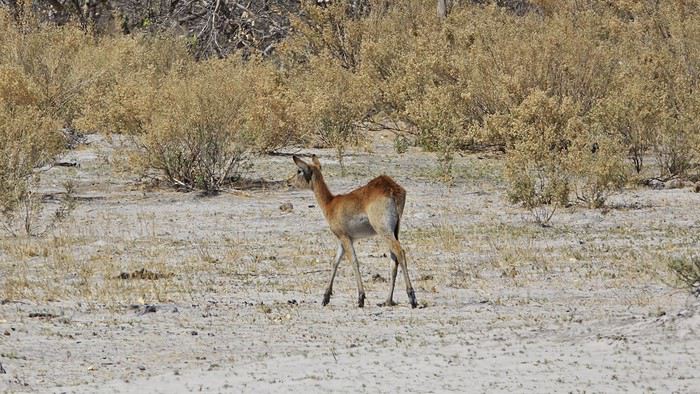
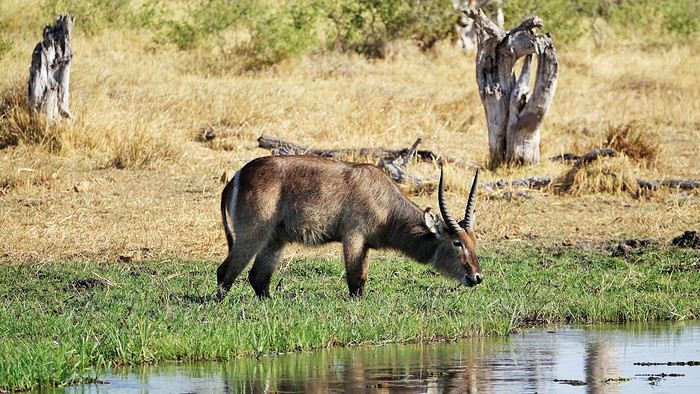
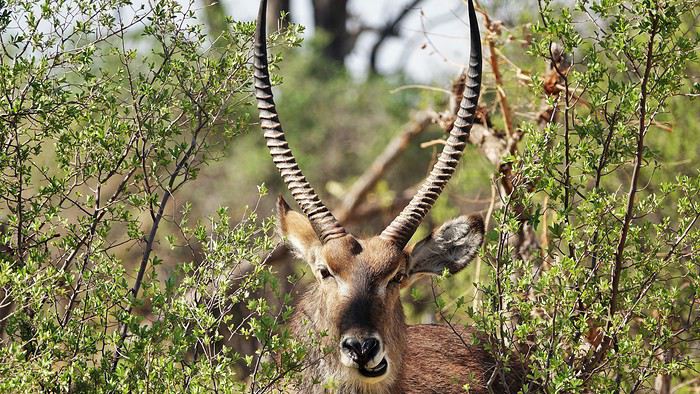
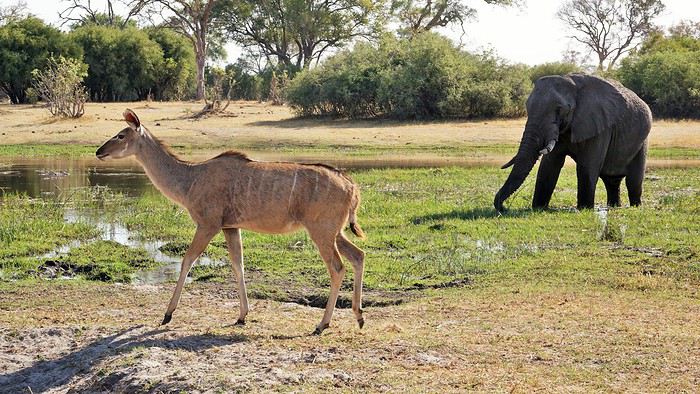
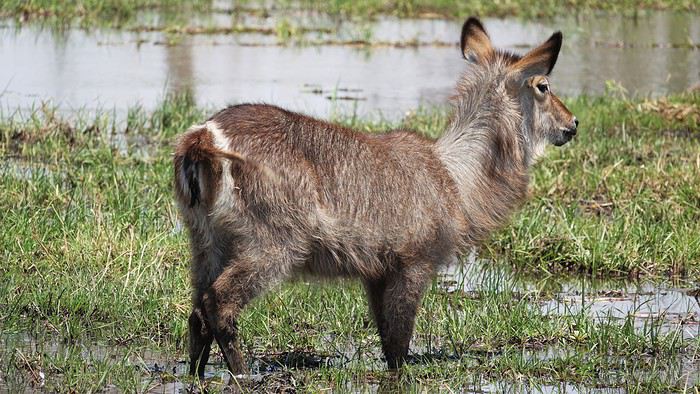
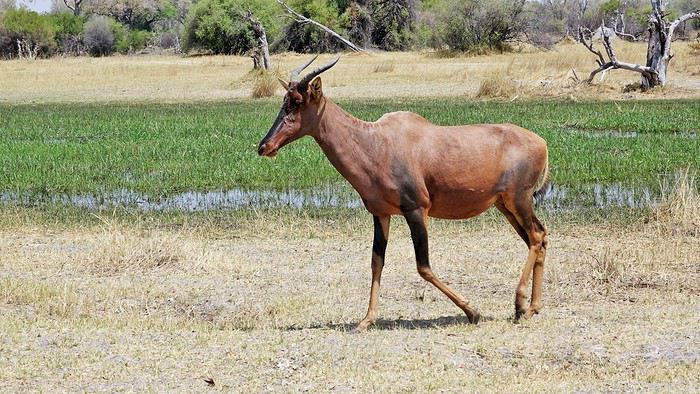
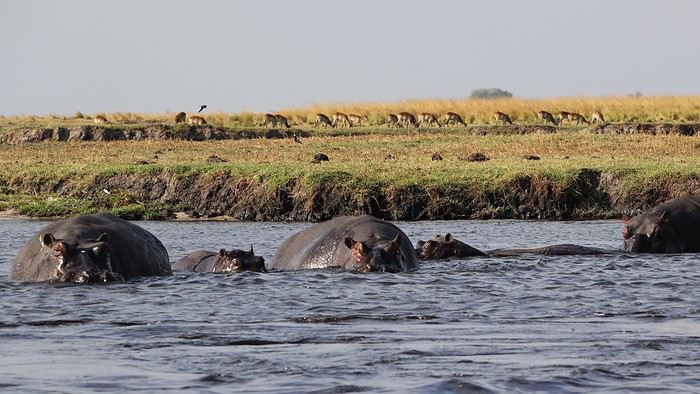
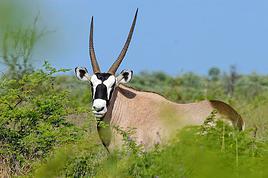
Question for the experts: what species of antelope is this? 😮
We’re on schedule and calmly head toward North Gate, which we reach right on time at 6:00 PM. And by sheer luck, we run into our friends there. Just like the night before, we arrive at Mbudi Campsite as the sun is almost setting. During dinner, once night has fallen, we spot the silhouette of a hippopotamus grazing not far from us. We stay on our guard.
Mon voyage au Botswana : https://voyageforum.com/discussion/pays-tswanas-botswana-d9819920/
OS Oslow80 ·
We also saw African wild dogs in northern Tanzania—what a magical moment! ❤️
Nathalie L
TO Toopil Veteran ·
Hyenas and African wild dogs, what luck!😎
Hakuna Matata!
PY Pygmalion19 Veteran ·
Hi Ludo,

I think it’s a sitatunga antelope or waterbuck, Tragelaphus spekii, common in aquatic areas.
pygmalion
OL OldPlatypus Regular ·
I thought the waterbuck had stripes and spots on its coat. But the antelope was far away, so we couldn’t see well... Thanks, Eric
Mon voyage au Botswana : https://voyageforum.com/discussion/pays-tswanas-botswana-d9819920/
OL OldPlatypus Regular ·
29/09/2019 (Part 1): Khwai River

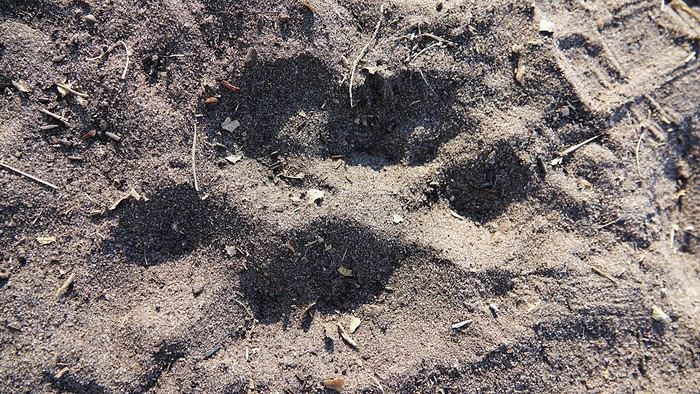
When we wake up, we discover some worrying tracks between our two cars.


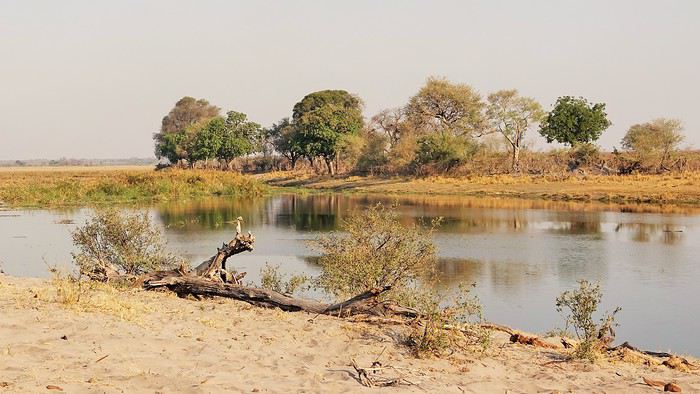
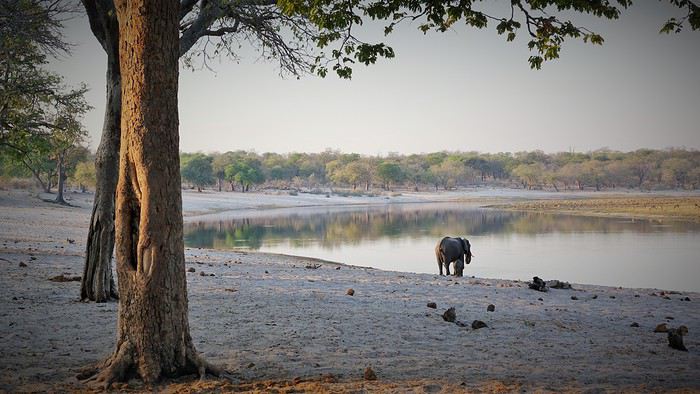
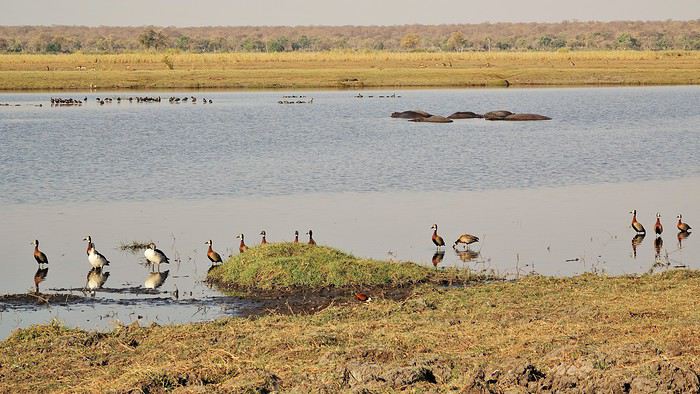
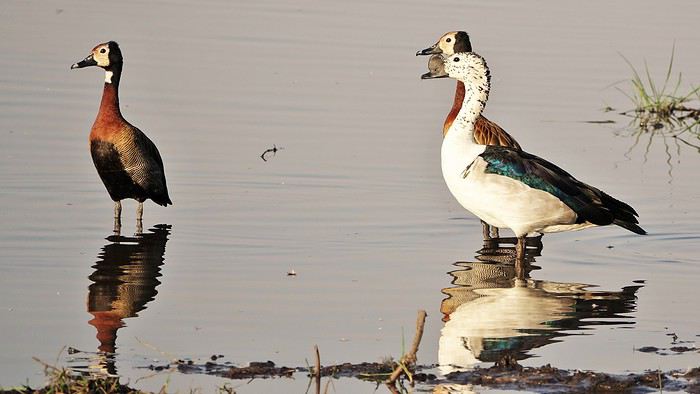
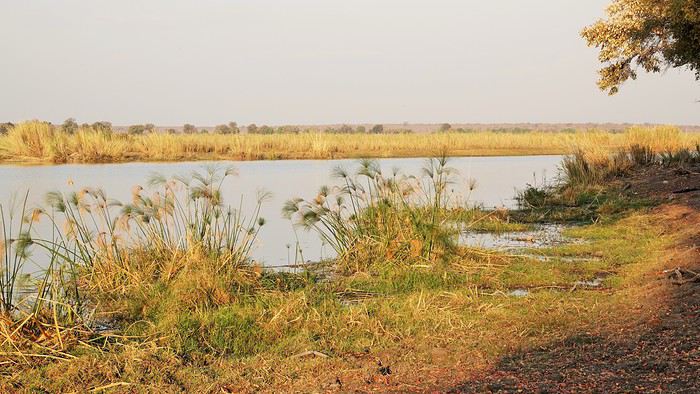
The location of the Mubdi Camp sites, right by the river, is truly fantastic. Hippos are calmly resting in the middle of the water, elephants come to drink, and aquatic birds dominate the scene. So, we linger a bit to take it all in. We’d forgotten that check-out was at 9:30 AM. We’re running a little late, and they let us know!


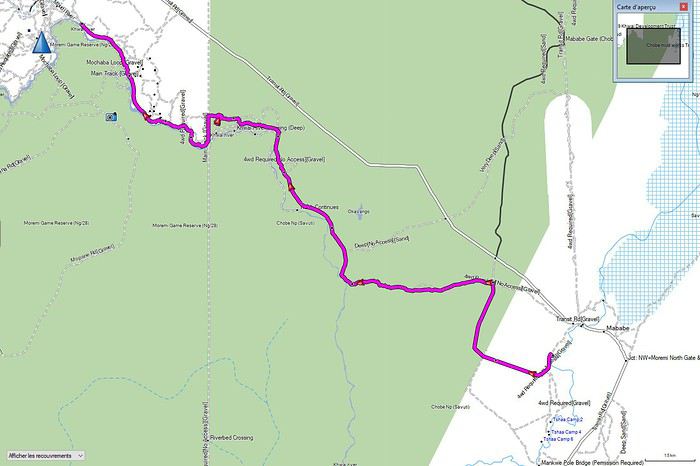
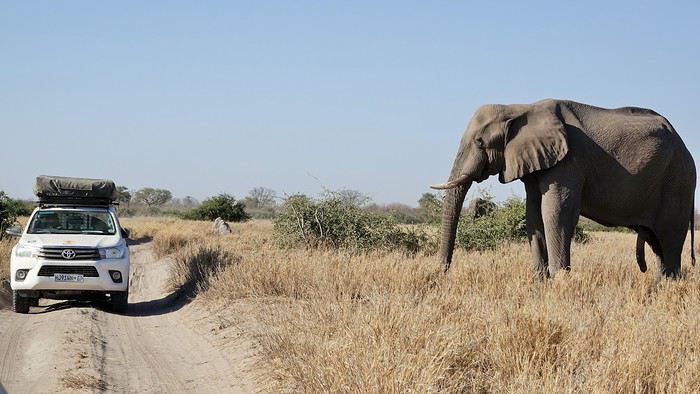
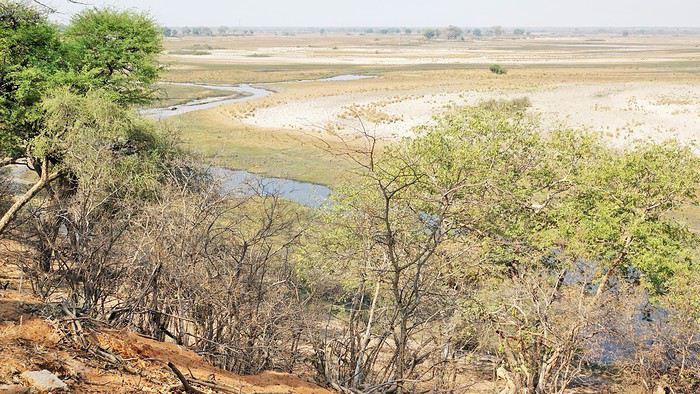
Today’s leg is short since we’re heading to Dijara Campsite, near Mababe, less than thirty kilometers away. The dirt road leading there is pretty smooth but very dusty. It’s essential to keep a good distance from the car in front if you want any visibility. You also have to watch out for elephants that might cross at any moment. When we arrive at Dijara Campsite, we drive around in circles trying to find the reception. No luck! We’re not the only ones—another vehicle seems to be looking for something too. We pull up next to them and strike up a conversation. It’s a Portuguese father and son who confirm they’re also looking for the reception. Especially since our vouchers clearly state not to set up camp just anywhere. Since they’re friendly and we hit it off, we suggest sharing the same spot, which is plenty big for our three cars. But that’ll be for tonight because we have no intention of hanging around here now. We continue down the small track south for a kilometer or two. The concentration of elephants is impressive. At times, we’re practically surrounded by the pachyderms… and not exactly reassured! We reach a stunning viewpoint overlooking the river as it loops around.


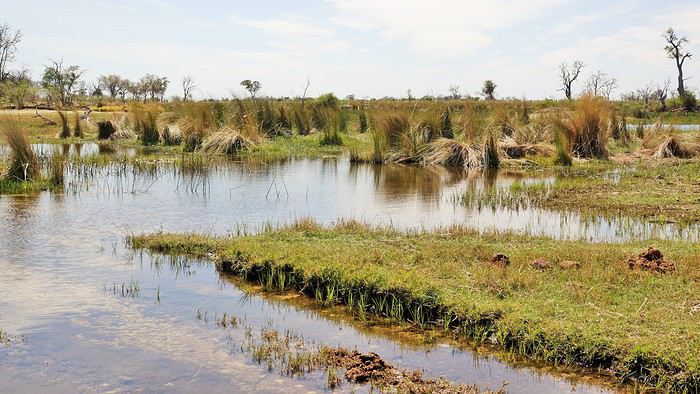
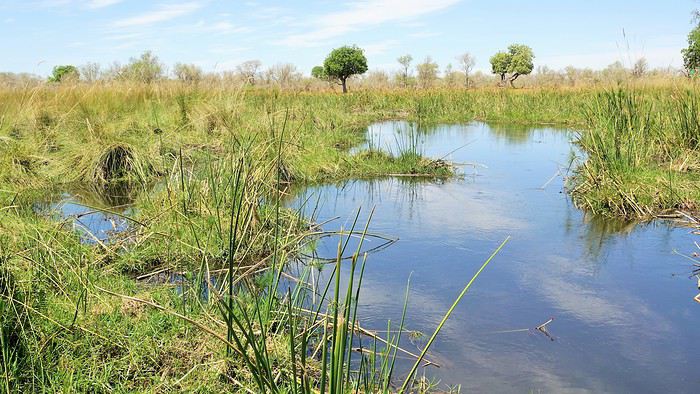
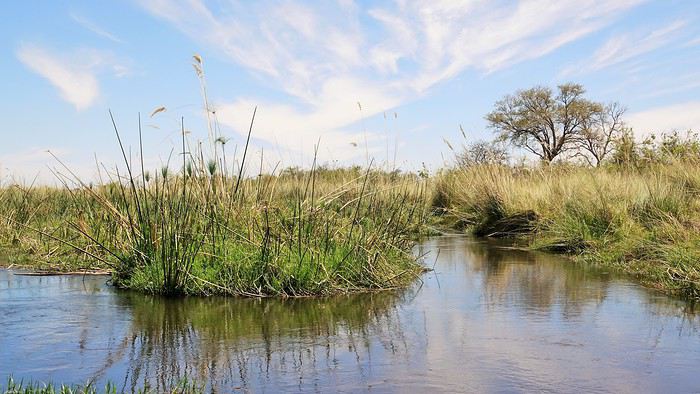
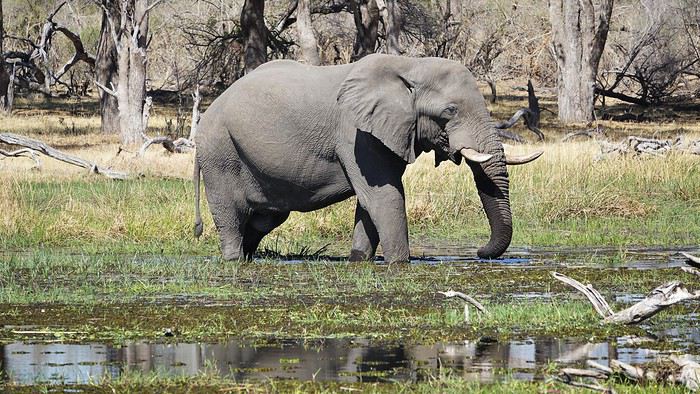
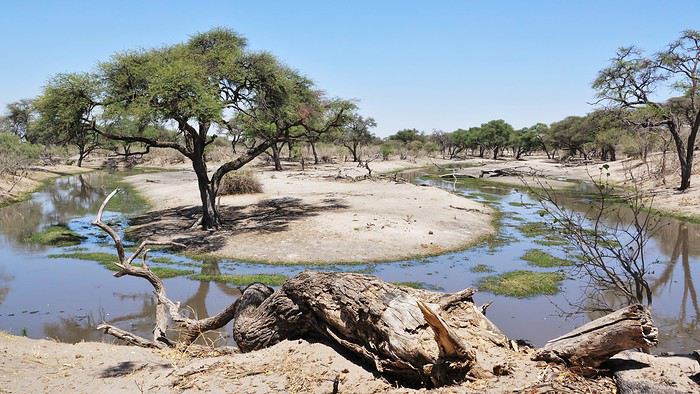
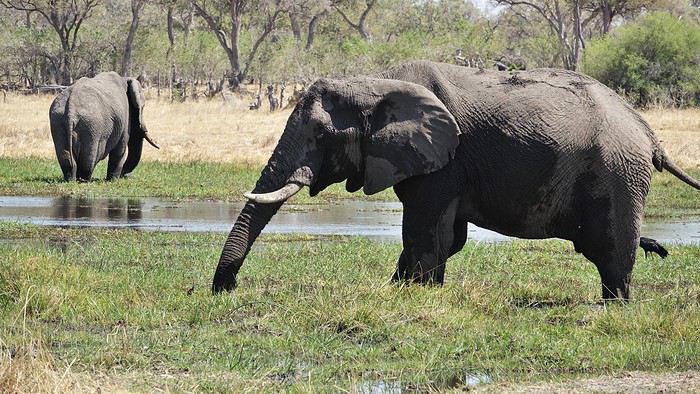
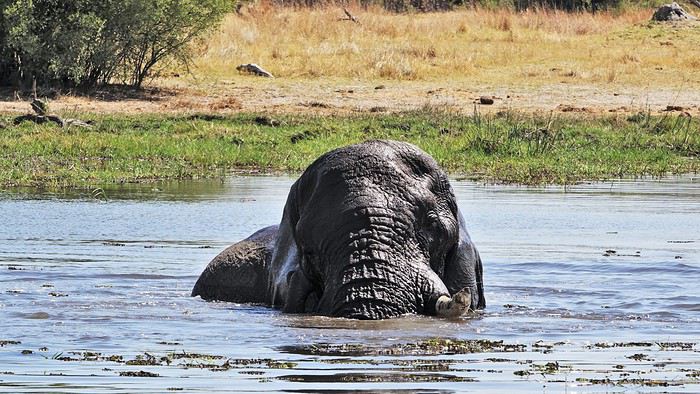
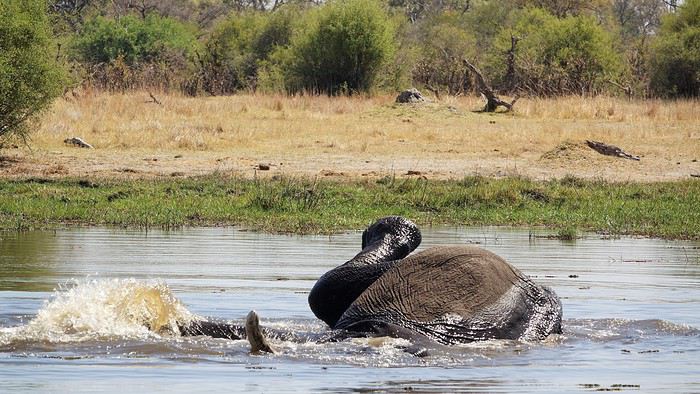
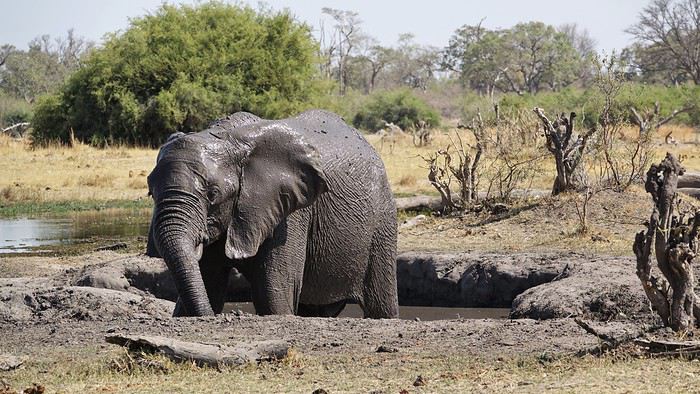
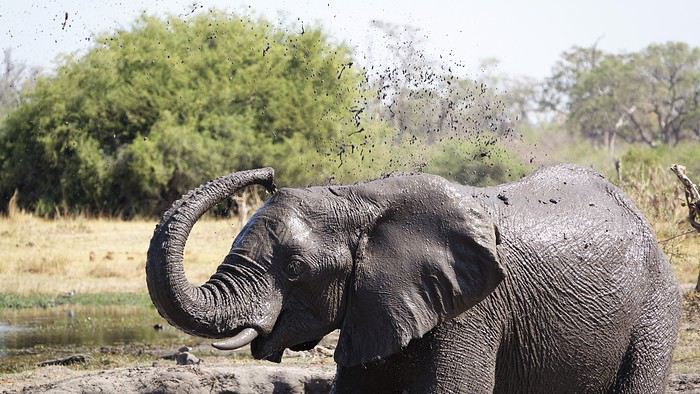
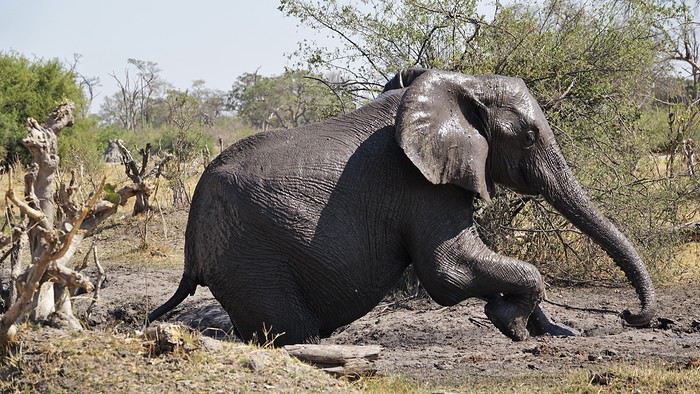
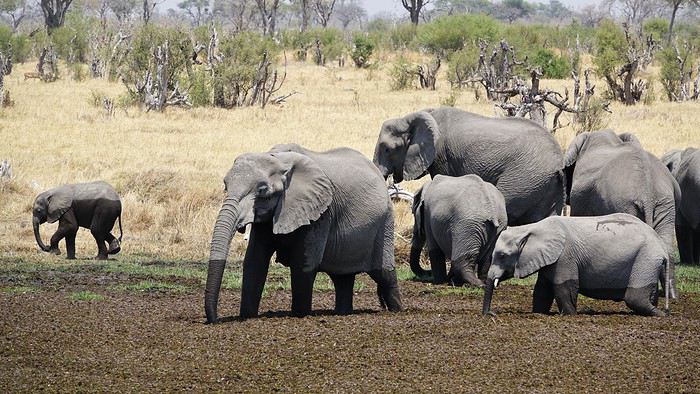
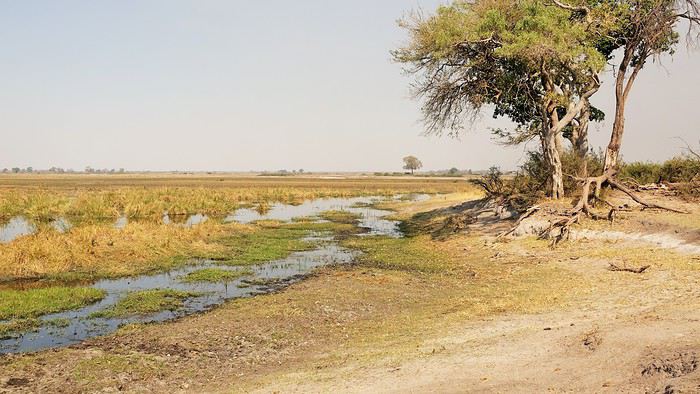
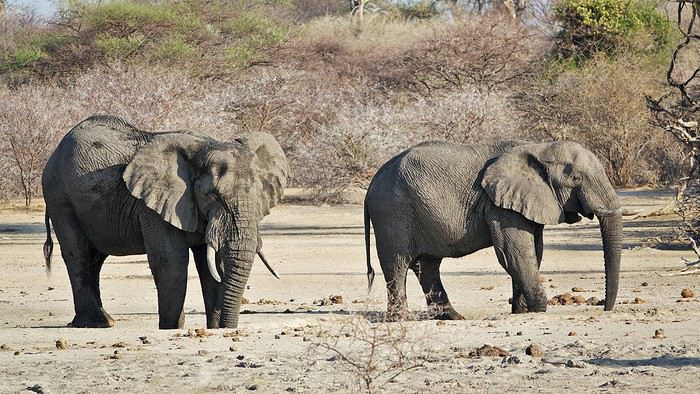
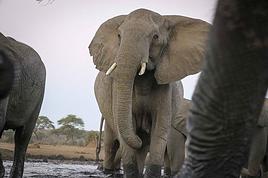
Then we head to the north bank of the Khwai River, south of the track linking Mababe to Khwai. And what a discovery! This marshy area is like a real Noah’s Ark. Almost every animal species seems to have gathered here. The elephants, of course, which we watch playing and fully submerging themselves in the water.


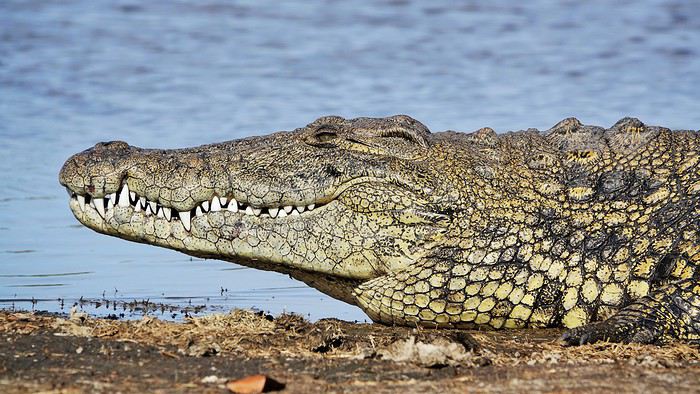
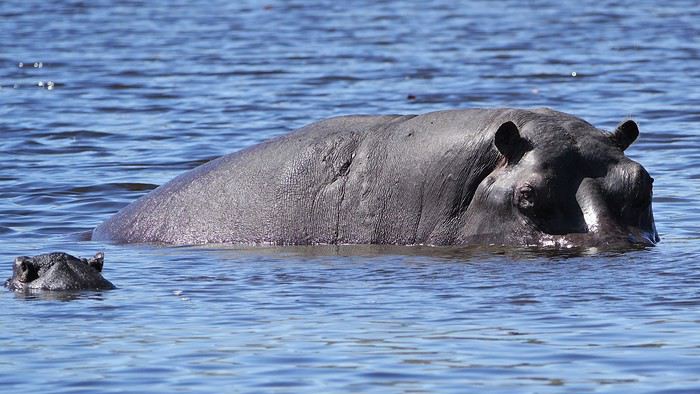
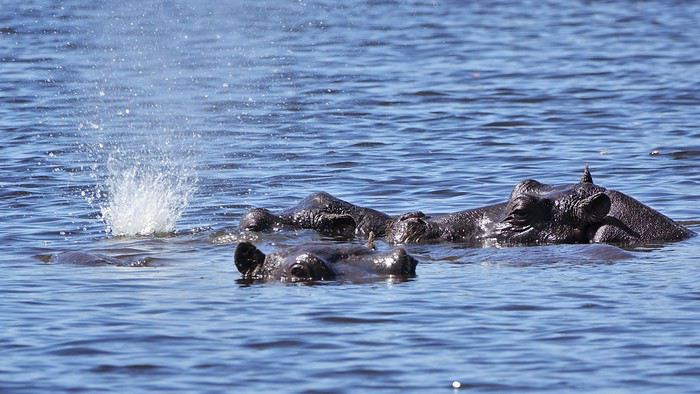
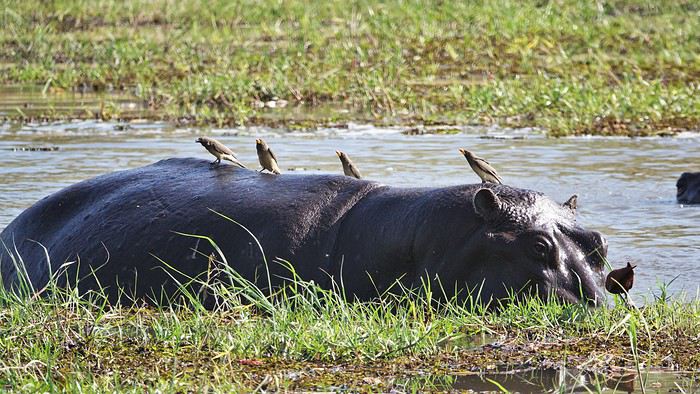
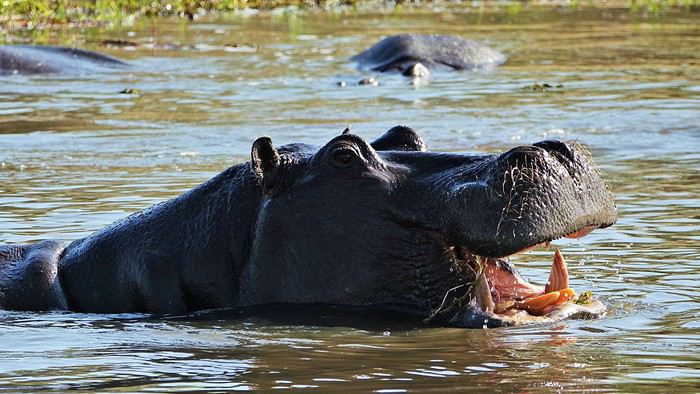
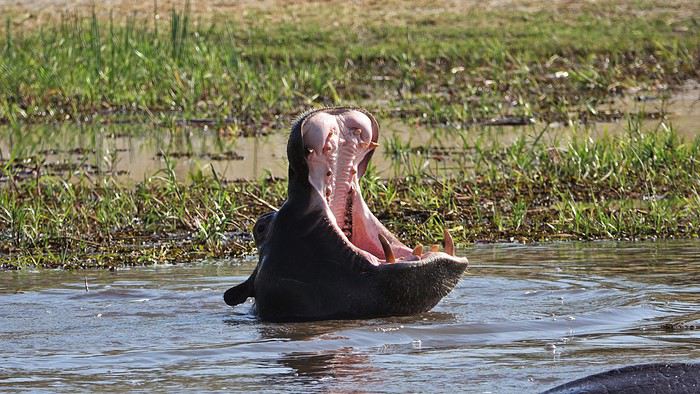
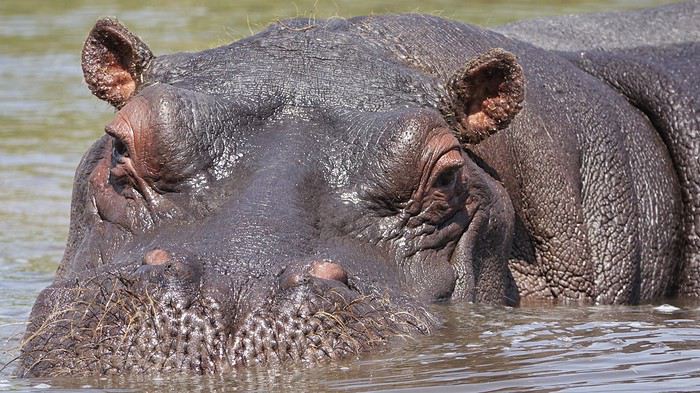
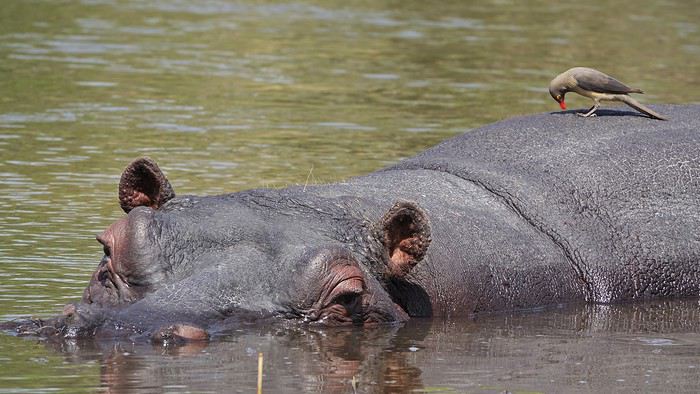
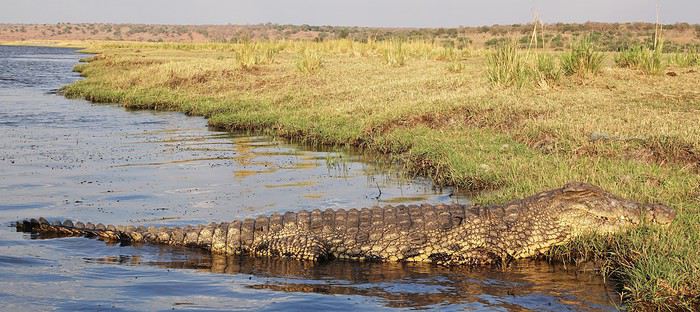
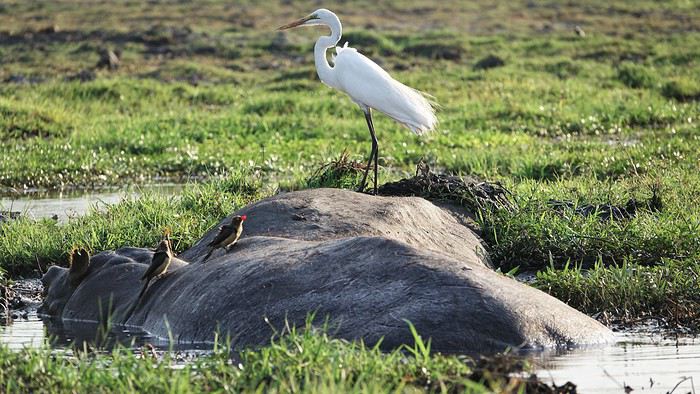
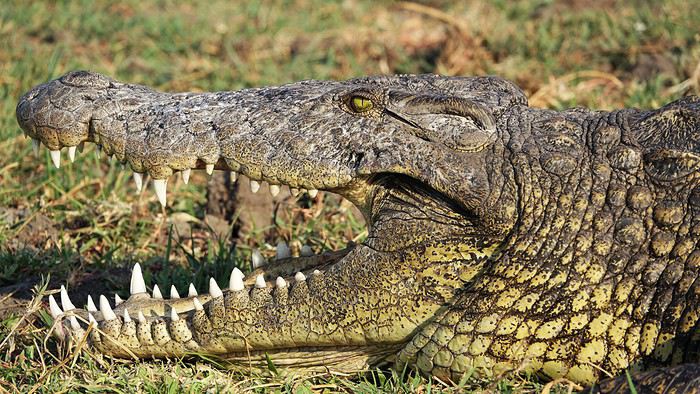
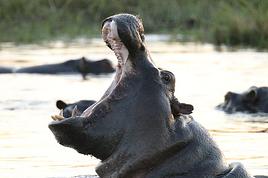
The hippos and crocodiles were masters of free diving.


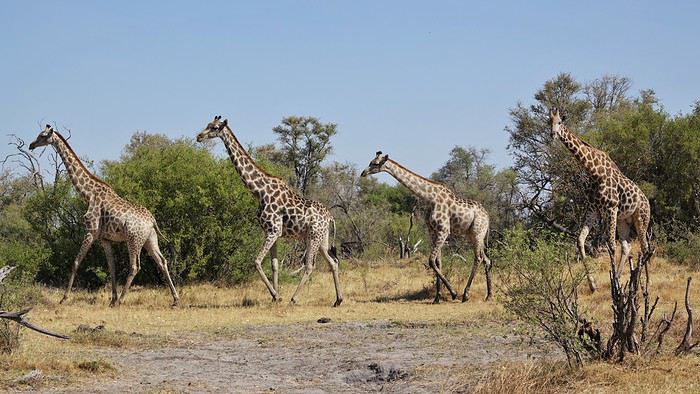
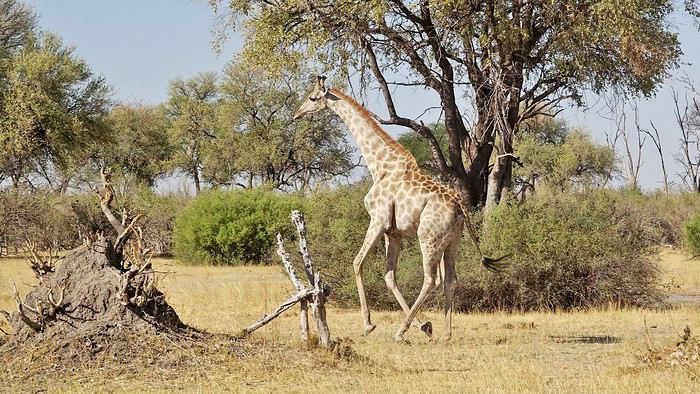
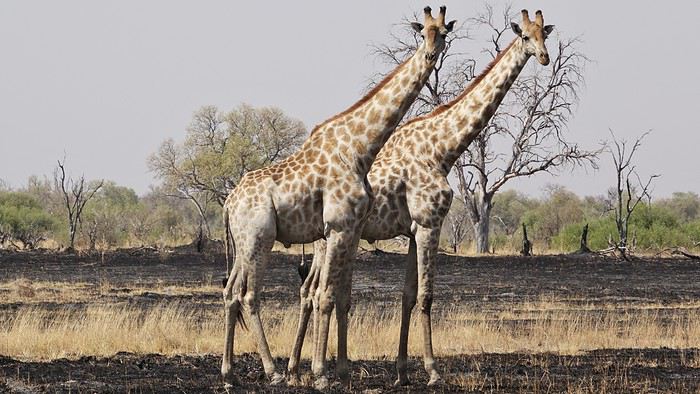
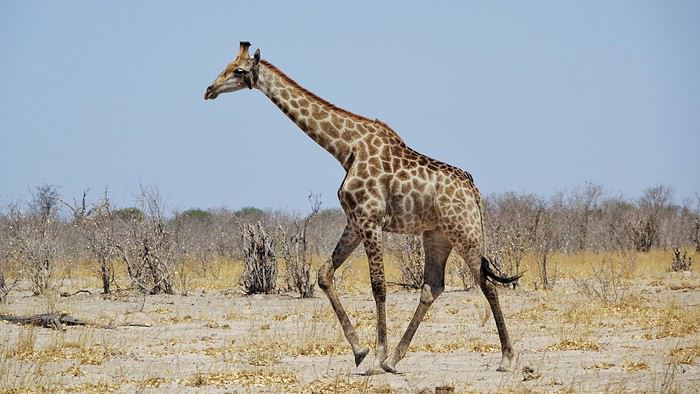
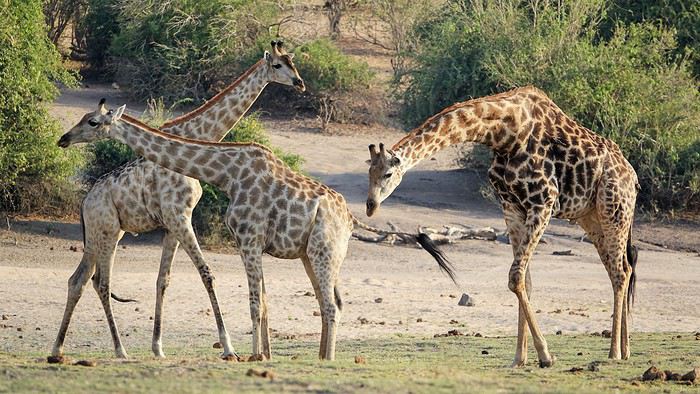
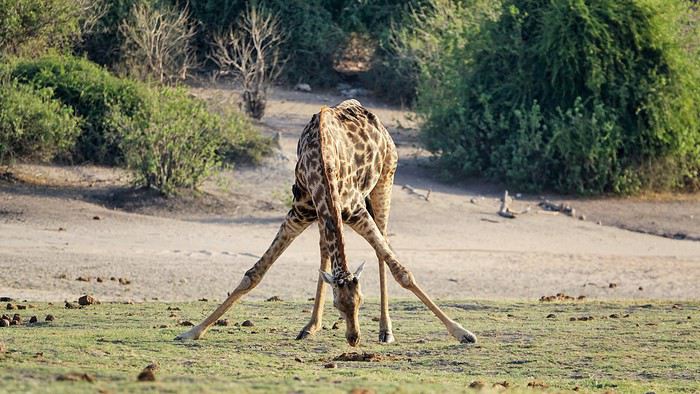
The usual giraffes with their elegant, swaying gait.


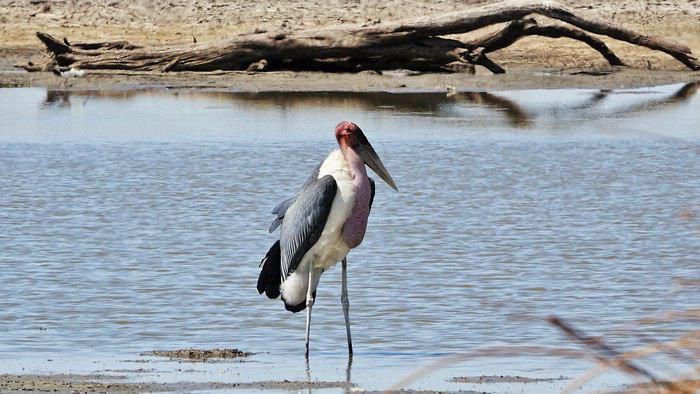
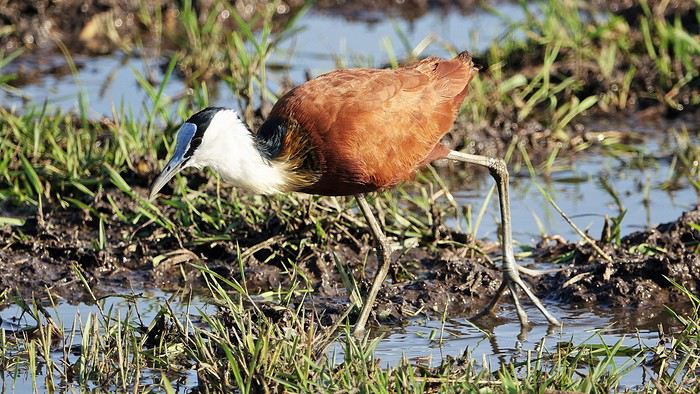
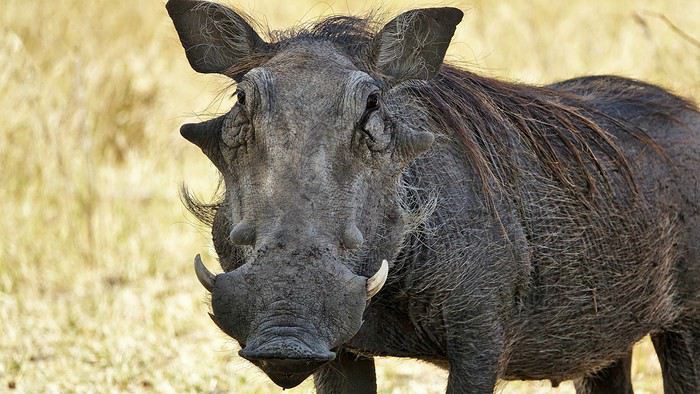
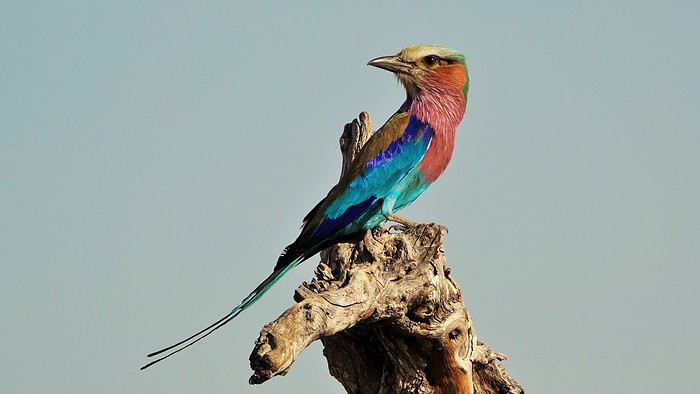
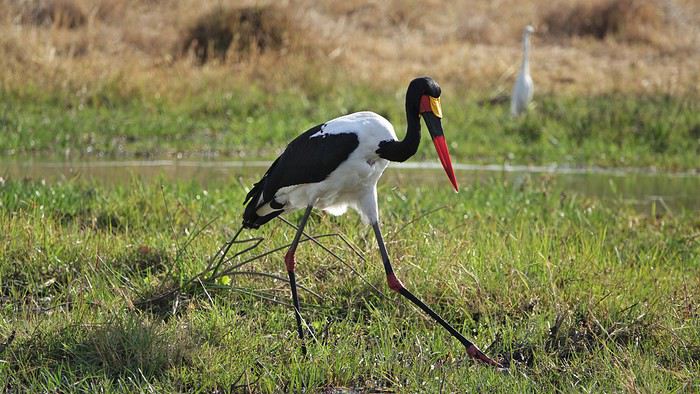
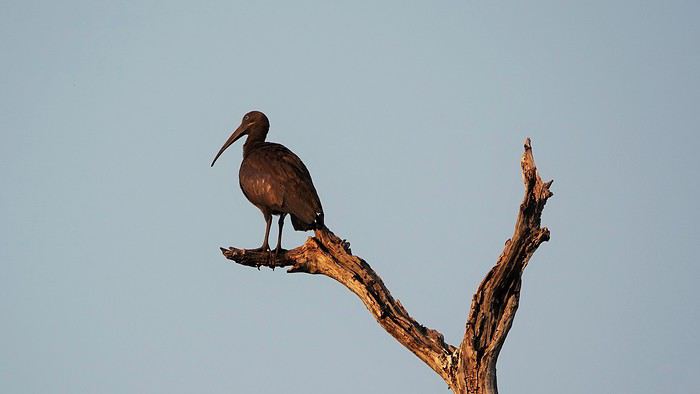
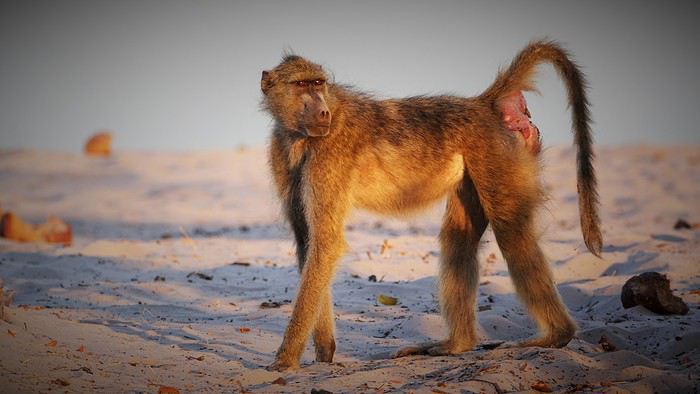
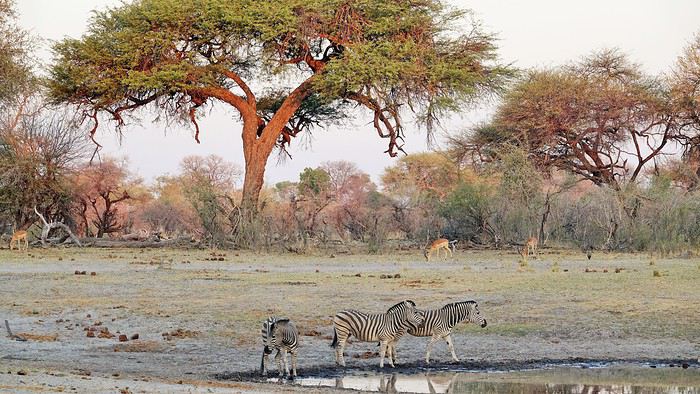
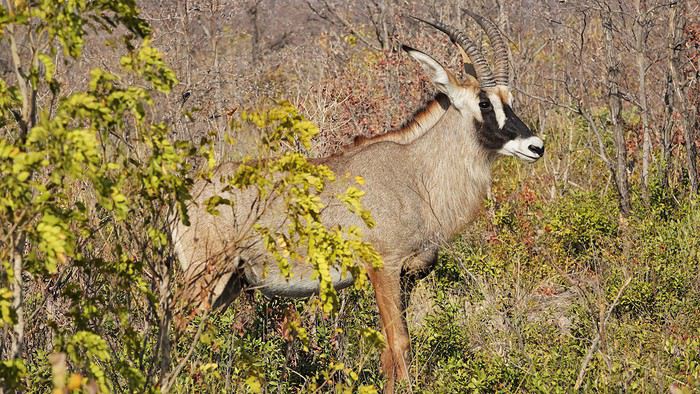
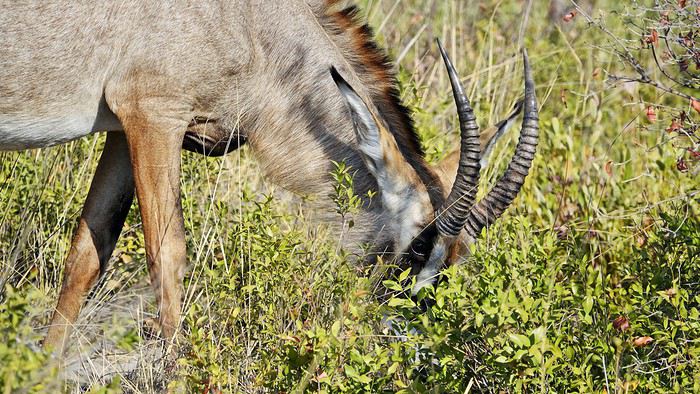
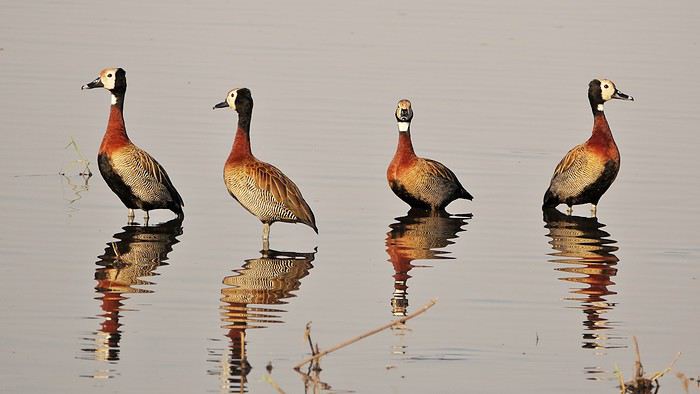
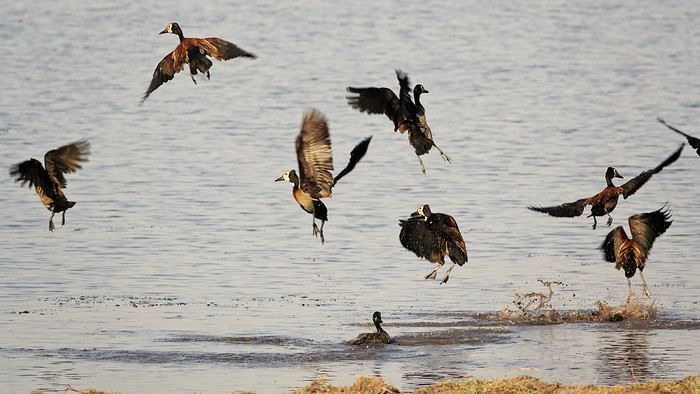
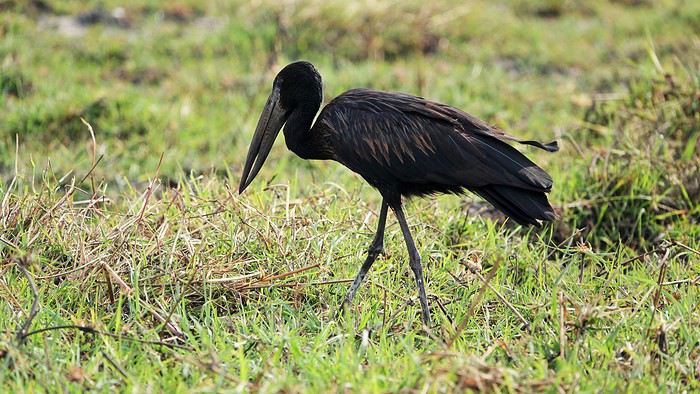
Baboons, warthogs, zebras, wildebeest, and all sorts of antelope species, including the rather rare sable antelopes and roan antelopes. Not to mention the birds: eagles, bee-eaters, ibises, jacanas, etc. We’re amazed!


At one point, the river narrows and looks shallow. We hesitate to cross it but ultimately decide against it, though not without regret. 😕

Mon voyage au Botswana : https://voyageforum.com/discussion/pays-tswanas-botswana-d9819920/
OL OldPlatypus Regular ·
09/29/2019 (Part 2): Khwai River

We continue our day along the Khwai River, a territory shared between the Khwai Concession and the far south of Savuti. The concentration of wildlife is still very high.


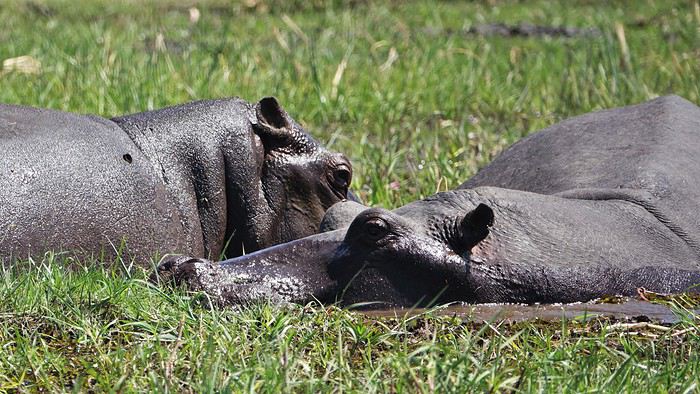
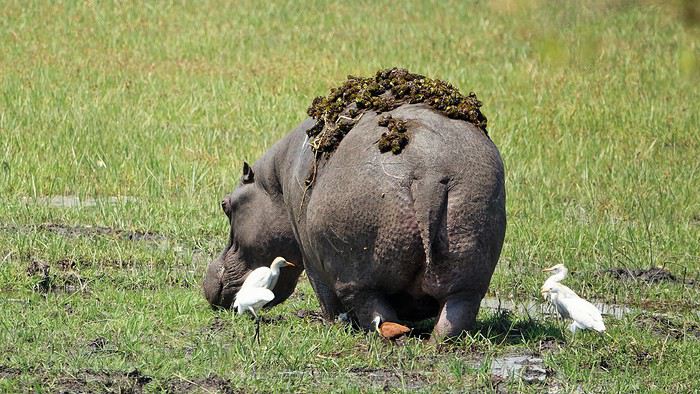
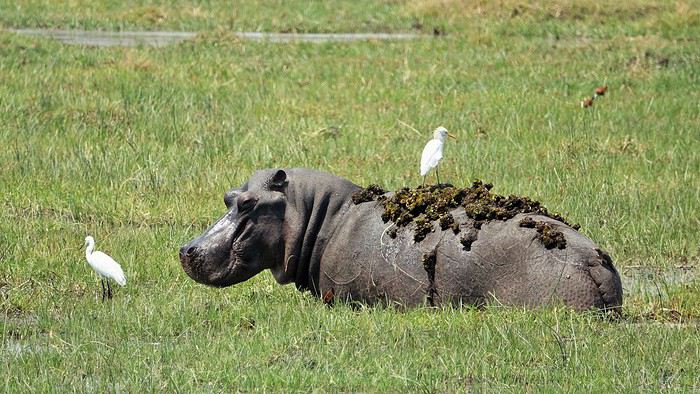
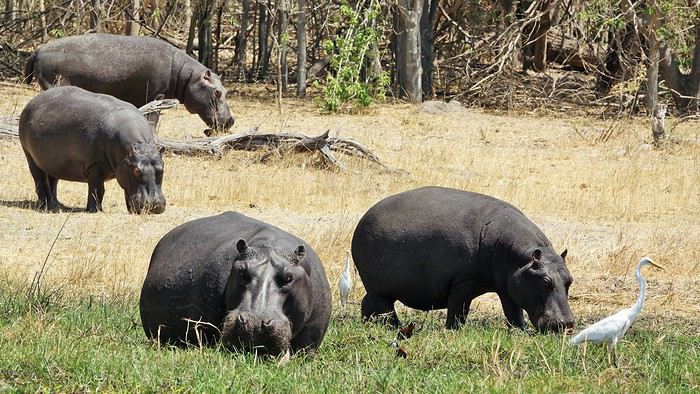
A mud bath is great for the skin! :)
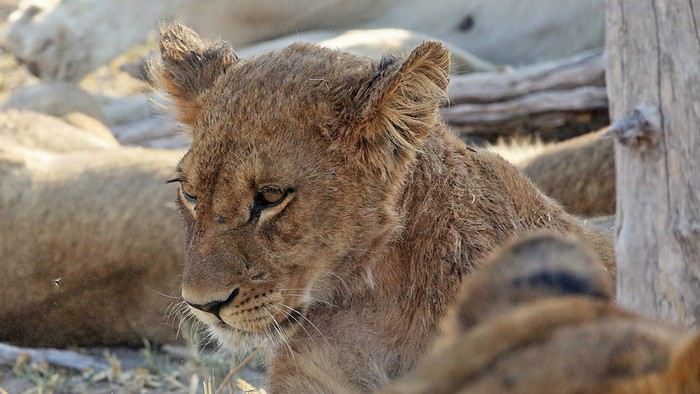


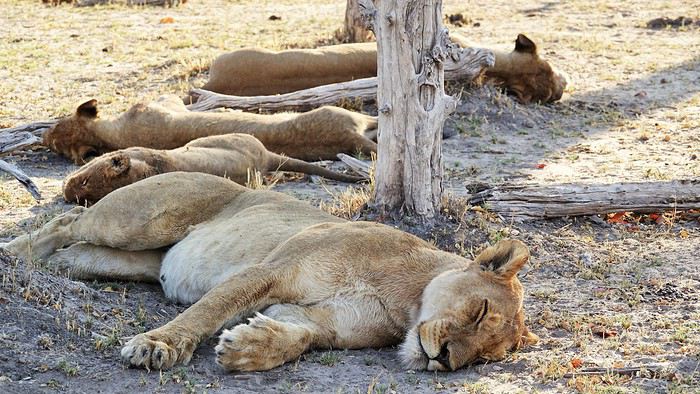
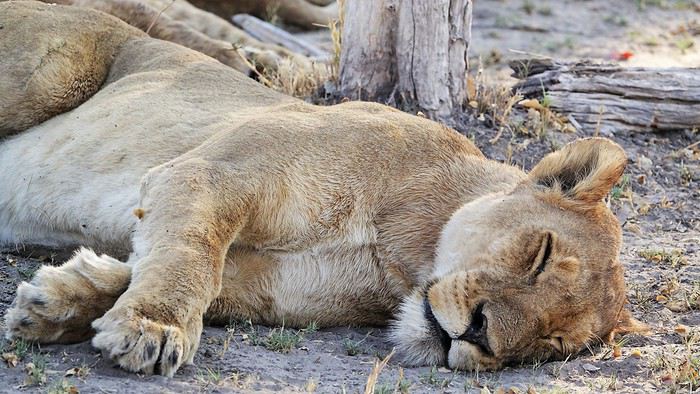
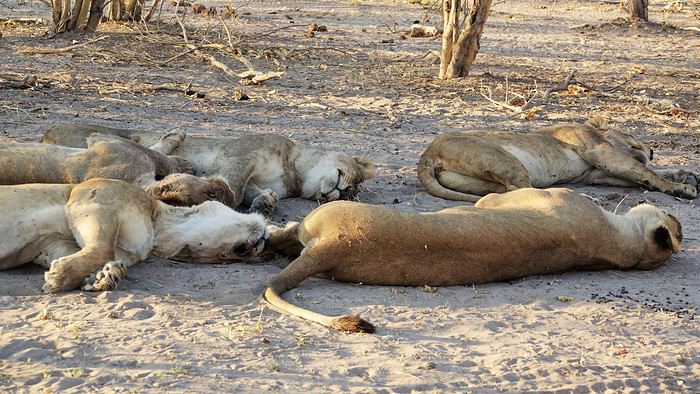
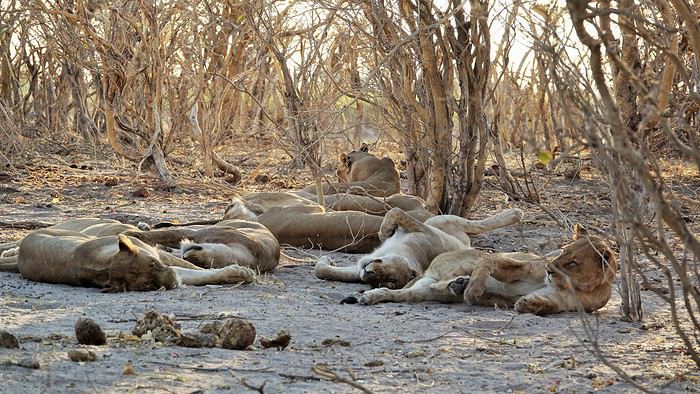
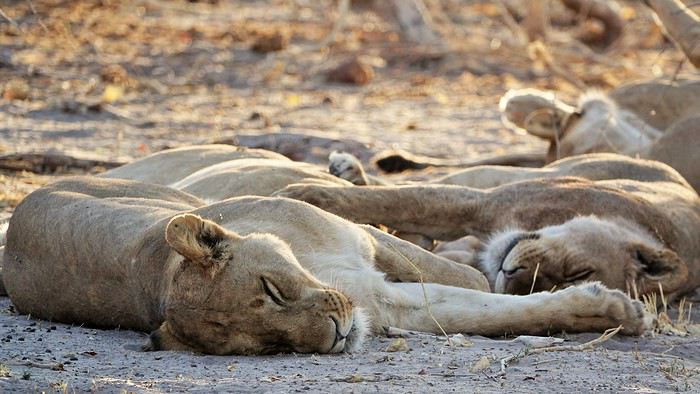
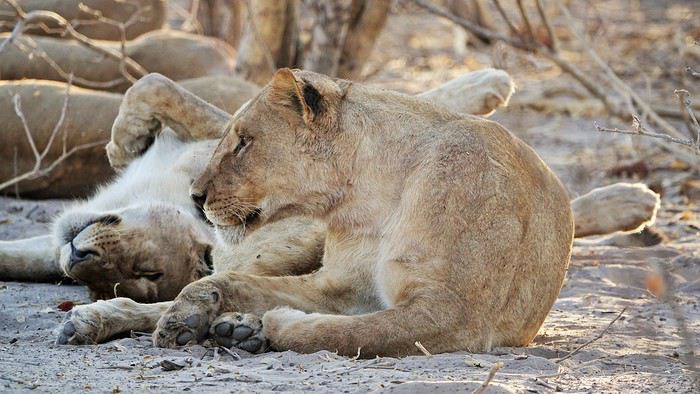
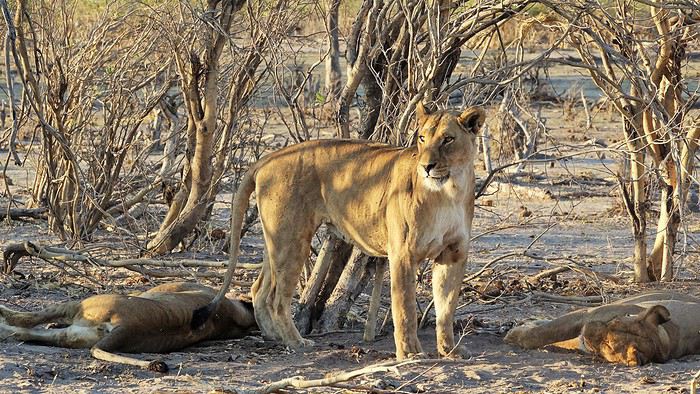
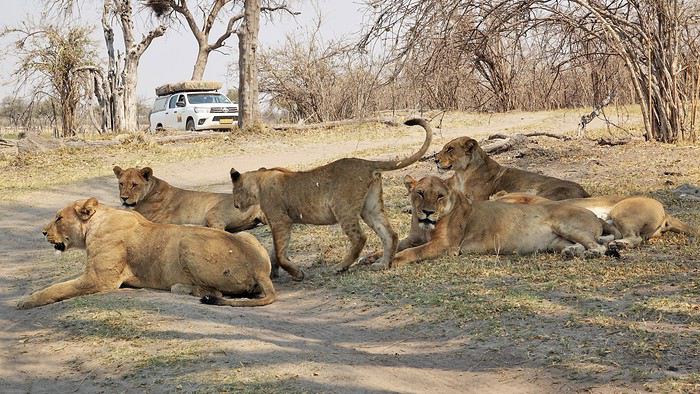
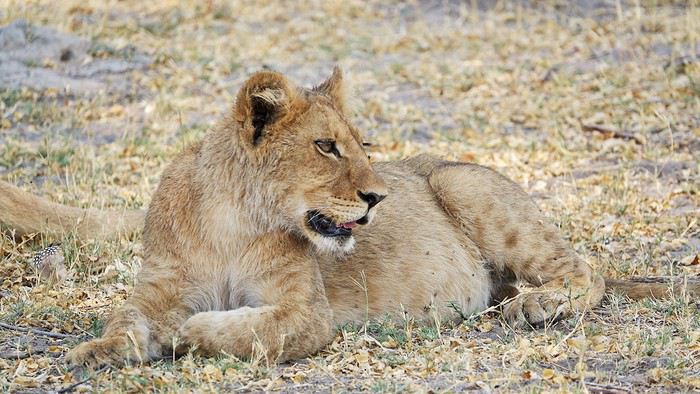
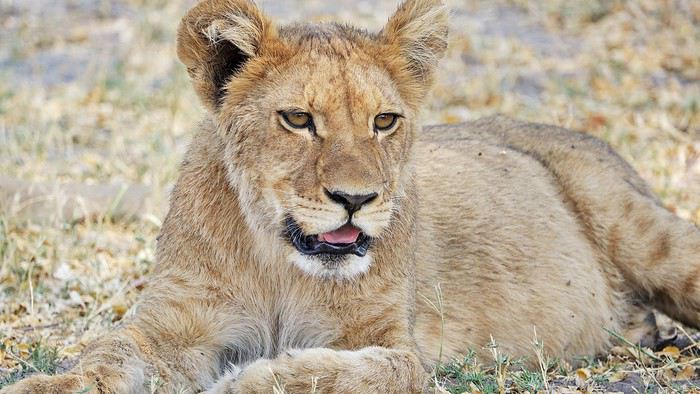
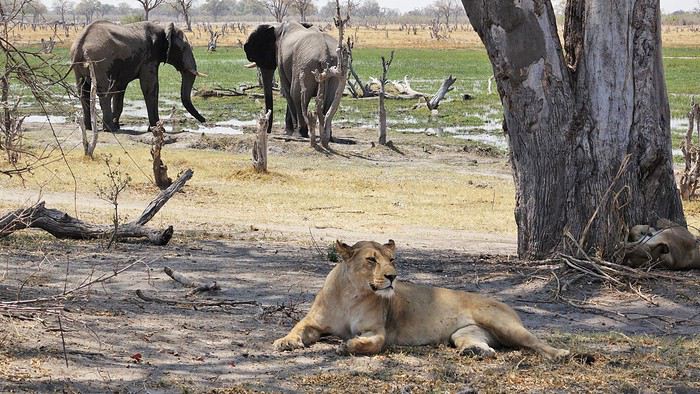
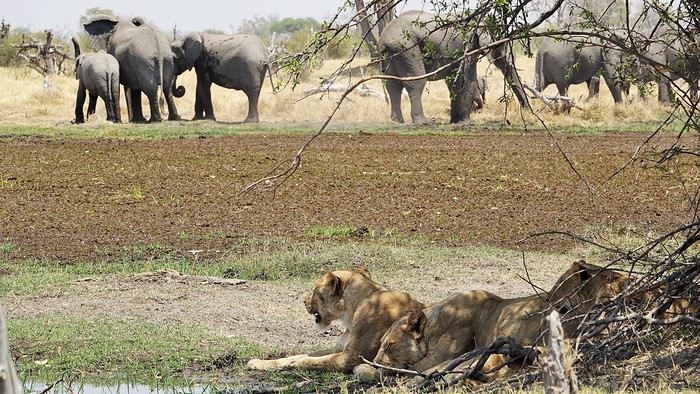
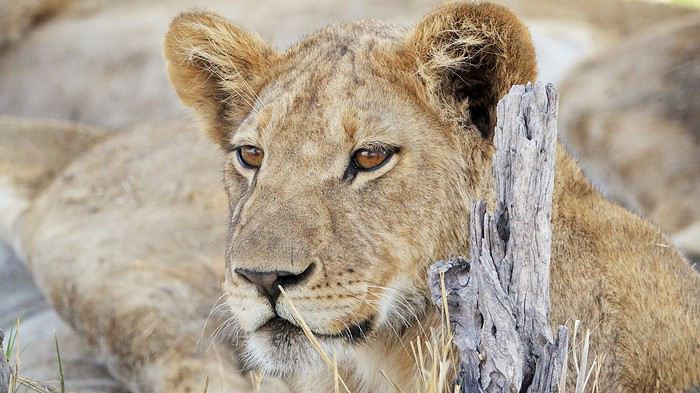
The afternoon is already well underway when we come across two lionesses and two cubs doing their favorite activity: sleeping! The little ones are absolutely adorable.


A little further on, we’re intrigued by the presence of many vehicles. There are indeed a few hippos not too far away, but nothing that explains why there are so many people here.


Strangely, the passengers in the 4x4s all seem to be looking through binoculars in opposite directions. After asking some of them, we learn that a leopard was spotted here the day before, and everyone’s hoping it’ll show up again today. But most importantly, we’re told there’s a group of nine lionesses nearby. We find them easily, but most of them are completely lethargic.


Where are the lions? :o

Even though the sunset over the Khwai River could’ve been stunning, we prefer to head back to Dijara before nightfall. Our new Portuguese friends are already settled in, and we set up next to them as planned. We spend the evening over a beer, swapping stories about our various travel experiences and marveling at the clarity of the Botswanan sky.
Mon voyage au Botswana : https://voyageforum.com/discussion/pays-tswanas-botswana-d9819920/
PY Pygmalion19 Veteran ·
Hi Ludo,

I thought the waterbuck had stripes and spots on its coat. But the antelope was far away, so we couldn’t see well... Thanks Eric

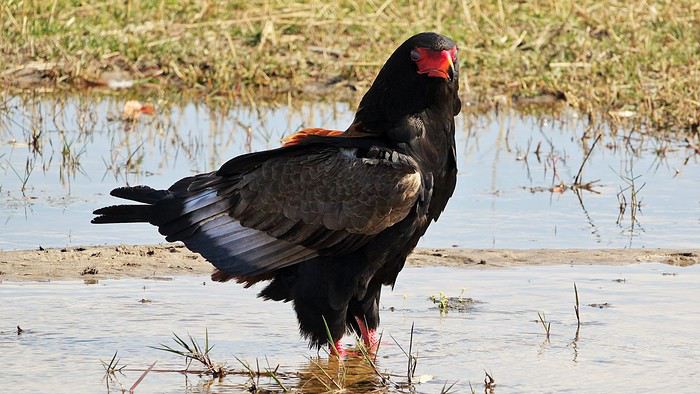
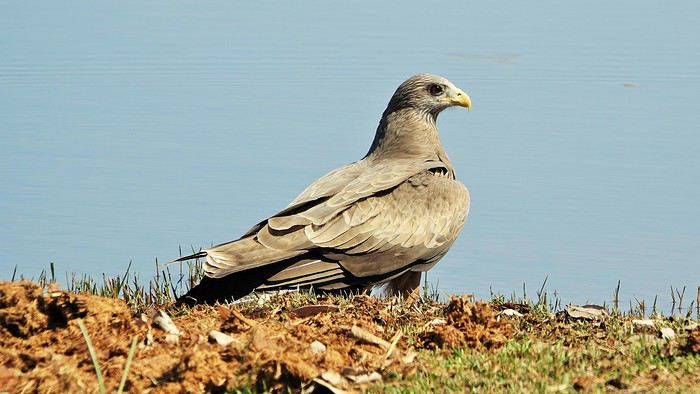
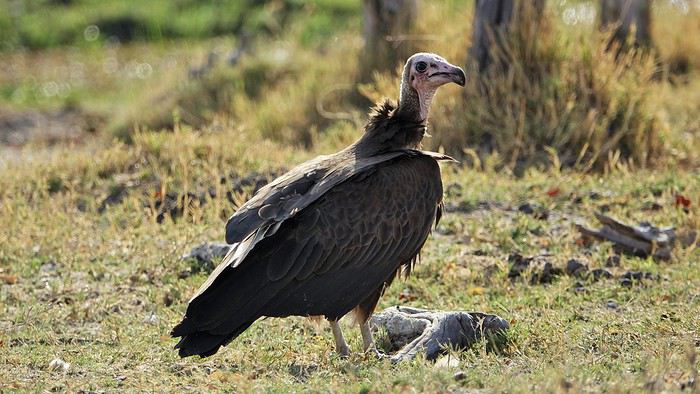
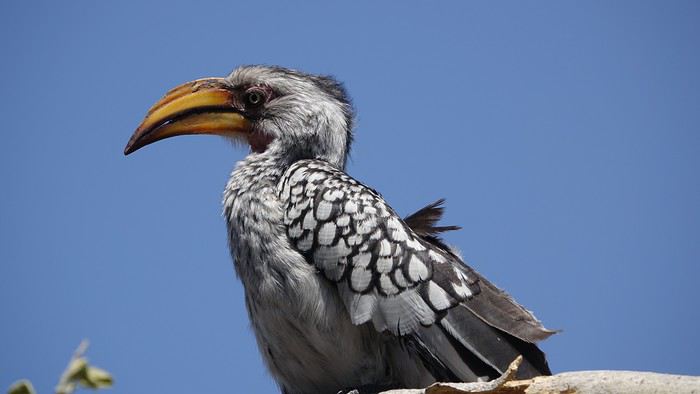
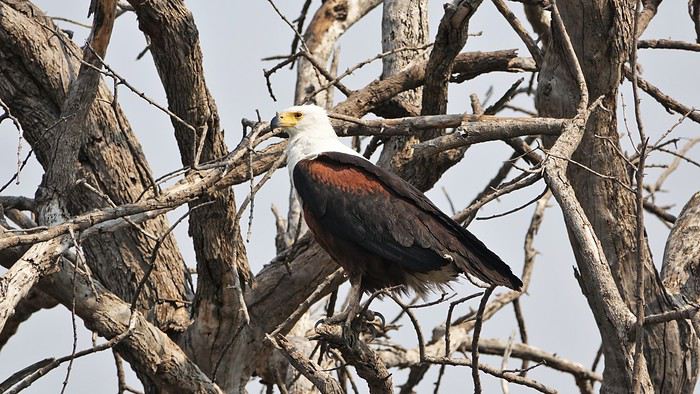
...I was wrong—it’s not a waterbuck, nor a bushbuck, which has stripes and white spots as you mentioned. I’d rather suggest a Lechwe, Kobus leche. The range matches, as does the morphology (raised hindquarters). It could be a Sitatunga, but that one has white spots and stripes, which isn’t the case here. Never seen that eagle species! Can you identify it?
pygmalion
ZE Zezettedez Regular ·
hi, this is indeed a lechwe. the sitatunga is very hard to spot because it's aquatic—it can submerge itself completely in the water, leaving only its nostrils above the surface, and it does have stripes.
ZE Zezettedez Regular ·
if we're talking about the same thing, it's a bateleur
PY Pygmalion19 Veteran ·
Hi Valérie,

Not exactly the same, indeed. Photo of the raptor in Ludo’s last batch of images, before the lazy lions.
pygmalion
ZE Zezettedez Regular ·
hi unfortunately, I left my Southern Africa bird and animal guides with Paul, a Zimbabwean who wants to become a field guide in Hwange I admit that after so many years in Africa, I'm still just a beginner when it comes to birding still struggling with the really small birds and raptors, especially juveniles, and by the time you grab your book, the bird is gone and it’s not even in the guide—basically, not easy!
ZE Zezettedez Regular ·
Yellow-billed kite?
PY Pygmalion19 Veteran ·
Hi Valérie,

Yeah, I think it’s a Yellow-billed Kite, *Milvus aegyptius*. The color’s probably a bit light, but the beak fits the bill perfectly.
pygmalion
OL OldPlatypus Regular ·
Yes, that's right, a Lechwe cob... I'd seen others before, but this one seemed "weird" to me! 😉
Mon voyage au Botswana : https://voyageforum.com/discussion/pays-tswanas-botswana-d9819920/
OL OldPlatypus Regular ·
I still think a kite is more of a small bird... What a mistake! Thanks for the expertise.
Mon voyage au Botswana : https://voyageforum.com/discussion/pays-tswanas-botswana-d9819920/
ZE Zezettedez Regular ·
hi are you a "bird watcher"?
OL OldPlatypus Regular ·
I love observing all kinds of animals, but I must admit that birds aren’t necessarily what interest me the most.
Mon voyage au Botswana : https://voyageforum.com/discussion/pays-tswanas-botswana-d9819920/
ZE Zezettedez Regular ·
Did you know that every year in Hwange there’s an animal and bird count that apparently needs volunteers—are you interested? Just thought I’d mention it!
OL OldPlatypus Regular ·
On an upcoming trip to Southern Africa... why not. After South Africa, Namibia, and Botswana, the next country I should logically visit in the region would be Zimbabwe. But it’s not in my plans for now.
Mon voyage au Botswana : https://voyageforum.com/discussion/pays-tswanas-botswana-d9819920/
AI AirOne Globetrotter ·
I’ve been following this fascinating travel journal with great interest since I’m heading there in May (by the way, it’s amazing what you managed to observe! 😮).

One question about the track you mentioned:

Then we reach the northern bank of the Khwai River, south of the track connecting Mababe to Khwai. And what a discovery! This marshy area is a true Noah’s Ark. Almost every animal species seems to have gathered here. The elephants, of course, which we watch playing and fully immersing themselves in the water.

Is this the one?:

Erwan La vie est belle ! La vie est belle ! Je me tue à vous le dire disait la fleur. Et elle meurt ( J.Prévert)
OL OldPlatypus Regular ·
Hi Erwan. Yes, that’s the right trail! You can access it from various points along the white track (transit road). It might be worth staying overnight at Magotho Camp (if you’re properly equipped).
Mon voyage au Botswana : https://voyageforum.com/discussion/pays-tswanas-botswana-d9819920/
BL Blesl Veteran ·
Hi Ludo,

I’m jumping in late on your travel journal—so many (beautiful) pages to catch up on, how exciting!

Thanks for this lovely and generous share.

BL

PS: Awesome alias and avatar! !
safari photo en Tanzanie et ailleurs https://safari-tanzanie.fr WILIPI photographie animalière
AI AirOne Globetrotter ·
No, I booked at Mbudi like you did. After reading your travel journal, I think we’ll follow this route—it’s really tempting—but of course, it’ll all depend on the conditions and water levels. 😉
Erwan La vie est belle ! La vie est belle ! Je me tue à vous le dire disait la fleur. Et elle meurt ( J.Prévert)
OL OldPlatypus Regular ·
Mbudi Camp is really nice. I was pretty disappointed by Dijara Camp.

It's true that we were there at the end of the dry season, worsened by a general drought affecting all of Southern Africa. So the animals were probably very concentrated here because other places lacked water. I’m jumping ahead a bit to my Savuti crossing. 😉

Overall during this trip, we saw a lot of animal species, including some of the most sought-after. We were definitely lucky, but by driving the reserve tracks for nearly 12 hours a day, we also increased our chances of spotting them. We didn’t get to enjoy the camps’ luxurious facilities much! 😏
Mon voyage au Botswana : https://voyageforum.com/discussion/pays-tswanas-botswana-d9819920/
OL OldPlatypus Regular ·
Thanks Bernard for your kind words. I try to give back in my own way for everything I’ve taken from this forum. But as I’ve said before, I really should pick up the pace with my story—I feel like it’s dragging on too much myself.
Mon voyage au Botswana : https://voyageforum.com/discussion/pays-tswanas-botswana-d9819920/
OL OldPlatypus Regular ·
30/09/2019 (Part 1): Khwai River

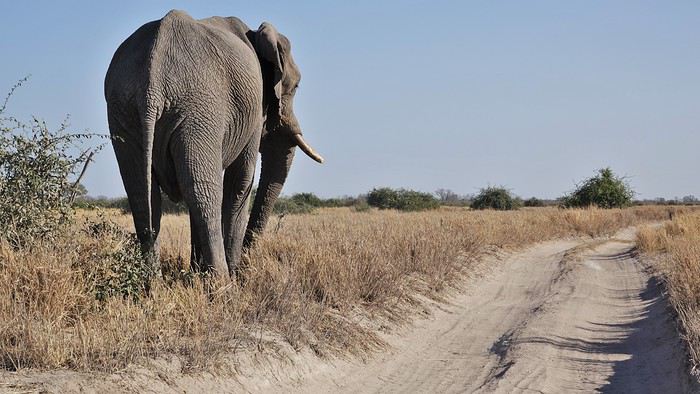
The day before was so incredible that we don’t regret at all having planned a second night in the area, even if staying at one of the Magotho Campsite spots, by the Khwai River, might have been a better location than Dijara. The banks of this river, between Khwai and Mababe, are truly worth visiting given the high concentration of wildlife. Many travelers, after spending two, three, or four days in Moremi, head straight to Savuti. In my opinion, they’re making a mistake! Once again, we set off first while our friends are still sleeping. The wildlife is just as abundant, with lots of elephants. Whether they come from the right or the left, they always have the right of way! 🙂 Wildebeest, zebras, and all kinds of antelopes are also plentiful.


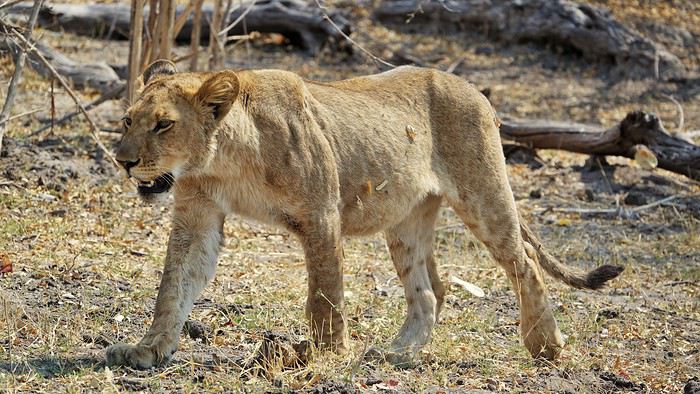
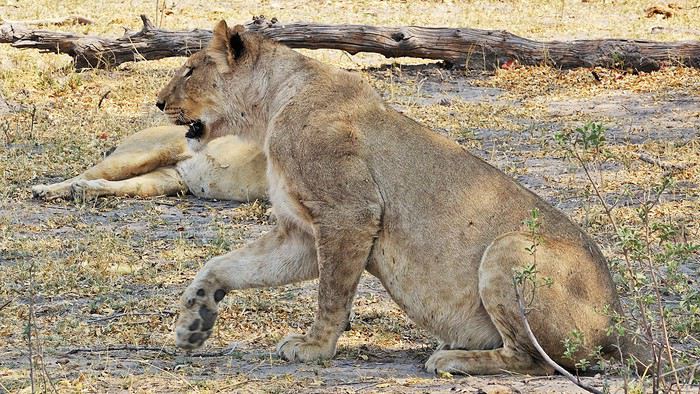
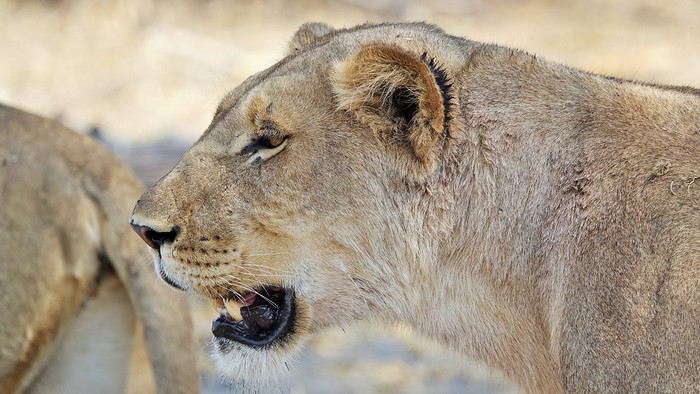
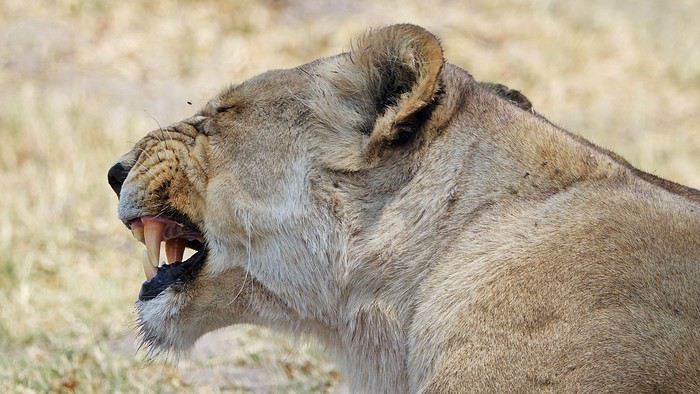
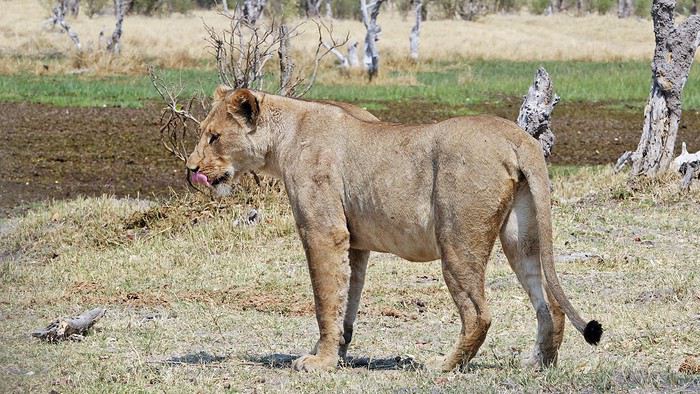
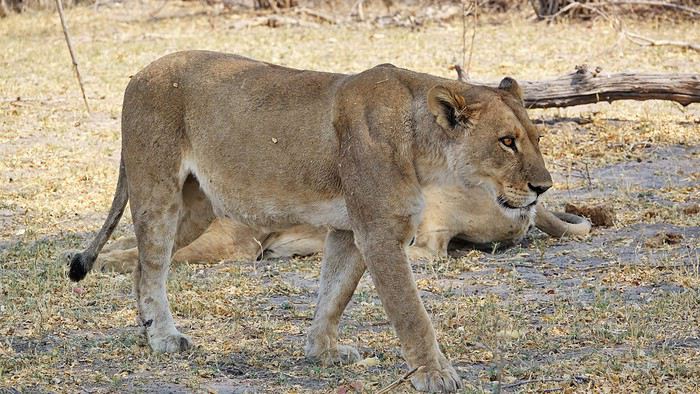
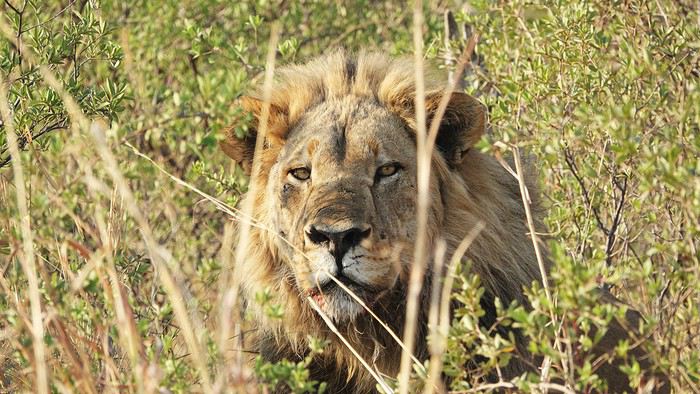
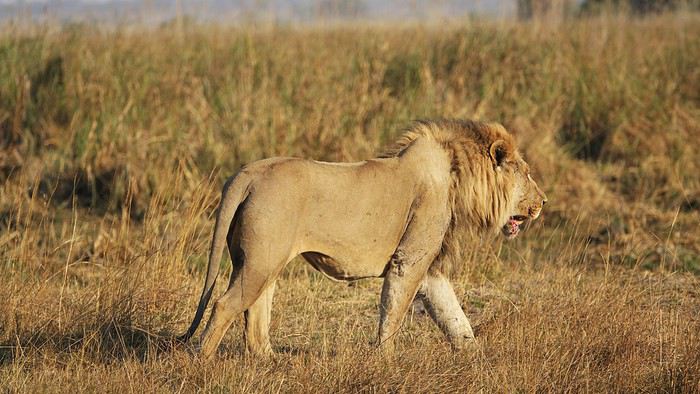
Almost in the same spot where we left them yesterday, we find our lions again—the two groups are now reunited, making thirteen lions in a 100 m² area! Well, not quite, because there are lionesses, young lions, two cubs, but no adult male lions! I’d love an explanation from experts because since the start of the trip, the ratio of lions to lionesses has been heavily in favor of the lionesses. Why don’t we see as many male lions? Part of the group is literally lying in the middle of the track, blocking any vehicle from passing.


Simba, we recognized you!

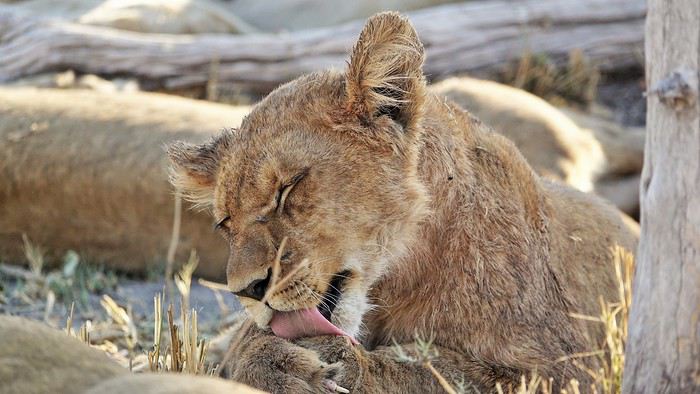
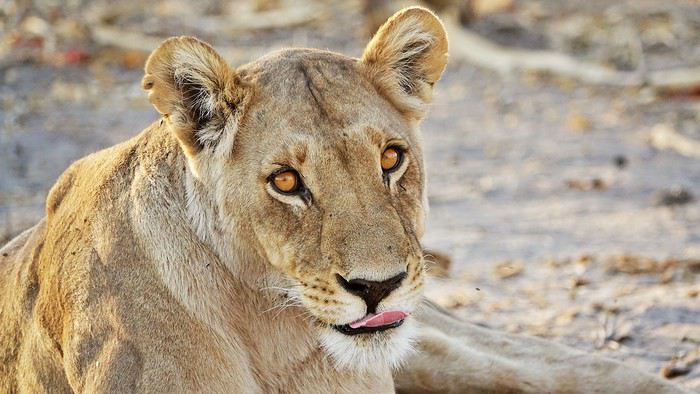
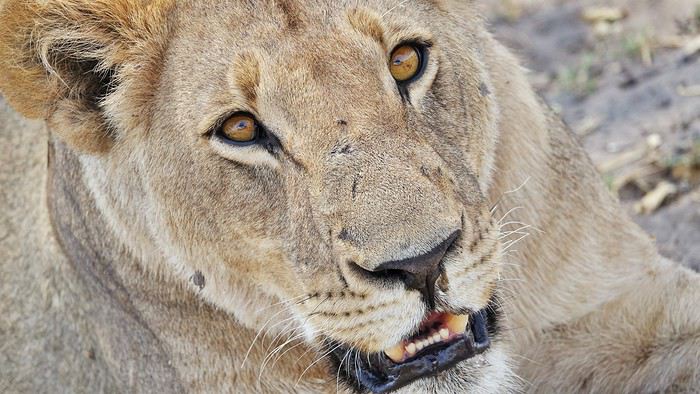
Still, we never get tired of such a spectacle and observe the reunited pride 😉 for nearly two hours. Often lying down, they remain quite active.


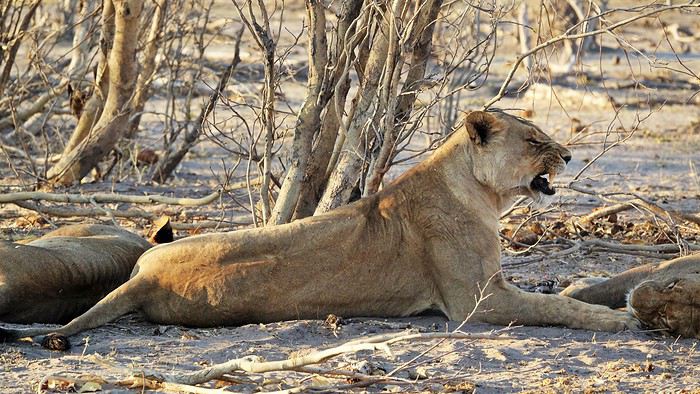
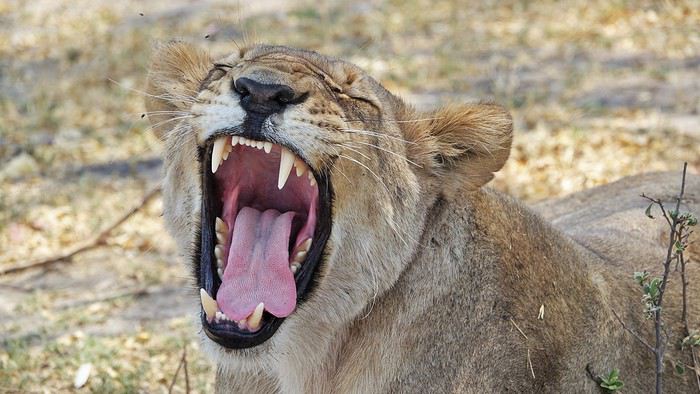
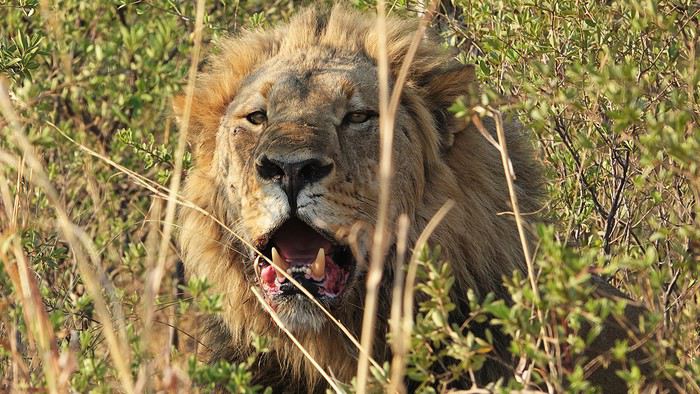
No cavities, clean tongue, impeccable oral hygiene!
We’re being watched...


Some move to the riverbank and closely watch the antelopes, hippos, and elephants in the water, which they’d happily make a meal of. Others are cuddling. We love it!


Mon voyage au Botswana : https://voyageforum.com/discussion/pays-tswanas-botswana-d9819920/
OL OldPlatypus Regular ·
30/09/2019 (Part 2): Khwai River

After spending two hours watching the lion pride, we continue our drive along the Khwai and Mbudi rivers.


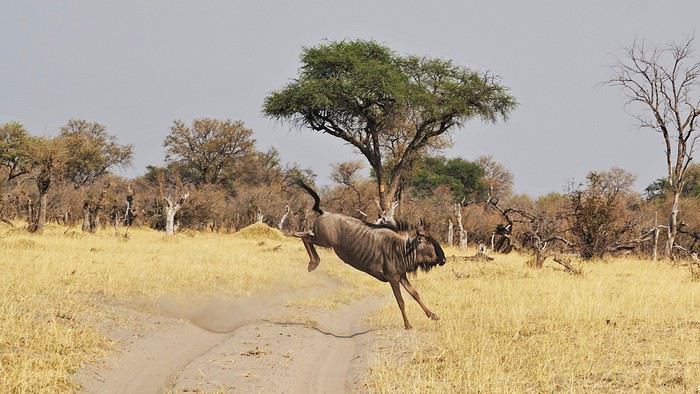
They run, they gallop, they leap...
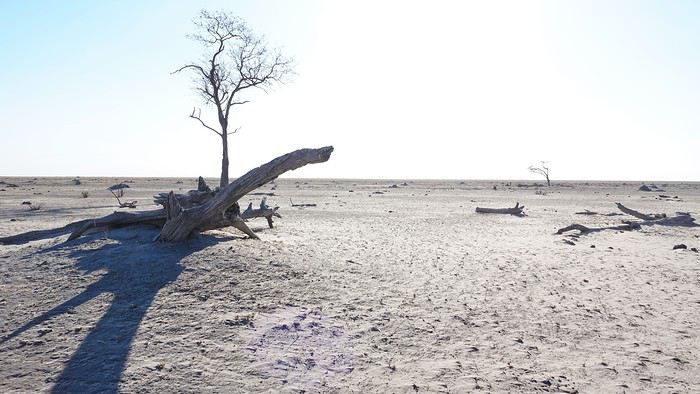


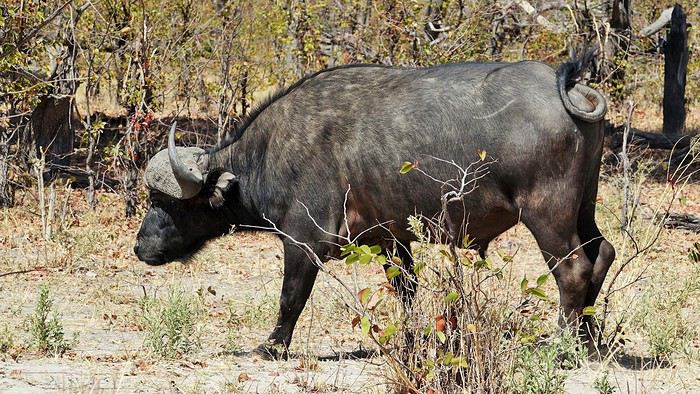
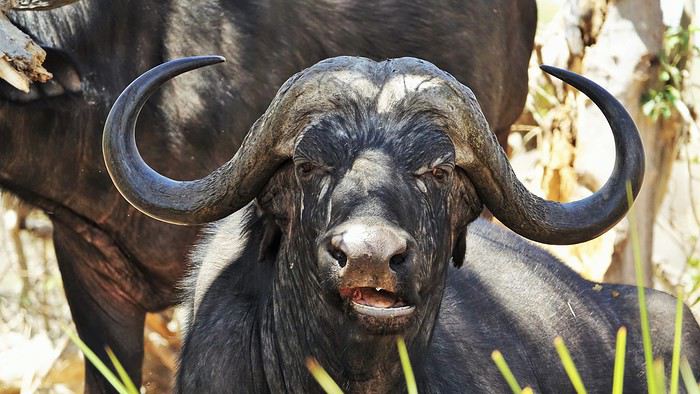
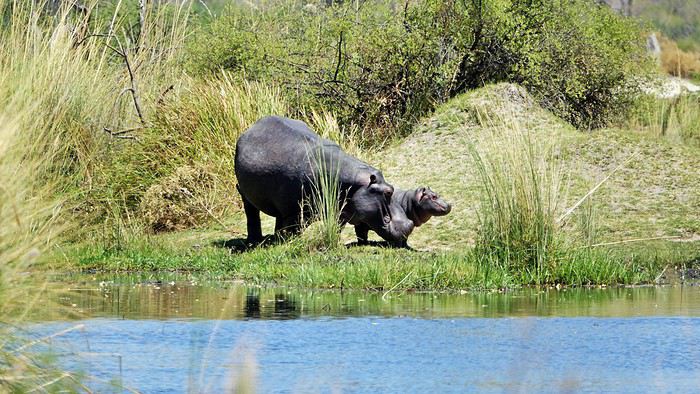
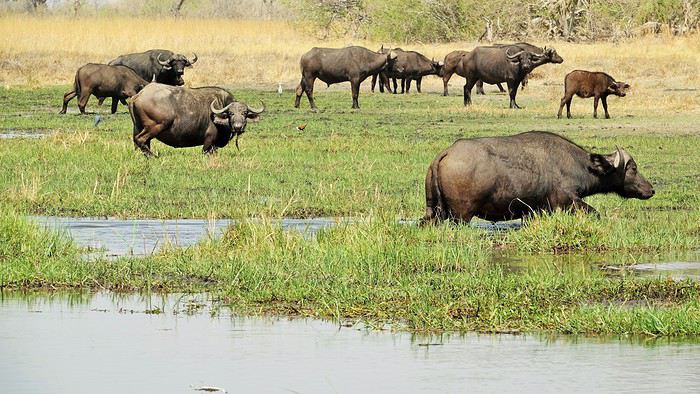
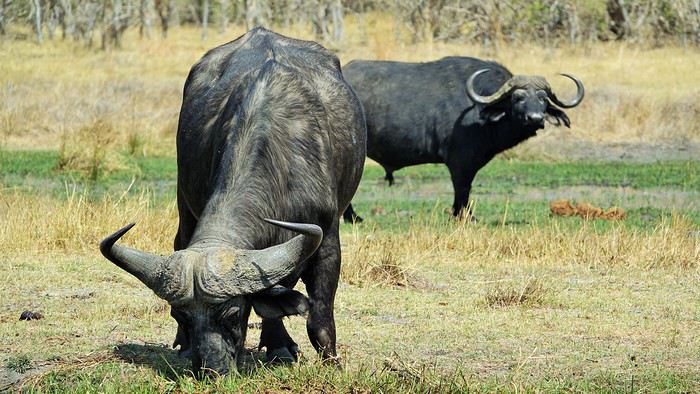
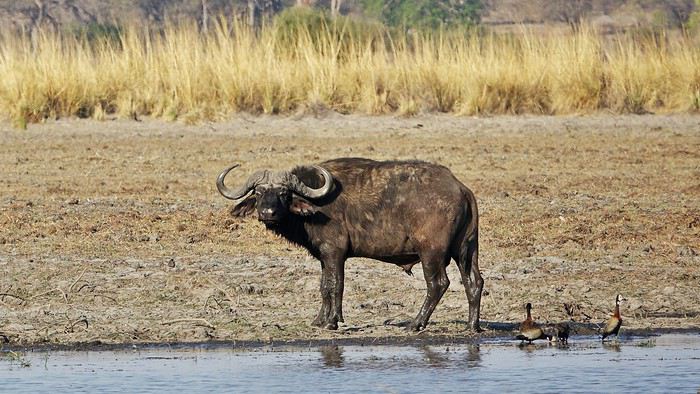
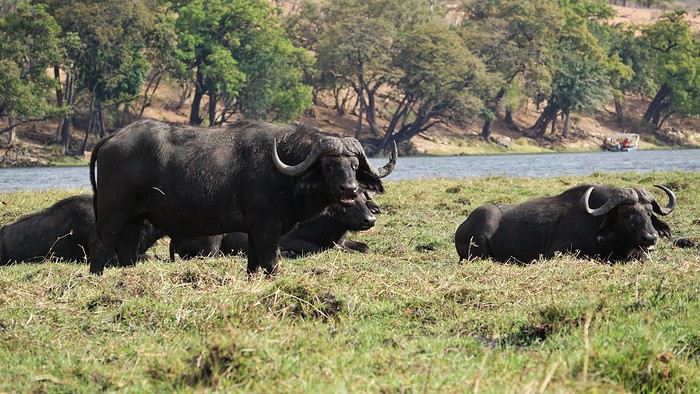
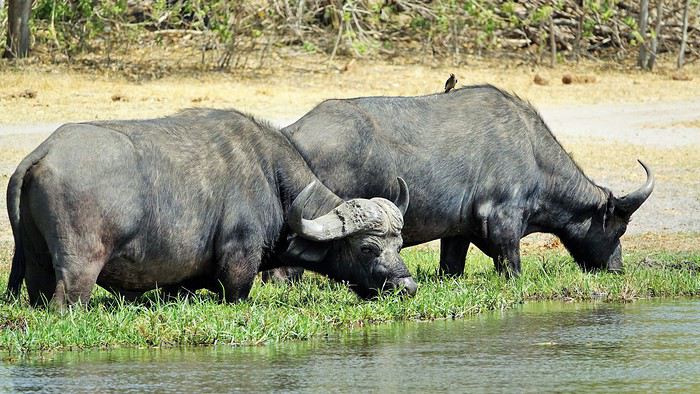
At times, the river is relatively narrow, and we hesitate to cross it. Doing so would give us access to other tracks. However, we remember that the rental company clearly stated that damage from crossing rivers or wet areas wasn’t covered by insurance. Since we’re complete novices in this, we decide against it once again. But thanks to the GPS, we see that by returning to the area near the village of Khwai via the white track, it’s possible to reach the zone between the Khwai and Mbudi rivers, crisscrossed by multiple other tracks. When we arrive in this area, we come across a large herd of buffalo drinking, and a little further on, hippos bathing.


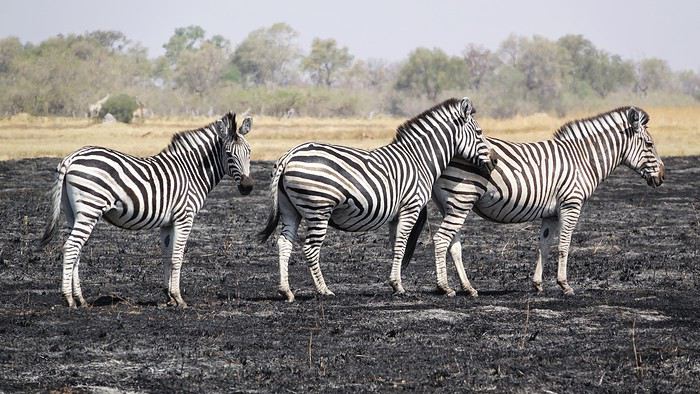
Unfortunately, the rest of the drive in the area is less interesting. The region has clearly been ravaged by a fire, and despite spotting a few zebras and giraffes, wildlife is scarce.


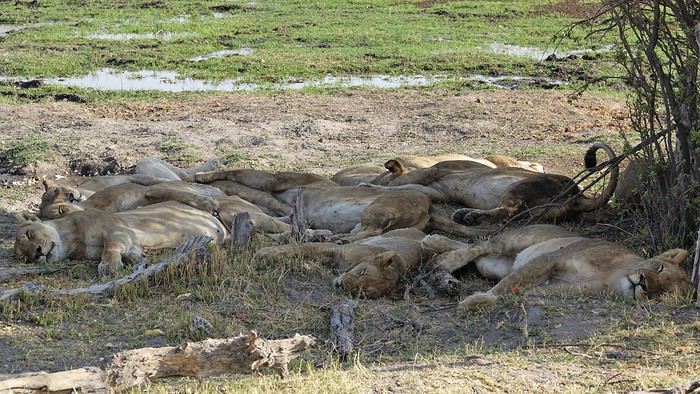
What’s more, the tracks are narrow and difficult, and despite the GPS, we often find ourselves at dead ends, forced to turn back. We also struggle to reach and follow the river. We feel like we’re wasting our time, and since the day is already well underway, we decide to leave the area and return to the other side. There, we find the lions again, still in the same spot, most of them dozing.


Nice pile! How many are there? 🙂


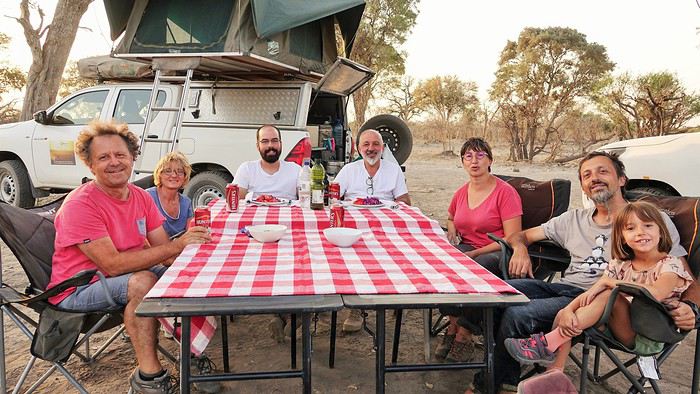
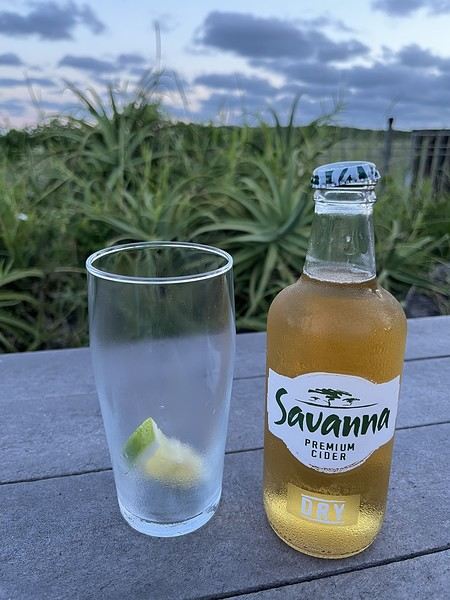
We eventually decide to head back to Dijara Camp, where we reunite with our friends, who, of course, had also seen the lions. Hard to miss them! The Portuguese folks we’re sharing the camp with tonight offer us beers they bought earlier that day from a small shop in Khwai village. This beer tastes weird?! 🤪 Oh, right—it’s cider! 😏 We have a good laugh, but it’s true that back home, you don’t find cider in aluminum cans.


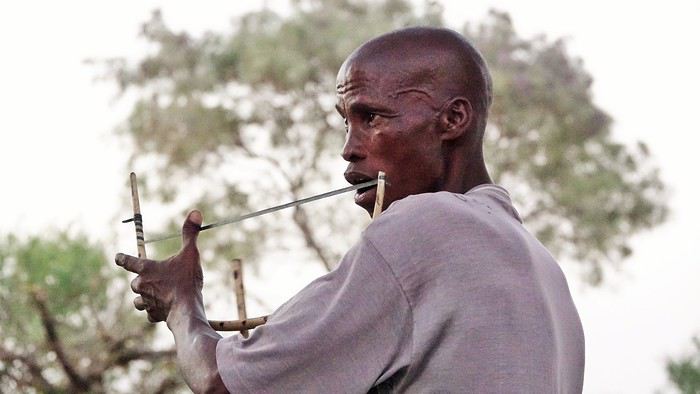
A young Motswana man comes by to offer us a little performance on a mouth bow, which he plays with his mouth.


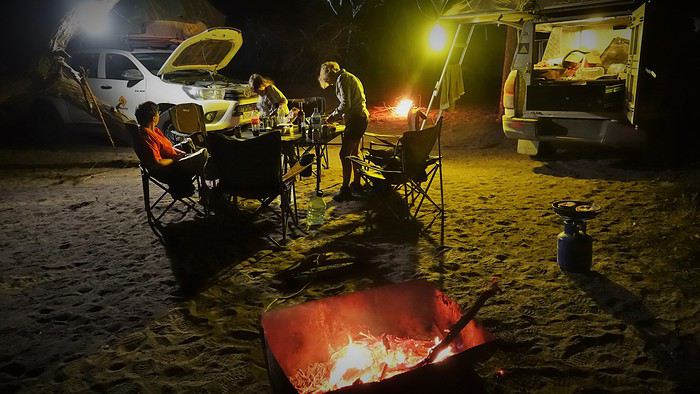
Once night falls, we light two fires to keep hyenas and hippos at bay—we can hear them nearby.
Mon voyage au Botswana : https://voyageforum.com/discussion/pays-tswanas-botswana-d9819920/
TS Tsodilo Regular ·
Thanks Ludo,

It's amazing!!! So many big cats!! I can't wait to hang out in this area when I see your photos—these next 6 months at home are going to feel so long! Thanks again for sharing.😉
OL OldPlatypus Regular ·
Thanks, Mathieu. I remember reading your travel journal when I was preparing mine. So you already know Botswana, but I get that you’re still really excited to rediscover this country. It’s true that sometimes it feels long waiting for the departure... 😕 but the best is yet to come! 😉
Mon voyage au Botswana : https://voyageforum.com/discussion/pays-tswanas-botswana-d9819920/
MA Max68 Globetrotter ·
Hi Ludo,

It's true that we were there at the end of the dry season, worsened by a general drought affecting all of Southern Africa. So the animals were probably very concentrated here because other places lacked water.
It's also a matter of luck—we went at the end of October 2019, and there wasn’t much of interest left, except for a really bumpy track 😮

Mbudi Camp is really nice

I’m excited—we’re going in April! 😛

Great travel journal you’ve put together, thanks! 🙂
https://apprentisvoyageurs.com
PY Pygmalion19 Veteran ·
Hi Ludo,

All those critters really make me want to go back there.
pygmalion
OL OldPlatypus Regular ·
You're right, we must've been really lucky since you went a month later and there weren't many interesting animals. I think we were actually lucky throughout the whole trip. 🙂
Mon voyage au Botswana : https://voyageforum.com/discussion/pays-tswanas-botswana-d9819920/
SI SimonL Regular ·
Amazing encounter with the brown hyena! Never seen one myself. It reminds me of Mark and Delia Owens' book "The Cry of the Kalahari."

Totally agree, Sylvie, and what a great book (what an incredible experience). We’ll be in KTP next September—who knows, with a bit of luck, we might see a brown hyena!!!!
SimonL
OL OldPlatypus Regular ·
01/10/2019: Savuti

Windy night—we didn’t sleep well. We say goodbye one last time to our Portuguese neighbors and head toward Savuti, renowned for its rich wildlife, especially its big cats. After taking the white track and then turning right, we reach Mababe Gate.


We’d already spotted quite a few elephants before arriving, and there are even more just after entering the park. The day’s off to a great start!


But soon, wildlife becomes scarce—almost nonexistent. The kilometers roll by, pretty slowly since the track isn’t great, and apart from a few ostriches, there’s not much to point the camera at. The vegetation is also sparse, stunted, and dried out.


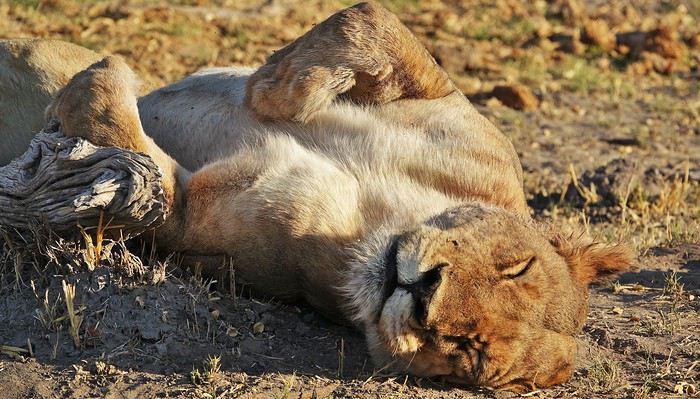
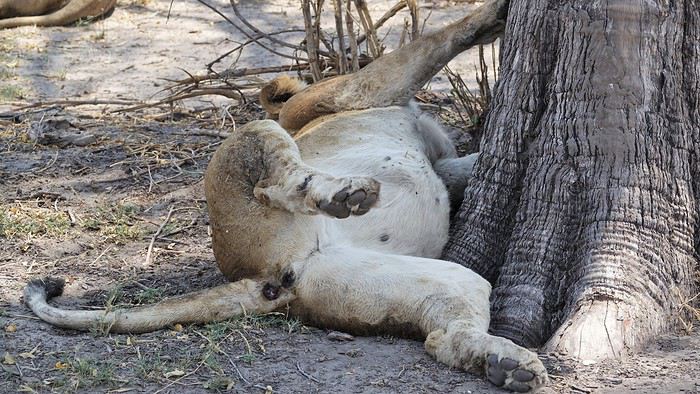
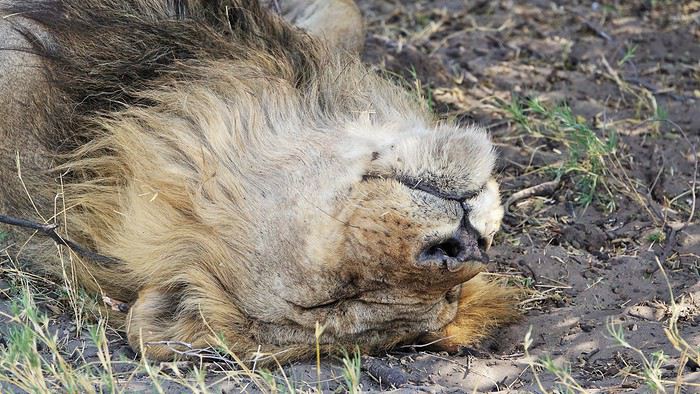
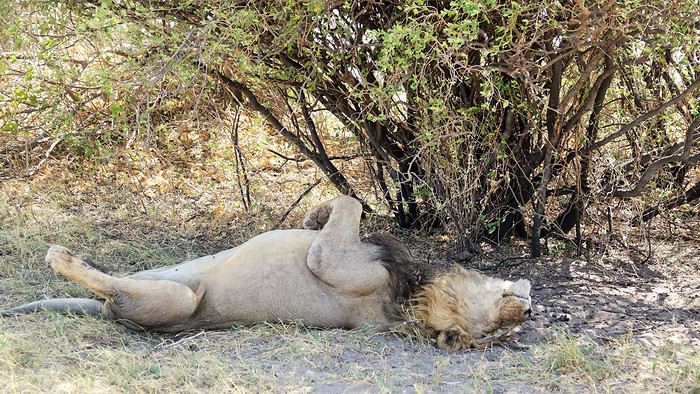
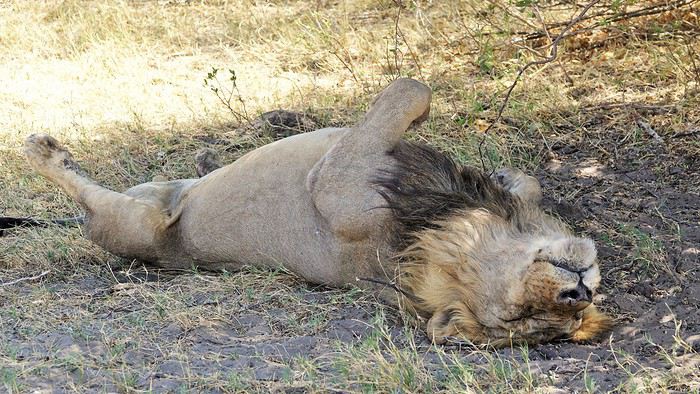
After all the animals we saw in Moremi and along the Khwai River, it’s a shock! The few waterholes are completely dry and utterly depressing, made worse by the strong wind (sometimes you can barely see ten meters ahead). Yet, at the intersection of two tracks, as we’re deciding which way to go, we spot a lion sleeping a little off to the side. A miracle! We leave the track to get closer. He’s lying there with all four paws in the air, completely unbothered by our arrival—doesn’t move a muscle.


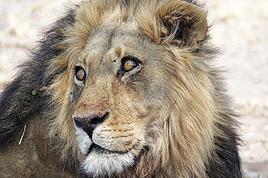
The king of the animals! 😉


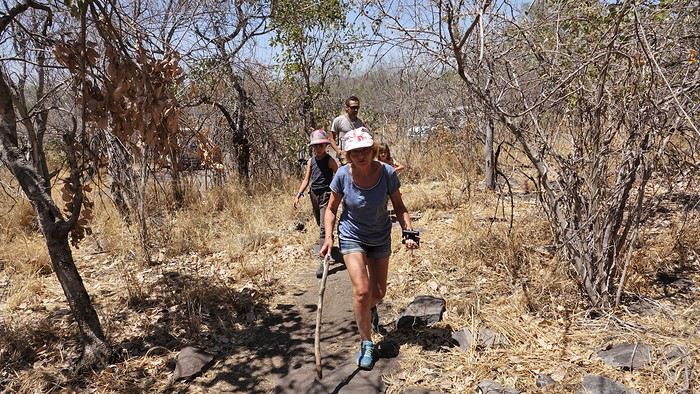
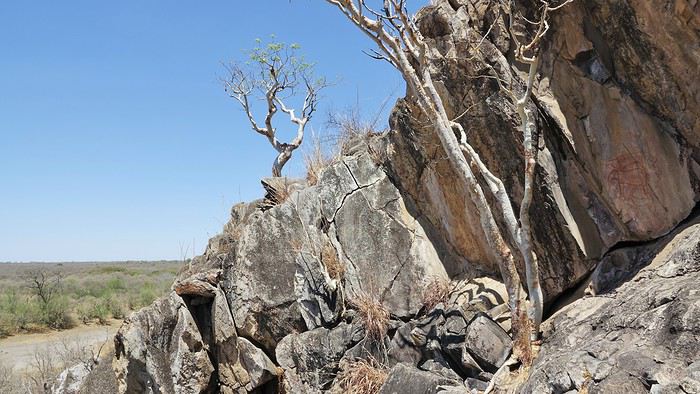
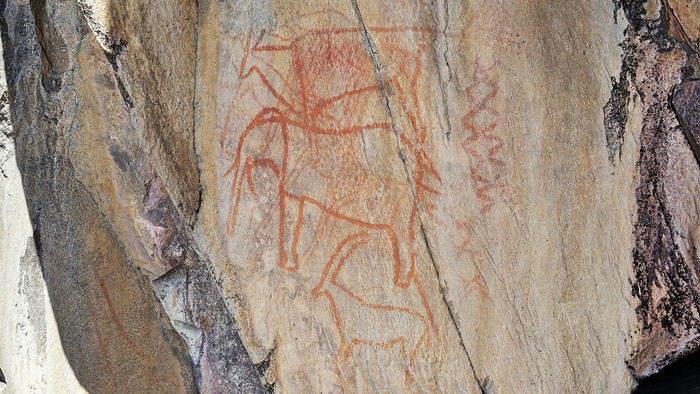
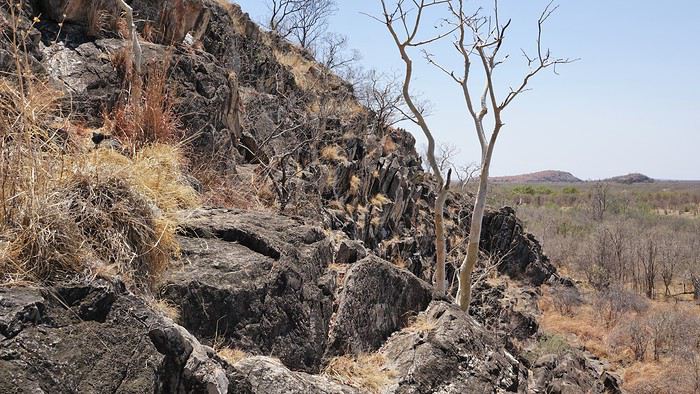
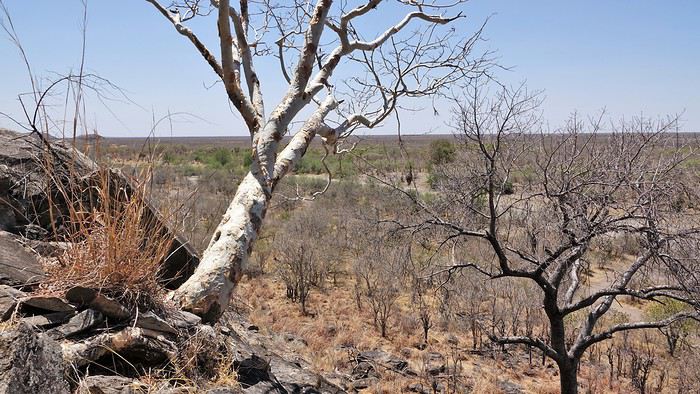
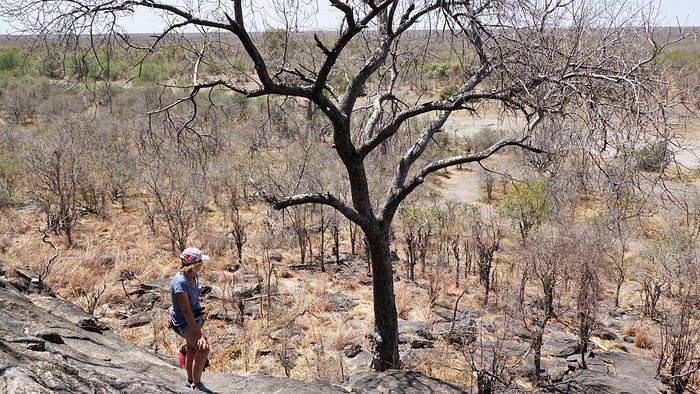
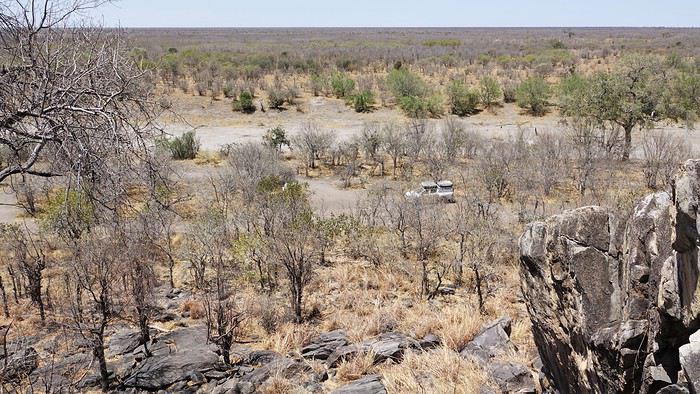
We watch the lion for a little while, but since he’s totally inactive, we move on. Still, it gives us hope for the rest of the day! We circle Leopard Rock, but no big cats in sight. That would’ve been too easy! A bit farther, we leave our vehicles at our own risk to explore the Bushmen’s rock paintings on foot. Artistically, we’re not blown away, but it feels good to stretch our legs—one of the main downsides of this Botswana trip is how much time we spend in the car. Plus, aside from possibly flying over the Okavango, we’re rarely up high, so it’s nice to get a little elevation and overlook the landscape from the hill.


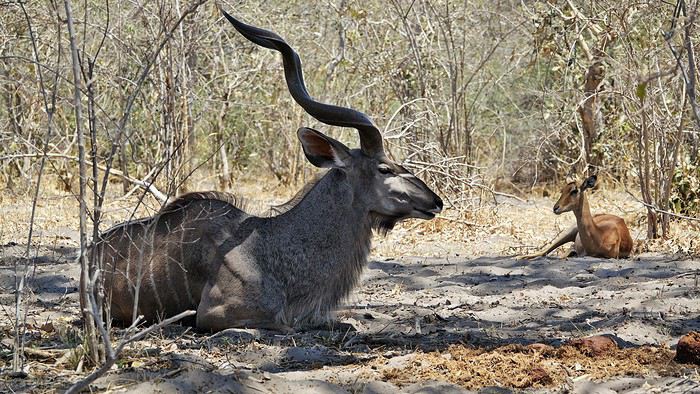
We get back on the track. There’s still very little wildlife—just a few rare kudus, giraffes, and birds.


We have our lunch break at Savuti Campsite, on an unoccupied spot. Originally, we’d planned to stay here, but even though we booked eight months in advance, all fourteen spots were already taken. In the end, we don’t really regret it—so far, we’re pretty disappointed with Savuti. And that’ll be confirmed later: even the reserve’s only permanent waterhole is dry!


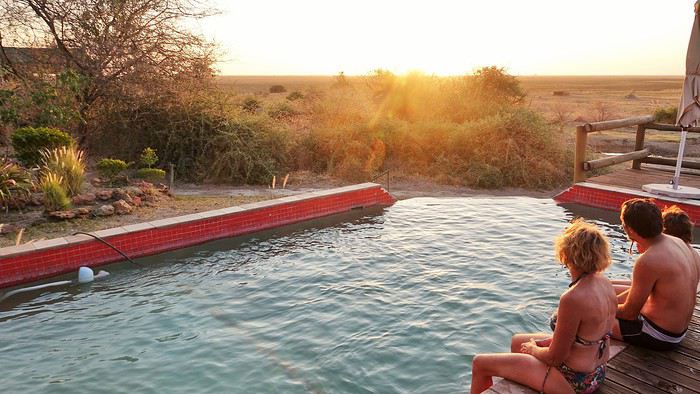
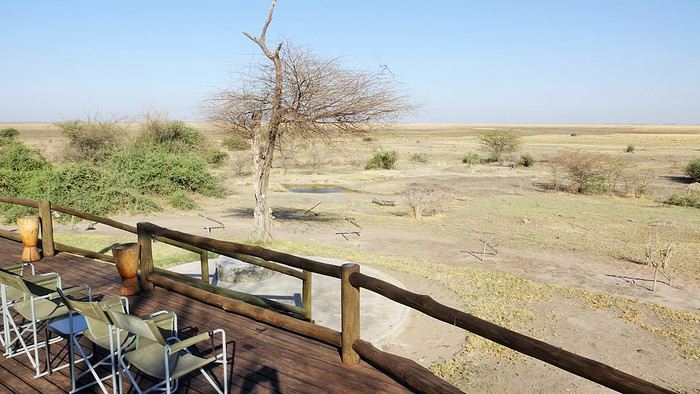
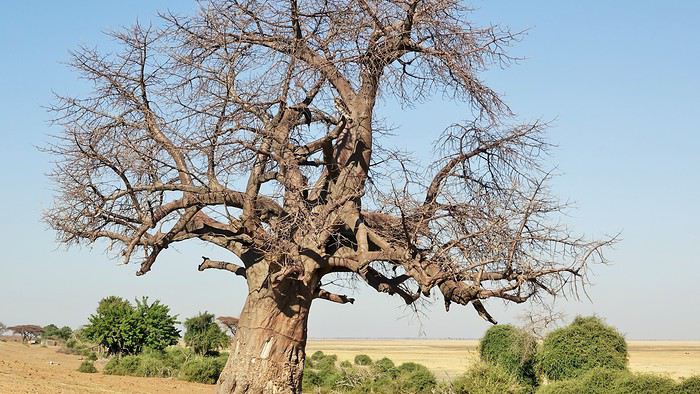
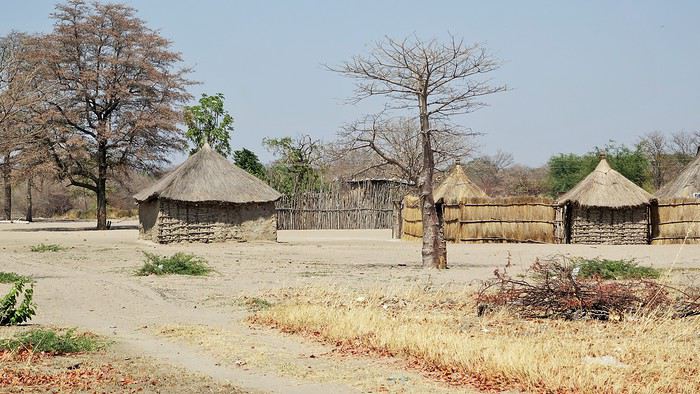
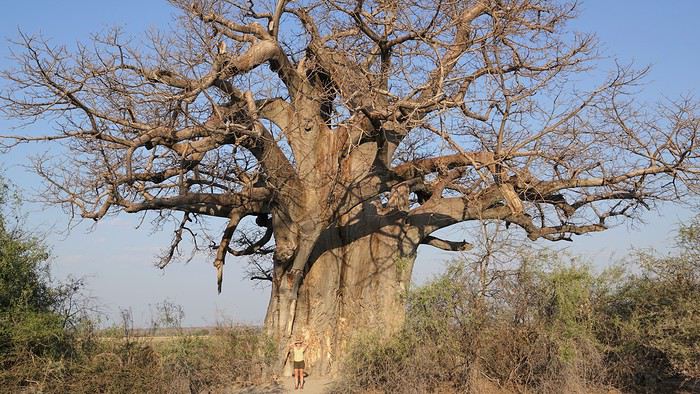
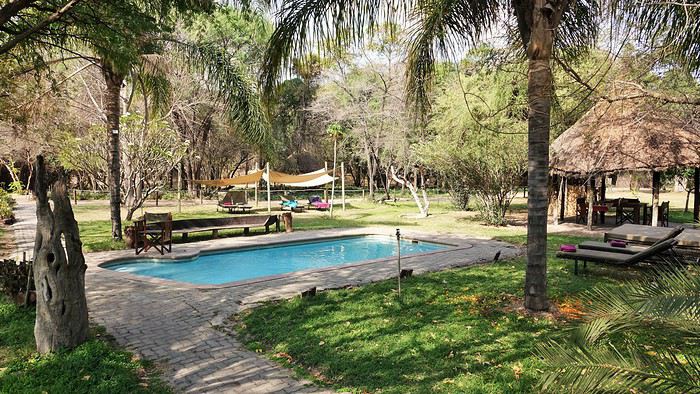
At Ghoha Gate, at the northern exit of the park, we take stock: this is by far the reserve where we’ve seen the fewest animals. The drought is so severe that wildlife had no choice but to migrate elsewhere. We don’t take the track directly opposite Ghoha Gate toward Kachikau. The rangers advise us to turn left for about eight kilometers, then right along the edge of the Chobe Forest Reserve. According to them, it’s a tiny bit longer but in better condition. The track is generally wide, but the sand is still pretty deep, and it’s quite a bumpy ride! Our friends, following a few dozen meters behind us, alert us over the walkie-talkie that we’ve lost our license plate. Luckily, they noticed and picked it up. A nice surprise when we arrive in Kachikau—the track turns into a paved road. The landscape becomes lovely with the appearance of baobabs. We reach Mwandi View Campsite, where we’ll spend the night. The welcome is very friendly. The sites are quite small and close to each other, but since the camp isn’t full, it’s not a problem. When we open the fridge, we discover that the yogurts didn’t handle Savuti’s rough tracks well—several have burst. We really appreciate the clean restrooms and hot showers. But the best part is the large terrace overlooking the floodplain. Sure, the Chobe River is far away, especially during this drought, but the view is stunning. And there’s even a small pool where we take a dip while watching the sun set on the horizon. Mwandi View is truly a pleasant place to stop for the night.


Mon voyage au Botswana : https://voyageforum.com/discussion/pays-tswanas-botswana-d9819920/
BE Bebe37 ·
Thanks for your travel journal. We saw a lot of animals in Namibia, but compared to you, it’s not much. I really want to go back to that part of the world.
Il est déjà plus tard que tu ne crois.
OL OldPlatypus Regular ·
For many, Botswana is a logical next stop after a trip to Namibia. I highly recommend discovering this country.
Mon voyage au Botswana : https://voyageforum.com/discussion/pays-tswanas-botswana-d9819920/
OL OldPlatypus Regular ·
02/10/2019: Caprivi Strip (Day 1)

We’re way up north in Botswana, and just across the floodplain is Namibia. Perfect timing, since we’re heading there for three days. We make one last stop at the large terrace of Mwandi View Camp, which overlooks the wide Chobe River valley.


Crossing the border at Ngoma goes pretty smoothly, even if the officials from both countries aren’t exactly friendly. At least they don’t ask us to throw away the fresh food we’re carrying (a little souvenir from our entry into Botswana!). That said, we don’t have much left to eat anyway.


We stop in Katima Mulilo to stock up on groceries and fill the fridge. We thought about taking a quick break at Zambezi Waterfront Tourism Park, along the Zambezi River, but the park is closed for renovations. So we head straight west into the Caprivi Strip—this odd, narrow stretch of land about 400 kilometers long and 30 kilometers wide, wedged between Botswana and Angola. There are lots of houses along the paved road, and many kids on their way to school.


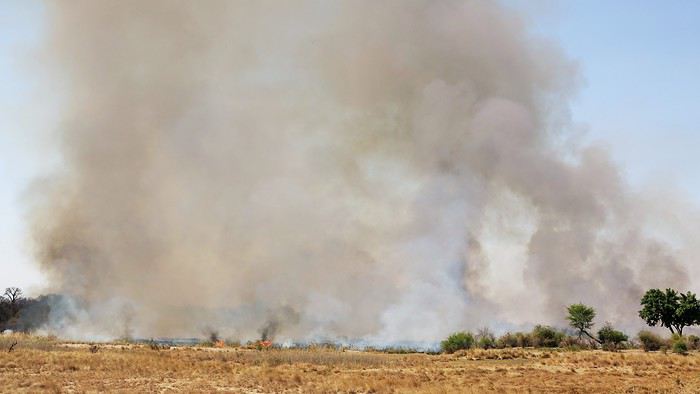
Unlike in Botswana, we don’t see any wild animals emerging from the bushes—just cows and goats by the side of the road. In some places, the savanna is on fire.


Just past Kongola, we enter Bwabwata National Park (Kwando sector). If we’d stayed on the paved road, we wouldn’t have had to pay anything, but since we’re staying at Nambwa Campsite tonight, we need to cover the entrance fee. Problem: the rangers don’t take cards, and we don’t have any Namibian dollars on us. So we head back to Kongola, where the small supermarket has an ATM. Unfortunately, it’s out of order—this is getting really tricky! But the supermarket manager kindly agrees to exchange some cash for an equivalent card payment.


The track to Nambwa Campsite quickly gets very sandy. We’re too lazy to deflate the tires and try to push through anyway. As long as it’s mostly flat, we’re fine. But then the track starts climbing—gradually but steadily—and we get stuck before reaching the top of the hill. We finally give in and deflate the tires (we’d have had to do it sooner or later anyway). And since there are big cat tracks right next to us, we work fast. Nambwa is a beautiful lodge built on high stilts, with a few camping spots too. Ours, right by the Kwando River, is really nice. That doesn’t mean we linger at the campsite, though.


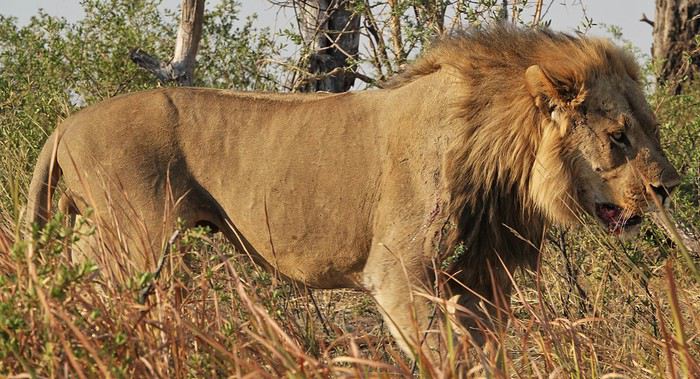
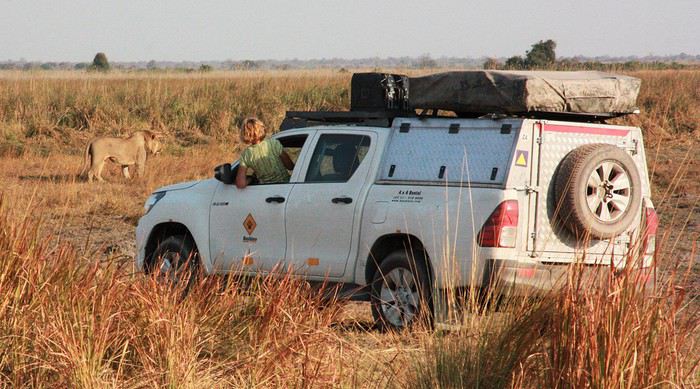
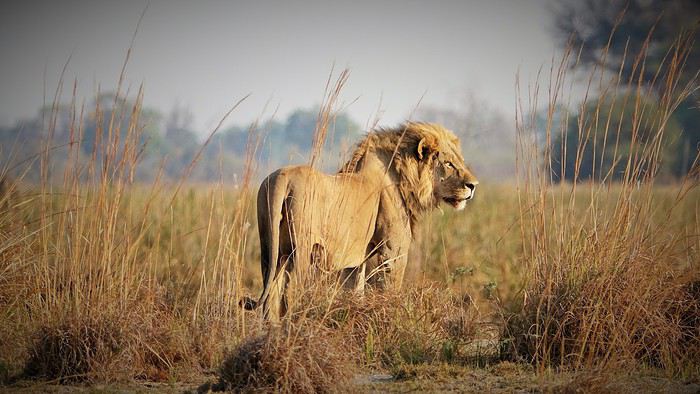
Here, we’re expecting to see mostly elephants, hippos, and crocodiles, but we quickly come across a magnificent lone lion that’s clearly on the hunt. Watching him up close, we notice the right side of his jaw is in rough shape—his last prey must’ve put up a fight! He eventually disappears into the tall grass.


Not the smartest move! 😕


The area is known for Horseshoe Bend, a stunning horseshoe-shaped loop of the Kwando River. It’s true—it’s really pretty in the late afternoon, even if there aren’t many animals around.


We continue along the track by the river, but it doesn’t always follow the riverbank, which is pretty frustrating.


We head back to camp before nightfall and enjoy a lovely evening.


One thing to note: the Wi-Fi only works from the lodge, and campers aren’t exactly welcome there—probably because we’re not fancy enough compared to the other guests.
Mon voyage au Botswana : https://voyageforum.com/discussion/pays-tswanas-botswana-d9819920/
OL OldPlatypus Regular ·
10/03/2019: Caprivi Strip (start of day 2)

The night was absolutely peaceful, apart from some distant hippopotamus calls.


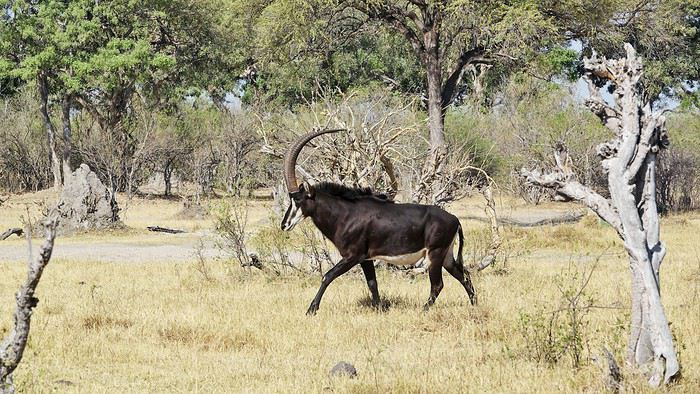
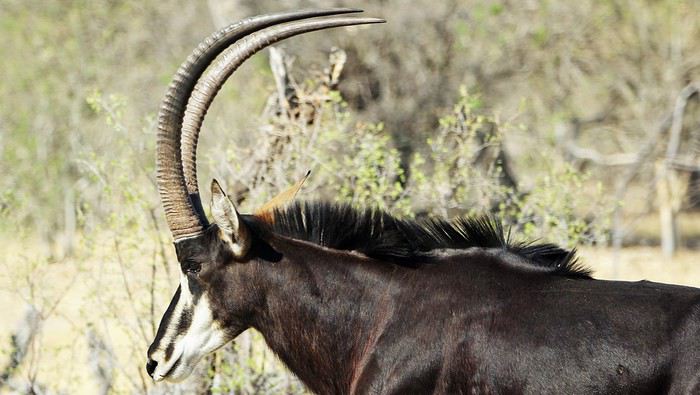
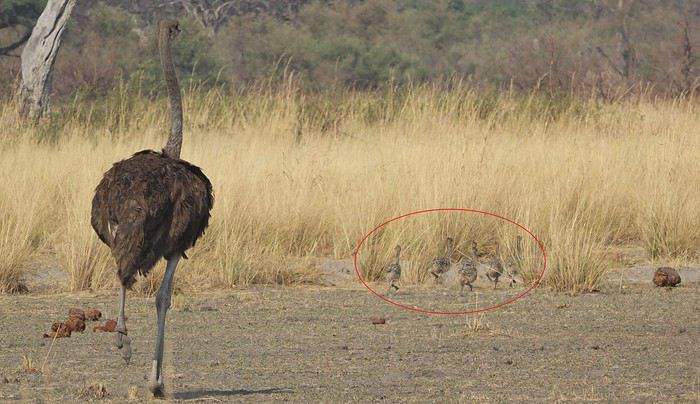
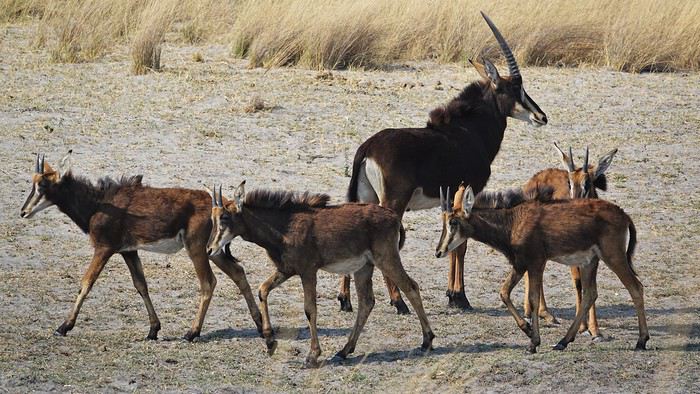
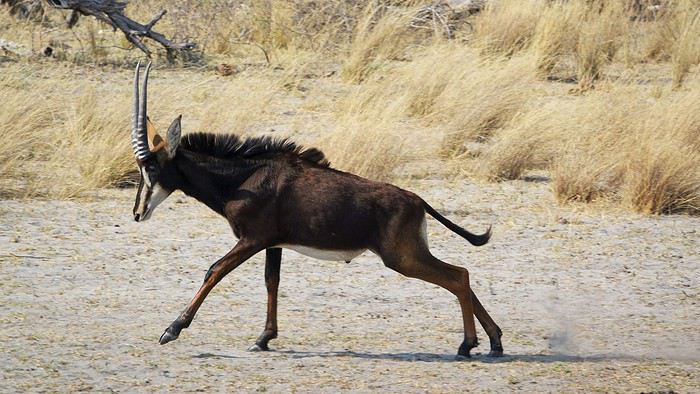
Before leaving the national park, we drove along several tracks in search of the lion we saw yesterday. But there weren’t many animals around this morning: some kudus, impalas, a pair of ostriches with a bunch of little chicks, and especially a group of about twenty sable antelopes—this magnificent species we’re starting to think might be less rare than we thought.


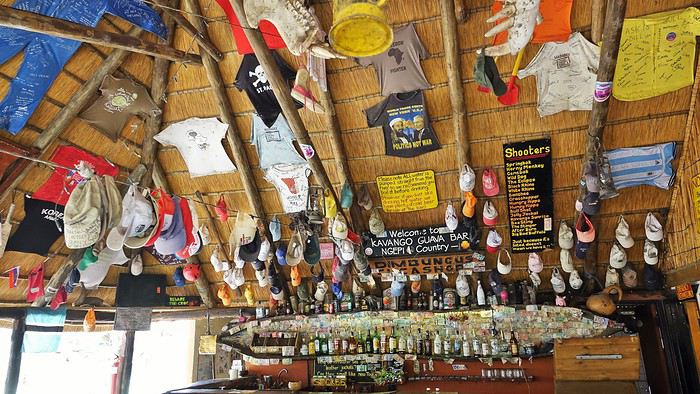
Back on the paved road, we reinflated the tires and realized one of them was unusually flat. We’ll have to keep a close eye on it from now on! This straight road cutting through the Caprivi Strip is really monotonous. Signs warn about possible elephants and African wild dogs, but we didn’t spot any. In the early afternoon, we arrived at Ngepi Camp, set along the Okavango River. The welcome was super friendly, the environment pleasant, and the vibe relaxed. Even though the sites aren’t cramped, there are more of them than in previous camps, and overall, there are more people. But it works!


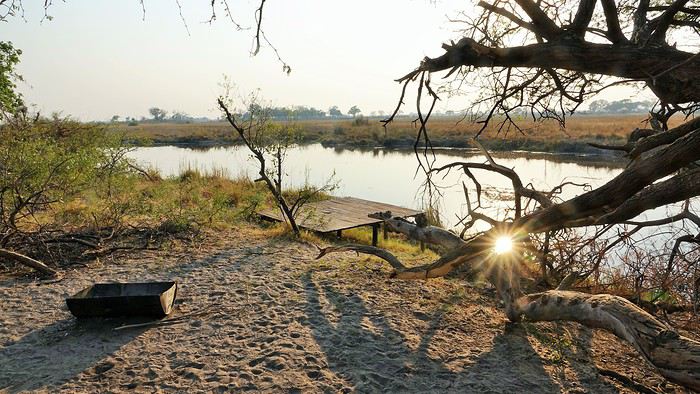
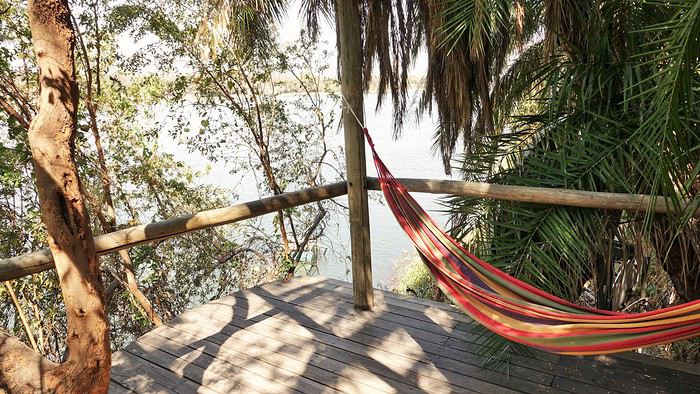
Several docks let you relax overlooking the river.


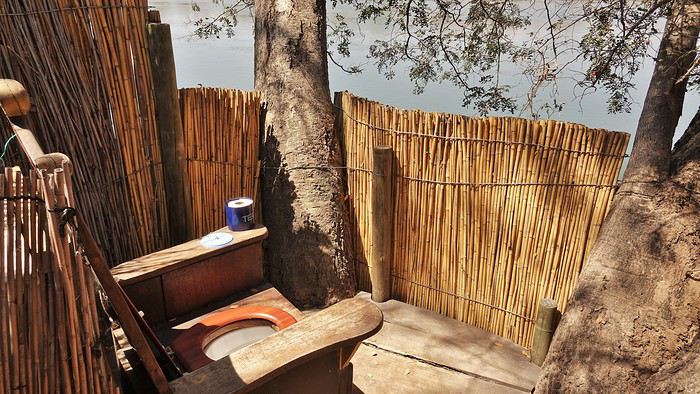
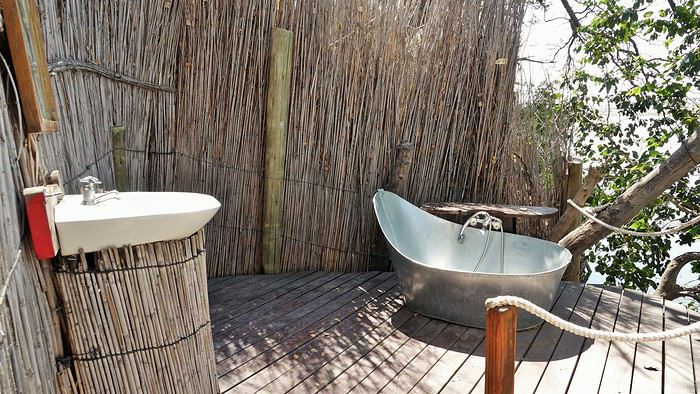
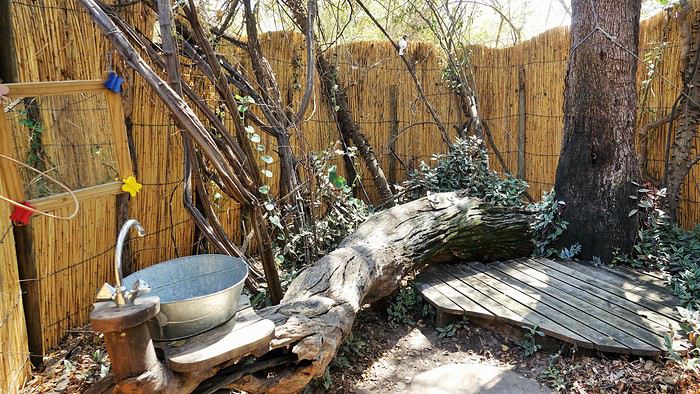
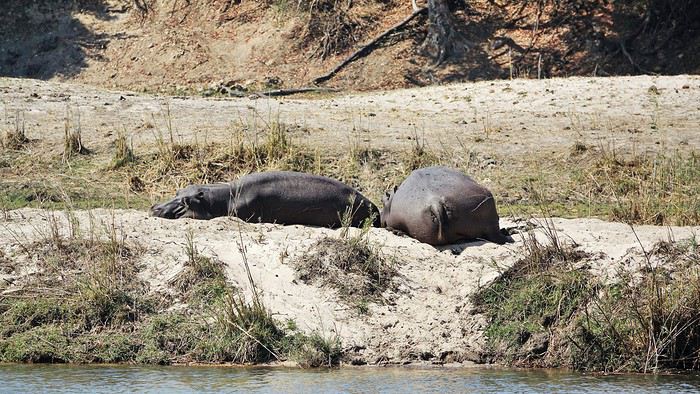
The restrooms are out in the open, and some showers or toilets have an incredible view of the hippos.


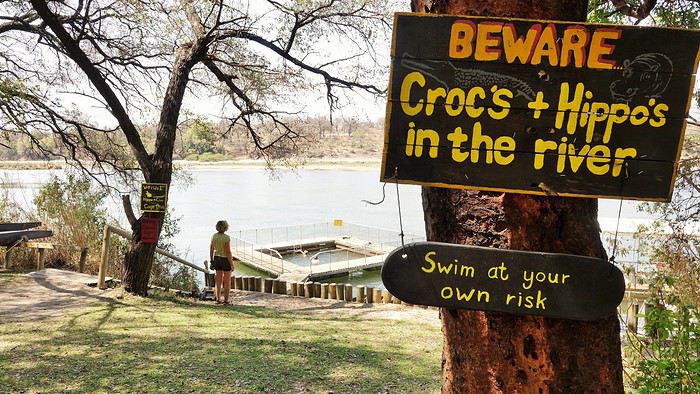
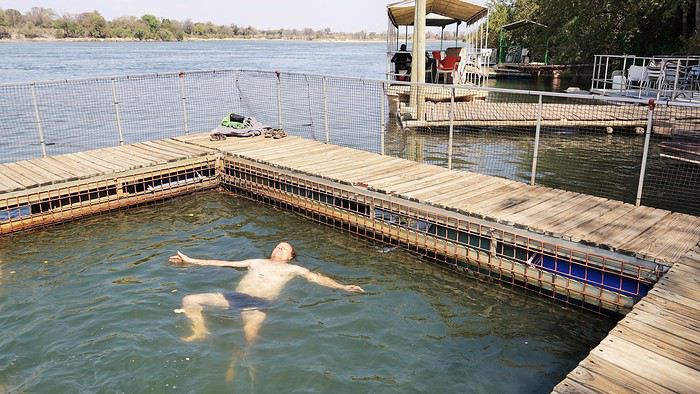
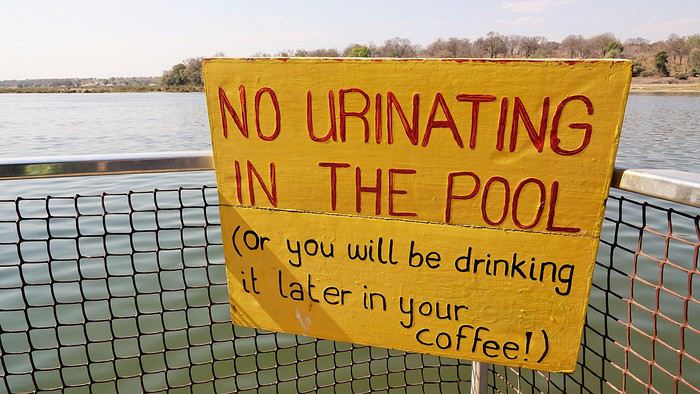
To top it all off, there’s a little pool right in the middle of the Okavango. Crazy? Not at all—a big mesh fence in the water keeps crocodiles and hippos out. Yes, this camp is truly one of a kind!


Mon voyage au Botswana : https://voyageforum.com/discussion/pays-tswanas-botswana-d9819920/
OL OldPlatypus Regular ·
10/03/2019: Caprivi Strip (end of day 2)

Our friends are so comfortable at Ngepi Camp that they don’t feel like moving today. Plus, since their kids need to keep up with their schooling during this year-long trip around the world, they have to set aside some time for learning almost every day. But for us, it’s off to the Mahango sector of Bwabwata National Park! Shortly after entering, we’re lucky enough to spot two roan antelopes. Like the sable antelope, we thought this species was hard to spot, but this is the second time we’ve seen them.


While not exceptional, this small park turns out to be really pleasant: the tracks are easy (no deep sand), the vegetation isn’t too dense, offering good visibility, and we regularly follow the Okavango River.


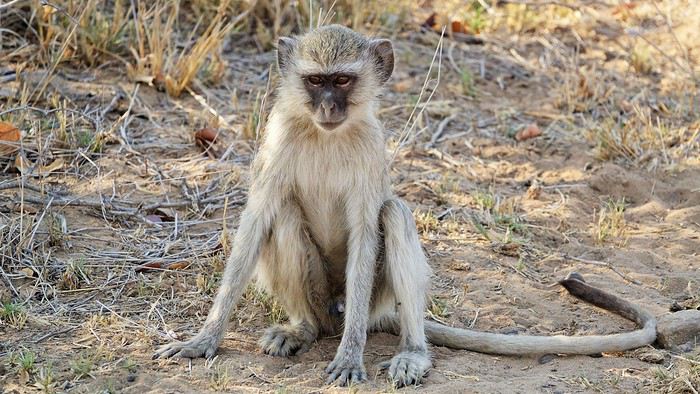
Buffaloes, elephants, hippos, crocodiles, vervet monkeys, kudus, zebras, not to mention the many birds: the wildlife is abundant.


There are also some majestic baobabs.


At the end of the afternoon, the light is stunning.


But it’s too late for us to head to the other part of the park, on the other side of the track leading to Mohembo in Botswana. So we arrive back at Ngepi Camp after dark, with a chance to discover Namibian beers tonight.
Mon voyage au Botswana : https://voyageforum.com/discussion/pays-tswanas-botswana-d9819920/
OL OldPlatypus Regular ·
04/10/2019: Caprivi Strip (Day 3)

We’re taking it easy this morning since the day’s program is pretty light.


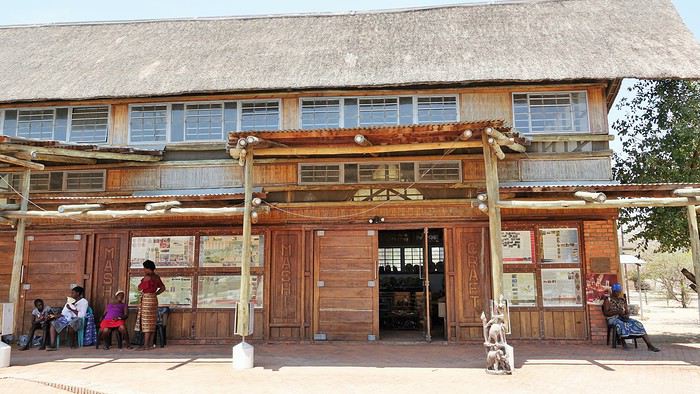
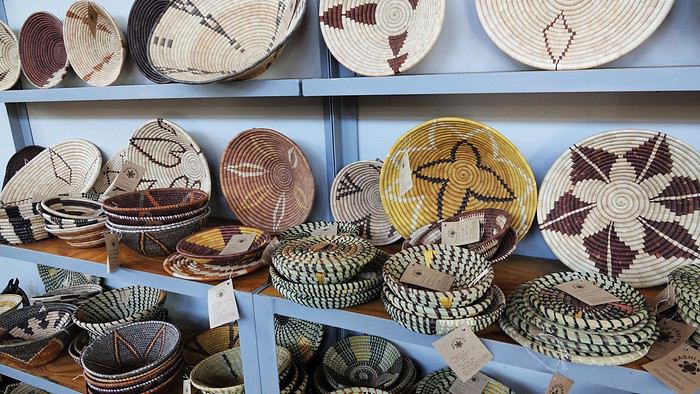
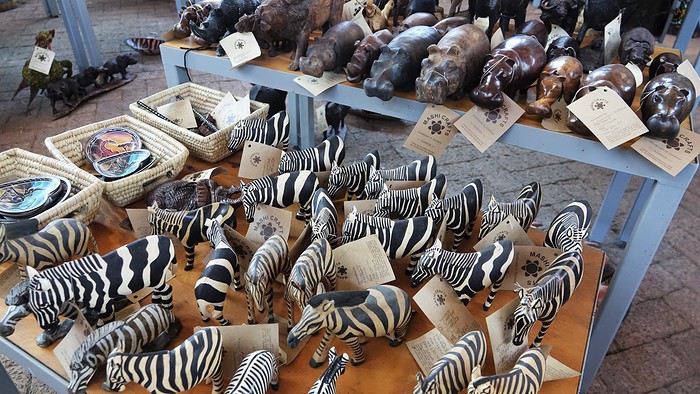
Still, a good two hours of driving east through the Caprivi Strip—still just as monotonous. In Kongola, we stop at the Mashi Crafts cooperative. There are some nice things (wood carvings, baskets, jewelry), but is it really made in the area as claimed? We feel like we’ve seen the same products in Maun.


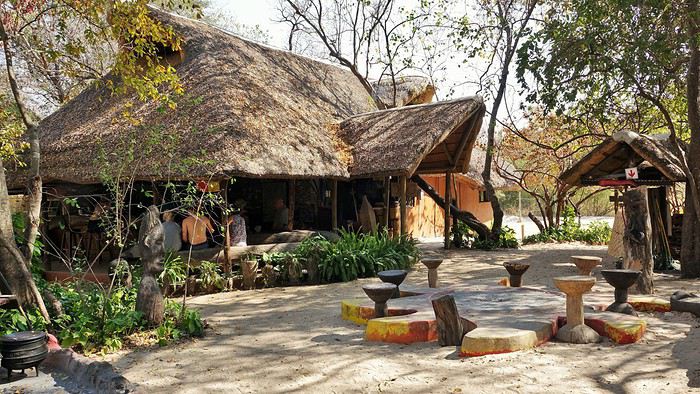
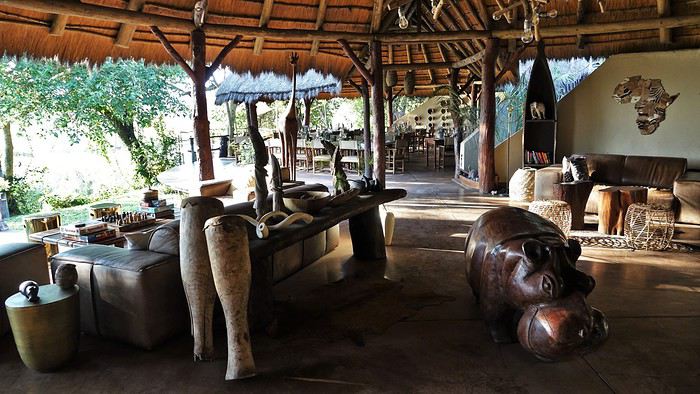
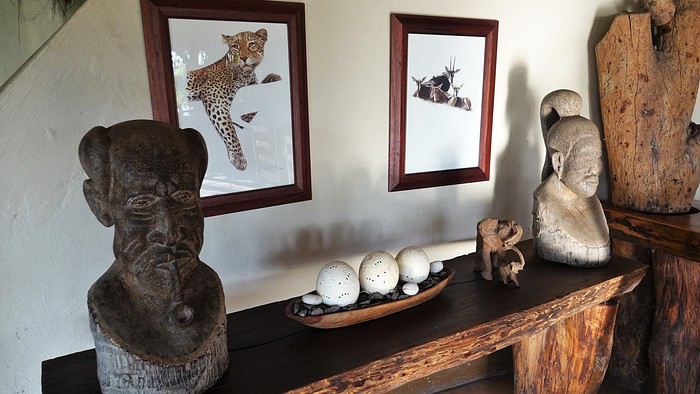
We leave the main road heading south toward Camp Kwando. At one point, we’re really unsure about the camp’s location on our Maps.me GPS because it doesn’t seem to match a roadside sign. To be sure, we ask a local for directions. Later, we’ll see that Camp Kwando is marked in two places 20 kilometers apart—a pretty rare mistake! We arrive in the early afternoon. This camp is primarily a fairly upscale lodge with four camping spots, each with its own bathroom facilities. Even though we’re just humble campers, the staff is super welcoming. The reception area overlooking the Kwando River (also called Linyanti or Chobe depending on the area) is beautifully decorated.


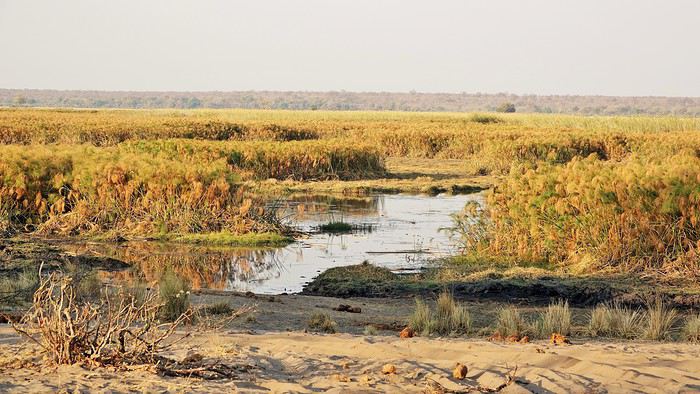
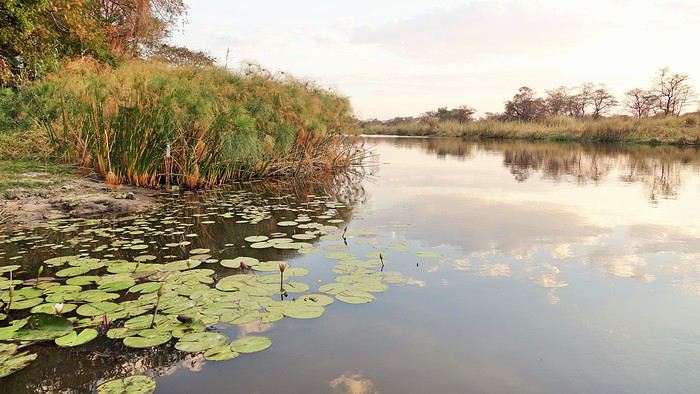
The large, tree-filled garden is really pleasant, and we take advantage of the small pool there. The river is lined with reeds and papyrus, but here, no elephants, hippos, or crocodiles. It’s a bit disappointing—aside from a few birds, this is the first day of the trip where we don’t spot any big animals.


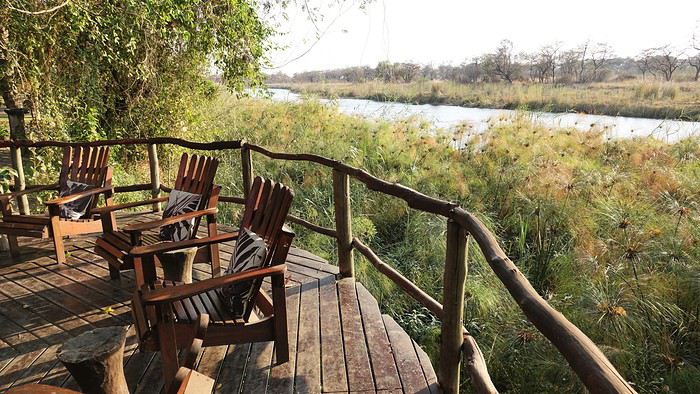
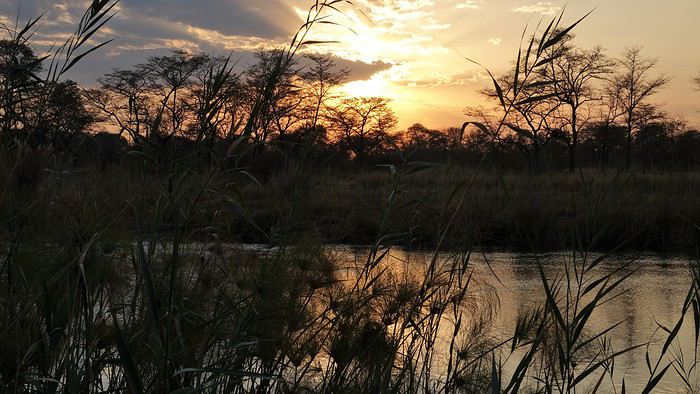
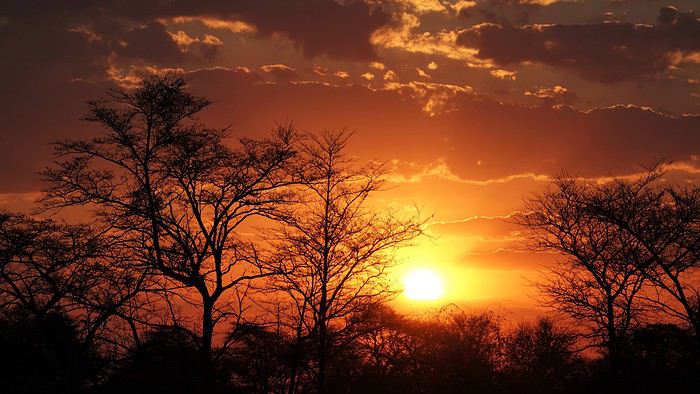
So, it’ll be a restful afternoon, and honestly, that’s not so bad once in a while. Later in the day, we wait for the sunset on large raised decks while sipping a good South African white wine.


Mon voyage au Botswana : https://voyageforum.com/discussion/pays-tswanas-botswana-d9819920/
EN Endrick Regular ·
Hello, And thank you so much for this super detailed account! It’s going to help us *so much* in planning our Namibia and Botswana itinerary for September/October 2020.

Just one little note: I noticed you skipped the "River Front" section of Chobe NP, which is often described as a "must-see", especially since you were just a stone’s throw away!

Am I being a bit impatient, and you’ll get to it later? 🤪 Or did time run out and you had to make some tough choices (and yeah... 😕)?

I know, I’m being nosy 😊
Vers l'infini et au-delà !!!
OL OldPlatypus Regular ·
No worries, after that 3-day detour into Namibia, in the Caprivi Strip, we made our way back to Botswana! 🙂 Of course, that included Chobe Riverfront and Victoria Falls. Patience... [;)
Mon voyage au Botswana : https://voyageforum.com/discussion/pays-tswanas-botswana-d9819920/
PY Pygmalion19 Veteran ·
Hi Ludo,

Thanks for this unfinished story—it’ll be ready soon, though! ;) You saw more animals in the Caprivi Strip than we "scanned" back in 2010. Keep up the good work.
pygmalion
OL OldPlatypus Regular ·
Yeah, I know, it's dragging on... Writing the text, choosing photos from the many taken every day—it all takes time. I promise I'll try to pick up the pace! 🙂 (I kinda want it to be done too 😉)
Mon voyage au Botswana : https://voyageforum.com/discussion/pays-tswanas-botswana-d9819920/
OS Oslow80 ·
hi, I’m enjoying reading about your trip. thanks! I know it’s really long, so I’m waiting—but with excitement ;)
Nathalie L
OL OldPlatypus Regular ·
10/05/2019: Chobe River

After three days in Namibia, we head back to Botswana. Our short stay in the Caprivi Strip was a bit mixed: lots of driving through often monotonous landscapes and not many animals spotted, even though we won’t forget seeing a beautiful lion up close. That said, the three camps we stayed at were really pleasant.

Crossing the border takes a while. The contents of our trunk are checked at the Botswana entry because transporting any fresh produce (fruits, vegetables, meat, eggs) is technically banned, but we’re only carrying beer, wine (and water, bread, and the essential peanut butter). We also have to dip the soles of our shoes in a disinfectant bath.

Just a few hundred meters after crossing the border, the road to Kasane enters the Chobe National Park (along its edge). We quickly spot elephants on both sides, but most excitingly, we come across a pack of wild dogs dozing under a tree right by the road.


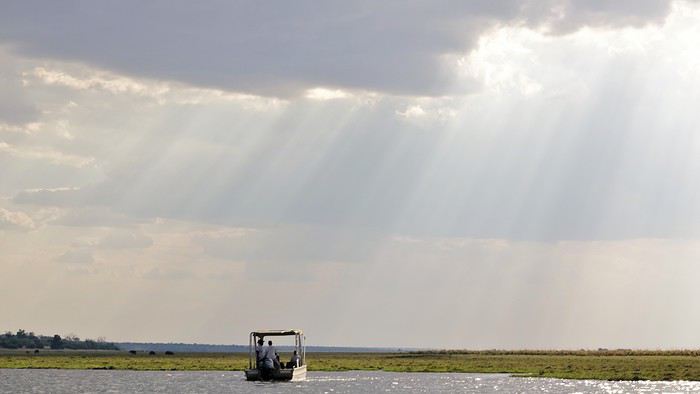
We arrive in Kasane, a town we imagined would be as big as Maun but is actually much smaller. Still, it has all the necessary services. We continue to Senyati Safari Camp, where we’ve booked three nights. Though it’s about fifteen kilometers from Kasane and over twenty kilometers from the Chobe National Park entrance, this camp is well-known, especially for its waterhole that attracts many elephants and other wildlife. Every day, the camp offers transport to Victoria Falls, 70 kilometers away in Zimbabwe (a day trip). We book this excursion for the next day at reception. Since we have our own car, we could’ve driven ourselves, but the process for bringing a vehicle into Zimbabwe is notoriously long and complicated, so we opted for the easy option. The camp also offers a few-hour cruise on the Chobe River. We book and head straight to Kasane since the departure time isn’t far off. The meeting point is just behind the Spar, and we end up arriving a little early. We chat with a young English-speaking Canadian who’s thrilled to practice her French. At 3:00 PM, we board a small boat with about twenty seats. The weather is overcast, even a bit threatening.


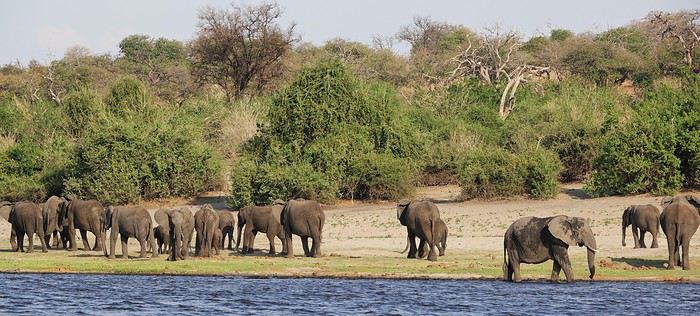
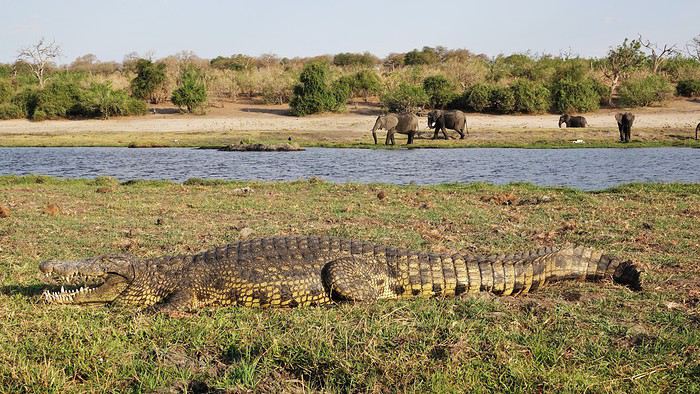
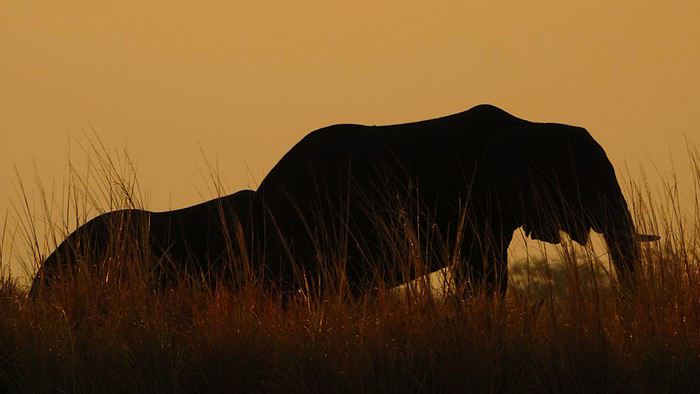
The pilot is friendly and gives lots of explanations. As we reach the Chobe National Park, the animals are everywhere: buffalo, hippos, crocodiles, elephants, antelopes, giraffes, and all kinds of birds.


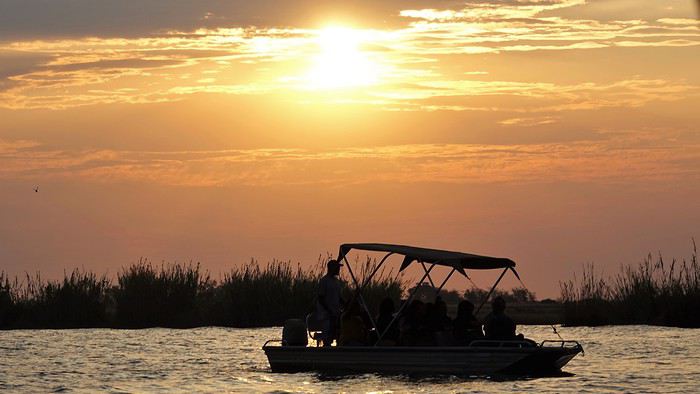
That said, we’re not alone on the water: boats of all sizes are searching for the best viewing spots and sometimes cluster in the same places. Still, the cruise is enjoyable and offers a different perspective on the wildlife—from the river rather than the shore.


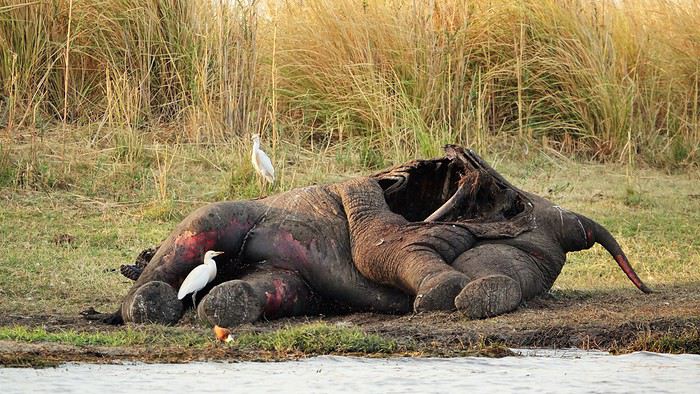
We stop for a moment on the Namibian side of the river, near the carcass of an elephant killed by poachers a few days earlier. It’s not the prettiest sight, but it’s a stark reminder that this happens.


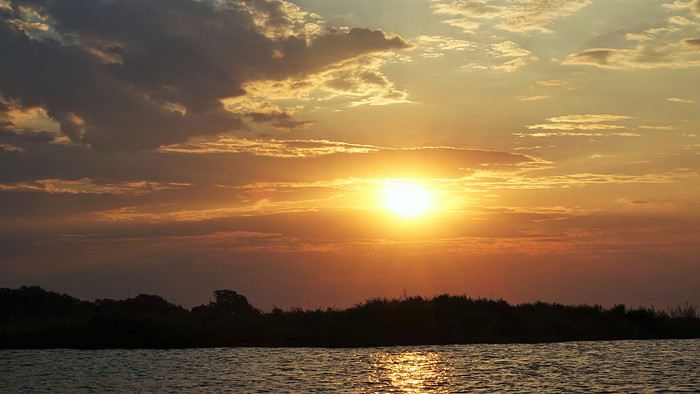
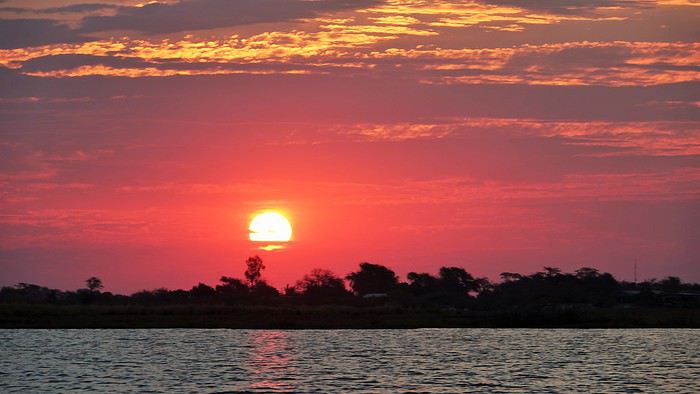
For sunset, our pilot doesn’t take us to the best photo spots—often without a foreground subject, when we could’ve had an elephant or any other animal. Still, it’s nice...


Night has fallen by the time we get back to camp. We rush to the waterhole to watch the herds of elephants taking turns. But we’re tired after such a long day, so we don’t stay long—especially since we’ll be here for two more days.
Mon voyage au Botswana : https://voyageforum.com/discussion/pays-tswanas-botswana-d9819920/

Similar discussions

You might also like