Discovering Assam and Nagaland 2025
FR

Translated into English.

AL Aleph240758 Veteran ·
Sunday, April 13th. I’m on time, which isn’t the case for Nirupam. As usual, we all have our first sweet breakfast together. His parents join us, and together we wait for the driver, who still hasn’t taken his shower. We set off to visit the Charaideo Maidams. We’ve got a good three-hour drive ahead, though it’s quite close to Sonari and Sivasagar. Before arriving, we stop for a heartier breakfast—puri with dhal for me. They’re surprised by my choice, exchange glances, and laugh. I don’t understand why. Nirupam tells me his mom didn’t dare make puris for me, thinking I wouldn’t like them. His parents order the same as me, while Nirupam goes for a masala dosa.

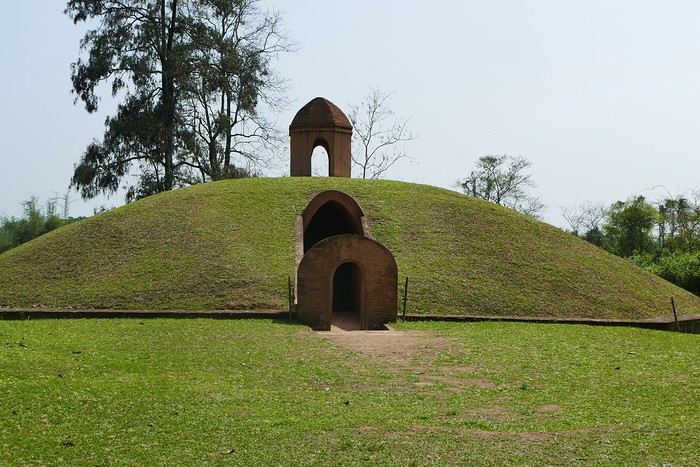
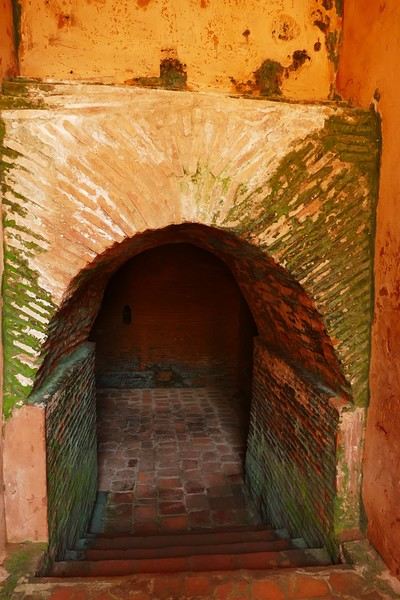
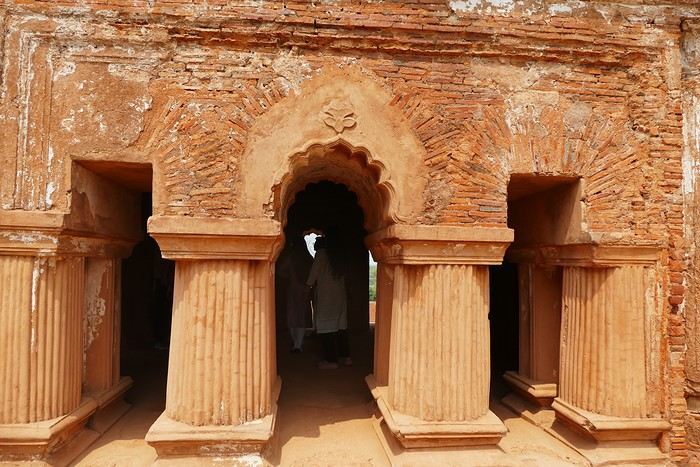
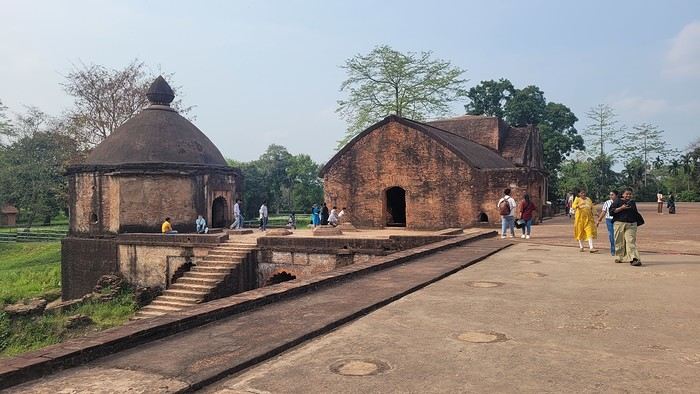
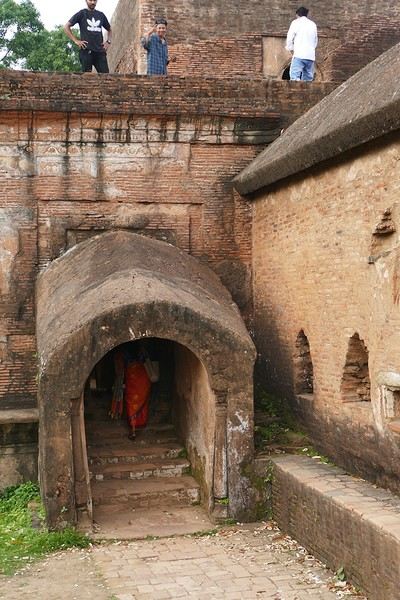
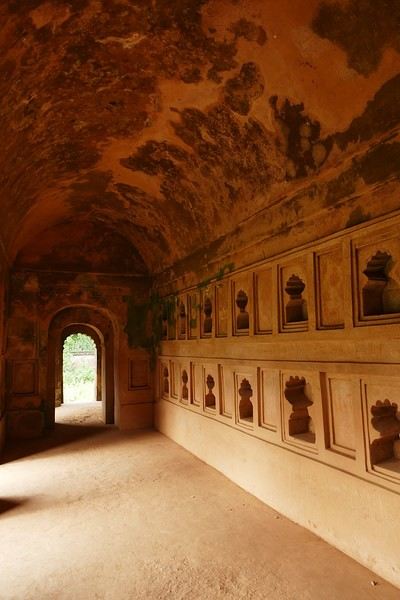
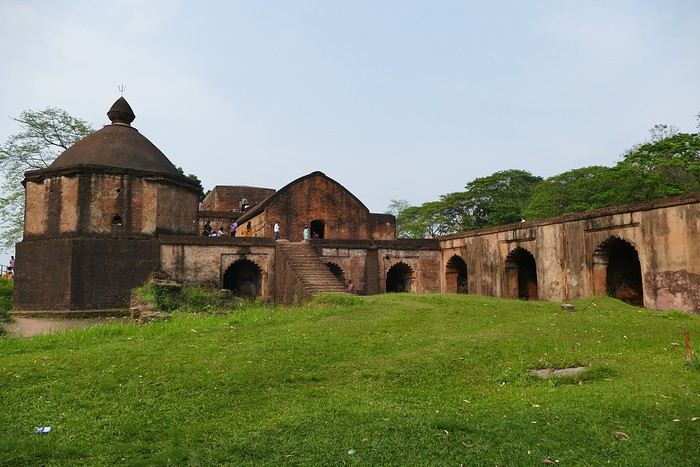
The maidams are burial sites for the Ahom kings and queens, dating back 700 years. The exterior of a maidam consists of a vault, a hemispherical earthen mound covering the chamber, varying in size from a modest hillock to a 20-meter-high butte depending on the power, status, and resources of the buried individual, a brick structure for offerings, an octagonal enclosure wall at the base of the mound, and a vaulted entrance on the west side. Smaller maidams didn’t always have all these elements.

We’re the first visitors. We pass under the vault leading into the antechamber. This place inspires Nirupam, and we do a short meditation before the Indian tourists arrive.


It’s possible to walk around the tumuli. You need to visit the museum to get explanations about these unique maidams.

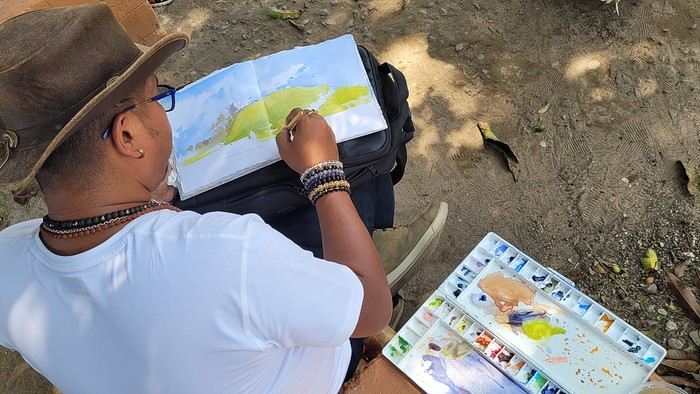
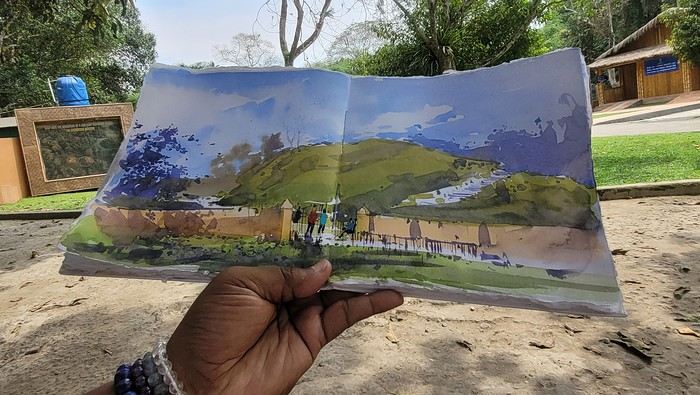
At the end of the visit, Nirupam takes out his watercolor journal, settles in the shade, and sketches the entrance of the site. I watch him work—it looks like child’s play, his brushstrokes are so precise and quick. The result is stunning.


We hit the road again for Naharkatia and stop for lunch—a thali they found too spicy, but it was fine for me!!! Back home, and for dinner, I just ask for vegetables. I’m not hungry—I’m not used to having so many meals. It’s a change from the meals in Nagaland.
AL Aleph240758 Veteran ·
Hi Christine,

"you have to go to bed really early" No, not at all—the dinner in the evening was after meditation, so between 9 and 10 PM!

In February, it’ll be green, but I’m not sure if you’ll see many flowers. There won’t be any festivals, though I think there are some in Arunachal Pradesh, but you’ll need a permit.
TH Thlaspi ·
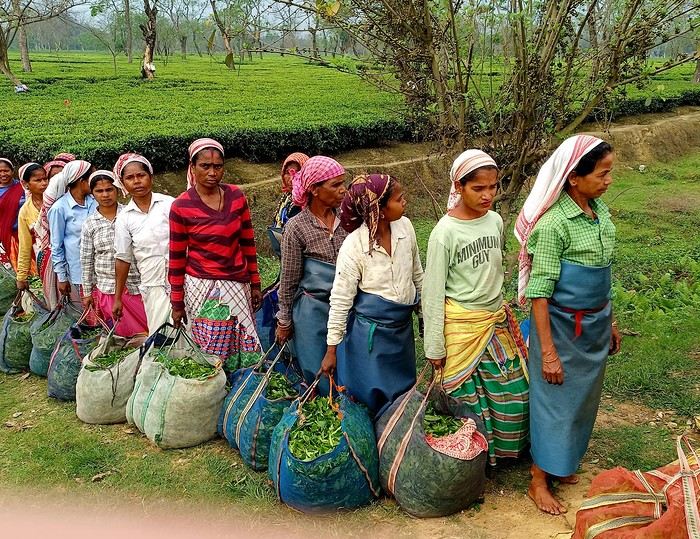
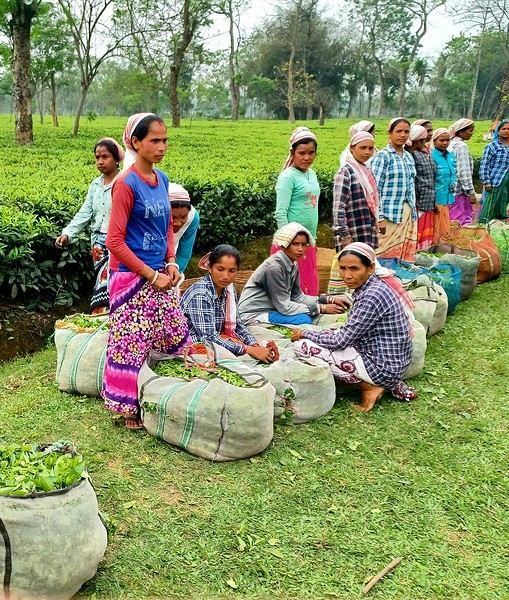
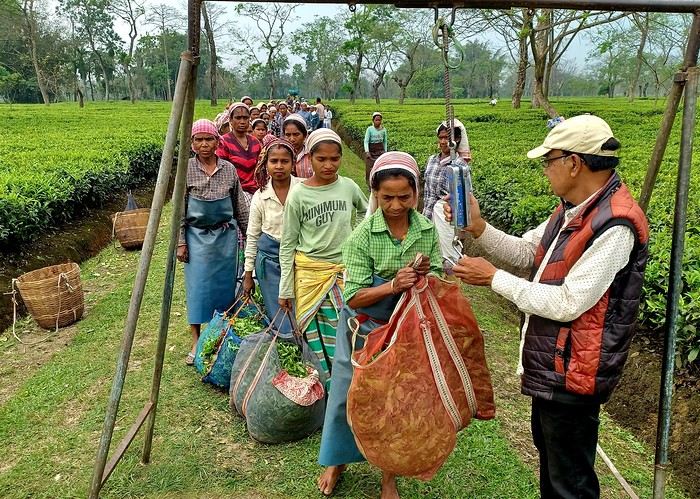
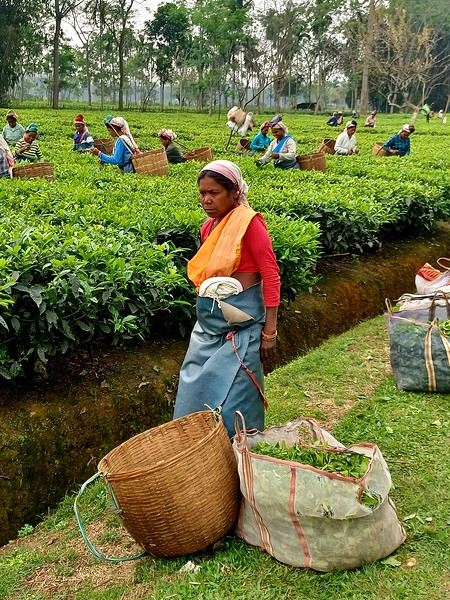
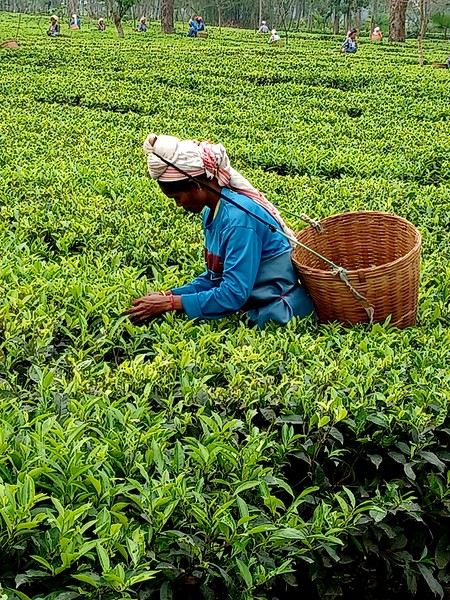
Hi there, The Jagganath Temple in Dibrugarh is a rather modest replica—a very contemporary one (2014) of a 12th-century structure. It’s popular with families looking for selfie opportunities. The city, a gateway to the two neighboring states, owes its reputation to its proximity to the beautiful tea fields that cover a large part of the region.
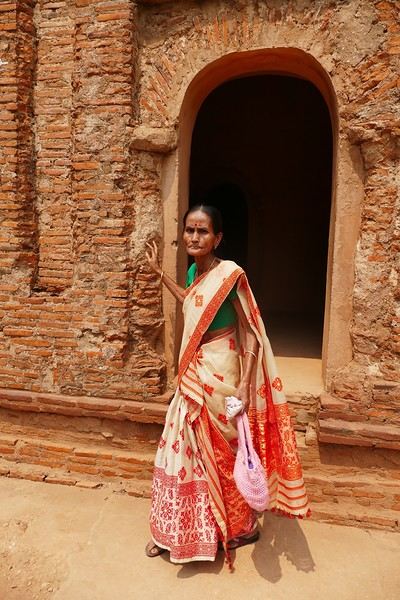
Photos taken during the weighing process—women wear protective aprons.

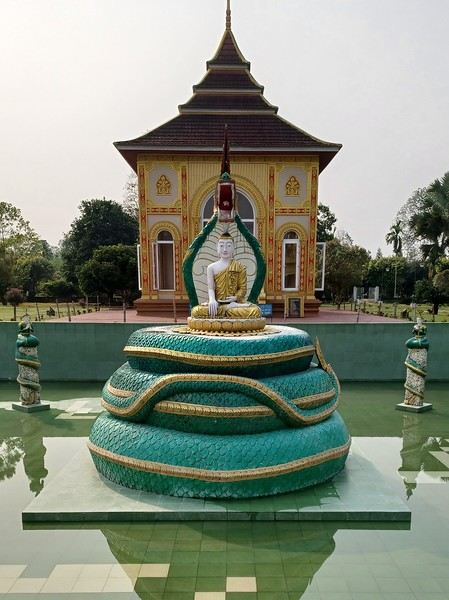
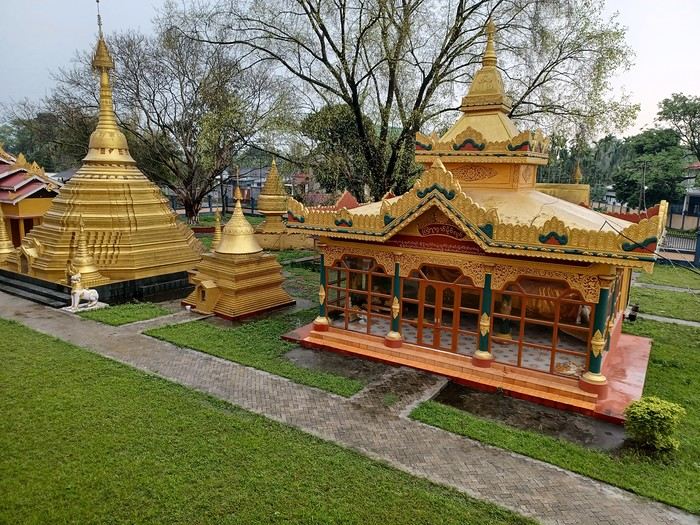
It’s also close to an unexpected side of the country: the Namsai district, home to a large community of Burmese and Thai origin.


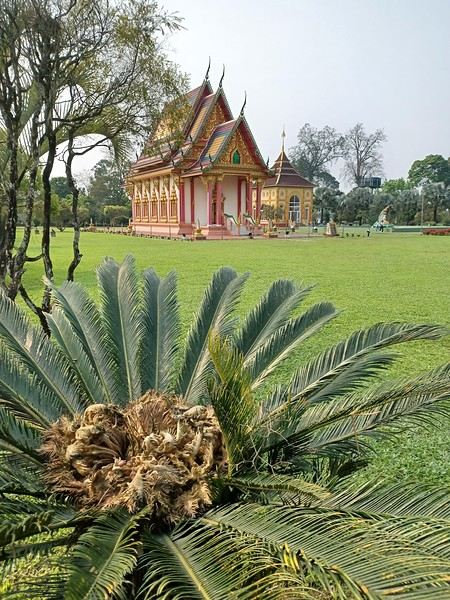
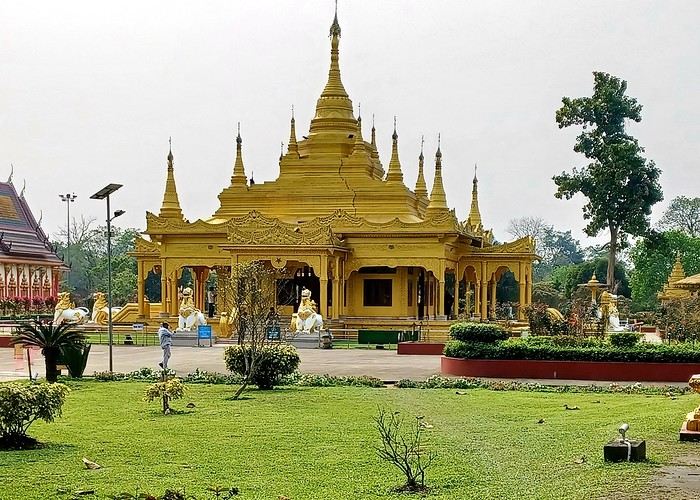
And the iconic Golden Pagoda, funded by a politician in 2010—the land was provided by the state.

A lesser-known side of a country that never stops revealing surprises.
AL Aleph240758 Veteran ·
Hi Pierre, Thanks for your input and those great photos.

"Namsai province" I’m not familiar with Arunachal Pradesh—could you share your experience about this state? It’s not possible to go there alone, right? You need at least two people to get the permit—is that correct? If so, I won’t be able to go. What’s the best time to visit to avoid cold weather and too much rain?

Thanks
AL Aleph240758 Veteran ·
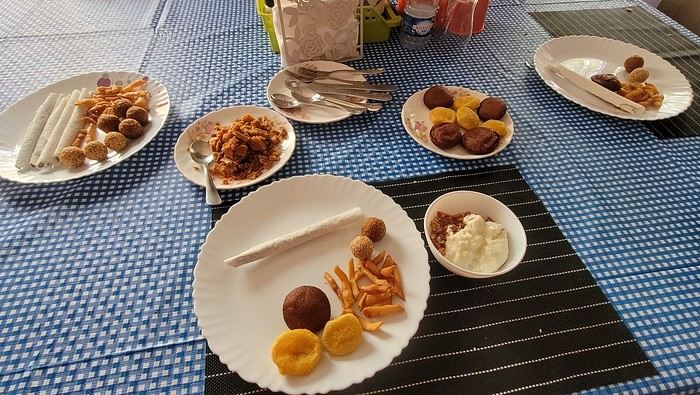
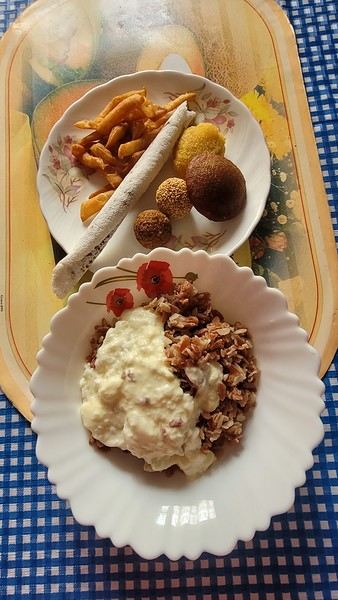
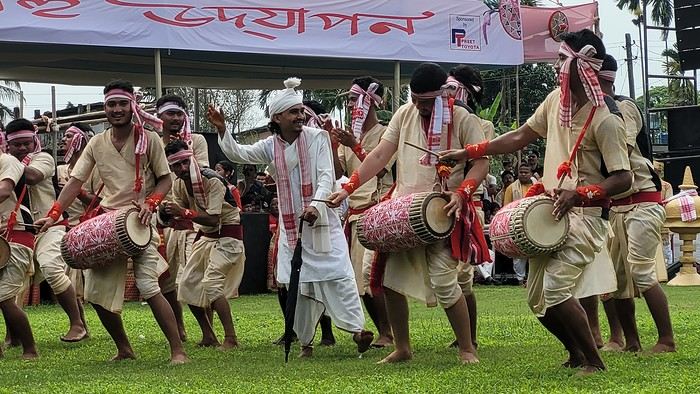
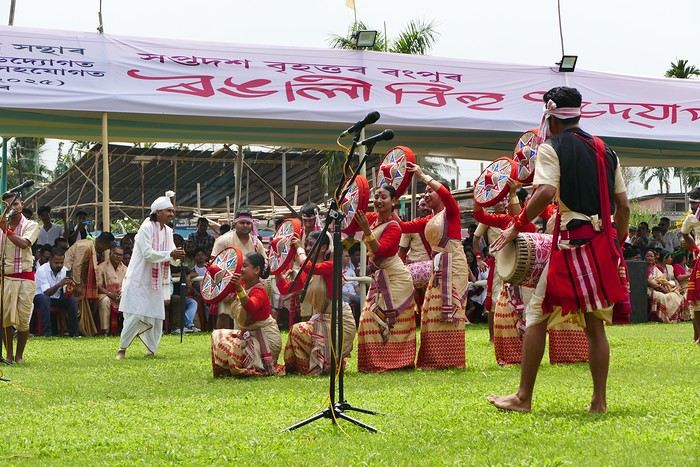
Monday, April 14 Today we’re celebrating Bihu, the Assamese New Year. This New Year is also celebrated in several states across India—Punjab, Tamil Nadu, Karnataka, and Kerala. Today we exchange gifts, though I didn’t wait for the day to give mine—I handed them out when I arrived. Nirupam’s father gives me a gamosa, the second one of the trip. Breakfast this morning is all sweet, with several different Bihu specialties: pithas, of course, jolpan made from various types of rice, yogurt, jaggery, and coconut noiX. The preparation takes a long time with multiple steps, and it’s sooo good. There are also laru—coconut-based balls—and black sesame balls. It’s all a treat.


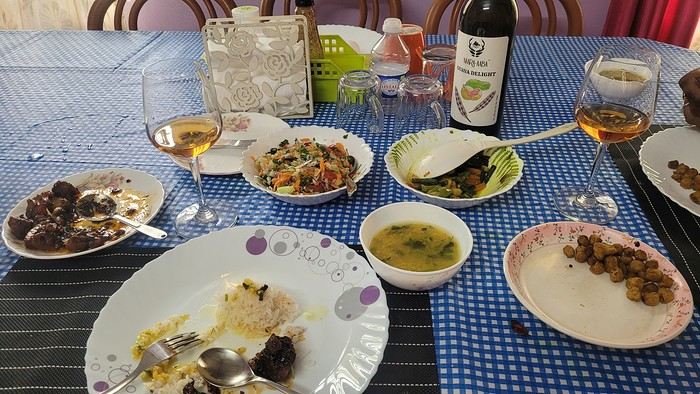
Nirupam, his daughter Elena, and I head out for a walk in his neighborhood. He’s happy to show the neighbors he’s hosting a guest of “great importance”—haha!! On the way back home, we go shopping to celebrate Bihu. He doesn’t want to take his car; he insists on going by autorickshaw so I can see more of local life—and, more importantly, so people can see *me* better. I can’t believe what I’m hearing, and I play along, waving to the crowd like a queen. We visit a small jewelry shop to buy the traditional necklace women wear for the festival, along with bangles. I have to insist on paying for them myself. Nirupam picks out a ring for himself, which I buy for him—we laugh because it only costs 2 €. I’m feeling very generous today!!! We return for lunch: pork, rice, and vegetables, paired with guava wine. I didn’t know that existed! It has a unique taste, but it’s not bad.

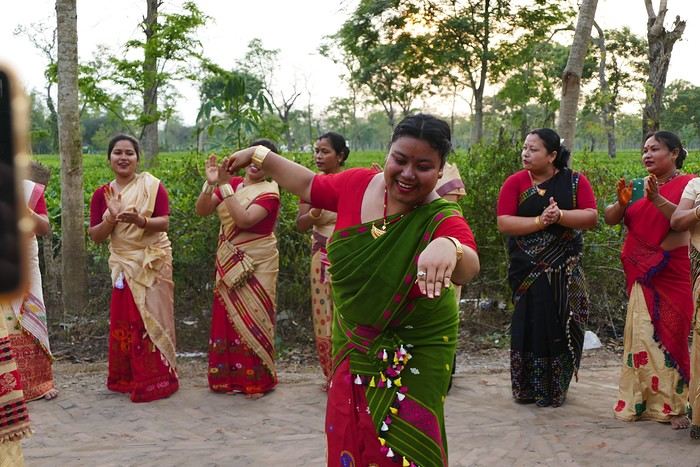
In the afternoon, Nirupam, his wife Ghritachi, and I head back to the village—this time by car—to do more shopping. We buy sarees, a blouse, and a petticoat for the star I am here. On the way back, it’s time for tea and sweets. Oh boy, I’d become diabetic fast if I lived here! In the evening, a group of women comes to dance in front of the house, going door-to-door. They stay with us for a while, and I’m invited to join them. I can’t show you the video, but friends have joked that I should open a dance school—thankfully, we don’t have the space!!!


After the performance, we give them a little money and take some photos. Later, we go for another walk, this time with Putoli, Nirupam’s mom. Tonight, I repack my bag—my stay with this wonderful family is coming to an end.
AL Aleph240758 Veteran ·
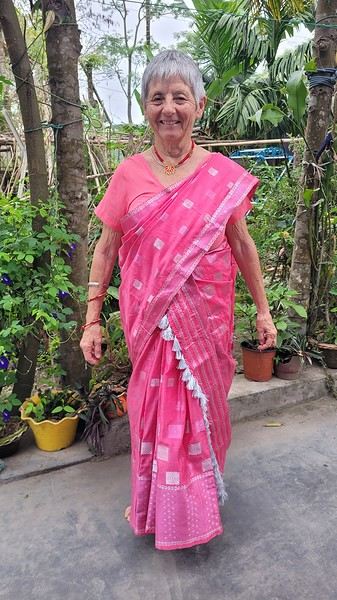
Tuesday, April 15th. This morning, the big day to wear the saree finally arrived. It’s not exactly a saree because this outfit consists of a bustier, a plain first petticoat covered by a second one printed to match the saree. The two women dress me, pinning safety pins all over—it’s safer because I move a lot and I’m not used to wearing so much fabric. The final result is stunning; the outfit looks great on me, but only for a day. You’d have to be used to wearing this every day, and it gets really hot with all those layers. The saree doesn’t have a petticoat, so I guess it’s more comfortable that way.


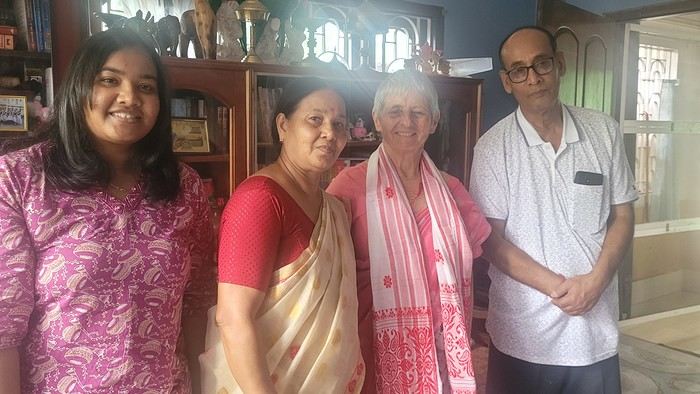
We take lots of photos and share plenty of hugs with the family.

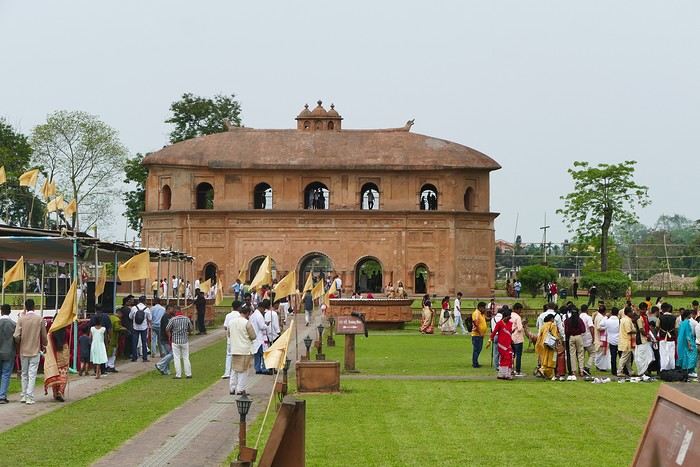
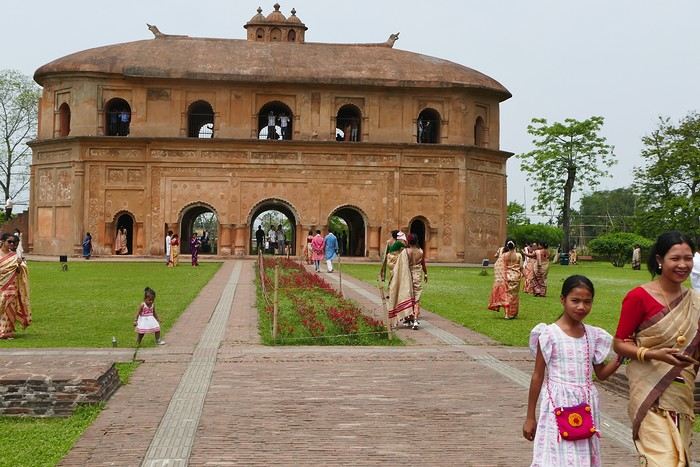
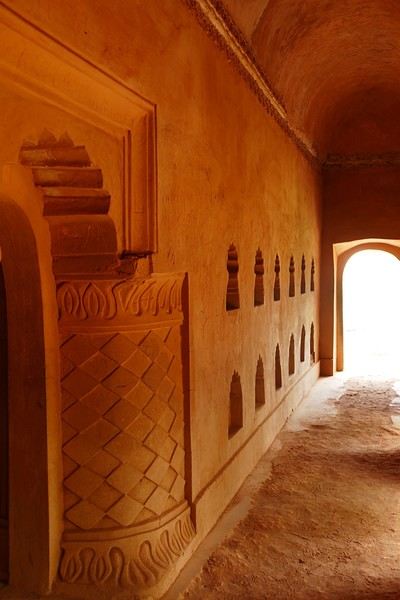
- With Nirupam and Ghritachi, we head to Sivasagar for the Bihu festival. On the way, we stop for breakfast—just tea for me. Ghritachi is from Sivasagar, and we go to her parents’ house. When we arrive, we have another sweet breakfast. I’m starting to get used to it. Nirupam and I head to the festival while Ghritachi stays with her parents and her sister. Sivasagar was once known as Rangpur and was the capital of the Ahom kingdom. We go to RamGarh, and when we arrive, there aren’t many people around. The building has two floors, and the roof is shaped like a long boat. It used to be a royal sports pavilion where Ahom kings and nobles watched games like buffalo fights.


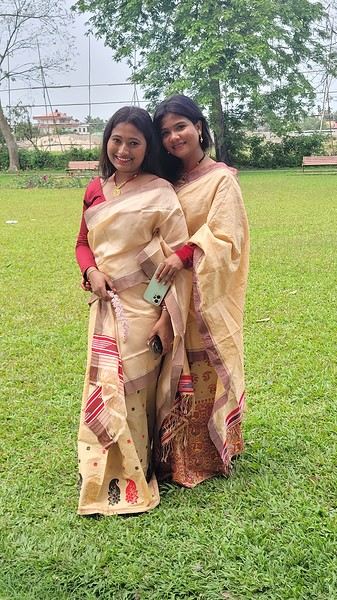
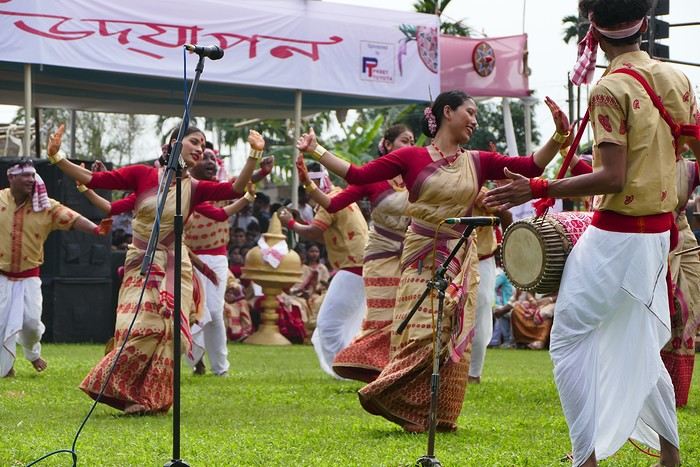
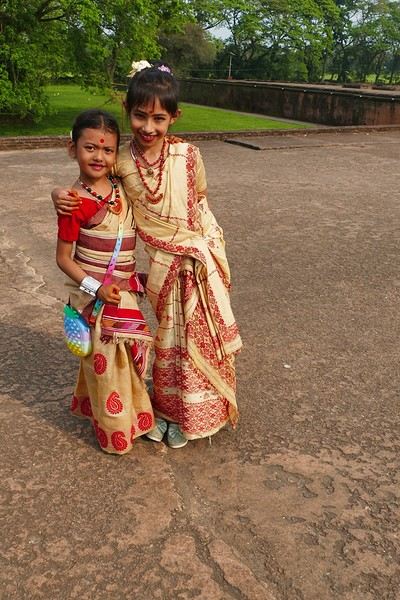
When we arrive at RamGarh, the crowd hasn’t shown up yet, so we can explore the building in peace. It’s in a well-maintained garden with a path leading to it. Women arrive in their beautiful Bihu-specific sarees—beige with a red border and different patterns at the bottom. They all wear special festival necklaces with matching earrings, and some have an orchid in their hair. They’re all so elegant and graceful in their outfits—way more than us in our jeans and T-shirts. And oh, what a surprise—we end up taking lots of photos, selfies, and the vibe is really cool. I have a great time exploring this beautiful building, which feels so alive today.


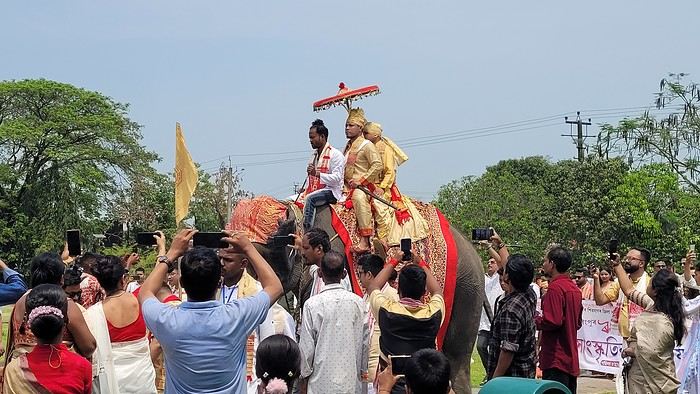
We find a spot in the shade under the canopy to watch the show. Nirupam disappears—I have no idea where he went—so I save his seat. The spectators arrive, and the canopy fills up quickly. Outside, I see some commotion and try to get closer to see what’s happening. An elephant carrying three people, accompanied by musicians, approaches the stage.


The young king, dressed all in white, approaches the stage where the musicians are seated and declares the festival open.


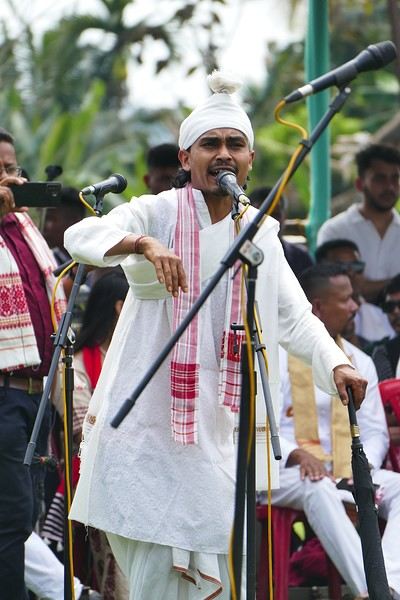
He stays with the musicians as the dancers take the stage and sing many songs with them.


I can’t see very well, so I move to the lawns—practically the VIP spot—and from there, I can take videos, photos, and enjoy the moment, which feels magical once again.


We leave around 1:30 PM, and then the chaos begins—traffic is insane, and all the roads are jammed. It takes us a good two hours to cross the city and get back home. Lunch is waiting for us: a vegetable rice dish cooked differently, and I love it. Given the traffic, I take a tuk-tuk to the guesthouse, which is near Ramgarh. I have to pay a bit more than usual because of the traffic. Before we part ways, we take some final souvenir photos. Ghritachi’s father gives me another gamosa—the third one from the family during this stay.


We’re all sad to say goodbye. This stay will be a highlight of the trip. Nirupam is coming to France in July, and I’m thrilled to host him, along with Michèle, who made this meeting possible. They’ll stay for a week, and I’ll take charge of showing them my beautiful region, which they don’t know yet. The blank pages of their travel journals will soon be filled with color, and I can’t wait. When I arrive at the guesthouse, a woman welcomes me and shows me to a fairly large and decent room. They’re having internet issues, and I have to wait for the owner’s daughter, who manages the guesthouse. Jess arrives in the evening—she’s young, very dynamic, and super friendly. She gives me a SIM card from one of her employees who’s away right now, so I can get internet. She’s adorable. She’s really impressed that I’m traveling alone all the way here. She’d love to visit Europe and France but was afraid to go alone. Seeing me travel like this, and at my age, gives her courage and hope that she can come this autumn and visit me. She insists on showing me the countryside around Sivasagar, and we head out by car. Jess wants to take me back tomorrow for the sunset if I get back early enough—we’ll see. In the evening, she takes the staff to the festival and invites me along. We drop off the girls from the house, but I’m pretty tired after such a wonderful day, so we head back at 11 PM, and I go to bed. Jess has to arrange my bus to Guwahati and a tuk-tuk for tomorrow’s visits. It’s quite late, so I’ll see what happens in the morning.
AL Aleph240758 Veteran ·
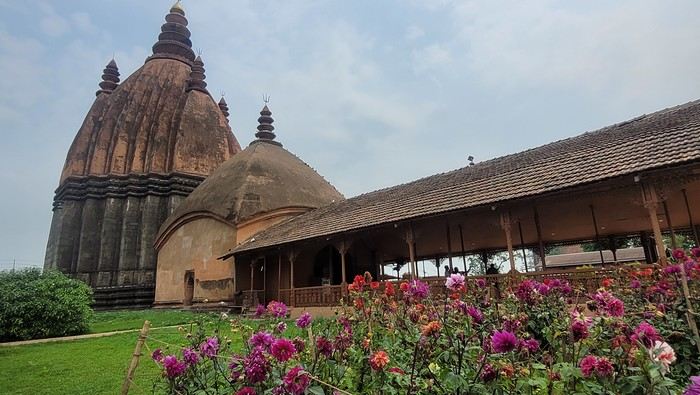
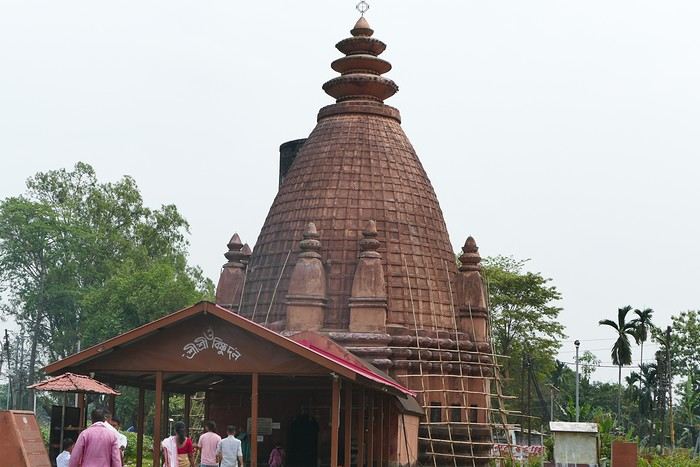
Wednesday, April 16 Breakfast isn’t included in the room price, but Jess treats me to it. I have to wait until 8:30 AM to see the person who welcomed me yesterday arrive with a tray full of an omelet, toasts, and tea—enough to keep me going for a good part of the day. Jess is still asleep, so I leave the guesthouse and set off on foot with the help of Maps.me for my first visit to the Sivadol, Vishnoudol, and Devidol temples. Along the way, I pass several basket-weaving shops. They’re beautiful but too large to bring home, and shipping them would be way too expensive. The walk to the temples is pleasant, and I arrive easily. Indian tourists who came to celebrate Bihu are here today, so I’m not alone this morning. The entrance is through the large middle temple, Sivadol, the most beautiful one. People come up to me, curious to meet me, and I get the usual questions: where I’m from, if I’m traveling alone, my age, how many hours the flight took to get here… It leaves them thoughtful, and they’re happy to take photos with me. During the Bihu festival, I noticed that very young girls were wearing sarees, which are usually only worn once a girl starts menstruating—so it’s different here.


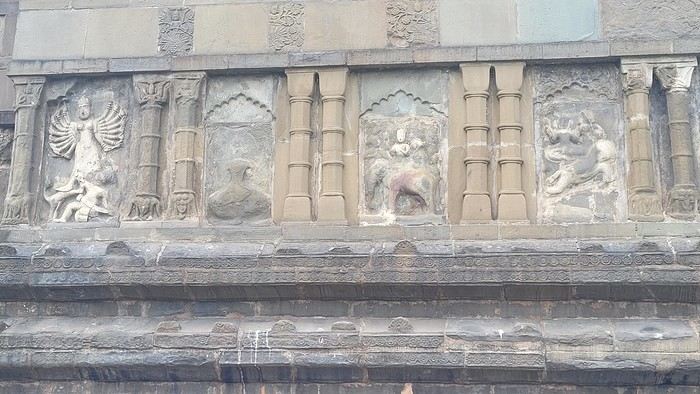
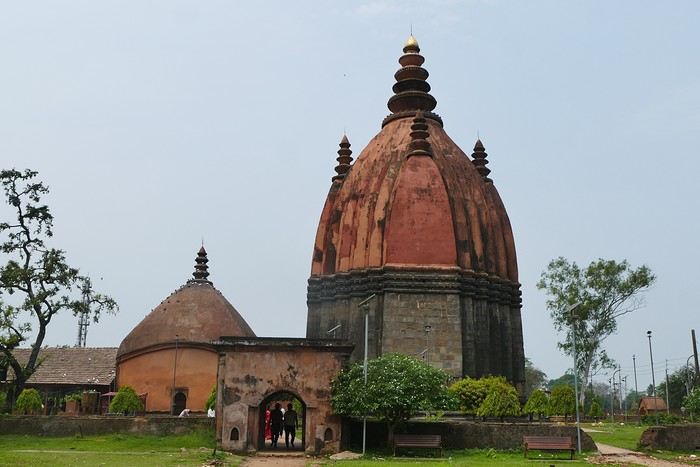
This temple has a tall central tower and is said to be the tallest Shiva temple in India. The outer walls are adorned with sculptures and floral motifs in bas-relief, with an antechamber resembling a traditional Assamese hut.

The goddess Durga is depicted with 16 arms.


To its right is Vishnoudol, with a dome decorated in honeycomb patterns.


To its left is Devidol.


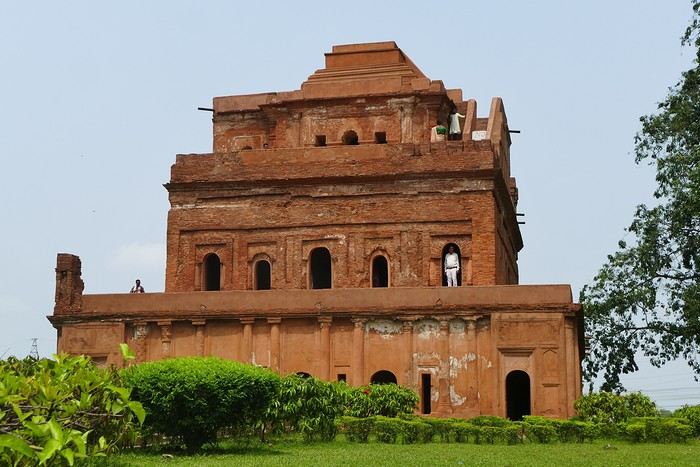
At the exit, several auto-rickshaws are waiting for customers. I pick one at random, and they all come over to ask where I want to go. Karenghar, located outside the city in Gargaon on the way to Charaideo Maidam. It’s a royal palace of the Tai-Ahom kings. A seven-story structure, with the three levels below ground called Talatal Ghar and those above ground called Kareng Ghar. It’s shaped like a red-brick pyramid. I really like this place and stay for a while.

The top floor is topped with a dome and a chamber. Originally, it had four watchtowers, but only two remain today.


A young visitor approaches me for a photo and remembers seeing me the day before in full attire at the festival. I head back to Sivasagar and have the driver drop me off at Sivadol. I want to go to Talatal Ghar, 4 km away, but the driver asks for a price that’s way too high, so I set off on foot. Along the way, a shared taxi stops next to me and offers a reasonable fare, which I accept.
AL Aleph240758 Veteran ·
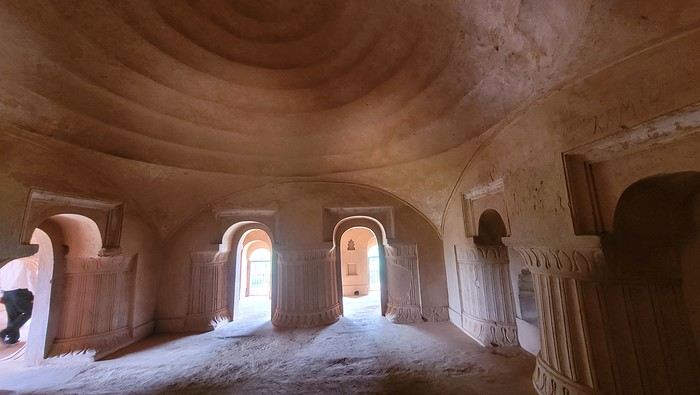
Talatal Ghar is an underground barracks, and the lowest level is said to be connected by a tunnel to the river. I meet up with a lot of tourists who were at Kareng Ghar, and we take a few more photos.


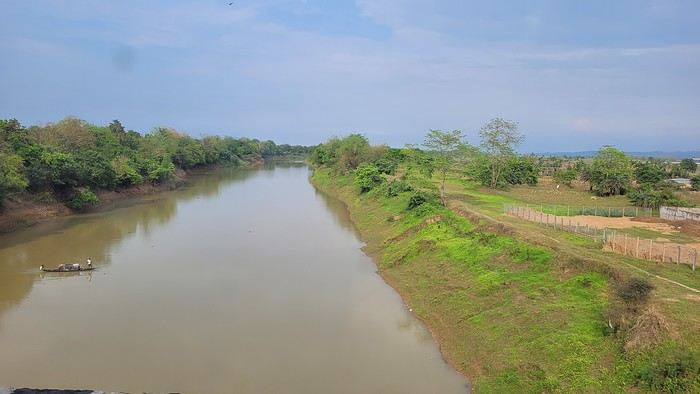
From there, I head out for a stroll to Joysagar Lake, where I find a great restaurant.

I take a shared taxi back to Ramghar, which is near the guesthouse. At dinnertime, Jess drops me off at the restaurant by car. She’ll call me later to check if I’ve eaten well and, most importantly, if I’ve made it back safely. She’ll also accompany me to the bus tomorrow morning.

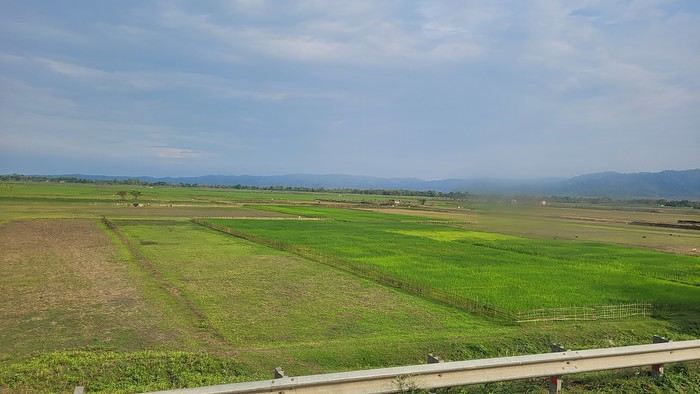
The bus leaves at 8 AM for Guwahati. We arrive at 4:30 PM. The tea gardens have given way to rice fields, and I react too late to take some photos during the trip. My nose is glued to the window, and I relive the whole extraordinary journey with a pang in my heart at the thought of leaving Assam.


I return to the same guesthouse. I need to walk, so I head out for a stroll to the park near the planetarium. There are lots of activities—Bihu is still being celebrated, and the crowd is out in full force. An orchestra is playing in the background, but no one is dancing; everyone is just watching the musicians. What a shame.

What a unique and unforgettable trip.
TH Thlaspi ·
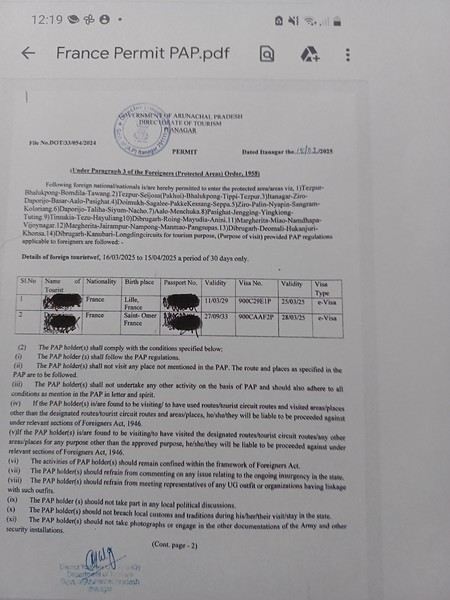
To protect local populations, a permit is required to enter Arunachal Pradesh since 1873. It’s the ILP (Inner Line Permit) for non-resident Indians and the PAP (Protected Area Permit) for foreigners, issued for a duration of 30 days to any group of at least 2 people. Recently, the conditions have been slightly relaxed: individual access is now allowed to Itanagar, Tawang, and the Ziro Valley. Checks are frequent.

As for the climate, two 15-day stays (Nov 2019 and March 2025) were ideal. It gets chilly at night in the high-altitude Tibetan areas like Tawang and Mechuka (no electricity, generator out of order). The villages in Ziro Valley have quickly lost some of their charm due to modernization (corrugated iron roofs, makeshift garages, etc.).

Apatani Ziro
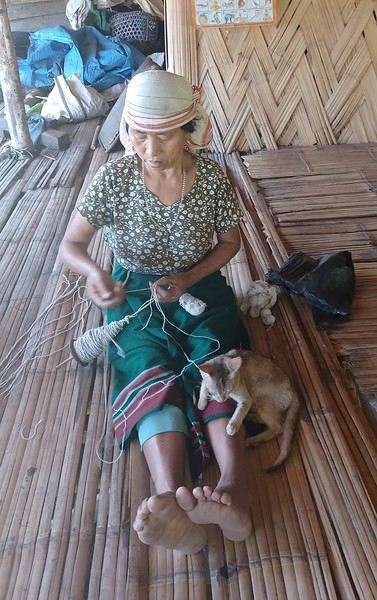
The most interesting sites seem to be around Along (Aaloo) up to the ridge leading to Yingkiong. Galo Aaloo

Adi Yingkiong Riga village Surroundings of Pasighat The lower part of the state is of more niche interest. Though...
AL Aleph240758 Veteran ·
Thanks so much, Pierre. Is April rainy? Can you get the permit online like the one for Nagaland? If not, where do you need to go, and how long does it take to get it? How much does it cost? Is it easy to get around using local transport? I’m really tempted by this region—I’ll definitely reach out again for more info. Thanks!
PR Prerna Regular ·
Hi there, I just read your story in one go and found it really interesting—thanks for sharing! Back in 1997, I set off for Calcutta with plans to visit the accessible regions of the northeast, especially Nagaland, which fascinated me. However, after an unsuccessful visit to the Ministry of Home Affairs, I couldn’t get a permit because you had to be in a group of at least four. Instead, I headed to Darjeeling, then Sikkim, before wrapping up my three-month trip with a few weeks in Goa. I’ve always kept that deep desire to go, especially now that it’s easier to get there than back then when permits were required. Plus, that change of plans led me to meet the woman who would become my wife five years later in Kalimpong—we’re still together here in Switzerland. The camper van was probably waiting for its chance to cross into Burma to reach Southeast Asia without having to take a boat. It’s complicated—Burma doesn’t let you pass easily, and if you do, you *must* hire a guide/supervisor for the entire crossing until you exit into another country, all with exorbitant fees. But it’s still more fun and much cheaper than taking a boat. It even makes it possible to travel from France to Singapore entirely overland. After that, you can even return via Laos, China, the "Stan" countries, Turkey, or even Russia and then Europe.
GB Gbubu Regular ·
Thanks Marie Jo for this beautiful travel story. I read the account in silence all the way to the return to Guwahati. I was supposed to take a similar trip in 2024—Meghalaya, Assam, Nagaland, and Arunachal Pradesh (almost 7 weeks)—but fate had other plans after an accident in West Bengal on the 10th day of a trip that was supposed to last over 10 weeks (including 3 weeks in WB). It was a bit like "twisting the knife," but I really loved it. I hope to finish this trip next year and I’ll add visits I hadn’t included back then. That said, in 2024, we couldn’t go to Manipur (I wanted to visit two megalithic sites not far from the Nagaland border), and I don’t think it’s allowed today. For the Arunachal Pradesh permit, I got it through an agency I’d booked a car and driver with. Thanks!!!
AL Aleph240758 Veteran ·
Hi Pierre, I hope this travel journal inspires you to check it out. The permit for Nagaland is available online and is processed very quickly. Make sure to keep it with you during the trip for checks in every city. This state is easy to explore using shared taxis, though the roads are often dusty. I highly recommend the Mon festival—I’m not sure if I’ll ever go back, it all depends on whether I can visit Arunachal Pradesh. I haven’t given up yet 😏😉
AL Aleph240758 Veteran ·
Hi Gisèle, I remember chatting with you during my trip. Hope everything’s going well and you can travel again soon. West Bengal really is fascinating—I loved it. Maybe I should consider going back to explore it more. Could you share the details about that agency that booked your Arunachal Pradesh permit for you? I’ll ask Nirupam if he can help me get one when he’s at my place in early July. I’d love to check out that area. I’m picking up my travel journal on Meghalaya again—the rain kind of ruined the week, though. Maybe we’ll cross paths in India one of these days 😉
GB Gbubu Regular ·
This is Aborcountry Travels and Expeditions aborcountrytravels.com

aborcountry@gmail.com They're based in Itanagar. I'll keep reading about Meghalaya. Thanks.

AL Aleph240758 Veteran ·
Thanks for the info!😊
TH Thlaspi ·
Hi Marie-Jo, Here are a few answers to your questions about obtaining the entry permit for Arunachal Pradesh. First, contact a travel agent (in Guwahati for convenience)—they’ll handle the paperwork. The cost is $50 + fees. Processing time: less than a week. You’ll need to provide a copy of your visa. For individual travelers, the permit is valid for Tawang and the Ziro Valley. For the rest of the territory (except border zones), you’ll need to be in a group—two people are enough. For the climate, late autumn to early spring is best—mild temperatures. I did two two-week trips in November and March, and there wasn’t a single rainy day. The Myoko Festival takes place in mid-March. Public transport is practically nonexistent, so shared taxis or hiring a driver are your best options. The mountain roads, while not as spectacular as those in Kashmir or Garhwal, are in (very) poor condition. For example, the road from Aalo to Mechuka (180 km, 9-hour journey) is only passable in alternating two-hour windows—two hours for travel, two hours for repairs. Good to know if you’re leaving at 5 AM. Hope these little tips help with planning your next trip! Safe travels
AL Aleph240758 Veteran ·
Thanks so much, Pierre! Your tips are really valuable and will definitely help me and others, I’m sure.
FR Fran38 Regular ·
Hi there, a bit of confusion here— is the permit for Nagaland the PAP or the ILP? Thanks
SI Sinforosa Veteran ·
Hi Aleph240758,

Your travel journal is amazing—more like a documentary than a vacation diary. I loved the Mon festival, the carved wooden doors, the markets, the portraits... everything!
I’ve never been drawn to India before, but your post made me want to go!

Similar discussions

You might also like