S'il est un voyage dont je rêvais depuis très longtemps, et que je n'avais eu de cesse de toujours remettre à plus tard, c'était bien celui-là. Ce rêve était encore plus ancien que mon attrait pour ma Chine, et ce dernier ne lui était d'ailleurs pas tellement étranger. Ca doit en fait remonter au superbe documentaire télévisé d'Haroun Tazieff "retour à Samarcande" qui doit dater du début des années 90. En m'intéressant à Samarcade, j'ai finalement été obligé de me documenter sur l'histoire de l'Asie Centrale, et, inévitablement, d'aborder celle des Mongols. C'est plus tard en visitant la biographie de Gengis Khan et l'histoire de son empire que j'ai été forcé de m'intéresser à la Chine et d'enfin de m'imprégner de ce milieu qui est aujourd'hui le mien. Il n'était donc que justice que je fasse physiquement le trajet inverse, et que de Chine, je rejoigne les villes mythiques de la jeune République d'Ouzbékistan.
La première étape fut de demander un visa ouzbèke. J'ai tout d'abord été étonné lorsque l'Ambassade de Pékin m'a donné un numéro de téléphone portable lorsque j'ai demandé comment joindre le consulat de Shanghai. J'ai appelé ledit numéro, et suis tombé sur un homme très accueillant qui m'a clairement expliqué les pièces à produire et la marche à suivre. Il m'a également suggéré de lui passer un coup de fil avant d'aller à son bureau, car il y est seul et est parfois en déplacement. Ce fut notamment un peu plus tard lorsque je l'ai appelé quannd il était en déplacement à Pékin. Lorsqu'il eut fini de me réexpliquer la marche à suivre à distance, il se laissa aller à un "merci de venir visiter notre pays", avec une voix émue qui traduisait autre chose qu'une simple formule de politesse. Charmante entrée en matière!
Je me suis rendu la semaine suivante à son bureau, situé dans une tour de bureau voisine du Bund et toute proche du consulat russe, et qui n'est en fait pas un consulat mais l'agence d'Ouzbekistan Airways qui a cessé d'opérer à Shanghai. La décoration n'a cependant pas changé, et le grand bureau vide et joliment décoré était toujours aux couleurs de la compagnie nationale. Tandis que j'entendais le consul s'entretenir en ouzbèke au téléphone, la secrétaire m'a invité à m'asseoir dans un confortable fauteuil d'où j'ai fauché quelques brochures touristiques et une carte du pays qui trainaient sur les étagères. Une fois sa conversation terminée, un grand gaillard au faciès centre-asiatique est venu m'accueillir et m'a fait rentrer dans la salle de réunion en me proposant du thé ou du café.
Il allait m'assister lors du remplissage du formulaire en commentant chaque case malgré la simplicité des questions posées. En fait il en profitait pour faire la conversation car, manifestment, il n'était pas débordé par son activité. Nous avons discuté un bon moment. Ca faisait un an qu'il était à Shanghai et c'est lui qui a ouvert ce bureau. La conversation était donc plutôt celle entre deux expatriés qu'entre un employé consulaire et un demandeur de visa. Puis nous avons discuté un petit moment des possibilités touristiques du pays, cartes et photos à l'appui, et c'est avec plaisir que j'ai répondu à ses questions sur la France.
En début de semaine suivante, sa secrétaire m'a téléphoné pour me dire que le visa était prêt et que je pouvais passer le prendre. Je suis donc retourné à son bureau le lendemain, et cette fois c'est en langue française que Monsieur le Consul est venu m'accueillir, en s'excusant du fait que je doive attendre une dizaine de minutes supplémentaires le temps qu'il prépare le visa et qu'il le colle sur mon passeport. Des excuses??? On croit rêver! Pendant ce temps-là, des ouzbeks déambulaient dans la salle d'accueil, en me saluant d'un geste de la main portée sur le coeur, à la manière des iraniens.
Le consul m'a finalement tendu mon passeport agrémenté d'un visa bleu et vert aux couleurs du pays, et en me demandant de lui téléphoner à mon retour d'Ouzbékistan pour que je lui raconte mon voyage!
Cette entrée en matière spectaculaire - tous les demandeurs de visa de par le monde savent à quel point l'arrogance et l'impolitesse du personnel consulaire de tous les postes diplomatiques de tous les pays peut atteindre des sommets - était un prélude au formidable accueil que ses compatriotes allaient me réserver un peu plus tard.
Quelques temps plus tard, j'ai reçu mes billets d'avion, et ai ressenti une émotion certaine en voyant le dernier arriver: Samarcande et mon nom figuraient dessus.
Comme j'avais envie de faire un voyage inoubliable, j'ai décidé d'épuiser mon quota de galères au moment du départ, pour me réserver de bons moments par la suite. Je n'ai pas chômé, et me suis donc offert quelques moments de stress inoubliables les derniers jours avant le départ. Je passe sur la plus belle d'entre elles qui concernait le renouvellement de mon visa chinois qui aurait en principe dû m'empêcher de quitter le territoire chinois pendant la période des vacances. J'ai finalement réussi à la surmonter, et ai finalement arrêté mon itinéraire définitif, qui n'était certes pas le plus simple: Shanghai - Hong Kong - Pékin - Tachkent - Samarcande, le tout en envion 48 heures.
C'est à Hong Kong que les problèmes directement liés au voyage ont commencé à surgir, quand l'avion d'Air China (décidemment, cette compagnie ne m'apporte jamais rien de bon) que je devais prendre à destination de Pékin a décidé de rester immobile à son point de départ, bien que tous les passagers aient embarqué. Toutes les lumières de l'avion ont fini par s'éteindre, laissant présager un ennui technique qui, je l'espérais, ne nous retarderait pas tôt. Il était hors de question de décoller le lendemain, car tout le parcours et donc le voyage s'effondrerait comme les défenses d'une ville-oasis face aux assauts d'une cavalerie tartare. Les lumières ont quand même fini par se rallumer, mais nous n'avons pas décollé pour autant. L'hôtesse a fini par nous dire qu'une tempête à Pékin rendait incertain notre décollage et que l'équipage était en attente d'instructions. Je n'arrivais pas à avaler son histoire et je bouillais intérieurement.
A côté de moi, des dongbeiren (des chinois du Nord-est) commençaient à s'impatienter aussi. Les dongbeiren ont le sang chaud et une mauvaise réputation mais je m'entends en général bien avec eux. J'allais donc essayer de les mettre de mon côté afin d'organiser une petite cellule de crise dans l'avion et tenter d'avoir des informations plus claires. Je n'ai eu aucun mal à acculer l'hôtesse... dans ses derniers retranchements en mettant le doigt sur les contradictions flagrantes de son discours (la tempête n'était finalement pas à Pékin mais sur le parcours, et il était interdit de la contourner, si si! Qu'est-ce que ça peut être stupide une hôtesse de l'air chinoise quand même!) Les dongbeiren ont fini par acquiescer à mes propos et hausser le ton. Je n'avais plus qu'à les laisser faire et à regarder le spectacle avec une mine réjouie. Hélas, tout ce qui intéressait les dongbeiren était de savoir quand on allait manger et ils ne m'ont guère aidé à obtenir des informations pertinentes. J'ai donc fini par demander à l'hôtesse ce que faisaient tous ces techniciens autour de l'avion, et pourquoi on avait amené un énorme tuyau (j'ai supposé que c'était pour le ravitaillement). L'hôtesse a refusé de répondre, mais finalement le tuyau a été évacué et l'avion a décollé. Je suppose que c'était un tuyau anti-orages.
Le lendemain matin, à Pékin, j'ai pu constater la terrible inefficacité du système d'enregistrement des passagers d'Uzbekistan Airways, et, après avoir fait une heure de queue au milieu de passagers turkmènes (la première fois que je voyais en chair et en os des ressortissants du mystérieux et totalitaire Turkménistan), et m'être finalement présenté quasiment en dernier devant le comptoir, un chinois m'a benoîtement dit que je ne pouvais pas monter à bord car mon billet avait été annulé et qu'il n'y avait pas de place pour moi à bord. L'agent avait manifestement fait une erreur, ce que la compagnie a reconnu, mais la seule solution qui m'a été proposée a été d'attendre 24 heures aux frais de la compagnie. J'ai refusé, et ai dû montrer les crocs pour leur faire comprendre que c'était inacceptable, et finalement, le responsable ouzbek de la compagnie est venu et m'a fait surclasser en Première. Merci Monsieur!
Après avoir bousculé quelques nord-coréens qui me faisaient perdre du temps dans l'aéroport, j'ai couru jusqu'à l'avion, en ayant tout juste le temps de remarquer que le vol pour Pyongyang partait juste après à la même porte d'embarquement, mais je n'ai pas fait tellement attention à ce détail. Une fois à bord, je me suis effectivement retrouvé en première, à côté d'un ouzbek qui avait aussi été surclassé et qui profitait de l'aubaine pour vider gratuitement les réserves de vodka de l'appareil (voire de la compagnie). Malgré ses demandes répétées et insistantes, j'ai refusé de me joindre à son entreprise et l'ai laissé tranquillement savourer son breuvage. A ma droite, une dame apparemment de grande importance monopolisait tous les soins de l'équipage, puis du personnel de l'aéroport à l'arrivée. Sans doute une épouse de ministre ou quelque chose comme ça.
Bon an mal an, j'ai finalement atterri à Tachkent avec juste une heure de retard. Le plus gros était fait, j'étais maintenant en Ouzbékistan.
L'aéroport de Tachkent m'a rapidement rappelé celui d'Irkutsk, qui était le seul que je connaisse en ex-union soviétique. Pas très grand, un hall à bagages plutôt chaotique, et un passage de la douane assez pointilleux... pour certains. A l'aller comme au retour, c'est le passage de la douane qui s'avérait le plus long et le plus problématique, non pas en raison de la fouille des bagages qui était inexistante, mais en raison de la montagne de papiers que certains devaient remplir, et faire viser et tamponner. Même la déclaration en douane la plus simple prenait une tournure bureaucratique des plus exaspérantes, mais cela faisant partie du jeu, j'ai fait contre mauvaise fortune bon coeur.
La première chose à faire ensuite fut de changer de l'argent au petit bureau de change de l'aérogare. La bonne nouvelle, c'est que le taux de l'euro était très intéressant, en raison de son appréciation toute récente. La mauvaise nouvelle, c'est que la monnaie ouzbèke, le sum, ne se décline qu'en petites coupures de 1000 et moins. 1000 sums, ça fait 0.6 euro, ce qui veut dire qu'on est en permanence obligé d'avoir une liasse de billets sur soi, si on veut prévoir une quelconque dépense même légère. Quand on aime voyager léger comme moi, ça oblige à avoir une poche un peu gonflée de billets, ce qui n'est jamais agréable. Apparemment, ma réaction en voyant les liasses qu'on m'a mis dans un sac a fait rigoler les deux employées du bureau.
J'avais plusieurs heures à tuer avant de prendre mon avion pour Samarcande, et ai donc décidé de les employer à laisser ma valise quelque part, et à partir en centre-ville avant de retourner à l'aéroport en début de soirée. Il fallait pour cela me rendre à l'aérogare des vols nationaux, ce qui m'a semblé être une tâche plus complexe que prévu lorsque j'ai mis le nez hors de l'aérogare. Aucune indication nulle part, ni en anglais, ni apparemment en russe ni en ouzbek. Je suis retourné dans le minuscule aérogare des vols internationaux et ai trouvé, ô miracle, un bureau d'information. La dame ne parlait hélas pas anglais, ou quasiment pas, et je n'ai pas réussi à lui faire comprendre que je cherchais juste le terminal domestique, une question somme toute pas trop difficile à condition de la comprendre. Une fois que j'ai réussi à me faire comprendre, la dame a décroché son combiné pour tenter de trouver la réponse à ma demande. Je ne tiens pas à jeter la pierre à cette brave dame. Après tout, il n'est pas aberrant de ne pas connaître la localisation du terminal domestique lorsque l'on travaille au bureau d'information de l'aérogare international, même quand les deux aérogares sont en fait séparés d'une centaine de mètres. Après avoir raccroché, elle m'a finalement indiqué de sortir et de prendre sur la droite, ce que j'ai fait.
En chemin, un petit vieux m'a abordé et a fait mine de demander ce que je cherchais. J'ai baragouiné "airport" "samarkand" et il m'a indiqué la direction à prendre, à cinquante mètres de là. Je l'ai remercié, mais en échange il m'a demandé de lui payer 5 dollars pour l'aide qu'il venait de m'apporter. Je lui ai expliqué dans un anglais aussi oxfordien que possible qu'une telle demande n'était pas tout à fait conforme à l'idéal de l'hospitalité ouzbèke que je m'étais fait, mais il ne comprenait apparemment pas et se contentait de répéter le mot "dollar". Finalement j'ai réussi à le semer et ai pénétré dans l'aérogare domestique.
Là, la mission se compliquait car il s'agissait d'expliquer que je voulais déposer ma valise quelque part en attendant mon vol, une demande beaucoup plus complexe que la précédente. Après quelques vaines tentatives, j'ai fini par tomber sur une dame qui parlait quelques mots d'anglais, et qui, entendant ma demande, a apostrophé un autre employé de l'aéroport: "hey, Borat, blablabla, blabla, blablabla". Ciel, un Borat, un vrai! Comme dans le film, mais sans la moustache! Comme avant de partir en Ouzbékistan, certains amis peu au fait de la géographie centrasiatique m'avaient chargé de passer le bonjour à Borat, je me suis exécuté et lui ai fait un petit signe de la main en rigolant intérieurement. Finalement, j'ai pu laisser ma valise derrière le comptoir d'enregistrement moyennant une petite somme.
En ressortant, le petit vieux m'a rejoint pour cette fois me proposer les services d'un taxi. Le prix demandé était exorbitant, mais j'ai fini par le ramener presqu'au niveau du prix que la dame de l'aérogare m'avait suggéré comme étant le vrai prix, et je suis monté dedans. Il était temps, la chaleur de ce milieu d'après-midi commençait à devenir pesante.
N'ayant aucune idée de ce que je voulais et pouvais faire à Tachkent en quelques heures, j'ai décidé de me rendre sur la Place Amir Temur, et de là, me promener un peu au hasard. Je n'ai en revanche pas pu visiter le musée d'Amir Temur à deux cents mètres de là, qui était fermé en ce jour de Fête du Travail.
La statue d'Amir Temur était bien telle que je l'imaginais, majestueuse, le tyran chevauchant une fière monture, son arme à la main. Amir Temur, c'est en fait le nom local du conquérant plus connu en Occident sous le nom de Tamerlan, ou Timur Leng, ou encore Timur le boîteux. Ce turco-mongol de la fin du 14ème siècle était sans doute un des plus redoutables et des plus emblématiques conquérants qu'ait connu l'Asie Centrale, dont l'histoire fut et reste encore pourtant riche en tyrans tous plus cruels les uns que les autres. Mais Amir Temur est chez nous le plus connu d'entre eux, notamment grâce au fait qu'il soit à l'origine d'un des âges d'or de Samarcande, et au fait qu'il ait été un allié de circonstance de certaines puissances occidentales combattant d'autres tribus turques (et notamment Byzance qui n'avait pas encore succombé aux assauts des turcs ottomans).
Amir Temur est devenu un symbole national dès après l'indépendance de la nouvelle République d'Ouzbékistan. Ce pays sans histoire, sans véritable unité géographique ni ethnique avait besoin d'un socle rassembleur, et les dirigeants de l'époque ont alors trouvé en Tamerlan le candidat idéal pour jouer ce rôle. Et pourtant... quelle absurdité! Amir Temur n'était certainement pas ouzbek, ce peuple n'existant d'ailleurs sans doute même pas encore à l'époque timouride. Son origine ethnique reste d'ailleurs plutôt floue, même s'il se plaisait à dire qu'il était un des descendants de Temudjin, le Gengis Khan. Ce n'est pas impossible. Mais admettons quand même qu'il devait bien puiser quelques origines communes proto-turques avec le peuple ouzbek qui allait occuper plus tard sa terre natale. Cette falsification historique est d'autant plus comique que c'est justement un descendant de Timur, Babur le fondateur de l'empire moghol en Inde, qui fut délogé de Samarcande par les ouzbeks quelques générations plus tard. J'ai d'ailleurs posé la question à plusieurs ouzbeks éduqués au cours de mon voyage, qui étaient tous d'accord avec le fait que la récupération du mythe de Tamerlan par le président Karimov et sa clique était une sacrée supercherie, peut-être même une des plus remarquables de l'histoire récente.
Mais là n'est pas le plus préoccupant. Au-delà de ces considérations ethniques qui n'intéressent pas grand monde, se pose un problème ethique bien plus grave. Si Tamerlan fut bel et bien l'initiateur de la splendeur d'une nouvelle Samarcande et probablement un chef politique et militaire de génie, il n'en reste pas moins un incomparable massacreur, un fléau de Dieu, que l'embrassement de la religion musulmane et donc d'un fond civilisateur ne suffit pas à distinguer de ses prédécesseurs gengiskhanides et autres tartares avides de sang. Tamerlan, ce n'est pas que les coupoles et les minarets étincelants de Samarcande, c'est aussi des pyramides de plusieurs dizaines de milliers de têtes érigées à l'entrée des villes prises par le conquérant qui faisait alors régulièrement exterminer la population vaincue. Certes, le procédé n'est pas nouveau, et une telle pratique était déjà courante dans la Chine si civilisée à l'époque des Royaumes Combattants, mais Tamerlan avait la particularité de préserver systématiquement la vie des artistes, pour les emmener à Samarcande où ils pourraient bâtir une cité à sa gloire, ce qu'ils ont fait. L'éclat de sa nouvelle capitale n'a donc été possible que grâce à la ruine de villes entières et à des pertes humaines colossales. C'est un "détail" qu'il ne faut pas perdre de vue lorsque l'on s'extasie à juste titre devant les merveilles de Samarcande, dont en fait bien peu datent vraiment du règne du tyran.
Toujours est-il que l'Ouzbékistan du XXIème siècle ne s'encombre pas de telles considérations morales et semble n'avoir aucun problème à inonder ses villes principales de statues et de portraits d'Amir Temur. La seule légitimité à un tel culte est d'ordre strictement géographique, le territoire d'origine et le centre de l'empire timouride étant effectivement situé dans les frontières actuelles de l'Ouzbékistan. Mais la mobilité des frontières des empires et des royaumes, et surtout des peuples, de l'époque était telle qu'une telle coïncidence géographique n'est que bien peu probante.
S'il s'est bien trouvé quelques ouzbeks sur mon chemin pour avoir une telle vision critique du personnage, nombreux sont ceux à qui j'ai posé la question et qui trouvaient qu'Amir Temur était somme toute un gars plutôt bien. Qui sait, peut-être que d'ici 600 ans, les gens trouveront-ils normal d'aduler Hitler... Le temps efface toutes les plaies, dit-on.
L'Asie Centrale, terre de tous les tyrans et terre de tous les excès devint naturellement un extraordinaire vivier à dictateurs lors de la chute de l'Union Soviétique, et l'Ouzbékistan n'a pas échappé à la règle, même si son président, Monsieur Islam Karimov, n'est pas le pire de la région ni de l'ex-URSS.
Impossible d'ignorer qui est Karimov, son portrait apparaît souvent en ville, sur des affiches de propagande, dans des musées, des journaux, voire même de petites échoppes. C'est le grand leader du pays, qui a instauré un mini-culte de la personnalité, certes incomparable avec celui du Turkménistan voisin, mais qui prête quand même parfois à sourire. Il n'est pas impossible que le personnage se soit trouvé quelques affinités avec Amir Temur mais il est heureusement beaucoup moins violent, impératifs modernes obligent. De Karimov, on sait peut de choses en occident, sinon qu'il dirige le pays avec une main de fer, qu'il a peur des islamistes, qu'il joue un double jeu entre les américians et les russes, et qu'il a donné l'ordre d'une répression dure à Andijan il y a un an ou deux. Mais le bilan de Karimov est probablement plus complexe et subtil que cela, et j'ai tenté pendant ce voyage, à ma modeste échelle, d'en peser le pour et le contre.
J'ai été particulièrement bien servi, car les personnes interrogées m'ont fait part de tous les sons de cloche possibles et imaginables, et il ne m'est guère facile d'en faire une synthèse. Pour les uns, son bilan est positif et se mesure à l'aune de l'absence de pauvreté dans le pays, au fait qu'il ait réussi à en maintenir l'unité, et au fait qu'il ait fait des efforts pour en restaurer le patrimoine culturel. Pour les autres, son bilan est négatif en ce qu'il est coupable de nombreuses violations des droits de l'homme, ne supporte aucune opposition, et a une politique économique désastreuse qu'il dissimule au peuple. D'autres, enfin, ont simplement éludé la question ou fait semblant de ne pas la comprendre, sans doute de peur de s'attirer des problèmes. Bien que ces quelques briques d'information soient plutôt simplistes, elles permettent néanmoins d'y voir un peu plus clair dans l'oeuvre de Karimov dont le bilan semble assez contrasté: je suppose qu'il mène une politique suffisamment équilibrée pour garantir la stabilité du pays et de son pouvoir, mais qu'il ne fait rien dans le sens d'une réelle amélioration des conditions de vie de son peuple. En gros, il assure juste le minimum syndical pour se maintenir au pouvoir, en faisant le pari que les gens n'oseront pas se révolter. Reconnaissons-lui quand même le mérite d'avoir su préserver un pays réellement multiculturel où, apparemment, il y a très peu de frictions entre les différentes ethnies.
Beaucoup de gens semblent en revanche regretter sa rupture avec les Etats-Unis (officiellement en raison des événements d'Andijan, mais bien plus probablement parce que les américains n'ont pas supporté le refus de Karimov de maintenir des bases américaines dans le pays). Cette rupture prive de nombreux ouzbeks de chances d'émigrer ou d'aller se former en Amérique, un rêve que de nombreux jeunes caressent.
Non loin de la Place Amir Temur, Karimov a fait construire un vaste ensemble moderne de places, de jardins et de palais gouvernementaux flambant neufs censés constituer la vitrine d'un Ouzbékistan prospère. L'ensemble n'est pas particulièrement beau, mais il est intéressant de s'y promener, surtout s'agissant d'une première prise de pouls du pays. S'agirait-il d'une pâle copie des monuments mégalomanes construits par les voisins turkmènes et kazakhs? Un globe terrestre perché au sommet d'une colonne, et sur lequel apparaît une carte de l'Ouzbékistan démesurément grande se dresse ainsi en plein Tachkent, mais également dans d'autres villes jusque dans la lointaine république autonome de Karakalpakie. C'est apparemment un des symboles du pays.
6. Les ouzbeks, les russes, les tadjiks, les karakalpaks, les coréens, et les autres
Un des grands plaisirs de voyager en Ouzbékistan et d'en côtoyer la population, est que sa société est multi-raciale, multi-ethnique et pluri-linguistique. A côté de la majorité ouzbèke, existent une large minorité russe et une tout aussi large minorité tadjike, ainsi que d'autres ethnies plus minoritaires. A Tachkent, il y a même une minorité coréenne visible au travers d'enseignes écrites en coréen dans la rue. Le bilinguisme ou le trilinguisme sont de rigueur dans cette ancienne république soviétique où la langue russe est largement pratiquée.
Ce melting pot apparemment réussi est visible à Tachkent plus que dans le reste du pays, et c'est la première chose qui saute aux yeux lorsque l'on regarde au travers de la vitre de la lada qui fonce de l'aéroport au centre-ville. La population de la capitale, et à une moindre échelle du reste du pays, est ainsi constituée de visages allant du plus pur type slave à un type sino-mongol qui passerait inaperçu dans une métropole chinoise, en passant par des faciès presque indiens et des moyen-orientaux typiques. A côté de tout cela, toutes les nuances de métissage coexistent, et c'est un réel plaisir que d'en observer les traits et parfois de déceler des caractéristiques communes entre des visages pourtant très différents.
Ce métissage est le résultat de plus de deux millénaires de brassages forcés de population. Les foyers de civilisation de la route de la soie étaient au carrefour du monde chinois, du monde indien et du monde iranien, puis plus récemment du monde russe, mais également à la lisière entre le monde sédentaire et le monde nomade. Les mouvements de population et invasions furent incessants et toutes les grandes familles ethniques du continent eurasiatique sont déjà passées par là. Plus récemment, la colonisation russe puis la soviétisation de l'Ouzbékistan ont sans doute encore accéléré ce métissage en introduisant davantage de gênes slaves.
Pour qui aime regarder les filles, ce paysage multiethnique est un régal permanent, d'autant plus que les tenues vestimentaires sont en général très jolies, pour ne pas dire provocantes dans la capitale. Que l'on soit amateur de beautés blondes, extrême-orientales, iraniennes, moyen-orientales ou métisses, il y en a pour tous les goûts, et la proportion de jolies filles dans la population semble être largement plus élevée que dans de nombreux autres régions du monde. Tous les autres touristes mâles avec qui j'ai eu l'occasion d'en discuter étaient unanimes sur ce point: l'Ouzbékistan est un des pays au Monde où les filles sont les plus belles, et ce fut une des très nombreuses bonnes surprises du voyage.
Du point de vue linguistique, il est en revanche plus difficile de patauger lorsqu'on ne parle aucune des langues locales. Si le russe et l'ouzbek semblent être plus ou moins universellement répandus, ne pas les parler induit de lourds efforts pour se faire comprendre. Le persan fut autrefois lingua franca dans la région, mais a aujourd'hui quasiment dipsaru, si ce n'est dans une forme largement influencée par les apports turcs, le tadjik. A Samarcande et à Boukhara, où les tadjiks sont je crois majoritaires, j'ai parfois essayé de bredouiller quelques phrases ou mots en persan avec un succès très limité, mais c'était toujours mieux que de ne pouvoir rien dire du tout.
L'anglais progresse assez rapidement, mais reste encore une langue marginale dont la majorité de la population n'a aucune ou quasiment aucune notion. Malgré tout, le nombre de locuteurs de l'anglais, à un plus ou moins bon niveau, est suffisamment important pour ne pas être complètement perdu et pouvoir faire de belles rencontres. Le français et l'allemand progressent aussi, probablement poussés par la pression touristique venant essentiellement d'Europe continentale.
Avant toute chose, qu'il me soit permis de déclarer que je n'ai absolument rien contre les avions russes en général ni les Antonov 24 en particulier, et que j'ai d'ailleurs le plus grand respect pour l'ingénieur soviétique Antonov et son travail, et puis que j'aime bien aussi la vodka, la musique russe et les blagues sur les ladas. Mais ce petit voyage en Antonov 24 de Tachkent à Samarcande, je m'en souviens encore comme si c'était hier, ce qui n'est en fait pas si étonnant puisque ça ne fait guère qu'une quinzaine de jours.
Et puis d'abord, le retour à l'aéroport de Tachkent, en début de soirée, dans une ambiance surréaliste d'aérogare entièrement vide. Serais-je donc le seul à bord de cet avion? Finalement, quelques minutes avant l'embarquement, une poignée d'autres passagers m'ont rejoint dans la salle d'embarquement, et nous avons été conduits au pied de l'Antonov 24, une bestiole assez robuste flanquée de deux moteurs à hélices et pouvant transporter environ 60 passagers. Les mauvaises langues traitent parfois ce genre d'aéronef de lada volante mais ce n'est pas très gentil car l'Antonov 24 a une solide histoire derrière lui. Bon, certes, c'est une histoire plutôt longue, et certes, elle n'a pas toujours été rose, mais statistiquement, j'avais plus de chances d'arriver vivant à Samarcande que mort au Paradis des athées. Nous n'étions en fait que 10 passagers, ce qui assurait une ambiance assez étonnante à bord, d'autant plus que la nuit était en train de tomber. En fait j'étais plutôt content de voler là-dessus, ça me changerait des Tupolev et autres Iliushin que j'avais pris pour aller en Corée du Nord et en Sibérie, et bien sûr des Boeing qu'Uzbekistan Airways réserve aux vols internationaux.
Enfin bref, l'avion a commencé à rouler sur la piste à l'heure, et j'avoue avoir jusqu'alors sous-estimé les vibrations dans la cabine induites par le vrombissement de plus en plus intense des moteurs. Ca bougeait bien! Et puis ça fasait un sacré bruit ces machines! Mais c'est un bruit finalement assez doux, dont on finit par s'accommoder. L'hôtesse nous a rapidement servi un verre d'eau gazeuse avant d'aller se rasseoir. L'avion n'a pas eu besoin de beaucoup d'élan pour décoller, la vitesse d'envol étant atteinte assez vite. Voilà une bonne chose de faite, une bonne heure plus tard, je serais enfin à Samarcande au terme d'un périple que je commençais à trouver très long.
Ce que je n'avais pas prévu, c'était les éclairs que je commençais à voir quelques minutes après le décollage de Tachkent. Depuis quand y a-t-il des orages dans cette région? Et pourquoi ça arrive quand je suis à bord d'une lada volante? Bon, pas grave, c'était plutôt joli à voir, et je me disais que le pilote ne serait pas assez con pour affronter l'orage. En fait il n'a effectivement pas été assez con pour ça, mais il s'en est quand même bien approché. Là, je rigolais de moins en moins, d'autant plus que l'avion bougeait de plus en plus, et qu'un trou d'air est différemment ressenti à bord d'un produit de Monsieur Boeing ou de Monsieur Airbus qu'à bord du joujou de Monsieur Antonov. Finalement je me suis aggripé aux accoudoirs qui n'étaient guère plus stables que l'ensemble de l'appareil, tout en sentant poindre les premières perles de sueur sur mon front. Le diagnostic était sans appel: j'affrontais ma première peur en avion, ainsi q'un mini mal de l'air qui commençait lui aussi à se faire sentir.
Une gamine à l'avant de l'appareil a poussé des cris au début des secousses, histoire de mettre un peu plus d'ambiance à bord, tandis que le reste des passagers était étonnamment stoïque. Je m'étais toujours dit que Samarcande serait un bel endroit pour mourir, mais je préférais quand même commencer par arpenter cette ville en tant qu'être vivant.
Au plus fort des secousses, j'ai regardé autour de moi à la recherche d'un plan B. Même pas une fille potable à bord pour lui faire subir les derniers outrages avant de mourir dans un crash aérien, c'était bien ma veine! Il y avait bien l'hôtesse mais elle était à l'autre bout de l'avion et je n'avais pas trop envie de me lever pour lui faire une proposition indécente avant de mourir en beauté. Malédiction!
Finalement l'avion s'est éloigné de l'orage, s'est stabilisé, et on a atterri sans encombres à Samarcande. Ce qui est marrant avec cet appareil, c'est qu'on va chercher soi-même sa valise dans la soute à l'arrière une fois que l'avion est posé, et qu'on n'a donc pas à attendre devant un improbable tapis à bagages à l'aéroport. J'étais enfin à Samarcande, à la fois ému et soulagé, et donc dans des conditions optimales à cette heure avancée pour me faire arnaquer par un chauffeur de taxi.
"Je suis le Registan, le coeur de Samarcande" proclame en français une voix grave déclamant pendant une bonne demi-heure un poème épique à la tombée de la nuit, pour le plus grand plaisir des groupes de français venus admirer le sons et lumières donné en leur honneur devant le Registan. Au-delà du ridicule assez flagrant du spectacle, il faut bien l'admettre: le Registan a bel et bien une âme, et il est donc tout à fait légitime de lui consacrer un portrait.
Le Registan, c'est cet ensemble composé d'une place fermée par trois superbes medersas (écoles coraniques) et ouverte sur une des principales avenues de Samarcande. C'est le monument le plus célèbre d'Asie Centrale, et incontestablement une des grandes merveilles du Monde. C'est lui qui est à l'origine de ma fascination pour l'Asie Centrale, les noms d'Ulug Beg et de Shir Dar me faisant rêver des heures durant devant les photos et les récits que je me plaisais à consulter. Il était donc inconcevable que je fasse la grasse matinée le lendemain de mon arrivée tardive. Non, je me suis levé tôt, ai pris mon petit-déjeuner dans la cour de l'hôtel judicieusement situé à quelques minutes à pieds du Registan, et ai filé dehors pour l'admirer.
Comment l'aborder? Je l'ai malheureusement d'abord vu de côté, le chemin de l'hôtel longeant la façade latérale de la Merdesa Shir Dar. Puis, une centaine de mètres plus loin, j'ai enfin débouché sur son entrée principale. J'ai fait le choix de ne pas d'abord y entrer, et suis parti m'asseoir sur les bancs et sur le point de vue légèrement en retrait, afin de profiter longuement de la vue d'ensemble, me contentant de deviner dans un premier temps les sublimes détails de l'extérieur des trois medersas. J'aurais bien aimé y rester plus longuement, mais la pression des mendiants commençait à se faire trop forte, et j'ai été contraint de partir me réfugier à l'intérieur du Registan. Là encore, j'ai choisi de ne pas pénétrer tout de suite dans les medersas, et ai passé un long moment à promener mon regard le long des splendides mosaïques et formes abstraites décorant presque juqu'à l'excès leurs façades monumentales. Il m'a fallu un petit moment d'acclimatation avant d'apprivoiser les formes d'ensemble des medersas du Registan, avant de finalement remarquer que cette étonnante harmonie était agrémentée de quelques troublantes irrégularités: minarets et façades semblaient penchés, et j'ai fini par me convaincre que je n'avais pas la berlue: rien de tout cela n'était régulier, et les architectes du Registan ont semblé manifester un certain plaisir à rendre imparfait leur travail minutieux. Je n'ai alors pu m'empêcher de penser aux asymétries volontaires que l'on fait remarquer à tous les touristes à l'entrée de la Mosquée de l'Imam d'Ispahan, sans doute un des seuls monuments de style islamique qui puisse sérieusement rivaliser en beauté et en démesure avec le Registan de Samarcande.
Tandis que des groupes de touristes commençaient à investir les lieux, je me suis finalement décidé à explorer l'intérieur des medersas jusqu'à la fin de la matinée et le début de l'après-midi. Je dois admettre que je brûlais d'impatience de pouvoir comparer le joyau de Samarcande au joyau d'Ispahan afin de les départager, et que jusqu'au bout, je persistais à attribuer la première place à la grande ville iranienne que j'avais visitée un an plus tôt. Et puis, soudain, alors que je croyais avoir fait le tour des merveilles du Registan, j'ai fini par pénétrer dans le coeur de la troisième medersa, celle du fond, que l'on nomme Tilla Kari, en plein sous la coupole dont l'extérieur turquoise était en rénovation. Et là, j'ai eu le souffle coupé devant le spectacle de cette immense coupole dorée richement décorée, et j'ai été forcé de destituer Ispahan, ou plutôt de refuser de la départager, pour finalement placer le Registan ex aequo avec la Mosquée d'Ispahan. A la réflexion, je crois que je remettrais finalement le grandiose monument d'Ispahan en tête, en raison notamment des proportions plus imposantes de la construction, et de l'éblouissement permanent que constituent ses lignes et ses courbes monumentales. Et puis surtout, dans la Mosquée d'Ispahan j'étais quasiment seul, et il n'y avait aucune pollution touristique. Les medersas du Registan sont à l'inverse remplies de marchands de souvenirs, pas vraiment méchants, mais dont les constantes sollicitations dès que l'on s'intéresse aux mosaïques surplombant leurs échoppes sont pour le moins dérangeantes.
Je ne pourrais évidemment pas dire que j'ai été déçu par l'intérieur des medersas du Registan (honnêtement, qui pourrait l'être?), mais je les ai quand même trouvées un peu plus fades que ce à quoi je m'attendais, les plus belles perspectives étant incontestablement celles qui s'offrent au regard à partir de l'extérieur. Je dois cependant confesser un coup de foudre poignant pour les deux splendides bulbes turquoises émergeant derrière la façade de la merdersa Chir Dar, et qui m'ont hypnotisé pendant un long moment.
L'émotion en visitant ces medersas était telle que j'ai un moment eu l'impression que le ciel - ou tout du moins les édifices - me tombaient sur la tête, alors que ce n'était en fait que la fiente d'un pigeon qui s'était oublié à la verticale de mon crâne, pile sous la coupole de la medersa d'Ulug Beg. Quel honneur de m'être ainsi fait asperger dans le repaire du célébrissime prince astronome qui passait son temps à scruter les cieux! Je suis vite parti laver ça aux toilettes, avant de méditer sur ma petite mésaventure: c'était la première fois que j'étais victime d'un tel bombardement depuis mon séjour à Rome quand j'avais douze ans. Rome et Samarcande, on peut dire qu'au moins j'ai du goût dès lors qu'il s'agit de me faire chier sur la gueule!
Après ces heures à visiter le Registan, j'ai finalement choisi d'aller voir ailleurs, mais les jours suivants je suis passé devant à de très nombreuses reprises, prenant même parfois un malin plaisir à accélerer le pas et à ne jeter qu'un regard dédaigneux à cette merveille, histoire de la forcer à intégrer un quotidien qui n'était pas le mien puisque je n'étais que de passage.
C'est lors de l'ascension d'un des minarets de la medersa Ulug Beg du Registan que je l'ai rencontré, ou plus exactement, tandis que je m'étais arrêté à l'étage de la medersa pour contempler la cour intérieure de pas trop haut avant de commencer la véritable ascension.
Je l'ai tout d'abord pris pour un vendeur de souvenirs comme les autres, mais, voyant que je voyageais seul - un fait relativement rare parmi les touristes visitant l'Ouzbékistan - il a supposé que je recherchais des souvenirs de voyage eux aussi atypiques. Après les présentations d'usage, il m'a demandé si j'étais marié, et, lui ayant répondu que non, cela l'a étonné. Mon âge, 31 ans, n'est pas en Ouzbékistan un âge où il est décent d'être célibataire, et ma réponse a souvent provoqué un gentil étonnement de la part de mes interlocuteurs. Les gens se marient en fait jeunes dans ce pays, souvent entre 20 et 25 ans, et ma situation avait l'air de l'intéresser, surtout quand en rigolant, j'ai ajouté que ne pas être marié ça rend libre. Ca l'a fait rigoler aussi et, quand je lui ai retourné la question, il a rétorqué qu'il était marié, mais qu'il avait aussi 3 petites amies. Le bougre, il faisait monter les enchères!
Je me suis marré de plus belle en faisant semblant de compter sur mes doigts avant de dire que j'avais 5 ou 6 petites amies, que je n'étais pas trop sûr (c'était évidemment un gros mensonge, mais j'avais envie de rentrer dans son jeu). Puis je suis finalement monté en haut du minaret, et ai admiré quelques instants la vue imprenable sur Samarcande et ses monuments. En redescendant, le type m'attendait et m'a finalement proposé ses "souvenirs".
ça t'intéresserait de rencontrer des filles ouzbèkes? eh bien, a priori ça ne me déplairait pas, effectivement. je connais des discos où tu pourras trouver des filles. hum, c'est-à-dire que je ne l'entendais pas exactement comme ça. tu pourrais "rencontrer" une fille ouzbèke si tu veux (dit-il en commençant à mimer des gestes obscènes) non non, c'est bon, je ne suis pas venu en Ouzbékistan pour ça. ah, mais si tu veux, j'ai aussi des filles russes et tadjikes, tu préfères? euh, non, pas vraiment. tu es sûr? oui oui. bon, si tu changes d'avis, tu sais où me trouver.
J'avoue que je n'avais jamais imaginé que le Registan de Samarcande pouvait être un repaire où les touristes sexuels viendraient faire leurs premières démarches, mais le bonhomme semblait plutôt entreprenant et sûr de lui, et j'en ai rapidement pris congé.
Tard dans l'après-midi, je suis revenu m'asseoir devant le Registan pour profiter du spectacle du jour qui déclinait et de la luminosité changeante qui donnait un nouveau visage au Registan. Sur le banc derrière moi, deux ouzbeks m'ont abordé dans un anglais laborieux, et l'un d'entre eux m'a longuement tenu la jambe avec ses connaissances encyclopédiques sur les militaires de l'histoire de France, et surtout ceux du début XXème et du XIXème siècles. L'histoire militaire du monde avait l'air de le passionner et il était naturellement un grand admirateur d'Amir Temur.
C'est-à-ce moment-là de la conversation que j'ai aperçu le proxénète sortir du Registan et se diriger dans ma direction.
alors? Tu as réfléchi à mon offre? quelle offre? tu sais bien, les discos, les filles. désolé, toujours pas interessé. bon ok, au revoir.
En poursuivant la conversation avec les deux jeunes de derrière, ils se plaignaient justement du fait que Samarcande manque d'endroits où sortir pour les jeunes, et que les discos étaient souvent clandestines car mal vues par le régime. Difficile à imaginer quand on connaît le bouillonnement de la vie nocturne de la capitale Tachkent.
Après la visite du Registan, du Gur Emir (le mausolée de Tamerlan), des parcs de la ville nouvelle, et de la mosquée Bibi Khanoum, je suis allé faire un tour au marché de Samarcande, juste au nord de Bibi Khanoum. Il était agréable de flaner parmi les étals de fruits, d'épices et autres étoffes. Mais c'est au coin des sucreries et patisseries que je me suis le plus longuement arrêté. En raison d'un déjeuner peu copieux et franchement pas bon, j'avais un petit creux de plus en plus persistant, et étais bien décidé à lui faire un sort. Après avoir fait le tour des étals, j'ai finalement acheté quelques délicieuses patisseries auprès d'un jeune homme ravi d'avoir une occasion d'échanger quelques mots en anglais. Finalement nous avons sympathisé et notre conversation a duré une bonne heure et demie, et une partie de sa famille s'y est jointe, bien que Fazli (le jeune homme) soit le seul à posséder quelques notions d'anglais et donc à pouvoir communiquer avec moi. Mais il aimait bien son rôle d'interprète improvisé. La famille de Fazli était tadjike, mais je n'ai malheureusement pas vraiment réussi à communiquer en farsi avec eux, même si nous arrivions à échanger quelques mots simples compréhensibles par tous.
Il m'expliqua avec fierté que c'est sa mère qui avait préparé les pâtisseries, et c'est vrai qu'il y avait de quoi en être fier, elles étaient très bonnes. Il aurait bien aimé que je lui laisse un livre an langue anglaise car c'est apparemment difficile de s'en procurer hors de Tachkent, mais tout ce que j'avais à lui laisser, c'était un exemplaire du China Daily que j'avais piqué la veille dans l'avion. Qu'à cela ne tienne, je lui ai promis de le lui amener le lendemain. Lui de son côté voulait absolument m'inviter chez lui, et nous nous sommes donc donnés rendez-vous le lendemain après-midi au même endroit.
Comme convenu, je lui ai amené mon journal, et lui et sa famille se sont précipités dessus avec un sourire radieux, en me demandant de quoi ça parlait. Fazli ne comprenait malheureusement pas suffisamment bien l'anglais pour lire les articles, et je devais donc lui réexpliquer les grandes lignes avec des mots simples. Ils ne voulaient pas en perdre une miette et me posaient des questions sur la moindre photo et même sur ce que la mère a identifié comme l'horoscope. Apparemment ça les amusait beaucoup de voir des photos de chinois, car c'est vrai qu'ils sont très rares en Ouzbékistan (je n'en ai presque pas croisé lors de mon voyage). J'ai aussi donné à Fazli un petit billet chinois à l'effigie du Président Mao, et il ne savait pas qui c'était et n'en avait jamais entendu parler, de même que sa mère qui était à côté. C'est amusant, beaucoup d'ouzbeks étaient plongés dans la même ignorance quand je leur montrais des billets chinois, alors que Mao est quand même un des personnages les plus importants du XXème siècle et que je pensais naïvement qu'il était universellement connu.
Finalement, Fazli m'a emmené chez lui, dans un quartier résidentiel à l'écart de la vieille ville. Son père et un ou deux de ses oncles seulement étaient là, et ils m'ont accueilli avec un grand sourire avant de me faire entrer dans la pièce principale (l'équivalent d'un salon) de leur résidence. L'endroit était spacieux, tout en longueur, et richement décorés de tapis aux couleurs vives recouvrant le sol et une bonne partie des murs. Au fond, quelques armoires et un poste de télévision laissaient supposer que cette pièce était celle où la famille se réunissait et installait ses invités. Fazli ne voulait pas plaisanter avec les traditions hospitalières de son peuple et m'a fait asseoir. Malgré mes protestations, il s'est empressé de faire défiler un nombre ahurissant de boissons, de petits plats et d'amuse gueules. J'avais déjà déjeuné et ne pouvais pas faire honneur au quart de ce qu'il m'offrait, mais malgré cela, Fazli continuait à apporter des assiettes à n'en plus finir. On a discuté un bon moment et il m'a fait écouter quelques tubes ouzbeks qui m'ont laissé assez sceptique. De toute façon, il préférait largement la musique anglo-saxonne, comme beaucoup de jeunes d'ailleurs.
Finalement nous sommes ressortis dans l'entrée de sa maison, où son père s'empressa de me tendre un bol d'un délicieux breuvage à base de yahourt et d'herbes, comme je n'ai malheureusement pas eu l'occasion d'en déguster ailleurs. Je me suis confondu en remerciements devant leur accueil, ne réalisant alors pas encore à quel point une telle hospitalité est banale dans ce pays. Ca allait m'arriver plus tard à d'autres reprises.
C'est par Fazli que je les ai connus, car après m'avoir invité chez lui, il proposait que je l'accompagne à son cours d'anglais. Ayant eu mon lot de visites touristiques pendant un jour et demi, et ayant soif de communication, ce dont j'avais plutôt été frustré jusque là, j'ai naturellement accepté sa proposition.
Du marché, nous avons donc contourné le Registan par le nord (passer juste derrière le Registan pour aller en cours, quelle sensation!) avant de rejoindre la ville nouvelle que j'avais commencé à explorer la veille. A la fois très soviétique et très verte, l'endroit était plutôt agréable, et relativement animé, bien que la largeur des avenues et la faible densité de la population garantissent à ce type de ville un calme minimum. Après avoir dépassé des bâtiments administratifs, nous nous sommes approchés d'un bloc de béton qui était l'Institut des Langues Etrangères et y sommes entrés. Le bâtiment n'était pas climatisé, mais il faisait néanmoins une température agréable à l'intérieur, ce qui n'était pas du luxe. Nous avons grimpé quelques étages, mais comme Fazli était en retard pour son cours, nous avons dû attendre le suivant dans le couloir. D'autres étudiants sont arrivés et m'ont bombardé de questions. La plupart étaient plutôt débutants en anglais, mais leur niveau était néanmoins étonnant pour des gens qui n'avaient commencé à apprendre la langue que deux ou trois mois plus tôt. Ce qui devait arriver arriva, et plusieurs professeurs ouvrirent leur porte pour nous enjoindre de faire silence et de les laisser les autres travailler. Que de souvenirs cela me rappelait!
Finalement, trois quarts d'heure plus tard, je suis entré avec mes nouveaux amis dans la salle de cours, en ayant bien entendu demandé l'autorisation à la professeur, qui était ravie de pouvoir ainsi offrir des travaux pratiques à ses étudiants en anglais. Les étudiants qui venaient à ce cours n'étaient pas stricto sensu des étudiants inscrits dans un cursus officiel, mais profitaient plutôt d'un programme national d'enseignement proposé à tous ceux qui voulaient connaître la langue de Shakespeare... et de Shell et Exxon. C'était une très bonne professeur, sérieuse et rigoureuse, tout en étant pédagogue et pleine d'humour. Il n'était pas étonnant que ces étudiants aient pu progresser si vite. J'ai un peu discuté avec elle au début du cours, et elle me disait que l'anglais était maintenant très répandu dans l'enseignement secondaire, mais souvent mal enseigné, ce qui explique que peu de jeunes arrivent vraiment à se débrouiller en anglais. Comme en France en fait. Je n'ai pas osé lui dire que le bouquin sur lequel elle faisait travailler ses élèves comportait quelques erreurs de grammaire, mais j'ai quand même été surpris de voir que ce manuel édité en Russie faisait apparaître des phrases en mauvais anglais dès les premières pages.
Après une bonne heure de cours, nous sommes ressortis pour nous diriger vers le grand parc de la ville nouvelle, et nous livrer à des activités plus intéressantes, comme boire de la bière et faire des commentaires sur les filles qui passaient. Et c'est vrai qu'il y avait de quoi commenter, mais bon, passons... Une fois encore, malgré mes protestations, on ne m'a pas autorisé à payer ma bière. "We are gays, we are gays" me dirent-ils tous en choeur. Voyant mon visage thétanisé, ils se sont repris en riant "sorry, we are guests, we are guests". Je crois qu'ils n'ont pas compris le fond de leur erreur de prononciation...
Certains m'ont longuement interrogé sur les possibilités d'obtenir un visa français ou chinois, conformément au désir de beaucoup de jeunes de quitter le pays. Mais c'est difficile pour eux, quelle que soit la destination choisie. L'un d'entre eux voulait même que je lui envoie des téléphones portables de Chine, qu'il me paierait bien sûr en dollars, histoire de gagner un peu d'argent de poche. J'ai bien entendu refusé un tel plan sulfureux en essayant de lui faire comprendre qu'il n'y gagnerait sans doute rien et que ça allait causer des complications extravagantes.
Finalement, il faisait déjà nuit quand j'ai pris congé de mes amis pour aller me mettre en quête d'un cybercafé et rentrer à l'hôtel.
C'est en prenant le thé dans la cour de mon hôtel de Samarcande que je les ai rencontrés. Un petit groupe de touristes russes de Moscou partageait en effet les lieux avec moi, et c'est tout naturellement que nous nous sommes adressés la parole. Aux antipodes de la caricature que l'on se fait parfois du touriste russe, nouveau riche, sans-gêne et inculte, ceux-ci étaient à la fois sociables, discrets, cultivés et passionnants à connaître. Ils voyageaient en groupe de 8 ou 9 mais étaient indépendants. La plupart étaient architectes, même si certains avaient des métiers périphériques. Nous n'avons pas vraiment fait un bout de chemin ensemble, mais leurs dates à Samarcande et Boukhara étant les mêmes, nous nous sommes souvent croisés, à tel point qu'à Boukhara, c'est de ne pas les voir sur un site qui m'étonnait.
Comme ils aimaient les promenades nocturnes, nous sommes un soir partis explorer ensemble la Mosquée de Bibi Khanoum à Samarcande après la tombée de la nuit. Je n'avais vu que de jour cet imposant édifice qui m'avait beaucoup plu, et c'est donc naturellement que je les ai accompagnés dans cette balade de nuit. C'est la femme chinoise de Tamerlan qui a fait bâtir cette Mosquée pour faire une jolie surprise à son tyran de mari. Ce monument n'est pas le plus populaire de Samarcande, mais il m'a réellement impressionné, notamment car je l'ai trouvé plus sobre que tous les autres, et aussi qu'il s'intégrait mieux dans la vieille ville, à deux pas du marché. Il m'a impressionné... jusqu'à justement cette balade avec les russes. L'un d'entre eux était venu à Samarcande au début des années 80 pour son stage de fin d'études, alors que la région était encore une République Soviétique. Un quart de siècle plus tard, son avis sur la restauration des monuments était extrêmement critique. D'après les non-architectes du groupe, il était même démoralisant de voyager avec lui car il avait constamment l'oeil rivé sur le moindre détail et passait son temps à pester contre le travail de sabotage des architectes en charge de la restauration qui ont dénaturé les monuments en croyant bien faire. Voyageant seul et sans explications de ce genre, tout cela m'avait évidemment échappé, et il était interessant de les écouter.
Nous sommes longuement restés sous le porche de la Mosquée Bibi Khanoum avant de rentrer. Le plus âgé des architectes russes avait du mal à contenir son énervement. "Ca n'avait rien à voir il y a vingt-cinq ans, c'était beaucoup plus beau, beaucoup plus vrai, beaucoup plus fort à l'époque." "Regardez toutes ces mosaïques, elles n'y étaient pas avant, on voit bien que c'est du toc, c'est vraiment fait n'importe comment." Et moi qui n'avais rien vu de tout cela, je faisais semblant d'acquiescer avec une mine de réprobation factice. Nous avons fini par rentrer: "ces coupoles bleues sont toutes récentes. Quand je suis venu en 80, le lieu était sauvage. En ruines, mais tellement plus émouvant". Diantre, et dire que c'est celui que j'avais trouvé le plus authentique jusque là...
Je me suis donc hasardé à l'interroger sur les autres monuments. C'est envers le Gur Emir qu'il a été le plus sévère: reconstruit de toutes pièces, tout simplement! Le Registan en revanche ne l'a pas déçu, il n'a presque pas été refait et les travaux qui ont été engagés ne l'ont pas défiguré. Le plus beau monument de Samarcande, la nécropole de Shah-e-Zinda un peu à l'écart de la ville lui a heureusement beaucoup plu, enfin un qu'il n'a pas critiqué. Ouf! Il est vrai que Shah-e-Zinda n'est peut-être pas aussi monumental ni chargé que le Registan, mais cet ensemble de mausolées donnant dans toutes les nuances de bleu, et resserrés les uns contre les autres, presque empilés, était époustouflant.
C'était la pleine lune ce soir-là, ou en tout cas ça n'en était pas loin. Des projecteurs étaient hélas allumés sur toutes les coupoles et plusieurs façades de Bibi Khanoum, ce qui nous empêchait de profiter du clair de lune. Ses reflets sur un tel monument auraient probablement été spectaculaires, et je soupçonne que même le doyen des architectes aurait été séduit. Malgré cela, nous pouvions quand même profiter d'une jolie voûte étoilée, et nous sommes assis quelques moments sur les bancs au milieu de la cour intérieure, non loin du lutrin géant. Nous étions seuls, c'était féérique, et j'ai rangé dans un coin les critiques que je venais d'entendre pour profiter innocemment du spectacle. Avec un architecte plus jeune, nous avons un peu discuté de l'histoire de la région, pour naturellement aborder le mythe de Tamerlan. Je lui ai parlé sur un ton léger des pyramides de têtes que le conquérant faisait édifier lors de ses campagnes, ce qui a provoqué une réaction somme toute très professionnelle chez lui: pendant environ un quart d'heure, nous avons essayé de calculer le nombre de têtes qu'il fallait couper pour édifier une pyramide de dix mètres de haut. Finalement, nous avons conclu que les pyramides devaient être un petit peu moins hautes que cela, étant donné qu'il est peu probable que le tyran ait fait couper plus de 100.000 têtes par ville.
Les russes m'ont aussi appris qu'à l'époque soviétique, la Mosquée Bibi Khanoum avait servi d'entrepôt, ce à quoi j'ai répondu que les communistes chinois avaient fait beaucoup plus fort puisqu'ils avaient pendant la Révolution Culturelle converti un certain nombre de mosquées d'Asie Centrales en porcheries. Ca les a bien fait rigoler, surtout quand un des russes a lâché "les chinois et les cochons seront toujours de grands amis". En fait moi aussi ça m'a bien fait rigoler, je l'avoue.
Je n'avais pas remarqué leur existence au tout début de mon voyage, mais l'Ouzbékistan est bel et bien un pays musulman, même si les tenues décontractées de la population féminine et la forte influence russo-soviétique sur le pays ont tendance à le faire oublier.
C'est dans la Mosquée Khazrat Khizr que j'ai croisé les premiers musulmans pratiquants de mon voyage, puisque ce n'est évidemment pas dans un monument comme la Mosquée Bibi Khanoum que l'on peut en rencontrer. Pour être tout à fait précis, j'avais vu la veille un groupe de vieilles dames se livrer à des rites apparemment assez pieux dans la medersa Tillia Kari du Registan, mais mon regard était tellement absorbé par les dorures de la coupole que je n'y ai pas vraiment fait attention. La Mosquée Khazrat Khizr de Samarcande est un site assez récent bien peu intéressant comparé aux merveilles que la ville recèle. Mais elle se situe sur le chemin d'Afrosiab, l'antique Samarcande, et puisque je devais de toute façon passer devant, j'en ai profité pour rentrer à l'intérieur.
Pas de touristes ici, sinon un japonais qui avait l'air aussi égaré que moi. Comme j'étais fatigué par la visite matinale de Shah-e-Zinda, et que j'ai trouvé le prix du billet d'entrée disproportionné par rapport à l'intérêt des lieux, je me suis longuement assis dans la salle principale de la Mosquée, en observant du coin de l'oeil deux fidèles abimés en prière dans les alcoves adjacentes. Puis d'autres sont entrés dans la salle et ont occupé les bancs autour de moi, l'un d'entre eux prononçant un discours que j'ai supposé être une prière, tant les autres avaient l'air de l'écouter... religieusement. A la fin de ce court rituel, les fidèles ont effectué un mouvent synchronisé de leurs mains avant de se lever et de me laisser à nouveau seul. Une fois ayant repris mes forces, je suis sorti à mon tour et suis reparti faire des visites à vrai dire peu intéressantes. Afrosiab et son musée ne m'ont pas vraiment emballé, sinon une fresque antique montrant des ambassadeurs chinois et des coréens, la présence de ces derniers en Asie Centrale il y a deux mille ans me laissant d'ailleurs longuement perplexe. L'astrolabe d'Ulug Beg ne m'a pas intéressé non plus, et je suis donc retourné sur mes pas, en direction de Samarcande, pour visiter le mausolée de Daniel, le prophète biblique.
Que faisait-il ici celui-là, si loin de la Terre Sainte? A vrai dire, il n'est pas très probable que le sarcophage géant contienne vraiment ses restes, même si la légende dit qu'il grandit de quelques centimètres de temps en temps, ce qui explique que sa dernière demeure présumée mesure aujourd'hui 18 mètres de long. Un bien curieux cercueil! Toujours est-il que quand j'ai voulu rentrer dans le modeste bâtiment l'abritant, il était plein de fidèles apparemment en train de prier en écoutant un dignitaire religieux leur exposer je ne sais quels préceptes. Ce petit manège dura un moment avant que le religieux ne les autorise à se disperser, non sans recevoir quelques dons en monnaie sonnante et trébuchante au passage. C'est à ce moment-là que j'ai entrepris de faire le tour du cercueil. Mal m'en a pris car j'ai senti une main m'aggriper par derrière: le religieux désapprouvait la direction que j'avais prise (dans le sens de aiguilles d'une montre, une habitude prise à force de visiter des lieux bouddhistes) et m'enjoignait gentiment de faire comme tout le monde, et de suivre la foule avançant dans le sens inverse des aiguilles d'une montre. Etant d'une nature plutôt conformiste, et mon voyage un an plus tôt en Iran m'ayant appris à ne pas mécontenter les religieux musulmans, je me suis exécuté.
J'avançais donc au même rythme de ces hommes et femmes, mélangés pour l'occasion, et qui avaient l'air de considérer la relique avec le plus grand sérieux, tandis que je ne pouvais pas m'empêcher de rigoler intérieurement à l'idée de ce "plus grand cercueil du monde" et des problèmes techniques que cela devait poser pour suivre le rythme de ce cadavre biblique qui s'allongeait indéfiniment. C'est dans ce genre de circonstances qu'on se félicite qu'il n'existe encore aucun procédé technologique permettant de lire les pensées...
Je les ai vus. Ils sont partout dans la population, insidieusement tapis aux endroits stratégiques des villes et des routes ouzbèkes. Ces envahisseurs venus d'une lointaine administration se distinguent du reste de la population en ce qu'ils sont habillés tout en vert. Uniforme propret et sobre, et képi de la même couleur flanqué d'un drapeau ouzbek allongé sur le côté gauche, ils veillent au bien être de la population et à la sécurité publique. Ils y veillent de très près et ne sont pas avares de tracasseries dès lors qu'il s'agit de remplir leurs fonctions.
Policier en Ouzbékistan, c'est certainement un bon métier. On se fait respecter par la population, en façade du moins. Et puis je ne sais pas si le salaire est bon, mais il y a des avantages en nature incontestablement attractifs. En est témoin cette intéressante anecdote qui m'est arrivée lorsque j'ai pris un taxi collectif de Samarcande à Shahrizabz, une ville située à une heure et demie plus au sud, et qui a pour particularité historique d'avoir vu naître Amir Temur. Quel qu'en soit l'intérêt historique somme toute limité, il fallait que je la vois de mes propres yeux, pour avoir lu son nom si souvent au cours de mes lectures de jeunesse. Bref, un beau matin, je me suis fait amener au point de départ des taxis vers le sud, ai négocié un prix que j'ai supposé être correct, et suis parti. A la sortie de la ville, le chauffeur a acheté à un carrefour quatre gros pains ouzbeks, ces espèces d'énormes étouffe-chrétiens que l'on consomme à et entre tous les repas. Mais bigre, quatre d'un coup! Voudrait-il les partager avec ses passagers qu'il y en aurait encore beaucoup trop pour un trajet aussi court. J'avais donc supposé qu'ils devaient être d'une particulièrement bonne qualité à cet endroit-là et qu'il voulait en distribuer à je ne sais quelles connaissances à Shahrizabz.
Sur la route, nous avons rencontré un premier barrage policier, où les petits hommes verts étaient affairés à contrôler un ou deux véhicules arrêtés. Leur supérieur nous a fait signe de continuer et nous avons donc passé ce premier obstacle avec brio. Le suivant, quelques kilomètres plus loin fut plus acrobatique. Non que cela ait duré longtemps, je crois que le chauffeur n'a même pas eu le temps de couper le contact, mais lorsque d'un signe de tête ou par un simple mot, le petit homme vert nous a indiqué que nous et notre véhicule l'intéressions et qu'il ne serait pas contre une inspection approfondie de tous les papiers qu'il pourrait trouver à bord, le chauffeur, bien au fait des moeurs terrestres, se contenta de lui tendre deux galettes de pain par la vitre. Le petit signe de tête complice du policier fut suivi d'un discret merci du chauffeur, qui repassa une vitesse et laissa loin derrière le fonctionnaire dont la famille aurait à manger ce midi.
Je n'ai pas vu d'autoroutes en Ouzbékistan, mais ils ont inventé un péage d'un genre bien particulier!
Il y a en fait d'innombrables barrages du même genre sur les routes ouzbèkes, à intervalles réguliers entre les villes et au sein même de celles-ci. Je n'ai jamais réussi à savoir ce qu'ils étaient sensés contrôlés, mais tous les chauffeurs qui avaient la chance de tirer le bon numéro, c'est-à-dire de passer sans s'arrêter avaient l'air soulagés. D'après les dires d'autres touristes moins chanceux, ces petits hommes verts se livrent parfois à des abductions de chauffeurs, ou bien à des expériences scientifiques très avancées sur le contenu de leurs portefeuilles. J'ai en ce qui me concerne eu de la chance, puisque je n'ai jamais rien vu d'autre que des petits billets passer d'une main à l'autre. Il y a bien eu des contrôles de passeports de tous les passagers du véhicule sur certains trajets, mais pour une raison qui m'échappe encore je n'ai jamais été concerné, et aucun policier ne m'a jamais demandé mes papiers tandis que tout le monde était contrôlé. Les petits hommes verts doivent avoir peur de ces êtres étranges venus d'ailleurs que sont les touristes étrangers.
J'ai malgré tout un jour voulu prendre l'initiative d'en aborder un pour essayer de lui poser une question (il faut dire qu'il n'y avait personne dans la rue en cette heure très matinale dans la ville moderne de Boukhara, et que je n'avais donc guère le choix). M'entendant parler une langue bizarre, la seule réaction du policier fut de me serrer la main, ce que je n'ai pas su interpréter comme un bonjour ET un au revoir simultanés. Mes questions incompréhensibles avaient l'air de le déranger, et ses réponses en ouzbek ne m'étaient pas d'une très grande utilité, d'autant plus qu'elles renvoyaient sans doute à des questions que je n'avais pas posées.
Il y a deux choses que l'on retrouve systématiquement dans toutes les villes d'Ouzbékistan: un bazar central et une statue d'Amir Temur (ou de son petit fils Ulug Beg). Shahrizabz ne fait bien entendu pas exception à la règle. De sa splendeur passée du temps d'Amir Temur, il ne reste plus grand chose, sinon les ruines de la porte monumentale d'un palais qui devait avoir à l'époque des dimensions extravagantes, et au sommet duquel j'ai consenti à une des nombreuses séances photos auxquelles j'ai été convié durant mon voyage.
Plus au sud, quelques coupoles turquoises (j'avais oublié de préciser que c'est la troisième chose que l'on retrouve systématiquement dans toutes les villes d'Ouzbékistan) attiraient les touristes venus visiter la ville. Mais ce n'est pas là que j'ai choisi de m'attarder le plus longuement.
Entre les deux, se trouve à mon sens un des plus vivants et intéressants bazars du pays. Non que ce que l'on y vende diffère vraiment des autres bazars (encore que, les étoffes chatoyantes y tenaient enfin une place digne de leur rang), mais sa structure débordant dans des petites ruelles latérales, et son bouillonnement encore plus intense qu'ailleurs m'ont particulièrement marqué.
J'y ai bien entendu été interpelé à maintes reprises, notamment pour prendre des photos, une demande que j'exécutais toujours avec une joie non feinte. J'ai toujours été très réticent à l'idée de prendre les gens en photo, et ne le demande que très rarement, plus par obsession du droit à l'image que par véritable timidité. Mais en Ouzbékistan, les gens sont demandeurs, quel que soit leur âge, quel que soit leur sexe, et quelle que soit leur activité. Pour une fois, lors de ce voyage, j'allais donc avoir autre chose que des photos de monuments.
Et puis ce qui est bien dans les bazars ouzbeks, c'est qu'on peut y acheter des fruits. Cela n'a rien d'exceptionnel me direz-vous? Certes non, mais je vous assure qu'avoir l'occasion de manger autre chose que du plov, du kebab ou d'ignobles bouillons, cela donne du baume au coeur. A Shahrizabz, j'ai donc complété mon plov par une livre de cerises que j'ai dévorées devant les vendeuses mortes de rire. Je n'ai pas bien compris si c'est mon soudain appétit ou l'incompréhension linguistique qui leur procurait cette hilarité, ou bien encore le fait qu'elles aient apparemment voulu caser une de leurs jeunes collègues auprès d'un bon parti, mais cela m'a en tout cas fourni un spectacle de dents en or absolument mémorable. Car s'il y a bien une profession à succès en Ouzbékistan, plus encore que les carrières dans la police, ça doit bien être la profession de dentiste. Rares sont les gens à partir d'un certain âge, et même parfois les plus jeunes, qui n'exhibent pas une rangée de dents en or au moindre sourire, à tel point que je me demande s'il ne s'agit pas là plus d'un style plutôt que d'une réelle nécessité médicale. Toujours est-il que ces vendeuses de cerises avaient sans doute fait des heureux parmi les dentistes de la ville, même la jeune fille avec qui on voulait me marier présentant ce signe intérieur de richesse, qui n'était pas tout à fait à mon goût, comme je n'ai pas osé l'avouer. Peut-être s'agit-il chez certaines jeunes filles ouzbèkes d'un critère de beauté, mais je persiste à ressentir une certaine gêne à la vue de ces jeunes filles qui seraient sans doute mignonnes au naturel, mais chez qui ces implants métalliques sont bien peu ragoutants.
Un peu plus loin, un homme d'une quarantaine d'années m'a interpelé: il voulait absolument parler business avec moi. Comme il ne parlait pas trop anglais, je ne sais pas quel "business" il voulait me proposer, mais je lui ai malgré tout souhaité bonne chance dans son entreprise. Pour me remercier, il a souhaité bonne chance au candidat Sarkozy, car ayant apparemment décelé chez moi une ressemblance physique avec le candidat (je vous rassure, c'est bien le seul au monde à avoir vu une telle ressemblance), il en a déduit que je le soutenais.
Je l'avais tout d'abord pris pour un ouzbek, car il est vrai qu'à mes yeux, il en avait un visage plutôt typique, avec ses yeux légèrement bridés et sa mine jouflue. Mais lorsque nous avons engagé la conversation et qu'il s'est laissé aller à un "dans mon pays, ce n'est pas comme ça", mon air surpris lui a permis de se présenter: "Je viens d'Afghanistan, je suis juste de passage à Samarcande". Il est vrai qu'avec son camescope et sa chemise à fleurs, et l'ayant connu dans mon hôtel à touristes, j'aurais dû me douter que ce n'était pas un local mais bien un visiteur. Toutefois, n'étant guère habitué à croiser des touristes afghans sur ma route, j'étais à mille lieues de deviner de quel pays il venait. C'était en fait la première fois que j'en voyais un, et seulement la deuxième fois de ma vie que je côtoyais un afghan.
Il venait de Mazar-e-Sharif, dans le nord de l'Afghanistan, mais n'était pas d'ethnie ouzbèke comme son origine géographique aurait pu le laisser supposer. C'était un membre de la minorité hazara, c'est-à-dire l'ethnie afghane la plus proche des iraniens, et dont la langue maternelle est le farsi. Lui ayant sorti quelques phrases en farsi, j'ai pu vérifier qu'il me disait bien la vérité. Quelle aubaine de tomber sur quelqu'un comme lui, qui était de sucroît polyglote, très cultivé et avec un vécu passionnant! C'est qu'il en avait vécu des choses du haut de ses 29 ans! Assez bon connaisseur de l'Ouzbékistan où il se rend régulièrement pour ses affaires, il profitait de quelques jours de congés pour faire du tourisme à Samarcande.
Nous nous sommes rapidement trouvés pas mal d'atomes crochus avec Ahmed (ce n'est pas son vrai nom) et avons vite sympathisé, nous racontant nos vies respectives. Il est vrai que la sienne n'était pas banale. Afghan quasi illéttré au départ, les hasards de la vie lui ont permis de se cultiver en autodidacte, et d'apprendre des langues étrangères. Puis est venu le temps des bouleversements lorsqu'en raison du double jeu du seigneur de la guerre Rachid Dostam, les talibans se sont emparés une première fois de Mazar-e-Sharif. La population entière a pris les armes et a réussi à les chasser le lendemain, Ahmed ayant lui aussi dû tenir une position à contrecoeur. Mais, m'expliquait-il, il n'avait pas le choix, les talibans vouant une haine féroce aux hazaras, c'est sa vie et celle de sa communauté qui étaient en jeu, comme le prouvaient les massacres que les fous de Dieu avaient commencé à commettre en entrant dans la ville. Il était toutefois soulagé de n'avoir eu à tuer personne. Lorsque les talibans sont revenus à la charge quelques temps plus tard, pour s'emparer durablement de la ville, il a fui à Dubai où une relation lui avait trouvé un travail. Et une nouvelle vie a alors commencé pour lui, une vie de découvertes, de richesse relative, et de ce que les afghans appelleraient de la dépravation. "Mais je n'ai jamais touché une goutte d'alcool de ma vie" me dit-il. "Je me fous complètement des interdits religieux, mais j'avais fait la promesse à ma mère, et ne pouvais pas la violer".
Lorsque les talibans se sont retirés à la faveur de l'intervention étrangère, Ahmed est rentré chez lui, où il s'est naturellement trouvé en décalage avec la société ultra-traditionnelle et austère d'Afghanistan. Impossible notamment de se marier avec la fille qu'il aimait car la belle-famille n'avait pas confiance en la vertu d'un homme qui voyageait autant à l'Etranger.
"Les prostituées afghanes sont vraiment trop chères. 100 dollars la passe, tu te rends compte? Et en plus elles baisent mal" me confia-t-il. Tachkent et sa vie nocturne qu'il avait l'air de connaître par coeur faisaient donc figure de paradis à chaque fois qu'il s'y rendait. "Au début je ne voulais pas, mais quand des filles divines s'offrent à toi pour 5000 sums (3 euros), comment veux-tu résister?" Je n'ai pas cherché à porter le moindre jugement sur lui, bien qu'étant par nature hostile à la prostitution. Il avait son vécu, ses problèmes, son histoire et ses valeurs, qui n'étaient pas les miens. Je l'écoutais parler, ponctuant ses anecdotes les plus drôles de sincères éclats de rire, sans porter le moindre jugement de valeur. De toute façon, me dit-il, il s'était trouvé une copine russe à Tachkent, et menait maintenant une vie rangée, tout du moins selon nos critères à nous. Car évidemment, hors de question que qui que ce soit en Afghanistan apprenne sa liaison, sa famille le renierait.
Quand tu iras à Tachkent, tu dois absolument aller au Giuliano, c'est le meilleur night club du Monde. Je ne suis pas sûr d'y passer une soirée, mais bon, je note, merci du tuyau. Et puis ne va surtout pas à l'hôtel. Je te laisserai mon appartement (enfin je suppose, celui de sa copine). Oh non, je ne veux pas abuser, et puis ce sera sans doute plus simple d'aller à l'hôtel de toute façon. Oui mais tu ne pourras pas ramener de filles dans ta chambre. Les hôteliers sont pénibles avec ça ici. Pas grave, c'est pas mon intention de toute façon. Bon ok, je respecte ton choix, tu as raison.
On a discuté un long moment comme ça, de tout et de rien, de politique, de religion, de voyages. Il avait trainé sa bosse dans pas mal de pays, mais c'est son témoignage sur l'Iran qui m'a le plus marqué. Tout le monde jusque là m'avait dressé le portrait le plus idyllique de l'accueil et de la gentillesse des iraniens, il ne s'était jamais trouvé personne pour me contredire sur ce point. Mais en tant qu'afghan, Ahmed avait été confronté à une facette beaucoup moins glorieuse de ce peuple, qui sait se montrer xénophobe en certaines circonstances, surtout dès qu'il s'agit d'Afghanistan. Scènes d'un racisme ordinaire, aurait pu s'intituler son triste récit, les iraniens ne comprenant pas qu'un afghan ose être bien éduqué et faire autre chose que travailler sur un chantier.
Mais les iraniennes sont vraiment jolies, ajouta-t-il pour redorer le blason de ce pays. Oui mais bon, c'est pas comme en Ouzbékistan. Pas touche là-bas. Tu plaisantes? Il suffit de connaître. Un jour, je suis allé dans le sous-sol d'un immeuble de bureaux, on a filé de l'argent aux gardes pour acheter leur silence, et quelques minutes plus tard, une nuée de jolies filles est arrivée. Ah la la, si tu les avais vues, je te raconte pas!
Et il ne m'a effectivement pas raconté la suite que je n'avais guère de mal à deviner. Deux préjugés sur l'Iran qui se sont envolés d'un coup, en juste quelques minutes. Quel choc! Ahmed m'a en revanche fait un portrait plus qu'élogieux des indiens et des ouzbeks, les peuples les plus gentils et admirables qu'il ait côtoyés. Sur ce point, nous étions sur la même longueur d'onde. Puis il m'a fait part de son dégoût des extrémistes religieux, talibans et autres, qui d'après lui n'ont absolument rien compris à l'Islam et qui ont déshonoré le message du Prophète et d'Ali. Dégoût et consternation aussi à l'évocation des deux humanitaires français qui avaient été capturés par les talibans, et dont on ne savait pas encore qu'il seraient libérés.
Finalement, nous avons décidé d'un commun accord d'aller découvrir la vie nocturne de Samarcande, et de nous encanailler un peu. En tout bien tout honneur bien sûr. Le problème, c'est que ni lui ni moi ne savions où aller, et que l'hôtelier refusait de nous donner des informations, car il avait peur qu'on ramène des filles. L'afghan l'a rassuré et le patron a accepté de nous laisser sortir en faisant en sorte qu'on nous laisse la porte ouverte quand nous rentrerions.
On a pris le chemin du Registan puis avons rejoint la ville moderne, où la seule option qui s'est présentée à nous était le sous-sol d'un des hôtels de luxe de la ville. Ahmed ne parlait ni russe ni ouzbek (mais il apprenait), mais il pouvait communiquer sans trop de difficultés avec les tadjiks, dont la langue était assez proche du farsi. J'étais jaloux, pourquoi ça ne marchait pas avec moi? Malgré cela, personne n'a su lui recommander d'endroit où sortir, et on a fini par se rendre à l'évidence: les jeunes que j'avais rencontrés l'avant-veille m'avaient peut-être dit la vérité: la vie nocturne a l'air plus ou moins clandestine dans cette ville. Ahmed n'en revenait pas, quel contraste avec Tachkent!
Nous sommes finalement entrés dans le night club qui était quasiment désert et n'avait aucun intérêt. Il devait être écrit quelque part que les charmes sauvages de Samarcande ne nous seraient pas accessibles. Mais qu'importe, on a bien rigolé quand même, et sommes finalement sagement rentrés nous coucher.
Rendez-vous le lendemain pour petit-déjeuner et visiter la ville de jour. Hélas, Ahmed avait reçu un coup de fil du boulot, et devait abréger son séjour. Il ne pourrait pas aller à Boukhara avec moi, mais nous avions quand même encore une demi-journée à passer ensemble. Nous avons eu le temps d'aller voir le joli Musée à côté du Registan, puis de nous aventurer dans la vieille ville pour aller voir une mosquée secondaire. Puis nous sommes allés graver mes photos de Samarcande sur un CD qu'il garderait, car il n'a pas eu le temps d'en prendre autant que moi.
Finalement, il était temps pour moi de partir à la gare attrapper mon train pour Boukhara. Je n'étais pas vraiment triste de quitter Samarcande car je savais que d'autres merveilles m'attendaient plus loin, mais il était vraiment dommage de quitter aussi tôt un homme aussi intéressant. Mais nous nous sommes échangés nos e-mails, nous resterons en contact.
Travel journals › China / Uzbekistan / Kyrgyzstan · 73 replies
From Beijing to Khiva: China, Kyrgyzstan, Tajikistan, Uzbekistan Chronicle of anecdotes, highlights, and other adventures that marked this eight-week journey…
The Afrosiyob races through a premature twilight, lashed by a blizzard of thick snow. In the endless gray, a monumental industrial complex occasionally…
The latest travel journal about Turkmenistan dates back to 2019. Here’s a quick update on this vast desert country, which is now a bit easier to visit than before.
This is my first travel journal. If you have any questions, don’t hesitate to ask. The country is slowly opening up, but it’s still possible to visit sites where you’ll be completely alone. In five days, I saw two Hongkongers, a few Germans, and a Chilean at the crater, ten Chinese people in a capital bazaar, and that’s it!
It’s possible to visit Turkmenistan from Uzbekistan. The easiest and most economical way is to take a taxi to the border from Bukhara. The trip takes a little over an hour.
Crossing the border takes quite a while because many Turkmen bring back items bought in Uzbekistan to resell in Turkmenistan. For example, diapers, baby products, or beauty products.
It took me over 2.5 hours to cross the border. To visit Turkmenistan, it’s mandatory to have a guide and go through a travel agency. British agencies often offer three-, five-, or seven-day trips for over 1,500 or 2,000 €.
But if your budget is more limited, you can contact a few Turkmen agencies directly by email, and they’ll make you an offer between 700 and 1,300 € for three to seven days. I took a five-day trip from Turkmenabat in the northeast of the country to Dashoguz in the north. The goal was to visit the main UNESCO-listed sites, including Merv, and archaeological sites like Nisa or Gonur Tepe.
Your guide will also be your driver. They’ll pick you up at the border. The formalities are very long because customs officers have to stamp multiple documents, and obtaining the visa you previously requested from your travel agency requires several checks. But the process goes relatively smoothly, even if each step takes a while.
Once on the other side, the first surprise is the brand-new highway all the way to Turkmenabat. A very long line of trucks stretches for several kilometers on the Turkmen side to cross the border into Uzbekistan. According to my guide, Turkmen trucks transport gas and cotton (though not this season, since the harvest is in September), but they mainly fill up their tanks because fuel is much cheaper in Turkmenistan. A full tank for a car costs about 3 €, which is unbeatable.
From the Farap border post, the goal is to reach the city of Mary, which is home to the UNESCO-listed site of Merv in its suburbs, about thirty kilometers away. This city is known as a foundation by Alexander the Great in the 4th century BC under the name Alexandria of Margiana. Several fortresses are visible.
After more than three hours on the road, we have lunch at a Turkish restaurant called Aladdin. Several quotes from the president are visible along the highway, but the road is in good condition, and we move along easily. This will be by far the best road in the country—things will get much worse later.
Roundabouts are particularly interesting because they feature emblems of Turkmen culture, like the dog, a carpet, the Ahal Teke horse, or Muslim symbols, even though the presence of Islamic artifacts is quite limited.
After exploring Dawson City, the final stop on our incredible road trip to the Yukon (see travel journal), it was time to head back to Quebec.
Instead of returning directly, we took advantage of this cross-country drive to make several stops in British Columbia and Alberta.
This part of the trip allowed us to discover some of the most beautiful attractions in Western Canada, from breathtaking landscapes to iconic natural sites that are must-sees in Canada.
Between majestic mountains, turquoise lakes, and jaw-dropping panoramas, every stop added a memorable touch to this already exceptional adventure.
A wonderful way to wrap up this journey across Canada while fully enjoying the richness and diversity of its vast landscapes.
In the upcoming posts, you’ll discover the highlights that marked our journey through Western Canada.
I invite you to watch the associated videos to fully experience the atmosphere, landscapes, and attractions we were lucky enough to explore.
Here are the links to specific posts:
Adventure on the Alaska Highway: Bald Eagles, Bison & Moose
Adventure on the Alaska Highway: Bison, Caribou & Bears
Yellowhead Highway (Alberta): Roche Miette, Jasper Lake & Emerald Pond
Maligne Lake Road (Jasper) | Moose and Elk
Exploring Mount Robson Provincial Park (BC)
Must-Sees on the Icefields Parkway - Alberta
David Thompson Highway (AB): A Stunning Scenic Route
What to See in Yoho National Park (BC)
Johnston Canyon: Hike to the Lower & Upper Falls
Iconic Sites of East Kootenay, BC
Lundbreck Falls - A Spectacular Waterfall in Southern Alberta
Trails of Red Rock Canyon & Blakiston Falls - Waterton
Waterton Village Under the Snow - A Unique Place
Writing-on-Stone: A Park Famous for Its Hoodoos
Red Rock Coulee Natural Area, Alberta – A Supernatural Landscape
Dinosaur Provincial Park, Alberta - Mysterious Badlands
Drumheller: Dinos, Hoodoos & Badlands Interpretive Trail
Hike at Horsethief Canyon | Drumheller Badlands
Red Deer: Public Art & Murals
It’s an understatement to say that Japan is a world apart. All around me, people exclaim: "How lucky you are to be able to go there! I’ve always dreamed of visiting, of finding myself in that culture blending tradition and technology!" Yes, they’re right. Until the moment their dreams become reality and things appear as they truly are, without the filter of fantasized preconceptions. Because in the collective unconscious, Japan indeed seems like a civilization—if not neutral—at least stripped of any social maturation. As if it had emerged all at once from its canonical ages, offering only the best of its traditions, and as if those traditions were undoubtedly the foundation of its extraordinary discipline. Yet, as always, the truth is far more complex. Modern Japan is likely shaped by its millennia-old traditions. But that Japan is also the result of its own uncertainties and contradictions. I’ve always been wary. I’ve never understood why the cleaning women on the platform bow when the train arrives. At some point, too much discipline, too much deference—it makes you smile, it raises questions.
Finally, thanks to F., a dream is coming true! Not the dream of going to Japan—a country I’ve visited more than any other, except for Réunion and the UK—but the dream of completing the fastest round-the-world trip of my career. Indeed, due to the restrictions imposed by the Russians*, the plane flies over the Caucasus and China on the way there; on the return, it gracefully heads toward the Arctic after skirting the Aleutian Islands, Alaska, and Greenland. So, in nearly 26 hours of flight, I complete my 6th round-the-world trip. A round-the-world trip with just one stopover. Or two, if you count our impromptu detour to Okinawa.
(* In response to Western sanctions, Russia closed its airspace to Western airlines on February 28, 2022, except for Air Serbia, Turkish Airlines, Pegasus, and Belavia. This decision adds 2 to 3 hours to flight times and, incidentally, increases operating costs.)
The empire of noise. The empire that dazzles. In Japan, the auditory and visual space is constantly fed. No respite. You have to be strong. Navigating public transport feels like playing the most advanced video game: moving between language barriers and a different organization, the hero tries to ignore the numerous visual and auditory distractions. Mostly auditory, though. Because in Japan, there’s a culture of noise that has undoubtedly inspired our national railways. Everything must be announced. So, here and there, all along the route, we find agents whose sole role is to endlessly repeat safety messages through megaphones more or less suited to the situation. The result is a constant murmur, a kind of tinnitus, a subtle but incessant buzz that fades only at bedtime and returns with a vengeance at first light, when we descend back into the supposedly sterile depths of Osaka’s subway. "To go right, please turn right, kudasaï. When descending the stairs, please mind the steps, kudasaï. To go straight, please take the left corridor, kudasaï." That *kudasaï* ("please" in Japanese), I assure you, has permanently lodged itself in my auditory cells.
Screens are no exception; the brain is constantly stimulated. But paradoxically, passengers massively retreat into their own worlds via their screens. Literally glued to their phones, earbuds firmly in place, people escape into the virtual aisles of a furniture store, a game, a movie... In the train cars, raised voices are rare. The field is clear for announcements and other jingles. Each stop is announced by a little tune unique to each station. Simply incredible.
If we usually judge a country by the welcome its inhabitants offer, in Japan, we’re left wanting. Indeed, the Lost in Translation* spirit doesn’t just apply to verbal exchanges—it applies to everything, especially non-verbal communication. In Japan, me, the slightly North African Corsican, I’m at a loss. I speak loudly, I gesture, in front of a hotel concierge just as lost. Each for our own reasons. Yes, he speaks some English, but we can’t seem to connect. It’s a losing battle trying to find a bit of compassion from a local who’s far from familiar with Western concerns. I try to buy tickets for the World Expo? I run into a systematization as rigid as it is abrupt, which the concierge can’t seem to navigate. While we might still have a shred of common sense, here in Japan, everything is digitized. Soon, no one will be surprised that a QR code becomes essential just to go to the bathroom.
(* Film by Sofia Coppola, released in 2003, which explores isolation, unease, Japanese culture, and language through the experiences of two protagonists.)
In the end, we get that ticket for the Expo. After providing personal information on yet another account created for the occasion, we buy electronic tickets—a QR code, then—to regulate the comings and goings, the souls and aspirations of all these wandering beings scattered across the globe. And it’s probably for the best... Because we’ll be tens of thousands of visitors—100,000 to 150,000 per day—walking the aisles of this enormous improvised amusement park, a kind of delirious superstructure surrounded by the Grand Ring, the largest wooden construction in the world. Inside the park, the pavilions, flagship vessels of their respective countries, compete in ingenuity, proportionate to their GDP, to attract visitors. But you have to wait up to two hours to visit the most popular ones! Fortunately, about a hundred countries can be explored without waiting in shared, more spacious areas. What will I remember from this adventure? The beauty of that wooden structure, despite any environmental or financial considerations—200M € for barely renewable elements; a certain poetry, even magic, in the expression of this event—conversing with Juliette Petit, the splendid representative of Vanuatu, had something indescribable; a close-up experience of Japanese discipline when it came time to return to the subway after that epic evening—thousands upon thousands of people converging at the same time toward a single place without any interruption in the flow.
But my real passion is the countryside. So, I’ll especially remember that brief escape, on the very first day, to the Mino-o waterfall, where the journey itself was already enchanting. Quickly leaving the underground lines, our train speeds through the city’s endless expanse and drops us at the foot of a hill, the abrupt edge of the urban sprawl. The slope was too steep to build anything? We leave behind an impressive hotel, a capitalist eyesore defying the laws of elevation to tackle the climb toward the waterfall. A bucolic walk where the stroller can choose between a paved path or more epic trails. Here and there, stalls, temples, everywhere, a certain serenity. The city’s pulse gives way to a magnificent spectacle magnified by giant sequoias. From the depths of a ravine, we try to glimpse the sky beyond the foliage. Everything is oversized. Here, you can breathe.
***
In reality, Japan has never undertaken any real work of memory. Aside from a few feeble gestures to appease Washington in its choice of Asian partners, one wonders if the Japanese have ever truly grasped the horror they were forced to participate in. While our Judeo-Christian society has more or less assimilated the notions of forgiveness and self-questioning, where does Japanese society stand, juggling a millennia-old Zen philosophy and the unabashed Machiavellianism of an emperor utterly possessed? Is it just me, or does there float in the atmosphere a kind of unease, a malaise, an awkward relationship with reality? For me, bowing to a train as it enters the station is just the result of a poorly directed moral dilemma...
Ah, how distant is the time of sakoku, that closure of the country—both concrete and ideological—that was in vogue for two centuries. Because if no one could enter, no one could leave either! A boon for neighboring countries. But from 1854, following the skirmishes of Commodore Matthew Perry, who demanded Japan’s participation in trade, the country suddenly became aware of the disparities separating it from the West. Bring Japan up to the level of other nations? Industrialization, competition, search for raw materials... Hirohito (1901–1989) emerges on the scene, a bit expansionist and willing to stop at nothing to achieve his goals. Above all, he knew how to use, in his own way, the incredible capacity for self-sacrifice of his people...
We protest, we condemn, we all rally behind an acceptable discourse when it comes to discussing the use of the atomic bomb. Yet, we forget one essential thing: Hiroshima wasn’t enough to make Hirohito yield. While we’re bombarded with anti-fascist elements, as if the sole purpose of school curricula were to prevent us from voting for the National Rally, we completely overlook those events of rare cruelty that took place on the other side of the globe at a time contemporary with Nazi atrocities. Why? Because it was farther away, on the other side of the world? Because we must both condemn the use of nuclear weapons and Nazism? What a dangerous game. Killing civilians is beyond comprehension, everyone agrees on that. But hasn’t Japan ever been guilty of such atrocities? Our empathy is legitimate; it won’t, however, remove from my mind the idea that there was no other solution. Nagasaki is the most telling proof of that.
At least in France, in school textbooks, Hitler will have completely overshadowed the existence of people crueler and more abject than him. Certainly, Adolf was a deeply disturbed man whom events propelled to power. But I’m justified in believing that his approach was probably more humane than that of Joseph Stalin at the height of his art*. And if Hirohito followed the same line as Hitler, in the sense that he represented the superior race, he would apply with conviction what was Stalin’s credo: contempt for his own people when sending them to slaughter, and an even fiercer contempt for the human race when it didn’t have the good fortune to be Japanese. Just look at how China was invaded and by what means millions of Chinese were annihilated, burned, deported, buried alive! Operation Scorched Earth or Three Alls Policy for kill all, burn all, loot all? No comment. Even today, the Japanese are convinced they waged a patriotic war, when clearly, that war served only vague ideological (and certainly economic) interests.
(* "In many ways, Hitler’s National Socialism was far more humane than Communism: it wasn’t unthinkable to speak to the SS or the Gestapo, and dissuading them from sending you to a prison camp wasn’t utopian. To some extent (compared to the Communists), you could still expect a semblance of justice. All those who lived under Hitler and under Communism will tell you: as the front lines shifted, they always managed to end up in Germany, where, though it was a strange place ruled by a madman, life went on. Under Communism, there was no life; totalitarianism was absolute. Probably, Hitler’s conservatism prevented him from fully imitating Bolshevism." Seraphim Rose in The Revolutions of the 19th and 20th Centuries (circa 1970))
In Naha, we visit two strategic sites: the Imperial Navy headquarters and Maeda Escarpment, in Urasoe, better known as Hacksaw Ridge. I love this confrontation with history. In the hand-dug tunnels of the headquarters, we meet Japanese people seeking information. They’re not responsible for this tragedy. Neither are we. I would have liked to tell them that, to hug them, to move on. To finally believe in those peace messages displayed here and there. Yes, it’s curious to read those calls for peace* when no real work of memory** has been undertaken. Two civilizations, two perspectives, a profound misunderstanding. When I analyze the waste of that war—and particularly the waste of those Pacific battles—like Peleliu in autumn 1944 and Okinawa in spring 1945—I can’t bring myself to share in the pathological patriotism that reigns within these walls. There, the room where the last message of Admiral Minoru Ōta was transmitted in Morse, praising the merits of the archipelago’s people. A tangled mix that, yes, is charged with positive emotions but, no, won’t remove from my mind the idea that this people was completely conditioned, completely disconnected from reality. Allying with the Axis powers? Invading the South Pacific? And finding that noble! Everyone sees things through their own lens.
(* Peace Declaration by Denny Tamaki, Governor of Okinawa, June 2020.
** "Recognizing the atrocities committed by one’s country requires a mix of democratic culture and self-confidence that is more the exception than the rule." Dominique Moïsi in Les Échos, April 30, 2015)
Okinawa. 200,000 dead. Stemming from bushido, the way of the warrior, this conditioning reached its peak with the kamikaze philosophy in particular and suicide in general. So, schematically, here’s how things went: as the island was encircled—Peleliu, Iwo Jima, Okinawa—and all hope was lost, the order was given to kill ten American soldiers before taking one’s own life. The deceit of this system, where surrender is synonymous with dishonor, involves creating tunnels and secret pockets where Japanese soldiers hide and from which they emerge. Long before the atomic bomb, the knell of their war had sounded. Hiroshima and Nagasaki are just the result of human pride, of which Hirohito’s reign is the finest example. Why was this henchman of Satan left in place until his death? I don’t understand. While the humiliation inflicted on Germany repeatedly was abject, especially for its people, the absence of any real and pressing accountability for Hirohito in this large-scale carnage he instigated leaves room for the wildest interpretations. As if to underscore my point, Emperor Naruhito visited Okinawa the same day we did, paying his respects to the inhabitants who fell in battle. I looked at the faces in the monorail serving the south of the island. There were elderly people who undoubtedly lost their parents eighty years ago. To what extent can they blame this tragedy on the delusional visions of their leaders?
On Maeda Escarpment, I salute the courage of Desmond Doss, that conscientious objector who fought to serve his country while refusing to ever carry a weapon. There, at the top of a steep ridge, you can see to the north the Allies’ advance, while to the south, the slope is gentler down to Shuri, in front of the headquarters. The underground is a Swiss cheese filled with enemies. Desmond works as a medic. He manages to save 75 wounded from certain death by evacuating them at night from the battlefield using makeshift ropes.
Back in Osaka, far from the somewhat dilapidated tropical islands, I rediscover the splendor and grandeur of Japan’s second-largest city. To tell the truth, and this applies to Okinawa too, the density is so insane on this archipelago that you sometimes wonder if it’s not just one giant city spread across the vast territory. Because between Tokyo and Osaka, while there are some mountains and forests, it’s the city that dominates; during rush hour, a rapid train connects the two cities every five minutes. We get lost in rather quiet alleys parallel to the main streets, only to find ourselves in the covered and lively galleries of Dōtonbori. We’re looking for a place to eat—above all, we’re trying to navigate the unlimited options stretching endlessly along the sidewalks. It’s absolutely mind-blowing. And while I introduce F. to a part of history that our Western societies have quickly forgotten, he initiates me into Japanese gastronomy despite my well-known aversion to Asian food. But nothing beats having a master in the field! We feast on okonomiyaki, Japanese pancakes expertly prepared and served on a teppan embedded in our table.
Night falls on Japan, and I still haven’t found the answer. Like in Singapore, one can praise the calm and serenity of human relationships, the delicacy that may just be hypocrisy, the politeness, the discipline. But above all, we notice that in the absence of freedom, in the absence of madness, poetry struggles to take root, boredom looms, as does real madness. Bushido still exists, honor is there and must be preserved. But the youth drowns in electronics and in willingly sterile cults (otaku), unable to discern what’s essential, failing to believe in their dreams. You have to succeed? Young people commit suicide because of school bullying, the slightly older ones because of work-related difficulties or marital problems. Nothing exceptional, we might say—average*—but you’d expect better from a country so well-organized, a country that makes so many Westerners dream. Yes, night falls on Japan. Empire of noise, empire of the senses, a very strange land where you find clean toilets in subway corridors but where the very meaning of life seems stifled by the mirages of technology. Above all, a civilization deprived of a penance that would prove salutary. We’re caught between two waters. Those of a shallow modernity without depth or anchor; those of a past that was majestic but irreparably tainted by the demonic madness of an overly adored emperor.
How can one fully thrive when guilt has no outlet?
(* France and Japan share a common statistic of 17 suicides per 100,000 inhabitants, which, depending on density, means 30 per day in France and 70 in Japan...)
Here’s a little story about my first trip to Japan with my partner.
We went for our first visit from October 29 to November 13, 2024.
I had planned this entire trip back in November 2020, but given the health situation at the time, I had to cancel...
Here’s the classic route we took:
We booked everything ourselves and got a regional pass for the area from Kyoto to Hiroshima.
The hotels were reserved 3 months in advance on Book... and Agod... (1030 € for 2 people for 13 nights = 80 €/night).
For the flight, we chose a Qatar Airways flight with a layover to break up the long journey (950 € per person).
We also got a pass on the same site (Japan-Experience) to take the train connecting Narita Airport to Shibuya Station (the N'EX Narita Express).
Since the airport is 75 km from central Tokyo, we opted for this mode of transport, even though there are cheaper alternatives.
After reading various posts on VoyageForum, I understood how important it was to have a Welcome Suica card to pay for public transport (subway, tram, bus, boat throughout the country), and we were able to buy one at Narita Airport.
It turned out to be super useful!
After a long but smooth journey, we found ourselves at Narita Airport in the evening.
Even though we had a pass for the Narita Express, we had to go to a counter to make a reservation for the train (mandatory).
Then, once we arrived at Shibuya Station, we took the subway for 2 stops and finally reached our hotel, exhausted (Hotel Asia Center of Japan – 270 € for 3 nights with breakfast included).
I’m sharing our three-week trip to Japan from late October to mid-November 2025. There were four of us—my partner and a couple of friends.
I’ve traveled often with my friend Christian (Bolivia, Argentina, Costa Rica, Namibia, Laos), but this time our partners joined us.
The rough itinerary:
Arrival in Tokyo. Visiting Shinjuku/Shibuya districts + day trip to Kamakura
5 days in the Japanese Alps, from Matsumoto to Kanazawa (via Kamikochi, Hirayu Onsen, and Takayama)
5 days in Kyoto
Nara, Osaka, Koyasan
Return to Tokyo (Asakusa district), with a day trip to Nikko
We booked our flights well in advance (9 months ahead): the flight cost 1086 € per person. Compared to over 2000 € if we’d booked for the same dates just 3 months prior.
For accommodations, we mostly used Booking.com. The onsen was booked via Japanican, and in Kyoto, we stayed in an Airbnb.
We also made 5 train reservations a month in advance on Klook or directly on the train’s website.
Day 1: Departure from Brussels (October 24, 2025)
Early morning takeoff at 6 AM to Munich (1.5-hour layover) with Lufthansa, then a 12-hour flight with ANA, arriving the next morning at 7 AM at Tokyo Haneda.
Day 2: Arrival in Tokyo
Airport formalities were quick. The eSIM we bought before leaving activated as soon as we landed (10 GB plan with Saily—more than enough for our mobile internet needs, mainly Google Maps and Google Translate).
We’d received 4 ICOCA cards from our neighbors, which we loaded with 15000 ¥ each.
We took the Keihin train, then the Yamanote Line. It’s easy to navigate since everything is in English, and each station is announced on scrolling displays in English too.
We got off the Yamanote Line at the station just after Shinjuku because it’s easier to exit that massive station with our luggage. So we ended up in Shin-Okubo, right in the Korean district.
A 10-minute walk took us to Villa Fontaine Hotel. A great hotel, well-located north of the Kabukichō district. The room even seemed bigger than we’d expected.
It was 15°C, but it rained—and kept raining on and off all day. Belgian weather, basically.
We went for a walk in Shinjuku Gyoen Park. Not as pretty in the rain, but the big greenhouse was interesting.
Then our first ramen (hearty and for 1000 ¥—pretty much the price of all our ramen during the trip).
We headed back to the hotel since check-in was after 3 PM. Shower and relax before going out for dinner.
Dinner was barbecue at Shichirin Yakiniku Anan (1700 ¥ each—good and cheap). Ordering via tablet wasn’t easy, but luckily it was in English.
We ended the evening with a stroll through Kabukichō before a well-deserved sleep.
I love islands. So it’s no surprise that the Azores have been catching my eye for a few years now. The first time I suggested them to my dear partner back in 2021, he preferred the Lofoten Islands—an excellent choice, as it turned out, since we got to visit them with hardly any crowds. But for various reasons, the opportunity didn’t come up again in the following years. Until last year, that is. But by then, we’d left it too late—too late for the Azores, I mean—and the choice of accommodations on Flores and São Jorge was extremely limited. We decided to skip it without even looking at car rentals. So this year, we booked our flights, lodgings, and cars well in advance (between December of last year and early this year).
The Azores consist of nine islands, so you have to make choices. I quickly ruled out São Miguel, which deserves a week all to itself: from reading various blogs, some travelers seemed disappointed after visiting the other islands, even feeling it lacked the charm unique to the Azores. True or not, that was reason enough to leave it out.
In the end, we wanted to go to Flores for its lush nature (and because it’s reputed to be the most breathtaking), to São Jorge for its rural/nature vibe, and to Terceira for its cultural side and its *impérios* (more on that later). With the time we had, we could add another island without rushing. We like to take our time and wander a bit. Generally, whether it’s a viewpoint or a hike, we always spend more time than everyone else. Pico won out over Faial thanks to its wine culture. And of course, there’s Corvo, which is usually visited as a day trip from Flores. I thought it’d be nice to spend the night there to experience the atmosphere once most tourists had left. I hesitated between one or two nights and ultimately went with two (so we wouldn’t be rushed by the boat schedule). It was an excellent decision.
Here’s how it all panned out:
August 25: departure for Terceira via Lisbon at 7:40 AM;
August 25–29: Terceira;
August 29: flight to Corvo. It was supposed to take half a day, and we were meant to arrive in the early afternoon, but between schedule changes and delays, it ended up taking almost the whole day;
August 29–31: Corvo;
August 31: boat to Flores around 8:30 AM;
August 31–September 5: Flores;
September 5: flight to Faial in the early afternoon (originally scheduled for the morning, but the times changed)—visit to Horta;
September 6: boat to São Jorge around 9:00 AM;
September 6–11: São Jorge;
September 11: boat to Pico at 11:15 AM;
September 11–16: Pico;
September 16: flight to Paris via Lisbon from Pico around 10:30 AM.
We had to juggle a bit to optimize the prices of our flight tickets from Paris and the inter-island travel.
Hi everyone, I’m Patrick, 67 years old, a seasoned traveler (already 22 trips outside Europe).
In autumn 2025, I took my first 3-week trip to Japan, with stops in Tokyo, Kamakura, Matsumoto, Kamikochi, Takayama, Kanazawa, Kyoto, Nara, Osaka, Koyasan, Tokyo again, and Nikko.
I wanted to go back in May 2026 and explore some lesser-known places to complement my first trip.
Last year, there were four of us traveling together to discover Japan (a fairly classic itinerary). This time, I’ll be traveling solo for part of the trip and with a couple of French friends for the rest.
The weather was gorgeous in May, averaging around 25°C, with two very hot days in Kyoto and only two rainy days.
As usual, I organized everything myself, gathering plenty of information from various sites, including this one.
Transportation:
An ICOCA card is essential.
I got a 5-day Kansai-Hiroshima pass because I took the shinkansen between Hiroshima and Osaka three times, and it paid for itself quickly.
Accommodations:
Mostly through Booking. No issues at all. Average cost was 46 € per night.
Meals:
For breakfast, I alternated between buying food at a konbini to eat in my room or on the train and grabbing something at local cafés.
For lunch and dinner, I tried to vary my meals as much as possible—lots of sashimi, sushi, and ramen.
Okonomiyaki in Osaka and Hiroshima.
Oysters in every form (raw, grilled, fried) in Onomichi and Hiroshima.
A variety of seafood (shrimp, shellfish) in Hiroshima and Matsumoto.
Fish whose names often escaped me, but notably mackerel and eel (unagi).
Tempura and gyoza.
Chicken skewers (yakitori) and one teppanyaki meal.
One omakase meal (9 different dishes).
In the end, not much meat aside from a few yakitori skewers. No splurges on super expensive wagyu or Kobe beef.
Average dinner cost: 4,800 yen, drinks included.
The Itinerary:
Day 1: Departure from Brussels
Day 2: Arrival in Osaka
Day 3: To Himeji, then Kurashiki
Day 4: To Fukuyama, then Tomo no Ura, then Onomichi
Day 5: Cycling the Shimanami Kaido
Day 6: To Takahara, then Hiroshima
Day 7: To Kyoto to attend the Aoi Matsuri parade
Day 8: To Miyajima
Day 9: Hiroshima, then Kyoto
Day 10: Southern Kyoto
Day 11: Northern Kyoto
Day 12: Final day in Kyoto, then to Nagatsugawa
Day 13: Start of the Nakasendo Trail (Magome to Tsumago)
Day 14: Second day of the trail (Kiso Fukushima)
Day 15: Third day of the trail (Narai), then Matsumoto
Day 16: To Mt. Fuji (Kawaguchiko)
Day 17: To Tokyo
Day 18: Excursion to Enoshima and Kamakura
Day 19: Flight home, with a 10-hour layover in Hong Kong
Day 20: Arrival in Brussels
I’m reposting here a travel journal originally published on the Routard forum in 2022 during VoyageForum’s hiatus. Without altering its content, I’ll try to streamline it. The few comments on the political situation reflect my feelings at the time and don’t account for events since then! I’d rather avoid debates on the topic. The photos are nothing fancy—just illustrative.
The context: we’re coming out of COVID. We’re looking for a not-too-distant destination, and Jordan has been catching our eye for a while. After some thought, we wonder if we shouldn’t take advantage of the geography to hop over to Israel. After all, Jerusalem is less than 100 km from Amman. Plus, Transavia lets you combine both destinations.
To plan our trip (February 19 to March 4, 2022), we contacted three French-speaking agencies in Amman. Their itinerary proposals were pretty similar, but the prices varied significantly. Given the many positive reviews we read on travel forums and a very attractive rate compared to competitors, we quickly settled on Ahmad Ababseh’s agency. Still, deep down, we had a slight worry—so many glowing reviews seemed a bit over the top, but we took the chance.
During the preparation, which happened in a very short timeframe (less than 10 days), Ahmad didn’t provide detailed roadbooks, and we made do with brief email or phone exchanges. Few details were shared either. We discussed hotels, with Ahmad preferring the ones he knew. We picked our hotel for our arrival in Amman, but before agreeing, Ahmad insisted on inspecting the rooms.
For payment, Ahmad only asked for a 500 € deposit and trusted our word for the balance, which we paid upon arrival. He also committed in writing to refund the full deposit if our trip was canceled due to COVID.
Finally, for the Israeli part, Ahmad contacted an agency in Jerusalem to handle the logistics. He didn’t take a commission.
"So, my little wanderers, back at the decks? What’s this mystery destination you’ve got in store for us at the start of the year?"
Yes, the schoolyard bell’s ringing again! We’re hitting the road... or rather, the skies! At first glance, our destination might surprise more than a few. First off, simply because I was here exactly twenty years ago, and I don’t usually like retracing my own footsteps. Secondly, because the name of this place screams mass tourism—basically the opposite of what Flo and I look for.
Despite that, in this land of backsheesh, I’d promised myself I’d come back one day to experience it my way. And since Flo told me, during our wanderer chats, that this destination straddling Africa and the Middle East was in her top 2 travel dreams, the stars aligned for this roots-style trip to quickly make it onto our pharaonic festivities program! Unless you’re totally clueless in general knowledge, you’ve probably guessed by now—we’re off to Egypt! Of course, a few classics will be on our itinerary, but above all, we want to soak up a culture that can’t be appreciated in four-star resorts or on a Nile cruise boat. And let’s be clear, these next two weeks won’t be a walk in the park—neither for our two daughters who are joining us, nor for our bodies!
And that’s clear from the get-go: after our first flight, eight hours of trying (and failing) to sleep on Milan airport’s metal seats, our second flight, landing, passport stamps, our Uber ride, and our first Cairo kilometers, we finally drop our exhaustion at the little guesthouse we booked in Giza. Doesn’t all that energy deserve a little reward?
Oh, absolutely! And here it is: a full-on slap in the face for everyone! But just look at this view from our hotel terrace? For 20 € a night for four, even with this incredible view, I figured the room must be pretty shabby, right? Nope... Is the staff rude, then? Nope... Okay, so what’s the catch? You’re gonna tell me breakfast is included too? Well, yes! Honestly, this Egypt trip is off to a great start.
And the rest of the afternoon, spent rubbing shoulders with locals, only confirmed this vibe. After digesting our pyramid view, we dove into the hustle and bustle of our neighborhood with the goal of exchanging money, eating at street stalls, and testing the hospitality of the locals. Ten out of ten!
Eight little sun breads with baba ganoush and falafel? 80 pounds, or 1.5 €. A dozen Middle Eastern pastries? Same! 80 pounds! Two hawawshis, those little pita breads stuffed with meat and spices? 10 pounds each, or about twenty cents! Not to mention all those smiles and free "welcomes" left and right!!!
What a welcome! We end this first day with a sunset over the three sisters of Giza—where we’ll obviously be gawking tomorrow...
I’m sharing a little recap of this new 4-week trip to China—nothing fancy, just my experience.
We’re taking advantage of the extended visa exemption to return to China for the 4th time. I loved last summer’s trip so much that I’m a bit worried about being disappointed this year. Plus, I’ve had a few hiccups before this departure: my WeChat account got blocked, and I couldn’t recover it (luckily, Alipay still works fine); I couldn’t verify my 12306 account for weeks; Trip.com failed to book our second train; and I’ve got an injury that’ll slow me down during the trip... Ugh, I hate starting a trip with these kinds of issues. Then, oh surprise! Just before leaving, my 12306 account got verified! Super easy to use from that point on—I could book a few train tickets without fees.
We’re sticking with Free’s e-SIMs, which work great in China.
August 2–3
Anyway, on the morning of August 2nd, we took the RER to CDG. As usual, we couldn’t check in online. It’s always a bit frustrating, especially since we didn’t have any checked luggage. We flew with Air China. We arrived at the check-in counter at 9:50 AM, 2 hours and 40 minutes before the flight. The line for our check-in stretched 300 meters across the airport in both directions. What a joke!! We spent 1 hour and 45 minutes in that line just to reach the counter and get our boarding passes. By then, it was 11:35 AM, and boarding had already started at 11:20 AM. The screens showed a 25-minute walk to our gate—on the other side of the airport, of course—plus we had to go through passport control and security... Long story short, the plane didn’t leave without us 🙂 We boarded among the last passengers, and we took off at 12:30 PM. We’d flown Air China four times before, but this time, it felt *really* low-cost. The check-in chaos, the cramped seats (12 seats per row), no music by artists known outside China, mediocre food, and a boarding area at Beijing Airport with only 10 seats—worthy of Ryanair or EasyJet. And yet, the price was sky-high. Again, D.’s vacation requests were denied outside of July and August, so we’re traveling from August 2nd to 30th. We couldn’t have picked a worse time for inflated prices, and with the situation in Iran, we got hit with a 390 € fuel surcharge. I’ve never paid so much for flights—I felt like I’d bought business class, but nope, far from it!!
We landed in Beijing around 4:15 AM. It was 28°C with thick fog. We drove and drove and drove for 20 minutes, as usual in Beijing. Then we went through a first check, a second check, a third check, and waited for our connecting flight at 6:40 AM. A small Airbus A320, but way more space than in the Boeing 777 from the first flight. We landed in Kunming, Yunnan, around 10:15 AM in the rain.
We headed to the subway. You can’t pay at the machines with Alipay here either, so we set up the transport QR code directly in Alipay to scan at the subway gates. The process is a bit long the first time if you haven’t entered your info before, but once it’s done, it’s *so* much easier! We took Line 6 to the terminus for 6 yuan each.
We’d booked a hotel nearby, on the 16th floor. It’s actually studios on different floors of a huge residential building. The view’s pretty nice from here. We settled in quickly—back to those wooden beds, or rather, mattresses as hard as wood, which we *hadn’t* missed...
Then we went out for our first bowl of noodles of the trip and wandered through the shopping streets of the old town.
It was crowded, and the weather was cool—around 19–20°C. We tried a local specialty: milk skin, thick, dried, then grilled with rose jam. Yeah... we won’t be having that again. The taste and texture of the milk skin... no thanks.
We saw a lot of wild mushroom hotpot too. It’s on our list for later. We also passed through the Jinma and Biji gates, where I played with reflections in puddles. I *love* doing that 🙂
At the end of the day, we headed to a temple advertised as open 24/7 on Amap. Of course, when we got there, it was closed. We’ll go back tomorrow. That was the first of many disappointments with Amap this trip—I hadn’t had that issue on previous visits.
We were exhausted after that sleepless flight. Night was falling, and we decided to grab a quick bite without much appetite. We shared a delicious vegetable fried rice for 12 yuan—we even left half of it. The portions are *huge*.
After a couple of small purchases, we headed back at 9 PM, wiped out, after walking 17 km between the airports and these first steps in Kunming. I expected to see quite a few Western travelers here, but we didn’t spot a single one. Instead, we met lots of curious Chinese people, many of them super friendly and helpful—almost *too* eager, like when they’d run to serve us as fast as possible. It’s a bit much, but it’s great to be back!
When we started looking for a summer destination a few months ago, our first criterion was to avoid extreme heat and heatwaves. We had already been to Norway two years ago and are considering going back in the future for other occasions. So, we had some fun asking ChatGPT which destinations enjoyed a mild climate during the summer without going too far. Among the list provided by the AI were the Canary Islands... The idea of a place we wouldn’t have thought of first, both not too far away and exotic enough, appealed to us: “Hmm, why not?”
This destination had never really attracted me, though Magali was a bit more interested. Five years earlier, COVID had caused a short break in my professional activity, and I had planned a trip because the flight price was attractive, and I was looking for a destination different from what usually appeals to me, more than out of deep interest. From a distance and with a social judgment I acknowledge (it’s not great, but it’s not completely wrong), I had the image of a destination for party-goers enjoying the sun without the slightest interest in local culture, with concrete coastlines and denatured landscapes—everything I detest the most. Still, I had done some quick research on the different islands and spotted Lanzarote for its beautiful volcanic landscapes, hiking trails, beaches, and the impression of a good balance between activity and fewer crowds than Tenerife or Gran Canaria. Then I dropped the idea of going, without ever reconsidering traveling to the Canaries...
Until now! Because we started researching the different islands of the archipelago to see which ones might appeal to us the most. It was La Gomera, the third smallest island of the archipelago, more praised for its hiking trails and preserved nature than for its beaches, away from mass tourism (fifty times fewer tourists than Tenerife) but still a bit more developed than its wild neighbor El Hierro, that caught our attention. Contrary to what might be suggested later, I’m not at all addicted to AI, but I use it from time to time to synthesize quick research or simply for experimentation. Since ChatGPT had started anticipating my tastes lately as if it had become my buddy (often successfully, sometimes off the mark), I asked which Canary Island would suit me best for a trip with my family. The tool answered first with... La Gomera. So, I tested it and teased it a bit to see if this suggestion was well-founded, as the method sometimes makes it contradict itself. But no luck: “You’d appreciate the wild nature of El Hierro, but with family, you’ll find little activity for the kids. You won’t like the touristy vibe of the big islands like Tenerife, Gran Canaria, Lanzarote, and Fuerteventura. You could consider La Palma, but it’s really La Gomera that will suit you best, based on your interests and the criteria given.” So, we dug deeper into our research and were convinced without a shadow of a doubt that this island was the one waiting for us.
Without knowing it, we had Canarians in our circle who revealed their origins when they heard about our travel plans. One from Tenerife insisted we’d be better off choosing Tenerife (obviously...) because it also has preserved spots and that La Gomera, “you can explore it in two or three days, you’ll get bored quickly...” The other, a colleague from Gran Canaria who had never visited La Gomera, still recommended it without hesitation because it turned out her parents had just gone there on vacation: they loved it and had encountered few tourists. She also tended to think this destination was usually the subject of short stays, but according to what her parents told her, taking your time there was also a great idea. However, in our research, the idea that La Gomera is an island you can explore in three or four days max kept coming up. So, we considered combining its visit with La Palma or El Hierro, the other two that caught our eye. But hopping between islands by ferry represents a significant budget for non-Canarians, even more so for a family of four. Then, scrutinizing Google Maps, it seemed obvious that two weeks were too short to discover two islands as they deserve, and that there seemed to be plenty to see in La Gomera, given its very unique culture. After all, we read that some people spend several months a year there, others never even leave... Finally, these landscapes and this atmosphere, which seemed to us a mix of Europe, North Africa, and Latin America, tempted us. So, it would be two weeks in La Gomera, deal!
La Gomera is therefore the second... well, the third smallest island of the Canaries since La Graciosa was recently recognized as a fully inhabited island. It has the shape of a rough circle about 20 to 25 kilometers in diameter and has just over 20,000 inhabitants, half of them in its capital, San Sebastián de la Gomera, the only real town. Like its Canarian sisters, La Gomera is a volcanic formation that rose about 10 million years ago. The island is very mountainous and rugged, covered with red and black rocky landscapes. Geological activity has shaped, between the sprawling massifs that end in steep cliffs in the ocean, six coastal valleys with tropical vegetation that have favored human settlement. They divide the island like slices of a cake; from the north clockwise: the agricultural Vallehermoso, the rustic Agulo, the green, humid, and fertile Hermigua, the sunny capital San Sebastián de la Gomera, the southern and isolated Alajeró-Santiago, and the seaside Valle Gran Rey. They constitute the six municipalities (more like cantons to our French understanding) of the territory.
The large solidified magma massifs that shape the heart of the island have created a large depression more protected from the sun at its center, allowing the growth of a vast laurel forest, today grouped within the Garajonay National Park, La Gomera’s green lung, which has earned it the status of a World Biosphere Reserve. Its completely European appearance contrasts sharply with the rocky and tropical landscapes of the rest of the island. Thus, the climate varies greatly from one point to another on the island: in summer, you can quickly go from a dry and sunny valley at 35°C to a humid forest area at altitude at 18°C.
La Gomera was populated late. As with the rest of the Canaries, human presence is thought to have begun about 2,000 years ago. Groups of animist Berbers, probably fleeing persecution, gradually populated the archipelago, especially the western islands and La Gomera, becoming its small aboriginal population: the Guanches (or later Gomeros). The animist and pastoral civilization of the Guanches thrived until the Spanish takeover in the 15th century, which, after a short period of harmony and mixing with the indigenous people, suddenly ended in bloodshed... La Gomera later became the “Columbus Island” after Christopher Columbus’s stopover, increasing the blending of populations. In the 20th century, many Gomeros emigrated to Cuba and other Latin American countries in search of a better life, bringing back a mix of cultures and traits quite palpable in today’s Gomeran culture. It is, however, in La Gomera that the vestiges of Guanche culture seem to have left the most traces, in the language, gastronomy, social practices... Moreover, most Gomeros, especially in remote villages, have a particular identifiable type and proudly claim their ancestral roots, even making La Gomera a bit exotic in the eyes of other Canarians.
Perhaps that’s why it has never really wanted to develop its tourist infrastructure too much. If we set aside the tourists who visit for the day by bus or boat from Tenerife on a marked itinerary (and whom we ultimately rarely encounter), La Gomera has remained a hidden gem, a destination focused on nature discovery that attracts hikers, nature-loving divers, and scientists for its fauna and flora, and to a lesser extent, beachgoers who don’t seek overly developed coastlines. Tourist activity is therefore limited. Roughly speaking, you’ll find a majority of Spaniards, including a substantial number of residents from other Canary Islands, many Germans who have a particular fondness for La Gomera and spend long stays there or own second homes, to the point that the German cultural footprint is clearly noticeable in some places (it’s said to be Angela Merkel’s favorite holiday spot), and still quite a few French. The presence of other nationalities seemed negligible to us. Most travelers come mainly for hiking, but it’s also a prime spot for whale watching. Additionally, the seaside resorts of La Gomera—San Sebastián, Santiago, and especially Valle Gran Rey—are well-known destinations for hippies, especially German ones, ranging from chic boho hippies to old-school hippies who’ve been there for decades, quite similar to those you’d meet in India in Goa, Rishikesh, or Paharganj. Thus, practices like naturism, vegetarianism, and local organic production are quite well established in some areas.
Some practical info:
- The round-trip flight from Paris to Tenerife cost us 365 € per person (outbound with Transavia, return with EasyJet), including checked luggage and three seats reserved side by side.
- We chose two bases to explore the island: one week in Valle Gran Rey, reputed to be the most pleasant of the three seaside resorts, and one week in Hermigua, more mountainous and close to the natural park. We booked two houses with balconies and views: the first at 120 € per night, the second at 99 €.
- The round-trip ferry between Tenerife and La Gomera cost us 270 € with the company Baleària Canarias, including discounts for children aged 4 and 12, but I don’t have the exact details. It was a bit cheaper than with the other company, Fred Olsen.
- Finally, we rented a car through the agency Cicar for 360 € for 16 days, which comes to 22.50 € per day.
- Apart from that, we didn’t plan anything and decided the day before or even the morning of what we wanted to do. We didn’t invest in any paper guide on the Canaries, as information on La Gomera was scarce, but we used the very comprehensive site La Gomera Travel, a travel guide published by the Canary Islands Tourism Council, a real goldmine of almost exhaustive information on the island.
Alright, off we go for 16 days of adventure discovering La Gomera!
If you're looking for great tips and offbeat spots, if you love exploring uncharted parts of a country, if the exotic is your adrenaline, then move along!
Our 15 days in early May in this part of Turkey (a country I first discovered during a city trip to Istanbul in 2017) will only tread well-worn paths and revisit popular routes. Simply because I kept hoping until the very end that our flight to Jordan wouldn’t be canceled. Events in the Gulf proved me wrong, so we left with:
Zero preparation.
Not a single hotel booked (well, except the first one), no visits planned, just a flight ticket bought three weeks earlier. No guidebook, no app—just the desire to explore southern Turkey and Cappadocia, whose images and the chance to stretch our legs had caught my eye.
Oh, wait—I did bring along a new guide: Gemini! Yes, my friends, generative AI was my chief advisor throughout the trip for sites to visit, accommodations, routes, and even restaurants! An experiment I wanted to try to form my own opinion on using this new technology. And what better way to test it than a Turkish getaway?
The verdict? You’ll have to wait for the trip recap to find out!
The main idea of the trip is also relaxation.
So, the plan is Antalya for a few days, the Turkish Riviera for a few more, Cappadocia as the highlight, and a return via Antalya to wrap up the trip. And it was all planned by AI!
So, if you're ready, fasten your seatbelts—cabin crew, doors to automatic and cross check—boarding for Turkey now!
This trip had been on my mind for about fifteen years.
But the discomfort of overnight stays, the difficulty of communication, and the prices of the few car rental options kept making me postpone the project.
And then, everything suddenly fell into place—I told myself, it’s time!
The preparations took longer than usual; the destination is still far from mainstream.
A bit of Kazakhstan?
Not in the end.
The south or not the south?
Yes, in the end.
Pre-book or go with the flow?
Only two stops were a leap into the unknown.
To help me find the ideal route, I made great use of this forum (thanks to everyone for patiently answering my questions!), pored over travel journals and blogs (Christian, Jeff), zoomed in on Google Maps and Yandex, and bought the guide published by OunTravela about this destination (the guide has been updated since).
---/---
You’ve got your passport, international driver’s license, bank cards, and euros?
Off we go to Lyon—just one night left before our early morning flight.
Tomorrow night, we’ll be sleeping in Bishkek!
(Steak for my partner’s mischievous nephews...)
You’ll find here a post with some practical information.
And here, the version of the travel journal without comments.
---/---
As a supplement, the route track.
Not necessarily ultra-accurate since Google has serious gaps for this destination...
Here we go with this second travel journal dedicated to the American West! It’s a must when you love it! 😊
We had left off in the charming town of Bisbee, which once thrived thanks to its copper mines. Today, mining is a thing of the past, and the town seems a bit sleepy.
Unfortunately, I didn’t dig deep enough on-site to answer all the questions my observations raised. Guess I’ll have to *dig* into the subject a bit more... no pun intended! 😊
Let’s hop back in the car and head a little further south to check out the esplanade that offers a view—if you can call it that—of the impressive open-pit mine.
Then, it’s off to the Lowell neighborhood.
Preserved almost exactly as it was, this area must’ve been bustling in its heyday. The vintage cars are still around, storefronts and signs look like they’re straight out of another era, and the whole place has a pretty amazing vibe. You’d almost think you were on Route 66!
Here, we’re not just discovering an old neighborhood—it’s a little slice of American history. And, a detail that’s great for my physical health: the area isn’t too spread out.
Lucky me! 😊
I won’t post too many photos here since I think I can turn them into a future photo exhibit. Between these and some shots from Route 66, I should have more than enough material! So, let’s keep a few under wraps... to preserve the surprise. 😊
After as many weeks as I have fingers on my right hand, we're hitting the road again, fully recovered from our pharaonic adventure. Back in France to drop off our daughters (sorry, girls!), this time it's just the two of us, ready to be welcomed by a new destination. They say it offers one of the richest cultural heritages in the world for those willing to put in the effort. It's the land of the ancient Silk Road, where we'll follow a journey steeped in history and discoveries straight out of *One Thousand and One Nights*. A former Soviet bloc region independent only since 1991, we'll be walking in the footsteps of Genghis Khan, Tamerlane, Alexander the Great, Marco Polo...
Another fun fact about this country: it's strictly forbidden to import porn on your phone. True story. The same goes for painkillers! Unless it's about sodomy—though the two don’t seem connected, that’s just how it is. Don’t ask me why! Anyway, I’m getting off track. Here’s the big question: Where do you think we’ve just landed?... To give you a hint, the locals are known for being incredibly welcoming. No sooner said than done—our first taxi driver, proud to transport French travelers, refused to let us pay for the ride. Great vibes for these two weeks ahead. So, any guesses?
Uzbekistan!!!
Hi everyone.
Because that’s also what sparks the desire in every traveler (well, at least for me) to set foot on Australian soil: discovering a new continent.
Right now, I’ve got some time on my hands—those who follow me know that. A nasty muscle tear (which really doesn’t want to heal) is keeping me grounded for another week, so I’ve decided to open a new travel journal, recounting my recent trip from December 14, 2024, to January 12, 2025, in Australia.
The origins of this trip started last May in Crete, an island I chose for a 10-day break. It’s really lovely, by the way, but that’s not the point… It’s around this time every year that we decide on our next winter destination, and Argentina was at the top of the list—Sydney wasn’t even on the radar… I’d been looking at flights to Buenos Aires for a while, and the prices were shocking…
But by the pool one lazy afternoon, scrolling on my iPhone, a promo from Geneva to Sydney caught my eye. The deal ticked two boxes on my traveler’s bucket list: a flight to Australia and a flight with Singapore Airlines, often ranked as the world’s best airline.
A quick chat with the missus (well, of course!) and the decision was made: off to the land of kangaroos!
Now, once you add luggage and Economy Plus, it still comes to 1600 € per person, but that’s a reasonable price.
Either way, we already know what we’re in for—Australia is a budget commitment!
For a long time, the Yukon had been one of those dream travel destinations for us. Its vast wilderness, majestic mountains, and fascinating history tied to the gold rush irresistibly drew us in.
We finally made this ambitious project a reality: a road trip across Canada heading toward the Yukon.
Since the journey from Quebec is considerable, we chose to turn the trip itself into a series of adventures.
Instead of just racking up the kilometers, we made plenty of stops to discover several tourist attractions spread across different provinces.
Along the way, each province offered its share of landscapes and discoveries. We crossed vast forests, admired beautiful lakes, explored historic sites, and visited several local attractions that helped us better appreciate Canada’s diversity.
These breaks made the trip much more enjoyable and allowed us to take the time to fully enjoy each region we visited.
One of the great pleasures of a road trip is the freedom it provides. We could adjust our itinerary based on our mood, extend a visit we particularly enjoyed, or stop spontaneously at a spectacular viewpoint.
Often, it’s these unexpected discoveries that become the best memories.
As we moved northwest, the landscapes became more and more impressive. The roads seemed endless, the mountains drew closer, and nature took on an even greater presence. Traffic gradually thinned out, giving way to a sense of freedom that’s hard to describe.
Arriving in the Yukon marked the culmination of several days of travel. From the first kilometers, we were amazed by the vastness of the territory.
The breathtaking panoramas, the wildlife everywhere, and the unique atmosphere of the Canadian North more than made up for all the kilometers we’d covered.
This road trip to the Yukon reminded us that the destination is important, but the journey is just as much a part of it.
The many stops we made along the way allowed us to discover extraordinary places we probably never would’ve visited otherwise.
Every province we crossed helped make this adventure even more memorable.
The Yukon will certainly remain one of the highlights of our travels, but the memories we gathered along the way hold a special place in our hearts too.
That’s what makes a great Canadian road trip so magical: every kilometer tells a story.
In the upcoming posts, you’ll discover the places that caught our attention throughout this road trip.
Don’t hesitate to watch the videos to complete the experience and explore these attractions as if you were there.
To jump to a specific post, here are the appropriate links:
Roland Lake Falls - Lac-Pythonga (Quebec) | First Stop on the Way to the Yukon
Must-See Stops in Ontario
Stop at the Center of Canada | Manitoba
Stop in Winnipeg (Manitoba)
Discovering Regina (Saskatchewan)
Stops in Moose Jaw, Chaplin & Saskatoon (Saskatchewan)
Stops in Vegreville & Edmonton (Alberta)
Stop at West Edmonton Mall, a World of Attractions Under One Roof
Stops in Beaverlodge (AB) & Dawson Creek (BC)
Adventure on the Alaska Highway: Between Dawson Creek and Liard River (BC)
Discovering Liard River Hot Springs (BC)
The Sign Post Forest (Watson Lake)
Stops at Rancheria Falls, Teslin, and Tagish
Discovering Carcross and Its Must-See Spots
Carcross Desert Yukon: A Surprising Desert in the Heart of Canada
Must-See Stop at Emerald Lake (Yukon)
Hike at Miles Canyon (Whitehorse) - Yukon
Discovering Whitehorse
Spectacular Northern Lights - Fish Lake - Whitehorse (Yukon)
Must-See Stops Between Whitehorse and Dawson City
Road Trip on the Dempster Highway (Yukon) - 100 km of Adventure
Complete Visit of the Historic Town of Dawson City in the Yukon
Midnight Dome Dawson City - Magical Northern Lights in the Yukon
For those planning a trip to Kerala, here’s a quick, practical summary.
For the most part: the stunning landscapes, the natural kindness of the locals, their cuisine, and their culture—you’ll get to enjoy all of that once you’re there...
Flight (arrival and departure to/from Cochin)
Avoid Air India and opt for flights via the Middle East: Saudi Arabia, Qatar, United Arab Emirates, Oman, etc.
Price: between 500 € and 600 €
Accommodations
Average price: 20 € per night for a couple (max: 40 €, min: 10 €, often including breakfast), via the usual booking sites.
Homestays (staying in the owner’s house) are of a higher standard.
Only 2 nights were spent in questionable cleanliness. The rest were good, even very good, or even *very* very good.
Car with Driver
All-inclusive daily price: tolls, fuel, driver’s lodging and meals... and of course, we often shared our meals with our driver too.
Toyota sedan (e.g., Corolla) for 4 travelers (1 in front, 3 in the back): 50 € / day,
Toyota SUV (e.g., Innova) for up to 6 travelers: 60 € / day
DM me if you’d like more details.
Overall budget (excluding flights and shopping)
Around 1500 € for 1 couple for the 3 weeks... in "2-couple mode"!
(i.e., sharing the driver’s cost).
Itinerary
Night 1: Arrival in Cochin in the morning, departure for Attirappily
Beautiful waterfalls
Night 2: Thrissur
Via Vallachira, not much tourist interest, a stop to ease into the trip and shorten the journey to Wayanad
Nights 3, 4, 5: Wayanad, staying in Sultan Battery
Coffee and tea plantations, dam lake, URAVU (bamboo craft workshop), ...
Night 6: Ooty
Botanical garden, then a really fun tourist train the next afternoon to Metupalaiyam
Night 7: Toward Coimbatore
Nights 8, 9, 10: Munnar
City visit, stunning tea plantations
Nights 11, 12: Thekkady/Kumilly
Amazing tea plantations, sightseeing, Jeep ride, not-so-interesting boat tour on Periyar Lake, trekking options
Night 13: Marari Beach (near Alleppey)
4-hour backwaters tour, then beach (swimming, dinner)
Nights 14, 15, 16: Munroe Island
Super chill, walks around the island (small coir rope factory), sunrise by boat or canoe, sunset
Night 17: Varkala
Gorgeous beaches, shopping
Night 18: Trivandrum
City center visit, then train back to Cochin the next day in 3 hours.
Night 19: Cochin
Fort Kochi is a lovely way to wrap up the trip
Have a great trip in this incredible region, so unique in India!
I’m inviting you on a stroll through my drawings—a completely subjective, far from exhaustive, and totally personal take, since it’s based on my own sketches. I put this travel journal together after returning in late 2024, mostly using felt-tip pens and pencils, with a few collages thrown in. I worked from our personal photos.
Let’s start with the shotengai...
Our first "wow" moment came as we stepped out of the subway in Asakusa, the Tokyo neighborhood where we’d booked our hotel for our first five nights. Exhausted after our long flight, we finally arrived and took an exit that led straight into a shotengai—one of those covered shopping streets that pop up in city centers and flourished between the 1950s and 1980s.
It was an instant aesthetic shock, like a close encounter of the third kind between the modern city, a typical Asian market with its street stalls, the vintage vibe of the arcade, the sheer abundance of goods, and the bustling crowd—a mix of tourists, pilgrims (thanks to nearby Senso-ji Temple), and locals (it’s a very working-class area).
In the end, it set the tone for a feeling we’d experience throughout the trip. Wherever we went, shotengai turned out to be fantastic spots for finding little restaurants, shops, or even fresh produce. Some are like real mazes, like in Kyoto, where we spent ages trying to relocate a restaurant we’d loved ;-)
In Kanazawa, the Omicho Market:
And in Kyoto, Nishiki Market:
This travel journal is therefore intended solely for my photos, to present a consistent style.
All the shots were taken with a simple Samsung Galaxy smartphone and with whatever was at hand.
All stays combined, I’ve spent the equivalent of three years at most in Thailand, and I’m not a big expert on the country.
However, after many trips, lots of reading on VoyageForum and other sites, and conversations with many locals as well as expats, my view of the country is becoming clearer, though it’s constantly evolving. You never stop discovering and learning.
I guess I wanted to piece together a puzzle, mainly for those who want to get an idea of the country here and for those who miss it.
I don’t know if this minimalist sharing will interest anyone, but it’ll do me good to put it together. After so many months without traveling and then these other long months with VF closed, there’s plenty of material available.
There’ll be a mix of places, periods, and subjects, but it might well be intentional.
I suspect many Thais have dogs because they make excellent guards for the home. Nothing better to deter burglars or to signal the presence of a snake. You’ll often see Thais tapping the top of their dog’s head, but don’t be fooled: it’s a sign of affection from them. Judging by the dogs’ reactions, they’re used to it.
Thailand is one of the countries on the planet where rabies is still present, so keep that in mind. It’s not just bites that can be dangerous, so don’t let just any dog lick you. Especially on a wound, of course.
Even though dogs often fear humans—this dangerous and unpredictable predator—we still need to stay cautious.
Be careful when walking into alleys because the dog will defend its master’s big property, be careful at night, and be careful when they’re in packs.
It sometimes crosses our minds that Thailand isn’t really made for walking around, and dogs are one of the reasons.
That said, it’s not uncommon to see them chasing bikes or scooters. Cars, though, are much rarer—they’re too big.
It seems Thais prefer to give their dogs freedom by not locking them behind gates. Though sometimes the gate is closed, the little side door is wide open. Oh, and sometimes there’s no gate in front of the property, or it’s been broken for years.
You’ll often see dogs sleeping on the side of the road, sometimes right on the road. When you arrive, they move aside nonchalantly—or not at all. It’s less funny when they suddenly appear from thick vegetation, which reminds visitors not to drive too fast. As a result, you’ll notice that dogs with injuries or missing legs aren’t that rare.
Since they believe in reincarnation and respect for all forms of life, they don’t chase dog packs away too much, and they don’t sterilize them enough. Seeing a small pack roaming freely in the countryside, you might think it’s best not to cross paths with them at the edge of a field.
A darker side of this is that euthanasia isn’t often practiced. Twice, we saw dogs at temples on the brink of death, enduring terrible suffering. No one did anything about it. The image (and the smell) of one of them, dying and emitting the stench of death, still comes back to me sometimes.
Some of you may have seen the YouTube vlog of a French woman living in Phuket who was given a little pig by her Thai friends. The well-fed animal quickly became a happy, enormous beast with its own garden. Yet, it didn’t take long for it to fall seriously ill and become incurable. In her video, the French woman described how difficult it was to find a vet willing to perform euthanasia.
You’ll often see bowls by the side of the road. Thais leave food and water in them for stray cats and dogs. Overall, they have a big heart for animals.
If you ever pop into a shopping mall, you might see people pushing their small dogs in strollers. It’s not a gimmick—it’s just that these strollers are provided for customers to put their pets in, otherwise you can’t bring them inside. It looks a bit odd when you expect to see a baby.
And we still haven’t seen everything!
Before setting off for new horizons at the end of this year, it’s time for me to share my trip to Cape Verde this summer 2025.
I particularly love these spontaneous trips, and our stay in Cape Verde is one of those because it was only at the beginning of April that we decided on this getaway, which had been catching our eye for a while, given our love for the mountains.
As always—well, when it’s open—I turned to VF, and I want to immediately thank Marie, aka ptitortue, who helped me a lot in planning this trip through her travel journals and our exchanges!
Because Cape Verde is both small and vast! We decided not to rush from one airport to another, to enjoy the places and the people, but also to relax, since the work backlog from being stuck in May (see my previous travel journal 😅) had to be caught up on in June.
So, 4 islands will be our winners from 06/28 to 07/19:
Santiago first for logistical reasons, as round-trip flights from the capital Praia were the cheapest (650 €/person from Lyon via Lisbon with TAP, still!)
São Vicente, because it’s the gateway to the next one but ultimately more than that...
Santo Antão, pretty much the main goal of the trip since Marie (and the photos) had really sold it to me.
And finally, Sal Island, for some rest—a non-negotiable condition for my other half—and we’ll see that I should’ve listened to Marie...
That said, what a chatterbox I am—buckle up, flight attendants at the doors, off we go on new beautiful escapes! (Thanks to Sophie for the easy loan)
Last note for my eager fan club 😏: yes, there will be alcohol—how could there not be in the land of grogue!
Alright, this year, we're heading back to South America!
The initial plan was to retrace the route we imagined in the summer of 2020: a trip to northern Argentina starting from Córdoba.
Unfortunately, the flight to Córdoba no longer exists, and airfares to Javier Milei’s country are both outrageously priced and involve multiple layovers.
So, I tweaked Google Flights every which way and finally found a flight within my budget—departing from Clermont-Ferrand!
Not to Argentina, though...
Our transatlantic flight will cross the snow-capped Andes, landing in Santiago, Chile, with a return from Lima!
In between, two domestic flights and a big road trip loop starting from the coastal city of Arica to explore the treasures of northern Chile.
Our mode of transport: a pseudo 4x4 that won’t take us through sand dunes or devilish tracks but will let us tackle the entire secondary network, including unpaved main roads, while still being insured.
Is the suitcase packed with all-season clothes?
Are the driver’s license and passport ready?
Bank cards and a few euros too?
Off we go for just over 3 weeks of southern wanderings!
--/--
To keep all my esteemed readers on track, here are a few maps outlining the Arica-Arica loop!
1- From Arica to San Pedro de Atacama via Pica and the Salar de Huasco
2- Around San Pedro
3- From San Pedro to Cariquima
4- From Cariquima to Putre
5 - From Putre to Arica
Gas stations in this part of Chile are located in Arica, Iquique, Pozo Almonte, Pica, Calama, and San Pedro de Atacama.
It was winter, a winter with beautiful weather,
A season that only exists in the southwest of America,
I remember very well what I told you that morning
A month ago... A century ago, an eternity ago...
We’ll go... wherever you want, whenever you want...
Well, yeah, back from our adventure in our enchanting American West just a month ago, we’re already taking a bite out of one of its lesser-known competitors. "Flo, if you had to pick just one reason to justify your love for the U.S., what would it be?" The greasy, dripping burgers? No, I don’t think I’m going out on a limb by saying it’d be the wide-open spaces... And that’s exactly what our new quest is taking us to—a land on the other side of the globe where the horizon also seems endless, where silence tastes like salty wind and sand, where freedom is measured in kilometers of desert tracks, where the GPS is mostly there to confirm you’re lost in the middle of nowhere... Add to that magic formula the fact that you’ll see more zebras, giraffes, wildebeest, and elephants than people per square kilometer, and you can imagine us setting foot in Southern Africa for the first time, more precisely at the small airport in Windhoek, capital of... of...? Brush up on your geography, damn it! We’re landing in Namibia!!!
To be honest, Namibian landscapes have been flirting with me for ages. So how did I resist this island of temptation for so long? First, the budget. Let’s just say that for the same amount of effort (and kidneys), the bank lets you choose two other adventures almost anywhere else on the planet. Then there were my girls. Yeah, back then, they were too little to dose up on Malarone, the only malaria remedy at the time... Long story short, ten years later, all the planets have aligned. First, I won the Euromillions! Well, almost... Let’s just say my girls are now old enough... not to take Malarone, but to stop following me on all my adventures! Jackpot! "Flo, how about a little two-person caprice, just the two of us, tackling the Namibian tracks?"
As we landed on the runway, first wow effect: The horizon is immense. It’s flat as can be, incredibly flat... So much flat space! Did I mention it was flat?... Looking into the distance, it feels like your gaze could circle the Earth without hitting a single obstacle—until you end up staring at your own backside. "Oh, what a nice view!" Well, it’s the first time I’ve seen my butt from this angle! Touching moment... Sorry, I’m rambling—must be the exhaustion from the three-flight marathon we just powered through via Ethiopia and South Africa... And yet, no time to philosophize about my anatomy. As usual, we want to rack up our first kilometers to be front and center at dawn tomorrow. After wrapping up the tedious Namibian immigration formalities and meeting the 4x4 that’ll be our companion day and night for the next fifteen days, we’re off! We’re not exactly fresh, but we’re ready to tackle the next five hundred kilometers in night mode, cruise control set due south! Just outside Windhoek, the local wildlife—a jackal—welcomes us with a smile: "Welcome to Namibia!" That’s what it said! Honest... Okay, first endless straight road, first flaming sunset, first corrugated dirt track, first Milky Way with zero light pollution... You get it—it’s definitely the day of firsts... First night camping, too, in the big trunk of our Toyota Fortuner parked by the side of the track... The real adventure, the kind that smells under the arms, can finally begin...
Off to Southern Africa again! This time, the trip wasn’t just about wildlife—it was also about the local cultures and the breathtaking landscapes Mother Nature has to offer. It was an emotional rollercoaster in every way, as you’ll see.
We visited two countries: Zambia, known for its reserves, and Malawi, which is less well-known but absolutely worth a visit. Our flight landed in Lilongwe, Malawi’s capital, where our vehicle was waiting—though with a 3-hour delay. It was a 4x4 without the rooftop tent this time, since we stayed in lodges (prices are very reasonable in Malawi). Just a heads-up: don’t exchange money at the airport or banks—the official rate was 1,750 Malawian kwacha to $1. On the black market, the rate was between 3,000 and 3,500 kwacha, making the cost of living much cheaper.
With that out of the way, our first stop was South Luangwa National Park in Zambia. The first hiccup came at the Malawi-Zambia border: we were missing a document the rental company had forgotten. After some back-and-forth, they sent it via WhatsApp ($20 to get it validated by the police). But things got worse—the car’s chassis number was off by one digit from the registered one. I thought our trip was over before it even started! After what felt like forever, we got through with a "tip" of $200. Total border crossing time: 3 hours, costing nearly $400. We arrived in South Luangwa after dark.
Thankfully, the next day made up for it with an incredible day in the park (check out the photos).
We spent two full days in South Luangwa before heading to Katete for the Kulamba ceremony.
Kulamba is an annual event held at the end of August, celebrating the Chewa people, who live across Zambia, Malawi, and Mozambique. The Chewa king attends, and representatives from neighboring nations bring offerings. Thousands gather for dances, speeches, and a massive market. There are few tourists, making it a truly authentic experience.
After a few days in Zambia, we returned to Malawi (the border crossing this time was smooth—just 45 minutes). Next stop: Lake Malawi.
Lake Malawi covers over 20% of the country and stretches 580 km. It’s home to a family of fish called cichlids, some of which are endemic to the lake. I recommend taking a day trip from Cape Maclear for snorkeling and to watch the fishing eagles swoop down to catch fish.
We hit the road again to visit Liwonde Reserve, where we had a few surprises. The lodge was on the other side of the river that borders the park, and the elephants didn’t seem to care. On the way from reception to our rooms, elephants blocked our path, and one even charged just before the stairs leading to our treehouse-style rooms.
To top it off, monkeys ransacked our rooms, tearing through plastic bags for food. A mixed experience, but no real harm done.
Next up: the mountains, specifically the Mulanje Massif. This is where Malawi’s tea is grown, and it’s also a great spot for day hikes or multi-day treks. The scenery is stunning, though sometimes the mist rolls in and hides it.
After the mountains, we visited another reserve: Majete. The park is growing and now has more wildlife. We saw lions and even caught a fleeting glimpse of a leopard. And of course, the elephants got involved again—this time giving us a real scare.
During the morning game drive with a guide, we stopped to watch a herd of elephants feeding. Everything was fine until, for some reason, a female got spooked—probably for her calf—and positioned herself in front of us on the track. After a few minutes, we thought the elephants would move on, but then a young one started provoking us. The problem? We had females and calves in front of us, but also two large adult males—one behind us and one to the side.
We were trapped, and even our guide looked nervous. After what felt like an eternity (though it was only a few minutes), the herd finally moved on, freeing the track. That afternoon, we did a self-drive safari and—you guessed it—we had zero interest in running into elephants again.
The next day, we headed back to Lilongwe for our flight home. It was a fantastic, varied trip with some intense moments (sometimes *too* intense). Malawi offers amazing opportunities for those who want more than just wildlife reserves.
Preamble:
Africa was calling to me, so a year ago, with our usual travel companions, we decided to return to the continent we love so much.
Where to go?
Uganda quickly caught our attention—wildlife we’re used to seeing, plus gorillas and the shoebill we missed in Zambia.
We got in touch with Paul, who’s been mentioned several times on the forum back in September, booked our flight tickets, secured the gorilla permits, and by early October, the most important things were done.
We still had plenty of time to hold our "prep meetings" for the final itinerary.
Three days before departure, I sprained my ankle (my weak spot, as you’ll recall from our Colombia trip).
I wasn’t in great spirits, but after a year of waiting, nothing was going to stop me.
We’d see how it goes!
Off we went for our new adventures
So, a new year has begun. It’s time to reconnect with the VF buddies and wish you all my best for 2026—a year I hope is obviously full of travel, since, as I just made up:
"If travel’s good, everything’s good" 😄.
To celebrate, I’m inviting you into my new "travel journal," the one from our latest trip in November 2025, a little two-week adventure.
This time, we headed to The Gambia, a tiny country tucked right in the middle of Senegal, before making our way to Casamance.
The Gambia is English-speaking, Senegal is French-speaking, but the locals? They couldn’t care less—because in this part of the world, they mostly speak Wolof, Fula, Jola, or Mandinka.
Hence the title: Senegambia 😉.
As usual, I’m sharing the live updates I sent to friends and family—super casual, of course.
I know this isn’t the kind of destination that draws crowds, but if you love adventure, laughter, and emotion, it might just be your thing 😊.
I hope this travel journal might interest some people, but since we were completely self-sufficient (tent, sleeping bag, pot, cooking over a wood fire…) almost every day, I don’t have many hotel addresses or great restaurant tips to share! Sorry!
We used the Maio map at 1:50,000 scale. It’s part of the Boa Vista/Sal/Maio map. Bought on Amazon, but currently unavailable as of the latest news.
The people of Maio are extremely welcoming and warm, and we were always more than well received in the villages where we pitched our tent!
We’re usually big hikers, but since Maio is a beach island (gorgeous ones, at that!), we alternated a few hours of walking in the morning with some relaxation in the afternoon: beach, reading, fishing, resting…
1 euro = 110 escudos
Day 1 (Friday) Transfers by plane: Fogo-Praia-Maio
We opted for the plane to save some time on transfers, as the boat connections between Fogo and Praia take a while, and those between Praia and Maio are almost nonexistent.
You should budget around 40-50 euros per flight per person.
There are 2 flights per week between Praia and Maio—on Tuesdays and Fridays when we were there (January 2016), but currently on Mondays and Fridays.
A bit of a delay leaving Praia, but we arrived on Maio without any problems around 4 PM.
We took an *aluguer* (shared transport, 200 escudos per person) to the center of Vila do Maio, but it’s totally doable on foot with a backpack.
Since it was already a bit late, for this first night, we dropped our bags at Big Game Maio. A standard European-style hotel run by a very nice Italian family. It’s a bit pricey for us (5500 escudos for 2 people with breakfast), but after our 2 weeks in a tent on Fogo, we were happy to find a little comfort. And the breakfast is ultra-generous, with fresh products (cured ham, fruit, cheese, bread) and top quality. The hotel restaurant offers dishes that are a clever mix of Italian and Cape Verdean cuisine. Excellent!
Little tip: We didn’t try it, but Big Game Maio offers big-game fishing trips, diving, and quad rentals.
The hotel is 2 minutes from Vila’s beautiful beach, and we went for a dip at sunset and took a stroll around town. They’re redeveloping the waterfront with pretty sidewalks and light stone walls.
Vila beach
Sunset behind Santiago
Day 2 (Saturday): rest day + fishing
After 2 weeks of hiking and since Vila is such a peaceful place where it’s nice to take your time, we decided to spend an extra day there. We took the path heading south along the coast to reach Ponta Preta beach in 20 minutes. The path isn’t very pretty because there’s quite a bit of construction going on, which prevents you from really walking along the shore. Lots of real estate agencies, especially Italian ones, have taken over the land. But Ponta Preta beach is a stunning black-sand beach where we had the whole place to ourselves. We decided to go fishing from the rocks.
At 1 PM, the sun was blazing, so we headed back to Vila and dried the fish for the following days.
At 6 PM, we went fishing again, but this time at night from the rocks at the end of Vila beach.
8:30 PM: back to shower and eat at the restaurant.
The rocks and sea at Ponta Preta
Day 3 (Sunday): from Vila do Maio to Calheta de Baixo, via Monte Batalha (path 101) Hiking time: 5h
Since there aren’t many “summits” on Maio, we decided to head to Calheta de Baixo but via Monte Batalha. We left at 8:20 AM and somehow made it to Monte Batalha by 11 AM (2h40 of hiking). But the path is really hard to find in the middle of the dry grass and acacia trees. We kind of cut through randomly, aiming for the summit. Even though it’s not very high (around 300 m), the view is amazing—you can see all of Maio at 360°!
Short 30-minute break. The descent through the “forest” of acacias is even worse for finding your way. We oriented ourselves a bit by the sun to find the road connecting Vila to Calheta. We arrived around 1:30 PM at Calheta de Baixo. A very pretty little seaside village with colorful houses. An idyllic beach, a newly renovated square, and super-friendly people. We pitched our tent facing the sea on the terrace of an abandoned house (after asking the locals for permission).
We cooked some of the dried fish we’d caught the day before, along with fresh beans we’d brought from Fogo (and were still carrying!).
At the summit of Monte Batalha
Calheta
Calheta de Baixo
Day 4 (Monday): From Calheta de Baixo to Morrinho on foot. Hiking time: 3h. Then hitching a bus to Cascabulho, and a car to Pedro Vaz.
We left around 9:30 AM heading north (path 201), following the coastline where the beaches just keep coming—each one wilder and more beautiful than the last: Praia de Soca, Calheta Braca, Ponta de Pau Seco, Calhetina. We reached the dunes of Baia de Santana. There’s no real path, so you have to follow the coast, then go around the dunes, and when you spot the 3 coconut trees, head east toward them to find the track leading to Morrinho. Again, we discovered a village with a Wild West vibe, with colorful houses lined up on either side of a paved road. Just enough time to accept a drink offered by a local before jumping onto the passing school bus that took us to Cascabulho. There, we waited for a ride. A political delegation of 10 cars drove right past us without stopping. Luckily, one of the cars had a flat tire and came by 30 minutes later—and that one, thankfully, gave us a lift! They were heading to the inauguration of a water pump in Pedro Vaz. So that’s where we stopped too. After getting permission from the school principal, we pitched our tent in front of the village school… and became the attraction for all the kids who kept us company until nightfall! A woman gave us 2 jugs of water, but with all that company, it was tough to take a peaceful shower!!
Dinner: pasta with beans.
We were woken up by rain during the night and had to rush to bring all our stuff inside the tent!
The beaches just keep coming...
The dunes
The 3 coconut trees, a landmark to find the track
Day 5 (Tuesday): Rest day and fishing at Boca da Ribeira beach
We packed up at 8 AM because the kids had school. We filled the 2 water jugs that the woman lent us and headed down to camp at Boca da Ribeira beach, which is a bit further east of Pedro Vaz. It took less than an hour to get there. This time, we really were alone in the world! We pitched the tent and spent the day fishing, reading, playing, and swimming regularly because the sun was beating down hard!!! We caught a nice fish that we grilled over the fire in the evening. With the crabs and shellfish we gathered, we made a seafood rice! Yum! What a feast!
That night, once the tent was zipped up, we felt something like rain on the tent fabric. I decided to go out and gather our things, and then—shock!!! It wasn’t raindrops we were feeling and hearing, but bugs attracted by the light!! Not just a few bugs—a huge swarm of them!!! Thousands of bugs covering the whole tent, the ropes, slipping into the seams and hems! Everywhere! The blue tent had turned green!!! After that, it was a real struggle to get back inside without letting any in! A real challenge, and there were always 3 or 4 that managed to sneak in anyway. Total war!!!
Boca da Ribeira beach
Day 6 (Wednesday): From Boca da Ribeira to Ribeira Dom João. Hiking time: 3h30
We woke up leisurely and waited for the sun to dry our things, damp from the dew. A man passed by, and we gave him the water jugs we’d borrowed, which saved us a trip back to Pedro Vaz to return them to the woman.
We left around 10 AM. We followed the sea to Alcatraz, then headed toward Pilão Cão. The path runs alongside the small hills on our right, and we passed above Lagoa Cimidor. The terrain is arid, and the path is hard to find among the many goat tracks.
After 3h30 of hiking, we reached Ribeira Dom João with 2 young people we’d met along the way.
Since it was a public holiday in Cape Verde, the kids didn’t have school, and with the principal’s permission, we pitched our tent in the kindergarten. She even kindly opened the school toilets for us. The neighbor gave us the water we needed to wash up and cook. We cooked beef steaks on charcoal. A nice change from fish!! Charcoal is a widespread artisanal product on the island. People almost never cook directly over wood but always with these big chunks of charcoal.
The hills on our right
Ribeira Dom João
Day 7 (Thursday): From Ribeira Dom João to Vila do Maio. Hiking time: 3h30
We woke up at 6:30 AM to clear out of the school by 8 AM. The neighbor made us coffee to save time. It took us 2 hours to reach Barreiro, another Wild West-style town! Since we didn’t want to walk on the road, we took the old track and reached Vila do Maio in 1h30.
Last night before taking the plane back to Praia the next day.
Barreiro
The old track
The church in Vila do Maio
That’s where this trip ends!
Maio is truly a magical island! A remote, isolated place with incredible, wild beaches and villages with a Wild West feel—colorful houses on either side of well-paved, well-maintained, and decorated streets. And the locals are so warm and welcoming.
Even for hikers like us, it was a great discovery, and we were able to alternate hiking and relaxation with great pleasure! Too bad the area around Vila do Maio is being overrun by real estate construction—ongoing, unfinished, abandoned…
Hi everyone, we're back from a DIY USA road trip we organized from July 31, 2026, to August 26, 2026.
The destination: The Southwest USA, including Texas, Arizona, and New Mexico. Roughly 7,000 kilometers covered.
The car: A Chevrolet Equinox for two, rented through BSP Auto and Avis. Inside, we had 2 suitcases, a travel bag, two carry-on bags, a Walmart cooler, photo gear, and water bottles (a 40-pack).
The route: Dallas DFW, Fort Worth, Houston, Austin, San Antonio, Alpine, El Paso, Tucson, Sedona, Albuquerque, Amarillo, and back to Dallas to finish with a departure from DFW.
The travelers: Two seniors well advanced in years (73 and 75) but still active (nothing too physically demanding—to stay alive and fund our trips), fully independent physically, though a bit less so mentally. Big USA fans, a country where anything is possible. More walkers than hikers, preferring 3-star hotels over roadside motels, Italian restaurants over US food, frequent stops for photos, museums over nothing, naps over forced marches. Not too whiny, just enough to stay French in the land of the "great Satan," as they say.
Not great with languages—street English (but handy), and my Spanish is non-existent except for: "Hola! Una cerveza por favor!" That’s about it. My wife understands everything but refuses to speak.
The cost of the road trip: Around 12,000 €, including AF flights, the car, gas, gifts, visits, and everything else. Well managed, since we’d budgeted 13,500 € initially.
The positive side: A delight, with those endless open roads. Museums to discover. The realization of the Hispanic presence and its important history in this part of America. Lovely locals. Tourists who were more or less friendly. A terrible Texan accent that was hard to understand. Gas stations that were like real stores, with prepared food, alcohol sold in Arizona and New Mexico, and employees who were always up for a laugh!
The negative side: The heat throughout the trip... 43°C in Dallas at the end. Impossible to walk the streets. Lots of homeless people in downtown Dallas. Hotel breakfasts that were always the same. You get used to it.
So, it was positive overall, but the concept is starting to wear us out. We might rethink the DIY road trip model for next time. If the man upstairs grants us more time.
Next up, we’ll wait for the first batch of sorted photos to go through the wringer.
Traveling with just one spare pair of underwear, considering a hot shower a miracle, never staying in the same place too long by sleeping wherever night catches us, taking whatever local, improbable, and rickety transport we can find—this is the DNA of us wanderers. Except this time, the script for our movie is going to be a whole different genre. On paper, the destination doesn’t exactly scream epic adventure: Réunion! And what’s more... we won’t be two, or four, or even ten. We’ll be a solid thirty. All from the same family. Yes, thirty. At this point, it’s not just a trip—it’s a summer camp on the move! Why inflict this on such a peaceful island? Because my brother decided to get married there with his lovely bride. A great idea, you might say... especially when it involves relocating the equivalent of a small Ardennes village 10,000 kilometers from home for three weeks! So who’s stepping up to be the guide and wave the little flag?
So, for an exceptional trip, exceptional stories! Don’t worry, the debates at the supermarket over whether to choose plain chips or roast chicken chips, the beach picnics washed down with ti’ punch, and other rougail sausages to digest by the pool will only make it into the family archives. Here, I’ll stick to the tales of our beautiful escapes, the ones where we explore the wild corners of this little volcanic rock planted in the middle of the Indian Ocean. So where exactly are we headed?
For the first week—the subject of this first installment—we’re taking it easy. We’ll start by rediscovering the coastline, from the Souffleur in Saint-Leu to the Hermitage lagoon, before a little trip to the Cirque de Cilaos and its legendary road with 400 turns, just to get our legs warmed up.
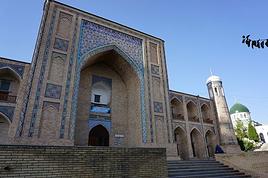
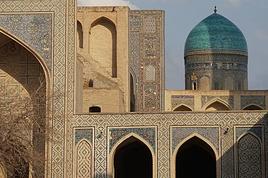
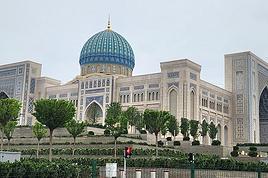
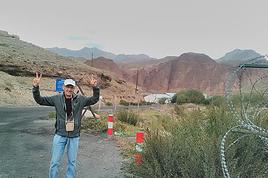
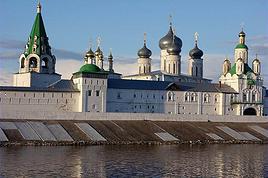
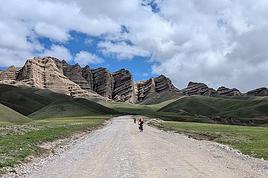


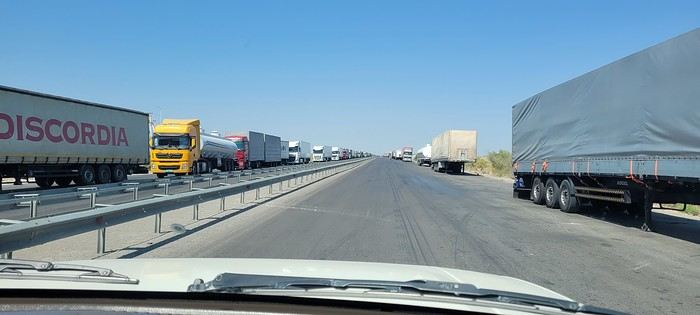
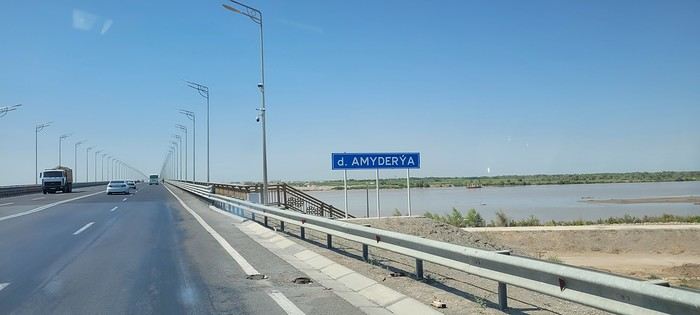
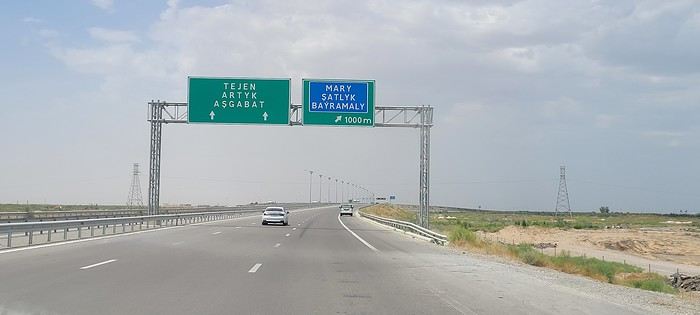
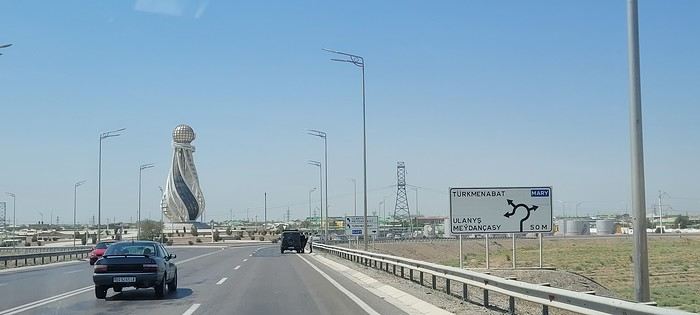
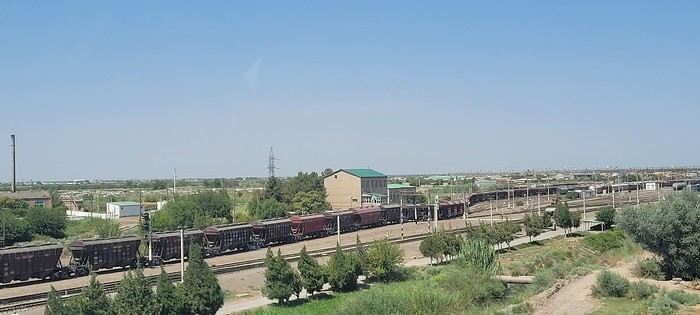
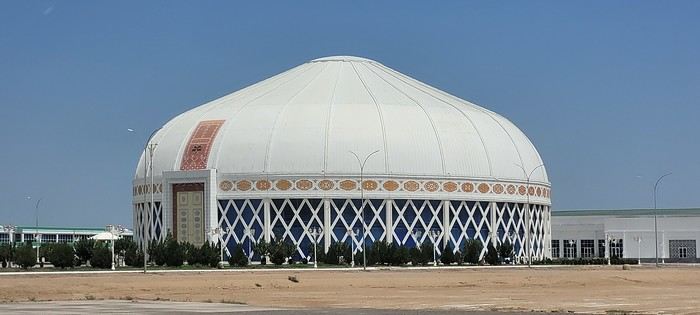
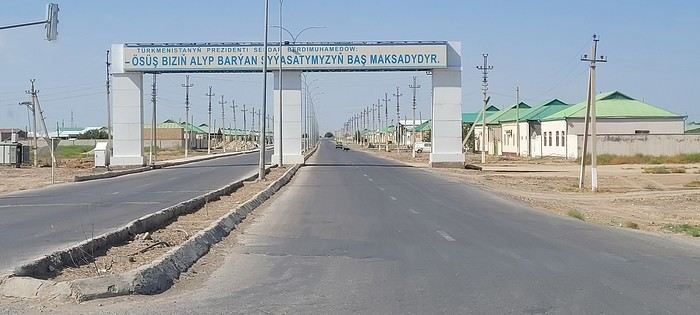
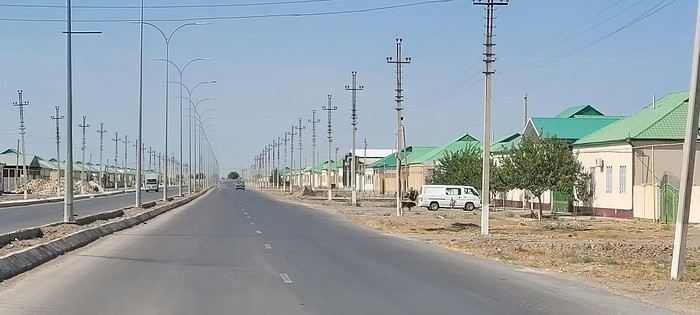 Roundabouts are particularly interesting because they feature emblems of Turkmen culture, like the dog, a carpet, the Ahal Teke horse, or Muslim symbols, even though the presence of Islamic artifacts is quite limited.

 It was 15°C, but it rained—and kept raining on and off all day. Belgian weather, basically.
We went for a walk in Shinjuku Gyoen Park. Not as pretty in the rain, but the big greenhouse was interesting.
It was 15°C, but it rained—and kept raining on and off all day. Belgian weather, basically.
We went for a walk in Shinjuku Gyoen Park. Not as pretty in the rain, but the big greenhouse was interesting.
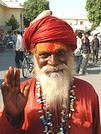
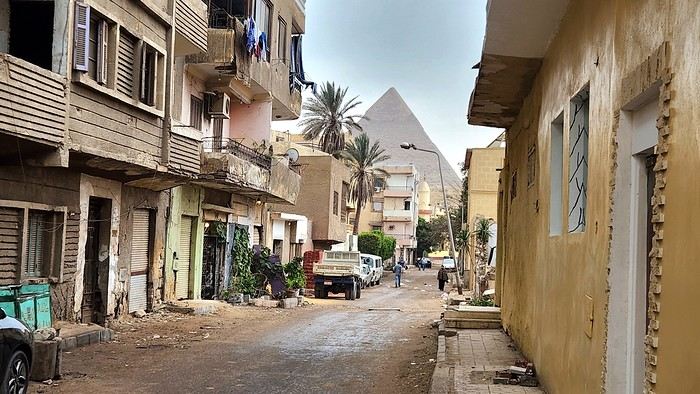
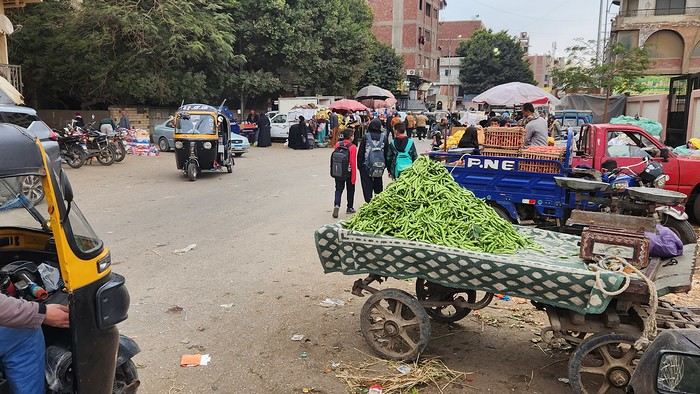
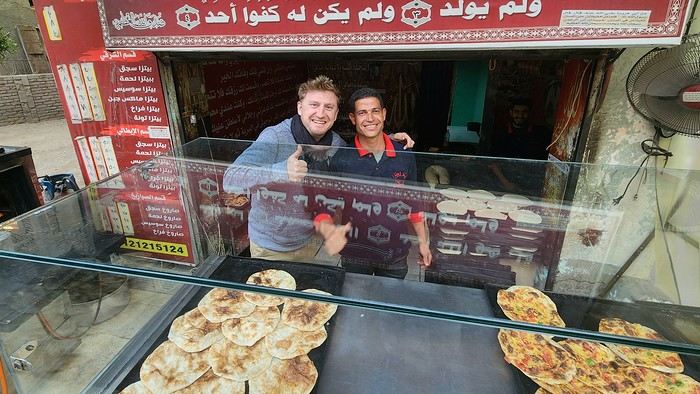

 The large solidified magma massifs that shape the heart of the island have created a large depression more protected from the sun at its center, allowing the growth of a vast laurel forest, today grouped within the Garajonay National Park, La Gomera’s green lung, which has earned it the status of a World Biosphere Reserve. Its completely European appearance contrasts sharply with the rocky and tropical landscapes of the rest of the island. Thus, the climate varies greatly from one point to another on the island: in summer, you can quickly go from a dry and sunny valley at 35°C to a humid forest area at altitude at 18°C.
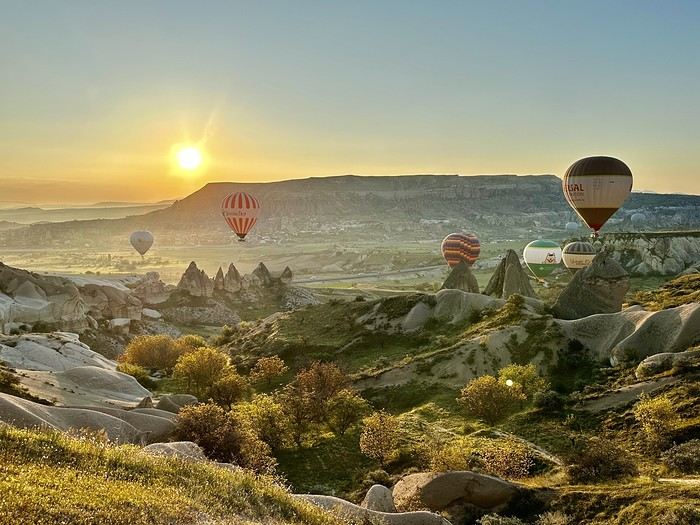 A little sneak peek?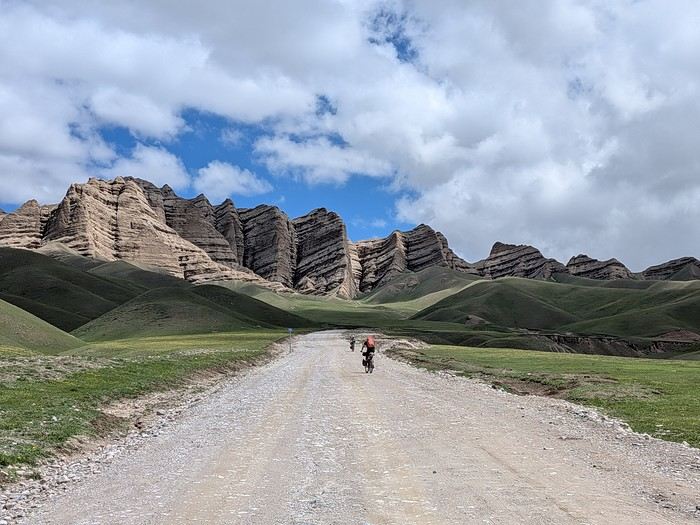
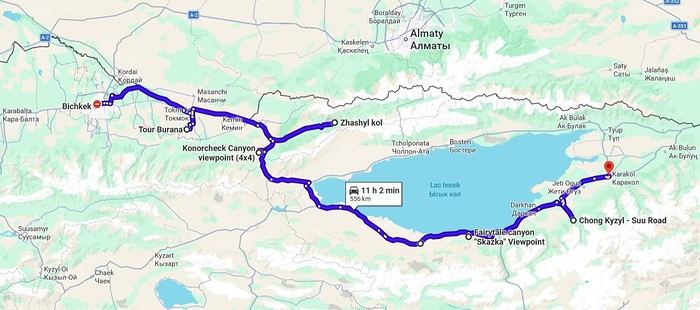
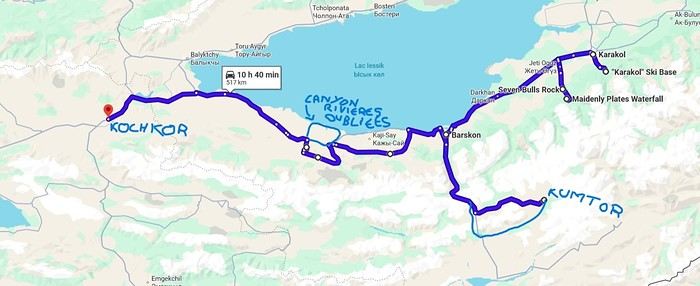
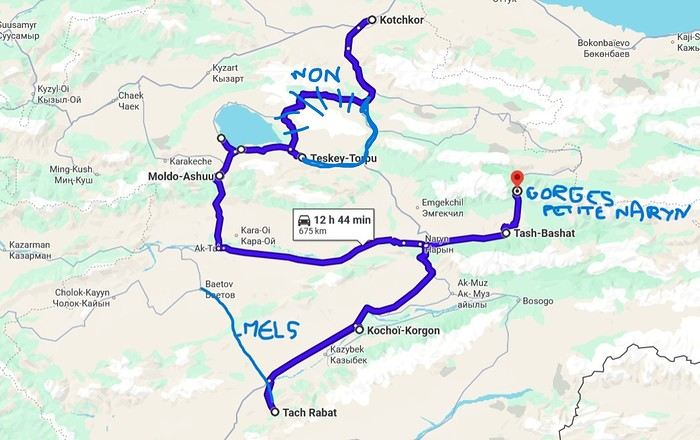
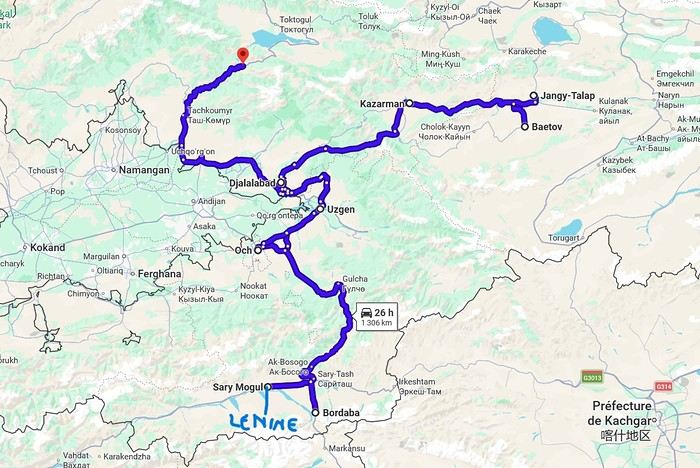
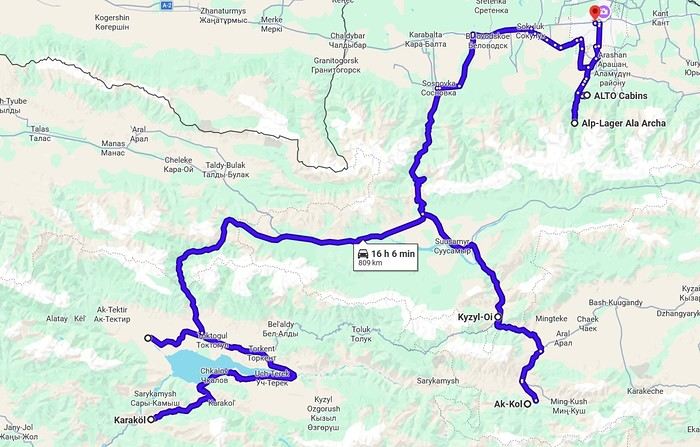



 I’m inviting you on a stroll through my drawings—a completely subjective, far from exhaustive, and totally personal take, since it’s based on my own sketches. I put this travel journal together after returning in late 2024, mostly using felt-tip pens and pencils, with a few collages thrown in. I worked from our personal photos.
 And in Kyoto, Nishiki Market:

 2- Around San Pedro

 We were trapped, and even our guide looked nervous. After what felt like an eternity (though it was only a few minutes), the herd finally moved on, freeing the track. That afternoon, we did a self-drive safari and—you guessed it—we had zero interest in running into elephants again.
The next day, we headed back to Lilongwe for our flight home. It was a fantastic, varied trip with some intense moments (sometimes *too* intense). Malawi offers amazing opportunities for those who want more than just wildlife reserves.
We were trapped, and even our guide looked nervous. After what felt like an eternity (though it was only a few minutes), the herd finally moved on, freeing the track. That afternoon, we did a self-drive safari and—you guessed it—we had zero interest in running into elephants again.
The next day, we headed back to Lilongwe for our flight home. It was a fantastic, varied trip with some intense moments (sometimes *too* intense). Malawi offers amazing opportunities for those who want more than just wildlife reserves.
 Vila beach
 Sunset behind Santiago
 The rocks and sea at Ponta Preta
 At the summit of Monte Batalha
 Calheta
 Calheta de Baixo
 The beaches just keep coming...
 The dunes
 The 3 coconut trees, a landmark to find the track
 Boca da Ribeira beach
 The hills on our right
 Ribeira Dom João
 Barreiro
 The old track
 The church in Vila do Maio