
Hello 🙂
Microwave. Really handy if breakfast isn’t included or for reheating leftovers.
Have a great day!
Marcalamar 🙂
Okay, thanks. Actually, in my round trips, I’ve always found microwaves 😉 I don’t stay in motels. So, no comparison possible.
Best regards.
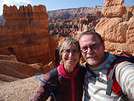

 We came across these amazing manzanita bushes with branches that look varnished.
 The trail then veers right, and the slope gets steeper for about 800 meters (a huge juniper tree, nicknamed "the alligator" because of its trunk, helped us find our way since the trail isn’t well-marked). A hiker we met on the path had mentioned an ephemeral arrow made of wood on the ground to mark the turnoff.
 The cave came into view, and that’s when things got tricky. To reach this high-up cave, you either had to go left and follow a narrow ledge above the drop-off on this big rock,
 or climb a steep, slippery rock wedged between two cliffs with few handholds.

 The sun shone in, and the light played off the red walls.
A kind older man was there to give climbers advice and take photos for those who wanted to capture the moment. So nice!
 It was still early, and there were very few people, so we could take our time. We spent 40 minutes admiring the view Mother Nature offered. Okay, time to head back down. I was a little nervous, but we had gear—a small strap. After a few hesitations, wedged in the crack, the descent was much easier and less stressful than the climb.
We made it down. Since we’d left early, we had plenty of time for both the climb and photos in the Subway. A very kind American woman took a souvenir photo for us.
 We did it! We started the descent under the sun.
 We passed more and more hikers heading up to the cave. It was going to get crowded up there, and the wait would be long for those who started late—especially since the sky was clouding over again. Even when the rock was dry, it wasn’t easy, and climbing the wet slide rock would’ve been impossible for me.
An amazing hike. It took us 3 hours and 20 minutes round trip.
Watch out—the parking lot is small and fills up quickly.
 Perched on a promontory, this modern chapel built in 1956 is the perfect spot to admire the sunset and the surrounding nature—but today, the bad weather had other plans.
We were lucky to find a parking spot not far from the road leading to the chapel.
Despite the large windows, the interior—usually so bright—was very dark because of the weather.
 And the red rocks looked muted.
 We decided to head to the Red Rock Visitor Center near Bell Rock to grab some brochures when suddenly, the elements unleashed: thunder, lightning, downpour. We also needed to check the weekend weather to plan our days accordingly.
 I thought about all the hikers we’d met on the way down from the Subway. They must not be having a great time.
By the time we picked up the brochures, checked the weather, and had our picnic sheltered at the visitor center, the skies cleared again—letting us imagine we were in Mexico, in the little village of
Tlaquepaque.
 It’s so nice to stroll through art galleries (weaving, painting, sculpture, etc.) and shops.
Courtyards,
 tall trees with strange shapes,
 fountains,
 and arches.
 The change of scenery is immediate and so pleasant.
We headed back to the lodge for a little spa time, still under the sun, and stayed there until 5:15 PM, when we went to watch the sunset near the airport, lighting up the mountains.

 Getting brighter and brighter
 Until they glow completely red
 7:04 PM, everything’s darkened again
 But even though the sun had disappeared below the horizon,
 it gave us one last gift by lighting up the rocks indirectly
 One last look at The Teapot
 That’s it—the sun’s gone down. We head back to the lodge before everyone rushes to the parking lot to get their cars and we end up stuck in a memorable traffic jam. The Fiesta Mexicana is just a few minutes’ walk from Sugar Loaf for $94 (2 steak burritos and 2 margaritas). It’s nice not having to get back in the car.
All in all, a really positive day despite the weather forecast. We got lucky and managed to do everything we’d planned. Tomorrow, we’re hiking to Devil’s Bridge. We’ll also have to get up early to beat the rain.


 We cross little dried-up streams, surrounded by beautiful red sandstone formations. The forest offers some shaded spots—this approach hike is really pleasant.


 we start the descent. We pass hundreds of people heading up—some in flip-flops, others without water. Not smart!!!
 We hit the road again. The fiery-colored rocks take on amazing shapes here.


 Bell Rock
You can see people waiting for the sunset right on the rock.
 We stay a little while to admire their stunning colors.
 It’s time to head back—the horizon is dark again, treating us to a beautiful rainbow over the formations.
 The sky is black—it’s gonna pour!!!!!
 The third intense storm of the day hits around 6 PM, complete with thunder and lightning. We made it back in time. I’m thinking of everyone who chose to watch the sunset at Airport Scenic Overlook—it’s about a 40-minute walk to get there. The descent in the rain must’ve been epic.
So far, despite the bad weather caused by a Pacific hurricane, we’ve been really lucky. We managed to dodge the rain and do two of the three hikes planned in this incredible place. We drive to the Indian restaurant right next to our lodging. The rain has stopped, but who knows what the sky has in store for us.
For 74 dollars, we feast on an amazing, flavorful meal (1 rice, 1 naan bread, 2 meat mixes, and 1 lamb tikka, plus a beer and a soda). I take the opportunity to chat in English with a friendly Pakistani family at the next table.
Tomorrow is the West Fork Oak Creek hike—will our luck hold? Only time will tell!!!
 - We pass the small ruined cabin (it’s an old hunting lodge from 1920). After this little path, we almost reach the river, and we struggle for a moment to find the start, but once we’re in the right spot, we can follow the trail easily thanks to excellent signage.
The colors are muted due to the lack of sun, but it’s still stunning as we see mist rising from the ground toward the tops of the cliffs in a slightly eerie atmosphere that I really like.
 We follow the river and admire the work of the water on the rocks.


 At their base, the ground is covered with red or green ferns.
 As we keep moving forward, always easily on sand, rocks, or slide rock, we see aquatic plants but always in this festival of green.
 Soon the sun reappears, and with it, everything brightens up. We go up, down, cross the stream, step over roots, or go under fallen trees. I’m in heaven!! The sun plays with the light!!
The rock alongside the river is carved, offering us magnificent ledges.
 We soon reach the end of the marked trail. We’ll keep going a bit more to reach a stunning spot. The canyon has narrowed, and from here on, there’s no more path—if we want to continue, we’ll have to get wet. The scenery is incredible; plants and rocks reflect in the water, making it hard to tell mineral from aquatic.
 The sun is still shining. We stay a little while to soak in the magic of the place. I had brought my swimsuit, towel, and water sandals with the intention of going up the river in the water, but it’s time to leave if we want to escape the predicted storm—especially since the sky is darkening again.
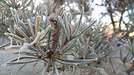
 There are even bamboo plants!
 And always these ledges worn by the water.
 The sky is getting grayer and grayer.
One drop, two drops, three drops... they’re becoming more numerous, bigger, and closer together. Quick, the camera goes into the bag, the Gore-Tex goes on, and we keep going.
 Even when wet, the rocks aren’t slippery.
 The shower won’t last long, and we’ll finish the hike with the sun.
 We happily rediscover the shades of green. Too funny!!! Here’s DD matching the landscape!!!
 We pass by the little ruined cabin again.
 And the orchard where nature still amazes us with its resilience—look at this tree with a completely hollow trunk that still finds the strength to offer us its apples.
 It took us 4 hours and 30 minutes to cover the 13 km.
What a magnificent hike!! A little regret that we couldn’t spend more time following the river because of the rain that seemed determined to spoil the fun.
We take the picnic out of the trunk and enjoy it in the gentle Arizona sun.
A quick stop at Midley Bridge. The sky has clouded over again, and raindrops are falling once more.
We’re back at the guesthouse. I had planned to do the Secret Slickrock Trail late this afternoon to see the sunset over Cathedral Rock, but DD doesn’t want to go out anymore.
It’s been almost three weeks of me getting my way, so I don’t insist. Besides, given the color of the sky tonight, I’m not sure it would’ve been very pretty anyway.
We brought back two takeout boxes from yesterday’s Indian restaurant—we’ll eat them at the guesthouse.
Tomorrow’s our last stop before flying back.

 Jerome is said to be one of the most haunted towns in the United States. The high number of deaths (around 9,000 between 1927 and 1950) at the hospital for miners working in the copper, gold, and silver mines is said to have left many restless souls still eager to make their presence known, much to the delight of ghost hunters.
You can find them in most of the old buildings. True or not, the town plays it up and has turned it into a draw for tourists. Like many mining towns, it nearly disappeared in 1950 after the mines closed, dropping from 15,000 inhabitants at its peak in 1920 to just 100 by the late 1950s. Luckily, it bounced back by shifting to tourism (especially by leaning into the paranormal), crafts, and art.
We wanted to start at the Audrey Head Frame, but unfortunately, it’s closed for maintenance.
We carry on to the Jerome State Historic Park and the Douglas Mansion next door. We admire the large rocks colored with azurite and malachite and the old copper mine equipment, but we’re not really in the mood to go inside—we’d rather wander around town. But first, we head to the Jerome Grand Hotel (though we can’t find the entrance), and it’s cool to see the buildings from the top of the hill.
 We find a big free parking lot near the fire station at the top of town, right next to the old mining infrastructure. We park the car and head to Main Street, just a few steps away, but first, we stop at a restaurant because we want to eat before the rush. I’d spotted the Haunted Burger with its skeletons on the roof welcoming us.
 It’s already pretty busy, but the wait isn’t long. Their homemade burgers are excellent, the welcome is warm, and the decor in every room fits the town’s theme perfectly.
 Apparently, a friendly ghost has set up shop there. We feast for $76 (two burgers and a mountain of sides, one beer, and one diet Coke).
Alright, let’s walk a bit to digest—especially since we saved a little room for dessert.
The weather’s mild, and it’s really nice strolling through these little streets winding up and down the hillside, climbing and descending the narrow stairs connecting the blocks.
 Or this old brothel turned into a restaurant, then an art gallery and shop.
 We window-shop until we reach Cooper Country Fudge to enjoy some excellent ice cream and take home a huge piece of fudge.
Everywhere you look, there are nods to skeletons and ghosts.
 We make a quick stop at the Sliding Jail, a prison that slid 69 meters down a main street due to blasting in the copper mines and could slide again because the hill is unstable.

 Ha ha ha!! I’ve convinced DD to go again using the argument that our ESTA and America the Beautiful Pass are still valid. I’m counting on you all to answer my questions. Thanks in advance!






You can post your personal photos in the following thread: https://voyageforum.com/forum/quelque-part-en-thailande-d10655574/
This travel journal is therefore intended solely for my photos, to present a consistent style. All the shots were taken with a simple Samsung Galaxy smartphone and with whatever was at hand.
All stays combined, I’ve spent the equivalent of three years at most in Thailand, and I’m not a big expert on the country. However, after many trips, lots of reading on VoyageForum and other sites, and conversations with many locals as well as expats, my view of the country is becoming clearer, though it’s constantly evolving. You never stop discovering and learning.
I guess I wanted to piece together a puzzle, mainly for those who want to get an idea of the country here and for those who miss it. I don’t know if this minimalist sharing will interest anyone, but it’ll do me good to put it together. After so many months without traveling and then these other long months with VF closed, there’s plenty of material available.
There’ll be a mix of places, periods, and subjects, but it might well be intentional.

I suspect many Thais have dogs because they make excellent guards for the home. Nothing better to deter burglars or to signal the presence of a snake. You’ll often see Thais tapping the top of their dog’s head, but don’t be fooled: it’s a sign of affection from them. Judging by the dogs’ reactions, they’re used to it.
Thailand is one of the countries on the planet where rabies is still present, so keep that in mind. It’s not just bites that can be dangerous, so don’t let just any dog lick you. Especially on a wound, of course. Even though dogs often fear humans—this dangerous and unpredictable predator—we still need to stay cautious. Be careful when walking into alleys because the dog will defend its master’s big property, be careful at night, and be careful when they’re in packs. It sometimes crosses our minds that Thailand isn’t really made for walking around, and dogs are one of the reasons. That said, it’s not uncommon to see them chasing bikes or scooters. Cars, though, are much rarer—they’re too big.
It seems Thais prefer to give their dogs freedom by not locking them behind gates. Though sometimes the gate is closed, the little side door is wide open. Oh, and sometimes there’s no gate in front of the property, or it’s been broken for years.
You’ll often see dogs sleeping on the side of the road, sometimes right on the road. When you arrive, they move aside nonchalantly—or not at all. It’s less funny when they suddenly appear from thick vegetation, which reminds visitors not to drive too fast. As a result, you’ll notice that dogs with injuries or missing legs aren’t that rare.
Since they believe in reincarnation and respect for all forms of life, they don’t chase dog packs away too much, and they don’t sterilize them enough. Seeing a small pack roaming freely in the countryside, you might think it’s best not to cross paths with them at the edge of a field. A darker side of this is that euthanasia isn’t often practiced. Twice, we saw dogs at temples on the brink of death, enduring terrible suffering. No one did anything about it. The image (and the smell) of one of them, dying and emitting the stench of death, still comes back to me sometimes.
Some of you may have seen the YouTube vlog of a French woman living in Phuket who was given a little pig by her Thai friends. The well-fed animal quickly became a happy, enormous beast with its own garden. Yet, it didn’t take long for it to fall seriously ill and become incurable. In her video, the French woman described how difficult it was to find a vet willing to perform euthanasia.
You’ll often see bowls by the side of the road. Thais leave food and water in them for stray cats and dogs. Overall, they have a big heart for animals.
If you ever pop into a shopping mall, you might see people pushing their small dogs in strollers. It’s not a gimmick—it’s just that these strollers are provided for customers to put their pets in, otherwise you can’t bring them inside. It looks a bit odd when you expect to see a baby.
This travel journal is therefore intended solely for my photos, to present a consistent style. All the shots were taken with a simple Samsung Galaxy smartphone and with whatever was at hand.
All stays combined, I’ve spent the equivalent of three years at most in Thailand, and I’m not a big expert on the country. However, after many trips, lots of reading on VoyageForum and other sites, and conversations with many locals as well as expats, my view of the country is becoming clearer, though it’s constantly evolving. You never stop discovering and learning.
I guess I wanted to piece together a puzzle, mainly for those who want to get an idea of the country here and for those who miss it. I don’t know if this minimalist sharing will interest anyone, but it’ll do me good to put it together. After so many months without traveling and then these other long months with VF closed, there’s plenty of material available.
There’ll be a mix of places, periods, and subjects, but it might well be intentional.
I suspect many Thais have dogs because they make excellent guards for the home. Nothing better to deter burglars or to signal the presence of a snake. You’ll often see Thais tapping the top of their dog’s head, but don’t be fooled: it’s a sign of affection from them. Judging by the dogs’ reactions, they’re used to it.
Thailand is one of the countries on the planet where rabies is still present, so keep that in mind. It’s not just bites that can be dangerous, so don’t let just any dog lick you. Especially on a wound, of course. Even though dogs often fear humans—this dangerous and unpredictable predator—we still need to stay cautious. Be careful when walking into alleys because the dog will defend its master’s big property, be careful at night, and be careful when they’re in packs. It sometimes crosses our minds that Thailand isn’t really made for walking around, and dogs are one of the reasons. That said, it’s not uncommon to see them chasing bikes or scooters. Cars, though, are much rarer—they’re too big.
It seems Thais prefer to give their dogs freedom by not locking them behind gates. Though sometimes the gate is closed, the little side door is wide open. Oh, and sometimes there’s no gate in front of the property, or it’s been broken for years.
You’ll often see dogs sleeping on the side of the road, sometimes right on the road. When you arrive, they move aside nonchalantly—or not at all. It’s less funny when they suddenly appear from thick vegetation, which reminds visitors not to drive too fast. As a result, you’ll notice that dogs with injuries or missing legs aren’t that rare.
Since they believe in reincarnation and respect for all forms of life, they don’t chase dog packs away too much, and they don’t sterilize them enough. Seeing a small pack roaming freely in the countryside, you might think it’s best not to cross paths with them at the edge of a field. A darker side of this is that euthanasia isn’t often practiced. Twice, we saw dogs at temples on the brink of death, enduring terrible suffering. No one did anything about it. The image (and the smell) of one of them, dying and emitting the stench of death, still comes back to me sometimes.
Some of you may have seen the YouTube vlog of a French woman living in Phuket who was given a little pig by her Thai friends. The well-fed animal quickly became a happy, enormous beast with its own garden. Yet, it didn’t take long for it to fall seriously ill and become incurable. In her video, the French woman described how difficult it was to find a vet willing to perform euthanasia.
You’ll often see bowls by the side of the road. Thais leave food and water in them for stray cats and dogs. Overall, they have a big heart for animals.
If you ever pop into a shopping mall, you might see people pushing their small dogs in strollers. It’s not a gimmick—it’s just that these strollers are provided for customers to put their pets in, otherwise you can’t bring them inside. It looks a bit odd when you expect to see a baby.







 Roundabouts are particularly interesting because they feature emblems of Turkmen culture, like the dog, a carpet, the Ahal Teke horse, or Muslim symbols, even though the presence of Islamic artifacts is quite limited.
























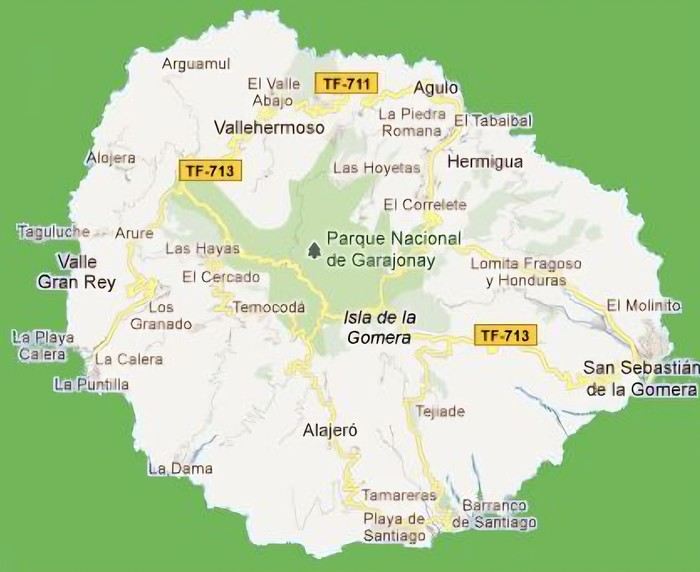 The large solidified magma massifs that shape the heart of the island have created a large depression more protected from the sun at its center, allowing the growth of a vast laurel forest, today grouped within the Garajonay National Park, La Gomera’s green lung, which has earned it the status of a World Biosphere Reserve. Its completely European appearance contrasts sharply with the rocky and tropical landscapes of the rest of the island. Thus, the climate varies greatly from one point to another on the island: in summer, you can quickly go from a dry and sunny valley at 35°C to a humid forest area at altitude at 18°C.
























 Why this country?
After visiting Hungary, Slovenia, Romania, and Poland in recent years, I’ve fallen in love with Eastern European countries. I adore the Slavic soul, its Austro-Hungarian villages, the gentle landscapes, the Carpathian Mountains, and that slightly mysterious atmosphere.
Slovakia evokes a certain imagination with its deep forests, medieval castles, and cobbled villages.
After seeing photos of the High Tatras—especially Lake Štrbské Pleso and Spiš Castle—I thought, "Let’s do it! We’re going!"
So, will Slovakia live up to what I imagine?
We’ll find out together.
We decided to travel as a group of six (five adults and a six-year-old child), by car (we needed two).
Here’s the day-by-day itinerary for this family trip, which started with a 3-day stay in Vienna (see the dedicated travel journal):















 When it comes to the Caribbean island of Saint-Martin, it's customary to praise its coastline and dreamy beaches—and they certainly deserve it.
But in this story, I’d like to highlight other memories, aspects, and impressions for a slightly different change of scenery.
Enjoy the read—some text and, above all, lots of photos.
« Byenveni sou zile Sen Maten! » (Welcome to the island of Saint-Martin)



































 Come along, I'm taking you to this country where it's so nice to wander and slow down...










