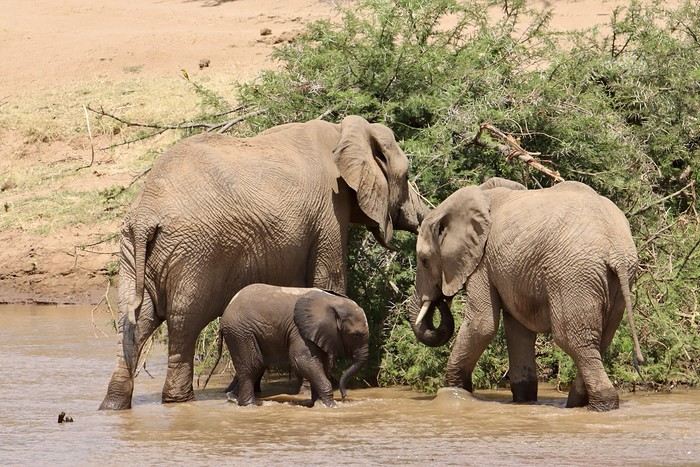
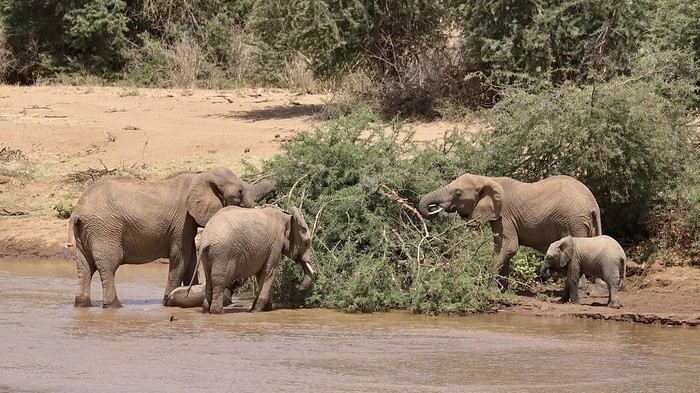
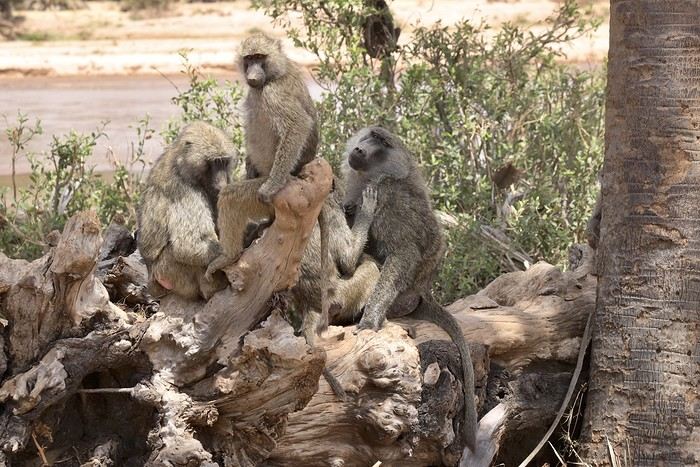
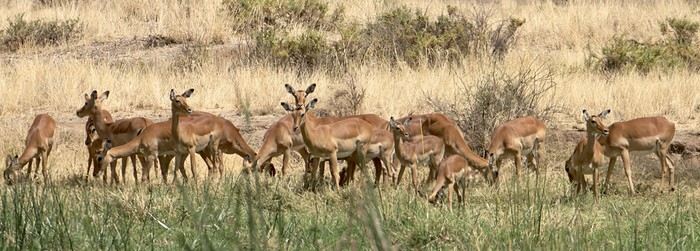
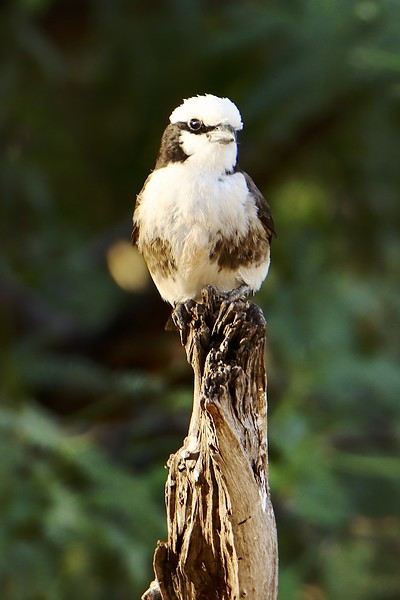
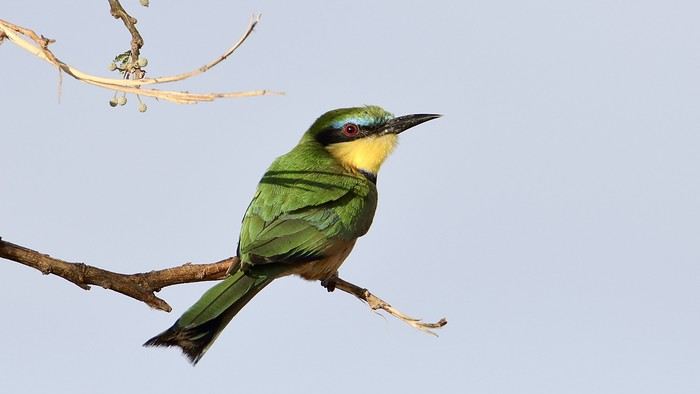
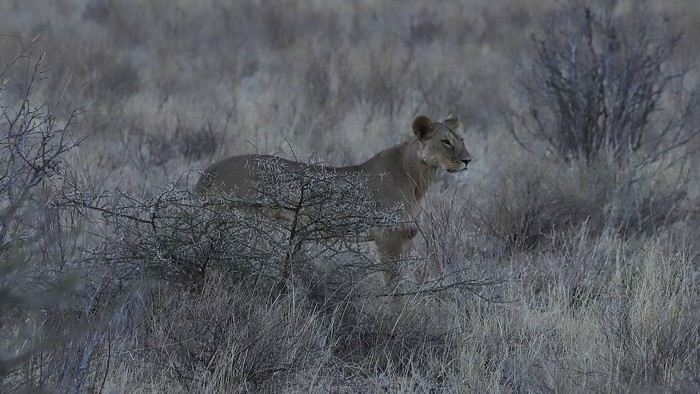
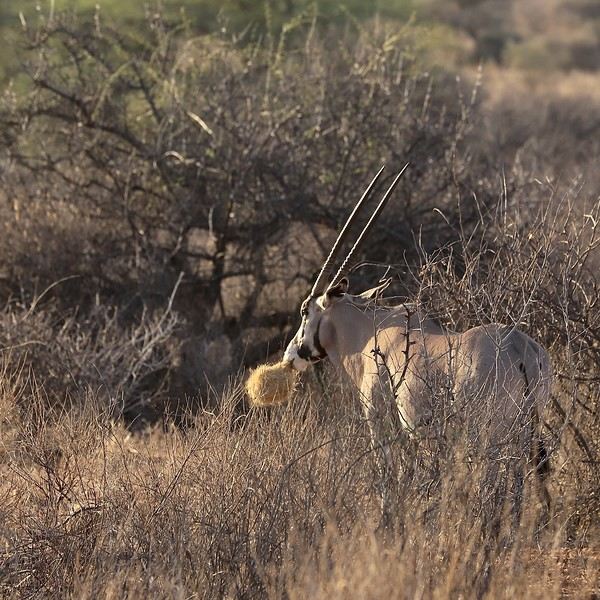
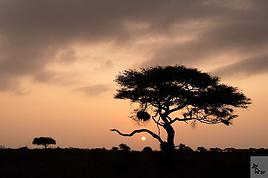
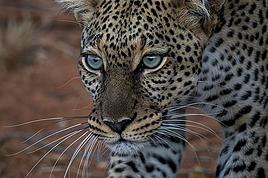
In the midst of Kenya's wildlife, October 2025
FR

Translated into English.

Original post
PU
Hello everyone,

After sharing some safari photos from southern Tanzania, I’d like to show you those from our latest safari in Kenya in October 2025.

First, I’d like to thank Sylvie56, whose previous travel journals about this country inspired our trip choices. Thanks also for the info you sent us via PM. THANK YOU!

The following account is from a simple wildlife enthusiast. You won’t find anything here but images of landscapes, mammals, and birds. The stated purpose of this trip was purely and solely wildlife-focused. (It was in no way a discovery of the country or its people).

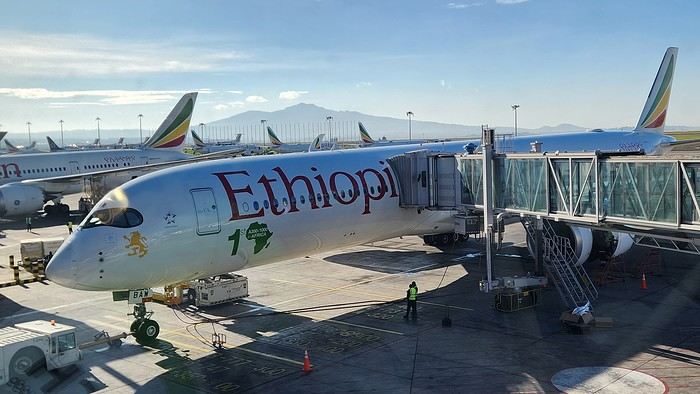
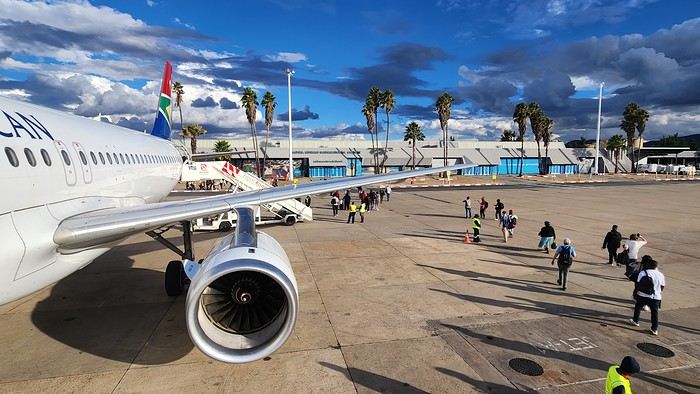
This stay/safari began (and ended) in Nairobi, with flights between France and Kenya operated by Qatar Airways departing from Nice.

Over two weeks, we first visited the reserves of Tsavo West and Tsavo East, then after a long road trip, the two reserves of Buffalo Springs and Samburu.

= Please wait until the end of the journal to ask any specific questions (or send them via PM) to keep the story flowing without interruptions or off-topic comments.

Thanks for your understanding.

...

Previous Kenya safari trip in 2017, here:

http://www.image-nature.com/forum/viewtopic.php?f=162&t=61119

...
PU Puma2A Veteran ·
...

- Thursday, October 9, 2025-

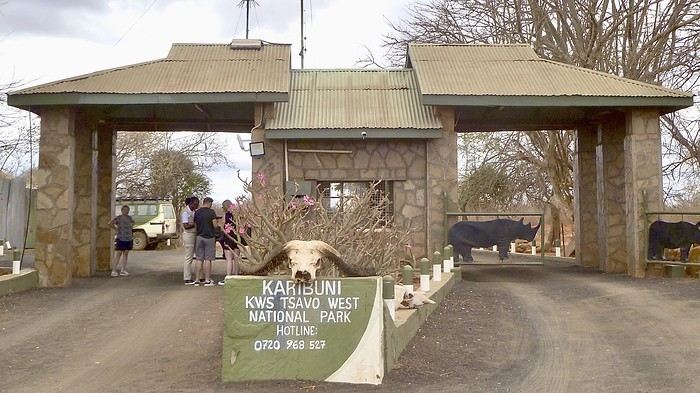
It’s around 1 p.m. We’re getting ready to enter the TSAVO WEST wildlife reserve in southern Kenya. The sky is overcast...


Reminder: Click on each image to enlarge it, if needed.

At 7 a.m. this morning, in the courtyard of the « 67 Airport » hotel in Nairobi, we met the person who would be our driver-guide: Simon, and the vehicle that would transport us for the next 14 days. Then, we drove for 6 hours along the main road between Nairobi and Mombasa, which is overrun with trucks. Driving in Kenya is pretty nerve-wracking, but Simon turned out to be very cautious throughout our stay. Still, we’re relieved to leave that road behind and head onto the quieter tracks of Tsavo West.

Originally, we were supposed to start with Tsavo East, but overbooking at a lodge led to a change in our itinerary.

There are four of us “tourists” on board: This time, a couple of friends is joining us. For them, it’s a total first—both Africa and the world of wildlife safaris. For us, after several trips to neighboring Tanzania, this is our 4th Kenyan trip. It’s also a return to the “roots” of our passion, since our very first safari in Africa—already in Kenya—dates back to... thirty-nine years ago... We were still young then!! It was right after the release of *Out of Africa*....!!

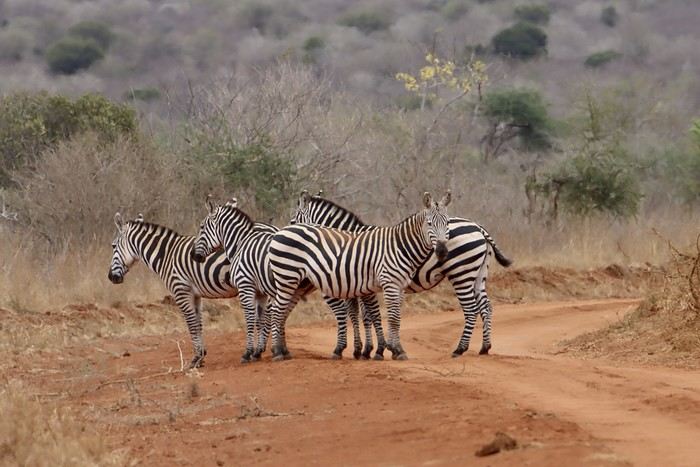
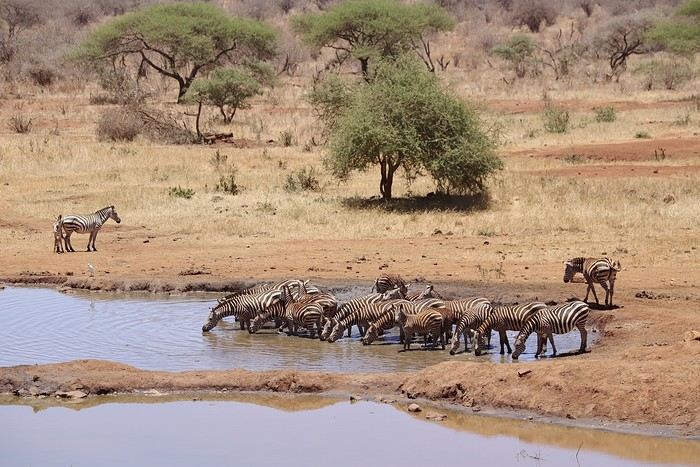
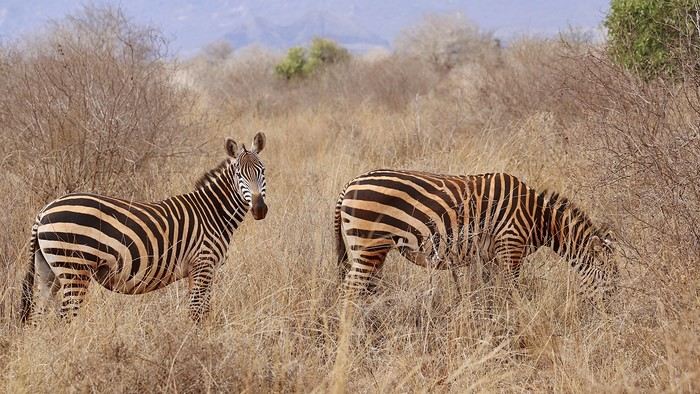
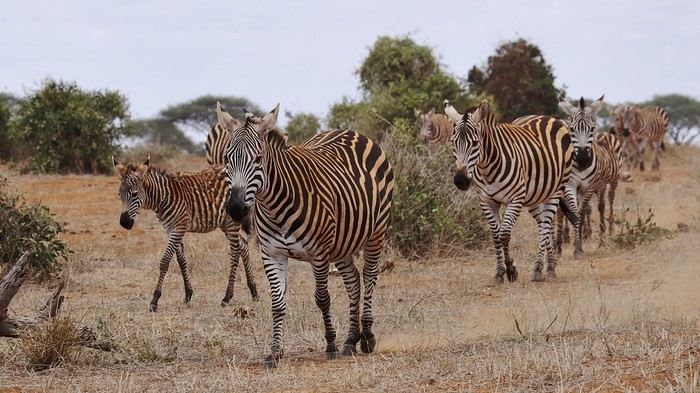
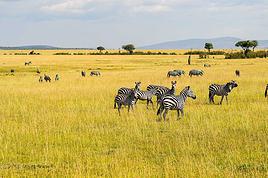
When you start a safari, you always wonder what the first animal you’ll see will be... Well, this time, it’s a group of plains zebras standing right in the middle of the track.


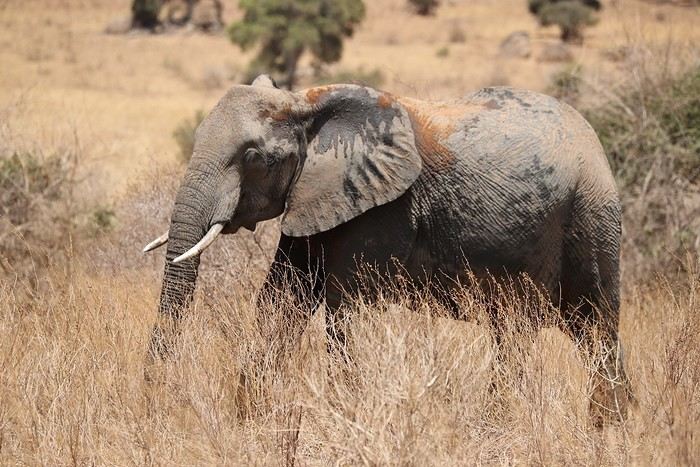
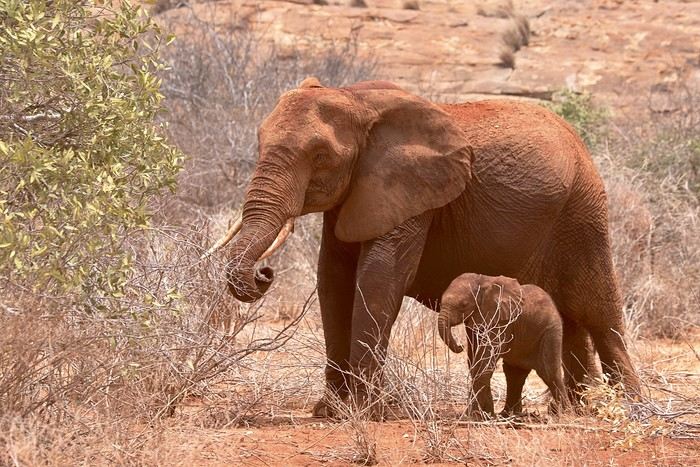
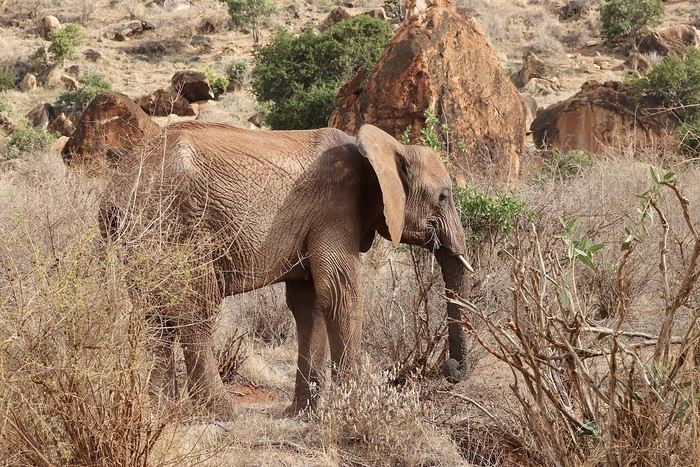
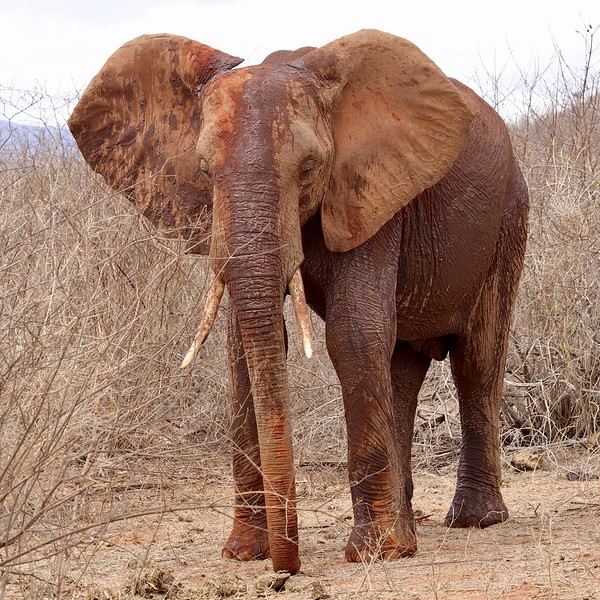
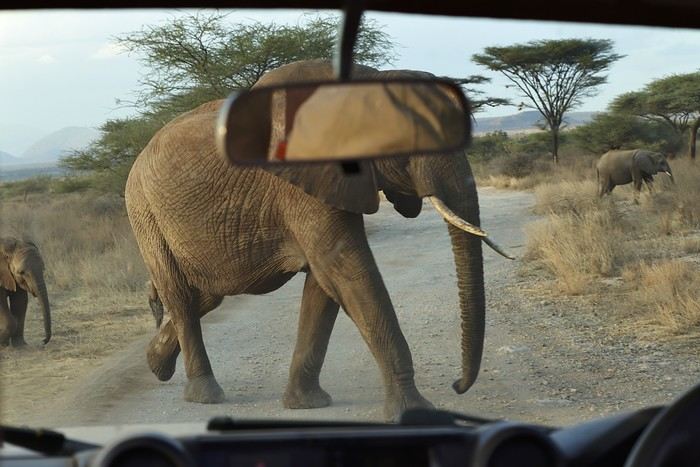
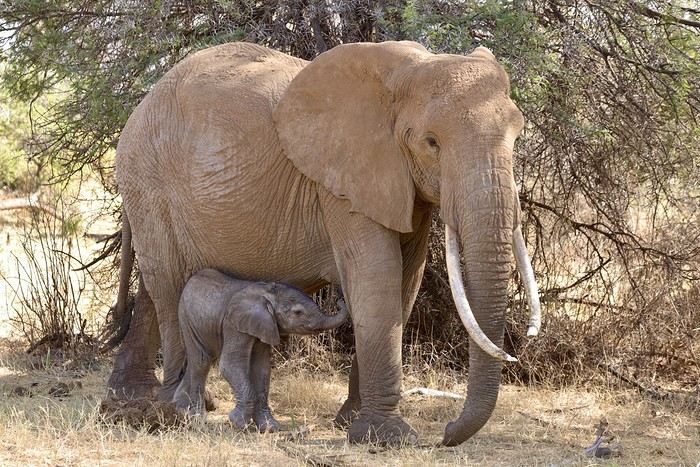
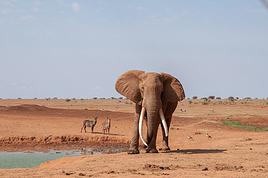
The itinerary we’ll follow over these two weeks is based on personal wishes (though approved by my three fellow passengers). The red earth of the first two reserves is the reason I chose Kenya this year: Before I hit the age limit for safaris 😕, I wanted to see the famous red elephants of Tsavo. This one isn’t quite red enough for my taste yet...


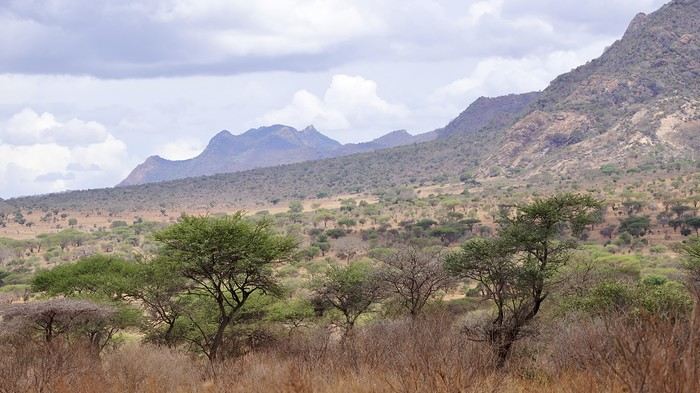
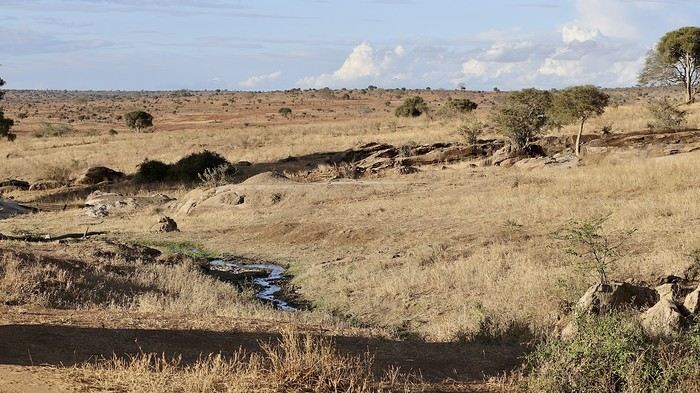
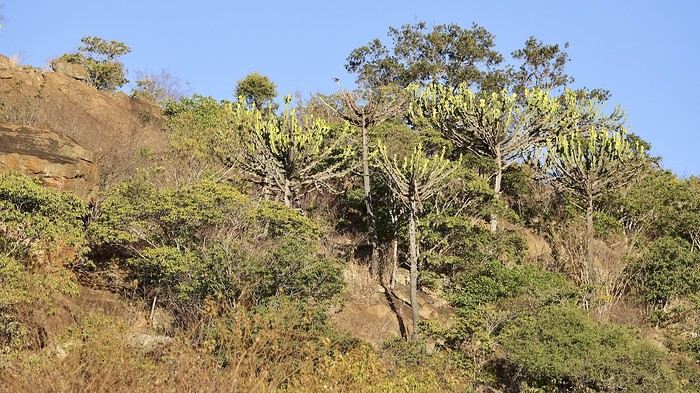
We’d already visited Tsavo West back then, but my memory has faded a lot—especially the mountainous aspect of this reserve. All the vegetation is very dry, though some trees are surprisingly green...


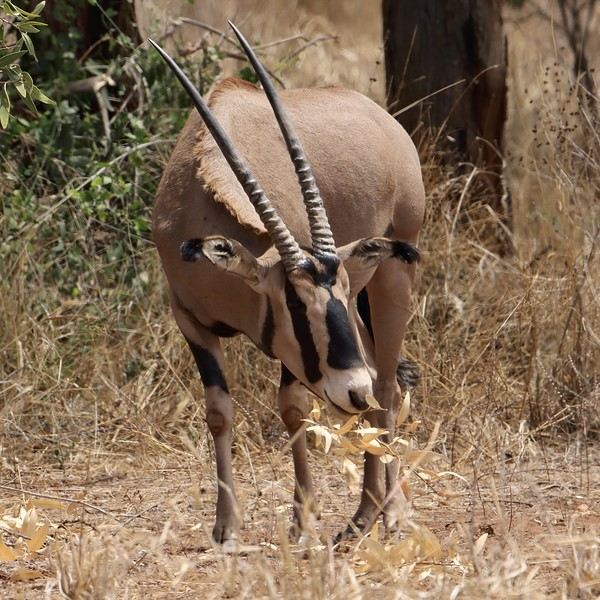
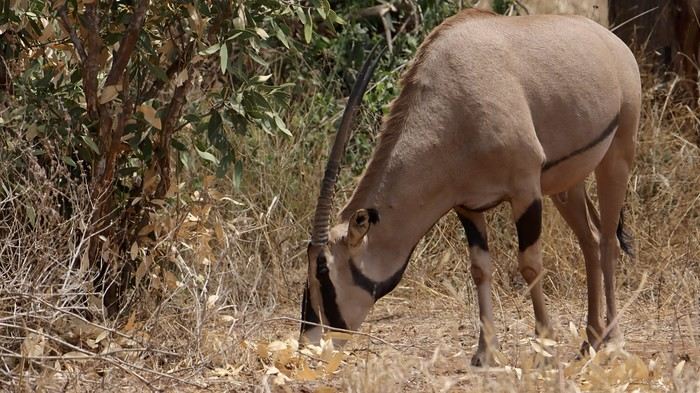
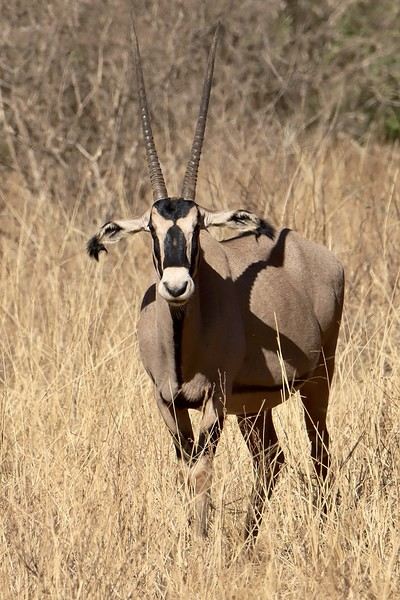
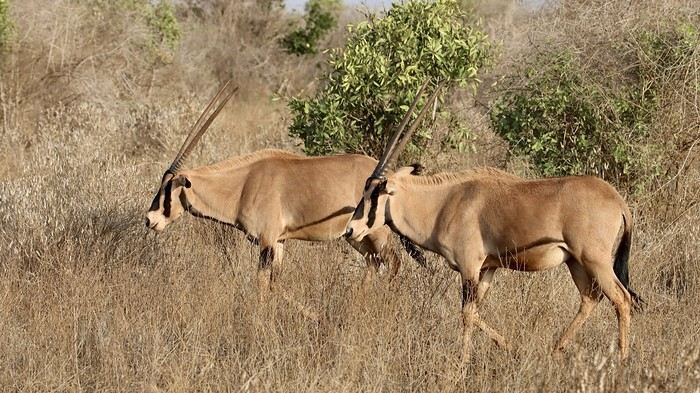
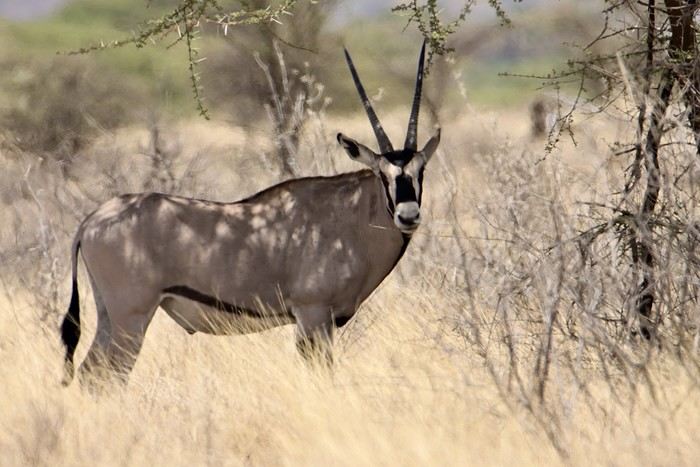
First encounter with a fringe-eared oryx!! It’s on my “secret list.” For my wife and me, despite our many previous safaris, it’s a first, so these are my first photos of this animal.... We love oryxes (all types) and hadn’t seen one since... a long time (2017!).


Notice the tuft of black hair at the tips of its ears—that’s what gives this variant of the beisa oryx its special name, one we’ll encounter again at the end of our trip.


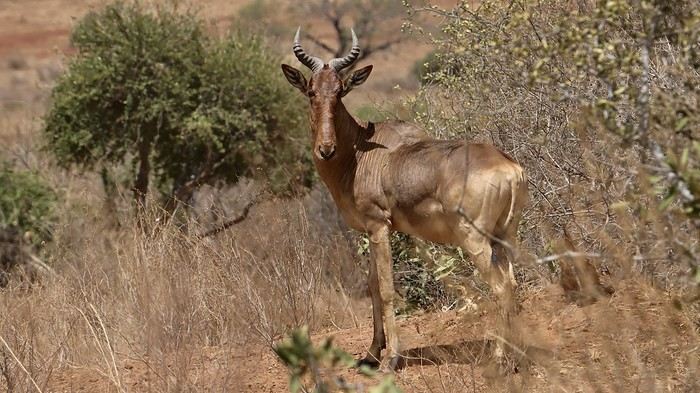
Then a Coke’s hartebeest.


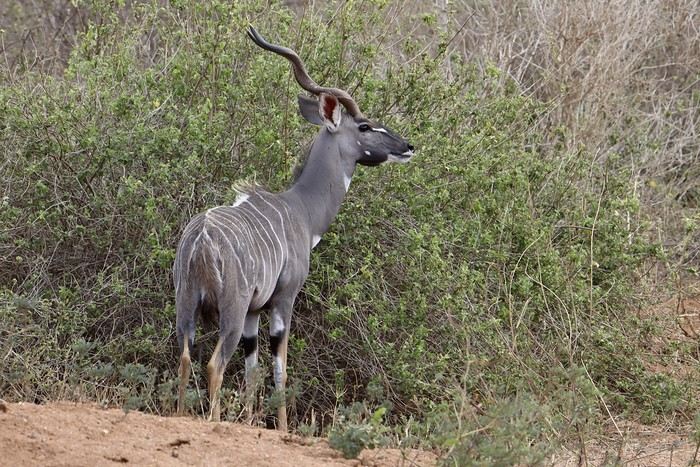
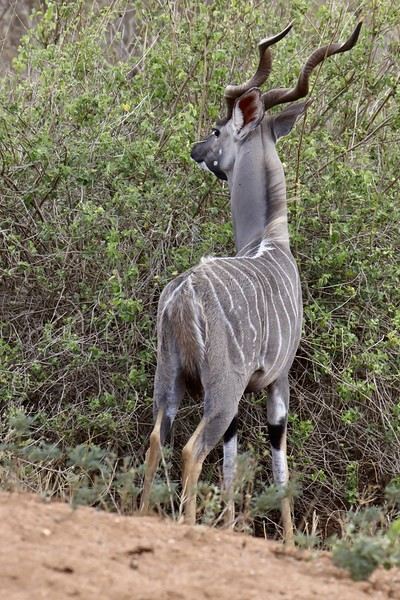
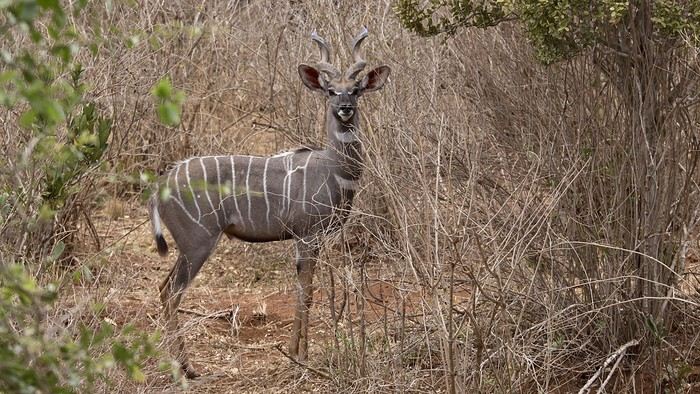
And... finally, the one that had become an obsession for me: I’d seen them in Tanzania before, but too briefly to get a decent, presentable photo!! It’s the lesser kudu, a species in its own right, a smaller-scale portrait of the greater kudu (with significant differences). Another mammal that was on the “secret list” etched in my brain!!


Around 2:30 p.m., we arrive at the lodge that will host us for the next two nights: "Ngulia Safari Lodge Kwaheri".

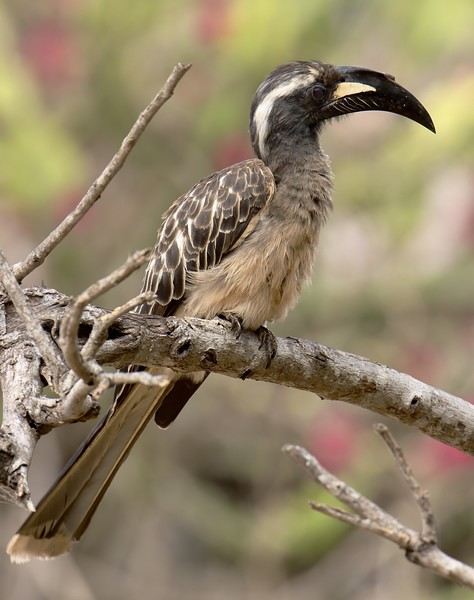
From the restaurant: An adult male black hornbill (and a table thief!!!).


...
PU Puma2A Veteran ·
...

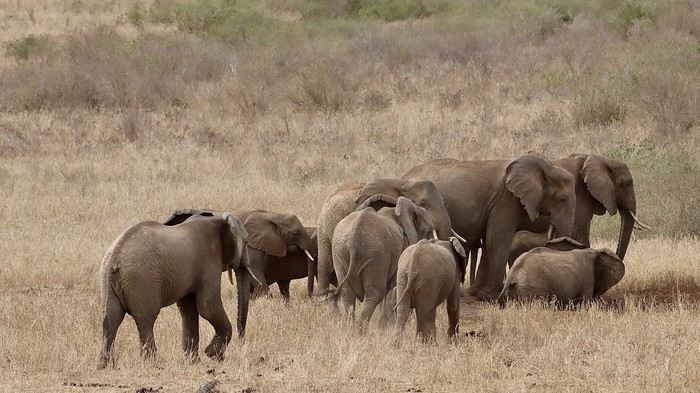
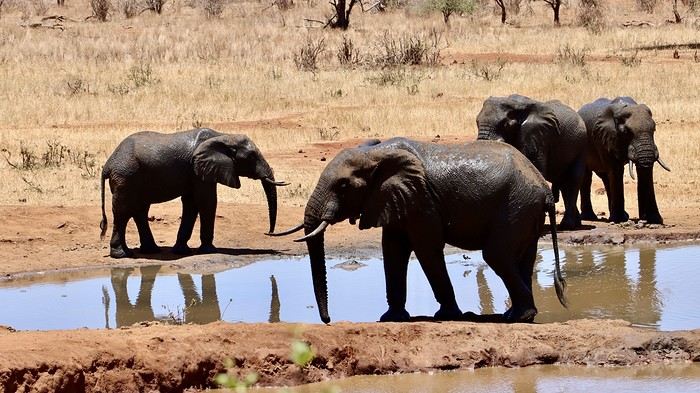
In front of the lodge terrace, several waterholes attract groups of Elephants.


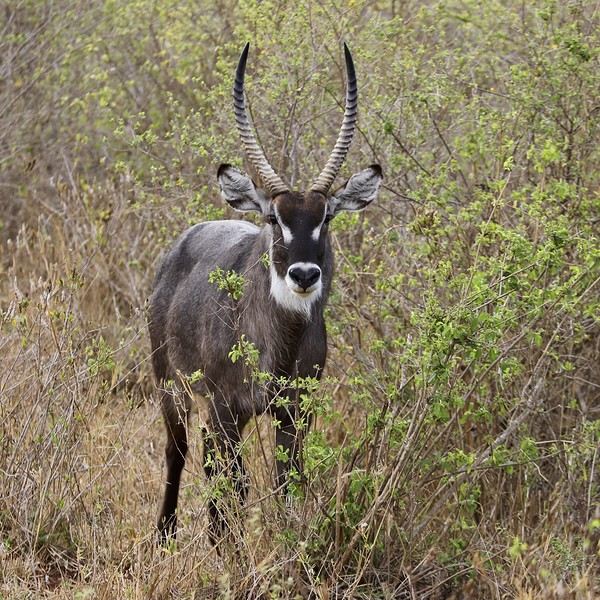
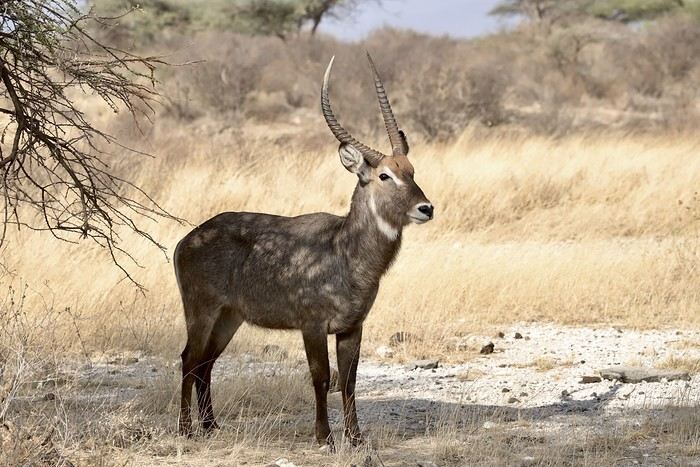
Just before 4 PM, we head out again for the late afternoon safari. A magnificent Defassa waterbuck strikes a pose as we pass by.


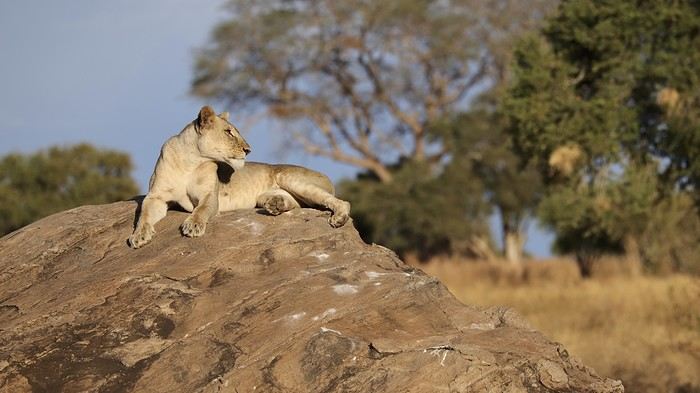
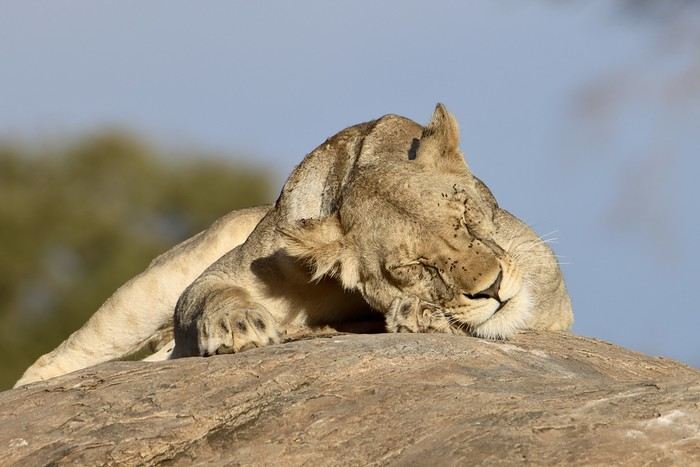
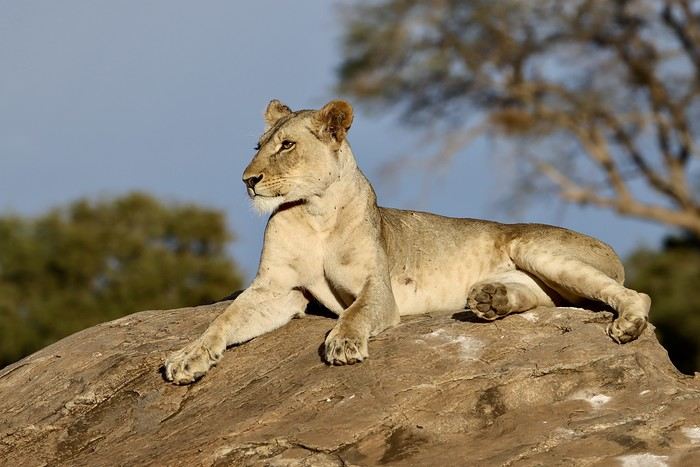
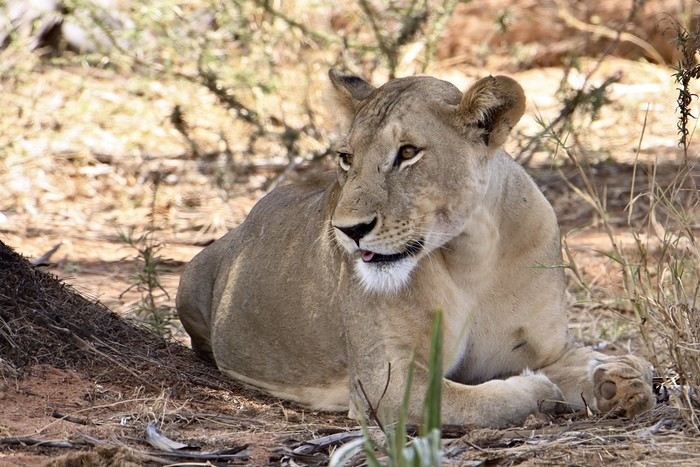
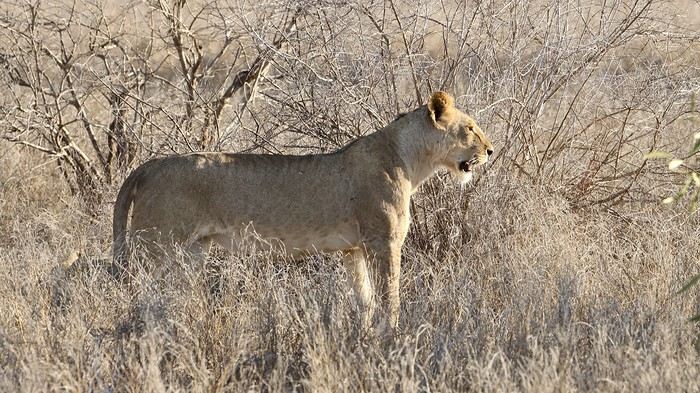
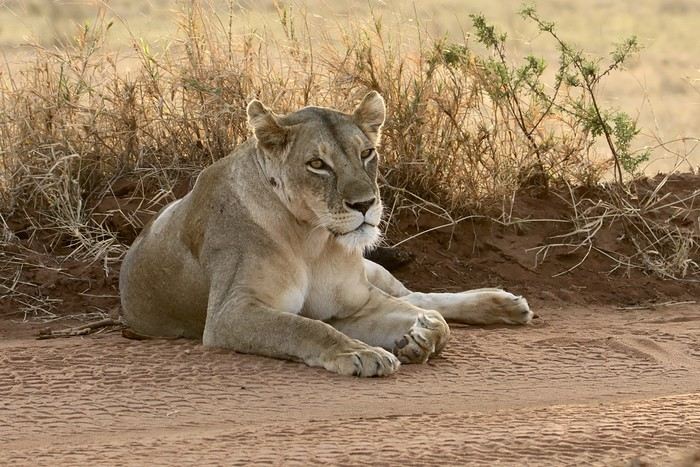
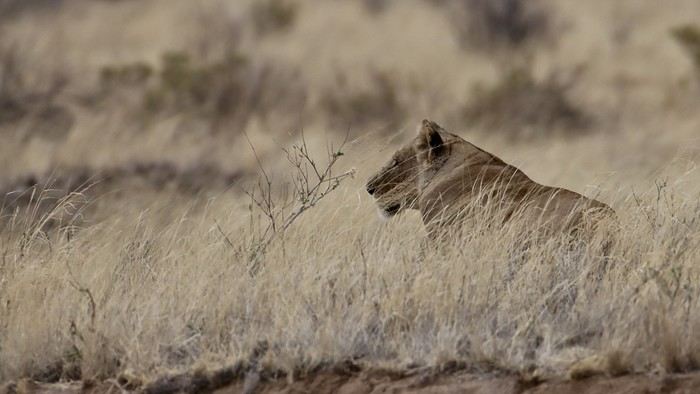
And, on a rocky outcrop overlooking the surroundings... a lone lioness seems to be lounging!!


We stay a long while, watching her poses.


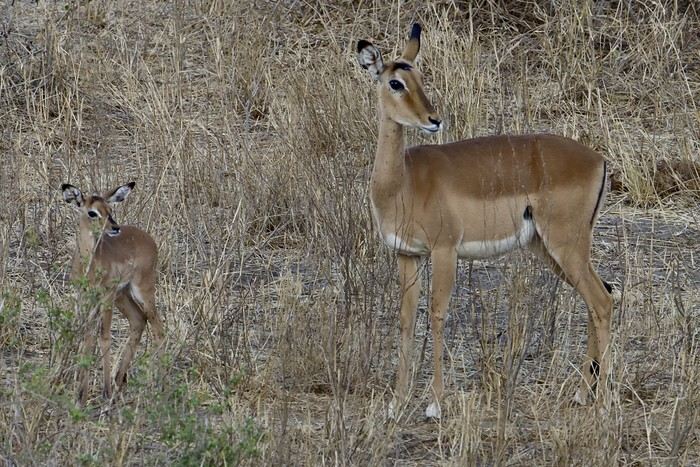
The shadow of the surrounding mountains creeps over our exploration area..... This female impala is on edge, especially since she has a little one by her side.


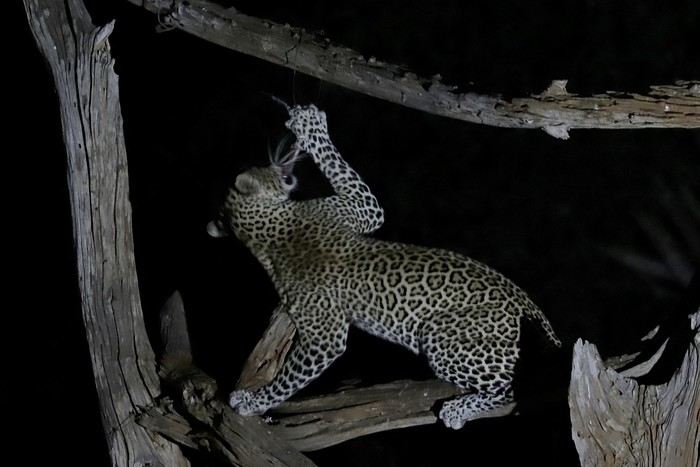
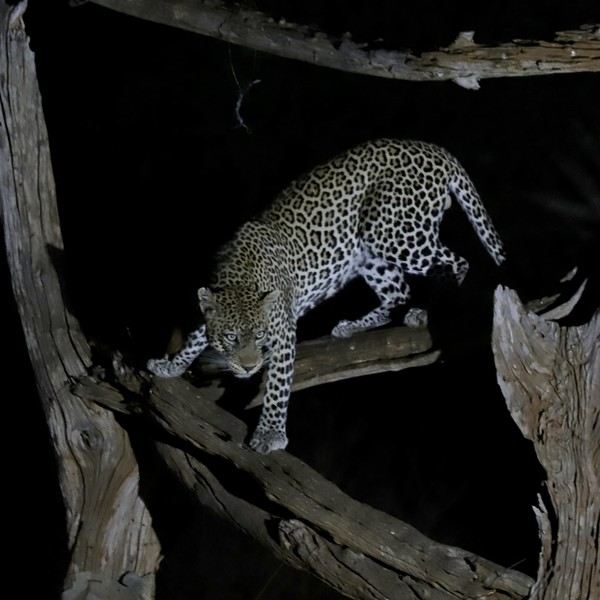
In front of the lodge’s restaurant, a wooden structure stands. Tonight, a piece of meat is hung there!! Personally, I’m not a fan of this kind of interaction with nature. But since it’s there, might as well make the most of it. A spotlight illuminates the area, and just as we finish our meal... a leopard (a regular here) arrives and, in one leap, is within reach of its meal!!


For about twenty minutes, the feline devours the meat, not leaving a single scrap....!!


And it vanishes into the night as quickly as it appeared.

When we went to bed, I realized that around two hundred buffaloes had come to settle against the lodge walls—a position they’d leave around 5 AM!! For a first day of safari, it was (for me) an amazing day: seeing an oryx, a lesser kudu, a lioness, and a leopard right off the bat... What luck!! Let’s hope it lasts!!

---------

- Friday, October 10: Second day of safari without changing lodges. Breakfast at 6 AM, departure at 6:30. The weather is gorgeous.


...
MU Muriel18 Globetrotter ·
Hi Alain,

Glad I can follow the story without regularly forgetting the new updates 😉.

Please wait until the end of the travel journal for any specific questions related to it (or send a PM), to try and keep the story flowing without interruptions or going off-topic.

Now, I’ll keep quiet
Si tu diffères de moi, mon frère, loin de me léser, tu m'enrichis (Saint Exupéry)
SI SimonL Regular ·
Hi Alain, and thanks for this lovely start to your travel journal.

It helps me pass the time because in six weeks, my wife and I are heading to southern Tanzania. What I love about this journal on Kenya is that it brings back such great memories. During the Covid period, which had been raging for a year, all non-European borders were closed. We were "depressed." Then, in June 2021, the fog lifted, and Africa became accessible again. Without hesitation, I searched like an addict craving my fix of wildlife encounters in Africa. We returned to Kenya, a place we had discovered in 2013. Over two weeks in June 2021, we visited Meru-Samburu Parks, then Tsavo West, and finally Tsavo East. We had some amazing encounters, which you can see in this video: https://www.youtube.com/watch?v=I9jjqhmyTlM&t=5108s

Looking forward to the rest, Alain.

Have a great day, Loïc
SimonL
CH Christi56 ·
Love this travel journal—it looks amazing!
PU Puma2A Veteran ·
...

Thanks to all three of you. 🙂

...

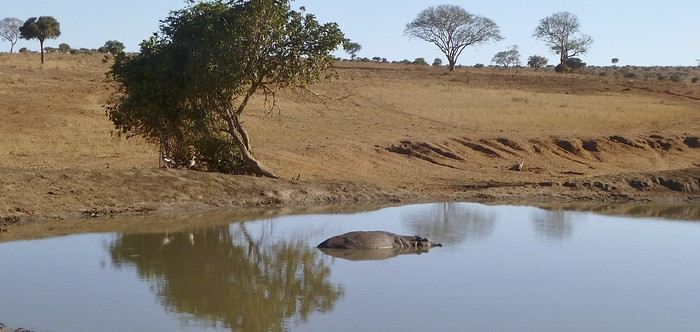
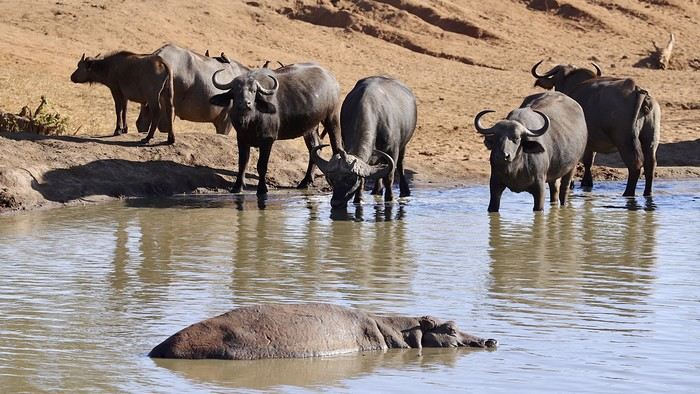
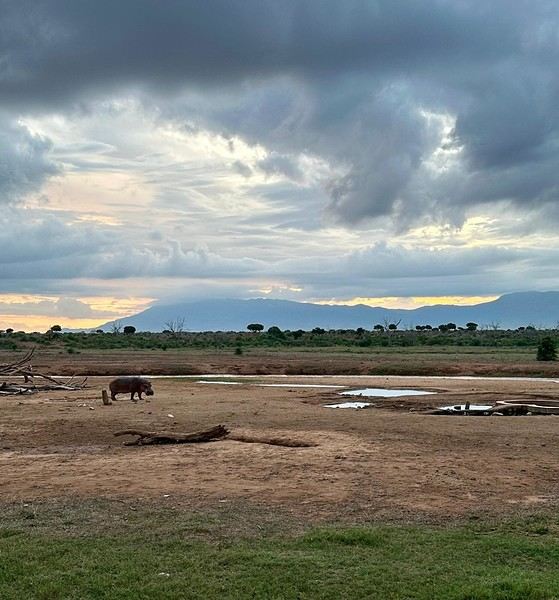
A peaceful scene: a solitary Hippopotame accompanied by a pair of Oies d’Égypte and a calm waterhole... not for long...!!!


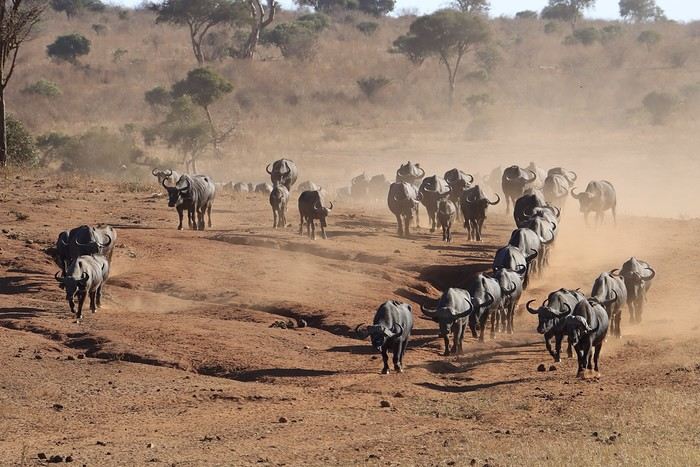
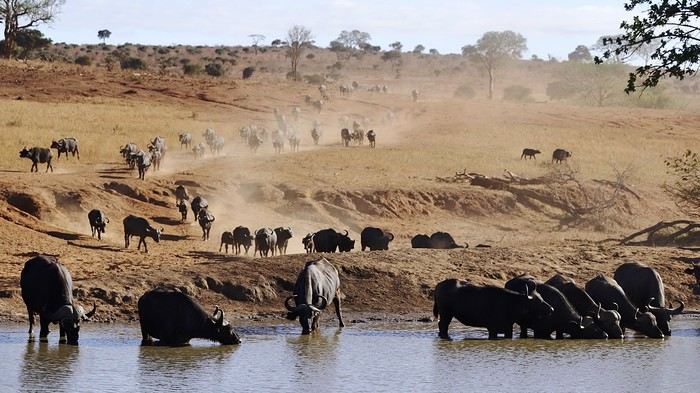
Across from us, at the top of the hill, a cloud of dust: dozens of Buffles heading toward this waterhole... REALLY impressive!!


For half an hour, more and more kept arriving—there must be hundreds!!


What’s funny is seeing the Hippopotame not moving—completely unfazed??


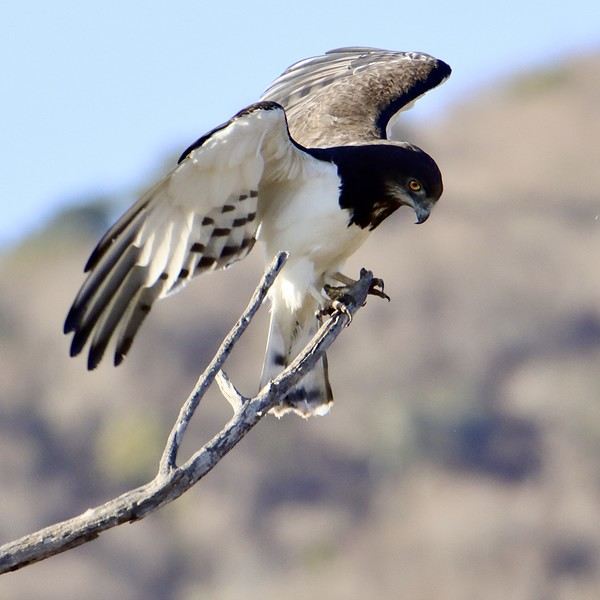
We continue... There’s more than just buffaloes to see in Tsavo ouest 😉 A Circaète à poitrine noire.


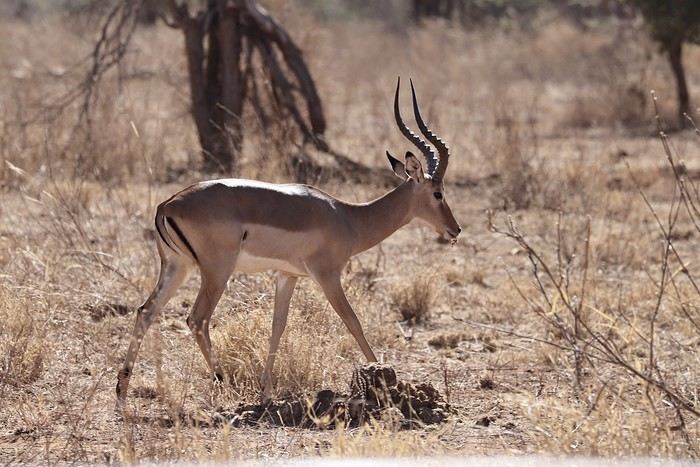
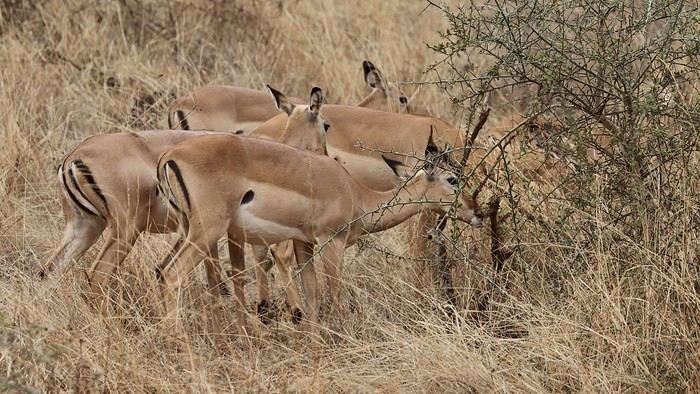
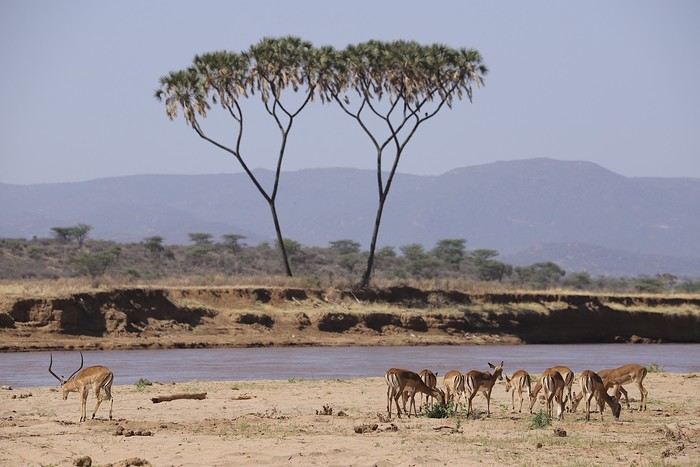
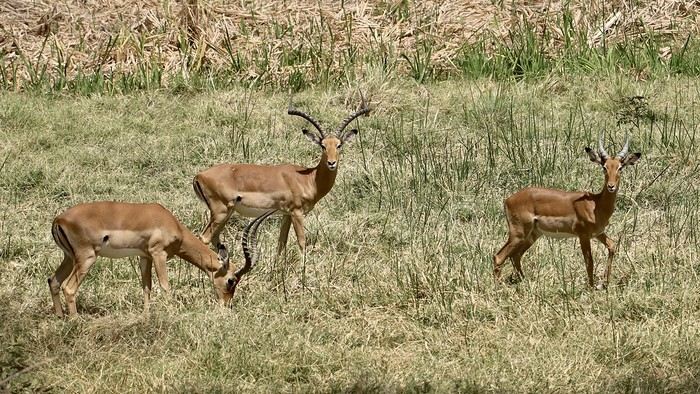
A male Impala.


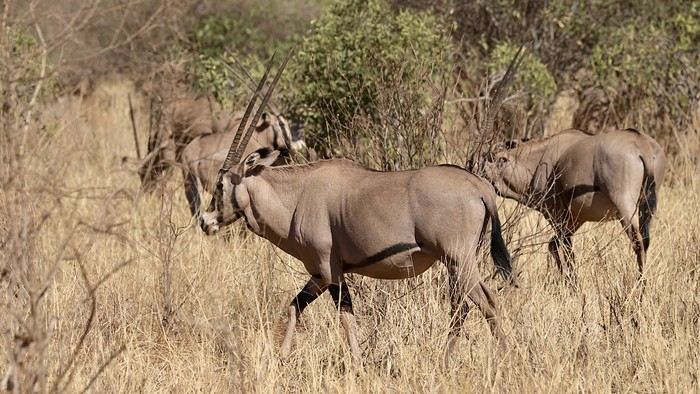
And again, some Oryx à oreilles frangées.


Here, you can clearly see the distinctive black tufts at the tips of their ears.


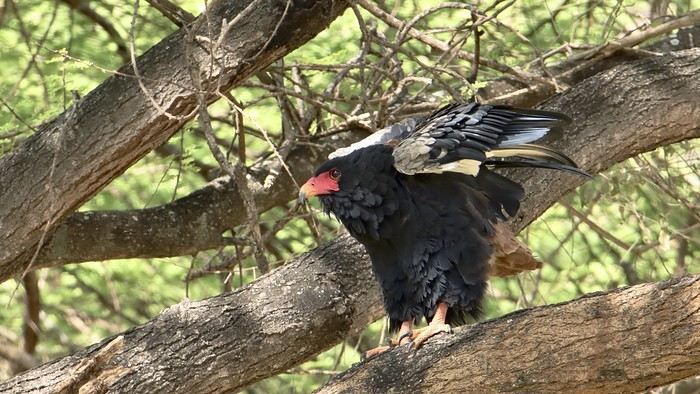
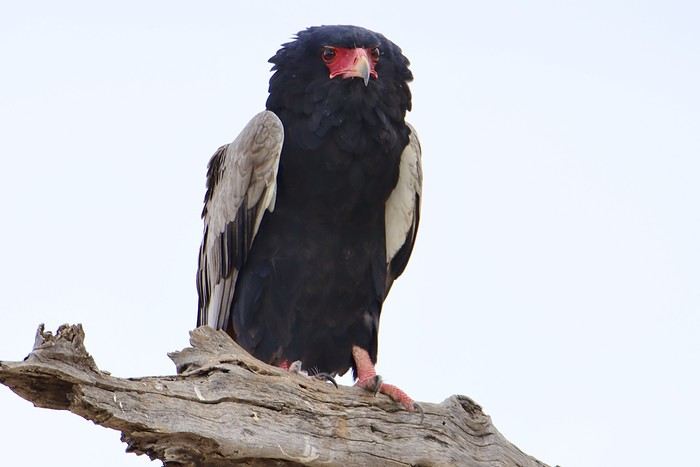
Then, a Aigle bateleur des savanes.


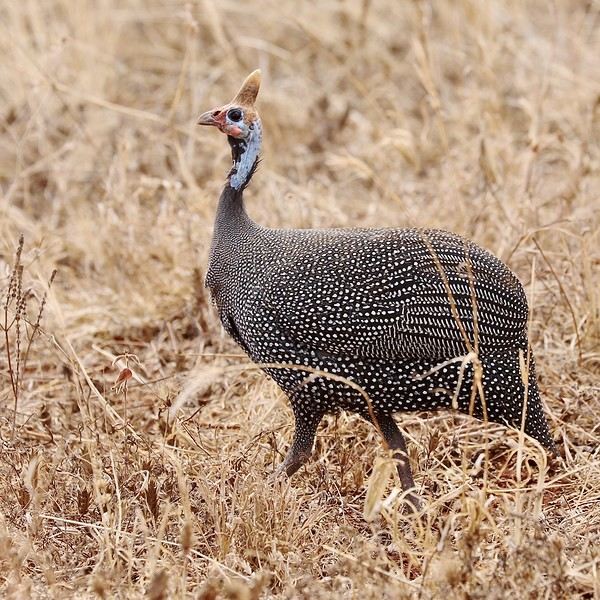
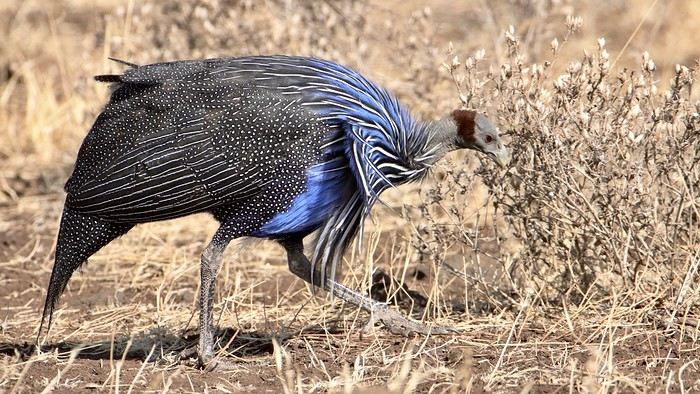
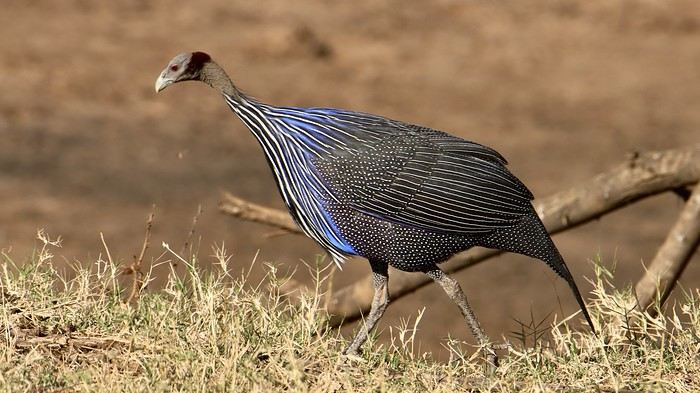
And a Pintade de Numidie.


...
PU Puma2A Veteran ·
...

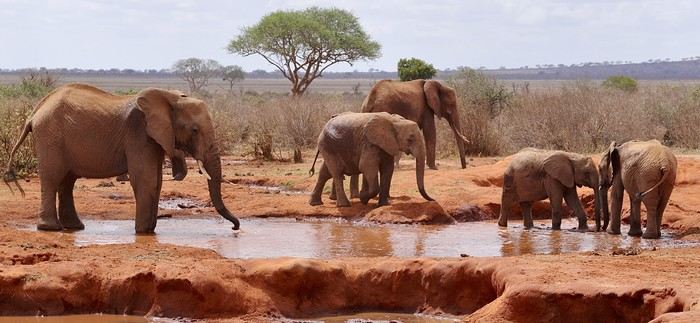
I had come to these Tsavo reserves (West and East back-to-back) to see red elephants!

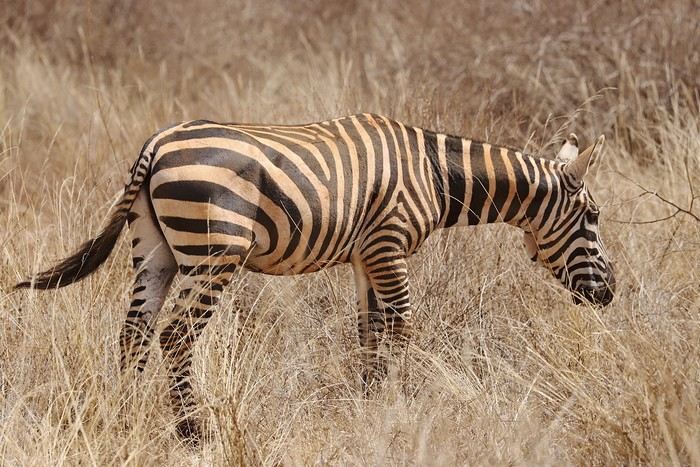
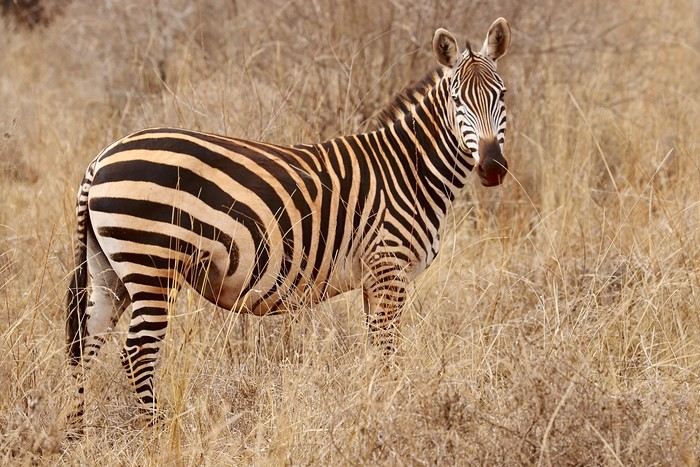
I discover zebras "red"??


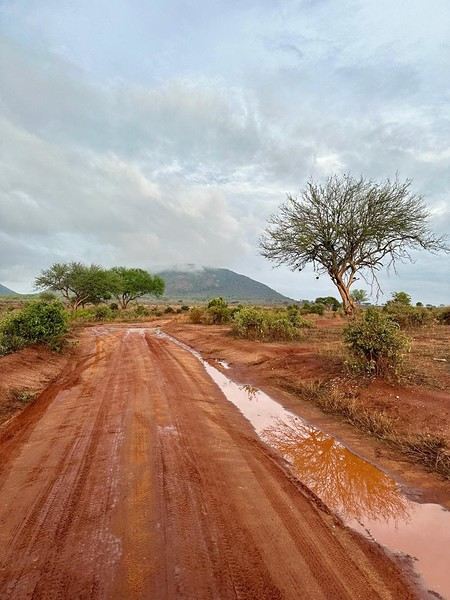
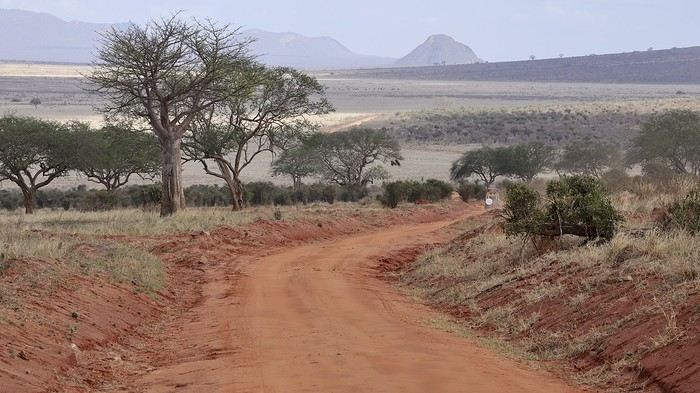
We quickly understood why, with the color of the "road"!! 😉


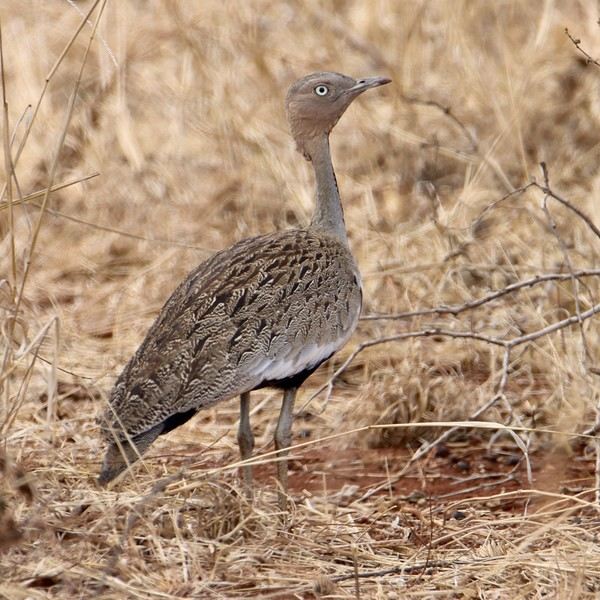
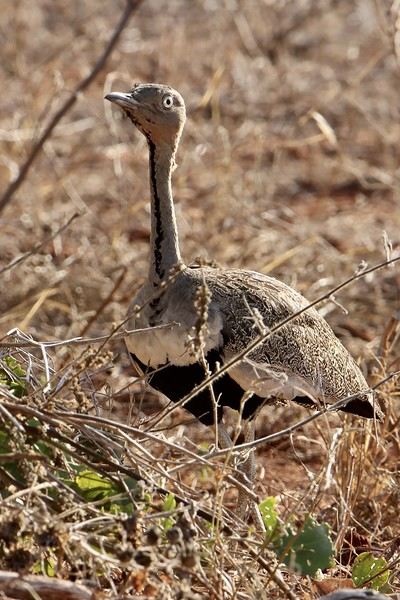
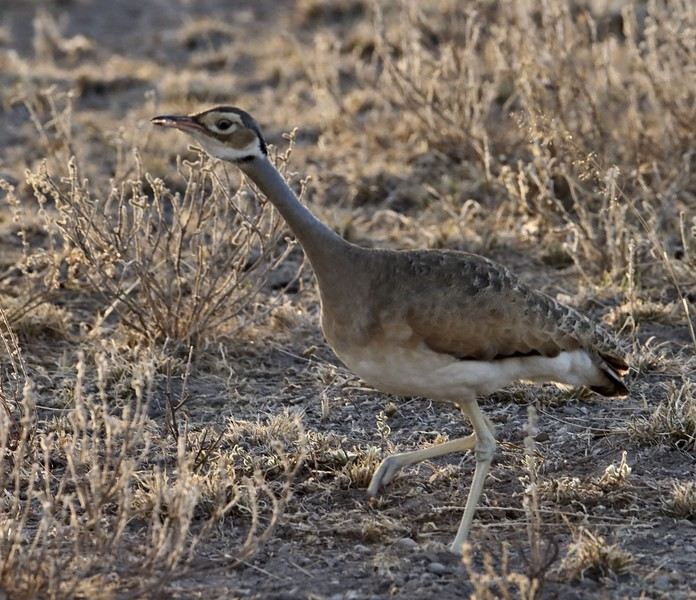
A Loustalet’s bustard.


A lesser kudu shows us the sophisticated decoration of its "costume"!


On our way back to the lodge for lunch, we find the lioness no longer on her rock but lying in wait for a zebra leg???

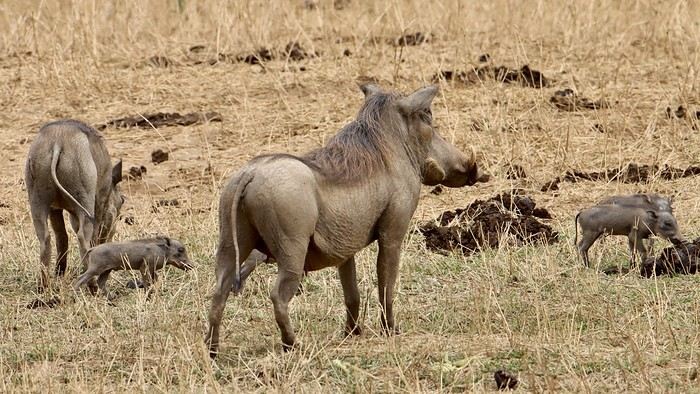
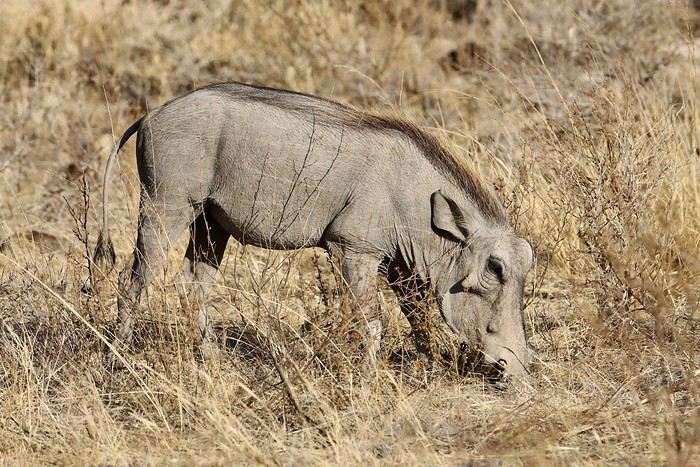
Further on, a family of warthogs.


In the afternoon, we head to a special area of Tsavo West dedicated to the protection of black rhinos. It’s a huge enclosure guarded by numerous rangers equipped with military weapons for anti-poaching efforts. Unfortunately, within the time we had, we didn’t encounter any rhinos. That afternoon, no one seemed to have seen them...

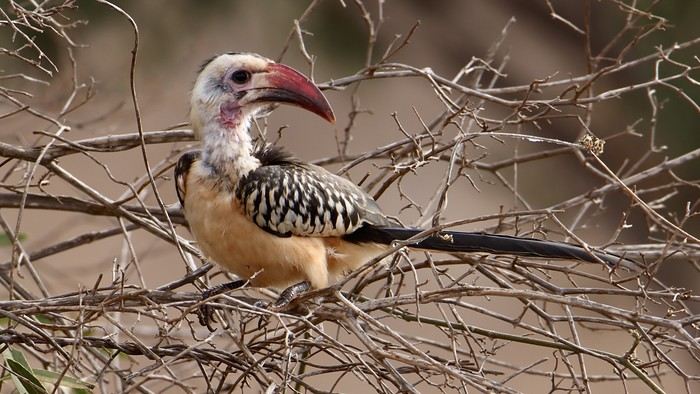
A red-billed hornbill.


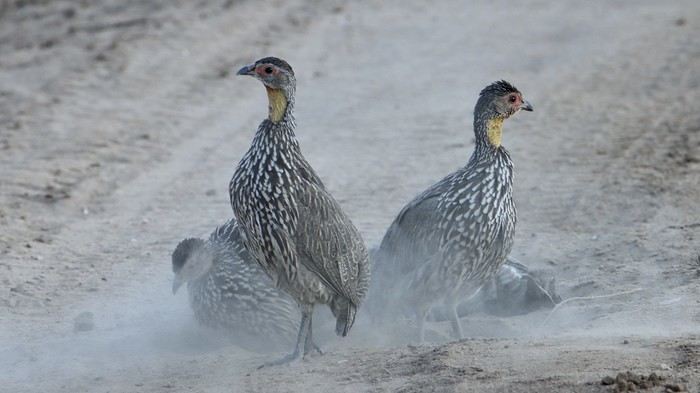
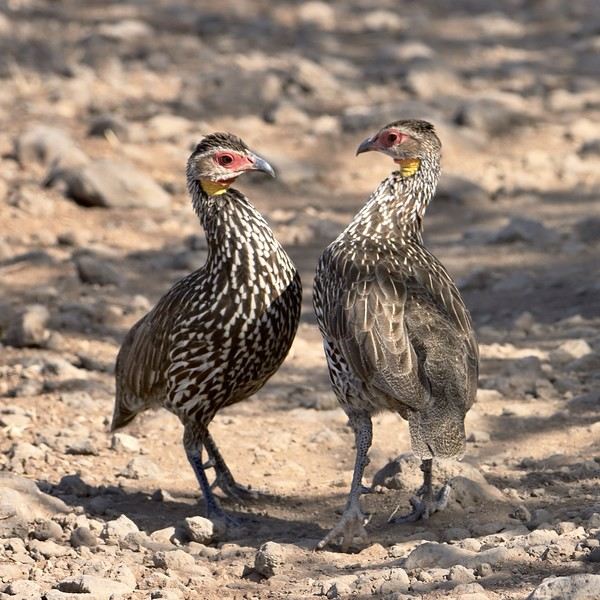
On the way back, in the middle of the track, yellow-throated francolins are taking a dust bath!!!


This morning, October 11, we left Ngulia Lodge after two nights there to move to another accommodation, still in Tsavo West. (Consequence of the booking issue mentioned at the start)

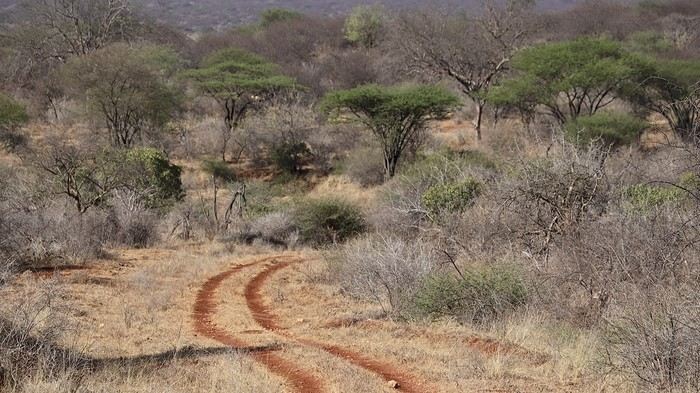
We take a very little-traveled but very pleasant track.


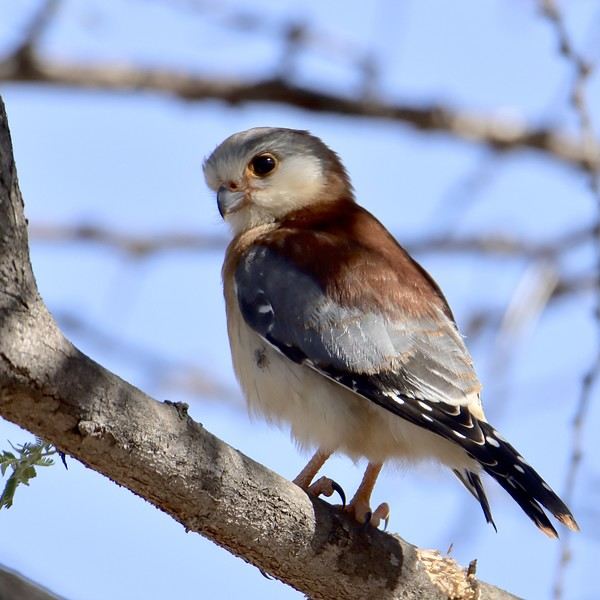
Then we have a rare encounter that delighted our whole group, including Simon, who hadn’t seen one in a long time!! And neither had we!!!

An African pygmy falcon, or African pygmy falcon (the smallest raptor on this continent).


Next, we stop to visit Mzima Springs: a big disappointment for me!! We had seen this place 30 years ago during our second stay in Kenya. It was a beautiful, clean, and well-maintained spot... It’s completely different now. The vegetation is overgrown everywhere, and many large broken trees are scattered all over. ... Avoid.

I’m forced, to comply with this forum’s rules (max 300 images), to make many shortcuts and limit the number of images I share. I’m sorry about that.

Puma2A

About Ngulia Lodge (which wasn’t my first choice), it’s a perfectly decent place, both in terms of the food offered and the cleanliness of the rooms. It has one flaw in my opinion: it’s at the end of a dead-end track. When you leave or return from a safari, for the last few kilometers leading to the lodge, there’s no alternative route. You have to use the same track. The first fork is 5/8 km from the lodge. We had to travel this stretch of road 8 times... which eventually became monotonous. (Purely personal opinion, of course)

...
PU Puma2A Veteran ·
...

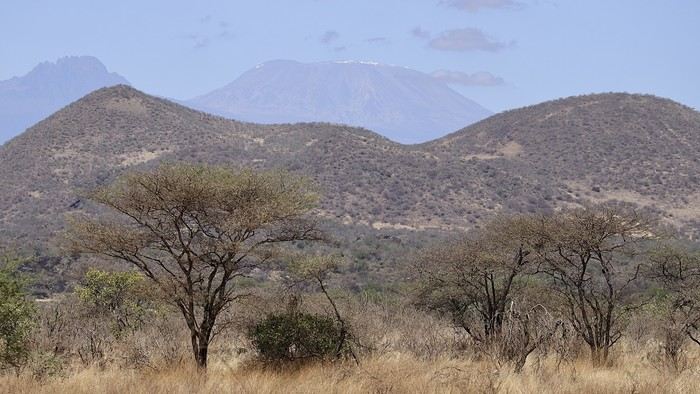
During this morning, we were lucky enough to spot the Kilimanjaro massif in the distance, with its summit clear—a rare sight 🙂. In this photo, Kilimanjaro is about 90 km away...


Then, another encounter with a group of fringe-eared oryx. This time, there are very young ones too...


We’ve seen far more animals than the number of photos shown here suggests (still hoping to stay within Carnet’s 300-image limit).

...

The "Kilaguni Serena Lodge", where we arrived around noon, is a very large establishment—not exactly my favorite style. Still, it’s very comfortable, clean, the food is great, and the menu offers plenty of variety. The staff we met were friendly, polite, and always smiling. What else? 😉

From a safari perspective, this lodge is a great starting point for exploring many directions, which is a big plus. Originally, we were supposed to spend three nights here, but due to overbooking, our safari agency had to make last-minute changes. So, we’ll only stay one night.

= It seems that with the prices to access the Masai Mara, many clients and agencies are now turning more toward the two Tsavo reserves (East and West).

From the lodge’s dining room and lounge, there’s an incredible view—both far and near—of a watering hole popular with the region’s animals.


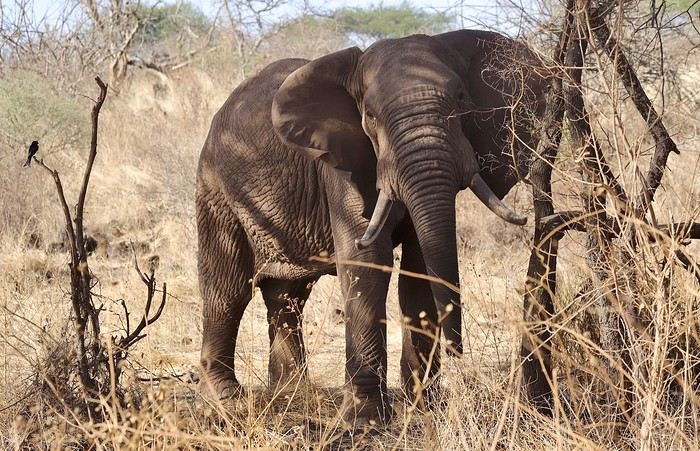
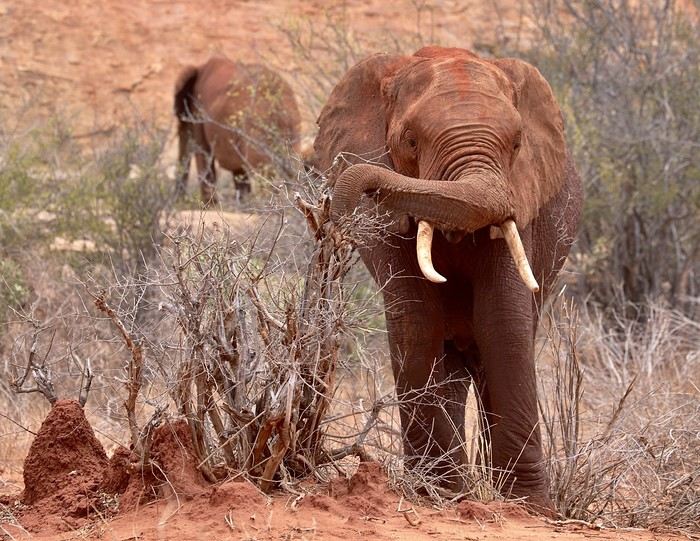
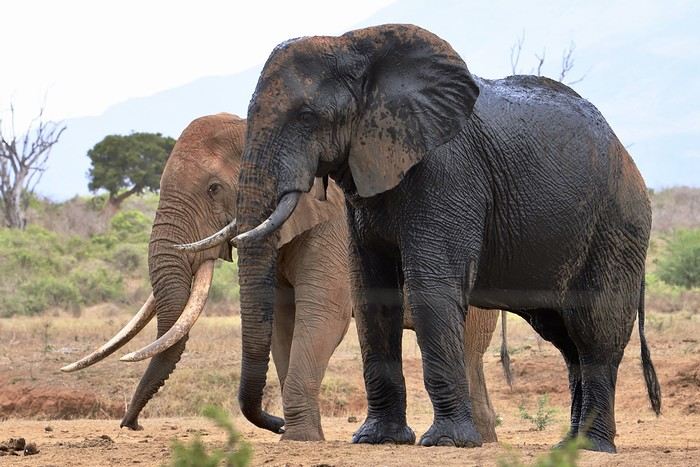
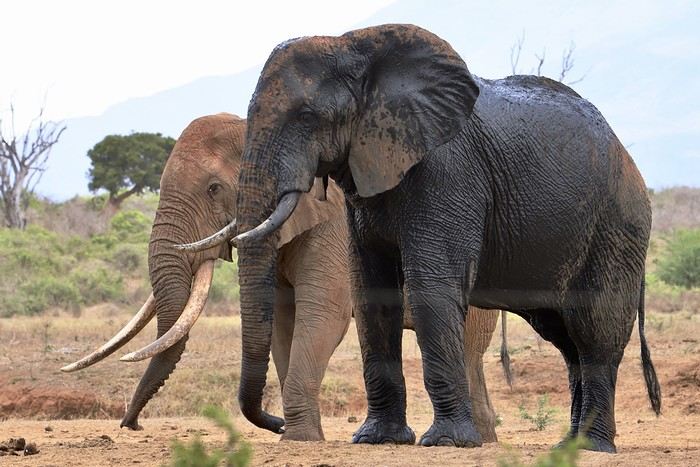
During the afternoon safari... It’s not gray, but not quite the red I’d prefer, but this one has a great stance and impressive tusks... (personal taste)


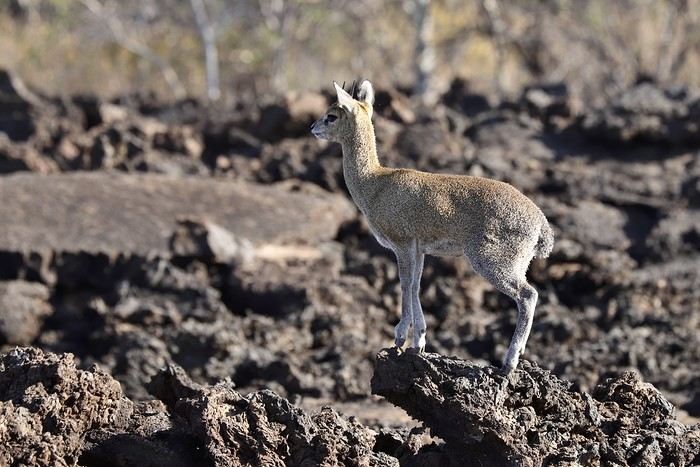
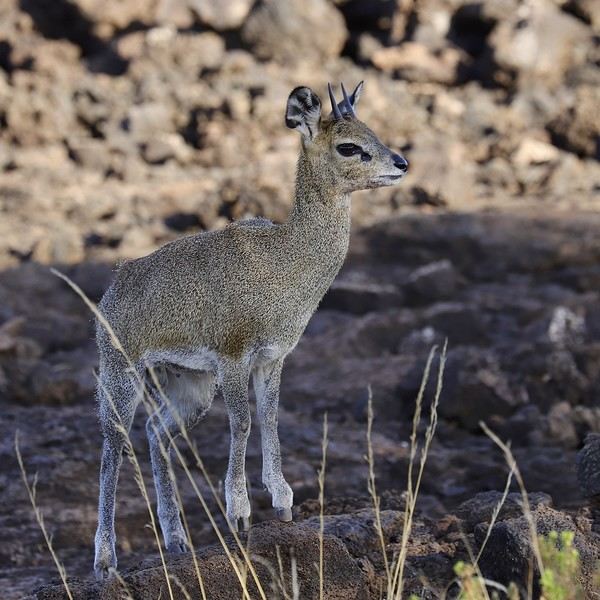
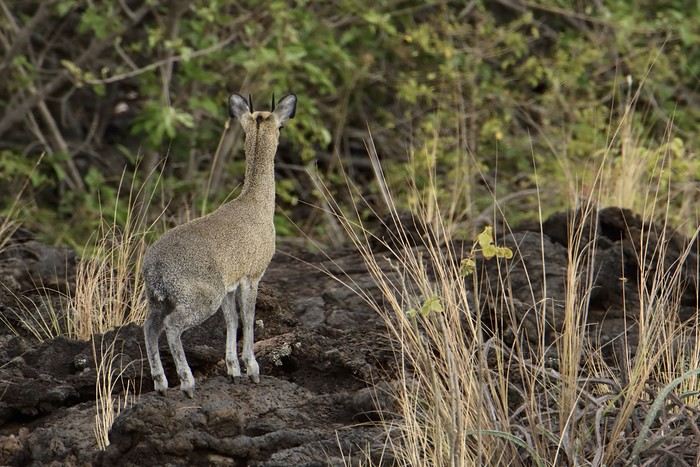
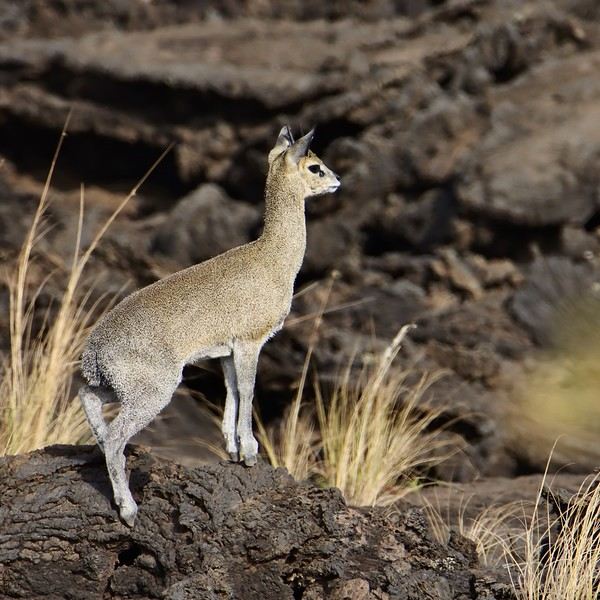
Near one of the region’s many lava flows, we met two klipspringers at close range.


You can see the sharp, vertical hooves of this animal, so agile among the rocks.


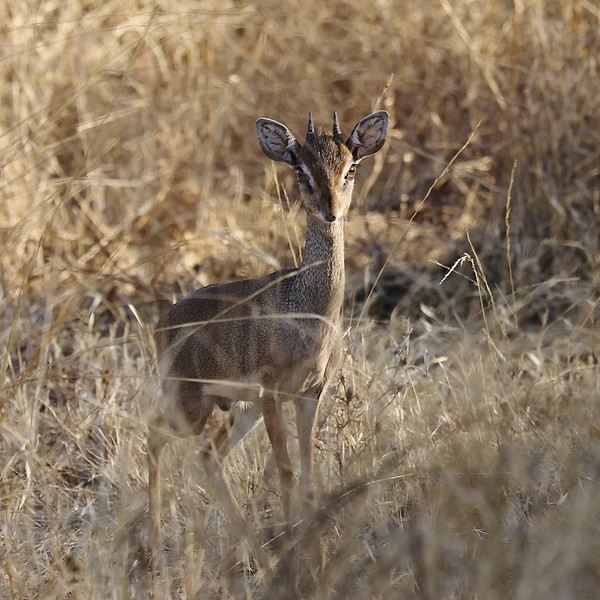
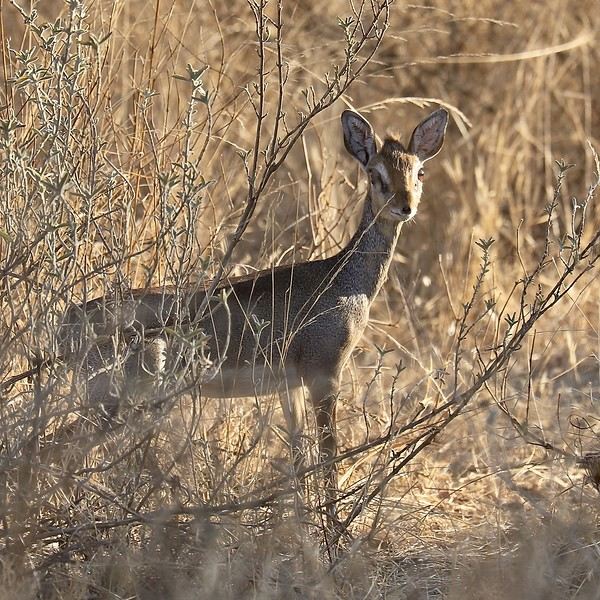
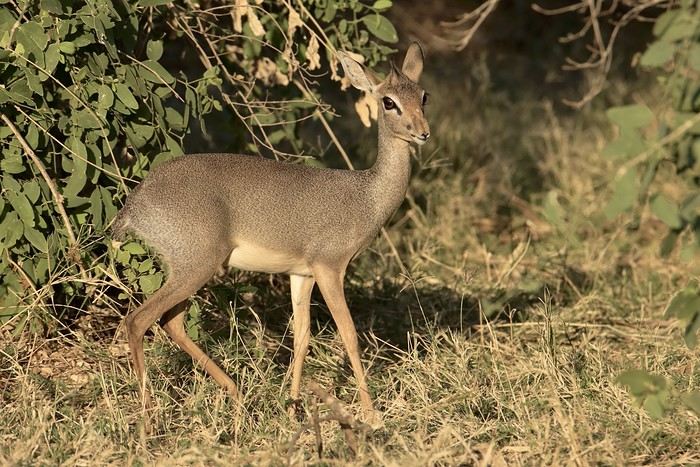
Since arriving in Tsavo East, we’ve often seen dik-diks, but always too briefly for me to react in time... 😕 Finally, here’s a male dik-dik...


The female (hornless) is always nearby—they’re loyal couples and stay close together...


...
PU Puma2A Veteran ·
...

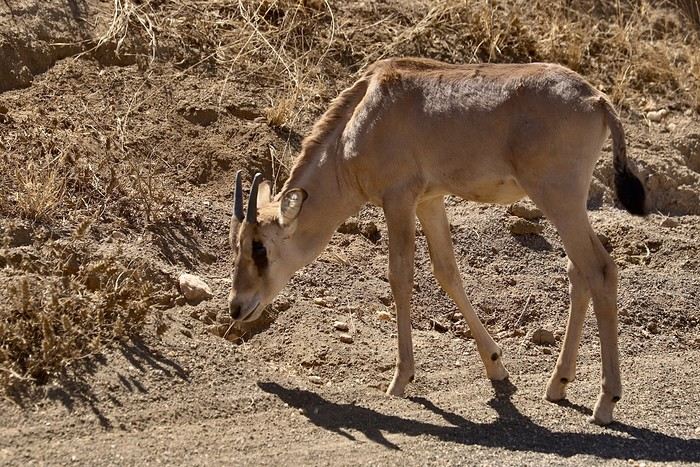
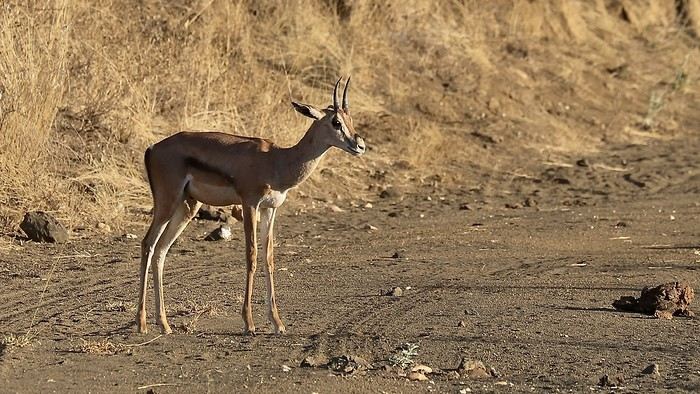
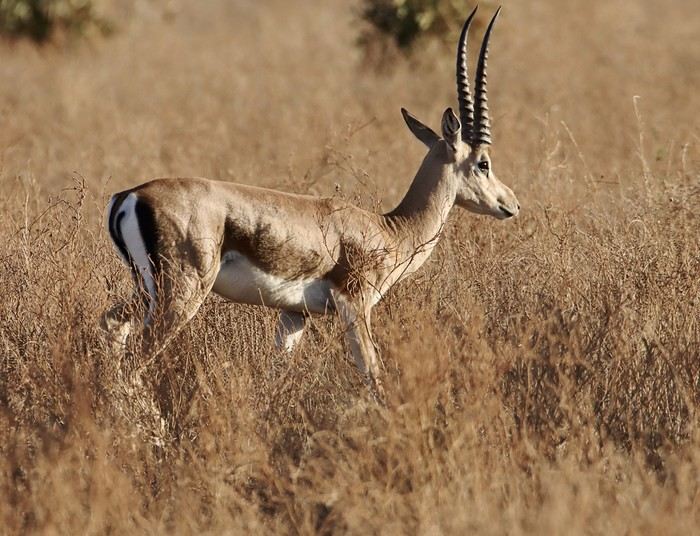
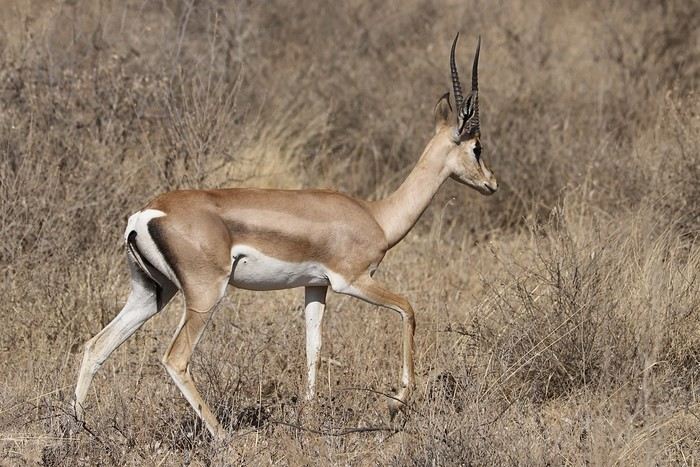
Then, we encountered a young Grant's gazelle that seemed to have lost its group.


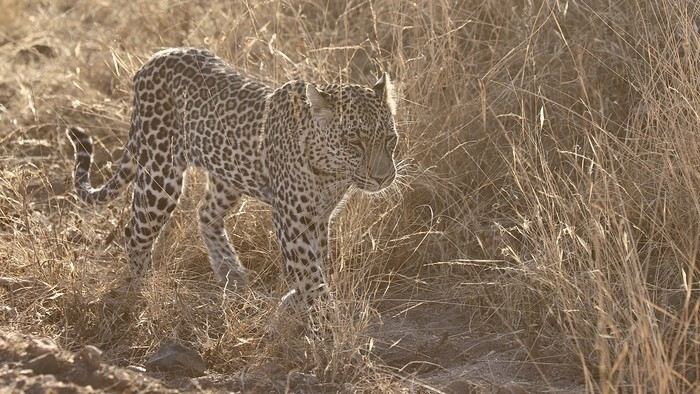
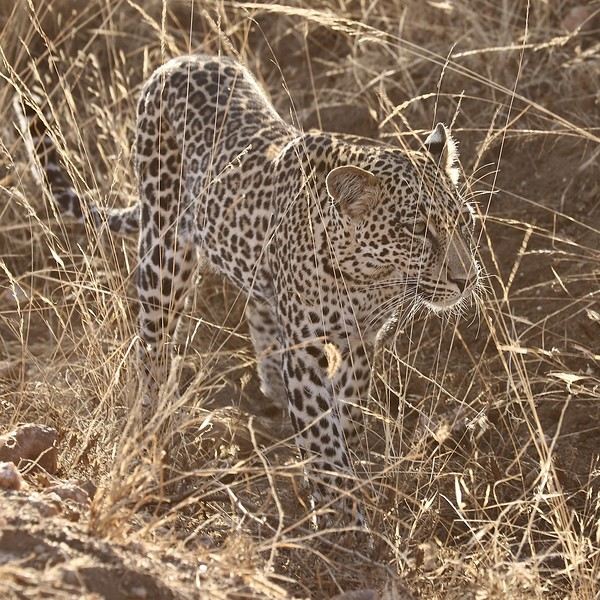
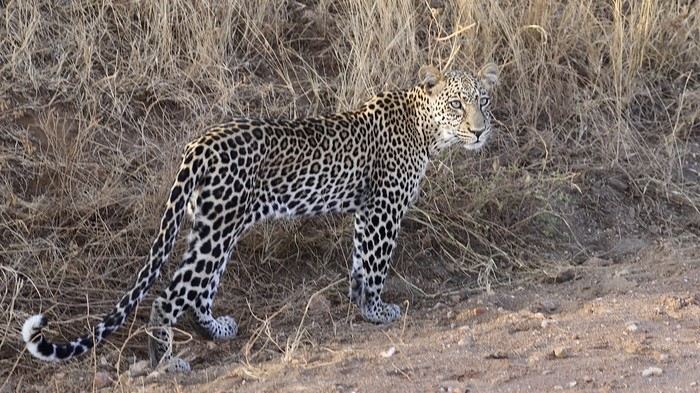
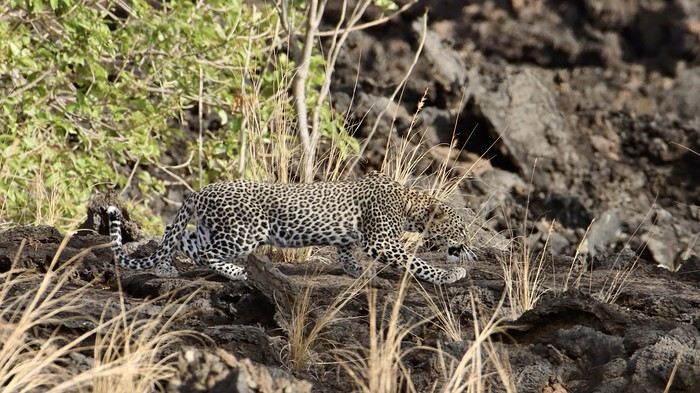
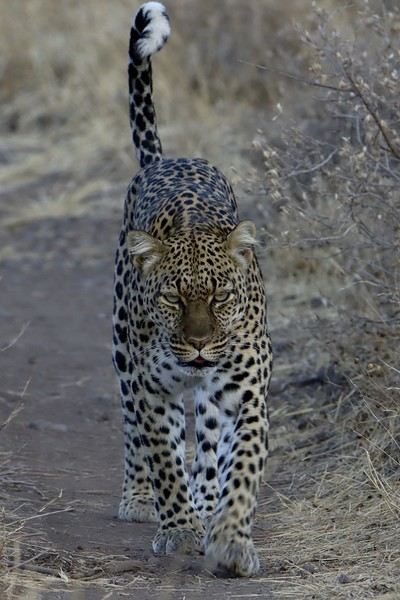
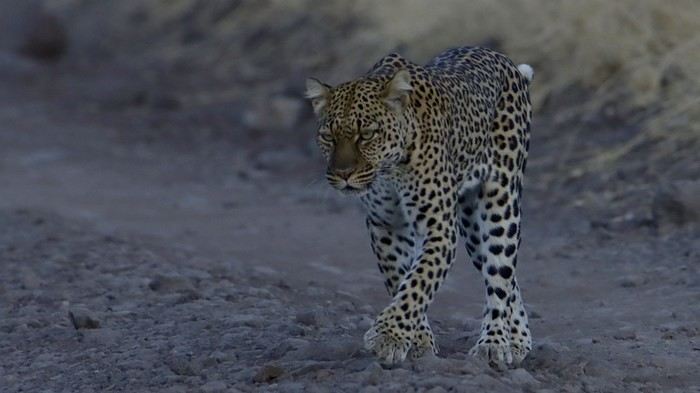
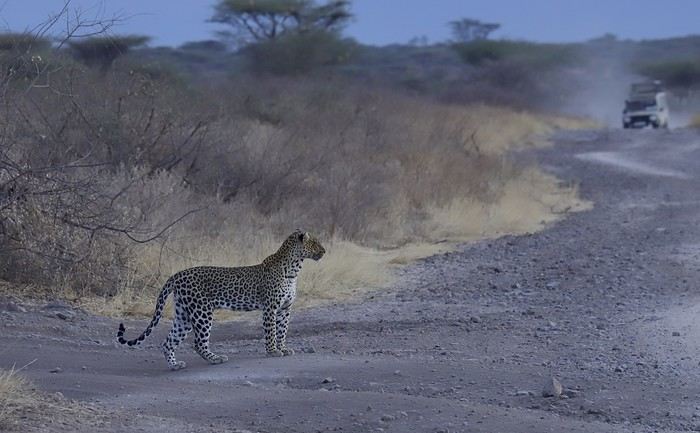
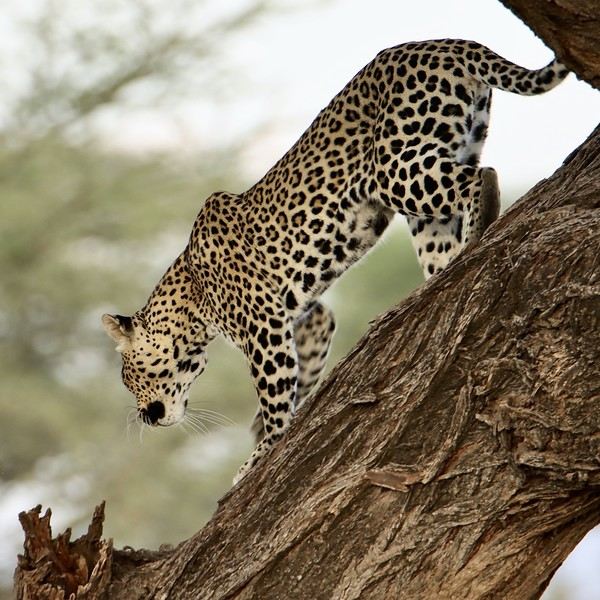
And the HOLY GRAIL of this day...!! Despite a massive backlight 😕 A leopard on the prowl.


😏 😉 😏

....

- Sunday, October 12:

Today, we left Tsavo West Reserve to head to Tsavo East.

In the morning light, under a very gray sky, we met a group of impalas that weren’t shy at all.


We reached the lava flow (seen the day before), which the track crosses:

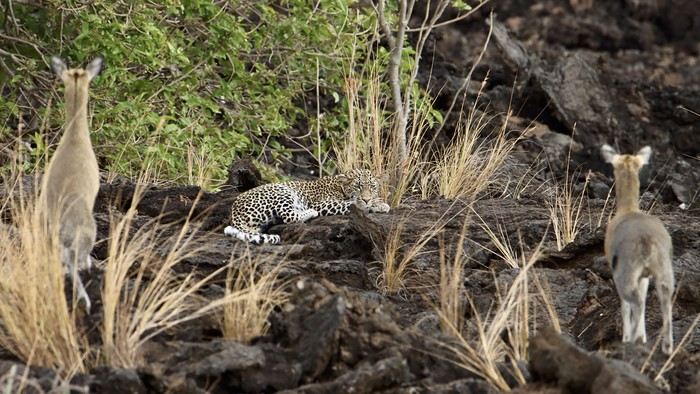
And there, a surreal scene unfolded before us... First, an oribi that seemed to be staring at something.


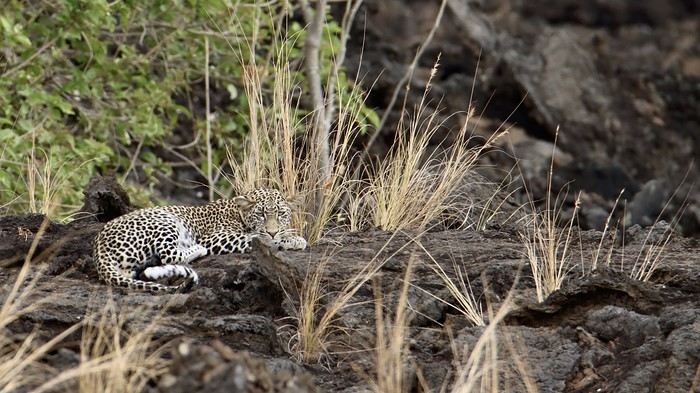
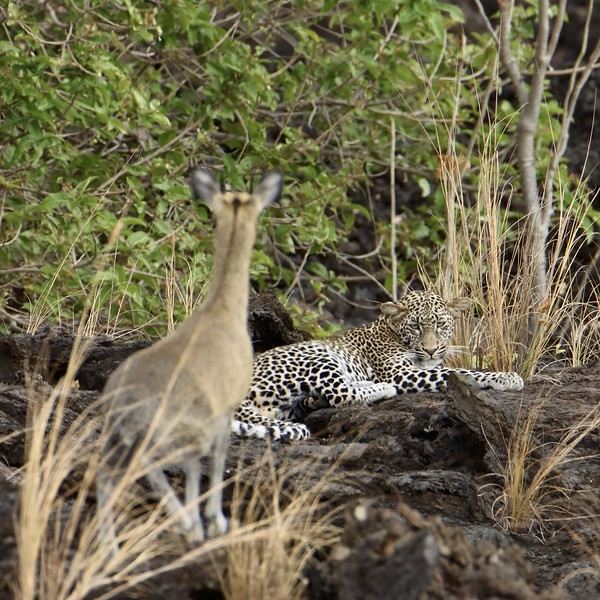
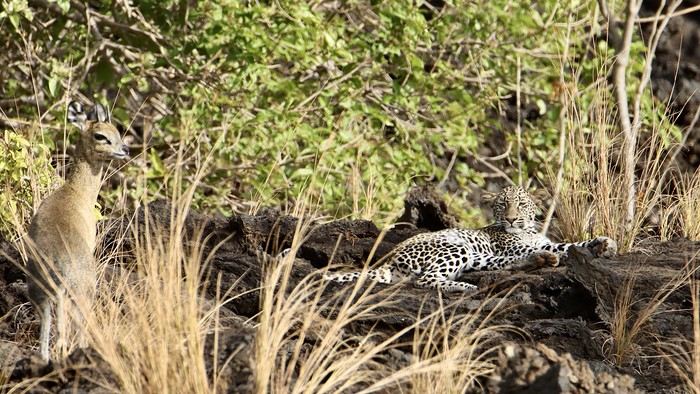
Further on, a young leopard was resting... (not the same leopard we saw yesterday!)


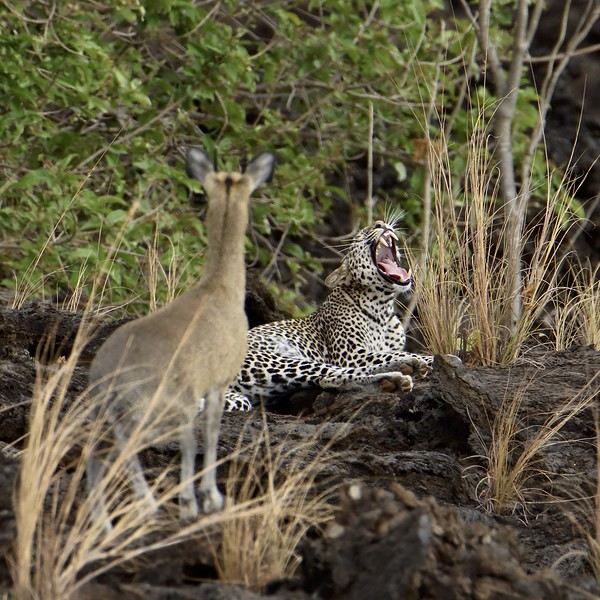
Actually, it was two oribis harassing this young leopard with their whistles...!!


We guessed that the pair of oribis might have had young hidden nearby and were trying to drive the danger away. Clearly, the leopard wasn’t comfortable on this lava, which could damage the pads of its paws. Meanwhile, the oribis were in their ideal environment, given their agility on the rocks.


Twice, we saw the leopard yawn so wide it looked like its jaw might dislocate... Maybe it was really tired???


To be continued... 😎 ??

...
PU Puma2A Veteran ·
...

(Sorry for the lack of sharpness in these images, taken at 600mm with my lens. Fortunately, there are "bean-bags" in the vehicle to support/stabilize the camera gear.)


Finally, the leopard decides to head off to a quieter spot!!!


It (she?!) disappears into the lava chaos. We can hardly imagine the relief of the klipspringers....!!


On the way toward the reserve exit, we come across some "red" zebras...


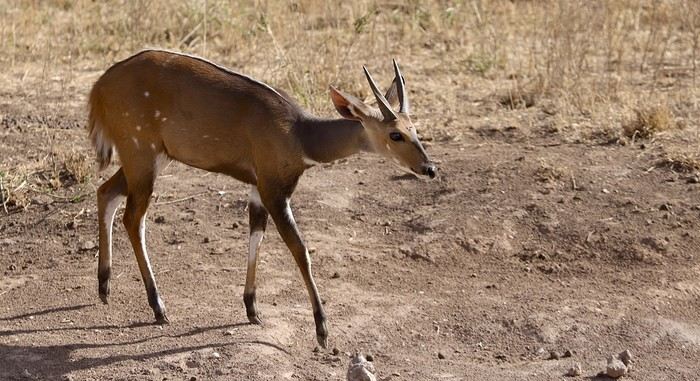
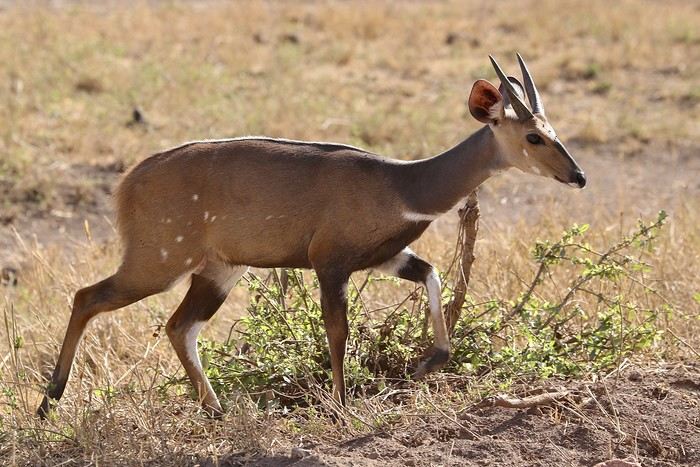
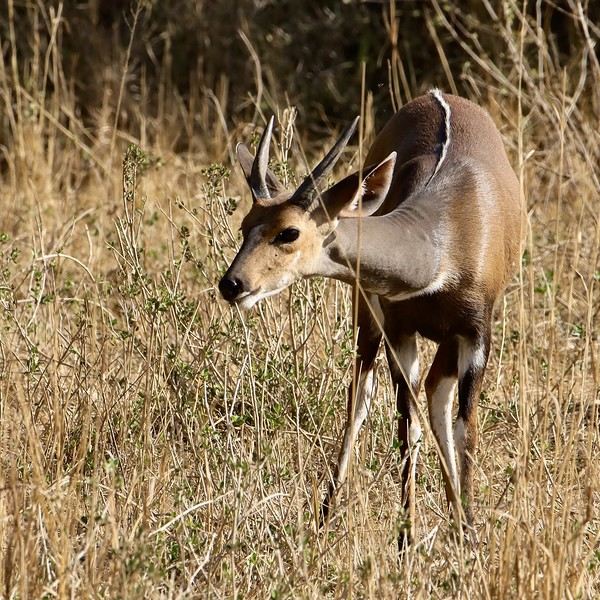
And one of the beauties of African nature: a male bushbuck.


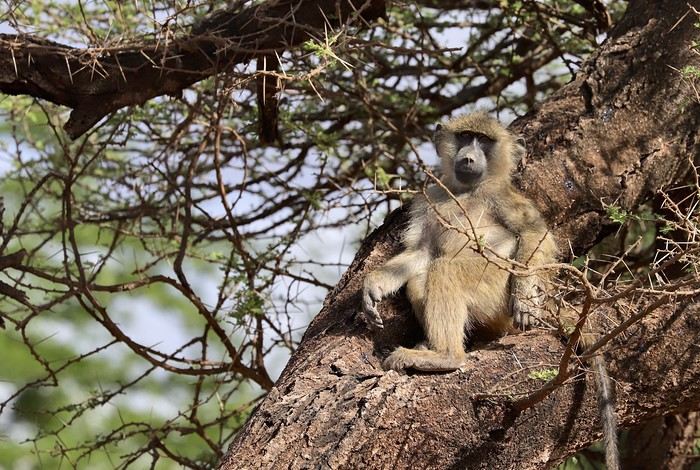
A baboon on its "garden chair"!


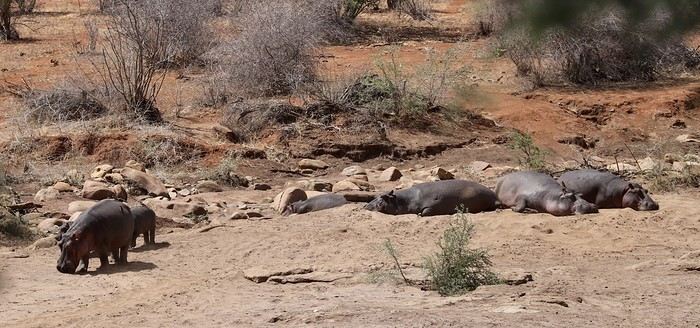
As we follow a dry riverbed through the vegetation, we spot a group of hippos "at the beach"


It’s pretty surprising since their skin is very sensitive to the sun—there must be a waterhole just out of sight below.

This marks the end of our very enjoyable visit to Tsavo West.

...
PU Puma2A Veteran ·
...

After a few kilometers of driving and hitting the heavy traffic again on the main road Nairobi / Voi / Mombasa, we arrived at one of the entrances to the Tsavo East reserve.


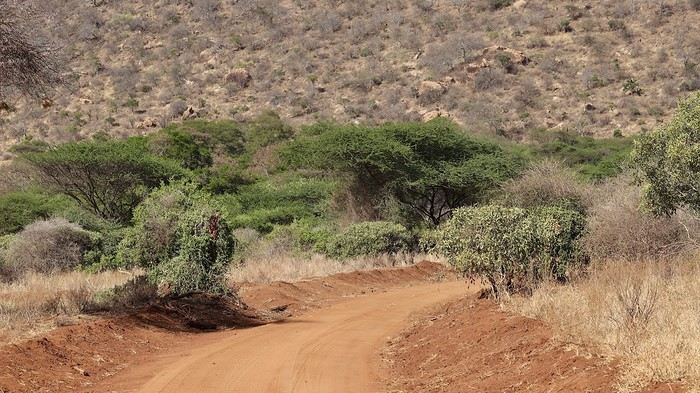
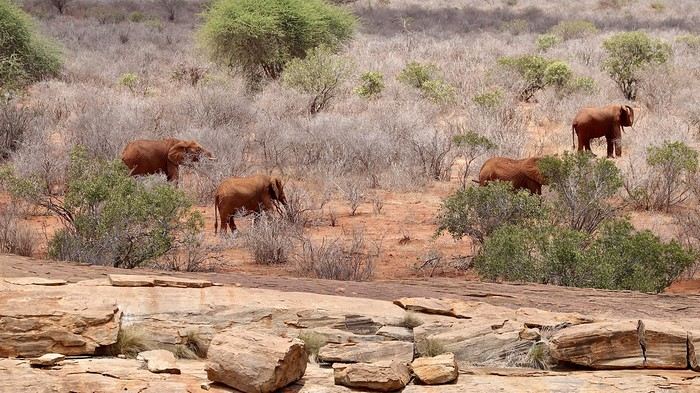
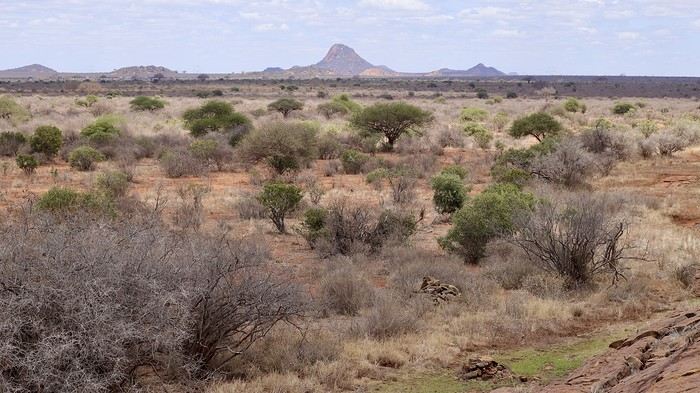
Tsavo East is a vast expanse of red earth and low or sparse vegetation.


My dream has come true!!


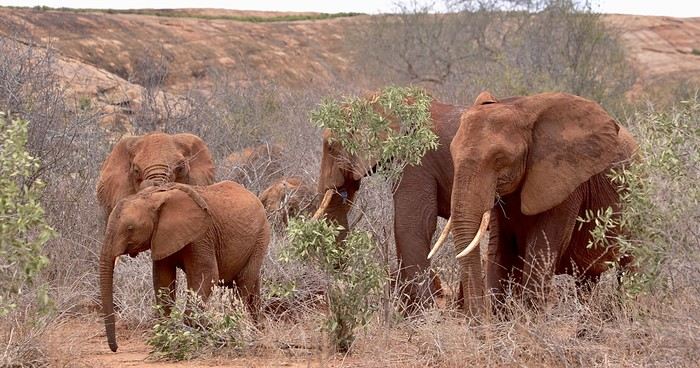
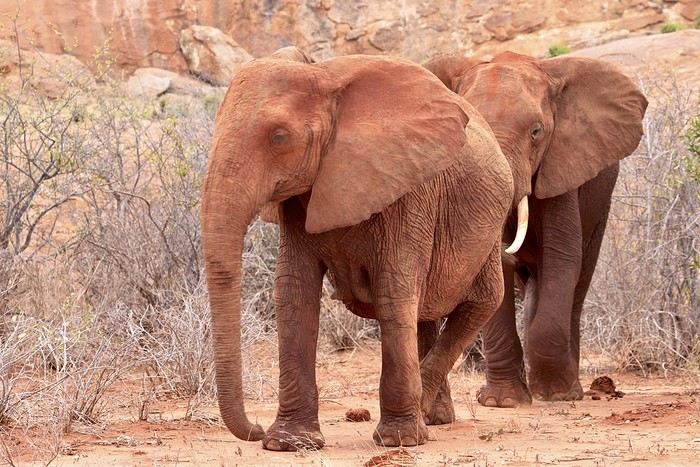
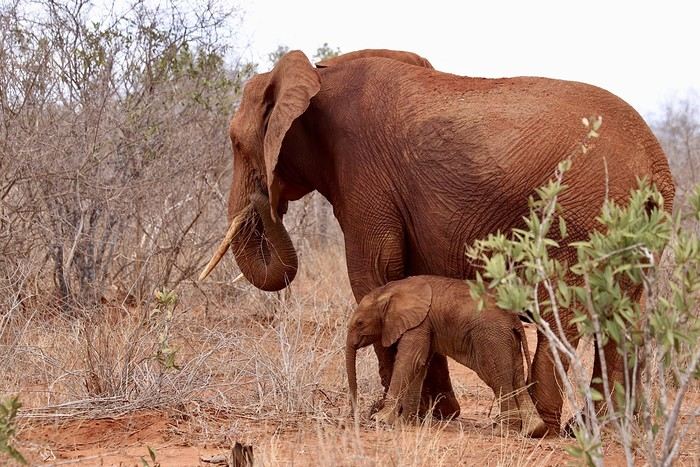
Seeing and photographing the red elephants of Tsavo East was the main motivation behind choosing to return to Kenya. This wish had been growing in my mind for a few years now... And now, here we are!!!


We’d already had the chance to see white elephants at one of the watering holes in Etosha, Namibia, and now I can capture images of these red elephants... 😏 I almost shed a tear.


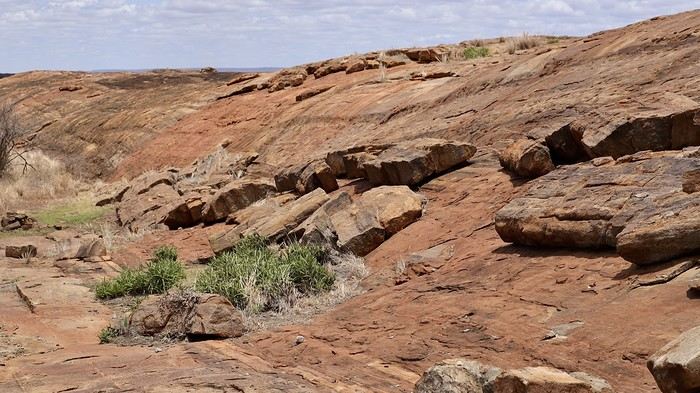
A stop to stretch our legs at Mudanda Rock: A curious, long, straight geological formation that acts like a natural barrier between two "worlds"!!


We climb to the top easily, which gives us a view over Tsavo East.


...
PU Puma2A Veteran ·
Around 1 p.m., we checked in and had lunch at "Sentrim Camp Tsavo." We’ll be staying here for 3 nights. I must say, it’s exactly the kind of lodge that suits me perfectly. It’s a small place with no obvious luxury. The bungalows, half solid structure and half canvas, are comfortable, clean, and well-ventilated. The food is excellent. The staff is polite, friendly, and always smiling.

That said, what can I say about some guests—Italians in particular—who have no respect for their neighbors’ peace and quiet?! Putting that aside, we’ll keep very fond memories of this lodge and its staff.

...

There’s a watering hole right near the camp with visitors throughout the day, and a platform to observe them more easily.


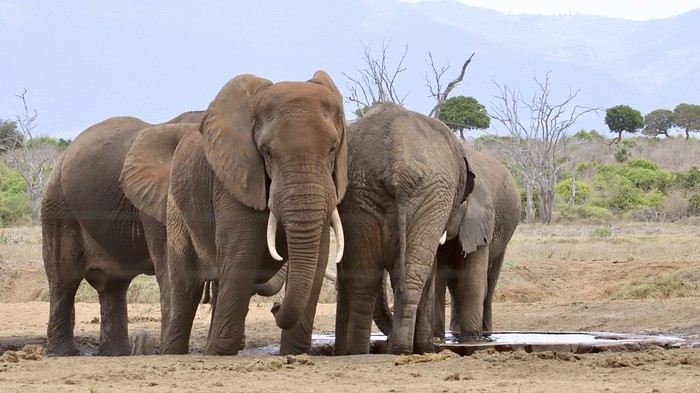
Some "visitors" are particularly majestic... (even without being colorized in red!!).


Around Sentrim Camp.

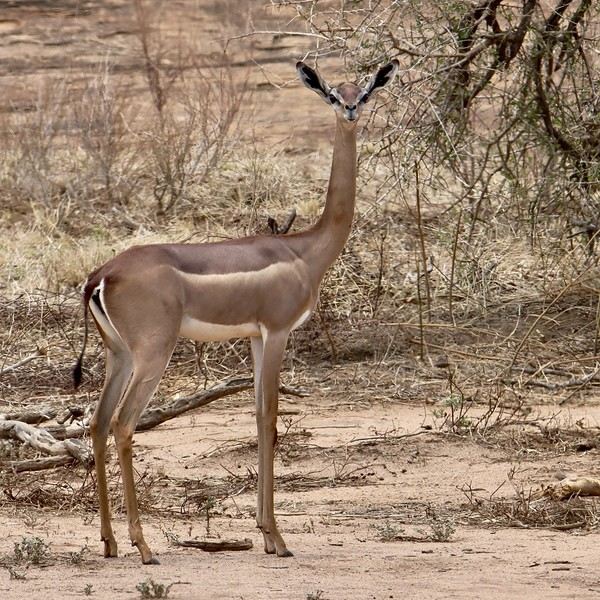
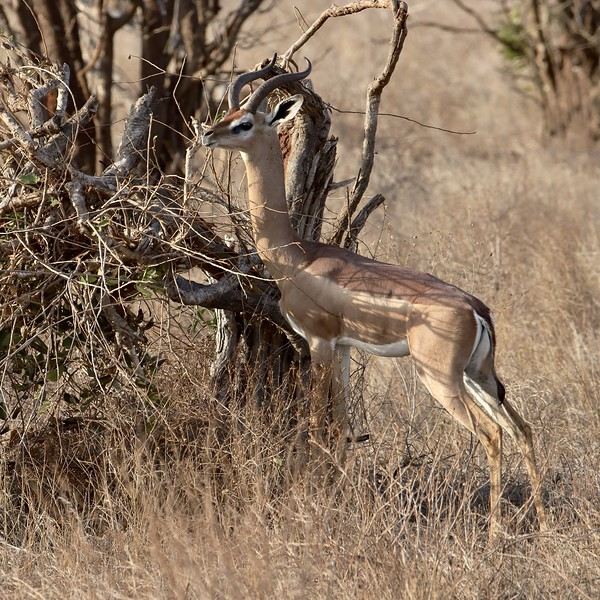
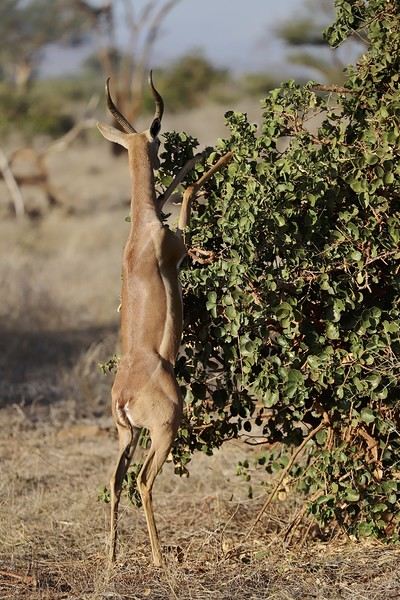
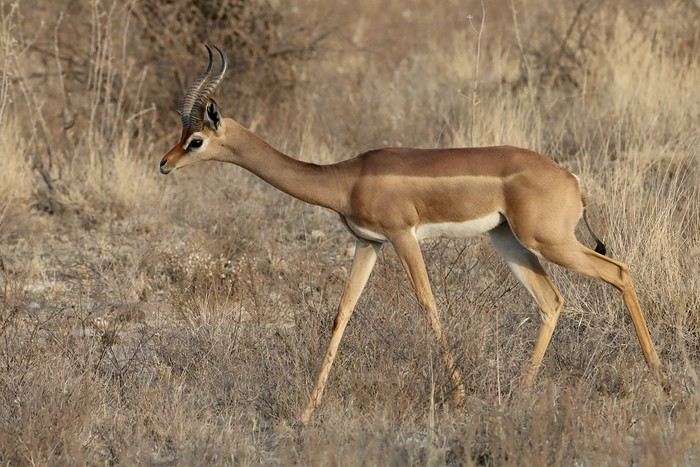
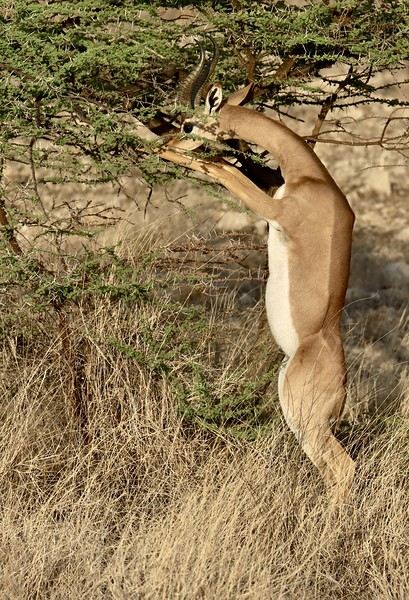
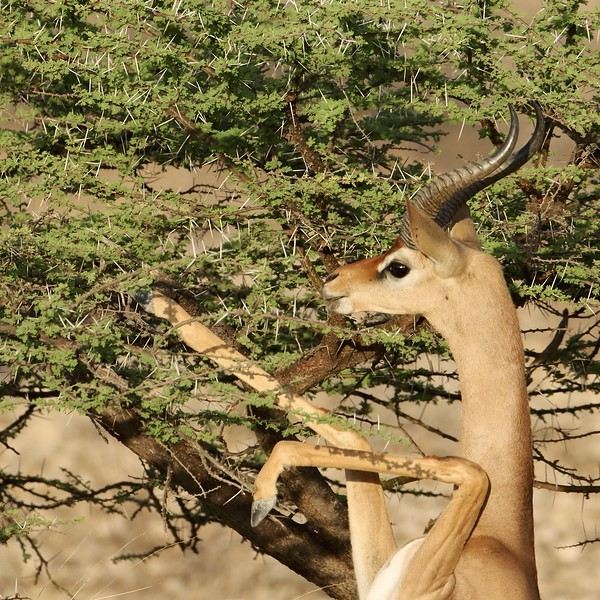
We spotted some Gerenuks (Giraffe Gazelles) (the female doesn’t have horns).


Its characteristic stance for reaching foliage at a higher level than other gazelles.


A Buff-crested Bustard.


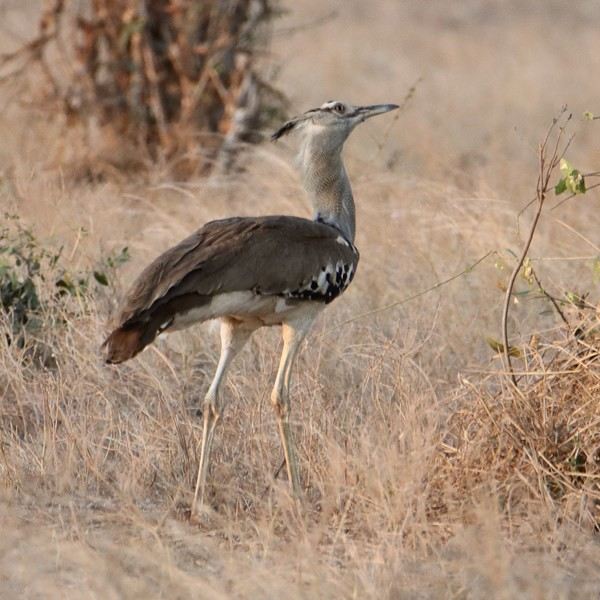
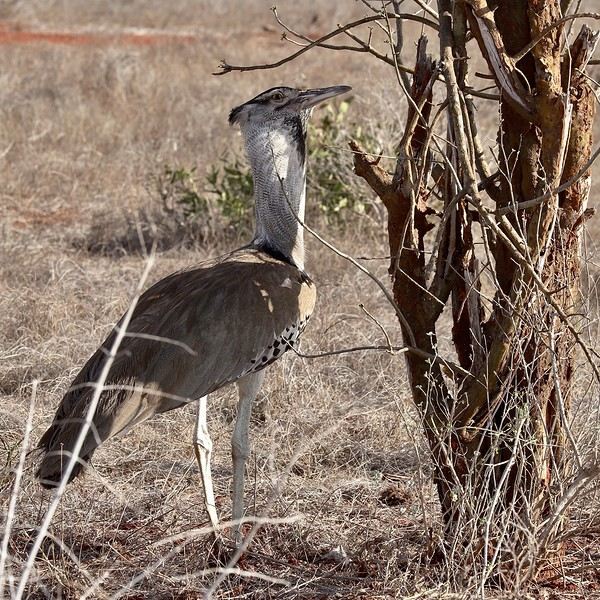
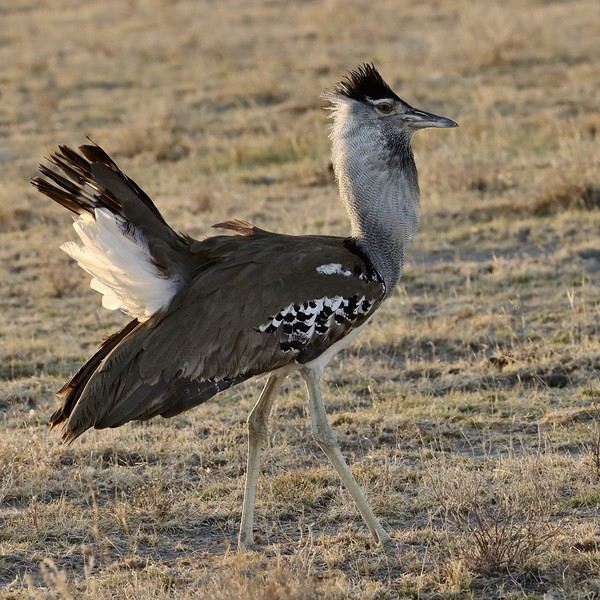
A Kori Bustard.


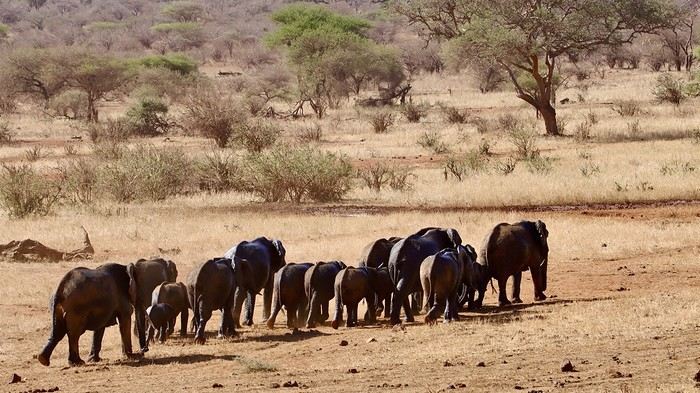
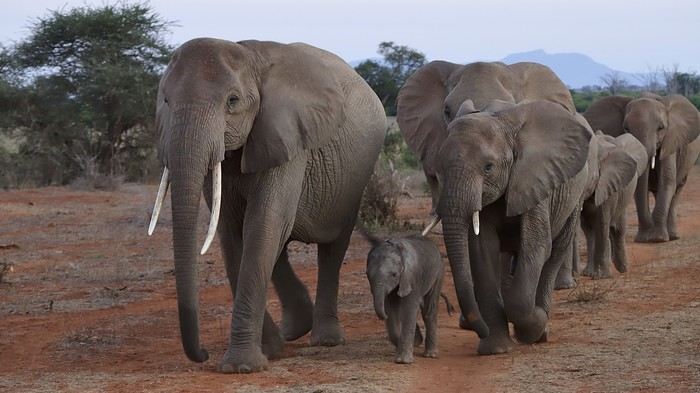
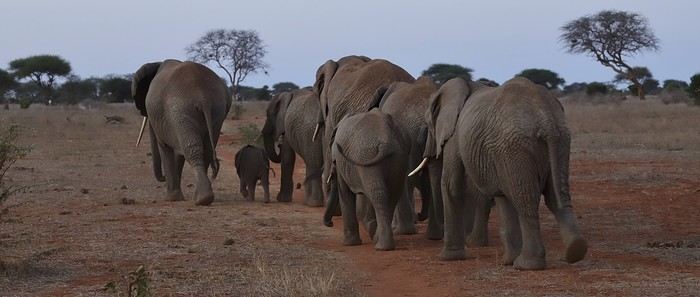
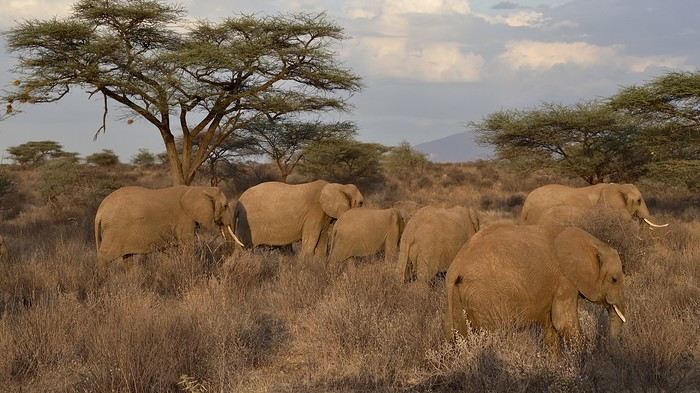
Just as the sun dipped below the horizon, we witnessed a calm herd of elephants passing by. A truly unforgettable moment for me!!


...

- Monday, October 13:

From this day on, we’re changing our morning routine for breakfast. We’ll just grab a quick coffee and a biscuit at the lodge to wake up. The cook prepares bags with everything for a hearty breakfast, which we’ll enjoy somewhere along the way on the hood of the vehicle.

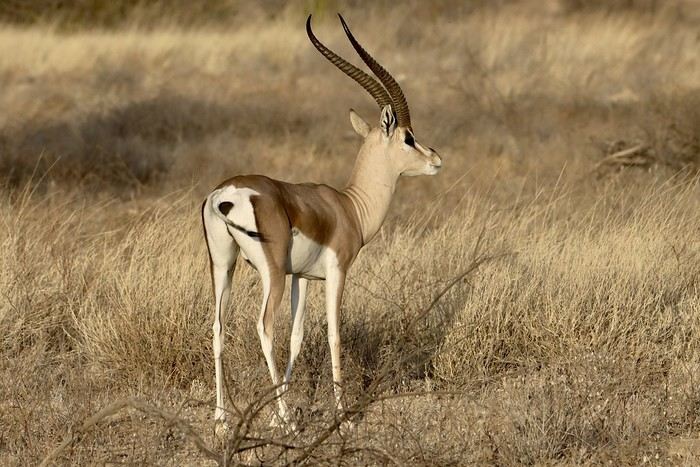
A Grant’s Gazelle (female—both sexes have horns).


...
BL Bluequark Veteran ·
These photos are amazing! Thanks so much for this travel journal. And those red elephants—what can I say? I totally get why you were so excited to see them.
Bluequark

Carnets : Namibie, Laos-Perhentias-BKK, Ouest US, Lanzarote, New-York, Berlin, Cuba, Bardenas Reales, AFS -Lesotho-Swaziland, Japon et le dernier né Colombie: https://voyageforum.com/discussion/ete-2017-trois-semaines-en-colmobie-en-famille-d10108246/
SO Solene40 Globetrotter ·
Well, Alain, now I’m jealous—I only saw some ugly marabou storks and a lone, sad hippo at the Sentrim watering hole 😅. Luckily, I wasn’t expecting much since we were there in the middle of the rainy season 😅.


But I loved it anyway 😊 (and thankfully, I also saw the red elephants in the park, a cheetah mom with her three cubs, and so much more. Thanks for bringing back these memories 😊).

Christelle
Le monde est comme un miroir, si tu lui souris, il te sourit aussi!
PU Puma2A Veteran ·
...

Hello, and Thank you both for stopping by here.

...

- Monday, October 13:

From this day on, we’ll do things differently in the morning for breakfast. We’ll quickly grab a coffee and a biscuit at the lodge to finish waking up. The cook prepares bags with everything for a hearty breakfast, which we’ll enjoy somewhere along the way on the hood of the vehicle. ...!

Morning encounters:

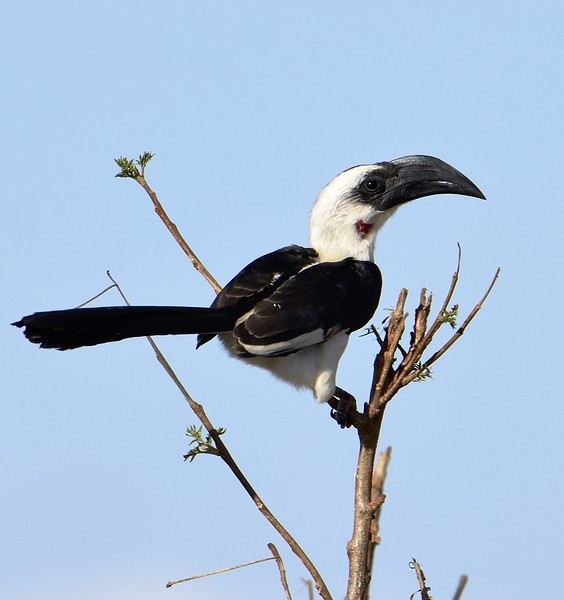
A Von der Decken's hornbill (adult female).


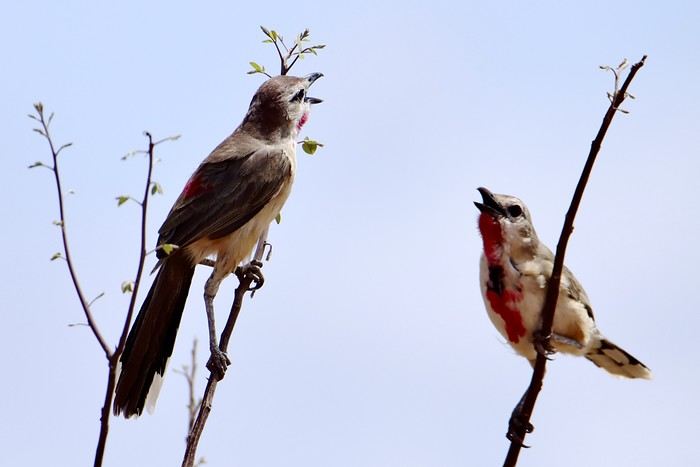
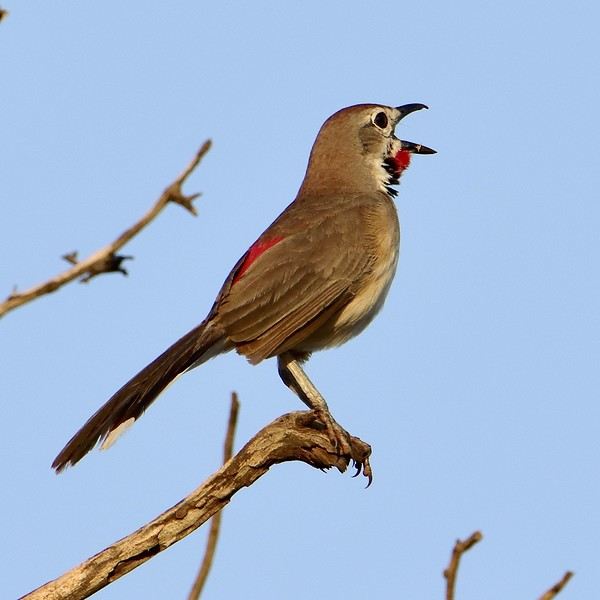
A pink-rumped bushshrike, also called pink-rumped gonolek.


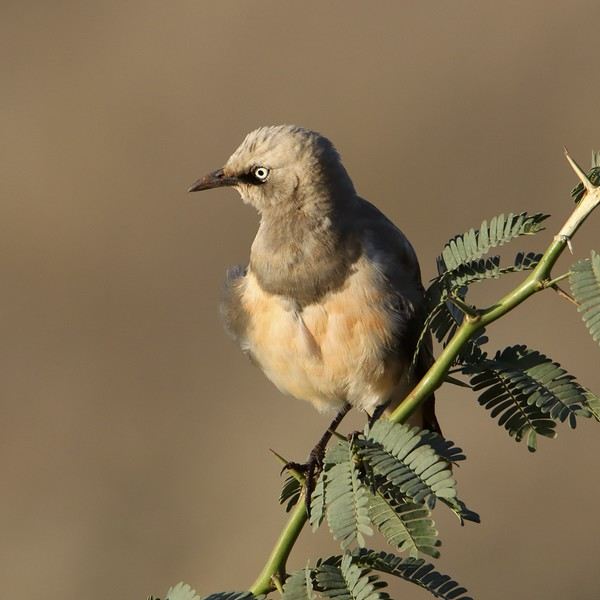
A Fischer's starling or Fischer's starling.


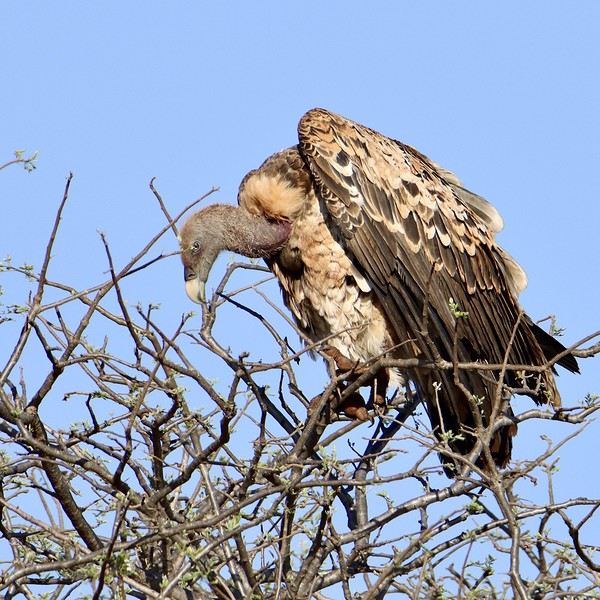
A Rüppell's vulture.


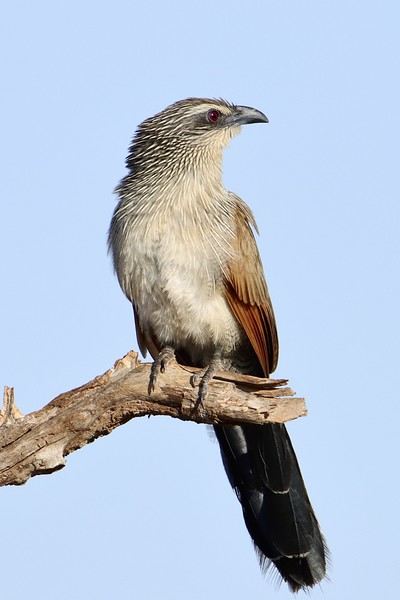
A white-browed coucal.


We really enjoy stopping to observe and photograph all the birds we come across. It’s an important part of a safari. However, we don’t have any ornithological expertise (I’m even a bit at odds with ornithologists...). It’s Simon who identified them each time. My partner writes down all the names in a notebook, and when we get back, I double-check on the "oiseaux.net" website. I have to admit that Simon has never been wrong in his identifications. Kudos to him.

It’s great to have the names of the species shown in the photos, especially in French (on a French-language forum), but for me, you can still admire the beauty of a specimen without knowing its name....!!

After about 2 hours of driving on the tracks heading north, we reach a place I never imagined existed in Tsavo East...!!


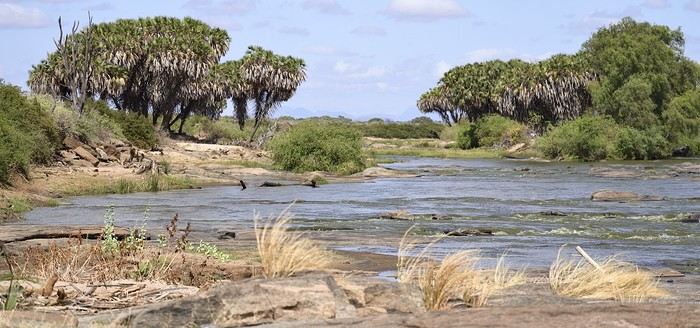
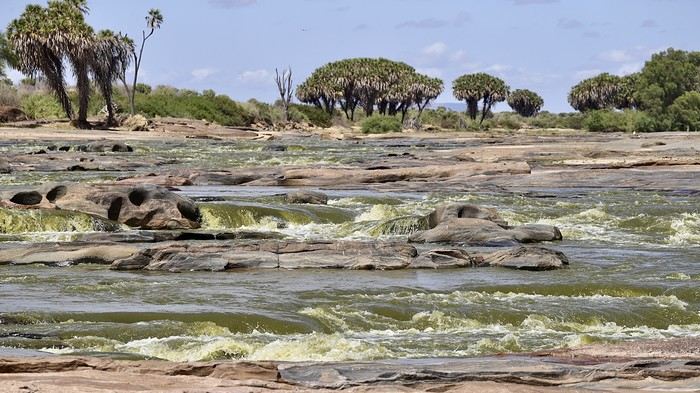
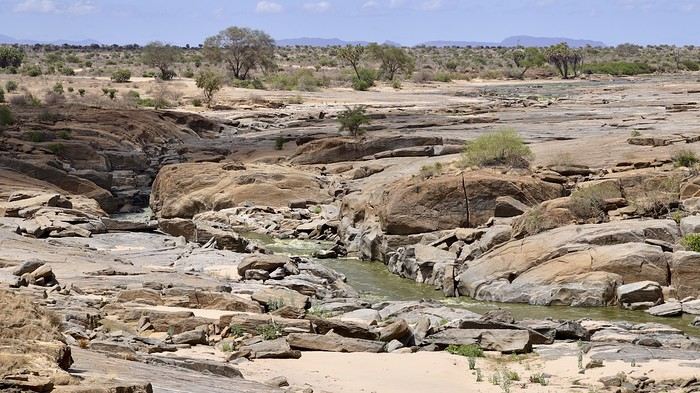
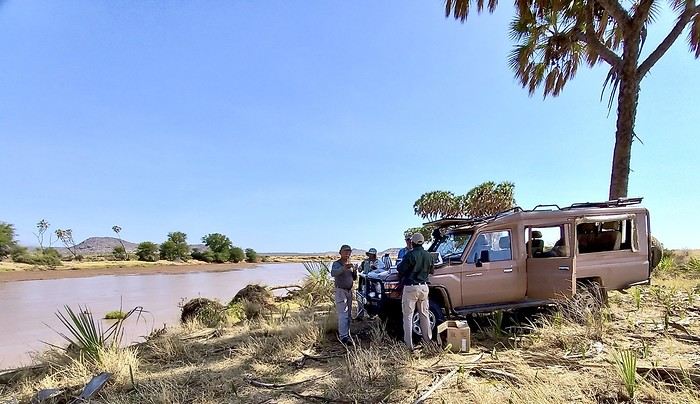
We’ve arrived at the banks of the Galana River, near the Lugard Falls. This is where we’ll have breakfast “on the beach”—or rather, on the rocks by the shore (Beware of crocodiles, as they say here!).


When you’ve been driving through an arid area for 2 hours, you don’t expect to arrive at such a wide river, in a place this beautiful and peaceful. It’s a wonderful surprise and discovery of this trip.


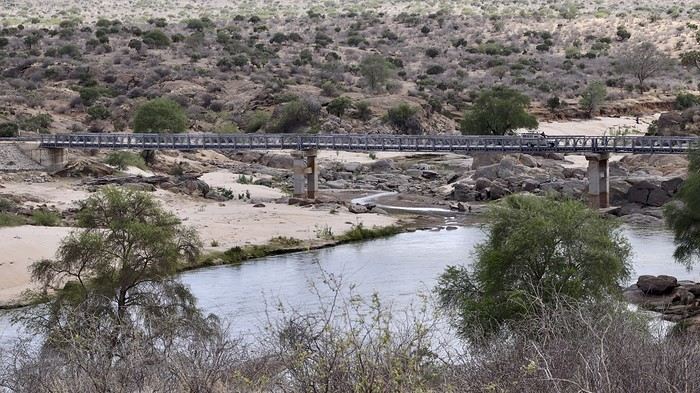
There’s even a bridge that lets you cross to the opposite bank and potentially continue out of Tsavo East to the north of the reserve.


Along the banks, with binoculars, we spotted some birds, a few hippos, and lots of crocodiles.

After heading back south on the track, an unexpected encounter...

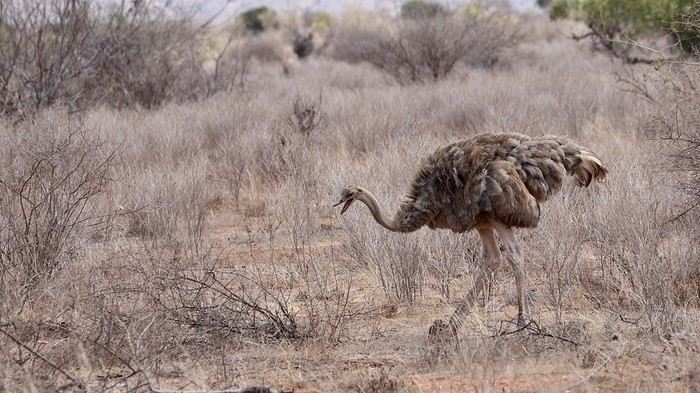
Ostriches!!


...
PU Puma2A Veteran ·
...

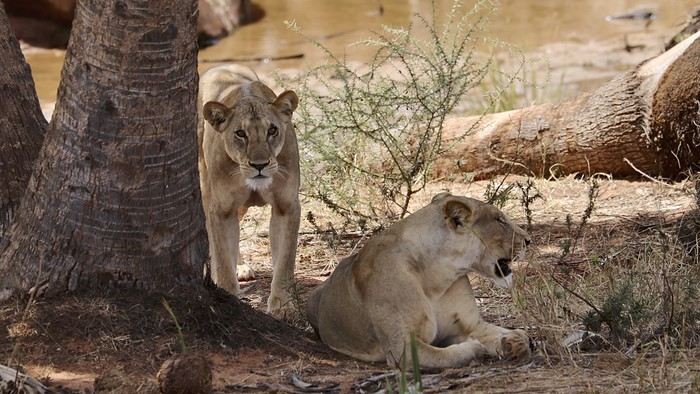
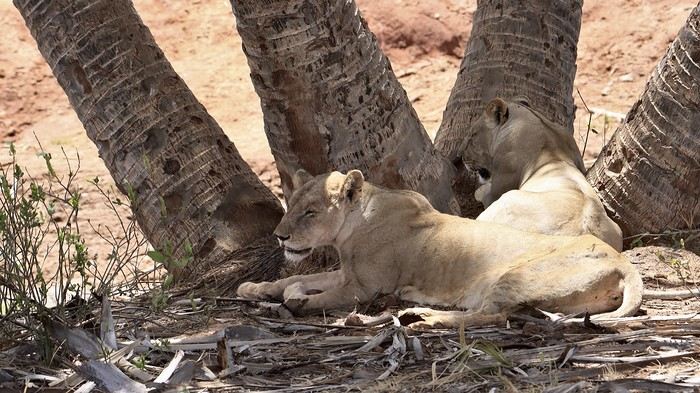
Change of track for the return trip... :) We're following a tiny stream. The discoveries continue. In the shade of a palm tree, ...


In the shade of another palm tree, 250m further, two more lionesses.


It's likely there was a whole group of lions scattered in the fairly dense bush nearby, but we couldn't spot any other specimens.

A pair of Pink-rumped Tchagras in deep discussion, or... a courtship display!!


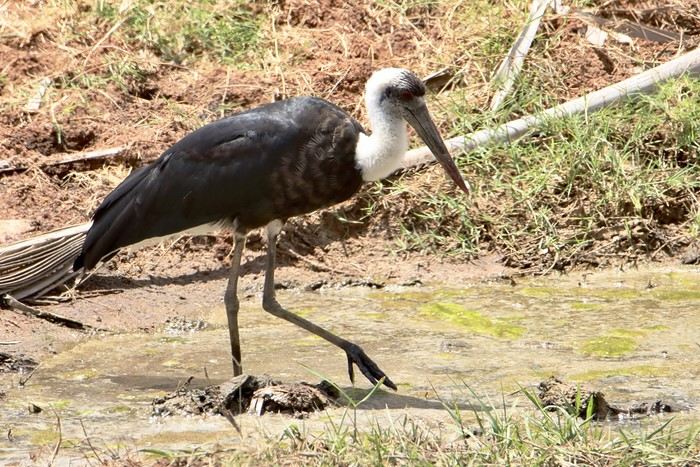
Still by the stream, a Woolly-necked Stork.


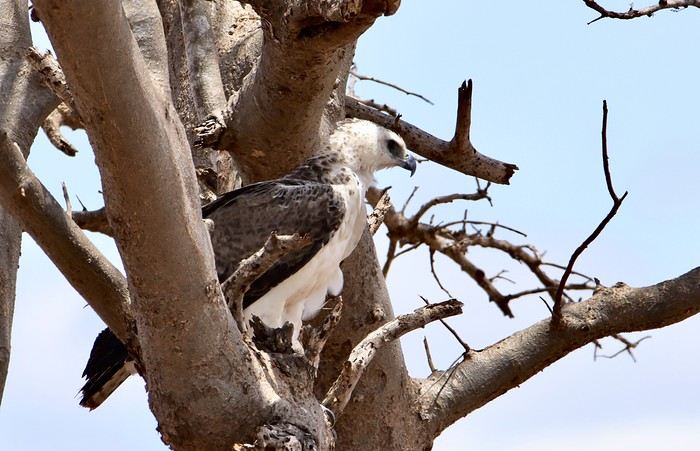
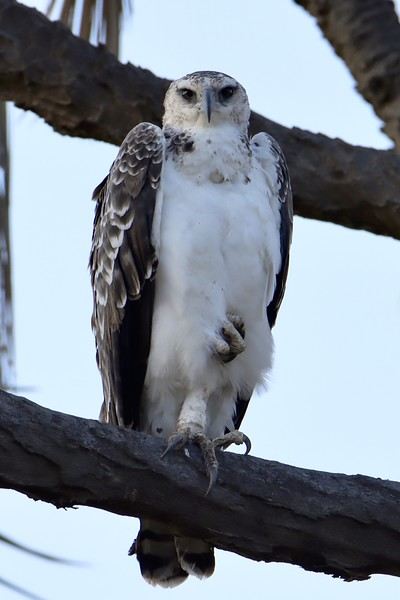
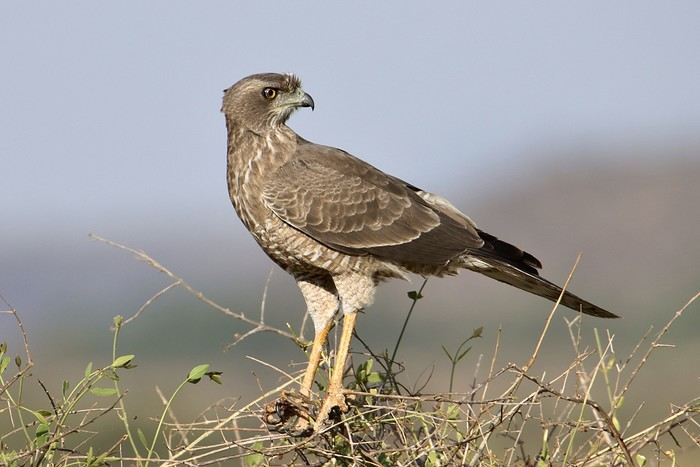
Further on, a Martial Eagle (a juvenile)


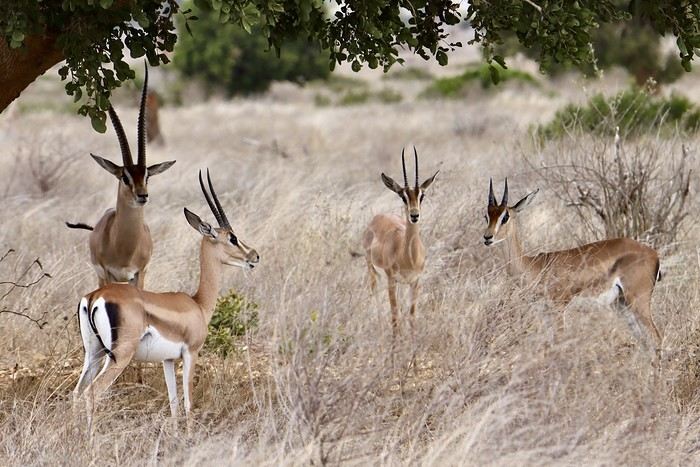
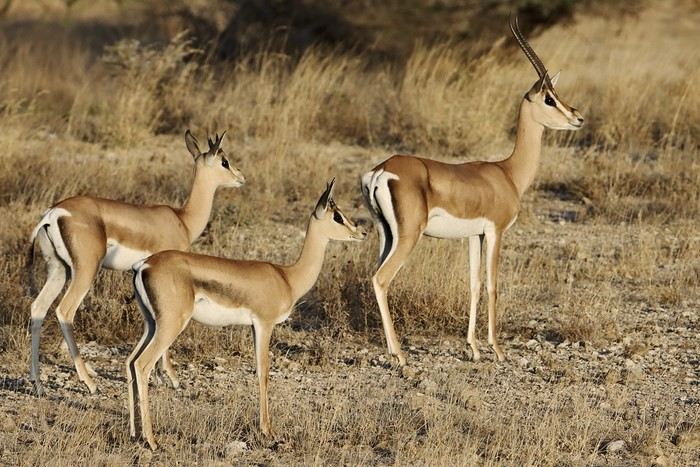
Late morning, as we're near the lodge... A group of Grant's Gazelles: one male, two females, and a young male on the right.


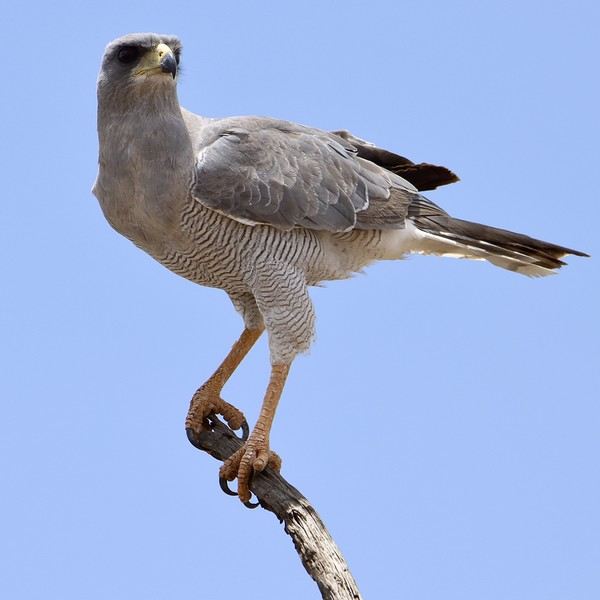
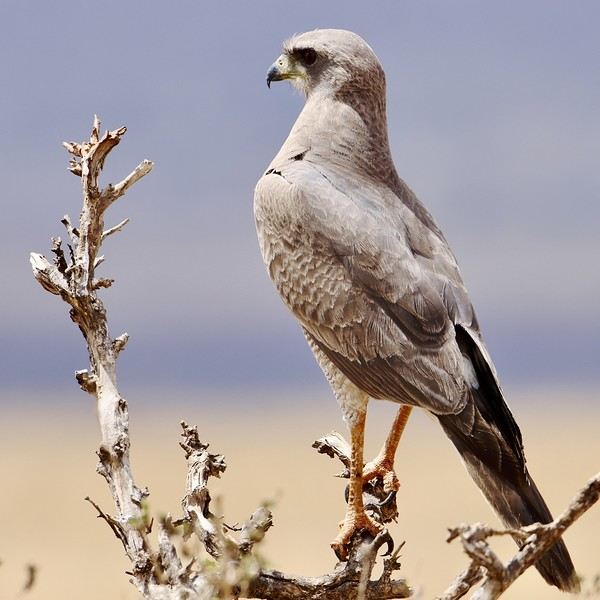
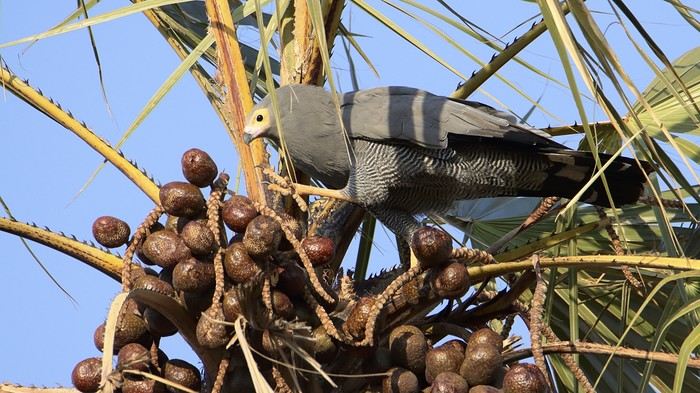
A Grey-winged Hawk.


- After "lunch", at the lodge's waterhole:

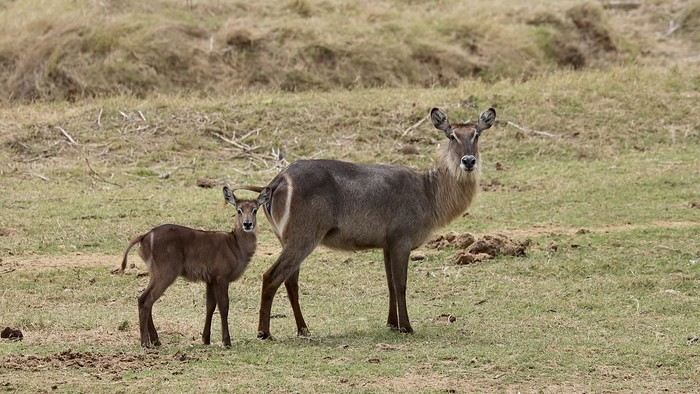
A female Defassa Waterbuck and her calf (the white crescent for identification is clearly visible on the rumps of both animals)


...
PU Puma2A Veteran ·
...

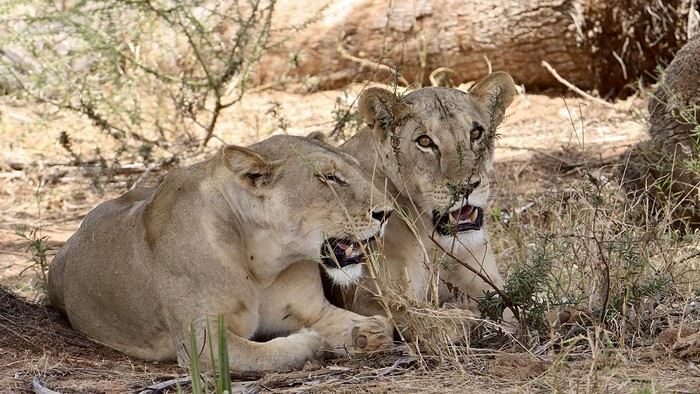
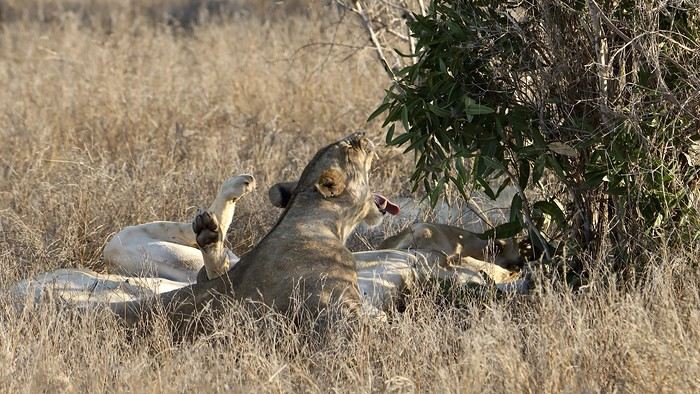
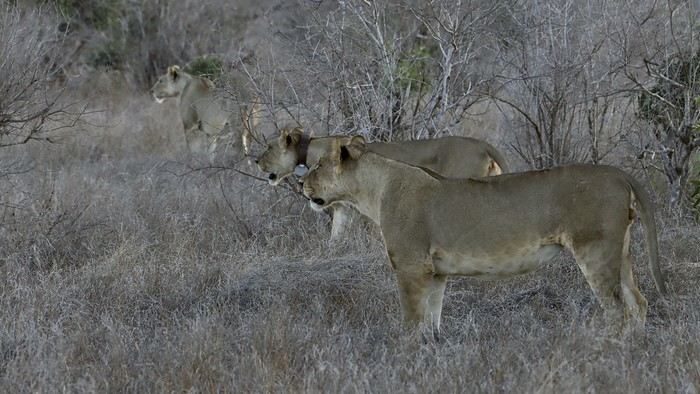
For 2 hours this morning, we observed a large group of lions. Anyway, the track was blocked by other vehicles whose passengers were trying to see the lions. They were in "clusters" of 2, 3, or 4 individuals, scattered in a very dense environment, made up of tall grass and thick, tight bushes. 😕 I’m only sharing 4 slightly more "readable" images. We mostly saw females, accompanied by males barely out of adolescence. But we think we only saw part of the group.


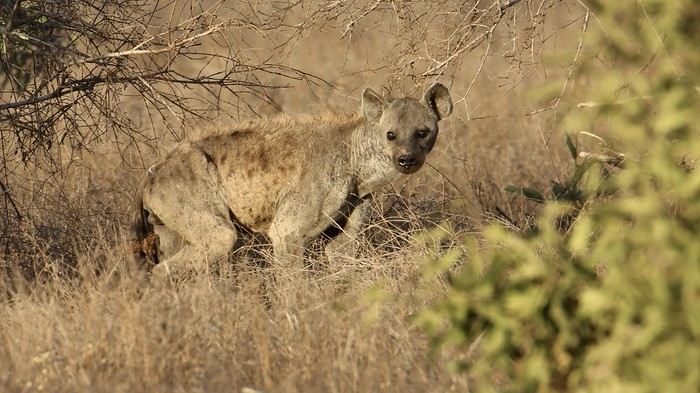
When we’re stopped like this for a long time, focused on one thing, I make a habit of regularly looking in the opposite direction, just in case!! And sure enough... "bingo", a hyena arrives from the other side of the track. Luckily—for her—she sniffed out the lions and turned back without them noticing her.


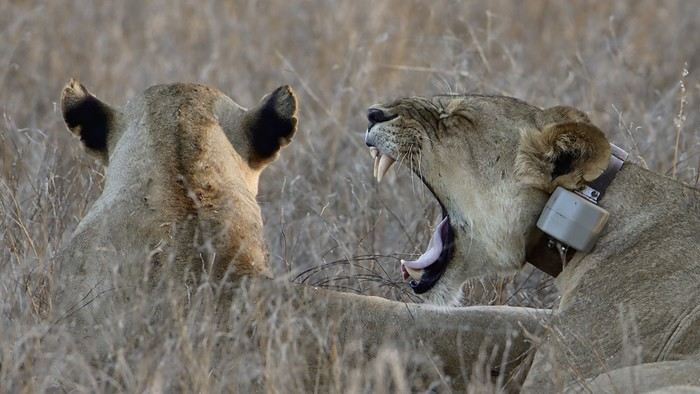
The day was coming to an end when a lioness (wearing a GPS tracking collar) stood up, signaling the group’s departure.


The sun had set behind the mountain range to the west when they left: I counted 21... But they didn’t all pass where I was counting them... so the group was even larger (probably between 25 and 30).

That’s the end of a great safari day in Tsavo East. ...

- Tuesday, October 14:

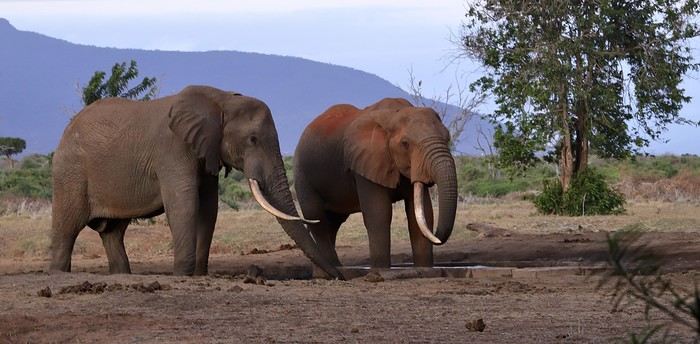
While enjoying a little coffee, we could see at the lodge’s watering hole 3 beautiful tusks, carried by 2 elephants... ??!


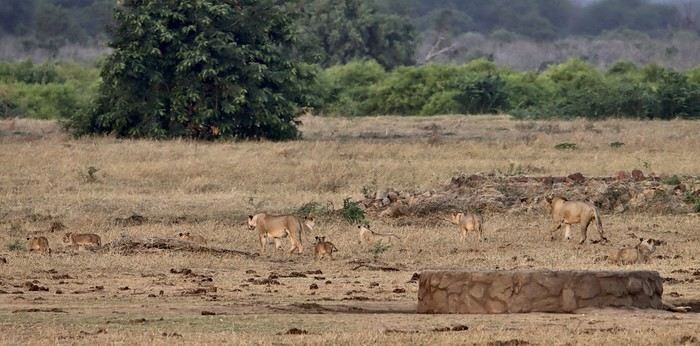
The sky had turned quite dark when we spotted—not too far—near a watering hole, a large group of lions, and this time there were cubs and a big male with a GPS tracking collar. The image is very poor; it’s just to show we saw them.

Was it the same group we saw the day before... ???? 😐


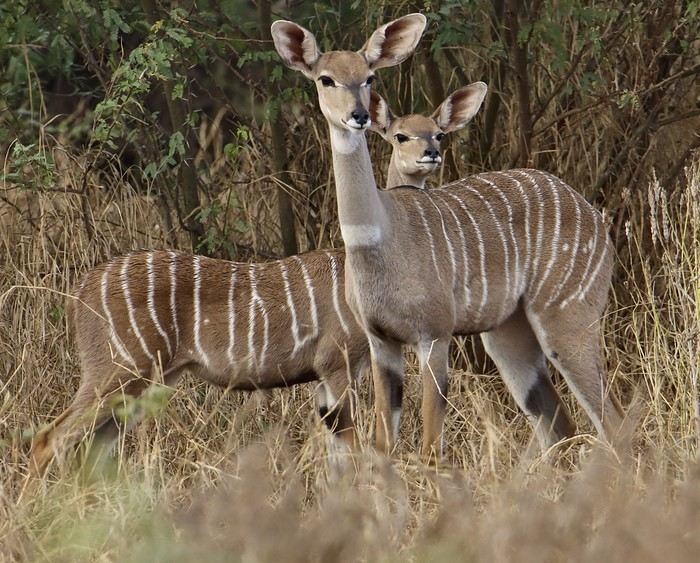
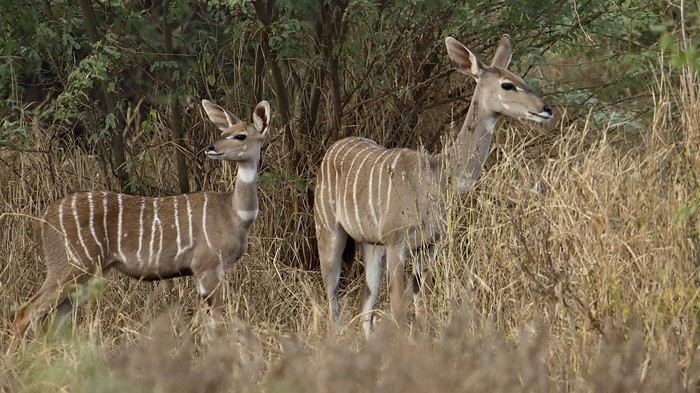
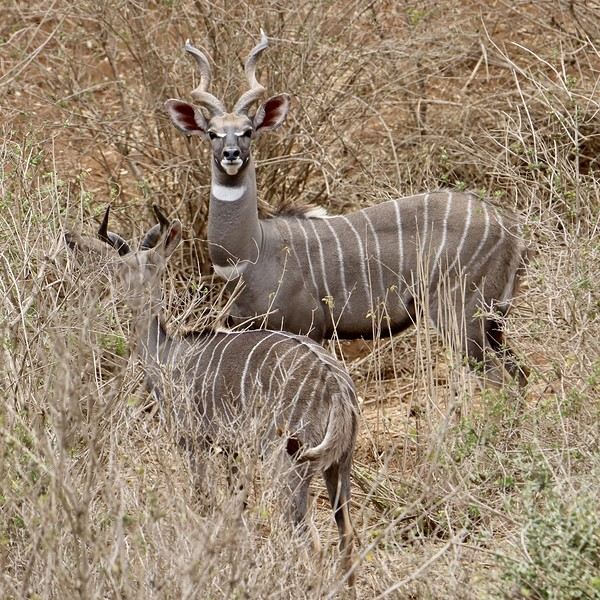
It’s still a bit dark, but... these two female lesser kudus are stunning and so close! My best opportunity to capture the species...


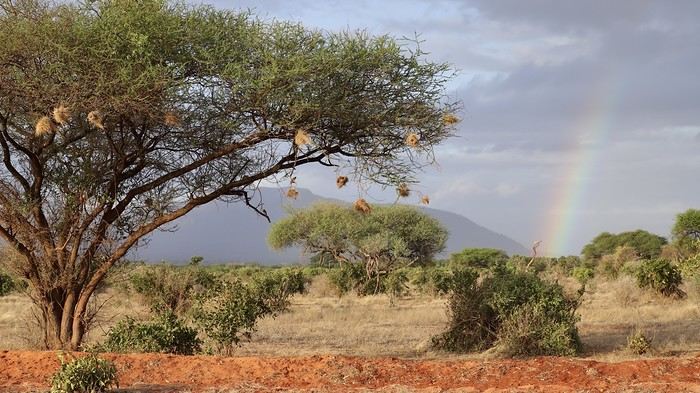
We barely avoided the downpour, but we got to see the rainbow... 😏 😏


...
PU Puma2A Veteran ·
...

Fringe-eared Oryx (red-tinged with dust)!!


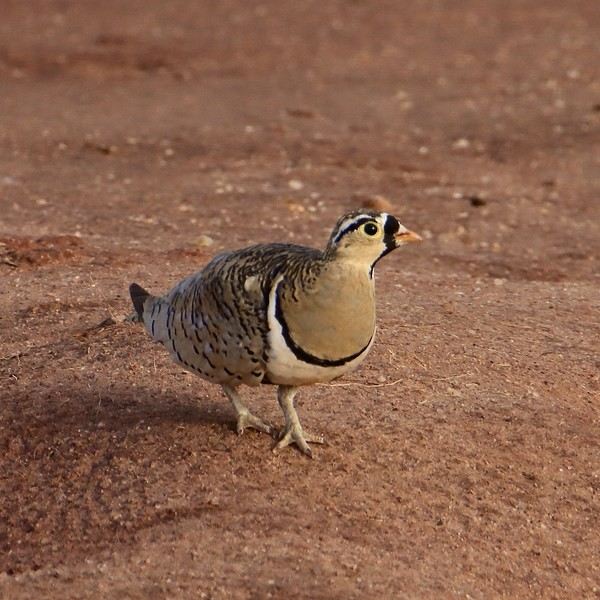
A Black-faced Sandgrouse.


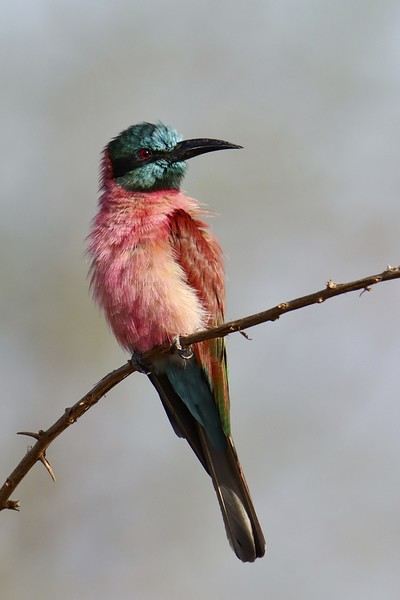
A Scarlet Bee-eater. 🙂 😏

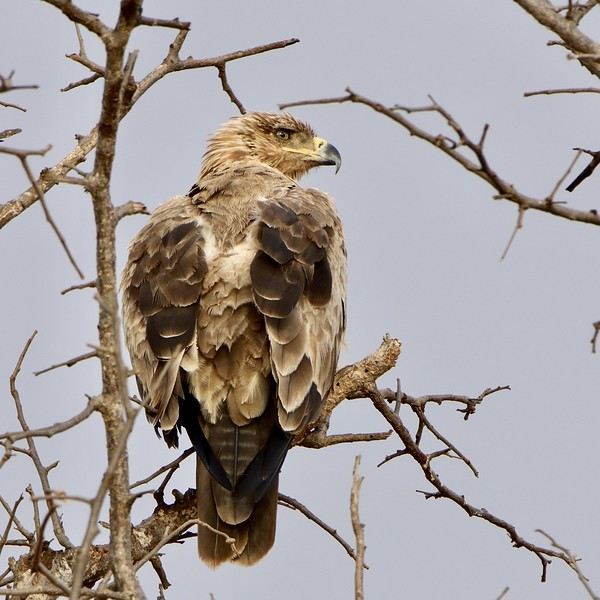
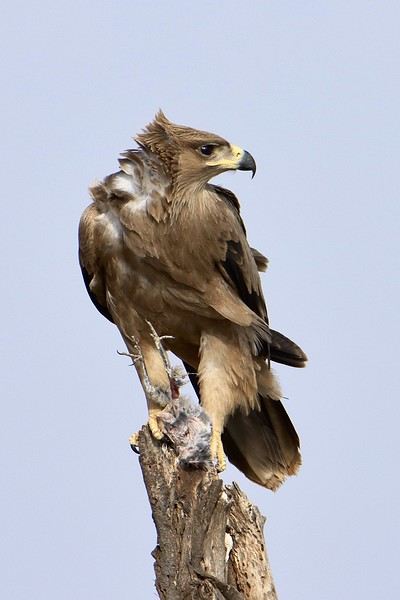
A Tawny Eagle.


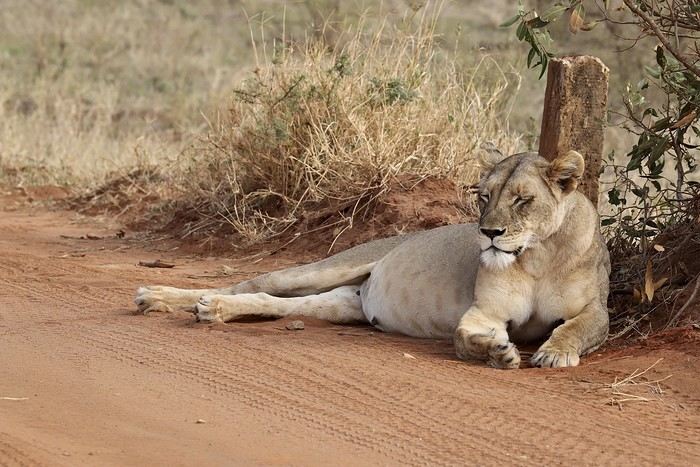
And a strange encounter... Right on the track, on a small bridge, a lioness with a full belly, digesting.

It was the next day, when we found her there again, that we understood why she was there... (To be continued!!)

We didn’t see many, which is pretty surprising...!!?

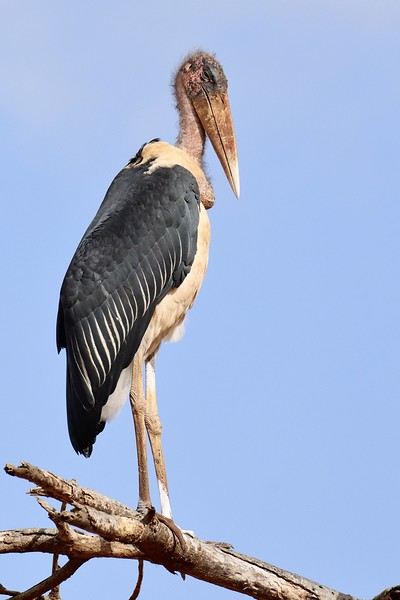
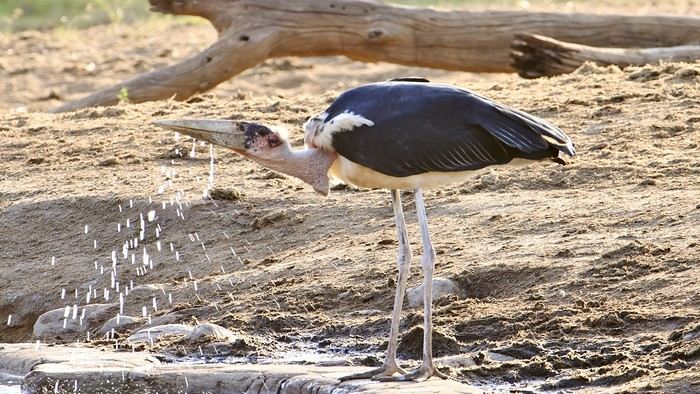
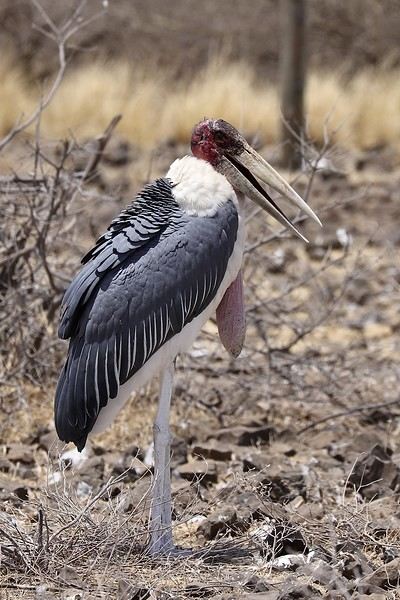
A Marabou Stork.


Finally... 😏 comes the moment for breakfast on a hill overlooking the plain. I got a lovely surprise:

The movie "Out of Africa" was the starting point, 40 years ago, for our love of African nature. I adore its music, and I’d mentioned I’d love to hear it... in the right setting, during the safari. Our friends had it recorded on their smartphone, and I sipped my coffee with the music playing. Moving 🙂

(Don’t worry, there were no animals in sight, nor any other vehicles. No one was disturbed).

Another beautiful encounter... in color!!?


...
PU Puma2A Veteran ·
...

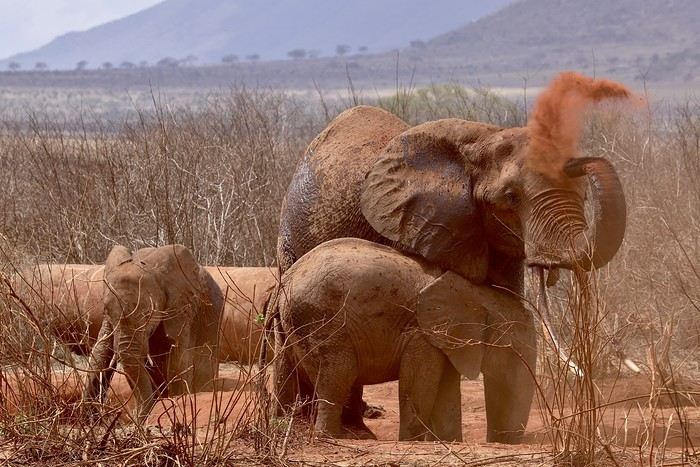
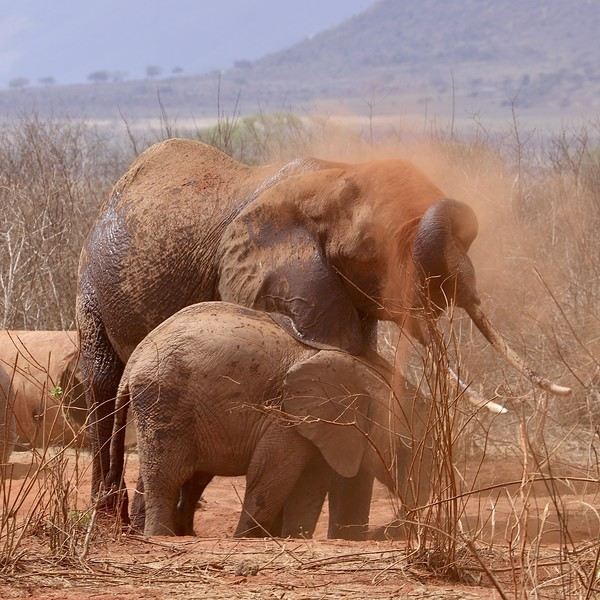
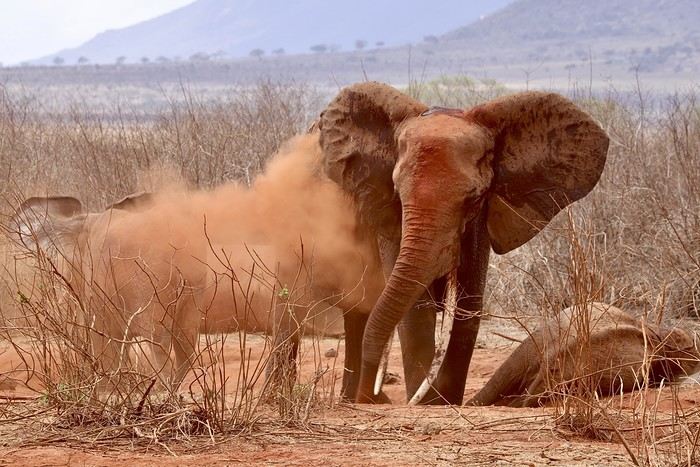
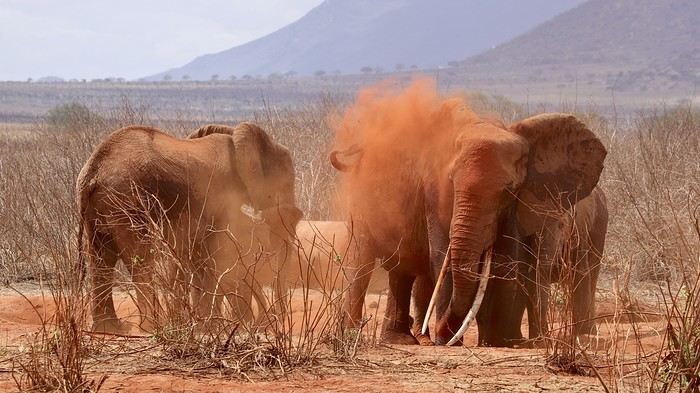
We arrived at an elephant dusting bar/beauty salon in Tsavo East … (There must be other similar spots in Tsavo East)


What’s great is that its close neighbors get to enjoy the dusting just as much...


The makeup is really stunning!! You’ve got to admit, the result is worth the effort ???


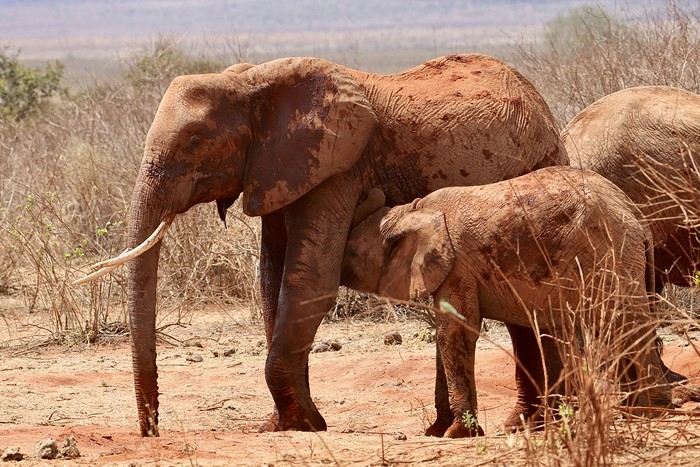
The dust can’t replace the good nourishing milk from its mom!!


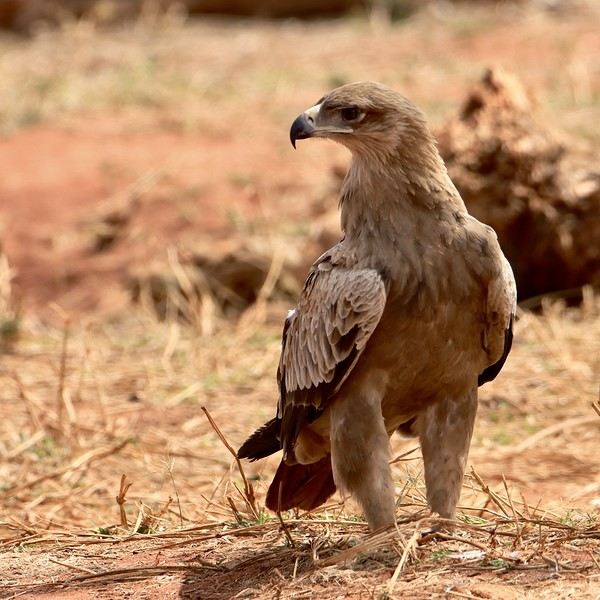
A Tawny Eagle.


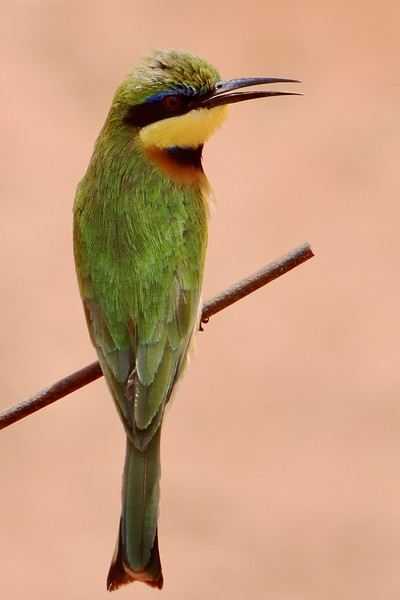
Finally, a Little Bee-eater! 🙂


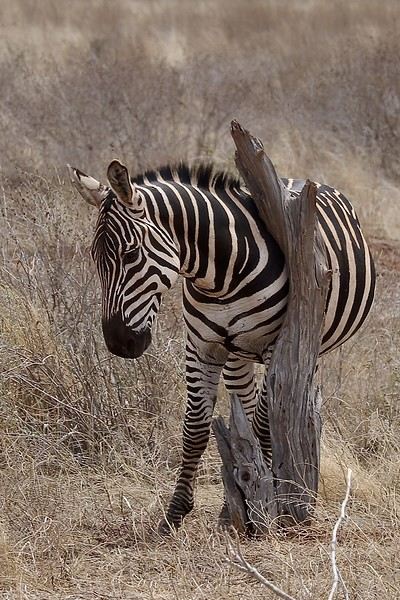
A Zebra enjoying a good scratch:


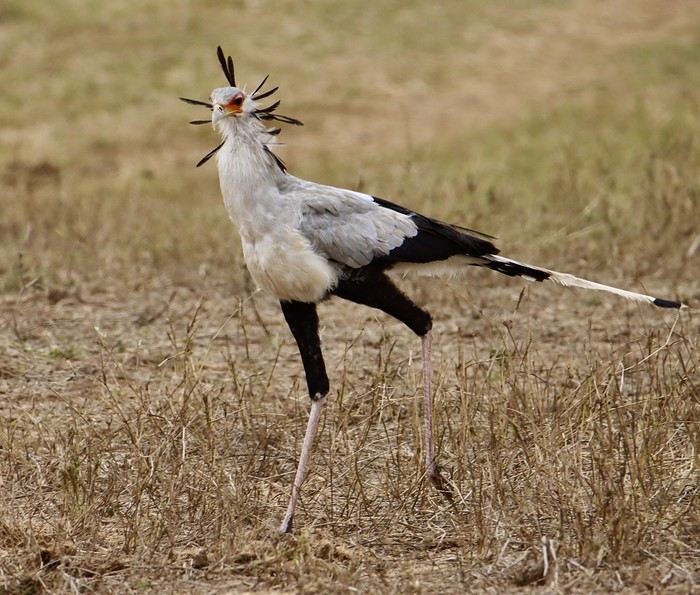
The morning continues with its share of discoveries. It’s an amazing raptor, very tall on its legs, rarely seen in flight …


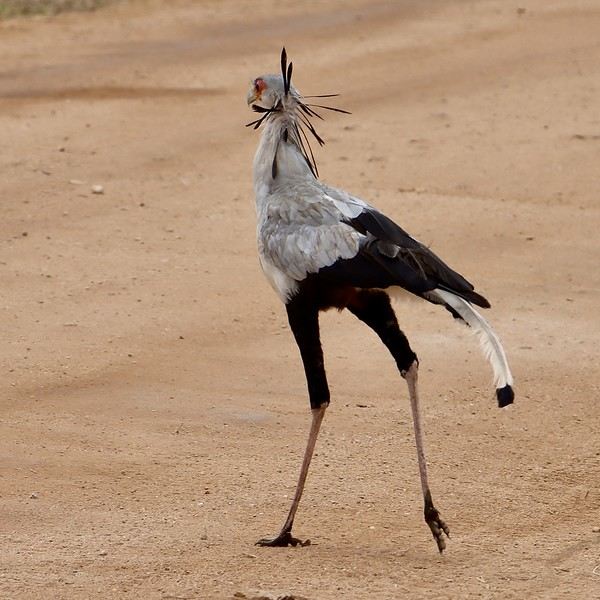
A Secretary Bird (specialized in catching snakes).


...
PU Puma2A Veteran ·
...

A beautiful herd of colorful Zebras.


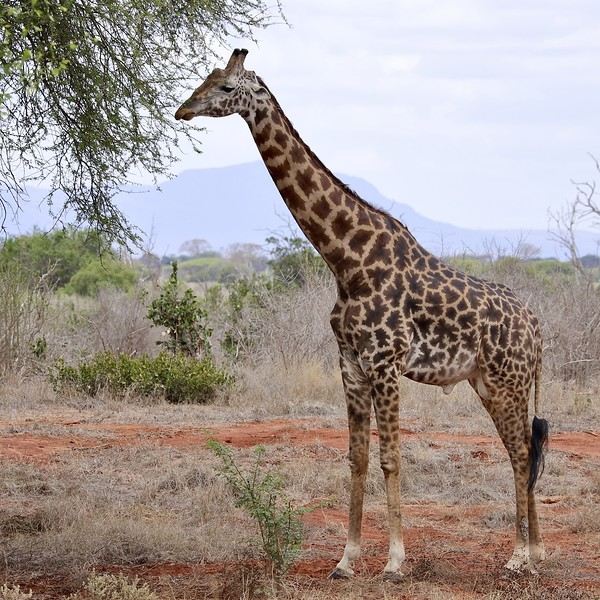
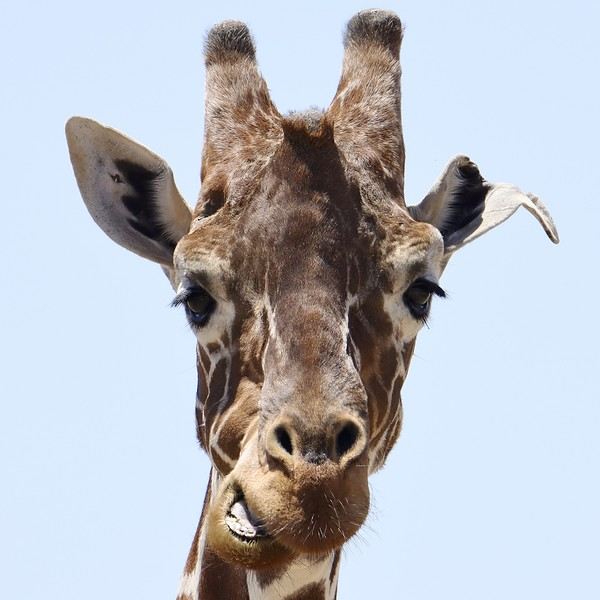
I think I haven’t shown a Masai Giraffe yet: sorry for the oversight 😐


Back at the Lodge, ... there are lots of people at the bar and an exhibit of beautiful tusks and original decorations!!


Not only is it ugly, but it also drinks like a pig—the Marabou!


Another large bird, mostly seen on the ground... The Kori Bustard (height: 1.2m and can weigh up to 19 kg!)


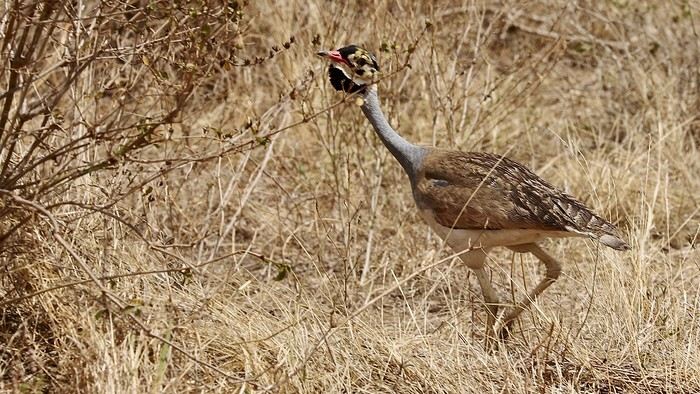
A male White-bellied Bustard or Senegal Bustard.


- Wednesday, October 15:

We leave Sentrim Camp in Tsavo East, heading toward the reserve exit. We have very little time to spend with the animals we encounter, as we’ve got a long drive ahead today.

A Grey-winged Kestrel (with reservations since we forgot to note the info Simon gave us).


We find the Lioness on the track in the same spot?!?! Actually, we understand why she’s there. Under the track, there’s a large concrete culvert for rainwater drainage. The lioness hid the remains of a partially eaten antelope there the day before...

It’s her pantry that she’s guarding.

Now, an 8-hour drive awaits us toward the town of Embu, in central Kenya. We’ll stop there for the night. Then the next day, another 4-hour drive to reach the entrance of the Buffalo Springs reserve. At this point, we’re halfway through our stay in Kenya. 😕

- Thursday, October 16:

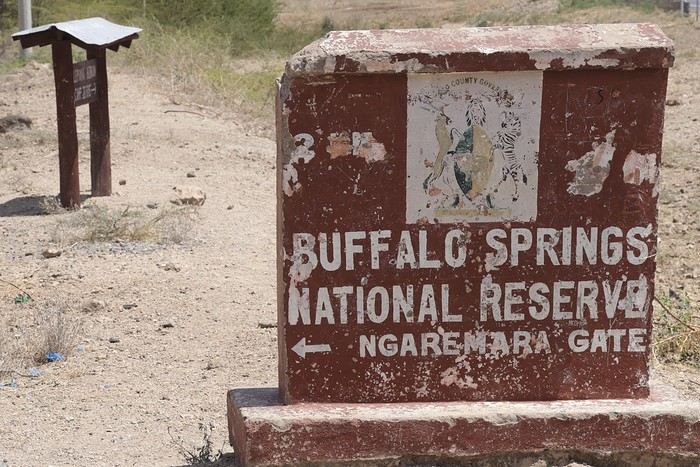
At the entrance (Ngaremara gate) of the Buffalo Springs reserve, in northern Kenya. It’s 11:40 AM local time. A little earlier, we crossed the Equator...


So happy to leave the paved roads behind and get back to the tracks and a more natural environment with animals.

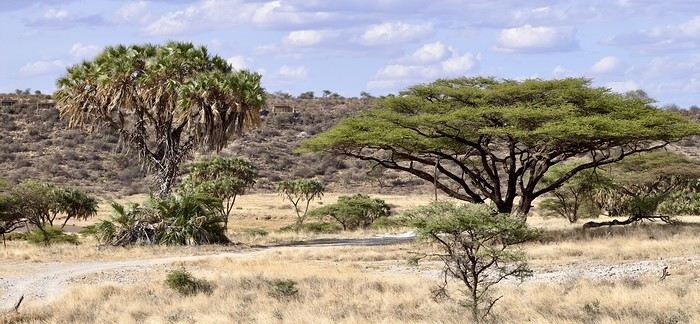
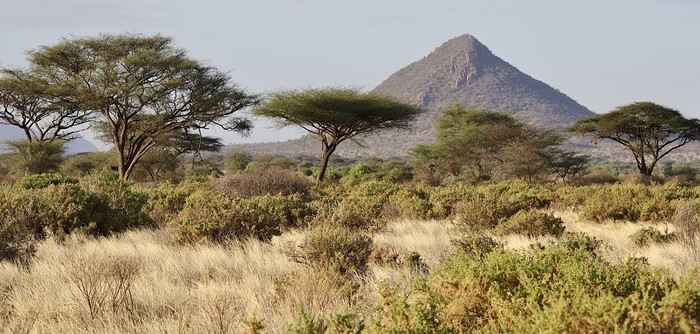
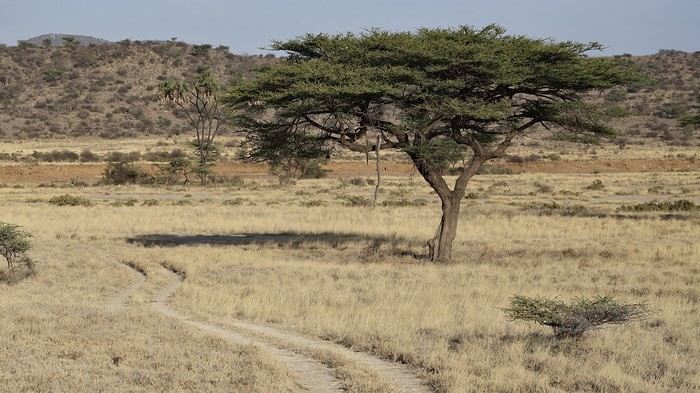
A taste of the Buffalo Springs surroundings.


...
BL Blancond Regular ·
Hi Alain, thanks for all these beautiful photos and this story. The last part really interests me since we’ll be at Buffalo Springs in 4 days. Jacques
PU Puma2A Veteran ·
Hi Jacques,

Thanks for your message. I sent you a PM.

...

Sorry again for having to limit the number of photos in the report on these two reserves. If any of you are nature lovers or fans of African mammals or birds, there’s a much longer version of this report—12 pages—available on a free-access forum. Here’s the link: https://spottingaviation.forumactif.com/t15833-safari-photo-au-kenya-1ere-partie-dans-les-reserves-de-tsavo-ouest-et-est#google_vignette

(Though there’s some ads... 😕 )

Cheers, Puma2A

More to come soon (here) for Buffalo Springs and Samburu..

...
PU Puma2A Veteran ·
...

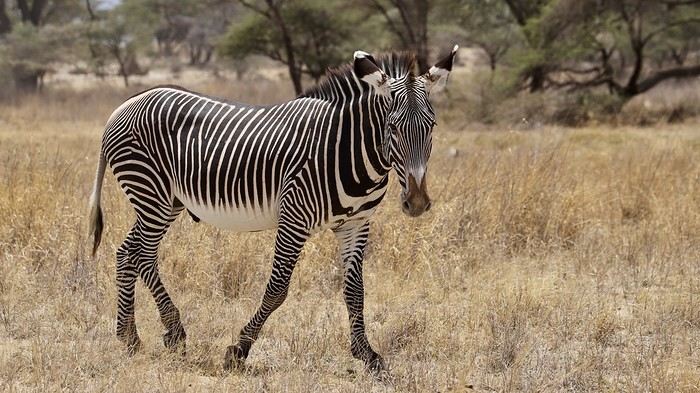
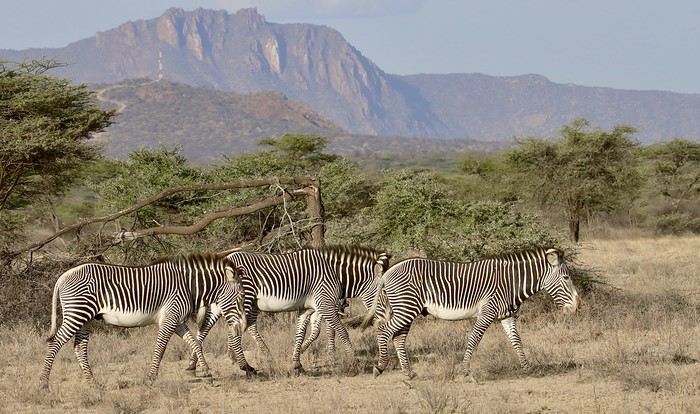
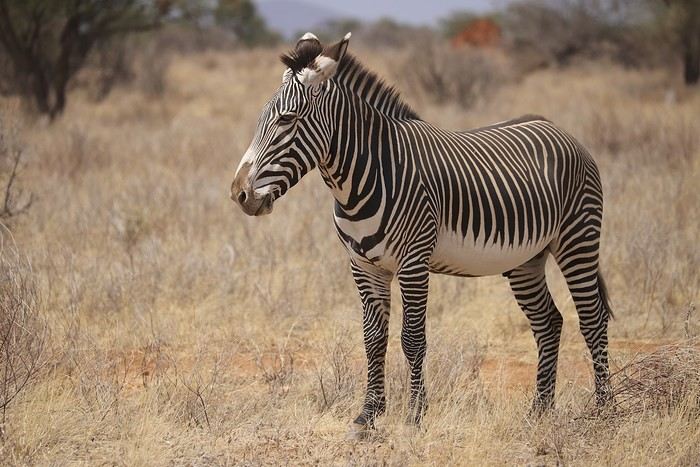
This is one of the -many- unique features of this region: the Zèbre de Grévy with its fine stripes.


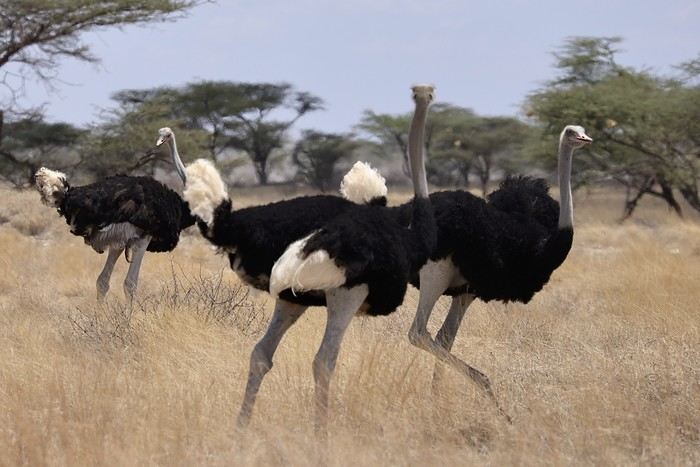
Another distinctive feature of this region is the Autruches des Somalis (here, males).


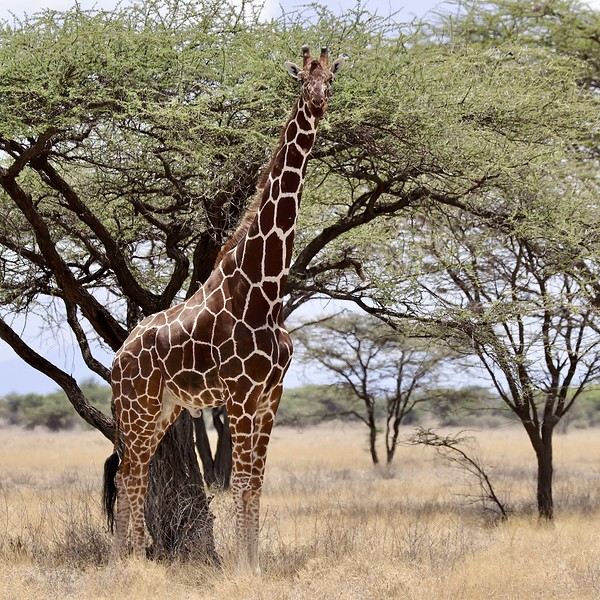
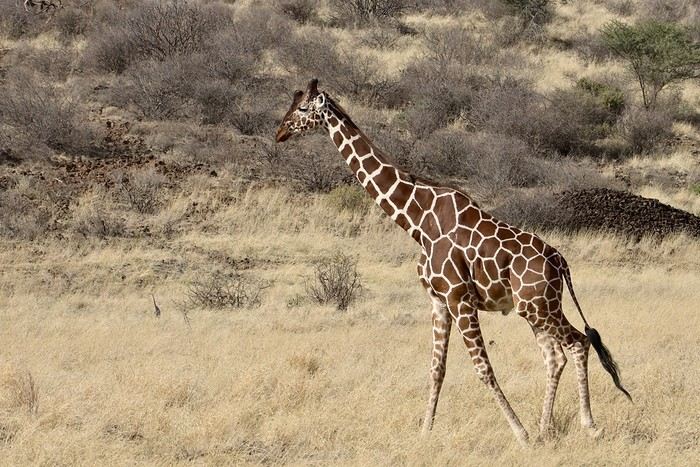
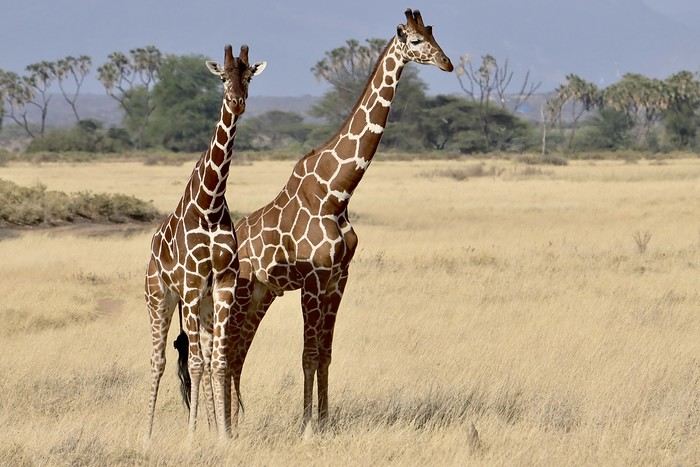
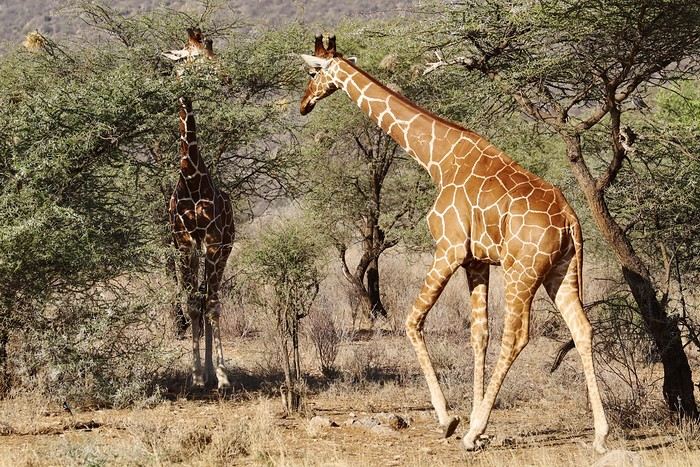
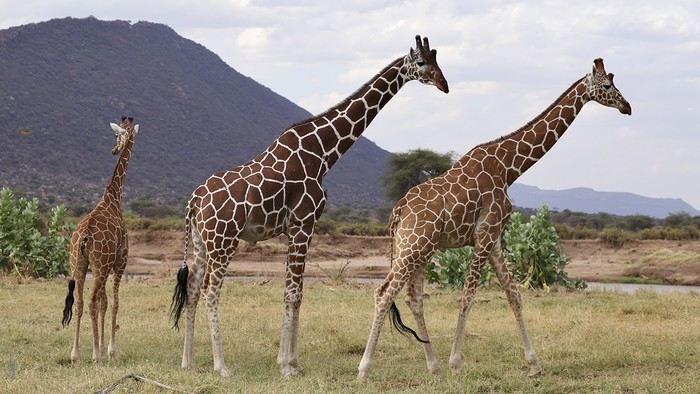
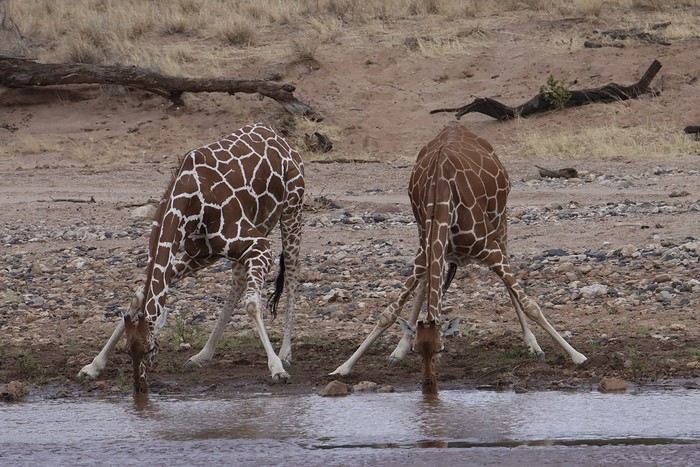
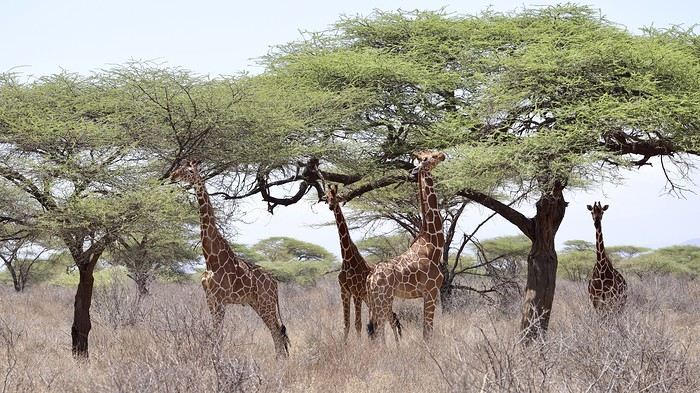
And the "fatal beauty" of Buffalo Springs / Samburu: the Girafe réticulée.


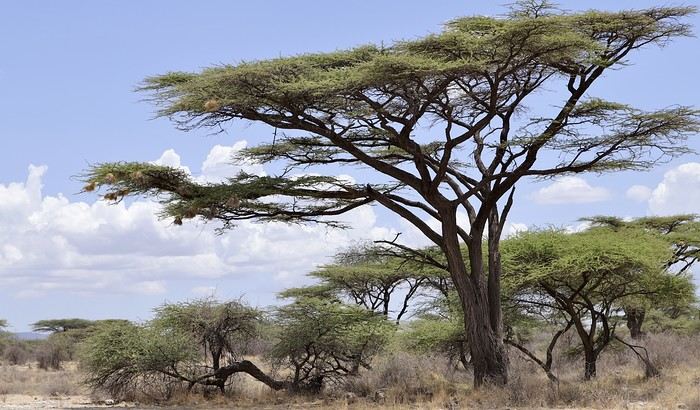
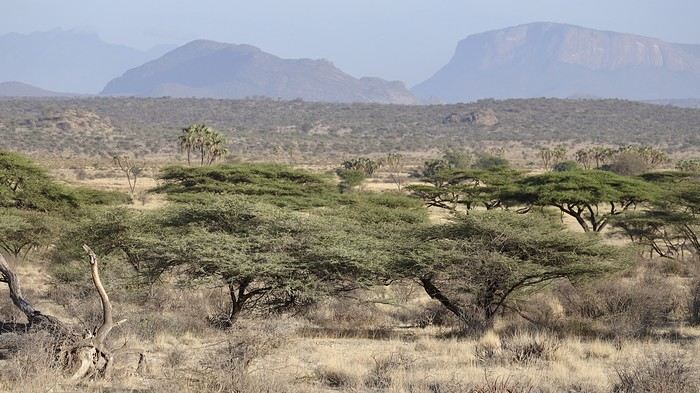
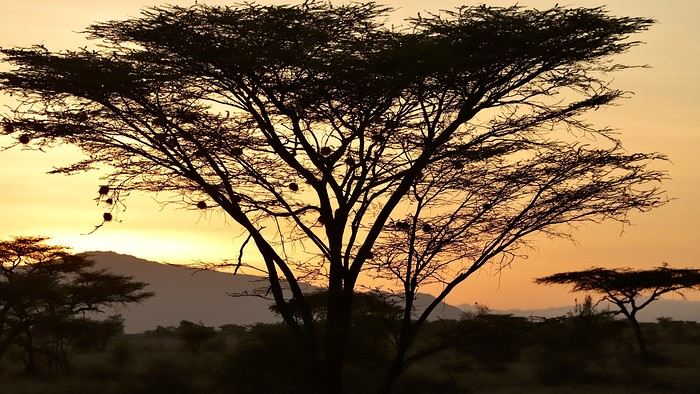
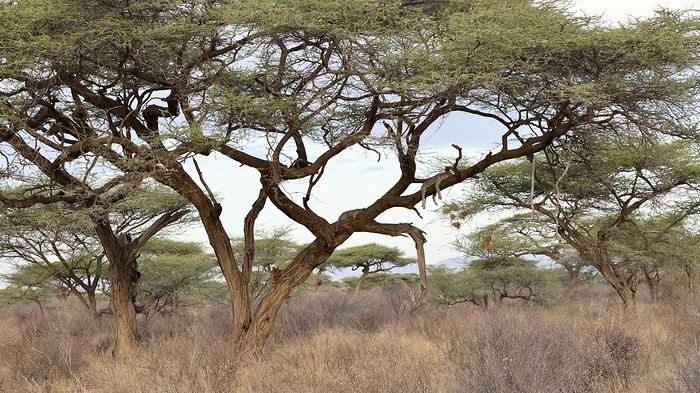
I also find the Acacias really beautiful, so I took a ton of pictures of them.


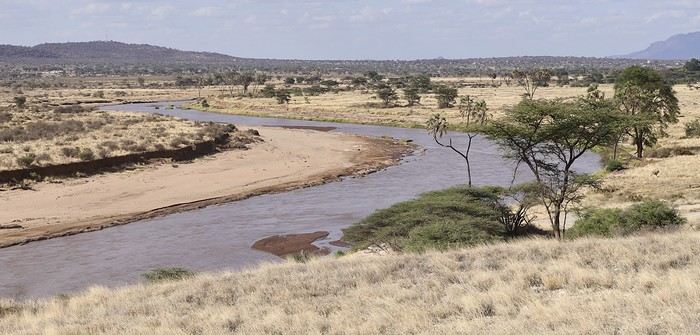
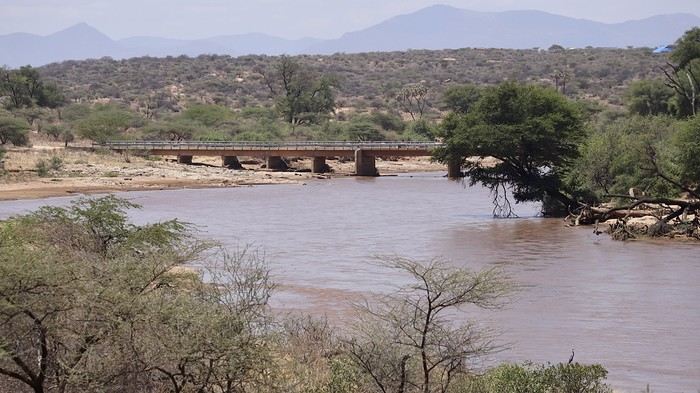
The Ewaso N'Giro River separates the Samburu area from Buffalo Springs. We’ll often be exploring nearby.

Even though you can find exactly the same species in both, I deliberately chose to visit the two reserves on either side of the river because, depending on the season, there can be many more animals on one side than the other. The animals cross the river as they please, following their mood or attractions. For a long time, the road bridge connecting the two sides was impassable, but it’s been repaired in the last few months.


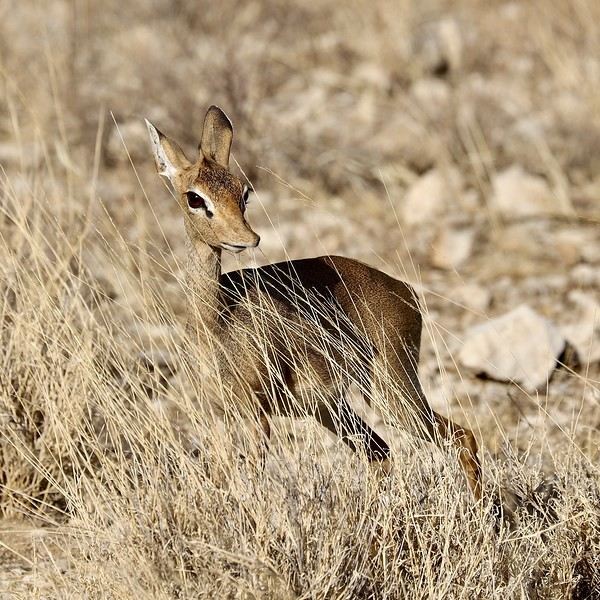
The Dik-Diks de Kirk are plentiful here—this is a female.


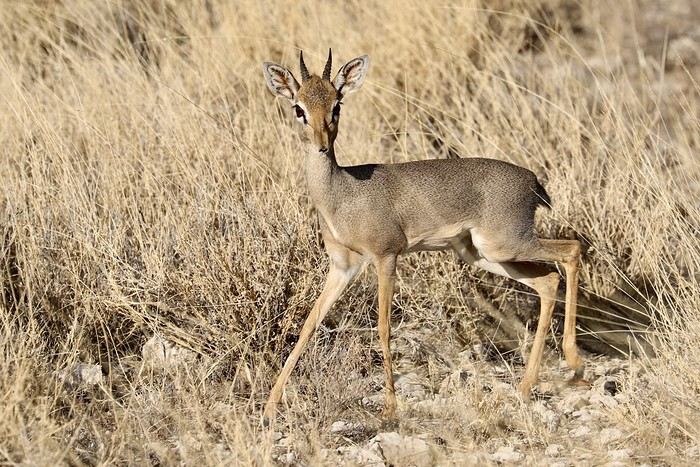
And her companion...


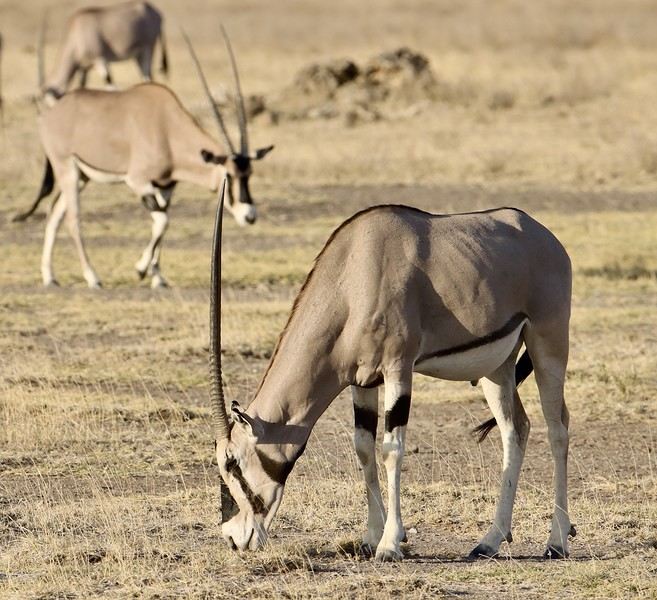
Here, you’ll find the Oryx beisa, which has black-tipped ears but no fringes...


...
PU Puma2A Veteran ·
...

Of course, there are also birds in Buffalo Springs (aside from ostriches 😉 ):

A Marabou seen upon arriving at the lodge.


In the Buffalo Springs reserve, we’re staying at "Simba Lodge", a medium-sized place that’s very clean and well-maintained where the food is really good. The rooms are spacious, but unfortunately, they get very hot at night, and since there are mosquitoes (nearby river) and baboons around, we have to keep the windows closed. We had a hard time sleeping and resting there. 😕

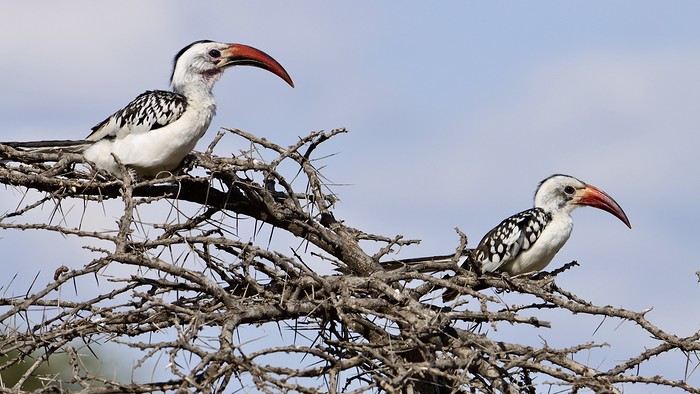
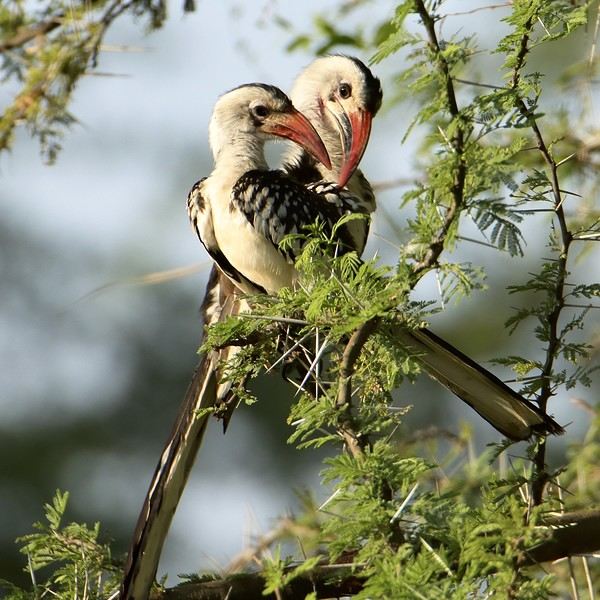
A pair of Red-billed Hornbills (probably a couple, though I’m not certain)


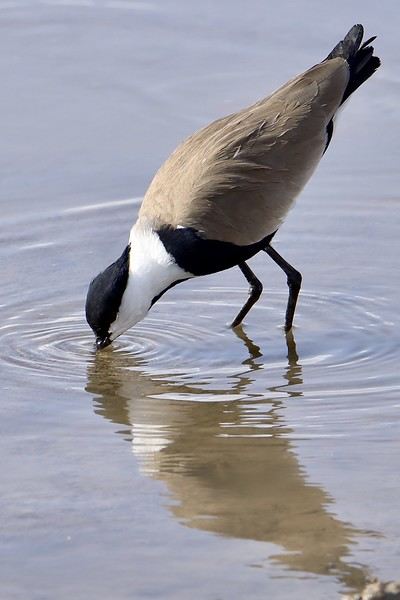
A Spur-winged Lapwing.


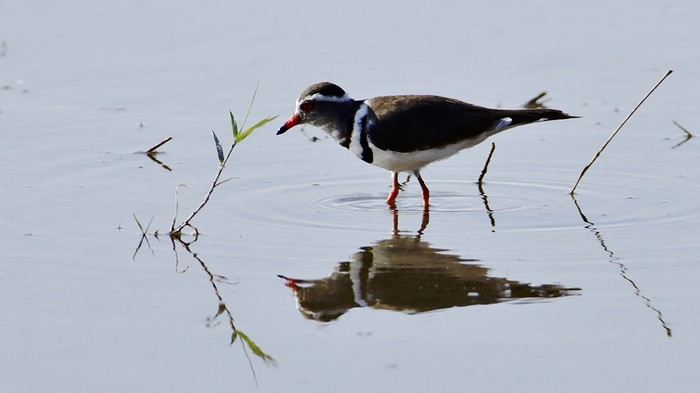
A Double-banded Courser.


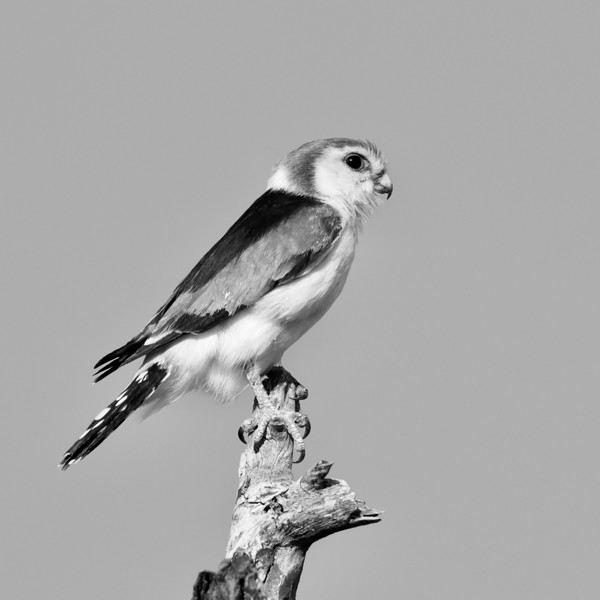
Sorry, a clumsy move accidentally switched things to black and white for a bit—I didn’t mean to: an African Pygmy Falcon.


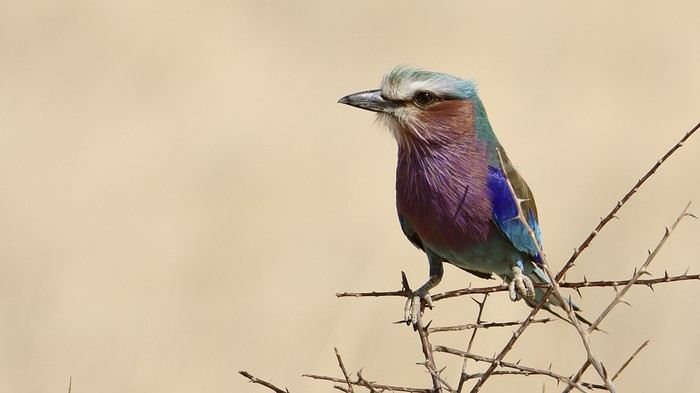
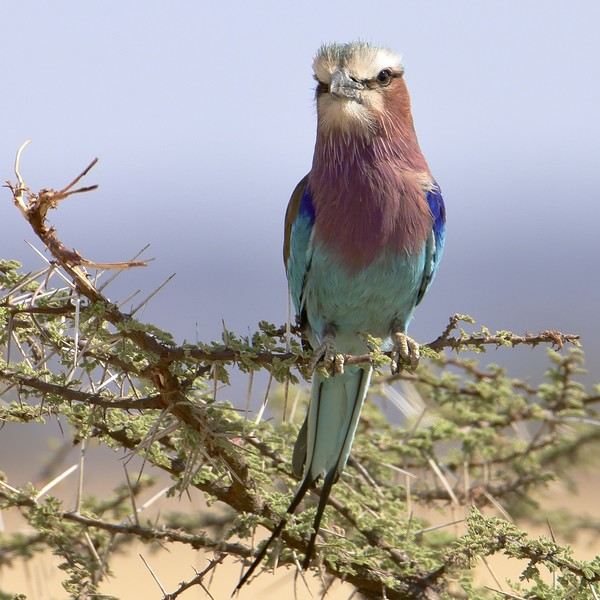
The one I call “my buddy,” the Lilac-breasted Roller.


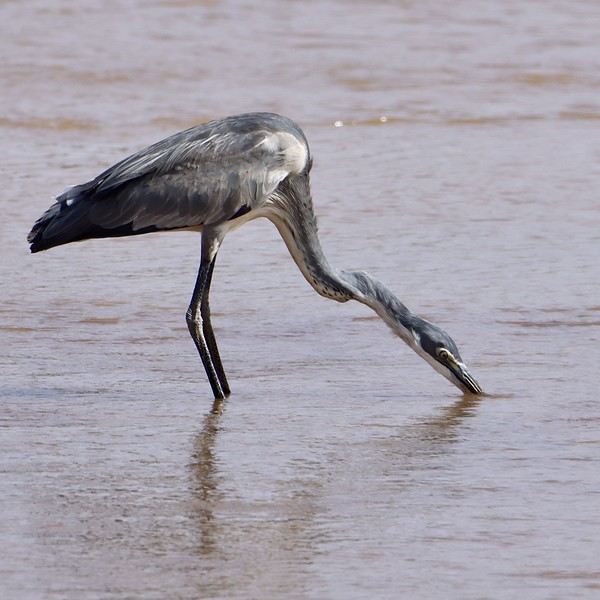
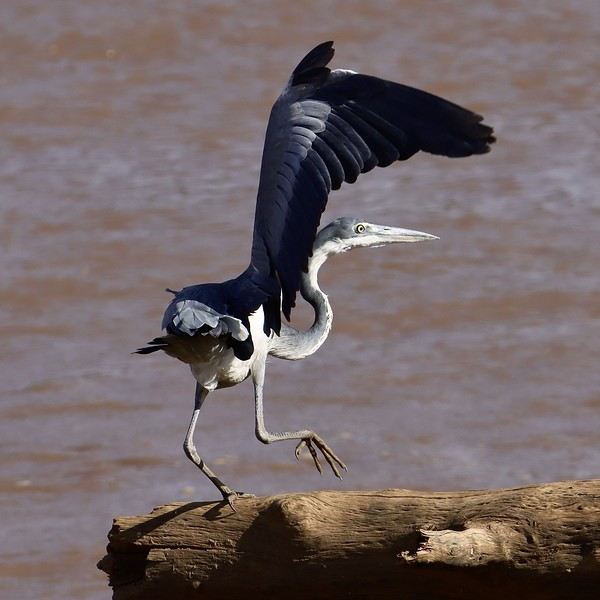
A Black-headed Heron fishing.


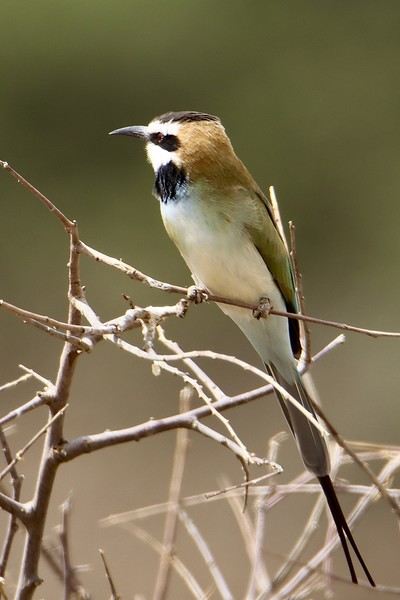
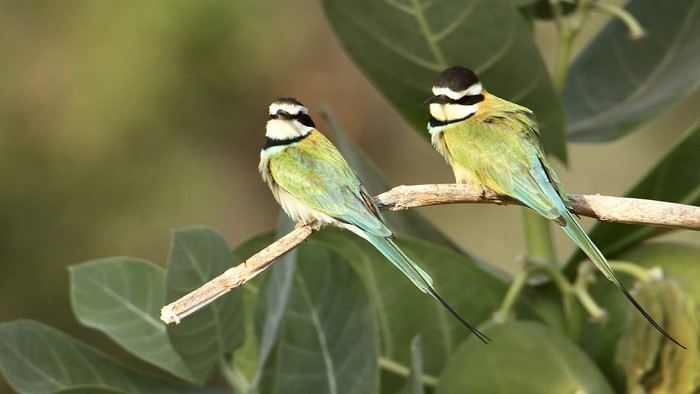
A White-fronted Bee-eater.


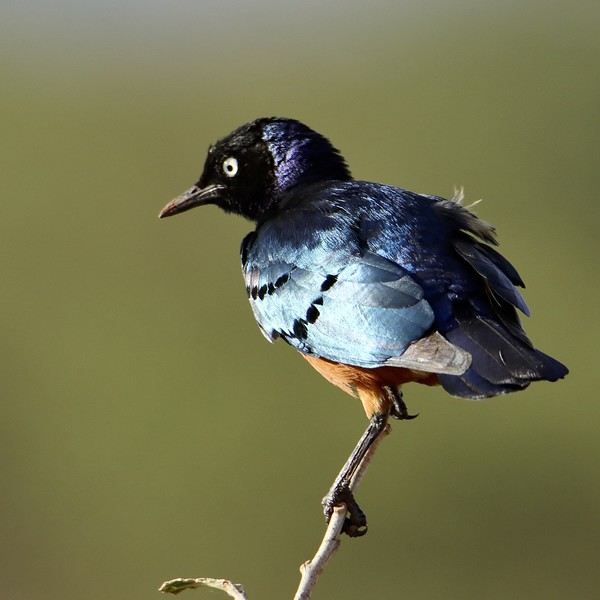
A Superb Starling.


This is just a first sample—I’ll have more species to show you! 🙂

...
CA Cathielescot Veteran ·
Thanks Alain for this beautiful travel journal—your photos are stunning.
RO Rouquine38 Globetrotter ·
Thanks Alain for this beautiful Kenyan travel journal, plus some amazing wildlife photos 🦁
"Voyager est un triple plaisir : l'attente, l'éblouissement et le souvenir." Ilka Chase
PU Puma2A Veteran ·
Hello, And THANK YOU both for your really kind messages.

...

- Friday, October 17, 2025: First full day in Buffalo Springs.


The reticulated giraffes are endemic to this region.


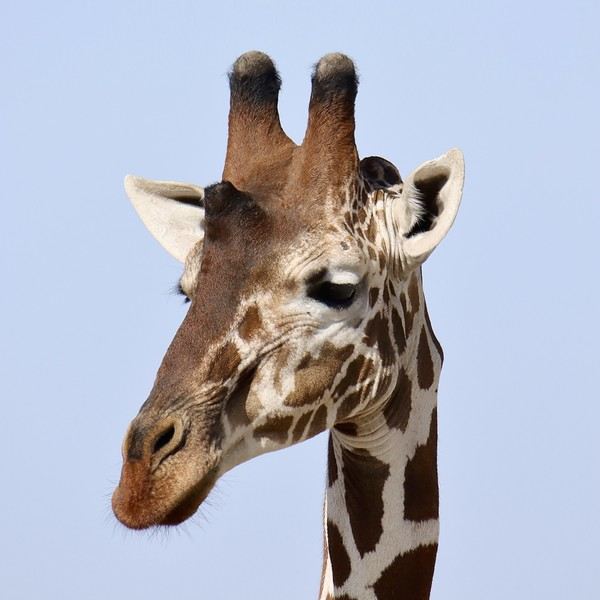
I know a regular reader of the forum loves giraffes... so... 😏 As a rule, this is a male because there’s no hair above the horns, which means he fights with other males.


A warthog that wasn’t too stressed...


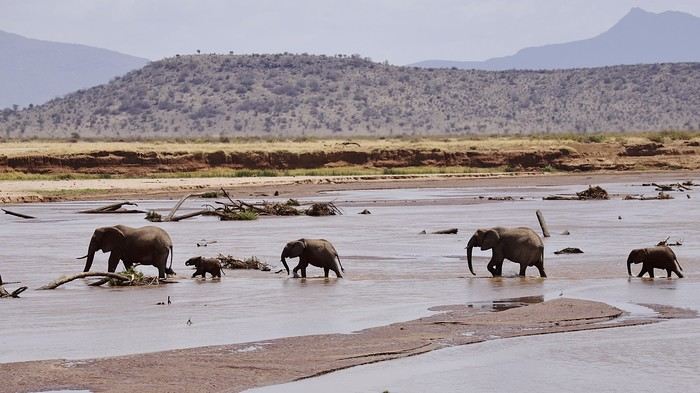
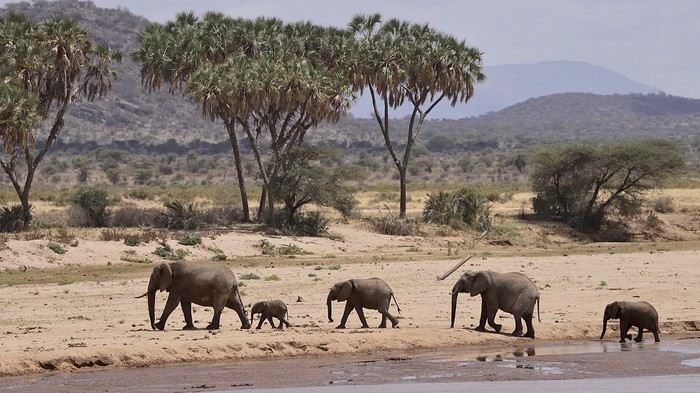
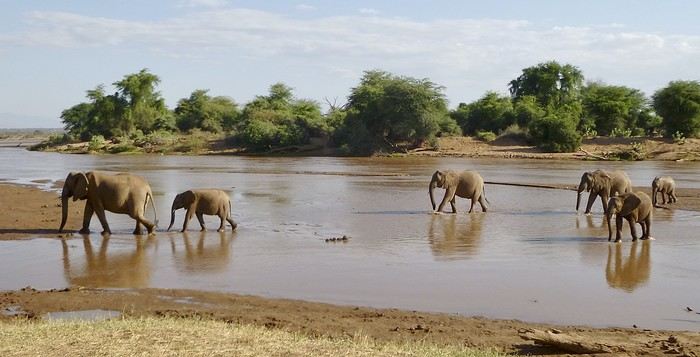
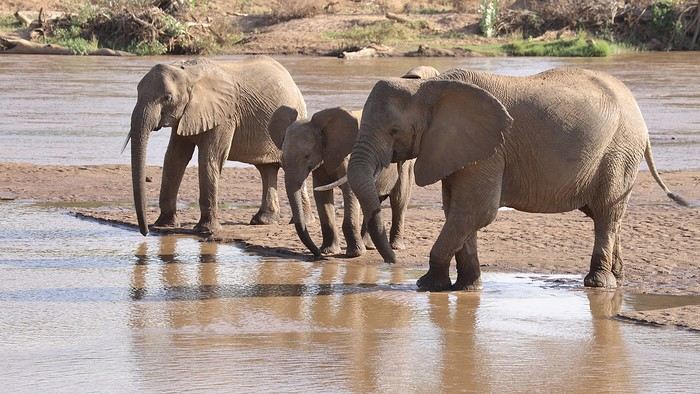
I’d dreamed so much about this trip! Elephants crossing the river was one of my biggest wishes!!


I’d have liked a bigger group, but you make do with what you get. "Safari Is Unpredictable"


The saying goes, “the grass is always greener on the other side of the fence, the road, or the river...”


These photos were taken that morning while we were having breakfast by the river—on the "beach," basically!!

This breakfast, prepared by the lodge and packed in a box, included hot coffee, hot water for tea, toast, honey, hard-boiled eggs, bacon, chicken sausages, fruit... I know it surprises some people to eat a meal like this served on the hood of a vehicle. Believe it or not, for us, it’s pure bliss! And of course, it’s really the setting that makes it special and gives it such a unique flavor!!!

...
PU Puma2A Veteran ·
A "social" grooming session among these Baboons:


Then, we encountered a large group of female Impalas.


The males weren’t far off—on the right, a young male whose horns haven’t yet reached the length or lyre shape of an adult’s.


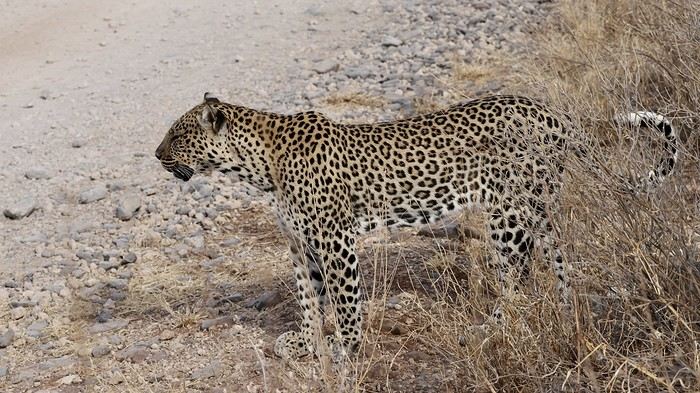
In the afternoon, just a few minutes from the lodge, a stunning opportunity: a Leopard resting by the track. Simon wanted to reposition for better light—the leopard stood up and crossed the track!


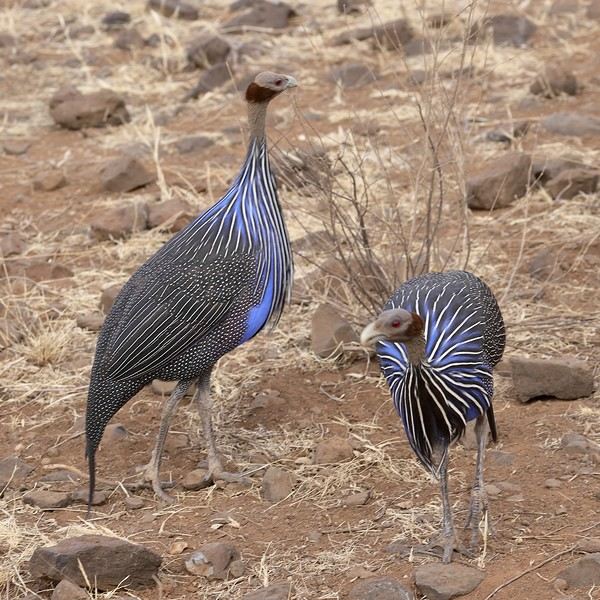
Simon—rightly—anticipated the animal would climb a tree and repositioned. But we hadn’t noticed a flock of Vulturine Guineafowl, which started squawking at the sight of the leopard. The leopard was close to the tree, but the racket annoyed it, and it abruptly changed direction, heading into very dense bush… (end scene)

We all cursed those "noisy nuisances" of guineafowl!


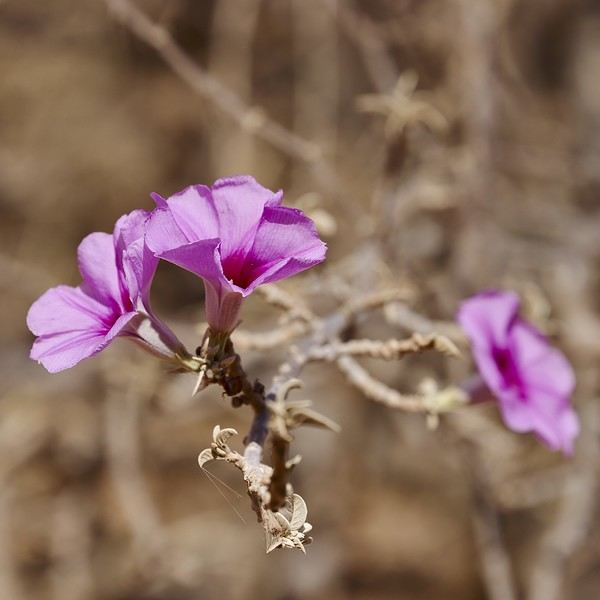
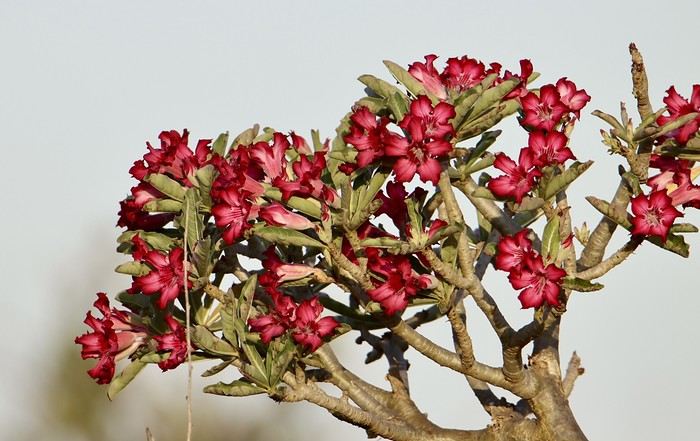
A rare flower that might be a Desert Rose (with many reservations).


A few minutes after this partially missed opportunity, Simon got a call and sped off. We figured we were about to see an animal we hadn’t encountered yet.

A "big crowd" of vehicles gathered around some bushes. Simon managed to squeeze into the only available spot—it wasn’t ideal, but there was no other option.

One of the most beautiful encounters of this trip:

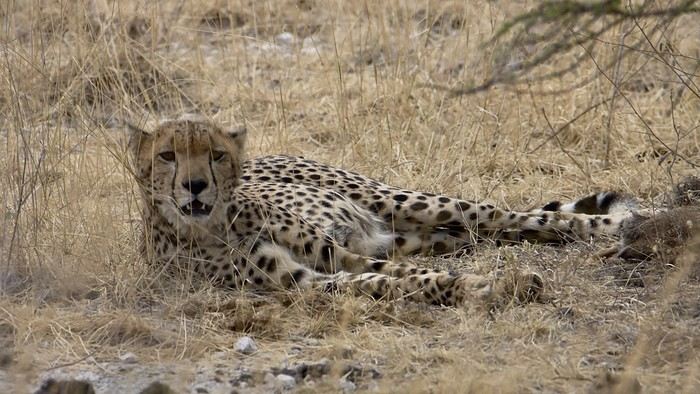
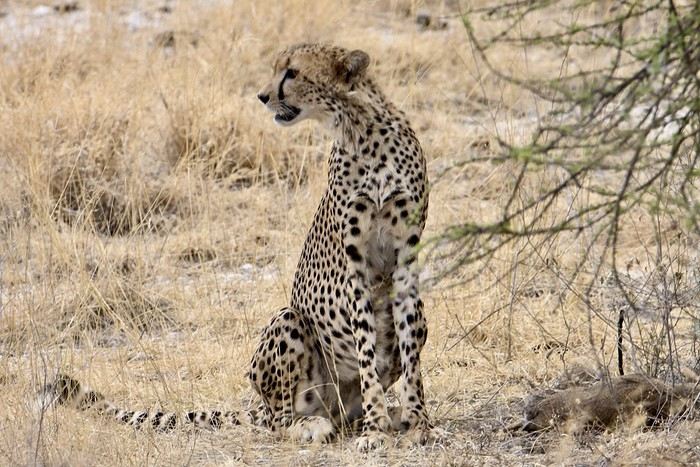
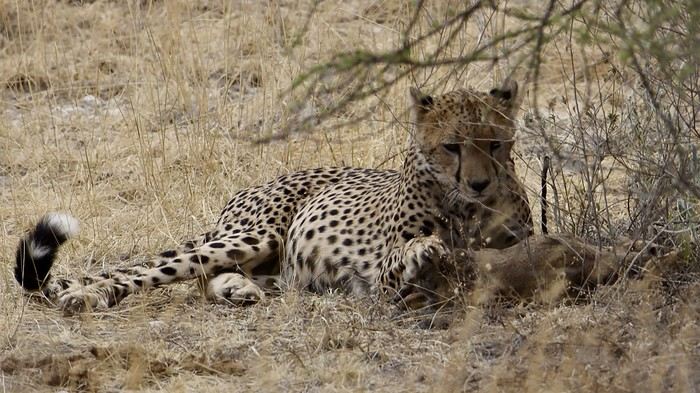
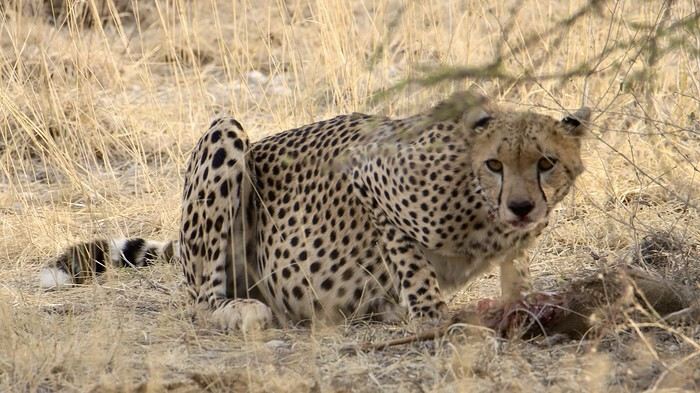
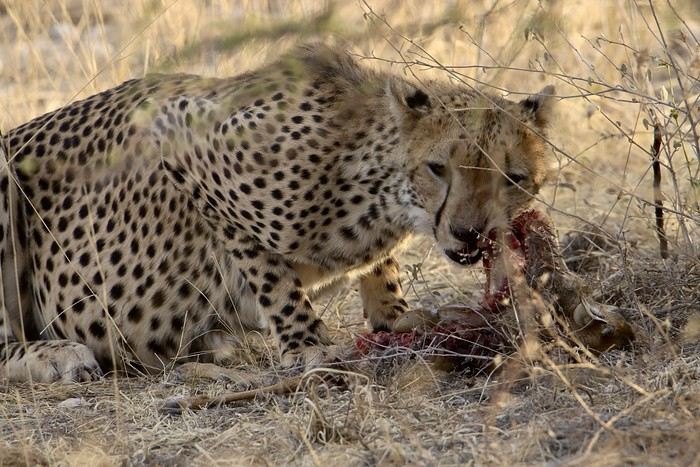
A pregnant female Cheetah, who had just caught prey, was catching her breath. She was nervous, knowing other predators might try to steal her Big Mac!


Unfortunately (for me), the prey was a Dik-dik, but I forgive her—this meat will ensure the development of her future baby(ies). Always on high alert, she stood up at the slightest noise to scan the surroundings.


Finally, she started eating.


...
PU Puma2A Veteran ·
...

This cheetah was right to be cautious because a serious competitor was about to land in a nearby tree...

A Bateleur Eagle: the Dik-dik is one of its favorite meals, and it would be capable of snatching it and carrying it away in flight!!
... but it quickly realized it wouldn’t be able to steal this prey and flew off!!


Capturing these images was quite challenging: because of the grass between the subject and the camera, the focus had to be manual... not to mention the constant changes in lighting... But we hadn’t seen a cheetah in 6 years... and never in this region during our three previous trips. Pure joy!!

Africa and safaris are unpredictable... Simon managed to change positions twice around this scene.


While the feline was eating, another bird observed the scene...


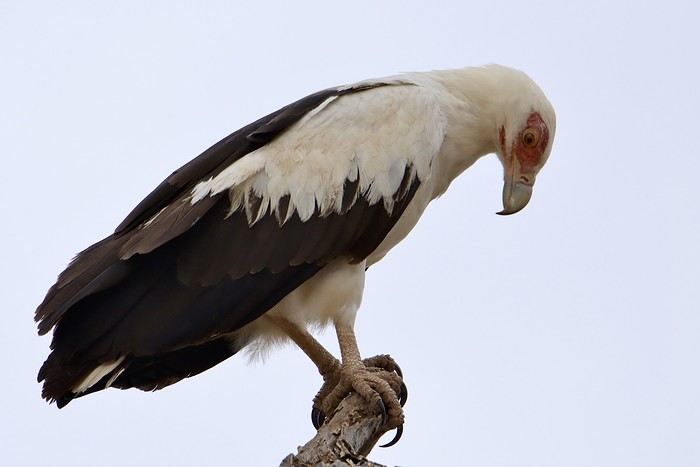
It’s a Palm-nut Vulture. Yet, it’s mostly a vegetarian that feeds on fruit and sometimes insects or small birds. It was probably hoping for a few "leftovers"??


We never found out if there were any leftovers... 😉

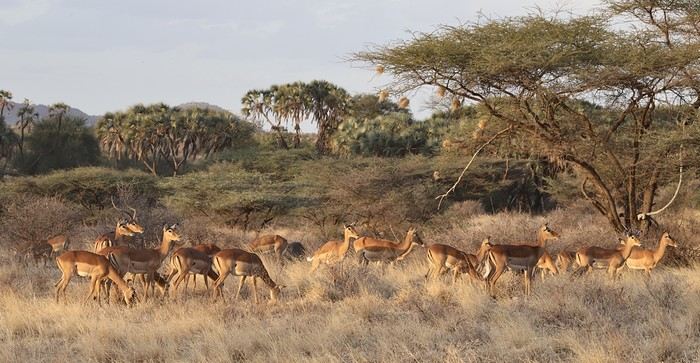
On the way back to the lodge, under the warm light of the setting sun... A large group of impalas.


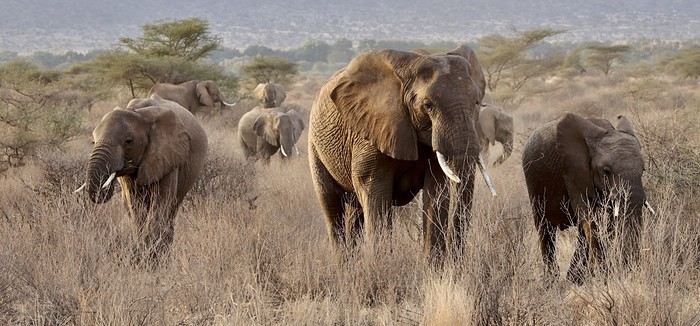
Then a group of elephants.


As if you were there with us...


But Simon had only one thing on his mind: going back to the spot where we’d seen—a little too briefly—a leopard earlier that morning... 😏 😛???

...
HO Holigirl Veteran ·
This travel journal by Alain is absolutely stunning 🙂 Your photos are just incredible and this trip looks seriously amazing.
PU Puma2A Veteran ·
...

Hello and thank you, Pascale, for your message. If the urge persists—and I hope it does—you should urgently consult a travel agency!! Otherwise, the symptoms will only get worse... 😏

... Continuing:

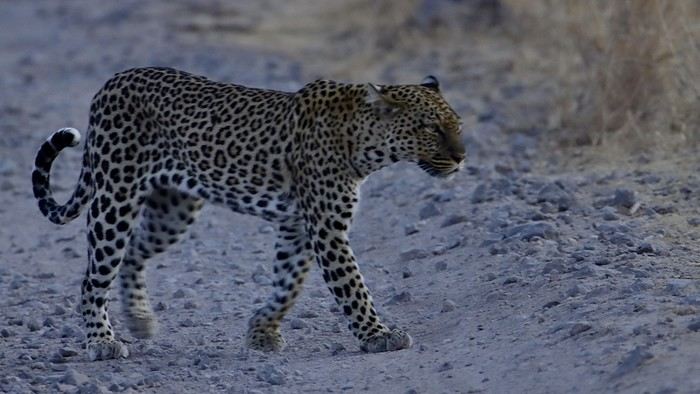
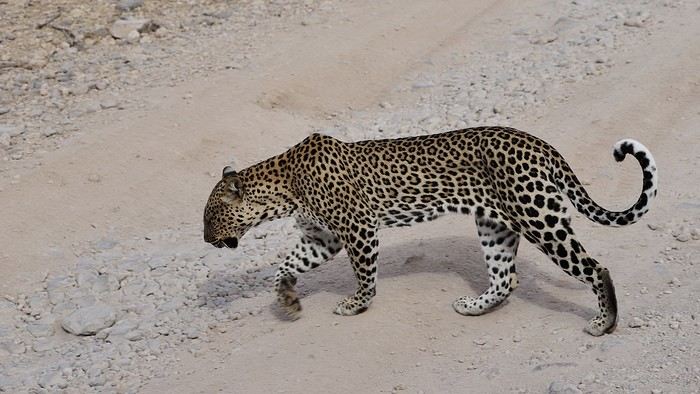
Simon takes us down a track where he believes the Leopard was heading earlier this A.M. ??? The light is fading fast as the sun has dipped below the horizon. Suddenly, Pascal, another keen observer, and Simon spot an animal descending from a tree 200m away..... BINGO!! It’s the Leopard, and it’s coming toward us..... 🙂 Simon parked the 4x4 sideways with two wheels on the embankment beside the track (to make it easier for us to take photos).


The Leopard completely ignores us and doesn’t slow its pace... You won’t believe this, it passes UNDER the vehicle, which is high off the ground, but still??? An unimaginable scene. I was a bit overwhelmed by the settings and, unfortunately, got a lot of blurry shots (I’m juggling two cameras...). The light is fading more and more...


It reaches a main track... Simon anticipated everything and positioned us perfectly.


“I think it’s decided to leave us,” I say!!


Yes, confirmed—we’re living the last moments with this Leopard... It disappears into the bush. We spent 7 minutes in its company!

What an incredible encounter!! 😎 Thanks to Simon’s perseverance and expertise!! That evening, we return to the lodge with the headlights on... And so ends a magnificent day (and the trip isn’t over yet!!).

I intentionally kept the dark tones of these last images to preserve the twilight atmosphere of the moment. ...

- Saturday, October 18:

Like every morning, we set off before sunrise. In the warm light of early morning...


A few birds we encountered the day before and that morning:

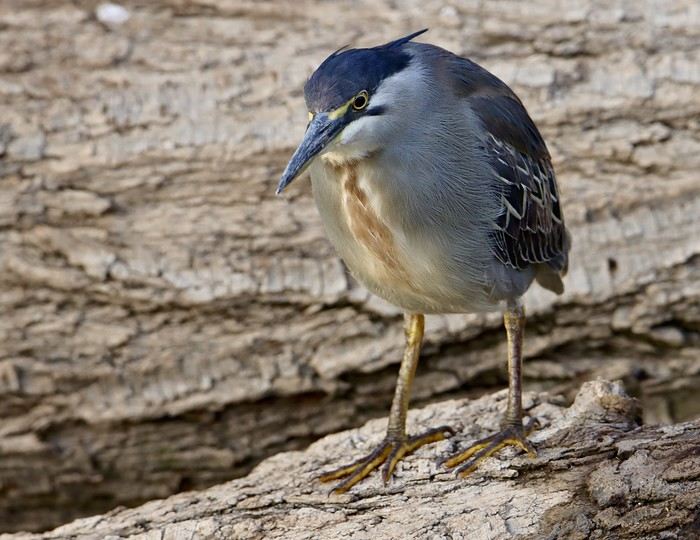
A Striated Heron by the edge of a small water-filled ditch.


We forgot to note it down... with some reservations, it might be... An immature Tawny Eagle.

A Kori Bustard:

...
PU Puma2A Veteran ·
...

A White-bellied Bustard, or Senegal Bustard (!!)


A Vulturine Guineafowl in its ceremonial plumage!


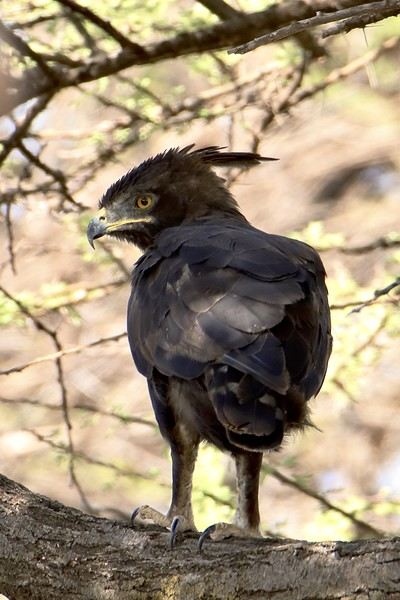
A Long-crested Eagle with its feather crest.


Two Yellow-necked Francolins sizing each other up before... fighting!?


Then comes breakfast time... by the river... just like the day before!!


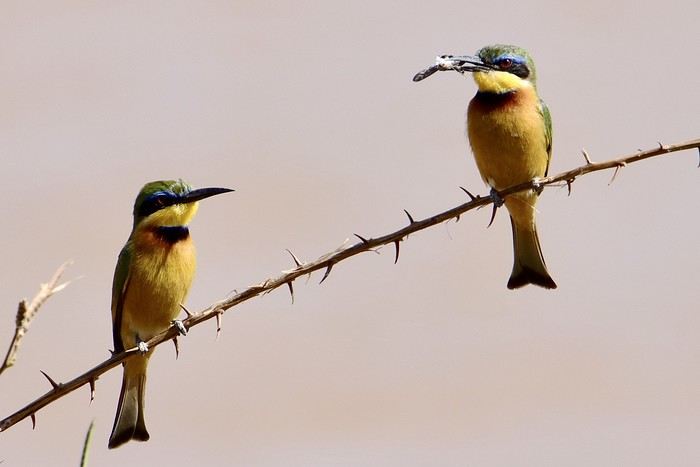
And right near us, above the water, two Little Bee-eaters on a branch (alas, this bird is tiny, but so beautiful!)...


I can’t tell the male from the female, but this behavior is characteristic of bee-eaters: The male catches an insect and lands near a female, showing off the big prey from every angle. Normally, after a while, he offers the gift to the female, and the reward is... mating....

But this time, no gift—the presumed male ends up swallowing his prey, then leaves and quickly returns with another one! And he does this several times???? A real provocation!! (Please be forgiving about the sharpness—I’m at the limit of my 150-600mm lens and only have a monopod to steady my shot from the riverbank.) This morning (again), luck is on my side—"third time’s the charm!"


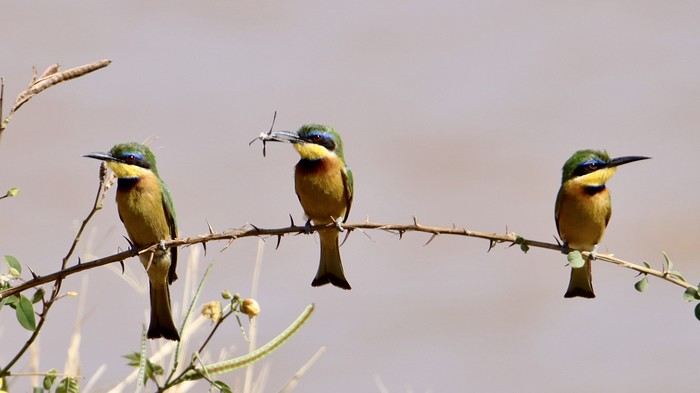
This time, the Little Bee-eater, an insect hunter, has two "suitors"... ...but once again, he won’t offer anything!!! ???

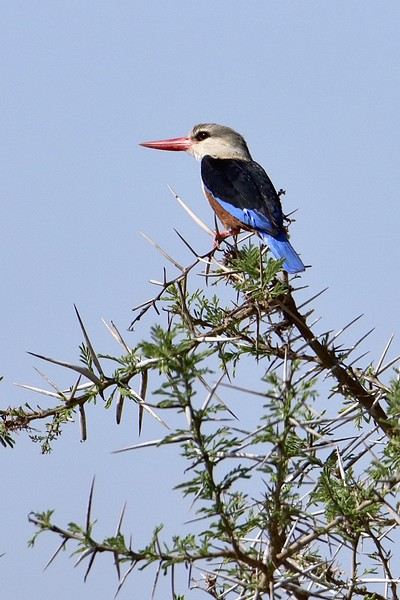
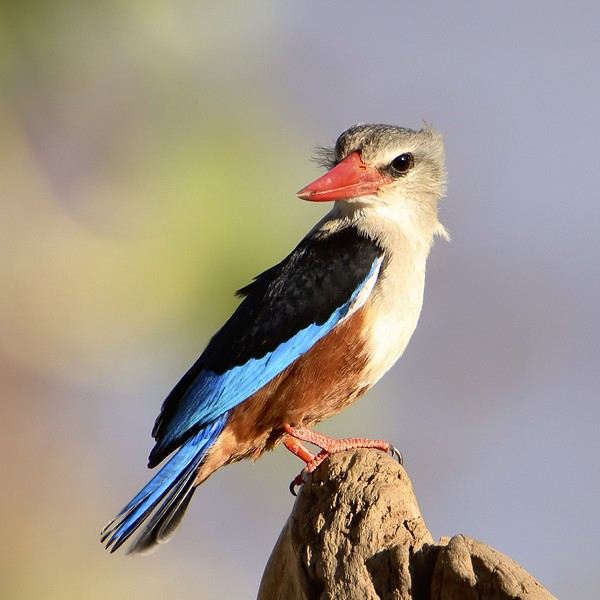
A Grey-headed Kingfisher.


I can finally finish my breakfast... my coffee’s gone cold!

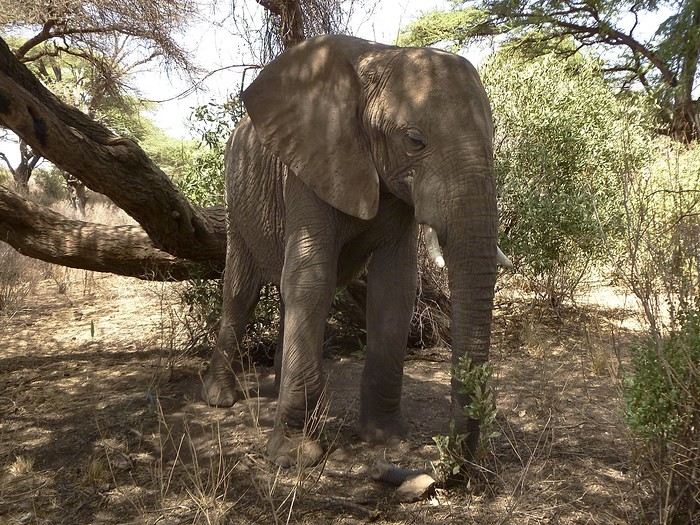
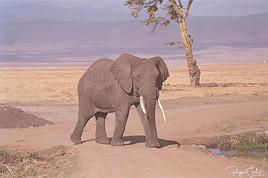
On a narrow track in the middle of the bush, we end up just 1.5 meters in front of this young Elephant: it’s dozing... (too close, I had to use my partner’s old compact wide-angle camera to capture this shot)


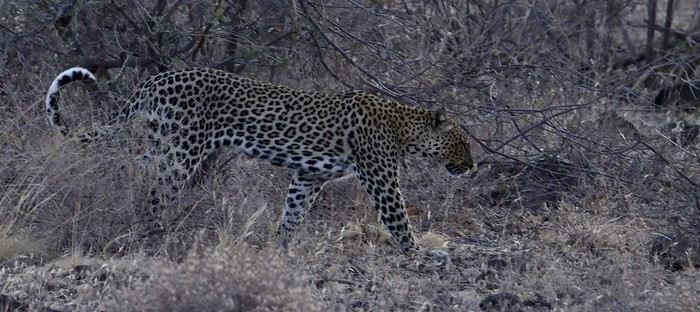
Further along this narrow track, under some trees and at the edge of a valley thick with dense vegetation... a young Leopard on a branch?? By the time we’re warned, reverse, and get into position... we see its tail disappear into the bushes. 🤪

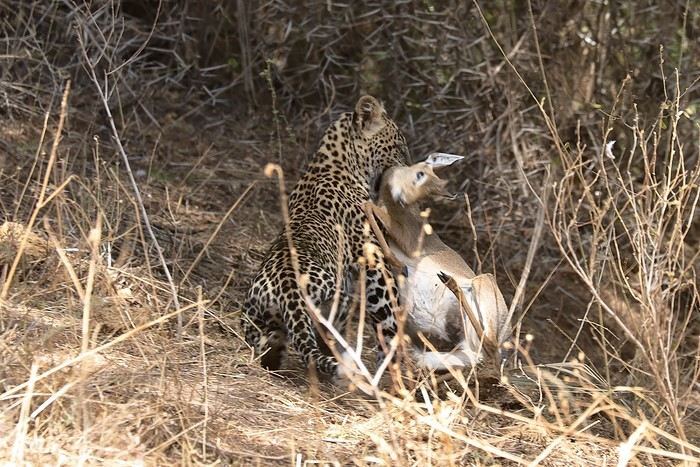
Simon switches on his "search mode" and the "perseverance" button, and after 5-6 minutes, he spots the young Leopard again!! But the feline is lost in the tall grass, and the steep slope toward the valley prevents us from moving closer. We settle for a fleeting glimpse and a low-quality shot... Still, you can see it’s dragging prey, and that prey is (unfortunately for me) yet another Dik-dik... 😕 🙁

The Leopard must’ve thought we wanted to "steal" its "Big Mac"... ??

Note that this is still the only animal (out of the ordinary) I spotted on my own during two weeks of safari!! I’m getting older, but luck was on my side... 😉

...
PU Puma2A Veteran ·
...

= A little introduction to Simon:

In his fifties, speaking impeccable French, he has extensive experience as a guide in Kenya. While he was just a guide employed by a safari company, he met wildlife photographer Tony CROCETTA (well known), whom he accompanied as a driver during many photo sessions. This easily explains why he always knows how to position himself well for taking pictures. He even always has his camera gear next to him on the seat....

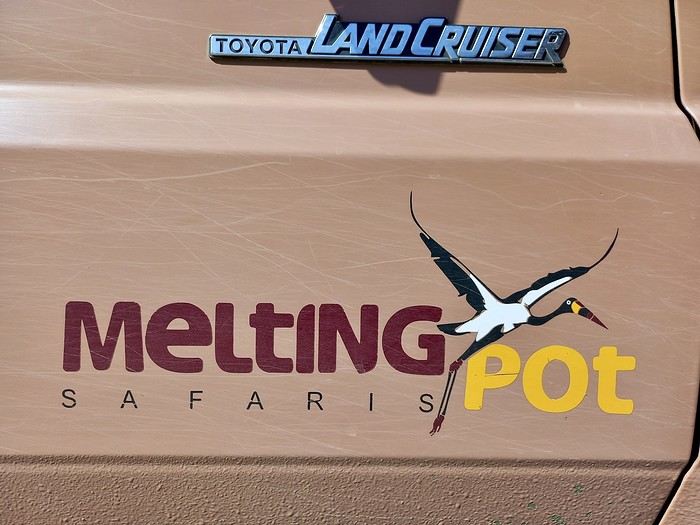
And one day, they both decided to start their own safari company: That’s how "Melting Pot Safari" was born.

The two owners of this company are Simon CHEBON and Tony CROCETTA. A week before our departure for Kenya, it wasn’t planned for Simon to be our guide, and the one who was supposed to drive us only spoke English. Simon is already quite busy managing the company. He simply replaced an unavailable guide.

Surprise at noon when we arrived at the Lodge—we were greeted by Tony CROCETTA, the other owner of MELTING POT SAFARI.


This is our second safari in Kenya with this agency (the previous one was in February 2017).

Tony was scouting a neighboring reserve to offer “something different” in M.P.S.’s catalog.

In addition to the meals we’ll share, Tony will accompany us on this afternoon’s safari outing. Having both “bosses” of the agency in our vehicle is a bit intimidating (especially since Tony brought his latest high-end Canon camera gear)... We’re definitely not on the same level!!
I forgot to mention that since the day before, there’s been another Melting Pot Safari “crew” at the Lodge. Just one client (a woman passionate about photography) on board the vehicle, but an intern accompanying the driver/guide. And we know this intern well!!

MPS owns a lodge on the shores of Lake Baringo: The "Tumbili Cliff Lodge", mainly dedicated to birdwatching safaris on the lake. The most well-known ornithological guide is TITUS, whose kindness, patience, and expertise are praised by everyone who’s ever visited Lake Baringo. Titus is continuing his training to become a driver-guide for all circumstances in every reserve in his home country.

It was with great pleasure and emotion (mutual) that we reunited here at Buffalo Springs.

For animal lovers, here’s the report of our 2017 stay/safari in Samburu, Lake Baringo, and the Maasai Mara—you’ll see Titus there... http://www.image-nature.com/forum/viewtopic.php?f=162&t=61119

...
PU Puma2A Veteran ·
...

Unfortunately, at the start of the morning, the light is very variable and often "terrible"—yellowish. 🤪

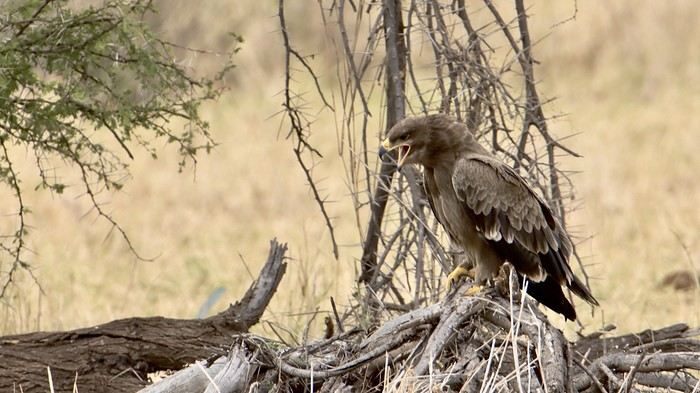
A Steppe Eagle screeching!! It has the peculiarity of spending a lot of time on the ground.


The Pink-rumped Tchagra, also now called Pink-rumped Bushshrike.


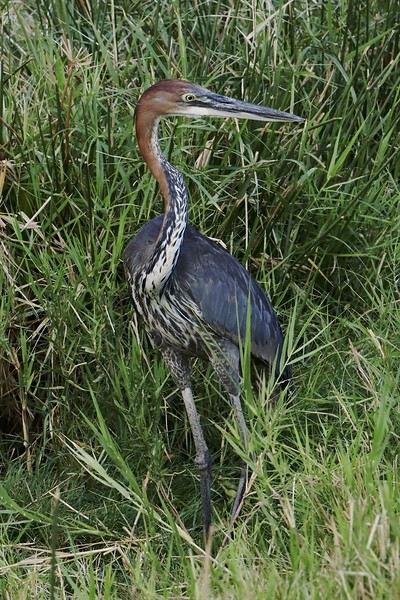
A Goliath Heron...


A Palm-nut Vulture (apparently rare).


There seem to be strange fruits on the branches of this tree......!? 🙂


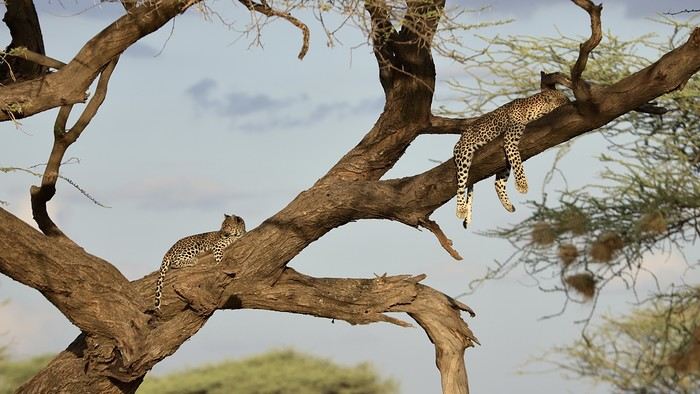
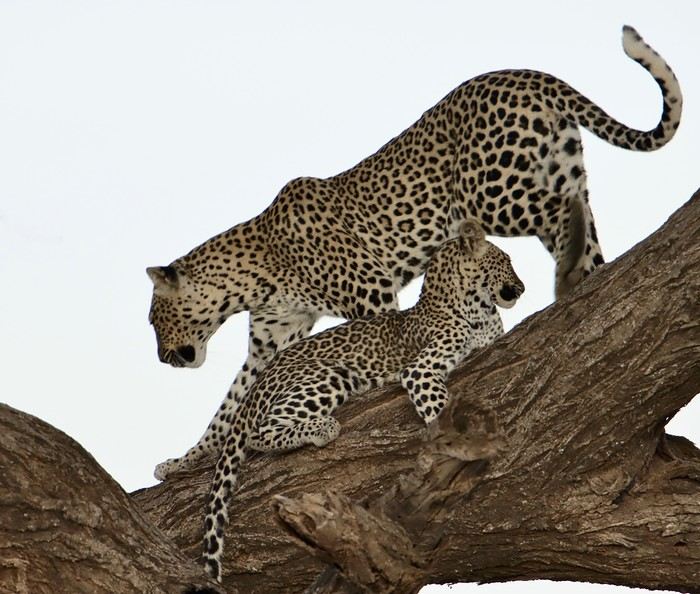
This is the kind of scene I dreamed of without daring to say it.... Two Leopards on a branch!!! On the right, a mother, and on the left, though not certain, it’s probably a young female.


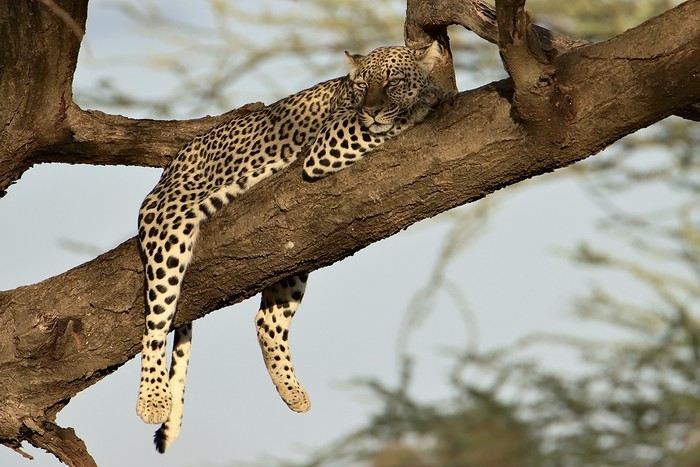
The mother... disturbed in her sleep, gives us a look full of reproach...


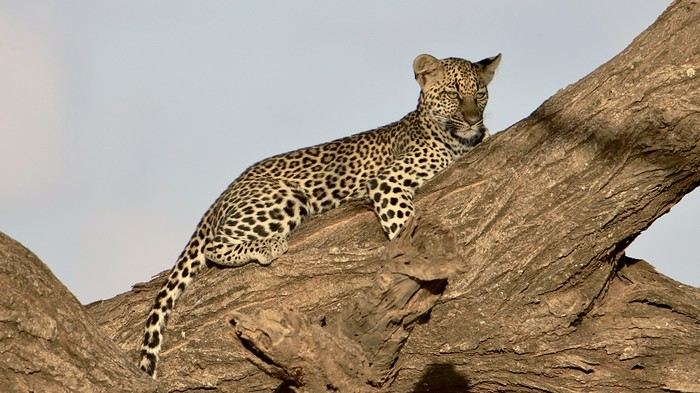
The young female must be wondering why all these cameras are pointed at her??


After a long wait, the mother stands up, and her daughter realizes that departure is near.


We later learned from another guide positioned differently in front of this scene that there was another young one at the foot of the tree.

Honestly, encountering a family of three Leopards is an extraordinary opportunity on safari.

...

...
PU Puma2A Veteran ·


On the way back to the lodge, passing by the small stream again...

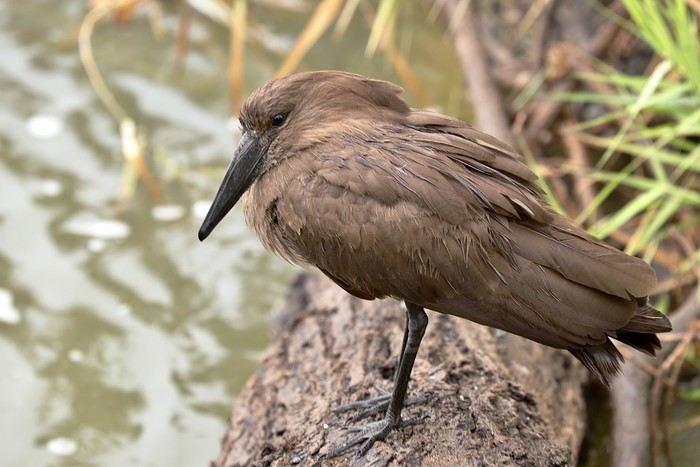
A Hamerkop.


...

- Sunday, October 19:

This morning, we leave the lodge and the Buffalo Springs reserve to head to Samburu on the other side of the river. We also say goodbye to Titus and the passengers from the other vehicle, as well as Tony Crocetta, who’s off to explore other destinations.

Still, we’ll try to make the most of the morning in Buffalo Springs, hoping to make a few more discoveries.

Breakfast at the lodge was early this morning.
I never get tired of it...!! The Gerenuk gazelle: it’s a classic in the region, but also a truly beautiful animal...


A Grant’s gazelle.


And then—AGAIN—a highlight of this safari trip.

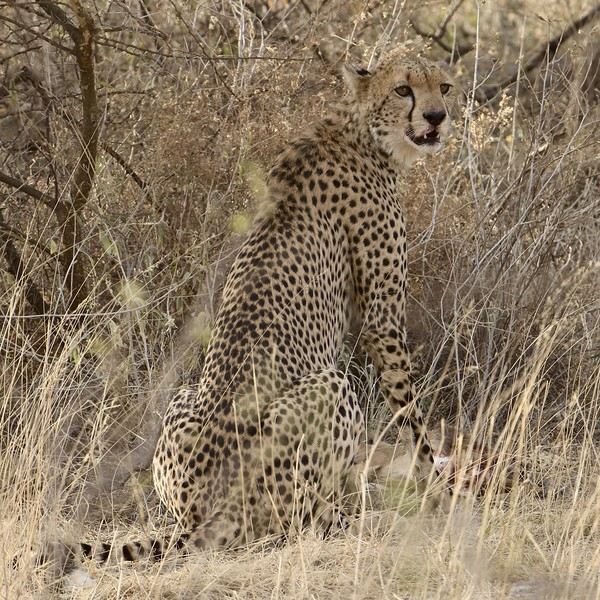
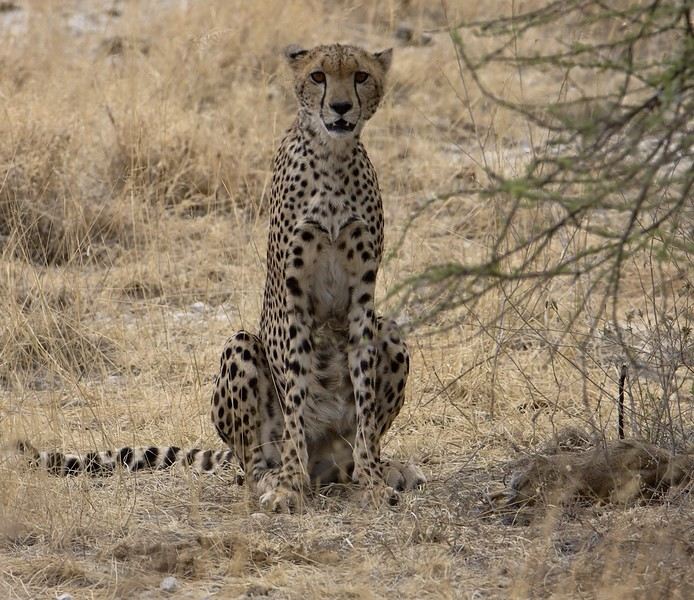
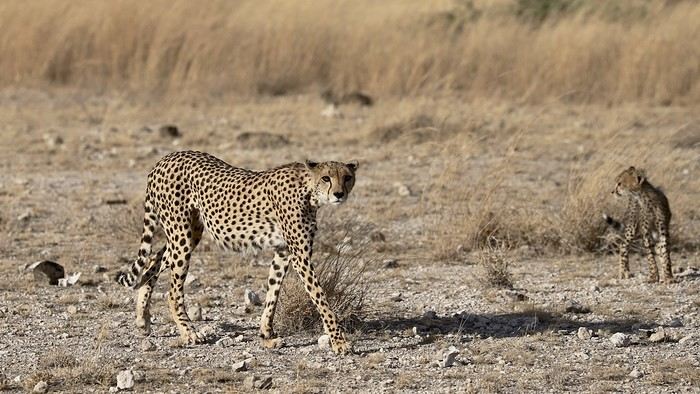
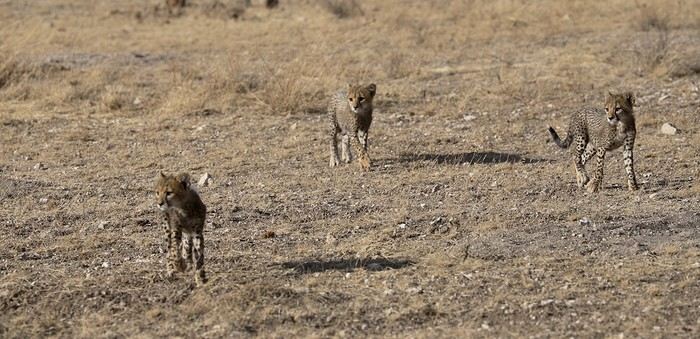
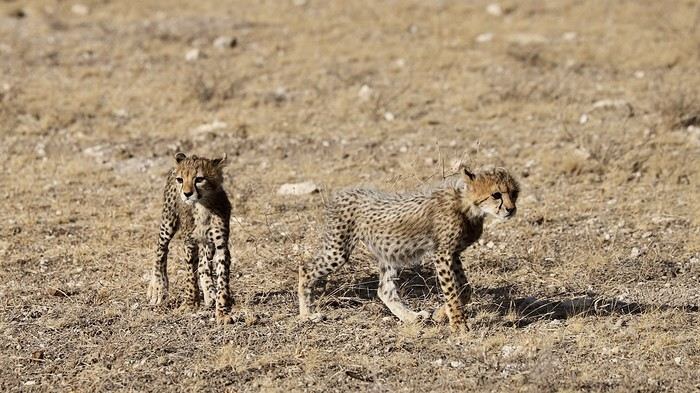
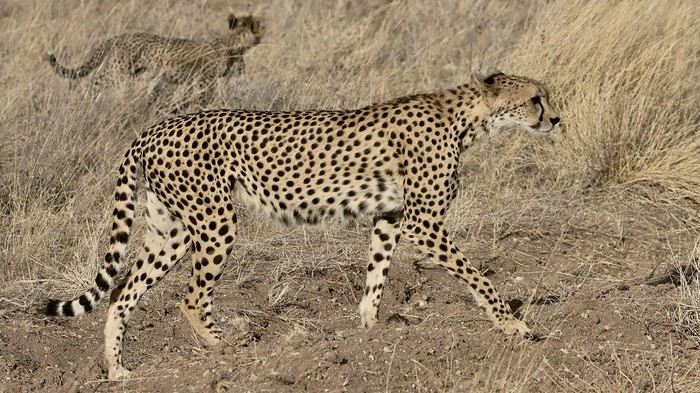
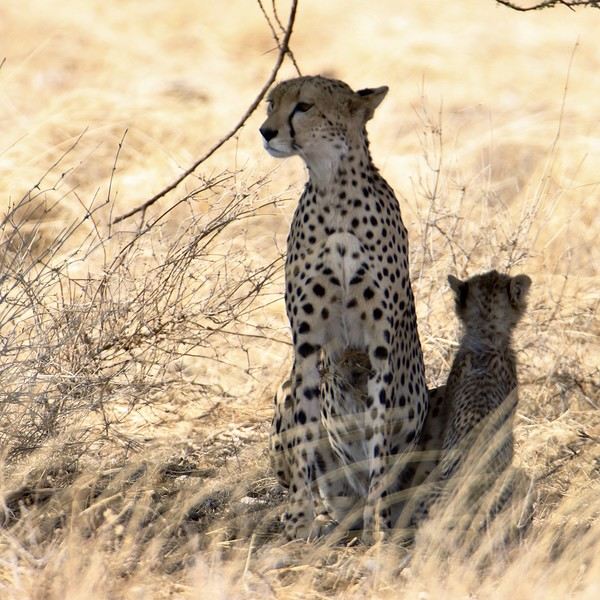
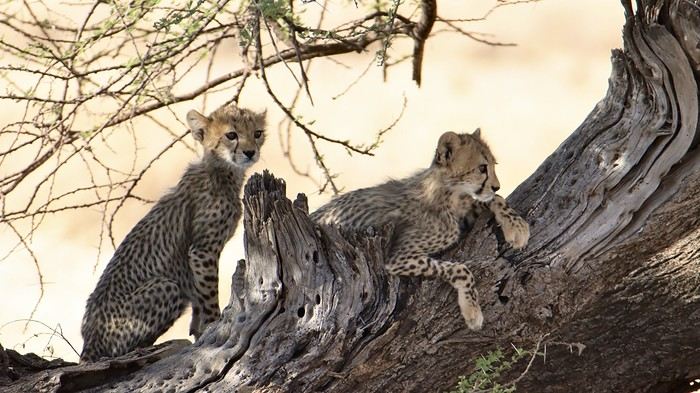
A cheetah mother with her cubs...


There are three young ones!!


What can I say? These are wonderful moments to experience, and nature has been generous with us.


🙂 😉 😏

PU Puma2A Veteran ·
...

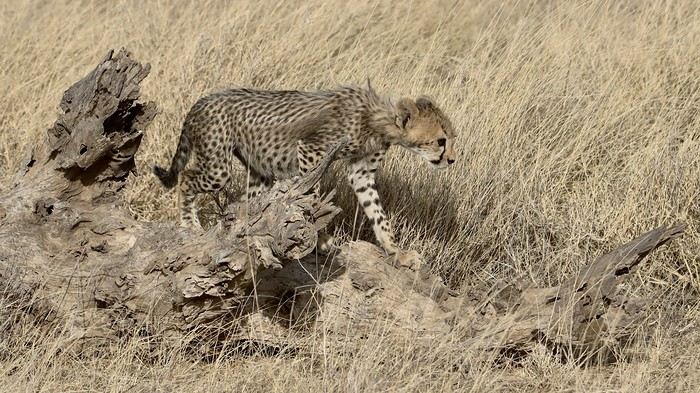
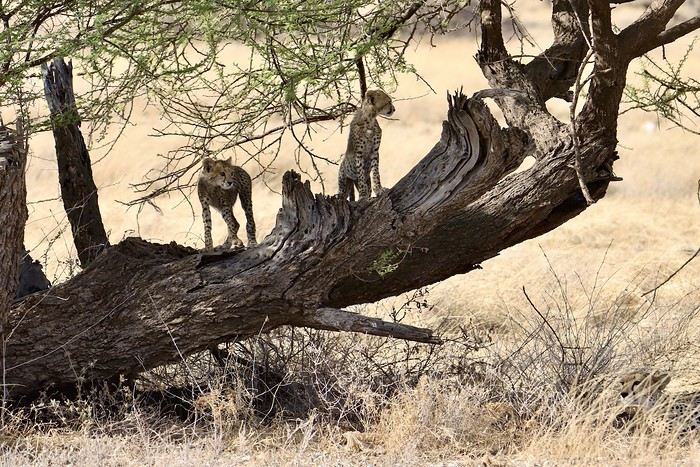
The little ones are getting tired, so we need to let them rest and play. The cheetah mom Guépard spots a tree to hide her cubs. Two of the cheetah cubs climb onto the branch (I assumed they were the more daring males!).


They’re already taking their observation role very seriously.


But the real surveillance is handled by the mother on the ground. The presumed little female stays glued to her mom...


Three months later, I wonder if the three young Guépards are still alive...??? Continuing the journey toward Samburu....


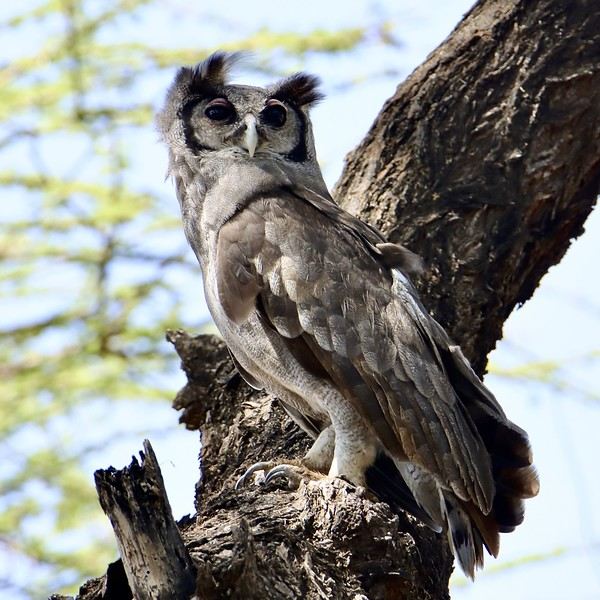
In a tree by the side of the track, a much rarer sight than reticulated giraffes, unfortunately backlit, which is really annoying...

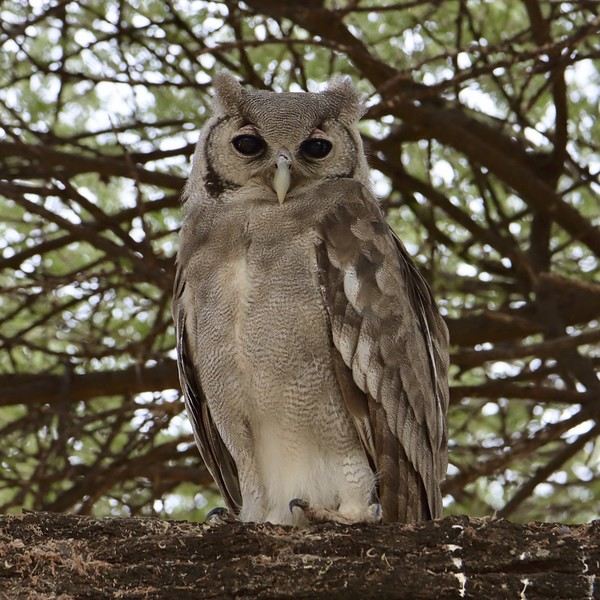
A Verreaux's Eagle-Owl. (notice its strange pink eyelids)


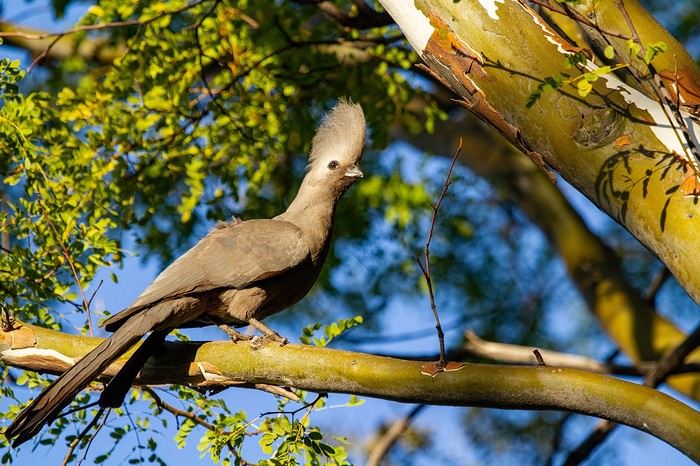
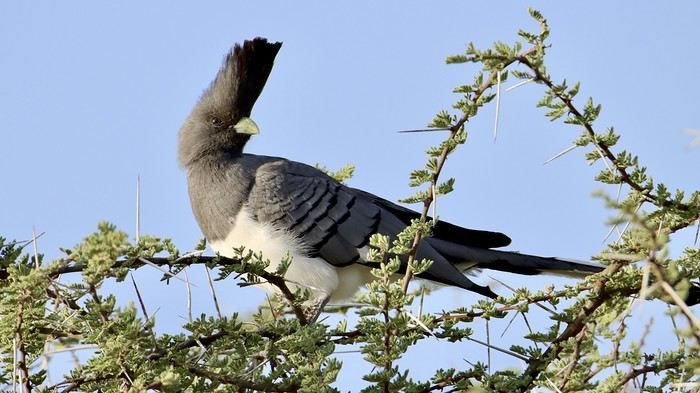
Then, a white-bellied go-away bird.


The winding, narrow track demands a lot of attention from Simon. It’s Pascal—our high lookout—who spots something in the dense bushes.... Lions!!: A female and two barely adult males... all from the same litter.


Then an adult female arrives. It turns out she’s the mother of the previous three and likely the “leader” of the pride.


Faced with the group’s general inactivity, we leave. It’s likely this troop had other members scattered in the shade of the surrounding bushes.

We finally reach the river and the bridge that provides access to the Samburu Reserve....


...
I only have a very (too) limited number of photos allowed by the forum rules. From now on, this report will be very brief and won’t really reflect our encounters and discoveries in this reserve. Sorry about that.

To be continued ;)

...
SI Sinforosa Veteran ·
Hello,

I’ve been following your travel journal, and I love all the photos—especially the ones of the birds!

If you’d like to keep posting photos, why not start a new thread as a continuation of this one? The photo counter would reset to zero.

At the end of each thread, you could add a link pointing to the other one.
" Celui qui voyage sans rencontrer l'autre ne voyage pas , il se déplace " ( Alexandra David-Néel )

" Ahora todos quieren ser latinos , no , ey , pero les falta sazon , bateria y reggaeton " ( Bad Bunny )
PU Puma2A Veteran ·
I’d planned to split this travel journal into two separate parts, but it’s not allowed by the forum rules. Don’t worry—since I’ve already shared a link to a "long version" of the "Tsavo East and West section," I’ll add a link at the end of the VoyageForum story to the full report already online about Buffalo Springs + Samburu... It’s on another forum, with larger-format images 😏 :)

See you soon for the next part.

Thanks Marie for your message and for also enjoying the bird sightings.

...
SI Sinforosa Veteran ·
I didn’t know it was against the forum rules—thanks for letting me know!

But I’ll keep following you! !
" Celui qui voyage sans rencontrer l'autre ne voyage pas , il se déplace " ( Alexandra David-Néel )

" Ahora todos quieren ser latinos , no , ey , pero les falta sazon , bateria y reggaeton " ( Bad Bunny )
MU Muriel18 Globetrotter ·
You were really lucky with the cats at Buffalo Springs :) (when I think about how few we saw in the two reserves...🏴‍☠️).
Si tu diffères de moi, mon frère, loin de me léser, tu m'enrichis (Saint Exupéry)
PU Puma2A Veteran ·
Hi Muriel,

YES! I’ve said it before—it’s clear that Kenyan nature has been incredibly generous to us everywhere during this trip. (And it’s not over yet!!) And Simon was an especially effective intermediary between what nature offered and what we actually saw. A big THANK YOU to him

....

Samburu is the reserve I’ve always prioritized during my previous three trips. I never imagined going to Kenya without stopping in Samburu....!!

Here, we’re staying at "Samburu River Camp": it’s an ultra-basic tented camp, very different from the places we’ve stayed before. I love small (and basic) tented camps like the ones we usually visit when we go to southern Tanzania. But I have to admit, this one is "quite" different in every way. And the welcome was just as basic. I don’t regret coming, but I shouldn’t have saved it for last. If I were to do it again, I’d visit Samburu before Buffalo Springs. It was my choice—I own it.

In the afternoon at Samburu.

We’re now on the opposite bank of the Ewaso N’Giro River....


A "classic" view of Samburu that will stay with us during our 4-day stay here:


Just as much as the reticulated giraffes:


A few birds we spotted in Samburu:

A botched landing by a black-headed heron.... 🤪


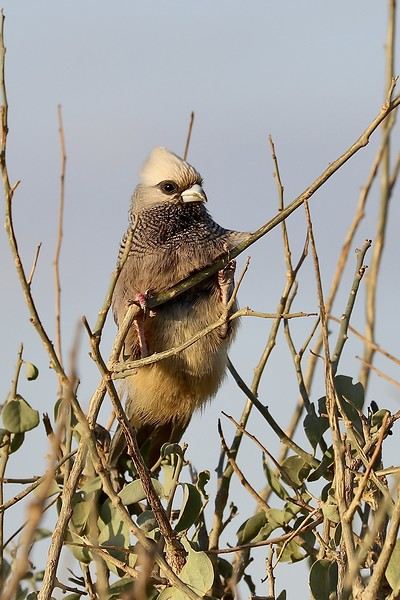
A white-headed buffalo weaver, and its characteristic way of "clinging" to branches!! Unfortunately, I can’t show you its long tail hidden by the vegetation!!

A grey-headed kingfisher.


A Rüppell’s white-collared raven....


Such a beautiful bird: the little bee-eater.


...
PU Puma2A Veteran ·
...
Compared to the three other reserves we’d visited before, it seemed like Samburu was where we encountered the fewest vehicles.

Still, late that afternoon as we were heading back to camp, a large cluster of 4x4s in the distance caught our attention. There were quite a few lions among the bushes, all moving in the same direction—they looked like they were on the hunt...
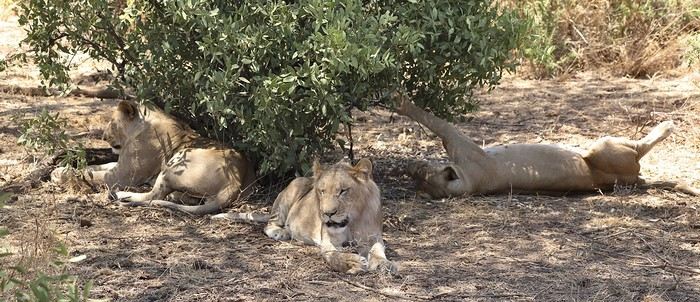
It was already dusk... here, a female leading the pack (there were about twenty of them).
- Monday, October 20:

One of those scenes I’ll remember for a long time—and a fascinating one at that—unfolded before us:

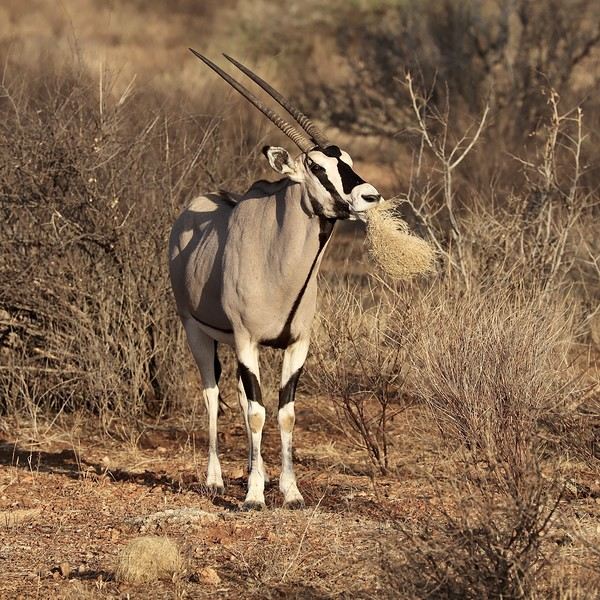
A Beisa oryx grazing is pretty standard... but eating bird nests???


Turns out, it was eating nests that had fallen to the ground, probably blown down by the wind. After all, it’s just hay! Though it was so dense that the oryx had to shake it violently to untangle the structure before it could chew... So weird and funny!


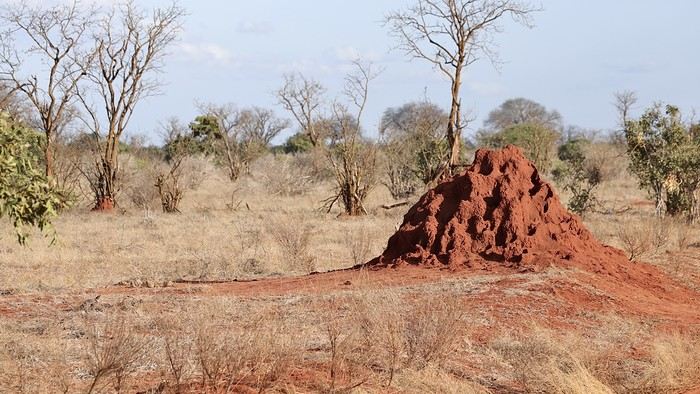
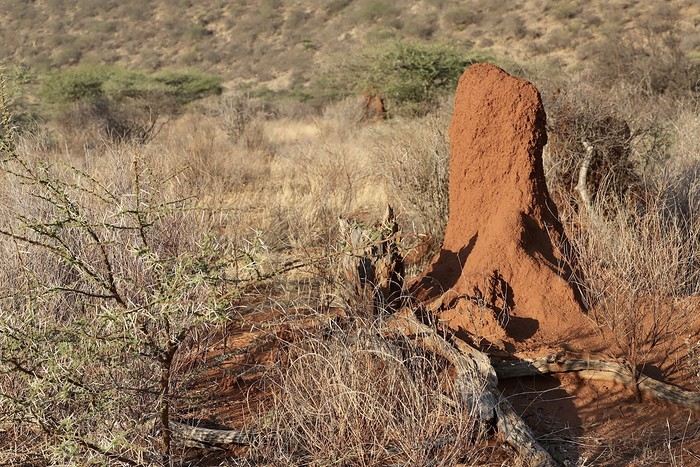
A termitarium (You don’t see much of it on the surface, but here, the soil is red too).


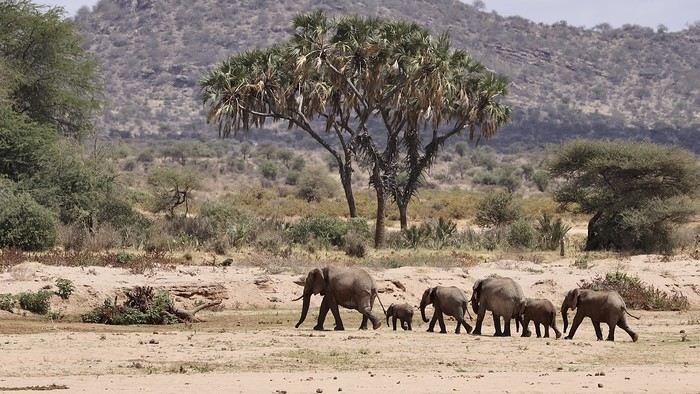
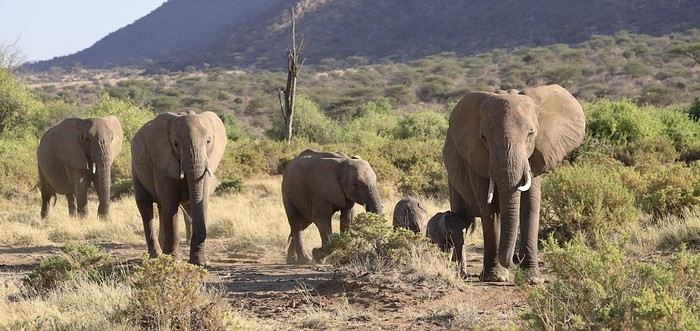
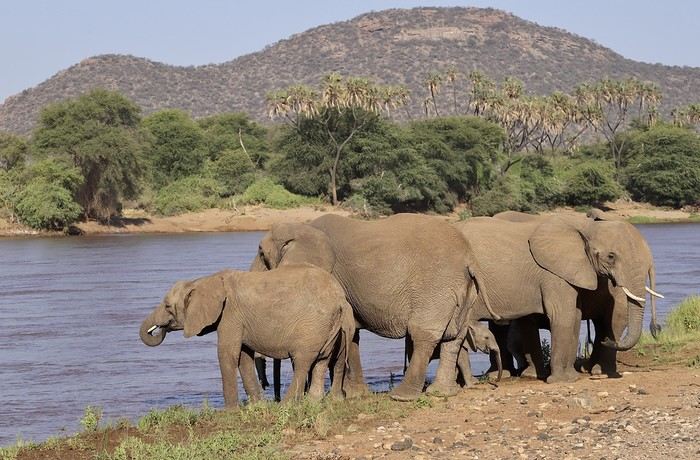
In Samburu, we came across a lot of elephants, always with young ones—some even very young.


One of Samburu’s emblems: the vulturine guineafowl.


I’m not entirely sure, but this might be a cluster of "desert roses."


We didn’t stick around long—there was tension in the air!

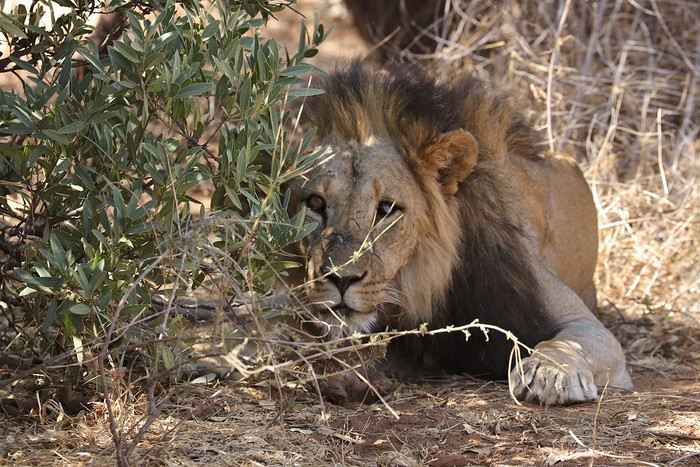
Behind this lion, we spotted three much calmer females in the bushes.


Were they part of the same pride we’d seen the night before...???? It was just a few hundred meters away!

...
CA Carassou Veteran ·
Yes, those are desert roses or Adenium obesum. Great job on all the photos—they're super sharp and well-framed! You must be using special gear (what kind?). I’ve been brushing up on the names of animals and birds I admired in other parks... in Tanzania over 30 years ago. I hadn’t seen the gerenuk antelope before! Carassou
MU Muriel18 Globetrotter ·
Hi Françoise

This message is more for Puma 😉
Si tu diffères de moi, mon frère, loin de me léser, tu m'enrichis (Saint Exupéry)
PU Puma2A Veteran ·
Hi Françoise,

Thanks for your message. And thanks for confirming the Desert Rose and for your kind words. I’ll give you the details about the photo gear at the end of the thread... in 3 days. (Same as what I used for my safari travel journal in southern Tanzania in 2024.) As far as I know, there’s no Gerenuk in Tanzania, neither in the north nor the south. Greetings to you and Muriel.

...
MA Mariachavez ·
Hi there! Gorgeous photos 😊
PU Puma2A Veteran ·
...
Hello, and thank you Maria for your message!

...
I’d like to share a recap of the various birds we encountered and photographed in Samburu over these past 3 days.

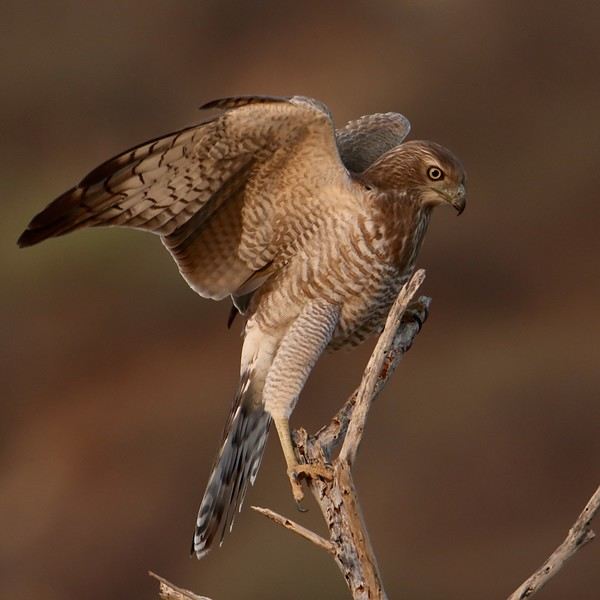
In the soft light of early morning... A juvenile Gabar Goshawk.


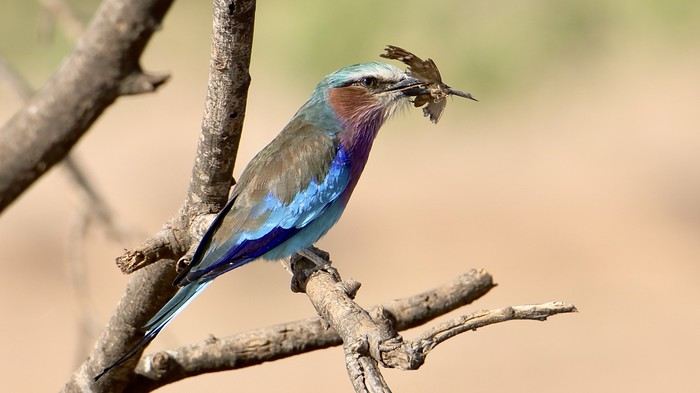
My buddy, the Roller with Long Streamers, caught a big butterfly—he’s about to tear off its wings.


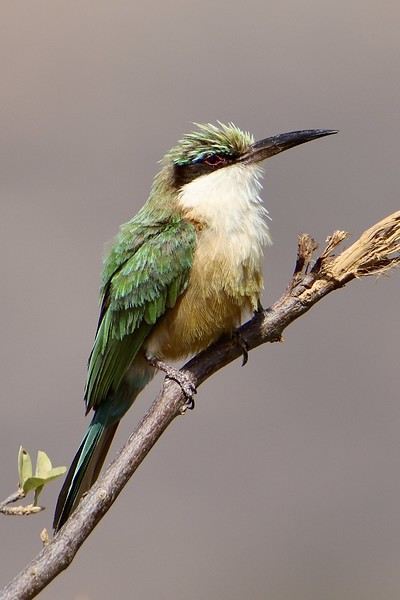
A Somali Bee-eater.


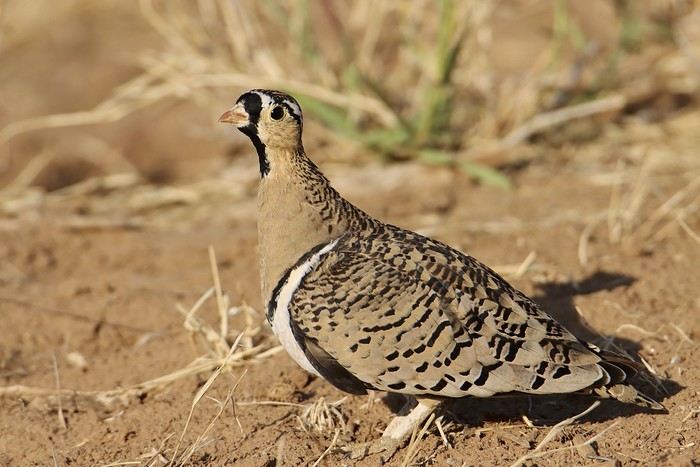
A Black-faced Sandgrouse.


An African Harrier-Hawk (a raptor that’s partly frugivorous and doesn’t mind snacking on lizards or snakes).


A Verreaux's Eagle-Owl, sizing us up!


A pair of Southern Red-billed Hornbills (the female in the foreground).


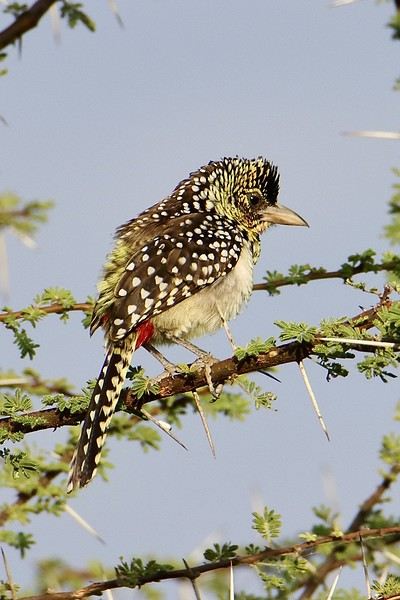
An Arnaud’s Barbet.


Some White-throated Bee-eaters.


A Grey-winged Fiscal (a juvenile).


...
PU Puma2A Veteran ·
...

- On Tuesday, October 21, when we left the parking area at Camp... two female Greater Kudu crossed the track right in front of us and immediately disappeared into a dense thicket!! No time to react to grab a picture... these were the only Greater Kudu we spotted during the entire trip ??

(I’ll learn back home that a group of Greater Kudu is usually found around the lodge.... but no one told us that while we were there!! )

A harem of Impalas by the river:


One last image of a Dik-dik: a cute little female...


And the last rare feline opportunity (I still wonder how Simon managed to spot the animal in a shadowy thicket???)

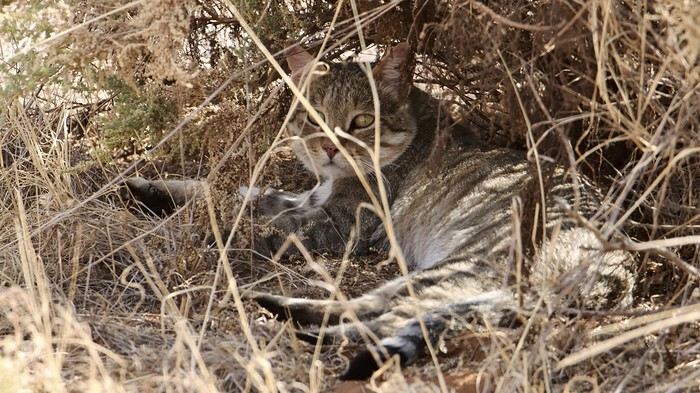
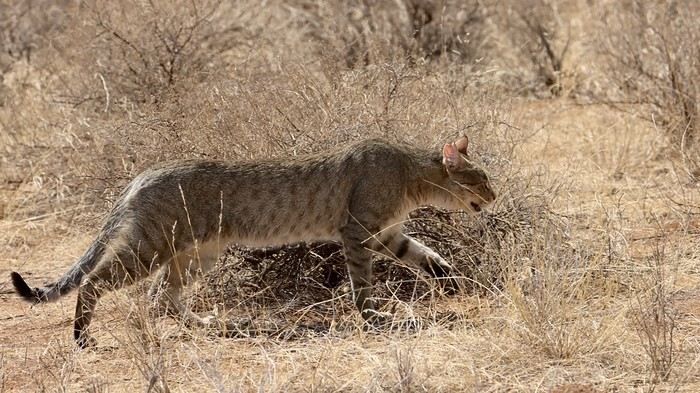
A African wildcat. This is only the third wildcat we’ve encountered on safari in 40 years (the other two were in Namibia: in Etosha and K.T.P.)


This will be the last truly exceptional encounter of the trip!!


In the A.M., Simon took us back near Buffalo Springs (the bridge over the river is close to the camp), and we found some other "big cats" there.

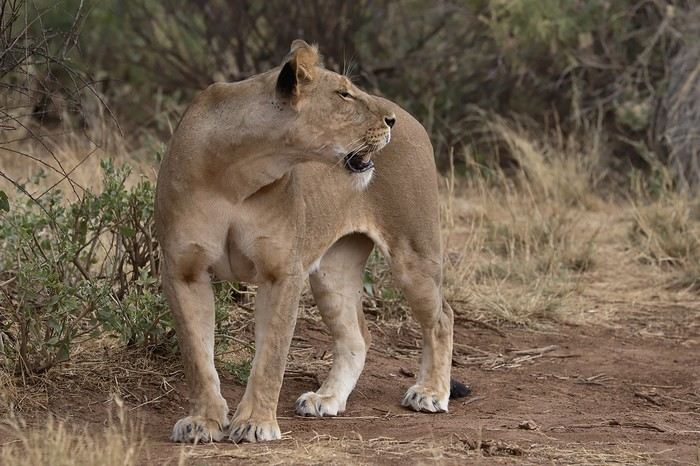
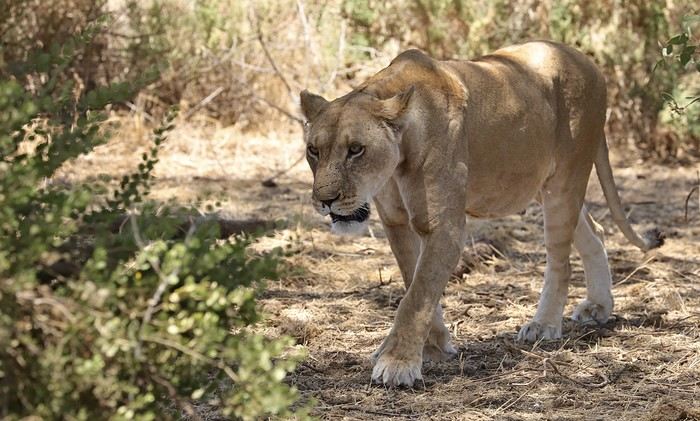
This lioness was hunting... alone.


Another lioness alone later in the day


And just before crossing the bridge again, in nearly twilight light... a scene that’s always a pleasure to watch


- Wednesday, October 22: The stay in Samburu comes to an end.

We leave the "Samburu Riverside Camp". For 4 days/3 nights, we were the only guests at this camp...!! We cross the bridge over the Ewaso N'giro River one last time and drive back through the entire Buffalo Springs reserve toward the exit and... civilization. 🤪 😕

A few brief stops, since we have to respect the exit time limit. A majestic Defassa waterbuck male, alone


One last Grevy’s zebra...


To be continued in the next update. ...
PU Puma2A Veteran ·
...

The track winds toward the exit of Buffalo Springs. We tell ourselves that all "this" will be over in a few minutes....


A Martial Eagle plucking a bird it has just caught: nature is beautiful but still wild....


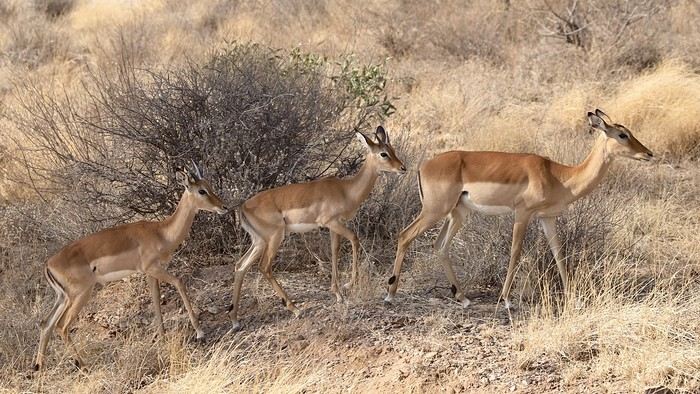
The last impalas we saw: a female in front of her two young males.


The impala is probably the most commonly seen mammal on safari in Kenya or Tanzania. I have a particular fondness for this animal with its very elegant silhouette, especially for these young males with their small, still-straight horns.

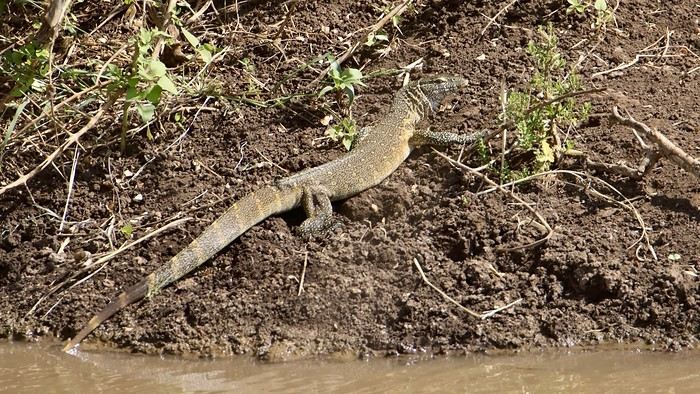
Near a waterhole not far from the exit, several Nile monitors... are basking in the sun!


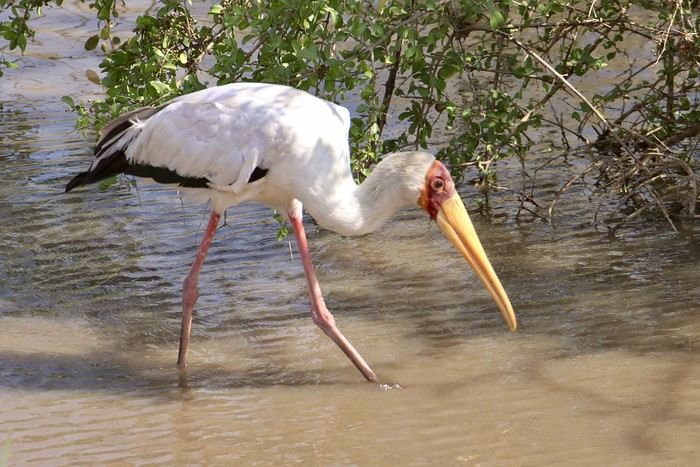
...and a Yellow-billed Stork surprisingly close to the reptiles!!


The last mammal we encountered was a female Grant’s gazelle. 🙂


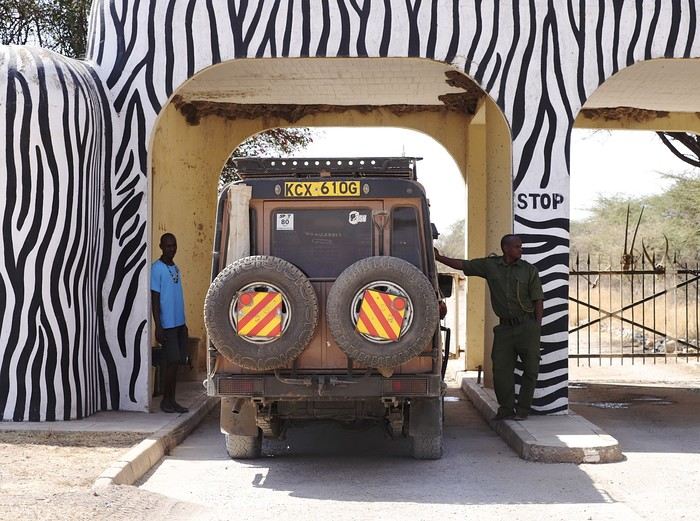
And here we are at the exit, waiting our turn for the checkpoint.


I feel a moment of sadness then, especially since at my age, it’s always possible this could be my last safari.... ???

It’ll take us nearly 8 hours to reach Nairobi, with a lunch stop around noon and another quick stop when crossing the Equator. Then we’ll hit the heavy traffic in the Nairobi area.

Simon will drop us off at the Roussel Guest House in the Karen neighborhood. Sniff!! We’ll say goodbye there!! -- Thank you for EVERYTHING, Simon --.

We’ll have one last dinner with our friends, who are spending the night at this place. For our part, around 10 PM, a taxi will take us to the airport, and we’ll take off at 1:30 AM for Doha, then Nice.

In Nice, we’ll arrive in the middle of a storm on October 23... ...which will delay our return home by 48 hours!!

-- END of the Travel Journal --

...

As with the first part of the trip (in the two Tsavos), I invite anyone who’d like to see more photos taken during this stay to check out the "extended version" of this journal here:

https://spottingaviation.forumactif.com/t15844-safari-photo-au-kenya-2eme-partie-dans-les-reserves-de-buffalo-springs-et-de-samburu

The first part had 12 pages, and there are 17 for the Buffalo Springs and Samburu section (860 photos in total).

This other forum is freely accessible without registration.

Happy reading if you're interested!

THANK YOU to all the visitors of this "journal," whether here on VoyageForum or on the forum hosting the extended version.

Best regards.

...

Similar discussions

You might also like