A Bold Combo: Southern Peru, Bolivia, and Northern Chile
FR

Translated into English.

MA Marati Globetrotter ·
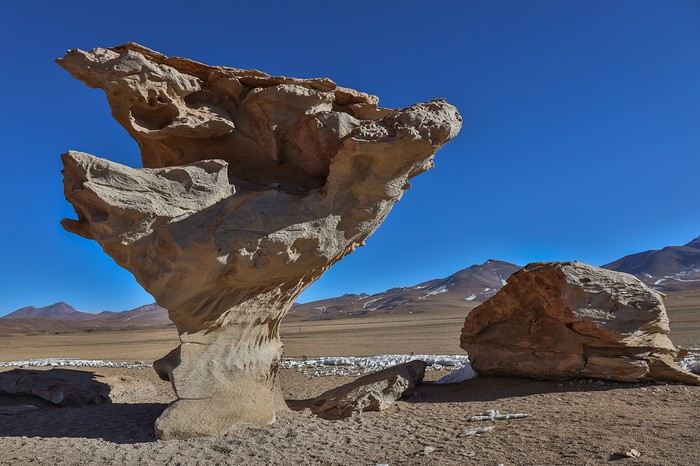
We then arrive at the Siloli Desert and its well-known Stone Tree.

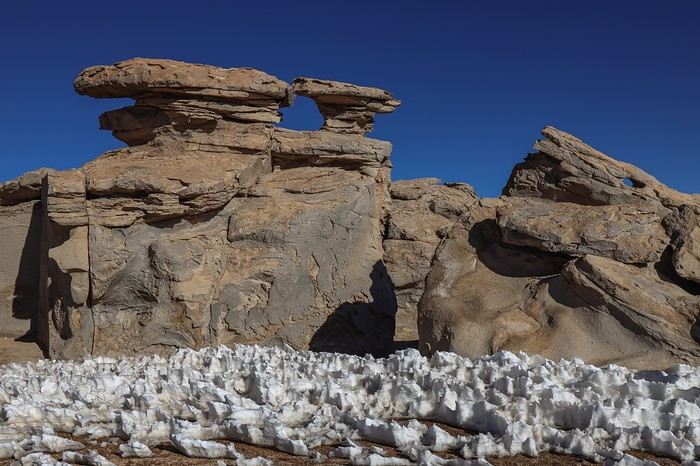
Right next to the Stone Tree, there are a few other rock formations with patches of snow, sculpted by the wind, on the ground.


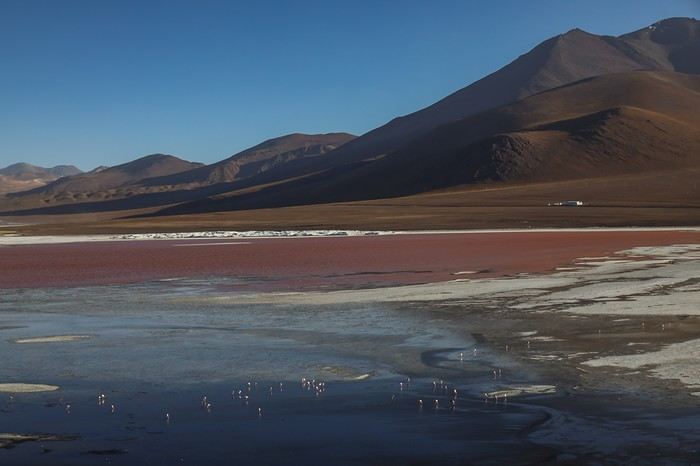
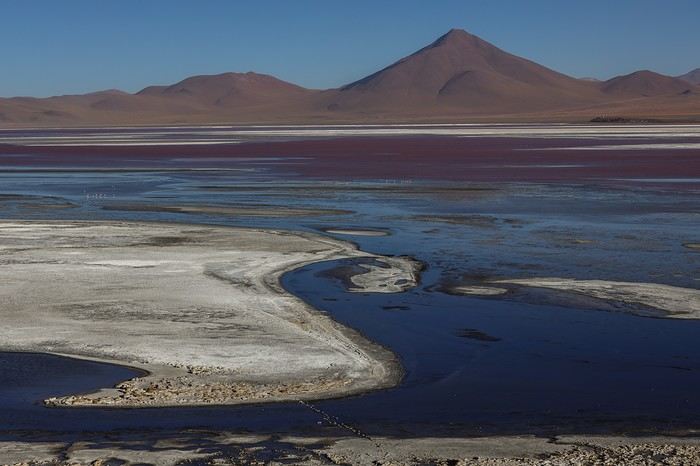
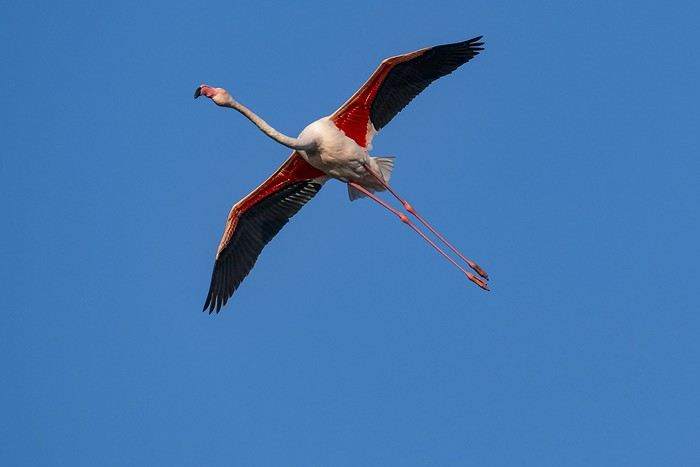
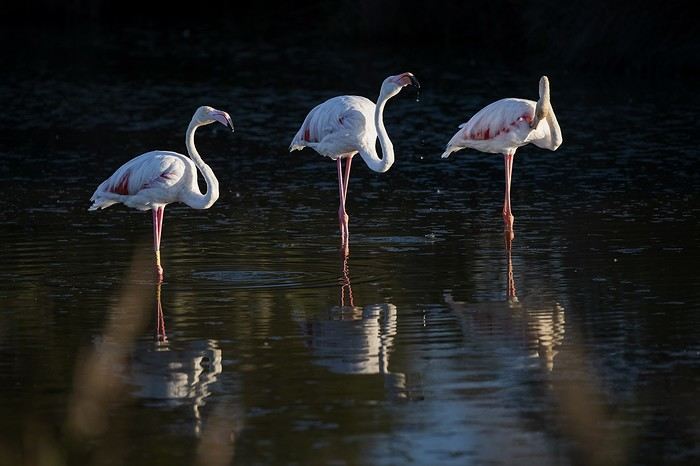
The last lagoon of the day, undoubtedly the most beautiful, is Laguna Colorada. This lagoon is famous for its striking colors and pink flamingos, but we can’t really enjoy walking around it because a terrible icy wind has picked up and is cutting through our four layers of clothing!

It’s really unbearable over time, even for me—I’m usually fine with the cold... We don’t forget that we’re still at 4,300 meters above sea level!


The red color of the lagoon comes from microscopic red algae, though the shade is much less intense than what you see online. Janeth explains that the water’s color changes depending on the light, time of day, and weather.


We then head to our accommodation, which is freezing too 🏴‍☠️, due to the lack of heating and even electricity for a good part of the day! At 4,300 meters in the middle of winter, we knew what to expect...

At dinner, several of us are eating very lightly because of stomach issues. For the night, while we’re all shivering from the cold and the night promises to be long, Janeth kindly offers us hot water bottles, which help us fall asleep with a bit of warmth, feeling a little more cheerful 😊.
MU Muriel18 Globetrotter ·
I love these lagoon photos! (Among other things ;))
MU Muriel18 Globetrotter ·
I'm taking advantage of having access to a big screen again to rewatch all these colorful photos (as well as those from Carmen's travel journal), often enhanced by a beautiful blue sky and sunshine: it's definitely better than on a smartphone! 😉

This even earned us an annoyed remark from a family member who wonders why people always want to go down to the bottom of a canyon when they're at the top (where the view is beautiful), and why they always want to climb to the top of a mountain when they're at the bottom ...

That reminds me of a sketch by Paul Mirabel 😉

I usually consider myself an early riser on vacation, but this time, I'm completely beat!

In one of Christelle's (Solene40) journals, we had the photos without the smells—here, we get to enjoy the photos without the altitude sickness, the cold, or the wind 😎.
MA Marati Globetrotter ·
This even earned us an exasperated remark from a family member wondering why people always want to go down to the bottom of a canyon when they're at the top (where the view is beautiful), and why they always want to climb to the top of a mountain when they're at the bottom LOL...

That reminds me of a Paul Mirabel sketch Wink

Are you suggesting she’s a sketch? I wouldn’t have dared... I know Paul Mirabel’s sketch—it’s great—and I swear I didn’t use it for inspiration when writing !!
MA Marati Globetrotter ·
Day 17 - 07/28: On the way to San Pedro de Atacama, Chile

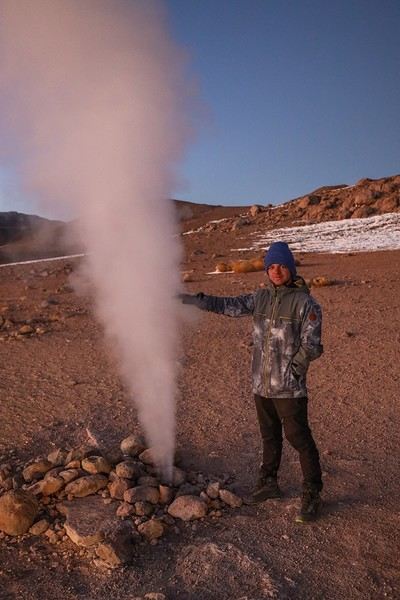
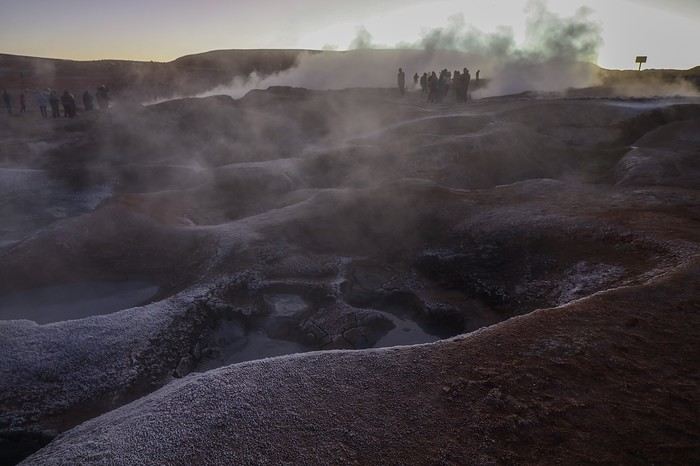
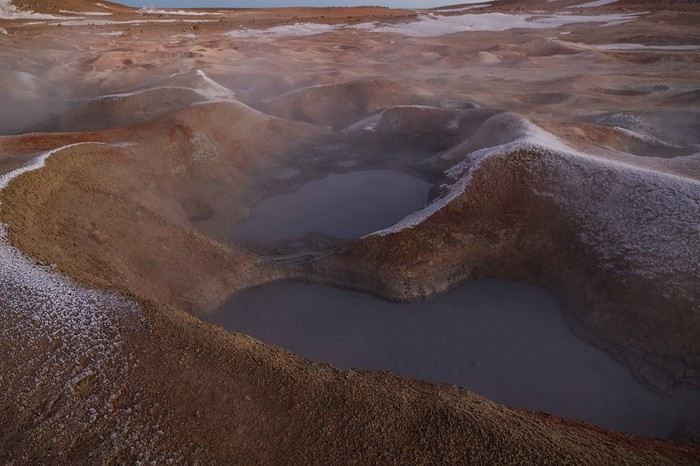
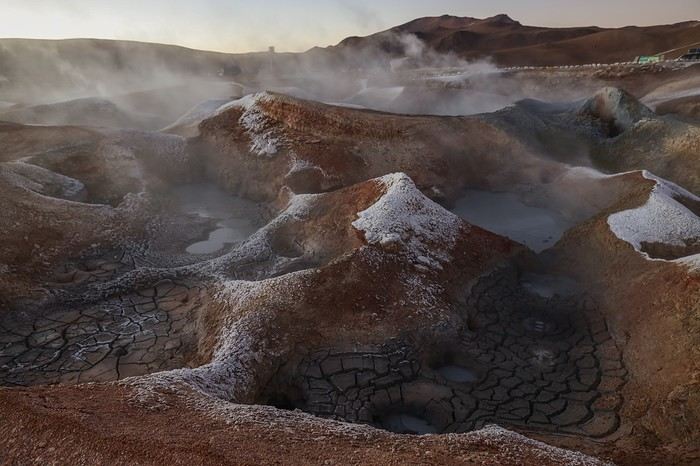
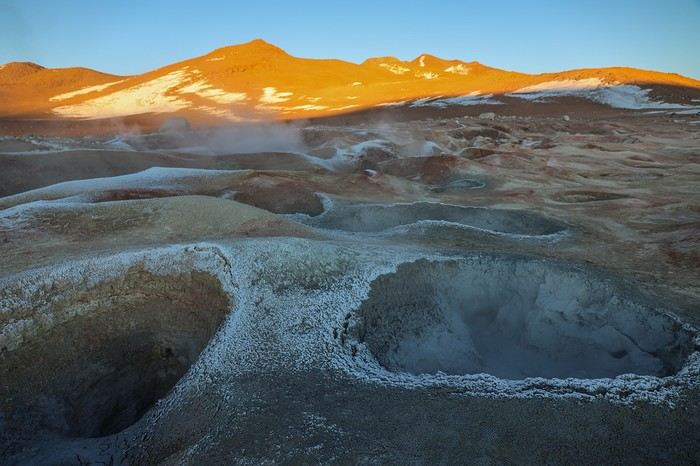
At 4,300 meters above sea level, the nights are freezing and windy. The wisest thing to do is wait for sunrise before crawling out of your sleeping bag. The problem for us, though, is that we have to stick to the tour schedule. And what’s planned for us is watching the sunrise in a geothermal area, Sol de Mañana. So we have to wake up at 4:45 AM to have breakfast and leave our lodging—clean but *very* spartan—without regret. After an hour on the rough road, where we nearly hit 5,000 meters again, in a Landcruiser where the heating must’ve been an optional extra, we arrive at Sol de Mañana to "enjoy" the geysers, fumaroles, and bubbling mud pools. Well, almost everyone—Rachel threw up during the night (raw veggies washed with water or the soup?) and the cold keeps Laetitia from stepping out of the 4x4. Janeth says it’s -12 to -15°C, not counting the wind chill that cuts right through us!


Maxime and Tim can only last 5 minutes outside before their extremities start freezing... Only Janeth and I wander around the different areas and capture the sunrise.


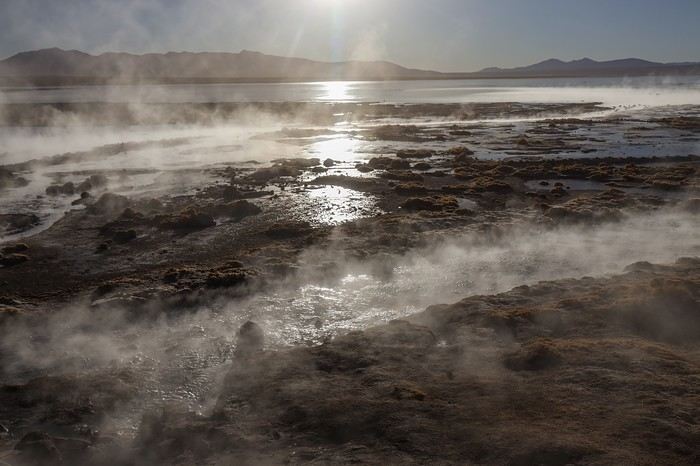
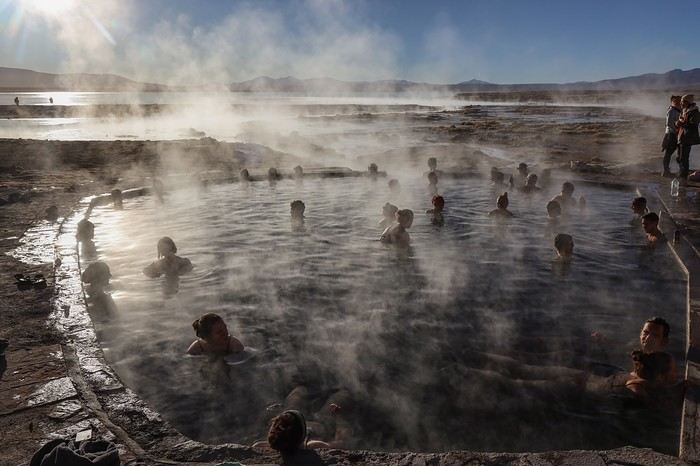
The next stop is the Polques hot springs, by the Chalviri lagoon. Quite a few people take the plunge in their swimsuits, even though it’s still around -5°C.

Knowing we’d only have 20-30 minutes in the water—timing is everything—none of us were tempted by the experience... A bit of a letdown for me, since I would’ve loved to relax in the hot springs for an hour or so, like I did in Iceland last summer. 😕


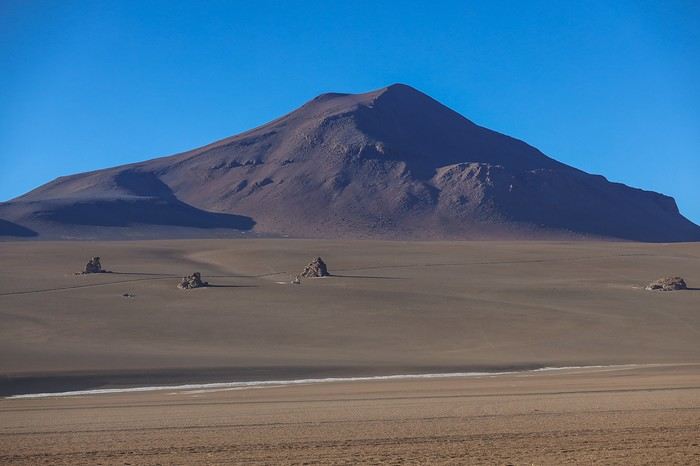
The road then takes us through the Salvador Dalí Desert.

Janeth explains that it was named after the striking resemblance between the barren landscapes, wind-sculpted rock formations, and the backdrops of Dalí’s paintings. We take her word for it and soak in these unique views !

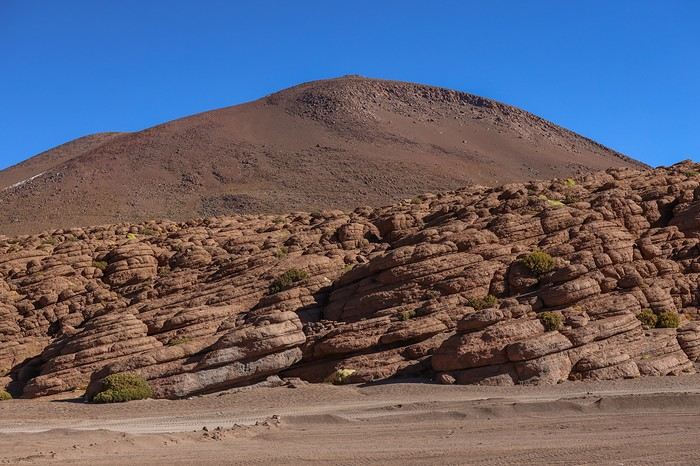
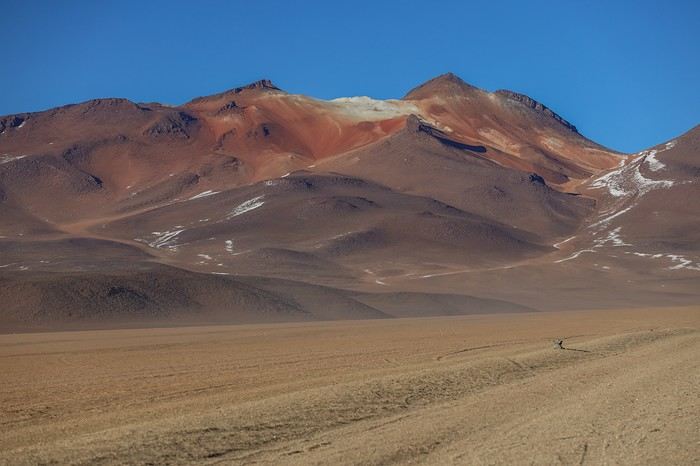
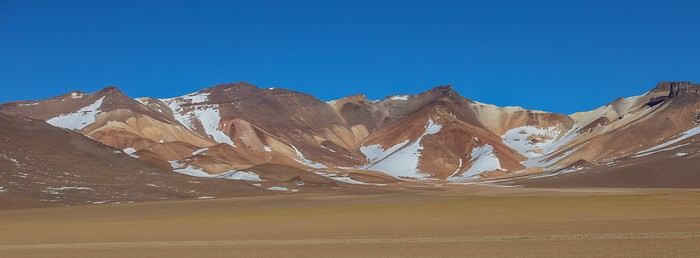
Right next to it, the color variations of the surrounding mountains—from ochre to red—add to this special atmosphere, especially since the reliefs and contrasts aren’t yet washed out by the harsh midday light!


MA Marati Globetrotter ·
Just before the border crossing between Bolivia and Chile, we stop at Laguna Verde and Laguna Blanca.

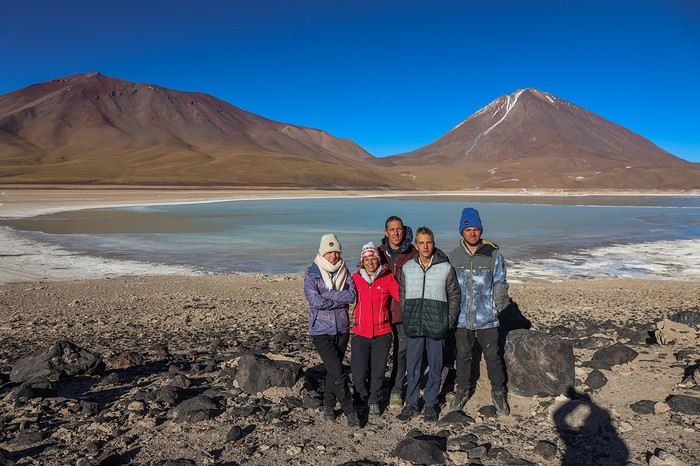
Laguna Verde isn’t very green, but it’s worth the detour since it sits at the foot of Volcán Licancabur, which peaks at 6,000 m, and is highly symbolic for Bolivians. You can climb to the summit, but it’s a serious athletic challenge—you have to reach the top before 9 AM because the wind picks up around 11 AM, making the summit extremely harsh!
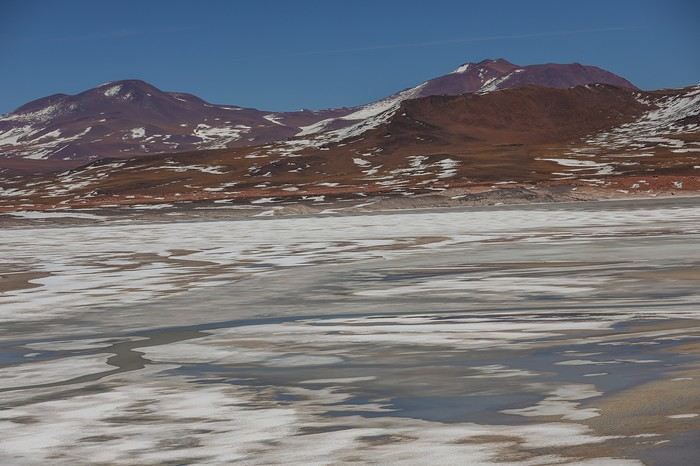
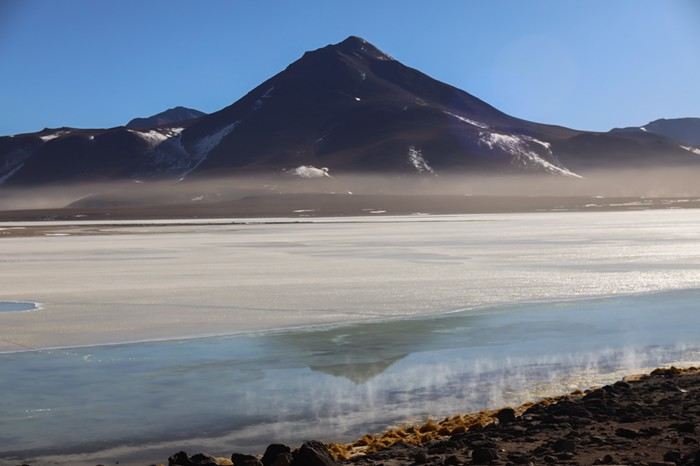
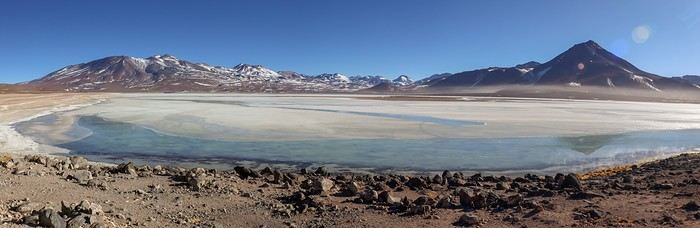
The last Bolivian attraction is Laguna Blanca, half-frozen, set in a stunning landscape. One of our favorites!!


Crossing the border on the Bolivian side is a simple formality.

After saying goodbye to Janeth and Carlos, we take a shuttle (15$ pp for a 40-minute ride!) that’s supposed to take us to San Pedro de Atacama, Chile.

But what we forgot was the Chilean customs checkpoint after a few kilometers on the road. We end up waiting a good hour before getting another stamp, then our bags go through a scanner. It’s like airport security! One girl even had rocks hidden in her backpack confiscated. They don’t mess around when it comes to entering Chile !

The minibus ride gives us time to reflect on this short crossing of the Sud Lípez.

So, we loved these 48 hours in this very high-altitude region, but in the middle of July, given the extreme temperatures, 48 hours were more than enough. The lack of heating is tough to handle, especially when the cold cuts through your clothes and chills your feet.

As for the landscapes and lagoons, these two days were exceptional in terms of the number of spots visited and the natural spectacle. The Salar de Uyuni definitely ranks among our favorite sites of the trip, just behind Machu Picchu, and the 6-7 lagoons we visited quenched my thirst for lagoons in the Sud Lípez.

Of course, this short stay might leave a few regrets, but it mostly makes me want to come back and explore further in a more forgiving season.

Since this was our last trip as a group of five, I don’t regret at all keeping it to a condensed version of the Sud Lípez—it’ll let us discover a new region of the world, in a new country, one that just hearing the name transports us far away. Of course, I’m talking about the Atacama Desert!

The descent to San Pedro de Atacama is quick, and stepping off the bus, we get a thermal shock—30°C difference between the -12°C in the morning and the 20°C in the afternoon!!

San Pedro instantly charms us. Its typical little houses, the dirt roads giving it a Wild West vibe, the lively streets, and the cleanliness. Sure, it’s not the most authentic Chilean experience, but we love it!

After picking up our new rental SUV and lunch washed down with an Amaretto Sour—the best aperitif we’ve had since the start of the trip—we head to Pukará de Quitor.

Pukará de Quitor is a site of ruins from a fortress built by the Atacameños. It’s known for being quiet, and we can confirm...

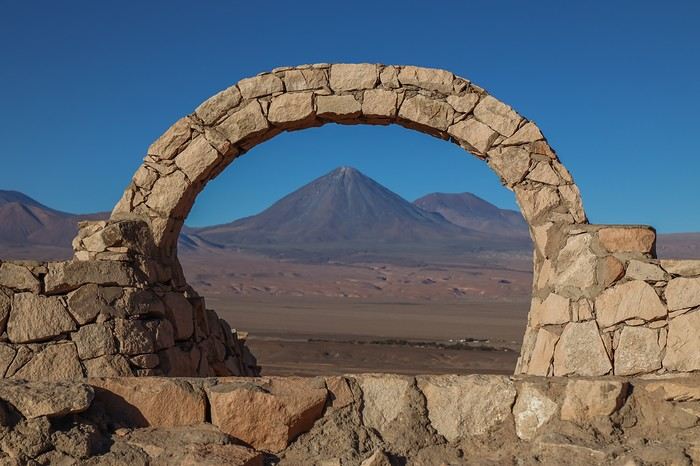
By gaining some elevation along a well-marked trail, we’re treated to a stunning view of Licancabur through a stone doorway.


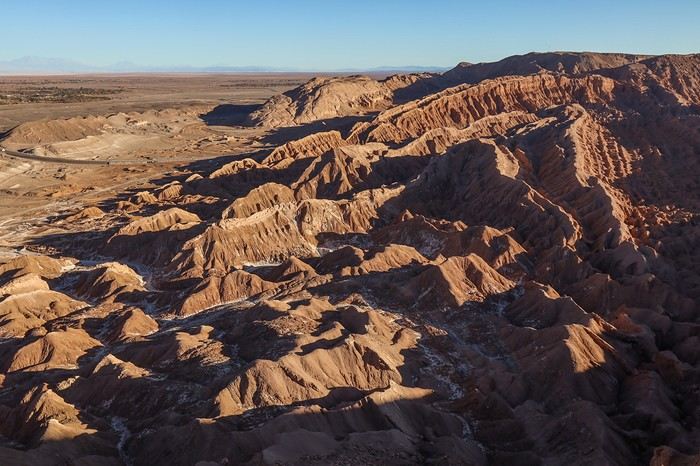
A view of the surrounding badlands as shadows stretch in the late afternoon,
but the day isn’t over yet—at 8 PM, we head out for an astronomy tour with SPACE. Just looking up at the sky, you can tell that stargazing from San Pedro is going to be a unique experience. Almost no light pollution!

More and more agencies offer astro tours, but they’re just pale copies of the original, SPACE, run by a guy from Lorraine, Alain. He’s an astrophotographer turned astronomer, an asteroid discoverer, and super knowledgeable about all the technical details you can imagine!! Extremely passionate and fascinating to listen to.

Why is it the best? While other tours use telescopes with 20-30 cm mirrors, Alain let us observe the stars through four telescopes, the largest of which has a 150 cm diameter. A beast worth a cool 1.4 million euros on the market, but he built it himself for "only" 400,000 € !!
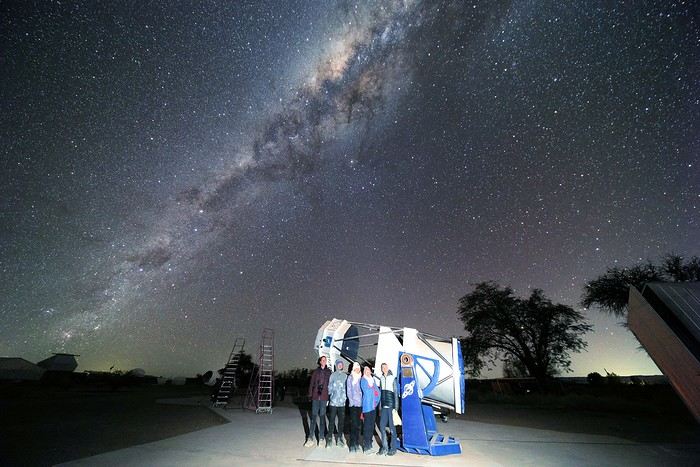


This first evening in Chile was perfect, and we fell asleep dreaming of stars, asteroids... and me, a little bit of ochre rocks and desert landscapes, because tomorrow we’ll return to the source with a day dedicated to scenery worthy of the Southwest...
MA Marati Globetrotter ·
Day 18 - 07/29: Death Valley and Moon Valley

The Wild West vibe isn’t just palpable in town—it’s all around San Pedro de Atacama too.

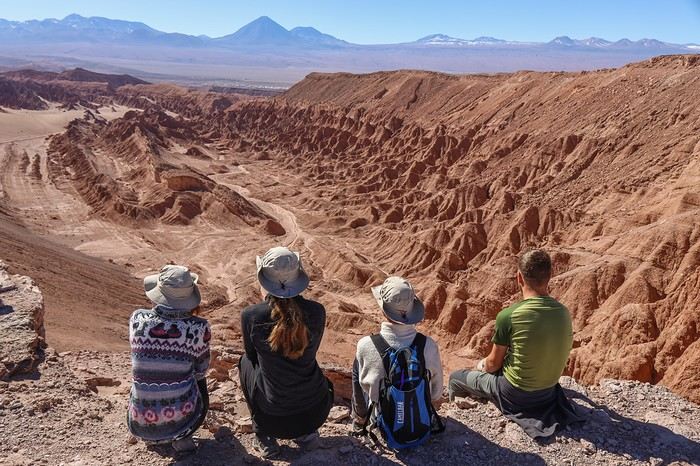
To prove it, we head to Death Valley. Parking at the upper lot, a deserted but paid spot, we’re first treated to a viewpoint that reminds us of our beloved Southwest, with wind-sculpted rocks and massive sand dunes. Stunning...

We start our tour by following the rim, in a desert atmosphere, with this huge sand dune just begging to be raced down!
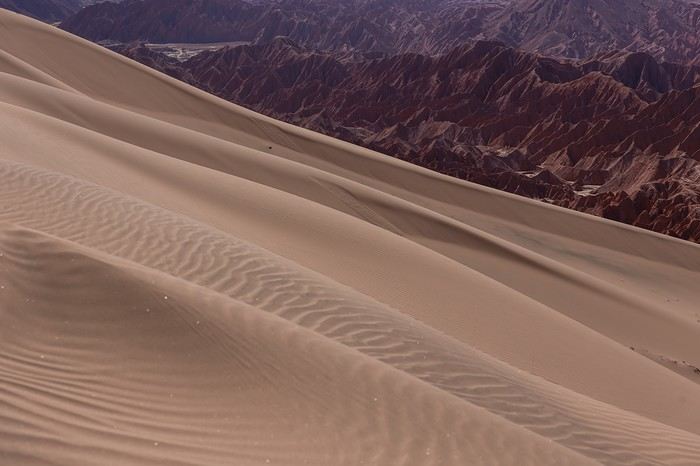
As we move forward, the angle on the sculpted rocks slowly shifts.
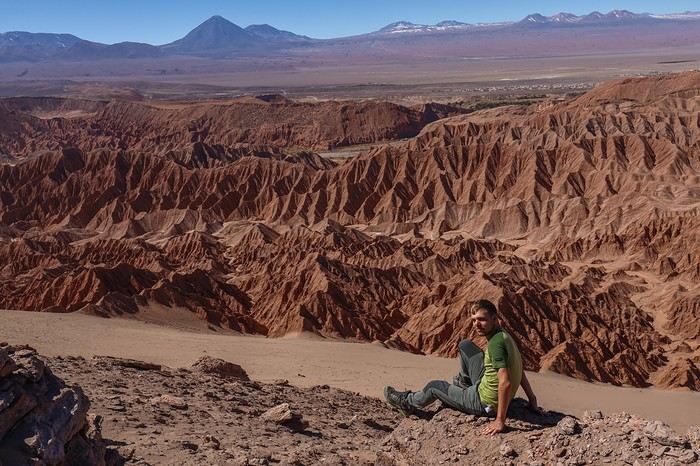
A quick photo break for those who want one.

Once at the end, since—unusually—everything isn’t strictly regulated by the Chilean authorities, we improvise a loop by sliding down to the bottom of the dunes!
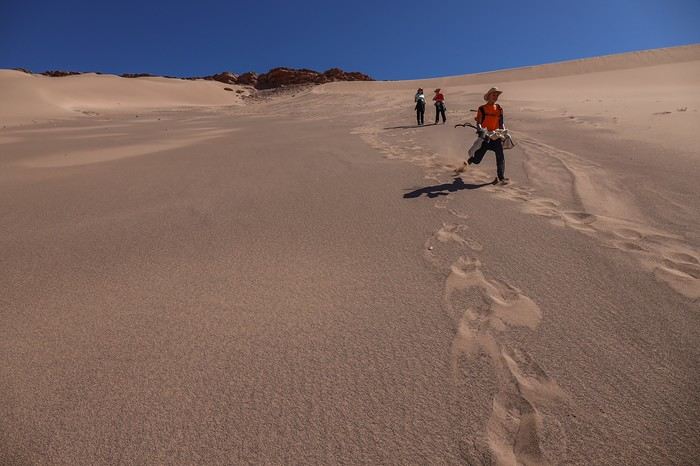
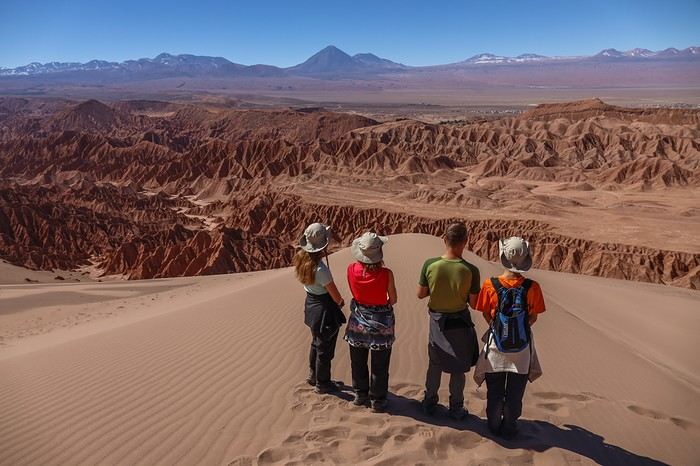
Some daredevils go solo, while others play it safe by holding hands.


The reward is at the end of the effort. The icing on the cake? We’re almost completely alone throughout the hike. A far cry from what we’ll face in the afternoon.
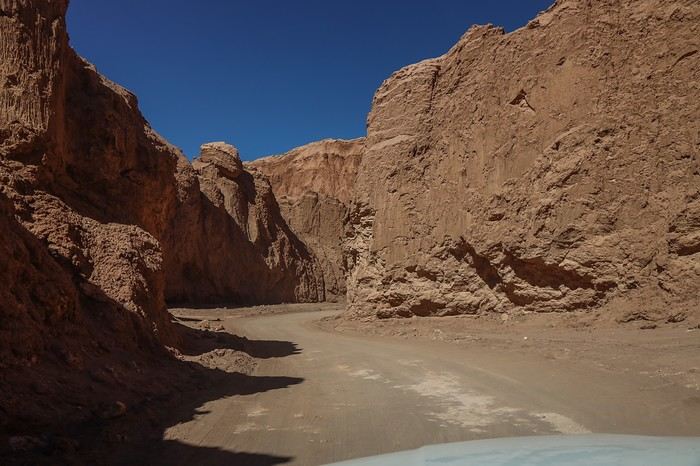
There’s also the option to take the car on a trail winding through the canyon floor. We don’t pass it up!

It’s already late when we head back to town for lunch.
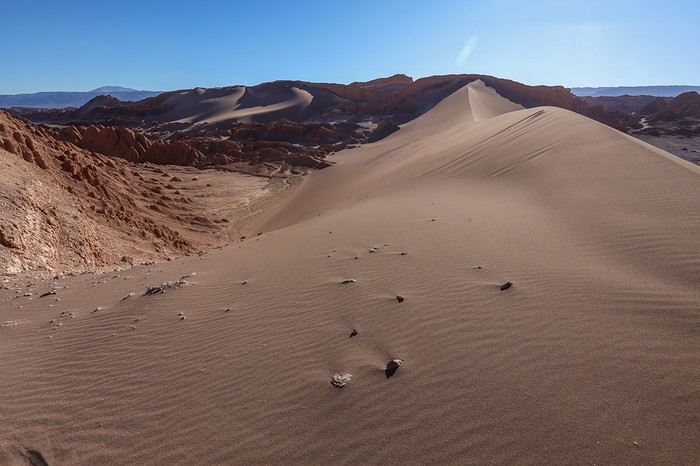
So it’s only around 3:30 PM that we make our way to Moon Valley, and it’s a bit of a letdown. While we thought we’d enjoy the site until sunset, around 6:15 PM, we’re hit with staggered closing times for each spot, ranging from 4:45 PM to 5:15 PM. A real bureaucratic mess—enough to put anyone off! Either way, the closing times are way too early to fully enjoy it...

We head to the valley’s main dune first.

As I’m moving away from the main viewpoint to get some perspective, a park employee chases after me and scolds me for taking the trail in the wrong direction!
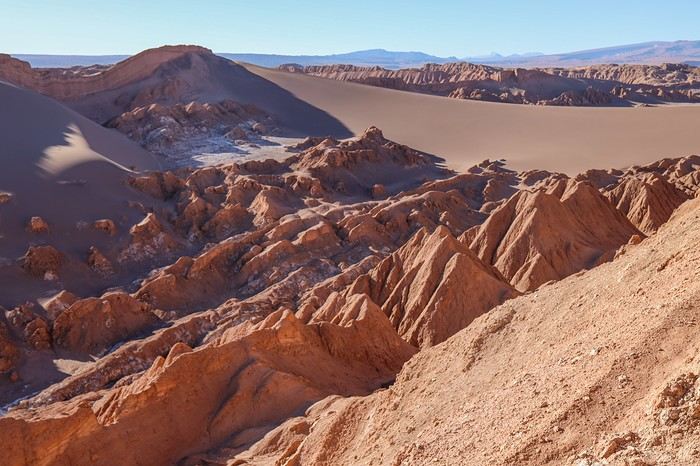
Turns out there’s a one-way system on the trails, as if people can’t cross paths without Chilean authorities stepping in—creating a real sense of oppression and frustration...

So we’re forced to take a loop of over a kilometer just to get back to our famous dune from a better angle!!

You’ve got to admit, all that pristine sand on its slope makes it gorgeous...
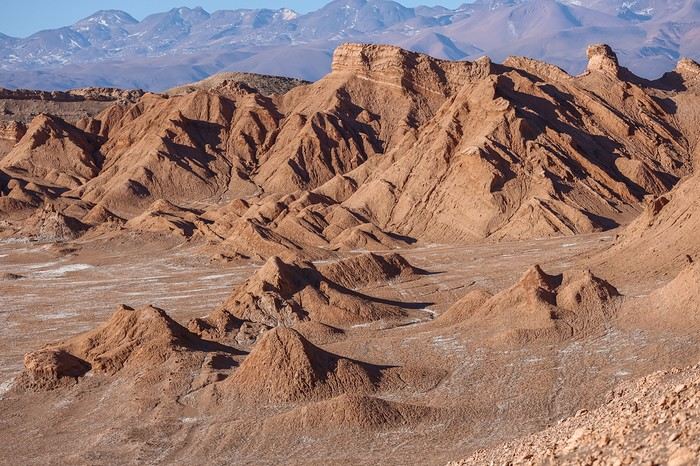
We then get back in the car and drive to the end of the trail in search of Las Tres Marías.

Along the way, we pass through landscapes that inspired the name Moon Valley.

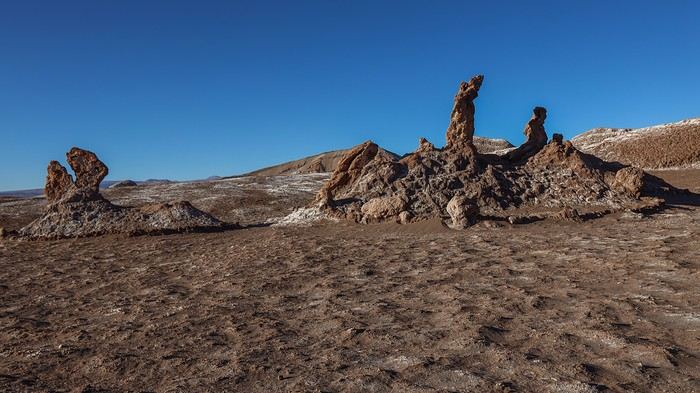
And here we are at the viewpoint for Las Tres Marías.
MA Marati Globetrotter ·
Given how late it already is, we have to give up on the canyon and the Los Achaches viewpoint and head straight to the most famous spot for sunset.

To get there, we need to leave the main area of Valle de la Luna and make a half-hour loop to this point that overlooks the entire valley.


It’s really crowded—we’re at one of the must-see spots in the SPA region!

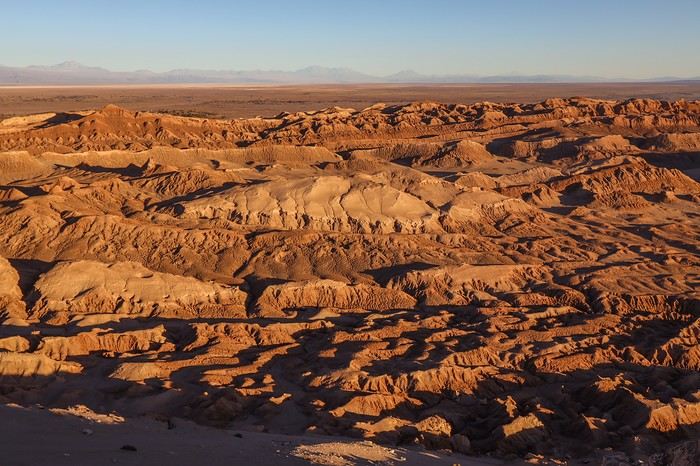
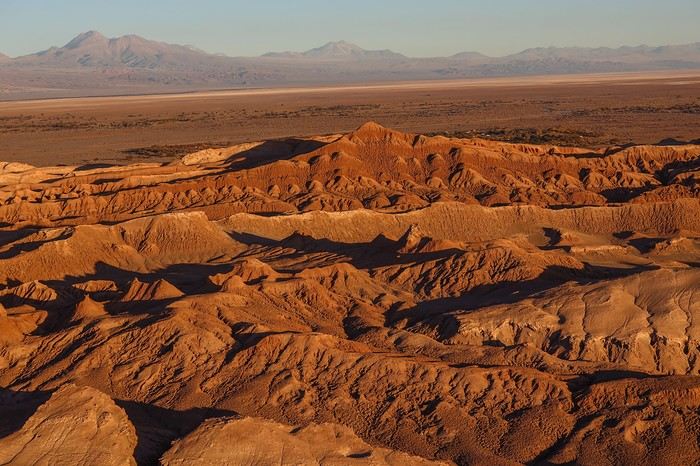
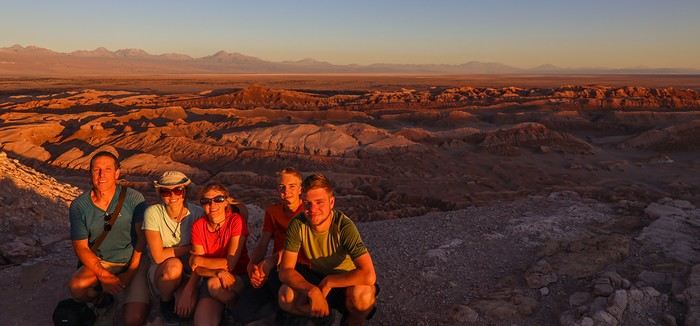
The photos speak for themselves...

The low-angle sun, just before it dips below the horizon, turns the rocks red.

The panoramic viewpoint Caro View definitely lived up to all its hype!

RO Rouquine38 Globetrotter ·
Wow! Simply stunning, Guillaume! 😊
MA Marati Globetrotter ·
Day 19 - 07/30: Lagunas and Quebrada del Diablo

This morning, we head towards the Argentine border to see some high-altitude lagoons and the Salar Aguas Calientes.

A few weeks ago, this area saw heavy snowfall, making the roads impassable. It’s only been a few days since the Salar reopened to tourists.

To visit the Miscanti and Miñiques lagoons, prior booking is required, but you still need to show up an hour early in Socaire to pick up the right paperwork.

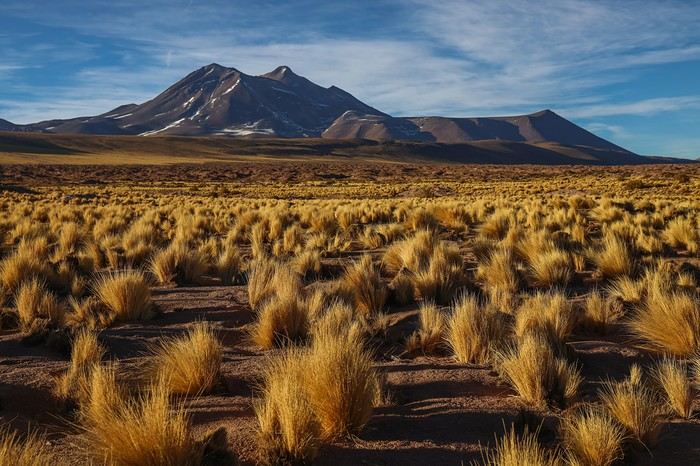
The high plateaus are covered in tufts of grasses stretching as far as the eye can see.

Along the way, we spot some vicuñas, protected due to the extreme fineness of their wool.
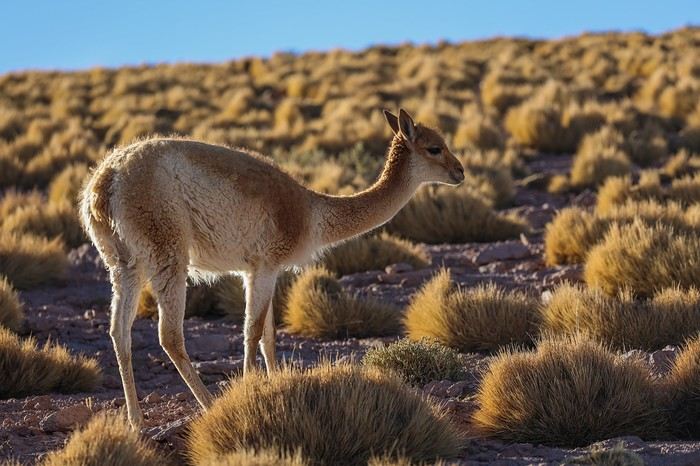
We arrive at 8:30 AM at the Miscanti checkpoint. When I step out of the car to ask about opening hours, I can’t help but snap a few shots of this extraordinary environment.
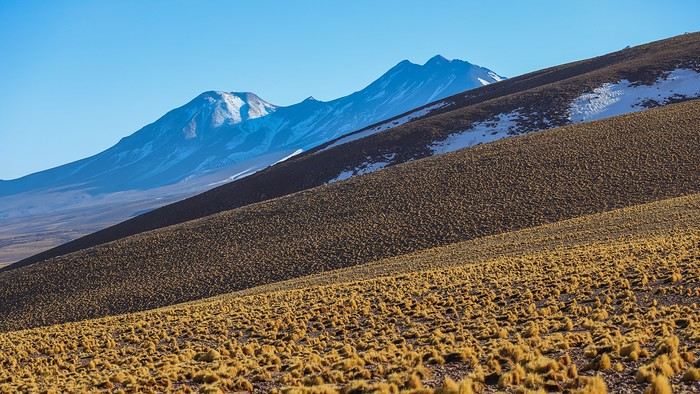
Inside the building, I see three officials drinking coffee and having a bite. They politely tell me—while shoving a smartphone in my face—that the gate won’t open until 9 AM. So, we wait...
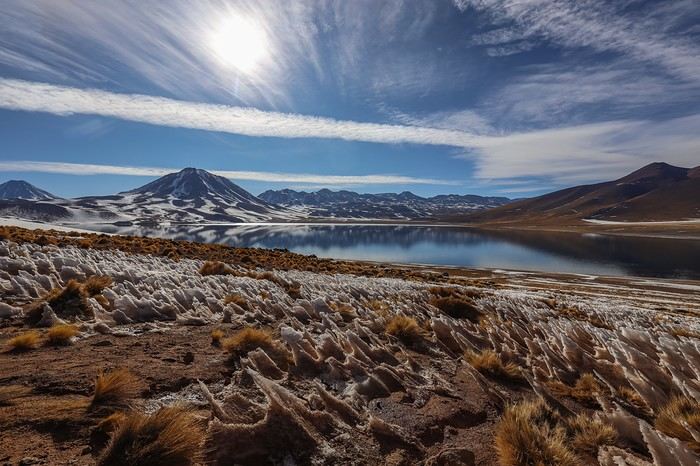
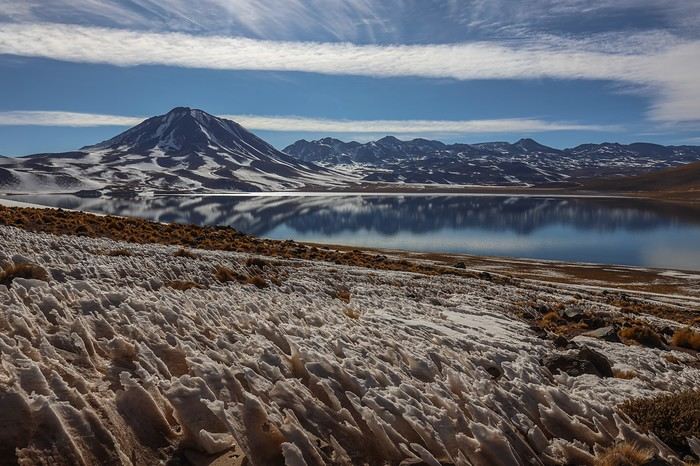
At 8:55 AM, other tourists arrive and ask the same questions we did, getting the same answer.

8:59 AM, still all at coffee.

9 AM sharp, they finally get up from their chairs and start testing their walkie-talkies.

9:01 AM, the woman in charge of stamping our paper decides to brush her teeth.

9:02 AM, luckily she didn’t follow the recommended 3-minute brushing time. She finally stamps our paper...

Conclusion: there are definitely worse officials than some French ones...

Anyway, we *did* come for the Miscanti and Miñiques lagoons.

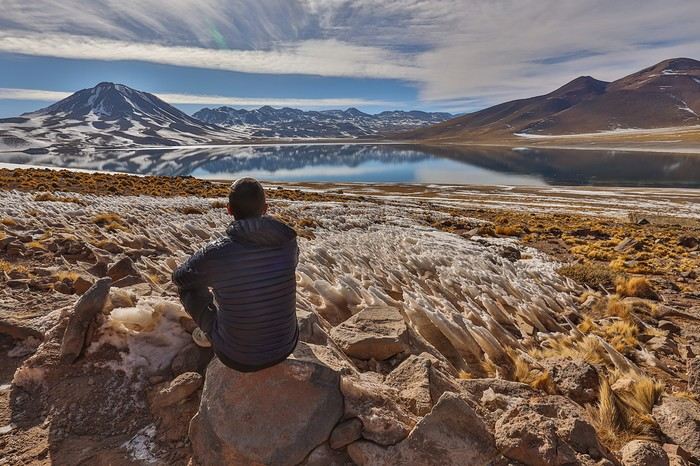
Miscanti is stunning, nestled among snow-capped mountains with lingering snow patches.


We then head back to the parking lot and make our way to the Miñiques lagoon, which is a bit more ordinary.
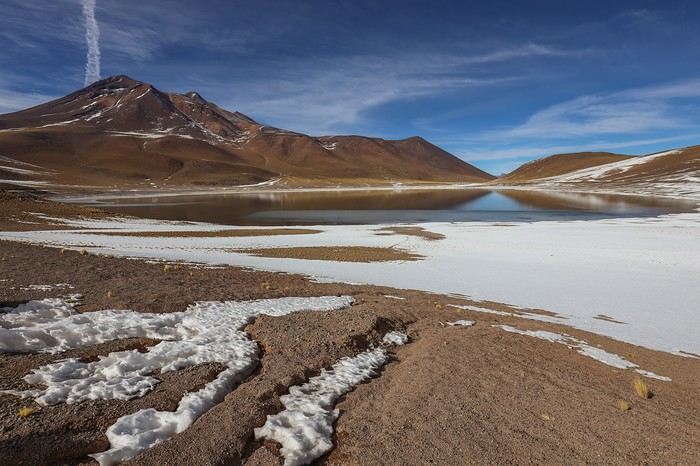
Next up: the Salar de Aguas Calientes and its Piedra Roja.
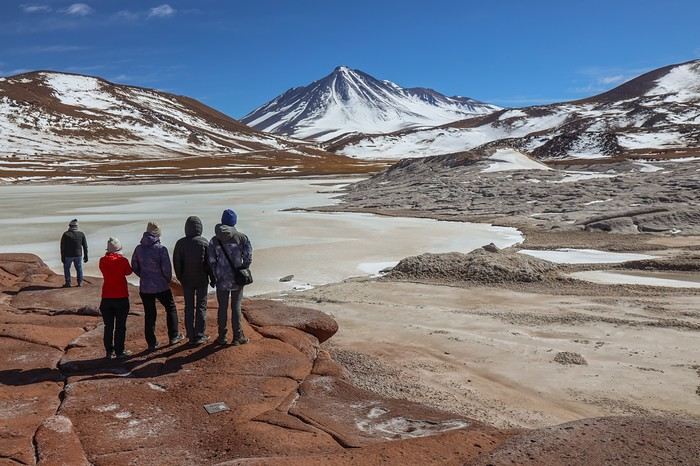
There are still significant remnants of the recent snowfall, forcing us to drive on a single lane in some spots. Luckily, there aren’t many people out this early in the morning.

We arrive at one of the must-see spots in the SPA region.

It’s crowded, but everything is organized to manage the flow of tourists. A first for us—we discover trails with clearly marked one-way directions!! And anyone going the wrong way risks being kicked out...

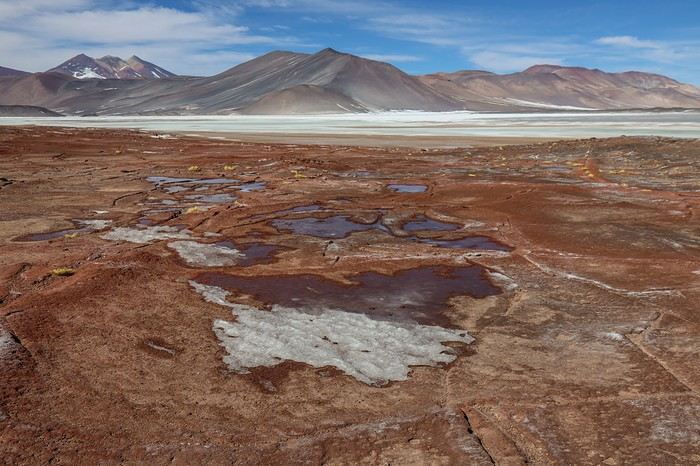
The Salar de Aguas Calientes, half-frozen, reveals a palette of pastel hues. What a landscape! Despite the cold, we soak it all in...

When we reach the red rock area, the contrast is breathtaking. Absolutely stunning!
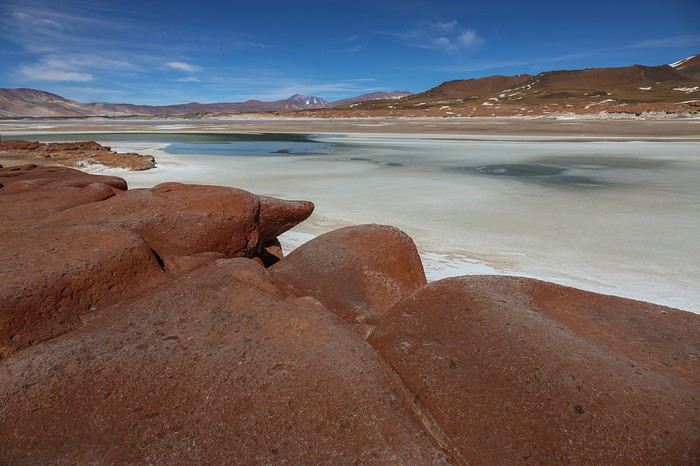


After walking the full length of Piedra Roja, we head back toward the parking lot.

MA Marati Globetrotter ·
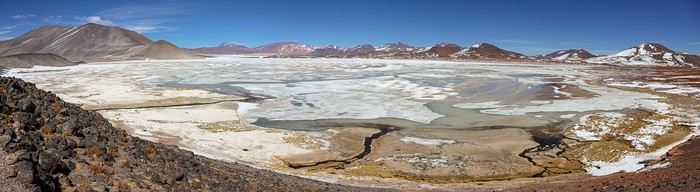
After leaving the main site, we head east to gain a bit of elevation over the salt flat, and we're rewarded with a beautiful panoramic view.


After exiting the Salar, we continue another ten kilometers or so toward Argentina to reach the Tuyaito lagoon, which is free to access and has a lovely milky-blue color.
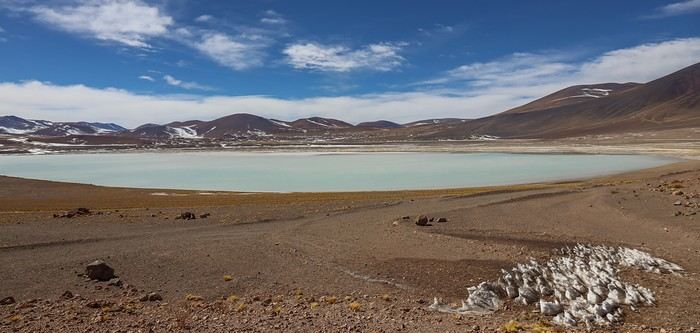
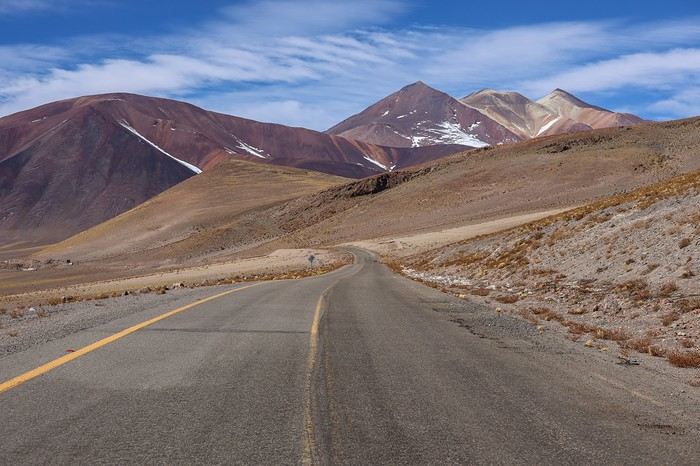
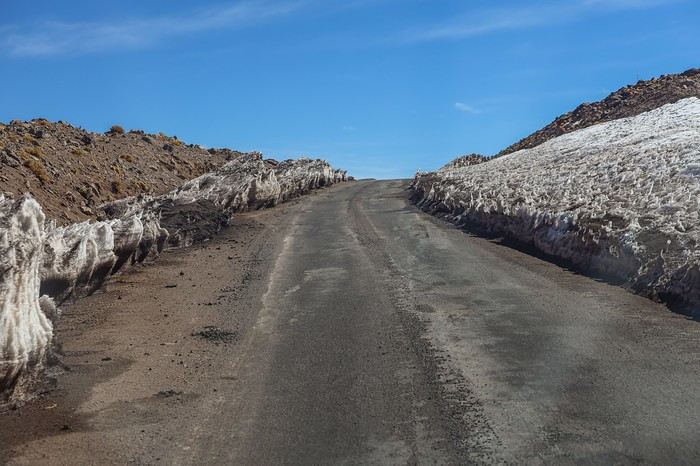
The Argentine border isn’t far now, following this road heading east.


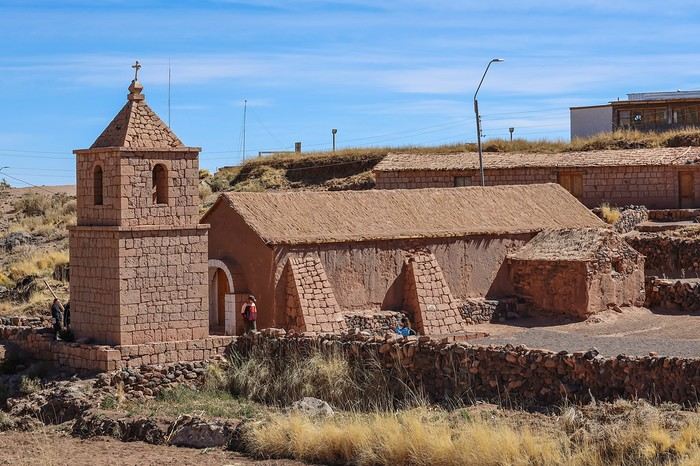
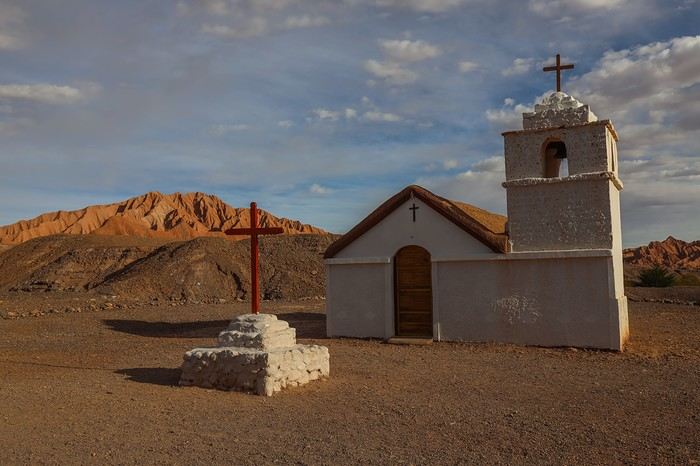
But we turn back and head down toward Socaire, which is home to a very beautiful church.

We then descend back to SPA with a very brief stop at the Tebenquiche lagoon, located in the heart of a vast expanse of land that’s certainly salty and unsuitable for any vegetation.
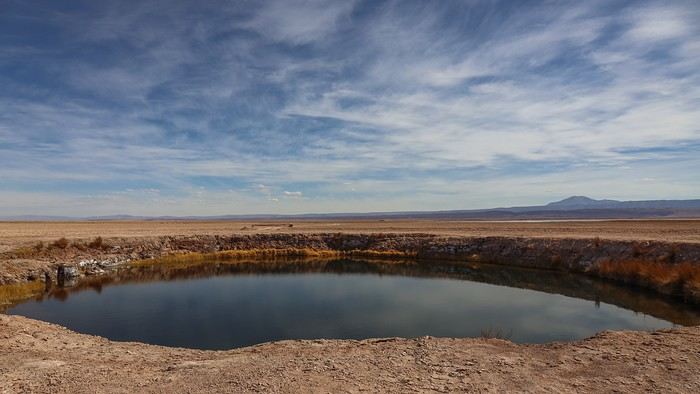
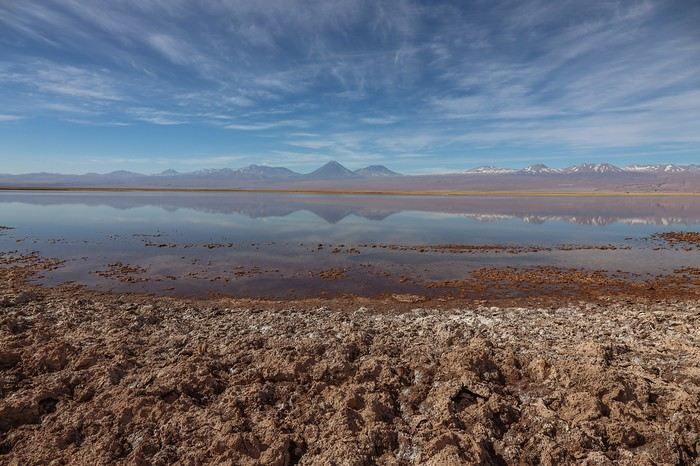
After a first "pond" right next to the guardhouse at the entrance, we continue to the Tebenquiche lagoon, which was really disappointing, at least in the middle of the day. Bland color, lack of surrounding relief, and it mostly gives the impression of drying up. The trail boundaries, which you definitely shouldn’t cross, are in fact quite far from the lagoon... A flop for us.

MA Marati Globetrotter ·
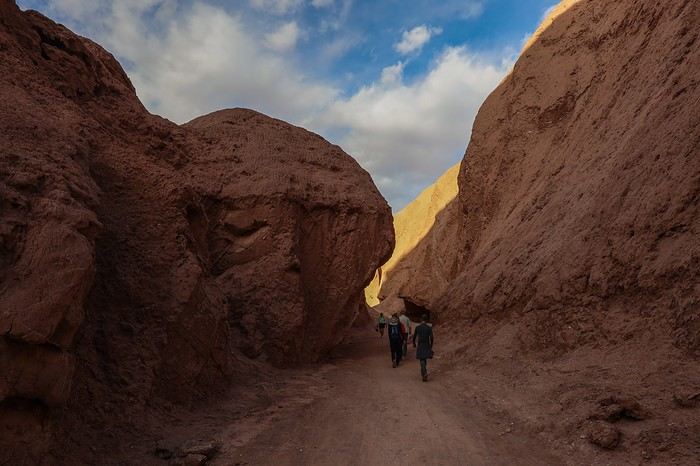
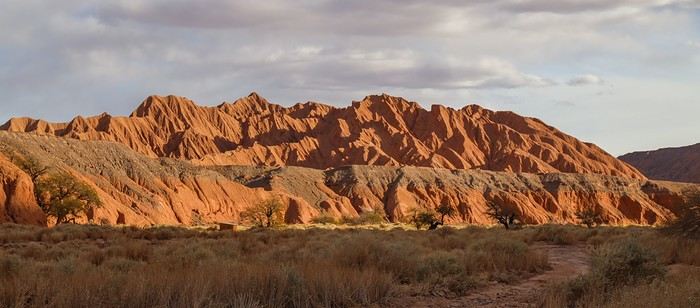
Since the afternoon isn’t over yet, we treat ourselves to Quebrada del Diablo, a canyon with rocks straight out of Utah!

Before heading into the canyon, we make a little detour to a charming little church.


You can explore Quebrada del Diablo on foot or by mountain bike—it must be a blast by bike!
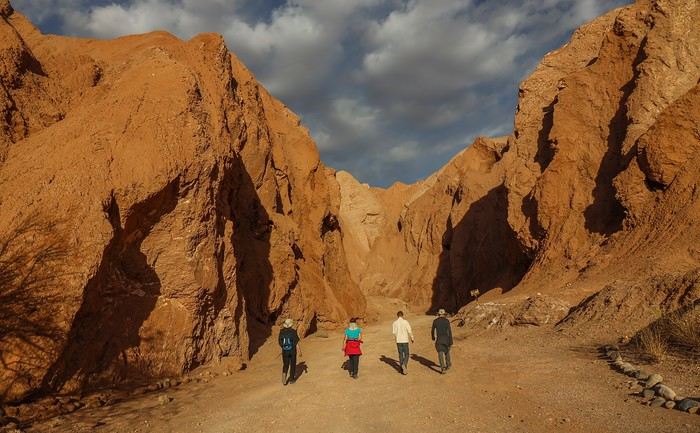
The canyon walls aren’t quite on the same scale as what you’d find in the Southwest, but we still love it!


At the end of the canyon, only Rachel and I have the energy to climb up to the viewpoint to catch the sunset with a breathtaking view of the sculpted rocks.
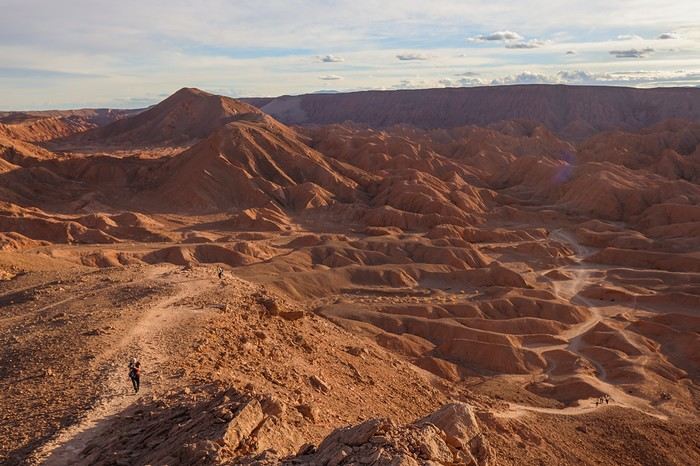
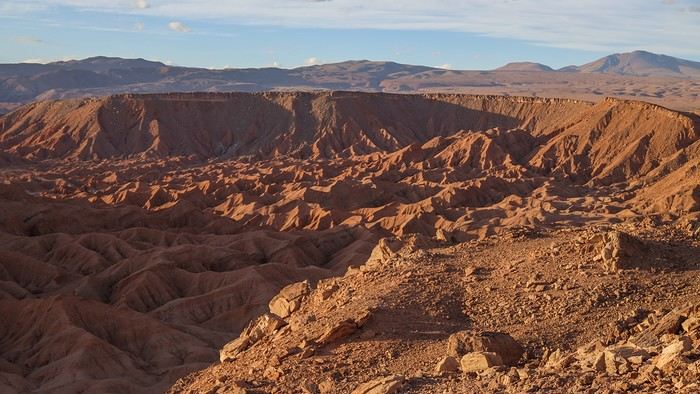

We end the evening at a restaurant, sipping cocktails—the happy hour is just too tempting...
HO Holigirl Veteran ·
To think you were this close to adding a fourth country to your trip!

I'm speechless at the beauty of all these photos—what an amazing journey 🙂

Thanks for taking the time to keep this magical travel journal going
MU Muriel18 Globetrotter ·
As Pascale says, it's still just as magical!
MA Marati Globetrotter ·
To think you were a hair's breadth away from adding a fourth country to your trip!

I'm speechless at the beauty of all these photos—what an amazing journey 🙂

Thanks for taking the time to keep this magical travel journal going

You’re not wrong—if we’d had 4-5 more days, I would’ve happily ventured into the most remote part of the Argentine puna, near the border, which holds two gems: the Cono de Arita and, most of all, the Campo de Piedra Pómez !! And thank *you* for keeping the journal alive 🙂
MA Marati Globetrotter ·
As Pascale says, it's still just as magical!

We really did string together the most beautiful spots in the region, and with sunshine too!
HO Holigirl Veteran ·
Never heard of it! I’ll quickly fill that gap
MU Muriel18 Globetrotter ·
the Argentine Puna, near the border, which holds two gems: the Cono de Arita and, above all, the Campo de Piedra Pómez !!

It’s an area I wanted to explore along with the Salta region, combined with Iguazu Falls, but over two weeks, it felt a bit too short (though maybe not for everyone ). Now that I’ve got a little more time, I’m thinking, "Too far (long transport), too expensive, too physically demanding (and the altitude sickness?)" ... Anyway, I’m considering pairing Iguazu Falls with Brazil instead...
MO Montagnard74 Globetrotter ·
In short, I’m thinking of pairing Iguazu Falls with Brazil instead...

Having done it, I can confirm it’s really easy to organize, whether from Rio or São Paulo.
MU Muriel18 Globetrotter ·
I’ll look into it further 😉

Similar discussions

You might also like