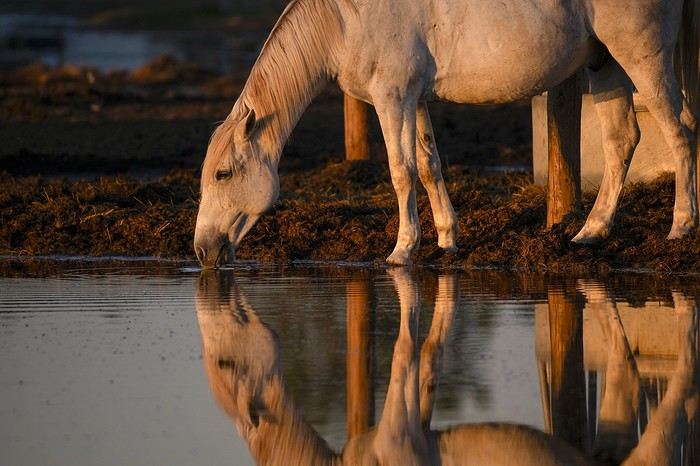
14 Days in Japan – September-October 2026
FR

Translated into English.

Original post
GE
I had to leave Thailand as my 60-day visa was coming to an end, and this time I opted for a 14-day visit to Japan. I’d already spent 3 days in Tokyo a few years ago on a business trip, which left me with a great impression. Y, my Thai partner, had never been there. That’s why we chose a fairly classic itinerary, including a few castles and Kyoto among other things.

Before diving into the details of our trip, I’d like to recap the expenses we incurred. This will be useful for some of you, and it’ll help us prepare for our next trip to Japan.

I’ve categorized our expenses into 5 groups: - Hotels: 1150 € (breakfast included) - Transportation: 278 € (trains, buses) - Big expenses: 487 € (souvenirs and a few necessary items) - Excursions: 116 € (museum visits, temples, castles) - Daily expenses: 1125 € (meals, small purchases) Total = 3194 €, or 228 € per day on average. I’m excluding flights, as those depend on everyone’s arrangements (departure location, travel dates, etc.).

Jpeg below: apologies for “hotel” without a circumflex—my software isn’t French!


For hotels, we always chose decent but not luxurious places, well-located to let us walk to and from transportation hubs. We systematically avoided taxis, which are notoriously expensive in Japan. We’ve also gotten into the habit over several trips of traveling with minimal luggage: one duffel bag each (7-8 kg) plus the small carry-on allowed on planes (2-3 kg). This lets us travel with three sets of clothes (what we’re wearing plus two changes). We add a checked bag for the return trip to accommodate the things we buy along the way.

‘Transportation’ and ‘Big expenses’: I’ll give more details in the day-by-day account.

We didn’t do any extravagant excursions, like safaris or sports activities.

Meals and food make up the bulk of our daily expenses. We often ate at izakayas, which offer great value—between 2000 and 6000 yen for two (about 11-12 to 33-34 € for two, usually around 20-25 €). We didn’t hold back, but we also didn’t go to high-end restaurants.

More to come while I gather my photos: General Remarks.
GE GeorgesOZ Globetrotter ·
General Remarks A word of caution: I don’t know much about Japan and only have limited experience. I might be criticized for generalizing too easily, which I’ll accept from those who know more than I do!

Japanese people are reserved. It’s not that they’re unfriendly—on the contrary, they’re very friendly and helpful when you approach them to ask for something. But it’s not their habit to strike up conversations with strangers. They avoid making eye contact. It’d be easy to interpret this as xenophobia, but it’s the same even among themselves. They prefer to keep their distance to avoid any friction with others. It’s also a sign of respect: not to intrude on others’ space. There’s a profound silence in public transport, restaurants, and hotels at breakfast time. The Japanese come across as very introverted. There’s definitely a whole dissertation to be written on this!

Very few Japanese people speak English. Several times, staff in train stations or shops used tablets to switch between languages.

We found the rice excellent. Even Y, a Thai person, agreed! It was a pleasant surprise for me because I’d always found the rice served in Japanese restaurants abroad mediocre. On the other hand, the food you buy in *kombinis* (7/11, Family Mart, Lawson) isn’t as good as you often hear on social media. It’s not expensive, that’s true, but you eat much better—and for not much more money—in restaurants and izakayas.

Note 1: *Kombini* comes from *convenience* (in English)—meaning something practical. There’s no ‘v’ in Japanese.

Note 2: I write Japanese words with an ‘s’ at the end for the plural (kombinis, izakayas). This ‘s’ doesn’t exist in Japanese, which doesn’t distinguish between singular and plural.

Japanese beers are excellent. They’re crisp and light, even though they’re still around 5% alcohol. Plus, they never gave us a headache afterward (unlike the terrible stuff sold in Thailand...). Our favorites: Kirin and Suntory on tap.

You’ll find public restrooms that are free and clean almost everywhere. What a civilized country! When I think about how often I’ve had to go into a café in France just to buy a drink so I could use the restroom...

You’ll always find ATMs in kombinis.

Obesity is practically nonexistent, and being overweight is rare.

Very few foreigners outside the classic tourist circuits. Also, very few foreign residents in Japan: I saw a few South or Southeast Asians in some shops in Osaka. There are probably some in other big cities too, though I didn’t notice any in Tokyo.

City traffic: very orderly. Everyone follows the signs and traffic lights scrupulously. No annoying behavior like honking, sudden braking, or accelerating. It’s a nice change from some countries where you’re always on edge in the street!

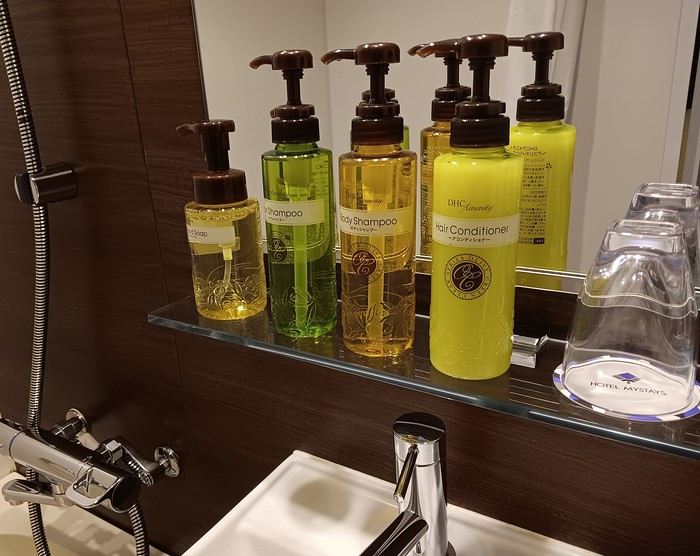
Hotels: - Rooms are small—around 12 to 15 square meters—but very functional. Every room has a small flashlight somewhere, detachable from the counter, the same electric kettle with the same top lid system warning you not to burn your fingers when removing it, and the same small heater in case you need to warm up. There’s always a safe. - Bathrooms are very standard: powerful shower, instant hot water that’s easy to adjust, deep bathtub, and plastic flooring neatly aligned with the walls and tub. The toiletries are generous and have clearly legible labels (jpg: in the Osaka hotel room)—a welcome change from places where you need a magnifying glass to tell shampoo from conditioner.


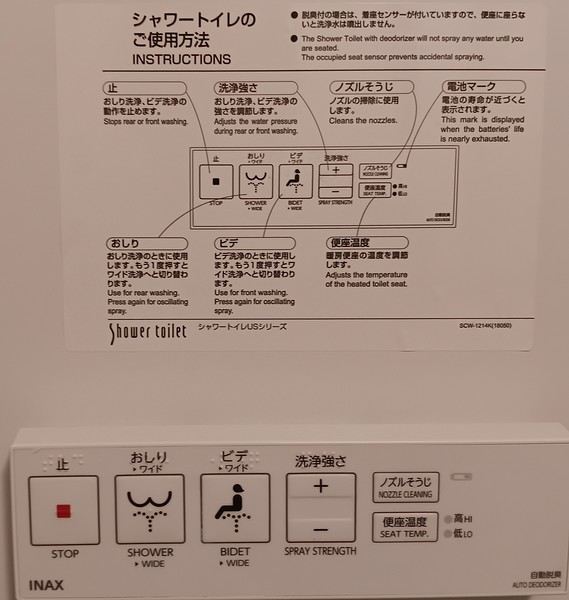
There’s always one of those famous toilet seats for your natural needs: adjustable water jets for cleaning (some might find it quite enjoyable), clear instructions for using the buttons (in English and Japanese)—it’s easy once you take the time to read them. Some foreigners joke that you might accidentally launch a nuclear missile if you press the wrong button, but that’s an exaggeration. I’m posting a JPEG: my first encounter with this kind of setup in a Tokyo hotel room. I can provide more details if anyone wants!


- Small freebies for guests: toiletries, tea, coffee, and often pajamas or yukatas. - Breakfast: no fried eggs, but slices of Japanese-style fluffy omelet. Always miso soup, often corn soup, and sometimes you can mix it with curry sauce—it’s amazing to start the day. Always a few Japanese specialties (like fried fish, for example). The coffee is okay, but nothing special. The fruit juice isn’t natural. When leaving, guests are expected to bring their cutlery, plates, glasses, and cups to a counter on a tray—you quickly fall into this typically Japanese discipline: being clean, following the rules, and respecting others. - Walls in hotels are never painted but have fine-grained wallpaper.

Signs everywhere—for example, on hotel walls: be careful with this, don’t do that, to use it do A, B, C, etc. TVs are everywhere, even in small shops like coffee and snack corners. Lots of electronic sensors, like in restrooms—when you approach or leave, water often flows automatically.

Transportation can be confusing because several companies offer services. You have to scan your IC/SUICA card to exit one line and scan it again to access the next. Signage is usually good, but sometimes there’s nothing but Japanese—and that’s a struggle! On trains, there are always announcements in Japanese, then (most often) in English, with the same standard *British English* voice that’s very clear.
GE GeorgesOZ Globetrotter ·
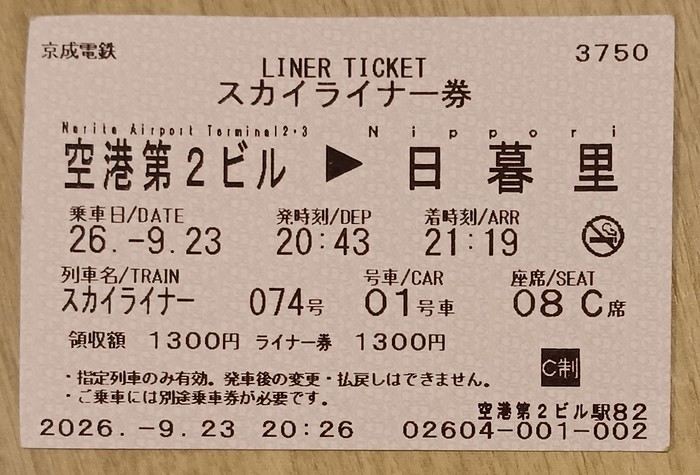
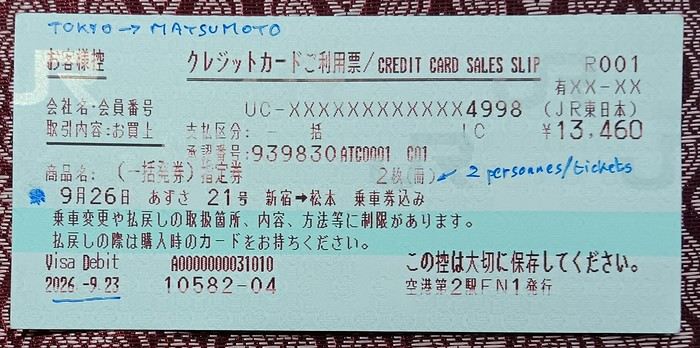
Wednesday, September 23 – Tokyo I should start with a little clarification about our departure from Thailand (see my initial post). Actually, we started by spending two weeks in Taiwan. We simply moved gradually northward, with the full itinerary being: - Bangkok > Kaohsiung – flight - Kaohsiung > Tainan > Taichung > Taipei – train - Taipei > Tokyo – flight - Tokyo > Matsumoto > Hikone > Kyoto > Osaka – train - Osaka > Bangkok – flight So it was from Taipei that we arrived in Tokyo in the evening – NRT (Narita) Airport Terminal 2, with a delay. It was already past 7 PM. Fortunately, the JR East office is open until 9:30 PM, and we bought tickets for Matsumoto in three days: 13,460 JPY = 75 euros for two on the Matsumoto Line. JR = Japan Railways, obviously! We got confused trying to take the Skyliner to the "center" of Tokyo, which is 80 km from Narita. We passed through the gate with our Welcome SUICA card, bought just opposite the JR office. There were several lines waiting on the platform, and staff shouting into microphones. We didn’t understand a thing—no one spoke English, and we barely got a few disinterested glances. We eventually figured out we also needed to buy reserved seats. We went back out, bought the required tickets (1,300 yen per person, about 7.3 euros), went through the gates again, and finally took the train to Nippori. The system really isn’t clear!


SUICA: We bought Welcome SUICA cards with 2,000 JPY credit each, but we quickly realized it wasn’t nearly enough. We still didn’t have a feel for the local currency! At Nippori Station, we took the Yamanote metro line. I checked our movement on MapME and saw we were going the wrong way. We turned around and headed in the right direction. We arrived at Tamachi Station, then at our hotel nearby, on Momoyo Dori Street in the Shibaura district, Minato Ward. It was 11 PM.
BL Bluequark Veteran ·
Hello,

On the other hand, the food you buy in konbini (7/11, Family Mart, Lawson) isn’t nearly as good as you often hear on social media. It’s not expensive, that’s true, but you eat much better and for not much more in restaurants and izakayas.

I completely agree with this take: konbini food is convenient, cheap, and decent, but nothing extraordinary. That said, we were rarely disappointed in restaurants.
GE GeorgesOZ Globetrotter ·
Hi! Thanks for checking out my travel journal!
GE GeorgesOZ Globetrotter ·
Thursday, September 24 - Tokyo

First day in Tokyo. There are subways everywhere, going in every direction. We get off at Tameike-sannō, in the Akasaka district, not far from Tamachi. We're looking for an electronics store to buy a few essential gadgets we're missing to get connected in Japan. We accidentally walk into a liquor store of all kinds—we take a look around anyway. It's surprising how much they offer and at what seem like reasonable prices. The store employee points us to a BIC Camera a little further down to buy some equipment, especially electrical adapters (12,000 JPY = 67 €). There's an amazing deal! I'm not sure which store it was exactly—there are several BIC Camera locations in Tokyo (and elsewhere in Japan).

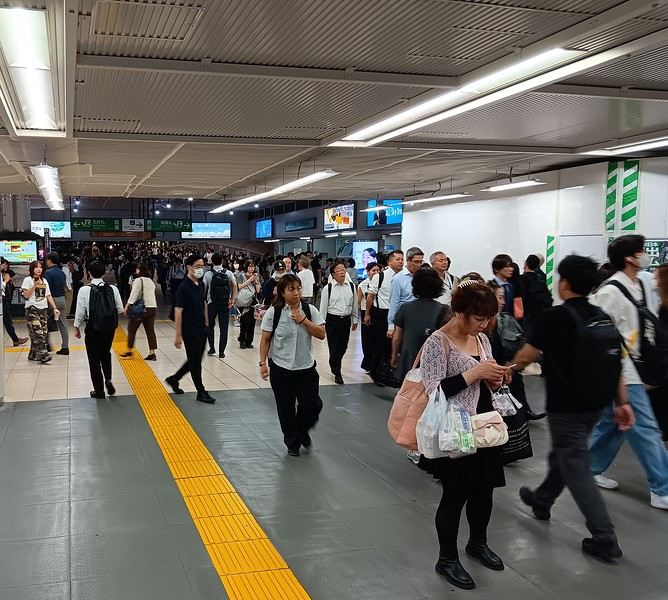
Since we need to recover from the previous day's travel, we head back to the hotel for a few hours of rest. We go out again around 5 PM. Waves of people are heading toward Tamachi Station or coming out of it. People are starting to leave their offices and other workplaces (though many stay much later). It's mind-blowing! My photo is a poor illustration of this phenomenon, but if you zoom in, you'll see a dark mass in the background: those are the ‘kaishain’, employees from countless companies with offices in the Shibaura district, all in black or gray suits and white or light blue shirts.


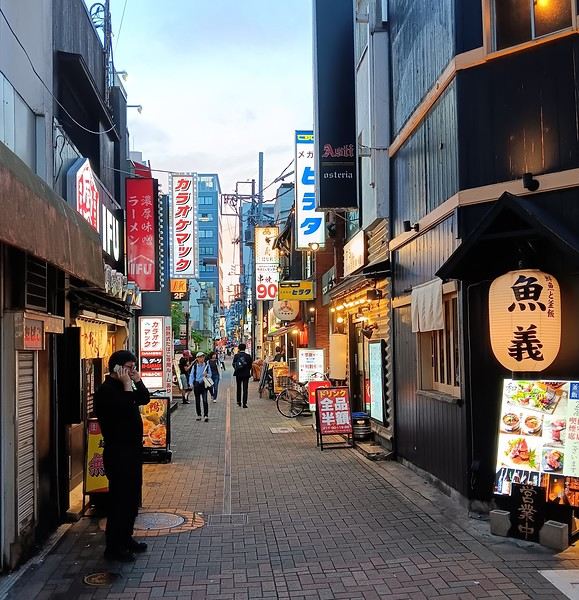
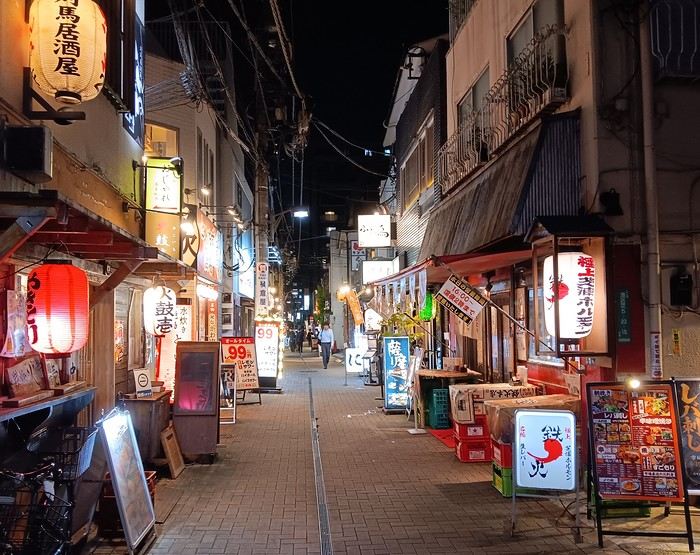
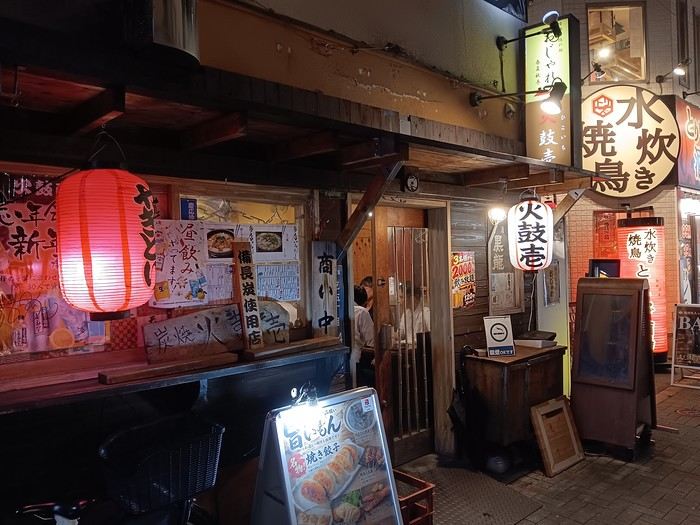
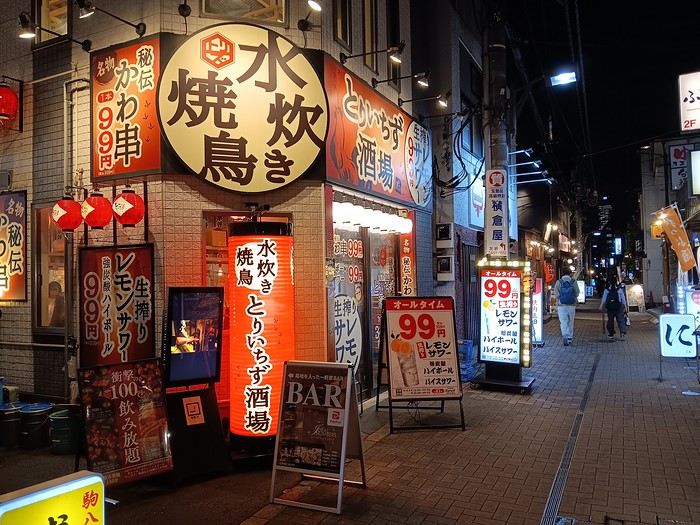
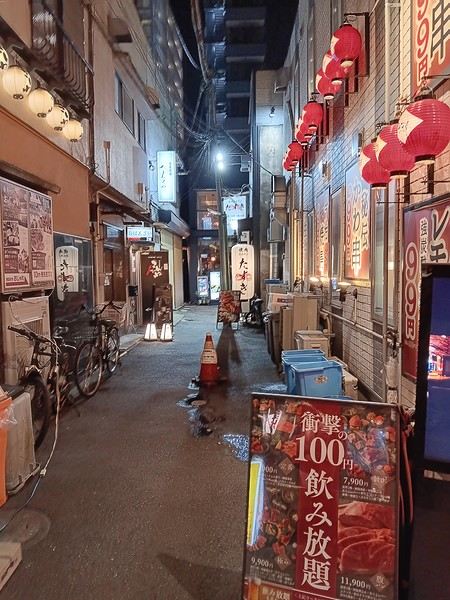
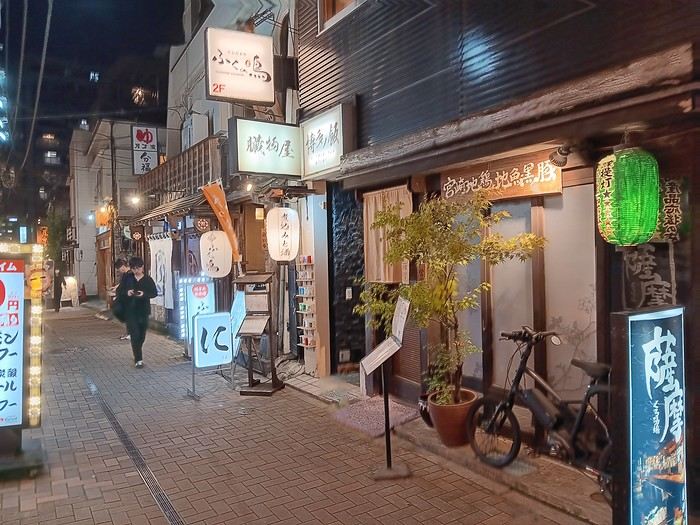
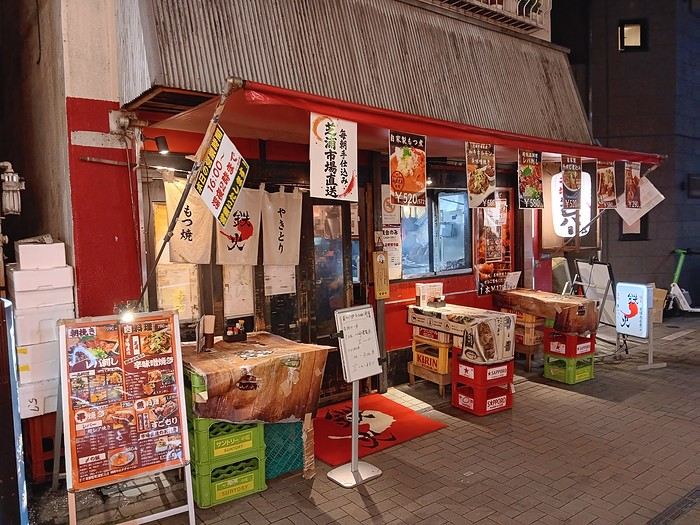
We cross to the other side of the station and enter the Mita district. There are cute little streets full of small restaurants with glowing signs (it's already dark). It's incredible—just look at my photos. All these mysterious signs (they're only in Japanese)—you can imagine the millions of treasures an explorer living in Tokyo could discover!


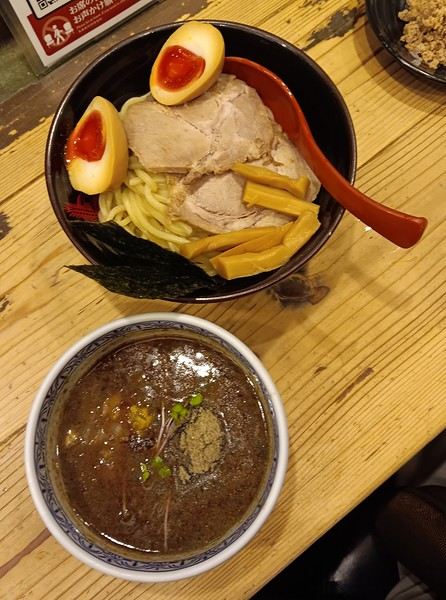
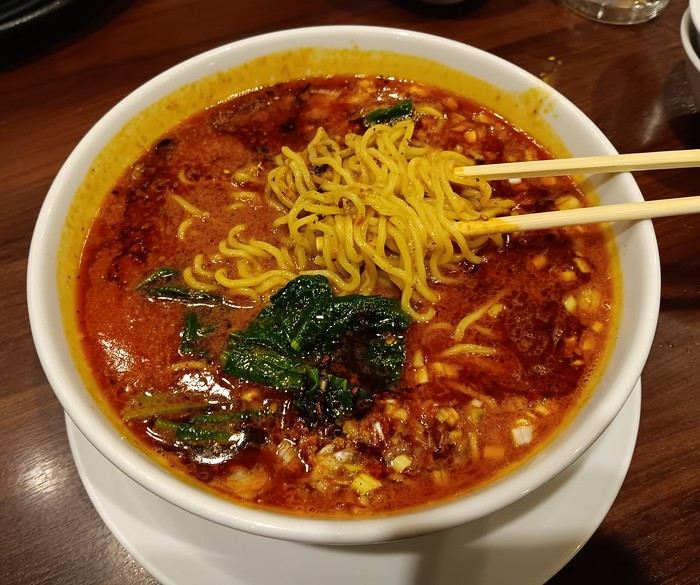
We have a ramen-tsukemen, following someone's recommendation. It's satisfying and cheap!


On our way back to the hotel, we hesitate to go down the stairs to what's marked as a bar. A young and cute Japanese woman standing on the sidewalk to attract customers to another place tells us it's expensive and points us to Socies Bar across the street. We find it upstairs after a bit of fumbling. A Suntory beer on tap is the perfect way to cap off this first day in Tokyo. But 1 pint + 2 half-pints add up to nearly 20 €!

Tokyo—or at least these Minato districts we've seen—has left us with an excellent impression.
GE GeorgesOZ Globetrotter ·
Friday, September 25 (1) We take the subway from Tamachi to Ueno, the station that gives access to the park of the same name. We're total newbies in Tokyo. The 3 days I spent here about fifteen years ago don't count—I was on a business trip and I couldn't even tell you which part of Tokyo I was in!

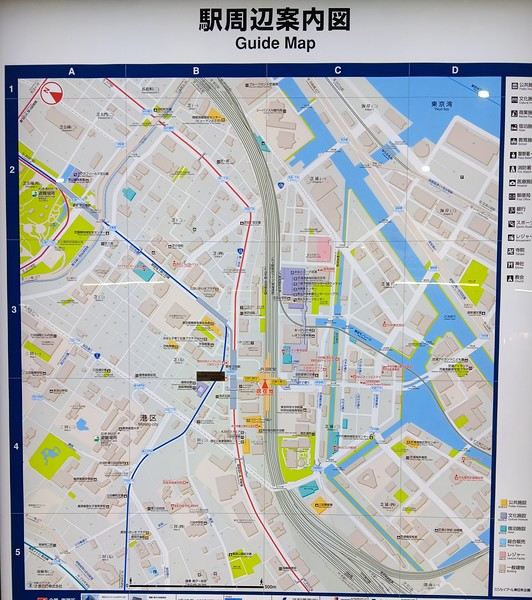
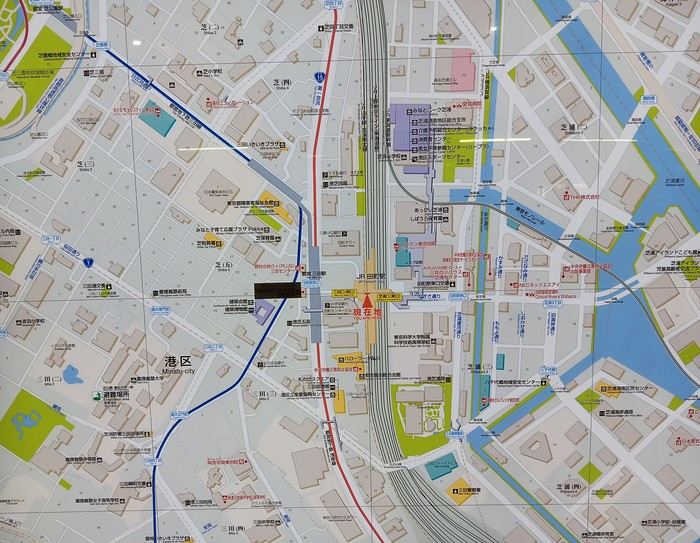
I'm still looking for maps to figure out our location. There *is* a map in Tamachi Station, but you really have to look closely to read the English directions—they're much smaller than the Japanese. And first, you need to pay attention to the map's orientation. This one is northwest/southeast, but I've seen worse: I once stood in front of a map in Taipei's central station for a good fifteen minutes, desperately trying to identify the right exit, only to realize the map was oriented north to south—with north at the bottom and south at the top!


Anyone arriving in Tokyo for the first time will be perplexed by the sheer size of the city. That's why I'm showing this map—and a close-up—that highlights the Tamachi area in the Minato ward. You can clearly see several canals on the right (east/southeast). These canals lead to Tokyo Bay, and—fun fact—Minato means 'port' in Japanese!


I know, I know—I'm obsessed with geographical and historical details. Some might find me insufferable... But for me, traveling is so much more than just spending a few pleasant, distracting days, taking tons of photos, and buying a few trinkets. I scratch the surface to see a little deeper!

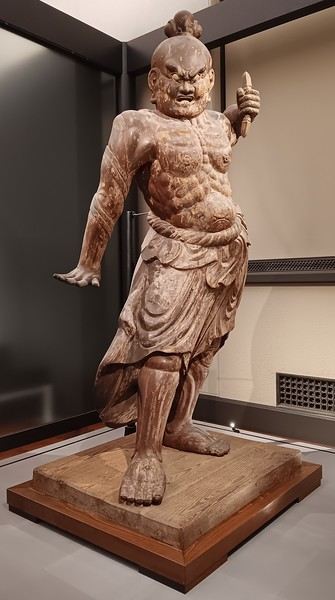
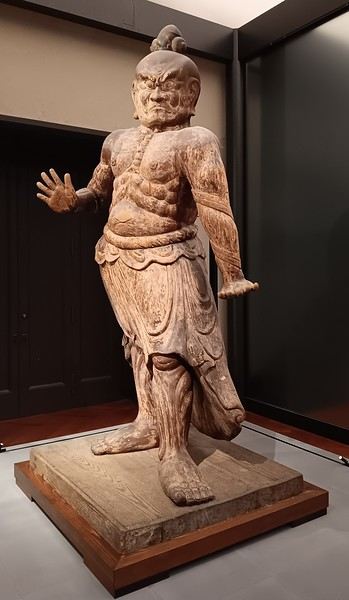
Back to our morning walk: we cross Ueno Park and arrive at the Tokyo National Museum. Here are a few photos of what particularly struck me: - The statues of the 'temple guardian deities' at the entrance are impressive—but I think they're copies.


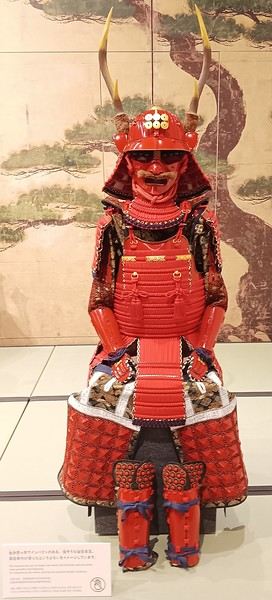
- A samurai armor, another copy. The flamboyant red color was meant to express the warrior's ferocity.


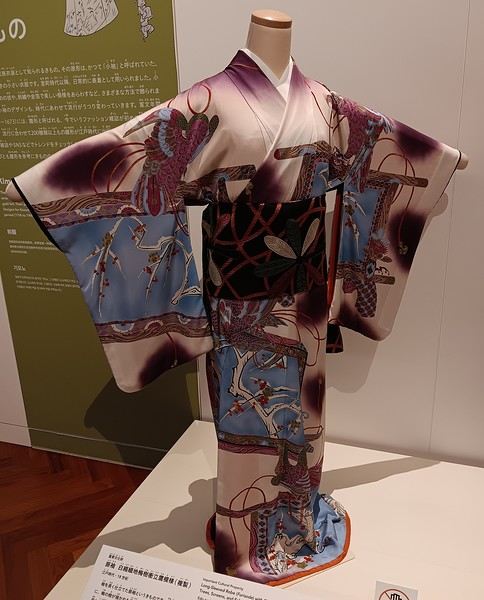
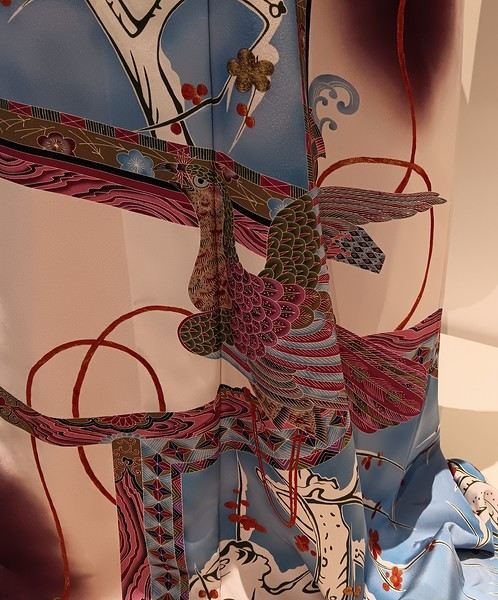
- A furisode (long-sleeved kimono), 18th-century style (Edo period). It's still a copy, but so stunning that I took a close-up photo. When you see the quality of such a garment, you understand—if you hadn't already—that you're dealing with an extremely refined culture.


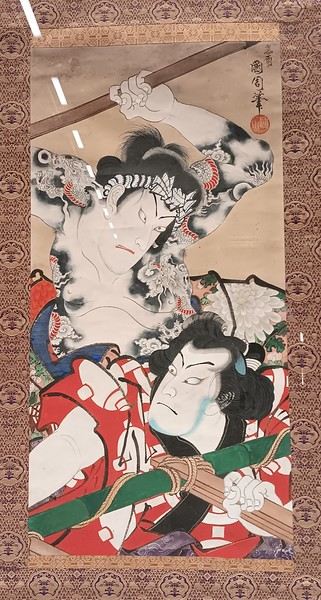
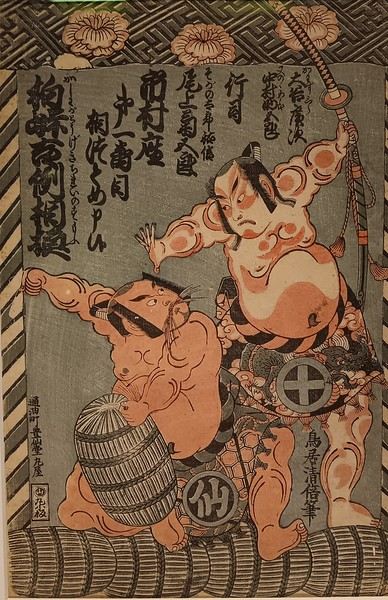
- Some ukiyo-e prints (Japanese, of course!), this one depicting two fighters from a famous brawl in 1805 between a firefighter and a sumo wrestler, which escalated into an epic battle between a group of firefighters and a group of sumo wrestlers. This fight was later adapted into a kabuki play (the famous Japanese theater). The facial expressions are priceless!


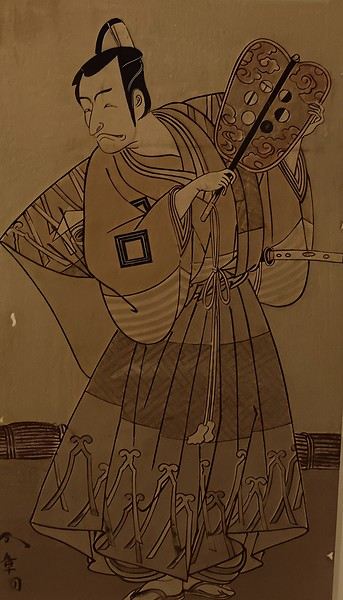
- Another print, from 1755, showing two fighters (also in a kabuki play).


- A sumo referee. I love the facial expressions!


I'll stop here to catch my breath!
GE GeorgesOZ Globetrotter ·
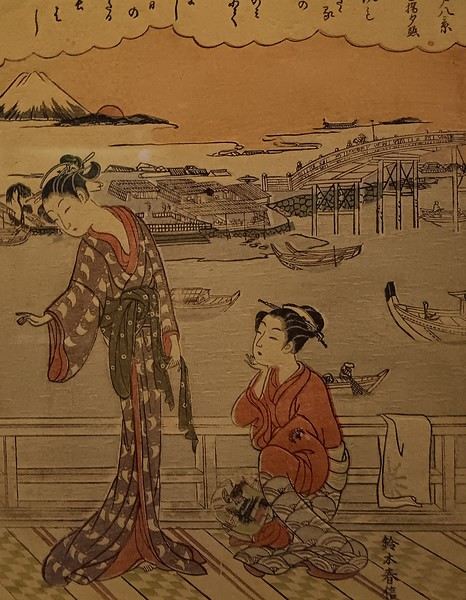
Friday, September 25 – Tokyo (2) I’m continuing with what impressed me at the museum: - Two elegant women at sunset (18th century)


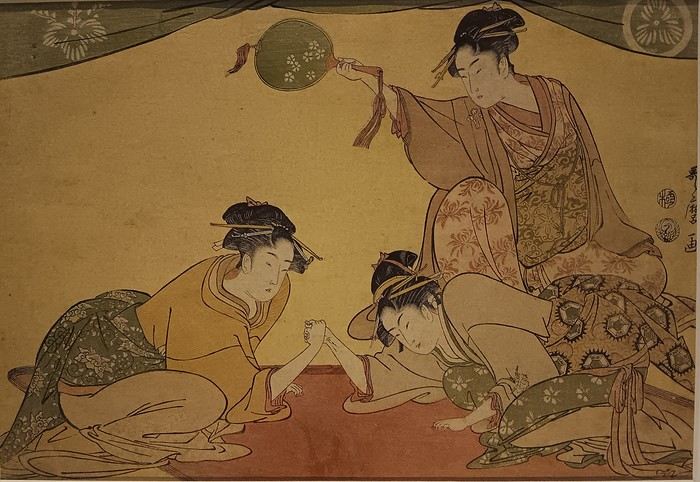
- An arm-wrestling match between Okita and Ohisa, with a geisha as referee—they were said to be the ‘three beauties’ of the late 18th century.


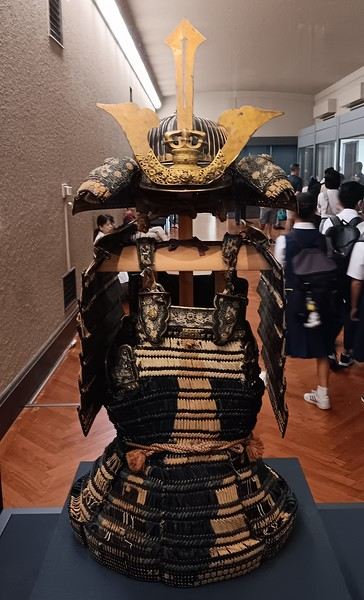
- A samurai armor, and this one was authentic


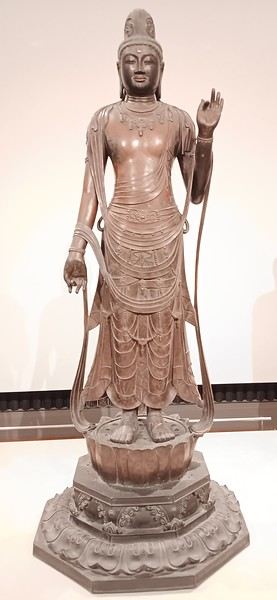
- Statue of the bodhisattva Kannon: a recent reproduction of the 7th/8th-century original. The realistic rendering of the body reflects the influence of the Chinese Tang dynasty.


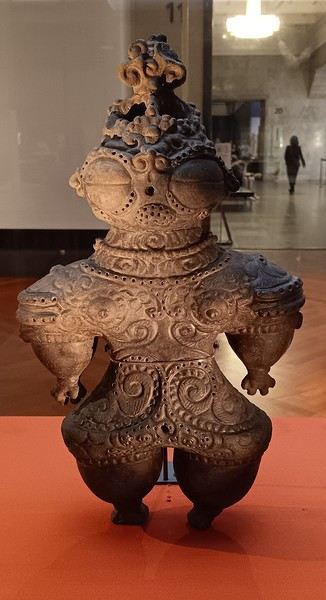
- A figurine from the Jōmon period (1000 to 400 BCE). The bulging eyes resemble the ‘goggles’ worn by the Inuit to protect against the blinding sunlight reflected off snow or ice. But experts aren’t really sure. Based on the wide hips, it might have been a talisman for female fertility. It also reminds me of some misshapen prehistoric figurines found in Europe.


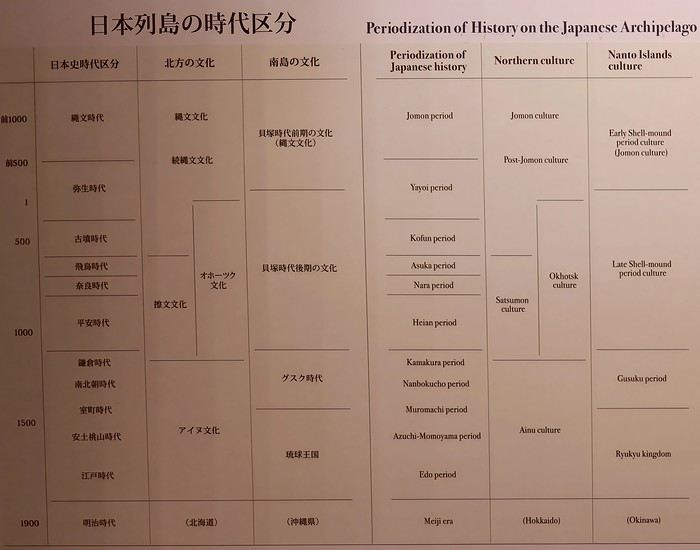
This figurine leads me to one of my favorite hobbies: history. And it’s perfect timing, because a large display briefly explains the main periods of Japanese history.


Roughly speaking, today’s Japanese people are descendants of the Jōmon and Yayoi peoples. I picked up a few key points from Wikipedia:

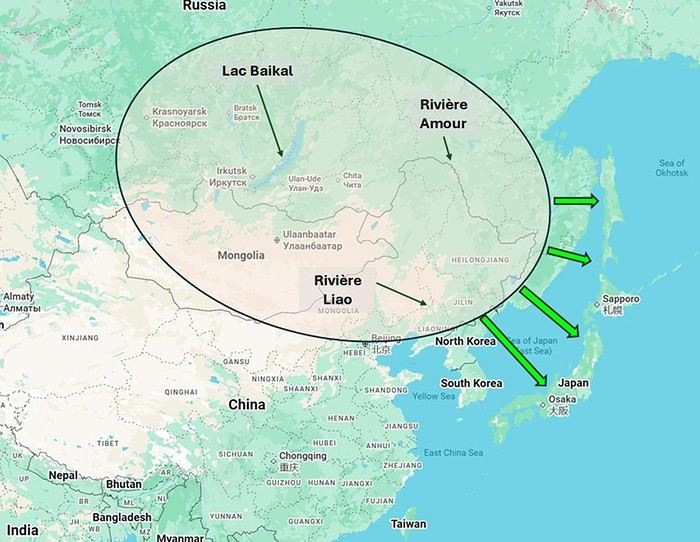
- Paleolithic - The first human populations are believed to have settled on the islands around 40,000 years ago. There were likely several migrations from different parts of Northeast Asia, taking advantage of land bridges during glacial periods. - Mesolithic - The Jōmon period spans roughly from 13,000 to 400 BCE. Japan was then inhabited by hunter-gatherers. Their culture is one of the earliest in the world to develop and practice pottery. - The Jōmon people are direct descendants of the Upper Paleolithic population. They share a strong genetic affinity with the indigenous people of Taiwan. It’s suggested that the Ainu of Hokkaido are likely direct descendants of the Jōmon people. - The Yayoi period: archaeologists place it around 500 or 900 BCE in northern Honshu (Japan’s main island). - The Yayoi immigrants were farmers. Based on converging evidence, it’s widely agreed that they came from the Mumun culture in what is now South Korea. The Yayoi migration wasn’t a replacement of the Jōmon people but a slow process of hybridization with them. - Genetically, the Yayoi have a dominant Northeast Asian ancestral component, linking them to ancient peoples from the regions around Lake Baikal, the Liao River, and the Amur River—areas that border Korea.

I’ll skip the more recent periods, but it’s interesting to note that writing in Japan only began after the Yayoi period, starting in the 4th century CE.

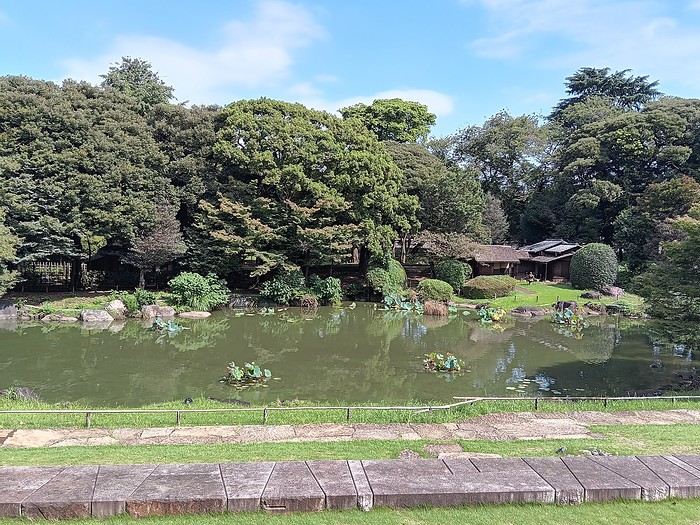
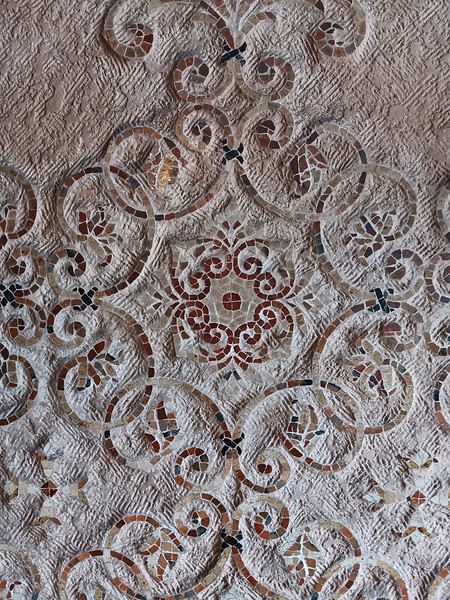
Before leaving the museum, we admire a beautiful garden from a terrace. While I’m there, I notice the stunning mosaic-patterned walls in the room leading to the terrace.


Summary of our museum visit: statues, kimonos, samurai armor, scrolls of manuscripts... a great overview of Japanese culture (that’s the museum’s purpose). What would’ve made it even better was a focus on architecture (traditional house styles, castles), but maybe we missed it by accident or in a hurry? There are a lot of replicas, sure, but it’s still amazing. We spent an hour and a half there—some people would happily stay longer. After leaving the museum, we head south through the park, avoiding the full sun as much as possible. It’s late September, but the sun is still brutal! On the main street that continues straight south—maybe before reaching Ueno-Hirokoji Station—we find an izakaya where we eat really well. A customer at another table explains something about the food in English. We exchange a few words. When I tell him we’re staying near Tamachi, in very hesitant Japanese, he replies that his Japanese isn’t that great either. Turns out he’s Chinese! I thought to myself, ‘Huh, a Japanese person coming out of their shell!’ And also: ‘A Japanese person who speaks English!’
GE GeorgesOZ Globetrotter ·
Friday, September 25 – Tokyo (3) I just jotted down a few words about the Yayoi migrations. I really like seeing how it’s reflected on a map, which is why I tried to outline the regions these migrations came from. A quick Google Maps search and some personal notes. I’ll admit I’m no expert, but I think this could give a rough idea of what might have happened around 2,000–2,500 years ago.


So, the Yayoi people would have originated from a vast region spanning Mongolia, southeastern Siberia, and Korea. I’ve read elsewhere that the ancestry of the Japanese is overwhelmingly (over 90 percent) dominated by the Yayoi component.
BL Bluequark Veteran ·
Thanks for the explanations and the map. (I also really like seeing things on a map, too!)
TF Tfcboy31 Regular ·
Hi there, and thanks for this travel journal! I just read your first post, and we’d budgeted almost the same amount for our trip (we’re leaving on October 25th for 4 weeks): Total = 3,194 euros, which averages out to 228 € per day for 2 people. I’ll get started on the rest now! :)
GE GeorgesOZ Globetrotter ·
Hello and thank you for this travel journal! I just read your first post, and we’d calculated similar figures for our trip (we’re leaving on 25.10. for 4 weeks): Total = 3194 €, averaging 228 € per day for 2 people. I’ll get started on reading the rest :)

Hi Elisabeth! Thanks for following my travel journal!
GE GeorgesOZ Globetrotter ·
Thanks for the explanations and the map. (I also really like seeing things on a map, too!)

🙂
GE GeorgesOZ Globetrotter ·
Saturday, September 26 – The train from Tokyo to Matsumoto (1) We took the Limited Express Azusa train from Shinjuku Station to Matsumoto, leaving at noon sharp. The receipt I’m posting here, worth 13,460 yen or 76 € for 2 people, covers the total cost (base fare + seat reservation). We also had 2 coupons specifying our reserved seats, but we had to leave them at the ticket gate when exiting Matsumoto Station. The trip took 2 hours and 30 minutes. We could’ve saved around 5,000 yen (28 €) for both of us by taking a different route, but it would’ve required a transfer and added 2 more hours to the journey.

I’m sharing all these details because I think they’ll be useful for some of you. With a little experience, you can travel in Japan for less than we did. Another thing: I was a bit anxious about when to make reservations—or even buy tickets without reservations—since I remembered how complicated it can be when traveling in India. But our two weeks in Japan showed us there’s no need to worry in this country: trains run incredibly frequently, and it seems there’s no problem buying tickets 1 or 2 days in advance, or even the same day.

As a linguistics nerd with too much time on my hands, I tried to decipher the receipt. In the middle, on the left, the kanji character after the ‘9’ is the Chinese character (hanzi) for the Moon. So that’s the 9th month of the year—September (everyone knows the concept of ‘month’ comes from the ‘Moon’). The next character is ‘sun,’ which represents ‘day’—makes sense! So the reservation was indeed for September 26. It turns out ‘Moon’ and ‘sun’ are called tsuki and hi in Japanese, but you don’t need to know that to understand the characters. The same characters are also used in various Chinese languages, with completely different pronunciations, but that doesn’t stop them from being understood. This touches on the extraordinary genius of Chinese writing, which was adopted by Japanese.

Just a bit further on the same line, before the ‘21,’ we encounter another Japanese writing system: hiragana (a syllabary). The three characters are a, zu, and sa—that’s the Azusa train, which a foreigner could’ve spotted before buying the tickets. I’d studied hiragana for a few months before the trip and had gotten pretty good at deciphering its 71 or so characters.


I know a lot of people won’t be interested at all or will get discouraged quickly by the complexities of Japanese. Personally, I enjoyed diving into it a little, and I think it really helped me during this 2-week trip to Japan—not just for deciphering train tickets!
GE GeorgesOZ Globetrotter ·
Saturday, September 26 – The Train from Tokyo to Matsumoto (2) At Shinjuku Station, confusion. Which platform? I approach a young man with a proper sumimasen before asking him. He lets us know we need to go to the Customer Service office and points us in the right direction. The office isn’t actually very far. We get there, and surprise—the young man catches up with us—he followed us without us noticing to make sure we understood. How kind!

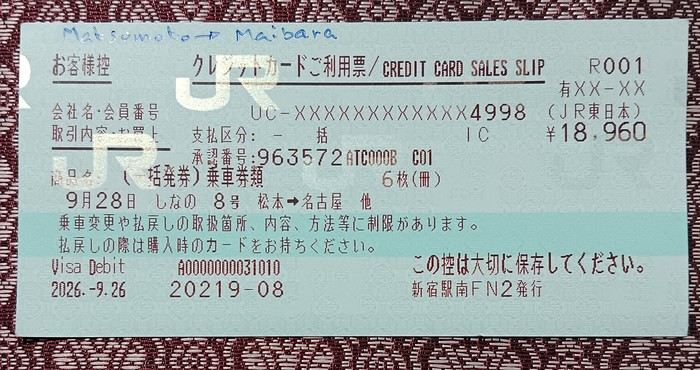
After getting the info about our train to Matsumoto, we leave Customer Service and immediately turn left—the ticket office is only about twenty meters away. I also want to buy the tickets from Matsumoto to Hikone in advance, via Nagoya, which are: - Matsumoto to Nagoya on Shinano 8 - Ltd Exp. Reserved = 5,060 JPY = 28 € - Nagoya to Maibara on Kodama 819 - Super Exp. Reserved = 4,180 JPY = 23 € - ‘Fare tickets’ = 9,720 JPY = 55 € - Total: 18,960 JPY = 105 € for 2 people.

You need to understand that the first two payments are for seat reservations. I’m posting the JPEG of the receipt. In the middle on the left: ‘9 Moon 28 Sun’ > the reservation is for September 28! And right after the date, the three hiragana characters ‘shi,’ ‘na,’ and ‘no’ > the reserved train is the Shinano. And to be precise, it’s the 8th Shinano train of the day!
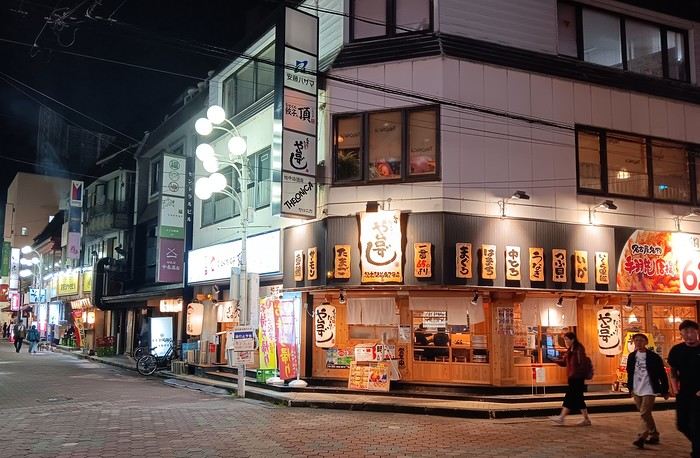
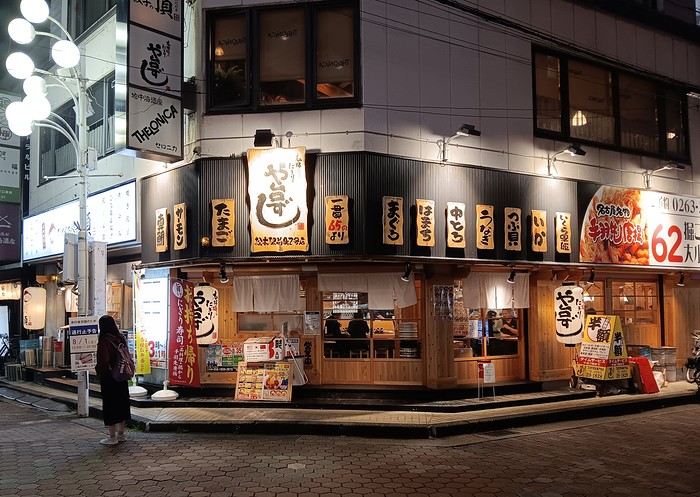
The Kodama train from Nagoya to Maibara isn’t listed on the receipt. It’s just the receipt, which shows that 6 tickets were issued, and those tickets included the reservation on the Kodama. As for the trip from Maibara to Hikone, we’re told we need to buy the tickets at Maibara Station.

I know I’m repeating myself a bit—don’t hold it against me!

We could’ve just traveled on ‘non-reserved’ trains, which corresponds to the last payment. That would’ve saved half the cost, but you need at least some experience with the Japanese system to spot which trains you can take without a reservation. You board and sit wherever you want, but there’s a risk of not finding an available seat. From our two-week experience and three trips where we reserved seats, we could’ve easily found such trains, and it didn’t seem like there would’ve been any trouble finding seats, as we saw plenty of trains passing by.

The good thing about reserving seats is that you plan your schedule, and you’re less likely to get on the wrong train because you just need to look for your reserved trains on the display boards.

Once we bought them, at the office just to the left of the exit, my tickets for Matsumoto don’t let us back into the station—the turnstiles protest! We go back to the Customer Service office, where a woman who doesn’t speak a word of English clearly doesn’t understand the problem and tries to send us back to the ticket office outside. It takes a few more minutes until another woman, who speaks English well, comes to our rescue and tells us we just need to go through Customer Service to get to the platforms, without passing through the turnstiles.

The logic of all this becomes clear afterward, but in the moment, it’s confusing. Moral of the story: allow at least 15-30 minutes to get your bearings at Shinjuku (and in many other stations too!).

Finally, we’re on our way! We quickly enter the mountains, lush and green, covered in trees, wrapped in mist and clouds.
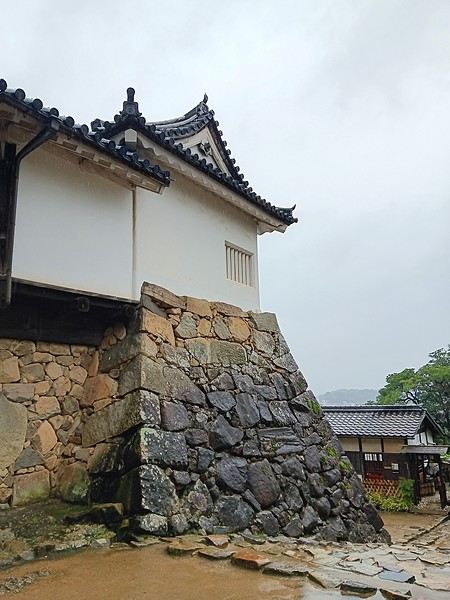
Arrival in Matsumoto. A small city compared to Tokyo. Easy to get around. The center is completely manageable on foot, clean, and relaxed. A few foreign tourists, but really very few. In the evening, lots of restaurants and cafés are open, and they’re packed. It’s Saturday, of course!

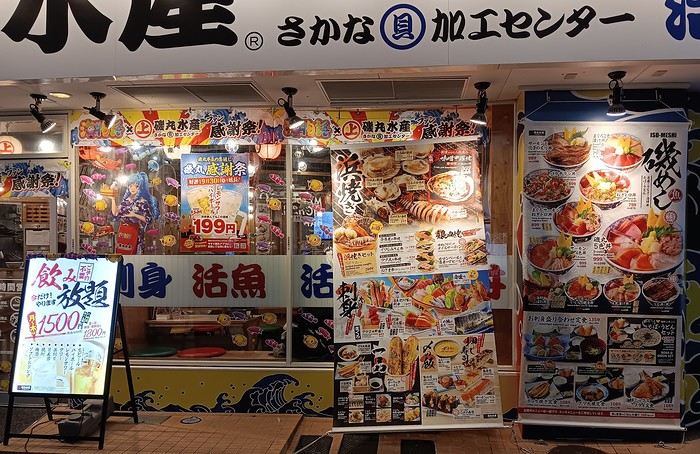
I can’t help but snap a photo of a street corner with bright, eye-catching signs—though they’re pleasant to my eyes.


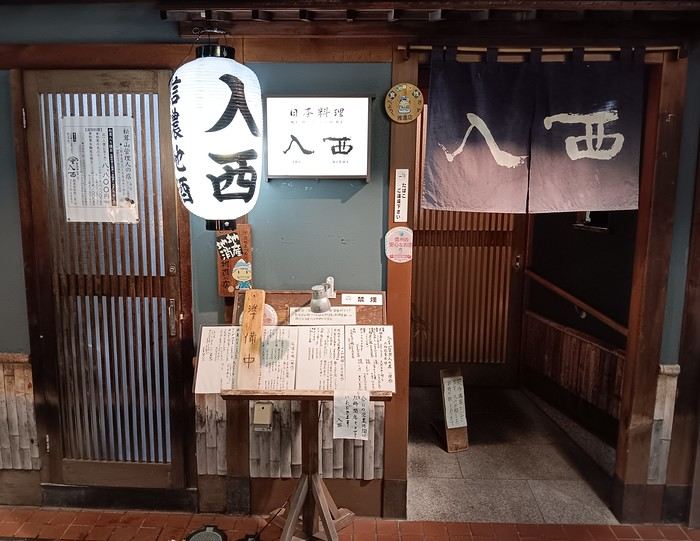
And this mysterious entrance—maybe an izakaya? If my Japanese were better, I’d dare to go in and see, apologizing if needed... It’s like in Tokyo—you get the feeling there are treasures to discover everywhere!


We eat Japanese curry right across from our hotel—cheap. I find the curry really good—coming from a Thai person, that’s high praise!
GE GeorgesOZ Globetrotter ·
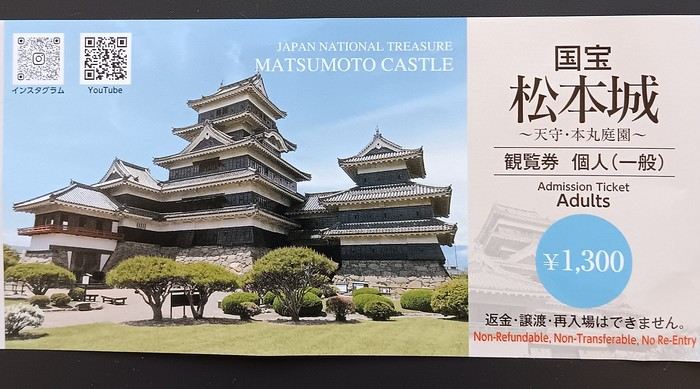
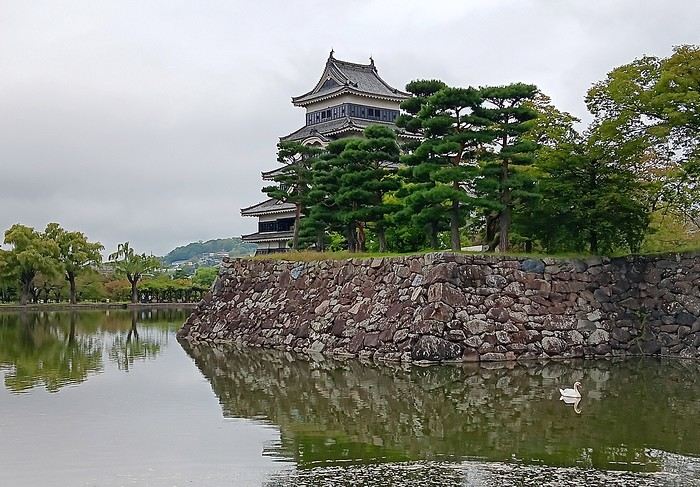
Sunday, September 27 – Matsumoto Castle Matsumoto Castle isn’t far from the city center—just a 15-minute walk. Entry tickets: 2,600 JPY = 15 € for two. Oh, and by the way, visits are generally priced very affordably, and there’s no ‘foreigners’ rate’—what a relief compared to practices in India and Thailand (the worst I’ve seen). It’s really nice!


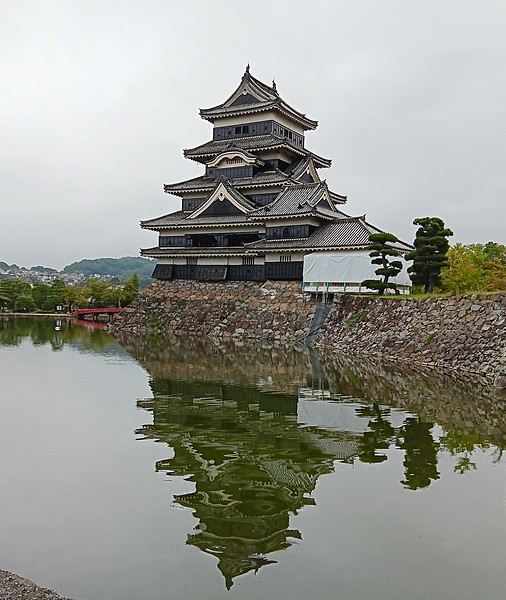
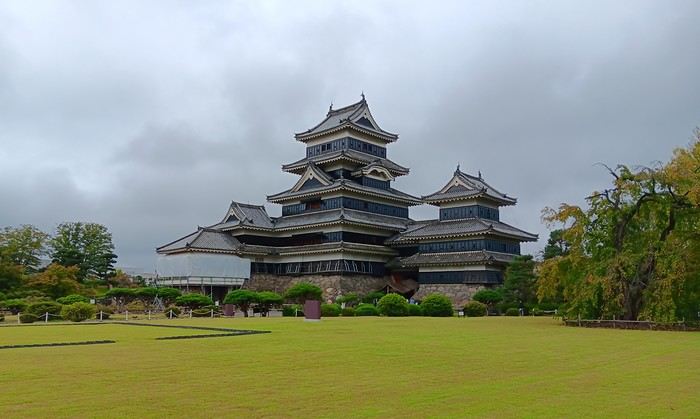
It’s almost a cliché to say the castle is impressive, perched on a massive stone base and surrounded by moats. It dates back to the 16th century. Out of the hundreds of castles from the Edo period (1603–1868) or even earlier, it’s one of only 12 where the main tower, the ‘tenshu,’ has been preserved exactly as it was.


No beautiful blue sky in these photos. The weather was gray. No surprise after crossing all those misty mountains the day before!

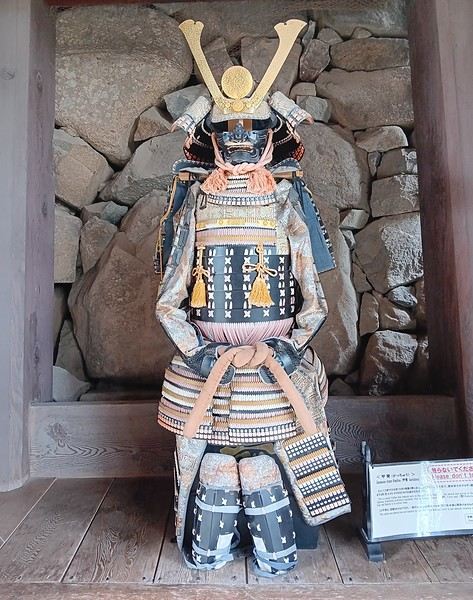
Passing through a large gate, we came across a beautiful replica of samurai armor. Having seen some armor at the Tokyo museum, I’m starting to wonder why samurai were so keen on wearing straw or horsehair mustaches on their armor!


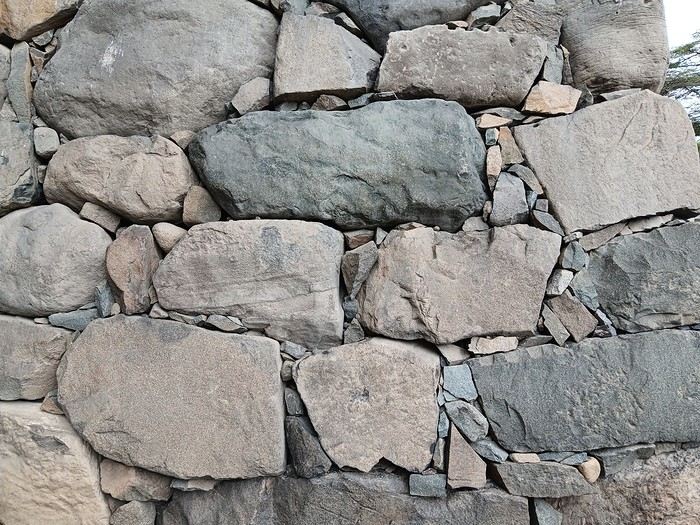
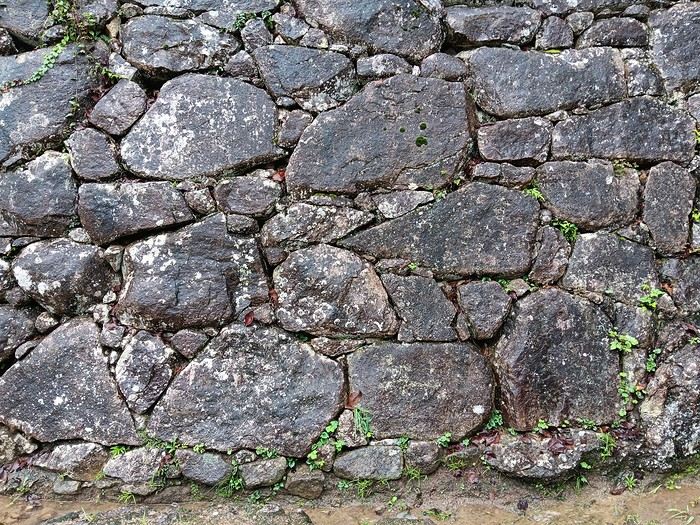
You can also see that the walls are made of stones of various sizes arranged so everything holds together. From a distance, it looks like only large stones were used. They aren’t fitted to the millimeter like Inca walls, but it’s still remarkable work—the large stones were cut to have a roughly flat outer face.


We arrived at a large garden at the back of which the castle stands, majestic.


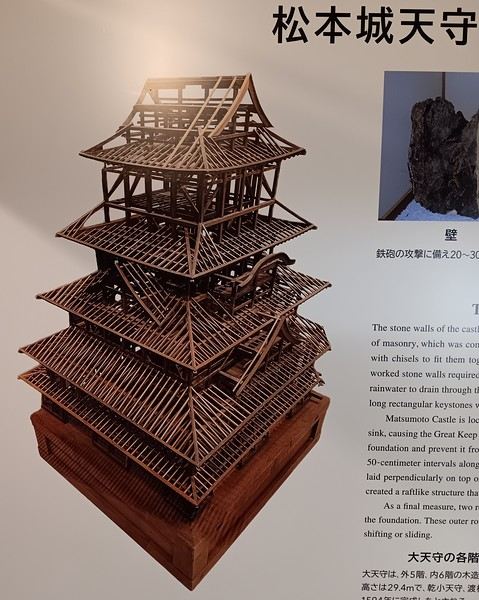
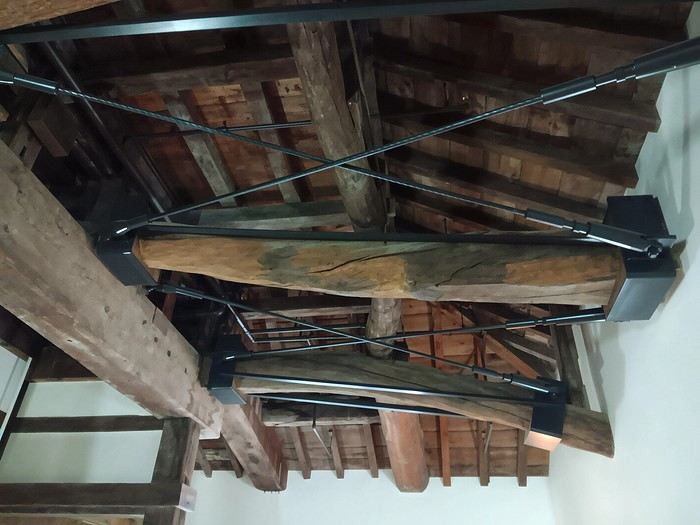
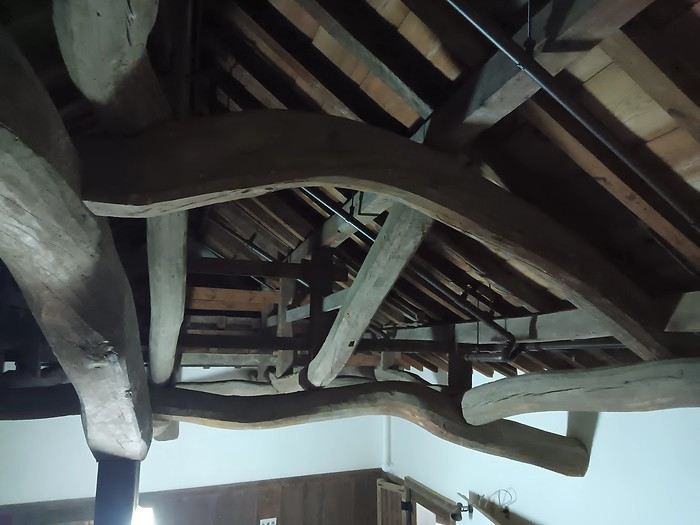
The carpentry is also remarkable. Everything is cut so there are no sharp edges. A great overall view of the carpentry... I didn’t take the time to read the explanations (in English).


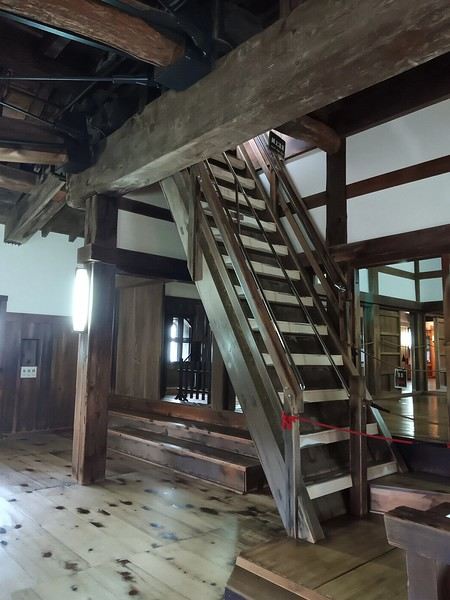
The interior staircases are very steep but well-designed to avoid accidents. It seems the outer sections were often used for passage, while the central parts were for spending time. The top room is where the lord’s family would take refuge in case of attack. But the castle was never actually attacked, which seems to have been the case for many castles. They were primarily built to showcase a clan’s power. That said, many firearms from the Edo period are displayed in several showcases—it’s a real museum!

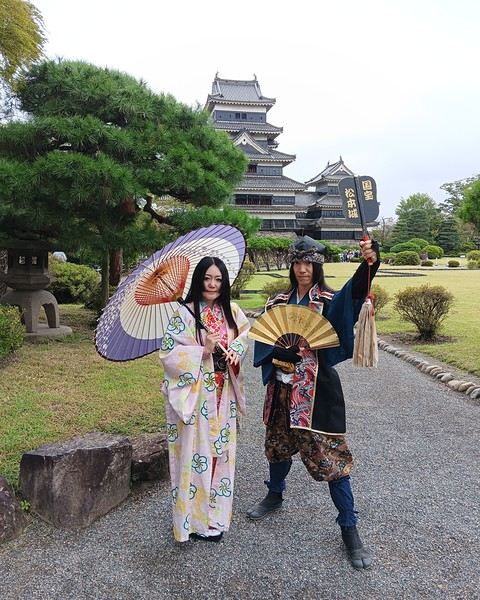
At the exit of the castle, a couple in traditional costumes—I couldn’t say which era they represent, but it’s charming and makes for a great photo!


There were maybe a few dozen Japanese tourists and a few rare foreign visitors. That made the visit easy. No crowding inside, just taking care not to rush on the staircases and patiently letting others go up and down.

All in all, the visit takes about half an hour. For those visiting at a brisk pace, I’d allow a good two hours, including the walk to and from the station.
GE GeorgesOZ Globetrotter ·
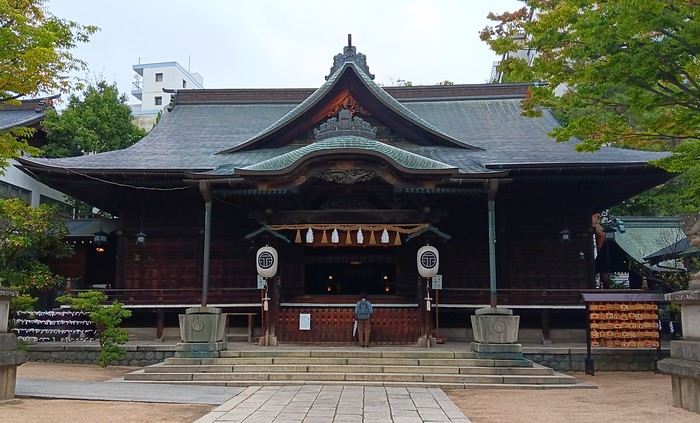
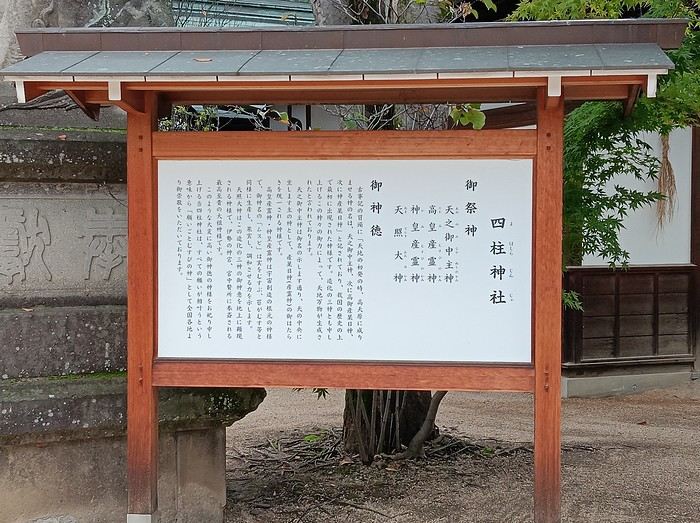
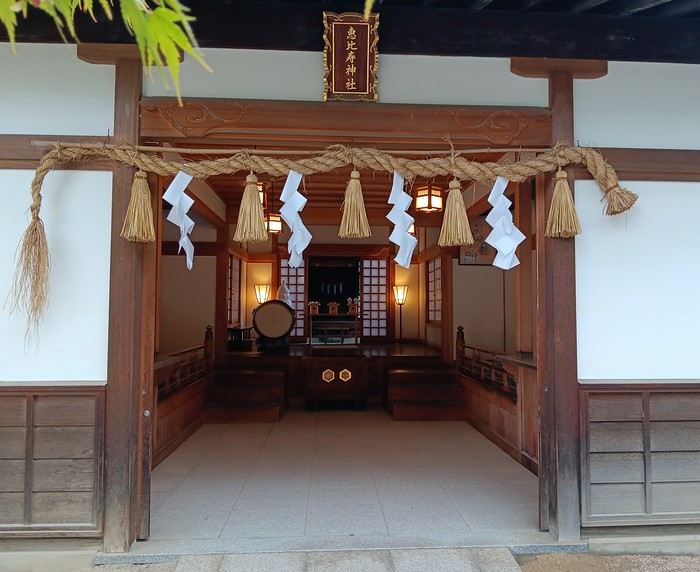
Sunday, September 27 – Around Matsumoto Castle On our way back from the castle to the city center, we reached the Metoba River. To the left, on both sides of the river, there are stalls and shops, but they were closed—it was Sunday. But there’s more to see than just the stalls and shops! Just 20 or 30 meters to the left, before crossing the bridge, you’ll find two Shinto shrines. I’m only showing the exterior of the larger one.


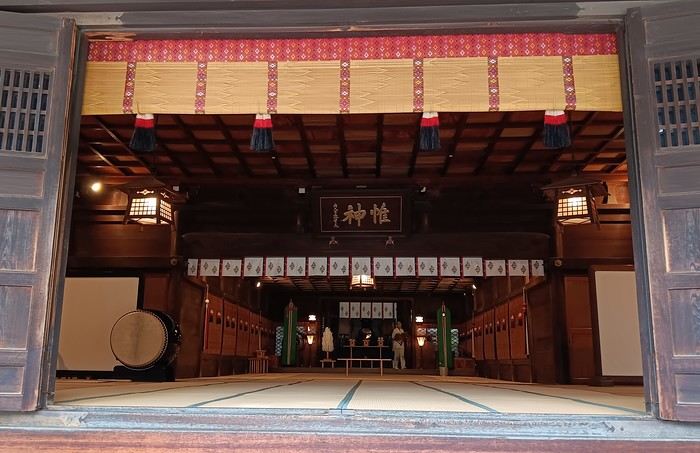
Both shrines have a rather simple interior. I read that this is characteristic of Shinto shrines.


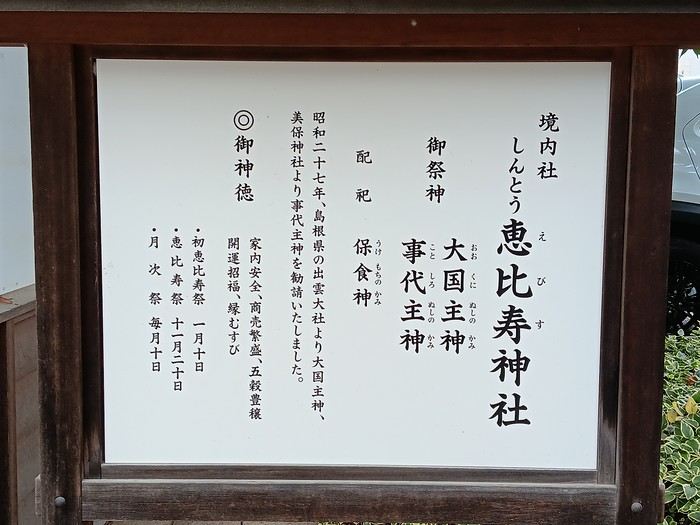
I was also captivated by the large signs next to the shrines. The black writing on a pure white background, all framed in wood—I think it’s beautiful and elegant.

Now that I’m back home and sorting through my photos, curiosity is getting the better of me: what is Shinto? I’ll cover that in my next post... I have a feeling it’s gonna be a long one!
GE GeorgesOZ Globetrotter ·
Sunday, September 27 – The surroundings of Matsumoto Castle: Shinto

So, let’s dive into the topic of Shinto. I’ll start with a remark made by a Japanese person on a social media site (I’m translating from English):

‘In Japan, we have two belief systems: Shinto, which means ‘The Way of the Gods’; and Buddhism, which means ‘following the Teaching of the Awakened One.’ The two systems work in harmony with each other.’ (I’m capitalizing on purpose.)

I, of course, borrowed a few explanations from Wikipedia. You can criticize it, but for me, it’s a good starting point. Besides, you should know that you can’t write just anything on Wikipedia without being corrected by people who know the subject!

Most Japanese people have a neutral view of religion and practice several in their lifetime. Recently, there were 85 million Shintoists (67% of the population) and 88 million Buddhists (69% of the population), which shows that many people follow both systems. A person might pray at a Shinto shrine for the Japanese New Year for a good year and before school entrance exams to beg for success, then later have a Christian wedding in a church rather than a Shinto one, and finally have a Buddhist funeral at a temple.

Shinto is an animist religion. The major concept of Shinto is the sacredness of nature. The deep respect that follows defines humanity’s place in the universe: to be an element of the great Whole. Thus, a river, a star, a charismatic figure, a simple stone, or even abstract notions like fertility can be considered deities.

Flowing from cosmic unity, the currents that form life manifest in a multitude of kami. The polytheism that emerges is infinite, in the sense that every piece of life is sacred. Shinto mythology says there are 8 million kami.

Shinto is practiced in very minimalist shrines. Most often, the shrines are painted red and contain only a very basic altar for offerings: fruit, a glass of sake, money, etc. The very heart of the shrine holds the relic or object where the kami is believed to reside. Only priests can access it. This relic or object can be anything—a precious stone or an ordinary one, a valuable item or a shoe, a tree, etc. It’s this object or relic that’s carried through the neighborhood during neighborhood festivals, the matsuri.

Respect for ancestors and feelings of communion with the forces of the universe and past generations are the spiritual foundations of Shinto.

All this reminds me of the Celtic druids, ancient European folk beliefs (in my childhood, I knew of a ‘fairy fountain’ in a nearby forest), the many gods of Hinduism, and the deeply rooted belief in Thailand and neighboring countries about the presence of spirits in nature (especially in trees) that must be respected (and feared).

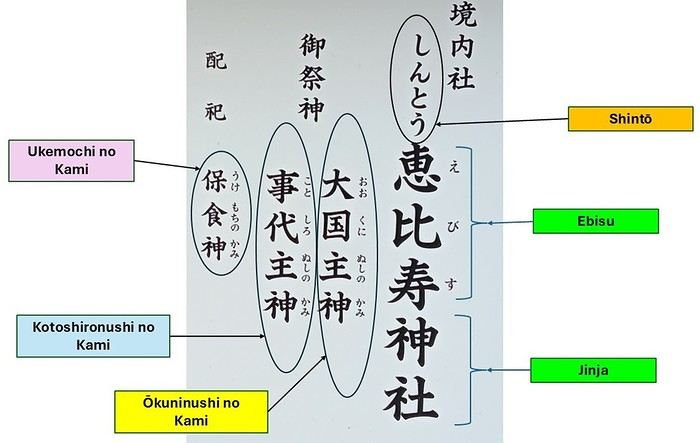
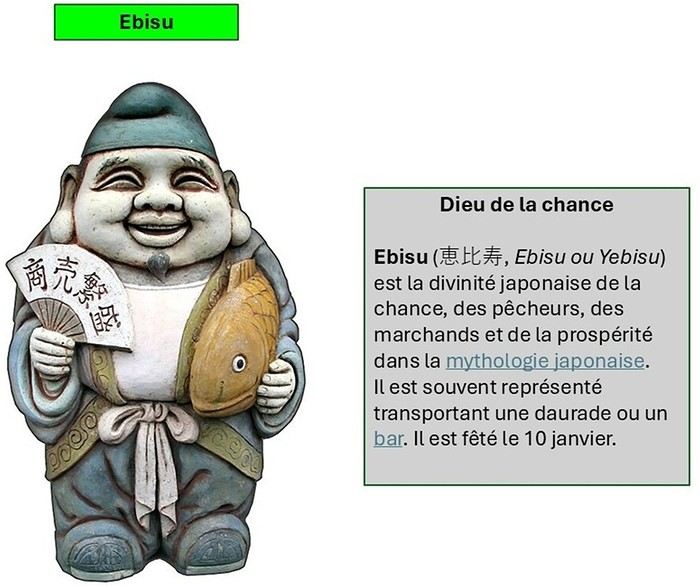
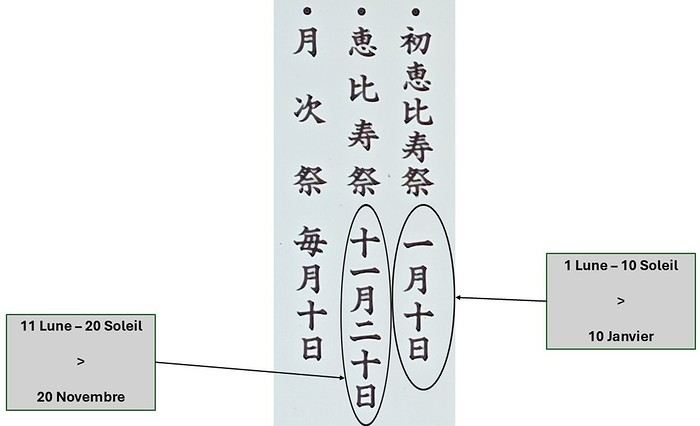
Having gained a little knowledge about Shinto, I revisit the sign at the second shrine by the river in Matsumoto. I’ll put what I know of Japanese writing to the test. At the top right, you can read ‘Shintō’ in hiragana. I draw a horizontal line over the ‘o’: it’s a long ‘o’ (you could also use a circumflex). Below, the first three large kanji characters are doubled, in smaller size, by e-bi-su in hiragana. It’s Ebisu, the god of luck, fishermen, and commerce, very popular in Japan. The next two kanji characters mean ‘jinja’ = shrine. So, Ebisu is the main god of this shrine.


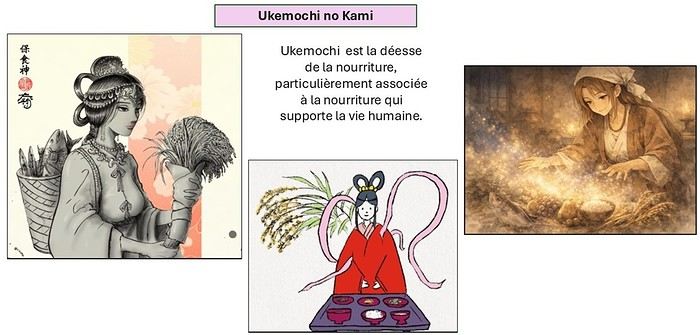
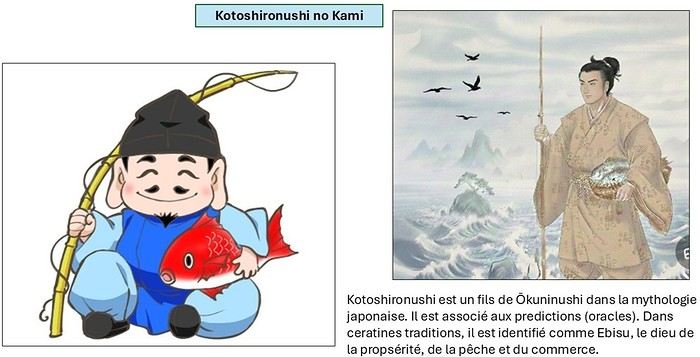
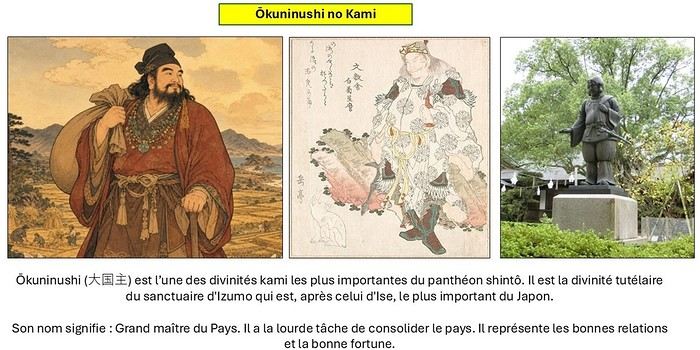
To the left of the ‘Ebisu column,’ three other columns in kanji, doubled with transliteration in hiragana. You might wonder why: the hiragana isn’t written for foreigners, obviously. Could some Japanese people not read the kanji? These three columns give us the other ‘kami’ of the shrine. I was able to read the hiragana and look it up online to understand better: - Ukemochi - Kotoshironushi - Ōkuninushi

I don’t want to go on about these three ‘entities.’ I’ll just post three JPEGs that summarize what I found about them. By the way, I notice echoes of the graphic style of ‘mangas’ and ‘animes’—the question would be which came first and influenced the other!


On the left side of the sign, at the bottom, three columns indicate dates (it’s very basic kanji). The date of January 10: that’s Ebisu’s festival!


There’s so much more to say about Shinto and its coexistence with other beliefs in Japan. I must say, I’m particularly intrigued: how can a people as educated and living in such a developed economy as Japan keep such a system alive?

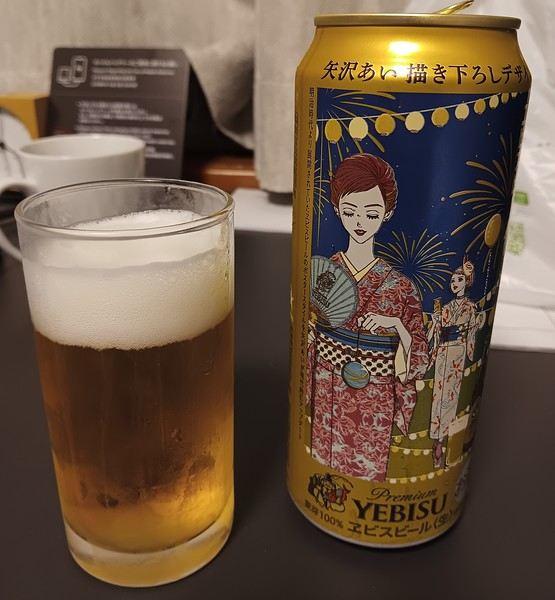
In the late afternoon, we visited the supermarket at the station—you can really find everything, and it’s so well presented. After eating at an izakaya, we didn’t forget to buy a small beer on the way back to our hotel. Oh, that’s odd—it’s a Yebisu! I found the can’s design appealing—now that I’ve done this little study on Shinto, I understand that the beer’s name refers to Japanese mythology!


This was our only full day in Matsumoto. Staying two nights, as we did, might be a bit much. You could do it faster, but we don’t regret it. It’s a pleasant and quiet city, clean (that goes without saying), and you can easily get around on foot. Plus, you don’t realize it right away, but when time passes a little slowly without a new experience every moment, it lets the ‘air of the country’ seep in, ever so gently. It turns simple tourism into travel.
GE GeorgesOZ Globetrotter ·
Monday, September 28 – Hikone Heading to Hikone. We change trains in Nagoya, then again in Maibara, where we buy tickets to Hikone (2,720 JPY = 15 € for 2). Hikone is just a stone’s throw from Maibara.

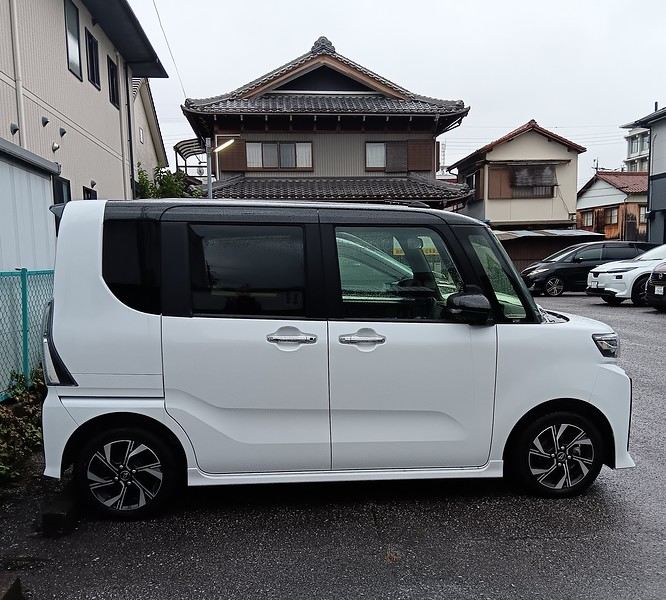
After settling into our hotel room near the station, we take a quick stroll around town. We don’t go far because it’s drizzling. A main street leads from the station toward the castle. We’re amazed by the cars we see driving by—so many small cars in a style we’ve never seen before that we even wonder if we’ve stumbled upon a classic car collectors’ parade!
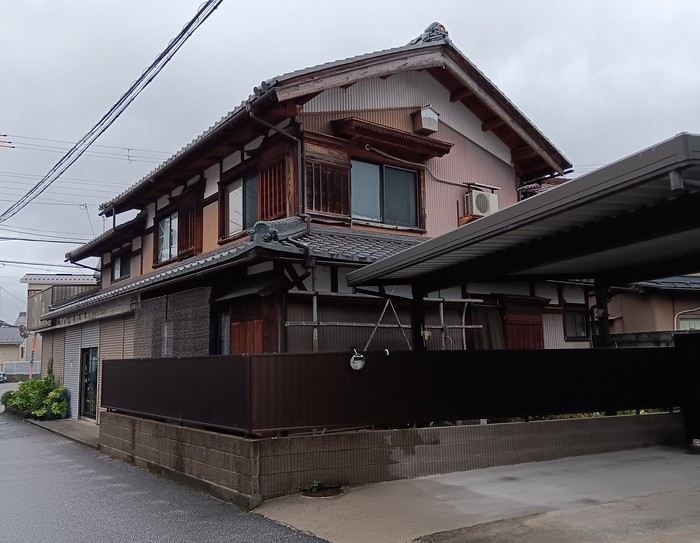
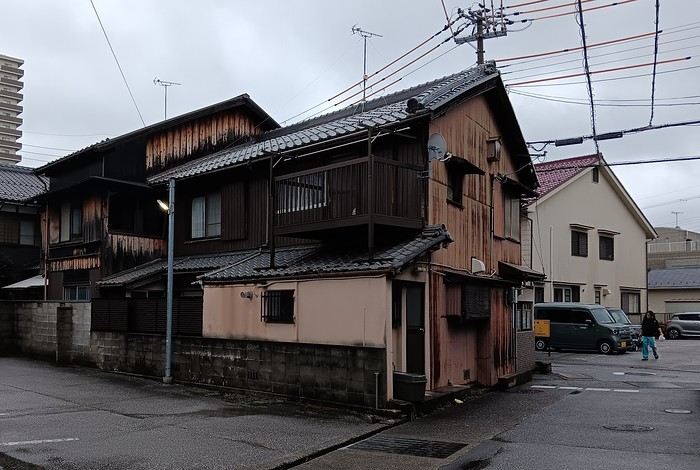
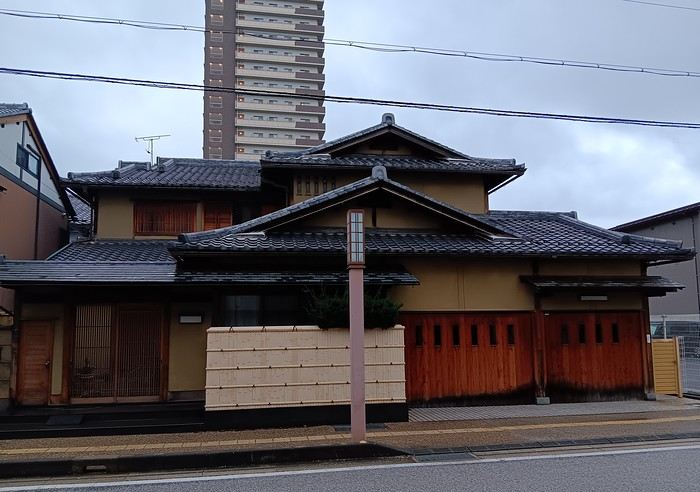
In the side streets, the houses have a fairly traditional style. I try to frame one of them with a tall tower in the background to capture the mix of modern and traditional that’s so typically Japanese (though my phone has its limits). The tower is on the other side of the station, which seems to have been designated for modern buildings, preserving the more traditional look of the city center.


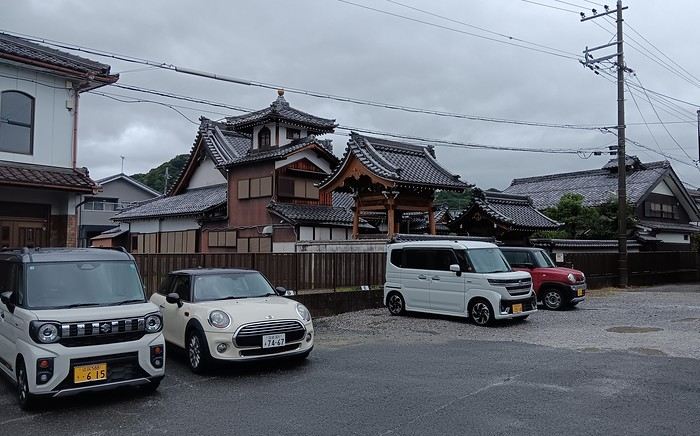
We come across an elegant temple with several of those small cars parked in front. We start to realize that this is simply a very popular type of car in Japan. It’s worth noting, by the way, how clean the streets are!



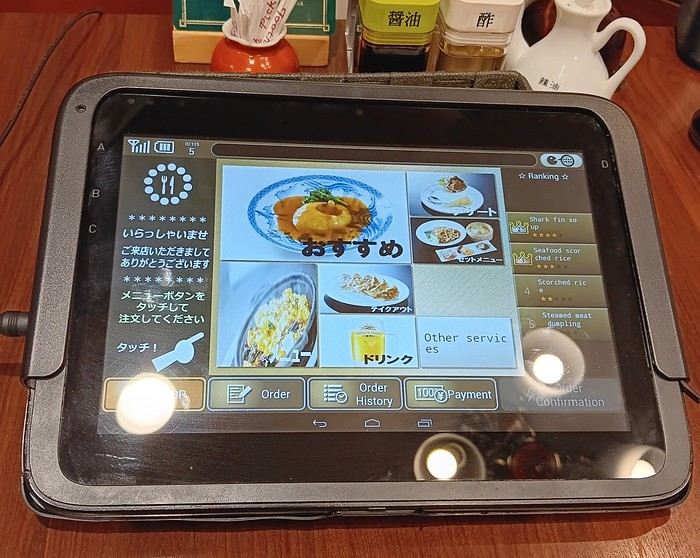
In the evening, we eat at a Chinese restaurant on the corner of the first intersection from the station, top floor. The servers are friendly. We ask them to explain how the tablet on the table works for ordering. This is our first encounter with this super practical system, which we’ll see a lot more of later.


One of the servers asks where we’re from (a rare question in Japan, it seems). When I tell him I’m French, he says he does ‘fencing’—meaning French fencing—and he knows the terms *épée*, *fleuret*, and *sabre*. I tell him I fenced in my youth and give him a quick foil demonstration—en garde, then a lunge. He’s impressed and shakes my hand warmly. That’ll be the first and last time someone shakes my hand in Japan! Later, I wonder if I’d actually met one of the many Chinese people living in Japan...

The food is excellent and, of course, paired with a nice cold beer! And once again, it doesn’t cost us much. It seems food is significantly cheaper in Japan than in Western Europe, even at a decent restaurant.


On our way back to the hotel, since it’s raining and we’re not really equipped for it, we take shelter in the large store near the station. You can find everything there at very reasonable prices. Seriously, the Japanese have impeccable shops!
GE GeorgesOZ Globetrotter ·
Tuesday, September 29 – Hikone Castle Breakfast is pretty basic compared to what we had in Tokyo and Matsumoto, but we're staying in a slightly more modest hotel (52 euros, breakfast included), though it's still very clean and functional. Another sign of the hotel's lower category: no pajamas or yukata provided in the room. Other than that, the room is perfectly fine and quite similar to the ones we had in Tokyo and Matsumoto. The bed, for example, is just as comfortable.

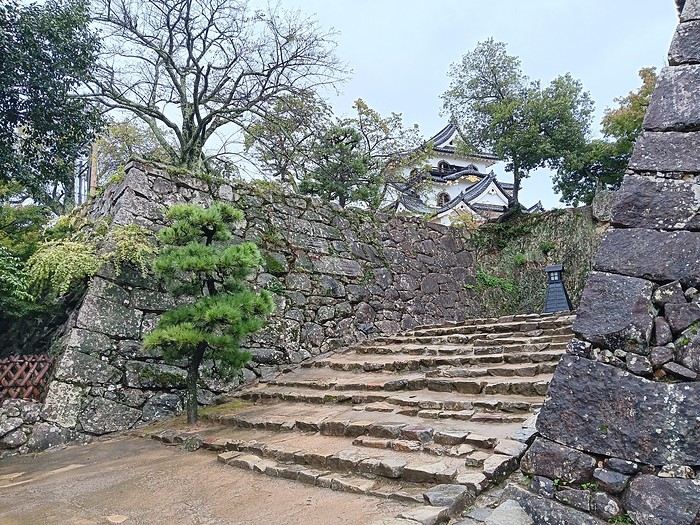
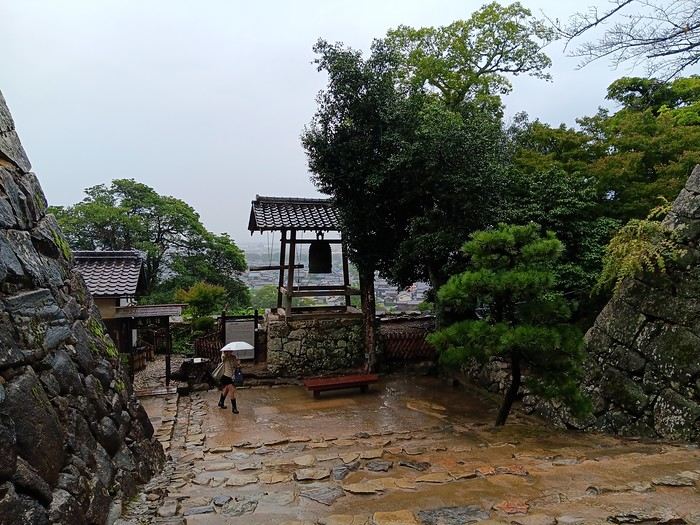
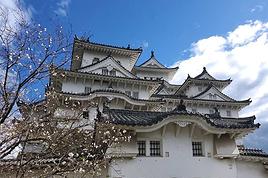
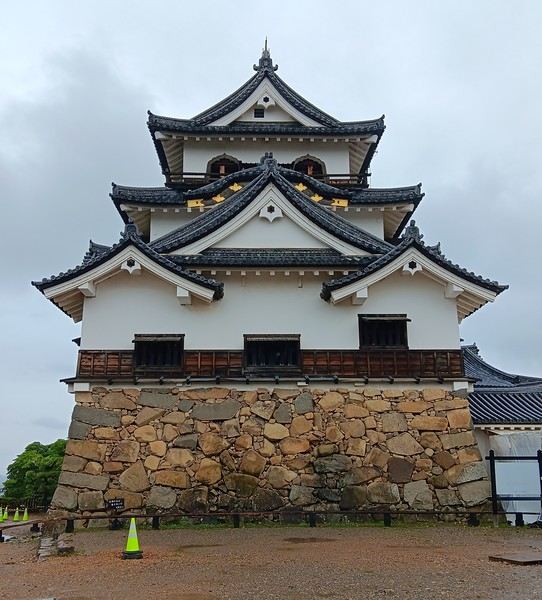
Off to the castle! It's a 2 km walk, and luckily it's not raining hard—just a few light drops now and then. Entry tickets: 2,000 JPY = 11 € for two. The access path is a wide, sloping, winding road between massive stone walls. No problem for us—we're in good shape, and it's a breeze compared to the Langtang trek we did just a year ago (see my other travel journal)! But fair warning, it's not really suitable for people with physical difficulties.


Like in Matsumoto—and I think typical of Japanese castles—the walls are made of massive stones of all shapes, roughly cut except for the visible face, which is flat.


A stunning castle dating back to the late 16th century. It really has the same style as Matsumoto. It's one of the 12 castles in Japan that have preserved their original *tenshu*.


Like in Matsumoto, the stairs are steep. The timber framing is impressive.


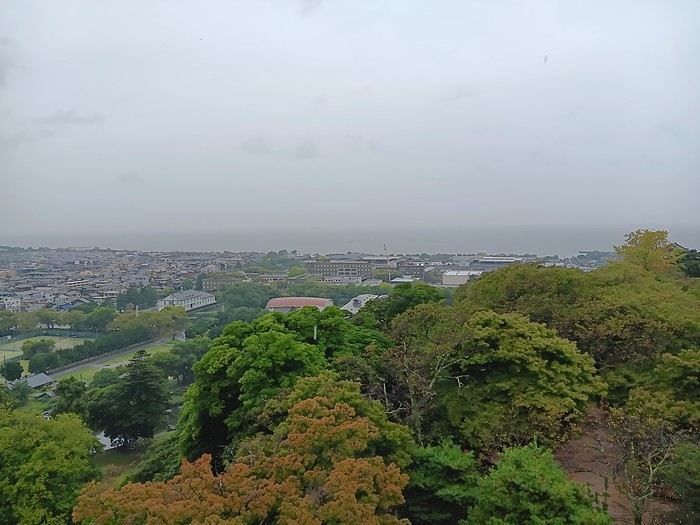
Too bad the weather is overcast—we can't get a good view of Lake Biwa, which we can see about 1 km from the castle. Originally, the castle was right on the lakeshore.


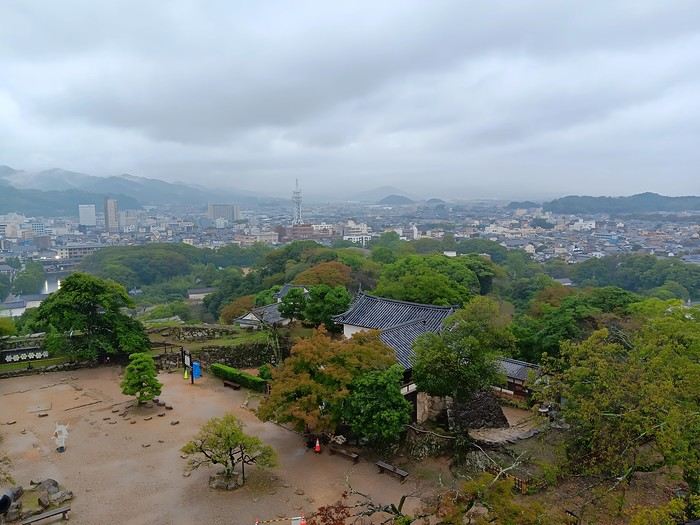
From the top of the castle, we only get a nice view of the city with the misty mountains in the background.


We ran into very few tourists at this castle. I don’t even remember if there were any foreigners! By the way, we’d already drawn a few fleeting glances in town—nothing too obvious or bothersome. In any case, we never felt any ill will toward us.

Actually, you really only need about 1 to 2 hours for a visit like this, which means you could do it between two trains in the morning and afternoon and not have to stop overnight in Hikone. It’s the same observation I made earlier about Matsumoto. Staying overnight would be fine if you don’t want to rush: arrive in the late afternoon, check into the hotel, eat at a restaurant, stop by the supermarket. Visit the castle the next morning, then head off to another destination by midday. It’s totally doable given how frequent the trains are.

In the evening, we ate at an izakaya on the main street leading from the station—it was okay, but not as good as usual. I’m not sure if it was this place or somewhere else, but I sometimes got the impression the meat wasn’t cooked as well as I’d have liked. It’s borderline when it comes to chicken—pink chicken in the middle, yuck!

Similar discussions

You might also like