Je me permets de venir solliciter les touristes ou habitants qui sont en ce moment à Prague.
Mes parents doivent s'y rendre mercredi mais du fait des inondations nous devons décider s'ils annulent ou non donc j'aimerais avoir l'avis de ceux qui seraient sur place(et qui entre 2 coups de seau pour vidanger leur ville pourraient me répondre.
Mes parents devaient loger à l'Attrative penzion quasiment au niveau du pont charles sur la route qui longe la Vltava dans la vieille ville : cette route est-elle accessible ? L'hotel me dit que oui mais je ne voudrais pas qu'il me dise cela pour ne pas perdre 3 nuits d'hotel.
De plus, mes parents ne parlent pas un mot d'anglais, je leur avait donc préparé tout l'itinéraire, les métro dans les moindres détails. Si ceux-ci sont fermés comment se rendre dans la vieille ville depuis l'aéroport ??
Pour y être allé en septembre, nous avions eu du mal à prendre le tram alors que nous parlons anglais et avons lhabitude des voyages.
Enfin, qu'en est-il du reste de la ville ? Les autres touristes arrivent-ils à poursuivre leurs visites sans trop d'encombre (chateau, opéra national pour lequel mes parents ont aussi des billets), horloge etc..)
pas facile en France de se rendre compte de l'ampleur des dégats et de la detresse des pragois aussi.
Merci à tous de votre contribution (avant mercredi si possible!)
Bonjour, voici ici jour par jour la situation y compris de ce lundi matin, C'est écris par un habitant de Prague en Français et d'après lui ça devrai aller.je vous laisse lire et allez régulièrement sur sa page pour suivre.
http://www.strogspraguepics.blogspot.be/
A votre place, je déplacerais le séjour. La situation est pour le moment assez critique et son évolution va dépendre des caprices de la météo. S'il continue à beaucoup pleuvoir, ça peut devenir vraiment grave. Si ça se calme, le retour à la normale ne devrait pas trop tarder, avec quand même pas mal de nettoyage, de réparations etc à faire.
Le métro qui devait initialement n'être arrêté qu'aujourd'hui le sera finalement jusqu'à mercredi au moins, peut-être plus. Les dégâts matériels sont assez importants d'ailleurs, et certains bâtiments stratégiques (hôpitaux etc) continuent à être évacués.
Finalement, c'est assez impossible à prévoir. Mais même si tout allait pour le mieux, les traces de l'inondation seront bien visibles pour le séjour de vos parents, avec pas mal de restrictions ou de complications.
Voici les dernières infos du site officiel de la ville.
Publié: 3. 6. 2013
Pour les prochains jours, les visiteurs peuvent s'attendre à la poursuite des perturbations du transport en commun, notamment le métro, qui a été remplacé par des tramways et des bus supplémentaires. L'accès en voiture au centre de Prague est limité. L'aéroport et les gares fonctionnent comme d'habitude. Les tramways et les bus circulent principalement en fonction des horaires réguliers, et la grande majorité des entreprises, des monuments et des musées restent ouverts. fermetures temporaires (principalement préventif)comprennent: le Musée Kampa, Pont Charles, où la machinerie lourde est utilisée pour enlever les débris qui s'échouent sur les piliers du pont, le cloître Sainte-Agnès (qui fait partie de la National Gallery), le Musée Juif, le Musée Franz Kafka, et le ZOO de Prague.
Les écoles sont fermées et les autorités demandent aux étrangers de déplacer leur séjour si possible. le maintien des transports en surface est laborieux, certains tronçons ne sont pas desservis, et le tout n'est pas garanti, suivant l'état du fleuve. Le pic de la crue qui devait avoir lieu tôt ce matin sera, selon les dernières estimations, demain ou après-demain.
En attendant, les écoles sont fermées et/ou évacuées, des points d'évacuation ont été mis en place pour la population et l'armée a monté des barrages mobiles et le centre-ville n'est pas forcément aisé d'accès.
Ce n'est pas encore la catastrophe, mais c'est vraiment pas le top pour aller faire du tourisme 😕
EDIT : selon le dernier communiqué de presse, la situation à Prague va empirer dans les heures et/ou jours qui viennent. L'intégralité des bassins de retenue d'eau en amont sont remplis et le débit moyen du fleuve va donc inexorablement augmenter. Contre les 2900 mètres cubes par seconde actuels, le gouvernement s'attend à un débit de 3300 à 3700 mètres cubes par seconde dès demain, pour une durée encore difficile à déterminer.
Une nouvelle difficulté s'ajoute à cet état des choses : la principale station d'épuration des eaux usées de Prague a du être mise hors circuit. Les eaux usées se déversent ainsi directement dans le fleuve (fort heureusement, un peu en aval de la ville). La distribution de gaz et d'électricité devient également un problème, avec des milliers de foyers coupés du réseau depuis quelques heures.
Un conseil donc : POUR CEUX QUI LE PEUVENT, EVITEZ DE VOUS RENDRE A PRAGUE DANS LES JOURS QUI VIENNENT.
Bonsoir, oui effectivement, il vaut mieux reporter car cela monte toujours, confirmation dans le blog précité, j'espère de tout cœur que ce sera moins grave qu'en 2002.
Le point culminant des inondations à Prague semble avoir été atteint ce matin, avec un débit allant jusqu'à 3210 mètres cubes d'eau par seconde. Depuis, la situation est stable ou en début d'amélioration, les affluents de la Vltava se calmant peu à peu. Une nouvelle aggravation de la situation n'est pas exclue mais est actuellement considérée comme improbable par les autorités.
Le métro à Prague est et sera très fortement perturbé aujourd'hui et dans les jours qui viennent, potentiellement pour une durée allant jusqu'à une semaine. Les transports en surface sont peu à peu rétablis mais la circulation est difficile avec diverses déviations et des transports publics pris d'assaut par les passagers.
Les dégâts matériels sont très importants, allant jusqu'à plusieurs milliards, voir plus d'une dizaine de milliards de CZK. Le nettoyage et la remise en fonction de l'ensemble de la ville de Prague prendra jusqu'à trois semaines selon le maire. Au niveau des infrastructures, l'eau du robinet est potable et l'électricité ainsi que le gaz ont pu être maintenus dans l'écrasante majorité des foyers. En revanche, la station d'épuration des eaux usées est hors circuit pour quelques jours.
La situation est cependant grave, voir catastrophique, dans le nord, notamment à Melnik où une partie de la population est évacuée de gré ou de force, ainsi que peut-être à Usti nad Labem qui attend le pire pour demain. De nombreuses voies de communication ont été coupées et la desserte en eau et électricité n'est plus assurée pour des milliers de foyers.
Une petite pensée pour les bavarois qui semblent être les plus touchés par les inondations, Passau notamment...
MORALITE : SI POSSIBLE, RETARDEZ VOTRE SEJOUR EN REPUBLIQUE TCHEQUE. BIEN QUE LA SITUATION A PRAGUE PUISSE S'AMELIORER DE JOUR EN JOUR (SANS GARANTIE), LES CONSEQUENCES DES INONDATIONS RENDRONT COMPLIQUEE SINON DESAGREABLE TOUTE VISITE.
Deux liens pour se faire une idée "en temps réel" de l'évolution de la situation :
- La carte du niveau d'alerte par Kraj (peu ou prou l'équivalent du département). Vert : normal. Jaune : vigilance. Orange : état d'alerte. Rouge : état d'alerte maximale, situation potentiellement dangereuse.
- la même chose mais indiquant les villes. Vert : vigilance. Jaune : alerte. Rouge : alerte maximale. Violet (ou rouge avec point d'exclamation) : situation d'urgence, danger.
Bon, je relaie ici une demande des autorités à l'encontre des touristes : ne pas essayer de démonter les barrages mobiles, ni de les escalader, ni même les contourner, déplacer ou leur faire quoi que ce soit. Certains génies, et le mot est faible, ont essayé de démonter ces barrages pour "prendre des photos du fleuve". C'est non seulement complètement débile mais également très dangereux, sans parler de conséquences financières potentiellement pharaoniques.
Les barrages seront donc surveillés par la police à partir de maintenant. Bravo les touristes...
Bonjour,
Je dois également partir à Prague du 15 au 20 juin (avec un bébé en bas âge) pensez-vous que la ville sera praticable d'ici là?
Je vous remercie
Impossible de répondre à votre question, dans la mesure où l'étendue des dégâts reste majoritairement inconnue et, surtout, que la ville n'est pas à l'abri d'une nouvelle vague. En effet, les barrages en amont de la ville sont pleins à craquer et le moindre coup de pluie pourrait les obliger à relâcher plus d'eau. La Vltava, dont le début est déjà 10 fois supérieur à la normale, pourrait alors monter encore et atteindre des niveaux potentiellement désastreux.
Les premiers travaux d'assainissement et de réparation ont été lancés dans les secteurs où l'eau a reflué. Ca reste cependant minoritaire et l'ensemble des parcs, par exemple, sont interdits de visite. En effet, les arbres ont souvent été partiellement déracinés et il faut donc en abattre beaucoup, dont très malheureusement la quasi-totalité de ceux situés sur Strelecky Ostrov (l'île des francs-tireurs). A moins d'un coup de théâtre....
Une seule chose est certaine : même si les eaux continuent à refluer et la situation redevient calme, ce n'est pas en 10 jours que la normale sera rétablie. Dans l'idéal, le réseau des transports en commun sera rétabli dans son ensemble et les principaux axes routiers également. Dans le meilleur des mondes, toutes les dessertes locales le seraient aussi. Mais de nombreux musées, monuments, parcs etc seront fermés, et il ne fait aucun doute que les marques de l'inondation seront visibles. Dans l'idéal car, pour le moment, une épée de damoclès pèse sur la ville. Dans le nord, en revanche, la situation est vraiment très mauvaise et seule les mesures préventives avec des services d'urgence efficaces (à la différence des bureaucrates 😠) ont permis d'éviter le drame. Un électricien est d'ailleurs mort en débranchant un transformateur électrique inondé.
POUR CEUX QUI LE PEUVENT DONC, REPOUSSEZ VOTRE VISITE DE PRAGUE. LA SITUATION, BIEN QUE STABLE, PEUT ENCORE DEGENERER.
LA VIGILANCE EST D'AILLEURS DE MISE POUR TOUTE VISITE DE LA REGION, BAVIERE, AUTRICHE, SLOVAQUIE ET HONGRIE INCLUSES.
Je vous remercie pour avoir pris le temps de me répondre de manière détaillée sur la situation sur Prague actuellement. Avec les médias qui exagèrent souvent c'est pas évident de savoir la vérité (la société de location d'appartement avec laquelle j'avais réservé minimiser quand à elle la situation) et avec un bébé de 8 mois je vais donc reporter mon séjour en octobre.
J'espère que Prague se remettre rapidement des inondations et également les alentours.
Bon courage
Encore merci
je part le 18 juin à Prague. Pensez vous que d'ici deux semaines, la situation sera meilleur ?
En effet les avis sont contradictoires.
Le site http://www.praguewelcome.cz/fr/ annonce que situation sera bientot de retour à la normal, alors que sur ce forum, vous conseillez de reporter le voyage (impossible pour moi).
Merci d'avance
Bebeayen
Le secteur touristique souffre bien entendu de la situation. Maintenant, il me semble que d'une, les questions de sécurité passent avant tout et, de deux, que vous ne serez pas vraiment ravis d'une visite dans une ville qui en est, au mieux, à finir de liquider les dégâts, commencer les réparations, et où une partie des attractions touristiques est fermée.
C'est vous qui voyez : si vous pouvez, repoussez. Si vous ne pouvez pas, alors vous ne pouvez pas. Le 18 juin, il n'y aura très certainement plus aucun danger, mais il serait parfaitement malhonnête de prétendre que la ville sera comme si rien ne s'était passé.
Prague, bien qu'elle soit encore considérée comme "en alerte", retrouve petit à petit son calme. Le niveau du fleuve baisse progressivement et la vie reprend son cours. Des dégâts ont été constatés dans le métro, mais ils ne devrait pas avoir d'influence particulière sur le trafic. Tout au plus le coût des travaux fera-t-il augmenter le prix des tickets (encore 😕).
Cela dit, de nombreux parcs, musées et monuments restent fermés, et certains ne rouvriront que dans un horizon de plusieurs semaines sinon mois. Aussi, pour pleinement profiter de la ville, le mieux à faire est de laisser un peu de temps aux travaux d'assainissement et de réparation de se faire. En ce moment, un séjour à Prague serait largement compliqué et diminué par les conséquences des inondations.
La situation reste préoccupante dans le nord et il est formellement déconseillé de s'y rendre, sauf cas de nécessité absolue.
De nouveaux violents orages sont prévus pour ce soir et les jours qui viennent. L'alerte inondation concerne en ce moment la Bohême du sud, de l'est, du nord, centrale, et Prague. D'après le dernier communiqué du gouvernement, de nouvelles inondations ne sont pas à exclure, peut-être même dans des secteurs qui avaient jusque là été épargnés.
Rien de nouveau donc : si possible, retardez votre voyage.
De retour de prague hier soir vous me semblez tous pessimistes dans votre analyse de la situation .actuellement la décrue s'est amorcée le pont charles est reouvert aux pietons .seules quelques lignes de tramways restent fermées tout pres du pont charles . Le beau temps est revenu(il faisait tres chaud hier)tout se visite a peu pres dans de bonnes conditions voila ce que j'ai constaté de visu ces cinq derniers jours .bon voyage à ceux qui partent pour Prague.
Vouis vouis, tout rentre dans l'ordre doucettement. A Prague ils ont démonté les barrières de protection, la rivière est redescendue dans son lit, mais la plupart des parcs sont toujours interdits, à cause du risque de chute d'arbre (les écureuils font les andouilles avec les tronçonneuses). Donc tout va bien, retour à la normale à 97,3% (à Prague, parce qu'ailleurs je sais pas), donc touristes, n'hésitez pas à reviendre, d'autant plus que ces derniers jours, le beau temps, lui, est déjà là.
I’m planning a trip to Turkey for the upcoming F1 Grand Prix in 2027. I don’t know the destination at all and have no idea what we could do there, not too far from the circuit (Tuzla, east of Istanbul). Do you have any recommendations or cool spots for a 5-day duo trip?
Must-sees (preferably accessible and offbeat)
For accommodation, should we stay in Istanbul and do round trips, or move around a few times?
Thanks in advance! :)
Hello,
I’m looking for a snowy destination in Europe that’s accessible by car from Lille, not too expensive, and family-friendly. We have two kids aged 4 and almost 9. We don’t ski—we just want to soak up the Christmas vibe, go on short walks, and sled right outside our rental.
We’d considered Slovakia (the Tatras—but that’s 15 hours by car) or the Czech Republic (closer—Jizera Mountains, Korenov). We’re also hoping for some sightseeing (castles, monuments) and that festive Christmas atmosphere.
Do you think the Czech Republic would work for us for a week?
Thanks,
Hi there,
We're heading to Crete at the end of September, staying in a hotel near Agios Nikolaos—Zeus Premium Mirabello Bay.
Has anyone stayed there before, or at least in that area?
What are the possible outings?
Are there buses to get around easily?
Is the weather still pleasant then?
Thanks for your feedback!
Hi there, the island of Limnos (or Lemnos) looks like a great spot for a September trip: not too many tourists at that time, plenty of hiking opportunities, beaches, villages, etc. That said, guidebooks mention an airbase on the island, with some sources saying there are more or less frequent aircraft flyovers. For those who’ve been there—how’s the situation with this? Lots of air traffic or noise issues?
Thanks in advance
I'm currently planning a trip to Cyprus for late October. I have a few questions:
- I plan to visit Nicosia, Paphos, and Ayia Napa. What do you recommend in Ayia Napa?
- Is it easy to get around by bus from one city to another? Or do you have any private drivers to recommend?
- Do you have any hotels to recommend?
Any tips or advice is welcome!
Thanks in advance
We want to book our tickets to visit the Acropolis site and the associated museum. For these reservations, we need to specify entry time slots.
For the Acropolis alone: the first slot is at 8:30 AM.
For the museum: 10 AM? 11 AM?
We like to wander around, so here’s our question: if we haven’t finished exploring the site after 1.5 hours, is it possible to go back in after leaving the museum?
We’ll be buying tickets from the official websites—audio guides are mentioned. Any feedback on those? On sites like Get Your Guide, the prices are much higher with the audio guide included, but does that mean better quality?
Hi there,
After booking an Airbnb last January for this summer’s vacation in Sarajevo... My "host" canceled our reservation without any reason—this has never happened to me before.
Of course, now it’s impossible to find a place to stay at a "normal" price in Sarajevo with parking...
So we’re falling back on the capital of the Republika Srpska, Banja Luka, which had already crossed my mind before I booked Sarajevo.
I already have quite a few ideas in mind, without having dug too deep into the region yet.
But if anyone has already been there and has suggestions? Even for restaurants—I’m all ears!
And even if it’s not right next door, I’m planning to spend a day in Sarajevo!
Hi, I’m going to Turkey for 3 weeks. I’ve heard that you can’t book through Booking.com once you’re there and that everything has to be reserved in advance. Is it true that Booking.com doesn’t work in Turkey? Thanks to anyone who’s already been or is there—if it’s true, how do you handle bookings?
I’d love to get your opinions and advice on a destination.
It’s actually for my 19-year-old son who wants to go to Greece with his cousin, who’s the same age.
They’re looking at leaving on October 24th for 7 to 10 days.
For their trip, they want gorgeous beaches where they can swim, beautiful typical villages and historic cities, stunning landscapes, but also lively spots for their nights out. In short, they’re not just going there to laze around—they want to make the most of it...
But here’s the thing: will the weather be too iffy at that time, especially for swimming?
Also, would Crete be the best choice for what they’re looking for?
Then, a travel agent suggested Tenerife instead because of the weather at that time of year—he said the climate there is the same all year round. But will they find landscapes and beaches as beautiful as in Crete?
Hi there,
Our first trip to Greece as a couple. We're planning to spend 7 days in Greece from August 30th to September 5th. We'll reserve 2 days for Athens at the end of the trip. For the remaining 5 days, we want to visit an island—any recommendations? Thanks for your tips and details, we really appreciate it.
Hi,
What tips can you give me for dealing with a car rental scam attempt in Lithuania?
In our case, it’s the Avis-Budget agency in Vilnius trying to scam us.
We rented a car at Vilnius Airport for 2 weeks on July 28, 2019, to return it in Tallinn on August 11.
We brought it back on August 11 at the airport, in perfect condition, and with a full tank at the gas station right by Tallinn Airport.
On the parking lot, the receptionist’s booth was closed. So we had to leave the car in the lot and go to the counter inside the airport. The person at the counter told us their colleague had gone for lunch!
But they refused to come out and do the inspection with us because they were alone at the counter.
They told us we could leave and that everything was fine!!!!
Two days later, we got an email from Avis-Budget with two invoices saying the car was damaged—scratched on both sides—and charging us for a full tank of gas. That’s two bills totaling 800 €!!!! Coincidentally, the deposit was 900 €!
It’s clear this isn’t over!!
Have any of you been through the same nightmare? How did you handle it?
Thanks in advance!
I’m spending 2 weeks in Crete in September and will need a rental car.
I usually go with Europcar, but comparing their offer to what Aegean Rentals has, I see Europcar is charging no less than 400 € more for the same car and similar insurance!
I’d love to hear if others have experience with Aegean Rentals, and if so, whether it was a good one?
Hi,
We’re heading to Greece in early October and will be staying in Kineta, north of the Saronic Gulf, and renting a car.
Is it feasible to visit Acrocorinth, Mycenae, Nafplio, and Epidaurus in a single day?
Thanks for your recommendations!
Hi there!
I’m sharing our itinerary for May/June 2027—23 days. This is our first time in Greece, so we’re starting with the must-see spots. We’re planning another trip later to explore the north, Thessaloniki, Macedonia, and some islands.
- Athens, 4 nights
- Corinth area, 2 nights (Heraion of Perachora, Canal, Acrocorinth)
- Nafplio, 3 nights (Mycenae, Epidaurus, Methana peninsula)
- Gefira, 2 nights (Monemvasia)
- Areopoli, 2 nights (Mani). Maybe add an extra night and stay on the peninsula??? Based on my calculations, the Mani loop is about 100 km—doable in a day, but it’d be a quick trip.
- Sparta or Pikoulianika, 2 nights (Mystras)
- Dimitsana, 2 nights (Lousios Gorge, monasteries)
- Olympia, 2 nights (via Lagkadia?)
- Delphi or Arachova, 3 nights (via the west coast, Galaxidi bridge) (Delphi, Hosios Loukas Monastery)
- And back to Athens.
This is just a rough draft for now. We’re planning to stay in hotels or book through Booking.com. What do you think? Thanks for your feedback and suggestions!
Over the past twenty-five years, I’ve traveled the roads between France and Moldova a good ten times, sometimes via Central Europe, other times via the Balkans.
It was while traveling like this—what I call "hitting the road the slow way"—that I realized something simple: our neighbors' neighbors are very clearly our neighbors too. And that’s not insignificant.
After a break of a few years, I’m planning to hit the road again in September, this time heading to Kosovo, crossing through Bosnia-Herzegovina and Montenegro.
Having gotten a bit older, I’ve no intention of rushing—no need to speed ahead of the music! 😄
I’d rather take my time.
I’m not looking to see everything, but to soak in the atmosphere of the places, always leaving room for the unexpected and for encounters.
I’m especially drawn to culturally immersive, authentic, and welcoming regions: lively villages, backroads, preserved landscapes, markets, local festivals, traditions that are still very much alive... and, why not, a few offbeat, forgotten, or slightly secret spots.
If any of you know Bosnia-Herzegovina, Montenegro, or Kosovo a little, I’d love to hear your suggestions for itineraries, stops, backroads, homestays, village festivals, or local contacts, for example.
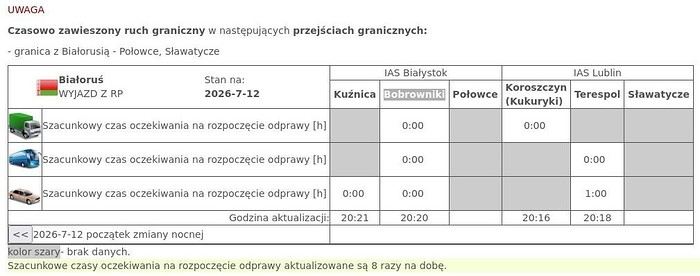
Planning to return to Belarus in mid-August, I just realized that since last September, Poland has reopened several border crossing points, and for buses, this means connections like Białystok-Grodno.
Several bus company routes, like on infobus.eu, take between 3 and 4 hours.
Trains from Warsaw to Białystok take about 1.5 to 2 hours.
This has the advantage of allowing comfortable train journeys with minimal time spent on a bus.
Also, the Terespol-Brest border might have shorter queues if you still prefer a Warsaw-Brest bus.
Note that another route to Minsk, if you have a paper Russian or Belarusian visa, is the Kaliningrad-Minsk train. It’s long—around ten or eleven hours—but you can lie down and sleep. An option if you fly into Gdańsk and then take a short bus to Kaliningrad.
There are also Belavia flights from Minsk to Kaliningrad, but they’re expensive. The route is scenic:
In any case, this adds a few more options compared to what’s been available over the last four years.
Hi there.
I’d like to know what the daily budget is for Greece in December. I’ll be landing in Athens and staying there for a week, then heading to some other islands—I don’t have a set itinerary yet. Also, I’ve heard that in December, or early January, the temperature is around 11–16°C. Is that accurate?
Finally, does anyone have a good recommendation for a cheap but clean hotel near the tourist sites? I don’t need a TV or any other extras. Also, is Greece gay-friendly?
I’d like to know the opening hours of physical stores between Germany and Austria, and between Austria and Slovenia, that sell the PAPER STICKER toll vignettes that still exist for 2026—non-digital ones. I don’t think they’re open 24/7, and I can’t find the info anywhere.
Thanks
Hi there,
We’re planning a 3-week trip in late September with our camper van to explore Bulgaria and Romania.
What routes would you recommend, starting from the South?
Is there an option to take a ferry in Italy, and is it worth it?
Thanks for all your tips!😊
Hi there, we’re a young couple and we’d love to go to the Blue Eye (Syri i Kalter) between today (26/06/26) and tomorrow (27/06/26).
Is anyone heading there and could give us a ride? We’re super friendly!
Thanks so much!
We're back. It's still a bit tough to get precise info, so here's a quick trip report!
A good starting point is Shkoder, a really pleasant city. You can easily explore Shkoder itself in a day or two.
Two accessible spots: Valbona and Theth.
In both cases, local travel agencies in Shkoder or online offer round-trip or one-way access packages. Super handy, especially for Valbona.
Valbona and Theth are both very steep! There aren’t many easy hikes for less sporty folks (like me!).
Valbona: The highlight is the amazing 2.5-hour boat ride across Lake Koman. There are day trips from Shkoder, but you’ll only get a short tour of the lake. The best option is to do the full crossing—so spend a night in Valbona (or two if you want to hike in the valley) and return.
Theth is deeply nestled in the mountains. The village at the end of the valley, which is a dead end, has lots of hotels, but they’re pricey. Other hostels are scattered along the mountainside road, but it’s a steep climb down to the village or to the start of the two easy hikes (waterfalls and the Blue Eye). For us, it was a one-hour descent (and ascent!). It’s fine if you have a car; otherwise, keep an eye out for a taxi (cheap) or try hitchhiking—it works really well.
Access from Shkoder to Theth is through an agency. The road is in great condition, and you can also rent a car for 2-3 days in Shkoder. If we did it again, that’s the option we’d choose.
We didn’t do the trek and returned to Shkoder each time. I can’t speak to its difficulty, but we were there in late May, and even experienced hikers had given up because of heavy rain and snow.
Hope this helps! It’s a stunning region you shouldn’t miss.
We’re a Canadian couple, both 77, and we’re already planning our vacation for fall 2027.
Timeframe: mid-September to mid-October... dates are flexible, and we might stay even longer.
Initially, I had planned this itinerary:
Athens (3), Naxos (4), Paros (4), Santorini (4), then a flight to Istanbul (7–10 days!!). This would let us maximize our flights and experience another culture.
That’s a lot of ferries, though... I’ve already cut out Milos.
Our second option would be to stay 2 x 15 days on two different islands, but I’d still keep Istanbul as our next destination... or maybe 30 days on one island that offers the chance to take day trips to other islands where the ferry ride is no more than 2 to 2.5 hours. For example, Naxos to Paros only takes 30 minutes. We could return the same evening or stay overnight.
Naxos seems like the best option!!!
For Istanbul, of course we want to do a day cruise on the Bosphorus and see Hagia Sophia. If we stay 6–7 days, what would be the other main attractions? Are there any points of interest we can reach by local bus?
Hi there!
We bought our tickets to Greece at the end of November 2025, and let’s just say the geopolitical climate has really taken a turn since then with the war started by the United States against Iran. Not to mention all the other conflicts happening around the world 😕... Anyway!
Our flight from Montreal is on May 1st, and I was wondering how things are currently being experienced in Greece.
We were planning to rent a car and had already booked accommodations on three Cyclades islands!!
The oil shortage is also worrying us...
If you could share some insights on this, that would be great!
A little trip report from an 11-day journey to Albania at the end of April 2026, with two friends in their early sixties and beyond...
Our route: Berat, Gjirokastër, Himarë, Tirana
Here are some opinions, tips, and great deals to share:
Flight Round-trip Beauvais-Tirana: Ryanair, 260 € with checked baggage (20 kg) and seat selection. Flight was fine and on time. 2h 30min flight.
Exchange: 1 € was worth 95 lek in April 2026. We were advised to exchange in the airport hall at the Illiria counter (98 lek outside the security zone), saying we wouldn’t find a better rate. However, the exchange rate was 93 lek for 1 euro, while in the city it was 95...
Car rental at Tirana airport for 9 days via Booking.com: 144 € (56 € for the car rental and 88 € for optional full insurance deductible waiver).
Wheego agency: the car was fine, but be careful when signing the contract—they tried to convince us that the insurance taken through Booking didn’t cover everything and insisted we take their own insurance for 250 €... We refused.
After reading about driving in Tirana, instead of starting our trip by visiting the capital, we decided to head straight to Berat upon arrival and return the car at the end of the trip to explore the city on foot. This turned out to be a great choice!
Accommodations: All our stays were booked via Booking.com. Everyone prefers to be paid in euros and in cash—they mention this when booking.
Berat: 2-hour drive from the airport.
Accommodation: Vila Arben Elezi: 135 € for 3 nights with breakfast and private parking. The room was decent and clean but a bit dark, located slightly below ground level near the parking. However, the breakfast on the rooftop was excellent, especially with the stunning view of the "city of a thousand windows." Great location.
Berat was our favorite—there are lovely walks through the different neighborhoods on both sides of the river, each with a very different vibe. The citadel visit is also fascinating, as it’s like a small town within the fortress.
The walk along the river is pleasant, with plenty of restaurant choices. Other restaurants in the old town are also very nice. The White House Restaurant, on the first floor along the road, is good and offers a great view of the Gorica district.
Gjirokastër:
Accommodation: Te Ajdini Guest House: 120 € for 3 nights with breakfast. A private home stay. There’s free parking just before entering the city, a 5-minute walk from the accommodation, which is very convenient since the cobblestone streets are narrow and parking is tricky. Yes, it’s a climb to get to the place, but everything in this city is uphill... The room was bright and clean. Breakfast was very good, hearty, and served in the courtyard with a view of the castle. The guesthouse is a 5-minute walk from the city center (the bazaar) but in a quiet area.
Restaurants: Rrapi and Kujtimi—good and affordable with their little pergolas.
The old town of Gjirokastër is charming but very touristy, with streets packed with souvenir shops and restaurant tables and chairs. Lots of people.
-The bunker visit (near the tourist office) is very interesting: Cold War Tunnel.
The castle offers a beautiful view of the city.
-Visit to the Ottoman house Skenduli: very well done. Don’t forget to climb the ladder facing a trapdoor in the ceiling to see the roof’s framework—it’s like a forest of beams: impressive!
-The bridge Ura e Ali Pasha: A steep 45-minute climb from the city to the site is worth it, but once you reach the viewpoint (which is stunning), you have to go back down a path to reach the bridge. You can drive to the viewpoint, but parking is very tricky.
Around Gjirokastër:
-Just outside the city: Lake Liqeni i Viroit: a nice, ordinary-looking lake, but at the end, there’s a natural spring making the water crystal clear and a brilliant blue—really spectacular, like photos of Blue Eye near Sarandë.
-Drive to Përmet along the gorges: beautiful viewpoints along the way and lovely countryside.
Himarë:
Accommodation: Vila Kosteli: 120 € for 2 nights with breakfast—slightly overpriced for this type of place but very close to a small beach and not far from the promenade with all the restaurants. Private parking, but very tight (4 cars on a tiny lot along the road). The "sea view" room is a bit obstructed by the building across the street. However, the rooftop breakfast view is beautiful. Friendly staff.
Himarë is a pleasant seaside resort, quite calm (but it was April...). There’s a cute promenade with restaurants along the beach. The castle on the heights of Himarë is worth a visit.
Around Himarë:
-Qeparo is worth a quick stop, but Qeparo village is really worth the detour: a village lost in the heights after a scenic drive up from the coastal road—narrow but well-maintained. Beautiful view from the top and a charming village.
-The Big Bunker and Llogora Panorama: take a right turn several kilometers after Dhermi—a road that climbs steeply from the start... A breathtaking winding road that reaches 900 meters in altitude. The view is stunning.
-Several small villages between Dhermi and Himarë are worth a quick stop.
-Porto Palermo Castle is somewhat disappointing.
Tirana:
Taxi from Tirana airport to the city center: 15 € with electric taxis (Green Taxi, Bee Taxi, Do Taxi).
Accommodation: Hotel Nevi Apartment: 63 € for 2 nights. A private apartment in an older building but very clean and well-equipped, with a kitchen and small enclosed balcony.
Great welcome and contact—the owner even booked a taxi for our departure. Very well located, close to the main square, shops, and restaurants. A small supermarket nearby is perfect for stocking up on breakfast supplies.
The city is lively and dynamic, with plenty of green spaces and promenades. Buildings are popping up everywhere, often with surprising architecture—like a building shaped like a face, a huge golden cube, and many others under construction.
-Sky Tower: at the top, a rotating bar offers a 360° view of the city and its buildings. Drinks are a bit pricier than usual, but it’s totally worth it (6 € for a beer or a glass of white wine, 3 € for coffee). We were there for sunset, and it was amazing! A must-do. Arrive early, as it fills up quickly.
-The House of Leaves: a house used for secret surveillance and interrogations during the dictatorship... A great way to learn about the surveillance systems of that era.
-Bunk’Art 2: a bunker in the heart of the city—very interesting, covering the dictatorship period and its system...
-The Pazari i Ri Bazaar: the new bazaar district. The large hall is worth a visit, but souvenir prices are often higher than elsewhere... The area is nice.
Restaurant: Kastrati Restaurant—a bit like a canteen with lots of traditional dishes. It’s on the first floor of a building. Excellent value for money, and the waitress explains the dishes in French.
That’s a little overview of our trip and my personal impressions!
Albania is a beautiful and pleasant country to visit.
If you have any questions, feel free to ask!
Hi everyone,
We’re thinking of spending 3 weeks in Crete between mid-August and early September, renting a car, quickly exploring a few spots in the east, and focusing on the west, southwest, and south.
I’m worried about the heavy tourist crowds. Is it really more noticeable than elsewhere in Greece? Is there a way to avoid the crowds without missing out on the iconic places, which I imagine are stunning in Crete? Thanks for your thoughts and experiences!
Hi,
I'm heading to Greece via Albania soon. Does anyone have info on transportation from Gjirokastër to Ioannina?
Which company, fares, and schedules—it's not very clear with Google.
I’m just passing through Bratislava quickly (one afternoon, one night, one morning) and I’d love to see the highlights of the city.
I’ve put together a little itinerary—feel free to let me know what you think!
Start at the castle and its beautiful viewpoint
Visit the Baroque gardens
St. Martin’s Cathedral, quick visit
National Theatre
Discover the Cumil statues
Primatial Palace via Hlavné Namestie
Michael’s Gate
Grassalkovich Palace via Obchodna
Walk across Namesti Slobody to head back to the upside-down pyramid
Head down to the Blue Church
Cross the Danube to see Sad Janka Krala, then return via the UFO Bridge
There you go—10 km and a packed day!
What do you think?