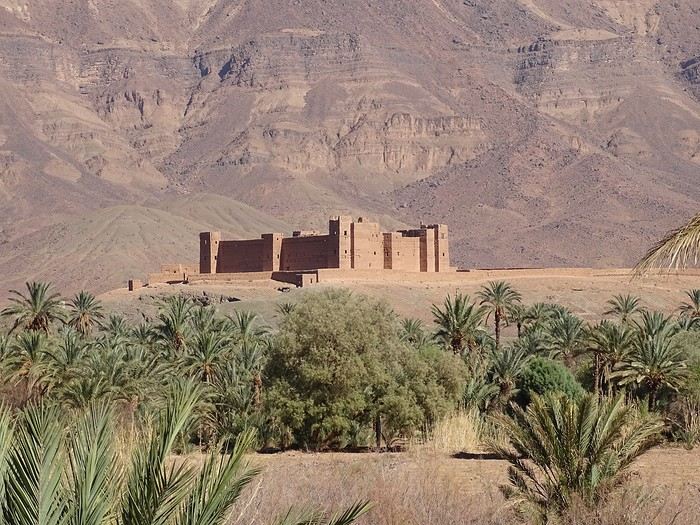
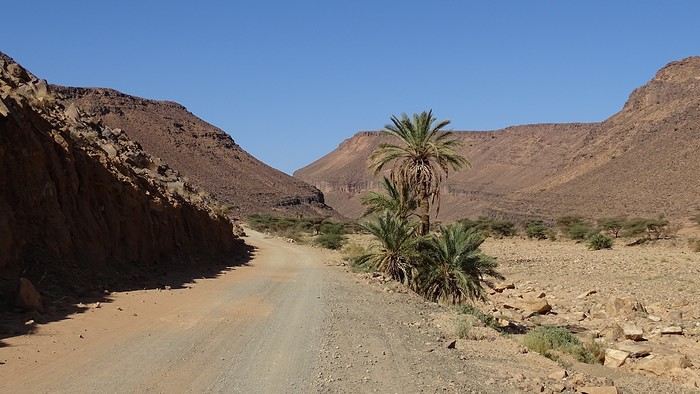
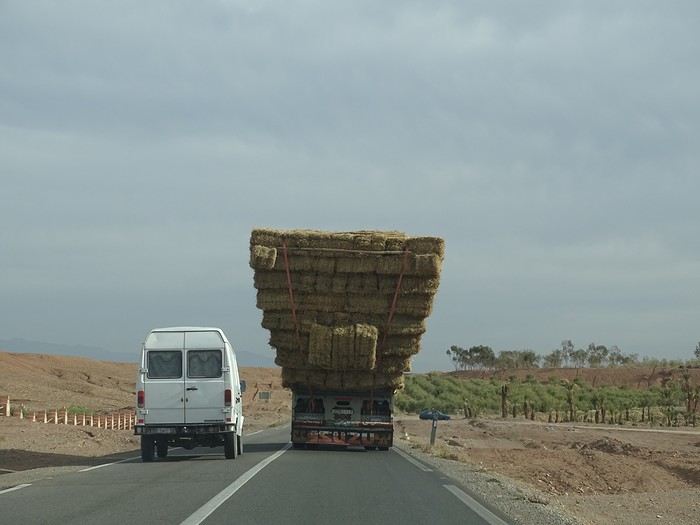
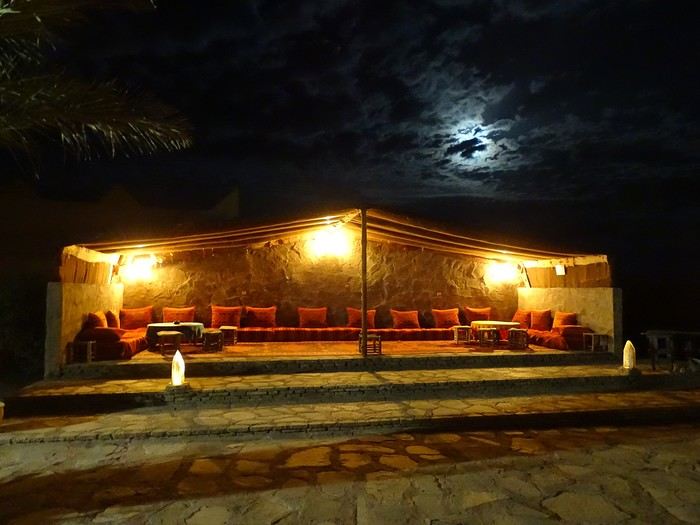
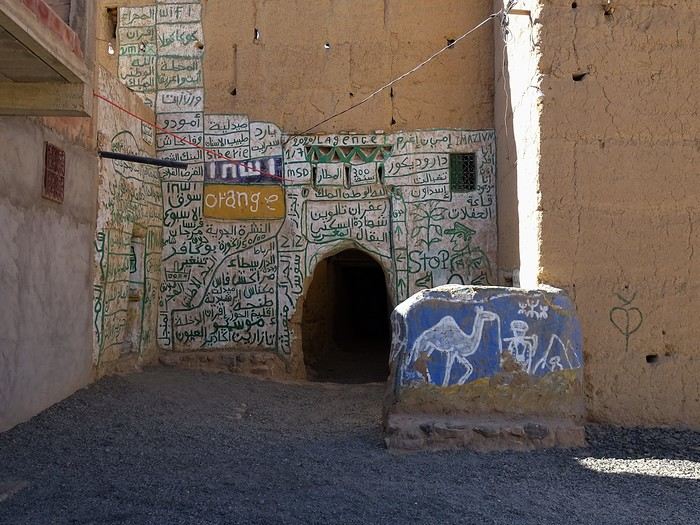
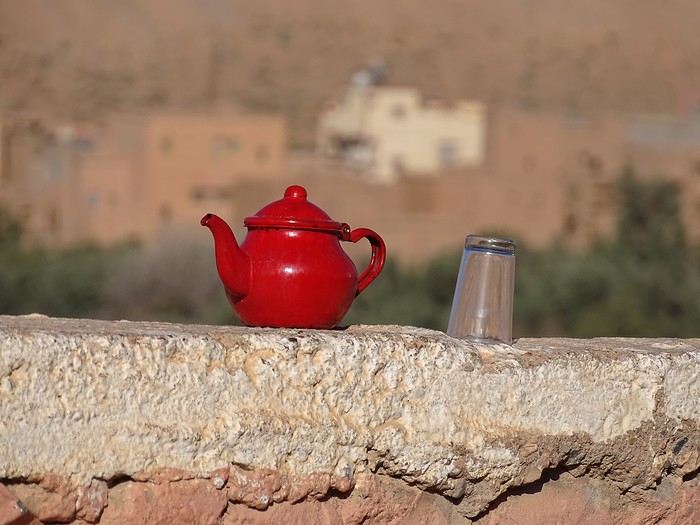
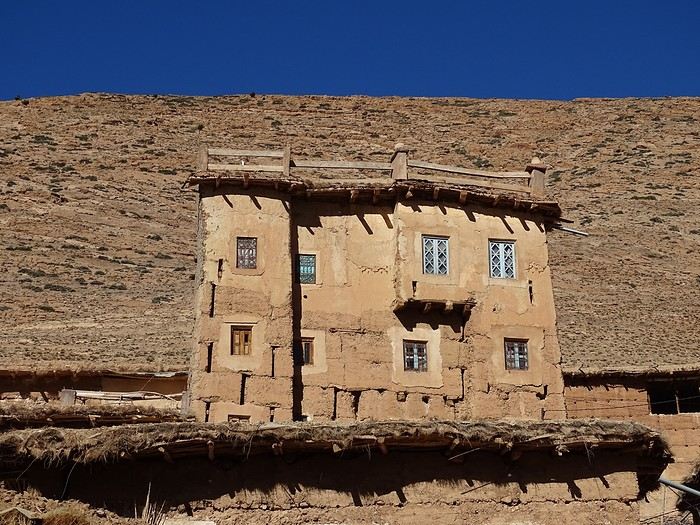
Last October, we landed in Marrakech to spend a few days with family exploring Morocco’s roads.
Transport: a rented Dacia.
Accommodations: small guesthouses.
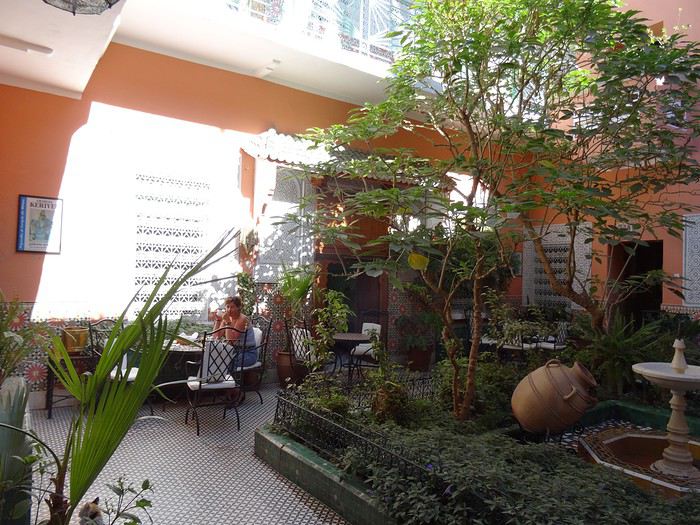
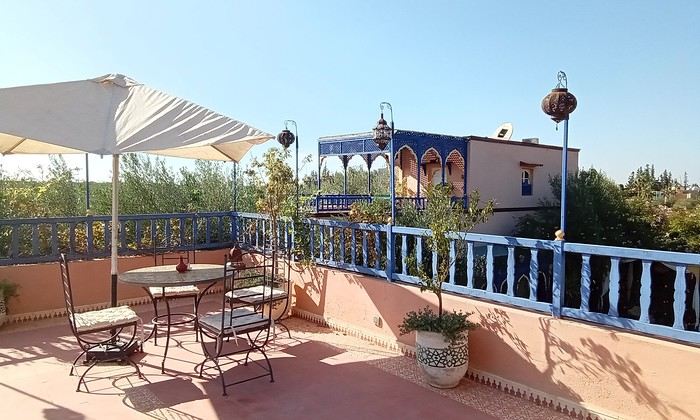
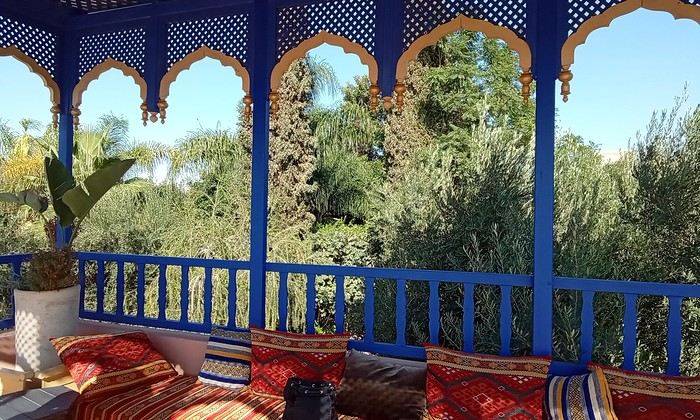
Our first stop was just a few kilometers from Marrakech, at a lovely house perfect for relaxing and recharging before continuing. It’s called Bleu House, a little paradise on the outskirts of Marrakech. The welcome was very warm, with a beautiful pool and a lovely garden.
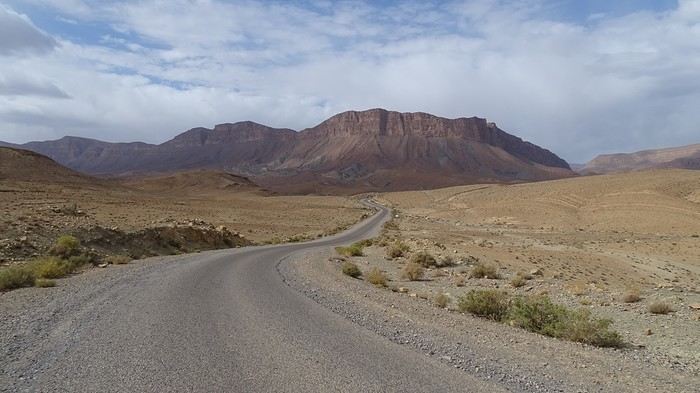
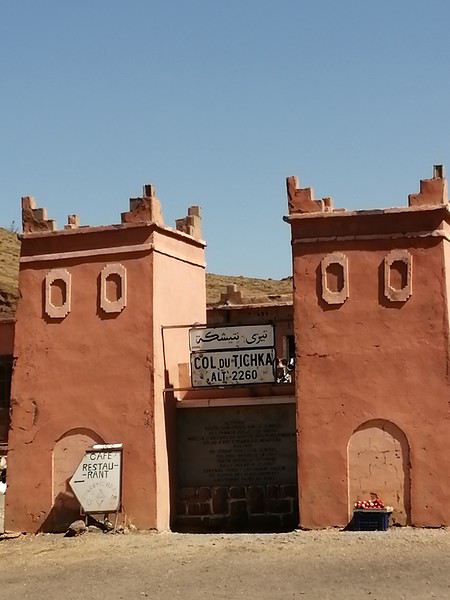
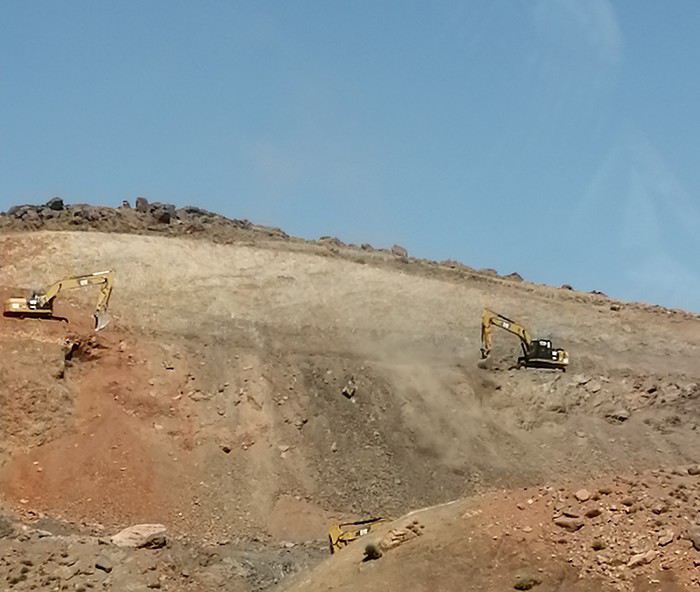
Next, we headed toward the Tichka Pass. The road has really improved in recent years—it’s much easier to drive now. No more getting stuck behind trucks, and today, the construction is practically finished.
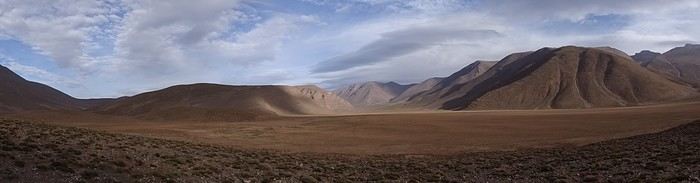
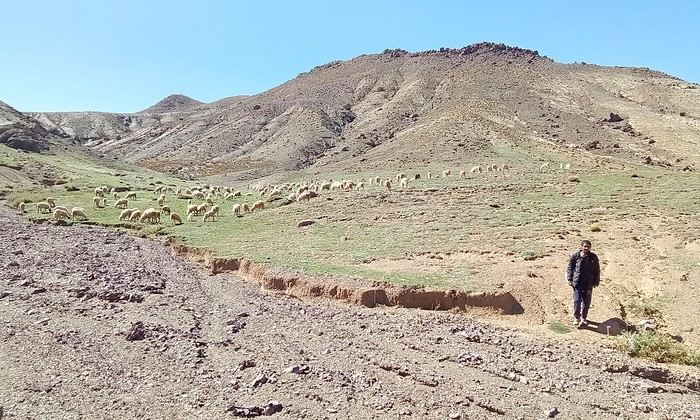
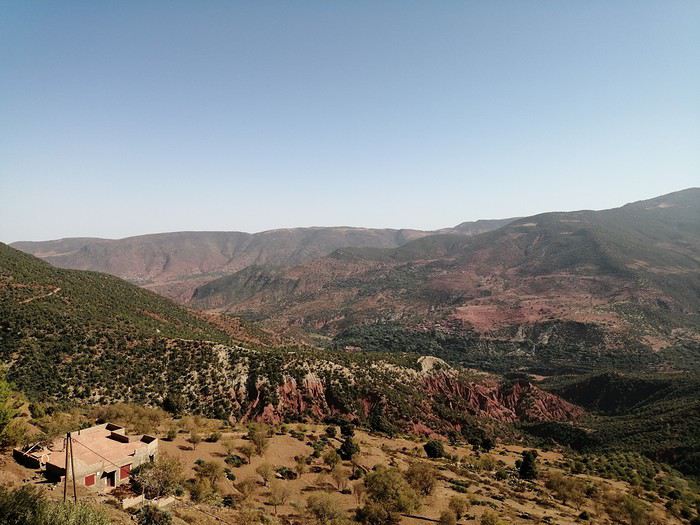
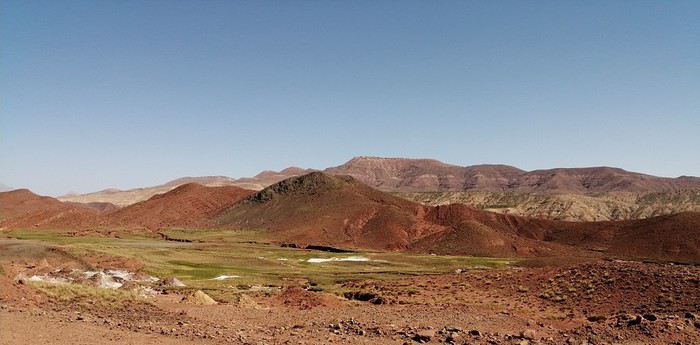
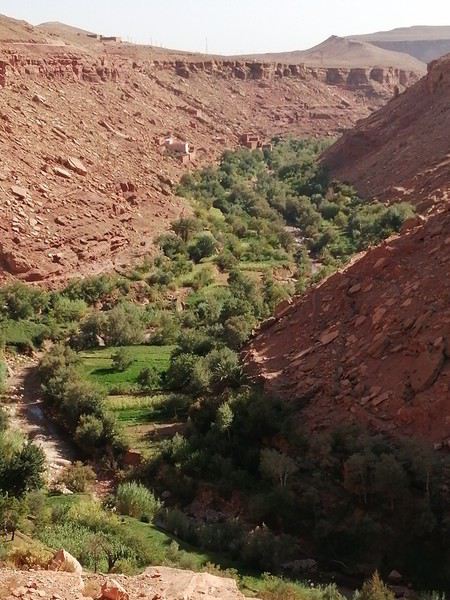
Morocco has turned green after the recent rains. It’s a joy for the herds and shepherds.
I bought a one-way flight (Ryanair) and a return flight (EasyJet) to spend a week in Morocco in April.
My passport expires 3 weeks after the return date.
Some websites say the passport must be valid for 3 months at the time of entry.
However, it will still be valid both on entry and return, but its validity will only be 1 month at the time of entry (and 3 weeks on the return date, everything prepaid).
It's an individual family trip.
The consulate can't give me an answer—they're still looking into it (really!)
I’m planning a road trip to Morocco in about a month.
I’ve read quite a few discussions, posts, comments, and travel journals that have helped me prepare, but I still need your valuable input.
The north seems easier to plan. It’s the south that’s got me wondering.
The plan:
- 20 days in the south solo, going off the beaten path (looking for simplicity, encounters, discovery, and breathtaking views)
- 10 days in the north with my wife and her 8-year-old daughter (so more coastal, some sightseeing—more "classic")
When: August (I know it’s not the best time, but no choice)
Duration: 20 days in the south + 10 days in the north (might seem short)
Distance: 3,000 km in the south over 20 days. Rental vehicle to be decided (4x4?)
(I’ve done a Portugal road trip from Lille—5,000 km in 3 weeks—and Italy several times, usually around 4,000–5,000 km in 3 weeks).
Route (I need to plot this on a map like Maps.me or Google...):
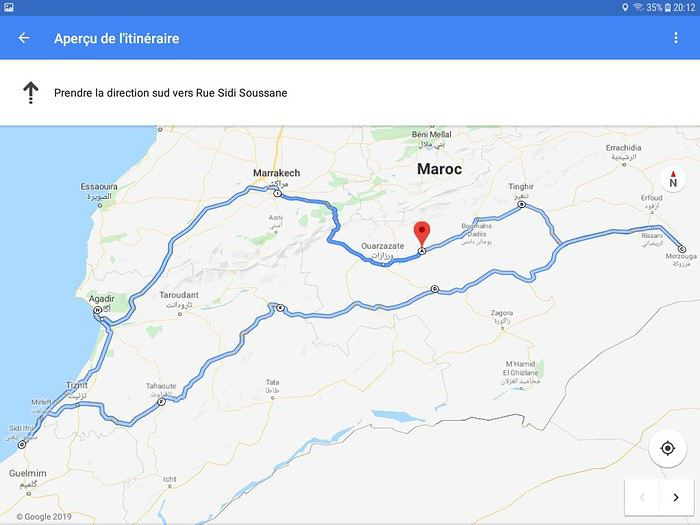
Start in Marrakech -> Tinmelt -> Icht -> M’hamid El Ghizlane -> Agdz -> Khamlia -> Errachidia -> Tinghir -> Imilchil -> Boulmane Dadès -> Ouarzazate -> Telouet -> Demnate -> Arousse -> Ahansal Gorges -> Tilouguite -> Bin El Ouidane -> Oued El Abid Gorges -> Ouzoud Waterfalls -> Marrakech
On paper, this all seems "doable"...
I’ve never been to Morocco before. It’s my first time.
I’ve heard that Morocco is best experienced "slowly and peacefully," taking your time.
I’d love to hear your thoughts on these points—that’s the whole point!
I’ve got a few questions and could really use your help with your on-the-ground knowledge and experiences:
Is this really doable? Are the roads on this route passable? Any tips?
Thanks so much for your help and for any time you can spare.
In early March, full of carefree joy and happy to return to Morocco, we landed in Marrakech under the sun.
We spent just one night in Marrakech at the Hôtel Toulousain, as we did on our previous trip. And we booked our 3 nights for the end of our trip, the second half of March... Ouch! Ouch! Ouch! But we’re not there yet...
Our first goal is to reach Magdaz, a mountain village in the Tessaout Valley, sometimes called the lost valley.
We discovered the village of Magdaz on this forum, and we were charmed by the photos and comments from travelers who came before us.
The road is easy—it’s dry, and the tarmac takes us right to the village gates at over 2,000 meters above sea level.
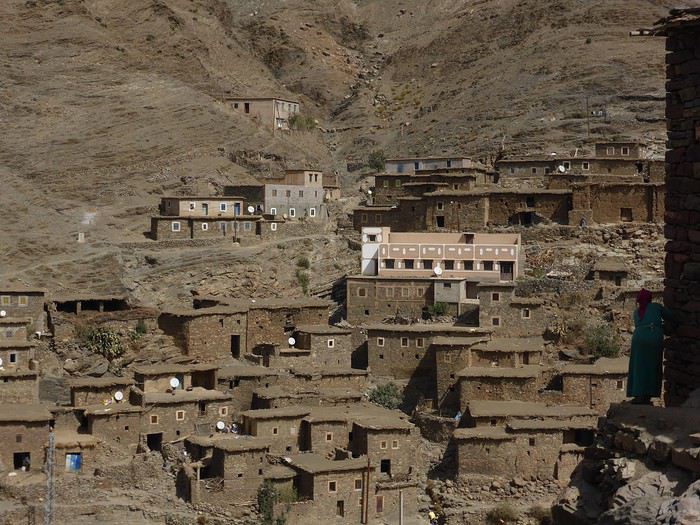
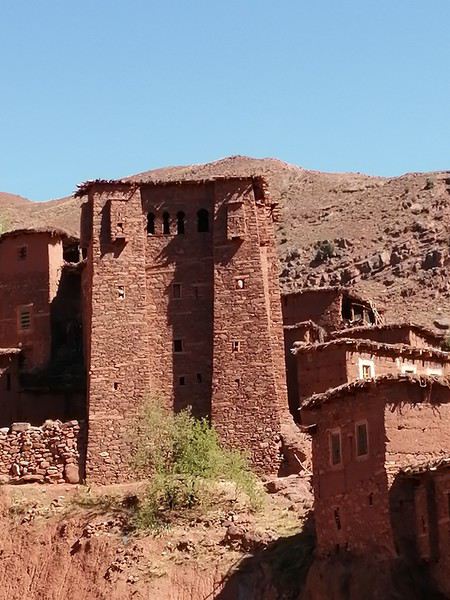
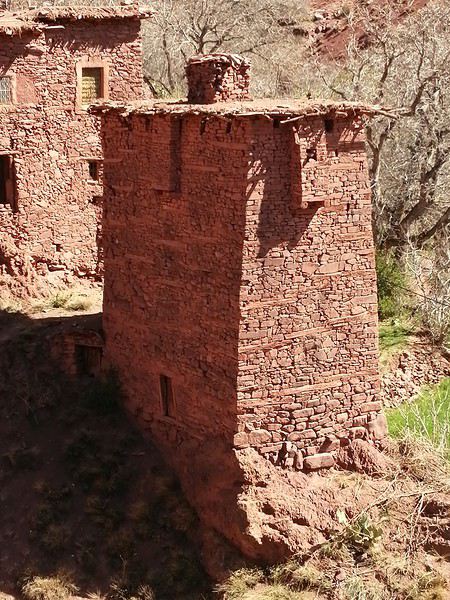
We arrive in the afternoon and are left speechless by the beauty of the place. A jewel of Berber architecture! Perfectly restored granaries and kasbahs!
A young man from the village guides us on the visit and opens the doors to the terraces overlooking the village.
Several magnificent collective granaries have been beautifully restored. The warm colors of the stone capture the light wonderfully. It’s stunning!
We won’t find anything decent to stay overnight there, so we head back down a bit and settle in at the Assounfou guesthouse. Lovely welcome. The place is in excellent condition and very clean. It’s spacious, but we’re the only ones there.
First day full of promise!
Hi there,
I’m planning to cross the Atlas M’Goun-Toubkal range at the end of March and I’m looking for info on how to get to Ait Bou Oulli from Marrakech via Demnate.
Can anyone tell me if there’s a direct bus to Demnate and then a minibus (once it’s full) to Ait Bou Oulli? Is it doable in a day by bus or even a shared taxi?
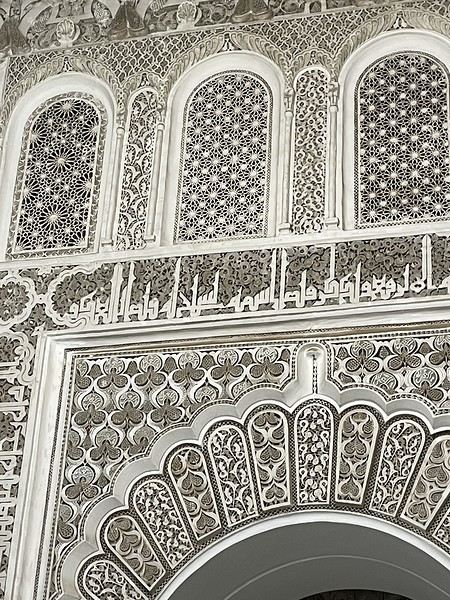
We arrive in the evening in Marrakesh, and a taxi arranged by our friendly Riad is waiting for us. The driver takes us to the door, where we’re briefly greeted by our hosts. The room is heated—phew—because it’s really cold on this January 17th for our arrival. Riad Alisma, where we’re staying for 2 nights. The next morning, it’s pouring rain when we wake up, but after a good breakfast, the rain has calmed down. Off we go to the medersa, which allows for a relatively sheltered visit. We’d visited this palace 15 years ago—it’s been renovated since then.
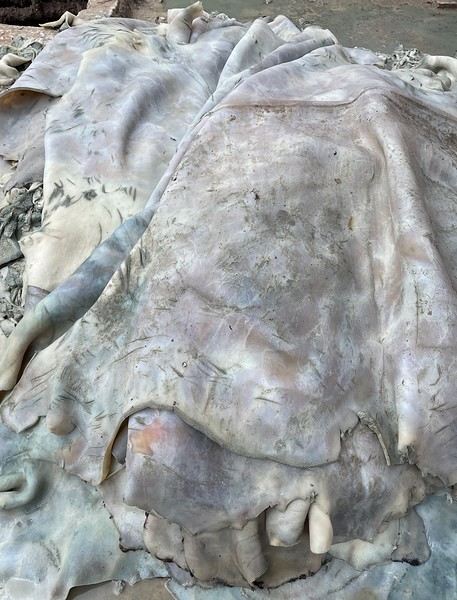
From there, without the rain, we wander aimlessly and eventually end up near the tanneries, but it’s Sunday, and there’s very little activity. Of course, we get hassled by a tout.
Here, the hides after being treated with lime—I love the colors.
We part ways a bit annoyed. He gets a little revenge by giving us bad directions, and we end up outside the city walls. We decide to take a taxi to the new modern art museum—60 dirhams for the 5 km, which is nothing when you think about it. That tout, who we didn’t ask for anything and made it clear we weren’t buying anything, dragged us into a shop supposedly only open that day and demanded 50 dirhams for his "services"! Let’s forget that bad moment and enjoy the exhibition at the MACAL.
The taxi on the way back drops us off at Place des Ferblantiers, not far from our Riad. We’re a little peckish—it’s worth mentioning that at lunchtime, we only ate a plate of beans from a street vendor. So, we buy a bunch of little sweets, each more delicious than the last, at Ajar. We snack while sipping mint tea and watching life go by around us. A final visit to the Museum of Moroccan Cuisine on our way back helps us dodge a few more showers. Then it’s back to the Riad. The atmosphere in the city is heating up—it’s the AFCON final tonight. The temperatures, though? Not so much. We ordered a meal at the Riad, and it was a good call—not only was it really tasty, but the rain also picked up again. Our day in Marrakesh ends under the covers with a good book and some photo sorting. Still, we managed 10,750 steps.
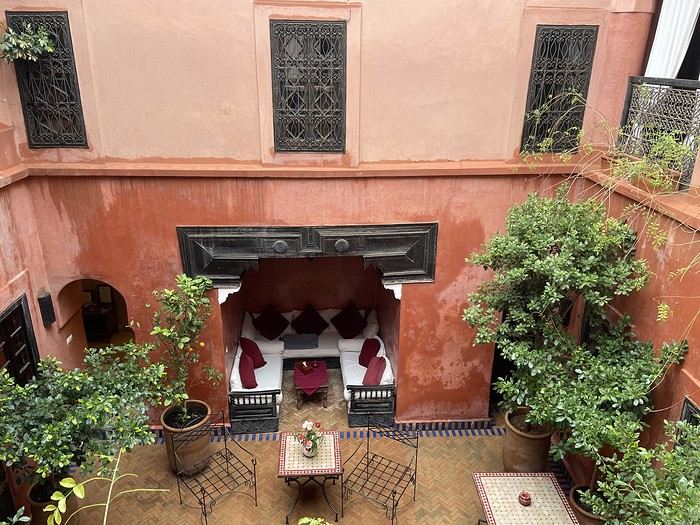
View of our Riad
Tomorrow, we’ll pick up our rental car from Medloc and head to Essaouira.
Hey everyone!
I’m heading to Morocco in 2 weeks to climb M'Goun.
Which side is the most practical for logistics, please? I’ll be hiring a muleteer/cook.
I’m torn between starting from the Happy Valley (Agouti, Aït Bouguemez) or the southern slope (Skoura, Kalaat El M'Gouna).
I tried to go 5 years ago, 2 weeks before COVID, and ended up switching to Siroua based on Willempsie’s advice, given the season... but mid-May should be fine now, right?
Thanks for your help,
Pacoloco
And there you have it—promise made, promise kept. Here I go! I’m going to try and share our adventure under the Moroccan sun. I’ll do my best to capture how we felt during this trip. And I hope you’ll be kind to a newbie at this!
We planned this trip with the tips we got from this forum, so thank you to everyone who helped us prepare. Thanks to you, we had unforgettable moments.
Here’s our itinerary, which let us see the Atlas Mountains, the oases of the South, the sandy desert, and the Atlantic coast. We landed in Marrakech early in the morning, and our rental car agent was waiting for us at the airport. After sorting out the formalities, we left Marrakech heading toward Ouarzazate.
The heavy traffic in Marrakech quickly gave way to smooth driving. As soon as we left the city, it was calm.
And right outside the city, we came across shepherds grazing their sheep by the roadside... It’s definitely a surprise at first! But yes... We’re in Morocco... No doubt about it... We’re in the thick of it!
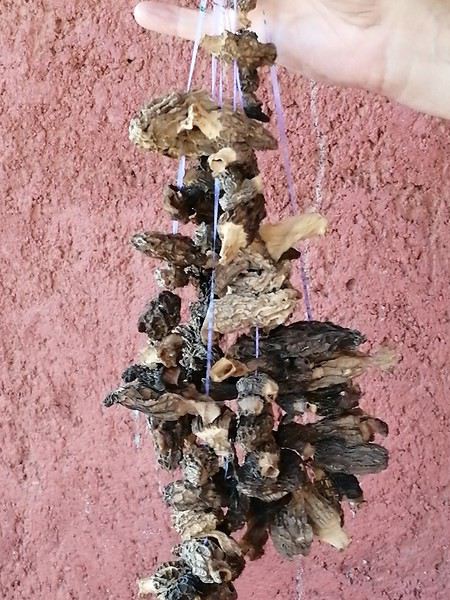
As we started gaining altitude, vendors waved at us, offering dried morels. At first, we weren’t sure what they were selling, but we stopped for tea on a terrace to admire the mountain scenery, and they offered us those famous morels again.
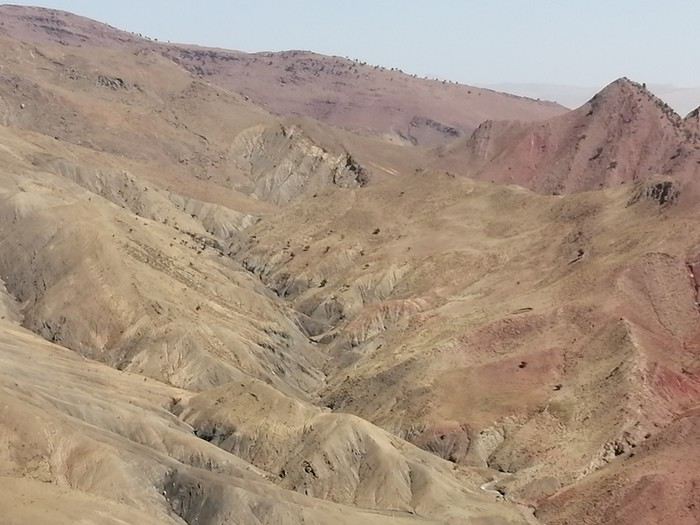
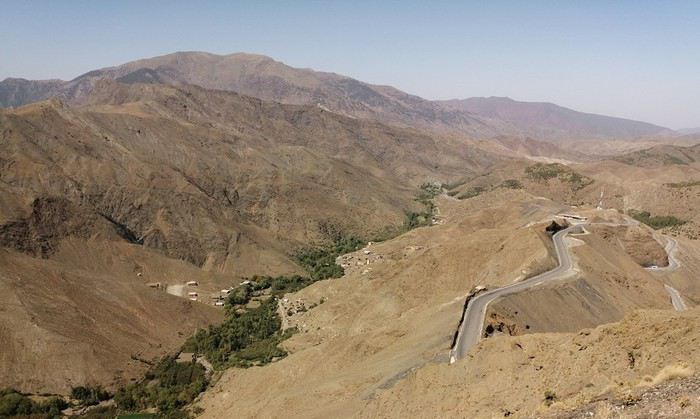
We continued our climb toward Tizi N Tichka... Gigantic valleys stretched out before us. With every turn, we discovered breathtaking landscapes.
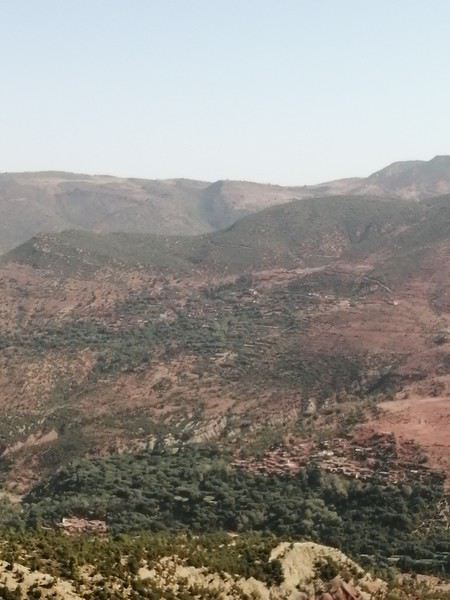
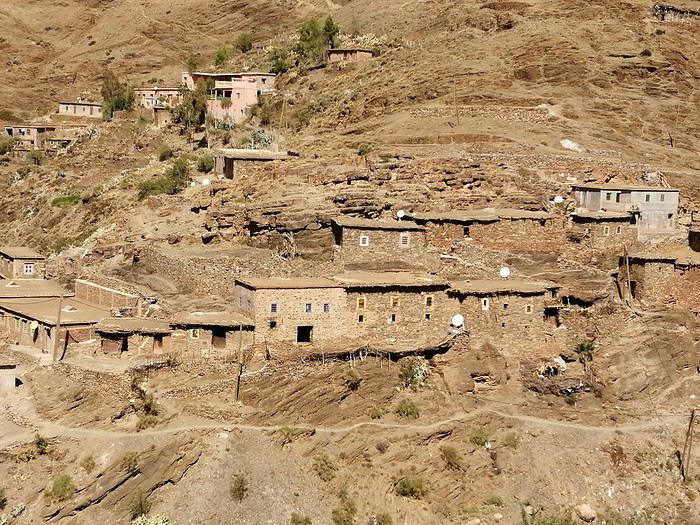
Villages built into the hillsides blended into the earth. It was strikingly simple yet harmonious.
At the top of the pass, 2200m up, we stopped to soak in the moment, the fresh air, and the view.
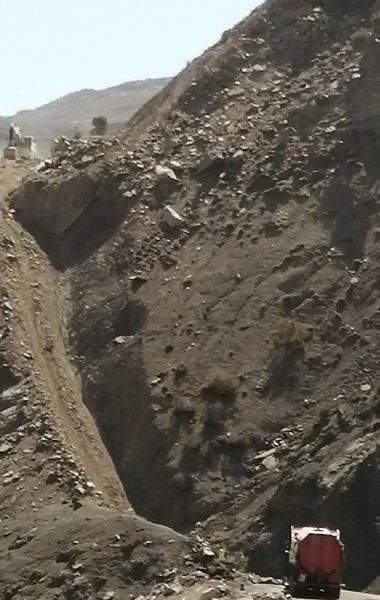
And we carried on toward Ouarzazate. The road was under construction. Mechanical giants were tackling the mountain. But the mountain was enormous. We were impressed by the scale of the work.
Then, we left the main road to head left toward Telouet... It was stunning. The colors changed. Maybe we felt less overwhelmed by the imposing Atlas.
Just a personal impression!
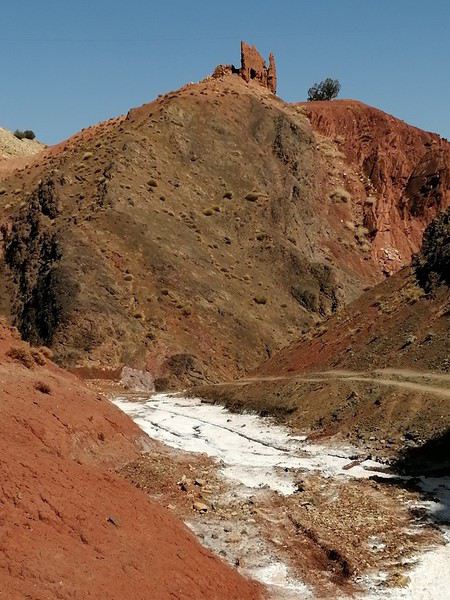
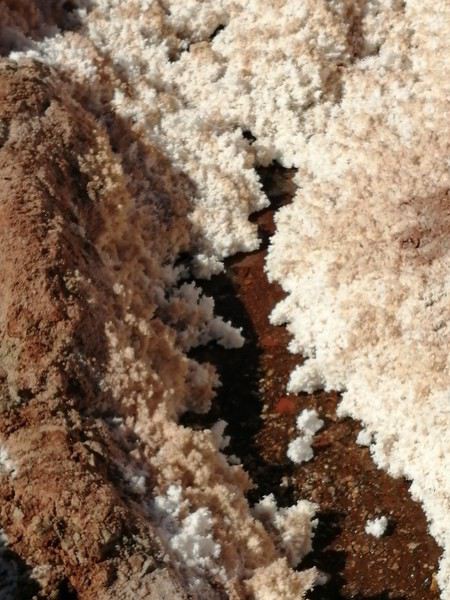
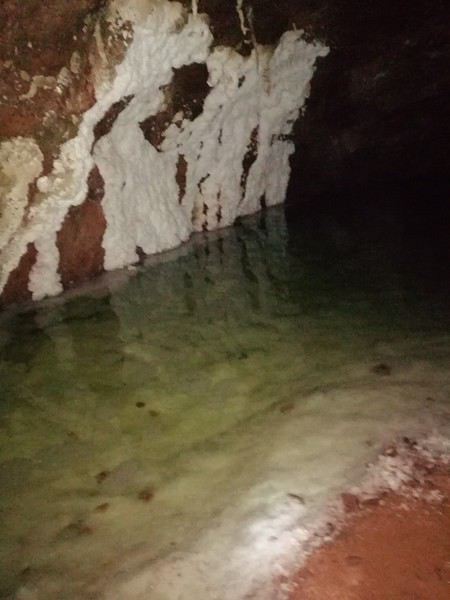
Right after passing through Telouet (maybe we’ll shock history buffs—we didn’t visit the kasbah), we went to see the salt mine. It was unexpected. Salt was everywhere. The stream water wound its way between salt crystals and waterfalls. It was really pretty. And then there was the cave. We had a guide for the visit. Stalactites and stalagmites crisscrossed here and there. At the back of the cave, we saw a small lake surrounded by crystals. It was beautiful.
We hit the road again. We drove through stunning landscapes: vast plains for grazing herds, rivers nestled deep in the valleys.
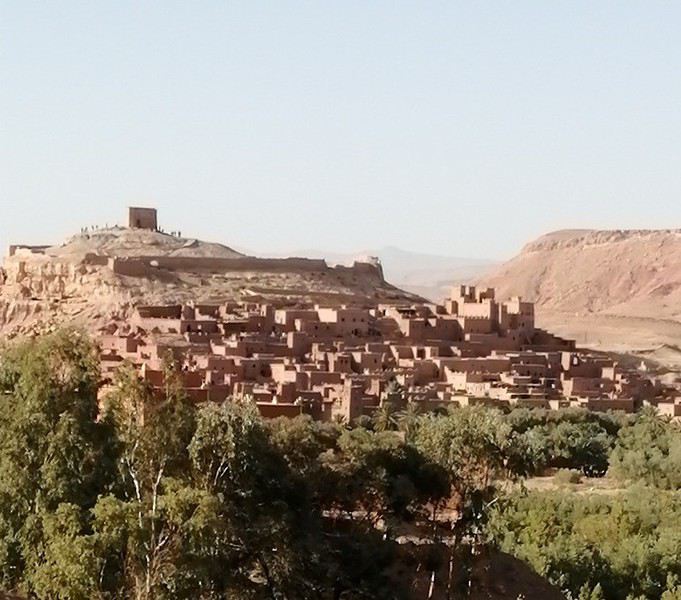
We proudly drove past the ksar Ait Benhaddou without stopping—just long enough to snap a quick photo and keep going so we’d arrive before nightfall.
We made a few small purchases in Ouarzazate and headed straight for the Skoura palm grove, where we’d booked three nights at the guesthouse Kasbah La Palmeraie.
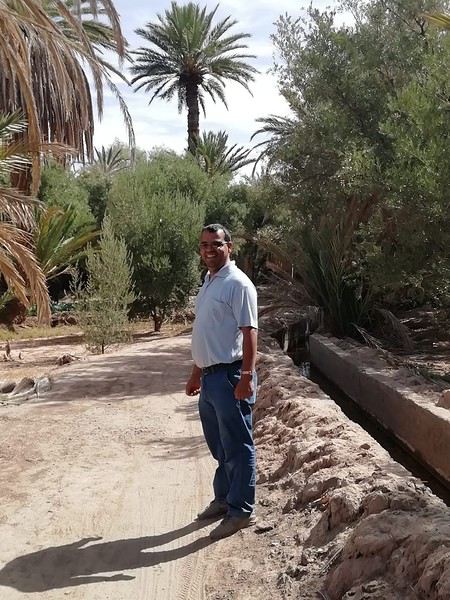
Mohamed, the owner, welcomed us warmly, and we shared tea with the family. We felt right at home. We were made to feel welcome.
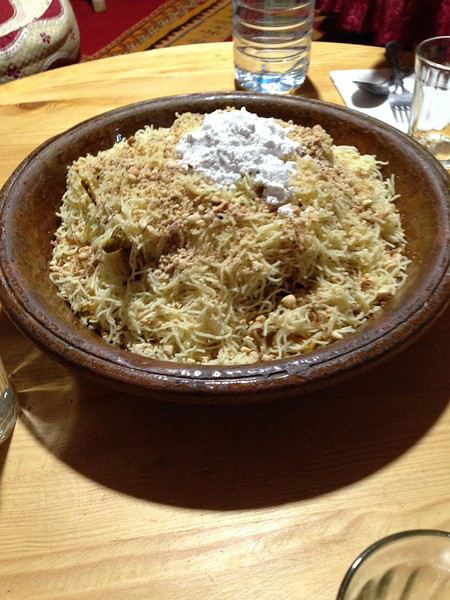
Dinner was a hit—a real Moroccan meal, a sweet-and-savory dish with steamed vermicelli and chicken. Delicious! A great surprise for us—we’d never tried it before.
After such a long day that started so early, we were happy to crawl into bed.
But we felt like the trip was off to the best possible start.
We went to Morocco in April with our children and grandchildren.
We landed in Marrakech around 9 AM and took a bus to our small hotel in the Guéliz district. This was to avoid dealing with taxi drivers who might give our young travelers a very negative impression of Marrakech... The bus drops us off very close to the Hôtel Toulousain, which has always given us the warmest welcome for over 25 years. We settle into our rooms and head to the medina to have lunch first and then wander through the streets of the old city, introducing it to our little group.
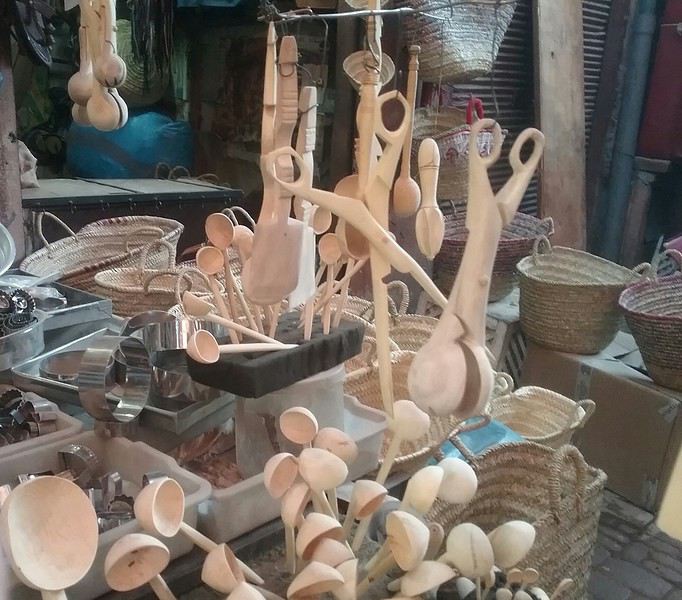
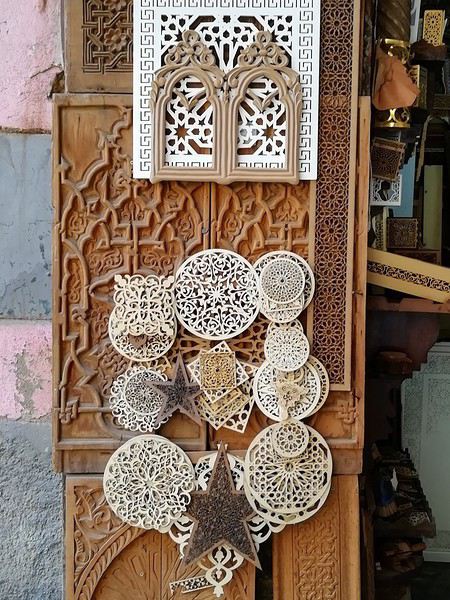
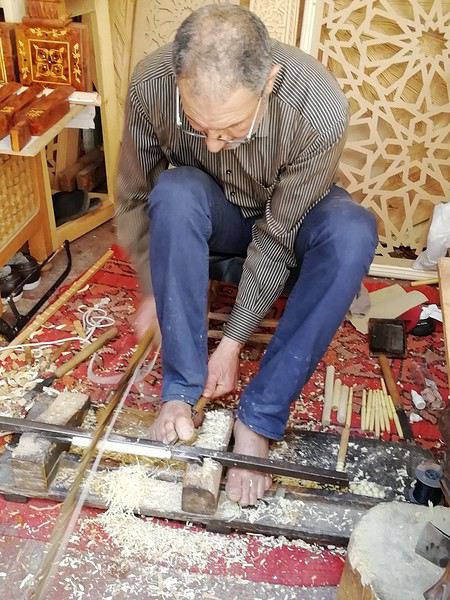
Young and old alike are amazed by the craftsmanship and attention to detail in the work done by the various artisans.
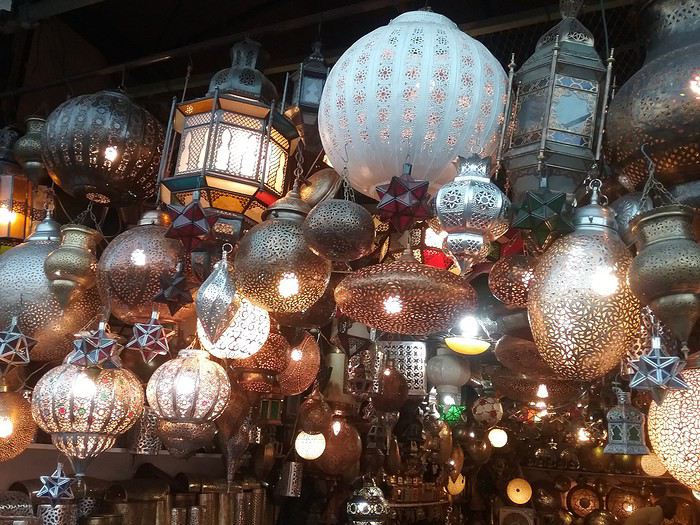
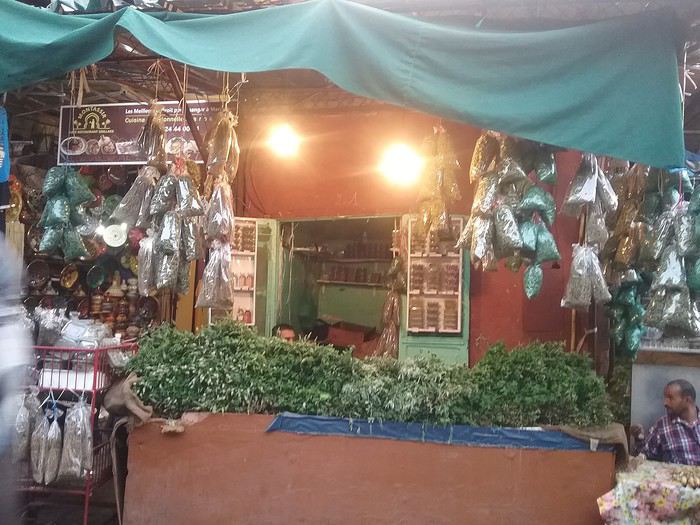
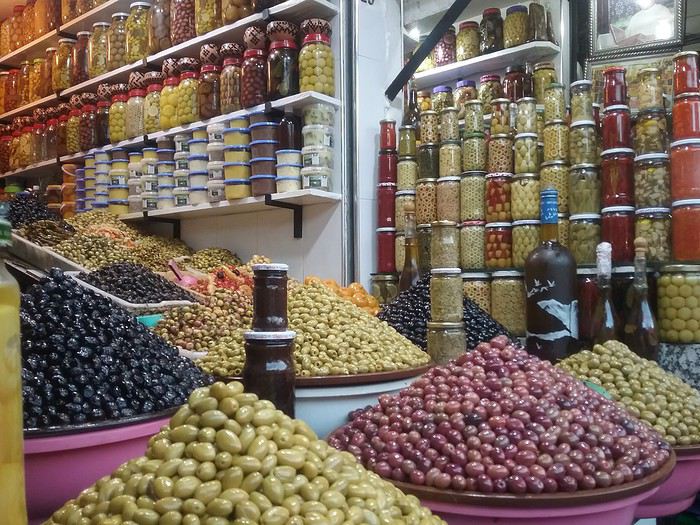
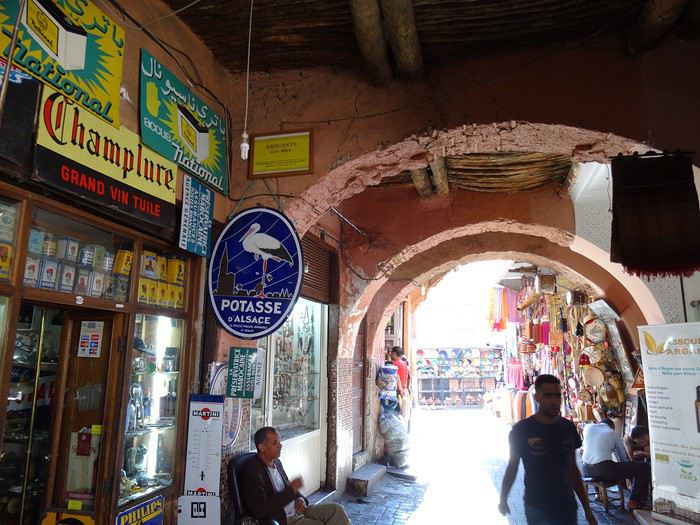
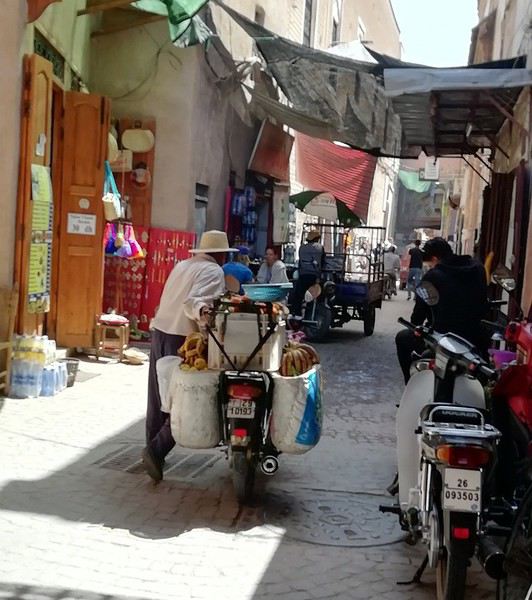
The souks also impress first-time visitors, both with their size and the sheer amount of goods on offer. For those visiting for the first time, it’s a real maze.
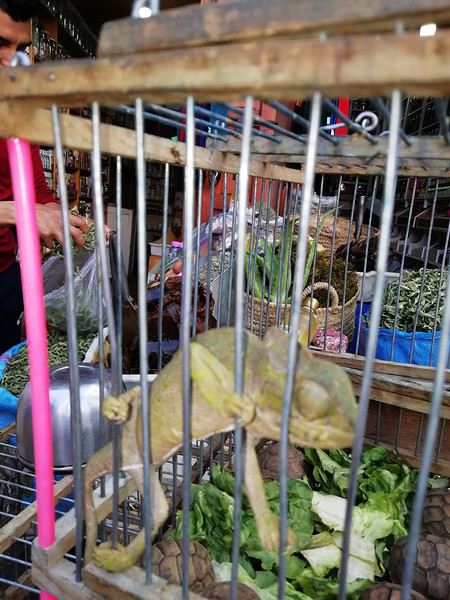
Colorful chameleons everywhere... Will they survive for long in their cages under the scorching sun?
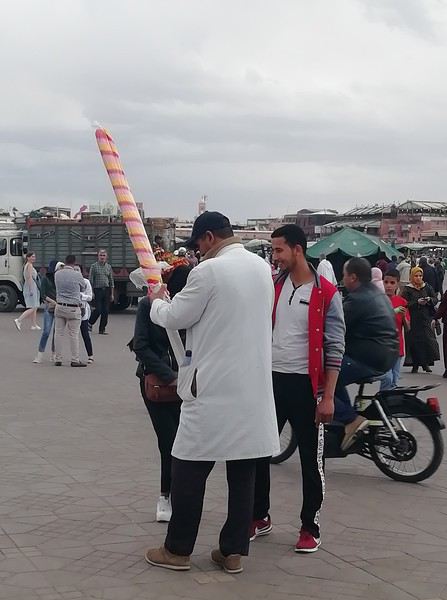
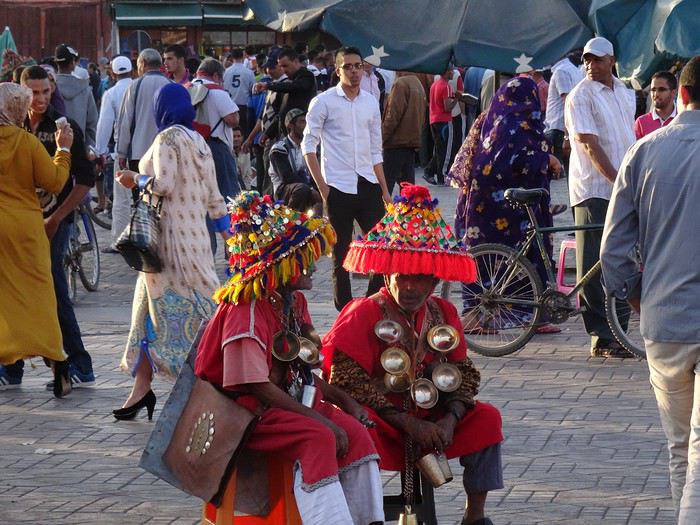
Another surprise for the kids: the lollipop vendor in Jemaa El Fna Square, with giant lollipops that really whet their appetites...
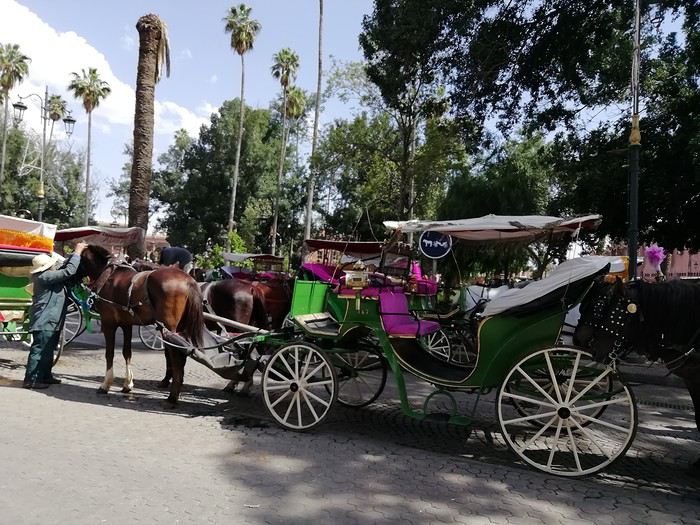
By late afternoon, little legs are tired, and horse-drawn carriages are a welcome way to get back to the hotel.
A big thank you to the VoyageForum members who shared their experiences with us! We spent 3 wonderful days at "La Kasbah la Palmeraie" in Skoura. Coming from Marrakech (a stunning drive after the Tichka Pass via Telouet and Ait-Benhaddou), our stay at the Palmeraie was pure bliss: Mohammed and Ghizlane’s warm welcome, delicious breakfasts on the terrace overlooking the palm grove (wood-fired bread, honey pancakes made by Ghizlane), and equally delicious and hearty evening meals shared as a family around a cozy fire. We felt right at home and learned so much about the local way of life. The excursions offered were always interesting and off the beaten tourist track—from there, we explored the Dades Valley and Gorges, the Almond Blossom Valley (gorgeous!), and the palm grove. The region is home to magnificent kasbahs, including our hosts’. A different way to "visit" Morocco!
A group of 11 of us will be spending a week in Marrakech in May.
I’d love your thoughts and advice on these excursions I’ve shortlisted—or any others I might not have considered:
- Visiting Marrakech: with or without a guide? Is one day enough for the main sights?
- Essaouira: Is a day trip a good option? Is the journey scenic?
- Ouzoud Waterfalls: Is the place worth the trip?
- Agafay Desert: Any recommendations to avoid the tourist crowds?
- Imlil Valley and Mount Toubkal: A worthwhile detour?
Of course, I don’t plan to do everything in one week, but your input will help me decide...
Thanks in advance! !
For a week-long trip starting from Marrakech with a rental car, if you had to choose between these two loops, which one would you go for and why?
1) Marrakech - Ouarzazate - Dades Gorges - Merzouga - Marrakech (map itinerary)
2) Marrakech - Ouarzazate - Dades Gorges - Zagora - Marrakech (map itinerary)
Important info: this is for mid-February, so nights will be cold.
For option 1, we’re thinking of staying in a "solid" hotel in Merzouga rather than camping in a tent without heating (our 10-year-old might not like that ^^). If you’ve got any experience to share about cold winter nights in the desert while camping, that’d be super helpful!
Hi there,
Just back from 3 weeks in Morocco, I’m selling a SIM card (INWI operator) at a low price.
It still has 15 MAD + 10 GB of data left. This gives you a local Moroccan number to make/receive calls and texts without extra fees, and the data lets you use WhatsApp.
See the 2 photos.
Sold for 6 euros + postage
I’m planning a 3-week trip in November after having visited Morocco extensively 30 years ago.
I’m thinking of taking the bus to Ouarzazate, then heading to Boulmane and Tinghir, and returning. Is this doable by public transport?
Next, from Ouarzazate, I’d like to go to Tagounit or M’hamid. Same question—is public transport feasible?
If I rent a car, which agency is reliable in Ouarzazate, considering I only have a debit card? Are there any deposits required?
I’d also love recommendations for simple homestays.
Thanks a lot!
Hello, I’m retired and planning a roughly 3-week motorcycle trip (1200gs). The dates aren’t set in stone yet, and everything’s open to discussion—I’m pretty flexible with the planning.
We’re heading out at the end of February for a road trip with our two kids, ages 3 and 7. Our itinerary includes Ait Ben Haddou, Tizi-n-Tichka, Sourate, Tinghir, Zagora, Ouarzazate, Ouzoud, and Essaouira. I’d love recommendations for accommodations, restaurants, and typical/spectacular spots to visit. We’d like to spend a night in the Zagora desert. We’re looking for authenticity and a friendly vibe—not tourist traps—for our trip. We’ll be there during Ramadan—any tips?
Thanks in advance!
Your fellow globetrotter’s perspective is invaluable.
I’m planning my next trip outside Europe for next year, but unfortunately, I don’t have a choice with the dates—it’ll be late June to early July. Last year, I went to Japan for three weeks, and it was a constant 36-37°C with over 90% humidity. It wasn’t easy, but it wasn’t impossible either.
For southern Morocco, I know it’s a period to avoid if possible, but for those who’ve been there in early July, did it cause any major issues? Otherwise, I’ll start thinking of another destination.
Here’s the rough itinerary I had in mind, renting a car for the whole trip:
Day 1: Arrival in Marrakech late morning
Day 2: Marrakech
Day 3: Marrakech -> Aït Ben Haddou -> Ouarzazate
Day 4: Ouarzazate -> Vallée des Roses -> Dadès Gorges
Day 5: Dadès Gorges -> Tinghir -> Todra Gorges -> Erfoud
Day 6: Erfoud -> Merzouga (Erg Chebbi desert)
Day 7: Merzouga -> Ouarzazate
Day 8: Ouarzazate -> seaside? Agadir or Essaouira
Day 9: ??
Day 10: ??
Day 11: Return to Marrakech and flight back late afternoon
Is this schedule too rushed? Does Ouarzazate deserve an extra night?
The seaside isn’t a must, as long as we can swim somewhere—pool or lake.
We’re planning activities like horseback riding, camel treks, quad biking, and jeep tours.
Hi,
This autumn, we’re planning to explore the Oriental region and we’re wondering where the best place to land would be. We’ll have three weeks ahead of us and we’ll be renting a car.
Any tips would be much appreciated. Thanks.
Hello VF friends!
We’re planning to leave Marrakesh by rental car—this will be our second trip to Morocco. While we want to revisit some places, we also hope to explore new regions. Here’s the start of our itinerary, which could take 2 to 3 weeks. We don’t want to cover too many kilometers each day.
- Depart Marrakech for Essaouira, stopping to visit the Inzerki beehive. We’ll stay 3 nights in Essaouira to explore the city and the surrounding area.
- Head toward Tamanar or that region for another 3 nights, exploring on a star-shaped route. We’d like to see the Paradise Valley and the coast. Not really keen on stopping in Agadir.
We’ve been to Tafraoute before, but I’d love to see some *greniers* (granaries) again, so we’re considering 1 or 2 nights there.
- Tiznit for 2 nights, making our way to Plage Blanche.
- Guelmin and the Tighmert oasis for 2 nights.
- Tata for 2 nights, visiting Akka Iguane and other villages.
After that, we’ll head east.
We’d love to hear about your experiences, great tips, and recommendations!
Hi there,
Can you tell me if the road between Zagora and M'Gouna is easy or difficult for a 4x4? How much time and how many kilometers should I plan for? I’m traveling in May.
Thanks!
I’m planning to cycle part of Morocco during the first three weeks of December. I’ll be traveling self-sufficiently, with a tent and all the gear.
Since I don’t know Morocco at all, I’m reaching out to get some help planning a nice route. For now, I’m thinking of going from Tangier to Agadir, but that’s not set in stone, and I’m especially unsure about which way to go. I’ve heard about the N1, but I’m not afraid of unpaved roads and would really prefer to avoid cars!
I’m mostly looking for wild spots and beautiful landscapes. I can handle some elevation gain, but I’m not sure about snow cover and temperatures. I’m okay with running into a little snow (not too much, though...) and camping in temperatures as low as -2°C.
Do you have any routes or waypoints to recommend? My goal isn’t to cross the country as fast as possible, so I’m open to detours. I’d also love to take a few days off the bike to cross a bit of desert by camel or do a mountain excursion... preferably toward the end so I can be more relaxed with timing. So if you have any specific suggestions like that, don’t hesitate to share!
I saw that the guide *Sur les pistes du Maroc* by Gandini is often recommended, but there are 7 volumes available on Amazon! That’s a bit overwhelming.
I just spent December and January in Morocco with my motorhome. I took the ferry from Algeciras to Tangier, then stayed a week in Marrakech, followed by a week at Aglou Plage. After that, I headed up into the mountains to Tafraout for two weeks, then back to the ocean in Sidi Ifni for another week. Next, I spent a week in the mountains near Agadir at Aourir, followed by another week by the water at Sidi Kouaki near Essaouira. Then, a week in Safi, the pottery city, before stopping at Dar Bouazza near Casablanca. Unfortunately, I had to rush back to Spain, where I live 4–5 months a year near Valencia, just 10 km from the disaster on November 29, 2024—my rented house was burgled. I still had Rabat and Tangier left to visit, but luckily, I was at the end of my trip. Morocco is an amazing place to explore!
Since campsites are often far from cities, I got around by bike. It wasn’t always super safe, but the roads are now really well-maintained. If you’re planning a trip to Morocco, my experience is fresh, so the tips are too!
Second trip to Morocco, with our kids and our grandson.
A trip for five that delighted us all.
First stop: Marrakech, where we landed in late morning under a blazing sun.
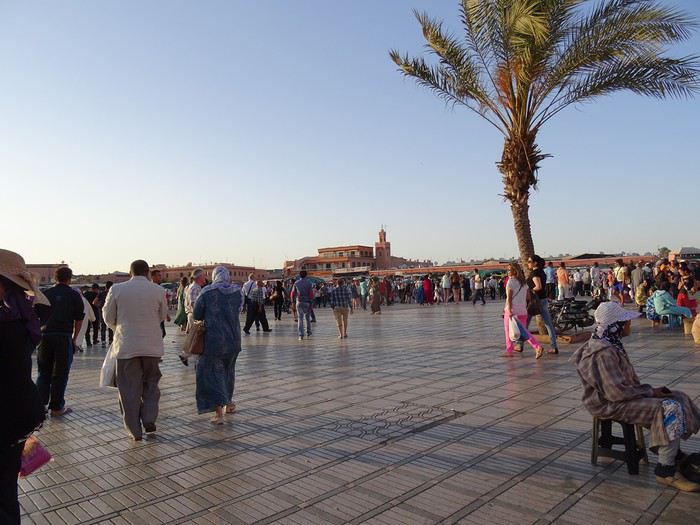
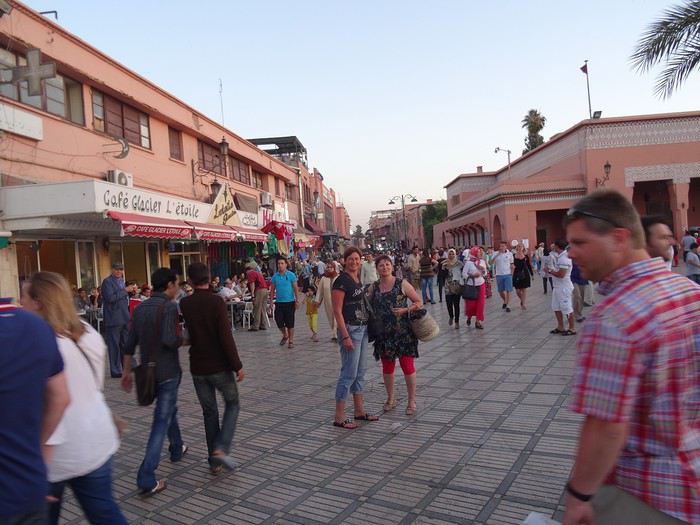
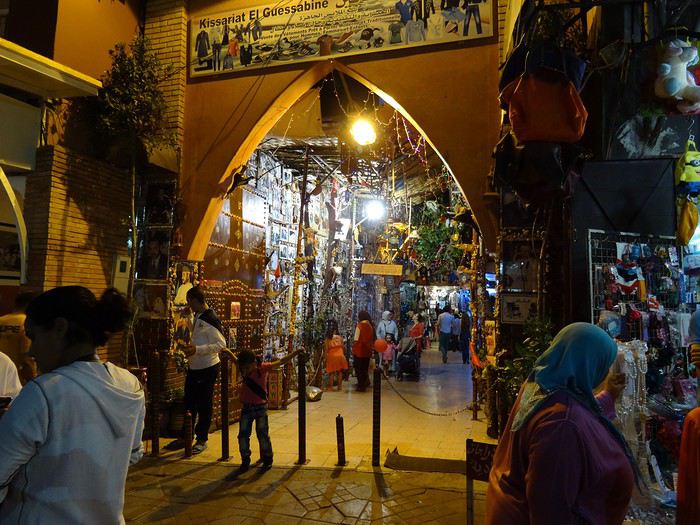
We had lunch on Avenue Mohamed V and took a little rest before heading to Djema El F'Na Square in the late afternoon, when the temperature dropped slightly. A quick stroll through the medina and the souks, still as lively as ever. Mountains of goods, craftsmanship that amazes us, a palette of colors, and all sorts of scents...
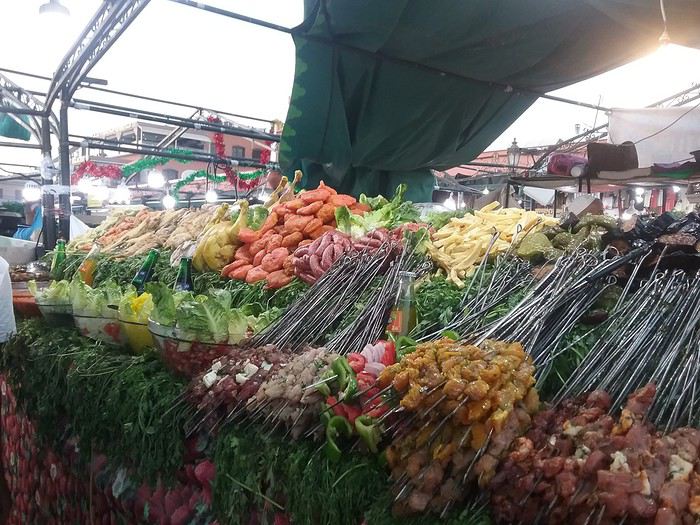
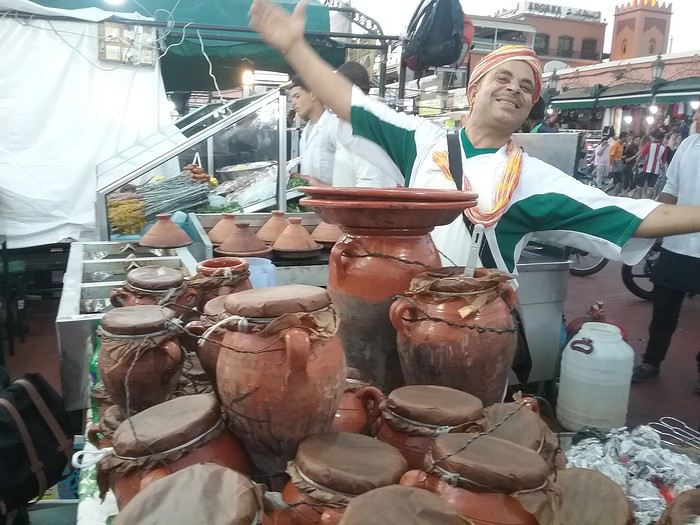
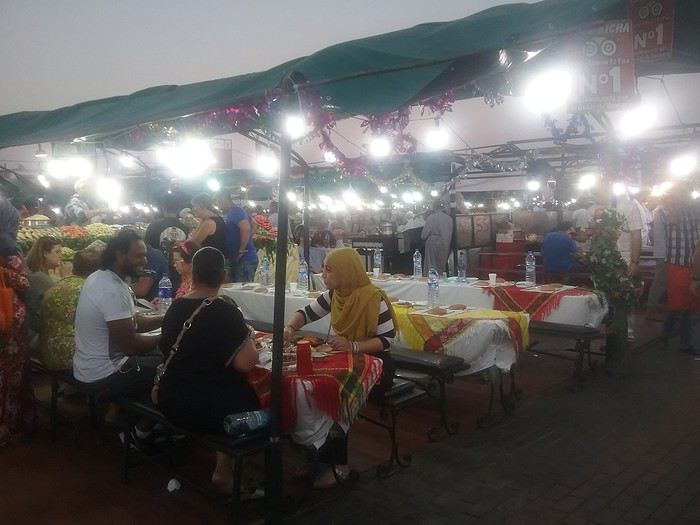
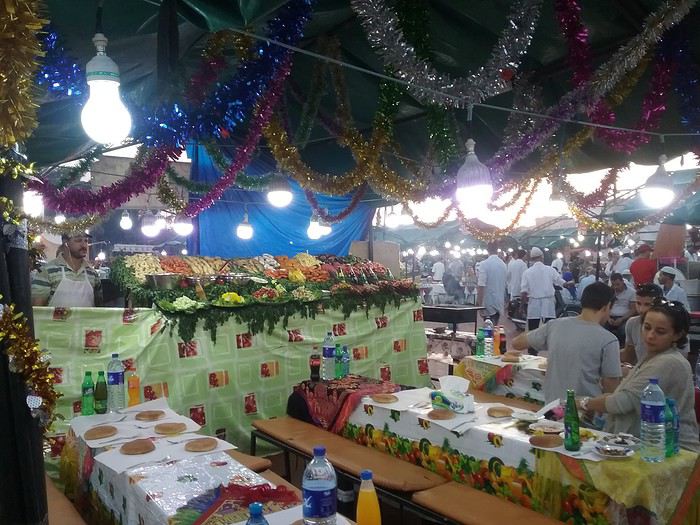
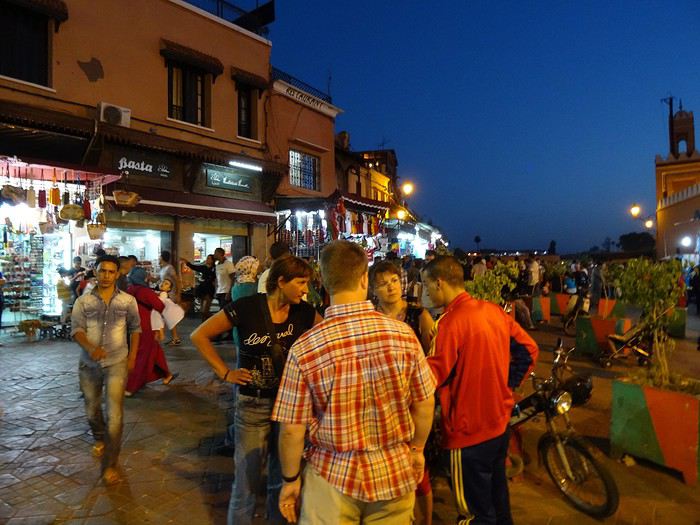
Then, when night fell, we wandered around the square among the little stalls serving all kinds of dishes: salads, grilled meats, soups, snails...
It's incredible. Everyone is super friendly. I suspect they tell the same jokes every night to the tourists passing by. But it's really fun. And surprise, surprise—here, it's already Christmas. Colorful garlands at every stall.
But, rightly or wrongly, even though we're charmed, we prefer not to dine on the square... We're afraid of ruining the rest of the vacation...
But what an extraordinary atmosphere on that square. It's overwhelming!
The next morning, we left Marrakech, hoping to find milder temperatures outside the city.
On the way to Tichka. The change of scenery is huge.
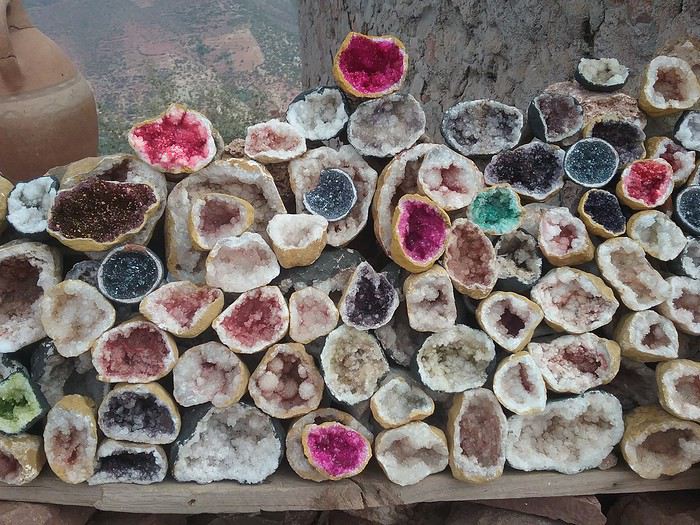
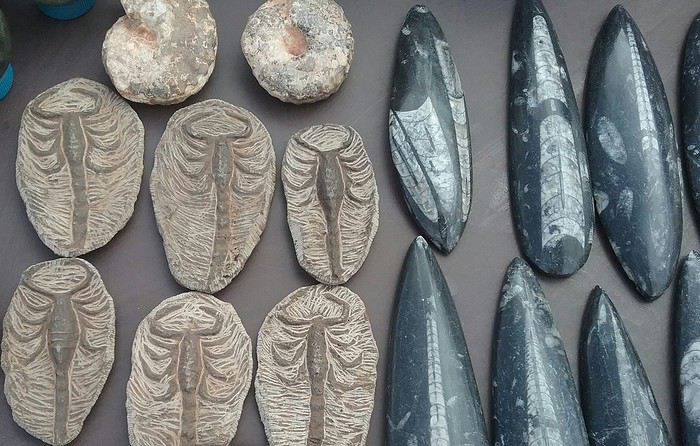
Our grandson can't get over seeing all the vendors selling real or fake minerals, real or fake fossils, merchants who approach as soon as we stop to admire a site or take a photo. There are also apple sellers—real apples for a picnic, which is perfect.
Photo stops are frequent. At every turn, a new discovery, a new viewpoint. The villages blend into the mountains. It's stunning.
I’m not going back, the trip is in the past. I’m posting it anyway because the country probably hasn’t changed enough to make the story outdated, and the astonishing beauty of the place deserves to be shared here.
Saturday, May 31, 2014
Mulhouse - Marrakech
A flight that drags on for three and a half hours. Everything goes smoothly until immigration. Like almost everywhere, you have to fill out a little form with your details and arrival address. The problem comes when you hand it to the customs officer with your passport. Right away, you see the lines are way too long for the number of officers working. I steer Dom toward a line further to the left that’s clearly moving faster than the middle ones. Then I firmly pull him to the far left where I think I spotted a new counter opening. Big mistake. Huge. Because that line is notorious for how slowly the security agent checks each person. At 10 minutes per person, with about fifteen ahead of us, we’re looking at two and a half hours. The wait becomes torture. Everyone gets edgy. We watch enviously as people who were way behind us initially zip through the other lines. You feel like complaining. My advice? Don’t. You have no idea how much a pissed-off customs officer can ruin your day! The rule: stay calm and suck it up.
Once that hurdle’s over, a taxi and boom, we’re at the Gallia, a no-frills but charming hotel just steps from Jemaa El Fna square. This place is insane! It’s teeming with people. You stick out like a sore thumb with your camera—suddenly, a ton of people want to be your best friend! You’re basically a walking wallet!
We’ve got a meet-up with friends who are here on a work trip with their company’s social committee.
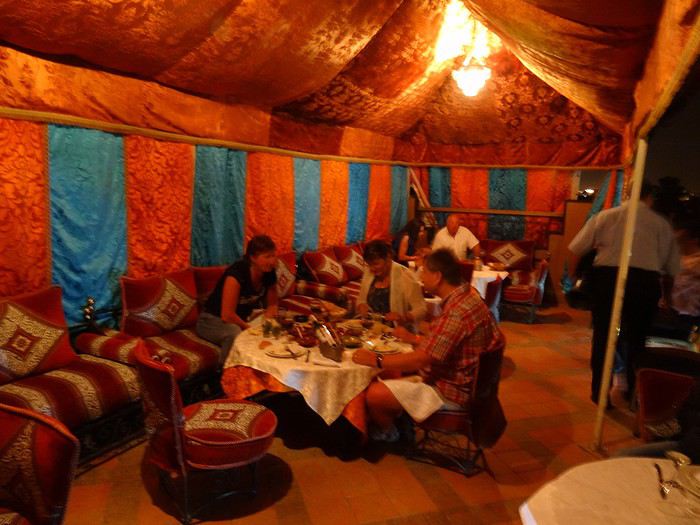
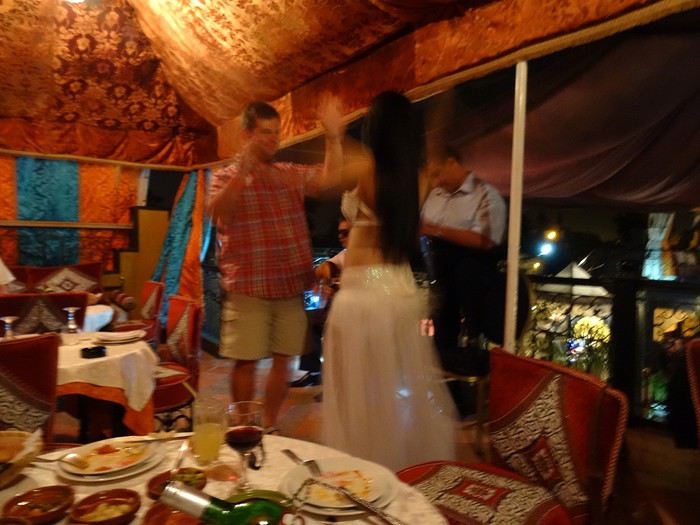
We fully embrace our tourist roles—eating at restaurants made for us, with belly dancers who insist we join in. We go with the flow, we’re not prudes, we have a great evening, no way we’re missing out on the fun...
Sunday, June 1, 2014
Marrakech
Super nice breakfast in the hotel’s patio, a real riad, beautifully decorated.
Originally, we’d planned a trip to the Atlas Mountains, but we ended up wandering around the city instead. Before we knew it, we were in the middle of the central souk’s labyrinth. It’s a feast for the eyes, ears, and especially the nose!
My daughter (22) and I set off to explore a bit of her grandfather’s homeland.
We left on July 26 from Roissy and arrived in Rabat with Air France.
We had a few hiccups retrieving our luggage—1.5 hours of waiting and a mini interrogation at customs about our host’s address (they asked for a reference) and questions about a Moroccan ID card I’ve never applied for. Next time, I’d better have it—dual nationals get extra scrutiny.
We headed to the ONCF station to catch the train to Marrakech. First-class tickets cost 195 MAD, with assigned seats and decent comfort… the catch? The train was delayed, so we arrived at 2:50 AM instead of 12:10 AM.
We chose the Ibis Gare, located between the ONCF station and the Supratours bus terminal. We booked two nights from France for 79.85 €. To avoid the premium-rate call, just dial the hotel directly—they’ll handle the reservation. I’d signed up on the Ibis website beforehand for a discount (free and comes with perks).
On-site, we added 44 MAD for the tourist tax (11 MAD x 4 nights). We skipped breakfast—too pricey at 6.50 € per person. The hotel has a nice pool and a pleasant setting. The shower seals weren’t perfect, but the bedding was comfy, the linens soft, and the AC worked (though it was noisy). We were overall happy with it.
We had breakfast and lunch at a café/restaurant right across from the hotel—affordable and tasty.
For phones, we bought two Inwi SIM cards for 30 MAD each and a 5 GB internet top-up for 50 MAD—more than enough for our 16-day trip. Later, we added two 20 MAD call top-ups. Total phone budget for both of us: 150 MAD.
Taxis in Marrakech: No issues. We always asked for the meter—if a driver refused, we’d just move on. No haggling for us!
Day 1: We visited the Majorelle Garden (70 MAD per person). It was beautiful and peaceful. We walked there.
In the afternoon, we took a taxi to Jemaa el-Fnaa square. The constant solicitations were exhausting—I felt like a guard dog fending people off. The worst part? We got lured deep into the medina to some sketchy spot under the pretense of seeing "Berber tanneries"—"last day!"—then had a guy grab our arms, demanding 200 MAD. I offered 50 MAD max since we hadn’t asked for anything. When he insisted, I threatened to go to the police. He finally let go for the 50 MAD. We headed back to the hotel to enjoy the pool before returning to the square for the evening. It was lively but noisy, and I found the vendors *way* too pushy. We walked back to the hotel—an hour-long stroll that was actually really nice. We kept no more than 150 MAD in our wallet at a time.
We stuffed ourselves with smoothies—they’re *so* good.
Day 2: We left at 8:30 AM for Tinghir with Supratours, arriving at 4:45 PM instead of 4:00 PM (lots of roadwork). Tickets were 130 MAD per person + 5 MAD per checked bag.
We stayed one night at the "Retour au Calme" hostel—super cozy! 150 MAD for a room with a private shower and toilet. AC was an extra 80 MAD per night (not mandatory) but worked great. Phone: +212 5248-34924.
Breakfast was 30 MAD, and they offer tons of options, including budget-friendly choices like a couch for 80 MAD per person with shared showers/toilets. Half-board and full-board are also available. Mohamed and Alexandra are lovely. I booked by phone and paid on-site—they even picked us up from the bus station!
We took a taxi to the Todra Gorge—a breath of fresh air! It’s stunning and humbling. You feel tiny there.
Shared taxis cost 8 MAD per person (fixed price). The organization was impressive.
To get from the city center to the bus station: 3 MAD per person.
Day 3: We left at 4:00 PM for Merzouga, arriving at 9:30 PM. Tickets were 80 MAD per person + 5 MAD per checked bag.
Upon arrival, we were greeted by Houssein, one of five brothers running the "Auberge Océan des Dunes." We had a lovely room with a private bathroom and kitchen access. Two rooms are available in this unit for 190 MAD per night for two, including breakfast.
For our first post-COVID trip outside Europe, we’ve chosen a North African destination: Morocco.
I’ve already visited this country four times, but my partner has never set foot there.
Since we both prefer wide-open spaces over even imperial cities, our itinerary will focus on nature and villages.
Starting point: Casablanca, easily accessible with a direct flight from Lyon.
Our ride: a Dacia Logan, perfect for navigating roads turned into Swiss cheese by corruption and the weather.
Stops: Demnate, Aït Ben Haddou, the Dadès Gorges, N'Kob, Zagora, the Todhra Gorges, the Merzouga dunes, Tinejdad, Agoudal, Lake Bin El Ouidane, the Vallée Heureuse, the Ouzoud waterfalls, and finally El Jadida.
Season: November, when there’s no tourist pressure. Sure, it can be chilly, but what peace and quiet!
You can find the details of our journey beyond the Rif here.
Happy reading!
And if you have any questions or comments, don’t hesitate!
Last February, I made a trip using "public transport" from France to southern Senegal via Spain, Morocco, Western Sahara, and Mauritania.
It’s a journey of about 5,000 km, where I took trains (as far as Marrakech), ferries (to cross Gibraltar and then to reach Casamance from Dakar), and mostly buses on the long desert straightaways. I hadn’t planned any stops in advance or booked any hotels, except for the very first train to Spain, which left plenty of room for the unexpected.
Why travel by land and sea? In recent years, flight-free travel has been gaining popularity. On social media, posts explaining how to cross Europe by train as quickly as possible go viral. Traveling without flying—and making sure people know about it—has become a great way to earn a badge of eco-responsibility: an essential totem for anyone wanting to prove both their dedication to the ecological cause and the wisdom of slow travel.
I haven’t flown in years, and this journey to West Africa could easily be filed under "responsible travel." But it wouldn’t be honest to say that: in reality, it wasn’t really my aversion to flying that motivated this long trek. I see overland travel primarily as a way to experience the world’s geography at a grounded, earthly pace—the pace of the locals. Besides, I’ll be flying back, which disqualifies any claim to being a model of sustainability.
So no eco-badge, and no adventurer’s badge either: you won’t find any heroic tales of camel rides in lost lands or mineral train wagons in this account (popular with influencers, the Mauritania iron ore train now attracts tourists from all over the world, turning "the experience" into something you "have to do at least once in your life"). This five-part story, written on the road, has no other ambition than to recount a journey through places and people, and to share the thoughts they inspire in me. As simply and, I hope, as humbly as possible.
I’m posting the episodes here, which you can also find on my blog (with more photos) at the following links:
Episode 1: Spain, from Avignon to Algeciras
Episode 2: Morocco, from Tangier to Tarfaya
Episode 3: Western Sahara, from Tarfaya to Guerguerat
Episode 4: Mauritania, from Guerguerat to Nouakchott
Episode 5: Senegal, from Rosso to Saloulou
To help those who might want to make the same trip, I’ve also put together a summary of the route with recommendations—you can read it at the end of the story and on the blog:
From France to Senegal Without Flying: Route and Itinerary Recommendations
Hello everyone,
I’m currently planning our next trip to Morocco. We really enjoy visiting one or two collective granaries on each of our trips. We’ve seen some already, like the one in Aït Kine, or the one in Tasguent, and of course those in Amtoudi, as well as the cliffside granary of Ifri. There are still many left to explore. I’d love to hear which ones you’d recommend—preferably ones that aren’t too hard to access. I’m counting on you! Thanks
 Last October, we landed in Marrakech to spend a few days with family exploring Morocco’s roads.
Transport: a rented Dacia.
Accommodations: small guesthouses.
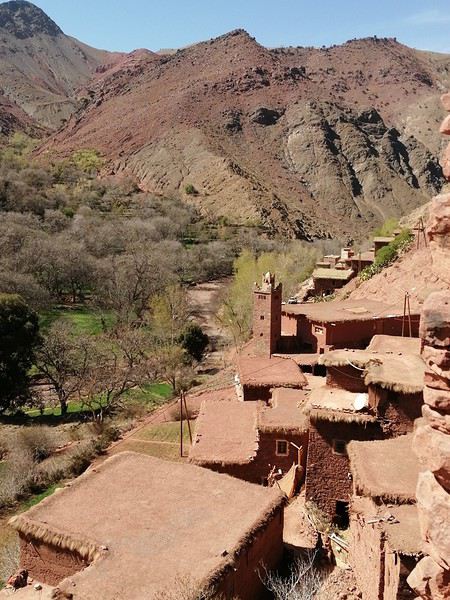
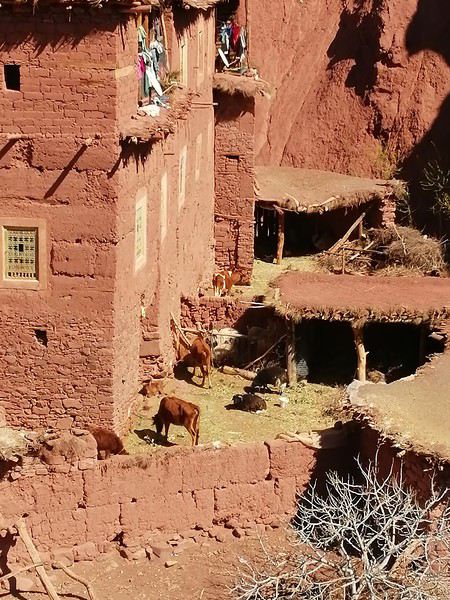
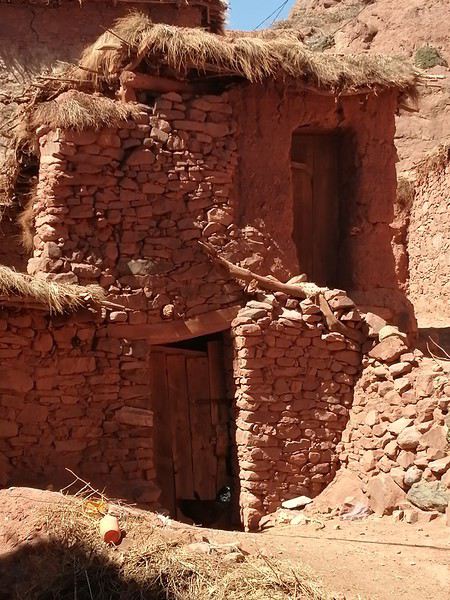 Several magnificent collective granaries have been beautifully restored. The warm colors of the stone capture the light wonderfully. It’s stunning!
 Another surprise for the kids: the lollipop vendor in Jemaa El Fna Square, with giant lollipops that really whet their appetites...