Discussions similar to: Reprise forum
FR

522 similar discussions in English

Family trip from Marrakech to the desert
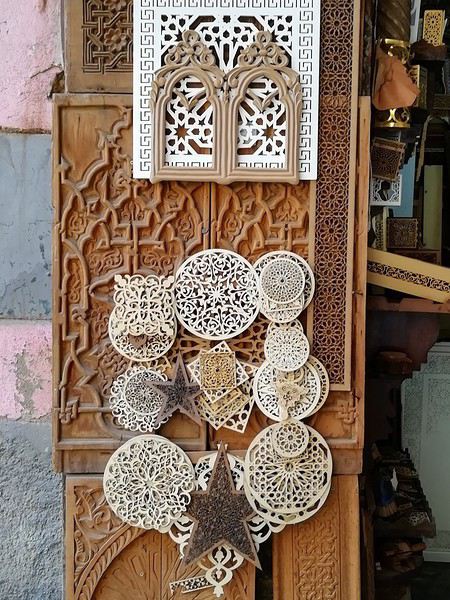
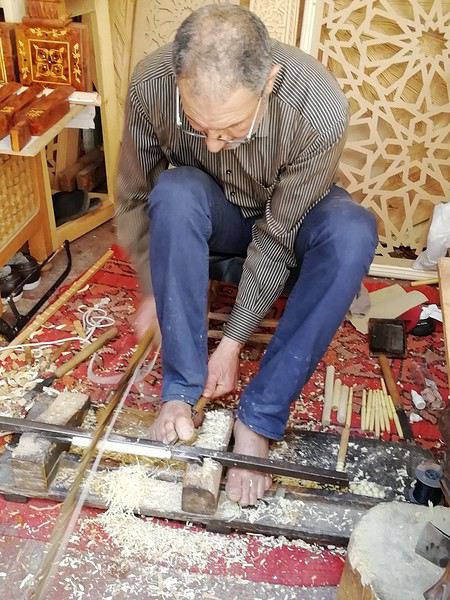
We went to Morocco in April with our children and grandchildren. We landed in Marrakech around 9 AM and took a bus to our small hotel in the Guéliz district. This was to avoid dealing with taxi drivers who might give our young travelers a very negative impression of Marrakech... The bus drops us off very close to the Hôtel Toulousain, which has always given us the warmest welcome for over 25 years. We settle into our rooms and head to the medina to have lunch first and then wander through the streets of the old city, introducing it to our little group.


Young and old alike are amazed by the craftsmanship and attention to detail in the work done by the various artisans.


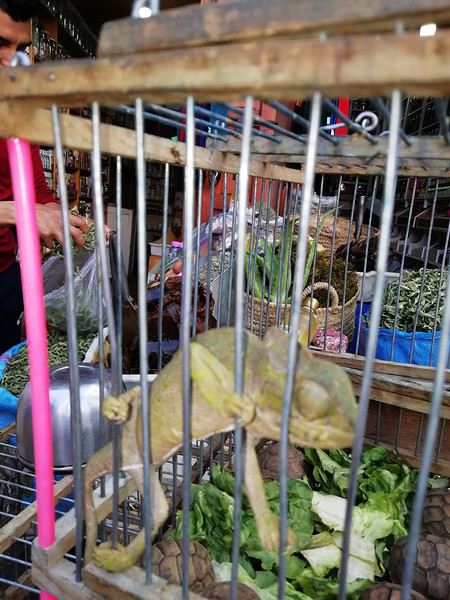
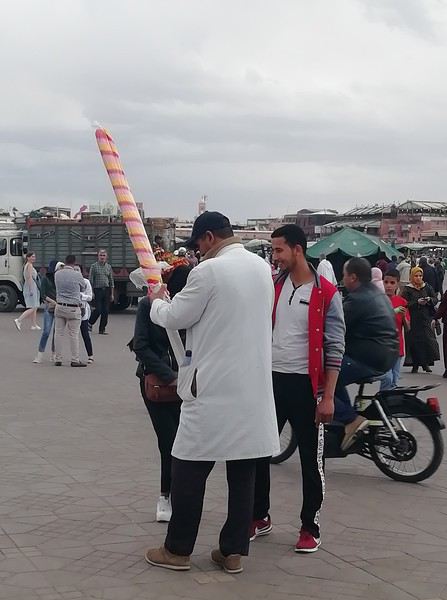
The souks also impress first-time visitors, both with their size and the sheer amount of goods on offer. For those visiting for the first time, it’s a real maze. Colorful chameleons everywhere... Will they survive for long in their cages under the scorching sun? Another surprise for the kids: the lollipop vendor in Jemaa El Fna Square, with giant lollipops that really whet their appetites...


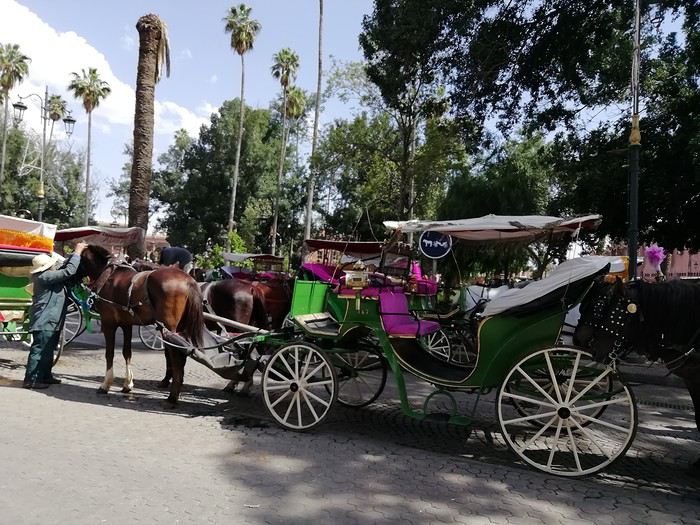
By late afternoon, little legs are tired, and horse-drawn carriages are a welcome way to get back to the hotel.

Open
Three More Months in Southern Africa
Hello, fellow bird lovers, big mammal enthusiasts, and Southern Africa fans!

The title of this second travel journal obviously references the one that came before it: Three months in Southern Africa in a Ford Figo 😉

That was back in spring 2016, and I was discovering this incredible region of the world with wide-eyed wonder. Though absolutely enchanted by my trip, I’ll admit: I didn’t think I’d be back so soon.

Fortunately, circumstances had other plans. For their 70th birthdays, my parents had the wonderful idea of inviting the whole family—my sister, my brother-in-law, my three nieces, and me—for two weeks in the Cape Town area and Namibia. The only one missing was my godson (the eldest), who was tied up in Switzerland for his air traffic controller training.

Of course, I wasn’t going to settle for just this (delicious) taste of adventure… so, as an appetizer, main course, and dessert, I added two and a half months of travels through South Africa, Lesotho, Mozambique, and Zimbabwe (the last two being new to me). What can I say? I’m a travel glutton! 😛

Here’s the general outline of my itinerary, with details to come as I share the story:

With family (March 29 to April 13, 2018)

South Africa (5 days) Namibia (9 days)

Solo (April 13 to June 30, 2018)

Zimbabwe: Victoria Falls (5 days) South Africa and Lesotho (26 days) Mozambique (21 days) Zimbabwe (10 days) South Africa (15 days)

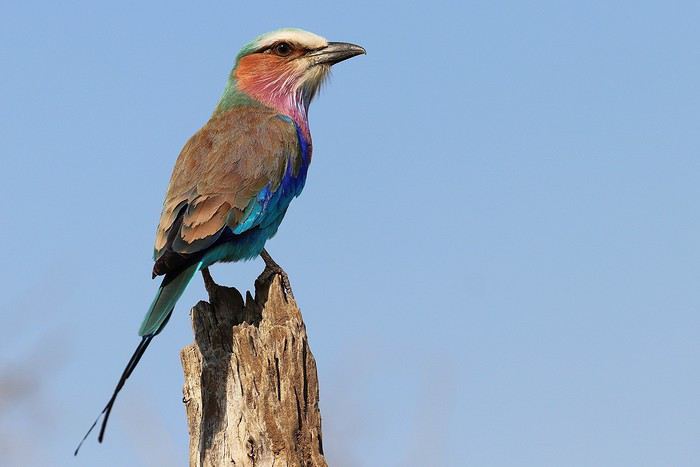
And since I need a cliché to illustrate this journal... ... it’ll be the famous lilac-breasted roller (lilac-breasted roller), one of my little favorites (I might even make it my profile picture, actually)!

I have to say, in 2016, exploring Southern Africa multiplied my interest (already strong, but mostly limited to vultures and raptors) in avian wildlife. 🙂

Happy reading!

P.S. Beyond sharing, I’m also counting on this journal to motivate me to finally sort through the roughly 10,000 photos that have been sitting on a hard drive for four months. 🤪😏
Open
Incredible India, here we go again!!
Hey there, fellow travelers 😎

We’re back from 15 days in northern India.

For our 6th visit to this country, we traveled between Uttar Pradesh and Madhya Pradesh, and let’s just say it was an emotional rollercoaster!!

So if you’re up for it, we’re taking you to Varanasi, Chitrakoot, Khajuraho, Orchha, and Agra.

Ready for takeoff??

WELCOME TO VARANASI


When you leave your sanitized, rigid Western world behind, there’s nothing like diving back into the Indian chaos. And we nailed it—because when it comes to monumental madness, we couldn’t have picked a better place to start than Varanasi 😉!!

Here’s a little recap of our first day in this insane city.

It all starts with landing at the city’s airport.

As soon as we step out, hundreds of Indians stare at us like they’ve never seen white people before (I’d forgotten how intense that is!). There are lots of women covered in black fabric, only their eyes visible—pretty striking, I must say. Turns out they’re Indians working in the Middle East, heading back to "work" after a month’s vacation.

We hop in a taxi, but after a few kilometers, we’re stopped… by the passage of the "state minister." The roads are freshly paved and spotless for his convoy (you can *totally* tell the difference with the roads he didn’t use 😛). We didn’t manage to spot him in the middle of the 25 cars surrounding him, though!!

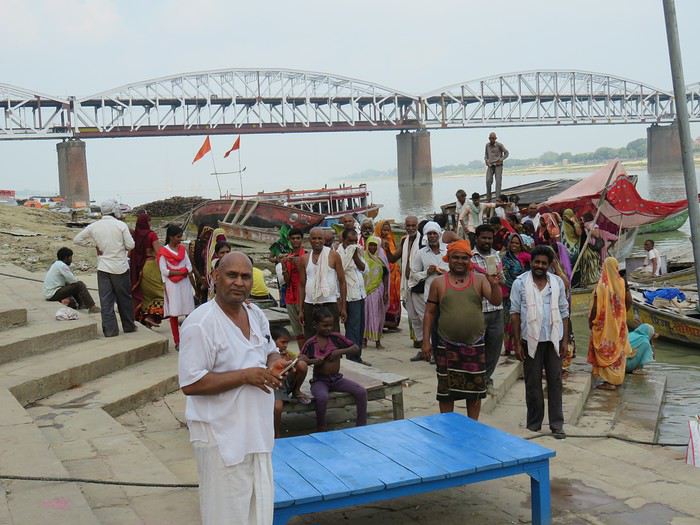
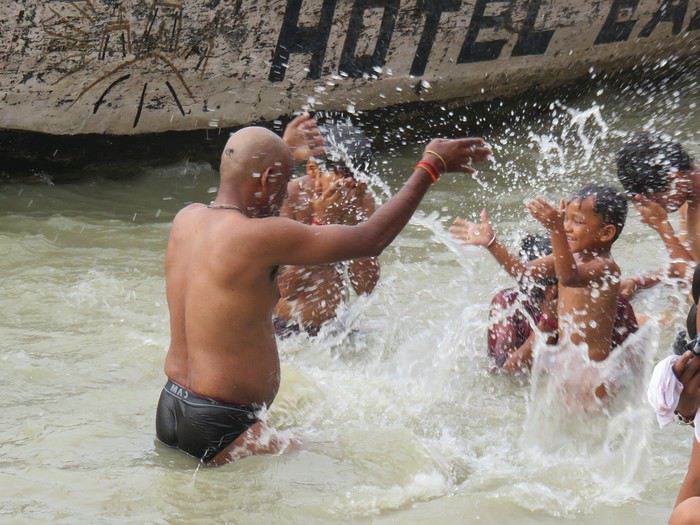
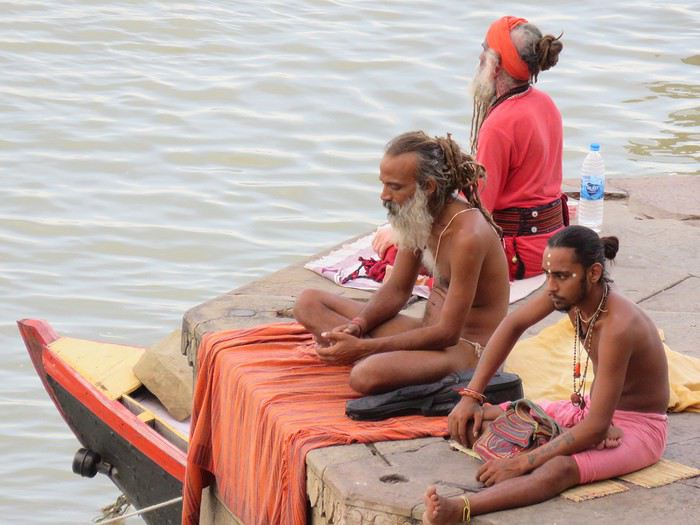
Then we arrive in front of the mythical Ganges—a peaceful spot, except for a boat full of Indian pilgrims who, once again, stare at us and take our pictures (the mutual curiosity is hilarious!!).


We board a boat, and almost immediately, we pass a cremation ghat!! Oh crap, I wasn’t expecting that so soon—it hits me hard (like, *really* hard 🤪)!! Huge piles of wood, eight massive fires with families gathered around. It lasts as long as the boat ride, and you think you must’ve imagined it… but no!!

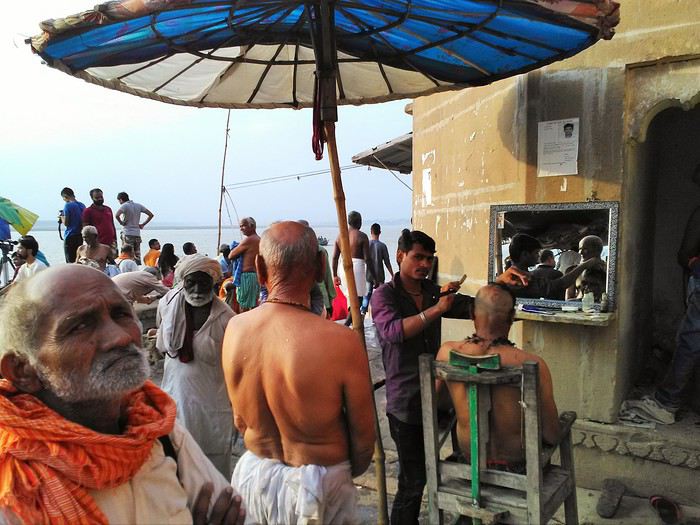
You dock and wander through the tiny alleys.

It’s 36°C (97°F) with 90% humidity—you’re dripping.

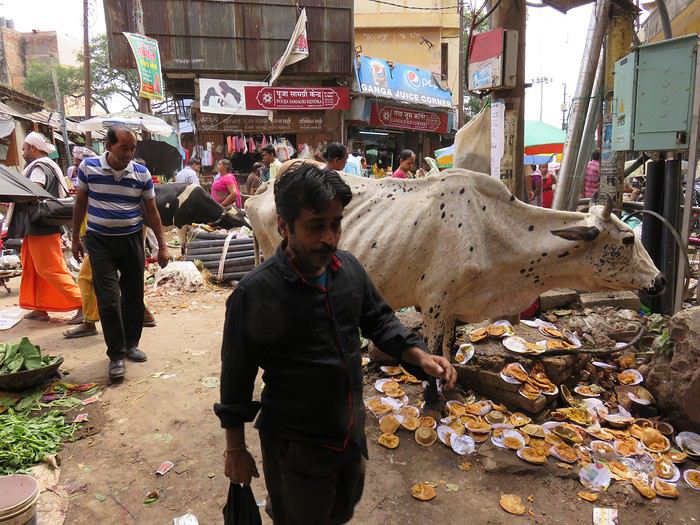
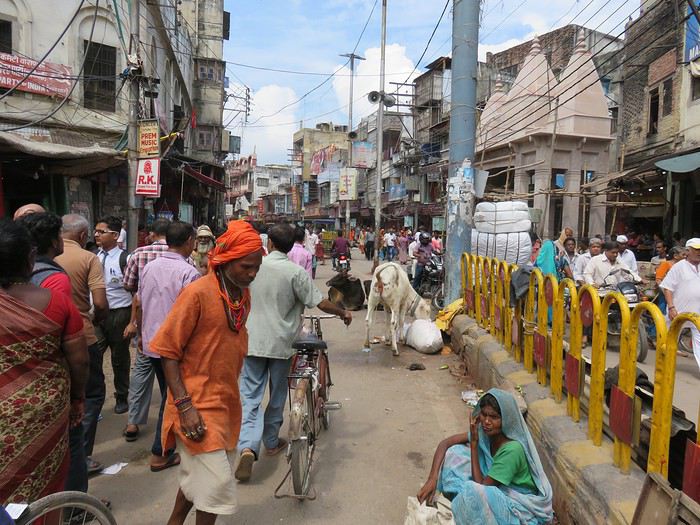
Cows block the way sometimes. The air smells like incense, then urine, then a woman’s perfume, then rotten fruit, then amazing street food—all within two meters, and *everywhere*!!


Then you step into the main street where pilgrims arrive (60,000 a day—Varanasi is the country’s holiest city!!). The chaos ramps up as you head toward the main road: nonstop honking, a bike whizzing past on your right, a scooter on your left, people brushing against you from all sides, air thick with dust and smoke (diesel *or* cremation!!), beggars of all kinds (kids, elderly, disabled) lined up to appeal to the pilgrims, the suffocating heat, and noise—*so much* noise…


In some areas, people constantly approach you: "Come see my shop," "Need a taxi?" "Want to exchange money?" And then there’s the woman with her baby in her arms, following you for meters, repeating, "No money, milk; no money, milk…" And you’re *dying* inside, but you can’t stop. If you give in, ten more will come running!! You grit your teeth, keep walking, even talk to yourself out loud!!

After half an hour, it feels like you’ve run a marathon, and you don’t even know where you live anymore!

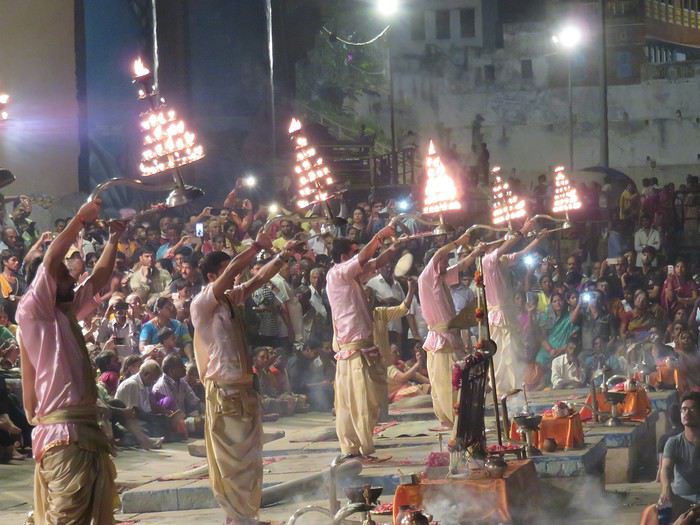
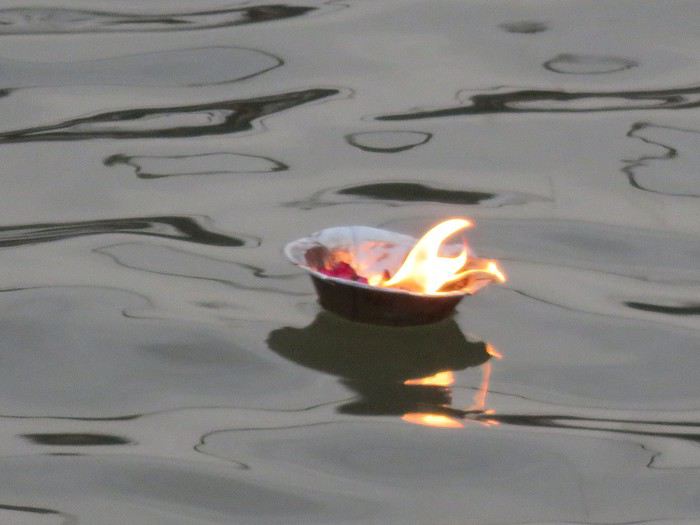
In the evening, you head to the PUJA (public prayers for all the pilgrims) on a boat in the middle of hundreds of others. Two ghats are competing—who can make the most noise. One side is singing, the other chanting, then they switch. They wave flames, the ghats are packed.


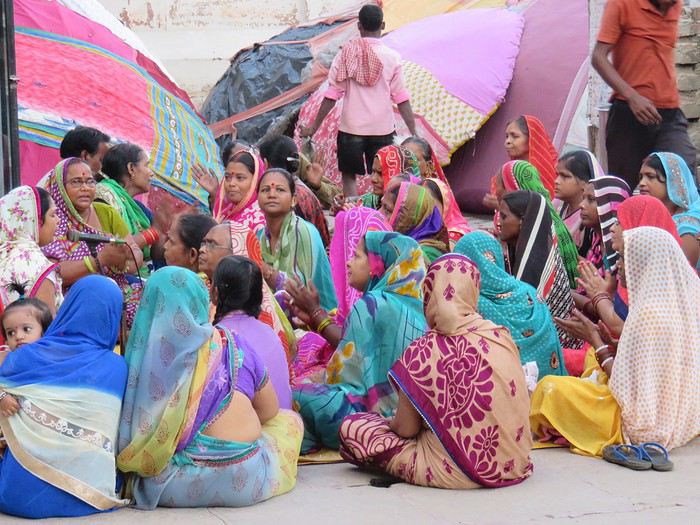
After dinner, you head back to your room around 9 PM and see hundreds of people sleeping on the scorching stones—with cows, dogs, and goats!!!!

A huge thank-you to our parents for giving us the mental balance to handle this, because *India drives you crazy*—and we’re right in the thick of it!!!

It’s an ex.tra.or.di.nary place in the truest sense of the word, with incredible beauty—especially in its human diversity—if you can look past what shocks you.


We stayed for 3 days—3 days of unmatched intensity, where the spectacle is *constant*.


So I *highly* recommend it to all travel lovers, those who embrace difference, and the strange (for us, at least). But definitely *not* for anyone looking for a relaxing vacation!!


More to come soon if you’re interested!!


Open
Inside South Africa
Inside South Africa

The Burst Hose. The passenger is so impatient to arrive that the coachman whips a horse that barely tolerates the mistreatment. I can tell she’s gearing up for a kick, and suddenly, at full gallop, she stops responding. If I press the spur, she cuts out but accepts a half-pressed pedal. She pulled this stunt last year, right in the middle of the Kalahari Desert, and I can guess the trick: she blew a hose! An hour at a slow trot brings us to a Ford garage. A workshop manager, as sullen as he is efficient, has the necessary parts removed to reach the hose, then announces he doesn’t have the spare part and will need a week to get it. I suggest taking advantage of the access to make a temporary repair on the tear, but he refuses, arguing the pressure is so high that the patch would give way immediately—"It’s not a Testarossa, after all!" After reassembly, he refuses to charge us anything and advises us to head to the next town, 200 kilometers away—off we go for another four hours. Semi-trailers overtake us without mercy; I’m reminded of *Duel*. At the Land Rover dealership, we learn the part will take two working days to arrive, and it’s Thursday. I decide to have the hose delivered to the house without wheels—I’ll change it myself. Five hours later, climbing the pass in first gear, we reach the object of her desires. * Hide and Seek In Brittany, my neighbor is a taciturn, touchy fisherman. He’s anchored his old boat in the middle of the estuary that separates two departments and uses it as a storage space. It’s a jumble of nets, buoys, and traps. The old wooden vessel is falling apart, and the hull’s paint is nothing but a distant memory—so much so that the Maritime Affairs Directorate of his department orders him to remove it or repaint it. Asterix also runs a restaurant on the harbor, where he treats customers to his catch. One Sunday afternoon, we see him loading cooks, servers, and dishwashers armed with rollers, brushes, and paint cans into dinghies. Off they go for two hours of slapdash painting and laughter. Once the starboard side is done, everyone returns to prepare for the evening service. The port side will wait until the Maritime Affairs Directorate from the other department reacts. This story came back to me when I got home: the side visible from the road had been repainted, but the other side was left as is. * The Blonde, the Red, the White, and the Black Many workers are paid at the end of each week, but alcohol sales for takeaway are banned on Saturdays and Sundays. So, on Friday nights, the bars are packed, and liquor stores never empty—of people who are already full. Their limited means reduce them to cheap, harsh wines or bland beers. Yet, they still end up wasted.

* Seven In mainland France, you can easily raise seven sheep per hectare. In the Great Karoo, it takes seven hectares of sparse but tasty vegetation to feed just one sheep. Not to mention the energy spent moving around. Add to that the fact that a French sheep produces about one and a half lambs per year, while here, between droughts and jackals, it’s closer to 0.7, and you’ll understand why, with a 7,000-hectare farm—the local basic unit—a South African farmer’s income barely exceeds that of a farm a hundred times smaller in Brittany. This weekend, the annual agricultural show is taking place at the fairgrounds. Some come from far away, so a procession of pickups, trailers, and trucks loaded with sheep makes its way up the main street: we’re definitely in the Karoo. I expected a competition of lean, wiry ascetics, able to pass on traits useful to the environment, but I suspect these bodybuilder show animals don’t just graze on the bush and are doped with alfalfa. Besides, I caught a dealer red-handed with a bag of pellets. * They’re Not Dolls Ken is a professional hunting guide, working independently. When it’s not hunting season, he goes fishing for clients, mainly in the United States. He says Trump’s election—whom he slightly resembles, though younger—would be good for his business, but he doesn’t like Trump, nor, it seems, his clients much. He wanted to be a farmer, but in the post-apartheid context, taking over a farm was a gamble. His wife, who’s more beautiful than Barbie and Melania, silently agrees. * Neighbors That’s the problem with women: their *it girl* side. Within a year of her moving in, we got two new neighbors. One on the other side of the track, the other half an hour away (here, that’s *next door*). One only travels at the controls of his black helicopter, the other aboard his private Boeing 737. The first is a very wealthy farmer from the northeast of the country who’s expanding into the Karoo. He just bought two non-contiguous farms of 6,000 hectares each. I still don’t know what the owner of the farm in between is thinking. The newcomer plans to create a wildlife reserve for breeding purposes; our future neighbors will be giraffes, rhinos, and antelopes, including rare species like the Sable. They say he’s a man in a hurry, determined: when the municipality dragged its feet on his request to refurbish the public track that serves as our border, he just went ahead and did it himself. It was a historic farm, crossed by paths leading to other farms, home to a pond full of birds where water from the mountain ends up after the villagers have taken their share. That’s where the golf course I was about to become the 29th member of was located. Now, it’s all closed off, fenced, and lined with monumental gates. The Wild West in the Western Cape. Is it because his name ends in ‘-ski’ that rumors link him to Slavic mafias and advise against crossing him? The same rumors say he’s involved in the uranium market—well, there’s uranium in the Karoo’s subsoil. The second neighbor is a Saudi prince who just bought a modestly sized farm—3,500 hectares—but don’t think he’s a minor prince. He paid four and a half times the market price to get it! The farm had been in the same family for two centuries, and the owners refused to even consider selling. The prince’s agent—money, in this case, black gold—kept coming back every week despite repeated refusals, finally saying his client wanted this farm at any price. A price they were asked to set. And that’s how you sell your ancestors’ graves. There are plenty of huge farms for sale here, but the prince was looking for a property where he wouldn’t see any roads, tracks, or other houses or farms. He’ll come a few days a year to hunt. However, he’s annoyed: the runway at the nearest airport, two hours away, isn’t long enough for his private jet, so he’ll have to land in Cape Town, like me, and endure nearly two hours by helicopter. That’s how it goes in South Africa. I’d be curious to know what Julius Malema, leader of the EFF (Economic Freedom Fighters), who advocates the Zimbabwean model of land redistribution, thinks about it.

* Biko The autobiography of a journalist and politician of European descent, South African, is published this week. In 1977, this rookie got her editor’s permission to investigate the death in detention of black leader Steve Biko. The apartheid regime’s political police claimed he had died from a hunger strike. The bold young woman discovered that the medical examiners reported a slightly overweight corpse, and later, it was revealed that Biko had died from abuse, if not torture. Under pressure after publishing her investigation, Helen Zille, disillusioned, gave up journalism and turned to politics. She is one of the white South Africans who fought against apartheid, and it’s reassuring that some people have a conscience that transcends class or race. *

You Have the Watches... …we have the time. Anyone who’s worked with Africans knows this response they occasionally throw at us. Willem, the inconsistent gardener, couldn’t stand the observation: running around the place at top speed, even with a pitchfork over his shoulder, wasn’t getting the job done. So Jan replaced him. We share the same first name—no doubt we’ll accomplish great things. He’s known to be reliable, meaning he shows up for work, and he only speaks Afrikaans. We communicate like at the circus: thumbs up, thumbs down. Jan has the build of a bushman but the bone structure and features of a mixed-race person—multiple mixes. He’s a sprite, always moving, sometimes without purpose or destination (the journey is the path). I lose sight of him—it’s not exactly a virgin forest—and he reappears elsewhere, busy. Jan doesn’t understand wasted water—he must think the same of us trying to cultivate the desert. He’s a gardener like I’m a violinist, virtuosos of playback. After a very light lunch, he lies down on the ground in the shadow of the stables and falls asleep. If his arrival time in the morning is variable, it’s never before the agreed hour, but his departure time is unchanging: it’s 3 PM, no matter what. No point trying to fool him; he can count and shows me the fancy watch eating up his thin wrist. * Colours Veldrift, Oyster Catcher, Lobster Red, Namib, Dune, Lion's Den, Kalahari, Bush Fire, Karoo Dawn, Cape Fynbos, Safari Trail, African Pan, Bushveld Plains, African Queen, Karoo Drift. A bestiary? A herbarium? No, the colors offered by the country’s top paint manufacturer. All the shades of the continent from an armchair. * Pets She loves three mastiffs, a meter tall at the withers. Is it for their beauty? Their breed? Their deterrent power, because knowing these beasts exist, no one would dare enter her property without an invitation? A bit of all that, probably. She won’t say. She loves pets but likes other people’s less, especially the poor ones. So, she actively participates in the campaign to sterilize dogs and cats in the neighboring township. Just think, the poor things can’t afford to feed or care for them, meaning they can’t ensure them a decent life. She and others justify the pets section of the local mini-supermarket. Whether your pet is a puppy, adult, or mature, whether it likes fish or prefers beef (no one thought of a dog-based reference from the township?), you’ll find your happiness. While you order, many locals will only have access to the parking lot to beg. * Democracy in Africa

What would Tocqueville say about Democracy in America this fall? After the father, we had the son; after the husband, and by default, we might get the wife. No one else, really? Let’s not talk about France and its current vaudeville. A Ivorian academic believes African peoples aren’t ready for "Western-style" democracy (caricatured as a free T-shirt buying a vote). Does he know the same is true elsewhere, where many voters vote not for a vision, a project, or convictions, but to protect their own interests? Here in South Africa, national elections were held recently, confirming the ANC’s decline in favor of the Democratic Alliance (DA). Historically (since the end of apartheid) seen as the party of whites (who make up less than 10% of the population), it has managed to rally those disillusioned by the clientelism, incompetence, and corruption of Mandela’s unworthy heirs. The DA now governs five of the country’s six largest cities. In the neighboring township, long after the vote ended, ANC and DA T-shirt wearers cross paths courteously. Today, it’s different. The DA’s national leader is holding a rally in a vacant lot. A few hundred people are there, including a good third of children, three-quarters of them ragged. Not an ANC T-shirt in sight amid the smoke of braais and deafening music. Fewer than ten pale faces: the journalist I’m driving, a local official, and activists. A small convoy of limousines arrives—just four, fewer than any of President Zuma’s offspring’s private stables. The crowd stirs, flags wave, and ululations ring out. Mmusi Maimane is a light-skinned mixed-race man, towering over the assembly, which he gently parts, joining in the dances and posing for selfies. He’ll give his speech, half in English, half in Afrikaans, perched on a truck platform—the meeting’s cost must be bearable for taxpayers. A mediocre populist orator, no doubt, but skilled. Two hours later, in the evening, another gathering. This time in a historic town property. A hundred and fifty people, casual chic, all white except for three mixed-race individuals... and the DA President. A Rotary Club vibe: everyone the town has in terms of farmers, shopkeepers, and entrepreneurs has paid their dues to honor Mmusi Maimane’s visit. His admirers see him as a new Mandela or compare him to Obama; his opponents think he’s being manipulated, and his detractors call him a traitor. He’s under forty, intelligent, and his wife is white. The chance he’ll become President of South Africa isn’t zero. * Posh Port Out, Starboard Home. Sonja, who walks the desert at dawn, calls one of her acquaintances posh, meaning snobbish. She’s got a sharp tongue. Wealthy English people (not the ones sent to Australia as convicts one-way) traveling to India would book their cabin on the port side on the way out and starboard on the way back. That way, they had a view of the coast throughout the journey instead of the ocean’s emptiness—whatever Kersauzon says. I didn’t know that by choosing my seat on the plane, depending on the route and time, so the sun lights up the landscape instead of blinding me, I was being posh. * Cosmopolitan Wine Tasting A pale lookalike of Jacob Zuma, a painter teaching his art in Europe; an Antwerp writer in South Africa; a desert gardener with a surfer look; an Irishwoman teaching yoga in the Karoo; an Afrikaner passionate about world history; another, our host, up to his neck in wine; and two French observers—observed observers. Conversations flow, then bottles, just before some hosts leave. Recurring corruption scandals involving President Zuma and his inner circle. A Chenin Blanc. Napoleon, who could have changed the course of South African history. An unwooded Chardonnay. The snake, a puff adder, one found in her garden. A Sauvignon Blanc. The kudu hit by a car at the village exit, which didn’t survive. A Pinotage. The bloody Anglo-Boer War. A Shiraz named Down to Earth. * Little Patagonia A story of pressure or depression, temperature differentials, or perhaps an age-old war between the elements—almost every day at the end of the afternoon, as if tucking in, the wind rushes down the mountain and gives a free haircut. When it falls, you don’t know where, and you hope it hurt itself and won’t get back up. I’m going to build a mast on the house, hoist the sails, trim them, and sail across the desert—it will remember the sea. *

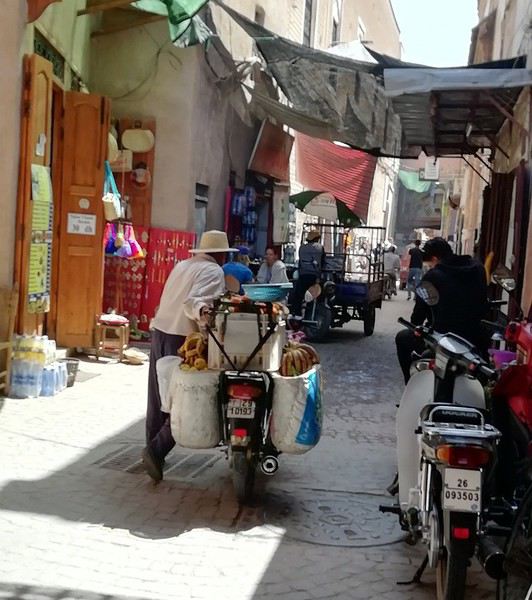
Meeting in the township.


Since a cover is needed (in black and white)...
Open
Cycling trips—how old is too old?
It's all in the title—I'm 70, and I've been traveling by bike (tent and camp stove) for five years now. Statistically, how many more years do I have left to plan my destinations and see (almost) everything? Question is half realistic, half humorous. To keep it simple: how old are you, fellow senior cyclists still on the road? And what are your biggest challenges? Personally, I'm in good physical shape, though my cruising speed has dropped from 3–4 km/h over the past five years. But arthritis (hip) is starting to make it tricky to swing my leg over the frame.
Open
July 2014: Finally Back!!! So Excited to Show the West to the Kids!
After nearly 2 years of waiting (yeah, like many of you, we wanted to hit the road again as soon as we got back to France... but first, we had to fill up the piggy bank!), here we are at last—July, the month we’ve been waiting for! We’ve got 30 days of exploring new places ahead of us, as well as revisiting some spots we loved back in 2012.

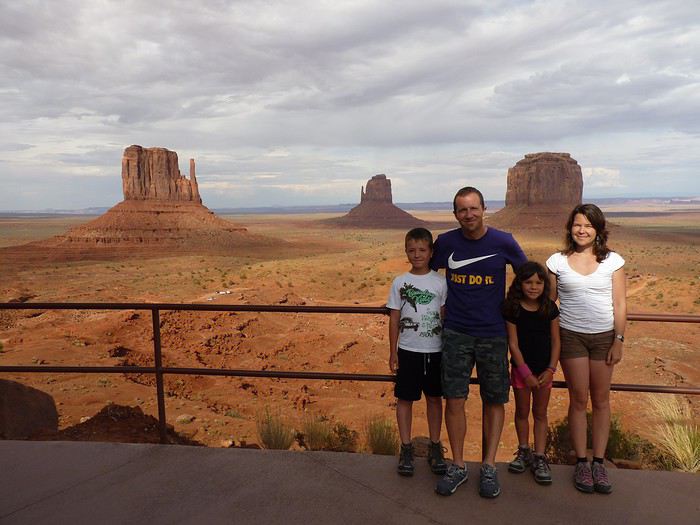
Here’s the plan: - Joshua Tree NP - Las Vegas - Valley of Fire SP - Yant Flat - Zion NP (Angel’s Landing) - Bryce Canyon NP (Fairyland Loop trail) - Devils Garden on the HITTR - Capitol Reef NP - Grand Teton NP - Yellowstone NP: Old Faithful - Yellowstone NP: Norris Geyser Basin and Mammoth Hot Springs - Yellowstone NP: Grand Canyon of the Yellowstone - West Thumb and Grand Teton NP - Flaming Gorge - Colorado NM and Fisher Towers - Moab: Arches - Moab: Canyonlands and Corona Arch - Moab: Canyonlands - Moab: rafting and Dead Horse Point SP - Natural Bridges NM and Valley of the Gods - Monument Valley and Horseshoe Bend - Coyote Buttes South - Grand Canyon NP (North Rim) - Grand Canyon NP (North Rim) and Navajo Bridge - Sedona - From Sedona to Tucson - Arizona-Sonora Desert Museum and Saguaro NP - Tombstone

Practical details:

- I’d read that it was better to book flight tickets directly on an airline’s website rather than through a comparison site. So, I spent months searching for reasonably priced tickets for two adults and two kids from Paris to Las Vegas for the outbound trip and from Tucson to Paris for the return. I mostly checked Air France, KLM, and British Airways, but prices were always around 4600 €. Not finding anything, we eventually went through a comparison site: Ebookers. We bought our tickets in mid-December: Paris/Atlanta with Air France, then Atlanta/Los Angeles with Delta for the outbound trip, and Tucson/Atlanta with Delta, then Atlanta/Paris with Air France for the return. Total cost: 4300 €. The layover on the outbound trip made me a little nervous because it was only 2 hours and 15 minutes. A month later, we got an email from Ebookers saying the layover had been reduced to 1 hour and 40 minutes! And a few months after that, it was down to just 1 hour and 30 minutes... So, we called Air France directly (we didn’t go through Ebookers, and it wasn’t a problem), and they put us on different flights. The new layover was 2 hours and 10 minutes—still not a ton of time, but I felt better than with 1 hour and 30 minutes. And anyway, we figured we’d see how it went!

- For the car, we tried several comparison sites, and in the end, AutoEurope won this year: 808 € for a 30-day rental of a Chevrolet Impala through Thrifty. The second driver was free for the entire trip since we picked up the car in California.

- We didn’t rent a GPS or buy one—we just downloaded Sygic on our two phones and bought the US map. I don’t remember the exact amount, but it cost us around 30 €.

- For hotels, I either booked directly on the sites (Xanterra, Grand Canyon Lodge, etc.) or used Hotels.com (to earn nights through their Welcome Rewards program) or Booking.com (when hotels weren’t available on Hotels.com). I always compared the price on Hotels.com with the hotel’s direct rate, but they were usually the same. So, for the same price, I’d rather earn a night with Welcome Rewards! We’d set a budget of 100 € per night on average, and we stuck to it pretty well—the final average came out to 101.20 € when including everything (nights + taxes + any nightly fees + parking fees + bank fees).

- As for luggage, we didn’t want to overpack! So, we left with one medium suitcase for Calista, one for me, one large suitcase for Hugo and Yannick, and a sports bag with Calista’s booster seat (we could’ve taken it on the plane with us, but I didn’t want to lug it around the airport during the layover). That sports bag came in handy on the way back, too—because, as everyone knows, you always come back with more than you left with! Each of us also had a backpack as a carry-on.

Before wrapping up this intro and getting into the real details, I’d like to thank everyone who contributed to my discussions and helped me improve our itinerary!

Quick intro for those who don’t know us: Yannick (36), Peggy (36), Hugo (11), and Calista (8).
Open
One country, 5 snapshots
Hi there,

I suggest we take a little visual trip around the world while we wait to experience some of these destinations on your future travels. 😉

The concept is simple: one country, 5 photos that, for you, capture the essence of that country. The same country can be shared by multiple participants.

Everything goes, and the thread is open to anyone who wants to join—budding photographers, pros, or complete newbies...

Just one rule: no bad vibes! 🙂
Open
The Hippie Trail to India in the 60s and 70s
During the 60s and 70s, thousands of travelers hit the road to India. Some were backpackers or hippies, but not all. In this collective anthology featuring around twenty contributors (including GeorgesOz), you’ll also find truth-seekers, a couple who went on their honeymoon to get married in Bengal... and "crazy" folks who set off on VéloSolex bikes...

Worth noting: all contributors donated their royalties to support the Céline Hegron clinic in a poor neighborhood of Varanasi.
Open
Setting Up as an Osteopath in Thailand
Hi,

I’m an osteopath and I’d like to set up and open an osteopathy practice in Thailand. I don’t have a precise location in mind yet, but I’m thinking maybe Hua Hin. I saw there’s an osteopath based in Phuket, so I wrote to him for some info, but he still hasn’t replied🤪!

So I’m reaching out to people who live there or know the country well: I’d like to know what the best ways are to advertise and get known in Thailand. Are there any local classifieds newspapers? First, I’d like to practice from my apartment. Is that allowed in Thailand? Ideally, I’d like to work part-time in a private hospital as an osteopath. I’m thinking that in Thailand, the medical field is much more open than in Europe!!! Has anyone seen an osteopath or chiropractor working in a Thai hospital? Do you know the price of a consultation?

Any info you can share will be super helpful! Thanks in advance[;)!!!]
Open
It seems to me that poverty would be less painful in the sun
"It seems to me that poverty would be less painful in the sun" wrote Aznavour...

Not sure...😕 Who can prove that people in hot countries are happier than others? What do you think?

Is it better to live in Montpellier than in Lille? Are the Pygmies happier than the Inuit? Are Canadians less happy than the people of Louisiana? Are there more French expats in hot countries?

And your travels? Do you choose your destinations based on the climate? Do you rejoice when a bit of sunshine appears?
Open
Planning a bike trip?
Who are you? Where are you from? Where are you going?

Like last year at this time, a post about bike travel ideas.

How many of us are preparing a trip planned for this year? Probably a lot.

What’s yours—the one you’ve been dying to do for so long, maybe too long? For us, it’s a modest PARIS-MARATHON by bike, followed by MARATHON-ATHENS on foot in June 2010. And you?

May the passion keep growing before, during, and after! Happy planning and safe travels to everyone.
Open
Off on an adventure in Namibia!
April 11 – Day 1

It was winter, a winter with beautiful weather, A season that only exists in the southwest of America, I remember very well what I told you that morning A month ago... A century ago, an eternity ago... We’ll go... wherever you want, whenever you want...

Well, yeah, back from our adventure in our enchanting American West just a month ago, we’re already taking a bite out of one of its lesser-known competitors. "Flo, if you had to pick just one reason to justify your love for the U.S., what would it be?" The greasy, dripping burgers? No, I don’t think I’m going out on a limb by saying it’d be the wide-open spaces... And that’s exactly what our new quest is taking us to—a land on the other side of the globe where the horizon also seems endless, where silence tastes like salty wind and sand, where freedom is measured in kilometers of desert tracks, where the GPS is mostly there to confirm you’re lost in the middle of nowhere... Add to that magic formula the fact that you’ll see more zebras, giraffes, wildebeest, and elephants than people per square kilometer, and you can imagine us setting foot in Southern Africa for the first time, more precisely at the small airport in Windhoek, capital of... of...? Brush up on your geography, damn it! We’re landing in Namibia!!!


To be honest, Namibian landscapes have been flirting with me for ages. So how did I resist this island of temptation for so long? First, the budget. Let’s just say that for the same amount of effort (and kidneys), the bank lets you choose two other adventures almost anywhere else on the planet. Then there were my girls. Yeah, back then, they were too little to dose up on Malarone, the only malaria remedy at the time... Long story short, ten years later, all the planets have aligned. First, I won the Euromillions! Well, almost... Let’s just say my girls are now old enough... not to take Malarone, but to stop following me on all my adventures! Jackpot! "Flo, how about a little two-person caprice, just the two of us, tackling the Namibian tracks?"


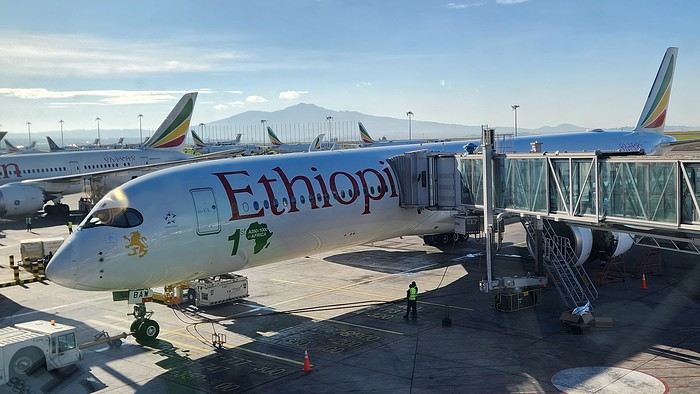
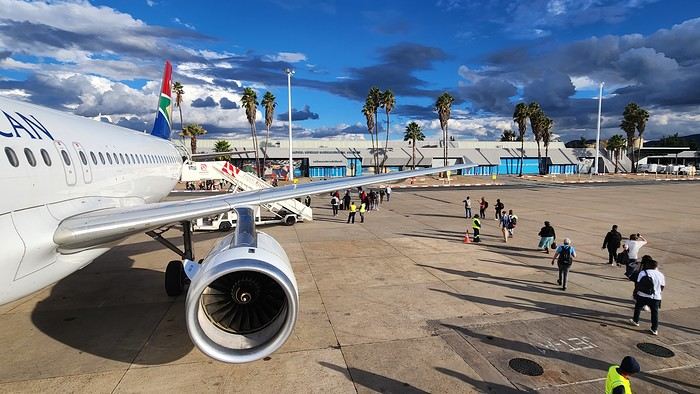
As we landed on the runway, first wow effect: The horizon is immense. It’s flat as can be, incredibly flat... So much flat space! Did I mention it was flat?... Looking into the distance, it feels like your gaze could circle the Earth without hitting a single obstacle—until you end up staring at your own backside. "Oh, what a nice view!" Well, it’s the first time I’ve seen my butt from this angle! Touching moment... Sorry, I’m rambling—must be the exhaustion from the three-flight marathon we just powered through via Ethiopia and South Africa... And yet, no time to philosophize about my anatomy. As usual, we want to rack up our first kilometers to be front and center at dawn tomorrow. After wrapping up the tedious Namibian immigration formalities and meeting the 4x4 that’ll be our companion day and night for the next fifteen days, we’re off! We’re not exactly fresh, but we’re ready to tackle the next five hundred kilometers in night mode, cruise control set due south! Just outside Windhoek, the local wildlife—a jackal—welcomes us with a smile: "Welcome to Namibia!" That’s what it said! Honest... Okay, first endless straight road, first flaming sunset, first corrugated dirt track, first Milky Way with zero light pollution... You get it—it’s definitely the day of firsts... First night camping, too, in the big trunk of our Toyota Fortuner parked by the side of the track... The real adventure, the kind that smells under the arms, can finally begin...

Open
Second trip to Japan: what itinerary for July-August?
Hi everyone,

I’m planning another trip to Japan next July-August (three and a half to four weeks). We were lucky enough to visit the country back in 2012 and explored Tokyo, Kyoto, Osaka, Nara, Hiroshima, and Miyajima Island.

This time, we’d like to spend a few days in Tokyo again and then discover other regions and cities. I really want to see Himeji Castle and Naoshima Island, but I haven’t decided on the rest yet.

Since we’ll be in Japan mostly in July (three weeks) and a bit in August (first week), I’m also thinking about the weather, which seems more favorable in the north (northern Honshu and Hokkaido), though the south (Shikoku, Kyushu) is tempting too.

I’d love to hear your advice on an itinerary, keeping in mind that we love variety—some history, temples, nature, and big cities.
Open
Warm January in Kerala (and a bit of Karnataka)
Hi everyone, We're back in India for the 7th time (for the other trips, check here: https://www.unendroitoualler.fr/asie/) ... But this time, no more exploring or trekking! With age, we're just spending a quiet month in southern India, a country we particularly love... Our journey starts in Kovalam, then Monroe Island, Varkala, Kochi, Kannur, Udupi, and finally, as in recent years, Gokarna. No problem getting around—there’s the train all along the coast...

Night in Trivandrum

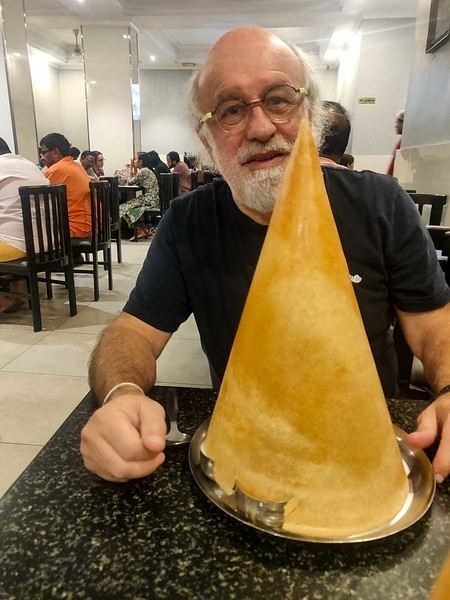
Prepaid taxi to the « Safire Residency », where we stayed last year. This hotel is still just as nice and welcoming (980 INR). Then, dinner at the restaurant « Ariya Niwas » where we enjoyed those delicious dosas again! (We missed them!)

Open
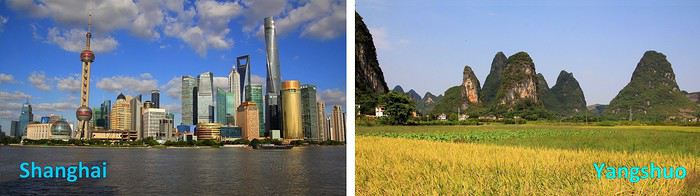
Two Sides of China: Urban Shanghai and Rural Yangshuo


Vast, diverse, and multifaceted China! During a recent journey across part of this fascinating country, I enthusiastically discovered so many aspects of it. But such variety seems hard to condense into a single story. So, for this travel journal, I’ve focused on two main facets of China. First, a modern and urban China—the sprawling city of Shanghai—and then, in a second part, a China that’s the complete opposite: a rural and more traditional side explored around Yangshuo, where nature is absolutely stunning. Ready for a tour of China, city first, then countryside? Travel stories, descriptions, and impressions are on the program, with plenty of room for photos. Enjoy the journey and happy reading!

--

Urban China: Shanghai

As soon as you explore the city, it’s clear: the Chinese wanted to turn Shanghai—once a small fishing village—into a showcase of a modern, powerful, and forward-looking China. The megacity is immense, with around 24 million people bustling through its avenues or stuck in monstrous traffic jams at the foot of some of the world’s tallest skyscrapers. Towers so high they almost touch the sky—well, almost. But this gigantism is just one side of this southern metropolis in the Middle Kingdom.

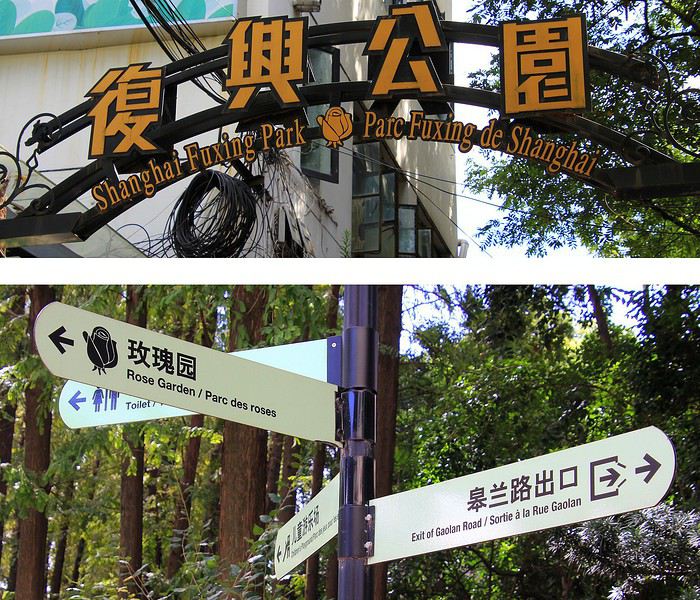
Away from the towers and business districts, you discover another side of Shanghai—more traditional and, some would say, more human. This is where my travel story begins: on a quiet morning among smiling, relaxed locals. We’re in one of the city’s parks, specifically Fuxing Park.


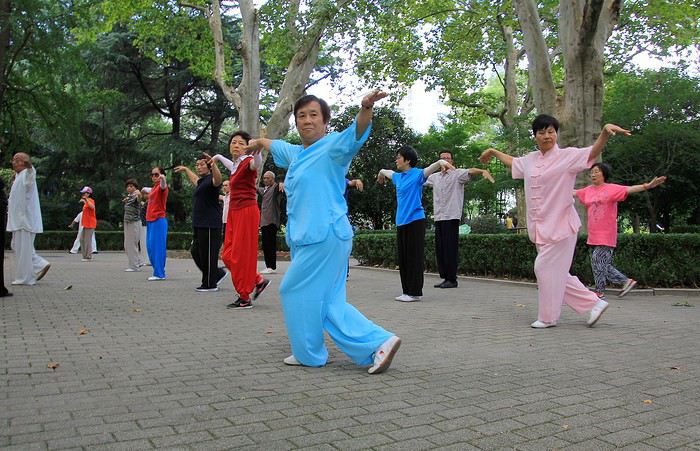
As everyone knows, the Chinese love practicing Tai Chi Chuan, in groups or solo, so it’s no surprise to see so many here, moving slowly and precisely through their sequences. Here’s a first group, their movements and postures perfectly coordinated.


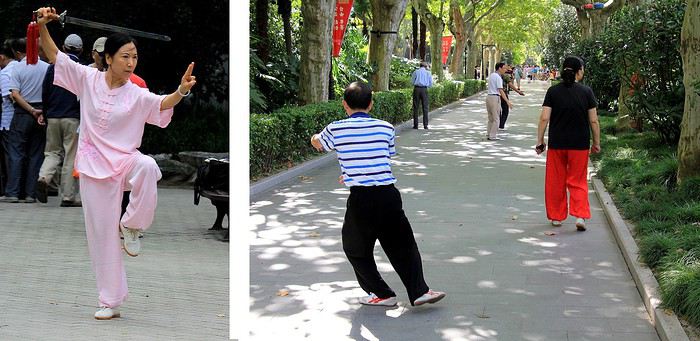
In another alley, a lone practitioner is deep in concentration, executing his movements with focus. I watch him for a few moments, discreetly and from a distance, so as not to disturb him. To his right, a woman in bright red pants keeps walking, almost as if she’s marching in place. A strange ballet: a series of steps forward, then backward, and so on...

Nearby, this elegant athlete (or artist) performs Tai Chi with a sword—almost like a choreography, her movements resembling a true sword dance.


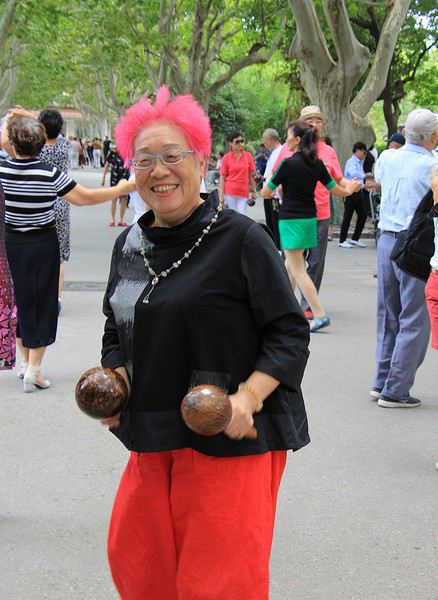
Further on, the atmosphere is more relaxed and melodic. People are playing music and dancing joyfully, like this woman with her colorful, original hairstyle, all smiles with maracas in hand. You almost want to clap along—her energy is so contagious!


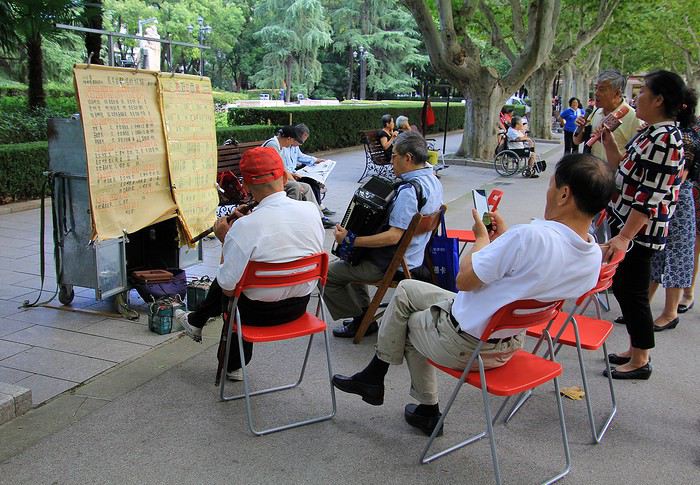
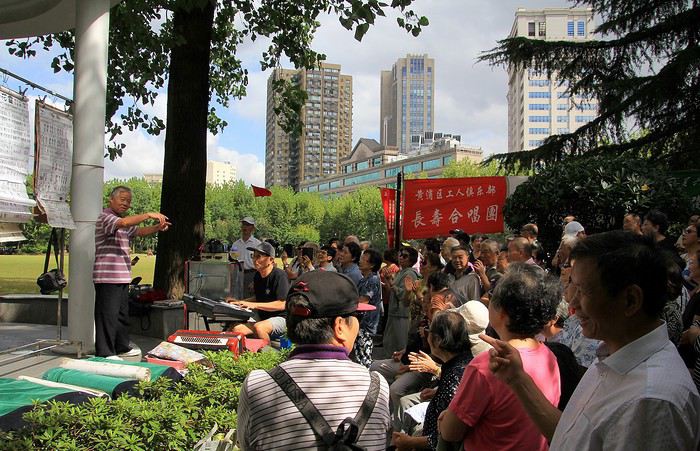
The mood is lighthearted among this group of retirees. Their choir alternates between patriotic hymns and lighter songs. Someone must have told them some French people were watching, because suddenly they start singing an old French tune: « Vive le vent, vive le vent d’hiver... » And the cheerful choir leader invites us to sing along—all together! The result was a fun cacophony: us in French, them in Chinese. But it was so charming!

These Chinese locals definitely passed on their good mood. It’s a joy to see all these retirees—you can imagine them leaving their small apartments to get some fresh air and meet up in the park for these morning activities. But let’s not kid ourselves: while they seem so happy and content with those big smiles, most of them probably didn’t have an easy life. Food shortages, draconian regulations, propaganda, the one-child policy—just to name a few! No, what many endured in their daily lives didn’t always give them reason to smile so brightly. But now, they’re making the most of it, and as I wrote earlier, it’s wonderful to see them like this.

Encouraged by these shared moments, I decide to keep going. Without hesitation, I join a Tai Chi session. I tried my best to follow the movements of my neighbors practicing this traditional exercise, but I’ll admit—it wasn’t easy!


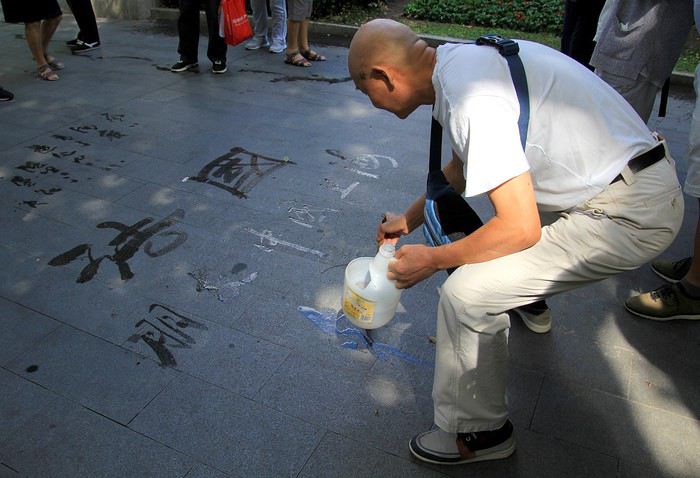
This artist, especially attentive, rewards us with a calligraphed phrase about France. A lover of Chinese calligraphy, he writes these sinograms in ancient characters directly on the ground. Is it writing or drawing? It’s hard to say—the result is so aesthetic. An ephemeral phrase, written in water that slowly fades as it dries, before disappearing entirely.


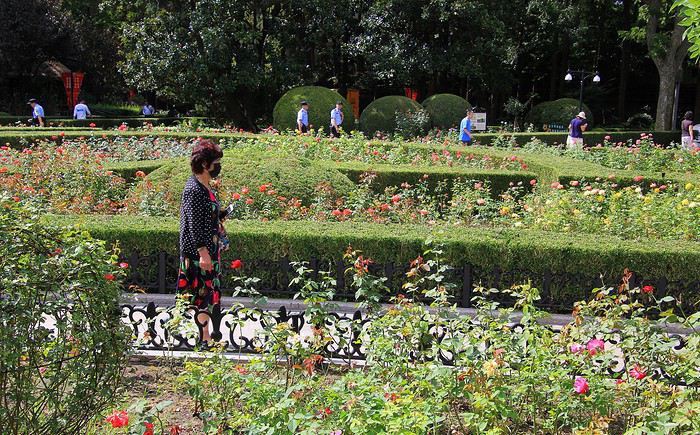
As we walk, we approach one of the park’s exits—so beautifully flowered. These flowerbeds and their blooms hint at the name of this charming place: Parc des Roses—and it’s even written in French!


--

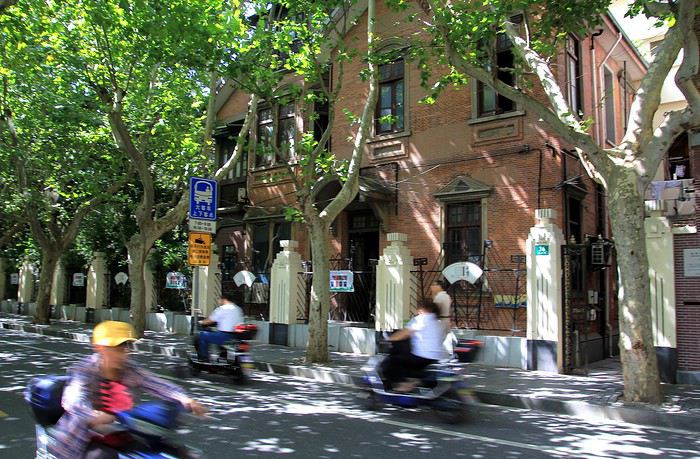
We’re now in the former French Concession of Shanghai, which explains the French inscriptions. The era of foreign concessions in Shanghai is an old story, dating back to the 1840s—a time when China opened its market to international trade. Several nations, including European ones, established trading posts in the city. There were British, American, Japanese, Russian, Italian, German, and French communities. This part of Shanghai was under French administration for a time, starting in 1846.


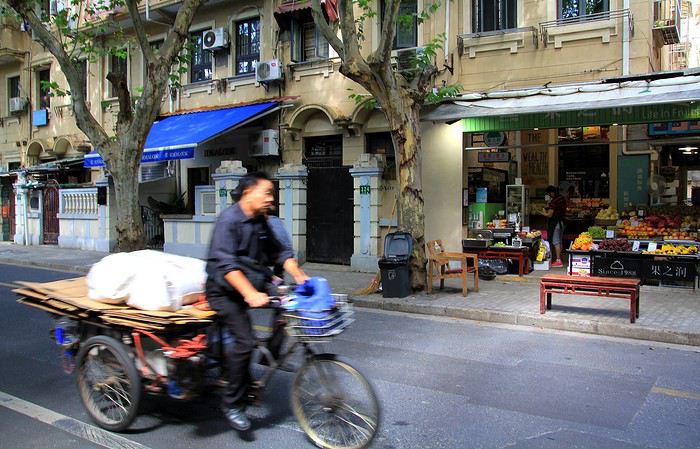
Some buildings in the area still bear witness to that time, like these ones, with bikes and scooters passing by. The architecture popular at the time blended European influences with the style of Shanghai’s elegant residences: stone arches above entrances, brick walls, and pleasant inner courtyards. Large homes often divided into several apartments today.


--

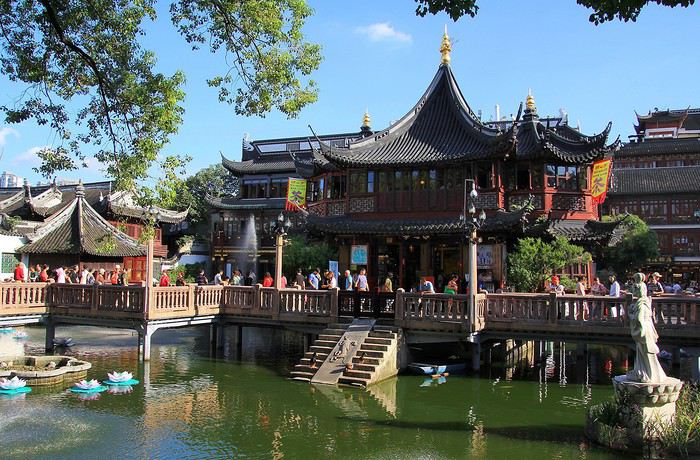
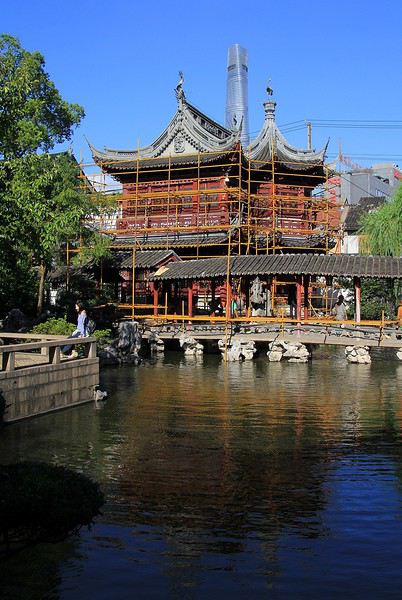
Traditional Chinese architecture shines in all its splendor at this tea house. With pagoda-style roofs—corners turned up toward the sky—refined colors and decorations, and a small corner tower on the right, this Huxinting Pavilion dates back to 1784. It was built in the middle of a pond, offering beautiful reflections. A truly charming spot where you can savor the subtle flavors of Oriental teas in the interior rooms.


Just steps from this picturesque spot, don’t miss the Yuyuan Pavilions and Garden. The whole complex is stunning and gives a glimpse of imperial-era homes and parks from the Ming Dynasty.


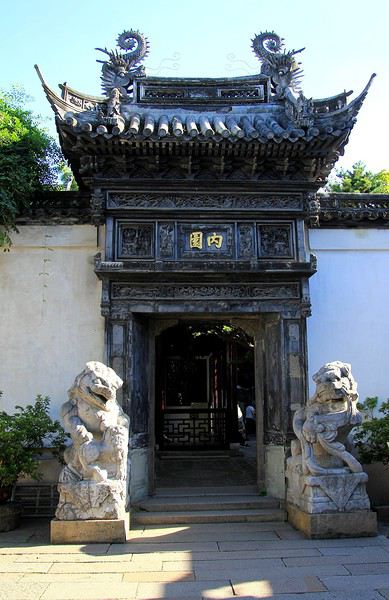
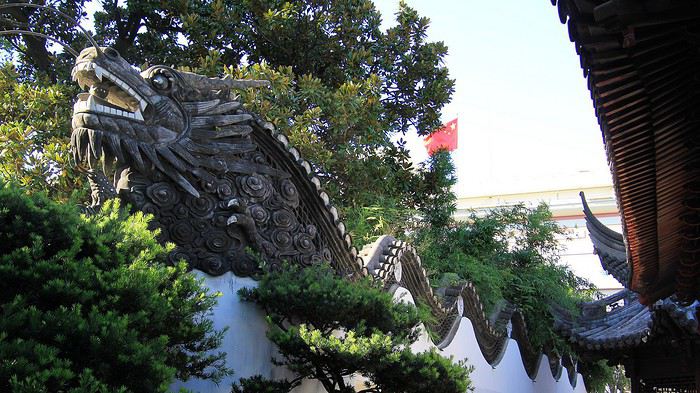
Pass through the entrance gate to enter this opulent property, well protected by a high surrounding wall. On one of them, a dragon sculpture sprawled at full length—about 7 meters—is impressive. The symbol represents power but also happiness.


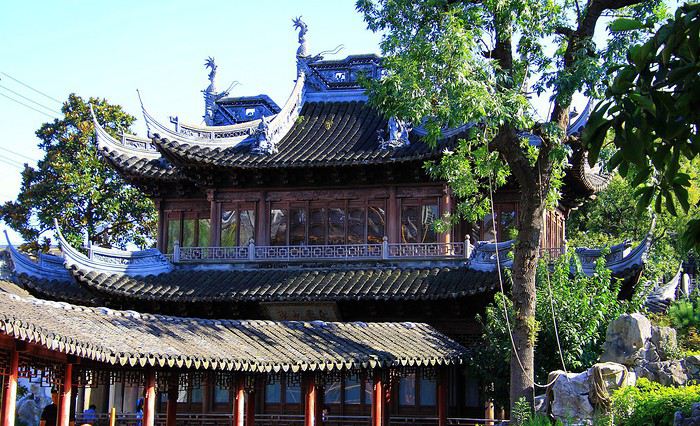
Created in 1577 by the Pan family, wealthy dignitaries of the time, the visit takes you from pavilions with poetic names like the Pavilion of Three Ears to the Pavilion of Spring’s Announcement. Charming!


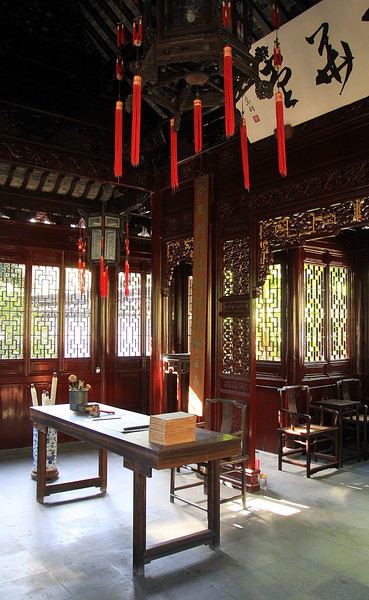
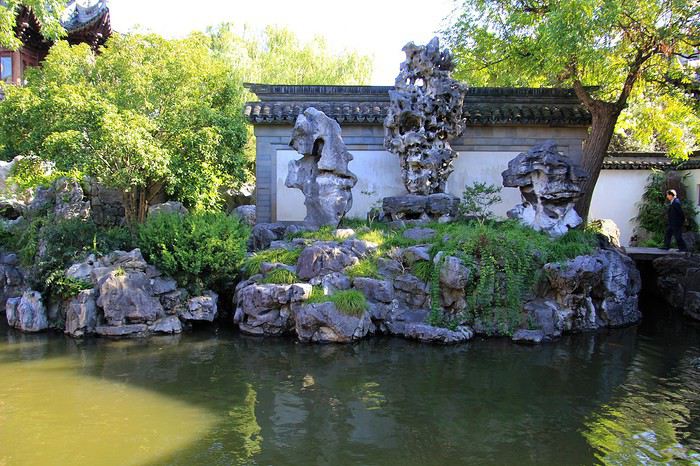
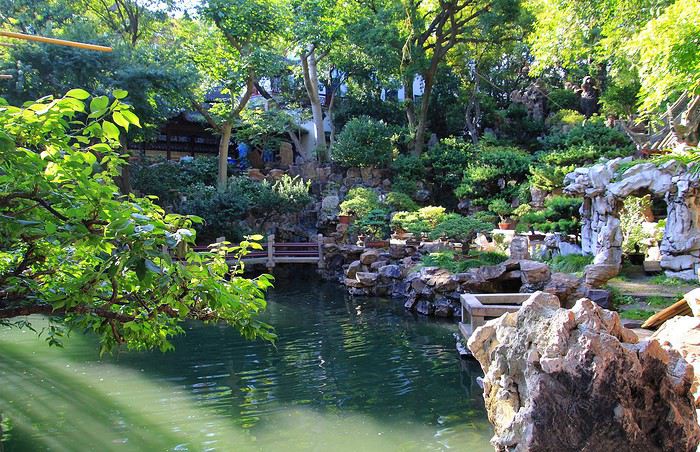
The interiors are decorated with woodwork from walls to ceilings, where beautiful Asian lanterns hang. But the real charm is outside. These shaded gardens, rustling with bamboo, are adorned with several ponds surrounded by impressive rock formations. A world that recreates (in miniature) the mountain and water landscapes of rural China.


This historic Yuyuan Garden, in the heart of the city, took about 18 years to design and build (pavilions and gardens). Its current appearance is the result of a faithful renovation—much needed, because in 1942, during the so-called Opium War, British officers made it one of their residences. It was partly destroyed by bombings, and later, French troops ransacked it after an attack on their concession.


The site is still under construction—maintenance and renovation—with scaffolding as proof. The garden’s enclosure was set to close for work the day after our visit (for a few weeks, until the end of October 2019). That’s probably why crowds of visitors were rushing in, making the atmosphere a bit less peaceful than this beautiful architectural ensemble might suggest. For the photos, I had to be a bit clever, avoiding the crowds to give an impression of tranquility—this historic place deserves it.

--

To be continued in the next post...
Open
Bugs on VoyageForum
Hi,

Many of us have noticed that bugs have been making it difficult to navigate the forum lately.

I’ll let Kate and Ticapi explain the issue:

I went to your profile to check out the Thailand travel journal, and when I clicked on it, it brought me back here again. All week, I’ve been dealing with bugs like this—it’s really discouraging from continuing on VF.🙁

I had the same thing happen, and multiple times. For me, it was Montagnard’s latest journal that kept coming up no matter which discussion I clicked on.

Hopefully, a solution will be found soon.🙂
Open
General 2022+ Update for Russia
This forum was closed for a long time after COVID, then due to its sale by the previous owner. Since 2022, there have been notable changes for Russia. It became possible to travel to Russia as a tourist again after COVID restrictions ended in summer 2022. But before that, in March 2022, the EU and member countries cut air links with Russia, as well as train lines. They also cut Russian banks off from the Euro-American banking network—meaning cards and wire transfers.

EU-based insurers stopped offering policies for Russia. The Green Card for cars in Russia was also discontinued. Then the EU abolished the simplified visa regime agreement with Russia. All in all, a summary of the current practical aspects would be helpful.

I’ve been traveling to Russia regularly for about twenty years, and after the long COVID break, I resumed in autumn 2022.

Visa

The usual paper visa is much more expensive. On one hand, because the previous regime was scrapped, and on the other, because invitations for multi-entry visas are pricier. A single-entry 30-day visa costs 80 €. The multi-entry one is 240 €. To be sure you’ll get a 12-month multi-entry, it’s best to buy a telex invitation from the MID (Russian Ministry of Foreign Affairs), though there are few resellers. Prices vary depending on the seller.

E-visas are now available for Schengen passport holders. A big simplification for trips up to 16 days within a 60-day validity period. You can apply from 40 days up to 5 days before your desired date. Issued in up to four days. The site is https://evisa.kdmid.ru/ Cost: 50 €. Processed through an Emirati bank (United Arab Emirates).

Medical Insurance

Medical insurance with repatriation is required to get a visa. So you’ll need to buy a policy. This brings up payment methods. If you’re already familiar with Russia and have a Russian bank account, you can pay with your Russian card. Otherwise, you’ll have to buy from a site that accepts payments via a Belarusian bank—which means your bank must work with Belarus—or go through https://goingrus.com/fr/insurance

Transport from the EU

Minibus (marshrutka) from Kirkenes (Norway) to Murmansk. Schedules are coordinated with flights from Oslo, which arrive between 11:00 and 12:00. They wait on the right as you exit the airport. Some are chartered by groups and leave directly, but may have space—ask the driver. Otherwise, two companies run the route, with a stop in town at the corner of the Scandic, where they depart around 14:00 or 15:00. Payment in cash (NOK or RUB) to the driver. Main operator: https://borodinbus.com Bus from Tallinn (Estonia) to St. Petersburg. The border crossing is on the Narva River. The Russian road checkpoint has been closed since January 2024 for construction expected to last 2.5 years, so reopening is possible in summer 2026. In the meantime, it’s a two-bus journey: Tallinn-Narva, then walk across the bridge between the Estonian and Russian checkpoints at Ivangorod, followed by another bus. Several companies: Luxexpress, Ecolines, Baltic Shuttle, Anniston, СКСавто. Bus from Riga to Pskov or St. Petersburg (final destination). Departs from Riga’s bus station (behind the train station) daily between 18:00 and 19:00. Arrives in Pskov between 01:00 and 02:00 (Russian time). Company: СКСавто. There’s another bus around 21:00 with Ecolines, but it’s longer, with a long stop at the border. Bus from Gdańsk to Kaliningrad. Several buses per day. From the PKS bus station, behind Gdańsk’s central station, on the other side of the boulevard. From Kaliningrad, a 1-hour flight to St. Petersburg costs around 5000 RUB.

Basically, unless you’re planning to go to Murmansk and the Kola Peninsula—and possibly from Murmansk, flights to Arkhangelsk, then Nenetsia (Naryan-Mar), etc.—the three main crossing points with airports are Tallinn, Riga, and Gdańsk.

The Gdańsk-Kaliningrad bus is the fastest, and the ticket to St. Petersburg is very reasonable.

The Narva-Ivangorod route is the riskiest in terms of potential queues and crossing time. Holiday periods are especially risky. Last mid-June, I took a 14:00 bus from Tallinn. I’d bought a single-berth compartment on the Grand Express St. Petersburg-Moscow train, leaving at 23:00, with the idea of a good night’s rest before a Moscow-Magadan flight. A 7-hour queue at the border meant I arrived at St. Petersburg’s bus station at 23:00—missed the train, had to book a room, and spent time finding a reasonably priced flight to Moscow the next day for the same airport as my Magadan flight.

The Riga-Pskov route is a bit long but relaxed. If you get off in Pskov, you can still get decent sleep between 02:00 and 12:00. The Oktyabrskaya Hotel is cheap. I’ve also stopped in Izborsk. You ask the driver when boarding in Riga. The stop is on the federal highway—cross the road, and the main inn is 200m away. You can explore the medieval site the next morning before taking a bus to Pskov (30 km).

From Pskov, there are fast regional Lastochka trains—three or four per day—to St. Petersburg, taking 3.5 hours. Very comfortable and affordable. Also, two daily flights with Azimuth to Moscow-Vnukovo from 5000 RUB. A one-hour flight. It’s a section of Pskov’s military airfield, just a few kilometers from the city center.

Money

Cash. The EU issued a nonsensical decree: a ban on importing EU currency (euros, zloty, kroner, forints, etc.) except for personal travel use. This doesn’t make sense because as a citizen of a eurozone country, you *have* to have euros—cash or electronic (card). You can’t travel without them. The stipulation about a limit for personal use is absurd because personal use can mean anything from a hostel bed to a luxury hotel room, plus transport (flight tickets, train tickets in Russia), restaurants, etc. Estonian customs officers ask about this at the border when leaving. They ask in Estonian, then Russian, then English, depending. Since I cross with a French passport, I just say, "Sorry, I don’t understand," no matter what. Then they ask with a questioning look, "Euro?" and I shake my head. I haven’t been searched, but they do ask to glance in your bag. Russians with large suitcases often get checked. Cards and phone apps: if you have a Russian bank account.

Telephony and Internet

Roaming works but is pricey. Okay for calls and SMS, but very expensive for data. In that case, use an e-SIM with your home carrier if your phone supports it. Otherwise, look into prepaid rechargeable SIMs in Russia for data only—like SIM cards for mobile modems.

Russian SIM: Since this year (2025), as of March, it’s mandatory to be registered in the EBS (Unified Biometric System) to buy a SIM card. For a non-resident foreigner, this means first registering for a SNILS at an MFC (Multifunctional Center)—also called "My Documents." The SNILS is the pension center, which doesn’t require residency. After getting your SNILS number and certificate, you register on the public services portal, Gosuslugi. Finally, you register in the EBS system (voice sample—you read numbers—and a biometric facial photo).

Personal Car

The Green Card no longer covers Russia, and neither do EU-based insurers. But third-party liability insurance (OSAGO) is mandatory. Since the closure of the Russian checkpoint at Ivangorod for construction and the Finnish border closure, the routes are from Kirkenes in Norway, the Estonia-Pskov route, and—since the Belarus-Russia joint visa this year—the Belarus route, e.g., Poland-Terespol-Brest or Lithuania-Belarus. No OSAGO sales if you cross via Kirkenes. I didn’t see any at Shumilkino, the Russian checkpoint after Estonia toward Pskov. If you have a Russian card, you can buy online, of course. Otherwise, pay in cash on-site at certain company offices (specific forms aren’t available at all agencies) or online by paying to a third-party account outside Russia—with added fees.
Open
No, I Won’t Be Going Back to China
Hello forum,

Did any of you feel the same things we did in China?

We spent a good twenty days there in August. First, we traveled solo around Chengdu, then joined an organized tour for 12 days (Beijing, Pingyao, Xi'an, Guilin, Xingping, Yangshuo, Shanghai, Wuzhen) and extended our stay by 4 extra days to visit Zhangjiajie.

The landscapes were stunning, and we have unforgettable memories... but we were really disappointed by the following points:

- The food: way too spicy. Lacking in flavor, not much taste. I’m speaking "in general" because we did enjoy some good steamed dumplings, smoked pork, and other dumplings... But compared to Thailand, Cambodia, or India, Chinese cuisine didn’t impress us at all.

- The behavior of the Chinese: disrespectful, rushed, agitated. You constantly have to fight—people push, crowd, and overwhelm you... At the entrance to the Terracotta Army (and other sites), it’s a human tidal wave... and I mean that literally. We were carried by the crowd without even touching the ground. It was like a situation where you have one bowl of rice and 20,000 starving people diving for it...

You’re at a ticket counter, and they cut in front of you. You’re in line for boarding, suitcase ready to go on the conveyor belt, and someone shows up out of nowhere to put THEIR suitcase down... even though they have a flight ticket with THEIR seat number and won’t be leaving before you!!!! You’re getting on the bus, and someone shoves past you just so they don’t end up behind you.

It’s like these people only think about themselves. I didn’t see a single person let someone else go first or even ask—it’s as if politeness and respect are completely foreign to them.

It’s honestly exhausting and draining...

- Communication: In every other country we’ve visited, whether in Asia or Europe, we always manage—with English, a few words of Italian, French, or Spanish. In China, I’ll be blunt: if you don’t speak Chinese, you’re screwed. And yet, a pair of kids around ten or twelve years old asked us in English where we were from :)

- Understanding: Here’s the rule. Even if the person you’re talking to speaks a little English and says they understand you... make sure they *really* do, because 9 times out of 10, they don’t. Out of pride or just cluelessness, they’ll give you a big smile and nod, but in reality, they didn’t get what you were saying.

Several times with our group, in the evening at a restaurant, if we hadn’t been helped by someone at another table who spoke a little English, we’d still be there. The classic example: the waiter brings one menu (for 10 people at the table), and we’re all trying to explain that we need 4 or more menus. Five minutes later, he’s still staring at us with that same blank smile...

In 3* or 4* hotels, you go to the front desk for a hot water or AC issue. Three or four staff members just stand there beaming at you. You try to explain with photos or a translator, but in the end, you leave with the problem unresolved.

They don’t speak—they shout... on buses, in hotels...

We were also surprised to find that self-service laundromats were almost nonexistent. We got scammed once at a hotel with an astronomical bill!

As for flights, we flew Air China on the way there and Austrian Airlines on the way back—no comparison. Air China had zero service and food that was "baby food" quality. Austrian Airlines had multiple services, a decent meal, and smiling flight attendants.

I don’t know if any of you had the same experience in this country, but I’m definitely not eager to go back. Whereas if someone offered me India, Thailand, or Vietnam tomorrow, I’d be there in a heartbeat!!!
Open
Back in Tunisia (live account)
Hi there,

On this forum, I shared my first trip to Tunisia from mid-February to early March (https://voyageforum.com/forum/impressions-tunisiennes-en-direct-d11460662/), a stay I enjoyed so much that six weeks later, I’m back in Tunisia for a full 15 days (I return on April 27).

This time, I landed in Monastir on a direct flight from Nice, again with Tunisair. We left about ten minutes late, and the flight lasted around 1 hour 30 minutes. A meal was served on board (cucumber salad with Edam-like cheese, carrots, and two small portions of dishes I couldn’t identify—semolina with peppers, olives, and parsley, two small rolls, a square of processed cheese, and a chocolate cake). It’s worth noting because it’s not common on flights this short.

In February, France and Tunisia were in the same time zone, but now Tunisia is one hour behind. This time difference and the flight duration work perfectly for a short 15-day trip since it takes me a few days to adjust to jet lag.

Luckily, I’d asked my hotel about the taxi fare from the airport because the drivers (there were several around me) didn’t hesitate to quote outrageous prices. The actual fare is 20 dinars, but one asked for 120 dinars. I refused, and another offered 60 dinars. I replied, "That’s too expensive—I’ll take the metro!" (Having tried the Tunis metro, I had no desire to repeat the experience in Monastir with a suitcase!). I started walking toward the metro, and one of the drivers caught up with me, saying, "20 dinars is fine!" I’ll skip the details, but the negotiation took a little while. When I arrived at the hotel, I told the receptionist someone had asked for 120 dinars. He put his hands to his head and said, "They’re awful!" He remembered our phone call two days earlier when I’d booked (he’s the one who told me I could take the metro).

The Mezri Hotel isn’t expensive. I got a sea-view room for 75 dinars (22 €). (I’d booked a balcony room for 90 dinars but wouldn’t have had time to enjoy it.) It’s well-located but noisy because there’s no double glazing. The receptionist is a very kind older gentleman. He called a friend whose wife is from Tozeur to find out if I should take a bus or a *louage* tomorrow and what time.

I arrived at the hotel around 7:00 PM and had time to stroll along the corniche to the ribat. Despite some run-down buildings, the seaside seemed livelier and cheerier than Sousse’s.

Monastir is the hometown of former president Bourguiba. I passed his mausoleum by taxi. There are Tunisian flags along the avenue by the sea because every year on April 6—the anniversary of Habib Bourguiba’s death—the president of the Republic visits the Bourguiba Mausoleum in Monastir to pay respects.

The taxi driver mentioned other Tunisian presidents. He complained about rising prices and insecurity, blaming President Kaïs Saïed (I’d already heard that security was better under Ben Ali).

At the end of my stay, I’ll take time to explore Monastir, but tomorrow morning, I’m off to Tozeur—a long bus ride awaits me.


TO BE CONTINUED....
Open
A lovely wander at the mercy of the wind in this amazing Rajasthan
Hey there, forum friends 😉

Some of you have mentioned missing the activity on this Indian "page," so let’s try to liven things up a bit—with joy and good vibes (mandatory with me 😜). Plus, it’ll make Jojoone happy 😊.

As big lovers of India—we’ve been six times—my co-traveler husband and I decided to explore Rajasthan this time around. The reason we waited so long to come here? We were dreading the tourist crowds in this state. But thanks to the timing (late March to early April 2024, which is starting to get pretty hot) and Aleph’s great tips, we were *very* far from mass tourism.

We spent three weeks getting around on our own for transport: mostly taxis and trains.

And I’ll admit, we had a rather "Arabian Nights" experience, far from the "real" India (Marien, if you’re reading this 😉). So this travel journal makes no claims other than to share what we saw, experienced, and felt—with all our ignorance about this country (which I’m fully aware of).

But fair warning: I go overboard with emojis, and this journal is super casual because it’s the one I share, almost in "live" mode, with our loved ones.

So, if you’re here, consider yourself almost part of the family 😄.

See you soon and....
Open
Photo Safaris in Kenya
Back on the forum, I’m starting to write up two 3-week trips to Kenya in August 2021 and 2023. In 2021, Quynh and I traveled with Régis (Rjulie95 on VF). Our son joined us in Baringo for the second half of the trip. In 2023, we went with two friends who’d been dreaming of seeing wild animals ever since we got back from Kenya. We didn’t need much convincing to go with them!

The two itineraries are almost identical (well, when you love something...) but we did make a few tweaks.

- The first part of the trip was with a local driver/guide, Félix, who was recommended by Sylvie56. Sylvie and her husband Ben are Kenya enthusiasts—they’ve been there countless times, always with Félix... and for good reason! He’s fantastic!

- The second part was with Melting Pot Safari, an agency that adapted to our photography needs. Tony Crocetta, the co-founder (along with his Kenyan friend Simon Chebon), is a wildlife photographer himself.

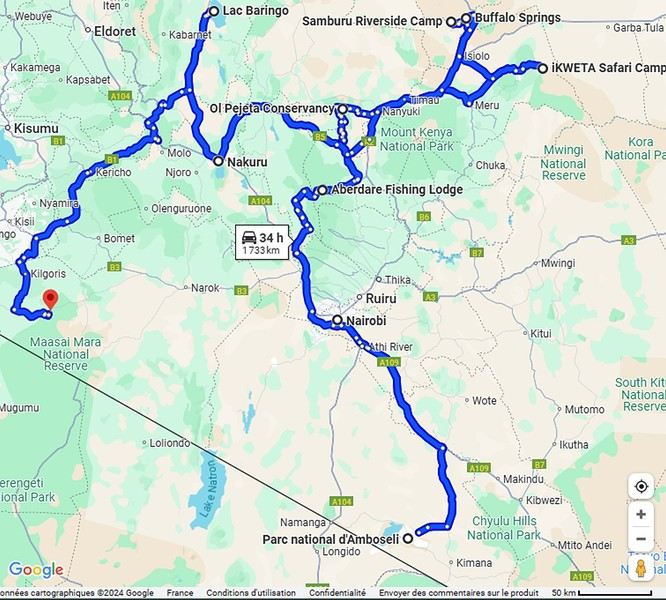
Here are the itineraries for both trips, including accommodations:

In 2021: Day 0: Paris / Nairobi - 67 Airport Hotel Day 1: Nairobi / Amboseli - Simba Cottage Day 2: Amboseli - Simba Cottage Day 3: Amboseli / Aberdares - Fishing Lodge Day 4: Aberdares - Fishing Lodge Day 5: Aberdares - Fishing Lodge Day 6: Aberdares / Samburu - Riverside Camp Day 7: Samburu - Riverside Camp Day 8: Samburu - Riverside Camp Day 9: Samburu / Nakuru - Merica Hotel Day 10: Nakuru / Baringo - Tumbili Cliff Lodge Day 11: Baringo - Tumbili Cliff Lodge Day 12: Baringo - Tumbili Cliff Lodge Day 13: Baringo / Maasai Mara – Meltingpot Bush Camp Day 14 to 18: Maasai Mara – Meltingpot Bush Camp Day 19: Maasai Mara / Nairobi – Roussel Guest House Day 20: Nairobi / Paris

In 2023: Day 0: Lyon / Paris / Nairobi - 67 Airport Hotel Day 1: Nairobi / Meru - Ikweta Camp Day 2: Meru - Ikweta Camp Day 3: Meru - Ikweta Camp Day 4: Meru / Samburu - Riverside Camp Day 5: Samburu – Riverside Camp Day 6: Samburu / Buffalo Springs – Samburu Simba Day 7: Buffalo Springs / Ol Pejeta – Sweetwater Camp Day 8: Ol Pejeta / Amboseli - Simba Cottage Day 9: Amboseli - Simba Cottage Day 10: Amboseli - Simba Cottage Day 11: Amboseli / Nakuru – Lake Nakuru Lodge Day 12: Nakuru / Baringo - Tumbili Cliff Lodge Day 13: Baringo - Tumbili Cliff Lodge Day 14: Baringo - Tumbili Cliff Lodge Day 15: Baringo / Maasai Mara – Meltingpot Bush Camp Day 16 to 20: Maasai Mara – Meltingpot Bush Camp Day 21: Maasai Mara / Nairobi / Paris

Here’s an itinerary—it’s not exactly what we did, but a combination of both.


Ready to join us on safari to see some wild animals?

Open
Papua or Papua New Guinea for backpacking?
Hi everyone, so glad the forum’s back up! I’m planning a trip for next June but I’m still torn between Papua and Papua New Guinea. Solo backpacking trip, about 3 weeks (trekking, culture, and a tiny bit of beach time). It’s still tough to find recent info—anyone know if backpacking is doable there? Thanks in advance for your tips! carpediem
Open
Solo trip to Mongolia in winter
Hello, so happy to be back on the forum! I’m heading off alone in mid-January for 5 weeks in Mongolia. I’d love all your tips—transport, accommodation, you name it…

For the cold, I think I’m used to it since I used to travel in Siberia, but that’s over now.

Looking forward to hearing from you! M
Open
Ecuador itinerary with a 16-month-old baby
Hi there!

After scouring the forum, reading several guides, and browsing websites, here are a few questions about our upcoming trip to Ecuador this summer.

We’re planning to travel with our 16-month-old son (he’s already been to Russia, Argentina, and Uruguay in his first three months), and here are some questions we have.

The big question: What type of baby carrier would you recommend? (We have a JPMBB, but I’ve never really been able to use it—it digs into my shoulders and isn’t comfortable. For short walks or strolls with the baby, we need something solid!)

Roughly, we’d arrive in Quito and return from Guayaquil (with the end of the trip in the Galápagos). The route would be something like this: Quito, Quilotoa, Papallacta, Cotopaxi, Baños, Riobamba, Chimborazo, Cuenca, Guayaquil, and the Galápagos.

For the Galápagos, we were thinking of 8 days—does that seem reasonable?

Regarding transportation, what are the buses like in Ecuador? (More like Argentina/Chile or more like Bolivia/Nicaragua?) How manageable is it with a baby?

Does the itinerary seem doable, and how much time would you roughly spend in each place? It’s clear we won’t be doing any major ascents, but we enjoy walking—a 2-3 hour hike to see the wildlife and flora at the foot of Chimborazo doesn’t scare us.

Without a baby, what do you think of the Baños-Puyo route? Some recommend the Chimborazo descent instead. With a baby, is the Baños-Puyo route doable? Is it possible to have a baby carrier on the bike?

Thanks so much! :)
Open
Traveling to Southeast Asia in "peak season": what about prices and advance bookings?
Hello, I’ve been to Thailand three times a long time ago, and I’d love to visit neighboring countries too: Laos, Vietnam, Cambodia (while returning to Thailand 😛). The catch is that I’d like to go at the beginning of the year, but I’ve heard that’s peak tourist season for these countries. Ideally, I’d prefer to avoid peak season to save money (I’m not exactly rolling in it) and to be able to travel without reservations—without being forced to take a room in the local "palace" that still has availability because of its exorbitant prices.

From my distant memories of Thailand, I usually paid around the equivalent of 20 € per night (with a hearty breakfast) for a hotel room with a mini-bar.

What are the average prices for this type of accommodation in Thailand and its neighbors during "peak" season these days? Do prices fluctuate a lot depending on the season, or is tourist demand not that different from one season to another, keeping prices relatively stable? Are the chances of finding a "budget" room without a reservation still high, no matter the season, in this part of the world? 😇
Open
Opinions on flight ticket price to Sydney
Hi everyone,

So glad to see this forum still so active!

Quick question for those who’ve recently traveled to Australia: I found a Singapore Airlines flight from Marseille/Frankfurt/Singapore/Sydney for 1425 € round-trip (from 11/10 to 12/8).

Do you think that’s a good price??

I checked directly on the Singapore Airlines website, but the price is way higher than on the comparison site.

Thanks for your input!
Open
Tuscany: Arezzo province and the Siena area
So happy the forum reopened last October!!! I’ve started reading again (posts, travel journals) and chiming in on a few discussions. Now I’m stepping it up by writing a new travel journal—I’ve already posted a few between 2018 and 2020.

My latest trip was to Italy from August 27 to September 26, 2024. As the title says, it was a wander through Tuscany in parts of the region that aren’t the most visited. No Firenze-Siena-Pisa trilogy, no San Gimignano; there’ll be a quick detour into Siena, but I’ll skip the best-known sights. That choice, plus traveling in September, should help dodge overtourism. It worked out—crowds were light, sometimes very light, the whole way. Here’s the practical rundown: - a long trip outside peak season (ah, retirees!) - solo camping (caravan) - a mix of activities (hiking, mountain biking, sightseeing) in places that aren’t always packed with tourists. Still, I don’t feel like I ended up in some hidden-away spots. Not sure if this will draw any readers.

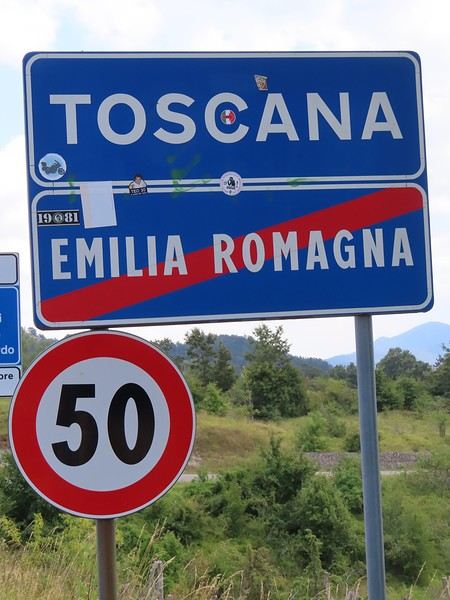
DAY 1: Tuesday, August 27, 2024 The heat was intense on the drive in across the plain; two big storms—more rain and hail than lightning and thunder—threw the weather off, the first near Imola, the second on the four-lane road up the Savio valley. I left the Cesena-Roma four-lane at the Verghereto exit and climbed up to Balze (1,100 meters). The campsite is even higher (1,200 meters), in the forest near the source of the Tevere (Tiber). Staying up here will cut down on driving for the first part of the trip: a route through the Appennino (Apennines) on the border between Toscana and Emilia-Romagna. The temperature was surprisingly mild for the altitude, the air thick with moisture by late afternoon. I drove back down from the campsite to Balze (2 km on the road) to grab groceries (it’s doable) and scout tomorrow’s hike. .

The endpoint of the planned hike is just a few meters from this sign (the trail crosses this road about 3 km from Balze). I realized Balze and the source of the Tevere (Tiber) are actually in Emilia-Romagna, not Toscana. I always thought the Tevere (Tiber), which flows toward Roma (Tyrrhenian side), started in Toscana! I’ll come back to this quirk in Day 3’s write-up.
Open
Martine and DD in Colorado and Utah
Hello everyone! 🙂 So many silent months, and now Voyage Forum is accessible again. That’s cool because we can pick up our discussions for our mutual enjoyment. I hope everyone is doing well and that you’ve been able to take some great trips, whether to the USA or elsewhere. In September 2020, we had planned a round trip to explore Colorado, but unfortunately, a nasty virus messed up our plans, closing borders and keeping us stuck at home. Luckily for us, canceling the car, flights, and accommodations didn’t cost us a thing—everything was refunded. In 2023, a loop from Las Vegas let us revisit places we’d seen in 2017 and discover new ones, this time spending more time at each stop with some lovely hikes. In 2024, we finally revisited the 2020 plan, and I’ll start with that. However, unforeseen circumstances mean I have much less time than before, so I’ll keep my trip reports shorter (ha ha ha—you’ll have less of my prose to endure). Another change: for those who remember the "Gang of Four crazy sixty-somethings," it was just DD and me this time. Our dear Mimi and Maumau left the Var to focus on raising horses and can’t leave their little green paradise to join us anymore. We were unfortunately much tamer without them. We traveled from September 11 to October 3.

The itinerary


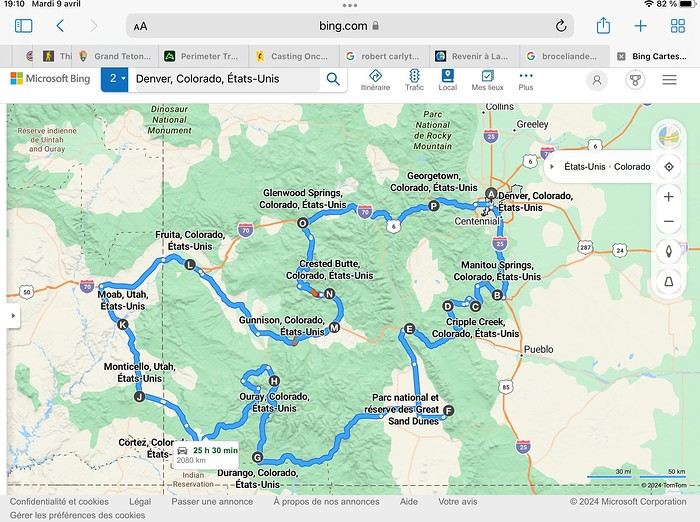
Day 1: Flight Marseille-Paris-Denver, then Manitou Springs (133 km) Day 2: Manitou Springs (49 km) Day 3: Cripple Creek (104 km) Day 4: Salida (254 km) Day 5: Great Sand Dunes (231 km) Day 6: Durango (283 km) Day 7: Durango (Durango-Silverton train) Day 8: Ouray (121 km) Day 9: Ouray (Perimeter Trail hike) Day 10: Cortez (213 km) Day 11: Cortez (Mesa Verde National Park, 134 km) Day 12: Monticello (268 km, detour to Chesler Park) Day 13: Moab (171 km, Delicate Arch) Day 14: Moab (98 km, Fisher Towers) Day 15: Moab (171 km, Canyonlands) Day 16: Fruita (210 km, Colorado National Monument) Day 17: Crested Butte (224 km via Kebler Pass) Day 18: Crested Butte (57 km) Day 19: Glenwood Springs (150 km) Day 20: Glenwood Springs (118 km, Rifle State Park) Day 21: Georgetown (258 km via Independence Pass) Day 22: Denver (123 km), then return flight

We speak very little English. We spent 21 nights there and covered a 3,400 km loop by car and 160 km on foot (we’re still trying to hike while we’re in shape) from Denver in September 2024. We wanted this road trip to help us explore Colorado a bit more—we’d only spent 6 nights there in 2019—and to see it during the fall foliage season. We also wanted to return to Utah (we love Moab) to enjoy its red rocks, which we adore.

In the prices you see (some in euros, others in dollars), I’ve included bank fees and exchange charges. The flights, car, and parking were paid by credit card when we booked in February. Usually, we book around November, but some obligations kept us from doing it earlier. We downloaded the MPC (Mobile Passport Control) app on our phone, which saved us time at immigration.

📊 **Budget: just under 8,500 € for both of us, all included**

📊 **Flights** Marseille-Paris (CDG)-Denver: 2,152 € for both of us, with one checked bag each

📊 **ESTA and America the Beautiful Pass** The ones from our 2023 road trip were still valid

📊 **Parking at Marseille airport: 122 €**

📊 **Car: Nissan Rogue (the French X-Trail) from Hertz: 1,165 €** By booking through Air France (and earning miles), we got a 15% discount. Hertz offers a free Hertz Gold Plus Rewards program, which gives us priority counter service.

📊 **Accommodation: 3,050 €** We stayed in motels and hotels of various ranges (from 100 € to 270 € per night, depending on the city), all booked through Hotels.com or Booking. Booking sometimes offers cheaper rates if you book via the "Booking mobile" app. We also got some preferential rates thanks to our Genius 2 status. Out of 21 nights, only one place didn’t include breakfast.

📊 **Other expenses (activities booked by credit card before leaving)** Durango-Silverton train: 210 € (we booked the enclosed vintage coach in March) Mesa Verde: Balcony House: 15.15 € (booked 14 days before the visit) Timed-entry passes for Arches National Park: 6 € for 3 days (booked June 1 for September entries via http://récreation.gov/). We booked three different days to play with the weather.

📊 **Supplementary insurance with AVA: 204 €** (due to our age 😅 and the high cost of medical consultations in the USA)

📊 **Cash: 1,540 €** We left with 1,000 € exchanged before departure and made two withdrawals (500 $ and 200 $). This cash was used to pay for: - Evening restaurants and tips (between 70 $ and 95 $ for two meals and two drinks) - Two state parks: Dead Horse State Park (20 $) and Rifle State Park (10 $) - The Monarch Pass gondola (24 $) - Midday picnics - Gas (slightly cheaper with cash): 204 $ for 3,400 km - Personal souvenirs and little treats.

Like in our previous road trips, we didn’t rent a GPS. We used the offline GPS app Here We Go, for which we’d downloaded maps of Colorado and Utah from France, as well as a new offline app called Organic Maps as a backup—though we didn’t end up needing it.

❤️❤️❤️ **Highlights (there are so many!)** 📍 The stunning landscapes of Colorado, especially with the fall colors 📍 A step back in time at the old farm in Florissant Fossil Beds National Monument 📍 The prairies of Cripple Creek and the mining remnants of the Vindicator Trail 📍 The cheeky chipmunks in the ghost town of St. Elmo 📍 Great Sand Dunes and its soft sand 📍 The steam train between Durango and Silverton: we’re glad we chose the round-trip because it rained heavily on the way there, but we got to enjoy the scenery on the way back when the sun came out 📍 The unexpected meet-up with Michèle from the group outside a restaurant in Durango 📍 The hot springs in Ouray 📍 Mesa Verde and its still-vibrant past 📍 The red rocks of Moab and Delicate Arch at sunset 📍 The lace-like Fisher Towers and the view from the end of the trail 📍 The gorgeous Route 128 leading to Colorado National Monument—small, easy to visit, and so beautiful 📍 The colors of the fabulous Kebler Pass, Crested Butte, and especially the hike through the golden aspens (Lower and Upper Loop) 📍 The waterfalls at Rifle State Park 📍 The tundra of Independence Pass 📍 The Halloween decorations in Georgetown and Idaho Springs

😞😞 **Flops (there are very few!)** 📍 The viewpoints we missed because they weren’t well-marked or we didn’t see the signs 📍 The closure of some hiking trails (Hanging Lake and parts of Canyonlands) and the Sal Mountain Loop road, which kept us from accessing it 📍😢 The Chesler Park hike we had to cut short due to poor time management—180 km between our stop in Cortez meant we didn’t arrive until 10:30 AM, way too late for a 17 km hike.

Hope this helps! Have a great evening, everyone, and see you soon! 😊
Open

You might also like