Discussions similar to: Apprendre kabyle
FR

395 similar discussions in English

To the Top West End
In this time of general travel-journal scarcity, I’m stepping up to tell you about a far-too-short getaway to the Top West End, a local term for the very northern part of Western Australia, right on the border ( ;) ) with the Northern Territory.

As usual, I didn’t manage to keep it short, but this time I’ve got photos to go with it!

August 2020. Since the opportunities to explore the world are extremely limited right now, all we (R&X) can do is explore our own island! Well, just a part of it, because with the state borders still closed, we’re stuck in Western Australia (WA).

Luckily, we’re pretty fortunate because this state is huge: over 2.5 million km² (that’s more than four times the size of France or 1.5 times Quebec). What’s more, stretching over 20 degrees of latitude between the Antarctic Ocean and the Timor Sea, you’ll find climates ranging from Mediterranean to arid to tropical. That’s actually why we decided to head as far north as possible. Sick of the endless rainy winter in Perth, bring on the heat of the Kimberley... way up Nooorth!

Friday. At the airport, the main terminal was closed (not enough flights), so we ended up in the annex (where flights to the various mines usually depart from). There was no crowd at the gate, and in this huge, single departure lounge, empty seats were plentiful. Only three flights were listed on the screens for the rest of the morning: the first to Coondewanna (?), the second to Darwin, and ours to Kununurra (code KNX).

A cool breeze swept through the half-open corridors along the runways. At the top of the walkway leading to the Fokker 100 (the Airbuses and Boeings are now parked!), a flight attendant greeted us with a basket full of sanitary masks. We were actually the only masked passengers (the staff weren’t wearing them either). With zero Covid-19 cases in WA at the time, the only rule was to maintain social distancing—something pretty hard to do on a full plane!

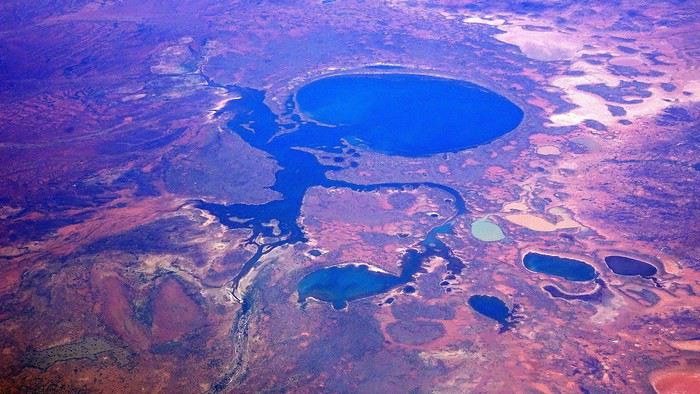
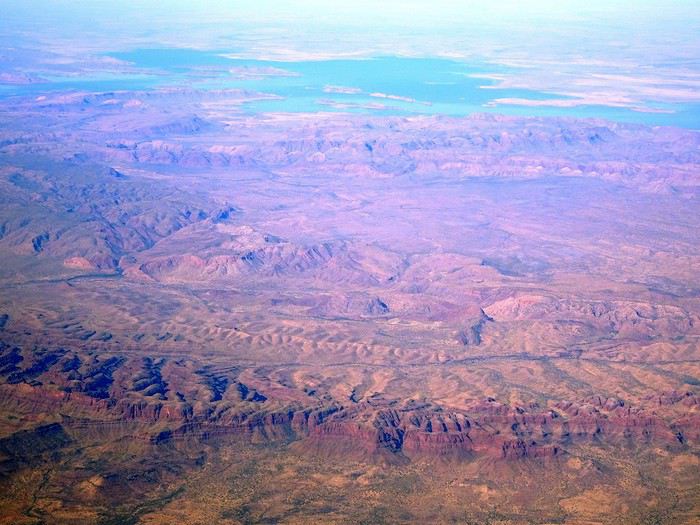
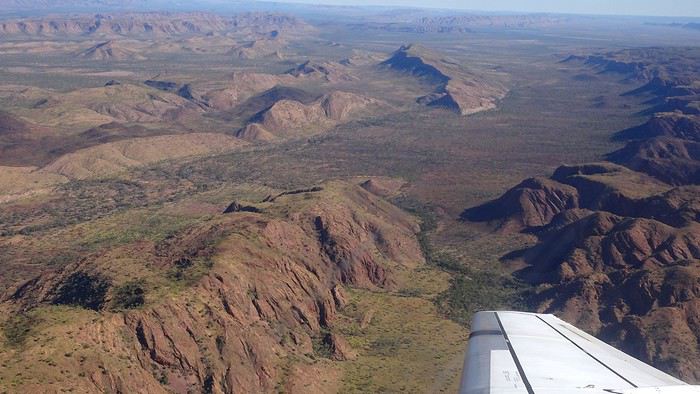
It was also my first time wearing a mask—it felt weird, pretty uncomfortable, and after a while, painful behind the ears. I really feel for those who have to wear one all day, every day. The flight lasted three long hours, but luckily, I had a good book. From the window, I watched an endless expanse of salt lakes in all shapes and sizes—round, elongated, gray, white, sometimes blue and green—and an infinity of winding, capricious meanders, along with long straight lines that led nowhere. The last half-hour got more interesting as rocky, swollen formations and long, sloping plateaus appeared. Against the vast ochre landscape, green patches became more frequent.


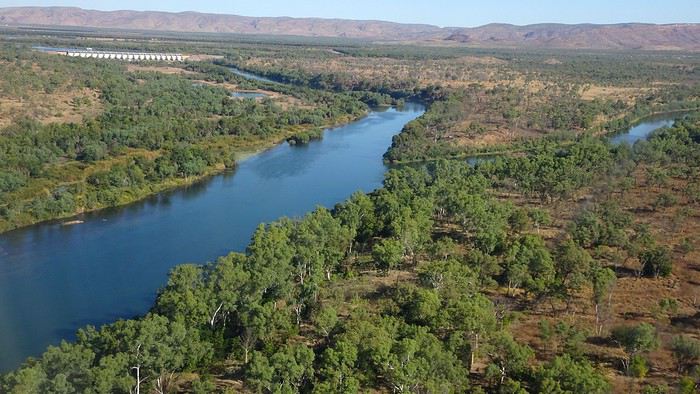
Just before landing, rows of green fields briefly appeared, along with an surprisingly wide river—but we were already rolling down the tarmac. A few hangars, a myriad of small, stationary planes, and a tiny terminal topped with a sign: “Welcome to Kununurra.”


We wanted heat, and here it was—34°C the moment we stepped off the plane! We felt alive again and totally ridiculous in our jeans and sweaters. We quickly grabbed our suitcase and picked up the 4x4 we’d rented—more out of necessity, since only that type of vehicle can access the national parks we planned to visit.

Just four kilometers separated us from Kununurra, a town of 5,000 people founded in 1961 during the construction of the Lake Argyle Dam and the development of the Ord River Irrigation Area Scheme (more on that later). On the horizon, mountain ranges (a bit of an exaggeration, since we know Mt. Meharry, WA’s highest ‘mountain,’ doesn’t even reach 1,250 meters!) and closer to the road, a few irrigation canals cutting through stretches of bush, then a huge park overlooking a small lake lined with reeds.

A row of baobabs (yes, there are baobabs in Australia too!), a series of motels with immaculate lawns, a gas station, and there’s the main street leading to the town center—that is, the parking lots of the two supermarkets, the bottleshop, the pub, the Town Hall, the municipal pool, and the Tourist Office (already closed!), and at the next roundabout, another park, the Presbyterian church, and a few other shops. In short, two or three green blocks that you can explore in no time.

One road leads to the small industrial area and one of the town’s three or four campgrounds, while another heads toward the residential neighborhoods, which look just like the typical suburbs you find in any Australian city—except with tropical vegetation. We stocked up at Coles, an identical copy of the one near our place, and—surprise—the prices were practically the same.

We checked into one of the motels. The receptionist listed the town’s three or four restaurants, insisting that it’s always better to book a table. She recommended the Pump House, a bit outside town on the lake’s edge. “Best spot to watch the sunset, but hurry up.” she told us. It was only 5:00 PM!

When we got there half an hour later, the place was packed, and the sun had already disappeared behind a row of trees! Sure enough, we’d see a few days later that the sunset can be a stunning spectacle—if you wait a bit for the sky (especially if it’s cloudy) to blaze and reflect in the lake’s calm waters. A little disappointed, we headed back into town, where we easily found the other lively spot in town: the pub (nothing like an old English pub). Above the long L-shaped bar, several giant screens (thankfully muted) were broadcasting live footy, rugby league, etc. In one corner, players circled the pool table, while in another, customers were digging into plates of the day’s special. Instead of rooms, there were various patios where groups of friends and coworkers (easily recognizable by the fluoro vests they were still wearing) were gathered. We found a table under a mango tree—unfortunately, a little too close to the guitarist strumming his entire Country Music repertoire, complete with Keith Urban-style tremolos. Guaranteed culture shock!

Since it’s the custom here, we called the Country Club to book a table before the kitchen closed! The CC is the town’s—and even the region’s—fancy spot. Dark decor, modern furniture, dim lighting, and the air conditioning blasting. The twenty or so customers had taken refuge on the vast terrace, lit by torches. The view of the tall eucalyptus trees, illuminated by spotlights shifting from red to blue, was breathtaking.

The menu was minimal, but the grilled salmon was excellent, and the Pavlova (the meringue dessert Kiwis and Aussies have been arguing over since 1906) with melon and watermelon was absolutely divine.

It wasn’t even 9:00 PM, and we were already in bed. Had we already adopted the Top West End’s chicken schedule?!

To be continued... Journal dedicated to Attila
Open
Three weeks in Quebec at the start of summer 2018, on a "semi-organized" trip
I’ve been putting off posting my Quebec travel experience for a long time. Two years later, I’ve finally decided to share it. The memories are still vivid. I hope this gives you the urge to visit this beautiful region, which I literally fell in love with.

We’re traveling as four adults: my brother Guy, my sister-in-law Martine, my friend Pascal, and myself (Christian).

We entrusted the flight, hotel, and car reservations to the travel agency Amplitudes in Toulouse. Planning the day-to-day activities was up to us. We scheduled a few must-see visits, but for the rest, we’d figure it out on the spot.

Our itinerary: Quebec City / Rimouski / Carleton-sur-Mer / Percé / Sainte-Anne-des-Monts / Matane / Tadoussac / Sainte-Rose-du-Nord / Chambord / Saint-Alexis-des-Monts / Montreal

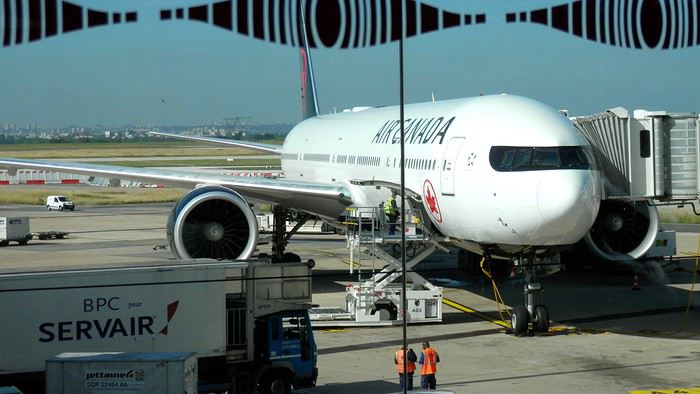
06/25 Here we are at Roissy Charles de Gaulle for the usual pre-flight formalities. Everything goes smoothly and quickly. The hardest part is waiting for takeoff. After an uneventful flight on an Air Canada Boeing 777-300ER, we land at Montréal-Pierre Elliott Trudeau Airport (YUL) in the early afternoon.


At customs, a surprise—no grumpy officer, but a smiling customs agent who jokingly asks me to name three tourist spots in Quebec, or else he won’t let me in. I pass the test easily and enter Quebec!

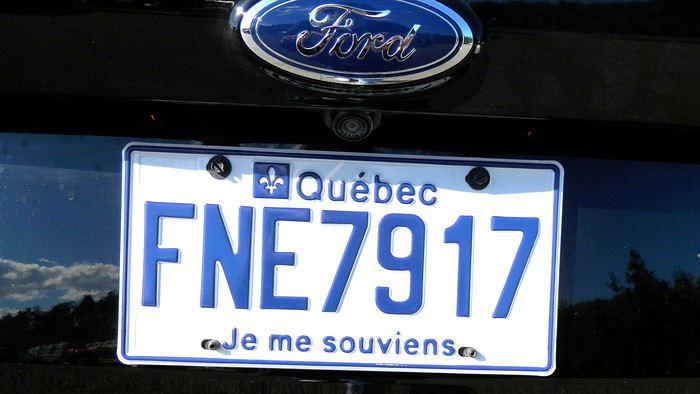
We head to the Alamo counter at Trudeau Airport to pick up our car: a Ford Escape with only 300 kilometers on the odometer.


We decided to head straight to Quebec City, saving Montreal for the end of the trip. Pascal takes the wheel and gets on the Trans-Canada Highway E20 for a 255 km drive, taking about 2 hours and 45 minutes. With the time difference, we’re already feeling hungry, so we stop for our first poutine at a highway restaurant.


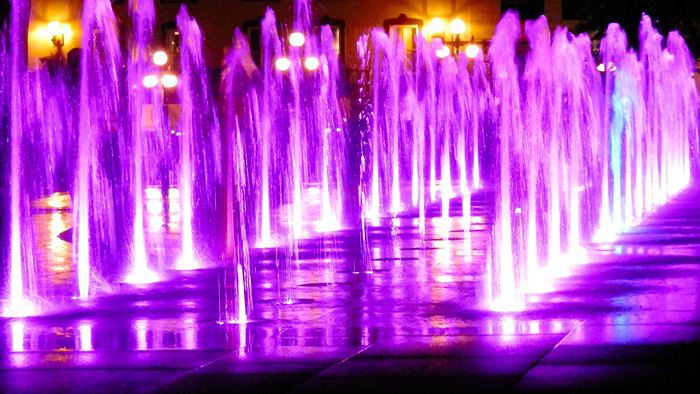
When we arrive in Quebec City, we go straight to the Clarendon Hotel, located right in the heart of Old Quebec. We’ll be staying there for three nights. Tonight, no restaurant—just a short walk around the hotel before bed. We discover a square with pretty colored water fountains near the city hall.

It’s only 9 PM, but our body clocks say it’s 3 AM.
Open
Costa Rica: Two Incredible Weeks
Hi everyone,

Taking advantage of the quiet days that Covid-19 has brought us, I thought it was time to share my experience in Costa Rica. Once again, I found a lot of helpful information on this forum, so if I can help in return, I’d be happy to!

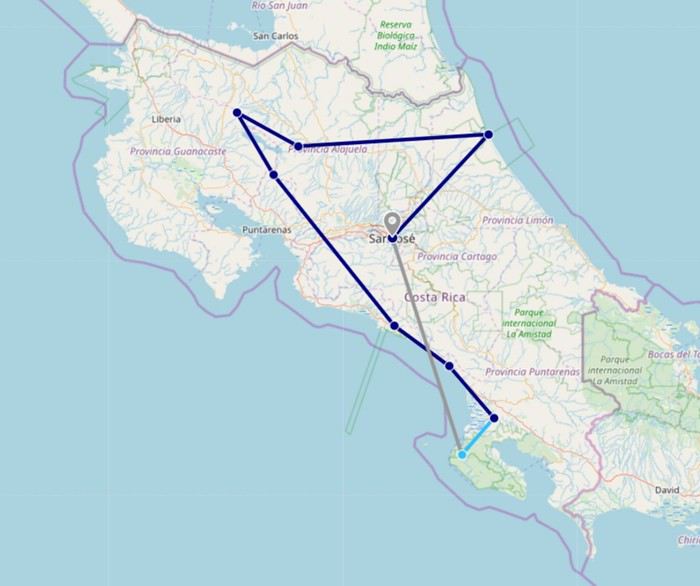
Here’s some general info: - 2-week trip in a 4x4 during the dry season, from 01/27 to 02/10 - Two 27-year-old travelers, no kids And here’s our itinerary: Day 1: Arrival in San José Day 2: San José - Tortuguero Day 3: Tortuguero Day 4: Tortuguero - Arenal Day 5: Arenal Day 6: Arenal - Tenorio Day 7: Tenorio - Monteverde Day 8: Monteverde - Quepos Day 9: Quepos Day 10: Quepos - Uvita Day 11: Uvita - Sierpe - Bahía Drake Day 12 & 13: Bahía Drake Day 14: Bahía Drake - San José Day 15: Flight back to Switzerland...

Of course, we had to make choices—it’s impossible to see everything in two weeks—but honestly, we’re *really* happy with our route. We even saw more than we expected!

So, ready 😉? Here we go!

DAY 1 – Arrival in San José

After a smooth Zürich-Frankfurt-San José flight, we finally made it to San José 😎!! After months of planning and excitement, we’re here! Since we’d booked a 4x4 with the ToutCostaRica agency for the next day, we stayed at one of their hotels, the Melrost. One of their agents was there to pick us up at the airport and take us to the hotel, which is really close. It was early evening, and it was already dark, so no exploring the city tonight. We treated ourselves to a first local beer on the terrace, listening to the birds, and then headed straight to bed.

Hotel Melrost: A simple little building, but super convenient for just one night in San José (well, Alajuela) before moving on. The room was great, and breakfast was excellent!


DAY 2 – Off to Tortuguero

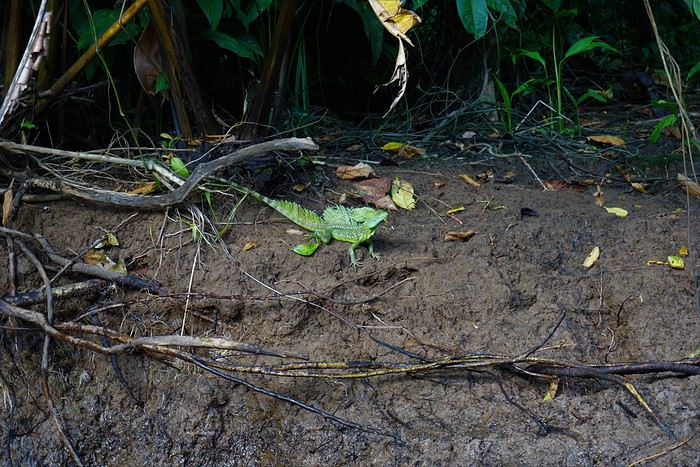
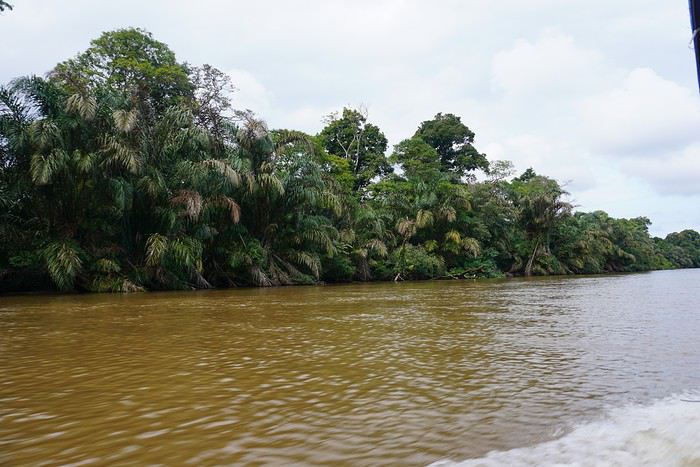
This morning, we had a meet-up at the hotel with ToutCostaRica, where we’d rented our 4x4. They held a briefing in small groups for all the car renters to discuss our routes, tips, the country, and other advice. We found it interesting, but *way* too long! They could’ve kept it shorter—reminding us to wear sunscreen in the sun and not to leave valuables in the car seems pretty obvious... Anyway, after a while, we thanked them for all the advice and set off in our brand-new Toyota Rav4! The rental went perfectly with TCR—everything was great. After leaving the traffic jams of San José behind, we hit some pretty little roads (some in better shape than others) until we reached La Pavona. There, we left our car in a guarded parking lot and took a boat (departure at 3:00 PM) to Tortuguero on the Caribbean coast. Just the boat ride was amazing—we were lucky enough to spot a basilisk, iguanas, and tons of birds. After 40 minutes, we docked right at the pier of our hotel, Casa Marbella. After dropping off our stuff in the room, we headed out to explore the village via its one main street. Lively, colorful, and hot! Since we didn’t have anything else planned for the day, we went back to the hotel terrace to enjoy a juice by the canals. Then, a quick dinner and off to bed to be fresh for tomorrow morning!

Casa Marbella: Really nice, with a convenient pier/terrace for arriving and leaving by boat. Breakfast was absolutely delicious! The room was good, though the AC wasn’t working.


More to come soon!
Open
Cape Town and Kruger: 12 days in February with teens
Hi everyone,

I’d love to share a little travel journal from our 14-day/12-night road trip with our two teens (14 and 17) in February/March 2020. A huge thank you to all of you who helped me plan this trip to South Africa—your patience with my endless questions was amazing!


We left Lyon on Saturday, February 22 at 7:00 AM and arrived in Johannesburg at 10:00 PM after a short layover in Amsterdam. Flights cost 440 € per person (booked in October), with carry-on luggage. We added just one checked bag for the whole family (80 € round-trip with the free Flying Blue membership). Since we’d be moving around a lot, we packed light! In Lyon, we reserved parking at P5 in advance for 70 € for 14 days. The Air France/KLM flight was smooth. When we landed, we picked up our bags and had booked a night at the Aero Guest Lodge, just 5 minutes from the airport, with a free shuttle and breakfast. All you have to do is send a WhatsApp message when you arrive at the airport to let the shuttle driver know. The tricky part? Finding him in the terminal—he wasn’t holding a sign with the hotel’s name. 🤪 A South African called him for me since my English wasn’t great (and I had to get used to the accent 😛), and helped us spot the driver (who was actually less than 5 meters away!) with other guests. When we got to the hotel: all good, except we were 10 people in a van meant for 7. The room was spacious—one king-size bed and two single beds for the kids—with a simple but clean bathroom, a garden, pool, and breakfast (which we didn’t try). All for 65 €, so an awesome value!

After a restful night, we woke up at 6:00 AM to catch the shuttle back to the airport. Just a heads-up: there’s only one shuttle per hour in the morning, and Kulula canceled our 9:00 AM flight, moving it to 8:00 AM—so no time for breakfast (it starts at 6:30). We waited 15 minutes in the lovely garden for the driver, who dropped us off at the airport in 5 minutes. We checked in for our flight to Cape Town, which cost around 40 € (including two checked bags per person). We grabbed breakfast at the airport instead (less than 20 € for all four of us—one of the nice surprises of South Africa!), and arrived in Cape Town at 10:20 AM.

After quickly picking up our bags, we headed to the Avis counter and left with a Toyota Corolla for 80 € for 4 days (rented with the Flying Blue card—free additional driver). Everything’s on the left... not easy, but it works if you plan your route well. We drove to our Airbnb in Constantia. We were surprised to see animals, bikes, and pedestrians on the highway! We arrived around 11:30 AM at our rental—a huge house in the vineyards, in a super secure neighborhood, about 15-20 minutes from Hout Bay. It felt like Beverly Hills, but with super-high walls and barbed wire around the villas. 😕


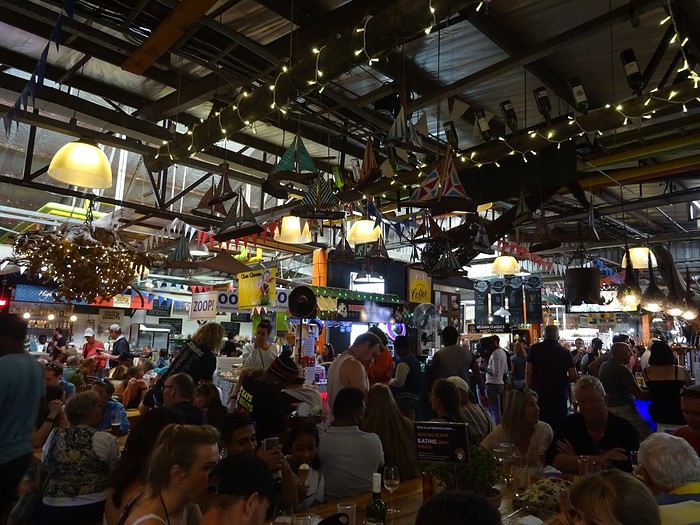
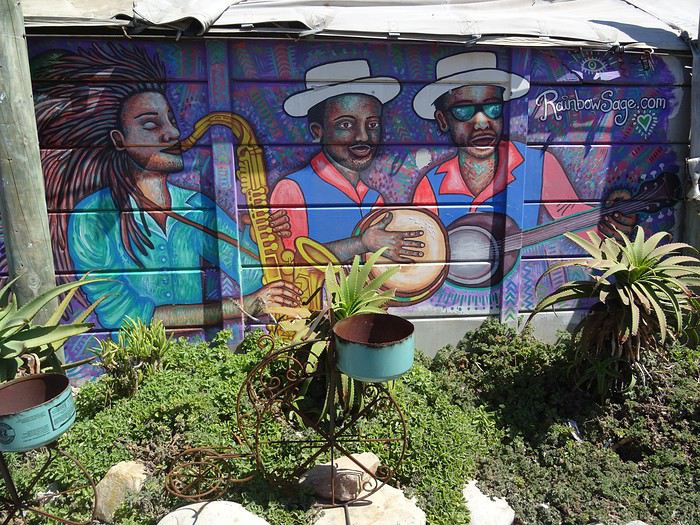
We dropped off our bags, changed into shorts (it was around 30°C/86°F), and headed to the Bay Harbour Market in Hout Bay. We had lunch there—such a great vibe! We wandered through the stalls, everyone picked their own dish, and we sat down on the terrace. There was music, artisans of all kinds... a really nice moment.


I’d withdrawn 50 € before leaving... and that gave me change to pay the parking attendant. Lunch cost around 30 € for four, including food and drinks.


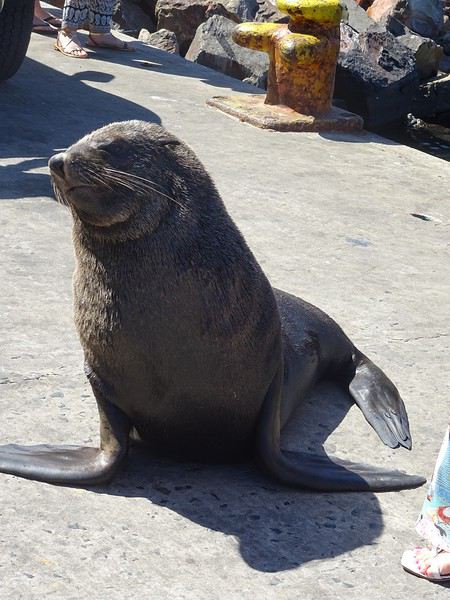
After browsing the artisan stalls, we headed to Hout Bay Beach near the restaurant, Marina Wharf (another small tip for the parking attendant—we’d have to get used to that!). We stopped to admire the sea lions. An ice cream for 1 €? No way we were saying no! 🙂


The fatigue was starting to hit, so we headed to the grocery store 10 minutes away (Constantia shopping center) and then had an aperitif in front of the vineyards, opening a delicious bottle of white wine.
Open
Ideas for a 3-week trip to Madagascar with a driver-guide in July/August
First trip to Madagascar (couple + 2 older teens). We’ve read quite a few posts and watched traveler videos, which helped us figure out what we could do in 3 weeks. We’d like to travel with a driver-guide. You’ll probably be able to help us with the overall duration... Are we being too ambitious, or is this reasonable? In this itinerary, are there any must-see places we shouldn’t miss? Here’s our first draft:

Departure from Tana to the east via the RN2. Stop at the Analamazoatra Reserve RN11 to reach the Pangalanes Canal 3 or 4 days to travel south along the canal (taxi boat) The train from Manakara to Fiana RN7 toward Tulear Time for a short trek in Andringitra? I’m not sure... Isalo Park From Tulear, head north or south by pirogue to relax somewhere To get back to Tana and stay within our vacation time, I think we’ll need to fly... Will we have time left for Ampefy?

What do you think?
Open
Bolivia: Exploring the South Lipez by Self-Drive
Hi everyone,

The idea of traveling to Bolivia came to me after seeing Jean-François (Max68)’s photos on his website. I thought we *had* to see those stunning landscapes with the colorful lagoons for ourselves. But a self-drive trip didn’t seem doable at first. A few years ago, everyone advised against going to the South Lipez with just one car.

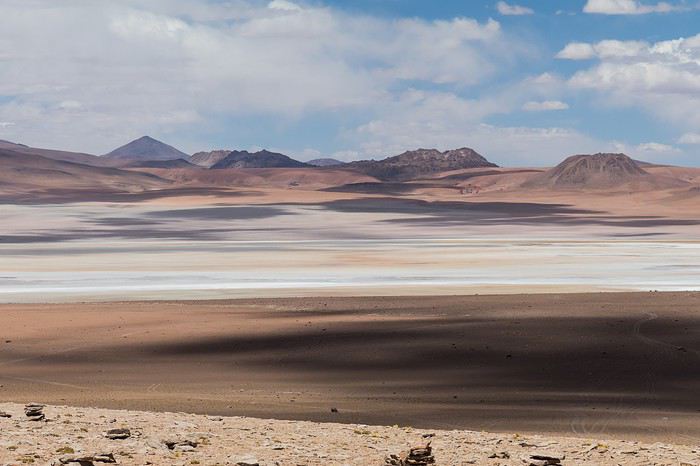
Laguna Kara

It was only after reading Laurent (Lolobe) and Pascal (Pepe874)’s travel journals—who explored the South Lipez solo with a car from Biz Rent a Car—that I thought we might be able to do the same. Meanwhile, we’d already contacted a local agency to organize a trip with a driver and guide. But the idea of a self-drive adventure really appealed to us. With encouragement and tips from Thierry (Tbernay) and Jean-François (Max68), we decided to plan our own self-drive trip. I’d like to thank them for their advice—it was *super* helpful. And a big thanks to all the other forum members for the info shared during our prep!

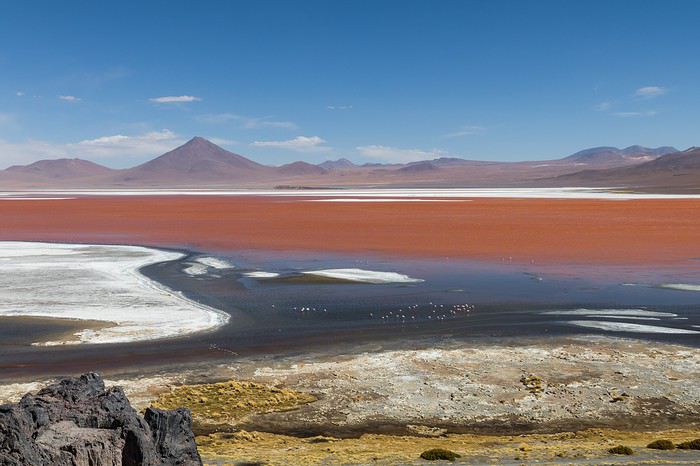
Laguna Colorada

Planning this trip happened during a tough time for our family. My mother-in-law’s illness and passing, plus a few health issues of my own, made us doubt the trip multiple times and nearly scrap the whole thing.

We booked our international flights in February with Swiss. They offered the best balance of travel time and price from Switzerland. Swiss operates Zurich–São Paulo with their own fleet, and São Paulo–Santa Cruz with GOL. In June, GOL canceled the Saturday flight and rebooked us on Sunday. Spending over 24 hours in that huge Brazilian city didn’t work for us at all, so we asked Swiss to put us on the next Zurich–São Paulo flight. Too bad—we lost a day in Bolivia and had to skip the Tarabucco market on Sunday.

Right after, we also booked the car in February. After contacting Imbex and Biz, we went with Biz. Not speaking Spanish, we were relieved to communicate with Alejandra in French. The contact was great—she answered all our questions patiently. Sometimes it took a few days to get a reply, but we could also reach her on WhatsApp. After our trip, we can *only* recommend Biz for rentals in Bolivia. The cars are well-prepped for the South Lipez tracks. The agency is reliable, and the vehicles are new and well-maintained.

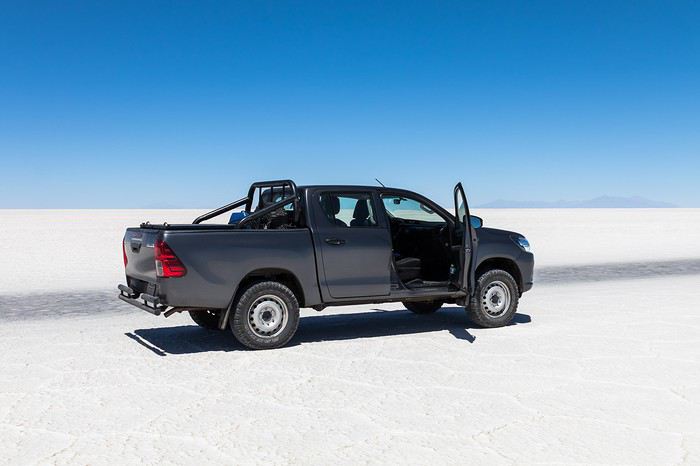
“Our” car, a Toyota Hilux

While planning, we realized the presidential elections would happen while we were in Bolivia. The risk of *bloqueos* (roadblocks and protests) was very real. But in Bolivia, *bloqueos* seem common—you always have to account for that kind of hassle. In late August/early September, Uyuni and the Salar region were blocked for days, leading to food, fuel, and cash shortages. Worried about a blockade in Uyuni and missing the Salar, we decided to visit it first *just in case*.

On election day, the whole country shut down. Planes were grounded, buses and taxis couldn’t circulate, and private cars were banned. There were a few exceptions—ambulances, police, or certain professions—but as tourists, we couldn’t get permission to drive. We asked the embassy, and Biz even requested a permit from the electoral office. So we had to plan to be somewhere with things to do *without* the car.

We decided not to book any accommodations in advance—a first for us. Usually, we plan our stops and reserve lodges, hotels, or campgrounds well ahead. This time, only the room in Sucre was booked, so we’d have a base when we arrived.

In July, Alex (Delhenry) reached out to propose joining part of the trip. He didn’t realize we were leaving in October. Still, we got fresh updates when he returned from the South Lipez. Thanks, Alex—your tips, especially about the Guadalupe–Tupiza stretch, were *super* useful.

In September, we connected with Jean-Louis (Avx) and Anne (Xeta), who were also heading to Bolivia in October, one and two weeks after us. We had dinner with Jean-Louis and his friend after our South Lipez trip and stayed in touch with Anne. It was great to chat with them! Unfortunately, Anne and her husband had a much rockier trip—they got hit hard by post-election issues.

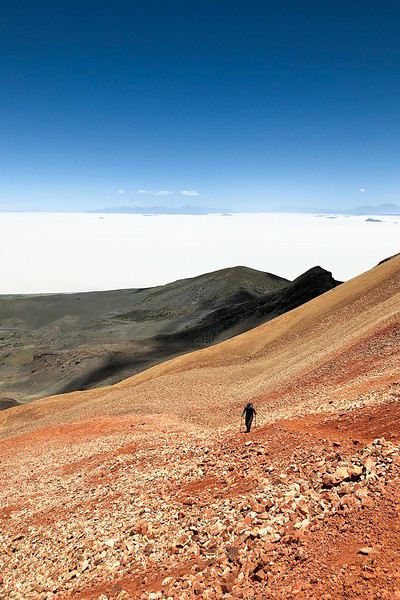
Climbing Volcán Tunupa

Our itinerary wasn’t set in stone—we decided to wing it on the spot. Two weeks before departure, I reconnected with Alejandra at Biz to move the car rental up by a day. With the elections, we wanted to leave Sucre ASAP and focus on the South Lipez. Outside Uyuni and Tupiza, the risk of blockades was zero. We also planned a two-night buffer in Sucre before our flights, just in case. It might sound overcautious, but in hindsight, we made the right call. If we’d left Sucre a day later, we wouldn’t have made it to Potosí—it was completely blocked. On the way back, we *just* dodged blockades in Potosí and elsewhere. Sometimes, you’ve gotta trust your gut.

Here’s our route—only the first two nights in Sucre were booked ahead:

D1 Departure from Switzerland

D2 Sucre (La Selenita)

D3 Sucre (La Selenita)

D4 Colchani (Hotel de Sal Luna Salada)

D5 Jirira (Auberge Doña Lupe)

D6 On the Salar (in the car)

D7 A few kilometers from Estancia Catal (in the car)

D8 Laguna Hedionda (Hotel Los Flamencos)

D9 Laguna Colorada (Lodge by the lagoon)

D10 Middle of nowhere, en route Laguna Verde–Mina Horsu–Quetena Chico (in the car)

D11 Quetena Chico (Lamphaya Lodge Andino)

D12 Quetena Chico (Lamphaya Lodge Andino)

D13 Guadalupe (Guest room at Celia’s)

D14 Along the Rio Grande (in the car)

D15 Tupiza (Hotel Mitru)

D16 Tupiza (Hotel Mitru)

D17 Sucre (La Selenita)

D18 Sucre (La Selenita)

D19 Santa Cruz (Hotel Sun)

D20 Departure from Santa Cruz

D21 Arrival in Switzerland

As you can see, we spent 13 nights in the South Lipez. Initially, we’d planned for nine, but Jean-François (Max68) suggested staying longer. Great advice—we didn’t regret it one bit. We could’ve even added 2–3 more days without getting bored.

Self-driving in the South Lipez takes some prep and a good GPS. We kept it simple and used maps.me to navigate. It’s a solid app—just save your waypoints ahead of time. For some stretches, I used Google Earth to visualize the tracks and sites. If you stick to the tour operator routes, you *almost* can’t get lost. But we often veered off the beaten path and took different routes. Some days, we didn’t see another car. So in case of a breakdown, it’s key to have water and food for several days. In some spots, there’s *zero* signal—your phone won’t work. Another must: it gets *cold* in the South Lipez, and a good sleeping bag is essential. We brought down sleeping bags rated for -10°C and didn’t regret it during our car nights.

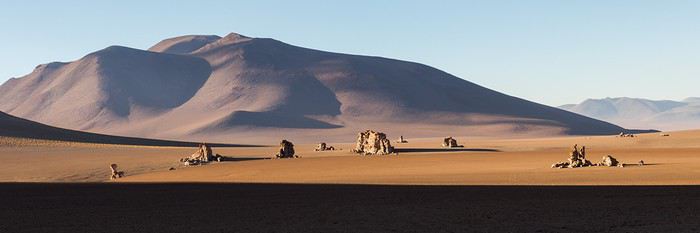
The Dalí Desert

Some tracks are *super* rocky—flat tires are a real risk. On those stretches, maps.me’s estimated travel time was way off. Some sections barely let us go over 15 km/h.

Lots of forum members recommend doing the South Lipez “loop” from Tupiza to Uyuni—ending with the Salar—to avoid Uyuni’s crowds. That might work for organized tours, but for self-drive, the direction *doesn’t* matter. I’ll say this: the few vehicles we saw mostly came from Tupiza and Chile, not Uyuni. So if starting from Uyuni works better for you, go for it! Ending in Tupiza means heading toward warmer weather. For our planned stops and climbs, starting in Uyuni helped with acclimatization. Spending a few nights between 3,600–3,800 m before going over 4,000 m is a smart move.

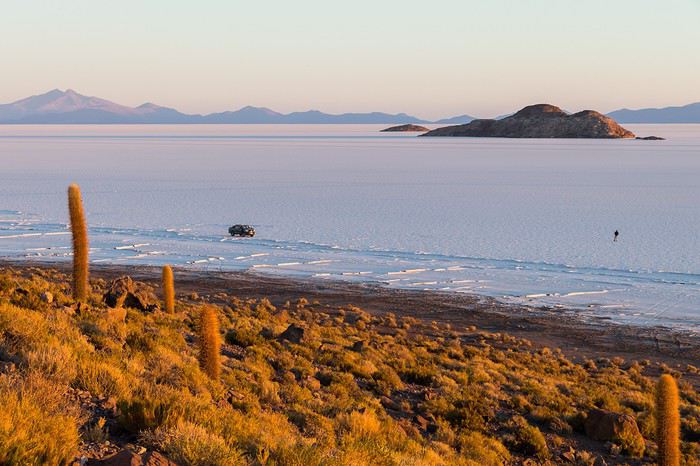
Uyuni Salt Flats in the morning

Overall, we barely saw anyone—except at Laguna Hedionda and Chalviri. There were several tour groups at Hotel Los Flamencos (Laguna Hedionda), but we didn’t cross paths during the day. Hardly anyone on the Salar, on the roads, or at the lodges in the evenings. The *only* place that shocked us was Chalviri. We’d planned to stay there, but it was fully booked—and we counted *forty* tour jeeps on-site. This was around noon! At the Polques hot springs (Chalviri), it was *packed*—we quickly nixed the idea of a dip. Plus, the vibe wasn’t great: soaking right by the road with lodges and restaurants in the background? Meh. Still, lots of tourists love it, so it’s up to you.

For the photos, I kept the colors and mood we saw. The lagoons’ hues are often stunning, but some online photos are *way* over-edited and oversaturated. The South Lipez’s landscapes are breathtaking—no need for excessive retouching.

If you don’t want to read all the details, the start of the travel journal is here: https://voyageforum.com/v.f?post=9888761;a=9888761
Open
18 days of bliss in Morocco!
And there you have it—promise made, promise kept. Here I go! I’m going to try and share our adventure under the Moroccan sun. I’ll do my best to capture how we felt during this trip. And I hope you’ll be kind to a newbie at this!

We planned this trip with the tips we got from this forum, so thank you to everyone who helped us prepare. Thanks to you, we had unforgettable moments.

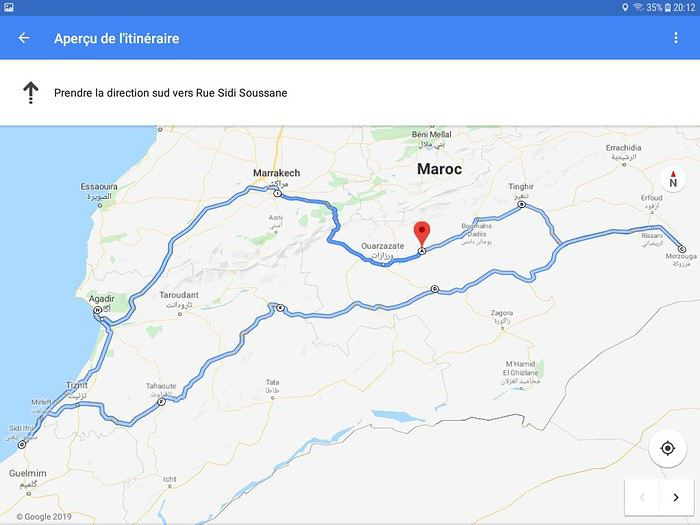
Here’s our itinerary, which let us see the Atlas Mountains, the oases of the South, the sandy desert, and the Atlantic coast. We landed in Marrakech early in the morning, and our rental car agent was waiting for us at the airport. After sorting out the formalities, we left Marrakech heading toward Ouarzazate.


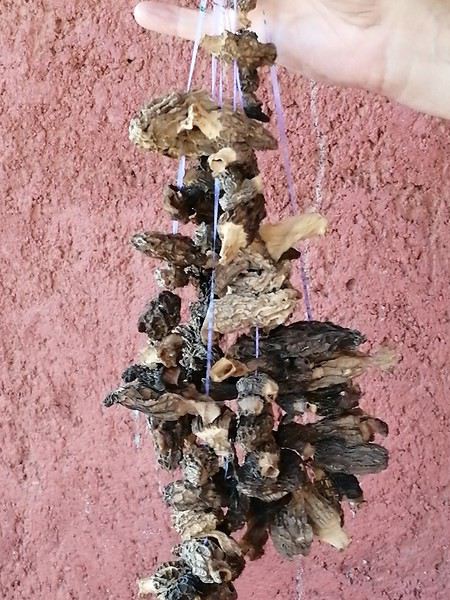
The heavy traffic in Marrakech quickly gave way to smooth driving. As soon as we left the city, it was calm. And right outside the city, we came across shepherds grazing their sheep by the roadside... It’s definitely a surprise at first! But yes... We’re in Morocco... No doubt about it... We’re in the thick of it! As we started gaining altitude, vendors waved at us, offering dried morels. At first, we weren’t sure what they were selling, but we stopped for tea on a terrace to admire the mountain scenery, and they offered us those famous morels again.


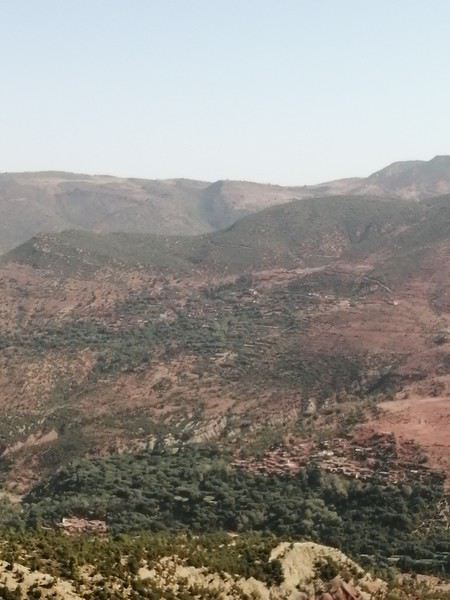
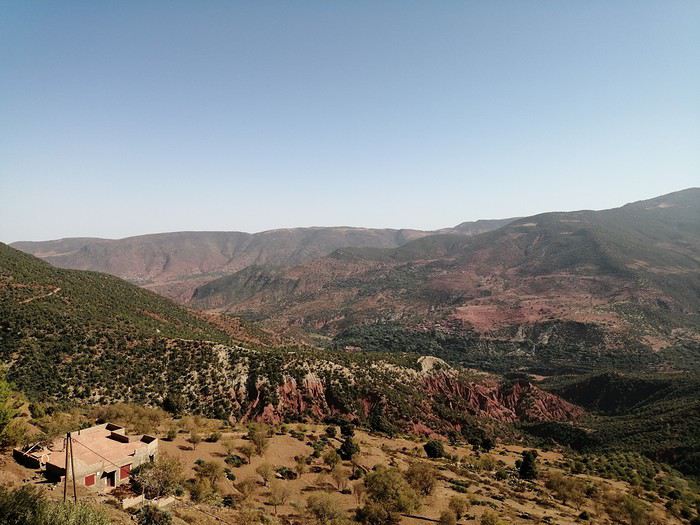
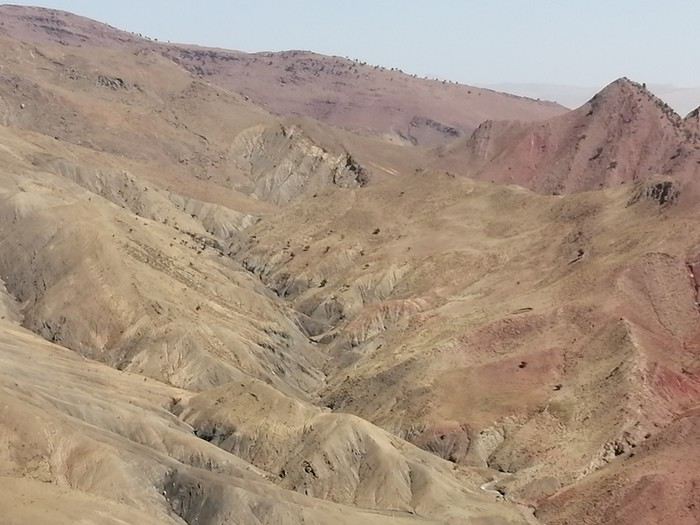
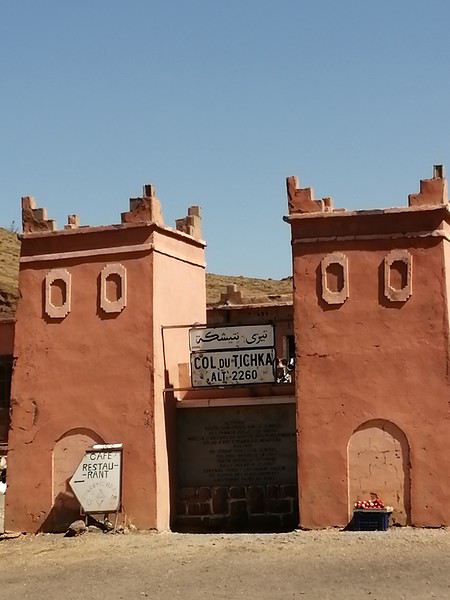
We continued our climb toward Tizi N Tichka... Gigantic valleys stretched out before us. With every turn, we discovered breathtaking landscapes.


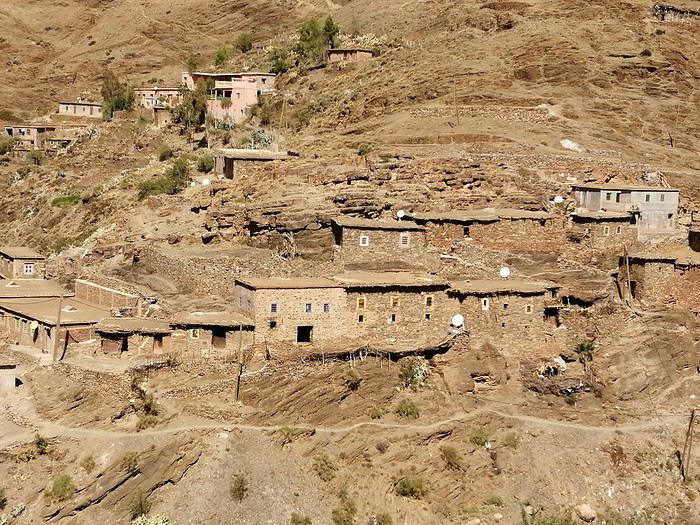
Villages built into the hillsides blended into the earth. It was strikingly simple yet harmonious.


At the top of the pass, 2200m up, we stopped to soak in the moment, the fresh air, and the view.

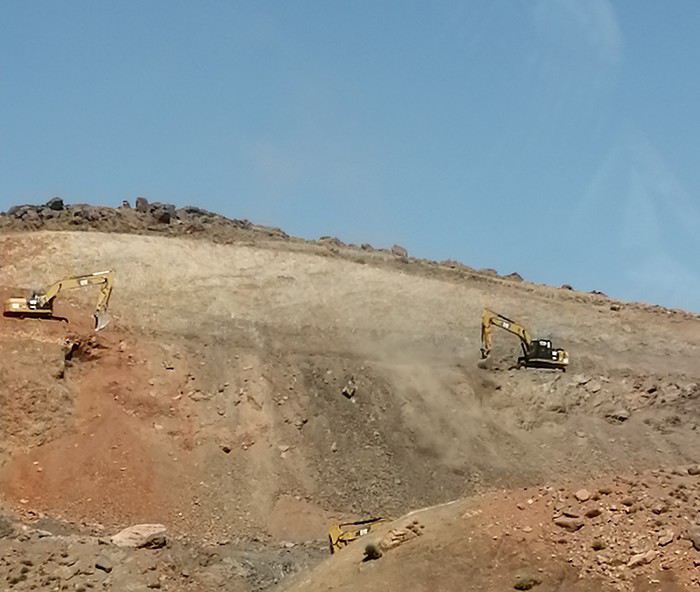
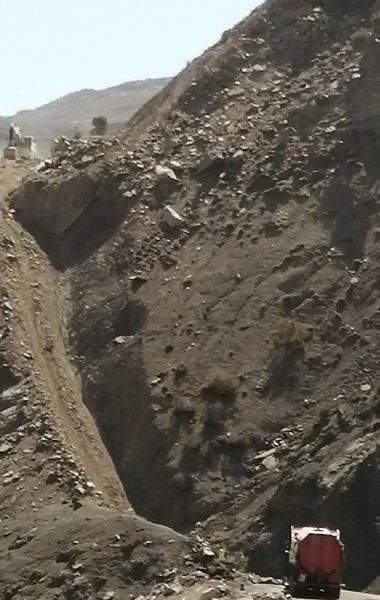
And we carried on toward Ouarzazate. The road was under construction. Mechanical giants were tackling the mountain. But the mountain was enormous. We were impressed by the scale of the work.


Then, we left the main road to head left toward Telouet... It was stunning. The colors changed. Maybe we felt less overwhelmed by the imposing Atlas. Just a personal impression!


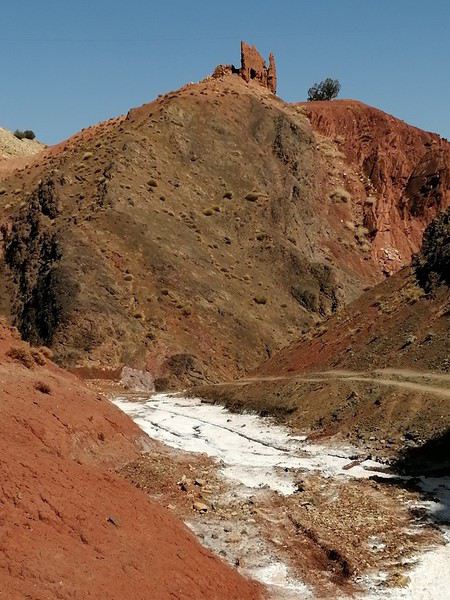
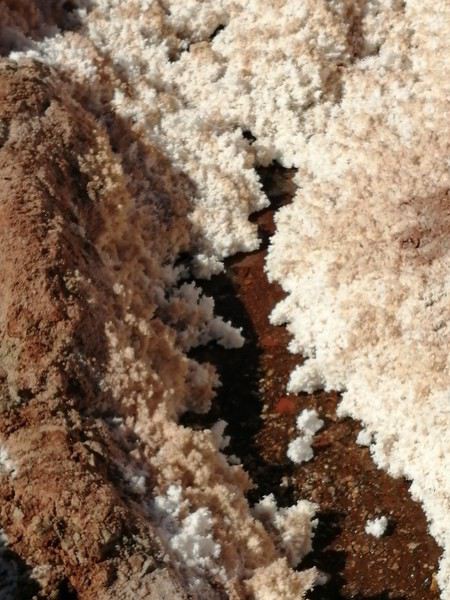
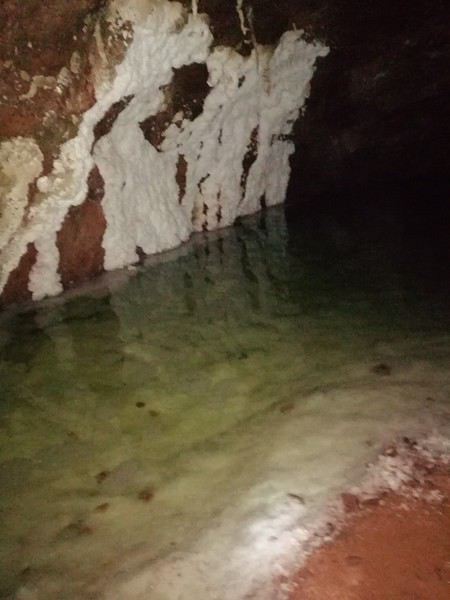
Right after passing through Telouet (maybe we’ll shock history buffs—we didn’t visit the kasbah), we went to see the salt mine. It was unexpected. Salt was everywhere. The stream water wound its way between salt crystals and waterfalls. It was really pretty. And then there was the cave. We had a guide for the visit. Stalactites and stalagmites crisscrossed here and there. At the back of the cave, we saw a small lake surrounded by crystals. It was beautiful.


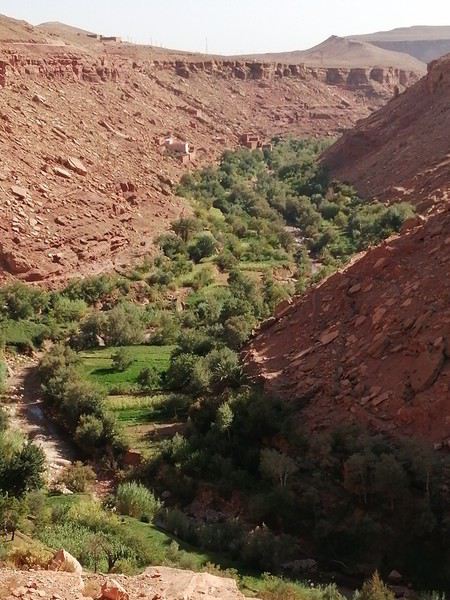
We hit the road again. We drove through stunning landscapes: vast plains for grazing herds, rivers nestled deep in the valleys.


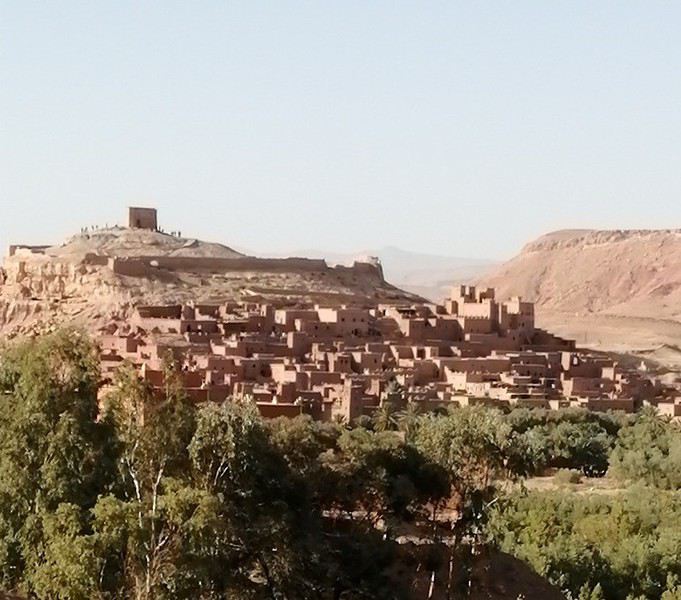
We proudly drove past the ksar Ait Benhaddou without stopping—just long enough to snap a quick photo and keep going so we’d arrive before nightfall.


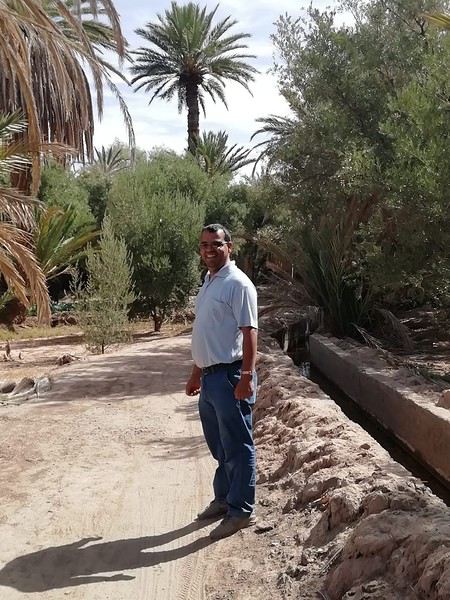
We made a few small purchases in Ouarzazate and headed straight for the Skoura palm grove, where we’d booked three nights at the guesthouse Kasbah La Palmeraie. Mohamed, the owner, welcomed us warmly, and we shared tea with the family. We felt right at home. We were made to feel welcome.


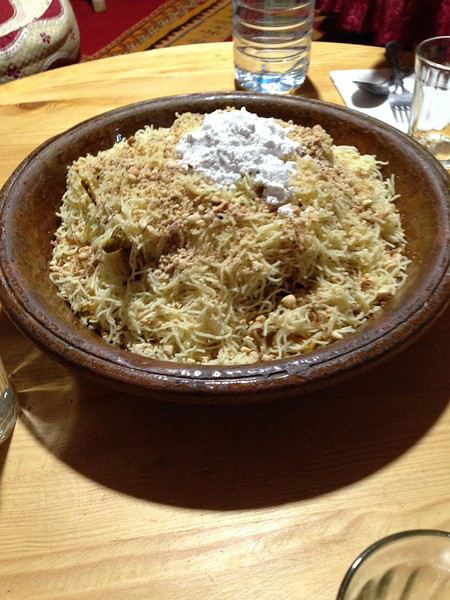
Dinner was a hit—a real Moroccan meal, a sweet-and-savory dish with steamed vermicelli and chicken. Delicious! A great surprise for us—we’d never tried it before.


After such a long day that started so early, we were happy to crawl into bed. But we felt like the trip was off to the best possible start.

Until tomorrow, if you’d like!
Open
From Ol Pejeta to Tsavo West (Kenya)
Hello everyone,

Here’s the story of our two-week trip—13 nights, actually—in the national parks of northern and southeastern Kenya, which we took last September at the end of summer. My wife and I planned this trip with a French agency (Bel Africa, Paris), which worked with a local operator in Nairobi (Nadhy Travels & Tours). The latter provided a driver-guide and vouchers, but no aperitif🙁! Our all-inclusive package included animal safaris exclusively in a customized 4x4 vehicle (with a pop-up roof) and accommodations in high-quality lodges that we selected ourselves. It’s great for comfort, but not so much for the wallet. The cost was obviously astronomical for the services provided. But that’s just my usual take on lodging in East and Southern Africa! Our itinerary was a loop starting and ending in Nairobi, passing through Ol Pejeta, Buffalo Springs-Samburu, Meru NP, Amboseli, and Tsavo West.

Trip breakdown:

Day 1 to 3: Ol Pejeta Day 3 to 7: Buffalo Springs Day 7 to 8: Meru NP-Nairobi Day 9 to 11: Nairobi-Amboseli Day 11 to 14: Tsavo West

Photo gear we brought:

- 1 bridge camera - 2 DSLR bodies - 2 telephoto lenses: 70-200mm f/2.8 and 200-500mm f/5.6 - 2 pairs of 10x42 binoculars

What motivated this trip? We wanted to recharge and were looking for a certain tranquility that would be ideal for wildlife observation and photography—our hobbies. That immediately ruled out the parks in the southwest, which are too crowded. Plus, those would have likely been a repeat of what we experienced in Tanzania a few years earlier (see my travel journal "The Great Migration"). Buffalo Springs particularly appealed to us because of the unique animal species it’s home to. It was really their existence that drove our choices. We wanted to see animals we’d never seen before in their natural habitats.

So, on a beautiful late-summer evening, we took off from Paris-CDG for Nairobi. The overnight flight was uneventful, and we landed early in the morning at Jomo Kenyatta International Airport (NBO). But our driver-guide wasn’t waiting for us. Judging by the number of signs being held up, we must have been the only travelers in that situation. Good grief, why wasn’t he there like all the others?
Open
Six-week trip to Mexico
I recently took a six-week trip to Mexico with Y, my Thai partner. To be precise, we spent 43 days there plus a final half-day before heading to Mexico City Airport for our return flight to Europe.

I’d already been to Mexico about 40 years ago! But that was only for a week or so, between Mérida and the Belize border.

First off, I should mention that I’ve never seen a beach in Mexico. I say this because discussions about Mexico always seem to revolve around the Costa / Riviera Maya.

Let’s start with an overview of the trip. Our itinerary can be split into two halves:

- First half: Querétaro, San Miguel de Allende, Morelia, Guanajuato, Mexico City “CDMX” (the capital). - Second half: Palenque, San Cristóbal de Las Casas, Chiapa de Corzo, Oaxaca, Puebla, Cholula, and finally Mexico City CDMX.

To move from one part of the trip to the other, we took a flight from Mexico City CDMX to Villahermosa, then a bus to Palenque.

In six weeks, we visited maybe a quarter or a fifth of the country (see the attached maps). Mexico is about three times the size of France! And when I say “visited,” it was really just a quick stop—enough to get a first impression. I understand that some people can only spend one or two weeks on vacation in a given country, but that’s not my idea of travel. Personally, I’d say a country as rich in every way as Mexico deserves several months of travel before you can say you’ve “seen” it.

In my next post, I’ll break down the expenses. That might help future travelers plan their trips. You don’t go to a country for several weeks (or more) without thinking about the budget! Besides, one of those future travelers to Mexico is us—we were so thrilled by Mexico that we’re definitely going back.
Open
Mimi and Maumau, Martine and DD Return! Or the Denver-Denver Loop of the 4 Friends
Hello! 🙂

In 2017, struck by western addiction, our first road trip gave us an irresistible urge to return, which we did from September 2nd to 24th, 2019, on a loop from Denver to Denver via Yellowstone. The westernmost point of this journey, which took us through the geographical center of the USA, brought us within about a hundred kilometers of Moab, which had been the easternmost point of our last trip.

We’ve been back for over a month now, and I realize I’m starting to forget some details—it’s high time I started my travel journal before my brain turns into Swiss cheese and lets everything slip away. As I mentioned in my last story, it’ll take me quite a while to finish, so if any travelers have specific questions, don’t hesitate to message me privately. Once again, I’d like to thank everyone who helped me (and there were many!) prepare our road trip, with a special shout-out to Disneydiddl, Hiacinthe, and Titou (ladies first) as well as Fred and Itat, whom I bombarded with questions for months and who always kindly and patiently gave me tons of great tips. It’s thanks to all of you that this trip was such a success. I was a little worried I wouldn’t recapture the emotion and enthusiasm of our 2017 trip, but this one was just as "Wow" as the last.

For those who don’t know us, let me introduce our little group. We’re four friends in our sixties (this time, everyone made it, which let us score some "senior" discounts...). We live in the Var region, have known each other for over 20 years, and this was our second trip together to this magical West.

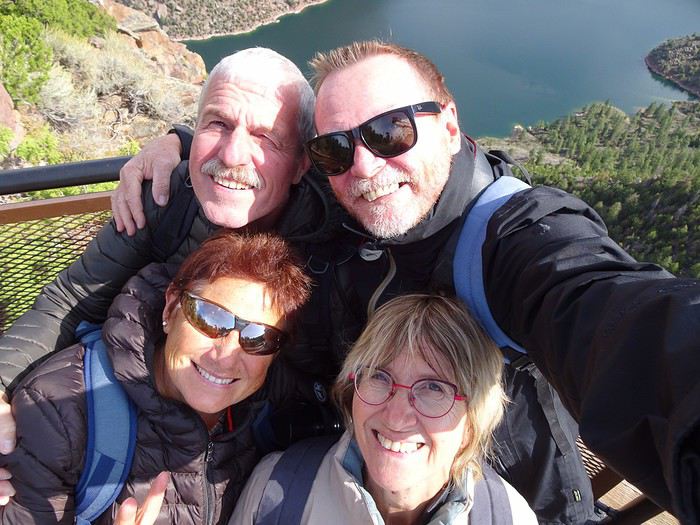
Mimi (Michèle): always the smallest and the funniest. Thank goodness she was there to speak English! Maumau (Maurice): her husband, always with his white hair, his Gallic mustache, his humor, and his Southern accent. He drove every other day. DD (André): the one with the beard, with whom I celebrated our 41st wedding anniversary at Yellowstone. Our second driver appreciated having a peaceful mind since he’s been retired since July. Marcalamar (Martine): that’s me—still blonde with glasses, still talking a lot, and still terrified of messing up the organization of this trip despite all the hours spent on the forum.

Recognize us? Ha ha ha!!!! No, just kidding!!!! That’s us!!!

Open
Two Sides of China: Urban Shanghai and Rural Yangshuo


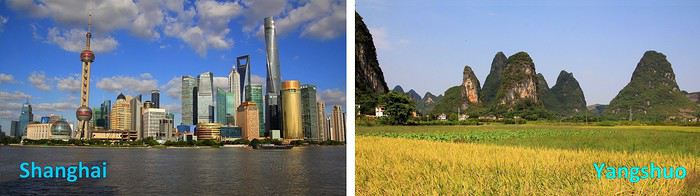
Vast, diverse, and multifaceted China! During a recent journey across part of this fascinating country, I enthusiastically discovered so many aspects of it. But such variety seems hard to condense into a single story. So, for this travel journal, I’ve focused on two main facets of China. First, a modern and urban China—the sprawling city of Shanghai—and then, in a second part, a China that’s the complete opposite: a rural and more traditional side explored around Yangshuo, where nature is absolutely stunning. Ready for a tour of China, city first, then countryside? Travel stories, descriptions, and impressions are on the program, with plenty of room for photos. Enjoy the journey and happy reading!

--

Urban China: Shanghai

As soon as you explore the city, it’s clear: the Chinese wanted to turn Shanghai—once a small fishing village—into a showcase of a modern, powerful, and forward-looking China. The megacity is immense, with around 24 million people bustling through its avenues or stuck in monstrous traffic jams at the foot of some of the world’s tallest skyscrapers. Towers so high they almost touch the sky—well, almost. But this gigantism is just one side of this southern metropolis in the Middle Kingdom.

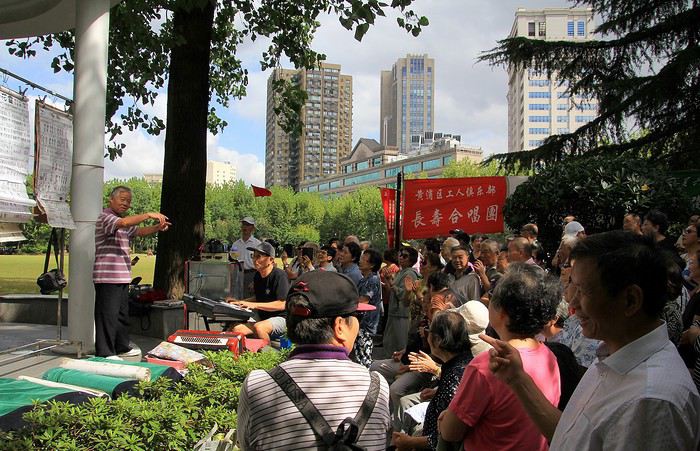
Away from the towers and business districts, you discover another side of Shanghai—more traditional and, some would say, more human. This is where my travel story begins: on a quiet morning among smiling, relaxed locals. We’re in one of the city’s parks, specifically Fuxing Park.


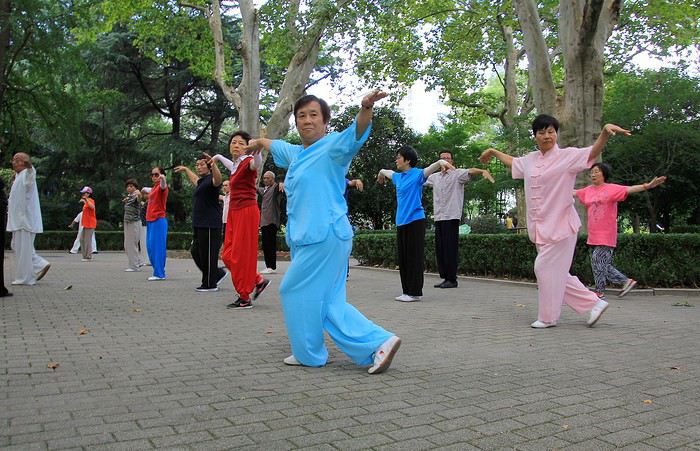
As everyone knows, the Chinese love practicing Tai Chi Chuan, in groups or solo, so it’s no surprise to see so many here, moving slowly and precisely through their sequences. Here’s a first group, their movements and postures perfectly coordinated.


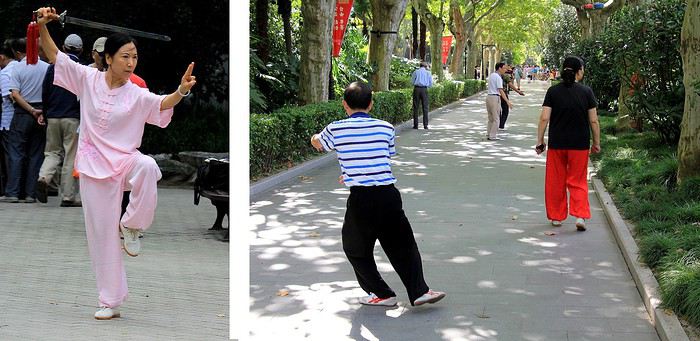
In another alley, a lone practitioner is deep in concentration, executing his movements with focus. I watch him for a few moments, discreetly and from a distance, so as not to disturb him. To his right, a woman in bright red pants keeps walking, almost as if she’s marching in place. A strange ballet: a series of steps forward, then backward, and so on...

Nearby, this elegant athlete (or artist) performs Tai Chi with a sword—almost like a choreography, her movements resembling a true sword dance.


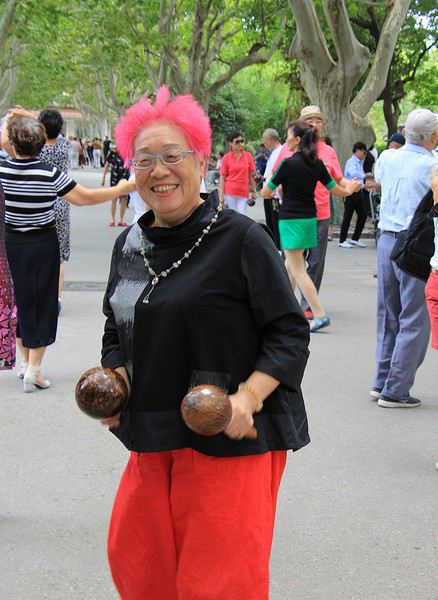
Further on, the atmosphere is more relaxed and melodic. People are playing music and dancing joyfully, like this woman with her colorful, original hairstyle, all smiles with maracas in hand. You almost want to clap along—her energy is so contagious!


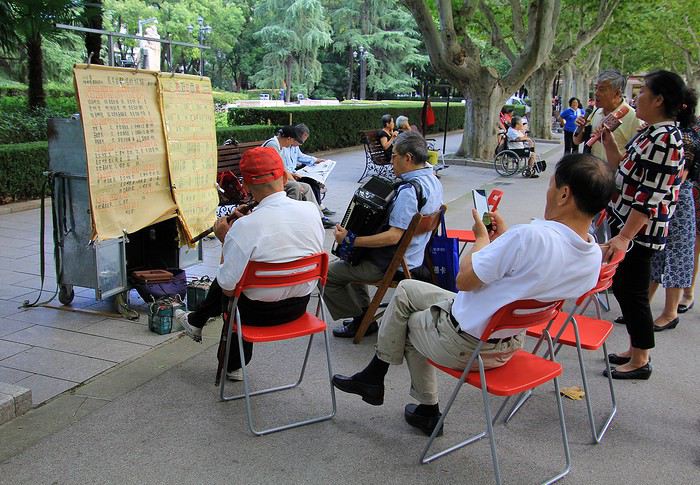
The mood is lighthearted among this group of retirees. Their choir alternates between patriotic hymns and lighter songs. Someone must have told them some French people were watching, because suddenly they start singing an old French tune: « Vive le vent, vive le vent d’hiver... » And the cheerful choir leader invites us to sing along—all together! The result was a fun cacophony: us in French, them in Chinese. But it was so charming!

These Chinese locals definitely passed on their good mood. It’s a joy to see all these retirees—you can imagine them leaving their small apartments to get some fresh air and meet up in the park for these morning activities. But let’s not kid ourselves: while they seem so happy and content with those big smiles, most of them probably didn’t have an easy life. Food shortages, draconian regulations, propaganda, the one-child policy—just to name a few! No, what many endured in their daily lives didn’t always give them reason to smile so brightly. But now, they’re making the most of it, and as I wrote earlier, it’s wonderful to see them like this.

Encouraged by these shared moments, I decide to keep going. Without hesitation, I join a Tai Chi session. I tried my best to follow the movements of my neighbors practicing this traditional exercise, but I’ll admit—it wasn’t easy!


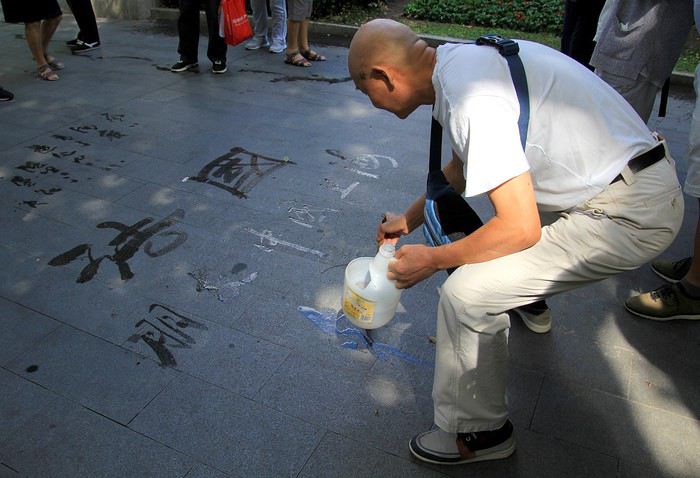
This artist, especially attentive, rewards us with a calligraphed phrase about France. A lover of Chinese calligraphy, he writes these sinograms in ancient characters directly on the ground. Is it writing or drawing? It’s hard to say—the result is so aesthetic. An ephemeral phrase, written in water that slowly fades as it dries, before disappearing entirely.


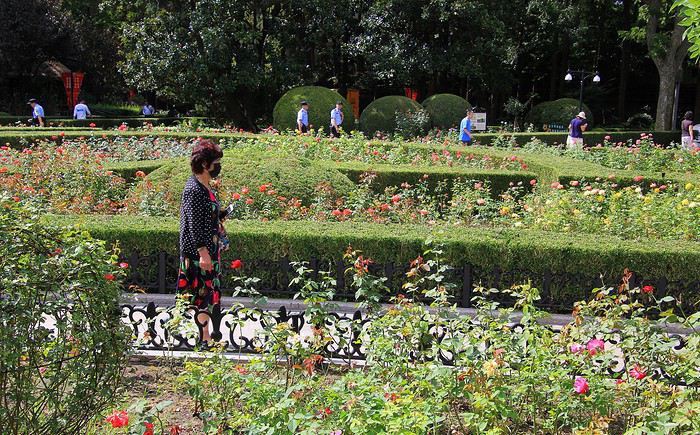
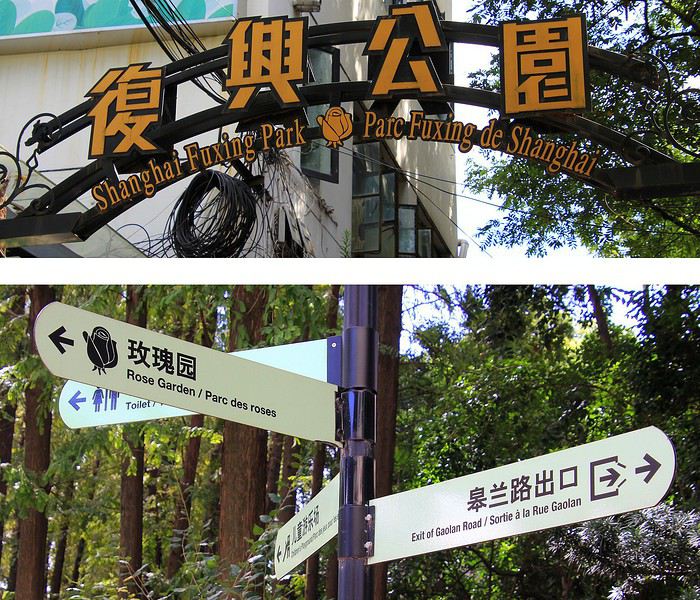
As we walk, we approach one of the park’s exits—so beautifully flowered. These flowerbeds and their blooms hint at the name of this charming place: Parc des Roses—and it’s even written in French!


--

We’re now in the former French Concession of Shanghai, which explains the French inscriptions. The era of foreign concessions in Shanghai is an old story, dating back to the 1840s—a time when China opened its market to international trade. Several nations, including European ones, established trading posts in the city. There were British, American, Japanese, Russian, Italian, German, and French communities. This part of Shanghai was under French administration for a time, starting in 1846.


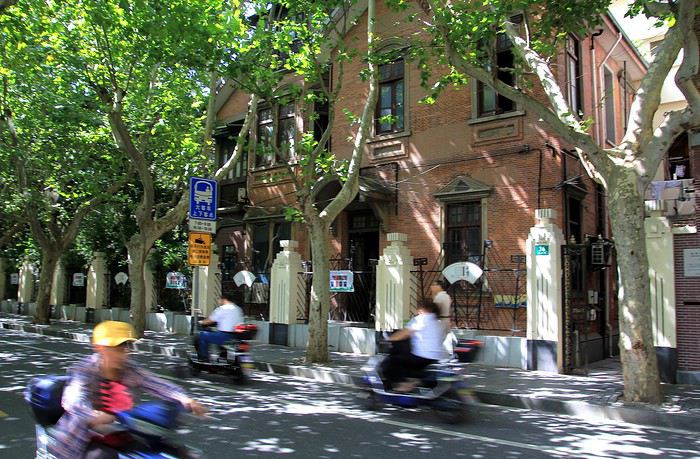
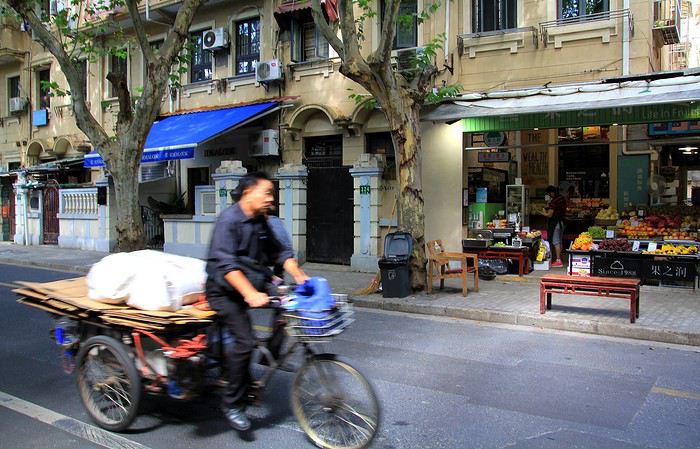
Some buildings in the area still bear witness to that time, like these ones, with bikes and scooters passing by. The architecture popular at the time blended European influences with the style of Shanghai’s elegant residences: stone arches above entrances, brick walls, and pleasant inner courtyards. Large homes often divided into several apartments today.


--

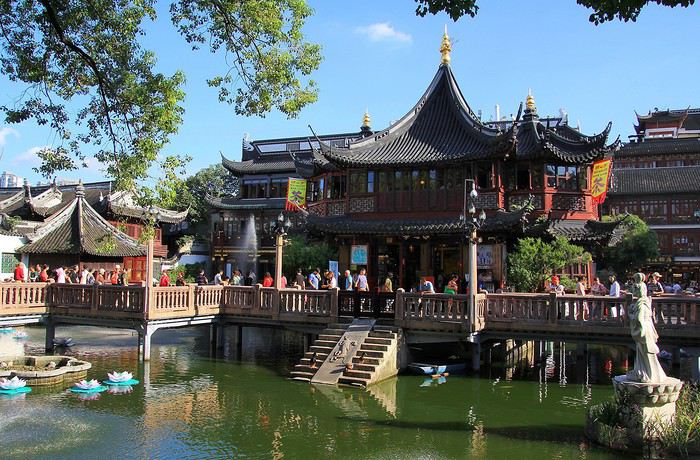
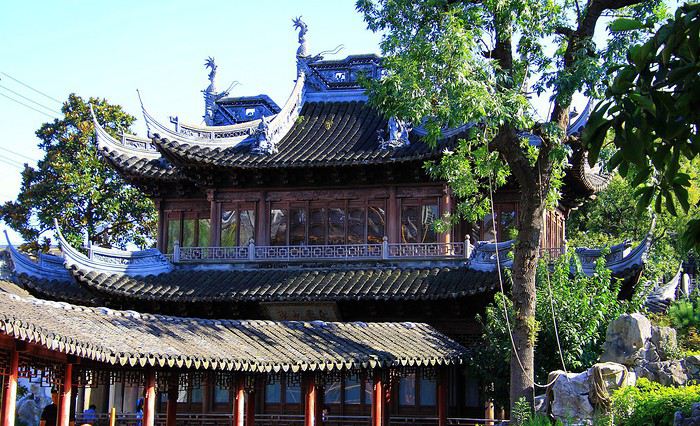
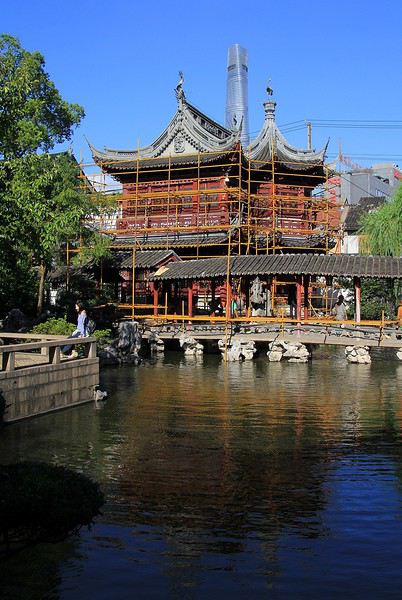
Traditional Chinese architecture shines in all its splendor at this tea house. With pagoda-style roofs—corners turned up toward the sky—refined colors and decorations, and a small corner tower on the right, this Huxinting Pavilion dates back to 1784. It was built in the middle of a pond, offering beautiful reflections. A truly charming spot where you can savor the subtle flavors of Oriental teas in the interior rooms.


Just steps from this picturesque spot, don’t miss the Yuyuan Pavilions and Garden. The whole complex is stunning and gives a glimpse of imperial-era homes and parks from the Ming Dynasty.


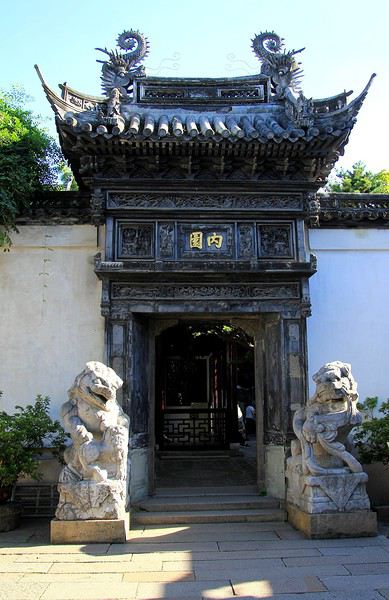
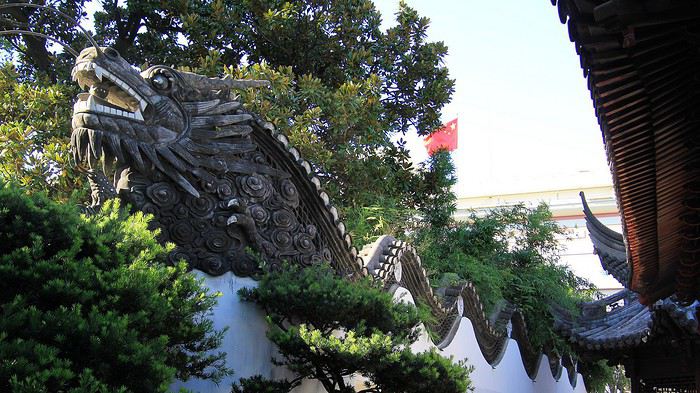
Pass through the entrance gate to enter this opulent property, well protected by a high surrounding wall. On one of them, a dragon sculpture sprawled at full length—about 7 meters—is impressive. The symbol represents power but also happiness.


Created in 1577 by the Pan family, wealthy dignitaries of the time, the visit takes you from pavilions with poetic names like the Pavilion of Three Ears to the Pavilion of Spring’s Announcement. Charming!


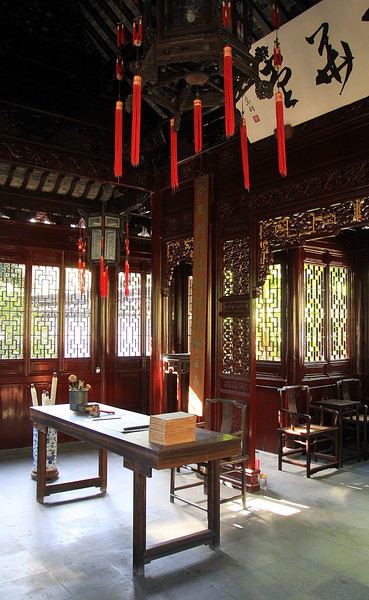
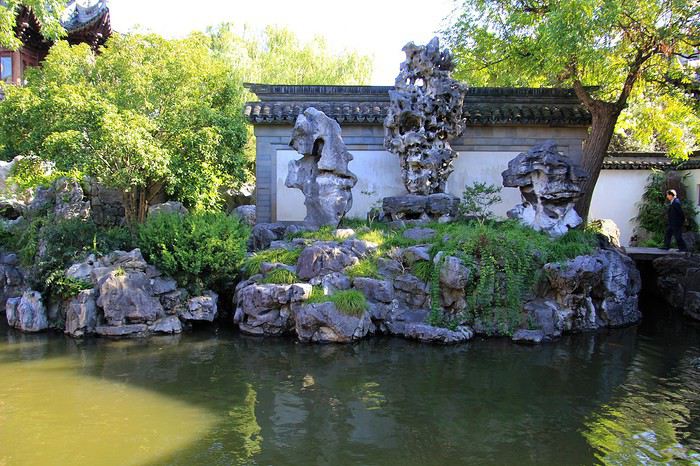
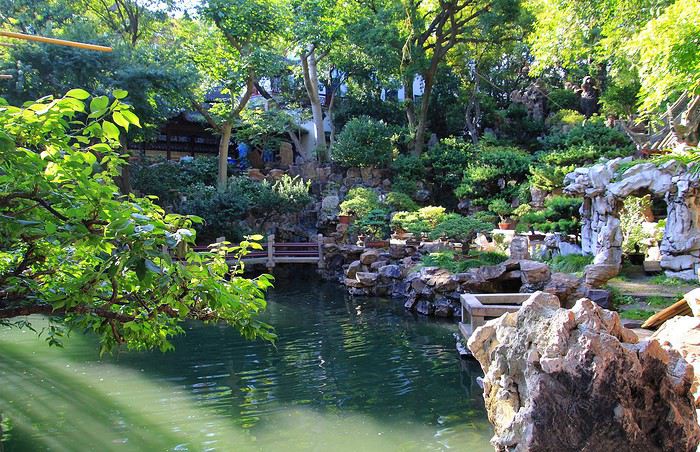
The interiors are decorated with woodwork from walls to ceilings, where beautiful Asian lanterns hang. But the real charm is outside. These shaded gardens, rustling with bamboo, are adorned with several ponds surrounded by impressive rock formations. A world that recreates (in miniature) the mountain and water landscapes of rural China.


This historic Yuyuan Garden, in the heart of the city, took about 18 years to design and build (pavilions and gardens). Its current appearance is the result of a faithful renovation—much needed, because in 1942, during the so-called Opium War, British officers made it one of their residences. It was partly destroyed by bombings, and later, French troops ransacked it after an attack on their concession.


The site is still under construction—maintenance and renovation—with scaffolding as proof. The garden’s enclosure was set to close for work the day after our visit (for a few weeks, until the end of October 2019). That’s probably why crowds of visitors were rushing in, making the atmosphere a bit less peaceful than this beautiful architectural ensemble might suggest. For the photos, I had to be a bit clever, avoiding the crowds to give an impression of tranquility—this historic place deserves it.

--

To be continued in the next post...
Open
Here and there... my walks in the land of pralines, couques, and gosettes..
Hello,

It often happens that we're asked what to visit in Belgium. And the answers usually point to Bruges, Ghent, Antwerp, and Brussels—and rightly so, as these cities are well worth visiting ;). However, Belgium, though small, isn’t just limited to these four cities.

I live in one of them (Brussels), enjoy spending time in the other three, but I’d like to highlight some lesser-known spots that could add to the trip for those who want to see a bit more or something different. Between trips, I like exploring one or two corners of the country where I live.

Hence the idea for a travel journal of walks.

Most of the places I’ll talk about can be visited as a day trip from Brussels, whether by public transport or car.

In chronological order of the topics covered:

- The Gileppe Dam (Liège province) - message 2, page 1 - The Domaine de La Hulpe (Walloon Brabant) - message 3, page 1 - Mechelen (Antwerp province) - message 4, page 1 - The coast - message 5, page 1 - The Westhoek, from De Panne - message 6, page 1 - The Zwin, from Knokke - message 7, page 1 - Lier (between Mechelen and Antwerp) - message 8, page 1 - Mons (Hainaut) - message 9, page 1 - The Florenville region - message 12, page 1 - The East Cantons - message 13, page 1 - Dinant - message 18, page 1 - The Japanese garden in Hasselt - message 24, page 2 - Leuven - message 29, page 2 - Louvain-la-Neuve - message 32, page 2 - Ostend - message 42 (page 3) and message 166 (page 9) - The floralies of Groot-Bijgaarden - message 43, page 3 - Halle Forest - message 44, page 3 - Pralines - message 54, page 3 - Charleroi - message 68, page 4 - Namur - message 92, page 5 - Le Bois du Cazier (Marcinelle) - message 95, page 5 - Couques and gosettes - message 96, page 5 - Liège - message 99, page 5 - Tournai - message 115, page 6 - Oudenaarde - message 121, page 7 - Meise Botanical Garden - message 124, page 7 - Tongeren - message 125, page 7 - Beersel Castle (Flemish Brabant) - message 126, page 7 - Brussels in lockdown (messages 150 and 154, page 8) - Notre-Dame à la Rose Hospital in Lessines (messages 161 and 162, page 9) - Westende (message 167, page 9) I’ll keep updating this list as the journal progresses...
Open
After Tenerife, a beautiful discovery of Lanzarote
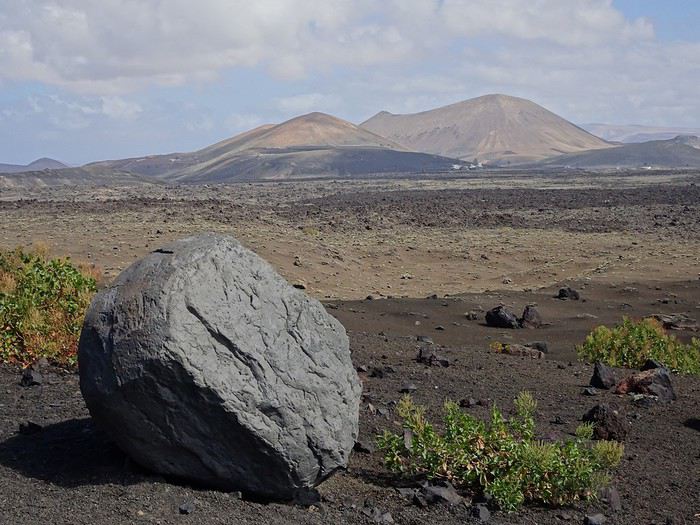
After several trips to Tenerife, we’re finally discovering the beautiful island of Lanzarote this year! We fell in love with this small island with its magnificent volcanoes and white villages without large hotel complexes!


I won’t be writing a day-by-day travel journal, but rather giving an overview of our experience! For hiking, we chose trails that were about an hour long and accessible for my mom, but we noted some longer ones to do if we come back—I’ll talk about those later!

To visit the sites, depending on the places you choose, you can get BONOS for discounts: more details here: https://turismolanzarote.com/fr/cact-lanzarote-tarifs-et-abonnements/ We bought ours at the first site we visited (Montañas del Fuego), but you have to ask for them—otherwise, they won’t offer them. Make sure to plan ahead which places to include.

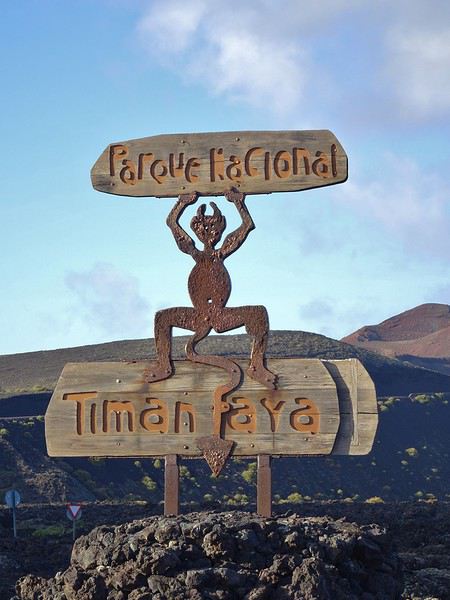
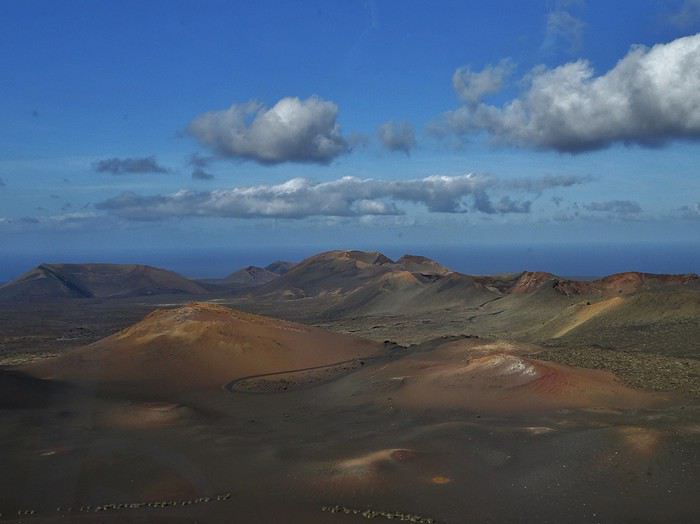
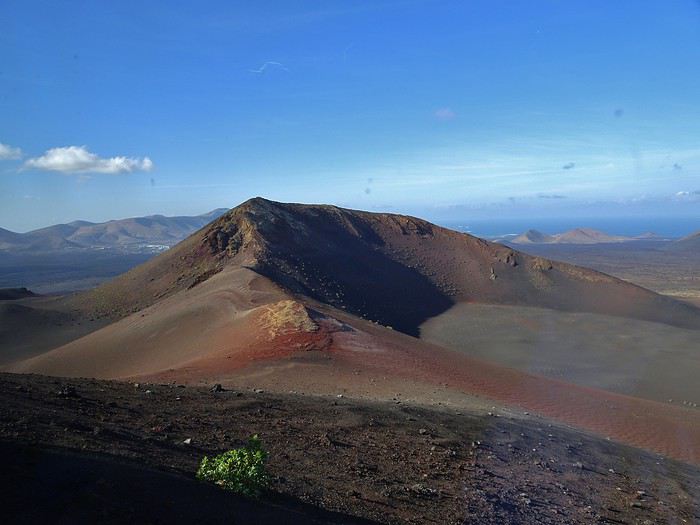
Our favorites were the volcanic discoveries and other landscapes of the island: EL PARQUE TIMANFAYA: Las Montañas del Fuego ****

Stunning colors—it’s absolutely breathtaking! Our only regret is not being able to hike through these incredible landscapes!


GPS: 29°00'21.6"N 13°45'11.7"W 9 AM - 5:45 PM

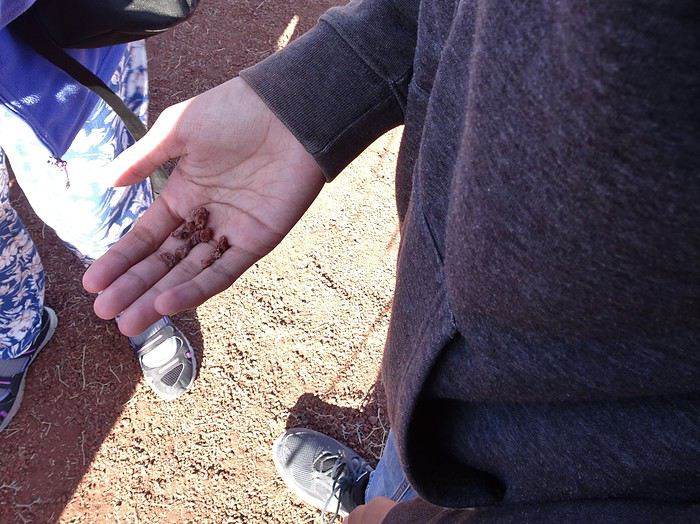
We’d noted, “Best to go early in the morning or late in the evening.” We arrived 5 minutes before the park opened. We’d barely parked when we hopped on the first bus for the mandatory 14 km tour included in the ticket. Perfect—no waiting! We sat on the right side of the bus for the best views. Afterward, we watched the geothermal demonstrations. It’s amazing how hot those little rocks picked up from the ground feel in your hand!


When we left, we saw how right the advice to arrive early was! Newcomers had to queue first to pay at the entrance, then again to access the parking (which was full, so they only let cars in when a spot opened up), and yet again to board the bus! We wouldn’t have wanted to deal with all that!

MONTAÑA CUERVO*** (Crow Mountain) Hike: 1-2 hours / 4 km GPS: 28°59'46.7"N 13°41'04.5"W

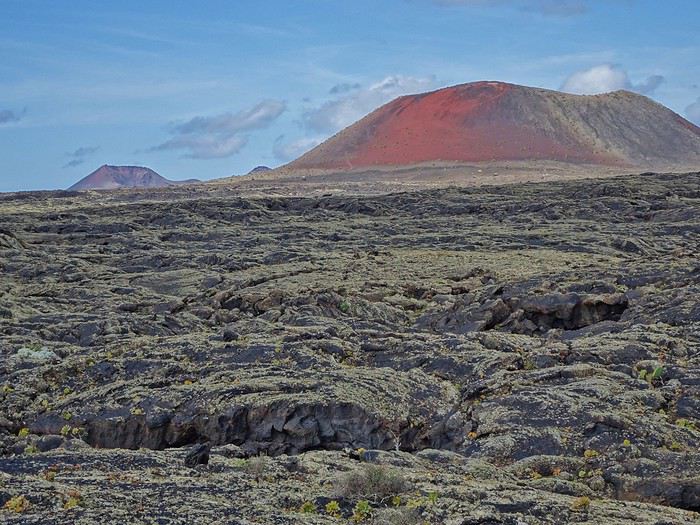
A small crater where wild geraniums grow! The hike is short, easy, and very pleasant. It follows a lava field covered in pale-green lichens before entering the crater. To avoid crowds, don’t go too late! We were lucky to have the parking lot almost to ourselves—lots of people were arriving later, even buses!


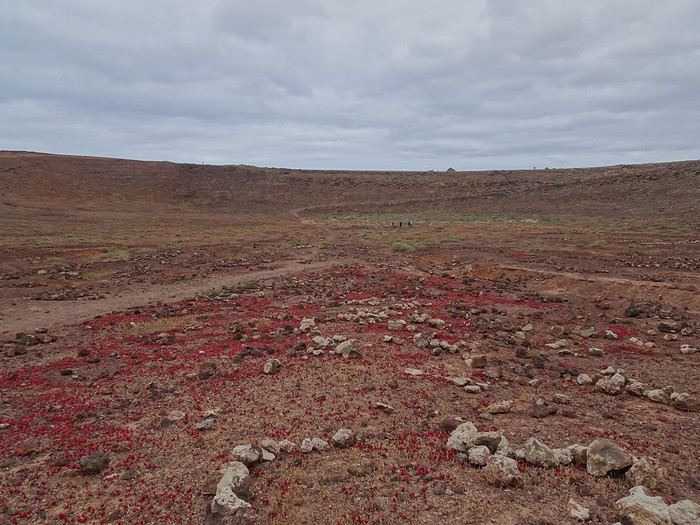
MONTANA COLORADA*** Hike: 1 hour – beautiful and easy, peaceful, no crowds. GPS: 29°00'18.0"N 13°41'01.7"W The trail loops around this stunning red mountain. Gorgeous colors, striking contrasts, and amazing volcanic rocks! Keep an eye on the ground—you’ll find little “green gems” in the small volcanic stones!


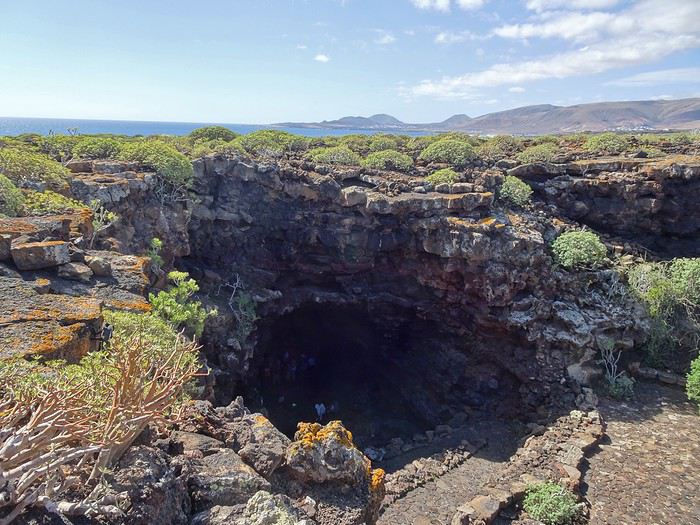
CUEVAS DE LOS VERDES*** We were more drawn to Las Cuevas, which felt more natural, than Los Jameos—though some might find the latter more beautiful, it’s more developed. GPS: 29°09'38.9"N 13°26'19.2"W 10 AM - 6 PM. Guided tour lasts just under an hour. Avoid late morning or early afternoon visits—it gets crowded. A tunnel and volcanic tube formed by an eruption of Monte Corona. The cave is named after the Verdes family, who once owned it. The space is often wide but sometimes narrow! The visit is very impressive, with a great surprise at the end!


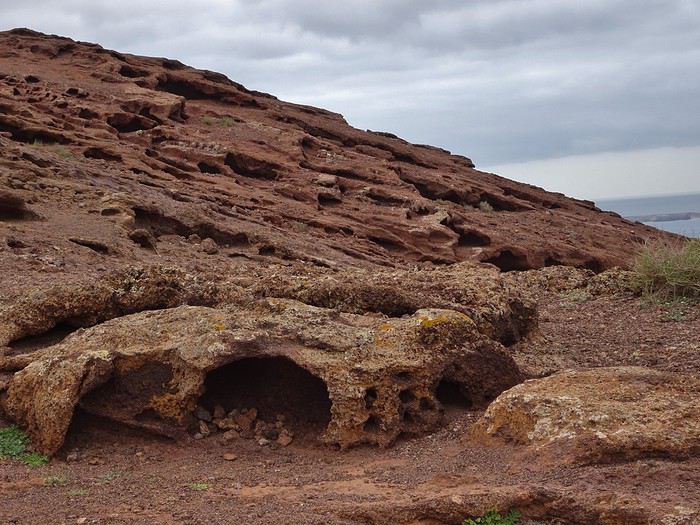
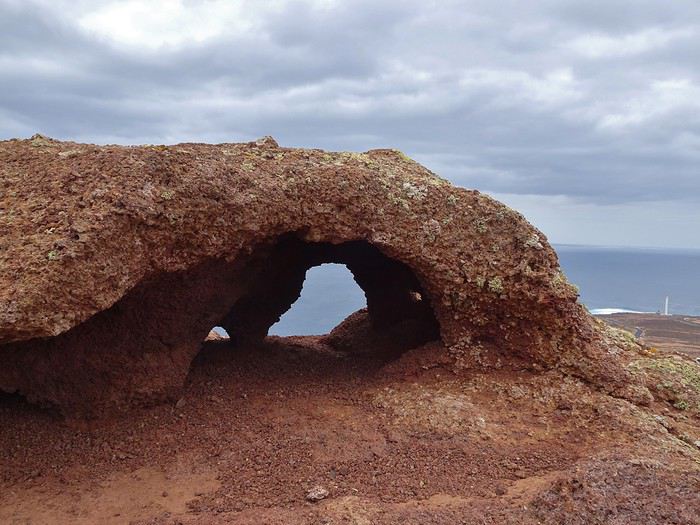
VOLCANO MONTAÑA ROJA** in Playa Blanca A hike you can do on foot from our hotel! Beautiful views from the top of the volcano. You can walk around it, see amazing rocks, and even descend into the crater (a different perspective with stunning colors).


Open
Collaborative travel journal for lovers of the American West!
Hi everyone!

So, I’m putting into action an idea I had two years ago... I’m inviting anyone who’s interested to help build a beautiful collaborative project—a shared travel journal!!!

The concept: one post =

a photo you’ve taken in the American West that means something to you and your thoughts on that photo or about it: where and when it was taken, the story behind it, why it’s special to you...

Grab your pens!!!! (And I hope this doesn’t flop, but if it does, at least I’ll have tried!!!)

And I’ll kick things off in the next post!
Open
A Magnificent Loop in the Southern Rainbow Nation
Hello everyone, It’s been a little over a year and a half since we first set foot in South Africa, and ever since, we’ve been dreaming of returning to explore Southern Africa.

First of all, a big thank you to all the forum members—there are so many on this VoyageForum section, some of whom are unconditional and indispensable experts on the destination—for the amazing travel journals that only make you want one thing: to go and discover these stunning lands. The first journal I read was Bruno’s (Montagnard74), and I was completely captivated by the face in the colors of the rainbow nation.


Now it’s my turn to add my small contribution by recounting our two-week trip during the Christmas period in South Africa.

Even though Attila strongly advised against visiting South Africa during the South African summer holidays, we still gave it a try since my husband doesn’t have the option to choose his vacation dates.

So we went during the peak tourist season, with all its drawbacks: difficulties finding accommodations, crowds at certain sites... But on the bright side, it’s the beautiful season in South Africa while it’s gray and cold back home.

For this trip, we wanted to explore Cape Town and its surroundings, which are already packed with things to see. As a result, we didn’t have time to head north without rushing too much. So we planned the following itinerary, staying in the south:

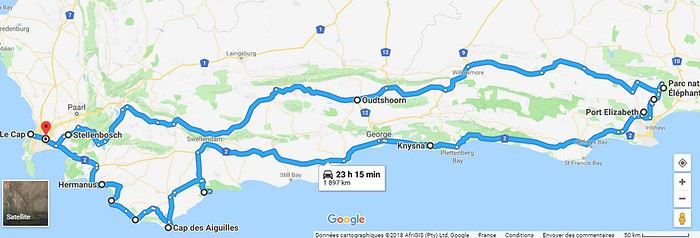
J1: Lyon/Dubai J2: Dubai/Cape Town J3: Table Mountain – Cape Town J4: Botanic Garden - Robben Island J5: Cape Peninsula J6: Cape Agulhas - Gansbaai J7: De Hoop - Swellendam J8: Garden Route - Knysna J9: Garden Route - Addo NP J10: Addo NP J11: Oudtshoorn J12: Little Karoo J13: Wine Route - Cape Town/Dubai J14: Dubai/Lyon


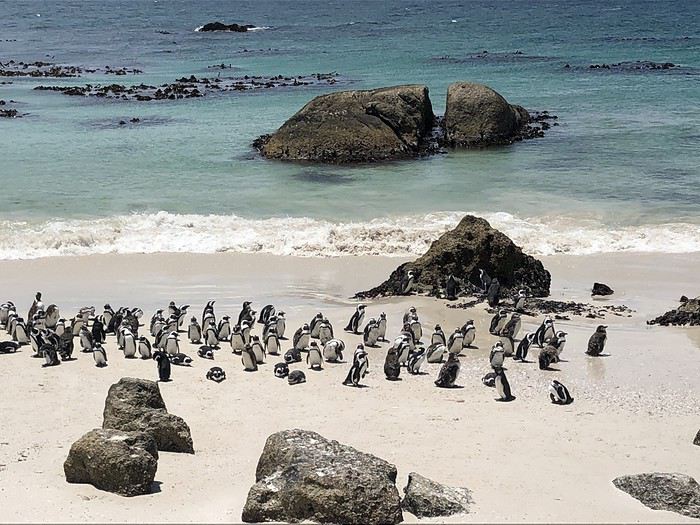
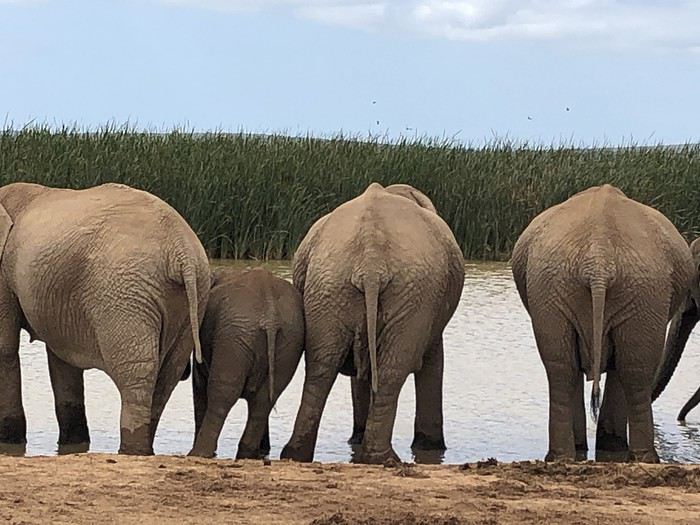
To give you a taste of what we experienced on the South African roads, here’s a little preview of the wildlife and flora we encountered, as well as the beaches and mountains we glimpsed.


The rest here
Open
Kyoto, Shinkansen, Tokyo: three first-timers in Japan via Air China
Hi everyone,

The idea of visiting Japan goes back a year now. I remember because I was looking for cheap flights to Europe from Paris. Surprisingly, the round-trip to Japan with Air China was just as affordable—if not cheaper—than many European destinations.

So, the tickets were booked. Three seats (including one for a 12-year-old), ten days over Easter 2018, AirBnB accommodation. Of course, in ten days, you visit without *really* visiting—you only scratch the surface. Just the classics: Kyoto, temples, moonlit rivers; the Shinkansen; and Tokyo, gardens, wandering, high-tech, and... maids.

I have to admit, we don’t know much about the country, and the thought of how we’d manage is a constant source of worry. What if this trip reveals my inability to open up to other cultures?

We board the first Air China flight with that question on our minds.
Open
Review of our Caribbean cruise on the Costa Magica
Hello everyone,

Here’s the belated review of our 15-day Caribbean cruise on the COSTA MAGICA from March 1st to 15th.

It’ll be illustrated with photos for each port of call. You’ll need to click on them to enlarge.

We bought this cruise from AZUR CROISIÈRES, in an outside cabin, with the TOTAL COMFORT CLASSIC package, which includes: - The "Pranzo & cena - Lunch & Dinner" drinks package with unlimited drinks during meals: water, wine, sodas, and draft beer. - A discount on excursions: the more you book, the bigger the discount.

The "Pranzo & cena - Lunch & Dinner" package was offered onboard for 19.90 € per day per person for those who didn’t already have it.

The itinerary was as follows: Fort-de-France (Martinique) / Pointe-à-Pitre (Guadeloupe) / At sea / Scarborough (Tobago) / St. George’s (Grenada) / Bridgetown (Barbados) / Castries (St. Lucia) / Fort-de-France (Martinique) / Pointe-à-Pitre (Guadeloupe) / At sea / Willemstad (Curaçao) / Oranjestad (Aruba) / Kralendijk (Bonaire) / St. George’s (Grenada) / Fort-de-France (Martinique)

After many cruises with MSC, this was our first COSTA cruise. We couldn’t help but compare the two companies and made the following observations: - The elevators are faster on COSTA than MSC. You wait less often. - Fewer storage spaces in the cabin closets on COSTA than MSC. - Impossible to check your onboard account balance on the TV with COSTA. - The cost of excursions booked in advance online is deducted at the end of the cruise with COSTA, but immediately upon booking with MSC. - The decor is more contemporary and elegant on MSC than COSTA. - COSTA’s restaurant meals are just as good as MSC’s but more generous. - COSTA: On the first evening when you arrive at the restaurant for dinner, no staff member shows you to your table, unlike MSC! - The buffet desserts are better on COSTA. - COSTA: No "napkin folding" during the Italian evening, no pizzas at the buffet, no complimentary drinks in the lounges during the gala evening, and no Baked Alaska either! - The shows are slightly less impressive on COSTA but a bit longer. - COSTA offers the option to skip the evening turndown service (preparing the beds for the night with the sheets folded back).

Of course, this list may also depend on the ship you’re traveling on. Some of these observations might be specific to the COSTA MAGICA.

Before the cruise, we spent 2 days in Fort-de-France at the "La Batelière" hotel.

www.la-bateliere.com/

Some rooms need renovating, but the sea view is stunning. We had to carry our two large suitcases up two flights of stairs ourselves because there was no elevator in the part of the building where our room was. The restaurant is good, but service can be slow if it’s busy. Breakfast is excellent. The beds are comfortable. The area around the hotel isn’t interesting—it’s best not to venture out. At the foot of the hotel, there’s a tiny beach (not private) and a nice restaurant/bar with a good reputation: "Lili’s Beach." I recommend booking a superior category room rather than a standard one, or you might be disappointed.
Open
A (slightly belated) Thailand trip report
Hi everyone,

I’ve finally gotten around to writing up a little recap of our Thailand trip in July 2017. Better late than never, right? 😛 It’s not a full travel journal, just a quick rundown with a few (modest) photos. I’d been wanting to explore Asia for a while, but nothing was set in stone. Then, by chance, I found some great flight deals from Toulouse to Bangkok (1650 € for the three of us—my husband, my 17-year-old son, and me). What the heck, I booked them! We arrived on July 6th around 6 PM and left Bangkok on the 25th in the late afternoon. So, now I had to plan the route… Let’s be honest: with only three months to prepare and zero knowledge of Asia, sleep wasn’t going to be a priority! That’s where I have to say a huge *thank you* to all the forum members who love this country! I devoured as many travel journals as I could on the forum, discovered all sorts of blogs, and managed to "put together" an itinerary. My husband isn’t a fan of crowded places, so we decided to see a few "must-sees" and then head to spots that are much less frequented by tourists—way more peaceful.

Here’s our route with the accommodations (prices for 3 adults):

- 3 nights in Bangkok (Isanook HOTEL, 180 € with breakfast) - 1 night on the train to Chiang Mai (69 € for a sleeper berth) - 3 nights in Chiang Mai (Lanna Tree Boutique Hotel, 230 € with breakfast) - 1 night in Donsak (Lam Tong Resort, 37 € with breakfast) - 3 nights on Koh Phaluai (Angthong Beach Resort, 135 € with breakfast) - 3 nights in Bang Saphan (Palms Gardens, 111 € without breakfast) - 3 nights in Prachuap Khiri Khan (Sunbeach Hotel, 94 € without breakfast) - 1 night in Bangkok (Anajak Hotel, 129 € with breakfast—we treated ourselves 🙂) For the hotels, we could’ve gone cheaper, but being able to take a quick dip in a pool isn’t so bad, right? Especially in Bangkok and Chiang Mai, I think I booked a little late, so options were more limited. No regrets with any of the accommodations—every single one lived up to what we’d seen and read about them. I’ll say it again: without the travel journals from the active members of this forum, I wouldn’t have been able to plan this trip. I won’t name names, but you’ll recognize your contributions here and there. I was starting from scratch with zero knowledge of the country, and what matters most to me when I travel is gathering as much info as possible on local customs—so we can blend in and avoid any major faux pas! Thanks again to all of you!!! 🙂 😉

Practical details: - The overnight train was booked as soon as reservations opened, about two months in advance. - From Chiang Mai to Surat Thani, we flew with Air Asia for 196 € with three checked bags, booked two months ahead. From Surat Thani to Donsak, we arranged for the son of the Lam Tong Resort owner to pick us up at the airport for 1500 baht. - The round-trip ferry from Donsak to Koh Phaluai cost 1200 baht for the three of us. - On Koh Phaluai, we hired a guide, Ton, for two days to explore Angthong Marine Park: 8700 baht (including lunch). I booked these two days through Mathilde, who’s been mentioned on this forum. - From Surat Thani to Bang Saphan: train, tickets bought the same day. - From Bang Saphan to Prachuap: same. - From Prachuap to Bangkok: public bus.

Bangkok:

Our hotel was in a neighborhood away from the city’s most touristy spots, so we really got to experience "normal" life. How else to describe it? It’s like being in Paris in the heart of the 20th arrondissement, far from the Eiffel Tower… You wouldn’t think you were in a megacity like Bangkok! We loved this part of town, especially the Sam Yan metro station with its market, its cows (!), and its temple. We also enjoyed the street food stalls right by the hotel, with no crowds.


We loved visiting Wat Pho in the morning before the crowds arrived. We weren’t alone, of course! (They wouldn’t give us a private tour… 🤪) But it was smooth and peaceful, and we got to watch groups of schoolkids singing together on the floor or drawing. The Grand Palace later in the morning was a different story—so many people, long lines at the checkpoints and ticket counters, and *very* loud crowds. Khao San Road during the day was pretty "calm." We just passed through and spent more time around Soi Rambuttri, eating at a small restaurant where a waiter showed us why Thailand is called the Land of Smiles. We loved hanging out at the end of the street by the river. We also stumbled upon a little market in that area, but I have no idea which streets it was on. Taking the river shuttles was such a nice way to enjoy the views of the riverbanks. We really liked Chinatown with its narrow alleys, vendors, hustle and bustle, and smells (not all of them pleasant…). The greenery and calm of Lumpini Park were so refreshing—not just for tourists, but for locals too, who come to eat, play board games, or go for a walk. The contrast between the hyper-modern side of the city with its massive malls, skyscrapers, and more working-class neighborhoods is fascinating!


Chiang Mai: Very touristy, but we knew that going in, so we knew what to expect. We’re not big on temples, but we still really enjoyed discovering some of them as we wandered around—some packed, others much quieter. We loved getting "lost" in the old city’s alleys. The Doi Suthep site is truly exceptional, and despite the crowds, we managed to find little corners where there was almost no one! So we could enjoy the site and the views of the surrounding landscapes in peace. Still on the hunt for quiet spots, we headed to Mon Cham, about 40 km from Chiang Mai by scooter. Such a relaxing place—what a great discovery! During our stay in Chiang Mai, the rain played cat and mouse with us, and I’ll admit, it often won!


More to come soon…. Fabienne.
Open
Morocco Discovery Loop: Travel Journal
Hello,

My daughter (22) and I set off to explore a bit of her grandfather’s homeland. We left on July 26 from Roissy and arrived in Rabat with Air France. We had a few hiccups retrieving our luggage—1.5 hours of waiting and a mini interrogation at customs about our host’s address (they asked for a reference) and questions about a Moroccan ID card I’ve never applied for. Next time, I’d better have it—dual nationals get extra scrutiny.

We headed to the ONCF station to catch the train to Marrakech. First-class tickets cost 195 MAD, with assigned seats and decent comfort… the catch? The train was delayed, so we arrived at 2:50 AM instead of 12:10 AM.

We chose the Ibis Gare, located between the ONCF station and the Supratours bus terminal. We booked two nights from France for 79.85 €. To avoid the premium-rate call, just dial the hotel directly—they’ll handle the reservation. I’d signed up on the Ibis website beforehand for a discount (free and comes with perks).

On-site, we added 44 MAD for the tourist tax (11 MAD x 4 nights). We skipped breakfast—too pricey at 6.50 € per person. The hotel has a nice pool and a pleasant setting. The shower seals weren’t perfect, but the bedding was comfy, the linens soft, and the AC worked (though it was noisy). We were overall happy with it.

We had breakfast and lunch at a café/restaurant right across from the hotel—affordable and tasty.

For phones, we bought two Inwi SIM cards for 30 MAD each and a 5 GB internet top-up for 50 MAD—more than enough for our 16-day trip. Later, we added two 20 MAD call top-ups. Total phone budget for both of us: 150 MAD.

Taxis in Marrakech: No issues. We always asked for the meter—if a driver refused, we’d just move on. No haggling for us!

Day 1: We visited the Majorelle Garden (70 MAD per person). It was beautiful and peaceful. We walked there. In the afternoon, we took a taxi to Jemaa el-Fnaa square. The constant solicitations were exhausting—I felt like a guard dog fending people off. The worst part? We got lured deep into the medina to some sketchy spot under the pretense of seeing "Berber tanneries"—"last day!"—then had a guy grab our arms, demanding 200 MAD. I offered 50 MAD max since we hadn’t asked for anything. When he insisted, I threatened to go to the police. He finally let go for the 50 MAD. We headed back to the hotel to enjoy the pool before returning to the square for the evening. It was lively but noisy, and I found the vendors *way* too pushy. We walked back to the hotel—an hour-long stroll that was actually really nice. We kept no more than 150 MAD in our wallet at a time. We stuffed ourselves with smoothies—they’re *so* good.

Day 2: We left at 8:30 AM for Tinghir with Supratours, arriving at 4:45 PM instead of 4:00 PM (lots of roadwork). Tickets were 130 MAD per person + 5 MAD per checked bag. We stayed one night at the "Retour au Calme" hostel—super cozy! 150 MAD for a room with a private shower and toilet. AC was an extra 80 MAD per night (not mandatory) but worked great. Phone: +212 5248-34924. Breakfast was 30 MAD, and they offer tons of options, including budget-friendly choices like a couch for 80 MAD per person with shared showers/toilets. Half-board and full-board are also available. Mohamed and Alexandra are lovely. I booked by phone and paid on-site—they even picked us up from the bus station!

We took a taxi to the Todra Gorge—a breath of fresh air! It’s stunning and humbling. You feel tiny there. Shared taxis cost 8 MAD per person (fixed price). The organization was impressive. To get from the city center to the bus station: 3 MAD per person.

Day 3: We left at 4:00 PM for Merzouga, arriving at 9:30 PM. Tickets were 80 MAD per person + 5 MAD per checked bag. Upon arrival, we were greeted by Houssein, one of five brothers running the "Auberge Océan des Dunes." We had a lovely room with a private bathroom and kitchen access. Two rooms are available in this unit for 190 MAD per night for two, including breakfast.
Open
Back from 3 weeks in Morocco in April
We just spent a little over 3 weeks in Morocco. Three weeks on the road starting from Marrakech in a rental Logan. We decided to split this trip into 3 highlights: the seaside first, a week in Aourir north of Agadir, Aït Baha and Tafraoute for another week, then a week in the Skoura palm grove followed by 3 days in Marrakech before heading back.

When we arrived, we were surprised by the temperatures—much higher than in previous years—and we were amazed by the quantities of flowers we saw throughout our journey. Moroccans explained that they had a lot of rain this winter, beneficial water, not the kind that destroys everything in its path.

First stop: AOURIR. Staying at Bab Aourir, we were able to explore the area. A great discovery this year: the Assif El Had cave, beyond Imouzzer. A beautiful road to get there. Absolute tranquility once you're inside. A lovely spot for a picnic by the *séquia* (irrigation channel) at the cave’s entrance.


Open
Travel Journal: In the Land of Vikings, Fjords, and Sheep
Hello everyone,

As usual, I’m posting a new travel journal about our trip to Norway last September. This one will span several months, with a day-by-day account of our adventure. I won’t be posting many photos on the forum (the publishing rules have become even more complicated since my last journal), but you can find all the shots on my blog (address in my signature).

We’ve just returned from a truly extraordinary, unforgettable trip. Planning this trip wasn’t easy, and I’ll admit I struggled to decide on the itinerary… Should we take the Hurtigruten all the way from the south to the north? But a whole trip by boat didn’t really appeal to us. Or focus on the south in the fjord region? But that would mean missing out on the Lofoten Islands… In the end, we chose to concentrate on southern Norway, exploring the coast and fjords, while including a stop in Oslo and mixing train, boat, and car travel. I also opted for a trip where we’d drive less than in previous years (1,650 km compared to 2,000 km in Portugal and 3,800 km in the American West), but we’d still move around a bit and do some hikes. Here’s the itinerary we followed:


This trip was absolutely amazing and introduced us to so many things we’d never seen or done before—fjords, a night on a boat, glaciers, stave churches, snow in summer (…and the high cost of living!).

If we had to sum up our top highlights, here’s our top 3: Mr.:

the variety of landscapes the colors, especially the colors of the water—from crystal clear to light blue and turquoise in some spots eating good fish

Mrs.:

the roads: the ones in the area we explored were truly stunning Geirangerfjord, especially in the late afternoon, when it was quiet and free of cruise ships the Trolltunga hike: a challenging trek and a little personal achievement for us

What we liked less:

the sometimes inconsistent signage on hikes the cost of living (everything costs money, and even food is expensive) the tunnels: there are so many, and they’re not much fun (except for one with a roundabout inside…!)

That’s it for this first summary/overview, and I can already tell that choosing photos is going to be tough!!! Here’s a little preview of what we discovered:


To see the photos in full size on my blog: check it out here
Open
The Hippie Trail to India in the 60s and 70s
During the 60s and 70s, thousands of travelers hit the road to India. Some were backpackers or hippies, but not all. In this collective anthology featuring around twenty contributors (including GeorgesOz), you’ll also find truth-seekers, a couple who went on their honeymoon to get married in Bengal... and "crazy" folks who set off on VéloSolex bikes...

Worth noting: all contributors donated their royalties to support the Céline Hegron clinic in a poor neighborhood of Varanasi.
Open
Translating a French driver's license for car rental in Japan
Hello,

Thinking this might be useful for VF members who, like me, want to get their French driver’s license translated for a car rental in Japan, here’s the email I received this morning from the consular authorities in Tokyo:

Dear Sir,

You can obtain the translation from the Japan Automobile Federation (JAF). Address: 2-2-17 Shiba, Minato-ku, Tokyo 105-8562 Phone: 81-3-6833-9100 Email: kchosa@jaf.or.jp Website: http://www.jaf.or.jp/e/trans_f.htm (To find their office in Sapporo: http://www.jaf.or.jp/e/list_translation.htm)

Information about driver’s licenses is available on our website: http://www.ambafrance-jp.org/spip.php?article781&var_recherche=driver’s%20license The consular section can no longer provide driver’s license translation services.

Best regards,

Consular Section

So, according to this message, no more mail-in translations through the consular authorities.

Sayonara.
Open
Marrakech: Great Tips and Things to Avoid?
hi there,

I’m just a few days away from my trip to Marrakech—I’m leaving from November 13th to 20th and bringing my parents along! I’d love to plan my stay as best as I can, and I’m sure the forum crew can help. So, here are my questions:

- Where’s the best place to exchange money without getting ripped off? The owner of the riad where we’re staying told us to avoid doing it at the airport because it’s really expensive and to do it in the medina instead, near Jemaa el-Fna square.

- Which traditional hammams do you recommend that are reasonably priced? How much should we budget for one? That’ll help me plan my expenses.

- What are some nice restaurants in the medina?

- I’d also like to know roughly how much to expect for a tea, a meal, a taxi, a djellaba, and babouches. I don’t want to get overcharged and would like to know what to expect.

- What are the must-do activities and places to visit?

Thanks in advance for your help....
Open
4x4 trip to Egypt in the Libyan Desert?
Hello, Taking the boat from VENICE to Alexandria is easier than going through Tunisia and Libya. We’re putting together a group to split costs for a trip in 2011 or early 2012. Inshallah. I’m looking for people who’ve recently crossed the Libyan Desert—sand sea, oases, etc.—with their 4x4s. Any info is welcome, thanks in advance. Things like: Entry formalities for the 4x4. Agencies and guides for the desert. Military requirements. Fuel, etc. Thanks again. Saharan greetings.
Open
Making a living from travel photography?
While researching this topic myself, I came across a discussion thread http://voyageforum.com/voyage/est_t_il_possible_gagner_un_peu_argent_avec_tres_belles_photos_D2577539/ that I found a bit disheartening...

First off, I want to say that this recurring dream isn’t impossible:

http://www.pixfan.com/entretien-avec-eric-lafforgue/

That said, it won’t just fall into your lap by chance! ;-) Believe me, just because no degree is required doesn’t mean you can approach this project as an amateur.

You’ll need to be a technical expert, invest thousands of euros in gear and software, have a unique aesthetic vision, sharp business sense, and a rigorous approach at every stage of your work—because this *is* a profession. Without a minimum of commitment and professionalism, you won’t get far... But then again, other careers aren’t exactly easier...

So, for those who already have a portfolio that triggers uncontrollable gasps of wonder at every slide show at Aunt Monique’s place, here are some great places to test your determination and skills:

http://www.lonelyplanetimages.com/prospective_photographers

http://www.theimageworks.com/cu_prosphoto.php

http://www.pacificstock.com/photographer_guidelines.asp

For those who think they’ve already created some high-resolution masterpieces, you can also invest in internationally renowned competitions:

http://worldinfocuscontest.com/

http://www.tpoty.com/2009/about.html

http://www.thecolorawards.com/

http://journals.worldnomads.com/scholarships/post/32554.aspx

Finally, you might want to start by simply showcasing your work online at low cost and submitting your photos to a massive, not-always-agreeable-but-not-hostile audience for feedback:

http://www.flickr.com/photos/28421453@N07/sets/72157614525899920/

By the way, I hope you're already fluent in English...

Happy travels!
Open
Looking for a baker job in Canada
Hi everyone, I’m Pierre, I’m 19, and I’m looking for a baker position in Canada—could you help me out, please? I’m really passionate about this trade. I’ve been in it for 3 years now, including 1 year as a qualified worker. I’ve got a huge thirst for knowledge, whether it’s in my job or discovering the world. If you’ve got any questions, don’t hesitate—I’m not really sure how this works here! :)
Open
Desert Crossings... (Morocco)
The story of a trip to Morocco, from the first to the last day—otherwise, it wouldn’t have made sense... Marrakech... then four days on foot in the desert, alone with a guide, a camel driver, and two dromedaries... and Marrakech again. Everything mattered, even the smallest details, so this is a (very) long story. Behind the descriptions and anecdotes, there’s emotion, intimacy, and... soul-searching. All the things it’s strangely easier to share this way, all the things it’s strangely easier to share with people you don’t know... I have beautiful images in my eyes, but only a few are visible—if you read carefully, you’ll understand why. The other photos are imagined, created upon returning with souvenirs and a bit of staging. But everything is authentic.
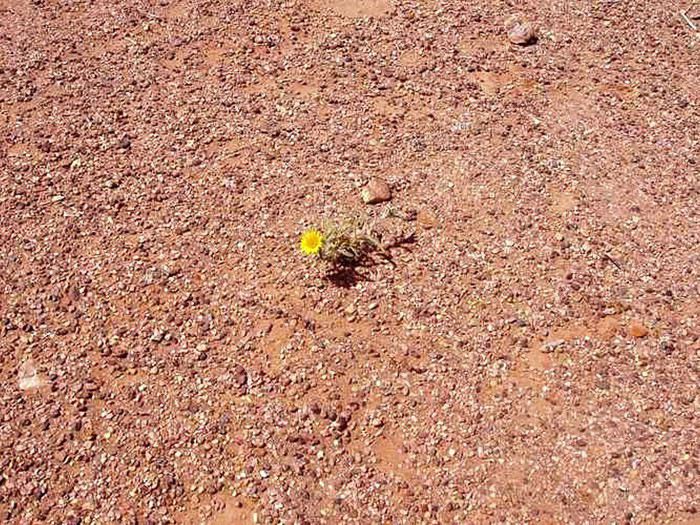


Since I’ve been back, sometimes at night I open my eyes and don’t know where I am... Sleepless night, starry night, night of communion, connected night... In that suspended moment, between wakefulness and sleep, which makes you so receptive... Communion with whom? Connected to what? Lila gnawa... lila de derdeba.

The desert, a solitary path. You step in, and you’re immediately in the essential...

Wednesday... My companion drops me off at Orly Ouest... There are two hours before boarding. My MP3 player turns on but that’s it. It freezes—no commands work, and nothing fixes it... Smile... A trip without music, then? And the first anchor falls away.

(Photo...) ... Passport, tickets, receipts, labels...

Nose pressed to the window for the entire flight... Descending over Marrakech, at low altitude, a pretty mosaic—shades of pink and ochre dotted with green, but also, to the right, less harmonious, aligned cubes. Housing developments under construction? A bumpy, turbulent landing—the plane circles for a long time before touching down.

Welcomed by the familiar, unchanged sound of creaking doors and seats in the little taxis. In Casablanca, it was red Simca 1000s with meters; here, they’re yellow, and you have to negotiate the price. I have no talent for that, so here’s 100 DH!
Traversed and forgotten

Marrakech... Sunny, luminous, sensual. Torn between tradition and modernity... Shimmering and fragrant, very noisy... rather polluted? On the road, horses and donkeys still mingle with vehicles... and watch out for traffic when crossing! It’s always a strategic—and athletic—adventure: at what exact moment do you sprint to the opposite sidewalk? And why aren’t any street names marked?

Afternoon on foot, heading to the Bab Doukkala bus station... A landmark: the McDonald’s, then a square with a fountain. Then turn left onto Avenue Hassan II. There’s a bus to Zagora Friday morning, but I can only buy the ticket tomorrow. On the way back to the hotel, at a kiosk on the corner, I buy *Tel Quel*, which I read with great interest online.

Thursday... Early morning, walking to Place Jemaa el-Fna, calm and almost deserted... I don’t get a good deal buying two small daggers for my kids. No talent for haggling—it takes more than charm for that... So I’ll pick the rest of my gifts at the artisan center on Avenue Mohammed V, where prices are marked, and it’s a pleasure to watch the craftsmen work... For my daughter, a satchel and earrings. The satchel smells like goat. The earrings are hand-chiseled in front of me by a very young man with nimble fingers—marvels of delicacy and fragility. Then I linger for a long time in the souk alleys. Scents of leather, thuya and cedar wood, wool and copper... Familiar smells... Childhood memories...
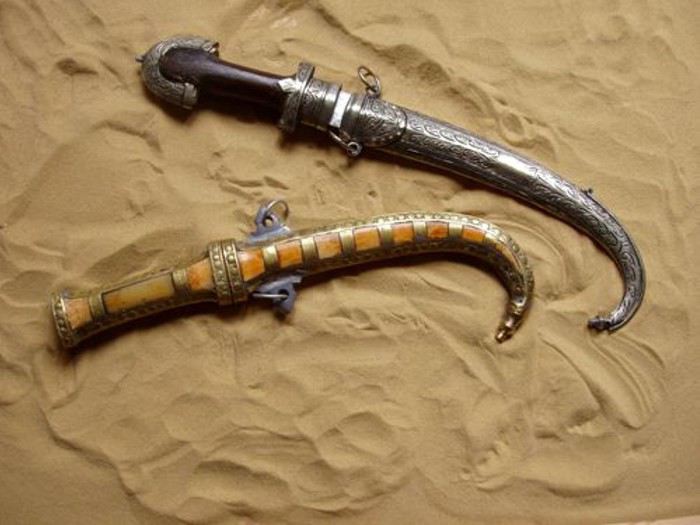
Dear daggers

Earrings

Back at the bus station, an unexpected change: no bus Friday morning, but a departure tonight at 8:30 PM... I have a little time before packing, so I take a long detour: Boulevard de Safi, then right onto Avenue El Mansour to the Majorelle Garden... A quiet pause. Rare plants, all kinds of cacti—smooth, fuzzy, bristling with spines... strange, squat, or stretched-out shapes. An infinite variety of greens, and that famous blue... The song of birds, the sun and shadows playing in the water basins... Time flows lazily. I write postcards—they’ll arrive long after I’m back...


Back to the hotel. Avenue El Mansour, Boulevard Zerktouni—okay, but why are the small street names never marked?!! I get a little lost...

I hope you got my MMS, because before leaving, I left something for you at the front desk...

8 PM, night has already fallen. Arriving at the bus station, and then... Then, a step back... A dense crowd, a tangle of buses... Where to go?... Rare woman, lone foreigner, backpack... I’m quickly spotted, surrounded, poorly guided... Someone with a badge finally points me to the right sidewalk. The bus isn’t there, and the sidewalk is already packed, mostly with men. Will I even get a seat?... Three young men are particularly insistent... They want to know where I’m going and why, if someone is with me, if I’m expected... I answer with a smile. A bit tricky—choosing words, staying polite while evasive... Their French is hesitant, my Arabic is more than rudimentary... Actually, I shouldn’t have tried... Their tone becomes a bit... aggressive, and their eyes light up. Uh-oh... They say they’re students, but what of?... Want to know what I think of the Quran and Allah, what I think of holy war, if I’m "for the Americans," "for the Palestinians"... Other travelers intervene... And the bus still isn’t here... The speech turns fanatical... Then, my smile freezes a little... A small wave of panic, so I send a "freaked out" MMS... (But who else could I send it to?) Then, in this dark crowd, a light dressed in white... Nabila, a young student heading to Zagora for vacation, she speaks French... She plants herself in front of them and scolds them thoroughly. I didn’t catch everything, but it worked! The three troublemakers retreat. Plus, they weren’t on the right sidewalk, and their bus is about to leave without them...

Nabila and I manage to board and sit side by side... The bus leaves two hours late. The trip is long, a bit uncomfortable, slowed by many stops—it was very cold...

Friday... A little stiff, a little dazzled, a little chilled, arriving in Zagora at dawn with the sunrise... Magical! Craving something warm... And then, a heartfelt gift—kindness and hospitality—Nabila invites me to her home. Warm welcome from her mother and siblings, not at all surprised to see me show up so early to share their breakfast! A few hours in their company... We exchange addresses, and the youngest brother, Nouamare, gives me a children’s storybook...

Noon, at *La Fibule du Draa* Lahcen Sarti, the owner... I finally put a smile and a face to an email exchange... He shows me the trek route on the map, laughs when I tell him about my night on the bus, and sends me to rest by the pool... No swimsuit, so a lounge chair and a book... A book that will accompany me into the desert and which I’ll finish in Marrakech, in the Koutoubia Garden...
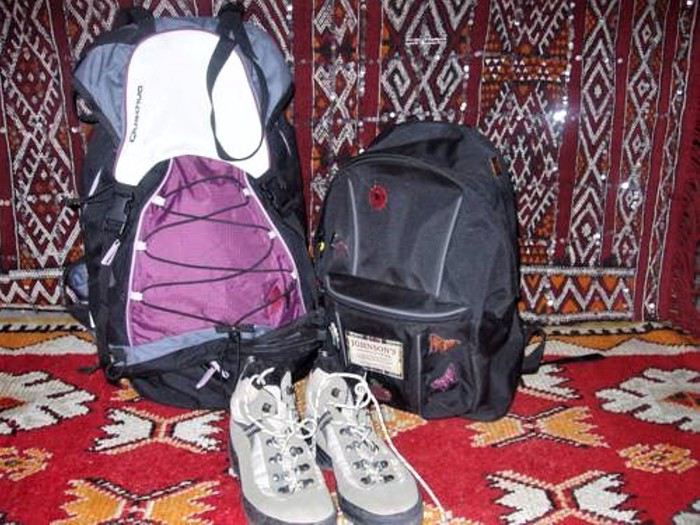


Saturday, Day 1... When I wake up this morning, I know the desert sand will also absorb my blood...

Early departure for four days and three nights, alone, as I wished, with a young guide, Mohammed, and a younger camel driver, Abdou. We’ll be together 24/7, and we won’t see a soul until we reach the fixed campsite on the third evening. Everything we need is loaded onto two dromedaries. And in those baskets, there are miracles—a *Prévert*-style inventory I’ll discover bit by bit, like... a tray for glasses, a basket for bread, a sugar loaf and small glasses for tea, but... large glasses and sugar cubes for coffee, spices, oranges, vegetables, raw eggs!... That won’t break, *La Vache qui Rit*... And so many other unexpected wonders, so surprising in the middle of the desert... (*La Vache qui Rit* is the desert butter. Every morning for breakfast, it was coffee with Nido powdered milk and *kesra* with *La Vache qui Rit* and Aïcha apricot jam... A delight.)
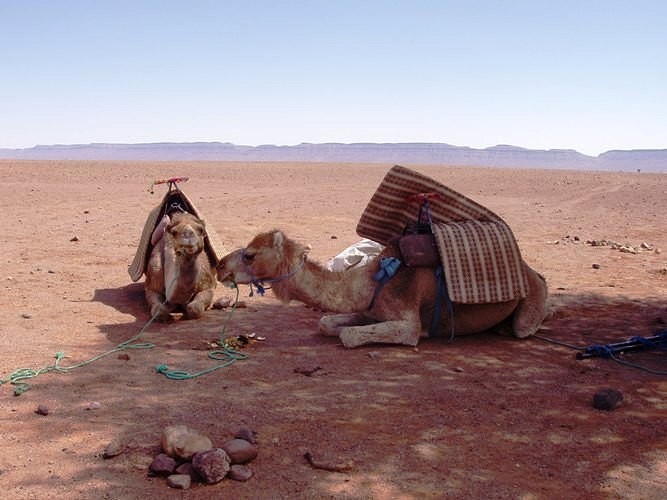


Start of the journey, and the beginning of a long, long walk... We’ll cover 80 km in three days, crossing all kinds of landscapes until the real desert of sand and dunes... I’ll drink water from wells, eat raw vegetables, sleep on a mattress that saddles the dromedaries by day... I’ll forget all the warnings and all my hygiene references... My body will quiet its complaints. No heat, no thirst, no fatigue, no trouble of any kind... just woken by the cold every morning around 6 AM... I take off my watch. Like my companions, I’ll live by the sun’s rhythm...

Abdou leads the dromedaries, so he walks at their pace. Sometimes, we’re grouped together. Sometimes the two guides are together, and I walk behind. Sometimes we talk. Nothing is forced, no discomfort. It’s a simple, harmonious dance—one foot in front of the other, following your shadow as it turns with the sun... Each step leaves behind the useless, the cumbersome, the superfluous... Room for intimacy... Room for silence... Room for the inner self... Facing yourself... I find seashells, and with my eyes closed, I smell the sea...
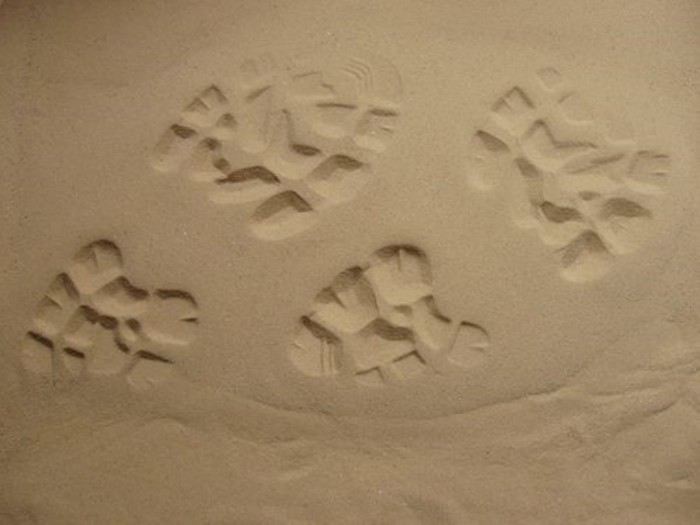
... One foot in front of the other...

I take out my camera... Capacity for a hundred shots, but it’ll be 10 photos, no more. It freezes—no commands work, and nothing fixes it... Smile... A trip without photos, then? And the second anchor falls... I think of my MP3 player...
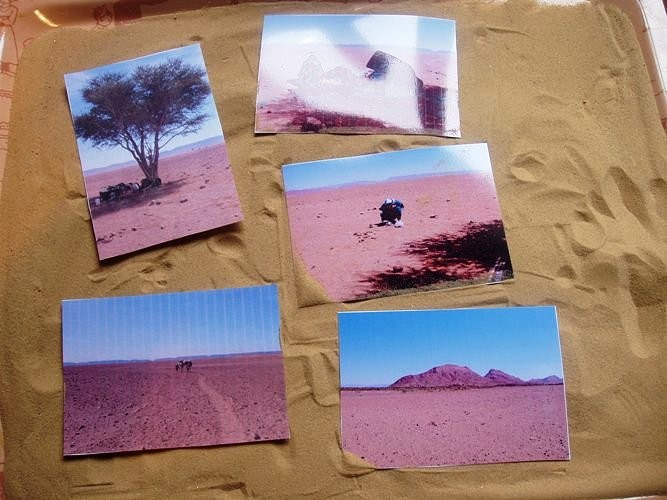
... A few photos among the ten...

Noon... Unsaddling the dromedaries, which immediately wander off in search of food. And before the meal cooked by Mohammed, the mint tea ritual, prepared by Abdou in a tiny teapot... Thick, frothy, very sweet tea... He serves it on a tray with dates, peanuts, and raisins... And it’ll be like this every day, noon and night...

We gradually get to know each other... Mohammed, 25 years old... Calm, very introspective, almost ascetic, he knows the desert well and loves it... So at ease that he’ll walk in slippers or barefoot, no matter the terrain... When I’m behind him, the advertisement on the back of his sweatshirt makes me smile... There’s a date: January 8, 2003... A little wink from life? (I have a clear memory of that day.) Abdou, barely 20, with a round, jovial face. The mint tea master... When he hands me my glass, he says "Bismillah," and I respond in kind... A joker and a foodie. Thrilled that I only eat vegetables, he’ll have double the meat!
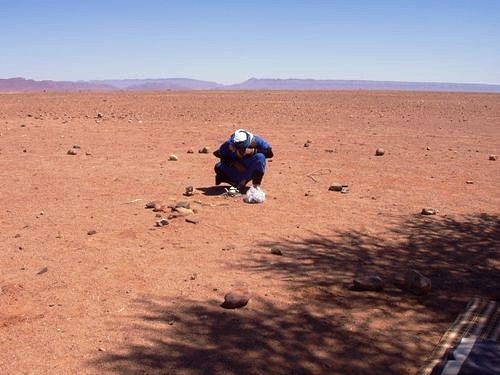
... Abdou and his teapot...
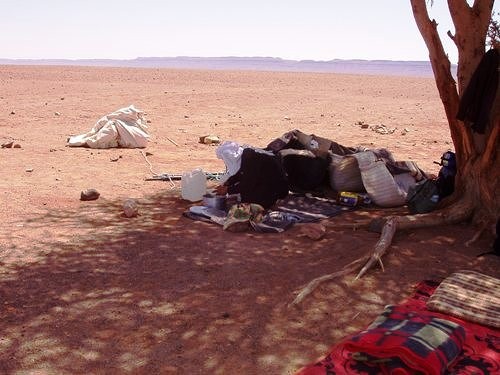
... Mohammed...

Late afternoon, a well... Abdou waters the dromedaries, and Mohammed fills the canteens. The caps aren’t watertight, so he wedges a piece of plastic bag found in one of the baskets and screws it on top... Forget all hygiene warnings...

First night in a tent at the foot of Jebel Baní...

... Jebel

Sunday, Day 2... Crossing and ascending Jebel Baní... A mineral, lunar landscape—rocks the color of burnt bread and anthracite gray. I pick up pretty pebbles, and Mohammed finds me a fossilized stone... Lunch in a deserted nomad oasis... When we resume our walk, the wind picks up. A wind that only blows in April, violent, terrible—the *Sahli*... Swirls of sand and gravel. Where’s the sky, where’s the earth... everything is dust, everything is yellow and opaque... The gusts are so strong they make us stagger. At times, we even have to crouch to avoid falling. In the acacia forest, Abdou and the dromedaries are only a few meters ahead, yet we can’t see them... We’ll later learn that on that day, planned excursions were canceled... That a group got lost and had to be picked up by 4x4... But Mohammed has a sense of the desert. He’s calm, he guides us... so we continue, and I trust him. He wraps a *chèche* around my head—a fragile barrier against these onslaughts... We have to keep moving, and it’s difficult... But the desert has accepted me, so without resistance, I accept it... And the sand gets everywhere... in my mouth, crunching between my teeth, in my eyes, ears, and nostrils... in my hair... A fine ochre layer covers my face and body, even under my clothes. I’ve become a sand woman... Communion... Fusion with the mineral. I absorb the desert’s prodigious power, just as the desert absorbs my blood...

We walked for four hours, pushed by this furious wind, before stopping for the night under an acacia... There, we had to set up the tent, which they did with difficulty. Then we had to weigh it down... So the utensils and the mint tea tray served as shovels to cover the edges with sand. Then Abdou took care of the dromedaries, holding one of their front legs bent with a rope to keep them from wandering too far... Then we brought everything into the tent and collapsed... but not for long.

Mohammed prepared kingly meals at noon and night with the wonders in the baskets: finely chopped raw vegetable salad, vegetable tagine, soup (and not from a packet!)... Even the canned sardines were garnished with thin orange slices... After this exhausting day for all of us, I told him that bread with *La Vache qui Rit* would be enough... He looked at me with a big smile and said his evening ritual phrase: "Now, Laurence, sit down, take your time, take your book..." He pulled his sand-filled utensils from the miraculous basket, his stove, some vegetables, and made us couscous (and not from a box!), couscous he rolled between his hands... Meanwhile, Abdou took out his sand-filled teapot, his sugar loaf, the peanuts, the dates... The mint tea ritual, like every day, noon and night...

Outside, the wind keeps blowing, stirring up sand whirlwinds... So I won’t go out like the other night to brush my teeth and hair. Just a wipe on my face to remove the dust... Mohammed turns off the gas lamp, and I curl up in my sleeping bag. The dromedaries have moved closer to my side of the tent, and the moonlight stretches their shadows on the canvas. They’ve settled in and make strange noises... We fall asleep very quickly...

Monday, Day 3... My two companions are still asleep when the cold wakes me at 6 AM, like every morning... Everything seems so calm—the wind has stopped... I untie the tent door and... A pure blue sky, gradually tinted with pink and flaming orange. The sun rises before my dazzled eyes. A day of light begins: no trace of yesterday’s storm, except sand... everywhere.

So, breakfast with sand... Then we shake out everything that can be shaken, sending clouds of dust flying... Then Abdou gives the dromedaries back their fourth leg, and we continue the journey.

After the expanses of stones and shrubs on the first day, the rocky ridges of Jebel Baní, and the acacia forest on the second day, the landscape changes, softens... We arrive in the desert as you imagine it, as you dream it, as you’ve seen in thousands of photos: endless golden dunes, in harmonious hollows and curves... The desert of sand... vast, fascinating...

Last meal for the three of us... Tonight, we’ll arrive at the fixed campsite, and we won’t be alone anymore. The break stretches on... So, a little apart on the smooth sand, I write a few words... an obvious truth... entrusting a secret to the desert. In a small box, I’ll bring back some of this magical sand...
.. A secret in the desert...

Abdou grabs my notebook and draws the dunes. Mohammed draws Abdou and his dromedaries... I learn to do dishes with the contents of a single glass of water... A tiny bird lands on my bag... A bird!... in the middle of nowhere!... The dromedaries seem to relish the acacia branches, thorns and all...
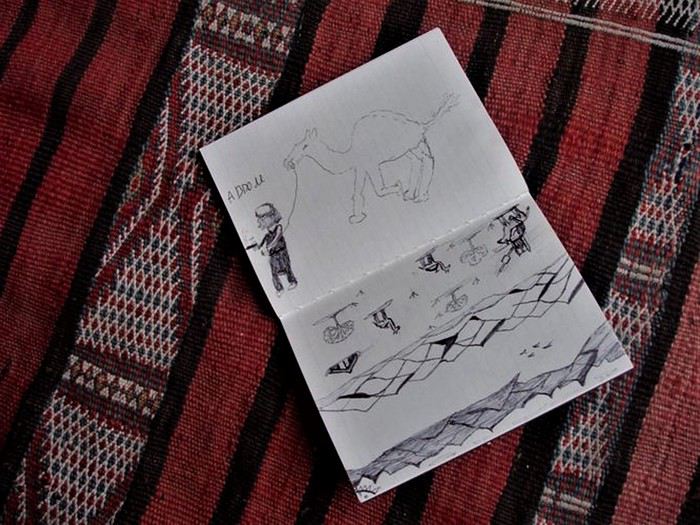
Desert drawings

We set off again... The dunes are higher... Easy to climb, the desert has sensual, feminine curves. A giant’s hand would fit its reliefs like a caress on a soft, supple body... The setting sun gives the landscape colors of amber and spices, cinnamon reflections... The sand offers me pink pebbles and pieces of white quartz that sparkle... I also find a black stone... Mystery...
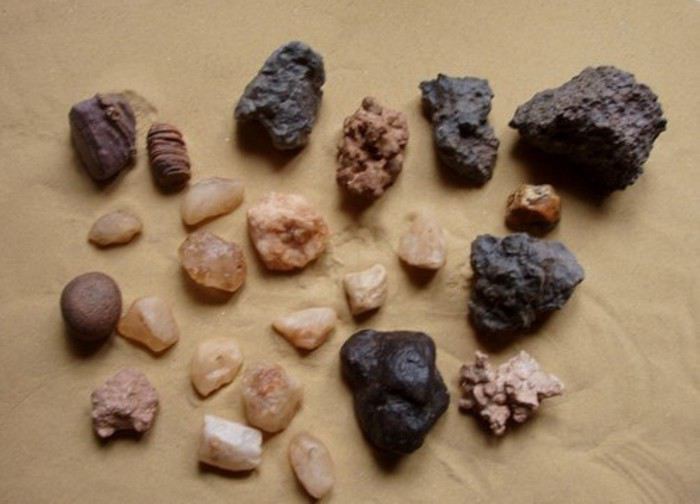
Pink pebbles, fossilized pebbles, sparkling pebbles, and a black stone

Late afternoon, arrival at the fixed campsite at the foot of Erg Lihoudi... The guardian, Lahcen, a whirlwind of chatter and energy, welcomes us with mint tea. He quickly pegs me: "You do yoga, right?" He tells lots of anecdotes about his "clients," ending every sentence with: "No problem! *Machi mouchkil*... *Machi mouchkil*, no problem!" Around the tents, dozens... hundreds of big black beetles swarm on the sand... As I shudder, Lahcen gently picks one up and wants to put it on my hand: "*Machi mouchkil*! It doesn’t sting!"... I hold out a hesitant palm... Despite Lahcen’s infectious enthusiasm, I don’t like this last evening. Two groups arrived by 4x4 to spend a night in the desert... Noise of engines, cameras, voices, and exclamations... An intrusion into my bubble... I keep my distance... They’ll leave very early the next morning...
Memory of beetles

Tuesday, Day 4... Standing still on a sand dune, I see both the full moon and the sun in the same sky... A luminous face-off. Magical, overwhelming... Then the moon paled, and the sun blazed brighter. It wasn’t quite night anymore, but day wasn’t far off... The Sacred, Mystical universe unfolded before me... A moment of grace that made my heart beat a little faster... Something indescribable gradually filled me, with infinite gentleness, to the depths of my soul... Facing this unlikely encounter, hesitations, reluctance, and fears seem so trivial... What are we if not fragments of this universe where everything is united... everything is connected...

Then comes the intention of a new message: "I’d love to put a face to..." But in this exchange scattered with misunderstandings, could you receive the intention without interpreting it?...

I stayed a long time on that dune, under the spell... Standing, barefoot and rooted... heart open... Receptive... in Unity between the infinitely small grain of sand and the infinitely vast universe... I hadn’t come to seek anything, yet the generous Earth offered its energy, its subtle strength to every cell of my body, and filled my soul with light... In exchange for this blood spilled on the sand over these four days?...

Give to Receive... Receive and Give... like a signed pact.

What exiled me from my life, disrupting all my bearings, drew me here... A necessary passage through space, withdrawal, and silence... for another birth?... The real desert after the symbolic desert... Pausing for a moment, as if at a crossroads. Connecting before continuing... If this path leads to the essential, then this path has a heart and will continue...

At the foot of the dune on the way down, I found a little Fatima’s hand made of beads. A gift from the desert...
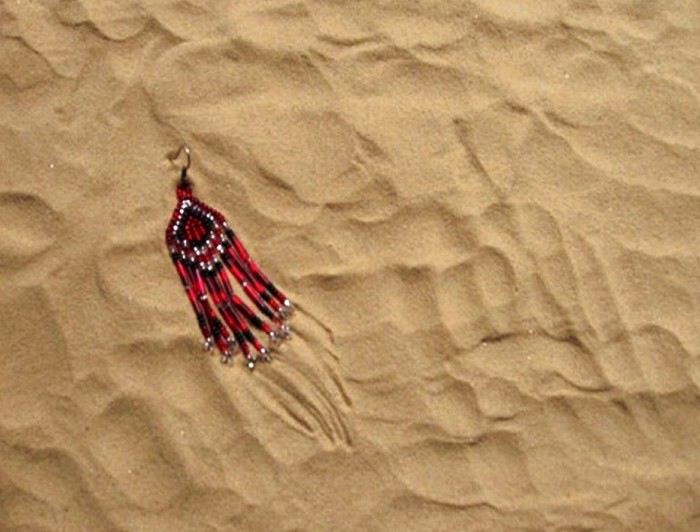
Gift from the desert, good luck charm?

Mohammed and Abdou leave Erg Lihoudi with other people—our shared adventure ends here... Emotion... looks and gestures speak louder than any words... Thank you, from the bottom of my heart...

Return to Zagora in a rickety, bumpy 4x4... After the track, we cross a vast palm grove... Shimmering colors, lush vegetation, palm trees growing in wheat fields... Tender green of the ears, faded green of the fronds, all shades of green contrast with the ochre and pink stone walls... My eyes rediscover green... My eyes rediscover colors... On a narrow path, the 4x4 finds itself facing a donkey carrying three children on its back... Impossible to pass. Who will back up?... Well, roaring progress bowed to four-legged tradition: in a cloud of dust, the 4x4 reversed for several hundred meters... The donkey passed calmly... On its back, the three children waved their hands...

Noon, arrival at *La Fibule du Draa*... Smiling welcome from Lahcen. He offers me a shower—I refuse... Even if he seems a little surprised, he has the delicacy not to show it too much... Strangely, I don’t feel dirty. Yet my clothes are the same, and my body hasn’t seen a drop of water since the day I left... But I want to keep the warmth and the smell of sand on my skin... reconnecting with forgotten, instinctive, animal sensations... So, I transfer my meticulousness and civilized conditioning to my bag... I take everything out, empty it, shake it... hunting down the smallest grain of sand... Futile effort! (I still find some today...) The afternoon stretches lazily by the pool... I contemplate my pebbles and make a lovely encounter...

The Zagora-Marrakech bus leaves at 7 PM... It’s the night of the full moon, and as soon as night falls, the sky fills with stars... Points of light without beginning, without duration, without end... Tiny lights so distant and so close...

Wanting to share this moment... And with whom else? If you look up, you’re the only one seeing the same sky as me. So, the intention of another message. But in this fragile, stumbling exchange... marked by misunderstandings... could you receive the intention without interpreting it?

The trip is shorter than on the way there, but barely more comfortable. A speaker right above my seat blares music and incantations the whole way... Halfway through, the same unusual stop in a village lit up and bustling as if it were daytime (Taddart, I think...). Along the main street, the ground is checkered black and white. Butcher stalls display entire beef carcasses... Smells of smoke and grilling... People are busy... Others, seated, are eating... in the middle of the night.

Arrival in Marrakech at 2 AM. Taxi strike, no room until tonight... Uh-oh! My backpack draws attention: a car stops and offers to take me for 80 DH... Trust... Five minutes later, I push open the door of *Le Toulousain*... The guard offers to let me finish the night on one of the lobby benches. I unfold my sleeping bag and slip into the desert’s scent... No sleep. But with my eyes closed, I see the stars... You came to pick up my bulky envelope.

Wednesday... Difficult early morning... Now, I feel dirty, my clothes bother me, my shoes hurt... Craving a long hot shower, wanting to find my body, wash my hair, put on cream, do my nails, and... It’ll be a long shower... cold! The hotel is charming but a bit run-down.
Clothes from 4 days...

Afternoon on foot in the quiet Hivernage district, searching for a childhood memory that may have changed names: the *Holiday Inn* hotel... I didn’t find it, or didn’t recognize it. Long stroll in the Menara Gardens, and return to the hotel at sunset...

Thursday... Last day... Wanting to see the Marrakech Museum because the founder was a friend of my father’s... So, the familiar route: the McDonald’s, the square with the fountain, Avenue Hassan II, Bab Doukkala... but this time, I pass through the ramparts, and in the old city—sensual, charming, enchanting—I get lost, found, and lost again... I tracked down the museum and the Ben Youssef Madrasa at the end of a maze of alleys... Followed scents of mint, olives, honey, and cinnamon... Savored, moved, the same donuts as in my childhood—golden fried dough rings with a hole in the middle, tied together with a blade of grass... (I don’t remember the name...) I filled my eyes with pretty things and exchanged smiles... Received, just like that... A gift... a ring for my little finger... Someone called out to me: "Hey, gazelle," and it made me happy...
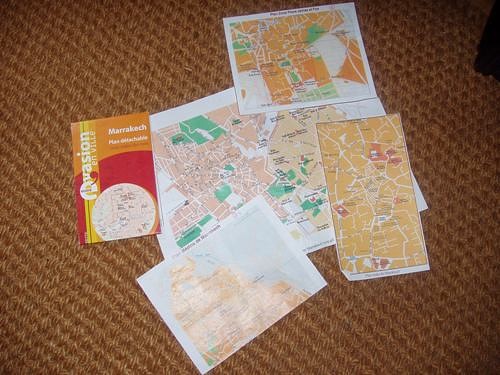
.. Still lost!...

Afternoon in the sun in the Koutoubia Gardens. I finish my book—sand falls from between the pages...
.. Started on the plane... read in the desert... finished in Marrakech...

Melancholy of the last evening... So, on the way back to the hotel, I buy *kesra* and *La Vache qui Rit*...

Long, long sleepless night... Flight in a few hours... Happy to see the ones I love again, too.

Thoughts, emotions, sensations, images... Questions... One question... So, more than reason, going over and over the question... What there is to live, it’ll have to be lived...

The desert, a solitary path... like all paths that lead to the essential...

3:30 AM, your message, read by the metallic voice of a voicemail. And you, facing physical failure, past mistakes, fear... A solitary path. Also. Like all paths that lead to the essential...
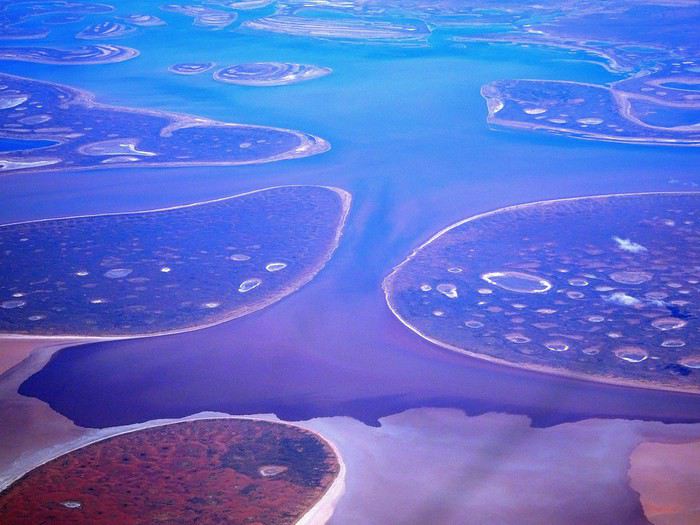
Open
Breathtaking Kyrgyzstan!
This trip had been on my mind for about fifteen years.

But the discomfort of overnight stays, the difficulty of communication, and the prices of the few car rental options kept making me postpone the project.

And then, everything suddenly fell into place—I told myself, it’s time!

The preparations took longer than usual; the destination is still far from mainstream.

A bit of Kazakhstan? Not in the end.

The south or not the south? Yes, in the end.

Pre-book or go with the flow? Only two stops were a leap into the unknown.

To help me find the ideal route, I made great use of this forum (thanks to everyone for patiently answering my questions!), pored over travel journals and blogs (Christian, Jeff), zoomed in on Google Maps and Yandex, and bought the guide published by OunTravela about this destination (the guide has been updated since).

---/---

You’ve got your passport, international driver’s license, bank cards, and euros?

Off we go to Lyon—just one night left before our early morning flight.

Tomorrow night, we’ll be sleeping in Bishkek! (Steak for my partner’s mischievous nephews...)


You’ll find here a post with some practical information.

And here, the version of the travel journal without comments.

---/---

As a supplement, the route track. Not necessarily ultra-accurate since Google has serious gaps for this destination...

From Bishkek to Karakol:


From Karakol to Kochkor:


From Kochkor to Baetov:


From Baetov to Kara-Köl:


From Kara-Köl to Bishkek:


Open
Villages around Hazaribagh in West Bengal
Wednesday, April 1st

Hazaribagh I’ve got a meet-up with Adam Iman, a guide and painter. He picks me up from the hotel at 10 AM. Another traveler from Bangalore is supposed to join us, but while we wait for him to arrive, Adam takes me to see the paintings his mother and sister created at Hazaribagh station. The town became famous thanks to these murals, which can also be found in several surrounding villages. This art form has earned recognition and is now protected, a sign of its cultural importance. Once the visit is over, we go to pick up the other traveler and then head to our first village: Belwara, where Sohrai art is practiced. At the entrance, a sign proudly announces that we’re entering an artists’ village, where this art is created by women organized into micro-enterprises. Some even offer workshops for those who’d like to learn this tradition.


Sohrai art is tied to the harvest season, from October to mid-November. The motifs, in natural colors, celebrate fertility and abundance. The artists use pigments from the earth: red oxides, ochre, white kaolin, and black manganese. On the walls, you’ll see animals, fish, birds—all symbols of life and prosperity. As I look closer at the murals, I start to realize that each motif tells a story. Large animals like cows or bulls often take center stage. Their bodies are filled with intricate, almost hypnotic patterns. They symbolize wealth and prosperity for the household, as well as the deep respect for cattle, which are essential to daily life. On some facades, elephants stand out—massive and decorated with the same precision. They evoke quiet strength and protection. But it’s when I stop in front of one of the houses that I really take the time to look. The wall, a soft ochre, is entirely covered in murals. Two large animals stretch out on either side of the door, their elongated bodies fitting the length of the wall. Their silhouettes are filled with geometric patterns and incredibly fine curved lines, as if every space was patiently filled. Around them, stylized plants, flowers, and small decorative elements fill every gap. The door, dark and worn, becomes almost the silent center of the composition, framed by these living, protective forms. To the right, a more colorful motif catches the eye—a flower or a stylized lamp—like a touch of light on the earth. The whole thing gives an impression of perfect balance, between the rigor of the patterns and the freedom of the gesture.


Elsewhere, birds and freer forms bring movement. Peacocks, recognizable by their stylized silhouettes, embody beauty and vitality, while fish symbolize water, fertility, and the continuity of life.

On some paintings, the scenes become almost narrative: you can make out figures, everyday gestures, like a memory of the village inscribed in the walls. The decorative frames around the doors aren’t left to chance either—they symbolically protect the house, like a boundary between the inside and the outside world.
During the Sohrai festival, cattle are led into the jungle in the morning. Meanwhile, the women finish the *aripans*—these floor paintings—and continue the wall murals. Around noon, the animals return to the village, and the bulls’ horns are anointed with oil and vermilion in a gesture of gratitude, amid the vibrant colors adorning the houses. We visit several artists, including Parvat Devi, a well-known woman who has received many awards. Her arms are adorned with intriguing tattoos, which I’ll talk about in more detail later.


On another wall, the style changes completely. Here, no massive animals—just birds occupying the space, light and graceful, as if caught in mid-movement. Two silhouettes face each other, their long necks arched almost like mirrors, while their outstretched wings seem to vibrate with the patterns that compose them.


The design is more graphic, almost airy. The lines are smoother, more fluid, as if drawn in one confident stroke. The birds’ bodies aren’t solid—they’re filled with repetitive motifs like scales, stylized feathers, and spirals, giving a sense of continuous movement. Around them, everything comes to life: flowers burst open, arabesques swirl, and even the simplest shapes seem alive. What strikes me here is the sense of lightness. Where the large animals evoked stability and grounding, these birds bring something freer, almost joyful. They seem to embody movement, the circulation of life, like a breath flowing through the village.


The colors remain the same—deep reds, intense blacks, and chalky white—but the rhythm is different. Faster, more spontaneous. As if each wall had its own personality, while still speaking the same language.

That’s probably why I’m so moved. I’d heard about these paintings from my friend Raja, and last year, I saw an exhibition in a village near my home. That first encounter made me want to come here. But seeing them in person is a whole different experience. These paintings are unique. This ancient art is passed down from mother to daughter, or mother-in-law to daughter-in-law, in a quiet, deeply living continuity. At first glance, it might seem almost childlike in its simplicity and pared-down forms. And yet, everything is thought out, balanced, mastered. Nothing is left to chance.


That apparent simplicity, combined with such rich symbolism, touches me deeply. There’s something sincere and essential in these walls—and that’s what moves me.
Open