Quelqu'un a des nouvelles récentes d'eux ? Ca fait plusieurs jours que j'essaie de les joindre pour un voyage au Tibet début septembre, silence radio. Pendant ce temps-là, le temps passe. Sinon, vous connaissez d'autres agences sérieuses pour le Tibet ?
Merci d'avance
Hi everyone! I’m sharing a modest travel journal from my trip to China in August 2025.
There wasn’t much room for improvisation on this trip—everything was planned in advance. Since August is peak season, I decided to book train tickets early, and once that was set, I reserved all the accommodations too. I got everything on Trip.com.
I bought the flight tickets back in March from Hainan Airlines. They were super expensive, but with these travel dates, I couldn’t exactly dream of a bargain!
I picked up e-SIMs valid for a month from Free just before departure: 10 € for the e-SIM + 19.90 € for a one-month plan with 35 GB of data abroad.
No need for a VPN with these e-SIMs, but D. still got one—a multi-device plan for 5 € with a discount from Let’s VPN, valid for a month. It was for evenings at the hotel on Wi-Fi to avoid burning through the 35 GB with video.
I downloaded Alipay, WeChat, Amap (Baidu Maps), and Trip.com. We also have Google Translate and Maps.me—absolute must-haves.
We’re ready to go!
I’ve been waiting for this day for nearly 15 years!! I travel a lot, but this one—this is MY TRIP 🙂 It’s been postponed so many times: because I wanted to do it with the right person, because I have a Turkish stamp in my passport and heard they don’t issue visas with that, because of COVID... and then China introduced a 30-day visa exemption, and that was the green light! Ugh, they forced us to take our vacation in August this year—far from ideal—but no more delays. Saturday, August 2, 2025: it’s finally the big day!
Days 1 and 2: We got dropped off at Charles de Gaulle at 9:30 AM. I supposedly checked in online, but only for the first flight and without getting the boarding pass... Might as well scrap online check-in in that case. So, we spent over an hour in line at the counter to get them. We didn’t have any checked luggage—just our backpacks as carry-ons—so this was a step we’d never had to deal with before, but whatever, it’s done. No wait at passport control, 5 minutes through security, a quick walk around the terminal, 10 minutes in the boarding area, and it was already time to board. Departure around 12:45 PM, arrival in Chongqing at 4:50 AM. We had a few hours of layover before our next flight. Went through immigration, connecting flight control, and security. Pro tip: check your next flight’s boarding gate right after immigration. We never saw it displayed again anywhere in the terminal.
The Free e-SIMs work—phew!
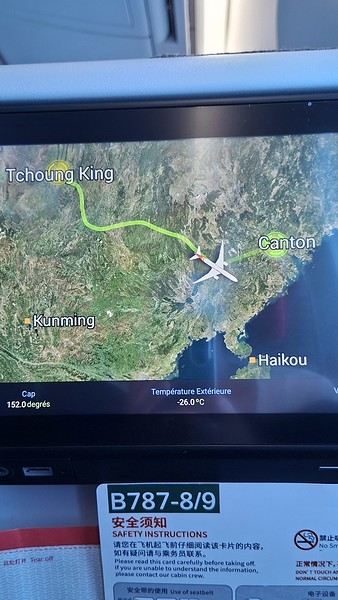
Took off at 9:30 AM, arrived in Guangzhou (Canton) at 11:20 AM in the rain. I love how Chongqing is translated as "Tchoung King" on the screens in the plane—very French!
During my first two trips to China, we paid for everything in cash, but this time, we’re going all-in on Alipay and WeChat. I still brought the leftover change from previous trips—it might come in handy. At the metro station, they showed us a QR code to buy tickets via WeChat. There were probably machines and even a ticket counter, but we didn’t see them, and buying via WeChat was pretty simple. 8 yuan to Changshu Lu, which is 22 stops. So far, so good. Then, we had to find the hotel, which wasn’t on Google Maps, Maps.me, or Amap... Easy 😎! We found it without too much hassle, though. Dropped off our stuff and went out to eat. 55 yuan for two claypots with fish/eel, rice, cabbage, and purple eggplant. When we left, it was pouring. We grabbed our umbrellas and set off to explore the neighborhood: Enning Road (we’ll come back later to check out a specific spot), Shangxiajiu (the pedestrian shopping street), Baohua Road... The area is pretty diverse—one street to the next, it’s like stepping into a different world.

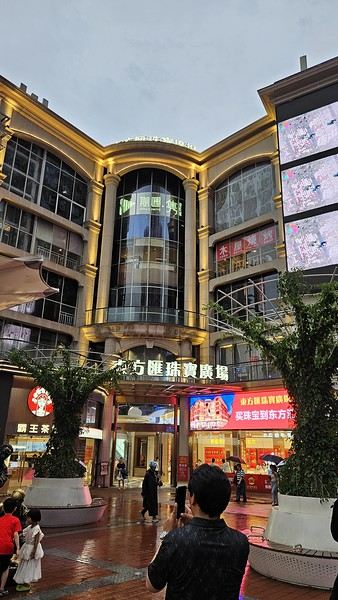
There weren’t many people around, probably because of the rain. We grabbed a quick street food dinner and went to bed—we were exhausted. We struggled to stay awake until 11 PM to adjust to the time change as quickly as possible. There’s a 6-hour time difference.
There wasn’t much room for improvisation on this trip—everything was planned in advance. Since August is peak season, I decided to book train tickets early, and once that was set, I reserved all the accommodations too. I got everything on Trip.com.
I bought the flight tickets back in March from Hainan Airlines. They were super expensive, but with these travel dates, I couldn’t exactly dream of a bargain!
I picked up e-SIMs valid for a month from Free just before departure: 10 € for the e-SIM + 19.90 € for a one-month plan with 35 GB of data abroad.
No need for a VPN with these e-SIMs, but D. still got one—a multi-device plan for 5 € with a discount from Let’s VPN, valid for a month. It was for evenings at the hotel on Wi-Fi to avoid burning through the 35 GB with video.
I downloaded Alipay, WeChat, Amap (Baidu Maps), and Trip.com. We also have Google Translate and Maps.me—absolute must-haves.
We’re ready to go!
I’ve been waiting for this day for nearly 15 years!! I travel a lot, but this one—this is MY TRIP 🙂 It’s been postponed so many times: because I wanted to do it with the right person, because I have a Turkish stamp in my passport and heard they don’t issue visas with that, because of COVID... and then China introduced a 30-day visa exemption, and that was the green light! Ugh, they forced us to take our vacation in August this year—far from ideal—but no more delays. Saturday, August 2, 2025: it’s finally the big day!
Days 1 and 2: We got dropped off at Charles de Gaulle at 9:30 AM. I supposedly checked in online, but only for the first flight and without getting the boarding pass... Might as well scrap online check-in in that case. So, we spent over an hour in line at the counter to get them. We didn’t have any checked luggage—just our backpacks as carry-ons—so this was a step we’d never had to deal with before, but whatever, it’s done. No wait at passport control, 5 minutes through security, a quick walk around the terminal, 10 minutes in the boarding area, and it was already time to board. Departure around 12:45 PM, arrival in Chongqing at 4:50 AM. We had a few hours of layover before our next flight. Went through immigration, connecting flight control, and security. Pro tip: check your next flight’s boarding gate right after immigration. We never saw it displayed again anywhere in the terminal.
The Free e-SIMs work—phew!
Took off at 9:30 AM, arrived in Guangzhou (Canton) at 11:20 AM in the rain. I love how Chongqing is translated as "Tchoung King" on the screens in the plane—very French!
During my first two trips to China, we paid for everything in cash, but this time, we’re going all-in on Alipay and WeChat. I still brought the leftover change from previous trips—it might come in handy. At the metro station, they showed us a QR code to buy tickets via WeChat. There were probably machines and even a ticket counter, but we didn’t see them, and buying via WeChat was pretty simple. 8 yuan to Changshu Lu, which is 22 stops. So far, so good. Then, we had to find the hotel, which wasn’t on Google Maps, Maps.me, or Amap... Easy 😎! We found it without too much hassle, though. Dropped off our stuff and went out to eat. 55 yuan for two claypots with fish/eel, rice, cabbage, and purple eggplant. When we left, it was pouring. We grabbed our umbrellas and set off to explore the neighborhood: Enning Road (we’ll come back later to check out a specific spot), Shangxiajiu (the pedestrian shopping street), Baohua Road... The area is pretty diverse—one street to the next, it’s like stepping into a different world.
There weren’t many people around, probably because of the rain. We grabbed a quick street food dinner and went to bed—we were exhausted. We struggled to stay awake until 11 PM to adjust to the time change as quickly as possible. There’s a 6-hour time difference.
Hi there,
I’m planning a backpacking trip to China at the end of April, and I’ve got two key questions.
1. Money: where to exchange it?
My usual approach is to carry cash for the whole trip, so the question is: where can I get a decent rate? Airport, exchange bureau, bank, hotel, or jewelry store? The answer varies a lot depending on the country. What’s the best option for China? Extra detail: I might arrive on a Saturday.
2. Booking hotels day-by-day: how to do it?
Until 2022, I’d just show up at places I’d spotted and negotiate. Now, I bring a smartphone and use Booking or Agoda, but these sites now require an OTP sent by email to log in, and I won’t have access to my ProtonMail account in China (even with a VPN, it’s uncertain).
Can anyone tell me how to handle this? Worst case, by setting up a dedicated email account that works in China—but with which provider? Or maybe using a different booking platform?
Thanks.
Hi there,
Just a few words about the loop I did by bike in Yunnan.
Entry and exit
I entered China through the Sino-Vietnamese border crossing at Lào Cai / Hekou under the 30-day visa exemption currently available to French nationals and others.
The process was simple and quick. A Chinese police officer even helped me complete my electronic pre-registration at a computer kiosk. I wasn’t aware this formality was required—it’s similar to Thailand’s TM6.
No issues with the bike.
I left the country via the Sino-Laotian border crossing at Mohan / Boten.
The atmosphere was a bit chaotic there, but again, no problems with the bike.
The timing
I visited Yunnan in February 2026.
Weather-wise, at higher altitudes (between 1,500 and 2,000 meters), it was around ten degrees at night and in the mornings, and around twenty degrees at the hottest part of the day.
I had two days of rain, so I took the bus to keep moving. Otherwise, clear blue skies.
Culturally, Chinese New Year fell on February 17th (and the 15 days following), right in the middle of my trip. Because of this, my take on the traffic might be off.
Accommodation and food I always found a hotel to stay in for prices ranging from 8 to 15 €. Except in Kunming (the capital), where many hotels were fully booked (Chinese New Year). I ended up at a 100 € hotel with great value for money.
A bowl of noodles costs about 1.5 € on average.
Onboard electronics Since my smartphone doesn’t support eSIMs, I subscribed to a China plan with my carrier. Otherwise, for much cheaper, Alipay offers eSIMs for foreigners that allow access to services usually blocked for Chinese users (WhatsApp, Facebook, etc.).
An internet connection is essential for paying with Alipay or WeChat, as this payment method is widespread.
I only managed to use Alipay.
Either way, always carry cash because sometimes there’s no signal, or the merchant only accepts WeChat.
Also, it’s best to bring a power adapter when you arrive rather than struggling to find one.
Traffic and roads The Chinese aren’t reckless drivers. They follow traffic rules and watch out for cyclists. This is slightly less true in Xishuangbanna (the region bordering Myanmar and Laos).
In urban areas, there are almost always wide bike lanes, separated from other roads, where bikes, electric mini-scooters, and scooters share the space pretty harmoniously.
The roads are in great condition, and traffic is generally manageable—even light—except for one stretch (Eshan -> Yangwu).
Most traffic is absorbed by expressways, China’s equivalent of highways: toll roads that are off-limits to slow vehicles.
You’re never far from these expressways; sometimes you even ride alongside them, which can be noisy at times.
The climbs are usually reasonable, around 5% to 6%. From what I remember, the steepest section was between Menglun and Mengla, with gradients of 8% to 10%, sometimes more.
Riding at these altitudes—though modest—took a bit of getting used to.
The route I didn’t plan anything in advance. My only goal was to reach Kunming. I don’t know why, but just hearing the name of that city, like Yunnan, always felt dreamy to me.
Here’s the breakdown: Hekou -> Man Hao (94 km); Man Hao -> Yuanyang (64 km); Yuanyang -> Jianshui (bus); Jianshui -> Tong Hai (78 km); Tong Hai -> Chenjiang (85 km); Chenjiang -> Kunming (60 km); Kunming -> Kunyang (60 km); Kunyang -> Eshan (67 km); Eshan -> Yangwu (58 km); Yangwu -> Yuanjiang (59 km); Yuanjiang -> Pu'er (bus); Pu'er -> Dadugang (75 km); Dadugang -> Jinghong (80 km); Jinghong -> Menglun (67 km); Menglun -> Mengyuancun (51 km); Mengyuancun -> Mengla (43 km); Mengla -> Boten (67 km).
Otherwise, I’m currently in Thailand and just hoping my return flight with Qatar won’t get canceled.
Oh well... 😉
Just a few words about the loop I did by bike in Yunnan.
Entry and exit
I entered China through the Sino-Vietnamese border crossing at Lào Cai / Hekou under the 30-day visa exemption currently available to French nationals and others.
The process was simple and quick. A Chinese police officer even helped me complete my electronic pre-registration at a computer kiosk. I wasn’t aware this formality was required—it’s similar to Thailand’s TM6.
No issues with the bike.
I left the country via the Sino-Laotian border crossing at Mohan / Boten.
The atmosphere was a bit chaotic there, but again, no problems with the bike.
The timing
I visited Yunnan in February 2026.
Weather-wise, at higher altitudes (between 1,500 and 2,000 meters), it was around ten degrees at night and in the mornings, and around twenty degrees at the hottest part of the day.
I had two days of rain, so I took the bus to keep moving. Otherwise, clear blue skies.
Culturally, Chinese New Year fell on February 17th (and the 15 days following), right in the middle of my trip. Because of this, my take on the traffic might be off.
Accommodation and food I always found a hotel to stay in for prices ranging from 8 to 15 €. Except in Kunming (the capital), where many hotels were fully booked (Chinese New Year). I ended up at a 100 € hotel with great value for money.
A bowl of noodles costs about 1.5 € on average.
Onboard electronics Since my smartphone doesn’t support eSIMs, I subscribed to a China plan with my carrier. Otherwise, for much cheaper, Alipay offers eSIMs for foreigners that allow access to services usually blocked for Chinese users (WhatsApp, Facebook, etc.).
An internet connection is essential for paying with Alipay or WeChat, as this payment method is widespread.
I only managed to use Alipay.
Either way, always carry cash because sometimes there’s no signal, or the merchant only accepts WeChat.
Also, it’s best to bring a power adapter when you arrive rather than struggling to find one.
Traffic and roads The Chinese aren’t reckless drivers. They follow traffic rules and watch out for cyclists. This is slightly less true in Xishuangbanna (the region bordering Myanmar and Laos).
In urban areas, there are almost always wide bike lanes, separated from other roads, where bikes, electric mini-scooters, and scooters share the space pretty harmoniously.
The roads are in great condition, and traffic is generally manageable—even light—except for one stretch (Eshan -> Yangwu).
Most traffic is absorbed by expressways, China’s equivalent of highways: toll roads that are off-limits to slow vehicles.
You’re never far from these expressways; sometimes you even ride alongside them, which can be noisy at times.
The climbs are usually reasonable, around 5% to 6%. From what I remember, the steepest section was between Menglun and Mengla, with gradients of 8% to 10%, sometimes more.
Riding at these altitudes—though modest—took a bit of getting used to.
The route I didn’t plan anything in advance. My only goal was to reach Kunming. I don’t know why, but just hearing the name of that city, like Yunnan, always felt dreamy to me.
Here’s the breakdown: Hekou -> Man Hao (94 km); Man Hao -> Yuanyang (64 km); Yuanyang -> Jianshui (bus); Jianshui -> Tong Hai (78 km); Tong Hai -> Chenjiang (85 km); Chenjiang -> Kunming (60 km); Kunming -> Kunyang (60 km); Kunyang -> Eshan (67 km); Eshan -> Yangwu (58 km); Yangwu -> Yuanjiang (59 km); Yuanjiang -> Pu'er (bus); Pu'er -> Dadugang (75 km); Dadugang -> Jinghong (80 km); Jinghong -> Menglun (67 km); Menglun -> Mengyuancun (51 km); Mengyuancun -> Mengla (43 km); Mengla -> Boten (67 km).
Otherwise, I’m currently in Thailand and just hoping my return flight with Qatar won’t get canceled.
Oh well... 😉
From Beijing to Khiva: China, Kyrgyzstan, Tajikistan, Uzbekistan
Chronicle of anecdotes, highlights, and other adventures that marked this eight-week journey in 2018.
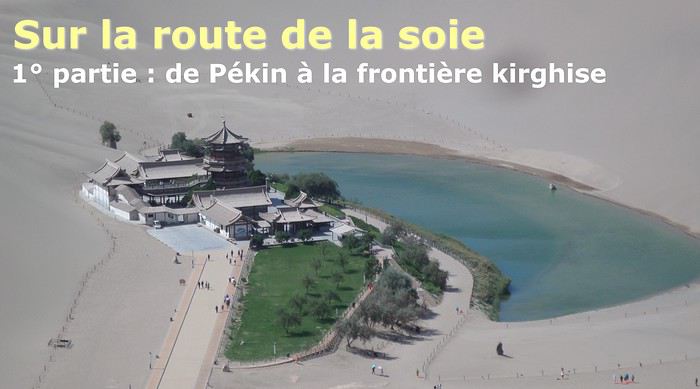
The Chinese Far West More than 30 years after my first trip to eastern China, I finally fulfilled an old dream: traveling solo from Beijing to the far west, discovering Xinjiang, the Uyghur people and the oppression they endure, the oases of Turpan and Kashgar, the Taklamakan Desert, the end of the Great Wall... The route was covered by train.
MENU PART 1: CHINA
1- Beijing (Jiankou) : the authentic Great Wall, without tourists 2- Cycling in Beijing, the best way to get around 3- Beijing : departure for the far west 4- Jiayuguan : getting by without English 5- Jiayuguan : scams and heritage 6- Dunhuang : abundance in the middle of the desert 7- Turpan : the Uyghurs under heavy surveillance 8- Kashgar : love at first sight for the old city 9- Kashgar : China’s recipe for controlling the populace 10- Tashkurgan : what on earth was I thinking going there! Kyrgyz border: a surreal epic Photo album from the 80s, contributions from other travelers (page 2)
1- JIANKOU Finding the authentic Great Wall, without tourists or a guide Friday, August 24, 2018 Thirty years later, I didn’t feel like revisiting the Great Wall at Badaling or any other overcrowded site. I chose to explore it at Jiankou, in its wildest, most authentic, and unrestored section, starting from a lost village deep in a valley—though it wasn’t *that* lost, since it had everything for communication.
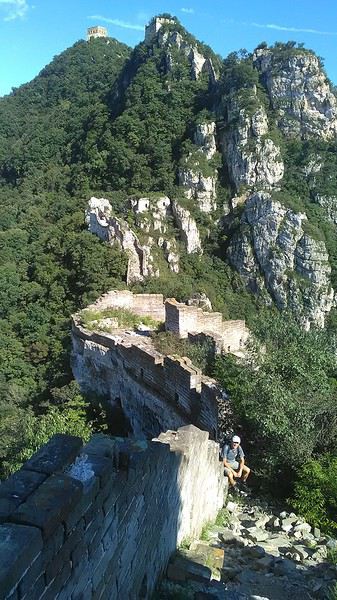
No need to pay for a taxi to get there—by timing it right, you can take the bus for just a few yuan. You have to get off at Xizhazi, the bus terminus. Be careful, there are only two buses a day in each direction. At the Xizhazi bus stop, I met a young couple who’d arrived with zero information about what to expect. We hiked the three of us toward the restored section of Mutianyu.
Still, be cautious With GPS and a topographic map (OpenTopoMap), you can set off without a problem or guide. The trail up to Jiankou is easy and well-marked. The trails down are too. But be careful—once you’re on the Wall, it’s real mountain hiking, with easy but dangerous climbing sections (over sheer drops). Not for amateurs or those afraid of heights! But what a reward. The Wall all to yourself, where it’s at its most daring. Truly mesmerizing.
More photos...
2- BEIJING The best way to get around the capital Sunday, August 26 The best way to explore the city is still by bike. Most are in a bike-share system, but you need to use an app—WeChat, the app that does everything, like monitoring your every move. No way I was installing that.
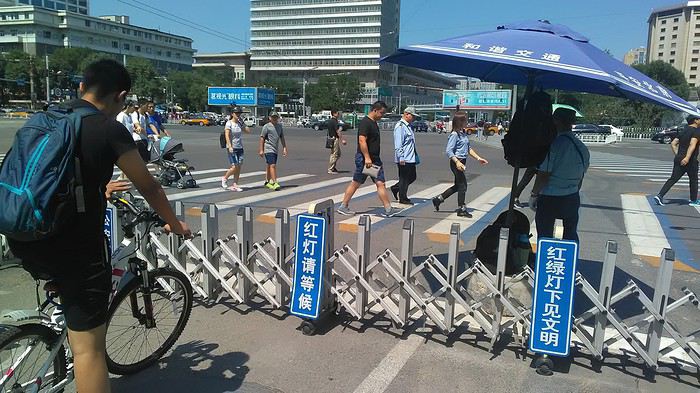
I found one at a rental shop near the hostel. The key is to quickly learn local traffic customs to minimize risks. Bike lanes are wide along the avenues.
But you still have to: - Watch out for anything parked on the bike paths—the most annoying are people napping or talking on the phone in their cars - Keep an eye on everything coming the wrong way—the list is long - The worst is right turns on red, which in Chinese traffic rules seem to have priority Once you get the hang of it, it’s fine. The city is huge but flat, so you can just wing it.
3- BEIJING By train to the far west Sunday, August 26 Beijing West Station is the size and operates like an airport. With your e-ticket from the agency, you first have to pick up your ticket at the special "English" counter, after passing through security. With your ticket in hand, you have to exit and enter through the boarding waiting area—not the platform—after a second security check.
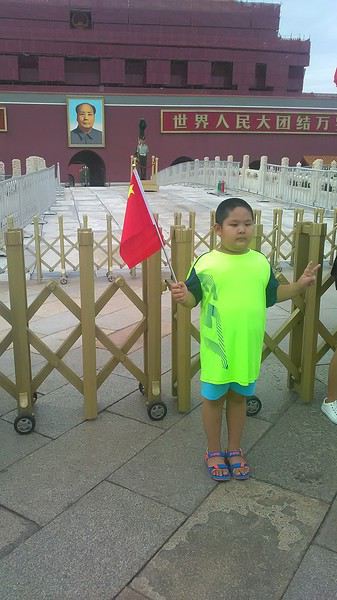 Then you find the right hall and wait for the sign to finally access the platform. In the end, it works pretty well given the incredible number of passengers to manage. Everywhere in Beijing, I saw that the Chinese have mastered crowd flow management.
Nice surprise: second-class carriages are clean, air-conditioned, and bright. Perfect, since I was in for 20 hours. One uniformed attendant per carriage, mobile meal service—luxury! Small downside: no luggage space. Hauling your suitcase up to the top bunk is quite a workout. I was in the middle, so it wasn’t too bad. The landscape, though, whether rural or urban, is pretty bleak. That should change once we leave the eastern plains.
Of course, I got my first police visit, with a thorough passport check and bag search. I was warned—going to the Chinese far west exposes you to this kind of hassle. But they were polite and respectful.
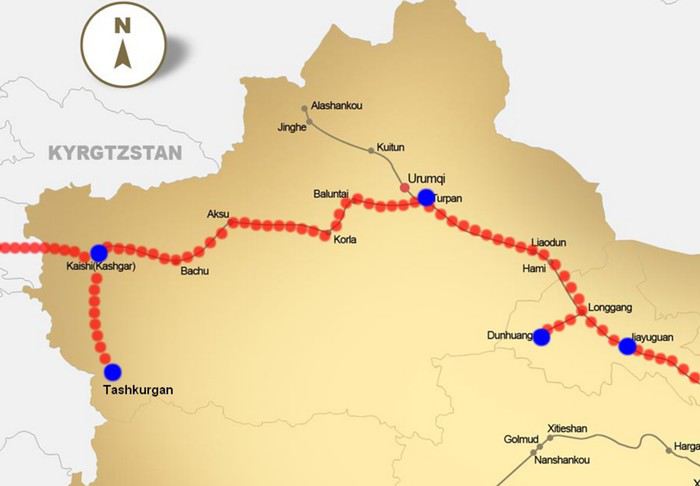 The Chinese Far West
4- JIAYUGUAN Getting by without English Monday, August 27 At the gates of two deserts (Gobi and Taklamakan) and at the foot of the Tibetan highlands, the Great Wall ends at Jiayuguan. Here, I found the deeper China I’d somewhat rediscovered during my bike ride, even if now everyone gets around on electric bikes and I’m no longer stared at like an alien.
Prices are nothing like Beijing: you can find a full meal for 2 €, and my bike cost 7 € for two days. Plus, few people speak English—neither the owner of the HI hostel where I stayed, nor the ticket sellers at the sites, let alone the servers at the small eateries where I ate. Everything is written in Chinese. So I had to use the little Chinese I know to communicate about essentials. It makes the locals laugh to see a European trying to speak their language, but it earns respect. With Google Translate’s help, I managed.
Rant: With their avenues blocked for construction for kilometers without warning, and new roads not yet on maps, I must’ve taken 15 km of detours. More photos...
5- JIAYUGUAN Scams and heritage Tuesday, August 28 The Great Wall doesn’t exactly end at the fort I visited yesterday but 10 km further, at the entrance to a river gorge at the foot of the mountains. All that’s left is a badly damaged tower (more like a mound of earth) and a section of clay wall, similar to the one I biked yesterday.
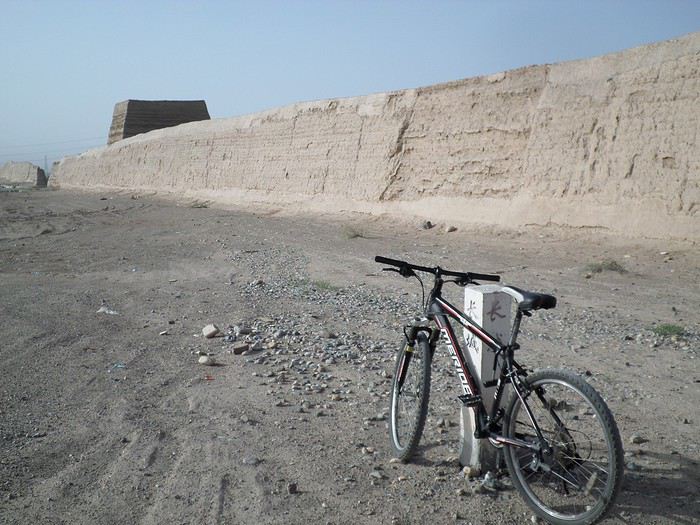
This morning, I hopped on my bike, determined to venture into the desert to see this highly symbolic site. First, you access it via a wide, brand-new road with not a soul in sight. Just before the site, I came across a grand welcome gate, very period-style, but it’s actually the inevitable toll booth.
Behind the gate, the road continues straight to the site, which you can see in the distance—at least 2 km away—the remains of the tower and wall. I had to leave my bike here. Fine. I went to the ticket counter and asked the price: 120 yuan! I couldn’t believe it—over 15 € for a simple mound of earth.
I showed my displeasure to the attendant, who couldn’t care less, and immediately turned back. 120 yuan—that’s the price for a new road, a fancy gate planted 2 km before the site just to force you to take a shuttle, and employees with nothing to do all day... Now I understand why I didn’t meet anyone!
Heritage China is a bit pricey Generally, sites are expensive for the country’s standard of living, but travelers are supposed to have money, so why hold back? I even gave up on the Forbidden City—reservations required days in advance (or on the black market at an impossible price). I prefer to keep the memory of my first visit, when entry must’ve cost a few dozen cents, and there were only a handful of visitors.
This morning, I took a taxi to see remarkable tombs of common people from the 3rd to 6th centuries. They’re small vaulted caves made of painted bricks, depicting scenes of daily life. Very pretty and moving. But even here, though the price was more reasonable, I was left wanting—only one of the 16 tombs is open to visitors, and it’s apparently not the most beautiful.
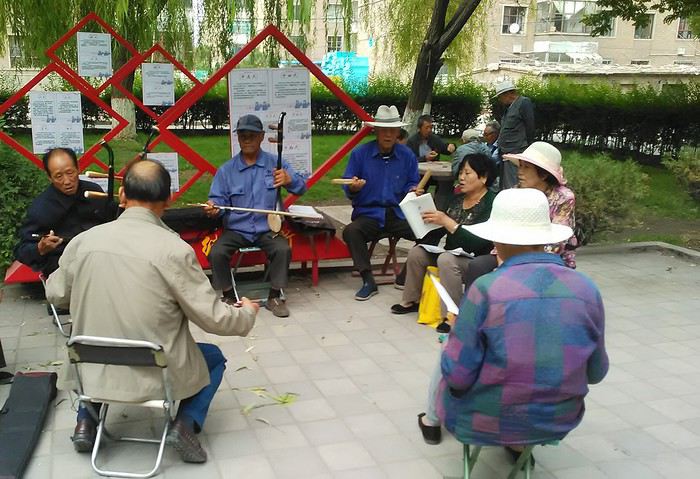
The authentic China—at least what’s left of it... Wandering the impersonal avenues of the city, you stumble upon a market. There, you still find traditional China—small shops with questionable hygiene, Go players, musicians, and even a dental prosthetist. The last refuge for those untouched by modernity. More photos...
6- DUNHUANG Abundance in the middle of the desert Wednesday, August 29 Well, I thought the landscape would be less bleak as I headed west. Nope. The only distraction in this expanse of dark, clayey sand is the forests of pylons and wind turbines, plus wild camels racing each other.
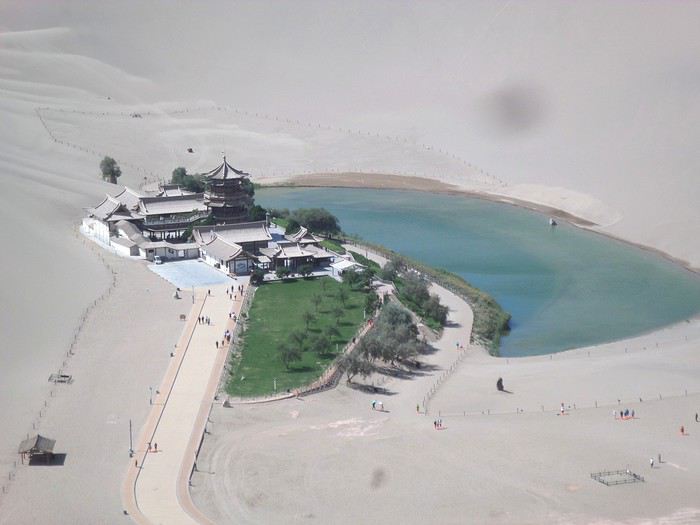 However, Dunhuang, the gateway to the Taklamakan, is by far the most pleasant Chinese city I know. There’s a real city center you can explore on foot. It’s hot but not unbearable, with a light, dry breeze. Much nicer than Beijing. The Han Chinese are still the majority, but the Muslim Uyghurs are more numerous, and the muezzin’s call to prayer echoes around the mosque.
The most surprising thing is the abundance and diversity of fruits and vegetables. You wonder how it all grows here. Well-irrigated, the desert sands are very fertile. Here, raisins have subtle, mysterious flavors, and the lamb really tastes like lamb.
Today, I visited the must-see Mingshashan, a dune complex next to which Pila is a molehill. The Basque Country, but covered in sand... More photos...
7- TURPAN The Uyghurs under heavy surveillance Friday, August 31 Surveillance cameras everywhere in the city, armed police stationed at intersections, in front of public buildings, at the entrance and inside tourist sites, police stations on every corner, patrols on foot or by car, khaki uniforms even for middle schoolers... here, the Han Chinese are in the minority, and you can feel it. Turpan feels like a city under siege.
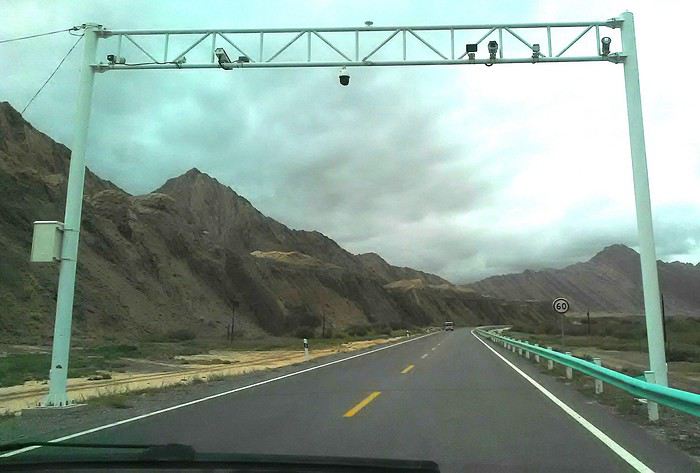
To enter the youth hostel where I stayed, there’s even a security gate, and the receptionist (a Han, like everyone in tourism) wears a bulletproof vest! Reassuring. Still, you don’t feel particularly threatened here, especially as a European. The troublemakers are the Chinese, not the Uyghurs. Generally, China is a very safe country for visitors.
Smile, you’re on camera! I was biking on an avenue when the car in front of me got flashed for driving slowly. I quickly understood why when I got flashed too.
Here, the official time is Beijing time, but it gets dark two hours later. It’ll be even worse in Kashgar. Trickier to manage: everything is displayed in Chinese and Arabic. Nothing in English. Choosing a menu is a shot in the dark. Apart from a few young Chinese, no one here speaks English, and my Chinese doesn’t seem very understandable...
Mogao, the end of the road for the Han Yesterday, near Dunhuang, I went to Mogao, a complex of decorated caves with Buddha sculptures and paintings. Stunning, but so crowded! Luckily, here in Turpan, Chinese tourists barely venture out. So I visited a Silk Road ghost town with only a handful of other visitors and under a howling wind.
The modern Chinese city is swallowing up the old Uyghur neighborhoods—only a museum-like district remains in the center, and pockets of resistance on the outskirts are doomed to disappear soon. More photos...
8- KASHGAR A (relative) love at first sight for the old city Sunday, September 2 After three overnight trains, here I am in the far west of China, nearly 4,000 km from the capital. Despite the omnipresent police and an old city preserved UNESCO-style, Kashgar is my Chinese love at first sight.
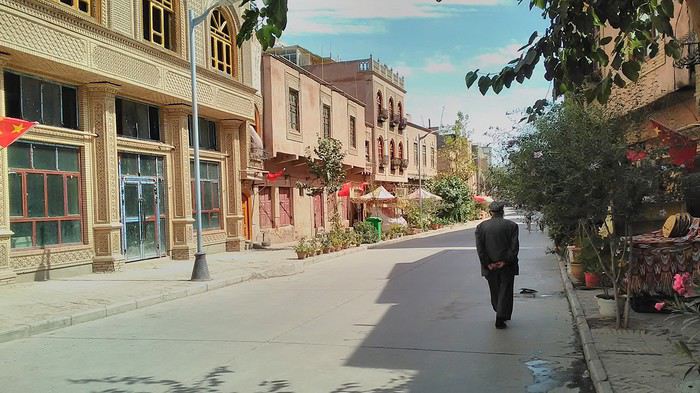
Finally, Chinese... well, sort of, because we’re in Uyghur territory here—a Turkic people with nothing culturally in common with the Han, the eastern Chinese. It started badly yesterday at Turfan station, where after three security gate passes, at least five passport checks, and a bag search, three adorable policewomen confiscated my antibacterial lotion because it had a flammable logo...
Then came the welcoming committee of armed cops at Kashgar station. Once all that was over, they left me alone—except you still have to go through security checks like everyone else to enter the old city, the bazaar, the livestock market... The further west you go, the more the siege mentality is evident. Luckily, the border isn’t far...
Despite the inevitable destruction-reconstruction, the city center has been well preserved. Thankfully, because it’s a very original style, a mix of local and colonial. I love it, even if it’s a bit too artificial, sanitized, and watered-down, and rather empty of residents. On the Silk Road, the city was famous for its great food. And it still is—rarely have I seen such richness and abundance of food! And not just scorpions or snakes. More photos...
9- KASHGAR China’s recipe for controlling the populace Saturday, September 1 Xinjiang, along with Tibet, is a "sensitive" area of rebellion in the eyes of Chinese authorities. As a result, the state has these regions and their populations under total control. Tourists also feel the consequences, even if they’re not at risk of re-education camps.
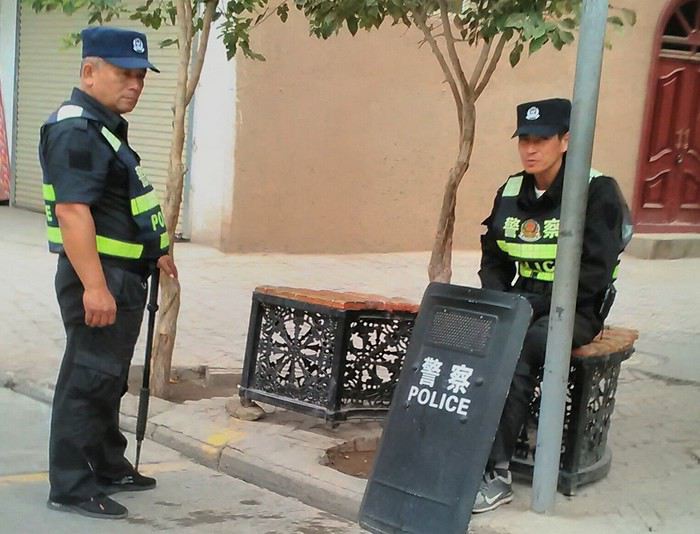 - Putting barbed wire and anti-ramming barriers around sensitive sites (schools, big hotels, government buildings...)
- Installing traffic surveillance gates with cameras and photo flashes (for all vehicles passing, including bikes) throughout the city and even in the countryside
- Posting uniformed guards with tasers, batons, or huge baseball bats every 100 meters
- Training the Han population (ethnic Chinese) in self-defense with sticks, preferably in the morning on the street. Men and women of all ages
- Starting school with the national anthem, doing military exercises, and receiving political indoctrination, all neatly lined up in the courtyard. (The dream school for any teacher)
- Placing a snitch in uniform (a pseudo-guard) in public gathering places, like youth hostels. Mine spends the day loafing around the courtyard
- Putting Chinese flags everywhere on the streets to remind everyone who’s in charge
- Installing security gates at every entrance to areas frequented by tourists (thanks for that) but not just there
- Never photographing cops, or else! I tried, but it’s not easy...
- Putting barbed wire and anti-ramming barriers around sensitive sites (schools, big hotels, government buildings...)
- Installing traffic surveillance gates with cameras and photo flashes (for all vehicles passing, including bikes) throughout the city and even in the countryside
- Posting uniformed guards with tasers, batons, or huge baseball bats every 100 meters
- Training the Han population (ethnic Chinese) in self-defense with sticks, preferably in the morning on the street. Men and women of all ages
- Starting school with the national anthem, doing military exercises, and receiving political indoctrination, all neatly lined up in the courtyard. (The dream school for any teacher)
- Placing a snitch in uniform (a pseudo-guard) in public gathering places, like youth hostels. Mine spends the day loafing around the courtyard
- Putting Chinese flags everywhere on the streets to remind everyone who’s in charge
- Installing security gates at every entrance to areas frequented by tourists (thanks for that) but not just there
- Never photographing cops, or else! I tried, but it’s not easy...
With all that, you can stroll around safely Not much crime! As for the amount the Chinese state spends to maintain such a system, it’s staggering! A third of the Han living in Xinjiang work in security. Today, I wandered freely around old Kashgar, which is quite large after all. More photos...
10- TASHKURGAN What on earth was I thinking going there! Wednesday, September 5 First, there’s the taxi—pretty crappy, with a driver who doesn’t speak a word of English and won’t stop smoking. Over six hours in that... shared with a completely out-of-it American.
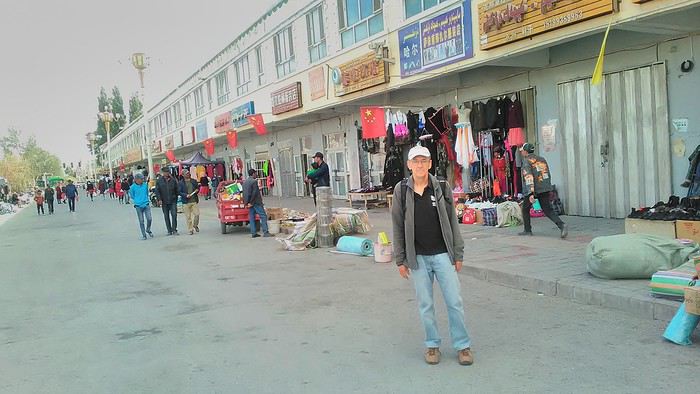
Then there are all the checkpoints along the way. I won’t go on—you know the drill by now.
After that, there’s Tashkurgan—a town with nothing to see, nothing to do. Deserted as soon as night falls. There’s this huge youth hostel and a few lost Chinese tapping away on their smartphones, chain-smoking. This lost American-European crowd, swapping tips on how to enter Pakistan or Tajikistan.
Luckily, there’s the Chinese Pamir Highway, lined with peaks over 7,000m. There’s the feeling of no longer being in China, with a population whose features are Middle Eastern. And these Tajik women with their stunning hairstyles and vibrant costumes. There’s the fact of having reached the westernmost Chinese city, far from crowds and tourist sites. A sort of end of the world. More photos...
11- KYRGYZ BORDER A surreal epic Thursday, September 6 The road from Kashgar to the Kyrgyzstan border is a little over 200 km and passes through beautiful landscapes of colorful, desert-like mountains with acrobatic folds. That’s the bucolic part of the trip.
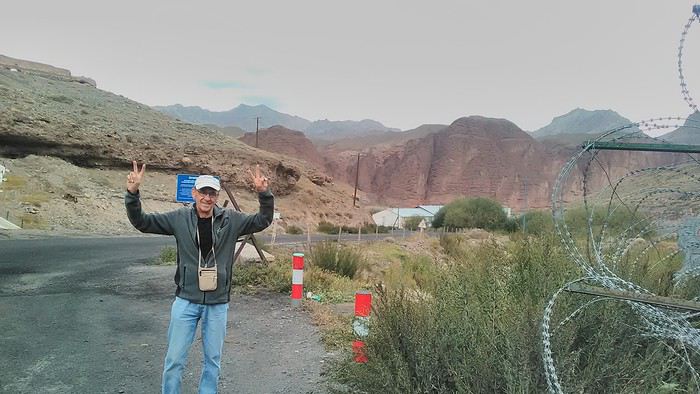 Yesterday, I managed to gather four people to rent a minibus to reach the border more easily: a Spaniard and an Argentine I’d already met in Turpan, and two New Zealanders who responded to the ad left at the hostel.
Absurdity and paranoia of Chinese authorities The highlight was crossing the town of Wuqia, 50 km past Kashgar. After tallying up with my fellow sufferers, we must’ve passed about ten checkpoints with: - Passport checks: 14 times, sometimes by two cops side by side - Bag checks: 4 times - Smartphone checks: 2 times, with deletion of "non-compliant" photos, and registration of your IMEI in the exit log!... Absurd and surreal at the same time, since my camera stayed in my bag, my apps are in French, and my photos have been online for ages...
With all that, we arrived just as the last checkpoint before the no man’s land marking the border between the two countries was on lunch break. And bam! Another 1.5-hour wait, alongside truckers who were much more used to this than we were.
What to think? The cops themselves aren’t fooled. They play the role they’re asked to, but sometimes you can coax a smile out of them—they realize how ridiculous the situation is.
What’s the point? That’s the big question my companions and I were tempted to answer with "to piss people off." To show you your place isn’t here, but with the other tourists, over there in the east, in Shanghai, Xi’an, or Guangzhou.
As for you, a traveler from a democratic country, you really experience this as aggression, humiliation, a violation of your private space. And yet, I’m respected, they speak to me properly. Today, I better understand what a Palestinian or a citizen of an occupied country might feel daily. A unique experience! Thanks, China.
And to top it off, the cherry on the cake! It’s still this glowing button you press to rate your passage after clearing the last obstacle before the exit stamp. I was so surprised it turned off before I could react. The Spaniard, with great humor and irony, had time to vote "excellent." In the end, he wasn’t wrong—you can hardly do better!
PS: I ditched my buddies at the border. They didn’t want to pay for a taxi to continue. So I took a direct taxi to Osh. The first 100 km are fabulous. I couldn’t take many photos, but I’ll be back on Monday to go to Tajikistan.
More photos...
The rest of the Silk Road, Part 2, in these travel journals: Kyrgyzstan, Tajikistan, Uzbekistan.
The Chinese Far West More than 30 years after my first trip to eastern China, I finally fulfilled an old dream: traveling solo from Beijing to the far west, discovering Xinjiang, the Uyghur people and the oppression they endure, the oases of Turpan and Kashgar, the Taklamakan Desert, the end of the Great Wall... The route was covered by train.
MENU PART 1: CHINA
1- Beijing (Jiankou) : the authentic Great Wall, without tourists 2- Cycling in Beijing, the best way to get around 3- Beijing : departure for the far west 4- Jiayuguan : getting by without English 5- Jiayuguan : scams and heritage 6- Dunhuang : abundance in the middle of the desert 7- Turpan : the Uyghurs under heavy surveillance 8- Kashgar : love at first sight for the old city 9- Kashgar : China’s recipe for controlling the populace 10- Tashkurgan : what on earth was I thinking going there! Kyrgyz border: a surreal epic Photo album from the 80s, contributions from other travelers (page 2)
1- JIANKOU Finding the authentic Great Wall, without tourists or a guide Friday, August 24, 2018 Thirty years later, I didn’t feel like revisiting the Great Wall at Badaling or any other overcrowded site. I chose to explore it at Jiankou, in its wildest, most authentic, and unrestored section, starting from a lost village deep in a valley—though it wasn’t *that* lost, since it had everything for communication.
No need to pay for a taxi to get there—by timing it right, you can take the bus for just a few yuan. You have to get off at Xizhazi, the bus terminus. Be careful, there are only two buses a day in each direction. At the Xizhazi bus stop, I met a young couple who’d arrived with zero information about what to expect. We hiked the three of us toward the restored section of Mutianyu.
Still, be cautious With GPS and a topographic map (OpenTopoMap), you can set off without a problem or guide. The trail up to Jiankou is easy and well-marked. The trails down are too. But be careful—once you’re on the Wall, it’s real mountain hiking, with easy but dangerous climbing sections (over sheer drops). Not for amateurs or those afraid of heights! But what a reward. The Wall all to yourself, where it’s at its most daring. Truly mesmerizing.
More photos...
2- BEIJING The best way to get around the capital Sunday, August 26 The best way to explore the city is still by bike. Most are in a bike-share system, but you need to use an app—WeChat, the app that does everything, like monitoring your every move. No way I was installing that.
I found one at a rental shop near the hostel. The key is to quickly learn local traffic customs to minimize risks. Bike lanes are wide along the avenues.
But you still have to: - Watch out for anything parked on the bike paths—the most annoying are people napping or talking on the phone in their cars - Keep an eye on everything coming the wrong way—the list is long - The worst is right turns on red, which in Chinese traffic rules seem to have priority Once you get the hang of it, it’s fine. The city is huge but flat, so you can just wing it.
3- BEIJING By train to the far west Sunday, August 26 Beijing West Station is the size and operates like an airport. With your e-ticket from the agency, you first have to pick up your ticket at the special "English" counter, after passing through security. With your ticket in hand, you have to exit and enter through the boarding waiting area—not the platform—after a second security check.
Then you find the right hall and wait for the sign to finally access the platform. In the end, it works pretty well given the incredible number of passengers to manage. Everywhere in Beijing, I saw that the Chinese have mastered crowd flow management.Nice surprise: second-class carriages are clean, air-conditioned, and bright. Perfect, since I was in for 20 hours. One uniformed attendant per carriage, mobile meal service—luxury! Small downside: no luggage space. Hauling your suitcase up to the top bunk is quite a workout. I was in the middle, so it wasn’t too bad. The landscape, though, whether rural or urban, is pretty bleak. That should change once we leave the eastern plains.
Of course, I got my first police visit, with a thorough passport check and bag search. I was warned—going to the Chinese far west exposes you to this kind of hassle. But they were polite and respectful.
The Chinese Far West4- JIAYUGUAN Getting by without English Monday, August 27 At the gates of two deserts (Gobi and Taklamakan) and at the foot of the Tibetan highlands, the Great Wall ends at Jiayuguan. Here, I found the deeper China I’d somewhat rediscovered during my bike ride, even if now everyone gets around on electric bikes and I’m no longer stared at like an alien.
Prices are nothing like Beijing: you can find a full meal for 2 €, and my bike cost 7 € for two days. Plus, few people speak English—neither the owner of the HI hostel where I stayed, nor the ticket sellers at the sites, let alone the servers at the small eateries where I ate. Everything is written in Chinese. So I had to use the little Chinese I know to communicate about essentials. It makes the locals laugh to see a European trying to speak their language, but it earns respect. With Google Translate’s help, I managed.
Rant: With their avenues blocked for construction for kilometers without warning, and new roads not yet on maps, I must’ve taken 15 km of detours. More photos...
5- JIAYUGUAN Scams and heritage Tuesday, August 28 The Great Wall doesn’t exactly end at the fort I visited yesterday but 10 km further, at the entrance to a river gorge at the foot of the mountains. All that’s left is a badly damaged tower (more like a mound of earth) and a section of clay wall, similar to the one I biked yesterday.
This morning, I hopped on my bike, determined to venture into the desert to see this highly symbolic site. First, you access it via a wide, brand-new road with not a soul in sight. Just before the site, I came across a grand welcome gate, very period-style, but it’s actually the inevitable toll booth.
Behind the gate, the road continues straight to the site, which you can see in the distance—at least 2 km away—the remains of the tower and wall. I had to leave my bike here. Fine. I went to the ticket counter and asked the price: 120 yuan! I couldn’t believe it—over 15 € for a simple mound of earth.
I showed my displeasure to the attendant, who couldn’t care less, and immediately turned back. 120 yuan—that’s the price for a new road, a fancy gate planted 2 km before the site just to force you to take a shuttle, and employees with nothing to do all day... Now I understand why I didn’t meet anyone!
Heritage China is a bit pricey Generally, sites are expensive for the country’s standard of living, but travelers are supposed to have money, so why hold back? I even gave up on the Forbidden City—reservations required days in advance (or on the black market at an impossible price). I prefer to keep the memory of my first visit, when entry must’ve cost a few dozen cents, and there were only a handful of visitors.
This morning, I took a taxi to see remarkable tombs of common people from the 3rd to 6th centuries. They’re small vaulted caves made of painted bricks, depicting scenes of daily life. Very pretty and moving. But even here, though the price was more reasonable, I was left wanting—only one of the 16 tombs is open to visitors, and it’s apparently not the most beautiful.
The authentic China—at least what’s left of it... Wandering the impersonal avenues of the city, you stumble upon a market. There, you still find traditional China—small shops with questionable hygiene, Go players, musicians, and even a dental prosthetist. The last refuge for those untouched by modernity. More photos...
6- DUNHUANG Abundance in the middle of the desert Wednesday, August 29 Well, I thought the landscape would be less bleak as I headed west. Nope. The only distraction in this expanse of dark, clayey sand is the forests of pylons and wind turbines, plus wild camels racing each other.
However, Dunhuang, the gateway to the Taklamakan, is by far the most pleasant Chinese city I know. There’s a real city center you can explore on foot. It’s hot but not unbearable, with a light, dry breeze. Much nicer than Beijing. The Han Chinese are still the majority, but the Muslim Uyghurs are more numerous, and the muezzin’s call to prayer echoes around the mosque.The most surprising thing is the abundance and diversity of fruits and vegetables. You wonder how it all grows here. Well-irrigated, the desert sands are very fertile. Here, raisins have subtle, mysterious flavors, and the lamb really tastes like lamb.
Today, I visited the must-see Mingshashan, a dune complex next to which Pila is a molehill. The Basque Country, but covered in sand... More photos...
7- TURPAN The Uyghurs under heavy surveillance Friday, August 31 Surveillance cameras everywhere in the city, armed police stationed at intersections, in front of public buildings, at the entrance and inside tourist sites, police stations on every corner, patrols on foot or by car, khaki uniforms even for middle schoolers... here, the Han Chinese are in the minority, and you can feel it. Turpan feels like a city under siege.
To enter the youth hostel where I stayed, there’s even a security gate, and the receptionist (a Han, like everyone in tourism) wears a bulletproof vest! Reassuring. Still, you don’t feel particularly threatened here, especially as a European. The troublemakers are the Chinese, not the Uyghurs. Generally, China is a very safe country for visitors.
Smile, you’re on camera! I was biking on an avenue when the car in front of me got flashed for driving slowly. I quickly understood why when I got flashed too.
Here, the official time is Beijing time, but it gets dark two hours later. It’ll be even worse in Kashgar. Trickier to manage: everything is displayed in Chinese and Arabic. Nothing in English. Choosing a menu is a shot in the dark. Apart from a few young Chinese, no one here speaks English, and my Chinese doesn’t seem very understandable...
Mogao, the end of the road for the Han Yesterday, near Dunhuang, I went to Mogao, a complex of decorated caves with Buddha sculptures and paintings. Stunning, but so crowded! Luckily, here in Turpan, Chinese tourists barely venture out. So I visited a Silk Road ghost town with only a handful of other visitors and under a howling wind.
The modern Chinese city is swallowing up the old Uyghur neighborhoods—only a museum-like district remains in the center, and pockets of resistance on the outskirts are doomed to disappear soon. More photos...
8- KASHGAR A (relative) love at first sight for the old city Sunday, September 2 After three overnight trains, here I am in the far west of China, nearly 4,000 km from the capital. Despite the omnipresent police and an old city preserved UNESCO-style, Kashgar is my Chinese love at first sight.
Finally, Chinese... well, sort of, because we’re in Uyghur territory here—a Turkic people with nothing culturally in common with the Han, the eastern Chinese. It started badly yesterday at Turfan station, where after three security gate passes, at least five passport checks, and a bag search, three adorable policewomen confiscated my antibacterial lotion because it had a flammable logo...
Then came the welcoming committee of armed cops at Kashgar station. Once all that was over, they left me alone—except you still have to go through security checks like everyone else to enter the old city, the bazaar, the livestock market... The further west you go, the more the siege mentality is evident. Luckily, the border isn’t far...
Despite the inevitable destruction-reconstruction, the city center has been well preserved. Thankfully, because it’s a very original style, a mix of local and colonial. I love it, even if it’s a bit too artificial, sanitized, and watered-down, and rather empty of residents. On the Silk Road, the city was famous for its great food. And it still is—rarely have I seen such richness and abundance of food! And not just scorpions or snakes. More photos...
9- KASHGAR China’s recipe for controlling the populace Saturday, September 1 Xinjiang, along with Tibet, is a "sensitive" area of rebellion in the eyes of Chinese authorities. As a result, the state has these regions and their populations under total control. Tourists also feel the consequences, even if they’re not at risk of re-education camps.
- Putting barbed wire and anti-ramming barriers around sensitive sites (schools, big hotels, government buildings...)
- Installing traffic surveillance gates with cameras and photo flashes (for all vehicles passing, including bikes) throughout the city and even in the countryside
- Posting uniformed guards with tasers, batons, or huge baseball bats every 100 meters
- Training the Han population (ethnic Chinese) in self-defense with sticks, preferably in the morning on the street. Men and women of all ages
- Starting school with the national anthem, doing military exercises, and receiving political indoctrination, all neatly lined up in the courtyard. (The dream school for any teacher)
- Placing a snitch in uniform (a pseudo-guard) in public gathering places, like youth hostels. Mine spends the day loafing around the courtyard
- Putting Chinese flags everywhere on the streets to remind everyone who’s in charge
- Installing security gates at every entrance to areas frequented by tourists (thanks for that) but not just there
- Never photographing cops, or else! I tried, but it’s not easy...With all that, you can stroll around safely Not much crime! As for the amount the Chinese state spends to maintain such a system, it’s staggering! A third of the Han living in Xinjiang work in security. Today, I wandered freely around old Kashgar, which is quite large after all. More photos...
10- TASHKURGAN What on earth was I thinking going there! Wednesday, September 5 First, there’s the taxi—pretty crappy, with a driver who doesn’t speak a word of English and won’t stop smoking. Over six hours in that... shared with a completely out-of-it American.
Then there are all the checkpoints along the way. I won’t go on—you know the drill by now.
After that, there’s Tashkurgan—a town with nothing to see, nothing to do. Deserted as soon as night falls. There’s this huge youth hostel and a few lost Chinese tapping away on their smartphones, chain-smoking. This lost American-European crowd, swapping tips on how to enter Pakistan or Tajikistan.
Luckily, there’s the Chinese Pamir Highway, lined with peaks over 7,000m. There’s the feeling of no longer being in China, with a population whose features are Middle Eastern. And these Tajik women with their stunning hairstyles and vibrant costumes. There’s the fact of having reached the westernmost Chinese city, far from crowds and tourist sites. A sort of end of the world. More photos...
11- KYRGYZ BORDER A surreal epic Thursday, September 6 The road from Kashgar to the Kyrgyzstan border is a little over 200 km and passes through beautiful landscapes of colorful, desert-like mountains with acrobatic folds. That’s the bucolic part of the trip.
Yesterday, I managed to gather four people to rent a minibus to reach the border more easily: a Spaniard and an Argentine I’d already met in Turpan, and two New Zealanders who responded to the ad left at the hostel.Absurdity and paranoia of Chinese authorities The highlight was crossing the town of Wuqia, 50 km past Kashgar. After tallying up with my fellow sufferers, we must’ve passed about ten checkpoints with: - Passport checks: 14 times, sometimes by two cops side by side - Bag checks: 4 times - Smartphone checks: 2 times, with deletion of "non-compliant" photos, and registration of your IMEI in the exit log!... Absurd and surreal at the same time, since my camera stayed in my bag, my apps are in French, and my photos have been online for ages...
With all that, we arrived just as the last checkpoint before the no man’s land marking the border between the two countries was on lunch break. And bam! Another 1.5-hour wait, alongside truckers who were much more used to this than we were.
What to think? The cops themselves aren’t fooled. They play the role they’re asked to, but sometimes you can coax a smile out of them—they realize how ridiculous the situation is.
What’s the point? That’s the big question my companions and I were tempted to answer with "to piss people off." To show you your place isn’t here, but with the other tourists, over there in the east, in Shanghai, Xi’an, or Guangzhou.
As for you, a traveler from a democratic country, you really experience this as aggression, humiliation, a violation of your private space. And yet, I’m respected, they speak to me properly. Today, I better understand what a Palestinian or a citizen of an occupied country might feel daily. A unique experience! Thanks, China.
And to top it off, the cherry on the cake! It’s still this glowing button you press to rate your passage after clearing the last obstacle before the exit stamp. I was so surprised it turned off before I could react. The Spaniard, with great humor and irony, had time to vote "excellent." In the end, he wasn’t wrong—you can hardly do better!
PS: I ditched my buddies at the border. They didn’t want to pay for a taxi to continue. So I took a direct taxi to Osh. The first 100 km are fabulous. I couldn’t take many photos, but I’ll be back on Monday to go to Tajikistan.
More photos...
The rest of the Silk Road, Part 2, in these travel journals: Kyrgyzstan, Tajikistan, Uzbekistan.
Bonjour,
Lors de notre voyage en Chine, nous souhaitons privilégier le train lors de nos déplacements et avons plusieurs questions…
1) 1) comment procéder s'il n'y a pas de train direct (avec un trajet d’une seule traite) et qu'il faille prendre une correspondance ; apparemment il n’est pas possible de réserver 1 billet de train avec la correspondance et il semble qu’il faille prendre 2 billets différents (combien de temps faut-il prendre entre deux correspondances (retard, contrôle / sécurité ?? ) à la gare de transit.
2) 2) Les trains de nuit peuvent-ils également être réserver sur des sites de réservations ?
3) 3) Quel site utiliser pour réserver, Trip.com ou autre ?
Merci d'avance pour votre aide !
Merci d'avance pour votre aide !
Bonjour, deux-trois réflexions sur l'argent en Chine. Je suis actuellement au Yunnan, c'est peut-être faux ailleurs. Je me pose la question pour l'an prochain ou je veux aller au Gansu et au Xinjiang...
Tout d'abord, avoir des euros, c'est moyen. Pas de change possible hors des agences officielles de la Bank of China. Il y en a peu et pas dans toutes les villes. Les horaires d'ouverture sont assez contraignants et surtout c'est terriblement long....... Hier à Shangri-La, un seul guichet et une dizaine de personnes à attendre. Puis vient la paperasse... Scrutage de passeport approfondi, photos avec leur smartphone + scan + photocopie.... Bref 1 heure pour changer 300€. 🤪
Alternative, des distributeurs partout, certains (Bank of China, agricultural Bank) acceptant la Visa. Temps de retrait : 3'
Par contre, aucun hôtel jusqu'à présent n'accepte les paiements en Visa.
Du coup, dans des contrées plus éloignées des zones touristiques, comment ça marche ? Y-A-T-IL des distributeurs Visa partout en Chine ? Est-ce que ça vaut le coup d'ouvrir un compte à la Bank of China et de demander la carte bleue locale ? Merci
Tout d'abord, avoir des euros, c'est moyen. Pas de change possible hors des agences officielles de la Bank of China. Il y en a peu et pas dans toutes les villes. Les horaires d'ouverture sont assez contraignants et surtout c'est terriblement long....... Hier à Shangri-La, un seul guichet et une dizaine de personnes à attendre. Puis vient la paperasse... Scrutage de passeport approfondi, photos avec leur smartphone + scan + photocopie.... Bref 1 heure pour changer 300€. 🤪
Alternative, des distributeurs partout, certains (Bank of China, agricultural Bank) acceptant la Visa. Temps de retrait : 3'
Par contre, aucun hôtel jusqu'à présent n'accepte les paiements en Visa.
Du coup, dans des contrées plus éloignées des zones touristiques, comment ça marche ? Y-A-T-IL des distributeurs Visa partout en Chine ? Est-ce que ça vaut le coup d'ouvrir un compte à la Bank of China et de demander la carte bleue locale ? Merci
Bonjour, avant de partir j'ai eu la chance de consulter de nombreux forums et blogs de voyage. Cela m'a aidé à préparer mon voyage.
Alors à mon tour d'aider les futurs voyageurs et aussi répondre à certaines questions auxquelles je n'ai jamais trouvé de réponse avant de partir.
* * * * *
Mon voyage s'est déroulé en solo sur 3 semaines, en organisation libre.
L'essentiel des journées étaient de la randonnée urbaine, l'appareil photo en bandoulière.
* * * * *
Visite de 6 villes et déplacements en train ou avion.
* * * * *
Dates : du 23 mars au 13 avril 2019
* * * * *
*Shanghai : 3 jours / Grande, moderne et historique à la fois.
*Suzhou : 1 jour / Historique avec ses jardins. / Industriel en périphérie, Logitech y fabrique la majorité de ses souris d'ordinateur.
*Hangzhou : 2 jours / Coup de coeur. Ville touristique pour les chinois, peu pour les occidentaux. Lac superbe et surtout plantation de thé LongJing à la sortie de la ville. J'ai adoré. Je ne boirai plus jamais le thé comme avant.
*Linfen : 2 jours / Ville lambda sur la carte, pas un touriste en vue. Intéressante pour son aspect vierge de tourisme. Encore que, il y a des choses à voir en ville et aussi dans les environs. J'ai apprécié d'y être allé.
*Pingyao : 2 jours / Ultra touristique dans la rue centrale. Surtout lors d'un jour férié. Plus typique dès que l'on s'éloigne du centre.
*Pékin : 3 jours / Connue et classique. Historique et touristique. C'était bien pour voir le centre historique et être proche de la grande muraille. Sinon beaucoup trop de touristes pour moi.
*Grande muraille : 1 jour / J'ai hésité à y aller, mais ce fût finalement un bonheur à Mutianyu sans trop de monde un jour de semaine
*Transferts : 5 jours en Chine
* * * * *
*Avion : aller-retour avec Emirates via Dubaï, dont une escale d'une journée complète à l'aller : donc visite de la ville en bonus. J'ai adoré.
* * * * *
*Visa : soyez patient et méthodique. Il est demandé une tonne de justificatifs. Je me suis déplacé au consulat, ils ne m'ont toutefois pas demandé les justificatifs de travail et salaire. Je n'ai pas compris. Sinon, ils demandent les adresses d'hébergement et impérativement une adresse d'hôtel, et rien d'autres (Sauf si vous allez chez un ami). J'avais réservé sur Booking.com des hôtels (Annulable gratuitement), puis une fois le visa en poche j'ai tout annulé. * * * * * *Trains : réseau dense et pratique. Réservation indispensable 2 à 3 jours minimum sur certaines lignes à certaines dates. Voir plusieurs semaines avant. Pour ma part j'ai réservé avec satisfaction sur TRIP.COM. Fonctionnement simple et pratique. Une taxe est prélevée par billet, mais ils réservent pour vous. Ensuite avec un code vous retirez votre billet au guichet "réservation en ligne" d'une gare. Si vous réservez votre billet très tôt, TRIP.COM le réservera dès que les réservations seront ouvertes et possibles auprès de la "SNCF" chinoise (Les réservations sont ouvertes quelques semaines avant le départ du train). * * * * * *Avion : en Chine, j'ai fait un trajet en avion. Réservation avec TRIP.COM également. Il y a eu un changement d'horaires. TRIP.COM m'a contacté pour être sûr que j'avais bien eu l'information et voir si cela me convenait. Je conseille cet intermédiaire. * * * * * *Arrivé à Shanghai à l'aéroport : Bien préparer le petit « papier d'entrée » avant le contrôle aux frontières et impérativement noter dessus une adresse d'hôtel où vous loger dès le premier soir. Je logeais en Airbnb, cela à bloquer le contrôleur, il a fallu négocier. Je pense qu'une adresse au hasard d'un hôtel lui ferait « plaisir » et vous laisserai passer. J'ai eu le droit aussi au contrôle de santé aléatoire avec un embout dans la bouche et un appareil qui m'a désigné comme "sain". Youpi ! Ensuite récupérer votre valise. Avec mon retard, la mienne avait été mise de côté dans un des bureaux de réclamation devant les tapis. Faire du change de suite pour prendre le métro ou le Maglev+métro. J'espérai utiliser ma carte bleue, juste en rêve ... Pour ma part change 10 € contre 50 Y au black auprès d'un membre du personnel (Taux pas terrible). Maglev = 50 Y+ métro = 2 à 4 Y suivant la destination. Payable en billets ou pièces. Pas de gros billets, si besoin allez voir le personnel présent dans les stations de métro pour changer les billets. * * * * * *Argent Utilisé 2 fois un distributeur : taux classique et taxe de 5 € de ma banque. Soit 100€ = 700 Y Sinon 2 changes de billets en d'euro dans une banque : 100€ = 730Y. Pas de taxe. Mais dossier à remplir, passeport à présenter et attente, prévoir 30 minutes. * * * * * *Applications téléphone : Cartographie GPS : OSMand et MAPS.ME, chacune à ses avantages. Mais les deux permettent de télécharger les cartes et les utiliser hors connexion internet. MAPS.ME permet aussi de faire des itinéraires hors connexion, j'adore. Google Maps : connais pas. C'est quoi ? En Chine cela ne fonctionne pas et la carte est décalée de la réalité ! Je vous invite à comparer la carte de base avec la photo satellite en Chine, vous verrez ! Télécharger des cartes Google Maps hors connexion est impossible. Comme par hasard ... Aussi méfiez-vous des applications et sites qui utilisent les cartes Google Maps, cela ne fonctionne pas ou mal. Exemples : Airbnb, Flightradar24, ... * * * * * Internet : technologie très présente en Chine. WIFI possible dans les lieux publics ... avec un numéro de téléphone chinois en général. Le moteur de recherche américain BING fonctionne. * * * * * *Internet libre : dans tes rêves seulement. L'utilisation d'une application VPN permet de se connecter librement. J'ai utilisé des VPN gratuit Android. Ceux utilisés : SECURE VPN, THUNDER VPN, MELON VPN, TURBO VPN. Ils fonctionnent tous plus ou moins bien suivant le moment. Les déconnections sont fréquentes. Mais ils sont gratuits. Est-ce qu'un VPN payant (NORD VPN, EXPRESS VPN? ...) ferait mieux ? Je n'ai pas testé.
Sinon il est possible d'utiliser librement WECHAT (Qui remplace WhatsApp, Twitter, Facebook, Instagram, Carte de paiement Visa ou Mastercard. Et qui permet même d'avoir du papier WC dans certaines toilettes publiques !) Wechat le grand fait-tout... avec ses limites tout de même. Perso je l'ai utilisé pour des "Skype" avec la famille. Wechat avec Alipay sont deux applications qui permettent de payer quasiment partout (Même un paysan qui vends des pommes de terre sur le marché) et remplacent nos cartes bleues. Il est possible d'y connecter une carte de paiement, mais il me semble qu'ils n'acceptent que les cartes chinoises. Je n’ai pas essayé.
Sinon payer avec des billets de banque, fonctionne très bien partout ! * * * * * *Circulation dans les villes : caméra de vidéo-surveillance et contrôle des bagages aux rayons X partout. N'oubliez pas votre passeport dans votre chambre.
* * * * *
*Visa : soyez patient et méthodique. Il est demandé une tonne de justificatifs. Je me suis déplacé au consulat, ils ne m'ont toutefois pas demandé les justificatifs de travail et salaire. Je n'ai pas compris. Sinon, ils demandent les adresses d'hébergement et impérativement une adresse d'hôtel, et rien d'autres (Sauf si vous allez chez un ami). J'avais réservé sur Booking.com des hôtels (Annulable gratuitement), puis une fois le visa en poche j'ai tout annulé. * * * * * *Trains : réseau dense et pratique. Réservation indispensable 2 à 3 jours minimum sur certaines lignes à certaines dates. Voir plusieurs semaines avant. Pour ma part j'ai réservé avec satisfaction sur TRIP.COM. Fonctionnement simple et pratique. Une taxe est prélevée par billet, mais ils réservent pour vous. Ensuite avec un code vous retirez votre billet au guichet "réservation en ligne" d'une gare. Si vous réservez votre billet très tôt, TRIP.COM le réservera dès que les réservations seront ouvertes et possibles auprès de la "SNCF" chinoise (Les réservations sont ouvertes quelques semaines avant le départ du train). * * * * * *Avion : en Chine, j'ai fait un trajet en avion. Réservation avec TRIP.COM également. Il y a eu un changement d'horaires. TRIP.COM m'a contacté pour être sûr que j'avais bien eu l'information et voir si cela me convenait. Je conseille cet intermédiaire. * * * * * *Arrivé à Shanghai à l'aéroport : Bien préparer le petit « papier d'entrée » avant le contrôle aux frontières et impérativement noter dessus une adresse d'hôtel où vous loger dès le premier soir. Je logeais en Airbnb, cela à bloquer le contrôleur, il a fallu négocier. Je pense qu'une adresse au hasard d'un hôtel lui ferait « plaisir » et vous laisserai passer. J'ai eu le droit aussi au contrôle de santé aléatoire avec un embout dans la bouche et un appareil qui m'a désigné comme "sain". Youpi ! Ensuite récupérer votre valise. Avec mon retard, la mienne avait été mise de côté dans un des bureaux de réclamation devant les tapis. Faire du change de suite pour prendre le métro ou le Maglev+métro. J'espérai utiliser ma carte bleue, juste en rêve ... Pour ma part change 10 € contre 50 Y au black auprès d'un membre du personnel (Taux pas terrible). Maglev = 50 Y+ métro = 2 à 4 Y suivant la destination. Payable en billets ou pièces. Pas de gros billets, si besoin allez voir le personnel présent dans les stations de métro pour changer les billets. * * * * * *Argent Utilisé 2 fois un distributeur : taux classique et taxe de 5 € de ma banque. Soit 100€ = 700 Y Sinon 2 changes de billets en d'euro dans une banque : 100€ = 730Y. Pas de taxe. Mais dossier à remplir, passeport à présenter et attente, prévoir 30 minutes. * * * * * *Applications téléphone : Cartographie GPS : OSMand et MAPS.ME, chacune à ses avantages. Mais les deux permettent de télécharger les cartes et les utiliser hors connexion internet. MAPS.ME permet aussi de faire des itinéraires hors connexion, j'adore. Google Maps : connais pas. C'est quoi ? En Chine cela ne fonctionne pas et la carte est décalée de la réalité ! Je vous invite à comparer la carte de base avec la photo satellite en Chine, vous verrez ! Télécharger des cartes Google Maps hors connexion est impossible. Comme par hasard ... Aussi méfiez-vous des applications et sites qui utilisent les cartes Google Maps, cela ne fonctionne pas ou mal. Exemples : Airbnb, Flightradar24, ... * * * * * Internet : technologie très présente en Chine. WIFI possible dans les lieux publics ... avec un numéro de téléphone chinois en général. Le moteur de recherche américain BING fonctionne. * * * * * *Internet libre : dans tes rêves seulement. L'utilisation d'une application VPN permet de se connecter librement. J'ai utilisé des VPN gratuit Android. Ceux utilisés : SECURE VPN, THUNDER VPN, MELON VPN, TURBO VPN. Ils fonctionnent tous plus ou moins bien suivant le moment. Les déconnections sont fréquentes. Mais ils sont gratuits. Est-ce qu'un VPN payant (NORD VPN, EXPRESS VPN? ...) ferait mieux ? Je n'ai pas testé.
Sinon il est possible d'utiliser librement WECHAT (Qui remplace WhatsApp, Twitter, Facebook, Instagram, Carte de paiement Visa ou Mastercard. Et qui permet même d'avoir du papier WC dans certaines toilettes publiques !) Wechat le grand fait-tout... avec ses limites tout de même. Perso je l'ai utilisé pour des "Skype" avec la famille. Wechat avec Alipay sont deux applications qui permettent de payer quasiment partout (Même un paysan qui vends des pommes de terre sur le marché) et remplacent nos cartes bleues. Il est possible d'y connecter une carte de paiement, mais il me semble qu'ils n'acceptent que les cartes chinoises. Je n’ai pas essayé.
Sinon payer avec des billets de banque, fonctionne très bien partout ! * * * * * *Circulation dans les villes : caméra de vidéo-surveillance et contrôle des bagages aux rayons X partout. N'oubliez pas votre passeport dans votre chambre.
Bonjour à tous,
De retour de trois mois de voyage en vélo en Chine, dans les provinces du Yunnan et du Sishuan, j'apporte ici des informations pratiques que j'aurais aimé trouver avant de partir.
Je vous livre sans ordre particulier ma propre expérience qui ne cherche à porter ombrage à personne, mais qui lève le voile sur des mécanismes introuvables ici ni ailleurs depuis notre réseau internet occidental.
* EN chine les cartes routières sont réservées à l'armée et la police. Les cartes vendues en occident n'ont qu'un intérêt informatif superficiel compte tenu des échelles de représentation.
* Les applications classiquement utilisées pour s'orienter telles que MAPS ME ne sont ni complètes ni à jour et de surcroit "accrochent " mal les balises chinoises. A cela s'ajoute les transcriptions très approximatives des noms de villes et des villages. L'outil le plus utiles que j'ai pu trouver sur ce chapitre est l'application OsmAnd qui présente l’avantage d'indiquer les noms en mandarin standard. C'est bien plus confortable pour demander son chemin.
* L'ensemble du réseau routier que j'ai emprunté est en travaux comme la plupart des villes d'ailleurs. Les anciennes routes sont pas ou peu entretenues et de nouvelles routes existent qui ne sont pas référencées sur GPS. De nombreux petits villages et hameaux n'apparaissent également pas sur les GPS. Mon meilleur allié a été un compas magnétique, la lecture des reliefs et le bon sens.
* N'ayez pas plus confiance sur les dénivelées calculés au préalable à la maison, ils seront faux en pratique (pas simple pour un déplacement en vélo chargé)
* N'oubliez surtout pas de prendre une carte SIM chinoise à votre descente de l'avion. En effet, hors de l'aéroport vous ne pourrez obtenir cet outil indispensable qu'en vous rendant dans un commissariat de police pour vous faire délivrer un numéro d'identification. Bien sûr ce sera à l'issu d'un interrogatoire en règle.
* Le logiciel indispensable pour la Chine est WECHAT. Cette messagerie outre les échanges textes audio et vidéo offre également un outil de positionnement géographique et un outil de paiement par code IRQ. Tous les chinois l'utilisent.
* Le réseau internet Chinois peut être qualifié de réseau Intranet. AUtrement dit vous ne pouvez ni y entrer depuis l'extérieur, ni en sortir pour aller sur vos applications favorites.
* L'utilisation d'un VPN est une solution technique à ce travers mais qui est loin d'être satisfaisante, même avec un logiciel payant. Le débit est quasi nul et les autorités chinoises traquent en permanence ces logiciels qui régulièrement se déconnectent.
* Il est inutile d'emporter avec vous des devises étrangères telles que Dollars américains ou Euros en espérant pouvoir les changer en cas de souci. Les banques chinoises n’achètent pas de devises.
* Vous ne pourrez pas plus compter sur le secours des services de Western Union en cas de souci. Malgré les discours rassurants de cet organisme, aucune banque ne vous remettra des Yuan. AU mieux elle acceptera de les verser sur un compte bancaire ... chinois..
* Les cartes de crédits de type MASTERCARD ne fonctionnent que dans les automates de type CRS . Les automates ATM ou UNION PAY nécessitent des codes Pin à six digit.
*Vous ne pourrez retirer des devises que dans les banques nationales telles que ACB ( AGricultura Bank of China). Parfois vos retraits seront limités par la banque chinoise elle même.
* Les services de la poste sont assez bien répartis, mais seules les bureaux des grandes villes procèdent à des envois internationaux. Pour envoyer un colis il est inutile de chercher un carton et des accessoires d'emballage. La poste chinoise démontera méticuleusement toutes les protections que vous aurez pris soin de rassembler autour de vos trésors. Elle vous vendra le carton, seul autorisé par le service d'expédition chinois. Cela permet également au passage de vérifier dans le moindre détail ce que vous envoyez. Les objets fragiles tels que la porcelaine peuvent être refusés sur la simple volonté de l'agent qui vous a pris en charge.
* Pour réduire les coûts d'expédition vous pouvez optez pour un envoi de type surface. Le colis arrivera au bout de deux mois pleins. Soyez patient.
* C'est à peu près le même délai que prend une simple lettre pour arriver dans la boite aux lettres de vos proches. A ce sujet préférez l'achat des enveloppes et des timbres à la poste elle même cela vous fera gagner du temps et de l'énergie sur la recherche d'une enveloppe.
* De nombreux hôtels refusent les clients étrangers. Par contre les palaces vous déroulent le tapis rouge pour des prix voisins de l'occident mais une qualité de service très souvent perfectible.
* Certains musées sont tout aussi fermés à nos yeux.
* Attendez vous, en tant qu'occidental, à être très souvent contrôlé aux chekpoints policiers d'entrée des villes et villages.
* Vous ne pourrez quasiment pas compter sur vos compétences en Anglais utilisables uniquement dans les très grosses villes et à l'aéroport. Un rudiment de chinois paraît incontournable pour se débrouiller en autonomie.
* Toutes les gares routières d'une même ville n'ont pas les mêmes destinations. Certaines villes sont accessibles en bus, d'autres en train.
* Votre passeport vous sera réclamé pour l'achat d'un billet de bus, de train ou une chambre d'hôtel.
* Dans la période de mars à juin, sur des altitudes entre 3 et 4000 m��tres j'ai connu la pluie deux jours sur trois.... Pas top pour les photos, ni les feux de camps. Équipez vous en conséquence.
* Même si l'industrie chinoise inonde nos pays de productions High-tech vous trouverez difficilement de tels produits mis à part de la téléphonie. Prévoyez vos cartes mémoires, chargeurs, accumulateurs, piles et accessoires en conséquence.
* Pour que chacun trouve les réponses à ses propres question pratiques je vous invite à télécharger le logiciel WECHAT sur votre téléphone et à rechercher la communauté des expatriés français de la région où vous vous rendez. Les informations seront précises et concrètes.
* A titre d’anecdote j'ai connu dans ce voyage, des hôtels sans douche, ou sans lavabo, ou sans W-C, ou sans chauffage, ou sans couverture, ou sans électricité, ou sans rideaux, ou sans serrure, ou sans WI-FI, ou sans robinet sur le lavabo, ou sans poire de douche, ou avec des heures d'entrée imposées, ou avec des savonnettes et des rouleaux de papiers toilettes payants ... Mais aucun d'eux n'a jamais été gratuit...
Heureusement pour moi, j'ai bivouaquer très souvent dans un confort spartiate mais sans surprise...
Etant d'un naturel combatif et surtout positif, j'ajouterai que, comme dans tous voyages, j'ai pu faire de fabuleuses rencontres humaines qui à elles seules méritent de retourner explorer ce fantastique pays...
Bon voyage
De retour de trois mois de voyage en vélo en Chine, dans les provinces du Yunnan et du Sishuan, j'apporte ici des informations pratiques que j'aurais aimé trouver avant de partir.
Je vous livre sans ordre particulier ma propre expérience qui ne cherche à porter ombrage à personne, mais qui lève le voile sur des mécanismes introuvables ici ni ailleurs depuis notre réseau internet occidental.
* EN chine les cartes routières sont réservées à l'armée et la police. Les cartes vendues en occident n'ont qu'un intérêt informatif superficiel compte tenu des échelles de représentation.
* Les applications classiquement utilisées pour s'orienter telles que MAPS ME ne sont ni complètes ni à jour et de surcroit "accrochent " mal les balises chinoises. A cela s'ajoute les transcriptions très approximatives des noms de villes et des villages. L'outil le plus utiles que j'ai pu trouver sur ce chapitre est l'application OsmAnd qui présente l’avantage d'indiquer les noms en mandarin standard. C'est bien plus confortable pour demander son chemin.
* L'ensemble du réseau routier que j'ai emprunté est en travaux comme la plupart des villes d'ailleurs. Les anciennes routes sont pas ou peu entretenues et de nouvelles routes existent qui ne sont pas référencées sur GPS. De nombreux petits villages et hameaux n'apparaissent également pas sur les GPS. Mon meilleur allié a été un compas magnétique, la lecture des reliefs et le bon sens.
* N'ayez pas plus confiance sur les dénivelées calculés au préalable à la maison, ils seront faux en pratique (pas simple pour un déplacement en vélo chargé)
* N'oubliez surtout pas de prendre une carte SIM chinoise à votre descente de l'avion. En effet, hors de l'aéroport vous ne pourrez obtenir cet outil indispensable qu'en vous rendant dans un commissariat de police pour vous faire délivrer un numéro d'identification. Bien sûr ce sera à l'issu d'un interrogatoire en règle.
* Le logiciel indispensable pour la Chine est WECHAT. Cette messagerie outre les échanges textes audio et vidéo offre également un outil de positionnement géographique et un outil de paiement par code IRQ. Tous les chinois l'utilisent.
* Le réseau internet Chinois peut être qualifié de réseau Intranet. AUtrement dit vous ne pouvez ni y entrer depuis l'extérieur, ni en sortir pour aller sur vos applications favorites.
* L'utilisation d'un VPN est une solution technique à ce travers mais qui est loin d'être satisfaisante, même avec un logiciel payant. Le débit est quasi nul et les autorités chinoises traquent en permanence ces logiciels qui régulièrement se déconnectent.
* Il est inutile d'emporter avec vous des devises étrangères telles que Dollars américains ou Euros en espérant pouvoir les changer en cas de souci. Les banques chinoises n’achètent pas de devises.
* Vous ne pourrez pas plus compter sur le secours des services de Western Union en cas de souci. Malgré les discours rassurants de cet organisme, aucune banque ne vous remettra des Yuan. AU mieux elle acceptera de les verser sur un compte bancaire ... chinois..
* Les cartes de crédits de type MASTERCARD ne fonctionnent que dans les automates de type CRS . Les automates ATM ou UNION PAY nécessitent des codes Pin à six digit.
*Vous ne pourrez retirer des devises que dans les banques nationales telles que ACB ( AGricultura Bank of China). Parfois vos retraits seront limités par la banque chinoise elle même.
* Les services de la poste sont assez bien répartis, mais seules les bureaux des grandes villes procèdent à des envois internationaux. Pour envoyer un colis il est inutile de chercher un carton et des accessoires d'emballage. La poste chinoise démontera méticuleusement toutes les protections que vous aurez pris soin de rassembler autour de vos trésors. Elle vous vendra le carton, seul autorisé par le service d'expédition chinois. Cela permet également au passage de vérifier dans le moindre détail ce que vous envoyez. Les objets fragiles tels que la porcelaine peuvent être refusés sur la simple volonté de l'agent qui vous a pris en charge.
* Pour réduire les coûts d'expédition vous pouvez optez pour un envoi de type surface. Le colis arrivera au bout de deux mois pleins. Soyez patient.
* C'est à peu près le même délai que prend une simple lettre pour arriver dans la boite aux lettres de vos proches. A ce sujet préférez l'achat des enveloppes et des timbres à la poste elle même cela vous fera gagner du temps et de l'énergie sur la recherche d'une enveloppe.
* De nombreux hôtels refusent les clients étrangers. Par contre les palaces vous déroulent le tapis rouge pour des prix voisins de l'occident mais une qualité de service très souvent perfectible.
* Certains musées sont tout aussi fermés à nos yeux.
* Attendez vous, en tant qu'occidental, à être très souvent contrôlé aux chekpoints policiers d'entrée des villes et villages.
* Vous ne pourrez quasiment pas compter sur vos compétences en Anglais utilisables uniquement dans les très grosses villes et à l'aéroport. Un rudiment de chinois paraît incontournable pour se débrouiller en autonomie.
* Toutes les gares routières d'une même ville n'ont pas les mêmes destinations. Certaines villes sont accessibles en bus, d'autres en train.
* Votre passeport vous sera réclamé pour l'achat d'un billet de bus, de train ou une chambre d'hôtel.
* Dans la période de mars à juin, sur des altitudes entre 3 et 4000 m��tres j'ai connu la pluie deux jours sur trois.... Pas top pour les photos, ni les feux de camps. Équipez vous en conséquence.
* Même si l'industrie chinoise inonde nos pays de productions High-tech vous trouverez difficilement de tels produits mis à part de la téléphonie. Prévoyez vos cartes mémoires, chargeurs, accumulateurs, piles et accessoires en conséquence.
* Pour que chacun trouve les réponses à ses propres question pratiques je vous invite à télécharger le logiciel WECHAT sur votre téléphone et à rechercher la communauté des expatriés français de la région où vous vous rendez. Les informations seront précises et concrètes.
* A titre d’anecdote j'ai connu dans ce voyage, des hôtels sans douche, ou sans lavabo, ou sans W-C, ou sans chauffage, ou sans couverture, ou sans électricité, ou sans rideaux, ou sans serrure, ou sans WI-FI, ou sans robinet sur le lavabo, ou sans poire de douche, ou avec des heures d'entrée imposées, ou avec des savonnettes et des rouleaux de papiers toilettes payants ... Mais aucun d'eux n'a jamais été gratuit...
Heureusement pour moi, j'ai bivouaquer très souvent dans un confort spartiate mais sans surprise...
Etant d'un naturel combatif et surtout positif, j'ajouterai que, comme dans tous voyages, j'ai pu faire de fabuleuses rencontres humaines qui à elles seules méritent de retourner explorer ce fantastique pays...
Bon voyage
Bonjour à tous,
Nous partons en Chine 4 semaines à 2 en individuel (avec nos téléphones portables et chacun notre ordi) J'oubliais on est « vieux » enfin « plus si jeunes » et pas doués en informatique. Mais on ne ne sait plus très bien comment faire « sans » !!! Plus grave encore nos adresse mails sont sur gmail.com Quelques questions qui paraîtront sans doute stupides à ceux qui « savent »
Coté Téléphone 1) Que dois-je faire : Acheter des cartes SIM chinoises et les glisser à la place des notres dans nos téléphones «smartphones ». J'imagine que j'aurais un nouveau numéro que je pourrais appeler mais que je ne serais plus joignable de France 2) Utiliser (ou acheter) un « vieux téléphone pas cher (un qui ne fait que téléphoner… ) et mettre dedans une puce chinoise Le cas échéant est-ce que je peux si besoin me servir de mon smartphone avec ma puce française pour appeler la France 3) SI je veux téléphoner en france ou recevoir des appels de France utiliser est-ce que SKYPE fonctionne en Chine ? mais dans ce cas est-ce que cela peut se faire à partir de mon compte gmail ou dois-je ouvrir un nouveau compte. Si c'est compliqué y-a-t-il une alternative à Skype (on m'a parlé de « WeChat » qui connaît et qu'en penser ???
Coté internet -Est-ce que je peux ou non continuer à utiliser mon adresse @gmail ? Ou dois-je m'ouvrir un nouveau compte.. mais dans ce cas je peux émettre mais pas recevoir ce que je reçevrais u jour le jour dans ma boite mail Si gmail est plus ou moins bloqué, d'autres fournisseurs d'accès type (@free.fr, @orange.fr, ou autre, ..) fonctionnent-ils sans problème. E si oui lesquels ?
On m'a dit que je pouvais garder mon adresse @gmail à la condition de passer par un « VPN ». Kesako ? Cela fonctionne comment ? Comment s'y « inscrire »
Coté "Outils" Y-a-t-il des alternatives chinoise (mais en français ou à défaut anglais) à « Google map » et « Google traduction » dont je me sert par habitude. Dernière question:Y-a-t-il des traducteurs pratiques du Français vers le Chinois en Idéogramme ou en « pinyin »… ou l'inverse !!!! Merci de m’éclairer un peu. Comme vous le voyez j'en ai bien besoin
On m'a dit que je pouvais garder mon adresse @gmail à la condition de passer par un « VPN ». Kesako ? Cela fonctionne comment ? Comment s'y « inscrire »
Coté "Outils" Y-a-t-il des alternatives chinoise (mais en français ou à défaut anglais) à « Google map » et « Google traduction » dont je me sert par habitude. Dernière question:Y-a-t-il des traducteurs pratiques du Français vers le Chinois en Idéogramme ou en « pinyin »… ou l'inverse !!!! Merci de m’éclairer un peu. Comme vous le voyez j'en ai bien besoin
Hi everyone,
This trip report covers a journey along the Silk Road in China (see detailed description below) undertaken in October 2025. The goal isn’t to recount the trip but to provide information that might help those who want to take a similar journey. Much of the information is valid for any trip to China.
Who we are: a retired couple, aged 63 and 65 (age gives discounts on entry to various sites and museums in China, which is why I won’t list prices here—I don’t know them, but you can easily find them online). We’re used to traveling independently. We speak English, which is the only foreign language spoken in China, though by very few people. I speak and read a little Chinese, which helped, but you can easily get by without it (without any English at all, I think it would be more difficult).
Period: We arrived just after "Golden Week," when all of China is on vacation, and after the summer, when schools are out, so we encountered very few tourists (99.99% of whom were Chinese). Our experience with booking visits in advance (which we didn’t need to do) isn’t representative for those who want to travel in the summer! The October-November period was perfect for our trip—it wasn’t too hot or too cold (one day of snow on the Tibetan Plateau), though it was only a few degrees on the Tibetan part, with altitudes between 2,000 and 3,000 meters. The trees were beautifully colored.
General remarks: Everyone we dealt with was very kind and perfectly honest. If you order a meal without really understanding what to do and the person modifies your order, trust them—the result is what you need. If a taxi driver signals that they’ll wait for you to finish your visit and pick you up afterward, trust them. It means there aren’t many taxis where you are, and it’ll be more convenient. For prices at street vendors, we always found the right ballpark, and sometimes they even added a little extra to please us. A taxi driver treated us to lunch, and an employee drove us back to the hotel after a visit because there were no taxis. If you struggle to buy a ticket online because there’s no counter, someone will come to help. People even spontaneously ask if everything’s okay and if you need anything.
Everywhere we went was very clean, including restrooms (trains, stations, hotels, museums, tourist sites) and streets. The old stereotypes about this no longer apply.
The trip can be challenging for those who have difficulty walking. The distances to cover on foot in stations, to access sites, and within the sites themselves can sometimes be really long.
We used the Lonely Planet guide in English (published at the end of August 2025) a little for preparation, but mostly relied on the internet.
Before leaving: No visa is needed for French citizens for stays under 30 days. You get a stamp on your passport upon arrival and departure, and the formalities themselves are very quick in both directions (excluding any potential queues). Just a photo and fingerprints upon arrival, and welcome to China’s facial recognition system.
Money: All your payments (see below) will go through your Visa card—there will be hundreds, including many payments of 20 cents to a few euros. So, you need an international option that allows unlimited card transactions. Since cash is rarely needed, the allowed number of ATM withdrawals can be low. We made 3 withdrawals totaling 800 € for a month and could have managed with just 2. The exchange rate charged on our Visa card was 12 € for 100 RMB (yuan).
Install the following apps on your smartphone before leaving (otherwise, you’ll only have access to the Chinese versions, if available): - Alipay, which is used to pay everywhere in China (details below). You need to link it to your credit card, then provide proof of identity by uploading a passport photo and completing a facial recognition session. Alipay gives access to Didi (China’s Uber), public transport (metro/bus), and can also translate phrases. - WeChat (Weixin in Chinese, pronounced *weishin*), which is also used for payments but also replaces WhatsApp. Unfortunately, to activate your account, you need someone who already has WeChat to sponsor you (preferably a Chinese person). We asked someone at our first accommodations to do this—no problem. By sharing your WeChat number with accommodations, they can send you messages that are automatically translated, and you can communicate with people thanks to the translation (translation to French is very poor; it’s much better in English, but unfortunately, WeChat detects your phone’s language). Alipay and WeChat are accepted almost everywhere, but some places only accept WeChat. - Amap, the international version of Baidu Maps, which replaces Google Maps (not at all up-to-date in China). The English names of hotels often have little to do with the Chinese names except for a phonetic resemblance. To find them on Amap, it’s best to copy the Chinese name found on your Trip reservation under "show address in Chinese." - A VPN. We had CyberGhost, which didn’t work, but according to other travelers, NordVPN and Windscribe do. Without a VPN, you can’t access Google services, on WhatsApp you can send and receive text but not photos, and you can’t send or receive emails on Gmail addresses. We managed without a VPN by using Firefox as a browser and Bing as a search engine. - Trip, for booking trains and accommodations, and buying some tickets. It’s the equivalent of Booking for accommodations, but Booking has very few listings in China, while Trip has hundreds in every city. Most hotels and trains are exchangeable and refundable until the day before, with no or minimal fees.
You don’t need contactless (NFC) payment on your phone. Either you scan a barcode and enter the amount to pay, or you display a barcode, and they scan it with a scanner, and the amount is deducted directly.
Upon arrival: - Buy a Chinese SIM card: 100 RMB for 300 GB of data and several hours of talk time (we didn’t use it). Set the Chinese number as a reference on Alipay, WeChat, and Amap. - Find someone to sponsor you on WeChat.
Transportation: - **Plane**: China Eastern, Paris-Canton then Canton-Urumqi on the way out, and Xian-Canton then Canton-Paris on the way back. International flights were smooth, but the schedules for the two domestic flights were changed. It was fine on the way out because we had some leeway, but on the way back, we were notified the morning of that our flight was canceled and replaced with one that didn’t allow for the connection. We called and changed to an earlier flight (I think we were lucky to find available seats). - **Train**: Most long distances were covered by high-speed trains (called D or G in China) at 240 or 300 km/h. Second class is perfect—just as comfortable and clean as our TGVs. The only advantage of first class is the wider seats for larger people, but the downside is that seats are often booked in advance and thus less available. You can book trains long in advance on Trip, but they only go on sale in China 15 days before departure, so that’s when you’ll know if you have a ticket. Initially, we booked first class, but there were no seats available on the day, so we ended up booking everything in second class, which was perfect. There’s no paper ticket—if you’ve bought one, you go to the station, show your passport, and enter. You do the same to access the platform 15 minutes before the train, and that’s it. Our train was canceled twice, but no problem—we went to the ticket counter, got a refund, and were offered a replacement. It didn’t delay us by more than an hour (maybe it would be harder in peak season). For prices, check Trip.com, but it’s significantly cheaper than in France. - **Bus**: We took the bus between Xining and Tongren, Tongren to Xiahe, and Hezuo to Lanzhou—about 3 hours each time for 200 km, 6 € per person, and departures were right on time. - **Taxi**: For trips between the station and hotel, or hotel and visits. If you take a Didi via the Alipay app, you activate your location, enter your destination, and it offers several taxis. You accept, and you get the car’s license plate and its real-time position on the map. When you get in, the driver often asks for the last four digits of your phone number to confirm. Otherwise, you go to the taxi stand outside the station. The price per kilometer is around 20 cents, so for a 30 km trip from the station to the hotel, you’ll pay about 6 €. We never tried to save more by taking local buses, but since the metro in Xian costs 25 cents per trip, it’s probably in the same ballpark. Amap provides public transport routes like Google Maps. - **Driver**: We hired a taxi/driver for the day several times for sightseeing. Prices ranged from 350 to 1,000 RMB (the most expensive was arranged through the Sofitel Xining concierge) for trips ranging from a few hours to a full day, sometimes covering over 300 km (see the detailed trip description).
Accommodations: All booked in advance on Trip, but several were changed during the trip. Off-season, there were no issues. We mostly stayed in upscale places, but in China, that means 50 to 60 € per night in the most central or convenient neighborhood. Note: Almost all hotels have a 5/5 rating on Trip, but it seems the Chinese avoid giving lower ratings to be polite. So, you have to read the comments to realize that in France, we might have given a 2 or 3!
Food: At the table, you’re served hot water or a hot infusion, presumably made with purified water. We never got sick from drinking it, but don’t drink tap water. Purified or mineral water is easy to find.
In restaurants, you can manage by pointing to the dish you want from another diner, on the wall where there are photos, or on the menu with pictures. The food in the region isn’t often spicy, and people usually ask or signal before adding the red spicy sauce, so you should be able to handle it if you don’t like chili at all.
The "fake old quarters" in several cities are great places to find all kinds of restaurants (see detailed trip below).
Like Google Maps, Amap can show you nearby restaurants.
Shopping: For dried fruits, buy them in Turfan—you won’t find the same variety and quality even in Xian. Generally, if you like something, buy it. If you wait, you might not find it outside the region where you are.
In Xian, there’s a "Tea City" where you can find all kinds of tea (from cheap to very expensive).
The trip in more detail: I won’t dwell on the beauty or interest of the sites here since that’s a matter of personal taste. However, I will do so for lesser-known places to give an idea to those who might be interested.
For many sites, there are shuttles (sometimes not included in the ticket price but costing around 1 €) that take you to the interesting spots. We always took them—it saves you from walking past countless shops or along uninteresting paths.
- **Urumqi**: We spent only one night there, arriving in the middle of the afternoon and leaving the next morning. We stayed at the Dana Hotel in the bazaar. Given the size of the city, it’s a good option because I don’t think there are many other interesting places. The bazaar is brand new and not at all "typical" (Turfan’s bazaar is infinitely more interesting), but the dining area is very nice.
- **Turfan**: Stayed at the New Dap Hostel, which was great. The neighborhood is nice, not far from the city, and easy to find food. The museum is closed until 2026 (Amap provides museum hours and closures). We took a day trip (for the two of us) with a driver to the Bezeklik Caves, Flaming Mountains, the abandoned city of Gaochang, the Tuyuk Village Museum, and the Emin Minaret for 500 RMB from 9 AM to 8 PM (arranged by the hostel). The landscape during the excursion was quite fabulous. We also visited the Karez Museum and the abandoned city of Jiaohe on our own the next day. At this time of year, the sun sets around 6 PM, and there’s often haze after 5 PM, so for Jiaohe, for example, which takes about 3 hours to visit, it’s best to be there by 1 or 2 PM at the latest.
The Dahua Market area is perfect for dried fruits (including the famous grapes), and you can eat there among locals in their traditional costumes. Next to it, there are buildings full of shops selling made-in-China items—it kept us busy for a good half-day, if not more.
- **Dunhuang**: Stayed in a guesthouse near the dunes—the city center isn’t far but seems quite artificial. Visited the dunes, with a ticket valid for 3 days. Lots of Chinese tourists—very typical and interesting from an ethnological perspective 😊. We got up early one morning to climb the highest dune, just beyond the one everyone goes to. It’s a bit long and tiring, but the view is worth it. Visited the Mogao Caves, buying the ticket on-site (no chance in season without booking in advance). We met two other French people and got a French-speaking guide (by pretending not to understand English). It was really worth it—a group of 4 instead of 20, and they took their time (2 hours) for the visit. We took a day trip to the Yulin Caves (2.5 hours by road and 160 km one way) with a driver for 350 RMB. We liked it a lot, but if the Mogao Caves are enough for you, it’s not very different.
- **Jiayuguan**: Stayed in a city-center hotel. Visited the Wei and Jin tombs (actually just one)—that’s where we were told the taxi should wait to take us back to the city. We went down into a crypt with lots of decorated bricks from the 3rd century. We really liked it, but it’s not as spectacular as the fort if you’re not a fan. Visited the Jiayuguan Fort and, with the same ticket, climbed a small section of the Great Wall 10 km away. Plan at least 3 good hours for all this—there’s plenty to see.
- **Zhangye**: Stayed at The Silk Road Travelers Hostel, rustic but very nice and organizes excursions. Visited the Danxia (colored mountains)—just as spectacular as the photos. You can easily spend 3 hours there, so plan to finish before sunset to avoid the haze (you can always stay longer for the sunset if the weather’s nice). The next day, visited the Mati Si Temple in the cliff. The 10,000 Buddha Caves are under renovation, but the setting and the main temple are well worth the visit (the paths through the cliff tunnels must be hellish in peak season). You can probably organize these two excursions yourself by asking any taxi driver. Also visited the Giant Buddha Temple in the city center—really worth it.
- **Xining**: Stayed in a city-center hotel. Visited the Tibetan Medicine Museum to see the world’s largest thangka (1 km long), made over 40 years by renowned artists. It’s absolutely magnificent, on par with the virtuosity (but over 1 km) of the thangkas painted by famous artists in Xiahe (see below). Hired a female taxi driver for the day to visit Kumbum Monastery (Ta’er Si in Chinese) and the Danxia area in Guide, 50 km beyond the monastery. It’s less spectacular than Zhangye’s Danxia, but we really liked it (including the journey’s landscape). The next day, visited the old Ming-era Qutan Monastery—no visitors, with beautiful murals (half under renovation). Accessible by train to Haidong or Ledu, then a taxi. Xining’s mosque is of no interest, but there’s a pedestrian street with food stalls nearby that’s very nice.
- **Tongren**: Stayed near the main monastery. Visited Longwu Monastery (several hours), with lots of nice shops along the street leading to it. Then visited Wutun Monastery, which is less lively but beautiful and close to thangka workshops. You can go in and watch the painters at work. For a thangka made by a renowned artist, count about a year of work for 1 m² and around 10,000 €.
- **Xiahe**: Stayed in a city-center hotel. Visited Labrang Monastery—very nice but not as much as Tongren’s because many halls were closed. I think it’s better to go in season and take an English-guided tour (but it’s still worth the trip, even off-season).
- **Langmusi**: Took a taxi, but you can also take a bus (though very early in the morning and longer). Particularly beautiful for us because we woke up to bright sunshine and 5 cm of snow everywhere. Visited the two temples (really nice) and did the classic hike in the gorges starting at the Fairy Cave. For those interested, we continued along the canyon path, and after the meadow where marmots are clearly visible in summer, we climbed toward a pass on the left at 3,800 meters. The view of Langmusi and, above all, the vast grasslands and distant mountains was fabulous (3 hours round trip from the temple). You could probably reach the 4,000-meter summit by continuing up the valley instead of turning left, but according to guides, it’s better to count 7 hours round trip (no technical difficulty). You can leave Langmusi by bus, but off-season, you first have to take a taxi to a stop outside the city and wait for the bus. We didn’t try and took a taxi to Hezuo instead.
Note on this region: A high-speed train is under construction from Xining to Langmusi and beyond (never seen such an impressive construction site!). When it’s operational (in one or two years, I think), access to the area will be revolutionized, and perhaps some of the charm will be lost.
- **Hezuo**: Stopped on the way from Langmusi to Lanzhou. Visited the Milarepa Pagoda, entirely destroyed during the Cultural Revolution and since rebuilt. We liked it since we were passing through, but it doesn’t necessarily justify a long detour.
- **Lanzhou**: Reached by one of the many buses from Hezuo. Stayed in the "fake old quarter," which is extremely pleasant, especially in the evening with restaurants, groups of Chinese women dancing to loud music, etc. Visited Bingling Si with a driver, 120 km away—the landscape and site are absolutely magnificent, with no one around at our time of year. Visited the Gansu Museum (where the famous Flying Horse is, but it’s a replica). We bought the ticket on entry, but in season, you probably need to book in advance.
- **Yinchuan**: Stayed in the city center. A city we discovered by chance in the Lonely Planet—worth it if you have time. On the way, we stopped for a few hours in Zhongwei, where there’s an incredible Taoist temple (I’ll let you be surprised). Visited the Western Xia tombs—we took the short option, which visits Tomb 3. We think the others are similar but less impressive. The surrounding landscape and site are quite spectacular. Visited the film sets (really fun if you like Chinese movies), the short but interesting Ningxia Museum, and finally the modern art museum. The architecture is avant-garde, and there are some beautiful works (we like it, but it’s far from the center—hire a driver who waits, or you might have to wait for an employee to offer a ride back).
- **Tianshui**: Stayed in the suburbs, but you should find a hotel near the "fake old quarter" between the Fu Xi Temples and the Taoist temple—it’s a very nice area, and the two temples (especially the Taoist one) are within walking distance. Visited the Maijishan Caves—the ticket includes the shuttle to get there. Took a taxi from Lanzhou for about 10 € in 45 minutes. We found these caves fabulous.
- **Xi’an**: Stayed 500 meters from the Bell Tower at Hantang Inn—very convenient. We’d been before, so we didn’t revisit the Terracotta Army. The calligraphy district is worth it, as is the Muslim Quarter, though it’s very touristy. The area indicated on the Lonely Planet’s walking tour near the old fruit and vegetable market isn’t very interesting. To buy tea, you can go to the Northwest International Tea City, with dozens of shops. We chose one at random, tasted, and bought various teas. There’s everything from cheap to extremely expensive, but you can find reasonable prices even in seemingly luxurious shops. Along the street north of this area, there are large stores with tons of Chinese goods selling dishes, wedding items, etc. We spent hours there. In the city center, there are only malls with more or less international brands.
- **Longmen Grottoes**: Visited as a round trip by high-speed train from Xian—1 hour 15 minutes to Longmen’s high-speed train station, and the site entrance is 15 minutes by taxi.
We didn’t go to Mount Hua Shan, but there’s a high-speed train station nearby, and there were people on the train who were clearly going there. So, you can probably do this excursion in a day from Xian as well.
Conclusion: We hope this report makes you want to go or helps you if you’re already planning to. If you have questions that you can’t find the answer to by searching properly online and we can answer, don’t hesitate.
This trip report covers a journey along the Silk Road in China (see detailed description below) undertaken in October 2025. The goal isn’t to recount the trip but to provide information that might help those who want to take a similar journey. Much of the information is valid for any trip to China.
Who we are: a retired couple, aged 63 and 65 (age gives discounts on entry to various sites and museums in China, which is why I won’t list prices here—I don’t know them, but you can easily find them online). We’re used to traveling independently. We speak English, which is the only foreign language spoken in China, though by very few people. I speak and read a little Chinese, which helped, but you can easily get by without it (without any English at all, I think it would be more difficult).
Period: We arrived just after "Golden Week," when all of China is on vacation, and after the summer, when schools are out, so we encountered very few tourists (99.99% of whom were Chinese). Our experience with booking visits in advance (which we didn’t need to do) isn’t representative for those who want to travel in the summer! The October-November period was perfect for our trip—it wasn’t too hot or too cold (one day of snow on the Tibetan Plateau), though it was only a few degrees on the Tibetan part, with altitudes between 2,000 and 3,000 meters. The trees were beautifully colored.
General remarks: Everyone we dealt with was very kind and perfectly honest. If you order a meal without really understanding what to do and the person modifies your order, trust them—the result is what you need. If a taxi driver signals that they’ll wait for you to finish your visit and pick you up afterward, trust them. It means there aren’t many taxis where you are, and it’ll be more convenient. For prices at street vendors, we always found the right ballpark, and sometimes they even added a little extra to please us. A taxi driver treated us to lunch, and an employee drove us back to the hotel after a visit because there were no taxis. If you struggle to buy a ticket online because there’s no counter, someone will come to help. People even spontaneously ask if everything’s okay and if you need anything.
Everywhere we went was very clean, including restrooms (trains, stations, hotels, museums, tourist sites) and streets. The old stereotypes about this no longer apply.
The trip can be challenging for those who have difficulty walking. The distances to cover on foot in stations, to access sites, and within the sites themselves can sometimes be really long.
We used the Lonely Planet guide in English (published at the end of August 2025) a little for preparation, but mostly relied on the internet.
Before leaving: No visa is needed for French citizens for stays under 30 days. You get a stamp on your passport upon arrival and departure, and the formalities themselves are very quick in both directions (excluding any potential queues). Just a photo and fingerprints upon arrival, and welcome to China’s facial recognition system.
Money: All your payments (see below) will go through your Visa card—there will be hundreds, including many payments of 20 cents to a few euros. So, you need an international option that allows unlimited card transactions. Since cash is rarely needed, the allowed number of ATM withdrawals can be low. We made 3 withdrawals totaling 800 € for a month and could have managed with just 2. The exchange rate charged on our Visa card was 12 € for 100 RMB (yuan).
Install the following apps on your smartphone before leaving (otherwise, you’ll only have access to the Chinese versions, if available): - Alipay, which is used to pay everywhere in China (details below). You need to link it to your credit card, then provide proof of identity by uploading a passport photo and completing a facial recognition session. Alipay gives access to Didi (China’s Uber), public transport (metro/bus), and can also translate phrases. - WeChat (Weixin in Chinese, pronounced *weishin*), which is also used for payments but also replaces WhatsApp. Unfortunately, to activate your account, you need someone who already has WeChat to sponsor you (preferably a Chinese person). We asked someone at our first accommodations to do this—no problem. By sharing your WeChat number with accommodations, they can send you messages that are automatically translated, and you can communicate with people thanks to the translation (translation to French is very poor; it’s much better in English, but unfortunately, WeChat detects your phone’s language). Alipay and WeChat are accepted almost everywhere, but some places only accept WeChat. - Amap, the international version of Baidu Maps, which replaces Google Maps (not at all up-to-date in China). The English names of hotels often have little to do with the Chinese names except for a phonetic resemblance. To find them on Amap, it’s best to copy the Chinese name found on your Trip reservation under "show address in Chinese." - A VPN. We had CyberGhost, which didn’t work, but according to other travelers, NordVPN and Windscribe do. Without a VPN, you can’t access Google services, on WhatsApp you can send and receive text but not photos, and you can’t send or receive emails on Gmail addresses. We managed without a VPN by using Firefox as a browser and Bing as a search engine. - Trip, for booking trains and accommodations, and buying some tickets. It’s the equivalent of Booking for accommodations, but Booking has very few listings in China, while Trip has hundreds in every city. Most hotels and trains are exchangeable and refundable until the day before, with no or minimal fees.
You don’t need contactless (NFC) payment on your phone. Either you scan a barcode and enter the amount to pay, or you display a barcode, and they scan it with a scanner, and the amount is deducted directly.
Upon arrival: - Buy a Chinese SIM card: 100 RMB for 300 GB of data and several hours of talk time (we didn’t use it). Set the Chinese number as a reference on Alipay, WeChat, and Amap. - Find someone to sponsor you on WeChat.
Transportation: - **Plane**: China Eastern, Paris-Canton then Canton-Urumqi on the way out, and Xian-Canton then Canton-Paris on the way back. International flights were smooth, but the schedules for the two domestic flights were changed. It was fine on the way out because we had some leeway, but on the way back, we were notified the morning of that our flight was canceled and replaced with one that didn’t allow for the connection. We called and changed to an earlier flight (I think we were lucky to find available seats). - **Train**: Most long distances were covered by high-speed trains (called D or G in China) at 240 or 300 km/h. Second class is perfect—just as comfortable and clean as our TGVs. The only advantage of first class is the wider seats for larger people, but the downside is that seats are often booked in advance and thus less available. You can book trains long in advance on Trip, but they only go on sale in China 15 days before departure, so that’s when you’ll know if you have a ticket. Initially, we booked first class, but there were no seats available on the day, so we ended up booking everything in second class, which was perfect. There’s no paper ticket—if you’ve bought one, you go to the station, show your passport, and enter. You do the same to access the platform 15 minutes before the train, and that’s it. Our train was canceled twice, but no problem—we went to the ticket counter, got a refund, and were offered a replacement. It didn’t delay us by more than an hour (maybe it would be harder in peak season). For prices, check Trip.com, but it’s significantly cheaper than in France. - **Bus**: We took the bus between Xining and Tongren, Tongren to Xiahe, and Hezuo to Lanzhou—about 3 hours each time for 200 km, 6 € per person, and departures were right on time. - **Taxi**: For trips between the station and hotel, or hotel and visits. If you take a Didi via the Alipay app, you activate your location, enter your destination, and it offers several taxis. You accept, and you get the car’s license plate and its real-time position on the map. When you get in, the driver often asks for the last four digits of your phone number to confirm. Otherwise, you go to the taxi stand outside the station. The price per kilometer is around 20 cents, so for a 30 km trip from the station to the hotel, you’ll pay about 6 €. We never tried to save more by taking local buses, but since the metro in Xian costs 25 cents per trip, it’s probably in the same ballpark. Amap provides public transport routes like Google Maps. - **Driver**: We hired a taxi/driver for the day several times for sightseeing. Prices ranged from 350 to 1,000 RMB (the most expensive was arranged through the Sofitel Xining concierge) for trips ranging from a few hours to a full day, sometimes covering over 300 km (see the detailed trip description).
Accommodations: All booked in advance on Trip, but several were changed during the trip. Off-season, there were no issues. We mostly stayed in upscale places, but in China, that means 50 to 60 € per night in the most central or convenient neighborhood. Note: Almost all hotels have a 5/5 rating on Trip, but it seems the Chinese avoid giving lower ratings to be polite. So, you have to read the comments to realize that in France, we might have given a 2 or 3!
Food: At the table, you’re served hot water or a hot infusion, presumably made with purified water. We never got sick from drinking it, but don’t drink tap water. Purified or mineral water is easy to find.
In restaurants, you can manage by pointing to the dish you want from another diner, on the wall where there are photos, or on the menu with pictures. The food in the region isn’t often spicy, and people usually ask or signal before adding the red spicy sauce, so you should be able to handle it if you don’t like chili at all.
The "fake old quarters" in several cities are great places to find all kinds of restaurants (see detailed trip below).
Like Google Maps, Amap can show you nearby restaurants.
Shopping: For dried fruits, buy them in Turfan—you won’t find the same variety and quality even in Xian. Generally, if you like something, buy it. If you wait, you might not find it outside the region where you are.
In Xian, there’s a "Tea City" where you can find all kinds of tea (from cheap to very expensive).
The trip in more detail: I won’t dwell on the beauty or interest of the sites here since that’s a matter of personal taste. However, I will do so for lesser-known places to give an idea to those who might be interested.
For many sites, there are shuttles (sometimes not included in the ticket price but costing around 1 €) that take you to the interesting spots. We always took them—it saves you from walking past countless shops or along uninteresting paths.
- **Urumqi**: We spent only one night there, arriving in the middle of the afternoon and leaving the next morning. We stayed at the Dana Hotel in the bazaar. Given the size of the city, it’s a good option because I don’t think there are many other interesting places. The bazaar is brand new and not at all "typical" (Turfan’s bazaar is infinitely more interesting), but the dining area is very nice.
- **Turfan**: Stayed at the New Dap Hostel, which was great. The neighborhood is nice, not far from the city, and easy to find food. The museum is closed until 2026 (Amap provides museum hours and closures). We took a day trip (for the two of us) with a driver to the Bezeklik Caves, Flaming Mountains, the abandoned city of Gaochang, the Tuyuk Village Museum, and the Emin Minaret for 500 RMB from 9 AM to 8 PM (arranged by the hostel). The landscape during the excursion was quite fabulous. We also visited the Karez Museum and the abandoned city of Jiaohe on our own the next day. At this time of year, the sun sets around 6 PM, and there’s often haze after 5 PM, so for Jiaohe, for example, which takes about 3 hours to visit, it’s best to be there by 1 or 2 PM at the latest.
The Dahua Market area is perfect for dried fruits (including the famous grapes), and you can eat there among locals in their traditional costumes. Next to it, there are buildings full of shops selling made-in-China items—it kept us busy for a good half-day, if not more.
- **Dunhuang**: Stayed in a guesthouse near the dunes—the city center isn’t far but seems quite artificial. Visited the dunes, with a ticket valid for 3 days. Lots of Chinese tourists—very typical and interesting from an ethnological perspective 😊. We got up early one morning to climb the highest dune, just beyond the one everyone goes to. It’s a bit long and tiring, but the view is worth it. Visited the Mogao Caves, buying the ticket on-site (no chance in season without booking in advance). We met two other French people and got a French-speaking guide (by pretending not to understand English). It was really worth it—a group of 4 instead of 20, and they took their time (2 hours) for the visit. We took a day trip to the Yulin Caves (2.5 hours by road and 160 km one way) with a driver for 350 RMB. We liked it a lot, but if the Mogao Caves are enough for you, it’s not very different.
- **Jiayuguan**: Stayed in a city-center hotel. Visited the Wei and Jin tombs (actually just one)—that’s where we were told the taxi should wait to take us back to the city. We went down into a crypt with lots of decorated bricks from the 3rd century. We really liked it, but it’s not as spectacular as the fort if you’re not a fan. Visited the Jiayuguan Fort and, with the same ticket, climbed a small section of the Great Wall 10 km away. Plan at least 3 good hours for all this—there’s plenty to see.
- **Zhangye**: Stayed at The Silk Road Travelers Hostel, rustic but very nice and organizes excursions. Visited the Danxia (colored mountains)—just as spectacular as the photos. You can easily spend 3 hours there, so plan to finish before sunset to avoid the haze (you can always stay longer for the sunset if the weather’s nice). The next day, visited the Mati Si Temple in the cliff. The 10,000 Buddha Caves are under renovation, but the setting and the main temple are well worth the visit (the paths through the cliff tunnels must be hellish in peak season). You can probably organize these two excursions yourself by asking any taxi driver. Also visited the Giant Buddha Temple in the city center—really worth it.
- **Xining**: Stayed in a city-center hotel. Visited the Tibetan Medicine Museum to see the world’s largest thangka (1 km long), made over 40 years by renowned artists. It’s absolutely magnificent, on par with the virtuosity (but over 1 km) of the thangkas painted by famous artists in Xiahe (see below). Hired a female taxi driver for the day to visit Kumbum Monastery (Ta’er Si in Chinese) and the Danxia area in Guide, 50 km beyond the monastery. It’s less spectacular than Zhangye’s Danxia, but we really liked it (including the journey’s landscape). The next day, visited the old Ming-era Qutan Monastery—no visitors, with beautiful murals (half under renovation). Accessible by train to Haidong or Ledu, then a taxi. Xining’s mosque is of no interest, but there’s a pedestrian street with food stalls nearby that’s very nice.
- **Tongren**: Stayed near the main monastery. Visited Longwu Monastery (several hours), with lots of nice shops along the street leading to it. Then visited Wutun Monastery, which is less lively but beautiful and close to thangka workshops. You can go in and watch the painters at work. For a thangka made by a renowned artist, count about a year of work for 1 m² and around 10,000 €.
- **Xiahe**: Stayed in a city-center hotel. Visited Labrang Monastery—very nice but not as much as Tongren’s because many halls were closed. I think it’s better to go in season and take an English-guided tour (but it’s still worth the trip, even off-season).
- **Langmusi**: Took a taxi, but you can also take a bus (though very early in the morning and longer). Particularly beautiful for us because we woke up to bright sunshine and 5 cm of snow everywhere. Visited the two temples (really nice) and did the classic hike in the gorges starting at the Fairy Cave. For those interested, we continued along the canyon path, and after the meadow where marmots are clearly visible in summer, we climbed toward a pass on the left at 3,800 meters. The view of Langmusi and, above all, the vast grasslands and distant mountains was fabulous (3 hours round trip from the temple). You could probably reach the 4,000-meter summit by continuing up the valley instead of turning left, but according to guides, it’s better to count 7 hours round trip (no technical difficulty). You can leave Langmusi by bus, but off-season, you first have to take a taxi to a stop outside the city and wait for the bus. We didn’t try and took a taxi to Hezuo instead.
Note on this region: A high-speed train is under construction from Xining to Langmusi and beyond (never seen such an impressive construction site!). When it’s operational (in one or two years, I think), access to the area will be revolutionized, and perhaps some of the charm will be lost.
- **Hezuo**: Stopped on the way from Langmusi to Lanzhou. Visited the Milarepa Pagoda, entirely destroyed during the Cultural Revolution and since rebuilt. We liked it since we were passing through, but it doesn’t necessarily justify a long detour.
- **Lanzhou**: Reached by one of the many buses from Hezuo. Stayed in the "fake old quarter," which is extremely pleasant, especially in the evening with restaurants, groups of Chinese women dancing to loud music, etc. Visited Bingling Si with a driver, 120 km away—the landscape and site are absolutely magnificent, with no one around at our time of year. Visited the Gansu Museum (where the famous Flying Horse is, but it’s a replica). We bought the ticket on entry, but in season, you probably need to book in advance.
- **Yinchuan**: Stayed in the city center. A city we discovered by chance in the Lonely Planet—worth it if you have time. On the way, we stopped for a few hours in Zhongwei, where there’s an incredible Taoist temple (I’ll let you be surprised). Visited the Western Xia tombs—we took the short option, which visits Tomb 3. We think the others are similar but less impressive. The surrounding landscape and site are quite spectacular. Visited the film sets (really fun if you like Chinese movies), the short but interesting Ningxia Museum, and finally the modern art museum. The architecture is avant-garde, and there are some beautiful works (we like it, but it’s far from the center—hire a driver who waits, or you might have to wait for an employee to offer a ride back).
- **Tianshui**: Stayed in the suburbs, but you should find a hotel near the "fake old quarter" between the Fu Xi Temples and the Taoist temple—it’s a very nice area, and the two temples (especially the Taoist one) are within walking distance. Visited the Maijishan Caves—the ticket includes the shuttle to get there. Took a taxi from Lanzhou for about 10 € in 45 minutes. We found these caves fabulous.
- **Xi’an**: Stayed 500 meters from the Bell Tower at Hantang Inn—very convenient. We’d been before, so we didn’t revisit the Terracotta Army. The calligraphy district is worth it, as is the Muslim Quarter, though it’s very touristy. The area indicated on the Lonely Planet’s walking tour near the old fruit and vegetable market isn’t very interesting. To buy tea, you can go to the Northwest International Tea City, with dozens of shops. We chose one at random, tasted, and bought various teas. There’s everything from cheap to extremely expensive, but you can find reasonable prices even in seemingly luxurious shops. Along the street north of this area, there are large stores with tons of Chinese goods selling dishes, wedding items, etc. We spent hours there. In the city center, there are only malls with more or less international brands.
- **Longmen Grottoes**: Visited as a round trip by high-speed train from Xian—1 hour 15 minutes to Longmen’s high-speed train station, and the site entrance is 15 minutes by taxi.
We didn’t go to Mount Hua Shan, but there’s a high-speed train station nearby, and there were people on the train who were clearly going there. So, you can probably do this excursion in a day from Xian as well.
Conclusion: We hope this report makes you want to go or helps you if you’re already planning to. If you have questions that you can’t find the answer to by searching properly online and we can answer, don’t hesitate.
Jour 1 : Yinchuan et tombes de Xixia
De retour d'un petit voyage dans une région de Chine, je voudrai partager avec vous ce carnet de voyage, j'espère qu'il vous plaira. Il vous permettra aussi d'avoir
Quelques jours dans le Nord-Ouest de la Chine, dans la minuscule région du Ningxia traversée par le Fleuve Jaune, sur les traces des civilisations de la Route de la Soie, et surtout à la découverte d’un condensé de majestueux paysages arides : désert de sable, grasslands verdoyantes, montagnes ocres. Une région pas très connue en dehors de Chine, voici une carte pour vous permettre de situer cette petite région (en rouge):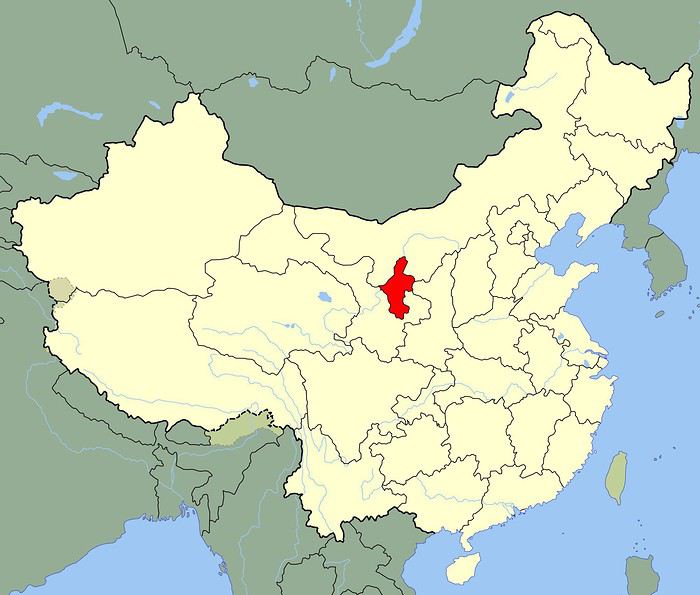 Après avoir réceptionné notre véhicule, outil indispensable pour ce road trip de 600 kilomètres seulement (l'avantage de visiter la plus petite province de cet immense pays), un SUV de Buick plutôt maigre en terme d'équipement, nous commençons notre exploration par la ville de Yinchuan, capitale de la province autonome du Ningxia. Yinchuan n’a pas l’allure des grandes capitales provinciales du pays, elle semble vide et si petite. On y roule plutôt facilement sur les grandes avenues et on se gare sans difficulté.
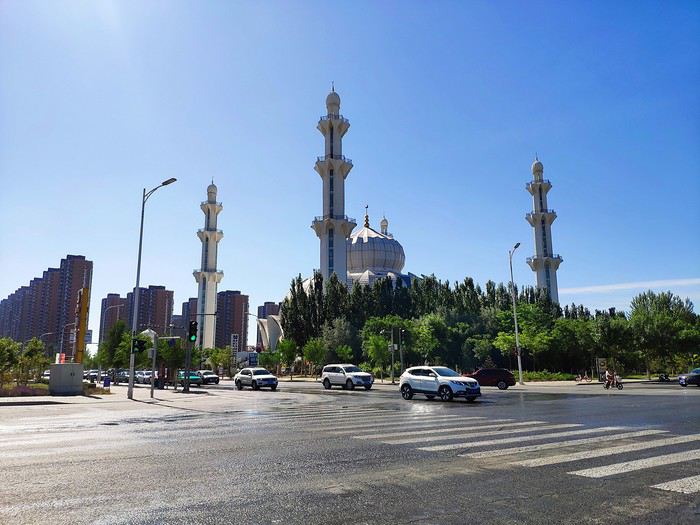 Cette région qui a la particularité d’être administrée par la minorité musulmane Hui, a une histoire assez originale, la région autonome du Ningxia a été fondée en 1959 seulement. C'est une des régions qui est tout en bas des classements du pays, en terme de richesse, de PIB ou de population... Mais qui est devenu un grand centre de production de vin ! Sur les contreforts des Montagnes de Helan Shan, on voit défiler les panneaux indiquant les domaines viticoles qui se visitent. Pour ce premier jour, on part donc logiquement d’abord à la visite des bâtiments caractéristiques de la ville, tout d’abord la mosquée de Nanguan.
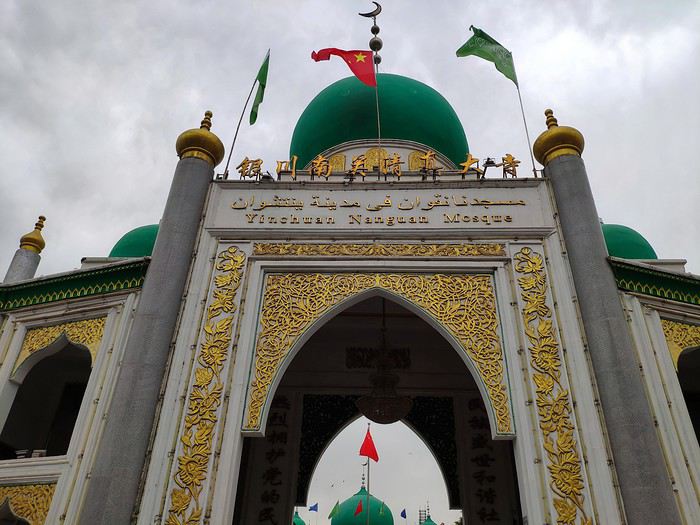 Tout autour de la mosquée, des vendeurs de moutons hallal.
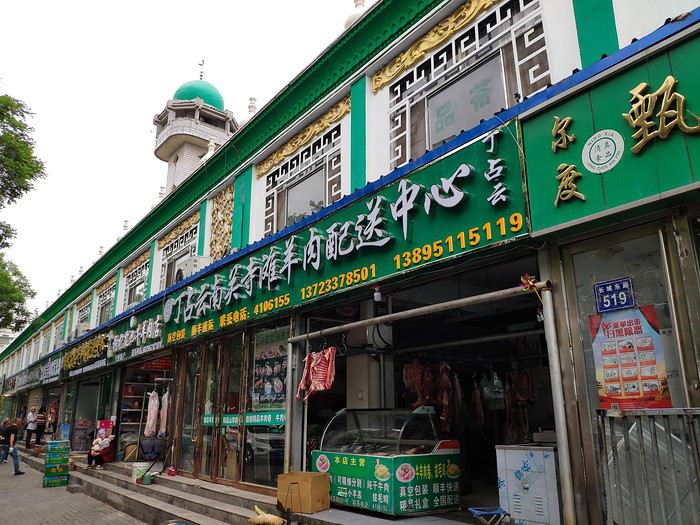 Pour continuer notre découverte de Yinchuan et de la culture Hui, nous nous rendons en sortie de la ville, au Hui Minority cultural center, qui est un ensemble de bâtiments (pas encore finis) dont une très belle mosquée encore.
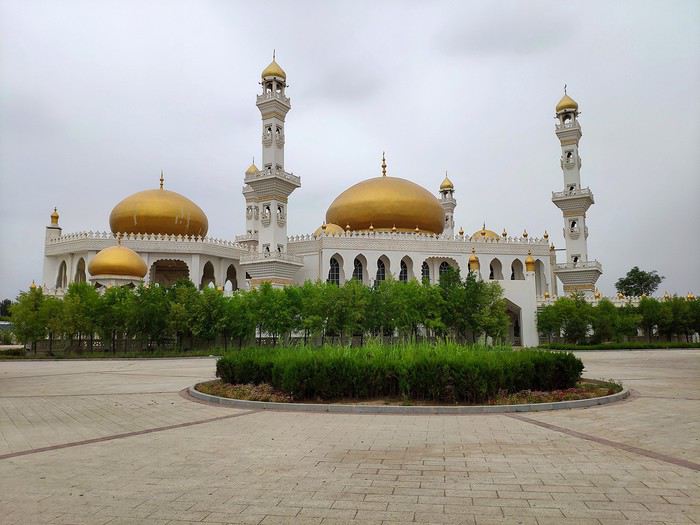 L'intérieur est très joli.
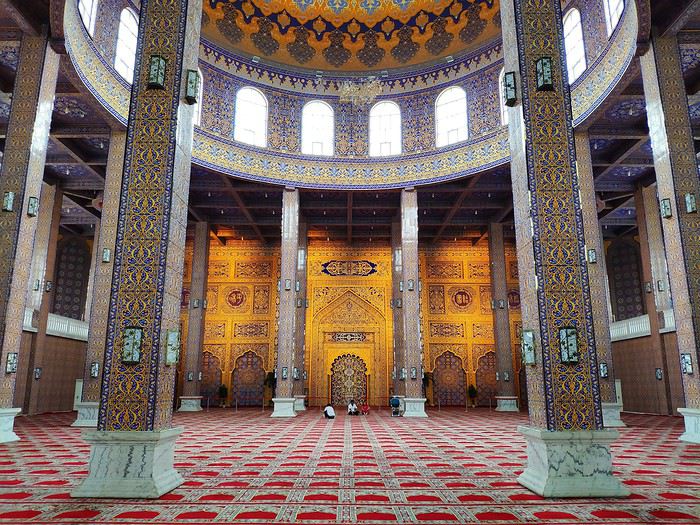 On y voit fortement l’influence de la route de la soie.
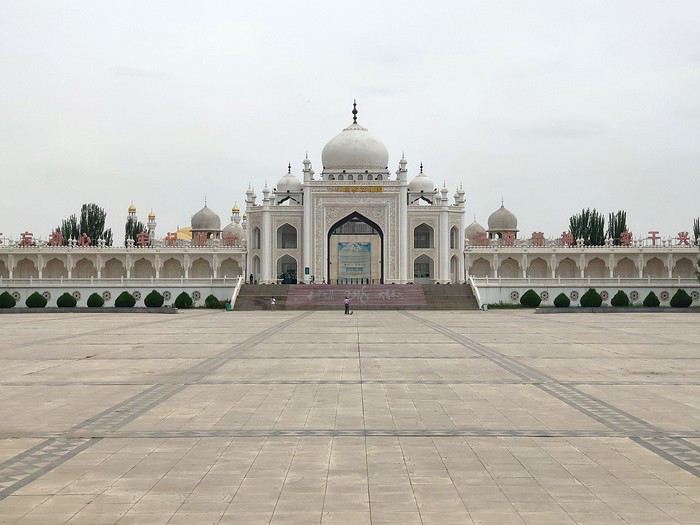 Après ce premier aperçu culturel de la région du Ningxia, nous mangeons un repas local composé de mouton bien sûr et accompagné d’une salade de pousses de Goji. La baie de Goji est la première spécialité de la région du Ningxia, un super fruit réputé pour contenir pleins de micronutriments.
L’après midi est consacré aux mausolées royaux de la dynastie Xixia. Cette dynastie a régné sur cette région de Chine il y a 5000 ans et leur sépulture est considérée comme un trésor archéologique. Les tombes en forme de grande butte de terre séchée entourés de murailles ont été stratégiquement placées selon les principes du Fengshui, entre les montagnes de Helan Shan et le Fleuve Jaune.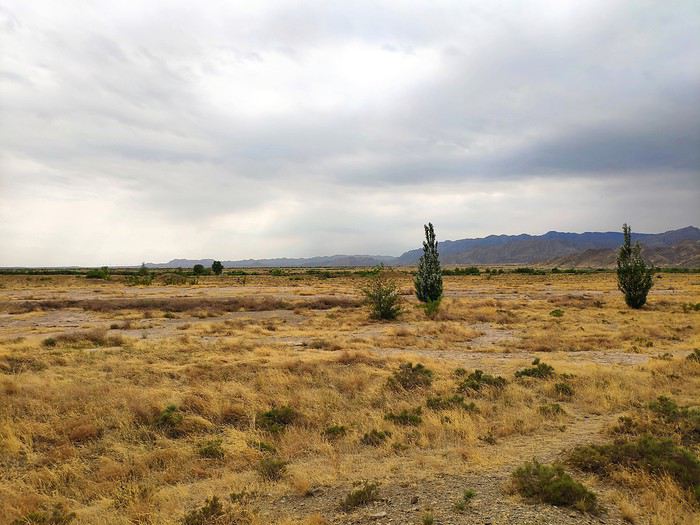 La dynastie Xixia est une dynastie qui a régné sur une partie de la route de la soie avant d'être finalement vaincue par les Mongols au XIIIe siècle. Le site est grandiose avec cette plaine aride au pied de la chaine de montagne de Helan.
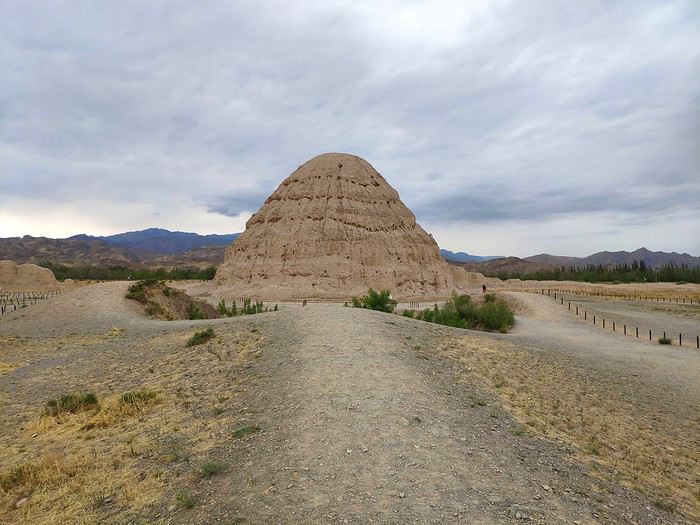 Le site étant immense, il faut prendre d’abord une navette pour en faire le tour puis ensuite on peut louer des vélos pour rejoindre les dernières tombes. Le problème est qu’il est déjà tard et il n’est plus possible de louer de vélos, on part donc en exploration à pieds pour aller s’approcher le plus près, mais on sait que l’on n’aura pas le temps de les atteindre, 5 kilomètres de distance.
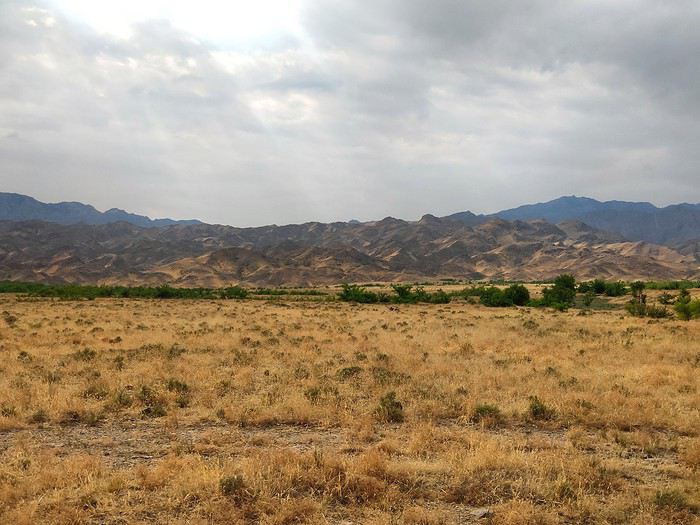 Néanmoins, le site prend une autre dimension à pieds, sous cette chaleur écrasante et le soleil parfois caché par les nuages ajoute une touche grandiose à ce site qui semble si vide et immense. On aperçoit la ville de Yinchuan au fond, avec ses grands bâtiments modernes et les cheminées des usines chimiques, deux mondes qui se contemplent avec 1000 ans de différence.
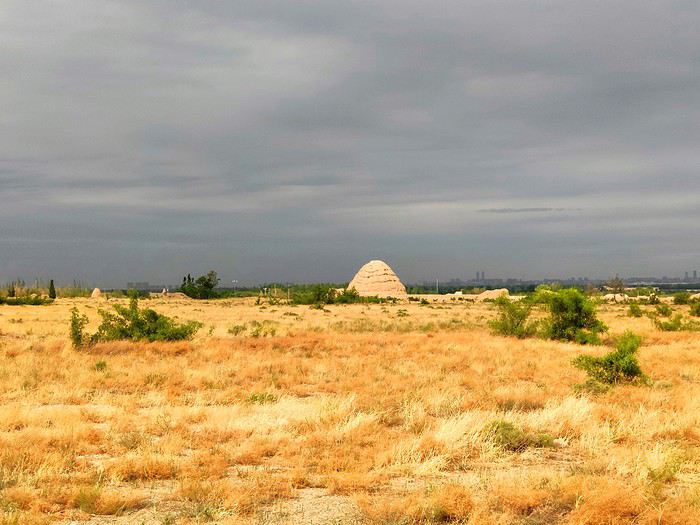 En rentrant en ville, on fait un détour par South Square où se trouve une version miniature de Tian An Men Square.
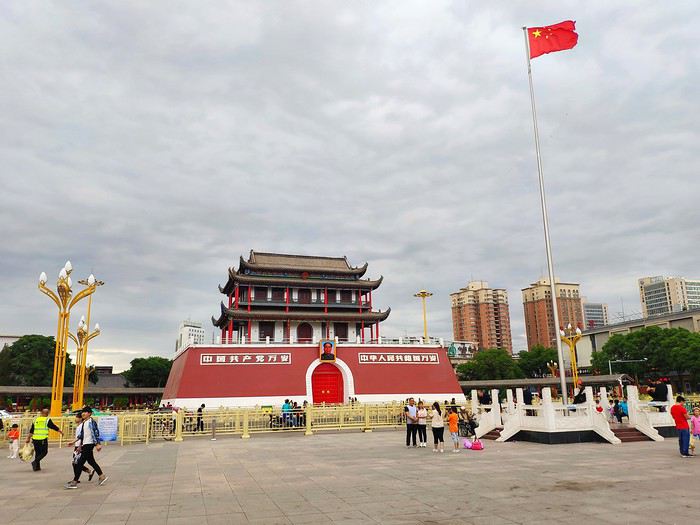 La nuit tombe tard à Yinchuan par rapport à Hangzhou qui se trouve à 2000 kilomètres à l’Est de Hangzhou. Ce qui nous donne l’occasion de rentrer tranquillement en ville et de visiter le quartier d’affaire de Yinchuan.
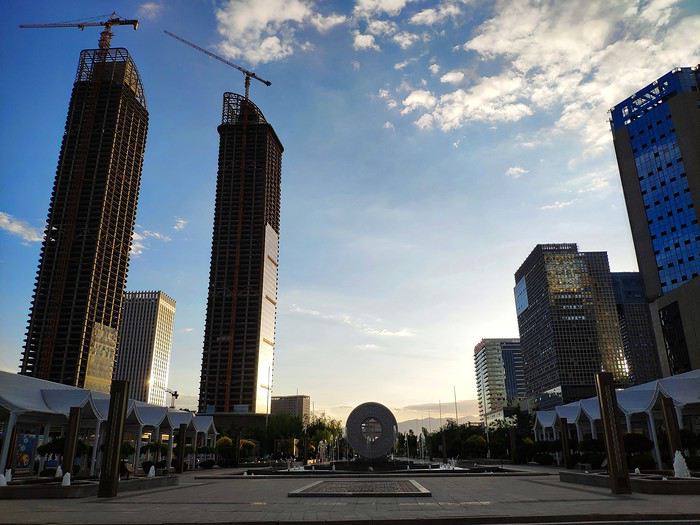 Puis on grimple regarder le soleil se coucher depuis une esplanade qui est parfaitement orientée plein Ouest pour terminer cette première journée dans le Ningxia.
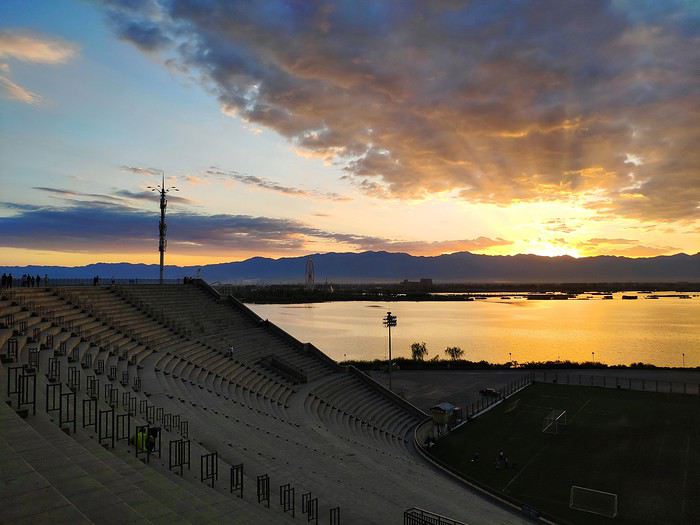
A suivre...
De retour d'un petit voyage dans une région de Chine, je voudrai partager avec vous ce carnet de voyage, j'espère qu'il vous plaira. Il vous permettra aussi d'avoir
Quelques jours dans le Nord-Ouest de la Chine, dans la minuscule région du Ningxia traversée par le Fleuve Jaune, sur les traces des civilisations de la Route de la Soie, et surtout à la découverte d’un condensé de majestueux paysages arides : désert de sable, grasslands verdoyantes, montagnes ocres. Une région pas très connue en dehors de Chine, voici une carte pour vous permettre de situer cette petite région (en rouge):
Après avoir réceptionné notre véhicule, outil indispensable pour ce road trip de 600 kilomètres seulement (l'avantage de visiter la plus petite province de cet immense pays), un SUV de Buick plutôt maigre en terme d'équipement, nous commençons notre exploration par la ville de Yinchuan, capitale de la province autonome du Ningxia. Yinchuan n’a pas l’allure des grandes capitales provinciales du pays, elle semble vide et si petite. On y roule plutôt facilement sur les grandes avenues et on se gare sans difficulté.
Cette région qui a la particularité d’être administrée par la minorité musulmane Hui, a une histoire assez originale, la région autonome du Ningxia a été fondée en 1959 seulement. C'est une des régions qui est tout en bas des classements du pays, en terme de richesse, de PIB ou de population... Mais qui est devenu un grand centre de production de vin ! Sur les contreforts des Montagnes de Helan Shan, on voit défiler les panneaux indiquant les domaines viticoles qui se visitent. Pour ce premier jour, on part donc logiquement d’abord à la visite des bâtiments caractéristiques de la ville, tout d’abord la mosquée de Nanguan.
Tout autour de la mosquée, des vendeurs de moutons hallal.
Pour continuer notre découverte de Yinchuan et de la culture Hui, nous nous rendons en sortie de la ville, au Hui Minority cultural center, qui est un ensemble de bâtiments (pas encore finis) dont une très belle mosquée encore.
L'intérieur est très joli.
On y voit fortement l’influence de la route de la soie.
Après ce premier aperçu culturel de la région du Ningxia, nous mangeons un repas local composé de mouton bien sûr et accompagné d’une salade de pousses de Goji. La baie de Goji est la première spécialité de la région du Ningxia, un super fruit réputé pour contenir pleins de micronutriments.L’après midi est consacré aux mausolées royaux de la dynastie Xixia. Cette dynastie a régné sur cette région de Chine il y a 5000 ans et leur sépulture est considérée comme un trésor archéologique. Les tombes en forme de grande butte de terre séchée entourés de murailles ont été stratégiquement placées selon les principes du Fengshui, entre les montagnes de Helan Shan et le Fleuve Jaune.
La dynastie Xixia est une dynastie qui a régné sur une partie de la route de la soie avant d'être finalement vaincue par les Mongols au XIIIe siècle. Le site est grandiose avec cette plaine aride au pied de la chaine de montagne de Helan.
Le site étant immense, il faut prendre d’abord une navette pour en faire le tour puis ensuite on peut louer des vélos pour rejoindre les dernières tombes. Le problème est qu’il est déjà tard et il n’est plus possible de louer de vélos, on part donc en exploration à pieds pour aller s’approcher le plus près, mais on sait que l’on n’aura pas le temps de les atteindre, 5 kilomètres de distance.
Néanmoins, le site prend une autre dimension à pieds, sous cette chaleur écrasante et le soleil parfois caché par les nuages ajoute une touche grandiose à ce site qui semble si vide et immense. On aperçoit la ville de Yinchuan au fond, avec ses grands bâtiments modernes et les cheminées des usines chimiques, deux mondes qui se contemplent avec 1000 ans de différence.
En rentrant en ville, on fait un détour par South Square où se trouve une version miniature de Tian An Men Square.
La nuit tombe tard à Yinchuan par rapport à Hangzhou qui se trouve à 2000 kilomètres à l’Est de Hangzhou. Ce qui nous donne l’occasion de rentrer tranquillement en ville et de visiter le quartier d’affaire de Yinchuan.
Puis on grimple regarder le soleil se coucher depuis une esplanade qui est parfaitement orientée plein Ouest pour terminer cette première journée dans le Ningxia.
A suivre...
bonjour ,
ça y est j'ai RV avec Shaolei pour prendre ma première leçon de Mandarin: en faite on va faire connaissance.
Je pars en juillet-aout 2018 sur 30 jours (à cause du visa sinon cela pourrait être 40 ou 50 jours)
avec un ami.
Mon but principal est de rencontrer les gens dans leur quotidien et plus particulièrement les ehtnies du sud ( Mao-Dong), car je pense qu'il ont su garder des valeurs ( accueil, solidarité) que la facilité de notre vie occidentale nous a fait oublié.
Je sais que l'échange avec les mots sera difficile voire impossible mais je pense aussi que tous ne passe pas par les mots ( il y a la musique, les sons, les odeurs, les émotions qui sont universels).
Par contre, je veux apprendre le minimun pour le premier pas qui est à mon avis le plus important et apprendre le minimum à faire pour ne pas blesser les gens que je vais rencontrer.
Mais là, je viens aussi vous faire part de mon désarroi pour que cela ne coûte pas trop cher.
J'ai demandé 1 devis à une agence de voyage car je n'ai pas forcément envie de me prendre la tête pour gagner 100€ mais si c'est pour en gagner 1000 là c'est autre chose.
Voilà mon programme ( pour 15 juillet-15 aout 2018 environ):
vol Montpellier-Pékin
visite cité interdite-grande muraille
nuit à Pékin
transfert en train vers Xi'an pour voir le mausolée de l'empereur Qin avec guide parlant français
nuit à Xi'an
transfert vers Guiyang
nuit à Guiyang
Et c'est là que ça commence vraiment pour moi, il nous restera au moins 20 jours pour partir à pied et en utilisant les transports locaux avec pour unique objectif de rencontrer les gens hors des sentiers touristiques.
vol retour Guiyang_Montpellier
Pour l'agence , pensez vous qu'elle peut me fournir cela pour 1000€.
Pensez vous possible de l'obtenir pour ce budget là.
Merci de vos réponses
Dominique
Bonjour,
tout nouveau sur le forum et n'ayant voyagé que dans les pays européens ne nécessitant que ma carte d'identité je me permet de poster un message pour me rassurer.
J'ai récupéré ce matin mon passeport avec engouement et euphorie d'enfin visiter le Japon. Ce qui m'à donc poussé à survoler le passeport au moment de me le donner, il y à donc une erreur sur le code postal 30100 au lieu de 30190. Toutes les autres données sont bonnes.
Pensez vous que cela posera problème ? j'ai une escale à pékin à l'aller comme au retour avant l'arrivée au Japon et le retour en France. Pourrait-il y avoir un problème avec les différents services aéroportuaires ? Et devrais-je refaire le passeport ?
Bien cordialement, Benjamin
tout nouveau sur le forum et n'ayant voyagé que dans les pays européens ne nécessitant que ma carte d'identité je me permet de poster un message pour me rassurer.
J'ai récupéré ce matin mon passeport avec engouement et euphorie d'enfin visiter le Japon. Ce qui m'à donc poussé à survoler le passeport au moment de me le donner, il y à donc une erreur sur le code postal 30100 au lieu de 30190. Toutes les autres données sont bonnes.
Pensez vous que cela posera problème ? j'ai une escale à pékin à l'aller comme au retour avant l'arrivée au Japon et le retour en France. Pourrait-il y avoir un problème avec les différents services aéroportuaires ? Et devrais-je refaire le passeport ?
Bien cordialement, Benjamin
Bonjour,
J'ai pris un billet la semaine prochaine entre Xi'an et Guilin sur un vol Deer Air (code JD) ...
Quelqu'un a t-il l'expérience de cette compagnie ?
Y t'il 1 lounge pas trop cher à L'aéroport Capital International de Pékin ?
Combien ?
Faut-il réserver ?
Comment trouver un Mot de Passe Wifi à L'aéroport Capital International de Pékin ? $
Cordialement FerDex
Cordialement FerDex
Article extrait du blog Réussir en Chine
Le Renminbi est la monnaie légale utilisée dans toute la Chine continentale. Egalement appelée le Yuan, cette devise est émise par la Banque Populaire de Chine, l’autorité monétaire du pays. Son code ISO 4217 est CNY, pour Chinese Yuan. Cependant, on retrouve fréquemment l’abréviation RMB pour RenMinBi (qui littéralement signifie monnaie du peuple). L’utilisation du symbole latinisé ¥ est de plus en plus courante, surtout dans les correspondances à caractère professionnel.
Dans le langage courant le yuan est généralement appelé kuài (se prononce couaille). Cette particule est, en Mandarin, ce que l’on appelle un spécificatif, celui des morceaux et des sommes d’argent.
Un yuan est divisé en 10 jiǎo (dizaines de centimes) et en 100 fēn (centimes). Les billets de banque sont beaucoup plus utilisés que les pièces. Les billets sont en coupures de 100¥, 50¥, 20¥, 10¥, 5¥, 2¥, 1¥, 0.5¥, 0.2¥ et 0.1¥. Les pièces quant à elles sont de 1¥, 0.5¥, 0.1¥, 0.05¥, 0.02¥ et 0.01¥. Les centimes (unités jiǎo et fēn) sont plutôt rares et tendent à disparaître de la circulation.
Attention, il convient de toujours rester vigilant car de nombreux faux billets circulent dans toute la Chine. On estime à plusieurs centaines de millions de Renminbi le montant de ces contrefaçons circulant dans l’Empire du Milieu. Les billets de 50¥ mais surtout ceux de 100¥ sont particulièrement concernés et les touristes étrangers sont des proies faciles quand il s’agit de refourguer de la fausse monnaie.
Voici quelques conseils très pratiques pour identifier les bons billets de 100¥.
La première chose à faire est d’agiter le billet en le tenant des deux mains, un vrai billet doit émettre un bruit sec et clair différent de celui du papier à lettre.

1) Le portrait de Mao en filigrane est visible lorsque l'on regarde le billet à travers une source de lumière. Le visage ainsi observé doit être net et bien ressortir. 2) Une bande magnétique, visible à l'œil nu, est incrustée dans le papier. Elle est détectable par les appareils de contrôle de billets. 3) Le col de Mao est strié, en relief. On peut facilement s'en rendre compte en passant l’ongle dessus. 4) Le chiffre 100 est imprimé selon une technique optique permettant d’observer un changement de couleur en fonction de l'angle de vue. 5) Le montant du billet est visible uniquement sous lampe UV. De nombreux appareils de contrôle sont équipés de lampe UV.
Il existe d'autres astuces pour juger de l'authenticité d'un billet de banque chinois mais ces quelques précautions suffiront à vous assurer contre certaines arnaques.
Selon la loi chinoise, toute personne détenant ou utilisant intentionnellement des faux billets de banque peut faire face à une peine de prison allant jusqu'à dix ans. Ne vous étonnez pas si les commerçants chinois manipulent vos billets dans tous les sens, ces petits contrôles sont systématiques et font partie des habitudes commerçantes locales.
JB
Le Renminbi est la monnaie légale utilisée dans toute la Chine continentale. Egalement appelée le Yuan, cette devise est émise par la Banque Populaire de Chine, l’autorité monétaire du pays. Son code ISO 4217 est CNY, pour Chinese Yuan. Cependant, on retrouve fréquemment l’abréviation RMB pour RenMinBi (qui littéralement signifie monnaie du peuple). L’utilisation du symbole latinisé ¥ est de plus en plus courante, surtout dans les correspondances à caractère professionnel.
Dans le langage courant le yuan est généralement appelé kuài (se prononce couaille). Cette particule est, en Mandarin, ce que l’on appelle un spécificatif, celui des morceaux et des sommes d’argent.
Un yuan est divisé en 10 jiǎo (dizaines de centimes) et en 100 fēn (centimes). Les billets de banque sont beaucoup plus utilisés que les pièces. Les billets sont en coupures de 100¥, 50¥, 20¥, 10¥, 5¥, 2¥, 1¥, 0.5¥, 0.2¥ et 0.1¥. Les pièces quant à elles sont de 1¥, 0.5¥, 0.1¥, 0.05¥, 0.02¥ et 0.01¥. Les centimes (unités jiǎo et fēn) sont plutôt rares et tendent à disparaître de la circulation.
Attention, il convient de toujours rester vigilant car de nombreux faux billets circulent dans toute la Chine. On estime à plusieurs centaines de millions de Renminbi le montant de ces contrefaçons circulant dans l’Empire du Milieu. Les billets de 50¥ mais surtout ceux de 100¥ sont particulièrement concernés et les touristes étrangers sont des proies faciles quand il s’agit de refourguer de la fausse monnaie.
Voici quelques conseils très pratiques pour identifier les bons billets de 100¥.
La première chose à faire est d’agiter le billet en le tenant des deux mains, un vrai billet doit émettre un bruit sec et clair différent de celui du papier à lettre.
1) Le portrait de Mao en filigrane est visible lorsque l'on regarde le billet à travers une source de lumière. Le visage ainsi observé doit être net et bien ressortir. 2) Une bande magnétique, visible à l'œil nu, est incrustée dans le papier. Elle est détectable par les appareils de contrôle de billets. 3) Le col de Mao est strié, en relief. On peut facilement s'en rendre compte en passant l’ongle dessus. 4) Le chiffre 100 est imprimé selon une technique optique permettant d’observer un changement de couleur en fonction de l'angle de vue. 5) Le montant du billet est visible uniquement sous lampe UV. De nombreux appareils de contrôle sont équipés de lampe UV.
Il existe d'autres astuces pour juger de l'authenticité d'un billet de banque chinois mais ces quelques précautions suffiront à vous assurer contre certaines arnaques.
Selon la loi chinoise, toute personne détenant ou utilisant intentionnellement des faux billets de banque peut faire face à une peine de prison allant jusqu'à dix ans. Ne vous étonnez pas si les commerçants chinois manipulent vos billets dans tous les sens, ces petits contrôles sont systématiques et font partie des habitudes commerçantes locales.
JB
Bonjour
quelqu'un pourrait il me renseigner sur le prix d'un billet hong kong manille sur cebu pacific acheter au comptoir cebu de l'aeroport ou peut etre ds une agence.
Je connais le prix sur internet mais c'est impossible de le reserver meme avec un code 3d secure.
Merci pour vos reponses. lapone
Voici une histoire que j'ai vécu en janvier 2009 en Chine, et qui peut être pourra servir à d'autres personnes :
En voulant retirer de l'argent avec ma Carte bleue visa à Hangzhou, le distributeur de billet m'indique que ma carte est inutilisable car un mauvais code confidentiel a deja été rentré 3 fois sans succès.
Inquiet, je contacte ma banque en France qui m'indique qu 'effectivement, quelqu'un a essayé d'utiliser ma carte bleue le jour meme pour essayer de retirer de l argent dans un distributeur automatique. Comme le code utilisé était faux, la carte est devenue inutilisable.
Je ne comprends pas ce qui a pu se passer : je porte ma carte bleue TOUT LE TEMPS sur moi quand je voyage, donc impossible qu'une autre personne ait pu tenter de l'utiliser. L'hypothèse la plus probable est que :
1) quelqu'un ait noté le numéro de ma CB, par exemple en payant dans un hotel
2) cette personne ait fabriqué une fausse carte portant le meme numéro et tenté de l'utiliser dans un distributeur automatique. Heureusement le code confindentiel utilisé n'était pas le bon
Je ne voie pas d'autre explication ...
J'ai bien sur fait opposition sur ma CB.
Heureusement, je ne voyageais pas seul et j'ai pu me faire envoyer de l'argent de France via WESTERN UNION pour poursuivre mon voyage. Le transfert est très rapide et peut se faire depuis n'importe quel bureau de poste en France (ou presque). Il y a des comptoirs WESTERN UNION un peu partout dans les grandes villes chinoises pour récupérer l'argent. Un seul inconvenient : le transfert est tres cher
Moralité :
1) etre TRES VIGILANT en utilisant sa CB en Chine, meme en payant dans un hotel, un grand magasin ou une agence de voyage
2) Toujours composer son code confidentiel à l'abri des regards indiscrets, par exemple en cachant sa main avec l'autre main
3) Préferer les paiments en liquide (mais attention aux faux billets de 100 RMB)
De voyageur insouciant, je suis devenu voyageur constamment méfiant...
Liob
En voulant retirer de l'argent avec ma Carte bleue visa à Hangzhou, le distributeur de billet m'indique que ma carte est inutilisable car un mauvais code confidentiel a deja été rentré 3 fois sans succès.
Inquiet, je contacte ma banque en France qui m'indique qu 'effectivement, quelqu'un a essayé d'utiliser ma carte bleue le jour meme pour essayer de retirer de l argent dans un distributeur automatique. Comme le code utilisé était faux, la carte est devenue inutilisable.
Je ne comprends pas ce qui a pu se passer : je porte ma carte bleue TOUT LE TEMPS sur moi quand je voyage, donc impossible qu'une autre personne ait pu tenter de l'utiliser. L'hypothèse la plus probable est que :
1) quelqu'un ait noté le numéro de ma CB, par exemple en payant dans un hotel
2) cette personne ait fabriqué une fausse carte portant le meme numéro et tenté de l'utiliser dans un distributeur automatique. Heureusement le code confindentiel utilisé n'était pas le bon
Je ne voie pas d'autre explication ...
J'ai bien sur fait opposition sur ma CB.
Heureusement, je ne voyageais pas seul et j'ai pu me faire envoyer de l'argent de France via WESTERN UNION pour poursuivre mon voyage. Le transfert est très rapide et peut se faire depuis n'importe quel bureau de poste en France (ou presque). Il y a des comptoirs WESTERN UNION un peu partout dans les grandes villes chinoises pour récupérer l'argent. Un seul inconvenient : le transfert est tres cher
Moralité :
1) etre TRES VIGILANT en utilisant sa CB en Chine, meme en payant dans un hotel, un grand magasin ou une agence de voyage
2) Toujours composer son code confidentiel à l'abri des regards indiscrets, par exemple en cachant sa main avec l'autre main
3) Préferer les paiments en liquide (mais attention aux faux billets de 100 RMB)
De voyageur insouciant, je suis devenu voyageur constamment méfiant...
Liob
A compter du 14 février 2009, Qantas Airways annule des vols SYD-HKG-SYD, entrainant ainsi l'annulation des vols AF en code share
AF8075 (QF87) SYD-HKG : Mardi, Jeudi et Samedi a/c du 14 Février
AF8074 (QF88) HKG-SYD : Mercredi, Vendredi et Dimanche a/c du 15 Février.
Vous avez dit la crise?
Vous avez dit la crise?
Je séjourne à la fin du mois à l'hotel renaissance Tianjin TEDA (groupe marriott)
n'ayant pas l'habitude pour les connexions à l'etrangé, comment cela s'organise ?
Il y à une connexion filaire dans chaque chambre que faut il comme câble pour le raccordement ? (je possede un ordi portable) Est ce que l'hotel donne son propre accès ? FAI + Code ou faut il appeler le miens avec le coût que cela engendre ? 🙁
n'ayant pas l'habitude pour les connexions à l'etrangé, comment cela s'organise ?
Il y à une connexion filaire dans chaque chambre que faut il comme câble pour le raccordement ? (je possede un ordi portable) Est ce que l'hotel donne son propre accès ? FAI + Code ou faut il appeler le miens avec le coût que cela engendre ? 🙁
Hi there,
For our upcoming trip to China, we're planning to get around by bus and train.
For trains, we found a few sites, including:
https://www.travelchinaguide.com/?srsltid=AfmBOoqfiOqfmBSYlDwjPCXo4nkF7uF3ILYs_o3wlLu9uBy7gC7iN-2C,
and for buses:
https://www.chinabusguide.com/
but the latter site isn’t very complete.
Have any of you tried other sites?
Thanks for your help!
Alod
Bonjour à tous !
J’écris cette note pour avoir quelques informations sur la compagnie Air China, en effet en janvier prochain je m’envole vers l’Australie en passant par Shanghai pour une escale de 12h et c’Est pourquoi j’aimerais savoir si les bagages étaient directement transférés vers l’autre vol ou est ce que je serais dans l’obligAtion de les ré enregistrer ? Si quelqu’un aurait déjà vécu la même expérience ?
Enfin J’ai vu qu’en transit à Pékin, la compagnie faisait directement le transfert de bagages et ayant au retour une escale à Pékin j’aimerais Être sur de cette information !
Merci ! 😉
J’écris cette note pour avoir quelques informations sur la compagnie Air China, en effet en janvier prochain je m’envole vers l’Australie en passant par Shanghai pour une escale de 12h et c’Est pourquoi j’aimerais savoir si les bagages étaient directement transférés vers l’autre vol ou est ce que je serais dans l’obligAtion de les ré enregistrer ? Si quelqu’un aurait déjà vécu la même expérience ?
Enfin J’ai vu qu’en transit à Pékin, la compagnie faisait directement le transfert de bagages et ayant au retour une escale à Pékin j’aimerais Être sur de cette information !
Merci ! 😉
Bonjour à tous
Le sujet a déjà été évoqué, mais je ne parviens pas à retrouver les informations. Quelqu'un peut-il me rappeler comment sont mis en vente les billets de train en Chine ? Il me semble que c'est quelque chose comme 1/3 à J-30, 1/3 à J-20 et le dernier tiers à J-10.
Y a-t-il une bonne âme pour m'éclairer ?
Merci 🙂
Le sujet a déjà été évoqué, mais je ne parviens pas à retrouver les informations. Quelqu'un peut-il me rappeler comment sont mis en vente les billets de train en Chine ? Il me semble que c'est quelque chose comme 1/3 à J-30, 1/3 à J-20 et le dernier tiers à J-10.
Y a-t-il une bonne âme pour m'éclairer ?
Merci 🙂
Bonjour,
je suis a la recherche d'un chauffeur parlant Français ou anglais pour la visite des alentour de shanghai.
nous sommes 3 personne.
les dates serais du dimanche 9 avril au 13 avril au soir. On prend le train de nuit de Yangzhou.
cordialement
Bonjour ! Je m’apprête à partir en voyages aux Philippines. Au retour, à la suite d’un changement des horaires de vols, j’ai une escale de 18h à Pékin : arrivée à l’aéroport à 11h55 et départ à 6h45 le lendemain. Est-ce qu’une telle escale me laisse le temps d’aller en ville ? Combien de temps cela prend-t-il de faire le visa 72h et de passer la douane ? Est-il possible de retourner à l’aéroport en début de soirée et de passer la nuit dans la zone de départ ? Merci par avance pour vos retours d’expérience.
Les montagnes saintes chez les Dong.
Je pars ce mois-ci à la rencontre de villages Dongs isolés au milieu des montagnes considérées comme sacrées par les Dongs. En fait j’ai prévu d’établir une base à Zhaoxing, célèbre village Dong. Mais plutôt que d’aller vers les petits villages hyper touristiques aux alentours de Zhaoxing, tels Tang’an, Xiage et Shangge, Jilun, Jitang et Dengjiang qui ont perdu toute leur authenticité avec le passage incessant des touristes, j’ai préféré aller plus au sud pour me perdre dans les petits villages Dongs du massif montagneux de SaSui.
http://www.code-couleur.fr/y/mont-sasui.jpg
Les Dongs ont dans cette région des montagnes dites sacrées qui sont le lieu de pèlerinage. Le mont Qilin, le mont Nongpan et le mont Sasui. Situé à une quinzaine de km au sud de Zhaoxing, le mont SaSui est une montagne sainte. La légende veut que l’ancêtre la plus lointaine des Dong, la déesse Sa monta sur cette colline pour venir y mourir et ensuite monter au ciel. Il existe un chapelet de petits villages au pied de ces montagnes qui j’ai choisi de traverser lors d’une randonnée de trois jours.
Je vais partir au nord de la vallée de la rivière Duliu en direction du village de Dengba, puis remonter une petite valée en direction du mont NongPan et j’espère trouver un toit pour dormir dans le village du même nom situé au pied de cette montagne. Puis je passerais dans une vallée plus au sud pour rejoindre les villages de xinping, de Pingle, puis Zailiu et finalement rejoindre Shangdiping où je passerai la nuit. Le retour vers Zhaoping se fera en remontant plein nord la vallée de Shangdiping puis après les monts Ma’an et Qilin, se sera la descente vers le petit village de Jilun avant de terminer la randonnée à Zhaoxing.
Je pars ce mois-ci à la rencontre de villages Dongs isolés au milieu des montagnes considérées comme sacrées par les Dongs. En fait j’ai prévu d’établir une base à Zhaoxing, célèbre village Dong. Mais plutôt que d’aller vers les petits villages hyper touristiques aux alentours de Zhaoxing, tels Tang’an, Xiage et Shangge, Jilun, Jitang et Dengjiang qui ont perdu toute leur authenticité avec le passage incessant des touristes, j’ai préféré aller plus au sud pour me perdre dans les petits villages Dongs du massif montagneux de SaSui.
http://www.code-couleur.fr/y/mont-sasui.jpg
Les Dongs ont dans cette région des montagnes dites sacrées qui sont le lieu de pèlerinage. Le mont Qilin, le mont Nongpan et le mont Sasui. Situé à une quinzaine de km au sud de Zhaoxing, le mont SaSui est une montagne sainte. La légende veut que l’ancêtre la plus lointaine des Dong, la déesse Sa monta sur cette colline pour venir y mourir et ensuite monter au ciel. Il existe un chapelet de petits villages au pied de ces montagnes qui j’ai choisi de traverser lors d’une randonnée de trois jours.
Je vais partir au nord de la vallée de la rivière Duliu en direction du village de Dengba, puis remonter une petite valée en direction du mont NongPan et j’espère trouver un toit pour dormir dans le village du même nom situé au pied de cette montagne. Puis je passerais dans une vallée plus au sud pour rejoindre les villages de xinping, de Pingle, puis Zailiu et finalement rejoindre Shangdiping où je passerai la nuit. Le retour vers Zhaoping se fera en remontant plein nord la vallée de Shangdiping puis après les monts Ma’an et Qilin, se sera la descente vers le petit village de Jilun avant de terminer la randonnée à Zhaoxing.
Bonjour,
Après 70 ans on n'a pas le droit de conduire son véhicule en Chine.
Savez-vous s'il y a des exceptions ... officielles ou non.
Mercie.
Bonjour Voyage,
Petit brief rapide sur l'aventure dans laquelle on s'embarque avec mon grand frere :
>>> Nous voulons partir debut novembre de Paris et pedaler jusqu'a Pekin. Duree estimee du periple : 5 mois.Itineraire : France - Allemagne - Autriche - Slovenie - Croatie - Bosnie - Serbie - Bulgarie - Turquie - Georgie - Armenie - Iran - Turkmenistan - Ouzbekistan - Kyrgyztan - (Chine pour rejoindre la Mongolie) - Mongolie - Chine.Mettons qu'on va pouvoir gerer la preparation de l'equipement (l'hiver va nous dicter un serieux dress code), certaines questions demeurent. Les voici :VISA Chine : sachant que le visa chinois n'est valide que 3 mois apres son obtention et que nous ne serons pas arrive en Chine avant (au moins) 4 mois, comment peut-on s'arranger ? Est-il possible d'obtenir une derogation ? J'ai lu qu'il est sinon envisageable de le faire depuis un autre pays (Oulanbator notamment, mais on m'a parle de 2 semaines de delai, bloques dans cette ville de la mort......), avez-vous des conseils a ce sujet?General : il nous reste tres peu de temps avant le depart programme, selon vous, quels visas doit-on faire en priorité ? Iran absolument, Chine si possible, quid de l'Asie Mineure (turkmen, ouzbek, kazak) ? Peut-on faire ces visa en arrivant par la frontiere terrestre (si oui lesquelles faut-il viser ?) ou doit-on imperativement se presenter avec un visa fait en amont?Meme question pour la Mongolie : le visa peut-il s'obtenir a la frontiere ?Ce sont les premieres questions qui me viennent. Je vous serais fort reconnaissant de m'éclairer sur les points que vous maitrisez ! J'avoue que ce parcours du combattant administratif me tétanise un peu. Merci
Eloi Renaudin
Petit brief rapide sur l'aventure dans laquelle on s'embarque avec mon grand frere :
>>> Nous voulons partir debut novembre de Paris et pedaler jusqu'a Pekin. Duree estimee du periple : 5 mois.Itineraire : France - Allemagne - Autriche - Slovenie - Croatie - Bosnie - Serbie - Bulgarie - Turquie - Georgie - Armenie - Iran - Turkmenistan - Ouzbekistan - Kyrgyztan - (Chine pour rejoindre la Mongolie) - Mongolie - Chine.Mettons qu'on va pouvoir gerer la preparation de l'equipement (l'hiver va nous dicter un serieux dress code), certaines questions demeurent. Les voici :VISA Chine : sachant que le visa chinois n'est valide que 3 mois apres son obtention et que nous ne serons pas arrive en Chine avant (au moins) 4 mois, comment peut-on s'arranger ? Est-il possible d'obtenir une derogation ? J'ai lu qu'il est sinon envisageable de le faire depuis un autre pays (Oulanbator notamment, mais on m'a parle de 2 semaines de delai, bloques dans cette ville de la mort......), avez-vous des conseils a ce sujet?General : il nous reste tres peu de temps avant le depart programme, selon vous, quels visas doit-on faire en priorité ? Iran absolument, Chine si possible, quid de l'Asie Mineure (turkmen, ouzbek, kazak) ? Peut-on faire ces visa en arrivant par la frontiere terrestre (si oui lesquelles faut-il viser ?) ou doit-on imperativement se presenter avec un visa fait en amont?Meme question pour la Mongolie : le visa peut-il s'obtenir a la frontiere ?Ce sont les premieres questions qui me viennent. Je vous serais fort reconnaissant de m'éclairer sur les points que vous maitrisez ! J'avoue que ce parcours du combattant administratif me tétanise un peu. Merci
Eloi Renaudin