Discussions Pir971 took part in
About 242 results.
More options
Many results are in French, the community’s main language. English translations are added over time.
Search results
Tanzania 2019 - Polé Polé
KARIBUUU
Over 5 years later, I’m finally getting around to writing the travel journal for our first trip to East Africa: Tanzania. *Polé Polé*, as they say! 😎
A trip I’d started planning just 6 years ago, in February 2019, for my post-internship exam vacation. After returning to South Africa in July 2019 with my family, this trip, planned for September 2019, would be all about discovery and a few firsts: first trip with friends, first trek, first time in East Africa. I really wanted to attempt the Kilimanjaro ascent, try to still see some of its "eternal" ice, and Alison wanted to do as much safari as possible. Unlike with the Zulus, Himbas, or San, visiting a Maasai village wasn’t on the agenda. Thanks to the Kessy Brothers agency, who were super responsive, Sandy from VF, and other members who helped prepare our trip, we settled on the following itinerary:
Day -1 (8/30): Departure from Pointe-à-Pitre Day 0 (8/31): Departure from Paris Day 1 (9/01): Arrival at Kilimanjaro Airport / Ameg Lodge (Moshi) DAY 2 (9/02): Machame gate / Machame camp DAY 3 (9/03): Shira / Shira camp DAY 4 (9/04): Baranco / Baranco camp DAY 5 (9/05): Barafu / Barafu camp DAY 6 (9/06): Barafu + Summit at midnight / Mweka camp DAY 7 (9/07): Mweka gate / Sal Salnero Hotel (Moshi) DAY 8 (9/08): Arusha National Park / Kanga camp DAY 9 (9/09): Tarangire National Park / Kanga camp DAY 10 (9/10): Tarangire National Park / Twiga Lodge DAY 11 (9/11): Lake Manyara / Twiga Lodge DAY 12 (9/12): Ngorongoro Crater / Simba campsite DAY 13 (9/13): Serengeti National Park / Seronera campsite DAY 14 (9/14): Serengeti National Park - Uoga Kuria Camp DAY 15 (9/15): Serengeti National Park / Waso campsite DAY 16 (9/16): Lake Natron / Maasai Giraffe Ecolodge DAY 17 (9/17): Kilimanjaro Airport Day 18 (9/18): Zanzibar Day 19 (9/19): Zanzibar Day 20 (9/20): Zanzibar Day 21 (9/21): Zanzibar
As I mentioned in my first travel journal about our South Africa trip, I’ve had a special connection to Tanzania for a long time. Growing up in the Indian Ocean without ever visiting Africa, those wildlife documentaries on TV when I skipped my pharmacy classes... I imagined and dreamed about this land and country so much.
The original plan was to go just the two of us with Alison, but somehow—though I don’t quite remember how—we ended up organizing the trip with our friends Mélissa and Doriane, who joined us in Arusha after our Kilimanjaro trek for the last two weeks and their very first safari. I think it was Melissa who had the idea to crash our trip, and she was right to do so! 😉 Flights: Pointe-à-Pitre-Grand Case and Grand Case-Paris with Air Caraïbes. Flights: Paris-JRO and ZNZ-Paris with Kenya Airways (layover in Nairobi). Flight: JRO-ZNZ with Air Tanzania.
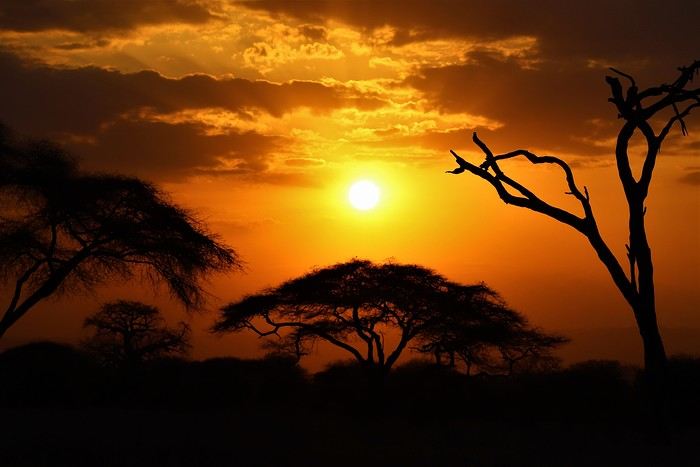
Safe travels! !
Over 5 years later, I’m finally getting around to writing the travel journal for our first trip to East Africa: Tanzania. *Polé Polé*, as they say! 😎
A trip I’d started planning just 6 years ago, in February 2019, for my post-internship exam vacation. After returning to South Africa in July 2019 with my family, this trip, planned for September 2019, would be all about discovery and a few firsts: first trip with friends, first trek, first time in East Africa. I really wanted to attempt the Kilimanjaro ascent, try to still see some of its "eternal" ice, and Alison wanted to do as much safari as possible. Unlike with the Zulus, Himbas, or San, visiting a Maasai village wasn’t on the agenda. Thanks to the Kessy Brothers agency, who were super responsive, Sandy from VF, and other members who helped prepare our trip, we settled on the following itinerary:
Day -1 (8/30): Departure from Pointe-à-Pitre Day 0 (8/31): Departure from Paris Day 1 (9/01): Arrival at Kilimanjaro Airport / Ameg Lodge (Moshi) DAY 2 (9/02): Machame gate / Machame camp DAY 3 (9/03): Shira / Shira camp DAY 4 (9/04): Baranco / Baranco camp DAY 5 (9/05): Barafu / Barafu camp DAY 6 (9/06): Barafu + Summit at midnight / Mweka camp DAY 7 (9/07): Mweka gate / Sal Salnero Hotel (Moshi) DAY 8 (9/08): Arusha National Park / Kanga camp DAY 9 (9/09): Tarangire National Park / Kanga camp DAY 10 (9/10): Tarangire National Park / Twiga Lodge DAY 11 (9/11): Lake Manyara / Twiga Lodge DAY 12 (9/12): Ngorongoro Crater / Simba campsite DAY 13 (9/13): Serengeti National Park / Seronera campsite DAY 14 (9/14): Serengeti National Park - Uoga Kuria Camp DAY 15 (9/15): Serengeti National Park / Waso campsite DAY 16 (9/16): Lake Natron / Maasai Giraffe Ecolodge DAY 17 (9/17): Kilimanjaro Airport Day 18 (9/18): Zanzibar Day 19 (9/19): Zanzibar Day 20 (9/20): Zanzibar Day 21 (9/21): Zanzibar
As I mentioned in my first travel journal about our South Africa trip, I’ve had a special connection to Tanzania for a long time. Growing up in the Indian Ocean without ever visiting Africa, those wildlife documentaries on TV when I skipped my pharmacy classes... I imagined and dreamed about this land and country so much.
The original plan was to go just the two of us with Alison, but somehow—though I don’t quite remember how—we ended up organizing the trip with our friends Mélissa and Doriane, who joined us in Arusha after our Kilimanjaro trek for the last two weeks and their very first safari. I think it was Melissa who had the idea to crash our trip, and she was right to do so! 😉 Flights: Pointe-à-Pitre-Grand Case and Grand Case-Paris with Air Caraïbes. Flights: Paris-JRO and ZNZ-Paris with Kenya Airways (layover in Nairobi). Flight: JRO-ZNZ with Air Tanzania.
Safe travels! !
Preparing for a one-month road trip in Uganda
Yiiihiiiiii😎
Hey everyone, and warm greetings to all you Southern African wanderers exploring the eastern lands of this African forum!
Four years later, I can finally create a new thread about my next trip—and not just any trip: Uganda! 🙂 A destination that’s been making me dream more and more over the past few years. Originally planned for 2019 but swapped for Tanzania, Kilimanjaro, and Zanzibar. Then pushed aside for another well-known African destination, Namibia, with 6 friends in 2021 (but ultimately done with just 2 because of Covid). 2022 was supposed to be the year of our Canada trip (initially planned for 2020 and canceled two years in a row for the same health reasons). The 2021 safari with friends finally happened in South Africa in 2023—a classic loop that didn’t require much planning and let me start dreaming about my next African destination while devouring all the Uganda travel journals, frustrated I couldn’t reply or comment. Uganda was then reconsidered for 2024 as a follow-up to a 6-week road trip in Finland and Norway, starting from Paris to save time, money, and the ecological footprint of a transatlantic round trip—but ultimately canceled due to budget constraints, the start of my freelance work (no more paid leave), the high cost of 6 weeks in Scandinavia, and no desire to cheapen our first Uganda trip.
Uganda will be the absolute priority for 2025! 😉 And I plan to use this time to prepare for the trip properly. I also hope to use this period to get back to writing our travel journals. By absolute priority, I mean minimal restrictions and compromises on budget and travel time. 🙂
So, we’re planning to spend a month in Uganda next summer (2025). The exact month will be decided in the coming weeks. Why a month? To explore a good part of the country (really want to go up to Kidepo), enjoy the stops, and avoid putting ourselves at risk on the roads. Also, several rental companies offered me 4x4 quotes with a 10% discount for 30+ days of rental...
Here’s my humble draft itinerary:
Day 1: Late arrival in Entebbe around 11 PM. Day 2: Pick up 4x4 vehicle. Night in Jinja.
Day 3: Drive and night in Sipi Falls. Day 4: Night in Sipi Falls. Day 5: Night in Moroto. Day 6: Night in Moroto. Day 7: Drive to Kidepo NP. Day 8: Safari in Kidepo NP. Day 9: Safari in Kidepo NP. Day 10: Full day drive to Murchison Falls. Day 11: Safari in Murchison Falls. Day 12: Safari in Murchison Falls. Day 13: Ziwa Rhino Sanctuary. Day 14: Lake Albert. Day 15: Full day drive to Kibale Forest. Day 16: Kibale Forest NP. Day 17: Drive to Kilembe (Rwenzori NP). Day 18: Hike in southern Rwenzori region. OR start Weismann’s Peak trek (Day 1). Day 19: Weismann’s Peak trek (Day 2). Day 20: Weismann’s Peak trek (Day 3). Day 21: Weismann’s Peak trek (Day 4). Day 22: Weismann’s Peak trek (Day 5), night in QENP. Day 23: QENP. Day 24: Visit Ishasha and drive to Lake Bunyonyi. Day 25: Drive to Ruhija. Day 26: Ruhija, Bwindi NP, gorilla tracking. Day 27: Mgahinga Gorilla NP... Day 28: Morning trek (gorillas or golden monkeys). Drive and night in Mburo NP.
Day 31: Visit Mburo NP and drive to Entebbe. Mabamba Swamp if we haven’t seen shoebills yet? Return 4x4 (30 days rental). Day 32: Departure from Entebbe (flight at 7:30 PM direct to Johannesburg with Uganda Airlines).
It’s not easy to visualize such a long itinerary. In terms of nights, it would look like this:
● Entebbe (1 night)
● Jinja (1 night)
● Sipi Falls (2 nights) ● Moroto (2 nights) ● Kidepo NP (3 nights) ● Murchison Falls (3 nights)
● Ziwa Rhino Sanctuary (1 night)
● Lake Albert (1 night) ● Kibale Forest (2 nights)
● Rwenzori NP (5 nights) ● QENP (2 nights)
● Lake Bunyonyi (1 night)
● Ruhija (2 nights)
● Mgahinga Gorilla NP (1 night?)
● Mburo NP (2 nights)
● Entebbe (1 night)
Obviously, I already have a lot of questions .
A question I really like: Where would you add extra nights? Keeping the 5 days in Rwenzori, we still have at least 2 nights to add to this itinerary.
Also, I don’t really have a clear idea about the loop’s direction. Instinctively, I thought of doing the gorillas last to end on a high note, but given the state of rental vehicles and traveler feedback, it seems we might not even make it to the end of the trip . Is there a meteorologically better direction? Given we’re likely leaving from early August to early September.
We’ve debated a lot about renting a vehicle with or without a guide, RAV4 or a proper 4x4, rooftop tent or not... In the end, after testing the guided experience in Tanzania and noting the relatively reasonable prices of hard lodgings (compared to Tanzania, Namibia, or Botswana, for example), the high cost of equipped 4x4s, and their unpredictable condition... We’re currently leaning toward a non-equipped 4x4, opting for the newest and most reliable vehicle possible to minimize breakdowns and missed stops. Any agencies/vehicles you’d recommend? Any recent feedback from the past few years?
Where’s the best place to see golden monkeys? I read that the southern part of QENP is no longer accessible. Can’t we go to Ishasha anymore? I’ve seen a lot of disappointed reviews about QENP, but it still seems like a good place to spot leopards and hyenas. If we stick with hard lodgings, which lodge is worth it in QENP, and how many nights should we plan? Are there night drives in Uganda to observe nocturnal wildlife? Initially, I thought of doing two gorilla treks—one in Bwindi (Ruhija) and another in Mgahinga Gorilla NP. But I got excited about Rwenzori (especially with the option to extend the stay a bit) and now I’m considering a trek there instead. However, the trek to Margherita Peak’s summit takes at least 7 days at 1580 $/person (plus extra rental days...), so I’m leaning toward the 5-day Weismann’s Peak trek. Has anyone done the Weissman’s Peak trek? If we skip the gorilla trek, is Mgahinga Gorilla NP still worth visiting?
Thanks in advance for all your comments, answers, feedback, favorite spots, and tips! 🙂
Looking forward to chatting with you all on this forum again! 😉
Pierre & Alison
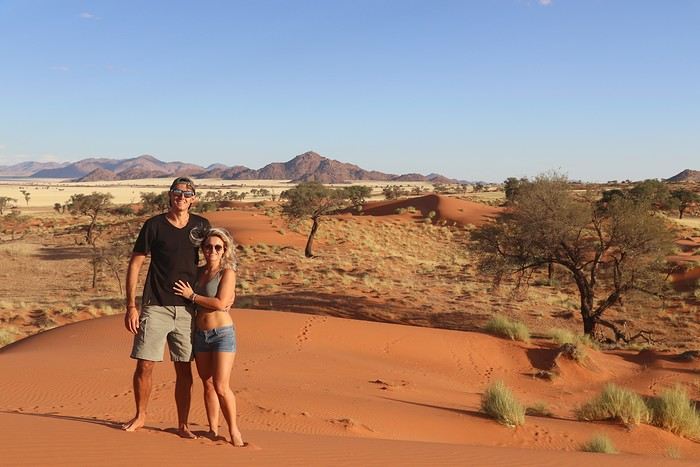
Hey everyone, and warm greetings to all you Southern African wanderers exploring the eastern lands of this African forum!
Four years later, I can finally create a new thread about my next trip—and not just any trip: Uganda! 🙂 A destination that’s been making me dream more and more over the past few years. Originally planned for 2019 but swapped for Tanzania, Kilimanjaro, and Zanzibar. Then pushed aside for another well-known African destination, Namibia, with 6 friends in 2021 (but ultimately done with just 2 because of Covid). 2022 was supposed to be the year of our Canada trip (initially planned for 2020 and canceled two years in a row for the same health reasons). The 2021 safari with friends finally happened in South Africa in 2023—a classic loop that didn’t require much planning and let me start dreaming about my next African destination while devouring all the Uganda travel journals, frustrated I couldn’t reply or comment. Uganda was then reconsidered for 2024 as a follow-up to a 6-week road trip in Finland and Norway, starting from Paris to save time, money, and the ecological footprint of a transatlantic round trip—but ultimately canceled due to budget constraints, the start of my freelance work (no more paid leave), the high cost of 6 weeks in Scandinavia, and no desire to cheapen our first Uganda trip.
Uganda will be the absolute priority for 2025! 😉 And I plan to use this time to prepare for the trip properly. I also hope to use this period to get back to writing our travel journals. By absolute priority, I mean minimal restrictions and compromises on budget and travel time. 🙂
So, we’re planning to spend a month in Uganda next summer (2025). The exact month will be decided in the coming weeks. Why a month? To explore a good part of the country (really want to go up to Kidepo), enjoy the stops, and avoid putting ourselves at risk on the roads. Also, several rental companies offered me 4x4 quotes with a 10% discount for 30+ days of rental...
Here’s my humble draft itinerary:
Day 1: Late arrival in Entebbe around 11 PM. Day 2: Pick up 4x4 vehicle. Night in Jinja.
Day 3: Drive and night in Sipi Falls. Day 4: Night in Sipi Falls. Day 5: Night in Moroto. Day 6: Night in Moroto. Day 7: Drive to Kidepo NP. Day 8: Safari in Kidepo NP. Day 9: Safari in Kidepo NP. Day 10: Full day drive to Murchison Falls. Day 11: Safari in Murchison Falls. Day 12: Safari in Murchison Falls. Day 13: Ziwa Rhino Sanctuary. Day 14: Lake Albert. Day 15: Full day drive to Kibale Forest. Day 16: Kibale Forest NP. Day 17: Drive to Kilembe (Rwenzori NP). Day 18: Hike in southern Rwenzori region. OR start Weismann’s Peak trek (Day 1). Day 19: Weismann’s Peak trek (Day 2). Day 20: Weismann’s Peak trek (Day 3). Day 21: Weismann’s Peak trek (Day 4). Day 22: Weismann’s Peak trek (Day 5), night in QENP. Day 23: QENP. Day 24: Visit Ishasha and drive to Lake Bunyonyi. Day 25: Drive to Ruhija. Day 26: Ruhija, Bwindi NP, gorilla tracking. Day 27: Mgahinga Gorilla NP... Day 28: Morning trek (gorillas or golden monkeys). Drive and night in Mburo NP.
Day 31: Visit Mburo NP and drive to Entebbe. Mabamba Swamp if we haven’t seen shoebills yet? Return 4x4 (30 days rental). Day 32: Departure from Entebbe (flight at 7:30 PM direct to Johannesburg with Uganda Airlines).
It’s not easy to visualize such a long itinerary. In terms of nights, it would look like this:
● Entebbe (1 night)
● Jinja (1 night)
● Sipi Falls (2 nights) ● Moroto (2 nights) ● Kidepo NP (3 nights) ● Murchison Falls (3 nights)
● Ziwa Rhino Sanctuary (1 night)
● Lake Albert (1 night) ● Kibale Forest (2 nights)
● Rwenzori NP (5 nights) ● QENP (2 nights)
● Lake Bunyonyi (1 night)
● Ruhija (2 nights)
● Mgahinga Gorilla NP (1 night?)
● Mburo NP (2 nights)
● Entebbe (1 night)
Obviously, I already have a lot of questions .
A question I really like: Where would you add extra nights? Keeping the 5 days in Rwenzori, we still have at least 2 nights to add to this itinerary.
Also, I don’t really have a clear idea about the loop’s direction. Instinctively, I thought of doing the gorillas last to end on a high note, but given the state of rental vehicles and traveler feedback, it seems we might not even make it to the end of the trip . Is there a meteorologically better direction? Given we’re likely leaving from early August to early September.
We’ve debated a lot about renting a vehicle with or without a guide, RAV4 or a proper 4x4, rooftop tent or not... In the end, after testing the guided experience in Tanzania and noting the relatively reasonable prices of hard lodgings (compared to Tanzania, Namibia, or Botswana, for example), the high cost of equipped 4x4s, and their unpredictable condition... We’re currently leaning toward a non-equipped 4x4, opting for the newest and most reliable vehicle possible to minimize breakdowns and missed stops. Any agencies/vehicles you’d recommend? Any recent feedback from the past few years?
Where’s the best place to see golden monkeys? I read that the southern part of QENP is no longer accessible. Can’t we go to Ishasha anymore? I’ve seen a lot of disappointed reviews about QENP, but it still seems like a good place to spot leopards and hyenas. If we stick with hard lodgings, which lodge is worth it in QENP, and how many nights should we plan? Are there night drives in Uganda to observe nocturnal wildlife? Initially, I thought of doing two gorilla treks—one in Bwindi (Ruhija) and another in Mgahinga Gorilla NP. But I got excited about Rwenzori (especially with the option to extend the stay a bit) and now I’m considering a trek there instead. However, the trek to Margherita Peak’s summit takes at least 7 days at 1580 $/person (plus extra rental days...), so I’m leaning toward the 5-day Weismann’s Peak trek. Has anyone done the Weissman’s Peak trek? If we skip the gorilla trek, is Mgahinga Gorilla NP still worth visiting?
Thanks in advance for all your comments, answers, feedback, favorite spots, and tips! 🙂
Looking forward to chatting with you all on this forum again! 😉
Pierre & Alison
Our trip recap: searching for primates in Uganda
Hi everyone,
As I mentioned a few days ago in the comments on ArXplorateur’s post (https://voyageforum.com/forum/deux-semaines-en-ouganda-en-solo-en-transports-d10553168/) —which was the first to reopen the forum’s Africa section—I wanted to share our feedback on our three weeks in Uganda. We recently traveled between late August and mid-September with the Mpolampola agency, which many of you know, run by Paul. I’m editing a one-hour film about this trip, which I’ll be uploading soon to our travel-focused YouTube channel: https://www.youtube.com/@lolodetoul54
It’s almost finished and ready to be uploaded.
We planned an ambitious itinerary (maybe *too* ambitious?).
Here’s the breakdown of our packed schedule:
D0 Saturday 24/08: Departure from Paris to Uganda via Kigali with Rwandair D1 Sunday 25/08: Arrival in Entebbe Sunday morning. Departure for Lake Mburo National Park. Night at Rwakobo Lodge D2 Monday 26/08: Lake Mburo National Park. Walking safari and boat tour of the lake. Night at Rwakobo Lodge D3 Tuesday 27/08: Departure for Lake Bunyonyi. Night at Birdnest Overseas D4 Wednesday 28/08: Boat and walking tour of the lake, then drive to Lake Mutanda Lodge D5 Thursday 29/08: Hike to see the golden monkeys, then departure for Nkuringo Bwindi Gorilla Lodge D6 Friday 30/08: Hike to see the gorillas. Night again at Nkuringo Bwindi Gorilla Lodge D7 Saturday 31/08: Drive to Queen Elizabeth National Park. Night at Twin Lakes Safari Lodge D8 Sunday 01/09: Vehicle safari and boat tour on the Kazinga Channel. Night at Twin Lakes Safari Lodge D9 Monday 02/09: Drive to Kibale Forest and walk around Crater Lake. Night at Isunga Lodge D10 Tuesday 03/09: Chimpanzee trek in Kibale Forest and walk in Bigodi Swamp. Night at Isunga Lodge D11 Wednesday 04/09: On the road to Murchison Falls National Park. Walking tour with rhinos at Ziwa Rhino Sanctuary. Night at Murchison River Lodge D12 Thursday 05/09: Vehicle safari in Murchison Falls National Park and boat ride to the falls. Night at Murchison River Lodge D13 Friday 06/09: Drive to Chobe Lodge by the Nile D14 Saturday 07/09: Long road trip to Kidepo Valley National Park. Night at Adere Lodge D15 & D16: Safari in Kidepo Valley National Park. Nights at Adere Lodge D17 Tuesday 10/09: Very long drive to Sipi Falls (Mount Elgon). Night at Lacam Lodge D18 Wednesday 11/09: Visit to the falls, then drive to Jinja (source of the Nile). Night at Haven Lodge D19 Thursday 12/09: Drive to Kampala. Night at Latitude 0. D20 Friday 13/09: Discovering shoebills in Mabamba Swamp. Evening flight back to France via Kigali, Rwanda.
That’s the teaser done! I’ll be back with more details soon. Looking forward to sharing! Loïc
Two weeks in Uganda, solo and using public transport
Hi everyone,
I’m taking advantage of the forum’s long-awaited reopening to dive back into my memories and start my first travel journal, destination Uganda!
Why Uganda?
Choosing this destination was almost by chance. I’d already traveled to East Africa two years earlier, to Kenya, and loved the experience. Of course, I wanted to return to the region and see that abundant wildlife I’d enjoyed so much. But Uganda wasn’t really on my radar... While looking for a destination for a two-week trip in May 2023, I came across cheap flights (~400 €) with Kenya Airways to Entebbe. Why not, I thought? I started looking into the country.
How did the trip go?
Most travelers whose posts I read had organized their trip with an agency and/or rented a vehicle, with or without a driver. That’s not at all how I like to explore a country... and besides, I don’t have a license ! Digging a little deeper, I saw that it seemed possible to reach the main sights using local transport, as long as I was ready to put up with the discomfort of the journeys. Challenge accepted! On the other hand, the budget accommodations near the parks that I’d managed to find in Kenya seemed much less common here. The trip was shaping up to be expensive, especially since the highlight—gorilla trekking—requires a permit costing several hundred dollars. Yikes, sticking to a reasonable budget was going to be tricky... In the end, I found a solution. Almost all lodges offer the option to pitch a tent on their grounds for a modest price (between $10 and $20 per night). That would let me enjoy the safaris while keeping this trip "relatively" affordable.
My itinerary
After studying the Lonely Planet East Africa guide, various travel journals and blogs, and the excellent site Safari Bookings, I finally settled on an itinerary (not counting the travel days):
Entebbe – 1 day Ziwa Rhino Sanctuary – 1 day Murchison Falls National Park – 2 days Crater Lakes – 1 day Queen Elizabeth National Park – 2 days Bwindi – 3 days Lake Bunyonyi – 1 day Kampala – 1 day
See you soon for the first stop in Entebbe!
Road-trip en Suède en septembre
Bonsoir,
Après un projet de voyage au Canada, puis en Norvège... Nous avons finalement prit nos billets pour la Suède pour un départ la semaine prochaine.
Nous serons 19 jours sur place et nous ne connaissons absolument rien de ce pays hormis le fait qu'il n'y a pas de quatorzaine et qu'il y a des animaux en liberté. 🙂
Nous pensions louer une sorte de campervan pour notre séjour. Auriez vous des conseils d'agence de location ? Des immanquables à ne pas rater ou tout autre conseil ? Merci beaucoup !
Préparation pour 3 semaines au Canada en septembre-octobre
Bonjour,
Ma copine et moi projetons, si les conditions le permettre, de réaliser un road-trip de 3 semaines dans l'Ouest Canada entre Septembre et Octobre prochain.
Pour l'instant nous avons posés nos congés du 19 Sept au 11 Octobre. Le seul soucis c'est qu'on lit un peu tout et son contraire sur cette période. Entre "été indien" et "pluies abondantes, période défavorable" je ne sais pas trop quoi en penser.
Est-ce que certain d'entre vous ont fait ce voyage à cette période ? Faut il mieux avancer nos congés ? Ou faire les 2 premières semaines dans l'Ouest et la dernière semaine au Quebec ?
Merci pour vos retours et conseils !
Pierre
Préparation de 3 semaines namibiennes en avril 2021
Hello la communauté,
De retour sur VF, j'entame donc la préparation de notre retour en Namibie prévu pour l'année prochaine, à priori en Avril 2021.
Après 2 voyages namibiens au mois d'Aout, nous avons maintenant hâte de découvrir la Namibie pendant la saison chaude et humide (enfin pas trop quand même hein ?!), c'est pourquoi nous voudrions partir au mois d'Avril, à la fin de la saison des pluies, pour pouvoir profiter des paysages verdoyants, des piscines des lodges et des soirées tempérées sous le ciel étoilé.
Nous serons entre 2 et 6 (Dépend de la fiabilité des amis 😇) et l'idée serait de louer un (ou plusieurs) 4x4 équipé et d'alterner nuit en camping et nuit en lodge.
Ayant déjà fait 2 séjours de 15 jours en Namibie nous voulons cette fois ci découvrir de nouvelles région (Kunene et Caprivi) et prendre un petit peu plus notre temps (mais ça on se le dit à chaque fois et au final on ne s'y tient jamais 😄)
Nous espérons disposer de 23 jours sur place. Et voici l'ébauche de notre programme :
J1 : Arrivée Windhoek tôt le matin -> Bagatelle Kalahari GR J2 : Bagatelle Kalahari GR -> Namibrand Family Hideout J3 : Namibrand Family Hideout J4 : Namibrand Family Hiedout -> Sossus Dune Lodge J5 : Sossus Dune Lodge J6 : Sossus Dune Lodge -> Rostock Ritz J7 : Rostock Ritz -> Swakopmund J8 : Swakopmund -> Brandberg White Lady J9 : Brandberg White Lady -> Palmwag J10 : Palmwag -> Grootberg Lodge J11: Grootberg Lodge J12 : Grootberg Lodge -> Epupa J13 : Epupa J14 : Epupa -> Dolomite Camp J15 : Dolomite Camp -> Okaukuejo J16 : Okaukuejo -> Halali J17 : Halali J18 : Halali -> Mahango GR (Caprivi) J19 : Mahango GR (Caprivi) J20 : Caprivi ? J21 : Caprivi ? J22 : Victoria Falls ? Retour Windhoek ? J23 : Remise du véhicule (Kasane ou Windhoek) et décollage (le soir de préférence)
En gros... Ce qui fait quand même un bon 4000km en un peu plus de 3 semaines. Sachant que les étapes incontournables de ce prochain voyage sont Epupa, Etosha et la bande de Caprivi.
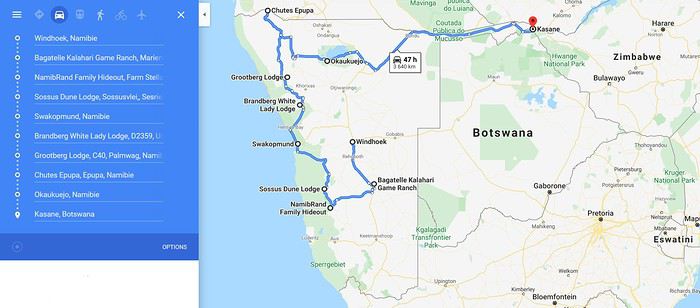
Alors, j'ai vu que beaucoup d'entre vous étiez allé, ou retourné, en Namibie ces dernières années. 🙂 J'ai lu la plupart des carnets récents concernant cet itinéraire (nombreux) et cette période de l'année (beaucoup moins nombreux 😇) et j'ouvre donc ce sujet pour regrouper un peu les informations et les conseils.
J'ai déjà beaucoup de questions 😊 Dans l'ordre,
Quelle compagnie relie l’Europe (Paris ou Francfort) et Windhoek à cette période avec arrivée tôt le matin ? Sans escale si possible.
Je voulais retourner à Bagatelle où nous avions dormi lors de notre premier voyage il y a 5 ans mais j'ai lu aussi beaucoup de retours positifs sur le Kalahari Anib Lodge, quelqu'un a t'il déjà comparé les deux ?
Plutot Ameib Ranch ou Bagatelle White Lady ? 😉 Vous savez si il y a des éléphants du coté du Brandberg à cette période ?
Pour la bande de Caprivi j'ai bien entendu noté la Mahango GR, et il nous resterait 2 jours. Y a t'il d'autre réserve sympa à visiter avec beaucoup de faune au bord du fleuve +/- balade en bateau ? Si vous avez des conseils coté botswanais je suis preneur aussi. 🙂
Dans l'état actuel du programme j'envisage fortement un drop off à Kasane avec pourquoi pas une journée aux chutes Victoria mais ce n'est pas obligatoire.
Merci par avance pour vos remarques, vos conseils et votre bonne humeur ! 🙂
De retour sur VF, j'entame donc la préparation de notre retour en Namibie prévu pour l'année prochaine, à priori en Avril 2021.
Après 2 voyages namibiens au mois d'Aout, nous avons maintenant hâte de découvrir la Namibie pendant la saison chaude et humide (enfin pas trop quand même hein ?!), c'est pourquoi nous voudrions partir au mois d'Avril, à la fin de la saison des pluies, pour pouvoir profiter des paysages verdoyants, des piscines des lodges et des soirées tempérées sous le ciel étoilé.
Nous serons entre 2 et 6 (Dépend de la fiabilité des amis 😇) et l'idée serait de louer un (ou plusieurs) 4x4 équipé et d'alterner nuit en camping et nuit en lodge.
Ayant déjà fait 2 séjours de 15 jours en Namibie nous voulons cette fois ci découvrir de nouvelles région (Kunene et Caprivi) et prendre un petit peu plus notre temps (mais ça on se le dit à chaque fois et au final on ne s'y tient jamais 😄)
Nous espérons disposer de 23 jours sur place. Et voici l'ébauche de notre programme :
J1 : Arrivée Windhoek tôt le matin -> Bagatelle Kalahari GR J2 : Bagatelle Kalahari GR -> Namibrand Family Hideout J3 : Namibrand Family Hideout J4 : Namibrand Family Hiedout -> Sossus Dune Lodge J5 : Sossus Dune Lodge J6 : Sossus Dune Lodge -> Rostock Ritz J7 : Rostock Ritz -> Swakopmund J8 : Swakopmund -> Brandberg White Lady J9 : Brandberg White Lady -> Palmwag J10 : Palmwag -> Grootberg Lodge J11: Grootberg Lodge J12 : Grootberg Lodge -> Epupa J13 : Epupa J14 : Epupa -> Dolomite Camp J15 : Dolomite Camp -> Okaukuejo J16 : Okaukuejo -> Halali J17 : Halali J18 : Halali -> Mahango GR (Caprivi) J19 : Mahango GR (Caprivi) J20 : Caprivi ? J21 : Caprivi ? J22 : Victoria Falls ? Retour Windhoek ? J23 : Remise du véhicule (Kasane ou Windhoek) et décollage (le soir de préférence)
En gros... Ce qui fait quand même un bon 4000km en un peu plus de 3 semaines. Sachant que les étapes incontournables de ce prochain voyage sont Epupa, Etosha et la bande de Caprivi.
Alors, j'ai vu que beaucoup d'entre vous étiez allé, ou retourné, en Namibie ces dernières années. 🙂 J'ai lu la plupart des carnets récents concernant cet itinéraire (nombreux) et cette période de l'année (beaucoup moins nombreux 😇) et j'ouvre donc ce sujet pour regrouper un peu les informations et les conseils.
J'ai déjà beaucoup de questions 😊 Dans l'ordre,
Quelle compagnie relie l’Europe (Paris ou Francfort) et Windhoek à cette période avec arrivée tôt le matin ? Sans escale si possible.
Je voulais retourner à Bagatelle où nous avions dormi lors de notre premier voyage il y a 5 ans mais j'ai lu aussi beaucoup de retours positifs sur le Kalahari Anib Lodge, quelqu'un a t'il déjà comparé les deux ?
Plutot Ameib Ranch ou Bagatelle White Lady ? 😉 Vous savez si il y a des éléphants du coté du Brandberg à cette période ?
Pour la bande de Caprivi j'ai bien entendu noté la Mahango GR, et il nous resterait 2 jours. Y a t'il d'autre réserve sympa à visiter avec beaucoup de faune au bord du fleuve +/- balade en bateau ? Si vous avez des conseils coté botswanais je suis preneur aussi. 🙂
Dans l'état actuel du programme j'envisage fortement un drop off à Kasane avec pourquoi pas une journée aux chutes Victoria mais ce n'est pas obligatoire.
Merci par avance pour vos remarques, vos conseils et votre bonne humeur ! 🙂
Afrique du Sud 2019: retour en terres africaines et premier road-trip en famille
Heureux de retrouver le forum d’Afrique australe pour me replonger dans notre voyage de l’été dernier et le partager avec vous.
Bien que ce fut déjà mon 4ème voyage en Afrique du Sud celui-ci eut, dès la préparation, une saveur toute particulière puisque ça allait être notre premier voyage en famille depuis une éternité, et cette fois-ci les rôles étaient inversés puisque c’est moi qui allais faire découvrir à mes parents ma destination de cœur, l’Afrique. 🙂
La concordance des temps dans cette dernière phrase m’a achevé… Ce carnet s’annonce compliqué. 😄
C’est un voyage que nous avons donc réalisé à 5, mes parents, mes 2 jeunes frères et moi-même. Ma sœur n’ayant pas pu se joindre à nous et Alison, ma copine, ayant gardé ses congés pour notre voyage de Septembre en Tanzanie.
C’est un rêve qui, enfin, se réalisait puisque cela faisait plusieurs années que j’essayais d’organiser quelque chose en famille et c’est en rentrant d’Alaksa en Aout 2018 que mes parents se sont motivés pour visiter l’Afrique du Sud. J’ai donc eu quasiment 1an pour préparer ce magnifique voyage en parallèle de celui en Tanzanie avec Alison.
Le circuit se voulait tant classique que magnifique. 24 jours à travers l’Afrique du Sud, à mes yeux le plus beau pays du monde, de Joburg à Capetown.
J0 (06/07/19) : Paris -> Madrid -> Johannesburg J1 (07/07/19) : OR Tambo Int Airport -> Forever Blyde Canyon J2 (08/07/19) : Blyde River Canyon J3 (09/07/19) : Forever Blyde Canyon –> Kruger National Park J4 (10/07/19) : Kruger National Park J5 (11/07/19) : Kruger National Park J6 (12/07/19) : Kruger National Park J7 (13/07/19) : Kruger National Park J8 (14/07/19) : Kruger National Park -> Santa Lucia J9 (15/07/19) : Isimangaliso wetland Park J10 (16/07/19) : Hluhluwe-iMfolozi J11 (17/07/19) : Hluhluwe-iMfolozi J12 (18/07/19) : Hluhluwe-iMfolozi -> Golden Gate NP J13 (19/07/19) : Golden Gate NP J14 (20/07/19) : Golden Gate NP -> Mountain Zebra NP J15 (21/07/19) : Mountain Zebra NP J16 (22/07/19) : Mountain Zebra NP J17 (23/07/19) : Mountain Zebra NP ->Cambedoo NP J18 (24/07/19) : Cambedoo NP -> Addo Elephant NP J19 (25/07/19) : Addo Elephant NP -> De Hoop NR J20 (26/07/19) : De Hoop NR J21 (27/07/19) : De Hoop NR - Capetown J22 (28/07/19) : Capetown J23 (29/07/19) : Capetown J24 (30/07/19) : Capetown - Johannesburg J25 (31/07/19) : Soweto – Départ
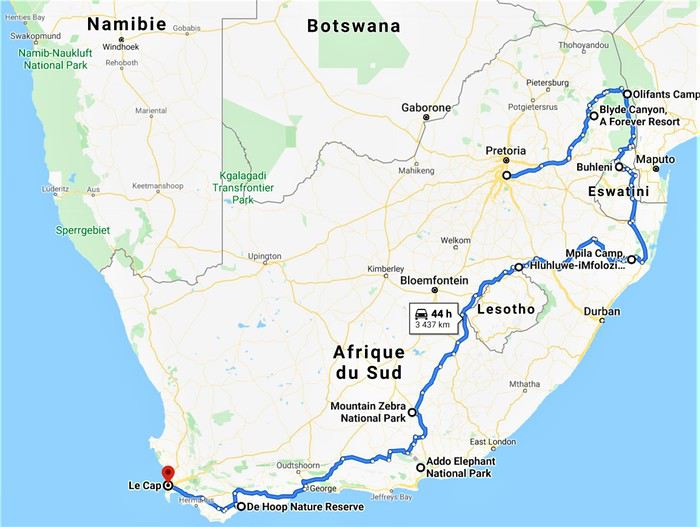
Étant 5 grands gabarits la question du véhicule était délicate puisque c’est dans ce véhicule que nous allions passer le plus de temps, en safari ou sur la route. Nous avons finalement opté pour la location d’un Hyundai H1 chez Budget, option la plus économique et la plus confortable avec 7 places et une plus haute garde au sol pour mieux voir les animaux et le paysage.
Après 11 mois d’attente, début des vacances scolaires et départ de Guadeloupe le vendredi 5 Juillet, pour mes parents et mes frères que je rejoindrai sur Paris le lendemain avant de décoller pour Madrid puis Joburg, tous ensemble, le samedi 6 au soir.
See you in the bush ! (Bilan conseils et budget en fin de carnet.)
Bien que ce fut déjà mon 4ème voyage en Afrique du Sud celui-ci eut, dès la préparation, une saveur toute particulière puisque ça allait être notre premier voyage en famille depuis une éternité, et cette fois-ci les rôles étaient inversés puisque c’est moi qui allais faire découvrir à mes parents ma destination de cœur, l’Afrique. 🙂
La concordance des temps dans cette dernière phrase m’a achevé… Ce carnet s’annonce compliqué. 😄
C’est un voyage que nous avons donc réalisé à 5, mes parents, mes 2 jeunes frères et moi-même. Ma sœur n’ayant pas pu se joindre à nous et Alison, ma copine, ayant gardé ses congés pour notre voyage de Septembre en Tanzanie.
C’est un rêve qui, enfin, se réalisait puisque cela faisait plusieurs années que j’essayais d’organiser quelque chose en famille et c’est en rentrant d’Alaksa en Aout 2018 que mes parents se sont motivés pour visiter l’Afrique du Sud. J’ai donc eu quasiment 1an pour préparer ce magnifique voyage en parallèle de celui en Tanzanie avec Alison.
Le circuit se voulait tant classique que magnifique. 24 jours à travers l’Afrique du Sud, à mes yeux le plus beau pays du monde, de Joburg à Capetown.
J0 (06/07/19) : Paris -> Madrid -> Johannesburg J1 (07/07/19) : OR Tambo Int Airport -> Forever Blyde Canyon J2 (08/07/19) : Blyde River Canyon J3 (09/07/19) : Forever Blyde Canyon –> Kruger National Park J4 (10/07/19) : Kruger National Park J5 (11/07/19) : Kruger National Park J6 (12/07/19) : Kruger National Park J7 (13/07/19) : Kruger National Park J8 (14/07/19) : Kruger National Park -> Santa Lucia J9 (15/07/19) : Isimangaliso wetland Park J10 (16/07/19) : Hluhluwe-iMfolozi J11 (17/07/19) : Hluhluwe-iMfolozi J12 (18/07/19) : Hluhluwe-iMfolozi -> Golden Gate NP J13 (19/07/19) : Golden Gate NP J14 (20/07/19) : Golden Gate NP -> Mountain Zebra NP J15 (21/07/19) : Mountain Zebra NP J16 (22/07/19) : Mountain Zebra NP J17 (23/07/19) : Mountain Zebra NP ->Cambedoo NP J18 (24/07/19) : Cambedoo NP -> Addo Elephant NP J19 (25/07/19) : Addo Elephant NP -> De Hoop NR J20 (26/07/19) : De Hoop NR J21 (27/07/19) : De Hoop NR - Capetown J22 (28/07/19) : Capetown J23 (29/07/19) : Capetown J24 (30/07/19) : Capetown - Johannesburg J25 (31/07/19) : Soweto – Départ
Étant 5 grands gabarits la question du véhicule était délicate puisque c’est dans ce véhicule que nous allions passer le plus de temps, en safari ou sur la route. Nous avons finalement opté pour la location d’un Hyundai H1 chez Budget, option la plus économique et la plus confortable avec 7 places et une plus haute garde au sol pour mieux voir les animaux et le paysage.
Après 11 mois d’attente, début des vacances scolaires et départ de Guadeloupe le vendredi 5 Juillet, pour mes parents et mes frères que je rejoindrai sur Paris le lendemain avant de décoller pour Madrid puis Joburg, tous ensemble, le samedi 6 au soir.
See you in the bush ! (Bilan conseils et budget en fin de carnet.)
Self-drive in southwestern Uganda, February 2020
Since I used this forum a lot to prepare our trip, here’s a little feedback from our 15-day self-drive adventure in southwestern Uganda.
For those who have questions, don’t hesitate! I’ll do my best to answer them 😉
We’d already traveled quite a bit in South Africa and once in Namibia, always self-driving. When the idea of visiting Uganda came up, we debated—especially me 😛—whether to go solo or with a guide. My husband quickly convinced me to do it self-drive, so I started planning and organizing the trip accordingly. We began preparations and bookings in June 2019 for a trip scheduled during the first two weeks of February 2020. We deliberately chose to explore just a small part of Uganda and take our time. We traveled as a group of four, with our oldest son and his partner.
Here’s our itinerary: - February 1: Departure from Brussels, arrival and overnight in Entebbe - February 2: Drive to Lake Mburo and overnight there - February 3: Drive to Lake Bunyonyi and overnight there - February 4: Boat ride on the lake, then departure for Kisoro. Overnight there - February 5: Trek in Mount Mgahinga National Park for the youngsters. Overnight in Kisoro - February 6: Drive to Bwindi Impenetrable Forest. Overnight in Rushaga - February 7: Gorilla tracking in Rushaga. Overnight in Rushaga - February 8: Drive to Queen Elizabeth National Park – Southern sector – Overnight on the park’s edge - February 9: Morning in the southern sector of the park, then crossing to the northern part – Short safari in the late afternoon – Overnight by the Kazinga Channel - February 10: Safari and boat cruise – Second night on site - February 11: Drive to Kibale Forest – Overnight there - February 12: Chimpanzee tracking in the morning – Bigodi swamps in the afternoon – Second night there - February 13: Scenic drive to see the crater lakes + walk at Lake Nkuruba Nature Reserve – Third night there - February 14: Return to Entebbe - February 15: Morning boat ride in the Mabamba swamps – Afternoon by Lake Victoria and midnight flight to Brussels. That’s the broad outline of our trip.
We fell in love with this country: the people, the kids shouting "muzungu," the colors, the landscapes, the wildlife... But we were also saddened by the poverty in some villages and the child labor, especially in "quarries."
I’ll try to post a day-by-day account if it interests anyone.
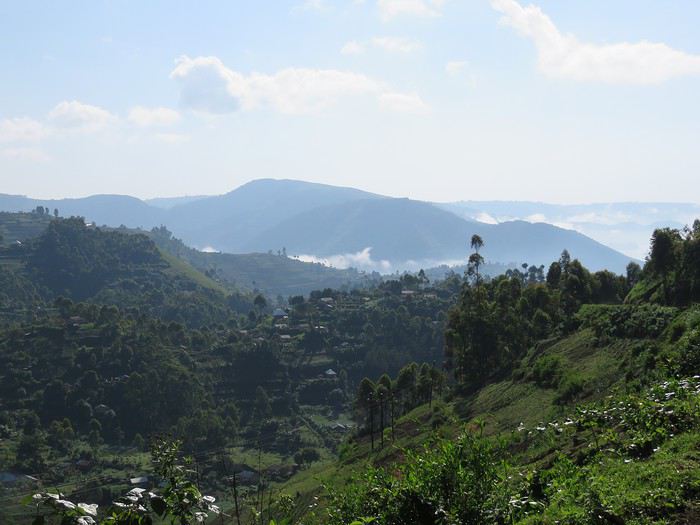
We’d already traveled quite a bit in South Africa and once in Namibia, always self-driving. When the idea of visiting Uganda came up, we debated—especially me 😛—whether to go solo or with a guide. My husband quickly convinced me to do it self-drive, so I started planning and organizing the trip accordingly. We began preparations and bookings in June 2019 for a trip scheduled during the first two weeks of February 2020. We deliberately chose to explore just a small part of Uganda and take our time. We traveled as a group of four, with our oldest son and his partner.
Here’s our itinerary: - February 1: Departure from Brussels, arrival and overnight in Entebbe - February 2: Drive to Lake Mburo and overnight there - February 3: Drive to Lake Bunyonyi and overnight there - February 4: Boat ride on the lake, then departure for Kisoro. Overnight there - February 5: Trek in Mount Mgahinga National Park for the youngsters. Overnight in Kisoro - February 6: Drive to Bwindi Impenetrable Forest. Overnight in Rushaga - February 7: Gorilla tracking in Rushaga. Overnight in Rushaga - February 8: Drive to Queen Elizabeth National Park – Southern sector – Overnight on the park’s edge - February 9: Morning in the southern sector of the park, then crossing to the northern part – Short safari in the late afternoon – Overnight by the Kazinga Channel - February 10: Safari and boat cruise – Second night on site - February 11: Drive to Kibale Forest – Overnight there - February 12: Chimpanzee tracking in the morning – Bigodi swamps in the afternoon – Second night there - February 13: Scenic drive to see the crater lakes + walk at Lake Nkuruba Nature Reserve – Third night there - February 14: Return to Entebbe - February 15: Morning boat ride in the Mabamba swamps – Afternoon by Lake Victoria and midnight flight to Brussels. That’s the broad outline of our trip.
We fell in love with this country: the people, the kids shouting "muzungu," the colors, the landscapes, the wildlife... But we were also saddened by the poverty in some villages and the child labor, especially in "quarries."
I’ll try to post a day-by-day account if it interests anyone.
Temps de route pour Walvis Bay - Brandberg White Lady Lodge (Namibie)
Bonjour,
je me demandais si en faisant le matin, l'excursion Kayak pour voir les otaries a Walvis Bay, nous avions le temps de rejoindre le brandberg lady lodge en fin d'aprem ou nous devons passer la nuit ? Combien faut il compter de temps de route ?
merci :-) Elodie
je me demandais si en faisant le matin, l'excursion Kayak pour voir les otaries a Walvis Bay, nous avions le temps de rejoindre le brandberg lady lodge en fin d'aprem ou nous devons passer la nuit ? Combien faut il compter de temps de route ?
merci :-) Elodie
In the Land of Mountain Gorillas: The Story of an "Epic" Trip
Passionate about travel, animals (furry, feathered, scaly), and my partner’s love for photography, it was in 2014, after encountering orangutans in Gunung Leuser National Park in Sumatra, that I felt the urge to see other great apes in their natural habitat and in the wild. For my 40th birthday, I dreamed of only one thing... seeing gorillas. I still had four years to wait and four years to save up.
At the time, I had only heard of the Virunga Mountains, particularly the part in Rwanda. To be honest, Uganda had never really struck me as a destination I’d ever set foot in, and the DRC, for security reasons, didn’t particularly appeal to me.
But then, one day, I heard that Rwanda was going to increase the price of gorilla permits to USD 1,500 per person. Ouch... that seemed way overpriced, especially since we were going as a couple and I really wanted to see them twice. $6,000 for two days... Okay, it’s for my 40th birthday, but still...
At the end of 2017, I started looking more closely into our trip planned for December 2018. A stroke of luck in my schedule meant my former English teacher sent me a link to an article she’d written for her travel agency about her encounter with gorillas in Uganda. Hmm, Uganda? It was the first time I’d read about the country. Why not?
I scoured various forums in French and English and re-discovered voyageforum.com. And most importantly, I came across Ticapi’s travel journal, which I devoured in one evening, and a few months later, Muriel18’s, whose release I eagerly awaited. Wow!!! Not only can you see gorillas in Uganda, but also chimpanzees and the shoebill, not to mention the savannah and the chance to go on more classic safaris.
All that’s left is to convince my better half that Uganda is a safe country...
Usually, and now more than ever, we prefer independent travel and self-drive trips in particular. But given the proximity to the DRC border, the potentially impassable roads after rain, and rental cars that aren’t always in the best condition, we hired a guide for two weeks in December 2018. The months passed, and the excitement grew.
Three weeks before departure, I fell ill after a work trip to Asia. Darn! This time, I didn’t waste any time—I quickly saw a doctor and got rid of that virus. That was the plan! Flu or malaria? (I’d been to the Amazon six months earlier.) The doctor didn’t know; the cough only appeared a few days later. We did blood tests two days in a row to rule out malaria. So it was the flu or... pneumonia :-( ...?
The X-rays spoke for themselves—it was pneumonia, and it was already quite advanced. No big deal, I still had two weeks to recover! I religiously took my antibiotics, downed loads of vitamin C, but nothing worked—the antibiotics didn’t seem to be doing anything. I was coughing so hard I thought my lungs would come up, I was short of breath, exhausted. I’d dreamed of this trip for so long... it seemed unthinkable not to go. Five days before departure, my doctor hospitalized me—the pneumonia had worsened, and my blood oxygen levels were dangerously low. I was in tears but still in denial about what was happening to me. Besides, I’d still taken my anti-malarial, because I was determined to leave.
I spent the first day in the emergency room on oxygen 24/7. The germ causing my pneumonia was unknown to the infectious disease and pulmonary specialists. They tried a combination of antibiotics. No big deal, in four days, I’d be leaving. I harassed the doctor, who must have thought I was crazy, to find out when I could be discharged—"because, you see, doctor, I have a flight to Uganda on Saturday." On Thursday, the doctor was firm: I’d still be hospitalized on Saturday... deep down, I knew it but didn’t want to admit it. My partner handled canceling the flights, contacted our travel insurance (thankfully we had some), and I wrote to our guide (who, in the meantime, had become our tour operator) who could hardly believe it. And neither could I! We told ourselves it was just postponed and that we’d take this long-awaited trip at the end of 2019!
March 2019, the tour operator reached out to us: "Didn’t you say you wanted to go to Uganda this year? You’d better hurry and book the gorilla permits before they run out."
Oh yes, we wanted to see the gorillas. But we hesitated about rebooking. I still hoped to do this trip as a self-drive. The thing is, this year, we managed to take three weeks off, and we also wanted to spend a week in Rwanda. My partner still didn’t feel comfortable driving there. Yet, he’s driven all over the world. I respected his feelings, especially since he’s the only one who drives.
Anyway, we went back and forth but neither of us really said what we were thinking: "What if we used someone else to organize our trip?" In the end, we went with him again, made a first deposit for four gorilla permits (two days each) (not the best idea we’ve ever had), and looked into adding Rwanda to our itinerary. We’d have a guide/driver for the whole trip with mid-range accommodations.
After several back-and-forths, the itinerary was supposed to look something like this. To be honest, I got fed up after a while.
Day 1: Arrival in Kigali in the evening Day 2: Transfer from Kigali to Akagera NP Day 3: Safari in Akagera NP Day 4: Akagera NP and night in Nyagatare Day 5: Transfer from Nyagatare to Nyungwe Forest Day 6: Nyungwe Day 7: Nyungwe Day 8: Transfer from Nyungwe to Lake Kivu, Rubavu/Gisenyi Day 9: Transfer from Rubavu/Gisenyi to Kisoro/Uganda via the Cyanika border Day 10: Gorilla tracking in Mgahinga NP Day 11: Golden Monkey tracking in Mgahinga NP, night at Lake Mutanda Day 12: Gorilla tracking in Bwindi, Ruhija (later changed to Rushaga) Day 13: Queen Elizabeth NP, Ishasha sector in the morning and Kazinga Channel in the afternoon Day 14: No clear answer on activities for that day. After three attempts, I gave up. I shouldn’t have... Day 15: Chimpanzee tracking in Kyambura Gorge, night at Lake Nkuruba Day 16: Lake Nkuruba, morning activities around the lake and Bigodi Swamps in the afternoon Day 17: Transfer from Lake Nkuruba to Murchison Falls Day 18: Murchison Falls Day 19: Murchison Falls Day 20: Transfer from Murchison Falls via Ziwa Rhino Sanctuary, night in Entebbe Day 21: Entebbe – Mabamba Swamps Day 22: Mabamba Swamps in the morning, Botanical Garden in Entebbe in the afternoon, and transfer to the airport for the overnight return flight.
In April, he asked us for a substantial deposit for the accommodations and some park activities, as one of his colleagues was doing the same tour in May and it would be good if he could secure the already-made reservations by paying the bill.
A week before departure, just like in 2018, we paid the remaining balance of the agreed amount. Three days later, since I hadn’t heard from him (the TO is based in Germany), I sent him a message to confirm he’d received the payment.
My partner joked, "And that’s when he tells us he closed the account we sent the money to." I forced a laugh... and even more so when the TO asked me which account I’d sent the balance to... "Uh, the same one as before." And then he told me he’d closed that account and maybe should’ve mentioned it earlier... uh, you think?! And of course, he needed the money sent again quickly. "Well, buddy, you’ll have to wait until I get it back!!!
It was already late, and my bank had been closed for hours. The next morning, first thing, I called my bank and explained the situation.
"Unfortunately, we can’t do anything for you; you’ll have to wait for the money to be returned." "But how long will that take?" "A few days or weeks, depending on the banks, and you should expect transfer fees."
Brilliant! :-(
After nearly 10 years of traveling almost exclusively without traditional travel agencies, had we just been scammed? I went back to the forums to reread posts about this TO from other travelers. They were all positive; no one mentioned a scam.
The next day, I searched online for the contact details of his bank in Germany. I wrote to the generic email address in English, explaining that I’d made a transfer without knowing that this gentleman had closed his bank account. The employee replied in impeccable English that the bank only responded to emails written in German. Grrr! I used a well-known translator since my German is, let’s say, rusty, and resent my email in German. The same agent replied in German that unfortunately, they couldn’t do anything for me—that if the account had been closed, an automatic rule would return the money to the sender... period, end of story!
Well, our money is lost somewhere in the "cloud," or so we hope! Wait and see!
No news from our TO, and we didn’t reach out either—we were too annoyed by the whole situation.
Saut en parachute à Swakopmund ou Walvis Bay (Namibie)
Bonjour,
Ma fille de 15 ans a toujours rêvé de faire un saut en parachute, nous aimerions peut être lui offrir ce plaisir en Namibie a Swakopmund ou Walvis Bay. Est ce que certains d'être vous ont un endroit à me recommander pour que ce soit vraiment sérieux ?? Deja que mon coeur de maman va perdre quelques battements de coeur pendant son saut .. j'aimerai ne pas en perdre plus !!! 😉
merci merci 🙂
Alaska 2018, The Last Frontier!
De retour sur VF après plusieurs mois d'errance entre un road-trip en Afrique du Sud, un contrat en Guadeloupe, un voyage en Tanzanie et un déménagement surprise en Guyane... Je commence, enfin et parallèlement à la préparation de notre prochain voyage en Patagonie, le récit de notre voyage de 3 semaines en Alaska réalisé en Juillet 2018. 🙂
C'est un voyage que nous avons organisé 6 mois en avance.
Après deux longs voyages en Afrique australe nous aurions adoré remettre ça, mais cette année je ne pouvais pas partir plus de 3 semaines et nous nous sommes laissés dire que ce serait bien aussi de voir autre chose et de visiter de nouveaux continents. Qu'a cela ne tienne !
Passionnés de faune sauvage et de grands espaces nous n'avons pas mit longtemps à nous décider et c'est tout naturellement vers le 49ème état des Etats Unis que nous nous sommes tournés. L'Alaska ! L'Alaska et sa faune exceptionnelle qui font rêver bien des amoureux de nature.
Nous avons rapidement prit nos billets d'avions pour Anchorage et en avons profiter pour organiser une escale de 2 jours en Islande afin de visiter la péninsule de Reykjanes que nous n'avions pas pu explorer l'année passée pour cause de tempête de neige.
Nous avons décidé de partir en Juillet plutot qu'en Aout car c'est la période qui semblait la plus sèche (tout est relatif) et la plus propice à l'observation des célèbres grizzlys.
En entamant la préparation de notre voyage, nous nous sommes vite rendu compte qu'organiser un road-trip en Alaska serait très différent de ce que nous connaissions.
Tout d'abord l'Alaska est une destination réputée pour être peu abordable, les locations de voitures via les agences internationales habituelles sont très chères, il y a peu de solution d’hébergement donc il faut réserver longtemps en avance et le rapport qualité prix varie entre mauvais et moyen.
En somme, la façon la plus simple d'y voyager est de louer un camping-car, ce qui n'est pas donné non plus.
En 2017 nous nous étions vraiment beaucoup investis dans l'organisation de notre road-trip de 2 mois en Afrique australe que nous avions commencé à préparer presque 1 an en avance. Cette année nous ne voulions pas nous prendre la tête, nous louerons donc un gros SUV et dormirons dedans pendant 3 semaines comme nous l'avions fait lors de notre tour d'Islande.
C'est une option qui peut paraitre peu confortable mais nous aimons beaucoup la liberté qu'elle offre et cela permet de faire de grosses économies sur l'hébergement pour pouvoir faire plus d'activités ou simplement partir plus longtemps...
Nous nous sommes dépechés de louer un Hyundai Sante Fe (or similar) à Alamo via Happytour et de réserver une journée de bear watching (activité phare et très chère qui s'organise des mois en avance).
Puis, pour des raisons d'hygiènes et de repos obligatoire, nous nous sommes également offert 4 nuits en dur et nous avons acheté quelques guide de voyage, dont The Millepost pour attendre patiemment (ou pas) le jour du départ. 🙂
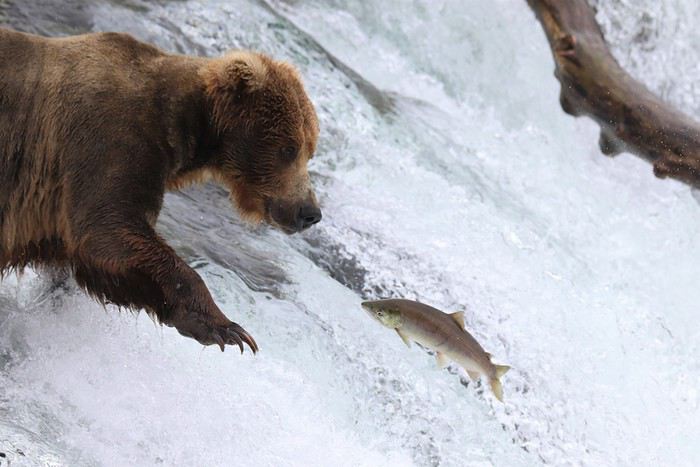
Au final le seul impératif de notre road-trip était d’être à Homer le 14 Juillet pour le bear watching à Katmai NP et c'est autour de cette date que nous avons élaboré notre programme.
J1 (03/07/18) : Islande, Blue Lagoon
J2 (04/07/18) : Islande, Péninsule de Reykjanes, Reykjavic -> Anchorage
J3 (05/07/18) : Anchorage -> Denali NP
J4 (06/07/18) : Denali NP
J5 (07/07/18) : Denali NP
J6 (08/08/18) : Denali NP
J7 (09/07/18) : Denali NP -> Talkeetna
J8 (10/07/18) : Talkeetna -> Anchorage
J9 (11/07/18) : Anchorage -> Girdwood
J10 (12/07/18) : Girdwood -> Russian River
J11 (13/0718) : Russian River -> Homer
J12 (14/07/18) : Brooks Falls - Katmai NP
J13 (15/07/18) : Homer - Kachemak Bay
J14 (16/07/18) : Homer -> Seward
J15 (17/07/18) : Seward
J16 (18/07/18) : Seward -> Whittiez
J17 (19/07/18) : Whittier -> Valdez
J18 (20/07/18) : Valdez
J19 (21/07/18) : Valdez -> Kenicott
J20 (22/07/18) : Kenicott
J21 (23/07/18) : Kenicott -> Anchorage
J22 (24/07/18) : Départ à 8h pour moi destination Pointe à Pitre et à 16h pour Alison destination Paris.
N'ayant que 19 jours sur place, nous avons fait le choix de nous concentrer sur l'Alaska "continentale" en particulier la très belle péninsule de Kenai et le Denali NP qui était une des principales raisons de notre voyage. 🙂 Le Yukon, et l'Alaska maritime seront donc les destinations de prochains voyages, si la vie le permet !
Le cout total de ce voyage a été d'environ 9000€ à deux et je détaillerai nos différentes dépenses à la fin de ce carnet.
Après ce petit texte d'introduction dont tout le monde se fout, place au récit et aux photos !! 😎
C'est un voyage que nous avons organisé 6 mois en avance.
Après deux longs voyages en Afrique australe nous aurions adoré remettre ça, mais cette année je ne pouvais pas partir plus de 3 semaines et nous nous sommes laissés dire que ce serait bien aussi de voir autre chose et de visiter de nouveaux continents. Qu'a cela ne tienne !
Passionnés de faune sauvage et de grands espaces nous n'avons pas mit longtemps à nous décider et c'est tout naturellement vers le 49ème état des Etats Unis que nous nous sommes tournés. L'Alaska ! L'Alaska et sa faune exceptionnelle qui font rêver bien des amoureux de nature.
Nous avons rapidement prit nos billets d'avions pour Anchorage et en avons profiter pour organiser une escale de 2 jours en Islande afin de visiter la péninsule de Reykjanes que nous n'avions pas pu explorer l'année passée pour cause de tempête de neige.
Nous avons décidé de partir en Juillet plutot qu'en Aout car c'est la période qui semblait la plus sèche (tout est relatif) et la plus propice à l'observation des célèbres grizzlys.
En entamant la préparation de notre voyage, nous nous sommes vite rendu compte qu'organiser un road-trip en Alaska serait très différent de ce que nous connaissions.
Tout d'abord l'Alaska est une destination réputée pour être peu abordable, les locations de voitures via les agences internationales habituelles sont très chères, il y a peu de solution d’hébergement donc il faut réserver longtemps en avance et le rapport qualité prix varie entre mauvais et moyen.
En somme, la façon la plus simple d'y voyager est de louer un camping-car, ce qui n'est pas donné non plus.
En 2017 nous nous étions vraiment beaucoup investis dans l'organisation de notre road-trip de 2 mois en Afrique australe que nous avions commencé à préparer presque 1 an en avance. Cette année nous ne voulions pas nous prendre la tête, nous louerons donc un gros SUV et dormirons dedans pendant 3 semaines comme nous l'avions fait lors de notre tour d'Islande.
C'est une option qui peut paraitre peu confortable mais nous aimons beaucoup la liberté qu'elle offre et cela permet de faire de grosses économies sur l'hébergement pour pouvoir faire plus d'activités ou simplement partir plus longtemps...
Nous nous sommes dépechés de louer un Hyundai Sante Fe (or similar) à Alamo via Happytour et de réserver une journée de bear watching (activité phare et très chère qui s'organise des mois en avance).
Puis, pour des raisons d'hygiènes et de repos obligatoire, nous nous sommes également offert 4 nuits en dur et nous avons acheté quelques guide de voyage, dont The Millepost pour attendre patiemment (ou pas) le jour du départ. 🙂
Au final le seul impératif de notre road-trip était d’être à Homer le 14 Juillet pour le bear watching à Katmai NP et c'est autour de cette date que nous avons élaboré notre programme.
J1 (03/07/18) : Islande, Blue Lagoon
J2 (04/07/18) : Islande, Péninsule de Reykjanes, Reykjavic -> Anchorage
J3 (05/07/18) : Anchorage -> Denali NP
J4 (06/07/18) : Denali NP
J5 (07/07/18) : Denali NP
J6 (08/08/18) : Denali NP
J7 (09/07/18) : Denali NP -> Talkeetna
J8 (10/07/18) : Talkeetna -> Anchorage
J9 (11/07/18) : Anchorage -> Girdwood
J10 (12/07/18) : Girdwood -> Russian River
J11 (13/0718) : Russian River -> Homer
J12 (14/07/18) : Brooks Falls - Katmai NP
J13 (15/07/18) : Homer - Kachemak Bay
J14 (16/07/18) : Homer -> Seward
J15 (17/07/18) : Seward
J16 (18/07/18) : Seward -> Whittiez
J17 (19/07/18) : Whittier -> Valdez
J18 (20/07/18) : Valdez
J19 (21/07/18) : Valdez -> Kenicott
J20 (22/07/18) : Kenicott
J21 (23/07/18) : Kenicott -> Anchorage
J22 (24/07/18) : Départ à 8h pour moi destination Pointe à Pitre et à 16h pour Alison destination Paris.
N'ayant que 19 jours sur place, nous avons fait le choix de nous concentrer sur l'Alaska "continentale" en particulier la très belle péninsule de Kenai et le Denali NP qui était une des principales raisons de notre voyage. 🙂 Le Yukon, et l'Alaska maritime seront donc les destinations de prochains voyages, si la vie le permet !
Le cout total de ce voyage a été d'environ 9000€ à deux et je détaillerai nos différentes dépenses à la fin de ce carnet.
Après ce petit texte d'introduction dont tout le monde se fout, place au récit et aux photos !! 😎
Road trip 3 semaines en Patagonie en février-mars
Hola les sud-américanos,
Ma fiancée et moi même avons fraichement débarqués sur le continent, en Guyane, il y a 2 mois. Initialement nous avions prévu, pour début 2020, de se faire un road-trip rando et faune au Costa Rica mais avec notre déménagement surprise à Cayenne on s'est finalement dit que ça risquait d’être un petit peu redondant avec la Guyane (Foret tropicale, jaguar, perroquets tout ça tout ça...). D'où l'Argentine ! 😉 Enfin plus précisément la Patagonie.
Nous projetons donc de partir 3 semaines en Argentine entre Février et mi-Mars.
L'idée serait de faire un road-trip de 2 semaines et demi en Patagonie, en van si possible, et de finir par un aller-retour de 2-3 jours aux chute d’Iguaçu.
Le mieux semble d'arriver à El Calafate, d'y louer un van et faire une boucle avec El Chalten, si possible Torres del paine, puis descendre sur la terre de feu et Ushuaïa.
Je voulais rapidement voir avec ceux qui ont déjà visité cette région, si ça semble réalisable ? Est-ce que vous avez des loueurs de vans à conseiller ou autres conseils en tout genre ?
Je suis en train de lire les carnets... 😉
Merci pour votre aide ! 🙂
Uganda: 20 days discovering authenticity
Preamble:
For summer 2019, the idea was to return to Africa. We had already been to Namibia in 2017 (+ a few days in Botswana and the end of the trip at Victoria Falls), which we loved, and a trip to Asia in 2018 (Borneo, Perhentian, and Singapore), a nature-focused trip but a bit disappointing due to environmental destruction. The desire to return to Africa was very strong. We wanted a change of scenery, nature, discoveries, to step out of our little comfort zone (a bit, anyway!) and experience travel differently. In short, we dreamed of authenticity, and we weren’t disappointed.
We traveled as a family of four with our daughters, aged 19 and 17. When the urge for Africa hit, Uganda quickly stood out, especially for the chance to see rare animals, particularly the famous mountain gorillas. When I looked into the budget, I was quickly disheartened. It’s really expensive. Too expensive… Then, after reading a few trip reports on "VoyageForum" (thanks Muriel J!), I decided to ask a local agency for a quote. The first contact was very friendly and responsive, and the initial offer for two weeks fit our budget :). A few images gathered from the internet (especially Sipi Falls) finally convinced us all. I asked for an adapted offer with a few more sites to extend the trip to three weeks and cover a fairly complete visit to the country (which, of course, increased the budget! To stay within an acceptable range, we prioritized activities over accommodations and regularly chose the cheapest options, with 2-3 nice lodges in between). It’s booked! We were in October 2018, and the first thing to do was reserve permits to see the gorillas and chimpanzees. Then, the agency took care of all the bookings except for the international flights, which we booked with Ethiopian Airlines. A few months of waiting to look forward to… and a little worry too! Two events didn’t reassure us: the kidnapping of an American tourist by four men at the DRC border and the Ebola outbreak in Congo, with confirmed cases in Uganda by mid-June…
Here we are in July, and departure is approaching. The suitcases are packed (warm clothes, long, short, dark, light, practical, sun, rain, hiking/trekking shoes, flip-flops—clothes for every situation! Don’t forget: headlamp (essential!), binoculars, cameras), and we’re ready.
One day before departure, our agency Mpolampola, through its manager Paul, informs us that he won’t be the one taking care of us during the trip but another guide named Moses. He has a big problem with a vehicle and can’t do otherwise. For us, as long as everything is okay, no worries, especially since I had read glowing reviews about Moses, who turned out to be a very pleasant guide, cautious (most important) on the road, clear about all the activities, and an expert on birds, his specialty. We briefly met Paul in the middle of the trip, who is also very friendly. In short, we 100% recommend this agency. Flights to Entebbe went smoothly; we arrived around 10:30 AM, filled out health forms (Ebola information signs everywhere), visas, baggage claim, and met Moses, who took us directly to the vehicle. It was in pretty good condition with huge tires (we’d understand why later!), but it had quite a few miles (400,000 on the odometer!). Just missing a seatbelt… Okay, it’s Africa!
Now, here’s our day-by-day itinerary, which I’ll summarize briefly with ratings for each activity: ****TOPISSIME (Amazing) ***Very good **Good *Meh
Day 1) Departure from the airport at 11:45 AM for some currency exchange. Stop along the way at the equator for a meal and souvenir photo! Arrival at Lake Mburo Park *** around 5:00 PM. Even before entering the park, we saw lots of antelopes, zebras, elks, etc.—it’s magnificent. On the way, we had already encountered many goats and cows, and we were impressed by their enormous horns. We enjoyed a nice game drive until about 7:00 PM, when we reached our lodge, one of the nicest of the trip, Eagle’s Nest ****, with a magnificent view, a tent with a nice bathroom/shower, and a very good meal.
Day 2) Departure at 7:00 AM for a game drive; we encountered many animals again, especially antelopes, zebras, and birds. There are no giraffes, lions, or cheetahs in this park. We didn’t get lucky enough to see a leopard… :-) Then, we continued to Lake Bunyonyi ***, where the road and views are very beautiful, but we were shocked to see locals (mostly women and children) breaking stones by hand on the mountainside in very precarious safety conditions. There are regularly dramatic accidents because, over time, entire sections detach and cause landslides. These stones are then used for road construction… Another world… This was the only place we saw this. Lake Bunyonyi is a nice stop (but less exotic in our opinion since we have many lakes back home too!). We took a boat to our accommodation, Byoona Amagara ***, which has a lot of charm. We stayed in huts called "geodomes," completely open to nature, so it was very cool at night. To reach the toilets located below, you had to be brave! The meal consisted of lake shrimp—good but a bit bland.
Day 3) After a good breakfast, departure at 9:00 AM to visit three islands. We took several nice walks with beautiful views of the lake and islands. A local meal was served on the last island. At 1:00 PM, we met Moses for the rest of the program and headed to Ruhija in Bwindi Forest****. The landscapes are breathtaking. After two hours of driving and many photo stops, we arrived at our accommodation near the trekking starting point, Ruhija Gorilla Friends Resort **. We stayed in a room instead of the initially planned tents, which was just as well because there was a lot of wind during the night. We still had time for an activity and decided to meet the Bwata pygmies despite the bad reviews in the guide… The first part of the visit was quite nice, with a visit to a school where the children gave us a very joyful welcome. We had a great time listening to them sing and dance! Then we met the Bwata pygmies who live on the edge of the forest. When Bwindi Forest was declared a national park, they had to leave their habitat because their activities weren’t compatible with nature and wildlife protection. We left on a somewhat sad note… The visit ended with a local doctor explaining different medicinal plants, and we watched the making of local beer from sorghum. Good meal. We had butterflies in our stomachs—tomorrow was a big day! I admit I was a bit stressed, not entirely confident in my physical abilities…
Day 4) After a short night due to excitement, breakfast, and departure at 7:30 AM. First, it started calmly with singing and dancing. Then, a 15-minute briefing and group assignments. No one asked if we had any physical problems or anything (when booking, I had inquired a bit, and they told me groups were assigned based on physical abilities). We were assigned to the Mukiza group. At first, I was pretty happy—it was a fairly large group with babies :). The ranger explained that for now, they didn’t know where the gorillas were… the trackers couldn’t find them… Oh… (that’s not a good sign!!!) We set off at a good pace, first on a reasonably sloped path. We were accompanied by a family of four Italians and five porters (four for us!). After an hour, the ranger stopped us and informed us they still couldn’t find them—they had fought with another group the day before and scattered throughout the forest, so they were very far away, and we needed to move faster… Hmm… we picked up the pace (we weren’t going slowly before!!!) and walked for another good hour—down, up, down again, up again, we kept going, but always more or less on paths. Then another stop. A 10-minute break waiting for news. The news wasn’t very precise, it seemed! The ranger decided to cut through the forest—machetes were used to clear the path. We descended unimaginable slopes, then climbed back up. Our stick kept getting stuck; luckily, our porter helped us, held our hands, and the terrain was vertical! An hour later, another stop: we heard gorilla cries (yay!!!). False hope—we waited again for news from the trackers, who informed our ranger that it was a non-habituated family, so we couldn’t see them. Cold shower—we had to go all the way back up and return to the starting point to maybe see another group. But time was running out… We arrived around 1:30 PM; all the other groups had already left long ago. Our guide was worried because we still had a long drive ahead. We quickly ate a banana, and off we went for another trek (I was exhausted!). Luckily, this group was close—about 45 minutes of steep descent (I was already thinking about the climb back and considering being adopted by a gorilla ). The forest was sublime, with magnificent tree ferns—the place was truly splendid. Finally, we were there. The porters stayed behind, we grabbed our cameras, and followed the ranger. The progress wasn’t easy, but suddenly, a female was in front of us, curled up in a little ball, eating—so cute. The emotion overwhelmed us. But she moved away—it’s hard to observe them; they move constantly, and the terrain is very steep and uneven. We saw a female descending from a tree with a baby on her back—too adorable. Then, here was the silverback, enormous, incredible, yet so calm and peaceful. He ate quietly and gave us a nice demonstration of nostril exploration! We could observe them for a good hour, but photographing them wasn’t easy because they kept moving, and we could barely stand! Toward the end, a large male (black back) suddenly stood up and decided to pass right where I was! I ended up in the bushes, and the male passed in front of me just a few centimeters away (he stepped on one of my daughters’ feet!) followed by the whole family. Just an exceptional moment. It was time to leave; we had to climb back up. I dreaded it because, I admit, I was exhausted. We finished the hike after 4:00 PM, exhausted but happy. The ranger gave us diplomas, and we didn’t linger because we still had a long drive—we needed to reach Ishasha before nightfall. Our guide was a bit stressed. If we were to do it again, we’d spend an extra night in Bwindi. However, it seems finishing so late is exceptional—it never happens, according to our guide! The road between Bwindi and Ishasha is sublime, with extraordinary landscapes, and despite the late hour, we regularly asked our guide to stop for photos. We arrived at Enjojo *** Lodge around 6:00 PM. The huts are located quite far from the reception and the bathrooms, a bit far from the huts, but otherwise, it was very nice.
Day 5) Departure at 8:00 AM after a good breakfast with the hope of seeing tree-climbing lions (no luck!). Overall, there weren’t many animals, and we arrived around 12:45 PM at our next stop, Parkview Safari Lodge ****, with a magnificent view, a beautiful family bungalow, and a good meal. We enjoyed a short relaxation by the lovely pool. At 4:00 PM, we left to see Kyambura Gorge *** and hike there. Unfortunately, this activity is no longer available, so we walked around the area—it was very beautiful. Back at the hotel, a little rest after the previous day wasn’t a bad idea! Reading, swimming, meals, and dances made the end of the day enjoyable.
Day 6) Departure at 6:30 AM—one of our daughters was sick (stomachache, cold sweats…). Safari in Queen Elizabeth ** (Kaseny Plains)—a bit disappointing. Stop by the salt lake with a nice view. A small market, but we weren’t thrilled by the crafts (overall, apart from some beautiful baskets/plates, there wasn’t much, and the wooden objects were, in our opinion, much less pretty than in Namibia). Then we took the crater road (27 km long) **** with magnificent landscapes. However, you absolutely must close the windows because it’s infested with tsetse flies. At noon, we arrived at Mweya, where we stayed in basic rooms, but the restaurant was well-placed with a beautiful view of the Kazinga Channel. At 2:00 PM, we enjoyed a magnificent cruise **** on the channel. Elephants, antelopes, crocodiles, hippos (including adorable babies), buffaloes, all kinds of birds. Wow!!! Two hours of pure bliss. Quiet end of the day playing cards with a view of the channel and elephants.
Day 7) Departure at 6:00 AM—still sick, we weren’t sure if it was due to the preventive treatment (Malarone) or something else… Another game drive in Queen Elizabeth (Kaseny Plains) and breakfast by the salt lake. Overall, we were a bit disappointed by this park. Then we took the road to Crater Lakes***, again with very beautiful landscapes. A hike of about an hour and a half allowed us to discover these beautiful crater lakes (the water mainly comes from the Rwenzoris). We crossed pretty villages and had nice encounters. End of the day at Tinka’s Home ****, with a family. We loved this place—very welcoming, where we took a cooking class with our hosts. A really great time. After the meal, we enjoyed African stories and dances. Really awesome.
Day 8) Departure at 7:30 AM for another highly anticipated discovery—the chimpanzees in Kibale Forest ****. We went to the meeting point and were split into groups of six, each with a guide. We saw three different groups, and for the last group, we followed a chimpanzee (slightly more comfortable running in the forest than we were!) that led us to the group. Their cries are very impressive, and we could observe them well, even though they were often high up in the trees. We were lucky enough to see two on the ground, very close to us. It was magnificent. End of the encounter and return to the starting point—it was noon. We went back to Tinka’s Home for the meal (delicious!). At 2:00 PM, we hiked in Bigodi Swamp ***, a marsh surrounded by beautiful vegetation, especially huge papyrus, and inhabited by many birds and monkeys. We saw, among others, black-and-white colobus monkeys, red colobus monkeys, and vervet monkeys. We also visited a basket-weaving workshop where we bought two beautiful baskets. Then a short stop in Fort Portal, where we stayed for two nights at Ruwenzori View Guesthouse ***, a nice place with a family room and very good communal meals.
Day 9) Departure at 8:00 AM for a hike in the Rwenzori****—it was a bit chaotic today. First, we had to exchange shillings because we wouldn’t have another chance in the following days. At the bank, employees went to get the bills by motorcycle from other buildings—it was quite surreal! And it took time! Then there was a misunderstanding between the organizer and me… I really wanted to see the region where chameleons are found in the Rwenzori—this region is south of the mountain range, and we were in the north! Anyway, the program included an ascent in the northern part with a positive elevation gain of over 1,500 meters… Talking to the guide scheduled for this hike (Noah), we explained that we really wanted to discover the vegetation and these famous chameleons, not necessarily achieve a physical feat… (we’d had enough!). The decision was made to go south, which meant quite a bit of driving. The hike was really enjoyable, with magnificent vegetation by the river. We saw three of the four chameleon species present, including the famous three-horned chameleon. The region is superb. We ended with a drink at Ruboni Camp, which has a magnificent view of the region (ideally, we should have stayed there). Two hours of driving to finish, and a good meal :).
Day 10) Departure at 8:00 AM—we had a long drive to Ziwa Rhino Ranch****. We passed through Hoima, had lunch in Masindi, and arrived in time for the rhino tracking walk. We could approach them closely on foot—it was impressive. We saw eight. Since we were staying on-site in the guesthouse **, we received precise safety instructions for moving between the rooms and the restaurant. And we quickly understood why!
Day 11) Departure at 6:00 AM for breakfast—surprise, in front of our room, several large rhinos were sleeping (we had also heard a lot of animal noises during the night—rhinos but also what seemed to be predators). So we had to take a detour to reach the restaurant! Second surprise—next to the restaurant, just three meters away at most, two mothers and their baby were also sleeping! Memorable! Then we had an appointment for the shoebill trek and canoe ride **** (package with the previous day’s walk). So there we were, in our boots, splashing through 30 cm of water in search of the shoebill (I really wanted to see one :))! It was really fun, and luck was on our side—a shoebill had just landed in the distance! We approached as best we could and observed it from afar. What a strange bird! There are very few left, and Uganda is one of the countries where the chances of seeing one are quite good. The tour continued with a canoe cruise where we saw a herd of cows (the famous ones with enormous horns) being swum as a dowry to the father of the future bride! A funny spectacle. This stop wasn’t the most anticipated, but we all thought it was really worth the detour. Road to Murchison Falls Park, and arrival around noon at Red Chili Rest Camp **, where we stayed for two nights (family banda). Good meal. Then a cruise to Murchison Falls*** where we disembarked and continued on foot. It was pretty. Back to Red Chili.
Day 12) This morning, early departure for a cruise in search of the shoebill*** (booked in case we didn’t see one at Ziwa). The landscapes were pretty, but there weren’t many birds in the end. We spotted the chosen one from afar after the first 10 minutes—so the suspense didn’t last long :-) It was a nice activity but quite long—5 hours. In the afternoon, safari in Murchison Park****—this park is sublime, the landscapes fabulous. Really one of our favorite parts of the trip. Lots of animals and even a leopard spotted with binoculars because it was far away! Night at Red Chili.
Day 13) Departure for the first morning ferry—it was drizzling, the sky was threatening at first, so the landscape was spectacular! Beautiful contrasts. In the middle of the morning, we were lucky to observe a whole group of lions, first from afar, then with a little patience, the whole group approached until they passed beside and in front of our vehicle. What emotion and excitement! We could then observe large groups of giraffes. They were magnificent. The morning was incredible. Then we headed to our lodge, Fort Murchison ****, and on the way, we saw a whole group of elephants—the view was magnificent. We had a very good meal and enjoyed the pool a bit. We also met Paul, the organizer of our trip. Very nice :). In the late afternoon, off for a short safari in the park. We slept in very well-equipped tents.
Day 14) Today, we had a long drive to Kidepo Park. It was raining, which didn’t help our guide—according to him, the tracks near Kidepo turn to mud with rain and become difficult to navigate. We saw, among other things, a bus in a bad situation in the ditch. Some sections were really tricky, and we were glad to have a driver. The end of the trip—the landscape was spectacular and original, and we saw some traditional villages. We arrived at Kidepo quite late. Short safari in the park before reaching the accommodation. We booked two simple bandas in the park camp**. It was clean but didn’t hold up well in the rain . The restaurant was very nice, though.
Day 15) The day was dedicated to discovering Kidepo Park **** where the landscapes were again superb. First encounter with a lioness resting on a rock. We saw other lions later and observed them for a long time. There were almost no other tourists in the park. Our daughter wasn’t feeling well, and by the time we arrived at the lodge, she had a temperature of 39.5°C (103.1°F)… A nap was necessary. In the late afternoon, we returned to the spot where we had seen the lions that morning, and they were still there—they weren’t happy because rain was threatening! It was a great photo opportunity. Then came the downpour, and our driver urged us to return quickly because the tracks were becoming impassable. Indeed, a jeep was in the ditch… The return was eventful, and several times we slid without being able to do anything… Wow, what a day!
Day 16) No safari this morning because of impassable tracks—the road to Kotido*** was longer than expected as we had to take a detour. The landscapes along the way were surprising. We finally arrived around 1:00 PM at the accommodation and left at 3:00 PM to visit the largest manyatta in East Africa with two translators. It was incredible—a very beautiful experience. The manyatta is immense and has 28,000 inhabitants. Night at Karamojaarts guesthouse*—very average meal.
Day 17) Departure for Moroto****—on the way, we saw many bird species. Moroto doesn’t look like other Ugandan cities. Life there seems very pleasant. We arrived at Kara-Tunga and had a bite to eat. At 4:00 PM, we left to visit a Karamojong village. We enjoyed beautiful dances and watched communal games—it was fun and so authentic. Then we headed to a kraal (where shepherds and herds are) to set up our camp. Moses had to get used to the idea of sleeping in the tribe in a tent! It was incredible to find ourselves in this universe. The place was beautiful, and we had a great time with the Karamojong. Some had never seen white people… had never been in a car… Their culture is incredible. During the evening, around the fire, to our guide’s dismay (a bird enthusiast), they grilled hornbills! On our side, we ate a meal prepared by Kara-Tunga for our sensitive stomachs! Night in a tent.
Day 18) Dawn wake-up in the fog—the atmosphere was quite strange. Our daughter was attacked by a cow—fortunately, more fear than harm, but she ended up with a lot of thorns in her buttocks and thighs ! Then we left for the Mount Elgon region, specifically Sipi Falls****. Lacam Lodge****, perched on the edge of the cliff with a direct view of one of the falls, was just magnificent. The view and landscapes were fabulous. Big favorite. We had dinner and then went for a hike to visit the three falls in the region, partly in the rain. The landscapes were breathtaking! Sunset at Lacam Lodge with the sun setting over the waterfall. We couldn’t get enough and stayed to admire until nightfall!
Day 19) Visit to coffee plantations*** where we were given all the useful explanations to understand the culture and the incredible work required for this product, which is ultimately not very glorified. The visit was very interesting, and we drank very good coffee with the owners. Last photos at Lacam Lodge, and then departure for Jinja, where we arrived in the middle of the afternoon. We took a small cruise to see the source of the Nile*. Very touristy and not at all to our taste… Then a meal at Jinja Base Camp** where we enjoyed guacamole. Our guide Moses left us because another group was waiting for him!
Day 20) Road to Kampala***, the market, the Gaddafi Mosque. Short but interesting visit. Last meal in Entebbe by Lake Victoria, where we almost felt like we were by the sea. Transfer to the airport and return to Switzerland…
Epilogue: All four of us were enchanted by this trip, which will undoubtedly remain one of the most beautiful we’ve ever taken. Talking about it gives me chills and brings tears to my eyes. It was simply a magnificent experience. However, I wouldn’t recommend this trip to everyone because you often have to overlook small inconveniences like toilets (the worst of my life) and certain comfort details that, for us, remain details but could be important to others.
Our favorites: - The gorilla trek - The cruise on Kazinga Channel - The Fort Portal region - The Rwenzori Mountains - The chimpanzee trek - Murchison Falls - Kidepo - Spending time with the Karamojong tribe - The Sipi Falls region - The accommodations: Eagle’s Nest, Byonna Amagara, Parkview Lodge, Tinka’s Home, Rwenzori Guesthouse, Fort Murchison, Night in the kraal, and Lacam Lodge
What we liked less: - Queen Elizabeth Park - Jinja - The accommodations: Ziwa Rhino Ranch, Karamojaarts Guesthouse
I’ll try to post some photos later. If you have any questions about a future trip, I’d be happy to answer them.
In the Land of the Tswana (Botswana)
We’ve been back for a month now, so it’s high time I posted the story of our adventures! 😉 I’d also like to thank everyone who shared their own experiences on this forum (or elsewhere) and gave us tips—it really helped us plan our trip.
14/09/2019: Johannesburg - Vryburg After months of waiting and reading other travelers’ journals, it’s finally our turn! We arrived in Johannesburg from Nantes and Paris in the morning. We looked for the Bushlore rep—we’d rented our 4x4 from them—but there was no sign with our name! « Bushlore? She’s a woman, I saw her a few minutes ago, » someone told us. A minute later, the Bushlore employee showed up: a man! 🤪 He sped onto the highway, and just 30 minutes later, we arrived at the rental place. It’s a big operation with good organization and lots of vehicles—pretty reassuring. Our 4x4 was there, a classic Toyota Hilux fully equipped for safari: rooftop tent, dual diesel tanks, 60-liter water reserve, two batteries, two spare tires, all the camping gear, plus everything needed for *désensablement* (getting unstuck from sand). Speaking of which, is it "désensablage" or "désensablement"? Best to just avoid getting stuck in the first place! 😏 Good news… or not: the vehicle was brand new, with barely 100 kilometers on the odometer. On one hand, we figured we wouldn’t have mechanical issues or a fridge breakdown, but on the other, we knew it wouldn’t be easy to return it without a single scratch. Either way, it was our first time renting a 4x4, and we were impressed.
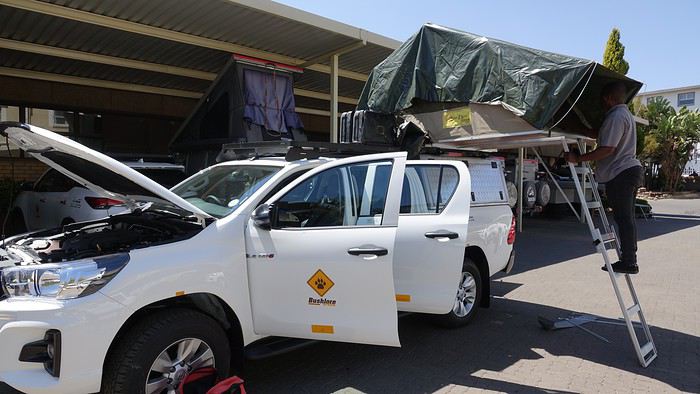
We set off toward Kgalagadi Transfrontier Park—it’s not exactly around the corner! In 1994 (when Mandela had just become President) and 2007, during our two previous trips to South Africa, we loved this park, so we couldn’t imagine going to Botswana without returning. The road was pretty monotonous, with not much to see except a few ostriches.
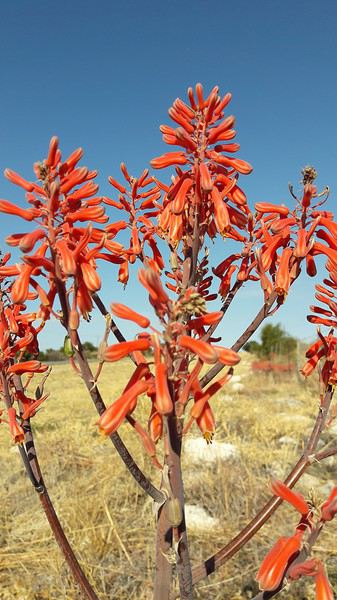
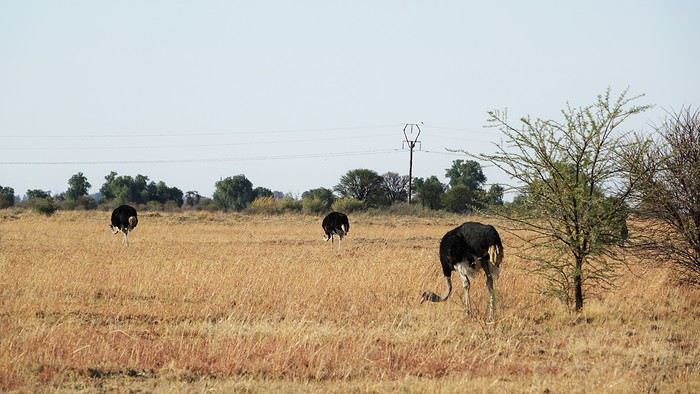
We stopped for the night in Vryburg at the Kameelboom Lodge campsite. It was a bit noisy since it’s close to the road, and the facilities weren’t great, but it was fine for one night.
14/09/2019: Johannesburg - Vryburg After months of waiting and reading other travelers’ journals, it’s finally our turn! We arrived in Johannesburg from Nantes and Paris in the morning. We looked for the Bushlore rep—we’d rented our 4x4 from them—but there was no sign with our name! « Bushlore? She’s a woman, I saw her a few minutes ago, » someone told us. A minute later, the Bushlore employee showed up: a man! 🤪 He sped onto the highway, and just 30 minutes later, we arrived at the rental place. It’s a big operation with good organization and lots of vehicles—pretty reassuring. Our 4x4 was there, a classic Toyota Hilux fully equipped for safari: rooftop tent, dual diesel tanks, 60-liter water reserve, two batteries, two spare tires, all the camping gear, plus everything needed for *désensablement* (getting unstuck from sand). Speaking of which, is it "désensablage" or "désensablement"? Best to just avoid getting stuck in the first place! 😏 Good news… or not: the vehicle was brand new, with barely 100 kilometers on the odometer. On one hand, we figured we wouldn’t have mechanical issues or a fridge breakdown, but on the other, we knew it wouldn’t be easy to return it without a single scratch. Either way, it was our first time renting a 4x4, and we were impressed.
We set off toward Kgalagadi Transfrontier Park—it’s not exactly around the corner! In 1994 (when Mandela had just become President) and 2007, during our two previous trips to South Africa, we loved this park, so we couldn’t imagine going to Botswana without returning. The road was pretty monotonous, with not much to see except a few ostriches.
We stopped for the night in Vryburg at the Kameelboom Lodge campsite. It was a bit noisy since it’s close to the road, and the facilities weren’t great, but it was fine for one night.
Wild destination: Botswana
It’s been almost six months since we returned from our 15-day trip to Botswana, ending in front of the majestic Victoria Falls in Zimbabwe.
Our itinerary: 1 night at Maun Lodge in Maun 3 nights in the Central Kalahari at Deception Valley Lodge 1 night at Maun Lodge in Maun 3 nights in the Okavango Delta at Sango Safari Camp 3 nights in Chobe National Park at Chobe Safari Lodge 2 nights at Victoria Falls at A’Zambezi River Lodge
We were on a tight budget, so we opted to rent a vehicle for the Central Kalahari and the Okavango Delta.
The lodges are expensive but all-inclusive—meals, drinks (alcohol included), laundry, and the usual two daily safaris. In short, everything.
The lodges mentioned above offer a very high-end experience, with a guide and a 4x4 for each tent. We shared a 4x4 once at Sango Safari with an English couple.
Another little tip: I’d avoid staying at Chobe Riverfront like we did. It’s extremely touristy and overpriced. I think we should’ve spent one night there for the cruise and two other nights at a lodge deeper in Chobe National Park.
We arrived in Maun after an endless flight: Paris-Frankfurt-Johannesburg-Maun. We headed to the car rental agency to pick up our 4x4, and what a surprise to learn they’d canceled our booking—no vehicle! After 6 hours of waiting, we finally received our 4x4 at our hotel, fell asleep peacefully, and were ready to head to our first destination: the Central Kalahari!
Carnet de Namibie (ou voyage au pays d’Hilux)
Et oui, encore un ! 😉
(Le sous-titre vient uniquement de l’impression de n’avoir jamais vu autant de ce type de véhicule, l’impression qu’il n’y avait quasiment que ça.)
_
Ce voyage sera un « one-way » de 30 jours (15 août – 14 septembre), début à Windhoek (capitale de la Namibie) et fin à Victoria Falls (Zimbabwe), en Toyota Hilux avec tente sur le toit (loueur Asco Car Hire) et réservations (campings, hôtels et voiture) faites par Tourmaline ; les réservations ont été faites pratiquement 18 mois à l’avance, certains campings (Etosha par exemple) semblant être très demandés. La période a été choisie pour y être en hiver et avec encore assez d’eau aux chutes Victoria.
Nous (67 et 47 ans) avons l’habitude, aux USA, de dormir dans la voiture ; sur le toit, ce sera une première. Le matériel de couchage est fourni (couettes, drap, oreillers) mais nous apportons quand même nos duvets (on aurait pu s’en passer). La plupart des nuits seront en camping (mais pas sauvage) et une fois par semaine (environ) une nuit d’hôtel ou assimilé.
Comme nous serons en hiver, j’ai donné à Isabelle la fourchette de température (de 0 à 28°C) que nous devrions avoir à supporter, pour le choix des vêtements ; la réalité sera un peu différente mais n’anticipons pas.
_
Pour notre parcours, un bon dessin valant mieux qu’un long discours, voici la carte de notre projet :
_
 _
J00 – jeudi 15 août 2019
Départ pour la Namibie ; le vol principal a été choisi sur Air Namibia pour des raisons d'horaire (arrivée vers 6h30) et il nous faut donc rallier Francfort ; Air France nous propose des vols aller aux horaires convenables mais, pratiquement un an avant le départ, change complètement ses horaires d'où un départ très matinal de Brest à 6h vers Roissy puis Francfort pour un décollage final vers 20h10.
J01 – vendredi 16 août 2019 => Windhoek Finalement, tout se passe assez bien malgré les attentes un peu longues et nous atterrissons à Windhoek à 6h10 ; sortie de l’avion (on descend sur le tarmac), il fait encore nuit et frais. Passage de l’immigration assez rapide malgré le nombre de voyageurs, récupération des bagages et nous trouvons le chauffeur de chez Asco qui nous attend (enfin, pas que nous). On quitte l’aéroport à 7h10 soit 1 h après l’atterrissage ; il fait jour et, sur le trajet, nous découvrons nos premiers animaux « exotiques ». Arrivés chez Asco, nous faisons la connaissance de Benoît, notre interlocuteur français envoyé par Tourmaline ; les divers échanges et signatures de documents sont facilités par sa présence. Ensuite, découverte du véhicule, de la tente et toutes les explications qui vont avec (et il y en a !) ; j’espère que nous n’oublierons rien. Benoît demande à l’employé d’Asco de nous donner, en plus du matériel de camping, un escabeau 2 marches et il faut bien avouer que ce fût très pratique ; plus besoin de grimper sur le pneu (au risque de tomber) pour manipuler la fermeture-éclair de la tente. Je serai le seul conducteur (ce qui ne dérange pas trop Isabelle) car négociation impossible bien que nous venions de prendre le package d’assurances max. _ Le véhicule est donc un Hilux double cabine (pour notre confort), mais le modèle Raider avec snorkel (dont nous n’aurons pas besoin), 2,8l de cylindrée, boite auto et une vraie fonction 4x4 (long et court avec blocage de différentiel) et très belle garde au sol ; 6 pneus neufs à gros crampons équipent notre superbe destrier qui a environ 130 000 km et quelques « accrocs », ce qui n’est pas plus mal ; la peinture est noire, mais ça ne durera pas. La partie arrière, totalement fermée par de la tôle épaisse, est équipée de 2 énormes tiroirs de rangement sur glissières, d’une caisse plastique contenant le matériel de cuisine et d’un vrai frigo, lui aussi sur glissières ; ce frigo est branché sur une seconde batterie et, comme nous roulions tous les jours, nous n’avons jamais eu besoin de l’arrêter, même la nuit. _ Trois heures plus tard, nous quittons Asco pour le centre commercial Spar pour faire le plein de nourriture pour les jours suivants ; les essuie-glaces se mettent en route à chaque appui sur les clignotants, tout étant quasiment inversé avec la conduite à gauche. Comme aide à la conduite, nous utiliserons Maps.me sur le téléphone en mode avion (testé juste quelques jours auparavant) ; tous les trajets (format kml) sont chargés ainsi qu’environ 300 points GPS et une version de sauvegarde sur tablette au cas où. C’est donc une première pour nous avec cette application et je pense, après utilisation quotidienne pendant 1 mois, que l’on peut lui décerner une note de 8/10. Nous faisons nos courses dans la grande surface mais sommes déçus par certains rayons, notamment les fruits et légumes (nous trouverons nettement mieux le lendemain). _ En sortant, nous essayons d’acheter des pulas (monnaie du Botswana, pays limitrophe), mais impossible ; un bureau de change n’en a pas et la banque nationale de Windhoek ne traite qu’avec ceux qui ont un compte. Comment ferons-nous à la frontière puisque le Botswana refuse dorénavant tout paiement avec une autre monnaie que la sienne, y compris la carte bleue (information récente fournie par Tourmaline et que nous verrons affichée au poste frontière) ? Quelques dernières courses (vin, apéro…) et nous rejoignons notre havre pour la nuit, la pension Londiningi où nous avons retenu le repas du soir et la nuit ; cette pension est tenue par Nathalie, une française. Pour l’instant, Maps.me marche très bien. Un rafraîchissement puis nous sortons nos bagages de la voiture ; il va falloir vider nos 2 gros sacs de voyage et répartir les contenus (les duvets pour la tente, les polaires pour les nuits fraîches, …). Test de l’adaptateur électrique : impossible de brancher nos prises françaises dedans ; Nathalie et un des occupants nous montreront qu’il suffisait de casser 2 petits ergots. _ L’heure du dîner arrive et, avec un apéritif bien mérité, nous discutons avec nos proches voisins qui, eux, ont fini leur voyage ; ils ont donc des infos toutes fraîches. Assez rapidement, nous nous rendons compte que nous avons des « points communs » et pour cause, il s’agit de Rouquine38, membre de VF et de son mari. Retour à la chambre pour une nuit bien méritée. _ Notre carrosse pour un mois
_

_

_
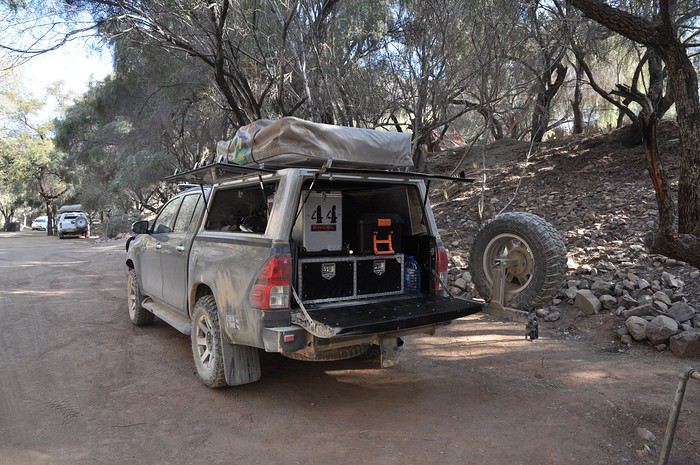
_
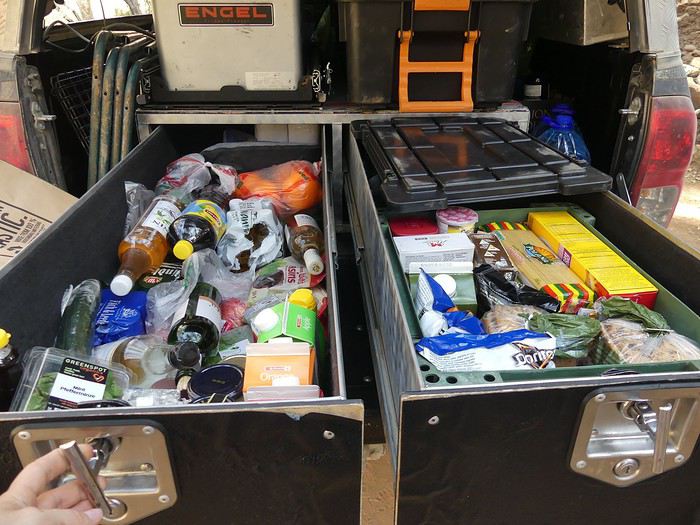 Les 2 énormes tiroirs
_
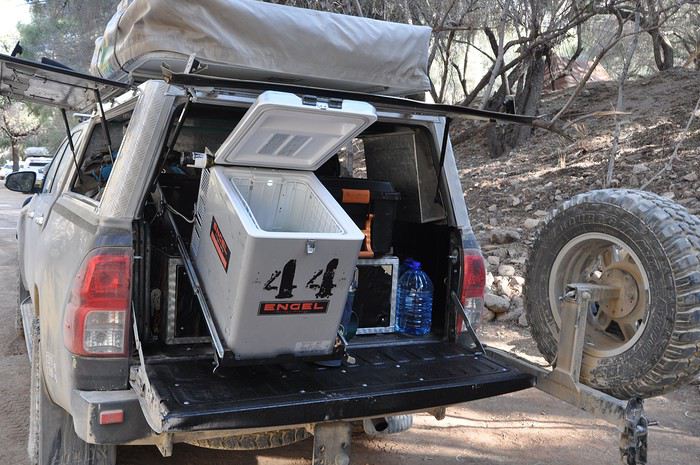 Le frigo de 44 litres en position ouvert
-

_
J00 – jeudi 15 août 2019
Départ pour la Namibie ; le vol principal a été choisi sur Air Namibia pour des raisons d'horaire (arrivée vers 6h30) et il nous faut donc rallier Francfort ; Air France nous propose des vols aller aux horaires convenables mais, pratiquement un an avant le départ, change complètement ses horaires d'où un départ très matinal de Brest à 6h vers Roissy puis Francfort pour un décollage final vers 20h10.J01 – vendredi 16 août 2019 => Windhoek Finalement, tout se passe assez bien malgré les attentes un peu longues et nous atterrissons à Windhoek à 6h10 ; sortie de l’avion (on descend sur le tarmac), il fait encore nuit et frais. Passage de l’immigration assez rapide malgré le nombre de voyageurs, récupération des bagages et nous trouvons le chauffeur de chez Asco qui nous attend (enfin, pas que nous). On quitte l’aéroport à 7h10 soit 1 h après l’atterrissage ; il fait jour et, sur le trajet, nous découvrons nos premiers animaux « exotiques ». Arrivés chez Asco, nous faisons la connaissance de Benoît, notre interlocuteur français envoyé par Tourmaline ; les divers échanges et signatures de documents sont facilités par sa présence. Ensuite, découverte du véhicule, de la tente et toutes les explications qui vont avec (et il y en a !) ; j’espère que nous n’oublierons rien. Benoît demande à l’employé d’Asco de nous donner, en plus du matériel de camping, un escabeau 2 marches et il faut bien avouer que ce fût très pratique ; plus besoin de grimper sur le pneu (au risque de tomber) pour manipuler la fermeture-éclair de la tente. Je serai le seul conducteur (ce qui ne dérange pas trop Isabelle) car négociation impossible bien que nous venions de prendre le package d’assurances max. _ Le véhicule est donc un Hilux double cabine (pour notre confort), mais le modèle Raider avec snorkel (dont nous n’aurons pas besoin), 2,8l de cylindrée, boite auto et une vraie fonction 4x4 (long et court avec blocage de différentiel) et très belle garde au sol ; 6 pneus neufs à gros crampons équipent notre superbe destrier qui a environ 130 000 km et quelques « accrocs », ce qui n’est pas plus mal ; la peinture est noire, mais ça ne durera pas. La partie arrière, totalement fermée par de la tôle épaisse, est équipée de 2 énormes tiroirs de rangement sur glissières, d’une caisse plastique contenant le matériel de cuisine et d’un vrai frigo, lui aussi sur glissières ; ce frigo est branché sur une seconde batterie et, comme nous roulions tous les jours, nous n’avons jamais eu besoin de l’arrêter, même la nuit. _ Trois heures plus tard, nous quittons Asco pour le centre commercial Spar pour faire le plein de nourriture pour les jours suivants ; les essuie-glaces se mettent en route à chaque appui sur les clignotants, tout étant quasiment inversé avec la conduite à gauche. Comme aide à la conduite, nous utiliserons Maps.me sur le téléphone en mode avion (testé juste quelques jours auparavant) ; tous les trajets (format kml) sont chargés ainsi qu’environ 300 points GPS et une version de sauvegarde sur tablette au cas où. C’est donc une première pour nous avec cette application et je pense, après utilisation quotidienne pendant 1 mois, que l’on peut lui décerner une note de 8/10. Nous faisons nos courses dans la grande surface mais sommes déçus par certains rayons, notamment les fruits et légumes (nous trouverons nettement mieux le lendemain). _ En sortant, nous essayons d’acheter des pulas (monnaie du Botswana, pays limitrophe), mais impossible ; un bureau de change n’en a pas et la banque nationale de Windhoek ne traite qu’avec ceux qui ont un compte. Comment ferons-nous à la frontière puisque le Botswana refuse dorénavant tout paiement avec une autre monnaie que la sienne, y compris la carte bleue (information récente fournie par Tourmaline et que nous verrons affichée au poste frontière) ? Quelques dernières courses (vin, apéro…) et nous rejoignons notre havre pour la nuit, la pension Londiningi où nous avons retenu le repas du soir et la nuit ; cette pension est tenue par Nathalie, une française. Pour l’instant, Maps.me marche très bien. Un rafraîchissement puis nous sortons nos bagages de la voiture ; il va falloir vider nos 2 gros sacs de voyage et répartir les contenus (les duvets pour la tente, les polaires pour les nuits fraîches, …). Test de l’adaptateur électrique : impossible de brancher nos prises françaises dedans ; Nathalie et un des occupants nous montreront qu’il suffisait de casser 2 petits ergots. _ L’heure du dîner arrive et, avec un apéritif bien mérité, nous discutons avec nos proches voisins qui, eux, ont fini leur voyage ; ils ont donc des infos toutes fraîches. Assez rapidement, nous nous rendons compte que nous avons des « points communs » et pour cause, il s’agit de Rouquine38, membre de VF et de son mari. Retour à la chambre pour une nuit bien méritée. _
Notre carrosse pour un mois
__
_
_
Les 2 énormes tiroirs
_
Le frigo de 44 litres en position ouvert-
Oh djadja in Karamoja...
Back from two weeks in Karamoja, northeastern Uganda, from Moroto to Kidepo Valley National Park.
A few notes from a few months ago for those who might be interested and whom this area wouldn’t leave indifferent. And rightly so.
First, about access to the region: There have been huge improvements to the infrastructure lately. Although not yet finished, the roadworks have made a big difference, and it’ll be even quicker to get there soon. Currently, allow 8 hours. First from Kampala to Mbale, then from Mbale to Moroto via Soroti. The Jinja to Mbale section is under construction, so that slows things down—count 3.5 to 4 hours from Kampala if there aren’t too many traffic jams on the way out or back. From Mbale to Moroto via Soroti, allow another 4 hours, with only a few kilometers of good dirt road left now that the tarmac is being laid. In a few months, it’ll be done, maybe even sooner.
You can do it in two legs with an overnight in Mbale itself or at Sipi Falls, or go direct. In Mbale, stay at Nurali’s if you really want to keep costs down—also a great spot for Indian food. The vibe is nostalgic, like stepping back in time with granny’s oilcloth table cover (if your granny were Indian). Otherwise, Wash and Wills has a nice pool and a view of the mountains across the way. Lovely garden.
For those who don’t mind driving on dirt roads when it hasn’t rained too much, or who aren’t afraid of taking longer, I’d still recommend going via Nakapiripirit from Mbale. It’s longer, more tiring, and tougher (and if it rains a lot, it can be a real hassle), but wow, is it ever more beautiful. Your call.
Once you arrive in Karamoja, it’s time to enjoy the region you’ve taken the time to reach. So many people only go for Kidepo—what a shame, since the area has so much more to offer. The people are incredibly friendly, and the local culture is so diverse and fascinating.
In Moroto, accommodation options are multiplying like loaves and fishes. At Tita’s, the Karatunga campsite, and of course the institution, Mount Moroto Hotel, which feels a bit stuck in time but is where you’ll find a bit of Moroto’s history. In short, something for every taste and budget. The same goes for meals—you can eat for 5,000 UGX (1.25 €) in local spots or 25,000 UGX (6 €) at the fancier places in town. No risk of going broke here.
Same in Kaabong. From a sleepy little town, it’s slowly but surely moving toward a gentle, steady kind of modernity. There are hotels and guesthouses like Kaabong Resort, which I’d recommend. Forget the name and the appearances—ignore the "Resort" part that’s just there to lure you in. In the end, it’s a cozy little place where you’ll hear both local radio and Madonna’s greatest hits (from the late ‘90s). The staff are welcoming and attentive. They really want to make you happy, and it shows. Here too, you can eat for 5,000 UGX in the village or 15,000–20,000 UGX at the hotels.
Between Moroto and Kaabong, stop in Kotido—more new developments there too. And more guesthouses and restaurants with very reasonable prices. La Maison is a spot that, for the more Francophone among us, will feel like a little taste of France. But Kotido is really worth it for the Karamoja region’s biggest livestock market, held on Wednesdays. Colors, noise, smells—so much joy in being there, right in the middle of all that energy pulsing with the pastoral life of Karamoja. Not a single herder will refuse a photo, proudly sporting the "Karamojong package": a vibrant piece of fabric, a military jacket harking back to the Karamojong’s glorious fighting days, an ostrich-feather hat (or a Guangzhou knockoff), a walking stick, and the dual-purpose stool (for sitting or resting your head, used vertically or horizontally depending on how tired you are and how much local beer you’ve had).
In Moroto, take the local tracks—either across the plains or along the Mount Moroto range. The area is mostly pastoral, with manyattas seeking protection not just from raiders (now rare) but also from grazing animals. On the tracks along the mountains, you’ll cross a few small streams and see some camps for gold prospectors or marble cutters, as well as other geological wonders that are putting pressure on the area from unscrupulous investors. You can also follow the tracks into the valleys to discover the Tepeth villages—more agricultural, more remote, surrounded by unexpected greenery.
KaraTunga can help you explore all this. It’s a local agency I haven’t used myself, but they can provide guides and offer services like mountain hikes or manyatta visits...
Voiture de location au Chili
Bonjour à tous!
nous souhaitons louer une voiture pour 6 personnes pdt 2 semaines et demi environ à antofagasta ou alentours avec un retour à Santiago!
Auriez vous des bons plans location!?
merci