Results for "Alaska+itinéraire"
About 3,245 results.
More options
Many results are in French, the community’s main language. English translations are added over time.
Search results
Nourriture aux douanes américaines?
Je me rends aux Etats-Unis via Lacolle(Québec) bientôt soit au milieu du mois de novembre. J'aimerais connaître l'attitude des douaniers concernant la confiscation de la viande, des fruits ou du fromage.
Sont-ils si drastiques que l'on dit.
Bons plans au Ghana
cherche info sur le triangle kumassi -cape coast-accra
hotel, resto maquis, nature, et autres interets touristique
depart 17 juillet
merci 😉
hotel, resto maquis, nature, et autres interets touristique
depart 17 juillet
merci 😉
Magazine "Carnet d'expé"
Hello,
C'est un magazine pas trés vieux, est ce que quelqu"un la vue de ses yeux vue ????
Philo
C'est un magazine pas trés vieux, est ce que quelqu"un la vue de ses yeux vue ????
Philo
Musée esquimaux de Churchill (Quebec)
y'a t il parmis vous, des personnes qui connaissent le musée esquimaux de Churchill dans la baie d'Hudson.
Si oui, pourriez vous m'en parler, me raconter? n'est ce pas une communauté religieuse française qui s'en occupait?
merci pour vos infos.
Kénavo
Si oui, pourriez vous m'en parler, me raconter? n'est ce pas une communauté religieuse française qui s'en occupait?
merci pour vos infos.
Kénavo
Vivre sur un bateau
Bonjour a tous,
Ce qui me remplit le coeur de joie, c'est de voyager. C'est etonnant sur vf, hein???
Maintenant quand j'y reflechis un peu, je vois bien d'autres choses qui me font plaisir, mais si on me demande qu'est ce que j'ai envie faire dans ma vie, il y a que "voyage" qui me vient a l'esprit.
C'est grave? C'est bien ici qu'il faut en parler, hein ???
Je suis fou ou bien???🤪😉
La question qui vient alors c'est celle la: Vous en avez peut etre vu des meilleures, mais c'est vraiment ma question personnelle que je me pose a moi meme...
Personnellement.
La question donc, celle qui vient ensuite, la voici:
Comment on fait quand on a envie d'aller partout?😕 C'est con a dire mais j'en suis la.
Si y a quelqu'un qui voit quelque chose a dire, j'ecoute... Ouvert a toute suggestion!!!
Cependant voila ce qui me trotte dans la tete depuis quelque mois et qui m'est apparu comme une qasi-necessite cet apres midi lors d'une ballade en foret. J'habite pres d'un fleuve, ca peu paraitre bete comme ca mais sur un fleuve y a des bateaux qui remontent et des fleuves y en a partout. Hier je bouquinais quelque chose sur l'Alaska et je me suis rendu compte qu'il y a quelques milliers de kilometres ou la cote n'est accessible que par bateau ou hydravion.
Je ne veux pas parler de voyage en hydravion, mais bien en bateau...
Je m'appercois de plus en plus des avantages immenses: Pas d'avion cher qui pollue L'acces (je me demande d'ailleurs dans quelles mesures???) a la plupart des pays (peut etre pas le tibet), et a l'interieur des terres graces aux reseaux fluviales! Pas de loyers(ou du moins que du gardiennage) et le choix (en temps et en lieu) de rester ou pas. La possibilite d'explorer les pays plus a l'interieur des terres avec un point fixe quand meme! Tu peux passer ta vie en voyage et avoir quelques affaires a toi. (En effet apres quatre ans ou ma vie tient dans un sac a dos, il y a toujours plein de choses que tu abandonnes (musique, livre, outils, etc...)) Et surtout le plaisir (et ca je me l'imagine deja si bien que ca fait battre mon p'tit coeur version chiot de six semaines), le plaisir, donc, que dis je ? La jouissance de se reveiller apres quelques semaines ou quelques mois a decouvrir un pays et de te dire qu'est ce que je fais aujourd'hui???
Tiens et si je mettais les voiles pour aller voir ce qui se passe chez le voisin???
Je vais me prendre un petit dej au cafe des pecheurs (qui doit avoir un equivalent dans a peu pres toutes les langues d'ailleurs, excepte le bolivien 😕, a bon entendeur salop) dire au revoir aux potes du port et je largue les ammarres (c'est surement pas la bonne orthographe, faudrait peut etre que je commence par ca😊)
Qu'est ce qu'il y a un peu plus loin?😠
ouhhh les arbres y sont diffrerents!🙂
ouhhh la bas y a plus d'arbres!😮
Ouhh dans le coin ca a l'air marecageux!!! Je me demande a quoi ca ressemble a l'interieur???
Ouhhh Mais dis donc, dis donc, elle a l'air mignonne cette riviere qu'est ce tu penses de passer une nuit ou deux avec nos potes les moustiques???😏
Bref excusez les elucubrations de fin de semaines. La question, la vraie c'est celle-ci:😐
Est ce que certains d'entre vous on fait leur voyage ou plutot on decide de vivre sur un bateau pour avoir leur dose???
Pourriez vous m'ouvrir les yeux, il y a surement des defauts auxquels je n'ai pas pense.😠
Sinon ca coute combien un vingt metres???
Ce qui me remplit le coeur de joie, c'est de voyager. C'est etonnant sur vf, hein???
Maintenant quand j'y reflechis un peu, je vois bien d'autres choses qui me font plaisir, mais si on me demande qu'est ce que j'ai envie faire dans ma vie, il y a que "voyage" qui me vient a l'esprit.
C'est grave? C'est bien ici qu'il faut en parler, hein ???
Je suis fou ou bien???🤪😉
La question qui vient alors c'est celle la: Vous en avez peut etre vu des meilleures, mais c'est vraiment ma question personnelle que je me pose a moi meme...
Personnellement.
La question donc, celle qui vient ensuite, la voici:
Comment on fait quand on a envie d'aller partout?😕 C'est con a dire mais j'en suis la.
Si y a quelqu'un qui voit quelque chose a dire, j'ecoute... Ouvert a toute suggestion!!!
Cependant voila ce qui me trotte dans la tete depuis quelque mois et qui m'est apparu comme une qasi-necessite cet apres midi lors d'une ballade en foret. J'habite pres d'un fleuve, ca peu paraitre bete comme ca mais sur un fleuve y a des bateaux qui remontent et des fleuves y en a partout. Hier je bouquinais quelque chose sur l'Alaska et je me suis rendu compte qu'il y a quelques milliers de kilometres ou la cote n'est accessible que par bateau ou hydravion.
Je ne veux pas parler de voyage en hydravion, mais bien en bateau...
Je m'appercois de plus en plus des avantages immenses: Pas d'avion cher qui pollue L'acces (je me demande d'ailleurs dans quelles mesures???) a la plupart des pays (peut etre pas le tibet), et a l'interieur des terres graces aux reseaux fluviales! Pas de loyers(ou du moins que du gardiennage) et le choix (en temps et en lieu) de rester ou pas. La possibilite d'explorer les pays plus a l'interieur des terres avec un point fixe quand meme! Tu peux passer ta vie en voyage et avoir quelques affaires a toi. (En effet apres quatre ans ou ma vie tient dans un sac a dos, il y a toujours plein de choses que tu abandonnes (musique, livre, outils, etc...)) Et surtout le plaisir (et ca je me l'imagine deja si bien que ca fait battre mon p'tit coeur version chiot de six semaines), le plaisir, donc, que dis je ? La jouissance de se reveiller apres quelques semaines ou quelques mois a decouvrir un pays et de te dire qu'est ce que je fais aujourd'hui???
Tiens et si je mettais les voiles pour aller voir ce qui se passe chez le voisin???
Je vais me prendre un petit dej au cafe des pecheurs (qui doit avoir un equivalent dans a peu pres toutes les langues d'ailleurs, excepte le bolivien 😕, a bon entendeur salop) dire au revoir aux potes du port et je largue les ammarres (c'est surement pas la bonne orthographe, faudrait peut etre que je commence par ca😊)
Qu'est ce qu'il y a un peu plus loin?😠
ouhhh les arbres y sont diffrerents!🙂
ouhhh la bas y a plus d'arbres!😮
Ouhh dans le coin ca a l'air marecageux!!! Je me demande a quoi ca ressemble a l'interieur???
Ouhhh Mais dis donc, dis donc, elle a l'air mignonne cette riviere qu'est ce tu penses de passer une nuit ou deux avec nos potes les moustiques???😏
Bref excusez les elucubrations de fin de semaines. La question, la vraie c'est celle-ci:😐
Est ce que certains d'entre vous on fait leur voyage ou plutot on decide de vivre sur un bateau pour avoir leur dose???
Pourriez vous m'ouvrir les yeux, il y a surement des defauts auxquels je n'ai pas pense.😠
Sinon ca coute combien un vingt metres???
Visa de travail pour la France
bonjour,
J'aurais besoin d'une petite info à propos des visas de travail en France.....Je veux partir cet été en France et me trouver un travail rendu sur place...Je voudrais savoir si il m'est possible d'avoir mon visa de travail dans une embassade canadienne en France ou si je dois l'avoir en partant d'ici...J'ai entendu dire qu'il faut avoir une promesse d'embauchement d'une boîte en France pour avoir un visa de travail en partant d'ici....Étant donné que je veux me trouver un travail que rendu sur place...bien est-ce ke je peux avoir mon visa à partir de la France???
merci pour tte infos
isa
J'aurais besoin d'une petite info à propos des visas de travail en France.....Je veux partir cet été en France et me trouver un travail rendu sur place...Je voudrais savoir si il m'est possible d'avoir mon visa de travail dans une embassade canadienne en France ou si je dois l'avoir en partant d'ici...J'ai entendu dire qu'il faut avoir une promesse d'embauchement d'une boîte en France pour avoir un visa de travail en partant d'ici....Étant donné que je veux me trouver un travail que rendu sur place...bien est-ce ke je peux avoir mon visa à partir de la France???
merci pour tte infos
isa
Obtention du visa de travail pour le Canada?
Salut
C'est pas que je pete les plombs au pays de l'oncle Sam mais ca fait quand meme plaisir de causer l'francois!
J'em demandais si you guys connaissaient les modalites de visa de travail pour le Canada/quebec et par chance si vous avez des tuyaux pour du boulot en foret, j'prends aussi ces infos avec plaisir.
Thanks
Ps recherche aussi des infos sur la mafia quebecoise. D'apres mes contacts, elle agirait souvent en el portrero chico...
C'est pas que je pete les plombs au pays de l'oncle Sam mais ca fait quand meme plaisir de causer l'francois!
J'em demandais si you guys connaissaient les modalites de visa de travail pour le Canada/quebec et par chance si vous avez des tuyaux pour du boulot en foret, j'prends aussi ces infos avec plaisir.
Thanks
Ps recherche aussi des infos sur la mafia quebecoise. D'apres mes contacts, elle agirait souvent en el portrero chico...
Bénévolat en archéologie
coucou!
je suis étudiante en archéologie et je cherche des plans pour aller fouiller à l'étranger nourri, logé( un terrain pour mettre ma tente serait parfait).
pour ceux qui veulent fouiller en france(nourri, logé) ou à l'étranger avec participation je connais des plans sympas.
merci d'avance
je suis étudiante en archéologie et je cherche des plans pour aller fouiller à l'étranger nourri, logé( un terrain pour mettre ma tente serait parfait).
pour ceux qui veulent fouiller en france(nourri, logé) ou à l'étranger avec participation je connais des plans sympas.
merci d'avance
Bons plans au Canada
Bonjour,
Je remarque qu'il y a beaucoup de canadien sur ce site, alors je profite pour poser cette question:
Quel genre de voyage me conseillez vous si je part au canada (ce qui est à faire, ce qu'il est moins... ? Quelles sont les erreurs à ne pas commettre?)
Merci
Je remarque qu'il y a beaucoup de canadien sur ce site, alors je profite pour poser cette question:
Quel genre de voyage me conseillez vous si je part au canada (ce qui est à faire, ce qu'il est moins... ? Quelles sont les erreurs à ne pas commettre?)
Merci
Calling all nature lovers and travelers...
Hi everyone! 😉
I’m Typhaine, 35 years old. Five years ago, I left France for a solo round-the-world trip—no planes, just a van, hitchhiking, cycling, and even a canoe in the Amazon! Today, I work as a naturalist guide in Argentine Patagonia.
Wherever I go, my compass stays the same: observing and photographing wildlife, which I deeply admire and respect.
My project: I’d love to share this experience through a sustainable, authentic, and immersive nature tourism initiative. But to build something meaningful, I need to understand how other nature enthusiasts experience their own adventures.
If you:
Are over 20 years old
Have a true passion for Nature
Have already taken at least one trip lasting more than 3 nights (in your country or abroad) in your life
Then... would you have 5 to 7 minutes to help me by filling out this questionnaire? 🙂 »» https://forms.gle/y74ckkvN9TjrougLA
Promise: I’m not selling anything, this isn’t marketing. Your answers are 100% anonymous and will only help me shape this wild project. A huge thank you to everyone for your help and kindness! Looking forward to chatting in this thread 😛
(Dear admins, this is purely a collaborative effort for my project study, with no commercial purpose. Thank you so much for your support!)
Photo: Grizzly Bear (Ursus arctos horribilis), female on the left and her cub on the right. Photo taken by me in Alaska, Denali National Park.
My project: I’d love to share this experience through a sustainable, authentic, and immersive nature tourism initiative. But to build something meaningful, I need to understand how other nature enthusiasts experience their own adventures.
If you:
Are over 20 years old
Have a true passion for Nature
Have already taken at least one trip lasting more than 3 nights (in your country or abroad) in your life
Then... would you have 5 to 7 minutes to help me by filling out this questionnaire? 🙂 »» https://forms.gle/y74ckkvN9TjrougLA
Promise: I’m not selling anything, this isn’t marketing. Your answers are 100% anonymous and will only help me shape this wild project. A huge thank you to everyone for your help and kindness! Looking forward to chatting in this thread 😛
(Dear admins, this is purely a collaborative effort for my project study, with no commercial purpose. Thank you so much for your support!)
Photo: Grizzly Bear (Ursus arctos horribilis), female on the left and her cub on the right. Photo taken by me in Alaska, Denali National Park.
Naha & Osaka, Japan - June 2025
It’s an understatement to say that Japan is a world apart. All around me, people exclaim: "How lucky you are to be able to go there! I’ve always dreamed of visiting, of finding myself in that culture blending tradition and technology!" Yes, they’re right. Until the moment their dreams become reality and things appear as they truly are, without the filter of fantasized preconceptions. Because in the collective unconscious, Japan indeed seems like a civilization—if not neutral—at least stripped of any social maturation. As if it had emerged all at once from its canonical ages, offering only the best of its traditions, and as if those traditions were undoubtedly the foundation of its extraordinary discipline. Yet, as always, the truth is far more complex. Modern Japan is likely shaped by its millennia-old traditions. But that Japan is also the result of its own uncertainties and contradictions. I’ve always been wary. I’ve never understood why the cleaning women on the platform bow when the train arrives. At some point, too much discipline, too much deference—it makes you smile, it raises questions.
Finally, thanks to F., a dream is coming true! Not the dream of going to Japan—a country I’ve visited more than any other, except for Réunion and the UK—but the dream of completing the fastest round-the-world trip of my career. Indeed, due to the restrictions imposed by the Russians*, the plane flies over the Caucasus and China on the way there; on the return, it gracefully heads toward the Arctic after skirting the Aleutian Islands, Alaska, and Greenland. So, in nearly 26 hours of flight, I complete my 6th round-the-world trip. A round-the-world trip with just one stopover. Or two, if you count our impromptu detour to Okinawa.
(* In response to Western sanctions, Russia closed its airspace to Western airlines on February 28, 2022, except for Air Serbia, Turkish Airlines, Pegasus, and Belavia. This decision adds 2 to 3 hours to flight times and, incidentally, increases operating costs.)
The empire of noise. The empire that dazzles. In Japan, the auditory and visual space is constantly fed. No respite. You have to be strong. Navigating public transport feels like playing the most advanced video game: moving between language barriers and a different organization, the hero tries to ignore the numerous visual and auditory distractions. Mostly auditory, though. Because in Japan, there’s a culture of noise that has undoubtedly inspired our national railways. Everything must be announced. So, here and there, all along the route, we find agents whose sole role is to endlessly repeat safety messages through megaphones more or less suited to the situation. The result is a constant murmur, a kind of tinnitus, a subtle but incessant buzz that fades only at bedtime and returns with a vengeance at first light, when we descend back into the supposedly sterile depths of Osaka’s subway. "To go right, please turn right, kudasaï. When descending the stairs, please mind the steps, kudasaï. To go straight, please take the left corridor, kudasaï." That *kudasaï* ("please" in Japanese), I assure you, has permanently lodged itself in my auditory cells.
Screens are no exception; the brain is constantly stimulated. But paradoxically, passengers massively retreat into their own worlds via their screens. Literally glued to their phones, earbuds firmly in place, people escape into the virtual aisles of a furniture store, a game, a movie... In the train cars, raised voices are rare. The field is clear for announcements and other jingles. Each stop is announced by a little tune unique to each station. Simply incredible.
If we usually judge a country by the welcome its inhabitants offer, in Japan, we’re left wanting. Indeed, the Lost in Translation* spirit doesn’t just apply to verbal exchanges—it applies to everything, especially non-verbal communication. In Japan, me, the slightly North African Corsican, I’m at a loss. I speak loudly, I gesture, in front of a hotel concierge just as lost. Each for our own reasons. Yes, he speaks some English, but we can’t seem to connect. It’s a losing battle trying to find a bit of compassion from a local who’s far from familiar with Western concerns. I try to buy tickets for the World Expo? I run into a systematization as rigid as it is abrupt, which the concierge can’t seem to navigate. While we might still have a shred of common sense, here in Japan, everything is digitized. Soon, no one will be surprised that a QR code becomes essential just to go to the bathroom.
(* Film by Sofia Coppola, released in 2003, which explores isolation, unease, Japanese culture, and language through the experiences of two protagonists.)
In the end, we get that ticket for the Expo. After providing personal information on yet another account created for the occasion, we buy electronic tickets—a QR code, then—to regulate the comings and goings, the souls and aspirations of all these wandering beings scattered across the globe. And it’s probably for the best... Because we’ll be tens of thousands of visitors—100,000 to 150,000 per day—walking the aisles of this enormous improvised amusement park, a kind of delirious superstructure surrounded by the Grand Ring, the largest wooden construction in the world. Inside the park, the pavilions, flagship vessels of their respective countries, compete in ingenuity, proportionate to their GDP, to attract visitors. But you have to wait up to two hours to visit the most popular ones! Fortunately, about a hundred countries can be explored without waiting in shared, more spacious areas. What will I remember from this adventure? The beauty of that wooden structure, despite any environmental or financial considerations—200M € for barely renewable elements; a certain poetry, even magic, in the expression of this event—conversing with Juliette Petit, the splendid representative of Vanuatu, had something indescribable; a close-up experience of Japanese discipline when it came time to return to the subway after that epic evening—thousands upon thousands of people converging at the same time toward a single place without any interruption in the flow.
But my real passion is the countryside. So, I’ll especially remember that brief escape, on the very first day, to the Mino-o waterfall, where the journey itself was already enchanting. Quickly leaving the underground lines, our train speeds through the city’s endless expanse and drops us at the foot of a hill, the abrupt edge of the urban sprawl. The slope was too steep to build anything? We leave behind an impressive hotel, a capitalist eyesore defying the laws of elevation to tackle the climb toward the waterfall. A bucolic walk where the stroller can choose between a paved path or more epic trails. Here and there, stalls, temples, everywhere, a certain serenity. The city’s pulse gives way to a magnificent spectacle magnified by giant sequoias. From the depths of a ravine, we try to glimpse the sky beyond the foliage. Everything is oversized. Here, you can breathe.
***
In reality, Japan has never undertaken any real work of memory. Aside from a few feeble gestures to appease Washington in its choice of Asian partners, one wonders if the Japanese have ever truly grasped the horror they were forced to participate in. While our Judeo-Christian society has more or less assimilated the notions of forgiveness and self-questioning, where does Japanese society stand, juggling a millennia-old Zen philosophy and the unabashed Machiavellianism of an emperor utterly possessed? Is it just me, or does there float in the atmosphere a kind of unease, a malaise, an awkward relationship with reality? For me, bowing to a train as it enters the station is just the result of a poorly directed moral dilemma...
Ah, how distant is the time of sakoku, that closure of the country—both concrete and ideological—that was in vogue for two centuries. Because if no one could enter, no one could leave either! A boon for neighboring countries. But from 1854, following the skirmishes of Commodore Matthew Perry, who demanded Japan’s participation in trade, the country suddenly became aware of the disparities separating it from the West. Bring Japan up to the level of other nations? Industrialization, competition, search for raw materials... Hirohito (1901–1989) emerges on the scene, a bit expansionist and willing to stop at nothing to achieve his goals. Above all, he knew how to use, in his own way, the incredible capacity for self-sacrifice of his people...
We protest, we condemn, we all rally behind an acceptable discourse when it comes to discussing the use of the atomic bomb. Yet, we forget one essential thing: Hiroshima wasn’t enough to make Hirohito yield. While we’re bombarded with anti-fascist elements, as if the sole purpose of school curricula were to prevent us from voting for the National Rally, we completely overlook those events of rare cruelty that took place on the other side of the globe at a time contemporary with Nazi atrocities. Why? Because it was farther away, on the other side of the world? Because we must both condemn the use of nuclear weapons and Nazism? What a dangerous game. Killing civilians is beyond comprehension, everyone agrees on that. But hasn’t Japan ever been guilty of such atrocities? Our empathy is legitimate; it won’t, however, remove from my mind the idea that there was no other solution. Nagasaki is the most telling proof of that.
At least in France, in school textbooks, Hitler will have completely overshadowed the existence of people crueler and more abject than him. Certainly, Adolf was a deeply disturbed man whom events propelled to power. But I’m justified in believing that his approach was probably more humane than that of Joseph Stalin at the height of his art*. And if Hirohito followed the same line as Hitler, in the sense that he represented the superior race, he would apply with conviction what was Stalin’s credo: contempt for his own people when sending them to slaughter, and an even fiercer contempt for the human race when it didn’t have the good fortune to be Japanese. Just look at how China was invaded and by what means millions of Chinese were annihilated, burned, deported, buried alive! Operation Scorched Earth or Three Alls Policy for kill all, burn all, loot all? No comment. Even today, the Japanese are convinced they waged a patriotic war, when clearly, that war served only vague ideological (and certainly economic) interests.
(* "In many ways, Hitler’s National Socialism was far more humane than Communism: it wasn’t unthinkable to speak to the SS or the Gestapo, and dissuading them from sending you to a prison camp wasn’t utopian. To some extent (compared to the Communists), you could still expect a semblance of justice. All those who lived under Hitler and under Communism will tell you: as the front lines shifted, they always managed to end up in Germany, where, though it was a strange place ruled by a madman, life went on. Under Communism, there was no life; totalitarianism was absolute. Probably, Hitler’s conservatism prevented him from fully imitating Bolshevism." Seraphim Rose in The Revolutions of the 19th and 20th Centuries (circa 1970))
In Naha, we visit two strategic sites: the Imperial Navy headquarters and Maeda Escarpment, in Urasoe, better known as Hacksaw Ridge. I love this confrontation with history. In the hand-dug tunnels of the headquarters, we meet Japanese people seeking information. They’re not responsible for this tragedy. Neither are we. I would have liked to tell them that, to hug them, to move on. To finally believe in those peace messages displayed here and there. Yes, it’s curious to read those calls for peace* when no real work of memory** has been undertaken. Two civilizations, two perspectives, a profound misunderstanding. When I analyze the waste of that war—and particularly the waste of those Pacific battles—like Peleliu in autumn 1944 and Okinawa in spring 1945—I can’t bring myself to share in the pathological patriotism that reigns within these walls. There, the room where the last message of Admiral Minoru Ōta was transmitted in Morse, praising the merits of the archipelago’s people. A tangled mix that, yes, is charged with positive emotions but, no, won’t remove from my mind the idea that this people was completely conditioned, completely disconnected from reality. Allying with the Axis powers? Invading the South Pacific? And finding that noble! Everyone sees things through their own lens.
(* Peace Declaration by Denny Tamaki, Governor of Okinawa, June 2020. ** "Recognizing the atrocities committed by one’s country requires a mix of democratic culture and self-confidence that is more the exception than the rule." Dominique Moïsi in Les Échos, April 30, 2015)
Okinawa. 200,000 dead. Stemming from bushido, the way of the warrior, this conditioning reached its peak with the kamikaze philosophy in particular and suicide in general. So, schematically, here’s how things went: as the island was encircled—Peleliu, Iwo Jima, Okinawa—and all hope was lost, the order was given to kill ten American soldiers before taking one’s own life. The deceit of this system, where surrender is synonymous with dishonor, involves creating tunnels and secret pockets where Japanese soldiers hide and from which they emerge. Long before the atomic bomb, the knell of their war had sounded. Hiroshima and Nagasaki are just the result of human pride, of which Hirohito’s reign is the finest example. Why was this henchman of Satan left in place until his death? I don’t understand. While the humiliation inflicted on Germany repeatedly was abject, especially for its people, the absence of any real and pressing accountability for Hirohito in this large-scale carnage he instigated leaves room for the wildest interpretations. As if to underscore my point, Emperor Naruhito visited Okinawa the same day we did, paying his respects to the inhabitants who fell in battle. I looked at the faces in the monorail serving the south of the island. There were elderly people who undoubtedly lost their parents eighty years ago. To what extent can they blame this tragedy on the delusional visions of their leaders?
On Maeda Escarpment, I salute the courage of Desmond Doss, that conscientious objector who fought to serve his country while refusing to ever carry a weapon. There, at the top of a steep ridge, you can see to the north the Allies’ advance, while to the south, the slope is gentler down to Shuri, in front of the headquarters. The underground is a Swiss cheese filled with enemies. Desmond works as a medic. He manages to save 75 wounded from certain death by evacuating them at night from the battlefield using makeshift ropes. Back in Osaka, far from the somewhat dilapidated tropical islands, I rediscover the splendor and grandeur of Japan’s second-largest city. To tell the truth, and this applies to Okinawa too, the density is so insane on this archipelago that you sometimes wonder if it’s not just one giant city spread across the vast territory. Because between Tokyo and Osaka, while there are some mountains and forests, it’s the city that dominates; during rush hour, a rapid train connects the two cities every five minutes. We get lost in rather quiet alleys parallel to the main streets, only to find ourselves in the covered and lively galleries of Dōtonbori. We’re looking for a place to eat—above all, we’re trying to navigate the unlimited options stretching endlessly along the sidewalks. It’s absolutely mind-blowing. And while I introduce F. to a part of history that our Western societies have quickly forgotten, he initiates me into Japanese gastronomy despite my well-known aversion to Asian food. But nothing beats having a master in the field! We feast on okonomiyaki, Japanese pancakes expertly prepared and served on a teppan embedded in our table.
Night falls on Japan, and I still haven’t found the answer. Like in Singapore, one can praise the calm and serenity of human relationships, the delicacy that may just be hypocrisy, the politeness, the discipline. But above all, we notice that in the absence of freedom, in the absence of madness, poetry struggles to take root, boredom looms, as does real madness. Bushido still exists, honor is there and must be preserved. But the youth drowns in electronics and in willingly sterile cults (otaku), unable to discern what’s essential, failing to believe in their dreams. You have to succeed? Young people commit suicide because of school bullying, the slightly older ones because of work-related difficulties or marital problems. Nothing exceptional, we might say—average*—but you’d expect better from a country so well-organized, a country that makes so many Westerners dream. Yes, night falls on Japan. Empire of noise, empire of the senses, a very strange land where you find clean toilets in subway corridors but where the very meaning of life seems stifled by the mirages of technology. Above all, a civilization deprived of a penance that would prove salutary. We’re caught between two waters. Those of a shallow modernity without depth or anchor; those of a past that was majestic but irreparably tainted by the demonic madness of an overly adored emperor.
How can one fully thrive when guilt has no outlet?
(* France and Japan share a common statistic of 17 suicides per 100,000 inhabitants, which, depending on density, means 30 per day in France and 70 in Japan...)
Finally, thanks to F., a dream is coming true! Not the dream of going to Japan—a country I’ve visited more than any other, except for Réunion and the UK—but the dream of completing the fastest round-the-world trip of my career. Indeed, due to the restrictions imposed by the Russians*, the plane flies over the Caucasus and China on the way there; on the return, it gracefully heads toward the Arctic after skirting the Aleutian Islands, Alaska, and Greenland. So, in nearly 26 hours of flight, I complete my 6th round-the-world trip. A round-the-world trip with just one stopover. Or two, if you count our impromptu detour to Okinawa.
(* In response to Western sanctions, Russia closed its airspace to Western airlines on February 28, 2022, except for Air Serbia, Turkish Airlines, Pegasus, and Belavia. This decision adds 2 to 3 hours to flight times and, incidentally, increases operating costs.)
The empire of noise. The empire that dazzles. In Japan, the auditory and visual space is constantly fed. No respite. You have to be strong. Navigating public transport feels like playing the most advanced video game: moving between language barriers and a different organization, the hero tries to ignore the numerous visual and auditory distractions. Mostly auditory, though. Because in Japan, there’s a culture of noise that has undoubtedly inspired our national railways. Everything must be announced. So, here and there, all along the route, we find agents whose sole role is to endlessly repeat safety messages through megaphones more or less suited to the situation. The result is a constant murmur, a kind of tinnitus, a subtle but incessant buzz that fades only at bedtime and returns with a vengeance at first light, when we descend back into the supposedly sterile depths of Osaka’s subway. "To go right, please turn right, kudasaï. When descending the stairs, please mind the steps, kudasaï. To go straight, please take the left corridor, kudasaï." That *kudasaï* ("please" in Japanese), I assure you, has permanently lodged itself in my auditory cells.
Screens are no exception; the brain is constantly stimulated. But paradoxically, passengers massively retreat into their own worlds via their screens. Literally glued to their phones, earbuds firmly in place, people escape into the virtual aisles of a furniture store, a game, a movie... In the train cars, raised voices are rare. The field is clear for announcements and other jingles. Each stop is announced by a little tune unique to each station. Simply incredible.
If we usually judge a country by the welcome its inhabitants offer, in Japan, we’re left wanting. Indeed, the Lost in Translation* spirit doesn’t just apply to verbal exchanges—it applies to everything, especially non-verbal communication. In Japan, me, the slightly North African Corsican, I’m at a loss. I speak loudly, I gesture, in front of a hotel concierge just as lost. Each for our own reasons. Yes, he speaks some English, but we can’t seem to connect. It’s a losing battle trying to find a bit of compassion from a local who’s far from familiar with Western concerns. I try to buy tickets for the World Expo? I run into a systematization as rigid as it is abrupt, which the concierge can’t seem to navigate. While we might still have a shred of common sense, here in Japan, everything is digitized. Soon, no one will be surprised that a QR code becomes essential just to go to the bathroom.
(* Film by Sofia Coppola, released in 2003, which explores isolation, unease, Japanese culture, and language through the experiences of two protagonists.)
In the end, we get that ticket for the Expo. After providing personal information on yet another account created for the occasion, we buy electronic tickets—a QR code, then—to regulate the comings and goings, the souls and aspirations of all these wandering beings scattered across the globe. And it’s probably for the best... Because we’ll be tens of thousands of visitors—100,000 to 150,000 per day—walking the aisles of this enormous improvised amusement park, a kind of delirious superstructure surrounded by the Grand Ring, the largest wooden construction in the world. Inside the park, the pavilions, flagship vessels of their respective countries, compete in ingenuity, proportionate to their GDP, to attract visitors. But you have to wait up to two hours to visit the most popular ones! Fortunately, about a hundred countries can be explored without waiting in shared, more spacious areas. What will I remember from this adventure? The beauty of that wooden structure, despite any environmental or financial considerations—200M € for barely renewable elements; a certain poetry, even magic, in the expression of this event—conversing with Juliette Petit, the splendid representative of Vanuatu, had something indescribable; a close-up experience of Japanese discipline when it came time to return to the subway after that epic evening—thousands upon thousands of people converging at the same time toward a single place without any interruption in the flow.
But my real passion is the countryside. So, I’ll especially remember that brief escape, on the very first day, to the Mino-o waterfall, where the journey itself was already enchanting. Quickly leaving the underground lines, our train speeds through the city’s endless expanse and drops us at the foot of a hill, the abrupt edge of the urban sprawl. The slope was too steep to build anything? We leave behind an impressive hotel, a capitalist eyesore defying the laws of elevation to tackle the climb toward the waterfall. A bucolic walk where the stroller can choose between a paved path or more epic trails. Here and there, stalls, temples, everywhere, a certain serenity. The city’s pulse gives way to a magnificent spectacle magnified by giant sequoias. From the depths of a ravine, we try to glimpse the sky beyond the foliage. Everything is oversized. Here, you can breathe.
***
In reality, Japan has never undertaken any real work of memory. Aside from a few feeble gestures to appease Washington in its choice of Asian partners, one wonders if the Japanese have ever truly grasped the horror they were forced to participate in. While our Judeo-Christian society has more or less assimilated the notions of forgiveness and self-questioning, where does Japanese society stand, juggling a millennia-old Zen philosophy and the unabashed Machiavellianism of an emperor utterly possessed? Is it just me, or does there float in the atmosphere a kind of unease, a malaise, an awkward relationship with reality? For me, bowing to a train as it enters the station is just the result of a poorly directed moral dilemma...
Ah, how distant is the time of sakoku, that closure of the country—both concrete and ideological—that was in vogue for two centuries. Because if no one could enter, no one could leave either! A boon for neighboring countries. But from 1854, following the skirmishes of Commodore Matthew Perry, who demanded Japan’s participation in trade, the country suddenly became aware of the disparities separating it from the West. Bring Japan up to the level of other nations? Industrialization, competition, search for raw materials... Hirohito (1901–1989) emerges on the scene, a bit expansionist and willing to stop at nothing to achieve his goals. Above all, he knew how to use, in his own way, the incredible capacity for self-sacrifice of his people...
We protest, we condemn, we all rally behind an acceptable discourse when it comes to discussing the use of the atomic bomb. Yet, we forget one essential thing: Hiroshima wasn’t enough to make Hirohito yield. While we’re bombarded with anti-fascist elements, as if the sole purpose of school curricula were to prevent us from voting for the National Rally, we completely overlook those events of rare cruelty that took place on the other side of the globe at a time contemporary with Nazi atrocities. Why? Because it was farther away, on the other side of the world? Because we must both condemn the use of nuclear weapons and Nazism? What a dangerous game. Killing civilians is beyond comprehension, everyone agrees on that. But hasn’t Japan ever been guilty of such atrocities? Our empathy is legitimate; it won’t, however, remove from my mind the idea that there was no other solution. Nagasaki is the most telling proof of that.
At least in France, in school textbooks, Hitler will have completely overshadowed the existence of people crueler and more abject than him. Certainly, Adolf was a deeply disturbed man whom events propelled to power. But I’m justified in believing that his approach was probably more humane than that of Joseph Stalin at the height of his art*. And if Hirohito followed the same line as Hitler, in the sense that he represented the superior race, he would apply with conviction what was Stalin’s credo: contempt for his own people when sending them to slaughter, and an even fiercer contempt for the human race when it didn’t have the good fortune to be Japanese. Just look at how China was invaded and by what means millions of Chinese were annihilated, burned, deported, buried alive! Operation Scorched Earth or Three Alls Policy for kill all, burn all, loot all? No comment. Even today, the Japanese are convinced they waged a patriotic war, when clearly, that war served only vague ideological (and certainly economic) interests.
(* "In many ways, Hitler’s National Socialism was far more humane than Communism: it wasn’t unthinkable to speak to the SS or the Gestapo, and dissuading them from sending you to a prison camp wasn’t utopian. To some extent (compared to the Communists), you could still expect a semblance of justice. All those who lived under Hitler and under Communism will tell you: as the front lines shifted, they always managed to end up in Germany, where, though it was a strange place ruled by a madman, life went on. Under Communism, there was no life; totalitarianism was absolute. Probably, Hitler’s conservatism prevented him from fully imitating Bolshevism." Seraphim Rose in The Revolutions of the 19th and 20th Centuries (circa 1970))
In Naha, we visit two strategic sites: the Imperial Navy headquarters and Maeda Escarpment, in Urasoe, better known as Hacksaw Ridge. I love this confrontation with history. In the hand-dug tunnels of the headquarters, we meet Japanese people seeking information. They’re not responsible for this tragedy. Neither are we. I would have liked to tell them that, to hug them, to move on. To finally believe in those peace messages displayed here and there. Yes, it’s curious to read those calls for peace* when no real work of memory** has been undertaken. Two civilizations, two perspectives, a profound misunderstanding. When I analyze the waste of that war—and particularly the waste of those Pacific battles—like Peleliu in autumn 1944 and Okinawa in spring 1945—I can’t bring myself to share in the pathological patriotism that reigns within these walls. There, the room where the last message of Admiral Minoru Ōta was transmitted in Morse, praising the merits of the archipelago’s people. A tangled mix that, yes, is charged with positive emotions but, no, won’t remove from my mind the idea that this people was completely conditioned, completely disconnected from reality. Allying with the Axis powers? Invading the South Pacific? And finding that noble! Everyone sees things through their own lens.
(* Peace Declaration by Denny Tamaki, Governor of Okinawa, June 2020. ** "Recognizing the atrocities committed by one’s country requires a mix of democratic culture and self-confidence that is more the exception than the rule." Dominique Moïsi in Les Échos, April 30, 2015)
Okinawa. 200,000 dead. Stemming from bushido, the way of the warrior, this conditioning reached its peak with the kamikaze philosophy in particular and suicide in general. So, schematically, here’s how things went: as the island was encircled—Peleliu, Iwo Jima, Okinawa—and all hope was lost, the order was given to kill ten American soldiers before taking one’s own life. The deceit of this system, where surrender is synonymous with dishonor, involves creating tunnels and secret pockets where Japanese soldiers hide and from which they emerge. Long before the atomic bomb, the knell of their war had sounded. Hiroshima and Nagasaki are just the result of human pride, of which Hirohito’s reign is the finest example. Why was this henchman of Satan left in place until his death? I don’t understand. While the humiliation inflicted on Germany repeatedly was abject, especially for its people, the absence of any real and pressing accountability for Hirohito in this large-scale carnage he instigated leaves room for the wildest interpretations. As if to underscore my point, Emperor Naruhito visited Okinawa the same day we did, paying his respects to the inhabitants who fell in battle. I looked at the faces in the monorail serving the south of the island. There were elderly people who undoubtedly lost their parents eighty years ago. To what extent can they blame this tragedy on the delusional visions of their leaders?
On Maeda Escarpment, I salute the courage of Desmond Doss, that conscientious objector who fought to serve his country while refusing to ever carry a weapon. There, at the top of a steep ridge, you can see to the north the Allies’ advance, while to the south, the slope is gentler down to Shuri, in front of the headquarters. The underground is a Swiss cheese filled with enemies. Desmond works as a medic. He manages to save 75 wounded from certain death by evacuating them at night from the battlefield using makeshift ropes. Back in Osaka, far from the somewhat dilapidated tropical islands, I rediscover the splendor and grandeur of Japan’s second-largest city. To tell the truth, and this applies to Okinawa too, the density is so insane on this archipelago that you sometimes wonder if it’s not just one giant city spread across the vast territory. Because between Tokyo and Osaka, while there are some mountains and forests, it’s the city that dominates; during rush hour, a rapid train connects the two cities every five minutes. We get lost in rather quiet alleys parallel to the main streets, only to find ourselves in the covered and lively galleries of Dōtonbori. We’re looking for a place to eat—above all, we’re trying to navigate the unlimited options stretching endlessly along the sidewalks. It’s absolutely mind-blowing. And while I introduce F. to a part of history that our Western societies have quickly forgotten, he initiates me into Japanese gastronomy despite my well-known aversion to Asian food. But nothing beats having a master in the field! We feast on okonomiyaki, Japanese pancakes expertly prepared and served on a teppan embedded in our table.
Night falls on Japan, and I still haven’t found the answer. Like in Singapore, one can praise the calm and serenity of human relationships, the delicacy that may just be hypocrisy, the politeness, the discipline. But above all, we notice that in the absence of freedom, in the absence of madness, poetry struggles to take root, boredom looms, as does real madness. Bushido still exists, honor is there and must be preserved. But the youth drowns in electronics and in willingly sterile cults (otaku), unable to discern what’s essential, failing to believe in their dreams. You have to succeed? Young people commit suicide because of school bullying, the slightly older ones because of work-related difficulties or marital problems. Nothing exceptional, we might say—average*—but you’d expect better from a country so well-organized, a country that makes so many Westerners dream. Yes, night falls on Japan. Empire of noise, empire of the senses, a very strange land where you find clean toilets in subway corridors but where the very meaning of life seems stifled by the mirages of technology. Above all, a civilization deprived of a penance that would prove salutary. We’re caught between two waters. Those of a shallow modernity without depth or anchor; those of a past that was majestic but irreparably tainted by the demonic madness of an overly adored emperor.
How can one fully thrive when guilt has no outlet?
(* France and Japan share a common statistic of 17 suicides per 100,000 inhabitants, which, depending on density, means 30 per day in France and 70 in Japan...)
Accommodation Question for ESTA
Hi there, I need to apply for an ESTA: we’ll be on a cruise from Barcelona and will have a stopover in San Diego before disembarking two days later in Los Angeles.
From there, we’ll continue our trip on our own, all the way to Las Vegas, where we’ll catch our flight back to Paris. So our point of entry into the U.S. will be San Diego. The form then asks if we’re in transit, and if not, to provide contact details for a U.S. contact (hotel or otherwise). But we don’t yet know what we’ll be doing there—we’ll actually be traveling around since we’re heading to San Francisco and Las Vegas without any prior reservations. What should we do since I don’t see any option that matches our trip?
Thanks in advance for your help.
Have a great Sunday, everyone.
Aerial visibility of the "Eye of Quebec", the Manicouagan astrobleme?
Hello,
On a flight from Paris to Montreal, since the aircraft trajectories pass quite a bit to the north (maybe even too much...), is there any chance of spotting this very special phenomenon from your seat on the plane? That is, the combined result of a meteorite impact dating back about 214 million years and Hydro-Québec’s major works in the 1960s and beyond on the Manicouagan for massive electricity production, which flooded and highlighted the valleys and topographic trenches? A few years ago, I somewhat naively asked "Totem Aviation," based near Les Escoumins and offering light aircraft flyovers above the Manic-5 dam. They told me the altitude needed to observe the entire phenomenon was way too high for them... 🤪 On geographical maps, it’s absolutely spectacular! 😮
On a flight from Paris to Montreal, since the aircraft trajectories pass quite a bit to the north (maybe even too much...), is there any chance of spotting this very special phenomenon from your seat on the plane? That is, the combined result of a meteorite impact dating back about 214 million years and Hydro-Québec’s major works in the 1960s and beyond on the Manicouagan for massive electricity production, which flooded and highlighted the valleys and topographic trenches? A few years ago, I somewhat naively asked "Totem Aviation," based near Les Escoumins and offering light aircraft flyovers above the Manic-5 dam. They told me the altitude needed to observe the entire phenomenon was way too high for them... 🤪 On geographical maps, it’s absolutely spectacular! 😮
The Most Read Travel Journals on VoyageForum
I briefly set out to tally things up, having asked myself the same question, and here are some figures and my thoughts on the travel journals that have seen the greatest success over more than 22 years—the first one was posted on 04/17/2003.
Before sharing the TOP 25, I notice that the United States of America seems to have sparked the most interest among readers: 11 out of the 25 most read. The American dream is still very much alive. With passionate travelers, too, since there are often many participants (quite chatty ones), which significantly boosts the number of views. Since VF was hosted in Canada, maybe there’s also a fair number of Canadian readers adding to that?
Asia comes in second with 8 journals, confirming the appeal of these destinations. We also see 4 Europe-related journals in this best-of.
The numbers are undeniable, but they should be put into perspective. For example: - A journal published a long time ago has a better chance of being widely read than a more recent one. - A journal published all at once will get fewer visitors than one published over 30 days, recounting a month-long trip. - Some journals have renewed readability because their author or readers add information or comments.
You could also say that a journal with 5,000 views about Ireland or Iceland, for instance, doesn’t fall short compared to those about a more popular destination like the U.S., which might have tens of thousands of views.
Personally, I regret the absence from the ranking of journals I admired—both very well-written and featuring stunning photos. On the other hand, the presence of some journals in the most-read list is quite puzzling to me.
Three distinct periods stand out: - The 2000s. It took some time for the site to become known and for word-of-mouth to spread. Back then, some people, especially older travelers (who are more likely to both travel and publish journals on VF), didn’t even have internet yet. Plus, many journals from that era had few or no photos, which doesn’t attract some readers. - The early 2010s. There was probably a peak, an optimal moment, with the site being more well-known and visible, and a generation of travelers ready to share and help. With few exceptions, all the most-read journals date from 2006 to 2016. - From the late 2010s onward, there may have been a turning point. Fewer people enjoying (or knowing how to) read, more people moving to various social media platforms for their immediacy and ease?
I’m not unhappy to be in 26th place with my 2013 journal about a part of southern Thailand. I owe it largely to the photos of the adorable langur monkeys and the messages from all those who went to see them thanks to me. Those were good times that will be hard to relive.
Before sharing the TOP 25, I notice that the United States of America seems to have sparked the most interest among readers: 11 out of the 25 most read. The American dream is still very much alive. With passionate travelers, too, since there are often many participants (quite chatty ones), which significantly boosts the number of views. Since VF was hosted in Canada, maybe there’s also a fair number of Canadian readers adding to that?
Asia comes in second with 8 journals, confirming the appeal of these destinations. We also see 4 Europe-related journals in this best-of.
The numbers are undeniable, but they should be put into perspective. For example: - A journal published a long time ago has a better chance of being widely read than a more recent one. - A journal published all at once will get fewer visitors than one published over 30 days, recounting a month-long trip. - Some journals have renewed readability because their author or readers add information or comments.
You could also say that a journal with 5,000 views about Ireland or Iceland, for instance, doesn’t fall short compared to those about a more popular destination like the U.S., which might have tens of thousands of views.
Personally, I regret the absence from the ranking of journals I admired—both very well-written and featuring stunning photos. On the other hand, the presence of some journals in the most-read list is quite puzzling to me.
Three distinct periods stand out: - The 2000s. It took some time for the site to become known and for word-of-mouth to spread. Back then, some people, especially older travelers (who are more likely to both travel and publish journals on VF), didn’t even have internet yet. Plus, many journals from that era had few or no photos, which doesn’t attract some readers. - The early 2010s. There was probably a peak, an optimal moment, with the site being more well-known and visible, and a generation of travelers ready to share and help. With few exceptions, all the most-read journals date from 2006 to 2016. - From the late 2010s onward, there may have been a turning point. Fewer people enjoying (or knowing how to) read, more people moving to various social media platforms for their immediacy and ease?
I’m not unhappy to be in 26th place with my 2013 journal about a part of southern Thailand. I owe it largely to the photos of the adorable langur monkeys and the messages from all those who went to see them thanks to me. Those were good times that will be hard to relive.
Discussion: Cats of the World – August 2025 Photo Contest
This is where you can chat about all things feline.
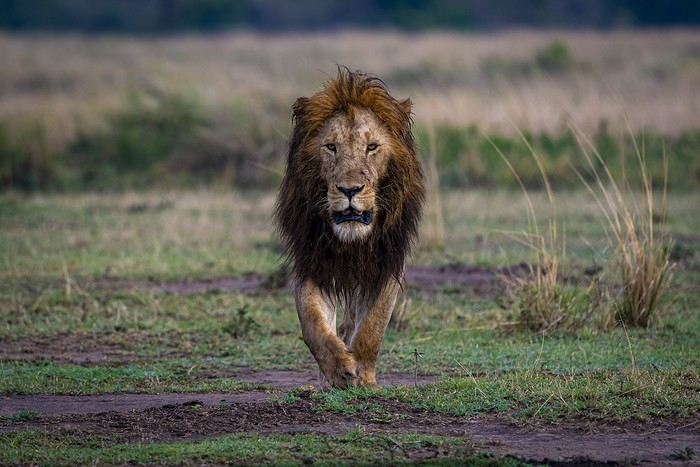
Here’s a beautiful specimen already:
Tanzania 2019 - Polé Polé
KARIBUUU
Over 5 years later, I’m finally getting around to writing the travel journal for our first trip to East Africa: Tanzania. *Polé Polé*, as they say! 😎
A trip I’d started planning just 6 years ago, in February 2019, for my post-internship exam vacation. After returning to South Africa in July 2019 with my family, this trip, planned for September 2019, would be all about discovery and a few firsts: first trip with friends, first trek, first time in East Africa. I really wanted to attempt the Kilimanjaro ascent, try to still see some of its "eternal" ice, and Alison wanted to do as much safari as possible. Unlike with the Zulus, Himbas, or San, visiting a Maasai village wasn’t on the agenda. Thanks to the Kessy Brothers agency, who were super responsive, Sandy from VF, and other members who helped prepare our trip, we settled on the following itinerary:
Day -1 (8/30): Departure from Pointe-à-Pitre Day 0 (8/31): Departure from Paris Day 1 (9/01): Arrival at Kilimanjaro Airport / Ameg Lodge (Moshi) DAY 2 (9/02): Machame gate / Machame camp DAY 3 (9/03): Shira / Shira camp DAY 4 (9/04): Baranco / Baranco camp DAY 5 (9/05): Barafu / Barafu camp DAY 6 (9/06): Barafu + Summit at midnight / Mweka camp DAY 7 (9/07): Mweka gate / Sal Salnero Hotel (Moshi) DAY 8 (9/08): Arusha National Park / Kanga camp DAY 9 (9/09): Tarangire National Park / Kanga camp DAY 10 (9/10): Tarangire National Park / Twiga Lodge DAY 11 (9/11): Lake Manyara / Twiga Lodge DAY 12 (9/12): Ngorongoro Crater / Simba campsite DAY 13 (9/13): Serengeti National Park / Seronera campsite DAY 14 (9/14): Serengeti National Park - Uoga Kuria Camp DAY 15 (9/15): Serengeti National Park / Waso campsite DAY 16 (9/16): Lake Natron / Maasai Giraffe Ecolodge DAY 17 (9/17): Kilimanjaro Airport Day 18 (9/18): Zanzibar Day 19 (9/19): Zanzibar Day 20 (9/20): Zanzibar Day 21 (9/21): Zanzibar
As I mentioned in my first travel journal about our South Africa trip, I’ve had a special connection to Tanzania for a long time. Growing up in the Indian Ocean without ever visiting Africa, those wildlife documentaries on TV when I skipped my pharmacy classes... I imagined and dreamed about this land and country so much.
The original plan was to go just the two of us with Alison, but somehow—though I don’t quite remember how—we ended up organizing the trip with our friends Mélissa and Doriane, who joined us in Arusha after our Kilimanjaro trek for the last two weeks and their very first safari. I think it was Melissa who had the idea to crash our trip, and she was right to do so! 😉 Flights: Pointe-à-Pitre-Grand Case and Grand Case-Paris with Air Caraïbes. Flights: Paris-JRO and ZNZ-Paris with Kenya Airways (layover in Nairobi). Flight: JRO-ZNZ with Air Tanzania.
Safe travels! !
Over 5 years later, I’m finally getting around to writing the travel journal for our first trip to East Africa: Tanzania. *Polé Polé*, as they say! 😎
A trip I’d started planning just 6 years ago, in February 2019, for my post-internship exam vacation. After returning to South Africa in July 2019 with my family, this trip, planned for September 2019, would be all about discovery and a few firsts: first trip with friends, first trek, first time in East Africa. I really wanted to attempt the Kilimanjaro ascent, try to still see some of its "eternal" ice, and Alison wanted to do as much safari as possible. Unlike with the Zulus, Himbas, or San, visiting a Maasai village wasn’t on the agenda. Thanks to the Kessy Brothers agency, who were super responsive, Sandy from VF, and other members who helped prepare our trip, we settled on the following itinerary:
Day -1 (8/30): Departure from Pointe-à-Pitre Day 0 (8/31): Departure from Paris Day 1 (9/01): Arrival at Kilimanjaro Airport / Ameg Lodge (Moshi) DAY 2 (9/02): Machame gate / Machame camp DAY 3 (9/03): Shira / Shira camp DAY 4 (9/04): Baranco / Baranco camp DAY 5 (9/05): Barafu / Barafu camp DAY 6 (9/06): Barafu + Summit at midnight / Mweka camp DAY 7 (9/07): Mweka gate / Sal Salnero Hotel (Moshi) DAY 8 (9/08): Arusha National Park / Kanga camp DAY 9 (9/09): Tarangire National Park / Kanga camp DAY 10 (9/10): Tarangire National Park / Twiga Lodge DAY 11 (9/11): Lake Manyara / Twiga Lodge DAY 12 (9/12): Ngorongoro Crater / Simba campsite DAY 13 (9/13): Serengeti National Park / Seronera campsite DAY 14 (9/14): Serengeti National Park - Uoga Kuria Camp DAY 15 (9/15): Serengeti National Park / Waso campsite DAY 16 (9/16): Lake Natron / Maasai Giraffe Ecolodge DAY 17 (9/17): Kilimanjaro Airport Day 18 (9/18): Zanzibar Day 19 (9/19): Zanzibar Day 20 (9/20): Zanzibar Day 21 (9/21): Zanzibar
As I mentioned in my first travel journal about our South Africa trip, I’ve had a special connection to Tanzania for a long time. Growing up in the Indian Ocean without ever visiting Africa, those wildlife documentaries on TV when I skipped my pharmacy classes... I imagined and dreamed about this land and country so much.
The original plan was to go just the two of us with Alison, but somehow—though I don’t quite remember how—we ended up organizing the trip with our friends Mélissa and Doriane, who joined us in Arusha after our Kilimanjaro trek for the last two weeks and their very first safari. I think it was Melissa who had the idea to crash our trip, and she was right to do so! 😉 Flights: Pointe-à-Pitre-Grand Case and Grand Case-Paris with Air Caraïbes. Flights: Paris-JRO and ZNZ-Paris with Kenya Airways (layover in Nairobi). Flight: JRO-ZNZ with Air Tanzania.
Safe travels! !
Achat van sur place aux États-Unis ou envoyer le sien
Bonjour,
Je suis sur un dilemme et j'ai besoin de vos conseils avisés. Je prévois de partir 1 an voyager en Amérique du Nord et Amérique centrale. Je ne sais pas si le mieux est d'acheter un van au Canada et de le revendre à la fin au Mexique ce qui ne doit pas être chose facile. L'inconvénient est également la perte de temps sur place pour l'aménagement et surtout trouver le lieu et les équipements pour le faire.
En envoyant un van acheté en France je peux prendre le temps que je veux pour l'aménager depuis chez moi avec les outils nécessaires à disposition. Je peux même le tester lors de road trip en France et être sur de partir avec un van correctement équipé. Le problème est : que faire du van à la fin du road trip ? Je pourrais le stocker en longue durée aux Etats-Unis pour avoir un véhicule sur place en vu de prochain voyage ou le ramener à nouveau vers la France. La revente est très difficile me semble-t-il pour un véhicule immatriculé français.
Donc, acheter sur place ou envoyer son van français ?
Je vous remercie,
Jeremy
Donc, acheter sur place ou envoyer son van français ?
Je vous remercie,
Jeremy
Croisière MSC Divina novembre 2020
Bonjour tout le monde,
Cette année (tout comme l'année dernière) nous allons partir en croisière pour l'anniversaire de notre loulou (3 ans le 11 novembre).
Cette année nous avons choisi de partir sur le Divina que nous ne connaissons pas encore (le Bellissima l'année dernière). Nous partirons donc de Marseille pour aller à Barcelone, Ibiza, Naples, Livourne et Gênes.
C'est à ce moment la6que j'ai besoin de vos lumières 😉 . J'aurais besoin de conseils, astuces, idées pour les escales suivantes :
- Barcelone : nous connaissons assez pour avoir déjà fais escale 3 ou 4 fois mais en couple alors des idées sympa/originale à faire avec un petit bonhomme de 3 ans ?
- ibiza : idem déjà 1 fois en couple mais besoin d'idées...
- Naples : nous ne connaissons pas du tout alors je suis preneuse pour toutes infos faisable avec loulou et sa poussette
- Livourne : idem nous ne connaissons pas je fais appel à vos lumières...
Voila voila, cette croisiere sera notre 8ème mais lorsque nous étions en couple nous nous dirigions plus sur les Caraïbes et usa du coup l'Italie nous ne sommes pas très calé et encore moins avec un pti bout de 3 ans...
D'avance merci 🙂
Cette année (tout comme l'année dernière) nous allons partir en croisière pour l'anniversaire de notre loulou (3 ans le 11 novembre).
Cette année nous avons choisi de partir sur le Divina que nous ne connaissons pas encore (le Bellissima l'année dernière). Nous partirons donc de Marseille pour aller à Barcelone, Ibiza, Naples, Livourne et Gênes.
C'est à ce moment la6que j'ai besoin de vos lumières 😉 . J'aurais besoin de conseils, astuces, idées pour les escales suivantes :
- Barcelone : nous connaissons assez pour avoir déjà fais escale 3 ou 4 fois mais en couple alors des idées sympa/originale à faire avec un petit bonhomme de 3 ans ?
- ibiza : idem déjà 1 fois en couple mais besoin d'idées...
- Naples : nous ne connaissons pas du tout alors je suis preneuse pour toutes infos faisable avec loulou et sa poussette
- Livourne : idem nous ne connaissons pas je fais appel à vos lumières...
Voila voila, cette croisiere sera notre 8ème mais lorsque nous étions en couple nous nous dirigions plus sur les Caraïbes et usa du coup l'Italie nous ne sommes pas très calé et encore moins avec un pti bout de 3 ans...
D'avance merci 🙂
Mes expériences avec les ours en randonnée
MON PREMIER OURS, 1988
Au printemps 1988, mon employeur m'a envoyé travailler pendant 3 mois dans un centre de recherches en Caroline du Nord. Pour un weekend prolongé, je pars au Great Smoky Mountains National Park. Je veux passer la nuit à un des campings du parc, tout est plein mais le ranger me propose le 'backcountry camping' , une aire de camping dans la forêt accessible en une heure de marche. Donc j'y vais, sac à dos. Un plutôt petit ours noir se tient dans une petite clairière, juste à côté du chemin, à 50 mètres de moi. Bon, il s'enfuit. Au camping, juste 10 minutes plus loin, je passe la soirée avec un jeune couple, les seuls autres résidents, et ils sont très surpris qu'un ours se trouve si près de nous.
OUEST DU CANADA, 2009
Je vais faire plusieurs randonnées en backcountry camping. Cette fois, je devrai m'habituer à la présence des ours ! Aux bureaux des parcs on doit suivre une explication sur les ours et comment se comporter envers eux, soit une vidéo, soit directement un entretien par un ranger, plus encore un fascicule. Dans les aires de camping on trouve des armoires anti-chasseours pour ranger sa nourriture, ou alors des potences avec une corde pour la mettre hors de portée en hauteur. Il est interdit de manger dans sa tente. En fait, je n'en voit qu'un dans les Rocheuses, pendant le trek du Mont Assiniboine, en compagnie d'un couple canadien. Dans une prairie caillouteuse, un grizzly chasse les 'gophers' (des sortes de petits écureuils) et essaye même de les déterrer de leur terrier, il ne se préoccupe absolument pas de nous, on peut l'observer longuement. Je vois partout des empreintes d'ours, et aussi des excréments, facilement identifiables. Par la suite, je me déplace vers Vancouver, Je randonne dans le parc provincial de Manning et le troisième jour un ours noir est plante juste sur mon chemin au milieu d'éboulis, assez loin devant moi. Il ne m'a pas remarqué (d'ailleurs, malgré leur odorat réputé, le plus souvent je vois les ours avant que eux ne m'aient repéré). Je suis obligé de taper dans mes mains et faire du bruit pour qu'il deguerpisse et que je puisse continuer. Je termine ce voyage par la très réputée West Coast Trail, fin septembre, ses derniers jours d'ouverture. Le sentier est souvent une fente étroite dans la végétation envahissante, sans visibilité, et à 2 reprises je tombe sur un ours seulement 10 ou 20 mètres devant moi, ils disparaissent en une fraction de seconde.
A SUIVRE Alaska 2010
Au printemps 1988, mon employeur m'a envoyé travailler pendant 3 mois dans un centre de recherches en Caroline du Nord. Pour un weekend prolongé, je pars au Great Smoky Mountains National Park. Je veux passer la nuit à un des campings du parc, tout est plein mais le ranger me propose le 'backcountry camping' , une aire de camping dans la forêt accessible en une heure de marche. Donc j'y vais, sac à dos. Un plutôt petit ours noir se tient dans une petite clairière, juste à côté du chemin, à 50 mètres de moi. Bon, il s'enfuit. Au camping, juste 10 minutes plus loin, je passe la soirée avec un jeune couple, les seuls autres résidents, et ils sont très surpris qu'un ours se trouve si près de nous.
OUEST DU CANADA, 2009
Je vais faire plusieurs randonnées en backcountry camping. Cette fois, je devrai m'habituer à la présence des ours ! Aux bureaux des parcs on doit suivre une explication sur les ours et comment se comporter envers eux, soit une vidéo, soit directement un entretien par un ranger, plus encore un fascicule. Dans les aires de camping on trouve des armoires anti-chasseours pour ranger sa nourriture, ou alors des potences avec une corde pour la mettre hors de portée en hauteur. Il est interdit de manger dans sa tente. En fait, je n'en voit qu'un dans les Rocheuses, pendant le trek du Mont Assiniboine, en compagnie d'un couple canadien. Dans une prairie caillouteuse, un grizzly chasse les 'gophers' (des sortes de petits écureuils) et essaye même de les déterrer de leur terrier, il ne se préoccupe absolument pas de nous, on peut l'observer longuement. Je vois partout des empreintes d'ours, et aussi des excréments, facilement identifiables. Par la suite, je me déplace vers Vancouver, Je randonne dans le parc provincial de Manning et le troisième jour un ours noir est plante juste sur mon chemin au milieu d'éboulis, assez loin devant moi. Il ne m'a pas remarqué (d'ailleurs, malgré leur odorat réputé, le plus souvent je vois les ours avant que eux ne m'aient repéré). Je suis obligé de taper dans mes mains et faire du bruit pour qu'il deguerpisse et que je puisse continuer. Je termine ce voyage par la très réputée West Coast Trail, fin septembre, ses derniers jours d'ouverture. Le sentier est souvent une fente étroite dans la végétation envahissante, sans visibilité, et à 2 reprises je tombe sur un ours seulement 10 ou 20 mètres devant moi, ils disparaissent en une fraction de seconde.
A SUIVRE Alaska 2010
27 jours à travers le Nord-ouest américain
Plusieurs mois ont passé depuis notre retour du Nord-Ouest américain, et cette période un peu particulière est l’occasion rêvée de me consacrer enfin à la rédaction de ce carnet de voyage !
Quatrième roadtrip aux USA. C’est en Août 2019 que nous décollons pour Seattle. Cette fois, nous explorons la partie Nord-Ouest des USA, ce pays qui nous passionne depuis le premier roadtrip en 2014. 27 jours de voyage, au travers le Washington, l’Idaho, le Montana, le Wyoming et l’Oregon…ça promet encore de magnifiques découvertes 🙂 Cette année, certains grands parcs sont au programme comme Glacier NP ou encore Yellowstone (non, on ne s’en lassera jamais !), mais nous avons aussi mis sur notre parcours des State Park bien moins touristiques et des petits endroits isolés mais magnifiques comme on adore !
JOUR 1
Ma maman et mon frère sont arrivés chez moi la veille car ils vivent en province, et ce matin pas question d’avoir du retard. C’est le grand jour ! Celui qu’on prépare depuis un an !
Vers 5h du matin, nous recevons un mail de la compagnie aérienne qui nous indique 1h de retard au décollage, on se laisse donc 1h de sommeil supplémentaire.
Porte K49 - 11h10 l’avion décolle. Nous avons choisi à nouveau de voler avec Delta Airlines, et mis à part ce retard de 50min, nous n’avons, comme d’habitude rien à signaler. Les services sont au rendez-vous.
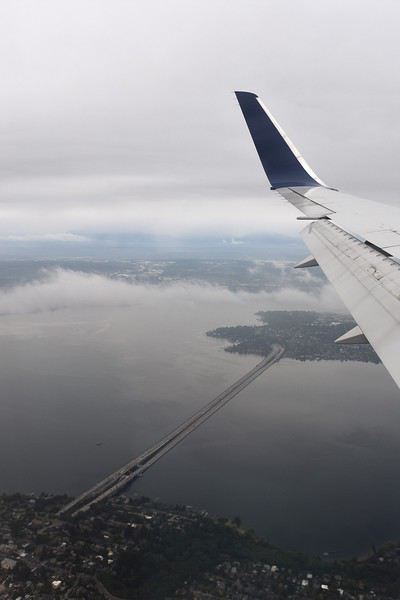
Cette année, nous avons un peu moins de chance que les voyages passés, en ce qui concerne la météo. Nous n’avons pas la chance de voir le Groenland, les côtes canadiennes.
Nous atterrissons à Seattle en début d’après-midi. Il fait gris, et froid ! On attend un moment près du hangar Alaska Airlines, et ben, étant donné la météo, on pourrait se croire en Alaska 😉
On arrive à la douane, ils nous séparent pour nous interroger un par un. Seul problème, maman parle très mal anglais, voire pas du tout ! Ce qu’on signale immédiatement, mais ils tiennent absolument à ce qu’elle réponse par elle-même aux questions. Ce qui après unpeu d’angoisse nous laisse un souvenir mémorable lorsque le douanier demande si elle a de la nourriture avec elle, sa réponse : « oui bonbonsss » 😄
Tout ça derrière nous, on se dirige vers le bâtiment qui regroupe tous les loueurs de voiture. Tout est très bien fléché dans l’aéroport de Seattle. Nous savons qu’il nous faut prendre un shuttle. Il y a la queue, et nous sommes sous la pluie ! Welcome !

Arrivé au guichet Hertz, pas d’attente. Nous sommes plutôt satisfaits de notre réservation car quelques jours avant le départ, je me reconnecte sur leur site pour vérifier que tout est en ordre. Je réalise alors que les tarifs pour notre catégorie de véhicule ont bien changé et qu’ils sont plus intéressants que lors de notre réservation il y a plusieurs mois. J’appelle Hertz qui constate également, modifie la réservation et s’engage immédiatement à rembourser les 400€ d’écart. Au guichet nous avons également une discussion concernant les assurances des passagers de la voiture. Et la personne est très à l’écoute, se renseigne plusieurs fois à notre demande, pour finalement nous éviter un surcoût, très peu courant chez les loueurs américains ça !!!
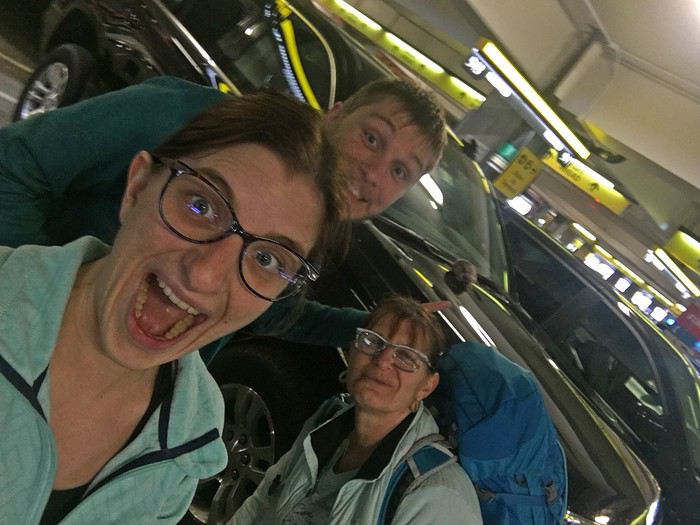
C’est donc de bonne humeur que nous descendons au parking, retrouver le véhicule qui nous est attribué. C’est un Chevrolet TAHOE. Maman fait quelques pas en arrière, stupéfaite. « Mais je ne pourrais jamais conduire cet engin !!! ». Avec mon frère Raphaël, nous, nous sommes ravis ! Après les contrôles d’usage, rayures, essuie-glace, niveaux, roue de secours… cette fois EN ROUTE !
On ne change pas les bonnes habitudes, premier arrêt, Walmart ! Il est à peine à 10min de l’aéroport. Nous arrivons sous une pluie battante, 30 secondes dehors pour rejoindre le magasin suffisent à nous tremper ! Nous sommes fatigués du voyage donc la liste de courses préparée à l’avance est bien utile. Seul petit problème, impossible de trouver une bombonne de gaz pour notre réchaud, et ce malgré l’aide d’un vendeur. Cette année, nous avons amené avec nous les barres de céréales pour les randos, on avait un mauvais souvenir des versions américaines et on a bien fait ! On arrive à la voiture, on se dit comme dans la pub, on va utiliser le pied pour ouvrir le coffre car nous sommes chargés et il pleut toujours. Mais rien ne fonctionne. La clé nous permet d’ouvrir chaque porte, chaque fenêtre, mais on ne trouve pas dans la précipitation comment ouvrir le coffre 😕 Quelques minutes plus tard, problème résolu, courses rangées… mais nous sommes trempés comme des soupes 😎
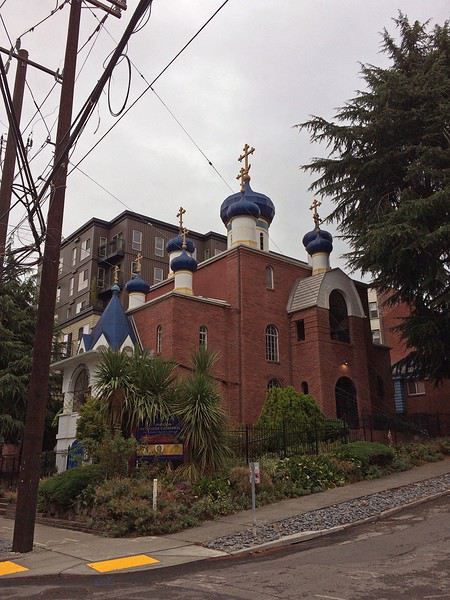
Maintenant, direction REI. C’est certainement notre seule occasion d’y faire un tour pendant ce voyage. Et puis, on a toujours besoin de gaz pour le réchaud. 25min plus tard, on arrive au parking sous-terrain, il est gratuit pendant 1h puis 2$ pour 3h. On a adoré ce magasin ! Et on a trouvé les quelques articles qui nous manquaient. Mais il est temps de partir. Nous avons décidé de ne pas dormir à Seattle, pour économiser un peu. Résultat, encore un peu de route.
Après 30min, nous arrivons au Best Value Inn de Lynnwood. Petit motel sans prétention, mais propre, personnel accueillant. Parfait pour une nuit d’après voyage. Une fois les bagages déchargés, on range les courses dans les glacières. Et on ne se fait pas prier pour se mettre au lit !
Quatrième roadtrip aux USA. C’est en Août 2019 que nous décollons pour Seattle. Cette fois, nous explorons la partie Nord-Ouest des USA, ce pays qui nous passionne depuis le premier roadtrip en 2014. 27 jours de voyage, au travers le Washington, l’Idaho, le Montana, le Wyoming et l’Oregon…ça promet encore de magnifiques découvertes 🙂 Cette année, certains grands parcs sont au programme comme Glacier NP ou encore Yellowstone (non, on ne s’en lassera jamais !), mais nous avons aussi mis sur notre parcours des State Park bien moins touristiques et des petits endroits isolés mais magnifiques comme on adore !
JOUR 1
Ma maman et mon frère sont arrivés chez moi la veille car ils vivent en province, et ce matin pas question d’avoir du retard. C’est le grand jour ! Celui qu’on prépare depuis un an !
Vers 5h du matin, nous recevons un mail de la compagnie aérienne qui nous indique 1h de retard au décollage, on se laisse donc 1h de sommeil supplémentaire.
Porte K49 - 11h10 l’avion décolle. Nous avons choisi à nouveau de voler avec Delta Airlines, et mis à part ce retard de 50min, nous n’avons, comme d’habitude rien à signaler. Les services sont au rendez-vous.
Cette année, nous avons un peu moins de chance que les voyages passés, en ce qui concerne la météo. Nous n’avons pas la chance de voir le Groenland, les côtes canadiennes.
Nous atterrissons à Seattle en début d’après-midi. Il fait gris, et froid ! On attend un moment près du hangar Alaska Airlines, et ben, étant donné la météo, on pourrait se croire en Alaska 😉
On arrive à la douane, ils nous séparent pour nous interroger un par un. Seul problème, maman parle très mal anglais, voire pas du tout ! Ce qu’on signale immédiatement, mais ils tiennent absolument à ce qu’elle réponse par elle-même aux questions. Ce qui après unpeu d’angoisse nous laisse un souvenir mémorable lorsque le douanier demande si elle a de la nourriture avec elle, sa réponse : « oui bonbonsss » 😄
Tout ça derrière nous, on se dirige vers le bâtiment qui regroupe tous les loueurs de voiture. Tout est très bien fléché dans l’aéroport de Seattle. Nous savons qu’il nous faut prendre un shuttle. Il y a la queue, et nous sommes sous la pluie ! Welcome !
Arrivé au guichet Hertz, pas d’attente. Nous sommes plutôt satisfaits de notre réservation car quelques jours avant le départ, je me reconnecte sur leur site pour vérifier que tout est en ordre. Je réalise alors que les tarifs pour notre catégorie de véhicule ont bien changé et qu’ils sont plus intéressants que lors de notre réservation il y a plusieurs mois. J’appelle Hertz qui constate également, modifie la réservation et s’engage immédiatement à rembourser les 400€ d’écart. Au guichet nous avons également une discussion concernant les assurances des passagers de la voiture. Et la personne est très à l’écoute, se renseigne plusieurs fois à notre demande, pour finalement nous éviter un surcoût, très peu courant chez les loueurs américains ça !!!
C’est donc de bonne humeur que nous descendons au parking, retrouver le véhicule qui nous est attribué. C’est un Chevrolet TAHOE. Maman fait quelques pas en arrière, stupéfaite. « Mais je ne pourrais jamais conduire cet engin !!! ». Avec mon frère Raphaël, nous, nous sommes ravis ! Après les contrôles d’usage, rayures, essuie-glace, niveaux, roue de secours… cette fois EN ROUTE !
On ne change pas les bonnes habitudes, premier arrêt, Walmart ! Il est à peine à 10min de l’aéroport. Nous arrivons sous une pluie battante, 30 secondes dehors pour rejoindre le magasin suffisent à nous tremper ! Nous sommes fatigués du voyage donc la liste de courses préparée à l’avance est bien utile. Seul petit problème, impossible de trouver une bombonne de gaz pour notre réchaud, et ce malgré l’aide d’un vendeur. Cette année, nous avons amené avec nous les barres de céréales pour les randos, on avait un mauvais souvenir des versions américaines et on a bien fait ! On arrive à la voiture, on se dit comme dans la pub, on va utiliser le pied pour ouvrir le coffre car nous sommes chargés et il pleut toujours. Mais rien ne fonctionne. La clé nous permet d’ouvrir chaque porte, chaque fenêtre, mais on ne trouve pas dans la précipitation comment ouvrir le coffre 😕 Quelques minutes plus tard, problème résolu, courses rangées… mais nous sommes trempés comme des soupes 😎
Maintenant, direction REI. C’est certainement notre seule occasion d’y faire un tour pendant ce voyage. Et puis, on a toujours besoin de gaz pour le réchaud. 25min plus tard, on arrive au parking sous-terrain, il est gratuit pendant 1h puis 2$ pour 3h. On a adoré ce magasin ! Et on a trouvé les quelques articles qui nous manquaient. Mais il est temps de partir. Nous avons décidé de ne pas dormir à Seattle, pour économiser un peu. Résultat, encore un peu de route.
Après 30min, nous arrivons au Best Value Inn de Lynnwood. Petit motel sans prétention, mais propre, personnel accueillant. Parfait pour une nuit d’après voyage. Une fois les bagages déchargés, on range les courses dans les glacières. Et on ne se fait pas prier pour se mettre au lit !