Results for "Soudan"
About 5,814 results.
More options
Many results are in French, the community’s main language. English translations are added over time.
Search results
Cap Vert: randonnées à Santo Antao et Fogo, visites de Sao Vicente et Santiago
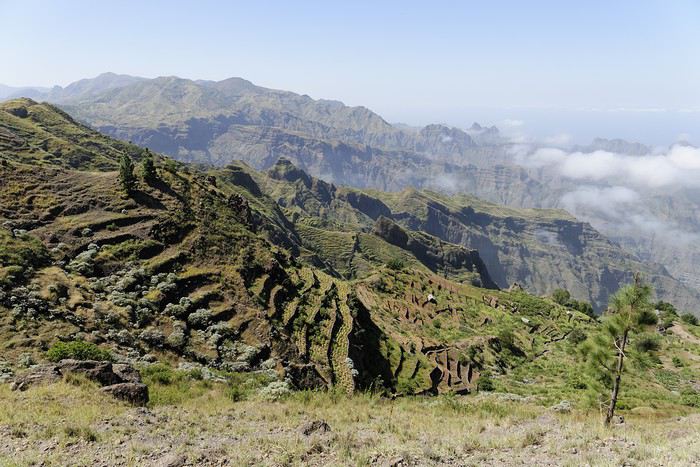
Ce carnet de voyage est le compte rendu d’un circuit de 19 jours effectué du 8 au 26 novembre 2013 sur les îles de Sao Vicente, Santo Antao, Santiago et Fogo. Participants: 4 adultes (58 et 60 ans pour tout le voyage, 69 et 70 ans pour Sao Vicente et Santo Antao) Organisation : par une agence française mais en individuels Déplacements : en voiture avec chauffeur Randonnées : avec guide à Santo Antao, sauf à Tarrafal, avec guide pour la montée au Pico de Fogo et seuls pour la descente sur la côte. Logements : hôtels réservés par notre agence. Météo : temps sec, températures particulièrement élevées pour cette saison Nos coups de cœur : - A Santo Antao : les cultures en terrasses et le relief en général, Tarrafal pour ses paysages et son ambiance. - A Fogo : la caldeira et le Pico de Fogo, Sao Filipe Nos déceptions : - A Santiago : Praia La bonne surprise : - Une nourriture simple mais faite de bons produits, avec beaucoup de poissons et de légumes, et un vin très agréable. Aucun problème digestif. Observations :
- Les indications sur les logements datant de 2013, elles ne sont probablement plus d’actualité, comme certains renseignements pratiques.
- Les randonnées sont réservées à de bons marcheurs avec une bonne condition physique mais ne comportent aucune difficulté technique. Elles sont parfois éprouvantes mais offrent des paysages époustouflants qui laissent un souvenir impérissable.
- Fogo : un an jour pour jour après notre ascension du Pico de Fogo, le volcan entrait en éruption. Les habitants de la Caldeira ont tenté de sauver tout ce qu’ils pouvaient en stockant leurs affaires en hauteur sur les remparts. Mais les coulées de lave ont tout ravagé sur leur passage, recouvrant toutes les habitations. L’auberge où nous logions a été complètement engloutie.
Jour 1 : Bruxelles - Lisbonne a.m. : Vol Bruxelles – Lisbonne p.m. : . Confeiteiria Nacional . Paroisse Sao Sebastao . Nuit à Lisbonne
Petit tour au centre-ville pour aller goûter dans une pâtisserie et se gaver de pasteles de nata à la Confeiteiria Nacional, place de Figueira, bel immeuble de caractère sur une jolie place, véritable institution à Lisbonne. Un régal ! On y voit le palais fortifié. On se promène dans les environs : quelques jolies places, des façades couvertes d’azulejos, belle gare, église étonnante qui a brûlé et où on a l’impression d’être dans une grotte. En rentrant vers l’hôtel, on aperçoit une jolie petite église avec des vitraux spéciaux. Surprise totale en y entrant : un vrai bijou, couvert d’or et d’azulejos, chargé mais harmonieux. C’est la paroisse de Sao Sebastao, inconnue de notre guide. Dîner à côté de l’hôtel. Nuit à l’hôtel Sana Executive, belle grande chambre originale, bonne salle de bain.
Jour 2 : Lisbonne – Sao Vicente a.m. : Vol pour Sao Vicente p.m. : Arrivée à Mindelo
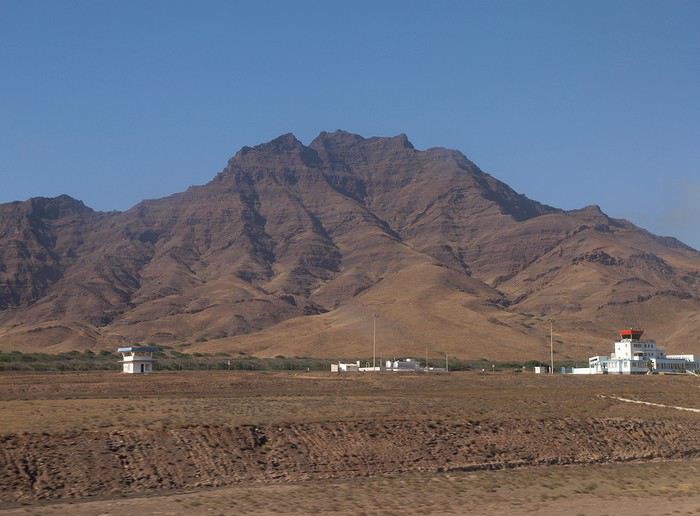
On part de l’hôtel en taxi à 10h pour un vol à 13h. On a largement le temps de faire les boutiques de l’aéroport, très moderne Arrivée à Mindelo, sur l’île de Sao Vicente, vers 16h, après moins de 4h de vol. Il y a 2 heures de décalage horaire par rapport à Bruxelles. L’aéroport est minuscule et on fait la file très longtemps à la douane. Heureusement que nous avons déjà tous nos visas pris à l’ambassade à Bruxelles. Ce qui nous a frappés à l’arrivée en survolant les îles, c’est leur aridité. Mais Santo Antao devrait être nettement plus verte.
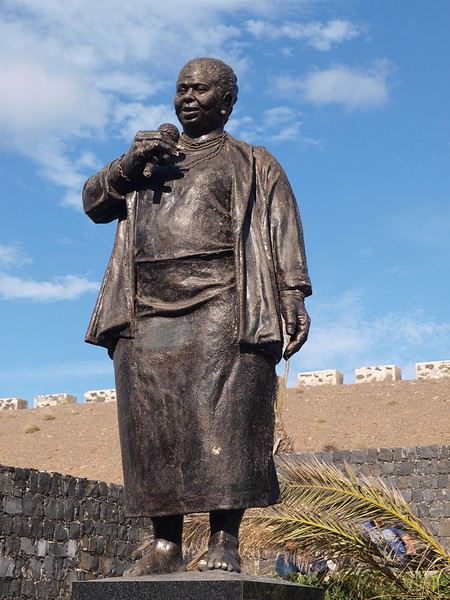
C’est une énorme statue de Cesaria Evora, la célèbre chanteuse de fado capverdienne, qui nous « accueille » à l’extérieur de l’aéroport.
Nous découvrons notre guide, Sylvia, très jeune, mignonne et sympathique. Elle nous accompagnera jusqu’à ce qu’on parte à Tarrafal. Elle nous fait faire un petit tour de la ville, quelques belles maisons colorées mais pas de beaux ensembles. Ce sont des camions citernes qui alimentent en eaux les immeubles en remplissant des réservoirs sur les toits. Question population, il y aurait de quoi photographier sans arrêt.
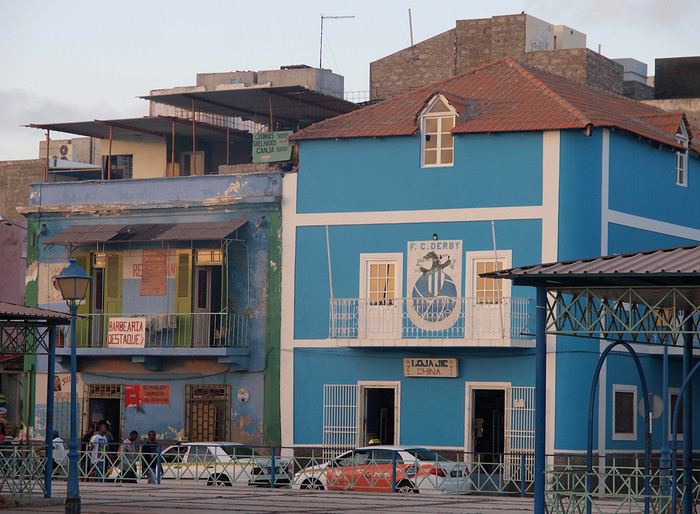
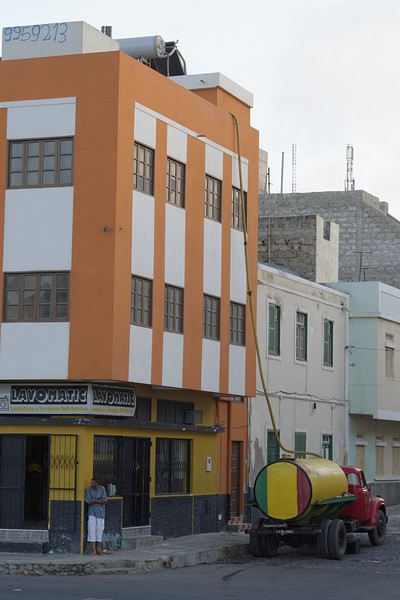
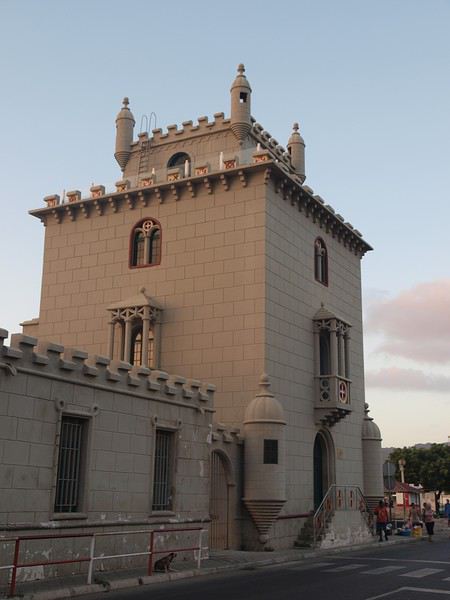
Il fait vite noir (18h30) et nous rentrons à l’hôtel prendre une douche. Dîner à la « Churrasqueira Grilles », sorte d’énorme terrasse couverte au 2ème étage , déco assez chouette, bonne nourriture, simple mais saine et complète (thon, légumes, frites, riz + dessert). Coucher à 21h car demain, lever à 5h45 pour prendre le bateau de 7h pour Santo Antao ! Ça commence fort ! Nuit à l’hôtel Mindelo Residencial, chambre bien équipée (télé, frigo, douche, air conditionné) à la déco peu joyeuse et vieillotte mais c’est propre et il y a de l’eau chaude.
Kayaking in Greenland - Disko Bay: Circumnavigation of Arve Princess Island
After two rather rainy kayaking experiences in Alaska at the end of summer in recent years, we chose a slightly drier destination for this late August 2018: the west coast of Greenland. The temperature will certainly be a bit colder, especially at this time of year, but we’re betting on a beautiful end to the season. According to temperature charts, it should be around 5 to 10°C with a few night frosts. The tundra will already have its autumn colors, and by the end of the trip, we might be lucky enough to see the northern lights when the nights get darker.
We’re setting off as a group of three in two inflatable double-seater kayaks (Gumotex) brought from France. The plan is to spend two weeks circumnavigating Arve Princess Island, located north of Ilulissat in Disko Bay, with a possible boat drop-off at the southern tip of the island.
This seems like a fairly classic route in the area—we found several descriptions online (thanks to the authors). With their help and Google Earth, we identified all potential campsites and entered their coordinates into a GPS. The western part of the island, facing the bay, seems ideal for whale watching, while the more rugged eastern side offers access to several glacial walls. We’re somewhat familiar with the area from two winter expeditions on skis and pulkas.
Plus, the commitment is limited due to the island’s proximity to several small villages, including Qeqertaq, Oqaatsut, and even Ilulissat. In fact, we saw fishing boats almost every day. The distance suits us well: 200 kilometers in 16 full days on site, which should leave some leeway in case of bad weather or for hiking.
We booked our flights in June with Air Greenland to Ilulissat for the last week of August and the first week of September. On both the outbound and return trips, we stayed overnight in Copenhagen. The France-Copenhagen flight was with Air France.
We were allowed 3 x 20 kg in the hold. Each kayak with its accessories fits into a 20 kg bag; the last hold bag is for shared gear: tent, stoves, dry bags… We only brought 1.5 kg of semolina for food. In the end, we had 61 kg of gear, and no excess baggage was charged.
Individual gear (clothes and sleeping bags…) was distributed in the cabin luggage.
For the boat transfer, we contacted an agency: Blue Jay, which gave us a number to call upon arrival.
Day 0: Wednesday, August 22 Departure day. After work, I drove from Gap to Marseille’s Marignane Airport for the first leg of the trip to Copenhagen. I enjoyed the rather mild local temperatures: 35°C in the shade. After a layover in Paris, I arrived at the Copenhagen hotel, located two train stops from the airport, where my companions were already settled. No issues—everyone was on time with their luggage.
Day 1 The flight to Greenland was at 9 AM. We had a layover in Kangerlussuaq, where we changed planes, then stopped in Aasiaat before reaching Ilulissat Airport at 3 PM under beautiful sunshine.
We called Blue Jay for the boat transfer: they could take us to the island as early as 6 PM; otherwise, we’d have to wait until the next day. That left us 3 hours to prepare our gear and, most importantly, do our shopping for the two-week trip—it seemed tight, but we gave it a shot.
A quick taxi ride took us to Pisiffik, where we easily found everything we needed: bread, butter, cheese, cold cuts, rice, pasta, jam, muesli… There was no C fuel or methylated spirits for the stoves, but this time we knew the trick: at Stark, a bit uphill from the town, we found the precious liquids. Two hours later, we filled our dry bags and containers with our purchases, and by 5:30 PM, we met Klaus, the Blue Jay manager, directly at the port.
The vacation seemed to truly begin as we sped by boat through the icebergs toward Arve Princess Island. Forty-five minutes later, we spotted a beach lined with rocks where Klaus dropped us off quickly (he had another transfer to make right after).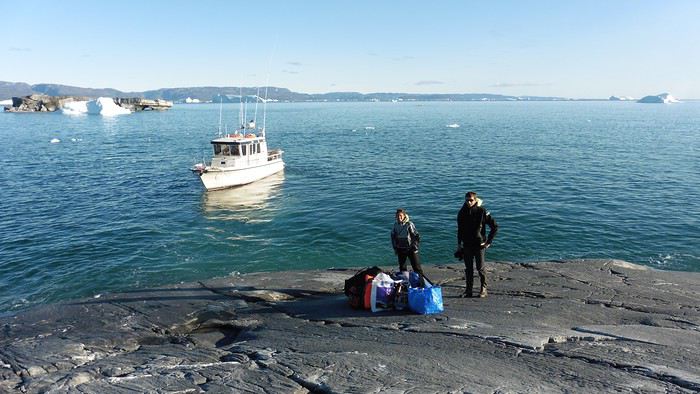
Here we were on the island, in the middle of nowhere, with all our luggage and food to organize, the tent to set up, and the kayaks to inflate—just 10 hours after leaving the Copenhagen hotel. We got to work, bothered by the flies. Despite our head nets, it was barely tolerable—there were so many of them. They swarmed by the dozens into every bag we opened. It was quite mild: 10°C.
Everything was ready by evening, and we were very happy to have completed all these transfers (planes and boat in a single day) as we slipped into our sleeping bags.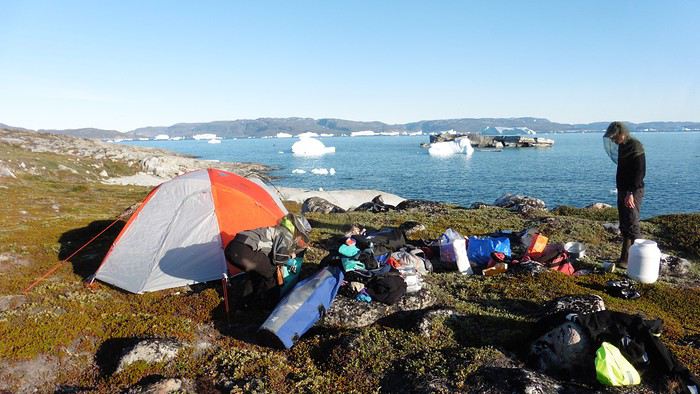
During the night, the wind picked up, and we went out several times to check the tent and kayak anchors. We noticed how bright it was—it was still quite twilight even at 1 AM.
Day 2 5:30 AM wake-up—the south wind was still strong, but since we were heading north, we decided to give it a try anyway.
This was also the moment we loaded the kayaks: since there were only three of us for two double-seater kayaks, we filled the hatch of one kayak, which allowed us to fit all our food. It would have been very difficult if there had been four of us for two kayaks.
Finally, we set off north along the western coast of the island. The conditions were far from ideal—the sea was rough, and the kayaks had a lot of wind resistance. But the main problem was the spray skirt: the gear on deck weighed it down, and the skirt kept coming off… We’d have to deal with it. Barely underway, and whales were already breaking the surface—it was our first time seeing them, and we were very impressed. Too bad the wind didn’t allow for longer contemplation; stopping paddling was impossible with such strong gusts.
We passed a few headlands and even considered stopping due to the conditions. To find some semblance of shelter, we had to hug the coast closely without cutting across the numerous bays, which significantly lengthened the journey. But as the morning went on, the wind died down, and the sea calmed. We spotted several whales and our first seals. It was almost pleasant during the picnic break. By late afternoon, we reached Kangerup Sarqâ Bay, where we had identified a great campsite with a very large beach and a river. But the wind had shifted—it was now coming from the north, making the last hour difficult due to fatigue and headwinds.
The campsite was ideal and beautiful, facing numerous icebergs grounded in the bay.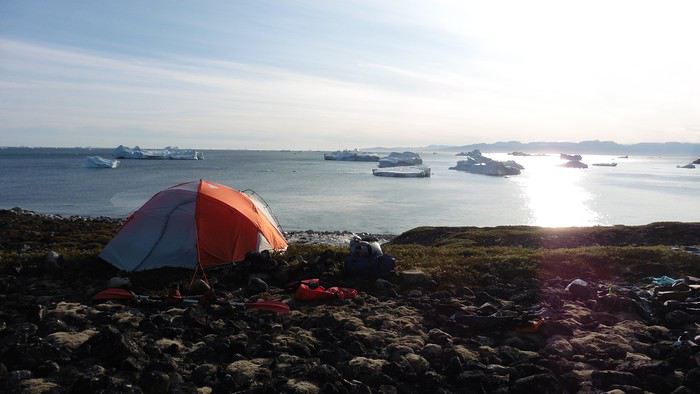
The GPS alerted us to another major drawback of inflatable kayaks: their slowness. It took us 7.5 hours of actual paddling (excluding breaks) to cover 28 km, averaging 3.7 km/h—somewhat disappointing. But we knew this before leaving, and once again, we’d have to make do!
Day 3 Surprise: at 6 AM wake-up, it was raining, foggy, with a south wind, and the sea was choppy even in the bay. It seemed wise to skip paddling, even though stopping on the second day was tough on morale. We went back to sleep, especially since the travel fatigue and the harsh conditions of the previous day had taken their toll.
At 11 AM, the navigation conditions weren’t any better—at the ends of the bay, we saw huge waves crashing onto the rocks, and giving up for the day became obvious. However, the rain had stopped, so we set off for a hike along the large lake bordering the bay. The wind hadn’t let up, and it was quite cold.
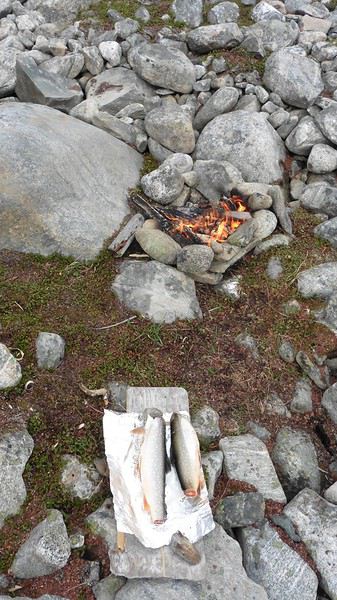
The tundra was starting to take on its autumn colors, and the contrast between the white lichens and the red vegetation was stunning. At the lake, we took out the fishing rods and quickly caught two beautiful Arctic char over 50 cm long.
As the afternoon wore on, the sun seemed closer. Along the beach, we gathered driftwood (mostly old planks) to cook our catch in foil over a fire. Eating our own food in such a beautiful place next to a good fire was comforting after the day’s setback.
In the middle of the night, an Arctic fox entered the tent’s rear awning. It seemed barely intimidated when we shooed it away with loud shouts and then with stones.
Day 4 6:15 AM wake-up—3°C. We were on the water by 8 AM. The wind had dropped significantly, but the sea was shrouded in fog, and it was very cold in these damp conditions.
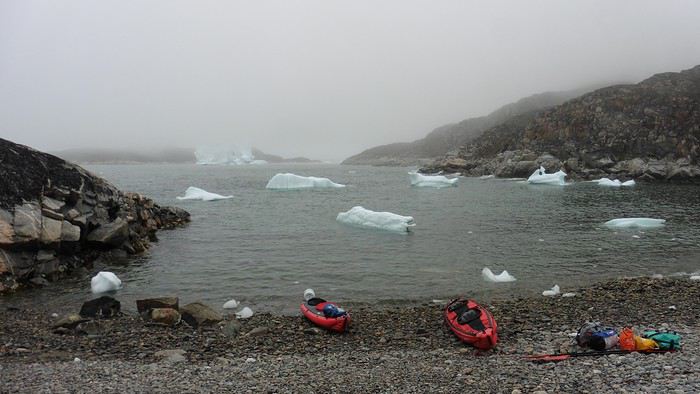
We passed the bay’s headland, Kangea, and headed toward the abandoned village of Agpat. The atmosphere was very austere—we hugged black rocks in fog that limited visibility to 50 meters, revealing large icebergs as we went.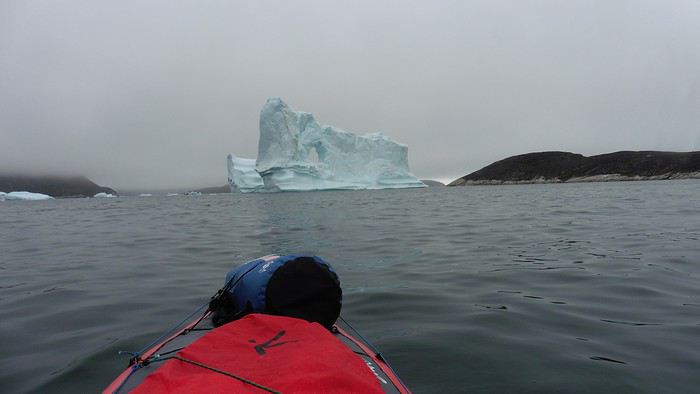
Suddenly, the water’s surface stirred in front of my kayak, and a huge gray back emerged from the sea. The collision was inevitable, but the whale seemed to understand and dove immediately, passing under the kayak and resurfacing a few meters away. I felt the kayak rock in the white foam and quickly paddled to escape the turbulence. What an emotion!
A light wind began to clear the fog, and the sun made beautiful appearances. Despite the cold, we stopped to visit the abandoned village, which left a strange impression. All the houses were still in good condition and wide open—some must have been very spacious in their time. We went back to sea, and in front of the large Kaangerdluk Bay, we hesitated—the headwind was strong, and large waves split the water. The next beach, from the island of Nua where we stopped to think, was over 8 km away. It was barely 2 PM, but caution led us to stop here for the day. We had covered 12 km—exactly the distance needed to stay on schedule. The afternoon was spent hiking on the island’s hills and gathering mussels and wood.
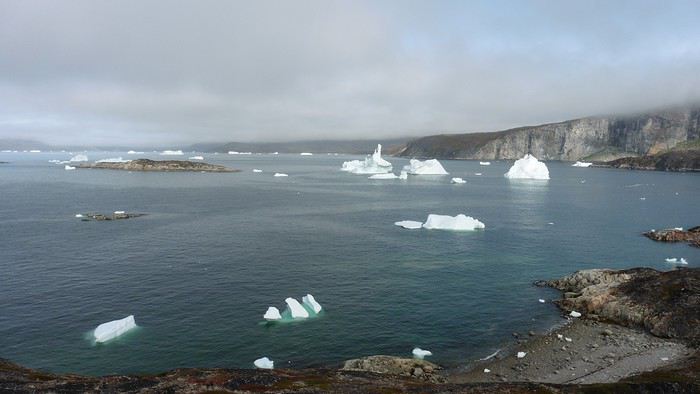
In the evening, we cooked these large Greenlandic mussels over a wood fire and savored them under the beautiful evening light. The weather was now fine, but the thermometer read -5°C in the sun…
Day 5 Bright sunshine, a glassy sea, and -8°C at 6 AM. Everything was green for setting off, even if putting on damp kayaking gear was a bit unpleasant in the cold. It was the first time we’d paddled on a flat sea since the start of the trip, and our average speed increased slightly.
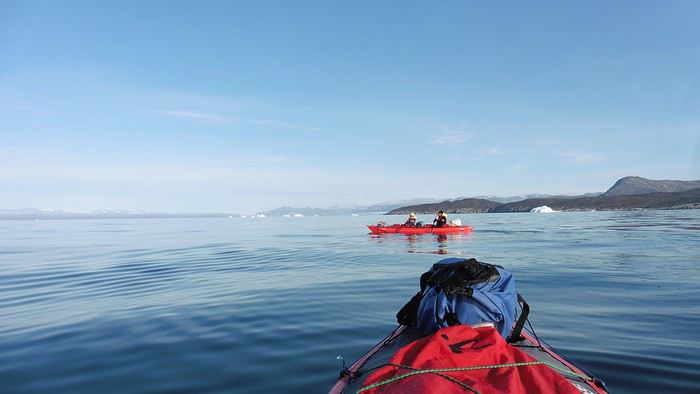
We entered the Smallesund Strait, marking the end of the island’s west coast. We were close to the large Torssukatak Fjord, where two glaciers flow. The access pass to the fjord was very narrow, and numerous ice chunks blocked access to the beaches. The wind had picked up and was now hitting us head-on (again). Just before entering the fjord, we landed on a steep beach made of large pebbles on Oqaitsut Island. It was very cold with the wind, and moving forward became difficult. We decided to stop for the day both because of the conditions and because the next campsite was far away, given how rugged the fjord was.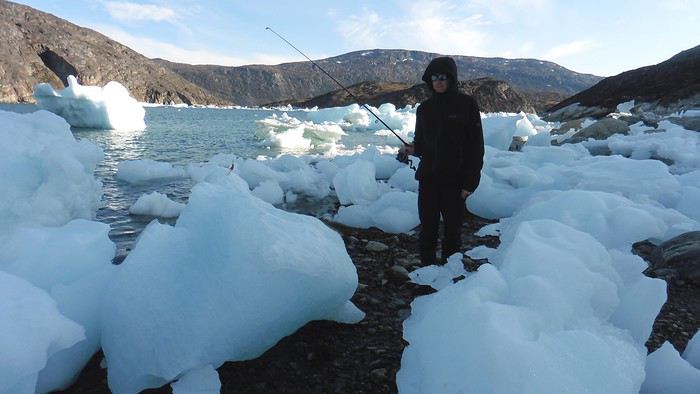
We eventually found a flat spot for the tent despite the steep slope. Even with the wind, the weather was beautiful, and we set off on foot for the northeastern cape of the island, overlooking the fjord. The view was far-reaching and exceptional—up close, the large fjord filled with ice and its steep granite cliffs, and in the distance, the ice cap and glacial walls.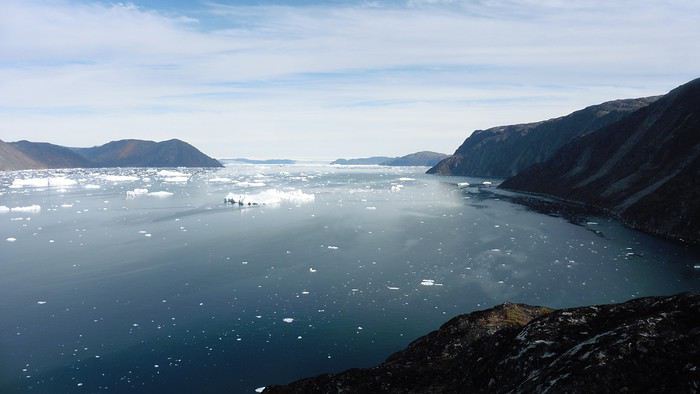
We spotted the village of Qeqertaq, whose network we could pick up, allowing us to check the weather forecast, which was rather good. While securing the kayaks in the evening, I noticed the strange behavior of one kayak at the end of the stage was due to the loss of the skeg—impossible to know where it detached. We’d have to do without it.
Day 6 Still that icy headwind from the northeast. We set off anyway for a long stage to reach the large pass connecting the Torssukatak and Ata Fjords.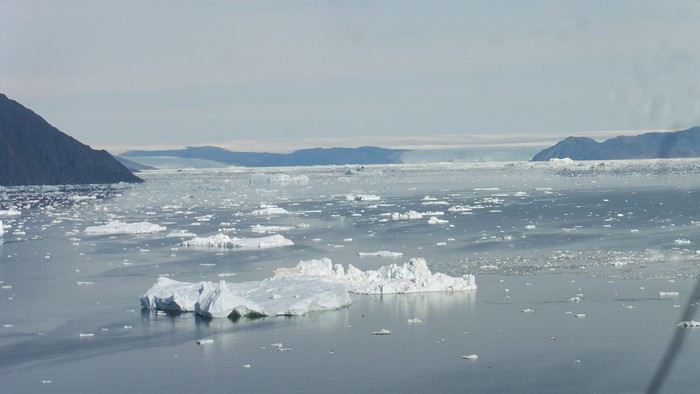
We advanced laboriously along the high cliffs of the fjord’s southern shore. They faced due north and blocked the sun. We felt the cold and dampness of the rock. It was really cold, especially in the extremities. We picnicked on the western cape of Qeqertakavasak Island. The cold didn’t allow us to stop for more than 20 minutes… But the wind dropped, and the sea was now very smooth. It was heavily cluttered with ice between the icebergs and old pack ice. The goal was to reach the large rocky promontory of Anapnuna, wedged between the Kujatdleq and Kangilerngata Glaciers, but the ice made progress difficult. We stopped to gain height on a small island and spot a passage of open water, but all we saw was white—passing seemed impossible. The currents were very complex, and entire sections of ice were being swept in one direction and then another at an impressive speed.
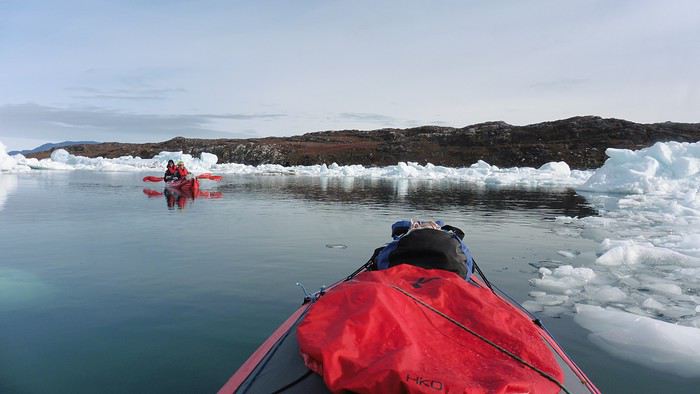
We wandered through this labyrinth until landing on a beach on the small island of Takissut, where we set up camp, exhausted from the 30 km covered and the vigilance required by the abundance of ice. The place was sublime under the evening sun—we were surrounded by ice and mountains, with the Kangilerngata Glacier in the distance. The summer contrasts were striking between the water, icebergs, sky, and flaming tundra—all colors were represented. Absolute calm reigned.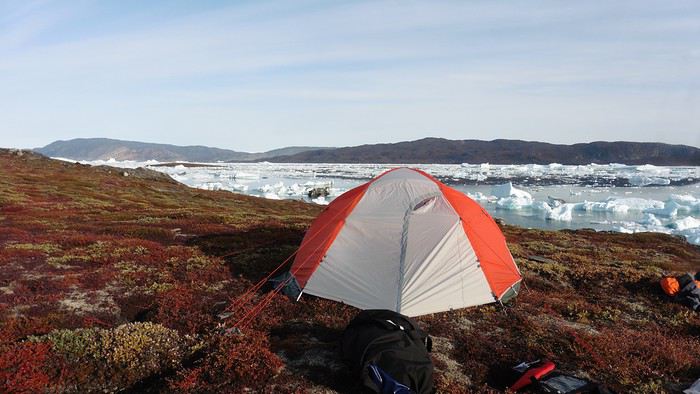
The lack of drinking water at this spot wasn’t too much of a constraint: as soon as we arrived on the beach, we placed containers under the icebergs stranded in the intertidal zone. They were all full by the time we finished setting up.
Day 7 We had to change our plans: we wouldn’t reach the rocky promontory, too well protected by the ice. We set off under the sun for Igdluluarssuit Island. Although we had spotted a passage just before launching, we quickly found ourselves surrounded by ice. It was everywhere, and finding water to paddle became complicated. We tried to force our way in every direction, even retracing our steps. Everything moved at an impressive speed—we were in the middle of a whirlpool of ice.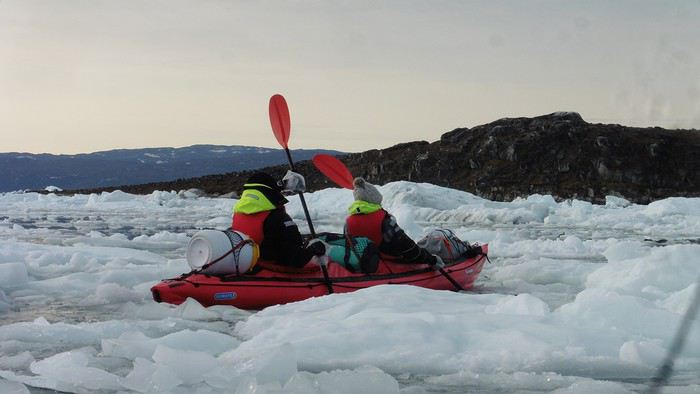
The tension rose, and each boat had its share of big scares. I was trapped against ice floes that dragged me toward an iceberg—the pressure on the kayak was enormous; it was going to capsize or puncture! But with a few strong strokes and paddling against the ice, I managed to free myself from the trap. Barely 10 minutes later, my companions were sandwiched perpendicularly between two icebergs that were closing in. The situation was desperate—the kayak was bending and twisting more and more, but with some strong paddle strokes, it finally freed itself. After these particularly unpleasant moments, we were completely blocked. The drifting ice floes had tightened, and the kayaks were no longer even in the water… The only solution: wait with the kayaks on these floes, which were too thin to walk on (even though we didn’t try). Within minutes, the situation cleared—a waterway opened, and we rushed into it. We paddled with one goal: find a larger pool of water. After going back and forth, our path took shape—we had to force the passage several times, attacking the ice directly with the kayaks, and finally, we escaped the worst of the labyrinth. We reached land on the west side of the island and saw that the rest would be easier. To reach the island, we just had to cross the Arsiviup Ikera Strait, which was lightly cluttered. We reached the eastern cape of the island, ideal for camping, even though we had only paddled for 3 hours. We set up camp and hiked to the island’s summit, which overlooks the entire pass and the glaciers.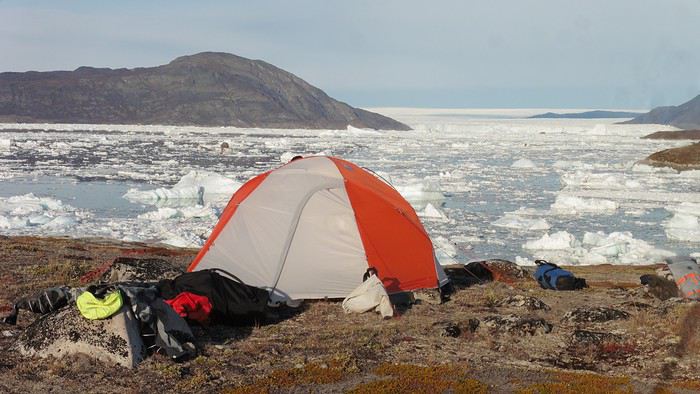
Everything was magnificent, no matter the direction. At 2 PM, we were at the summit—the beauty of the place and the picnic facing the glacier in the sun without wind made us forget the near-disaster from a few hours earlier. It would be impossible to approach the glacier by kayak, but from our summit on foot, it seemed so close, and contemplating it safely on solid ground was a great moment.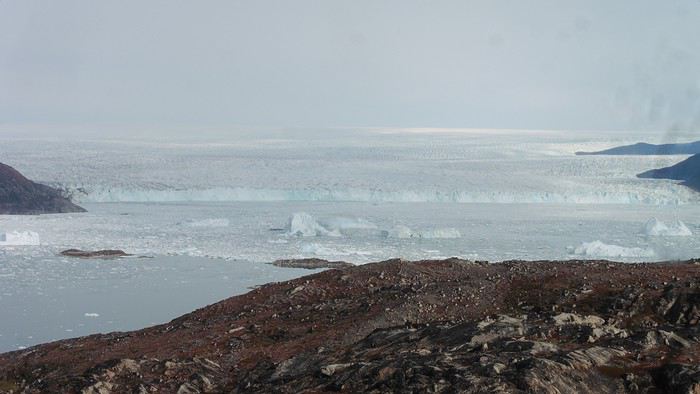
The pass was incredibly complex—everything was in motion, and an impassable passage could become open water within minutes. We were delighted when we returned to camp. A slightly lost whale among the ice accompanied us along the shore. The place was truly beautiful, but the temperature dropped again under the clear sky, preventing us from eating outside.
Day 8 Clear and cold at wake-up: -9°C. The sea had frozen in many places. We hesitated about the rest of the trip—should we start heading back to Ilulissat or linger in the pass, especially to approach the Eqi Glacier? After the incidents of the previous day, we decided to think carefully and paddled to the southern cape of our island to check the ice conditions toward Eqi. The weather had clouded over in the meantime, and the sky was quite gray. At the cape, we spotted the glacier’s wall, still 15 km away.
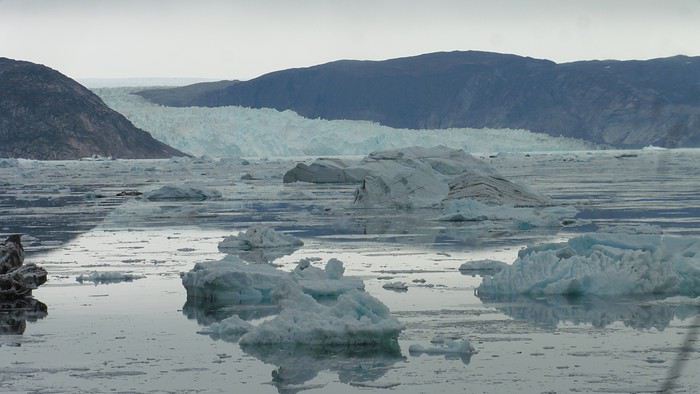
The fjord was quite cluttered, but it seemed passable. However, there was no guarantee the view would be much better 1 km from the glacier than 15 km away, especially since the front was quite active and therefore dangerous. We decided to head south without passing by the glacier. The cold temperatures encountered in the pass also motivated us to move away from the glaciers and the ice cap. We navigated under a threatening sky but without wind. The kayaks cut through the thin layer of ice on the surface with a crinkling paper sound. We reached the Ata campsite in the late afternoon after 5 hours of rowing without a single break…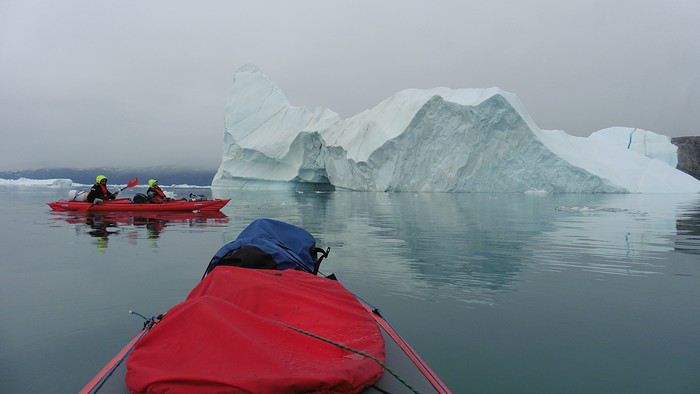
The wind had picked up, and we discovered a nice surprise: a refuge with a table and a comfortable bench lined with mattresses. Facing the worsening weather, we settled in comfortably. The kerosene stove was too complex for our three brains—we couldn’t get it started, too bad, as it was 0°C inside. The rest of the afternoon was spent fishing in the large lake, where we landed a beautiful Arctic char, more than enough for three. A good night’s sleep without the risk of foxes or the sound of a tent shaking in the wind.
Day 9 6 AM wake-up to the sound of rain hitting the cabin. The decision was made looking out the window—wind, rain, and fog obscured the sea: we went back to sleep.
New wake-up, and the rain had stopped—we could go out and stock up on fish. We set off on foot toward the lake, following its western shore. It was very overcast, and the wind encouraged us to keep moving. We made our way to a smaller lake at the end of the large one, where we caught a huge Arctic char. A small clearing brightened the picnic, and we headed back to our cabin.
This 20 km hike kept us busy all day: walking on slippery scree and the micro-relief of the peat bogs took time.
Day 10 The sky was clear, but a light south wind made paddling intense. We set off southeast to reach the opposite shore of the fjord. It was very cold, and it was impossible to stop paddling for even a moment without immediately losing ground due to the wind. We crossed the Kangerluarsuk Fjord. I recognized the cape I had reached on skis in the winter of 2017. We found a nice campsite on the southern shore of the fjord: Uiartag. It wasn’t even noon, but facing this headwind, we preferred to stop here rather than exhaust ourselves for a few extra kilometers. Like the previous ones, this campsite was very comfortable: the ground was covered with a thick layer of lichens and mosses, very pleasant to lie on.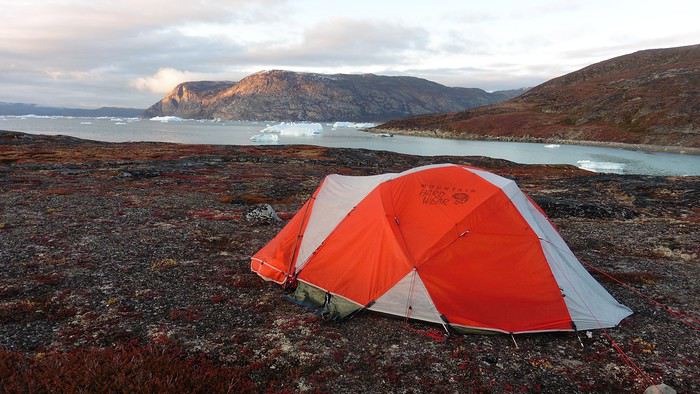
We set off on a hike to the heights of the cape, where the weather alternated between large clearings and snow showers. We noticed the loss of the thermometer, poorly attached to the backpack. On the way back, in the small bay of our beach, a whale swam calmly 10 meters from the shore—a beautiful surprise.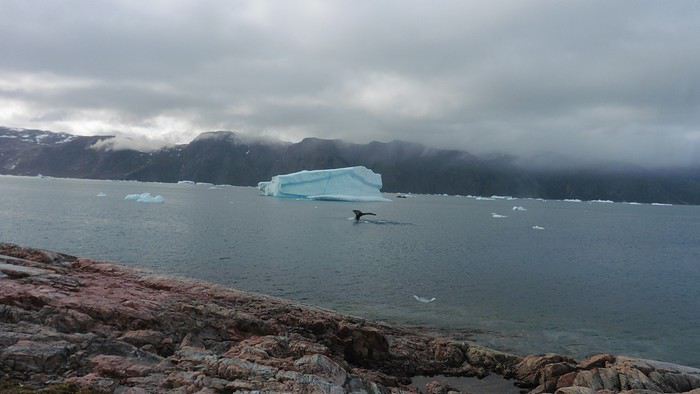
The sky cleared completely, and the temperature dropped as night approached.
We’re setting off as a group of three in two inflatable double-seater kayaks (Gumotex) brought from France. The plan is to spend two weeks circumnavigating Arve Princess Island, located north of Ilulissat in Disko Bay, with a possible boat drop-off at the southern tip of the island.
This seems like a fairly classic route in the area—we found several descriptions online (thanks to the authors). With their help and Google Earth, we identified all potential campsites and entered their coordinates into a GPS. The western part of the island, facing the bay, seems ideal for whale watching, while the more rugged eastern side offers access to several glacial walls. We’re somewhat familiar with the area from two winter expeditions on skis and pulkas.
Plus, the commitment is limited due to the island’s proximity to several small villages, including Qeqertaq, Oqaatsut, and even Ilulissat. In fact, we saw fishing boats almost every day. The distance suits us well: 200 kilometers in 16 full days on site, which should leave some leeway in case of bad weather or for hiking.
We booked our flights in June with Air Greenland to Ilulissat for the last week of August and the first week of September. On both the outbound and return trips, we stayed overnight in Copenhagen. The France-Copenhagen flight was with Air France.
We were allowed 3 x 20 kg in the hold. Each kayak with its accessories fits into a 20 kg bag; the last hold bag is for shared gear: tent, stoves, dry bags… We only brought 1.5 kg of semolina for food. In the end, we had 61 kg of gear, and no excess baggage was charged.
Individual gear (clothes and sleeping bags…) was distributed in the cabin luggage.
For the boat transfer, we contacted an agency: Blue Jay, which gave us a number to call upon arrival.
Day 0: Wednesday, August 22 Departure day. After work, I drove from Gap to Marseille’s Marignane Airport for the first leg of the trip to Copenhagen. I enjoyed the rather mild local temperatures: 35°C in the shade. After a layover in Paris, I arrived at the Copenhagen hotel, located two train stops from the airport, where my companions were already settled. No issues—everyone was on time with their luggage.
Day 1 The flight to Greenland was at 9 AM. We had a layover in Kangerlussuaq, where we changed planes, then stopped in Aasiaat before reaching Ilulissat Airport at 3 PM under beautiful sunshine.
We called Blue Jay for the boat transfer: they could take us to the island as early as 6 PM; otherwise, we’d have to wait until the next day. That left us 3 hours to prepare our gear and, most importantly, do our shopping for the two-week trip—it seemed tight, but we gave it a shot.
A quick taxi ride took us to Pisiffik, where we easily found everything we needed: bread, butter, cheese, cold cuts, rice, pasta, jam, muesli… There was no C fuel or methylated spirits for the stoves, but this time we knew the trick: at Stark, a bit uphill from the town, we found the precious liquids. Two hours later, we filled our dry bags and containers with our purchases, and by 5:30 PM, we met Klaus, the Blue Jay manager, directly at the port.
The vacation seemed to truly begin as we sped by boat through the icebergs toward Arve Princess Island. Forty-five minutes later, we spotted a beach lined with rocks where Klaus dropped us off quickly (he had another transfer to make right after).
Here we were on the island, in the middle of nowhere, with all our luggage and food to organize, the tent to set up, and the kayaks to inflate—just 10 hours after leaving the Copenhagen hotel. We got to work, bothered by the flies. Despite our head nets, it was barely tolerable—there were so many of them. They swarmed by the dozens into every bag we opened. It was quite mild: 10°C.
Everything was ready by evening, and we were very happy to have completed all these transfers (planes and boat in a single day) as we slipped into our sleeping bags.
During the night, the wind picked up, and we went out several times to check the tent and kayak anchors. We noticed how bright it was—it was still quite twilight even at 1 AM.
Day 2 5:30 AM wake-up—the south wind was still strong, but since we were heading north, we decided to give it a try anyway.
This was also the moment we loaded the kayaks: since there were only three of us for two double-seater kayaks, we filled the hatch of one kayak, which allowed us to fit all our food. It would have been very difficult if there had been four of us for two kayaks.
Finally, we set off north along the western coast of the island. The conditions were far from ideal—the sea was rough, and the kayaks had a lot of wind resistance. But the main problem was the spray skirt: the gear on deck weighed it down, and the skirt kept coming off… We’d have to deal with it. Barely underway, and whales were already breaking the surface—it was our first time seeing them, and we were very impressed. Too bad the wind didn’t allow for longer contemplation; stopping paddling was impossible with such strong gusts.
We passed a few headlands and even considered stopping due to the conditions. To find some semblance of shelter, we had to hug the coast closely without cutting across the numerous bays, which significantly lengthened the journey. But as the morning went on, the wind died down, and the sea calmed. We spotted several whales and our first seals. It was almost pleasant during the picnic break. By late afternoon, we reached Kangerup Sarqâ Bay, where we had identified a great campsite with a very large beach and a river. But the wind had shifted—it was now coming from the north, making the last hour difficult due to fatigue and headwinds.
The campsite was ideal and beautiful, facing numerous icebergs grounded in the bay.
The GPS alerted us to another major drawback of inflatable kayaks: their slowness. It took us 7.5 hours of actual paddling (excluding breaks) to cover 28 km, averaging 3.7 km/h—somewhat disappointing. But we knew this before leaving, and once again, we’d have to make do!
Day 3 Surprise: at 6 AM wake-up, it was raining, foggy, with a south wind, and the sea was choppy even in the bay. It seemed wise to skip paddling, even though stopping on the second day was tough on morale. We went back to sleep, especially since the travel fatigue and the harsh conditions of the previous day had taken their toll.
At 11 AM, the navigation conditions weren’t any better—at the ends of the bay, we saw huge waves crashing onto the rocks, and giving up for the day became obvious. However, the rain had stopped, so we set off for a hike along the large lake bordering the bay. The wind hadn’t let up, and it was quite cold.
The tundra was starting to take on its autumn colors, and the contrast between the white lichens and the red vegetation was stunning. At the lake, we took out the fishing rods and quickly caught two beautiful Arctic char over 50 cm long.
As the afternoon wore on, the sun seemed closer. Along the beach, we gathered driftwood (mostly old planks) to cook our catch in foil over a fire. Eating our own food in such a beautiful place next to a good fire was comforting after the day’s setback.
In the middle of the night, an Arctic fox entered the tent’s rear awning. It seemed barely intimidated when we shooed it away with loud shouts and then with stones.
Day 4 6:15 AM wake-up—3°C. We were on the water by 8 AM. The wind had dropped significantly, but the sea was shrouded in fog, and it was very cold in these damp conditions.
We passed the bay’s headland, Kangea, and headed toward the abandoned village of Agpat. The atmosphere was very austere—we hugged black rocks in fog that limited visibility to 50 meters, revealing large icebergs as we went.
Suddenly, the water’s surface stirred in front of my kayak, and a huge gray back emerged from the sea. The collision was inevitable, but the whale seemed to understand and dove immediately, passing under the kayak and resurfacing a few meters away. I felt the kayak rock in the white foam and quickly paddled to escape the turbulence. What an emotion!
A light wind began to clear the fog, and the sun made beautiful appearances. Despite the cold, we stopped to visit the abandoned village, which left a strange impression. All the houses were still in good condition and wide open—some must have been very spacious in their time. We went back to sea, and in front of the large Kaangerdluk Bay, we hesitated—the headwind was strong, and large waves split the water. The next beach, from the island of Nua where we stopped to think, was over 8 km away. It was barely 2 PM, but caution led us to stop here for the day. We had covered 12 km—exactly the distance needed to stay on schedule. The afternoon was spent hiking on the island’s hills and gathering mussels and wood.
In the evening, we cooked these large Greenlandic mussels over a wood fire and savored them under the beautiful evening light. The weather was now fine, but the thermometer read -5°C in the sun…
Day 5 Bright sunshine, a glassy sea, and -8°C at 6 AM. Everything was green for setting off, even if putting on damp kayaking gear was a bit unpleasant in the cold. It was the first time we’d paddled on a flat sea since the start of the trip, and our average speed increased slightly.
We entered the Smallesund Strait, marking the end of the island’s west coast. We were close to the large Torssukatak Fjord, where two glaciers flow. The access pass to the fjord was very narrow, and numerous ice chunks blocked access to the beaches. The wind had picked up and was now hitting us head-on (again). Just before entering the fjord, we landed on a steep beach made of large pebbles on Oqaitsut Island. It was very cold with the wind, and moving forward became difficult. We decided to stop for the day both because of the conditions and because the next campsite was far away, given how rugged the fjord was.
We eventually found a flat spot for the tent despite the steep slope. Even with the wind, the weather was beautiful, and we set off on foot for the northeastern cape of the island, overlooking the fjord. The view was far-reaching and exceptional—up close, the large fjord filled with ice and its steep granite cliffs, and in the distance, the ice cap and glacial walls.
We spotted the village of Qeqertaq, whose network we could pick up, allowing us to check the weather forecast, which was rather good. While securing the kayaks in the evening, I noticed the strange behavior of one kayak at the end of the stage was due to the loss of the skeg—impossible to know where it detached. We’d have to do without it.
Day 6 Still that icy headwind from the northeast. We set off anyway for a long stage to reach the large pass connecting the Torssukatak and Ata Fjords.
We advanced laboriously along the high cliffs of the fjord’s southern shore. They faced due north and blocked the sun. We felt the cold and dampness of the rock. It was really cold, especially in the extremities. We picnicked on the western cape of Qeqertakavasak Island. The cold didn’t allow us to stop for more than 20 minutes… But the wind dropped, and the sea was now very smooth. It was heavily cluttered with ice between the icebergs and old pack ice. The goal was to reach the large rocky promontory of Anapnuna, wedged between the Kujatdleq and Kangilerngata Glaciers, but the ice made progress difficult. We stopped to gain height on a small island and spot a passage of open water, but all we saw was white—passing seemed impossible. The currents were very complex, and entire sections of ice were being swept in one direction and then another at an impressive speed.
We wandered through this labyrinth until landing on a beach on the small island of Takissut, where we set up camp, exhausted from the 30 km covered and the vigilance required by the abundance of ice. The place was sublime under the evening sun—we were surrounded by ice and mountains, with the Kangilerngata Glacier in the distance. The summer contrasts were striking between the water, icebergs, sky, and flaming tundra—all colors were represented. Absolute calm reigned.
The lack of drinking water at this spot wasn’t too much of a constraint: as soon as we arrived on the beach, we placed containers under the icebergs stranded in the intertidal zone. They were all full by the time we finished setting up.
Day 7 We had to change our plans: we wouldn’t reach the rocky promontory, too well protected by the ice. We set off under the sun for Igdluluarssuit Island. Although we had spotted a passage just before launching, we quickly found ourselves surrounded by ice. It was everywhere, and finding water to paddle became complicated. We tried to force our way in every direction, even retracing our steps. Everything moved at an impressive speed—we were in the middle of a whirlpool of ice.
The tension rose, and each boat had its share of big scares. I was trapped against ice floes that dragged me toward an iceberg—the pressure on the kayak was enormous; it was going to capsize or puncture! But with a few strong strokes and paddling against the ice, I managed to free myself from the trap. Barely 10 minutes later, my companions were sandwiched perpendicularly between two icebergs that were closing in. The situation was desperate—the kayak was bending and twisting more and more, but with some strong paddle strokes, it finally freed itself. After these particularly unpleasant moments, we were completely blocked. The drifting ice floes had tightened, and the kayaks were no longer even in the water… The only solution: wait with the kayaks on these floes, which were too thin to walk on (even though we didn’t try). Within minutes, the situation cleared—a waterway opened, and we rushed into it. We paddled with one goal: find a larger pool of water. After going back and forth, our path took shape—we had to force the passage several times, attacking the ice directly with the kayaks, and finally, we escaped the worst of the labyrinth. We reached land on the west side of the island and saw that the rest would be easier. To reach the island, we just had to cross the Arsiviup Ikera Strait, which was lightly cluttered. We reached the eastern cape of the island, ideal for camping, even though we had only paddled for 3 hours. We set up camp and hiked to the island’s summit, which overlooks the entire pass and the glaciers.
Everything was magnificent, no matter the direction. At 2 PM, we were at the summit—the beauty of the place and the picnic facing the glacier in the sun without wind made us forget the near-disaster from a few hours earlier. It would be impossible to approach the glacier by kayak, but from our summit on foot, it seemed so close, and contemplating it safely on solid ground was a great moment.
The pass was incredibly complex—everything was in motion, and an impassable passage could become open water within minutes. We were delighted when we returned to camp. A slightly lost whale among the ice accompanied us along the shore. The place was truly beautiful, but the temperature dropped again under the clear sky, preventing us from eating outside.
Day 8 Clear and cold at wake-up: -9°C. The sea had frozen in many places. We hesitated about the rest of the trip—should we start heading back to Ilulissat or linger in the pass, especially to approach the Eqi Glacier? After the incidents of the previous day, we decided to think carefully and paddled to the southern cape of our island to check the ice conditions toward Eqi. The weather had clouded over in the meantime, and the sky was quite gray. At the cape, we spotted the glacier’s wall, still 15 km away.
The fjord was quite cluttered, but it seemed passable. However, there was no guarantee the view would be much better 1 km from the glacier than 15 km away, especially since the front was quite active and therefore dangerous. We decided to head south without passing by the glacier. The cold temperatures encountered in the pass also motivated us to move away from the glaciers and the ice cap. We navigated under a threatening sky but without wind. The kayaks cut through the thin layer of ice on the surface with a crinkling paper sound. We reached the Ata campsite in the late afternoon after 5 hours of rowing without a single break…
The wind had picked up, and we discovered a nice surprise: a refuge with a table and a comfortable bench lined with mattresses. Facing the worsening weather, we settled in comfortably. The kerosene stove was too complex for our three brains—we couldn’t get it started, too bad, as it was 0°C inside. The rest of the afternoon was spent fishing in the large lake, where we landed a beautiful Arctic char, more than enough for three. A good night’s sleep without the risk of foxes or the sound of a tent shaking in the wind.
Day 9 6 AM wake-up to the sound of rain hitting the cabin. The decision was made looking out the window—wind, rain, and fog obscured the sea: we went back to sleep.
New wake-up, and the rain had stopped—we could go out and stock up on fish. We set off on foot toward the lake, following its western shore. It was very overcast, and the wind encouraged us to keep moving. We made our way to a smaller lake at the end of the large one, where we caught a huge Arctic char. A small clearing brightened the picnic, and we headed back to our cabin.
This 20 km hike kept us busy all day: walking on slippery scree and the micro-relief of the peat bogs took time.
Day 10 The sky was clear, but a light south wind made paddling intense. We set off southeast to reach the opposite shore of the fjord. It was very cold, and it was impossible to stop paddling for even a moment without immediately losing ground due to the wind. We crossed the Kangerluarsuk Fjord. I recognized the cape I had reached on skis in the winter of 2017. We found a nice campsite on the southern shore of the fjord: Uiartag. It wasn’t even noon, but facing this headwind, we preferred to stop here rather than exhaust ourselves for a few extra kilometers. Like the previous ones, this campsite was very comfortable: the ground was covered with a thick layer of lichens and mosses, very pleasant to lie on.
We set off on a hike to the heights of the cape, where the weather alternated between large clearings and snow showers. We noticed the loss of the thermometer, poorly attached to the backpack. On the way back, in the small bay of our beach, a whale swam calmly 10 meters from the shore—a beautiful surprise.
The sky cleared completely, and the temperature dropped as night approached.
Pourboire aux taxis en Inde
bonjour
j'ai lu et noté qu'il ne fallait pas donner de pourboires aux taxis?
qu'en pensez vous?
anne
Our family trip from Denver to Yellowstone – a recap
Hi there,
I’m diving into a recap of our loop—pretty classic, really—Denver-Yellowstone-Denver this past summer, from July 24 to August 17. Given the sheer number of trip reports already out there (or in the works), and since I don’t have the writing chops or the photography skills of many of you, I’ll keep it practical—well, I’ll try, at least—to share our take on some of the less-visited parks and spots.
First off, a huge thank you to everyone whose trip reports, blogs, websites, comments, and more helped us put together this itinerary. Looking back, it could’ve been even better optimized: a few disappointments when we missed out on some great discoveries, often because we were short on time. Plenty of reasons to come back to the area!
We’re traveling with our four (almost) teens—18, 16, 14, and nearly 12 years old. To keep the trip enjoyable for everyone, we had to make compromises on both sides: cutting a visit short to spend more time swimming, waking up at dawn, and so on. But logistics also played a big role—things like laundry, grocery shopping, and keeping luggage organized could’ve quickly become time-consuming without a little planning. And honestly, I think we visited every Walmart along the way! Blame it on the lack of fridges in some accommodations and, more importantly, the *very* limited space in the car, which made it impossible to bring a proper cooler. I’ll come back to the car saga later.
For accommodations, this year we alternated between basic cabins in KOA campgrounds and Yellowstone (when staying more than one night in the same place) and hotels. Always with a pool (except in Yellowstone, of course), which let the kids burn off energy—because they always have reserves, even after packed days!—and, let’s be honest, gave us a chance to relax. No Wi-Fi issues either; we all had plans with 25 GB of data (a big thanks to Gilles for the amazing deal at 0.99 €). It worked perfectly, even for texts and calls between phones—no extra charges.
Now, onto our route: as I mentioned, a classic Denver-Yellowstone-Denver loop. To avoid rushing through the parks or spending all our time on the road, we prioritized staying as close to them as possible, with at least two nights in each place. And I’ve got to say, it’s really nice to settle in, even if it’s just for two nights. It also helped us deal with the weather, which wasn’t always great during this trip. The trade-off? With vacation time being limited, some driving days ended up being long. We knew that going in, but since we kept a relaxed pace with no time constraints (don’t ask me for timings—I don’t keep track of the clock on vacation, except in the morning to get everyone up before noon!), we sometimes ended up with marathon days.
With that said, I’ll dive into the trip itself in the next post.
I’m diving into a recap of our loop—pretty classic, really—Denver-Yellowstone-Denver this past summer, from July 24 to August 17. Given the sheer number of trip reports already out there (or in the works), and since I don’t have the writing chops or the photography skills of many of you, I’ll keep it practical—well, I’ll try, at least—to share our take on some of the less-visited parks and spots.
First off, a huge thank you to everyone whose trip reports, blogs, websites, comments, and more helped us put together this itinerary. Looking back, it could’ve been even better optimized: a few disappointments when we missed out on some great discoveries, often because we were short on time. Plenty of reasons to come back to the area!
We’re traveling with our four (almost) teens—18, 16, 14, and nearly 12 years old. To keep the trip enjoyable for everyone, we had to make compromises on both sides: cutting a visit short to spend more time swimming, waking up at dawn, and so on. But logistics also played a big role—things like laundry, grocery shopping, and keeping luggage organized could’ve quickly become time-consuming without a little planning. And honestly, I think we visited every Walmart along the way! Blame it on the lack of fridges in some accommodations and, more importantly, the *very* limited space in the car, which made it impossible to bring a proper cooler. I’ll come back to the car saga later.
For accommodations, this year we alternated between basic cabins in KOA campgrounds and Yellowstone (when staying more than one night in the same place) and hotels. Always with a pool (except in Yellowstone, of course), which let the kids burn off energy—because they always have reserves, even after packed days!—and, let’s be honest, gave us a chance to relax. No Wi-Fi issues either; we all had plans with 25 GB of data (a big thanks to Gilles for the amazing deal at 0.99 €). It worked perfectly, even for texts and calls between phones—no extra charges.
Now, onto our route: as I mentioned, a classic Denver-Yellowstone-Denver loop. To avoid rushing through the parks or spending all our time on the road, we prioritized staying as close to them as possible, with at least two nights in each place. And I’ve got to say, it’s really nice to settle in, even if it’s just for two nights. It also helped us deal with the weather, which wasn’t always great during this trip. The trade-off? With vacation time being limited, some driving days ended up being long. We knew that going in, but since we kept a relaxed pace with no time constraints (don’t ask me for timings—I don’t keep track of the clock on vacation, except in the morning to get everyone up before noon!), we sometimes ended up with marathon days.
With that said, I’ll dive into the trip itself in the next post.
Une émission à voir sur le Laos
Bonjour,
Je voulais vous signaler une émission sur le Laos qui se détache quelque peu de ce qu'on peut voir d'ordinaire.
De très belles images, de la prise en direct, pas de fioritures, des moments vrais. Une manière de filmer parfois un peu particulière, mais un vrai talent derrière la caméra.
Le cadre est à Muang Ngoi.
Evidemment, c'est sur Arte. Un reportage néerlandais de 2015 : " Laos, les sirènes du tourisme "
" A travers le parcours de deux amis d'enfance, une découverte du Laos contemporain, tiraillé entre le modernisme dont rêvent les habitants et ses traditions. "
A ma connaissance, dernière diffusion mercredi 12 septembre à 15h35 en HD.
Je voulais vous signaler une émission sur le Laos qui se détache quelque peu de ce qu'on peut voir d'ordinaire.
De très belles images, de la prise en direct, pas de fioritures, des moments vrais. Une manière de filmer parfois un peu particulière, mais un vrai talent derrière la caméra.
Le cadre est à Muang Ngoi.
Evidemment, c'est sur Arte. Un reportage néerlandais de 2015 : " Laos, les sirènes du tourisme "
" A travers le parcours de deux amis d'enfance, une découverte du Laos contemporain, tiraillé entre le modernisme dont rêvent les habitants et ses traditions. "
A ma connaissance, dernière diffusion mercredi 12 septembre à 15h35 en HD.
USA 2018 - Las Vegas, St George, Bryce, Kanab, Yellowstone, Moab: SUV + RV trip – mosquitoes in the North, storms in the South
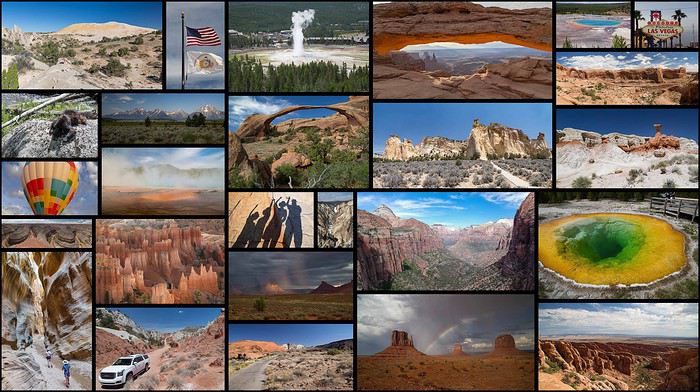
Nine Bretons in the USA from June 24 to July 20, 2018: Greenery and mosquitoes in the North, heat and storms in the South
Choosing the trip:
After returning from the USA in 2014 (travel journal here), it was clear we’d go back, this time with the firm intention of bringing our kids. 😇
2015 was the year of Scotland (travel journal here), 2016 was a work year, and 2017 was the discovery of Aragon in Spain (travel journal here)… Meanwhile, our kids’ age still seemed like a hurdle for this kind of trip. The long wait turned out to be an advantage, letting us refine the project and rally others: what started as a two-week trip for four turned into three weeks for nine!! JF’s parents (M&P, who’d already been in 2014) and JF’s brother (C&D&Y) joined our little family (C&JF&A&L)!!😎 After plenty of family discussions, route tweaks, travel journal reads, and advice from VF (plus some specialized books like Photographing the Southwest by Laurent Martrès), we made up our minds—fully aware of the constraints—and split the trip in two:
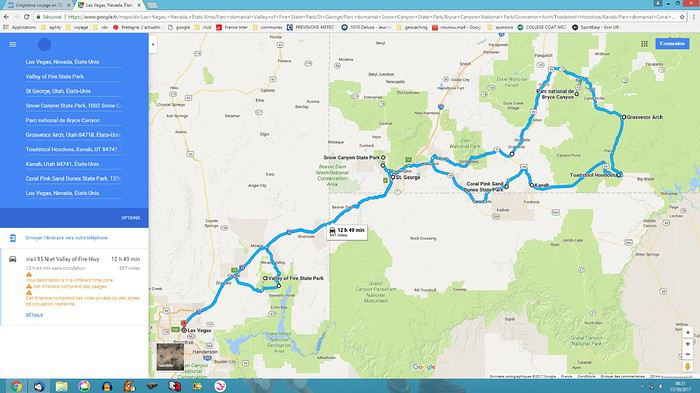
- First week, just the four of us in an SUV + hotels, looping from LV (Valley of Fire, Saint George, Bryce, Kanab), focusing on rocky, sandy, and colorful hikes:
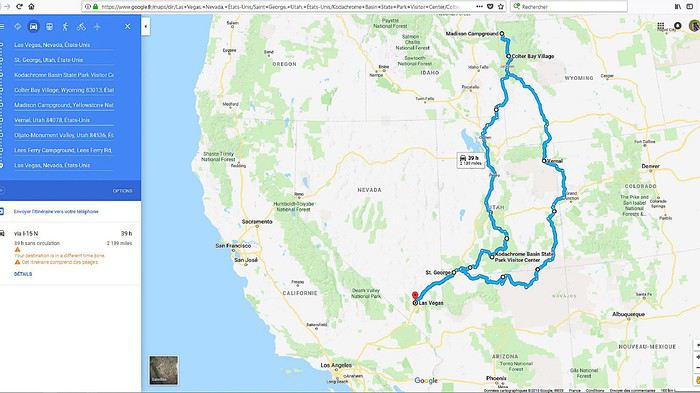
 - Followed by two weeks with nine people in 2 RVs + campgrounds, as close to nature as possible in the parks (Snow Canyon, Kodachrome, Yellowstone, Arches, Canyonlands, Dead Horse, Monument Valley, Grand Canyon):
 🙂Before going further, we want to thank the forum members who took the time to answer our questions. Your patience and kindness are amazing! We might forget someone, but thank you all: Jpg13, Mlefebvre, Kast13,Glll2012New, PCecile, Aquilegia, Adumas4, Ju45, Mycovtt, Natb72, Soula1, Orionide, Simonic, Hiacinthe, etc.
Traveling with nine people (ages 9 to 76, including three kids!!) requires some serious logistics and near-perfect timing to avoid wasting time. The plan went off without a hitch😎… well, almost—we’ll get into the details later…😛🏴☠️🙂 In the end, we came back enchanted and happy!! 🙂The family aspect played a big part, but we also discovered spots that were much less crowded, definitely less known to the general public and the hordes of Asian tourists… The kids returned with stars in their eyes, and the adults with just as many memories (plus around 1,200 photos and 130 GB of GoPro video to sort through)!!😎 We’re already feeling the itch to go back—a Denver loop is starting to take shape…😇
Thoughts on the Americans we met and places we visited: They haven’t changed since 2014… Still cool, optimistic, and smiling, always ready to strike up a conversation and offer help—even without the lure of our tourist dollars. (Only two cold locals at Monument Valley clearly made little effort to help us.) We noticed a few changes in the parks😕: some infrastructure was less well-maintained (wobbly wooden walkways, for example), French info pamphlets disappeared from entrance huts, and there were fewer rangers (Lee’s Ferry ranger station was closed). These changes are likely due to Trump’s restrictive policies toward national parks. On the economic side, gas prices rose by 30% since 2014, now around 0.85 € per liter, and with the current exchange rate, conditions are much less favorable for European tourists than in 2014. But this area is so beautiful—too bad Americans have such an idiot for a president!😠
The flights: Round-trip Paris CDG to Las Vegas LAS Roissy to Los Angeles with Air Tahiti Nui, then American Airlines for Los Angeles to Las Vegas. The A340s were impeccable, and service was great with Air Tahiti Nui (the tiare flower given at boarding), and no complaints about AA either.🙂
The hotels: All booked in advance, either through Hotels.com or directly on the hotel’s website (like the Planet Hollywood in Las Vegas). No surprises, everything met expectations.🙂 It’s a real plus for a family of four to have two beds in every room… Still rare in France.
The campgrounds: Except for one night at Lee’s Ferry, all were booked from France through NPS, Xanterra, and KOA sites. No surprises here either—everything met expectations and was well-organized (fire rings and tables at every site, for example).🙂
The vehicles:
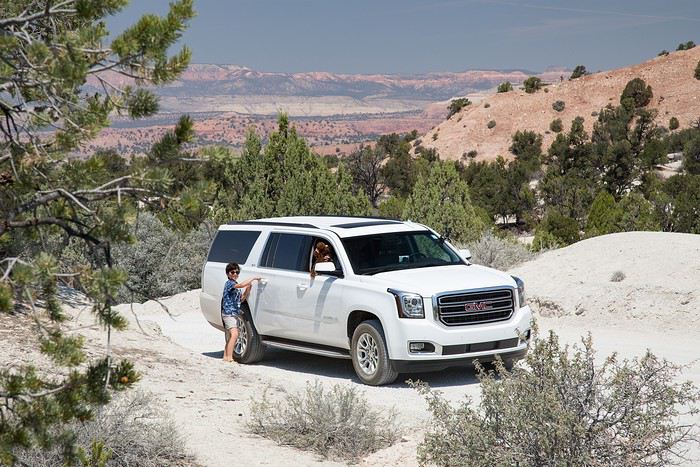
First week: Four people in a GMC Yukon XL from HERTZ, at Las Vegas airport for 327 €, unlimited miles, second driver, and insurance. A typically American beast—355 hp, seven seats: it’s long, big, wide, and tall😮😎😎!! Impeccable condition, quiet, super comfortable with tons of safety features and gadgets (like weather updates tied to GPS!!), and it averaged about 12 L/100 km in 2WD (in 4WD, we nearly hit 19 L on the Stukumpah Road…). A total win thanks to the HERTZ GOLD card, following Jpg13’s advice (Jean-Pierre, you’re my idol!!😎). It let us skip the counter lines (we didn’t even stop there!), pick up the car, and leave the parking lot in under seven minutes… Even less time for the return!
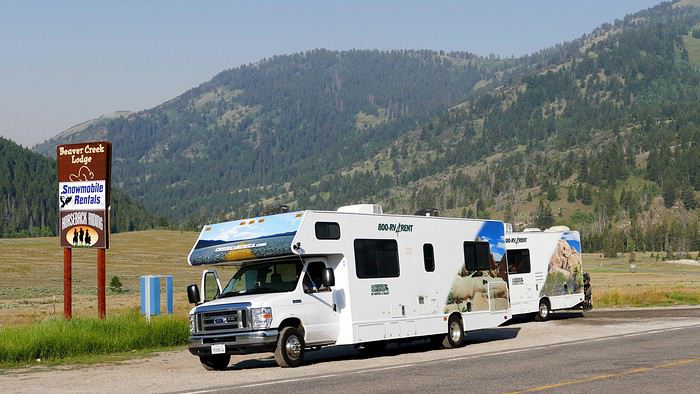
 Second and third weeks: Nine people in two RVs. A 30-foot RV + a 25-foot RV from CRUISE AMERICA in Las Vegas for 5000 €, unlimited miles, kitchenware, and linens/towels/comforters.
A love story in 2014 with this same agency, but unfortunately, this year was much more mixed: aging RVs, ineffective AC in the C30, a leak in the C25’s skylight, a leak in the C25’s toilet drain valve (imagine the dump every time we opened the drain plug…😠🙁), late delivery of both RVs (after 5 PM, though the contract said 4 PM max), abnormal wear on the front tires (we’d discover that later😠), trouble closing the door, etc.In short, a disappointment.😠
Note that other rental companies (El Monte and Road Bear) are probably gaining market share—we saw a lot of their vehicles on the road, and they offer much newer models (at least on the outside) for similar prices…🙂
But setting aside those issues, the vehicles still did their job: letting us sleep as close to nature as possible in the parks and enjoy beautiful sunrises/sunsets with family campfires and marshmallows flambéed with Jack Daniel’s Tennessee Honey😇!!😎 Also worth noting: Cruise America’s solid roadside assistance (we’ll talk more about that later), and how easy it was to drive these beasts—nearly 10 meters long! (Our walkie-talkies were super handy for communication between the two RVs.)
Second and third weeks: Nine people in two RVs. A 30-foot RV + a 25-foot RV from CRUISE AMERICA in Las Vegas for 5000 €, unlimited miles, kitchenware, and linens/towels/comforters.
A love story in 2014 with this same agency, but unfortunately, this year was much more mixed: aging RVs, ineffective AC in the C30, a leak in the C25’s skylight, a leak in the C25’s toilet drain valve (imagine the dump every time we opened the drain plug…😠🙁), late delivery of both RVs (after 5 PM, though the contract said 4 PM max), abnormal wear on the front tires (we’d discover that later😠), trouble closing the door, etc.In short, a disappointment.😠
Note that other rental companies (El Monte and Road Bear) are probably gaining market share—we saw a lot of their vehicles on the road, and they offer much newer models (at least on the outside) for similar prices…🙂
But setting aside those issues, the vehicles still did their job: letting us sleep as close to nature as possible in the parks and enjoy beautiful sunrises/sunsets with family campfires and marshmallows flambéed with Jack Daniel’s Tennessee Honey😇!!😎 Also worth noting: Cruise America’s solid roadside assistance (we’ll talk more about that later), and how easy it was to drive these beasts—nearly 10 meters long! (Our walkie-talkies were super handy for communication between the two RVs.)
 And for the last day, a Ford Transit 12-seater from Hertz, at Las Vegas airport for 145 € for 24 hours. Perfect for a day with nine people and nine suitcases + nine bags!! Everything fit in the trunk, and it let us explore LV independently (including a trip to the outlet) for less than three taxis would’ve cost…😎
There you have it—the scene is set! If you’re interested in the rest, feel free to join in. The travel journal is done on the computer, and we’re up to day 11 for photos… We should be posting daily!!🙂
See you soon. Christelle & JF
Waterton-Glacier
De retour du Montana cet été et à la suggestion d'un membre du forum qui constatait que ces parcs étaient peu abordés sur le forum, je vais ouvrir ce carnet de voyage sans chercher à couvrir tout mon voyage qui passait par des secteurs plus fréquentés (par les francophones du moins) comme Grand Teton et Yellowstone. Faute de temps, je ne promets pas d'avancer très vite, mais je commence...
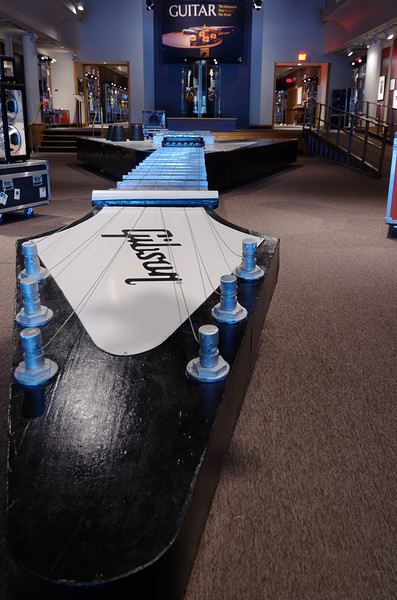
Le voyage a commencé à Bozeman, aéroport d'arrivée à taille humaine et très commode. Après avoir visité le Museum of the Rockies, et son exposition temporaire consacrée aux guitares (c'est à Bozeman que sont fabriquées les modèles acoustiques de Gibson: Hummingbird, Songbird...), nous avons pris la direction du Nord.
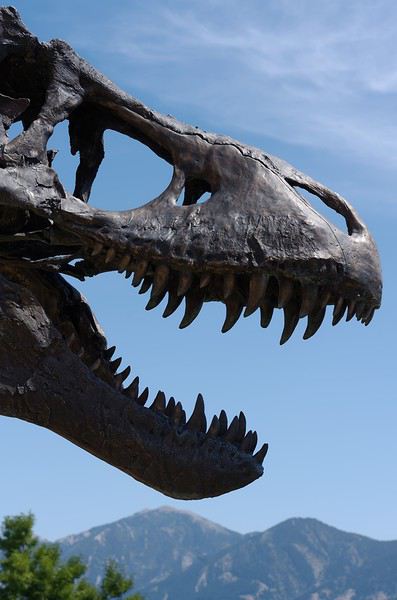
Nous avons fait une étape agréable à Great Falls, en remontant vers les sources du Missouri pour y croiser une première fois l'itinéraire de Lewis et Clark (je suis très fan de cette expédition)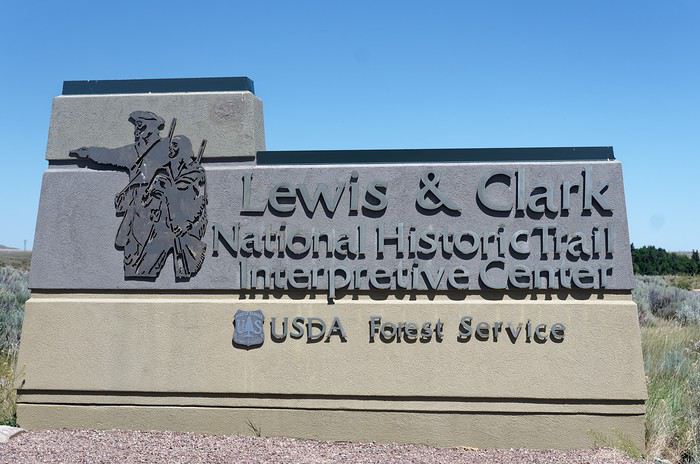 Nous en avons également profité pour visiter le Buffalo Jump voisin, où les Indiens précipitaient les bisons dans un ravin, avant qu'ils n'aient appris à les chasser à cheval.
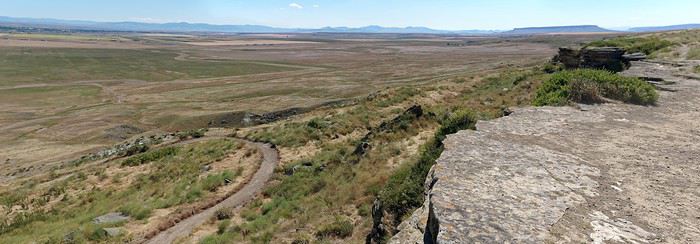
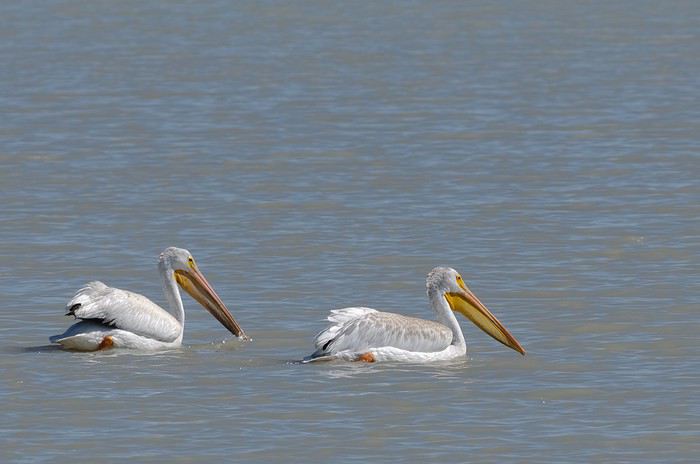
Après cette étape, nous pouvions alors prendre la direction de Glacier National Park, non sans un détour par le Freezeout Lake et sa réserve d'oiseaux.
C'est alors que je vais rentrer dans le vif de mon sujet.
Le voyage a commencé à Bozeman, aéroport d'arrivée à taille humaine et très commode. Après avoir visité le Museum of the Rockies, et son exposition temporaire consacrée aux guitares (c'est à Bozeman que sont fabriquées les modèles acoustiques de Gibson: Hummingbird, Songbird...), nous avons pris la direction du Nord.
Nous avons fait une étape agréable à Great Falls, en remontant vers les sources du Missouri pour y croiser une première fois l'itinéraire de Lewis et Clark (je suis très fan de cette expédition)
Nous en avons également profité pour visiter le Buffalo Jump voisin, où les Indiens précipitaient les bisons dans un ravin, avant qu'ils n'aient appris à les chasser à cheval.
Après cette étape, nous pouvions alors prendre la direction de Glacier National Park, non sans un détour par le Freezeout Lake et sa réserve d'oiseaux.
C'est alors que je vais rentrer dans le vif de mon sujet.
Trois semaines Singapour et Malaisie
Bonjour à toutes et à tous. Peut être m'avez-vous déjà lu dans de précédents carnets, je vais essayer de vous raconter ce que nous avons vu, entendu, ressenti durant ce voyage. Maladroitement, ce récit ne représentera que peu ce que nous avons vécu. Les mots glissent et s'échappent avec les souvenirs non piégés par les photos, mais une bonne partie sera là.
Nous voyageons comme les années précédents, en famille. Romane, notre fille (qui nous sert maintenant d'interprète en anglais), ma femme Magali et moi, Thomas. Depuis cet hiver nous préparons ce voyage. Petit à petit. Magali est très forte pour trouver les lieux des étapes et les choses à voir autour. Les quelques jours avant le départ, nous avons fait nos sacs. Pas trop chargés pour l'aller, s'il nous manque des choses nous pourrons les acheter sur place, mais l’essentiel tout de même.
Pour le reste, je vous laisse lire.
Nous voyageons comme les années précédents, en famille. Romane, notre fille (qui nous sert maintenant d'interprète en anglais), ma femme Magali et moi, Thomas. Depuis cet hiver nous préparons ce voyage. Petit à petit. Magali est très forte pour trouver les lieux des étapes et les choses à voir autour. Les quelques jours avant le départ, nous avons fait nos sacs. Pas trop chargés pour l'aller, s'il nous manque des choses nous pourrons les acheter sur place, mais l’essentiel tout de même.
Pour le reste, je vous laisse lire.
Tuyaux pour la Thaïlande
- eau : dans tout le pays on trouve des distributeurs d eau potable pure. Ont une vitre qui s ouvre, il faut mettre 1bath, sa bouteille, appuyer sur le bouton...
- en août, sauf sur les îles, tout se négocie : hôtels (il ne faut pas l avoir réserve à l avance) surtout si plusieurs nuits, tuc tuc...
- train de nuit : pas forcément besoin de clim, ils ont ventilateur et fenêtre ouverte
- directement sur place on trouve les hôtels moins chers que sur les sites de réservation et au mois d'août il n'y a pas besoin de réserver (sauf si c'est l'anniversaire du roi tous les habitants de bangkok vont partir en week-end)
- les chambres les moins chères sont dans les familles c'est très sympathique et ça coûte 200 à 250 bats la nuit. Ça peut être marqué chambre à louer
Vous pouvez me poser des questions...
Vous pouvez me poser des questions...
Ouest américain en avril 2018 : on essaye de profiter de la saison...
Titre complet :
Ouest américain en avril 2018 : on essaye de profiter de la saison pour réaliser des choses difficiles en été
A la base, nous avions prévu un retour dans l’Ouest à l’été 2018. Mais avec le boulot de Yannick, nous craignions une mutation pour ce même été et nous ne nous voyions pas gérer à la fois un déménagement et un voyage lointain. Nous avons donc préféré nous éviter du stress en planifiant le voyage durant les vacances d’avril 2018. Le point négatif étant qu’il faut composer avec les dates des vacances scolaires (j’aurais eu de meilleurs prix de billets d’avion 10 jours plus tard…) et aussi un voyage plus court qu’en été (13 jours). Le point positif étant qu’on a pu programmer des lieux en général plus chauds (Death Valley, Chesler Park) ou encore auxquels on avait dû renoncer en juillet (Cathedral Valley). Nous avons réservé nos billets d’avion chez United fin août 2017 et avons payé 496 € par personne.
Pour la voiture, nous sommes passés pour la première fois par Hertz et avons réservé un SUV Premium (Cadillac Escalade) fin décembre 2017 grâce à un message d’Arnaud (Arnaudbu sur ce forum). Nous avons payé 483 € pour 13 jours, ce qui revenait moins cher qu’un Armada ou un Suburban alors que c’est la catégorie au-dessus !
Et pour les hôtels, je mettrai le prix jour par jour… mais on va dire qu’on s’est fait plaisir !
Maintenant, place au récit !
J1 : Samedi 21 avril – le voyage
En général, on se rend à l’aéroport 2H00 avant l’heure du vol, mais là j’ai préféré arriver un peu plus tôt parce que nous avions pu imprimer les cartes d’embarquement pour Hugo et Calista la veille, mais pas pour nous. Je craignais donc de devoir subir des contrôles supplémentaires.
Nous arrivons donc à l’aéroport un peu avant 7H00. Une fois notre problème expliqué, un agent nous dirige vers une file prioritaire où on nous donne nos cartes d’embarquement en nous expliquant que nous avons effectivement été choisis pour un contrôle supplémentaire qui se passera après les contrôles de sécurité (il y avait marqué SSSS sur nos cartes). Finalement, tous les contrôles se déroulent très vite et nous sommes devant la porte d’embarquement à 7H20 pour un décollage à 9H15. Vraiment pas en retard !
Nous atterrissons à San Francisco vers 11H00 avec une heure d’avance. Grâce aux APC, nous passons l’immigration en 10 minutes à peine. Nous avons maintenant plus de 3H30 à attendre pour notre prochain vol… alors nous tentons de nous faire placer sur un vol plus tôt. Bingo ! Nous prenons le vol de 12H50 qui nous dépose à Las Vegas à 14H10. C’était un voyage rondement mené !
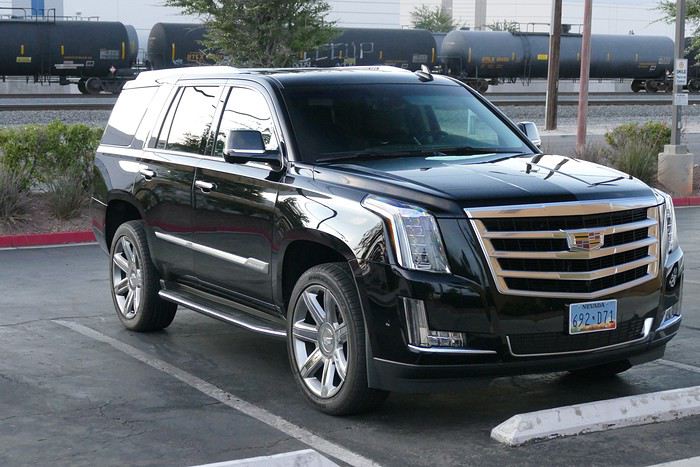
Nous prenons la navette pour le rentalcar center et nous rendons chez Hertz. Nous montons directement à l’étage, là où il y a le comptoir Gold. Comme nous sommes en avance, notre nom ne figure pas encore sur le tableau d’affichage. Mais un employé nous renseigne et nous donne le numéro d’emplacement de notre carrosse. C’est bien un Cadillac Escalade, on n’a jamais eu un véhicule aussi gros… il est magnifique ! Et presque neuf ! Il a à peine 2500 miles au compteur. De plus, on a Sirius et le GPS.
Au passage de la barrière, on est bloqué 5 minutes parce que le tarif sur le papier ne correspond pas à ce que j’avais réservé : il est noté 648 $ au lieu de 575 $. Le préposé cherche sans trouver pourquoi cette différence et finalement nous pensons que c’est à cause de l’heure de prise du véhicule (je rappelle que nous sommes en avance). Il modifie donc l’heure du retour (ce qui ne change rien pour nous) et le prix passe à 561 $ : voilà qui est parfait !
Nous partons pour l’hôtel que nous avons choisi en dehors du strip. En effet, nous sommes samedi soir et les prix sont vraiment prohibitifs le week-end. Il y a des travaux sur l’autoroute qui génèrent quelques bouchons et l’hôtel n’est pas très pratique d’accès en fin de compte (on le voit de l’autoroute mais on ne peut pas sortir et puis il faut revenir sur ses pas sur une route qui longe l’autoroute).
Petit passage par la piscine (gelée) puis repas du soir dans un fast food (Del Taco) et dodo à 19H45 !
Hôtel : BW Plus North à Las Vegas 85 € avec petit-déjeuner
Ouest américain en avril 2018 : on essaye de profiter de la saison pour réaliser des choses difficiles en été
A la base, nous avions prévu un retour dans l’Ouest à l’été 2018. Mais avec le boulot de Yannick, nous craignions une mutation pour ce même été et nous ne nous voyions pas gérer à la fois un déménagement et un voyage lointain. Nous avons donc préféré nous éviter du stress en planifiant le voyage durant les vacances d’avril 2018. Le point négatif étant qu’il faut composer avec les dates des vacances scolaires (j’aurais eu de meilleurs prix de billets d’avion 10 jours plus tard…) et aussi un voyage plus court qu’en été (13 jours). Le point positif étant qu’on a pu programmer des lieux en général plus chauds (Death Valley, Chesler Park) ou encore auxquels on avait dû renoncer en juillet (Cathedral Valley). Nous avons réservé nos billets d’avion chez United fin août 2017 et avons payé 496 € par personne.
Pour la voiture, nous sommes passés pour la première fois par Hertz et avons réservé un SUV Premium (Cadillac Escalade) fin décembre 2017 grâce à un message d’Arnaud (Arnaudbu sur ce forum). Nous avons payé 483 € pour 13 jours, ce qui revenait moins cher qu’un Armada ou un Suburban alors que c’est la catégorie au-dessus !
Et pour les hôtels, je mettrai le prix jour par jour… mais on va dire qu’on s’est fait plaisir !
Maintenant, place au récit !
J1 : Samedi 21 avril – le voyage
En général, on se rend à l’aéroport 2H00 avant l’heure du vol, mais là j’ai préféré arriver un peu plus tôt parce que nous avions pu imprimer les cartes d’embarquement pour Hugo et Calista la veille, mais pas pour nous. Je craignais donc de devoir subir des contrôles supplémentaires.
Nous arrivons donc à l’aéroport un peu avant 7H00. Une fois notre problème expliqué, un agent nous dirige vers une file prioritaire où on nous donne nos cartes d’embarquement en nous expliquant que nous avons effectivement été choisis pour un contrôle supplémentaire qui se passera après les contrôles de sécurité (il y avait marqué SSSS sur nos cartes). Finalement, tous les contrôles se déroulent très vite et nous sommes devant la porte d’embarquement à 7H20 pour un décollage à 9H15. Vraiment pas en retard !
Nous atterrissons à San Francisco vers 11H00 avec une heure d’avance. Grâce aux APC, nous passons l’immigration en 10 minutes à peine. Nous avons maintenant plus de 3H30 à attendre pour notre prochain vol… alors nous tentons de nous faire placer sur un vol plus tôt. Bingo ! Nous prenons le vol de 12H50 qui nous dépose à Las Vegas à 14H10. C’était un voyage rondement mené !
Nous prenons la navette pour le rentalcar center et nous rendons chez Hertz. Nous montons directement à l’étage, là où il y a le comptoir Gold. Comme nous sommes en avance, notre nom ne figure pas encore sur le tableau d’affichage. Mais un employé nous renseigne et nous donne le numéro d’emplacement de notre carrosse. C’est bien un Cadillac Escalade, on n’a jamais eu un véhicule aussi gros… il est magnifique ! Et presque neuf ! Il a à peine 2500 miles au compteur. De plus, on a Sirius et le GPS.
Au passage de la barrière, on est bloqué 5 minutes parce que le tarif sur le papier ne correspond pas à ce que j’avais réservé : il est noté 648 $ au lieu de 575 $. Le préposé cherche sans trouver pourquoi cette différence et finalement nous pensons que c’est à cause de l’heure de prise du véhicule (je rappelle que nous sommes en avance). Il modifie donc l’heure du retour (ce qui ne change rien pour nous) et le prix passe à 561 $ : voilà qui est parfait !
Nous partons pour l’hôtel que nous avons choisi en dehors du strip. En effet, nous sommes samedi soir et les prix sont vraiment prohibitifs le week-end. Il y a des travaux sur l’autoroute qui génèrent quelques bouchons et l’hôtel n’est pas très pratique d’accès en fin de compte (on le voit de l’autoroute mais on ne peut pas sortir et puis il faut revenir sur ses pas sur une route qui longe l’autoroute).
Petit passage par la piscine (gelée) puis repas du soir dans un fast food (Del Taco) et dodo à 19H45 !
Hôtel : BW Plus North à Las Vegas 85 € avec petit-déjeuner
Nord et Sud: de Chicago à la Nouvelle-Orléans
Bonjour à tous,
Dans mes archives dorment quelques carnets de voyage. J'en propose ici un, écrit pendant l'été 2017 au jour le jour, ou presque. Juste retour des choses, le long trajet en voiture de Chicago à la Louisiane doit beaucoup aux bonnes idées trouvées çà et là au fil des discussions - que les contributeurs en soient remerciés.
Voici donc quelques souvenirs pris sur le vif. Je suis redevable à ma femme et à ma fille, 11 ans à l'époque, pour les fréquents arrêts dans les Walmart et autres lieux de shopping. J'ai pu ainsi me poser sur un banc pour m'efforcer de rédiger au jour le jour ce journal de bord - hormis l'introduction ci-dessous écrite avant le départ. J'espère que l'intérêt pour ce carnet ne sera pas trop amoindri par ces circonstances indépendantes de ma volonté, en plus d'être éprouvantes pour le budget familial.
Place aux souvenirs.
 Chicago
Prélude
Encore l’Amérique ? Ben oui. Tu n’en as pas assez ? Ben non.
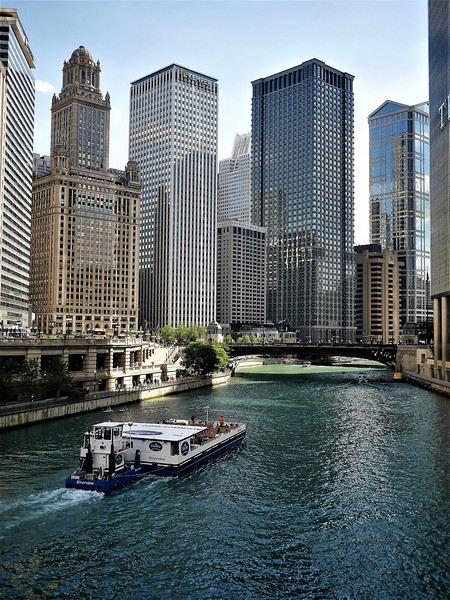
Les billets pour l’été 2017 sont achetés, le trajet fixé, les nuits réservées et un beau véhicule de location nous attend bien au chaud. Cette fois-ci nous ferons un trajet entièrement nouveau, du nord au sud : départ Chicago, arrivée la Nouvelle Orléans, grosso modo en descendant le Mississippi, avec quelques écarts conséquents toutefois.
Pendant ces presque quatre semaines entre juin et juillet, nous ne ferons que des découvertes. Je me rends compte que c’est assez difficile à faire entendre de ce côté-ci de l’Atlantique : les Etats-unis sont grands comme toute l’Europe et réservent assez bien de variété pour satisfaire le voyageur à l’affût de nouvelles expériences. Ne dirions-nous pas d’un touriste qui au fil de ses étés visite la péninsule ibérique, la Scandinavie, les Balkans, l’Europe centrale qu’il est un grand voyageur ? Cette diversité, nous la trouvons aussi sur le territoire américain et sa multitude de « frontières intérieures » qui définissent autant de facettes diverses et dignes d’intérêt. Et encore, en Europe l’on souffre trop souvent d’une foule envahissante qui rend pénible le moindre séjour dans un lieu touristique. Selon notre expérience, l’affluence aux USA est le fait des grandes villes, tant la vastitude des grands espaces permet à chacun de suivre tranquillement son chemin.
Hormis trois petits jours à New York, nos précédents séjours nous avaient menés dans les grands parcs autour de Las Vegas, sur la côte Pacifique de Los Angeles à San Francisco, au Texas entre Houston et Dallas et dans l’extraordinaire et trop décriée Floride. Le programme cette fois-ci est le suivant :
Chicago, la ville ouverte aux quatre vents Spillville, dans l’Iowa, sur les traces du compositeur Antonín Dvořák Hannibal, la cité de Mark Twain Springfield, pour rendre visite au mémorial d’Abraham Lincoln Site historique de Cahokia Mounds, près de Saint Louis, l’une des plus vastes cités amérindiennes Grottes de Mammoth Cave, dans le Kentucky Visite (si on en a le temps) de l’Aviation Heritage Park à proximité La musicale Nashville, où nous fêterons le 4 juillet avec ce qui promet d’être le plus beau feu d’artifice des USA Un détour dans l’Alabama pour rendre visite à l’US Space and Rocket Center, à Huntsville Memphis et son héritage elvisien La vallée du Mississippi : Greenville, Vicksburg, Natchez, Lafayette Et pour terminer, la Nouvelle Orléans et son lot d’excursions dans les plantations.
Sacré programme ! Quand je pense que certains s’étonnent : quoi, tu vas encore en Amérique ? Ben oui.
Dans mes archives dorment quelques carnets de voyage. J'en propose ici un, écrit pendant l'été 2017 au jour le jour, ou presque. Juste retour des choses, le long trajet en voiture de Chicago à la Louisiane doit beaucoup aux bonnes idées trouvées çà et là au fil des discussions - que les contributeurs en soient remerciés.
Voici donc quelques souvenirs pris sur le vif. Je suis redevable à ma femme et à ma fille, 11 ans à l'époque, pour les fréquents arrêts dans les Walmart et autres lieux de shopping. J'ai pu ainsi me poser sur un banc pour m'efforcer de rédiger au jour le jour ce journal de bord - hormis l'introduction ci-dessous écrite avant le départ. J'espère que l'intérêt pour ce carnet ne sera pas trop amoindri par ces circonstances indépendantes de ma volonté, en plus d'être éprouvantes pour le budget familial.
Place aux souvenirs.
ChicagoPrélude
Encore l’Amérique ? Ben oui. Tu n’en as pas assez ? Ben non.
Les billets pour l’été 2017 sont achetés, le trajet fixé, les nuits réservées et un beau véhicule de location nous attend bien au chaud. Cette fois-ci nous ferons un trajet entièrement nouveau, du nord au sud : départ Chicago, arrivée la Nouvelle Orléans, grosso modo en descendant le Mississippi, avec quelques écarts conséquents toutefois.
Pendant ces presque quatre semaines entre juin et juillet, nous ne ferons que des découvertes. Je me rends compte que c’est assez difficile à faire entendre de ce côté-ci de l’Atlantique : les Etats-unis sont grands comme toute l’Europe et réservent assez bien de variété pour satisfaire le voyageur à l’affût de nouvelles expériences. Ne dirions-nous pas d’un touriste qui au fil de ses étés visite la péninsule ibérique, la Scandinavie, les Balkans, l’Europe centrale qu’il est un grand voyageur ? Cette diversité, nous la trouvons aussi sur le territoire américain et sa multitude de « frontières intérieures » qui définissent autant de facettes diverses et dignes d’intérêt. Et encore, en Europe l’on souffre trop souvent d’une foule envahissante qui rend pénible le moindre séjour dans un lieu touristique. Selon notre expérience, l’affluence aux USA est le fait des grandes villes, tant la vastitude des grands espaces permet à chacun de suivre tranquillement son chemin.
Hormis trois petits jours à New York, nos précédents séjours nous avaient menés dans les grands parcs autour de Las Vegas, sur la côte Pacifique de Los Angeles à San Francisco, au Texas entre Houston et Dallas et dans l’extraordinaire et trop décriée Floride. Le programme cette fois-ci est le suivant :
Chicago, la ville ouverte aux quatre vents Spillville, dans l’Iowa, sur les traces du compositeur Antonín Dvořák Hannibal, la cité de Mark Twain Springfield, pour rendre visite au mémorial d’Abraham Lincoln Site historique de Cahokia Mounds, près de Saint Louis, l’une des plus vastes cités amérindiennes Grottes de Mammoth Cave, dans le Kentucky Visite (si on en a le temps) de l’Aviation Heritage Park à proximité La musicale Nashville, où nous fêterons le 4 juillet avec ce qui promet d’être le plus beau feu d’artifice des USA Un détour dans l’Alabama pour rendre visite à l’US Space and Rocket Center, à Huntsville Memphis et son héritage elvisien La vallée du Mississippi : Greenville, Vicksburg, Natchez, Lafayette Et pour terminer, la Nouvelle Orléans et son lot d’excursions dans les plantations.
Sacré programme ! Quand je pense que certains s’étonnent : quoi, tu vas encore en Amérique ? Ben oui.
Retour de croisière en Alaska avec NCL
bonjour tout le monde !
voila après un retour un peu catastrophique hier (nous étions à FRANCFORT hier lors de l'alerte ...) nous sommes rentrées de notre croisière en Alaska à bord du Novegian Jewel
j'ai donné il y a peu un compte Facebook ou nous avons retracé notre parcours, car nous avons fait un petit road trip avant d'embarquer ... pour ceux qui veulent aller voir, je redonne le nom Mother and daughter in Alaska car oui j'ai laissé l'homme à la maison, ou plutôt affalé sur un transat à dormir, pendant que moi et ma fille nous vivions une formidable aventure (ne vous inquiétez pas, il n'a pas été malheureux, il a pu pratiquer son sport favori: dormir toute la journée ...
bref nous avons embarqué le 31 juillet, mais nous étions arrivées le 17 en alaska... nous avons vécue une formidable aventure ...
donc ... à la question qui va venir rapidement "cela vaut 'il le coup de faire tout ce trajet, absorber les 10 heures de décalage horaire, pour faire une croisière d'une semaine ? " je répondrais OUI mais ... A la condition de faire comme nous un road trip avant .... sinon vous ne verrez pas grand chose de l'Alaska !
et à "est ce utile de faire une croisière après un road trip en alaska ? " la .. je réponds oui, si le budget le permet, l'Alaska est une destination très chère ou la moindre excursion coute chère, (je parle de la partie road trip aussi ) après il est vrai qu'après presque 15 jours à mal dormir dans des hôtels mal insonorisés, chers et parfois très limites (souri dans la chambre, toilettes sur le palier, mauvaise odeur etc etc ) à manger à peu près la même chose, car nous ne pouvions pas cuisiner, faire et refaire sans arret la valise, etc etc nous avons apprécié le confort du bateau... cela nous a permis aussi d'en voir un peu plus, de ne pas faire de longues heures de voiture (j'étais le seul chauffeur, et ça a été parfois difficile...) et quel bonheur aussi de voir le souffle des baleines, les bancs de dauphins, les orques ... passer à coté du bateau !!! de jolies navigations aussi, comme la vision du hubbard glacier !! dépassant tout ce qu'on avait pu voir auparavant !!! et le passage intérieur aussi etait vraiment sympa !!
nous n'avons pris aucune excursion avec le bateau, je ne pourrais donc pas vous donner mon avis dessus, mais elles étaient relativement chères, mais très variées
En tout cas, je ne regrette pas d'avoir fait les deux, même si le mauvais temps s'est invité sur une partie ...
le bateau, et la compagnie C'était la première fois que je partais avec NCL plutôt très bonne impression, ! il est vrai que je partais avec des attentes différentes de d'habitude, ne vivant pas du tout ma croisière de la même façon qu'avec l'homme ... nous avions un forfait tout compris: boissons illimitées en dessous de 15 dollars, alcool et boissons non alcoolisées, sauf..et la c'est vraiment paradoxal ... l'eau plate, l'eau gazeuse, et les jus de fruits pressés .. par contre on avait dans la cabine en arrivant une bouteille d'eau par jour et par personne que finalement nous n'avons quasiment pas bu car nous n'en prenions que pour descendre à terre, sinon au restaurant, nous demandions de l'eau en carafe ma fille du vin, et moi parfois des sodas nous avions aussi une sélection de cafés, mais pas utilisée et les frais de séjour compris donc hors dépenses personnelles il n'y avait rien a rajouter
nous avons pris un forfait spa un peu plus de 300 dollars pour la semaine à deux ils ne vendent que 60 forfaits pour éviter la surpopulation au spa il y a une partie non mixte avec sauna hamam et jacuzzi (comme ceux autour des piscines) partie change avec à dispo peignoirs et serviettes et une partie mixte avec un jacuzzi façon costa avec le banc en fer mais plus petit, et des sièges chauffants faces à la mer, à la proue du bateau, idéal pour guetter les baleines, et les bancs de dauphins !! (quand on ne s'endort pas dessus chose absolument irrésistible ... ) dans cette partie thé orangeade citronnade orange café sont à dispo
la cabine, nous avons eu une cabine familiale, avec un lit d'appoint qui descend du plafond mobilier un peu vieillot, et abimé, une grande armoire pour pendre desaffaires, quelque étagères et tiroirs .. suffisant pour toutes les deux, mais petit pour une famille la salle de bain plus grande que chez costa avec possibilité de séparer les toilettes par une porte en verre (douche aussi avec porte en verre ) les lis étaient séparés à notre arrivée, mais du coup un etait collé contre le mur de la salle de bain la taille et celle du balcon sont de la même taille qu'une cabine standard chez costa balcon au sol abimé et rouillé ..mais surement normal par ces latitudes
pour manger nous avions le choix, entre deux restaurants au même menus, mais au style different, nous avons toujours été au même, au fond du bateau avec une immense baie vitrée donnant sur le sillage arrière un restaurant chinois avec menu inchangé, nous y avons été deux fois, un midi et un soir .. très bon un restau au decors style irlandais , ouvert 24H/24 avec quelque plats le self pleins de petits ilots, avec différents thèmes ... inde, asiatique, salades, chaud, froid, pâtes, hamburgers à la demande, pizzas desserts, fromages etcetc, glaces .. assez bon, pas de queue aux stands abordables de differents cotés, limitant ainsi les embouteillages des fontaines de boissons pour tout le monde et enfin un grill et un petit self au fond du navire donnant sur la partie ouverte les trois ouvrant et fermant à tour de rôle
j'ai donné il y a peu un compte Facebook ou nous avons retracé notre parcours, car nous avons fait un petit road trip avant d'embarquer ... pour ceux qui veulent aller voir, je redonne le nom Mother and daughter in Alaska car oui j'ai laissé l'homme à la maison, ou plutôt affalé sur un transat à dormir, pendant que moi et ma fille nous vivions une formidable aventure (ne vous inquiétez pas, il n'a pas été malheureux, il a pu pratiquer son sport favori: dormir toute la journée ...
bref nous avons embarqué le 31 juillet, mais nous étions arrivées le 17 en alaska... nous avons vécue une formidable aventure ...
donc ... à la question qui va venir rapidement "cela vaut 'il le coup de faire tout ce trajet, absorber les 10 heures de décalage horaire, pour faire une croisière d'une semaine ? " je répondrais OUI mais ... A la condition de faire comme nous un road trip avant .... sinon vous ne verrez pas grand chose de l'Alaska !
et à "est ce utile de faire une croisière après un road trip en alaska ? " la .. je réponds oui, si le budget le permet, l'Alaska est une destination très chère ou la moindre excursion coute chère, (je parle de la partie road trip aussi ) après il est vrai qu'après presque 15 jours à mal dormir dans des hôtels mal insonorisés, chers et parfois très limites (souri dans la chambre, toilettes sur le palier, mauvaise odeur etc etc ) à manger à peu près la même chose, car nous ne pouvions pas cuisiner, faire et refaire sans arret la valise, etc etc nous avons apprécié le confort du bateau... cela nous a permis aussi d'en voir un peu plus, de ne pas faire de longues heures de voiture (j'étais le seul chauffeur, et ça a été parfois difficile...) et quel bonheur aussi de voir le souffle des baleines, les bancs de dauphins, les orques ... passer à coté du bateau !!! de jolies navigations aussi, comme la vision du hubbard glacier !! dépassant tout ce qu'on avait pu voir auparavant !!! et le passage intérieur aussi etait vraiment sympa !!
nous n'avons pris aucune excursion avec le bateau, je ne pourrais donc pas vous donner mon avis dessus, mais elles étaient relativement chères, mais très variées
En tout cas, je ne regrette pas d'avoir fait les deux, même si le mauvais temps s'est invité sur une partie ...
le bateau, et la compagnie C'était la première fois que je partais avec NCL plutôt très bonne impression, ! il est vrai que je partais avec des attentes différentes de d'habitude, ne vivant pas du tout ma croisière de la même façon qu'avec l'homme ... nous avions un forfait tout compris: boissons illimitées en dessous de 15 dollars, alcool et boissons non alcoolisées, sauf..et la c'est vraiment paradoxal ... l'eau plate, l'eau gazeuse, et les jus de fruits pressés .. par contre on avait dans la cabine en arrivant une bouteille d'eau par jour et par personne que finalement nous n'avons quasiment pas bu car nous n'en prenions que pour descendre à terre, sinon au restaurant, nous demandions de l'eau en carafe ma fille du vin, et moi parfois des sodas nous avions aussi une sélection de cafés, mais pas utilisée et les frais de séjour compris donc hors dépenses personnelles il n'y avait rien a rajouter
nous avons pris un forfait spa un peu plus de 300 dollars pour la semaine à deux ils ne vendent que 60 forfaits pour éviter la surpopulation au spa il y a une partie non mixte avec sauna hamam et jacuzzi (comme ceux autour des piscines) partie change avec à dispo peignoirs et serviettes et une partie mixte avec un jacuzzi façon costa avec le banc en fer mais plus petit, et des sièges chauffants faces à la mer, à la proue du bateau, idéal pour guetter les baleines, et les bancs de dauphins !! (quand on ne s'endort pas dessus chose absolument irrésistible ... ) dans cette partie thé orangeade citronnade orange café sont à dispo
la cabine, nous avons eu une cabine familiale, avec un lit d'appoint qui descend du plafond mobilier un peu vieillot, et abimé, une grande armoire pour pendre desaffaires, quelque étagères et tiroirs .. suffisant pour toutes les deux, mais petit pour une famille la salle de bain plus grande que chez costa avec possibilité de séparer les toilettes par une porte en verre (douche aussi avec porte en verre ) les lis étaient séparés à notre arrivée, mais du coup un etait collé contre le mur de la salle de bain la taille et celle du balcon sont de la même taille qu'une cabine standard chez costa balcon au sol abimé et rouillé ..mais surement normal par ces latitudes
pour manger nous avions le choix, entre deux restaurants au même menus, mais au style different, nous avons toujours été au même, au fond du bateau avec une immense baie vitrée donnant sur le sillage arrière un restaurant chinois avec menu inchangé, nous y avons été deux fois, un midi et un soir .. très bon un restau au decors style irlandais , ouvert 24H/24 avec quelque plats le self pleins de petits ilots, avec différents thèmes ... inde, asiatique, salades, chaud, froid, pâtes, hamburgers à la demande, pizzas desserts, fromages etcetc, glaces .. assez bon, pas de queue aux stands abordables de differents cotés, limitant ainsi les embouteillages des fontaines de boissons pour tout le monde et enfin un grill et un petit self au fond du navire donnant sur la partie ouverte les trois ouvrant et fermant à tour de rôle
La Russie au fil de l'eau et de l'histoire
Bonjour à tous.
Croisière fluviale entre ST PETERSBOURG et MOSCOU du 10 au 20 juin 2018
C'est l'intitulé de cette croisière fluviale qui nous inspire, notre première en la matière après plusieurs autres plutôt maritimes celles-là ! Nous avons choisi POUCHKINE tours (SALAÜN holidays), organisateur de cette croisière.
Grâce à deux couples de nos amis investigateurs de ce voyage, nous voici tous les six réunis pour cette expérience : Départ de la croisière depuis ST PETERSBOURG et arrivée à MOSCOU après avoir passé 2 jours de suite en visite à ST PETERSBOURG, 5 jours « au fil de l'eau » (la Neva, le long du lac Ladoga, dans le lac Onéga puis le canal Volga-Baltique, le lac Blanc, la Volga et le canal de la Moskova) avec de nombreuses écluses à passer (18, il me semble, dont beaucoup de nuit!) et enfin 2 derniers jours de visite de MOSCOU par ambiance de... championnat du monde de football !!! Et, pour chaque journée d'escale, une excursion avec guide local est prévue. Les autres excursions possibles sont, bien sûr, facultatives et en supplément.
JOUR 1 :
Première étape : Nous prenons l'avion depuis PARIS CDG avec nos amis. Après une escale à FRANCFORT, nous voici pratiquement à l'heure à l'aéroport de ST PETERSBOURG accueillis par notre « chère amie » Anna (super guide de bord et animatrice francophone pour le bateau qui emploie régulièrement ces mots : « mes chers amis ! »). Nous sommes seulement 26 Français pour cette croisière à bord du « Andrey RUBLEV » (compagnie Mosturflot) qui s'annonce déjà très familiale : Anna nous signale que nous ne serons environ que 150 passagers à bord (300 en général) ce qui présage d'une ambiance plutôt intimiste et chaleureuse. Elle monte avec nous dans le bus pour nous conduire jusqu'au quai d'embarquement elle nous accompagnera ainsi lors de chaque escale en compagnie du guide (ou de la guide) local(e) elle sera en quelque sorte notre « nounou » vérifiant, à chaque excursion, que personne ne manque à l'appel et, grâce à sa bienveillance, nous n'avons perdu personne ! Elle ne nous quittera quasiment plus jusqu'à notre départ de MOSCOU. Au cours de cette croisière, elle réussira même à nous apprendre quelques mots de russe, à chanter en russe et même à danser un quadrille russe... Moments INOUBLIABLES et très festifs ! Merci encore Anna pour toute cette gentillesse et votre patience à notre égard !
Deuxième étape : Embarquement après la cérémonie du pain et du sel. Cérémonie que l'on retrouvera à plusieurs reprises au cours d'autres escales.
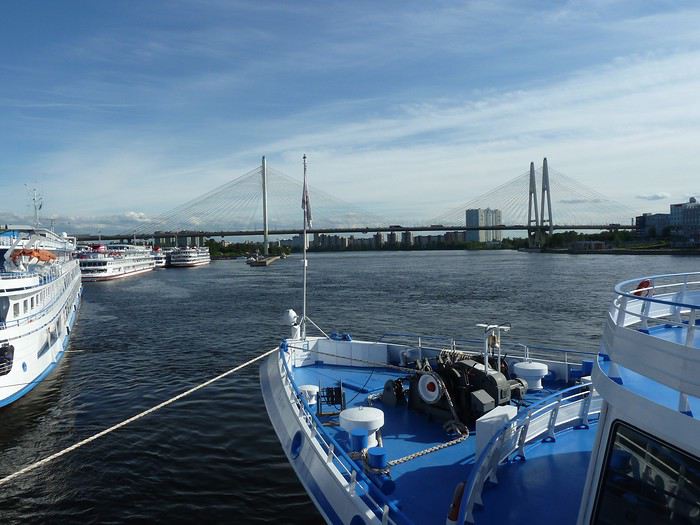 Le port d'embarquement et le pont Bolchoï Oboukhovski
A bord, nous faisons aussi la connaissance de Tatiana, représentante de l'agence, responsable du groupe des Français, avec laquelle tout le monde se sentira également très à l'aise. C'est elle la chef, en quelque sorte, mais elle n'en abusera jamais et tout se passera très bien. Nous garderons également un excellent souvenir de cette jeune femme appréciant de discuter avec le groupe des Français pour parfaire la langue qu'elle maîtrise peut-être un peu moins que Anna mais avec l'envie de faire sans cesse des progrès incontestables. Bravo Tatiana pour votre professionnalisme !
Anna et Tatiana deviendront rapidement indispensables pour les uns comme pour les autres au cours de ce voyage découverte et participeront pleinement à la réussite de notre croisière.
Bon ! Ce soir, ce sera surtout récupération, découverte rapide du bateau dont on a vite fait le tour car il est beaucoup plus petit que ceux auxquels nous étions habitués jusque là : seulement 4 ponts. Il n'y a ni piscine, ni théâtre et les cabines sont plutôt exigües mais nous n'y serons pas beaucoup dans la journée. Puis nous essayons de ranger nos affaires au mieux. On peut rapprocher les 2 lits jumeaux de 70cm de large mais il sera ensuite très difficile d'ouvrir les valises car beaucoup de choses resteront dans celles-ci, rangées sous les lits, faute de place alors nous resterons en figuration lits jumeaux !… Et enfin, gros dodo ! Car on sait déjà que demain matin, pas de grasse matinée au programme. Quant au réveil : ce sera... Heu !… Au chant du coq !!!
Eh oui ! A 6h40 tapantes, il est bien là le chant du coq dans les cabines ! Où l'ont-ils trouvé celui-là ??? En tout cas il est bien passé à la radio en guise de réveil-matin et c'était fort sympathique même si on était déjà debout depuis un bon moment!!!
JOUR 2 :
ST PETERSBOURG :
Dès 8h, tout le monde dans le bus pour une première excursion à POUCHKINE (anciennement Tsarskoe Selo : le village des tsars), à environ 25kms de là, pour visiter le Palais Catherine . Pour cette visite, c'est une excursion supplémentaire non prévue au programme initial mais nous ne regrettons absolument pas notre choix.
Ce nom de POUCHKINE a été donné à ce village en 1937, à l'occasion du centenaire de la mort du poète Alexandre POUCHKINE qui a fait ses études dans le lycée attenant au Palais entre 1811 et 1817… Si j'ai bien tout compris ! (ledit lycée se trouve sur la gauche de l'entrée latérale du château et est relié à celui-ci par une sorte de« passerelle »). Natacha est notre guide locale pour nos deux journées à ST PETERSBOURG. Elle est très intéressante à suivre et à écouter même si parfois, certains détails de l'Histoire nous échappent, nous interpellent un peu moins ou nous paraissent un peu… longuets ! En tout cas, elle connaît son sujet sur le bout des doigts et maîtrise parfaitement bien le français ! Nous sommes tous équipés d'audio-guides ce qui nous permet de rester plus ou moins « groupir » malgré les nombreux autres groupes de touristes autour de nous et les arrêts plus ou moins fréquents pour prendre le temps d'observer, d'écouter les informations données par notre guide ou de faire quelques photos au rythme de nos pas... feutrés… Ben oui quoi ! Dès l'entrée, on doit enfiler des chaussons par dessus nos chaussures pour ne pas endommager les magnifiques parquets !
Pour la petite histoire (ou la grande c'est selon!) :
En 1711, Pierre-le-Grand offre à sa femme, la future impératrice Catherine I, les terres où elle fait construire un petit château. C'est l'impératrice Elisabeth I, sa fille devenue impératrice, qui décide son réaménagement pour l'agrandir en 1752 (architecte Bartolomeo Rastrelli d'où le nom du style baroque rastrellien). Elle le baptise alors Palais Catherine en l'honneur de sa mère. Puis ce sera au tour de l'impératrice Catherine II (dite la Grande), femme de Pierre III, neveu d'Elisabeth I, de faire décorer certaines salles et de créer le magnifique parc et les différents pavillons qui s'y trouvent. Elle fera également construire le Palais Alexandre, en 1796, pour son petit-fils, le futur Alexandre I. C'est bon ? Tout le monde suit ?
Aujourd'hui, après bien des transformations, il n'est plus vraiment petit ce château avec ses 300m environ de façade !
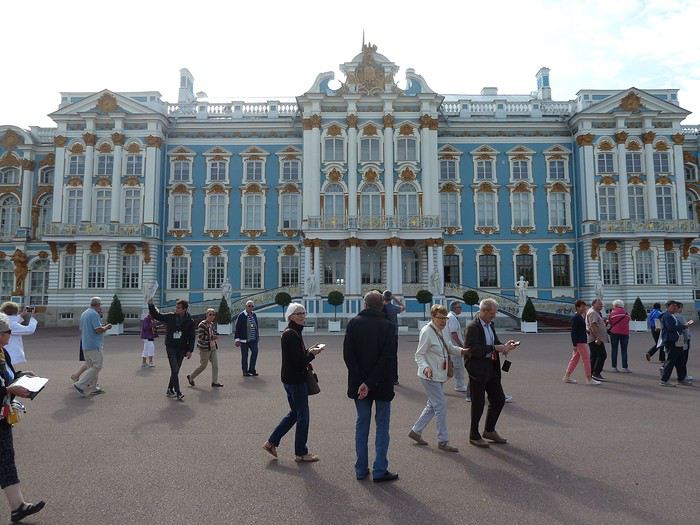 La façade du Palais Catherine
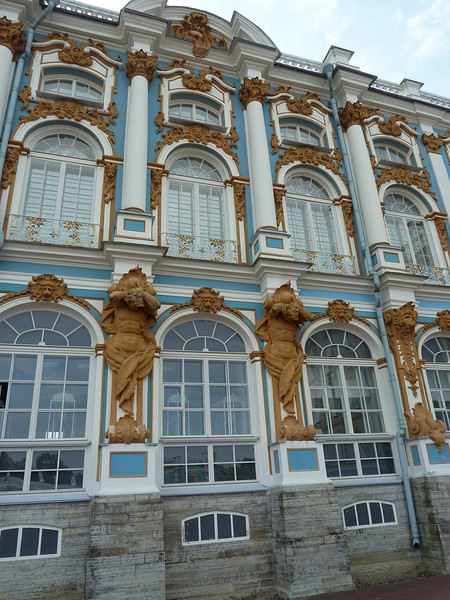
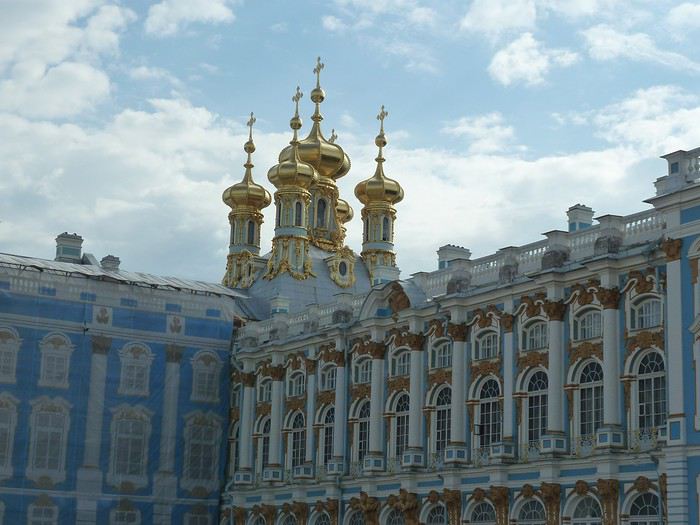 Bulbes de la chapelle du Palais Catherine
Bon ! Je préciserai tout de même que ce magnifique ensemble a subi plusieurs dommages, reconstructions et restaurations diverses, au fil de son histoire, suite à un grave incendie notamment, durant la Seconde Guerre mondiale.
Pas de mots pour présenter la visite de cette ancienne résidence impériale, mais des photos pour les souvenirs car il y a vraiment trop de choses à admirer, dans chaque salle, sur chaque mur, en haut (les plafonds et les lustres), en bas (avec les parquets de toute beauté) et trop de noms à retenir. On en prend plein les yeux, c'est juste très beau !
 le chérubin du matin (il se réveille à l'est). Il y a celui du soir (à l'ouest de l'autre côté qui lui, dort).
 La salle à manger d'Elisabeth et sa table en forme de E
 La salle de bal
Personnellement, j'ai trouvé la Chambre d'ambre sans vraiment de charme, trop étouffante et trop « toc » à mon goût. Je ne sais pas exactement ce à quoi je m'attendais, mais pas du tout à cette décoration très, mais alors très, très chargée. Je sais bien sûr qu'il ne s'agit que d'une reconstitution, les panneaux originaux ayant été volés par les Nazis lors de la Seconde Guerre mondiale. Je sais qu'il a fallu 6 tonnes d'ambre pour la restaurer d'après d'anciennes photos. Cela ne m'empêche aucunement de respecter le travail fourni par tous les artisans pour recréer au mieux cette pièce mais c'est mon ressenti. Actuellement, on n'a pas le droit d'y prendre des photos mais, heureusement, grâce à Internet, on arrive à en trouver malgré tout. D'autres salles, splendides, lumineuses, parfois plus petites, m'ont davantage impressionnée.
Côté météo, au départ de notre excursion, cela semblait totalement incertain, mais le ciel n'a pas eu l'audace d'une forte averse alors que nous entamons la visite des jardins : juste quelques gouttes, histoire de nous confirmer qu'après la pluie… le beau temps ! Et il nous en faut du beau temps pour apprécier tous ces petits pavillons (et leurs histoires) disséminés çà et là dans le superbe parc !
 Le pavillon d'agate
 la façade de la galerie Cameron
 le pavillon d'été
 le pavillon de la grotte ou pavillon du matin
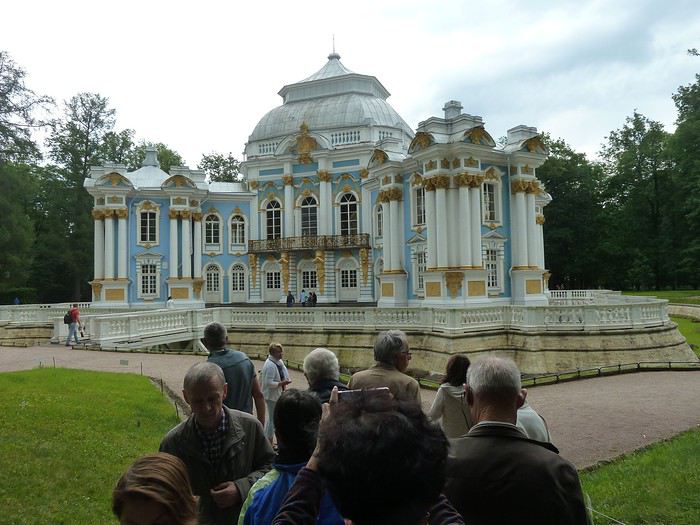 le pavillon Ermitage réservé aux soirées intimes
Après cette première visite au cours de laquelle nous avons bien marché, un repas russe nous attend dans un restaurant de POUCHKINE original, , le « Sotchi », installé dans un ancien château d'eau puis nous reprenons le bus pour revenir sur ST PETERSBOURG.
 les luminaires du restaurant le "Sotchi"
Croisière fluviale entre ST PETERSBOURG et MOSCOU du 10 au 20 juin 2018
C'est l'intitulé de cette croisière fluviale qui nous inspire, notre première en la matière après plusieurs autres plutôt maritimes celles-là ! Nous avons choisi POUCHKINE tours (SALAÜN holidays), organisateur de cette croisière.
Grâce à deux couples de nos amis investigateurs de ce voyage, nous voici tous les six réunis pour cette expérience : Départ de la croisière depuis ST PETERSBOURG et arrivée à MOSCOU après avoir passé 2 jours de suite en visite à ST PETERSBOURG, 5 jours « au fil de l'eau » (la Neva, le long du lac Ladoga, dans le lac Onéga puis le canal Volga-Baltique, le lac Blanc, la Volga et le canal de la Moskova) avec de nombreuses écluses à passer (18, il me semble, dont beaucoup de nuit!) et enfin 2 derniers jours de visite de MOSCOU par ambiance de... championnat du monde de football !!! Et, pour chaque journée d'escale, une excursion avec guide local est prévue. Les autres excursions possibles sont, bien sûr, facultatives et en supplément.
JOUR 1 :
Première étape : Nous prenons l'avion depuis PARIS CDG avec nos amis. Après une escale à FRANCFORT, nous voici pratiquement à l'heure à l'aéroport de ST PETERSBOURG accueillis par notre « chère amie » Anna (super guide de bord et animatrice francophone pour le bateau qui emploie régulièrement ces mots : « mes chers amis ! »). Nous sommes seulement 26 Français pour cette croisière à bord du « Andrey RUBLEV » (compagnie Mosturflot) qui s'annonce déjà très familiale : Anna nous signale que nous ne serons environ que 150 passagers à bord (300 en général) ce qui présage d'une ambiance plutôt intimiste et chaleureuse. Elle monte avec nous dans le bus pour nous conduire jusqu'au quai d'embarquement elle nous accompagnera ainsi lors de chaque escale en compagnie du guide (ou de la guide) local(e) elle sera en quelque sorte notre « nounou » vérifiant, à chaque excursion, que personne ne manque à l'appel et, grâce à sa bienveillance, nous n'avons perdu personne ! Elle ne nous quittera quasiment plus jusqu'à notre départ de MOSCOU. Au cours de cette croisière, elle réussira même à nous apprendre quelques mots de russe, à chanter en russe et même à danser un quadrille russe... Moments INOUBLIABLES et très festifs ! Merci encore Anna pour toute cette gentillesse et votre patience à notre égard !
Deuxième étape : Embarquement après la cérémonie du pain et du sel. Cérémonie que l'on retrouvera à plusieurs reprises au cours d'autres escales.
Le port d'embarquement et le pont Bolchoï OboukhovskiA bord, nous faisons aussi la connaissance de Tatiana, représentante de l'agence, responsable du groupe des Français, avec laquelle tout le monde se sentira également très à l'aise. C'est elle la chef, en quelque sorte, mais elle n'en abusera jamais et tout se passera très bien. Nous garderons également un excellent souvenir de cette jeune femme appréciant de discuter avec le groupe des Français pour parfaire la langue qu'elle maîtrise peut-être un peu moins que Anna mais avec l'envie de faire sans cesse des progrès incontestables. Bravo Tatiana pour votre professionnalisme !
Anna et Tatiana deviendront rapidement indispensables pour les uns comme pour les autres au cours de ce voyage découverte et participeront pleinement à la réussite de notre croisière.
Bon ! Ce soir, ce sera surtout récupération, découverte rapide du bateau dont on a vite fait le tour car il est beaucoup plus petit que ceux auxquels nous étions habitués jusque là : seulement 4 ponts. Il n'y a ni piscine, ni théâtre et les cabines sont plutôt exigües mais nous n'y serons pas beaucoup dans la journée. Puis nous essayons de ranger nos affaires au mieux. On peut rapprocher les 2 lits jumeaux de 70cm de large mais il sera ensuite très difficile d'ouvrir les valises car beaucoup de choses resteront dans celles-ci, rangées sous les lits, faute de place alors nous resterons en figuration lits jumeaux !… Et enfin, gros dodo ! Car on sait déjà que demain matin, pas de grasse matinée au programme. Quant au réveil : ce sera... Heu !… Au chant du coq !!!
Eh oui ! A 6h40 tapantes, il est bien là le chant du coq dans les cabines ! Où l'ont-ils trouvé celui-là ??? En tout cas il est bien passé à la radio en guise de réveil-matin et c'était fort sympathique même si on était déjà debout depuis un bon moment!!!
JOUR 2 :
ST PETERSBOURG :
Dès 8h, tout le monde dans le bus pour une première excursion à POUCHKINE (anciennement Tsarskoe Selo : le village des tsars), à environ 25kms de là, pour visiter le Palais Catherine . Pour cette visite, c'est une excursion supplémentaire non prévue au programme initial mais nous ne regrettons absolument pas notre choix.
Ce nom de POUCHKINE a été donné à ce village en 1937, à l'occasion du centenaire de la mort du poète Alexandre POUCHKINE qui a fait ses études dans le lycée attenant au Palais entre 1811 et 1817… Si j'ai bien tout compris ! (ledit lycée se trouve sur la gauche de l'entrée latérale du château et est relié à celui-ci par une sorte de« passerelle »). Natacha est notre guide locale pour nos deux journées à ST PETERSBOURG. Elle est très intéressante à suivre et à écouter même si parfois, certains détails de l'Histoire nous échappent, nous interpellent un peu moins ou nous paraissent un peu… longuets ! En tout cas, elle connaît son sujet sur le bout des doigts et maîtrise parfaitement bien le français ! Nous sommes tous équipés d'audio-guides ce qui nous permet de rester plus ou moins « groupir » malgré les nombreux autres groupes de touristes autour de nous et les arrêts plus ou moins fréquents pour prendre le temps d'observer, d'écouter les informations données par notre guide ou de faire quelques photos au rythme de nos pas... feutrés… Ben oui quoi ! Dès l'entrée, on doit enfiler des chaussons par dessus nos chaussures pour ne pas endommager les magnifiques parquets !
Pour la petite histoire (ou la grande c'est selon!) :
En 1711, Pierre-le-Grand offre à sa femme, la future impératrice Catherine I, les terres où elle fait construire un petit château. C'est l'impératrice Elisabeth I, sa fille devenue impératrice, qui décide son réaménagement pour l'agrandir en 1752 (architecte Bartolomeo Rastrelli d'où le nom du style baroque rastrellien). Elle le baptise alors Palais Catherine en l'honneur de sa mère. Puis ce sera au tour de l'impératrice Catherine II (dite la Grande), femme de Pierre III, neveu d'Elisabeth I, de faire décorer certaines salles et de créer le magnifique parc et les différents pavillons qui s'y trouvent. Elle fera également construire le Palais Alexandre, en 1796, pour son petit-fils, le futur Alexandre I. C'est bon ? Tout le monde suit ?
Aujourd'hui, après bien des transformations, il n'est plus vraiment petit ce château avec ses 300m environ de façade !
La façade du Palais Catherine
Bulbes de la chapelle du Palais CatherineBon ! Je préciserai tout de même que ce magnifique ensemble a subi plusieurs dommages, reconstructions et restaurations diverses, au fil de son histoire, suite à un grave incendie notamment, durant la Seconde Guerre mondiale.
Pas de mots pour présenter la visite de cette ancienne résidence impériale, mais des photos pour les souvenirs car il y a vraiment trop de choses à admirer, dans chaque salle, sur chaque mur, en haut (les plafonds et les lustres), en bas (avec les parquets de toute beauté) et trop de noms à retenir. On en prend plein les yeux, c'est juste très beau !
le chérubin du matin (il se réveille à l'est). Il y a celui du soir (à l'ouest de l'autre côté qui lui, dort).
La salle à manger d'Elisabeth et sa table en forme de E
La salle de balPersonnellement, j'ai trouvé la Chambre d'ambre sans vraiment de charme, trop étouffante et trop « toc » à mon goût. Je ne sais pas exactement ce à quoi je m'attendais, mais pas du tout à cette décoration très, mais alors très, très chargée. Je sais bien sûr qu'il ne s'agit que d'une reconstitution, les panneaux originaux ayant été volés par les Nazis lors de la Seconde Guerre mondiale. Je sais qu'il a fallu 6 tonnes d'ambre pour la restaurer d'après d'anciennes photos. Cela ne m'empêche aucunement de respecter le travail fourni par tous les artisans pour recréer au mieux cette pièce mais c'est mon ressenti. Actuellement, on n'a pas le droit d'y prendre des photos mais, heureusement, grâce à Internet, on arrive à en trouver malgré tout. D'autres salles, splendides, lumineuses, parfois plus petites, m'ont davantage impressionnée.
Côté météo, au départ de notre excursion, cela semblait totalement incertain, mais le ciel n'a pas eu l'audace d'une forte averse alors que nous entamons la visite des jardins : juste quelques gouttes, histoire de nous confirmer qu'après la pluie… le beau temps ! Et il nous en faut du beau temps pour apprécier tous ces petits pavillons (et leurs histoires) disséminés çà et là dans le superbe parc !
Le pavillon d'agate
la façade de la galerie Cameronle pavillon d'étéle pavillon de la grotte ou pavillon du matinle pavillon Ermitage réservé aux soirées intimesAprès cette première visite au cours de laquelle nous avons bien marché, un repas russe nous attend dans un restaurant de POUCHKINE original, , le « Sotchi », installé dans un ancien château d'eau puis nous reprenons le bus pour revenir sur ST PETERSBOURG.
les luminaires du restaurant le "Sotchi"Scandinavian Road Trip, July 2018
EDITOR’S NOTE: As with every travel journal I publish, I won’t force anyone to agree with my comments—they’re my own, I share my feelings, and that’s it. Your comments are, of course, welcome, but I’ll refrain from responding to any hint of controversy, as has happened in the past.
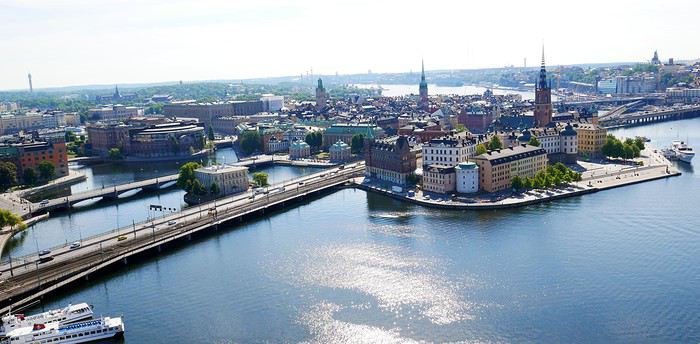
For the summer holidays of 2018, we decided to take a break from long-haul, transcontinental trips. They’re expensive and exhausting, and this year, we also had to consider our young student’s limited vacation days. So, it was a short 14-day circuit in Scandinavia. Very quickly, I had to abandon the unrealistic idea of driving door-to-door with our personal car (unlike last year—see my "Balkan Stroll" story). Too many kilometers and stops. Still, crossing Poland, Lithuania, Estonia, and Latvia before taking a ferry from Tallinn to Helsinki and Finland was tempting—what a shame.
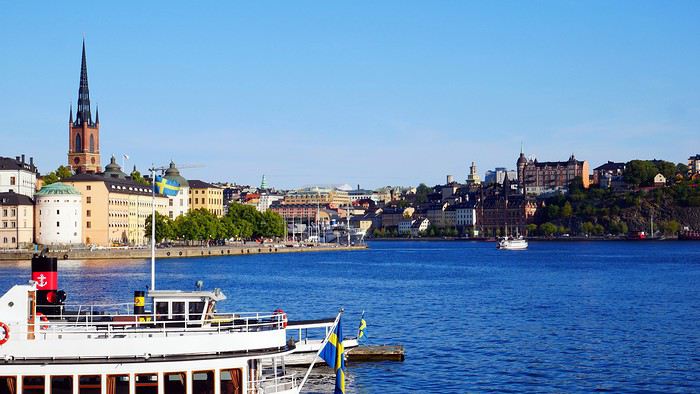
As usual, I planned ahead and started booking in early February for a mid-July departure, typically the best time weather-wise for this destination. Browsing tour operator catalogs didn’t offer much insight—just the usual circuits. Most aim for the North Cape, but we didn’t have time for that. First, via Expedia, we booked our flight tickets: Paris to Stockholm, Helsinki to Paris for the return (880 euros for three), plus a domestic flight from Oulu to Helsinki in Finland (220 euros). The unanimous advice was that there’s not much to see between the two cities, so this saved us a night’s accommodation and a day of car rental. However, the "drop-off" fees (not returning the car to the country of origin) were unavoidable. Out of 1,100 euros for 12 days of rental, this fee was significant—I say this from memory because I never received a detailed document or even the contract itself after picking up the car, despite my complaints. That said, Holiday Autos offered the best rates at the time with Hertz. Plus, I think we were unknowingly upgraded to a Volvo XC 40 T5 automatic, packed with electronics and an incredibly efficient GPS (so I lugged around my updated TomTom for nothing). I wasn’t used to it, and I’ll come back to that. For 50 euros, I also booked one of the many mandatory ferry crossings in Norway—unless you want to drive kilometers around the countless fjords. Specifically, the Bognes-Lødingen route to reach the Lofoten Islands, a must-see in Norway (though not necessarily the best choice I made—I’ll come back to that). Then, gradually via Booking.com, I reserved hotel accommodations, which wasn’t easy at reasonable prices. For three people, it’s nearly impossible to find a room with three real beds—often a sofa bed or even two separate rooms!!!! Norway isn’t a budget-friendly destination for us, yet French tourists are everywhere—groups or families traveling independently. Okay, you’re probably wondering when I’ll get started—I’m getting there... First up, Stockholm, a two-hour flight from Paris. A first for us: we’d gotten used to online check-in within 30 hours of the flight and sometimes printing our boarding passes. But, as progress never stops, at Roissy, we now also print our baggage tags at a kiosk, then place them on the conveyor belt ourselves, scan the barcode with the handheld scanner, and watch the luggage disappear—hoping it doesn’t get misrouted. With all this reduced staff, I hope ticket prices will drop. What? Huh? I’m naive... Okay, fine! Plus, during the flight, don’t expect any snacks—everything’s paid for now, except for water and coffee. I didn’t think I was on a low-cost flight!!! Picking up the car at Arlanda Airport went smoothly, except the contract signed on a tablet (progress, right?) was never emailed to me as promised—too bad... The Volvo SUV packed with electronics: as usual, aside from adjusting the mirrors and seat, I didn’t bother learning all the features and accessories for better handling. So, from the start, I felt jerky movements in the steering, independent of my control. The white-line detection was activated and corrected my direction whenever I got too close... And that’s not all—there’s also driving assistance. Besides the speed limiter, the car accelerates or brakes on its own based on the distance from the vehicle ahead. You still have to keep your hands on the wheel, though—too bad, we could’ve played cards and let it drive itself. When you slow down, if you signal to overtake and turn the wheel, it accelerates to pass. Soon, we won’t even need a driver’s license... Not to mention the little light in the side mirror to signal vehicles in the "blind spot"—very useful. But given the excessively strict speed limits in these parts, it’s still handy. I’ll unfortunately come back to this later!!!!!! In the end, we covered 4,700 km in 8 days of actual travel—no small feat!!!!!! Stockholm: still loyal to the hop-on-hop-off sightseeing buses (or the reverse), I booked our tickets online with a discount. It remains (for us) one of the best ways to visit and get around big cities. The tourist attractions aren’t that numerous. Forty kilometers from the airport, we reached our hotel, Clarion Amaranten. At reception, we were told our reservation was for four days, not two. I insisted, and they told me to call Booking.com to fix it—they couldn’t do anything themselves. Luckily, a nice blonde understood the situation and asked where we were from to lighten the mood. For me, it worked... After a few minutes of back-and-forth, we realized a namesake had booked at the same time. I think the intern got mixed up—oh well. We finally dropped off our bags and headed out under the sun for the included boat tour. It’s beautiful and relaxing under 26°C. We glided past massive cruise ships, very common in these Nordic countries, especially for fjord tours.
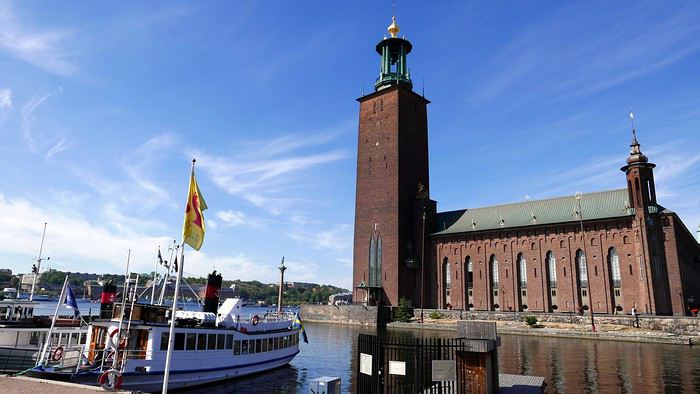
We passed Djurgården, one of the city’s 14 islands, home to the Tivoli amusement park and several museums, including the ABBA Museum and the Vasa Museum. I’m not talking about the crispy sandwiches sold since 1919 but the infamous warship that sank in the harbor on its maiden voyage in 1628 after sailing just a few hundred meters. Its intact hull was salvaged in 1961, and since then, it’s one of Sweden’s most visited museums. The country is a quarter smaller than France and has 10 million inhabitants, mostly in the three big cities (Stockholm, Gothenburg, Malmö). The rest is empty, filled with lakes and forests. The currency is the krona, with 1 euro worth about 10 SEK. Dinner in the Old Town consisted of a so-called Viking burger (more like a kebab) and meatballs—the famous Swedish meatballs with potatoes, just like at IKEA... I have to say, here, it seems the Vikings have long been just blond heads—I get it... It still cost us 550 SEK. A beer alone costs at least 9 euros!!!!
DAY 2. Sunny skies. After a hearty buffet breakfast with salmon, herring in all forms, eggs, cold cuts, bread, and pastries (don’t worry, the classics are there), we started the day by visiting the City Hall tower, famous for hosting the Nobel Prizes (except the Peace Prize, awarded in Oslo). At 106 meters tall, with 365 steps and 9 clocks, it weighs twice as much as the Eiffel Tower. Access is at fixed times in small groups for safety. You can climb up to 73 meters for a 360° view of the city. Next, we visited the Royal Palace, still the official residence of the King of Sweden, and its Treasury (entry: 160 SEK). We skipped the 12:15 PM changing of the guard—three-quarters of an hour before, dozens of onlookers were already crowding the front rows in the sun.
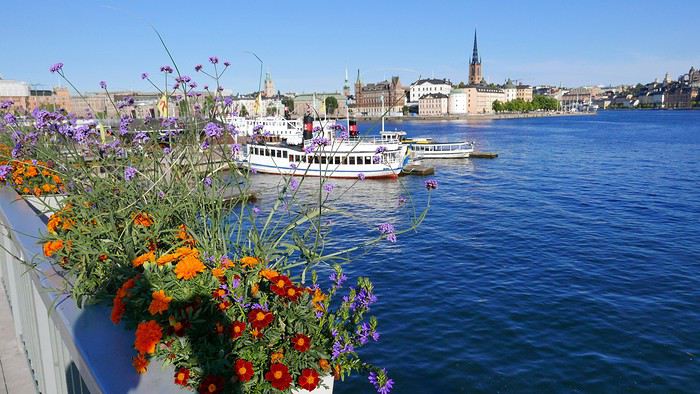
So, we took our favorite bus to rest a bit and tour the city. We also took the subway to see several "decorated" stations—love it or hate it, but it’s original. In the late afternoon, we returned to the Old Town and its Gamla Stan to find some souvenirs, even if it feels more like Bollywood than Viking country, complete with music in the shops—a nice sign of integration... One of the first things that surprised us was the very light car traffic—no traffic jams in this capital. But there are tons of electric and regular bikes, skateboards, and scooters. Also, lots of roadwork and housing construction—apparently a big need. For dinner (our only meal of the day), we treated ourselves to something local at Borgmästaren (Stora Nygatan 35). DECIDEDLY, I’M TELLING YOU EVERYTHING...
DAYS 3 & 4. Contrary to what I was told upon arrival, the hotel parking (700 SEK for 2 nights) didn’t open at 7:00 AM but at 9:00 AM on Saturday. After having to call myself (the French-speaking African receptionist couldn’t do it for me, especially after I told him I thought Croatia would win against France in the World Cup final), the kind parking attendant (partnered with the hotel—there’s the catch) arrived early and let us leave at 8:30 AM to start our east-to-west route to Norway and Oslo, 530 km away, finally beginning our summer adventure. At the border, absolutely no checks, and on the road, aside from lakes and forests, not much to see. However, tolls are very common—don’t overlook this in your budget. In Sweden, everything’s covered by the rental company, but not in other countries. In Norway, there are many automatic toll sections—cameras film your license plate and send you the bill later. So, you must register online at www.epcplc.com/rental, with or without your credit card details, and wait for the final bill. As of now, I haven’t received it, but after noting almost all of them, it should easily reach 200 euros. Roads, tunnels, and bridges are often toll-based to fund maintenance or new constructions. We reached the Norwegian capital at 3:00 PM and checked into our room. Small hiccup: the hotel parking, not reservable, was full on Saturday. Parking meters only take coins for a max of 2 hours. Luckily, tomorrow’s Sunday—free parking from 8:00 PM until Monday morning. After circling the neighborhood, I finally found a spot for my little car—even if it’s not mine, I still care about it...
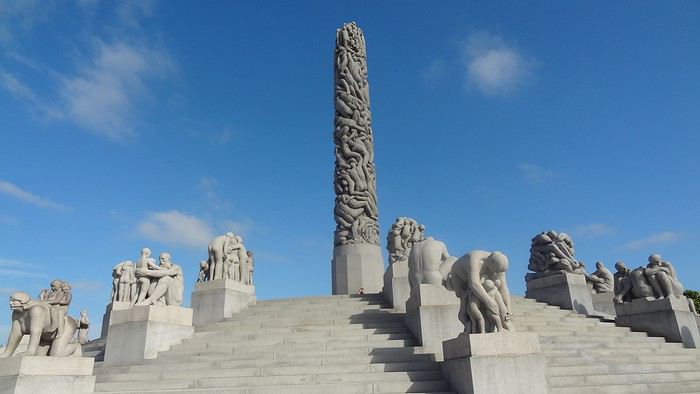
The Thon Slottsparken Hotel is slightly off-center, but a little walking won’t hurt. The nearby Hertz agency was closed—too bad, I would’ve liked to complain about still not receiving my rental contract by email... With the nice weather, we started with a walking tour of the main sights: the palace, Karl Johans gate (the main street), and some souvenir shopping to fill the display cases back home—if there’s space. We also visited the deserted Akershus Fortress, where two poor young soldiers stood guard in the scorching sun. Below it, the World Cup final fan zone was being set up. Dinner was at Rorbua for 90 euros—ouch. Hard to find, tucked away from the harbor pier. We skipped the paid ascent of the city’s only "tower" with a panoramic view—tickets had to be paid by credit card, and given the fees my bank charges, I’d had enough. Note that card payments are widely accepted here, even for small amounts. When I tried to get change in cash for a 50-euro equivalent bill, some café owners were embarrassed.
DAY 4. After discussion, we planned the day: first up, one of Oslo’s must-sees, the Vigeland Sculpture Park, featuring bronze, granite, and cast-iron works by Gustav Vigeland (1869–1943). Given the distance, we took the tram—some cars still had their old-school charm!!!! Despite the early hour, hordes of Asian tourists were already there, making photo-taking a nightmare—same everywhere they go. The park is a matter of taste... The 17-meter monolith with 121 intertwined bodies is remarkable, and rightly so. Lazy, we took the tram again to save time—same name, tight schedule. I stopped by the Hertz agency, where the overwhelmed employee promised to try to help. Given his enthusiasm, I doubted it. From the start, I’ve really felt the welcome here, at least for French visitors, isn’t great. Remember my previous reports—it’s becoming a habit. Tourist brochures aren’t available in French here either—strange... Anyway, we took a relaxing fjord cruise. Besides the quirky opera house, the beautiful summer homes on the islands were really tempting. Next, with another paid boat, we headed to the Bygdøy peninsula and its museums. We skipped the Viking Ship Museum in favor of the Norwegian Folk Museum. It features different buildings from across the country, by era and region. Unfortunately, few actors in period costumes—common in this type of tourist attraction. Its real highlight is the stave church, very beautiful. On this late Sunday afternoon, bars and restaurants competed to become World Cup 2018 fan zones—crowds everywhere. So, we decided to head back to rest and catch a glimpse of the African French team against Croatia. It’ll go down in history: a 4-2 victory, with a beautiful goal by Lloris... Go "Les Bleus"—I get it...
DAY 5. Oslo to Bergen: 450 km, but with detours, it was nearly 550. The real journey begins. Departure at 7:00 AM after sleeping in and a mediocre breakfast. Arrival at 5:00 PM—yes, driving’s slow... More tolls, but under 26°C, the real beauty starts around Geilo. First real fjord—it’s stunning. Then those houses with vegetated roofs blending perfectly into the landscape, sometimes nearly invisible... (Not bad, right? And it’s all me!!!)
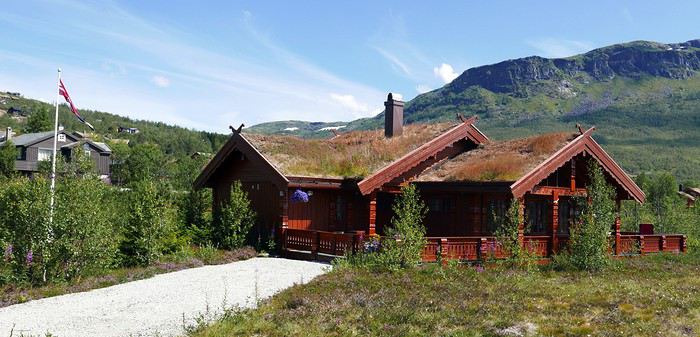
We also discovered tunnels with "indoor roundabouts" and underground roads crossing—never seen that before!! We followed the shores of Lake Tyrifjord and the Hallingdal valleys. After Geilo, views of the Hardangerjøkulen glacier (achoo!) and the Vøringfossen waterfall (Norway’s highest at 163 meters) and Steinsdalsfossen in the Hardangerfjord (the country’s second-longest). Bergen, Norway’s second city, is built between seven mountains. Aside from the colorful old docks along the wharf, there’s not much to see. At the market, stalls of fresh fish, jars of various fish eggs (all called "caviar" here), and cold cuts made from reindeer, moose, and whale.
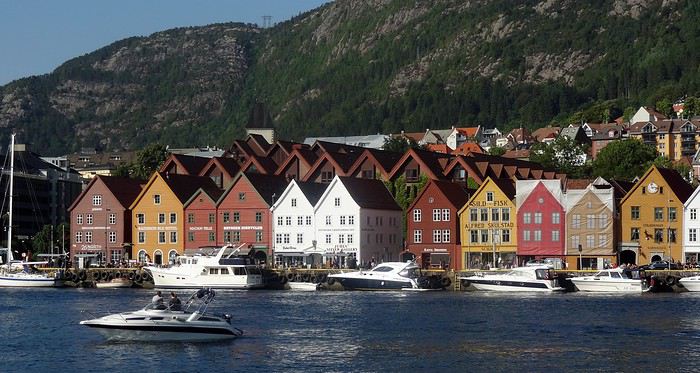
For 10 euros per person, we queued for the steep funicular for a great view of the city. Dinner was at "Fish Me," very busy. The salmon looked appetizing, and my first whale steak for 27 euros was... interesting. Our hotel, Augustin, is near the center. They charged me 150 NOK to park in the nearby public lot...
DAY 6. Bøverdalen, our evening stop, was less than 300 km away, but along the way, we had our first two scenic routes and first ferry crossing. When I got back in the car, I noticed the seagulls—rightful tenants of the harbor—had turned it into a Picasso painting overnight... First stop in Voss to peek inside its Vangskyrkja church (for a fee). The mural icons all have a marked squint, making the angels on the ceiling smile—quite the original touch. In 1277, it shocked people.
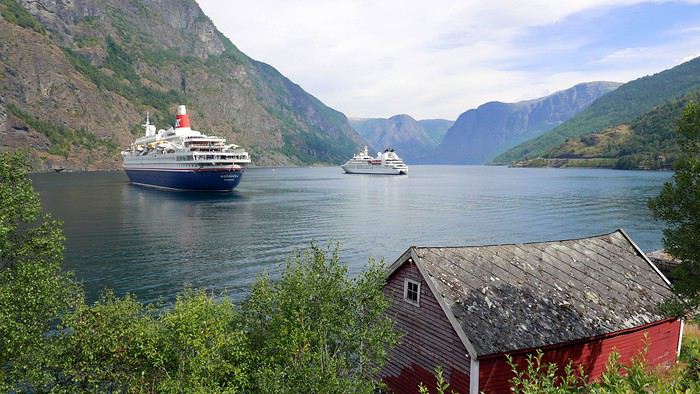
Gudvangen at the end of the Nærøyfjord offers beautiful views and a waterfall. An 11 km tunnel took us to Aurland and the Sognefjord, the king of fjords at 180 km long. Then we took Route 243 to Lærdal instead of a second long tunnel. A 47 km very narrow road with no passing except in designated spots. Buses, RVs, and trailers were in the mix—between backing up and moving forward, how do you expect me to... pass? At some spots, I had to "burn some oil" (non-edible). The beautiful viewpoints along Jotunheimen Park and its high peaks were hard-earned.
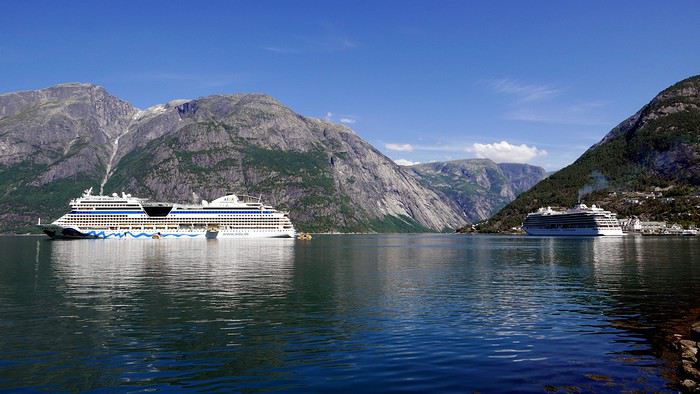
By midday, the 26°C of previous days gave way to 11°C with downpours and gusts. To reach Kaupanger, its stave church, and Route 55 (108 km), we took the Fodnes-Mannheller ferry for 119 kr (about 13 euros) for a 20-minute crossing. For these short trips, rotations are frequent, and wait times are short. The Sognefjellet route took us along lakes and snow-capped peaks—too bad the weather wasn’t cooperating. In Bøverdalen, in the middle of nowhere, we reached the Elveseter Hotel, the only one in the area, and it was packed. Luckily, it’s big. Recent reviews had us a bit worried, but personally, all the well-maintained wooden buildings gave the place charm. Our two small, simple rooms had character, and the common areas’ decor was interesting—a pile of antiques... Unless you dine on-site (reservations required for one of two sittings), the only option is to drive 20 km to Lom to see its beautiful stave church—but we didn’t go in (7 euros per person, and that’s enough). Dinner was three pizzas for 70 euros—yes, it’s expensive here.
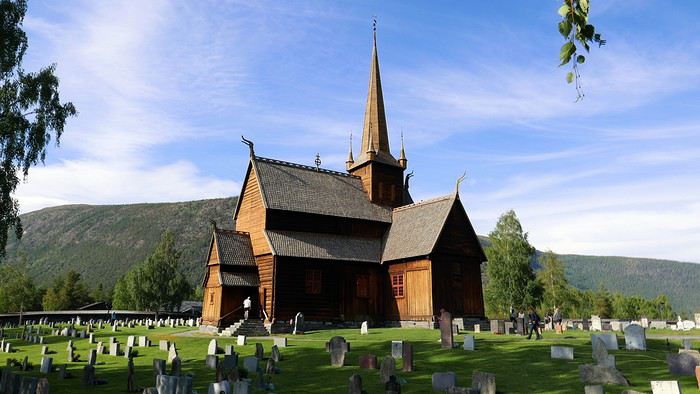
Note that in most establishments, bars, or restaurants, you have to order and pay at the counter yourself. A *stavkirke* or *stavkyrkje* (in Norwegian Bokmål and Nynorsk) is a medieval wooden church typical of Norway, though excavations suggest similar churches may have existed elsewhere in Northern Europe. About 1,300 medieval churches were recorded, with 28 preserved in Norway. In French, they’re called "églises en bois debout" (standing wood churches) because masts or posts support the roof and nave elevation, as well as the walls. The stave church is one of the most elaborate and technically advanced types of wooden construction in Northwestern Europe during the Middle Ages. This technique is represented by the Urnes Stave Church (a UNESCO World Heritage Site), Borgund (the best-preserved in its medieval form), and 25 others—from the largest, Heddal, to the smallest, Undredal, in the stunning Sognefjord, plus a few others in Northwestern Europe.
DAY 7. Heading to Trondheim—supposedly 320 km, but with detours, it was nearly 550. Unpredictable weather until about 1:00 PM, but it’s better because it’s the day of the "triples": 3 scenic routes, 3 ferries, and 3 "underwater" tunnels. No rush—here, there’s no need to "hurry to arrive before night" because as you head north, the sun lingers and sets less and less, eventually not setting at all. First, in Grotli, we took the 27 km of Route 258, *Gamle Strynefjellsvegen* (achoo), also very narrow and unpaved in the first section. Luckily, campers and RVs aren’t early risers—otherwise, I’d have had to make not just oil but olives this time. We only passed four other users. However, despite the early hour, local road workers were already on the job, and we had to ask the excavators to move several times to let us pass. At Langvatnet, we joined Route 63, called the Eagle Road here—mediocre, except for Geiranger at the end of the narrowest fjord in the country. A cruise ship had just unloaded its passengers, who rushed into the few shops. After the Eidsdal-Linge ferry (10 minutes) and Gudbrandsjuvet with its waterfalls, we tackled the famous Trollstigen (Troll’s Path), winding and very touristy. Coming from the south, we descended it. Mandatory photo stop at the tourist center and its impressive walkway. The descent into the valley was tough—the bus driver ahead of us must’ve been disabled, blind, and quadriplegic, taking two tries at every hairpin turn, causing a traffic jam behind and for those "going up" waiting at passing spots!!!
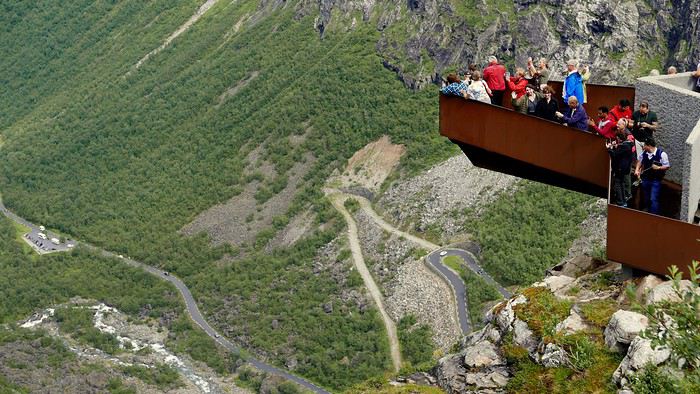
On Route 64, we took the Åfarnes-Solnes ferry instead of the initially planned 660 because my young passenger insisted on part of the "Atlantic Road." From what we’d read on blogs, only the last 11 km are spectacular, with arched bridges connecting islets. So, in Molde, we headed to Eide, then Vevang—beautiful but nothing more. The rain spoiled the scenery. Quick photo stop in Kristiansund, then a long underwater tunnel and the Kanestraum-Halsa ferry (7 km, 20 minutes) to reach the E39 toward Trondheim.
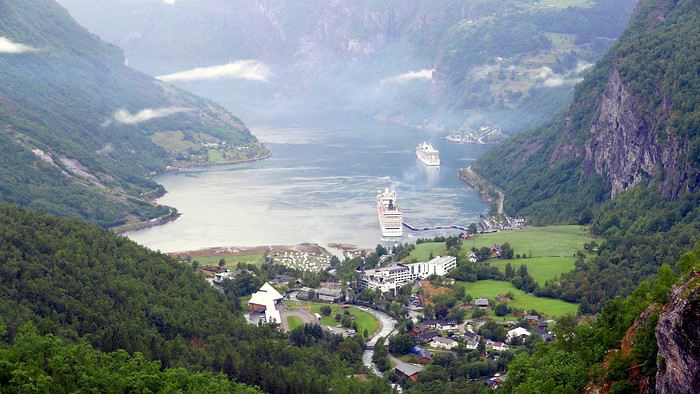
We all agreed that all these wooden houses and churches reminded us of the U.S. in their architecture—especially since, like there, a flagpole with the national flag often stands in front of homes. Trondheim, Norway’s third city, doesn’t have much to see. A university town in the country’s center, aside from its Nidaros Cathedral (closed when we arrived late), its wooden bridge, and colorful old docks on pilings—nothing else. Even finding food was complicated. As for accommodation, Booking.com had forgotten to mention that the Nidaros Pilgrimsgard is a "pilgrim hostel" on the Camino de Santiago. Monastic atmosphere and spartan rooms for reflection—same for the frugal breakfast in silence... Anyway... Luckily, the night before, in a kitschy place run by hip youngsters, I’d stocked up on a hearty assortment of marinated herring with aquavit that burned the rest of my esophagus. (BAKLANDET SKYDSSTATION) I’m really doing all the work for you...
DAY 8. Heading to Mo i Rana—633 km actually covered instead of the planned 480 through Nord-Trøndelag!!! After Steinkjer and its fjord, we decided to take Route 763, parallel to the E6, for less traffic and to see pretty mountain villages. We also stopped in Bola to see a petroglyph (Stone Age rock carving) of a reindeer. After Medja, we skipped Kjerringfoss and Europe’s largest salmon ladder (paid access). Instead, via the Holm-Vennesund ferry, we took a bit of the scenic Route 17 before reaching Mosjøen and Mo i Rana (too many ferries if you do the whole route). Along the way, we saw reindeer and moose relaxing on the road several times. Mo i Rana is small. The Ole Tobias Hotel was packed, and parking was complicated. For dinner, we crossed the street to "No. 3," the only option. Two spicy bacalao and a whale steak cost us 90 euros... At this rate, I had to find an ATM to finish the Norwegian stay properly. The 2,000 euros exchanged before leaving (at 9.28) were already partially gone. Cigarettes cost 13 euros a pack here—twice as much as in Sweden—while unleaded gas is 1.85 euros per liter.
DAY 9. Heading to the main event of the trip: the Lofoten Islands. First programming mistake: not studying the subject well, I preferred a shorter ferry crossing from further north on the mainland. But that also meant arriving further north on the islands.
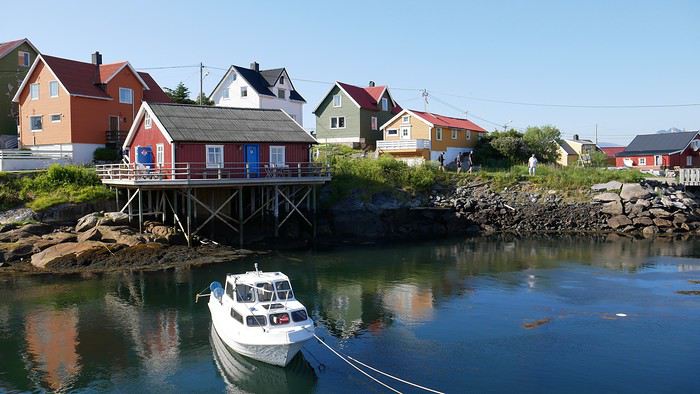
I booked for 50 euros (vehicle, driver, and two passengers included on the official Torghatten Nord site) for Bognes-Lødingen—a one-hour crossing. I should’ve left from Bodø to Leknes or better yet Moskenes and the town of Å for three hours—it would’ve saved time by avoiding the drive north and crossing to the south before heading back up the islands. Luckily, we still managed two different routes. Fortunately, the great weather returned, and I have to say, IT’S REALLY, REALLY, REALLY... BEAUTIFUL... Memory cards are melting—not just from the heat.
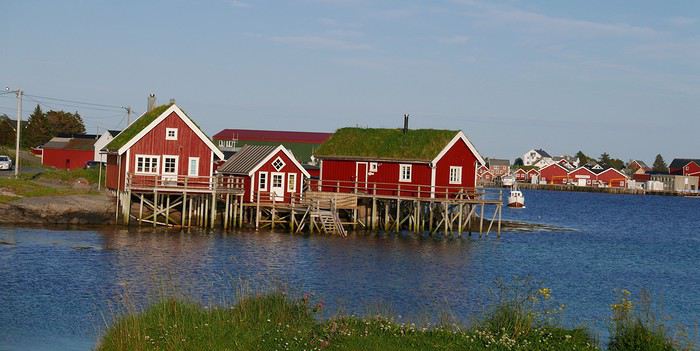
Two things worked in our favor, if I may say so, and countered my little blunder: first, I’d booked the 2:30 PM ferry, but arriving at the departure at noon, we easily took the earlier one—two hours saved. With the longer crossings, rotations with only two boats are much less frequent (8 to 12 per day depending on the season, vs. 6 to 8 for the southern route). Second, after Mo i Rana, we crossed the Arctic Circle, and today, the sun only "sets" from 12:20 AM to 1:50 AM. What luck! With a 7:40 AM departure (after sleeping in), I could drive until 11:00 PM easy!!!!!! And cover only 740 km!!!!!! Here, winters don’t drop below zero, but from early November to late January, it’s night almost all the time, with a supposed daylight clarity from 10:00 AM to 2:00 PM like a rainy day back home. But apparently, the northern lights and reflections on the snow also provide light!! I’d love to see that, but I’ll have to come back... We crisscrossed everything humanly possible, sometimes stopping abruptly in the middle of the road for photos—much to the locals’ dismay, but they’re used to the madness of temporary invaders enchanted by the place... These steep mountains "falling" into the water with all those colorful "rorbu" villages are magnificent. Rorbu are traditional fishermen’s cabins on stilts by the water, which over time have become the must-stay accommodation here—many have never housed any fishermen!!! The villages follow one after another, each more beautiful than the last. In Nusfjord, in season, pedestrians are even charged an access fee between 10:00 AM and 6:00 PM. At 7:00 PM, the booth was closed—lucky us, no crowd. The ochre wooden facades are beautiful, but don’t get too close—the seagulls nest there and see any approach as aggression. The result? Bomb-like droppings that can leave unpleasant memories. Go peek inside the grocery store—it’s kept its old-world charm. With the season, the many cod drying racks are empty. The hour turned, and our southward journey stopped in Reine—too bad for Å, not far, but fatigue got the better of me. We had to "go back up" to Kabelvåg for our rorbu at Nyvågar. We’d stocked up on groceries to eat quietly in this cozy little place (very small single beds upstairs).
DAY 10. We headed back north on the islands to reach Tromsø (grandiosely nicknamed the "Paris of the North"), with a late 7:50 AM departure despite 450 km to cover—things are getting lax at the end of the trip!!! However, this stop didn’t reveal much of interest—it’s the lake region, but meh. Tour operators include it as the last stop toward the far north. Aside from the Målselvfossen waterfall and its (paid) salmon ladder, nothing to report. We arrived at 3:00 PM, and the second room in our Quality Saga Hotel wasn’t ready yet. Plus, the parking we’d requested wasn’t accessible—the eight spots were taken. Even in this small town, free and easy parking is rare. Two souvenir shops and a main street (Storgata)—that’s it. Not to mention a nice storm that cooled things down. The only curiosity is the church, but it’s closed and under renovation—the exterior scaffolding ruins the only photo opportunity here. Otherwise, the Arctic Cathedral is visible from afar—that’s enough for us. The sun only sets for 20 minutes, from 12:40 AM to 1:00 AM!!!!! Last note before leaving this country: every morning at the breakfast buffet with all those eggs, I asked for a Norwegian omelet. Believe it or not, they don’t know the recipe for a Norwegian omelet!!!! 😏😛😉
DAY 11. Heading to Finland (with an extra hour time difference) and Rovaniemi, self-proclaimed official Santa Claus Village—it’s not nice to play on kids’ heartstrings for money!!!! On the 400 km of road (that or avoiding the Lofoten), nothing to see except two sad "Sami" shops. But there’s also AND ESPECIALLY: The run-in with a police radar mounted on the dashboard to welcome me to this country: alone, on a straight, flat road in the middle of the forest, I had this privilege—especially at a spot limited to 80 km/h instead of 100 as I thought. Of course, most well-meaning readers will think: serves him right... Only here’s the thing: in Finland, for years, speeding fines depend on the "Päiväsakko," meaning based on your income and number of children, a subtle calculation of average daily money is made and multiplied proportionally to the estimated severity of the offense... Ignorant of this, I naively but honestly answered the questions. The result? The fine was enormous—I won’t say the amount out of shame, but especially out of hatred for this country that ruined my vacation. Others like me, potential murderers, have been fined up to 170,000 euros (I wrote ONE HUNDRED SEVENTY THOUSAND EUROS) for a 40 km/h speeding offense!!!! I hope the clowns running France quickly adopt this particularly SOCIAL measure. Let the lazy and parasites of the country freely enjoy the road in their BMWs and MERCs!!! Let me tell you, I’ll spend my savings elsewhere in the future. So, a tip: be as dishonest as these conscientious police—say you’re unemployed with five kids, and maybe they’ll give you money!!!!! I’m really disgusted. No wonder in this nothing-to-see town, drivers sheepishly drive in a "little train" at 40 behind an RV without anyone daring to overtake. I think sometimes human stupidity should have limits, and the word freedom should regain its meaning!!! To those who understand, cheers. And as written at the start: trolls, abstain. I stand by what I said and sign it. After this brutal introduction to Finnish discriminatory laws, you can imagine Rovaniemi and its two-bit Santa Claus—I couldn’t care less. Even under the storm, at 6:00 PM on Sunday, even in summer, the scammer shops and profiteers of the Santa Claus Village (conveniently located on the Arctic Circle...) were already closed. Good riddance!!! The Arctic City Hotel is fine. I struggled to swallow my Tex-Mex at Pancho Villa (local chain).
DAY 12. Toward Oulu via Tornio, 200 km, and again, nothing to see in this land of lakes and forests. Detour and only photo stop in Tervola for a wooden church—my vacation is officially ruined... The Cumulus City Hotel is fine in this pleasant but empty and dull city, though it’s a university and tech hub. To cheer myself up, we splurged on a supposedly Viking meal at Harald—don’t know if the recipes are authentic, but my "Viking" knowledge stops at Vik, the animated boobs... Anyway, it’s good, unusual, and hearty.
DAY 13. After struggling to fill the tank (no station open with cash payment, only cards), we returned the chariot at the airport. The offices weren’t open yet at this early hour (8:35 AM flight), so I left the key in a mailbox without any inspection—I didn’t like that at all. I thought we’d get a propeller plane, but it was a well-filled Airbus. One-hour flight to Helsinki, the capital. Impossible to get clear information on buses to the city center, 40 km away. So, for 37 euros, we took a taxi with a trunk big enough for our three suitcases and three "cabin" bags. I’m not counting the cost anymore. At 10:00 AM, we could finally check into our large triple room at the Cumulus City Hotel on Hakaniemi Square—again, despite the size, with a fold-out armchair bed. Off to visit our last city, with the obvious purchase—you guessed it—a 24-hour bus ticket with a 1.5-hour mini-cruise for 43 euros per person...
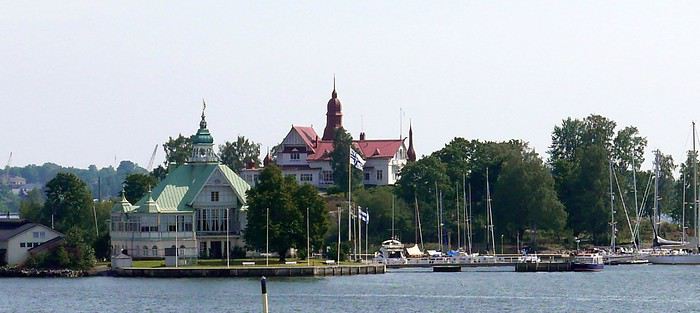
The boat tour showed that the standard of living seems high here too—summer homes (or not) on the islands are very beautiful. A small canal was even dug to save these lucky owners time on maritime transport. Apartments sell for a fortune. Back at Market Square, we grabbed a snack at the market—a reindeer kebab with dried reindeer, cheese, and a mini cracker—simple but delicious. No time to waste—ours is limited. Even if there’s not much to see tourist-wise. Four churches compete: the very busy and beautiful Helsinki Cathedral (better outside than in), its direct rival the Orthodox Uspenski Cathedral (same), the Rock Church (Temppeliaukio) and the Wooden Church (Kampin)—both as beautiful inside as out!!! Here too, very little car traffic, but tons of people—tourists or not—and joggers. In the evening, a bit tired, we headed to the off-center hotel to try the Scandinavian Hesburger chain. For connoisseurs and 29 euros, decent fries and burgers resembling Burger King’s—while the other American giant is left behind. Personal taste, I guess. The next day, we took the bus tour again, passing the Parliament and the controversial Sibelius Monument—a 24-ton pile of clanging iron pipes. Then, to kill time, we headed to Linnanmäki amusement park, on a hill overlooking the city. Rides are packed together, and a new one appears every year. Mostly family-oriented, but two or three thrill rides were packed. Despite my advancing age, I gave it a try—obviously regretted it afterward... Europe’s oldest wooden roller coaster (1950) shows the genius of its creators, with a brakeman at the back—worth the detour and passes the time. We ate (if you can call it that) on-site for 19 euros. Back "in town," classic shopping centers are numerous, but souvenir shops can be counted on one hand. No matter—we had to pack because tomorrow’s the return. We ate burgers again near the hotel and Hes... but served at the table for 67 euros. The next morning, to kill time before the 4:00 PM flight, we went to the port and its tourist market, where I splurged 15 euros on a cap to add to (or clutter) my already well-stocked collection. We finally learned that bus 615 goes to the airport, with a stop in front of our hotel where the luggage was left in storage after checking out. Still, count 40 minutes with this indirect route. Via an Air France flight operated by Finnair, after 3 hours, we returned to Roissy CDG—our vacation is truly over!!!!!!
CONCLUSION (if I may) Among the three capitals we visited, our unanimous ranking is: Oslo, Helsinki, and Stockholm—period. Despite a few imperfections in my itinerary, I’d say the Lofoten Islands are really worth it—two days on-site is a minimum. Finland, and not just because of the radars, is way below—nothing to see tourist-wise. I didn’t say nothing to do for those with time—nuance... Norwegian fjords, even if once you’ve seen one, you’ve seen them all, are really beautiful, though this destination is quite expensive for us. Norway, thanks to its oil and gas, is very wealthy, near full employment, with an annual GDP per capita of 70,000 euros!!! A pack of cigarettes at 13 euros and beer at 10 euros doesn’t make this a dream destination for an addict like me. We were very lucky with the weather—only two and a half days of rain over 14, unlike many bloggers whose stories I read before leaving. The welcome wasn’t always what we expected. Despite the massive French presence, we’re not always as welcome as Asian conquerors, to whom the West, racing to its doom, continues to roll out the red carpet—literally! I don’t regret our choice—it’s worth seeing once, but only once. At least now we know what we’re talking about!!!!! Finally, as always, here’s the link to my public slideshow on YouTube. For the private one, some spicy scenes (especially with Santa and a troll) could cause me more problems—I’ve had enough!!! www.youtube.com/...zbIgZC6Pk&t=165s See you soon, maybe for new adventures and getaways. DJ93.
For the summer holidays of 2018, we decided to take a break from long-haul, transcontinental trips. They’re expensive and exhausting, and this year, we also had to consider our young student’s limited vacation days. So, it was a short 14-day circuit in Scandinavia. Very quickly, I had to abandon the unrealistic idea of driving door-to-door with our personal car (unlike last year—see my "Balkan Stroll" story). Too many kilometers and stops. Still, crossing Poland, Lithuania, Estonia, and Latvia before taking a ferry from Tallinn to Helsinki and Finland was tempting—what a shame.
As usual, I planned ahead and started booking in early February for a mid-July departure, typically the best time weather-wise for this destination. Browsing tour operator catalogs didn’t offer much insight—just the usual circuits. Most aim for the North Cape, but we didn’t have time for that. First, via Expedia, we booked our flight tickets: Paris to Stockholm, Helsinki to Paris for the return (880 euros for three), plus a domestic flight from Oulu to Helsinki in Finland (220 euros). The unanimous advice was that there’s not much to see between the two cities, so this saved us a night’s accommodation and a day of car rental. However, the "drop-off" fees (not returning the car to the country of origin) were unavoidable. Out of 1,100 euros for 12 days of rental, this fee was significant—I say this from memory because I never received a detailed document or even the contract itself after picking up the car, despite my complaints. That said, Holiday Autos offered the best rates at the time with Hertz. Plus, I think we were unknowingly upgraded to a Volvo XC 40 T5 automatic, packed with electronics and an incredibly efficient GPS (so I lugged around my updated TomTom for nothing). I wasn’t used to it, and I’ll come back to that. For 50 euros, I also booked one of the many mandatory ferry crossings in Norway—unless you want to drive kilometers around the countless fjords. Specifically, the Bognes-Lødingen route to reach the Lofoten Islands, a must-see in Norway (though not necessarily the best choice I made—I’ll come back to that). Then, gradually via Booking.com, I reserved hotel accommodations, which wasn’t easy at reasonable prices. For three people, it’s nearly impossible to find a room with three real beds—often a sofa bed or even two separate rooms!!!! Norway isn’t a budget-friendly destination for us, yet French tourists are everywhere—groups or families traveling independently. Okay, you’re probably wondering when I’ll get started—I’m getting there... First up, Stockholm, a two-hour flight from Paris. A first for us: we’d gotten used to online check-in within 30 hours of the flight and sometimes printing our boarding passes. But, as progress never stops, at Roissy, we now also print our baggage tags at a kiosk, then place them on the conveyor belt ourselves, scan the barcode with the handheld scanner, and watch the luggage disappear—hoping it doesn’t get misrouted. With all this reduced staff, I hope ticket prices will drop. What? Huh? I’m naive... Okay, fine! Plus, during the flight, don’t expect any snacks—everything’s paid for now, except for water and coffee. I didn’t think I was on a low-cost flight!!! Picking up the car at Arlanda Airport went smoothly, except the contract signed on a tablet (progress, right?) was never emailed to me as promised—too bad... The Volvo SUV packed with electronics: as usual, aside from adjusting the mirrors and seat, I didn’t bother learning all the features and accessories for better handling. So, from the start, I felt jerky movements in the steering, independent of my control. The white-line detection was activated and corrected my direction whenever I got too close... And that’s not all—there’s also driving assistance. Besides the speed limiter, the car accelerates or brakes on its own based on the distance from the vehicle ahead. You still have to keep your hands on the wheel, though—too bad, we could’ve played cards and let it drive itself. When you slow down, if you signal to overtake and turn the wheel, it accelerates to pass. Soon, we won’t even need a driver’s license... Not to mention the little light in the side mirror to signal vehicles in the "blind spot"—very useful. But given the excessively strict speed limits in these parts, it’s still handy. I’ll unfortunately come back to this later!!!!!! In the end, we covered 4,700 km in 8 days of actual travel—no small feat!!!!!! Stockholm: still loyal to the hop-on-hop-off sightseeing buses (or the reverse), I booked our tickets online with a discount. It remains (for us) one of the best ways to visit and get around big cities. The tourist attractions aren’t that numerous. Forty kilometers from the airport, we reached our hotel, Clarion Amaranten. At reception, we were told our reservation was for four days, not two. I insisted, and they told me to call Booking.com to fix it—they couldn’t do anything themselves. Luckily, a nice blonde understood the situation and asked where we were from to lighten the mood. For me, it worked... After a few minutes of back-and-forth, we realized a namesake had booked at the same time. I think the intern got mixed up—oh well. We finally dropped off our bags and headed out under the sun for the included boat tour. It’s beautiful and relaxing under 26°C. We glided past massive cruise ships, very common in these Nordic countries, especially for fjord tours.
We passed Djurgården, one of the city’s 14 islands, home to the Tivoli amusement park and several museums, including the ABBA Museum and the Vasa Museum. I’m not talking about the crispy sandwiches sold since 1919 but the infamous warship that sank in the harbor on its maiden voyage in 1628 after sailing just a few hundred meters. Its intact hull was salvaged in 1961, and since then, it’s one of Sweden’s most visited museums. The country is a quarter smaller than France and has 10 million inhabitants, mostly in the three big cities (Stockholm, Gothenburg, Malmö). The rest is empty, filled with lakes and forests. The currency is the krona, with 1 euro worth about 10 SEK. Dinner in the Old Town consisted of a so-called Viking burger (more like a kebab) and meatballs—the famous Swedish meatballs with potatoes, just like at IKEA... I have to say, here, it seems the Vikings have long been just blond heads—I get it... It still cost us 550 SEK. A beer alone costs at least 9 euros!!!!
DAY 2. Sunny skies. After a hearty buffet breakfast with salmon, herring in all forms, eggs, cold cuts, bread, and pastries (don’t worry, the classics are there), we started the day by visiting the City Hall tower, famous for hosting the Nobel Prizes (except the Peace Prize, awarded in Oslo). At 106 meters tall, with 365 steps and 9 clocks, it weighs twice as much as the Eiffel Tower. Access is at fixed times in small groups for safety. You can climb up to 73 meters for a 360° view of the city. Next, we visited the Royal Palace, still the official residence of the King of Sweden, and its Treasury (entry: 160 SEK). We skipped the 12:15 PM changing of the guard—three-quarters of an hour before, dozens of onlookers were already crowding the front rows in the sun.
So, we took our favorite bus to rest a bit and tour the city. We also took the subway to see several "decorated" stations—love it or hate it, but it’s original. In the late afternoon, we returned to the Old Town and its Gamla Stan to find some souvenirs, even if it feels more like Bollywood than Viking country, complete with music in the shops—a nice sign of integration... One of the first things that surprised us was the very light car traffic—no traffic jams in this capital. But there are tons of electric and regular bikes, skateboards, and scooters. Also, lots of roadwork and housing construction—apparently a big need. For dinner (our only meal of the day), we treated ourselves to something local at Borgmästaren (Stora Nygatan 35). DECIDEDLY, I’M TELLING YOU EVERYTHING...
DAYS 3 & 4. Contrary to what I was told upon arrival, the hotel parking (700 SEK for 2 nights) didn’t open at 7:00 AM but at 9:00 AM on Saturday. After having to call myself (the French-speaking African receptionist couldn’t do it for me, especially after I told him I thought Croatia would win against France in the World Cup final), the kind parking attendant (partnered with the hotel—there’s the catch) arrived early and let us leave at 8:30 AM to start our east-to-west route to Norway and Oslo, 530 km away, finally beginning our summer adventure. At the border, absolutely no checks, and on the road, aside from lakes and forests, not much to see. However, tolls are very common—don’t overlook this in your budget. In Sweden, everything’s covered by the rental company, but not in other countries. In Norway, there are many automatic toll sections—cameras film your license plate and send you the bill later. So, you must register online at www.epcplc.com/rental, with or without your credit card details, and wait for the final bill. As of now, I haven’t received it, but after noting almost all of them, it should easily reach 200 euros. Roads, tunnels, and bridges are often toll-based to fund maintenance or new constructions. We reached the Norwegian capital at 3:00 PM and checked into our room. Small hiccup: the hotel parking, not reservable, was full on Saturday. Parking meters only take coins for a max of 2 hours. Luckily, tomorrow’s Sunday—free parking from 8:00 PM until Monday morning. After circling the neighborhood, I finally found a spot for my little car—even if it’s not mine, I still care about it...
The Thon Slottsparken Hotel is slightly off-center, but a little walking won’t hurt. The nearby Hertz agency was closed—too bad, I would’ve liked to complain about still not receiving my rental contract by email... With the nice weather, we started with a walking tour of the main sights: the palace, Karl Johans gate (the main street), and some souvenir shopping to fill the display cases back home—if there’s space. We also visited the deserted Akershus Fortress, where two poor young soldiers stood guard in the scorching sun. Below it, the World Cup final fan zone was being set up. Dinner was at Rorbua for 90 euros—ouch. Hard to find, tucked away from the harbor pier. We skipped the paid ascent of the city’s only "tower" with a panoramic view—tickets had to be paid by credit card, and given the fees my bank charges, I’d had enough. Note that card payments are widely accepted here, even for small amounts. When I tried to get change in cash for a 50-euro equivalent bill, some café owners were embarrassed.
DAY 4. After discussion, we planned the day: first up, one of Oslo’s must-sees, the Vigeland Sculpture Park, featuring bronze, granite, and cast-iron works by Gustav Vigeland (1869–1943). Given the distance, we took the tram—some cars still had their old-school charm!!!! Despite the early hour, hordes of Asian tourists were already there, making photo-taking a nightmare—same everywhere they go. The park is a matter of taste... The 17-meter monolith with 121 intertwined bodies is remarkable, and rightly so. Lazy, we took the tram again to save time—same name, tight schedule. I stopped by the Hertz agency, where the overwhelmed employee promised to try to help. Given his enthusiasm, I doubted it. From the start, I’ve really felt the welcome here, at least for French visitors, isn’t great. Remember my previous reports—it’s becoming a habit. Tourist brochures aren’t available in French here either—strange... Anyway, we took a relaxing fjord cruise. Besides the quirky opera house, the beautiful summer homes on the islands were really tempting. Next, with another paid boat, we headed to the Bygdøy peninsula and its museums. We skipped the Viking Ship Museum in favor of the Norwegian Folk Museum. It features different buildings from across the country, by era and region. Unfortunately, few actors in period costumes—common in this type of tourist attraction. Its real highlight is the stave church, very beautiful. On this late Sunday afternoon, bars and restaurants competed to become World Cup 2018 fan zones—crowds everywhere. So, we decided to head back to rest and catch a glimpse of the African French team against Croatia. It’ll go down in history: a 4-2 victory, with a beautiful goal by Lloris... Go "Les Bleus"—I get it...
DAY 5. Oslo to Bergen: 450 km, but with detours, it was nearly 550. The real journey begins. Departure at 7:00 AM after sleeping in and a mediocre breakfast. Arrival at 5:00 PM—yes, driving’s slow... More tolls, but under 26°C, the real beauty starts around Geilo. First real fjord—it’s stunning. Then those houses with vegetated roofs blending perfectly into the landscape, sometimes nearly invisible... (Not bad, right? And it’s all me!!!)
We also discovered tunnels with "indoor roundabouts" and underground roads crossing—never seen that before!! We followed the shores of Lake Tyrifjord and the Hallingdal valleys. After Geilo, views of the Hardangerjøkulen glacier (achoo!) and the Vøringfossen waterfall (Norway’s highest at 163 meters) and Steinsdalsfossen in the Hardangerfjord (the country’s second-longest). Bergen, Norway’s second city, is built between seven mountains. Aside from the colorful old docks along the wharf, there’s not much to see. At the market, stalls of fresh fish, jars of various fish eggs (all called "caviar" here), and cold cuts made from reindeer, moose, and whale.
For 10 euros per person, we queued for the steep funicular for a great view of the city. Dinner was at "Fish Me," very busy. The salmon looked appetizing, and my first whale steak for 27 euros was... interesting. Our hotel, Augustin, is near the center. They charged me 150 NOK to park in the nearby public lot...
DAY 6. Bøverdalen, our evening stop, was less than 300 km away, but along the way, we had our first two scenic routes and first ferry crossing. When I got back in the car, I noticed the seagulls—rightful tenants of the harbor—had turned it into a Picasso painting overnight... First stop in Voss to peek inside its Vangskyrkja church (for a fee). The mural icons all have a marked squint, making the angels on the ceiling smile—quite the original touch. In 1277, it shocked people.
Gudvangen at the end of the Nærøyfjord offers beautiful views and a waterfall. An 11 km tunnel took us to Aurland and the Sognefjord, the king of fjords at 180 km long. Then we took Route 243 to Lærdal instead of a second long tunnel. A 47 km very narrow road with no passing except in designated spots. Buses, RVs, and trailers were in the mix—between backing up and moving forward, how do you expect me to... pass? At some spots, I had to "burn some oil" (non-edible). The beautiful viewpoints along Jotunheimen Park and its high peaks were hard-earned.
By midday, the 26°C of previous days gave way to 11°C with downpours and gusts. To reach Kaupanger, its stave church, and Route 55 (108 km), we took the Fodnes-Mannheller ferry for 119 kr (about 13 euros) for a 20-minute crossing. For these short trips, rotations are frequent, and wait times are short. The Sognefjellet route took us along lakes and snow-capped peaks—too bad the weather wasn’t cooperating. In Bøverdalen, in the middle of nowhere, we reached the Elveseter Hotel, the only one in the area, and it was packed. Luckily, it’s big. Recent reviews had us a bit worried, but personally, all the well-maintained wooden buildings gave the place charm. Our two small, simple rooms had character, and the common areas’ decor was interesting—a pile of antiques... Unless you dine on-site (reservations required for one of two sittings), the only option is to drive 20 km to Lom to see its beautiful stave church—but we didn’t go in (7 euros per person, and that’s enough). Dinner was three pizzas for 70 euros—yes, it’s expensive here.
Note that in most establishments, bars, or restaurants, you have to order and pay at the counter yourself. A *stavkirke* or *stavkyrkje* (in Norwegian Bokmål and Nynorsk) is a medieval wooden church typical of Norway, though excavations suggest similar churches may have existed elsewhere in Northern Europe. About 1,300 medieval churches were recorded, with 28 preserved in Norway. In French, they’re called "églises en bois debout" (standing wood churches) because masts or posts support the roof and nave elevation, as well as the walls. The stave church is one of the most elaborate and technically advanced types of wooden construction in Northwestern Europe during the Middle Ages. This technique is represented by the Urnes Stave Church (a UNESCO World Heritage Site), Borgund (the best-preserved in its medieval form), and 25 others—from the largest, Heddal, to the smallest, Undredal, in the stunning Sognefjord, plus a few others in Northwestern Europe.
DAY 7. Heading to Trondheim—supposedly 320 km, but with detours, it was nearly 550. Unpredictable weather until about 1:00 PM, but it’s better because it’s the day of the "triples": 3 scenic routes, 3 ferries, and 3 "underwater" tunnels. No rush—here, there’s no need to "hurry to arrive before night" because as you head north, the sun lingers and sets less and less, eventually not setting at all. First, in Grotli, we took the 27 km of Route 258, *Gamle Strynefjellsvegen* (achoo), also very narrow and unpaved in the first section. Luckily, campers and RVs aren’t early risers—otherwise, I’d have had to make not just oil but olives this time. We only passed four other users. However, despite the early hour, local road workers were already on the job, and we had to ask the excavators to move several times to let us pass. At Langvatnet, we joined Route 63, called the Eagle Road here—mediocre, except for Geiranger at the end of the narrowest fjord in the country. A cruise ship had just unloaded its passengers, who rushed into the few shops. After the Eidsdal-Linge ferry (10 minutes) and Gudbrandsjuvet with its waterfalls, we tackled the famous Trollstigen (Troll’s Path), winding and very touristy. Coming from the south, we descended it. Mandatory photo stop at the tourist center and its impressive walkway. The descent into the valley was tough—the bus driver ahead of us must’ve been disabled, blind, and quadriplegic, taking two tries at every hairpin turn, causing a traffic jam behind and for those "going up" waiting at passing spots!!!
On Route 64, we took the Åfarnes-Solnes ferry instead of the initially planned 660 because my young passenger insisted on part of the "Atlantic Road." From what we’d read on blogs, only the last 11 km are spectacular, with arched bridges connecting islets. So, in Molde, we headed to Eide, then Vevang—beautiful but nothing more. The rain spoiled the scenery. Quick photo stop in Kristiansund, then a long underwater tunnel and the Kanestraum-Halsa ferry (7 km, 20 minutes) to reach the E39 toward Trondheim.
We all agreed that all these wooden houses and churches reminded us of the U.S. in their architecture—especially since, like there, a flagpole with the national flag often stands in front of homes. Trondheim, Norway’s third city, doesn’t have much to see. A university town in the country’s center, aside from its Nidaros Cathedral (closed when we arrived late), its wooden bridge, and colorful old docks on pilings—nothing else. Even finding food was complicated. As for accommodation, Booking.com had forgotten to mention that the Nidaros Pilgrimsgard is a "pilgrim hostel" on the Camino de Santiago. Monastic atmosphere and spartan rooms for reflection—same for the frugal breakfast in silence... Anyway... Luckily, the night before, in a kitschy place run by hip youngsters, I’d stocked up on a hearty assortment of marinated herring with aquavit that burned the rest of my esophagus. (BAKLANDET SKYDSSTATION) I’m really doing all the work for you...
DAY 8. Heading to Mo i Rana—633 km actually covered instead of the planned 480 through Nord-Trøndelag!!! After Steinkjer and its fjord, we decided to take Route 763, parallel to the E6, for less traffic and to see pretty mountain villages. We also stopped in Bola to see a petroglyph (Stone Age rock carving) of a reindeer. After Medja, we skipped Kjerringfoss and Europe’s largest salmon ladder (paid access). Instead, via the Holm-Vennesund ferry, we took a bit of the scenic Route 17 before reaching Mosjøen and Mo i Rana (too many ferries if you do the whole route). Along the way, we saw reindeer and moose relaxing on the road several times. Mo i Rana is small. The Ole Tobias Hotel was packed, and parking was complicated. For dinner, we crossed the street to "No. 3," the only option. Two spicy bacalao and a whale steak cost us 90 euros... At this rate, I had to find an ATM to finish the Norwegian stay properly. The 2,000 euros exchanged before leaving (at 9.28) were already partially gone. Cigarettes cost 13 euros a pack here—twice as much as in Sweden—while unleaded gas is 1.85 euros per liter.
DAY 9. Heading to the main event of the trip: the Lofoten Islands. First programming mistake: not studying the subject well, I preferred a shorter ferry crossing from further north on the mainland. But that also meant arriving further north on the islands.
I booked for 50 euros (vehicle, driver, and two passengers included on the official Torghatten Nord site) for Bognes-Lødingen—a one-hour crossing. I should’ve left from Bodø to Leknes or better yet Moskenes and the town of Å for three hours—it would’ve saved time by avoiding the drive north and crossing to the south before heading back up the islands. Luckily, we still managed two different routes. Fortunately, the great weather returned, and I have to say, IT’S REALLY, REALLY, REALLY... BEAUTIFUL... Memory cards are melting—not just from the heat.
Two things worked in our favor, if I may say so, and countered my little blunder: first, I’d booked the 2:30 PM ferry, but arriving at the departure at noon, we easily took the earlier one—two hours saved. With the longer crossings, rotations with only two boats are much less frequent (8 to 12 per day depending on the season, vs. 6 to 8 for the southern route). Second, after Mo i Rana, we crossed the Arctic Circle, and today, the sun only "sets" from 12:20 AM to 1:50 AM. What luck! With a 7:40 AM departure (after sleeping in), I could drive until 11:00 PM easy!!!!!! And cover only 740 km!!!!!! Here, winters don’t drop below zero, but from early November to late January, it’s night almost all the time, with a supposed daylight clarity from 10:00 AM to 2:00 PM like a rainy day back home. But apparently, the northern lights and reflections on the snow also provide light!! I’d love to see that, but I’ll have to come back... We crisscrossed everything humanly possible, sometimes stopping abruptly in the middle of the road for photos—much to the locals’ dismay, but they’re used to the madness of temporary invaders enchanted by the place... These steep mountains "falling" into the water with all those colorful "rorbu" villages are magnificent. Rorbu are traditional fishermen’s cabins on stilts by the water, which over time have become the must-stay accommodation here—many have never housed any fishermen!!! The villages follow one after another, each more beautiful than the last. In Nusfjord, in season, pedestrians are even charged an access fee between 10:00 AM and 6:00 PM. At 7:00 PM, the booth was closed—lucky us, no crowd. The ochre wooden facades are beautiful, but don’t get too close—the seagulls nest there and see any approach as aggression. The result? Bomb-like droppings that can leave unpleasant memories. Go peek inside the grocery store—it’s kept its old-world charm. With the season, the many cod drying racks are empty. The hour turned, and our southward journey stopped in Reine—too bad for Å, not far, but fatigue got the better of me. We had to "go back up" to Kabelvåg for our rorbu at Nyvågar. We’d stocked up on groceries to eat quietly in this cozy little place (very small single beds upstairs).
DAY 10. We headed back north on the islands to reach Tromsø (grandiosely nicknamed the "Paris of the North"), with a late 7:50 AM departure despite 450 km to cover—things are getting lax at the end of the trip!!! However, this stop didn’t reveal much of interest—it’s the lake region, but meh. Tour operators include it as the last stop toward the far north. Aside from the Målselvfossen waterfall and its (paid) salmon ladder, nothing to report. We arrived at 3:00 PM, and the second room in our Quality Saga Hotel wasn’t ready yet. Plus, the parking we’d requested wasn’t accessible—the eight spots were taken. Even in this small town, free and easy parking is rare. Two souvenir shops and a main street (Storgata)—that’s it. Not to mention a nice storm that cooled things down. The only curiosity is the church, but it’s closed and under renovation—the exterior scaffolding ruins the only photo opportunity here. Otherwise, the Arctic Cathedral is visible from afar—that’s enough for us. The sun only sets for 20 minutes, from 12:40 AM to 1:00 AM!!!!! Last note before leaving this country: every morning at the breakfast buffet with all those eggs, I asked for a Norwegian omelet. Believe it or not, they don’t know the recipe for a Norwegian omelet!!!! 😏😛😉
DAY 11. Heading to Finland (with an extra hour time difference) and Rovaniemi, self-proclaimed official Santa Claus Village—it’s not nice to play on kids’ heartstrings for money!!!! On the 400 km of road (that or avoiding the Lofoten), nothing to see except two sad "Sami" shops. But there’s also AND ESPECIALLY: The run-in with a police radar mounted on the dashboard to welcome me to this country: alone, on a straight, flat road in the middle of the forest, I had this privilege—especially at a spot limited to 80 km/h instead of 100 as I thought. Of course, most well-meaning readers will think: serves him right... Only here’s the thing: in Finland, for years, speeding fines depend on the "Päiväsakko," meaning based on your income and number of children, a subtle calculation of average daily money is made and multiplied proportionally to the estimated severity of the offense... Ignorant of this, I naively but honestly answered the questions. The result? The fine was enormous—I won’t say the amount out of shame, but especially out of hatred for this country that ruined my vacation. Others like me, potential murderers, have been fined up to 170,000 euros (I wrote ONE HUNDRED SEVENTY THOUSAND EUROS) for a 40 km/h speeding offense!!!! I hope the clowns running France quickly adopt this particularly SOCIAL measure. Let the lazy and parasites of the country freely enjoy the road in their BMWs and MERCs!!! Let me tell you, I’ll spend my savings elsewhere in the future. So, a tip: be as dishonest as these conscientious police—say you’re unemployed with five kids, and maybe they’ll give you money!!!!! I’m really disgusted. No wonder in this nothing-to-see town, drivers sheepishly drive in a "little train" at 40 behind an RV without anyone daring to overtake. I think sometimes human stupidity should have limits, and the word freedom should regain its meaning!!! To those who understand, cheers. And as written at the start: trolls, abstain. I stand by what I said and sign it. After this brutal introduction to Finnish discriminatory laws, you can imagine Rovaniemi and its two-bit Santa Claus—I couldn’t care less. Even under the storm, at 6:00 PM on Sunday, even in summer, the scammer shops and profiteers of the Santa Claus Village (conveniently located on the Arctic Circle...) were already closed. Good riddance!!! The Arctic City Hotel is fine. I struggled to swallow my Tex-Mex at Pancho Villa (local chain).
DAY 12. Toward Oulu via Tornio, 200 km, and again, nothing to see in this land of lakes and forests. Detour and only photo stop in Tervola for a wooden church—my vacation is officially ruined... The Cumulus City Hotel is fine in this pleasant but empty and dull city, though it’s a university and tech hub. To cheer myself up, we splurged on a supposedly Viking meal at Harald—don’t know if the recipes are authentic, but my "Viking" knowledge stops at Vik, the animated boobs... Anyway, it’s good, unusual, and hearty.
DAY 13. After struggling to fill the tank (no station open with cash payment, only cards), we returned the chariot at the airport. The offices weren’t open yet at this early hour (8:35 AM flight), so I left the key in a mailbox without any inspection—I didn’t like that at all. I thought we’d get a propeller plane, but it was a well-filled Airbus. One-hour flight to Helsinki, the capital. Impossible to get clear information on buses to the city center, 40 km away. So, for 37 euros, we took a taxi with a trunk big enough for our three suitcases and three "cabin" bags. I’m not counting the cost anymore. At 10:00 AM, we could finally check into our large triple room at the Cumulus City Hotel on Hakaniemi Square—again, despite the size, with a fold-out armchair bed. Off to visit our last city, with the obvious purchase—you guessed it—a 24-hour bus ticket with a 1.5-hour mini-cruise for 43 euros per person...
The boat tour showed that the standard of living seems high here too—summer homes (or not) on the islands are very beautiful. A small canal was even dug to save these lucky owners time on maritime transport. Apartments sell for a fortune. Back at Market Square, we grabbed a snack at the market—a reindeer kebab with dried reindeer, cheese, and a mini cracker—simple but delicious. No time to waste—ours is limited. Even if there’s not much to see tourist-wise. Four churches compete: the very busy and beautiful Helsinki Cathedral (better outside than in), its direct rival the Orthodox Uspenski Cathedral (same), the Rock Church (Temppeliaukio) and the Wooden Church (Kampin)—both as beautiful inside as out!!! Here too, very little car traffic, but tons of people—tourists or not—and joggers. In the evening, a bit tired, we headed to the off-center hotel to try the Scandinavian Hesburger chain. For connoisseurs and 29 euros, decent fries and burgers resembling Burger King’s—while the other American giant is left behind. Personal taste, I guess. The next day, we took the bus tour again, passing the Parliament and the controversial Sibelius Monument—a 24-ton pile of clanging iron pipes. Then, to kill time, we headed to Linnanmäki amusement park, on a hill overlooking the city. Rides are packed together, and a new one appears every year. Mostly family-oriented, but two or three thrill rides were packed. Despite my advancing age, I gave it a try—obviously regretted it afterward... Europe’s oldest wooden roller coaster (1950) shows the genius of its creators, with a brakeman at the back—worth the detour and passes the time. We ate (if you can call it that) on-site for 19 euros. Back "in town," classic shopping centers are numerous, but souvenir shops can be counted on one hand. No matter—we had to pack because tomorrow’s the return. We ate burgers again near the hotel and Hes... but served at the table for 67 euros. The next morning, to kill time before the 4:00 PM flight, we went to the port and its tourist market, where I splurged 15 euros on a cap to add to (or clutter) my already well-stocked collection. We finally learned that bus 615 goes to the airport, with a stop in front of our hotel where the luggage was left in storage after checking out. Still, count 40 minutes with this indirect route. Via an Air France flight operated by Finnair, after 3 hours, we returned to Roissy CDG—our vacation is truly over!!!!!!
CONCLUSION (if I may) Among the three capitals we visited, our unanimous ranking is: Oslo, Helsinki, and Stockholm—period. Despite a few imperfections in my itinerary, I’d say the Lofoten Islands are really worth it—two days on-site is a minimum. Finland, and not just because of the radars, is way below—nothing to see tourist-wise. I didn’t say nothing to do for those with time—nuance... Norwegian fjords, even if once you’ve seen one, you’ve seen them all, are really beautiful, though this destination is quite expensive for us. Norway, thanks to its oil and gas, is very wealthy, near full employment, with an annual GDP per capita of 70,000 euros!!! A pack of cigarettes at 13 euros and beer at 10 euros doesn’t make this a dream destination for an addict like me. We were very lucky with the weather—only two and a half days of rain over 14, unlike many bloggers whose stories I read before leaving. The welcome wasn’t always what we expected. Despite the massive French presence, we’re not always as welcome as Asian conquerors, to whom the West, racing to its doom, continues to roll out the red carpet—literally! I don’t regret our choice—it’s worth seeing once, but only once. At least now we know what we’re talking about!!!!! Finally, as always, here’s the link to my public slideshow on YouTube. For the private one, some spicy scenes (especially with Santa and a troll) could cause me more problems—I’ve had enough!!! www.youtube.com/...zbIgZC6Pk&t=165s See you soon, maybe for new adventures and getaways. DJ93.
Concours Photo parallèle du mois d'août 2018: "L'absence, la disparition"
Et bien, OSONS !
Je déclare ouvert le concours parallèle du mois d'août 2018, dont le thème, guidé par quelques échanges récents, se veut libre et inspiré :
L'ABSENCE
J'entends (ou je vois ..) par là LE MANQUE. La DISPARITION ! Une prise de vue désignant ce qui n'est plus là, plus visible, mais qui fut bel et bien. Ce qui aurait du être également.
Toutes les absences sont autorisées (même les vôtres à tous 😕 😏 déjà invoquées) ..
Pour ce qui est du reste (l'organisation), je propose UNE SEULE PHOTO, placée sur le site (ici) avant le dimanche 26 août à minuit.
Les votes (gageons qu'ils ne seront pas vraiment nombreux) (mais ne soyons pas trop pessimistes) avant le jeudi 30 août au soir.
Pour le diaporama ... je ne sais pas .. nous verrons bien ..
Pour le reste, everyone feels free, sentez-vous libre !
Le, la gagnant(e) sera le plus inspiré d'entre vous-nous. Humour autorisé, mais pas que ...
Allez, osons la continuité (du concours) ! mettons en scène ce qui n'est plus (provisoirement ou pas).
Salut à tous et toutes. Promis : fin aout, je n'existe plus .. je disparais ! 😏 😎 😉
J'oubliais : pour simplifier les choses, il n'y aura pas, pour ce concours parallèle d'aout, de discussion. Rompez !
D'Epupa à Aus: premier voyage à 6 et sans 4x4 (Namibie)
Nous voila rentrés depuis hier de notre road trip en Namibie. Je voulais vraiment remercier tous les membres du forum pour leur conseils avisés et leur aide dans l’organisation de ce grand voyage mais aussi tous ceux qui ont mis en ligne des carnets, grande source d’inspiration.
C’est donc mon tour (naturellement) de raconter notre voyage, il n’a rien d’orignal (à part peut être le fait de voyage à 6 et sans 4X4), je ne suis pas une grande narratrice et nos photos n’auront rien de nouveau non plus mais si je peux aider à mon tour ou répondre à des questions se sera un juste retour.
Nous avons voyagé du 9/07 au 1/08 avec nos 4 enfants S. 4ans en Namibie N. 9 ans M. 14 ans et A. 16ans, nous 41 ans (moi aussi en Namibie). Nous avons découvert le roadtrip en camping l’année dernières dans l’ouest américain (et on a aimé !).
Le voyage a été préparé en octobre, je l’ai fait seule car les agences ne voulaient pas organiser notre trip car nous n’avions pas de 4x4 (seulement 3 véhicules tout terrain 8 places dispo à la loc sur Windhoek déjà pris pour nos dates) aucun problème particulier sur les réservations seules par internet, seule la petite angoisse de savoir que si on a un pb sur place on n’aura pas de contact.
Le parcours a été allongé en mars suite à un changement de billets d’avion, 2 jours de plus mais comme tout était complet nous avons seulement pu ajouter 2 jours à la fin de notre voyage (descendre jusqu’à Aus) impossible d’ajouter les jour au milieu du trip de de tout décaller. Voici notre parcours prévu et réalisé (enfin presque) : Arrivée Windhoek 8h40 le 10/07 nuit à Windhoek Garden guest house 11/07 nuit Otjiwarango Hadassa guest house 12/07 visite de l'école péri naua nuit camping Namutoni 13/07 nuit Okaukuejo camping 14/07 nuit Olifantrus camping 15/07 nuit Opuwo country lodge camping 16/07 17/07 nuit Epupa Omarunga camping 18/07 nuit Ongongo camping 19/07 nuit Grootberg loodge 20/07 nuit Brandberg white lady camping 21/07 nuit Spitkoppe camping 22/07 23/07 nuit Swakopmund auberge jeunesse 24/07 nuit camp gecko 25/07 nuit camping Sesriem 26/07 27/07 nuit Namibrand family camping 28/07 29/07nuit Aus Desert horse inn camping 30/07 nuit à Mariental Bastion Farm 31/07 vol à 18h55
Compagnie aérienne (suite au changement en mars) Eurowings, départ de Munich (nous y sommes allés en voiture 800km en 2 fois à l’aller) les horaires sont bons au niveau du service c’est du low cost mais on le savait, aucun soucis.
Notre voiture, en camping avec tout le matériel pas d’autre choix que la van Toyota Quantum (14 places) nous n’avons gardé que 6 sièges et avec tout le matériel (surtout les matelas TOP mais qui prennent beaucoup de place) le coffre était plein. Il n’était pas tout neuf mais aucun gros problème. Par contre on a vraiment du roulé doucement (au départ moins de 60 km/h sur pas mal de piste) les temps de trajets que j’avais prévu larges ne l’étaient pas encore assez. Je pense que le 4X4 même s’il n’est pas indispensable et bien mieux en confort et fait gagner en temps de route. Société de location Desert car hire (peu d’avis sur internet, merci à Guillemine pour ses conseils) rien à dire sur la société ils ont été réactif quand on a eu besoin d’eux et pas embétant lors de la remise du véhicule (malgré un éclat sur le pare brise – nous n’avions pas pris l’assurance complémentaire).
Les TOPs adultes : Epupa / Etosha / Namibrand (moi) et Swakopmund (sortie à la journée pour Monsieur) Les TOPs enfants : Etosha / Namibrand / Swakopmund
Le financier : - Billet d’avion en mars 3600E pour nous 6 (avec 2 bagages en soute et des repas pour le retour) - Location voiture 22jours : 2950E - Logement 2100E pour 21 nuits (1 lodge / 2 auberge jeunesse / 2 guest house / 1 ferme /15 camping) - Restau : 370E (1 buffet lodge / 6 restaux / 1 petit dej) - Visite : 760E - Essence : 340E - Courses : 500E (dont 1 braii pack) - Divers : 300E (souvenirs, dont école, cout à boire, pourboire ….) Total 11000 E pour 21 nuit à 6 (même budget que pour les USA)
Utilisation uniquement de la carte revolut (sauf pour le paiement de la location carte gold pour l’assurance) aucun problème accepté partout. Pour infos nous avions retiré 7500$ à l’aéroport puis encore 3000$ au cours du voyage.
PS j'ai oublié de vous parler des températures : nous avons eu froid la nuit un peu au début Etosha en camping puis à Aus : une nuit à 4°C (nous avions les duvets de l'agence + des couvertures supplémentaires qu'ils nous avaient donné et une autre couverture que j'avais amené, chacun) sinon dans la journée aucun soucis même à Swakopmund, entre 23 et 30°C. Le matériel de camping mêm si pas neuf était très complets, il manquait seulement un économe, ouvre boite et j'avais aussi pris 2 tupperware qui nous ont été utiles (sinon il y avait différentes sorte de couteaux / tire bouchon) Voila pour le global, bientôt le récit (il faut trier les photos …)
C’est donc mon tour (naturellement) de raconter notre voyage, il n’a rien d’orignal (à part peut être le fait de voyage à 6 et sans 4X4), je ne suis pas une grande narratrice et nos photos n’auront rien de nouveau non plus mais si je peux aider à mon tour ou répondre à des questions se sera un juste retour.
Nous avons voyagé du 9/07 au 1/08 avec nos 4 enfants S. 4ans en Namibie N. 9 ans M. 14 ans et A. 16ans, nous 41 ans (moi aussi en Namibie). Nous avons découvert le roadtrip en camping l’année dernières dans l’ouest américain (et on a aimé !).
Le voyage a été préparé en octobre, je l’ai fait seule car les agences ne voulaient pas organiser notre trip car nous n’avions pas de 4x4 (seulement 3 véhicules tout terrain 8 places dispo à la loc sur Windhoek déjà pris pour nos dates) aucun problème particulier sur les réservations seules par internet, seule la petite angoisse de savoir que si on a un pb sur place on n’aura pas de contact.
Le parcours a été allongé en mars suite à un changement de billets d’avion, 2 jours de plus mais comme tout était complet nous avons seulement pu ajouter 2 jours à la fin de notre voyage (descendre jusqu’à Aus) impossible d’ajouter les jour au milieu du trip de de tout décaller. Voici notre parcours prévu et réalisé (enfin presque) : Arrivée Windhoek 8h40 le 10/07 nuit à Windhoek Garden guest house 11/07 nuit Otjiwarango Hadassa guest house 12/07 visite de l'école péri naua nuit camping Namutoni 13/07 nuit Okaukuejo camping 14/07 nuit Olifantrus camping 15/07 nuit Opuwo country lodge camping 16/07 17/07 nuit Epupa Omarunga camping 18/07 nuit Ongongo camping 19/07 nuit Grootberg loodge 20/07 nuit Brandberg white lady camping 21/07 nuit Spitkoppe camping 22/07 23/07 nuit Swakopmund auberge jeunesse 24/07 nuit camp gecko 25/07 nuit camping Sesriem 26/07 27/07 nuit Namibrand family camping 28/07 29/07nuit Aus Desert horse inn camping 30/07 nuit à Mariental Bastion Farm 31/07 vol à 18h55
Compagnie aérienne (suite au changement en mars) Eurowings, départ de Munich (nous y sommes allés en voiture 800km en 2 fois à l’aller) les horaires sont bons au niveau du service c’est du low cost mais on le savait, aucun soucis.
Notre voiture, en camping avec tout le matériel pas d’autre choix que la van Toyota Quantum (14 places) nous n’avons gardé que 6 sièges et avec tout le matériel (surtout les matelas TOP mais qui prennent beaucoup de place) le coffre était plein. Il n’était pas tout neuf mais aucun gros problème. Par contre on a vraiment du roulé doucement (au départ moins de 60 km/h sur pas mal de piste) les temps de trajets que j’avais prévu larges ne l’étaient pas encore assez. Je pense que le 4X4 même s’il n’est pas indispensable et bien mieux en confort et fait gagner en temps de route. Société de location Desert car hire (peu d’avis sur internet, merci à Guillemine pour ses conseils) rien à dire sur la société ils ont été réactif quand on a eu besoin d’eux et pas embétant lors de la remise du véhicule (malgré un éclat sur le pare brise – nous n’avions pas pris l’assurance complémentaire).
Les TOPs adultes : Epupa / Etosha / Namibrand (moi) et Swakopmund (sortie à la journée pour Monsieur) Les TOPs enfants : Etosha / Namibrand / Swakopmund
Le financier : - Billet d’avion en mars 3600E pour nous 6 (avec 2 bagages en soute et des repas pour le retour) - Location voiture 22jours : 2950E - Logement 2100E pour 21 nuits (1 lodge / 2 auberge jeunesse / 2 guest house / 1 ferme /15 camping) - Restau : 370E (1 buffet lodge / 6 restaux / 1 petit dej) - Visite : 760E - Essence : 340E - Courses : 500E (dont 1 braii pack) - Divers : 300E (souvenirs, dont école, cout à boire, pourboire ….) Total 11000 E pour 21 nuit à 6 (même budget que pour les USA)
Utilisation uniquement de la carte revolut (sauf pour le paiement de la location carte gold pour l’assurance) aucun problème accepté partout. Pour infos nous avions retiré 7500$ à l’aéroport puis encore 3000$ au cours du voyage.
PS j'ai oublié de vous parler des températures : nous avons eu froid la nuit un peu au début Etosha en camping puis à Aus : une nuit à 4°C (nous avions les duvets de l'agence + des couvertures supplémentaires qu'ils nous avaient donné et une autre couverture que j'avais amené, chacun) sinon dans la journée aucun soucis même à Swakopmund, entre 23 et 30°C. Le matériel de camping mêm si pas neuf était très complets, il manquait seulement un économe, ouvre boite et j'avais aussi pris 2 tupperware qui nous ont été utiles (sinon il y avait différentes sorte de couteaux / tire bouchon) Voila pour le global, bientôt le récit (il faut trier les photos …)
Arnaque à Pinar del Rio à Cuba
Je vous fait part du problème que nous avons vécu a Pinar del Rio a Cuba
Nous sommes arrivés a la gare routière Viazul de Pinar del Rio le 17 juillet 2018 et avons voulu réservé 2 billets Pinar del Rio- La Havane pour le lendemain le 18 juillet 2018.
Dans les locaux et suite a notre demande au guichet, un homme d une cinquantaine d année du nom de "Rossé" ( écrit José sans doute...) c est présenté comme le " patron " de Viazul et nous a dit qu il n y aurait aucun problème pour nous avoir des billets si on le demandait dans la gare routière le lendemain 30 minutes avant le départ.
Il nous proposa avec insistance un hotel proche et pas cher....
Nous l avons suivi jusqu au " El Naranjo" . Nous étions les seuls clients...
Il nous proposa aussi la visite de la plantation de tabac Alejandro Robaina que nous avons effectué.
Mais le soir lorsqu il nous expliqua que tout les bus du lendemain étaient complets et faisait des aller-retour incessant au bar du restaurant nous avons émis de gros doute sur " sa bienfaisance".
Il nous expliqua qu il allait nous prendre en charge et qu il revenait le lendemain matin vers 9 heures...
Nous avons décidés de partir le lendemain matin vers 7h30 et avons demandé la note : dessus facturé 3 CUC un café que l on nous a proposé a l arrivée et le poisson la veille ( du "Pagres") pas bon du tout...
A la gare routière a 8h30 environ nous avons acheté 2 billets sans problèmes au guichet !....
Rossé est arrivé dans la salle d embarquement transpirant et lui avons expliqué que nous partions....
Il s agit tout simplement d un " Jineteros " ( ou rabatteur escroc) qui travaille dans cette gare routière...
Je vous relate les faits pour qu aucun lecteur puissent faire les frais de notre mauvaise expérience sur cette escroquerie.
Faut pas d'Hakone
D'accord, je suis désolé pour le mauvais jeu de mot mais il correspond à une incertitude réelle.
Pour un premier voyage au Japon de 22 jours (en novembre), les classiques seront là : Tokyo puis Kyoto (5 jours chacun) de là escapades vers Kinosaki-Amanohashidate-Ine-Miyama (3 à 4 jours, au départ de Kyoto) puis vers Kanzawa-Takayama-Shirakawa-Go (3 jours) avant retour à Tokyo en passant par Nikko (2 nuits). Mais voilà, après avoir inscrites Kamakura et Hakone dans le circuit, avec des nuits sur place pour suivre les conseils des guides, beaucoup de lectures d'avis divers (en particulier sur VF) m'ont incité à les éviter. Trop touristiques et inutiles si on passe du temps à Kyoto et Nara, finalement chronophages dans un circuit comme celui-là. N'est-ce pas là une erreur fatale ? D'un autre coté, les 2 escapades ci dessus parassent plus "authentiques" mais n'est-ce pas une illusion de touriste crédule et irréaliste (je parle de moi, là, on est bien d'accord) ?
Vos avis et conseils éclairés, même hors de cette question, seront les bienvenus et leurs auteurs honorés comme il se doit. Merci à eux.
De Yellowstone à Disney World - juillet 2018
Pourquoi Yellowstone – Disney World?
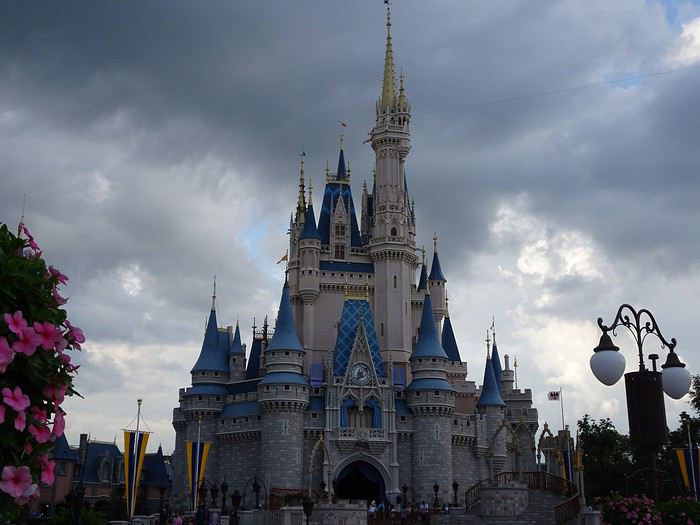 Après un voyage multi-générationnel dans l’ouest américain en 2015 puis un retour en tête à tête avec mon fils T en 2017 (voir liens en bas de page), nous avions très envie de découvrir le Yellowstone! La lecture des différents carnets et les louanges de Thibaut sur ce parc, y sont pour beaucoup. Notre envie de découvrir des paysages complètements différents des voyages précédents et la possibilité d’observer la vie animale, nous ont naturellement amené à construire ce voyage.
Comme pour nous les États-Unis ne se résument pas uniquement à la grandiosité des parcs naturels mais comprennent aussi d’incroyables parcs d’attractions, nous avons pris l’habitude de conclure nos voyages par un parc d’attraction! Nous avions déjà fait 2 fois Universal Studio à L.A (la deuxième fois pour découvrir le nouveau land Harry Potter). Mais cette année, envie de changement, une nouvelle découverte nous tendait les bras… Le monde de Pandora à Disneyworld !
Après un voyage multi-générationnel dans l’ouest américain en 2015 puis un retour en tête à tête avec mon fils T en 2017 (voir liens en bas de page), nous avions très envie de découvrir le Yellowstone! La lecture des différents carnets et les louanges de Thibaut sur ce parc, y sont pour beaucoup. Notre envie de découvrir des paysages complètements différents des voyages précédents et la possibilité d’observer la vie animale, nous ont naturellement amené à construire ce voyage.
Comme pour nous les États-Unis ne se résument pas uniquement à la grandiosité des parcs naturels mais comprennent aussi d’incroyables parcs d’attractions, nous avons pris l’habitude de conclure nos voyages par un parc d’attraction! Nous avions déjà fait 2 fois Universal Studio à L.A (la deuxième fois pour découvrir le nouveau land Harry Potter). Mais cette année, envie de changement, une nouvelle découverte nous tendait les bras… Le monde de Pandora à Disneyworld !
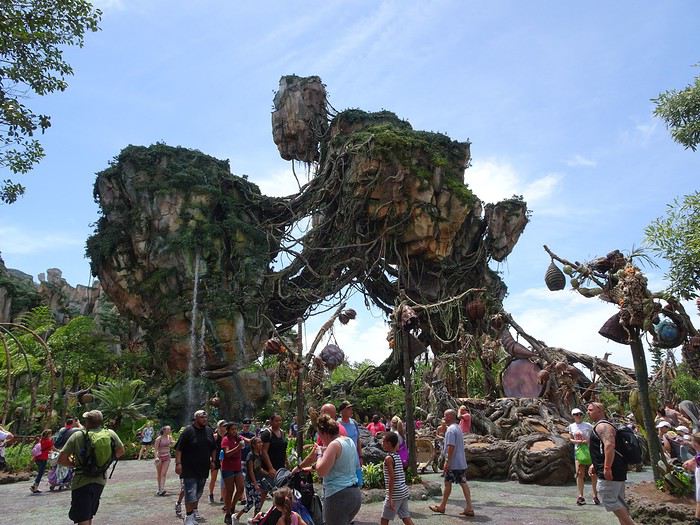
Et honnêtement on s’est pris 2 grandes claques, une à Yellowstone et une autre dans le monde d’Avatar… mais je détaillerai ça plus tard !
Avant d’aller plus loin, petite place aux remerciements : Encore une fois un grand merci à tous pour m’avoir conseillé, orienté dans mes choix, rassuré lors de mes questionnements. Préparer un voyage avec l’aide des forumeurs de VF est toujours un réel moment de plaisir et de partage ! Voici donc en guise de remerciements, notre retour d’expérience! Un voyage encore une fois inoubliable, riche de perceptions visuelles et olfactives, riche en émotions et découvertes ! Des paysages grandioses avec des phénomènes incroyables, des palettes de couleurs surréalistes et un petit paradis pour rencontrer les animaux.
Constances de nos voyages aux USA : Encore une fois nous avons apprécié les paysages extraordinaires, la gentillesse des américains lors de multiples rencontres chaleureuses, la conduite toujours aussi facile et agréable (et Alamo toujours sans problème), le confort des lits, des hôtels!
Inquiétudes avant départ : Je craignais que l’on se lasse des geysers et des pools… mais il n’en a rien été, ils ont tous des couleurs, des formes, des environnements ou des particularités différentes, donc on s’émerveille à chaque fois sans sentiment de lassitude ! Je craignais aussi de moins apprécier les paysages car je suis plus sensible aux roches rouges et paysages désertiques, mais la variété des paysages rencontrés m’a comblé ! La foule, était également un point qui m’inquiétait. Mais agréablement surprise, hormis autour du Grand Prismatic et du Geyser Old Faithfull, on n’a pas eu ce sentiment de foule, et on a toujours réussi à se garer sans problème ! Chance ou bon timing ? Telle est la question ! Dernière inquiétude : Comme pour tout voyage : la météo est un paramètre aléatoire. Mais en ayant prévu suffisamment de temps sur place, nous avons pu refaire certains points découverts dans un premier temps sous les nuages, d’autres non faits à cause d’averses… Un planning non chargé laisse toute la souplesse nécessaire pour modifier les plans en fonction de la météo et réguler les visites !
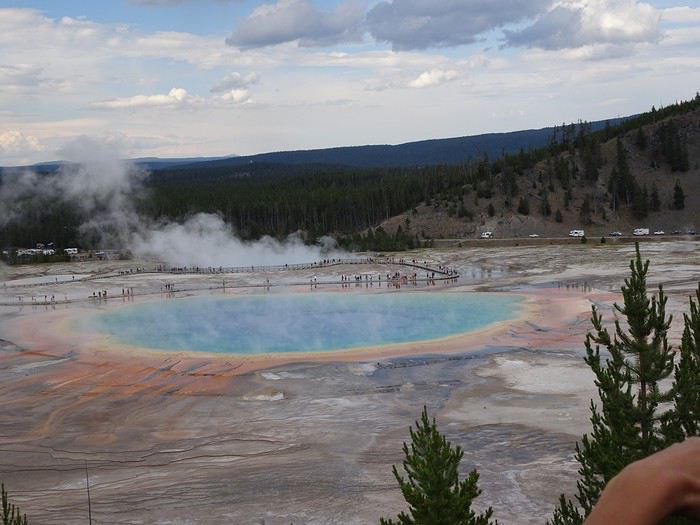 Grand Prismatic sous les nuages... puis un autre jour sous le soleil!
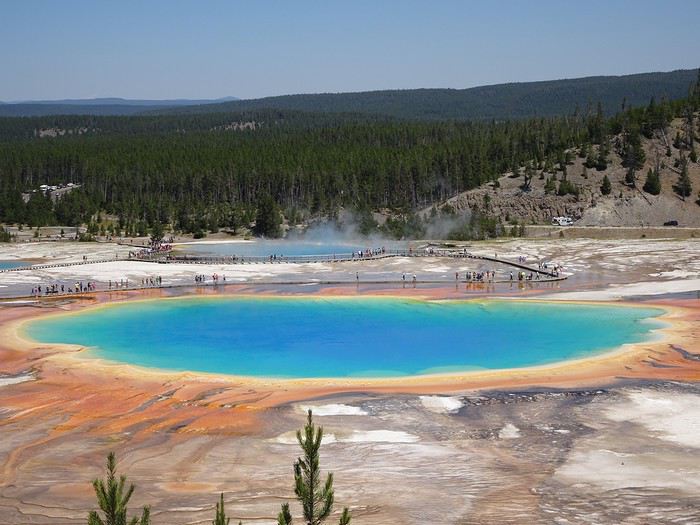
Choix du parcours :
14 jours soit 10 jours pour Yellowstone et ses environs + 4 jours pour Disneyworld.
Arrivée et départ de Bozeman. Avantages : billets moins chers que pour Jackson et route plus rapide que depuis Salt Lake City.
Nous avons décidé de varier les plaisirs en mixant Yellowstone et ses alentours, voici les grandes lignes de notre voyage :
J1: Arrivée BOZEMAN. Nuit Bozeman J2: MAMMOTH HOT SPRINGS. Nuit 1 Gardiner J3 : LAMAR VALLEY – GRAND CANYON Y South Rim. Nuit 2 Gardiner J4 : HAYDEN VALLEY – CODY. Nuit 1 Cody J5 : CODY - BIGHORN CANYON. Nuit 2 Cody J6 : WEST THUMB - GRAND TETON. Nuit Jackson Hole J7 : GRAND TETON –YELLOWSTONE. Nuit 1 West Yellowstone J8 : NORRIS – GRAND CANYON Y North Rim. Nuit 2 West Yellowstone J9 : BASINS + OLD FAITHFULL. Nuit Old Faithfull cabin J10: YELLOWSTONE fin - Nuit Bozeman J11 : Vol pour ORLANDO. Nuit 1 Disney's All-Star Music Resort J12 : REPOS – PISCINE – DISNEY SPRINGS Nuit 2 Disney's All-Star Music Resort J13 : DISNEYWORLD - ANIMAL KINGDOM Nuit 3 Disney's All-Star Music Resort J14 : DISNEYWORLD - MAGIC KINGDOM Nuit 4 Disney's All-Star Music Resort J15 : REPOS – PISCINE – RETOUR EN FRANCE arrivée en J16
Hébergements : La question s’est effectivement posée, comme souvent quand on prépare un voyage à Yellowstone : loger à l'intérieur ou en dehors du parc ? Passer toutes les nuits aux mêmes endroits ou changer d’hôtels pour faire les différentes portions du 8 de Yellowstone?
En fait, impossible de conseiller telle ou telle solution, tout dépend de ses priorités et ses envies personnelles. Nous avons essayé de privilégier 2 nuits par hôtel quand cela était possible ! Le choix de dormir en dehors du parc s’est vite imposé car sur le parc, pour le même prix, il n’y a ni la Wifi, ni la TV (difficile avec un ado) le confort est moindre, les services, restaurations sont plus limités… J’ai quand même réussi à négocier une nuit sur le parc (et heureusement car après la dernière éruption de geyser au coucher de soleil, j’aurai eu des difficultés à reprendre la route !). Au final, aucun regret !
Voici nos hébergements par ordre de préférence pour la partie Yellowstone et environs
ANTLER INN Jackson Hole : très grande chambre avec cheminée, 3 grands lits, 2 entrées (une côté couloir central, une côté couloir extérieur pour accéder aux voitures), salle de sport, jacuzzi… Chambre payée en partie avec nuit gratuite hotel.com gagnée lors des précédents voyages
ALPINE MOTEL West Yellowstone : souvent conseillé sur VF, à juste titre ! Accueil super chaleureux et très bon rapport qualité-prix ! Excellent choix !
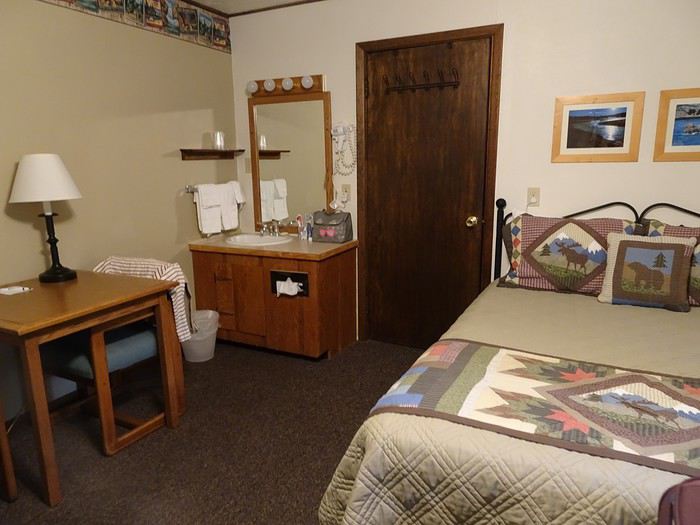 ABSAROKA LODGE Gardiner : belle chambre avec terrasse donnant sur la Yellowstone River. Très agréable pour y prendre son petit déjeuner ou y manger le soir en compagnie des marmottes!
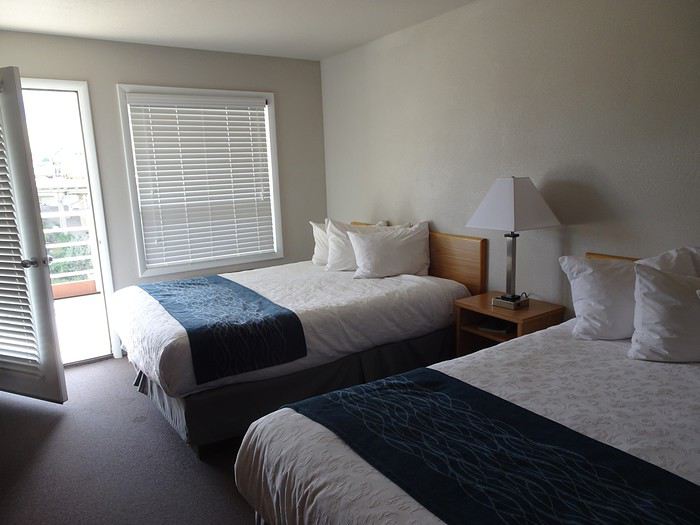
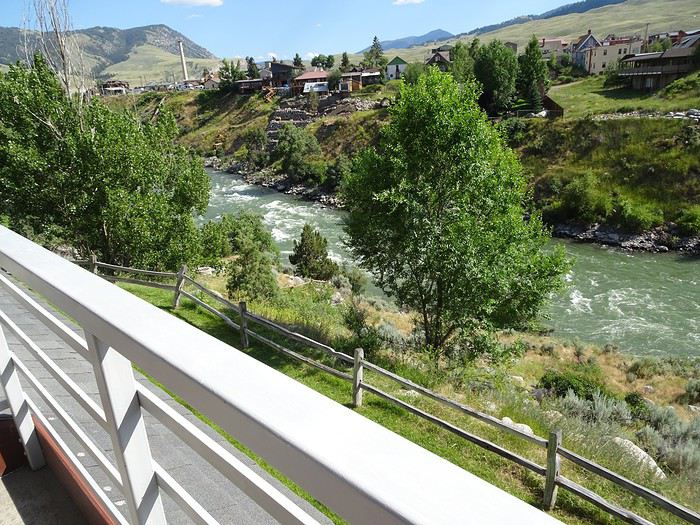 BIG BEAR MOTEL Cody. On a beaucoup aimé l’ambiance chaleureuse du bois et la piscine (c’est bien agréable de finir la journée par un petit plongeon pour se détendre😎).
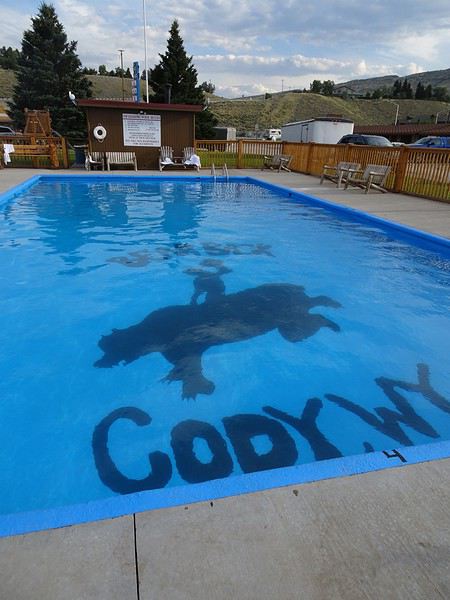 OLD FAITHFULL CABIN. Idéal pour profiter des geysers tard le soir et tôt le matin! seul intérêt! Confort sommaire !
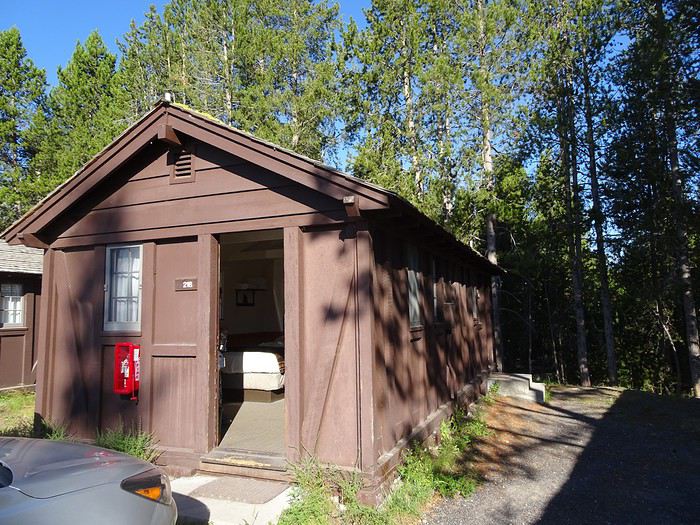 SUPER 8 BOZEMAN - AIRPORT. Grande chambre propre et confortable. Hôtel équipée de piscine, sauna, salle de sport…. Navette gratuite pour l’aéroport (pratique). Petit bémol : bruit des trains qui klaxonnent, à éviter si on a le sommeil léger !
SUPER 8 BOZEMAN. À éviter, chambre pas propre (heureusement le seul hôtel critiquable du voyage et en début de séjour)
SUPER 8 BOZEMAN - AIRPORT. Grande chambre propre et confortable. Hôtel équipée de piscine, sauna, salle de sport…. Navette gratuite pour l’aéroport (pratique). Petit bémol : bruit des trains qui klaxonnent, à éviter si on a le sommeil léger !
SUPER 8 BOZEMAN. À éviter, chambre pas propre (heureusement le seul hôtel critiquable du voyage et en début de séjour)
Pour Disneyworld : DISNEY'S ALL-STAR MUSIC RESORT : chambre très confortable, super complexe hôtelier avec décorations sur le thème de la musique (génial pour T qui a l’âme d’un musicien) ! Magnifiques piscines en forme de guitare et de piano ! Une nuit payée en partie avec nuit gratuite hotel.com gagnée lors des précédents voyages
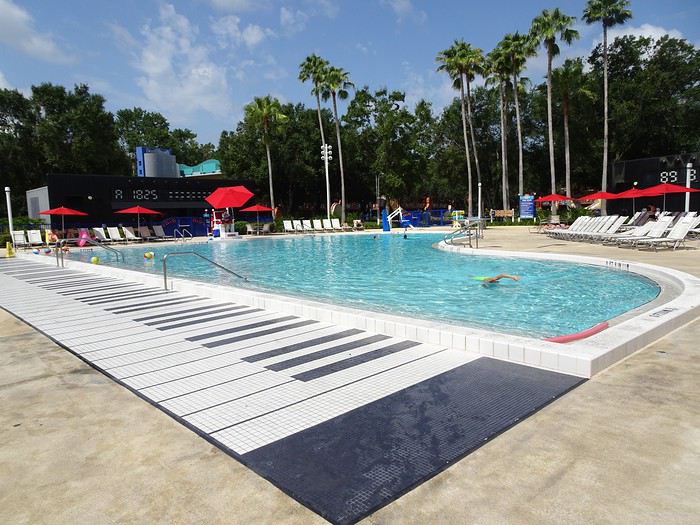
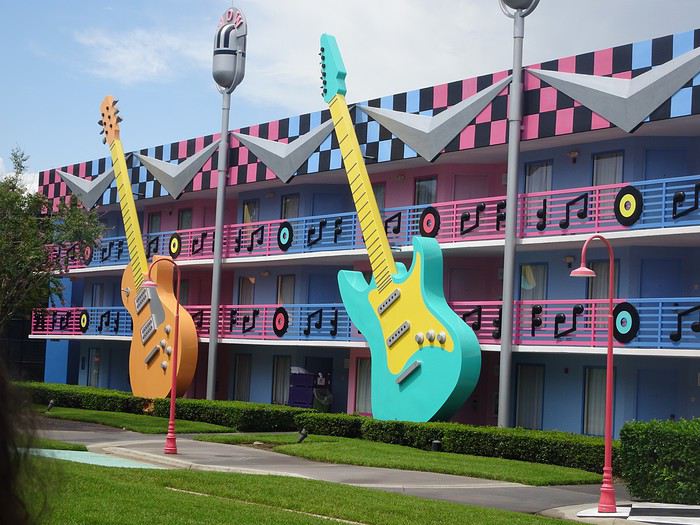
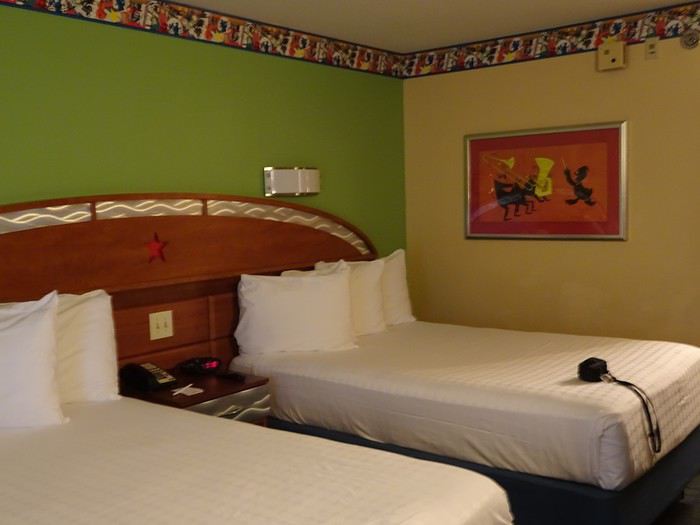
Avantages d’un hôtel Disney : - Disney Magical Express gratuit pour le trajet entre hôtel et aéroport ! - Les navettes gratuites pour accéder aux parcs d’attractions, à Disney Springs - Les bracelets MagicBand qui servent à ouvrir la porte de chambre, pour entrer dans les parcs, pour enregistrer les FastPass, pour payer… - La possibilité de prendre les FastPass 60 jours à l’avance (contre 30 sinon) et donc obtenir les FastPass les plus difficiles à avoir
- Avoir des heures d’accès aux parcs en plus (pouvoir faire plein d’attractions sans faire de queue)
- Le tout superbement bien organisé !
Et non, je ne suis pas payé par Disney pour en faire la publicité !😉
- La possibilité de prendre les FastPass 60 jours à l’avance (contre 30 sinon) et donc obtenir les FastPass les plus difficiles à avoir
- Avoir des heures d’accès aux parcs en plus (pouvoir faire plein d’attractions sans faire de queue)
- Le tout superbement bien organisé !
Et non, je ne suis pas payé par Disney pour en faire la publicité !😉
Et pour finir, quelques constats : - Comme pour chaque voyage, je me suis inscrite sur Ariane https://pastel.diplomatie.gouv.fr/fildariane/dyn/public/login.html Jusqu’à présent je n’avais jamais rien reçu pendant nos voyages ! Cette année 2 alertes : une concernant l’éruption volcanique et tremblements de terre sur Big Island-Hawaii. L’autre concernant les feux de forêt en Californie, et Yosémite. Je n’étais pas personnellement concernée par ces 2 alertes, mais cela montre bien l’utilité de ce service! - Pour parler du téléphone portable, c’est la première fois que nous rencontrons un tel désert concernant les réseaux téléphoniques. Impossible de recevoir ou d’envoyer de simples SMS ni avec Orange, ni avec Free, ni avec Bouygues même dans les villes (Orlando, Bozeman…). Le seul endroit où cela a été possible, c’est au Visitor Center de Mammoth (et uniquement avec Bouygues). Heureusement que la wifi fonctionnait bien dans les hôtels! - Retour sur le chargeur secteur usb acheté, suite à cette discussion : https://voyageforum.com/v.f?post=9043071;a=9043071 Super pratique, faible encombrement, fait bien son job ! Rien à dire !
À bientôt pour la suite !
Après un voyage multi-générationnel dans l’ouest américain en 2015 puis un retour en tête à tête avec mon fils T en 2017 (voir liens en bas de page), nous avions très envie de découvrir le Yellowstone! La lecture des différents carnets et les louanges de Thibaut sur ce parc, y sont pour beaucoup. Notre envie de découvrir des paysages complètements différents des voyages précédents et la possibilité d’observer la vie animale, nous ont naturellement amené à construire ce voyage.
Comme pour nous les États-Unis ne se résument pas uniquement à la grandiosité des parcs naturels mais comprennent aussi d’incroyables parcs d’attractions, nous avons pris l’habitude de conclure nos voyages par un parc d’attraction! Nous avions déjà fait 2 fois Universal Studio à L.A (la deuxième fois pour découvrir le nouveau land Harry Potter). Mais cette année, envie de changement, une nouvelle découverte nous tendait les bras… Le monde de Pandora à Disneyworld !Et honnêtement on s’est pris 2 grandes claques, une à Yellowstone et une autre dans le monde d’Avatar… mais je détaillerai ça plus tard !
Avant d’aller plus loin, petite place aux remerciements : Encore une fois un grand merci à tous pour m’avoir conseillé, orienté dans mes choix, rassuré lors de mes questionnements. Préparer un voyage avec l’aide des forumeurs de VF est toujours un réel moment de plaisir et de partage ! Voici donc en guise de remerciements, notre retour d’expérience! Un voyage encore une fois inoubliable, riche de perceptions visuelles et olfactives, riche en émotions et découvertes ! Des paysages grandioses avec des phénomènes incroyables, des palettes de couleurs surréalistes et un petit paradis pour rencontrer les animaux.
Constances de nos voyages aux USA : Encore une fois nous avons apprécié les paysages extraordinaires, la gentillesse des américains lors de multiples rencontres chaleureuses, la conduite toujours aussi facile et agréable (et Alamo toujours sans problème), le confort des lits, des hôtels!
Inquiétudes avant départ : Je craignais que l’on se lasse des geysers et des pools… mais il n’en a rien été, ils ont tous des couleurs, des formes, des environnements ou des particularités différentes, donc on s’émerveille à chaque fois sans sentiment de lassitude ! Je craignais aussi de moins apprécier les paysages car je suis plus sensible aux roches rouges et paysages désertiques, mais la variété des paysages rencontrés m’a comblé ! La foule, était également un point qui m’inquiétait. Mais agréablement surprise, hormis autour du Grand Prismatic et du Geyser Old Faithfull, on n’a pas eu ce sentiment de foule, et on a toujours réussi à se garer sans problème ! Chance ou bon timing ? Telle est la question ! Dernière inquiétude : Comme pour tout voyage : la météo est un paramètre aléatoire. Mais en ayant prévu suffisamment de temps sur place, nous avons pu refaire certains points découverts dans un premier temps sous les nuages, d’autres non faits à cause d’averses… Un planning non chargé laisse toute la souplesse nécessaire pour modifier les plans en fonction de la météo et réguler les visites !
Grand Prismatic sous les nuages... puis un autre jour sous le soleil!Choix du parcours :
14 jours soit 10 jours pour Yellowstone et ses environs + 4 jours pour Disneyworld.
Arrivée et départ de Bozeman. Avantages : billets moins chers que pour Jackson et route plus rapide que depuis Salt Lake City.
Nous avons décidé de varier les plaisirs en mixant Yellowstone et ses alentours, voici les grandes lignes de notre voyage :
J1: Arrivée BOZEMAN. Nuit Bozeman J2: MAMMOTH HOT SPRINGS. Nuit 1 Gardiner J3 : LAMAR VALLEY – GRAND CANYON Y South Rim. Nuit 2 Gardiner J4 : HAYDEN VALLEY – CODY. Nuit 1 Cody J5 : CODY - BIGHORN CANYON. Nuit 2 Cody J6 : WEST THUMB - GRAND TETON. Nuit Jackson Hole J7 : GRAND TETON –YELLOWSTONE. Nuit 1 West Yellowstone J8 : NORRIS – GRAND CANYON Y North Rim. Nuit 2 West Yellowstone J9 : BASINS + OLD FAITHFULL. Nuit Old Faithfull cabin J10: YELLOWSTONE fin - Nuit Bozeman J11 : Vol pour ORLANDO. Nuit 1 Disney's All-Star Music Resort J12 : REPOS – PISCINE – DISNEY SPRINGS Nuit 2 Disney's All-Star Music Resort J13 : DISNEYWORLD - ANIMAL KINGDOM Nuit 3 Disney's All-Star Music Resort J14 : DISNEYWORLD - MAGIC KINGDOM Nuit 4 Disney's All-Star Music Resort J15 : REPOS – PISCINE – RETOUR EN FRANCE arrivée en J16
Hébergements : La question s’est effectivement posée, comme souvent quand on prépare un voyage à Yellowstone : loger à l'intérieur ou en dehors du parc ? Passer toutes les nuits aux mêmes endroits ou changer d’hôtels pour faire les différentes portions du 8 de Yellowstone?
En fait, impossible de conseiller telle ou telle solution, tout dépend de ses priorités et ses envies personnelles. Nous avons essayé de privilégier 2 nuits par hôtel quand cela était possible ! Le choix de dormir en dehors du parc s’est vite imposé car sur le parc, pour le même prix, il n’y a ni la Wifi, ni la TV (difficile avec un ado) le confort est moindre, les services, restaurations sont plus limités… J’ai quand même réussi à négocier une nuit sur le parc (et heureusement car après la dernière éruption de geyser au coucher de soleil, j’aurai eu des difficultés à reprendre la route !). Au final, aucun regret !
Voici nos hébergements par ordre de préférence pour la partie Yellowstone et environs
ANTLER INN Jackson Hole : très grande chambre avec cheminée, 3 grands lits, 2 entrées (une côté couloir central, une côté couloir extérieur pour accéder aux voitures), salle de sport, jacuzzi… Chambre payée en partie avec nuit gratuite hotel.com gagnée lors des précédents voyages
ALPINE MOTEL West Yellowstone : souvent conseillé sur VF, à juste titre ! Accueil super chaleureux et très bon rapport qualité-prix ! Excellent choix !
ABSAROKA LODGE Gardiner : belle chambre avec terrasse donnant sur la Yellowstone River. Très agréable pour y prendre son petit déjeuner ou y manger le soir en compagnie des marmottes!
BIG BEAR MOTEL Cody. On a beaucoup aimé l’ambiance chaleureuse du bois et la piscine (c’est bien agréable de finir la journée par un petit plongeon pour se détendre😎).
OLD FAITHFULL CABIN. Idéal pour profiter des geysers tard le soir et tôt le matin! seul intérêt! Confort sommaire !
SUPER 8 BOZEMAN - AIRPORT. Grande chambre propre et confortable. Hôtel équipée de piscine, sauna, salle de sport…. Navette gratuite pour l’aéroport (pratique). Petit bémol : bruit des trains qui klaxonnent, à éviter si on a le sommeil léger !
SUPER 8 BOZEMAN. À éviter, chambre pas propre (heureusement le seul hôtel critiquable du voyage et en début de séjour)Pour Disneyworld : DISNEY'S ALL-STAR MUSIC RESORT : chambre très confortable, super complexe hôtelier avec décorations sur le thème de la musique (génial pour T qui a l’âme d’un musicien) ! Magnifiques piscines en forme de guitare et de piano ! Une nuit payée en partie avec nuit gratuite hotel.com gagnée lors des précédents voyages
Avantages d’un hôtel Disney : - Disney Magical Express gratuit pour le trajet entre hôtel et aéroport ! - Les navettes gratuites pour accéder aux parcs d’attractions, à Disney Springs - Les bracelets MagicBand qui servent à ouvrir la porte de chambre, pour entrer dans les parcs, pour enregistrer les FastPass, pour payer…
- La possibilité de prendre les FastPass 60 jours à l’avance (contre 30 sinon) et donc obtenir les FastPass les plus difficiles à avoir
- Avoir des heures d’accès aux parcs en plus (pouvoir faire plein d’attractions sans faire de queue)
- Le tout superbement bien organisé !
Et non, je ne suis pas payé par Disney pour en faire la publicité !😉Et pour finir, quelques constats : - Comme pour chaque voyage, je me suis inscrite sur Ariane https://pastel.diplomatie.gouv.fr/fildariane/dyn/public/login.html Jusqu’à présent je n’avais jamais rien reçu pendant nos voyages ! Cette année 2 alertes : une concernant l’éruption volcanique et tremblements de terre sur Big Island-Hawaii. L’autre concernant les feux de forêt en Californie, et Yosémite. Je n’étais pas personnellement concernée par ces 2 alertes, mais cela montre bien l’utilité de ce service! - Pour parler du téléphone portable, c’est la première fois que nous rencontrons un tel désert concernant les réseaux téléphoniques. Impossible de recevoir ou d’envoyer de simples SMS ni avec Orange, ni avec Free, ni avec Bouygues même dans les villes (Orlando, Bozeman…). Le seul endroit où cela a été possible, c’est au Visitor Center de Mammoth (et uniquement avec Bouygues). Heureusement que la wifi fonctionnait bien dans les hôtels! - Retour sur le chargeur secteur usb acheté, suite à cette discussion : https://voyageforum.com/v.f?post=9043071;a=9043071 Super pratique, faible encombrement, fait bien son job ! Rien à dire !
À bientôt pour la suite !
20 jours dans le Tamil Nadu (Inde du Sud): carnet (presque) en direct
Bonjour à tous,
Me voilà depuis 3 jours dans la région Tamil Nadu, en solo et en indépendant: sac à dos (enfin petite valise cabine + petit sac à dos), transports publics, etc... Il s'agit de mon neuvième voyage en Inde.
Je publie ce carnet pour donner des renseignements pratiques et des impressions subjectives pour aider ceux qui envisagent un voyage dans la région, car il n'est pas facile de trouver des carnets précis très récents. Je décide aussi de le faire presque en direct, à mes heures perdues, pour donner des informations à chaud, parce qu'à chaque fois que j'ai voulu me lancer dans un carnet, les souvenirs et les détails étaient devenus flous, et avec le temps, on oublie plein de choses... Cette formule me paraît intéressante, même si j'écris avec peu de recul, à part celui de mon expérience passée de l'Inde.
Je n'ai pas vraiment d'itinéraire fixé et je décide de mes étapes au gré du voyage, même si j'ai une idée vague du circuit que je vais faire.
Je remercie tout particulièrement les membres du forum qui m'ont donné des informations précieuses et continuent à m'en donner: Marcomarco, Fabgreg, Aleph, Raggamuffin et Marien (désolé si j'en ai oublié, je les ajouterai plus tard). Je suis parti un peu à la dernière minute, sans vraiment préparer mon voyage, et leur aide me fait gagner beaucoup de temps.
Avant de commencer, quelques infos générales sur mon voyage: - Séjour de 20 jours dans le Tamil Nadu, mon premier vrai voyage en Inde du Sud à part un assez court passage dans le nord du Karnataka et à Goa en 2010. - Vol Air France/Jet Airways Toulouse-Paris-Chennai et Chennai-Mumbai-Paris-Toulouse: 622€ (réservé sur le site Jetcost une dizaine de jours avant le départ). À noter que le même vol depuis Paris, donc avec deux voyages en moins Toulouse-Paris et Paris-Toulouse, coûtait plus de 150€ en plus. Allez comprendre... Ça tombe bien, je devais me rendre à Toulouse! - e-tourist visa en ligne, qui a bien augmenté il y a quelque jours: j'ai oublié le prix exact, mais autour de 80€: abusif mais toujours plus avantageux que le visa de 6 mois si on part peu de temps. - J'ai investi dans la dernière version du Lonely Planet "Inde du Sud" qui est très décevante: de moins en moins de renseignements fiables et précis, des adresses de plus en plus chères, des cartes en moins... À 27€, c'est une arnaque. Je ne suis pas sûr qu'il existe encore des guides papiers vraiment utiles. Une époque révolue? Vive les forums!
Allez c'est parti!
Me voilà depuis 3 jours dans la région Tamil Nadu, en solo et en indépendant: sac à dos (enfin petite valise cabine + petit sac à dos), transports publics, etc... Il s'agit de mon neuvième voyage en Inde.
Je publie ce carnet pour donner des renseignements pratiques et des impressions subjectives pour aider ceux qui envisagent un voyage dans la région, car il n'est pas facile de trouver des carnets précis très récents. Je décide aussi de le faire presque en direct, à mes heures perdues, pour donner des informations à chaud, parce qu'à chaque fois que j'ai voulu me lancer dans un carnet, les souvenirs et les détails étaient devenus flous, et avec le temps, on oublie plein de choses... Cette formule me paraît intéressante, même si j'écris avec peu de recul, à part celui de mon expérience passée de l'Inde.
Je n'ai pas vraiment d'itinéraire fixé et je décide de mes étapes au gré du voyage, même si j'ai une idée vague du circuit que je vais faire.
Je remercie tout particulièrement les membres du forum qui m'ont donné des informations précieuses et continuent à m'en donner: Marcomarco, Fabgreg, Aleph, Raggamuffin et Marien (désolé si j'en ai oublié, je les ajouterai plus tard). Je suis parti un peu à la dernière minute, sans vraiment préparer mon voyage, et leur aide me fait gagner beaucoup de temps.
Avant de commencer, quelques infos générales sur mon voyage: - Séjour de 20 jours dans le Tamil Nadu, mon premier vrai voyage en Inde du Sud à part un assez court passage dans le nord du Karnataka et à Goa en 2010. - Vol Air France/Jet Airways Toulouse-Paris-Chennai et Chennai-Mumbai-Paris-Toulouse: 622€ (réservé sur le site Jetcost une dizaine de jours avant le départ). À noter que le même vol depuis Paris, donc avec deux voyages en moins Toulouse-Paris et Paris-Toulouse, coûtait plus de 150€ en plus. Allez comprendre... Ça tombe bien, je devais me rendre à Toulouse! - e-tourist visa en ligne, qui a bien augmenté il y a quelque jours: j'ai oublié le prix exact, mais autour de 80€: abusif mais toujours plus avantageux que le visa de 6 mois si on part peu de temps. - J'ai investi dans la dernière version du Lonely Planet "Inde du Sud" qui est très décevante: de moins en moins de renseignements fiables et précis, des adresses de plus en plus chères, des cartes en moins... À 27€, c'est une arnaque. Je ne suis pas sûr qu'il existe encore des guides papiers vraiment utiles. Une époque révolue? Vive les forums!
Allez c'est parti!