Results for "Iran+hébergement"
About 6,663 results.
More options
Many results are in French, the community’s main language. English translations are added over time.
Search results
Transsibérien, été 2016
Bonjour à tous
J'ai l'intention de me lancer dans la grande aventure du transsibérien cet été, mais j'ai pas mal de questions sur l'aspect administratif du voyage. J'ai parcouru de nombreux fils sur le sujet sur ce site, mais je n'ai pas réussi à trouver toutes les infos que je cherche.
Voici donc les questions pour lesquelles j'ai besoin de votre aide :
- L'ami avec qui je compte effectuer ce voyage a fait pas mal de recherches, et m'a dit qu'il était impératif d'acheter tous les billets de train à l'avance pour pouvoir obtenir le visa russe. Ça me semble très bizarre, car j'ai l'impression qu'il suffit de passer par une agence spécialisée (du style action visa) afin d'obtenir le précieux sésame (cad le visa). Qu'est-ce que vous en pensez ?
- L'achat des billets : encore une fois, mon ami m'a dit qu'il était préférable d'acheter tout le trajet en avance car les billets sont très souvent pris d'assaut en été, et qu'on n'est pas certains de trouver ce que l'on veut en se rendant uniquement à la gare. Qu'est-ce que vous en pensez ?
Merci pour votre aide !
Quentin
J'ai l'intention de me lancer dans la grande aventure du transsibérien cet été, mais j'ai pas mal de questions sur l'aspect administratif du voyage. J'ai parcouru de nombreux fils sur le sujet sur ce site, mais je n'ai pas réussi à trouver toutes les infos que je cherche.
Voici donc les questions pour lesquelles j'ai besoin de votre aide :
- L'ami avec qui je compte effectuer ce voyage a fait pas mal de recherches, et m'a dit qu'il était impératif d'acheter tous les billets de train à l'avance pour pouvoir obtenir le visa russe. Ça me semble très bizarre, car j'ai l'impression qu'il suffit de passer par une agence spécialisée (du style action visa) afin d'obtenir le précieux sésame (cad le visa). Qu'est-ce que vous en pensez ?
- L'achat des billets : encore une fois, mon ami m'a dit qu'il était préférable d'acheter tout le trajet en avance car les billets sont très souvent pris d'assaut en été, et qu'on n'est pas certains de trouver ce que l'on veut en se rendant uniquement à la gare. Qu'est-ce que vous en pensez ?
Merci pour votre aide !
Quentin
Marché à Chandni Chowk-Delhi
Bonsoir,
Quelqu'un peut-il me renseigner sur le marché de Chandni Chowk à Delhi. Nous partons avec un groupe. Le voyage est organisé, nous visitons les choses importantes de la ville avec un guide après avoir visité le Rajastan mais il nous reste une journée de libre. Nous aurons certainement des renseignements sur place mais j'aimerais quand même avoir une idée de ce qu'il ne faut pas rater avec le peu de temps qu'il nous reste. Dans les choses non prévues il y reste : Fort Rouge, Jama Masjid, le quatier de Paharganj, la Porte de l'Inde, Jantar Mantar, le tombeau de Safdarjung, ( le Temple du Lotus et Akshardham seront trop loin). Vu le peu de temps dont nous disposons il est peut-être préférable de se limiter à quelques curiosités qui seraient assez proches les unes des autres. J'avais pensé faire Le Ford Rouge et la Mosquée Jama Masjid puis terminer par le marché ou commencer?!...C'est pourquoi je désir quelques renseignements sur le marché de Chandne Chowk. quel(s) jour(s) et les heures. Quelques conseils serons les bienvenus. Merci d'avance, Christiane.
Quelqu'un peut-il me renseigner sur le marché de Chandni Chowk à Delhi. Nous partons avec un groupe. Le voyage est organisé, nous visitons les choses importantes de la ville avec un guide après avoir visité le Rajastan mais il nous reste une journée de libre. Nous aurons certainement des renseignements sur place mais j'aimerais quand même avoir une idée de ce qu'il ne faut pas rater avec le peu de temps qu'il nous reste. Dans les choses non prévues il y reste : Fort Rouge, Jama Masjid, le quatier de Paharganj, la Porte de l'Inde, Jantar Mantar, le tombeau de Safdarjung, ( le Temple du Lotus et Akshardham seront trop loin). Vu le peu de temps dont nous disposons il est peut-être préférable de se limiter à quelques curiosités qui seraient assez proches les unes des autres. J'avais pensé faire Le Ford Rouge et la Mosquée Jama Masjid puis terminer par le marché ou commencer?!...C'est pourquoi je désir quelques renseignements sur le marché de Chandne Chowk. quel(s) jour(s) et les heures. Quelques conseils serons les bienvenus. Merci d'avance, Christiane.
Deux semaines au Liban en mode routard (compte rendu)
Bonjour,
Comme le Liban manque de retours de voyageurs, voici un bref et partiel compte-rendu de mon récent séjour dans le pays. Je me concentrerai sur les aspects pratiques.
Durée: 13 nuits et 13 jours, du 23 octobre au 4 novembre 2015. Dépenses: 448 dollars, soit 34,50 par jour en moyenne. Compagnie aérienne: Aegean Airlines, depuis Genève, avec escale à Athènes (à l'aller, j'en ai profité pour m'arrêter deux jours dans la capitale grecque). Environ 270 euros pour l'aller-retour, sans bagage en soute.
D'un point de vue touristique, les trois incontournables du pays sont, à mon avis, les grottes de Jeita, le site archéologique de Baalbek et la vallée de la Quadisha. Je citerais ensuite Sour/Tyr, Beyrouth (ne ratez pas le Musée national d'archéologie), Jbeil/Byblos et Tripoli. Si vous en avez le temps, j'ajouterais Saïda/Sidon (surtout si vous n'allez pas à Tripoli), Beïteddine et éventuellement Batroun.
Je pense que tous ces lieux peuvent se visiter en 8-9 jours. Personnellement, j'ai fait le choix de passer une nuit à Baalbek (le site se visite très bien en une petite journée depuis Beyrouth), trois nuits à Tripoli (une grosse journée peut suffire) et trois journées complètes dans la vallée de la Qadisha, point d'orgue de mon séjour. Il est tout à fait envisageable de profiter de Sour et de Saïda dans la même journée (ce que je n'ai pas fait), en transports publics également (dans ce cas, je conseille de partir assez tôt le matin).
A mon arrivée à Beyrouth (à 2h du matin), j'ai décidé de "dormir" dans l'aéroport et de prendre un minibus à l'aube vers le centre (LL1000, soit moins de 60 centimes d'euro). Les taxis exigent au moins 20 dollars (souvent plus, à ce qu'on m'a dit) alors qu'il n'y a que 8 km environ jusqu'à la Place des Martyrs (j'ai même fait le retour à pied, en pleine nuit, comme les minibus ne circulaient plus 😄).
La plupart du temps, je me suis déplacé en bus ou minibus, pour des prix dérisoires (LL1500 à LL2000 pour les destinations se situant à moins de 45 minutes de Beyrouth, LL3000 pour Beïteddine, LL5000 pour Baalbek, etc.). On a rarement essayé de me faire payer plus qu'un local (mais j'étais généralement renseigné sur le montant à payer).
J'ai pris mon seul taxi (LL10'000) pour me rendre aux grottes de Jeita, à environ 5 km de l'arrêt de bus. Je suis revenu à pied et ça se fait très bien (mieux que l'aéroport 😛).
Sur le versant nord de la vallée de la Qadisha, il n'y a pas de bus et j'ai alterné entre marche et auto-stop (en général, la première ou la deuxième voiture s'arrête...). Sur le versant sud, des bus passent très régulièrement (toutes les 15-20 minutes) et on paie LL1000 pour des trajets de courte distance. En étant un minimum débrouillard (et sportif), il est très facile de se passer de véhicule de location.
Au niveau sécurité, j'ai juste entendu quelques rafales de Kalachnikov à Baalbek, durant ma visite du site archéologique, mais les rares ouvriers et touristes (Libanais) présents sur place ne se sont pas inquiétés et moi non plus. Partout ailleurs, rien à signaler. Assez forte présence militaire à Beyrouth et surtout Tripoli.
Les Libanais (et les Syriens, Palestiniens... puisqu'ils sont nombreux eux aussi) n'ont jamais fait mentir leur formidable réputation d'hospitalité. Un magnifique accueil, tout en retenue, gentillesse et désintéressement.
La mosaïque sociale, culturelle et religieuse est tout à fait fascinante et la gastronomie locale devrait satisfaire les plus difficiles. Personnellement, j'ai toujours (très bien) mangé dans la rue ou les petits bouibouis fréquentés par le "bas peuple".
Généralement, je privilégie le fait de dormir sur les lieux que je visite. Mais les hôtels bon marché sont assez rares, au Liban, et j'ai donc choisi de rayonner pendant une petite semaine depuis la capitale.
Mes hébergements (je n'ai rien réservé avant d'arriver sur place): - Beyrouth (six nuits): Talal New Hotel, 14 dollars la nuit en dortoir de trois lits. Très bien situé en plein centre à côté de la station Charles Helou. Le propriétaire est une mine d'informations et l'ambiance très sympathique, wifi disponible mais normalement payant. - Baalbek (1 nuit): Hotel Jupiter, chambre individuelle négociée à 20 dollars (mais elle devait en valoir au moins le double), aucun autre client à part moi, pas de wifi. - Tripoli (3 nuits): Hotel Koura, plus de dortoir disponible donc chambre individuelle négociée à 30 dollars, standing supérieur à ce dont j'ai l'habitude, gérante parlant très bien le français, établissement parfaitement situé et au calme, wifi inclus. - Bscharré (Qadisha, 2 nuits): Tiger House, 10 dollars pour un dortoir de dix lits (nous n'étions que trois), pas de wifi.
A noter que deux Françaises rencontrées à Bscharré ont utilisé AirBNB à plusieurs reprises avec satisfaction. Sauf erreur, elles payaient généralement 15-25 dollars pour une chambre (double).
Au niveau des guides papier, j'avais opté pour le Petit Futé (l'Essentiel), mal conçu et sans aucune info pratique, donc peu utile. J'ai rapidement téléchargé le chapitre "Lebanon" du Lonely Planet consacré au "Middle East", qui m'a beaucoup plus servi au final (sauf pour les monastères de la vallée de la Qadisha, dont il ne fait aucune mention: incompréhensible!).
Dans la vallée de la Qadisha, je conseille principalement les monastères/couvents/ermitages de Saint-Antoine, Qannoubine, Haouqa, Saint-Elisée (Deir Mar Elisha) et Saint-Simon (Deir Mar Seimaan). Un magnifique sentier (bien entretenu) relie Qannoubine à Haouqa. Le monastère de Hammatoura, accroché à son pli rocheux (à Kousba, située à la jonction des routes venant de Tripoli et Beyrouth), jouit d'une situation spectaculaire. Il se visite aussi.
A noter que le siège patriarchal d'Ed Diman, en plus de sa jolie église, dispose d'un des plus beaux points de vue sur la vallée. Il faut vous rendre en contrebas du bâtiment nord (merci le Petit Futé, quand même, pour ce bon plan).
Je pensais marcher quelques étapes du Lebanon Mountain Trail (LMT), mais mes séjours prolongés à Tripoli et Bscharré en ont décidé autrement. Il est probable que je retourne au Liban dans les années à venir pour faire le trek au complet.
Si vous avez des questions, n'hésitez pas.
Comme le Liban manque de retours de voyageurs, voici un bref et partiel compte-rendu de mon récent séjour dans le pays. Je me concentrerai sur les aspects pratiques.
Durée: 13 nuits et 13 jours, du 23 octobre au 4 novembre 2015. Dépenses: 448 dollars, soit 34,50 par jour en moyenne. Compagnie aérienne: Aegean Airlines, depuis Genève, avec escale à Athènes (à l'aller, j'en ai profité pour m'arrêter deux jours dans la capitale grecque). Environ 270 euros pour l'aller-retour, sans bagage en soute.
D'un point de vue touristique, les trois incontournables du pays sont, à mon avis, les grottes de Jeita, le site archéologique de Baalbek et la vallée de la Quadisha. Je citerais ensuite Sour/Tyr, Beyrouth (ne ratez pas le Musée national d'archéologie), Jbeil/Byblos et Tripoli. Si vous en avez le temps, j'ajouterais Saïda/Sidon (surtout si vous n'allez pas à Tripoli), Beïteddine et éventuellement Batroun.
Je pense que tous ces lieux peuvent se visiter en 8-9 jours. Personnellement, j'ai fait le choix de passer une nuit à Baalbek (le site se visite très bien en une petite journée depuis Beyrouth), trois nuits à Tripoli (une grosse journée peut suffire) et trois journées complètes dans la vallée de la Qadisha, point d'orgue de mon séjour. Il est tout à fait envisageable de profiter de Sour et de Saïda dans la même journée (ce que je n'ai pas fait), en transports publics également (dans ce cas, je conseille de partir assez tôt le matin).
A mon arrivée à Beyrouth (à 2h du matin), j'ai décidé de "dormir" dans l'aéroport et de prendre un minibus à l'aube vers le centre (LL1000, soit moins de 60 centimes d'euro). Les taxis exigent au moins 20 dollars (souvent plus, à ce qu'on m'a dit) alors qu'il n'y a que 8 km environ jusqu'à la Place des Martyrs (j'ai même fait le retour à pied, en pleine nuit, comme les minibus ne circulaient plus 😄).
La plupart du temps, je me suis déplacé en bus ou minibus, pour des prix dérisoires (LL1500 à LL2000 pour les destinations se situant à moins de 45 minutes de Beyrouth, LL3000 pour Beïteddine, LL5000 pour Baalbek, etc.). On a rarement essayé de me faire payer plus qu'un local (mais j'étais généralement renseigné sur le montant à payer).
J'ai pris mon seul taxi (LL10'000) pour me rendre aux grottes de Jeita, à environ 5 km de l'arrêt de bus. Je suis revenu à pied et ça se fait très bien (mieux que l'aéroport 😛).
Sur le versant nord de la vallée de la Qadisha, il n'y a pas de bus et j'ai alterné entre marche et auto-stop (en général, la première ou la deuxième voiture s'arrête...). Sur le versant sud, des bus passent très régulièrement (toutes les 15-20 minutes) et on paie LL1000 pour des trajets de courte distance. En étant un minimum débrouillard (et sportif), il est très facile de se passer de véhicule de location.
Au niveau sécurité, j'ai juste entendu quelques rafales de Kalachnikov à Baalbek, durant ma visite du site archéologique, mais les rares ouvriers et touristes (Libanais) présents sur place ne se sont pas inquiétés et moi non plus. Partout ailleurs, rien à signaler. Assez forte présence militaire à Beyrouth et surtout Tripoli.
Les Libanais (et les Syriens, Palestiniens... puisqu'ils sont nombreux eux aussi) n'ont jamais fait mentir leur formidable réputation d'hospitalité. Un magnifique accueil, tout en retenue, gentillesse et désintéressement.
La mosaïque sociale, culturelle et religieuse est tout à fait fascinante et la gastronomie locale devrait satisfaire les plus difficiles. Personnellement, j'ai toujours (très bien) mangé dans la rue ou les petits bouibouis fréquentés par le "bas peuple".
Généralement, je privilégie le fait de dormir sur les lieux que je visite. Mais les hôtels bon marché sont assez rares, au Liban, et j'ai donc choisi de rayonner pendant une petite semaine depuis la capitale.
Mes hébergements (je n'ai rien réservé avant d'arriver sur place): - Beyrouth (six nuits): Talal New Hotel, 14 dollars la nuit en dortoir de trois lits. Très bien situé en plein centre à côté de la station Charles Helou. Le propriétaire est une mine d'informations et l'ambiance très sympathique, wifi disponible mais normalement payant. - Baalbek (1 nuit): Hotel Jupiter, chambre individuelle négociée à 20 dollars (mais elle devait en valoir au moins le double), aucun autre client à part moi, pas de wifi. - Tripoli (3 nuits): Hotel Koura, plus de dortoir disponible donc chambre individuelle négociée à 30 dollars, standing supérieur à ce dont j'ai l'habitude, gérante parlant très bien le français, établissement parfaitement situé et au calme, wifi inclus. - Bscharré (Qadisha, 2 nuits): Tiger House, 10 dollars pour un dortoir de dix lits (nous n'étions que trois), pas de wifi.
A noter que deux Françaises rencontrées à Bscharré ont utilisé AirBNB à plusieurs reprises avec satisfaction. Sauf erreur, elles payaient généralement 15-25 dollars pour une chambre (double).
Au niveau des guides papier, j'avais opté pour le Petit Futé (l'Essentiel), mal conçu et sans aucune info pratique, donc peu utile. J'ai rapidement téléchargé le chapitre "Lebanon" du Lonely Planet consacré au "Middle East", qui m'a beaucoup plus servi au final (sauf pour les monastères de la vallée de la Qadisha, dont il ne fait aucune mention: incompréhensible!).
Dans la vallée de la Qadisha, je conseille principalement les monastères/couvents/ermitages de Saint-Antoine, Qannoubine, Haouqa, Saint-Elisée (Deir Mar Elisha) et Saint-Simon (Deir Mar Seimaan). Un magnifique sentier (bien entretenu) relie Qannoubine à Haouqa. Le monastère de Hammatoura, accroché à son pli rocheux (à Kousba, située à la jonction des routes venant de Tripoli et Beyrouth), jouit d'une situation spectaculaire. Il se visite aussi.
A noter que le siège patriarchal d'Ed Diman, en plus de sa jolie église, dispose d'un des plus beaux points de vue sur la vallée. Il faut vous rendre en contrebas du bâtiment nord (merci le Petit Futé, quand même, pour ce bon plan).
Je pensais marcher quelques étapes du Lebanon Mountain Trail (LMT), mais mes séjours prolongés à Tripoli et Bscharré en ont décidé autrement. Il est probable que je retourne au Liban dans les années à venir pour faire le trek au complet.
Si vous avez des questions, n'hésitez pas.
Récit de notre voyage au Maroc
Nous avons fait 3 semaines de circuit au départ de Marrakech, au volant d'une Logan de location.Tout s'est très bien passé.Accueil chaleureux des Marocains, paysages exceptionnels!
Une 1ère étape aux cascades 'Ouzoud, magnifiques, vraiment impressionnantes.Et pourtant très peu de touristes!

Puis, ce sera le lac de Bin El Ouidane, des couleurs superbes, un site grandiose!Et traversée de paysages de montagnes aux couleurs des plus variées!Surprenant dans un petit périmètre !

On rejoindra El Ksiba pour y passer la nuit chez SAADIA LANOUCH.Accueil très agéable! Et dès le lendemain, après avoir traversé la haute montagne et admiré les plissements de toutes formes, on arrivera à Imilchil.On s'installera Chez BASSOU, le temps de randonner un peu, d'aller jusqu'au lac...

Quittant Imilchil, on passera par Bousmou, le jour du souk.Impressionnant!Très rural!


C'est à Amellago, dans le gite CHEZ MOHA qu'on s'arrêtera pour la nuit!Des gens charmants!Un de nos meilleurs souvenirs cette année!On y a goûté un miel délicieux récolté chez eux, on y passé un excellent moment!On a visité leur petite ferme, les greniers, les terrasses où sèchent les intestins de mouton farcis...Une bien belle étape!

Et puis, on quittera Amellago pour aller bivouaquer dans le désert, la 1ère nuit on la passera à l'hôtel Oasis et ce n'est que le lendemain qu'on partira dans les dunes sur nos dromadaires.C'est magnifique!Vraiment magnifique! Mais, autant nous avons apprécié l'auberge, autant le bivouac nous a déçus:indifférence totale des chameliers accompagnateurs, tajine plus qu'insipide, lever et départ express le lendemain matin...Dommage!

Quittant Merzouga, on s'arrêtera à Rissani, c'est le souk du dimanche, beaucoup d'animations et beaucoup de dattes!C'est à voir!

On poursuivra notre route à travers de grandes plaines plantés d'acacias où on s'attendrait presque à voir quelques girafes.Et on s'arrête à N'KOB la ville aux 45 kasbahs pour y passer la nuit :maison d'hôtes AIT HMID, jolie maison, accueil attentif et délicieux tajine de chèvres.C'est familial, très gentil!
De là, on se dirigera vers ZAGORA, en route on s'arrêtra visiter le musée traditionnel de Tissergate.C'est très intéressant!Il est installé dans le ksar.C'est très beau.

L'apres-midi, on ira sur Tamegroute pour visiter la bibliothèque, visite banale, et puis on ira voir les potiers et le village souterrain.

On passera la nuit dans un gite tenu par une famille de nomades sédentarisés à Tinzouline.Des échanges intéressants!Sympas!
Et puis, c'est à Skoura qu'on s'installera pour quelques jours.On y était déjà passé, on souhaitait y retourner!Au gite de LA PALMERAIE, la famille s'est agrandie mais l'accueil est toujours aussi sympa!Super étape! Et on y a passé un très bon moment! Visite de kasbahs, des gorges de Sidi Flah, de la vallée des amandiers.


Et retour pour quelques jours à MARRAKECH.
SUPER VOYAGE. QUE DU BONHEUR.
Une 1ère étape aux cascades 'Ouzoud, magnifiques, vraiment impressionnantes.Et pourtant très peu de touristes!
Puis, ce sera le lac de Bin El Ouidane, des couleurs superbes, un site grandiose!Et traversée de paysages de montagnes aux couleurs des plus variées!Surprenant dans un petit périmètre !
On rejoindra El Ksiba pour y passer la nuit chez SAADIA LANOUCH.Accueil très agéable! Et dès le lendemain, après avoir traversé la haute montagne et admiré les plissements de toutes formes, on arrivera à Imilchil.On s'installera Chez BASSOU, le temps de randonner un peu, d'aller jusqu'au lac...
Quittant Imilchil, on passera par Bousmou, le jour du souk.Impressionnant!Très rural!
C'est à Amellago, dans le gite CHEZ MOHA qu'on s'arrêtera pour la nuit!Des gens charmants!Un de nos meilleurs souvenirs cette année!On y a goûté un miel délicieux récolté chez eux, on y passé un excellent moment!On a visité leur petite ferme, les greniers, les terrasses où sèchent les intestins de mouton farcis...Une bien belle étape!
Et puis, on quittera Amellago pour aller bivouaquer dans le désert, la 1ère nuit on la passera à l'hôtel Oasis et ce n'est que le lendemain qu'on partira dans les dunes sur nos dromadaires.C'est magnifique!Vraiment magnifique! Mais, autant nous avons apprécié l'auberge, autant le bivouac nous a déçus:indifférence totale des chameliers accompagnateurs, tajine plus qu'insipide, lever et départ express le lendemain matin...Dommage!
Quittant Merzouga, on s'arrêtera à Rissani, c'est le souk du dimanche, beaucoup d'animations et beaucoup de dattes!C'est à voir!
On poursuivra notre route à travers de grandes plaines plantés d'acacias où on s'attendrait presque à voir quelques girafes.Et on s'arrête à N'KOB la ville aux 45 kasbahs pour y passer la nuit :maison d'hôtes AIT HMID, jolie maison, accueil attentif et délicieux tajine de chèvres.C'est familial, très gentil!
De là, on se dirigera vers ZAGORA, en route on s'arrêtra visiter le musée traditionnel de Tissergate.C'est très intéressant!Il est installé dans le ksar.C'est très beau.
L'apres-midi, on ira sur Tamegroute pour visiter la bibliothèque, visite banale, et puis on ira voir les potiers et le village souterrain.
On passera la nuit dans un gite tenu par une famille de nomades sédentarisés à Tinzouline.Des échanges intéressants!Sympas!
Et puis, c'est à Skoura qu'on s'installera pour quelques jours.On y était déjà passé, on souhaitait y retourner!Au gite de LA PALMERAIE, la famille s'est agrandie mais l'accueil est toujours aussi sympa!Super étape! Et on y a passé un très bon moment! Visite de kasbahs, des gorges de Sidi Flah, de la vallée des amandiers.
Et retour pour quelques jours à MARRAKECH.
SUPER VOYAGE. QUE DU BONHEUR.
Une semaine en Inde du Sud (Telangana - Karnataka oriental) en juillet
Bonjour.
Je souhaite quelques conseils avisés pour mon voyage en Inde tout proche.
Je participe à une conférence internationale de théâtre à l'université d'Hyderabad - Gachibowli du 6 au 10 juillet. Ayant une subvention qui couvre une bonne partie du billet d'avion (540€ sur 800+ avec assurance - Hyderabad est une destination plus chère que les autres ports habituels), je tiens à profiter de cette lointaine destination pour prolonger mon séjour. Mon billet d'avion de retour est le dimanche 19 à Hyderabad, départ en soirée. Je précise que j'ai un double intérêt pour l'Inde - je pratique la danse indienne classique et travaille sur les questions d'iconographie documentant les arts du spectacle et de bases de données numériques, dont un projet qui sera discuté à la conf. Donc la semaine 2 est orientée anciens temples et leur iconographie, très intéressante, que je compte couvrir photographiquement (au moins pour ce que je recherche à titre expérimental). Des spécialistes de l'art indien m'ont vivement recommand�� Hampi, et le secteur d'Aihole, j'ai aussi repéré Alampur (en Andhra Pradesh) et un peu plus au sud, Gondikota (inconnue des guides, mais Google connaît bien). Les circuits proposés par la conférence sont bien sûr Taj Mahal, Bénarés, Kerala (sous la pluie?!), etc., mais ils essaient de me trouver quelque chose pour couvrir ces parcours. Je souhaite, tout en gardant un confort minimum, et les moyens de déplacement les plus efficaces, ne pas exploser mon budget, car l'Inde est plutôt chère (6 nuits à Gachibowli site HITECH SIlicon Valley d'Hyderabad prix conférence = 375€, et il y a encore les repas, navette, etc. à ajouter ...) Donc quelques questions concrètes.
- Je dois ramener pour notre groupe de danse quelques fournitures qui nous manquent (et sont nettement moins coûteuses qu'à Paris). Je suppose qu'à part Hyderabad, je ne trouverai rien, et les clochettes de chevilles sont assez lourdes ...
-Question bagages, je suppose qu'un bon sac à dos/roulettes, avec un sac cabine permettant d'y placer l'ordi, serait le meilleur choix ? Mais de bons sacs, c'est un investissement ... Je suis obligé d'avoir quelques poids lourds avec moi et je ne suis pas le type sherpa... : l'ordi portable puissant (pour la conf et présenter mes modèles 3d etc.) et le matériel photo indispensable à mes prises de vue : boitier pro Nikon (sans le grip), deux zooms anciens assez compacts mais de t bonne qualité, plus deux grand -angulaires pour architecture, et un petit doubleur. Avec cela je couvre à peu près tout. Je pensais placer le matos photo dans son sac à dos photo Lowepro , et ce sac Lowepro dans le gros sac de soute, et laisser l'ordi dans le sac cabine (qui peut se mettre en sac à dos, pratique pour la conf). De même pendant les visites des sites archéo, le sac Lowepro, pas plein, permet d'y loger le nécessaire eau, imper, etc.)
-Autre grande interrogation, avec des avis - expériences complètement opposés : la météo du 10 au 20 juillet dans le Karnataka est et le SO Telangana/AP, la zone "semi-aride" du Deccan. Pluviosité moyenne nettement plus basse que sur le côte ouest ou dans le NO du Telangana, entre 10-20cm/juillet. La prof. d'histoire de l'art m'a dit que ces sites elle les avait visités pour ses recherches en été, sans problèmes météo particuliers, de même l'université d'Hyderabad (20-30°, un peu de pluie, mais aussi de belles éclaircies, bref temps variable). D'autres semblent laisser entendre que c'est déluge ou brouillard bruineux ... Retour d'expériences? C'est pour cela que je vais peut-être laisser de côté Warangal, au NE d'Hyderabad, les autres sites archéologiques étant - sauf le stupa- largement aussi intéressants.
-Quelles chaussures recommandées pour ce type de visite/région/saison (et éventuellement fringues minimales). Sans doute aussi un léger sac couchage perso.
-Conseils ou expériences déplacements et hébergements - nourriture dans ces zones?
Je pense que pour une première (j'espère que je serai convaincu et reviendrai une autre année) immersion dans l'Inde rurale il vaut mieux privilégier du temps sur place que courir après les transports trop aléatoires. Bon si Kuoni Conférence me procure de bons cars pour les grandes distances, je prends bien sûr, mais après je pense que l'on peut, avec un minimum de précautions, se débrouiller ?
- Les mosquitos sont-ils vraiment un problème ou non ? En dehors des distances à garder avec chiens errants et singes, et autres animaux en "liberté".
Merci aux habitués qui me conseilleront ! Dominique
Je souhaite quelques conseils avisés pour mon voyage en Inde tout proche.
Je participe à une conférence internationale de théâtre à l'université d'Hyderabad - Gachibowli du 6 au 10 juillet. Ayant une subvention qui couvre une bonne partie du billet d'avion (540€ sur 800+ avec assurance - Hyderabad est une destination plus chère que les autres ports habituels), je tiens à profiter de cette lointaine destination pour prolonger mon séjour. Mon billet d'avion de retour est le dimanche 19 à Hyderabad, départ en soirée. Je précise que j'ai un double intérêt pour l'Inde - je pratique la danse indienne classique et travaille sur les questions d'iconographie documentant les arts du spectacle et de bases de données numériques, dont un projet qui sera discuté à la conf. Donc la semaine 2 est orientée anciens temples et leur iconographie, très intéressante, que je compte couvrir photographiquement (au moins pour ce que je recherche à titre expérimental). Des spécialistes de l'art indien m'ont vivement recommand�� Hampi, et le secteur d'Aihole, j'ai aussi repéré Alampur (en Andhra Pradesh) et un peu plus au sud, Gondikota (inconnue des guides, mais Google connaît bien). Les circuits proposés par la conférence sont bien sûr Taj Mahal, Bénarés, Kerala (sous la pluie?!), etc., mais ils essaient de me trouver quelque chose pour couvrir ces parcours. Je souhaite, tout en gardant un confort minimum, et les moyens de déplacement les plus efficaces, ne pas exploser mon budget, car l'Inde est plutôt chère (6 nuits à Gachibowli site HITECH SIlicon Valley d'Hyderabad prix conférence = 375€, et il y a encore les repas, navette, etc. à ajouter ...) Donc quelques questions concrètes.
- Je dois ramener pour notre groupe de danse quelques fournitures qui nous manquent (et sont nettement moins coûteuses qu'à Paris). Je suppose qu'à part Hyderabad, je ne trouverai rien, et les clochettes de chevilles sont assez lourdes ...
-Question bagages, je suppose qu'un bon sac à dos/roulettes, avec un sac cabine permettant d'y placer l'ordi, serait le meilleur choix ? Mais de bons sacs, c'est un investissement ... Je suis obligé d'avoir quelques poids lourds avec moi et je ne suis pas le type sherpa... : l'ordi portable puissant (pour la conf et présenter mes modèles 3d etc.) et le matériel photo indispensable à mes prises de vue : boitier pro Nikon (sans le grip), deux zooms anciens assez compacts mais de t bonne qualité, plus deux grand -angulaires pour architecture, et un petit doubleur. Avec cela je couvre à peu près tout. Je pensais placer le matos photo dans son sac à dos photo Lowepro , et ce sac Lowepro dans le gros sac de soute, et laisser l'ordi dans le sac cabine (qui peut se mettre en sac à dos, pratique pour la conf). De même pendant les visites des sites archéo, le sac Lowepro, pas plein, permet d'y loger le nécessaire eau, imper, etc.)
-Autre grande interrogation, avec des avis - expériences complètement opposés : la météo du 10 au 20 juillet dans le Karnataka est et le SO Telangana/AP, la zone "semi-aride" du Deccan. Pluviosité moyenne nettement plus basse que sur le côte ouest ou dans le NO du Telangana, entre 10-20cm/juillet. La prof. d'histoire de l'art m'a dit que ces sites elle les avait visités pour ses recherches en été, sans problèmes météo particuliers, de même l'université d'Hyderabad (20-30°, un peu de pluie, mais aussi de belles éclaircies, bref temps variable). D'autres semblent laisser entendre que c'est déluge ou brouillard bruineux ... Retour d'expériences? C'est pour cela que je vais peut-être laisser de côté Warangal, au NE d'Hyderabad, les autres sites archéologiques étant - sauf le stupa- largement aussi intéressants.
-Quelles chaussures recommandées pour ce type de visite/région/saison (et éventuellement fringues minimales). Sans doute aussi un léger sac couchage perso.
-Conseils ou expériences déplacements et hébergements - nourriture dans ces zones?
Je pense que pour une première (j'espère que je serai convaincu et reviendrai une autre année) immersion dans l'Inde rurale il vaut mieux privilégier du temps sur place que courir après les transports trop aléatoires. Bon si Kuoni Conférence me procure de bons cars pour les grandes distances, je prends bien sûr, mais après je pense que l'on peut, avec un minimum de précautions, se débrouiller ?
- Les mosquitos sont-ils vraiment un problème ou non ? En dehors des distances à garder avec chiens errants et singes, et autres animaux en "liberté".
Merci aux habitués qui me conseilleront ! Dominique
Turkménistan à moto et approvisionnement essence
BONJOUR
Je compte traverser le Turkménistan d’Achgabat à Kunya-Urgench en moto mon autonomie en carburant est de 300 km . Ma question est : y a t'il des possibilités de ravitaillement sur cet itinéraire qui me semble plutôt désert ?
MERCI
Je compte traverser le Turkménistan d’Achgabat à Kunya-Urgench en moto mon autonomie en carburant est de 300 km . Ma question est : y a t'il des possibilités de ravitaillement sur cet itinéraire qui me semble plutôt désert ?
MERCI
Voyage Kirghizistan / Chine cet été
Bonjour,
je vous soumets une question que j'ai posée par mail à l'ambassade de France au Kirghizistan mais pas sur d'avoir une réponse. Si certains d'entre vous ont des informations, elles sont bienvenues !
Ma femme et moi comptons nous rendre au Kirghizstan et en Chine cet été. Nous avons 2 possibilités, dans les 2 cas nous allons demander un Visa Chinois depuis la France avant de partir.La première option est d'arriver à Bishkek puis de rejoindre la Chine par la route en passant par le col d'Irkechtam. De Chine nous reprendrons un vol de Urumqi pour retourner en France.Pouvez-vous confirmer qu'un Visa Kirghize n'est pas demandé ? Y'a-t-il quand même des formalités administratives payantes à l'aéroport ?Le col d'Irkechtam semble a priori plus pratique que celui de Torurgart pour se rendre en Chine, est-ce bien le cas et recommandez-vous effectivement de passer par ce col ? La deuxième option est d'arriver à Bishkek, d'aller en Chine par la route dans la région de Kashgar puis de revenir au Kirghizstan par la route afin de repartir en France depuis Bishkek.Le passage Chine - Khirgizstan par la route (via col de Irkechtam ou Torurgart) demande-t-il d'avoir des papiers ou Visa particuliers ? (en plus du Visa Chinois) Sachant que nous préfererions faire une boucle, vaut-il mieux sortir par le col de Irkechtam et rentrer à nouveau par celui de Torurgart ou vice versa ?Merci.
Nicolas
je vous soumets une question que j'ai posée par mail à l'ambassade de France au Kirghizistan mais pas sur d'avoir une réponse. Si certains d'entre vous ont des informations, elles sont bienvenues !
Ma femme et moi comptons nous rendre au Kirghizstan et en Chine cet été. Nous avons 2 possibilités, dans les 2 cas nous allons demander un Visa Chinois depuis la France avant de partir.La première option est d'arriver à Bishkek puis de rejoindre la Chine par la route en passant par le col d'Irkechtam. De Chine nous reprendrons un vol de Urumqi pour retourner en France.Pouvez-vous confirmer qu'un Visa Kirghize n'est pas demandé ? Y'a-t-il quand même des formalités administratives payantes à l'aéroport ?Le col d'Irkechtam semble a priori plus pratique que celui de Torurgart pour se rendre en Chine, est-ce bien le cas et recommandez-vous effectivement de passer par ce col ? La deuxième option est d'arriver à Bishkek, d'aller en Chine par la route dans la région de Kashgar puis de revenir au Kirghizstan par la route afin de repartir en France depuis Bishkek.Le passage Chine - Khirgizstan par la route (via col de Irkechtam ou Torurgart) demande-t-il d'avoir des papiers ou Visa particuliers ? (en plus du Visa Chinois) Sachant que nous préfererions faire une boucle, vaut-il mieux sortir par le col de Irkechtam et rentrer à nouveau par celui de Torurgart ou vice versa ?Merci.
Nicolas
Kazakhstan en décembe ou janvier: faisable?
Bonjour,
Toujours en train de chercher une route de retour pour mon voyage, le Kazakhstan m'attire beaucoup mais la période où je pourrais y être ne me semble pas la bonne. J'ai regardé les meilleurs périodes pour trekker et ca se termine plutot vers Septembre. Est ce que c'est vraiment difficile les randos à cette période, voire impossible à cause de la neige peut etre ?
Si vous avez des infos Merci
Toujours en train de chercher une route de retour pour mon voyage, le Kazakhstan m'attire beaucoup mais la période où je pourrais y être ne me semble pas la bonne. J'ai regardé les meilleurs périodes pour trekker et ca se termine plutot vers Septembre. Est ce que c'est vraiment difficile les randos à cette période, voire impossible à cause de la neige peut etre ?
Si vous avez des infos Merci
Récapitulatif de tours du monde en famille en 2013
Bonjour à tous,
Plusieurs posts parlent des TDM , mais ça pourrait être sympa d'en décliner un pour les spécificités familles. On pourra se partager nos expériences des préparatifs ! Je vous propose : 1) âges de vos enfants au moment du voyage 2)votre itinéraire et les périodes
Alors je commence : 1) 5 et 8,5 2) itinéraire : Juillet : Pérou Août : Bolivie Septembre : Argentine - Île de pâques Octobre : Tahiti - nouvelle Zélande Novembre : Australie Décembre : Chine
Et voilà !
Céline
Plusieurs posts parlent des TDM , mais ça pourrait être sympa d'en décliner un pour les spécificités familles. On pourra se partager nos expériences des préparatifs ! Je vous propose : 1) âges de vos enfants au moment du voyage 2)votre itinéraire et les périodes
Alors je commence : 1) 5 et 8,5 2) itinéraire : Juillet : Pérou Août : Bolivie Septembre : Argentine - Île de pâques Octobre : Tahiti - nouvelle Zélande Novembre : Australie Décembre : Chine
Et voilà !
Céline
Connaissez-vous des "ghettos à backpakers" en Asie du Sud-Est?
Bonjour à tous,
Je me posais une question, quelles sont les villes en Asie où vous avez rencontrés le plus de voyageurs sac à dos (limite ghetto à backpakers)? Et à qu'elle période? De mon côté, je me souviens de Bangkok et la Kaosan Road, Vang Vieng au Laos.
D'autres expériences?
Recherche hôtel pour couple mixte sur Agadir, Marrakech ou Essaouira
Bonjour je part dix jours au maroc avec ma copine qui est marocaine , nous ne sommes pas marié ! Je c'est que de nombreux hotels vont nous demander un extrait d'acte de mariage voilà pourquoi je vous demande des noms d'hotels où il n'est pas demandé d'actes de mariages sur Agadir , Marrakech , essaouira , zagora et ourzazate , ! Merci beaucoup
Visiter le Liban
Bonjour
Ya t-il des personnes qui pourraient me renseigne sur la situation actuelle au Liban. Question bateau...je sais mais je me tate pour y aller.
J'ai 3 semaines de vacances en mai et je pars en Jordanie (7 jours) Syrie 10 jours et je souhaiterais finir par le Liban (4 jours).
Je me fie peu au site du ministere des affaires etrangeres qui deconseille de s'y rendre et je souhaite plutot l'avis de gens qui ont des relations sur place ou qui connaissent...
Merci de votre aide
Yadin
J'ai 3 semaines de vacances en mai et je pars en Jordanie (7 jours) Syrie 10 jours et je souhaiterais finir par le Liban (4 jours).
Je me fie peu au site du ministere des affaires etrangeres qui deconseille de s'y rendre et je souhaite plutot l'avis de gens qui ont des relations sur place ou qui connaissent...
Merci de votre aide
Yadin
Faut-il aller en Birmanie?
OUI
Ne pas yaller, c'est tourner le dos à un peuple d'une gentillesse exceptionnelle, et le laisser dans son isolement et sa pauvreté. Par contre il ne faut dans la mesure du possible ne jamais utiliser les transports et les hotels d'Etat
Lobo
Ne pas yaller, c'est tourner le dos à un peuple d'une gentillesse exceptionnelle, et le laisser dans son isolement et sa pauvreté. Par contre il ne faut dans la mesure du possible ne jamais utiliser les transports et les hotels d'Etat
Lobo
Societal Evolution
Hello everyone,
It’s something we often notice in this forum—and many others—this behavioral shift.
A long-time member, or even a new one, asks a question. They get one or more answers, some brief, some detailed, and then... nothing???
Not even a simple thank you!!!
From what I’ve gathered, if the answers don’t align with what they wanted to hear, it seems natural for the asker to just disappear!! 😕 Unless—(and I fear this is the case)—basic politeness is no longer part of our society????
Please forgive my little rant.
Wishing everyone all the best. Cheers,
Puma2A

...
It’s something we often notice in this forum—and many others—this behavioral shift.
A long-time member, or even a new one, asks a question. They get one or more answers, some brief, some detailed, and then... nothing???
Not even a simple thank you!!!
From what I’ve gathered, if the answers don’t align with what they wanted to hear, it seems natural for the asker to just disappear!! 😕 Unless—(and I fear this is the case)—basic politeness is no longer part of our society????
Please forgive my little rant.
Wishing everyone all the best. Cheers,
Puma2A
...
Hitchhiking in the 70s-80s
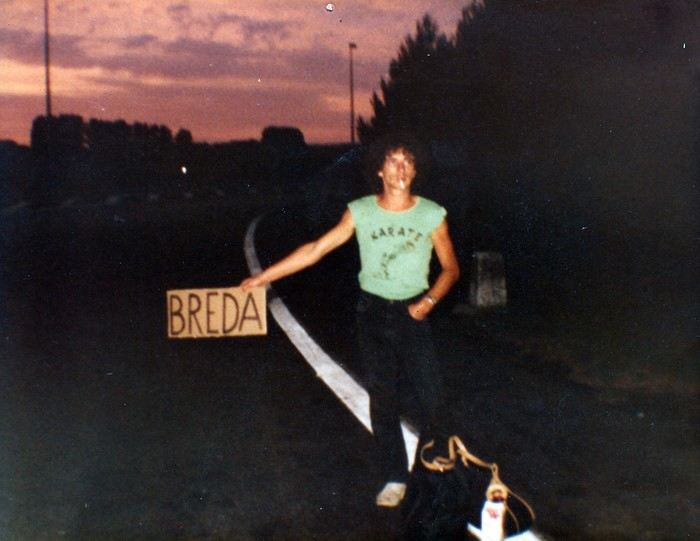
“Hey, your Marker... - My Marker? - The one you used to make hitchhiking signs.”
The marker in question is sitting proudly on the kitchen table. Marielle found it at the bottom of a moving box.
I’ve been meaning to tell the long story of my love affair with hitchhiking for years. Here we go.
To be honest, I’m not quite sure when it started. My earliest memory goes back to a fair with a bike race in my maternal grandparents’ village. I was with my cousin, my little sister, and three girl cousins. There were six of us, ages ranging from six or seven to thirteen or fourteen. Our parents stayed at the fair, and we’d had enough. So we decided to walk home. Only it was four kilometers away. So we hitchhiked. A guy driving an old car picked us all up and dropped us off at the farm. He probably found it amusing to see us thumbing a ride by the side of the road, but maybe it also worried him a bit. With everything you read in the papers...
Around fifteen or sixteen, I started hitchhiking regularly, alone or with a friend, to go to the nearby town. But it was especially when I started boarding school in Orléans that it became more regular. The first year, I’d leave Monday morning and come back Saturday noon by bus. It was an old, uncomfortable bus where we froze in winter. To make matters worse, I often got motion sickness if, as was too often the case, I ended up sitting in the back. In the spring, a high school friend suggested I hitchhike back. It meant a slight detour, but the advantage was taking only national roads.
So that’s how, from the end of tenth grade to twelfth grade, I’d thumb a ride every Saturday on the Pont de Bourgogne. Drivers were used to seeing young people hitchhiking, and it worked pretty well. Our biggest fear? Soldiers! At that time, military service was still mandatory, and on weekends, it wasn’t rare to see them competing with us. They’d keep their uniforms on to go home. That gave people confidence—with everything you read in the papers—and they’d rarely wait more than five minutes. We, with our long hair, were definitely less popular. From time to time, three big red-faced guys in a van coming back from a construction site would flip us off, yelling things like “go get a haircut, you bums!” Those were the good old days.
We still had a good laugh, though. Patrice, the friend I’d hitchhike back from school with on Saturdays, is a musician—I’d later discover he’s an excellent composer. A die-hard Beatles fan, he knows their repertoire by heart and spends his time singing at the top of his lungs while we thumb a ride. One Saturday late morning, we’d been waiting for a while at the exit of Châteauneuf-sur-Loire when a little lady came up to him and asked if he could please sing a little quieter: a baby was sleeping in the house. He put on the most sorry face: “Oh, sorry ma’am, we didn’t realize.” No sooner had the lady gone back inside than he started again. Luckily, a car stopped just then, sparing me the embarrassment of seeing the lady come back out.
Saturday was also the day when the cigarette pack was dangerously low. So before leaving, we’d go buy some “Parisiennes,” the “P4s” as we called them back then. They were slightly thinner cigarettes with a mix of tobacco scraps. Sometimes they tasted like light tobacco, sometimes like dark. Not great, but by the end of the week, our pocket money was gone. They were sold in small packs of four, hence the name P4. We’d only pay 20 centimes. On Saturdays, it was rare for the two of us to manage to scrape together 1.50 F to buy a whole pack of Gauloises...
The last twenty kilometers, I’d usually do alone, Patrice having reached his destination. From time to time, luck would smile on me: an acquaintance would just happen to pass by and stop. One January Saturday, at the exit of Gien, I ran into another guy from Argenton whom I knew a little. That day, the weather was nice, but the temperature was well below zero. It was around noon, and it was the off-peak hour. We were shivering, stamping our feet by the side of the road, when a Citroën “Tube” arrived: it was his father’s boss’s, a mason. They were both sitting in the front, but since they were obese, they had us climb onto the open back. Even though we huddled against the cab to shelter from the wind, the twenty kilometers felt very long, especially since we were only going sixty kilometers an hour. Our hands and cheeks were blue when we finally arrived.
The year I took my baccalaureate, a friend with a 2CV would take me Monday mornings with one or two others we’d pick up in nearby villages. We’d share the gas costs, but it was still cheaper than the bus. And in winter, the bus was my nightmare. You had to get up at five to catch it at six. Not enough sleep, and outside it was freezing or raining—or both. The 2CV was luxury. Plus, Philippe would pick me up at home. On the other hand, since I didn’t have class Saturday mornings—well, I did, but we only had PE the first two hours and nothing after—I’d skip class and slip out right after breakfast to thumb a ride at the Pont de Bourgogne.
Those three high school years were formative in this optional subject that was hitchhiking. Little by little, I learned the rules of the game. First, you shouldn’t walk along the road while thumbing. Cars go too fast and can’t stop easily. Accepting a ride that’s too short is also a no-go. The guy who offers to take you a little way but drops you off at some vague crossroads in the middle of nowhere? No thanks. You need to get dropped off in a town. If it’s a fairly big city, you often have to cross it from one end to the other, but it’s better. At the exit, you have to choose your spot well. Actually, you have to put yourself in the driver’s shoes: they need to see you early enough, not be going too fast, and be able to stop easily without risking an accident. So when leaving a city, it’s better not to go too far. It’s wiser to find a spot where cars go slowly and can stop easily. And preferably near a café. The café is for when you still have a few coins for a coffee and need to warm up. From time to time, you’d run into someone nice who’d make a detour to drop you off at a better spot to start again. Finally, if possible, avoid hitchhiking on Sundays. Cars are packed with whole families who, most of the time, aren’t going far. And then there’s the little worry of those people who rarely leave home: with everything you read in the papers...
During those high school years, it was only short trips, rarely exceeding a hundred kilometers. Later, I aimed bigger, and things were a bit different. In 1973-74, I crossed part of France for the first time on two or three occasions, coming back from the German border or returning to Bordeaux, where we lived briefly. Since there weren’t many highways back then, we took national roads. It was during these trips that I realized it was better to leave in the evening. As I said earlier, Sunday is to be avoided, but on weekdays, there’s another problem: if you leave in the morning, you only make short hops. First, it often takes longer to get going because drivers are people going to work nearby. Which brings us back to those who drop you off in a bad spot, far from everything. There, you have to know how to refuse. You thank the driver for stopping—oh, if only everyone could be like you—while explaining why you’d rather stay put. People don’t take offense, by the way. Those who pick up hitchhikers often hitchhiked themselves when they were in the military or before they had a car. In the late afternoon, you’d often run into salespeople or truckers, in other words, people who drive a lot. At that time, salespeople no longer had appointments and were more relaxed. They wanted to talk about something other than the merits of their products. On the radio, it was time for *Les Grosses Têtes*. You’d also quite often run into small business owners, professionals, or even hippies. The conversations were pleasant and often enriching. A little later in the evening, truckers would take over. They’d already driven a few hundred kilometers, and the depot or customs was still far away. So they’d gladly take a hitchhiker to stay awake at the wheel and chat. The radio with Max Ménier’s show *Les routiers sont sympas*, you’d eventually get tired of it. So a hitchhiker was a change. Others, who’d hit the road at midnight to be at their destination by morning, were nice and offered to let you lie down on the bunk while they drove. When you’d been hitchhiking since six in the evening, freezing in the wind between two vehicles, you weren’t unhappy to take a little nap.
Speaking of Max Ménier, he’d often make announcements for hitchhikers. One evening, I called him. It was getting late, and I still had quite a way to go. No luck: the show had ended for good the day before!
In short, it’s better not to rush, sleep in, and leave after lunch, or better yet, in the late afternoon. Obviously, I’m talking about when you have several hundred kilometers to cover. That’s when you have to play it pro.
First thing, especially at night, but it also applies in the middle of summer when the light is blinding: dress to be seen from far away. I’ll admit I have an advantage over most other hitchhikers: I’m small and don’t scare people. To balance that out, racist drivers often take me for an Arab and are less likely to pick me up, but overall, the balance tips in my favor. Back to the need to be seen: at night, I wear light-colored clothes. In headlights, you can see me from far away.
Second thing: travel light. Forget the big backpack with a frame. Drivers don’t always have room in the trunk or on the back seat, especially if it’s rained and the ground is wet. Plus, it forces them to get out of the car. If they’re nice enough to pick up a hitchhiker, you shouldn’t ask for too much either.
Third thing: bring a cardboard sign and a big marker—like the ones in the photo at the start of this post—to write the name of your destination. In the early 80s, I ran a tourist house in the Cher, but I lived in the Netherlands. In the off-season, it was only open on weekends. On Fridays, I’d leave Holland and return on Mondays. 1200 km round trip. On the way there, in Paris, I’d stand at Porte de la Chapelle. At that spot, the road is very wide, and drivers could stop easily. Obviously, on the sign, I didn’t write Eindhoven, which not everyone knows, and even less Amsterdam because of its seedy reputation. In that case, you’d expect to see a police car stop and two officers in kepis ask for your papers. So as a first destination, I’d write Compiègne. We were well out of Paris, and since it wasn’t too far, a trucker or salesperson was less reluctant to stop. Once past Compiègne, I’d take out my Lille sign. Once in Belgium, it wasn’t really necessary to use a sign anymore, since everyone was going in the same direction. Usually, the guy who picked me up at Porte de la Chapelle would say he wasn’t going far but could take me a little way. Before that, I’d still ask if there was a gas station on the highway where he could drop me off before exiting. While talking, the guy would realize he wasn’t dealing with a dangerous criminal. He’d pretend to check his watch, think for a moment, then say that actually, he was going to Belgium and could take me to the border or a little beyond. To leave Paris on the way back, I’d take the train to Melun, where it was easier to hitchhike than at Porte d’Italie.
Over all those years, I think I was pretty lucky. Or maybe philosophical enough not to imagine a car would stop after a few minutes. An hour’s wait was average. Sure, I sometimes waited three, four, or five hours. Most often at odd hours and in terrible weather. When it doesn’t work, it doesn’t work. But there’s always a moment when things pick up. Sure, when you’re soaked in freezing rain in the early morning after a sleepless night, you’re less philosophical than when I’m writing these lines comfortably at my computer, but it still holds true.
Earlier, I mentioned clothing and the importance of being well-rested before leaving. When you’ve eaten well and just gotten out of the shower, shaved, you’re in a better mood. And somehow, drivers sense it. Or at least, that’s the impression I’ve always had. It’s better to look in shape than disgusted at standing there, half-heartedly thumbing a ride. In short, when I’d start to get fed up with waiting, I’d go into the first café I saw for a coffee. Coming back out, I’d be refreshed, and most of the time, a car would stop within minutes. I’ve often said that when I stood by the side of the road thumbing a ride, I felt a bit like a gambler in front of a slot machine. It was a matter of giving luck a chance. And well, it worked out pretty well.
Then, there are countries where hitchhiking works really well and others where it’s harder. In the 70s-80s, it worked best in Germany and England. In the late afternoon, it wasn’t rare to be invited for tea. Well, that was in England. Tea meant being offered room and board. In Germany, they’d offer you coffee. Once there, they’d first show you the guest room and point out the bathroom before sitting you down in front of a big plate of cold cuts. In the evening, they’d go out in town, and the next morning, they’d usually drop you off at a good spot for hitchhiking. On the other hand, in Mediterranean and Scandinavian countries, you’d better be patient. In Spain or Italy, it’s better to take the train, which was dirt cheap back then. However, if you’re a couple traveling light, it’s already easier in most countries.
In 1982, I went on a trip around Turkey with my girlfriend. We only had two small bags, which was plenty. It was November-December, and we wore our warm, bulky clothes. Leaving Eindhoven at nine in the morning, we arrived in Graz, near the Yugoslav border, at eleven at night. 1300 km in a day! In just four or five vehicles. One to the German border, about fifty kilometers from Eindhoven, the second to Hagen in the Ruhr, the third to Salzburg, and the last to Graz at the Yugoslav border. Record broken. During the night crossing of Yugoslavia, we ran into a trucker close to retirement who lent us the truck’s bunk. So we arrived fresh and rested near Skopje the next morning. We continued to Thessaloniki in northern Greece before taking the train to Istanbul. In Turkey, we traveled a good part of the country by hitchhiking too. With truckers in old, overloaded, slow trucks that climbed hills at fifteen kilometers an hour, but also in cars where five or six people were already crammed in. And every time, we were invited for tea. Once, we were even picked up by a big shot in his Mercedes with a chauffeur. Until then, the average speed was around fifty kilometers an hour. There, we were going two hundred. On a national road, not a nice European highway.
I’ve also hitchhiked in Nepal, from Lumbini, Buddha’s birthplace, to a village on the way to Pokhara. It must have been midday. No bus until the next day. I gave it a try. A small truck overloaded with rice sacks, with two or three young people already perched on top, stopped. I rode on the roof of the cab. At fifty kilometers an hour when it was going well, with a breathtaking view. Coming back from India, I also crossed part of Iran by hitchhiking, from Tehran to the Turkish border. I did this trip with an Austrian I met at the hotel who, like me, had to watch his pennies. We gave it a shot. There was almost no traffic, but to our great surprise, the first car that passed in the area would always stop. They’d just ask for a modest contribution for gas, and it cost next to nothing.
Sometimes, you get scared too. After leaving Turkey in early December 82, we spent about two weeks in the southern Peloponnese harvesting olives. A few days before Christmas, we hitchhiked back to Holland. A girl picked us up in her little Fiat 500. We were driving on a mountain road, and that morning there was a bit of black ice. After crossing a pass, we saw the old Ford Taunus ahead of us at fifty meters start to skid. The driver let out a “heeee!” while grabbing my knees. I reflexively grabbed the wheel. Finally, the Taunus got back on track. And we didn’t swerve. But those few seconds felt very long.
In January 77, while I’d been living in Germany for a few months, I decided to spend a few days in Italy. By hitchhiking, of course. I left in the early afternoon, and by ten at night, I wasn’t far from Frankfurt. I saw a big Mercedes stop. The four or five young people crammed inside were listening to Schlager at full volume. Beer cans littered the floor. They didn’t have a precise destination, and as long as they were going south, that was fine with me. They’d finished their military service that very day and had clearly already celebrated their discharge. The driver was going 160, zigzagging dangerously from one side of the highway to the other. I should have realized he wasn’t entirely sober either. Luckily, there was almost no traffic. Finally, I managed to get dropped off at a gas station just before Frankfurt, relieved. I hope their trip didn’t end tragically.
Another time, coming back from Holland with my wife, we were picked up early in the morning near Senlis by two guys from Lille. They were going to work near Tours and could drop us off at Porte d’Italie. Apparently, they were coworkers but barely knew each other. The driver offered us a beer—at six in the morning, sure!—before opening another can for himself. He was clearly having trouble staying in the right lane. We politely declined, the passenger too. Everyone was tense. Luckily, it was rush hour on the ring road, and we were going slowly. When we got out of the car, the passenger said goodbye with the look of a guy being offered the condemned man’s rum and cigarette.
Finally, there are the annoying remarks from drivers who are either gay when you’re alone or turned on by the sight of your girlfriend when you’re a couple. In those cases, I’d get in the back so the guy wouldn’t feel too confident. And if the conversation got a little too suggestive, we’d deflect until we got dropped off.
And luckily, there are the times, not so rare after all, when you run into really nice people who invite you to eat and sleep at their place and drive you to a good spot the next morning. In Germany and England, that was common. And then there are the big strokes of luck, like during our trip to Turkey when we crossed most of Germany in one car, or that other time when some Germans drove me from the exit of Geneva all the way to the Costa Brava.
Going back to “with everything you read in the papers” and its variant “with everything you see on TV”—and now on the internet—it’s always left me perplexed. Personally, I’ve never heard of hitchhikers assaulting drivers, even if it may have happened. On the other hand, what was most common were hitchhikers being assaulted, especially girls. Anyway, even armed, it seems a bit stupid to assault the driver—wouldn’t that risk causing an accident?
Finally, since that time, I’ve occasionally wanted to hitchhike somewhere far away in France. Most often, too busy with work, it never happened, but the nostalgia hasn’t completely disappeared.
* * *
Other Hitchhikers
And then one day, I... settled down to become a driver myself. Ten years had passed, and you saw fewer and fewer hitchhikers. Or maybe I saw fewer because I had a regular job and wasn’t traveling the same way. And then I understood a few things.
Several times, I was tempted to pick up a hitchhiker, but they didn’t meet the required conditions. They were walking along the road instead of staying at the exit of the previous town. Hard to stop without risking an accident. Or the guy looked really scruffy. Or he was sulking, if not both. Then you think of that famous “with everything you read in the papers.” Not that I was scared, but unfortunately, the few hitchhikers I did pick up later were rarely interesting.
A few years ago, we picked up a young guy at the exit of a small town in Sologne. Not an easy spot for hitchhiking. Bad luck, he was a pretentious little jerk. He was barely 20 or 25 and talked like a bitter old man. He was a waiter in a restaurant. According to him, it was lucky he was there, otherwise the boss would have closed up shop long ago. You’d think he had thirty or forty years of professional experience behind him. As we approached Blois, he started ranting about Arabs, blaming them for all evils. And he laid it on thick. That morning, we were going to a teenager’s funeral who had just committed suicide, so he really got on our nerves, Mr. Know-It-All. Out of anger, I dropped him off next to a shopping center a few kilometers from downtown. Not nice, but it felt good.
Some time ago, we were driving around the Limousin on a Sunday to try out the used Twingo we’d just bought. We picked up a guy in his forties. A German who spoke French well. He started talking about the environment. He was a green Khmer. He got worked up all by himself with his pseudo-eco rant and, after a few kilometers, was almost yelling at us. As we were about to leave the main road for a small one, I dropped him off at a crossroads in the middle of nowhere. Normally, I would have made a little detour to take him to a better spot, but this time, I didn’t feel like doing the... eco-warrior a favor.
On the other hand, I’ve still done my good deed a few times. One June morning, coming back from Orléans, I saw a man in his sixties hitchhiking. The poor guy had had a rough time. He was from Montpellier and was coming back from Caen, where he’d been promised a job. Once there, they bluntly told him the position was already taken, and he had to go back. Except he didn’t have enough money left for the train. He’d spent the night hitchhiking without success. I could only take him as far as Lamotte-Beuvron, where I dropped him off near the fire station. Apparently, there was some vague shelter there or something, but it only opened a few hours later. In the meantime, he settled on the grass in a corner to sleep a little. While he was doing that, I quickly went to the train station to check the price of a ticket to Montpellier. It was within my means. Since he was sound asleep, I slipped the train ticket and 100 francs into his pocket. I couldn’t imagine him continuing to hitchhike all the way to Montpellier. And I bet he didn’t even have a piece of cardboard and a marker!
When we go to Brazil, we usually rent a small car. One day, we were coming back from Paracuru to Fortaleza when we saw a whole family hitchhiking. Two adults and two or three small children. Here near the equator, the sun sets very quickly, and it would soon be night. There was little traffic, and trucks wouldn’t stop because there was no room in the cab. As for the rich people driving big 4x4s, they wouldn’t stoop to picking up the lower classes. The only hope for this kind of family was usually a farmer or artisan who’d let them ride in the back of his pickup. Obviously, they were a bit surprised to see us. Everyone crammed in as best they could in the back of our little car. When we dropped them off, we got a whole string of “Deus lhes abençõe”—God bless you.
Still in Brazil, we were on the road from Barreirinhas to São Luís do Maranhão. About 150 km of deserted road with an isolated mud house here and there. A young woman flagged us down. She was very pregnant and had to get to the clinic twenty or thirty kilometers away to give birth. Someone was supposed to drive her, but the first signs of labor started earlier than expected, and the driver was unavailable. Even driving fast, we weren’t feeling great: it would be just our luck if she gave birth in the car!
Today, we’re in the age of smartphones and carpooling apps. Safety. With everything you see on TV... Three or four years ago, we signed up on a platform. Our first, and only, “client” was a little jerk who didn’t say a word the whole trip. No hello, no goodbye, and certainly no thank you. The next day, we found his Ray-Bans in the car. We didn’t run after him to give them back. Ha!
Croatia, Montenegro – two victims of overtourism?
Mid-June, two Auvergnats on the starting blocks—off we go to the former Yugoslavia!
We’d already explored some nooks and crannies of northern Croatia back in 2019, so we’re keeping the momentum going by planning a trip to the south of the country and then Montenegro.
On the way back, we’ll drift into Bosnia-Herzegovina just to mix things up a bit!
We’re a little unsure about what to expect in terms of tourist crowds.
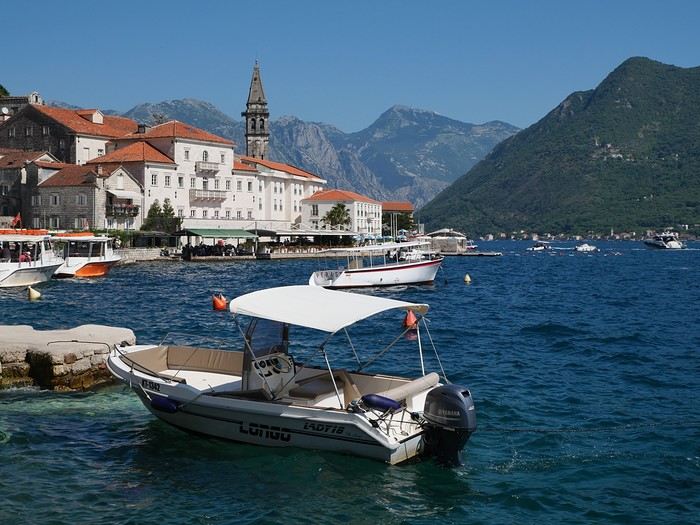
Dubrovnik has a reputation for being the hardest-hit city by overtourism, and Kotor and the whole Dalmatian coast aren’t exactly empty...
Luckily, most European countries haven’t started school holidays yet, and some measures seem to have been put in place to limit the flow (like restrictions on the number of cruise ships allowed to dock at the same time).
Maybe we’ll manage to escape the promised hell?
For now, we’re slamming the doors of the Scirocco and heading off to our first stop: northern Italy!
On the way back, we’ll drift into Bosnia-Herzegovina just to mix things up a bit!
We’re a little unsure about what to expect in terms of tourist crowds.
Dubrovnik has a reputation for being the hardest-hit city by overtourism, and Kotor and the whole Dalmatian coast aren’t exactly empty...
Luckily, most European countries haven’t started school holidays yet, and some measures seem to have been put in place to limit the flow (like restrictions on the number of cruise ships allowed to dock at the same time).
Maybe we’ll manage to escape the promised hell?
For now, we’re slamming the doors of the Scirocco and heading off to our first stop: northern Italy!
From Bangkok to Krabi, Thailand by Car!
This first trip of 2025 will have the taste of Asia.
More precisely, Thailand!
It’s not my first time—I’ve often traveled across Southeast Asia between 2000 and 2015. (This travel journal, for example...)
But it’ll be my partner’s first steps in this part of the world.
The itinerary we’ve chosen will alternate between familiar sights for me and new discoveries for both of us.
I’ll get to see how the country has changed in 20 years—and what’s stayed the same!
We were torn between the north and the south of the kingdom. Fears of smoke from slash-and-burn farming and a desire to relax on the sand tipped the scales toward the south...
What if we rented a car?
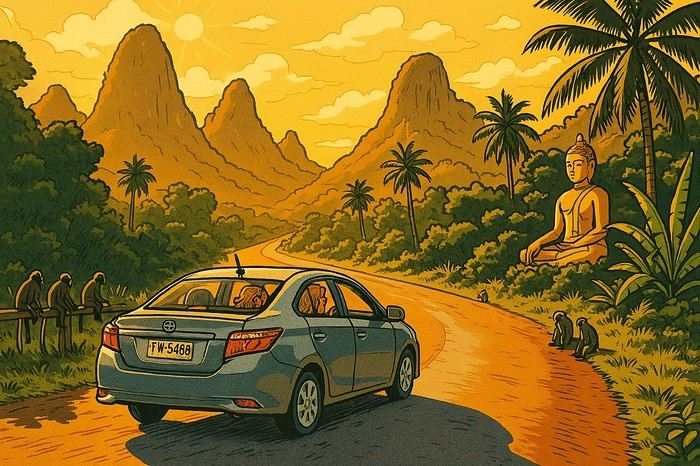
I think driving in sprawling Bangkok would be a bit ambitious, so we’ll only book our vehicle from Hua Hin to return it in Surat Thani.
Other transportation will range from tuk-tuks to overnight trains and ride-hailing services.
And of course, the plane!
I’d love to travel from Auvergne to Bangkok by road, but 15 days wouldn’t be enough...
Plus, the current geopolitical situation isn’t exactly favorable...
So, once again, we’ll be stuck for hours in the less-than-comfortable economy class of Qatar Airways.
The arrival time was on schedule, entry formalities were quick, and all our luggage made it.
We left Lyon in wind and cold—now we’re breathing in the warm, humid air of กรุงเทพมหานคร.
To reach our hotel, we first took the metro, which dropped us off in the city center in about 30 minutes for the incredible price of 1.18 €.
A few taps on the GRAB app, and we booked a ride-hailing service for the last few kilometers.
We waited a while for our driver due to insane traffic in the area, but once in the 4x4, we were at our lodging in no time.
We chose this small hotel for its riverside location, tranquility, and price.
It’ll do the job perfectly—the only downside is the weak breakfast.
The room is inviting, and we collapse onto the bed for a well-deserved short nap.
Wake-up call in an hour for our first visits!
See you soon...
More precisely, Thailand!
It’s not my first time—I’ve often traveled across Southeast Asia between 2000 and 2015. (This travel journal, for example...)
But it’ll be my partner’s first steps in this part of the world.
The itinerary we’ve chosen will alternate between familiar sights for me and new discoveries for both of us.
I’ll get to see how the country has changed in 20 years—and what’s stayed the same!
We were torn between the north and the south of the kingdom. Fears of smoke from slash-and-burn farming and a desire to relax on the sand tipped the scales toward the south...
What if we rented a car?
I think driving in sprawling Bangkok would be a bit ambitious, so we’ll only book our vehicle from Hua Hin to return it in Surat Thani.
Other transportation will range from tuk-tuks to overnight trains and ride-hailing services.
And of course, the plane!
I’d love to travel from Auvergne to Bangkok by road, but 15 days wouldn’t be enough...
Plus, the current geopolitical situation isn’t exactly favorable...
So, once again, we’ll be stuck for hours in the less-than-comfortable economy class of Qatar Airways.
The arrival time was on schedule, entry formalities were quick, and all our luggage made it.
We left Lyon in wind and cold—now we’re breathing in the warm, humid air of กรุงเทพมหานคร.
To reach our hotel, we first took the metro, which dropped us off in the city center in about 30 minutes for the incredible price of 1.18 €.
A few taps on the GRAB app, and we booked a ride-hailing service for the last few kilometers.
We waited a while for our driver due to insane traffic in the area, but once in the 4x4, we were at our lodging in no time.
We chose this small hotel for its riverside location, tranquility, and price.
It’ll do the job perfectly—the only downside is the weak breakfast.
The room is inviting, and we collapse onto the bed for a well-deserved short nap.
Wake-up call in an hour for our first visits!
See you soon...
What are the criteria that make you choose one destination over another?
Hi there,
The title might be a bit long, but I hope it’s completely understandable!
When it comes to choosing your next trip, what tips the scales in favor of Eritrea over Ibiza?
Why pick Canada over French Polynesia?
The price? A magazine or TV report, a travel journal, an Instagram ad? Ease of travel? Minimal time difference? The country that has the most in common with all the trip participants? Activities? Relaxation? The desire to push your limits?
A photo?
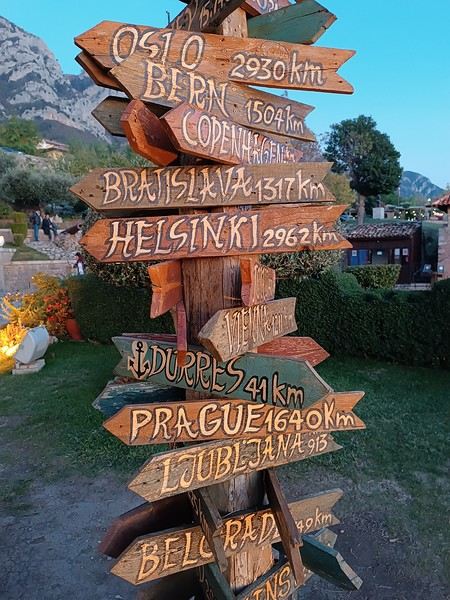
What else, I wonder...
Personally, I often prioritize simple destinations (no administrative hassles), where I’m not at risk (nothing extraordinary like getting kidnapped by Daesh or ending up in a jail cell because the current geopolitics aren’t favorable to my passport, etc.), and where I can drive.
Wide-open natural spaces are more my thing than urban anthills.
Finally, I try not to spend three days on a plane to reach my destination, and I aim for a maximum budget of 3500 € (for 3 weeks) in comfortable conditions—that means charming hotels, good meals, etc.
What about you?🙂
The title might be a bit long, but I hope it’s completely understandable!
When it comes to choosing your next trip, what tips the scales in favor of Eritrea over Ibiza?
Why pick Canada over French Polynesia?
The price? A magazine or TV report, a travel journal, an Instagram ad? Ease of travel? Minimal time difference? The country that has the most in common with all the trip participants? Activities? Relaxation? The desire to push your limits?
A photo?
What else, I wonder...
Personally, I often prioritize simple destinations (no administrative hassles), where I’m not at risk (nothing extraordinary like getting kidnapped by Daesh or ending up in a jail cell because the current geopolitics aren’t favorable to my passport, etc.), and where I can drive.
Wide-open natural spaces are more my thing than urban anthills.
Finally, I try not to spend three days on a plane to reach my destination, and I aim for a maximum budget of 3500 € (for 3 weeks) in comfortable conditions—that means charming hotels, good meals, etc.
What about you?🙂
What’s your definition of a nature destination?
Hi,
I’m starting this thread after a digression that began in the India section and continued in a travel journal about Kerala.
The original topic was whether India is—or isn’t—a nature destination.
I’ll let you all discuss and share your own definition of a nature destination. 🙂
I’m starting this thread after a digression that began in the India section and continued in a travel journal about Kerala.
The original topic was whether India is—or isn’t—a nature destination.
I’ll let you all discuss and share your own definition of a nature destination. 🙂
Wild Camping in Southern Africa
Hey everyone,
I’m sharing a slightly unusual travel journal with three goals. To make it work, this discussion should stay in the travel journal section so we can find it easily and keep adding info to existing posts.
This journal is meant to help "newbies" discover these magical places.
We go to Southern Africa not just for the animals, but also for that soft light, the atmosphere, and those incredible wild campsites where you feel so at home... I’d love for you all to share your favorite spots here—those we miss so much.
The last goal is figuring out how to photograph them. Honestly, I’m not happy with my photos because they don’t capture the feeling I get when I’m there or that unique atmosphere.
I’ll start with one of the first spots that, for me, is one of the most beautiful in Southern Africa: Passarge Valley 2 in the Central Kalahari. There, you’re alone—completely alone. The next campsite is over 25 km away, and that’s a half-day of 4x4 driving. In front of you, there’s nothing but the CKGR plains with herds of springboks... absolutely stunning 😎

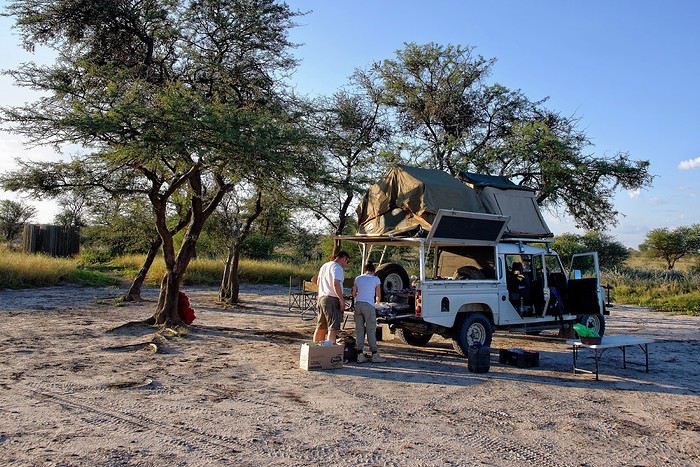
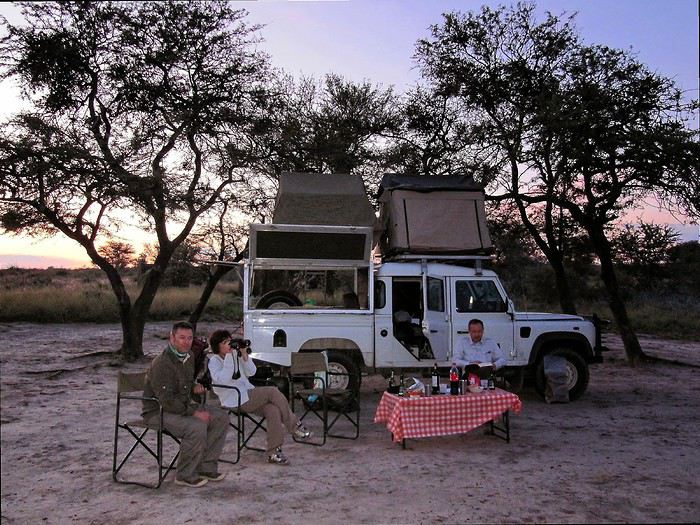
I’m sharing a slightly unusual travel journal with three goals. To make it work, this discussion should stay in the travel journal section so we can find it easily and keep adding info to existing posts.
This journal is meant to help "newbies" discover these magical places.
We go to Southern Africa not just for the animals, but also for that soft light, the atmosphere, and those incredible wild campsites where you feel so at home... I’d love for you all to share your favorite spots here—those we miss so much.
The last goal is figuring out how to photograph them. Honestly, I’m not happy with my photos because they don’t capture the feeling I get when I’m there or that unique atmosphere.
I’ll start with one of the first spots that, for me, is one of the most beautiful in Southern Africa: Passarge Valley 2 in the Central Kalahari. There, you’re alone—completely alone. The next campsite is over 25 km away, and that’s a half-day of 4x4 driving. In front of you, there’s nothing but the CKGR plains with herds of springboks... absolutely stunning 😎