Results for "Cameroun+événement"
About 5,617 results.
More options
Many results are in French, the community’s main language. English translations are added over time.
Search results
Visa à la frontière de la République centrafricaine pour passer au Soudan?
Bonjour,
J'ai l'intention de traverser l'Afrique du Nord au Sud à vélo. Mon périple m'amène à la frontière de la République Centraficaine pour passer au Sud Soudan et ensuite en Ouganda et au Kénia. Apparemment, il est impossible d'avoir une visa à la frontière pour passer au Soudan, quelqu'un peut-il me le confirmer ou me trouver une solution ? Etant à vélo, je ne peux pas prendre mon visa d'avance. Si c'est vraiment impossible, je prendrai l'avion à Bangui pour Addis Abeba et je zapperai le Soudan.
Merci pour votre aide.
Gérard
J'ai l'intention de traverser l'Afrique du Nord au Sud à vélo. Mon périple m'amène à la frontière de la République Centraficaine pour passer au Sud Soudan et ensuite en Ouganda et au Kénia. Apparemment, il est impossible d'avoir une visa à la frontière pour passer au Soudan, quelqu'un peut-il me le confirmer ou me trouver une solution ? Etant à vélo, je ne peux pas prendre mon visa d'avance. Si c'est vraiment impossible, je prendrai l'avion à Bangui pour Addis Abeba et je zapperai le Soudan.
Merci pour votre aide.
Gérard
Enseignant cherche projet humanitaire pour l'année 2009-2010
Bonjour,
je suis enseignant à Paris économie et gestion et docteur en informatique. J'envisage consacrer toute l'année 2009-2010 à un projet humanitaire. Je peux enseigner des mathématiques, de l'économie, de l'informatique etc... Je suis également ouvert pour travailler dans la formation d'adultes en gestion ou en informatique que j'ai pratiquée un temps.
Dans l'attente de vous lire.
rémi
Habiter au Bénin: prix et modalités des logements à Cotonou?
J'aimerai venir habiter au Bénin à Cotonou en Avril 2009 et je pense y rester. Quelqu'un peut m'indiquer le prix pour un studio moderne (1Ch 1 salon)ou 2 ch salon dans un quartier sécuriser pas forcement dans les quartiers des blancs !!!! ensuite qu'elles sont les conditions pour louer (1 mois ou plus caution etc) le prix de l'électricité et l'eau merci d'avance
Partir en humanitaire en Afrique
Bonjour à toutes et à tous!
je suis actuellement en école d'assistante sociale et si tout se passe bien j'aurais mon diplome en juillet prochain. j'ai 23 ans et avant d'entamer mon avenir professionnel, j'aimerai partir en humanitaire en afrique afin d'y apporter mon aide. Ma préférence irait pour l'aide dans un orphelinat ou aide éducative, accompagnement scolaire auprès de jeunes maternelle, primaire. Je suis déja partie avec une association à Madagascar dans le cadre d'un chantier avec remise en etat de salle de classe. Ce voyage de 3 semaines est resté pour moi un souvenir inoubliable et je me suis promis de repartir un jour. je recherche également le contact direct avec la population qui est très important pour moi. je pense avoir des choses à leur apporter mais je pense qu'ils peuvent également beaucoup m'apporter (parfois même sans le savoir!). Voila je voulais savoir si on pouvais m'orienter dans mes recherches. Connaissez vous des associations sérieuses qui peuvent m'encadrer dans cette démarche?
je suis actuellement en école d'assistante sociale et si tout se passe bien j'aurais mon diplome en juillet prochain. j'ai 23 ans et avant d'entamer mon avenir professionnel, j'aimerai partir en humanitaire en afrique afin d'y apporter mon aide. Ma préférence irait pour l'aide dans un orphelinat ou aide éducative, accompagnement scolaire auprès de jeunes maternelle, primaire. Je suis déja partie avec une association à Madagascar dans le cadre d'un chantier avec remise en etat de salle de classe. Ce voyage de 3 semaines est resté pour moi un souvenir inoubliable et je me suis promis de repartir un jour. je recherche également le contact direct avec la population qui est très important pour moi. je pense avoir des choses à leur apporter mais je pense qu'ils peuvent également beaucoup m'apporter (parfois même sans le savoir!). Voila je voulais savoir si on pouvais m'orienter dans mes recherches. Connaissez vous des associations sérieuses qui peuvent m'encadrer dans cette démarche?
Recherche volontariat
Je m'appelle Rokhaya Fall, j'ai 23 ans, je suis en fait à la recherche d'associations travaillant auprès de jeunes enfants qui auraient besoin d'un petit coup de main (handicap et autres). Je suis ouverte à tous mais je focalise mes recherches plutôt vers les orphelinats ou les petites écoles, les ong etc et je n'ai pas de qualités particulières à mettre en avant mais j'ai juste envie d'être immergée dans ce cadre de vie.
Merci d'avance
Elève ingénieur disponible pour une mission humanitaire en hiver 2009
Bonjour à tous,
Je suis actuellement élève à l’ENSAM (Ecole Nationale Supérieure d’Arts et Métiers) et dans le cadre de mes études, j'ai l'obligation d'acquérir une expérience à l’international. J’ai donc pris la décision de partir pour une mission humanitaire. Bien que l’ENSAM soit une école généraliste, mes domaines d’expertises se situeraient plutôt en mécanique, ou management de projet (utilisation de MsProject, bases de données avec Access, …). Je suis disponible de Septembre 2009 avec Décembre 2009.
Si quelqu’un peut m’aiguiller dans ma recherche, je le remercie par avance.
Recherche association d'aide humanitaire en Afrique
Bonjour!
Je me demande si quelqu'un peut me donner de l'information concernant des associations ou autres qui cherchent des personne pour de l'aide en Afrique?! Soit quelqu'un qui a déjà été ou une personne de là bas.
Je suis étudiante en fin d'année en sciences comptables à l'université au Québec (comptable agréé - profession libérale au Canada), donc je ne sais pas si je peux aider au développement avec ma formation universitaire?!
Merci de vos réponses à l'avance!! :)
Je me demande si quelqu'un peut me donner de l'information concernant des associations ou autres qui cherchent des personne pour de l'aide en Afrique?! Soit quelqu'un qui a déjà été ou une personne de là bas.
Je suis étudiante en fin d'année en sciences comptables à l'université au Québec (comptable agréé - profession libérale au Canada), donc je ne sais pas si je peux aider au développement avec ma formation universitaire?!
Merci de vos réponses à l'avance!! :)
Pourquoi toujours des coupures d'éléctricité et d'eau à Brazzaville? (Congo)
Je suis toujours surpris de la coupure d'éléctricité et d'eau à Brazzaville.
N'importe quel site je lis, c'est toujours le même refrain.
Que ce passe-t-il vraiment à Brazzaville ?
Qelle est donc la ville la plus touchée ?
Et c'est comme très lementable de joindre brazza, mais une question se pose " comment les gens font face à tout çà ?" la reussite de travail sans éléctricité, la cuisine et la toilette avec de la penerie de d'eau.....
Formalités pour rentrer un poids lourd au Maroc?
Je prepare une descente sur Le Cap avec mon TRM 4000 et je suis a la recherche d'infos sur les formalites pour rentrer le camion (poid lourd) au Maroc.
On m'a dit que ce n'etait pas possible.
Qu'en est-il exactement??????????
Merci
manou
Merci
manou
Choisir une destination sur une période de deux mois
Bonjour, je m'appelle Marie et j'ai 47 ans. Cette année, j'ai décidé de renouer avec le voyage durant ma période de break, je prévois de partir sur une période de 2 mois, ou plus. Je ne suis pas une "routarde" mais j'ai un peu usé mes semelles sur les routes de l'Amérique du Nord et du Maroc... C'était il y a longtemps ! Mes envies me portaient vers l'Afrique noire ou l'Amérique centrale mais j'ai aussi besoin d'une destination cool car la vie de saisonnier est intense et dense et il faut vraiment souffler entre 2 saisons. En voguant au fil du net, j'espère trouver une destination qui permette le voyage solitaire au féminin et éventuellement la rencontre pour quelques heures ou quelques jours avec d'autres voyageurs. Mes moyens financiers sont limités (normal quand on travaille 7 mois sur 12) et mes besoins simples ! Madagascar en décembre et janvier, le Costa Rica en janvier et février... Que les idées fusent, si vous le voulez bien.
Francais perturbateur!?
apres les violences urbaines, il y a les manifestations anti cpe, manifestations anti gouvernement!....les soulevements des francais reapparaissent aux medias!...et les images font de plus en plus le tour du monde!...et elles sont utilisees ds plusieurs pays pour justifier leur action!....en disant il y a pire en france !...c'est l'anarchie!...
dernierement la bielorussie!..pour justifier leur dictature et leur propagande!..."pourquoi l'europe veut intervenir chez nous alors que c'est pire en france!.." et ca me revolte!...comparer ce qui est incomparable!..il y a le cameroun et l'angleterre aussi qui definissent nos etudiants comme des enfants gates!...l'allemagne qui ne comprend pas toutes ces manifestations contre une solution au chomage!..la france devient une nation imcomprise!..
la france a t'elle vraiment une mauvaise image vu de l'etranger??ou est ce que c'est la jalousie qui fait que l'on s'acharne sur notre pays!..??.
ou bien tout simplement le monde devient fou!...???🤪
qu'est ce que l'on a fait pour meriter ca???
au secours!...
Air India: compagnie sécurisée?
Je vais partir aux Etats Unis cet été, je vais surement prendre des billets avec Air India.
Etant donné son cout, je voulais savoir si cette compagnie était sérieuse?
Quels sont les risques de prendre cette compagnie?
Merci de vos réponses...
Liste des compagnies aériennes à risque
Bonjour je vous transmets un article publié par le journal VSD du 06 au 12 juillet 2005 relatif à la "blacklist" des compagnies aériennes, en aucun cas pour polémiquer, uniquement pour porter à votre connaissance cette liste 😉
ooo0ooo
"Cette liste noire a été réalisée selon plusieurs critères non exclusifs. Nous avons fait figurer les compagnies interdites pr le Direction générale de l'aviation civile (DGAC) et celles interdites par les aviations civiles britannique et suisse connues pour être intransigeantes. Puis nous avons fait appel à un expert international en investigations aériennes, Serge Roche, qui a mis à notre disposition sa base de données compilant tous les accidents ou incidents d'avions, mortels ou non (crash, sortie de piste, etc...) depuis 1952. VSD s'est concentré sur l'analyse des années 1995-2005.
1 AEROFLOT. RUSSIE 2 AIR ALGERIE. ALGERIE 3 AIR KORYO. COREE DU NORD (interdite en France) 4 AEROMEXICO. MEXIQUE 5 AIR MEMPHIS. EGYPTE 6 AIR MAURITANIA. MAURITANIE (interdite en Grande-Bretagne) 7 AIR UNIVERSAL. SIERRA LEONE (interdite en Grande-Bretagne) 8 ALBANIAN AIRLINES. ALBANIE (interdite en Grande-Bretagne) 9 CAMEROON AIRLINES. CAMEROUN (interdite en Grande-Bretagne) 10 CENTRAL AIR EXPRESS. REPUBLIQUE DEMOCRATIQUE DU CONGO (interdite en Grande-Bretagne) 11 CHINA AIRLINES. TAIWAN 12 CHINA SOUTHERN AIRLINES. CHINE 13 CHINA NORTHERN AIRLINES. CHINE 14 CONTINENTAL WINGS COMORES AIRLINES. COMORES (interdite en France) 15 CUBANA DE AVIACION. CUBA 16 CROSSAIR. SUISSE 17 DNIPROVIA. UKRAINE (interdite en Suisse) 18 EGYPTAIR. EGYPTE 19 GHANA AIRWAYS. GHANA 20 GIRJET. ESPAGNE (interdite en Suisse) 21 GULF AIR. BAHREIN 22 HEMUS AIR. BULGARIE (interdite en Suisse) 23 IRAN AIR. IRAN 24 LION AIR. INDONESIE 25 PAKISTAN AIRLINES. PAKISTAN 26 PREMIUM AIR SHUTTLE. NIGERIA (interdite en Suisse) 27 SAUDI ARABIAN AIRLINES. ARABIE SAOUDITE 28 SUDAN AIRWAYS. SOUDAN 29 SIBIR AIRLINES. RUSSIE 30 SRILANKAN. SRI LANKA 31 TAJKISTAN AIRLINES. TADJIKISTAN (interdite en Grande-Bretagne) 32 TAM. BRESIL 33 TAME. EQUATEUR 34 TURKISH AIRLINES. TURQUIE 35 VARIG. BRESIL 36 VIETNAM AIRLINES. VIETNAM
Sans grosse surprise, cette liste pointe les trois grandes zones du monde où il est plus dangereux de voler : l'Afrique, l'Asie et les républiques de l'ex-URSS. Si beaucoup de compagnies mentionnées sont inconnues du grand public ou volent dans des zones peu fréquentées par le touriste lambda (Sierra Leone, Tadjikistan), quelques grandes compagniesd'aviation nationale y figurent également. Certaines comme Varig, la compagnie brésiliennes, ou Turkish airlines, sont concernées sur leurs vols intérieurs, parfois moins sécurisés. Ainsi que le reconnait Marc Foucault, directeur de cabinet de l'ex-ministre des transports Gilles de Robien, qui fut l'initiateur du futur "label bleu" pour les compagnies aériennes, "c'est sur les petites distances, les bouts de ligne ou correspondances pour une petite ville d'un grand pays que se rencontrent souvent les gros problème". Parce que les avions sont vieux (Boeing 707, 727, Ilyushin II, Douglas DC-3, Fokker F-70...) et tournent beaucoup, que le personnel formé pour leur maintenance est de plus en plus rare et que le coût des formations est élevé, etc. "Certaines petites compagnies étrangères utilisent ainsi des Caravelle abandonnées par Air Inter en 1982 ! explose Serge Roche. Et les DC-3 datent des années cinquante. Mais même les grande compagnies ne sont pas exemptes de pépins, comme le montre cette blacklist, et le nombre de morts n'est pas forcément le critère en matière de sécurité". En ligne de mire par exemple : Aeroflot, qui, si elle n'a eu qu'un seul crash fatal en dix ans, connaît pratiquement un accident par an. " ooo0ooo
Voilà bon voyage à tous et toutes...
"Cette liste noire a été réalisée selon plusieurs critères non exclusifs. Nous avons fait figurer les compagnies interdites pr le Direction générale de l'aviation civile (DGAC) et celles interdites par les aviations civiles britannique et suisse connues pour être intransigeantes. Puis nous avons fait appel à un expert international en investigations aériennes, Serge Roche, qui a mis à notre disposition sa base de données compilant tous les accidents ou incidents d'avions, mortels ou non (crash, sortie de piste, etc...) depuis 1952. VSD s'est concentré sur l'analyse des années 1995-2005.
1 AEROFLOT. RUSSIE 2 AIR ALGERIE. ALGERIE 3 AIR KORYO. COREE DU NORD (interdite en France) 4 AEROMEXICO. MEXIQUE 5 AIR MEMPHIS. EGYPTE 6 AIR MAURITANIA. MAURITANIE (interdite en Grande-Bretagne) 7 AIR UNIVERSAL. SIERRA LEONE (interdite en Grande-Bretagne) 8 ALBANIAN AIRLINES. ALBANIE (interdite en Grande-Bretagne) 9 CAMEROON AIRLINES. CAMEROUN (interdite en Grande-Bretagne) 10 CENTRAL AIR EXPRESS. REPUBLIQUE DEMOCRATIQUE DU CONGO (interdite en Grande-Bretagne) 11 CHINA AIRLINES. TAIWAN 12 CHINA SOUTHERN AIRLINES. CHINE 13 CHINA NORTHERN AIRLINES. CHINE 14 CONTINENTAL WINGS COMORES AIRLINES. COMORES (interdite en France) 15 CUBANA DE AVIACION. CUBA 16 CROSSAIR. SUISSE 17 DNIPROVIA. UKRAINE (interdite en Suisse) 18 EGYPTAIR. EGYPTE 19 GHANA AIRWAYS. GHANA 20 GIRJET. ESPAGNE (interdite en Suisse) 21 GULF AIR. BAHREIN 22 HEMUS AIR. BULGARIE (interdite en Suisse) 23 IRAN AIR. IRAN 24 LION AIR. INDONESIE 25 PAKISTAN AIRLINES. PAKISTAN 26 PREMIUM AIR SHUTTLE. NIGERIA (interdite en Suisse) 27 SAUDI ARABIAN AIRLINES. ARABIE SAOUDITE 28 SUDAN AIRWAYS. SOUDAN 29 SIBIR AIRLINES. RUSSIE 30 SRILANKAN. SRI LANKA 31 TAJKISTAN AIRLINES. TADJIKISTAN (interdite en Grande-Bretagne) 32 TAM. BRESIL 33 TAME. EQUATEUR 34 TURKISH AIRLINES. TURQUIE 35 VARIG. BRESIL 36 VIETNAM AIRLINES. VIETNAM
Sans grosse surprise, cette liste pointe les trois grandes zones du monde où il est plus dangereux de voler : l'Afrique, l'Asie et les républiques de l'ex-URSS. Si beaucoup de compagnies mentionnées sont inconnues du grand public ou volent dans des zones peu fréquentées par le touriste lambda (Sierra Leone, Tadjikistan), quelques grandes compagniesd'aviation nationale y figurent également. Certaines comme Varig, la compagnie brésiliennes, ou Turkish airlines, sont concernées sur leurs vols intérieurs, parfois moins sécurisés. Ainsi que le reconnait Marc Foucault, directeur de cabinet de l'ex-ministre des transports Gilles de Robien, qui fut l'initiateur du futur "label bleu" pour les compagnies aériennes, "c'est sur les petites distances, les bouts de ligne ou correspondances pour une petite ville d'un grand pays que se rencontrent souvent les gros problème". Parce que les avions sont vieux (Boeing 707, 727, Ilyushin II, Douglas DC-3, Fokker F-70...) et tournent beaucoup, que le personnel formé pour leur maintenance est de plus en plus rare et que le coût des formations est élevé, etc. "Certaines petites compagnies étrangères utilisent ainsi des Caravelle abandonnées par Air Inter en 1982 ! explose Serge Roche. Et les DC-3 datent des années cinquante. Mais même les grande compagnies ne sont pas exemptes de pépins, comme le montre cette blacklist, et le nombre de morts n'est pas forcément le critère en matière de sécurité". En ligne de mire par exemple : Aeroflot, qui, si elle n'a eu qu'un seul crash fatal en dix ans, connaît pratiquement un accident par an. " ooo0ooo
Voilà bon voyage à tous et toutes...
Que signifie ton pseudo?
En me balladant sur le site le coeur ouvert à l'inconnu, je découvre des pseudos magnifiques.
Pour certains j'en comprends la portée et le sens. POur d'autres pas du tout?
Peut être pourriez expliquer ici"le comment du pourquoi " du choix de votre pseudo. Une manière de dévoiler sous un jour nouveau....
Pour moi, c'est Ukrainski, avec ma singature Cyril, l'Ukrainski
3 raisons ont motivé ce choix: 1/ le manque d'imagination 2/ l'intérêt particulier que je porte à l'Ukraine 3/ un certain amusement à parodier l'ukrainien dans sa façon de composer les noms...
"N'y voyez pas un désir pervers "de moquerie"* mais le délire de l'artiste " - les bronzés * ajout personnel...
Au final, les gens comprennent directment qui je suis...
Pour certains j'en comprends la portée et le sens. POur d'autres pas du tout?
Peut être pourriez expliquer ici"le comment du pourquoi " du choix de votre pseudo. Une manière de dévoiler sous un jour nouveau....
Pour moi, c'est Ukrainski, avec ma singature Cyril, l'Ukrainski
3 raisons ont motivé ce choix: 1/ le manque d'imagination 2/ l'intérêt particulier que je porte à l'Ukraine 3/ un certain amusement à parodier l'ukrainien dans sa façon de composer les noms...
"N'y voyez pas un désir pervers "de moquerie"* mais le délire de l'artiste " - les bronzés * ajout personnel...
Au final, les gens comprennent directment qui je suis...
Africa: A Heartfelt Love for a Continent
“When the Whites came to Africa, we had the land and they had the Bible. They taught us to pray with our eyes closed: when we opened them, the Whites had the land and we had the Bible.” Jomo Kenyatta (p.7)
The Maggi cube, an unchallenged hegemony, and so much more
“The hopeless continent,” headlined The Economist, a British magazine, in July 2000 about Africa. Eleven years later, the same magazine headlined “Africa rising” instead. Images of Africa in the prosperous North constantly oscillate between apocalyptic scenarios and enthusiastic projections. A key issue with such images lies in the generalization they entail. If you look at the continent, considerable contrasts emerge depending on space and time. It’s no surprise that a region of the world encompassing such diverse ecological zones, maintaining such varied ties with other continents, comprising nearly fifty nation-states in sub-Saharan Africa alone, and characterized by a great diversity of languages, belief systems, and historical paths, doesn’t share a single destiny.
And yet, for many people outside Africa, as well as for many Africans, the continent constitutes a single entity, defined by criteria such as skin color, a colonial past, poverty, and the art of survival. Until now, these perspectives were generally accompanied by the idea that Africa had to—or should have—followed a single path together, sometimes called development, sometimes modernization, sometimes liberation, then a market economy. None of these paths delivered on their promises.
The two writers Alain Mabanckou and Abdourahman Waberi—one from Congo, the other raised in Djibouti, both long settled in France and now professors at renowned North American universities (Los Angeles, Washington)—have had enough of pessimistic scenarios: “We are aware that Africa is in the world and the world is in Africa. The same goes for all other continents, as our destinies are inextricably linked for better or worse. We refuse to see Africa as a reservoir of misfortunes or a continent cursed by atavistic misfortune and characterized by ethnic conflicts. [...] It’s this passionate flame we wanted to capture in a book [...] a kind of stroll through African cultures, without any demands, each letter of the alphabet leading us to a notion, a practice, a concept, a moment in history, literature, painting, politics, economics, cuisine, etc.” (p.10-11). Africa, they write, is on the verge of “imposing a signature, a style, a way of being in the world and in relation to the rest of the world.” (p.11) To put words to the continent’s diversity and dynamism, the two authors created a “rambling ABC,” a kind of portrait—or more precisely, a mythography—that lets you see and feel the pulse of a vast continent whose cultural power is unfolding before our eyes. Once marginalized or even mocked, the voice and importance of the Continent in global affairs are now undeniable” (p.11), containing over a hundred entries, mostly concise, written in a relaxed and casual style. The optimistic, even exuberant tone is set from the brief introduction. The duo of authors wants to “sing a love song to the cultures of our continent, to its inhabitants past and present, to its exceptional resources and its spectacular globalization despite a certain pollution that still clouds our skies due to the unmatched duration of dictatorships in some of our regions.” (p.12) In doing so, they don’t want to be too distracted by today’s Afewerki-Biya-Bongo-Déby & Co. ...
Of course, you’ll find tributes to great precursors like Frantz Fanon (“[...] it was a love story and admiration that wasn’t dimmed by the four decades separating his birth from ours. Let’s add that we were born while the native of Fort-de-France had left the world’s stage four years earlier, in the prime of life” p.141), Mongo Beti (“You must read and reread Mongo Beti, a genius who used his fame to support often just causes in Africa, like defending oppressed groups. His place is already in History. His oppressors, like the dictators Ahmadou Ahidjo and Paul Biya, can’t compete in the same category” p.64), the Malian Amadou Hampâté Bâ
(“Posterity remembers him mainly as an tireless defender of African cultures. His plea for the collection and preservation of traditional African knowledge remains a major event for all men and women of good will. One day in 1960, at the UNESCO podium, the native of Bandiagara sounded the alarm: ‘[...] Since we’ve admitted that the humanity of each people is the heritage of all humanity, if African traditions aren’t collected in time and written down, they’ll one day be missing from the universal archives of humanity.’” p.51),
Kwame Nkrumah, “one of the founders of Pan-Africanism, father of Ghana’s independence” (p.239), as well as the historian Cheikh Anta Diop, the writer, poet, and politician Aimé Césaire, and the economist and thinker Samir Amin, but also very warm tributes to certain contemporary African intellectuals like Souleymane Bachir Diagne and Achille Mbembe
(“A few years ago, in dominant economic circles, a rumor often resurfaced, usually disguised as a cold and scientifically proven analysis: Africa is useless. It’s a burden for the rest of the human community. With its 2% share in world trade, it would disappear from stock market radars without anyone noticing. So? Maybe it’ll be pulled up by other continents. Wanting to surpass itself is a crazy bet for Africans, they concluded. Arrogant or clueless, President Nicolas Sarkozy declared before an audience of students and teachers at Cheikh Anta Diop University in Dakar: ‘The African man hasn’t entered history enough [...] He only knows the eternal repetition of time marked by the endless repetition of the same gestures and words.’ That was in 2007. For decades, armed only with reason, an intellectual often steps up to debunk prejudices, lazy readings, and dishonest frameworks used as false fronts by those who, like Nicolas Sarkozy or former journalist Stephen Smith, out of ignorance, contempt, or condescension, distort African reality. This intellectual is none other than the historian and political scientist Achille Mbembe. This heir of Frantz Fanon, Amílcar Cabral, Jean-Marc Ela, and Fabien Eboussi-Boulaga was born in 1957 in Cameroon, in the Bassa region. Marked early by the upheavals of a fratricidal war, Achille Mbembe became the guardian of the memory of martyrs. After brilliant studies in Paris, he went on to teach at the best American universities, but the call of the Continent was stronger than anything else. In Dakar, he once directed CODESRIA (Council for the Development of Social Science Research in Africa) before joining the University of the Witwatersrand in Johannesburg, South Africa. Even though the author of *Critique of Black Reason* (Éditions La Découverte, 2015) spends a few months at Duke University in North Carolina, his observation post remains South Africa. From Johannesburg, Achille Mbembe scrutinizes Africa and the whole world. A lucid observer with an elegant and generous pen, Achille Mbembe knows how to blend big and small history: ‘I was born one day in July, as the month was drawing to a close. It was 1957, in that part of Africa recently named ‘Cameroon,’ a memory of the wonder that seized Portuguese sailors in the 15th century when, sailing up the river near Douala, they couldn’t help but note the presence of a multitude of crustaceans, and named it *Rio dos Camarões*, meaning ‘River of Shrimp.’ I grew up in the shadow of this nameless land, since, in a way, the name it bears is only the product of someone else’s astonishment: a lexical mistake, if you will.’ From this mistake or wound, he made leaven, a springboard to compose a rich work, recognized worldwide. To denounce barriers and barbarians too. But that’s not enough. Among his peers in circles of thought and action, Achille Mbembe passionately and consistently defends human dignity and the beauty of the world. In doing so, he fulfills the mission Frantz Fanon entrusted to him.” (p.227-229),
as well as entries dedicated to lesser-known artists and intellectuals, like the French journalist and activist Rokhaya Diallo, daughter of Senegalese and Gambian parents, or the Ethiopian filmmaker Haile Gerima, who has long lived in the United States. Other names from politics, sports, music, art, and literature: Kofi Annan, p.36; Barack Obama, p.243; Thomas Sankara, p.277; Ousmane Sow, p.285; Yambo Ouologuem, p.250; Léopold Sédar Senghor, p.282; Muhammad Ali, p.30; Nuruddin Farah, p.146; Salif Keita, p.203; Ahmadou Kourouma, p.206; Ngũgĩ wa Thiong’o, p.236; Winnie Mandela, p.224; Kylian Mbappé, p.226 ...
The authors, who resolutely commit to a “mythography” (p.11) of Africa, also pay special attention to local social movements, cultural events, and aspects of daily life. *Y’en a marre*, “which also meant ‘we’re fed up with sitting on our hands’” (p.320-321), emerged about a decade ago in Senegal as a citizen movement of peaceful resistance and symbolizes, the authors emphasize, the fact that African youth are increasingly fed up “with the political circus deployed in Africa since independence, as our parents would say, ‘since the White man left’...” (p.321). A full entry is dedicated to the Maggi bouillon cube, which has flooded African markets for about forty years and enjoys immense popularity (“It’s everywhere in Africa, from Dakar to Djibouti, and from Tangier to Cape Town. It’s in every pot, every stew. Little hands put it in every sauce, every local or adapted dish. An unchallenged hegemony! You’ll find it in diasporas too. The culinary strolls in Paris, in the [...] neighborhood” p.90). Critics blame it not only for impoverishing the aromatic diversity of local dishes but also for being harmful to health. And yet, “he poorest Africans, those who eat only once a day, a few spoonfuls of white beans and a ball of *foufou*, for example, are the most fervent users of the magic cube.” (p.92-93)
For *fonio*, “the new trendy cereal. [...] From the millet family, fonio is probably the oldest cereal cultivated in West Africa, and mainly in its sub-Saharan part, for millennia. [...] Easy to grow, water-efficient, fonio grows everywhere except on clay soils. Long neglected because it was considered the poor man’s crop, fonio is now a source of pride for the farmers who cultivate it and cherish it like the apple of their eye” (p.156-157), the authors immediately offer a detailed recipe, letting the reader know that “e can’t resist sharing this fonio with chicken recipe from Mali with you:
Ingredients: 1 chicken 3 large ripe red tomatoes 4 tbsp tomato paste 4 large onions 1 garlic clove 1/2 cup oil 2 Maggi cubes or salt 2 large carrots 1 turnip 1 large cabbage 2 large potatoes 1 celery stalk 1 packet pre-cooked fonio 4 okra (or okra powder) salt, pepper
Preparation: 1. Prepare the sauce: wash and cut the chicken. Peel the onions, garlic, and vegetables. 2. In a pot, fry the chicken pieces. 3. Dice the onions, tomatoes, carrots, and turnip very small and add them to the pot. 4. Add the tomato paste, salt, and pepper. 5. Simmer for 15 min, then add 2 L of water and the cooked chicken pieces. 6. Simmer for 30 min, then add the crushed garlic and celery, plus the cabbage cut into 4 and the potatoes cut in half. 7. Prepare the fonio: cover it with warm water, let it rest for 15 min, and cook it over low heat. 8. In a small pot, boil the okra and crush them. 9. Mix the crushed okra with the cooked fonio, then salt. Serve hot.” (p.158-159)
The comedy *Black Mic Mac*, released in French theaters in 1986 and addressing France’s increasingly restrictive immigration policy at the time, also gets an entry, as do *Tintin in the Congo*, the popular comic, and *Jip’s Café* (“[...] a little Africa in the heart of Paris, with passersby stopping to admire the ‘ambianceurs’ on the dance floor or attend the cultural events offered by the place” (p.194), an African establishment in Paris that Alain Mabanckou already immortalized in one of his novels.
The duo of authors also tackles thorny subjects like jihadism (p.119), the Rwandan genocide (p.272), the CFA franc (p.82), and dictatorship (p.110). While the two strike the right tone here, many entries leave a slightly bitter taste. Two examples: why doesn’t the text on Barack Obama mention the great disappointment of many people in Africa, who expected more from the African policy of the first U.S. president with African roots than just occasional warm words? Why do the comments on Winnie Mandela gloss over the fact that she was a highly controversial icon of the anti-apartheid movement due to her involvement in kidnappings, acts of torture, and murders of alleged apartheid collaborators? Instead, there’s a compassion that brings tears to the eyes: “She was often reduced to a secondary role, the wife of a great man” or “When victory came, she didn’t taste its fruits. Divorced, isolated. She would never be a ‘first lady’ in an evening gown, posing before a bed of chrysanthemums. They’d keep her far from the circles of power” (p.224-225). At this point, I would’ve liked the authors to take a slightly more critical stance...
That said, these “weaknesses” (if you can call them that) shouldn’t overshadow the book as a whole. It remains an informative, sometimes very entertaining, and often even original work in its own way.
Book information (the original French and the German translation):
Alain Mabanckou/Abdourahman Waberi. Dictionnaire enjoué des cultures africaines. Fayard, 2019. Alain Mabanckou/Abdourahman Waberi. Der Puls Afrikas. Eine Liebeserklärung von A bis Z. Reclam, 2022.
Hery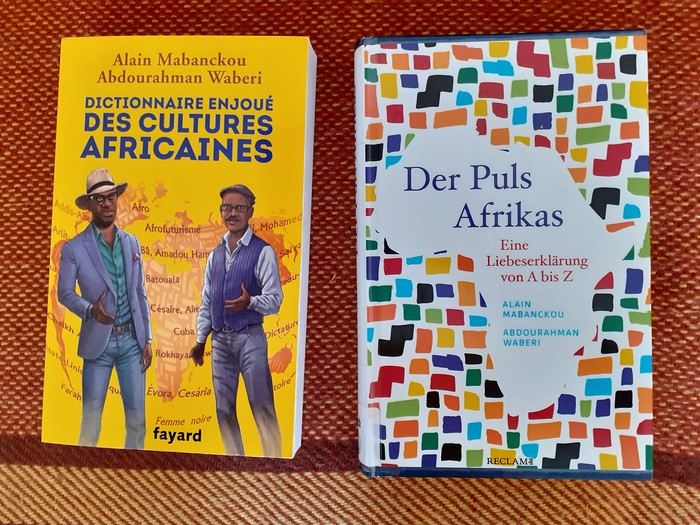
The Maggi cube, an unchallenged hegemony, and so much more
“The hopeless continent,” headlined The Economist, a British magazine, in July 2000 about Africa. Eleven years later, the same magazine headlined “Africa rising” instead. Images of Africa in the prosperous North constantly oscillate between apocalyptic scenarios and enthusiastic projections. A key issue with such images lies in the generalization they entail. If you look at the continent, considerable contrasts emerge depending on space and time. It’s no surprise that a region of the world encompassing such diverse ecological zones, maintaining such varied ties with other continents, comprising nearly fifty nation-states in sub-Saharan Africa alone, and characterized by a great diversity of languages, belief systems, and historical paths, doesn’t share a single destiny.
And yet, for many people outside Africa, as well as for many Africans, the continent constitutes a single entity, defined by criteria such as skin color, a colonial past, poverty, and the art of survival. Until now, these perspectives were generally accompanied by the idea that Africa had to—or should have—followed a single path together, sometimes called development, sometimes modernization, sometimes liberation, then a market economy. None of these paths delivered on their promises.
The two writers Alain Mabanckou and Abdourahman Waberi—one from Congo, the other raised in Djibouti, both long settled in France and now professors at renowned North American universities (Los Angeles, Washington)—have had enough of pessimistic scenarios: “We are aware that Africa is in the world and the world is in Africa. The same goes for all other continents, as our destinies are inextricably linked for better or worse. We refuse to see Africa as a reservoir of misfortunes or a continent cursed by atavistic misfortune and characterized by ethnic conflicts. [...] It’s this passionate flame we wanted to capture in a book [...] a kind of stroll through African cultures, without any demands, each letter of the alphabet leading us to a notion, a practice, a concept, a moment in history, literature, painting, politics, economics, cuisine, etc.” (p.10-11). Africa, they write, is on the verge of “imposing a signature, a style, a way of being in the world and in relation to the rest of the world.” (p.11) To put words to the continent’s diversity and dynamism, the two authors created a “rambling ABC,” a kind of portrait—or more precisely, a mythography—that lets you see and feel the pulse of a vast continent whose cultural power is unfolding before our eyes. Once marginalized or even mocked, the voice and importance of the Continent in global affairs are now undeniable” (p.11), containing over a hundred entries, mostly concise, written in a relaxed and casual style. The optimistic, even exuberant tone is set from the brief introduction. The duo of authors wants to “sing a love song to the cultures of our continent, to its inhabitants past and present, to its exceptional resources and its spectacular globalization despite a certain pollution that still clouds our skies due to the unmatched duration of dictatorships in some of our regions.” (p.12) In doing so, they don’t want to be too distracted by today’s Afewerki-Biya-Bongo-Déby & Co. ...
Of course, you’ll find tributes to great precursors like Frantz Fanon (“[...] it was a love story and admiration that wasn’t dimmed by the four decades separating his birth from ours. Let’s add that we were born while the native of Fort-de-France had left the world’s stage four years earlier, in the prime of life” p.141), Mongo Beti (“You must read and reread Mongo Beti, a genius who used his fame to support often just causes in Africa, like defending oppressed groups. His place is already in History. His oppressors, like the dictators Ahmadou Ahidjo and Paul Biya, can’t compete in the same category” p.64), the Malian Amadou Hampâté Bâ
(“Posterity remembers him mainly as an tireless defender of African cultures. His plea for the collection and preservation of traditional African knowledge remains a major event for all men and women of good will. One day in 1960, at the UNESCO podium, the native of Bandiagara sounded the alarm: ‘[...] Since we’ve admitted that the humanity of each people is the heritage of all humanity, if African traditions aren’t collected in time and written down, they’ll one day be missing from the universal archives of humanity.’” p.51),
Kwame Nkrumah, “one of the founders of Pan-Africanism, father of Ghana’s independence” (p.239), as well as the historian Cheikh Anta Diop, the writer, poet, and politician Aimé Césaire, and the economist and thinker Samir Amin, but also very warm tributes to certain contemporary African intellectuals like Souleymane Bachir Diagne and Achille Mbembe
(“A few years ago, in dominant economic circles, a rumor often resurfaced, usually disguised as a cold and scientifically proven analysis: Africa is useless. It’s a burden for the rest of the human community. With its 2% share in world trade, it would disappear from stock market radars without anyone noticing. So? Maybe it’ll be pulled up by other continents. Wanting to surpass itself is a crazy bet for Africans, they concluded. Arrogant or clueless, President Nicolas Sarkozy declared before an audience of students and teachers at Cheikh Anta Diop University in Dakar: ‘The African man hasn’t entered history enough [...] He only knows the eternal repetition of time marked by the endless repetition of the same gestures and words.’ That was in 2007. For decades, armed only with reason, an intellectual often steps up to debunk prejudices, lazy readings, and dishonest frameworks used as false fronts by those who, like Nicolas Sarkozy or former journalist Stephen Smith, out of ignorance, contempt, or condescension, distort African reality. This intellectual is none other than the historian and political scientist Achille Mbembe. This heir of Frantz Fanon, Amílcar Cabral, Jean-Marc Ela, and Fabien Eboussi-Boulaga was born in 1957 in Cameroon, in the Bassa region. Marked early by the upheavals of a fratricidal war, Achille Mbembe became the guardian of the memory of martyrs. After brilliant studies in Paris, he went on to teach at the best American universities, but the call of the Continent was stronger than anything else. In Dakar, he once directed CODESRIA (Council for the Development of Social Science Research in Africa) before joining the University of the Witwatersrand in Johannesburg, South Africa. Even though the author of *Critique of Black Reason* (Éditions La Découverte, 2015) spends a few months at Duke University in North Carolina, his observation post remains South Africa. From Johannesburg, Achille Mbembe scrutinizes Africa and the whole world. A lucid observer with an elegant and generous pen, Achille Mbembe knows how to blend big and small history: ‘I was born one day in July, as the month was drawing to a close. It was 1957, in that part of Africa recently named ‘Cameroon,’ a memory of the wonder that seized Portuguese sailors in the 15th century when, sailing up the river near Douala, they couldn’t help but note the presence of a multitude of crustaceans, and named it *Rio dos Camarões*, meaning ‘River of Shrimp.’ I grew up in the shadow of this nameless land, since, in a way, the name it bears is only the product of someone else’s astonishment: a lexical mistake, if you will.’ From this mistake or wound, he made leaven, a springboard to compose a rich work, recognized worldwide. To denounce barriers and barbarians too. But that’s not enough. Among his peers in circles of thought and action, Achille Mbembe passionately and consistently defends human dignity and the beauty of the world. In doing so, he fulfills the mission Frantz Fanon entrusted to him.” (p.227-229),
as well as entries dedicated to lesser-known artists and intellectuals, like the French journalist and activist Rokhaya Diallo, daughter of Senegalese and Gambian parents, or the Ethiopian filmmaker Haile Gerima, who has long lived in the United States. Other names from politics, sports, music, art, and literature: Kofi Annan, p.36; Barack Obama, p.243; Thomas Sankara, p.277; Ousmane Sow, p.285; Yambo Ouologuem, p.250; Léopold Sédar Senghor, p.282; Muhammad Ali, p.30; Nuruddin Farah, p.146; Salif Keita, p.203; Ahmadou Kourouma, p.206; Ngũgĩ wa Thiong’o, p.236; Winnie Mandela, p.224; Kylian Mbappé, p.226 ...
The authors, who resolutely commit to a “mythography” (p.11) of Africa, also pay special attention to local social movements, cultural events, and aspects of daily life. *Y’en a marre*, “which also meant ‘we’re fed up with sitting on our hands’” (p.320-321), emerged about a decade ago in Senegal as a citizen movement of peaceful resistance and symbolizes, the authors emphasize, the fact that African youth are increasingly fed up “with the political circus deployed in Africa since independence, as our parents would say, ‘since the White man left’...” (p.321). A full entry is dedicated to the Maggi bouillon cube, which has flooded African markets for about forty years and enjoys immense popularity (“It’s everywhere in Africa, from Dakar to Djibouti, and from Tangier to Cape Town. It’s in every pot, every stew. Little hands put it in every sauce, every local or adapted dish. An unchallenged hegemony! You’ll find it in diasporas too. The culinary strolls in Paris, in the [...] neighborhood” p.90). Critics blame it not only for impoverishing the aromatic diversity of local dishes but also for being harmful to health. And yet, “he poorest Africans, those who eat only once a day, a few spoonfuls of white beans and a ball of *foufou*, for example, are the most fervent users of the magic cube.” (p.92-93)
For *fonio*, “the new trendy cereal. [...] From the millet family, fonio is probably the oldest cereal cultivated in West Africa, and mainly in its sub-Saharan part, for millennia. [...] Easy to grow, water-efficient, fonio grows everywhere except on clay soils. Long neglected because it was considered the poor man’s crop, fonio is now a source of pride for the farmers who cultivate it and cherish it like the apple of their eye” (p.156-157), the authors immediately offer a detailed recipe, letting the reader know that “e can’t resist sharing this fonio with chicken recipe from Mali with you:
Ingredients: 1 chicken 3 large ripe red tomatoes 4 tbsp tomato paste 4 large onions 1 garlic clove 1/2 cup oil 2 Maggi cubes or salt 2 large carrots 1 turnip 1 large cabbage 2 large potatoes 1 celery stalk 1 packet pre-cooked fonio 4 okra (or okra powder) salt, pepper
Preparation: 1. Prepare the sauce: wash and cut the chicken. Peel the onions, garlic, and vegetables. 2. In a pot, fry the chicken pieces. 3. Dice the onions, tomatoes, carrots, and turnip very small and add them to the pot. 4. Add the tomato paste, salt, and pepper. 5. Simmer for 15 min, then add 2 L of water and the cooked chicken pieces. 6. Simmer for 30 min, then add the crushed garlic and celery, plus the cabbage cut into 4 and the potatoes cut in half. 7. Prepare the fonio: cover it with warm water, let it rest for 15 min, and cook it over low heat. 8. In a small pot, boil the okra and crush them. 9. Mix the crushed okra with the cooked fonio, then salt. Serve hot.” (p.158-159)
The comedy *Black Mic Mac*, released in French theaters in 1986 and addressing France’s increasingly restrictive immigration policy at the time, also gets an entry, as do *Tintin in the Congo*, the popular comic, and *Jip’s Café* (“[...] a little Africa in the heart of Paris, with passersby stopping to admire the ‘ambianceurs’ on the dance floor or attend the cultural events offered by the place” (p.194), an African establishment in Paris that Alain Mabanckou already immortalized in one of his novels.
The duo of authors also tackles thorny subjects like jihadism (p.119), the Rwandan genocide (p.272), the CFA franc (p.82), and dictatorship (p.110). While the two strike the right tone here, many entries leave a slightly bitter taste. Two examples: why doesn’t the text on Barack Obama mention the great disappointment of many people in Africa, who expected more from the African policy of the first U.S. president with African roots than just occasional warm words? Why do the comments on Winnie Mandela gloss over the fact that she was a highly controversial icon of the anti-apartheid movement due to her involvement in kidnappings, acts of torture, and murders of alleged apartheid collaborators? Instead, there’s a compassion that brings tears to the eyes: “She was often reduced to a secondary role, the wife of a great man” or “When victory came, she didn’t taste its fruits. Divorced, isolated. She would never be a ‘first lady’ in an evening gown, posing before a bed of chrysanthemums. They’d keep her far from the circles of power” (p.224-225). At this point, I would’ve liked the authors to take a slightly more critical stance...
That said, these “weaknesses” (if you can call them that) shouldn’t overshadow the book as a whole. It remains an informative, sometimes very entertaining, and often even original work in its own way.
Book information (the original French and the German translation):
Alain Mabanckou/Abdourahman Waberi. Dictionnaire enjoué des cultures africaines. Fayard, 2019. Alain Mabanckou/Abdourahman Waberi. Der Puls Afrikas. Eine Liebeserklärung von A bis Z. Reclam, 2022.
Hery
Organisation de la nation en temps de guerre sanitaire
Bonjour,
La pandémie actuelle est parfois l'occasion de chamailleries puériles, de règlements de comptes, etc. Certains veulent la peau de leur voisin. Par méchanceté ou pour évacuer leurs propres angoisses. La bassesse humaine comme dans toutes les guerres. Le problème est que cette guerre n'est pas la guerre d'un groupe humain contre un autre groupe humain. C'est la guerre de l'humanité toute entière contre un virus.
Je propose un fil de solidarité pour partager des méthodes passives éprouvées de lutte contre la propagation du virus pour pallier à la carence de beaucoup de gouvernements et compléter les mesures déjà prises.
Dans certains pays, on a prétendu que les masques ne servaient à rien avant de faire machine arrière. Voici une méthode de fabrication des masques approuvée par un organisme français :
https://www.europe1.fr/sante/coronavirus-un-referentiel-pour-fabriquer-ses-propres-masques-mis-en-ligne-3958168
https://www.afnor.org/actualites/coronavirus-telechargez-le-modele-de-masque-barriere/
Toutes les recettes artisanales mais éprouvées de lutte (désinfectant, etc) sont les bienvenues.
Mais où qu'il est ce truc là? (3)
Bonjour!
Je reprends donc la main en ouvrant un nouveau sujet.
Où est-ce?
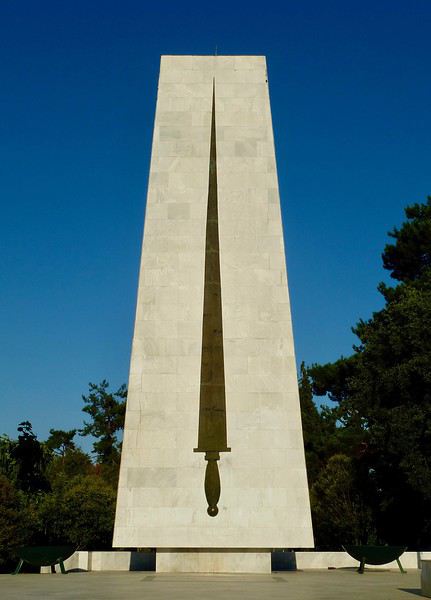
Un indice? Je n'ai pas (encore?) fait de carnet sur ce pays....
À vous de jouer!
Je reprends donc la main en ouvrant un nouveau sujet.
Où est-ce?
Un indice? Je n'ai pas (encore?) fait de carnet sur ce pays....
À vous de jouer!
Et maintenant quel pays où l'on ne risque plus rien à voyager?
Je me demande quel part de risque suis-je prêt a prendre pour ma famille a vouloir leur faire découvrir le joli coté des cartes postales de voyages idylliques quand la violence et les risques sont chaque jour plus grands partout. Le plaisir des voyages est désormais entaché ou que l'on aille par des violences aveugles.
Mada, ça craint!
Source "Clicanoo"
http://www.clicanoo.re/535479-madagascar-deux-jeunes-francais-retrouves-morts-sur-une-plage.html
Deux jeunes Français travaillant comme bénévoles pour une association à Madagascar ont été tués et leurs corps ont été retrouvés dimanche sur une plage de l’île touristique de Sainte-Marie (nord-est), ont annoncé les autorités malgaches et françaises. *
une fois de plus , 2 jeunes sont sont fait tuer lâchement a Madagascar.
Deux jeunes Français travaillant comme bénévoles pour une association à Madagascar ont été tués et leurs corps ont été retrouvés dimanche sur une plage de l’île touristique de Sainte-Marie (nord-est), ont annoncé les autorités malgaches et françaises. *
une fois de plus , 2 jeunes sont sont fait tuer lâchement a Madagascar.
Créer un site
Je sais ( pas par moi , ce sont mes amis qui tous me le disent ) que je possède beaucoup de photos intéressantes mais je suis quasi nul en informatique pour les mettre à la disposition de tous sur un site . J'ai essayé des méthodes dites simples mais leurs concepteurs présupposent toujours un niveau que je n'ai pas .
Il me faudrait un courriel disant : cherchez sur tel site ; ouvrez puis clik gauche sur le logo x à droite puis clik droit dans la nouvelle fenêtre puis vous descendez à la surbrillance z puis clik gauche et sans relâcher , vous remontez jusqu'à la ligne y ; un nouveau menu apparait ; clik gauche et vous descendez jusqu'à...etc etc : ce pas à pas , je ne l'ai JAMAIS trouvé !
Donc , comment puis-je créer un site où mettre +- 25000 photos et les commentaires qui vont avec à côté de chaque photo ( j'ai le temps ! ) ? Y a-t-il une méthode SIMPLE , pour débutant ? Merci d'avance