Results for "Philippines+hébergement"
About 10,095 results.
More options
Many results are in French, the community’s main language. English translations are added over time.
Search results
Hôtel à Cebu
Bonjour,
Billet d avion acheté pour Cebu, pour l hôtel qui peut me donner des conseils pour avoir un hôtel proche d une belle plage pour 4 jours
Merci
Manille ou Cebu pour Palawan?
Bonjour à tous. J'en suis à l'achat du billet d'avion Québec/Phillipines.
Et comme j'ai arrëté mon choix sur Pallawan et Coron pour 1 mois à l'hiver prochain, j'aimerais savoir quels sont les moyens pour se rendre de Manille ou Cebu à puerto Princesa. Est-ce plus facile de Manille ou Cebu? Par bateau ou avion? Merci de vos commentaires.
Première fois aux Phillipines
Comme se sera notre première fois aux Phillipines, et que ca semble assez vaste , et que nous aimons bien prendre notre temps pour découvrir en scooter à notre rythme, est-ce qu'un mois uniquement dans la région de Pallawan (et iles au nord tel Coron, etc.) risque de nous paraïtre trop long, ou y a-t-il beaucoup à faire et à voir? Est-ce un bon choix pour un premier contact?
Merci d'avance à ceux qui connaissent ce coin de planète.
Transport Manille - Palawan
bonsoir
désolée je pense que le sujet a déjà été traité... mais je ne trouve pas l'info.
Nous allons faire un treck dans le nord et prenons le bus de nuit pour revenir sur Manille. Nous arrivons à 3h du matin à la gare routière... Nous prenons un vol ensuite pour Palawan...
Le 1er avion est à 4h.... (trop juste)
Puis un autre à 5h15... croyez vous que cela fasse trop juste ?
ou à 7h .....
Merci !!!!!😉
désolée je pense que le sujet a déjà été traité... mais je ne trouve pas l'info.
Nous allons faire un treck dans le nord et prenons le bus de nuit pour revenir sur Manille. Nous arrivons à 3h du matin à la gare routière... Nous prenons un vol ensuite pour Palawan...
Le 1er avion est à 4h.... (trop juste)
Puis un autre à 5h15... croyez vous que cela fasse trop juste ?
ou à 7h .....
Merci !!!!!😉
Vol pour les Philippines annulé: plan de dernière minute
Bonsoir,
Nous sommes une famille de 4 dont nos 2 garçons de 11 et 12 ans.
Notre vol au départ de Geneve est annulé et reporté à demain. Nous devions prendre un bus de nuit pour Banaue depuis Manille le soir de notre arrivée, réservé bien à l’avance. Or, il n’y a maintenant plus de place pour en prendre un le jour suivant. Billets de bus aller/retour perdus, ils feront le bonheur d’autres personnes.
Nous nous demandons donc que faire en attendant notre vol pour Coron dimanche. Des idées?
Merci pour votre aide!
Retour d’une croisière en Chine, Japon, Corée du Sud, Taïwan, Philippines et Hong Kong
...Sur le Westerdam de Holland America Line
Bonjour et bienvenue à tous pour embarquer avec nous dans cette longue croisière !
C’est une fois de plus un itinéraire hors du commun, riche et varié qui a été la raison de notre choix pour cette croisière. Ajouter à cela un prix particulièrement attractif, 4800 euros la cabine extérieure, au milieu du bateau, pont 4, avec une grande baie vitrée fixe, pour 28 jours de croisière et de découvertes.
Deux semaines avant le départ les prix avaient encore baissés, et une cabine balcon était disponible à quelques cabines de celle que j’avais réservée pour à peine plus cher. J’ai demandé à payer la différence pour l’obtenir mais Un Ocean De Croisiere, l’intermédiaire de HAL en France a refusé. Pourtant les canadiens avec qui nous partons se sont vus proposer un « upgrade » par la compagnie. Autant dire que je n’étais pas très contente.
L’itinéraire :
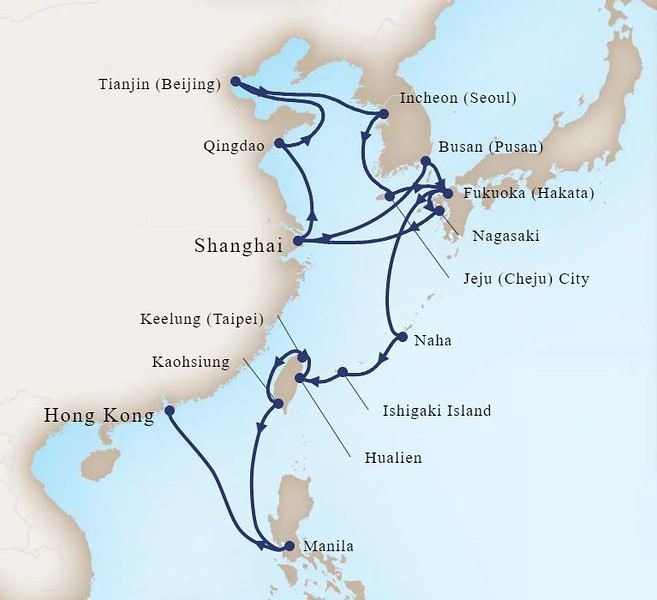
Shanghai (Chine, 2 jours), Qingdao (Chine), Tianjin (Pékin, Chine, 2 jours), Nagasaki (Japon), Jeju (Corée du Sud), Séoul (Corée du Sud), Kagoshima (Japon), Shanghai (2 jours), Fukuoka (Japon), Busan (Corée du Sud), Naha (Okinawa, Japon), Ishigaki (Sakishima Islands, Japon), Hualien (Taiwan), Keelung (Taiwan), Kaohsiung (Taiwan), Manille (Philippines), Hong Kong (Chine)
La croisière commence le 17 février mais dès le 13 février nous partons pour Shanghai afin de profiter de quelques jours sur place pour découvrir la ville que nous ne connaissons pas et que j’ai hâte de voir.
Le dernier vol du soir à Marseille est bondé pour rejoindre les différents vols de nuit au départ de Roissy. Le vol direct depuis CDG pour Shanghai passe rapidement, après Auckland, Shanghai ne parait pas bien loin.
Dès notre arrivée dans l’aérogare nous sommes harponnés par un pseudo représentant des hôtels, il a les badges de plusieurs grandes chaînes épinglées sur sa veste et essaie de se faire passer pour le responsable des transferts des hôtels. Il m’enlève ma valise des mains et je suis obligée de courir pour le rattraper et la récupérer. Il essaie de nous vendre un taxi à 850 ¥ (110€), beaucoup trop cher, ce n’est pas le prix que j’ai vu sur le net avant de partir.
Nous arrivons à nous en débarrasser et aussitôt un autre nous accoste avec le même procédé, cette fois c’est 550 ¥ rapidement tombés à 350 ¥ mais je cramponne ma valise et nous le semons dans les escalators.
Pour finir nous arrivons à trouver un stand officiel de taxi à l’extérieur où le prix est de 340 ¥ (44€), il y a aussi des taxis à prendre librement mais je suis méfiante. J’ai par la suite appris que c’était au minimum 320 ¥ quand on quittait l’aéroport pour aller en ville.
Tout au long de notre séjour nous avons à de multiples reprises pris les taxis qui fourmillent dans la ville. Ils fonctionnent très bien, avec un compteur et le prix est modique. Nous n’avons jamais eu aucun problème. Mais quand on arrive à l’aéroport ou pour aller au terminal de croisière, c’est une autre histoire…
Nous arrivons à notre hôtel à 20h45, c’est un Hôtel Boutique superbe. Une rose et des chocolats nous attendent dans la chambre qui est immense et très belle. Des « snacks » sont offerts gracieusement tous les soirs de 22h à 23h30. En réalité c’est un petit repas composé de soupe, de riz et de pâtes cuisinées à la chinoises, le tout très bon. Des boissons sont disponibles, dont du thé à la rose délicieux.
Bonjour et bienvenue à tous pour embarquer avec nous dans cette longue croisière !
C’est une fois de plus un itinéraire hors du commun, riche et varié qui a été la raison de notre choix pour cette croisière. Ajouter à cela un prix particulièrement attractif, 4800 euros la cabine extérieure, au milieu du bateau, pont 4, avec une grande baie vitrée fixe, pour 28 jours de croisière et de découvertes.
Deux semaines avant le départ les prix avaient encore baissés, et une cabine balcon était disponible à quelques cabines de celle que j’avais réservée pour à peine plus cher. J’ai demandé à payer la différence pour l’obtenir mais Un Ocean De Croisiere, l’intermédiaire de HAL en France a refusé. Pourtant les canadiens avec qui nous partons se sont vus proposer un « upgrade » par la compagnie. Autant dire que je n’étais pas très contente.
L’itinéraire :
Shanghai (Chine, 2 jours), Qingdao (Chine), Tianjin (Pékin, Chine, 2 jours), Nagasaki (Japon), Jeju (Corée du Sud), Séoul (Corée du Sud), Kagoshima (Japon), Shanghai (2 jours), Fukuoka (Japon), Busan (Corée du Sud), Naha (Okinawa, Japon), Ishigaki (Sakishima Islands, Japon), Hualien (Taiwan), Keelung (Taiwan), Kaohsiung (Taiwan), Manille (Philippines), Hong Kong (Chine)
La croisière commence le 17 février mais dès le 13 février nous partons pour Shanghai afin de profiter de quelques jours sur place pour découvrir la ville que nous ne connaissons pas et que j’ai hâte de voir.
Le dernier vol du soir à Marseille est bondé pour rejoindre les différents vols de nuit au départ de Roissy. Le vol direct depuis CDG pour Shanghai passe rapidement, après Auckland, Shanghai ne parait pas bien loin.
Dès notre arrivée dans l’aérogare nous sommes harponnés par un pseudo représentant des hôtels, il a les badges de plusieurs grandes chaînes épinglées sur sa veste et essaie de se faire passer pour le responsable des transferts des hôtels. Il m’enlève ma valise des mains et je suis obligée de courir pour le rattraper et la récupérer. Il essaie de nous vendre un taxi à 850 ¥ (110€), beaucoup trop cher, ce n’est pas le prix que j’ai vu sur le net avant de partir.
Nous arrivons à nous en débarrasser et aussitôt un autre nous accoste avec le même procédé, cette fois c’est 550 ¥ rapidement tombés à 350 ¥ mais je cramponne ma valise et nous le semons dans les escalators.
Pour finir nous arrivons à trouver un stand officiel de taxi à l’extérieur où le prix est de 340 ¥ (44€), il y a aussi des taxis à prendre librement mais je suis méfiante. J’ai par la suite appris que c’était au minimum 320 ¥ quand on quittait l’aéroport pour aller en ville.
Tout au long de notre séjour nous avons à de multiples reprises pris les taxis qui fourmillent dans la ville. Ils fonctionnent très bien, avec un compteur et le prix est modique. Nous n’avons jamais eu aucun problème. Mais quand on arrive à l’aéroport ou pour aller au terminal de croisière, c’est une autre histoire…
Nous arrivons à notre hôtel à 20h45, c’est un Hôtel Boutique superbe. Une rose et des chocolats nous attendent dans la chambre qui est immense et très belle. Des « snacks » sont offerts gracieusement tous les soirs de 22h à 23h30. En réalité c’est un petit repas composé de soupe, de riz et de pâtes cuisinées à la chinoises, le tout très bon. Des boissons sont disponibles, dont du thé à la rose délicieux.
Bureau de change aux Philippines
Bonjour
Je pars fin mai aux philippines et j’ aimerai savoir si il est facile de changer les euros en pesos sur les principales iles du pays.
Merci de votre aide.
Wiiliam.
Une île des Philippines
Bonjour à tous. Nous prévoyons aller en janvier en Thailande pour 2 mois et finir sur une ile aux Philippines pour 1 mois. Nous avons notre itinéraire pour la Thailande mais ne sommes jamais allé aux Philippines. Nous aimons bien les longues plages, la bouffe de rue. On ne fait pas de plongée et fuyons les trappes à touristes. Nous préférons les moyens de transport locales et non la location de moto. Quelqu'un connait l'ile qui nous conviendrais ? On est aussi ouverts à choisir une autre destination si quelqu'un connait un petit trésor avec un climat favorable pour mars.
Itinéraire de deux semaines à Bohol et Cebu
Hello,
J’ai besoin de votre aide afin de « construire » mon voyage aux Visayas mi Mai.
Deux semaines. Nous atterrirons à Cebu. Que me conseillez/déconseillez vous parmi les endroits souhaités? Dans quel ordre et combien de temps?
Cebu : Moalboal, Oslob, Malapascua (optionnel), Kalanggaman Island.
Bohol: Anda, Panglao, Balicasab.
Optionnel : Apo
Je recherche avant tout des plages de dingue pr le farniente et aussi des jolis fonds marins colorés pr snorkeling et plongée.
Mille mercis pour votre aide si précieuse !
Visa pour 3 mois aux Philippines
Bonjour bonjour,
je m'appréte a réserver un billet d'avion pour les Philippines du 13 Juin au 4 Septembre soit 84 Jours, je suis un peu confus sur les formalités du visa...
-je suis obligé de prendre un visa 59 Jours et de demander une extension de 29 Jours ? si oui combien ça couterait en tous ?
-Y a-t-il vraiment un visa de 3 mois directement ? si oui quel en serait le tarif ?
Bonne Journée à tous !
je m'appréte a réserver un billet d'avion pour les Philippines du 13 Juin au 4 Septembre soit 84 Jours, je suis un peu confus sur les formalités du visa...
-je suis obligé de prendre un visa 59 Jours et de demander une extension de 29 Jours ? si oui combien ça couterait en tous ?
-Y a-t-il vraiment un visa de 3 mois directement ? si oui quel en serait le tarif ?
Bonne Journée à tous !
Nature et randonnées dans les Visayas
Bonjour,
je vais probablement faire un second voyage aux Philippines en mai.
Je resterais dans les Visayas et irais vraisemblablement sur Bantayan, Malapascua et a Dumaguete pour faire quelques plongées.
Par contre je vouhaite aussi voir un peu de verdure ou de cascades (rizières...???) pour faire quelques randos. Bohol est une possibilités. Siquijor aussi mais ayant eu des retours assez négatifs je pense éviter.
Avez vous des coins à me conseiller/déconseiller?
Merci
Randonnée Barlig - Batad, par le mont Amuyao (Philippines)
Cette rando (Barlig-Batad) apporte-t-elle vraiment un plus (sachant que je ne ferais dès lors pas Banaue-Batad) ou bien vaut-il mieux faire Banaue-Batad et randonner, avec guide toujours, aux alentours de Batad: j'ai un à deux jours de disponibles pour les environs de Batad. Merci vous.
Itinéraire de 2 semaines aux Philippines
Bonjour à tous,
Samedi débutera mon voyage de deux semaines aux Philipines et j'appréhende un peu les itinéraires que je vais devoir faire .
J'arrive à Manille dimanche 7 avril , et de là , directement, je m'envole pour Puerto Princessa pour y resrer 5 jours . Aprés 5 jours , je dois me rendre à Boracay mais pour ce faire, dois-je revenir à Manile pour rejoindre cette île obligatoirement ou il existerai un moyen plus rapide ?
Je voudrai aussi savoir si il était plus meilleur de prendre mes activités déjà maintenant via des sites comme viator , getyourguide et tripadvisor ou il serait mieux de le faire sur place ?
Merci à tous ceux qui prendront la peine de me répondre !
Samedi débutera mon voyage de deux semaines aux Philipines et j'appréhende un peu les itinéraires que je vais devoir faire .
J'arrive à Manille dimanche 7 avril , et de là , directement, je m'envole pour Puerto Princessa pour y resrer 5 jours . Aprés 5 jours , je dois me rendre à Boracay mais pour ce faire, dois-je revenir à Manile pour rejoindre cette île obligatoirement ou il existerai un moyen plus rapide ?
Je voudrai aussi savoir si il était plus meilleur de prendre mes activités déjà maintenant via des sites comme viator , getyourguide et tripadvisor ou il serait mieux de le faire sur place ?
Merci à tous ceux qui prendront la peine de me répondre !
Retour vers Manille
bonjour ,
je recherche des retours d'experience de voyageurs qui ont terminé leur séjour par Apo Island.
En effet , suite à vos retours j'ai modifié mon programme avec un retour sur Manille la veille du départ et non pas le jour même....
Maintenant se pose l'horaire du retour; je serai sur Apo et je souhaite me rendre à Dumaguete pour prendre un vol vers Manille.
J'hésite avec 2 horaires , 11h00 et 17h30 mais j'ai du mal à me rendre compte du temps nécessaire pour rejoindre l'aéroport de Dumaguete.
Avez vous déjà fait cet itinéraire et que pensez vous de ces horaires de depart?
Merci et au plaisir de vous lire.
Cédric.
Merci et au plaisir de vous lire.
Cédric.
Voyage aux Philippines avec 2 enfants de 8 ans
Bonjour/Bonsoir a Tous
Nous partons mi-avril aux philippines. 17 jours, départ Paris - arrivée Manille.
Nous avons encore des doutes... pourriez vous SVP nous abreuver de vos expériences?😊
Nous commençons avec 1 nuit a manille.
Puis bus pour banaue, une nuit sur place puis retour en bus. Nous avons lu les nombreux commentaires ne conseillant pas de trek avec enfants de cet age, donc on fera des promenades tranquilles. Si on trouve un moyen pas trop épuisant pour les enfants nous iront a Batad j’espere. Si vous avez des conseils je suis preneuse!
Nous avons beaucoup hésité entre moalboal et siquijor. Idem les commentaires du forum nous confortent dans le choix de Siquijor (plus tranquille pour les enfants apparemment aussi).
Nous finiront par palawan (port barton et el nido).
En tout 3 destinations, pas plus car nous sommes conscients du trajet et de la fatigue engendrée.
La ou nous ne sommes pas du tout sur c’est sur les moyens de transport entre chaque lieu.
Je ne trouve pas de vols directs manille-dumaguete ni dumaguete-porto princesa(ou el nido). j’ai l’impression que la liaison vers siquijor sera compliquée et cela m’inquiète fort.
Je m’y prends mal ou tout est booké😭?
Si vous pensez qu’on fait pas un itinéraire logique n’hesitez pas a me le faire savoir SVP. Je n’ ai Jamais autant galeré a établir l’itineraire d’un voyage... 🙄
Espérant vous lire 😀😀
Nadia
Itinéraire pour 2 semaines et demie en voyage de noces aux Philippines
Bonjour,
Nous sommes un couple de 26 et 30 ans, nous nous marions et partirons en voyage de noces aux Philippines en février 2020 pour deux semaines et demi. Nous aimons la nature, les rencontres avec les locaux, l’authenticité … mais nous sommes jeunes et voulons aussi combiner cela avec un petit peu d’animation. Nous aimons le snorkelling mais nous ne plongeons pas.
Voici l’itinéraire que nous avons prévu. Qu’en pensez vous ? Merci d’avance !
1. Arrivée le Vendredi 14 Février à Manille
2. Manille : du Vendredi 14 Février au Samedi 15 Février
3. Bus dans la nuit du Samedi 15 Février au Dimanche 16 Février jusqu’aux rizières de Banaue
4. Banaue : De Dimanche 16 Février à Mardi 18 Février
5. Bus de nuit de Mardi 18 au Mercredi 19 Février pour retourner à Manille
6. Transfert en avion de Manille à l’ile de Bohol Mercredi 19 Février
7. Bohol (logement à Anda) : Mercredi 19 au Dimanche 23 Février
8. Ferry de Bohol à Cebu et vol de Cebu à El Nido Dimanche 23 Février
9. El Nido : Dimanche 23 au Mercredi 26 Février
10. Bateau de El Nido à Coron le Mercredi 26 Février
11. Coron : Mercredi 26 Février au Dimanche 1er Mars
12. Vol de Coron à Manille Dimanche 1er Mars
13. Manille : du Dimanche 1er au Lundi 2 Mars
14. Vol de Manille à Paris le Lundi 2 Mars
Nous sommes un couple de 26 et 30 ans, nous nous marions et partirons en voyage de noces aux Philippines en février 2020 pour deux semaines et demi. Nous aimons la nature, les rencontres avec les locaux, l’authenticité … mais nous sommes jeunes et voulons aussi combiner cela avec un petit peu d’animation. Nous aimons le snorkelling mais nous ne plongeons pas.
Voici l’itinéraire que nous avons prévu. Qu’en pensez vous ? Merci d’avance !
1. Arrivée le Vendredi 14 Février à Manille
2. Manille : du Vendredi 14 Février au Samedi 15 Février
3. Bus dans la nuit du Samedi 15 Février au Dimanche 16 Février jusqu’aux rizières de Banaue
4. Banaue : De Dimanche 16 Février à Mardi 18 Février
5. Bus de nuit de Mardi 18 au Mercredi 19 Février pour retourner à Manille
6. Transfert en avion de Manille à l’ile de Bohol Mercredi 19 Février
7. Bohol (logement à Anda) : Mercredi 19 au Dimanche 23 Février
8. Ferry de Bohol à Cebu et vol de Cebu à El Nido Dimanche 23 Février
9. El Nido : Dimanche 23 au Mercredi 26 Février
10. Bateau de El Nido à Coron le Mercredi 26 Février
11. Coron : Mercredi 26 Février au Dimanche 1er Mars
12. Vol de Coron à Manille Dimanche 1er Mars
13. Manille : du Dimanche 1er au Lundi 2 Mars
14. Vol de Manille à Paris le Lundi 2 Mars
Our Trip to the Philippines (February 2019)
Hello everyone,
We (3 adults: 68, 65, and 25 years old) are just back from a short trip to the Philippines, and I’d like to share a little summary of our journey. First of all, I’d like to thank everyone who contributes to this forum about this destination and answers the questions of those who aren’t familiar with it. I should also mention that my comments are personal and don’t reflect anyone else’s opinions. Since I don’t have any literary or photographic talent, I’ll stick to the facts and share a few details about the sights, hotels, and restaurants.
Preparations: We chose this destination in December and quickly booked our flight tickets (540 € with Turkish Airlines) for a departure on February 16 and return on March 5, 2019. We then contacted two French-speaking tour operators based in Manila, asking them to put together an itinerary based on our wishes (places to visit, type of accommodation) and our budget. We wanted to see the rice terraces in northern Luzon, the hanging coffins in Sagada, before flying to the Visayas (Bohol, Siquijor, etc.), and the Taal Volcano, while limiting our nights in Manila as much as possible. In the end, we opted for Alize, whose itinerary and quote matched our request almost perfectly. Our exchanges helped us refine our circuit.
International flights: The round-trip flights went smoothly. Turkish Airlines, while not at the level of Asian or Gulf airlines, does the job just fine.
Day 1: We landed on time (6:15 PM) on Monday, February 16, at Terminal 3. We exchanged our euros (near the car rental counters), and I can confirm the exchange rate was very good. On the way to the St. Giles Hotel (decent and affordable for a transit night), we got our first glimpse of Manila’s dense traffic. The Makati district, where our hotel was located, offers a wide choice of restaurants, so we grabbed a quick bite to recover from the trip.
Day 2: This day was dedicated to transferring to Banaue. Fortunately, we had a comfortable van and an excellent driver for this journey, which took all day (8 to 9 hours with stops). We got a taste of driving in the Philippines—and it’s terrifying. You wouldn’t want to drive on these roads. The first thing that struck us was the relatively good condition of the roads and the cleanliness (a change from other Southeast Asian countries). This impression lasted throughout our trip. Around 6 PM, we checked into our room at the Banaue Hotel (large, charm-free, but with a beautiful view of the rice terraces).
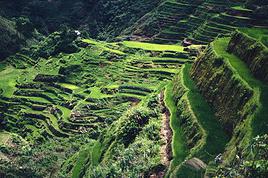
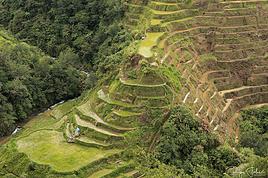
Day 3: With the help of a local guide, we took a jeepney to Batad. And then—wow! The rice terraces form an amphitheater overlooking the small village. Under the sun, it’s simply spectacular and breathtaking! Even though we’re familiar with rice terraces (Sapa, Bali, Thailand, etc.), we were dazzled by so much beauty. We spent the day walking along the terrace walls. This place is timeless and fully deserves its UNESCO World Heritage status. However, we returned to the hotel exhausted (due to our ages and lack of exercise). We had dinner with our driver at the Las Vegas restaurant in the center of Banaue. The meal was decent, cheap, and the Filipino owner played the guitar to accompany our dinner.
Day 4: Today, our driver took us to Sagada. The mountain road offered spectacular landscapes (about 1.5 to 2 hours). Along the way, we stopped in Bontoc to visit the small but interesting anthropological museum. It features old photos and various objects from the Ifugao tribes, as well as a reconstruction of primitive dwellings. We then went on a short hike in Sagada with a very friendly local guide who explained the region’s funeral rites. The walk started at the communal cemetery before reaching “Echo Valley,” where we saw the first coffins hanging on the cliff. We continued to the “Underground River” and a small waterfall, ending our journey in the “Lumiang Cave” burial cave. All in all, this day was very interesting. On the way back, we made a few photo stops. In the evening, on our driver’s recommendation, we ate at the “Bistro,” a French enclave in the center of Banaue (good pizza, roasted quail, homemade fries).
Day 5: Today was a transfer day. To limit fatigue and nights in Manila, our tour operator arranged a flight from Clark to Tagbilaran (Bohol), saving us 2 to 3 hours of driving. But to catch our flight, we had to leave very early: 5:30 AM. Our kind driver dropped us off on time at the airport. To use it, we had to pay a 150 PHP tax per person. The Philippine Airlines flight (15 minutes) left early and was far from full. Upon arrival, we were taken to the Loboc River Hotel, on the banks of the river of the same name. A very charming lodge lost in a tropical garden. We stayed in a stilt cottage overlooking the river. We relaxed a bit in the lovely pool. This place is really great—the staff is charming, and the food is excellent for a reasonable price.
Day 6: This day was dedicated to exploring Bohol. The program was classic, starting with the tarsier sanctuary. We saw a few specimens in a small garden, each pointed out by a staff member. It was both good and disappointing because the animals were in pseudo-freedom in a small enclosure. Then we went to the “Chocolate Hills” and climbed 240 steps to admire the panoramic view of the hills—but by 10 AM, it was crowded. On the way back, we stopped at the butterfly garden, which was uninteresting: tiny, with few butterflies. We consoled ourselves by photographing beautiful flowers. To please our teen, we stopped at the Loboc Eco Tourism Adventure Park and crossed the river lying down, suspended from a steel cable (300 PHP). Finally, we had the traditional lunch-cruise on the Loboc River. It was a factory-like experience, and the meal was unremarkable. The only good thing was the singer on each boat and the lush vegetation. Afterward, we visited colonial churches and the cathedral, remnants of the Spanish presence, before returning to the hotel for a well-deserved dip in the pool. Note that for those interested, there’s an arena near the hotel where cockfights are held every Sunday—something Filipinos are passionate (if not obsessed) about.
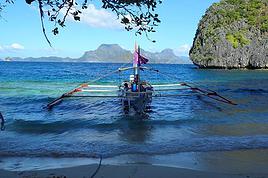
Day 8: Very early departure for the port. We boarded a *banca* in search of dolphins. After about an hour of sailing, we were lucky enough to spot around a hundred dolphins. Our boat then headed to the small and charming island of Pamilacan. After a walk through the little village, we came across locals traditionally building a boat. They told us it takes about a month to finish their outrigger boat. Then we had to choose our snorkeling spot between the coral garden, the fish park, and the turtle enclosure. Note that a fee is charged for each spot: 150 PHP per place and per person. It felt a bit like we were being ripped off, especially since the spots weren’t amazing—we’d see much better on Apo for much less. We had lunch on the island at one of the many small eateries (350 PHP per person).
Days 9 and 10: On our return, we were taken to the Bohol Sea Resort on Panglao Island, where we stayed for 2 nights. It’s a small, recent establishment in a quiet corner of the island. It’s relaxing—maybe a bit too much. It has a nice pool and access to Danao Beach, but the view is blocked by a flotilla of boats. We didn’t try their diving school. The meals were good. If we had to do it again, we’d skip this stop to spend more time in Negros.
Days 11 and 12: We took a fast ferry (Ocean Jet) from Tagbilaran port to Dumaguete and were taken to the Thalatta Resort, about 20 km away near Zamboanguita. We stayed there for 2 nights. Let’s just say it was our favorite. It’s a small place facing Apo Island. The rooms are simple, and the pool, nestled in a magnificent tropical garden, is fantastic. The staff is friendly, and the meals are very good. The hotel has its own diving center (snorkeling gear provided) and its own boats. We booked the Apo Island excursion: 1,350 PHP per person, including lunch. It was incredible: magnificent corals, colorful fish, and turtles of all sizes. The crew was endlessly kind and didn’t hesitate to dive to guide us to the best spots. In short, a perfect day. This site is ranked among the top 5 diving spots in the Philippines. Since we were lucky enough to be there on a Wednesday morning, we explored the surprising Malapay Market, a 10-minute walk from our hotel. You’ll find numerous stalls selling vegetables, fruits, live or dried fish, and handicrafts. Enclosures are set up for selling livestock (calves, zebu, pigs). There are also restaurants. We were lucky to see two pigs roasted traditionally on a spit. There are few Europeans, and the people are warm. A great moment. We left this beautiful place with regret because we didn’t have time to visit the island or go swimming with whale sharks.
Days 12 to 15: From Dumaguete port, we took a short crossing (1 hour with Ocean Jet) to Siquijor Island to reach the Coco Grove Beach Resort. A beautiful hotel nestled in a spacious tropical garden. Several restaurants and bars, 4 pools. Despite the size of the place, it remains intimate. You can snorkel (corals and fish) right in front of the beautiful beach. We stayed in a very pleasant duplex suite. For those interested, there’s a spa and a diving center. You can also take the Apo Island excursion (offered at 1,950 PHP). We spent our days relaxing between the pool and the beach. In the evening, the sunsets over Negros and Apo were stunning. We booked an island tour with a comfortable tricycle from the hotel (1,500 PHP). The circuit was classic and allowed us to go around the island. We discovered beaches, the famous 400-year-old ficus tree with its enormous roots, and its equally famous foot bath with its cleaning fish. Then we visited the St. Isidore Convent before heading to the Cambugahay waterfalls and their four pools. The setting is idyllic, and the water is surprisingly good—we had a lot of fun swimming. We had dinner at a restaurant overlooking the island, where you can see Apo, Cebu, and Negros. In the end, Siquijor turned out to be a real little tropical paradise. Since the hotel restaurants were expensive, we dined at nearby establishments: Fuego (clean, good—excellent raw fish—and quiet), Chekesch (louder), and the very pleasant Baha Bar, which brews its own beer and offers more refined cuisine.
Days 15 to 16: We left at dawn to return to Dumaguete and its airport by ferry. We had breakfast at the Coco Grande Hotel, an annex of the previous one. The Philippine Airlines flight went smoothly. A driver took us to the town of Taal. We stayed at Paradores Del Castillo, right in the heart of the old town. It’s a charming old house with only 6 rooms. The various rooms are decorated with antiques—a real little museum. The garden is pleasant and opens onto the town. It’s an old early 19th-century house converted into a hotel, beautifully arranged with 6 rooms in the heart of the city. The restaurant in the garden is very pleasant and offers a panoramic view. We visited an old Spanish house before heading to the beautiful Basilica of St. Martin of Tours, one of the most beautiful religious buildings in the Philippines. A mass was in progress, allowing us to gauge the Filipinos’ fervor before we could visit. When we left, it was dark, and we could admire the illuminated building. We ended our evening by exploring the night market with its many fruit and skewer stalls. A nice surprise. In the morning, we were taken to the shores of Taal Lake, an ancient caldera where a second volcano has formed in the middle of the lake, which in turn contains another lake. We boarded a *banca* to reach the island in the middle of the lake. This was followed by an uphill walk, made difficult by the high temperature (36°C) and the dust on the path. The dust was worsened by the many horses carrying (or bringing back) the less courageous. To illustrate the difficulty of the climb, the trail is marked by the Stations of the Cross and its 14 stations. We were panting while our guide trotted far ahead. Our effort was rewarded when we reached the summit and its viewpoints over the inner lake and the surroundings. The wisps of smoke seen here and there confirmed we were on an active volcano. Inside the lake, there are supposedly 45 small volcanoes, one of which emerged during its last eruption in 1911. On the way back, we had lunch by the lake before returning to Manila and the Bayleaf Hotel, whose main merit is its location in the Intramuros district. In the late afternoon, we walked along the walls of the old city. We had dinner on the hotel’s panoramic terrace overlooking the city and the bay.
Day 17: Last day! Our tour operator joined us for a tour of the Intramuros district. He enriched the visit with comments on the history, geopolitics, and economy of the Philippines. We visited the Manila Cathedral, destroyed 7 times in the past (6 earthquakes and the 1945 bombing). It’s beautiful, and its stained glass is magnificent. We couldn’t enter the San Agustin Church, the oldest Catholic building in Manila. We passed by the memorial to the Battle of Manila, which claimed over 100,000 lives. We visited the area around Casa Manila, which was closed on Monday, and had a drink at Barbara’s cabaret, located in a historic house. A very enriching morning. Then we went to the Mall of Asia, the world’s largest shopping mall, to buy some souvenirs (Kultura store) before being taken to the airport. We exchanged our last pesos at the buying rate right after check-in. The return flight went smoothly. We regretted not being able to use the facilities of Istanbul’s new airport, as its opening was delayed by another month.
Finances: In the end, we spent 1,640 € for the international flights, 4,200 € for the stay (hotels, visits, various transports) with the agency (whose professionalism we can only praise), and about 700 € for meals, tips, and souvenirs.
Summary: Luckily, we had beautiful weather throughout our stay, with temperatures between 26 and 35°C. Discovering the Philippines was a wonderful experience. The diversity of the landscapes, the kindness of the Filipinos, the cleanliness, and the truly delicious fruits (especially pineapples and mangoes). We were never harassed, unlike in many touristy countries. On the other hand, the food, though generally cheap, wasn’t exceptional. Since this country is so vast, we might return in the near future.
Though I’m not a specialist on this destination, I’m happy to answer your questions based on my experience.
We (3 adults: 68, 65, and 25 years old) are just back from a short trip to the Philippines, and I’d like to share a little summary of our journey. First of all, I’d like to thank everyone who contributes to this forum about this destination and answers the questions of those who aren’t familiar with it. I should also mention that my comments are personal and don’t reflect anyone else’s opinions. Since I don’t have any literary or photographic talent, I’ll stick to the facts and share a few details about the sights, hotels, and restaurants.
Preparations: We chose this destination in December and quickly booked our flight tickets (540 € with Turkish Airlines) for a departure on February 16 and return on March 5, 2019. We then contacted two French-speaking tour operators based in Manila, asking them to put together an itinerary based on our wishes (places to visit, type of accommodation) and our budget. We wanted to see the rice terraces in northern Luzon, the hanging coffins in Sagada, before flying to the Visayas (Bohol, Siquijor, etc.), and the Taal Volcano, while limiting our nights in Manila as much as possible. In the end, we opted for Alize, whose itinerary and quote matched our request almost perfectly. Our exchanges helped us refine our circuit.
International flights: The round-trip flights went smoothly. Turkish Airlines, while not at the level of Asian or Gulf airlines, does the job just fine.
Day 1: We landed on time (6:15 PM) on Monday, February 16, at Terminal 3. We exchanged our euros (near the car rental counters), and I can confirm the exchange rate was very good. On the way to the St. Giles Hotel (decent and affordable for a transit night), we got our first glimpse of Manila’s dense traffic. The Makati district, where our hotel was located, offers a wide choice of restaurants, so we grabbed a quick bite to recover from the trip.
Day 2: This day was dedicated to transferring to Banaue. Fortunately, we had a comfortable van and an excellent driver for this journey, which took all day (8 to 9 hours with stops). We got a taste of driving in the Philippines—and it’s terrifying. You wouldn’t want to drive on these roads. The first thing that struck us was the relatively good condition of the roads and the cleanliness (a change from other Southeast Asian countries). This impression lasted throughout our trip. Around 6 PM, we checked into our room at the Banaue Hotel (large, charm-free, but with a beautiful view of the rice terraces).
Day 3: With the help of a local guide, we took a jeepney to Batad. And then—wow! The rice terraces form an amphitheater overlooking the small village. Under the sun, it’s simply spectacular and breathtaking! Even though we’re familiar with rice terraces (Sapa, Bali, Thailand, etc.), we were dazzled by so much beauty. We spent the day walking along the terrace walls. This place is timeless and fully deserves its UNESCO World Heritage status. However, we returned to the hotel exhausted (due to our ages and lack of exercise). We had dinner with our driver at the Las Vegas restaurant in the center of Banaue. The meal was decent, cheap, and the Filipino owner played the guitar to accompany our dinner.
Day 4: Today, our driver took us to Sagada. The mountain road offered spectacular landscapes (about 1.5 to 2 hours). Along the way, we stopped in Bontoc to visit the small but interesting anthropological museum. It features old photos and various objects from the Ifugao tribes, as well as a reconstruction of primitive dwellings. We then went on a short hike in Sagada with a very friendly local guide who explained the region’s funeral rites. The walk started at the communal cemetery before reaching “Echo Valley,” where we saw the first coffins hanging on the cliff. We continued to the “Underground River” and a small waterfall, ending our journey in the “Lumiang Cave” burial cave. All in all, this day was very interesting. On the way back, we made a few photo stops. In the evening, on our driver’s recommendation, we ate at the “Bistro,” a French enclave in the center of Banaue (good pizza, roasted quail, homemade fries).
Day 5: Today was a transfer day. To limit fatigue and nights in Manila, our tour operator arranged a flight from Clark to Tagbilaran (Bohol), saving us 2 to 3 hours of driving. But to catch our flight, we had to leave very early: 5:30 AM. Our kind driver dropped us off on time at the airport. To use it, we had to pay a 150 PHP tax per person. The Philippine Airlines flight (15 minutes) left early and was far from full. Upon arrival, we were taken to the Loboc River Hotel, on the banks of the river of the same name. A very charming lodge lost in a tropical garden. We stayed in a stilt cottage overlooking the river. We relaxed a bit in the lovely pool. This place is really great—the staff is charming, and the food is excellent for a reasonable price.
Day 6: This day was dedicated to exploring Bohol. The program was classic, starting with the tarsier sanctuary. We saw a few specimens in a small garden, each pointed out by a staff member. It was both good and disappointing because the animals were in pseudo-freedom in a small enclosure. Then we went to the “Chocolate Hills” and climbed 240 steps to admire the panoramic view of the hills—but by 10 AM, it was crowded. On the way back, we stopped at the butterfly garden, which was uninteresting: tiny, with few butterflies. We consoled ourselves by photographing beautiful flowers. To please our teen, we stopped at the Loboc Eco Tourism Adventure Park and crossed the river lying down, suspended from a steel cable (300 PHP). Finally, we had the traditional lunch-cruise on the Loboc River. It was a factory-like experience, and the meal was unremarkable. The only good thing was the singer on each boat and the lush vegetation. Afterward, we visited colonial churches and the cathedral, remnants of the Spanish presence, before returning to the hotel for a well-deserved dip in the pool. Note that for those interested, there’s an arena near the hotel where cockfights are held every Sunday—something Filipinos are passionate (if not obsessed) about.
Day 8: Very early departure for the port. We boarded a *banca* in search of dolphins. After about an hour of sailing, we were lucky enough to spot around a hundred dolphins. Our boat then headed to the small and charming island of Pamilacan. After a walk through the little village, we came across locals traditionally building a boat. They told us it takes about a month to finish their outrigger boat. Then we had to choose our snorkeling spot between the coral garden, the fish park, and the turtle enclosure. Note that a fee is charged for each spot: 150 PHP per place and per person. It felt a bit like we were being ripped off, especially since the spots weren’t amazing—we’d see much better on Apo for much less. We had lunch on the island at one of the many small eateries (350 PHP per person).
Days 9 and 10: On our return, we were taken to the Bohol Sea Resort on Panglao Island, where we stayed for 2 nights. It’s a small, recent establishment in a quiet corner of the island. It’s relaxing—maybe a bit too much. It has a nice pool and access to Danao Beach, but the view is blocked by a flotilla of boats. We didn’t try their diving school. The meals were good. If we had to do it again, we’d skip this stop to spend more time in Negros.
Days 11 and 12: We took a fast ferry (Ocean Jet) from Tagbilaran port to Dumaguete and were taken to the Thalatta Resort, about 20 km away near Zamboanguita. We stayed there for 2 nights. Let’s just say it was our favorite. It’s a small place facing Apo Island. The rooms are simple, and the pool, nestled in a magnificent tropical garden, is fantastic. The staff is friendly, and the meals are very good. The hotel has its own diving center (snorkeling gear provided) and its own boats. We booked the Apo Island excursion: 1,350 PHP per person, including lunch. It was incredible: magnificent corals, colorful fish, and turtles of all sizes. The crew was endlessly kind and didn’t hesitate to dive to guide us to the best spots. In short, a perfect day. This site is ranked among the top 5 diving spots in the Philippines. Since we were lucky enough to be there on a Wednesday morning, we explored the surprising Malapay Market, a 10-minute walk from our hotel. You’ll find numerous stalls selling vegetables, fruits, live or dried fish, and handicrafts. Enclosures are set up for selling livestock (calves, zebu, pigs). There are also restaurants. We were lucky to see two pigs roasted traditionally on a spit. There are few Europeans, and the people are warm. A great moment. We left this beautiful place with regret because we didn’t have time to visit the island or go swimming with whale sharks.
Days 12 to 15: From Dumaguete port, we took a short crossing (1 hour with Ocean Jet) to Siquijor Island to reach the Coco Grove Beach Resort. A beautiful hotel nestled in a spacious tropical garden. Several restaurants and bars, 4 pools. Despite the size of the place, it remains intimate. You can snorkel (corals and fish) right in front of the beautiful beach. We stayed in a very pleasant duplex suite. For those interested, there’s a spa and a diving center. You can also take the Apo Island excursion (offered at 1,950 PHP). We spent our days relaxing between the pool and the beach. In the evening, the sunsets over Negros and Apo were stunning. We booked an island tour with a comfortable tricycle from the hotel (1,500 PHP). The circuit was classic and allowed us to go around the island. We discovered beaches, the famous 400-year-old ficus tree with its enormous roots, and its equally famous foot bath with its cleaning fish. Then we visited the St. Isidore Convent before heading to the Cambugahay waterfalls and their four pools. The setting is idyllic, and the water is surprisingly good—we had a lot of fun swimming. We had dinner at a restaurant overlooking the island, where you can see Apo, Cebu, and Negros. In the end, Siquijor turned out to be a real little tropical paradise. Since the hotel restaurants were expensive, we dined at nearby establishments: Fuego (clean, good—excellent raw fish—and quiet), Chekesch (louder), and the very pleasant Baha Bar, which brews its own beer and offers more refined cuisine.
Days 15 to 16: We left at dawn to return to Dumaguete and its airport by ferry. We had breakfast at the Coco Grande Hotel, an annex of the previous one. The Philippine Airlines flight went smoothly. A driver took us to the town of Taal. We stayed at Paradores Del Castillo, right in the heart of the old town. It’s a charming old house with only 6 rooms. The various rooms are decorated with antiques—a real little museum. The garden is pleasant and opens onto the town. It’s an old early 19th-century house converted into a hotel, beautifully arranged with 6 rooms in the heart of the city. The restaurant in the garden is very pleasant and offers a panoramic view. We visited an old Spanish house before heading to the beautiful Basilica of St. Martin of Tours, one of the most beautiful religious buildings in the Philippines. A mass was in progress, allowing us to gauge the Filipinos’ fervor before we could visit. When we left, it was dark, and we could admire the illuminated building. We ended our evening by exploring the night market with its many fruit and skewer stalls. A nice surprise. In the morning, we were taken to the shores of Taal Lake, an ancient caldera where a second volcano has formed in the middle of the lake, which in turn contains another lake. We boarded a *banca* to reach the island in the middle of the lake. This was followed by an uphill walk, made difficult by the high temperature (36°C) and the dust on the path. The dust was worsened by the many horses carrying (or bringing back) the less courageous. To illustrate the difficulty of the climb, the trail is marked by the Stations of the Cross and its 14 stations. We were panting while our guide trotted far ahead. Our effort was rewarded when we reached the summit and its viewpoints over the inner lake and the surroundings. The wisps of smoke seen here and there confirmed we were on an active volcano. Inside the lake, there are supposedly 45 small volcanoes, one of which emerged during its last eruption in 1911. On the way back, we had lunch by the lake before returning to Manila and the Bayleaf Hotel, whose main merit is its location in the Intramuros district. In the late afternoon, we walked along the walls of the old city. We had dinner on the hotel’s panoramic terrace overlooking the city and the bay.
Day 17: Last day! Our tour operator joined us for a tour of the Intramuros district. He enriched the visit with comments on the history, geopolitics, and economy of the Philippines. We visited the Manila Cathedral, destroyed 7 times in the past (6 earthquakes and the 1945 bombing). It’s beautiful, and its stained glass is magnificent. We couldn’t enter the San Agustin Church, the oldest Catholic building in Manila. We passed by the memorial to the Battle of Manila, which claimed over 100,000 lives. We visited the area around Casa Manila, which was closed on Monday, and had a drink at Barbara’s cabaret, located in a historic house. A very enriching morning. Then we went to the Mall of Asia, the world’s largest shopping mall, to buy some souvenirs (Kultura store) before being taken to the airport. We exchanged our last pesos at the buying rate right after check-in. The return flight went smoothly. We regretted not being able to use the facilities of Istanbul’s new airport, as its opening was delayed by another month.
Finances: In the end, we spent 1,640 € for the international flights, 4,200 € for the stay (hotels, visits, various transports) with the agency (whose professionalism we can only praise), and about 700 € for meals, tips, and souvenirs.
Summary: Luckily, we had beautiful weather throughout our stay, with temperatures between 26 and 35°C. Discovering the Philippines was a wonderful experience. The diversity of the landscapes, the kindness of the Filipinos, the cleanliness, and the truly delicious fruits (especially pineapples and mangoes). We were never harassed, unlike in many touristy countries. On the other hand, the food, though generally cheap, wasn’t exceptional. Since this country is so vast, we might return in the near future.
Though I’m not a specialist on this destination, I’m happy to answer your questions based on my experience.
Île de Guimaras dans les Visayas
Qui a séjourné dans cette île des Visayas ?
Soirée à l'Alliance Française de Makati (Philippines)
Bonjour,
Le 20 mars, en soirée, à L'alliance francaise à Makati est organisée une soirée pour feter la francophonie avec un concert avec des chanteuses philippines et un buffet somptueux.Evenement gratuit.😉
Réservations à cet adresse:cultural@alliance.ph
Le 20 mars, en soirée, à L'alliance francaise à Makati est organisée une soirée pour feter la francophonie avec un concert avec des chanteuses philippines et un buffet somptueux.Evenement gratuit.😉
Réservations à cet adresse:cultural@alliance.ph
Circuit aux Philippines et agences locales
Bonjour, j'ai prévu un voyage aux philippines fin janvier 2020 avec mon épouse, je souhaiterais savoir s'il existe des agences de voyages locales pour organiser un circuit sur 2 semaines ou s'il est facile de l'organiser soit meme, sachant que nous ferions maxi 3 ou 4 iles (Luzon, Palawan, Bohol, etc..). Merci par avance pour vos infos. Thierry