Results for "Mont+Kenya+|+121+>+59"
53313 results found.
Compte rendu d'un voyage de trois semaines au Cameroun English translation pending
Salut à tous
Ca y est suis rentré ce matin des 3 semaines au Cameroun; un beau voyage, plein de belles images en tête mais aussi beaucoup un sentiment mitigé. Tout d'abord le côté pratique; mon itinéraire; douala-yaoundé-train jusqu'a Ngaoundéré-parc de la bénoué-retour Yaoundé-kribi-Edéa-Limbé-Buéa et douala; le tout 3 semaines sac à dos
Douala; ville tentaculaire, polluée, assez dangereuse à certains égard; bref j'ai pas accroché; j'ai pris le sky hotel à bonapriso; bel hotel pas donné mais pratique pour l'invitation pour le visa.
Yaoundé; Ville plus agréable, plus aérée et plus verte; hôtel le grand moulin près de la gare; un peu cher au vu des prestations
Ngoundéré; ville assez agréable; bon point de départ pour le parc de la Bénoué ou le parc du faro aussi; j'ai logé à l'hôtel du lac; bien mais un peu cher au vu des prestations. Se méfier des moto taxis dans cette ville surtout de nuit; une grande partie sont drogués et agressifs.
Parc de la Bénoué; à 2h de route de Ngaoundéré; 4X4 obligatoire (non accessible en transports en commun); beau parc géré par des africains; on y voit des antilopes, hypoppotames, girafes, phacochères, diverses espèces de singes dont des baboins, crocodiles (apparemment on peut y voir des lions et éléphants mais je ne les ai pas vu). Logement au campement du buffle noir; très sympas.
Kribi: sympas, belles plages mais sans plus. Les chutes de la lobé n'ont rien d'exceptionnels et les excursions proposées au départ des chutes sont à des tarifs excessifs (nous y avons renoncés); une astuce; prendre un moto taxi jusqu'à tarar plage puis longer les plages à pied jusqu'à la lobé (30 minutes environ). Une bonne adresse; l'hôtel de la paix (chambres à 5000 CFA correctes, bien situées)
Limbé; rien d'exceptionnel à limbé même; hôtels chers au vu des prestations offertes; un bon plan; le SEM beach hotel à 20 mns de Limbé; hôtel un peu cher mais confortable et surtout longeant l'une des plus belles plages de sable noir du coin. Très bon accueil.
Buéa; ville brumeuse, froide sans grand intérêt mais présentant l'avantage d'être au pied du mont cameroun que l'on peut bien voir en fonction des heures de la journée. Hôtel Mermoz; bien et pas cher (6000FCA)
Les transports; le train; très bien et efficace mais pas donné (28000FCA la couchette); train de nuit yaoundé-Ngaoundéré et inverse. Aucun pbms. Très bon réseaux de bus et mini bus; ca fonctionne bien.
Le climat; très chaud et humide à douala et autour; chaud à kribi; nuits fraiches à yaoundé, ngaoundéré et limbé climat assez frais jour et nuit à Buéa.
Visa; 100 euros au consulat à Marseille plus taxe de sortie de 10000CFA à l'aéroport de douala.
Autres détails pratiques; difficulté à faire du change même ds les villes; les banques refusent; aucun bureau de change; reste le change au noir ou les grands hôtels (tx peu intéressant); à la différence d'autres pays d'Afrique, faire du change au Cameroun est peu simple à certains endroits.
Le gros point noir du séjour; un certain racisme surtout chez les jeunes; pas une journée sans se faire insulter de "sale blanc", "le blanc rentre chez toi", "et le white dégage", etc...A cela se rajoute les regards insistants et provocateurs à tous les coins de rue. c dommage car qd on a connu l'accueil exceptionnel des burkinabés, on est décu par l'accueil des étrangers au Cameroun. Autre chose, il est parfois difficile d'obtenir des infos; par exemple l'office du tourisme de ngaoundéré ne connaissait même pas le parc de la bénoué (pourtant le plus proche de cette ville). Pour finir de belles rencontres et un beau pays mais un accueil général assez déplorable et un racisme très présent chez une part non négligeable de la population qui gache l'impression générale du voyage. D'ailleurs ce qui ne trompe pas et se constate sur place; de l'avis même des camerounais et des résidents; le tourisme est en chute libre dans ce pays.
C dommage d'avoir du reporter la rencontre VF (qui s'est finallement annulée apparemment) mais je n'avais pas le choix au vu de l'itinéraire.
Voila je ne regrette pas ce voyage et d'avoir découvert le cameroun mais je n'y remettrai plus les pieds. a++
Ca y est suis rentré ce matin des 3 semaines au Cameroun; un beau voyage, plein de belles images en tête mais aussi beaucoup un sentiment mitigé. Tout d'abord le côté pratique; mon itinéraire; douala-yaoundé-train jusqu'a Ngaoundéré-parc de la bénoué-retour Yaoundé-kribi-Edéa-Limbé-Buéa et douala; le tout 3 semaines sac à dos
Douala; ville tentaculaire, polluée, assez dangereuse à certains égard; bref j'ai pas accroché; j'ai pris le sky hotel à bonapriso; bel hotel pas donné mais pratique pour l'invitation pour le visa.
Yaoundé; Ville plus agréable, plus aérée et plus verte; hôtel le grand moulin près de la gare; un peu cher au vu des prestations
Ngoundéré; ville assez agréable; bon point de départ pour le parc de la Bénoué ou le parc du faro aussi; j'ai logé à l'hôtel du lac; bien mais un peu cher au vu des prestations. Se méfier des moto taxis dans cette ville surtout de nuit; une grande partie sont drogués et agressifs.
Parc de la Bénoué; à 2h de route de Ngaoundéré; 4X4 obligatoire (non accessible en transports en commun); beau parc géré par des africains; on y voit des antilopes, hypoppotames, girafes, phacochères, diverses espèces de singes dont des baboins, crocodiles (apparemment on peut y voir des lions et éléphants mais je ne les ai pas vu). Logement au campement du buffle noir; très sympas.
Kribi: sympas, belles plages mais sans plus. Les chutes de la lobé n'ont rien d'exceptionnels et les excursions proposées au départ des chutes sont à des tarifs excessifs (nous y avons renoncés); une astuce; prendre un moto taxi jusqu'à tarar plage puis longer les plages à pied jusqu'à la lobé (30 minutes environ). Une bonne adresse; l'hôtel de la paix (chambres à 5000 CFA correctes, bien situées)
Limbé; rien d'exceptionnel à limbé même; hôtels chers au vu des prestations offertes; un bon plan; le SEM beach hotel à 20 mns de Limbé; hôtel un peu cher mais confortable et surtout longeant l'une des plus belles plages de sable noir du coin. Très bon accueil.
Buéa; ville brumeuse, froide sans grand intérêt mais présentant l'avantage d'être au pied du mont cameroun que l'on peut bien voir en fonction des heures de la journée. Hôtel Mermoz; bien et pas cher (6000FCA)
Les transports; le train; très bien et efficace mais pas donné (28000FCA la couchette); train de nuit yaoundé-Ngaoundéré et inverse. Aucun pbms. Très bon réseaux de bus et mini bus; ca fonctionne bien.
Le climat; très chaud et humide à douala et autour; chaud à kribi; nuits fraiches à yaoundé, ngaoundéré et limbé climat assez frais jour et nuit à Buéa.
Visa; 100 euros au consulat à Marseille plus taxe de sortie de 10000CFA à l'aéroport de douala.
Autres détails pratiques; difficulté à faire du change même ds les villes; les banques refusent; aucun bureau de change; reste le change au noir ou les grands hôtels (tx peu intéressant); à la différence d'autres pays d'Afrique, faire du change au Cameroun est peu simple à certains endroits.
Le gros point noir du séjour; un certain racisme surtout chez les jeunes; pas une journée sans se faire insulter de "sale blanc", "le blanc rentre chez toi", "et le white dégage", etc...A cela se rajoute les regards insistants et provocateurs à tous les coins de rue. c dommage car qd on a connu l'accueil exceptionnel des burkinabés, on est décu par l'accueil des étrangers au Cameroun. Autre chose, il est parfois difficile d'obtenir des infos; par exemple l'office du tourisme de ngaoundéré ne connaissait même pas le parc de la bénoué (pourtant le plus proche de cette ville). Pour finir de belles rencontres et un beau pays mais un accueil général assez déplorable et un racisme très présent chez une part non négligeable de la population qui gache l'impression générale du voyage. D'ailleurs ce qui ne trompe pas et se constate sur place; de l'avis même des camerounais et des résidents; le tourisme est en chute libre dans ce pays.
C dommage d'avoir du reporter la rencontre VF (qui s'est finallement annulée apparemment) mais je n'avais pas le choix au vu de l'itinéraire.
Voila je ne regrette pas ce voyage et d'avoir découvert le cameroun mais je n'y remettrai plus les pieds. a++
Croisière sur le Costa Europa: Savona (Italie), Égypte, Seychelles, Maurice du 22 novembre 2008 English translation pending
J'espère que ces commentaires pourront aider les futurs croisiéristes. N'hésitez pas à me poser des questions.
Nous avons eu le plaisir de commencer notre périple (du 19 novembre au 22 décembre 2008) par la visite de Gênes (Italie), une ville surprenante, à la verticale et facile à découvrir. Nous avions réservé deux nuits au confortable et abordable hôtel Best Western City, situé en plein cœur du vieux Gênes à deux pas de la Piazza Ferrari. On a acheté à peu de frais (dans une station de métro) une passe de 24 h. pour les transports publics et visité Gênes en empruntant leur court mais pratique métro, autobus, féniculaires, ascenseurs publics… Je ne croyais pas que Gênes puisse être si agréable à visiter: grandes piazzas, multiples rues étroites, sentiers dans les hauteurs, palais-musées... Excellent début de voyage!
Puis, le matin du 22 novembre, par autobus jusqu’à la station de train Principe (gratuit à cause de notre passe), par train (moins de 4 euros pp au comptoir régulier) et par taxi une fois à Savona (20 euros!), nous avons rejoint le bateau – le Costa Europa - pour une croisière de 28 jours, qui nous a menés à Port-Louis (île Maurice) via le Canal de Suez et le golfe d’Aden (tentative d’attaque par des pirates somaliens incluse). Le bateau se re-localisait de la Méditerranée à l’Océan Indien. Excellent itinéraire!
On a pleinement profité des 14 escales suivantes, exotiques à souhait, complétées par onze longues excursions, mais en définitive fort appréciées (faites avec Costa par crainte de manquer le bateau…): - Naples (Italie) agréable visite à pied par nous-mêmes du Vieux Naples et du Museo Archeologico Nazionale (Nous avions déjà bien visité les autres endroits, dont Pompéi, proposés dans les excursions de Costa) – nous avions un bon livre-guide de la ville. - Alexandrie (Egypte) – excursion combinant une visite de la ville avec celle des Pyramides de Giza, du Sphinx et dîner-croisière sur le Nil avec brève visite de Port Saïd au retour (On peut facilement visiter Alexandrie et sa bibliothèque par nous-mêmes, à pied, mais on n’avait pas assez de temps, moins de 3 h) - Sharm El Sheikh (Egypte) avec visite du célèbre monastère grec orthodoxe Sainte-Catherine au pied du mont Sinaï - Aqaba (Jordanie) avec visite de la ville rose de Petra (à ne pas manquer!) - Safaga (Egypte) avec visite de Luxor, temples et Vallée des Rois (3 tombes au choix) Munissez-vous d’un bon livre guide touristique pour choisir les plus belles…; le guide local était plutôt bref… - Aden pour: Taïz (Yemen) (très intéressant, excellent guide local) - East & West Salalah (Oman) - quel pays propre et progressif! Intéressant guide local. - Mahé (Seychelles): visite de Victoria à pied par nous-mêmes le premier jour avec le lendemain excursion à Praslin et La Digue avec Costa – très bien, un peu fatiguant mais à ne pas manquer si possible! On peut toujours s’organiser par nous-mêmes (traversiers, louer des bicyclettes, c’est tellement moins cher, mais quel risque de manquer le bateau - pour connaisseurs seulement... - Mombasa pour: le Tsavo East National Park. Intéressant sans être aussi sensationnel que certains autres safaris – on a vu pas mal d’animaux (girafles +++, éléphants, zèbres, hippos, etc.); heureusement un des 6 passagers était excellent pisteur, contrairement au chauffeur… - Nosy Be (Madagascar) (escale ayant remplacé Mayotte, Comores pour x raison, financière?): visite de Hell Ville à pied par nous-mêmes. Surtout ne pas prendre les excursions de Costa à moins de vouloir voir des plages. Hell Ville, c’est tout petit et fort agréable pour observer les Malgaches, leur parler en Français, siroter une bonne bière froide... - Diego Suarez (Madagascar) où nous avons pris l’excursion de Costa avec visite du Parc national de l’Ankarana (un peu difficile, intense chaleur et montées sur roches inégales - si vous avez des doutes sur vos capacités physiques, préférez l’excursion du Parc de la montagne d’Ambre – on nous avait averti). Mais on a vraiment aimé le trajet, les lémurs à couronne (vus au moment du pique-nique le midi), les marchés locaux, les scènes de la vie quotidienne et les explications de notre excellent guide, vraiment unique! - Le Port (île de la Réunion): excursion à St-Gilles, au Maido et à St-Paul (je la recommande – tellement intéressant de voir le cirque de Mafate de loin!) Costa met à notre disposition un shuttle payant (20 euros pp je crois) pour la petite capitale, Saint-Denis à 20 km du Port. Les taxis sont chers mais à 2 ou mieux à 4 personnes, ils sont sûrement moins chers que le shuttle de Costa. - Port Louis (île Maurice): excursion dans le centre et le sud de l’île (excellent). Puis le matin du débarquement, taxi (réservé pour la journée) pour visiter le Jardin de Pamplemousses, l’ouest et le nord de l’île jusqu’à l’Auberge Aquarella à Mahebourg (réservé par e-mail) où nous avons passé les deux derniers jours dans un décor de rêve avant notre départ pour l’aéroport international (à moins de 10 minutes par taxi).
Quel contraste entre les régions arides de l’Egypte à Oman et les paysages exubérants au vif coloris des îles de l’Océan Indien! A noter que toutes ces excursions offertes par Costa étaient longues et relativement très coûteuses, bien organisées au point de vue attente et confort des autobus, mais trop fragmentées à mon goût. Ainsi, on n’a absolument rien vu d’Aden, ni du centre de Mombasa puisqu’on «avait choisi» le Tsavo, nous a-t-on sèchement répliqué; or cette excursion s’est terminée plus de trois-quarts d’heure à l’avance avec une demi-heure de shopping dans ce que j’appelle une «Tourist Trap in the middle of nowhere». Par contre, à Madagascar, même si on avait choisi l’Ankarana, on a pu bien visiter Diego Suarez (fruit de nos récriminations précédentes auprès de Costa ou choix des guides de Madagascar? En tout cas, j’ai apprécié). Une très brève visite de ces ports d’escale (qui après tout ne sont pas Paris ou Rome et où on ne va pas à tous les ans…) nous aurait largement satisfait.
Service (ou l’art de gâcher un si beau périple) Nous avons beaucoup aimé cette croisière et le navire, mais nous déplorons le peu de communication avec la Direction de Costa, l’inflexibilité et la rudesse même du personnel la représentant, notamment le dit Customer Service (qui prenait note sans agir, sans explications ou presque) et le Bureau des Excursions, d’une inflexibilité démesurée. Tout semblait conçu pour nous extorquer le plus d’argent possible. J’avais eu le plaisir de faire mon choix d’excursions par Internet avant la croisière. Selon l’excellent Webmaster de Costa (dont je n’avais pas pensé apporter le mail malheureusement), j’avais droit d’annuler et de modifier, le 1er jour de la croisière jusqu’à 20h, toute excursion choisie et réservée par Internet; or, arrivés sur le bateau, incommodés par l’odeur qui régnait, un peu déçus aussi je crois (voir plus loin), j’avais le goût d’annuler certaines longues excursions quitte à les reprendre plus tard. Impossible selon le personnel du Bureau d’excursion - aux décisions implacables! Impossible sans certificat médical et ils ont tenu leur bout!... Toutefois, ils ont fini par permettre de faire des changements dans une même escale si des places étaient disponibles – mais attention, les excursions les moins longues (que vous devriez plutôt faire par vous-mêmes le plus souvent…), les moins chères, disparaissent vite… Les services de shuttle, payants ou non, sont à peine annoncés et à la toute dernière minute (mais je dois dire que Costa n’est pas seul à adopter cette pratique). De plus, nous avons détesté : le prix élevé des boissons à bord (4, 5 à 5 euros + 15% de service même pour une bière locale); heureusement, on offrait un Spécial acceptable à 69 Euros pour 4 bouteilles de vin et & 7 bouteilles d’eaux minérales, service inclus); le coût élevé de l’Internet, des photographies, le service précipité à la salle à manger le soir. Quelques exceptions toutefois: J’ai apprécié le service des deux représentants de langue française (Charlotte) et de langue anglaise (Simon) (qui cependant, on peut le comprendre, tenteront de défendre Costa, leur employeur…); on a trouvé excellent le service quotidien dans notre cabine et en général le service aux buffets ou Pizzeria.
On a fini par apprendre que le navire avait subi des dommages assez importants avant notre arrivée à cause d’une tempête d’une force exceptionnelle en Méditerranée. Il me semble qu’on aurait pu facilement comprendre avec quelques mots d’explications et d’excuses… Des avaries telles déversement d’une des piscines du côté impair des cabines, bris de tuyaux, odeurs désagréables, encombrements de toutes sortes nous ont dérangés durant la première semaine: bruits la nuit, matelas, sommiers, tapis jonchaient notre corridor, bloquaient parfois notre porte de cabine – jamais un mot d’explication ni d’excuses de la part de la Direction.
La communication avant le départ a été difficile aussi. On s’est procurés à prix élevés et inutilement des visas pour le Kenya et pour Madagascar, alors que le bateau les a fournis pour un prix modique (20 Euros environ pp). On aurait économisé près de 200 Euros l’avoir su : un peu choquant et ce n’est pas faute de ne l’avoir demandé à Costa avant la croisière directement et par notre agent de voyage. Il ne le savait peut-être pas à l’avance… mais aucune compensation bien sûr ni explications ne nous ont été données.
Le jour du débarquement, on a dû quitter la cabine à 4h am (oui, vous avez bien lu – du jamais vu pour nous en 28 croisières) et on devait quitter le bateau à 6h30 am car on n’avait pas pris nos vols de retour ni d’excursion ce jour-là avec Costa. On devait attendre dehors beau temps mauvais temps car il n’y a pas de gare maritime à l’île Maurice (contrairement à la superbe gare de Savona avec Internet gratuit!). On les avait pourtant informés à l’avance de notre désir de quitter le bateau vers 10h am. Ils ont noté… Heureusement, un ange nommé Simon est passé par là et a pris le risque de nous permettre d’attendre dans les salons l’arrivée du taxi qu’on avait réservé à l’avance pour 10h am. On a cessé de nous harceler… Je l’en remercie.
En conclusion À part la communication inefficace et rude de la part de la Direction de Costa, qui se reflétait sur le comportement de certains passagers…, on a aimé le bateau : sa décoration sobre mais harmonieuse, sa propreté, les cabines assez grandes même les standards et intérieures (avec love seat et petite table à café, coffret de sécurité électronique dans chaque cabine, séchoir à cheveux, papier mouchoir, savons, shampooing, belle salle de toilette, mini réfrigérateur, malheureusement encombré de boissons à vendre que nous ne voulions pas; espaces d'entreposage limité toutefois), nouvelles imprimées distribuées chaque jour dans les cabines ainsi que le programme quotidien (en français et en anglais, probablement en espagnol, italien et allemand), confortables salles publiques avec vue sur la mer, 2 tennis (au 12e), tables de ping-pong, Club pour enfants, Casino, chapelle, bibliothèque, bons repas variés (mais curieusement, nous avions rarement faim…), heures des repas dans les trois différents restaurants bien planifiées en fonction de bons spectacles le soir, horaire respecté (on a apprécié avoir choisi le 2e dîner le soir à 20h45 à cause de nos longues excursions; le premier service est à 18h30), tables à deux disponibles, 2 agréables piscines dont celle du 11e à toit rétractible, saunas, serviettes de piscine en abondance, pont promenade (Andromeda au 9e) - on allait se chercher des chaises longues à la piscine et on relaxait sur ce pont; le nombre d'annonces au haut-parleur du bateau était limité au minimum, fait apprécié. On a admiré aussi la débrouillardise de Costa pour se procurer tous les visas nécessaires sur place, pour gérer les formalités d’entrée dans les différents pays et même (!!!) pour repousser une attaque par des pirates somaliens dans le golfe d’Aden, eh oui, on a eu une attaque de pirates le 4 décembre vers 13h en route vers Oman. Un bateau turc de l’Otan – la frégate TCG Gökova et son hélicoptère – est venu aussitôt et a réussi à dissuader les pirates. Les passagers avaient dû regagner l’intérieur du bateau, les boyaux d’arrosage, déployés. Le lendemain, l’ONU changeait la règlementation quant aux attaques de pirates en haute mer. Un grand merci au TCG Gökova! On a eu durant les 34 jours de ce voyage une température idéale - pas de pluie ou quelques gouttes au bon moment et une mer calme! Grande chance!
Puis, le matin du 22 novembre, par autobus jusqu’à la station de train Principe (gratuit à cause de notre passe), par train (moins de 4 euros pp au comptoir régulier) et par taxi une fois à Savona (20 euros!), nous avons rejoint le bateau – le Costa Europa - pour une croisière de 28 jours, qui nous a menés à Port-Louis (île Maurice) via le Canal de Suez et le golfe d’Aden (tentative d’attaque par des pirates somaliens incluse). Le bateau se re-localisait de la Méditerranée à l’Océan Indien. Excellent itinéraire!
On a pleinement profité des 14 escales suivantes, exotiques à souhait, complétées par onze longues excursions, mais en définitive fort appréciées (faites avec Costa par crainte de manquer le bateau…): - Naples (Italie) agréable visite à pied par nous-mêmes du Vieux Naples et du Museo Archeologico Nazionale (Nous avions déjà bien visité les autres endroits, dont Pompéi, proposés dans les excursions de Costa) – nous avions un bon livre-guide de la ville. - Alexandrie (Egypte) – excursion combinant une visite de la ville avec celle des Pyramides de Giza, du Sphinx et dîner-croisière sur le Nil avec brève visite de Port Saïd au retour (On peut facilement visiter Alexandrie et sa bibliothèque par nous-mêmes, à pied, mais on n’avait pas assez de temps, moins de 3 h) - Sharm El Sheikh (Egypte) avec visite du célèbre monastère grec orthodoxe Sainte-Catherine au pied du mont Sinaï - Aqaba (Jordanie) avec visite de la ville rose de Petra (à ne pas manquer!) - Safaga (Egypte) avec visite de Luxor, temples et Vallée des Rois (3 tombes au choix) Munissez-vous d’un bon livre guide touristique pour choisir les plus belles…; le guide local était plutôt bref… - Aden pour: Taïz (Yemen) (très intéressant, excellent guide local) - East & West Salalah (Oman) - quel pays propre et progressif! Intéressant guide local. - Mahé (Seychelles): visite de Victoria à pied par nous-mêmes le premier jour avec le lendemain excursion à Praslin et La Digue avec Costa – très bien, un peu fatiguant mais à ne pas manquer si possible! On peut toujours s’organiser par nous-mêmes (traversiers, louer des bicyclettes, c’est tellement moins cher, mais quel risque de manquer le bateau - pour connaisseurs seulement... - Mombasa pour: le Tsavo East National Park. Intéressant sans être aussi sensationnel que certains autres safaris – on a vu pas mal d’animaux (girafles +++, éléphants, zèbres, hippos, etc.); heureusement un des 6 passagers était excellent pisteur, contrairement au chauffeur… - Nosy Be (Madagascar) (escale ayant remplacé Mayotte, Comores pour x raison, financière?): visite de Hell Ville à pied par nous-mêmes. Surtout ne pas prendre les excursions de Costa à moins de vouloir voir des plages. Hell Ville, c’est tout petit et fort agréable pour observer les Malgaches, leur parler en Français, siroter une bonne bière froide... - Diego Suarez (Madagascar) où nous avons pris l’excursion de Costa avec visite du Parc national de l’Ankarana (un peu difficile, intense chaleur et montées sur roches inégales - si vous avez des doutes sur vos capacités physiques, préférez l’excursion du Parc de la montagne d’Ambre – on nous avait averti). Mais on a vraiment aimé le trajet, les lémurs à couronne (vus au moment du pique-nique le midi), les marchés locaux, les scènes de la vie quotidienne et les explications de notre excellent guide, vraiment unique! - Le Port (île de la Réunion): excursion à St-Gilles, au Maido et à St-Paul (je la recommande – tellement intéressant de voir le cirque de Mafate de loin!) Costa met à notre disposition un shuttle payant (20 euros pp je crois) pour la petite capitale, Saint-Denis à 20 km du Port. Les taxis sont chers mais à 2 ou mieux à 4 personnes, ils sont sûrement moins chers que le shuttle de Costa. - Port Louis (île Maurice): excursion dans le centre et le sud de l’île (excellent). Puis le matin du débarquement, taxi (réservé pour la journée) pour visiter le Jardin de Pamplemousses, l’ouest et le nord de l’île jusqu’à l’Auberge Aquarella à Mahebourg (réservé par e-mail) où nous avons passé les deux derniers jours dans un décor de rêve avant notre départ pour l’aéroport international (à moins de 10 minutes par taxi).
Quel contraste entre les régions arides de l’Egypte à Oman et les paysages exubérants au vif coloris des îles de l’Océan Indien! A noter que toutes ces excursions offertes par Costa étaient longues et relativement très coûteuses, bien organisées au point de vue attente et confort des autobus, mais trop fragmentées à mon goût. Ainsi, on n’a absolument rien vu d’Aden, ni du centre de Mombasa puisqu’on «avait choisi» le Tsavo, nous a-t-on sèchement répliqué; or cette excursion s’est terminée plus de trois-quarts d’heure à l’avance avec une demi-heure de shopping dans ce que j’appelle une «Tourist Trap in the middle of nowhere». Par contre, à Madagascar, même si on avait choisi l’Ankarana, on a pu bien visiter Diego Suarez (fruit de nos récriminations précédentes auprès de Costa ou choix des guides de Madagascar? En tout cas, j’ai apprécié). Une très brève visite de ces ports d’escale (qui après tout ne sont pas Paris ou Rome et où on ne va pas à tous les ans…) nous aurait largement satisfait.
Service (ou l’art de gâcher un si beau périple) Nous avons beaucoup aimé cette croisière et le navire, mais nous déplorons le peu de communication avec la Direction de Costa, l’inflexibilité et la rudesse même du personnel la représentant, notamment le dit Customer Service (qui prenait note sans agir, sans explications ou presque) et le Bureau des Excursions, d’une inflexibilité démesurée. Tout semblait conçu pour nous extorquer le plus d’argent possible. J’avais eu le plaisir de faire mon choix d’excursions par Internet avant la croisière. Selon l’excellent Webmaster de Costa (dont je n’avais pas pensé apporter le mail malheureusement), j’avais droit d’annuler et de modifier, le 1er jour de la croisière jusqu’à 20h, toute excursion choisie et réservée par Internet; or, arrivés sur le bateau, incommodés par l’odeur qui régnait, un peu déçus aussi je crois (voir plus loin), j’avais le goût d’annuler certaines longues excursions quitte à les reprendre plus tard. Impossible selon le personnel du Bureau d’excursion - aux décisions implacables! Impossible sans certificat médical et ils ont tenu leur bout!... Toutefois, ils ont fini par permettre de faire des changements dans une même escale si des places étaient disponibles – mais attention, les excursions les moins longues (que vous devriez plutôt faire par vous-mêmes le plus souvent…), les moins chères, disparaissent vite… Les services de shuttle, payants ou non, sont à peine annoncés et à la toute dernière minute (mais je dois dire que Costa n’est pas seul à adopter cette pratique). De plus, nous avons détesté : le prix élevé des boissons à bord (4, 5 à 5 euros + 15% de service même pour une bière locale); heureusement, on offrait un Spécial acceptable à 69 Euros pour 4 bouteilles de vin et & 7 bouteilles d’eaux minérales, service inclus); le coût élevé de l’Internet, des photographies, le service précipité à la salle à manger le soir. Quelques exceptions toutefois: J’ai apprécié le service des deux représentants de langue française (Charlotte) et de langue anglaise (Simon) (qui cependant, on peut le comprendre, tenteront de défendre Costa, leur employeur…); on a trouvé excellent le service quotidien dans notre cabine et en général le service aux buffets ou Pizzeria.
On a fini par apprendre que le navire avait subi des dommages assez importants avant notre arrivée à cause d’une tempête d’une force exceptionnelle en Méditerranée. Il me semble qu’on aurait pu facilement comprendre avec quelques mots d’explications et d’excuses… Des avaries telles déversement d’une des piscines du côté impair des cabines, bris de tuyaux, odeurs désagréables, encombrements de toutes sortes nous ont dérangés durant la première semaine: bruits la nuit, matelas, sommiers, tapis jonchaient notre corridor, bloquaient parfois notre porte de cabine – jamais un mot d’explication ni d’excuses de la part de la Direction.
La communication avant le départ a été difficile aussi. On s’est procurés à prix élevés et inutilement des visas pour le Kenya et pour Madagascar, alors que le bateau les a fournis pour un prix modique (20 Euros environ pp). On aurait économisé près de 200 Euros l’avoir su : un peu choquant et ce n’est pas faute de ne l’avoir demandé à Costa avant la croisière directement et par notre agent de voyage. Il ne le savait peut-être pas à l’avance… mais aucune compensation bien sûr ni explications ne nous ont été données.
Le jour du débarquement, on a dû quitter la cabine à 4h am (oui, vous avez bien lu – du jamais vu pour nous en 28 croisières) et on devait quitter le bateau à 6h30 am car on n’avait pas pris nos vols de retour ni d’excursion ce jour-là avec Costa. On devait attendre dehors beau temps mauvais temps car il n’y a pas de gare maritime à l’île Maurice (contrairement à la superbe gare de Savona avec Internet gratuit!). On les avait pourtant informés à l’avance de notre désir de quitter le bateau vers 10h am. Ils ont noté… Heureusement, un ange nommé Simon est passé par là et a pris le risque de nous permettre d’attendre dans les salons l’arrivée du taxi qu’on avait réservé à l’avance pour 10h am. On a cessé de nous harceler… Je l’en remercie.
En conclusion À part la communication inefficace et rude de la part de la Direction de Costa, qui se reflétait sur le comportement de certains passagers…, on a aimé le bateau : sa décoration sobre mais harmonieuse, sa propreté, les cabines assez grandes même les standards et intérieures (avec love seat et petite table à café, coffret de sécurité électronique dans chaque cabine, séchoir à cheveux, papier mouchoir, savons, shampooing, belle salle de toilette, mini réfrigérateur, malheureusement encombré de boissons à vendre que nous ne voulions pas; espaces d'entreposage limité toutefois), nouvelles imprimées distribuées chaque jour dans les cabines ainsi que le programme quotidien (en français et en anglais, probablement en espagnol, italien et allemand), confortables salles publiques avec vue sur la mer, 2 tennis (au 12e), tables de ping-pong, Club pour enfants, Casino, chapelle, bibliothèque, bons repas variés (mais curieusement, nous avions rarement faim…), heures des repas dans les trois différents restaurants bien planifiées en fonction de bons spectacles le soir, horaire respecté (on a apprécié avoir choisi le 2e dîner le soir à 20h45 à cause de nos longues excursions; le premier service est à 18h30), tables à deux disponibles, 2 agréables piscines dont celle du 11e à toit rétractible, saunas, serviettes de piscine en abondance, pont promenade (Andromeda au 9e) - on allait se chercher des chaises longues à la piscine et on relaxait sur ce pont; le nombre d'annonces au haut-parleur du bateau était limité au minimum, fait apprécié. On a admiré aussi la débrouillardise de Costa pour se procurer tous les visas nécessaires sur place, pour gérer les formalités d’entrée dans les différents pays et même (!!!) pour repousser une attaque par des pirates somaliens dans le golfe d’Aden, eh oui, on a eu une attaque de pirates le 4 décembre vers 13h en route vers Oman. Un bateau turc de l’Otan – la frégate TCG Gökova et son hélicoptère – est venu aussitôt et a réussi à dissuader les pirates. Les passagers avaient dû regagner l’intérieur du bateau, les boyaux d’arrosage, déployés. Le lendemain, l’ONU changeait la règlementation quant aux attaques de pirates en haute mer. Un grand merci au TCG Gökova! On a eu durant les 34 jours de ce voyage une température idéale - pas de pluie ou quelques gouttes au bon moment et une mer calme! Grande chance!
Cherche photos de panneaux du monde English translation pending
J’envisage de réaliser un site internet sur les panneaux de monde (oui, je sais, l’idée est bizarre). J’ai déjà de nombreuses photos de panneaux, prises au cours de voyages, mais si ce site pouvait également s’enrichir de vos photos, ce serait encore mieux.
Tous les panneaux sortant un peu de l’ordinaire sont bienvenus : - panneaux typiques de certains pays (le panneau « arrêt » du Québec, le panneau « Ped Xing » américain, etc) - panneaux de lieux mythiques (route 66, welcome to Las Vegas…) - panneaux sur les animaux (traversée d’ours, croisement de dromadaire, attention élan…) - panneaux insolites (noms de lieux bizarres, panneaux incompréhensibles, etc)
Tous les panneaux sont bienvenus, à partir du moment où ils sortent des standards internationaux. Pour vous donner une petite idée, voici quelques exemples : http://picasaweb.google.com/delseve59/Panneaux?authkey=cBikGqZ2JYw
Si vous avez en stock quelques photos de panneaux, pensez à moi, et si au cours de vos voyages, vous croisez des panneaux originaux, pensez à faire un petit cliché.
Précisez-moi le lieu de la photo (éventuellement la date) et le nom (ou pseudo) de l'auteur de la photo qui figurera sur le site.
Merci d’avance à tous
Tous les panneaux sortant un peu de l’ordinaire sont bienvenus : - panneaux typiques de certains pays (le panneau « arrêt » du Québec, le panneau « Ped Xing » américain, etc) - panneaux de lieux mythiques (route 66, welcome to Las Vegas…) - panneaux sur les animaux (traversée d’ours, croisement de dromadaire, attention élan…) - panneaux insolites (noms de lieux bizarres, panneaux incompréhensibles, etc)
Tous les panneaux sont bienvenus, à partir du moment où ils sortent des standards internationaux. Pour vous donner une petite idée, voici quelques exemples : http://picasaweb.google.com/delseve59/Panneaux?authkey=cBikGqZ2JYw
Si vous avez en stock quelques photos de panneaux, pensez à moi, et si au cours de vos voyages, vous croisez des panneaux originaux, pensez à faire un petit cliché.
Précisez-moi le lieu de la photo (éventuellement la date) et le nom (ou pseudo) de l'auteur de la photo qui figurera sur le site.
Merci d’avance à tous
Vivre et travailler à Libreville au Gabon English translation pending
Bonjour à tous,
Je partirai peut-être bientôt au Gabon (Libreville) pour bosser. Je n'ai pas encore toutes les précisions mais a priori c'est un contrat expat (et de toutes façons si ce n'est pas le cas ce sera sans moi...). J'aurais besoin de votre expérience sur ce type de contrat et sur d'autres points plus pratiques (vie à Libreville). Précision: j'ai deux baby (en fait un "à naître" dans les quinze jours) et deux chats. Je laisse Madame vous interroger sur ce qui peut les concerner :D
1/ Le contrat d'expat: auriez vous des exemples d'avantages généralement prévus par ce type de contrat? (déménagement (aller/retour), logement, électricité et gaz, voyages internationaux, véhicule, tél portable, sécu/mutuelle, rappatriement sanitaire, éducation, primes, autres). Si vous voulez me donner un exemple chiffré de contrat (le vôtre par exemple), ça pourra utilement m'éclairer, merci :) Si vous préférez que je vous donne mon email pour ça pas de problème.
2/ Biens et services: avez vous une connection internet et si oui chez quel opérateur? tarif? prestation (ADSL? 56K?)? rapidité de l'installation et de la mise en service? gaz et électricité: idem que supra, service de banque: vous êtes vous ouvert un compte dans une banque ayant son siége/un établissement à Libreville? Si oui chez qui? Eléments à surveiller/auxquels il faut faire attention. Point annexe: on paye comment dans les commerces (gros magasins): liquide, chéque, CB??? logement: y a t-il des agences de location à éviter? à privilégier? Des points auxquels il faut faire gaffe dans les contrats de loc gabonnais? Points annexes: y a t-il des coins à préivilégier pour se trouver un appart? (a priori la villa on verra plus tard :D). Tiens d'une manière générale vous avez une villa ou un appart? Vous pouvez me donner la surface, la localisation globale de votre habitation et le montant de votre loyer? véhicules: un concessionnaire mieux que les autres? Ou à éviter? Votre boîte vous aide t-elle pour acheter une voiture?
3/ sécurité Le gros point noir que je vois d'ici: les policiers. Le problème: j'aime la photo et j'ai du matériel pas trop mauvais (réflex num et quelques objectifs dont quelques uns assez chers), or on m'a dit d'éviter de l'emmener ou au moins de le sortir car il ne serait pas rare que le martériel soit confiscqué par la police ou les douanes pour des motifs tels "qu'espionnage" ou "pédophilie", le matériel ainsi saisi étant ensuite revendu aux photograpes "pro" locaux pour utilisation pendant les mariages etc. Je vous avoue que ça me refroidit pas mal. Any coments? D'autant plus que j'ai lu ici-même que les mange-miles, puisque c'est a priori comme ça qu'on les appelle, sont assez "présents" (€€€€). A ce propos, quel est votre budget "mange-miles" mensuel?
Bon pour le moment c'est tout ce que j'ai en tête. Si vous pouvez déjà m'aider avec ça c'est sympa. Meeeeeeeeeeerciiiiiiiiiii :D
Je partirai peut-être bientôt au Gabon (Libreville) pour bosser. Je n'ai pas encore toutes les précisions mais a priori c'est un contrat expat (et de toutes façons si ce n'est pas le cas ce sera sans moi...). J'aurais besoin de votre expérience sur ce type de contrat et sur d'autres points plus pratiques (vie à Libreville). Précision: j'ai deux baby (en fait un "à naître" dans les quinze jours) et deux chats. Je laisse Madame vous interroger sur ce qui peut les concerner :D
1/ Le contrat d'expat: auriez vous des exemples d'avantages généralement prévus par ce type de contrat? (déménagement (aller/retour), logement, électricité et gaz, voyages internationaux, véhicule, tél portable, sécu/mutuelle, rappatriement sanitaire, éducation, primes, autres). Si vous voulez me donner un exemple chiffré de contrat (le vôtre par exemple), ça pourra utilement m'éclairer, merci :) Si vous préférez que je vous donne mon email pour ça pas de problème.
2/ Biens et services: avez vous une connection internet et si oui chez quel opérateur? tarif? prestation (ADSL? 56K?)? rapidité de l'installation et de la mise en service? gaz et électricité: idem que supra, service de banque: vous êtes vous ouvert un compte dans une banque ayant son siége/un établissement à Libreville? Si oui chez qui? Eléments à surveiller/auxquels il faut faire attention. Point annexe: on paye comment dans les commerces (gros magasins): liquide, chéque, CB??? logement: y a t-il des agences de location à éviter? à privilégier? Des points auxquels il faut faire gaffe dans les contrats de loc gabonnais? Points annexes: y a t-il des coins à préivilégier pour se trouver un appart? (a priori la villa on verra plus tard :D). Tiens d'une manière générale vous avez une villa ou un appart? Vous pouvez me donner la surface, la localisation globale de votre habitation et le montant de votre loyer? véhicules: un concessionnaire mieux que les autres? Ou à éviter? Votre boîte vous aide t-elle pour acheter une voiture?
3/ sécurité Le gros point noir que je vois d'ici: les policiers. Le problème: j'aime la photo et j'ai du matériel pas trop mauvais (réflex num et quelques objectifs dont quelques uns assez chers), or on m'a dit d'éviter de l'emmener ou au moins de le sortir car il ne serait pas rare que le martériel soit confiscqué par la police ou les douanes pour des motifs tels "qu'espionnage" ou "pédophilie", le matériel ainsi saisi étant ensuite revendu aux photograpes "pro" locaux pour utilisation pendant les mariages etc. Je vous avoue que ça me refroidit pas mal. Any coments? D'autant plus que j'ai lu ici-même que les mange-miles, puisque c'est a priori comme ça qu'on les appelle, sont assez "présents" (€€€€). A ce propos, quel est votre budget "mange-miles" mensuel?
Bon pour le moment c'est tout ce que j'ai en tête. Si vous pouvez déjà m'aider avec ça c'est sympa. Meeeeeeeeeeerciiiiiiiiiii :D
Cameroun à vélo English translation pending
cette automne nous avons decidés de faire le cameroun a velo, qui l'a deja fait et pourrais nous donner des tuyaux
merki !
Des photos! Des photos!! English translation pending
Bon! Alors voilà la photo:
Où se trouve cette horloge???
Où se trouve cette horloge???
Frontière Ouganda-Congo-Rwanda English translation pending
Je débarque en Ouganda le 22 octobre. Après, direction l'ouest du pays. Est-il possible, à partir des parcs de Bwindi, Mgahinga ou Queen Elizabeth, de rejoindre le Congo et plus particulièrement le volcan Nyaragongo sans passer par le Rwanda? Cela m'éviterait de payer deux fois le visa pour le Rwanda puisque je compte aussi visiter ce pays qui ne délivre pas de visa multi-entrées...
Par ailleurs, comme je tombe en pleine élection présidentielle au Congo (29 oct), faut-il éviter de se trouver dans le coin à ce moment-là selon vous?
Et comme je suis gourmand en infos, y a t-il des endroits à ne pas manquer en Ouganda ou Rwanda? Merci beaucoup!!
Par ailleurs, comme je tombe en pleine élection présidentielle au Congo (29 oct), faut-il éviter de se trouver dans le coin à ce moment-là selon vous?
Et comme je suis gourmand en infos, y a t-il des endroits à ne pas manquer en Ouganda ou Rwanda? Merci beaucoup!!
Quel est votre tiercé des plus beaux cols? English translation pending
salut à tous,
1 ptit sondage spécialement pour vous amis cyclistes et randonneurs. Quels sont selon vous les 3 + beaux cols que vous avez pu escalader ou les montées qui vont ont procuré le + de plaisir en arrivant au sommet.
Pour ma part voici mon tiercé:
numéro 1: le col d'allos --> vraiment magnifique, mon coup de coeur numéro 2: le col de sarenne --> pour son coté "atypique" numéro 3: le col du galibier -->pou son univers "haute-montagne"
alors que pensez vous de mon choix?
à bientot
pantaloni
1 ptit sondage spécialement pour vous amis cyclistes et randonneurs. Quels sont selon vous les 3 + beaux cols que vous avez pu escalader ou les montées qui vont ont procuré le + de plaisir en arrivant au sommet.
Pour ma part voici mon tiercé:
numéro 1: le col d'allos --> vraiment magnifique, mon coup de coeur numéro 2: le col de sarenne --> pour son coté "atypique" numéro 3: le col du galibier -->pou son univers "haute-montagne"
alors que pensez vous de mon choix?
à bientot
pantaloni
June 2026 Theme Thread: Such a Beautiful Landscape
This is where we chat.
June 2026 Photo Contest Theme: Such a Beautiful Landscape
Hello,
It might not be very original, but I see it hasn’t been suggested—or at least not for a very long time. I’d like to invite you to discover the beauty of the great outdoors through landscape photos. Whether they’re desert, sea, countryside, or mountain scenes—with or without other elements (people, buildings, animals, etc.)—they should make us want to dive right in without hesitation.
To participate: Photo submissions until Wednesday, June 24 at 11:59 PM You can post up to 3 photos, numbered and shared in separate messages, along with a short description of the place and the story behind it.
To vote: from Thursday, June 25 at 12:01 AM to Monday, June 29 at 11:59 PM After the deadline, it’s too late!
Please include the photo number, username, and the points awarded: Photo #1 = 3 pts Photo #2 = 2 pts Photo #3 = 1 pt
All VF members can vote (even those who didn’t submit photos). In case of a tie for first place, the winning photo will be the one with the most first-place votes, then second-place votes! The lucky winner will get to organize July 2026’s photo contest.
For discussions about the theme, it’s here: Discussion thread for June 2026’s theme: Such a Beautiful Landscape
Good luck to everyone!
Philippe
Chumphon, Thailand: Doi Tapang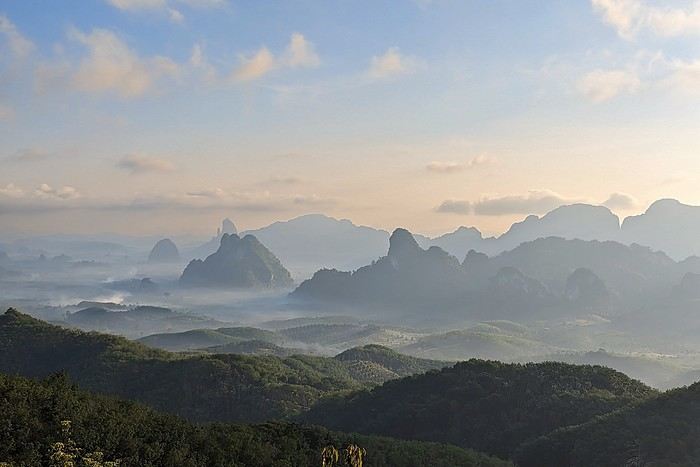
It might not be very original, but I see it hasn’t been suggested—or at least not for a very long time. I’d like to invite you to discover the beauty of the great outdoors through landscape photos. Whether they’re desert, sea, countryside, or mountain scenes—with or without other elements (people, buildings, animals, etc.)—they should make us want to dive right in without hesitation.
To participate: Photo submissions until Wednesday, June 24 at 11:59 PM You can post up to 3 photos, numbered and shared in separate messages, along with a short description of the place and the story behind it.
To vote: from Thursday, June 25 at 12:01 AM to Monday, June 29 at 11:59 PM After the deadline, it’s too late!
Please include the photo number, username, and the points awarded: Photo #1 = 3 pts Photo #2 = 2 pts Photo #3 = 1 pt
All VF members can vote (even those who didn’t submit photos). In case of a tie for first place, the winning photo will be the one with the most first-place votes, then second-place votes! The lucky winner will get to organize July 2026’s photo contest.
For discussions about the theme, it’s here: Discussion thread for June 2026’s theme: Such a Beautiful Landscape
Good luck to everyone!
Philippe
Chumphon, Thailand: Doi Tapang
Off on an adventure to Java (and a bit of Bali)
Hey there, community! Back this weekend, below is my travel journal from my adventure in Indonesia. Enjoy the read!!!
Day 1 - August 10, 2025 New life downloading for three weeks! And for that, Flo and I launched a public tender... A public tender? What’s that got to do with a travel journal???... Well, when you think about it, few destinations tick all the boxes for an August adventure: Meaning, finding a place that’s exotic in the middle of August, not too expensive, not too packed with tourists, warm but not *too* warm, with postcard-perfect landscapes, dreamy beaches, tasty cuisine with a hint of exoticism, friendly and welcoming locals, where you’re free to sleep under the stars among the mosquitos, take transport surrounded by chickens, and even eat from a pig trough if you feel like it—well, turns out it’s not that easy to find! I’d even say, given how thick the list of requirements is, there’s a big risk the tender could be declared unsuccessful for failing to meet just one criterion. Let’s just say the candidates better submit a rock-solid proposal!
After reviewing all the responses and presentations from the candidates, the obvious choice for us is... Indonesia! Except that trying to explore a country as vast as Indonesia and its 17,504 islands in less than five years is a bit like reading the summary of a Proust novel without taking the time to savor each of its 950 pages! Don’t worry, I won’t name them all here. Besides, do they even all have names? No! Only 7,870 have been named—their parents clearly ran out of ideas for the rest. Anyway, our society, which worships the "work more to earn more" mantra, unfortunately limits our adventure time. So we’ll only get to see a small part of Indonesia, and we’ll have to make a tough choice to head for the best of the best in this archipelago of over seventeen thousand islands. Each one has its own selling points: Sumatra, Sulawesi, Java, the Celebes, Bali, Borneo, Papua, Timor, the Moluccas... So many names that smell of adventure... Another tender, another list of requirements, another review of proposals... Drumroll... Splash splash... And the lucky winner is... Ta-da... Java, Bali’s big sister, where I’ve already been eight years ago... Java the programming language. The Java of Broadway. We’re gonna *do* the Java. Java the coffee. And yes, Java is also an island!
This island, four times smaller than France, is home to 136 million people, making it the most populated island in the world! Fun fact: Indonesia, with its 260 million inhabitants, is just shy of the podium for the world’s most populated countries, after the winning trio of India, China, and the United States. And it’s on this island of Java that you’ll find Jakarta, the (soon-to-be-former) capital and main airport of the country, where we’ll soon land after our nineteen-hour flight! Yep, nineteen hours! I mean, Indonesia in general—and Java in particular—is a *tad* farther than going on vacation to Grandma Yoyo’s! Not sure where it is? Easy. Grab a map. Plant your finger on the big island at the bottom right—aka Australia for those who struggle with geography—move it up two centimeters, and bam, welcome to Indonesia!
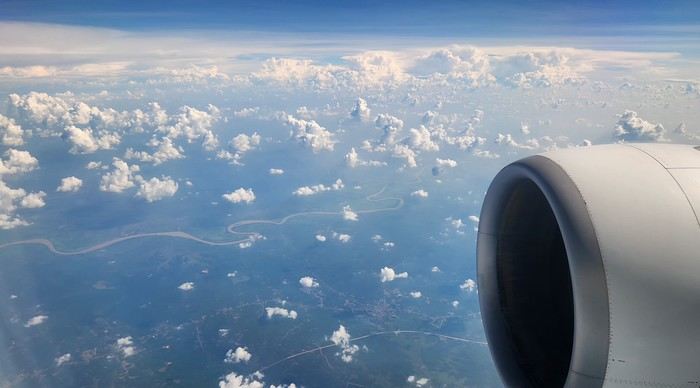
Nice transition, right? Because "Welcome to Indonesia" is exactly what the friendly flight attendant just said to me as we got off the plane! That’s it, our chakras are open, we’ve arrived at our (air)port. Time for rest, pool, cocktails, and a beach with our toes spread out... Wait, if you bought that, you clearly don’t know us yet! Since we still have energy to burn and need to adjust to the flight and time difference, we tackle the long administrative formalities to enter Indonesia, just to earn the right to hop in a 45-minute Grab taxi to the train station. The train station? What train station?... What do you usually do at a train station? Take a train, of course! Off we go for a three-hour train ride to Bandung, where we’ll officially start our adventure tomorrow after our first Indonesian night...
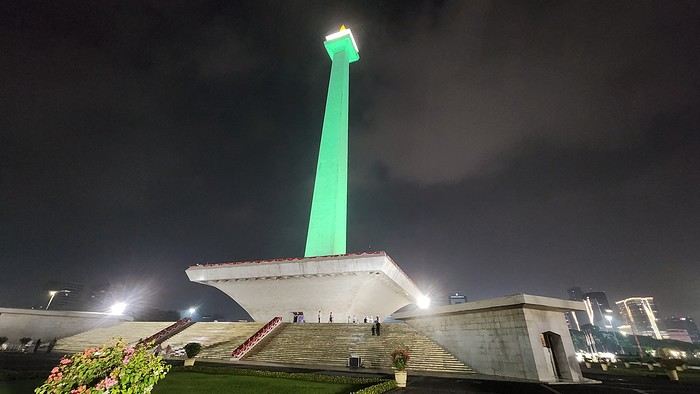
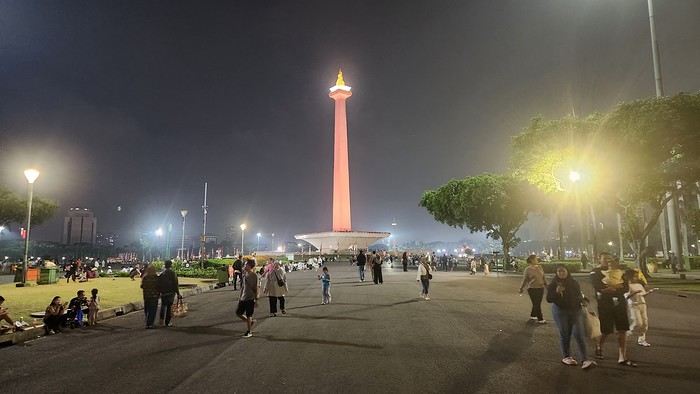
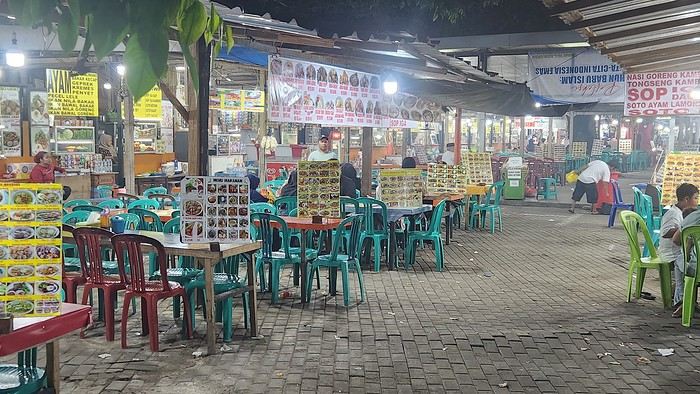
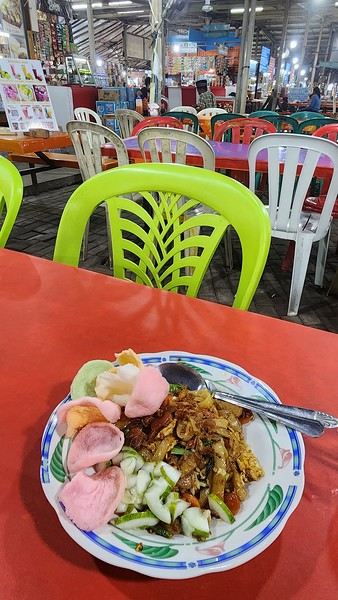
Unfortunately, we were a bit slow off the mark, which meant we missed the 6:25 PM train by two minutes. Oh well, we’ll have to wait until 11 PM. We take the opportunity to stretch our legs in Jakarta, soak up the atmosphere, and enjoy the delicious smells wafting from the *warungs*—those little typical street restaurants. A quick stop at the National Monument, a detour to a night market to devour our first *kwetiaw goreng* and *teh manis* for 60,000 rupiahs (that’s 3 € for two), and just like that, our penalty is lifted, and we’re allowed to hit the road again. Off to Bandung, where we arrive at 2 AM for... a *very* short night...
Day 1 - August 10, 2025 New life downloading for three weeks! And for that, Flo and I launched a public tender... A public tender? What’s that got to do with a travel journal???... Well, when you think about it, few destinations tick all the boxes for an August adventure: Meaning, finding a place that’s exotic in the middle of August, not too expensive, not too packed with tourists, warm but not *too* warm, with postcard-perfect landscapes, dreamy beaches, tasty cuisine with a hint of exoticism, friendly and welcoming locals, where you’re free to sleep under the stars among the mosquitos, take transport surrounded by chickens, and even eat from a pig trough if you feel like it—well, turns out it’s not that easy to find! I’d even say, given how thick the list of requirements is, there’s a big risk the tender could be declared unsuccessful for failing to meet just one criterion. Let’s just say the candidates better submit a rock-solid proposal!
After reviewing all the responses and presentations from the candidates, the obvious choice for us is... Indonesia! Except that trying to explore a country as vast as Indonesia and its 17,504 islands in less than five years is a bit like reading the summary of a Proust novel without taking the time to savor each of its 950 pages! Don’t worry, I won’t name them all here. Besides, do they even all have names? No! Only 7,870 have been named—their parents clearly ran out of ideas for the rest. Anyway, our society, which worships the "work more to earn more" mantra, unfortunately limits our adventure time. So we’ll only get to see a small part of Indonesia, and we’ll have to make a tough choice to head for the best of the best in this archipelago of over seventeen thousand islands. Each one has its own selling points: Sumatra, Sulawesi, Java, the Celebes, Bali, Borneo, Papua, Timor, the Moluccas... So many names that smell of adventure... Another tender, another list of requirements, another review of proposals... Drumroll... Splash splash... And the lucky winner is... Ta-da... Java, Bali’s big sister, where I’ve already been eight years ago... Java the programming language. The Java of Broadway. We’re gonna *do* the Java. Java the coffee. And yes, Java is also an island!
This island, four times smaller than France, is home to 136 million people, making it the most populated island in the world! Fun fact: Indonesia, with its 260 million inhabitants, is just shy of the podium for the world’s most populated countries, after the winning trio of India, China, and the United States. And it’s on this island of Java that you’ll find Jakarta, the (soon-to-be-former) capital and main airport of the country, where we’ll soon land after our nineteen-hour flight! Yep, nineteen hours! I mean, Indonesia in general—and Java in particular—is a *tad* farther than going on vacation to Grandma Yoyo’s! Not sure where it is? Easy. Grab a map. Plant your finger on the big island at the bottom right—aka Australia for those who struggle with geography—move it up two centimeters, and bam, welcome to Indonesia!
Nice transition, right? Because "Welcome to Indonesia" is exactly what the friendly flight attendant just said to me as we got off the plane! That’s it, our chakras are open, we’ve arrived at our (air)port. Time for rest, pool, cocktails, and a beach with our toes spread out... Wait, if you bought that, you clearly don’t know us yet! Since we still have energy to burn and need to adjust to the flight and time difference, we tackle the long administrative formalities to enter Indonesia, just to earn the right to hop in a 45-minute Grab taxi to the train station. The train station? What train station?... What do you usually do at a train station? Take a train, of course! Off we go for a three-hour train ride to Bandung, where we’ll officially start our adventure tomorrow after our first Indonesian night...
Unfortunately, we were a bit slow off the mark, which meant we missed the 6:25 PM train by two minutes. Oh well, we’ll have to wait until 11 PM. We take the opportunity to stretch our legs in Jakarta, soak up the atmosphere, and enjoy the delicious smells wafting from the *warungs*—those little typical street restaurants. A quick stop at the National Monument, a detour to a night market to devour our first *kwetiaw goreng* and *teh manis* for 60,000 rupiahs (that’s 3 € for two), and just like that, our penalty is lifted, and we’re allowed to hit the road again. Off to Bandung, where we arrive at 2 AM for... a *very* short night...
Australia 2025: Discovering the 5th Continent
Hi everyone.
Because that’s also what sparks the desire in every traveler (well, at least for me) to set foot on Australian soil: discovering a new continent.
Right now, I’ve got some time on my hands—those who follow me know that. A nasty muscle tear (which really doesn’t want to heal) is keeping me grounded for another week, so I’ve decided to open a new travel journal, recounting my recent trip from December 14, 2024, to January 12, 2025, in Australia.
The origins of this trip started last May in Crete, an island I chose for a 10-day break. It’s really lovely, by the way, but that’s not the point… It’s around this time every year that we decide on our next winter destination, and Argentina was at the top of the list—Sydney wasn’t even on the radar… I’d been looking at flights to Buenos Aires for a while, and the prices were shocking… But by the pool one lazy afternoon, scrolling on my iPhone, a promo from Geneva to Sydney caught my eye. The deal ticked two boxes on my traveler’s bucket list: a flight to Australia and a flight with Singapore Airlines, often ranked as the world’s best airline. A quick chat with the missus (well, of course!) and the decision was made: off to the land of kangaroos! Now, once you add luggage and Economy Plus, it still comes to 1600 € per person, but that’s a reasonable price. Either way, we already know what we’re in for—Australia is a budget commitment!

Thanks to 123rf for the image loan 😛
Right now, I’ve got some time on my hands—those who follow me know that. A nasty muscle tear (which really doesn’t want to heal) is keeping me grounded for another week, so I’ve decided to open a new travel journal, recounting my recent trip from December 14, 2024, to January 12, 2025, in Australia.
The origins of this trip started last May in Crete, an island I chose for a 10-day break. It’s really lovely, by the way, but that’s not the point… It’s around this time every year that we decide on our next winter destination, and Argentina was at the top of the list—Sydney wasn’t even on the radar… I’d been looking at flights to Buenos Aires for a while, and the prices were shocking… But by the pool one lazy afternoon, scrolling on my iPhone, a promo from Geneva to Sydney caught my eye. The deal ticked two boxes on my traveler’s bucket list: a flight to Australia and a flight with Singapore Airlines, often ranked as the world’s best airline. A quick chat with the missus (well, of course!) and the decision was made: off to the land of kangaroos! Now, once you add luggage and Economy Plus, it still comes to 1600 € per person, but that’s a reasonable price. Either way, we already know what we’re in for—Australia is a budget commitment!
Thanks to 123rf for the image loan 😛
Marrakech 2025: My First Steps as a Private Guide
Preamble:
.
This isn’t about drumming up business for a new professional venture—just sharing, under pressure from eager Vf members hungry for juicy anecdotes, my 10-day trip to Marrakech with 10 friends.
I’d mentioned during the planning discussion for this trip ((https://voyageforum.com/forum/questions-excursions-autour-marrakech-d10685703/)) that there wouldn’t be a travel journal... And since I’m a man of my word—but also stuck with a nasty calf muscle tear at the end of the trip that’s keeping me immobile for 15 days (more on that later)—I’ve got some time to dedicate to this. So, after this preamble, off we go to the Medina!
 .
.
Day 1: Friday, May 2nd – The Day the Group Split
Before we dive in, let’s talk about the trip prep. Among my friends, I’ve got a rep as the go-to independent travel expert (thanks to a few trips, some with this same crew). So, naturally, the task of planning this one fell to me—and I took it on gladly (you’re never better served than by yourself, right?). The prep and itinerary were hashed out over multiple meet-ups (excuses?) during shared meals at one another’s places, guided by yours truly. Travel style, accommodation, sightseeing—all decisions were made together, trying to balance everyone’s wishes over a good bottle (generic term, not numerical!)
So, a group of five—including me and my girlfriend—set off for Geneva at 3 AM that Friday, while the rest would join us on Sunday due to family or work commitments. We’ll skip the EasyJet flight—it was nothing special, just a means to get us there safely (which, in itself, is already a win). We landed in Marrakech at 9 AM local time. There, a spotless Dacia Logan was waiting for us, chartered by MEDLOC, whose impeccable service I’ll praise here (thanks, friends, for the tip!). My first challenge, after loading the suitcases into the trunk: reaching the riad booked for our first two nights as the advance team. https://www.astradamusmarrakesh.top/fr/
I was a little nervous about driving here—Marrakech’s driving reputation precedes it. The hiccup? While setting up Google Maps for the route, I accidentally added a level-5 difficulty and enabled pedestrian mode... Imagine a rental car stubbornly trying for over half an hour to navigate the Medina (the riad was in the north), cursing all the pedestrians in streets too narrow for the car, and having to reverse multiple times because “it won’t fit,” ignoring the many Marrakechis waving to signal the street was impassable (but what are they trying to sell me now? 🤪)... Until my co-pilot, holding my phone, asked if it was “normal for the route to be dotted on Google Maps?” Yes, it’s normal—pedestrian mode was on.... We’ll still be laughing about this in the nursing home in 40 years, but at the time, I was genuinely surprised by what driving in Morocco had in store for me—and for good reason! After fixing the Google Maps settings, we arrived more calmly at the private parking lot (90 dirhams per night) and then at the riad, where we received a warm welcome while our rooms were being prepared.
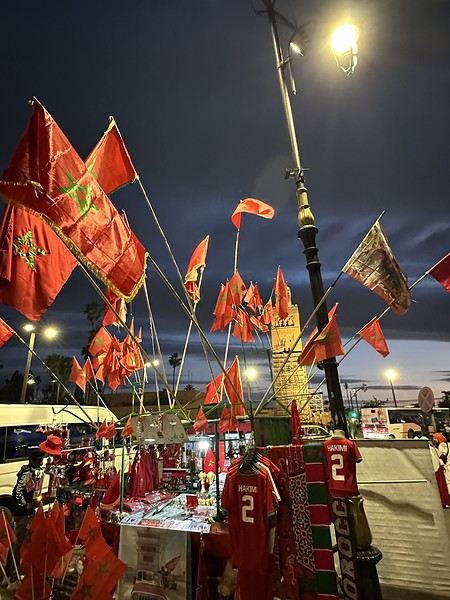
After freshening up, we crossed the souks for the first time to have lunch at Jemaa el-Fna Square, at Zeitoun Café, where we enjoyed our first couscous or tagine on its terrace. We’d return to Jemaa el-Fna that evening after a restorative nap at the riad, another late afternoon in the souk, and an evening at this famous UNESCO World Heritage site. This time, it was the restaurant Lafarmacie (you can’t make this up!) that won us over, despite the lack of a rooftop. I recommend this place to everyone—the prices are great, the welcome is extraordinary, and the food is excellent...
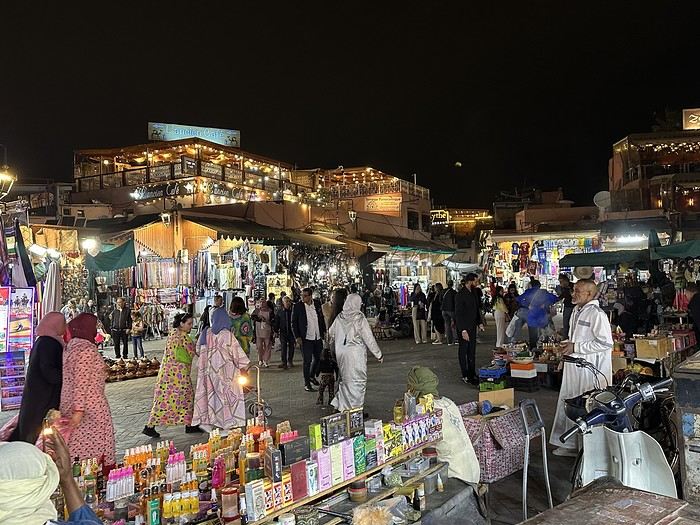
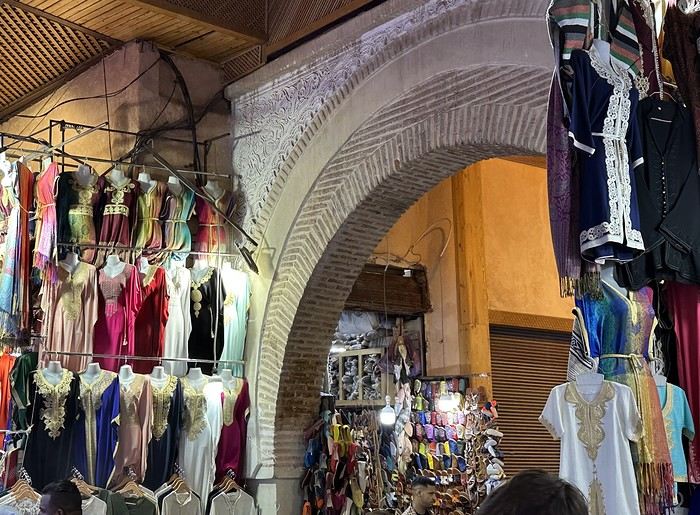
Returning after 11 PM, we learned the hard way that the souk has its own entry points and hours, and the path to our beds was full of detours and closed doors. Fortunately, we were guided by friendly locals who showed us the right way (in exchange for a fiercely negotiated tip each time...)
.Day 1: Friday, May 2nd – The Day the Group Split
Before we dive in, let’s talk about the trip prep. Among my friends, I’ve got a rep as the go-to independent travel expert (thanks to a few trips, some with this same crew). So, naturally, the task of planning this one fell to me—and I took it on gladly (you’re never better served than by yourself, right?). The prep and itinerary were hashed out over multiple meet-ups (excuses?) during shared meals at one another’s places, guided by yours truly. Travel style, accommodation, sightseeing—all decisions were made together, trying to balance everyone’s wishes over a good bottle (generic term, not numerical!)
So, a group of five—including me and my girlfriend—set off for Geneva at 3 AM that Friday, while the rest would join us on Sunday due to family or work commitments. We’ll skip the EasyJet flight—it was nothing special, just a means to get us there safely (which, in itself, is already a win). We landed in Marrakech at 9 AM local time. There, a spotless Dacia Logan was waiting for us, chartered by MEDLOC, whose impeccable service I’ll praise here (thanks, friends, for the tip!). My first challenge, after loading the suitcases into the trunk: reaching the riad booked for our first two nights as the advance team. https://www.astradamusmarrakesh.top/fr/
I was a little nervous about driving here—Marrakech’s driving reputation precedes it. The hiccup? While setting up Google Maps for the route, I accidentally added a level-5 difficulty and enabled pedestrian mode... Imagine a rental car stubbornly trying for over half an hour to navigate the Medina (the riad was in the north), cursing all the pedestrians in streets too narrow for the car, and having to reverse multiple times because “it won’t fit,” ignoring the many Marrakechis waving to signal the street was impassable (but what are they trying to sell me now? 🤪)... Until my co-pilot, holding my phone, asked if it was “normal for the route to be dotted on Google Maps?” Yes, it’s normal—pedestrian mode was on.... We’ll still be laughing about this in the nursing home in 40 years, but at the time, I was genuinely surprised by what driving in Morocco had in store for me—and for good reason! After fixing the Google Maps settings, we arrived more calmly at the private parking lot (90 dirhams per night) and then at the riad, where we received a warm welcome while our rooms were being prepared.
After freshening up, we crossed the souks for the first time to have lunch at Jemaa el-Fna Square, at Zeitoun Café, where we enjoyed our first couscous or tagine on its terrace. We’d return to Jemaa el-Fna that evening after a restorative nap at the riad, another late afternoon in the souk, and an evening at this famous UNESCO World Heritage site. This time, it was the restaurant Lafarmacie (you can’t make this up!) that won us over, despite the lack of a rooftop. I recommend this place to everyone—the prices are great, the welcome is extraordinary, and the food is excellent...
Returning after 11 PM, we learned the hard way that the souk has its own entry points and hours, and the path to our beds was full of detours and closed doors. Fortunately, we were guided by friendly locals who showed us the right way (in exchange for a fiercely negotiated tip each time...)
The Kingdom of Lions...
 Hello everyone!
This trip dates back to late 2021, but since Voyage Forum reopened for writing, I haven’t seen many travel journals about Tanzania, so I decided to repost this one, which I originally shared on another well-known travelers’ site—even though I prefer Voyage Forum’s user experience.
It’s also a chance for me to relive this exhilarating trip... So, if you’re up for it, let me take you on a classic adventure: Tarangire - Ngorongoro - Serengeti, plus a little bonus—the small Arusha Park.
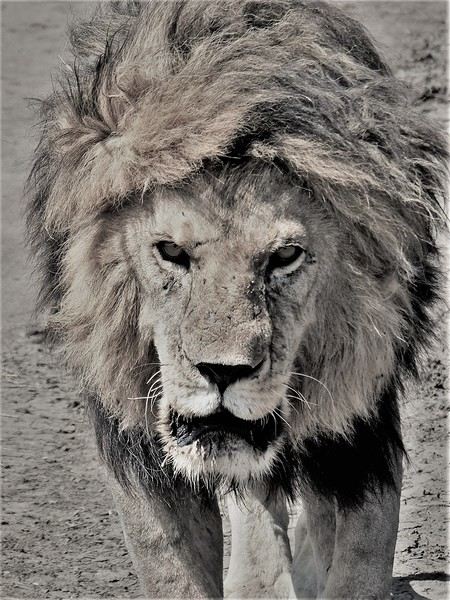
First off, yes, as the title of this journal suggests, we were lucky enough to spot *tons* of lions. The power they exude is incredible, even if most of the time they just look like big cats napping or strolling around. But lock eyes with one, and you’ll be glad you’re in the jeep.
Hello everyone!
This trip dates back to late 2021, but since Voyage Forum reopened for writing, I haven’t seen many travel journals about Tanzania, so I decided to repost this one, which I originally shared on another well-known travelers’ site—even though I prefer Voyage Forum’s user experience.
It’s also a chance for me to relive this exhilarating trip... So, if you’re up for it, let me take you on a classic adventure: Tarangire - Ngorongoro - Serengeti, plus a little bonus—the small Arusha Park.
First off, yes, as the title of this journal suggests, we were lucky enough to spot *tons* of lions. The power they exude is incredible, even if most of the time they just look like big cats napping or strolling around. But lock eyes with one, and you’ll be glad you’re in the jeep.
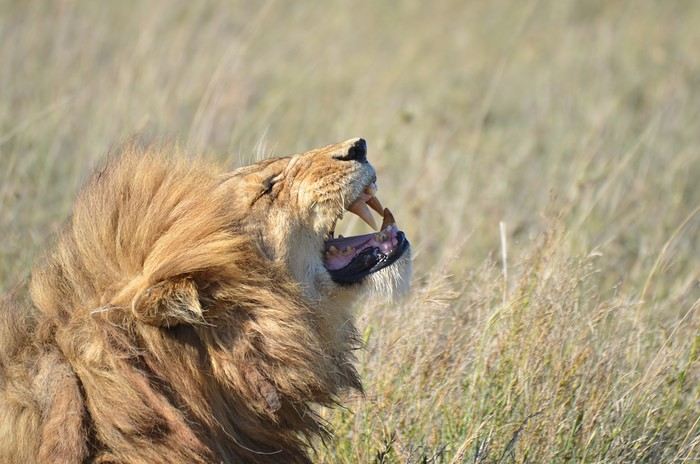
But let’s not forget the rest of the wildlife—and the landscapes, which are absolutely stunning, with those iconic tree silhouettes.
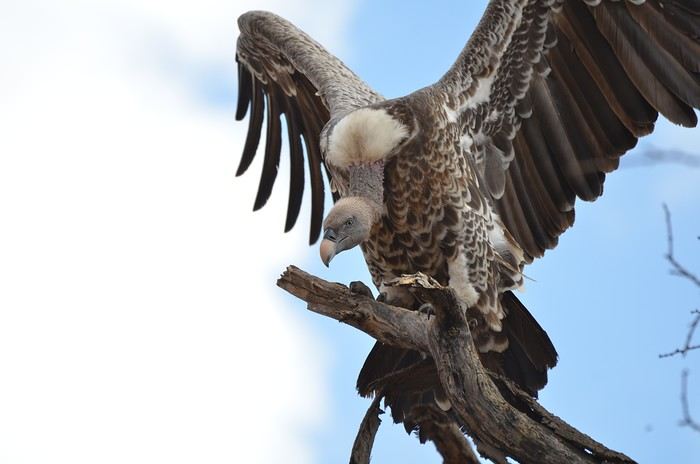
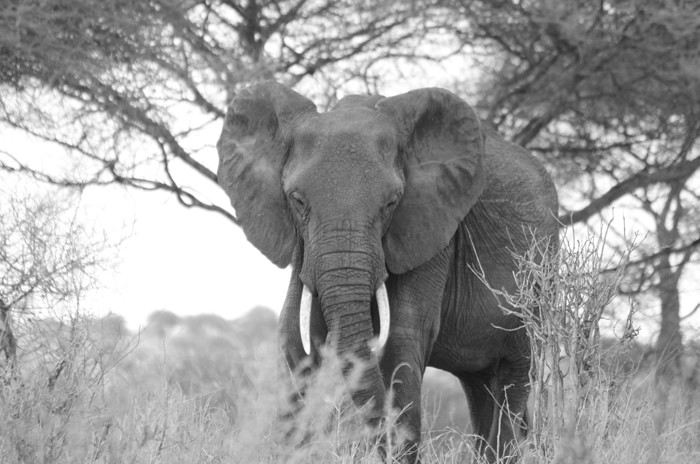
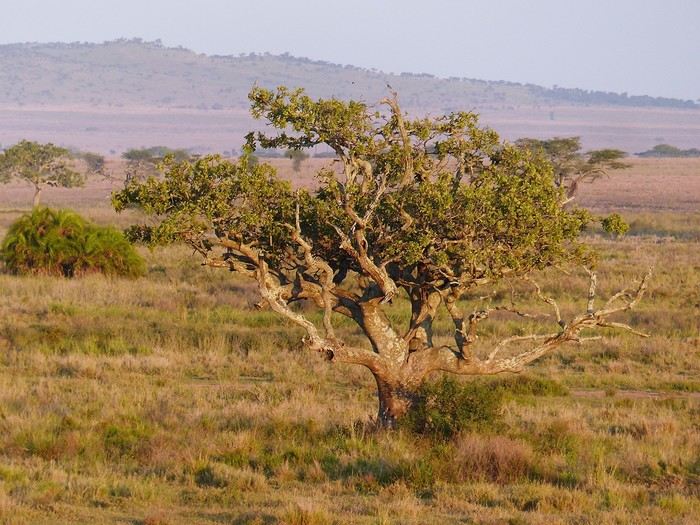
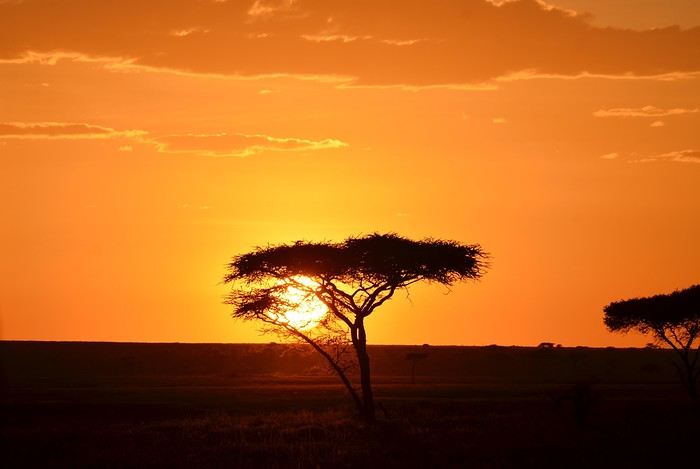
I remember before leaving, I was a little worried I wouldn’t feel that same sense of wonder I’d experienced two years earlier in Botswana (see my travel journal). That fear was unfounded—the magic worked its charm once again! Note: Since we had limited time, we focused our trip entirely on safari, so this journal is 100% animals and landscapes—and 0% Maasai. Next post: TARANGIRE
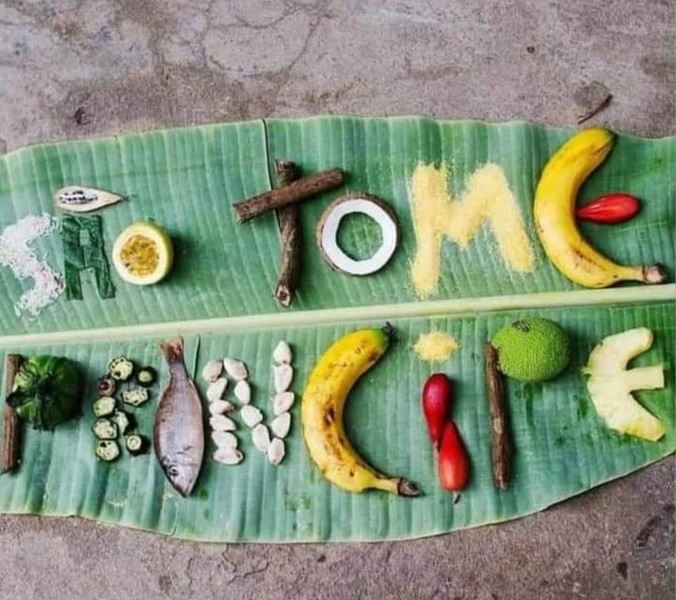
Sao Tomé, the forgotten island
Hey there, it's me again—back with my usual travel journal share for our loved ones, from our 15-day trip in October 2019.
"Ah, here it is at last—that sweet scent of elsewhere so dear to Cricri and Lulu’s noses, that mix of apprehension and desire when facing the unknown.
We’re really diving into the unknown this time, taking you to the island of SAO TOMÉ... also known as the island: *‘Wait, what did you say?’* 😄. Because apparently, no one’s heard of Sao Tomé—except our Portuguese friends.
It’s an archipelago of three islands smack in the middle of the world, right on the equator, off the coast of Gabon.
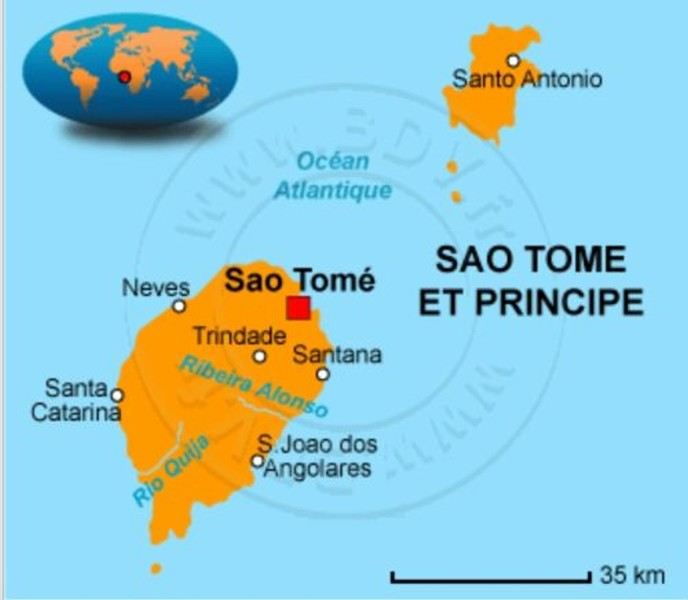
No, these aren’t the sun-soaked, Polynesian lagoon islands. Here, *‘it rains, it pours...’* pretty much all the time, it seems.
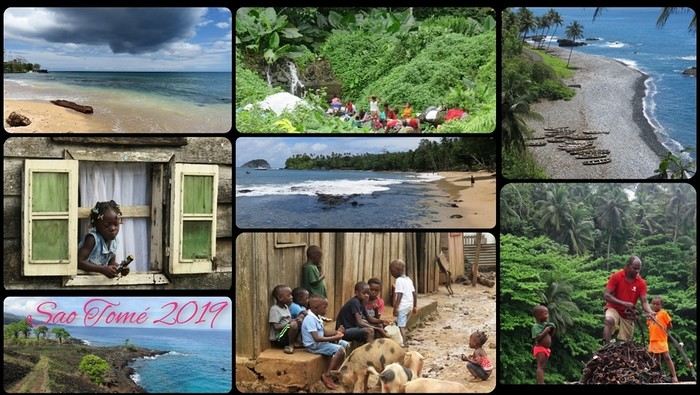
There’s not much to *‘see’* in the traditional tourist sense—EXCEPT for stunning landscapes, lush vegetation, a few beaches with golden or black sand, colonial buildings still in their original state, a single main road, and plenty of *‘tracks’* that are more or less drivable. All this surrounded by an African population that speaks Portuguese and is known for its warm welcome.
Well, that should be enough for our happiness—and hopefully yours too! 😊
Ready for landing?
"Ah, here it is at last—that sweet scent of elsewhere so dear to Cricri and Lulu’s noses, that mix of apprehension and desire when facing the unknown.
We’re really diving into the unknown this time, taking you to the island of SAO TOMÉ... also known as the island: *‘Wait, what did you say?’* 😄. Because apparently, no one’s heard of Sao Tomé—except our Portuguese friends.
It’s an archipelago of three islands smack in the middle of the world, right on the equator, off the coast of Gabon.
No, these aren’t the sun-soaked, Polynesian lagoon islands. Here, *‘it rains, it pours...’* pretty much all the time, it seems.
There’s not much to *‘see’* in the traditional tourist sense—EXCEPT for stunning landscapes, lush vegetation, a few beaches with golden or black sand, colonial buildings still in their original state, a single main road, and plenty of *‘tracks’* that are more or less drivable. All this surrounded by an African population that speaks Portuguese and is known for its warm welcome.
Well, that should be enough for our happiness—and hopefully yours too! 😊
Ready for landing?
How surprising this Sultanate of Oman is
Hey fellow travelers,
We’re a couple in our fifties who’ve been traveling independently for ages—mostly in Asia, a bit in Africa, very little in the Americas, and never ever in West Asia until November 2023, when we discovered the Sultanate of Oman.
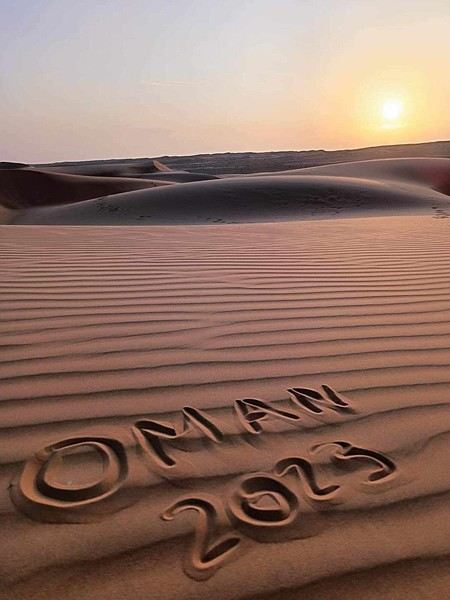
If we waited so long to explore this part of the world, it’s because a few questions were nagging at us, like: Can two Landais party lovers like us survive 15 days without apéro 😄? Or, more seriously: Can a feminist like me enjoy traveling in such a conservative country?
That is the question (and I feel your pain with this unbearable suspense 😅).
Ready to dive in?
PS: Apologies in advance for the casual tone of this travel journal—it’s the one I shared with our loved ones in real time, which explains everything.
We’re a couple in our fifties who’ve been traveling independently for ages—mostly in Asia, a bit in Africa, very little in the Americas, and never ever in West Asia until November 2023, when we discovered the Sultanate of Oman.
If we waited so long to explore this part of the world, it’s because a few questions were nagging at us, like: Can two Landais party lovers like us survive 15 days without apéro 😄? Or, more seriously: Can a feminist like me enjoy traveling in such a conservative country?
That is the question (and I feel your pain with this unbearable suspense 😅).
Ready to dive in?
PS: Apologies in advance for the casual tone of this travel journal—it’s the one I shared with our loved ones in real time, which explains everything.
Our trip recap: searching for primates in Uganda
Hi everyone,
As I mentioned a few days ago in the comments on ArXplorateur’s post (https://voyageforum.com/forum/deux-semaines-en-ouganda-en-solo-en-transports-d10553168/) —which was the first to reopen the forum’s Africa section—I wanted to share our feedback on our three weeks in Uganda. We recently traveled between late August and mid-September with the Mpolampola agency, which many of you know, run by Paul. I’m editing a one-hour film about this trip, which I’ll be uploading soon to our travel-focused YouTube channel: https://www.youtube.com/@lolodetoul54
It’s almost finished and ready to be uploaded.
We planned an ambitious itinerary (maybe *too* ambitious?).
Here’s the breakdown of our packed schedule:
D0 Saturday 24/08: Departure from Paris to Uganda via Kigali with Rwandair D1 Sunday 25/08: Arrival in Entebbe Sunday morning. Departure for Lake Mburo National Park. Night at Rwakobo Lodge D2 Monday 26/08: Lake Mburo National Park. Walking safari and boat tour of the lake. Night at Rwakobo Lodge D3 Tuesday 27/08: Departure for Lake Bunyonyi. Night at Birdnest Overseas D4 Wednesday 28/08: Boat and walking tour of the lake, then drive to Lake Mutanda Lodge D5 Thursday 29/08: Hike to see the golden monkeys, then departure for Nkuringo Bwindi Gorilla Lodge D6 Friday 30/08: Hike to see the gorillas. Night again at Nkuringo Bwindi Gorilla Lodge D7 Saturday 31/08: Drive to Queen Elizabeth National Park. Night at Twin Lakes Safari Lodge D8 Sunday 01/09: Vehicle safari and boat tour on the Kazinga Channel. Night at Twin Lakes Safari Lodge D9 Monday 02/09: Drive to Kibale Forest and walk around Crater Lake. Night at Isunga Lodge D10 Tuesday 03/09: Chimpanzee trek in Kibale Forest and walk in Bigodi Swamp. Night at Isunga Lodge D11 Wednesday 04/09: On the road to Murchison Falls National Park. Walking tour with rhinos at Ziwa Rhino Sanctuary. Night at Murchison River Lodge D12 Thursday 05/09: Vehicle safari in Murchison Falls National Park and boat ride to the falls. Night at Murchison River Lodge D13 Friday 06/09: Drive to Chobe Lodge by the Nile D14 Saturday 07/09: Long road trip to Kidepo Valley National Park. Night at Adere Lodge D15 & D16: Safari in Kidepo Valley National Park. Nights at Adere Lodge D17 Tuesday 10/09: Very long drive to Sipi Falls (Mount Elgon). Night at Lacam Lodge D18 Wednesday 11/09: Visit to the falls, then drive to Jinja (source of the Nile). Night at Haven Lodge D19 Thursday 12/09: Drive to Kampala. Night at Latitude 0. D20 Friday 13/09: Discovering shoebills in Mabamba Swamp. Evening flight back to France via Kigali, Rwanda.
That’s the teaser done! I’ll be back with more details soon. Looking forward to sharing! Loïc
As I mentioned a few days ago in the comments on ArXplorateur’s post (https://voyageforum.com/forum/deux-semaines-en-ouganda-en-solo-en-transports-d10553168/) —which was the first to reopen the forum’s Africa section—I wanted to share our feedback on our three weeks in Uganda. We recently traveled between late August and mid-September with the Mpolampola agency, which many of you know, run by Paul. I’m editing a one-hour film about this trip, which I’ll be uploading soon to our travel-focused YouTube channel: https://www.youtube.com/@lolodetoul54
It’s almost finished and ready to be uploaded.
We planned an ambitious itinerary (maybe *too* ambitious?).
Here’s the breakdown of our packed schedule:
D0 Saturday 24/08: Departure from Paris to Uganda via Kigali with Rwandair D1 Sunday 25/08: Arrival in Entebbe Sunday morning. Departure for Lake Mburo National Park. Night at Rwakobo Lodge D2 Monday 26/08: Lake Mburo National Park. Walking safari and boat tour of the lake. Night at Rwakobo Lodge D3 Tuesday 27/08: Departure for Lake Bunyonyi. Night at Birdnest Overseas D4 Wednesday 28/08: Boat and walking tour of the lake, then drive to Lake Mutanda Lodge D5 Thursday 29/08: Hike to see the golden monkeys, then departure for Nkuringo Bwindi Gorilla Lodge D6 Friday 30/08: Hike to see the gorillas. Night again at Nkuringo Bwindi Gorilla Lodge D7 Saturday 31/08: Drive to Queen Elizabeth National Park. Night at Twin Lakes Safari Lodge D8 Sunday 01/09: Vehicle safari and boat tour on the Kazinga Channel. Night at Twin Lakes Safari Lodge D9 Monday 02/09: Drive to Kibale Forest and walk around Crater Lake. Night at Isunga Lodge D10 Tuesday 03/09: Chimpanzee trek in Kibale Forest and walk in Bigodi Swamp. Night at Isunga Lodge D11 Wednesday 04/09: On the road to Murchison Falls National Park. Walking tour with rhinos at Ziwa Rhino Sanctuary. Night at Murchison River Lodge D12 Thursday 05/09: Vehicle safari in Murchison Falls National Park and boat ride to the falls. Night at Murchison River Lodge D13 Friday 06/09: Drive to Chobe Lodge by the Nile D14 Saturday 07/09: Long road trip to Kidepo Valley National Park. Night at Adere Lodge D15 & D16: Safari in Kidepo Valley National Park. Nights at Adere Lodge D17 Tuesday 10/09: Very long drive to Sipi Falls (Mount Elgon). Night at Lacam Lodge D18 Wednesday 11/09: Visit to the falls, then drive to Jinja (source of the Nile). Night at Haven Lodge D19 Thursday 12/09: Drive to Kampala. Night at Latitude 0. D20 Friday 13/09: Discovering shoebills in Mabamba Swamp. Evening flight back to France via Kigali, Rwanda.
That’s the teaser done! I’ll be back with more details soon. Looking forward to sharing! Loïc
Discussion parallèle au concours photo d'août: "Noir & Blanc" English translation pending
Je vous donne rendez-vous ici pour vos photos hors concours, pour discuter, échanger, conseiller, apprendre et s'amuser 😛
Le concours se passe par-là: https://voyageforum.com/v.f?post=10330487;a=10330487
Le concours se passe par-là: https://voyageforum.com/v.f?post=10330487;a=10330487
S'il y a un prochain voyage, comment utiliser ses finances? English translation pending
bonjour les gens qui voyagent
supposons qu on repart à l etranger en 2021 ou 2022. Comment utiliser vos finances ? Vous mettez tout l argent économisé dans un gros voyage genre luxe ou vous ne changez rien ou vous avez trop crainte et ne partirez plus ? je suis curieux de savoir
supposons qu on repart à l etranger en 2021 ou 2022. Comment utiliser vos finances ? Vous mettez tout l argent économisé dans un gros voyage genre luxe ou vous ne changez rien ou vous avez trop crainte et ne partirez plus ? je suis curieux de savoir
Mais où qu'il est ce truc là (4) English translation pending
Faut-il organiser le tour de France en 2020? English translation pending
c'est un peu en dehors de notre mouvement, mais la question peut se poser
https://www.cyclismactu.net/news-tour-de-france-une-epidemiologiste-tire-la-sonnette-d-alarme-90384.html
Et vous qu'en pensez vous ?
Self-drive in southwestern Uganda, February 2020
Since I used this forum a lot to prepare our trip, here’s a little feedback from our 15-day self-drive adventure in southwestern Uganda.
For those who have questions, don’t hesitate! I’ll do my best to answer them 😉
We’d already traveled quite a bit in South Africa and once in Namibia, always self-driving. When the idea of visiting Uganda came up, we debated—especially me 😛—whether to go solo or with a guide. My husband quickly convinced me to do it self-drive, so I started planning and organizing the trip accordingly. We began preparations and bookings in June 2019 for a trip scheduled during the first two weeks of February 2020. We deliberately chose to explore just a small part of Uganda and take our time. We traveled as a group of four, with our oldest son and his partner.
Here’s our itinerary: - February 1: Departure from Brussels, arrival and overnight in Entebbe - February 2: Drive to Lake Mburo and overnight there - February 3: Drive to Lake Bunyonyi and overnight there - February 4: Boat ride on the lake, then departure for Kisoro. Overnight there - February 5: Trek in Mount Mgahinga National Park for the youngsters. Overnight in Kisoro - February 6: Drive to Bwindi Impenetrable Forest. Overnight in Rushaga - February 7: Gorilla tracking in Rushaga. Overnight in Rushaga - February 8: Drive to Queen Elizabeth National Park – Southern sector – Overnight on the park’s edge - February 9: Morning in the southern sector of the park, then crossing to the northern part – Short safari in the late afternoon – Overnight by the Kazinga Channel - February 10: Safari and boat cruise – Second night on site - February 11: Drive to Kibale Forest – Overnight there - February 12: Chimpanzee tracking in the morning – Bigodi swamps in the afternoon – Second night there - February 13: Scenic drive to see the crater lakes + walk at Lake Nkuruba Nature Reserve – Third night there - February 14: Return to Entebbe - February 15: Morning boat ride in the Mabamba swamps – Afternoon by Lake Victoria and midnight flight to Brussels. That’s the broad outline of our trip.
We fell in love with this country: the people, the kids shouting "muzungu," the colors, the landscapes, the wildlife... But we were also saddened by the poverty in some villages and the child labor, especially in "quarries."
I’ll try to post a day-by-day account if it interests anyone.
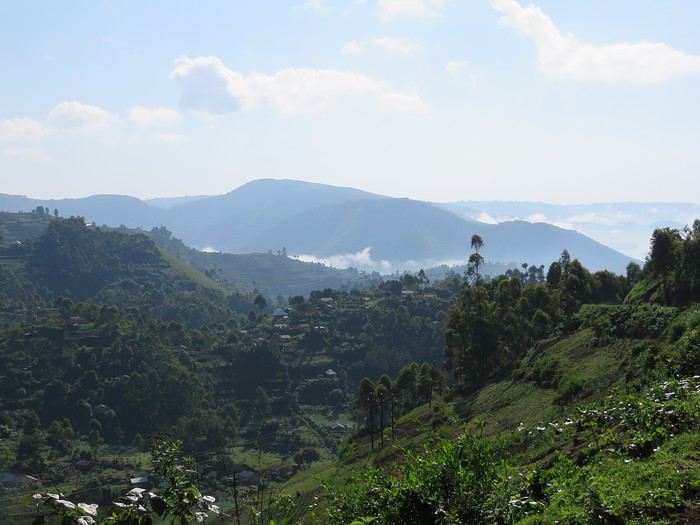
We’d already traveled quite a bit in South Africa and once in Namibia, always self-driving. When the idea of visiting Uganda came up, we debated—especially me 😛—whether to go solo or with a guide. My husband quickly convinced me to do it self-drive, so I started planning and organizing the trip accordingly. We began preparations and bookings in June 2019 for a trip scheduled during the first two weeks of February 2020. We deliberately chose to explore just a small part of Uganda and take our time. We traveled as a group of four, with our oldest son and his partner.
Here’s our itinerary: - February 1: Departure from Brussels, arrival and overnight in Entebbe - February 2: Drive to Lake Mburo and overnight there - February 3: Drive to Lake Bunyonyi and overnight there - February 4: Boat ride on the lake, then departure for Kisoro. Overnight there - February 5: Trek in Mount Mgahinga National Park for the youngsters. Overnight in Kisoro - February 6: Drive to Bwindi Impenetrable Forest. Overnight in Rushaga - February 7: Gorilla tracking in Rushaga. Overnight in Rushaga - February 8: Drive to Queen Elizabeth National Park – Southern sector – Overnight on the park’s edge - February 9: Morning in the southern sector of the park, then crossing to the northern part – Short safari in the late afternoon – Overnight by the Kazinga Channel - February 10: Safari and boat cruise – Second night on site - February 11: Drive to Kibale Forest – Overnight there - February 12: Chimpanzee tracking in the morning – Bigodi swamps in the afternoon – Second night there - February 13: Scenic drive to see the crater lakes + walk at Lake Nkuruba Nature Reserve – Third night there - February 14: Return to Entebbe - February 15: Morning boat ride in the Mabamba swamps – Afternoon by Lake Victoria and midnight flight to Brussels. That’s the broad outline of our trip.
We fell in love with this country: the people, the kids shouting "muzungu," the colors, the landscapes, the wildlife... But we were also saddened by the poverty in some villages and the child labor, especially in "quarries."
I’ll try to post a day-by-day account if it interests anyone.
Oman, le pays des Mille et Une Merveilles English translation pending
Qui n’a jamais eu envie de vivre les aventures de Sindbad le marin, qui n’a jamais rêvé de Shéhérazade lors de ses lectures des contes Les Mille et Une Nuits? Ou encore de la reine de Saba...
Eh bien! En parcourant le Sultanat d’Oman, nous allons à leur recherche ou plutôt découvrir ce pays des Mille et Une Merveilles décrites dans les célèbres contes persans dont a fait partie l’actuel Sultanat.
Voici l’itinéraire prévu pour ces deux semaines :
21/12 Lyon – Mascate 22/12 Mascate 23/12 Mascate – Wadi Tiwi 24/12 Wadi Shab – Sour 25/12 Ras Al Jinz – Wadi Bani Kalid 26/12 Wahiba Sands 27/12 Sugar Dunes – Sanctuaire Oryx 28/12 Mirbat 29/12 Wadi Darbat – Salalah 30/12 Mughsayl – Rakyut 31/12 Rub Al Khali - Haima 01/01 Jabreen - Nizwa 02/01 Tanuf - Bahla – Jebel Shams 03/01 Jebel Shams – Al Hamra - Misfat 04/01 Bilad Sayt – Wadi Bani Awf – Mascate 05/01 Mascate - Lyon
Montagnes, Wadis, déserts et plages, chacun y trouvera son bonheur. Voici un petit aperçu de ce qui vous attend.
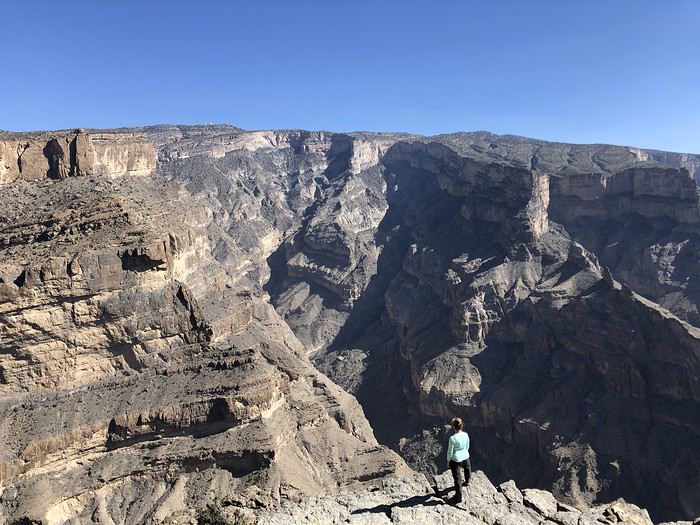
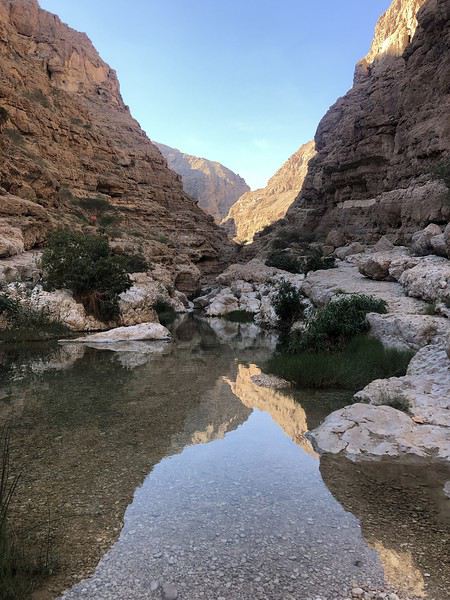
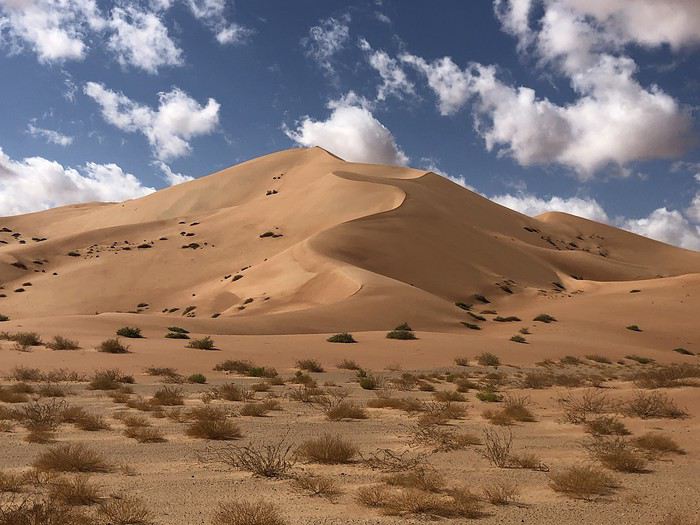
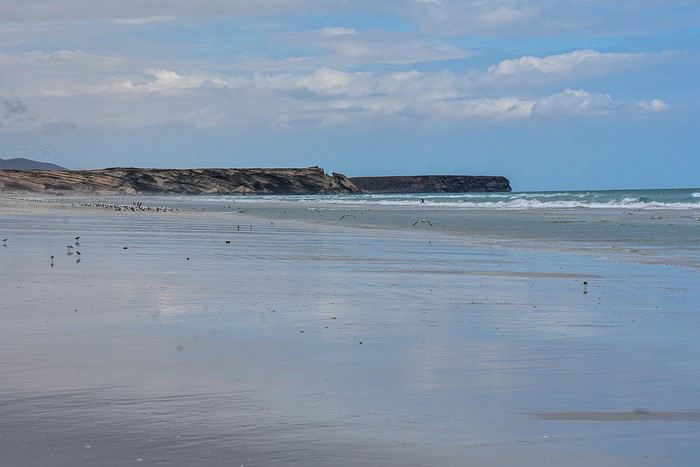
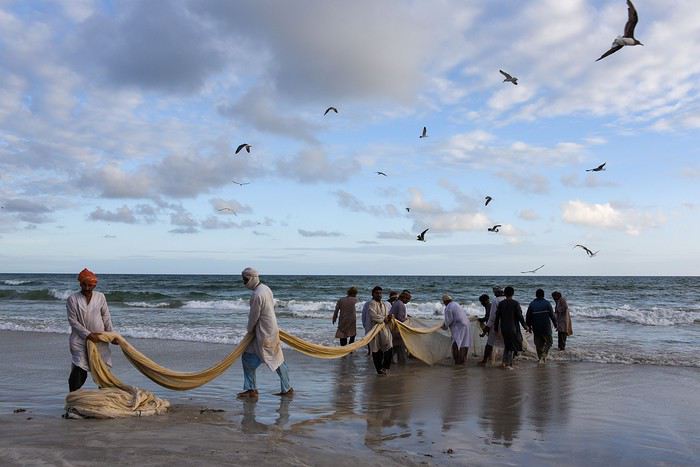
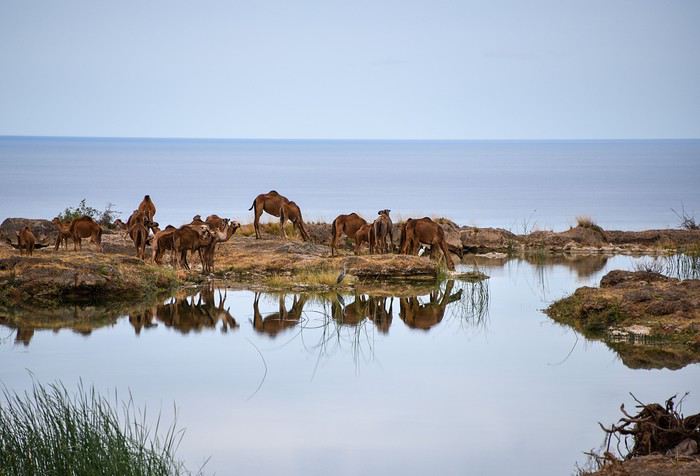
Alors si vous voulez bien me suivre...
Eh bien! En parcourant le Sultanat d’Oman, nous allons à leur recherche ou plutôt découvrir ce pays des Mille et Une Merveilles décrites dans les célèbres contes persans dont a fait partie l’actuel Sultanat.
Voici l’itinéraire prévu pour ces deux semaines :
21/12 Lyon – Mascate 22/12 Mascate 23/12 Mascate – Wadi Tiwi 24/12 Wadi Shab – Sour 25/12 Ras Al Jinz – Wadi Bani Kalid 26/12 Wahiba Sands 27/12 Sugar Dunes – Sanctuaire Oryx 28/12 Mirbat 29/12 Wadi Darbat – Salalah 30/12 Mughsayl – Rakyut 31/12 Rub Al Khali - Haima 01/01 Jabreen - Nizwa 02/01 Tanuf - Bahla – Jebel Shams 03/01 Jebel Shams – Al Hamra - Misfat 04/01 Bilad Sayt – Wadi Bani Awf – Mascate 05/01 Mascate - Lyon
Montagnes, Wadis, déserts et plages, chacun y trouvera son bonheur. Voici un petit aperçu de ce qui vous attend.
Alors si vous voulez bien me suivre...
Bolivia: Exploring the South Lipez by Self-Drive
Hi everyone,
The idea of traveling to Bolivia came to me after seeing Jean-François (Max68)’s photos on his website. I thought we *had* to see those stunning landscapes with the colorful lagoons for ourselves. But a self-drive trip didn’t seem doable at first. A few years ago, everyone advised against going to the South Lipez with just one car.
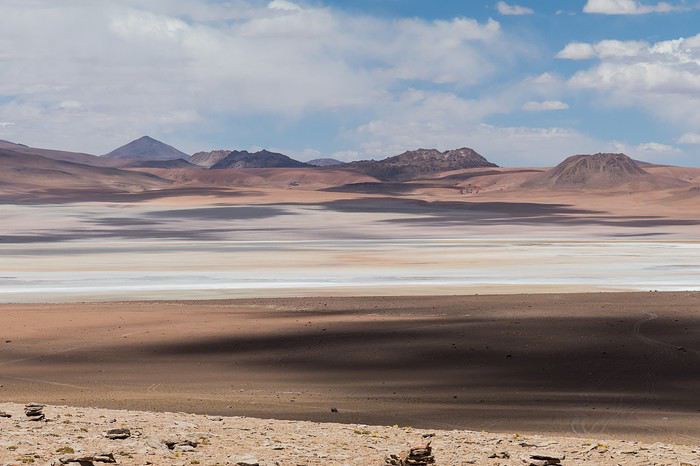 Laguna Kara
It was only after reading Laurent (Lolobe) and Pascal (Pepe874)’s travel journals—who explored the South Lipez solo with a car from Biz Rent a Car—that I thought we might be able to do the same. Meanwhile, we’d already contacted a local agency to organize a trip with a driver and guide. But the idea of a self-drive adventure really appealed to us. With encouragement and tips from Thierry (Tbernay) and Jean-François (Max68), we decided to plan our own self-drive trip. I’d like to thank them for their advice—it was *super* helpful. And a big thanks to all the other forum members for the info shared during our prep!
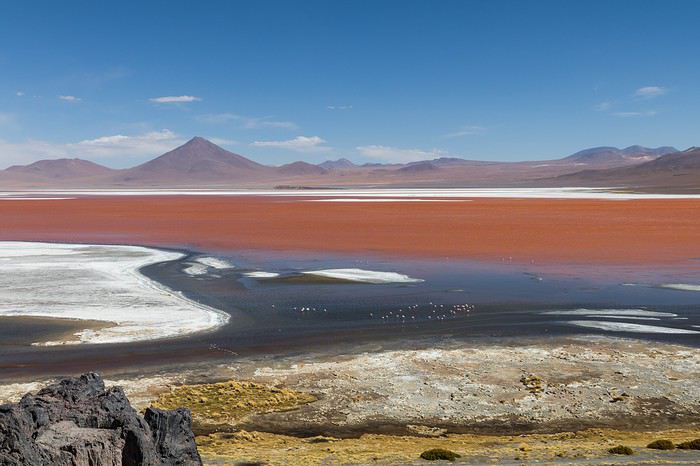 Laguna Colorada
Planning this trip happened during a tough time for our family. My mother-in-law’s illness and passing, plus a few health issues of my own, made us doubt the trip multiple times and nearly scrap the whole thing.
We booked our international flights in February with Swiss. They offered the best balance of travel time and price from Switzerland. Swiss operates Zurich–São Paulo with their own fleet, and São Paulo–Santa Cruz with GOL. In June, GOL canceled the Saturday flight and rebooked us on Sunday. Spending over 24 hours in that huge Brazilian city didn’t work for us at all, so we asked Swiss to put us on the next Zurich–São Paulo flight. Too bad—we lost a day in Bolivia and had to skip the Tarabucco market on Sunday.
Right after, we also booked the car in February. After contacting Imbex and Biz, we went with Biz. Not speaking Spanish, we were relieved to communicate with Alejandra in French. The contact was great—she answered all our questions patiently. Sometimes it took a few days to get a reply, but we could also reach her on WhatsApp. After our trip, we can *only* recommend Biz for rentals in Bolivia. The cars are well-prepped for the South Lipez tracks. The agency is reliable, and the vehicles are new and well-maintained.
 “Our” car, a Toyota Hilux
While planning, we realized the presidential elections would happen while we were in Bolivia. The risk of *bloqueos* (roadblocks and protests) was very real. But in Bolivia, *bloqueos* seem common—you always have to account for that kind of hassle. In late August/early September, Uyuni and the Salar region were blocked for days, leading to food, fuel, and cash shortages. Worried about a blockade in Uyuni and missing the Salar, we decided to visit it first *just in case*.
On election day, the whole country shut down. Planes were grounded, buses and taxis couldn’t circulate, and private cars were banned. There were a few exceptions—ambulances, police, or certain professions—but as tourists, we couldn’t get permission to drive. We asked the embassy, and Biz even requested a permit from the electoral office. So we had to plan to be somewhere with things to do *without* the car.
We decided not to book any accommodations in advance—a first for us. Usually, we plan our stops and reserve lodges, hotels, or campgrounds well ahead. This time, only the room in Sucre was booked, so we’d have a base when we arrived.
In July, Alex (Delhenry) reached out to propose joining part of the trip. He didn’t realize we were leaving in October. Still, we got fresh updates when he returned from the South Lipez. Thanks, Alex—your tips, especially about the Guadalupe–Tupiza stretch, were *super* useful.
In September, we connected with Jean-Louis (Avx) and Anne (Xeta), who were also heading to Bolivia in October, one and two weeks after us. We had dinner with Jean-Louis and his friend after our South Lipez trip and stayed in touch with Anne. It was great to chat with them! Unfortunately, Anne and her husband had a much rockier trip—they got hit hard by post-election issues.
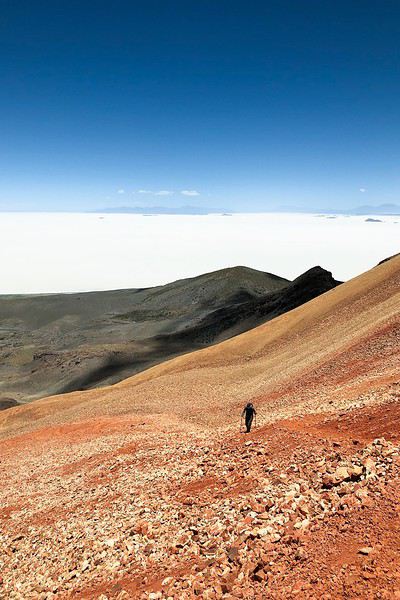 Climbing Volcán Tunupa
Our itinerary wasn’t set in stone—we decided to wing it on the spot. Two weeks before departure, I reconnected with Alejandra at Biz to move the car rental up by a day. With the elections, we wanted to leave Sucre ASAP and focus on the South Lipez. Outside Uyuni and Tupiza, the risk of blockades was zero. We also planned a two-night buffer in Sucre before our flights, just in case. It might sound overcautious, but in hindsight, we made the right call. If we’d left Sucre a day later, we wouldn’t have made it to Potosí—it was completely blocked. On the way back, we *just* dodged blockades in Potosí and elsewhere. Sometimes, you’ve gotta trust your gut.
Here’s our route—only the first two nights in Sucre were booked ahead:
D1 Departure from Switzerland
D2 Sucre (La Selenita)
D3 Sucre (La Selenita)
D4 Colchani (Hotel de Sal Luna Salada)
D5 Jirira (Auberge Doña Lupe)
D6 On the Salar (in the car)
D7 A few kilometers from Estancia Catal (in the car)
D8 Laguna Hedionda (Hotel Los Flamencos)
D9 Laguna Colorada (Lodge by the lagoon)
D10 Middle of nowhere, en route Laguna Verde–Mina Horsu–Quetena Chico (in the car)
D11 Quetena Chico (Lamphaya Lodge Andino)
D12 Quetena Chico (Lamphaya Lodge Andino)
D13 Guadalupe (Guest room at Celia’s)
D14 Along the Rio Grande (in the car)
D15 Tupiza (Hotel Mitru)
D16 Tupiza (Hotel Mitru)
D17 Sucre (La Selenita)
D18 Sucre (La Selenita)
D19 Santa Cruz (Hotel Sun)
D20 Departure from Santa Cruz
D21 Arrival in Switzerland
As you can see, we spent 13 nights in the South Lipez. Initially, we’d planned for nine, but Jean-François (Max68) suggested staying longer. Great advice—we didn’t regret it one bit. We could’ve even added 2–3 more days without getting bored.
Self-driving in the South Lipez takes some prep and a good GPS. We kept it simple and used maps.me to navigate. It’s a solid app—just save your waypoints ahead of time. For some stretches, I used Google Earth to visualize the tracks and sites. If you stick to the tour operator routes, you *almost* can’t get lost. But we often veered off the beaten path and took different routes. Some days, we didn’t see another car. So in case of a breakdown, it’s key to have water and food for several days. In some spots, there’s *zero* signal—your phone won’t work. Another must: it gets *cold* in the South Lipez, and a good sleeping bag is essential. We brought down sleeping bags rated for -10°C and didn’t regret it during our car nights.
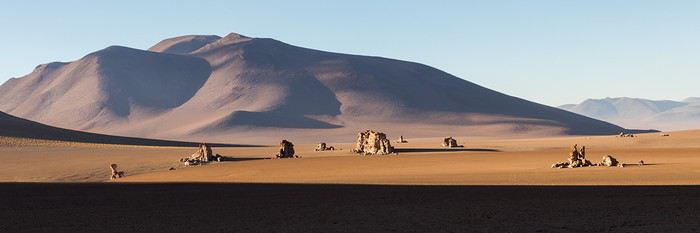 The Dalí Desert
Some tracks are *super* rocky—flat tires are a real risk. On those stretches, maps.me’s estimated travel time was way off. Some sections barely let us go over 15 km/h.
Lots of forum members recommend doing the South Lipez “loop” from Tupiza to Uyuni—ending with the Salar—to avoid Uyuni’s crowds. That might work for organized tours, but for self-drive, the direction *doesn’t* matter. I’ll say this: the few vehicles we saw mostly came from Tupiza and Chile, not Uyuni. So if starting from Uyuni works better for you, go for it! Ending in Tupiza means heading toward warmer weather. For our planned stops and climbs, starting in Uyuni helped with acclimatization. Spending a few nights between 3,600–3,800 m before going over 4,000 m is a smart move.
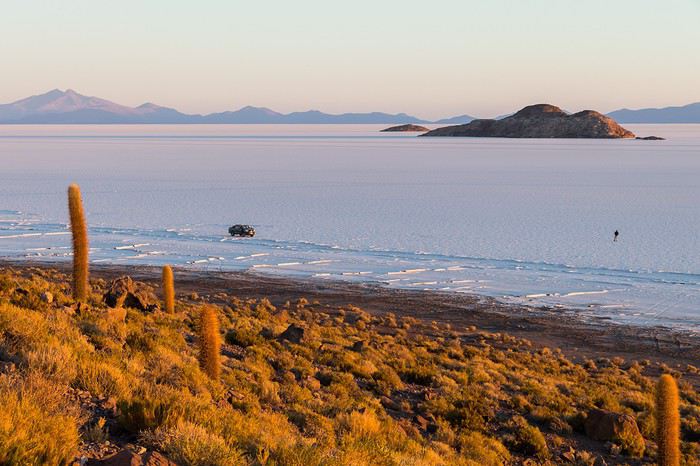 Uyuni Salt Flats in the morning
Overall, we barely saw anyone—except at Laguna Hedionda and Chalviri. There were several tour groups at Hotel Los Flamencos (Laguna Hedionda), but we didn’t cross paths during the day. Hardly anyone on the Salar, on the roads, or at the lodges in the evenings. The *only* place that shocked us was Chalviri. We’d planned to stay there, but it was fully booked—and we counted *forty* tour jeeps on-site. This was around noon! At the Polques hot springs (Chalviri), it was *packed*—we quickly nixed the idea of a dip. Plus, the vibe wasn’t great: soaking right by the road with lodges and restaurants in the background? Meh. Still, lots of tourists love it, so it’s up to you.
For the photos, I kept the colors and mood we saw. The lagoons’ hues are often stunning, but some online photos are *way* over-edited and oversaturated. The South Lipez’s landscapes are breathtaking—no need for excessive retouching.
If you don’t want to read all the details, the start of the travel journal is here: https://voyageforum.com/v.f?post=9888761;a=9888761
The idea of traveling to Bolivia came to me after seeing Jean-François (Max68)’s photos on his website. I thought we *had* to see those stunning landscapes with the colorful lagoons for ourselves. But a self-drive trip didn’t seem doable at first. A few years ago, everyone advised against going to the South Lipez with just one car.
Laguna KaraIt was only after reading Laurent (Lolobe) and Pascal (Pepe874)’s travel journals—who explored the South Lipez solo with a car from Biz Rent a Car—that I thought we might be able to do the same. Meanwhile, we’d already contacted a local agency to organize a trip with a driver and guide. But the idea of a self-drive adventure really appealed to us. With encouragement and tips from Thierry (Tbernay) and Jean-François (Max68), we decided to plan our own self-drive trip. I’d like to thank them for their advice—it was *super* helpful. And a big thanks to all the other forum members for the info shared during our prep!
Laguna ColoradaPlanning this trip happened during a tough time for our family. My mother-in-law’s illness and passing, plus a few health issues of my own, made us doubt the trip multiple times and nearly scrap the whole thing.
We booked our international flights in February with Swiss. They offered the best balance of travel time and price from Switzerland. Swiss operates Zurich–São Paulo with their own fleet, and São Paulo–Santa Cruz with GOL. In June, GOL canceled the Saturday flight and rebooked us on Sunday. Spending over 24 hours in that huge Brazilian city didn’t work for us at all, so we asked Swiss to put us on the next Zurich–São Paulo flight. Too bad—we lost a day in Bolivia and had to skip the Tarabucco market on Sunday.
Right after, we also booked the car in February. After contacting Imbex and Biz, we went with Biz. Not speaking Spanish, we were relieved to communicate with Alejandra in French. The contact was great—she answered all our questions patiently. Sometimes it took a few days to get a reply, but we could also reach her on WhatsApp. After our trip, we can *only* recommend Biz for rentals in Bolivia. The cars are well-prepped for the South Lipez tracks. The agency is reliable, and the vehicles are new and well-maintained.
“Our” car, a Toyota HiluxWhile planning, we realized the presidential elections would happen while we were in Bolivia. The risk of *bloqueos* (roadblocks and protests) was very real. But in Bolivia, *bloqueos* seem common—you always have to account for that kind of hassle. In late August/early September, Uyuni and the Salar region were blocked for days, leading to food, fuel, and cash shortages. Worried about a blockade in Uyuni and missing the Salar, we decided to visit it first *just in case*.
On election day, the whole country shut down. Planes were grounded, buses and taxis couldn’t circulate, and private cars were banned. There were a few exceptions—ambulances, police, or certain professions—but as tourists, we couldn’t get permission to drive. We asked the embassy, and Biz even requested a permit from the electoral office. So we had to plan to be somewhere with things to do *without* the car.
We decided not to book any accommodations in advance—a first for us. Usually, we plan our stops and reserve lodges, hotels, or campgrounds well ahead. This time, only the room in Sucre was booked, so we’d have a base when we arrived.
In July, Alex (Delhenry) reached out to propose joining part of the trip. He didn’t realize we were leaving in October. Still, we got fresh updates when he returned from the South Lipez. Thanks, Alex—your tips, especially about the Guadalupe–Tupiza stretch, were *super* useful.
In September, we connected with Jean-Louis (Avx) and Anne (Xeta), who were also heading to Bolivia in October, one and two weeks after us. We had dinner with Jean-Louis and his friend after our South Lipez trip and stayed in touch with Anne. It was great to chat with them! Unfortunately, Anne and her husband had a much rockier trip—they got hit hard by post-election issues.
Climbing Volcán TunupaOur itinerary wasn’t set in stone—we decided to wing it on the spot. Two weeks before departure, I reconnected with Alejandra at Biz to move the car rental up by a day. With the elections, we wanted to leave Sucre ASAP and focus on the South Lipez. Outside Uyuni and Tupiza, the risk of blockades was zero. We also planned a two-night buffer in Sucre before our flights, just in case. It might sound overcautious, but in hindsight, we made the right call. If we’d left Sucre a day later, we wouldn’t have made it to Potosí—it was completely blocked. On the way back, we *just* dodged blockades in Potosí and elsewhere. Sometimes, you’ve gotta trust your gut.
Here’s our route—only the first two nights in Sucre were booked ahead:
D1 Departure from Switzerland
D2 Sucre (La Selenita)
D3 Sucre (La Selenita)
D4 Colchani (Hotel de Sal Luna Salada)
D5 Jirira (Auberge Doña Lupe)
D6 On the Salar (in the car)
D7 A few kilometers from Estancia Catal (in the car)
D8 Laguna Hedionda (Hotel Los Flamencos)
D9 Laguna Colorada (Lodge by the lagoon)
D10 Middle of nowhere, en route Laguna Verde–Mina Horsu–Quetena Chico (in the car)
D11 Quetena Chico (Lamphaya Lodge Andino)
D12 Quetena Chico (Lamphaya Lodge Andino)
D13 Guadalupe (Guest room at Celia’s)
D14 Along the Rio Grande (in the car)
D15 Tupiza (Hotel Mitru)
D16 Tupiza (Hotel Mitru)
D17 Sucre (La Selenita)
D18 Sucre (La Selenita)
D19 Santa Cruz (Hotel Sun)
D20 Departure from Santa Cruz
D21 Arrival in Switzerland
As you can see, we spent 13 nights in the South Lipez. Initially, we’d planned for nine, but Jean-François (Max68) suggested staying longer. Great advice—we didn’t regret it one bit. We could’ve even added 2–3 more days without getting bored.
Self-driving in the South Lipez takes some prep and a good GPS. We kept it simple and used maps.me to navigate. It’s a solid app—just save your waypoints ahead of time. For some stretches, I used Google Earth to visualize the tracks and sites. If you stick to the tour operator routes, you *almost* can’t get lost. But we often veered off the beaten path and took different routes. Some days, we didn’t see another car. So in case of a breakdown, it’s key to have water and food for several days. In some spots, there’s *zero* signal—your phone won’t work. Another must: it gets *cold* in the South Lipez, and a good sleeping bag is essential. We brought down sleeping bags rated for -10°C and didn’t regret it during our car nights.
The Dalí DesertSome tracks are *super* rocky—flat tires are a real risk. On those stretches, maps.me’s estimated travel time was way off. Some sections barely let us go over 15 km/h.
Lots of forum members recommend doing the South Lipez “loop” from Tupiza to Uyuni—ending with the Salar—to avoid Uyuni’s crowds. That might work for organized tours, but for self-drive, the direction *doesn’t* matter. I’ll say this: the few vehicles we saw mostly came from Tupiza and Chile, not Uyuni. So if starting from Uyuni works better for you, go for it! Ending in Tupiza means heading toward warmer weather. For our planned stops and climbs, starting in Uyuni helped with acclimatization. Spending a few nights between 3,600–3,800 m before going over 4,000 m is a smart move.
Uyuni Salt Flats in the morningOverall, we barely saw anyone—except at Laguna Hedionda and Chalviri. There were several tour groups at Hotel Los Flamencos (Laguna Hedionda), but we didn’t cross paths during the day. Hardly anyone on the Salar, on the roads, or at the lodges in the evenings. The *only* place that shocked us was Chalviri. We’d planned to stay there, but it was fully booked—and we counted *forty* tour jeeps on-site. This was around noon! At the Polques hot springs (Chalviri), it was *packed*—we quickly nixed the idea of a dip. Plus, the vibe wasn’t great: soaking right by the road with lodges and restaurants in the background? Meh. Still, lots of tourists love it, so it’s up to you.
For the photos, I kept the colors and mood we saw. The lagoons’ hues are often stunning, but some online photos are *way* over-edited and oversaturated. The South Lipez’s landscapes are breathtaking—no need for excessive retouching.
If you don’t want to read all the details, the start of the travel journal is here: https://voyageforum.com/v.f?post=9888761;a=9888761
Uganda: 20 days discovering authenticity
Preamble:
For summer 2019, the idea was to return to Africa. We had already been to Namibia in 2017 (+ a few days in Botswana and the end of the trip at Victoria Falls), which we loved, and a trip to Asia in 2018 (Borneo, Perhentian, and Singapore), a nature-focused trip but a bit disappointing due to environmental destruction. The desire to return to Africa was very strong. We wanted a change of scenery, nature, discoveries, to step out of our little comfort zone (a bit, anyway!) and experience travel differently. In short, we dreamed of authenticity, and we weren’t disappointed.
We traveled as a family of four with our daughters, aged 19 and 17. When the urge for Africa hit, Uganda quickly stood out, especially for the chance to see rare animals, particularly the famous mountain gorillas. When I looked into the budget, I was quickly disheartened. It’s really expensive. Too expensive… Then, after reading a few trip reports on "VoyageForum" (thanks Muriel J!), I decided to ask a local agency for a quote. The first contact was very friendly and responsive, and the initial offer for two weeks fit our budget :). A few images gathered from the internet (especially Sipi Falls) finally convinced us all. I asked for an adapted offer with a few more sites to extend the trip to three weeks and cover a fairly complete visit to the country (which, of course, increased the budget! To stay within an acceptable range, we prioritized activities over accommodations and regularly chose the cheapest options, with 2-3 nice lodges in between). It’s booked! We were in October 2018, and the first thing to do was reserve permits to see the gorillas and chimpanzees. Then, the agency took care of all the bookings except for the international flights, which we booked with Ethiopian Airlines. A few months of waiting to look forward to… and a little worry too! Two events didn’t reassure us: the kidnapping of an American tourist by four men at the DRC border and the Ebola outbreak in Congo, with confirmed cases in Uganda by mid-June…
Here we are in July, and departure is approaching. The suitcases are packed (warm clothes, long, short, dark, light, practical, sun, rain, hiking/trekking shoes, flip-flops—clothes for every situation! Don’t forget: headlamp (essential!), binoculars, cameras), and we’re ready.
One day before departure, our agency Mpolampola, through its manager Paul, informs us that he won’t be the one taking care of us during the trip but another guide named Moses. He has a big problem with a vehicle and can’t do otherwise. For us, as long as everything is okay, no worries, especially since I had read glowing reviews about Moses, who turned out to be a very pleasant guide, cautious (most important) on the road, clear about all the activities, and an expert on birds, his specialty. We briefly met Paul in the middle of the trip, who is also very friendly. In short, we 100% recommend this agency. Flights to Entebbe went smoothly; we arrived around 10:30 AM, filled out health forms (Ebola information signs everywhere), visas, baggage claim, and met Moses, who took us directly to the vehicle. It was in pretty good condition with huge tires (we’d understand why later!), but it had quite a few miles (400,000 on the odometer!). Just missing a seatbelt… Okay, it’s Africa!
Now, here’s our day-by-day itinerary, which I’ll summarize briefly with ratings for each activity: ****TOPISSIME (Amazing) ***Very good **Good *Meh
Day 1) Departure from the airport at 11:45 AM for some currency exchange. Stop along the way at the equator for a meal and souvenir photo! Arrival at Lake Mburo Park *** around 5:00 PM. Even before entering the park, we saw lots of antelopes, zebras, elks, etc.—it’s magnificent. On the way, we had already encountered many goats and cows, and we were impressed by their enormous horns. We enjoyed a nice game drive until about 7:00 PM, when we reached our lodge, one of the nicest of the trip, Eagle’s Nest ****, with a magnificent view, a tent with a nice bathroom/shower, and a very good meal.
Day 2) Departure at 7:00 AM for a game drive; we encountered many animals again, especially antelopes, zebras, and birds. There are no giraffes, lions, or cheetahs in this park. We didn’t get lucky enough to see a leopard… :-) Then, we continued to Lake Bunyonyi ***, where the road and views are very beautiful, but we were shocked to see locals (mostly women and children) breaking stones by hand on the mountainside in very precarious safety conditions. There are regularly dramatic accidents because, over time, entire sections detach and cause landslides. These stones are then used for road construction… Another world… This was the only place we saw this. Lake Bunyonyi is a nice stop (but less exotic in our opinion since we have many lakes back home too!). We took a boat to our accommodation, Byoona Amagara ***, which has a lot of charm. We stayed in huts called "geodomes," completely open to nature, so it was very cool at night. To reach the toilets located below, you had to be brave! The meal consisted of lake shrimp—good but a bit bland.
Day 3) After a good breakfast, departure at 9:00 AM to visit three islands. We took several nice walks with beautiful views of the lake and islands. A local meal was served on the last island. At 1:00 PM, we met Moses for the rest of the program and headed to Ruhija in Bwindi Forest****. The landscapes are breathtaking. After two hours of driving and many photo stops, we arrived at our accommodation near the trekking starting point, Ruhija Gorilla Friends Resort **. We stayed in a room instead of the initially planned tents, which was just as well because there was a lot of wind during the night. We still had time for an activity and decided to meet the Bwata pygmies despite the bad reviews in the guide… The first part of the visit was quite nice, with a visit to a school where the children gave us a very joyful welcome. We had a great time listening to them sing and dance! Then we met the Bwata pygmies who live on the edge of the forest. When Bwindi Forest was declared a national park, they had to leave their habitat because their activities weren’t compatible with nature and wildlife protection. We left on a somewhat sad note… The visit ended with a local doctor explaining different medicinal plants, and we watched the making of local beer from sorghum. Good meal. We had butterflies in our stomachs—tomorrow was a big day! I admit I was a bit stressed, not entirely confident in my physical abilities…
Day 4) After a short night due to excitement, breakfast, and departure at 7:30 AM. First, it started calmly with singing and dancing. Then, a 15-minute briefing and group assignments. No one asked if we had any physical problems or anything (when booking, I had inquired a bit, and they told me groups were assigned based on physical abilities). We were assigned to the Mukiza group. At first, I was pretty happy—it was a fairly large group with babies :). The ranger explained that for now, they didn’t know where the gorillas were… the trackers couldn’t find them… Oh… (that’s not a good sign!!!) We set off at a good pace, first on a reasonably sloped path. We were accompanied by a family of four Italians and five porters (four for us!). After an hour, the ranger stopped us and informed us they still couldn’t find them—they had fought with another group the day before and scattered throughout the forest, so they were very far away, and we needed to move faster… Hmm… we picked up the pace (we weren’t going slowly before!!!) and walked for another good hour—down, up, down again, up again, we kept going, but always more or less on paths. Then another stop. A 10-minute break waiting for news. The news wasn’t very precise, it seemed! The ranger decided to cut through the forest—machetes were used to clear the path. We descended unimaginable slopes, then climbed back up. Our stick kept getting stuck; luckily, our porter helped us, held our hands, and the terrain was vertical! An hour later, another stop: we heard gorilla cries (yay!!!). False hope—we waited again for news from the trackers, who informed our ranger that it was a non-habituated family, so we couldn’t see them. Cold shower—we had to go all the way back up and return to the starting point to maybe see another group. But time was running out… We arrived around 1:30 PM; all the other groups had already left long ago. Our guide was worried because we still had a long drive ahead. We quickly ate a banana, and off we went for another trek (I was exhausted!). Luckily, this group was close—about 45 minutes of steep descent (I was already thinking about the climb back and considering being adopted by a gorilla ). The forest was sublime, with magnificent tree ferns—the place was truly splendid. Finally, we were there. The porters stayed behind, we grabbed our cameras, and followed the ranger. The progress wasn’t easy, but suddenly, a female was in front of us, curled up in a little ball, eating—so cute. The emotion overwhelmed us. But she moved away—it’s hard to observe them; they move constantly, and the terrain is very steep and uneven. We saw a female descending from a tree with a baby on her back—too adorable. Then, here was the silverback, enormous, incredible, yet so calm and peaceful. He ate quietly and gave us a nice demonstration of nostril exploration! We could observe them for a good hour, but photographing them wasn’t easy because they kept moving, and we could barely stand! Toward the end, a large male (black back) suddenly stood up and decided to pass right where I was! I ended up in the bushes, and the male passed in front of me just a few centimeters away (he stepped on one of my daughters’ feet!) followed by the whole family. Just an exceptional moment. It was time to leave; we had to climb back up. I dreaded it because, I admit, I was exhausted. We finished the hike after 4:00 PM, exhausted but happy. The ranger gave us diplomas, and we didn’t linger because we still had a long drive—we needed to reach Ishasha before nightfall. Our guide was a bit stressed. If we were to do it again, we’d spend an extra night in Bwindi. However, it seems finishing so late is exceptional—it never happens, according to our guide! The road between Bwindi and Ishasha is sublime, with extraordinary landscapes, and despite the late hour, we regularly asked our guide to stop for photos. We arrived at Enjojo *** Lodge around 6:00 PM. The huts are located quite far from the reception and the bathrooms, a bit far from the huts, but otherwise, it was very nice.
Day 5) Departure at 8:00 AM after a good breakfast with the hope of seeing tree-climbing lions (no luck!). Overall, there weren’t many animals, and we arrived around 12:45 PM at our next stop, Parkview Safari Lodge ****, with a magnificent view, a beautiful family bungalow, and a good meal. We enjoyed a short relaxation by the lovely pool. At 4:00 PM, we left to see Kyambura Gorge *** and hike there. Unfortunately, this activity is no longer available, so we walked around the area—it was very beautiful. Back at the hotel, a little rest after the previous day wasn’t a bad idea! Reading, swimming, meals, and dances made the end of the day enjoyable.
Day 6) Departure at 6:30 AM—one of our daughters was sick (stomachache, cold sweats…). Safari in Queen Elizabeth ** (Kaseny Plains)—a bit disappointing. Stop by the salt lake with a nice view. A small market, but we weren’t thrilled by the crafts (overall, apart from some beautiful baskets/plates, there wasn’t much, and the wooden objects were, in our opinion, much less pretty than in Namibia). Then we took the crater road (27 km long) **** with magnificent landscapes. However, you absolutely must close the windows because it’s infested with tsetse flies. At noon, we arrived at Mweya, where we stayed in basic rooms, but the restaurant was well-placed with a beautiful view of the Kazinga Channel. At 2:00 PM, we enjoyed a magnificent cruise **** on the channel. Elephants, antelopes, crocodiles, hippos (including adorable babies), buffaloes, all kinds of birds. Wow!!! Two hours of pure bliss. Quiet end of the day playing cards with a view of the channel and elephants.
Day 7) Departure at 6:00 AM—still sick, we weren’t sure if it was due to the preventive treatment (Malarone) or something else… Another game drive in Queen Elizabeth (Kaseny Plains) and breakfast by the salt lake. Overall, we were a bit disappointed by this park. Then we took the road to Crater Lakes***, again with very beautiful landscapes. A hike of about an hour and a half allowed us to discover these beautiful crater lakes (the water mainly comes from the Rwenzoris). We crossed pretty villages and had nice encounters. End of the day at Tinka’s Home ****, with a family. We loved this place—very welcoming, where we took a cooking class with our hosts. A really great time. After the meal, we enjoyed African stories and dances. Really awesome.
Day 8) Departure at 7:30 AM for another highly anticipated discovery—the chimpanzees in Kibale Forest ****. We went to the meeting point and were split into groups of six, each with a guide. We saw three different groups, and for the last group, we followed a chimpanzee (slightly more comfortable running in the forest than we were!) that led us to the group. Their cries are very impressive, and we could observe them well, even though they were often high up in the trees. We were lucky enough to see two on the ground, very close to us. It was magnificent. End of the encounter and return to the starting point—it was noon. We went back to Tinka’s Home for the meal (delicious!). At 2:00 PM, we hiked in Bigodi Swamp ***, a marsh surrounded by beautiful vegetation, especially huge papyrus, and inhabited by many birds and monkeys. We saw, among others, black-and-white colobus monkeys, red colobus monkeys, and vervet monkeys. We also visited a basket-weaving workshop where we bought two beautiful baskets. Then a short stop in Fort Portal, where we stayed for two nights at Ruwenzori View Guesthouse ***, a nice place with a family room and very good communal meals.
Day 9) Departure at 8:00 AM for a hike in the Rwenzori****—it was a bit chaotic today. First, we had to exchange shillings because we wouldn’t have another chance in the following days. At the bank, employees went to get the bills by motorcycle from other buildings—it was quite surreal! And it took time! Then there was a misunderstanding between the organizer and me… I really wanted to see the region where chameleons are found in the Rwenzori—this region is south of the mountain range, and we were in the north! Anyway, the program included an ascent in the northern part with a positive elevation gain of over 1,500 meters… Talking to the guide scheduled for this hike (Noah), we explained that we really wanted to discover the vegetation and these famous chameleons, not necessarily achieve a physical feat… (we’d had enough!). The decision was made to go south, which meant quite a bit of driving. The hike was really enjoyable, with magnificent vegetation by the river. We saw three of the four chameleon species present, including the famous three-horned chameleon. The region is superb. We ended with a drink at Ruboni Camp, which has a magnificent view of the region (ideally, we should have stayed there). Two hours of driving to finish, and a good meal :).
Day 10) Departure at 8:00 AM—we had a long drive to Ziwa Rhino Ranch****. We passed through Hoima, had lunch in Masindi, and arrived in time for the rhino tracking walk. We could approach them closely on foot—it was impressive. We saw eight. Since we were staying on-site in the guesthouse **, we received precise safety instructions for moving between the rooms and the restaurant. And we quickly understood why!
Day 11) Departure at 6:00 AM for breakfast—surprise, in front of our room, several large rhinos were sleeping (we had also heard a lot of animal noises during the night—rhinos but also what seemed to be predators). So we had to take a detour to reach the restaurant! Second surprise—next to the restaurant, just three meters away at most, two mothers and their baby were also sleeping! Memorable! Then we had an appointment for the shoebill trek and canoe ride **** (package with the previous day’s walk). So there we were, in our boots, splashing through 30 cm of water in search of the shoebill (I really wanted to see one :))! It was really fun, and luck was on our side—a shoebill had just landed in the distance! We approached as best we could and observed it from afar. What a strange bird! There are very few left, and Uganda is one of the countries where the chances of seeing one are quite good. The tour continued with a canoe cruise where we saw a herd of cows (the famous ones with enormous horns) being swum as a dowry to the father of the future bride! A funny spectacle. This stop wasn’t the most anticipated, but we all thought it was really worth the detour. Road to Murchison Falls Park, and arrival around noon at Red Chili Rest Camp **, where we stayed for two nights (family banda). Good meal. Then a cruise to Murchison Falls*** where we disembarked and continued on foot. It was pretty. Back to Red Chili.
Day 12) This morning, early departure for a cruise in search of the shoebill*** (booked in case we didn’t see one at Ziwa). The landscapes were pretty, but there weren’t many birds in the end. We spotted the chosen one from afar after the first 10 minutes—so the suspense didn’t last long :-) It was a nice activity but quite long—5 hours. In the afternoon, safari in Murchison Park****—this park is sublime, the landscapes fabulous. Really one of our favorite parts of the trip. Lots of animals and even a leopard spotted with binoculars because it was far away! Night at Red Chili.
Day 13) Departure for the first morning ferry—it was drizzling, the sky was threatening at first, so the landscape was spectacular! Beautiful contrasts. In the middle of the morning, we were lucky to observe a whole group of lions, first from afar, then with a little patience, the whole group approached until they passed beside and in front of our vehicle. What emotion and excitement! We could then observe large groups of giraffes. They were magnificent. The morning was incredible. Then we headed to our lodge, Fort Murchison ****, and on the way, we saw a whole group of elephants—the view was magnificent. We had a very good meal and enjoyed the pool a bit. We also met Paul, the organizer of our trip. Very nice :). In the late afternoon, off for a short safari in the park. We slept in very well-equipped tents.
Day 14) Today, we had a long drive to Kidepo Park. It was raining, which didn’t help our guide—according to him, the tracks near Kidepo turn to mud with rain and become difficult to navigate. We saw, among other things, a bus in a bad situation in the ditch. Some sections were really tricky, and we were glad to have a driver. The end of the trip—the landscape was spectacular and original, and we saw some traditional villages. We arrived at Kidepo quite late. Short safari in the park before reaching the accommodation. We booked two simple bandas in the park camp**. It was clean but didn’t hold up well in the rain . The restaurant was very nice, though.
Day 15) The day was dedicated to discovering Kidepo Park **** where the landscapes were again superb. First encounter with a lioness resting on a rock. We saw other lions later and observed them for a long time. There were almost no other tourists in the park. Our daughter wasn’t feeling well, and by the time we arrived at the lodge, she had a temperature of 39.5°C (103.1°F)… A nap was necessary. In the late afternoon, we returned to the spot where we had seen the lions that morning, and they were still there—they weren’t happy because rain was threatening! It was a great photo opportunity. Then came the downpour, and our driver urged us to return quickly because the tracks were becoming impassable. Indeed, a jeep was in the ditch… The return was eventful, and several times we slid without being able to do anything… Wow, what a day!
Day 16) No safari this morning because of impassable tracks—the road to Kotido*** was longer than expected as we had to take a detour. The landscapes along the way were surprising. We finally arrived around 1:00 PM at the accommodation and left at 3:00 PM to visit the largest manyatta in East Africa with two translators. It was incredible—a very beautiful experience. The manyatta is immense and has 28,000 inhabitants. Night at Karamojaarts guesthouse*—very average meal.
Day 17) Departure for Moroto****—on the way, we saw many bird species. Moroto doesn’t look like other Ugandan cities. Life there seems very pleasant. We arrived at Kara-Tunga and had a bite to eat. At 4:00 PM, we left to visit a Karamojong village. We enjoyed beautiful dances and watched communal games—it was fun and so authentic. Then we headed to a kraal (where shepherds and herds are) to set up our camp. Moses had to get used to the idea of sleeping in the tribe in a tent! It was incredible to find ourselves in this universe. The place was beautiful, and we had a great time with the Karamojong. Some had never seen white people… had never been in a car… Their culture is incredible. During the evening, around the fire, to our guide’s dismay (a bird enthusiast), they grilled hornbills! On our side, we ate a meal prepared by Kara-Tunga for our sensitive stomachs! Night in a tent.
Day 18) Dawn wake-up in the fog—the atmosphere was quite strange. Our daughter was attacked by a cow—fortunately, more fear than harm, but she ended up with a lot of thorns in her buttocks and thighs ! Then we left for the Mount Elgon region, specifically Sipi Falls****. Lacam Lodge****, perched on the edge of the cliff with a direct view of one of the falls, was just magnificent. The view and landscapes were fabulous. Big favorite. We had dinner and then went for a hike to visit the three falls in the region, partly in the rain. The landscapes were breathtaking! Sunset at Lacam Lodge with the sun setting over the waterfall. We couldn’t get enough and stayed to admire until nightfall!
Day 19) Visit to coffee plantations*** where we were given all the useful explanations to understand the culture and the incredible work required for this product, which is ultimately not very glorified. The visit was very interesting, and we drank very good coffee with the owners. Last photos at Lacam Lodge, and then departure for Jinja, where we arrived in the middle of the afternoon. We took a small cruise to see the source of the Nile*. Very touristy and not at all to our taste… Then a meal at Jinja Base Camp** where we enjoyed guacamole. Our guide Moses left us because another group was waiting for him!
Day 20) Road to Kampala***, the market, the Gaddafi Mosque. Short but interesting visit. Last meal in Entebbe by Lake Victoria, where we almost felt like we were by the sea. Transfer to the airport and return to Switzerland…
Epilogue: All four of us were enchanted by this trip, which will undoubtedly remain one of the most beautiful we’ve ever taken. Talking about it gives me chills and brings tears to my eyes. It was simply a magnificent experience. However, I wouldn’t recommend this trip to everyone because you often have to overlook small inconveniences like toilets (the worst of my life) and certain comfort details that, for us, remain details but could be important to others.
Our favorites: - The gorilla trek - The cruise on Kazinga Channel - The Fort Portal region - The Rwenzori Mountains - The chimpanzee trek - Murchison Falls - Kidepo - Spending time with the Karamojong tribe - The Sipi Falls region - The accommodations: Eagle’s Nest, Byonna Amagara, Parkview Lodge, Tinka’s Home, Rwenzori Guesthouse, Fort Murchison, Night in the kraal, and Lacam Lodge
What we liked less: - Queen Elizabeth Park - Jinja - The accommodations: Ziwa Rhino Ranch, Karamojaarts Guesthouse
I’ll try to post some photos later. If you have any questions about a future trip, I’d be happy to answer them.
For summer 2019, the idea was to return to Africa. We had already been to Namibia in 2017 (+ a few days in Botswana and the end of the trip at Victoria Falls), which we loved, and a trip to Asia in 2018 (Borneo, Perhentian, and Singapore), a nature-focused trip but a bit disappointing due to environmental destruction. The desire to return to Africa was very strong. We wanted a change of scenery, nature, discoveries, to step out of our little comfort zone (a bit, anyway!) and experience travel differently. In short, we dreamed of authenticity, and we weren’t disappointed.
We traveled as a family of four with our daughters, aged 19 and 17. When the urge for Africa hit, Uganda quickly stood out, especially for the chance to see rare animals, particularly the famous mountain gorillas. When I looked into the budget, I was quickly disheartened. It’s really expensive. Too expensive… Then, after reading a few trip reports on "VoyageForum" (thanks Muriel J!), I decided to ask a local agency for a quote. The first contact was very friendly and responsive, and the initial offer for two weeks fit our budget :). A few images gathered from the internet (especially Sipi Falls) finally convinced us all. I asked for an adapted offer with a few more sites to extend the trip to three weeks and cover a fairly complete visit to the country (which, of course, increased the budget! To stay within an acceptable range, we prioritized activities over accommodations and regularly chose the cheapest options, with 2-3 nice lodges in between). It’s booked! We were in October 2018, and the first thing to do was reserve permits to see the gorillas and chimpanzees. Then, the agency took care of all the bookings except for the international flights, which we booked with Ethiopian Airlines. A few months of waiting to look forward to… and a little worry too! Two events didn’t reassure us: the kidnapping of an American tourist by four men at the DRC border and the Ebola outbreak in Congo, with confirmed cases in Uganda by mid-June…
Here we are in July, and departure is approaching. The suitcases are packed (warm clothes, long, short, dark, light, practical, sun, rain, hiking/trekking shoes, flip-flops—clothes for every situation! Don’t forget: headlamp (essential!), binoculars, cameras), and we’re ready.
One day before departure, our agency Mpolampola, through its manager Paul, informs us that he won’t be the one taking care of us during the trip but another guide named Moses. He has a big problem with a vehicle and can’t do otherwise. For us, as long as everything is okay, no worries, especially since I had read glowing reviews about Moses, who turned out to be a very pleasant guide, cautious (most important) on the road, clear about all the activities, and an expert on birds, his specialty. We briefly met Paul in the middle of the trip, who is also very friendly. In short, we 100% recommend this agency. Flights to Entebbe went smoothly; we arrived around 10:30 AM, filled out health forms (Ebola information signs everywhere), visas, baggage claim, and met Moses, who took us directly to the vehicle. It was in pretty good condition with huge tires (we’d understand why later!), but it had quite a few miles (400,000 on the odometer!). Just missing a seatbelt… Okay, it’s Africa!
Now, here’s our day-by-day itinerary, which I’ll summarize briefly with ratings for each activity: ****TOPISSIME (Amazing) ***Very good **Good *Meh
Day 1) Departure from the airport at 11:45 AM for some currency exchange. Stop along the way at the equator for a meal and souvenir photo! Arrival at Lake Mburo Park *** around 5:00 PM. Even before entering the park, we saw lots of antelopes, zebras, elks, etc.—it’s magnificent. On the way, we had already encountered many goats and cows, and we were impressed by their enormous horns. We enjoyed a nice game drive until about 7:00 PM, when we reached our lodge, one of the nicest of the trip, Eagle’s Nest ****, with a magnificent view, a tent with a nice bathroom/shower, and a very good meal.
Day 2) Departure at 7:00 AM for a game drive; we encountered many animals again, especially antelopes, zebras, and birds. There are no giraffes, lions, or cheetahs in this park. We didn’t get lucky enough to see a leopard… :-) Then, we continued to Lake Bunyonyi ***, where the road and views are very beautiful, but we were shocked to see locals (mostly women and children) breaking stones by hand on the mountainside in very precarious safety conditions. There are regularly dramatic accidents because, over time, entire sections detach and cause landslides. These stones are then used for road construction… Another world… This was the only place we saw this. Lake Bunyonyi is a nice stop (but less exotic in our opinion since we have many lakes back home too!). We took a boat to our accommodation, Byoona Amagara ***, which has a lot of charm. We stayed in huts called "geodomes," completely open to nature, so it was very cool at night. To reach the toilets located below, you had to be brave! The meal consisted of lake shrimp—good but a bit bland.
Day 3) After a good breakfast, departure at 9:00 AM to visit three islands. We took several nice walks with beautiful views of the lake and islands. A local meal was served on the last island. At 1:00 PM, we met Moses for the rest of the program and headed to Ruhija in Bwindi Forest****. The landscapes are breathtaking. After two hours of driving and many photo stops, we arrived at our accommodation near the trekking starting point, Ruhija Gorilla Friends Resort **. We stayed in a room instead of the initially planned tents, which was just as well because there was a lot of wind during the night. We still had time for an activity and decided to meet the Bwata pygmies despite the bad reviews in the guide… The first part of the visit was quite nice, with a visit to a school where the children gave us a very joyful welcome. We had a great time listening to them sing and dance! Then we met the Bwata pygmies who live on the edge of the forest. When Bwindi Forest was declared a national park, they had to leave their habitat because their activities weren’t compatible with nature and wildlife protection. We left on a somewhat sad note… The visit ended with a local doctor explaining different medicinal plants, and we watched the making of local beer from sorghum. Good meal. We had butterflies in our stomachs—tomorrow was a big day! I admit I was a bit stressed, not entirely confident in my physical abilities…
Day 4) After a short night due to excitement, breakfast, and departure at 7:30 AM. First, it started calmly with singing and dancing. Then, a 15-minute briefing and group assignments. No one asked if we had any physical problems or anything (when booking, I had inquired a bit, and they told me groups were assigned based on physical abilities). We were assigned to the Mukiza group. At first, I was pretty happy—it was a fairly large group with babies :). The ranger explained that for now, they didn’t know where the gorillas were… the trackers couldn’t find them… Oh… (that’s not a good sign!!!) We set off at a good pace, first on a reasonably sloped path. We were accompanied by a family of four Italians and five porters (four for us!). After an hour, the ranger stopped us and informed us they still couldn’t find them—they had fought with another group the day before and scattered throughout the forest, so they were very far away, and we needed to move faster… Hmm… we picked up the pace (we weren’t going slowly before!!!) and walked for another good hour—down, up, down again, up again, we kept going, but always more or less on paths. Then another stop. A 10-minute break waiting for news. The news wasn’t very precise, it seemed! The ranger decided to cut through the forest—machetes were used to clear the path. We descended unimaginable slopes, then climbed back up. Our stick kept getting stuck; luckily, our porter helped us, held our hands, and the terrain was vertical! An hour later, another stop: we heard gorilla cries (yay!!!). False hope—we waited again for news from the trackers, who informed our ranger that it was a non-habituated family, so we couldn’t see them. Cold shower—we had to go all the way back up and return to the starting point to maybe see another group. But time was running out… We arrived around 1:30 PM; all the other groups had already left long ago. Our guide was worried because we still had a long drive ahead. We quickly ate a banana, and off we went for another trek (I was exhausted!). Luckily, this group was close—about 45 minutes of steep descent (I was already thinking about the climb back and considering being adopted by a gorilla ). The forest was sublime, with magnificent tree ferns—the place was truly splendid. Finally, we were there. The porters stayed behind, we grabbed our cameras, and followed the ranger. The progress wasn’t easy, but suddenly, a female was in front of us, curled up in a little ball, eating—so cute. The emotion overwhelmed us. But she moved away—it’s hard to observe them; they move constantly, and the terrain is very steep and uneven. We saw a female descending from a tree with a baby on her back—too adorable. Then, here was the silverback, enormous, incredible, yet so calm and peaceful. He ate quietly and gave us a nice demonstration of nostril exploration! We could observe them for a good hour, but photographing them wasn’t easy because they kept moving, and we could barely stand! Toward the end, a large male (black back) suddenly stood up and decided to pass right where I was! I ended up in the bushes, and the male passed in front of me just a few centimeters away (he stepped on one of my daughters’ feet!) followed by the whole family. Just an exceptional moment. It was time to leave; we had to climb back up. I dreaded it because, I admit, I was exhausted. We finished the hike after 4:00 PM, exhausted but happy. The ranger gave us diplomas, and we didn’t linger because we still had a long drive—we needed to reach Ishasha before nightfall. Our guide was a bit stressed. If we were to do it again, we’d spend an extra night in Bwindi. However, it seems finishing so late is exceptional—it never happens, according to our guide! The road between Bwindi and Ishasha is sublime, with extraordinary landscapes, and despite the late hour, we regularly asked our guide to stop for photos. We arrived at Enjojo *** Lodge around 6:00 PM. The huts are located quite far from the reception and the bathrooms, a bit far from the huts, but otherwise, it was very nice.
Day 5) Departure at 8:00 AM after a good breakfast with the hope of seeing tree-climbing lions (no luck!). Overall, there weren’t many animals, and we arrived around 12:45 PM at our next stop, Parkview Safari Lodge ****, with a magnificent view, a beautiful family bungalow, and a good meal. We enjoyed a short relaxation by the lovely pool. At 4:00 PM, we left to see Kyambura Gorge *** and hike there. Unfortunately, this activity is no longer available, so we walked around the area—it was very beautiful. Back at the hotel, a little rest after the previous day wasn’t a bad idea! Reading, swimming, meals, and dances made the end of the day enjoyable.
Day 6) Departure at 6:30 AM—one of our daughters was sick (stomachache, cold sweats…). Safari in Queen Elizabeth ** (Kaseny Plains)—a bit disappointing. Stop by the salt lake with a nice view. A small market, but we weren’t thrilled by the crafts (overall, apart from some beautiful baskets/plates, there wasn’t much, and the wooden objects were, in our opinion, much less pretty than in Namibia). Then we took the crater road (27 km long) **** with magnificent landscapes. However, you absolutely must close the windows because it’s infested with tsetse flies. At noon, we arrived at Mweya, where we stayed in basic rooms, but the restaurant was well-placed with a beautiful view of the Kazinga Channel. At 2:00 PM, we enjoyed a magnificent cruise **** on the channel. Elephants, antelopes, crocodiles, hippos (including adorable babies), buffaloes, all kinds of birds. Wow!!! Two hours of pure bliss. Quiet end of the day playing cards with a view of the channel and elephants.
Day 7) Departure at 6:00 AM—still sick, we weren’t sure if it was due to the preventive treatment (Malarone) or something else… Another game drive in Queen Elizabeth (Kaseny Plains) and breakfast by the salt lake. Overall, we were a bit disappointed by this park. Then we took the road to Crater Lakes***, again with very beautiful landscapes. A hike of about an hour and a half allowed us to discover these beautiful crater lakes (the water mainly comes from the Rwenzoris). We crossed pretty villages and had nice encounters. End of the day at Tinka’s Home ****, with a family. We loved this place—very welcoming, where we took a cooking class with our hosts. A really great time. After the meal, we enjoyed African stories and dances. Really awesome.
Day 8) Departure at 7:30 AM for another highly anticipated discovery—the chimpanzees in Kibale Forest ****. We went to the meeting point and were split into groups of six, each with a guide. We saw three different groups, and for the last group, we followed a chimpanzee (slightly more comfortable running in the forest than we were!) that led us to the group. Their cries are very impressive, and we could observe them well, even though they were often high up in the trees. We were lucky enough to see two on the ground, very close to us. It was magnificent. End of the encounter and return to the starting point—it was noon. We went back to Tinka’s Home for the meal (delicious!). At 2:00 PM, we hiked in Bigodi Swamp ***, a marsh surrounded by beautiful vegetation, especially huge papyrus, and inhabited by many birds and monkeys. We saw, among others, black-and-white colobus monkeys, red colobus monkeys, and vervet monkeys. We also visited a basket-weaving workshop where we bought two beautiful baskets. Then a short stop in Fort Portal, where we stayed for two nights at Ruwenzori View Guesthouse ***, a nice place with a family room and very good communal meals.
Day 9) Departure at 8:00 AM for a hike in the Rwenzori****—it was a bit chaotic today. First, we had to exchange shillings because we wouldn’t have another chance in the following days. At the bank, employees went to get the bills by motorcycle from other buildings—it was quite surreal! And it took time! Then there was a misunderstanding between the organizer and me… I really wanted to see the region where chameleons are found in the Rwenzori—this region is south of the mountain range, and we were in the north! Anyway, the program included an ascent in the northern part with a positive elevation gain of over 1,500 meters… Talking to the guide scheduled for this hike (Noah), we explained that we really wanted to discover the vegetation and these famous chameleons, not necessarily achieve a physical feat… (we’d had enough!). The decision was made to go south, which meant quite a bit of driving. The hike was really enjoyable, with magnificent vegetation by the river. We saw three of the four chameleon species present, including the famous three-horned chameleon. The region is superb. We ended with a drink at Ruboni Camp, which has a magnificent view of the region (ideally, we should have stayed there). Two hours of driving to finish, and a good meal :).
Day 10) Departure at 8:00 AM—we had a long drive to Ziwa Rhino Ranch****. We passed through Hoima, had lunch in Masindi, and arrived in time for the rhino tracking walk. We could approach them closely on foot—it was impressive. We saw eight. Since we were staying on-site in the guesthouse **, we received precise safety instructions for moving between the rooms and the restaurant. And we quickly understood why!
Day 11) Departure at 6:00 AM for breakfast—surprise, in front of our room, several large rhinos were sleeping (we had also heard a lot of animal noises during the night—rhinos but also what seemed to be predators). So we had to take a detour to reach the restaurant! Second surprise—next to the restaurant, just three meters away at most, two mothers and their baby were also sleeping! Memorable! Then we had an appointment for the shoebill trek and canoe ride **** (package with the previous day’s walk). So there we were, in our boots, splashing through 30 cm of water in search of the shoebill (I really wanted to see one :))! It was really fun, and luck was on our side—a shoebill had just landed in the distance! We approached as best we could and observed it from afar. What a strange bird! There are very few left, and Uganda is one of the countries where the chances of seeing one are quite good. The tour continued with a canoe cruise where we saw a herd of cows (the famous ones with enormous horns) being swum as a dowry to the father of the future bride! A funny spectacle. This stop wasn’t the most anticipated, but we all thought it was really worth the detour. Road to Murchison Falls Park, and arrival around noon at Red Chili Rest Camp **, where we stayed for two nights (family banda). Good meal. Then a cruise to Murchison Falls*** where we disembarked and continued on foot. It was pretty. Back to Red Chili.
Day 12) This morning, early departure for a cruise in search of the shoebill*** (booked in case we didn’t see one at Ziwa). The landscapes were pretty, but there weren’t many birds in the end. We spotted the chosen one from afar after the first 10 minutes—so the suspense didn’t last long :-) It was a nice activity but quite long—5 hours. In the afternoon, safari in Murchison Park****—this park is sublime, the landscapes fabulous. Really one of our favorite parts of the trip. Lots of animals and even a leopard spotted with binoculars because it was far away! Night at Red Chili.
Day 13) Departure for the first morning ferry—it was drizzling, the sky was threatening at first, so the landscape was spectacular! Beautiful contrasts. In the middle of the morning, we were lucky to observe a whole group of lions, first from afar, then with a little patience, the whole group approached until they passed beside and in front of our vehicle. What emotion and excitement! We could then observe large groups of giraffes. They were magnificent. The morning was incredible. Then we headed to our lodge, Fort Murchison ****, and on the way, we saw a whole group of elephants—the view was magnificent. We had a very good meal and enjoyed the pool a bit. We also met Paul, the organizer of our trip. Very nice :). In the late afternoon, off for a short safari in the park. We slept in very well-equipped tents.
Day 14) Today, we had a long drive to Kidepo Park. It was raining, which didn’t help our guide—according to him, the tracks near Kidepo turn to mud with rain and become difficult to navigate. We saw, among other things, a bus in a bad situation in the ditch. Some sections were really tricky, and we were glad to have a driver. The end of the trip—the landscape was spectacular and original, and we saw some traditional villages. We arrived at Kidepo quite late. Short safari in the park before reaching the accommodation. We booked two simple bandas in the park camp**. It was clean but didn’t hold up well in the rain . The restaurant was very nice, though.
Day 15) The day was dedicated to discovering Kidepo Park **** where the landscapes were again superb. First encounter with a lioness resting on a rock. We saw other lions later and observed them for a long time. There were almost no other tourists in the park. Our daughter wasn’t feeling well, and by the time we arrived at the lodge, she had a temperature of 39.5°C (103.1°F)… A nap was necessary. In the late afternoon, we returned to the spot where we had seen the lions that morning, and they were still there—they weren’t happy because rain was threatening! It was a great photo opportunity. Then came the downpour, and our driver urged us to return quickly because the tracks were becoming impassable. Indeed, a jeep was in the ditch… The return was eventful, and several times we slid without being able to do anything… Wow, what a day!
Day 16) No safari this morning because of impassable tracks—the road to Kotido*** was longer than expected as we had to take a detour. The landscapes along the way were surprising. We finally arrived around 1:00 PM at the accommodation and left at 3:00 PM to visit the largest manyatta in East Africa with two translators. It was incredible—a very beautiful experience. The manyatta is immense and has 28,000 inhabitants. Night at Karamojaarts guesthouse*—very average meal.
Day 17) Departure for Moroto****—on the way, we saw many bird species. Moroto doesn’t look like other Ugandan cities. Life there seems very pleasant. We arrived at Kara-Tunga and had a bite to eat. At 4:00 PM, we left to visit a Karamojong village. We enjoyed beautiful dances and watched communal games—it was fun and so authentic. Then we headed to a kraal (where shepherds and herds are) to set up our camp. Moses had to get used to the idea of sleeping in the tribe in a tent! It was incredible to find ourselves in this universe. The place was beautiful, and we had a great time with the Karamojong. Some had never seen white people… had never been in a car… Their culture is incredible. During the evening, around the fire, to our guide’s dismay (a bird enthusiast), they grilled hornbills! On our side, we ate a meal prepared by Kara-Tunga for our sensitive stomachs! Night in a tent.
Day 18) Dawn wake-up in the fog—the atmosphere was quite strange. Our daughter was attacked by a cow—fortunately, more fear than harm, but she ended up with a lot of thorns in her buttocks and thighs ! Then we left for the Mount Elgon region, specifically Sipi Falls****. Lacam Lodge****, perched on the edge of the cliff with a direct view of one of the falls, was just magnificent. The view and landscapes were fabulous. Big favorite. We had dinner and then went for a hike to visit the three falls in the region, partly in the rain. The landscapes were breathtaking! Sunset at Lacam Lodge with the sun setting over the waterfall. We couldn’t get enough and stayed to admire until nightfall!
Day 19) Visit to coffee plantations*** where we were given all the useful explanations to understand the culture and the incredible work required for this product, which is ultimately not very glorified. The visit was very interesting, and we drank very good coffee with the owners. Last photos at Lacam Lodge, and then departure for Jinja, where we arrived in the middle of the afternoon. We took a small cruise to see the source of the Nile*. Very touristy and not at all to our taste… Then a meal at Jinja Base Camp** where we enjoyed guacamole. Our guide Moses left us because another group was waiting for him!
Day 20) Road to Kampala***, the market, the Gaddafi Mosque. Short but interesting visit. Last meal in Entebbe by Lake Victoria, where we almost felt like we were by the sea. Transfer to the airport and return to Switzerland…
Epilogue: All four of us were enchanted by this trip, which will undoubtedly remain one of the most beautiful we’ve ever taken. Talking about it gives me chills and brings tears to my eyes. It was simply a magnificent experience. However, I wouldn’t recommend this trip to everyone because you often have to overlook small inconveniences like toilets (the worst of my life) and certain comfort details that, for us, remain details but could be important to others.
Our favorites: - The gorilla trek - The cruise on Kazinga Channel - The Fort Portal region - The Rwenzori Mountains - The chimpanzee trek - Murchison Falls - Kidepo - Spending time with the Karamojong tribe - The Sipi Falls region - The accommodations: Eagle’s Nest, Byonna Amagara, Parkview Lodge, Tinka’s Home, Rwenzori Guesthouse, Fort Murchison, Night in the kraal, and Lacam Lodge
What we liked less: - Queen Elizabeth Park - Jinja - The accommodations: Ziwa Rhino Ranch, Karamojaarts Guesthouse
I’ll try to post some photos later. If you have any questions about a future trip, I’d be happy to answer them.
Discussions du concours "Les édifices religieux dans le monde" English translation pending
C'est ici que l'on discute dans la bonne humeur et le respect de l'autre du concours du mois de novembre.😏
C'est aussi ici que l'on partage des photos en "OFF du concours" avant d'avoir trouver "la" bonne photo pour le concours.
Retour au concours de novembre:
voyageforum.com/...5795;live=1;#9805795
L'improvisation en voyage, de plus en plus difficile English translation pending
Avec la multiplication des Expedia/Booking/Agoda etc., la prolifération des téléphones cellulaires et l'explosion du nombre de touristes, je trouve qu'il devient de plus en plus difficile de voyager sans avoir à tout, tout, tout planifier des mois à l'avance.
Quand je partais en voyage, J'avais l'habitude de réserver quelques nuits au lieu d'arrivée pour me remettre du décalage puis y aller au pif par la suite. Mais depuis quelques années, c'est devenu plus compliqué. Une réceptionniste d'hôtel m'a même déjà dit de réserver par Booking pour la nuit même!
Je me demande si nous ne sommes pas en train de perdre notre sens de l'improvisation, le plaisir de découvrir des lieux sans savoir à quoi nous attendre. Est-ce encore possible de partir en voyage sans avoir tout prévu?
Quand je partais en voyage, J'avais l'habitude de réserver quelques nuits au lieu d'arrivée pour me remettre du décalage puis y aller au pif par la suite. Mais depuis quelques années, c'est devenu plus compliqué. Une réceptionniste d'hôtel m'a même déjà dit de réserver par Booking pour la nuit même!
Je me demande si nous ne sommes pas en train de perdre notre sens de l'improvisation, le plaisir de découvrir des lieux sans savoir à quoi nous attendre. Est-ce encore possible de partir en voyage sans avoir tout prévu?
Après les vacances, l'école... English translation pending
Et voilà, les chicoufs ont repris le chemin de l’école, collège, lycée.
Les vacances joyeuses sont terminées.
Nous, grands-parents soufflons. Ca crépitait de vie, de rires, de cris, de galopades et de bonheur et le silence léger dans la maison est étrange.
Le même jour de rentrée que chez nous, j’ai reçu la photo d’un copain chinois fier de sa fillette de deux ans, adorable avec ses deux petites couettes, qu’il conduisait pour la première fois à l’école. Le même jour aussi, une copine enseignante en Lituanie m’envoyait une photo d’un supermarché dont les rayons d’alcool était barricadé de planche de bois : le jour de la rentrée des classes, la vente d’alcool est interdit.
Deux jeunes femmes russes que nous avions rencontré l’année dernière en Sibérie et qui sont venues chez nous en vacances cet été ont, elles, raconté que la rentrée des classes s’appelle « la Journée de la Connaissance est que dans leur village, les enfants revêtent leurs vêtements traditionnels de fête et apportent des fleurs ou des bonbons à leur institutrice.
Tant de pays, tant de traditions, c’est chouette.
L’année scolaire pour tous les enfants du monde qui ont la chance de s’instruire est une année d’apprentissage, coupée par les vacances. Si nous ne sommes pas le pays aux vacances d’été les plus longues, le découpage est différent ailleurs. Je crois qu’au Japon, les grandes vacances ne sont pas synonyme de changement de niveau, est-ce le seul pays dans ce cas, je ne sais pas. Les enfants en Inde sont en uniforme comme dans nombre de pays. C’est joli de voir sortir de l’école des nuées d’enfants, les fillettes avec leurs tresses entrelacées de rubans et les cartables qui tressautent dans le dos.
Nous avons eu la chance de passer une journée dans en gymnasium à Novossibirsk, de manger à la cantine et d’apprendre qu’à partir de 9h les enfants pouvaient venir prendre un repas et lorsque les parents le souhaitent, ils peuvent déjeuner avec leur enfant. Il n’y a pas de cour de récréation, il fait trop froid l’hiver, mais de vastes couloirs colorés. Les enfants ont école soit le matin, soit l’après-midi.
Tout est si différent, partout . Vous qui lisez ce sujet, pouvez-vous apporter vos connaissances sur l’école, les vacances, les devoirs et les leçons et tout ce qui est donné pour engranger les savoirs ? Pas en France, mais partout dans le monde. J’aimerais bien...
Cet été empli d’enfance, de fraîcheur, d’innocence est fini et eux, mes chicoufs ont rejoint tous les enfants, ceux d’ici comme ceux d’ailleurs sur cette longue route d’apprentissage qui leur semble si interminable et qui est, pourtant, si brève dans notre vie.
Le même jour de rentrée que chez nous, j’ai reçu la photo d’un copain chinois fier de sa fillette de deux ans, adorable avec ses deux petites couettes, qu’il conduisait pour la première fois à l’école. Le même jour aussi, une copine enseignante en Lituanie m’envoyait une photo d’un supermarché dont les rayons d’alcool était barricadé de planche de bois : le jour de la rentrée des classes, la vente d’alcool est interdit.
Deux jeunes femmes russes que nous avions rencontré l’année dernière en Sibérie et qui sont venues chez nous en vacances cet été ont, elles, raconté que la rentrée des classes s’appelle « la Journée de la Connaissance est que dans leur village, les enfants revêtent leurs vêtements traditionnels de fête et apportent des fleurs ou des bonbons à leur institutrice.
Tant de pays, tant de traditions, c’est chouette.
L’année scolaire pour tous les enfants du monde qui ont la chance de s’instruire est une année d’apprentissage, coupée par les vacances. Si nous ne sommes pas le pays aux vacances d’été les plus longues, le découpage est différent ailleurs. Je crois qu’au Japon, les grandes vacances ne sont pas synonyme de changement de niveau, est-ce le seul pays dans ce cas, je ne sais pas. Les enfants en Inde sont en uniforme comme dans nombre de pays. C’est joli de voir sortir de l’école des nuées d’enfants, les fillettes avec leurs tresses entrelacées de rubans et les cartables qui tressautent dans le dos.
Nous avons eu la chance de passer une journée dans en gymnasium à Novossibirsk, de manger à la cantine et d’apprendre qu’à partir de 9h les enfants pouvaient venir prendre un repas et lorsque les parents le souhaitent, ils peuvent déjeuner avec leur enfant. Il n’y a pas de cour de récréation, il fait trop froid l’hiver, mais de vastes couloirs colorés. Les enfants ont école soit le matin, soit l’après-midi.
Tout est si différent, partout . Vous qui lisez ce sujet, pouvez-vous apporter vos connaissances sur l’école, les vacances, les devoirs et les leçons et tout ce qui est donné pour engranger les savoirs ? Pas en France, mais partout dans le monde. J’aimerais bien...
Cet été empli d’enfance, de fraîcheur, d’innocence est fini et eux, mes chicoufs ont rejoint tous les enfants, ceux d’ici comme ceux d’ailleurs sur cette longue route d’apprentissage qui leur semble si interminable et qui est, pourtant, si brève dans notre vie.
Discovering the joys of camping in Namibia
This three-week trip to Namibia was a big first for us:
- Visiting a country in winter, for someone who starts feeling comfortable at 25°C (77°F).
- Camping, when we usually feel at home in a starred hotel.
- Sleeping on the roof of a car—what an idea... when a comfy bed is waiting just a bit further.
- Grocery shopping, cooking, doing the dishes... all the things we usually avoid to fully enjoy our vacation.
- Washing up when and how we can, when we can’t imagine going a day without a shower.
- Driving a big 4x4 on the left, with a manual transmission, when we usually opt for an automatic for more comfort.
Yep! You guessed it—we stepped way out of our comfort zone during this trip.
I had quite a few doubts while planning this adventure, but the more I read travel journals about Namibia, the more I wanted to go.
Personally, without this forum, I never would’ve dared to hit the Namibian roads in a 4x4. I was really anxious during the planning, so I want to thank everyone who contributed with their journals and forum discussions for helping me leave more peacefully.
At first, I wasn’t even considering sleeping in a tent. But after my husband’s persuasion—and my own curiosity to experience what I’d read in those travel journals—I gave in. So off we went in a double-cab Hilux with a rooftop tent.
And of course, let’s talk about me—the big cold-weather wimp. One of the biggest pre-trip challenges was choosing a sleeping bag. After a while, sleeping bags had no more secrets for me: temperature ratings (comfort, limit, extreme), shapes (mummy, rectangular), fillings (synthetic, down), compression rate, and weight... all these factors were a real puzzle. In the end, to make sure I wouldn’t be put off camping in winter (Australian winter, mind you), I went for a sleeping bag with a comfort rating of -10°C. And just to be *extra* sure I wouldn’t get cold, I bought a liner (never knew what that was before) in Thermolite, which boosts the sleeping bag’s temperature by 11°C. There are liners that add up to 15°C, but let’s not exaggerate—we’re not heading to the North Pole! My husband, on the other hand, got a sleeping bag with a -5°C comfort rating and a silk liner.
Was it enough? You’ll find out soon. In the meantime, another big thank you to everyone who helped me make this choice with their advice and experience.
Over a year in advance, we planned a three-week itinerary for our first trip to Namibia—classic route, nothing too out there. We chose to do the circuit clockwise because we wanted to finish on a high note in Etosha and its wildlife. They say it’s like Noah’s Ark out there! And why not, the cherry on top... some big cats.
We used Tourmaline’s services to book our accommodations and the 4x4.
Here’s our planned itinerary with campsites and lodgings—yes, there are a few solid roofs in there; we didn’t want to push it too far.
Day 1: Windhoek – Windhoek Gardens Guesthouse Day 2: Kalahari Anib Campsite Day 3: Namibrand Family Hideout Day 4: Sesriem Camp Day 5: Sesriem Camp Day 6: Rostock Ritz Camp Day 7: Swakopmund - Sea Breeze Guesthouse Day 8: Swakopmund - Sea Breeze Guesthouse Day 9: Spitzkoppe Camp Tented Day 10: Brandberg White Lady Campsite Day 11: Grootberg Lodge Day 12: Opuwo Country Campsite Day 13: Epupa Camp Day 14: Hobatere Lodge Day 15: Etosha Olifantsrus Camp Day 16: Etosha Okaukuejo Camp Day 17: Etosha Halali Camp Day 18: Etosha Namutoni Camp Day 19: Cheetah Eco Lodge Day 20: Windhoek – Londiningi B&B
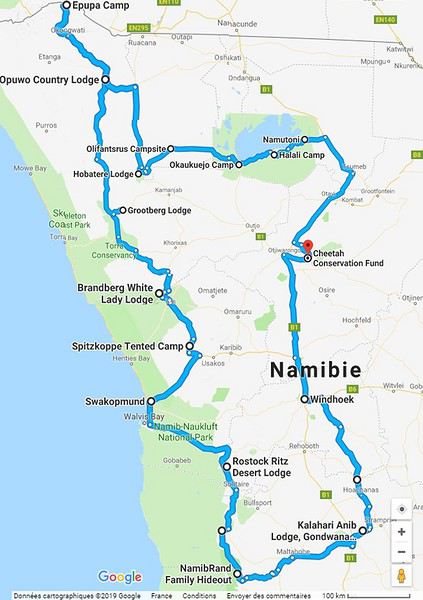
Alright! Are you ready to follow this adventure with us in our Hilux?
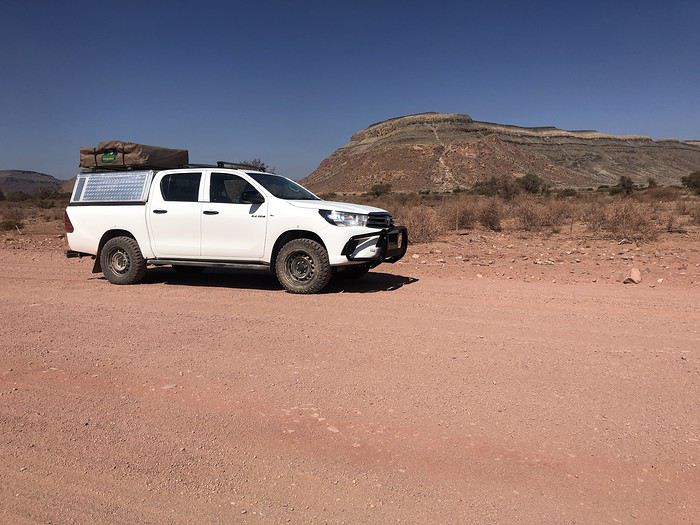
Yep! You guessed it—we stepped way out of our comfort zone during this trip.
I had quite a few doubts while planning this adventure, but the more I read travel journals about Namibia, the more I wanted to go.
Personally, without this forum, I never would’ve dared to hit the Namibian roads in a 4x4. I was really anxious during the planning, so I want to thank everyone who contributed with their journals and forum discussions for helping me leave more peacefully.
At first, I wasn’t even considering sleeping in a tent. But after my husband’s persuasion—and my own curiosity to experience what I’d read in those travel journals—I gave in. So off we went in a double-cab Hilux with a rooftop tent.
And of course, let’s talk about me—the big cold-weather wimp. One of the biggest pre-trip challenges was choosing a sleeping bag. After a while, sleeping bags had no more secrets for me: temperature ratings (comfort, limit, extreme), shapes (mummy, rectangular), fillings (synthetic, down), compression rate, and weight... all these factors were a real puzzle. In the end, to make sure I wouldn’t be put off camping in winter (Australian winter, mind you), I went for a sleeping bag with a comfort rating of -10°C. And just to be *extra* sure I wouldn’t get cold, I bought a liner (never knew what that was before) in Thermolite, which boosts the sleeping bag’s temperature by 11°C. There are liners that add up to 15°C, but let’s not exaggerate—we’re not heading to the North Pole! My husband, on the other hand, got a sleeping bag with a -5°C comfort rating and a silk liner.
Was it enough? You’ll find out soon. In the meantime, another big thank you to everyone who helped me make this choice with their advice and experience.
Over a year in advance, we planned a three-week itinerary for our first trip to Namibia—classic route, nothing too out there. We chose to do the circuit clockwise because we wanted to finish on a high note in Etosha and its wildlife. They say it’s like Noah’s Ark out there! And why not, the cherry on top... some big cats.
We used Tourmaline’s services to book our accommodations and the 4x4.
Here’s our planned itinerary with campsites and lodgings—yes, there are a few solid roofs in there; we didn’t want to push it too far.
Day 1: Windhoek – Windhoek Gardens Guesthouse Day 2: Kalahari Anib Campsite Day 3: Namibrand Family Hideout Day 4: Sesriem Camp Day 5: Sesriem Camp Day 6: Rostock Ritz Camp Day 7: Swakopmund - Sea Breeze Guesthouse Day 8: Swakopmund - Sea Breeze Guesthouse Day 9: Spitzkoppe Camp Tented Day 10: Brandberg White Lady Campsite Day 11: Grootberg Lodge Day 12: Opuwo Country Campsite Day 13: Epupa Camp Day 14: Hobatere Lodge Day 15: Etosha Olifantsrus Camp Day 16: Etosha Okaukuejo Camp Day 17: Etosha Halali Camp Day 18: Etosha Namutoni Camp Day 19: Cheetah Eco Lodge Day 20: Windhoek – Londiningi B&B
Alright! Are you ready to follow this adventure with us in our Hilux?
Concours photos du mois d'août 2019: "Les sables du mondes" English translation pending
Et voilà le 109ème concours photo de voyage forum¨
En ce jours de fêtes nationale Suisse, j'ai choisi un thème ou ce pays ne sera sans doute pas très représenté sur les photos...
Un thème de saison en cette période de vacances et de farniente.
Les sables du monde Que ce soit sur une plage, dans un désert, une dune de sable ou une moraine dans la montagne. Qu'il soit blanc, noir, gris, rouge, beige ou orange, le sable m'a toujours fasciné!
J'en ai d'ailleurs une petite collection (je vous mettrez des photos des lieu de collecte, et des grains en gros plans dans la discussion😛):
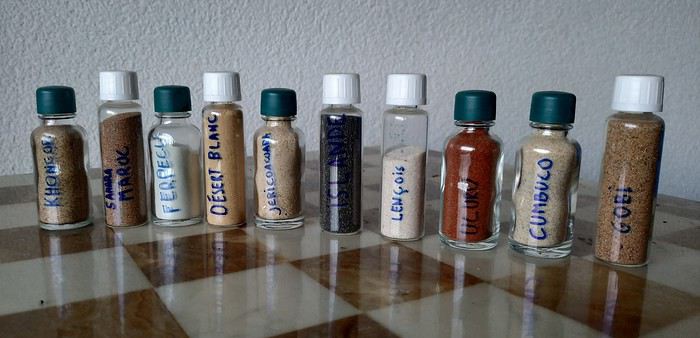
Par ce concours, j'aimerais que vous me donniez envie d'aller découvrir des lieu ou je pourrez agrandir cette collection!
Peu importe que ce soit une sculpture ou au naturelle, il doit y avoir du sable sur vos photos, en gros plan ou s'incluant dans un paysage, mais ayant une bonne place bien visible.
Pour participer : Dépôt des photos jusqu’au samedi 23 août à 23h59 Vous pouvez poster jusqu’à 3 photos, numérotées et postées dans des messages différents, accompagnées d’un petit descriptif du lieu et de l’histoire qui s’y rattache.
Pour voter : du dimanche 24 août 0h00 au samedi 31 août 22h Merci d’indiquer le numéro de la photo, le pseudo et le nombre de points attribués. Photo n°1 = 3 pts Photo n°2 = 2 pts Photo n°3 = 1 pt
Tous les membres de VF peuvent voter (même ceux qui n’ont pas déposé de photos). En cas d’égalité de points pour la première position, la photo gagnante sera celle ayant obtenu le plus grand nombre de 1ères places, puis de secondes places ! L’heureux gagnant pourra organiser le concours photo du mois de Septembre.
Ce topic n'est que pour poster des photos participantes au concours! Pour les discussions et les photos hors concours, c'est là : voyageforum.com/...post=9724132;live=1;
Je ne serai malheureusement pas très présent pour animer les discussions, étant donné que jusqu'au 22 août, je serai en voyage au Sénégal. Mais j'essaierai de vous ramener quelque photos ensablée, et si j'ai du réseau, je passerai quand même de temps en temps! Je serai de retour pour les votes et les décomptes des voix.
Le diaporama, encore une fois assuré par Xavier, sera présent dans ma signature et sûrement la sienne aussi .
Les sables du monde Que ce soit sur une plage, dans un désert, une dune de sable ou une moraine dans la montagne. Qu'il soit blanc, noir, gris, rouge, beige ou orange, le sable m'a toujours fasciné!
J'en ai d'ailleurs une petite collection (je vous mettrez des photos des lieu de collecte, et des grains en gros plans dans la discussion😛):
Par ce concours, j'aimerais que vous me donniez envie d'aller découvrir des lieu ou je pourrez agrandir cette collection!
Peu importe que ce soit une sculpture ou au naturelle, il doit y avoir du sable sur vos photos, en gros plan ou s'incluant dans un paysage, mais ayant une bonne place bien visible.
Pour participer : Dépôt des photos jusqu’au samedi 23 août à 23h59 Vous pouvez poster jusqu’à 3 photos, numérotées et postées dans des messages différents, accompagnées d’un petit descriptif du lieu et de l’histoire qui s’y rattache.
Pour voter : du dimanche 24 août 0h00 au samedi 31 août 22h Merci d’indiquer le numéro de la photo, le pseudo et le nombre de points attribués. Photo n°1 = 3 pts Photo n°2 = 2 pts Photo n°3 = 1 pt
Tous les membres de VF peuvent voter (même ceux qui n’ont pas déposé de photos). En cas d’égalité de points pour la première position, la photo gagnante sera celle ayant obtenu le plus grand nombre de 1ères places, puis de secondes places ! L’heureux gagnant pourra organiser le concours photo du mois de Septembre.
Ce topic n'est que pour poster des photos participantes au concours! Pour les discussions et les photos hors concours, c'est là : voyageforum.com/...post=9724132;live=1;
Je ne serai malheureusement pas très présent pour animer les discussions, étant donné que jusqu'au 22 août, je serai en voyage au Sénégal. Mais j'essaierai de vous ramener quelque photos ensablée, et si j'ai du réseau, je passerai quand même de temps en temps! Je serai de retour pour les votes et les décomptes des voix.
Le diaporama, encore une fois assuré par Xavier, sera présent dans ma signature et sûrement la sienne aussi .