Results for "Tsavo+|+121+>+59"
488 results found.
Climat en octobre au Kenya English translation pending
🙂 Hello,
Pourriez vous me dire si le mois d'octobre au Kenya est bon pour y séjourner en hôtel (profiter de la piscine....pour ma fille) et pour les safaris.......
Merci de vos témoignages
Mich
Pourriez vous me dire si le mois d'octobre au Kenya est bon pour y séjourner en hôtel (profiter de la piscine....pour ma fille) et pour les safaris.......
Merci de vos témoignages
Mich
Hôtel Tiwi Beach Resort au Kenya English translation pending
Bonjour,
nous partons avec 2 enfants de 11 et 12 ans au tiwi beach resort au mois d'août, départ de Frankfort, avec Neckermann et aimerions quelques renseignements:
quelle est la durée du vol? y a t'il possibilité de faire des safaris d'une journée, à quel tarif, et par quelle agence? quelles sont les sorties recommandées? ou se trouvent les agences à proximité de l'hôtel, et parle t'on le français ou l'allemand? y a t'il des risques de s'aventurer en dehors de l'hôtel, non accompagné? y a t'il l'internet à l'hôtel ou dans les environs? le personnel de l'hôtel parle t'il le français? faut t'il payer une autorisation d'entrée et de sortie de territoire à l'aéroport, si oui, combien?
Merci pour vos réponses, si vous avez d'autres suggestions, elles seront les bienvenues.
Merci pour vos réponses, si vous avez d'autres suggestions, elles seront les bienvenues.
Safari photo au Kenya English translation pending
Je voudrais faire un safari photo au Kenya . Qui pourrais me donner des indications usr les prix, les meilleures périodes, les forfaits tout compris etc....
Sécurité et argent au Kenya English translation pending
bonjour
je pars au kenya dans 15 jours et je suis effrayée par tout ce qu'on en dit au niveau sécurité
on fait un safari de 15 jours(dont 3 jours ds une maison bord de l'eau), donc je suppose qu'on aura pas bcp l'occasion de changer des sous.
je comptais prendre des euros et les changer en shillings kenyan à l'aéroport.Mais cela veut dire que j'aurai pas mal de sous sur moi(en pochette ventrale)
les bureaux de change à l'aéroport sont-ils ouvert tard le soir(nous arrivons vers 21h et repartons vers 22h)
comment avez-vous fait pour le meme genre de voyage?le safari est en pension complète.nous devons juste payer nos boissons, l'une ou l'autre excursion proposée en extra et qques souvenirs achetés.
merci
Safari au Kenya ou Madagascar? English translation pending
bonjour,
j'avais envie de faire un voyage safari en famille au Kenya, mais plus je me renseigne et plus j'ai l'impression il y aura énormément de monde a visiter les parcs, et je n'ai pas envie d'être dans une usine à touristes, je souhaite aussi aller au bord de la mer.
Je me demande si je ne préfère pas Madagascar, mais en 10 ou 12 jours que faut-il choisir de visiter ?
MERCI
Le Kenya en avril English translation pending
Qui pourrait me faire part de son expérience quant à un safari au Kenya au début de la période des pluies (avril)? Tout en sachant que c'est une période extrêmement sèche en ce moment même.
En une semaine, si vous deviez vous concentrer sur trois ou quatre visites de sites, lesquels visiteriez-vous ? Guère plus pas envisageable non/si ?
Ensuite une semaine "balnéaire", plongée bouteille indispensable. Un lieu paradisiaque à m'indiquer ?
Merci d'avance de ce que vous m'apprendrez ...😉
Merci d'avance de ce que vous m'apprendrez ...😉
Sécheresse au Kenya English translation pending
J'ai lu que dans le nord-est, les troupeaux sont décimés et la population a faim!...
Quelqun y est passé dernièrement?
Nous devons partir le 17 février là-bas, mais le coeur n'y est pas;je culpabilise à l'idée d'avoir des lodges avec piscine et parc luxurieusement vert car arrosé pour nous, alors que les animaux crèvent, et bientôt les gens aussi...😕
Infos Neptune Village Diani Beach au Kenya English translation pending
Salut à tous
On vient de réserver en last min 15 jall in au neptune village
Ns partons dés mercredi prochain, donc pas trop le temps de
grand préparatifs.Mais j' aurais besoin de quelque infos.
D' abord pour le téléphone, qu'y a t'il comme possibilité?
Pour un accés internet es ce possible?
Pour les safaris de quelque jours y a t'il des locaux, beach boys,
de confiance qui ne vont pas ns arnaquer, et quelles agences
locales me conseiller vous?
Tout cela bien sur sans passer par un TO intermédiaire ou l'hotel
qui prendront la moitié de notre argent.
Est possible d' aller jusqu'à Mombasa par soi meme et si oui quel
est le meilleur plan.(hormis le taxi)
Voila je remercie d' avance celui ou ceux qui me répondront
Salut à tous
Alain
Alain
Kenya ou Tanzanie? English translation pending
Je rentre d'un TDM bref prochain voyage l'Afrique bon certes pas tout de suite car le portefeuille est vide !! on voudrait aller au Kenya, seul hic c'est toçuristique a fond, impossible qu'on se retrouve dans un 4X4 avec d'autres touriste pour observer les animaux,
on aimerait rester avec la population locale et observer les animaux pendant des heure!!s et oui chacun sa méditation, même trouver des endroit ou sait autoriser de poser sa tente (bon bien sur un endroit autorisé si ca existe) j'ai visité tte l'Australie et j'aime le camping sauvage tout en respectant la nature bien sur et les animaux!!
Que pensez, des gens ns ont conseillé la Tanzanie on en parle moins et les animaux sont bien présent ou le Kenya? mais pas d'hôtel pour ns !!!
connaissez vs un site pour préparer son voyage?? ou si vs avez des photos j'adore !!!
merci de vos conseils
stef
stef
Remerciements Hôtel Tiwi beach Kenya English translation pending
Je remercie toutes les personnes qui ont gentillement répondu à ma demande de renseignements concernant l'hôtel Tiwi Beach au Kenya et toutes les excursions possibles.
Grand merci à tous!
Euros ou dollars au Kenya? English translation pending
Bonjour à tous,
je pars au Kenya dans 2 semaines, et je comptais prendre des dollars, vu le taux de change actuel en faveur de l'euro.... mais les avis divergent......pensez-vous que ce soit utile de changer des euros en dollars (en France) puis des dollars sur place, ou est-ce suffisant de partir avec des euros et de les changer sur place en monnaie locale ? à ceux qui sont partis là-bas.... comment avez-vous fait ? merci de votre aide !
c'est urgent parce que je ne peux aller à la banque que samedi matin (le 30), pour les récupérer le samedi suivant (le 6)... ensuite, le samedi suivant (le 13) ce sera trop tard, je serai dans l'avion 😉 ps : euh... quel temps en août? là aussi les avis divergent, petites pluies apparemment, épisodiquement et soleil en général, c'est ça ? je pars à amboseli, samburu, nakuru et ds le masai mara......
MERCI ENCORE !
je pars au Kenya dans 2 semaines, et je comptais prendre des dollars, vu le taux de change actuel en faveur de l'euro.... mais les avis divergent......pensez-vous que ce soit utile de changer des euros en dollars (en France) puis des dollars sur place, ou est-ce suffisant de partir avec des euros et de les changer sur place en monnaie locale ? à ceux qui sont partis là-bas.... comment avez-vous fait ? merci de votre aide !
c'est urgent parce que je ne peux aller à la banque que samedi matin (le 30), pour les récupérer le samedi suivant (le 6)... ensuite, le samedi suivant (le 13) ce sera trop tard, je serai dans l'avion 😉 ps : euh... quel temps en août? là aussi les avis divergent, petites pluies apparemment, épisodiquement et soleil en général, c'est ça ? je pars à amboseli, samburu, nakuru et ds le masai mara......
MERCI ENCORE !
Hôtel Tiwi Beach Kenya English translation pending
Bonjour à tous!
😎Je pars pour le Kenya les deux premières semaines de septembre. Mon hôtel est le Tiwi Beach. Qui peux me dire comment est cet hôtel? Je vais vers l'inconnu et j'aimerais savoir comment je dois faire pour participer à un safari et pour visiter les masaï.
Dois-je réserver ici ou plutôt négocier sur place? Combien coûte un safari de maximum 1 jours ou 2 jours? Combien coûte une excursion chez les masaï?
Je vous remercie beaucoup pour les éventuels éclaircissement que vous me donnerez.
Bises à tous!😇
😎Je pars pour le Kenya les deux premières semaines de septembre. Mon hôtel est le Tiwi Beach. Qui peux me dire comment est cet hôtel? Je vais vers l'inconnu et j'aimerais savoir comment je dois faire pour participer à un safari et pour visiter les masaï.
Dois-je réserver ici ou plutôt négocier sur place? Combien coûte un safari de maximum 1 jours ou 2 jours? Combien coûte une excursion chez les masaï?
Je vous remercie beaucoup pour les éventuels éclaircissement que vous me donnerez.
Bises à tous!😇
safari au Kenya English translation pending
Elaborant un projet de safaris au Kenya, j'aurais besoin de renseignements sur deux étapes pour dormir:
A Nairobi, le Safari Park Hotel situé au nord de la ville
Dans le Masai Mara, le Sekenani Camp
Quelqun connaît?
Merci d'avance!
A Nairobi, le Safari Park Hotel situé au nord de la ville
Dans le Masai Mara, le Sekenani Camp
Quelqun connaît?
Merci d'avance!
Voyage en famille au Kenya et Tanzanie English translation pending
Bonsoir!
nous envisageons de partir en juillet au kenya-tanzanie en famille.4 enfants:11 ans, 10 ans, 7 ans et 4, 5 ans avez vous des bons plans ou conseils
merci 😏
nous envisageons de partir en juillet au kenya-tanzanie en famille.4 enfants:11 ans, 10 ans, 7 ans et 4, 5 ans avez vous des bons plans ou conseils
merci 😏
Diana Beach- Mombassa (Kenya) English translation pending
😊 Rerebonjour. Je mets mes questions séparées pour interpeler les personnes concernées. Désolée si cela n'est pas la façon de faire. Je suis parmi vous depuis peu...
Ma question est la suivante: quelqu'un est-il déjà allé à cette plage (vs Tiwi beach) et si oui, pourriez-vous me donner le nom d'un petit hotel, lodge avec l'eau courante, une toilette, un lieu pour accrocher mon moustiquaire et du calme SVP.
Sinon, quels ont été vos coups de coeur pour manger? (ce sera ma première destination d'un long voyage de 9 mois et je veux commencer en douceur ds des conditions pas trop difficiles de grâce mais évidemment mon $$$ est limité)
Merci à tous
Coyote
Ma question est la suivante: quelqu'un est-il déjà allé à cette plage (vs Tiwi beach) et si oui, pourriez-vous me donner le nom d'un petit hotel, lodge avec l'eau courante, une toilette, un lieu pour accrocher mon moustiquaire et du calme SVP.
Sinon, quels ont été vos coups de coeur pour manger? (ce sera ma première destination d'un long voyage de 9 mois et je veux commencer en douceur ds des conditions pas trop difficiles de grâce mais évidemment mon $$$ est limité)
Merci à tous
Coyote
Voyage au Kenya /Tanzanie avec enfants English translation pending
Bonjour,
nous souhaitons passer nos vacances été 2004 au Kenya / Tanzanie avec nos 3 enfants (7-10-12 ans). Nous nous posons des questions sur la durée d'un safari en campement avec le risque qu'ils décrochent (fatigue liée au rythme, lassitude ??) . Nous envisagions de le faire sur 8j mais peut être couper en 2 avec repos sur Mombasa (plages de Diani)? Si quelqu'un a une expérience semblable ce serait sympa de la partager .
Merci de votre aide
nous souhaitons passer nos vacances été 2004 au Kenya / Tanzanie avec nos 3 enfants (7-10-12 ans). Nous nous posons des questions sur la durée d'un safari en campement avec le risque qu'ils décrochent (fatigue liée au rythme, lassitude ??) . Nous envisagions de le faire sur 8j mais peut être couper en 2 avec repos sur Mombasa (plages de Diani)? Si quelqu'un a une expérience semblable ce serait sympa de la partager .
Merci de votre aide
Waterways Around the World: January 2026 Photo Contest
The first theme of 2026 is:
"Waterways Around the World".
Water is present almost everywhere on our blue planet, so I’ve narrowed the theme down to waterways—rivers, streams, brooks, and the like.
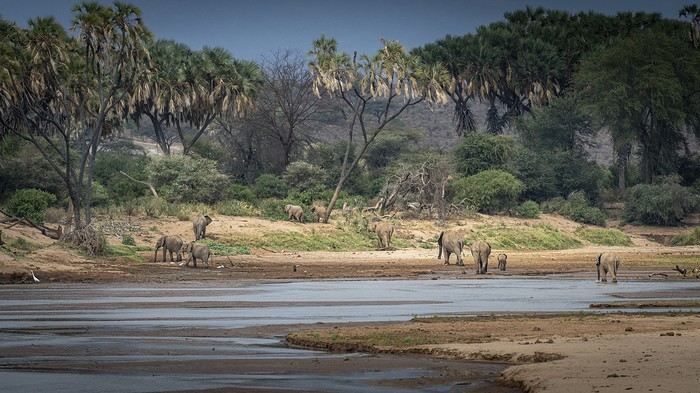
Seas, oceans, lakes, or other stagnant waters won’t be considered for this month’s theme 😅. However, waterfalls and cascades are very welcome 😊!
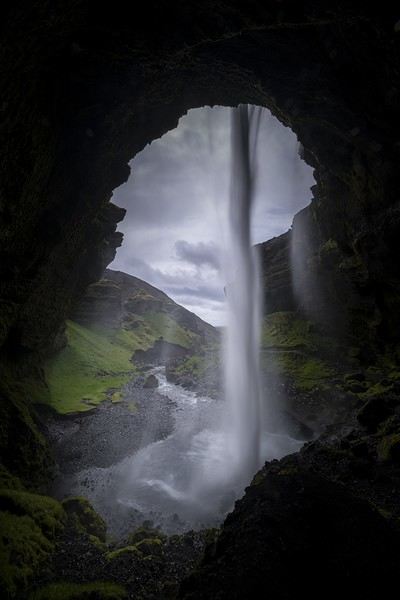
Practical details:
**Participation** Each VF member can submit up to 3 photos, until Sunday, January 25th at 11:59 PM Paris time. Each photo must be posted in a separate message, with its number (1, 2, or 3). Don’t forget to add a little explanation (commentary, location, etc.).
**Voting** Each VF member can vote for the 3 photos they consider the best, based on their own criteria and the theme.
Voting will take place from Monday, January 26th to Saturday, January 31st at 11:59 PM Paris time.
Photos should be ranked in order of preference: - 1st photo: 3 points - 2nd photo: 2 points - 3rd photo: 1 point
The winner is the photographer whose photo receives the most points.
Results will be published on February 1st. In case of a tie, the number of first-place votes will decide. The winner will have the honor of organizing February 2026’s contest.
Photos that have already been nominated (1st, 2nd, or 3rd place) in another contest are not eligible to participate in this one.
This thread is exclusively for contest photo submissions. All discussions, comments, and chit-chat should take place in the thread: here
Water is present almost everywhere on our blue planet, so I’ve narrowed the theme down to waterways—rivers, streams, brooks, and the like.
Seas, oceans, lakes, or other stagnant waters won’t be considered for this month’s theme 😅. However, waterfalls and cascades are very welcome 😊!
Practical details:
**Participation** Each VF member can submit up to 3 photos, until Sunday, January 25th at 11:59 PM Paris time. Each photo must be posted in a separate message, with its number (1, 2, or 3). Don’t forget to add a little explanation (commentary, location, etc.).
**Voting** Each VF member can vote for the 3 photos they consider the best, based on their own criteria and the theme.
Voting will take place from Monday, January 26th to Saturday, January 31st at 11:59 PM Paris time.
Photos should be ranked in order of preference: - 1st photo: 3 points - 2nd photo: 2 points - 3rd photo: 1 point
The winner is the photographer whose photo receives the most points.
Results will be published on February 1st. In case of a tie, the number of first-place votes will decide. The winner will have the honor of organizing February 2026’s contest.
Photos that have already been nominated (1st, 2nd, or 3rd place) in another contest are not eligible to participate in this one.
This thread is exclusively for contest photo submissions. All discussions, comments, and chit-chat should take place in the thread: here
Solo trip to Kenya: questions about lodges and safaris
Hi everyone!
I’m planning to go to Kenya next year for a safari trip across a few parks. I’ll be traveling solo!
I’m having trouble understanding how lodges and safaris work! My first questions are:
1-Do I need to find an agency that handles lodges and safaris? Or 2-Should I book lodges through Expedia or similar and then reserve activities (safaris or others) that these lodges offer?
This will help me figure out how to organize everything and whether I should focus on an agency or the lodges themselves.
Thanks!
I’m planning to go to Kenya next year for a safari trip across a few parks. I’ll be traveling solo!
I’m having trouble understanding how lodges and safaris work! My first questions are:
1-Do I need to find an agency that handles lodges and safaris? Or 2-Should I book lodges through Expedia or similar and then reserve activities (safaris or others) that these lodges offer?
This will help me figure out how to organize everything and whether I should focus on an agency or the lodges themselves.
Thanks!
Tanzania 2019 - Polé Polé
KARIBUUU
Over 5 years later, I’m finally getting around to writing the travel journal for our first trip to East Africa: Tanzania. *Polé Polé*, as they say! 😎
A trip I’d started planning just 6 years ago, in February 2019, for my post-internship exam vacation. After returning to South Africa in July 2019 with my family, this trip, planned for September 2019, would be all about discovery and a few firsts: first trip with friends, first trek, first time in East Africa. I really wanted to attempt the Kilimanjaro ascent, try to still see some of its "eternal" ice, and Alison wanted to do as much safari as possible. Unlike with the Zulus, Himbas, or San, visiting a Maasai village wasn’t on the agenda. Thanks to the Kessy Brothers agency, who were super responsive, Sandy from VF, and other members who helped prepare our trip, we settled on the following itinerary:
Day -1 (8/30): Departure from Pointe-à-Pitre Day 0 (8/31): Departure from Paris Day 1 (9/01): Arrival at Kilimanjaro Airport / Ameg Lodge (Moshi) DAY 2 (9/02): Machame gate / Machame camp DAY 3 (9/03): Shira / Shira camp DAY 4 (9/04): Baranco / Baranco camp DAY 5 (9/05): Barafu / Barafu camp DAY 6 (9/06): Barafu + Summit at midnight / Mweka camp DAY 7 (9/07): Mweka gate / Sal Salnero Hotel (Moshi) DAY 8 (9/08): Arusha National Park / Kanga camp DAY 9 (9/09): Tarangire National Park / Kanga camp DAY 10 (9/10): Tarangire National Park / Twiga Lodge DAY 11 (9/11): Lake Manyara / Twiga Lodge DAY 12 (9/12): Ngorongoro Crater / Simba campsite DAY 13 (9/13): Serengeti National Park / Seronera campsite DAY 14 (9/14): Serengeti National Park - Uoga Kuria Camp DAY 15 (9/15): Serengeti National Park / Waso campsite DAY 16 (9/16): Lake Natron / Maasai Giraffe Ecolodge DAY 17 (9/17): Kilimanjaro Airport Day 18 (9/18): Zanzibar Day 19 (9/19): Zanzibar Day 20 (9/20): Zanzibar Day 21 (9/21): Zanzibar
As I mentioned in my first travel journal about our South Africa trip, I’ve had a special connection to Tanzania for a long time. Growing up in the Indian Ocean without ever visiting Africa, those wildlife documentaries on TV when I skipped my pharmacy classes... I imagined and dreamed about this land and country so much.
The original plan was to go just the two of us with Alison, but somehow—though I don’t quite remember how—we ended up organizing the trip with our friends Mélissa and Doriane, who joined us in Arusha after our Kilimanjaro trek for the last two weeks and their very first safari. I think it was Melissa who had the idea to crash our trip, and she was right to do so! 😉 Flights: Pointe-à-Pitre-Grand Case and Grand Case-Paris with Air Caraïbes. Flights: Paris-JRO and ZNZ-Paris with Kenya Airways (layover in Nairobi). Flight: JRO-ZNZ with Air Tanzania.
Safe travels! !
Over 5 years later, I’m finally getting around to writing the travel journal for our first trip to East Africa: Tanzania. *Polé Polé*, as they say! 😎
A trip I’d started planning just 6 years ago, in February 2019, for my post-internship exam vacation. After returning to South Africa in July 2019 with my family, this trip, planned for September 2019, would be all about discovery and a few firsts: first trip with friends, first trek, first time in East Africa. I really wanted to attempt the Kilimanjaro ascent, try to still see some of its "eternal" ice, and Alison wanted to do as much safari as possible. Unlike with the Zulus, Himbas, or San, visiting a Maasai village wasn’t on the agenda. Thanks to the Kessy Brothers agency, who were super responsive, Sandy from VF, and other members who helped prepare our trip, we settled on the following itinerary:
Day -1 (8/30): Departure from Pointe-à-Pitre Day 0 (8/31): Departure from Paris Day 1 (9/01): Arrival at Kilimanjaro Airport / Ameg Lodge (Moshi) DAY 2 (9/02): Machame gate / Machame camp DAY 3 (9/03): Shira / Shira camp DAY 4 (9/04): Baranco / Baranco camp DAY 5 (9/05): Barafu / Barafu camp DAY 6 (9/06): Barafu + Summit at midnight / Mweka camp DAY 7 (9/07): Mweka gate / Sal Salnero Hotel (Moshi) DAY 8 (9/08): Arusha National Park / Kanga camp DAY 9 (9/09): Tarangire National Park / Kanga camp DAY 10 (9/10): Tarangire National Park / Twiga Lodge DAY 11 (9/11): Lake Manyara / Twiga Lodge DAY 12 (9/12): Ngorongoro Crater / Simba campsite DAY 13 (9/13): Serengeti National Park / Seronera campsite DAY 14 (9/14): Serengeti National Park - Uoga Kuria Camp DAY 15 (9/15): Serengeti National Park / Waso campsite DAY 16 (9/16): Lake Natron / Maasai Giraffe Ecolodge DAY 17 (9/17): Kilimanjaro Airport Day 18 (9/18): Zanzibar Day 19 (9/19): Zanzibar Day 20 (9/20): Zanzibar Day 21 (9/21): Zanzibar
As I mentioned in my first travel journal about our South Africa trip, I’ve had a special connection to Tanzania for a long time. Growing up in the Indian Ocean without ever visiting Africa, those wildlife documentaries on TV when I skipped my pharmacy classes... I imagined and dreamed about this land and country so much.
The original plan was to go just the two of us with Alison, but somehow—though I don’t quite remember how—we ended up organizing the trip with our friends Mélissa and Doriane, who joined us in Arusha after our Kilimanjaro trek for the last two weeks and their very first safari. I think it was Melissa who had the idea to crash our trip, and she was right to do so! 😉 Flights: Pointe-à-Pitre-Grand Case and Grand Case-Paris with Air Caraïbes. Flights: Paris-JRO and ZNZ-Paris with Kenya Airways (layover in Nairobi). Flight: JRO-ZNZ with Air Tanzania.
Safe travels! !
Photo Safaris in Kenya
Back on the forum, I’m starting to write up two 3-week trips to Kenya in August 2021 and 2023.
In 2021, Quynh and I traveled with Régis (Rjulie95 on VF). Our son joined us in Baringo for the second half of the trip.
In 2023, we went with two friends who’d been dreaming of seeing wild animals ever since we got back from Kenya. We didn’t need much convincing to go with them!
The two itineraries are almost identical (well, when you love something...) but we did make a few tweaks.
- The first part of the trip was with a local driver/guide, Félix, who was recommended by Sylvie56. Sylvie and her husband Ben are Kenya enthusiasts—they’ve been there countless times, always with Félix... and for good reason! He’s fantastic!
- The second part was with Melting Pot Safari, an agency that adapted to our photography needs. Tony Crocetta, the co-founder (along with his Kenyan friend Simon Chebon), is a wildlife photographer himself.
Here are the itineraries for both trips, including accommodations:
In 2021: Day 0: Paris / Nairobi - 67 Airport Hotel Day 1: Nairobi / Amboseli - Simba Cottage Day 2: Amboseli - Simba Cottage Day 3: Amboseli / Aberdares - Fishing Lodge Day 4: Aberdares - Fishing Lodge Day 5: Aberdares - Fishing Lodge Day 6: Aberdares / Samburu - Riverside Camp Day 7: Samburu - Riverside Camp Day 8: Samburu - Riverside Camp Day 9: Samburu / Nakuru - Merica Hotel Day 10: Nakuru / Baringo - Tumbili Cliff Lodge Day 11: Baringo - Tumbili Cliff Lodge Day 12: Baringo - Tumbili Cliff Lodge Day 13: Baringo / Maasai Mara – Meltingpot Bush Camp Day 14 to 18: Maasai Mara – Meltingpot Bush Camp Day 19: Maasai Mara / Nairobi – Roussel Guest House Day 20: Nairobi / Paris
In 2023: Day 0: Lyon / Paris / Nairobi - 67 Airport Hotel Day 1: Nairobi / Meru - Ikweta Camp Day 2: Meru - Ikweta Camp Day 3: Meru - Ikweta Camp Day 4: Meru / Samburu - Riverside Camp Day 5: Samburu – Riverside Camp Day 6: Samburu / Buffalo Springs – Samburu Simba Day 7: Buffalo Springs / Ol Pejeta – Sweetwater Camp Day 8: Ol Pejeta / Amboseli - Simba Cottage Day 9: Amboseli - Simba Cottage Day 10: Amboseli - Simba Cottage Day 11: Amboseli / Nakuru – Lake Nakuru Lodge Day 12: Nakuru / Baringo - Tumbili Cliff Lodge Day 13: Baringo - Tumbili Cliff Lodge Day 14: Baringo - Tumbili Cliff Lodge Day 15: Baringo / Maasai Mara – Meltingpot Bush Camp Day 16 to 20: Maasai Mara – Meltingpot Bush Camp Day 21: Maasai Mara / Nairobi / Paris
Here’s an itinerary—it’s not exactly what we did, but a combination of both.
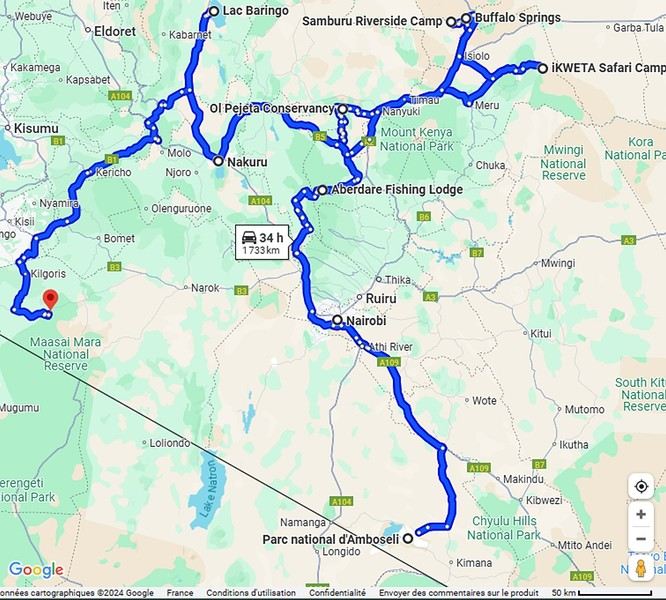
Ready to join us on safari to see some wild animals?
The two itineraries are almost identical (well, when you love something...) but we did make a few tweaks.
- The first part of the trip was with a local driver/guide, Félix, who was recommended by Sylvie56. Sylvie and her husband Ben are Kenya enthusiasts—they’ve been there countless times, always with Félix... and for good reason! He’s fantastic!
- The second part was with Melting Pot Safari, an agency that adapted to our photography needs. Tony Crocetta, the co-founder (along with his Kenyan friend Simon Chebon), is a wildlife photographer himself.
Here are the itineraries for both trips, including accommodations:
In 2021: Day 0: Paris / Nairobi - 67 Airport Hotel Day 1: Nairobi / Amboseli - Simba Cottage Day 2: Amboseli - Simba Cottage Day 3: Amboseli / Aberdares - Fishing Lodge Day 4: Aberdares - Fishing Lodge Day 5: Aberdares - Fishing Lodge Day 6: Aberdares / Samburu - Riverside Camp Day 7: Samburu - Riverside Camp Day 8: Samburu - Riverside Camp Day 9: Samburu / Nakuru - Merica Hotel Day 10: Nakuru / Baringo - Tumbili Cliff Lodge Day 11: Baringo - Tumbili Cliff Lodge Day 12: Baringo - Tumbili Cliff Lodge Day 13: Baringo / Maasai Mara – Meltingpot Bush Camp Day 14 to 18: Maasai Mara – Meltingpot Bush Camp Day 19: Maasai Mara / Nairobi – Roussel Guest House Day 20: Nairobi / Paris
In 2023: Day 0: Lyon / Paris / Nairobi - 67 Airport Hotel Day 1: Nairobi / Meru - Ikweta Camp Day 2: Meru - Ikweta Camp Day 3: Meru - Ikweta Camp Day 4: Meru / Samburu - Riverside Camp Day 5: Samburu – Riverside Camp Day 6: Samburu / Buffalo Springs – Samburu Simba Day 7: Buffalo Springs / Ol Pejeta – Sweetwater Camp Day 8: Ol Pejeta / Amboseli - Simba Cottage Day 9: Amboseli - Simba Cottage Day 10: Amboseli - Simba Cottage Day 11: Amboseli / Nakuru – Lake Nakuru Lodge Day 12: Nakuru / Baringo - Tumbili Cliff Lodge Day 13: Baringo - Tumbili Cliff Lodge Day 14: Baringo - Tumbili Cliff Lodge Day 15: Baringo / Maasai Mara – Meltingpot Bush Camp Day 16 to 20: Maasai Mara – Meltingpot Bush Camp Day 21: Maasai Mara / Nairobi / Paris
Here’s an itinerary—it’s not exactly what we did, but a combination of both.
Ready to join us on safari to see some wild animals?
Happiness Settles in the Heart of the Maasai Mara
(October 2018).
This account of a short stay in Kenya was originally meant for our friends and family, but to pass the time—for both us and you—and to add some content to the increasingly quiet columns of Voyage Forum during these weeks of confinement, when travelers can only journey in their minds, we decided to share the 25 pages of my ramblings, illustrated with Yolande’s photos, from an extraordinary stay in the Maasai Mara National Reserve. We waited until the two previous discussions on this same topic, filled with stunning photos and started by Régis and then Claire—sometimes in agreement, sometimes differing but always full of insights—had quieted down a bit before jumping in. Well, we’ll give it a try.
Let’s clarify: one of us claims to be a beginner photographer, and the other is just an unrepentant dreamer and modest writer. We often pursued our passions separately—Yolande with her mentor and me with an incomparable tracker—so sometimes the photos don’t quite match the text, or vice versa.
We hope you enjoy reading this lengthy post, which is longer than usual in VF’s sections (except, of course, for Mr. Voyajou). A thousand apologies for straying off the beaten path.
Alright, here we go!
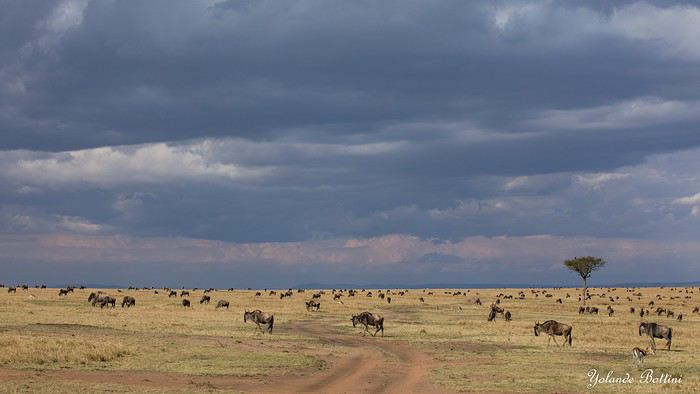
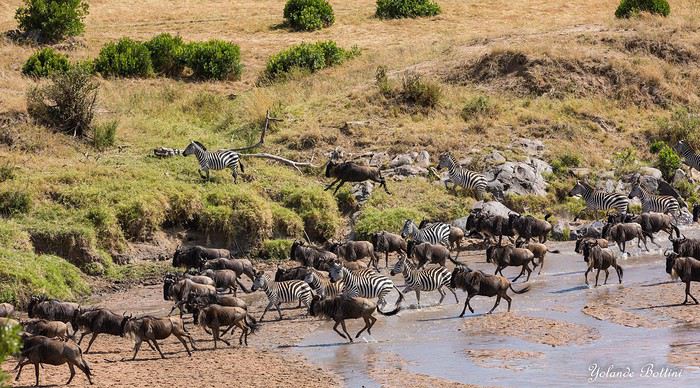
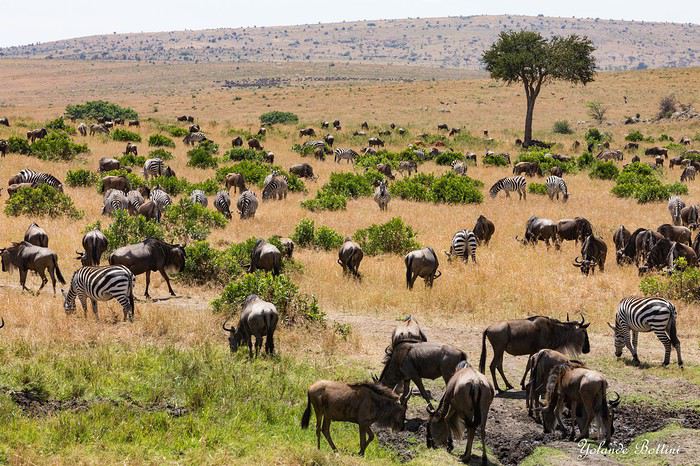
This account of a short stay in Kenya was originally meant for our friends and family, but to pass the time—for both us and you—and to add some content to the increasingly quiet columns of Voyage Forum during these weeks of confinement, when travelers can only journey in their minds, we decided to share the 25 pages of my ramblings, illustrated with Yolande’s photos, from an extraordinary stay in the Maasai Mara National Reserve. We waited until the two previous discussions on this same topic, filled with stunning photos and started by Régis and then Claire—sometimes in agreement, sometimes differing but always full of insights—had quieted down a bit before jumping in. Well, we’ll give it a try.
Let’s clarify: one of us claims to be a beginner photographer, and the other is just an unrepentant dreamer and modest writer. We often pursued our passions separately—Yolande with her mentor and me with an incomparable tracker—so sometimes the photos don’t quite match the text, or vice versa.
We hope you enjoy reading this lengthy post, which is longer than usual in VF’s sections (except, of course, for Mr. Voyajou). A thousand apologies for straying off the beaten path.
Alright, here we go!
Uganda: 20 days discovering authenticity
Preamble:
For summer 2019, the idea was to return to Africa. We had already been to Namibia in 2017 (+ a few days in Botswana and the end of the trip at Victoria Falls), which we loved, and a trip to Asia in 2018 (Borneo, Perhentian, and Singapore), a nature-focused trip but a bit disappointing due to environmental destruction. The desire to return to Africa was very strong. We wanted a change of scenery, nature, discoveries, to step out of our little comfort zone (a bit, anyway!) and experience travel differently. In short, we dreamed of authenticity, and we weren’t disappointed.
We traveled as a family of four with our daughters, aged 19 and 17. When the urge for Africa hit, Uganda quickly stood out, especially for the chance to see rare animals, particularly the famous mountain gorillas. When I looked into the budget, I was quickly disheartened. It’s really expensive. Too expensive… Then, after reading a few trip reports on "VoyageForum" (thanks Muriel J!), I decided to ask a local agency for a quote. The first contact was very friendly and responsive, and the initial offer for two weeks fit our budget :). A few images gathered from the internet (especially Sipi Falls) finally convinced us all. I asked for an adapted offer with a few more sites to extend the trip to three weeks and cover a fairly complete visit to the country (which, of course, increased the budget! To stay within an acceptable range, we prioritized activities over accommodations and regularly chose the cheapest options, with 2-3 nice lodges in between). It’s booked! We were in October 2018, and the first thing to do was reserve permits to see the gorillas and chimpanzees. Then, the agency took care of all the bookings except for the international flights, which we booked with Ethiopian Airlines. A few months of waiting to look forward to… and a little worry too! Two events didn’t reassure us: the kidnapping of an American tourist by four men at the DRC border and the Ebola outbreak in Congo, with confirmed cases in Uganda by mid-June…
Here we are in July, and departure is approaching. The suitcases are packed (warm clothes, long, short, dark, light, practical, sun, rain, hiking/trekking shoes, flip-flops—clothes for every situation! Don’t forget: headlamp (essential!), binoculars, cameras), and we’re ready.
One day before departure, our agency Mpolampola, through its manager Paul, informs us that he won’t be the one taking care of us during the trip but another guide named Moses. He has a big problem with a vehicle and can’t do otherwise. For us, as long as everything is okay, no worries, especially since I had read glowing reviews about Moses, who turned out to be a very pleasant guide, cautious (most important) on the road, clear about all the activities, and an expert on birds, his specialty. We briefly met Paul in the middle of the trip, who is also very friendly. In short, we 100% recommend this agency. Flights to Entebbe went smoothly; we arrived around 10:30 AM, filled out health forms (Ebola information signs everywhere), visas, baggage claim, and met Moses, who took us directly to the vehicle. It was in pretty good condition with huge tires (we’d understand why later!), but it had quite a few miles (400,000 on the odometer!). Just missing a seatbelt… Okay, it’s Africa!
Now, here’s our day-by-day itinerary, which I’ll summarize briefly with ratings for each activity: ****TOPISSIME (Amazing) ***Very good **Good *Meh
Day 1) Departure from the airport at 11:45 AM for some currency exchange. Stop along the way at the equator for a meal and souvenir photo! Arrival at Lake Mburo Park *** around 5:00 PM. Even before entering the park, we saw lots of antelopes, zebras, elks, etc.—it’s magnificent. On the way, we had already encountered many goats and cows, and we were impressed by their enormous horns. We enjoyed a nice game drive until about 7:00 PM, when we reached our lodge, one of the nicest of the trip, Eagle’s Nest ****, with a magnificent view, a tent with a nice bathroom/shower, and a very good meal.
Day 2) Departure at 7:00 AM for a game drive; we encountered many animals again, especially antelopes, zebras, and birds. There are no giraffes, lions, or cheetahs in this park. We didn’t get lucky enough to see a leopard… :-) Then, we continued to Lake Bunyonyi ***, where the road and views are very beautiful, but we were shocked to see locals (mostly women and children) breaking stones by hand on the mountainside in very precarious safety conditions. There are regularly dramatic accidents because, over time, entire sections detach and cause landslides. These stones are then used for road construction… Another world… This was the only place we saw this. Lake Bunyonyi is a nice stop (but less exotic in our opinion since we have many lakes back home too!). We took a boat to our accommodation, Byoona Amagara ***, which has a lot of charm. We stayed in huts called "geodomes," completely open to nature, so it was very cool at night. To reach the toilets located below, you had to be brave! The meal consisted of lake shrimp—good but a bit bland.
Day 3) After a good breakfast, departure at 9:00 AM to visit three islands. We took several nice walks with beautiful views of the lake and islands. A local meal was served on the last island. At 1:00 PM, we met Moses for the rest of the program and headed to Ruhija in Bwindi Forest****. The landscapes are breathtaking. After two hours of driving and many photo stops, we arrived at our accommodation near the trekking starting point, Ruhija Gorilla Friends Resort **. We stayed in a room instead of the initially planned tents, which was just as well because there was a lot of wind during the night. We still had time for an activity and decided to meet the Bwata pygmies despite the bad reviews in the guide… The first part of the visit was quite nice, with a visit to a school where the children gave us a very joyful welcome. We had a great time listening to them sing and dance! Then we met the Bwata pygmies who live on the edge of the forest. When Bwindi Forest was declared a national park, they had to leave their habitat because their activities weren’t compatible with nature and wildlife protection. We left on a somewhat sad note… The visit ended with a local doctor explaining different medicinal plants, and we watched the making of local beer from sorghum. Good meal. We had butterflies in our stomachs—tomorrow was a big day! I admit I was a bit stressed, not entirely confident in my physical abilities…
Day 4) After a short night due to excitement, breakfast, and departure at 7:30 AM. First, it started calmly with singing and dancing. Then, a 15-minute briefing and group assignments. No one asked if we had any physical problems or anything (when booking, I had inquired a bit, and they told me groups were assigned based on physical abilities). We were assigned to the Mukiza group. At first, I was pretty happy—it was a fairly large group with babies :). The ranger explained that for now, they didn’t know where the gorillas were… the trackers couldn’t find them… Oh… (that’s not a good sign!!!) We set off at a good pace, first on a reasonably sloped path. We were accompanied by a family of four Italians and five porters (four for us!). After an hour, the ranger stopped us and informed us they still couldn’t find them—they had fought with another group the day before and scattered throughout the forest, so they were very far away, and we needed to move faster… Hmm… we picked up the pace (we weren’t going slowly before!!!) and walked for another good hour—down, up, down again, up again, we kept going, but always more or less on paths. Then another stop. A 10-minute break waiting for news. The news wasn’t very precise, it seemed! The ranger decided to cut through the forest—machetes were used to clear the path. We descended unimaginable slopes, then climbed back up. Our stick kept getting stuck; luckily, our porter helped us, held our hands, and the terrain was vertical! An hour later, another stop: we heard gorilla cries (yay!!!). False hope—we waited again for news from the trackers, who informed our ranger that it was a non-habituated family, so we couldn’t see them. Cold shower—we had to go all the way back up and return to the starting point to maybe see another group. But time was running out… We arrived around 1:30 PM; all the other groups had already left long ago. Our guide was worried because we still had a long drive ahead. We quickly ate a banana, and off we went for another trek (I was exhausted!). Luckily, this group was close—about 45 minutes of steep descent (I was already thinking about the climb back and considering being adopted by a gorilla ). The forest was sublime, with magnificent tree ferns—the place was truly splendid. Finally, we were there. The porters stayed behind, we grabbed our cameras, and followed the ranger. The progress wasn’t easy, but suddenly, a female was in front of us, curled up in a little ball, eating—so cute. The emotion overwhelmed us. But she moved away—it’s hard to observe them; they move constantly, and the terrain is very steep and uneven. We saw a female descending from a tree with a baby on her back—too adorable. Then, here was the silverback, enormous, incredible, yet so calm and peaceful. He ate quietly and gave us a nice demonstration of nostril exploration! We could observe them for a good hour, but photographing them wasn’t easy because they kept moving, and we could barely stand! Toward the end, a large male (black back) suddenly stood up and decided to pass right where I was! I ended up in the bushes, and the male passed in front of me just a few centimeters away (he stepped on one of my daughters’ feet!) followed by the whole family. Just an exceptional moment. It was time to leave; we had to climb back up. I dreaded it because, I admit, I was exhausted. We finished the hike after 4:00 PM, exhausted but happy. The ranger gave us diplomas, and we didn’t linger because we still had a long drive—we needed to reach Ishasha before nightfall. Our guide was a bit stressed. If we were to do it again, we’d spend an extra night in Bwindi. However, it seems finishing so late is exceptional—it never happens, according to our guide! The road between Bwindi and Ishasha is sublime, with extraordinary landscapes, and despite the late hour, we regularly asked our guide to stop for photos. We arrived at Enjojo *** Lodge around 6:00 PM. The huts are located quite far from the reception and the bathrooms, a bit far from the huts, but otherwise, it was very nice.
Day 5) Departure at 8:00 AM after a good breakfast with the hope of seeing tree-climbing lions (no luck!). Overall, there weren’t many animals, and we arrived around 12:45 PM at our next stop, Parkview Safari Lodge ****, with a magnificent view, a beautiful family bungalow, and a good meal. We enjoyed a short relaxation by the lovely pool. At 4:00 PM, we left to see Kyambura Gorge *** and hike there. Unfortunately, this activity is no longer available, so we walked around the area—it was very beautiful. Back at the hotel, a little rest after the previous day wasn’t a bad idea! Reading, swimming, meals, and dances made the end of the day enjoyable.
Day 6) Departure at 6:30 AM—one of our daughters was sick (stomachache, cold sweats…). Safari in Queen Elizabeth ** (Kaseny Plains)—a bit disappointing. Stop by the salt lake with a nice view. A small market, but we weren’t thrilled by the crafts (overall, apart from some beautiful baskets/plates, there wasn’t much, and the wooden objects were, in our opinion, much less pretty than in Namibia). Then we took the crater road (27 km long) **** with magnificent landscapes. However, you absolutely must close the windows because it’s infested with tsetse flies. At noon, we arrived at Mweya, where we stayed in basic rooms, but the restaurant was well-placed with a beautiful view of the Kazinga Channel. At 2:00 PM, we enjoyed a magnificent cruise **** on the channel. Elephants, antelopes, crocodiles, hippos (including adorable babies), buffaloes, all kinds of birds. Wow!!! Two hours of pure bliss. Quiet end of the day playing cards with a view of the channel and elephants.
Day 7) Departure at 6:00 AM—still sick, we weren’t sure if it was due to the preventive treatment (Malarone) or something else… Another game drive in Queen Elizabeth (Kaseny Plains) and breakfast by the salt lake. Overall, we were a bit disappointed by this park. Then we took the road to Crater Lakes***, again with very beautiful landscapes. A hike of about an hour and a half allowed us to discover these beautiful crater lakes (the water mainly comes from the Rwenzoris). We crossed pretty villages and had nice encounters. End of the day at Tinka’s Home ****, with a family. We loved this place—very welcoming, where we took a cooking class with our hosts. A really great time. After the meal, we enjoyed African stories and dances. Really awesome.
Day 8) Departure at 7:30 AM for another highly anticipated discovery—the chimpanzees in Kibale Forest ****. We went to the meeting point and were split into groups of six, each with a guide. We saw three different groups, and for the last group, we followed a chimpanzee (slightly more comfortable running in the forest than we were!) that led us to the group. Their cries are very impressive, and we could observe them well, even though they were often high up in the trees. We were lucky enough to see two on the ground, very close to us. It was magnificent. End of the encounter and return to the starting point—it was noon. We went back to Tinka’s Home for the meal (delicious!). At 2:00 PM, we hiked in Bigodi Swamp ***, a marsh surrounded by beautiful vegetation, especially huge papyrus, and inhabited by many birds and monkeys. We saw, among others, black-and-white colobus monkeys, red colobus monkeys, and vervet monkeys. We also visited a basket-weaving workshop where we bought two beautiful baskets. Then a short stop in Fort Portal, where we stayed for two nights at Ruwenzori View Guesthouse ***, a nice place with a family room and very good communal meals.
Day 9) Departure at 8:00 AM for a hike in the Rwenzori****—it was a bit chaotic today. First, we had to exchange shillings because we wouldn’t have another chance in the following days. At the bank, employees went to get the bills by motorcycle from other buildings—it was quite surreal! And it took time! Then there was a misunderstanding between the organizer and me… I really wanted to see the region where chameleons are found in the Rwenzori—this region is south of the mountain range, and we were in the north! Anyway, the program included an ascent in the northern part with a positive elevation gain of over 1,500 meters… Talking to the guide scheduled for this hike (Noah), we explained that we really wanted to discover the vegetation and these famous chameleons, not necessarily achieve a physical feat… (we’d had enough!). The decision was made to go south, which meant quite a bit of driving. The hike was really enjoyable, with magnificent vegetation by the river. We saw three of the four chameleon species present, including the famous three-horned chameleon. The region is superb. We ended with a drink at Ruboni Camp, which has a magnificent view of the region (ideally, we should have stayed there). Two hours of driving to finish, and a good meal :).
Day 10) Departure at 8:00 AM—we had a long drive to Ziwa Rhino Ranch****. We passed through Hoima, had lunch in Masindi, and arrived in time for the rhino tracking walk. We could approach them closely on foot—it was impressive. We saw eight. Since we were staying on-site in the guesthouse **, we received precise safety instructions for moving between the rooms and the restaurant. And we quickly understood why!
Day 11) Departure at 6:00 AM for breakfast—surprise, in front of our room, several large rhinos were sleeping (we had also heard a lot of animal noises during the night—rhinos but also what seemed to be predators). So we had to take a detour to reach the restaurant! Second surprise—next to the restaurant, just three meters away at most, two mothers and their baby were also sleeping! Memorable! Then we had an appointment for the shoebill trek and canoe ride **** (package with the previous day’s walk). So there we were, in our boots, splashing through 30 cm of water in search of the shoebill (I really wanted to see one :))! It was really fun, and luck was on our side—a shoebill had just landed in the distance! We approached as best we could and observed it from afar. What a strange bird! There are very few left, and Uganda is one of the countries where the chances of seeing one are quite good. The tour continued with a canoe cruise where we saw a herd of cows (the famous ones with enormous horns) being swum as a dowry to the father of the future bride! A funny spectacle. This stop wasn’t the most anticipated, but we all thought it was really worth the detour. Road to Murchison Falls Park, and arrival around noon at Red Chili Rest Camp **, where we stayed for two nights (family banda). Good meal. Then a cruise to Murchison Falls*** where we disembarked and continued on foot. It was pretty. Back to Red Chili.
Day 12) This morning, early departure for a cruise in search of the shoebill*** (booked in case we didn’t see one at Ziwa). The landscapes were pretty, but there weren’t many birds in the end. We spotted the chosen one from afar after the first 10 minutes—so the suspense didn’t last long :-) It was a nice activity but quite long—5 hours. In the afternoon, safari in Murchison Park****—this park is sublime, the landscapes fabulous. Really one of our favorite parts of the trip. Lots of animals and even a leopard spotted with binoculars because it was far away! Night at Red Chili.
Day 13) Departure for the first morning ferry—it was drizzling, the sky was threatening at first, so the landscape was spectacular! Beautiful contrasts. In the middle of the morning, we were lucky to observe a whole group of lions, first from afar, then with a little patience, the whole group approached until they passed beside and in front of our vehicle. What emotion and excitement! We could then observe large groups of giraffes. They were magnificent. The morning was incredible. Then we headed to our lodge, Fort Murchison ****, and on the way, we saw a whole group of elephants—the view was magnificent. We had a very good meal and enjoyed the pool a bit. We also met Paul, the organizer of our trip. Very nice :). In the late afternoon, off for a short safari in the park. We slept in very well-equipped tents.
Day 14) Today, we had a long drive to Kidepo Park. It was raining, which didn’t help our guide—according to him, the tracks near Kidepo turn to mud with rain and become difficult to navigate. We saw, among other things, a bus in a bad situation in the ditch. Some sections were really tricky, and we were glad to have a driver. The end of the trip—the landscape was spectacular and original, and we saw some traditional villages. We arrived at Kidepo quite late. Short safari in the park before reaching the accommodation. We booked two simple bandas in the park camp**. It was clean but didn’t hold up well in the rain . The restaurant was very nice, though.
Day 15) The day was dedicated to discovering Kidepo Park **** where the landscapes were again superb. First encounter with a lioness resting on a rock. We saw other lions later and observed them for a long time. There were almost no other tourists in the park. Our daughter wasn’t feeling well, and by the time we arrived at the lodge, she had a temperature of 39.5°C (103.1°F)… A nap was necessary. In the late afternoon, we returned to the spot where we had seen the lions that morning, and they were still there—they weren’t happy because rain was threatening! It was a great photo opportunity. Then came the downpour, and our driver urged us to return quickly because the tracks were becoming impassable. Indeed, a jeep was in the ditch… The return was eventful, and several times we slid without being able to do anything… Wow, what a day!
Day 16) No safari this morning because of impassable tracks—the road to Kotido*** was longer than expected as we had to take a detour. The landscapes along the way were surprising. We finally arrived around 1:00 PM at the accommodation and left at 3:00 PM to visit the largest manyatta in East Africa with two translators. It was incredible—a very beautiful experience. The manyatta is immense and has 28,000 inhabitants. Night at Karamojaarts guesthouse*—very average meal.
Day 17) Departure for Moroto****—on the way, we saw many bird species. Moroto doesn’t look like other Ugandan cities. Life there seems very pleasant. We arrived at Kara-Tunga and had a bite to eat. At 4:00 PM, we left to visit a Karamojong village. We enjoyed beautiful dances and watched communal games—it was fun and so authentic. Then we headed to a kraal (where shepherds and herds are) to set up our camp. Moses had to get used to the idea of sleeping in the tribe in a tent! It was incredible to find ourselves in this universe. The place was beautiful, and we had a great time with the Karamojong. Some had never seen white people… had never been in a car… Their culture is incredible. During the evening, around the fire, to our guide’s dismay (a bird enthusiast), they grilled hornbills! On our side, we ate a meal prepared by Kara-Tunga for our sensitive stomachs! Night in a tent.
Day 18) Dawn wake-up in the fog—the atmosphere was quite strange. Our daughter was attacked by a cow—fortunately, more fear than harm, but she ended up with a lot of thorns in her buttocks and thighs ! Then we left for the Mount Elgon region, specifically Sipi Falls****. Lacam Lodge****, perched on the edge of the cliff with a direct view of one of the falls, was just magnificent. The view and landscapes were fabulous. Big favorite. We had dinner and then went for a hike to visit the three falls in the region, partly in the rain. The landscapes were breathtaking! Sunset at Lacam Lodge with the sun setting over the waterfall. We couldn’t get enough and stayed to admire until nightfall!
Day 19) Visit to coffee plantations*** where we were given all the useful explanations to understand the culture and the incredible work required for this product, which is ultimately not very glorified. The visit was very interesting, and we drank very good coffee with the owners. Last photos at Lacam Lodge, and then departure for Jinja, where we arrived in the middle of the afternoon. We took a small cruise to see the source of the Nile*. Very touristy and not at all to our taste… Then a meal at Jinja Base Camp** where we enjoyed guacamole. Our guide Moses left us because another group was waiting for him!
Day 20) Road to Kampala***, the market, the Gaddafi Mosque. Short but interesting visit. Last meal in Entebbe by Lake Victoria, where we almost felt like we were by the sea. Transfer to the airport and return to Switzerland…
Epilogue: All four of us were enchanted by this trip, which will undoubtedly remain one of the most beautiful we’ve ever taken. Talking about it gives me chills and brings tears to my eyes. It was simply a magnificent experience. However, I wouldn’t recommend this trip to everyone because you often have to overlook small inconveniences like toilets (the worst of my life) and certain comfort details that, for us, remain details but could be important to others.
Our favorites: - The gorilla trek - The cruise on Kazinga Channel - The Fort Portal region - The Rwenzori Mountains - The chimpanzee trek - Murchison Falls - Kidepo - Spending time with the Karamojong tribe - The Sipi Falls region - The accommodations: Eagle’s Nest, Byonna Amagara, Parkview Lodge, Tinka’s Home, Rwenzori Guesthouse, Fort Murchison, Night in the kraal, and Lacam Lodge
What we liked less: - Queen Elizabeth Park - Jinja - The accommodations: Ziwa Rhino Ranch, Karamojaarts Guesthouse
I’ll try to post some photos later. If you have any questions about a future trip, I’d be happy to answer them.
For summer 2019, the idea was to return to Africa. We had already been to Namibia in 2017 (+ a few days in Botswana and the end of the trip at Victoria Falls), which we loved, and a trip to Asia in 2018 (Borneo, Perhentian, and Singapore), a nature-focused trip but a bit disappointing due to environmental destruction. The desire to return to Africa was very strong. We wanted a change of scenery, nature, discoveries, to step out of our little comfort zone (a bit, anyway!) and experience travel differently. In short, we dreamed of authenticity, and we weren’t disappointed.
We traveled as a family of four with our daughters, aged 19 and 17. When the urge for Africa hit, Uganda quickly stood out, especially for the chance to see rare animals, particularly the famous mountain gorillas. When I looked into the budget, I was quickly disheartened. It’s really expensive. Too expensive… Then, after reading a few trip reports on "VoyageForum" (thanks Muriel J!), I decided to ask a local agency for a quote. The first contact was very friendly and responsive, and the initial offer for two weeks fit our budget :). A few images gathered from the internet (especially Sipi Falls) finally convinced us all. I asked for an adapted offer with a few more sites to extend the trip to three weeks and cover a fairly complete visit to the country (which, of course, increased the budget! To stay within an acceptable range, we prioritized activities over accommodations and regularly chose the cheapest options, with 2-3 nice lodges in between). It’s booked! We were in October 2018, and the first thing to do was reserve permits to see the gorillas and chimpanzees. Then, the agency took care of all the bookings except for the international flights, which we booked with Ethiopian Airlines. A few months of waiting to look forward to… and a little worry too! Two events didn’t reassure us: the kidnapping of an American tourist by four men at the DRC border and the Ebola outbreak in Congo, with confirmed cases in Uganda by mid-June…
Here we are in July, and departure is approaching. The suitcases are packed (warm clothes, long, short, dark, light, practical, sun, rain, hiking/trekking shoes, flip-flops—clothes for every situation! Don’t forget: headlamp (essential!), binoculars, cameras), and we’re ready.
One day before departure, our agency Mpolampola, through its manager Paul, informs us that he won’t be the one taking care of us during the trip but another guide named Moses. He has a big problem with a vehicle and can’t do otherwise. For us, as long as everything is okay, no worries, especially since I had read glowing reviews about Moses, who turned out to be a very pleasant guide, cautious (most important) on the road, clear about all the activities, and an expert on birds, his specialty. We briefly met Paul in the middle of the trip, who is also very friendly. In short, we 100% recommend this agency. Flights to Entebbe went smoothly; we arrived around 10:30 AM, filled out health forms (Ebola information signs everywhere), visas, baggage claim, and met Moses, who took us directly to the vehicle. It was in pretty good condition with huge tires (we’d understand why later!), but it had quite a few miles (400,000 on the odometer!). Just missing a seatbelt… Okay, it’s Africa!
Now, here’s our day-by-day itinerary, which I’ll summarize briefly with ratings for each activity: ****TOPISSIME (Amazing) ***Very good **Good *Meh
Day 1) Departure from the airport at 11:45 AM for some currency exchange. Stop along the way at the equator for a meal and souvenir photo! Arrival at Lake Mburo Park *** around 5:00 PM. Even before entering the park, we saw lots of antelopes, zebras, elks, etc.—it’s magnificent. On the way, we had already encountered many goats and cows, and we were impressed by their enormous horns. We enjoyed a nice game drive until about 7:00 PM, when we reached our lodge, one of the nicest of the trip, Eagle’s Nest ****, with a magnificent view, a tent with a nice bathroom/shower, and a very good meal.
Day 2) Departure at 7:00 AM for a game drive; we encountered many animals again, especially antelopes, zebras, and birds. There are no giraffes, lions, or cheetahs in this park. We didn’t get lucky enough to see a leopard… :-) Then, we continued to Lake Bunyonyi ***, where the road and views are very beautiful, but we were shocked to see locals (mostly women and children) breaking stones by hand on the mountainside in very precarious safety conditions. There are regularly dramatic accidents because, over time, entire sections detach and cause landslides. These stones are then used for road construction… Another world… This was the only place we saw this. Lake Bunyonyi is a nice stop (but less exotic in our opinion since we have many lakes back home too!). We took a boat to our accommodation, Byoona Amagara ***, which has a lot of charm. We stayed in huts called "geodomes," completely open to nature, so it was very cool at night. To reach the toilets located below, you had to be brave! The meal consisted of lake shrimp—good but a bit bland.
Day 3) After a good breakfast, departure at 9:00 AM to visit three islands. We took several nice walks with beautiful views of the lake and islands. A local meal was served on the last island. At 1:00 PM, we met Moses for the rest of the program and headed to Ruhija in Bwindi Forest****. The landscapes are breathtaking. After two hours of driving and many photo stops, we arrived at our accommodation near the trekking starting point, Ruhija Gorilla Friends Resort **. We stayed in a room instead of the initially planned tents, which was just as well because there was a lot of wind during the night. We still had time for an activity and decided to meet the Bwata pygmies despite the bad reviews in the guide… The first part of the visit was quite nice, with a visit to a school where the children gave us a very joyful welcome. We had a great time listening to them sing and dance! Then we met the Bwata pygmies who live on the edge of the forest. When Bwindi Forest was declared a national park, they had to leave their habitat because their activities weren’t compatible with nature and wildlife protection. We left on a somewhat sad note… The visit ended with a local doctor explaining different medicinal plants, and we watched the making of local beer from sorghum. Good meal. We had butterflies in our stomachs—tomorrow was a big day! I admit I was a bit stressed, not entirely confident in my physical abilities…
Day 4) After a short night due to excitement, breakfast, and departure at 7:30 AM. First, it started calmly with singing and dancing. Then, a 15-minute briefing and group assignments. No one asked if we had any physical problems or anything (when booking, I had inquired a bit, and they told me groups were assigned based on physical abilities). We were assigned to the Mukiza group. At first, I was pretty happy—it was a fairly large group with babies :). The ranger explained that for now, they didn’t know where the gorillas were… the trackers couldn’t find them… Oh… (that’s not a good sign!!!) We set off at a good pace, first on a reasonably sloped path. We were accompanied by a family of four Italians and five porters (four for us!). After an hour, the ranger stopped us and informed us they still couldn’t find them—they had fought with another group the day before and scattered throughout the forest, so they were very far away, and we needed to move faster… Hmm… we picked up the pace (we weren’t going slowly before!!!) and walked for another good hour—down, up, down again, up again, we kept going, but always more or less on paths. Then another stop. A 10-minute break waiting for news. The news wasn’t very precise, it seemed! The ranger decided to cut through the forest—machetes were used to clear the path. We descended unimaginable slopes, then climbed back up. Our stick kept getting stuck; luckily, our porter helped us, held our hands, and the terrain was vertical! An hour later, another stop: we heard gorilla cries (yay!!!). False hope—we waited again for news from the trackers, who informed our ranger that it was a non-habituated family, so we couldn’t see them. Cold shower—we had to go all the way back up and return to the starting point to maybe see another group. But time was running out… We arrived around 1:30 PM; all the other groups had already left long ago. Our guide was worried because we still had a long drive ahead. We quickly ate a banana, and off we went for another trek (I was exhausted!). Luckily, this group was close—about 45 minutes of steep descent (I was already thinking about the climb back and considering being adopted by a gorilla ). The forest was sublime, with magnificent tree ferns—the place was truly splendid. Finally, we were there. The porters stayed behind, we grabbed our cameras, and followed the ranger. The progress wasn’t easy, but suddenly, a female was in front of us, curled up in a little ball, eating—so cute. The emotion overwhelmed us. But she moved away—it’s hard to observe them; they move constantly, and the terrain is very steep and uneven. We saw a female descending from a tree with a baby on her back—too adorable. Then, here was the silverback, enormous, incredible, yet so calm and peaceful. He ate quietly and gave us a nice demonstration of nostril exploration! We could observe them for a good hour, but photographing them wasn’t easy because they kept moving, and we could barely stand! Toward the end, a large male (black back) suddenly stood up and decided to pass right where I was! I ended up in the bushes, and the male passed in front of me just a few centimeters away (he stepped on one of my daughters’ feet!) followed by the whole family. Just an exceptional moment. It was time to leave; we had to climb back up. I dreaded it because, I admit, I was exhausted. We finished the hike after 4:00 PM, exhausted but happy. The ranger gave us diplomas, and we didn’t linger because we still had a long drive—we needed to reach Ishasha before nightfall. Our guide was a bit stressed. If we were to do it again, we’d spend an extra night in Bwindi. However, it seems finishing so late is exceptional—it never happens, according to our guide! The road between Bwindi and Ishasha is sublime, with extraordinary landscapes, and despite the late hour, we regularly asked our guide to stop for photos. We arrived at Enjojo *** Lodge around 6:00 PM. The huts are located quite far from the reception and the bathrooms, a bit far from the huts, but otherwise, it was very nice.
Day 5) Departure at 8:00 AM after a good breakfast with the hope of seeing tree-climbing lions (no luck!). Overall, there weren’t many animals, and we arrived around 12:45 PM at our next stop, Parkview Safari Lodge ****, with a magnificent view, a beautiful family bungalow, and a good meal. We enjoyed a short relaxation by the lovely pool. At 4:00 PM, we left to see Kyambura Gorge *** and hike there. Unfortunately, this activity is no longer available, so we walked around the area—it was very beautiful. Back at the hotel, a little rest after the previous day wasn’t a bad idea! Reading, swimming, meals, and dances made the end of the day enjoyable.
Day 6) Departure at 6:30 AM—one of our daughters was sick (stomachache, cold sweats…). Safari in Queen Elizabeth ** (Kaseny Plains)—a bit disappointing. Stop by the salt lake with a nice view. A small market, but we weren’t thrilled by the crafts (overall, apart from some beautiful baskets/plates, there wasn’t much, and the wooden objects were, in our opinion, much less pretty than in Namibia). Then we took the crater road (27 km long) **** with magnificent landscapes. However, you absolutely must close the windows because it’s infested with tsetse flies. At noon, we arrived at Mweya, where we stayed in basic rooms, but the restaurant was well-placed with a beautiful view of the Kazinga Channel. At 2:00 PM, we enjoyed a magnificent cruise **** on the channel. Elephants, antelopes, crocodiles, hippos (including adorable babies), buffaloes, all kinds of birds. Wow!!! Two hours of pure bliss. Quiet end of the day playing cards with a view of the channel and elephants.
Day 7) Departure at 6:00 AM—still sick, we weren’t sure if it was due to the preventive treatment (Malarone) or something else… Another game drive in Queen Elizabeth (Kaseny Plains) and breakfast by the salt lake. Overall, we were a bit disappointed by this park. Then we took the road to Crater Lakes***, again with very beautiful landscapes. A hike of about an hour and a half allowed us to discover these beautiful crater lakes (the water mainly comes from the Rwenzoris). We crossed pretty villages and had nice encounters. End of the day at Tinka’s Home ****, with a family. We loved this place—very welcoming, where we took a cooking class with our hosts. A really great time. After the meal, we enjoyed African stories and dances. Really awesome.
Day 8) Departure at 7:30 AM for another highly anticipated discovery—the chimpanzees in Kibale Forest ****. We went to the meeting point and were split into groups of six, each with a guide. We saw three different groups, and for the last group, we followed a chimpanzee (slightly more comfortable running in the forest than we were!) that led us to the group. Their cries are very impressive, and we could observe them well, even though they were often high up in the trees. We were lucky enough to see two on the ground, very close to us. It was magnificent. End of the encounter and return to the starting point—it was noon. We went back to Tinka’s Home for the meal (delicious!). At 2:00 PM, we hiked in Bigodi Swamp ***, a marsh surrounded by beautiful vegetation, especially huge papyrus, and inhabited by many birds and monkeys. We saw, among others, black-and-white colobus monkeys, red colobus monkeys, and vervet monkeys. We also visited a basket-weaving workshop where we bought two beautiful baskets. Then a short stop in Fort Portal, where we stayed for two nights at Ruwenzori View Guesthouse ***, a nice place with a family room and very good communal meals.
Day 9) Departure at 8:00 AM for a hike in the Rwenzori****—it was a bit chaotic today. First, we had to exchange shillings because we wouldn’t have another chance in the following days. At the bank, employees went to get the bills by motorcycle from other buildings—it was quite surreal! And it took time! Then there was a misunderstanding between the organizer and me… I really wanted to see the region where chameleons are found in the Rwenzori—this region is south of the mountain range, and we were in the north! Anyway, the program included an ascent in the northern part with a positive elevation gain of over 1,500 meters… Talking to the guide scheduled for this hike (Noah), we explained that we really wanted to discover the vegetation and these famous chameleons, not necessarily achieve a physical feat… (we’d had enough!). The decision was made to go south, which meant quite a bit of driving. The hike was really enjoyable, with magnificent vegetation by the river. We saw three of the four chameleon species present, including the famous three-horned chameleon. The region is superb. We ended with a drink at Ruboni Camp, which has a magnificent view of the region (ideally, we should have stayed there). Two hours of driving to finish, and a good meal :).
Day 10) Departure at 8:00 AM—we had a long drive to Ziwa Rhino Ranch****. We passed through Hoima, had lunch in Masindi, and arrived in time for the rhino tracking walk. We could approach them closely on foot—it was impressive. We saw eight. Since we were staying on-site in the guesthouse **, we received precise safety instructions for moving between the rooms and the restaurant. And we quickly understood why!
Day 11) Departure at 6:00 AM for breakfast—surprise, in front of our room, several large rhinos were sleeping (we had also heard a lot of animal noises during the night—rhinos but also what seemed to be predators). So we had to take a detour to reach the restaurant! Second surprise—next to the restaurant, just three meters away at most, two mothers and their baby were also sleeping! Memorable! Then we had an appointment for the shoebill trek and canoe ride **** (package with the previous day’s walk). So there we were, in our boots, splashing through 30 cm of water in search of the shoebill (I really wanted to see one :))! It was really fun, and luck was on our side—a shoebill had just landed in the distance! We approached as best we could and observed it from afar. What a strange bird! There are very few left, and Uganda is one of the countries where the chances of seeing one are quite good. The tour continued with a canoe cruise where we saw a herd of cows (the famous ones with enormous horns) being swum as a dowry to the father of the future bride! A funny spectacle. This stop wasn’t the most anticipated, but we all thought it was really worth the detour. Road to Murchison Falls Park, and arrival around noon at Red Chili Rest Camp **, where we stayed for two nights (family banda). Good meal. Then a cruise to Murchison Falls*** where we disembarked and continued on foot. It was pretty. Back to Red Chili.
Day 12) This morning, early departure for a cruise in search of the shoebill*** (booked in case we didn’t see one at Ziwa). The landscapes were pretty, but there weren’t many birds in the end. We spotted the chosen one from afar after the first 10 minutes—so the suspense didn’t last long :-) It was a nice activity but quite long—5 hours. In the afternoon, safari in Murchison Park****—this park is sublime, the landscapes fabulous. Really one of our favorite parts of the trip. Lots of animals and even a leopard spotted with binoculars because it was far away! Night at Red Chili.
Day 13) Departure for the first morning ferry—it was drizzling, the sky was threatening at first, so the landscape was spectacular! Beautiful contrasts. In the middle of the morning, we were lucky to observe a whole group of lions, first from afar, then with a little patience, the whole group approached until they passed beside and in front of our vehicle. What emotion and excitement! We could then observe large groups of giraffes. They were magnificent. The morning was incredible. Then we headed to our lodge, Fort Murchison ****, and on the way, we saw a whole group of elephants—the view was magnificent. We had a very good meal and enjoyed the pool a bit. We also met Paul, the organizer of our trip. Very nice :). In the late afternoon, off for a short safari in the park. We slept in very well-equipped tents.
Day 14) Today, we had a long drive to Kidepo Park. It was raining, which didn’t help our guide—according to him, the tracks near Kidepo turn to mud with rain and become difficult to navigate. We saw, among other things, a bus in a bad situation in the ditch. Some sections were really tricky, and we were glad to have a driver. The end of the trip—the landscape was spectacular and original, and we saw some traditional villages. We arrived at Kidepo quite late. Short safari in the park before reaching the accommodation. We booked two simple bandas in the park camp**. It was clean but didn’t hold up well in the rain . The restaurant was very nice, though.
Day 15) The day was dedicated to discovering Kidepo Park **** where the landscapes were again superb. First encounter with a lioness resting on a rock. We saw other lions later and observed them for a long time. There were almost no other tourists in the park. Our daughter wasn’t feeling well, and by the time we arrived at the lodge, she had a temperature of 39.5°C (103.1°F)… A nap was necessary. In the late afternoon, we returned to the spot where we had seen the lions that morning, and they were still there—they weren’t happy because rain was threatening! It was a great photo opportunity. Then came the downpour, and our driver urged us to return quickly because the tracks were becoming impassable. Indeed, a jeep was in the ditch… The return was eventful, and several times we slid without being able to do anything… Wow, what a day!
Day 16) No safari this morning because of impassable tracks—the road to Kotido*** was longer than expected as we had to take a detour. The landscapes along the way were surprising. We finally arrived around 1:00 PM at the accommodation and left at 3:00 PM to visit the largest manyatta in East Africa with two translators. It was incredible—a very beautiful experience. The manyatta is immense and has 28,000 inhabitants. Night at Karamojaarts guesthouse*—very average meal.
Day 17) Departure for Moroto****—on the way, we saw many bird species. Moroto doesn’t look like other Ugandan cities. Life there seems very pleasant. We arrived at Kara-Tunga and had a bite to eat. At 4:00 PM, we left to visit a Karamojong village. We enjoyed beautiful dances and watched communal games—it was fun and so authentic. Then we headed to a kraal (where shepherds and herds are) to set up our camp. Moses had to get used to the idea of sleeping in the tribe in a tent! It was incredible to find ourselves in this universe. The place was beautiful, and we had a great time with the Karamojong. Some had never seen white people… had never been in a car… Their culture is incredible. During the evening, around the fire, to our guide’s dismay (a bird enthusiast), they grilled hornbills! On our side, we ate a meal prepared by Kara-Tunga for our sensitive stomachs! Night in a tent.
Day 18) Dawn wake-up in the fog—the atmosphere was quite strange. Our daughter was attacked by a cow—fortunately, more fear than harm, but she ended up with a lot of thorns in her buttocks and thighs ! Then we left for the Mount Elgon region, specifically Sipi Falls****. Lacam Lodge****, perched on the edge of the cliff with a direct view of one of the falls, was just magnificent. The view and landscapes were fabulous. Big favorite. We had dinner and then went for a hike to visit the three falls in the region, partly in the rain. The landscapes were breathtaking! Sunset at Lacam Lodge with the sun setting over the waterfall. We couldn’t get enough and stayed to admire until nightfall!
Day 19) Visit to coffee plantations*** where we were given all the useful explanations to understand the culture and the incredible work required for this product, which is ultimately not very glorified. The visit was very interesting, and we drank very good coffee with the owners. Last photos at Lacam Lodge, and then departure for Jinja, where we arrived in the middle of the afternoon. We took a small cruise to see the source of the Nile*. Very touristy and not at all to our taste… Then a meal at Jinja Base Camp** where we enjoyed guacamole. Our guide Moses left us because another group was waiting for him!
Day 20) Road to Kampala***, the market, the Gaddafi Mosque. Short but interesting visit. Last meal in Entebbe by Lake Victoria, where we almost felt like we were by the sea. Transfer to the airport and return to Switzerland…
Epilogue: All four of us were enchanted by this trip, which will undoubtedly remain one of the most beautiful we’ve ever taken. Talking about it gives me chills and brings tears to my eyes. It was simply a magnificent experience. However, I wouldn’t recommend this trip to everyone because you often have to overlook small inconveniences like toilets (the worst of my life) and certain comfort details that, for us, remain details but could be important to others.
Our favorites: - The gorilla trek - The cruise on Kazinga Channel - The Fort Portal region - The Rwenzori Mountains - The chimpanzee trek - Murchison Falls - Kidepo - Spending time with the Karamojong tribe - The Sipi Falls region - The accommodations: Eagle’s Nest, Byonna Amagara, Parkview Lodge, Tinka’s Home, Rwenzori Guesthouse, Fort Murchison, Night in the kraal, and Lacam Lodge
What we liked less: - Queen Elizabeth Park - Jinja - The accommodations: Ziwa Rhino Ranch, Karamojaarts Guesthouse
I’ll try to post some photos later. If you have any questions about a future trip, I’d be happy to answer them.
Three-week itinerary in Kenya in January
Hello,
We’re planning a three-week trip to Kenya in January 2020 and wanted to share our itinerary. Maybe some of you have feedback or suggestions.
Our goals: we’re not big safari fans (though we do want to do 3 days of it), and that’s not why we’re going to Kenya. We’re huge nature lovers, into sports, hiking, meeting locals, agriculture, and food. We’d also like a few days of pure relaxation on the beach before heading back to Europe.
Here’s our rough itinerary:
Nairobi – arrive in the evening, overnight stay Travel to Mt. Kenya, start trekking Mt. Kenya Mt. Kenya Mt. Kenya Transfer to Meru? How? Rent a car? Guide (for the next three days?)? Meru safari Meru safari Samburu-Buffalo safari Transfer to Nakuru Nakuru – agriculture and people, members of the international Slow Food association Nakuru, Slow Food Nakuru, Slow Food Kichama, coffee plantations Hells Gate – walking or biking safari (Nairobi) Train to Mombasa, beach time and swimming Mombasa and surrounding area Mombasa and surrounding area Mombasa and surrounding area Mombasa and surrounding area Mombasa and surrounding area Train back to Nairobi
Thanks in advance for your thoughts!
We’re planning a three-week trip to Kenya in January 2020 and wanted to share our itinerary. Maybe some of you have feedback or suggestions.
Our goals: we’re not big safari fans (though we do want to do 3 days of it), and that’s not why we’re going to Kenya. We’re huge nature lovers, into sports, hiking, meeting locals, agriculture, and food. We’d also like a few days of pure relaxation on the beach before heading back to Europe.
Here’s our rough itinerary:
Nairobi – arrive in the evening, overnight stay Travel to Mt. Kenya, start trekking Mt. Kenya Mt. Kenya Mt. Kenya Transfer to Meru? How? Rent a car? Guide (for the next three days?)? Meru safari Meru safari Samburu-Buffalo safari Transfer to Nakuru Nakuru – agriculture and people, members of the international Slow Food association Nakuru, Slow Food Nakuru, Slow Food Kichama, coffee plantations Hells Gate – walking or biking safari (Nairobi) Train to Mombasa, beach time and swimming Mombasa and surrounding area Mombasa and surrounding area Mombasa and surrounding area Mombasa and surrounding area Mombasa and surrounding area Train back to Nairobi
Thanks in advance for your thoughts!
Carnet de Namibie (ou voyage au pays d’Hilux) English translation pending
Et oui, encore un ! 😉
(Le sous-titre vient uniquement de l’impression de n’avoir jamais vu autant de ce type de véhicule, l’impression qu’il n’y avait quasiment que ça.)
_
Ce voyage sera un « one-way » de 30 jours (15 août – 14 septembre), début à Windhoek (capitale de la Namibie) et fin à Victoria Falls (Zimbabwe), en Toyota Hilux avec tente sur le toit (loueur Asco Car Hire) et réservations (campings, hôtels et voiture) faites par Tourmaline ; les réservations ont été faites pratiquement 18 mois à l’avance, certains campings (Etosha par exemple) semblant être très demandés. La période a été choisie pour y être en hiver et avec encore assez d’eau aux chutes Victoria.
Nous (67 et 47 ans) avons l’habitude, aux USA, de dormir dans la voiture ; sur le toit, ce sera une première. Le matériel de couchage est fourni (couettes, drap, oreillers) mais nous apportons quand même nos duvets (on aurait pu s’en passer). La plupart des nuits seront en camping (mais pas sauvage) et une fois par semaine (environ) une nuit d’hôtel ou assimilé.
Comme nous serons en hiver, j’ai donné à Isabelle la fourchette de température (de 0 à 28°C) que nous devrions avoir à supporter, pour le choix des vêtements ; la réalité sera un peu différente mais n’anticipons pas.
_
Pour notre parcours, un bon dessin valant mieux qu’un long discours, voici la carte de notre projet :
_
 _
J00 – jeudi 15 août 2019
Départ pour la Namibie ; le vol principal a été choisi sur Air Namibia pour des raisons d'horaire (arrivée vers 6h30) et il nous faut donc rallier Francfort ; Air France nous propose des vols aller aux horaires convenables mais, pratiquement un an avant le départ, change complètement ses horaires d'où un départ très matinal de Brest à 6h vers Roissy puis Francfort pour un décollage final vers 20h10.
_
J00 – jeudi 15 août 2019
Départ pour la Namibie ; le vol principal a été choisi sur Air Namibia pour des raisons d'horaire (arrivée vers 6h30) et il nous faut donc rallier Francfort ; Air France nous propose des vols aller aux horaires convenables mais, pratiquement un an avant le départ, change complètement ses horaires d'où un départ très matinal de Brest à 6h vers Roissy puis Francfort pour un décollage final vers 20h10.
J01 – vendredi 16 août 2019 => Windhoek Finalement, tout se passe assez bien malgré les attentes un peu longues et nous atterrissons à Windhoek à 6h10 ; sortie de l’avion (on descend sur le tarmac), il fait encore nuit et frais. Passage de l’immigration assez rapide malgré le nombre de voyageurs, récupération des bagages et nous trouvons le chauffeur de chez Asco qui nous attend (enfin, pas que nous). On quitte l’aéroport à 7h10 soit 1 h après l’atterrissage ; il fait jour et, sur le trajet, nous découvrons nos premiers animaux « exotiques ». Arrivés chez Asco, nous faisons la connaissance de Benoît, notre interlocuteur français envoyé par Tourmaline ; les divers échanges et signatures de documents sont facilités par sa présence. Ensuite, découverte du véhicule, de la tente et toutes les explications qui vont avec (et il y en a !) ; j’espère que nous n’oublierons rien. Benoît demande à l’employé d’Asco de nous donner, en plus du matériel de camping, un escabeau 2 marches et il faut bien avouer que ce fût très pratique ; plus besoin de grimper sur le pneu (au risque de tomber) pour manipuler la fermeture-éclair de la tente. Je serai le seul conducteur (ce qui ne dérange pas trop Isabelle) car négociation impossible bien que nous venions de prendre le package d’assurances max. _ Le véhicule est donc un Hilux double cabine (pour notre confort), mais le modèle Raider avec snorkel (dont nous n’aurons pas besoin), 2,8l de cylindrée, boite auto et une vraie fonction 4x4 (long et court avec blocage de différentiel) et très belle garde au sol ; 6 pneus neufs à gros crampons équipent notre superbe destrier qui a environ 130 000 km et quelques « accrocs », ce qui n’est pas plus mal ; la peinture est noire, mais ça ne durera pas. La partie arrière, totalement fermée par de la tôle épaisse, est équipée de 2 énormes tiroirs de rangement sur glissières, d’une caisse plastique contenant le matériel de cuisine et d’un vrai frigo, lui aussi sur glissières ; ce frigo est branché sur une seconde batterie et, comme nous roulions tous les jours, nous n’avons jamais eu besoin de l’arrêter, même la nuit. _ Trois heures plus tard, nous quittons Asco pour le centre commercial Spar pour faire le plein de nourriture pour les jours suivants ; les essuie-glaces se mettent en route à chaque appui sur les clignotants, tout étant quasiment inversé avec la conduite à gauche. Comme aide à la conduite, nous utiliserons Maps.me sur le téléphone en mode avion (testé juste quelques jours auparavant) ; tous les trajets (format kml) sont chargés ainsi qu’environ 300 points GPS et une version de sauvegarde sur tablette au cas où. C’est donc une première pour nous avec cette application et je pense, après utilisation quotidienne pendant 1 mois, que l’on peut lui décerner une note de 8/10. Nous faisons nos courses dans la grande surface mais sommes déçus par certains rayons, notamment les fruits et légumes (nous trouverons nettement mieux le lendemain). _ En sortant, nous essayons d’acheter des pulas (monnaie du Botswana, pays limitrophe), mais impossible ; un bureau de change n’en a pas et la banque nationale de Windhoek ne traite qu’avec ceux qui ont un compte. Comment ferons-nous à la frontière puisque le Botswana refuse dorénavant tout paiement avec une autre monnaie que la sienne, y compris la carte bleue (information récente fournie par Tourmaline et que nous verrons affichée au poste frontière) ? Quelques dernières courses (vin, apéro…) et nous rejoignons notre havre pour la nuit, la pension Londiningi où nous avons retenu le repas du soir et la nuit ; cette pension est tenue par Nathalie, une française. Pour l’instant, Maps.me marche très bien. Un rafraîchissement puis nous sortons nos bagages de la voiture ; il va falloir vider nos 2 gros sacs de voyage et répartir les contenus (les duvets pour la tente, les polaires pour les nuits fraîches, …). Test de l’adaptateur électrique : impossible de brancher nos prises françaises dedans ; Nathalie et un des occupants nous montreront qu’il suffisait de casser 2 petits ergots. _ L’heure du dîner arrive et, avec un apéritif bien mérité, nous discutons avec nos proches voisins qui, eux, ont fini leur voyage ; ils ont donc des infos toutes fraîches. Assez rapidement, nous nous rendons compte que nous avons des « points communs » et pour cause, il s’agit de Rouquine38, membre de VF et de son mari. Retour à la chambre pour une nuit bien méritée. _ Notre carrosse pour un mois
_
Notre carrosse pour un mois
_

_

_
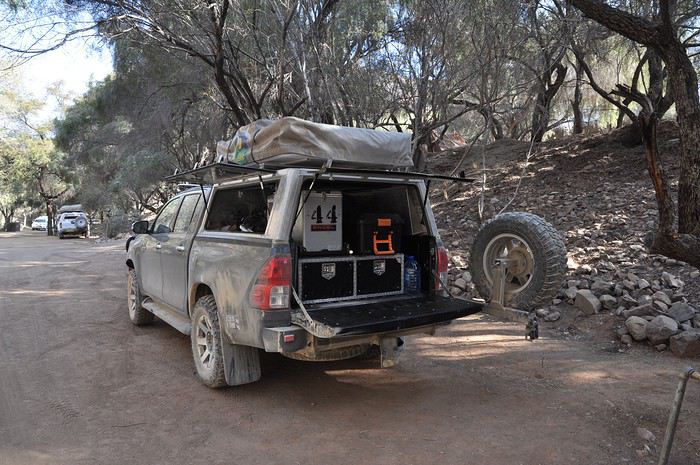
_
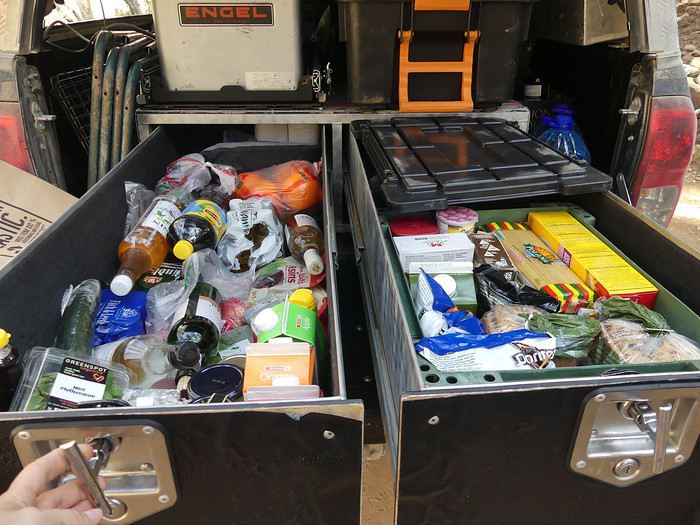 Les 2 énormes tiroirs
_
Les 2 énormes tiroirs
_
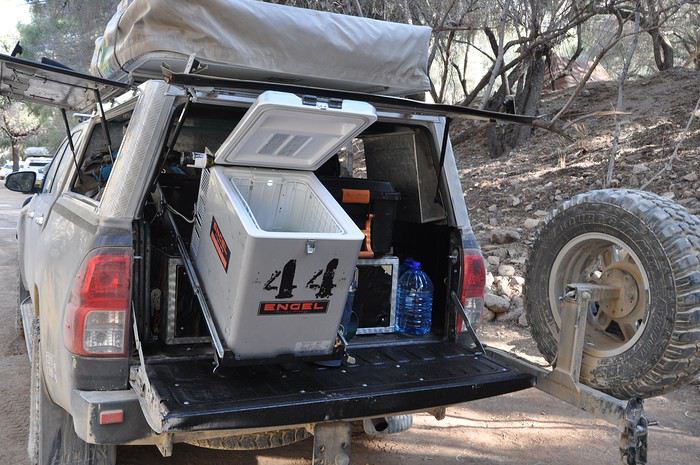 Le frigo de 44 litres en position ouvert
-

_
J00 – jeudi 15 août 2019
Départ pour la Namibie ; le vol principal a été choisi sur Air Namibia pour des raisons d'horaire (arrivée vers 6h30) et il nous faut donc rallier Francfort ; Air France nous propose des vols aller aux horaires convenables mais, pratiquement un an avant le départ, change complètement ses horaires d'où un départ très matinal de Brest à 6h vers Roissy puis Francfort pour un décollage final vers 20h10.J01 – vendredi 16 août 2019 => Windhoek Finalement, tout se passe assez bien malgré les attentes un peu longues et nous atterrissons à Windhoek à 6h10 ; sortie de l’avion (on descend sur le tarmac), il fait encore nuit et frais. Passage de l’immigration assez rapide malgré le nombre de voyageurs, récupération des bagages et nous trouvons le chauffeur de chez Asco qui nous attend (enfin, pas que nous). On quitte l’aéroport à 7h10 soit 1 h après l’atterrissage ; il fait jour et, sur le trajet, nous découvrons nos premiers animaux « exotiques ». Arrivés chez Asco, nous faisons la connaissance de Benoît, notre interlocuteur français envoyé par Tourmaline ; les divers échanges et signatures de documents sont facilités par sa présence. Ensuite, découverte du véhicule, de la tente et toutes les explications qui vont avec (et il y en a !) ; j’espère que nous n’oublierons rien. Benoît demande à l’employé d’Asco de nous donner, en plus du matériel de camping, un escabeau 2 marches et il faut bien avouer que ce fût très pratique ; plus besoin de grimper sur le pneu (au risque de tomber) pour manipuler la fermeture-éclair de la tente. Je serai le seul conducteur (ce qui ne dérange pas trop Isabelle) car négociation impossible bien que nous venions de prendre le package d’assurances max. _ Le véhicule est donc un Hilux double cabine (pour notre confort), mais le modèle Raider avec snorkel (dont nous n’aurons pas besoin), 2,8l de cylindrée, boite auto et une vraie fonction 4x4 (long et court avec blocage de différentiel) et très belle garde au sol ; 6 pneus neufs à gros crampons équipent notre superbe destrier qui a environ 130 000 km et quelques « accrocs », ce qui n’est pas plus mal ; la peinture est noire, mais ça ne durera pas. La partie arrière, totalement fermée par de la tôle épaisse, est équipée de 2 énormes tiroirs de rangement sur glissières, d’une caisse plastique contenant le matériel de cuisine et d’un vrai frigo, lui aussi sur glissières ; ce frigo est branché sur une seconde batterie et, comme nous roulions tous les jours, nous n’avons jamais eu besoin de l’arrêter, même la nuit. _ Trois heures plus tard, nous quittons Asco pour le centre commercial Spar pour faire le plein de nourriture pour les jours suivants ; les essuie-glaces se mettent en route à chaque appui sur les clignotants, tout étant quasiment inversé avec la conduite à gauche. Comme aide à la conduite, nous utiliserons Maps.me sur le téléphone en mode avion (testé juste quelques jours auparavant) ; tous les trajets (format kml) sont chargés ainsi qu’environ 300 points GPS et une version de sauvegarde sur tablette au cas où. C’est donc une première pour nous avec cette application et je pense, après utilisation quotidienne pendant 1 mois, que l’on peut lui décerner une note de 8/10. Nous faisons nos courses dans la grande surface mais sommes déçus par certains rayons, notamment les fruits et légumes (nous trouverons nettement mieux le lendemain). _ En sortant, nous essayons d’acheter des pulas (monnaie du Botswana, pays limitrophe), mais impossible ; un bureau de change n’en a pas et la banque nationale de Windhoek ne traite qu’avec ceux qui ont un compte. Comment ferons-nous à la frontière puisque le Botswana refuse dorénavant tout paiement avec une autre monnaie que la sienne, y compris la carte bleue (information récente fournie par Tourmaline et que nous verrons affichée au poste frontière) ? Quelques dernières courses (vin, apéro…) et nous rejoignons notre havre pour la nuit, la pension Londiningi où nous avons retenu le repas du soir et la nuit ; cette pension est tenue par Nathalie, une française. Pour l’instant, Maps.me marche très bien. Un rafraîchissement puis nous sortons nos bagages de la voiture ; il va falloir vider nos 2 gros sacs de voyage et répartir les contenus (les duvets pour la tente, les polaires pour les nuits fraîches, …). Test de l’adaptateur électrique : impossible de brancher nos prises françaises dedans ; Nathalie et un des occupants nous montreront qu’il suffisait de casser 2 petits ergots. _ L’heure du dîner arrive et, avec un apéritif bien mérité, nous discutons avec nos proches voisins qui, eux, ont fini leur voyage ; ils ont donc des infos toutes fraîches. Assez rapidement, nous nous rendons compte que nous avons des « points communs » et pour cause, il s’agit de Rouquine38, membre de VF et de son mari. Retour à la chambre pour une nuit bien méritée. _
Notre carrosse pour un mois
__
_
_
Les 2 énormes tiroirs
_
Le frigo de 44 litres en position ouvert-
Le Kenya hors des sentiers battus English translation pending
En 2010 nous faisions notre premier safari au Kenya en famille, nous étions loin de penser que nous tomberions à ce point amoureux de cette destination.
Depuis ce premier voyage en Afrique sub-saharienne nous sommes repartis à sept reprises au Kenya…. Nous sommes également allés en Tanzanie (les parcs du nord en février) et au Botswana (en camping itinérant).
Au Kenya la seule réserve où nous sommes allés à chaque voyage est celle de Samburu. Le reste de l’itinéraire a varié à chaque fois. Ayant trouvé peu d’informations en français (les forums en anglais comme « Safaritalk » sont plus alimentés par « des Meru, Samburu ou Aberdare lovers ») sur certains de ces lieux j’ai pensé proposer ce carnet de voyage pour ceux qui aimerait découvrir le Kenya un peu différemment. Il n’y aura rien sur le Massaï Mara, Amboseli, Baringo, Naïvasha ou Nakuru : ce sont des lieux très visités et pour lesquels on trouve déjà de nombreux et très beaux carnets. De plus j’ai pu constater que ces endroits subissent une très forte pression touristique et je ne souhaite pas en faire la promotion. Ce ne sera pas un carnet journalier classique mais un partage de notre expérience en plusieurs voyages dans ces différents lieux. Nous partons en général en « self catering » avec un guide et un cuisinier. Ceci permet d’éviter lorsque c’est possible les lodges et d’avoir une grande liberté quant aux horaires.
Pour illustrer ce carnet je posterai essentiellement des photos de mon complice et mari Benoit, parfois elles pourront aussi avoir été prises par un de nos quatre fils. Je fais très peu de photos : à la fois je ne maitrise pas bien la technique photo et j’aime en safari être totalement dans l’émotion. J’ai besoin d’être entièrement dans le moment présent : tenter de comprendre le comportement animalier, observer les interactions, essayer d’anticiper ce qui va se passer ….et prévenir mes photographes préférés 😉.
Ces voyages ont été à géométrie variable pour la composition de l’équipe : le tout premier en famille à 5 (sans notre ainé), ensuite à 3 avec le petit dernier, à 6 avec des amis, plusieurs fois en couple et puis à notre plus grand bonheur l’été dernier à 5 avec N° 1 (dont c’était le 1er safari) et N° 3 et sa compagne.
Nous partons le plus souvent en juillet ou août (contraintes professionnelles) à une exception en 2017 où nous étions au Kenya en février.
ABERDARE NATIONAL PARK
Pour vous mettre dans l'ambiance, les deux visages d'Aberdare NP : soleil ou brume .....
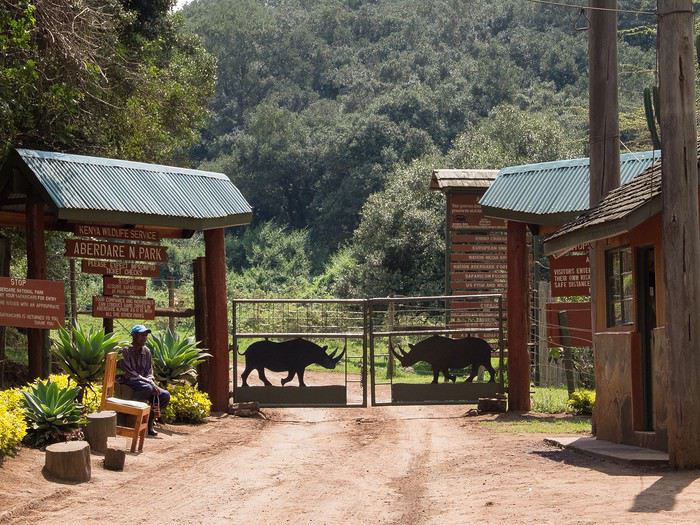
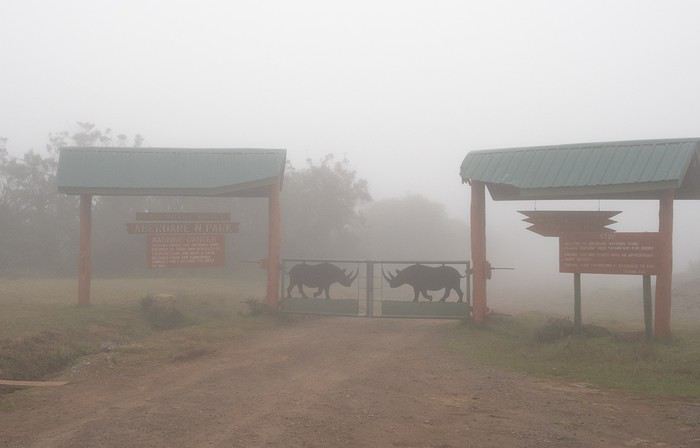
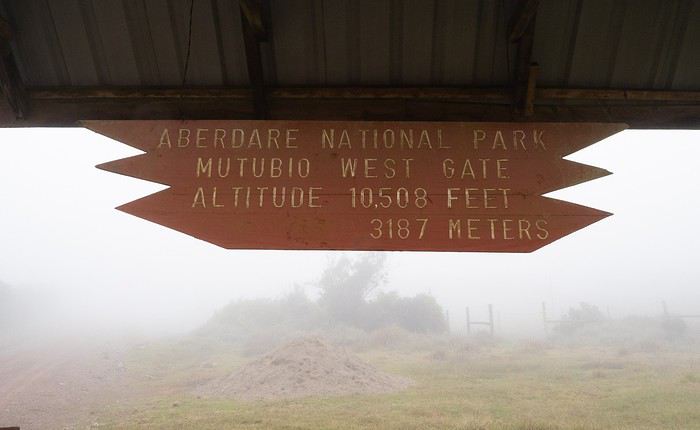
Au Kenya la seule réserve où nous sommes allés à chaque voyage est celle de Samburu. Le reste de l’itinéraire a varié à chaque fois. Ayant trouvé peu d’informations en français (les forums en anglais comme « Safaritalk » sont plus alimentés par « des Meru, Samburu ou Aberdare lovers ») sur certains de ces lieux j’ai pensé proposer ce carnet de voyage pour ceux qui aimerait découvrir le Kenya un peu différemment. Il n’y aura rien sur le Massaï Mara, Amboseli, Baringo, Naïvasha ou Nakuru : ce sont des lieux très visités et pour lesquels on trouve déjà de nombreux et très beaux carnets. De plus j’ai pu constater que ces endroits subissent une très forte pression touristique et je ne souhaite pas en faire la promotion. Ce ne sera pas un carnet journalier classique mais un partage de notre expérience en plusieurs voyages dans ces différents lieux. Nous partons en général en « self catering » avec un guide et un cuisinier. Ceci permet d’éviter lorsque c’est possible les lodges et d’avoir une grande liberté quant aux horaires.
Pour illustrer ce carnet je posterai essentiellement des photos de mon complice et mari Benoit, parfois elles pourront aussi avoir été prises par un de nos quatre fils. Je fais très peu de photos : à la fois je ne maitrise pas bien la technique photo et j’aime en safari être totalement dans l’émotion. J’ai besoin d’être entièrement dans le moment présent : tenter de comprendre le comportement animalier, observer les interactions, essayer d’anticiper ce qui va se passer ….et prévenir mes photographes préférés 😉.
Ces voyages ont été à géométrie variable pour la composition de l’équipe : le tout premier en famille à 5 (sans notre ainé), ensuite à 3 avec le petit dernier, à 6 avec des amis, plusieurs fois en couple et puis à notre plus grand bonheur l’été dernier à 5 avec N° 1 (dont c’était le 1er safari) et N° 3 et sa compagne.
Nous partons le plus souvent en juillet ou août (contraintes professionnelles) à une exception en 2017 où nous étions au Kenya en février.
ABERDARE NATIONAL PARK
Pour vous mettre dans l'ambiance, les deux visages d'Aberdare NP : soleil ou brume .....
Masai Mara and Melting Pot Safari... So disappointed!
Hello everyone,
I imagine many of you have been captivated by the Masai Mara park and/or your safari experience with Tony Crocetta/Melting Pot Safari. Still, I’d like to share my perspective. First, I’m an avid traveler, especially in love with Africa, which my partner and I have explored a bit (Zambia, South Africa, Botswana, Kenya, Zimbabwe, Namibia...). That said, I want to express my deep disappointment with both the Masai Mara and Tony Crocetta’s camp, Melting Pot Safari, where we stayed last year.
First, about the park: it’s stunning, no doubt. But what a highly touristy place! I can’t find the words to describe the horror of being among 30 4x4 vehicles lined up in front of a lioness hunt, let alone encircling her right after her kill while her prey is still alive in her jaws... no respect for wildlife. The same goes for surrounding a young leopard playing with its small prey, a moment when I counted over 50 vehicles, most with their engines running... sickening. I turned away, both my gaze and my camera. What a disaster to see this natural wonder of Africa turned into a tourist hotspot.
Yes, I loved this place on Earth, but no, I won’t "promote" it anywhere or to anyone.
Next, I also wanted to share my dissatisfaction with Tony Crocetta’s famous camp, Melting Pot Safari: where to begin? We booked a private vehicle for four with two friends, and I have no complaints about the vehicle itself (though it obviously came at a cost). The windows and the vehicle weren’t very photo-friendly, but let’s move on. The trip between the sisters’ guesthouse (which was fine) and the camp went smoothly, except we arrived a bit too late. Result: "We’ll leave for the safari an hour later today because the driver has to respect his rest hours." Perfect—with park formalities, we only spent about an hour in the park that evening. The safari got off to a great start... During our 12-day stay, we saw some amazing things. Tony wasn’t at the camp—I don’t know what the atmosphere is like when he’s there, but it was rather cold during our trip. Sylvie, his wife, barely looked at us, never asking how our day, night, or game drive went (I think she spoke to us once during the stay, plus the day we arrived, of course). We felt invisible... (if I were mean, I’d say the money had already been deposited into Melting Pot’s bank account.) The evening meals, if I may say so, were a joke: not enough dessert (aside from fruit, but the few elaborate desserts—like 10 for 18 guests) for everyone, barely enough meat or sides. If you were unlucky like us and ended up with a group of 15 people who decided to skip the starter, you’d better hurry to get your main course, or there might not be any left—and no refills... We always ate our fill, but sometimes we had to serve ourselves in advance. Finally, I want to correct something about the quality of the meals: seriously, this buffet was really mediocre and far from the culinary standards I’d read about in my pre-trip research (see their Facebook page). Anyway, let’s move past the food—after all, the avocados were sublime, and we’re not there primarily to eat.
About the tent: the river views were beautiful, and the beds were very comfortable. No running water, individual showers outside the tent, and dry toilets—but it’s Africa, so we weren’t shocked. However, I’m disappointed that for this "modest" price, I wasn’t warned there’d be no soap (and no, I don’t travel with my own soap—and for the price, a little bar in the tent wouldn’t be a luxury). But let’s move on—the hippo views were fantastic. Oh, and to preserve the Masai Mara’s water (which makes sense) and for hygiene reasons, underwear isn’t washed by the camp staff—fair enough. But then what’s that little sign next to the bed? Oh right, for a hefty sum, underwear suddenly becomes "washable"...
Finally, my biggest gripe is about the essential part: the game drives. In France, they sell you a dream with a "photo safari" (what’s the difference, really? A room with a few more electrical outlets?). They promise guides especially suited for photography (not a given, sorry) and vehicles that can get close to animals and go off-road... but here’s the catch: the guides are bound by park laws and hounded by rangers looking to fine rule-breakers. Result: as soon as a white ranger vehicle is spotted, we have to abandon our spot for a wild chase through the grass. Fun once... The next day, we learned that another group’s guide got caught and had to pay $100 for breaking the rules—a sum he casually asked the travelers in his vehicle to cover... because of course, Melting Pot lures tourists with dreams, the poor rangers try to get close, all while breaking park laws... and they break those laws for Crocetta’s company, which, of course, won’t dip into its profits to pay the fines. Basically, it’s "keep the clients happy, but don’t get fined—or the fines are on you or you’ll have to ask the clients directly." Nice boss! Anyway, there were long discussions about this last year, especially among the guests in the fined vehicle. My partner and I found these practices unacceptable, and we were deeply disappointed by this attitude.
I know many people adore this park and/or this company—maybe you were luckier... or maybe you’re less demanding than we are when it comes to respecting rules, nature, and clients. But after traveling through much of southern Africa, I can tell you we personally came back frustrated from this experience and aren’t eager to return... You’ve been warned.
I imagine many of you have been captivated by the Masai Mara park and/or your safari experience with Tony Crocetta/Melting Pot Safari. Still, I’d like to share my perspective. First, I’m an avid traveler, especially in love with Africa, which my partner and I have explored a bit (Zambia, South Africa, Botswana, Kenya, Zimbabwe, Namibia...). That said, I want to express my deep disappointment with both the Masai Mara and Tony Crocetta’s camp, Melting Pot Safari, where we stayed last year.
First, about the park: it’s stunning, no doubt. But what a highly touristy place! I can’t find the words to describe the horror of being among 30 4x4 vehicles lined up in front of a lioness hunt, let alone encircling her right after her kill while her prey is still alive in her jaws... no respect for wildlife. The same goes for surrounding a young leopard playing with its small prey, a moment when I counted over 50 vehicles, most with their engines running... sickening. I turned away, both my gaze and my camera. What a disaster to see this natural wonder of Africa turned into a tourist hotspot.
Yes, I loved this place on Earth, but no, I won’t "promote" it anywhere or to anyone.
Next, I also wanted to share my dissatisfaction with Tony Crocetta’s famous camp, Melting Pot Safari: where to begin? We booked a private vehicle for four with two friends, and I have no complaints about the vehicle itself (though it obviously came at a cost). The windows and the vehicle weren’t very photo-friendly, but let’s move on. The trip between the sisters’ guesthouse (which was fine) and the camp went smoothly, except we arrived a bit too late. Result: "We’ll leave for the safari an hour later today because the driver has to respect his rest hours." Perfect—with park formalities, we only spent about an hour in the park that evening. The safari got off to a great start... During our 12-day stay, we saw some amazing things. Tony wasn’t at the camp—I don’t know what the atmosphere is like when he’s there, but it was rather cold during our trip. Sylvie, his wife, barely looked at us, never asking how our day, night, or game drive went (I think she spoke to us once during the stay, plus the day we arrived, of course). We felt invisible... (if I were mean, I’d say the money had already been deposited into Melting Pot’s bank account.) The evening meals, if I may say so, were a joke: not enough dessert (aside from fruit, but the few elaborate desserts—like 10 for 18 guests) for everyone, barely enough meat or sides. If you were unlucky like us and ended up with a group of 15 people who decided to skip the starter, you’d better hurry to get your main course, or there might not be any left—and no refills... We always ate our fill, but sometimes we had to serve ourselves in advance. Finally, I want to correct something about the quality of the meals: seriously, this buffet was really mediocre and far from the culinary standards I’d read about in my pre-trip research (see their Facebook page). Anyway, let’s move past the food—after all, the avocados were sublime, and we’re not there primarily to eat.
About the tent: the river views were beautiful, and the beds were very comfortable. No running water, individual showers outside the tent, and dry toilets—but it’s Africa, so we weren’t shocked. However, I’m disappointed that for this "modest" price, I wasn’t warned there’d be no soap (and no, I don’t travel with my own soap—and for the price, a little bar in the tent wouldn’t be a luxury). But let’s move on—the hippo views were fantastic. Oh, and to preserve the Masai Mara’s water (which makes sense) and for hygiene reasons, underwear isn’t washed by the camp staff—fair enough. But then what’s that little sign next to the bed? Oh right, for a hefty sum, underwear suddenly becomes "washable"...
Finally, my biggest gripe is about the essential part: the game drives. In France, they sell you a dream with a "photo safari" (what’s the difference, really? A room with a few more electrical outlets?). They promise guides especially suited for photography (not a given, sorry) and vehicles that can get close to animals and go off-road... but here’s the catch: the guides are bound by park laws and hounded by rangers looking to fine rule-breakers. Result: as soon as a white ranger vehicle is spotted, we have to abandon our spot for a wild chase through the grass. Fun once... The next day, we learned that another group’s guide got caught and had to pay $100 for breaking the rules—a sum he casually asked the travelers in his vehicle to cover... because of course, Melting Pot lures tourists with dreams, the poor rangers try to get close, all while breaking park laws... and they break those laws for Crocetta’s company, which, of course, won’t dip into its profits to pay the fines. Basically, it’s "keep the clients happy, but don’t get fined—or the fines are on you or you’ll have to ask the clients directly." Nice boss! Anyway, there were long discussions about this last year, especially among the guests in the fined vehicle. My partner and I found these practices unacceptable, and we were deeply disappointed by this attitude.
I know many people adore this park and/or this company—maybe you were luckier... or maybe you’re less demanding than we are when it comes to respecting rules, nature, and clients. But after traveling through much of southern Africa, I can tell you we personally came back frustrated from this experience and aren’t eager to return... You’ve been warned.
Concours photos du mois d'août 2019: "Les sables du mondes" English translation pending
Et voilà le 109ème concours photo de voyage forum¨
En ce jours de fêtes nationale Suisse, j'ai choisi un thème ou ce pays ne sera sans doute pas très représenté sur les photos...
Un thème de saison en cette période de vacances et de farniente.
Les sables du monde Que ce soit sur une plage, dans un désert, une dune de sable ou une moraine dans la montagne. Qu'il soit blanc, noir, gris, rouge, beige ou orange, le sable m'a toujours fasciné!
J'en ai d'ailleurs une petite collection (je vous mettrez des photos des lieu de collecte, et des grains en gros plans dans la discussion😛):
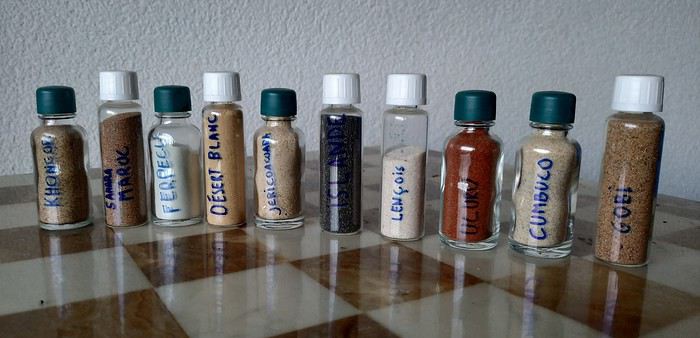
Par ce concours, j'aimerais que vous me donniez envie d'aller découvrir des lieu ou je pourrez agrandir cette collection!
Peu importe que ce soit une sculpture ou au naturelle, il doit y avoir du sable sur vos photos, en gros plan ou s'incluant dans un paysage, mais ayant une bonne place bien visible.
Pour participer : Dépôt des photos jusqu’au samedi 23 août à 23h59 Vous pouvez poster jusqu’à 3 photos, numérotées et postées dans des messages différents, accompagnées d’un petit descriptif du lieu et de l’histoire qui s’y rattache.
Pour voter : du dimanche 24 août 0h00 au samedi 31 août 22h Merci d’indiquer le numéro de la photo, le pseudo et le nombre de points attribués. Photo n°1 = 3 pts Photo n°2 = 2 pts Photo n°3 = 1 pt
Tous les membres de VF peuvent voter (même ceux qui n’ont pas déposé de photos). En cas d’égalité de points pour la première position, la photo gagnante sera celle ayant obtenu le plus grand nombre de 1ères places, puis de secondes places ! L’heureux gagnant pourra organiser le concours photo du mois de Septembre.
Ce topic n'est que pour poster des photos participantes au concours! Pour les discussions et les photos hors concours, c'est là : voyageforum.com/...post=9724132;live=1;
Je ne serai malheureusement pas très présent pour animer les discussions, étant donné que jusqu'au 22 août, je serai en voyage au Sénégal. Mais j'essaierai de vous ramener quelque photos ensablée, et si j'ai du réseau, je passerai quand même de temps en temps! Je serai de retour pour les votes et les décomptes des voix.
Le diaporama, encore une fois assuré par Xavier, sera présent dans ma signature et sûrement la sienne aussi .
Les sables du monde Que ce soit sur une plage, dans un désert, une dune de sable ou une moraine dans la montagne. Qu'il soit blanc, noir, gris, rouge, beige ou orange, le sable m'a toujours fasciné!
J'en ai d'ailleurs une petite collection (je vous mettrez des photos des lieu de collecte, et des grains en gros plans dans la discussion😛):
Par ce concours, j'aimerais que vous me donniez envie d'aller découvrir des lieu ou je pourrez agrandir cette collection!
Peu importe que ce soit une sculpture ou au naturelle, il doit y avoir du sable sur vos photos, en gros plan ou s'incluant dans un paysage, mais ayant une bonne place bien visible.
Pour participer : Dépôt des photos jusqu’au samedi 23 août à 23h59 Vous pouvez poster jusqu’à 3 photos, numérotées et postées dans des messages différents, accompagnées d’un petit descriptif du lieu et de l’histoire qui s’y rattache.
Pour voter : du dimanche 24 août 0h00 au samedi 31 août 22h Merci d’indiquer le numéro de la photo, le pseudo et le nombre de points attribués. Photo n°1 = 3 pts Photo n°2 = 2 pts Photo n°3 = 1 pt
Tous les membres de VF peuvent voter (même ceux qui n’ont pas déposé de photos). En cas d’égalité de points pour la première position, la photo gagnante sera celle ayant obtenu le plus grand nombre de 1ères places, puis de secondes places ! L’heureux gagnant pourra organiser le concours photo du mois de Septembre.
Ce topic n'est que pour poster des photos participantes au concours! Pour les discussions et les photos hors concours, c'est là : voyageforum.com/...post=9724132;live=1;
Je ne serai malheureusement pas très présent pour animer les discussions, étant donné que jusqu'au 22 août, je serai en voyage au Sénégal. Mais j'essaierai de vous ramener quelque photos ensablée, et si j'ai du réseau, je passerai quand même de temps en temps! Je serai de retour pour les votes et les décomptes des voix.
Le diaporama, encore une fois assuré par Xavier, sera présent dans ma signature et sûrement la sienne aussi .
Récit de voyage 100% Safari, 11 jours au Kenya English translation pending
Bonjour à tous,
Ce site m'ayant énormément aidé pour organiser mes voyages, je me suis dit que j'allais essayer à mon tour de vous partager mes impressions.
L'idée de ce voyage à germé à notre retour d'un voyage en Thaïlande ou nous avions passé 2 jours dans le parc de Khao Yai, où nous avions eu l'occasion de voir des animaux en totale liberté et cela fût la révélation pour moi : Le safari photo est le style de voyage que je préfère!
Nous avons donc décidé, ma femme et moi, de nous concentrer sur des pays qui permettait ce type de tourisme, nous voici donc en train de préparer notre voyage au Kenya pour voir des animaux (tant qu'il y en a encore) et clairement nous n'avons pas été déçu.
Nous avons fait appel un tour opérator basé en Afrique du sud, Effective connections, que nous connaissions bien, qui nous a aidé à organiser notre voyage : 12 Jours et 10 nuits en all inclusive, un chauffeur/guide tout le long du voyage pour environ 2500€/par personne hors vols internationaux.
Après coup, nous pensons que nous aurions du faire un autre itinéraire, clairement trop soutenu pour nous, voyageurs occasionnels :
Nous sommes partis du 02/12/2018 au 12/12/2018
02/12/2018 : Nairobi Airport - Nairobi Arrivée de notre vol à 19H40 à l'aéroprt international de Nairobi, passage de la douane Et tout de suite vous êtes dans le bain! Pour sortir, une machine à rayon X dans laquelle les bagages doivent passés pour sortir de l'aéroport, à peu près 600 passagers indisciplinés attendant leur tour pour sortir réparties sur 5 ou 6 queues différentes ... je vous laisse imaginer la scène, bienvenue en Afrique! Un gentil employé de l'aéroport viens vers nous (je pense qu'il a vue la détresse dans mes yeux) et nous invite gentiment à le suivre puis nous fait passer devant tout le monde, nous le remercions et nous lui donnons 5€ pour sa gentillesse.
Nous retrouvons notre guide francophone, Karyuki qui nous emmène à notre Hotel en plein cœur de Nairobi. Première nuit , rendez vous à 8h00 demain matin pour commencer notre voyage.
03/12/18 : Nairobi Visite du Langata Giraffe Center : Nous commencons par le Giraffe Center, un refuge créé par Lady Melville pour sauver les giraffe de Rorchild qui devait être temporaire qui finalement perdure dans le temps. C'est un endroit à voir ne serait-ce que pour les aider à conserver ces magnifiques créatures en voie de disparition.
Visite de l'orphelinat de Sheldricks : Direction l'orphelinat de Sheldricks, les visites durent une petite heure pendant laquelle les soigneurs explique comment et pourquoi ils prennent soin des éléphanteaux orphelins, puis ils nous les présentent en les faisant venir devant nous et leur donnant le biberons. un moment magique.
Safari dans le parc national de Nairobi : L'après midi premier safari dans le parc national de Nairobi, un petit parc aux abords de la ville. Nous n'avons vu beaucoup d'animaux mais la vision de zèbres sous fond de ville est saisissant. Après réflexion, je pense que ce parc est loin d'être une priorité.
04/12/18 : Nairobi - Samburu National Reserve Le lendemain matin 7H, nous voila parti pour Samburu, une réserve peu touristique au nord de Nairobi. Après 7h d'un trajet interminable dans un minibus nissan vieux de 400000km et d'une quinzaine d'année nous arrivons dans la réserve. Notre loge est situé dans la réserve nous parcourrons donc les 15 derniers kilomètres sur de la piste, petit avant gout de nos safaris futurs, quelques bleus plus tard nous arrivons à notre loge, le responsable nous explique que nous sommes les seuls clients pendant notre séjour de 2 jours. Nous nous installons dans notre loge puis nous déjeunons, il fait 28°C, grand soleil et nous buvons notre café en regardant les écureuils et les Kalao jouer. Nous nous relaxons une petite heure avant de partir en safari vers 16h30.
Cette réserve est superbe, il y a peu de touriste et beaucoup d'animaux a voir.
Nous prenons des photos, de phacochères, d'impala, de gazelles, émerveillés à chaque tournants de la piste quand notre guide nous crie : "asseyez vous et attachez vous", ma femme moi nous regardons sans savoir quoi penser jusqu’à ce que notre guide passe la 3eme et se lance dans un rallye dans ce vieux minibus usé avec des amortisseurs qui n'ont d'amortisseurs que le nom, nous accrochons a ce que nous pouvons, protégeons nos appareils photos au périls de nos vies pendant 5 bonnes minutes, puis notre guide coupe son moteur et nous arrivons à coté d'un 4x4 garé avec des touristes observant quelque chose par le toit, nous nous levons et apercevons enfin l'objet de leur curiosité : un magnifique Léopard sur son arbre mort.
Nous rentrons après 2h de safari, tout pantelant et heureux.
05/12/18 : Samburu National Reserve 2eme jour dans cette superbe réserve. nous avons prévu 3 safaris aujourd'hui. Lever 5h45 pour collation à 6h15 et départ à l'aube à 6h30, nous voyons la savane se réveiller, des petits dick dick (toujours par 2 ils vont), des Kalaos, au loin des Fenecks, des girafes... retour au loge pour le petit déjeuner à 9h00, puis départ à 10H30 pour un 2eme safari matinal jusqu’à 12h30. Déjeuner Retour sur les pistes à 16H00. A peine sommes nous partis que nous apercevons sur le bord de la route un zèbre de grevy, visible uniquement dans cette réserve, nous continuons notre safari toujours autant émerveillé par ce que nous voyons quand nous apercevons un 4x4 revenant sur la piste (chose pas vraiment légale dans ce parc) notre guide lui parle en swahili, nous avons juste compris le premier mot Jambo, puis il se tourne vers nous et nous dit :'"Bon il va falloir faire vite, préparez vos appareils photos et accrochez vous", nous nous souvenions de la veille, nous n'avons pas posé de questions et avons donc attrapé ce que nous pouvions pour nous tenir et en avant pour le hors piste... notre guide enclenche la première et fonce vers un petit bosquet puis s'arrête. Il nous a bien fallu 10 secondes pour comprendre qu'un groupe de lion était couché sous ce petit bosquet avant de commencer à les mitrailler avec nos appareils photos.
Comme la veille retour au loge, des étoiles dans les yeux.
06/12/18 : Samburu National Reserve - Lake Nakuru National Park Levé 6h pour un départ à 7 et à nouveau 7h de route... Nous arrivons au Lac nakuru, c'est une étape avant de rejoindre le Maasai Mara. Nous faisons un safari dans l'après midi ou nous avons la chance de voir nos première hyènes, des cobes et nos premiers rhinocéros.
07/12/18 : Lake Nakuru National Park - Masai Mara South Départ pour le maasai mara (la partie Kenyane du Serengeti), à nouveau 6h de route. Sérieusement prenez plusieurs livres, les distances sont courtes (mais les temps de trajets sont monstrueusement long, la vitesse est limité à 80km/h, il y a pas mal d'embouteillage (rien de comparable à Nairobi ceci dit).
Premier safari dans le parc l'après midi, dans ma tête passe la chanson du roi lion en voyant ces paysages et ces animaux. A nouveau phacochères, girafes maasai, autruches, marabu... se bousculent devant nos objectifs.
08/12/18 : Masai Mara South C'est reparti pour une journée de safari. Cette fois nous optons pour un grand safari de 4h le matin et un de 2h l'après midi.
Dès le matin, une hyenes joue à cache à cache sur le bord de la route, la montgolfière du loge prend son envol et à 6 petites minutes de route nous tombons sur un groupe de 16 lions qui se réveille lentement.
L'après midi fut l'occasion pour nous d'observer notre premier guepard, au maasai mara il est autorisé de suivre les animaux en hors piste. Chaque 4x4 passe donc les uns après les autres pour perturber au minimum les animaux. Nous voyons nos premiers hippopotames l'après midi, puis nous revenons sur notre groupe de 16 lions qui ont tuer un buffle.
09/12/18 : Masai Mara South - Crescent Island - Naivasha Lake Départ à nouveau à 7h du matin et route pour la région des lacs à peu près 5h de route. Nous faisons la visite de Crescent Island, une île sur le lac naivasha sur laquelle vous pouvez faire un safari photo à pied accompagner d'un guide local au milieu de girafes, gnou et d'impala...
Pour nous y rendre nous avons pris un petit bateau, pendant la traversée qui dure une petite dizaine de minute, le guide vous montre les oiseaux, cormorans et aigles pêcheur principalement. il stoppe le bateau et lance un tilapia dans l'eau pour vous permettre de voir un aigle pêcheur en action, moment absolument magique.
10/12/18 : Naivasha Lake - Amboseli Départ à nouveau à 7h du matin pour 6h de route direction la réserve d'Amboseli et bien sur le kilimandjaro! Nous commencons par faire un safari, sous un ciel grisatre et un Kilimandjaro bien caché derrière des nuages. Nous observons un nombre impressionnant d'oiseaux, pélicans, grues couronnées, flamant pas tout à fait rose mais aussi des hippopotames, des éléphants... C'est une réserve perpétuellement verte et riche en faune.
Retour au loge sous une petite bruine anxieux que ce temps perdure...
11/12/18 : Amboseli Dernier jour de safari, la peur gagne nos cœurs quand à 5h45 nous nous levons sous une pluie battante... nous nous habillons et rejoignons notre guide dans le hall qui nous dit : "on tente le coup, bon j'ai eu un appel d'un collègue qui est coincé dans le parc mais nous ça ira..." euh... Kariuki nous n'avons pas pris de bottes... Aller on tente, nous sortons du lode et ce qui était une piste jusqu’hier encore est devenu une véritable rivière... nous arrivons tant bien que mal à l'entrée du parc mais le garde nous dit que ce n'est pas possible, plusieurs véhicules sont coincés déjà. nous rebroussons chemin, rendez vous à 9h30 en espérant que le soleil revienne.
Et effectivement à 9h30, plus de pluie, l'eau sur la route à pénétrée le sol, les pistes sont praticable, en avant jeunesse. Nous avons vue nombre d'animaux et principalement des oiseaux puis retour au loge jusqu’à l'après midi pour un deuxième safari toujours nuageux mais nous voyons enfin le kilimandjaro et la beauté des paysages avec un soleil un peu timide mais présent.
12/12/18 : Amboseli - Nairobi airport C'est le cœur gros que nous nous levons pour notre dernier safari, le ciel est encore grisâtre mais il fait bon. Nous voyons principalement des oiseaux (nous avons enfin retrouver les hirondelles qui ont abandonner notre France) et des singes, babouin et Vervet (Vous voyez ce petit singe aux parties intimes très colorées).
Je ne pensais pas avoir autant à écrire! j'espère que ce récit aidera quelques personnes à se décider si elles hésitent à partir au Kenya.
Je vais compléter par quelques photos histoire d'illustrer ce que je vous ai raconté.
Ce site m'ayant énormément aidé pour organiser mes voyages, je me suis dit que j'allais essayer à mon tour de vous partager mes impressions.
L'idée de ce voyage à germé à notre retour d'un voyage en Thaïlande ou nous avions passé 2 jours dans le parc de Khao Yai, où nous avions eu l'occasion de voir des animaux en totale liberté et cela fût la révélation pour moi : Le safari photo est le style de voyage que je préfère!
Nous avons donc décidé, ma femme et moi, de nous concentrer sur des pays qui permettait ce type de tourisme, nous voici donc en train de préparer notre voyage au Kenya pour voir des animaux (tant qu'il y en a encore) et clairement nous n'avons pas été déçu.
Nous avons fait appel un tour opérator basé en Afrique du sud, Effective connections, que nous connaissions bien, qui nous a aidé à organiser notre voyage : 12 Jours et 10 nuits en all inclusive, un chauffeur/guide tout le long du voyage pour environ 2500€/par personne hors vols internationaux.
Après coup, nous pensons que nous aurions du faire un autre itinéraire, clairement trop soutenu pour nous, voyageurs occasionnels :
Nous sommes partis du 02/12/2018 au 12/12/2018
02/12/2018 : Nairobi Airport - Nairobi Arrivée de notre vol à 19H40 à l'aéroprt international de Nairobi, passage de la douane Et tout de suite vous êtes dans le bain! Pour sortir, une machine à rayon X dans laquelle les bagages doivent passés pour sortir de l'aéroport, à peu près 600 passagers indisciplinés attendant leur tour pour sortir réparties sur 5 ou 6 queues différentes ... je vous laisse imaginer la scène, bienvenue en Afrique! Un gentil employé de l'aéroport viens vers nous (je pense qu'il a vue la détresse dans mes yeux) et nous invite gentiment à le suivre puis nous fait passer devant tout le monde, nous le remercions et nous lui donnons 5€ pour sa gentillesse.
Nous retrouvons notre guide francophone, Karyuki qui nous emmène à notre Hotel en plein cœur de Nairobi. Première nuit , rendez vous à 8h00 demain matin pour commencer notre voyage.
03/12/18 : Nairobi Visite du Langata Giraffe Center : Nous commencons par le Giraffe Center, un refuge créé par Lady Melville pour sauver les giraffe de Rorchild qui devait être temporaire qui finalement perdure dans le temps. C'est un endroit à voir ne serait-ce que pour les aider à conserver ces magnifiques créatures en voie de disparition.
Visite de l'orphelinat de Sheldricks : Direction l'orphelinat de Sheldricks, les visites durent une petite heure pendant laquelle les soigneurs explique comment et pourquoi ils prennent soin des éléphanteaux orphelins, puis ils nous les présentent en les faisant venir devant nous et leur donnant le biberons. un moment magique.
Safari dans le parc national de Nairobi : L'après midi premier safari dans le parc national de Nairobi, un petit parc aux abords de la ville. Nous n'avons vu beaucoup d'animaux mais la vision de zèbres sous fond de ville est saisissant. Après réflexion, je pense que ce parc est loin d'être une priorité.
04/12/18 : Nairobi - Samburu National Reserve Le lendemain matin 7H, nous voila parti pour Samburu, une réserve peu touristique au nord de Nairobi. Après 7h d'un trajet interminable dans un minibus nissan vieux de 400000km et d'une quinzaine d'année nous arrivons dans la réserve. Notre loge est situé dans la réserve nous parcourrons donc les 15 derniers kilomètres sur de la piste, petit avant gout de nos safaris futurs, quelques bleus plus tard nous arrivons à notre loge, le responsable nous explique que nous sommes les seuls clients pendant notre séjour de 2 jours. Nous nous installons dans notre loge puis nous déjeunons, il fait 28°C, grand soleil et nous buvons notre café en regardant les écureuils et les Kalao jouer. Nous nous relaxons une petite heure avant de partir en safari vers 16h30.
Cette réserve est superbe, il y a peu de touriste et beaucoup d'animaux a voir.
Nous prenons des photos, de phacochères, d'impala, de gazelles, émerveillés à chaque tournants de la piste quand notre guide nous crie : "asseyez vous et attachez vous", ma femme moi nous regardons sans savoir quoi penser jusqu’à ce que notre guide passe la 3eme et se lance dans un rallye dans ce vieux minibus usé avec des amortisseurs qui n'ont d'amortisseurs que le nom, nous accrochons a ce que nous pouvons, protégeons nos appareils photos au périls de nos vies pendant 5 bonnes minutes, puis notre guide coupe son moteur et nous arrivons à coté d'un 4x4 garé avec des touristes observant quelque chose par le toit, nous nous levons et apercevons enfin l'objet de leur curiosité : un magnifique Léopard sur son arbre mort.
Nous rentrons après 2h de safari, tout pantelant et heureux.
05/12/18 : Samburu National Reserve 2eme jour dans cette superbe réserve. nous avons prévu 3 safaris aujourd'hui. Lever 5h45 pour collation à 6h15 et départ à l'aube à 6h30, nous voyons la savane se réveiller, des petits dick dick (toujours par 2 ils vont), des Kalaos, au loin des Fenecks, des girafes... retour au loge pour le petit déjeuner à 9h00, puis départ à 10H30 pour un 2eme safari matinal jusqu’à 12h30. Déjeuner Retour sur les pistes à 16H00. A peine sommes nous partis que nous apercevons sur le bord de la route un zèbre de grevy, visible uniquement dans cette réserve, nous continuons notre safari toujours autant émerveillé par ce que nous voyons quand nous apercevons un 4x4 revenant sur la piste (chose pas vraiment légale dans ce parc) notre guide lui parle en swahili, nous avons juste compris le premier mot Jambo, puis il se tourne vers nous et nous dit :'"Bon il va falloir faire vite, préparez vos appareils photos et accrochez vous", nous nous souvenions de la veille, nous n'avons pas posé de questions et avons donc attrapé ce que nous pouvions pour nous tenir et en avant pour le hors piste... notre guide enclenche la première et fonce vers un petit bosquet puis s'arrête. Il nous a bien fallu 10 secondes pour comprendre qu'un groupe de lion était couché sous ce petit bosquet avant de commencer à les mitrailler avec nos appareils photos.
Comme la veille retour au loge, des étoiles dans les yeux.
06/12/18 : Samburu National Reserve - Lake Nakuru National Park Levé 6h pour un départ à 7 et à nouveau 7h de route... Nous arrivons au Lac nakuru, c'est une étape avant de rejoindre le Maasai Mara. Nous faisons un safari dans l'après midi ou nous avons la chance de voir nos première hyènes, des cobes et nos premiers rhinocéros.
07/12/18 : Lake Nakuru National Park - Masai Mara South Départ pour le maasai mara (la partie Kenyane du Serengeti), à nouveau 6h de route. Sérieusement prenez plusieurs livres, les distances sont courtes (mais les temps de trajets sont monstrueusement long, la vitesse est limité à 80km/h, il y a pas mal d'embouteillage (rien de comparable à Nairobi ceci dit).
Premier safari dans le parc l'après midi, dans ma tête passe la chanson du roi lion en voyant ces paysages et ces animaux. A nouveau phacochères, girafes maasai, autruches, marabu... se bousculent devant nos objectifs.
08/12/18 : Masai Mara South C'est reparti pour une journée de safari. Cette fois nous optons pour un grand safari de 4h le matin et un de 2h l'après midi.
Dès le matin, une hyenes joue à cache à cache sur le bord de la route, la montgolfière du loge prend son envol et à 6 petites minutes de route nous tombons sur un groupe de 16 lions qui se réveille lentement.
L'après midi fut l'occasion pour nous d'observer notre premier guepard, au maasai mara il est autorisé de suivre les animaux en hors piste. Chaque 4x4 passe donc les uns après les autres pour perturber au minimum les animaux. Nous voyons nos premiers hippopotames l'après midi, puis nous revenons sur notre groupe de 16 lions qui ont tuer un buffle.
09/12/18 : Masai Mara South - Crescent Island - Naivasha Lake Départ à nouveau à 7h du matin et route pour la région des lacs à peu près 5h de route. Nous faisons la visite de Crescent Island, une île sur le lac naivasha sur laquelle vous pouvez faire un safari photo à pied accompagner d'un guide local au milieu de girafes, gnou et d'impala...
Pour nous y rendre nous avons pris un petit bateau, pendant la traversée qui dure une petite dizaine de minute, le guide vous montre les oiseaux, cormorans et aigles pêcheur principalement. il stoppe le bateau et lance un tilapia dans l'eau pour vous permettre de voir un aigle pêcheur en action, moment absolument magique.
10/12/18 : Naivasha Lake - Amboseli Départ à nouveau à 7h du matin pour 6h de route direction la réserve d'Amboseli et bien sur le kilimandjaro! Nous commencons par faire un safari, sous un ciel grisatre et un Kilimandjaro bien caché derrière des nuages. Nous observons un nombre impressionnant d'oiseaux, pélicans, grues couronnées, flamant pas tout à fait rose mais aussi des hippopotames, des éléphants... C'est une réserve perpétuellement verte et riche en faune.
Retour au loge sous une petite bruine anxieux que ce temps perdure...
11/12/18 : Amboseli Dernier jour de safari, la peur gagne nos cœurs quand à 5h45 nous nous levons sous une pluie battante... nous nous habillons et rejoignons notre guide dans le hall qui nous dit : "on tente le coup, bon j'ai eu un appel d'un collègue qui est coincé dans le parc mais nous ça ira..." euh... Kariuki nous n'avons pas pris de bottes... Aller on tente, nous sortons du lode et ce qui était une piste jusqu’hier encore est devenu une véritable rivière... nous arrivons tant bien que mal à l'entrée du parc mais le garde nous dit que ce n'est pas possible, plusieurs véhicules sont coincés déjà. nous rebroussons chemin, rendez vous à 9h30 en espérant que le soleil revienne.
Et effectivement à 9h30, plus de pluie, l'eau sur la route à pénétrée le sol, les pistes sont praticable, en avant jeunesse. Nous avons vue nombre d'animaux et principalement des oiseaux puis retour au loge jusqu’à l'après midi pour un deuxième safari toujours nuageux mais nous voyons enfin le kilimandjaro et la beauté des paysages avec un soleil un peu timide mais présent.
12/12/18 : Amboseli - Nairobi airport C'est le cœur gros que nous nous levons pour notre dernier safari, le ciel est encore grisâtre mais il fait bon. Nous voyons principalement des oiseaux (nous avons enfin retrouver les hirondelles qui ont abandonner notre France) et des singes, babouin et Vervet (Vous voyez ce petit singe aux parties intimes très colorées).
Je ne pensais pas avoir autant à écrire! j'espère que ce récit aidera quelques personnes à se décider si elles hésitent à partir au Kenya.
Je vais compléter par quelques photos histoire d'illustrer ce que je vous ai raconté.
Récit de voyage: 8 jours au Kenya en octobre/novembre 2018 English translation pending
30/10/2018 - 9h30 : Ah ce voyage, rêve d’enfant qui se réalise. Hier soir, E. et moi sommes parties de Roissy. Direction finale : le Kenya !!
10 jours pour profiter de magnifiques paysages, faire plusieurs safaris et finir en se prélassant au bord d’une plage paradisiaque. Voyage coup de tête, décidé début août, après un début d’été difficile moralement pour moi.
Quoi de mieux qu’un voyage de rêve pour remonter le moral, se couper de ses problèmes et être heureuse.
Voilà, après un vol jusqu’à Addis Abeba, nous voilà dans l’avion suivant qui devrait atterrir dans 2h sur Nairobi. Je suis heureuse :)
17h15 – Arrivées à l’aéroport, un mec de l’agence nous attendais. Tout de suite, il commence à nous dire qu’on doit aller faire du change dans une agence à l’aéroport. Oh toi, mon coco, tu vas pas me la faire c’est plus cher que dans une banque, et je le sais ! Donc, ta petite com’ elle va te passer sous le nez. Très vite, il nous annonce qu’on sera 6 le lendemain au safari, alors qu’à Paris, on nous a indiqué que les 4 autres se joindraient à nous qu’au repas du midi. Ensuite, je vois qu’il veut écourter le safari et nous endormir. Nous essayons de mettre les choses au point : nous devons être seule au safari, il ne l'écourtera pas et je préviens au passage qu’ils n’ont pas intérêt de nous emmener dans leurs boutiques à touristes que le temps doit être consacré uniquement au safari et que nous sommes assez grandes pour faire les boutiques nous-même.….en espérant qu’après cette mise au point, tout se passer bien. Arrivées à l’hôtel, nous décidons de consacrer notre après-midi de libre à visiter le centre de Nairobi. Longues discussions encore : le gars de l’agence et les réceptionnistes nous annoncent 50€ pour aller dans le centre en taxi!! Je prends mon guide du routard et leur demande d’appeler une agence de taxis : nous arrivons à négocier 1 tarif d’environ 13€ aller-retour, en fonction du trafic.
Nous voilà parties. Nous passons devant le parlement, la Court House. Nous montons en haut de la Kenyatta Conference Centre, tour la plus haute de Nairobi. Je brave ma peur et mon vertige et apprécie la vue sur tout la ville qui est très étendue. Nous continuons notre chemin en passant devant des édifices coloniaux tels que la Pan Africa House ou la McMilan Library. Nous finissons sur le marché central qui est de plus en plus malheureusement rempli de boutiques touristiques. Nous tombons toutefois sur des échoppes, un peu à l’écart, qui offrent des salades de fruits frais, et d’autres, de poissons frits. Çà sent bon, çà donne envie, mais je vois qu’E. est réticente. C’est tout nouveau pour elle.
Nous retournons au point de rdv avec notre chauffeur, mais c’est devant le ministère de la justice et les militaires nous virent à longueur de temps. Notre chauffeur à 10mn de retard, cela devient flippant, surtout qu’il a gardé une avance sur le montant du retour car il n’avait pas de monnaie à l’aller. Je demande à des passants d’appeler la compagnie de taxie et le chauffeur arriver avec 20mn de retard. Ouf, car les militaires commençaient vraiment à nous gonfler.
Heureusement, nous avions trouvé refuge sur le trottoir d’en face, auprès de femmes adorables, souriantes, avenantes qui chantaient des chants chrétiens. Une belle rencontre :) Nairobi est contrastée : les immeubles poussent comme des champignons, sans aucune logique architecturale. Les vieux bâtiments magnifiques sont grimés d’affiches publicitaires grotesques sur leurs belles façades la pollution et le trafic intenses les gens, malgré les recommandations de l’hôtel, me paraissent adorables, serviables et souriant pour la plupart. Beaucoup sont heureux de communiquer avec nous. Certes, vous rencontrez des rabatteurs pour safaris, visite de la ville, etc...Mais pas plus que dans d’autre pays.
Nairobi est une ville dynamique, en plein boum, où pauvreté et jeunesse instruite se côtoient.
17h15 – Arrivées à l’aéroport, un mec de l’agence nous attendais. Tout de suite, il commence à nous dire qu’on doit aller faire du change dans une agence à l’aéroport. Oh toi, mon coco, tu vas pas me la faire c’est plus cher que dans une banque, et je le sais ! Donc, ta petite com’ elle va te passer sous le nez. Très vite, il nous annonce qu’on sera 6 le lendemain au safari, alors qu’à Paris, on nous a indiqué que les 4 autres se joindraient à nous qu’au repas du midi. Ensuite, je vois qu’il veut écourter le safari et nous endormir. Nous essayons de mettre les choses au point : nous devons être seule au safari, il ne l'écourtera pas et je préviens au passage qu’ils n’ont pas intérêt de nous emmener dans leurs boutiques à touristes que le temps doit être consacré uniquement au safari et que nous sommes assez grandes pour faire les boutiques nous-même.….en espérant qu’après cette mise au point, tout se passer bien. Arrivées à l’hôtel, nous décidons de consacrer notre après-midi de libre à visiter le centre de Nairobi. Longues discussions encore : le gars de l’agence et les réceptionnistes nous annoncent 50€ pour aller dans le centre en taxi!! Je prends mon guide du routard et leur demande d’appeler une agence de taxis : nous arrivons à négocier 1 tarif d’environ 13€ aller-retour, en fonction du trafic.
Nous voilà parties. Nous passons devant le parlement, la Court House. Nous montons en haut de la Kenyatta Conference Centre, tour la plus haute de Nairobi. Je brave ma peur et mon vertige et apprécie la vue sur tout la ville qui est très étendue. Nous continuons notre chemin en passant devant des édifices coloniaux tels que la Pan Africa House ou la McMilan Library. Nous finissons sur le marché central qui est de plus en plus malheureusement rempli de boutiques touristiques. Nous tombons toutefois sur des échoppes, un peu à l’écart, qui offrent des salades de fruits frais, et d’autres, de poissons frits. Çà sent bon, çà donne envie, mais je vois qu’E. est réticente. C’est tout nouveau pour elle.
Nous retournons au point de rdv avec notre chauffeur, mais c’est devant le ministère de la justice et les militaires nous virent à longueur de temps. Notre chauffeur à 10mn de retard, cela devient flippant, surtout qu’il a gardé une avance sur le montant du retour car il n’avait pas de monnaie à l’aller. Je demande à des passants d’appeler la compagnie de taxie et le chauffeur arriver avec 20mn de retard. Ouf, car les militaires commençaient vraiment à nous gonfler.
Heureusement, nous avions trouvé refuge sur le trottoir d’en face, auprès de femmes adorables, souriantes, avenantes qui chantaient des chants chrétiens. Une belle rencontre :) Nairobi est contrastée : les immeubles poussent comme des champignons, sans aucune logique architecturale. Les vieux bâtiments magnifiques sont grimés d’affiches publicitaires grotesques sur leurs belles façades la pollution et le trafic intenses les gens, malgré les recommandations de l’hôtel, me paraissent adorables, serviables et souriant pour la plupart. Beaucoup sont heureux de communiquer avec nous. Certes, vous rencontrez des rabatteurs pour safaris, visite de la ville, etc...Mais pas plus que dans d’autre pays.
Nairobi est une ville dynamique, en plein boum, où pauvreté et jeunesse instruite se côtoient.
Petting a lion in South Africa?
In South Africa, over the past few years, places offering interactions with lions have exploded across the country—but mainly in the most tourist-heavy areas (well, well...).
Under various names ("reserve," "center," "park," "institute"), tourists are lured in with the chance to pet lion cubs, walk alongside lions—all for a fee, of course. Volunteers are even recruited to support the animal cause—also for a fee.
The origin story of these big cats is always noble: orphaned cubs rescued from the wild, or from terrible places, or from an injured mother that was saved. (That’s an awful lot of orphaned lion cubs... a real epidemic?)
The future of these felines is supposedly bright—either a return to the wild or retirement in a reserve.
The "center’s" activities—the rescue of these poor cubs or lions, the study of their behavior, genetic improvement, repopulating the wild, and lately, advertising.
What will the tourist do?
How can you resist the incredible opportunity to pet a lion cub, walk beside a lion, get up close without barriers, see them so near? Plus, you’re doing a good deed by funding the rescue of these magnificent animals, cared for with such dedication by these passionate people!
What have you actually just done?
What are the facts? (Conclusions from a very interesting report)
There are over 200 lion breeding farms, currently holding more than 12,000 captive felines, most of which are lions. (Up from 8,000 in recent years.) More than 800 captive lions are killed each year by hunters. Who, by the way, try to establish ethical hunting rules. Almost none of these places have any real connection to animal protection agencies or wildlife conservation scientists. It’s a commercial operation, generating over $100,000 USD/month, particularly through volunteer programs. The real rescue centers can be counted on one hand! There are no reintroduction programs for captive lions. They aren’t needed—lions don’t require captive-bred animals for reintroduction, especially not those imprinted by humans or genetically compromised. And they don’t breed, sell, or interact with the animals in any way!
(They don’t breed, trade—mostly receiving animals rather than acquiring them—or interact with the animals in any way.)
Taking a lion cub from its mother is unnatural and only done to exploit the animals, visitors, and volunteers.
(Taking lion cubs away from their mothers isn’t natural and is only done to exploit the animals and you as the visitor or volunteer.)
Obviously, the number of animals actually "rescued from the wild" is minuscule. Information provided at these places is poor, confusing, and biased—or outright false. They exploit people’s gullibility and empathy for a commercial operation under the guise of animal welfare. Under the pretense of animal protection and research, many lions end up sold to zoos. Most are sold to hunting reserves. The use of big cat bones in traditional Chinese medicine is ancient and growing rapidly—over 1,000 lions are killed each year for this purpose.
The uncomfortable questions!
* Is there interaction with the lions? * Where are the old lions? * Do you buy or sell animals? * Where do the animals come from, and where do they go? Where do all these cubs come from? * Do you have a recognized predator specialist? * If you release animals, when and where?
The right answers!
We interact minimally, if at all! They need to stay wild! The old lions are here. Never buying. Selling is extremely rare. It’d be like an animal shelter buying dogs! We have few animals, all rescued. No breeding, ever. It’d be like an animal shelter breeding dogs! Yes. Extremely rare!
It’s clear this is purely a financial operation, and there’s a 99% chance you’re participating in what I’d call a scam.
Basically, lions are bred on farms. When they’re cubs, you pay to pet them. When they’re older, you pay to walk with them or get close. And when they’re fully grown, they either become breeders on the farm or end up as targets—in a zoo, as bone powder, or worse.
Pet a lion cub, and you’re sentencing it to a lifetime in captivity or death!
The same principle applies to leopards—though not exactly to cheetahs.
Real rescue and conservation centers exist, but they’re rare. The others are everywhere.
Please, keep this in mind on your next vacation!
Under various names ("reserve," "center," "park," "institute"), tourists are lured in with the chance to pet lion cubs, walk alongside lions—all for a fee, of course. Volunteers are even recruited to support the animal cause—also for a fee.
The origin story of these big cats is always noble: orphaned cubs rescued from the wild, or from terrible places, or from an injured mother that was saved. (That’s an awful lot of orphaned lion cubs... a real epidemic?)
The future of these felines is supposedly bright—either a return to the wild or retirement in a reserve.
The "center’s" activities—the rescue of these poor cubs or lions, the study of their behavior, genetic improvement, repopulating the wild, and lately, advertising.
What will the tourist do?
How can you resist the incredible opportunity to pet a lion cub, walk beside a lion, get up close without barriers, see them so near? Plus, you’re doing a good deed by funding the rescue of these magnificent animals, cared for with such dedication by these passionate people!
What have you actually just done?
What are the facts? (Conclusions from a very interesting report)
There are over 200 lion breeding farms, currently holding more than 12,000 captive felines, most of which are lions. (Up from 8,000 in recent years.) More than 800 captive lions are killed each year by hunters. Who, by the way, try to establish ethical hunting rules. Almost none of these places have any real connection to animal protection agencies or wildlife conservation scientists. It’s a commercial operation, generating over $100,000 USD/month, particularly through volunteer programs. The real rescue centers can be counted on one hand! There are no reintroduction programs for captive lions. They aren’t needed—lions don’t require captive-bred animals for reintroduction, especially not those imprinted by humans or genetically compromised. And they don’t breed, sell, or interact with the animals in any way!
(They don’t breed, trade—mostly receiving animals rather than acquiring them—or interact with the animals in any way.)
Taking a lion cub from its mother is unnatural and only done to exploit the animals, visitors, and volunteers.
(Taking lion cubs away from their mothers isn’t natural and is only done to exploit the animals and you as the visitor or volunteer.)
Obviously, the number of animals actually "rescued from the wild" is minuscule. Information provided at these places is poor, confusing, and biased—or outright false. They exploit people’s gullibility and empathy for a commercial operation under the guise of animal welfare. Under the pretense of animal protection and research, many lions end up sold to zoos. Most are sold to hunting reserves. The use of big cat bones in traditional Chinese medicine is ancient and growing rapidly—over 1,000 lions are killed each year for this purpose.
The uncomfortable questions!
* Is there interaction with the lions? * Where are the old lions? * Do you buy or sell animals? * Where do the animals come from, and where do they go? Where do all these cubs come from? * Do you have a recognized predator specialist? * If you release animals, when and where?
The right answers!
We interact minimally, if at all! They need to stay wild! The old lions are here. Never buying. Selling is extremely rare. It’d be like an animal shelter buying dogs! We have few animals, all rescued. No breeding, ever. It’d be like an animal shelter breeding dogs! Yes. Extremely rare!
It’s clear this is purely a financial operation, and there’s a 99% chance you’re participating in what I’d call a scam.
Basically, lions are bred on farms. When they’re cubs, you pay to pet them. When they’re older, you pay to walk with them or get close. And when they’re fully grown, they either become breeders on the farm or end up as targets—in a zoo, as bone powder, or worse.
Pet a lion cub, and you’re sentencing it to a lifetime in captivity or death!
The same principle applies to leopards—though not exactly to cheetahs.
Real rescue and conservation centers exist, but they’re rare. The others are everywhere.
Please, keep this in mind on your next vacation!