Results for "Moscou+et+budget+|+6+>+177"
4722 results found.
Retour de St-Pétersbourg English translation pending
Bonsoir,
Je rentre de 8 jours à St-Pét'. Génial !
Si ça vous intéresse ou si vous voulez quelques tuyaux...
Visa pour la Mongolie English translation pending
Bonjour tout le monde!!
J'ai deja laissé un message en parlant du voyage en mongolie que j'aimerai effectuer au mois de juillet/aout prochain. Je ne sais pas encore comment je vais me rendre la bas, le prix des billets d'avions etant trés elevé..J'hesite donc de passer par moscou puis prendre le trans-mongolien, seulement je n'ai pas idée du prix du visa pour la russie, et aussi pour la mongolie. Si quequ'un pouvait m'eclairer sur ce sujet ce serait vraiment sympa!!! Merci d'avance pour vos reponses.
louise😉
J'ai deja laissé un message en parlant du voyage en mongolie que j'aimerai effectuer au mois de juillet/aout prochain. Je ne sais pas encore comment je vais me rendre la bas, le prix des billets d'avions etant trés elevé..J'hesite donc de passer par moscou puis prendre le trans-mongolien, seulement je n'ai pas idée du prix du visa pour la russie, et aussi pour la mongolie. Si quequ'un pouvait m'eclairer sur ce sujet ce serait vraiment sympa!!! Merci d'avance pour vos reponses.
louise😉
Rallier Vladivostok (Russie) à cheval English translation pending
appel à temoins.................
de même si vous avez quelque expérience de Vladivostok quelle qu'elle soit.
merci!
Où acheter ses billets d'avion Paris-Ulan Bator (Mongolie) English translation pending
Hello !
Quelqu'un a t il des infos a me donner concernant l'achat uniquement des billets d'avion? Si je passe par une agence ce sera plus cher que si je trouve seule ? Ou puis-je trouver tout ça: toutes les possibilités et les tarifs ? Sur le net je n'ai pas tout trouvé et sur le site de certaines agences pas moyen de faire une simulation pour un voyage de plus d'une semaine... Merci de votre aide !
Quelqu'un a t il des infos a me donner concernant l'achat uniquement des billets d'avion? Si je passe par une agence ce sera plus cher que si je trouve seule ? Ou puis-je trouver tout ça: toutes les possibilités et les tarifs ? Sur le net je n'ai pas tout trouvé et sur le site de certaines agences pas moyen de faire une simulation pour un voyage de plus d'une semaine... Merci de votre aide !
Kazakhstan: comment obtenir des billets de train en France? English translation pending
Bonjour à tous,
j'ai une amie qui souhaite venir en france pendant les 2 mois d'hiver. Elle n'a pas vraiment d'argent et je suis pret a lui payer les billets.
par contre qulqu'un peux me renseigner où acheter ces billets en France. ca fait presque 2 semaines que je galère pour trouver cela !!!!!😠😠😠😠
elle viendrai en train jusquà moscou après elle prendrait le bus jusqu'à Strasbourg.
Merci d'avance pour toutes les informations
JEROME
j'ai une amie qui souhaite venir en france pendant les 2 mois d'hiver. Elle n'a pas vraiment d'argent et je suis pret a lui payer les billets.
par contre qulqu'un peux me renseigner où acheter ces billets en France. ca fait presque 2 semaines que je galère pour trouver cela !!!!!😠😠😠😠
elle viendrai en train jusquà moscou après elle prendrait le bus jusqu'à Strasbourg.
Merci d'avance pour toutes les informations
JEROME
Russie: communauté française en Yakutie? English translation pending
Je cherche des renseignements sur une communauté "française" en Yakutie. Quelqu'un en aurait-il? Quelqu'un s'y est-il rendu dernièrement?
Mongolie en poids lourd English translation pending
voilà, je voudrais partir dans 6 mois pour la mongolie avec un poids lourd aménagé en camping car.je voudrais savoir si quelqun a dejà pris cette trajectoire et aussi les problemes de visa...des conseils quoi...on est un'association qui monte ce projet avec pour but de filmer et faire des projections tout le long du voyage et aussi amener des aide la bas, du materiel pour les ecoles et autre.merci.rafale😄
Comment se rendre au Japon sans se ruiner? English translation pending
Bonjour à tous, depuis quelques temps je cherche des renseignements sur le Japon mais j'ai l'impression que c'est pas facile facile ....je reprends donc tout à 0 et élément aprés élément !
Pour ceux qui ont une petite expérience du pays, quel serait d'aprés vous la meilleure compagnie pour se rendre sur Osaka ou Tokyo sans se ruiner avant de toucher le sol Nippon 😏 ??
Il vaut mieux partir au dépat de Munich, Frankfurt, Italie ou bien ....
Je n'ai aucune expérience de ce pays et donc, un grand merci à tous ceux qui pourront m'aider ou me donner une piste, enfin, quelque chose ....😎
Il vaut mieux partir au dépat de Munich, Frankfurt, Italie ou bien ....
Je n'ai aucune expérience de ce pays et donc, un grand merci à tous ceux qui pourront m'aider ou me donner une piste, enfin, quelque chose ....😎
De l'Europe à la Chine en train English translation pending
Hello a vous tous(e) comment allez vous?😉
Voila j'ai entendu parler d'un train qui voyage de l'europe jusqu'a la chine. Ce voyage durerai 1 mois, le train s'arrete dans plusieurs gare où on a 3 jour pour visité le lieu d'arrêt. Je ne suis pas sur du temps que j'annonce et le lieu de départ, mais avez vous deja entendu parler de ce voyage?
Merci d'avance pour vos reponse.😉
P.S désolé pour les fautes d'orthographe🤪
Voila j'ai entendu parler d'un train qui voyage de l'europe jusqu'a la chine. Ce voyage durerai 1 mois, le train s'arrete dans plusieurs gare où on a 3 jour pour visité le lieu d'arrêt. Je ne suis pas sur du temps que j'annonce et le lieu de départ, mais avez vous deja entendu parler de ce voyage?
Merci d'avance pour vos reponse.😉
P.S désolé pour les fautes d'orthographe🤪
Infos sur Varsovie English translation pending
Quelle est la moins chère compagnie Low Cost pour Paris / Varsovie Aller Simple ???,
Je cherche une Guest House pas trop chère à Varsovie, ''Clean and Cheap'', si possible pas loin de la gare qui va à Moscou !!!
Hommages... English translation pending
Margueritte est une de mes vieilles tantes éloignée de plus de 95 ans…
dans le cours de sa vie elle avait voyagé à une epoque ou en Europe on voyageait encore peu…et ainsi elle avait été l'une des premieres à fouler le sol Chinois
depuis l'instauration du communisme…, à faire cahin-caha son petit tour de la planete de l'Afrique au Canada en passant par les îles Australes etc…
Puis le temps avait passé inexorablement, et elle etait egalement passée à autre chose, tjrs tres investie dans ses divers occupations…
Rentrant de mes voyages…je me faisais fort d'aller lui raconter mes aventures, qui la faisaient beaucoup rire, la galvanisait et l'obligeaient à quelques exercices de memoires et de comparaison…
Puis voilà que depuis un moment…silence -radio …Margueritte n'etait plus, le telephone restait muet, les lettres sans reponses…et je m'apprêtais enfin à rassembler mes affaires pour me rendre à mes devoirs jusqu'à l'autre bout du pays
…puis hier matin…une envelope dans ma boite…un tampon venu d'ailleurs…
Marguerite s'est retrouvé une nvelle jeunesse, un elan de caractere elle a repri sa besace de globe trotteuse…sans rien dire à personne…et avec ses 95 ans tout courbés la voilà à St. Petersbourg!! 😎 pleine d'entrain et avide de nvelles decouvertes…
La carte dit : -"je remonte maintenant sur Moscou"! comme si je devais m'attendre avec la plus grande normalité à ce qu'elle le fasse à la rame…lol
Elle finit par ces mots…"A mon âge ma petite fille, tout est permi, il ne peut plus rien m'arriver"…😎😎😎😉
J'ai du lui redonner le virus de l'ailleurs…avec toutes mes histoires à rire… je souhaite donc à Margueritte de voyager encore tres tres longtemps…jusqu'au bout du monde et jusqu'au bout de la vie, puis de venir à son tour parfois me raconter toutes ses peripeties pour me faire mourir de rire!😉
Des nouvelles du Kamtchatka (Russie) English translation pending
Voila, je reviens tout juste de plusieurs randonnees effectuee a la suite au Kamtchatka... et je repars demain pour une balade de 2 jours pres du lac bleu, avant de repartir pour le Japon samedi. Au niveau des acces internet au Kamtchatka, c'est pas le pied. Il n'y a qu'a Yelizovo et a Petropavlovsk que je peux avoir acces a la toile.
Alors voila quelques nouvelles fraiches!
Apres avoir teste la marche, les camps et le rafting avec des guides chevronnes, j'ai essaye l'equitation plus au nord, pres des populations locales de Koriaks a Esso. Superbe experience! Ca me donne envie d'en faire plus souvent. Les Koriaks sont etonnants... je retrouve un peu l'esprit des indiens du Canada, et en meme temps, ils sont plus Mongols, dans leur facon de vivre, leurs yourtes, etc. .
Au fait, avec les guides, j'ai eu l'occasion d'approcher les ours... une quinzaine d'observations d'ours, a a peine 50 metres pour certains... impressionnant. Tout aussi impressionnant, apres Esso et ces sources d'eau chaude, je suis alle randonner seul en foret pres de Malki. Joli paysage bucolique: fleurs, papillons, oiseaux multicolores, prairies et forets... Au pay-y-ys, de Candi-i-ie! Lalalala lala... Oh une empreinte de nounours?! Euh... oui, n'oublions pas que je suis au pays des kalachnikovs... Et dimanche dernier, c'est bien le grognement d'un ours a 100 metres de ma tente qui m'a reveille!
Du coup, j'ai rapidement plie bagages, et je me suis mis en marche, en chantant a tue-tete pour prevenir les ours de mon passage. Apres quelques kilometres, je retraverse une riviere qui avait l'air assez facile. Mais avec la pluie (il pleut sans interuption depuis 2 jours), le courant est devenu plus fort... et je tombe en plein courant, au milieu des flots... me voila en train d'avancer a quatre pates, quasi-sous l'eau, pour prendre enfin pied sur la berge. Meme si j'avais prevu cette eventualite, pas mal d'affaires sont trempees. Enfin l'appareil photo et mon GPS sont sauf, ouf!
Quelques heures plus tard, je reviens sur la route de Yelizovo, et je fais du stop. Le bus est assez cher et pas tres pratique. Un minivan s'arrete, et je baragouine en russe: le chauffeur comprends et me dit de monter, cool. J'apprends (toujours avec mon russe approximatif et son anglais trop faible!), qu'il est capitaine dans l'armee de l'air... et qu'avant d'arriver a Yelizovo ou m'attend Yeogor, il doit passer a sa caserne. On entre alors dans la base militaire... et il me dit de ne rien dire: les etrangers sont tires a vu a l'interieur de la base... gloups. Voila comment je suis rentre en fraude dans une base russe, en tout bon espion francais! Finalement on est reparti apres 20 minutes qui m'ont parues longuuuues, et je suis bien arrive chez Yegor, ou j'ai pu enfin secher mes affaires.
a+ Pierre
a+ Pierre
Achat billets train par internet English translation pending
Salut à tous !
A près pas mal de recherches, (je ne souhaite pas passer par une agence de voyage), je vais peut être acheter mes billets de trains Paris-Moscou sur le site de la "bahn.de", est ce vraiment fiable ?
Les billets arrivent-ils assez rapidement par la poste ?
Quelqu'un a-t-il déjà acheté des billets de trains par ce site ?
Merci de me faire part de vos remarques à ce sujet...🙂
Sinon bons voyages à tous, et merci de vos témoignages, c'est un régal !
Sinon bons voyages à tous, et merci de vos témoignages, c'est un régal !
France-Mongolie en train? English translation pending
Salut ! Je prépare avec mon copain un périple d'un mois 1/2 voire 2 mois en Mongolie l'été 2006, en prenant le Transsibérien de Moscou à Oulaan Baator.
Départ de la France jusqu'à Moscou en train également.
Le retour par le même long chemin...
Est-ce que quelqu'un a dejà vécu cette expérience ? Merci de nous faire partager vos impressions, conseils, négatifs comme positifs...😛
Est-ce que quelqu'un a dejà vécu cette expérience ? Merci de nous faire partager vos impressions, conseils, négatifs comme positifs...😛
Validité du visa mongol English translation pending
Est ce que quelqu un sait de maniere sure si la duree de validite du visa mongol est uniquement pour l entree sur le territoire, ce qui veut dire que je peux rentrer en Mongolie le dernier jour de validite de mon visa et y rester un mois.
L ambassadeur qui m a donne le visa me l a dit, mais c etait idem en Ouzbekistan et j ai eu des problemes a cause de cela (j aurais du sortir avant la fin de la validite du visa)
Merci d avance, j aimerai vraiment savoir cela!
Barbara
China airline English translation pending
Bonjour à tous !
J'ai une petite question technique concernant China airlines ..., j'ai entendut parler d'une carte de "fidélité" permettant d'enregistrer un grand nombre de bagages et d'être surclassé sur certain vol...
Quid du vraie - faud, y'as quelqu'un qui à cette info?
Merci d'avance ...
Philo
J'ai une petite question technique concernant China airlines ..., j'ai entendut parler d'une carte de "fidélité" permettant d'enregistrer un grand nombre de bagages et d'être surclassé sur certain vol...
Quid du vraie - faud, y'as quelqu'un qui à cette info?
Merci d'avance ...
Philo
Frontiere Kazakhstan - Ouzbekistan English translation pending
Hello,
J'aimerais savoir si il existe une possibilite de passage entre Aqtau au Kazakhstan et l'Ouzbekistan sans devoir contourner la mer d'Aral et devoir aller jusqu'a Tachkent...
J'ai un bus WV et avec ce vehicule, j'ai prevu passer par la Turquie, la Georgie, l'Azerbaijan, a Baku prendre le ferry pour Aqtau au Kazakhstan car pour le Turkmenistan la douanne demande entre 100$ et 250$ (400$ selon un Hollandais croise en Iran et qui est passe par la...). Ensuite, depuis Aqtau il y a une voie chemin de fer pour Khiva, et une piste caravanniere, mais je ne sais pas si on peut passer?
J'ai deja le visa Ouzbek et En plus c'est tout nouveau, le Kazakhstan ne demande plus de lettre d'invitation et le visa est facile a obtenir.
merci
J'aimerais savoir si il existe une possibilite de passage entre Aqtau au Kazakhstan et l'Ouzbekistan sans devoir contourner la mer d'Aral et devoir aller jusqu'a Tachkent...
J'ai un bus WV et avec ce vehicule, j'ai prevu passer par la Turquie, la Georgie, l'Azerbaijan, a Baku prendre le ferry pour Aqtau au Kazakhstan car pour le Turkmenistan la douanne demande entre 100$ et 250$ (400$ selon un Hollandais croise en Iran et qui est passe par la...). Ensuite, depuis Aqtau il y a une voie chemin de fer pour Khiva, et une piste caravanniere, mais je ne sais pas si on peut passer?
J'ai deja le visa Ouzbek et En plus c'est tout nouveau, le Kazakhstan ne demande plus de lettre d'invitation et le visa est facile a obtenir.
merci
Les stocks de l'aventure English translation pending
La fameuse CITÉ DES ETOILES ex URSS recrutera en automne prochain
des volontaires pour un sacré non d'un chien de voyage!
Il s'agira de participer à une experience de simulation d'une mission pilotée sur…Mars !
Des candidats??😏
Le recrutement commencera à l'issu du Congres pour la Biologie et la Medecine Spatiale
qui se déroulera à Berlin en Septembre 2005 sous l'égide de Marc Belakovski, chef du secteur
de l'Institut Academique des Problemes Medico-Biologiques…
Sources: RIA Novosti/ CNES Moscou
Sources: RIA Novosti/ CNES Moscou
Avion Ulan Bataar / Paris? English translation pending
Salut
Pour info..
Est ce que qqun saurait s'il existe des vols UB/Paris prenables sur place? Si oui ca couterait environ dans les combiens?
Merci :)
Pour info..
Est ce que qqun saurait s'il existe des vols UB/Paris prenables sur place? Si oui ca couterait environ dans les combiens?
Merci :)
Comment se rendre en Pologne? English translation pending
Bonsoir, 🙂
Comment puis-je me rendre en Pologne depuis Toulouse?
Y-a-t-il des vols directs ou des trains pour y aller?
Quelqu'un peut-il me renseigner?
Merci beaucoup🙂
Comment puis-je me rendre en Pologne depuis Toulouse?
Y-a-t-il des vols directs ou des trains pour y aller?
Quelqu'un peut-il me renseigner?
Merci beaucoup🙂
Hébergement en Mongolie English translation pending
Bonjour à tous,
Je n'ai pas bcp d'expériences😊 comme vous autres, je suis super impréssionnée... je recherche un hotel bon marché à Oulan Bator et à Pékin je fais le voyage en train, ensuite j'aimerai continuer Pékin-Calcutta en bus🤪 en passant par le Lac Poyang.
Merci
Je n'ai pas bcp d'expériences😊 comme vous autres, je suis super impréssionnée... je recherche un hotel bon marché à Oulan Bator et à Pékin je fais le voyage en train, ensuite j'aimerai continuer Pékin-Calcutta en bus🤪 en passant par le Lac Poyang.
Merci
Souvenirs English translation pending
Bonjour à tous!!😉
Je demarre une nouvelle discussion:je voudrais savoir quelle a été la chose, la personne, qui vous a vraiment marqué pendant vos voyages.
Ce souvenir peut être positif ou négatif!!
Partagez vos meilleurs ou pires moments passés à l'étranger!!
On attend avec impatience vos récits!!!
Bisous et à bientôt!!
Je demarre une nouvelle discussion:je voudrais savoir quelle a été la chose, la personne, qui vous a vraiment marqué pendant vos voyages.
Ce souvenir peut être positif ou négatif!!
Partagez vos meilleurs ou pires moments passés à l'étranger!!
On attend avec impatience vos récits!!!
Bisous et à bientôt!!
Visa russe avec entrée en Russie par le Kazakhstan English translation pending
Je suis un Québécois présentement à Canton (Chine). Je pars d’ici peu pour un été de vélo vers le nord de la Chine (province du Xinjiang), le Kazakhstan, et la Russie. Presque tout est prêt pour le départ, mais voilà des semaines que l’opération « obtention du visa Russe » ne débloque pas.
Je suis bloqué à l’étape de l’obtention de la lettre d���invitation. D’abord, le fait que je désire demeurer en Russie pour plus de 30 jours m’oblige à appliquer pour le visa affaire et cela complique déjà un peu la situation – j’imagine la tête du douanier que me verra venir faire des affaires en Russie à vélo! Le gros du problème actuel est que, puisque j’entre en Russie depuis le Kazakhstan (vers la province Russe de l’Altaï), les agences populaires qui vendent des lettres d’invitation (tel VisaHouse.com) ne peuvent être utiles dans mon cas puisque je ne visiterai pas la région où l’agence est basée (Moscou).
Il me faut donc trouver une agence ou autre contact qui se situe sur mon trajet. C’est la question ultime de ce message : connaissez-vous une telle agence dans la province de l’Altaï (à Barnaoul ou Roubtsovsk) ou alors à Novossibirsk? Ou peut-être n’aborde-je pas le problème par le bon boutte?
Toute intervention sera bienvenue (qu’elle soit divine ou modeste)!
Ulysse
Je suis bloqué à l’étape de l’obtention de la lettre d���invitation. D’abord, le fait que je désire demeurer en Russie pour plus de 30 jours m’oblige à appliquer pour le visa affaire et cela complique déjà un peu la situation – j’imagine la tête du douanier que me verra venir faire des affaires en Russie à vélo! Le gros du problème actuel est que, puisque j’entre en Russie depuis le Kazakhstan (vers la province Russe de l’Altaï), les agences populaires qui vendent des lettres d’invitation (tel VisaHouse.com) ne peuvent être utiles dans mon cas puisque je ne visiterai pas la région où l’agence est basée (Moscou).
Il me faut donc trouver une agence ou autre contact qui se situe sur mon trajet. C’est la question ultime de ce message : connaissez-vous une telle agence dans la province de l’Altaï (à Barnaoul ou Roubtsovsk) ou alors à Novossibirsk? Ou peut-être n’aborde-je pas le problème par le bon boutte?
Toute intervention sera bienvenue (qu’elle soit divine ou modeste)!
Ulysse
Vol pas cher pour le Japon?? English translation pending
Salut à tous !!
Voyageuse débutante 😊, si tout se passe bien, j espère partir au Japon en février 2004 ( dans le kansai en particulier)
Donc, j ai cherché le prix ' moyen' du billet d avion et je suis tombée face à deux extremes: D un coté en classe économique on me propose environ 780 euros TTC A/R, pour un certain nombre de compagnie et la compagnie AEROFLOT propose des A/R pour environ 500 euros TTC!!
Donc j aimerais savoir si c est une arnaque ou non et si vous avez déjà voyagé avec cette compagnie russe! 😎
Thx d avance pour les réponses!! 🙂
Voyageuse débutante 😊, si tout se passe bien, j espère partir au Japon en février 2004 ( dans le kansai en particulier)
Donc, j ai cherché le prix ' moyen' du billet d avion et je suis tombée face à deux extremes: D un coté en classe économique on me propose environ 780 euros TTC A/R, pour un certain nombre de compagnie et la compagnie AEROFLOT propose des A/R pour environ 500 euros TTC!!
Donc j aimerais savoir si c est une arnaque ou non et si vous avez déjà voyagé avec cette compagnie russe! 😎
Thx d avance pour les réponses!! 🙂
Practical aspects spring 2026: border to Murmansk, to Pskov, SIM cards, internet.
I took a few days to get some fresh air outside the Schengen-NATO prison. Between March 18, 2026, and March 25, 2026, as shown by the passport stamps:
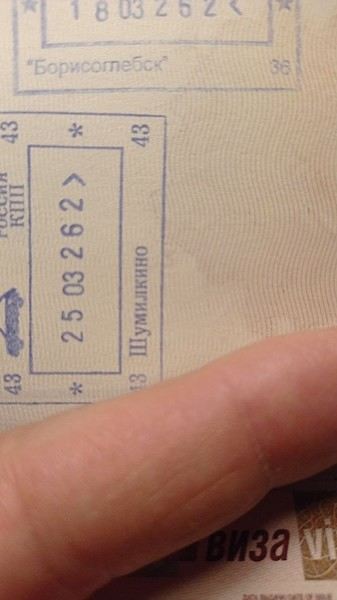
Borisoglebsk is the Russian border checkpoint after Kirkenes, on the road to Murmansk.
Kirkenes is a tiny town with a correspondingly small airport. Nothing has changed there: the minibuses to Murmansk wait on the right as you exit the airport. They’re synchronized with the two daily flights from Oslo—the SAS around 11:00 AM and Norwegian around 11:30 AM. They stop in Kirkenes at the corner of the Scandic for an hour, where other passengers can board, then head straight to the nearby border.
This is the least hassle Frontex/Schengen border. The Norwegian agent quickly scans your passport, and that’s it. No customs, since Norway is Schengen but not in the EU. On the Russian side, there’s a passport check and a quick customs inspection. All in all, crossing both the Norwegian and Russian checkpoints takes about 15 minutes.
A paper visa is required; e-visas aren’t accepted.
Two companies run the route: Avto Ekspress and Borodin: https://ae51.ru/routes/kirkenes-murmansk/ https://borodinbus.com/
The one-way fare is 5,500 ₽. You can either buy it online in rubles with a MIR card or make a formal reservation and pay in NOK cash to the driver. I took Borodin, and the price in NOK was much more expensive than in ₽.
=========================
On March 25, I left from Pskov via the Estonian border post at Luhaama. I spent three days in Murmansk, flew to St. Petersburg (SPB), stayed there for two days, then took an evening train to Pskov.
Since the end of February—and reportedly until the end of May—the Estonians have restricted the opening hours of the two border crossings near Pskov: Koidula (Pechory on the Russian side) and Luhaama (Izborsk on the Russian side). They’re closed at night between 7:00 PM and 7:00 AM. Right now, there’s a bus from Pskov at 7:00 AM to the border. It drops you off at the end of the road where truckers—many Kazakh and Serbian—are parked on the side. You finish the rest on foot to the barrier, where there’s a quick initial check for Ukrainian stamps in passports. Then you walk to the customs building, followed by passport control at the kiosk for motorists. After that, it’s a 500-meter walk to the Estonian checkpoint. At the moment, things seem calmer. Passport control is quick. The usual silly questions in English: "Where were you? Where are you going?" I just gave my most clueless smile: "Sorry, I don’t understand." Yeah, right—I don’t speak English, especially not at an Estonian border with a French passport. If they’re in a mood, though... A very quick bag inspection. Once you exit the Estonian post, walk to the bus stop sign by the road where another coach takes you to Riga.
The catch: in my case, last Wednesday, there were two passengers (Russians) with old Ukrainian stamps in their passports. The bus from the Estonian post to Riga was supposed to leave around 9:30 AM. We ended up leaving around noon after the two were grilled by the FSB. Since it was a weekday outside of holidays, the bus was half-empty. The fuller the bus and the more people with Ukrainian stamps, the worse the nightmare. Don’t book a same-day flight from Riga. I had a flight at 6:00 PM, so it worked out.
=============
The Kirkenes-Murmansk route is still clearly the easiest and fastest. But it’s not the most convenient since it’s way up north.
Next, I’d say the Gdansk-Kaliningrad route in the middle of the week. Avoid weekends and holiday departures/returns.
Avoid the Narva-Ivangorod route during Christmas, Easter, May 9, and *all* summer.
==============
About flights from Murmansk to St. Petersburg: prices are good. I bought my ticket the day before departure on Rossiya for 7,500 ₽, including 10 kg of luggage + a handbag.
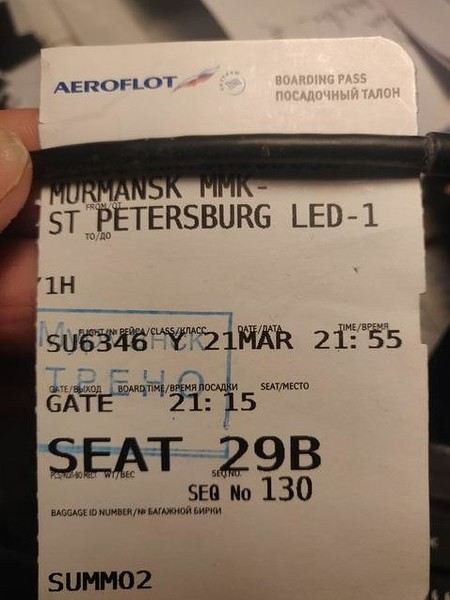
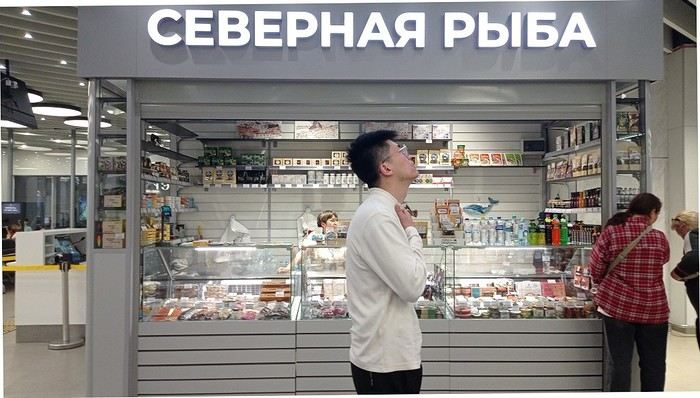
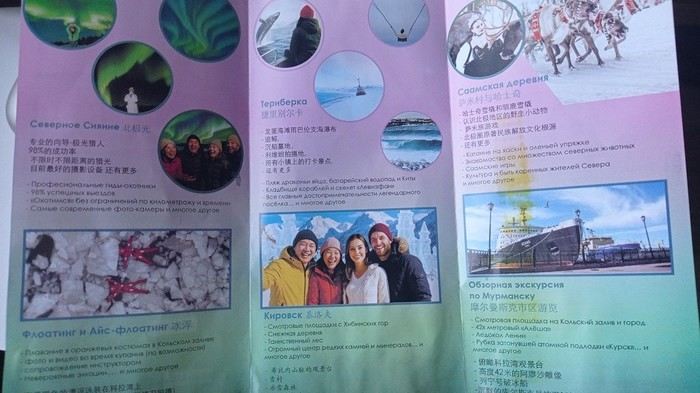
It’s the tail end of the northern lights season, and there were still crowds of Chinese tourists.
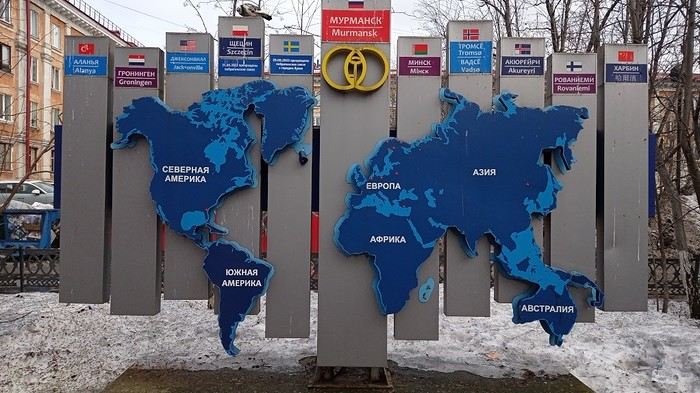
By the way, Murmansk is twinned with Harbin:
Chinese tourists are the largest foreign group, followed by Indians, then a mix of others from the Far East, Turks, Arabs, etc. Brochures are bilingual—Russian and Chinese:
============================
But let’s talk practical stuff. --
My domestic SIM card was restricted for SMS and internet for 24 hours. After that, if you want to keep using SMS, don’t turn off your phone—restarting triggers another 24-hour purgatory.
My Russian SIM cards (Megafon, MTS, Beeline) were activated as soon as I logged into their respective apps with my credentials.
Internet --
Telegram is heavily slowed down by authorities. To use it, you need to connect through proxy servers, which you load into the latest version of the app. Traffic is then rerouted internally within Telegram to servers outside Russia (Germany, Poland, Sweden, etc.). You can find these proxies on various channels. One is ChatVPN—check their website too.
For general internet use, like browsing the web, VPNs that work right now use the VLESS protocol. You can find several on Telegram by searching "VPN." A few free days, then payment in rubles or crypto.
Rozkomnadzor’s team are experts at this, so things can change. It’s a constant cat-and-mouse game.
Pskov is a special case. The city is near Estonia and has a large military base. Depending on NATO drone swarms launched from the Baltics, Wi-Fi can be completely suspended except for the most essential mobile apps. The drone swarms use the 4G network, and the powerful electronic jamming and drone suppression systems cause periods without Wi-Fi—including in hotels. Wired connections aren’t affected.
Borisoglebsk is the Russian border checkpoint after Kirkenes, on the road to Murmansk.
Kirkenes is a tiny town with a correspondingly small airport. Nothing has changed there: the minibuses to Murmansk wait on the right as you exit the airport. They’re synchronized with the two daily flights from Oslo—the SAS around 11:00 AM and Norwegian around 11:30 AM. They stop in Kirkenes at the corner of the Scandic for an hour, where other passengers can board, then head straight to the nearby border.
This is the least hassle Frontex/Schengen border. The Norwegian agent quickly scans your passport, and that’s it. No customs, since Norway is Schengen but not in the EU. On the Russian side, there’s a passport check and a quick customs inspection. All in all, crossing both the Norwegian and Russian checkpoints takes about 15 minutes.
A paper visa is required; e-visas aren’t accepted.
Two companies run the route: Avto Ekspress and Borodin: https://ae51.ru/routes/kirkenes-murmansk/ https://borodinbus.com/
The one-way fare is 5,500 ₽. You can either buy it online in rubles with a MIR card or make a formal reservation and pay in NOK cash to the driver. I took Borodin, and the price in NOK was much more expensive than in ₽.
=========================
On March 25, I left from Pskov via the Estonian border post at Luhaama. I spent three days in Murmansk, flew to St. Petersburg (SPB), stayed there for two days, then took an evening train to Pskov.
Since the end of February—and reportedly until the end of May—the Estonians have restricted the opening hours of the two border crossings near Pskov: Koidula (Pechory on the Russian side) and Luhaama (Izborsk on the Russian side). They’re closed at night between 7:00 PM and 7:00 AM. Right now, there’s a bus from Pskov at 7:00 AM to the border. It drops you off at the end of the road where truckers—many Kazakh and Serbian—are parked on the side. You finish the rest on foot to the barrier, where there’s a quick initial check for Ukrainian stamps in passports. Then you walk to the customs building, followed by passport control at the kiosk for motorists. After that, it’s a 500-meter walk to the Estonian checkpoint. At the moment, things seem calmer. Passport control is quick. The usual silly questions in English: "Where were you? Where are you going?" I just gave my most clueless smile: "Sorry, I don’t understand." Yeah, right—I don’t speak English, especially not at an Estonian border with a French passport. If they’re in a mood, though... A very quick bag inspection. Once you exit the Estonian post, walk to the bus stop sign by the road where another coach takes you to Riga.
The catch: in my case, last Wednesday, there were two passengers (Russians) with old Ukrainian stamps in their passports. The bus from the Estonian post to Riga was supposed to leave around 9:30 AM. We ended up leaving around noon after the two were grilled by the FSB. Since it was a weekday outside of holidays, the bus was half-empty. The fuller the bus and the more people with Ukrainian stamps, the worse the nightmare. Don’t book a same-day flight from Riga. I had a flight at 6:00 PM, so it worked out.
=============
The Kirkenes-Murmansk route is still clearly the easiest and fastest. But it’s not the most convenient since it’s way up north.
Next, I’d say the Gdansk-Kaliningrad route in the middle of the week. Avoid weekends and holiday departures/returns.
Avoid the Narva-Ivangorod route during Christmas, Easter, May 9, and *all* summer.
==============
About flights from Murmansk to St. Petersburg: prices are good. I bought my ticket the day before departure on Rossiya for 7,500 ₽, including 10 kg of luggage + a handbag.
It’s the tail end of the northern lights season, and there were still crowds of Chinese tourists.
By the way, Murmansk is twinned with Harbin:
Chinese tourists are the largest foreign group, followed by Indians, then a mix of others from the Far East, Turks, Arabs, etc. Brochures are bilingual—Russian and Chinese:
============================
But let’s talk practical stuff. --
My domestic SIM card was restricted for SMS and internet for 24 hours. After that, if you want to keep using SMS, don’t turn off your phone—restarting triggers another 24-hour purgatory.
My Russian SIM cards (Megafon, MTS, Beeline) were activated as soon as I logged into their respective apps with my credentials.
Internet --
Telegram is heavily slowed down by authorities. To use it, you need to connect through proxy servers, which you load into the latest version of the app. Traffic is then rerouted internally within Telegram to servers outside Russia (Germany, Poland, Sweden, etc.). You can find these proxies on various channels. One is ChatVPN—check their website too.
For general internet use, like browsing the web, VPNs that work right now use the VLESS protocol. You can find several on Telegram by searching "VPN." A few free days, then payment in rubles or crypto.
Rozkomnadzor’s team are experts at this, so things can change. It’s a constant cat-and-mouse game.
Pskov is a special case. The city is near Estonia and has a large military base. Depending on NATO drone swarms launched from the Baltics, Wi-Fi can be completely suspended except for the most essential mobile apps. The drone swarms use the 4G network, and the powerful electronic jamming and drone suppression systems cause periods without Wi-Fi—including in hotels. Wired connections aren’t affected.
Driving route from Ulaanbaatar to Lake Baikal
Hello,
We're hitting the road again in 2027 to discover new countries and cultures.
Could anyone give me some tips on driving from Ulaanbaatar to Lake Baikal and the route to take?
Thanks, and safe travels to those who are setting off!
Rejoindre la Chine en passant par le Kazakhstan en camping-car English translation pending
Bonjour, j'aimerai savoir si des personnes sont parties en camping-car en passant par le KAZAKHSTAN pour rejoindre la Chine (je ne veux pas passer par l'IRAN etc) , la Thailande Cambodge Vietnam, Singapour après avoir traversé l'Europe avec des haltes tout au long du voyage . Pouvez-vous me faire part de votre expérience, si c'est réalisable etc. surtout pour la partie sortie de l'Europe ver le KAZAKSTAN etc.. je prévois ce voyage sur au minimum 1 an en Asie pour pouvoir bien en profiter et au total 2 voir 3 ans voir plus.. suivant où le vent nous mènera mon mari et moi..😉 . (ce projet est pour dans quelques années.)
Merci de me faire part de votre expérience si vous le voulez bien, aussi bien pour les trajets (état des routes, facilité pour trouver son itinéraire) la nourriture , l'accueil, les règles concernant le stationnement des camping-cars etc... Au plaisir de vous lire. Cordialement
Déréclusion! English translation pending
Déréclusion !
Je ne suis pas à un néologisme près.
Parce que j’me demande : Suis-je libre ? En liberté surveillée ? Contrainte ? Coercition sanitaire et salubrité publique... J’crois que secouer les peurs est mille fois plus efficace qu’un bracelet électronique. Voir le monde entier en pause, je ne pensais pas le vivre. Je comprends aujourd’hui avec quelle rapidité pourrait s’installer une dictature.
J’me demande pourquoi je ne ressens aucune crainte, pourquoi je me sens à mille lieux des peurs dont j’entends parler. Suis-je normale ? Suis-je inconsciente ? J’ai vu des gens avec un masque en voiture, mettre des gants pour tenir un chariot de magasin, où s’arrête le bon sens ? C’est quand même horripilant de se sentir infantilisé. Quand j’entends toutes ces sommités parler, j’ai l’impression qu’elles s’adressent à une population de mômes.
Parait que certains sont porteurs sains et transmettent le virus, paraît que certains ont eu la maladie sans s’en apercevoir et ont des anticorps, paraît que certains ont été malades et ont développé des anticorps, paraît que certains n’ont jamais été en contact et ne seront jamais malades, paraît qu’il faut qu’il y ait 60 % au moins de gens avec des anticorps pour l’immunité collective. Ca s’appelle RO lala.
Et beaucoup sont morts et au regard de l’humanité sur nos plus de 7 milliards, c’est une goutte. Une goutte d’acide et de chagrin pour les familles et amis des décédés, c’est certain. Des cataractes de panique pour des millions d’autres qui tremblent d’entendre un reniflement ou un éternuement. J’me demande aussi combien sont morts de faim et de maladie dans le même temps et aussi combien vont mourir des dégâts induits par le monde à l’arrêt.
Combien de pandémies ont-elles eu lieu sans que le monde occidental ne bouge un cil ? Un virus à la volette et qui disparaîtra comme tous les virus avant qu’un autre ne prenne le relais. C’est ainsi depuis toujours.
Ma solution : je respecte les peurs et angoisses des autres. Je respecte les consignes assenées à longueur de temps. Mais dans l’absolu, au fond de ma p’tite tête, j’pense tout autre chose et me tiens coite.
Je ne suis pas à un néologisme près.
Parce que j’me demande : Suis-je libre ? En liberté surveillée ? Contrainte ? Coercition sanitaire et salubrité publique... J’crois que secouer les peurs est mille fois plus efficace qu’un bracelet électronique. Voir le monde entier en pause, je ne pensais pas le vivre. Je comprends aujourd’hui avec quelle rapidité pourrait s’installer une dictature.
J’me demande pourquoi je ne ressens aucune crainte, pourquoi je me sens à mille lieux des peurs dont j’entends parler. Suis-je normale ? Suis-je inconsciente ? J’ai vu des gens avec un masque en voiture, mettre des gants pour tenir un chariot de magasin, où s’arrête le bon sens ? C’est quand même horripilant de se sentir infantilisé. Quand j’entends toutes ces sommités parler, j’ai l’impression qu’elles s’adressent à une population de mômes.
Parait que certains sont porteurs sains et transmettent le virus, paraît que certains ont eu la maladie sans s’en apercevoir et ont des anticorps, paraît que certains ont été malades et ont développé des anticorps, paraît que certains n’ont jamais été en contact et ne seront jamais malades, paraît qu’il faut qu’il y ait 60 % au moins de gens avec des anticorps pour l’immunité collective. Ca s’appelle RO lala.
Et beaucoup sont morts et au regard de l’humanité sur nos plus de 7 milliards, c’est une goutte. Une goutte d’acide et de chagrin pour les familles et amis des décédés, c’est certain. Des cataractes de panique pour des millions d’autres qui tremblent d’entendre un reniflement ou un éternuement. J’me demande aussi combien sont morts de faim et de maladie dans le même temps et aussi combien vont mourir des dégâts induits par le monde à l’arrêt.
Combien de pandémies ont-elles eu lieu sans que le monde occidental ne bouge un cil ? Un virus à la volette et qui disparaîtra comme tous les virus avant qu’un autre ne prenne le relais. C’est ainsi depuis toujours.
Ma solution : je respecte les peurs et angoisses des autres. Je respecte les consignes assenées à longueur de temps. Mais dans l’absolu, au fond de ma p’tite tête, j’pense tout autre chose et me tiens coite.
On the Silk Road: Chronicles of a Sixty-Something Traveling Completely Independently
From Beijing to Khiva: China, Kyrgyzstan, Tajikistan, Uzbekistan
Chronicle of anecdotes, highlights, and other adventures that marked this eight-week journey in 2018.
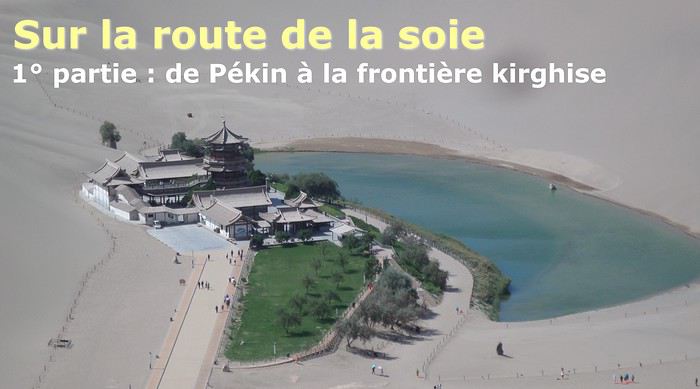
The Chinese Far West More than 30 years after my first trip to eastern China, I finally fulfilled an old dream: traveling solo from Beijing to the far west, discovering Xinjiang, the Uyghur people and the oppression they endure, the oases of Turpan and Kashgar, the Taklamakan Desert, the end of the Great Wall... The route was covered by train.
MENU PART 1: CHINA
1- Beijing (Jiankou) : the authentic Great Wall, without tourists 2- Cycling in Beijing, the best way to get around 3- Beijing : departure for the far west 4- Jiayuguan : getting by without English 5- Jiayuguan : scams and heritage 6- Dunhuang : abundance in the middle of the desert 7- Turpan : the Uyghurs under heavy surveillance 8- Kashgar : love at first sight for the old city 9- Kashgar : China’s recipe for controlling the populace 10- Tashkurgan : what on earth was I thinking going there! Kyrgyz border: a surreal epic Photo album from the 80s, contributions from other travelers (page 2)
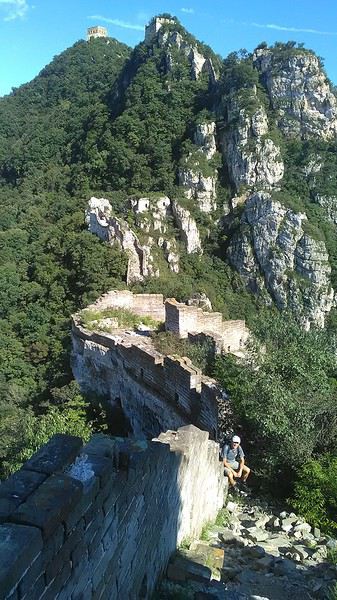
1- JIANKOU Finding the authentic Great Wall, without tourists or a guide Friday, August 24, 2018 Thirty years later, I didn’t feel like revisiting the Great Wall at Badaling or any other overcrowded site. I chose to explore it at Jiankou, in its wildest, most authentic, and unrestored section, starting from a lost village deep in a valley—though it wasn’t *that* lost, since it had everything for communication.
No need to pay for a taxi to get there—by timing it right, you can take the bus for just a few yuan. You have to get off at Xizhazi, the bus terminus. Be careful, there are only two buses a day in each direction. At the Xizhazi bus stop, I met a young couple who’d arrived with zero information about what to expect. We hiked the three of us toward the restored section of Mutianyu.
Still, be cautious With GPS and a topographic map (OpenTopoMap), you can set off without a problem or guide. The trail up to Jiankou is easy and well-marked. The trails down are too. But be careful—once you’re on the Wall, it’s real mountain hiking, with easy but dangerous climbing sections (over sheer drops). Not for amateurs or those afraid of heights! But what a reward. The Wall all to yourself, where it’s at its most daring. Truly mesmerizing.
More photos...
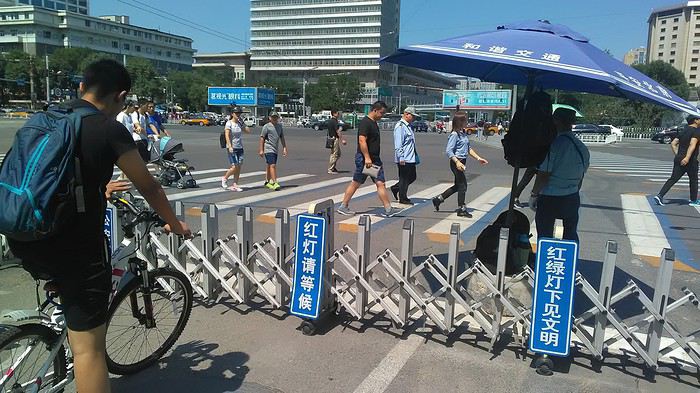
2- BEIJING The best way to get around the capital Sunday, August 26 The best way to explore the city is still by bike. Most are in a bike-share system, but you need to use an app—WeChat, the app that does everything, like monitoring your every move. No way I was installing that.
I found one at a rental shop near the hostel. The key is to quickly learn local traffic customs to minimize risks. Bike lanes are wide along the avenues.
But you still have to: - Watch out for anything parked on the bike paths—the most annoying are people napping or talking on the phone in their cars - Keep an eye on everything coming the wrong way—the list is long - The worst is right turns on red, which in Chinese traffic rules seem to have priority Once you get the hang of it, it’s fine. The city is huge but flat, so you can just wing it.
3- BEIJING By train to the far west Sunday, August 26 Beijing West Station is the size and operates like an airport. With your e-ticket from the agency, you first have to pick up your ticket at the special "English" counter, after passing through security. With your ticket in hand, you have to exit and enter through the boarding waiting area—not the platform—after a second security check.
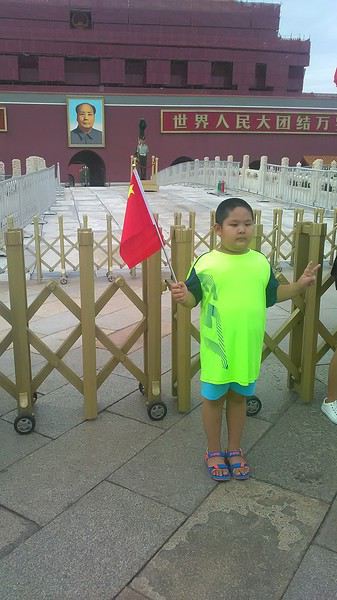 Then you find the right hall and wait for the sign to finally access the platform. In the end, it works pretty well given the incredible number of passengers to manage. Everywhere in Beijing, I saw that the Chinese have mastered crowd flow management.
Nice surprise: second-class carriages are clean, air-conditioned, and bright. Perfect, since I was in for 20 hours. One uniformed attendant per carriage, mobile meal service—luxury! Small downside: no luggage space. Hauling your suitcase up to the top bunk is quite a workout. I was in the middle, so it wasn’t too bad. The landscape, though, whether rural or urban, is pretty bleak. That should change once we leave the eastern plains.
Of course, I got my first police visit, with a thorough passport check and bag search. I was warned—going to the Chinese far west exposes you to this kind of hassle. But they were polite and respectful.
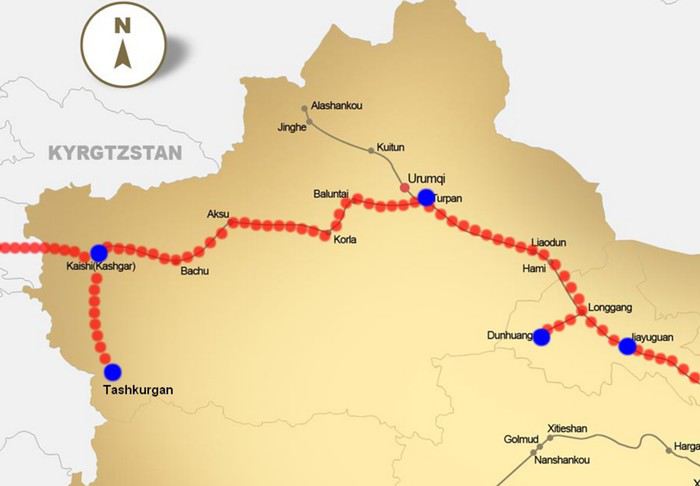 The Chinese Far West
4- JIAYUGUAN Getting by without English Monday, August 27 At the gates of two deserts (Gobi and Taklamakan) and at the foot of the Tibetan highlands, the Great Wall ends at Jiayuguan. Here, I found the deeper China I’d somewhat rediscovered during my bike ride, even if now everyone gets around on electric bikes and I’m no longer stared at like an alien.
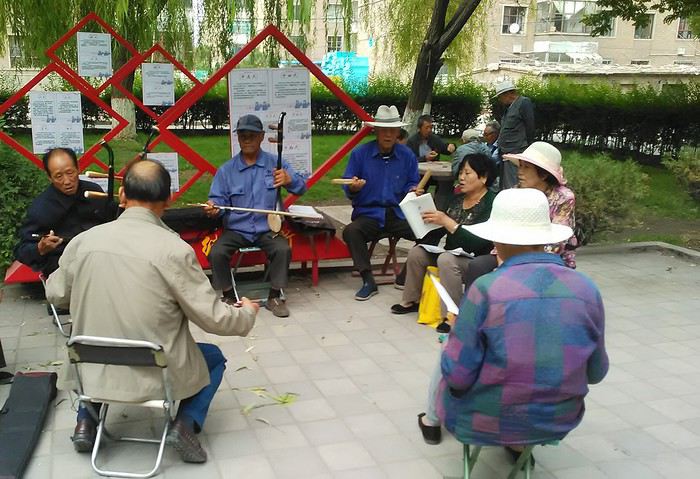
Prices are nothing like Beijing: you can find a full meal for 2 €, and my bike cost 7 € for two days. Plus, few people speak English—neither the owner of the HI hostel where I stayed, nor the ticket sellers at the sites, let alone the servers at the small eateries where I ate. Everything is written in Chinese. So I had to use the little Chinese I know to communicate about essentials. It makes the locals laugh to see a European trying to speak their language, but it earns respect. With Google Translate’s help, I managed.
Rant: With their avenues blocked for construction for kilometers without warning, and new roads not yet on maps, I must’ve taken 15 km of detours. More photos...
5- JIAYUGUAN Scams and heritage Tuesday, August 28 The Great Wall doesn’t exactly end at the fort I visited yesterday but 10 km further, at the entrance to a river gorge at the foot of the mountains. All that’s left is a badly damaged tower (more like a mound of earth) and a section of clay wall, similar to the one I biked yesterday.
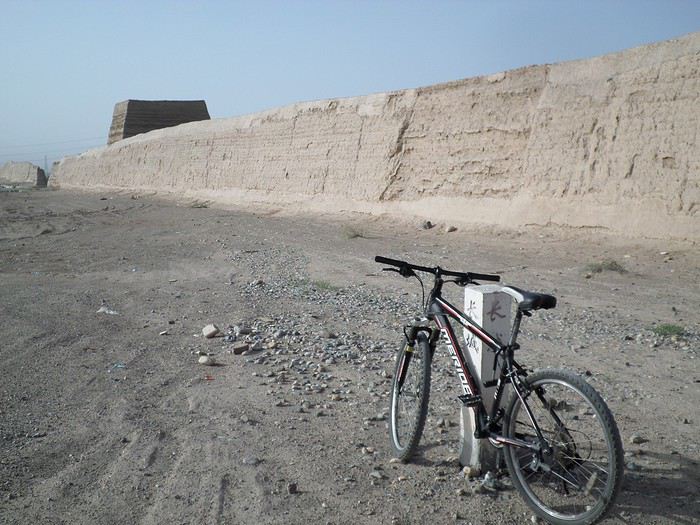
This morning, I hopped on my bike, determined to venture into the desert to see this highly symbolic site. First, you access it via a wide, brand-new road with not a soul in sight. Just before the site, I came across a grand welcome gate, very period-style, but it’s actually the inevitable toll booth.
Behind the gate, the road continues straight to the site, which you can see in the distance—at least 2 km away—the remains of the tower and wall. I had to leave my bike here. Fine. I went to the ticket counter and asked the price: 120 yuan! I couldn’t believe it—over 15 € for a simple mound of earth.
I showed my displeasure to the attendant, who couldn’t care less, and immediately turned back. 120 yuan—that’s the price for a new road, a fancy gate planted 2 km before the site just to force you to take a shuttle, and employees with nothing to do all day... Now I understand why I didn’t meet anyone!
Heritage China is a bit pricey Generally, sites are expensive for the country’s standard of living, but travelers are supposed to have money, so why hold back? I even gave up on the Forbidden City—reservations required days in advance (or on the black market at an impossible price). I prefer to keep the memory of my first visit, when entry must’ve cost a few dozen cents, and there were only a handful of visitors.
This morning, I took a taxi to see remarkable tombs of common people from the 3rd to 6th centuries. They’re small vaulted caves made of painted bricks, depicting scenes of daily life. Very pretty and moving. But even here, though the price was more reasonable, I was left wanting—only one of the 16 tombs is open to visitors, and it’s apparently not the most beautiful.
The authentic China—at least what’s left of it... Wandering the impersonal avenues of the city, you stumble upon a market. There, you still find traditional China—small shops with questionable hygiene, Go players, musicians, and even a dental prosthetist. The last refuge for those untouched by modernity. More photos...
6- DUNHUANG Abundance in the middle of the desert Wednesday, August 29 Well, I thought the landscape would be less bleak as I headed west. Nope. The only distraction in this expanse of dark, clayey sand is the forests of pylons and wind turbines, plus wild camels racing each other.
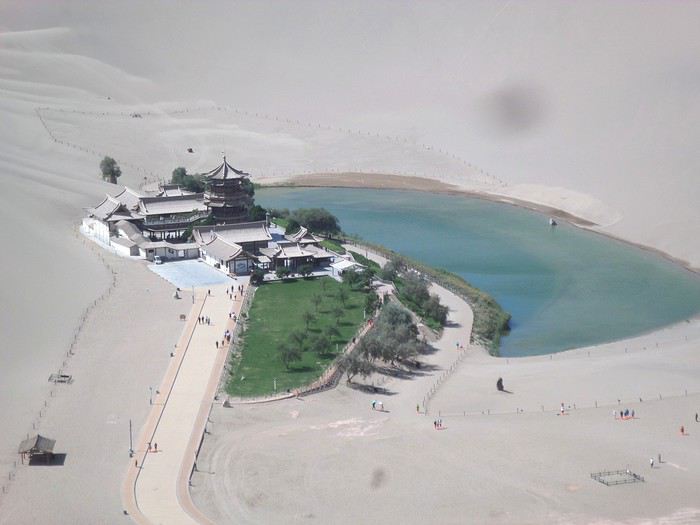 However, Dunhuang, the gateway to the Taklamakan, is by far the most pleasant Chinese city I know. There’s a real city center you can explore on foot. It’s hot but not unbearable, with a light, dry breeze. Much nicer than Beijing. The Han Chinese are still the majority, but the Muslim Uyghurs are more numerous, and the muezzin’s call to prayer echoes around the mosque.
The most surprising thing is the abundance and diversity of fruits and vegetables. You wonder how it all grows here. Well-irrigated, the desert sands are very fertile. Here, raisins have subtle, mysterious flavors, and the lamb really tastes like lamb.
Today, I visited the must-see Mingshashan, a dune complex next to which Pila is a molehill. The Basque Country, but covered in sand... More photos...
7- TURPAN The Uyghurs under heavy surveillance Friday, August 31 Surveillance cameras everywhere in the city, armed police stationed at intersections, in front of public buildings, at the entrance and inside tourist sites, police stations on every corner, patrols on foot or by car, khaki uniforms even for middle schoolers... here, the Han Chinese are in the minority, and you can feel it. Turpan feels like a city under siege.
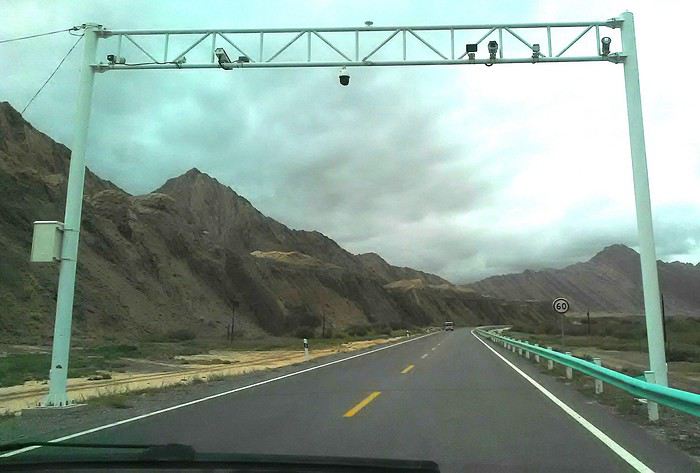
To enter the youth hostel where I stayed, there’s even a security gate, and the receptionist (a Han, like everyone in tourism) wears a bulletproof vest! Reassuring. Still, you don’t feel particularly threatened here, especially as a European. The troublemakers are the Chinese, not the Uyghurs. Generally, China is a very safe country for visitors.
Smile, you’re on camera! I was biking on an avenue when the car in front of me got flashed for driving slowly. I quickly understood why when I got flashed too.
Here, the official time is Beijing time, but it gets dark two hours later. It’ll be even worse in Kashgar. Trickier to manage: everything is displayed in Chinese and Arabic. Nothing in English. Choosing a menu is a shot in the dark. Apart from a few young Chinese, no one here speaks English, and my Chinese doesn’t seem very understandable...
Mogao, the end of the road for the Han Yesterday, near Dunhuang, I went to Mogao, a complex of decorated caves with Buddha sculptures and paintings. Stunning, but so crowded! Luckily, here in Turpan, Chinese tourists barely venture out. So I visited a Silk Road ghost town with only a handful of other visitors and under a howling wind.
The modern Chinese city is swallowing up the old Uyghur neighborhoods—only a museum-like district remains in the center, and pockets of resistance on the outskirts are doomed to disappear soon. More photos...
8- KASHGAR A (relative) love at first sight for the old city Sunday, September 2 After three overnight trains, here I am in the far west of China, nearly 4,000 km from the capital. Despite the omnipresent police and an old city preserved UNESCO-style, Kashgar is my Chinese love at first sight.
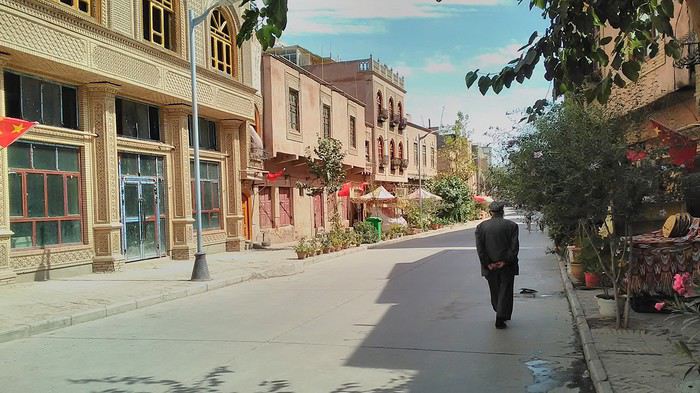
Finally, Chinese... well, sort of, because we’re in Uyghur territory here—a Turkic people with nothing culturally in common with the Han, the eastern Chinese. It started badly yesterday at Turfan station, where after three security gate passes, at least five passport checks, and a bag search, three adorable policewomen confiscated my antibacterial lotion because it had a flammable logo...
Then came the welcoming committee of armed cops at Kashgar station. Once all that was over, they left me alone—except you still have to go through security checks like everyone else to enter the old city, the bazaar, the livestock market... The further west you go, the more the siege mentality is evident. Luckily, the border isn’t far...
Despite the inevitable destruction-reconstruction, the city center has been well preserved. Thankfully, because it’s a very original style, a mix of local and colonial. I love it, even if it’s a bit too artificial, sanitized, and watered-down, and rather empty of residents. On the Silk Road, the city was famous for its great food. And it still is—rarely have I seen such richness and abundance of food! And not just scorpions or snakes. More photos...
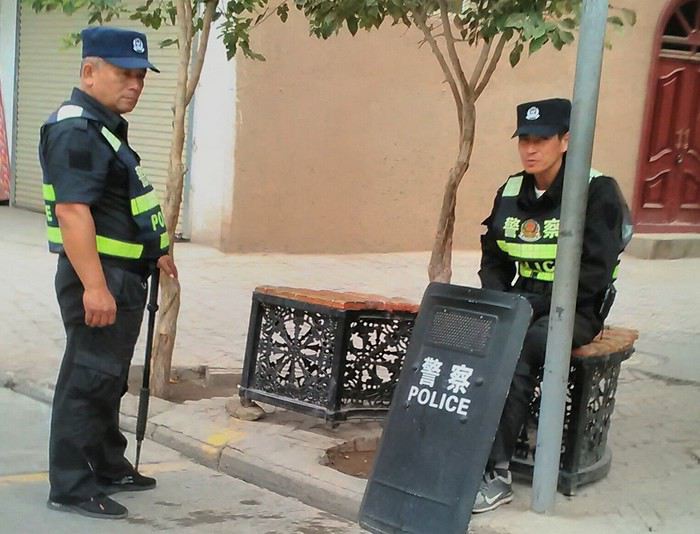
9- KASHGAR China’s recipe for controlling the populace Saturday, September 1 Xinjiang, along with Tibet, is a "sensitive" area of rebellion in the eyes of Chinese authorities. As a result, the state has these regions and their populations under total control. Tourists also feel the consequences, even if they’re not at risk of re-education camps.
 - Putting barbed wire and anti-ramming barriers around sensitive sites (schools, big hotels, government buildings...)
- Installing traffic surveillance gates with cameras and photo flashes (for all vehicles passing, including bikes) throughout the city and even in the countryside
- Posting uniformed guards with tasers, batons, or huge baseball bats every 100 meters
- Training the Han population (ethnic Chinese) in self-defense with sticks, preferably in the morning on the street. Men and women of all ages
- Starting school with the national anthem, doing military exercises, and receiving political indoctrination, all neatly lined up in the courtyard. (The dream school for any teacher)
- Placing a snitch in uniform (a pseudo-guard) in public gathering places, like youth hostels. Mine spends the day loafing around the courtyard
- Putting Chinese flags everywhere on the streets to remind everyone who’s in charge
- Installing security gates at every entrance to areas frequented by tourists (thanks for that) but not just there
- Never photographing cops, or else! I tried, but it’s not easy...
- Putting barbed wire and anti-ramming barriers around sensitive sites (schools, big hotels, government buildings...)
- Installing traffic surveillance gates with cameras and photo flashes (for all vehicles passing, including bikes) throughout the city and even in the countryside
- Posting uniformed guards with tasers, batons, or huge baseball bats every 100 meters
- Training the Han population (ethnic Chinese) in self-defense with sticks, preferably in the morning on the street. Men and women of all ages
- Starting school with the national anthem, doing military exercises, and receiving political indoctrination, all neatly lined up in the courtyard. (The dream school for any teacher)
- Placing a snitch in uniform (a pseudo-guard) in public gathering places, like youth hostels. Mine spends the day loafing around the courtyard
- Putting Chinese flags everywhere on the streets to remind everyone who’s in charge
- Installing security gates at every entrance to areas frequented by tourists (thanks for that) but not just there
- Never photographing cops, or else! I tried, but it’s not easy...
With all that, you can stroll around safely Not much crime! As for the amount the Chinese state spends to maintain such a system, it’s staggering! A third of the Han living in Xinjiang work in security. Today, I wandered freely around old Kashgar, which is quite large after all. More photos...
10- TASHKURGAN What on earth was I thinking going there! Wednesday, September 5 First, there’s the taxi—pretty crappy, with a driver who doesn’t speak a word of English and won’t stop smoking. Over six hours in that... shared with a completely out-of-it American.
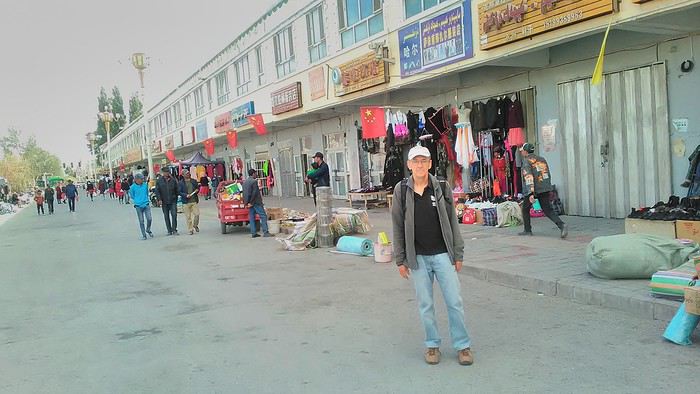
Then there are all the checkpoints along the way. I won’t go on—you know the drill by now.
After that, there’s Tashkurgan—a town with nothing to see, nothing to do. Deserted as soon as night falls. There’s this huge youth hostel and a few lost Chinese tapping away on their smartphones, chain-smoking. This lost American-European crowd, swapping tips on how to enter Pakistan or Tajikistan.
Luckily, there’s the Chinese Pamir Highway, lined with peaks over 7,000m. There’s the feeling of no longer being in China, with a population whose features are Middle Eastern. And these Tajik women with their stunning hairstyles and vibrant costumes. There’s the fact of having reached the westernmost Chinese city, far from crowds and tourist sites. A sort of end of the world. More photos...
11- KYRGYZ BORDER A surreal epic Thursday, September 6 The road from Kashgar to the Kyrgyzstan border is a little over 200 km and passes through beautiful landscapes of colorful, desert-like mountains with acrobatic folds. That’s the bucolic part of the trip.
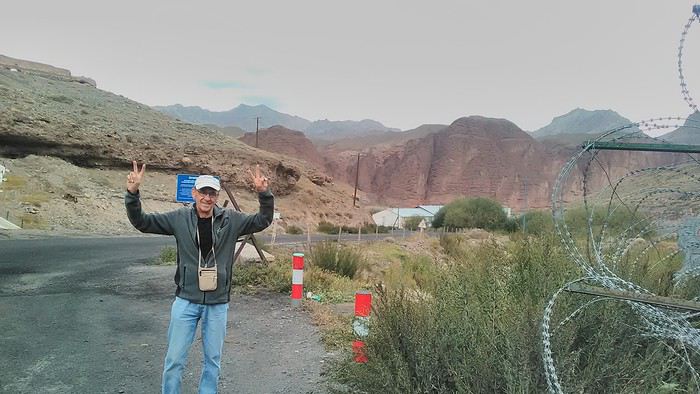 Yesterday, I managed to gather four people to rent a minibus to reach the border more easily: a Spaniard and an Argentine I’d already met in Turpan, and two New Zealanders who responded to the ad left at the hostel.
Absurdity and paranoia of Chinese authorities The highlight was crossing the town of Wuqia, 50 km past Kashgar. After tallying up with my fellow sufferers, we must’ve passed about ten checkpoints with: - Passport checks: 14 times, sometimes by two cops side by side - Bag checks: 4 times - Smartphone checks: 2 times, with deletion of "non-compliant" photos, and registration of your IMEI in the exit log!... Absurd and surreal at the same time, since my camera stayed in my bag, my apps are in French, and my photos have been online for ages...
With all that, we arrived just as the last checkpoint before the no man’s land marking the border between the two countries was on lunch break. And bam! Another 1.5-hour wait, alongside truckers who were much more used to this than we were.
What to think? The cops themselves aren’t fooled. They play the role they’re asked to, but sometimes you can coax a smile out of them—they realize how ridiculous the situation is.
What’s the point? That’s the big question my companions and I were tempted to answer with "to piss people off." To show you your place isn’t here, but with the other tourists, over there in the east, in Shanghai, Xi’an, or Guangzhou.
As for you, a traveler from a democratic country, you really experience this as aggression, humiliation, a violation of your private space. And yet, I’m respected, they speak to me properly. Today, I better understand what a Palestinian or a citizen of an occupied country might feel daily. A unique experience! Thanks, China.
And to top it off, the cherry on the cake! It’s still this glowing button you press to rate your passage after clearing the last obstacle before the exit stamp. I was so surprised it turned off before I could react. The Spaniard, with great humor and irony, had time to vote "excellent." In the end, he wasn’t wrong—you can hardly do better!
PS: I ditched my buddies at the border. They didn’t want to pay for a taxi to continue. So I took a direct taxi to Osh. The first 100 km are fabulous. I couldn’t take many photos, but I’ll be back on Monday to go to Tajikistan.
More photos...
The rest of the Silk Road, Part 2, in these travel journals: Kyrgyzstan, Tajikistan, Uzbekistan.
The Chinese Far West More than 30 years after my first trip to eastern China, I finally fulfilled an old dream: traveling solo from Beijing to the far west, discovering Xinjiang, the Uyghur people and the oppression they endure, the oases of Turpan and Kashgar, the Taklamakan Desert, the end of the Great Wall... The route was covered by train.
MENU PART 1: CHINA
1- Beijing (Jiankou) : the authentic Great Wall, without tourists 2- Cycling in Beijing, the best way to get around 3- Beijing : departure for the far west 4- Jiayuguan : getting by without English 5- Jiayuguan : scams and heritage 6- Dunhuang : abundance in the middle of the desert 7- Turpan : the Uyghurs under heavy surveillance 8- Kashgar : love at first sight for the old city 9- Kashgar : China’s recipe for controlling the populace 10- Tashkurgan : what on earth was I thinking going there! Kyrgyz border: a surreal epic Photo album from the 80s, contributions from other travelers (page 2)
1- JIANKOU Finding the authentic Great Wall, without tourists or a guide Friday, August 24, 2018 Thirty years later, I didn’t feel like revisiting the Great Wall at Badaling or any other overcrowded site. I chose to explore it at Jiankou, in its wildest, most authentic, and unrestored section, starting from a lost village deep in a valley—though it wasn’t *that* lost, since it had everything for communication.
No need to pay for a taxi to get there—by timing it right, you can take the bus for just a few yuan. You have to get off at Xizhazi, the bus terminus. Be careful, there are only two buses a day in each direction. At the Xizhazi bus stop, I met a young couple who’d arrived with zero information about what to expect. We hiked the three of us toward the restored section of Mutianyu.
Still, be cautious With GPS and a topographic map (OpenTopoMap), you can set off without a problem or guide. The trail up to Jiankou is easy and well-marked. The trails down are too. But be careful—once you’re on the Wall, it’s real mountain hiking, with easy but dangerous climbing sections (over sheer drops). Not for amateurs or those afraid of heights! But what a reward. The Wall all to yourself, where it’s at its most daring. Truly mesmerizing.
More photos...
2- BEIJING The best way to get around the capital Sunday, August 26 The best way to explore the city is still by bike. Most are in a bike-share system, but you need to use an app—WeChat, the app that does everything, like monitoring your every move. No way I was installing that.
I found one at a rental shop near the hostel. The key is to quickly learn local traffic customs to minimize risks. Bike lanes are wide along the avenues.
But you still have to: - Watch out for anything parked on the bike paths—the most annoying are people napping or talking on the phone in their cars - Keep an eye on everything coming the wrong way—the list is long - The worst is right turns on red, which in Chinese traffic rules seem to have priority Once you get the hang of it, it’s fine. The city is huge but flat, so you can just wing it.
3- BEIJING By train to the far west Sunday, August 26 Beijing West Station is the size and operates like an airport. With your e-ticket from the agency, you first have to pick up your ticket at the special "English" counter, after passing through security. With your ticket in hand, you have to exit and enter through the boarding waiting area—not the platform—after a second security check.
Then you find the right hall and wait for the sign to finally access the platform. In the end, it works pretty well given the incredible number of passengers to manage. Everywhere in Beijing, I saw that the Chinese have mastered crowd flow management.Nice surprise: second-class carriages are clean, air-conditioned, and bright. Perfect, since I was in for 20 hours. One uniformed attendant per carriage, mobile meal service—luxury! Small downside: no luggage space. Hauling your suitcase up to the top bunk is quite a workout. I was in the middle, so it wasn’t too bad. The landscape, though, whether rural or urban, is pretty bleak. That should change once we leave the eastern plains.
Of course, I got my first police visit, with a thorough passport check and bag search. I was warned—going to the Chinese far west exposes you to this kind of hassle. But they were polite and respectful.
The Chinese Far West4- JIAYUGUAN Getting by without English Monday, August 27 At the gates of two deserts (Gobi and Taklamakan) and at the foot of the Tibetan highlands, the Great Wall ends at Jiayuguan. Here, I found the deeper China I’d somewhat rediscovered during my bike ride, even if now everyone gets around on electric bikes and I’m no longer stared at like an alien.
Prices are nothing like Beijing: you can find a full meal for 2 €, and my bike cost 7 € for two days. Plus, few people speak English—neither the owner of the HI hostel where I stayed, nor the ticket sellers at the sites, let alone the servers at the small eateries where I ate. Everything is written in Chinese. So I had to use the little Chinese I know to communicate about essentials. It makes the locals laugh to see a European trying to speak their language, but it earns respect. With Google Translate’s help, I managed.
Rant: With their avenues blocked for construction for kilometers without warning, and new roads not yet on maps, I must’ve taken 15 km of detours. More photos...
5- JIAYUGUAN Scams and heritage Tuesday, August 28 The Great Wall doesn’t exactly end at the fort I visited yesterday but 10 km further, at the entrance to a river gorge at the foot of the mountains. All that’s left is a badly damaged tower (more like a mound of earth) and a section of clay wall, similar to the one I biked yesterday.
This morning, I hopped on my bike, determined to venture into the desert to see this highly symbolic site. First, you access it via a wide, brand-new road with not a soul in sight. Just before the site, I came across a grand welcome gate, very period-style, but it’s actually the inevitable toll booth.
Behind the gate, the road continues straight to the site, which you can see in the distance—at least 2 km away—the remains of the tower and wall. I had to leave my bike here. Fine. I went to the ticket counter and asked the price: 120 yuan! I couldn’t believe it—over 15 € for a simple mound of earth.
I showed my displeasure to the attendant, who couldn’t care less, and immediately turned back. 120 yuan—that’s the price for a new road, a fancy gate planted 2 km before the site just to force you to take a shuttle, and employees with nothing to do all day... Now I understand why I didn’t meet anyone!
Heritage China is a bit pricey Generally, sites are expensive for the country’s standard of living, but travelers are supposed to have money, so why hold back? I even gave up on the Forbidden City—reservations required days in advance (or on the black market at an impossible price). I prefer to keep the memory of my first visit, when entry must’ve cost a few dozen cents, and there were only a handful of visitors.
This morning, I took a taxi to see remarkable tombs of common people from the 3rd to 6th centuries. They’re small vaulted caves made of painted bricks, depicting scenes of daily life. Very pretty and moving. But even here, though the price was more reasonable, I was left wanting—only one of the 16 tombs is open to visitors, and it’s apparently not the most beautiful.
The authentic China—at least what’s left of it... Wandering the impersonal avenues of the city, you stumble upon a market. There, you still find traditional China—small shops with questionable hygiene, Go players, musicians, and even a dental prosthetist. The last refuge for those untouched by modernity. More photos...
6- DUNHUANG Abundance in the middle of the desert Wednesday, August 29 Well, I thought the landscape would be less bleak as I headed west. Nope. The only distraction in this expanse of dark, clayey sand is the forests of pylons and wind turbines, plus wild camels racing each other.
However, Dunhuang, the gateway to the Taklamakan, is by far the most pleasant Chinese city I know. There’s a real city center you can explore on foot. It’s hot but not unbearable, with a light, dry breeze. Much nicer than Beijing. The Han Chinese are still the majority, but the Muslim Uyghurs are more numerous, and the muezzin’s call to prayer echoes around the mosque.The most surprising thing is the abundance and diversity of fruits and vegetables. You wonder how it all grows here. Well-irrigated, the desert sands are very fertile. Here, raisins have subtle, mysterious flavors, and the lamb really tastes like lamb.
Today, I visited the must-see Mingshashan, a dune complex next to which Pila is a molehill. The Basque Country, but covered in sand... More photos...
7- TURPAN The Uyghurs under heavy surveillance Friday, August 31 Surveillance cameras everywhere in the city, armed police stationed at intersections, in front of public buildings, at the entrance and inside tourist sites, police stations on every corner, patrols on foot or by car, khaki uniforms even for middle schoolers... here, the Han Chinese are in the minority, and you can feel it. Turpan feels like a city under siege.
To enter the youth hostel where I stayed, there’s even a security gate, and the receptionist (a Han, like everyone in tourism) wears a bulletproof vest! Reassuring. Still, you don’t feel particularly threatened here, especially as a European. The troublemakers are the Chinese, not the Uyghurs. Generally, China is a very safe country for visitors.
Smile, you’re on camera! I was biking on an avenue when the car in front of me got flashed for driving slowly. I quickly understood why when I got flashed too.
Here, the official time is Beijing time, but it gets dark two hours later. It’ll be even worse in Kashgar. Trickier to manage: everything is displayed in Chinese and Arabic. Nothing in English. Choosing a menu is a shot in the dark. Apart from a few young Chinese, no one here speaks English, and my Chinese doesn’t seem very understandable...
Mogao, the end of the road for the Han Yesterday, near Dunhuang, I went to Mogao, a complex of decorated caves with Buddha sculptures and paintings. Stunning, but so crowded! Luckily, here in Turpan, Chinese tourists barely venture out. So I visited a Silk Road ghost town with only a handful of other visitors and under a howling wind.
The modern Chinese city is swallowing up the old Uyghur neighborhoods—only a museum-like district remains in the center, and pockets of resistance on the outskirts are doomed to disappear soon. More photos...
8- KASHGAR A (relative) love at first sight for the old city Sunday, September 2 After three overnight trains, here I am in the far west of China, nearly 4,000 km from the capital. Despite the omnipresent police and an old city preserved UNESCO-style, Kashgar is my Chinese love at first sight.
Finally, Chinese... well, sort of, because we’re in Uyghur territory here—a Turkic people with nothing culturally in common with the Han, the eastern Chinese. It started badly yesterday at Turfan station, where after three security gate passes, at least five passport checks, and a bag search, three adorable policewomen confiscated my antibacterial lotion because it had a flammable logo...
Then came the welcoming committee of armed cops at Kashgar station. Once all that was over, they left me alone—except you still have to go through security checks like everyone else to enter the old city, the bazaar, the livestock market... The further west you go, the more the siege mentality is evident. Luckily, the border isn’t far...
Despite the inevitable destruction-reconstruction, the city center has been well preserved. Thankfully, because it’s a very original style, a mix of local and colonial. I love it, even if it’s a bit too artificial, sanitized, and watered-down, and rather empty of residents. On the Silk Road, the city was famous for its great food. And it still is—rarely have I seen such richness and abundance of food! And not just scorpions or snakes. More photos...
9- KASHGAR China’s recipe for controlling the populace Saturday, September 1 Xinjiang, along with Tibet, is a "sensitive" area of rebellion in the eyes of Chinese authorities. As a result, the state has these regions and their populations under total control. Tourists also feel the consequences, even if they’re not at risk of re-education camps.
- Putting barbed wire and anti-ramming barriers around sensitive sites (schools, big hotels, government buildings...)
- Installing traffic surveillance gates with cameras and photo flashes (for all vehicles passing, including bikes) throughout the city and even in the countryside
- Posting uniformed guards with tasers, batons, or huge baseball bats every 100 meters
- Training the Han population (ethnic Chinese) in self-defense with sticks, preferably in the morning on the street. Men and women of all ages
- Starting school with the national anthem, doing military exercises, and receiving political indoctrination, all neatly lined up in the courtyard. (The dream school for any teacher)
- Placing a snitch in uniform (a pseudo-guard) in public gathering places, like youth hostels. Mine spends the day loafing around the courtyard
- Putting Chinese flags everywhere on the streets to remind everyone who’s in charge
- Installing security gates at every entrance to areas frequented by tourists (thanks for that) but not just there
- Never photographing cops, or else! I tried, but it’s not easy...With all that, you can stroll around safely Not much crime! As for the amount the Chinese state spends to maintain such a system, it’s staggering! A third of the Han living in Xinjiang work in security. Today, I wandered freely around old Kashgar, which is quite large after all. More photos...
10- TASHKURGAN What on earth was I thinking going there! Wednesday, September 5 First, there’s the taxi—pretty crappy, with a driver who doesn’t speak a word of English and won’t stop smoking. Over six hours in that... shared with a completely out-of-it American.
Then there are all the checkpoints along the way. I won’t go on—you know the drill by now.
After that, there’s Tashkurgan—a town with nothing to see, nothing to do. Deserted as soon as night falls. There’s this huge youth hostel and a few lost Chinese tapping away on their smartphones, chain-smoking. This lost American-European crowd, swapping tips on how to enter Pakistan or Tajikistan.
Luckily, there’s the Chinese Pamir Highway, lined with peaks over 7,000m. There’s the feeling of no longer being in China, with a population whose features are Middle Eastern. And these Tajik women with their stunning hairstyles and vibrant costumes. There’s the fact of having reached the westernmost Chinese city, far from crowds and tourist sites. A sort of end of the world. More photos...
11- KYRGYZ BORDER A surreal epic Thursday, September 6 The road from Kashgar to the Kyrgyzstan border is a little over 200 km and passes through beautiful landscapes of colorful, desert-like mountains with acrobatic folds. That’s the bucolic part of the trip.
Yesterday, I managed to gather four people to rent a minibus to reach the border more easily: a Spaniard and an Argentine I’d already met in Turpan, and two New Zealanders who responded to the ad left at the hostel.Absurdity and paranoia of Chinese authorities The highlight was crossing the town of Wuqia, 50 km past Kashgar. After tallying up with my fellow sufferers, we must’ve passed about ten checkpoints with: - Passport checks: 14 times, sometimes by two cops side by side - Bag checks: 4 times - Smartphone checks: 2 times, with deletion of "non-compliant" photos, and registration of your IMEI in the exit log!... Absurd and surreal at the same time, since my camera stayed in my bag, my apps are in French, and my photos have been online for ages...
With all that, we arrived just as the last checkpoint before the no man’s land marking the border between the two countries was on lunch break. And bam! Another 1.5-hour wait, alongside truckers who were much more used to this than we were.
What to think? The cops themselves aren’t fooled. They play the role they’re asked to, but sometimes you can coax a smile out of them—they realize how ridiculous the situation is.
What’s the point? That’s the big question my companions and I were tempted to answer with "to piss people off." To show you your place isn’t here, but with the other tourists, over there in the east, in Shanghai, Xi’an, or Guangzhou.
As for you, a traveler from a democratic country, you really experience this as aggression, humiliation, a violation of your private space. And yet, I’m respected, they speak to me properly. Today, I better understand what a Palestinian or a citizen of an occupied country might feel daily. A unique experience! Thanks, China.
And to top it off, the cherry on the cake! It’s still this glowing button you press to rate your passage after clearing the last obstacle before the exit stamp. I was so surprised it turned off before I could react. The Spaniard, with great humor and irony, had time to vote "excellent." In the end, he wasn’t wrong—you can hardly do better!
PS: I ditched my buddies at the border. They didn’t want to pay for a taxi to continue. So I took a direct taxi to Osh. The first 100 km are fabulous. I couldn’t take many photos, but I’ll be back on Monday to go to Tajikistan.
More photos...
The rest of the Silk Road, Part 2, in these travel journals: Kyrgyzstan, Tajikistan, Uzbekistan.
Compagnon(e) de randonnée dans le Caucase russe en hiver 2020 English translation pending
Hello à tous
J'ai pour projet de randonner dans le Caucase côté Russe cet hiver 2020 Je pense partir courant novembre ou décembre, depuis Sotchi jusqu'au mont Elbrouz, puis rejoindre ensuite Astrakhan en évitant l'Ossetie et la Tchetchenie. Je cherche des infos pour organiser mon trek, et donc si quelqu'un içi à déjà fait ce trajet et connait la région merci de me répondre * où puis-je trouver des cartes détaillées de la région avec dénivellés, chemins et sentiers? * ai-je besoin de demander des visas-frontière et si oui comment procéder? * ai-je besoin de prendre un guide local, et si oui où puis-je en trouver un? * y'a t'il quelqu'un qui a des contacts dans le coin et qui puisse me mettre en relation? * quels sont les pièges et difficultés que je suis susceptible de rencontrer? * quel matériel est indispensable?
Je pense partir seul, éventuellement avec mon chien si je peux l'emmener, cependant j'aimerai avoir un (une) compagnon de route, donc si quelqu'un à le même projet on pourrait éventuellement le faire ensemble.
Merci pour vos réponses🙂
J'ai pour projet de randonner dans le Caucase côté Russe cet hiver 2020 Je pense partir courant novembre ou décembre, depuis Sotchi jusqu'au mont Elbrouz, puis rejoindre ensuite Astrakhan en évitant l'Ossetie et la Tchetchenie. Je cherche des infos pour organiser mon trek, et donc si quelqu'un içi à déjà fait ce trajet et connait la région merci de me répondre * où puis-je trouver des cartes détaillées de la région avec dénivellés, chemins et sentiers? * ai-je besoin de demander des visas-frontière et si oui comment procéder? * ai-je besoin de prendre un guide local, et si oui où puis-je en trouver un? * y'a t'il quelqu'un qui a des contacts dans le coin et qui puisse me mettre en relation? * quels sont les pièges et difficultés que je suis susceptible de rencontrer? * quel matériel est indispensable?
Je pense partir seul, éventuellement avec mon chien si je peux l'emmener, cependant j'aimerai avoir un (une) compagnon de route, donc si quelqu'un à le même projet on pourrait éventuellement le faire ensemble.
Merci pour vos réponses🙂