Results for "Washington+|+101+>+99"
5602 results found.
Bons plans à Seattle English translation pending
Salut!
Je compte aller rendre visite a un ami a seattle au mois de fevrier et jaimerais avoir des infos sur cette ville........
Alors si vous savez quoi que ce soit, nhésiter pas a m'en parler !!!!!!
Ce sera vraiment tres apprécié !!!!
Merci beaucoup a l'avance !!!!
Jen😛
Merci beaucoup a l'avance !!!!
Jen😛
Navette bateau Cancun- la Havane? English translation pending
Salut,
je voudrais savoir s'il est possible d'aller en bateau de cancun à la havanne ou un autre port de cuba?
je voudrais savoir s'il est possible d'aller en bateau de cancun à la havanne ou un autre port de cuba?
New York: visites sur deux jours? English translation pending
Bonjour!!!
Je vais faire une escale de 2 jours a NY, puis après je part pour l'Equateur.
C'est ma toute première fois aux Etats Unis.
Je souhaiterais savoir l'essentiel à visiter, les bons plans transport, logement.... j'ai un petit budget!!!
Je vais arriver à l'aéroport de Newark, c'est loin de NY??? Quel est le meilleur moyen et le moins cher pour aller à NY??
Merci
Je vais faire une escale de 2 jours a NY, puis après je part pour l'Equateur.
C'est ma toute première fois aux Etats Unis.
Je souhaiterais savoir l'essentiel à visiter, les bons plans transport, logement.... j'ai un petit budget!!!
Je vais arriver à l'aéroport de Newark, c'est loin de NY??? Quel est le meilleur moyen et le moins cher pour aller à NY??
Merci
Suggestions de circuits aux USA? English translation pending
Salut à tous,
je souhaiterais me planifier un circuit pour les U.S.A. pour août 2005 mais SANS passer par une agence....par où commencer!!!!?????😕
je souhaiterais me planifier un circuit pour les U.S.A. pour août 2005 mais SANS passer par une agence....par où commencer!!!!?????😕
Népal, Maoïstes et éthique personnelle English translation pending
Bonjour à tous,
Je tenais à apporter ma contribution au débat sur la situation au Népal. En tant que voyageur quelle position adopter, quelles questions peut-on se poser en dehors de ses préoccupations personnelles (sécurité, désagréments divers…), comment s’intéresser au drame vécu par le peuple népalais et dont très peu semblent se soucier.
J’apprécie beaucoup ce pays et ses habitants que j’ai eu la chance de côtoyer lors de multiples voyages en individuel. J’avais prévu d’y retourner avec ma famille en octobre prochain pour un trek vers le camp de base des Annapurnas.
C’est la raison pour laquelle je suis de très près l’actualité de ce pays dont la situation se dégrade de manière constante, en particulier depuis les évènements du 20 mars 2004 à Béni (attaque maoïste ayant fait des centaines de victimes).
Le peuple népalais vit actuellement une terrible guerre civile et il faut bien avouer que l’information subit un quasi embargo soit par désintérêt des médias, soit par calcul économique (faites l’exercice de questionner les agences qui vivent du voyage, pour la plupart ils répondront qu’il n’y a pas de problèmes sérieux…).
Pourtant l’information est disponible, les sources sont multiples sur le Web et se recoupent malheureusement fort bien : Les Népalais sont pris en tenaille par cette guerre civile et ses atrocités. Peut-on passer sous silence – ou se désintéresser - des terribles exactions des groupes Maoïstes (ou de l’armée officielle) qui semblent dans une véritable dérive de type Khmer Rouge ?
Les informations existent sur divers sites accessibles à qui le souhaite. Pour faciliter ces recherches, je joins ci-après quelques liens Web qui permettent un suivi de l’actualité du Népal au quotidien.
A titre d’introduction, lire absolument le remarquable article « Trekkers' paradise is Nepalis' hell » du journaliste Julian Gearing paru fin Janvier dernier dans Asia Times. Il met en perspective le conflit et son histoire, les parties prenantes, la personnalité, les méthodes et la « philosophie » du top leader maoïste Prachanda, les terribles exactions…et l’attitude des touristes occidentaux. http://www.atimes.com/atimes/South_Asia/FA30Df03.html
Prachanda est un grand admirateur de Mao et de ses méthodes, il pense que « la guerre tue des gens…mais les gens ne comprennent pas que la guerre est un grand processus de construction. La guerre a un très grand effet de nettoyage »…
Les voyageurs se sentent actuellement protégés, mais pouvons-nous en toute conscience verser une contribution financière (qui donne droit à un reçu que certains sont fiers d’exhiber) à des groupes qui enlèvent, torturent, assassinent et enrôlent de force les enfants pour les faire massacrer dans les attaques des postes militaires ?
Pour ma part je n’irai donc pas au Népal en octobre prochain.
Bon trek à tous, au Népal …ou ailleurs
Patrice
Sites d’information sur la situation politique au Népal
RA Online Actualités et infos sur le conflit avec les Maoïstes au Nepal (site suisse très complet et actualisé avec de nombreux liens - Incontournable) http://www.raonline.ch/rao_promonp2.html
Liens avec les sites d’info :
- CNN
- Time Asia
- Washington Post
- CBS
- Asia Times (Hong Kong)
- Himal South Asia
- Nepal Newslook Online
Liens avec des sites sur les droits de l’homme:
- Amnesty International
- Reporters sans frontières
Nepalnews.com Actualités sur le Népal (site népalais indépendant – critique aussi bien vis à vis du gouvernement népalais que des Maoïstes - édition hebdomadaire, nombreux reportages – liens avec d’autres sites d’infos et d’actualités sur le Népal).http://www.nepalnews.com.np/ntimes/issue199/
Asia Times Online
Article: Trekkers' paradise is Nepalis' hell (remarquable article du journalisteJulian Gearing que tout trekker devrait lire pour s’éclairer sur la situation du Népal et se questionner sur sa propre démarche). http://www.atimes.com/atimes/South_Asia/FA30Df03.html
Je tenais à apporter ma contribution au débat sur la situation au Népal. En tant que voyageur quelle position adopter, quelles questions peut-on se poser en dehors de ses préoccupations personnelles (sécurité, désagréments divers…), comment s’intéresser au drame vécu par le peuple népalais et dont très peu semblent se soucier.
J’apprécie beaucoup ce pays et ses habitants que j’ai eu la chance de côtoyer lors de multiples voyages en individuel. J’avais prévu d’y retourner avec ma famille en octobre prochain pour un trek vers le camp de base des Annapurnas.
C’est la raison pour laquelle je suis de très près l’actualité de ce pays dont la situation se dégrade de manière constante, en particulier depuis les évènements du 20 mars 2004 à Béni (attaque maoïste ayant fait des centaines de victimes).
Le peuple népalais vit actuellement une terrible guerre civile et il faut bien avouer que l’information subit un quasi embargo soit par désintérêt des médias, soit par calcul économique (faites l’exercice de questionner les agences qui vivent du voyage, pour la plupart ils répondront qu’il n’y a pas de problèmes sérieux…).
Pourtant l’information est disponible, les sources sont multiples sur le Web et se recoupent malheureusement fort bien : Les Népalais sont pris en tenaille par cette guerre civile et ses atrocités. Peut-on passer sous silence – ou se désintéresser - des terribles exactions des groupes Maoïstes (ou de l’armée officielle) qui semblent dans une véritable dérive de type Khmer Rouge ?
Les informations existent sur divers sites accessibles à qui le souhaite. Pour faciliter ces recherches, je joins ci-après quelques liens Web qui permettent un suivi de l’actualité du Népal au quotidien.
A titre d’introduction, lire absolument le remarquable article « Trekkers' paradise is Nepalis' hell » du journaliste Julian Gearing paru fin Janvier dernier dans Asia Times. Il met en perspective le conflit et son histoire, les parties prenantes, la personnalité, les méthodes et la « philosophie » du top leader maoïste Prachanda, les terribles exactions…et l’attitude des touristes occidentaux. http://www.atimes.com/atimes/South_Asia/FA30Df03.html
Prachanda est un grand admirateur de Mao et de ses méthodes, il pense que « la guerre tue des gens…mais les gens ne comprennent pas que la guerre est un grand processus de construction. La guerre a un très grand effet de nettoyage »…
Les voyageurs se sentent actuellement protégés, mais pouvons-nous en toute conscience verser une contribution financière (qui donne droit à un reçu que certains sont fiers d’exhiber) à des groupes qui enlèvent, torturent, assassinent et enrôlent de force les enfants pour les faire massacrer dans les attaques des postes militaires ?
Pour ma part je n’irai donc pas au Népal en octobre prochain.
Bon trek à tous, au Népal …ou ailleurs
Patrice
Sites d’information sur la situation politique au Népal
RA Online Actualités et infos sur le conflit avec les Maoïstes au Nepal (site suisse très complet et actualisé avec de nombreux liens - Incontournable) http://www.raonline.ch/rao_promonp2.html
Liens avec les sites d’info :
- CNN
- Time Asia
- Washington Post
- CBS
- Asia Times (Hong Kong)
- Himal South Asia
- Nepal Newslook Online
Liens avec des sites sur les droits de l’homme:
- Amnesty International
- Reporters sans frontières
Nepalnews.com Actualités sur le Népal (site népalais indépendant – critique aussi bien vis à vis du gouvernement népalais que des Maoïstes - édition hebdomadaire, nombreux reportages – liens avec d’autres sites d’infos et d’actualités sur le Népal).http://www.nepalnews.com.np/ntimes/issue199/
Asia Times Online
Article: Trekkers' paradise is Nepalis' hell (remarquable article du journalisteJulian Gearing que tout trekker devrait lire pour s’éclairer sur la situation du Népal et se questionner sur sa propre démarche). http://www.atimes.com/atimes/South_Asia/FA30Df03.html
Ramener une tortue du Maroc English translation pending
bonjour je vais aller au maroc on ma dit que je peut remmener une tortue... possible ou pas ???🙂
Demande de visas pour l'Asie Sud Est à l'avance? English translation pending
Salut à tous,
On est 2 nanas qui partons un an découvrir l'asie du sud est le 8.10, pour nous faciliter la tâche, il serait cool de pouvoir faire des visas d'entrée dans les différents pays dès notre arrivée à BKK, le 8 octobre, mais est-ce que celà est possible?
Je ne sais pas si ma question est claire, pour prendre un ex je suis allée à l'ambassade de Thai le 18 septembre pour demander le visa, elle m'a dit de repasser la veille de mon départ parce qu'il ne leur est pas possible de mettre une date d'entrée différente de la date du jour où on demande le visa. Du coup on aurait bien eu un visa valable 2 mois, mais valable dès le 18 sept alors qu'on ne franchit la frontière que le 8 octobre, on aurait perdu 3 semaine de Thailande.
Voilà j'espère que ma formulation est assez claire, vu l'heure très matinale qu'il est 😉
On est 2 nanas qui partons un an découvrir l'asie du sud est le 8.10, pour nous faciliter la tâche, il serait cool de pouvoir faire des visas d'entrée dans les différents pays dès notre arrivée à BKK, le 8 octobre, mais est-ce que celà est possible?
Je ne sais pas si ma question est claire, pour prendre un ex je suis allée à l'ambassade de Thai le 18 septembre pour demander le visa, elle m'a dit de repasser la veille de mon départ parce qu'il ne leur est pas possible de mettre une date d'entrée différente de la date du jour où on demande le visa. Du coup on aurait bien eu un visa valable 2 mois, mais valable dès le 18 sept alors qu'on ne franchit la frontière que le 8 octobre, on aurait perdu 3 semaine de Thailande.
Voilà j'espère que ma formulation est assez claire, vu l'heure très matinale qu'il est 😉
Where to stay in Tokyo and Osaka?
Hi there,
My girlfriend (23) and I (24) are heading to Japan for the first time from October 20th to November 6th. Here’s our itinerary:
6 nights in Tokyo 1 night in Hakone (ryokan already booked) 4 nights in Kyoto (hotel already booked) 2 nights in Osaka 4 nights back in Tokyo I’d like to book hotels for Tokyo (both stays) and Osaka, but I’ve gotten so many different recommendations.
I’ve read that Shinjuku is the place to be for its huge hub, accessibility, and things to do, but I’ve also heard about Shibuya, Asakusa, and Ueno. I’ve looked at hotels, and first off, I’m surprised by the prices compared to what I’ve seen on forums (I guess inflation’s hit here too… and maybe I’m late to the booking game?). I’m feeling a bit overwhelmed with all the options.
For our first stay in Tokyo, I’d prefer a hotel (not a residence or Airbnb) since we’ll be arriving at night, and it’s our first time in Japan. It’d be great to have a place with a reception, staff who speak at least a little English, and can give us some guidance. For the second stay, we could consider other options if it’s better. Budget-wise, we can go up to 150–180 € per night, but if we can save some money to spend elsewhere, that’d be amazing!
I’m open to all recommendations, hotel suggestions, or any other tips for Tokyo (first stay), Osaka, and Tokyo (second stay).
Thanks so much!
6 nights in Tokyo 1 night in Hakone (ryokan already booked) 4 nights in Kyoto (hotel already booked) 2 nights in Osaka 4 nights back in Tokyo I’d like to book hotels for Tokyo (both stays) and Osaka, but I’ve gotten so many different recommendations.
I’ve read that Shinjuku is the place to be for its huge hub, accessibility, and things to do, but I’ve also heard about Shibuya, Asakusa, and Ueno. I’ve looked at hotels, and first off, I’m surprised by the prices compared to what I’ve seen on forums (I guess inflation’s hit here too… and maybe I’m late to the booking game?). I’m feeling a bit overwhelmed with all the options.
For our first stay in Tokyo, I’d prefer a hotel (not a residence or Airbnb) since we’ll be arriving at night, and it’s our first time in Japan. It’d be great to have a place with a reception, staff who speak at least a little English, and can give us some guidance. For the second stay, we could consider other options if it’s better. Budget-wise, we can go up to 150–180 € per night, but if we can save some money to spend elsewhere, that’d be amazing!
I’m open to all recommendations, hotel suggestions, or any other tips for Tokyo (first stay), Osaka, and Tokyo (second stay).
Thanks so much!
Tips for a 20-day family itinerary in the American West in 2028
Hello everyone,
After our first trip as a young couple to the West in 2007 (yes, that doesn’t make us any younger!), we’re planning to go back in 2028, but this time as a family of four! (We have two boys who’ll be 5½ and 13 years old in the summer of 2028.)
Our plan is to combine a few big cities (SF and LA, maybe San Diego) with national parks and state parks, mostly! Ideally, we’d like to leave at the end of June and head back to France around July 19–20, so we can enjoy the first week of the Olympic Games in Los Angeles.
Since we already did the "loop" in 2007, there are must-see places we absolutely want to revisit—and especially share with our kids: Bryce Canyon, Yosemite, and above all, the Grand Canyon, which is still the most incredible thing I’ve ever seen on Earth!
On the other hand, some places didn’t leave a big impression on us for various reasons, so we’re not making them a priority: Antelope Canyon, Monument Valley, for example.
We’re planning ahead, but might as well be smart about it😏
Do you have any tips for a fun and doable itinerary over about 20–25 days with kids, without rushing?
Thanks in advance for your feedback😉
After our first trip as a young couple to the West in 2007 (yes, that doesn’t make us any younger!), we’re planning to go back in 2028, but this time as a family of four! (We have two boys who’ll be 5½ and 13 years old in the summer of 2028.)
Our plan is to combine a few big cities (SF and LA, maybe San Diego) with national parks and state parks, mostly! Ideally, we’d like to leave at the end of June and head back to France around July 19–20, so we can enjoy the first week of the Olympic Games in Los Angeles.
Since we already did the "loop" in 2007, there are must-see places we absolutely want to revisit—and especially share with our kids: Bryce Canyon, Yosemite, and above all, the Grand Canyon, which is still the most incredible thing I’ve ever seen on Earth!
On the other hand, some places didn’t leave a big impression on us for various reasons, so we’re not making them a priority: Antelope Canyon, Monument Valley, for example.
We’re planning ahead, but might as well be smart about it😏
Do you have any tips for a fun and doable itinerary over about 20–25 days with kids, without rushing?
Thanks in advance for your feedback😉
Naha & Osaka, Japan - June 2025
It’s an understatement to say that Japan is a world apart. All around me, people exclaim: "How lucky you are to be able to go there! I’ve always dreamed of visiting, of finding myself in that culture blending tradition and technology!" Yes, they’re right. Until the moment their dreams become reality and things appear as they truly are, without the filter of fantasized preconceptions. Because in the collective unconscious, Japan indeed seems like a civilization—if not neutral—at least stripped of any social maturation. As if it had emerged all at once from its canonical ages, offering only the best of its traditions, and as if those traditions were undoubtedly the foundation of its extraordinary discipline. Yet, as always, the truth is far more complex. Modern Japan is likely shaped by its millennia-old traditions. But that Japan is also the result of its own uncertainties and contradictions. I’ve always been wary. I’ve never understood why the cleaning women on the platform bow when the train arrives. At some point, too much discipline, too much deference—it makes you smile, it raises questions.
Finally, thanks to F., a dream is coming true! Not the dream of going to Japan—a country I’ve visited more than any other, except for Réunion and the UK—but the dream of completing the fastest round-the-world trip of my career. Indeed, due to the restrictions imposed by the Russians*, the plane flies over the Caucasus and China on the way there; on the return, it gracefully heads toward the Arctic after skirting the Aleutian Islands, Alaska, and Greenland. So, in nearly 26 hours of flight, I complete my 6th round-the-world trip. A round-the-world trip with just one stopover. Or two, if you count our impromptu detour to Okinawa.
(* In response to Western sanctions, Russia closed its airspace to Western airlines on February 28, 2022, except for Air Serbia, Turkish Airlines, Pegasus, and Belavia. This decision adds 2 to 3 hours to flight times and, incidentally, increases operating costs.)
The empire of noise. The empire that dazzles. In Japan, the auditory and visual space is constantly fed. No respite. You have to be strong. Navigating public transport feels like playing the most advanced video game: moving between language barriers and a different organization, the hero tries to ignore the numerous visual and auditory distractions. Mostly auditory, though. Because in Japan, there’s a culture of noise that has undoubtedly inspired our national railways. Everything must be announced. So, here and there, all along the route, we find agents whose sole role is to endlessly repeat safety messages through megaphones more or less suited to the situation. The result is a constant murmur, a kind of tinnitus, a subtle but incessant buzz that fades only at bedtime and returns with a vengeance at first light, when we descend back into the supposedly sterile depths of Osaka’s subway. "To go right, please turn right, kudasaï. When descending the stairs, please mind the steps, kudasaï. To go straight, please take the left corridor, kudasaï." That *kudasaï* ("please" in Japanese), I assure you, has permanently lodged itself in my auditory cells.
Screens are no exception; the brain is constantly stimulated. But paradoxically, passengers massively retreat into their own worlds via their screens. Literally glued to their phones, earbuds firmly in place, people escape into the virtual aisles of a furniture store, a game, a movie... In the train cars, raised voices are rare. The field is clear for announcements and other jingles. Each stop is announced by a little tune unique to each station. Simply incredible.
If we usually judge a country by the welcome its inhabitants offer, in Japan, we’re left wanting. Indeed, the Lost in Translation* spirit doesn’t just apply to verbal exchanges—it applies to everything, especially non-verbal communication. In Japan, me, the slightly North African Corsican, I’m at a loss. I speak loudly, I gesture, in front of a hotel concierge just as lost. Each for our own reasons. Yes, he speaks some English, but we can’t seem to connect. It’s a losing battle trying to find a bit of compassion from a local who’s far from familiar with Western concerns. I try to buy tickets for the World Expo? I run into a systematization as rigid as it is abrupt, which the concierge can’t seem to navigate. While we might still have a shred of common sense, here in Japan, everything is digitized. Soon, no one will be surprised that a QR code becomes essential just to go to the bathroom.
(* Film by Sofia Coppola, released in 2003, which explores isolation, unease, Japanese culture, and language through the experiences of two protagonists.)
In the end, we get that ticket for the Expo. After providing personal information on yet another account created for the occasion, we buy electronic tickets—a QR code, then—to regulate the comings and goings, the souls and aspirations of all these wandering beings scattered across the globe. And it’s probably for the best... Because we’ll be tens of thousands of visitors—100,000 to 150,000 per day—walking the aisles of this enormous improvised amusement park, a kind of delirious superstructure surrounded by the Grand Ring, the largest wooden construction in the world. Inside the park, the pavilions, flagship vessels of their respective countries, compete in ingenuity, proportionate to their GDP, to attract visitors. But you have to wait up to two hours to visit the most popular ones! Fortunately, about a hundred countries can be explored without waiting in shared, more spacious areas. What will I remember from this adventure? The beauty of that wooden structure, despite any environmental or financial considerations—200M € for barely renewable elements; a certain poetry, even magic, in the expression of this event—conversing with Juliette Petit, the splendid representative of Vanuatu, had something indescribable; a close-up experience of Japanese discipline when it came time to return to the subway after that epic evening—thousands upon thousands of people converging at the same time toward a single place without any interruption in the flow.
But my real passion is the countryside. So, I’ll especially remember that brief escape, on the very first day, to the Mino-o waterfall, where the journey itself was already enchanting. Quickly leaving the underground lines, our train speeds through the city’s endless expanse and drops us at the foot of a hill, the abrupt edge of the urban sprawl. The slope was too steep to build anything? We leave behind an impressive hotel, a capitalist eyesore defying the laws of elevation to tackle the climb toward the waterfall. A bucolic walk where the stroller can choose between a paved path or more epic trails. Here and there, stalls, temples, everywhere, a certain serenity. The city’s pulse gives way to a magnificent spectacle magnified by giant sequoias. From the depths of a ravine, we try to glimpse the sky beyond the foliage. Everything is oversized. Here, you can breathe.
***
In reality, Japan has never undertaken any real work of memory. Aside from a few feeble gestures to appease Washington in its choice of Asian partners, one wonders if the Japanese have ever truly grasped the horror they were forced to participate in. While our Judeo-Christian society has more or less assimilated the notions of forgiveness and self-questioning, where does Japanese society stand, juggling a millennia-old Zen philosophy and the unabashed Machiavellianism of an emperor utterly possessed? Is it just me, or does there float in the atmosphere a kind of unease, a malaise, an awkward relationship with reality? For me, bowing to a train as it enters the station is just the result of a poorly directed moral dilemma...
Ah, how distant is the time of sakoku, that closure of the country—both concrete and ideological—that was in vogue for two centuries. Because if no one could enter, no one could leave either! A boon for neighboring countries. But from 1854, following the skirmishes of Commodore Matthew Perry, who demanded Japan’s participation in trade, the country suddenly became aware of the disparities separating it from the West. Bring Japan up to the level of other nations? Industrialization, competition, search for raw materials... Hirohito (1901–1989) emerges on the scene, a bit expansionist and willing to stop at nothing to achieve his goals. Above all, he knew how to use, in his own way, the incredible capacity for self-sacrifice of his people...
We protest, we condemn, we all rally behind an acceptable discourse when it comes to discussing the use of the atomic bomb. Yet, we forget one essential thing: Hiroshima wasn’t enough to make Hirohito yield. While we’re bombarded with anti-fascist elements, as if the sole purpose of school curricula were to prevent us from voting for the National Rally, we completely overlook those events of rare cruelty that took place on the other side of the globe at a time contemporary with Nazi atrocities. Why? Because it was farther away, on the other side of the world? Because we must both condemn the use of nuclear weapons and Nazism? What a dangerous game. Killing civilians is beyond comprehension, everyone agrees on that. But hasn’t Japan ever been guilty of such atrocities? Our empathy is legitimate; it won’t, however, remove from my mind the idea that there was no other solution. Nagasaki is the most telling proof of that.
At least in France, in school textbooks, Hitler will have completely overshadowed the existence of people crueler and more abject than him. Certainly, Adolf was a deeply disturbed man whom events propelled to power. But I’m justified in believing that his approach was probably more humane than that of Joseph Stalin at the height of his art*. And if Hirohito followed the same line as Hitler, in the sense that he represented the superior race, he would apply with conviction what was Stalin’s credo: contempt for his own people when sending them to slaughter, and an even fiercer contempt for the human race when it didn’t have the good fortune to be Japanese. Just look at how China was invaded and by what means millions of Chinese were annihilated, burned, deported, buried alive! Operation Scorched Earth or Three Alls Policy for kill all, burn all, loot all? No comment. Even today, the Japanese are convinced they waged a patriotic war, when clearly, that war served only vague ideological (and certainly economic) interests.
(* "In many ways, Hitler’s National Socialism was far more humane than Communism: it wasn’t unthinkable to speak to the SS or the Gestapo, and dissuading them from sending you to a prison camp wasn’t utopian. To some extent (compared to the Communists), you could still expect a semblance of justice. All those who lived under Hitler and under Communism will tell you: as the front lines shifted, they always managed to end up in Germany, where, though it was a strange place ruled by a madman, life went on. Under Communism, there was no life; totalitarianism was absolute. Probably, Hitler’s conservatism prevented him from fully imitating Bolshevism." Seraphim Rose in The Revolutions of the 19th and 20th Centuries (circa 1970))
In Naha, we visit two strategic sites: the Imperial Navy headquarters and Maeda Escarpment, in Urasoe, better known as Hacksaw Ridge. I love this confrontation with history. In the hand-dug tunnels of the headquarters, we meet Japanese people seeking information. They’re not responsible for this tragedy. Neither are we. I would have liked to tell them that, to hug them, to move on. To finally believe in those peace messages displayed here and there. Yes, it’s curious to read those calls for peace* when no real work of memory** has been undertaken. Two civilizations, two perspectives, a profound misunderstanding. When I analyze the waste of that war—and particularly the waste of those Pacific battles—like Peleliu in autumn 1944 and Okinawa in spring 1945—I can’t bring myself to share in the pathological patriotism that reigns within these walls. There, the room where the last message of Admiral Minoru Ōta was transmitted in Morse, praising the merits of the archipelago’s people. A tangled mix that, yes, is charged with positive emotions but, no, won’t remove from my mind the idea that this people was completely conditioned, completely disconnected from reality. Allying with the Axis powers? Invading the South Pacific? And finding that noble! Everyone sees things through their own lens.
(* Peace Declaration by Denny Tamaki, Governor of Okinawa, June 2020. ** "Recognizing the atrocities committed by one’s country requires a mix of democratic culture and self-confidence that is more the exception than the rule." Dominique Moïsi in Les Échos, April 30, 2015)
Okinawa. 200,000 dead. Stemming from bushido, the way of the warrior, this conditioning reached its peak with the kamikaze philosophy in particular and suicide in general. So, schematically, here’s how things went: as the island was encircled—Peleliu, Iwo Jima, Okinawa—and all hope was lost, the order was given to kill ten American soldiers before taking one’s own life. The deceit of this system, where surrender is synonymous with dishonor, involves creating tunnels and secret pockets where Japanese soldiers hide and from which they emerge. Long before the atomic bomb, the knell of their war had sounded. Hiroshima and Nagasaki are just the result of human pride, of which Hirohito’s reign is the finest example. Why was this henchman of Satan left in place until his death? I don’t understand. While the humiliation inflicted on Germany repeatedly was abject, especially for its people, the absence of any real and pressing accountability for Hirohito in this large-scale carnage he instigated leaves room for the wildest interpretations. As if to underscore my point, Emperor Naruhito visited Okinawa the same day we did, paying his respects to the inhabitants who fell in battle. I looked at the faces in the monorail serving the south of the island. There were elderly people who undoubtedly lost their parents eighty years ago. To what extent can they blame this tragedy on the delusional visions of their leaders?
On Maeda Escarpment, I salute the courage of Desmond Doss, that conscientious objector who fought to serve his country while refusing to ever carry a weapon. There, at the top of a steep ridge, you can see to the north the Allies’ advance, while to the south, the slope is gentler down to Shuri, in front of the headquarters. The underground is a Swiss cheese filled with enemies. Desmond works as a medic. He manages to save 75 wounded from certain death by evacuating them at night from the battlefield using makeshift ropes. Back in Osaka, far from the somewhat dilapidated tropical islands, I rediscover the splendor and grandeur of Japan’s second-largest city. To tell the truth, and this applies to Okinawa too, the density is so insane on this archipelago that you sometimes wonder if it’s not just one giant city spread across the vast territory. Because between Tokyo and Osaka, while there are some mountains and forests, it’s the city that dominates; during rush hour, a rapid train connects the two cities every five minutes. We get lost in rather quiet alleys parallel to the main streets, only to find ourselves in the covered and lively galleries of Dōtonbori. We’re looking for a place to eat—above all, we’re trying to navigate the unlimited options stretching endlessly along the sidewalks. It’s absolutely mind-blowing. And while I introduce F. to a part of history that our Western societies have quickly forgotten, he initiates me into Japanese gastronomy despite my well-known aversion to Asian food. But nothing beats having a master in the field! We feast on okonomiyaki, Japanese pancakes expertly prepared and served on a teppan embedded in our table.
Night falls on Japan, and I still haven’t found the answer. Like in Singapore, one can praise the calm and serenity of human relationships, the delicacy that may just be hypocrisy, the politeness, the discipline. But above all, we notice that in the absence of freedom, in the absence of madness, poetry struggles to take root, boredom looms, as does real madness. Bushido still exists, honor is there and must be preserved. But the youth drowns in electronics and in willingly sterile cults (otaku), unable to discern what’s essential, failing to believe in their dreams. You have to succeed? Young people commit suicide because of school bullying, the slightly older ones because of work-related difficulties or marital problems. Nothing exceptional, we might say—average*—but you’d expect better from a country so well-organized, a country that makes so many Westerners dream. Yes, night falls on Japan. Empire of noise, empire of the senses, a very strange land where you find clean toilets in subway corridors but where the very meaning of life seems stifled by the mirages of technology. Above all, a civilization deprived of a penance that would prove salutary. We’re caught between two waters. Those of a shallow modernity without depth or anchor; those of a past that was majestic but irreparably tainted by the demonic madness of an overly adored emperor.
How can one fully thrive when guilt has no outlet?
(* France and Japan share a common statistic of 17 suicides per 100,000 inhabitants, which, depending on density, means 30 per day in France and 70 in Japan...)
Finally, thanks to F., a dream is coming true! Not the dream of going to Japan—a country I’ve visited more than any other, except for Réunion and the UK—but the dream of completing the fastest round-the-world trip of my career. Indeed, due to the restrictions imposed by the Russians*, the plane flies over the Caucasus and China on the way there; on the return, it gracefully heads toward the Arctic after skirting the Aleutian Islands, Alaska, and Greenland. So, in nearly 26 hours of flight, I complete my 6th round-the-world trip. A round-the-world trip with just one stopover. Or two, if you count our impromptu detour to Okinawa.
(* In response to Western sanctions, Russia closed its airspace to Western airlines on February 28, 2022, except for Air Serbia, Turkish Airlines, Pegasus, and Belavia. This decision adds 2 to 3 hours to flight times and, incidentally, increases operating costs.)
The empire of noise. The empire that dazzles. In Japan, the auditory and visual space is constantly fed. No respite. You have to be strong. Navigating public transport feels like playing the most advanced video game: moving between language barriers and a different organization, the hero tries to ignore the numerous visual and auditory distractions. Mostly auditory, though. Because in Japan, there’s a culture of noise that has undoubtedly inspired our national railways. Everything must be announced. So, here and there, all along the route, we find agents whose sole role is to endlessly repeat safety messages through megaphones more or less suited to the situation. The result is a constant murmur, a kind of tinnitus, a subtle but incessant buzz that fades only at bedtime and returns with a vengeance at first light, when we descend back into the supposedly sterile depths of Osaka’s subway. "To go right, please turn right, kudasaï. When descending the stairs, please mind the steps, kudasaï. To go straight, please take the left corridor, kudasaï." That *kudasaï* ("please" in Japanese), I assure you, has permanently lodged itself in my auditory cells.
Screens are no exception; the brain is constantly stimulated. But paradoxically, passengers massively retreat into their own worlds via their screens. Literally glued to their phones, earbuds firmly in place, people escape into the virtual aisles of a furniture store, a game, a movie... In the train cars, raised voices are rare. The field is clear for announcements and other jingles. Each stop is announced by a little tune unique to each station. Simply incredible.
If we usually judge a country by the welcome its inhabitants offer, in Japan, we’re left wanting. Indeed, the Lost in Translation* spirit doesn’t just apply to verbal exchanges—it applies to everything, especially non-verbal communication. In Japan, me, the slightly North African Corsican, I’m at a loss. I speak loudly, I gesture, in front of a hotel concierge just as lost. Each for our own reasons. Yes, he speaks some English, but we can’t seem to connect. It’s a losing battle trying to find a bit of compassion from a local who’s far from familiar with Western concerns. I try to buy tickets for the World Expo? I run into a systematization as rigid as it is abrupt, which the concierge can’t seem to navigate. While we might still have a shred of common sense, here in Japan, everything is digitized. Soon, no one will be surprised that a QR code becomes essential just to go to the bathroom.
(* Film by Sofia Coppola, released in 2003, which explores isolation, unease, Japanese culture, and language through the experiences of two protagonists.)
In the end, we get that ticket for the Expo. After providing personal information on yet another account created for the occasion, we buy electronic tickets—a QR code, then—to regulate the comings and goings, the souls and aspirations of all these wandering beings scattered across the globe. And it’s probably for the best... Because we’ll be tens of thousands of visitors—100,000 to 150,000 per day—walking the aisles of this enormous improvised amusement park, a kind of delirious superstructure surrounded by the Grand Ring, the largest wooden construction in the world. Inside the park, the pavilions, flagship vessels of their respective countries, compete in ingenuity, proportionate to their GDP, to attract visitors. But you have to wait up to two hours to visit the most popular ones! Fortunately, about a hundred countries can be explored without waiting in shared, more spacious areas. What will I remember from this adventure? The beauty of that wooden structure, despite any environmental or financial considerations—200M € for barely renewable elements; a certain poetry, even magic, in the expression of this event—conversing with Juliette Petit, the splendid representative of Vanuatu, had something indescribable; a close-up experience of Japanese discipline when it came time to return to the subway after that epic evening—thousands upon thousands of people converging at the same time toward a single place without any interruption in the flow.
But my real passion is the countryside. So, I’ll especially remember that brief escape, on the very first day, to the Mino-o waterfall, where the journey itself was already enchanting. Quickly leaving the underground lines, our train speeds through the city’s endless expanse and drops us at the foot of a hill, the abrupt edge of the urban sprawl. The slope was too steep to build anything? We leave behind an impressive hotel, a capitalist eyesore defying the laws of elevation to tackle the climb toward the waterfall. A bucolic walk where the stroller can choose between a paved path or more epic trails. Here and there, stalls, temples, everywhere, a certain serenity. The city’s pulse gives way to a magnificent spectacle magnified by giant sequoias. From the depths of a ravine, we try to glimpse the sky beyond the foliage. Everything is oversized. Here, you can breathe.
***
In reality, Japan has never undertaken any real work of memory. Aside from a few feeble gestures to appease Washington in its choice of Asian partners, one wonders if the Japanese have ever truly grasped the horror they were forced to participate in. While our Judeo-Christian society has more or less assimilated the notions of forgiveness and self-questioning, where does Japanese society stand, juggling a millennia-old Zen philosophy and the unabashed Machiavellianism of an emperor utterly possessed? Is it just me, or does there float in the atmosphere a kind of unease, a malaise, an awkward relationship with reality? For me, bowing to a train as it enters the station is just the result of a poorly directed moral dilemma...
Ah, how distant is the time of sakoku, that closure of the country—both concrete and ideological—that was in vogue for two centuries. Because if no one could enter, no one could leave either! A boon for neighboring countries. But from 1854, following the skirmishes of Commodore Matthew Perry, who demanded Japan’s participation in trade, the country suddenly became aware of the disparities separating it from the West. Bring Japan up to the level of other nations? Industrialization, competition, search for raw materials... Hirohito (1901–1989) emerges on the scene, a bit expansionist and willing to stop at nothing to achieve his goals. Above all, he knew how to use, in his own way, the incredible capacity for self-sacrifice of his people...
We protest, we condemn, we all rally behind an acceptable discourse when it comes to discussing the use of the atomic bomb. Yet, we forget one essential thing: Hiroshima wasn’t enough to make Hirohito yield. While we’re bombarded with anti-fascist elements, as if the sole purpose of school curricula were to prevent us from voting for the National Rally, we completely overlook those events of rare cruelty that took place on the other side of the globe at a time contemporary with Nazi atrocities. Why? Because it was farther away, on the other side of the world? Because we must both condemn the use of nuclear weapons and Nazism? What a dangerous game. Killing civilians is beyond comprehension, everyone agrees on that. But hasn’t Japan ever been guilty of such atrocities? Our empathy is legitimate; it won’t, however, remove from my mind the idea that there was no other solution. Nagasaki is the most telling proof of that.
At least in France, in school textbooks, Hitler will have completely overshadowed the existence of people crueler and more abject than him. Certainly, Adolf was a deeply disturbed man whom events propelled to power. But I’m justified in believing that his approach was probably more humane than that of Joseph Stalin at the height of his art*. And if Hirohito followed the same line as Hitler, in the sense that he represented the superior race, he would apply with conviction what was Stalin’s credo: contempt for his own people when sending them to slaughter, and an even fiercer contempt for the human race when it didn’t have the good fortune to be Japanese. Just look at how China was invaded and by what means millions of Chinese were annihilated, burned, deported, buried alive! Operation Scorched Earth or Three Alls Policy for kill all, burn all, loot all? No comment. Even today, the Japanese are convinced they waged a patriotic war, when clearly, that war served only vague ideological (and certainly economic) interests.
(* "In many ways, Hitler’s National Socialism was far more humane than Communism: it wasn’t unthinkable to speak to the SS or the Gestapo, and dissuading them from sending you to a prison camp wasn’t utopian. To some extent (compared to the Communists), you could still expect a semblance of justice. All those who lived under Hitler and under Communism will tell you: as the front lines shifted, they always managed to end up in Germany, where, though it was a strange place ruled by a madman, life went on. Under Communism, there was no life; totalitarianism was absolute. Probably, Hitler’s conservatism prevented him from fully imitating Bolshevism." Seraphim Rose in The Revolutions of the 19th and 20th Centuries (circa 1970))
In Naha, we visit two strategic sites: the Imperial Navy headquarters and Maeda Escarpment, in Urasoe, better known as Hacksaw Ridge. I love this confrontation with history. In the hand-dug tunnels of the headquarters, we meet Japanese people seeking information. They’re not responsible for this tragedy. Neither are we. I would have liked to tell them that, to hug them, to move on. To finally believe in those peace messages displayed here and there. Yes, it’s curious to read those calls for peace* when no real work of memory** has been undertaken. Two civilizations, two perspectives, a profound misunderstanding. When I analyze the waste of that war—and particularly the waste of those Pacific battles—like Peleliu in autumn 1944 and Okinawa in spring 1945—I can’t bring myself to share in the pathological patriotism that reigns within these walls. There, the room where the last message of Admiral Minoru Ōta was transmitted in Morse, praising the merits of the archipelago’s people. A tangled mix that, yes, is charged with positive emotions but, no, won’t remove from my mind the idea that this people was completely conditioned, completely disconnected from reality. Allying with the Axis powers? Invading the South Pacific? And finding that noble! Everyone sees things through their own lens.
(* Peace Declaration by Denny Tamaki, Governor of Okinawa, June 2020. ** "Recognizing the atrocities committed by one’s country requires a mix of democratic culture and self-confidence that is more the exception than the rule." Dominique Moïsi in Les Échos, April 30, 2015)
Okinawa. 200,000 dead. Stemming from bushido, the way of the warrior, this conditioning reached its peak with the kamikaze philosophy in particular and suicide in general. So, schematically, here’s how things went: as the island was encircled—Peleliu, Iwo Jima, Okinawa—and all hope was lost, the order was given to kill ten American soldiers before taking one’s own life. The deceit of this system, where surrender is synonymous with dishonor, involves creating tunnels and secret pockets where Japanese soldiers hide and from which they emerge. Long before the atomic bomb, the knell of their war had sounded. Hiroshima and Nagasaki are just the result of human pride, of which Hirohito’s reign is the finest example. Why was this henchman of Satan left in place until his death? I don’t understand. While the humiliation inflicted on Germany repeatedly was abject, especially for its people, the absence of any real and pressing accountability for Hirohito in this large-scale carnage he instigated leaves room for the wildest interpretations. As if to underscore my point, Emperor Naruhito visited Okinawa the same day we did, paying his respects to the inhabitants who fell in battle. I looked at the faces in the monorail serving the south of the island. There were elderly people who undoubtedly lost their parents eighty years ago. To what extent can they blame this tragedy on the delusional visions of their leaders?
On Maeda Escarpment, I salute the courage of Desmond Doss, that conscientious objector who fought to serve his country while refusing to ever carry a weapon. There, at the top of a steep ridge, you can see to the north the Allies’ advance, while to the south, the slope is gentler down to Shuri, in front of the headquarters. The underground is a Swiss cheese filled with enemies. Desmond works as a medic. He manages to save 75 wounded from certain death by evacuating them at night from the battlefield using makeshift ropes. Back in Osaka, far from the somewhat dilapidated tropical islands, I rediscover the splendor and grandeur of Japan’s second-largest city. To tell the truth, and this applies to Okinawa too, the density is so insane on this archipelago that you sometimes wonder if it’s not just one giant city spread across the vast territory. Because between Tokyo and Osaka, while there are some mountains and forests, it’s the city that dominates; during rush hour, a rapid train connects the two cities every five minutes. We get lost in rather quiet alleys parallel to the main streets, only to find ourselves in the covered and lively galleries of Dōtonbori. We’re looking for a place to eat—above all, we’re trying to navigate the unlimited options stretching endlessly along the sidewalks. It’s absolutely mind-blowing. And while I introduce F. to a part of history that our Western societies have quickly forgotten, he initiates me into Japanese gastronomy despite my well-known aversion to Asian food. But nothing beats having a master in the field! We feast on okonomiyaki, Japanese pancakes expertly prepared and served on a teppan embedded in our table.
Night falls on Japan, and I still haven’t found the answer. Like in Singapore, one can praise the calm and serenity of human relationships, the delicacy that may just be hypocrisy, the politeness, the discipline. But above all, we notice that in the absence of freedom, in the absence of madness, poetry struggles to take root, boredom looms, as does real madness. Bushido still exists, honor is there and must be preserved. But the youth drowns in electronics and in willingly sterile cults (otaku), unable to discern what’s essential, failing to believe in their dreams. You have to succeed? Young people commit suicide because of school bullying, the slightly older ones because of work-related difficulties or marital problems. Nothing exceptional, we might say—average*—but you’d expect better from a country so well-organized, a country that makes so many Westerners dream. Yes, night falls on Japan. Empire of noise, empire of the senses, a very strange land where you find clean toilets in subway corridors but where the very meaning of life seems stifled by the mirages of technology. Above all, a civilization deprived of a penance that would prove salutary. We’re caught between two waters. Those of a shallow modernity without depth or anchor; those of a past that was majestic but irreparably tainted by the demonic madness of an overly adored emperor.
How can one fully thrive when guilt has no outlet?
(* France and Japan share a common statistic of 17 suicides per 100,000 inhabitants, which, depending on density, means 30 per day in France and 70 in Japan...)
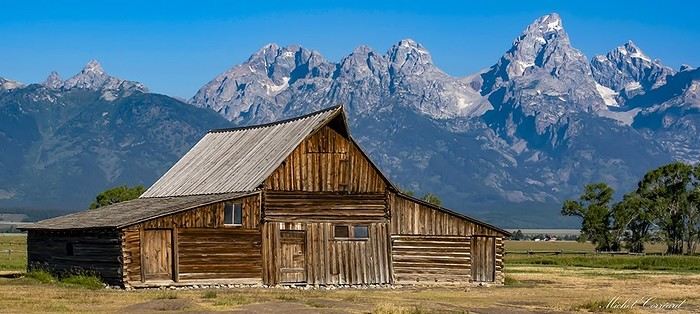
Grand Teton National Park
Every day, I look back at my 2022 trip to Wyoming. And every day, I tell myself I need to start getting ready to go back. Don’t agree? 😎
Louisiana - Mississippi - Tennessee - Arkansas - April 2024
The context:
The urge to return to the USA, to explore a new part of the country. I don’t need much convincing to go back to Uncle Sam’s land. My wife’s on board too.
So, off we go for my 9th trip to the USA! (I didn’t take notes, so this is from memory)
Day 1: The departure: Flight with two layovers. I usually avoid layovers in the US before the final destination because of immigration. This time, my flight was Lyon/Munich, then Munich/Chicago, and finally Chicago/New Orleans. The layover in Chicago was 3 hours, and since I’d been through this airport twice before and found it super efficient both times, I wasn’t too worried when I booked my tickets—especially with Lufthansa. Unfortunately, there were several flight changes before departure, the last one leaving us with only a 2h14 layover in Chicago. I called Lufthansa to check if that would be enough, and they told me immigration in Chicago takes about an hour and 45 minutes (according to their calculations). So, I left feeling confident. A 15-minute delay leaving Lyon, then a 1-hour delay leaving Munich—now I’m starting to worry. When we arrived in Chicago, we rushed, cut in line, and made it to immigration. And then—an impossible queue. Game over, we missed our last flight. Of course, Lufthansa rebooked us for the next morning, arriving around 10 AM, and booked us a hotel. I found someone to call Alamo in New Orleans to make sure my rental car would still be there. Everything’s sorted—except our luggage, which we have no idea where it is! My little worry is that we land at 9:45 AM the next morning, and we’ve booked a tour at 11 AM at Laura Plantation, which is about an hour’s drive away! Wait and see…
The +: We're back in the USA The -: Once again, flight delays
Day 1: The departure: Flight with two layovers. I usually avoid layovers in the US before the final destination because of immigration. This time, my flight was Lyon/Munich, then Munich/Chicago, and finally Chicago/New Orleans. The layover in Chicago was 3 hours, and since I’d been through this airport twice before and found it super efficient both times, I wasn’t too worried when I booked my tickets—especially with Lufthansa. Unfortunately, there were several flight changes before departure, the last one leaving us with only a 2h14 layover in Chicago. I called Lufthansa to check if that would be enough, and they told me immigration in Chicago takes about an hour and 45 minutes (according to their calculations). So, I left feeling confident. A 15-minute delay leaving Lyon, then a 1-hour delay leaving Munich—now I’m starting to worry. When we arrived in Chicago, we rushed, cut in line, and made it to immigration. And then—an impossible queue. Game over, we missed our last flight. Of course, Lufthansa rebooked us for the next morning, arriving around 10 AM, and booked us a hotel. I found someone to call Alamo in New Orleans to make sure my rental car would still be there. Everything’s sorted—except our luggage, which we have no idea where it is! My little worry is that we land at 9:45 AM the next morning, and we’ve booked a tour at 11 AM at Laura Plantation, which is about an hour’s drive away! Wait and see…
The +: We're back in the USA The -: Once again, flight delays
15 days in Texas in October 2022
Ah! This trip to Texas, postponed so many times because of Covid. I wanted to discover this state, but not in the summer due to the temperatures.
I’ll try to dig into my memories since I didn’t take any notes.
Day 1: Departure
Early morning flight from Lyon to Frankfurt (I often fly with Lufthansa). We only have a 50-minute layover, but I trust German organization—it’s not just talk, since it took us only 30 minutes to get to the boarding gate. Arriving in Houston, we’re excited because it’s been 3 years since we last visited the USA, and we’ve missed it.
Everything goes smoothly with the formalities and the car rental, so 1.5 hours after landing, I park near Sam Houston Park to start our discovery. The park is pretty, clean, and has the unique feature of housing some well-preserved Victorian houses. The sun is shining, and it’s always fun to see old wooden houses surrounded by gleaming skyscrapers. A quick drive to the Rothko Chapel, which is dedicated to all faiths. There are also modern artworks in an annex building and outside. Then we head to Pasadena to reach our hotel and go to bed since we’ve been awake for a while!
Hotel: A classic Days Inn. It’s standard, but the beds are comfortable, and it’s a quiet place. The + of the day: We're back in the USA The -: Nothing
Day 2: NASA and then Galveston
Of course, we wake up super early. A quick trip to the nearby Walmart for the usual small purchases. Surprise—I can’t buy a bottle of California white wine because in Texas, there are set hours for buying alcohol. Talk about a bummer for my apéro! Next, we head to Kemah, a small, hyper-touristy port where everything is kitschy but clean and nice. It’s a bit overdone, but since NASA doesn’t open until 10 AM and it’s still early, we might as well enjoy the good weather in a pleasant spot.
We arrive at the NASA Houston center without any issues. It’s smaller than the one in Florida and organized a bit differently. There are trains that take passengers to the different sites, but you need to get tickets (included in the price), and once you’ve finished visiting one site, you have to return to the center to get a ticket for another. Not very practical.
We choose to visit the training center and the rockets, skipping the control room, which, based on the photos, looks like the one at Cape Canaveral. The training center is a cool place because it’s still in use. Engineers are working on machines and computers. We don’t see any astronauts training, but we see the space chair, the shuttle’s robotic arm, and lots of gadgets—this hangar is like Gyro Gearloose’s or Doc’s domain!
Next, we head to the rocket hangar, featuring the Saturn V, the same one as at Cape Canaveral. Finally, we wrap up our tour by returning to the center, where a Boeing 747 with a shuttle attached to its back dominates the outside. We can visit the shuttle, and we don’t miss the chance.
A few exhibits inside complete the experience and satisfy our thirst for knowledge. I love the space exploration era, and gotta say, the Americans do it right. Then we drive to Galveston, about 100 km away. Why Galveston? It’s by the sea, so swimming in late October isn’t unpleasant, and there’s a neighborhood called East End Historic District filled with stunning Victorian houses, each more beautiful than the last. Plus, it’s Halloween season, so the decorations are over the top! They really go all out!
Madame takes a swim, but I find the water too cold for my taste. Apéro (they didn’t trick me twice—I had time to go back to another Walmart!) Dinner + bedtime
Hotel: A classic Quality Inn. No issues. The +: NASA, even if it’s smaller than Cape Canaveral The -: I would’ve preferred the water in the Gulf of Mexico to be a bit warmer
Day 1: Departure
Early morning flight from Lyon to Frankfurt (I often fly with Lufthansa). We only have a 50-minute layover, but I trust German organization—it’s not just talk, since it took us only 30 minutes to get to the boarding gate. Arriving in Houston, we’re excited because it’s been 3 years since we last visited the USA, and we’ve missed it.
Everything goes smoothly with the formalities and the car rental, so 1.5 hours after landing, I park near Sam Houston Park to start our discovery. The park is pretty, clean, and has the unique feature of housing some well-preserved Victorian houses. The sun is shining, and it’s always fun to see old wooden houses surrounded by gleaming skyscrapers. A quick drive to the Rothko Chapel, which is dedicated to all faiths. There are also modern artworks in an annex building and outside. Then we head to Pasadena to reach our hotel and go to bed since we’ve been awake for a while!
Hotel: A classic Days Inn. It’s standard, but the beds are comfortable, and it’s a quiet place. The + of the day: We're back in the USA The -: Nothing
Day 2: NASA and then Galveston
Of course, we wake up super early. A quick trip to the nearby Walmart for the usual small purchases. Surprise—I can’t buy a bottle of California white wine because in Texas, there are set hours for buying alcohol. Talk about a bummer for my apéro! Next, we head to Kemah, a small, hyper-touristy port where everything is kitschy but clean and nice. It’s a bit overdone, but since NASA doesn’t open until 10 AM and it’s still early, we might as well enjoy the good weather in a pleasant spot.
We arrive at the NASA Houston center without any issues. It’s smaller than the one in Florida and organized a bit differently. There are trains that take passengers to the different sites, but you need to get tickets (included in the price), and once you’ve finished visiting one site, you have to return to the center to get a ticket for another. Not very practical.
We choose to visit the training center and the rockets, skipping the control room, which, based on the photos, looks like the one at Cape Canaveral. The training center is a cool place because it’s still in use. Engineers are working on machines and computers. We don’t see any astronauts training, but we see the space chair, the shuttle’s robotic arm, and lots of gadgets—this hangar is like Gyro Gearloose’s or Doc’s domain!
Next, we head to the rocket hangar, featuring the Saturn V, the same one as at Cape Canaveral. Finally, we wrap up our tour by returning to the center, where a Boeing 747 with a shuttle attached to its back dominates the outside. We can visit the shuttle, and we don’t miss the chance.
A few exhibits inside complete the experience and satisfy our thirst for knowledge. I love the space exploration era, and gotta say, the Americans do it right. Then we drive to Galveston, about 100 km away. Why Galveston? It’s by the sea, so swimming in late October isn’t unpleasant, and there’s a neighborhood called East End Historic District filled with stunning Victorian houses, each more beautiful than the last. Plus, it’s Halloween season, so the decorations are over the top! They really go all out!
Madame takes a swim, but I find the water too cold for my taste. Apéro (they didn’t trick me twice—I had time to go back to another Walmart!) Dinner + bedtime
Hotel: A classic Quality Inn. No issues. The +: NASA, even if it’s smaller than Cape Canaveral The -: I would’ve preferred the water in the Gulf of Mexico to be a bit warmer
3 weeks in Colombia (August 2023)
Why Colombia?
It's quite simple. For the past few years, my daughter has been living with a Colombian from Bogotá. The idea was to discover his country, meet his family, and do part of the trip all four of us together.
We’re heading out first as scouts, then they’ll join us to continue the journey.
The itinerary was shared in another post—now it’s time for the impressions.
No photos, as for me, it’s video and nothing more!
Day 1: The big departure What was planned: A flight from Lyon Saint-Exupéry late morning heading to Frankfurt. Two hours of waiting in Frankfurt (just enough time to eat a pretzel!!) and then off to Bogotá for an arrival around 7 PM local time. I hadn’t done the Check-Mig (to be done 72 hours before the flight). I did it on my phone, giving a fake arrival date in Colombia, and the attendant told me there wouldn’t be any issues in Bogotá. Actually, two hours of delay at departure in Lyon because a sick passenger was on the plane—they had to evacuate him, and the ambulance that was supposed to be there didn’t have permission to come near the plane. Ah, French administrative formalities!!!!! Flight to Frankfurt with Lufthansa went smoothly. A sprint through the airport—very well organized. Connection secured, so we boarded the plane, and two hours later than scheduled, we took off for an 11-hour flight! Arrival in Bogotá, and the immigration process took over an hour and a half because of the crowds. However, no issues with the Check-Mig—they barely glanced at it. Our daughter’s father-in-law ended up waiting over 3 hours at the airport because of this!!! Surprise: No luggage. Luckily, we had packed essentials in our carry-ons! Quick administrative paperwork, and Lufthansa informed me our bags would be on the next flight, so no big deal. Off to our hotel in La Candelaria and a good night’s rest.
The plus: We’re in Bogotá! The minus: Flight delays are becoming more and more common.
Day 1: The big departure What was planned: A flight from Lyon Saint-Exupéry late morning heading to Frankfurt. Two hours of waiting in Frankfurt (just enough time to eat a pretzel!!) and then off to Bogotá for an arrival around 7 PM local time. I hadn’t done the Check-Mig (to be done 72 hours before the flight). I did it on my phone, giving a fake arrival date in Colombia, and the attendant told me there wouldn’t be any issues in Bogotá. Actually, two hours of delay at departure in Lyon because a sick passenger was on the plane—they had to evacuate him, and the ambulance that was supposed to be there didn’t have permission to come near the plane. Ah, French administrative formalities!!!!! Flight to Frankfurt with Lufthansa went smoothly. A sprint through the airport—very well organized. Connection secured, so we boarded the plane, and two hours later than scheduled, we took off for an 11-hour flight! Arrival in Bogotá, and the immigration process took over an hour and a half because of the crowds. However, no issues with the Check-Mig—they barely glanced at it. Our daughter’s father-in-law ended up waiting over 3 hours at the airport because of this!!! Surprise: No luggage. Luckily, we had packed essentials in our carry-ons! Quick administrative paperwork, and Lufthansa informed me our bags would be on the next flight, so no big deal. Off to our hotel in La Candelaria and a good night’s rest.
The plus: We’re in Bogotá! The minus: Flight delays are becoming more and more common.
The great American West in 23 days
Hi there,
I’m right in the middle of planning a trip to the American West—23 days from 07/30 to 08/23.
Departure from Orly to Los Angeles with a layover in San Francisco, and return from Los Angeles to Orly.
Day 1: Orly - San Francisco (1 night)
Day 2 & 3: Los Angeles (2 nights)
Day 4, 5 & 6: San Francisco (3 nights)
Day 7: Lake Tahoe (1 night)
Day 8 & 9: Portland (2 nights)
Day 10, 11 & 12: Seattle (3 nights)
Day 13 & 14: Yellowstone (2 nights)
Day 15 & 16: Salt Lake City (2 nights)
Day 17 & 18: Las Vegas (2 nights)
Day 19 & 20: Grand Canyon (2 nights)
Day 21 & 22: Los Angeles (2 nights)
Day 23: Return flight (1 night in the air)
The flight’s already booked: 2250 € for 3 people. Car’s reserved—just finalized the last booking today: a Rav4 for 23 days from Sixt in Santa Monica, 715 € (all insurance included). Hotels are booked with free cancellation since I keep finding better options, and the itinerary isn’t 100% set yet.
The flight’s already booked: 2250 € for 3 people. Car’s reserved—just finalized the last booking today: a Rav4 for 23 days from Sixt in Santa Monica, 715 € (all insurance included). Hotels are booked with free cancellation since I keep finding better options, and the itinerary isn’t 100% set yet.
Who has already done the "Great Southern Loop": Antarctic Peninsula-Falklands-South Georgia?
Hello,
My current dream for a potential (last?) big trip during our winter of 2026 is mentioned in the title.
I’m particularly interested in the ship "Exploris One" (17 nights on board in January-February 2026), operated by the French company EXPLORIS (founded by former Ponant team members), and it seems to be a fully French-speaking experience with a maximum of 120 passengers. The most competitive offer I’ve found so far is through "Croisierenet.com".
So far, we’ve only sailed and landed as far as Cape Horn (with Australis), but beyond the Antarctic Peninsula itself, it’s especially South Georgia and the richness of its wildlife colonies that appeal to me the most (and the least appealing part, of course, is the price! 🤪)
For those of you who’ve sailed along and set foot on these lands—were you truly won over and did you feel, in plain terms, that "you got your money’s worth"? If by any chance you know Exploris, what can you say about it? Same for the reliability and seriousness of Croisierenet.
Given the sums involved, is it wise to wait a few more months before deciding, hoping for bigger discounts as the departure date approaches, while counting on cabin availability in my preferred category? Currently, Exploris is offering discounts of -35% off the listed catalog prices for 2025 cruises and only -25% for 2026... On the other hand, could international flights from Paris to Buenos Aires become more expensive in the meantime? (But it seems the clientele for these cruises is marginal for this international flight, and January-February also appears to be significantly cheaper than November, especially for direct round-trip flights with Air France.)
Thanks for your feedback and any other wise advice! 😉
So far, we’ve only sailed and landed as far as Cape Horn (with Australis), but beyond the Antarctic Peninsula itself, it’s especially South Georgia and the richness of its wildlife colonies that appeal to me the most (and the least appealing part, of course, is the price! 🤪)
For those of you who’ve sailed along and set foot on these lands—were you truly won over and did you feel, in plain terms, that "you got your money’s worth"? If by any chance you know Exploris, what can you say about it? Same for the reliability and seriousness of Croisierenet.
Given the sums involved, is it wise to wait a few more months before deciding, hoping for bigger discounts as the departure date approaches, while counting on cabin availability in my preferred category? Currently, Exploris is offering discounts of -35% off the listed catalog prices for 2025 cruises and only -25% for 2026... On the other hand, could international flights from Paris to Buenos Aires become more expensive in the meantime? (But it seems the clientele for these cruises is marginal for this international flight, and January-February also appears to be significantly cheaper than November, especially for direct round-trip flights with Air France.)
Thanks for your feedback and any other wise advice! 😉
One-Month Itinerary from San Francisco to Seattle via Vancouver BC
Hi there,
I’m planning a month-long trip that’ll take me from San Francisco to Seattle, stopping in Vancouver BC along the way. After tweaking this route every which way and trying to balance must-see spots with more relaxed stops (like the Oregon coast), I’ve landed on this itinerary—I’d love your thoughts!
Days 1 and 2: San Francisco Days 3 and 4: Lassen Volcanic Park Days 5 and 6: Crater Lake Days 7 to 9: Portland Day 10: Astoria or Cannon Beach Day 11: Ruby Beach or Forks (for the Hoh Rain Forest) Days 12 and 13: Port Angeles (for Hurricane Ridge) Day 14: Victoria (Vancouver Island) Days 15 to 17: Ucluelet (Vancouver Island) Days 18 to 20: Vancouver BC Days 21 and 22: North Cascades NP Days 23 to 25: Mt. Rainier Days 26 to 28: Seattle
Of course, there’s travel time built in—for example, the third day on Vancouver Island will mostly be eaten up by getting back to the mainland and Vancouver.
Do you think there are any extra stops or anything I’ve missed? A month feels like a lot and not a lot at the same time… Thanks!
I’m planning a month-long trip that’ll take me from San Francisco to Seattle, stopping in Vancouver BC along the way. After tweaking this route every which way and trying to balance must-see spots with more relaxed stops (like the Oregon coast), I’ve landed on this itinerary—I’d love your thoughts!
Days 1 and 2: San Francisco Days 3 and 4: Lassen Volcanic Park Days 5 and 6: Crater Lake Days 7 to 9: Portland Day 10: Astoria or Cannon Beach Day 11: Ruby Beach or Forks (for the Hoh Rain Forest) Days 12 and 13: Port Angeles (for Hurricane Ridge) Day 14: Victoria (Vancouver Island) Days 15 to 17: Ucluelet (Vancouver Island) Days 18 to 20: Vancouver BC Days 21 and 22: North Cascades NP Days 23 to 25: Mt. Rainier Days 26 to 28: Seattle
Of course, there’s travel time built in—for example, the third day on Vancouver Island will mostly be eaten up by getting back to the mainland and Vancouver.
Do you think there are any extra stops or anything I’ve missed? A month feels like a lot and not a lot at the same time… Thanks!
Texas, Louisiana, and a Touch of Florida
After five trips to the American West, we had planned to switch countries and continents to visit Turkey. However, by the time we made up our minds, flight ticket prices had nearly doubled, reaching 400 € for a round-trip ticket. A bit disappointed, I started looking at transatlantic flight prices and stumbled upon discounted tickets from Basel-Mulhouse to Dallas—at the same price as our tickets to Turkey!
No hesitation needed; we bought the five tickets for a total of 1,860 € excluding baggage!
From Fort Worth Airport, we had two options: - Head west on a loop through Texas, New Mexico, and southern Colorado - Head east to change the scenery and explore East Texas, Louisiana, with a possible detour into Florida.
The latter option won unanimously, so here we are, off to discover new states, mainly Louisiana and Texas.
One of the main post-COVID challenges is finding a reasonably priced car rental. After an initial booking around 1,300 €, we kept an eye on prices a few weeks before departure and managed to snag a better deal at around 900 € for a comfortable sedan.
Yes, this summer will also be a first: no 4x4, no camping, and plenty of restaurants!
As always, I’ve planned a packed itinerary, ready to adjust on the go. A few weeks before departure, we learned we’d be at full capacity—our eldest son, Maxime, got his first-year med school results. By finishing as a top admit, he avoided the mandatory July-August internship that would’ve kept him from joining us. Instead, he wrapped up his internship at the last minute the night before our big departure.
We’ll get to savor these special moments together.
The itinerary: Day 1 - 07/15: Fort Worth Day 2: Dallas Day 3: Jefferson - Caddo Lake Day 4: Black Bayou Lake - Natchez - Stanton Hall and Rosalie Mansion Day 5: St. Francisville - Rosedown Plantation - Cat Island Wildlife Refuge Day 6: Mobile - USS Alabama Battleship Memorial Park Day 7 - 8: Pensacola Beach Day 9: Bellingrath Gardens - New Orleans Day 10 - 11: New Orleans Day 12: Plantation Route Day 13: Jungle Gardens - Tabasco Factory - Vermilionville - Lake Martin Day 14: Baton Rouge - USS Kidd Day 15: Houma - Cajun Man's Swamp Tour Day 16: Galveston, Texas Day 17: Space Center Houston - Painted Churches Day 18: San Antonio Day 19: Texas Hill Country Day 20: Texas Hill Country and evening in San Antonio Day 21: Austin and Waco
Day 0 - 07/14: The departure timing isn’t exactly relaxing. On Thursday late afternoon, we hit the road to Alsace, aiming to drop off our two cockers with family before reaching the airport at 2 AM for a 3-hour power nap. Not exactly fresh, we arrive at the terminal looking for a British Airways counter. None in sight, so we try our luck at a United Airlines counter—who knows, maybe it’ll work out. And bingo! The agent checks us in. We didn’t quite understand why, but maybe there’s some agreement between airlines. For the first time, we’re traveling without checked baggage, so no extra fees. Not a huge feat, given the scorching temperatures awaiting us!
The connecting flight to London goes smoothly.
During the layover, liquid checks get stricter—now requiring small bottles to be in a pre-approved clear bag, with only one bag allowed per passenger. Normally, no big deal, but between deodorant, sunscreen, after-sun lotion, hand sanitizer, contact lens solution, etc., we spend 20 minutes optimizing the arrangement! When we finally succeed, one of the security staff bursts out laughing and congratulates us!
With our stomachs growling, we grab an American breakfast before browsing the airport shops.
We then discover our plane for the long-haul flight and are thrilled to see it’s an A380—a first for Laetitia, though the rest of the family experienced it during our winter getaway. Still just as impressive!
With a hint of uncertainty, we take off for the States—my third trip in barely 12 months. This time, no endless badlands, canyons, slot canyons, hoodoos, or brain rocks, but a journey through five states (Texas, Louisiana, a quick stop in Mississippi, Alabama, and the northwest tip of Florida), where we hope to soak up a unique vibe... with a packed schedule of diverse visits.
Arrival at Fort Worth Airport and customs go smoothly. Since we have no checked baggage, we’re first in line at the Dollar counter. In just 3 minutes, the formalities are done. We decline the Toll Pass, which I don’t think we’ll need based on my "calculations," and head to the Dollar parking lot, where an employee tells us we can pick any car we want!
There are about thirty cars waiting. Too many choices!
After last year’s mishap in Oakland, where our 4x4’s trunk was broken into, we’re looking for a sedan to hide our luggage this time. Unfortunately, there are none—only SUVs. We finally settle on a comfortable 7-seater Ford SUV with a massive trunk when set up for five.
On the road from Fort Worth to Dallas, we accidentally take a toll highway without realizing until it’s too late to exit. Let’s hope Dollar doesn’t charge us a week’s worth of their pricey Toll Pass for a $2 toll. We’ll see... In the meantime, Maxime sets up Google Maps to avoid toll roads.
Since it’s not too late, we stop by the nearest Walmart for groceries before checking into our hotel room for three nights in East Dallas suburb.
No hesitation needed; we bought the five tickets for a total of 1,860 € excluding baggage!
From Fort Worth Airport, we had two options: - Head west on a loop through Texas, New Mexico, and southern Colorado - Head east to change the scenery and explore East Texas, Louisiana, with a possible detour into Florida.
The latter option won unanimously, so here we are, off to discover new states, mainly Louisiana and Texas.
One of the main post-COVID challenges is finding a reasonably priced car rental. After an initial booking around 1,300 €, we kept an eye on prices a few weeks before departure and managed to snag a better deal at around 900 € for a comfortable sedan.
Yes, this summer will also be a first: no 4x4, no camping, and plenty of restaurants!
As always, I’ve planned a packed itinerary, ready to adjust on the go. A few weeks before departure, we learned we’d be at full capacity—our eldest son, Maxime, got his first-year med school results. By finishing as a top admit, he avoided the mandatory July-August internship that would’ve kept him from joining us. Instead, he wrapped up his internship at the last minute the night before our big departure.
We’ll get to savor these special moments together.
The itinerary: Day 1 - 07/15: Fort Worth Day 2: Dallas Day 3: Jefferson - Caddo Lake Day 4: Black Bayou Lake - Natchez - Stanton Hall and Rosalie Mansion Day 5: St. Francisville - Rosedown Plantation - Cat Island Wildlife Refuge Day 6: Mobile - USS Alabama Battleship Memorial Park Day 7 - 8: Pensacola Beach Day 9: Bellingrath Gardens - New Orleans Day 10 - 11: New Orleans Day 12: Plantation Route Day 13: Jungle Gardens - Tabasco Factory - Vermilionville - Lake Martin Day 14: Baton Rouge - USS Kidd Day 15: Houma - Cajun Man's Swamp Tour Day 16: Galveston, Texas Day 17: Space Center Houston - Painted Churches Day 18: San Antonio Day 19: Texas Hill Country Day 20: Texas Hill Country and evening in San Antonio Day 21: Austin and Waco
Day 0 - 07/14: The departure timing isn’t exactly relaxing. On Thursday late afternoon, we hit the road to Alsace, aiming to drop off our two cockers with family before reaching the airport at 2 AM for a 3-hour power nap. Not exactly fresh, we arrive at the terminal looking for a British Airways counter. None in sight, so we try our luck at a United Airlines counter—who knows, maybe it’ll work out. And bingo! The agent checks us in. We didn’t quite understand why, but maybe there’s some agreement between airlines. For the first time, we’re traveling without checked baggage, so no extra fees. Not a huge feat, given the scorching temperatures awaiting us!
The connecting flight to London goes smoothly.
During the layover, liquid checks get stricter—now requiring small bottles to be in a pre-approved clear bag, with only one bag allowed per passenger. Normally, no big deal, but between deodorant, sunscreen, after-sun lotion, hand sanitizer, contact lens solution, etc., we spend 20 minutes optimizing the arrangement! When we finally succeed, one of the security staff bursts out laughing and congratulates us!
With our stomachs growling, we grab an American breakfast before browsing the airport shops.
We then discover our plane for the long-haul flight and are thrilled to see it’s an A380—a first for Laetitia, though the rest of the family experienced it during our winter getaway. Still just as impressive!
With a hint of uncertainty, we take off for the States—my third trip in barely 12 months. This time, no endless badlands, canyons, slot canyons, hoodoos, or brain rocks, but a journey through five states (Texas, Louisiana, a quick stop in Mississippi, Alabama, and the northwest tip of Florida), where we hope to soak up a unique vibe... with a packed schedule of diverse visits.
Arrival at Fort Worth Airport and customs go smoothly. Since we have no checked baggage, we’re first in line at the Dollar counter. In just 3 minutes, the formalities are done. We decline the Toll Pass, which I don’t think we’ll need based on my "calculations," and head to the Dollar parking lot, where an employee tells us we can pick any car we want!
There are about thirty cars waiting. Too many choices!
After last year’s mishap in Oakland, where our 4x4’s trunk was broken into, we’re looking for a sedan to hide our luggage this time. Unfortunately, there are none—only SUVs. We finally settle on a comfortable 7-seater Ford SUV with a massive trunk when set up for five.
On the road from Fort Worth to Dallas, we accidentally take a toll highway without realizing until it’s too late to exit. Let’s hope Dollar doesn’t charge us a week’s worth of their pricey Toll Pass for a $2 toll. We’ll see... In the meantime, Maxime sets up Google Maps to avoid toll roads.
Since it’s not too late, we stop by the nearest Walmart for groceries before checking into our hotel room for three nights in East Dallas suburb.
Martine and DD in Colorado and Utah
Hello everyone! 🙂
So many silent months, and now Voyage Forum is accessible again. That’s cool because we can pick up our discussions for our mutual enjoyment.
I hope everyone is doing well and that you’ve been able to take some great trips, whether to the USA or elsewhere.
In September 2020, we had planned a round trip to explore Colorado, but unfortunately, a nasty virus messed up our plans, closing borders and keeping us stuck at home. Luckily for us, canceling the car, flights, and accommodations didn’t cost us a thing—everything was refunded.
In 2023, a loop from Las Vegas let us revisit places we’d seen in 2017 and discover new ones, this time spending more time at each stop with some lovely hikes.
In 2024, we finally revisited the 2020 plan, and I’ll start with that.
However, unforeseen circumstances mean I have much less time than before, so I’ll keep my trip reports shorter (ha ha ha—you’ll have less of my prose to endure).
Another change: for those who remember the "Gang of Four crazy sixty-somethings," it was just DD and me this time. Our dear Mimi and Maumau left the Var to focus on raising horses and can’t leave their little green paradise to join us anymore. We were unfortunately much tamer without them.
We traveled from September 11 to October 3.
The itinerary
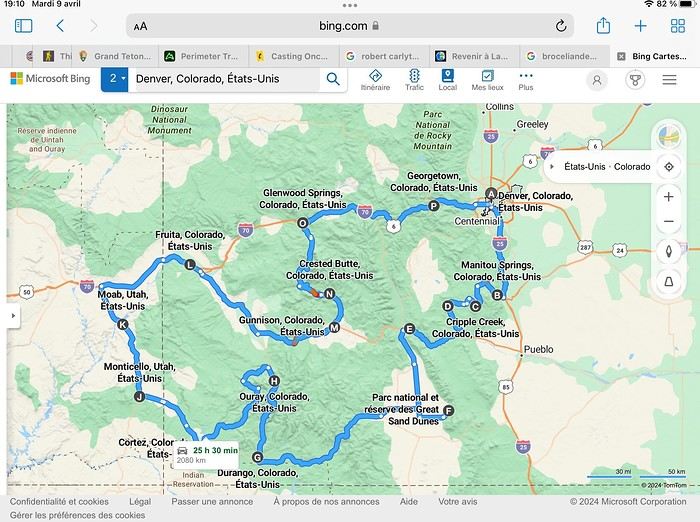
Day 1: Flight Marseille-Paris-Denver, then Manitou Springs (133 km) Day 2: Manitou Springs (49 km) Day 3: Cripple Creek (104 km) Day 4: Salida (254 km) Day 5: Great Sand Dunes (231 km) Day 6: Durango (283 km) Day 7: Durango (Durango-Silverton train) Day 8: Ouray (121 km) Day 9: Ouray (Perimeter Trail hike) Day 10: Cortez (213 km) Day 11: Cortez (Mesa Verde National Park, 134 km) Day 12: Monticello (268 km, detour to Chesler Park) Day 13: Moab (171 km, Delicate Arch) Day 14: Moab (98 km, Fisher Towers) Day 15: Moab (171 km, Canyonlands) Day 16: Fruita (210 km, Colorado National Monument) Day 17: Crested Butte (224 km via Kebler Pass) Day 18: Crested Butte (57 km) Day 19: Glenwood Springs (150 km) Day 20: Glenwood Springs (118 km, Rifle State Park) Day 21: Georgetown (258 km via Independence Pass) Day 22: Denver (123 km), then return flight
We speak very little English. We spent 21 nights there and covered a 3,400 km loop by car and 160 km on foot (we’re still trying to hike while we’re in shape) from Denver in September 2024. We wanted this road trip to help us explore Colorado a bit more—we’d only spent 6 nights there in 2019—and to see it during the fall foliage season. We also wanted to return to Utah (we love Moab) to enjoy its red rocks, which we adore.
In the prices you see (some in euros, others in dollars), I’ve included bank fees and exchange charges. The flights, car, and parking were paid by credit card when we booked in February. Usually, we book around November, but some obligations kept us from doing it earlier. We downloaded the MPC (Mobile Passport Control) app on our phone, which saved us time at immigration.
📊 **Budget: just under 8,500 € for both of us, all included**
📊 **Flights** Marseille-Paris (CDG)-Denver: 2,152 € for both of us, with one checked bag each
📊 **ESTA and America the Beautiful Pass** The ones from our 2023 road trip were still valid
📊 **Parking at Marseille airport: 122 €**
📊 **Car: Nissan Rogue (the French X-Trail) from Hertz: 1,165 €** By booking through Air France (and earning miles), we got a 15% discount. Hertz offers a free Hertz Gold Plus Rewards program, which gives us priority counter service.
📊 **Accommodation: 3,050 €** We stayed in motels and hotels of various ranges (from 100 € to 270 € per night, depending on the city), all booked through Hotels.com or Booking. Booking sometimes offers cheaper rates if you book via the "Booking mobile" app. We also got some preferential rates thanks to our Genius 2 status. Out of 21 nights, only one place didn’t include breakfast.
📊 **Other expenses (activities booked by credit card before leaving)** Durango-Silverton train: 210 € (we booked the enclosed vintage coach in March) Mesa Verde: Balcony House: 15.15 € (booked 14 days before the visit) Timed-entry passes for Arches National Park: 6 € for 3 days (booked June 1 for September entries via http://récreation.gov/). We booked three different days to play with the weather.
📊 **Supplementary insurance with AVA: 204 €** (due to our age 😅 and the high cost of medical consultations in the USA)
📊 **Cash: 1,540 €** We left with 1,000 € exchanged before departure and made two withdrawals (500 $ and 200 $). This cash was used to pay for: - Evening restaurants and tips (between 70 $ and 95 $ for two meals and two drinks) - Two state parks: Dead Horse State Park (20 $) and Rifle State Park (10 $) - The Monarch Pass gondola (24 $) - Midday picnics - Gas (slightly cheaper with cash): 204 $ for 3,400 km - Personal souvenirs and little treats.
Like in our previous road trips, we didn’t rent a GPS. We used the offline GPS app Here We Go, for which we’d downloaded maps of Colorado and Utah from France, as well as a new offline app called Organic Maps as a backup—though we didn’t end up needing it.
❤️❤️❤️ **Highlights (there are so many!)** 📍 The stunning landscapes of Colorado, especially with the fall colors 📍 A step back in time at the old farm in Florissant Fossil Beds National Monument 📍 The prairies of Cripple Creek and the mining remnants of the Vindicator Trail 📍 The cheeky chipmunks in the ghost town of St. Elmo 📍 Great Sand Dunes and its soft sand 📍 The steam train between Durango and Silverton: we’re glad we chose the round-trip because it rained heavily on the way there, but we got to enjoy the scenery on the way back when the sun came out 📍 The unexpected meet-up with Michèle from the group outside a restaurant in Durango 📍 The hot springs in Ouray 📍 Mesa Verde and its still-vibrant past 📍 The red rocks of Moab and Delicate Arch at sunset 📍 The lace-like Fisher Towers and the view from the end of the trail 📍 The gorgeous Route 128 leading to Colorado National Monument—small, easy to visit, and so beautiful 📍 The colors of the fabulous Kebler Pass, Crested Butte, and especially the hike through the golden aspens (Lower and Upper Loop) 📍 The waterfalls at Rifle State Park 📍 The tundra of Independence Pass 📍 The Halloween decorations in Georgetown and Idaho Springs
😞😞 **Flops (there are very few!)** 📍 The viewpoints we missed because they weren’t well-marked or we didn’t see the signs 📍 The closure of some hiking trails (Hanging Lake and parts of Canyonlands) and the Sal Mountain Loop road, which kept us from accessing it 📍😢 The Chesler Park hike we had to cut short due to poor time management—180 km between our stop in Cortez meant we didn’t arrive until 10:30 AM, way too late for a 17 km hike.
Hope this helps! Have a great evening, everyone, and see you soon! 😊
The itinerary
Day 1: Flight Marseille-Paris-Denver, then Manitou Springs (133 km) Day 2: Manitou Springs (49 km) Day 3: Cripple Creek (104 km) Day 4: Salida (254 km) Day 5: Great Sand Dunes (231 km) Day 6: Durango (283 km) Day 7: Durango (Durango-Silverton train) Day 8: Ouray (121 km) Day 9: Ouray (Perimeter Trail hike) Day 10: Cortez (213 km) Day 11: Cortez (Mesa Verde National Park, 134 km) Day 12: Monticello (268 km, detour to Chesler Park) Day 13: Moab (171 km, Delicate Arch) Day 14: Moab (98 km, Fisher Towers) Day 15: Moab (171 km, Canyonlands) Day 16: Fruita (210 km, Colorado National Monument) Day 17: Crested Butte (224 km via Kebler Pass) Day 18: Crested Butte (57 km) Day 19: Glenwood Springs (150 km) Day 20: Glenwood Springs (118 km, Rifle State Park) Day 21: Georgetown (258 km via Independence Pass) Day 22: Denver (123 km), then return flight
We speak very little English. We spent 21 nights there and covered a 3,400 km loop by car and 160 km on foot (we’re still trying to hike while we’re in shape) from Denver in September 2024. We wanted this road trip to help us explore Colorado a bit more—we’d only spent 6 nights there in 2019—and to see it during the fall foliage season. We also wanted to return to Utah (we love Moab) to enjoy its red rocks, which we adore.
In the prices you see (some in euros, others in dollars), I’ve included bank fees and exchange charges. The flights, car, and parking were paid by credit card when we booked in February. Usually, we book around November, but some obligations kept us from doing it earlier. We downloaded the MPC (Mobile Passport Control) app on our phone, which saved us time at immigration.
📊 **Budget: just under 8,500 € for both of us, all included**
📊 **Flights** Marseille-Paris (CDG)-Denver: 2,152 € for both of us, with one checked bag each
📊 **ESTA and America the Beautiful Pass** The ones from our 2023 road trip were still valid
📊 **Parking at Marseille airport: 122 €**
📊 **Car: Nissan Rogue (the French X-Trail) from Hertz: 1,165 €** By booking through Air France (and earning miles), we got a 15% discount. Hertz offers a free Hertz Gold Plus Rewards program, which gives us priority counter service.
📊 **Accommodation: 3,050 €** We stayed in motels and hotels of various ranges (from 100 € to 270 € per night, depending on the city), all booked through Hotels.com or Booking. Booking sometimes offers cheaper rates if you book via the "Booking mobile" app. We also got some preferential rates thanks to our Genius 2 status. Out of 21 nights, only one place didn’t include breakfast.
📊 **Other expenses (activities booked by credit card before leaving)** Durango-Silverton train: 210 € (we booked the enclosed vintage coach in March) Mesa Verde: Balcony House: 15.15 € (booked 14 days before the visit) Timed-entry passes for Arches National Park: 6 € for 3 days (booked June 1 for September entries via http://récreation.gov/). We booked three different days to play with the weather.
📊 **Supplementary insurance with AVA: 204 €** (due to our age 😅 and the high cost of medical consultations in the USA)
📊 **Cash: 1,540 €** We left with 1,000 € exchanged before departure and made two withdrawals (500 $ and 200 $). This cash was used to pay for: - Evening restaurants and tips (between 70 $ and 95 $ for two meals and two drinks) - Two state parks: Dead Horse State Park (20 $) and Rifle State Park (10 $) - The Monarch Pass gondola (24 $) - Midday picnics - Gas (slightly cheaper with cash): 204 $ for 3,400 km - Personal souvenirs and little treats.
Like in our previous road trips, we didn’t rent a GPS. We used the offline GPS app Here We Go, for which we’d downloaded maps of Colorado and Utah from France, as well as a new offline app called Organic Maps as a backup—though we didn’t end up needing it.
❤️❤️❤️ **Highlights (there are so many!)** 📍 The stunning landscapes of Colorado, especially with the fall colors 📍 A step back in time at the old farm in Florissant Fossil Beds National Monument 📍 The prairies of Cripple Creek and the mining remnants of the Vindicator Trail 📍 The cheeky chipmunks in the ghost town of St. Elmo 📍 Great Sand Dunes and its soft sand 📍 The steam train between Durango and Silverton: we’re glad we chose the round-trip because it rained heavily on the way there, but we got to enjoy the scenery on the way back when the sun came out 📍 The unexpected meet-up with Michèle from the group outside a restaurant in Durango 📍 The hot springs in Ouray 📍 Mesa Verde and its still-vibrant past 📍 The red rocks of Moab and Delicate Arch at sunset 📍 The lace-like Fisher Towers and the view from the end of the trail 📍 The gorgeous Route 128 leading to Colorado National Monument—small, easy to visit, and so beautiful 📍 The colors of the fabulous Kebler Pass, Crested Butte, and especially the hike through the golden aspens (Lower and Upper Loop) 📍 The waterfalls at Rifle State Park 📍 The tundra of Independence Pass 📍 The Halloween decorations in Georgetown and Idaho Springs
😞😞 **Flops (there are very few!)** 📍 The viewpoints we missed because they weren’t well-marked or we didn’t see the signs 📍 The closure of some hiking trails (Hanging Lake and parts of Canyonlands) and the Sal Mountain Loop road, which kept us from accessing it 📍😢 The Chesler Park hike we had to cut short due to poor time management—180 km between our stop in Cortez meant we didn’t arrive until 10:30 AM, way too late for a 17 km hike.
Hope this helps! Have a great evening, everyone, and see you soon! 😊
Biking Across New York State on the Empire State Trail
From Buffalo to New York City, the Empire State Trail is a 900 km route specifically designed for biking, with 75% on dedicated bike paths.
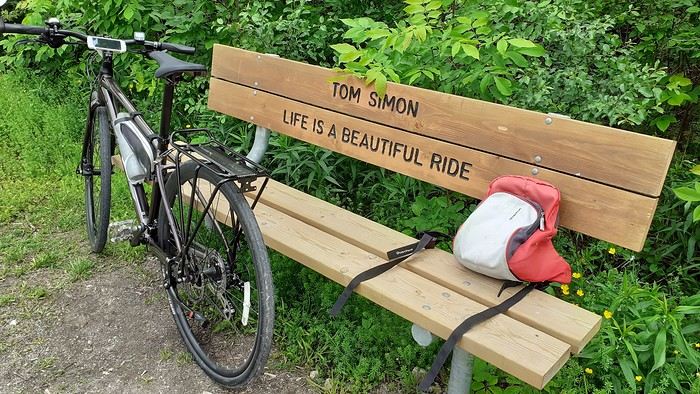
A special train with bike spaces runs almost the entire route. First along the Erie Canal to Albany, then through the Hudson Valley all the way to the tip of Manhattan. This lets you skip sections and also return to your starting point without having to take a flight. Just be aware that bike spaces need to be reserved and can fill up during peak times. In June, no problem though.
This aspect really appealed to me, since my last trip had kinda put me off biking in the US. But here, 75% on dedicated paths, plus that legendary finish in NYC with your bike—I couldn’t resist celebrating my 70th birthday this way.
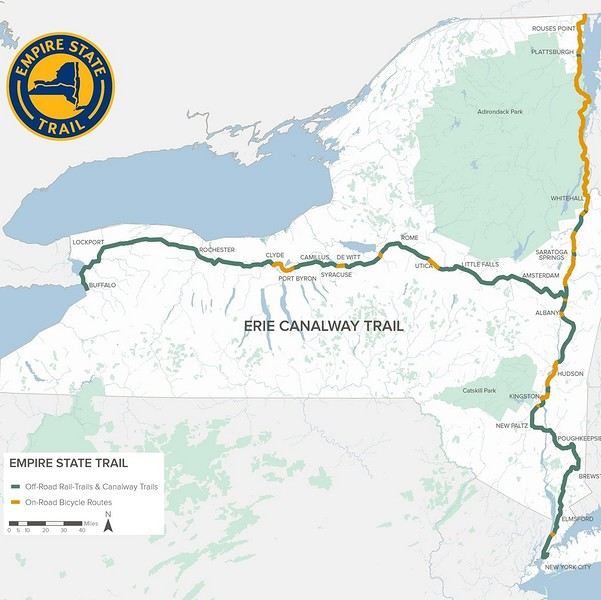 https://empiretrail.ny.gov/map
Two branches to reach NYC: from Buffalo (mostly on dedicated paths) or from Montreal (mostly on roads)
The route was developed in just three years. While it’s popular with cyclists on certain stretches near cities, those who bike the whole thing are still pretty rare.
It’s true that the scenery isn’t exactly breathtaking, and some sections—especially along the Erie Canal—can feel a bit tedious, though they’re very easy since there’s no elevation.
https://empiretrail.ny.gov/map
Two branches to reach NYC: from Buffalo (mostly on dedicated paths) or from Montreal (mostly on roads)
The route was developed in just three years. While it’s popular with cyclists on certain stretches near cities, those who bike the whole thing are still pretty rare.
It’s true that the scenery isn’t exactly breathtaking, and some sections—especially along the Erie Canal—can feel a bit tedious, though they’re very easy since there’s no elevation.
The trail starts in Buffalo, but since my bus from Toronto goes straight to Niagara, I’ll be starting at the falls instead. Plus, that’s where the direct train to NYC departs from (and arrives at).
A special train with bike spaces runs almost the entire route. First along the Erie Canal to Albany, then through the Hudson Valley all the way to the tip of Manhattan. This lets you skip sections and also return to your starting point without having to take a flight. Just be aware that bike spaces need to be reserved and can fill up during peak times. In June, no problem though.
This aspect really appealed to me, since my last trip had kinda put me off biking in the US. But here, 75% on dedicated paths, plus that legendary finish in NYC with your bike—I couldn’t resist celebrating my 70th birthday this way.
https://empiretrail.ny.gov/map
Two branches to reach NYC: from Buffalo (mostly on dedicated paths) or from Montreal (mostly on roads)
The route was developed in just three years. While it’s popular with cyclists on certain stretches near cities, those who bike the whole thing are still pretty rare.
It’s true that the scenery isn’t exactly breathtaking, and some sections—especially along the Erie Canal—can feel a bit tedious, though they’re very easy since there’s no elevation.The trail starts in Buffalo, but since my bus from Toronto goes straight to Niagara, I’ll be starting at the falls instead. Plus, that’s where the direct train to NYC departs from (and arrives at).
Préparation d'un programme de 4 semaines Seattle-Seattle English translation pending
Bonjour
parce qu'il faut réver et se projeter..
Les vols sont réservés.. seattle seattle
J'aimerai votre avis sur ce programme. Merci d'avance.
14 juillet buckley (pour sunrise mont rainier) 15 buckley 16 bellevue ou autour 17 Harrison hot spring ou autour 18 clearwater CA 19 clearwater 20 hinton (ou jasper) 21 IDEM 22 banff ou camnore 23 IDEM 24 waterton 25 idem 26 Glacier NP 27 butte ou missoula 28 gardiner 29 gardiner 30 canyon lodge 31 WY 1 aout WY 2 driggs 3 driggs 4 Boise 5 John day 6 bend 7newburry station 8 idem crater lake 9 Vers Florence 10 canon beach 11 forks ou ocean shore 12 forks 13 port angeles ou sequin.
Ce sont les nuits..
votre avis merci d avance
J'aimerai votre avis sur ce programme. Merci d'avance.
14 juillet buckley (pour sunrise mont rainier) 15 buckley 16 bellevue ou autour 17 Harrison hot spring ou autour 18 clearwater CA 19 clearwater 20 hinton (ou jasper) 21 IDEM 22 banff ou camnore 23 IDEM 24 waterton 25 idem 26 Glacier NP 27 butte ou missoula 28 gardiner 29 gardiner 30 canyon lodge 31 WY 1 aout WY 2 driggs 3 driggs 4 Boise 5 John day 6 bend 7newburry station 8 idem crater lake 9 Vers Florence 10 canon beach 11 forks ou ocean shore 12 forks 13 port angeles ou sequin.
Ce sont les nuits..
votre avis merci d avance
Roadtrip côte ouest des USA English translation pending
Hello à vous tous cher Voyagiste, me voilà en prévision d'un voyage sur la COTES OUEST DES USA en Juillet 2021.
Je suis en fauteuil roulant électrique (j'aurais 31 ans à la période du séjour) et je part avec ma mère (qui aura elle 59 ans).
Je vous présente un première idée du Road Trip.
Je voudrais avoir vos avis concernant le temps de trajet, l'itinéraire, et si vous aviez des recommandations aux niveaux des hôtels (accessible bien entendu), des sociétés de location de véhicule accessible !
Arrivée à Los Angeles : Dodo sur place !
Lendemain : Départ direction Parc national de Joshua Tree (yucca à gogoooooo) (Los Angeles à Parc national de Joshua Tree = 2H10)
Dodo vers Needles (Parc national de Joshua Tree à Needles = 2H10)
Direction Grand Canyon (Needles à Grand Canyon Village = 3H45)
Dodo sur place
Visite du Grand Canyon (hélicoptères ?)
Dodo sur place
Direction Monument Valley (Grand Canyon Village à Monument Valley = 4H30)
Dodo sur place
Découverte des lieux plus plus plus
Direction Antelope Canyon – Upper (Monument Valley à Antelope Canyon = 1H50)
Visite du lieu
Direction Page (Antelope Canyon à Page 15 minutes)
Dodo sur place
Visite du lac Powel + barrage
Direction Las Vegas (Page à Las Vegas = 4H30)
Dodo sur place
Aller voir : ATM aquarium télé. (3451 W Martin Ave C, Las Vegas)
Visite de Las Vegas
Dodo sur place
Visite de Las Vegas
Dodo sur place
Direction San Francisco
Las Vegas à Death Valley à Olancha = 4H00
Dodo sur place
Olancha à Lee Vining à Traversée du parc de Yosemite à Groveland = 4H40
Dodo sur place
Groveland à San Francisco = 3H00
Visite de San Francisco
Dodo sur place
Visite de San Francisco
Dodo sur place
Visite de San Francisco
Dodo sur place
Visite de San Francisco
Dodo sur place
Visite de San Francisco
Dodo sur place
Direction San Simeon par la Pacific Coast Highway, également appelée Highway 1.
Bixby Creek Bridge (gros pont en arche), on y passe dessus par la route Cabrillo Hwy. (Depuis San Francisco 2H30)
McWay Waterfall (chute d’eau / cascade dans l’océan pacifique) accès PMR ! (Depuis San Francisco 3H00)
Friends Of The Elephant Seal (éléphants de mer) route Cabrillo Hwy, parking gratuit. (Plaza del Cavalier, 250 San Simeon Ave Suite 3B, San Simeon). (Depuis San Francisco 4H30)
Dodo sur place
Direction Sequoia National Park's Tunnel Log (tunnel à travers un séquoia) / (Crescent Meadow Rd, Sequoia National Park)
General Sherman (plus grand séquoia) / (route – 198 - General Hwy) (San Simeon à Sequoia = 3H50)
Dodo sur place
Direction Los Angeles (Sequoia à Los Angeles = 4H20)
Visite de Los Angeles
Dodo sur place
Visite de Los Angeles
Dodo sur place
Visite de Los Angeles
Dodo sur place
Visite de Los Angeles
Dodo sur place
Visite de Los Angeles
Dodo sur place
Visite de Los Angeles
Dodo sur place
à Départ France !!!
Je vous remercie pour vos conseil / suggestions ! Voyagement vôtre.
Je suis en fauteuil roulant électrique (j'aurais 31 ans à la période du séjour) et je part avec ma mère (qui aura elle 59 ans).
Je vous présente un première idée du Road Trip.
Je voudrais avoir vos avis concernant le temps de trajet, l'itinéraire, et si vous aviez des recommandations aux niveaux des hôtels (accessible bien entendu), des sociétés de location de véhicule accessible !
Arrivée à Los Angeles : Dodo sur place !
Lendemain : Départ direction Parc national de Joshua Tree (yucca à gogoooooo) (Los Angeles à Parc national de Joshua Tree = 2H10)
Dodo vers Needles (Parc national de Joshua Tree à Needles = 2H10)
Direction Grand Canyon (Needles à Grand Canyon Village = 3H45)
Dodo sur place
Visite du Grand Canyon (hélicoptères ?)
Dodo sur place
Direction Monument Valley (Grand Canyon Village à Monument Valley = 4H30)
Dodo sur place
Découverte des lieux plus plus plus
Direction Antelope Canyon – Upper (Monument Valley à Antelope Canyon = 1H50)
Visite du lieu
Direction Page (Antelope Canyon à Page 15 minutes)
Dodo sur place
Visite du lac Powel + barrage
Direction Las Vegas (Page à Las Vegas = 4H30)
Dodo sur place
Aller voir : ATM aquarium télé. (3451 W Martin Ave C, Las Vegas)
Visite de Las Vegas
Dodo sur place
Visite de Las Vegas
Dodo sur place
Direction San Francisco
Las Vegas à Death Valley à Olancha = 4H00
Dodo sur place
Olancha à Lee Vining à Traversée du parc de Yosemite à Groveland = 4H40
Dodo sur place
Groveland à San Francisco = 3H00
Visite de San Francisco
Dodo sur place
Visite de San Francisco
Dodo sur place
Visite de San Francisco
Dodo sur place
Visite de San Francisco
Dodo sur place
Visite de San Francisco
Dodo sur place
Direction San Simeon par la Pacific Coast Highway, également appelée Highway 1.
Bixby Creek Bridge (gros pont en arche), on y passe dessus par la route Cabrillo Hwy. (Depuis San Francisco 2H30)
McWay Waterfall (chute d’eau / cascade dans l’océan pacifique) accès PMR ! (Depuis San Francisco 3H00)
Friends Of The Elephant Seal (éléphants de mer) route Cabrillo Hwy, parking gratuit. (Plaza del Cavalier, 250 San Simeon Ave Suite 3B, San Simeon). (Depuis San Francisco 4H30)
Dodo sur place
Direction Sequoia National Park's Tunnel Log (tunnel à travers un séquoia) / (Crescent Meadow Rd, Sequoia National Park)
General Sherman (plus grand séquoia) / (route – 198 - General Hwy) (San Simeon à Sequoia = 3H50)
Dodo sur place
Direction Los Angeles (Sequoia à Los Angeles = 4H20)
Visite de Los Angeles
Dodo sur place
Visite de Los Angeles
Dodo sur place
Visite de Los Angeles
Dodo sur place
Visite de Los Angeles
Dodo sur place
Visite de Los Angeles
Dodo sur place
Visite de Los Angeles
Dodo sur place
à Départ France !!!
Je vous remercie pour vos conseil / suggestions ! Voyagement vôtre.
Trafic prévu vers les États-Unis par les compagnies aériennes à l'été 2020 English translation pending
A CE JOUR **
des annonces qui, en vont pas loin .. et encore rien n'est précisé sur l'accesibilité a ces vols
- United Airlines n'ouvrirait que New York
- American Airlines n'ouvrirait que son hub principal Dallas ( DFW )
- Delta pas encore communique
** inutile de me dire dans quelques jours ou semaines que j'ai dit m'importe quoi c'est la situation à un moment donné donc connue ce 7 juin
Renseignements pour road trip dans l'Ouest américain en août 2022 English translation pending
Hello Tout le monde !
Je suis en trés large avance certes. Nous envisageons un road trip (Août 2022) dans l'Ouest pour nos ... ans de mariage.
Los Angéles, le Grand Canyon, Monument Valley, Las Végas, Séquoia Park, Yosémite Park, SF et retour LA.
Bref, nous en sommes aux balbutiements.
Ce qui m’inquiète, c'est la foule. Y a t-il vraiment du monde dans l'Ouest au mois d’août ?
Merci de vos lumiéres.
Cdt.
Je suis en trés large avance certes. Nous envisageons un road trip (Août 2022) dans l'Ouest pour nos ... ans de mariage.
Los Angéles, le Grand Canyon, Monument Valley, Las Végas, Séquoia Park, Yosémite Park, SF et retour LA.
Bref, nous en sommes aux balbutiements.
Ce qui m’inquiète, c'est la foule. Y a t-il vraiment du monde dans l'Ouest au mois d’août ?
Merci de vos lumiéres.
Cdt.
Mais où donc est ce truc là? (5) English translation pending
Bonjour
Où se trouve cette serre ?
En premier chercher le pays et ensuite la ville
Françoise
Porto Rico: 10 lieux à découvrir à San Juan English translation pending
Le temps d'une escale à San Juan de Porto Rico, j'ai récemment découvert quelques lieux parmi les plus intéressants à visiter dans la capitale de cette île du nord des Caraïbes.
Bienvenue à Puerto Rrrrrico ! A prononcer avec un accent chantant et en faisant rouler les « r » comme aiment tant le faire les habitants de l'île.
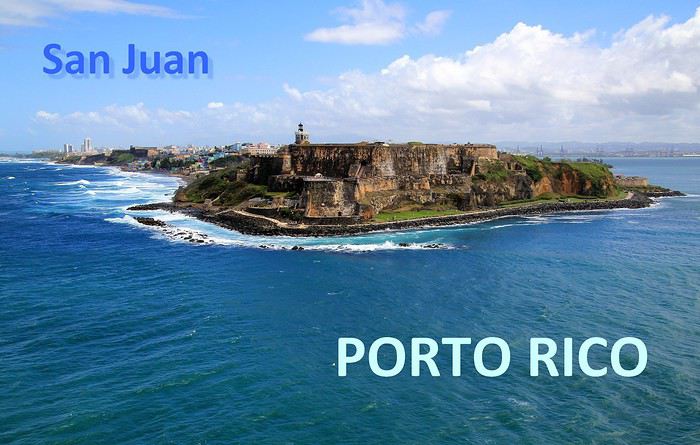
Abordées par la mer, les côtes portoricaines se dévoilent peu à peu … l'agglomération de San Juan est maintenant bien en vue. Des fortifications dominent la ville, sur un versant de falaise apparaît un quartier haut en couleurs, plus loin, on distingue dans la brume des plages et un alignement de buildings.

A mesure que l'on progresse dans la rade, c'est la vieille ville fondée par les conquistadors que l'on détaille du regard : une imbrication d'habitations et une imposante demeure blanche, celle des gouverneurs du territoire.

Voici 5 lieux au programme de nos visites, il en reste 5 autres à découvrir en suivant notre itinéraire d'une dizaine d'étapes dans cette agglomération de plus de deux millions d'habitants.
--
Viejo San Juan, le cœur historique de la ville
A placer en tête des visites à effectuer à San Juan de Porto Rico, celle de son Vieux quartier. Pour y apprécier notamment le charme de ses anciens monuments et de ses habitations au style colonial espagnol et pour y côtoyer également la décontraction de ses habitants au comportement très latino.
Il faut parcourir les rues de ce secteur historique, arpenter la rue SantoCristo ou Fortaleza, les plus fréquentées, les plus animées. Mais bien entendu, on ne doit pas hésiter à cheminer vers les petites rues de traverse, quitte à tomber sur une impasse ou à s'y égarer.

On y découvre des façades aux multiples couleurs, de belles décorations murales, des balcons et des ferronneries ouvragées. Un style inspiré par la lointaine Espagne, nous voilà plongés dans l'atmosphère coloniale du Nouveau Monde, celle des conquistadors des XVe au XVIe siècle.

Des maisons coloniales et des commerces longent les rues principales. Restaurants, bars, boutiques de souvenirs, galeries d'art et quelques magasins d'articles de luxe. Un exemple parmi d'autres avec au 202 de la RueSanto Cristo, une entrée par un porche qui dévoile une cour intérieure, un vrai patio qui ne détonnerait pas en Andalousie.

On continue la flânerie en battant le pavé du Viejo San Juan. Justement, au sujet de ces pavés, leur teinte bleutée étonne. On apprendra que ces pavés étaient utilisés comme ballast dans les cales des navires marchands à l'époque de la colonisation et que leurs reflets bleus satinés sont dus à l'usure du temps.

La façade inondée de lumière de la Cathédrale de San Juan domine de sa hauteur tout le quartier. Le premier édifice édifié ici date de 1521 mais il n'a pas résisté aux ouragans tropicaux fréquents sous ces latitudes. L'aspect actuel est plus récent, précisément de 1917.
Plus loin, notre déambulation nous mène de rue en rue, de la place ombragée de l'édifice catholique à la Place de l'Hôtel de ville. Là encore, la plupart des bâtiments témoignent du passé colonial de la ville les bâtisses restaurées dans le pure style de l'époque, il n'en manque pas dans le Viejo San Juan, on en compterait près de quatre cents.

A l'extrémité de la rue Fortaleza, on parvient à cette imposante maison blanche appelée aussi « Fortaleza ». Perchée sur les falaises, elle domine toute la baie de San Juan. Sur la photo, on ne voit qu'une partie seulement du bâtiment construit à partir de 1533. L'édifice rénovée depuis son origine a été utilisé à certaines périodes d'arsenal et de prison.
Une bâtisse où résident les Gouverneurs de l'île. Ainsi, ce sont quelques 170 Gouverneurs qui se sont succédé à la tête de cette colonie ultramarine.. L'île de Porto Rico s'honore d'être la première colonie espagnole du Nouveau Monde. Sur une des places de la ville trône la statue de l'illustre Ponce de Leon, un vaillant explorateur qui fut le premier Gouverneur de Porto Rico en 1509.

Après la guerre hispano-américaine, l'île est passée sous domination américaine, c'était en 1898. De nos jours Porto Rico a un statut particulier au sein des USA. Un État libre mais associé aux États-Unis. Les Porto Ricains ont la nationalité américaine mais ils ne votent pas pour les élections présidentielles des États-Unis. Le Gouverneur de l'île bénéficie d'une large autonomie de gestion de son territoire insulaire.
--
Les couleurs portoricaines
Là, il ne s'agit pas d'un lieu précis à voir mais plutôt d'une vision qui s'impose au regard lorsque l'on se balade dans les rues de San Juan. La ville est pavoisée presque à chaque coin de rue de drapeaux aux couleurs portoricaines.
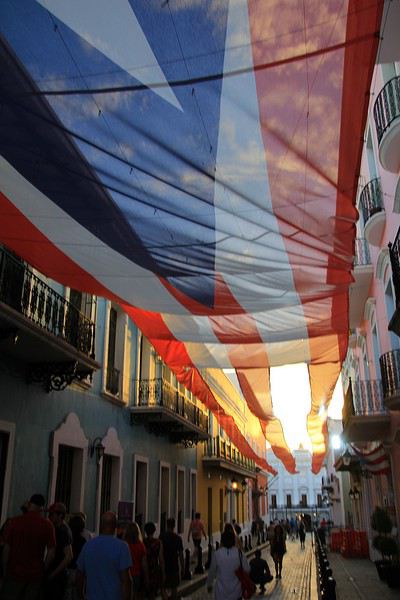
Dans une des rues passantes de la vieille ville il y a même un immense drapeau qui concurrence le bleu du ciel. Immense, ce voile fait office de décor et tamise les chauds rayons du soleil tropical. Ce drapeau local avec ses teintes bleues, blanches et rouges n'est pas sans en évoquer un autre, celui de l'île sœur, la proche Cuba. En effet, le graphisme est identique entre les deux étendards mais les couleurs sont inversées. Triangle bleu et alternance de bandes horizontales blanches et rouges pour Porto Rico et tout l'inverse pour celui de Cuba (triangle rouge et bandes blanches et bleues). Une certaine harmonie donc mais dans la différence, une idée inspirée à l'origine par le parti révolutionnaire cubain. La signification de ces teintes ? Le bleu pour le ciel et la mer, le blanc évoque la paix et le rouge le sang versé pour la patrie.
--
La Perla, un quartier populaire haut en couleur
Une vraie mosaïque aux teintes éclatantes, ce quartier de « La Perla » accroché aux falaises qui font face à l'océan. Il vaut assurément le coup d’œil et même un peu plus.
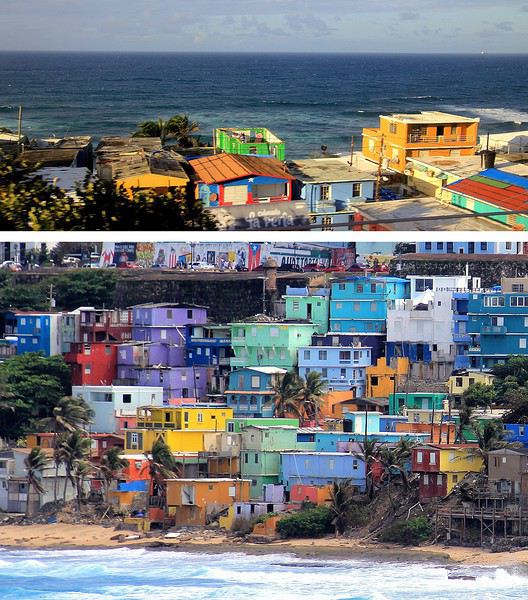
La meilleure vision est celle que l'on a depuis la mer, d'ailleurs on en avait bénéficié en arrivant depuis le large. A présent, nous longeons ce quartier ouvrier en parcourant la route de la corniche. Quel bric-à-brac avec ses modestes maisons dont certaines sont en piteux états … mais les couleurs sont là, tentant d'égayer à grand renfort de coups de pinceaux. La misère semble plus belle en technicolor. Tenez, là ! une façade est parée des couleurs de l'étendard portoricain, une tradition sur cette île.
Longtemps ce quartier populaire de San Juan a eu une mauvaise réputation : trafic de drogue et insécurité … autant dire que les visiteurs évitaient de s'y aventurer. Mais depuis 2017 la situation a changé, beaucoup de touristes vont y faire un tour et pas seulement pour sa palette de couleurs vives. Connaissez-vous Luis Fonsi ? Et la musique entêtante de son titre phare, « Despacito * » ? Ce chanteur portoricain a tourné son clip dans les ruelles de La Perla, aussi, des amateurs de ce morceau très « caliente », véritable hymne à la séduction latino, sont attirés ici. Ce clip de janvier 2017 a été un tube mondial et serait même le plus « streamé » de l'histoire !
--
Imposantes et dissuasives forteresses
Après la visite de la vielle ville, il faut en faire le tour, on pourrait presque parler de balade sur un long chemin de ronde tellement la périphérie du quartier est protégée de fortifications et de murailles. Les conquistadors savaient que leur colonie était convoitée, ils ont fait en sorte de bien la préserver. Quelques mots d'histoire à ce sujet. En 1595, ce sont les troupes de la marine anglaise qui attaquent, sans succès ! Puis c'est au tour des Hollandais en 1625 de tenter la prise de San Juan, ils réussirent à accéder à une partie de la cité mais furent repoussés par des Espagnols, ardents défenseurs de leur possession. En 1797, un nouvel assaut des Britanniques et un nouvel échec. Mais face aux bombardements américains de 1898, les militaires espagnols ont cette fois capitulés … San Juan et l'île de Porto Rico passèrent ainsi sous domination des États-Unis.
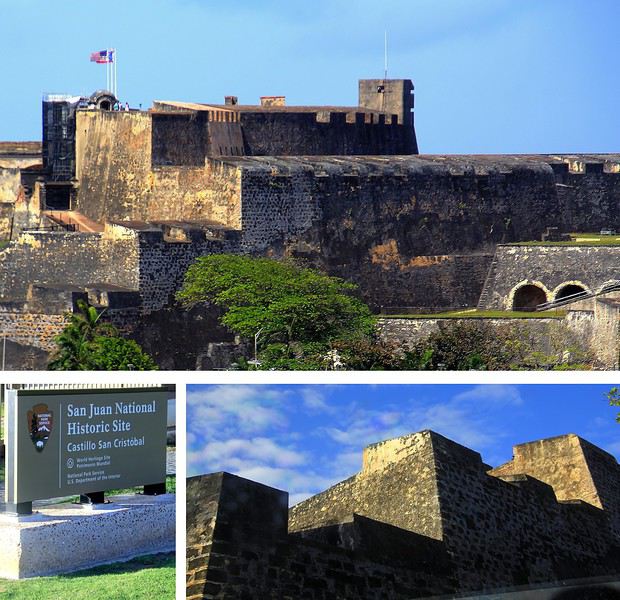
La route sur la corniche nord fait passer au pied d'imposantes murailles. Voici le Fort San Cristobal, une forteresse qui avait de bons atouts pour dissuader toutes attaques étrangères. Construit à partir de 1634, ce massif château fort fait honneur évidemment au célébrissime explorateur Christophe Colomb. Perché sur une colline, il domine l'ensemble de la ville, les falaises et surtout l'océan. Depuis le large, les éventuels assaillants l'apercevaient ainsi de très loin, aussi ils comprenaient vite ce a quoi il devaient s'attendre !
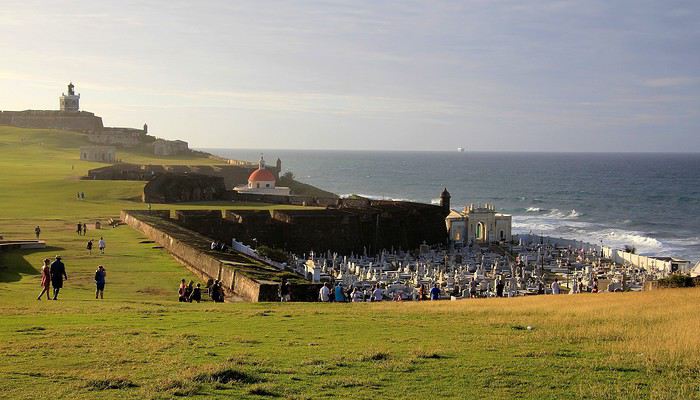
Tout au bout de la corniche, juché sur un promontoire rocheux on voit maintenant plein cadre le Fort San Felipe del Morro. Cette autre forteresse est idéalement située à l'entrée de la rade. Sa construction est antérieure à celle du Fort San Cristobal elle a débuté en 1539. A cette époque, il était facile de trouver de la main-d’œuvre … on parle de centaines d'esclaves enrôlés dans ces gigantesques travaux ! Un fort, un phare et à proximité une église et son cimetière au nom à rallonge : Santa Maria Magdalena de Pazzis. Un cimetière avec vue privilégié sur l'horizon marin, dommage que les morts qui y reposent en paix ne puissent en profiter ! L'impression de puissance que dégage le château amplement fortifié par ses murailles est contrebalancée par la douceur de la luminosité et par cette étendue verdoyante. La colline couverte d'herbe fait penser à un green de golf. On ne peut pas mieux dire … en effet, plus tard, lorsque ce lieu défensif a été investi par les troupes américaines, sur ces pelouses un terrain de golf a été aménagé pour les loisirs des soldats US !
Abordées par la mer, les côtes portoricaines se dévoilent peu à peu … l'agglomération de San Juan est maintenant bien en vue. Des fortifications dominent la ville, sur un versant de falaise apparaît un quartier haut en couleurs, plus loin, on distingue dans la brume des plages et un alignement de buildings.
A mesure que l'on progresse dans la rade, c'est la vieille ville fondée par les conquistadors que l'on détaille du regard : une imbrication d'habitations et une imposante demeure blanche, celle des gouverneurs du territoire.
Voici 5 lieux au programme de nos visites, il en reste 5 autres à découvrir en suivant notre itinéraire d'une dizaine d'étapes dans cette agglomération de plus de deux millions d'habitants.
--
Viejo San Juan, le cœur historique de la ville
A placer en tête des visites à effectuer à San Juan de Porto Rico, celle de son Vieux quartier. Pour y apprécier notamment le charme de ses anciens monuments et de ses habitations au style colonial espagnol et pour y côtoyer également la décontraction de ses habitants au comportement très latino.
Il faut parcourir les rues de ce secteur historique, arpenter la rue SantoCristo ou Fortaleza, les plus fréquentées, les plus animées. Mais bien entendu, on ne doit pas hésiter à cheminer vers les petites rues de traverse, quitte à tomber sur une impasse ou à s'y égarer.
On y découvre des façades aux multiples couleurs, de belles décorations murales, des balcons et des ferronneries ouvragées. Un style inspiré par la lointaine Espagne, nous voilà plongés dans l'atmosphère coloniale du Nouveau Monde, celle des conquistadors des XVe au XVIe siècle.
Des maisons coloniales et des commerces longent les rues principales. Restaurants, bars, boutiques de souvenirs, galeries d'art et quelques magasins d'articles de luxe. Un exemple parmi d'autres avec au 202 de la RueSanto Cristo, une entrée par un porche qui dévoile une cour intérieure, un vrai patio qui ne détonnerait pas en Andalousie.
On continue la flânerie en battant le pavé du Viejo San Juan. Justement, au sujet de ces pavés, leur teinte bleutée étonne. On apprendra que ces pavés étaient utilisés comme ballast dans les cales des navires marchands à l'époque de la colonisation et que leurs reflets bleus satinés sont dus à l'usure du temps.
La façade inondée de lumière de la Cathédrale de San Juan domine de sa hauteur tout le quartier. Le premier édifice édifié ici date de 1521 mais il n'a pas résisté aux ouragans tropicaux fréquents sous ces latitudes. L'aspect actuel est plus récent, précisément de 1917.
Plus loin, notre déambulation nous mène de rue en rue, de la place ombragée de l'édifice catholique à la Place de l'Hôtel de ville. Là encore, la plupart des bâtiments témoignent du passé colonial de la ville les bâtisses restaurées dans le pure style de l'époque, il n'en manque pas dans le Viejo San Juan, on en compterait près de quatre cents.
A l'extrémité de la rue Fortaleza, on parvient à cette imposante maison blanche appelée aussi « Fortaleza ». Perchée sur les falaises, elle domine toute la baie de San Juan. Sur la photo, on ne voit qu'une partie seulement du bâtiment construit à partir de 1533. L'édifice rénovée depuis son origine a été utilisé à certaines périodes d'arsenal et de prison.
Une bâtisse où résident les Gouverneurs de l'île. Ainsi, ce sont quelques 170 Gouverneurs qui se sont succédé à la tête de cette colonie ultramarine.. L'île de Porto Rico s'honore d'être la première colonie espagnole du Nouveau Monde. Sur une des places de la ville trône la statue de l'illustre Ponce de Leon, un vaillant explorateur qui fut le premier Gouverneur de Porto Rico en 1509.
Après la guerre hispano-américaine, l'île est passée sous domination américaine, c'était en 1898. De nos jours Porto Rico a un statut particulier au sein des USA. Un État libre mais associé aux États-Unis. Les Porto Ricains ont la nationalité américaine mais ils ne votent pas pour les élections présidentielles des États-Unis. Le Gouverneur de l'île bénéficie d'une large autonomie de gestion de son territoire insulaire.
--
Les couleurs portoricaines
Là, il ne s'agit pas d'un lieu précis à voir mais plutôt d'une vision qui s'impose au regard lorsque l'on se balade dans les rues de San Juan. La ville est pavoisée presque à chaque coin de rue de drapeaux aux couleurs portoricaines.
Dans une des rues passantes de la vieille ville il y a même un immense drapeau qui concurrence le bleu du ciel. Immense, ce voile fait office de décor et tamise les chauds rayons du soleil tropical. Ce drapeau local avec ses teintes bleues, blanches et rouges n'est pas sans en évoquer un autre, celui de l'île sœur, la proche Cuba. En effet, le graphisme est identique entre les deux étendards mais les couleurs sont inversées. Triangle bleu et alternance de bandes horizontales blanches et rouges pour Porto Rico et tout l'inverse pour celui de Cuba (triangle rouge et bandes blanches et bleues). Une certaine harmonie donc mais dans la différence, une idée inspirée à l'origine par le parti révolutionnaire cubain. La signification de ces teintes ? Le bleu pour le ciel et la mer, le blanc évoque la paix et le rouge le sang versé pour la patrie.
--
La Perla, un quartier populaire haut en couleur
Une vraie mosaïque aux teintes éclatantes, ce quartier de « La Perla » accroché aux falaises qui font face à l'océan. Il vaut assurément le coup d’œil et même un peu plus.
La meilleure vision est celle que l'on a depuis la mer, d'ailleurs on en avait bénéficié en arrivant depuis le large. A présent, nous longeons ce quartier ouvrier en parcourant la route de la corniche. Quel bric-à-brac avec ses modestes maisons dont certaines sont en piteux états … mais les couleurs sont là, tentant d'égayer à grand renfort de coups de pinceaux. La misère semble plus belle en technicolor. Tenez, là ! une façade est parée des couleurs de l'étendard portoricain, une tradition sur cette île.
Longtemps ce quartier populaire de San Juan a eu une mauvaise réputation : trafic de drogue et insécurité … autant dire que les visiteurs évitaient de s'y aventurer. Mais depuis 2017 la situation a changé, beaucoup de touristes vont y faire un tour et pas seulement pour sa palette de couleurs vives. Connaissez-vous Luis Fonsi ? Et la musique entêtante de son titre phare, « Despacito * » ? Ce chanteur portoricain a tourné son clip dans les ruelles de La Perla, aussi, des amateurs de ce morceau très « caliente », véritable hymne à la séduction latino, sont attirés ici. Ce clip de janvier 2017 a été un tube mondial et serait même le plus « streamé » de l'histoire !
--
Imposantes et dissuasives forteresses
Après la visite de la vielle ville, il faut en faire le tour, on pourrait presque parler de balade sur un long chemin de ronde tellement la périphérie du quartier est protégée de fortifications et de murailles. Les conquistadors savaient que leur colonie était convoitée, ils ont fait en sorte de bien la préserver. Quelques mots d'histoire à ce sujet. En 1595, ce sont les troupes de la marine anglaise qui attaquent, sans succès ! Puis c'est au tour des Hollandais en 1625 de tenter la prise de San Juan, ils réussirent à accéder à une partie de la cité mais furent repoussés par des Espagnols, ardents défenseurs de leur possession. En 1797, un nouvel assaut des Britanniques et un nouvel échec. Mais face aux bombardements américains de 1898, les militaires espagnols ont cette fois capitulés … San Juan et l'île de Porto Rico passèrent ainsi sous domination des États-Unis.
La route sur la corniche nord fait passer au pied d'imposantes murailles. Voici le Fort San Cristobal, une forteresse qui avait de bons atouts pour dissuader toutes attaques étrangères. Construit à partir de 1634, ce massif château fort fait honneur évidemment au célébrissime explorateur Christophe Colomb. Perché sur une colline, il domine l'ensemble de la ville, les falaises et surtout l'océan. Depuis le large, les éventuels assaillants l'apercevaient ainsi de très loin, aussi ils comprenaient vite ce a quoi il devaient s'attendre !
Tout au bout de la corniche, juché sur un promontoire rocheux on voit maintenant plein cadre le Fort San Felipe del Morro. Cette autre forteresse est idéalement située à l'entrée de la rade. Sa construction est antérieure à celle du Fort San Cristobal elle a débuté en 1539. A cette époque, il était facile de trouver de la main-d’œuvre … on parle de centaines d'esclaves enrôlés dans ces gigantesques travaux ! Un fort, un phare et à proximité une église et son cimetière au nom à rallonge : Santa Maria Magdalena de Pazzis. Un cimetière avec vue privilégié sur l'horizon marin, dommage que les morts qui y reposent en paix ne puissent en profiter ! L'impression de puissance que dégage le château amplement fortifié par ses murailles est contrebalancée par la douceur de la luminosité et par cette étendue verdoyante. La colline couverte d'herbe fait penser à un green de golf. On ne peut pas mieux dire … en effet, plus tard, lorsque ce lieu défensif a été investi par les troupes américaines, sur ces pelouses un terrain de golf a été aménagé pour les loisirs des soldats US !
Adventures of a Bygone Era: The Philippines in 1984
After several discussions on VF about travel journals from the Philippines, I decided to write this curiosity: a trip report from a journey made in 1984, when traveling to the Philippines was still an adventure.
A curiosity because writing a travel journal about a trip 35 years later isn’t common, but also (mostly?) because exploring the Philippines at that time had little in common with traveling there today.
Obviously, I’ve forgotten a number of facts, most of the details, but with the help of a few notes from that time and a stack of slides (yes, there was life before digital 😊), many memories came back and added to the highlights I’d never forgotten. The scanned slides aren’t always great quality, but there are still quite a few to brighten up this chatter. Back then, we didn’t snap photos like we do now—film was too expensive—so I don’t have pictures of every place we visited... too bad, comparing some of those spots to how they look today would’ve been interesting.
Why "Adventures"? Why call it "Adventures" in the Philippines in 1984, a word so often used for a simple exotic trip? - Because the lack of information (no *Guide du Routard*, no *Lonely Planet*, no *Michelin Guide*, nothing, and obviously no internet) gave this trip what’s at the heart of adventure: the unknown. - Because the political situation made the stay sometimes dangerous. - Because transportation conditions were always epic, often perilous. - Because the question of where we’d spend the night came up almost every evening. - And for... quite a few other reasons.
That said, we weren’t exactly explorers!
Why the Philippines? First of all, why go to the Philippines in 1984—a country not exactly set up for tourism and about which we knew very little? How could we get an idea of the beauty of the Philippines and its points of interest when we had no guides or photos?
The idea came to us from Thailand a year earlier, during our first long-haul trip. After touring the north of the country, we met a Frenchman living in Phuket, where there were only a few tourists in Patong, with just a few small hotels and guesthouses. Kata and Karon had no buildings or roads, Rawai only had three palm-thatched bungalows, including ours, and the other islands were unknown to tourists. There was plenty to discover, and we wanted to return to this beautiful country... but the Frenchman made us dream about the Philippines—a country to explore, with wild landscapes.
Long evenings of discussion over multiple Sprite-Mekong cocktails (what memories of those headaches!) finally convinced us we had to go to the Philippines.
Episode 0: Before Departure The decision was made: we’d go to the Philippines in May 1984. Our friends and family were surprised when we announced we were going on vacation to the Philippines (a bit like saying today we were going paddleboarding in the Kerguelen Islands 🤪).
These days, preparing for each of our trips takes long evenings of research, planning, and noting down good addresses... etc. But for the Philippines in 1984, preparation was quick: we had very little information about the country, we were leaving almost at random, and the discovery would only be more exciting.
We still had a few bits of info gathered here and there: the rice terraces in northern Luzon, volcanoes, Negros where we were supposed to visit an acquaintance, Cebu and its marine life (we ended up going elsewhere), and absolutely avoid Mindanao, which was practically at war with the regime. That was about it, but it was already a great itinerary.
Nothing was organized in advance; we’d see day by day. We had no idea about travel times or even the existence of transportation options. The main (and sometimes only) way to connect two islands was by overloaded, rusty ferry. Only the big cities had airports.
Let’s Go: Episode 1: Paris to Manila My travel journals always start after arriving at the airport—the Europe-to-“Other Continent” trip isn’t interesting—but the flight to the Philippines was already an adventure, so I’ll make an exception.
This was the era when only a few Asian airlines were on par with Western ones: Thai, Singapore Airlines, and Philippine Airlines. They had beautiful, brand-new planes, and to attract customers (almost exclusively “businessmen”) from the usual airlines (Air France, Lufthansa, British Airways), there was opulence on board: unlimited champagne, all sorts of cocktails... Compared to today’s long-haul flights, there was still one small difference: no personal screens, just one screen at the front of the cabin with one mandatory movie. And I don’t know why, but we only got James Bond films, both ways... that must’ve been the trend at the time.
The tourism boom to Southeast Asia hadn’t started yet, and the “Asian Tigers” weren’t a thing, so there weren’t many business trips. That meant long-haul flights made stops everywhere to fill the planes. Our Philippine Airlines Boeing 747 left London, picked us up in Paris, then stopped in Frankfurt to take on a few Germans. I don’t know why we then made a stop in Dubai—a totally exotic place at the time. There was nothing to do there... things have changed a lot since. It was a small town lost in the desert. The airport was tiny, with just one or two buildings and a supermarket. During the stopover, everyone had to get off the plane and walk to the supermarket. Photo and electronic equipment were dirt cheap—I guess that was the only reason for the stop. Maybe it was their first commercial move. Emirates didn’t exist yet, as I checked online, but anyway, the idea that such a remote place could have its own airline was unthinkable.
Online, I found this photo of Dubai Airport in 1980. Anyone who’s transited through today’s massive airport with its rows of A380s will appreciate it:
Next stop: New Delhi to drop off some Europeans and pick up a few Indians, and finally, the terminus: Manila. I don’t remember how long the trip took with its five stops—an unimaginable journey today. Despite all those stops to fill the plane, there was still enough space to stretch out on the four center seats of the 747, something that never happens these days despite all the flights in every direction.
So here we are, finally at Manila Airport around midnight.
Episode 1: Manila and Baguio To start, a quick note on the political and economic situation in the Philippines in 1984, which had consequences for us as tourists, as we’d soon realize upon arrival.
After several centuries of Spanish colonization, the Philippines became American at the start of the 20th century, then independent. In 1966, Marcos took power, and little by little, his regime sank into corruption and mismanagement, becoming a dictatorship with martial law, all for the benefit of his family and friends, who enriched themselves endlessly. The peak was the assassination of opposition leader Benigno Aquino in August 1983, which triggered harshly repressed protests. So we arrived a few months later in a very poor country, with omnipresent corruption and an extremely tense political situation, as we’d soon see for ourselves. Major protests took place in the main cities during our trip—I’ll come back to that. Two years later, Marcos fled to Hawaii after being forced out of power following rigged elections. This historical context explains a lot of the situations we found ourselves in over the following weeks.
Arriving in the middle of the night isn’t very cheerful. Manila was already a huge city with many slums, where you could find a few business hotels like the Hilton or Intercontinental—way out of our budget—and plenty of run-down hotels. Luckily, two Indians we’d chatted with on the plane offered to take us to their usual hotel. They came to Manila twice a year for business. We accepted their offer, relieved not to have to look for a place to stay in the middle of the night, figuring the address must be good since they came back every time... we were wrong 🙁
We left the airport and immediately got a taste of the local vibe when we got into the taxi: the police asked for our passports. We thought: what’s more normal than police in a dictatorship?
But that wasn’t it at all. Our two Indian friends explained that the police were noting our names along with the taxi number and time. Crime in Manila was so bad that the taxi driver would be held responsible if anything happened to us... welcome to the Philippines 😎 😎
Historically, the Philippines was a very violent country, where everything was settled with guns or machetes. Previous governments had banned carrying weapons, but Marcos later allowed the free sale and carrying of guns, and disputes were settled with pistols again (or worse, as we’d discover later). Since he’d released most of the criminals from prison to form a paramilitary militia at his service (I’ll talk about our encounter with these “heroes” later), it was pretty dangerous to go into many parts of Manila, where these “tonton macoutes” ruled.
We arrived at our hotel without incident... and then things started badly. The room was infested with big cockroaches—exactly what I hate most in those kinds of countries. No way to find another hotel at that hour. After the long flight, the urge to take a shower was so strong that we squeezed into the bathroom as best we could. After that, I don’t remember—I guess we must’ve fallen asleep exhausted under the sheets in the heat... air conditioning wasn’t widespread yet.
The next day, we just wanted to leave that dump as soon as possible. So we decided to head north right away, stopping in Baguio, and we’d visit Manila a bit on the way back.
When we stepped outside, we discovered a pretty run-down neighborhood with potholed streets. But we also discovered the jeepneys. They were everywhere, flooding the streets.
They had crazy sound systems, each one blasting louder than the last. The interiors were kitschy but fun. There weren’t many private cars—almost all transportation was by jeepney, with buses reserved for intercity trips.
Before heading to the bus terminal for the north, somewhere on the outskirts of the city, we needed to exchange some money. I don’t remember how we ended up in a policeman’s jeep who offered his services: - Exchange money on the black market at a better rate than the banks. - Take us wherever we wanted, in this case, the bus terminal.
We accepted both offers (we’d still checked the official exchange rate from dollars to pesos). So we found ourselves in his jeep. After exchanging money, we left in his vehicle and stopped for gas. Without turning off the engine, he calmly smoked a cigarette while filling up. Since we were in a jeep with no doors or roof, we were ready to jump out if things went south, our travel bag in hand.
But we weren’t done with surprises yet. Once we left the small streets, we ended up in a neighborhood with wide avenues and not much traffic, which didn’t justify his incredible behavior. At every intersection, he made the sign of the cross, closed his eyes, and crossed without looking. I was more stunned than terrified! It wasn’t until we got out of the car later that I told Anne-Marie what had happened. I’d seen everything because the cop had put me in the front seat. Luckily, A-Marie hadn’t noticed anything from the back. Crossing Manila by trusting God rather than the rules of the road was ultimately effective. We were lucky—the trip was off to a good start. 🙂 🙂
We then passed through a neighborhood where slums stretched on for a while, and we left our policeman—friendly but a bit crazy—with relief.
A few hours by bus later, here we are in Baguio, cool in the mountains. My memories of Baguio are pretty fuzzy. I remember a small town. After some research while writing this journal, I found that the population was 120,000 in 1980. Given the population density in each home, that confirms my memory of a smallish town. Outside the “official” district with the president’s summer residence and government buildings, there were two or three paved streets with nice houses. The rest was very dirty and very poor, with lots of slums and dirt roads.
People we met on the street invited us to stay with them. These days, we wouldn’t just show up at strangers’ houses, which we should’ve done in Baguio—it would’ve saved us from an unimaginable and dangerous situation... which I won’t say anything about... !😊
The simple wooden house was on stilts at the edge of a hill with a view of the mountains. Since it was the start of the rainy season in a city that gets a lot of rain, we saw a lot of water. Our outings in town happened between downpours.
View from our lodging:
Episode 2: Baguio to Bontoc Aside from the situation briefly mentioned above, it was on the next leg to Bontoc that the adventure really began: an endless and dangerous road, a bus from another era, breathtaking landscapes, and surprising people.
We didn’t know the distance or how long it would take to get to Bontoc. When we arrived after about ten hours, we learned that Baguio to Bontoc was 140 km.
We got on a bus with wooden seats and settled in, two to a seat meant for two. As the bus filled up, passengers squeezed in three or four per seat, with chickens and baskets full of all sorts of things in the aisle. A little embarrassed, we didn’t know if we should squeeze in three on our seat. The seats were super tight (luckily, Filipinos are small), and I didn’t know where to put my legs given my height. I don’t remember if we stayed alone on our bench or if we ended up sharing with others.
The “road” was a dirt track (or rather, a mud track) with endless turns. We held on as best we could to our slippery wooden seats—it was shaking in every direction. The woman behind us was carsick and throwing up... gross... but what were we doing there? Then we plunged into the Sierra Madre... just the name is dreamy!
Rice terraces started to appear:
they took up more and more space along cliffs where we weren’t always reassured,
with lots of waterfalls (all that water had to go somewhere).
A few miserable villages stretched along the track, most often just a few houses balancing between the road and the drop. The bus stopped in every village—people got on or off and settled inside or on the roof. Street vendors offered their products to the bus passengers—a common sight in Asia, even today.
We were in another world—villagers were in loincloths, others had spears. The atmosphere was strange... but all good, we wanted exoticism, and we got it:
This so-called traditional outfit was everyday wear—it wasn’t for tourists since there weren’t any.
A curiosity because writing a travel journal about a trip 35 years later isn’t common, but also (mostly?) because exploring the Philippines at that time had little in common with traveling there today.
Obviously, I’ve forgotten a number of facts, most of the details, but with the help of a few notes from that time and a stack of slides (yes, there was life before digital 😊), many memories came back and added to the highlights I’d never forgotten. The scanned slides aren’t always great quality, but there are still quite a few to brighten up this chatter. Back then, we didn’t snap photos like we do now—film was too expensive—so I don’t have pictures of every place we visited... too bad, comparing some of those spots to how they look today would’ve been interesting.
Why "Adventures"? Why call it "Adventures" in the Philippines in 1984, a word so often used for a simple exotic trip? - Because the lack of information (no *Guide du Routard*, no *Lonely Planet*, no *Michelin Guide*, nothing, and obviously no internet) gave this trip what’s at the heart of adventure: the unknown. - Because the political situation made the stay sometimes dangerous. - Because transportation conditions were always epic, often perilous. - Because the question of where we’d spend the night came up almost every evening. - And for... quite a few other reasons.
That said, we weren’t exactly explorers!
Why the Philippines? First of all, why go to the Philippines in 1984—a country not exactly set up for tourism and about which we knew very little? How could we get an idea of the beauty of the Philippines and its points of interest when we had no guides or photos?
The idea came to us from Thailand a year earlier, during our first long-haul trip. After touring the north of the country, we met a Frenchman living in Phuket, where there were only a few tourists in Patong, with just a few small hotels and guesthouses. Kata and Karon had no buildings or roads, Rawai only had three palm-thatched bungalows, including ours, and the other islands were unknown to tourists. There was plenty to discover, and we wanted to return to this beautiful country... but the Frenchman made us dream about the Philippines—a country to explore, with wild landscapes.
Long evenings of discussion over multiple Sprite-Mekong cocktails (what memories of those headaches!) finally convinced us we had to go to the Philippines.
Episode 0: Before Departure The decision was made: we’d go to the Philippines in May 1984. Our friends and family were surprised when we announced we were going on vacation to the Philippines (a bit like saying today we were going paddleboarding in the Kerguelen Islands 🤪).
These days, preparing for each of our trips takes long evenings of research, planning, and noting down good addresses... etc. But for the Philippines in 1984, preparation was quick: we had very little information about the country, we were leaving almost at random, and the discovery would only be more exciting.
We still had a few bits of info gathered here and there: the rice terraces in northern Luzon, volcanoes, Negros where we were supposed to visit an acquaintance, Cebu and its marine life (we ended up going elsewhere), and absolutely avoid Mindanao, which was practically at war with the regime. That was about it, but it was already a great itinerary.
Nothing was organized in advance; we’d see day by day. We had no idea about travel times or even the existence of transportation options. The main (and sometimes only) way to connect two islands was by overloaded, rusty ferry. Only the big cities had airports.
Let’s Go: Episode 1: Paris to Manila My travel journals always start after arriving at the airport—the Europe-to-“Other Continent” trip isn’t interesting—but the flight to the Philippines was already an adventure, so I’ll make an exception.
This was the era when only a few Asian airlines were on par with Western ones: Thai, Singapore Airlines, and Philippine Airlines. They had beautiful, brand-new planes, and to attract customers (almost exclusively “businessmen”) from the usual airlines (Air France, Lufthansa, British Airways), there was opulence on board: unlimited champagne, all sorts of cocktails... Compared to today’s long-haul flights, there was still one small difference: no personal screens, just one screen at the front of the cabin with one mandatory movie. And I don’t know why, but we only got James Bond films, both ways... that must’ve been the trend at the time.
The tourism boom to Southeast Asia hadn’t started yet, and the “Asian Tigers” weren’t a thing, so there weren’t many business trips. That meant long-haul flights made stops everywhere to fill the planes. Our Philippine Airlines Boeing 747 left London, picked us up in Paris, then stopped in Frankfurt to take on a few Germans. I don’t know why we then made a stop in Dubai—a totally exotic place at the time. There was nothing to do there... things have changed a lot since. It was a small town lost in the desert. The airport was tiny, with just one or two buildings and a supermarket. During the stopover, everyone had to get off the plane and walk to the supermarket. Photo and electronic equipment were dirt cheap—I guess that was the only reason for the stop. Maybe it was their first commercial move. Emirates didn’t exist yet, as I checked online, but anyway, the idea that such a remote place could have its own airline was unthinkable.
Online, I found this photo of Dubai Airport in 1980. Anyone who’s transited through today’s massive airport with its rows of A380s will appreciate it:
Next stop: New Delhi to drop off some Europeans and pick up a few Indians, and finally, the terminus: Manila. I don’t remember how long the trip took with its five stops—an unimaginable journey today. Despite all those stops to fill the plane, there was still enough space to stretch out on the four center seats of the 747, something that never happens these days despite all the flights in every direction.
So here we are, finally at Manila Airport around midnight.
Episode 1: Manila and Baguio To start, a quick note on the political and economic situation in the Philippines in 1984, which had consequences for us as tourists, as we’d soon realize upon arrival.
After several centuries of Spanish colonization, the Philippines became American at the start of the 20th century, then independent. In 1966, Marcos took power, and little by little, his regime sank into corruption and mismanagement, becoming a dictatorship with martial law, all for the benefit of his family and friends, who enriched themselves endlessly. The peak was the assassination of opposition leader Benigno Aquino in August 1983, which triggered harshly repressed protests. So we arrived a few months later in a very poor country, with omnipresent corruption and an extremely tense political situation, as we’d soon see for ourselves. Major protests took place in the main cities during our trip—I’ll come back to that. Two years later, Marcos fled to Hawaii after being forced out of power following rigged elections. This historical context explains a lot of the situations we found ourselves in over the following weeks.
Arriving in the middle of the night isn’t very cheerful. Manila was already a huge city with many slums, where you could find a few business hotels like the Hilton or Intercontinental—way out of our budget—and plenty of run-down hotels. Luckily, two Indians we’d chatted with on the plane offered to take us to their usual hotel. They came to Manila twice a year for business. We accepted their offer, relieved not to have to look for a place to stay in the middle of the night, figuring the address must be good since they came back every time... we were wrong 🙁
We left the airport and immediately got a taste of the local vibe when we got into the taxi: the police asked for our passports. We thought: what’s more normal than police in a dictatorship?
But that wasn’t it at all. Our two Indian friends explained that the police were noting our names along with the taxi number and time. Crime in Manila was so bad that the taxi driver would be held responsible if anything happened to us... welcome to the Philippines 😎 😎
Historically, the Philippines was a very violent country, where everything was settled with guns or machetes. Previous governments had banned carrying weapons, but Marcos later allowed the free sale and carrying of guns, and disputes were settled with pistols again (or worse, as we’d discover later). Since he’d released most of the criminals from prison to form a paramilitary militia at his service (I’ll talk about our encounter with these “heroes” later), it was pretty dangerous to go into many parts of Manila, where these “tonton macoutes” ruled.
We arrived at our hotel without incident... and then things started badly. The room was infested with big cockroaches—exactly what I hate most in those kinds of countries. No way to find another hotel at that hour. After the long flight, the urge to take a shower was so strong that we squeezed into the bathroom as best we could. After that, I don’t remember—I guess we must’ve fallen asleep exhausted under the sheets in the heat... air conditioning wasn’t widespread yet.
The next day, we just wanted to leave that dump as soon as possible. So we decided to head north right away, stopping in Baguio, and we’d visit Manila a bit on the way back.
When we stepped outside, we discovered a pretty run-down neighborhood with potholed streets. But we also discovered the jeepneys. They were everywhere, flooding the streets.
They had crazy sound systems, each one blasting louder than the last. The interiors were kitschy but fun. There weren’t many private cars—almost all transportation was by jeepney, with buses reserved for intercity trips.
Before heading to the bus terminal for the north, somewhere on the outskirts of the city, we needed to exchange some money. I don’t remember how we ended up in a policeman’s jeep who offered his services: - Exchange money on the black market at a better rate than the banks. - Take us wherever we wanted, in this case, the bus terminal.
We accepted both offers (we’d still checked the official exchange rate from dollars to pesos). So we found ourselves in his jeep. After exchanging money, we left in his vehicle and stopped for gas. Without turning off the engine, he calmly smoked a cigarette while filling up. Since we were in a jeep with no doors or roof, we were ready to jump out if things went south, our travel bag in hand.
But we weren’t done with surprises yet. Once we left the small streets, we ended up in a neighborhood with wide avenues and not much traffic, which didn’t justify his incredible behavior. At every intersection, he made the sign of the cross, closed his eyes, and crossed without looking. I was more stunned than terrified! It wasn’t until we got out of the car later that I told Anne-Marie what had happened. I’d seen everything because the cop had put me in the front seat. Luckily, A-Marie hadn’t noticed anything from the back. Crossing Manila by trusting God rather than the rules of the road was ultimately effective. We were lucky—the trip was off to a good start. 🙂 🙂
We then passed through a neighborhood where slums stretched on for a while, and we left our policeman—friendly but a bit crazy—with relief.
A few hours by bus later, here we are in Baguio, cool in the mountains. My memories of Baguio are pretty fuzzy. I remember a small town. After some research while writing this journal, I found that the population was 120,000 in 1980. Given the population density in each home, that confirms my memory of a smallish town. Outside the “official” district with the president’s summer residence and government buildings, there were two or three paved streets with nice houses. The rest was very dirty and very poor, with lots of slums and dirt roads.
People we met on the street invited us to stay with them. These days, we wouldn’t just show up at strangers’ houses, which we should’ve done in Baguio—it would’ve saved us from an unimaginable and dangerous situation... which I won’t say anything about... !😊
The simple wooden house was on stilts at the edge of a hill with a view of the mountains. Since it was the start of the rainy season in a city that gets a lot of rain, we saw a lot of water. Our outings in town happened between downpours.
View from our lodging:
Episode 2: Baguio to Bontoc Aside from the situation briefly mentioned above, it was on the next leg to Bontoc that the adventure really began: an endless and dangerous road, a bus from another era, breathtaking landscapes, and surprising people.
We didn’t know the distance or how long it would take to get to Bontoc. When we arrived after about ten hours, we learned that Baguio to Bontoc was 140 km.
We got on a bus with wooden seats and settled in, two to a seat meant for two. As the bus filled up, passengers squeezed in three or four per seat, with chickens and baskets full of all sorts of things in the aisle. A little embarrassed, we didn’t know if we should squeeze in three on our seat. The seats were super tight (luckily, Filipinos are small), and I didn’t know where to put my legs given my height. I don’t remember if we stayed alone on our bench or if we ended up sharing with others.
The “road” was a dirt track (or rather, a mud track) with endless turns. We held on as best we could to our slippery wooden seats—it was shaking in every direction. The woman behind us was carsick and throwing up... gross... but what were we doing there? Then we plunged into the Sierra Madre... just the name is dreamy!
Rice terraces started to appear:
they took up more and more space along cliffs where we weren’t always reassured,
with lots of waterfalls (all that water had to go somewhere).
A few miserable villages stretched along the track, most often just a few houses balancing between the road and the drop. The bus stopped in every village—people got on or off and settled inside or on the roof. Street vendors offered their products to the bus passengers—a common sight in Asia, even today.
We were in another world—villagers were in loincloths, others had spears. The atmosphere was strange... but all good, we wanted exoticism, and we got it:
This so-called traditional outfit was everyday wear—it wasn’t for tourists since there weren’t any.
Vol annulé par la compagnie aérienne: remboursement et non bon d'achat méthode à suivre English translation pending
Bonjour,
Si on peut comprendre que les compagnies aériennes soient en difficulté, on ne peut pas non plus oublier que les passagers peuvent l'être aussi ! En ce qui me concerne, mon rapatriement de République Dominicaine m'a coûté 1100 euros environ ! Et il y en a plein d'autres qui, n'ayant pas pu être rapatriés, voient, bloqués sur place, leurs budget vacances exploser avec, pour couronner le tout, les hôtels qui ferment les uns après les autres....
Et sans parler de tous ceux qui, en raison du confinement, subissent une perte importante de pouvoir d'achat.
Par ailleurs, imposer un bon d'achat d'un montant égal au montant du vol annulé n'est pas acceptable. En effet, outre les contraintes qu'il impose, il empêche de faire jouer la concurrence et donc, impose de payer plus cher un futur billet d'avion.
C'est pourquoi un bon d'achat n'est acceptable que si, et uniquement si, il est d'un montant largement supérieur au remboursement.
Pour ceux qui se verraient opposer un refus de remboursement, allez voir la méthode à suivre là : http://retardimportantavion.unblog.fr/vols-annules-pour-coronavirus-remboursement-et-non-bon-dachat/
Cordialement
Si on peut comprendre que les compagnies aériennes soient en difficulté, on ne peut pas non plus oublier que les passagers peuvent l'être aussi ! En ce qui me concerne, mon rapatriement de République Dominicaine m'a coûté 1100 euros environ ! Et il y en a plein d'autres qui, n'ayant pas pu être rapatriés, voient, bloqués sur place, leurs budget vacances exploser avec, pour couronner le tout, les hôtels qui ferment les uns après les autres....
Et sans parler de tous ceux qui, en raison du confinement, subissent une perte importante de pouvoir d'achat.
Par ailleurs, imposer un bon d'achat d'un montant égal au montant du vol annulé n'est pas acceptable. En effet, outre les contraintes qu'il impose, il empêche de faire jouer la concurrence et donc, impose de payer plus cher un futur billet d'avion.
C'est pourquoi un bon d'achat n'est acceptable que si, et uniquement si, il est d'un montant largement supérieur au remboursement.
Pour ceux qui se verraient opposer un refus de remboursement, allez voir la méthode à suivre là : http://retardimportantavion.unblog.fr/vols-annules-pour-coronavirus-remboursement-et-non-bon-dachat/
Cordialement
Mais où qu'il est ce truc là? (3) English translation pending
Bonjour!
Je reprends donc la main en ouvrant un nouveau sujet.
Où est-ce?
Un indice? Je n'ai pas (encore?) fait de carnet sur ce pays....
À vous de jouer!
Je reprends donc la main en ouvrant un nouveau sujet.
Où est-ce?
Un indice? Je n'ai pas (encore?) fait de carnet sur ce pays....
À vous de jouer!
Californie en mars 2020: qui veut une part de désert? English translation pending
Hello à toutes et à tous,
De retour cette semaine, voici le carnet de nos dernières aventures, majoritairement dans le désert californien (petites incursions dans le Nevada et en Arizona). Nous avons eu la chance de pouvoir partir. Cela s'est joué à quelques jours mais on passera sur la phase d'incertitude et de stress les semaines et jours précédant le départ, car bien d'autres sont davantage impactés par ce coronavirus....
Au programme théorique, boucle de 15 jours depuis Los Angeles avec les alentours de Ridgecrest, Alabama Hills, Death Valley approfondie sur 3/4 jours, des belles randos autour de Las Vegas, les désert de Mojave et d'Anza Borrego, Joshua NP et Palm Springs.
Los Angeles n'est pas une ville que nous aimons, mais c'est une destination sur laquelle les compagnies (y compris les low cost long courrier) se livrent une bataille avec des prix compétitifs. Et nous voulions du soleil et ne pouvant partir qu'en dehors de la saison touristique, c'était le meilleur choix pour la rando aux states...
C'est parti pour le départ!
Jour 1: Jeudi 5 mars 2020
Après une nuit à Roissy, trajet en bus pour l'aéroport sous une forte pluie, vol Air France direct CDG LAX sans encombre. Même si le vol est long (11h30), nous avons apprécié le confort d'un vol direct et les prestations de la compagnie Air France (vol réservé au prix compétitif de 330€ hors supplément bagages et autres, tout compris 760€ / 2 avec sièges choisis et un bagage en soute / pers). L'A380 est vraiment confortable.
Arrivée à l'heure prévue (13h heure locale), il fait beau et bon (20°C). Passage de l'immigration hyper rapide, nous voyons beaucoup d'évolutions année après année: le personnel est remplacé par les machines. Tout se fait désormais par les bornes. Seul un passage rapide pour le coup de tampon. En 10 minutes, tout est plié! Récupération des bagages puis attente de la navette Alamo.
Une vingtaine de minutes plus tard, nous voici au parking Alamo. Toujours un moment de "stress" sur le type de véhicule qu'il y aura de dispo. Sans surprise, très peu de choix en Suv 4x4. Seulement un et il y a quelqu'un dedans. On prend un Ford Escape 2wd, la garde au sol est correcte, il est neuf (4000 miles au compteur), spacieux et les pneus Michelin sont bons (résa plusieurs mois à l'avance, 443 € pour 15 jours). Pour la première fois, il n'a pas été possible de valider le "Skip the counter" permettant d'éviter l'étape réputée très chiante de l'attente au guichet. Et je confirme c'est très chiant. Attente interminable, le vendeur essaie de fourguer toutes sortes d'options. Il me dit que je suis "Mr No", refusant chacune de ses propositions.
Il était prévu d'aller se balader l'après-midi au bord du Pacifique à Los Angeles, vers 3rd St, Palisades Park, Venice beach et un sunset éventuel vers Santa Monica. Mais la fatigue, le détour (par rapport à la situation de notre hôtel situé à l'Est) et la circulation très dense dans l'agglo tentaculaire de L.A nous font renoncer. Et nous avons bien fait! Nous allons mettre 1h30 pour rejoindre notre hôtel Days Inn à Artesia (choisi pour position pour la route de demain et petit dej inclus) alors qu'il n'y a que 37 km! toutes les routes sont encombrées, y compris en rusant en quittant les freeway et highway...
Bien contents d'arriver, quartier calme, parking gratuit. Quelques achats à pied au supermarché tout proche Stater Bross pour le diner de ce soir. Hôtel classique (88$), chambre spacieuse avec frigo, M-O, coin table, piscine extérieure non chauffée (et froide). Nous avons trouvé les hôtels chers cette année comparativement à l'Arizona l'année dernière à la même période.
Sunset à 17h49, c'est tôt! Diner dans la chambre et au lit à 19h30! La première nuit est toujours un moment spécial...
Jour 2: Vendredi 6 mars 2020
Le road-trip commence!! réveil évidemment très tôt, on fait l'ouverture du p'tit dèj à 6h30 (avec notre gel désinfectant en poche) et route pour Barstow pour la première rando du voyage peu connue et.. normalement peu fréquentée... Il nous faut 2 bonnes heures pour rejoindre le départ dans le secteur de Rainbow basin, au nord de Barstow. La piste après Irwin Rd est bonne, en tôle ondulée. Quelques passages sablonneux mais ok avec tout type de véhicule si temps sec (et c'est le cas). On traverse le camping de Owl canyon, chaque campeur nous salue.
Aucune voiture au trailhead (😉 !), j'aime. C'est indiqué. Il est déjà presque 10h, le soleil est levé depuis plusieurs heures (sunrise 6h14) et la luminosité n'est déjà plus optimale pour des photographes. Pour nous randonneurs, on est au top ! Il fait beau et on retrouve le plaisir des randos en tenue estivale (65° F, soit 17°C au départ)
Le parking est tout au bout de la piste. J'ai repéré 2 canyons qui semblent intéressants, peu d'infos sur le net sur ce secteur. J'ai envie de faire une boucle plutôt que 2 A/R pour chaque canyon mais je ne sais pas ce que nous allons trouvé comme type de terrain pour faire la boucle. Au programme, une assez longue boucle pour un début de voyage avec 13km mais peu de dénivelé (380m d'après ma trace gpx théorique).
Nous partons par le canyon le plus à l'est, facile à suivre.
C'est rapidement très joli
Une grande diversité, la solitude. Une tortue (morte), des belles pierres
Il nous faut une heure pour parcourir ce premier canyon, qui va vers le nord. Nous galérons à trouver un chemin qui connecte les 2 canyons. C'est un peu casse gueule par endroits (on aperçoit le sentier à droite sur la photo du dessous)
La portion qui suit est moins intéressante (après les arbres en haut de la photo). Deux belles remontées et nous piquons à gauche pour retrouver le second canyon qui va nous ramener à la piste puis à la voiture. Je n'attendais rien de cette seconde partie et nous l'avons préféré, plus ludique
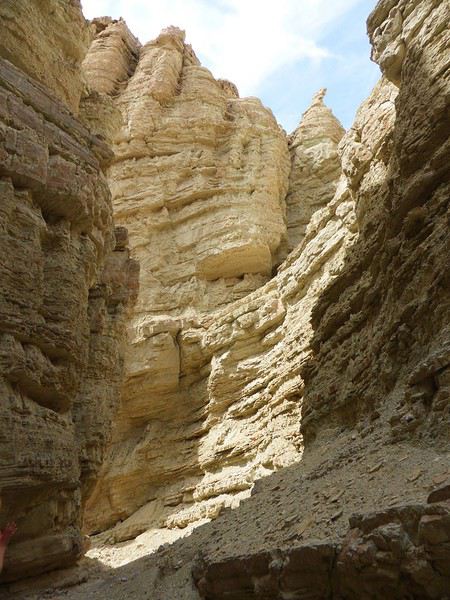
Attention il y a une grosse "marche" à descendre" d'environ 4 mètres puis une seconde de 2/3 mètres. Après quelques hésitations et études des environs, nous "désescaladons" cette partie avec précaution. Il serait plus facile de faire la boucle dans l'autre sens mais ce serait moins joli...
Vers 12h, nous sortons du canyon et remontons sur la piste (faisable en voiture, en sens unique). Nous prenons donc cette (jolie) piste aux belles couleurs malgré une lumière devenue trop crue. La piste a des airs de Death Valley, c'est le désert et plus c'est désert. Personne de près ni de loin...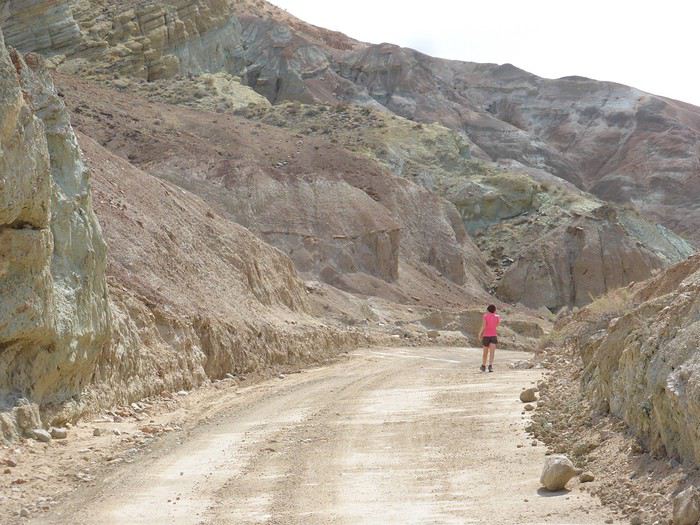
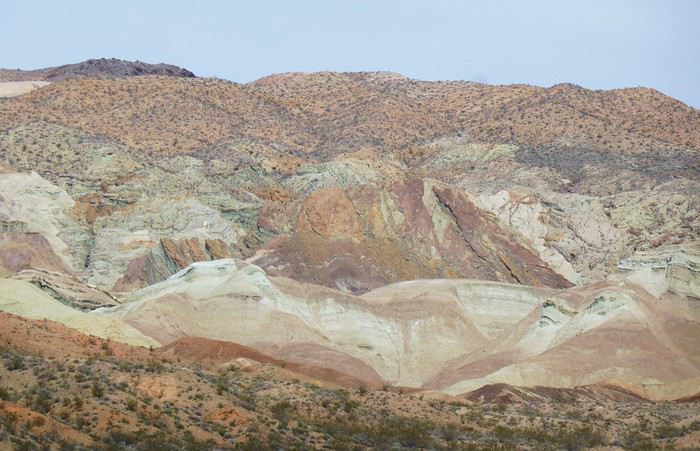
La dernière partie est commune à notre arrivée en voiture, sur la piste puis au travers du camping de Owl canyon (6$ / jour pour les campeurs, dépaysement garanti!) . Les jambes commencent à être lourdes et ce secteur n'est pas passionnant mais c'est le prix à payer pour faire la boucle... On est en mode automatique, bonne cadence. Il fait désormais très chaud (75°F).
Cette première rando Owl canyon / rainbow canyon nous a vraiment plu. 2h50 de rando, 13,5km et 400m de D+.
Petit rafraichissement à l'espace aménagé sur la piste du retour (picnic area pour les groupes)
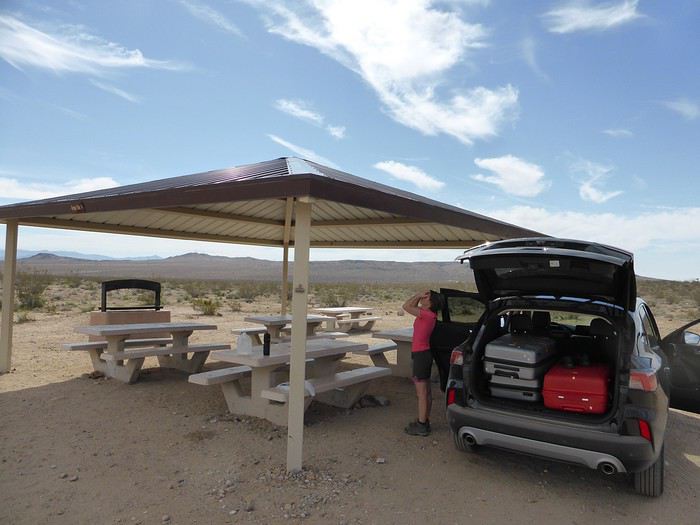
Retour vers Barstow qui essaie de revivre (sans véritable succès) en utilisant son emplacement sur la route 66
Arrêt aux outlets de Barstow que nous avions fait en 2014. Aucun achat ici, vraiment pas terrible.
Route pour Ridgecrest. Au passage, arrêt à la ghost town de Randsburg. Petite bourgade sympatique, très Old West. Tout est fermé sauf un bar. C'est sympa. L'arrêt ne nous prend que quelques minutes.
Pas de touristes ici à cette saison. Seuls quelques bikers et pilotes de quads et des locaux.
Check-in au Best western China Lake Inn de Ridecrest en fin de journée (181$ pour 2 nuits, PDJ inclus). Bel hôtel. Ridgerest est une ville où l'on trouve tout pour se ravitailler avant la Vallée de la mort (Walmart, Albertsons) à des prix abordables. Accueil charmant à l'hôtel, soirée relax ici. Jacuzzi extérieur, piscine non chauffée et glaciale. On prend plaisir à retrouver un Walmart avec nos achats pour les prochains jours. Bière, burrito salade dans la chambre. Première journée sympa. Belle entrée en matière avec la rando
A suivre...
De retour cette semaine, voici le carnet de nos dernières aventures, majoritairement dans le désert californien (petites incursions dans le Nevada et en Arizona). Nous avons eu la chance de pouvoir partir. Cela s'est joué à quelques jours mais on passera sur la phase d'incertitude et de stress les semaines et jours précédant le départ, car bien d'autres sont davantage impactés par ce coronavirus....
Au programme théorique, boucle de 15 jours depuis Los Angeles avec les alentours de Ridgecrest, Alabama Hills, Death Valley approfondie sur 3/4 jours, des belles randos autour de Las Vegas, les désert de Mojave et d'Anza Borrego, Joshua NP et Palm Springs.
Los Angeles n'est pas une ville que nous aimons, mais c'est une destination sur laquelle les compagnies (y compris les low cost long courrier) se livrent une bataille avec des prix compétitifs. Et nous voulions du soleil et ne pouvant partir qu'en dehors de la saison touristique, c'était le meilleur choix pour la rando aux states...
C'est parti pour le départ!
Jour 1: Jeudi 5 mars 2020
Après une nuit à Roissy, trajet en bus pour l'aéroport sous une forte pluie, vol Air France direct CDG LAX sans encombre. Même si le vol est long (11h30), nous avons apprécié le confort d'un vol direct et les prestations de la compagnie Air France (vol réservé au prix compétitif de 330€ hors supplément bagages et autres, tout compris 760€ / 2 avec sièges choisis et un bagage en soute / pers). L'A380 est vraiment confortable.
Arrivée à l'heure prévue (13h heure locale), il fait beau et bon (20°C). Passage de l'immigration hyper rapide, nous voyons beaucoup d'évolutions année après année: le personnel est remplacé par les machines. Tout se fait désormais par les bornes. Seul un passage rapide pour le coup de tampon. En 10 minutes, tout est plié! Récupération des bagages puis attente de la navette Alamo.
Une vingtaine de minutes plus tard, nous voici au parking Alamo. Toujours un moment de "stress" sur le type de véhicule qu'il y aura de dispo. Sans surprise, très peu de choix en Suv 4x4. Seulement un et il y a quelqu'un dedans. On prend un Ford Escape 2wd, la garde au sol est correcte, il est neuf (4000 miles au compteur), spacieux et les pneus Michelin sont bons (résa plusieurs mois à l'avance, 443 € pour 15 jours). Pour la première fois, il n'a pas été possible de valider le "Skip the counter" permettant d'éviter l'étape réputée très chiante de l'attente au guichet. Et je confirme c'est très chiant. Attente interminable, le vendeur essaie de fourguer toutes sortes d'options. Il me dit que je suis "Mr No", refusant chacune de ses propositions.
Il était prévu d'aller se balader l'après-midi au bord du Pacifique à Los Angeles, vers 3rd St, Palisades Park, Venice beach et un sunset éventuel vers Santa Monica. Mais la fatigue, le détour (par rapport à la situation de notre hôtel situé à l'Est) et la circulation très dense dans l'agglo tentaculaire de L.A nous font renoncer. Et nous avons bien fait! Nous allons mettre 1h30 pour rejoindre notre hôtel Days Inn à Artesia (choisi pour position pour la route de demain et petit dej inclus) alors qu'il n'y a que 37 km! toutes les routes sont encombrées, y compris en rusant en quittant les freeway et highway...
Bien contents d'arriver, quartier calme, parking gratuit. Quelques achats à pied au supermarché tout proche Stater Bross pour le diner de ce soir. Hôtel classique (88$), chambre spacieuse avec frigo, M-O, coin table, piscine extérieure non chauffée (et froide). Nous avons trouvé les hôtels chers cette année comparativement à l'Arizona l'année dernière à la même période.
Sunset à 17h49, c'est tôt! Diner dans la chambre et au lit à 19h30! La première nuit est toujours un moment spécial...
Jour 2: Vendredi 6 mars 2020
Le road-trip commence!! réveil évidemment très tôt, on fait l'ouverture du p'tit dèj à 6h30 (avec notre gel désinfectant en poche) et route pour Barstow pour la première rando du voyage peu connue et.. normalement peu fréquentée... Il nous faut 2 bonnes heures pour rejoindre le départ dans le secteur de Rainbow basin, au nord de Barstow. La piste après Irwin Rd est bonne, en tôle ondulée. Quelques passages sablonneux mais ok avec tout type de véhicule si temps sec (et c'est le cas). On traverse le camping de Owl canyon, chaque campeur nous salue.
Aucune voiture au trailhead (😉 !), j'aime. C'est indiqué. Il est déjà presque 10h, le soleil est levé depuis plusieurs heures (sunrise 6h14) et la luminosité n'est déjà plus optimale pour des photographes. Pour nous randonneurs, on est au top ! Il fait beau et on retrouve le plaisir des randos en tenue estivale (65° F, soit 17°C au départ)
Le parking est tout au bout de la piste. J'ai repéré 2 canyons qui semblent intéressants, peu d'infos sur le net sur ce secteur. J'ai envie de faire une boucle plutôt que 2 A/R pour chaque canyon mais je ne sais pas ce que nous allons trouvé comme type de terrain pour faire la boucle. Au programme, une assez longue boucle pour un début de voyage avec 13km mais peu de dénivelé (380m d'après ma trace gpx théorique).
Nous partons par le canyon le plus à l'est, facile à suivre.
C'est rapidement très joli
Une grande diversité, la solitude. Une tortue (morte), des belles pierres
Il nous faut une heure pour parcourir ce premier canyon, qui va vers le nord. Nous galérons à trouver un chemin qui connecte les 2 canyons. C'est un peu casse gueule par endroits (on aperçoit le sentier à droite sur la photo du dessous)
La portion qui suit est moins intéressante (après les arbres en haut de la photo). Deux belles remontées et nous piquons à gauche pour retrouver le second canyon qui va nous ramener à la piste puis à la voiture. Je n'attendais rien de cette seconde partie et nous l'avons préféré, plus ludique
Attention il y a une grosse "marche" à descendre" d'environ 4 mètres puis une seconde de 2/3 mètres. Après quelques hésitations et études des environs, nous "désescaladons" cette partie avec précaution. Il serait plus facile de faire la boucle dans l'autre sens mais ce serait moins joli...
Vers 12h, nous sortons du canyon et remontons sur la piste (faisable en voiture, en sens unique). Nous prenons donc cette (jolie) piste aux belles couleurs malgré une lumière devenue trop crue. La piste a des airs de Death Valley, c'est le désert et plus c'est désert. Personne de près ni de loin...
La dernière partie est commune à notre arrivée en voiture, sur la piste puis au travers du camping de Owl canyon (6$ / jour pour les campeurs, dépaysement garanti!) . Les jambes commencent à être lourdes et ce secteur n'est pas passionnant mais c'est le prix à payer pour faire la boucle... On est en mode automatique, bonne cadence. Il fait désormais très chaud (75°F).
Cette première rando Owl canyon / rainbow canyon nous a vraiment plu. 2h50 de rando, 13,5km et 400m de D+.
Petit rafraichissement à l'espace aménagé sur la piste du retour (picnic area pour les groupes)
Retour vers Barstow qui essaie de revivre (sans véritable succès) en utilisant son emplacement sur la route 66
Arrêt aux outlets de Barstow que nous avions fait en 2014. Aucun achat ici, vraiment pas terrible.
Route pour Ridgecrest. Au passage, arrêt à la ghost town de Randsburg. Petite bourgade sympatique, très Old West. Tout est fermé sauf un bar. C'est sympa. L'arrêt ne nous prend que quelques minutes.
Pas de touristes ici à cette saison. Seuls quelques bikers et pilotes de quads et des locaux.
Check-in au Best western China Lake Inn de Ridecrest en fin de journée (181$ pour 2 nuits, PDJ inclus). Bel hôtel. Ridgerest est une ville où l'on trouve tout pour se ravitailler avant la Vallée de la mort (Walmart, Albertsons) à des prix abordables. Accueil charmant à l'hôtel, soirée relax ici. Jacuzzi extérieur, piscine non chauffée et glaciale. On prend plaisir à retrouver un Walmart avec nos achats pour les prochains jours. Bière, burrito salade dans la chambre. Première journée sympa. Belle entrée en matière avec la rando
A suivre...