Results for "ski+|+3+>+98"
8495 results found.
Travailler à Montréal English translation pending
Je vis pour l'instant à St-Pierre et Miquelon au sud des côtes de Terre-Neuve et j'envisage peut-être d'aller au Canada. Montréal, je connais un peu et j'aime cette ville. Mon objectif serait d'y travailler pendant un an pour et profiter de l'occasion pour apprendre parfaitement l'anglais.
On m'a souvent dit que le Canada était difficile d'accès pour le travail. Je fais donc appel à tous les Montréalais et Canadiens connectés pour me renseigner.
Merci et bonne journée à tous !
Ile de Saint-Martin dans les antilles English translation pending
Bonjour à tous,
Je suis à la recherche d'infos sur l'île de Saint-Martin(F) dans les Antilles.
Je suis preneur de tout type d'infos.
D'avance merci.
Philip
Je suis à la recherche d'infos sur l'île de Saint-Martin(F) dans les Antilles.
Je suis preneur de tout type d'infos.
D'avance merci.
Philip
Tour du Québec en camping-car. English translation pending
Bonjour à toutes et à tous,
Voila, je m'appelle Didier et je suis tombé amoureux fou du Québec l'hiver dernier, lorsque j'y ai accompagné mon fils lors du tournoi pee-wee 2003, célèbre tournoi de hockey mondial au colisée pepsi de Québec...
Je compte y retourner l'été 2004 avec toute ma famille pour environ 3 semaines. Notre projet est de faire le tour du Québec en camping-car au départ de Montréal. Quelqu'un pourrait il me renseigner pour la location de camping-car (adresses, tarifs...) à Montréal ou à Québec...
Pour les itinéraires de visites je vais m'inspirer des messages déja inscrits sur ce forum, mais je suis preneur de tous renseignements...
Merci encore pour tout, québecement votre...
didier
Voila, je m'appelle Didier et je suis tombé amoureux fou du Québec l'hiver dernier, lorsque j'y ai accompagné mon fils lors du tournoi pee-wee 2003, célèbre tournoi de hockey mondial au colisée pepsi de Québec...
Je compte y retourner l'été 2004 avec toute ma famille pour environ 3 semaines. Notre projet est de faire le tour du Québec en camping-car au départ de Montréal. Quelqu'un pourrait il me renseigner pour la location de camping-car (adresses, tarifs...) à Montréal ou à Québec...
Pour les itinéraires de visites je vais m'inspirer des messages déja inscrits sur ce forum, mais je suis preneur de tous renseignements...
Merci encore pour tout, québecement votre...
didier
Où aller à Cuba? English translation pending
Bonjour,
Nous sommes un groupe de 4 amis qui veulent aller passer une semaine de rêve à cuba cet hiver (Décembre). Nous voulons savoir quel est le meilleur endroit à cuba? Nous voulons un endroit où il y a une belle plage bleu turquoise, sable blanc, pas trop de gens, divertissements++, bonne nourriture, proche de la ville.
J'attens des suggestions.
Merci!
Chantal.
😎
Nous sommes un groupe de 4 amis qui veulent aller passer une semaine de rêve à cuba cet hiver (Décembre). Nous voulons savoir quel est le meilleur endroit à cuba? Nous voulons un endroit où il y a une belle plage bleu turquoise, sable blanc, pas trop de gens, divertissements++, bonne nourriture, proche de la ville.
J'attens des suggestions.
Merci!
Chantal.
😎
Comment financer un tour du monde? English translation pending
bonjour a tous,
voila je me presente, je m'appelle anne, jai 20 ans je suis sur paris.
je bosse pr financer mon projet, partir en reportage photo et faire des livres.
j'aime la terre, la nature et je veux montrer toutes ces richesses...
Je prepare un grand voyage en asie, dont je suis tombée sous le charme depuis mon premier voyage en thailande!!!😏
nous sommes deux, nous commencons a faire des calculs budjetaire pour un grand voyage de environ minimum 6 mois a 1ans...
je ne sais pas trop comment commencer si ce n'est que economiser...avez vous des truc, des conseils ou des exemples...(genre petit boulot a l'etranger)
comment faites vous en generale pour reunir autant d'argent, combien environ c'est surtout ca que je veux savoir...
je voyage assez modestement, routard quoi mais pas inconsciente...
voila, j'espere que vous pourrez m'aider...OHHH voui j'espere...
gros bisous a tous...
anne
voila je me presente, je m'appelle anne, jai 20 ans je suis sur paris.
je bosse pr financer mon projet, partir en reportage photo et faire des livres.
j'aime la terre, la nature et je veux montrer toutes ces richesses...
Je prepare un grand voyage en asie, dont je suis tombée sous le charme depuis mon premier voyage en thailande!!!😏
nous sommes deux, nous commencons a faire des calculs budjetaire pour un grand voyage de environ minimum 6 mois a 1ans...
je ne sais pas trop comment commencer si ce n'est que economiser...avez vous des truc, des conseils ou des exemples...(genre petit boulot a l'etranger)
comment faites vous en generale pour reunir autant d'argent, combien environ c'est surtout ca que je veux savoir...
je voyage assez modestement, routard quoi mais pas inconsciente...
voila, j'espere que vous pourrez m'aider...OHHH voui j'espere...
gros bisous a tous...
anne
Breezes Costa Verde à Holguin English translation pending
J'aimerais beaucoup aller au Breezes Costa Verde de Holguin fin novembre, début décembre.
Alors, si vous avez des informations concernant cet endroit, je suis preneur.
Merci beaucoup 😎
Alors, si vous avez des informations concernant cet endroit, je suis preneur.
Merci beaucoup 😎
Marrakech et Agadir cet été English translation pending
bonjour tout le monde,
je suis un marocain de 17 ans qui vit à casablanca & qui voyagent toutes l'année un peu partout au MAROC !
si quelqun est interessé par des rencontres ( en tout bien tout honneur ) je suis là
@ bon entendeur salut 😏
je suis un marocain de 17 ans qui vit à casablanca & qui voyagent toutes l'année un peu partout au MAROC !
si quelqun est interessé par des rencontres ( en tout bien tout honneur ) je suis là
@ bon entendeur salut 😏
Budget ouest canadien English translation pending
Bonjour à tous!
Je sollicite votre aide: je pars ds l'ouest canadien, visiter Banff, Jasper, Wistler, Vancouver et son île, puis le Yukon. Le tout, pendant 3-4 semaines.
J'aurais besoin de gens qui ont fait ce trip et qui peuvent m'en parler: budget, transports, destinations, coups de coeur, conseils. Je pars en sac à dos, mais je ne sais pas trop si je suis mieux de faire du camping ou non. Qu'en pensez-vous?
Merci, Christine
Je sollicite votre aide: je pars ds l'ouest canadien, visiter Banff, Jasper, Wistler, Vancouver et son île, puis le Yukon. Le tout, pendant 3-4 semaines.
J'aurais besoin de gens qui ont fait ce trip et qui peuvent m'en parler: budget, transports, destinations, coups de coeur, conseils. Je pars en sac à dos, mais je ne sais pas trop si je suis mieux de faire du camping ou non. Qu'en pensez-vous?
Merci, Christine
La vallée des Aït Bouguemez au Maroc English translation pending
Salut, 🙂
Je recherche des infos concernant cette vallée au Maroc. Je souhaite surtout savoir si elle est accessible même quand on n'est pas motorisé et d'où il faut partir.
Quelles sont les possibilitées de logement?
Je cherche bien sur à y aller pour randonner. Est il possible d'y randonner (à la journée ou sur plusieurs jours) seul ou faut il un guide?
Bref toute info pour un routard qui ne cherche pas vraiment les hotels climatisés😉
merci par avance pour vos éventuelles réponses
Je recherche des infos concernant cette vallée au Maroc. Je souhaite surtout savoir si elle est accessible même quand on n'est pas motorisé et d'où il faut partir.
Quelles sont les possibilitées de logement?
Je cherche bien sur à y aller pour randonner. Est il possible d'y randonner (à la journée ou sur plusieurs jours) seul ou faut il un guide?
Bref toute info pour un routard qui ne cherche pas vraiment les hotels climatisés😉
merci par avance pour vos éventuelles réponses
France: randonnée dans le Vercors English translation pending
Hello
Après avoir vu le film "Les Papillons" avec Michel Serrault, j'ai très envie de découvrir le Vercors... Je ne connais absolument pas... Je cherche des info sur cette région, surtout au niveau de la randonnée pédestre.... Alors tous vos conseils, avis, photos etc sont les bienvenus... Y a-t-il des camping dans la région ?
Merci d'avance 🙂
FeeBleue
Après avoir vu le film "Les Papillons" avec Michel Serrault, j'ai très envie de découvrir le Vercors... Je ne connais absolument pas... Je cherche des info sur cette région, surtout au niveau de la randonnée pédestre.... Alors tous vos conseils, avis, photos etc sont les bienvenus... Y a-t-il des camping dans la région ?
Merci d'avance 🙂
FeeBleue
Spitzberg (Norvège): budget, guide, précautions English translation pending
Salut à tous;
je recherche des infos concernant le Spitzberg; à savoir: comment circuler là bas quelles précautions à prendre (nottament contre les ours) y-a-t-il obligation / recommandation d'avoir un guide? comment se rendre sur les iles du Nord comment se ravitailler le budget à prévoir (hors transport continent-spitzberg)
je recherche des infos concernant le Spitzberg; à savoir: comment circuler là bas quelles précautions à prendre (nottament contre les ours) y-a-t-il obligation / recommandation d'avoir un guide? comment se rendre sur les iles du Nord comment se ravitailler le budget à prévoir (hors transport continent-spitzberg)
The Cathar Castles Road
I’ve had the chance to visit friends in the Aude region—Cathar country—several times and explore this area between Leucate and Carcassonne, including the famous Corbières Road 20 and the Cathar Castles Road.
Check out my article for a list of the castles and abbeys to visit along this route. Read the full post soon, and I look forward to hearing from you! Post
Check out my article for a list of the castles and abbeys to visit along this route. Read the full post soon, and I look forward to hearing from you! Post
Off on a winter adventure in the American West!
Day 1 – February 14
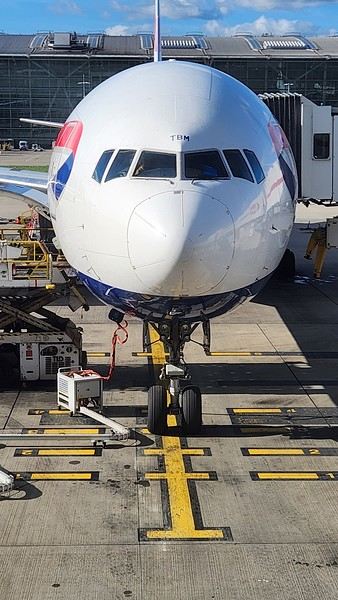
We all have two lives. And the second one kicks off the day you realize you only have one, with the determination to spend the time you have left on what truly adds sparkle to your life, Kevin! I like to elegantly introduce a trip with a philosophical quote. First, it gives you the illusion that I’m some kind of deep thinker, and second, it lets me fill up the first few lines of my blank page when I don’t know how to tell you I’m diving back into what really lights up my life: another adventure beyond the horizon! And nearly every other year, like a toxic relationship, my horizon tends to take shape in Uncle Sam’s backyard. And this, despite his cousin Donald calling the shots. Speaking of which, it was partly that impulsive guy who pushed us to be just as impulsive and snag our four flight tickets at a ridiculously low price—a direct result of foreign tourism taking a hit from BetaMax’s repeated antics... Four tickets? Who are the other lucky ones? In this case, our lucky ones are actually lucky ladies: My Flo, always up for exploring the world with me on foot, camelback, or scooter, is obviously in on the fun. The other two seats went to our daughters, Sasha and Luna, both thrilled to be part of this new American adventure...
But what’s the American West like in February?... A gamble. Let’s call it Russian roulette since we’re not landing during peak weather season. That’s why we encouraged our transportation and accommodation to get cozy and produce a little camper van, so we can stay ultra-flexible in the face of any weather tantrums. We’ll be roaming in Kara the van with the motto "Follow the sun!" Bad weather? We bolt. Snow? We speed up. Sunny? We act like it was the plan all along and soak it up.
"Okay, but why keep coming back to the same corner of the globe? After ten American adventures, you must be tired of seeing the same things, right?" But I’m not crazy, you know!... The American West is like making love to your gorgeous wife over and over, always enjoying it just as much. And contrary to what you might think, the American West isn’t just the Grand Canyon, Monument Valley, Las Vegas, and Bryce Canyon. Proof is, after ten trips to the U.S., my retinas are still untouched by three-quarters of the places I scribbled on a napkin for this adventure... Oh, and add to that my wife, who I’ve easily converted to my religion, and boom... relapse is even easier! Because yes, we’ve landed in Los Angeles after a sunny flight over Greenland, still under Danish flag for now. And we’re already heading east through the XXL traffic of L.A.’s eight-lane highways, eager to dive into our first discoveries. But first, night is taking over the sky, and second, we’ve been officially awake for 24 hours, so I suggest wrapping up this intro. I’ll tell you more tomorrow morning. Sound good?

We all have two lives. And the second one kicks off the day you realize you only have one, with the determination to spend the time you have left on what truly adds sparkle to your life, Kevin! I like to elegantly introduce a trip with a philosophical quote. First, it gives you the illusion that I’m some kind of deep thinker, and second, it lets me fill up the first few lines of my blank page when I don’t know how to tell you I’m diving back into what really lights up my life: another adventure beyond the horizon! And nearly every other year, like a toxic relationship, my horizon tends to take shape in Uncle Sam’s backyard. And this, despite his cousin Donald calling the shots. Speaking of which, it was partly that impulsive guy who pushed us to be just as impulsive and snag our four flight tickets at a ridiculously low price—a direct result of foreign tourism taking a hit from BetaMax’s repeated antics... Four tickets? Who are the other lucky ones? In this case, our lucky ones are actually lucky ladies: My Flo, always up for exploring the world with me on foot, camelback, or scooter, is obviously in on the fun. The other two seats went to our daughters, Sasha and Luna, both thrilled to be part of this new American adventure...
But what’s the American West like in February?... A gamble. Let’s call it Russian roulette since we’re not landing during peak weather season. That’s why we encouraged our transportation and accommodation to get cozy and produce a little camper van, so we can stay ultra-flexible in the face of any weather tantrums. We’ll be roaming in Kara the van with the motto "Follow the sun!" Bad weather? We bolt. Snow? We speed up. Sunny? We act like it was the plan all along and soak it up.
"Okay, but why keep coming back to the same corner of the globe? After ten American adventures, you must be tired of seeing the same things, right?" But I’m not crazy, you know!... The American West is like making love to your gorgeous wife over and over, always enjoying it just as much. And contrary to what you might think, the American West isn’t just the Grand Canyon, Monument Valley, Las Vegas, and Bryce Canyon. Proof is, after ten trips to the U.S., my retinas are still untouched by three-quarters of the places I scribbled on a napkin for this adventure... Oh, and add to that my wife, who I’ve easily converted to my religion, and boom... relapse is even easier! Because yes, we’ve landed in Los Angeles after a sunny flight over Greenland, still under Danish flag for now. And we’re already heading east through the XXL traffic of L.A.’s eight-lane highways, eager to dive into our first discoveries. But first, night is taking over the sky, and second, we’ve been officially awake for 24 hours, so I suggest wrapping up this intro. I’ll tell you more tomorrow morning. Sound good?
Our road trip through the American Southwest for summer 2026
Hello! The itinerary is pretty much set for August 2026. Yeah, I know it’s gonna be *super* hot. But it’s the only time we can get away.
So, here’s the plan: Montpellier-CDG-Dallas.
Stay from July 31 to August 26, 2026: Car rental – check, Hotels – check, Itinerary – almost check, Photo gear – check, Budget – check, 🤪 Meal planning – meh, we’ll see... Walmart, of course, for the cooler when we arrive.
And now, without too much detail...
Fort Worth: The Longhorns and the Stockyards; JR’s ranch (for the missus); Medal of Honor Museum – Arlington.
Houston and NASA Space Center: See the Gulf of Mexico/America.
San Antonio and the missions.
Fort Stockton for an overnight stop.
El Paso via Guadalupe Mountains: El Paso and White Sands.
Tucson and the Pima Air & Space Museum: Tombstone, Bisbee.
Phoenix:
Still working on the program.
Sedona: Round trip around the area via Flagstaff and Williams, or the Grand Canyon (already done) – we’ll decide on the spot.
Albuquerque: Santa Fe, Turquoise Trail, Los Alamos.
Amarillo via Route 66: Old Route 66 in the city; Big Texas Ranch Steak 😏.
Dallas: JFK Museum; Perot Museum; West End district.
And through it all – the road, the road, and more road!!!
We’ll adapt day by day based on our mental and physical state (we’re not exactly spring chickens).
Return to France: Dallas-Montpellier via CDG.
Cheers!
So, here’s the plan: Montpellier-CDG-Dallas.
Stay from July 31 to August 26, 2026: Car rental – check, Hotels – check, Itinerary – almost check, Photo gear – check, Budget – check, 🤪 Meal planning – meh, we’ll see... Walmart, of course, for the cooler when we arrive.
And now, without too much detail...
Fort Worth: The Longhorns and the Stockyards; JR’s ranch (for the missus); Medal of Honor Museum – Arlington.
Houston and NASA Space Center: See the Gulf of Mexico/America.
San Antonio and the missions.
Fort Stockton for an overnight stop.
El Paso via Guadalupe Mountains: El Paso and White Sands.
Tucson and the Pima Air & Space Museum: Tombstone, Bisbee.
Phoenix:
Still working on the program.
Sedona: Round trip around the area via Flagstaff and Williams, or the Grand Canyon (already done) – we’ll decide on the spot.
Albuquerque: Santa Fe, Turquoise Trail, Los Alamos.
Amarillo via Route 66: Old Route 66 in the city; Big Texas Ranch Steak 😏.
Dallas: JFK Museum; Perot Museum; West End district.
And through it all – the road, the road, and more road!!!
We’ll adapt day by day based on our mental and physical state (we’re not exactly spring chickens).
Return to France: Dallas-Montpellier via CDG.
Cheers!
Societal Evolution
Hello everyone,
It’s something we often notice in this forum—and many others—this behavioral shift.
A long-time member, or even a new one, asks a question. They get one or more answers, some brief, some detailed, and then... nothing???
Not even a simple thank you!!!
From what I’ve gathered, if the answers don’t align with what they wanted to hear, it seems natural for the asker to just disappear!! 😕 Unless—(and I fear this is the case)—basic politeness is no longer part of our society????
Please forgive my little rant.
Wishing everyone all the best. Cheers,
Puma2A

...
It’s something we often notice in this forum—and many others—this behavioral shift.
A long-time member, or even a new one, asks a question. They get one or more answers, some brief, some detailed, and then... nothing???
Not even a simple thank you!!!
From what I’ve gathered, if the answers don’t align with what they wanted to hear, it seems natural for the asker to just disappear!! 😕 Unless—(and I fear this is the case)—basic politeness is no longer part of our society????
Please forgive my little rant.
Wishing everyone all the best. Cheers,
Puma2A
...
Some trips are born twice - Peru April - May 2025
Some trips are born twice.
Ours was supposed to happen in 2020. Everything was ready: the itinerary, the flight tickets, hotel reservations and Machu Picchu, the rental car, dreams of high altitudes and wide-open spaces. And then the world stopped.
Like so many other plans, our trip to Peru was put on hold. Disappointment was followed by a more concrete reality: paperwork, endless back-and-forth, and battles to recover some of the costs we’d already paid.
The years went by. Life moved on, with its shifting priorities and unexpected twists. Rescheduling this trip wasn’t possible until 2025.
The itinerary stayed mostly true to what we’d imagined five years earlier. One major difference, though—in 2020, we’d planned to rent a car and explore the roads completely independently. Most importantly, we hadn’t included the three-day Ausangate trek, due to lack of time.
For 2025, our plans evolved. 4x4 rental prices had skyrocketed, and when we looked at our schedule more closely, we realized quite a few days didn’t actually need a vehicle. So we made a different choice and opted for private drivers instead. A decision we never regretted. Always punctual, thoughtful, and available... they were so much more than just drivers.
All our reservations were made in January, except for the trek, which we booked in February.
Finding reliable drivers on our own was tough, so we asked Laurent from Tout Pérou to handle it for us. Going through Tout Pérou also gave us a discount on the train ride to Aguas Calientes, so Laurent booked those tickets too. He also bought our Machu Picchu entrance tickets at the same price we would’ve paid on the official website. When comparing domestic flight prices, we found it was cheaper to book from Peru, so Laurent took care of those as well.
This time, nothing was going to stop us. Peru was waiting. And we were ready. 🙂
Ours was supposed to happen in 2020. Everything was ready: the itinerary, the flight tickets, hotel reservations and Machu Picchu, the rental car, dreams of high altitudes and wide-open spaces. And then the world stopped.
Like so many other plans, our trip to Peru was put on hold. Disappointment was followed by a more concrete reality: paperwork, endless back-and-forth, and battles to recover some of the costs we’d already paid.
The years went by. Life moved on, with its shifting priorities and unexpected twists. Rescheduling this trip wasn’t possible until 2025.
The itinerary stayed mostly true to what we’d imagined five years earlier. One major difference, though—in 2020, we’d planned to rent a car and explore the roads completely independently. Most importantly, we hadn’t included the three-day Ausangate trek, due to lack of time.
For 2025, our plans evolved. 4x4 rental prices had skyrocketed, and when we looked at our schedule more closely, we realized quite a few days didn’t actually need a vehicle. So we made a different choice and opted for private drivers instead. A decision we never regretted. Always punctual, thoughtful, and available... they were so much more than just drivers.
All our reservations were made in January, except for the trek, which we booked in February.
Finding reliable drivers on our own was tough, so we asked Laurent from Tout Pérou to handle it for us. Going through Tout Pérou also gave us a discount on the train ride to Aguas Calientes, so Laurent booked those tickets too. He also bought our Machu Picchu entrance tickets at the same price we would’ve paid on the official website. When comparing domestic flight prices, we found it was cheaper to book from Peru, so Laurent took care of those as well.
This time, nothing was going to stop us. Peru was waiting. And we were ready. 🙂
Veneto: Dolomites and Opera
I'm starting a new travel journal in Italy.
It's about a month-long trip (from September 3, 2025, to October 4, 2025), or rather a part of it. This section matches the title: an opera festival in Verona (one evening) and the Dolomites in the Veneto region.
I'm posting the part of the trip I think will interest French-speaking readers the most (since this is where I saw the most French travelers).
Here’s a quick summary:
- Trip in September 2025
- Solo travel with camping (caravan)
- Small geographic area: besides Verona, the surroundings of the Marmolada massif and Cortina d'Ampezzo.
- Main but not exclusive activity: hiking.
Since I have limited internet access where I am now, I’ll be writing slowly. Here we go!
Day 1: Thursday, September 4, 2025
I arrived in Veneto under the sun and with warm weather. I drove to Verona and tried to find a spot at the campsite (Verona Village) located south of the city. Unfortunately, it was full. Booking on the website was mandatory, but when I tried to reserve a few days ago, the site never moved from the "reservation" step to the "payment" step (I don’t know why—it’s always like that in these cases). I found another solution over the phone; the drive from southern Verona to the northeast was a bit long, but I finally settled at the "Oro Verde" campsite. It’s an "agricampeggio" (farm camping or rural campsite) on the outskirts of the city, and its name (green gold) suggests they produce olives there. Since it wasn’t late, I biked to the Adige River, following the recommended route into the city.
Since I have limited internet access where I am now, I’ll be writing slowly. Here we go!
Day 1: Thursday, September 4, 2025
I arrived in Veneto under the sun and with warm weather. I drove to Verona and tried to find a spot at the campsite (Verona Village) located south of the city. Unfortunately, it was full. Booking on the website was mandatory, but when I tried to reserve a few days ago, the site never moved from the "reservation" step to the "payment" step (I don’t know why—it’s always like that in these cases). I found another solution over the phone; the drive from southern Verona to the northeast was a bit long, but I finally settled at the "Oro Verde" campsite. It’s an "agricampeggio" (farm camping or rural campsite) on the outskirts of the city, and its name (green gold) suggests they produce olives there. Since it wasn’t late, I biked to the Adige River, following the recommended route into the city.
Which neighborhood to choose for staying in Bangkok?
Hi,
I’m heading to Thailand for the first time in early 2026 and I’m really struggling to pick a neighborhood to stay in Bangkok. Apart from being close to public transport (metro, skytrain, BRT), I’m torn between several areas. I don’t mind using public transport or walking long distances, but if every trip takes 45 minutes or an hour, it’ll quickly become a hassle given our relatively short time there.
We’ll be in Bangkok twice during our trip: first for a “short” 2-night stopover (arriving from France in the mid-afternoon, then leaving the day after next for southern Thailand by plane), and then again for 3 nights before flying back to France (arriving at the airport in the late afternoon, 3 nights there, then departing for France in the late morning).
I’ve seen so many different recommendations that I’m having a hard time deciding. I’ve read that staying near the river is great for sightseeing, and that taking the boat to get around is really pleasant. But I’m worried about being a bit isolated for evening outings (eating at a cheap little restaurant, having a drink—nothing too wild!).
Chinatown is tempting for the food—it looks amazing—and it doesn’t seem too far from the main sights with public transport. But I’ve read that it’s very noisy because it’s super touristy and there’s constant truck traffic. My friend isn’t thrilled about it, especially since another neighborhood interests her because she has a great discount at a hotel near Victory Monument/Phaya Thai (the Pullman hotel). Even though it’s close to public transport, I’ve seen that it’s mostly a shopping district? And even with transport, isn’t it a long trip to visit places like the Grand Palace?
We also had a plan to stay at an ibis near BTS Nana station in the Sukhumvit area, but again, I get the feeling it’s mostly a shopping district?
Anyway, I’d love to hear your thoughts because I’m really torn!
It’s also true that I haven’t really planned our Bangkok stays yet. I’d like to do the “classic” tourist sights like the Grand Palace and eat really well! Someone told me that the big shopping malls also have amazing food 🙂
Thanks for your input!
We’ll be in Bangkok twice during our trip: first for a “short” 2-night stopover (arriving from France in the mid-afternoon, then leaving the day after next for southern Thailand by plane), and then again for 3 nights before flying back to France (arriving at the airport in the late afternoon, 3 nights there, then departing for France in the late morning).
I’ve seen so many different recommendations that I’m having a hard time deciding. I’ve read that staying near the river is great for sightseeing, and that taking the boat to get around is really pleasant. But I’m worried about being a bit isolated for evening outings (eating at a cheap little restaurant, having a drink—nothing too wild!).
Chinatown is tempting for the food—it looks amazing—and it doesn’t seem too far from the main sights with public transport. But I’ve read that it’s very noisy because it’s super touristy and there’s constant truck traffic. My friend isn’t thrilled about it, especially since another neighborhood interests her because she has a great discount at a hotel near Victory Monument/Phaya Thai (the Pullman hotel). Even though it’s close to public transport, I’ve seen that it’s mostly a shopping district? And even with transport, isn’t it a long trip to visit places like the Grand Palace?
We also had a plan to stay at an ibis near BTS Nana station in the Sukhumvit area, but again, I get the feeling it’s mostly a shopping district?
Anyway, I’d love to hear your thoughts because I’m really torn!
It’s also true that I haven’t really planned our Bangkok stays yet. I’d like to do the “classic” tourist sights like the Grand Palace and eat really well! Someone told me that the big shopping malls also have amazing food 🙂
Thanks for your input!
Bright red and a headache
Hello 🙂
I should be serving a warming drink to the participants in the discussion about gardens and parks that provide us with beautiful photos, I could mention the delicious buttery scent wafting from bakeries in the thread about returning to France, but my heart, its powerful pulse that nourishes my entire being, is elsewhere.
Dasht-e Lut, Yazd, Esfahan, Bam, Kerman, Qeshm, Hormuz—a melody, a prayer at the heart of desire.
A dream, an unattainable fantasy? No. Not anymore. A very serious Italian travel agency is organizing this trip for 6 people this winter. I’m signed up, I’m going, I’m living. Maybe.
"But you’re completely crazy!!!!"
I know... I know that every civilization, every society has a vital need to create scapegoats to define and justify itself, pathetically. And Iran is one of them, top of the list. I laugh or sigh, and it doesn’t bother me.
But that unchanging red, deep red and garnet, so beautiful in itself, in all the Western chancelleries repeats, whispers, shouts: don’t go, don’t go, don’t go, you’re putting yourself in danger and we can’t do anything for you. You’ll be turned into mere bargaining chips, into arguments for endless negotiations. Fear must be instilled, its power absolutely preserved, no concessions made to the enemy. The information (how many French hostages, real or fake, compared to the number of travelers?) is always lacking.
Traveling becomes a merciless confrontation between desire, the vital pulse, and anxiety, its ghosts.
Catherine
I should be serving a warming drink to the participants in the discussion about gardens and parks that provide us with beautiful photos, I could mention the delicious buttery scent wafting from bakeries in the thread about returning to France, but my heart, its powerful pulse that nourishes my entire being, is elsewhere.
Dasht-e Lut, Yazd, Esfahan, Bam, Kerman, Qeshm, Hormuz—a melody, a prayer at the heart of desire.
A dream, an unattainable fantasy? No. Not anymore. A very serious Italian travel agency is organizing this trip for 6 people this winter. I’m signed up, I’m going, I’m living. Maybe.
"But you’re completely crazy!!!!"
I know... I know that every civilization, every society has a vital need to create scapegoats to define and justify itself, pathetically. And Iran is one of them, top of the list. I laugh or sigh, and it doesn’t bother me.
But that unchanging red, deep red and garnet, so beautiful in itself, in all the Western chancelleries repeats, whispers, shouts: don’t go, don’t go, don’t go, you’re putting yourself in danger and we can’t do anything for you. You’ll be turned into mere bargaining chips, into arguments for endless negotiations. Fear must be instilled, its power absolutely preserved, no concessions made to the enemy. The information (how many French hostages, real or fake, compared to the number of travelers?) is always lacking.
Traveling becomes a merciless confrontation between desire, the vital pulse, and anxiety, its ghosts.
Catherine
15-Day Road Trip Recap: Colorado and New Mexico
Hello, here’s a totally subjective recap of our 15-day road trip between Colorado and New Mexico, from late September to mid-October.
Our main interests are culture, museums, and landscapes—no hiking or trails for us. Personally, I’m pretty contemplative, and luckily, there’s always something to see out there! We’re pretty used to the US; we’ve been going there often for a long time (let’s just say we’re not exactly young anymore).
Budget: Even though we don’t set a strict budget beforehand, we try to keep costs as low as possible. This time, we managed to spend around 4000 € for two, all included. To do this: avoid expensive accommodations, staying between 60 and 120 € per night with an average of 90 €/night, mixing Airbnb and motels. And skip the “real” restaurants, which are pretty pricey in the US: sandwiches for lunch, takeout or cooking in the Airbnb in the evening. We shop at Sprouts or Whole Foods—organic-style chains that are pricier than Walmart but better. In the evenings, Sprouts has discounts on items that didn’t sell during the day. Also, avoid toll roads, paid parking, and overly expensive attractions or sites. The dispensary budget is separate…
Route: Denver/Colorado Springs/Alamosa/Raton/Santa Fe/Cuba/Cortez/Grand Junction/Glenwood Springs/Denver This wasn’t too planned in advance—we booked a few nights upon arrival and went with the flow. Flight from CDG to Denver with AF/Delta, car rental at Dollar for a standard SUV. The guy at the Dollar counter upsold me on extra insurance for flat tires (and since I knew we’d be off-roading, I took it). Without telling me, he upgraded me to a Jeep Sahara 4X4 Hybrid. Nice.
Listening to the news upon arrival, the anchor announced, “It’s officially fall now.” We hadn’t really thought about that before leaving, but yeah—it’s the time when the trees turn fluorescent yellow and red. Amazing.
Colorado Springs: Garden of the Gods is a free park with paved trails winding through red/orange rock formations. Magical at sunrise—groups of deer roam around, along with birds and rabbits. It’s small but wow! Didn’t try the Manitou Incline in Manitou Springs, a staircase with thousands of steps going straight up the mountain. Impressive from the bottom, but the parking is paid, which is a downside for those willing to tackle it. The Cog Railway goes up to the summit of Pikes Peak—around $100 when we were there. No thanks. And of course, the parking is paid too. For fans, Maggie’s Farm dispensary is great.
On Route 24, Eleven Mile Canyon Recreation Area is fly-fishing paradise—just like in the movie *A River Runs Through It*. Entry is $11, and a trail follows the river at the bottom of the canyon to the dam. Dozens of people in waders are in the water, casting their lines over and over. You can see the salmon in the clear water, and we had a picnic in the sun, imagining Brad Pitt catching a fish.
Buena Vista: A cute little tourist town with an Outdoor Fair that day—some pretty impressive vehicles for sale, set up for mountain living (like Juniper outfitting a RAM).
Alamosa: The closest town to Great Sand Dunes National Park, crossed by the Rio Grande (and let’s be real—it’s more of a stream than a river!). Park access was free because it was National Park Day. A park with massive dunes—climbing them is pretty exhausting, with lots of wind and sinking sand. Glad we didn’t do it in summer; I can’t imagine how tough it’d be in the heat. It’s a bit deceptive: it looks easy to get to the top of a dune, but it’s really not. The campsites were nice, and it was busy that weekend. We passed the “Point of No Return,” a sandy trail winding through the hills and connecting to Route 559 from above. Didn’t go all the way, but it’s possible the entrance is free from that side. However, you need a 4X4 with good ground clearance. After 1 or 2 km on the trail, you’re alone between the dunes and hills—hardly anyone around. But tricky to turn around or pass other vehicles; the trail isn’t wide. We crossed paths with a Hanomag (registered in the Netherlands—impressive!) coming down without stopping, or risking getting stuck.
On the way out, we took the small Route 403, which quickly turns into a trail crossing the mountain. Entire sections of forest were turning fluorescent yellow with patches of green and red—an incredible sight.
Raton: A small town that probably peaked in the late 19th century and has been in slow decline ever since. The Raton Pass Motor Inn is the kind of place that makes the US legendary—entirely 50s and 60s decor, really well done. I had the Betty Page room—too cool. Felt like we were on Route 66. Even better.
Santa Fe: A small city with no high-rises—almost all low-rise buildings, many in adobe, blending perfectly into the landscape. The old downtown is touristy but nice, with its plaza and church. There’s a really cool vibe—we loved it. For drinks, the bar at the top of La Fonda Hotel was packed for sunset, with a diverse crowd. Not overpriced for the location. SITE Santa Fe is a contemporary art space near the train station. It’s free, and the temporary exhibit was really good—high quality. Museum Hill is, as the name suggests, where several museums are located. We visited the Museum of Indian Art and Culture—great if you’re into “First Nations” history. Saw The Dandy Warhols at The Bridge—an outdoor venue, one of the last concerts of the season before winter makes it too cold. Oddly, there was no bag check, just an ID required (even though it was obvious we were over 21!). Tickets were reasonable, around $30 (concerts in the US can be crazy expensive). The band was good, with fewer than 300 people in front. A sign at the bar warned: Don’t forget you’re at 1,500 meters—alcohol hits harder up here!
Albuquerque: A sprawling city with an old historic center that feels a bit like Disneyland—too perfect for my taste. The real highlight is the Sandia Peak Tramway, which goes up to the old ski resort above the city. Tickets are around $35, and it’s worth it—the ride over the canyons is pretty wild. The ski resort is a bit abandoned; apparently, like elsewhere, there’s no snow anymore. I asked several people about the lack of snow, and the answer was always the same: “It’s cyclical.” Okay then. We arrived for the start of the International Balloon Fiesta (one of the world’s largest hot-air balloon gatherings), hoping to see hundreds of balloons in the sky. Nope—windy today, so no one took off. Bummer.
Las Vegas: New Mexico has its own Las Vegas, but it’s nothing like the other one—a sleepy little town with a perfectly preserved 19th-century Historic Plaza Hotel, brick buildings, and vintage streetlights. Everything is so well-preserved it’s often used as a filming location. NM attracts a lot of productions thanks to tax incentives and its Western landscapes—and it’s cheaper than California! That day, a huge Texas flag was flying in the wind: they were filming the second season of *Ransom Canyon* for Netflix in the town center. If we’d been dressed more “Western,” we could’ve been extras.
Jemez Springs: Its Jemez Hot Springs is super cute—several thermal pools at different temperatures, a New Age vibe. The pools are surrounded by big rocks, and you’re asked to speak softly. A place where you could spend hours. $50 for two hours for two.
Los Alamos: A town made legendary by the bomb, the movie, etc. Heads up: It’s still a research center, and to cross part of the town, you need to show ID. No stopping or taking photos allowed. Other than the Oppenheimer House (currently closed—only the neighboring house is open to visitors), there’s not much to see. There’s a replica of the camp entrance, but it’s been turned into restrooms.
Georgia O’Keeffe Trail (American painter, 1887–1986): Her museum in Santa Fe is pretty good, even if they don’t have tons of works. Entry is $20. Her house in Abiquiu is open for visits, but it’s way overpriced at $65. So we skipped it. You can get an idea of it by stopping at the Welcome Center on Route 84. Further down the same road, Ghost Ranch is worth a visit—beautiful setting, free to enter, with trails to explore and a great atmosphere.
Chaco Culture National Historical Park: A pretty isolated park—25 km of trails to get there, with only a small section paved. The road is decent except for the last few kilometers, which have potholes. I can’t imagine it being accessible after rain, though that doesn’t happen often! This park, in the middle of a desert plain with a few canyons, is one of the rare places where you can find multi-story structures from pre-Columbian civilizations—so, before the “current” tribes. But cruel disappointment: it’s been shut down for a few days. We met a Native ranger—tall, with long hair—who explained that even though he wasn’t being paid, he was still guarding the park and had closed all access to the sites. Darn. Turned around and headed back down the trail.
Same story in the next town, Aztec (a funny name, right?): Aztec Ruins National Monument was closed too.
We passed Ship Rock, the Navajo’s sacred mountain—really impressive. Couldn’t find a trail to get closer, but it’s better from a distance anyway! The town of Shiprock itself is pretty depressing—poor living conditions for some Natives, with rundown mobile homes and piles of junk cars.
Stopped in Cortez to visit Mesa Verde National Park. Ate at Denny’s—hadn’t been there in ages (though it’s the kind of place I should feel at home in!). The customers all looked like they’d stepped out of *The Addams Family*—a little creepy. Or funny, depending on your perspective. For Mesa Verde, after discussing it on this forum with the honorable member Caussat (who didn’t find it that amazing), we were on the fence. Problem solved: it was closed too. Back on the road.
Durango: Really nice with its Main Ave and its shops, cafés—touristy but with local life. Famous for its tourist train to Silverton, but we didn’t do it—way too expensive. Choice between a steam locomotive or diesel (which belches black, stinky smoke—yuck). The diesel should be replaced with electric as soon as they get the funds.
Million Dollar Highway: The road winds through the mountains, and every turn (and there are a lot) is breathtaking—unbelievable landscapes with fluorescent yellow, green, and snow-capped mountains. Just wow.
Silverton: A Western town nestled between two mountains, preserved in its original state despite the tourists arriving by train. Around it, abandoned mines and old wooden ties—must’ve been tough for the 19th-century miners.
Grand Junction: The city is surrounded by giant mesas—pretty impressive. The old downtown is *too* clean—almost sterile.
Colorado National Monument: Just outside the city, a winding road climbs between stunning canyons, with sweeping views of the valley. Entry was free that day due to the shutdown.
Route 330, which we took to get back to the highway, passes through a place called “Cowboy Country”—and it’s true. We saw guys in Stetsons with huge pickups, the road turned into a trail with cows wandering on it, and we had to honk to get them to move. The trail to I-70 was full of potholes—the 4X4 came in handy. Had a picnic by Vega Reservoir: the booth at the entrance was empty, but people left cash in envelopes for camping fees. Anyone passing by could’ve taken it, but it’s an example of US trust and honesty!
Glenwood Springs: A small town famous for its hot springs pool—they claim it’s the largest in the world. I don’t know about that, but it has a great look. Unfortunately, it was closed for maintenance those days! Blew our budget by staying at the Hotel Colorado, a huge 1893 building with a real atmosphere in its grand lobby and fake fireplaces. Fire pits in front of wooden chairs in the garden with mountain views—just really great.
Aspen: The billionaires’ ski resort, but surprisingly, parking was free for 2 hours. Rare to see a place for the super-rich that doesn’t scream “not for you” (like Palm Beach, for example). A former mining town completely redone, every shop occupied by a luxury brand. There’s even a thrift shop run by sweet retirees—funny as hell. Two ski lifts to start directly with your skis, but we didn’t see the price—they were still closed. Lots of houses that aren’t huge but are cute, though looking at real estate prices made us think, “Is there an extra zero on that listing?” A 6-bedroom villa for $52 million? Wow. The mountains around are gorgeous—no wonder it became what it is.
Another fancy resort nearby: Vail, more modern in its construction. The restaurants opted for a “Schwarzwald” decor—kind of odd.
Denver: Nothing really stood out for us in this city, except the Design Museum—the Kirkland, where a local painter collected furniture and supplies from Arts and Crafts to Postmodern. Just really great. Entry is included with a visit to the Denver Art Museum, which has diverse collections—from Impressionism (they have a Manet, a Van Gogh, a Cézanne, several Sisleys) to photography. The best part for me was the “Ancient Americas” totems—huge, impressive wooden sculptures, painted, the kind you’re more used to seeing in Polynesia or Easter Island. Personally, I didn’t know Natives made them too. That’s what museums are for!
Back at the airport, where I had to tag my own luggage (you have to do everything yourself with these US airlines). The tag said SLC/CDG! But we were supposed to connect through JFK. Turns out, they’d put us on a DEN/SLC/CDG flight without telling us. In the end, we gained 30 minutes on our original arrival time in Paris!
There you go—hope this inspires other travelers! !
Our main interests are culture, museums, and landscapes—no hiking or trails for us. Personally, I’m pretty contemplative, and luckily, there’s always something to see out there! We’re pretty used to the US; we’ve been going there often for a long time (let’s just say we’re not exactly young anymore).
Budget: Even though we don’t set a strict budget beforehand, we try to keep costs as low as possible. This time, we managed to spend around 4000 € for two, all included. To do this: avoid expensive accommodations, staying between 60 and 120 € per night with an average of 90 €/night, mixing Airbnb and motels. And skip the “real” restaurants, which are pretty pricey in the US: sandwiches for lunch, takeout or cooking in the Airbnb in the evening. We shop at Sprouts or Whole Foods—organic-style chains that are pricier than Walmart but better. In the evenings, Sprouts has discounts on items that didn’t sell during the day. Also, avoid toll roads, paid parking, and overly expensive attractions or sites. The dispensary budget is separate…
Route: Denver/Colorado Springs/Alamosa/Raton/Santa Fe/Cuba/Cortez/Grand Junction/Glenwood Springs/Denver This wasn’t too planned in advance—we booked a few nights upon arrival and went with the flow. Flight from CDG to Denver with AF/Delta, car rental at Dollar for a standard SUV. The guy at the Dollar counter upsold me on extra insurance for flat tires (and since I knew we’d be off-roading, I took it). Without telling me, he upgraded me to a Jeep Sahara 4X4 Hybrid. Nice.
Listening to the news upon arrival, the anchor announced, “It’s officially fall now.” We hadn’t really thought about that before leaving, but yeah—it’s the time when the trees turn fluorescent yellow and red. Amazing.
Colorado Springs: Garden of the Gods is a free park with paved trails winding through red/orange rock formations. Magical at sunrise—groups of deer roam around, along with birds and rabbits. It’s small but wow! Didn’t try the Manitou Incline in Manitou Springs, a staircase with thousands of steps going straight up the mountain. Impressive from the bottom, but the parking is paid, which is a downside for those willing to tackle it. The Cog Railway goes up to the summit of Pikes Peak—around $100 when we were there. No thanks. And of course, the parking is paid too. For fans, Maggie’s Farm dispensary is great.
On Route 24, Eleven Mile Canyon Recreation Area is fly-fishing paradise—just like in the movie *A River Runs Through It*. Entry is $11, and a trail follows the river at the bottom of the canyon to the dam. Dozens of people in waders are in the water, casting their lines over and over. You can see the salmon in the clear water, and we had a picnic in the sun, imagining Brad Pitt catching a fish.
Buena Vista: A cute little tourist town with an Outdoor Fair that day—some pretty impressive vehicles for sale, set up for mountain living (like Juniper outfitting a RAM).
Alamosa: The closest town to Great Sand Dunes National Park, crossed by the Rio Grande (and let’s be real—it’s more of a stream than a river!). Park access was free because it was National Park Day. A park with massive dunes—climbing them is pretty exhausting, with lots of wind and sinking sand. Glad we didn’t do it in summer; I can’t imagine how tough it’d be in the heat. It’s a bit deceptive: it looks easy to get to the top of a dune, but it’s really not. The campsites were nice, and it was busy that weekend. We passed the “Point of No Return,” a sandy trail winding through the hills and connecting to Route 559 from above. Didn’t go all the way, but it’s possible the entrance is free from that side. However, you need a 4X4 with good ground clearance. After 1 or 2 km on the trail, you’re alone between the dunes and hills—hardly anyone around. But tricky to turn around or pass other vehicles; the trail isn’t wide. We crossed paths with a Hanomag (registered in the Netherlands—impressive!) coming down without stopping, or risking getting stuck.
On the way out, we took the small Route 403, which quickly turns into a trail crossing the mountain. Entire sections of forest were turning fluorescent yellow with patches of green and red—an incredible sight.
Raton: A small town that probably peaked in the late 19th century and has been in slow decline ever since. The Raton Pass Motor Inn is the kind of place that makes the US legendary—entirely 50s and 60s decor, really well done. I had the Betty Page room—too cool. Felt like we were on Route 66. Even better.
Santa Fe: A small city with no high-rises—almost all low-rise buildings, many in adobe, blending perfectly into the landscape. The old downtown is touristy but nice, with its plaza and church. There’s a really cool vibe—we loved it. For drinks, the bar at the top of La Fonda Hotel was packed for sunset, with a diverse crowd. Not overpriced for the location. SITE Santa Fe is a contemporary art space near the train station. It’s free, and the temporary exhibit was really good—high quality. Museum Hill is, as the name suggests, where several museums are located. We visited the Museum of Indian Art and Culture—great if you’re into “First Nations” history. Saw The Dandy Warhols at The Bridge—an outdoor venue, one of the last concerts of the season before winter makes it too cold. Oddly, there was no bag check, just an ID required (even though it was obvious we were over 21!). Tickets were reasonable, around $30 (concerts in the US can be crazy expensive). The band was good, with fewer than 300 people in front. A sign at the bar warned: Don’t forget you’re at 1,500 meters—alcohol hits harder up here!
Albuquerque: A sprawling city with an old historic center that feels a bit like Disneyland—too perfect for my taste. The real highlight is the Sandia Peak Tramway, which goes up to the old ski resort above the city. Tickets are around $35, and it’s worth it—the ride over the canyons is pretty wild. The ski resort is a bit abandoned; apparently, like elsewhere, there’s no snow anymore. I asked several people about the lack of snow, and the answer was always the same: “It’s cyclical.” Okay then. We arrived for the start of the International Balloon Fiesta (one of the world’s largest hot-air balloon gatherings), hoping to see hundreds of balloons in the sky. Nope—windy today, so no one took off. Bummer.
Las Vegas: New Mexico has its own Las Vegas, but it’s nothing like the other one—a sleepy little town with a perfectly preserved 19th-century Historic Plaza Hotel, brick buildings, and vintage streetlights. Everything is so well-preserved it’s often used as a filming location. NM attracts a lot of productions thanks to tax incentives and its Western landscapes—and it’s cheaper than California! That day, a huge Texas flag was flying in the wind: they were filming the second season of *Ransom Canyon* for Netflix in the town center. If we’d been dressed more “Western,” we could’ve been extras.
Jemez Springs: Its Jemez Hot Springs is super cute—several thermal pools at different temperatures, a New Age vibe. The pools are surrounded by big rocks, and you’re asked to speak softly. A place where you could spend hours. $50 for two hours for two.
Los Alamos: A town made legendary by the bomb, the movie, etc. Heads up: It’s still a research center, and to cross part of the town, you need to show ID. No stopping or taking photos allowed. Other than the Oppenheimer House (currently closed—only the neighboring house is open to visitors), there’s not much to see. There’s a replica of the camp entrance, but it’s been turned into restrooms.
Georgia O’Keeffe Trail (American painter, 1887–1986): Her museum in Santa Fe is pretty good, even if they don’t have tons of works. Entry is $20. Her house in Abiquiu is open for visits, but it’s way overpriced at $65. So we skipped it. You can get an idea of it by stopping at the Welcome Center on Route 84. Further down the same road, Ghost Ranch is worth a visit—beautiful setting, free to enter, with trails to explore and a great atmosphere.
Chaco Culture National Historical Park: A pretty isolated park—25 km of trails to get there, with only a small section paved. The road is decent except for the last few kilometers, which have potholes. I can’t imagine it being accessible after rain, though that doesn’t happen often! This park, in the middle of a desert plain with a few canyons, is one of the rare places where you can find multi-story structures from pre-Columbian civilizations—so, before the “current” tribes. But cruel disappointment: it’s been shut down for a few days. We met a Native ranger—tall, with long hair—who explained that even though he wasn’t being paid, he was still guarding the park and had closed all access to the sites. Darn. Turned around and headed back down the trail.
Same story in the next town, Aztec (a funny name, right?): Aztec Ruins National Monument was closed too.
We passed Ship Rock, the Navajo’s sacred mountain—really impressive. Couldn’t find a trail to get closer, but it’s better from a distance anyway! The town of Shiprock itself is pretty depressing—poor living conditions for some Natives, with rundown mobile homes and piles of junk cars.
Stopped in Cortez to visit Mesa Verde National Park. Ate at Denny’s—hadn’t been there in ages (though it’s the kind of place I should feel at home in!). The customers all looked like they’d stepped out of *The Addams Family*—a little creepy. Or funny, depending on your perspective. For Mesa Verde, after discussing it on this forum with the honorable member Caussat (who didn’t find it that amazing), we were on the fence. Problem solved: it was closed too. Back on the road.
Durango: Really nice with its Main Ave and its shops, cafés—touristy but with local life. Famous for its tourist train to Silverton, but we didn’t do it—way too expensive. Choice between a steam locomotive or diesel (which belches black, stinky smoke—yuck). The diesel should be replaced with electric as soon as they get the funds.
Million Dollar Highway: The road winds through the mountains, and every turn (and there are a lot) is breathtaking—unbelievable landscapes with fluorescent yellow, green, and snow-capped mountains. Just wow.
Silverton: A Western town nestled between two mountains, preserved in its original state despite the tourists arriving by train. Around it, abandoned mines and old wooden ties—must’ve been tough for the 19th-century miners.
Grand Junction: The city is surrounded by giant mesas—pretty impressive. The old downtown is *too* clean—almost sterile.
Colorado National Monument: Just outside the city, a winding road climbs between stunning canyons, with sweeping views of the valley. Entry was free that day due to the shutdown.
Route 330, which we took to get back to the highway, passes through a place called “Cowboy Country”—and it’s true. We saw guys in Stetsons with huge pickups, the road turned into a trail with cows wandering on it, and we had to honk to get them to move. The trail to I-70 was full of potholes—the 4X4 came in handy. Had a picnic by Vega Reservoir: the booth at the entrance was empty, but people left cash in envelopes for camping fees. Anyone passing by could’ve taken it, but it’s an example of US trust and honesty!
Glenwood Springs: A small town famous for its hot springs pool—they claim it’s the largest in the world. I don’t know about that, but it has a great look. Unfortunately, it was closed for maintenance those days! Blew our budget by staying at the Hotel Colorado, a huge 1893 building with a real atmosphere in its grand lobby and fake fireplaces. Fire pits in front of wooden chairs in the garden with mountain views—just really great.
Aspen: The billionaires’ ski resort, but surprisingly, parking was free for 2 hours. Rare to see a place for the super-rich that doesn’t scream “not for you” (like Palm Beach, for example). A former mining town completely redone, every shop occupied by a luxury brand. There’s even a thrift shop run by sweet retirees—funny as hell. Two ski lifts to start directly with your skis, but we didn’t see the price—they were still closed. Lots of houses that aren’t huge but are cute, though looking at real estate prices made us think, “Is there an extra zero on that listing?” A 6-bedroom villa for $52 million? Wow. The mountains around are gorgeous—no wonder it became what it is.
Another fancy resort nearby: Vail, more modern in its construction. The restaurants opted for a “Schwarzwald” decor—kind of odd.
Denver: Nothing really stood out for us in this city, except the Design Museum—the Kirkland, where a local painter collected furniture and supplies from Arts and Crafts to Postmodern. Just really great. Entry is included with a visit to the Denver Art Museum, which has diverse collections—from Impressionism (they have a Manet, a Van Gogh, a Cézanne, several Sisleys) to photography. The best part for me was the “Ancient Americas” totems—huge, impressive wooden sculptures, painted, the kind you’re more used to seeing in Polynesia or Easter Island. Personally, I didn’t know Natives made them too. That’s what museums are for!
Back at the airport, where I had to tag my own luggage (you have to do everything yourself with these US airlines). The tag said SLC/CDG! But we were supposed to connect through JFK. Turns out, they’d put us on a DEN/SLC/CDG flight without telling us. In the end, we gained 30 minutes on our original arrival time in Paris!
There you go—hope this inspires other travelers! !
A summer in the sun in... Iceland!!
Ah, Iceland and us—it’s quite the story, or rather, a long wait... The first time we considered going was already 7-8 years ago, after reading travel journals describing breathtaking landscapes, countless active and dormant volcanoes, glaciers, and waterfalls with extraordinary flows. In short, this island, made of fire and ice, right at Europe’s doorstep with its own unique culture, had nothing but advantages, and it was urgent to visit without delay 😇
My *Routard* guidebook is actually from 2016. So why did Iceland make us wait so long before we finally gave in to its charms? Yes, why indeed?
Simply because reading other travel journals revealed the cost of living there—and especially the harsh climate, even in the middle of July 🤪! Some journals described entire weeks of rain and foggy weather, making it tricky to explore the island. The budget wasn’t spared either, because in the most touristy areas, especially in the south and around Myvatn, accommodation prices are downright indecent—even outright robbery. 😕
Plus, in the Highlands, there’s literally no permanent lodging, and the only way to spend several nights there is to camp. And camping in winter conditions wasn’t exactly part of our plans... 😄
So, year after year, this trip kept getting postponed...
until August 2023, when prices for Southern Africa, North or South America, or even Asia were all way too high for summer 2024!
That’s when I turned my attention back to the Land of Fire and Ice and scoured all the comparison sites for the best accommodation deals across the country. Planning for 20 nights, I found 13 nights in "proper" lodging for 5 people at an average cost of under 200 €! A miracle, considering that in the southern glacier region, around Vik or Myvatn, prices range from 300 to 1000 € per night 😮 😮!
Still, that means we’ll have to camp for 7 nights, mostly in the Highlands, near Askja or Landmannalaugar. 😎
For once, I built the daily itinerary entirely around the decently priced lodgings I found 11 months in advance! The shortage of places to stay in some areas forced me to plan a few long transition days and make some tough choices. No big deal, though—there’s so much to do on this island 🙂!
Once the main itinerary was set, everyone agreed to the plan: 2/3 in proper lodging and 1/3 camping, even the most camping-averse among us! *Follow my gaze...*
By the time we bought the flight tickets, I had to tweak the itinerary a bit because one or two places were already booked! Plus, it was impossible to wait for a more refined plan to adjust reservations, since almost all bookings are non-refundable!! The harsh law of supply and demand...
For the car rental, we booked a Hyundai Tucson, approved for the Highlands, from Lava Car Rental—a company I’d read good reviews about in a Facebook group—for a cool 2500 € with full insurance. A real 4x4, like a Defender, would’ve been more than double...! Welcome to Iceland 😕...
Activities and excursions also required some tough choices. We had two must-dos: whale watching in Húsavík (60 € pp on Getyourguide) and a Glacier and Summer Treasure Glacier Walk with BlueIceland (165 € pp with discount codes on Getyourguide).
For the baths, we skipped the Blue Lagoon—too expensive—in favor of the Secret Lagoon and the Myvatn Baths, the Blue Lagoon’s equivalent but half the price.
Two baths for the price of one... and even more, since I spotted several free hot-water swimming spots.
Itinerary: Day 1: Arrival in Reykjavik - Hraunfossar Waterfall - Surtshellir Cave Day 2: Grábrók Crater - Snæfellsnes Peninsula Day 3: Stykkishólmur - Sturlungalaug Hot Springs Day 4: Northwest Coast - Akureyri - Goðafoss Day 5: Myvatn Day 6: Myvatn - Dettifoss - Selfoss - Rauðhólar Day 7: Húsavík Whale Watching - Dettifoss - Selfoss Day 8: Stuðlagil Canyon - Seyðisfjörður Day 9: Puffin colony - Störurð Hike Day 10: Hengifoss - East Fjords, Mjóifjörður Day 11: Viking Village - Jökulsárlón - Fjallsárlón Day 12: Glacier Excursion - Svartifoss Day 13: Fjaðrárgljúfur Canyon - Vík Day 14: Þakgil - Lava Show Vík Day 15: Southern Waterfalls Day Day 16: Landmannalaugar - Skalli Hike Day 17: Landmannalaugar - Bláhnjúkur - Brennisteinsalda Day 18: Secret Lagoon, Kerlingarfjöll, and Gullfoss Day 19: Geysir - Reykjavik Day 20: Bruarfoss - Þingvellir - Kerid Crater - Krýsuvík Geothermal Area Day 21: Reykjanes Peninsula
Friday, July 5, 2024, is our last workday before driving up to Alsace overnight to leave the cockers at Grandpa’s for boarding. Then, at 1:30 AM, we’ll head to Frankfurt, where a direct flight to Iceland awaits.
We arrive at 4 AM. Since we leave at 7 AM, the "night" will only last the equivalent of a 30-minute nap 🤪... just enough to get us in the road-trip mood 😏!!
My *Routard* guidebook is actually from 2016. So why did Iceland make us wait so long before we finally gave in to its charms? Yes, why indeed?
Simply because reading other travel journals revealed the cost of living there—and especially the harsh climate, even in the middle of July 🤪! Some journals described entire weeks of rain and foggy weather, making it tricky to explore the island. The budget wasn’t spared either, because in the most touristy areas, especially in the south and around Myvatn, accommodation prices are downright indecent—even outright robbery. 😕
Plus, in the Highlands, there’s literally no permanent lodging, and the only way to spend several nights there is to camp. And camping in winter conditions wasn’t exactly part of our plans... 😄
So, year after year, this trip kept getting postponed...
until August 2023, when prices for Southern Africa, North or South America, or even Asia were all way too high for summer 2024!
That’s when I turned my attention back to the Land of Fire and Ice and scoured all the comparison sites for the best accommodation deals across the country. Planning for 20 nights, I found 13 nights in "proper" lodging for 5 people at an average cost of under 200 €! A miracle, considering that in the southern glacier region, around Vik or Myvatn, prices range from 300 to 1000 € per night 😮 😮!
Still, that means we’ll have to camp for 7 nights, mostly in the Highlands, near Askja or Landmannalaugar. 😎
For once, I built the daily itinerary entirely around the decently priced lodgings I found 11 months in advance! The shortage of places to stay in some areas forced me to plan a few long transition days and make some tough choices. No big deal, though—there’s so much to do on this island 🙂!
Once the main itinerary was set, everyone agreed to the plan: 2/3 in proper lodging and 1/3 camping, even the most camping-averse among us! *Follow my gaze...*
By the time we bought the flight tickets, I had to tweak the itinerary a bit because one or two places were already booked! Plus, it was impossible to wait for a more refined plan to adjust reservations, since almost all bookings are non-refundable!! The harsh law of supply and demand...
For the car rental, we booked a Hyundai Tucson, approved for the Highlands, from Lava Car Rental—a company I’d read good reviews about in a Facebook group—for a cool 2500 € with full insurance. A real 4x4, like a Defender, would’ve been more than double...! Welcome to Iceland 😕...
Activities and excursions also required some tough choices. We had two must-dos: whale watching in Húsavík (60 € pp on Getyourguide) and a Glacier and Summer Treasure Glacier Walk with BlueIceland (165 € pp with discount codes on Getyourguide).
For the baths, we skipped the Blue Lagoon—too expensive—in favor of the Secret Lagoon and the Myvatn Baths, the Blue Lagoon’s equivalent but half the price.
Two baths for the price of one... and even more, since I spotted several free hot-water swimming spots.
Itinerary: Day 1: Arrival in Reykjavik - Hraunfossar Waterfall - Surtshellir Cave Day 2: Grábrók Crater - Snæfellsnes Peninsula Day 3: Stykkishólmur - Sturlungalaug Hot Springs Day 4: Northwest Coast - Akureyri - Goðafoss Day 5: Myvatn Day 6: Myvatn - Dettifoss - Selfoss - Rauðhólar Day 7: Húsavík Whale Watching - Dettifoss - Selfoss Day 8: Stuðlagil Canyon - Seyðisfjörður Day 9: Puffin colony - Störurð Hike Day 10: Hengifoss - East Fjords, Mjóifjörður Day 11: Viking Village - Jökulsárlón - Fjallsárlón Day 12: Glacier Excursion - Svartifoss Day 13: Fjaðrárgljúfur Canyon - Vík Day 14: Þakgil - Lava Show Vík Day 15: Southern Waterfalls Day Day 16: Landmannalaugar - Skalli Hike Day 17: Landmannalaugar - Bláhnjúkur - Brennisteinsalda Day 18: Secret Lagoon, Kerlingarfjöll, and Gullfoss Day 19: Geysir - Reykjavik Day 20: Bruarfoss - Þingvellir - Kerid Crater - Krýsuvík Geothermal Area Day 21: Reykjanes Peninsula
Friday, July 5, 2024, is our last workday before driving up to Alsace overnight to leave the cockers at Grandpa’s for boarding. Then, at 1:30 AM, we’ll head to Frankfurt, where a direct flight to Iceland awaits.
We arrive at 4 AM. Since we leave at 7 AM, the "night" will only last the equivalent of a 30-minute nap 🤪... just enough to get us in the road-trip mood 😏!!
Mauritian Ti' Punch
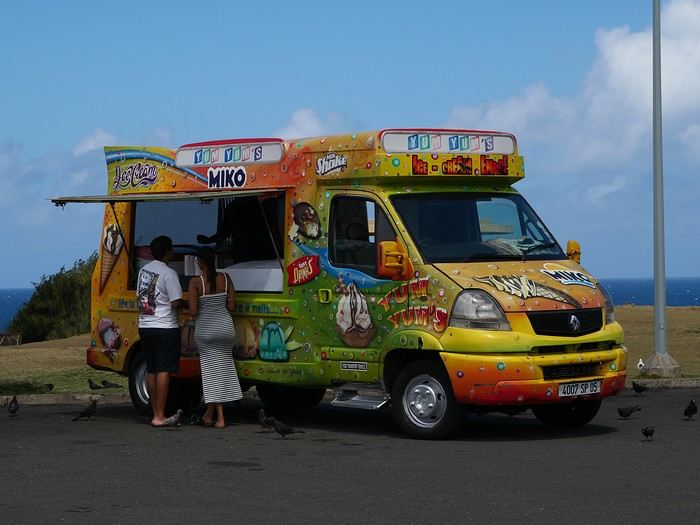
The recipe for the cocktail: endless beaches, a dazzling palette of colors, some breathtaking hikes, and excellent cuisine...
For the tasting, follow along in the pages of this travel journal! 😉
Don’t forget your hiking shoes, a swimsuit, sunscreen, but also a sweater, your driver’s license, and your credit card...
Just over 11 hours of flight, and we’ll be setting foot on Mauritian soil!
For the tasting, follow along in the pages of this travel journal! 😉
Don’t forget your hiking shoes, a swimsuit, sunscreen, but also a sweater, your driver’s license, and your credit card...
Just over 11 hours of flight, and we’ll be setting foot on Mauritian soil!
Langtang – Trekking in the Rain
We did the Langtang trek (hike) from September 10th to 17th, with the first and last days being the trip from Kathmandu and back—so 6 days of actual walking. It’s a fairly well-known trek but certainly not as famous or crowded as those in the Annapurna or Everest regions, which is why we chose it.
In theory, it’s mandatory to have a guide for this trek. In reality, it seems there are ways to bypass the regulations: we met at least two people hiking without a guide—a South Korean, a New Zealander, and possibly also a couple of English women and an American couple, though we’re not sure if they had a guide.
The agency we booked with had told us it was an affordable trek for relatively older people in good shape—which is our case (I’m 72 myself). I have to say upfront that we found it quite challenging, maybe because we didn’t have good weather—it was the end of the monsoon season. To be clear, no matter your fitness level, I’d say doing this trek in the middle of the monsoon season would be suicidal.
Day 1 – Journey from Kathmandu to Syapru Besi
On Monday, September 8th, there had been violent protests in Kathmandu against the government, which had, among other things, blocked access to social media and been accused of nepotism and corruption. There were 19 deaths. The situation was very tense on the day of our departure, Wednesday the 10th. The agency warned us that public transport was very unreliable. So, we decided to take a jeep, at an additional cost of $100 ($160 minus what was already budgeted for the bus).
We left a little before 7 a.m. and it took us a good hour just to reach the outskirts of Kathmandu. Along the way, we saw several houses and vehicles set on fire by protesters.
The road to Syapru Besi is only 120 km, but it’s frankly awful. It’s always narrow, winds through endless mountains, and the shoulders range from bad to confusing to nonexistent. Several sections are just dirt tracks. We didn’t regret opting for the jeep, as we could stop several times at our convenience—if only to let Y (my Thai partner) throw up everything she had. She’d taken her usual motion sickness medication, but the constant turns, accelerations, and braking eventually made her terribly carsick.
In Nuwakot, we stopped for breakfast at a nice little restaurant, Jimbu. It was around 8:30 a.m., and we’d barely covered 60 km. The restaurant has a lovely garden overlooking the Trishuli Ganga, the river flowing down from Syapru Besi. First photo: the river in the bottom right corner, mist and clouds over the mountain on the other side.
An hour later, my second photo: the hills along the Trishuli Ganga. You can see the different crops—lush green rice paddies in the lower right and corn, already yellowed and likely harvested, in the foreground on the left. And of course, the mist and clouds through which you can glimpse the mountain on the other side of the river.
In theory, it’s mandatory to have a guide for this trek. In reality, it seems there are ways to bypass the regulations: we met at least two people hiking without a guide—a South Korean, a New Zealander, and possibly also a couple of English women and an American couple, though we’re not sure if they had a guide.
The agency we booked with had told us it was an affordable trek for relatively older people in good shape—which is our case (I’m 72 myself). I have to say upfront that we found it quite challenging, maybe because we didn’t have good weather—it was the end of the monsoon season. To be clear, no matter your fitness level, I’d say doing this trek in the middle of the monsoon season would be suicidal.
Day 1 – Journey from Kathmandu to Syapru Besi
On Monday, September 8th, there had been violent protests in Kathmandu against the government, which had, among other things, blocked access to social media and been accused of nepotism and corruption. There were 19 deaths. The situation was very tense on the day of our departure, Wednesday the 10th. The agency warned us that public transport was very unreliable. So, we decided to take a jeep, at an additional cost of $100 ($160 minus what was already budgeted for the bus).
We left a little before 7 a.m. and it took us a good hour just to reach the outskirts of Kathmandu. Along the way, we saw several houses and vehicles set on fire by protesters.
The road to Syapru Besi is only 120 km, but it’s frankly awful. It’s always narrow, winds through endless mountains, and the shoulders range from bad to confusing to nonexistent. Several sections are just dirt tracks. We didn’t regret opting for the jeep, as we could stop several times at our convenience—if only to let Y (my Thai partner) throw up everything she had. She’d taken her usual motion sickness medication, but the constant turns, accelerations, and braking eventually made her terribly carsick.
In Nuwakot, we stopped for breakfast at a nice little restaurant, Jimbu. It was around 8:30 a.m., and we’d barely covered 60 km. The restaurant has a lovely garden overlooking the Trishuli Ganga, the river flowing down from Syapru Besi. First photo: the river in the bottom right corner, mist and clouds over the mountain on the other side.
An hour later, my second photo: the hills along the Trishuli Ganga. You can see the different crops—lush green rice paddies in the lower right and corn, already yellowed and likely harvested, in the foreground on the left. And of course, the mist and clouds through which you can glimpse the mountain on the other side of the river.
Dubai on a budget
Four days of beach relaxation in this truly curious place let me unwind 15 years ago after trekking through Asia or Africa: swimming in clear, clean water and easing jet lag was my goal; seeing that mirage in the middle of the desert also piqued my curiosity... And then Dubai developed, and now I go there once a year for 15 days without ever getting bored!! My backpacker budget doesn’t stop me from enjoying what I love about travel: discovering cultures, architecture, and beaches with turquoise waters.
I’m sharing my favorite spots here for those who love simplicity and the thrill of being amazed! Dubai stretches over 50 km long. I stay in the historic Bur Dubai neighborhood, which is very "Indian" and separated from Deira (the more "Arab/African" district) by a creek.
You cross from one side to the other on abras, small traditional wooden boats that run all day. My hotel is 4 minutes from the Al Ghubaiba bus station, 5 minutes from the Al Ghubaiba metro, and 6 minutes from the Al Ghubaiba boat station!!! It’s easy to get around from here, and at night, it’s lively—safe to go out, with few tourists but mostly the local middle class who built (and are still building) Dubai. It’s simple and very international.
- **Transport:** ...**Getting there:** I fly with Emirates from Paris. Taking the 9:30 PM flight, I sleep on the plane, land at 6:35 AM, exchange 200 euros once I’ve picked up my luggage, change in the restroom, grab a taxi to the hotel, drop off my suitcase, and head straight to the beach! ...**On the ground:** I buy a silver NOL card, which works for buses, metro, and boats. I top it up as needed—it’s valid for 2 years. ...**Taxis:** They have reliable meters. Pink ones are driven by women. Airport-to-hotel fare: 12 €. You’ll find them everywhere, and they don’t complain about short trips. Between 3 PM and 4 PM, it’s trickier because of shift changes.
- **Best times to visit:** For me, it’s April-May and October-November: not too hot for walking but warm enough to swim! Watch out for air conditioning—your worst enemy. It’s everywhere, even at bus stops. Bring a big scarf or sarong to cover your throat and head—going from 32°C to 16°C when you enter a mall, bus, or taxi is pretty harsh!
- **Hotel:** I stay at the Grand Astoria (Fahidi Street) because the value for price and location is great. It’s very clean, and I skip breakfast because near the bus station, there’s a big Carrefour hypermarket where I buy breakfast supplies, water, camel milk, and picnic snacks. There are two nightclubs downstairs—bring earplugs if you want to sleep before 2 AM. Wi-Fi is spotty; you have to change the password every two days. The staff is lovely. Rooms have a TV (4 Indian channels + BBC), a kettle with tea/coffee sachets, and a mini-fridge you fill yourself.
- **Bur Dubai: "My neighborhood"** In the morning, you can see kids in uniforms waiting for the school bus with their parents—second-generation migrants who’ve settled here. They speak English, Arabic, and their mother tongue, have great education, and are in high demand (I see job ads in the local newspapers in the hotel lobby). From the U.S. to the Middle East, Singapore to South Africa, they have bright futures. In the evenings, families stroll along the creek, and it’s common for bench neighbors to ask where you’re from. The whole world crosses paths here. Even with basic English, it’s friendly and warm—the "take care" as people go their separate ways is a nice touch.
Bur Dubai has plenty to explore if you don’t feel like going far: along the creek, there’s a cluster of reconstructed houses forming the Al Shindagha Museum. One ticket lets you visit all the houses, each with a theme tied to the history of the seven emirates (Dubai is one). It takes a full day, but if you stop for lunch, there are tons of restaurants for all budgets, some right by the water.
Walking in the opposite direction, you reach Al Seef, a reconstruction of old Dubai as a small pearl-fishing port. The architecture is lovely, with souvenir shops. My favorite is the Iranian grocery store, where you’ll find camel milk chocolate, black lemon, and sweets with rose, pistachio, and candied apricot. It’s peaceful to walk around here, even as a solo woman. There are free restrooms everywhere, wooden or stone benches, and a nice breeze in the evening. Plenty of waterfront restaurants or places to grab a drink, plus a few towers across the way—nothing spectacular, but they’re prettily lit. There’s a souk with souvenir shops for those who like that!
- **Restaurants:** Bur Dubai has restaurants representing regions of India and the Indian subcontinent. My favorites: Across from the hotel, Paklyari—a Pakistani spot with excellent mutton biryani for 5 €. At Al Seef, Nablus has a great setting by the water. Across in Deira, the Italian restaurant on the 18th floor of the Rotana—go half an hour before sunset for an amazing view of the creek and skyline. The truffle pizza is 24 €. You can take a taxi from Bur, and after dinner, get dropped off at Al Seef to walk back along the creek. For a great thali, Kathhiyawadi is a 10-minute walk from Burjuman metro. My latest discovery: Bordomavi (near the Rashid Al Hadees Masjid 1 bus stop). One of the servers is Algerian and speaks French. You can swim at the small beach with showers/toilets, then have lunch at the restaurant (57 € for two, with starter, main, dessert, and drinks). The setting is peaceful, in a little fishing port with a cool photo op—traditional boats with the modern skyline in the background!
- **Sunset drinks:** The terrace at Concorde Creek View (Bur Dubai) has a creek view, and Canopy by Hilton (Al Seef) overlooks the creek and skyline. You can get a day pass for the pool, including meals and drinks.
- **Lassi:** Near the hotel, SreeRaj Lassi Bar has great ice cream and lassi. *Tip: Everything is takeout-friendly, including leftovers—great for a picnic the next day.
- **Market:** Don’t miss the Waterfront Market—a huge hall where locals buy fish, meat, fruits, and vegetables from all over the world. I love buying fish, shrimp, and cuttlefish, then having it prepared at Yahya’s waterfront restaurant (grilled, in sauce, fried, etc.) with salad, hummus, tabbouleh, and rice. It’s on the way between "my" beach and the hotel, so I stop by easily. I stock up on fruit, and at the Lulu supermarket upstairs, I grab yogurt, water, etc. No need to carry everything—a taxi (available at the main exit) will drop me right at the hotel!
- **Beach:** My favorite: Al Mamzar Park (15-minute taxi ride, 9 €). It has four lifeguarded beaches with showers and restrooms. Opens at 8 AM, but note: Mondays and Wednesdays are for women and young children only! Entry is 1.50 €. On Beach #2, you can rent sun loungers and umbrellas. Beach #3 (the prettiest) has stone tables with benches under big umbrellas—free! I arrive at 8 AM, set up, and walk for an hour along the water, spotting starfish, colorful fish, birds, and occasionally small jellyfish. From bikinis to burkinis, everyone swims as they like! Dubai is judgment-free—no side-eye, just smiles and greetings. I love seeing joyful, full-figured women on women-only days, playing darbuka and singing. Indian women do yoga (even headstands!), Chinese women practice tai chi... I read a lot and swim far out to the buoy limits. Lifeguards keep watch. It’s safe on land too. Once, a 4x4 driver gave me a dirty look for "serving whisky" to my mom from a plastic bottle—until I made him smell it. It was mint tea! Embarrassed, he immediately called his brother, a gym teacher in Poitiers, to apologize in French! People in Dubai are smiley, polite, and very respectful of elders. On weekends, the park is packed with groups and families barbecuing—joyful chaos in every language!
By 1:30 PM, depending on my mood, I’ll get dropped off at the Waterfront Market for fish or a thali restaurant. Sometimes I take the bus—it stops near the abras on the Deira side. Just cross by boat, then it’s a 3-minute walk to the hotel. Takes 45 minutes (vs. 15 by taxi).
For a treat, try Kite Beach (Abu Manara Masjid bus stop). The SoleMio section offers comfy sun loungers, fluffy towels, and umbrellas for 80 € for two in the front row. Go early—you’ll feel like you have the place to yourself, with the Burj Al Arab in the background. It gets busy on weekends.
From there, you can take a taxi to Dubai Mall (not far) to check out the dancing fountains at sunset, for example.
You can also buy day passes at some hotels with sun loungers, towels, pool access, and lunch credit. I tried the Ritz-Carlton—decent (170 € for two, including meals). Lunch was fine, and the view of the lit-up towers at sunset, with the giant wheel, was stunning. I took the metro back in the evening.
There are plenty of free beaches too, like La Mer—worth seeing more for the decor than the beach itself.
- **Even though my main "sightseeing" involves walking around with my head up, admiring the towers in DIFC (amazing), visiting the stunning Mohammed bin Rashid Library (near Creek metro), wandering the souks (including Little India in Bur and the Iranian mosque), or the spice souks in Deira (go early when it’s quiet),** A day trip to Abu Dhabi is worth it. Take the Bur Dubai-Abu Dhabi bus (pay with your NOL card). If you leave early, you’ll see the sunrise over the desert. At the station, buy a bus ticket to the Louvre, cross the footbridge over the highway, and wait for the bus. After the museum, take a taxi to the Grand Mosque, then another taxi back to the bus station. A full but doable day—no need to stay overnight!
In the evening, I love taking the metro (mostly above ground) and passing between the towering, lit-up skyscrapers—it feels like a sci-fi movie. Just missing flying taxis (they’re in the works!)
Sharjah, the closest emirate, has a fantastic Orientalist museum. From Bur Dubai’s maritime station, boats go to Sharjah in 30 minutes, near the aquarium and maritime museum.
- **Shopping:** I buy Indian chai tea spices, incense, camel milk chocolate, Iranian sweets, and fabric from Indian shops selling saris and fabric by the meter. I have a tailor make shirts, tunics, etc. Some shops sell buttons and trimmings to jazz things up.
- **Malls:** To attract customers, mall owners come up with wild ideas: a ski slope at Dubai Mall (worth seeing once), pretty wooden souks at Madinat, and a giant aquarium at Dubai Mall. At sunset, you can watch the dancing fountains to popular global tunes at the foot of the world’s tallest tower. At its base, there’s an excellent Iraqi restaurant, Samad Al Iraki, where the tea server is Tunisian and speaks French! The Ibn Battuta Mall is unique—you can go there straight from Abu Dhabi by bus, for example. Malls have plenty of dining options and are a place to (finally) see locals... though they’re not that interesting. Malls are served by the metro, while buses run along the coast. In Burjuman Mall, there’s a cybercafé on the ground floor where you can print.
A few helpful sites: Visit Dubai - Official Tourism Site RTA (Roads and Transport Authority) - RTA Services
"But what do *you* do in Dubai?" my friends ask, surprised... Yes, I love traveling to countries where I ride on bumpy roads in buses that break down, sleep in places with mosquitoes and cockroaches, and swelter in heat and humidity. But even far from that kind of travel, Dubai has an exotic charm. There’s something for every taste and budget—once you get past the flight ticket (around 680 €, probably cheaper with a layover). Dubai is about relaxing, swimming, being amazed, chatting, and tasting... A safe, clean vacation with no rudeness, and as a woman, it’s a relief to let your guard down. You come back refreshed and at peace!
Hope my experience helps... Next trip: March 2026, with plans to visit the Guggenheim in Abu Dhabi and whatever other curiosities pop up like magic...
Feel free to add to my experience with your own! Happy travels, Laurence
I’m sharing my favorite spots here for those who love simplicity and the thrill of being amazed! Dubai stretches over 50 km long. I stay in the historic Bur Dubai neighborhood, which is very "Indian" and separated from Deira (the more "Arab/African" district) by a creek.
You cross from one side to the other on abras, small traditional wooden boats that run all day. My hotel is 4 minutes from the Al Ghubaiba bus station, 5 minutes from the Al Ghubaiba metro, and 6 minutes from the Al Ghubaiba boat station!!! It’s easy to get around from here, and at night, it’s lively—safe to go out, with few tourists but mostly the local middle class who built (and are still building) Dubai. It’s simple and very international.
- **Transport:** ...**Getting there:** I fly with Emirates from Paris. Taking the 9:30 PM flight, I sleep on the plane, land at 6:35 AM, exchange 200 euros once I’ve picked up my luggage, change in the restroom, grab a taxi to the hotel, drop off my suitcase, and head straight to the beach! ...**On the ground:** I buy a silver NOL card, which works for buses, metro, and boats. I top it up as needed—it’s valid for 2 years. ...**Taxis:** They have reliable meters. Pink ones are driven by women. Airport-to-hotel fare: 12 €. You’ll find them everywhere, and they don’t complain about short trips. Between 3 PM and 4 PM, it’s trickier because of shift changes.
- **Best times to visit:** For me, it’s April-May and October-November: not too hot for walking but warm enough to swim! Watch out for air conditioning—your worst enemy. It’s everywhere, even at bus stops. Bring a big scarf or sarong to cover your throat and head—going from 32°C to 16°C when you enter a mall, bus, or taxi is pretty harsh!
- **Hotel:** I stay at the Grand Astoria (Fahidi Street) because the value for price and location is great. It’s very clean, and I skip breakfast because near the bus station, there’s a big Carrefour hypermarket where I buy breakfast supplies, water, camel milk, and picnic snacks. There are two nightclubs downstairs—bring earplugs if you want to sleep before 2 AM. Wi-Fi is spotty; you have to change the password every two days. The staff is lovely. Rooms have a TV (4 Indian channels + BBC), a kettle with tea/coffee sachets, and a mini-fridge you fill yourself.
- **Bur Dubai: "My neighborhood"** In the morning, you can see kids in uniforms waiting for the school bus with their parents—second-generation migrants who’ve settled here. They speak English, Arabic, and their mother tongue, have great education, and are in high demand (I see job ads in the local newspapers in the hotel lobby). From the U.S. to the Middle East, Singapore to South Africa, they have bright futures. In the evenings, families stroll along the creek, and it’s common for bench neighbors to ask where you’re from. The whole world crosses paths here. Even with basic English, it’s friendly and warm—the "take care" as people go their separate ways is a nice touch.
Bur Dubai has plenty to explore if you don’t feel like going far: along the creek, there’s a cluster of reconstructed houses forming the Al Shindagha Museum. One ticket lets you visit all the houses, each with a theme tied to the history of the seven emirates (Dubai is one). It takes a full day, but if you stop for lunch, there are tons of restaurants for all budgets, some right by the water.
Walking in the opposite direction, you reach Al Seef, a reconstruction of old Dubai as a small pearl-fishing port. The architecture is lovely, with souvenir shops. My favorite is the Iranian grocery store, where you’ll find camel milk chocolate, black lemon, and sweets with rose, pistachio, and candied apricot. It’s peaceful to walk around here, even as a solo woman. There are free restrooms everywhere, wooden or stone benches, and a nice breeze in the evening. Plenty of waterfront restaurants or places to grab a drink, plus a few towers across the way—nothing spectacular, but they’re prettily lit. There’s a souk with souvenir shops for those who like that!
- **Restaurants:** Bur Dubai has restaurants representing regions of India and the Indian subcontinent. My favorites: Across from the hotel, Paklyari—a Pakistani spot with excellent mutton biryani for 5 €. At Al Seef, Nablus has a great setting by the water. Across in Deira, the Italian restaurant on the 18th floor of the Rotana—go half an hour before sunset for an amazing view of the creek and skyline. The truffle pizza is 24 €. You can take a taxi from Bur, and after dinner, get dropped off at Al Seef to walk back along the creek. For a great thali, Kathhiyawadi is a 10-minute walk from Burjuman metro. My latest discovery: Bordomavi (near the Rashid Al Hadees Masjid 1 bus stop). One of the servers is Algerian and speaks French. You can swim at the small beach with showers/toilets, then have lunch at the restaurant (57 € for two, with starter, main, dessert, and drinks). The setting is peaceful, in a little fishing port with a cool photo op—traditional boats with the modern skyline in the background!
- **Sunset drinks:** The terrace at Concorde Creek View (Bur Dubai) has a creek view, and Canopy by Hilton (Al Seef) overlooks the creek and skyline. You can get a day pass for the pool, including meals and drinks.
- **Lassi:** Near the hotel, SreeRaj Lassi Bar has great ice cream and lassi. *Tip: Everything is takeout-friendly, including leftovers—great for a picnic the next day.
- **Market:** Don’t miss the Waterfront Market—a huge hall where locals buy fish, meat, fruits, and vegetables from all over the world. I love buying fish, shrimp, and cuttlefish, then having it prepared at Yahya’s waterfront restaurant (grilled, in sauce, fried, etc.) with salad, hummus, tabbouleh, and rice. It’s on the way between "my" beach and the hotel, so I stop by easily. I stock up on fruit, and at the Lulu supermarket upstairs, I grab yogurt, water, etc. No need to carry everything—a taxi (available at the main exit) will drop me right at the hotel!
- **Beach:** My favorite: Al Mamzar Park (15-minute taxi ride, 9 €). It has four lifeguarded beaches with showers and restrooms. Opens at 8 AM, but note: Mondays and Wednesdays are for women and young children only! Entry is 1.50 €. On Beach #2, you can rent sun loungers and umbrellas. Beach #3 (the prettiest) has stone tables with benches under big umbrellas—free! I arrive at 8 AM, set up, and walk for an hour along the water, spotting starfish, colorful fish, birds, and occasionally small jellyfish. From bikinis to burkinis, everyone swims as they like! Dubai is judgment-free—no side-eye, just smiles and greetings. I love seeing joyful, full-figured women on women-only days, playing darbuka and singing. Indian women do yoga (even headstands!), Chinese women practice tai chi... I read a lot and swim far out to the buoy limits. Lifeguards keep watch. It’s safe on land too. Once, a 4x4 driver gave me a dirty look for "serving whisky" to my mom from a plastic bottle—until I made him smell it. It was mint tea! Embarrassed, he immediately called his brother, a gym teacher in Poitiers, to apologize in French! People in Dubai are smiley, polite, and very respectful of elders. On weekends, the park is packed with groups and families barbecuing—joyful chaos in every language!
By 1:30 PM, depending on my mood, I’ll get dropped off at the Waterfront Market for fish or a thali restaurant. Sometimes I take the bus—it stops near the abras on the Deira side. Just cross by boat, then it’s a 3-minute walk to the hotel. Takes 45 minutes (vs. 15 by taxi).
For a treat, try Kite Beach (Abu Manara Masjid bus stop). The SoleMio section offers comfy sun loungers, fluffy towels, and umbrellas for 80 € for two in the front row. Go early—you’ll feel like you have the place to yourself, with the Burj Al Arab in the background. It gets busy on weekends.
From there, you can take a taxi to Dubai Mall (not far) to check out the dancing fountains at sunset, for example.
You can also buy day passes at some hotels with sun loungers, towels, pool access, and lunch credit. I tried the Ritz-Carlton—decent (170 € for two, including meals). Lunch was fine, and the view of the lit-up towers at sunset, with the giant wheel, was stunning. I took the metro back in the evening.
There are plenty of free beaches too, like La Mer—worth seeing more for the decor than the beach itself.
- **Even though my main "sightseeing" involves walking around with my head up, admiring the towers in DIFC (amazing), visiting the stunning Mohammed bin Rashid Library (near Creek metro), wandering the souks (including Little India in Bur and the Iranian mosque), or the spice souks in Deira (go early when it’s quiet),** A day trip to Abu Dhabi is worth it. Take the Bur Dubai-Abu Dhabi bus (pay with your NOL card). If you leave early, you’ll see the sunrise over the desert. At the station, buy a bus ticket to the Louvre, cross the footbridge over the highway, and wait for the bus. After the museum, take a taxi to the Grand Mosque, then another taxi back to the bus station. A full but doable day—no need to stay overnight!
In the evening, I love taking the metro (mostly above ground) and passing between the towering, lit-up skyscrapers—it feels like a sci-fi movie. Just missing flying taxis (they’re in the works!)
Sharjah, the closest emirate, has a fantastic Orientalist museum. From Bur Dubai’s maritime station, boats go to Sharjah in 30 minutes, near the aquarium and maritime museum.
- **Shopping:** I buy Indian chai tea spices, incense, camel milk chocolate, Iranian sweets, and fabric from Indian shops selling saris and fabric by the meter. I have a tailor make shirts, tunics, etc. Some shops sell buttons and trimmings to jazz things up.
- **Malls:** To attract customers, mall owners come up with wild ideas: a ski slope at Dubai Mall (worth seeing once), pretty wooden souks at Madinat, and a giant aquarium at Dubai Mall. At sunset, you can watch the dancing fountains to popular global tunes at the foot of the world’s tallest tower. At its base, there’s an excellent Iraqi restaurant, Samad Al Iraki, where the tea server is Tunisian and speaks French! The Ibn Battuta Mall is unique—you can go there straight from Abu Dhabi by bus, for example. Malls have plenty of dining options and are a place to (finally) see locals... though they’re not that interesting. Malls are served by the metro, while buses run along the coast. In Burjuman Mall, there’s a cybercafé on the ground floor where you can print.
A few helpful sites: Visit Dubai - Official Tourism Site RTA (Roads and Transport Authority) - RTA Services
"But what do *you* do in Dubai?" my friends ask, surprised... Yes, I love traveling to countries where I ride on bumpy roads in buses that break down, sleep in places with mosquitoes and cockroaches, and swelter in heat and humidity. But even far from that kind of travel, Dubai has an exotic charm. There’s something for every taste and budget—once you get past the flight ticket (around 680 €, probably cheaper with a layover). Dubai is about relaxing, swimming, being amazed, chatting, and tasting... A safe, clean vacation with no rudeness, and as a woman, it’s a relief to let your guard down. You come back refreshed and at peace!
Hope my experience helps... Next trip: March 2026, with plans to visit the Guggenheim in Abu Dhabi and whatever other curiosities pop up like magic...
Feel free to add to my experience with your own! Happy travels, Laurence
A Scandinavian Tour - Summer 2025
Off on new adventures!!!
For my wife’s 60th birthday, I’m really making her happy. While I usually pick warm, sunny destinations, she’s more tempted by places where you don’t suffer from the heat.
So, it’s off to Norway!! A real challenge for me—a southern guy who’s as cold-sensitive as they come.
I keep telling anyone who’ll listen (well, just myself, really) that these aren’t the countries for me, that rain will be our travel companion, that we’ll have to face polar bears, navigate between icebergs, that there are still Vikings around, and all sorts of other things.
Of course, not wanting to make it easy, we’re driving from the Lyon area where we live.
Friends who’ve visited the country told us it’s pretty expensive to eat out (among other things), so we’re bringing supplies—especially enough for apéritifs the whole trip!!!
It’s not a camper van, but a "hotel-car" we’ll be doing! We’ll see how it goes!
As usual, I’ll try to narrate the journey with my two-cent comments, plus some little tips to avoid our mistakes—assuming I don’t lose any fingers to the cold!
Every night, I’ll count them to make sure I still have all ten! We’re not in *Ch’tis* territory but even farther Noooorth (as Galabru would say).
Note that I’m traveling with a synovial effusion in my knee! The old man’s not in great shape!!
Here we go!!
PS: As always, I’m a filmmaker, so I’ve made an effort with a few photos from my phone.
PS: As always, I’m a filmmaker, so I’ve made an effort with a few photos from my phone.
Slovak travel journal
Hello and welcome aboard this travel journal.
We’re heading to Slovakia together!
 Why this country?
After visiting Hungary, Slovenia, Romania, and Poland in recent years, I’ve fallen in love with Eastern European countries. I adore the Slavic soul, its Austro-Hungarian villages, the gentle landscapes, the Carpathian Mountains, and that slightly mysterious atmosphere.
Slovakia evokes a certain imagination with its deep forests, medieval castles, and cobbled villages.
After seeing photos of the High Tatras—especially Lake Štrbské Pleso and Spiš Castle—I thought, "Let’s do it! We’re going!"
So, will Slovakia live up to what I imagine?
We’ll find out together.
We decided to travel as a group of six (five adults and a six-year-old child), by car (we needed two).
Here’s the day-by-day itinerary for this family trip, which started with a 3-day stay in Vienna (see the dedicated travel journal):
Why this country?
After visiting Hungary, Slovenia, Romania, and Poland in recent years, I’ve fallen in love with Eastern European countries. I adore the Slavic soul, its Austro-Hungarian villages, the gentle landscapes, the Carpathian Mountains, and that slightly mysterious atmosphere.
Slovakia evokes a certain imagination with its deep forests, medieval castles, and cobbled villages.
After seeing photos of the High Tatras—especially Lake Štrbské Pleso and Spiš Castle—I thought, "Let’s do it! We’re going!"
So, will Slovakia live up to what I imagine?
We’ll find out together.
We decided to travel as a group of six (five adults and a six-year-old child), by car (we needed two).
Here’s the day-by-day itinerary for this family trip, which started with a 3-day stay in Vienna (see the dedicated travel journal):
The itinerary: Day 1: Drive from Vienna to Banská Štiavnica and visit the town, then drive to Handlová Day 2: Bojnice Castle, the village of Čičmany, and a walk in the treetops at Bojnice, return to Handlová Day 3: Depart for Orava, visit Orava Castle and the Orava Skansen, drive to Veľký Slavkov Day 4: Visit Slovak Paradise—its gorges, lakes, and ice cave—overnight in Veľký Slavkov Day 5: Visit Bardejov, the "Death Road," wooden churches, and Ľubovňa Castle, overnight in Veľký Slavkov Day 6: Walks and hikes in the High Tatras, Lake Štrbské Pleso, Solisko summit, treetop walk in Ždiar, overnight in Veľký Slavkov Day 7: Drive to Košice, visit Spiš Castle, Tokaj wine route in Veľká Trňa, overnight in Košice Day 8: Visit Košice, overnight in Košice Day 9: Drive to Bratislava, stop at the Aragonite Cave in the Slovak Karst, overnight in Bratislava Day 10: Visit Bratislava, overnight stay Day 11 and 12: Return to France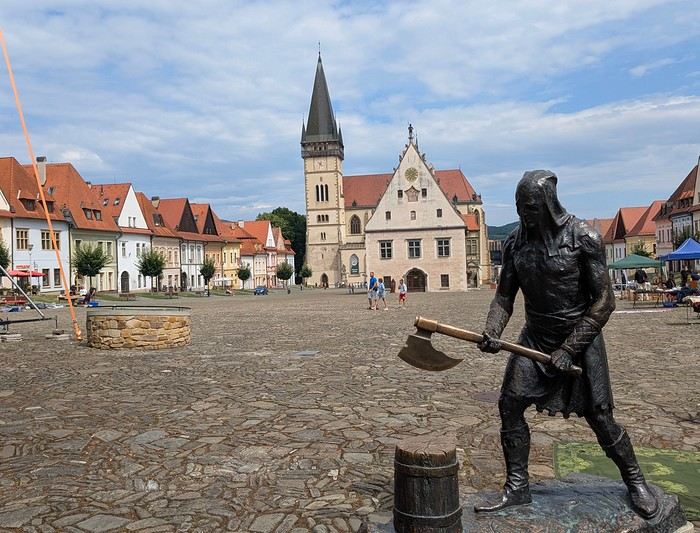
Budget: I’m giving prices for 2 adults / 1 child. Slovakia is more expensive than it seems, and some expenses shouldn’t be underestimated. Transportation: Tolls and gas from France: 500 € round trip Slovak vignette for one month: 17.10 € Gas is fixed at 1.49 € per liter (E10) Parking at sites (all paid by the day, even in the most remote villages, even if you stay for just an hour). Payment is often required in cash upon arrival: total 63 € We didn’t pay at Spiš (we arrived before the cashier) or Ľubovňa (we arrived after the cashier left). Parking at Orava Village was free. In Košice and Bratislava, we parked for free at our accommodations. Public transport in Bratislava and Košice: 1-1.2 € for a bus ticket. Vending machines are available at some stops; otherwise, buy via SMS (Slovak phones only) or official sales points.
Accommodation: We mostly chose houses so we could cook ourselves and save on food. I’ve rated our satisfaction with these accommodations from 1 to 5 stars. Padua: DC Hotel: 1 night, 77 € ***** Handlová: Chata Remata: 2 nights, 120 € ***** Veľký Slavkov: Aplend: 4 nights, 220 € ** Košice: Luxury Old Town Loft 320m²: 2 nights, 120 € ***** Bratislava: Hotel Viktor: 2 nights, 138 € *** Brescia: Hotel Antica Fonte: 1 night, 82 € ***** Total: 757 €
Food: Groceries at Lidl for 5 meals for 3: 100 € (really cheap) Restaurants: 10-15 € per dish, ice cream 1-2.4 € per scoop, crêpes 8-12 €, a glass of wine 6-10 €... total: 500 €
Visits: There are discounts for seniors and children, which is great. We spent nearly 600 € in total, which is a lot. However, it’s a cultural destination with many castles, museums, caves, wine cellars, and nature activities: cable cars, canopy walks, paid hikes (Slovak Paradise gorges)... In the end, this trip to Slovakia cost nearly 2500 € for 3. We also need to add the Vienna portion to that. Now, here’s the day-by-day account of this beautiful journey.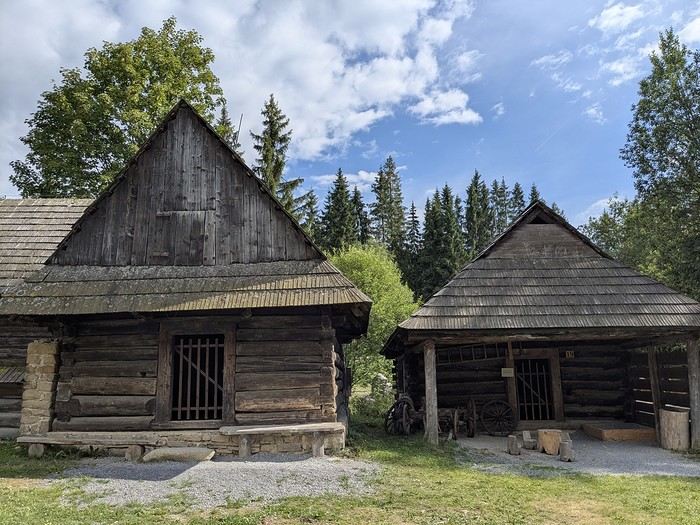
Why this country?
After visiting Hungary, Slovenia, Romania, and Poland in recent years, I’ve fallen in love with Eastern European countries. I adore the Slavic soul, its Austro-Hungarian villages, the gentle landscapes, the Carpathian Mountains, and that slightly mysterious atmosphere.
Slovakia evokes a certain imagination with its deep forests, medieval castles, and cobbled villages.
After seeing photos of the High Tatras—especially Lake Štrbské Pleso and Spiš Castle—I thought, "Let’s do it! We’re going!"
So, will Slovakia live up to what I imagine?
We’ll find out together.
We decided to travel as a group of six (five adults and a six-year-old child), by car (we needed two).
Here’s the day-by-day itinerary for this family trip, which started with a 3-day stay in Vienna (see the dedicated travel journal):
The itinerary: Day 1: Drive from Vienna to Banská Štiavnica and visit the town, then drive to Handlová Day 2: Bojnice Castle, the village of Čičmany, and a walk in the treetops at Bojnice, return to Handlová Day 3: Depart for Orava, visit Orava Castle and the Orava Skansen, drive to Veľký Slavkov Day 4: Visit Slovak Paradise—its gorges, lakes, and ice cave—overnight in Veľký Slavkov Day 5: Visit Bardejov, the "Death Road," wooden churches, and Ľubovňa Castle, overnight in Veľký Slavkov Day 6: Walks and hikes in the High Tatras, Lake Štrbské Pleso, Solisko summit, treetop walk in Ždiar, overnight in Veľký Slavkov Day 7: Drive to Košice, visit Spiš Castle, Tokaj wine route in Veľká Trňa, overnight in Košice Day 8: Visit Košice, overnight in Košice Day 9: Drive to Bratislava, stop at the Aragonite Cave in the Slovak Karst, overnight in Bratislava Day 10: Visit Bratislava, overnight stay Day 11 and 12: Return to France
Budget: I’m giving prices for 2 adults / 1 child. Slovakia is more expensive than it seems, and some expenses shouldn’t be underestimated. Transportation: Tolls and gas from France: 500 € round trip Slovak vignette for one month: 17.10 € Gas is fixed at 1.49 € per liter (E10) Parking at sites (all paid by the day, even in the most remote villages, even if you stay for just an hour). Payment is often required in cash upon arrival: total 63 € We didn’t pay at Spiš (we arrived before the cashier) or Ľubovňa (we arrived after the cashier left). Parking at Orava Village was free. In Košice and Bratislava, we parked for free at our accommodations. Public transport in Bratislava and Košice: 1-1.2 € for a bus ticket. Vending machines are available at some stops; otherwise, buy via SMS (Slovak phones only) or official sales points.
Accommodation: We mostly chose houses so we could cook ourselves and save on food. I’ve rated our satisfaction with these accommodations from 1 to 5 stars. Padua: DC Hotel: 1 night, 77 € ***** Handlová: Chata Remata: 2 nights, 120 € ***** Veľký Slavkov: Aplend: 4 nights, 220 € ** Košice: Luxury Old Town Loft 320m²: 2 nights, 120 € ***** Bratislava: Hotel Viktor: 2 nights, 138 € *** Brescia: Hotel Antica Fonte: 1 night, 82 € ***** Total: 757 €
Food: Groceries at Lidl for 5 meals for 3: 100 € (really cheap) Restaurants: 10-15 € per dish, ice cream 1-2.4 € per scoop, crêpes 8-12 €, a glass of wine 6-10 €... total: 500 €
Visits: There are discounts for seniors and children, which is great. We spent nearly 600 € in total, which is a lot. However, it’s a cultural destination with many castles, museums, caves, wine cellars, and nature activities: cable cars, canopy walks, paid hikes (Slovak Paradise gorges)... In the end, this trip to Slovakia cost nearly 2500 € for 3. We also need to add the Vienna portion to that. Now, here’s the day-by-day account of this beautiful journey.
Mice in Switzerland, the Other Cheese Country!
I'm starting my first travel journal since VF reopened!
This will mostly be to share my impressions and some photos, with a few days' delay, but I'm starting this journal while I'm still here.
First, I'd like to thank those who helped me prepare for this trip.
I was able to organize this stay in one of the most expensive countries in the world thanks to the home-exchange principle. Not necessarily a direct swap, but through a points system, which is more practical for choosing where you want to go without it having to be a reciprocal exchange.
For this trip, there will already be two different accommodations. We'll see how it goes after that.
The first place is near Yverdon-les-Bains, close to Lake Neuchâtel.
So, we're going to explore this area!
We arrived under capricious weather that won’t leave us for the next few days!
We had dinner at a pizzeria recommended by *Le Routard* in Yverdon, then took a little nighttime stroll through the town center before heading inland to settle into our accommodation.
We discovered a very large, quiet house—and especially the cat that stayed behind! Funny for a couple of mice! He’ll be sleeping with us 😹
This will mostly be to share my impressions and some photos, with a few days' delay, but I'm starting this journal while I'm still here.
First, I'd like to thank those who helped me prepare for this trip.
I was able to organize this stay in one of the most expensive countries in the world thanks to the home-exchange principle. Not necessarily a direct swap, but through a points system, which is more practical for choosing where you want to go without it having to be a reciprocal exchange.
For this trip, there will already be two different accommodations. We'll see how it goes after that.
The first place is near Yverdon-les-Bains, close to Lake Neuchâtel.
So, we're going to explore this area!
We arrived under capricious weather that won’t leave us for the next few days!
We had dinner at a pizzeria recommended by *Le Routard* in Yverdon, then took a little nighttime stroll through the town center before heading inland to settle into our accommodation.
We discovered a very large, quiet house—and especially the cat that stayed behind! Funny for a couple of mice! He’ll be sleeping with us 😹
Join me in discovering Gran Canaria
Introduction
We stayed on the island of Gran Canaria during the first three months of 2024. It’s the third Canary Island we’ve visited, after Tenerife and Lanzarote.
We rented an apartment in Temisas. By staying in the same place for such a long period, the total price dropped by 50%.
We also rented a vehicle to make getting around the island easier.
Why the Canary Islands, and Gran Canaria in particular? For its pleasant climate, the nature and diversity of its landscapes, the charming villages, and especially the beauty of its many beaches.
In this travel journal, you’ll find a list of the many activities we did during our stay to explore the different attractions of this island.
These attractions are categorized to make it easier to find what interests you.
Videos are included throughout the summary. Click on the image to start the video.
To jump to a specific post, here are the relevant links:
HIKES:
Roque Nublo Maspalomas Dunes - Part 1 Maspalomas Dunes - Part 2 Los Azulejos de Veneguera Barranco de Las Vacas Ventana del Bentayga (Arco del Aserrador) Caves of the King Ventana de Morro (Ventana de la Ganifa) The Dog of Bentayga Cave of the Four Doors Ventana del Nublo Artenera - Caves of Acusa Seca Temisas - El Gigante Cave Fortress of Ansite Puerto de Las Nieves - Roque de Las Nieves Temisas - Cuevas de la Audiencia Roque Bentayga Guayadeque Ravine (Guayadeque Hermitage) Guayadeque Ravine (Cueva de Bartalo) El Zumacal - Barranco Tauco Casablanca Dam (Los Dolores Dam) Ayagaures - La Angostura Dam & Gambuesa Dam Santa Brígida - Alonso Ravine & Centennial Dragon Tree Pino Santo Hike in the Azuaje Ravine Gáldar - Red Lands of Samarrita Tejeda - Charco de La Paloma Bandama Boiler (Camino Borde de Caldera Bandama) Teror - Alamo Ravine Trail – SL-4 Telde - Calasio Caves Special Natural Reserve of Los Tilos de Moya Los Azulejos - Charco de Las Aneas Fataga Ravine Arinaga Military Battery Trail Maspalomas - Las Fuentes and del Canizo Ravines Mogán - Tauro Mountain Trail Tamabada - Llanos de La Mimbre & Sobre la Cueva Viewpoints Trail Hike to the Coronadero Arch via Barranco Hondo Barranco de Silva - Hike to the Jerez Caves Gáldar - Samson Cave - La Atalaya Peak Agaete - Roque Guayedra and Guayedra Ravine Artenara - Caballero Caves Arucas - Bufadero Salt Flats Barranco de Pino Gordo - Natural Pools Telde - Los Cernícalos Ravine Las Cruces - Toba Caves & Picón Puerto de Las Nieves - Moro Cave Agüimes - Morros de Ávila Caves Juncalillo del Sur - Laguna & Salinas de Abajo Caves of Camino de San Felipe Cruz de Tejeda, Cruz Chico and Degollada Viewpoint Hike on the Patalavaca Circuit Motor Grande - Puerto Rico Arch El Montañón - Los Hornos Dam Seafront Walk - Amadores Beach – Puerto Rico Beach Las Niñas Dam El Hornillo - Omega & Omicron Caves Arteara Necropolis Mogán - El Mulato Dam Las Garzas - El Regante Dam La Plata Route - Cho Flores Dam & El Charco Hondo Vega de Acusa - La Candelaria Dam Candelaria Hermitage – Acusa Seca Viewpoint Valsequillo de Gran Canaria – Roque La Vela Ayagaures Dam – GC-602 Lomo del Palo - Monte Pavón Trail Lugar La Laguna - Levada Fataga Dam & Ravine
BEACHES:
Mogán Beach Taurito Beach Tauro Beach Amadores Beach Puerto Rico Beach Anfi del Mar Beach Patalavaca Beach Meloneras Beach Maspalomas Beach English Beach (Playa del Inglés) Las Burras Beach San Agustin Beach Las Alcaravaneras Beach Las Canteras Beach (La Cicer) Las Canteras Beach (La Puntilla) Las Canteras Beach (Santa Catalina) Aquamarina Beach El Agujero - Bocabarranco Beach Hoya Del Pozo Beach Hoya Del Pozo Beach - Lizard with amputated tail El Cabron Beach Ojos de Garza Beach El Burrero Beach
NATURAL POOLS:
Charco Azul - El Risco Agaete Salt Flats Charco de Los Espejos - Sardina del Norte Natural Pools of Punta de Gáldar Snorkeling in the natural pool of Punta de Gáldar Natural Pool La Furnia o El Clavo - Gáldar Natural Pool of Los Dos Roques Emiliano Natural Pool - El Agujero Natural Pool of El Agujero Natural Pools of Roque Prieto Natural Pool El Altillo Los Charcones de Bañaderos – Arucas Natural Pools of El Charco de Las Palomas – Arucas Natural Pools of La Laja - Las Palmas de Gran Canaria Cueva de la Reina Mora - La Garita Natural Pools of Castillo del Romeral
TOWNS:
Center
Santa Brigida Vega de San Mateo Tejeda Artenara Vallesco Teror
Southwest
Santa Lucia de Tirajana Fataga San Bartolomé de Tirajana Puerto de Mogán La Aldea de San Nicolas
North
Arucas Firgas Moya Santa Maria de Guia Gáldar Agaete Puerto de Las Nieves
East
Vegueta - Las Palmas de Gran Canaria Triana - Las Palmas de Gran Canaria Ciudad Jardin - Las Palmas de Gran Canaria Canteras - Las Palmas de Gran Canaria Telde Valsequillo de Gran Canaria Ingenio Agüimes Temisas
VIEWPOINTS:
GC-60 Route (or nearby) GC-210 Route (or nearby) GC-210 Route between the tunnel and La Aldea de San Nicolás GC-215 & GC-65 Routes (or nearby) GC-200 Route (or nearby) GC-130 Route (or nearby) & GC-605 GC-70 Route (or nearby) & GC-21 Sheep herd on GC-70 Route GC-150, GC-240, GC-305, GC-350 & GC-301 Routes GC-606, GC-295, GC-231 and GC-41 Routes (or nearby) Viewpoints – GC-1 Route (or nearby) Viewpoints - Las Palmas de Gran Canaria Viewpoints - GC-2, GC-21, GC-15, GC-216 and GC-132 Routes (or nearby) Viewpoints - GC-503 & GC-217 Routes Viewpoints - GC-604, GC-505, GC-132, GC-42 and GC-802 Routes
MISCELLANEOUS:
San Rafael Aqueduct - Telde Abandoned San Rafael Estate - La Higuera Cenobio de Valerón La Cesta - Tejeda Puerto de la Aldea Scenic Route GC-671 to El Espinillo Scenic Route GC-607 to El Chorrillo The Galdar Cube (Santiago Quarry) Scenic Route GC-504 to Ayagaures Abandoned seaside resort in the Azuaje Ravine El Bufadero de La Garita – Telde GC-505 Route Abandoned Finca Las Haciendas (Los Mocanes) – Las Vegas de Valsequillo Ruins of San Juan Battery - Las Palmas de Gran Canaria Viera y Clavijo Canarian Botanical Garden - Las Palmas de Gran Canaria Tenefé Salt Flats Los Pérez, Lugarejos & Las Hoyas Dams Monte Pavón, Gran Canaria’s little Ireland Valleseco Lagoon Recreational Area Climbing - Fataga Ravine Surfing – El Agujero El Cairete Restaurant - Carrizal de Tejeda Paragliding flight observation - Los Giles La Cuevita Ayagaures Restaurant Statues and Murals - Cruce de Arinaga Aviation Monument (Las Majoreras) & Murals – Carrizal Artistic recycling by Antonio Peñita - Ojos de Garza Rainbows
We stayed on the island of Gran Canaria during the first three months of 2024. It’s the third Canary Island we’ve visited, after Tenerife and Lanzarote.
We rented an apartment in Temisas. By staying in the same place for such a long period, the total price dropped by 50%.
We also rented a vehicle to make getting around the island easier.
Why the Canary Islands, and Gran Canaria in particular? For its pleasant climate, the nature and diversity of its landscapes, the charming villages, and especially the beauty of its many beaches.
In this travel journal, you’ll find a list of the many activities we did during our stay to explore the different attractions of this island.
These attractions are categorized to make it easier to find what interests you.
Videos are included throughout the summary. Click on the image to start the video.
To jump to a specific post, here are the relevant links:
HIKES:
Roque Nublo Maspalomas Dunes - Part 1 Maspalomas Dunes - Part 2 Los Azulejos de Veneguera Barranco de Las Vacas Ventana del Bentayga (Arco del Aserrador) Caves of the King Ventana de Morro (Ventana de la Ganifa) The Dog of Bentayga Cave of the Four Doors Ventana del Nublo Artenera - Caves of Acusa Seca Temisas - El Gigante Cave Fortress of Ansite Puerto de Las Nieves - Roque de Las Nieves Temisas - Cuevas de la Audiencia Roque Bentayga Guayadeque Ravine (Guayadeque Hermitage) Guayadeque Ravine (Cueva de Bartalo) El Zumacal - Barranco Tauco Casablanca Dam (Los Dolores Dam) Ayagaures - La Angostura Dam & Gambuesa Dam Santa Brígida - Alonso Ravine & Centennial Dragon Tree Pino Santo Hike in the Azuaje Ravine Gáldar - Red Lands of Samarrita Tejeda - Charco de La Paloma Bandama Boiler (Camino Borde de Caldera Bandama) Teror - Alamo Ravine Trail – SL-4 Telde - Calasio Caves Special Natural Reserve of Los Tilos de Moya Los Azulejos - Charco de Las Aneas Fataga Ravine Arinaga Military Battery Trail Maspalomas - Las Fuentes and del Canizo Ravines Mogán - Tauro Mountain Trail Tamabada - Llanos de La Mimbre & Sobre la Cueva Viewpoints Trail Hike to the Coronadero Arch via Barranco Hondo Barranco de Silva - Hike to the Jerez Caves Gáldar - Samson Cave - La Atalaya Peak Agaete - Roque Guayedra and Guayedra Ravine Artenara - Caballero Caves Arucas - Bufadero Salt Flats Barranco de Pino Gordo - Natural Pools Telde - Los Cernícalos Ravine Las Cruces - Toba Caves & Picón Puerto de Las Nieves - Moro Cave Agüimes - Morros de Ávila Caves Juncalillo del Sur - Laguna & Salinas de Abajo Caves of Camino de San Felipe Cruz de Tejeda, Cruz Chico and Degollada Viewpoint Hike on the Patalavaca Circuit Motor Grande - Puerto Rico Arch El Montañón - Los Hornos Dam Seafront Walk - Amadores Beach – Puerto Rico Beach Las Niñas Dam El Hornillo - Omega & Omicron Caves Arteara Necropolis Mogán - El Mulato Dam Las Garzas - El Regante Dam La Plata Route - Cho Flores Dam & El Charco Hondo Vega de Acusa - La Candelaria Dam Candelaria Hermitage – Acusa Seca Viewpoint Valsequillo de Gran Canaria – Roque La Vela Ayagaures Dam – GC-602 Lomo del Palo - Monte Pavón Trail Lugar La Laguna - Levada Fataga Dam & Ravine
BEACHES:
Mogán Beach Taurito Beach Tauro Beach Amadores Beach Puerto Rico Beach Anfi del Mar Beach Patalavaca Beach Meloneras Beach Maspalomas Beach English Beach (Playa del Inglés) Las Burras Beach San Agustin Beach Las Alcaravaneras Beach Las Canteras Beach (La Cicer) Las Canteras Beach (La Puntilla) Las Canteras Beach (Santa Catalina) Aquamarina Beach El Agujero - Bocabarranco Beach Hoya Del Pozo Beach Hoya Del Pozo Beach - Lizard with amputated tail El Cabron Beach Ojos de Garza Beach El Burrero Beach
NATURAL POOLS:
Charco Azul - El Risco Agaete Salt Flats Charco de Los Espejos - Sardina del Norte Natural Pools of Punta de Gáldar Snorkeling in the natural pool of Punta de Gáldar Natural Pool La Furnia o El Clavo - Gáldar Natural Pool of Los Dos Roques Emiliano Natural Pool - El Agujero Natural Pool of El Agujero Natural Pools of Roque Prieto Natural Pool El Altillo Los Charcones de Bañaderos – Arucas Natural Pools of El Charco de Las Palomas – Arucas Natural Pools of La Laja - Las Palmas de Gran Canaria Cueva de la Reina Mora - La Garita Natural Pools of Castillo del Romeral
TOWNS:
Center
Santa Brigida Vega de San Mateo Tejeda Artenara Vallesco Teror
Southwest
Santa Lucia de Tirajana Fataga San Bartolomé de Tirajana Puerto de Mogán La Aldea de San Nicolas
North
Arucas Firgas Moya Santa Maria de Guia Gáldar Agaete Puerto de Las Nieves
East
Vegueta - Las Palmas de Gran Canaria Triana - Las Palmas de Gran Canaria Ciudad Jardin - Las Palmas de Gran Canaria Canteras - Las Palmas de Gran Canaria Telde Valsequillo de Gran Canaria Ingenio Agüimes Temisas
VIEWPOINTS:
GC-60 Route (or nearby) GC-210 Route (or nearby) GC-210 Route between the tunnel and La Aldea de San Nicolás GC-215 & GC-65 Routes (or nearby) GC-200 Route (or nearby) GC-130 Route (or nearby) & GC-605 GC-70 Route (or nearby) & GC-21 Sheep herd on GC-70 Route GC-150, GC-240, GC-305, GC-350 & GC-301 Routes GC-606, GC-295, GC-231 and GC-41 Routes (or nearby) Viewpoints – GC-1 Route (or nearby) Viewpoints - Las Palmas de Gran Canaria Viewpoints - GC-2, GC-21, GC-15, GC-216 and GC-132 Routes (or nearby) Viewpoints - GC-503 & GC-217 Routes Viewpoints - GC-604, GC-505, GC-132, GC-42 and GC-802 Routes
MISCELLANEOUS:
San Rafael Aqueduct - Telde Abandoned San Rafael Estate - La Higuera Cenobio de Valerón La Cesta - Tejeda Puerto de la Aldea Scenic Route GC-671 to El Espinillo Scenic Route GC-607 to El Chorrillo The Galdar Cube (Santiago Quarry) Scenic Route GC-504 to Ayagaures Abandoned seaside resort in the Azuaje Ravine El Bufadero de La Garita – Telde GC-505 Route Abandoned Finca Las Haciendas (Los Mocanes) – Las Vegas de Valsequillo Ruins of San Juan Battery - Las Palmas de Gran Canaria Viera y Clavijo Canarian Botanical Garden - Las Palmas de Gran Canaria Tenefé Salt Flats Los Pérez, Lugarejos & Las Hoyas Dams Monte Pavón, Gran Canaria’s little Ireland Valleseco Lagoon Recreational Area Climbing - Fataga Ravine Surfing – El Agujero El Cairete Restaurant - Carrizal de Tejeda Paragliding flight observation - Los Giles La Cuevita Ayagaures Restaurant Statues and Murals - Cruce de Arinaga Aviation Monument (Las Majoreras) & Murals – Carrizal Artistic recycling by Antonio Peñita - Ojos de Garza Rainbows
Lake Bourget: The Parachuting Nightmare
If you're walking around the southern part of Lake Bourget, you can't escape the noise from a parachuting club's planes. A group of climate skeptics actually takes off in small, very noisy aircraft every 15 minutes over a Natura 2000 classified area. They don’t seem to face any restrictions—neither for noise nor for greenhouse gas emissions. They occupy the airspace without paying fuel taxes or providing carbon compensation to local municipalities or environmental preservation associations, apparently. It sounds surreal, but it’s very real in such an important location.
Croatia, Montenegro – two victims of overtourism?
Mid-June, two Auvergnats on the starting blocks—off we go to the former Yugoslavia!
We’d already explored some nooks and crannies of northern Croatia back in 2019, so we’re keeping the momentum going by planning a trip to the south of the country and then Montenegro.
On the way back, we’ll drift into Bosnia-Herzegovina just to mix things up a bit!
We’re a little unsure about what to expect in terms of tourist crowds.
Dubrovnik has a reputation for being the hardest-hit city by overtourism, and Kotor and the whole Dalmatian coast aren’t exactly empty...
Luckily, most European countries haven’t started school holidays yet, and some measures seem to have been put in place to limit the flow (like restrictions on the number of cruise ships allowed to dock at the same time).
Maybe we’ll manage to escape the promised hell?
For now, we’re slamming the doors of the Scirocco and heading off to our first stop: northern Italy!
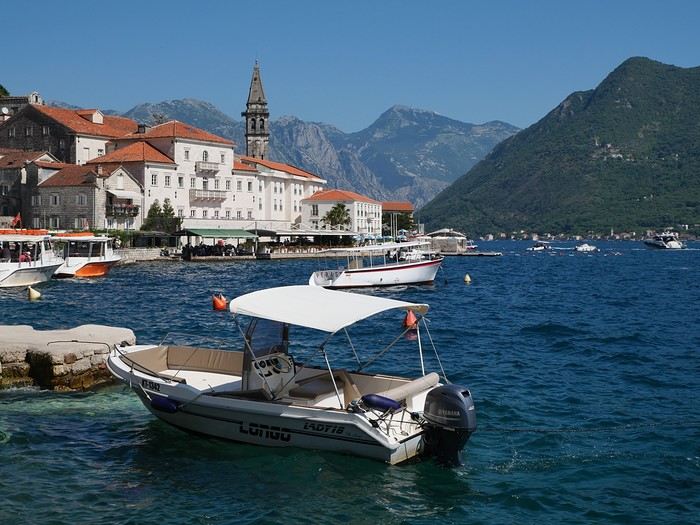
On the way back, we’ll drift into Bosnia-Herzegovina just to mix things up a bit!
We’re a little unsure about what to expect in terms of tourist crowds.
Dubrovnik has a reputation for being the hardest-hit city by overtourism, and Kotor and the whole Dalmatian coast aren’t exactly empty...
Luckily, most European countries haven’t started school holidays yet, and some measures seem to have been put in place to limit the flow (like restrictions on the number of cruise ships allowed to dock at the same time).
Maybe we’ll manage to escape the promised hell?
For now, we’re slamming the doors of the Scirocco and heading off to our first stop: northern Italy!