Results for "chasse+|+128"
50463 results found.
Carnet de voyage en Chine English translation pending
Bonjour à tous,
J’ai décidé de vous faire partager mon périple en Asie et plus particulièrement en Chine mais aussi à Taiwan et au Japon. C’est un voyage que j’ai réalisé en 2001 d’une durée de 5 mois.
Tout d’abord je me présente, j’ai 36 ans et je travaille dans l’hôtellerie en réception, je suis également passionnée de cinéma mais depuis quelques années, j’ai envie de faire autre chose et cet “ autre chose “ c’est la réalisation de documentaire. Evidemment, on ne s’improvise pas du jour au lendemain réalisatrice, mais j’avais suivi un an auparavant un stage qui s’est avéré peu intéressant pour moi. Malgré un premier essai non fructueux en Amérique du sud avec une caméra non numérique, je ne me suis pas démontée.
Bref après avoir potassée des magazines et des bouquins sur le sujet, je me suis achetée une caméra vidéo et des accessoires notamment un micro et une bonnette (protection pour le micro ) très utiles pour les interviews. Je me suis entrainée chez moi 1 mois avant le départ.
Ce que j’aime dans les voyages, c’est de pouvoir rencontrer des gens et des modes de vie différents mais surtout de pouvoir vivre le quotidien de ces gens, c’est pour cette raison que je pars rarement ou jamais moins de 3 mois voire 6. Le summum du voyage pour moi c’est de pouvoir travailler dans le pays et pas forcément en tant que bénévole et c’est peut-être pour cela que je suis tombée par hasard dans l’hôtellerie qui était le moyen le plus facile pour travailler à l’étranger.
Il y a quelques années en 1997, je suis partie en Asie pour une durée indéterminée pour voyager et aussi faire du bénévolat. J’ai commencé par l’Inde, Le Népal, La Thailande, Le Myanmar, Le Laos, Hongkong, La Chine, Taiwan, Le Japon et retour par Les USA . Je me suis retrouvée à enseigner l’anglais au Japon puis à taiwan. Après presque 2 ans de voyage, je suis rentrée à paris avec l’intention de repartir pour parler de choses qui m’avaient titillées où intéressées durant ce voyage et notamment concernant La Chine et Taiwan.
J’avais envie de réaliser un documentaire sur les femmes de mon âge, célibataires mais en comparant la Chine et Taiwan. Car malgré leur différend, ces deux pays ont une une tradition commune. La plupart de mes étudiants à Taiwan étaient des femmes et en discutant avec elles, je me suis aperçue qu’elles étaient en même temps trés indépendantes mais aussi trés traditionnelles dans leur facon d’aborder les relations avec les hommes. Le mariage est trés idéalisé et en même temps elles sont trés diffiçiles . Elles ont des critères encore plus élevés que les miens et c’est peu dire.... Elles attendent le prince charmant et forcément elles se marient trés tard et j’avais aussi envie de voir le côté chinois. Voilà donc comment l’histoire a commencé. Sans avoir vraiment travaillé sur l’écriture du scénario, je suis partie en me disant qu’une fois sur place, j’aurai plus de temps pour y revenir.
Pour ce voyage, j’avais décidé de refaire le chemin à l’envers de ce que j’avais fait en 1998. Départ de HONGKONG, pour rejoindre la province du Yunnan, KUNMING, DALI, LIJIANG, ZHONDJIANG, la province du Sichuan, XIANCHENG, LITANG, KANDING, CHENGDU le tout en bus puis remonter vers la province du Gansu en bus ou en train LANZHOU puis direction le Xinjiang avec URUMQI, TURFAN, KASHGAR, de là, retour en sens inverse par YARKAND, HOTAN, le long du desert de TAKLAMATAN pour rejoindre GOLDMUD ou XINING puis LANZHOU et ensuite direction PEKIN, SHANGHAI puis GUILIN et YANGSHUO et de là, retour sur HONGKONG.
C’était à l’origine le trajet que je voulais suivre. Tout etait prêt pour le grand départ. A chaque fois que je pars je suis toujours excitée mais cette fois-ci j’étais aussi angoissée à l’idée de rater complèment et de me planter...
(à suivre...)
Torture de milliers d'ours en Chine English translation pending
🙁Prenez quelques minutes SVP pour lire ce message de la plus grande importance.
Des ours sont sous torture dans 247 « fermes » mises en place par le gouvernement chinois depuis 20 ans pour extraire 7 000 litres de leur bile par an. La bile d’ours est utilisée dans des remèdes, du vin, des shampooings et des aphrodisiaques. Pourtant, il existe des produits de substitution. Plus de 100 000 litres de bile de synthèse sont commercialisés chaque année.
Une preuve de la grande détresse des ours dans ces fermes est le comportement des mères ourses qui vont jusqu’à tuer leurs bébés dès la naissance. Cette mortalité n’empêche pas les fermiers de continuer leur commerce ignoble avec des oursons capturés dans la nature.
😕Les braconniers profitent de l’absence de la mère, partie en quête de nourriture, pour enlever les oursons âgés de quelques jours. Parfois la mère est tuée et un grand nombre de bébés meurent de ce traumatisme
Les survivants sont parqués dans un enclos pour les habituer à leur futur enfermement dans une cage étroite. Puis, à l’âge de 3 ans, ils subissent une opération qui les mutile à vie. Les fermiers implantent un cathéter dans la vésicule biliaire pour drainer leur bile. Ce tube reste en permanence, et laisse une plaie à vif qui s’infecte et n’est jamais soignée. Quatre ours sur cinq meurent pendant ou après l’opération d’implantation.
🙁Les ours qui survivent sont transférés dans des cages si petites qu’ils ne peuvent ni bouger, ni même se coucher. Pour exprimer leur angoisse et leur souffrance, ils n’ont pas d’autres choix que de se cogner la tête contre les barreaux et de se mordre les pattes jusqu’au sang. Ces gestes de grande détresse entraînent de graves infections.Comprimés dans les cages, parfois jusqu’à l’écrasement de leurs organes, les ours subissent deux fois par jour la torture de l’extraction. Elle est effectuée pendant qu’ils sont nourris et abreuvés, pour stimuler la bile. Les ours gémissent, hurlent et se tordent de douleur, en se tenant l’estomac.
Pour voyager intelligement et ne pas etre le complice d'une torture immonde, prenez quelques minutes pour visiter ce site :
http://www.onevoice-ear.org/
Merci beaucoup. Mon seul but est de vous informer.
David😐
Des ours sont sous torture dans 247 « fermes » mises en place par le gouvernement chinois depuis 20 ans pour extraire 7 000 litres de leur bile par an. La bile d’ours est utilisée dans des remèdes, du vin, des shampooings et des aphrodisiaques. Pourtant, il existe des produits de substitution. Plus de 100 000 litres de bile de synthèse sont commercialisés chaque année.
Une preuve de la grande détresse des ours dans ces fermes est le comportement des mères ourses qui vont jusqu’à tuer leurs bébés dès la naissance. Cette mortalité n’empêche pas les fermiers de continuer leur commerce ignoble avec des oursons capturés dans la nature.
😕Les braconniers profitent de l’absence de la mère, partie en quête de nourriture, pour enlever les oursons âgés de quelques jours. Parfois la mère est tuée et un grand nombre de bébés meurent de ce traumatisme
Les survivants sont parqués dans un enclos pour les habituer à leur futur enfermement dans une cage étroite. Puis, à l’âge de 3 ans, ils subissent une opération qui les mutile à vie. Les fermiers implantent un cathéter dans la vésicule biliaire pour drainer leur bile. Ce tube reste en permanence, et laisse une plaie à vif qui s’infecte et n’est jamais soignée.
Quatre ours sur cinq meurent pendant ou après l’opération d’implantation.🙁Les ours qui survivent sont transférés dans des cages si petites qu’ils ne peuvent ni bouger, ni même se coucher. Pour exprimer leur angoisse et leur souffrance, ils n’ont pas d’autres choix que de se cogner la tête contre les barreaux et de se mordre les pattes jusqu’au sang. Ces gestes de grande détresse entraînent de graves infections.
Comprimés dans les cages, parfois jusqu’à l’écrasement de leurs organes, les ours subissent deux fois par jour la torture de l’extraction. Elle est effectuée pendant qu’ils sont nourris et abreuvés, pour stimuler la bile. Les ours gémissent, hurlent et se tordent de douleur, en se tenant l’estomac.Pour voyager intelligement et ne pas etre le complice d'une torture immonde, prenez quelques minutes pour visiter ce site :
http://www.onevoice-ear.org/
Merci beaucoup. Mon seul but est de vous informer.
David😐
Inde: 1200 ours torturés par des gitants kalandars English translation pending
Prenez SVP quelques minutes pour lire ce message, il s'agit d'une torture qui NE DOIT PLUS durer. Merci
Plus de 1200 ours à miel sont torturés par des gitans Kalandars qui forcent les ours à exécuter un simulacre de danse pour divertir les touristes. Cette pratique barbare, issue d’une tradition du XVIe siècle, enferme à tout jamais les ours dans la terreur et la douleur. Depuis 1972, il existe pourtant une loi de protection de la faune sauvage qui interdit de vendre des ours et des parties de leur corps. Une autre loi condamne les méthodes de dressage. Les braconniers attendent que la mère ourse sorte pour chercher de la nourriture, et enlèvent l’ourson âgé de quelques jours. Les mères qui surprennent les malfaiteurs défendent leurs petits au prix de leur vie. Le nouveau-né, transporté dans un sac pendant de longues heures, est drogué à l’opium pour empêcher la faim et les cris de détresse. Nombre d’entre eux meurent en chemin. Les survivants sont vendus aux Kalandars. À l’âge de 3 mois, avant d’être exhibé sur les routes et devant les hôtels, l’ourson, déjà traumatisé, subit des actes d’une extrême barbarie.
Les gitans perforent sa cavité nasale avec un tisonnier chauffé à blanc pour y insérer une corde qui ressort par la narine. Cette terrible mutilation est effectuée sans anesthésie.
😕En Inde, la population est révoltée par les tortures infligées aux ours par les gitans, en totale infraction avec la loi. Ces pratiques perdurent parce que les touristes donnent de l’argent aux Kalandars pour voir danser les ours.😠
🙂Prenez quelques minutes pour visiter ce site internet suivant, afin de voyager intelligent !!!!
http://www.onevoice-ear.org/
Merci
David
Les tribus d'Amérique du Nord English translation pending
salut à tous,
voilà, je rcherche des témoignages sur ces personnes qui ont essayés de vivre avec ces indiens d'amérique du nord .en fait, ne sachant rien pour l'instant, j'espère seulement que certaines tribues continuent à vivre comme avant.ce message peut paraitre idiot car il faut peut que je me déplace pour voir ce qui s'y passe.Bon enfin, n'hésiter pas trop à donner votre avis ou à nous renseigner tous.que Dieu bénissent ces Indiens! salut, Kizo
voilà, je rcherche des témoignages sur ces personnes qui ont essayés de vivre avec ces indiens d'amérique du nord .en fait, ne sachant rien pour l'instant, j'espère seulement que certaines tribues continuent à vivre comme avant.ce message peut paraitre idiot car il faut peut que je me déplace pour voir ce qui s'y passe.Bon enfin, n'hésiter pas trop à donner votre avis ou à nous renseigner tous.que Dieu bénissent ces Indiens! salut, Kizo
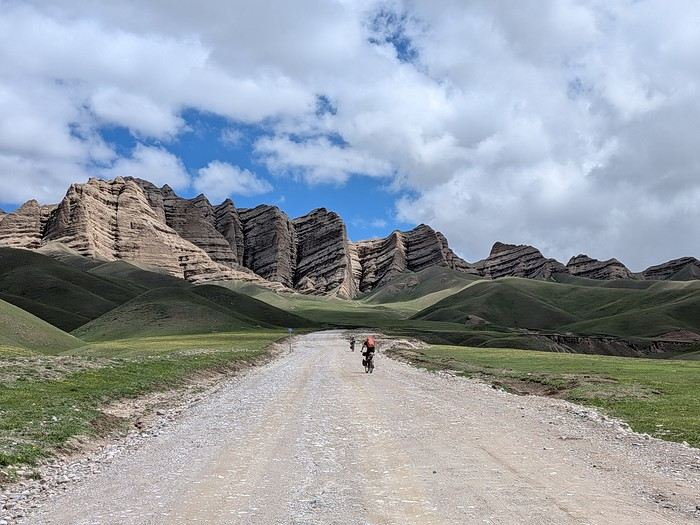
Breathtaking Kyrgyzstan!
This trip had been on my mind for about fifteen years.
But the discomfort of overnight stays, the difficulty of communication, and the prices of the few car rental options kept making me postpone the project.
And then, everything suddenly fell into place—I told myself, it’s time!
The preparations took longer than usual; the destination is still far from mainstream.
A bit of Kazakhstan? Not in the end.
The south or not the south? Yes, in the end.
Pre-book or go with the flow? Only two stops were a leap into the unknown.
To help me find the ideal route, I made great use of this forum (thanks to everyone for patiently answering my questions!), pored over travel journals and blogs (Christian, Jeff), zoomed in on Google Maps and Yandex, and bought the guide published by OunTravela about this destination (the guide has been updated since).
---/---
You’ve got your passport, international driver’s license, bank cards, and euros?
Off we go to Lyon—just one night left before our early morning flight.
Tomorrow night, we’ll be sleeping in Bishkek! (Steak for my partner’s mischievous nephews...)
You’ll find here a post with some practical information.
And here, the version of the travel journal without comments.
---/---
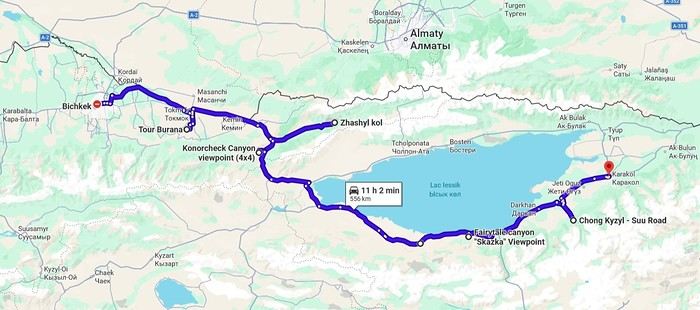
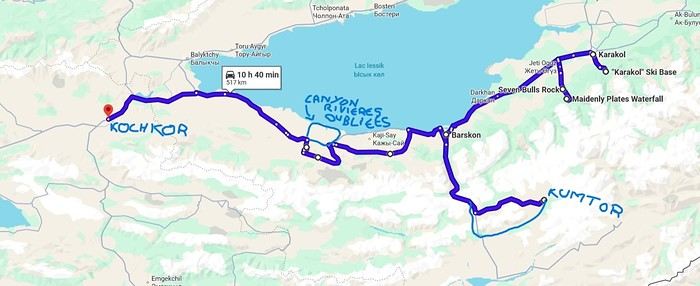
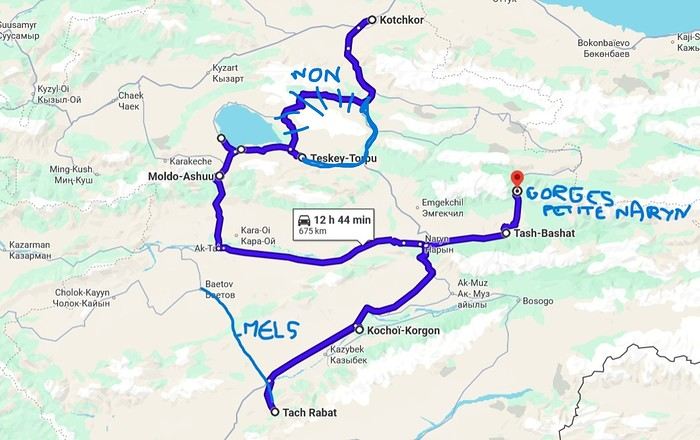
As a supplement, the route track. Not necessarily ultra-accurate since Google has serious gaps for this destination...
From Bishkek to Karakol:
From Karakol to Kochkor:
From Kochkor to Baetov:
From Baetov to Kara-Köl:
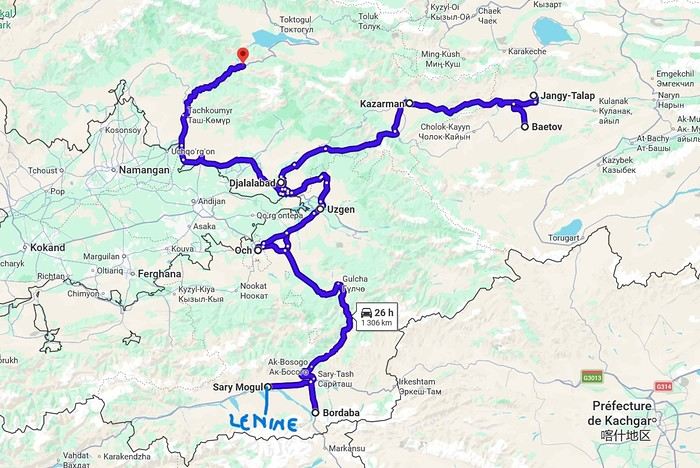
From Kara-Köl to Bishkek:
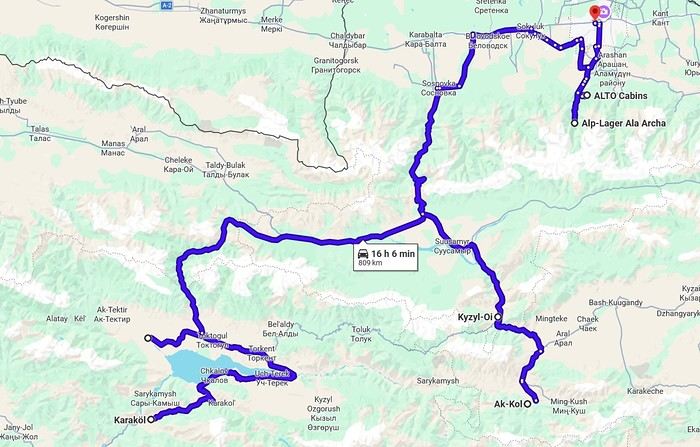

But the discomfort of overnight stays, the difficulty of communication, and the prices of the few car rental options kept making me postpone the project.
And then, everything suddenly fell into place—I told myself, it’s time!
The preparations took longer than usual; the destination is still far from mainstream.
A bit of Kazakhstan? Not in the end.
The south or not the south? Yes, in the end.
Pre-book or go with the flow? Only two stops were a leap into the unknown.
To help me find the ideal route, I made great use of this forum (thanks to everyone for patiently answering my questions!), pored over travel journals and blogs (Christian, Jeff), zoomed in on Google Maps and Yandex, and bought the guide published by OunTravela about this destination (the guide has been updated since).
---/---
You’ve got your passport, international driver’s license, bank cards, and euros?
Off we go to Lyon—just one night left before our early morning flight.
Tomorrow night, we’ll be sleeping in Bishkek! (Steak for my partner’s mischievous nephews...)
You’ll find here a post with some practical information.
And here, the version of the travel journal without comments.
---/---
As a supplement, the route track. Not necessarily ultra-accurate since Google has serious gaps for this destination...
From Bishkek to Karakol:
From Karakol to Kochkor:
From Kochkor to Baetov:
From Baetov to Kara-Köl:
From Kara-Köl to Bishkek:
Revision of Regulation 261/2004 (passenger rights in Europe)
Hello,
Since it came into force, Regulation 261/2004 of the European Parliament and Council, which defines air passenger rights, has faced fierce resistance from airlines, backed by IATA (the association representing almost all passenger airlines).
Beyond the airlines' often abusive—and even frequently bad-faith—resistance to passenger rights, IATA has been lobbying EU institutions for years, with the Council paying close attention for a long time.
As a result, the Council and the Commission have been proposing revisions to Regulation 261/2004 for years that are particularly unfavorable to passengers. The latest attempt nearly eliminated the right to compensation for delays of 3 hours or more upon arrival at the final destination.
However, since this is a regulation of both the European Parliament AND the Council, the two bodies had to agree.
But the European Parliament has always stood firm, consistently responding that passenger rights must be preserved.
After 11 years of struggle, it seems likely that we’re finally nearing the end of the match between the European Commission, the Council (the 27 heads of state or government), and the European Parliament.
Indeed, the Commission and the European Parliament have agreed on a text that will be debated again on Monday, July 6, 2026, with a vote scheduled for July 7, 2026. It’s very likely that this text, which would come into force in a year, will be adopted.
The main changes would be as follows: - Families with children will no longer be forced to pay to sit together on planes; - A flight will be considered canceled (not just delayed) if it departs more than one hour late; - Right to compensation for arrival at the final destination if the delay exceeds 3 hours (no longer "3 hours OR more"). The arrival time will be when the plane, having reached its parking spot, engages its parking brakes (no longer when the aircraft door opens); - Airlines can no longer refuse boarding or charge extra on the return flight for a passenger who didn’t take the outbound flight; - If a flight is canceled, the airline must, at the same time as informing passengers of the event, offer the choice between a refund and re-routing, and inform them of their rights to assistance and, if applicable, compensation; - The airline must, without undue delay, inform passengers of the reason; - In the case of a connecting flight, if the connection is missed and the delay at the final destination entitles the passenger to compensation, the responsible airline will be liable. This is very different from the current situation, where, under the KLM ruling, any airline operating a segment of the flight is liable for compensation. This promises more disputes that the Court of Justice of the European Union will have to resolve if two separate airlines operating segments of a connecting flight are both responsible for the delay. See this case for an example: https://retardimportantavion.wordpress.com/2026/04/18/swiss-international-air-lines-la-mauvaise-foi/ Moreover, this case demonstrates in advance another potential dispute: It could be argued that it wasn’t a missed connection since the flight was canceled before the first leg even departed. - Within 96 hours of a flight that could entitle passengers to compensation, the airline must contact them to inform them of their rights and explain the next steps. - Passengers must claim their right to compensation within 9 months. This is very different from the current situation, as Regulation 261/2004 sets no time limit. Currently, national law applies—in France, the limit is 5 years. The airline must respond within 30 days. If the airline refuses compensation on the grounds of "extraordinary circumstances," it must specify which type of case it refers to from the list in the annex of the new regulation. If the case isn’t on the list, the airline must explain what the event was, why it qualifies as extraordinary circumstances with "clear, substantial, and concise" explanations, and why it’s directly linked to the reason given. It must also declare what "reasonable measures" were taken to mitigate the issue. This is, of course, a huge change in the regulation, with the clear goal of preventing airlines from declaring just anything as "extraordinary circumstances" to avoid compensation. - If, within 3 hours of a last-minute canceled or delayed flight, the airline hasn’t offered re-routing under comparable transport conditions and as soon as possible—whether on one of its own flights or another airline’s—the passenger will have the right to arrange their own re-routing and demand a refund for the new ticket, up to 400% of the original ticket price. This is a significant improvement that would have likely prevented the case described here: https://retardimportantavion.wordpress.com/2024/01/12/reacheminement-catastrophique-droit-indemnisation-meme-circonstances-extraordinaires-2/ - If a flight is canceled due to "extraordinary circumstances," the airline will only be required to offer up to 3 nights in a hotel. This is a major change, as there’s currently no limit. Expect disputes if the extraordinary circumstances end while the passenger hasn’t been re-routed. - The price of a flight, as first displayed, must obligatorily include a cabin bag. This doesn’t prevent the airline from offering a price reduction if the passenger waives the cabin bag. This will put an end to abnormal practices, such as (just one example) Condor charging extra for a cabin bag on long-haul flights like Frankfurt (Germany)–Puerto Plata (Dominican Republic)–Santo Domingo (Dominican Republic)–Frankfurt. - Free correction of a passenger’s name if requested 48 hours before departure. Note: This can’t be used to replace one passenger with another—just to correct a typo, e.g., Dupont instead of Dpont. - Airlines’ websites and apps must include information on how to file a claim.
It’s clear that, despite a few details, these changes are very positive for upholding passenger rights. It remains to be seen whether this text will be definitively adopted on July 7, 2026, as is very likely, and, more importantly, whether IATA will encourage airlines to loyally respect these new rules or persist in their old habits.
Best regards,
Page by Page on the Assisi Way – 1,200 km on Foot
Preamble
June 2024. While hiking with my brother on the GR 36 Tour du Morvan, I catch sight now and then of strange rectangular markers fixed to tree trunks. Against a bright orange background, a deep black Greek tau topped with a white dove. My first encounter with the Assisi Way. The Way of St. Francis: a pilgrimage route linking Vézelay in Burgundy to Assisi in Italy, covering nearly 1,800 km. It felt like an obvious next step—I immediately knew I’d take it on, attempt the adventure solo.
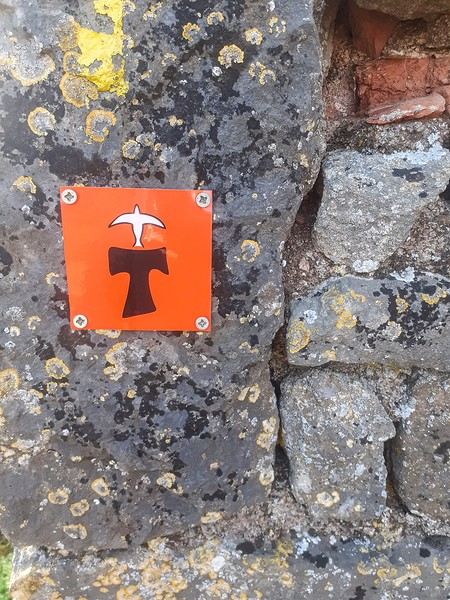
In the months that followed, I talked about my project to everyone—family, friends, my partner. An avalanche of comments, more or less the same but varying depending on each person’s character and life experiences. But deep down, it all boiled down to one legitimate question: why?
And the answers? Hesitant, awkward, partial, even confused. I quickly realized they weren’t so easy to find. It was as if my project seemed more like a whim, a kind of intimate caprice, rather than a well-thought-out plan. Of course, I knew the reasons that pushed me to leave—you always have to give some. Loved ones need to understand to feel reassured, and that’s understandable. But I fear that when I list them, they’ll sound like the same old checklist anyone embarking on this kind of journey might give. Of all the reasons I could mention, I’ll highlight just one here: the call of the road, the solo adventure that brings a powerful sense of freedom. A bit like Monsieur Seguin’s goat, who from her comfortable pen gazes longingly at the unconstrained horizon of the mountain. But if I’m being honest, I think I didn’t really know what I was looking for—or, more importantly, what I’d find. Deep down, when I reflect on it, one word keeps coming up that explains nothing and everything at once: desire.
Now well past sixty, I know that when I ask myself who I am or where I’m going, two things bring me fully back to myself: hiking and writing. And my intention was also to anchor this adventure through words, day by day. Writing down my feelings, emotions, discoveries, and reflections each evening. The famous travel journal that grounds the daily experience in reality. When I discovered the app "Polarstep," which was initially just meant to keep my loved ones updated and reassured, inform them of my progress, and maintain a connection, I found an opportunity to do it a little differently than usual. No retrospective notes polished up after returning, but spontaneous writing—recounting everything that crossed my mind during the day and publishing it immediately. A journey lived in real time.
This text is the exact transcription of my daily writings. Rereading them, I didn’t change a thing—just corrected a few mistakes and tweaked some awkward phrasing here and there. Short texts, fitting the format imposed by this kind of app. Writing as if addressing others.
Now, all that was left was to walk. April 18, 2026 – Vézelay.
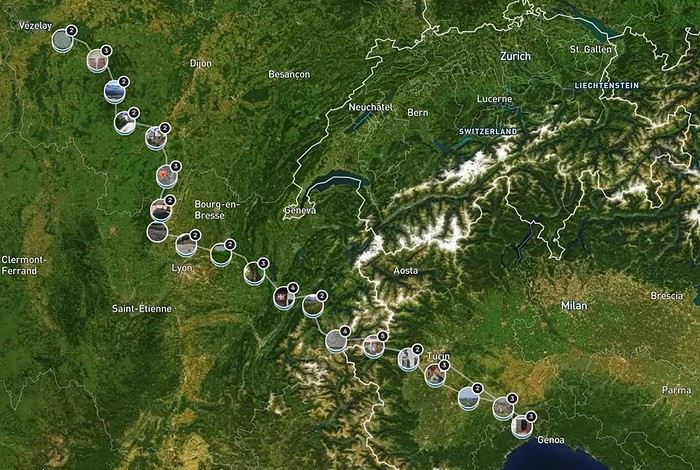
June 2024. While hiking with my brother on the GR 36 Tour du Morvan, I catch sight now and then of strange rectangular markers fixed to tree trunks. Against a bright orange background, a deep black Greek tau topped with a white dove. My first encounter with the Assisi Way. The Way of St. Francis: a pilgrimage route linking Vézelay in Burgundy to Assisi in Italy, covering nearly 1,800 km. It felt like an obvious next step—I immediately knew I’d take it on, attempt the adventure solo.
In the months that followed, I talked about my project to everyone—family, friends, my partner. An avalanche of comments, more or less the same but varying depending on each person’s character and life experiences. But deep down, it all boiled down to one legitimate question: why?
And the answers? Hesitant, awkward, partial, even confused. I quickly realized they weren’t so easy to find. It was as if my project seemed more like a whim, a kind of intimate caprice, rather than a well-thought-out plan. Of course, I knew the reasons that pushed me to leave—you always have to give some. Loved ones need to understand to feel reassured, and that’s understandable. But I fear that when I list them, they’ll sound like the same old checklist anyone embarking on this kind of journey might give. Of all the reasons I could mention, I’ll highlight just one here: the call of the road, the solo adventure that brings a powerful sense of freedom. A bit like Monsieur Seguin’s goat, who from her comfortable pen gazes longingly at the unconstrained horizon of the mountain. But if I’m being honest, I think I didn’t really know what I was looking for—or, more importantly, what I’d find. Deep down, when I reflect on it, one word keeps coming up that explains nothing and everything at once: desire.
Now well past sixty, I know that when I ask myself who I am or where I’m going, two things bring me fully back to myself: hiking and writing. And my intention was also to anchor this adventure through words, day by day. Writing down my feelings, emotions, discoveries, and reflections each evening. The famous travel journal that grounds the daily experience in reality. When I discovered the app "Polarstep," which was initially just meant to keep my loved ones updated and reassured, inform them of my progress, and maintain a connection, I found an opportunity to do it a little differently than usual. No retrospective notes polished up after returning, but spontaneous writing—recounting everything that crossed my mind during the day and publishing it immediately. A journey lived in real time.
This text is the exact transcription of my daily writings. Rereading them, I didn’t change a thing—just corrected a few mistakes and tweaked some awkward phrasing here and there. Short texts, fitting the format imposed by this kind of app. Writing as if addressing others.
Now, all that was left was to walk. April 18, 2026 – Vézelay.
Villages around Hazaribagh in West Bengal
Wednesday, April 1st
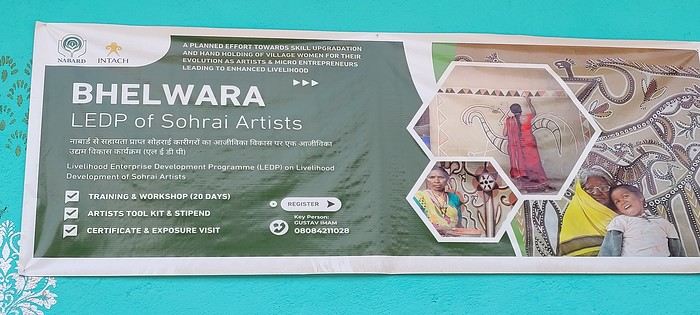
Hazaribagh I’ve got a meet-up with Adam Iman, a guide and painter. He picks me up from the hotel at 10 AM. Another traveler from Bangalore is supposed to join us, but while we wait for him to arrive, Adam takes me to see the paintings his mother and sister created at Hazaribagh station. The town became famous thanks to these murals, which can also be found in several surrounding villages. This art form has earned recognition and is now protected, a sign of its cultural importance. Once the visit is over, we go to pick up the other traveler and then head to our first village: Belwara, where Sohrai art is practiced. At the entrance, a sign proudly announces that we’re entering an artists’ village, where this art is created by women organized into micro-enterprises. Some even offer workshops for those who’d like to learn this tradition.
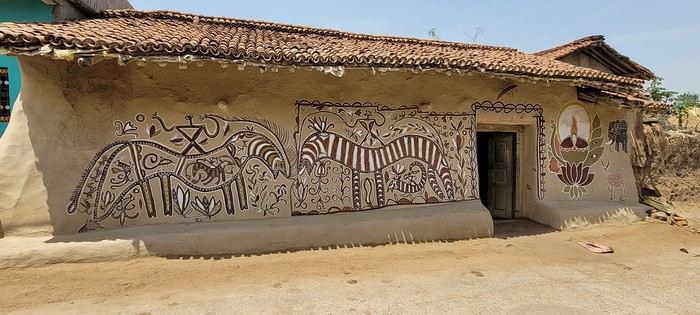
Sohrai art is tied to the harvest season, from October to mid-November. The motifs, in natural colors, celebrate fertility and abundance. The artists use pigments from the earth: red oxides, ochre, white kaolin, and black manganese. On the walls, you’ll see animals, fish, birds—all symbols of life and prosperity. As I look closer at the murals, I start to realize that each motif tells a story. Large animals like cows or bulls often take center stage. Their bodies are filled with intricate, almost hypnotic patterns. They symbolize wealth and prosperity for the household, as well as the deep respect for cattle, which are essential to daily life. On some facades, elephants stand out—massive and decorated with the same precision. They evoke quiet strength and protection. But it’s when I stop in front of one of the houses that I really take the time to look. The wall, a soft ochre, is entirely covered in murals. Two large animals stretch out on either side of the door, their elongated bodies fitting the length of the wall. Their silhouettes are filled with geometric patterns and incredibly fine curved lines, as if every space was patiently filled. Around them, stylized plants, flowers, and small decorative elements fill every gap. The door, dark and worn, becomes almost the silent center of the composition, framed by these living, protective forms. To the right, a more colorful motif catches the eye—a flower or a stylized lamp—like a touch of light on the earth. The whole thing gives an impression of perfect balance, between the rigor of the patterns and the freedom of the gesture.
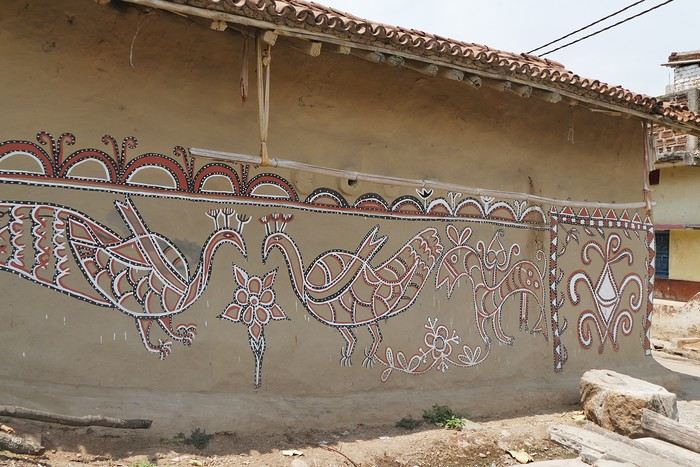
Elsewhere, birds and freer forms bring movement. Peacocks, recognizable by their stylized silhouettes, embody beauty and vitality, while fish symbolize water, fertility, and the continuity of life.
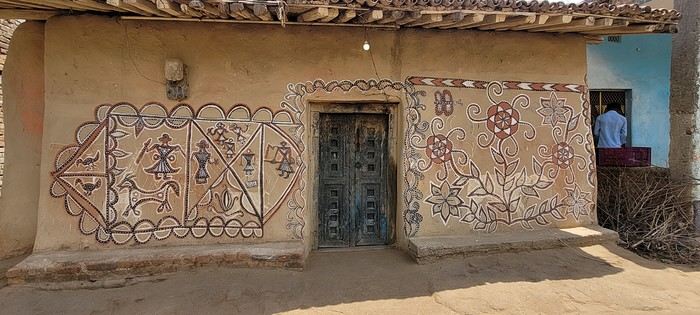
 On some paintings, the scenes become almost narrative: you can make out figures, everyday gestures, like a memory of the village inscribed in the walls. The decorative frames around the doors aren’t left to chance either—they symbolically protect the house, like a boundary between the inside and the outside world.
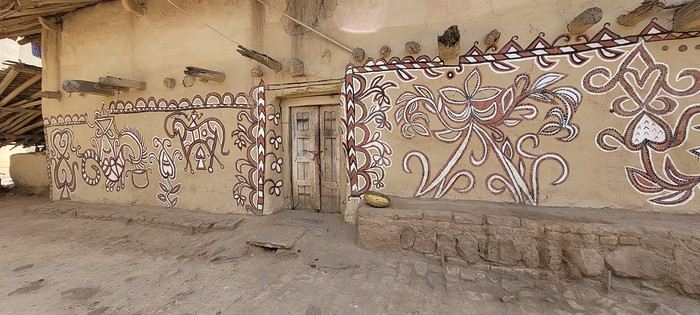
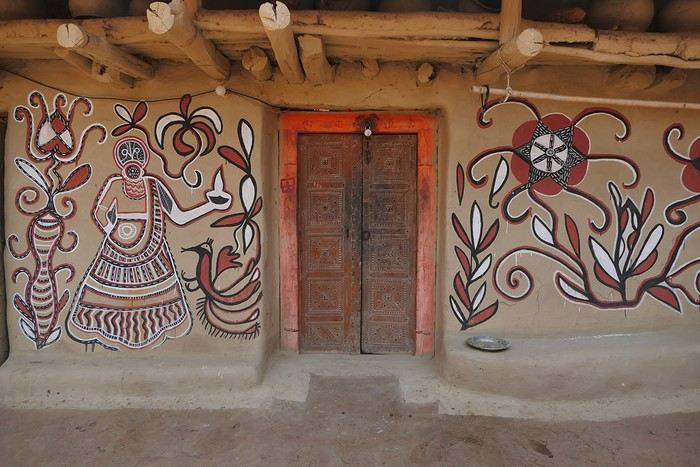
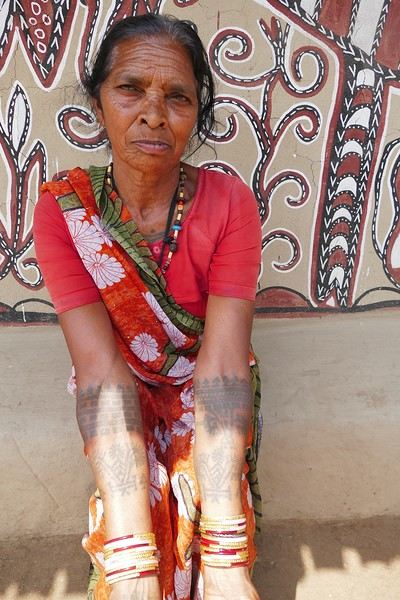
During the Sohrai festival, cattle are led into the jungle in the morning. Meanwhile, the women finish the *aripans*—these floor paintings—and continue the wall murals. Around noon, the animals return to the village, and the bulls’ horns are anointed with oil and vermilion in a gesture of gratitude, amid the vibrant colors adorning the houses. We visit several artists, including Parvat Devi, a well-known woman who has received many awards. Her arms are adorned with intriguing tattoos, which I’ll talk about in more detail later.
On another wall, the style changes completely. Here, no massive animals—just birds occupying the space, light and graceful, as if caught in mid-movement. Two silhouettes face each other, their long necks arched almost like mirrors, while their outstretched wings seem to vibrate with the patterns that compose them.
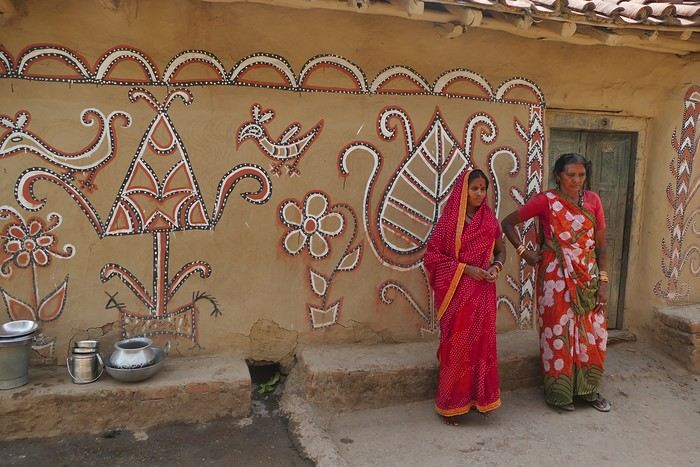
The design is more graphic, almost airy. The lines are smoother, more fluid, as if drawn in one confident stroke. The birds’ bodies aren’t solid—they’re filled with repetitive motifs like scales, stylized feathers, and spirals, giving a sense of continuous movement. Around them, everything comes to life: flowers burst open, arabesques swirl, and even the simplest shapes seem alive. What strikes me here is the sense of lightness. Where the large animals evoked stability and grounding, these birds bring something freer, almost joyful. They seem to embody movement, the circulation of life, like a breath flowing through the village.
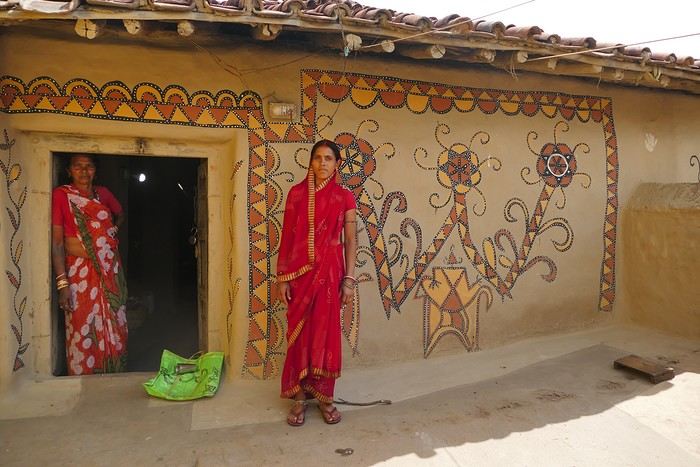
The colors remain the same—deep reds, intense blacks, and chalky white—but the rhythm is different. Faster, more spontaneous. As if each wall had its own personality, while still speaking the same language.
That’s probably why I’m so moved. I’d heard about these paintings from my friend Raja, and last year, I saw an exhibition in a village near my home. That first encounter made me want to come here. But seeing them in person is a whole different experience. These paintings are unique. This ancient art is passed down from mother to daughter, or mother-in-law to daughter-in-law, in a quiet, deeply living continuity. At first glance, it might seem almost childlike in its simplicity and pared-down forms. And yet, everything is thought out, balanced, mastered. Nothing is left to chance.
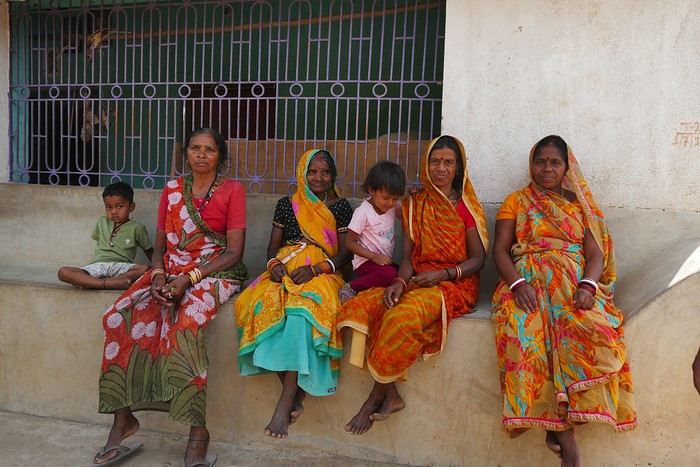
That apparent simplicity, combined with such rich symbolism, touches me deeply. There’s something sincere and essential in these walls—and that’s what moves me.
Hazaribagh I’ve got a meet-up with Adam Iman, a guide and painter. He picks me up from the hotel at 10 AM. Another traveler from Bangalore is supposed to join us, but while we wait for him to arrive, Adam takes me to see the paintings his mother and sister created at Hazaribagh station. The town became famous thanks to these murals, which can also be found in several surrounding villages. This art form has earned recognition and is now protected, a sign of its cultural importance. Once the visit is over, we go to pick up the other traveler and then head to our first village: Belwara, where Sohrai art is practiced. At the entrance, a sign proudly announces that we’re entering an artists’ village, where this art is created by women organized into micro-enterprises. Some even offer workshops for those who’d like to learn this tradition.
Sohrai art is tied to the harvest season, from October to mid-November. The motifs, in natural colors, celebrate fertility and abundance. The artists use pigments from the earth: red oxides, ochre, white kaolin, and black manganese. On the walls, you’ll see animals, fish, birds—all symbols of life and prosperity. As I look closer at the murals, I start to realize that each motif tells a story. Large animals like cows or bulls often take center stage. Their bodies are filled with intricate, almost hypnotic patterns. They symbolize wealth and prosperity for the household, as well as the deep respect for cattle, which are essential to daily life. On some facades, elephants stand out—massive and decorated with the same precision. They evoke quiet strength and protection. But it’s when I stop in front of one of the houses that I really take the time to look. The wall, a soft ochre, is entirely covered in murals. Two large animals stretch out on either side of the door, their elongated bodies fitting the length of the wall. Their silhouettes are filled with geometric patterns and incredibly fine curved lines, as if every space was patiently filled. Around them, stylized plants, flowers, and small decorative elements fill every gap. The door, dark and worn, becomes almost the silent center of the composition, framed by these living, protective forms. To the right, a more colorful motif catches the eye—a flower or a stylized lamp—like a touch of light on the earth. The whole thing gives an impression of perfect balance, between the rigor of the patterns and the freedom of the gesture.
Elsewhere, birds and freer forms bring movement. Peacocks, recognizable by their stylized silhouettes, embody beauty and vitality, while fish symbolize water, fertility, and the continuity of life.
On some paintings, the scenes become almost narrative: you can make out figures, everyday gestures, like a memory of the village inscribed in the walls. The decorative frames around the doors aren’t left to chance either—they symbolically protect the house, like a boundary between the inside and the outside world.During the Sohrai festival, cattle are led into the jungle in the morning. Meanwhile, the women finish the *aripans*—these floor paintings—and continue the wall murals. Around noon, the animals return to the village, and the bulls’ horns are anointed with oil and vermilion in a gesture of gratitude, amid the vibrant colors adorning the houses. We visit several artists, including Parvat Devi, a well-known woman who has received many awards. Her arms are adorned with intriguing tattoos, which I’ll talk about in more detail later.
On another wall, the style changes completely. Here, no massive animals—just birds occupying the space, light and graceful, as if caught in mid-movement. Two silhouettes face each other, their long necks arched almost like mirrors, while their outstretched wings seem to vibrate with the patterns that compose them.
The design is more graphic, almost airy. The lines are smoother, more fluid, as if drawn in one confident stroke. The birds’ bodies aren’t solid—they’re filled with repetitive motifs like scales, stylized feathers, and spirals, giving a sense of continuous movement. Around them, everything comes to life: flowers burst open, arabesques swirl, and even the simplest shapes seem alive. What strikes me here is the sense of lightness. Where the large animals evoked stability and grounding, these birds bring something freer, almost joyful. They seem to embody movement, the circulation of life, like a breath flowing through the village.
The colors remain the same—deep reds, intense blacks, and chalky white—but the rhythm is different. Faster, more spontaneous. As if each wall had its own personality, while still speaking the same language.
That’s probably why I’m so moved. I’d heard about these paintings from my friend Raja, and last year, I saw an exhibition in a village near my home. That first encounter made me want to come here. But seeing them in person is a whole different experience. These paintings are unique. This ancient art is passed down from mother to daughter, or mother-in-law to daughter-in-law, in a quiet, deeply living continuity. At first glance, it might seem almost childlike in its simplicity and pared-down forms. And yet, everything is thought out, balanced, mastered. Nothing is left to chance.
That apparent simplicity, combined with such rich symbolism, touches me deeply. There’s something sincere and essential in these walls—and that’s what moves me.
Recommended itinerary for an 11-day road trip from Quebec City?
hi everyone,
my flight’s all booked (Sept 19–Oct 4), with 1.5 days in Montreal + 1.5 days in Quebec City...
then I’ve got 11 days starting from Quebec City for a road trip—what route do you recommend?
(I’ve seen these stops come up a lot: Parc Omega, Charlevoix, Tadoussac, Bas-Saint-Laurent, Saguenay, Parc de la Gaspésie, Parc Forillon, Mauricie...)
The idea is no more than 2–3 hours of driving per day on average.
I’m traveling solo :-( (if you’re in the area around the same dates, hit me up!)
45 years old, I love sports (so I’m hoping to do hikes, kayaking, and other activities, see whales...discover beautiful landscapes). I’m not sure if there are any events in the area during those dates, but I’d also like to meet some people...
Thanks in advance for your tips!
The Pearl of Africa - July-August 2026
Preamble:
Africa was calling to me, so a year ago, with our usual travel companions, we decided to return to the continent we love so much.
Where to go?
Uganda quickly caught our attention—wildlife we’re used to seeing, plus gorillas and the shoebill we missed in Zambia.
We got in touch with Paul, who’s been mentioned several times on the forum back in September, booked our flight tickets, secured the gorilla permits, and by early October, the most important things were done.
We still had plenty of time to hold our "prep meetings" for the final itinerary.
Three days before departure, I sprained my ankle (my weak spot, as you’ll recall from our Colombia trip). I wasn’t in great spirits, but after a year of waiting, nothing was going to stop me. We’d see how it goes! Off we went for our new adventures
Three days before departure, I sprained my ankle (my weak spot, as you’ll recall from our Colombia trip). I wasn’t in great spirits, but after a year of waiting, nothing was going to stop me. We’d see how it goes! Off we went for our new adventures
Off on an adventure in Namibia!
April 11 – Day 1
It was winter, a winter with beautiful weather, A season that only exists in the southwest of America, I remember very well what I told you that morning A month ago... A century ago, an eternity ago... We’ll go... wherever you want, whenever you want...
Well, yeah, back from our adventure in our enchanting American West just a month ago, we’re already taking a bite out of one of its lesser-known competitors. "Flo, if you had to pick just one reason to justify your love for the U.S., what would it be?" The greasy, dripping burgers? No, I don’t think I’m going out on a limb by saying it’d be the wide-open spaces... And that’s exactly what our new quest is taking us to—a land on the other side of the globe where the horizon also seems endless, where silence tastes like salty wind and sand, where freedom is measured in kilometers of desert tracks, where the GPS is mostly there to confirm you’re lost in the middle of nowhere... Add to that magic formula the fact that you’ll see more zebras, giraffes, wildebeest, and elephants than people per square kilometer, and you can imagine us setting foot in Southern Africa for the first time, more precisely at the small airport in Windhoek, capital of... of...? Brush up on your geography, damn it! We’re landing in Namibia!!!
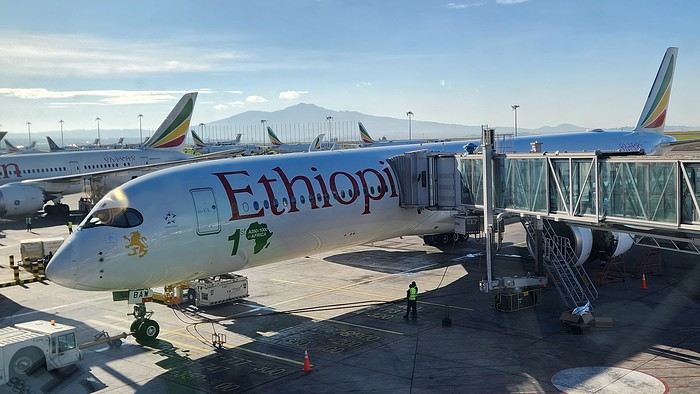
To be honest, Namibian landscapes have been flirting with me for ages. So how did I resist this island of temptation for so long? First, the budget. Let’s just say that for the same amount of effort (and kidneys), the bank lets you choose two other adventures almost anywhere else on the planet. Then there were my girls. Yeah, back then, they were too little to dose up on Malarone, the only malaria remedy at the time... Long story short, ten years later, all the planets have aligned. First, I won the Euromillions! Well, almost... Let’s just say my girls are now old enough... not to take Malarone, but to stop following me on all my adventures! Jackpot! "Flo, how about a little two-person caprice, just the two of us, tackling the Namibian tracks?"
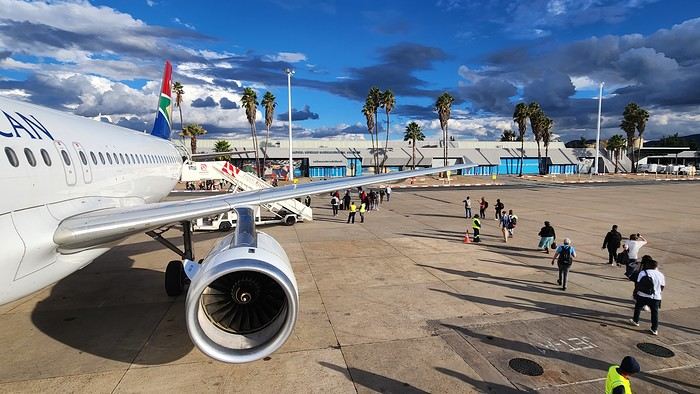
As we landed on the runway, first wow effect: The horizon is immense. It’s flat as can be, incredibly flat... So much flat space! Did I mention it was flat?... Looking into the distance, it feels like your gaze could circle the Earth without hitting a single obstacle—until you end up staring at your own backside. "Oh, what a nice view!" Well, it’s the first time I’ve seen my butt from this angle! Touching moment... Sorry, I’m rambling—must be the exhaustion from the three-flight marathon we just powered through via Ethiopia and South Africa... And yet, no time to philosophize about my anatomy. As usual, we want to rack up our first kilometers to be front and center at dawn tomorrow. After wrapping up the tedious Namibian immigration formalities and meeting the 4x4 that’ll be our companion day and night for the next fifteen days, we’re off! We’re not exactly fresh, but we’re ready to tackle the next five hundred kilometers in night mode, cruise control set due south! Just outside Windhoek, the local wildlife—a jackal—welcomes us with a smile: "Welcome to Namibia!" That’s what it said! Honest... Okay, first endless straight road, first flaming sunset, first corrugated dirt track, first Milky Way with zero light pollution... You get it—it’s definitely the day of firsts... First night camping, too, in the big trunk of our Toyota Fortuner parked by the side of the track... The real adventure, the kind that smells under the arms, can finally begin...
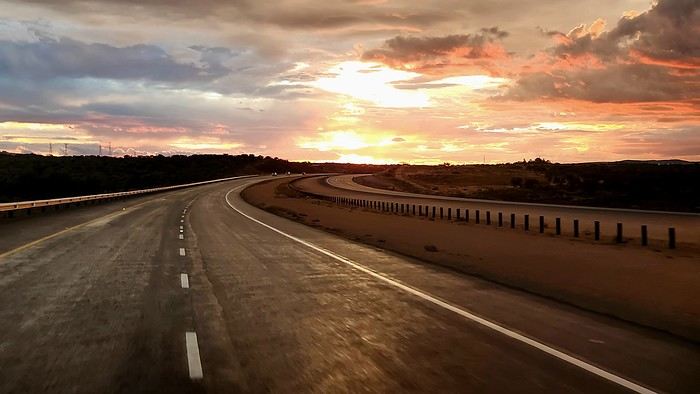
It was winter, a winter with beautiful weather, A season that only exists in the southwest of America, I remember very well what I told you that morning A month ago... A century ago, an eternity ago... We’ll go... wherever you want, whenever you want...
Well, yeah, back from our adventure in our enchanting American West just a month ago, we’re already taking a bite out of one of its lesser-known competitors. "Flo, if you had to pick just one reason to justify your love for the U.S., what would it be?" The greasy, dripping burgers? No, I don’t think I’m going out on a limb by saying it’d be the wide-open spaces... And that’s exactly what our new quest is taking us to—a land on the other side of the globe where the horizon also seems endless, where silence tastes like salty wind and sand, where freedom is measured in kilometers of desert tracks, where the GPS is mostly there to confirm you’re lost in the middle of nowhere... Add to that magic formula the fact that you’ll see more zebras, giraffes, wildebeest, and elephants than people per square kilometer, and you can imagine us setting foot in Southern Africa for the first time, more precisely at the small airport in Windhoek, capital of... of...? Brush up on your geography, damn it! We’re landing in Namibia!!!
To be honest, Namibian landscapes have been flirting with me for ages. So how did I resist this island of temptation for so long? First, the budget. Let’s just say that for the same amount of effort (and kidneys), the bank lets you choose two other adventures almost anywhere else on the planet. Then there were my girls. Yeah, back then, they were too little to dose up on Malarone, the only malaria remedy at the time... Long story short, ten years later, all the planets have aligned. First, I won the Euromillions! Well, almost... Let’s just say my girls are now old enough... not to take Malarone, but to stop following me on all my adventures! Jackpot! "Flo, how about a little two-person caprice, just the two of us, tackling the Namibian tracks?"
As we landed on the runway, first wow effect: The horizon is immense. It’s flat as can be, incredibly flat... So much flat space! Did I mention it was flat?... Looking into the distance, it feels like your gaze could circle the Earth without hitting a single obstacle—until you end up staring at your own backside. "Oh, what a nice view!" Well, it’s the first time I’ve seen my butt from this angle! Touching moment... Sorry, I’m rambling—must be the exhaustion from the three-flight marathon we just powered through via Ethiopia and South Africa... And yet, no time to philosophize about my anatomy. As usual, we want to rack up our first kilometers to be front and center at dawn tomorrow. After wrapping up the tedious Namibian immigration formalities and meeting the 4x4 that’ll be our companion day and night for the next fifteen days, we’re off! We’re not exactly fresh, but we’re ready to tackle the next five hundred kilometers in night mode, cruise control set due south! Just outside Windhoek, the local wildlife—a jackal—welcomes us with a smile: "Welcome to Namibia!" That’s what it said! Honest... Okay, first endless straight road, first flaming sunset, first corrugated dirt track, first Milky Way with zero light pollution... You get it—it’s definitely the day of firsts... First night camping, too, in the big trunk of our Toyota Fortuner parked by the side of the track... The real adventure, the kind that smells under the arms, can finally begin...
Tips and feedback from our trip to China, Vietnam, and Cambodia
Here are some tips from our 6-week trip (summer 2026) to China, Vietnam, and Cambodia. We traveled as a family of four with two kids aged 15 and 12.
I hope these notes help other travelers!
CHINA General You’ll need to download and set up a few apps: - Alipay and WeChat for payments (I didn’t withdraw a single bill the entire trip) - Didi for taxis - Amap = Chinese Maps (works great, especially for subways) - A translation app (we used Papago, but it sometimes gave weird results) - Google Lens for translating menus or signs—super handy. - HelloRide for bikes - Gemini and ChatGPT for everything: understanding daily life, enhancing visits, checking the weather, finding things. - HomeExchange if you want to lower travel costs (few listings in Asia except in big cities, often expats) - Trip.com is very useful, even essential, for trains, domestic flights, and hotels. Like Booking.com, the more you book with them, the more perks you get. So I’d even suggest checking flight tickets on this site, even if it’s a bit pricier. However, buying train tickets is complicated because (1) they only open 15 days in advance, and (2) they sell out fast. Trip.com just promises to buy them as soon as they’re available but doesn’t always succeed. It’s stressful and might force you to change your plans, especially if you’re aiming for a sleeper car and there are no seats left. Watch out for station names—many cities have multiple stations, including a high-speed rail one outside the city. For internet, we got the Asia plan from Holafly. It worked but seemed much slower than Chinese internet. I regretted not buying a Chinese SIM card because without internet in China, everything is VERY complicated (money, transport, etc.).
For the firewall, we used ExpressVPN, but it wasn’t always reliable. A bit disappointing. Ask ChatGPT for tips with screenshots to improve the settings.
Since we only had one SIM card with internet, we couldn’t rent shared bikes. If I were to do it again, I’d get a SIM for each person, even the kids, because distances in cities are huge. We walked *a lot*. Same goes for buses—it’s tricky with just one internet connection. Better to have a phone per person with internet. Book your visits as far in advance as possible—they often sell out. Watch out for power banks: if they don’t explicitly say "3C," they’ll confiscate it. Even if there’s a little airplane logo.
Shanghai In the evening, the streets leading to the Bund from the metro were so crowded that police were out in force blocking roads. Arrive early. We went around the north side.
Suzhou Be careful—there are two stations (common in China), and the high-speed rail one is 45–50 minutes from the old town. The Humble Administrator’s Garden was *packed*—we don’t recommend it. It turned into a marathon day from Shanghai (almost 4 hours from our hotel to the garden).
Beijing Forbidden City: Don’t go—I know it’s a shame, but it’s too crowded. I couldn’t buy tickets on the official site because of the kids’ passports. We ended up with a guided tour, the only way to get in (tickets sell out fast). The visit was disappointing—bad guide *and* massive crowds. You’ll queue a lot to enter and see certain areas. You’ll be checked often, so pack your bags carefully. Great Wall at Mutianyu: Crowded. Two hours by bus, and even though we arrived early, people were already leaving! I really think the best option is to leave your big bags in Beijing and stay overnight near the Wall. That way, you’ll have it to yourself a bit more. For transport: get off at Tiananmen Square metro and look for buses with official guides in bright yellow-green vests. No need to buy tickets online—they made me cancel mine to rebook on the spot. Buses leave when full. Note: the cable car and chairlift are separate—if you want to go up one side and down the other, you’ll need different tickets. The endless queue for the toboggan ride put us off. Quick tip: Incredible swimming spot in Beijing—on the north shore of Houhai Lake, you can swim by crossing the barrier. We did it twice with about ten other people. Bring a swimsuit!
Shapotou Desert Amazing, but it gets *very* hot in the afternoon. We had a tent (not an air-conditioned bungalow), which was unbearable during the day. We hung out in the restaurant. The paid activities are fun, except the camels—they look sad. The real highlight is the evening and sunset. The only downside: you can’t explore the desert alone or far—they don’t rent 4x4s, for example. We stayed at "The Desert Camping Hotel of the Proprietress of Shapotou." They were lovely.
Zhongwei Gaomiao Temple and its underground: Fun and short—you’ll see quirky Buddhist hell paintings.
Xi’an Terracotta Army: We took a Didi because for four people, a car was almost the same price as four shuttle tickets. It was packed—chaotic to see properly. We visited the halls in order: 3, 2, then 1—a good choice. Hua Shan Mountains: Left before sunrise to arrive when the ticket office opened (7 AM, I think). We were shocked to see so many people already coming down. 45 minutes by bus to the west cable car, then 15 minutes up. We did the west, south, east, central, then north peaks (in that order) before taking the other cable car down (you can buy the ticket at the top). A beautiful day. In the city, check out...
Chengdu Panda Research Center: Like Hua Shan, plan to arrive when the ticket office opens. Already *tons* of people, and it moves fast to see the big pandas before their nap. Have them drop you at the west entrance (not south), or you’ll have to walk uphill. Leshan Giant Buddha: Interesting. The trip is a bit long (metro, then train, then city bus, then shuttle on-site). We didn’t take the boat option but walked. In the end, you only spend a few minutes at the Buddha’s feet, but it’s a nice day out. Hotel tip: Panda Enjoy Home Hotel Apartments (Chengdu East Railway Station Dongda Road Branch). The view is insane, and the neighborhood is super convenient and nice. 646 CNY for 2 nights. Swimming: The municipal pool is an interesting experience, but don’t expect to swim—no one does. Everyone just splashes around where they can stand. The hours are a bit odd, with a break in the late afternoon.
Kunming The bike path along Dian Lake is pretty and often well-protected from cars. But like everywhere in China, it’s *packed*. Not much to say about visits—the flower market is a wholesale market, not very interesting. The ethnic minorities museum closed right in front of us. All the big malls are good for shopping.
Dali We thought we could bike around the lake in two days. Wrong on two counts: First, the lake’s edge is blocked to traffic and reserved for bikes (or tourist mini-buses). So you’re stuck on the main road, which never gives you a view of the lake, with all the trucks and cars. Doing 120 km like that wouldn’t make sense, in our opinion. The rice fields around are nice but not as impressive as elsewhere, so Dali isn’t worth it for that. The old town, all restored, is pretty but *packed*—thousands of people, especially in the evening.
Hekou (Vietnam border) Comfortable train from Kunming. In the parking lot, a bus (not well-marked, but Didi is an option) takes you to the border in 15–20 minutes. Short wait at both border posts. Fun to see the two lampposts near the border line: the Chinese one is new, modern, with a surveillance camera (of course), while the Vietnamese one is old and a bit rusty.
VIETNAM General: - You’ll need the Grab app for taxis - Very disappointed with 12Go—it doesn’t show all buses, never connects you with the company, and refuses refunds. Try booking directly with companies like FUTA Bus instead. - Credit cards are often accepted (supermarkets and modern stores), otherwise, you’ll need cash
Lao Cai 2 km between the border and the train station. The sleeper bus to Hanoi with Sao Viet is well-organized—it works.
Hanoi Ho Chi Minh Mausoleum closes early (10:30 AM, I think). Women’s Museum: Very good, not too long Temple of Literature: Beautiful, fairly quick This is where you should buy souvenirs, clothes, and knockoffs—the prices are reasonable, and the sellers are nicer than elsewhere. We recommend Cho Dong Xuan.
Tu Long Bay We did 2 days, 1 night (so really 24 hours on the boat) with Parfum d’Automne (French-speaking agency), which put us on a Cycad Cruise boat. Cost: 300 € per person—expensive, but it was amazing, super luxurious, and the buffet meals were delicious. We don’t regret the splurge. The only downside: no swimming in the bay (but there’s a pool on the boat). To swim, you’d need a 3-day, 2-night trip to an area not protected by the maritime park.
Phong Nha If you didn’t do the northern mountains due to time or weather (like us), Phong Nha is a great stop for a motorbike ride. It’s beautiful, especially the mountains west of the city toward the caves. There are two (small) swimming spots at the Botanic Garden—a pleasant 45-minute walk without stops. Hotel tip: Sunbeam Village (very friendly, pool, breakfast by the river, motorbike rentals)
Da Nang Hotel tip: Meridians by Hsuite—you’ll have the beach almost to yourself. You’ll still need to walk 15–20 minutes to the hyper-touristy area if you want to rent surfboards (150–200k VND per hour). The beach is beautiful, and the water is 30°C—great for a break on a long trip, especially since all transport goes through Da Nang.
Hoi An 45 minutes from Da Nang, so it’s easy to visit in a day, especially since the city isn’t that big and it’s *very* hot. Cooking class: MS Hanh cooking class—great (the market tour is a bit useless). We don’t recommend the "basket boat" tour—it’s a bit sad on a big brown pond with elderly guides.
Ho Chi Minh City Ben Thanh Market is a nightmare: starting prices are exorbitant, and the vendors are aggressive. Don’t go. The War Remnants Museum can be really tough for kids.
Can Tho Avoid this city. We made the mistake of going to see the floating market—don’t.
Chau Doc No Grab in the city, but regular taxis. One day is enough if you go early to the forest and the mountain in the late afternoon. 250k VND per person for the forest and its canals (45 minutes by motorbike) The sunset at Victoria Nui Sam can be magnificent if the clouds cooperate. Cheap and good restaurant: Quan Nem Nuong Sau Hiep Hotel tip: Homestay Khoa (2,250,000 VND for 3 nights)—adorable hostess, full of tips, clean rooms.
The speedboat to Cambodia is more comfortable than a bus. Book with Hangchau a few days in advance—payment in cash on the day (1,640,000 đ).
CAMBODIA General: - Issues with the "Bakong Tourists" app—we had to go to a big bank to load money onto it. We barely used it afterward.
Phnom Penh For us, a day and a half is enough if you want to spend more time elsewhere. Markets close early (around 6 PM) and are less interesting than in Hanoi, for example. The Royal Palace has a break from 11 AM to 2 PM, but there aren’t many people in the afternoon.
Siem Reap Trip with Capitol company—the bus is basic but cheap. Departs at 10:15 AM, 7-hour ride. Angkor entrance fee: 62 USD per person for a 3-day pass. Tickets are picked up at Angkor Enterprise. Renting two 125cc motorbikes: 10 USD each, plus 7 USD for gas. By bike, it took me 25 minutes to reach Angkor Wat’s pools. A basic city bike rental was 1 USD per hour. Short circuit by motorbike (in reverse): 7 hours with stops everywhere. Grand tour by tuk-tuk: Only 5 temples, 4.5 hours. If you want to see lots of monkeys, they’re grouped west of Bayon. For the temples, we asked Gemini (AI) at each stop to point out details that might interest kids (who can get bored with the repetition). It gave fun facts and things to look for—great for the little ones. Hotel tip: The Five Senses, run by a Frenchman, Bruno, who knows Cambodia inside out and organizes tours. Restaurant tip: Wild (only spring rolls, but *so* many varieties—delicious and cheap) Watch out: 1 hour to the airport, 50 km from the city. Show tip: The Phare Circus
Off to explore Egypt!
February 9 - Day 1
"So, my little wanderers, back at the decks? What’s this mystery destination you’ve got in store for us at the start of the year?"
Yes, the schoolyard bell’s ringing again! We’re hitting the road... or rather, the skies! At first glance, our destination might surprise more than a few. First off, simply because I was here exactly twenty years ago, and I don’t usually like retracing my own footsteps. Secondly, because the name of this place screams mass tourism—basically the opposite of what Flo and I look for.
Despite that, in this land of backsheesh, I’d promised myself I’d come back one day to experience it my way. And since Flo told me, during our wanderer chats, that this destination straddling Africa and the Middle East was in her top 2 travel dreams, the stars aligned for this roots-style trip to quickly make it onto our pharaonic festivities program! Unless you’re totally clueless in general knowledge, you’ve probably guessed by now—we’re off to Egypt! Of course, a few classics will be on our itinerary, but above all, we want to soak up a culture that can’t be appreciated in four-star resorts or on a Nile cruise boat. And let’s be clear, these next two weeks won’t be a walk in the park—neither for our two daughters who are joining us, nor for our bodies!
And that’s clear from the get-go: after our first flight, eight hours of trying (and failing) to sleep on Milan airport’s metal seats, our second flight, landing, passport stamps, our Uber ride, and our first Cairo kilometers, we finally drop our exhaustion at the little guesthouse we booked in Giza. Doesn’t all that energy deserve a little reward?
Oh, absolutely! And here it is: a full-on slap in the face for everyone! But just look at this view from our hotel terrace? For 20 € a night for four, even with this incredible view, I figured the room must be pretty shabby, right? Nope... Is the staff rude, then? Nope... Okay, so what’s the catch? You’re gonna tell me breakfast is included too? Well, yes! Honestly, this Egypt trip is off to a great start.

And the rest of the afternoon, spent rubbing shoulders with locals, only confirmed this vibe. After digesting our pyramid view, we dove into the hustle and bustle of our neighborhood with the goal of exchanging money, eating at street stalls, and testing the hospitality of the locals. Ten out of ten!




Eight little sun breads with baba ganoush and falafel? 80 pounds, or 1.5 €. A dozen Middle Eastern pastries? Same! 80 pounds! Two hawawshis, those little pita breads stuffed with meat and spices? 10 pounds each, or about twenty cents! Not to mention all those smiles and free "welcomes" left and right!!!

What a welcome! We end this first day with a sunset over the three sisters of Giza—where we’ll obviously be gawking tomorrow...



https://voyageforum.com/images/posts/small/1789072399-cCyLDYuFwPLAZTY.jpg
"So, my little wanderers, back at the decks? What’s this mystery destination you’ve got in store for us at the start of the year?"
Yes, the schoolyard bell’s ringing again! We’re hitting the road... or rather, the skies! At first glance, our destination might surprise more than a few. First off, simply because I was here exactly twenty years ago, and I don’t usually like retracing my own footsteps. Secondly, because the name of this place screams mass tourism—basically the opposite of what Flo and I look for.
Despite that, in this land of backsheesh, I’d promised myself I’d come back one day to experience it my way. And since Flo told me, during our wanderer chats, that this destination straddling Africa and the Middle East was in her top 2 travel dreams, the stars aligned for this roots-style trip to quickly make it onto our pharaonic festivities program! Unless you’re totally clueless in general knowledge, you’ve probably guessed by now—we’re off to Egypt! Of course, a few classics will be on our itinerary, but above all, we want to soak up a culture that can’t be appreciated in four-star resorts or on a Nile cruise boat. And let’s be clear, these next two weeks won’t be a walk in the park—neither for our two daughters who are joining us, nor for our bodies!
And that’s clear from the get-go: after our first flight, eight hours of trying (and failing) to sleep on Milan airport’s metal seats, our second flight, landing, passport stamps, our Uber ride, and our first Cairo kilometers, we finally drop our exhaustion at the little guesthouse we booked in Giza. Doesn’t all that energy deserve a little reward?
Oh, absolutely! And here it is: a full-on slap in the face for everyone! But just look at this view from our hotel terrace? For 20 € a night for four, even with this incredible view, I figured the room must be pretty shabby, right? Nope... Is the staff rude, then? Nope... Okay, so what’s the catch? You’re gonna tell me breakfast is included too? Well, yes! Honestly, this Egypt trip is off to a great start.
And the rest of the afternoon, spent rubbing shoulders with locals, only confirmed this vibe. After digesting our pyramid view, we dove into the hustle and bustle of our neighborhood with the goal of exchanging money, eating at street stalls, and testing the hospitality of the locals. Ten out of ten!
Eight little sun breads with baba ganoush and falafel? 80 pounds, or 1.5 €. A dozen Middle Eastern pastries? Same! 80 pounds! Two hawawshis, those little pita breads stuffed with meat and spices? 10 pounds each, or about twenty cents! Not to mention all those smiles and free "welcomes" left and right!!!
What a welcome! We end this first day with a sunset over the three sisters of Giza—where we’ll obviously be gawking tomorrow...
https://voyageforum.com/images/posts/small/1789072399-cCyLDYuFwPLAZTY.jpg
From Amman to Jerusalem
I’m reposting here a travel journal originally published on the Routard forum in 2022 during VoyageForum’s hiatus. Without altering its content, I’ll try to streamline it. The few comments on the political situation reflect my feelings at the time and don’t account for events since then! I’d rather avoid debates on the topic. The photos are nothing fancy—just illustrative.
The context: we’re coming out of COVID. We’re looking for a not-too-distant destination, and Jordan has been catching our eye for a while. After some thought, we wonder if we shouldn’t take advantage of the geography to hop over to Israel. After all, Jerusalem is less than 100 km from Amman. Plus, Transavia lets you combine both destinations.
To plan our trip (February 19 to March 4, 2022), we contacted three French-speaking agencies in Amman. Their itinerary proposals were pretty similar, but the prices varied significantly. Given the many positive reviews we read on travel forums and a very attractive rate compared to competitors, we quickly settled on Ahmad Ababseh’s agency. Still, deep down, we had a slight worry—so many glowing reviews seemed a bit over the top, but we took the chance.
During the preparation, which happened in a very short timeframe (less than 10 days), Ahmad didn’t provide detailed roadbooks, and we made do with brief email or phone exchanges. Few details were shared either. We discussed hotels, with Ahmad preferring the ones he knew. We picked our hotel for our arrival in Amman, but before agreeing, Ahmad insisted on inspecting the rooms.
For payment, Ahmad only asked for a 500 € deposit and trusted our word for the balance, which we paid upon arrival. He also committed in writing to refund the full deposit if our trip was canceled due to COVID.
Finally, for the Israeli part, Ahmad contacted an agency in Jerusalem to handle the logistics. He didn’t take a commission.
Markets: The Beating Heart of Local Gastronomy and Cuisine
I don’t know about you, but I’m a huge fan of markets. No matter where I go, in every country or city I visit, I won’t leave without having seen one. I’m mostly talking about food markets. I love the smells, the colors, and watching people from all walks of life stroll around. It’s like a mirror of a country’s culture, and I love soaking it all in.
Thai markets are particularly appealing to me. In my province, there are so many. Maybe more than elsewhere—I’m not sure—but every day, you can find a "Talat Nat." These are traveling markets that set up in specific places on specific days. They only stay open for a few hours. Some attract more shoppers than others because they have more stalls and a wider variety of products. Sometimes, they’re set up in pretty unusual spots: temples, roadside, even on train tracks...
On top of these, there are also markets in the city that stay open all day.
I’d love for you to share your photos of markets, local product stalls, and why not, let’s talk about gastronomy and cuisine too!
I’ll start with my favorite market—it’s 8 kilometers from my place and happens every Tuesday from 2 PM to 5 PM. I never miss a Tuesday unless there’s a downpour... 😉 It’s located in the countryside, in a village famous for its coffee (ThamSing), and inside the grounds of a slightly unusual temple. It’s easy to get to—over the past 10 years, the roads have been paved, which wasn’t the case before and made the trip a bit risky when it rained...
In the first two photos, you’ll see the temple courtyard on a normal day, without the market.
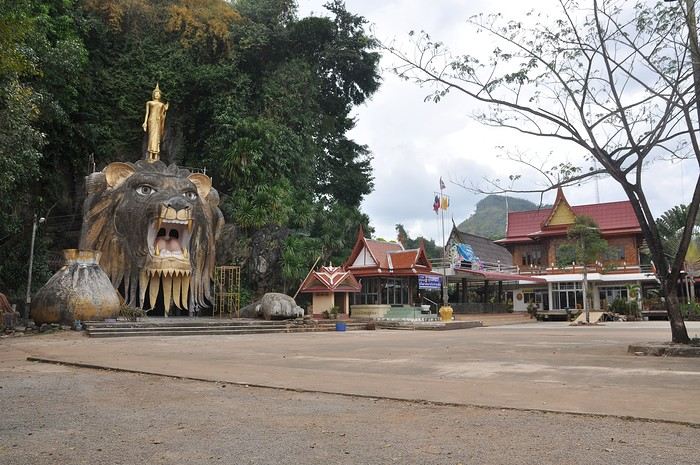
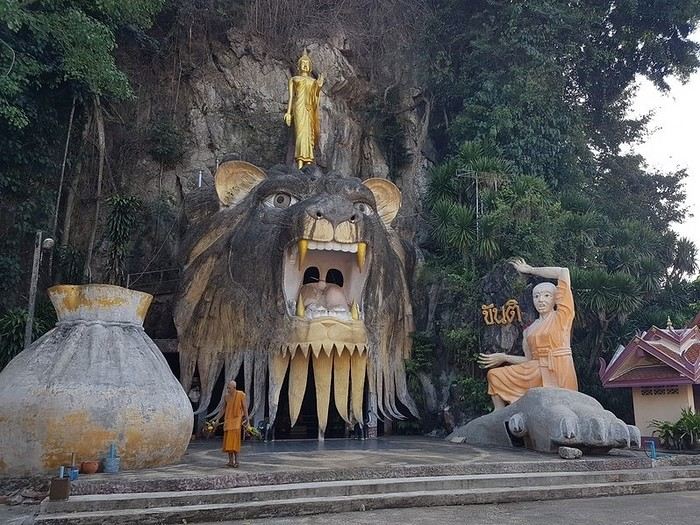
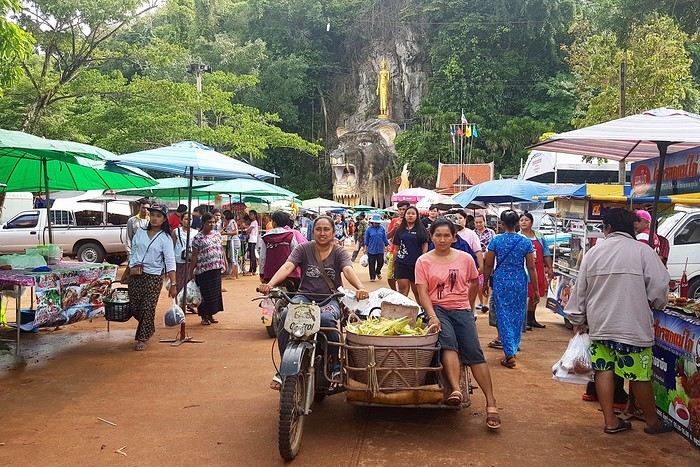
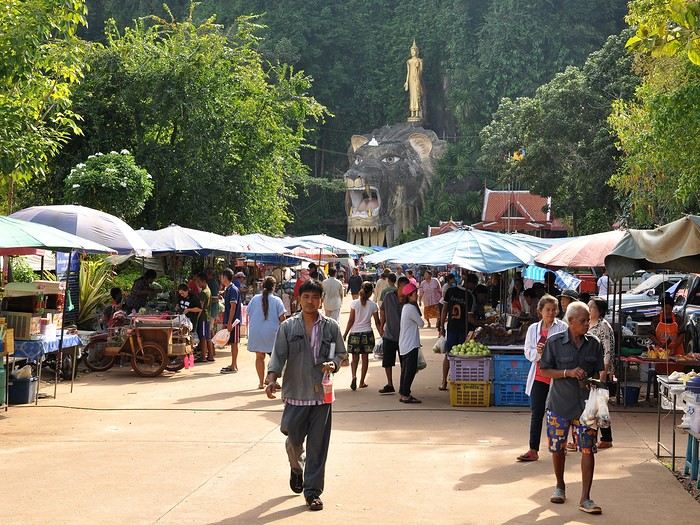
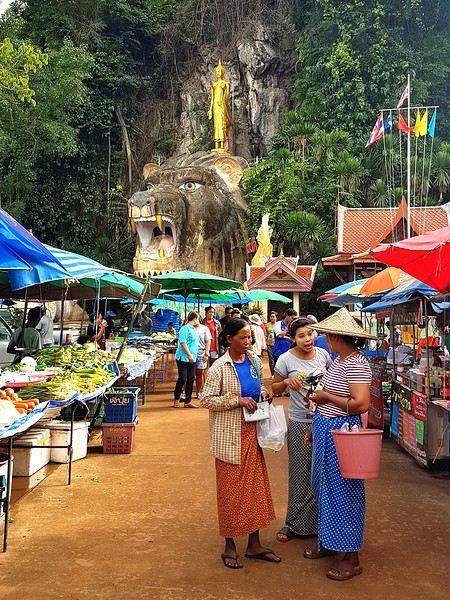
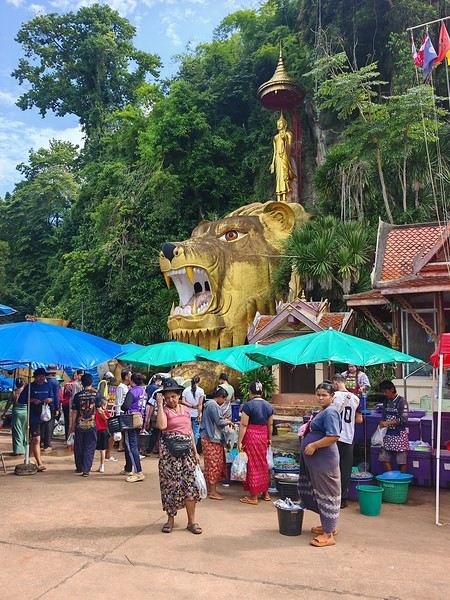
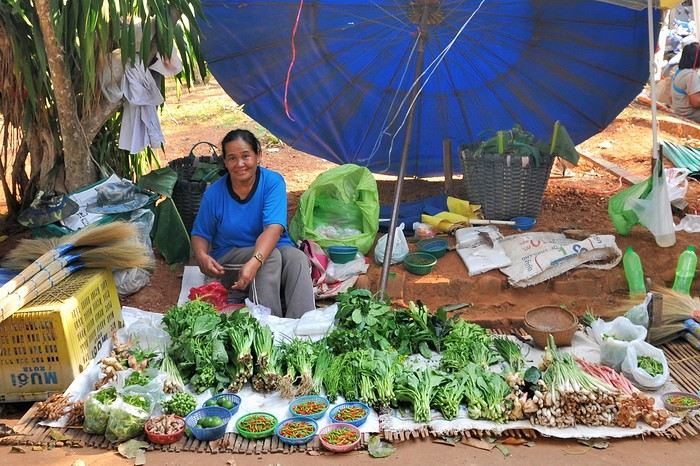
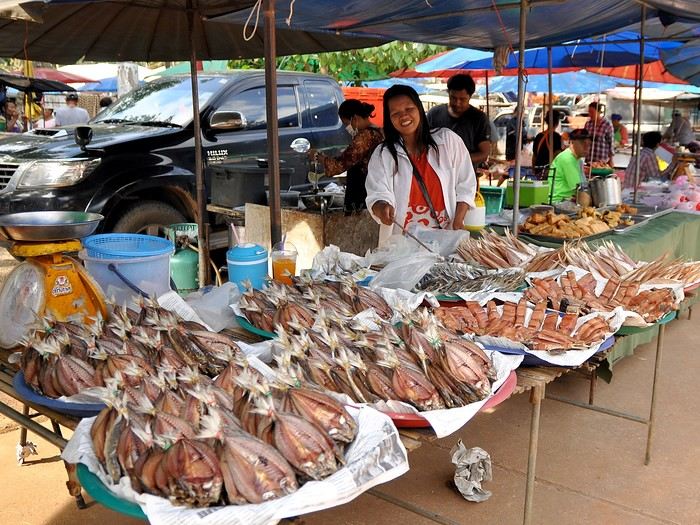
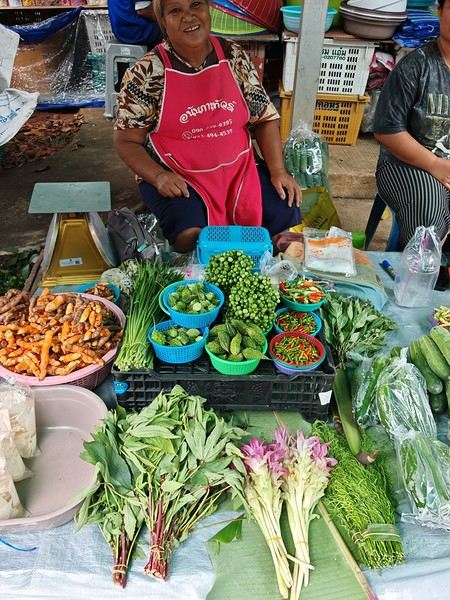
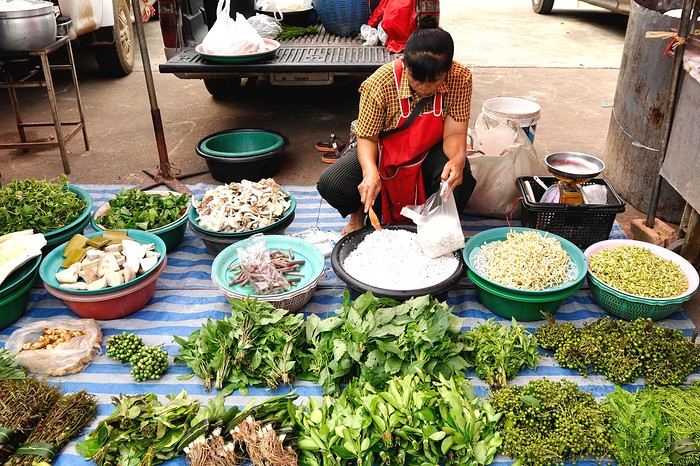
Thai markets are particularly appealing to me. In my province, there are so many. Maybe more than elsewhere—I’m not sure—but every day, you can find a "Talat Nat." These are traveling markets that set up in specific places on specific days. They only stay open for a few hours. Some attract more shoppers than others because they have more stalls and a wider variety of products. Sometimes, they’re set up in pretty unusual spots: temples, roadside, even on train tracks...
On top of these, there are also markets in the city that stay open all day.
I’d love for you to share your photos of markets, local product stalls, and why not, let’s talk about gastronomy and cuisine too!
I’ll start with my favorite market—it’s 8 kilometers from my place and happens every Tuesday from 2 PM to 5 PM. I never miss a Tuesday unless there’s a downpour... 😉 It’s located in the countryside, in a village famous for its coffee (ThamSing), and inside the grounds of a slightly unusual temple. It’s easy to get to—over the past 10 years, the roads have been paved, which wasn’t the case before and made the trip a bit risky when it rained...
In the first two photos, you’ll see the temple courtyard on a normal day, without the market.
Classe Premium Economy pour Bangkok English translation pending
Bonjour, je recherche une compagnie aérienne pour un aller retour en couple , Paris Bangkok avec un peu plus de confort qu'une classe eco . On n'a pas 20 ans et quelques douleurs.
Je ne trouve de classe economy premium. Au minimum, j'aimerai une configuration 2 places côte à côte.( pas de troisième). Merci
Classe Premium Economie Lufthansa English translation pending
Bonjour,
J’aimerais voler sur BKK avec Lufthansa en classe premium economie en février prochain
Quelque un aurait-il des infos sur cette classe avec Lufthansa ? Je voulais prendre Air France, mais on m'a déconseillé leurs sièges, surtout pour des vols de nuit.
Je suis preneur de toutes les informations possibles ...
Bon voyage à tous
SR
Classe Premium Economy d'American Airlines pour la Floride English translation pending
Bonjour,
Quelqu’un aurait-il déjà voyagé sur American Airlines en Premium Economy récemment mise en place semble-t-il, et si possible vers la Floride ?
En effet ma question fait suite au constat que cette classe chez Air France est d’après une unanimité d’avis lus sur le net assez inconfortable.
Sachant que j’ ai apprécié celle de Norwegian (mais apparaissant plus chère cette année) je voudrais avoir un point de comparaison avant de me décider et essayer de profiter du Black Friday 😛
Merci pour vos retours
Casse moteur Ford sur camping-car Hymer English translation pending
Moteur Ford out !
Il était une fois un camping-car Hymer sur moteur Ford Transit qui faisait le bonheur d’un couple de voyageur béarnais. Un jour de mai 2016, alors qu’il n’avait pas encore passé le cap des 50 000 km (né en 2009), il a cassé un piston. Remorqué chez Ford Orthez, le diagnostic devis a été formel, il en coutera 8920,22 € TTC à ses propriétaires (« sous réserve en sus, au démontage et du contrôle des injecteurs »). « À reprendre ou à laisser » et pas de négociation sauf la possibilité de paiement en 3 fois. Aveu du chef d’atelier d’Orthez : « Les camping-cars c’est chiant à réparer lorsque c’est un intégral…). En prime, si 170 € de diagnostic ne sont pas réglés, le C.C. ne sortira pas… Merci Ford. Le moteur a été refait dans un petit garage de Mont-de-Marsan qui a respecté son devis initial de 4500 €, (1 piston et 4 injecteurs changés inclus), mais avec 6 mois de réparation (il y avait toujours quelque chose qui ne fonctionnait pas…). Bref, il n’y a pas de morale à cette histoire. En conclusion, sachez que nous venons de faire avec bonheur 500 km sans problèmes et que partons avec… au Maroc* la semaine prochaine (Inchallah). Alors vous direz-vous, pourquoi ne pas avoir négocié avec Ford France et son service Relation clientèle de Nanterre ? Et bien si, après communication téléphonique, voici leur réponse définitive par courrier : « …Ford garantit ses modèles 2 ans avec un kilométrage illimité… L’objectif de Ford France est de fournir à sa clientèle des véhicules d’une fiabilité maximale, mais nul ne peut exclure un désordre à un moment donné durant la vie du véhicule… Il n’est pas possible de participer financièrement à vos frais de remise en état… ».
PS : j’ai compris pourquoi 77% des porteurs CC sont aujourd’hui des Fiat. * photo prise à Immourane prés d’Adagir en janvier 2016.
Classe Premium Eco Air France English translation pending
Bonjour,
J'ai l'intention d'acheter un billet pour Bangkok en premium eco avec Air France.
J'ai lu pas mal de commentaires négatifs sur le confort des sièges sur cette classe. Problème, la plupart de ces commentaires sont assez vieux 2013-2014.
Ma question est la suivante : Savez vous si cette classe de voyage sur AF a été rénovée/améliorée dernièrement ?
Lesquels d'entre vous ont-ils voyagé récemment dans cette classe de réservation sur Air France ? Suis à la recherche d'infos récentes et sérieuses svp, merci
SR
Classe affaires pour l'île Maurice English translation pending
Bonjour,
Quelqu'un a-t-il récemment voyagé en classe affaires sur Air France ou Air Mauritius pour aller à Maurice ? Si oui, pouvez-vous me donner des infos (confort, nouvelle business...)
Je suis également preneuse d'infos sur la classe affaires d'Emirates en A 380.
Je compte partir à Maurice en 2017.
Merci d'avance
Classe tarifaire "I" Air France English translation pending
Bonjour tous les voyageurs!
Sur mon billet Air France TLS CDG je suis en classe J, ce que je crois être une des classes affaires. La suite du voyage est CDG-ATL (Atlanta), toujours sur Air France, et là, c'est marqué sur mon billet 'classe I' (comme Isabelle). Pouvez-vous m'éclairer sur ce I ?
Merci d'avance!😉
Casse-tête mise à jour ESTA English translation pending
Bonjour,
J'ai fait un premier voyage aux États-Unis il y a 7 mois. J'y retourne demain.
Seulement on ne peut pas modifier le point de contact au USA, j'ai regardé sur le site de l'ambassade FR et il n'est pas mentionné de devoir refaire une demande pour modifier cette information, vous confirmez ? Parce que forcément le point de contact n'est plus le même...
Je n'ai pas réservé mon billet d'avion moi-même, c'est la société US qui m'invite qui l'a fait pour moi. Seulement en confirmant mon enregistrement ce matin de mon billet sur Air France, j'ai vu que l'adresse de destination renseignée n'était pas celle de l'hôtel mais celle de leur HQ (qui est dans la même ville mais pas à la même adresse).
Du coup dans ma demande d'ESTA, je laisse l'hôtel où je vais rester, je mets l'HQ de la société (qui n'est pas un hôtel...) ou je vire tout et je ne mets rien ? (c'est le plus simple mais laisser ces champs vides me stressent un peu).
Parce que du coup Air France va transmettre l'adresse de la société et non celle de mon hôtel. L'agent d'immigration risque de tilter ?
Désolé si ça peut sembler saugrenue j'essaye juste de me rassurer.
Chaise roulante à bord du MSC et bain thermal à la Soufrière (Sainte-Lucie) English translation pending
Bonjour à tous! 🙂
Ma femme, ma belle mère handicapée moteur, ma mère et moi faisons 1 croisière aux Antilles sur le MSC Orchestra du 7 au 14 février 2016. Ma belle mère doit elle prendre sa chaise roulante avec elle ou le bateau en propose t il? Comment gère t on la chaise roulante sur le bateau? De plus, une amie m'a parlé de bains thermaux au volcan la Soufrière à Sainte Lucie. Sont ils accessibles aux personnes handicapées? Prendre 1 taxi depuis le quai jusqu'au volcan coûte combien? J'attends avec impatience vos réponses éclairées!! Un grand merci d'avance!
Classe Economy Premium ou Affaires sur Air Austral English translation pending
Bonjour,
Qui a déjà voyagé sur une autre classe qu'Economy sur Air Austral vers La Réunion et Nosy Bé ?
En dehors du prix, quels sont les conditions réelles de confort à bord (espacement et inclinaison du siège)
J'ai les infos disponibles sur le site de AA mais qu'en est-il de la réalité à bord ?
A vous lire
Classe prenium economy Air France English translation pending
Bonjour
Quelqu'un aurait-il déjà voyagé en prenium économy sur A340 d'Air France Qu'en pensez-vou?
Quelqu'un aurait-il déjà voyagé en prenium économy sur A340 d'Air France Qu'en pensez-vou?
Classe économique supérieure British Airways: vaut-elle le coût? English translation pending
Bonjour,
Je m'intéresse à un vol Londres - Las Vegas et à certaines périodes la différence de prix entre la classe éco et la classe éco premium n'est " que " de 450 € pour l'aller retour soit dans les 1000 € A/R en éco et 1450 € en éco premium. Il me semble que cela vaut le coût par rapport au gain de confort et autres qu'en pensez vous ? Merci d'avance pour vos retours
Je m'intéresse à un vol Londres - Las Vegas et à certaines périodes la différence de prix entre la classe éco et la classe éco premium n'est " que " de 450 € pour l'aller retour soit dans les 1000 € A/R en éco et 1450 € en éco premium. Il me semble que cela vaut le coût par rapport au gain de confort et autres qu'en pensez vous ? Merci d'avance pour vos retours
Casse chassis sur Mitsubishi L200 English translation pending
Propriétaire d'un pick up Mitsubishi L200 double cabine actuellement 37000 km et toujours en garantie, sur lequel j'avais monté une cellule de marque Northstar FD700.
Suivant les préconisations du fabricant de la cellule, j'ai fait monter par un atelier spécialisé des amortisseurs pneumatiques Top Drive System (Homologué TÜV Italien).
Lors de mon dernier périple, j'ai entendu un bruit métallique et j'ai constaté que la cellule s'était écartée de la cabine et penchait à l'arrière.
La cause: châssis d'un coté fendu et déformé de l'autre.
Après plus de 2 mois d'expertise (!), l'assureur (qui assure la cellule et le pick up) met en cause l'ajout des amortisseurs pneumatiques (modification de la flexibilité d'amortissement et d'oscillation) et arguant que ceux ci devait faire l'objet d'une validation DRIRE.
Ayant fait faire cette modification par un professionnel je n'étais pas au courant de cette procédure et l'atelier qui a fait le travail ne m'a pas informé sur ce sujet.
Actuellement je suis entrain d'entamer une procédure de contre expertise avec mon assistance juridique, mais le cas est compliqué, tout le monde refusant toute responsabilité.
Donc si vous aviez connaissance de cas similaires et si vous aviez des conseils, je suis preneur en vous remerciant par avance.
Classe "Traveller Plus" chez British Airways English translation pending
Bonjour a tous,
j'envisage de partir à Orlando (FL) aux vacances scolaires de paques 2015 avec un enfant de 6 ans, et un bébé de 15 mois
J'ai déja effectué ce voyage l'année passée BOD - GAT - MCO et j'avoue que la portion GAT- MCO était assez longue (9h30 + 1h d'arrêt sur le tarmac due aux intempéries) Sachant que je voyage seul avec mes 2 enfants est-il plus judicieux de voyager en World Traveller Plus chez BA. Classe Eco : 1480€ Classe Eco Premium : 2400€ D'autant plus que j'aurais droit à 2x23 kg par siège occupé et 23kg pour le bébé. Je n'ai pas besoin d'emmener tant de bagages à l'aller mais le retour risque d'être chargé 😉 Le classe Traveller Plus n'est disponible que pour le long courrier. Ma question est la suivante: - Puis-je demander pour le retour seulement cette classe avec les franchises bagages et les sieges plus larges au moment de l'enregistrement et à quel prix env. ? - Cette différence de prix se justifie t-elle ? Ou bien en attendant un peu, le prix va diminuer (les billets Eco premium ne sont pas les plus recherchés) - Si je valide la World Traveller Plus, je peux demander un autre surclassement ? J'ai le programme fidélité BA
Merci d'avance pour vos témoignages
Classe Galaxie sur XL Airways English translation pending
Bjr
Quelqu'un a t il déjà essayé la classe galaxie sur XL airways ?? positif ou negatif
merci pour vos reponses
Quelqu'un a t il déjà essayé la classe galaxie sur XL airways ?? positif ou negatif
merci pour vos reponses