Results for "Shan+|+8+>+185"
1049 results found.
Week end à Xi'an (Chine) English translation pending
Salut a tous,
je compte me rendre avec un ami a Xi an pour un week end : 2 nuits + 2 jours sur places.
Auriez vous des plans hotels, et choses a faire, se rendre sur les sites ..merci pour vos conseils.
Julien
Julien
Retour d'expérience Chine English translation pending
Notre voyage, Pekin, Ping Yao, Xian, le Sichuan et le Yunnan en un mois et demi. Aout/sept/oct 2005 Impression generale: Melange “j’adore j’ desteste”, attraction-repulsion. Une culture ancestrale, les purges en ont efface les traces, des paysages splendides, ils les detruisent, une faune riche et variee, le braconnage continue. Et pourtant bcp de moments forts et d’images superbes en tete. On reviendra? Peut etre, en tout cas differemment. Bons plans: - Le monastere de Xiangcheng dans le Sichuan, sur peu de guides, tres beau esthetiquement, c'est son atmosphere qui nous a charme. Une tres belle guesthouse dans la meme ville, une maison tibetaine decoree tel un palais, 50 m au dessus de la gare routiere. Demander a la gare si la dame n’est pas a l’arrivee du bus, ils indiqueront sans pb. - a la cite interdite, pour eviter la tres longue queue, aller directement au kiosque ou on loue les guides auditifs, ils vendent les billets d'entree egalement. - A Ping Yao ds le Shanxi, guesthouse Jinjinglou Binguan 29 nan dajie tres agreable. Jolie courtyard, free pickup, famille tres sympathique, chambres traditionnelles (matelas immense sur 1 lit de brique) et moins chere que les autres... - Tjrs du papier toilette, sur soi, il y en a nulle part. - A Lijiang, Mama's Naxi Guesthouse 78 Wen Hua, WuYi, DaYan 0888 5185930. On a pas eu la chance d'y descendre, mais de nombreux voyageurs nous l'ont tellement encenses qu'on se doit d'en parler: apparemment c'est comme a la maison, "your home away from home" comme ils disent. - The Hump a Kunming pour sa terrasse et son ambiance sympathique - Mix and Backpaker’s guesthouse a Chengdu, jeune guest qui vient d’ouvrir, super ambiance, staff royal et chambres nickel. A faire meme si c’est legerement excentre. A faire: - velo un peu partout pour visiter les villes, pratique, pas cher et agreable (a partir du moment ou on a pris conscience qu'on est jamais prioritaire, sauf sur les pietons!). - Une nuit sur la muraille entre Jinshanling et Simatai. On avait opte pour une tour juste apres les 2/3 plus hautes. Se mefier cependant des orages. - Le Hua Shan, une des cinq montagnes sacrees, a faire en 2 jours avec nuit au sommet. Une veritable atmosphere pendant l’ascenssion, escaliers vertigineux et superbes paysages. L’Emei Shan a de tres mauvais echos pour ceux qui hesitent, nous on l’a fait sauter du programme. - Le tour a velo de l'Erhai Hu pres de Dali, notamment la partie est, elle est tres peu touristique et la route peu frequentee. C'est du bonheur (excepte les odeurs de crevettes sechees!). On l'a attaque en prenant le bateau jusqu a Haidong, soit 80kms en 2 jours, que du plat… - A consommer sans moderation, les massages chinois, pieds, tete, corps, 2h pour pour 4/5 euros… - marche des “antiquaires” Panjiayuan artisanat en tous genres (émaux, tissus, sculpture, boites, objets en jade, bijoux, bronze, peintures sur soie, etc…)le dimanche matin a Pekin - Pour ceux qui veulent retrouver la Chine traditionnelle, paradoxalement, il faut aller a Macao ou Hong Kong qui, en restant a l'abri des grandes purges communistes, ont su preserver une culture plusieurs fois centenaire ... A voir: - Parc de Jiuzhaigou, superbe, y passer au moins une nuit a l'interieur. Demander au village de Shuzheng pour etre loger dans une famille tibetaine. Petite astuce, au guichet, ne pas payer le supplement des bus verts a 90yuans, ils ne verifient pas nous les avons utilises sans probleme. Un petit sentier a ne pas rater sous le village de Shuzheng, au niveau du sparkling lake. Il relie la rive droite a la rive gauche et traverse de multiples cascades donnant sur le lac, superbe… A fuir: - les toilettes, mais vous n'aurez pas le choix! - Tina 's guesthouse dans les gorges du saut du tigre, a la tete du racket local. Eviter egalement de descendre dans les gorges a son niveau, on peut y acceder un peu plus loin et sans probleme sous Sam’s guesthouse. Plusieurs plaintes ont ete deposees, la police locale nous a promis de faire bouger les choses, on espere que le ménage sera fait tres bientot. - Le Lonely, tout du moins notre version: mini dico peu pratique (ca peut servir en Chine), bcp d'endroits inexistant, cartes moyennes, des parties non traites (sud du Sichuan, la region des rizieres etc...).Pas glop glop du tout. - les virtuoses de l'escroquerie Liste des arnaques chinoises dont nous avons ete victimes: faux taxis, groupe de voleurs ds le train, bouteille non capsulee, menu touriste surevalue (comparer les ideogrammes), racket gorges du tigre, harcelement par les locaux sur la muraille( “on arrete de vous coller si vous achetez 1 Tshirt!), achat d’une place en 1ere mais se retrouve en bus couchette 2eme classe, attention aux unites ( 1 doigt peut signifier 1 yuan, 10 yuans, 1 euro ou 1 dollar), prix au kilos surfactures etc... dont nous avons entendu parle:bousculer un touriste en laissant tomber un sac rempli de porcelaines bon marche ou deja cassees, puis faire constater les degats au voyageur exiger une compensation, agressions aux couteaux ds endroits isoles. -Le scrapping et cupping, pas vraiment agreable et des marques sur le dos pendant 1 semaine, pour les fanas uniquement. On a aime: - la cuisine (surtout apres la Mongolie), plus specialement celle du Sichuan, epicee a souhait! - Pekin, alliance de traditions et modernite, on s’y sent bien malgre le nuage de pollution, ville tres agreable. - les paysages quand la presence humaine ne les a pas defigures - le fourmillement, echoppes et magazins ouverts a toutes heures, beaucoup de vie et d’agitation dans les villes et villages chinois - le shopping, bcp de choix et vetements pas chers - l’artisanat (meubles, émaux, tissus, sculpture, boites, objets en jade, bijoux, bronze, peintures sur soie, etc…) On a pas aime: - les couchers et levers de soleil, toujours nappes de brume, autant faire la grass’mat…. - Pas de politiquement correct, le comportement des chinois (minorities exclues)… Certes nous avons frequente beaucoup d’endroits tres touristiques mais tout de meme. Pas serviable, malaimable et escrocs. Contraste saisissant avec la mongolie que nous avons quitte et la Birmanie ou nous sommes. Nos excuses cependant a ceux qui nous ont gratifie de leur sourire et de leur gentillesse, il y en a beaucoup aussi. Si certains ont des questions sur des points précis, n’hezitez pas a nous envoyer un mail: latetedslesetoiles@hotmail.fr ou a consulter notre site. Christophe et Sophie
Régions les plus intéressantes en Chine? English translation pending
Salut!
j'envisage de preperer un voyage de plusieurs semaine en Chine pour l'an prchain, effectuer un périple dans le pays.
Savez vous quelles sont les regions les plus interressantes a decouvrir?
Birmanie: fête de novembre et marionnettes English translation pending
salut
quelqu un a t il vecu la fete de novembre (pleine lune vers inle), cela vaut il le coup ou est ce seulement une fete ou coule l alcool ? les hotels sont sans doute plein a l avance.
la birmanie parait reputee pour ces spectacles de marionnettes, quelqu un a t il assister a une representation de valeur ?
merci leti
la birmanie parait reputee pour ces spectacles de marionnettes, quelqu un a t il assister a une representation de valeur ?
merci leti
Conseils sur Shanghai et sa région en octobre English translation pending
Je me rends a shangai a partir du 12 octobre avec ma femme chez sa grand mere et j'ai plusieurs questions: quelle sont les endroits a visiter a shangaiet dans ses environs?Quelle est habituellement le temps a cette époque de l'année?Comment sont perçus les occidentaux en chine?
merci d'avance pour vos futures reponses si certains du forum sont déja allé là-bas qu'ils me racontent leurs sejour .merci!!
Comment atteindre Mrauk U en Birmanie + trek d'une ou deux journées English translation pending
Bonjour,
Etant passionné d'architecture, je souhaiterais me rendre pendant mes vacances en Birmanie sur le site de Mrauk U au nord ouest de la Birmanie.
De ce que j'ai lu dans les guides ça a l'air difficile d'accès et il faut compter 4 jours avec tous les trajets.
Pourriez-vous me dire si cela vaut vraiment la peine d'y aller et le moyen le plus simple et économqieu d'y arriver.
N'y a t il aucune connection avec Bagan qui a vol d'oiseau ne se trouve pas très loin?
Autre petite questions, je souhaiterais également faire un trek d'une ou deux journées. Ou est-ce mieux de le faire, du côté de Mandalay, du Lac Inlé? A qui peut-on s'adresser sur place et quel budget il faut prévoir? Faut-il réserver à l'avance?
Merci pour vos conseils
Carole
Autre petite questions, je souhaiterais également faire un trek d'une ou deux journées. Ou est-ce mieux de le faire, du côté de Mandalay, du Lac Inlé? A qui peut-on s'adresser sur place et quel budget il faut prévoir? Faut-il réserver à l'avance?
Merci pour vos conseils
Carole
Le Mont Taishan, Qufu, Harbin et Changchun (Chine) English translation pending
Bonjour...
Bon, alors qui connaîtrait le mont Taishan ? Des conseils ? Des avis ?
Je renouvelle mes demandes éventuelles pour Harbin et Changchun, mais je crois que c'est vraiment trop hors des lieux visités en général 🤪.
Suis preneur pour Qufu aussi !
Merci.
Michel
Bon, alors qui connaîtrait le mont Taishan ? Des conseils ? Des avis ?
Je renouvelle mes demandes éventuelles pour Harbin et Changchun, mais je crois que c'est vraiment trop hors des lieux visités en général 🤪.
Suis preneur pour Qufu aussi !
Merci.
Michel
LP China 2005 English translation pending
Bonjour,
Je me dis que je ça ne serait pas plus mal que je me procure le LP 2005 China nouvellement paru... Où ? En ligne chez LP ? Ou alors vais je tomber dessus à l'aéroport de Shanghai ? Ou alors à Paris, en ligne chez un libraire ?
Oui, je sais, je pourrais m'en passer, mais ça me fera de l'exercice en anglais.
Michel
Je me dis que je ça ne serait pas plus mal que je me procure le LP 2005 China nouvellement paru... Où ? En ligne chez LP ? Ou alors vais je tomber dessus à l'aéroport de Shanghai ? Ou alors à Paris, en ligne chez un libraire ?
Oui, je sais, je pourrais m'en passer, mais ça me fera de l'exercice en anglais.
Michel
Velvia ou provia? F ou non F? English translation pending
Je profite d'etre a Bangkok pour acheter des films que je ne trouverai pas forcement a Mada (au meme prix). Je voulais essayer de la diapo, moi qui normalement shoote en Reala, et qui ai envie de colorer autrement tout ce beau monde. Si je me souviens bien la Velvia est grand public, la Provia plus ...pro. Quid des differences, et surtout qu'en est il du F et non F des filmns. Je suis passe voir sur le site de Fuji mais ca ne m'a pas eclaire outre mesure.
Je sais qu'il reste des diapositivistes ici sur le site ...
POur les images, c'est du paysages, des portraits, macro et de l'oiseau avec un 70/300. Je sais c'est large🙂
Voila, je suis tout ouie
Merci
Merci
Quoi visiter à Yantai (Chine)? English translation pending
bonjour
je dois partie qq jours a yentai, mais a part des infos sommaire sur l'economie je ne trouve pas grand chose sur la ville et ce qu'il y a a visiter.
est ce que qqun connait et pourrais m'informer?
je vous remercie d'avance
😎
je dois partie qq jours a yentai, mais a part des infos sommaire sur l'economie je ne trouve pas grand chose sur la ville et ce qu'il y a a visiter.
est ce que qqun connait et pourrais m'informer?
je vous remercie d'avance
😎
Attentat en Birmanie le 7 mai 2005 English translation pending
Comme il ne m'a pas semblé voir l'info relayée sur le forum, je vous la transmet:
A Rangoon, le samedi 7 mai 2005, onze personnes ont été tuées dans des attentats, d'après la junte au pouvoir, tandis que des témoins évoquaient un bilan de plusieurs dizaines de morts et pres de 200 blessés, après les attaques les plus meurtières en Birmanie en plus de 40 ans de régime militaire. La junte accuse en bloc les ethnies indépendantistes et le gouvernement en exil. Cependant ceux-ci n'ont jamais utiliser des actes terroristes visant les civils. L'article de Libé qui suit titre directement en mettant en cause la junte elle-même, ce qui me semble largement probable
Quelqu"un aurait-il d'autres infos ?
article de Libération:
La junte pourrait avoir organisé l'attaque de samedi pour garder son emprise sur le pays.
Par Arnaud DUBUS lundi 09 mai 2005 (Liberation - 06:00) Bangkok de notre correspondant
Deux jours après un quadruple attentat à la bombe à Rangoon, la capitale birmane, le mystère règne toujours quant aux organisateurs de ce qui constitue le plus grave acte terroriste dans le pays depuis que les militaires ont pris le pouvoir, en 1962. Selon des témoins, des dizaines de personnes ont été tuées quand quatre bombes de forte puissance ont explosé presque simultanément, samedi après-midi, dans trois centres commerciaux de Rangoon et de la banlieue proche. «J'ai compté au moins 20 personnes mortes, certaines avaient été décapitées, d'autres n'avaient plus leurs membres», a indiqué à l'AFP un Birman qui se trouvait dans le centre commercial Dagon. L'une des bombes a explosé au Trade Center de Rangoon alors que se tenait une foire pour promouvoir des produits thaïlandais. La junte a annoncé un bilan officiel de 11 tués et 162 blessés, tout en indiquant qu'il pourrait s'aggraver.
Autonomie. Le quotidien officiel du pouvoir The New Light of Myanmar accuse en bloc trois groupes de guérillas ethniques (l'Union nationale Karen, l'armée de l'Etat Shan et un groupe Karenni), ainsi que le gouvernement birman en exil, d'avoir perpétré cette opération terroriste pour déstabiliser le pays. Ces groupes de guérillas ethniques, qui luttent depuis quarante ou cinquante ans pour obtenir l'autonomie vis-à-vis de l'Etat central birman, n'ont jamais recouru à des actes terroristes visant des civils, par principe et aussi de peur de perdre tout soutien dans le monde occidental. Se battant dans des poches de territoire proches de la frontière thaïlandaise, ils ont des moyens d'action dans la capitale limités. «Il est très douteux que ces groupes rebelles sur la frontière puissent infiltrer Rangoon avec des explosifs. C'est même complètement impossible. Vous savez combien la sécurité est stricte à Rangoon», estime Aung Zaw, rédacteur en chef du magazine birman Irrawaddy. Le gouvernement en exil, formé de parlementaires élus lors du scrutin de 1990 dont les résultats n'ont jamais été acceptés par la junte , a toujours mené une campagne non-violente pour établir la démocratie.
Autres scénarios. Hypothèse non envisagée par la junte mais peut-être plus plausible : les attentats meurtriers pourraient refléter les luttes internes au sein de l'appareil militaire. L'an dernier, le Premier ministre Khin Nyunt, qui contrôlait les services de renseignements, a été emprisonné pour corruption. Ses partisans restent nombreux et disposent à la fois du matériel et des réseaux pour organiser une opération aussi sophistiquée. «Nous pensons qu'il s'agit d'ex-officiers des services de renseignements vivant dans la clandestinité, qui sont en colère contre la faction au pouvoir», explique Zin Linn, porte-parole du gouvernement birman en exil. D'autres n'écartent pas un scénario machiavélique selon lequel la junte elle-même aurait organisé le carnage, pour justifier son emprise sur le pouvoir, à un moment où elle est sous forte pression internationale pour une transition démocratique.
A Rangoon, le samedi 7 mai 2005, onze personnes ont été tuées dans des attentats, d'après la junte au pouvoir, tandis que des témoins évoquaient un bilan de plusieurs dizaines de morts et pres de 200 blessés, après les attaques les plus meurtières en Birmanie en plus de 40 ans de régime militaire. La junte accuse en bloc les ethnies indépendantistes et le gouvernement en exil. Cependant ceux-ci n'ont jamais utiliser des actes terroristes visant les civils. L'article de Libé qui suit titre directement en mettant en cause la junte elle-même, ce qui me semble largement probable
Quelqu"un aurait-il d'autres infos ?
article de Libération:
La junte pourrait avoir organisé l'attaque de samedi pour garder son emprise sur le pays.
Par Arnaud DUBUS lundi 09 mai 2005 (Liberation - 06:00) Bangkok de notre correspondant
Deux jours après un quadruple attentat à la bombe à Rangoon, la capitale birmane, le mystère règne toujours quant aux organisateurs de ce qui constitue le plus grave acte terroriste dans le pays depuis que les militaires ont pris le pouvoir, en 1962. Selon des témoins, des dizaines de personnes ont été tuées quand quatre bombes de forte puissance ont explosé presque simultanément, samedi après-midi, dans trois centres commerciaux de Rangoon et de la banlieue proche. «J'ai compté au moins 20 personnes mortes, certaines avaient été décapitées, d'autres n'avaient plus leurs membres», a indiqué à l'AFP un Birman qui se trouvait dans le centre commercial Dagon. L'une des bombes a explosé au Trade Center de Rangoon alors que se tenait une foire pour promouvoir des produits thaïlandais. La junte a annoncé un bilan officiel de 11 tués et 162 blessés, tout en indiquant qu'il pourrait s'aggraver.
Autonomie. Le quotidien officiel du pouvoir The New Light of Myanmar accuse en bloc trois groupes de guérillas ethniques (l'Union nationale Karen, l'armée de l'Etat Shan et un groupe Karenni), ainsi que le gouvernement birman en exil, d'avoir perpétré cette opération terroriste pour déstabiliser le pays. Ces groupes de guérillas ethniques, qui luttent depuis quarante ou cinquante ans pour obtenir l'autonomie vis-à-vis de l'Etat central birman, n'ont jamais recouru à des actes terroristes visant des civils, par principe et aussi de peur de perdre tout soutien dans le monde occidental. Se battant dans des poches de territoire proches de la frontière thaïlandaise, ils ont des moyens d'action dans la capitale limités. «Il est très douteux que ces groupes rebelles sur la frontière puissent infiltrer Rangoon avec des explosifs. C'est même complètement impossible. Vous savez combien la sécurité est stricte à Rangoon», estime Aung Zaw, rédacteur en chef du magazine birman Irrawaddy. Le gouvernement en exil, formé de parlementaires élus lors du scrutin de 1990 dont les résultats n'ont jamais été acceptés par la junte , a toujours mené une campagne non-violente pour établir la démocratie.
Autres scénarios. Hypothèse non envisagée par la junte mais peut-être plus plausible : les attentats meurtriers pourraient refléter les luttes internes au sein de l'appareil militaire. L'an dernier, le Premier ministre Khin Nyunt, qui contrôlait les services de renseignements, a été emprisonné pour corruption. Ses partisans restent nombreux et disposent à la fois du matériel et des réseaux pour organiser une opération aussi sophistiquée. «Nous pensons qu'il s'agit d'ex-officiers des services de renseignements vivant dans la clandestinité, qui sont en colère contre la faction au pouvoir», explique Zin Linn, porte-parole du gouvernement birman en exil. D'autres n'écartent pas un scénario machiavélique selon lequel la junte elle-même aurait organisé le carnage, pour justifier son emprise sur le pouvoir, à un moment où elle est sous forte pression internationale pour une transition démocratique.
circuit routard en Chine English translation pending
😏 Salut à tous !!!
c'est trop bien ce forum j'ai trouvé plein d'info mais il me manque encore qqls réponses 😊
Alors je fais un bref petit récapitulatif :
Cet été avec quelques amis nous voulons faire un circuit organisé par nous même un peu du type routard. Ce circuit va durer à peu près un mois.
J'aimerais savoir si notre parcours est faisable en un mois? Si nous ne ratons pas des sites importants?
Si il est préférable de prendre l'avion ou le train pour aller d'une ville à l'autre?
J'aimerais aussi savoir si vous connaissez des agences de voyage spécialisées dasn des billet pas trop cher de préfèrence pour la Chine? On hésite aussi entre partir au départ de Paris vers Hongkong ou vers pekin
En tout cas voici un échantillon de notre programme MERCI à TOUS pour vos REPONSES Jour 1 : Paris – Hong Kong Jour 2 : Hong KongQue faire : Passage au "Pic Victoria" et ses villas, au petit port de pêche "d'Aberdeen", à "Repulse Bay" et sa plage de sable blanc, à "Deep water bay", au village "Stanley" Jour 3 : Hong Kong – Shenzen Jour 4 : Shenzen – Guangzhou (Canton)Comment s’y rendre : Train (2h)
Que faire : promenade dans les ruelles de l'île de Shamian et visite du marché de Qingping, ainsi que de la maison de la famille Chen, du "temple des 6 banyans" et du "palais Shentangsun" Jour 5 : Guangzhou – Beijing (Pékin)Comment s’y rendre : Train (24h) Que faire : contempler les paysages à travers les vitres du train Jour 6 : Beijing (Pékin)Que faire : Place Tian An Men, la Cité Interdite Jour 7 : Beijing (Pékin)Que faire : Tombeaux des empereurs Ming, le Temple du Ciel Jour 8 : Beijing (Pékin)Que faire : Excursion à la muraille de Chine. On va essayer de faire une belle randonnée d’une journée dans des coins peu visités et offrant de superbes vues. On essayera de voir un magnifique couché de soleil (selon les conditions météo ...) Jour 9 : Beijing (Pékin)Que faire : le palais d’été, le quartier des Hutong Jour 9 (soir si possible) : Beijing - XianComment s’y rendre : départ en Train (14h) Jour 10 : XianQue faire : Visite de Xian, vieille ville de l'époque Tang où subsistent de nombreux vestiges du passé : les tours de la Cloche et du Tambour, la Grande Mosquée parmi les mieux conservées de Chine, la Grande Pagode de l'Oie Sauvage construite en 648. Jour 11 : XianQue faire : Bingmayong (armée des soldats en terre cuite) et ses sites aux alentours. Jour 12 : Xian – Hua ShanComment s’y rendre : Train (2-3h) plus minibus ou taxi pour rejoindre la montagne
Que faire : Randonnée d’une journée à Hua Shan, l’une des 5 montagnes sacrées de la Chine. On va essayer d’aller au sommet et de voir une vue encore époustouflante (on en voit pendant toute la randonnée) et un coucher de soleil comme il se doit.
La suite : SichuanJiuzhaigou, une réserve naturelle au coeur d’un paysage alpin magnifique, ponctuée de lacs aux couleurs étincelantes Chengdu, pour ses ruelles, ses maisons de thé, son opéra et les pandas géants L’Emei Shan, l’une des 4 montagnes du bouddhisme, parsemée de monastères et de chemins de randonnée La statue du Grand Bouddha (Da Fo), la plus grande du genre au monde (71 m), qui domine majestueusement la ville de Leshan YunnanHutiao Xia (gorge du saut du tigre), une excursion parmi des cascades et des falaises spectaculaires Lijiang, un extraordinaire aperçu de la culture et de l’histoire naxi Dali, l’une des haltes les plus délassantes de Chine, dans un paysage de montagne et proche d’un lac superbe, l’Erhai Hu Kunming, une ville moderne, sa cuisine succulente et ses sites intéressants Hanoi et Baie d’Ha Long (VIETNAM) Retour en Chine vers Macao Retour vers PARIS
c'est trop bien ce forum j'ai trouvé plein d'info mais il me manque encore qqls réponses 😊
Alors je fais un bref petit récapitulatif :
Cet été avec quelques amis nous voulons faire un circuit organisé par nous même un peu du type routard. Ce circuit va durer à peu près un mois.
J'aimerais savoir si notre parcours est faisable en un mois? Si nous ne ratons pas des sites importants?
Si il est préférable de prendre l'avion ou le train pour aller d'une ville à l'autre?
J'aimerais aussi savoir si vous connaissez des agences de voyage spécialisées dasn des billet pas trop cher de préfèrence pour la Chine? On hésite aussi entre partir au départ de Paris vers Hongkong ou vers pekin
En tout cas voici un échantillon de notre programme MERCI à TOUS pour vos REPONSES Jour 1 : Paris – Hong Kong Jour 2 : Hong KongQue faire : Passage au "Pic Victoria" et ses villas, au petit port de pêche "d'Aberdeen", à "Repulse Bay" et sa plage de sable blanc, à "Deep water bay", au village "Stanley" Jour 3 : Hong Kong – Shenzen Jour 4 : Shenzen – Guangzhou (Canton)Comment s’y rendre : Train (2h)
Que faire : promenade dans les ruelles de l'île de Shamian et visite du marché de Qingping, ainsi que de la maison de la famille Chen, du "temple des 6 banyans" et du "palais Shentangsun" Jour 5 : Guangzhou – Beijing (Pékin)Comment s’y rendre : Train (24h) Que faire : contempler les paysages à travers les vitres du train Jour 6 : Beijing (Pékin)Que faire : Place Tian An Men, la Cité Interdite Jour 7 : Beijing (Pékin)Que faire : Tombeaux des empereurs Ming, le Temple du Ciel Jour 8 : Beijing (Pékin)Que faire : Excursion à la muraille de Chine. On va essayer de faire une belle randonnée d’une journée dans des coins peu visités et offrant de superbes vues. On essayera de voir un magnifique couché de soleil (selon les conditions météo ...) Jour 9 : Beijing (Pékin)Que faire : le palais d’été, le quartier des Hutong Jour 9 (soir si possible) : Beijing - XianComment s’y rendre : départ en Train (14h) Jour 10 : XianQue faire : Visite de Xian, vieille ville de l'époque Tang où subsistent de nombreux vestiges du passé : les tours de la Cloche et du Tambour, la Grande Mosquée parmi les mieux conservées de Chine, la Grande Pagode de l'Oie Sauvage construite en 648. Jour 11 : XianQue faire : Bingmayong (armée des soldats en terre cuite) et ses sites aux alentours. Jour 12 : Xian – Hua ShanComment s’y rendre : Train (2-3h) plus minibus ou taxi pour rejoindre la montagne
Que faire : Randonnée d’une journée à Hua Shan, l’une des 5 montagnes sacrées de la Chine. On va essayer d’aller au sommet et de voir une vue encore époustouflante (on en voit pendant toute la randonnée) et un coucher de soleil comme il se doit.
La suite : SichuanJiuzhaigou, une réserve naturelle au coeur d’un paysage alpin magnifique, ponctuée de lacs aux couleurs étincelantes Chengdu, pour ses ruelles, ses maisons de thé, son opéra et les pandas géants L’Emei Shan, l’une des 4 montagnes du bouddhisme, parsemée de monastères et de chemins de randonnée La statue du Grand Bouddha (Da Fo), la plus grande du genre au monde (71 m), qui domine majestueusement la ville de Leshan YunnanHutiao Xia (gorge du saut du tigre), une excursion parmi des cascades et des falaises spectaculaires Lijiang, un extraordinaire aperçu de la culture et de l’histoire naxi Dali, l’une des haltes les plus délassantes de Chine, dans un paysage de montagne et proche d’un lac superbe, l’Erhai Hu Kunming, une ville moderne, sa cuisine succulente et ses sites intéressants Hanoi et Baie d’Ha Long (VIETNAM) Retour en Chine vers Macao Retour vers PARIS
assurance annulation English translation pending
Bonjour,
Comment puis-je assurer un vol sec (vol régulier Air France) contre le risque d'annulation de mon fait (par exemple, si je ne peux pas partir pour cause de maladie, ou d'évènement grave dans mon entourage proche) ?
Merci pour toute réponse
Xavier
Comment puis-je assurer un vol sec (vol régulier Air France) contre le risque d'annulation de mon fait (par exemple, si je ne peux pas partir pour cause de maladie, ou d'évènement grave dans mon entourage proche) ?
Merci pour toute réponse
Xavier
3 semaines pour découvrir la Chine.. English translation pending
Bonjour,
Ayé je prepare mon voyage en Chine prévu cet été et inutile de vous dire à quel point je suis excité à l'idée de partir dans cet vaste pays.
En 3 semaines j'aimerai faire si possible Hong-Kong et ses villes avoisinantes (Canton, Shenzken et Macao), Xi'an, Shanghai, Pekin, Chengdu et Dali.
Pensez-vous que c'est viable dans une période aussi courte ? A votre avis, que pourrait etre le budget ?
Ayé je prepare mon voyage en Chine prévu cet été et inutile de vous dire à quel point je suis excité à l'idée de partir dans cet vaste pays.
En 3 semaines j'aimerai faire si possible Hong-Kong et ses villes avoisinantes (Canton, Shenzken et Macao), Xi'an, Shanghai, Pekin, Chengdu et Dali.
Pensez-vous que c'est viable dans une période aussi courte ? A votre avis, que pourrait etre le budget ?
Rêve de Chine... English translation pending
Bonjour à tous,
Message destiné aux passionnés de Chine et surtout à ceux qui réalisent que l'on ne peut plus faire sans. Je me présente brièvement, David, 30 ans, ai déjà vécu quelquechose comme trois ans en Chine, parle mandarin, mais suis maintenant sur Paris, profil grand voyageur sac à dos. Le but de ce message est de réunir un max de personnes un peu isolées avec le même engouement pour ce pays afin d'élargir ma communauté de sinologues perchés, de parler bien sûr de ce pays mais surtout de se concerter et pourquoi pas trouver des idées business ou autres ensemble. Mon but étant perso d'y retourner aussi rapidement que possible afin de m'y établir et de commencer un quelquechose là bas. Je connais bien evidemment tous ces sites web qui font la promo du pays ou qui offrent une aide certaine afin de s'établir ou quoi, mais ce que je recherche aujourd'hui c'est avant tout des individualités, du concret. J'ai déjà quelques contacts, que ce soit ici en France ou en Chine, mais autant élargir le cercle. Voilà, réponds moi via ce site ou encore ici: francinois@hotmail.com ...
à bientôt
Message destiné aux passionnés de Chine et surtout à ceux qui réalisent que l'on ne peut plus faire sans. Je me présente brièvement, David, 30 ans, ai déjà vécu quelquechose comme trois ans en Chine, parle mandarin, mais suis maintenant sur Paris, profil grand voyageur sac à dos. Le but de ce message est de réunir un max de personnes un peu isolées avec le même engouement pour ce pays afin d'élargir ma communauté de sinologues perchés, de parler bien sûr de ce pays mais surtout de se concerter et pourquoi pas trouver des idées business ou autres ensemble. Mon but étant perso d'y retourner aussi rapidement que possible afin de m'y établir et de commencer un quelquechose là bas. Je connais bien evidemment tous ces sites web qui font la promo du pays ou qui offrent une aide certaine afin de s'établir ou quoi, mais ce que je recherche aujourd'hui c'est avant tout des individualités, du concret. J'ai déjà quelques contacts, que ce soit ici en France ou en Chine, mais autant élargir le cercle. Voilà, réponds moi via ce site ou encore ici: francinois@hotmail.com ...
à bientôt
Budget 3 semaines en Chine? English translation pending
voila je compte partir en chine en juillet 'arrivée pékin)et je me demandais si un budget de 1000 euros avion compris était envisageable pour passer trois semaine la bas; mon itineraire n'est pas encore défini
merci de vos réponses
merci de vos réponses
Région de Xinjiang Urghur (Chine) English translation pending
Bonjour,
je serais en Inde en Mars 2006 et j'aimerais bien passer par la chine pour ralier le kirghizistan en passant par la region du Xinjiang urghur( Par voie terrestre) ou si pas possible directement par cette region, passer par le Tibet. ?????
Connaissez vous les points de passages ainsi que, les formalitées, visas, les cols ouvert..... bref toute les infos de cette partie du monde?
Merci
Sylvain
je serais en Inde en Mars 2006 et j'aimerais bien passer par la chine pour ralier le kirghizistan en passant par la region du Xinjiang urghur( Par voie terrestre) ou si pas possible directement par cette region, passer par le Tibet. ?????
Connaissez vous les points de passages ainsi que, les formalitées, visas, les cols ouvert..... bref toute les infos de cette partie du monde?
Merci
Sylvain
Chine: muraille, trajet, désert English translation pending
Bonjour à tous,
Nous prévoyons de traverser la Chine en 1 mois/1 mois et demi, en provenance de Mongolie et en direction de la Birmanie et nous soumettons à vos esprits éclairés quelques interrogations diverses:
Existe t-il une route ou un passage pour venir de Mongolie en Chine via le désert de Gobie, et la frontière est elle ouverte aux touristes?
Si nous venions via le transmongolien, est ce qu'on peut s'arrêter avant Pékin pour visiter la grande muraille (quelle station?), et quels sont les endroits les moins "courrus" et les plus charmants pour profiter pleinement de ce chef d'oeuvre architectural et du paysage environnant?
Existe t il des déserts de sables et de dunes en Chine? Si uoi, est ce que vous connaissez des guides ou guesthouses qui oraganisent des treks d'une semaine à pieds et chameaux (pour les affaires)?
Nous prévoyons grossomerdo le trajet suivant: Pékin(train/bus/stop)Datong(train/bus/stop)Taiyuan(train/stop)Xi'an(avion/train)Chengdu(avion/train)Kunming(train/bus/stop)Dali(bus/stop)Lijiang, Birmanie (si frontière terrestre ouverte?). La question est donc la suivante, est ce que vous avez déjà relié ces villes, si oui par quel moyen, à quel prix et en combien de temps? Est ce que le stop fonctionne en Chine?
9a fait bcp d'interrogations et je remercie par avance ceux et celles qui prendront le temps de me répondre.
Merci, C et S.
" Un voyage se passe de motifs, il ne tarde pas à prouver qu'il se suffit à lui-même. On croit qu'on va faire un voyage, mais bientôt c'est le voyage qui vous fait, ou vous défait..."
Nicolas Bouvier, l'usage du monde
Nous prévoyons de traverser la Chine en 1 mois/1 mois et demi, en provenance de Mongolie et en direction de la Birmanie et nous soumettons à vos esprits éclairés quelques interrogations diverses:
Existe t-il une route ou un passage pour venir de Mongolie en Chine via le désert de Gobie, et la frontière est elle ouverte aux touristes?
Si nous venions via le transmongolien, est ce qu'on peut s'arrêter avant Pékin pour visiter la grande muraille (quelle station?), et quels sont les endroits les moins "courrus" et les plus charmants pour profiter pleinement de ce chef d'oeuvre architectural et du paysage environnant?
Existe t il des déserts de sables et de dunes en Chine? Si uoi, est ce que vous connaissez des guides ou guesthouses qui oraganisent des treks d'une semaine à pieds et chameaux (pour les affaires)?
Nous prévoyons grossomerdo le trajet suivant: Pékin(train/bus/stop)Datong(train/bus/stop)Taiyuan(train/stop)Xi'an(avion/train)Chengdu(avion/train)Kunming(train/bus/stop)Dali(bus/stop)Lijiang, Birmanie (si frontière terrestre ouverte?). La question est donc la suivante, est ce que vous avez déjà relié ces villes, si oui par quel moyen, à quel prix et en combien de temps? Est ce que le stop fonctionne en Chine?
9a fait bcp d'interrogations et je remercie par avance ceux et celles qui prendront le temps de me répondre.
Merci, C et S.
" Un voyage se passe de motifs, il ne tarde pas à prouver qu'il se suffit à lui-même. On croit qu'on va faire un voyage, mais bientôt c'est le voyage qui vous fait, ou vous défait..."
Nicolas Bouvier, l'usage du monde
Laos ou Birmanie? English translation pending
Salut, je souhaiterais voyager en Asie du sud-est pendant 3 semaines en fevrier, mais je ne suis pas encore sure de la destination. La Birmanie est reputee spendide tandis que le Laos me parait moins developpe au point de vue tourisme ; les deux m'attirent autant...
Alors si quelqu'un connaissant ces deux pays pouvait me donner son avis et quelques conseils...
merci beaucoup
Alors si quelqu'un connaissant ces deux pays pouvait me donner son avis et quelques conseils...
merci beaucoup
Hong Kong, Shanghai et Guangzhou dans 1 mois English translation pending
Ni hao !
Je suis nouveau membre sur ce forum, je dois partir (pour mon travail) en Chine. Je suis allé il y a un an à HongKong, Shanghai Canton et Shenzen.
J'y retourne dans un mois ! Et cette fois-ci j'aurai un peu de temps libre, j'arrive là bas le 10/09 et j'aurai tout le week-end pour me balader à hong-kong / kowloon.
C'est seulement la deuxième fois que j'y vais alors je ne connais pas très bien, surtout que la dernière fois j'avais eu seulement un dimanche pour me balader (sans aucun guide)
Connaissez-vous un bon guide touristique ou un bon site internet pour mieux connaître HK ?
Merci ;) Pierre-Emmanuel
Je suis nouveau membre sur ce forum, je dois partir (pour mon travail) en Chine. Je suis allé il y a un an à HongKong, Shanghai Canton et Shenzen.
J'y retourne dans un mois ! Et cette fois-ci j'aurai un peu de temps libre, j'arrive là bas le 10/09 et j'aurai tout le week-end pour me balader à hong-kong / kowloon.
C'est seulement la deuxième fois que j'y vais alors je ne connais pas très bien, surtout que la dernière fois j'avais eu seulement un dimanche pour me balader (sans aucun guide)
Connaissez-vous un bon guide touristique ou un bon site internet pour mieux connaître HK ?
Merci ;) Pierre-Emmanuel
La Birmanie en individuel? English translation pending
Salut a tous et toutes!!!! J'envisage un voyage en Birmanie en individuel pour un mois, j'aimerais avoir vos avis (surement tres divergents) sur le fait d'y aller ou non? (si non j'opterais pour le laos ou je suis deja aller) 🤪 Si oui qu'elle est la conduite a tenir face a la police... Quels sont les coins les plus sympas? Au niveau de la langue, que le birman ou esst-ce qu'il y a des minorite ethniques pres de la frontiere Est qui parlent des dialectes proches du laos ou du thai (que connais un peu)? Un mois est-ce que c'est asser long?😛
Merci d'avance😊
Mousson en Birmanie? (juillet/août) English translation pending
Bonjour !
Je souhaite partir en Birmanie, mais ce n'est possible que durant la période juillet - août, période de la mousson.
Est-ce que cela pose un réel problème ? Pleut-il vraiment beaucoup ? Merci de me renseigner sur ce sujet !
magaly
Je souhaite partir en Birmanie, mais ce n'est possible que durant la période juillet - août, période de la mousson.
Est-ce que cela pose un réel problème ? Pleut-il vraiment beaucoup ? Merci de me renseigner sur ce sujet !
magaly
April 2026 Photo Contest Theme: Feeling Fishy?
The 140th (wow!) edition of the contest is now live!
Since it’s April Fools’ month and I’m a diver at heart, I had to pick a theme around the sea and fish.
This month’s theme is: sea fishing 🙂. Deep-sea fishing, rockpooling, shore casting, shellfish & crustaceans—anything remotely related to sea fishing fits the bill 😉
Photos of fishing boats, fishing ports, fish auctions, seafood stalls, nets and trawls, lobster pots, fishermen, your kids collecting cockles, even those New Year’s oyster shells 😏—no limits as long as it ties into the theme 😛 And of course, a special shout-out to anglers worldwide! 🙂
I’m traveling right now, so I don’t have many photos on hand. To illustrate the theme, I’ve chosen this shot of a small Vietnamese fishing boat I spotted near the Cham Islands, returning from a dive.
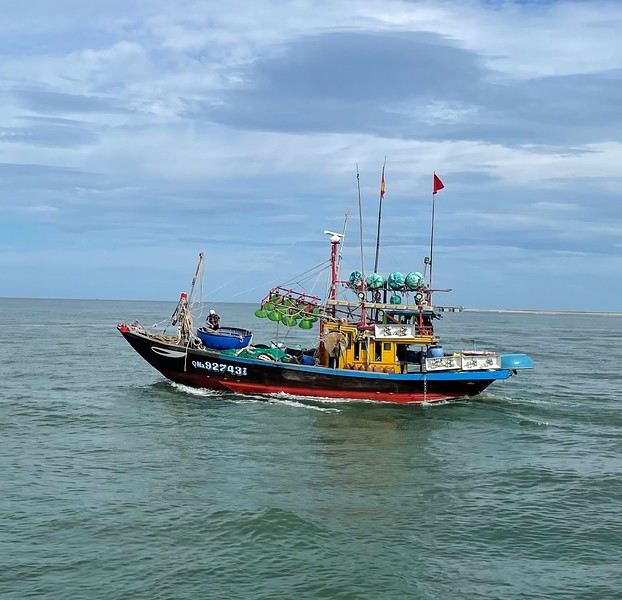
Contest rules: You can post up to three photos, each in a separate message, clearly numbering them (1, 2, or 3) and including the location where the photo was taken. Any explanations about your photos are welcome.
When voting, you’ll choose three photos, clearly stating the participant’s name followed by their photo number. The first photo in your vote gets three points, the second gets two, and the third gets one.
The winner will be the person whose photo earns the most points. In case of a tie, the winner will be the one with the most first-place votes, or if still tied, the most second-place votes. If it’s a perfect tie, the person who reached their score first wins. The winner then gets the honor of choosing and organizing May 2026’s contest theme. Ties for any other position won’t be broken. Finally, you don’t need to enter the contest to vote, but participants (and I hope there’ll be lots of you!) are *strongly* encouraged to vote!
Please only post contest photos in this thread. Starting Saturday, April 25 (00:01 Paris time), only votes should be posted.
Key dates: You can submit your photos from today until Friday, April 24, 2026 (23:59 Paris time—Xavier, you can do the math for Perth 😏). Voting starts the very next minute and ends on Thursday, April 29 (23:59 Paris time). Results will be announced on Thursday, April 30, 2026... The next host can take over on Saturday, May 2 (yeah, May 1 is a no-work day 😛)
Ready, set, shoot!
Since it’s April Fools’ month and I’m a diver at heart, I had to pick a theme around the sea and fish.
This month’s theme is: sea fishing 🙂. Deep-sea fishing, rockpooling, shore casting, shellfish & crustaceans—anything remotely related to sea fishing fits the bill 😉
Photos of fishing boats, fishing ports, fish auctions, seafood stalls, nets and trawls, lobster pots, fishermen, your kids collecting cockles, even those New Year’s oyster shells 😏—no limits as long as it ties into the theme 😛 And of course, a special shout-out to anglers worldwide! 🙂
I’m traveling right now, so I don’t have many photos on hand. To illustrate the theme, I’ve chosen this shot of a small Vietnamese fishing boat I spotted near the Cham Islands, returning from a dive.
Contest rules: You can post up to three photos, each in a separate message, clearly numbering them (1, 2, or 3) and including the location where the photo was taken. Any explanations about your photos are welcome.
When voting, you’ll choose three photos, clearly stating the participant’s name followed by their photo number. The first photo in your vote gets three points, the second gets two, and the third gets one.
The winner will be the person whose photo earns the most points. In case of a tie, the winner will be the one with the most first-place votes, or if still tied, the most second-place votes. If it’s a perfect tie, the person who reached their score first wins. The winner then gets the honor of choosing and organizing May 2026’s contest theme. Ties for any other position won’t be broken. Finally, you don’t need to enter the contest to vote, but participants (and I hope there’ll be lots of you!) are *strongly* encouraged to vote!
Please only post contest photos in this thread. Starting Saturday, April 25 (00:01 Paris time), only votes should be posted.
Key dates: You can submit your photos from today until Friday, April 24, 2026 (23:59 Paris time—Xavier, you can do the math for Perth 😏). Voting starts the very next minute and ends on Thursday, April 29 (23:59 Paris time). Results will be announced on Thursday, April 30, 2026... The next host can take over on Saturday, May 2 (yeah, May 1 is a no-work day 😛)
Ready, set, shoot!
Trip Report: Silk Road Journey in China
Hi everyone,
This trip report covers a journey along the Silk Road in China (see detailed description below) undertaken in October 2025. The goal isn’t to recount the trip but to provide information that might help those who want to take a similar journey. Much of the information is valid for any trip to China.
Who we are: a retired couple, aged 63 and 65 (age gives discounts on entry to various sites and museums in China, which is why I won’t list prices here—I don’t know them, but you can easily find them online). We’re used to traveling independently. We speak English, which is the only foreign language spoken in China, though by very few people. I speak and read a little Chinese, which helped, but you can easily get by without it (without any English at all, I think it would be more difficult).
Period: We arrived just after "Golden Week," when all of China is on vacation, and after the summer, when schools are out, so we encountered very few tourists (99.99% of whom were Chinese). Our experience with booking visits in advance (which we didn’t need to do) isn’t representative for those who want to travel in the summer! The October-November period was perfect for our trip—it wasn’t too hot or too cold (one day of snow on the Tibetan Plateau), though it was only a few degrees on the Tibetan part, with altitudes between 2,000 and 3,000 meters. The trees were beautifully colored.
General remarks: Everyone we dealt with was very kind and perfectly honest. If you order a meal without really understanding what to do and the person modifies your order, trust them—the result is what you need. If a taxi driver signals that they’ll wait for you to finish your visit and pick you up afterward, trust them. It means there aren’t many taxis where you are, and it’ll be more convenient. For prices at street vendors, we always found the right ballpark, and sometimes they even added a little extra to please us. A taxi driver treated us to lunch, and an employee drove us back to the hotel after a visit because there were no taxis. If you struggle to buy a ticket online because there’s no counter, someone will come to help. People even spontaneously ask if everything’s okay and if you need anything.
Everywhere we went was very clean, including restrooms (trains, stations, hotels, museums, tourist sites) and streets. The old stereotypes about this no longer apply.
The trip can be challenging for those who have difficulty walking. The distances to cover on foot in stations, to access sites, and within the sites themselves can sometimes be really long.
We used the Lonely Planet guide in English (published at the end of August 2025) a little for preparation, but mostly relied on the internet.
Before leaving: No visa is needed for French citizens for stays under 30 days. You get a stamp on your passport upon arrival and departure, and the formalities themselves are very quick in both directions (excluding any potential queues). Just a photo and fingerprints upon arrival, and welcome to China’s facial recognition system.
Money: All your payments (see below) will go through your Visa card—there will be hundreds, including many payments of 20 cents to a few euros. So, you need an international option that allows unlimited card transactions. Since cash is rarely needed, the allowed number of ATM withdrawals can be low. We made 3 withdrawals totaling 800 € for a month and could have managed with just 2. The exchange rate charged on our Visa card was 12 € for 100 RMB (yuan).
Install the following apps on your smartphone before leaving (otherwise, you’ll only have access to the Chinese versions, if available): - Alipay, which is used to pay everywhere in China (details below). You need to link it to your credit card, then provide proof of identity by uploading a passport photo and completing a facial recognition session. Alipay gives access to Didi (China’s Uber), public transport (metro/bus), and can also translate phrases. - WeChat (Weixin in Chinese, pronounced *weishin*), which is also used for payments but also replaces WhatsApp. Unfortunately, to activate your account, you need someone who already has WeChat to sponsor you (preferably a Chinese person). We asked someone at our first accommodations to do this—no problem. By sharing your WeChat number with accommodations, they can send you messages that are automatically translated, and you can communicate with people thanks to the translation (translation to French is very poor; it’s much better in English, but unfortunately, WeChat detects your phone’s language). Alipay and WeChat are accepted almost everywhere, but some places only accept WeChat. - Amap, the international version of Baidu Maps, which replaces Google Maps (not at all up-to-date in China). The English names of hotels often have little to do with the Chinese names except for a phonetic resemblance. To find them on Amap, it’s best to copy the Chinese name found on your Trip reservation under "show address in Chinese." - A VPN. We had CyberGhost, which didn’t work, but according to other travelers, NordVPN and Windscribe do. Without a VPN, you can’t access Google services, on WhatsApp you can send and receive text but not photos, and you can’t send or receive emails on Gmail addresses. We managed without a VPN by using Firefox as a browser and Bing as a search engine. - Trip, for booking trains and accommodations, and buying some tickets. It’s the equivalent of Booking for accommodations, but Booking has very few listings in China, while Trip has hundreds in every city. Most hotels and trains are exchangeable and refundable until the day before, with no or minimal fees.
You don’t need contactless (NFC) payment on your phone. Either you scan a barcode and enter the amount to pay, or you display a barcode, and they scan it with a scanner, and the amount is deducted directly.
Upon arrival: - Buy a Chinese SIM card: 100 RMB for 300 GB of data and several hours of talk time (we didn’t use it). Set the Chinese number as a reference on Alipay, WeChat, and Amap. - Find someone to sponsor you on WeChat.
Transportation: - **Plane**: China Eastern, Paris-Canton then Canton-Urumqi on the way out, and Xian-Canton then Canton-Paris on the way back. International flights were smooth, but the schedules for the two domestic flights were changed. It was fine on the way out because we had some leeway, but on the way back, we were notified the morning of that our flight was canceled and replaced with one that didn’t allow for the connection. We called and changed to an earlier flight (I think we were lucky to find available seats). - **Train**: Most long distances were covered by high-speed trains (called D or G in China) at 240 or 300 km/h. Second class is perfect—just as comfortable and clean as our TGVs. The only advantage of first class is the wider seats for larger people, but the downside is that seats are often booked in advance and thus less available. You can book trains long in advance on Trip, but they only go on sale in China 15 days before departure, so that’s when you’ll know if you have a ticket. Initially, we booked first class, but there were no seats available on the day, so we ended up booking everything in second class, which was perfect. There’s no paper ticket—if you’ve bought one, you go to the station, show your passport, and enter. You do the same to access the platform 15 minutes before the train, and that’s it. Our train was canceled twice, but no problem—we went to the ticket counter, got a refund, and were offered a replacement. It didn’t delay us by more than an hour (maybe it would be harder in peak season). For prices, check Trip.com, but it’s significantly cheaper than in France. - **Bus**: We took the bus between Xining and Tongren, Tongren to Xiahe, and Hezuo to Lanzhou—about 3 hours each time for 200 km, 6 € per person, and departures were right on time. - **Taxi**: For trips between the station and hotel, or hotel and visits. If you take a Didi via the Alipay app, you activate your location, enter your destination, and it offers several taxis. You accept, and you get the car’s license plate and its real-time position on the map. When you get in, the driver often asks for the last four digits of your phone number to confirm. Otherwise, you go to the taxi stand outside the station. The price per kilometer is around 20 cents, so for a 30 km trip from the station to the hotel, you’ll pay about 6 €. We never tried to save more by taking local buses, but since the metro in Xian costs 25 cents per trip, it’s probably in the same ballpark. Amap provides public transport routes like Google Maps. - **Driver**: We hired a taxi/driver for the day several times for sightseeing. Prices ranged from 350 to 1,000 RMB (the most expensive was arranged through the Sofitel Xining concierge) for trips ranging from a few hours to a full day, sometimes covering over 300 km (see the detailed trip description).
Accommodations: All booked in advance on Trip, but several were changed during the trip. Off-season, there were no issues. We mostly stayed in upscale places, but in China, that means 50 to 60 € per night in the most central or convenient neighborhood. Note: Almost all hotels have a 5/5 rating on Trip, but it seems the Chinese avoid giving lower ratings to be polite. So, you have to read the comments to realize that in France, we might have given a 2 or 3!
Food: At the table, you’re served hot water or a hot infusion, presumably made with purified water. We never got sick from drinking it, but don’t drink tap water. Purified or mineral water is easy to find.
In restaurants, you can manage by pointing to the dish you want from another diner, on the wall where there are photos, or on the menu with pictures. The food in the region isn’t often spicy, and people usually ask or signal before adding the red spicy sauce, so you should be able to handle it if you don’t like chili at all.
The "fake old quarters" in several cities are great places to find all kinds of restaurants (see detailed trip below).
Like Google Maps, Amap can show you nearby restaurants.
Shopping: For dried fruits, buy them in Turfan—you won’t find the same variety and quality even in Xian. Generally, if you like something, buy it. If you wait, you might not find it outside the region where you are.
In Xian, there’s a "Tea City" where you can find all kinds of tea (from cheap to very expensive).
The trip in more detail: I won’t dwell on the beauty or interest of the sites here since that’s a matter of personal taste. However, I will do so for lesser-known places to give an idea to those who might be interested.
For many sites, there are shuttles (sometimes not included in the ticket price but costing around 1 €) that take you to the interesting spots. We always took them—it saves you from walking past countless shops or along uninteresting paths.
- **Urumqi**: We spent only one night there, arriving in the middle of the afternoon and leaving the next morning. We stayed at the Dana Hotel in the bazaar. Given the size of the city, it’s a good option because I don’t think there are many other interesting places. The bazaar is brand new and not at all "typical" (Turfan’s bazaar is infinitely more interesting), but the dining area is very nice.
- **Turfan**: Stayed at the New Dap Hostel, which was great. The neighborhood is nice, not far from the city, and easy to find food. The museum is closed until 2026 (Amap provides museum hours and closures). We took a day trip (for the two of us) with a driver to the Bezeklik Caves, Flaming Mountains, the abandoned city of Gaochang, the Tuyuk Village Museum, and the Emin Minaret for 500 RMB from 9 AM to 8 PM (arranged by the hostel). The landscape during the excursion was quite fabulous. We also visited the Karez Museum and the abandoned city of Jiaohe on our own the next day. At this time of year, the sun sets around 6 PM, and there’s often haze after 5 PM, so for Jiaohe, for example, which takes about 3 hours to visit, it’s best to be there by 1 or 2 PM at the latest.
The Dahua Market area is perfect for dried fruits (including the famous grapes), and you can eat there among locals in their traditional costumes. Next to it, there are buildings full of shops selling made-in-China items—it kept us busy for a good half-day, if not more.
- **Dunhuang**: Stayed in a guesthouse near the dunes—the city center isn’t far but seems quite artificial. Visited the dunes, with a ticket valid for 3 days. Lots of Chinese tourists—very typical and interesting from an ethnological perspective 😊. We got up early one morning to climb the highest dune, just beyond the one everyone goes to. It’s a bit long and tiring, but the view is worth it. Visited the Mogao Caves, buying the ticket on-site (no chance in season without booking in advance). We met two other French people and got a French-speaking guide (by pretending not to understand English). It was really worth it—a group of 4 instead of 20, and they took their time (2 hours) for the visit. We took a day trip to the Yulin Caves (2.5 hours by road and 160 km one way) with a driver for 350 RMB. We liked it a lot, but if the Mogao Caves are enough for you, it’s not very different.
- **Jiayuguan**: Stayed in a city-center hotel. Visited the Wei and Jin tombs (actually just one)—that’s where we were told the taxi should wait to take us back to the city. We went down into a crypt with lots of decorated bricks from the 3rd century. We really liked it, but it’s not as spectacular as the fort if you’re not a fan. Visited the Jiayuguan Fort and, with the same ticket, climbed a small section of the Great Wall 10 km away. Plan at least 3 good hours for all this—there’s plenty to see.
- **Zhangye**: Stayed at The Silk Road Travelers Hostel, rustic but very nice and organizes excursions. Visited the Danxia (colored mountains)—just as spectacular as the photos. You can easily spend 3 hours there, so plan to finish before sunset to avoid the haze (you can always stay longer for the sunset if the weather’s nice). The next day, visited the Mati Si Temple in the cliff. The 10,000 Buddha Caves are under renovation, but the setting and the main temple are well worth the visit (the paths through the cliff tunnels must be hellish in peak season). You can probably organize these two excursions yourself by asking any taxi driver. Also visited the Giant Buddha Temple in the city center—really worth it.
- **Xining**: Stayed in a city-center hotel. Visited the Tibetan Medicine Museum to see the world’s largest thangka (1 km long), made over 40 years by renowned artists. It’s absolutely magnificent, on par with the virtuosity (but over 1 km) of the thangkas painted by famous artists in Xiahe (see below). Hired a female taxi driver for the day to visit Kumbum Monastery (Ta’er Si in Chinese) and the Danxia area in Guide, 50 km beyond the monastery. It’s less spectacular than Zhangye’s Danxia, but we really liked it (including the journey’s landscape). The next day, visited the old Ming-era Qutan Monastery—no visitors, with beautiful murals (half under renovation). Accessible by train to Haidong or Ledu, then a taxi. Xining’s mosque is of no interest, but there’s a pedestrian street with food stalls nearby that’s very nice.
- **Tongren**: Stayed near the main monastery. Visited Longwu Monastery (several hours), with lots of nice shops along the street leading to it. Then visited Wutun Monastery, which is less lively but beautiful and close to thangka workshops. You can go in and watch the painters at work. For a thangka made by a renowned artist, count about a year of work for 1 m² and around 10,000 €.
- **Xiahe**: Stayed in a city-center hotel. Visited Labrang Monastery—very nice but not as much as Tongren’s because many halls were closed. I think it’s better to go in season and take an English-guided tour (but it’s still worth the trip, even off-season).
- **Langmusi**: Took a taxi, but you can also take a bus (though very early in the morning and longer). Particularly beautiful for us because we woke up to bright sunshine and 5 cm of snow everywhere. Visited the two temples (really nice) and did the classic hike in the gorges starting at the Fairy Cave. For those interested, we continued along the canyon path, and after the meadow where marmots are clearly visible in summer, we climbed toward a pass on the left at 3,800 meters. The view of Langmusi and, above all, the vast grasslands and distant mountains was fabulous (3 hours round trip from the temple). You could probably reach the 4,000-meter summit by continuing up the valley instead of turning left, but according to guides, it’s better to count 7 hours round trip (no technical difficulty). You can leave Langmusi by bus, but off-season, you first have to take a taxi to a stop outside the city and wait for the bus. We didn’t try and took a taxi to Hezuo instead.
Note on this region: A high-speed train is under construction from Xining to Langmusi and beyond (never seen such an impressive construction site!). When it’s operational (in one or two years, I think), access to the area will be revolutionized, and perhaps some of the charm will be lost.
- **Hezuo**: Stopped on the way from Langmusi to Lanzhou. Visited the Milarepa Pagoda, entirely destroyed during the Cultural Revolution and since rebuilt. We liked it since we were passing through, but it doesn’t necessarily justify a long detour.
- **Lanzhou**: Reached by one of the many buses from Hezuo. Stayed in the "fake old quarter," which is extremely pleasant, especially in the evening with restaurants, groups of Chinese women dancing to loud music, etc. Visited Bingling Si with a driver, 120 km away—the landscape and site are absolutely magnificent, with no one around at our time of year. Visited the Gansu Museum (where the famous Flying Horse is, but it’s a replica). We bought the ticket on entry, but in season, you probably need to book in advance.
- **Yinchuan**: Stayed in the city center. A city we discovered by chance in the Lonely Planet—worth it if you have time. On the way, we stopped for a few hours in Zhongwei, where there’s an incredible Taoist temple (I’ll let you be surprised). Visited the Western Xia tombs—we took the short option, which visits Tomb 3. We think the others are similar but less impressive. The surrounding landscape and site are quite spectacular. Visited the film sets (really fun if you like Chinese movies), the short but interesting Ningxia Museum, and finally the modern art museum. The architecture is avant-garde, and there are some beautiful works (we like it, but it’s far from the center—hire a driver who waits, or you might have to wait for an employee to offer a ride back).
- **Tianshui**: Stayed in the suburbs, but you should find a hotel near the "fake old quarter" between the Fu Xi Temples and the Taoist temple—it’s a very nice area, and the two temples (especially the Taoist one) are within walking distance. Visited the Maijishan Caves—the ticket includes the shuttle to get there. Took a taxi from Lanzhou for about 10 € in 45 minutes. We found these caves fabulous.
- **Xi’an**: Stayed 500 meters from the Bell Tower at Hantang Inn—very convenient. We’d been before, so we didn’t revisit the Terracotta Army. The calligraphy district is worth it, as is the Muslim Quarter, though it’s very touristy. The area indicated on the Lonely Planet’s walking tour near the old fruit and vegetable market isn’t very interesting. To buy tea, you can go to the Northwest International Tea City, with dozens of shops. We chose one at random, tasted, and bought various teas. There’s everything from cheap to extremely expensive, but you can find reasonable prices even in seemingly luxurious shops. Along the street north of this area, there are large stores with tons of Chinese goods selling dishes, wedding items, etc. We spent hours there. In the city center, there are only malls with more or less international brands.
- **Longmen Grottoes**: Visited as a round trip by high-speed train from Xian—1 hour 15 minutes to Longmen’s high-speed train station, and the site entrance is 15 minutes by taxi.
We didn’t go to Mount Hua Shan, but there’s a high-speed train station nearby, and there were people on the train who were clearly going there. So, you can probably do this excursion in a day from Xian as well.
Conclusion: We hope this report makes you want to go or helps you if you’re already planning to. If you have questions that you can’t find the answer to by searching properly online and we can answer, don’t hesitate.
This trip report covers a journey along the Silk Road in China (see detailed description below) undertaken in October 2025. The goal isn’t to recount the trip but to provide information that might help those who want to take a similar journey. Much of the information is valid for any trip to China.
Who we are: a retired couple, aged 63 and 65 (age gives discounts on entry to various sites and museums in China, which is why I won’t list prices here—I don’t know them, but you can easily find them online). We’re used to traveling independently. We speak English, which is the only foreign language spoken in China, though by very few people. I speak and read a little Chinese, which helped, but you can easily get by without it (without any English at all, I think it would be more difficult).
Period: We arrived just after "Golden Week," when all of China is on vacation, and after the summer, when schools are out, so we encountered very few tourists (99.99% of whom were Chinese). Our experience with booking visits in advance (which we didn’t need to do) isn’t representative for those who want to travel in the summer! The October-November period was perfect for our trip—it wasn’t too hot or too cold (one day of snow on the Tibetan Plateau), though it was only a few degrees on the Tibetan part, with altitudes between 2,000 and 3,000 meters. The trees were beautifully colored.
General remarks: Everyone we dealt with was very kind and perfectly honest. If you order a meal without really understanding what to do and the person modifies your order, trust them—the result is what you need. If a taxi driver signals that they’ll wait for you to finish your visit and pick you up afterward, trust them. It means there aren’t many taxis where you are, and it’ll be more convenient. For prices at street vendors, we always found the right ballpark, and sometimes they even added a little extra to please us. A taxi driver treated us to lunch, and an employee drove us back to the hotel after a visit because there were no taxis. If you struggle to buy a ticket online because there’s no counter, someone will come to help. People even spontaneously ask if everything’s okay and if you need anything.
Everywhere we went was very clean, including restrooms (trains, stations, hotels, museums, tourist sites) and streets. The old stereotypes about this no longer apply.
The trip can be challenging for those who have difficulty walking. The distances to cover on foot in stations, to access sites, and within the sites themselves can sometimes be really long.
We used the Lonely Planet guide in English (published at the end of August 2025) a little for preparation, but mostly relied on the internet.
Before leaving: No visa is needed for French citizens for stays under 30 days. You get a stamp on your passport upon arrival and departure, and the formalities themselves are very quick in both directions (excluding any potential queues). Just a photo and fingerprints upon arrival, and welcome to China’s facial recognition system.
Money: All your payments (see below) will go through your Visa card—there will be hundreds, including many payments of 20 cents to a few euros. So, you need an international option that allows unlimited card transactions. Since cash is rarely needed, the allowed number of ATM withdrawals can be low. We made 3 withdrawals totaling 800 € for a month and could have managed with just 2. The exchange rate charged on our Visa card was 12 € for 100 RMB (yuan).
Install the following apps on your smartphone before leaving (otherwise, you’ll only have access to the Chinese versions, if available): - Alipay, which is used to pay everywhere in China (details below). You need to link it to your credit card, then provide proof of identity by uploading a passport photo and completing a facial recognition session. Alipay gives access to Didi (China’s Uber), public transport (metro/bus), and can also translate phrases. - WeChat (Weixin in Chinese, pronounced *weishin*), which is also used for payments but also replaces WhatsApp. Unfortunately, to activate your account, you need someone who already has WeChat to sponsor you (preferably a Chinese person). We asked someone at our first accommodations to do this—no problem. By sharing your WeChat number with accommodations, they can send you messages that are automatically translated, and you can communicate with people thanks to the translation (translation to French is very poor; it’s much better in English, but unfortunately, WeChat detects your phone’s language). Alipay and WeChat are accepted almost everywhere, but some places only accept WeChat. - Amap, the international version of Baidu Maps, which replaces Google Maps (not at all up-to-date in China). The English names of hotels often have little to do with the Chinese names except for a phonetic resemblance. To find them on Amap, it’s best to copy the Chinese name found on your Trip reservation under "show address in Chinese." - A VPN. We had CyberGhost, which didn’t work, but according to other travelers, NordVPN and Windscribe do. Without a VPN, you can’t access Google services, on WhatsApp you can send and receive text but not photos, and you can’t send or receive emails on Gmail addresses. We managed without a VPN by using Firefox as a browser and Bing as a search engine. - Trip, for booking trains and accommodations, and buying some tickets. It’s the equivalent of Booking for accommodations, but Booking has very few listings in China, while Trip has hundreds in every city. Most hotels and trains are exchangeable and refundable until the day before, with no or minimal fees.
You don’t need contactless (NFC) payment on your phone. Either you scan a barcode and enter the amount to pay, or you display a barcode, and they scan it with a scanner, and the amount is deducted directly.
Upon arrival: - Buy a Chinese SIM card: 100 RMB for 300 GB of data and several hours of talk time (we didn’t use it). Set the Chinese number as a reference on Alipay, WeChat, and Amap. - Find someone to sponsor you on WeChat.
Transportation: - **Plane**: China Eastern, Paris-Canton then Canton-Urumqi on the way out, and Xian-Canton then Canton-Paris on the way back. International flights were smooth, but the schedules for the two domestic flights were changed. It was fine on the way out because we had some leeway, but on the way back, we were notified the morning of that our flight was canceled and replaced with one that didn’t allow for the connection. We called and changed to an earlier flight (I think we were lucky to find available seats). - **Train**: Most long distances were covered by high-speed trains (called D or G in China) at 240 or 300 km/h. Second class is perfect—just as comfortable and clean as our TGVs. The only advantage of first class is the wider seats for larger people, but the downside is that seats are often booked in advance and thus less available. You can book trains long in advance on Trip, but they only go on sale in China 15 days before departure, so that’s when you’ll know if you have a ticket. Initially, we booked first class, but there were no seats available on the day, so we ended up booking everything in second class, which was perfect. There’s no paper ticket—if you’ve bought one, you go to the station, show your passport, and enter. You do the same to access the platform 15 minutes before the train, and that’s it. Our train was canceled twice, but no problem—we went to the ticket counter, got a refund, and were offered a replacement. It didn’t delay us by more than an hour (maybe it would be harder in peak season). For prices, check Trip.com, but it’s significantly cheaper than in France. - **Bus**: We took the bus between Xining and Tongren, Tongren to Xiahe, and Hezuo to Lanzhou—about 3 hours each time for 200 km, 6 € per person, and departures were right on time. - **Taxi**: For trips between the station and hotel, or hotel and visits. If you take a Didi via the Alipay app, you activate your location, enter your destination, and it offers several taxis. You accept, and you get the car’s license plate and its real-time position on the map. When you get in, the driver often asks for the last four digits of your phone number to confirm. Otherwise, you go to the taxi stand outside the station. The price per kilometer is around 20 cents, so for a 30 km trip from the station to the hotel, you’ll pay about 6 €. We never tried to save more by taking local buses, but since the metro in Xian costs 25 cents per trip, it’s probably in the same ballpark. Amap provides public transport routes like Google Maps. - **Driver**: We hired a taxi/driver for the day several times for sightseeing. Prices ranged from 350 to 1,000 RMB (the most expensive was arranged through the Sofitel Xining concierge) for trips ranging from a few hours to a full day, sometimes covering over 300 km (see the detailed trip description).
Accommodations: All booked in advance on Trip, but several were changed during the trip. Off-season, there were no issues. We mostly stayed in upscale places, but in China, that means 50 to 60 € per night in the most central or convenient neighborhood. Note: Almost all hotels have a 5/5 rating on Trip, but it seems the Chinese avoid giving lower ratings to be polite. So, you have to read the comments to realize that in France, we might have given a 2 or 3!
Food: At the table, you’re served hot water or a hot infusion, presumably made with purified water. We never got sick from drinking it, but don’t drink tap water. Purified or mineral water is easy to find.
In restaurants, you can manage by pointing to the dish you want from another diner, on the wall where there are photos, or on the menu with pictures. The food in the region isn’t often spicy, and people usually ask or signal before adding the red spicy sauce, so you should be able to handle it if you don’t like chili at all.
The "fake old quarters" in several cities are great places to find all kinds of restaurants (see detailed trip below).
Like Google Maps, Amap can show you nearby restaurants.
Shopping: For dried fruits, buy them in Turfan—you won’t find the same variety and quality even in Xian. Generally, if you like something, buy it. If you wait, you might not find it outside the region where you are.
In Xian, there’s a "Tea City" where you can find all kinds of tea (from cheap to very expensive).
The trip in more detail: I won’t dwell on the beauty or interest of the sites here since that’s a matter of personal taste. However, I will do so for lesser-known places to give an idea to those who might be interested.
For many sites, there are shuttles (sometimes not included in the ticket price but costing around 1 €) that take you to the interesting spots. We always took them—it saves you from walking past countless shops or along uninteresting paths.
- **Urumqi**: We spent only one night there, arriving in the middle of the afternoon and leaving the next morning. We stayed at the Dana Hotel in the bazaar. Given the size of the city, it’s a good option because I don’t think there are many other interesting places. The bazaar is brand new and not at all "typical" (Turfan’s bazaar is infinitely more interesting), but the dining area is very nice.
- **Turfan**: Stayed at the New Dap Hostel, which was great. The neighborhood is nice, not far from the city, and easy to find food. The museum is closed until 2026 (Amap provides museum hours and closures). We took a day trip (for the two of us) with a driver to the Bezeklik Caves, Flaming Mountains, the abandoned city of Gaochang, the Tuyuk Village Museum, and the Emin Minaret for 500 RMB from 9 AM to 8 PM (arranged by the hostel). The landscape during the excursion was quite fabulous. We also visited the Karez Museum and the abandoned city of Jiaohe on our own the next day. At this time of year, the sun sets around 6 PM, and there’s often haze after 5 PM, so for Jiaohe, for example, which takes about 3 hours to visit, it’s best to be there by 1 or 2 PM at the latest.
The Dahua Market area is perfect for dried fruits (including the famous grapes), and you can eat there among locals in their traditional costumes. Next to it, there are buildings full of shops selling made-in-China items—it kept us busy for a good half-day, if not more.
- **Dunhuang**: Stayed in a guesthouse near the dunes—the city center isn’t far but seems quite artificial. Visited the dunes, with a ticket valid for 3 days. Lots of Chinese tourists—very typical and interesting from an ethnological perspective 😊. We got up early one morning to climb the highest dune, just beyond the one everyone goes to. It’s a bit long and tiring, but the view is worth it. Visited the Mogao Caves, buying the ticket on-site (no chance in season without booking in advance). We met two other French people and got a French-speaking guide (by pretending not to understand English). It was really worth it—a group of 4 instead of 20, and they took their time (2 hours) for the visit. We took a day trip to the Yulin Caves (2.5 hours by road and 160 km one way) with a driver for 350 RMB. We liked it a lot, but if the Mogao Caves are enough for you, it’s not very different.
- **Jiayuguan**: Stayed in a city-center hotel. Visited the Wei and Jin tombs (actually just one)—that’s where we were told the taxi should wait to take us back to the city. We went down into a crypt with lots of decorated bricks from the 3rd century. We really liked it, but it’s not as spectacular as the fort if you’re not a fan. Visited the Jiayuguan Fort and, with the same ticket, climbed a small section of the Great Wall 10 km away. Plan at least 3 good hours for all this—there’s plenty to see.
- **Zhangye**: Stayed at The Silk Road Travelers Hostel, rustic but very nice and organizes excursions. Visited the Danxia (colored mountains)—just as spectacular as the photos. You can easily spend 3 hours there, so plan to finish before sunset to avoid the haze (you can always stay longer for the sunset if the weather’s nice). The next day, visited the Mati Si Temple in the cliff. The 10,000 Buddha Caves are under renovation, but the setting and the main temple are well worth the visit (the paths through the cliff tunnels must be hellish in peak season). You can probably organize these two excursions yourself by asking any taxi driver. Also visited the Giant Buddha Temple in the city center—really worth it.
- **Xining**: Stayed in a city-center hotel. Visited the Tibetan Medicine Museum to see the world’s largest thangka (1 km long), made over 40 years by renowned artists. It’s absolutely magnificent, on par with the virtuosity (but over 1 km) of the thangkas painted by famous artists in Xiahe (see below). Hired a female taxi driver for the day to visit Kumbum Monastery (Ta’er Si in Chinese) and the Danxia area in Guide, 50 km beyond the monastery. It’s less spectacular than Zhangye’s Danxia, but we really liked it (including the journey’s landscape). The next day, visited the old Ming-era Qutan Monastery—no visitors, with beautiful murals (half under renovation). Accessible by train to Haidong or Ledu, then a taxi. Xining’s mosque is of no interest, but there’s a pedestrian street with food stalls nearby that’s very nice.
- **Tongren**: Stayed near the main monastery. Visited Longwu Monastery (several hours), with lots of nice shops along the street leading to it. Then visited Wutun Monastery, which is less lively but beautiful and close to thangka workshops. You can go in and watch the painters at work. For a thangka made by a renowned artist, count about a year of work for 1 m² and around 10,000 €.
- **Xiahe**: Stayed in a city-center hotel. Visited Labrang Monastery—very nice but not as much as Tongren’s because many halls were closed. I think it’s better to go in season and take an English-guided tour (but it’s still worth the trip, even off-season).
- **Langmusi**: Took a taxi, but you can also take a bus (though very early in the morning and longer). Particularly beautiful for us because we woke up to bright sunshine and 5 cm of snow everywhere. Visited the two temples (really nice) and did the classic hike in the gorges starting at the Fairy Cave. For those interested, we continued along the canyon path, and after the meadow where marmots are clearly visible in summer, we climbed toward a pass on the left at 3,800 meters. The view of Langmusi and, above all, the vast grasslands and distant mountains was fabulous (3 hours round trip from the temple). You could probably reach the 4,000-meter summit by continuing up the valley instead of turning left, but according to guides, it’s better to count 7 hours round trip (no technical difficulty). You can leave Langmusi by bus, but off-season, you first have to take a taxi to a stop outside the city and wait for the bus. We didn’t try and took a taxi to Hezuo instead.
Note on this region: A high-speed train is under construction from Xining to Langmusi and beyond (never seen such an impressive construction site!). When it’s operational (in one or two years, I think), access to the area will be revolutionized, and perhaps some of the charm will be lost.
- **Hezuo**: Stopped on the way from Langmusi to Lanzhou. Visited the Milarepa Pagoda, entirely destroyed during the Cultural Revolution and since rebuilt. We liked it since we were passing through, but it doesn’t necessarily justify a long detour.
- **Lanzhou**: Reached by one of the many buses from Hezuo. Stayed in the "fake old quarter," which is extremely pleasant, especially in the evening with restaurants, groups of Chinese women dancing to loud music, etc. Visited Bingling Si with a driver, 120 km away—the landscape and site are absolutely magnificent, with no one around at our time of year. Visited the Gansu Museum (where the famous Flying Horse is, but it’s a replica). We bought the ticket on entry, but in season, you probably need to book in advance.
- **Yinchuan**: Stayed in the city center. A city we discovered by chance in the Lonely Planet—worth it if you have time. On the way, we stopped for a few hours in Zhongwei, where there’s an incredible Taoist temple (I’ll let you be surprised). Visited the Western Xia tombs—we took the short option, which visits Tomb 3. We think the others are similar but less impressive. The surrounding landscape and site are quite spectacular. Visited the film sets (really fun if you like Chinese movies), the short but interesting Ningxia Museum, and finally the modern art museum. The architecture is avant-garde, and there are some beautiful works (we like it, but it’s far from the center—hire a driver who waits, or you might have to wait for an employee to offer a ride back).
- **Tianshui**: Stayed in the suburbs, but you should find a hotel near the "fake old quarter" between the Fu Xi Temples and the Taoist temple—it’s a very nice area, and the two temples (especially the Taoist one) are within walking distance. Visited the Maijishan Caves—the ticket includes the shuttle to get there. Took a taxi from Lanzhou for about 10 € in 45 minutes. We found these caves fabulous.
- **Xi’an**: Stayed 500 meters from the Bell Tower at Hantang Inn—very convenient. We’d been before, so we didn’t revisit the Terracotta Army. The calligraphy district is worth it, as is the Muslim Quarter, though it’s very touristy. The area indicated on the Lonely Planet’s walking tour near the old fruit and vegetable market isn’t very interesting. To buy tea, you can go to the Northwest International Tea City, with dozens of shops. We chose one at random, tasted, and bought various teas. There’s everything from cheap to extremely expensive, but you can find reasonable prices even in seemingly luxurious shops. Along the street north of this area, there are large stores with tons of Chinese goods selling dishes, wedding items, etc. We spent hours there. In the city center, there are only malls with more or less international brands.
- **Longmen Grottoes**: Visited as a round trip by high-speed train from Xian—1 hour 15 minutes to Longmen’s high-speed train station, and the site entrance is 15 minutes by taxi.
We didn’t go to Mount Hua Shan, but there’s a high-speed train station nearby, and there were people on the train who were clearly going there. So, you can probably do this excursion in a day from Xian as well.
Conclusion: We hope this report makes you want to go or helps you if you’re already planning to. If you have questions that you can’t find the answer to by searching properly online and we can answer, don’t hesitate.
Questions for a 15-day itinerary in China
Hi everyone
I’m currently planning my trip to China for next August.
I’m starting from scratch, so I’m counting on your advice and firsthand experiences!
For now, I only know that I’ll arrive in China via Beijing, Shanghai, or Hong Kong and leave 15 days later from another one of these three cities.
In between, I’d love to explore a mountainous and natural region in the countryside.
The Guilin area really appeals to me with its spectacular landscapes.
I still have tons of questions:
- What can you do during this often humid season?
- Is it better to go through a local agency or organize everything yourself?
- What itineraries would you recommend?
Anyway, everything’s still up in the air, and I can’t wait to read your opinions, suggestions, and great tips to help me build this trip!
Uzbek notes
The Afrosiyob races through a premature twilight, lashed by a blizzard of thick snow. In the endless gray, a monumental industrial complex occasionally emerges, ghostly. Here and there, in the middle of nowhere, a human silhouette appears (a soldier?), standing motionless by the tracks. On the screen mounted in the middle of the ceiling, a dashing Bollywood cat in vibrant colors writhes in all directions, throwing smoldering glances at a dancer on the verge of fainting. A server moves down the central aisle, offering crepes for sale—ones I suspect are stuffed with ground beef. I’m in Central Asia, in Uzbekistan, somewhere between Bukhara and Samarkand.
I chose the title "notes"—scattered thoughts, rough drafts. I’m not sure what I’ll write, but one thing’s certain: this won’t be a linear travel journal.
And a photo... there must be a photo, so here:
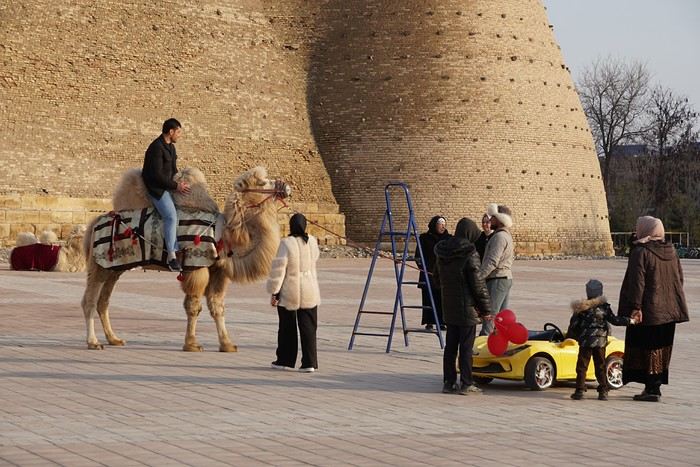
Local tourists between a Bactrian camel and an electric car, in front of ancient walls—it’ll do.
I chose the title "notes"—scattered thoughts, rough drafts. I’m not sure what I’ll write, but one thing’s certain: this won’t be a linear travel journal.
And a photo... there must be a photo, so here:
Local tourists between a Bactrian camel and an electric car, in front of ancient walls—it’ll do.
All Over Thailand
You can post your personal photos in the following thread: https://voyageforum.com/forum/quelque-part-en-thailande-d10655574/
This travel journal is therefore intended solely for my photos, to present a consistent style. All the shots were taken with a simple Samsung Galaxy smartphone and with whatever was at hand.
All stays combined, I’ve spent the equivalent of a year at most in Thailand, and I’m no great expert. However, after many trips, lots of reading on VoyageForum and other sites, and conversations with many locals as well as expats, my view of the country is becoming clearer, though it’s constantly evolving. You never stop discovering and learning.
I guess I wanted to deliver a puzzle, mainly for those who want to get an idea of the country here and for those who feel nostalgic about it. I don’t know if this minimalist sharing will interest anyone, but it’ll do me good to put it together. After so many months without traveling and then these other long months with VF closed, there’s plenty of material available.
There’ll be a mix of places, periods, and subjects, but it might well be intentional.
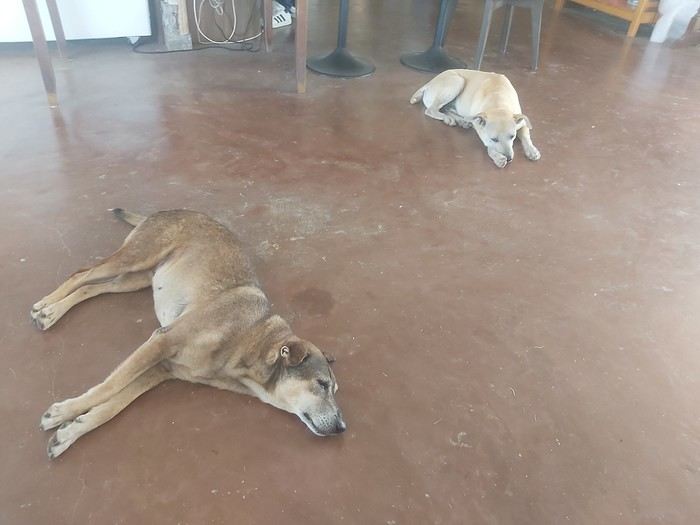
I suspect many Thais have dogs because they make excellent guardians for the home. Nothing better to deter burglars or to signal the presence of a snake. You’ll often see Thais tapping the top of their dog’s head, but don’t be fooled: it’s a sign of affection from them. Judging by the dogs’ reactions, they’re used to it.
Thailand is one of the countries on the planet where rabies is still present, so keep that in mind. It’s not just bites that can be dangerous, so don’t let just any dog lick you. Especially on a wound, of course. Even though dogs often fear humans—this dangerous and unpredictable predator—we still need to stay cautious. Be careful when walking into alleys because the dog will defend its master’s big yard. Be careful at night, and be careful when they’re in packs. It sometimes crosses our minds that Thailand isn’t all that made for walking around, and dogs are one of the reasons. That said, it’s not uncommon to see them chasing bikes or scooters. Cars, though? Much rarer—they’re too big.
It seems Thais prefer to give their dogs freedom by not locking them behind gates. Though sometimes the gate is closed, the little side door is wide open. Oh, and sometimes there’s no gate in front of the property, or it’s been full of holes for years.
You’ll often see dogs sleeping on the roadside, sometimes right on the road. When you approach, they move aside nonchalantly—or not at all. It’s less funny when they suddenly appear from thick vegetation, reminding visitors not to drive too fast. As a result, you’ll notice that dogs with injuries or missing legs aren’t that rare.
Since they believe in reincarnation and respect for all forms of life, they don’t chase dog packs away too much, and they don’t sterilize them enough. When you see a small pack roaming freely in the countryside, you think twice about running into them at the edge of a field. A darker side of this is that euthanasia isn’t often practiced. Twice, we saw dogs at death’s door in temples, enduring terrible suffering with no one to help. The image (and the smell) of one of them, agonizing and exuding the stench of death, still comes back to me sometimes.
Some of you may have seen the YouTube vlog of a French woman living in Phuket who was given a little pig by her Thai friends. The animal, well-fed, quickly became a happy and enormous beast with its own garden. Yet it didn’t take long for it to fall seriously ill and become incurable. In her video, the French woman described how difficult it was to find a vet willing to perform euthanasia.
You’ll often see bowls by the side of the road. Thais leave food and water there for stray cats and dogs. Overall, they have a big heart for animals.
If you ever pop into a shopping mall, you might see people pushing their small dogs in strollers. It’s not just for fun—these strollers are provided for customers to put their pets in, otherwise you can’t bring them inside. It looks a bit odd when you expect to see a baby.
This travel journal is therefore intended solely for my photos, to present a consistent style. All the shots were taken with a simple Samsung Galaxy smartphone and with whatever was at hand.
All stays combined, I’ve spent the equivalent of a year at most in Thailand, and I’m no great expert. However, after many trips, lots of reading on VoyageForum and other sites, and conversations with many locals as well as expats, my view of the country is becoming clearer, though it’s constantly evolving. You never stop discovering and learning.
I guess I wanted to deliver a puzzle, mainly for those who want to get an idea of the country here and for those who feel nostalgic about it. I don’t know if this minimalist sharing will interest anyone, but it’ll do me good to put it together. After so many months without traveling and then these other long months with VF closed, there’s plenty of material available.
There’ll be a mix of places, periods, and subjects, but it might well be intentional.
I suspect many Thais have dogs because they make excellent guardians for the home. Nothing better to deter burglars or to signal the presence of a snake. You’ll often see Thais tapping the top of their dog’s head, but don’t be fooled: it’s a sign of affection from them. Judging by the dogs’ reactions, they’re used to it.
Thailand is one of the countries on the planet where rabies is still present, so keep that in mind. It’s not just bites that can be dangerous, so don’t let just any dog lick you. Especially on a wound, of course. Even though dogs often fear humans—this dangerous and unpredictable predator—we still need to stay cautious. Be careful when walking into alleys because the dog will defend its master’s big yard. Be careful at night, and be careful when they’re in packs. It sometimes crosses our minds that Thailand isn’t all that made for walking around, and dogs are one of the reasons. That said, it’s not uncommon to see them chasing bikes or scooters. Cars, though? Much rarer—they’re too big.
It seems Thais prefer to give their dogs freedom by not locking them behind gates. Though sometimes the gate is closed, the little side door is wide open. Oh, and sometimes there’s no gate in front of the property, or it’s been full of holes for years.
You’ll often see dogs sleeping on the roadside, sometimes right on the road. When you approach, they move aside nonchalantly—or not at all. It’s less funny when they suddenly appear from thick vegetation, reminding visitors not to drive too fast. As a result, you’ll notice that dogs with injuries or missing legs aren’t that rare.
Since they believe in reincarnation and respect for all forms of life, they don’t chase dog packs away too much, and they don’t sterilize them enough. When you see a small pack roaming freely in the countryside, you think twice about running into them at the edge of a field. A darker side of this is that euthanasia isn’t often practiced. Twice, we saw dogs at death’s door in temples, enduring terrible suffering with no one to help. The image (and the smell) of one of them, agonizing and exuding the stench of death, still comes back to me sometimes.
Some of you may have seen the YouTube vlog of a French woman living in Phuket who was given a little pig by her Thai friends. The animal, well-fed, quickly became a happy and enormous beast with its own garden. Yet it didn’t take long for it to fall seriously ill and become incurable. In her video, the French woman described how difficult it was to find a vet willing to perform euthanasia.
You’ll often see bowls by the side of the road. Thais leave food and water there for stray cats and dogs. Overall, they have a big heart for animals.
If you ever pop into a shopping mall, you might see people pushing their small dogs in strollers. It’s not just for fun—these strollers are provided for customers to put their pets in, otherwise you can’t bring them inside. It looks a bit odd when you expect to see a baby.
Bangkok - Chiang Mai - Koh Samui in summer
Hi everyone, I’ve spent two solid months reading the Lonely Planet and pretty much every post about Thailand here, plus French and English blogs. Now I’d love to get your expert opinions on our itinerary.
We’re heading off in August 2025 with our 7-year-old daughter. We only have a maximum of three weeks off, and I’m keeping an eye on flight prices before booking (1400 € per person really stings 😕).
So here’s what I’ve planned—let me know if you spot any major issues or if I’ve been way too "optimistic."
D1 - Arrival in Bangkok / rest, quick visit, overnight stay D2 - More temple visits, etc. D3 - Morning flight to Chiang Mai D4 - More Chiang Mai sightseeing D5 - Day trip to Chiang Rai (guided tour to book: blue and white temple), return to Chiang Mai late in the evening D6 - More Chiang Mai visits / Elephant Nature Park in the afternoon D7 - Morning flight to Koh Samui, sightseeing D8 to D10 - More Koh Samui visits D11 to D13 - Ferry to Koh Phangan D14 to D15 - Ferry to Koh Tao D16 - Return to Koh Samui, then flight to Bangkok D17 - Day trip to Ayutthaya, return to Bangkok in the evening D18 - Flight back to France :(
I know a lot of you recommend heading straight to Chiang Mai to recover from the international flight, but my partner and I NEVER sleep on planes (personally, I’ve been flying to Taiwan since I was little and have never slept more than an hour on a 14-hour flight...), so it’s essential for us to rest upon arrival . That’s also why I opted for domestic flights instead of the sleeper train—I know we’d lose over 10 hours and wouldn’t be able to rest properly in those conditions. And I’m sure you’ll also say BKK > North > South is too much for three weeks, but I really want to see as much as possible. Given how much the flights will cost, I’m not sure when we’ll be able to come back 🏴☠️.
So, questions: 1. Since we’ll only be in Bangkok for a maximum of two nights and need to easily reach the airport with luggage (and a child), which neighborhood should we prioritize? We’d love to experience the evening vibe of Asian night markets, ideally within walking distance of the hotel or just a few metro stops away. I’ve looked at Chinatown, but the BTS seems far... Should we go for somewhere near BTS Saphan Taksin or BTS Krungthonburi? But is the area lively in the evening with food courts, etc.? We’d also like to treat ourselves to a hotel with a pool.
2. Have we planned too many days in the south? Should I skip Koh Tao and just do Koh Samui + Koh Phangan? My partner and daughter aren’t strong swimmers, so we’re looking for beautiful beaches without too much current. Crowded beaches don’t bother us—we just want stunning turquoise waters without killer waves . Going all the way to Koh Tao and then back to Koh Samui to catch the flight to Bangkok seems too stressful. Is it still possible these days (I haven’t seen any recent posts on this) to head to Koh Samui in August and decide on the spot how many nights to spend in Koh Phangan or Koh Tao based on how we feel, booking hotels as we go? Or is that too risky?
If you have any better suggestions for fitting all this in while reducing internal flights, I’m all ears for your great tips
D1 - Arrival in Bangkok / rest, quick visit, overnight stay D2 - More temple visits, etc. D3 - Morning flight to Chiang Mai D4 - More Chiang Mai sightseeing D5 - Day trip to Chiang Rai (guided tour to book: blue and white temple), return to Chiang Mai late in the evening D6 - More Chiang Mai visits / Elephant Nature Park in the afternoon D7 - Morning flight to Koh Samui, sightseeing D8 to D10 - More Koh Samui visits D11 to D13 - Ferry to Koh Phangan D14 to D15 - Ferry to Koh Tao D16 - Return to Koh Samui, then flight to Bangkok D17 - Day trip to Ayutthaya, return to Bangkok in the evening D18 - Flight back to France :(
I know a lot of you recommend heading straight to Chiang Mai to recover from the international flight, but my partner and I NEVER sleep on planes (personally, I’ve been flying to Taiwan since I was little and have never slept more than an hour on a 14-hour flight...), so it’s essential for us to rest upon arrival . That’s also why I opted for domestic flights instead of the sleeper train—I know we’d lose over 10 hours and wouldn’t be able to rest properly in those conditions. And I’m sure you’ll also say BKK > North > South is too much for three weeks, but I really want to see as much as possible. Given how much the flights will cost, I’m not sure when we’ll be able to come back 🏴☠️.
So, questions: 1. Since we’ll only be in Bangkok for a maximum of two nights and need to easily reach the airport with luggage (and a child), which neighborhood should we prioritize? We’d love to experience the evening vibe of Asian night markets, ideally within walking distance of the hotel or just a few metro stops away. I’ve looked at Chinatown, but the BTS seems far... Should we go for somewhere near BTS Saphan Taksin or BTS Krungthonburi? But is the area lively in the evening with food courts, etc.? We’d also like to treat ourselves to a hotel with a pool.
2. Have we planned too many days in the south? Should I skip Koh Tao and just do Koh Samui + Koh Phangan? My partner and daughter aren’t strong swimmers, so we’re looking for beautiful beaches without too much current. Crowded beaches don’t bother us—we just want stunning turquoise waters without killer waves . Going all the way to Koh Tao and then back to Koh Samui to catch the flight to Bangkok seems too stressful. Is it still possible these days (I haven’t seen any recent posts on this) to head to Koh Samui in August and decide on the spot how many nights to spend in Koh Phangan or Koh Tao based on how we feel, booking hotels as we go? Or is that too risky?
If you have any better suggestions for fitting all this in while reducing internal flights, I’m all ears for your great tips
Cécile découvre Amsterdam, les Pays-Bas et... Metz English translation pending
et hop ! une nouvelle capitale européenne et ses alentours pour Cécile ....
Brel et Béart ont chanté cette charmante ville qui lui tardait de découvrir.. grâce à un CE généreux qui rend accessibles les Adagio Hôtel d'Europe...
11h de route ce dimanche de de retour de vacances... arrivée tardive et nocturne sur place donc dodo le 1er soir
La météo est mouvant mais que rien ne nous arrête... direction Utrecht..
1er choc: des vélos partout !!!! donc vitesse réduite ce qui permet de découvrir des bâtiments insolites

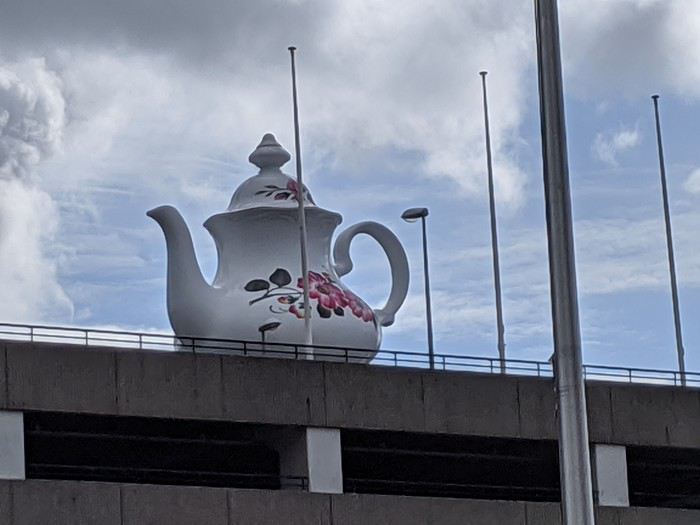
Utrecht centre ses canaux, l'Oudegracht

les touristes n ont pas encore envahi les bars des quais
Même le ramassage des poubelles se fait par péniche!
Pas de chance les 465 marches du Dom sont impossibles d accès
Brel et Béart ont chanté cette charmante ville qui lui tardait de découvrir.. grâce à un CE généreux qui rend accessibles les Adagio Hôtel d'Europe...
11h de route ce dimanche de de retour de vacances... arrivée tardive et nocturne sur place donc dodo le 1er soir
La météo est mouvant mais que rien ne nous arrête... direction Utrecht..
1er choc: des vélos partout !!!! donc vitesse réduite ce qui permet de découvrir des bâtiments insolites
Utrecht centre ses canaux, l'Oudegracht
les touristes n ont pas encore envahi les bars des quais
Même le ramassage des poubelles se fait par péniche!
Pas de chance les 465 marches du Dom sont impossibles d accès
Choix de tente pour un voyage à vélo English translation pending
Bonjour 🙂
Je prépare actuellement une traversée de l'Europe et de l'Asie à vélo (départ prévu pour Avril 2021 sauf si contre-indication du COVID).
Je me pose aujourd'hui la question du choix de la tente qui m'accompagnera. Pour mettre un peu de contexte, je vais voyager seul, pour une durée indéterminée et je compte dormir 100% du temps en tente (camping sauvage tous les soirs).
Je me suis déjà renseigné de mon côté et voici mes attentes quant au choix de la tente : - suffisament d'espace pour pouvoir accueillir mes sacoches et moi (donc tentes 2 places) - au moins une abside permettant de stocker un peu de matériel et surtout de pouvoir allumer mon réchaud (même si c'est pas très conseillé) en cas de forte pluie - capable de me protéger de la pluie (même en cas de grosse averse durant toute une nuit - forcément, je serais regardant sur le poids de la tente (je me fixe un 3 kg grand max) -je n'ai aucune contrainte de prix
Après avoir écumé les blogs de de voyageurs et sites de ventes en ligne, j'en suis arrivé à la conclusion que la tente Hubba Hubba NX de MSR semblait être un choix judicieux : https://www.aventurenordique.com/tente-msr-hubba-hubba-nx.html
J'aimerais cependant avoir votre avis quant au choix de cette tente. Avez-vous déja eu l'occasion de la tester en condition de voyage réel ? Quels sont vos retours (surtout les points négatifs) ?
Ma plus grosse inquiétude repose sur l'imperméabilité (1200 mm pour le double toit et 3000 mm pour le sol). N'étant pas un fin connaisseur, ces caractéristiques vous semblent-elles suffisantes pour pouvoir passer la nuit au sec en cas de gros orages qui persisterait toute la nuit ? J'ai vu qu'il est possible d'ajouter une bâche de sol supplémentaire ? (est ce là un choix ou un élément supreflus ?)
J'ai également une 2ème interrogation quant au stockage de mon vélo la nuit. Le fait de laisser le vélo dehors ne risque t-il pas de l'endommager sur le long terme ? Comment faites vous habituellement ? Laissez-vous le vélo dehors sans protection, ajoutez vous- une bâche ? Ou préférez-vous vous munir d'une tente avec une plus grande abside pour pouvoir le rentrer dedans ?
Cordialement, 🙂
Je me pose aujourd'hui la question du choix de la tente qui m'accompagnera. Pour mettre un peu de contexte, je vais voyager seul, pour une durée indéterminée et je compte dormir 100% du temps en tente (camping sauvage tous les soirs).
Je me suis déjà renseigné de mon côté et voici mes attentes quant au choix de la tente : - suffisament d'espace pour pouvoir accueillir mes sacoches et moi (donc tentes 2 places) - au moins une abside permettant de stocker un peu de matériel et surtout de pouvoir allumer mon réchaud (même si c'est pas très conseillé) en cas de forte pluie - capable de me protéger de la pluie (même en cas de grosse averse durant toute une nuit - forcément, je serais regardant sur le poids de la tente (je me fixe un 3 kg grand max) -je n'ai aucune contrainte de prix
Après avoir écumé les blogs de de voyageurs et sites de ventes en ligne, j'en suis arrivé à la conclusion que la tente Hubba Hubba NX de MSR semblait être un choix judicieux : https://www.aventurenordique.com/tente-msr-hubba-hubba-nx.html
J'aimerais cependant avoir votre avis quant au choix de cette tente. Avez-vous déja eu l'occasion de la tester en condition de voyage réel ? Quels sont vos retours (surtout les points négatifs) ?
Ma plus grosse inquiétude repose sur l'imperméabilité (1200 mm pour le double toit et 3000 mm pour le sol). N'étant pas un fin connaisseur, ces caractéristiques vous semblent-elles suffisantes pour pouvoir passer la nuit au sec en cas de gros orages qui persisterait toute la nuit ? J'ai vu qu'il est possible d'ajouter une bâche de sol supplémentaire ? (est ce là un choix ou un élément supreflus ?)
J'ai également une 2ème interrogation quant au stockage de mon vélo la nuit. Le fait de laisser le vélo dehors ne risque t-il pas de l'endommager sur le long terme ? Comment faites vous habituellement ? Laissez-vous le vélo dehors sans protection, ajoutez vous- une bâche ? Ou préférez-vous vous munir d'une tente avec une plus grande abside pour pouvoir le rentrer dedans ?
Cordialement, 🙂