Results for "Tenerife+|+101+>+261"
2004 results found.
Semaine Timeshare gratuite en Guadeloupe? English translation pending
bonjour tout le monde
(je suis nouvelle sur ce forum)
Lors d un sejour à st martin nous avons gratté la petite carte et bien sur avons gagné une semaine d hebergement dans une destination de reve; tout ça apres un lavage de cerveau de plus de 2h, mais nous n avons rien accepté et sommes partis avec notre "cadeau" (une brochure EVA SUN SHINE à renvoyer pr avoir l hebergement gratuit).
Mais apres avoir lu beaucoup de temoignages g peur d accepter cette offre. Qui a beneficé de cette semaine et pour qui ça c est bien passé?
Nous savons qu il y aura une equipe d arnaqueurs qui nous attendra pour essayer de nous convaincre mais je nous sommes prêts à tenter le coup. Qu en pensez vous? Faites moi part de vos expériences.
MERCI A BIENTOT
Lors d un sejour à st martin nous avons gratté la petite carte et bien sur avons gagné une semaine d hebergement dans une destination de reve; tout ça apres un lavage de cerveau de plus de 2h, mais nous n avons rien accepté et sommes partis avec notre "cadeau" (une brochure EVA SUN SHINE à renvoyer pr avoir l hebergement gratuit).
Mais apres avoir lu beaucoup de temoignages g peur d accepter cette offre. Qui a beneficé de cette semaine et pour qui ça c est bien passé?
Nous savons qu il y aura une equipe d arnaqueurs qui nous attendra pour essayer de nous convaincre mais je nous sommes prêts à tenter le coup. Qu en pensez vous? Faites moi part de vos expériences.
MERCI A BIENTOT
Costa Croisière "Iles et Terres du Soleil" English translation pending
Bonjour
Dans le cadre de notre voyage de noces, mon épouse et moi nous sommes diriger vers une croisiere et notamment la "Iles et Terres du Soleil" de chez Costa à bord du Costa Romantica (Départ de Savone). Le voyage est prévu pour le 08 Juin 2007.
Nous avons prévu comme excursions : Casablanca Rabat et Mosquée Hassan II (Maroc), Visite d'Agadir (Maroc), Parc National de Timanfaya (Canaries), A la recherche des Baleines et des Dauphins (Canaries), Le charme de Funchal (Madere) et Marbella et Puerto Banus (Espagne).
Si certains d'entres vous ont fait cette croisiere, je suis preneur de vos avis !
Egalement, j'aimerais avoir des avis sur le Costa Romantica ! J'ai vu qu'il y avait des restaurants (pizzeria) est-ce cher ?
Je vous remercie à l'avance.
Dans le cadre de notre voyage de noces, mon épouse et moi nous sommes diriger vers une croisiere et notamment la "Iles et Terres du Soleil" de chez Costa à bord du Costa Romantica (Départ de Savone). Le voyage est prévu pour le 08 Juin 2007.
Nous avons prévu comme excursions : Casablanca Rabat et Mosquée Hassan II (Maroc), Visite d'Agadir (Maroc), Parc National de Timanfaya (Canaries), A la recherche des Baleines et des Dauphins (Canaries), Le charme de Funchal (Madere) et Marbella et Puerto Banus (Espagne).
Si certains d'entres vous ont fait cette croisiere, je suis preneur de vos avis !
Egalement, j'aimerais avoir des avis sur le Costa Romantica ! J'ai vu qu'il y avait des restaurants (pizzeria) est-ce cher ?
Je vous remercie à l'avance.
Où partir début mars avec des enfants? English translation pending
Bonjour,
J'ai essayé de lire les différentes discussions sur le sujet mais je n'ai pas trouvé tout à fait ce que je cherchais.
Voilà nous envisageons de partir en Mars (du 11 au 18) en club avec notre fils de 2 ans ainsi qu'avec 2 autres couple d'amis qui ont eux aussi des enfants 4 et 5 ans.
Nous avosn pensé à Djerban, mais ncela ne risque pas d'être un peu juste au niveau de stempératures?
Sinon quelle destination me conseillez-vous?
Merci d'avance pour vos réponses. Karine.
J'ai essayé de lire les différentes discussions sur le sujet mais je n'ai pas trouvé tout à fait ce que je cherchais.
Voilà nous envisageons de partir en Mars (du 11 au 18) en club avec notre fils de 2 ans ainsi qu'avec 2 autres couple d'amis qui ont eux aussi des enfants 4 et 5 ans.
Nous avosn pensé à Djerban, mais ncela ne risque pas d'être un peu juste au niveau de stempératures?
Sinon quelle destination me conseillez-vous?
Merci d'avance pour vos réponses. Karine.
Formalités pour les enfants accompagnant leurs parents aux îles Canaries English translation pending
Bonjours à tous je suis nouveau sur le forum et j’ai une ou deux petites questions à poser.
Mon épouse et moi même devons voyager avec nos deux fils 6 et 10ans la première semaine de décembre sur Ténériffe.
Les enfants sont inscris sur le passeport de mon épouse.
Cela est-il suffisant, ou devons nous leur faire faire des cartes d’identités ? A l’agence ou j’ai effectué la réservation ils m’on dit qu’ils ne savaient plus si cela suffisait.
Autrement le climat est il bon sur la Costa Adege car c’est là que nous allons séjourner ?
Merci d’avance pour vos réponses et vos conseils.
J’ai visité le site et il est très enrichissant.
Canaries ou Baléares entre janvier et avril? English translation pending
Bonjour
nous voudrions partir en voyage de noce entre janvier et avril mais il nous faudrait qq conseils ou avis car nous ne connaisons pas du tout les canaries et les baleares 😛 quel temps fait il la bas a cette periode, quel style de plage y a t'il (sable, galet, eau claire...) quel region vous nous conseillez? idem pour les hotels ou les TO si vous avez de bon tuyaux on prend😉
ou si vous avez d'autre destinations tt aussi sympa, pourquoi pas! en fait on chercher juste le soleil et de belle chose a voir.
on aimerais partir 15js avec un budget de 2000/2500euro est ce que sa colle avec notre envie?
merci d'avance a ceux qui vont prendre le temps de nous faire profiter de leur souvenir de voyage 😎
bye
nous voudrions partir en voyage de noce entre janvier et avril mais il nous faudrait qq conseils ou avis car nous ne connaisons pas du tout les canaries et les baleares 😛 quel temps fait il la bas a cette periode, quel style de plage y a t'il (sable, galet, eau claire...) quel region vous nous conseillez? idem pour les hotels ou les TO si vous avez de bon tuyaux on prend😉
ou si vous avez d'autre destinations tt aussi sympa, pourquoi pas! en fait on chercher juste le soleil et de belle chose a voir.
on aimerais partir 15js avec un budget de 2000/2500euro est ce que sa colle avec notre envie?
merci d'avance a ceux qui vont prendre le temps de nous faire profiter de leur souvenir de voyage 😎
bye
Randonnée aux Canaries en novembre English translation pending
Bonjour,
Je souhaite randonner dans les îles canaries au mois de novembre, j'ai donc plusieurs questions: tout d'abord, est ce la bonne période ? Quelle(s) île(s) valent vraiment le détour si l'on recherche, des paysages, de la nature, bref un peu d'aventure hors des coins trop touristiques ? Je ne voudrais pas passer par une agence, peut-on facilement organiser son séjour, hébergement, nourriture, transport ? Les sentiers sont-ils balisés ? Le guidage est-il nécessaire ?
merci d'avance pour les réponses,
benoit.
Je souhaite randonner dans les îles canaries au mois de novembre, j'ai donc plusieurs questions: tout d'abord, est ce la bonne période ? Quelle(s) île(s) valent vraiment le détour si l'on recherche, des paysages, de la nature, bref un peu d'aventure hors des coins trop touristiques ? Je ne voudrais pas passer par une agence, peut-on facilement organiser son séjour, hébergement, nourriture, transport ? Les sentiers sont-ils balisés ? Le guidage est-il nécessaire ?
merci d'avance pour les réponses,
benoit.
Agence Partir Pas Cher English translation pending
bonjour,
connaissez vous ce site est ce sérieux et PARTIR DISCOUNT aussi?
merci
Une question aussi : faut t'il un passeport pour les baléares?, la martinique?
connaissez vous ce site est ce sérieux et PARTIR DISCOUNT aussi?
merci
Une question aussi : faut t'il un passeport pour les baléares?, la martinique?
Climat en Méditerranée en février-mars? English translation pending
Bonjour à tous,
J'ai un peu parcouru le forum mais je n'ai malheureusement pas trouvé de réponses à ma question. J'aimerai faire une croisière en février-mars (les seules dates de vacances disponibles pour moi l'année prochaine) et j'aimerai savoir à quel climat je peux m'attendre si par exemple je fais la grece ou les canaries?
Est ce que quelqu'un peut m'aider? Merci d'avance 😉
J'ai un peu parcouru le forum mais je n'ai malheureusement pas trouvé de réponses à ma question. J'aimerai faire une croisière en février-mars (les seules dates de vacances disponibles pour moi l'année prochaine) et j'aimerai savoir à quel climat je peux m'attendre si par exemple je fais la grece ou les canaries?
Est ce que quelqu'un peut m'aider? Merci d'avance 😉
Logement à El Hierro et la Palma (Canaries) English translation pending
Bonjour,
Je compte organiser pour un groupe (<>10) une randonnée itinérante à la Palma et à El Hierro. (Les 2 iles les plus à l'ouest des Canaries).
J'ai des dificultés pour trouver de hébergements possibles à la nuitée dans le style des gîtes d'étape en France. Il est par contre facile de trouver des logements chez l'habitant ( équivalent des gîtes ruraux en France), mais ils se louent à la semaine.
Pouvez-vous m'aider?
Merci
Etudier à Las Palmas de Gran Canaria (Iles Canaries) English translation pending
Bonjour à tous ! Je suis étudiante et je pars en septembre faire une année d'études à Las Palmas. Auriez-vous des tuyaux concernant le logement, le coût de la vie, ... et autres conseils ! Merci d'avance ! 😉 A+ Clara
Voyage scolaire aux Canaries English translation pending
Bonjour à tous!
En octobre/novembre, je vais faire un voyage à l'étranger et j'ai choisi d'aller aux canaries.
Je fais donc appel à tous ceux qui connaissent un peu l'archipel pour pouvoir organiser ce voyage.
En priorité je souhaite connaitre :les tarifs et compagnies de avionssi la vie est chère là bas comparé à la france? 'donnez moi des exemples de prix de produits quotidiens tels que le pain, le bus, la nourriture...)les logement PAS CHER (les étudiants sont pas très riches!!!)
De plus, je dois trouver un sujet d'étude et je n'ai pas d'idée vu que je ne connais pas le pays. Vous en avez des idées de sujet? (se rapportant plutot à l'agriculture, l'élevage, l'environnement... ou autres)
Bref, tout ce que vous savez, dites-le moi!!! Peu importe, je veux tout savoir!!! merci à tous!
De plus, je dois trouver un sujet d'étude et je n'ai pas d'idée vu que je ne connais pas le pays. Vous en avez des idées de sujet? (se rapportant plutot à l'agriculture, l'élevage, l'environnement... ou autres)
Bref, tout ce que vous savez, dites-le moi!!! Peu importe, je veux tout savoir!!! merci à tous!
Où partir en voyage de noces? English translation pending
bonjour nous nous marions le 02 septembre et souhaitons partir directement apres en voyage de noces seulement on ne sait pas encore ou?? pouvez vous nous aidez?? deja par rapport au climat ou est ce qu'il fait le plus beau en septembre (a part ocean indien) et le moins de risque de cyclones?? aussi non on recherche avant tout de magnifique plage avec sable blanc et eau turquoise, un hotel sympa mais si possible pas trop gros (plutot tranquille, des bungalows individuel serait le paradis!) et surtout de la bonne bouffe.et puis des choses à visiter pour ne pas rester des journées entière sur la plage!!!! merci à tous pour votre aide
Route du nord de l'Espagne English translation pending
😉Hola todos !!!!!
J'envisage de faire la côte nord de l'Espagne, cet été, en voiture !!!!! Est-ce voir trop grand que d'aller jusqu'à Pontevedra, aller-retour sur une dizaine de jours ? Bien sûr, en s'arrêtant au Pays Basque, en Cantabrie et en Asturies !!!!
Je suis preneuse de toutes infos : spots à ne pas louper par exemple!!!!
Alors, si des connaisseurs de la région me lisent, ce serait super sympa de me répondre !!!!!
En revanche, je connais bien les Canaries, Madrid et l'Andalousie, si çà vous intéresse !!!!
Merci et à plus !!!!
Endroits de plongée en Europe? English translation pending
Bonjour, avez-vous des bonnes suggestions de place de plongée en Europe!?? 😉 Plus spécifiquement en Italie et/ou en France et/ou Espagne
Merci!!
Merci!!
Région la plus ensoleillée d'Espagne en février? English translation pending
holaaaaaaaaa!
j'ai envie d'aller en espagne à l'endroit le plus chaud ou du moins le plus ensoleillé...marre du gris!
alors, auriez vous un bon plan pour se ballader tranquille en fourgon se perdre dans les champs d'oliviers ou autre campagne de reve?
merci merci merci
🙂
Laissez-moi vous conter le Grand Canyon … English translation pending
Endroit mondialement connu, vu et revu certes mais qui m’a marqué à vie, et voici pourquoi..
Une photo peut arriver à rendre la beauté d’un lieu : Bryce Canyon, Delicate Arch, c’est beau !! Elle peut aussi partiellement rendre compte de la majesté d’un lieu : Monument Valley, Death Valley, c’est majestueux !!
Mais j’ai toujours été « déçu » des photos du Grand Canyon après y avoir été…
Si vous partez de Las Vegas vers le Sud Est puis vers l’Est en route vers cet endroit magique, vous entrez véritablement dans le grand Ouest, L’Arizona ! Ses paysages rocheux démesurés, ses lignes droites à n’en plus finir, une bonne musique dans le poste, la route du bonheur…
Puis vous bifurquez vers le Nord sur la 64 et entamez la longue montée du plateau du Colorado, fantastique formation géologique inclinée Nord/Sud; 1200m, 1500m, 2000m… l’altitude grimpe doucement, tout en ligne droite… quasiment pas d’autres voitures, pas d’autre route à des dizaines de miles; un sentiment mêlé de sérénité et d’excitation vous envahit..
Le plateau rocheux avec les sapins défile devant vous.
Ça y est ! Vous êtes à Tusayan, minuscule point de passage avec ses quelques hotels, son épicerie/quincaillerie sur la droite, ses stations essence rassurantes.. Le checkpoint d’entrée du parc arrive ensuite, sourire du ranger qui vérifie votre « pass » et qui vous tend au passage le plan des lieux fort utile…
Et là je l’ai senti..
Je ne sais pas pour vous, mais moi qui habite en région parisienne, quand je vais voir la mer En Normandie (le plus proche), en Vendée ou dans le 06 où j’ai de la famille; Je « sens la mer » avant de la voir réellement; je sens un changement majeur et imminent dans le paysage.. 🙂
Là j’ai ressenti la même impression, et pourtant la route continuait de défiler avec les mêmes sapins, les mêmes roches… puis elle tourne doucement, vous passez à côté de quelques parkings, et vous apercevez quelque chose là bas, derrière les arbres; il est temps de se garer.
En sortant de la voiture, vous percevez qu’il va se passer quelque chose (« qu’Est-ce que c’est que ça ? » trottait alors dans ma tête)…. Plus que 2 ou 3 rangées d’arbres (« nom de D… !! ») et vous arrivez au bord.
Et là ! Alors là….
Je cite quelques proches qui ont vécu ça : Mes parents (qui ont beaucoup voyagé) : « le choc de notre vie au niveau paysages ». Mes beaux-parents (idem avec des « bricoles » genre le pic du Teide et sa caldeira à Ténérife, les cirques de la Réunion..) : « c’est inimaginable au sens propre du terme ». Deux très bons amis qui ne se connaissent pas, mordus de ski et qui connaissent les Alpes comme leurs poches : « la plus belle chose que j’ai jamais vu ».
Tout de suite j’ai pris des photos, par dizaines, comme si ce que je voyais allais disparaître et qu’il fallait dans l’urgence en garder un souvenir; et puis j’ai pleinement senti sa puissance. La lumière étant rasante, donnant une teinte rougoyante encore plus dramatique aux lieux.. Un véritable gouffre de fin du monde. On vacille à la lecture du panneau qui vous indique que la rive en face est à plus de 15 km..
Le Grand Canyon est unique car c’est beau à en pleurer et écrasant de puissance; voilà, c’est ça !
Même un adolescent en pleine phase rebelle et génétiquement insensible au vertige (??), qui se demande ce qu’il fait là avec ses parents alors qu’il était si bien à Santa Monica où tout est "super cool"…. Je le défie de rester insensible..
Le Grand Canyon est unique car c’est beau à en pleurer et écrasant de puissance.
Bon voyage ! 🙂
Une photo peut arriver à rendre la beauté d’un lieu : Bryce Canyon, Delicate Arch, c’est beau !! Elle peut aussi partiellement rendre compte de la majesté d’un lieu : Monument Valley, Death Valley, c’est majestueux !!
Mais j’ai toujours été « déçu » des photos du Grand Canyon après y avoir été…
Si vous partez de Las Vegas vers le Sud Est puis vers l’Est en route vers cet endroit magique, vous entrez véritablement dans le grand Ouest, L’Arizona ! Ses paysages rocheux démesurés, ses lignes droites à n’en plus finir, une bonne musique dans le poste, la route du bonheur…
Puis vous bifurquez vers le Nord sur la 64 et entamez la longue montée du plateau du Colorado, fantastique formation géologique inclinée Nord/Sud; 1200m, 1500m, 2000m… l’altitude grimpe doucement, tout en ligne droite… quasiment pas d’autres voitures, pas d’autre route à des dizaines de miles; un sentiment mêlé de sérénité et d’excitation vous envahit..
Le plateau rocheux avec les sapins défile devant vous.
Ça y est ! Vous êtes à Tusayan, minuscule point de passage avec ses quelques hotels, son épicerie/quincaillerie sur la droite, ses stations essence rassurantes.. Le checkpoint d’entrée du parc arrive ensuite, sourire du ranger qui vérifie votre « pass » et qui vous tend au passage le plan des lieux fort utile…
Et là je l’ai senti..
Je ne sais pas pour vous, mais moi qui habite en région parisienne, quand je vais voir la mer En Normandie (le plus proche), en Vendée ou dans le 06 où j’ai de la famille; Je « sens la mer » avant de la voir réellement; je sens un changement majeur et imminent dans le paysage.. 🙂
Là j’ai ressenti la même impression, et pourtant la route continuait de défiler avec les mêmes sapins, les mêmes roches… puis elle tourne doucement, vous passez à côté de quelques parkings, et vous apercevez quelque chose là bas, derrière les arbres; il est temps de se garer.
En sortant de la voiture, vous percevez qu’il va se passer quelque chose (« qu’Est-ce que c’est que ça ? » trottait alors dans ma tête)…. Plus que 2 ou 3 rangées d’arbres (« nom de D… !! ») et vous arrivez au bord.
Et là ! Alors là….
Je cite quelques proches qui ont vécu ça : Mes parents (qui ont beaucoup voyagé) : « le choc de notre vie au niveau paysages ». Mes beaux-parents (idem avec des « bricoles » genre le pic du Teide et sa caldeira à Ténérife, les cirques de la Réunion..) : « c’est inimaginable au sens propre du terme ». Deux très bons amis qui ne se connaissent pas, mordus de ski et qui connaissent les Alpes comme leurs poches : « la plus belle chose que j’ai jamais vu ».
Tout de suite j’ai pris des photos, par dizaines, comme si ce que je voyais allais disparaître et qu’il fallait dans l’urgence en garder un souvenir; et puis j’ai pleinement senti sa puissance. La lumière étant rasante, donnant une teinte rougoyante encore plus dramatique aux lieux.. Un véritable gouffre de fin du monde. On vacille à la lecture du panneau qui vous indique que la rive en face est à plus de 15 km..
Le Grand Canyon est unique car c’est beau à en pleurer et écrasant de puissance; voilà, c’est ça !
Même un adolescent en pleine phase rebelle et génétiquement insensible au vertige (??), qui se demande ce qu’il fait là avec ses parents alors qu’il était si bien à Santa Monica où tout est "super cool"…. Je le défie de rester insensible..
Le Grand Canyon est unique car c’est beau à en pleurer et écrasant de puissance.
Bon voyage ! 🙂
Cherche à vivre dans les îles... English translation pending
bonjour a tous!
je vis actuellement en France mais il semble que jai tres froid!!😉
Par conséquent je souhaiterais partir dans les îles mais je ne sais ou, ne connaisant pas les niveaux de vie, les situation vis à vis de l'emploi...
si vous etes dans les îles svp aidez moi et dites moi comment vous vivez la ba....
en vous remerciant à bientôt et pe etre au soleil...😏
Hôtel Riu Vistamar à Gran Canaria English translation pending
bonjour
qui pourrait me parler de l'hôtel Riu Vistamar à Gran Canaria? le temps au mois de juillet, la situation, les prestations...
merci à bientôt!!!😉
qui pourrait me parler de l'hôtel Riu Vistamar à Gran Canaria? le temps au mois de juillet, la situation, les prestations...
merci à bientôt!!!😉
Climat en Espagne en novembre?? English translation pending
Suite à un séjour en France en septembre et octobre prochain, nous prévoyons aller en Espagne du 2 au 22 novembre. Nous ne savons pas trop jusqu'où descendre pour avoir de la belle température. Nous préférerions ne pas trop faire de route et éviter de nous rendre jusqu'à la Costa del Sol. Est-il possible de se baigner à la plage dans les environs de Valence à cette période de l'année? Devrions-nous plutôt rouler et nous rendre dans le coin de Malaga?
Nous voulons louer un appartement ou une maison car avec 2 jeunes enfants l'hôtel est hors de question. Nous avons commencé à vérifier des possibilités aux alentours de Salou suite à un message sur le forum.
Si vous avez des suggestions côté activités à faire avec des enfants (nous aurons nos vélos), le climat ou l'hébergement à prix modique, ce serait très apprécié. Merci à l'avance.
Nous voulons louer un appartement ou une maison car avec 2 jeunes enfants l'hôtel est hors de question. Nous avons commencé à vérifier des possibilités aux alentours de Salou suite à un message sur le forum.
Si vous avez des suggestions côté activités à faire avec des enfants (nous aurons nos vélos), le climat ou l'hébergement à prix modique, ce serait très apprécié. Merci à l'avance.
surf à petit prix English translation pending
Bonjour je suis une étudiante québecoise et pauvre qui aimerait bien aller surfer au mois d'août dans un endroit nature qui coûte pas trop cher et où ce n'Est pas le milieu de la saison des pluies :).. Avez-vous quelque chose à proposer??
Merci
Ps- À part le costa rica j'y suis déjè allée.
Merci
Ps- À part le costa rica j'y suis déjè allée.
Bahia Principe à Punta Cana English translation pending
Bonsoir,
Voici ce que je viens de lire dans un article:
Bahía Príncipe Clubs and Resorts abrirá dos hoteles en República Dominicana 18 de febrero de 2004 (Caribbean News 214) La primera apertura de este año, prevista para el mes de junio, será el Bahía Príncipe Punta Cana, hotel de estilo caribeño con toques y decoración colonial, rodeado de exuberante vegetación tropical y sobre una playa de finas arenas blancas; estará situado en Playa Bávaro, Higüey.
El establecimiento, el segundo " Todo Incluido" de la cadena en la República Dominicana, contará con 600 junior suites equipadas con categoría de cinco estrellas: cama tamaño king o dos camas tamaño queen con colchones " pillow-top", baño completo con bañera oval de hidromasaje y secador de pelo, aire acondicionado, ventilador de techo, televisión vía satélite, teléfono directo, mini bar, caja fuerte, terraza.
La segunda apertura del año será el Bahía Príncipa Bavaro en noviembre. Estará situado junto al Bahía Príncipe Punta Cana y contará con servicios e instalaciones similares, formando uno de los mejores complejos con sistema Todo Incluido de la República Dominicana, con lo que se convertirá en el buque insignia de la cadena en el país.
Bahía Príncipe Clubs and Resorts proyecta la construcción de un tercer establecimiento en la Riviera Maya, México, junto al complejo formado por los hoteles Bahía Príncipe Tulum y Bahía Príncipe Akumal; además, la construcción de varios hoteles en un nuevo destino para la cadena en Jamaica.
Actualmente, la compañía cuenta con seis hoteles repartidos entre los destinos más atractivos del Caribe y España: Puerto Plata, en República Dominicana; Riviera Maya en México; Varadero, en Cuba y Tenerife, en España; lo que supone un total de 3, 600 exclusivas habitaciones.
C'est une bonne nouvelle!
Voici ce que je viens de lire dans un article:
Bahía Príncipe Clubs and Resorts abrirá dos hoteles en República Dominicana 18 de febrero de 2004 (Caribbean News 214) La primera apertura de este año, prevista para el mes de junio, será el Bahía Príncipe Punta Cana, hotel de estilo caribeño con toques y decoración colonial, rodeado de exuberante vegetación tropical y sobre una playa de finas arenas blancas; estará situado en Playa Bávaro, Higüey.
El establecimiento, el segundo " Todo Incluido" de la cadena en la República Dominicana, contará con 600 junior suites equipadas con categoría de cinco estrellas: cama tamaño king o dos camas tamaño queen con colchones " pillow-top", baño completo con bañera oval de hidromasaje y secador de pelo, aire acondicionado, ventilador de techo, televisión vía satélite, teléfono directo, mini bar, caja fuerte, terraza.
La segunda apertura del año será el Bahía Príncipa Bavaro en noviembre. Estará situado junto al Bahía Príncipe Punta Cana y contará con servicios e instalaciones similares, formando uno de los mejores complejos con sistema Todo Incluido de la República Dominicana, con lo que se convertirá en el buque insignia de la cadena en el país.
Bahía Príncipe Clubs and Resorts proyecta la construcción de un tercer establecimiento en la Riviera Maya, México, junto al complejo formado por los hoteles Bahía Príncipe Tulum y Bahía Príncipe Akumal; además, la construcción de varios hoteles en un nuevo destino para la cadena en Jamaica.
Actualmente, la compañía cuenta con seis hoteles repartidos entre los destinos más atractivos del Caribe y España: Puerto Plata, en República Dominicana; Riviera Maya en México; Varadero, en Cuba y Tenerife, en España; lo que supone un total de 3, 600 exclusivas habitaciones.
C'est une bonne nouvelle!
Donne infos sur l'Ile des Canaries English translation pending
bonjour,
si quelqu un souhaite des infos sur des hotels sur l ile de gran Canaria j pourrais peut etre vous aider dans le cadre de mon travail j y ai passé une semaine à visiter des hotels!!
si quelqu un souhaite des infos sur des hotels sur l ile de gran Canaria j pourrais peut etre vous aider dans le cadre de mon travail j y ai passé une semaine à visiter des hotels!!
Où aller dans le sud de l'Espagne? English translation pending
bonjour,
voilà je vais partir dans le sud de l'Espagne mais j'aimerais reçevoir les choses qui vous à le plus marqué, les endroits paradisiaques, ls belles plages, les lieux ou l'on peut s'amuser et les endroits à visiter.Que pensez vous de Bénidorm, marbella, malaga etc...tous vos conseils seront les biens venus.merci.@+
A Week in Lanzarote in Late September
Lanzarote Travel Journal
Trip Planning My partner and I are heading to the Canary Islands for a week at the end of September, specifically to Lanzarote. We chose this island over the more crowded ones for its volcanic landscape and the variety of hikes it offers. I booked everything through Expedia: our hotel stay, car rental, and Ryanair flight tickets departing from Marseille. It was the only way to get a direct flight. To make getting around easier during our stay, I picked a hotel located in the center of the island from the wide selection available. It’s part of the Barceló chain, specifically the "Barceló Teguise Beach Adults Only" in Teguise Beach, which turned out to be an excellent choice.
The Trip
Sunday, September 21 - Monday, September 22 Departure It’s 2:15 PM, and we’re at the Avignon TGV station. Danielle picked us up earlier due to the weather—thunderstorms and heavy rain all the way to the station. The TGV was on time, and it only took 30 minutes to reach Marseille Saint-Charles. The shuttle to the airport is quick and convenient, right behind the station. The bus leaves for the airport in the middle of the storm, with flooded roads and cars stuck in some spots. We get soaked making our way to the terminal. Two hours to wait before the flight. The plane finally takes off at midnight, but just before landing, the pilot announces that the destination airport is closed, and we’re being diverted to Tenerife. Ryanair will re-route us as soon as possible. We end up waiting 2 hours, and Ryanair kindly gives us a 4 € voucher. We re-board around 5:15 AM and take off at 6:00 AM. About 45 minutes to reach Lanzarote. After collecting our luggage, we head to the car rental desk. The counter in the terminal is closed, and we’re directed to parking lot P4—it takes us a while to find it. I’m a bit worried about the rental company’s reaction since the car was supposed to be picked up 7 hours earlier, but it’s not a problem. A woman next to us is furious because she’s in the same situation, and her rental was canceled. Anne-Marie translates for her, but nothing changes. We pick up a brand-new Toyota Aigo and head to the hotel. After checking in, we cross the garden, walking alongside the large pool to reach our room. A lovely first-floor room with a jacuzzi and a sea view. It’s early, so we head to breakfast—a generously stocked and varied buffet with everything you could want. Afterward, we drive to Cueva de los Verdes, but it’s packed with people and a long wait. We decide to come back another day. Next, we visit Mirador Del Rio. This rocky viewpoint at the edge of the island has breathtaking cliffs plunging 500 meters into the ocean. The view is stunning and impressive. A panoramic bar lets you cool off while enjoying the scenery. We return to the hotel for a short walk around the neighborhood and enjoy the beautiful pool with its pleasant water temperature. Relaxing by the pool, sun loungers, and all. In the evening, a very varied buffet at the restaurant. Then early to bed to recover from the sleepless night before.
Tuesday, September 23 After a restful night, we enjoy another varied and hearty breakfast. The terrace seating is very pleasant. We take an inland road leading to Timanfaya National Park. The road near the park runs alongside vineyards where the vines are surrounded by lava stone walls to protect them from the prevailing winds. Our first stop is at the visitor center, where the island’s volcanic activity is well-documented. Next, we stop at an area where you can take a short camel ride—two seats are installed on either side of the camel’s hump. This little ride offers a great view of the volcanic landscape from a higher vantage point. A fair price of 11 € per seat for a 20-minute ride. We then head to the park entrance via the road leading to the parking lot, where only authorized buses can take the winding route inside the park. It’s crowded, and we wait about 45 minutes with several stops before reaching the parking lot. We board the bus, and the route offers beautiful views of this volcanic area and its many craters. The journey is very interesting, with several stops for photos. At the parking lot, a guide shows us how the heat from the rocks beneath the surface can ignite dry vegetation. Water poured into holes in the ground immediately creates geysers and jets of steam. The building next to the parking lot has a restaurant where meat is cooked using the heat from a well dug into the volcanic rock. On our way back, we drive to Playa Blanca, a seaside town with a small sandy beach.
Back at the hotel in the late afternoon for dinner.
Wednesday, September 24 We wake up early and have a quick breakfast—few people are around at this hour. Two days ago, we booked a 10:00 AM visit to Los Verdes, lava tunnels created by eruptions and lava flows from the La Corona volcano, which extended all the way to the coast. When the lava came into contact with the air, it solidified on the surface while continuing to flow underneath. The lava tunnels stretch for 8 kilometers to the volcano, but we only walk one kilometer. The inside of the tunnel is impressive, with narrow passages and larger chambers. You can see traces left by the flowing liquid lava—varied colors and twisted shapes. At the end of the path, a large chamber has been turned into a concert hall with perfect acoustics. Next, we visit Jameo Del Agua. This is a continuation of the lava tunnel, developed by Manrique. There are beautifully designed bar and restaurant areas, as well as an underground lake where you can see small blind white crabs—a protected species in this very pure water. Higher up, there’s a lovely space with a central pool that could double as a swimming area, surrounded by beautifully designed white pathways that contrast with the blue water. Further on, you reach a large space inside the lava tunnel, set up as a performance hall with perfect acoustics. Stairs let you view this beautiful space from above. A gap in the lava landscape reveals the ocean on the horizon. We head back toward the village of Yé, at the foot of the La Corona volcano. A 160-meter walk from the church, a path crosses vineyard plots and then climbs to the top of the volcano’s crater in about 30 minutes. It’s the island’s highest volcano. When you reach the edge of the crater, you see how deep it is, with steep slopes inside forming a large circular opening. The place is breathtaking and awe-inspiring. We drive back to the hotel via a road that climbs quickly, offering a beautiful view of the island’s northern part.
Thursday, September 25 After another enjoyable and varied breakfast, we head to the center of the island toward the volcano park and stop at a roadside parking lot where a path leads to the Montana Cuervo volcano. This is a crater that opened on one side. During an eruption, an explosion created a breach in the crater. Huge blocks of rock were thrown dozens of meters away. The path goes through the breach and descends into the crater, allowing you to walk around it. It’s impressive, and you really feel small and fragile in this environment. The crater walls, with their different colors, highlight the rock formations. The crater is surrounded by a sea of lava with sharp, jagged rocks. You can walk around the outside of the crater, but it’s not very interesting. We then head to the west coast, stopping at a spot with a small green lake next to a beautiful black sand beach. Next, we stop at Salinas de Janubio, a lovely viewpoint overlooking the salt marshes with different water colors. A small shop sells various local products. We then head to the famous Papagayo beach. The road ends at a booth where they charge 3 € to continue. From here, the land is private, and you have to pay to drive down a 3-kilometer rocky dirt road. Quite a few cars are driving along it, kicking up clouds of dust. The car gets a dusty makeover. We arrive at a large parking area, with several paths leading to different small beaches. We go to Papagayo, a small blonde sand beach surrounded by red rocks. The beach slopes gently into the water, which is a pleasant temperature. The setting is charming and peaceful. We stay for a while before heading back to the hotel.
Friday, September 26 We start with a visit to the César Manrique Foundation in Tahiche. This was originally one of his homes. The modern construction spans several levels and is integrated into the lava flow, using the gaps to create living spaces. Large windows make the rooms bright and open to the scenery. The place is pleasant, with flower-filled gardens outside. It’s well worth a visit. Next, we drive to Las Grietas, where a path leads to a narrow crack in the volcanic rock, forming a tight passage where only one person can walk at a time. The passage isn’t very long, but progress is slow due to the endless selfies being taken here. We then stop at Casa Del Camposino, a renovated farm that houses several artisan shops. We taste a local wine recommended by a charming woman and buy two bottles of Lanzarote red wine on her advice. Now, we head to Tamara beach, a beautiful and wide beach at the foot of high cliffs. There are always great waves here, making it a surfer’s paradise. On the way back to the hotel, we stop at the cactus garden, César Manrique’s final creation. Designed with a great sense of aesthetics around an old windmill, it features 4,500 varieties of cacti in various shapes, all in a beautiful setting. We return to the hotel in the late afternoon for the evening.
Saturday, September 27 After another hearty breakfast, we head north to Haria. We stumble upon another of César Manrique’s homes, where he lived for a long time. This house is more traditional than the previous one but still has large, modern, and very pleasant rooms. At the back of the garden is his large studio, where he created his works. Next, we visit the craft market—this was our original plan. Various stalls offer local items, and it’s very crowded. No room at the café terraces to sit down. We then return to Famara beach for a long stay. There are always great waves here, much to the surfers’ delight. The water temperature is pleasant, and we enjoy it. On the way back to the hotel, we stop at a gas station to refill the car, which has been very fuel-efficient. Gas is also much cheaper here than in France—1.16 € per liter of SP95. We also wash the car, which was very dusty after the long dirt road to Papagayo beach. At the hotel, we enjoy a farewell cocktail before dinner.
Sunday, September 28 We spend the morning by the hotel pool before checking out at noon. For lunch, we go to a restaurant called "Dona Lola," near the hotel, with a terrace offering a view of the coast. We order tuna carpaccio, which is delicious. We then head to the airport, just 15 minutes away. We return the rental car and go to the airport. A long line to check in our luggage. The return flight is on time. A shuttle bus takes us to Saint-Charles station. We then head to our overnight rental. The boulevard slopes down, making it easier with the suitcases. The rental is between the old port and the train station. Once there, we pick up the keys and make one last effort to carry the luggage up to the third floor. The studio is nice, clean, and simply equipped—perfect for one night.
Trip Planning My partner and I are heading to the Canary Islands for a week at the end of September, specifically to Lanzarote. We chose this island over the more crowded ones for its volcanic landscape and the variety of hikes it offers. I booked everything through Expedia: our hotel stay, car rental, and Ryanair flight tickets departing from Marseille. It was the only way to get a direct flight. To make getting around easier during our stay, I picked a hotel located in the center of the island from the wide selection available. It’s part of the Barceló chain, specifically the "Barceló Teguise Beach Adults Only" in Teguise Beach, which turned out to be an excellent choice.
The Trip
Sunday, September 21 - Monday, September 22 Departure It’s 2:15 PM, and we’re at the Avignon TGV station. Danielle picked us up earlier due to the weather—thunderstorms and heavy rain all the way to the station. The TGV was on time, and it only took 30 minutes to reach Marseille Saint-Charles. The shuttle to the airport is quick and convenient, right behind the station. The bus leaves for the airport in the middle of the storm, with flooded roads and cars stuck in some spots. We get soaked making our way to the terminal. Two hours to wait before the flight. The plane finally takes off at midnight, but just before landing, the pilot announces that the destination airport is closed, and we’re being diverted to Tenerife. Ryanair will re-route us as soon as possible. We end up waiting 2 hours, and Ryanair kindly gives us a 4 € voucher. We re-board around 5:15 AM and take off at 6:00 AM. About 45 minutes to reach Lanzarote. After collecting our luggage, we head to the car rental desk. The counter in the terminal is closed, and we’re directed to parking lot P4—it takes us a while to find it. I’m a bit worried about the rental company’s reaction since the car was supposed to be picked up 7 hours earlier, but it’s not a problem. A woman next to us is furious because she’s in the same situation, and her rental was canceled. Anne-Marie translates for her, but nothing changes. We pick up a brand-new Toyota Aigo and head to the hotel. After checking in, we cross the garden, walking alongside the large pool to reach our room. A lovely first-floor room with a jacuzzi and a sea view. It’s early, so we head to breakfast—a generously stocked and varied buffet with everything you could want. Afterward, we drive to Cueva de los Verdes, but it’s packed with people and a long wait. We decide to come back another day. Next, we visit Mirador Del Rio. This rocky viewpoint at the edge of the island has breathtaking cliffs plunging 500 meters into the ocean. The view is stunning and impressive. A panoramic bar lets you cool off while enjoying the scenery. We return to the hotel for a short walk around the neighborhood and enjoy the beautiful pool with its pleasant water temperature. Relaxing by the pool, sun loungers, and all. In the evening, a very varied buffet at the restaurant. Then early to bed to recover from the sleepless night before.
Tuesday, September 23 After a restful night, we enjoy another varied and hearty breakfast. The terrace seating is very pleasant. We take an inland road leading to Timanfaya National Park. The road near the park runs alongside vineyards where the vines are surrounded by lava stone walls to protect them from the prevailing winds. Our first stop is at the visitor center, where the island’s volcanic activity is well-documented. Next, we stop at an area where you can take a short camel ride—two seats are installed on either side of the camel’s hump. This little ride offers a great view of the volcanic landscape from a higher vantage point. A fair price of 11 € per seat for a 20-minute ride. We then head to the park entrance via the road leading to the parking lot, where only authorized buses can take the winding route inside the park. It’s crowded, and we wait about 45 minutes with several stops before reaching the parking lot. We board the bus, and the route offers beautiful views of this volcanic area and its many craters. The journey is very interesting, with several stops for photos. At the parking lot, a guide shows us how the heat from the rocks beneath the surface can ignite dry vegetation. Water poured into holes in the ground immediately creates geysers and jets of steam. The building next to the parking lot has a restaurant where meat is cooked using the heat from a well dug into the volcanic rock. On our way back, we drive to Playa Blanca, a seaside town with a small sandy beach.
Back at the hotel in the late afternoon for dinner.
Wednesday, September 24 We wake up early and have a quick breakfast—few people are around at this hour. Two days ago, we booked a 10:00 AM visit to Los Verdes, lava tunnels created by eruptions and lava flows from the La Corona volcano, which extended all the way to the coast. When the lava came into contact with the air, it solidified on the surface while continuing to flow underneath. The lava tunnels stretch for 8 kilometers to the volcano, but we only walk one kilometer. The inside of the tunnel is impressive, with narrow passages and larger chambers. You can see traces left by the flowing liquid lava—varied colors and twisted shapes. At the end of the path, a large chamber has been turned into a concert hall with perfect acoustics. Next, we visit Jameo Del Agua. This is a continuation of the lava tunnel, developed by Manrique. There are beautifully designed bar and restaurant areas, as well as an underground lake where you can see small blind white crabs—a protected species in this very pure water. Higher up, there’s a lovely space with a central pool that could double as a swimming area, surrounded by beautifully designed white pathways that contrast with the blue water. Further on, you reach a large space inside the lava tunnel, set up as a performance hall with perfect acoustics. Stairs let you view this beautiful space from above. A gap in the lava landscape reveals the ocean on the horizon. We head back toward the village of Yé, at the foot of the La Corona volcano. A 160-meter walk from the church, a path crosses vineyard plots and then climbs to the top of the volcano’s crater in about 30 minutes. It’s the island’s highest volcano. When you reach the edge of the crater, you see how deep it is, with steep slopes inside forming a large circular opening. The place is breathtaking and awe-inspiring. We drive back to the hotel via a road that climbs quickly, offering a beautiful view of the island’s northern part.
Thursday, September 25 After another enjoyable and varied breakfast, we head to the center of the island toward the volcano park and stop at a roadside parking lot where a path leads to the Montana Cuervo volcano. This is a crater that opened on one side. During an eruption, an explosion created a breach in the crater. Huge blocks of rock were thrown dozens of meters away. The path goes through the breach and descends into the crater, allowing you to walk around it. It’s impressive, and you really feel small and fragile in this environment. The crater walls, with their different colors, highlight the rock formations. The crater is surrounded by a sea of lava with sharp, jagged rocks. You can walk around the outside of the crater, but it’s not very interesting. We then head to the west coast, stopping at a spot with a small green lake next to a beautiful black sand beach. Next, we stop at Salinas de Janubio, a lovely viewpoint overlooking the salt marshes with different water colors. A small shop sells various local products. We then head to the famous Papagayo beach. The road ends at a booth where they charge 3 € to continue. From here, the land is private, and you have to pay to drive down a 3-kilometer rocky dirt road. Quite a few cars are driving along it, kicking up clouds of dust. The car gets a dusty makeover. We arrive at a large parking area, with several paths leading to different small beaches. We go to Papagayo, a small blonde sand beach surrounded by red rocks. The beach slopes gently into the water, which is a pleasant temperature. The setting is charming and peaceful. We stay for a while before heading back to the hotel.
Friday, September 26 We start with a visit to the César Manrique Foundation in Tahiche. This was originally one of his homes. The modern construction spans several levels and is integrated into the lava flow, using the gaps to create living spaces. Large windows make the rooms bright and open to the scenery. The place is pleasant, with flower-filled gardens outside. It’s well worth a visit. Next, we drive to Las Grietas, where a path leads to a narrow crack in the volcanic rock, forming a tight passage where only one person can walk at a time. The passage isn’t very long, but progress is slow due to the endless selfies being taken here. We then stop at Casa Del Camposino, a renovated farm that houses several artisan shops. We taste a local wine recommended by a charming woman and buy two bottles of Lanzarote red wine on her advice. Now, we head to Tamara beach, a beautiful and wide beach at the foot of high cliffs. There are always great waves here, making it a surfer’s paradise. On the way back to the hotel, we stop at the cactus garden, César Manrique’s final creation. Designed with a great sense of aesthetics around an old windmill, it features 4,500 varieties of cacti in various shapes, all in a beautiful setting. We return to the hotel in the late afternoon for the evening.
Saturday, September 27 After another hearty breakfast, we head north to Haria. We stumble upon another of César Manrique’s homes, where he lived for a long time. This house is more traditional than the previous one but still has large, modern, and very pleasant rooms. At the back of the garden is his large studio, where he created his works. Next, we visit the craft market—this was our original plan. Various stalls offer local items, and it’s very crowded. No room at the café terraces to sit down. We then return to Famara beach for a long stay. There are always great waves here, much to the surfers’ delight. The water temperature is pleasant, and we enjoy it. On the way back to the hotel, we stop at a gas station to refill the car, which has been very fuel-efficient. Gas is also much cheaper here than in France—1.16 € per liter of SP95. We also wash the car, which was very dusty after the long dirt road to Papagayo beach. At the hotel, we enjoy a farewell cocktail before dinner.
Sunday, September 28 We spend the morning by the hotel pool before checking out at noon. For lunch, we go to a restaurant called "Dona Lola," near the hotel, with a terrace offering a view of the coast. We order tuna carpaccio, which is delicious. We then head to the airport, just 15 minutes away. We return the rental car and go to the airport. A long line to check in our luggage. The return flight is on time. A shuttle bus takes us to Saint-Charles station. We then head to our overnight rental. The boulevard slopes down, making it easier with the suitcases. The rental is between the old port and the train station. Once there, we pick up the keys and make one last effort to carry the luggage up to the third floor. The studio is nice, clean, and simply equipped—perfect for one night.
16 days with family in La Gomera (Canary Islands)
Preamble: Why La Gomera?
When we started looking for a summer destination a few months ago, our first criterion was to avoid extreme heat and heatwaves. We had already been to Norway two years ago and are considering going back in the future for other occasions. So, we had some fun asking ChatGPT which destinations enjoyed a mild climate during the summer without going too far. Among the list provided by the AI were the Canary Islands... The idea of a place we wouldn’t have thought of first, both not too far away and exotic enough, appealed to us: “Hmm, why not?”
This destination had never really attracted me, though Magali was a bit more interested. Five years earlier, COVID had caused a short break in my professional activity, and I had planned a trip because the flight price was attractive, and I was looking for a destination different from what usually appeals to me, more than out of deep interest. From a distance and with a social judgment I acknowledge (it’s not great, but it’s not completely wrong), I had the image of a destination for party-goers enjoying the sun without the slightest interest in local culture, with concrete coastlines and denatured landscapes—everything I detest the most. Still, I had done some quick research on the different islands and spotted Lanzarote for its beautiful volcanic landscapes, hiking trails, beaches, and the impression of a good balance between activity and fewer crowds than Tenerife or Gran Canaria. Then I dropped the idea of going, without ever reconsidering traveling to the Canaries...
Until now! Because we started researching the different islands of the archipelago to see which ones might appeal to us the most. It was La Gomera, the third smallest island of the archipelago, more praised for its hiking trails and preserved nature than for its beaches, away from mass tourism (fifty times fewer tourists than Tenerife) but still a bit more developed than its wild neighbor El Hierro, that caught our attention. Contrary to what might be suggested later, I’m not at all addicted to AI, but I use it from time to time to synthesize quick research or simply for experimentation. Since ChatGPT had started anticipating my tastes lately as if it had become my buddy (often successfully, sometimes off the mark), I asked which Canary Island would suit me best for a trip with my family. The tool answered first with... La Gomera. So, I tested it and teased it a bit to see if this suggestion was well-founded, as the method sometimes makes it contradict itself. But no luck: “You’d appreciate the wild nature of El Hierro, but with family, you’ll find little activity for the kids. You won’t like the touristy vibe of the big islands like Tenerife, Gran Canaria, Lanzarote, and Fuerteventura. You could consider La Palma, but it’s really La Gomera that will suit you best, based on your interests and the criteria given.” So, we dug deeper into our research and were convinced without a shadow of a doubt that this island was the one waiting for us.
Without knowing it, we had Canarians in our circle who revealed their origins when they heard about our travel plans. One from Tenerife insisted we’d be better off choosing Tenerife (obviously...) because it also has preserved spots and that La Gomera, “you can explore it in two or three days, you’ll get bored quickly...” The other, a colleague from Gran Canaria who had never visited La Gomera, still recommended it without hesitation because it turned out her parents had just gone there on vacation: they loved it and had encountered few tourists. She also tended to think this destination was usually the subject of short stays, but according to what her parents told her, taking your time there was also a great idea. However, in our research, the idea that La Gomera is an island you can explore in three or four days max kept coming up. So, we considered combining its visit with La Palma or El Hierro, the other two that caught our eye. But hopping between islands by ferry represents a significant budget for non-Canarians, even more so for a family of four. Then, scrutinizing Google Maps, it seemed obvious that two weeks were too short to discover two islands as they deserve, and that there seemed to be plenty to see in La Gomera, given its very unique culture. After all, we read that some people spend several months a year there, others never even leave... Finally, these landscapes and this atmosphere, which seemed to us a mix of Europe, North Africa, and Latin America, tempted us. So, it would be two weeks in La Gomera, deal!
La Gomera is therefore the second... well, the third smallest island of the Canaries since La Graciosa was recently recognized as a fully inhabited island. It has the shape of a rough circle about 20 to 25 kilometers in diameter and has just over 20,000 inhabitants, half of them in its capital, San Sebastián de la Gomera, the only real town. Like its Canarian sisters, La Gomera is a volcanic formation that rose about 10 million years ago. The island is very mountainous and rugged, covered with red and black rocky landscapes. Geological activity has shaped, between the sprawling massifs that end in steep cliffs in the ocean, six coastal valleys with tropical vegetation that have favored human settlement. They divide the island like slices of a cake; from the north clockwise: the agricultural Vallehermoso, the rustic Agulo, the green, humid, and fertile Hermigua, the sunny capital San Sebastián de la Gomera, the southern and isolated Alajeró-Santiago, and the seaside Valle Gran Rey. They constitute the six municipalities (more like cantons to our French understanding) of the territory.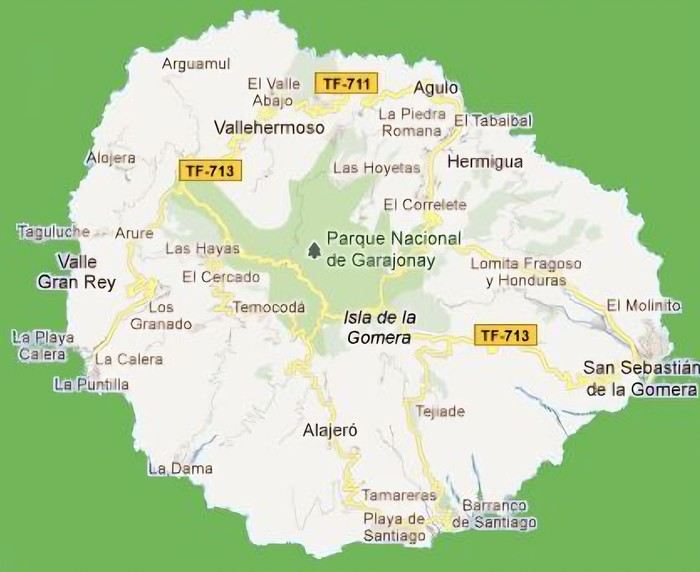 The large solidified magma massifs that shape the heart of the island have created a large depression more protected from the sun at its center, allowing the growth of a vast laurel forest, today grouped within the Garajonay National Park, La Gomera’s green lung, which has earned it the status of a World Biosphere Reserve. Its completely European appearance contrasts sharply with the rocky and tropical landscapes of the rest of the island. Thus, the climate varies greatly from one point to another on the island: in summer, you can quickly go from a dry and sunny valley at 35°C to a humid forest area at altitude at 18°C.
La Gomera was populated late. As with the rest of the Canaries, human presence is thought to have begun about 2,000 years ago. Groups of animist Berbers, probably fleeing persecution, gradually populated the archipelago, especially the western islands and La Gomera, becoming its small aboriginal population: the Guanches (or later Gomeros). The animist and pastoral civilization of the Guanches thrived until the Spanish takeover in the 15th century, which, after a short period of harmony and mixing with the indigenous people, suddenly ended in bloodshed... La Gomera later became the “Columbus Island” after Christopher Columbus’s stopover, increasing the blending of populations. In the 20th century, many Gomeros emigrated to Cuba and other Latin American countries in search of a better life, bringing back a mix of cultures and traits quite palpable in today’s Gomeran culture. It is, however, in La Gomera that the vestiges of Guanche culture seem to have left the most traces, in the language, gastronomy, social practices... Moreover, most Gomeros, especially in remote villages, have a particular identifiable type and proudly claim their ancestral roots, even making La Gomera a bit exotic in the eyes of other Canarians.
Perhaps that’s why it has never really wanted to develop its tourist infrastructure too much. If we set aside the tourists who visit for the day by bus or boat from Tenerife on a marked itinerary (and whom we ultimately rarely encounter), La Gomera has remained a hidden gem, a destination focused on nature discovery that attracts hikers, nature-loving divers, and scientists for its fauna and flora, and to a lesser extent, beachgoers who don’t seek overly developed coastlines. Tourist activity is therefore limited. Roughly speaking, you’ll find a majority of Spaniards, including a substantial number of residents from other Canary Islands, many Germans who have a particular fondness for La Gomera and spend long stays there or own second homes, to the point that the German cultural footprint is clearly noticeable in some places (it’s said to be Angela Merkel’s favorite holiday spot), and still quite a few French. The presence of other nationalities seemed negligible to us. Most travelers come mainly for hiking, but it’s also a prime spot for whale watching. Additionally, the seaside resorts of La Gomera—San Sebastián, Santiago, and especially Valle Gran Rey—are well-known destinations for hippies, especially German ones, ranging from chic boho hippies to old-school hippies who’ve been there for decades, quite similar to those you’d meet in India in Goa, Rishikesh, or Paharganj. Thus, practices like naturism, vegetarianism, and local organic production are quite well established in some areas.
Some practical info: - The round-trip flight from Paris to Tenerife cost us 365 € per person (outbound with Transavia, return with EasyJet), including checked luggage and three seats reserved side by side. - We chose two bases to explore the island: one week in Valle Gran Rey, reputed to be the most pleasant of the three seaside resorts, and one week in Hermigua, more mountainous and close to the natural park. We booked two houses with balconies and views: the first at 120 € per night, the second at 99 €. - The round-trip ferry between Tenerife and La Gomera cost us 270 € with the company Baleària Canarias, including discounts for children aged 4 and 12, but I don’t have the exact details. It was a bit cheaper than with the other company, Fred Olsen. - Finally, we rented a car through the agency Cicar for 360 € for 16 days, which comes to 22.50 € per day. - Apart from that, we didn’t plan anything and decided the day before or even the morning of what we wanted to do. We didn’t invest in any paper guide on the Canaries, as information on La Gomera was scarce, but we used the very comprehensive site La Gomera Travel, a travel guide published by the Canary Islands Tourism Council, a real goldmine of almost exhaustive information on the island.
Alright, off we go for 16 days of adventure discovering La Gomera!
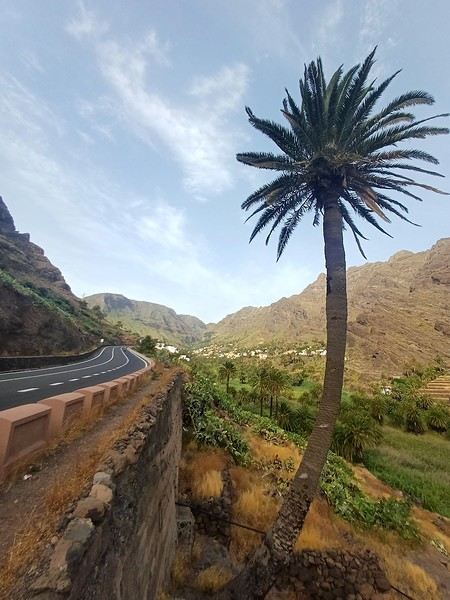
And we start the trip with music!
We start the trip with music!
When we started looking for a summer destination a few months ago, our first criterion was to avoid extreme heat and heatwaves. We had already been to Norway two years ago and are considering going back in the future for other occasions. So, we had some fun asking ChatGPT which destinations enjoyed a mild climate during the summer without going too far. Among the list provided by the AI were the Canary Islands... The idea of a place we wouldn’t have thought of first, both not too far away and exotic enough, appealed to us: “Hmm, why not?”
This destination had never really attracted me, though Magali was a bit more interested. Five years earlier, COVID had caused a short break in my professional activity, and I had planned a trip because the flight price was attractive, and I was looking for a destination different from what usually appeals to me, more than out of deep interest. From a distance and with a social judgment I acknowledge (it’s not great, but it’s not completely wrong), I had the image of a destination for party-goers enjoying the sun without the slightest interest in local culture, with concrete coastlines and denatured landscapes—everything I detest the most. Still, I had done some quick research on the different islands and spotted Lanzarote for its beautiful volcanic landscapes, hiking trails, beaches, and the impression of a good balance between activity and fewer crowds than Tenerife or Gran Canaria. Then I dropped the idea of going, without ever reconsidering traveling to the Canaries...
Until now! Because we started researching the different islands of the archipelago to see which ones might appeal to us the most. It was La Gomera, the third smallest island of the archipelago, more praised for its hiking trails and preserved nature than for its beaches, away from mass tourism (fifty times fewer tourists than Tenerife) but still a bit more developed than its wild neighbor El Hierro, that caught our attention. Contrary to what might be suggested later, I’m not at all addicted to AI, but I use it from time to time to synthesize quick research or simply for experimentation. Since ChatGPT had started anticipating my tastes lately as if it had become my buddy (often successfully, sometimes off the mark), I asked which Canary Island would suit me best for a trip with my family. The tool answered first with... La Gomera. So, I tested it and teased it a bit to see if this suggestion was well-founded, as the method sometimes makes it contradict itself. But no luck: “You’d appreciate the wild nature of El Hierro, but with family, you’ll find little activity for the kids. You won’t like the touristy vibe of the big islands like Tenerife, Gran Canaria, Lanzarote, and Fuerteventura. You could consider La Palma, but it’s really La Gomera that will suit you best, based on your interests and the criteria given.” So, we dug deeper into our research and were convinced without a shadow of a doubt that this island was the one waiting for us.
Without knowing it, we had Canarians in our circle who revealed their origins when they heard about our travel plans. One from Tenerife insisted we’d be better off choosing Tenerife (obviously...) because it also has preserved spots and that La Gomera, “you can explore it in two or three days, you’ll get bored quickly...” The other, a colleague from Gran Canaria who had never visited La Gomera, still recommended it without hesitation because it turned out her parents had just gone there on vacation: they loved it and had encountered few tourists. She also tended to think this destination was usually the subject of short stays, but according to what her parents told her, taking your time there was also a great idea. However, in our research, the idea that La Gomera is an island you can explore in three or four days max kept coming up. So, we considered combining its visit with La Palma or El Hierro, the other two that caught our eye. But hopping between islands by ferry represents a significant budget for non-Canarians, even more so for a family of four. Then, scrutinizing Google Maps, it seemed obvious that two weeks were too short to discover two islands as they deserve, and that there seemed to be plenty to see in La Gomera, given its very unique culture. After all, we read that some people spend several months a year there, others never even leave... Finally, these landscapes and this atmosphere, which seemed to us a mix of Europe, North Africa, and Latin America, tempted us. So, it would be two weeks in La Gomera, deal!
La Gomera is therefore the second... well, the third smallest island of the Canaries since La Graciosa was recently recognized as a fully inhabited island. It has the shape of a rough circle about 20 to 25 kilometers in diameter and has just over 20,000 inhabitants, half of them in its capital, San Sebastián de la Gomera, the only real town. Like its Canarian sisters, La Gomera is a volcanic formation that rose about 10 million years ago. The island is very mountainous and rugged, covered with red and black rocky landscapes. Geological activity has shaped, between the sprawling massifs that end in steep cliffs in the ocean, six coastal valleys with tropical vegetation that have favored human settlement. They divide the island like slices of a cake; from the north clockwise: the agricultural Vallehermoso, the rustic Agulo, the green, humid, and fertile Hermigua, the sunny capital San Sebastián de la Gomera, the southern and isolated Alajeró-Santiago, and the seaside Valle Gran Rey. They constitute the six municipalities (more like cantons to our French understanding) of the territory.
The large solidified magma massifs that shape the heart of the island have created a large depression more protected from the sun at its center, allowing the growth of a vast laurel forest, today grouped within the Garajonay National Park, La Gomera’s green lung, which has earned it the status of a World Biosphere Reserve. Its completely European appearance contrasts sharply with the rocky and tropical landscapes of the rest of the island. Thus, the climate varies greatly from one point to another on the island: in summer, you can quickly go from a dry and sunny valley at 35°C to a humid forest area at altitude at 18°C.La Gomera was populated late. As with the rest of the Canaries, human presence is thought to have begun about 2,000 years ago. Groups of animist Berbers, probably fleeing persecution, gradually populated the archipelago, especially the western islands and La Gomera, becoming its small aboriginal population: the Guanches (or later Gomeros). The animist and pastoral civilization of the Guanches thrived until the Spanish takeover in the 15th century, which, after a short period of harmony and mixing with the indigenous people, suddenly ended in bloodshed... La Gomera later became the “Columbus Island” after Christopher Columbus’s stopover, increasing the blending of populations. In the 20th century, many Gomeros emigrated to Cuba and other Latin American countries in search of a better life, bringing back a mix of cultures and traits quite palpable in today’s Gomeran culture. It is, however, in La Gomera that the vestiges of Guanche culture seem to have left the most traces, in the language, gastronomy, social practices... Moreover, most Gomeros, especially in remote villages, have a particular identifiable type and proudly claim their ancestral roots, even making La Gomera a bit exotic in the eyes of other Canarians.
Perhaps that’s why it has never really wanted to develop its tourist infrastructure too much. If we set aside the tourists who visit for the day by bus or boat from Tenerife on a marked itinerary (and whom we ultimately rarely encounter), La Gomera has remained a hidden gem, a destination focused on nature discovery that attracts hikers, nature-loving divers, and scientists for its fauna and flora, and to a lesser extent, beachgoers who don’t seek overly developed coastlines. Tourist activity is therefore limited. Roughly speaking, you’ll find a majority of Spaniards, including a substantial number of residents from other Canary Islands, many Germans who have a particular fondness for La Gomera and spend long stays there or own second homes, to the point that the German cultural footprint is clearly noticeable in some places (it’s said to be Angela Merkel’s favorite holiday spot), and still quite a few French. The presence of other nationalities seemed negligible to us. Most travelers come mainly for hiking, but it’s also a prime spot for whale watching. Additionally, the seaside resorts of La Gomera—San Sebastián, Santiago, and especially Valle Gran Rey—are well-known destinations for hippies, especially German ones, ranging from chic boho hippies to old-school hippies who’ve been there for decades, quite similar to those you’d meet in India in Goa, Rishikesh, or Paharganj. Thus, practices like naturism, vegetarianism, and local organic production are quite well established in some areas.
Some practical info: - The round-trip flight from Paris to Tenerife cost us 365 € per person (outbound with Transavia, return with EasyJet), including checked luggage and three seats reserved side by side. - We chose two bases to explore the island: one week in Valle Gran Rey, reputed to be the most pleasant of the three seaside resorts, and one week in Hermigua, more mountainous and close to the natural park. We booked two houses with balconies and views: the first at 120 € per night, the second at 99 €. - The round-trip ferry between Tenerife and La Gomera cost us 270 € with the company Baleària Canarias, including discounts for children aged 4 and 12, but I don’t have the exact details. It was a bit cheaper than with the other company, Fred Olsen. - Finally, we rented a car through the agency Cicar for 360 € for 16 days, which comes to 22.50 € per day. - Apart from that, we didn’t plan anything and decided the day before or even the morning of what we wanted to do. We didn’t invest in any paper guide on the Canaries, as information on La Gomera was scarce, but we used the very comprehensive site La Gomera Travel, a travel guide published by the Canary Islands Tourism Council, a real goldmine of almost exhaustive information on the island.
Alright, off we go for 16 days of adventure discovering La Gomera!
And we start the trip with music!
We start the trip with music!
CLIFFS OF THE WORLD: January 2025 Photo Contest
It's tough to find a fresh topic since so many themes have already been covered, so this one is intentionally narrow to highlight the photo—inspired by a recent visit ;)
**Participation** Each VF member can submit up to 3 photos, until **Saturday, January 25 at 11:59 PM Paris time**. Each photo must be posted in a separate message, with its number (1, 2, or 3). Don’t forget to add a little explanation (comment, location, etc.).
**Voting:** Each VF member can vote for the 3 photos they think are the best, based on their own criteria and the theme.
Voting runs from **Sunday, January 26 to Friday, January 31 at 11:59 PM Paris time**.
Photos should be ranked in order of preference: - 1st photo: 3 points - 2nd photo: 2 points - 3rd photo: 1 point
The winner is the photographer whose photo earns the most points.
Results will be announced on **February 1**. In case of a tie, the number of first-place votes will decide. The winner gets the honor of organizing February’s contest.
For discussion about the contest, check the thread: https://voyageforum.com/forum/discussion-falaises-monde-concours-janvier-2025-d10659248/
(Big thanks to Raga and unamilanese—I just did a copy-paste 😎)
**Participation** Each VF member can submit up to 3 photos, until **Saturday, January 25 at 11:59 PM Paris time**. Each photo must be posted in a separate message, with its number (1, 2, or 3). Don’t forget to add a little explanation (comment, location, etc.).
**Voting:** Each VF member can vote for the 3 photos they think are the best, based on their own criteria and the theme.
Voting runs from **Sunday, January 26 to Friday, January 31 at 11:59 PM Paris time**.
Photos should be ranked in order of preference: - 1st photo: 3 points - 2nd photo: 2 points - 3rd photo: 1 point
The winner is the photographer whose photo earns the most points.
Results will be announced on **February 1**. In case of a tie, the number of first-place votes will decide. The winner gets the honor of organizing February’s contest.
For discussion about the contest, check the thread: https://voyageforum.com/forum/discussion-falaises-monde-concours-janvier-2025-d10659248/
(Big thanks to Raga and unamilanese—I just did a copy-paste 😎)
Plan de reprise des croisières Costa English translation pending
Bonjour
Voilà ce qui serait prévu à partir de la mi-août :
http://crew-center.com/costa-cruises-plans-re-start-voyages-7-ships-5-phases
Cordialement
Voilà ce qui serait prévu à partir de la mi-août :
http://crew-center.com/costa-cruises-plans-re-start-voyages-7-ships-5-phases
Cordialement
Les morts du Costa Luminosa English translation pending
Le Miami Herald raconte aujourd'hui l’enchaînement de décisions dramatiquement mauvaises qui ont conduit au décès d'un passager du Costa Luminosa, Tom Sheehan. https://www.miamiherald.com/news/coronavirus/article241556006.html
Le 7 ou le 8 mars, le Luminosa quitte Fort Everglades pour une traversée vers l'Espagne, la France et l'Italie comme point d'arrivée.
Trois jours après, le bateau fait escale à Porto Rico et débarque un couple Italien atteint par le coronavirus.
Le capitaine ne prévient pas les passagers et continue. L'escale à Antigua est annulée et le Luminosa entreprend la traversée de l'Atlantique en laissant les passagers totalement libres d'aller à la piscine, au restaurant, etc...
Le 15, le bateau fait escale aux Canaries pour déposer des passagers malades, mais s'oppose à ce que d'autres passagers descendent, malgré les demandes expresses de certains.
Le 19, le Luminosa accoste à Marseille pour y déposer 600 passagers. 75 personnes sont testées, parmi lesquelles 36 sont positives au coronavirus.
300 Américains et Canadiens sont regroupés sans mesure de distanciation, entassés dans des bus et , après des heures d'attente en pleine promiscuité, ils prennent un vol pour Atlanta, sans aucune mesure de protection, alors qu'il y a trois cas déclarés à bord. Pendant le voyage, plusieurs personnes perdent connaissance et sont secourues tant bien que mal par les autres passagers, qui interviennent au péril de leur vie.
A Atlanta, le centre de contrôle des maladies infectieuses se contente de prendre la température des passagers et les laisse se disperser dans l'aéroport, qui est un des plus fréquentés du monde.
Quelques jours après, Tom Sheehan se sent mal, est hospitalisé en urgence et décède quelques jours après, au terme d'une série d'erreurs épouvantables :
Le capitaine du Luminosa, a complètement ignoré les leçons qu'il aurait du tirer du drame du Diamond Princess, dont le déroulement était bien connu début mars.
Le même capitaine a négligé de prendre les mesures de confinement qui s'imposaient après quatre cas déclarés.
Costa a organisé le retour sans aucune précaution, augmentant les risques de contamination dans un vol se déroulant dans de mauvaises conditions.
Et, pour couronner le tout, les autorités Américaines laissent se disperser 300 personnes potentiellement porteuses.🙁🙁
Le capitaine du Luminosa, a complètement ignoré les leçons qu'il aurait du tirer du drame du Diamond Princess, dont le déroulement était bien connu début mars.
Le même capitaine a négligé de prendre les mesures de confinement qui s'imposaient après quatre cas déclarés.
Costa a organisé le retour sans aucune précaution, augmentant les risques de contamination dans un vol se déroulant dans de mauvaises conditions.
Et, pour couronner le tout, les autorités Américaines laissent se disperser 300 personnes potentiellement porteuses.🙁🙁
Hôtel ou lieux pour deux semaines seul en Tunisie English translation pending
Je n'ai aucune expérience de la Tunisie
pourriez-vous me conseiller un hotel ou un endroit SVP ?
il faudrait que je change d'environnement deux semaines d'urgence . je pete les plombs
merci
Pascal
Pascal
Croisière transatlantique Favolosa du 30 novembre ou 1er décembre 2019 English translation pending
Bonjour,
J'ouvre ce Topic pour que nous puissions échanger nos expériences, nous réunir sur le bateau...
C'est notre septième transatlantique … presque toutes vers les caraïbes .
Nous restons 22 jours .. retour Pointe à pitre .
Les années précédentes... Les échanges sur le forum et bateau ont été très sympa;
Nous connaissons, toutes les escales .. nous n'aimons pas les excursions , nous nous déplaçons en bus ….si vous avez besoin d' informations , ce sera volontiers que je vous les donnerai..
Jean Claude (le mari) joue au tarot …. y a t il des joueurs ?
à bientôt
Jocelyne