Results for "terre+cuite+ou+Qin+|+112+>+171"
67061 results found.
Vol direct Santiago (Chili) Auckland (Nouvelle- Zélande) English translation pending
Je serai en octobre au chili et je cherche un billet aller-retour pour la nouvelle zelande. J'ai deja cherché mais j'ai vraiment rien trouvé. Ou je sais pas chercher ou ca existe pas. Si jamais qcq'un aune idée siouplait aidez moi...
merci!
Ouzbékistan: arnaque aux forteresses du désert English translation pending
Contrairement aux 50$ annoncé dans le LP, en passant par l’office de tourisme de Khiva, vous pouvez avoir un taxi à 30000 ou 35000s. C’est déjà beaucoup sachant que le salaire mensuel d’un professeur est de 40000s et que le litre d’essence est à 330s. Bien sûr, ils ne vivent pas avec 40000s et doivent avoir plusieurs petit boulots pour pouvoir vivre.
Manque de bol, malgré le sérieux des gens de l’office, cela ne nous a pas empêché de nous faire arnaquer par le chauffeur de taxi. Comme on le leur a signalé, j’espère qu’ils ne travailleront plus avec ce chauffeur. Manque de bol aussi, les ponts étaient fermés à la circulation et nous avons dû faire un détour de 160 km. Bref sur 5 forteresses annoncées nous en avons vu 4 exactement similaires au milieu des champs (vieux remparts en terre avec rien à l’intérieur) et une seule à l’entrée du désert (il y en a en fait 2 à cet endroit et elles sont distantes de 200m). Dans un premier temps les gens de l’office du tourisme n’ont pas vu l’arnaque, car nous avions vu ce que nous devions voir. Seulement le chauffeur de taxi nous a fait voir n’importe quoi en les nommant d’après la liste que nous avions entre les mains.
Conseils pour deux semaines en Nouvelle-Calédonie English translation pending
Bonjour à tous
Je pars 2 semaines en Nouvelle Calédonie en avril 2006. J'aimerais avoir vos avis éclairés sur les différentes choses à faire / visiter / où se la couler douce ?!! 😎😎😎
Que me conseillez vous pour profiter au mieux de ces 15 jours ??
Comment accède t-on aux îles de des Pins, Ouvéa, Maré et Lifou ?
Merci pour votre aide !
Angélique.
Je pars 2 semaines en Nouvelle Calédonie en avril 2006. J'aimerais avoir vos avis éclairés sur les différentes choses à faire / visiter / où se la couler douce ?!! 😎😎😎
Que me conseillez vous pour profiter au mieux de ces 15 jours ??
Comment accède t-on aux îles de des Pins, Ouvéa, Maré et Lifou ?
Merci pour votre aide !
Angélique.
Bangkok ce delire English translation pending
ca y est j y suis desoler clqvier thais lol
Bkk c dement, pollution ecrqsante, chaleur ettoufqnte mais que du bonheur
Je voulais que sa
+++++ all
+++++ all
Islande en camping-car English translation pending
bonjour a vous tous!
je cherche des informations sur les tarifs des camping en islande (hormis les "gros" camping ou les prix sont référencés sur le web) et je voudrais également savoir s'il y a possibilité de prendre des billets de bus en s'arretant a un arret pour une nuit ou deux et continuer le lendemain. En clair, si je fais Reykjavik - Kirkjubaejarklaustur, est ce ke je peut m'arreter une nuit a l'arret du Landmanalaugar et reprendre le car le lendemain avec mon billet ou si il faut reprendre un billet pour continuer????
En vous remerciant d'avance....
tibo
tibo
Qu'apporter à la population du Kenya? English translation pending
je pars au kenya et je souhaite apporter avec moi, dans mes bagages, une petite aide..mais je ne suis pas vraiment au courant de ce qu'il manque las bas ( je vais aussi découvrir la tanzanie et zanzibar)
faut il plutot apporter des médicaments, ou au contraire des fournitures scolaires?
merci de m'aider! a bientot
caroline 😉
faut il plutot apporter des médicaments, ou au contraire des fournitures scolaires?
merci de m'aider! a bientot
caroline 😉
Thaïlande: drogue douce et répression? English translation pending
Il parait que la thailande est très dure en ce quiconcerne les drogues rigolotes mais pourtant en produit pas mal.
Faut t'il se mefierde ceux qui en proposeraient???
Ou bien est il possible de s'e"n procurer facilement, c'ezst juste à titre ionformatif, on entend tellement d'histoire🤪
enfin le voilà: 747-400 de Corsair English translation pending
LE PREMIER 747-400 DE CORSAIR (FGTUI) A ATTERI A FORT-DE-FRANCE CE MERCREDI 13 AVRIL 2005 AUX ENVIRONS DE 15H15.
A SON BORD MR CHESNAU, DG DE CORSAIR. je cite "CE PREMIER EXEMPLAIRE SERA DEDIER EN PRIORITE AUX ANTILLES ET PLUS PARTULIEREMENT A LA MARTINIQUE".
Pourkoi la martinique? A cause de nombreux retard et annulation durant décembre et janvier. C T LA VRAI PAGAILLE.
Je suis aller le voir, je lai vu de mais propre yeux, il est vraiment cette avion.
A SON BORD MR CHESNAU, DG DE CORSAIR. je cite "CE PREMIER EXEMPLAIRE SERA DEDIER EN PRIORITE AUX ANTILLES ET PLUS PARTULIEREMENT A LA MARTINIQUE".
Pourkoi la martinique? A cause de nombreux retard et annulation durant décembre et janvier. C T LA VRAI PAGAILLE.
Je suis aller le voir, je lai vu de mais propre yeux, il est vraiment cette avion.
Offre infos sur la Birmanie English translation pending
salut si vous vous poser des questions sur la birmanie n exiter pas a me contacter je repondrez a vos questions
merci de votre confiance
merci de votre confiance
Poulet au curry matsaman (Thaïlande) English translation pending
Poulet au curry matsaman (Thaïlande)
matsaman signifie musulman. Il s'agit d'un curry thaï fortement influencé par l'Inde avec une opposition entre la douceur de la cacahuète et du sucre face à l'acidité du tamarin et du citron vert.
INGREDIENTS : 2 C. à soupe d'huile végétale 1 poulet coupé en morceau 1 C. à soupe de pâte de curry matsaman (les thaïlandais en mettent 3) 1 boîte de lait de coco de 400 ml 10 petits oignons pelés et cuits 300 g de pommes de terre pelées, coupées en quartiers et cuites préalablement 2 c. à soupe de cachuètes grillées et grossièrement hachées 3 feuilles de bergamote 4 graines de cardamone verte 1 bâton de cannelle 3 c. à soupe de sucre en poudre 2 c. à soupe de jus de tamarin 2 c. à soupe de jus de citron vert 3 c. à soupe de nam pla (sauce de poisson)
1. Couper le poulet en morceaux de la taille d'une bouchée. Le faire cuire dans le lait de coco, puis retirer du feu quand il est à peine cuit.
2. Dans un autre récipient, verser un peu du lait de coco de la cuisson du poulet et faire revenir la pâte de curry. Attention à ne pas faire attacher.
3. Ajouter un peu du lait de coco pour obtenir une sauce épaisse. Ajouter le poulet et suffisamment de lait de coco pour recouvrir le poulet. Ajouter les cacahuètes et porter à ébullition.
4. Assaisonner avec le sucre, le jus de tamarin, le jus de citron et le nam pla. Porter à ébullition et laisser mijoter à feu doux jusqu'à ce que le poulet soit tendre.
5. Ajouter les pommes de terre, les oignons, les feuilles de makrut froissées, la cardamone et la cannelle. Laisser mijoter 5mn supplémentaires.
Ce curry est très doux, il peut être mangé en ragout avec des toasts ou avec du riz
matsaman signifie musulman. Il s'agit d'un curry thaï fortement influencé par l'Inde avec une opposition entre la douceur de la cacahuète et du sucre face à l'acidité du tamarin et du citron vert.
INGREDIENTS : 2 C. à soupe d'huile végétale 1 poulet coupé en morceau 1 C. à soupe de pâte de curry matsaman (les thaïlandais en mettent 3) 1 boîte de lait de coco de 400 ml 10 petits oignons pelés et cuits 300 g de pommes de terre pelées, coupées en quartiers et cuites préalablement 2 c. à soupe de cachuètes grillées et grossièrement hachées 3 feuilles de bergamote 4 graines de cardamone verte 1 bâton de cannelle 3 c. à soupe de sucre en poudre 2 c. à soupe de jus de tamarin 2 c. à soupe de jus de citron vert 3 c. à soupe de nam pla (sauce de poisson)
1. Couper le poulet en morceaux de la taille d'une bouchée. Le faire cuire dans le lait de coco, puis retirer du feu quand il est à peine cuit.
2. Dans un autre récipient, verser un peu du lait de coco de la cuisson du poulet et faire revenir la pâte de curry. Attention à ne pas faire attacher.
3. Ajouter un peu du lait de coco pour obtenir une sauce épaisse. Ajouter le poulet et suffisamment de lait de coco pour recouvrir le poulet. Ajouter les cacahuètes et porter à ébullition.
4. Assaisonner avec le sucre, le jus de tamarin, le jus de citron et le nam pla. Porter à ébullition et laisser mijoter à feu doux jusqu'à ce que le poulet soit tendre.
5. Ajouter les pommes de terre, les oignons, les feuilles de makrut froissées, la cardamone et la cannelle. Laisser mijoter 5mn supplémentaires.
Ce curry est très doux, il peut être mangé en ragout avec des toasts ou avec du riz
sécurité au guatemala English translation pending
Bonjour!!!
Je pars au guatemala le 14 avril pour deux mois!!! J'ai tellement hâte!! C'est mon premier voyage en plus!
Je voulais savoir si certains d'entres-vous avez des nouvelles fraiches concernant la sécurité la-bas!
Aussi, quelles sont les endroits à éviter et à aller absolument???
Je prévois bien sur aller a Antigua, Lac atitlan, Tikal, Coban, semuc Champey, livingston, monterrico, quetzaltenangeo...
Donnez-moi toutes vos suggestions svp!!
Merci infiniment!
ahodrie
Je pars au guatemala le 14 avril pour deux mois!!! J'ai tellement hâte!! C'est mon premier voyage en plus!
Je voulais savoir si certains d'entres-vous avez des nouvelles fraiches concernant la sécurité la-bas!
Aussi, quelles sont les endroits à éviter et à aller absolument???
Je prévois bien sur aller a Antigua, Lac atitlan, Tikal, Coban, semuc Champey, livingston, monterrico, quetzaltenangeo...
Donnez-moi toutes vos suggestions svp!!
Merci infiniment!
ahodrie
Seule au Maroc English translation pending
salut à toutes et tout d'habord, bonne année! voila, j'aimerai beaucoup partir au maroc seule (en fait, c'est pas encore sur!) et j'aimerai avoir des informations, si certaines d'entre vous est déjà partie seule au maroc! en fait, ca va etre la premiere fois que je pars seule donc j'appréhende un peu!
merci pour les infos ou témoignages que vous pourriez me faire partager! je pars fin janvier ou début février,
doro
merci pour les infos ou témoignages que vous pourriez me faire partager! je pars fin janvier ou début février,
doro
Que voir avant de mourir? English translation pending
🙂Ce We, je suis tombée sur un livre qui avait à peu près ce titre là... Genre "100 choses à voir ou à vivre dans le monde avant de mourir"... J'ouvre.... curieuse.....
Et là! déception! L'hôtel 4 étoiles de la station super balnéaire, le plus grand palace du monde avec un lit à eau bouillonnante (😐bon, c est rigolo, mais ce serait pas ma dernière volonté non plus...) dans la suite royale plus plus...etc etc... (je précise que c'était à Londres... ce sont donc peut être les choix des anglais 😉)
Je suis sûre qu'à nous tous, on aura AUCUN mal à trouver 100 choses à voir qui nous font rêver POUR DE VRAI...
Voilà mes idées, j'en mets 5 pour vous laisser de la place : les chutes d'Iguacu (mon côté préféré : l'argentin, parce qu'il nous renvoit à notre.... petitesse au sens propre 😉) les fonds sous-marins de Pulau Bunaken (nord de Sulawesi, Indonésie) Rio de Janeiro depuis le Christ Rédempteur quand quelques nuages s'accrochent encore aux Dos Irmaos Venise, la place San Marco sous la neige au petit jour le temple de Borobudur sur Java
A vous!!! (j'ai encore plein d'idées mais bon..) ET QUE CE QUE VOUS AVEZ VU... sinon c est trop facile!!!🙂
Et là! déception! L'hôtel 4 étoiles de la station super balnéaire, le plus grand palace du monde avec un lit à eau bouillonnante (😐bon, c est rigolo, mais ce serait pas ma dernière volonté non plus...) dans la suite royale plus plus...etc etc... (je précise que c'était à Londres... ce sont donc peut être les choix des anglais 😉)
Je suis sûre qu'à nous tous, on aura AUCUN mal à trouver 100 choses à voir qui nous font rêver POUR DE VRAI...
Voilà mes idées, j'en mets 5 pour vous laisser de la place : les chutes d'Iguacu (mon côté préféré : l'argentin, parce qu'il nous renvoit à notre.... petitesse au sens propre 😉) les fonds sous-marins de Pulau Bunaken (nord de Sulawesi, Indonésie) Rio de Janeiro depuis le Christ Rédempteur quand quelques nuages s'accrochent encore aux Dos Irmaos Venise, la place San Marco sous la neige au petit jour le temple de Borobudur sur Java
A vous!!! (j'ai encore plein d'idées mais bon..) ET QUE CE QUE VOUS AVEZ VU... sinon c est trop facile!!!🙂
Passeport optique pour USA English translation pending
Bonjour a tous.
Je vous ecrit car j'ai un gros, un TRES gros probleme 😕
J'ai un rendez-vous TRES IMPORTANT au Etats-Unis le 14 novembre 2004. J'ai fais toutes les demarches (je reste 3 jours) : hotel réservé, vol réservé, tout ca deja prelevé sur ma carte !
UNE chose🙁, j'avais oublié (vous me direz qu'il faut vraiment etre atteint d'Elzaymer) que je n'ai qu'une carte d'identié donc :pas de passeport.
J'ai besoin de votre aide pour savoir s'il n'y orait pas un moyen, même s'il faut remuer ciel et terre, d'obtenir ce fichu passeport optique avant la date de mon depart? 🤪
J'ai lu beaucoup beaucoup de documentation qui me parlent d'un delai de 4 semaines pour l'obtention d'un passeport mais comme vous le voyez 4 semaines -> c'est trop! Alors...😕
Je suis pres à aller pleurer devant l'ambassade des Etats unis d'amerique si ca peut m'aider pour avoir mon passeport.
Je sais pas moi, le deces de ma grand mere ou un truc medical.. aidez moi! s'il vous plait
REPONDEZ VITE SVP car je vais à l'embassade et à la prefecture dés lundi MERCI! 😕
Je vous ecrit car j'ai un gros, un TRES gros probleme 😕
J'ai un rendez-vous TRES IMPORTANT au Etats-Unis le 14 novembre 2004. J'ai fais toutes les demarches (je reste 3 jours) : hotel réservé, vol réservé, tout ca deja prelevé sur ma carte !
UNE chose🙁, j'avais oublié (vous me direz qu'il faut vraiment etre atteint d'Elzaymer) que je n'ai qu'une carte d'identié donc :pas de passeport.
J'ai besoin de votre aide pour savoir s'il n'y orait pas un moyen, même s'il faut remuer ciel et terre, d'obtenir ce fichu passeport optique avant la date de mon depart? 🤪
J'ai lu beaucoup beaucoup de documentation qui me parlent d'un delai de 4 semaines pour l'obtention d'un passeport mais comme vous le voyez 4 semaines -> c'est trop! Alors...😕
Je suis pres à aller pleurer devant l'ambassade des Etats unis d'amerique si ca peut m'aider pour avoir mon passeport.
Je sais pas moi, le deces de ma grand mere ou un truc medical.. aidez moi! s'il vous plait
REPONDEZ VITE SVP car je vais à l'embassade et à la prefecture dés lundi MERCI! 😕
Plages de rêves en République dominicaine? English translation pending
Bonjour,
Que me conseillerez vous pour un départ proche en RD, pour profiter pleinement des plages de sables fins avec une eau turquoise ??
Bayahibe ? Boca Chica ? Bavaro ? ou d'autres ???
J'ai l'intention avec mon amie de prendre un vol sec et de me poser dans un hotel avec une plage avec une eau turquoise 😎 pour nous reposer et voir, un peu faire la fête le soir quand même 😉
Merci d'avance,
Gilles
Que me conseillerez vous pour un départ proche en RD, pour profiter pleinement des plages de sables fins avec une eau turquoise ??
Bayahibe ? Boca Chica ? Bavaro ? ou d'autres ???
J'ai l'intention avec mon amie de prendre un vol sec et de me poser dans un hotel avec une plage avec une eau turquoise 😎 pour nous reposer et voir, un peu faire la fête le soir quand même 😉
Merci d'avance,
Gilles
Papas fritas en ballon (Argentine) English translation pending
Qui connaît les pappas fritas en ballon d'Argentine ?
La colère des aubergines English translation pending
"La colère des aubergines" de Bulbul SHARMA. Editions Philippe Picquier. 2002 en poche.
http://images-eu.amazon.com/images/P/2877306224.08.LZZZZZZZ.jpg
Non, je suis bien à la bonne rubrique, ce sont des récits gastronomiques indiens : les histoires racontées sont pleines d'odeurs de cuisine et d'aromates indiens, et surtout ce livre regorge de véritables recettes, comme un pickle de mangue, un gateau de carottes, Biryani vert, Chutney à la menthe, Kali, etc....( et quel etc !!!).
J'aime beaucoup les aubergines, et cela fait un moment que le titre de ce livre m'attire, d'où mon achat !!! Logique que je selectionne donc, pour ce soir 1 recette à base d'aubergines : CURRY D'AUBERGINES AU YAOURT 500 g d'aubergines longues ou rondes coupées en petits morceaux 1/2 cuillère à café de poudre de coriandre 1/2 cuillère à café de poudre de cumin 1/2 cuillère à café de poudre de curcuma 1 tasse de yaourt battu 1 cuillère à soupe d'huile Faites chauffer l'huile, mettez-y à frire les épices en poudre pendant seulement quelques secondes avant d'ajouter les aubergines en morceaux. Couvrez et laissez cuire jusqu'à ce que les aubergines soient tendres (environ dix minutes). Vous pouvez ajouter un petit peu d'eau et remuer en cours de cuisson pour que les épices se mélangent bien. Retirez du feu et ajoutez le yaourt battu juste avant de servir. Se mange chaud ou froid avec riz, nan ou chapati. Bonne dégustation !!! Nawal.
http://images-eu.amazon.com/images/P/2877306224.08.LZZZZZZZ.jpg
Non, je suis bien à la bonne rubrique, ce sont des récits gastronomiques indiens : les histoires racontées sont pleines d'odeurs de cuisine et d'aromates indiens, et surtout ce livre regorge de véritables recettes, comme un pickle de mangue, un gateau de carottes, Biryani vert, Chutney à la menthe, Kali, etc....( et quel etc !!!).
J'aime beaucoup les aubergines, et cela fait un moment que le titre de ce livre m'attire, d'où mon achat !!! Logique que je selectionne donc, pour ce soir 1 recette à base d'aubergines : CURRY D'AUBERGINES AU YAOURT 500 g d'aubergines longues ou rondes coupées en petits morceaux 1/2 cuillère à café de poudre de coriandre 1/2 cuillère à café de poudre de cumin 1/2 cuillère à café de poudre de curcuma 1 tasse de yaourt battu 1 cuillère à soupe d'huile Faites chauffer l'huile, mettez-y à frire les épices en poudre pendant seulement quelques secondes avant d'ajouter les aubergines en morceaux. Couvrez et laissez cuire jusqu'à ce que les aubergines soient tendres (environ dix minutes). Vous pouvez ajouter un petit peu d'eau et remuer en cours de cuisson pour que les épices se mélangent bien. Retirez du feu et ajoutez le yaourt battu juste avant de servir. Se mange chaud ou froid avec riz, nan ou chapati. Bonne dégustation !!! Nawal.
Visites sur Louxor et Assouan en Egypte English translation pending
Salut tout le monde ! 🙂
Je prépare une croisière d'une semaine Louxor > Edfou > Kom Ombo > Assouan > Esna > Louxor et je ne sais pas vraiment sur quels sites m'attarder. Comme il fera très chaud, je ne voudrais pas cuire et m'épuiser pour pas grand chose à certains endroits et à cause de ça ne pas pouvoir apprécier ce qui doit l'être à tout prix sur d'autres.
En gros, voici le programme annoncé :
* Forfait visites : 130 €uros par personne
Visites à la carte : * Visite de la Nécropole Thébaine : 74 €uros par pers. * Visite du temple dédié à Horus : 20 €uros / pers. * Visite du temple ptolémaïque : 20 Euros / pers. * Visite du Haut Barrage et du Temple de Philae : 64 €uros / pers. * Promenade en felouque autour de l’île Eléphantine : 64 €uros / pers. * Visite des temples de Karnak et de Louxor : 64 €uros / pers.
Options : * Son & Lumières de Karnal : 28 €uros par pers. * Son & Lumières de Philaé : 31 €uros par pers. * Visite d'Abou Simbel par la route : 76 €uros par pers.
Quelqu'un peut-il donner des précisions sur les sites à éviter au profit de ceux qui sont "à ne pas manquer" ?
Merci d'avance pour vos réponses !
Je prépare une croisière d'une semaine Louxor > Edfou > Kom Ombo > Assouan > Esna > Louxor et je ne sais pas vraiment sur quels sites m'attarder. Comme il fera très chaud, je ne voudrais pas cuire et m'épuiser pour pas grand chose à certains endroits et à cause de ça ne pas pouvoir apprécier ce qui doit l'être à tout prix sur d'autres.
En gros, voici le programme annoncé :
* Forfait visites : 130 €uros par personne
Visites à la carte : * Visite de la Nécropole Thébaine : 74 €uros par pers. * Visite du temple dédié à Horus : 20 €uros / pers. * Visite du temple ptolémaïque : 20 Euros / pers. * Visite du Haut Barrage et du Temple de Philae : 64 €uros / pers. * Promenade en felouque autour de l’île Eléphantine : 64 €uros / pers. * Visite des temples de Karnak et de Louxor : 64 €uros / pers.
Options : * Son & Lumières de Karnal : 28 €uros par pers. * Son & Lumières de Philaé : 31 €uros par pers. * Visite d'Abou Simbel par la route : 76 €uros par pers.
Quelqu'un peut-il donner des précisions sur les sites à éviter au profit de ceux qui sont "à ne pas manquer" ?
Merci d'avance pour vos réponses !
La nourriture en Inde English translation pending
Pourriez vous m'apporter votre expérience personnelle concernant la manière de se nourrir en Inde
Ce qu'il faut absolument éviter; les spécialités locales un peu trop spéciales... etc
En fait je recherche le maximum d'expériences car je commence tout juste à réfléchir a ce projet de voyage et j'ai beaucoup beaucoup de questions ...
Merci d'avance🙂
Ce qu'il faut absolument éviter; les spécialités locales un peu trop spéciales... etc
En fait je recherche le maximum d'expériences car je commence tout juste à réfléchir a ce projet de voyage et j'ai beaucoup beaucoup de questions ...
Merci d'avance🙂
Un tit canard au gingembre vous tente??? English translation pending
Cette recette, vous ne la trouverez point au resto non que nenni !!! c'est ma recette concoctée avéque amouuuuuuur ! (hé hé gingembre... amouuuur...)
4 cuisses de canard 1 c soupe de citronnelle en branche ciselée (vous la trouvez facilement au rayon surgelé du mag asiatique... vous prenez que le morceau qui vous intéresse comme ça vous en avez toujours sous la main) 3 gousses d'ail émincées, 1 oignon émincé. 1 morceau de gingembre émincé (en gde surface au rayon exotique il est vendu au rayon légume c'est une espèce de racine biscornue marron clair, ça se garde au frigo ou au congél coupé) Du nuoc man (on en trouve partout maintenant vous savez la sauce de poisson qui pue...) 3 brins de Curry (attention la plante par l'épice mais c'est facultatif car difficile d'en trouver) 1 c soupe de sauce soja (claire) 1 wok ou grande casserole (une cocotte fera très bien l'affaire aussi sans le couvercle) 1 sopalin avéq'un peu d'huile d'olive. ( c'est pour pas que la gamelle attache... mais ça attache quand même !) 1 l de vin blanc (moi j'utilise la marque lichette car elle a une bonne tenue à la cuisson)
Dans le Wok, une lichette d'huile d'olive que vous essuyez avé le sopalin. Faire cuire à feu fort les cuisses env 10mn, rajouter le nuoc man, la citronnelle que vous rendrez en fine poudre dans un vieux moulin à café par exemple, l'ail, les oignons, le gingembre (épluché et coupé en lamelles).
Touillez, rajouter la sauce soja, et arroser régulièrement avé le vin blanc.
Laisser cuire à feu très doux, mais alors le plus doux possible, environ 2 h et veillez à remuer tous les quarts d'heure pour pas que ça attache trop. Moi j'oublie, donc ça crame un peu mais le résultat est bon quand même !
Mes amis qui ont horreur de manger chinois adorent particulièrement cette recette que je sers avec du riz blanc parfumé.
Voilà bon appétit
Ah j'oubliais, quand vous faite la première cuisson des cuisses sans rien, enlevez la graisse du canard dans un bol vous pouvez en faire des glaçons dans les sachets glaçons pour vos futures cuissons de pommes de terre ou autres !
4 cuisses de canard 1 c soupe de citronnelle en branche ciselée (vous la trouvez facilement au rayon surgelé du mag asiatique... vous prenez que le morceau qui vous intéresse comme ça vous en avez toujours sous la main) 3 gousses d'ail émincées, 1 oignon émincé. 1 morceau de gingembre émincé (en gde surface au rayon exotique il est vendu au rayon légume c'est une espèce de racine biscornue marron clair, ça se garde au frigo ou au congél coupé) Du nuoc man (on en trouve partout maintenant vous savez la sauce de poisson qui pue...) 3 brins de Curry (attention la plante par l'épice mais c'est facultatif car difficile d'en trouver) 1 c soupe de sauce soja (claire) 1 wok ou grande casserole (une cocotte fera très bien l'affaire aussi sans le couvercle) 1 sopalin avéq'un peu d'huile d'olive. ( c'est pour pas que la gamelle attache... mais ça attache quand même !) 1 l de vin blanc (moi j'utilise la marque lichette car elle a une bonne tenue à la cuisson)
Dans le Wok, une lichette d'huile d'olive que vous essuyez avé le sopalin. Faire cuire à feu fort les cuisses env 10mn, rajouter le nuoc man, la citronnelle que vous rendrez en fine poudre dans un vieux moulin à café par exemple, l'ail, les oignons, le gingembre (épluché et coupé en lamelles).
Touillez, rajouter la sauce soja, et arroser régulièrement avé le vin blanc.
Laisser cuire à feu très doux, mais alors le plus doux possible, environ 2 h et veillez à remuer tous les quarts d'heure pour pas que ça attache trop. Moi j'oublie, donc ça crame un peu mais le résultat est bon quand même !
Mes amis qui ont horreur de manger chinois adorent particulièrement cette recette que je sers avec du riz blanc parfumé.
Voilà bon appétit
Ah j'oubliais, quand vous faite la première cuisson des cuisses sans rien, enlevez la graisse du canard dans un bol vous pouvez en faire des glaçons dans les sachets glaçons pour vos futures cuissons de pommes de terre ou autres !
Voyage en Namibie English translation pending
Bonjour,
j'envisage un voyage d'un mois en Namibie en août prochain. J'hésite entre 2 formules: tout faire par moi-même (réservation depuis la France d'un 4x4 équipé pour le camping et de qq campings dans les parcs nationaux) ou passer par une agence basée à Windhoek. Cette dernière propose le plus souvent un itinéraire et s'occupe des réservations, et j'en ai trouvé deux sur le Web: Namikala (http://www.namikala-safaris.com/namibie/) et Tourmaline (http://www.planet-terre.com/). Quelqu'un est-il déjà par eux (ou une autre agence), et qu'en pensez-vous ?
En vous remerciant pour vos conseils,
Patrick
j'envisage un voyage d'un mois en Namibie en août prochain. J'hésite entre 2 formules: tout faire par moi-même (réservation depuis la France d'un 4x4 équipé pour le camping et de qq campings dans les parcs nationaux) ou passer par une agence basée à Windhoek. Cette dernière propose le plus souvent un itinéraire et s'occupe des réservations, et j'en ai trouvé deux sur le Web: Namikala (http://www.namikala-safaris.com/namibie/) et Tourmaline (http://www.planet-terre.com/). Quelqu'un est-il déjà par eux (ou une autre agence), et qu'en pensez-vous ?
En vous remerciant pour vos conseils,
Patrick
Itinéraire en Thaïlande? English translation pending
Bonjour!
Je suis en train de plannifier mon voyage en Thailande pour l'an prochain, mais j'aurais besoin de votre avis. 🙂 J'ai l'intention d'arriver à Bangkok et de monter jusqu'à Chang Mai en train (ou autobus), mais avez-vous des suggestions de villes intéressantes que je pourrais visiter entre ces deux destinations?
De plus, j'ai l'intention de séjourner sur une île à la fin de ce périple et je suis encore embêtée à savoir laquelle que je devrais choisir. Koh Tarutao, Koh Phangan ou Koh Phi Phi.... Laquelle me suggérez-vous? Ou, si vous avez d'autres idées...
Un gros merci!
Mari
Je suis en train de plannifier mon voyage en Thailande pour l'an prochain, mais j'aurais besoin de votre avis. 🙂 J'ai l'intention d'arriver à Bangkok et de monter jusqu'à Chang Mai en train (ou autobus), mais avez-vous des suggestions de villes intéressantes que je pourrais visiter entre ces deux destinations?
De plus, j'ai l'intention de séjourner sur une île à la fin de ce périple et je suis encore embêtée à savoir laquelle que je devrais choisir. Koh Tarutao, Koh Phangan ou Koh Phi Phi.... Laquelle me suggérez-vous? Ou, si vous avez d'autres idées...
Un gros merci!
Mari
Livre: "Aux voyageurs du monde" English translation pending
Bonjour à tous les voyageurs du monde! :-)
J'ai une suggestion de livre très intéressant à vous faire: "Aux voyageurs du monde" écrit par Geneviève Clastres
Vous pouvez trouvez ce livre à Paris, Lyon, Rennes, Toulouse, Fougères et Saint-Malo aux adresses suivantes: La cité des voyageurs
55, rue Sainte Anne 75002 Paris tél: 01.42.86.16.00.
5, quai Jules Courmont 69002 Lyon tél: 04.72.56.94.56.
2, rue Jules Simon BP 10206 35102 Rennes Cedex tél: 02.99.79.16.16.
26, rue des Marchands 31000 Toulouse tél: 05.34.31.72.72.
19, rue Châteaubriand 35300 Fougères tél: 02.99.94.21.91.
17, avenue Jean Jaurès BP 206 35409 Saint Malo Cedex tél: 02.99.40.27.27.
P.S.: Ce livre m'a coûté a l'époque 60F
Bonne lecture à tous!
J'ai une suggestion de livre très intéressant à vous faire: "Aux voyageurs du monde" écrit par Geneviève Clastres
Vous pouvez trouvez ce livre à Paris, Lyon, Rennes, Toulouse, Fougères et Saint-Malo aux adresses suivantes: La cité des voyageurs
55, rue Sainte Anne 75002 Paris tél: 01.42.86.16.00.
5, quai Jules Courmont 69002 Lyon tél: 04.72.56.94.56.
2, rue Jules Simon BP 10206 35102 Rennes Cedex tél: 02.99.79.16.16.
26, rue des Marchands 31000 Toulouse tél: 05.34.31.72.72.
19, rue Châteaubriand 35300 Fougères tél: 02.99.94.21.91.
17, avenue Jean Jaurès BP 206 35409 Saint Malo Cedex tél: 02.99.40.27.27.
P.S.: Ce livre m'a coûté a l'époque 60F
Bonne lecture à tous!
June 2026 Theme Thread: Such a Beautiful Landscape
This is where we chat.
Africa: A Heartfelt Love for a Continent
“When the Whites came to Africa, we had the land and they had the Bible. They taught us to pray with our eyes closed: when we opened them, the Whites had the land and we had the Bible.” Jomo Kenyatta (p.7)
The Maggi cube, an unchallenged hegemony, and so much more
“The hopeless continent,” headlined The Economist, a British magazine, in July 2000 about Africa. Eleven years later, the same magazine headlined “Africa rising” instead. Images of Africa in the prosperous North constantly oscillate between apocalyptic scenarios and enthusiastic projections. A key issue with such images lies in the generalization they entail. If you look at the continent, considerable contrasts emerge depending on space and time. It’s no surprise that a region of the world encompassing such diverse ecological zones, maintaining such varied ties with other continents, comprising nearly fifty nation-states in sub-Saharan Africa alone, and characterized by a great diversity of languages, belief systems, and historical paths, doesn’t share a single destiny.
And yet, for many people outside Africa, as well as for many Africans, the continent constitutes a single entity, defined by criteria such as skin color, a colonial past, poverty, and the art of survival. Until now, these perspectives were generally accompanied by the idea that Africa had to—or should have—followed a single path together, sometimes called development, sometimes modernization, sometimes liberation, then a market economy. None of these paths delivered on their promises.
The two writers Alain Mabanckou and Abdourahman Waberi—one from Congo, the other raised in Djibouti, both long settled in France and now professors at renowned North American universities (Los Angeles, Washington)—have had enough of pessimistic scenarios: “We are aware that Africa is in the world and the world is in Africa. The same goes for all other continents, as our destinies are inextricably linked for better or worse. We refuse to see Africa as a reservoir of misfortunes or a continent cursed by atavistic misfortune and characterized by ethnic conflicts. [...] It’s this passionate flame we wanted to capture in a book [...] a kind of stroll through African cultures, without any demands, each letter of the alphabet leading us to a notion, a practice, a concept, a moment in history, literature, painting, politics, economics, cuisine, etc.” (p.10-11). Africa, they write, is on the verge of “imposing a signature, a style, a way of being in the world and in relation to the rest of the world.” (p.11) To put words to the continent’s diversity and dynamism, the two authors created a “rambling ABC,” a kind of portrait—or more precisely, a mythography—that lets you see and feel the pulse of a vast continent whose cultural power is unfolding before our eyes. Once marginalized or even mocked, the voice and importance of the Continent in global affairs are now undeniable” (p.11), containing over a hundred entries, mostly concise, written in a relaxed and casual style. The optimistic, even exuberant tone is set from the brief introduction. The duo of authors wants to “sing a love song to the cultures of our continent, to its inhabitants past and present, to its exceptional resources and its spectacular globalization despite a certain pollution that still clouds our skies due to the unmatched duration of dictatorships in some of our regions.” (p.12) In doing so, they don’t want to be too distracted by today’s Afewerki-Biya-Bongo-Déby & Co. ...
Of course, you’ll find tributes to great precursors like Frantz Fanon (“[...] it was a love story and admiration that wasn’t dimmed by the four decades separating his birth from ours. Let’s add that we were born while the native of Fort-de-France had left the world’s stage four years earlier, in the prime of life” p.141), Mongo Beti (“You must read and reread Mongo Beti, a genius who used his fame to support often just causes in Africa, like defending oppressed groups. His place is already in History. His oppressors, like the dictators Ahmadou Ahidjo and Paul Biya, can’t compete in the same category” p.64), the Malian Amadou Hampâté Bâ
(“Posterity remembers him mainly as an tireless defender of African cultures. His plea for the collection and preservation of traditional African knowledge remains a major event for all men and women of good will. One day in 1960, at the UNESCO podium, the native of Bandiagara sounded the alarm: ‘[...] Since we’ve admitted that the humanity of each people is the heritage of all humanity, if African traditions aren’t collected in time and written down, they’ll one day be missing from the universal archives of humanity.’” p.51),
Kwame Nkrumah, “one of the founders of Pan-Africanism, father of Ghana’s independence” (p.239), as well as the historian Cheikh Anta Diop, the writer, poet, and politician Aimé Césaire, and the economist and thinker Samir Amin, but also very warm tributes to certain contemporary African intellectuals like Souleymane Bachir Diagne and Achille Mbembe
(“A few years ago, in dominant economic circles, a rumor often resurfaced, usually disguised as a cold and scientifically proven analysis: Africa is useless. It’s a burden for the rest of the human community. With its 2% share in world trade, it would disappear from stock market radars without anyone noticing. So? Maybe it’ll be pulled up by other continents. Wanting to surpass itself is a crazy bet for Africans, they concluded. Arrogant or clueless, President Nicolas Sarkozy declared before an audience of students and teachers at Cheikh Anta Diop University in Dakar: ‘The African man hasn’t entered history enough [...] He only knows the eternal repetition of time marked by the endless repetition of the same gestures and words.’ That was in 2007. For decades, armed only with reason, an intellectual often steps up to debunk prejudices, lazy readings, and dishonest frameworks used as false fronts by those who, like Nicolas Sarkozy or former journalist Stephen Smith, out of ignorance, contempt, or condescension, distort African reality. This intellectual is none other than the historian and political scientist Achille Mbembe. This heir of Frantz Fanon, Amílcar Cabral, Jean-Marc Ela, and Fabien Eboussi-Boulaga was born in 1957 in Cameroon, in the Bassa region. Marked early by the upheavals of a fratricidal war, Achille Mbembe became the guardian of the memory of martyrs. After brilliant studies in Paris, he went on to teach at the best American universities, but the call of the Continent was stronger than anything else. In Dakar, he once directed CODESRIA (Council for the Development of Social Science Research in Africa) before joining the University of the Witwatersrand in Johannesburg, South Africa. Even though the author of *Critique of Black Reason* (Éditions La Découverte, 2015) spends a few months at Duke University in North Carolina, his observation post remains South Africa. From Johannesburg, Achille Mbembe scrutinizes Africa and the whole world. A lucid observer with an elegant and generous pen, Achille Mbembe knows how to blend big and small history: ‘I was born one day in July, as the month was drawing to a close. It was 1957, in that part of Africa recently named ‘Cameroon,’ a memory of the wonder that seized Portuguese sailors in the 15th century when, sailing up the river near Douala, they couldn’t help but note the presence of a multitude of crustaceans, and named it *Rio dos Camarões*, meaning ‘River of Shrimp.’ I grew up in the shadow of this nameless land, since, in a way, the name it bears is only the product of someone else’s astonishment: a lexical mistake, if you will.’ From this mistake or wound, he made leaven, a springboard to compose a rich work, recognized worldwide. To denounce barriers and barbarians too. But that’s not enough. Among his peers in circles of thought and action, Achille Mbembe passionately and consistently defends human dignity and the beauty of the world. In doing so, he fulfills the mission Frantz Fanon entrusted to him.” (p.227-229),
as well as entries dedicated to lesser-known artists and intellectuals, like the French journalist and activist Rokhaya Diallo, daughter of Senegalese and Gambian parents, or the Ethiopian filmmaker Haile Gerima, who has long lived in the United States. Other names from politics, sports, music, art, and literature: Kofi Annan, p.36; Barack Obama, p.243; Thomas Sankara, p.277; Ousmane Sow, p.285; Yambo Ouologuem, p.250; Léopold Sédar Senghor, p.282; Muhammad Ali, p.30; Nuruddin Farah, p.146; Salif Keita, p.203; Ahmadou Kourouma, p.206; Ngũgĩ wa Thiong’o, p.236; Winnie Mandela, p.224; Kylian Mbappé, p.226 ...
The authors, who resolutely commit to a “mythography” (p.11) of Africa, also pay special attention to local social movements, cultural events, and aspects of daily life. *Y’en a marre*, “which also meant ‘we’re fed up with sitting on our hands’” (p.320-321), emerged about a decade ago in Senegal as a citizen movement of peaceful resistance and symbolizes, the authors emphasize, the fact that African youth are increasingly fed up “with the political circus deployed in Africa since independence, as our parents would say, ‘since the White man left’...” (p.321). A full entry is dedicated to the Maggi bouillon cube, which has flooded African markets for about forty years and enjoys immense popularity (“It’s everywhere in Africa, from Dakar to Djibouti, and from Tangier to Cape Town. It’s in every pot, every stew. Little hands put it in every sauce, every local or adapted dish. An unchallenged hegemony! You’ll find it in diasporas too. The culinary strolls in Paris, in the [...] neighborhood” p.90). Critics blame it not only for impoverishing the aromatic diversity of local dishes but also for being harmful to health. And yet, “he poorest Africans, those who eat only once a day, a few spoonfuls of white beans and a ball of *foufou*, for example, are the most fervent users of the magic cube.” (p.92-93)
For *fonio*, “the new trendy cereal. [...] From the millet family, fonio is probably the oldest cereal cultivated in West Africa, and mainly in its sub-Saharan part, for millennia. [...] Easy to grow, water-efficient, fonio grows everywhere except on clay soils. Long neglected because it was considered the poor man’s crop, fonio is now a source of pride for the farmers who cultivate it and cherish it like the apple of their eye” (p.156-157), the authors immediately offer a detailed recipe, letting the reader know that “e can’t resist sharing this fonio with chicken recipe from Mali with you:
Ingredients: 1 chicken 3 large ripe red tomatoes 4 tbsp tomato paste 4 large onions 1 garlic clove 1/2 cup oil 2 Maggi cubes or salt 2 large carrots 1 turnip 1 large cabbage 2 large potatoes 1 celery stalk 1 packet pre-cooked fonio 4 okra (or okra powder) salt, pepper
Preparation: 1. Prepare the sauce: wash and cut the chicken. Peel the onions, garlic, and vegetables. 2. In a pot, fry the chicken pieces. 3. Dice the onions, tomatoes, carrots, and turnip very small and add them to the pot. 4. Add the tomato paste, salt, and pepper. 5. Simmer for 15 min, then add 2 L of water and the cooked chicken pieces. 6. Simmer for 30 min, then add the crushed garlic and celery, plus the cabbage cut into 4 and the potatoes cut in half. 7. Prepare the fonio: cover it with warm water, let it rest for 15 min, and cook it over low heat. 8. In a small pot, boil the okra and crush them. 9. Mix the crushed okra with the cooked fonio, then salt. Serve hot.” (p.158-159)
The comedy *Black Mic Mac*, released in French theaters in 1986 and addressing France’s increasingly restrictive immigration policy at the time, also gets an entry, as do *Tintin in the Congo*, the popular comic, and *Jip’s Café* (“[...] a little Africa in the heart of Paris, with passersby stopping to admire the ‘ambianceurs’ on the dance floor or attend the cultural events offered by the place” (p.194), an African establishment in Paris that Alain Mabanckou already immortalized in one of his novels.
The duo of authors also tackles thorny subjects like jihadism (p.119), the Rwandan genocide (p.272), the CFA franc (p.82), and dictatorship (p.110). While the two strike the right tone here, many entries leave a slightly bitter taste. Two examples: why doesn’t the text on Barack Obama mention the great disappointment of many people in Africa, who expected more from the African policy of the first U.S. president with African roots than just occasional warm words? Why do the comments on Winnie Mandela gloss over the fact that she was a highly controversial icon of the anti-apartheid movement due to her involvement in kidnappings, acts of torture, and murders of alleged apartheid collaborators? Instead, there’s a compassion that brings tears to the eyes: “She was often reduced to a secondary role, the wife of a great man” or “When victory came, she didn’t taste its fruits. Divorced, isolated. She would never be a ‘first lady’ in an evening gown, posing before a bed of chrysanthemums. They’d keep her far from the circles of power” (p.224-225). At this point, I would’ve liked the authors to take a slightly more critical stance...
That said, these “weaknesses” (if you can call them that) shouldn’t overshadow the book as a whole. It remains an informative, sometimes very entertaining, and often even original work in its own way.
Book information (the original French and the German translation):
Alain Mabanckou/Abdourahman Waberi. Dictionnaire enjoué des cultures africaines. Fayard, 2019. Alain Mabanckou/Abdourahman Waberi. Der Puls Afrikas. Eine Liebeserklärung von A bis Z. Reclam, 2022.
Hery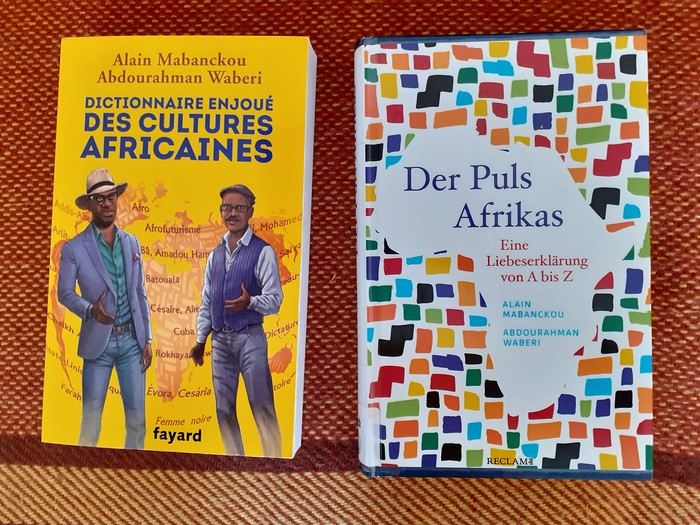
The Maggi cube, an unchallenged hegemony, and so much more
“The hopeless continent,” headlined The Economist, a British magazine, in July 2000 about Africa. Eleven years later, the same magazine headlined “Africa rising” instead. Images of Africa in the prosperous North constantly oscillate between apocalyptic scenarios and enthusiastic projections. A key issue with such images lies in the generalization they entail. If you look at the continent, considerable contrasts emerge depending on space and time. It’s no surprise that a region of the world encompassing such diverse ecological zones, maintaining such varied ties with other continents, comprising nearly fifty nation-states in sub-Saharan Africa alone, and characterized by a great diversity of languages, belief systems, and historical paths, doesn’t share a single destiny.
And yet, for many people outside Africa, as well as for many Africans, the continent constitutes a single entity, defined by criteria such as skin color, a colonial past, poverty, and the art of survival. Until now, these perspectives were generally accompanied by the idea that Africa had to—or should have—followed a single path together, sometimes called development, sometimes modernization, sometimes liberation, then a market economy. None of these paths delivered on their promises.
The two writers Alain Mabanckou and Abdourahman Waberi—one from Congo, the other raised in Djibouti, both long settled in France and now professors at renowned North American universities (Los Angeles, Washington)—have had enough of pessimistic scenarios: “We are aware that Africa is in the world and the world is in Africa. The same goes for all other continents, as our destinies are inextricably linked for better or worse. We refuse to see Africa as a reservoir of misfortunes or a continent cursed by atavistic misfortune and characterized by ethnic conflicts. [...] It’s this passionate flame we wanted to capture in a book [...] a kind of stroll through African cultures, without any demands, each letter of the alphabet leading us to a notion, a practice, a concept, a moment in history, literature, painting, politics, economics, cuisine, etc.” (p.10-11). Africa, they write, is on the verge of “imposing a signature, a style, a way of being in the world and in relation to the rest of the world.” (p.11) To put words to the continent’s diversity and dynamism, the two authors created a “rambling ABC,” a kind of portrait—or more precisely, a mythography—that lets you see and feel the pulse of a vast continent whose cultural power is unfolding before our eyes. Once marginalized or even mocked, the voice and importance of the Continent in global affairs are now undeniable” (p.11), containing over a hundred entries, mostly concise, written in a relaxed and casual style. The optimistic, even exuberant tone is set from the brief introduction. The duo of authors wants to “sing a love song to the cultures of our continent, to its inhabitants past and present, to its exceptional resources and its spectacular globalization despite a certain pollution that still clouds our skies due to the unmatched duration of dictatorships in some of our regions.” (p.12) In doing so, they don’t want to be too distracted by today’s Afewerki-Biya-Bongo-Déby & Co. ...
Of course, you’ll find tributes to great precursors like Frantz Fanon (“[...] it was a love story and admiration that wasn’t dimmed by the four decades separating his birth from ours. Let’s add that we were born while the native of Fort-de-France had left the world’s stage four years earlier, in the prime of life” p.141), Mongo Beti (“You must read and reread Mongo Beti, a genius who used his fame to support often just causes in Africa, like defending oppressed groups. His place is already in History. His oppressors, like the dictators Ahmadou Ahidjo and Paul Biya, can’t compete in the same category” p.64), the Malian Amadou Hampâté Bâ
(“Posterity remembers him mainly as an tireless defender of African cultures. His plea for the collection and preservation of traditional African knowledge remains a major event for all men and women of good will. One day in 1960, at the UNESCO podium, the native of Bandiagara sounded the alarm: ‘[...] Since we’ve admitted that the humanity of each people is the heritage of all humanity, if African traditions aren’t collected in time and written down, they’ll one day be missing from the universal archives of humanity.’” p.51),
Kwame Nkrumah, “one of the founders of Pan-Africanism, father of Ghana’s independence” (p.239), as well as the historian Cheikh Anta Diop, the writer, poet, and politician Aimé Césaire, and the economist and thinker Samir Amin, but also very warm tributes to certain contemporary African intellectuals like Souleymane Bachir Diagne and Achille Mbembe
(“A few years ago, in dominant economic circles, a rumor often resurfaced, usually disguised as a cold and scientifically proven analysis: Africa is useless. It’s a burden for the rest of the human community. With its 2% share in world trade, it would disappear from stock market radars without anyone noticing. So? Maybe it’ll be pulled up by other continents. Wanting to surpass itself is a crazy bet for Africans, they concluded. Arrogant or clueless, President Nicolas Sarkozy declared before an audience of students and teachers at Cheikh Anta Diop University in Dakar: ‘The African man hasn’t entered history enough [...] He only knows the eternal repetition of time marked by the endless repetition of the same gestures and words.’ That was in 2007. For decades, armed only with reason, an intellectual often steps up to debunk prejudices, lazy readings, and dishonest frameworks used as false fronts by those who, like Nicolas Sarkozy or former journalist Stephen Smith, out of ignorance, contempt, or condescension, distort African reality. This intellectual is none other than the historian and political scientist Achille Mbembe. This heir of Frantz Fanon, Amílcar Cabral, Jean-Marc Ela, and Fabien Eboussi-Boulaga was born in 1957 in Cameroon, in the Bassa region. Marked early by the upheavals of a fratricidal war, Achille Mbembe became the guardian of the memory of martyrs. After brilliant studies in Paris, he went on to teach at the best American universities, but the call of the Continent was stronger than anything else. In Dakar, he once directed CODESRIA (Council for the Development of Social Science Research in Africa) before joining the University of the Witwatersrand in Johannesburg, South Africa. Even though the author of *Critique of Black Reason* (Éditions La Découverte, 2015) spends a few months at Duke University in North Carolina, his observation post remains South Africa. From Johannesburg, Achille Mbembe scrutinizes Africa and the whole world. A lucid observer with an elegant and generous pen, Achille Mbembe knows how to blend big and small history: ‘I was born one day in July, as the month was drawing to a close. It was 1957, in that part of Africa recently named ‘Cameroon,’ a memory of the wonder that seized Portuguese sailors in the 15th century when, sailing up the river near Douala, they couldn’t help but note the presence of a multitude of crustaceans, and named it *Rio dos Camarões*, meaning ‘River of Shrimp.’ I grew up in the shadow of this nameless land, since, in a way, the name it bears is only the product of someone else’s astonishment: a lexical mistake, if you will.’ From this mistake or wound, he made leaven, a springboard to compose a rich work, recognized worldwide. To denounce barriers and barbarians too. But that’s not enough. Among his peers in circles of thought and action, Achille Mbembe passionately and consistently defends human dignity and the beauty of the world. In doing so, he fulfills the mission Frantz Fanon entrusted to him.” (p.227-229),
as well as entries dedicated to lesser-known artists and intellectuals, like the French journalist and activist Rokhaya Diallo, daughter of Senegalese and Gambian parents, or the Ethiopian filmmaker Haile Gerima, who has long lived in the United States. Other names from politics, sports, music, art, and literature: Kofi Annan, p.36; Barack Obama, p.243; Thomas Sankara, p.277; Ousmane Sow, p.285; Yambo Ouologuem, p.250; Léopold Sédar Senghor, p.282; Muhammad Ali, p.30; Nuruddin Farah, p.146; Salif Keita, p.203; Ahmadou Kourouma, p.206; Ngũgĩ wa Thiong’o, p.236; Winnie Mandela, p.224; Kylian Mbappé, p.226 ...
The authors, who resolutely commit to a “mythography” (p.11) of Africa, also pay special attention to local social movements, cultural events, and aspects of daily life. *Y’en a marre*, “which also meant ‘we’re fed up with sitting on our hands’” (p.320-321), emerged about a decade ago in Senegal as a citizen movement of peaceful resistance and symbolizes, the authors emphasize, the fact that African youth are increasingly fed up “with the political circus deployed in Africa since independence, as our parents would say, ‘since the White man left’...” (p.321). A full entry is dedicated to the Maggi bouillon cube, which has flooded African markets for about forty years and enjoys immense popularity (“It’s everywhere in Africa, from Dakar to Djibouti, and from Tangier to Cape Town. It’s in every pot, every stew. Little hands put it in every sauce, every local or adapted dish. An unchallenged hegemony! You’ll find it in diasporas too. The culinary strolls in Paris, in the [...] neighborhood” p.90). Critics blame it not only for impoverishing the aromatic diversity of local dishes but also for being harmful to health. And yet, “he poorest Africans, those who eat only once a day, a few spoonfuls of white beans and a ball of *foufou*, for example, are the most fervent users of the magic cube.” (p.92-93)
For *fonio*, “the new trendy cereal. [...] From the millet family, fonio is probably the oldest cereal cultivated in West Africa, and mainly in its sub-Saharan part, for millennia. [...] Easy to grow, water-efficient, fonio grows everywhere except on clay soils. Long neglected because it was considered the poor man’s crop, fonio is now a source of pride for the farmers who cultivate it and cherish it like the apple of their eye” (p.156-157), the authors immediately offer a detailed recipe, letting the reader know that “e can’t resist sharing this fonio with chicken recipe from Mali with you:
Ingredients: 1 chicken 3 large ripe red tomatoes 4 tbsp tomato paste 4 large onions 1 garlic clove 1/2 cup oil 2 Maggi cubes or salt 2 large carrots 1 turnip 1 large cabbage 2 large potatoes 1 celery stalk 1 packet pre-cooked fonio 4 okra (or okra powder) salt, pepper
Preparation: 1. Prepare the sauce: wash and cut the chicken. Peel the onions, garlic, and vegetables. 2. In a pot, fry the chicken pieces. 3. Dice the onions, tomatoes, carrots, and turnip very small and add them to the pot. 4. Add the tomato paste, salt, and pepper. 5. Simmer for 15 min, then add 2 L of water and the cooked chicken pieces. 6. Simmer for 30 min, then add the crushed garlic and celery, plus the cabbage cut into 4 and the potatoes cut in half. 7. Prepare the fonio: cover it with warm water, let it rest for 15 min, and cook it over low heat. 8. In a small pot, boil the okra and crush them. 9. Mix the crushed okra with the cooked fonio, then salt. Serve hot.” (p.158-159)
The comedy *Black Mic Mac*, released in French theaters in 1986 and addressing France’s increasingly restrictive immigration policy at the time, also gets an entry, as do *Tintin in the Congo*, the popular comic, and *Jip’s Café* (“[...] a little Africa in the heart of Paris, with passersby stopping to admire the ‘ambianceurs’ on the dance floor or attend the cultural events offered by the place” (p.194), an African establishment in Paris that Alain Mabanckou already immortalized in one of his novels.
The duo of authors also tackles thorny subjects like jihadism (p.119), the Rwandan genocide (p.272), the CFA franc (p.82), and dictatorship (p.110). While the two strike the right tone here, many entries leave a slightly bitter taste. Two examples: why doesn’t the text on Barack Obama mention the great disappointment of many people in Africa, who expected more from the African policy of the first U.S. president with African roots than just occasional warm words? Why do the comments on Winnie Mandela gloss over the fact that she was a highly controversial icon of the anti-apartheid movement due to her involvement in kidnappings, acts of torture, and murders of alleged apartheid collaborators? Instead, there’s a compassion that brings tears to the eyes: “She was often reduced to a secondary role, the wife of a great man” or “When victory came, she didn’t taste its fruits. Divorced, isolated. She would never be a ‘first lady’ in an evening gown, posing before a bed of chrysanthemums. They’d keep her far from the circles of power” (p.224-225). At this point, I would’ve liked the authors to take a slightly more critical stance...
That said, these “weaknesses” (if you can call them that) shouldn’t overshadow the book as a whole. It remains an informative, sometimes very entertaining, and often even original work in its own way.
Book information (the original French and the German translation):
Alain Mabanckou/Abdourahman Waberi. Dictionnaire enjoué des cultures africaines. Fayard, 2019. Alain Mabanckou/Abdourahman Waberi. Der Puls Afrikas. Eine Liebeserklärung von A bis Z. Reclam, 2022.
Hery
From Mexico to the Wonderful Chiapas
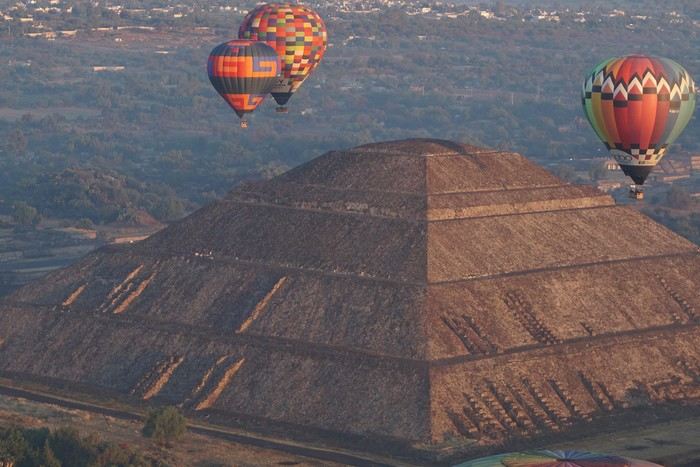
This one-month trip, from January 18 to February 17, 2026, allowed us to visit Mexico City and travel through the states of Puebla, Oaxaca, and Chiapas. We mainly used buses (ADO company) for medium and long distances and colectivos or taxis (or Uber) for shorter trips. Before leaving, I had contacted several people on the ground: Harry, a Vendéan settled in Oaxaca offering, among other things, discoveries of artisan villages or the Monte Albán site, and Oscar in Comitán de Domínguez. I’ll come back to our meeting with Oscar, who runs a local agency (CVL Travel Turismo Alternativo & Corre la voz) and owns a very pleasant hostel, a real highlight of our trip. Our journey took place in 8 stages on a loop starting from Mexico City. The connections between each were made by day or night buses depending on the trip duration. I had booked our seats in advance, either directly on the ADO company’s website or through booking platforms depending on the rates offered. Note that by planning ahead, I was able to benefit from very interesting "Early Booking" rates. There are several comfort classes. For all our trips, I had booked seats in Primera class buses, except for two in GL (Grand Luxe) class. The rates are very reasonable, and the buses turned out to be comfortable or even very comfortable (only the basic seat recline might surprise you).
Our itinerary and number of days per stage: Stage 1 – Mexico City: 4 days Stage 2 – Puebla: 2 days Stage 3 – Oaxaca: 4 days Stage 4 – San Agustinillo: 4 days Stage 5 – San Cristóbal de las Casas: 3 days Stage 6 – Comitán de Domínguez: 6 days Stage 7 – Palenque: 4 days Stage 8 – Mexico City: 2 days If I were to do it again, I’d remove one day from Palenque and add it either to Puebla or San Cristóbal to visit nearby sites or villages, or to San Agustinillo to enjoy one more day by the Pacific Ocean.
Stage 1: Mexico City (2,200 m / 9.2 million inhabitants) We arrived in the Mexican capital around 10:00 PM. The simplified customs process was very quick. After exchanging some money at the airport, we took a taxi to our youth hostel. We got around the capital on foot, of course, but also by metro. Signs are very rare, and we took the train in the wrong direction several times. After a few mistakes, we systematically asked on the platform if we were going the right way. The metro is very affordable. You need to get a rechargeable card (the Tarjeta de Movilidad Integrada) and top it up as needed. This card (less than 1 €) isn’t personal, so there’s no need to get one per person.
Mexico City: Day 1.
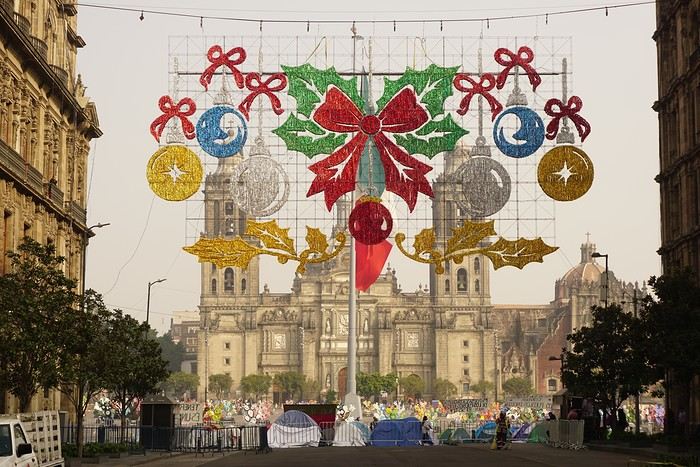
Visits and walks of the day (note: many museums are closed on Mondays): The Zócalo or Constitution Square: it’s one of the most beautiful, largest (195m x 240m), and oldest squares in the world. This is where Cortés decided to build the center of the new Spanish city on the site of the former Tenochtitlan market. Stones from the pyramids were used to pave the esplanade and build the surrounding colonial churches and buildings. During our visit, the huge square was covered with (resin) cacti, the theme of the temporary exhibition at the time. Indeed, temporary events or exhibitions take place here throughout the year. It’s also the endpoint for many protest marches.
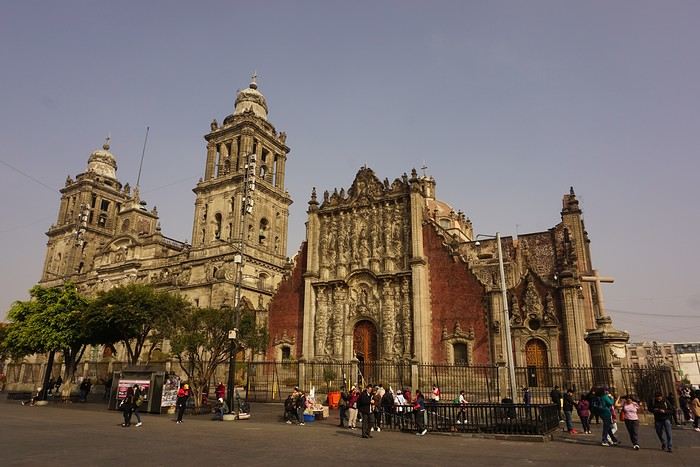
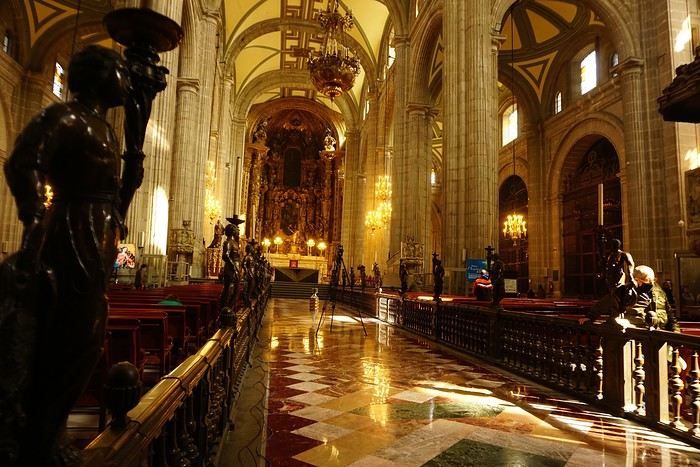


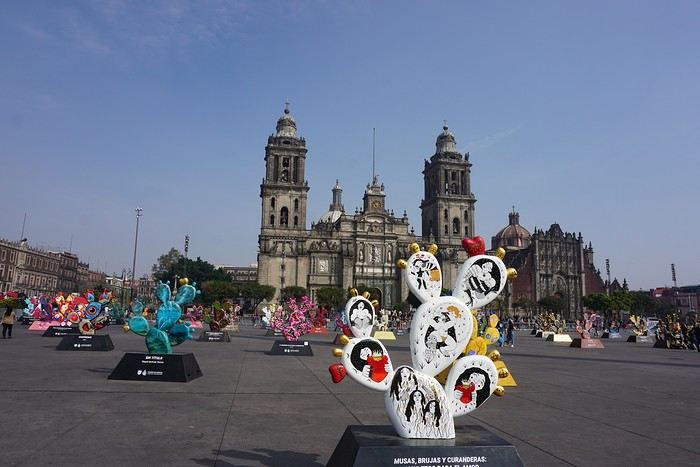
The cathedral: it’s sinking by one centimeter per year despite massive stabilization work (the collapse of many Mexican buildings—30 cm/year—is due to groundwater pumping). It was built starting in 1571 and completed in... 1813. The modest remains of the Templo Mayor (exterior view): they have high symbolic value, as this monument was the most important in the Mexica Empire.
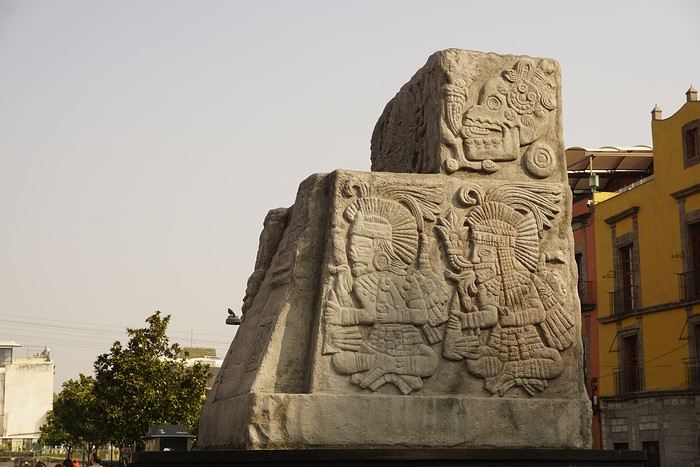 We then walked through the streets of the historic center to the Santísima Church, unfortunately closed for renovation work.
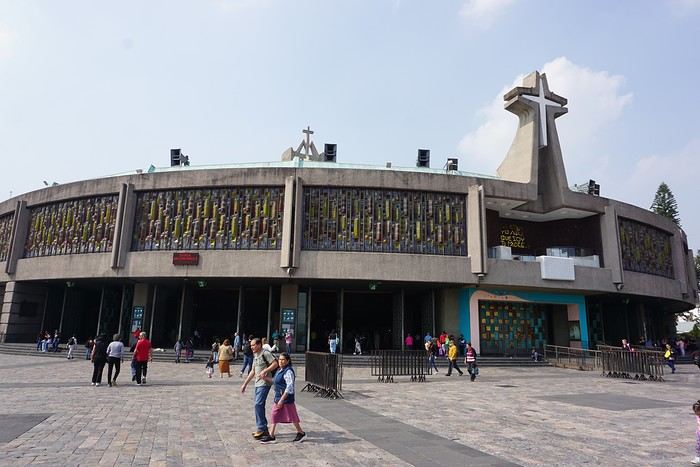
Next, we took the metro to visit one of Mexico’s most important pilgrimage sites: the Insigne y Nacional Basílicas de Santa María de Guadalupe, as well as the Capilla del Cerrito on the hill.
The first, dating from the colonial era, is really leaning a lot.
We then walked through the streets of the historic center to the Santísima Church, unfortunately closed for renovation work.
Next, we took the metro to visit one of Mexico’s most important pilgrimage sites: the Insigne y Nacional Basílicas de Santa María de Guadalupe, as well as the Capilla del Cerrito on the hill.
The first, dating from the colonial era, is really leaning a lot.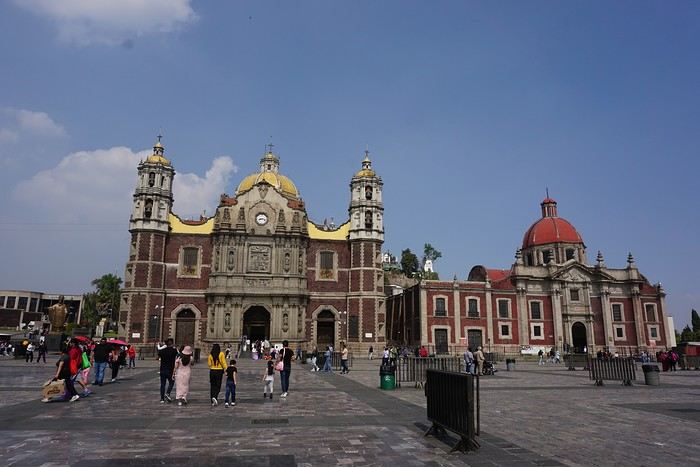
The second, shaped like a rotunda, is very impressive from the inside.
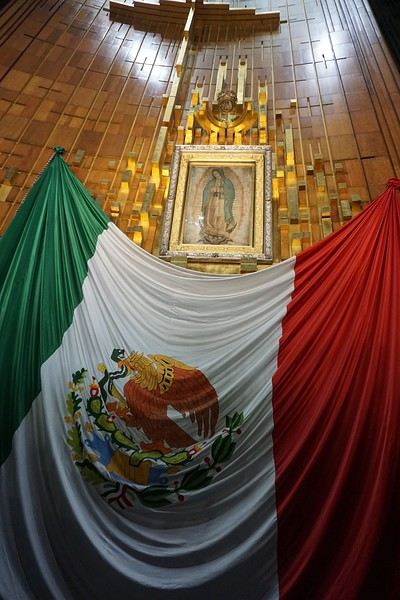
In the basement, there’s a sacred tunic where, in 1531, an image of the Virgin Mary is said to have appeared. A real mystery for scientists, the garment has never deteriorated since that date. Slow-moving conveyor belts allow pilgrims to admire it, preventing crowds from gathering in front of the image for hours. Well thought out!
 From the top of the Capilla del Cerrito, you get beautiful views of huge Mexico City.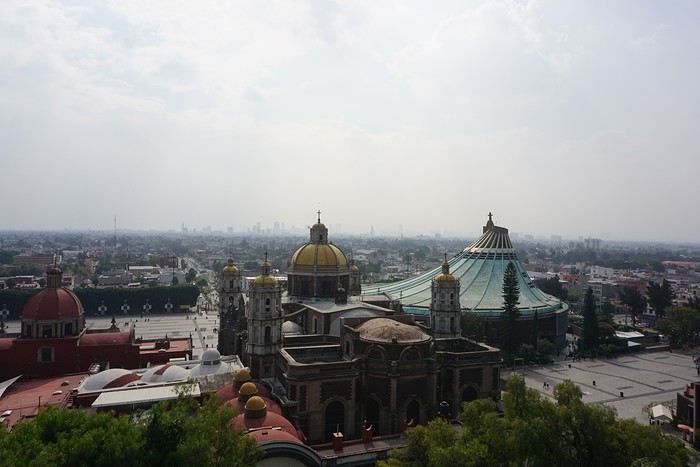
Nepal: Spiritual experiences beyond Himalayan trekking
On this forum, we talk a lot about trekking in the Himalayas, but I’d love to share another side of Nepal: its spiritual, cultural, and religious atmosphere, especially in Kathmandu.
Nepal, much like Tibet and Bhutan, is deeply connected to the Himalayas—the ultimate sacred mountain range. This small country exudes a calming vibe, shaped by a strong spiritual dimension. What I loved most was the unique sensory experience you get there. Walking around temples and tantric monasteries, a distinct scent fills the air—aromatic plants used for ritual fumigation. Locals mainly burn Himalayan juniper, cedar, sandalwood, and other local essences. This fragrant smoke is a way to purify the space and reach the deities, and you’re constantly enveloped in these aromas.
Another striking aspect is the sound. As soon as you step outside, you hear bells ringing in front of temples. People ring them three times before praying to announce their presence to the deities. Nepal is also the birthplace of singing bowls and sound meditation practices. In Kathmandu, you can easily find meditation sessions or "sound baths."
The spiritual dimension is everywhere: a Hindu sadhu practicing asceticism, a lama in deep red robes with his mala, turning a prayer wheel while murmuring "Om mani padme hum." Newar Buddhism, Tantrism, and Hinduism coexist harmoniously in daily life.
For those who love exploring a destination through its culture and spirituality, Nepal is an unforgettable place. What was your spiritual experience in Nepal like?
Nepal, much like Tibet and Bhutan, is deeply connected to the Himalayas—the ultimate sacred mountain range. This small country exudes a calming vibe, shaped by a strong spiritual dimension. What I loved most was the unique sensory experience you get there. Walking around temples and tantric monasteries, a distinct scent fills the air—aromatic plants used for ritual fumigation. Locals mainly burn Himalayan juniper, cedar, sandalwood, and other local essences. This fragrant smoke is a way to purify the space and reach the deities, and you’re constantly enveloped in these aromas.
Another striking aspect is the sound. As soon as you step outside, you hear bells ringing in front of temples. People ring them three times before praying to announce their presence to the deities. Nepal is also the birthplace of singing bowls and sound meditation practices. In Kathmandu, you can easily find meditation sessions or "sound baths."
The spiritual dimension is everywhere: a Hindu sadhu practicing asceticism, a lama in deep red robes with his mala, turning a prayer wheel while murmuring "Om mani padme hum." Newar Buddhism, Tantrism, and Hinduism coexist harmoniously in daily life.
For those who love exploring a destination through its culture and spirituality, Nepal is an unforgettable place. What was your spiritual experience in Nepal like?
Veneto: Dolomites and Opera
I'm starting a new travel journal in Italy.
It's about a month-long trip (from September 3, 2025, to October 4, 2025), or rather a part of it. This section matches the title: an opera festival in Verona (one evening) and the Dolomites in the Veneto region.
I'm posting the part of the trip I think will interest French-speaking readers the most (since this is where I saw the most French travelers).
Here’s a quick summary:
- Trip in September 2025
- Solo travel with camping (caravan)
- Small geographic area: besides Verona, the surroundings of the Marmolada massif and Cortina d'Ampezzo.
- Main but not exclusive activity: hiking.
Since I have limited internet access where I am now, I’ll be writing slowly. Here we go!
Day 1: Thursday, September 4, 2025
I arrived in Veneto under the sun and with warm weather. I drove to Verona and tried to find a spot at the campsite (Verona Village) located south of the city. Unfortunately, it was full. Booking on the website was mandatory, but when I tried to reserve a few days ago, the site never moved from the "reservation" step to the "payment" step (I don’t know why—it’s always like that in these cases). I found another solution over the phone; the drive from southern Verona to the northeast was a bit long, but I finally settled at the "Oro Verde" campsite. It’s an "agricampeggio" (farm camping or rural campsite) on the outskirts of the city, and its name (green gold) suggests they produce olives there. Since it wasn’t late, I biked to the Adige River, following the recommended route into the city.
Since I have limited internet access where I am now, I’ll be writing slowly. Here we go!
Day 1: Thursday, September 4, 2025
I arrived in Veneto under the sun and with warm weather. I drove to Verona and tried to find a spot at the campsite (Verona Village) located south of the city. Unfortunately, it was full. Booking on the website was mandatory, but when I tried to reserve a few days ago, the site never moved from the "reservation" step to the "payment" step (I don’t know why—it’s always like that in these cases). I found another solution over the phone; the drive from southern Verona to the northeast was a bit long, but I finally settled at the "Oro Verde" campsite. It’s an "agricampeggio" (farm camping or rural campsite) on the outskirts of the city, and its name (green gold) suggests they produce olives there. Since it wasn’t late, I biked to the Adige River, following the recommended route into the city.
7 weeks and 150 years between us on a southern Morocco road trip
We arrive in the evening in Marrakesh, and a taxi arranged by our friendly Riad is waiting for us. The driver takes us to the door, where we’re briefly greeted by our hosts. The room is heated—phew—because it’s really cold on this January 17th for our arrival. Riad Alisma, where we’re staying for 2 nights. The next morning, it’s pouring rain when we wake up, but after a good breakfast, the rain has calmed down. Off we go to the medersa, which allows for a relatively sheltered visit. We’d visited this palace 15 years ago—it’s been renovated since then.
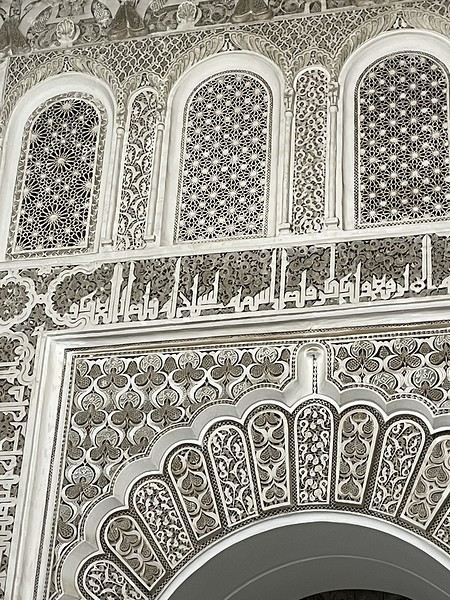
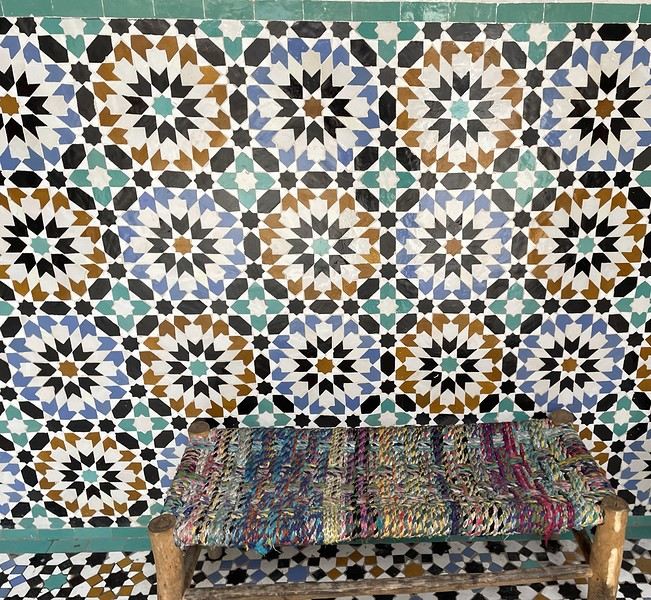
From there, without the rain, we wander aimlessly and eventually end up near the tanneries, but it’s Sunday, and there’s very little activity. Of course, we get hassled by a tout.
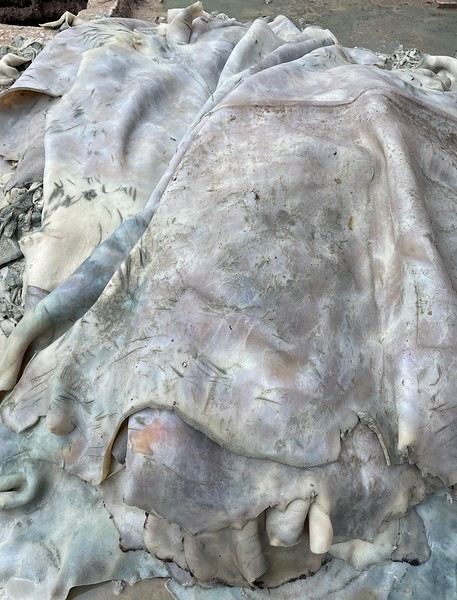
Here, the hides after being treated with lime—I love the colors.
We part ways a bit annoyed. He gets a little revenge by giving us bad directions, and we end up outside the city walls. We decide to take a taxi to the new modern art museum—60 dirhams for the 5 km, which is nothing when you think about it. That tout, who we didn’t ask for anything and made it clear we weren’t buying anything, dragged us into a shop supposedly only open that day and demanded 50 dirhams for his "services"! Let’s forget that bad moment and enjoy the exhibition at the MACAL.
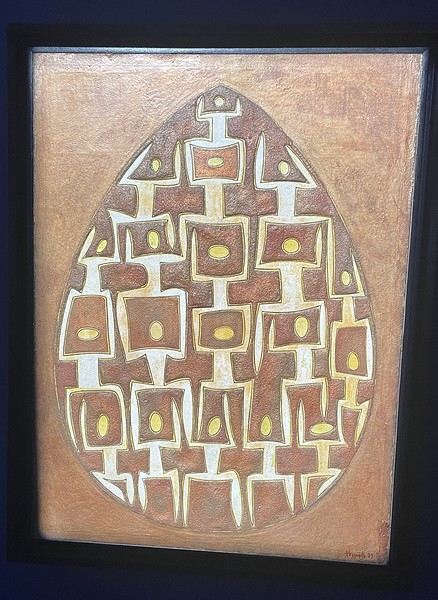
The taxi on the way back drops us off at Place des Ferblantiers, not far from our Riad. We’re a little peckish—it’s worth mentioning that at lunchtime, we only ate a plate of beans from a street vendor. So, we buy a bunch of little sweets, each more delicious than the last, at Ajar. We snack while sipping mint tea and watching life go by around us. A final visit to the Museum of Moroccan Cuisine on our way back helps us dodge a few more showers. Then it’s back to the Riad. The atmosphere in the city is heating up—it’s the AFCON final tonight. The temperatures, though? Not so much. We ordered a meal at the Riad, and it was a good call—not only was it really tasty, but the rain also picked up again. Our day in Marrakesh ends under the covers with a good book and some photo sorting. Still, we managed 10,750 steps. View of our Riad
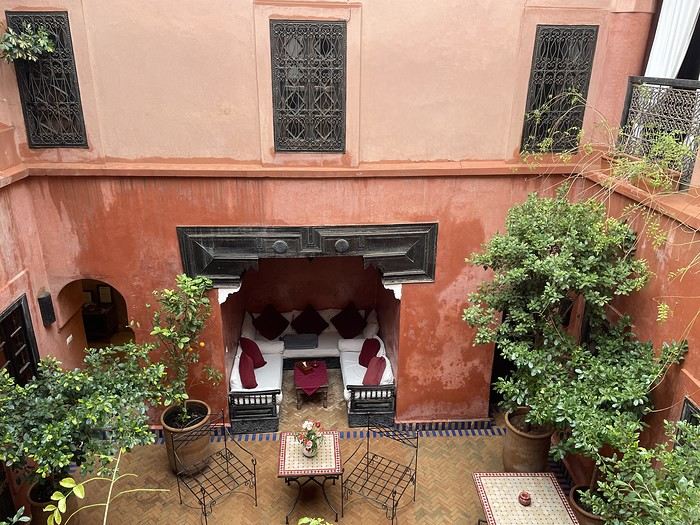
Tomorrow, we’ll pick up our rental car from Medloc and head to Essaouira.
From there, without the rain, we wander aimlessly and eventually end up near the tanneries, but it’s Sunday, and there’s very little activity. Of course, we get hassled by a tout.
Here, the hides after being treated with lime—I love the colors.
We part ways a bit annoyed. He gets a little revenge by giving us bad directions, and we end up outside the city walls. We decide to take a taxi to the new modern art museum—60 dirhams for the 5 km, which is nothing when you think about it. That tout, who we didn’t ask for anything and made it clear we weren’t buying anything, dragged us into a shop supposedly only open that day and demanded 50 dirhams for his "services"! Let’s forget that bad moment and enjoy the exhibition at the MACAL.
The taxi on the way back drops us off at Place des Ferblantiers, not far from our Riad. We’re a little peckish—it’s worth mentioning that at lunchtime, we only ate a plate of beans from a street vendor. So, we buy a bunch of little sweets, each more delicious than the last, at Ajar. We snack while sipping mint tea and watching life go by around us. A final visit to the Museum of Moroccan Cuisine on our way back helps us dodge a few more showers. Then it’s back to the Riad. The atmosphere in the city is heating up—it’s the AFCON final tonight. The temperatures, though? Not so much. We ordered a meal at the Riad, and it was a good call—not only was it really tasty, but the rain also picked up again. Our day in Marrakesh ends under the covers with a good book and some photo sorting. Still, we managed 10,750 steps. View of our Riad
Tomorrow, we’ll pick up our rental car from Medloc and head to Essaouira.
Three weeks in Yunnan in October 2025
We just spent three weeks in Yunnan.
I’ve started writing up a travel journal about the trip.