Results for "route+ou+circulation+|+122+>+67"
167736 results found.
Etat de la route de Bordj Mokhtar à Reggane (Algérie) English translation pending
Bonjour
Est-ce qu’il-y des informations sur la condition de la route de Bordj Mokhtar à Reggane ?
Mon guide m’a dit que c’est maintenant impossible de traverser la frontière du Niger à In Guezzam et c’est très déconseillé la frontière du Mali à Tin Zaouatine. La route Gao – Reggane apparentement c’est la seule praticable.
Est-ce que vous avez des autres informations ?
Merci
État de la route entre Tirana et Pogradec en Albanie? English translation pending
Quel est l'état de la route entre Tirana et Pogradec (sur le lac d'ohrid)?
Asie du Sud-Est ou Karakoram au Pakistan? English translation pending
Bonjour a ts les amoureux du 2 roues sans moteur (ok, 3 roues si on compte une remorque)
Voila, on a un petit probleme. Nous sommes en Inde, et avions prevus de passer au Nepal, puis au Tibet pour finir en Chine (oui, je sais, le Tibet cést deja la Chine...). Des Nepalais nous deconseillent le Terai pour le moment, et vu qu''en plus, íl n''est pas tres commode d''aller a Lhassa depuis Kathmandou, nous avons le choix entre 2 itineraires. Soit nous volons jusquá Bangkok, pour rouler au Cambodge, Vitenam, Chine, soit nous retournons au Pakistan, puis Chine et pourquoi pas passage au Tibet.
Quelles sont vos experiences ? Comment sont les gens en Asie du Sud-Est ?
Merci dávance ! (nous avons 8 jours pour nous decider !)
++
Voila, on a un petit probleme. Nous sommes en Inde, et avions prevus de passer au Nepal, puis au Tibet pour finir en Chine (oui, je sais, le Tibet cést deja la Chine...). Des Nepalais nous deconseillent le Terai pour le moment, et vu qu''en plus, íl n''est pas tres commode d''aller a Lhassa depuis Kathmandou, nous avons le choix entre 2 itineraires. Soit nous volons jusquá Bangkok, pour rouler au Cambodge, Vitenam, Chine, soit nous retournons au Pakistan, puis Chine et pourquoi pas passage au Tibet.
Quelles sont vos experiences ? Comment sont les gens en Asie du Sud-Est ?
Merci dávance ! (nous avons 8 jours pour nous decider !)
++
Lhassa par la Chine ou par Kathmandou? English translation pending
Bonjour,
je prépare actuellement mon voyage pour le Tibet et Népal, départ début avril. Je demande conseil quant au meilleur trajet, d'un point vu culturel et dépaysant...J'hésite à faire Chengdu - Lhassa (bus, train...) puis Lhassa-KTM par la Friendship Highway ou bien un itinéraire en aller-retour, soit KTM-Lhassa-KTM. Après m'être renseignée sur d'autres blogs et forums, il est envisageable de faire le trajet par le train Chengdu-Lhassa, mais quel est son intérêt ?
Merci pour vos conseils et expériences...
je prépare actuellement mon voyage pour le Tibet et Népal, départ début avril. Je demande conseil quant au meilleur trajet, d'un point vu culturel et dépaysant...J'hésite à faire Chengdu - Lhassa (bus, train...) puis Lhassa-KTM par la Friendship Highway ou bien un itinéraire en aller-retour, soit KTM-Lhassa-KTM. Après m'être renseignée sur d'autres blogs et forums, il est envisageable de faire le trajet par le train Chengdu-Lhassa, mais quel est son intérêt ?
Merci pour vos conseils et expériences...
Col de l'Iseran ou de la Madeleine à vélo? (France) English translation pending
Bonjour à tous,
d'abord et avant tout, je tiens à remercier tout le monde pour m'avoir tant appris sur ma passion, le vélo, le voyage, et bien que je n'ai pas beaucoup participé, j'ai l'impression de connaitre pas mal d'entre vous...
A présent, après un petit début de cyclo camping dans l'ariège, l'aude, les corbières, j'envisage de me faire les Alpes... La grande route des Alpes est parfaite pour ce que je recherche mais des tas de questions se posent à moi et hantent mes nuits!!
Le col de l'Iseran est sublime mais la route pas tjs merveilleuse visiblement, le col de la madeleine n'est t il pas finalement plus interessant malgré moins de prestige?
Je me pose le meme genre de question pour le Galibier mais cette fois en envisageant le fait qu'il puisse être fermé.. le détour est alors énorme, par le landon ou le mollard, éventuellement le col de Sarenne et le Lautaret...
Merci encore, et surtout à ceux qui comprendront que pour le moment je ne suis encore que dans l'imaginaire, que ces choix à distance ne sont pas évidents, et que je manque encore de détails pour les fignolages... Bonne journée
Le col de l'Iseran est sublime mais la route pas tjs merveilleuse visiblement, le col de la madeleine n'est t il pas finalement plus interessant malgré moins de prestige?
Je me pose le meme genre de question pour le Galibier mais cette fois en envisageant le fait qu'il puisse être fermé.. le détour est alors énorme, par le landon ou le mollard, éventuellement le col de Sarenne et le Lautaret...
Merci encore, et surtout à ceux qui comprendront que pour le moment je ne suis encore que dans l'imaginaire, que ces choix à distance ne sont pas évidents, et que je manque encore de détails pour les fignolages... Bonne journée
Le code la route aux Etats-Unis English translation pending
Bonjour à tous
Et désolée d'avance si ma question paraît saugrenue, mais louant une voiture à Los Angeles pour sillonner la Californie jusqu'apres la frontière mexicaine, avant la construction du mur😉, je m'interroge sur les particularités éventuelles du code de la route là-bas. Je sais que les feux de signalisation se trouvent à gauche et après l'intersection, enfin, c'est ce qu'on m'a dit, y a t-il d'autres choses importantes à savoir pour ne pas risquer bêtement un accrochage ou au mieux me faire klaxonner 😉. Je me suis fait suer à aller à la sous-préfecture pour avoir mon permis international, pas question maintenant de buter sur des questions pratiques. Merci à tous de toutes les précisions que vous pourrez me fournir. Cordialement
Et désolée d'avance si ma question paraît saugrenue, mais louant une voiture à Los Angeles pour sillonner la Californie jusqu'apres la frontière mexicaine, avant la construction du mur😉, je m'interroge sur les particularités éventuelles du code de la route là-bas. Je sais que les feux de signalisation se trouvent à gauche et après l'intersection, enfin, c'est ce qu'on m'a dit, y a t-il d'autres choses importantes à savoir pour ne pas risquer bêtement un accrochage ou au mieux me faire klaxonner 😉. Je me suis fait suer à aller à la sous-préfecture pour avoir mon permis international, pas question maintenant de buter sur des questions pratiques. Merci à tous de toutes les précisions que vous pourrez me fournir. Cordialement
Train ou bus pour Bangkok => Bang Saphan et climat en décembre English translation pending
pour se rendre de Bangkok à Bang saphan vaut-il mieux prendre le train ou le bus ?
Quel temps on trouve en décembre ?
Permis de conduire et code de la route en Thaïlande English translation pending
Pour les résidents qui veulent tout savoir sur les formalités pour passer le permis de conduite Thaï et aussi pour ceux qui veulent tenter l'aventure de la conduite automobile (ou moto) au pays du sourire, voici les règles officielles en anglais du Ministère du Transport :
http://www.dlt.go.th/driving_eng/driving1.htm
Pour ceux qui ont déjà pratiqué la conduite locale, vous avez le droit de sourire en lisant notamment les pages consacrées à la priorité ou encore la rubrique Motorcycle de la page 11 que voici :

http://www.dlt.go.th/driving_eng/driving1.htm
Pour ceux qui ont déjà pratiqué la conduite locale, vous avez le droit de sourire en lisant notamment les pages consacrées à la priorité ou encore la rubrique Motorcycle de la page 11 que voici :
Informations sur la route transcanadienne English translation pending
Bonjour à tous,
je suis nouveau inscrit sur ce forum que je lis malgré tout depuis longtemps.
j'envisage un voyage d'environ 3 mois cet été au canada et particulièrement vers l'ouest. Cependant, je compte arrivé de france à montréal et emprunter la route transcanadienne. J'aurai donc aimé avoir des renseignements sur celle-ci, sa longueur, si elle est très fréquentée, la beauté ou non des paysages traversés, le nombre de km ou bien encore la durée de trajet depuis montréal.
merci par avance à toutes vos réponses
je suis nouveau inscrit sur ce forum que je lis malgré tout depuis longtemps.
j'envisage un voyage d'environ 3 mois cet été au canada et particulièrement vers l'ouest. Cependant, je compte arrivé de france à montréal et emprunter la route transcanadienne. J'aurai donc aimé avoir des renseignements sur celle-ci, sa longueur, si elle est très fréquentée, la beauté ou non des paysages traversés, le nombre de km ou bien encore la durée de trajet depuis montréal.
merci par avance à toutes vos réponses
Indonésie: dangereux ou pas? English translation pending
Mon mari et moi on organise un tour d Asie... on se demande si l Indonesie est dangereuse ou pas. Sachant que parfois des bombes explosent, que le Ministere francais des Affaires Etrangeres deconseille d y aller si c est pas necessaire...
Merci a ceux qui nous repondront !
Aurelie
Merci a ceux qui nous repondront !
Aurelie
Les côtes françaises en caravane ou camping car English translation pending
Bonjour à tous, Je cherche pour passer des vacances avec ma
famille, des côtes françaises, mais pas avec des plages toutes plates et pleine de sable, mais des cotes "rocheuses" avec des rochers, des falaises, ...
Si quelqu'un pourrait me donner des idées ou indices, c vraiment sympa...
Merci D'avance...
Aurélien....
Aurélien....
Sénégal par la route avec véhicule et carnet de passage en douane? English translation pending
Bonjour,
Vous savez qu'une loi au Sénégal interdit de rentrer dans ce pays pour les véhicules de plus de 5 ans sauf si vous avez un carnet de passage en douanes.
Il y a des véhicules de moins de 5 ans, d'autres de moins de 8 ans et enfin ceux de moins de 10 ans.
Est ce quelqu'un a des infos précises concernant une camionette Renault Trafic ? Moins de 5 ou 8 ou 10 ans ?
merci pour vos reponses
Patrick
Vous savez qu'une loi au Sénégal interdit de rentrer dans ce pays pour les véhicules de plus de 5 ans sauf si vous avez un carnet de passage en douanes.
Il y a des véhicules de moins de 5 ans, d'autres de moins de 8 ans et enfin ceux de moins de 10 ans.
Est ce quelqu'un a des infos précises concernant une camionette Renault Trafic ? Moins de 5 ou 8 ou 10 ans ?
merci pour vos reponses
Patrick
Location de voiture avec ou sans chauffeur en Thaïlande? English translation pending
Désireux d'aller passer 5 semaines en Thailande, peut-on sans problème louer une voiture sans chauffeur et sans guide ou bien est-ce qu'un chauuffeur ou guide est fortement conseillé voire indispensable?
Road conditions from Taliouine to Tafraoute and then from Tafraoute to Foum Zguid
Hello my friends,
You can't imagine how happy I am to be back on my beloved site, loved by its traveling men and women!!!!!
I want to travel with my little family (by car, not 4x4) from Taliouine to Tafraoute—it's a route I haven't taken yet (I've already done the one via Igherm), and I don't know the condition of the R106 road. Then, once that's done, our destination will be Zagora via Foum Zguid. I don’t want to go to Tata; my wife can’t stand that city. (I don’t mind because there’s a little local bar that’s not bad ;))
If you have any info, especially about the road conditions in October, I’d really appreciate it.
Thanks so much, and I’m so happy to be back here.
Thanks so much, and I’m so happy to be back here.
Arriving at LAX at 1:05 PM: Is staying in Barstow doable or not?
Hello,
I’ve already gone through some threads dating back to 2010, but opinions are pretty mixed...
What’s the verdict in 2025?
- We’re arriving for a 15-day trip on Friday, June 13, theoretically at 1:05 PM (AF22).
- Rental car (Toyota RAV4) booked with Alamo ("requested" starting at 2:30 PM).
- Room reserved at the Best Western Desert Villa Inn in Barstow (check-in "6/7 PM" listed...) that same evening.
Does this seem reasonably doable to those familiar with the area, for a couple in their seventies, or would it be better to stop sooner (but where?)—even if it means extending the drive to Williams the next day? 😕...
Thanks for your advice!
L'Inde du Nord ou le Népal à moto avec agence de voyage ou organisation personnelle? English translation pending
projet : un voyage surprise d'anniversaire en Himalaya en moto pour couple 57/60 ans
été prochain
état des lieux : nous nous sommes déjà organisés des voyages de 3 mois en Asie sac à dos (tous magiques)
envie de mon conjoint : découvrir l'inde du nord ou le Nepal en Royal Enfield
2 semaines avec une agence de voyage ou plus si nous continuons un peu le voyage seuls
le tout compris des agences me tente mais en même temps je n'arrive pas trop à m'y résoudre vu que pour moi la préparation du voyage fait partie du voyage
mais pourriez vous me dire tout de même ce que vous pensez de 2 agences : vintage rides et nomade aventure? le tout compris vaut il le coup ? s'il vous plait anne
2 semaines avec une agence de voyage ou plus si nous continuons un peu le voyage seuls
le tout compris des agences me tente mais en même temps je n'arrive pas trop à m'y résoudre vu que pour moi la préparation du voyage fait partie du voyage
mais pourriez vous me dire tout de même ce que vous pensez de 2 agences : vintage rides et nomade aventure? le tout compris vaut il le coup ? s'il vous plait anne
On the Silk Road: Chronicles of a Sixty-Something Traveling Completely Independently
From Beijing to Khiva: China, Kyrgyzstan, Tajikistan, Uzbekistan
Chronicle of anecdotes, highlights, and other adventures that marked this eight-week journey in 2018.
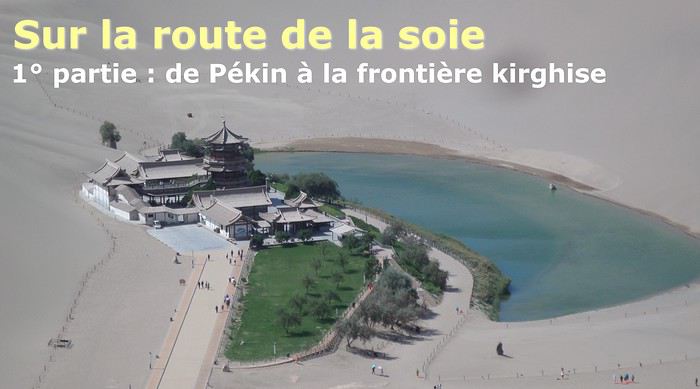
The Chinese Far West More than 30 years after my first trip to eastern China, I finally fulfilled an old dream: traveling solo from Beijing to the far west, discovering Xinjiang, the Uyghur people and the oppression they endure, the oases of Turpan and Kashgar, the Taklamakan Desert, the end of the Great Wall... The route was covered by train.
MENU PART 1: CHINA
1- Beijing (Jiankou) : the authentic Great Wall, without tourists 2- Cycling in Beijing, the best way to get around 3- Beijing : departure for the far west 4- Jiayuguan : getting by without English 5- Jiayuguan : scams and heritage 6- Dunhuang : abundance in the middle of the desert 7- Turpan : the Uyghurs under heavy surveillance 8- Kashgar : love at first sight for the old city 9- Kashgar : China’s recipe for controlling the populace 10- Tashkurgan : what on earth was I thinking going there! Kyrgyz border: a surreal epic Photo album from the 80s, contributions from other travelers (page 2)
1- JIANKOU Finding the authentic Great Wall, without tourists or a guide Friday, August 24, 2018 Thirty years later, I didn’t feel like revisiting the Great Wall at Badaling or any other overcrowded site. I chose to explore it at Jiankou, in its wildest, most authentic, and unrestored section, starting from a lost village deep in a valley—though it wasn’t *that* lost, since it had everything for communication.
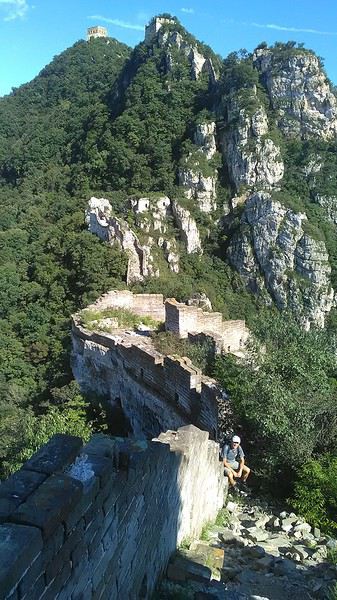
No need to pay for a taxi to get there—by timing it right, you can take the bus for just a few yuan. You have to get off at Xizhazi, the bus terminus. Be careful, there are only two buses a day in each direction. At the Xizhazi bus stop, I met a young couple who’d arrived with zero information about what to expect. We hiked the three of us toward the restored section of Mutianyu.
Still, be cautious With GPS and a topographic map (OpenTopoMap), you can set off without a problem or guide. The trail up to Jiankou is easy and well-marked. The trails down are too. But be careful—once you’re on the Wall, it’s real mountain hiking, with easy but dangerous climbing sections (over sheer drops). Not for amateurs or those afraid of heights! But what a reward. The Wall all to yourself, where it’s at its most daring. Truly mesmerizing.
More photos...
2- BEIJING The best way to get around the capital Sunday, August 26 The best way to explore the city is still by bike. Most are in a bike-share system, but you need to use an app—WeChat, the app that does everything, like monitoring your every move. No way I was installing that.
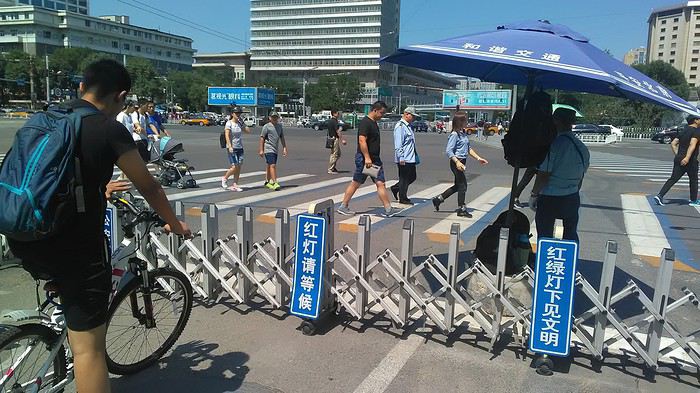
I found one at a rental shop near the hostel. The key is to quickly learn local traffic customs to minimize risks. Bike lanes are wide along the avenues.
But you still have to: - Watch out for anything parked on the bike paths—the most annoying are people napping or talking on the phone in their cars - Keep an eye on everything coming the wrong way—the list is long - The worst is right turns on red, which in Chinese traffic rules seem to have priority Once you get the hang of it, it’s fine. The city is huge but flat, so you can just wing it.
3- BEIJING By train to the far west Sunday, August 26 Beijing West Station is the size and operates like an airport. With your e-ticket from the agency, you first have to pick up your ticket at the special "English" counter, after passing through security. With your ticket in hand, you have to exit and enter through the boarding waiting area—not the platform—after a second security check.
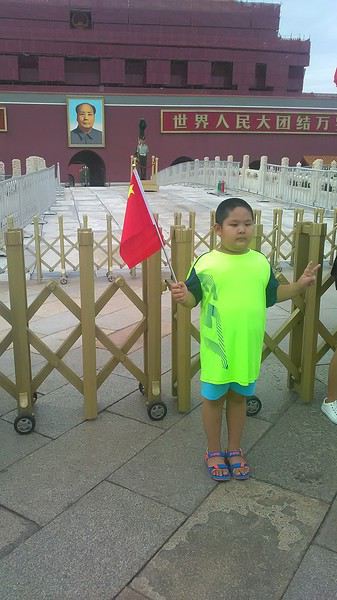 Then you find the right hall and wait for the sign to finally access the platform. In the end, it works pretty well given the incredible number of passengers to manage. Everywhere in Beijing, I saw that the Chinese have mastered crowd flow management.
Nice surprise: second-class carriages are clean, air-conditioned, and bright. Perfect, since I was in for 20 hours. One uniformed attendant per carriage, mobile meal service—luxury! Small downside: no luggage space. Hauling your suitcase up to the top bunk is quite a workout. I was in the middle, so it wasn’t too bad. The landscape, though, whether rural or urban, is pretty bleak. That should change once we leave the eastern plains.
Of course, I got my first police visit, with a thorough passport check and bag search. I was warned—going to the Chinese far west exposes you to this kind of hassle. But they were polite and respectful.
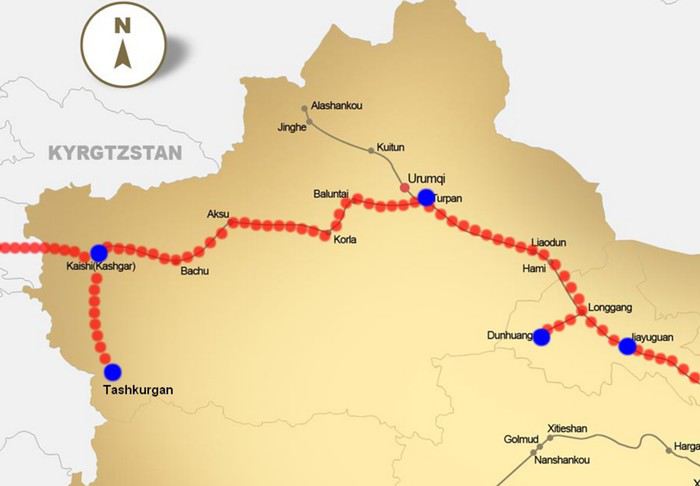 The Chinese Far West
4- JIAYUGUAN Getting by without English Monday, August 27 At the gates of two deserts (Gobi and Taklamakan) and at the foot of the Tibetan highlands, the Great Wall ends at Jiayuguan. Here, I found the deeper China I’d somewhat rediscovered during my bike ride, even if now everyone gets around on electric bikes and I’m no longer stared at like an alien.
Prices are nothing like Beijing: you can find a full meal for 2 €, and my bike cost 7 € for two days. Plus, few people speak English—neither the owner of the HI hostel where I stayed, nor the ticket sellers at the sites, let alone the servers at the small eateries where I ate. Everything is written in Chinese. So I had to use the little Chinese I know to communicate about essentials. It makes the locals laugh to see a European trying to speak their language, but it earns respect. With Google Translate’s help, I managed.
Rant: With their avenues blocked for construction for kilometers without warning, and new roads not yet on maps, I must’ve taken 15 km of detours. More photos...
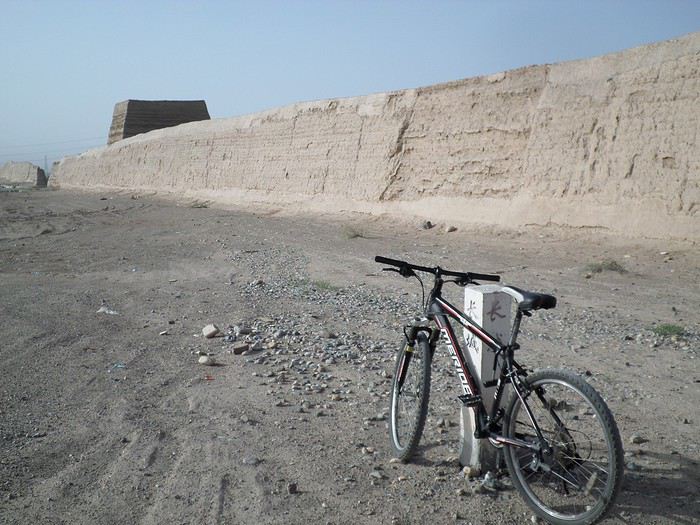
5- JIAYUGUAN Scams and heritage Tuesday, August 28 The Great Wall doesn’t exactly end at the fort I visited yesterday but 10 km further, at the entrance to a river gorge at the foot of the mountains. All that’s left is a badly damaged tower (more like a mound of earth) and a section of clay wall, similar to the one I biked yesterday.
This morning, I hopped on my bike, determined to venture into the desert to see this highly symbolic site. First, you access it via a wide, brand-new road with not a soul in sight. Just before the site, I came across a grand welcome gate, very period-style, but it’s actually the inevitable toll booth.
Behind the gate, the road continues straight to the site, which you can see in the distance—at least 2 km away—the remains of the tower and wall. I had to leave my bike here. Fine. I went to the ticket counter and asked the price: 120 yuan! I couldn’t believe it—over 15 € for a simple mound of earth.
I showed my displeasure to the attendant, who couldn’t care less, and immediately turned back. 120 yuan—that’s the price for a new road, a fancy gate planted 2 km before the site just to force you to take a shuttle, and employees with nothing to do all day... Now I understand why I didn’t meet anyone!
Heritage China is a bit pricey Generally, sites are expensive for the country’s standard of living, but travelers are supposed to have money, so why hold back? I even gave up on the Forbidden City—reservations required days in advance (or on the black market at an impossible price). I prefer to keep the memory of my first visit, when entry must’ve cost a few dozen cents, and there were only a handful of visitors.
This morning, I took a taxi to see remarkable tombs of common people from the 3rd to 6th centuries. They’re small vaulted caves made of painted bricks, depicting scenes of daily life. Very pretty and moving. But even here, though the price was more reasonable, I was left wanting—only one of the 16 tombs is open to visitors, and it’s apparently not the most beautiful.
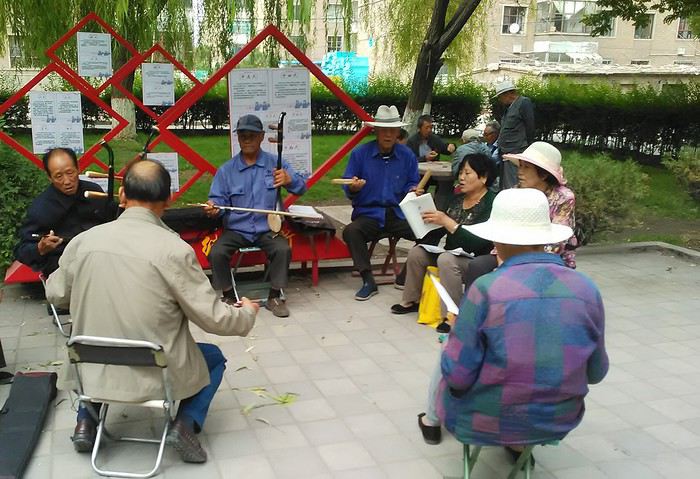
The authentic China—at least what’s left of it... Wandering the impersonal avenues of the city, you stumble upon a market. There, you still find traditional China—small shops with questionable hygiene, Go players, musicians, and even a dental prosthetist. The last refuge for those untouched by modernity. More photos...
6- DUNHUANG Abundance in the middle of the desert Wednesday, August 29 Well, I thought the landscape would be less bleak as I headed west. Nope. The only distraction in this expanse of dark, clayey sand is the forests of pylons and wind turbines, plus wild camels racing each other.
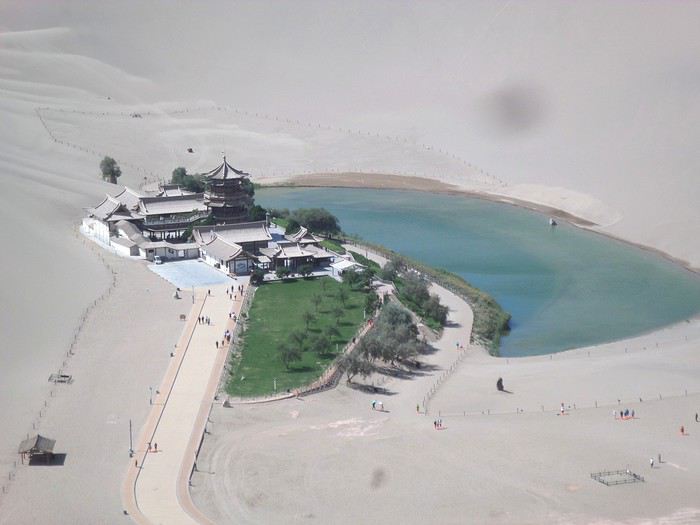 However, Dunhuang, the gateway to the Taklamakan, is by far the most pleasant Chinese city I know. There’s a real city center you can explore on foot. It’s hot but not unbearable, with a light, dry breeze. Much nicer than Beijing. The Han Chinese are still the majority, but the Muslim Uyghurs are more numerous, and the muezzin’s call to prayer echoes around the mosque.
The most surprising thing is the abundance and diversity of fruits and vegetables. You wonder how it all grows here. Well-irrigated, the desert sands are very fertile. Here, raisins have subtle, mysterious flavors, and the lamb really tastes like lamb.
Today, I visited the must-see Mingshashan, a dune complex next to which Pila is a molehill. The Basque Country, but covered in sand... More photos...
7- TURPAN The Uyghurs under heavy surveillance Friday, August 31 Surveillance cameras everywhere in the city, armed police stationed at intersections, in front of public buildings, at the entrance and inside tourist sites, police stations on every corner, patrols on foot or by car, khaki uniforms even for middle schoolers... here, the Han Chinese are in the minority, and you can feel it. Turpan feels like a city under siege.
To enter the youth hostel where I stayed, there’s even a security gate, and the receptionist (a Han, like everyone in tourism) wears a bulletproof vest! Reassuring. Still, you don’t feel particularly threatened here, especially as a European. The troublemakers are the Chinese, not the Uyghurs. Generally, China is a very safe country for visitors.
Smile, you’re on camera! I was biking on an avenue when the car in front of me got flashed for driving slowly. I quickly understood why when I got flashed too.
Here, the official time is Beijing time, but it gets dark two hours later. It’ll be even worse in Kashgar. Trickier to manage: everything is displayed in Chinese and Arabic. Nothing in English. Choosing a menu is a shot in the dark. Apart from a few young Chinese, no one here speaks English, and my Chinese doesn’t seem very understandable...
Mogao, the end of the road for the Han Yesterday, near Dunhuang, I went to Mogao, a complex of decorated caves with Buddha sculptures and paintings. Stunning, but so crowded! Luckily, here in Turpan, Chinese tourists barely venture out. So I visited a Silk Road ghost town with only a handful of other visitors and under a howling wind.
The modern Chinese city is swallowing up the old Uyghur neighborhoods—only a museum-like district remains in the center, and pockets of resistance on the outskirts are doomed to disappear soon. More photos...
8- KASHGAR A (relative) love at first sight for the old city Sunday, September 2 After three overnight trains, here I am in the far west of China, nearly 4,000 km from the capital. Despite the omnipresent police and an old city preserved UNESCO-style, Kashgar is my Chinese love at first sight.
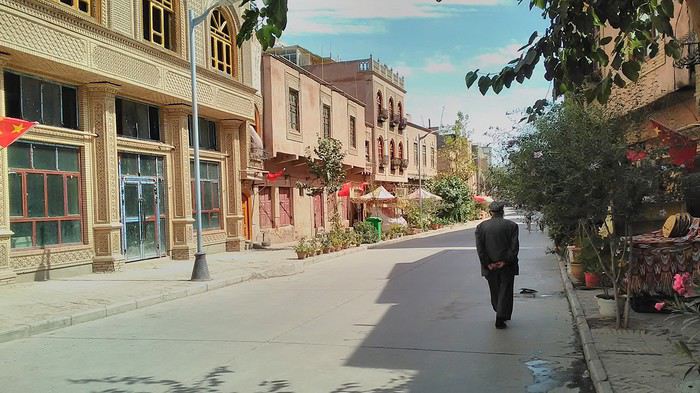
Finally, Chinese... well, sort of, because we’re in Uyghur territory here—a Turkic people with nothing culturally in common with the Han, the eastern Chinese. It started badly yesterday at Turfan station, where after three security gate passes, at least five passport checks, and a bag search, three adorable policewomen confiscated my antibacterial lotion because it had a flammable logo...
Then came the welcoming committee of armed cops at Kashgar station. Once all that was over, they left me alone—except you still have to go through security checks like everyone else to enter the old city, the bazaar, the livestock market... The further west you go, the more the siege mentality is evident. Luckily, the border isn’t far...
Despite the inevitable destruction-reconstruction, the city center has been well preserved. Thankfully, because it’s a very original style, a mix of local and colonial. I love it, even if it’s a bit too artificial, sanitized, and watered-down, and rather empty of residents. On the Silk Road, the city was famous for its great food. And it still is—rarely have I seen such richness and abundance of food! And not just scorpions or snakes. More photos...
9- KASHGAR China’s recipe for controlling the populace Saturday, September 1 Xinjiang, along with Tibet, is a "sensitive" area of rebellion in the eyes of Chinese authorities. As a result, the state has these regions and their populations under total control. Tourists also feel the consequences, even if they’re not at risk of re-education camps.
 - Putting barbed wire and anti-ramming barriers around sensitive sites (schools, big hotels, government buildings...)
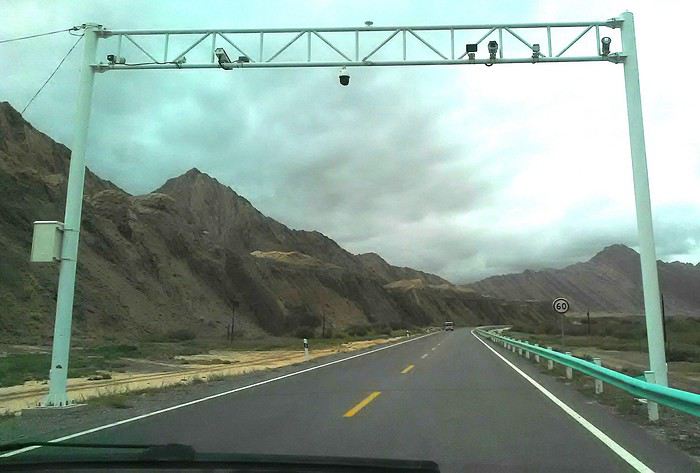
- Installing traffic surveillance gates with cameras and photo flashes (for all vehicles passing, including bikes) throughout the city and even in the countryside
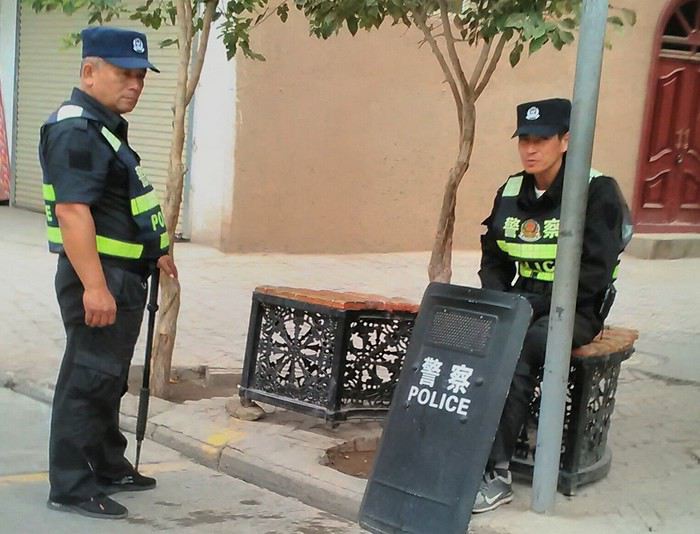
- Posting uniformed guards with tasers, batons, or huge baseball bats every 100 meters
- Training the Han population (ethnic Chinese) in self-defense with sticks, preferably in the morning on the street. Men and women of all ages
- Starting school with the national anthem, doing military exercises, and receiving political indoctrination, all neatly lined up in the courtyard. (The dream school for any teacher)
- Placing a snitch in uniform (a pseudo-guard) in public gathering places, like youth hostels. Mine spends the day loafing around the courtyard
- Putting Chinese flags everywhere on the streets to remind everyone who’s in charge
- Installing security gates at every entrance to areas frequented by tourists (thanks for that) but not just there
- Never photographing cops, or else! I tried, but it’s not easy...
- Putting barbed wire and anti-ramming barriers around sensitive sites (schools, big hotels, government buildings...)
- Installing traffic surveillance gates with cameras and photo flashes (for all vehicles passing, including bikes) throughout the city and even in the countryside
- Posting uniformed guards with tasers, batons, or huge baseball bats every 100 meters
- Training the Han population (ethnic Chinese) in self-defense with sticks, preferably in the morning on the street. Men and women of all ages
- Starting school with the national anthem, doing military exercises, and receiving political indoctrination, all neatly lined up in the courtyard. (The dream school for any teacher)
- Placing a snitch in uniform (a pseudo-guard) in public gathering places, like youth hostels. Mine spends the day loafing around the courtyard
- Putting Chinese flags everywhere on the streets to remind everyone who’s in charge
- Installing security gates at every entrance to areas frequented by tourists (thanks for that) but not just there
- Never photographing cops, or else! I tried, but it’s not easy...
With all that, you can stroll around safely Not much crime! As for the amount the Chinese state spends to maintain such a system, it’s staggering! A third of the Han living in Xinjiang work in security. Today, I wandered freely around old Kashgar, which is quite large after all. More photos...
10- TASHKURGAN What on earth was I thinking going there! Wednesday, September 5 First, there’s the taxi—pretty crappy, with a driver who doesn’t speak a word of English and won’t stop smoking. Over six hours in that... shared with a completely out-of-it American.
Then there are all the checkpoints along the way. I won’t go on—you know the drill by now.
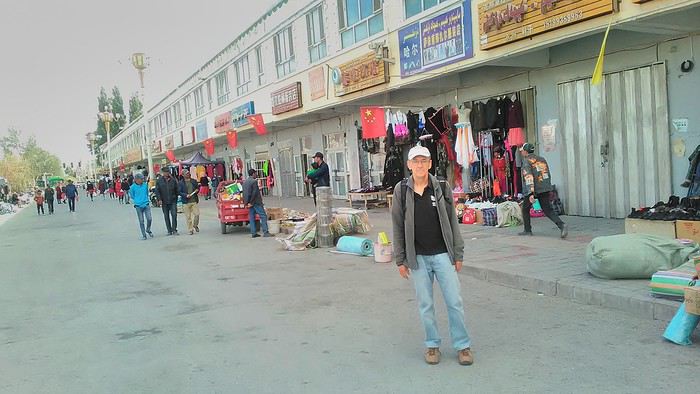
After that, there’s Tashkurgan—a town with nothing to see, nothing to do. Deserted as soon as night falls. There’s this huge youth hostel and a few lost Chinese tapping away on their smartphones, chain-smoking. This lost American-European crowd, swapping tips on how to enter Pakistan or Tajikistan.
Luckily, there’s the Chinese Pamir Highway, lined with peaks over 7,000m. There’s the feeling of no longer being in China, with a population whose features are Middle Eastern. And these Tajik women with their stunning hairstyles and vibrant costumes. There’s the fact of having reached the westernmost Chinese city, far from crowds and tourist sites. A sort of end of the world. More photos...
11- KYRGYZ BORDER A surreal epic Thursday, September 6 The road from Kashgar to the Kyrgyzstan border is a little over 200 km and passes through beautiful landscapes of colorful, desert-like mountains with acrobatic folds. That’s the bucolic part of the trip.
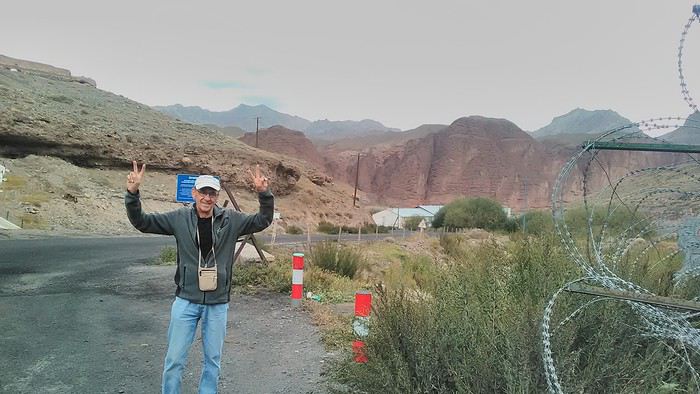 Yesterday, I managed to gather four people to rent a minibus to reach the border more easily: a Spaniard and an Argentine I’d already met in Turpan, and two New Zealanders who responded to the ad left at the hostel.
Absurdity and paranoia of Chinese authorities The highlight was crossing the town of Wuqia, 50 km past Kashgar. After tallying up with my fellow sufferers, we must’ve passed about ten checkpoints with: - Passport checks: 14 times, sometimes by two cops side by side - Bag checks: 4 times - Smartphone checks: 2 times, with deletion of "non-compliant" photos, and registration of your IMEI in the exit log!... Absurd and surreal at the same time, since my camera stayed in my bag, my apps are in French, and my photos have been online for ages...
With all that, we arrived just as the last checkpoint before the no man’s land marking the border between the two countries was on lunch break. And bam! Another 1.5-hour wait, alongside truckers who were much more used to this than we were.
What to think? The cops themselves aren’t fooled. They play the role they’re asked to, but sometimes you can coax a smile out of them—they realize how ridiculous the situation is.
What’s the point? That’s the big question my companions and I were tempted to answer with "to piss people off." To show you your place isn’t here, but with the other tourists, over there in the east, in Shanghai, Xi’an, or Guangzhou.
As for you, a traveler from a democratic country, you really experience this as aggression, humiliation, a violation of your private space. And yet, I’m respected, they speak to me properly. Today, I better understand what a Palestinian or a citizen of an occupied country might feel daily. A unique experience! Thanks, China.
And to top it off, the cherry on the cake! It’s still this glowing button you press to rate your passage after clearing the last obstacle before the exit stamp. I was so surprised it turned off before I could react. The Spaniard, with great humor and irony, had time to vote "excellent." In the end, he wasn’t wrong—you can hardly do better!
PS: I ditched my buddies at the border. They didn’t want to pay for a taxi to continue. So I took a direct taxi to Osh. The first 100 km are fabulous. I couldn’t take many photos, but I’ll be back on Monday to go to Tajikistan.
More photos...
The rest of the Silk Road, Part 2, in these travel journals: Kyrgyzstan, Tajikistan, Uzbekistan.
The Chinese Far West More than 30 years after my first trip to eastern China, I finally fulfilled an old dream: traveling solo from Beijing to the far west, discovering Xinjiang, the Uyghur people and the oppression they endure, the oases of Turpan and Kashgar, the Taklamakan Desert, the end of the Great Wall... The route was covered by train.
MENU PART 1: CHINA
1- Beijing (Jiankou) : the authentic Great Wall, without tourists 2- Cycling in Beijing, the best way to get around 3- Beijing : departure for the far west 4- Jiayuguan : getting by without English 5- Jiayuguan : scams and heritage 6- Dunhuang : abundance in the middle of the desert 7- Turpan : the Uyghurs under heavy surveillance 8- Kashgar : love at first sight for the old city 9- Kashgar : China’s recipe for controlling the populace 10- Tashkurgan : what on earth was I thinking going there! Kyrgyz border: a surreal epic Photo album from the 80s, contributions from other travelers (page 2)
1- JIANKOU Finding the authentic Great Wall, without tourists or a guide Friday, August 24, 2018 Thirty years later, I didn’t feel like revisiting the Great Wall at Badaling or any other overcrowded site. I chose to explore it at Jiankou, in its wildest, most authentic, and unrestored section, starting from a lost village deep in a valley—though it wasn’t *that* lost, since it had everything for communication.
No need to pay for a taxi to get there—by timing it right, you can take the bus for just a few yuan. You have to get off at Xizhazi, the bus terminus. Be careful, there are only two buses a day in each direction. At the Xizhazi bus stop, I met a young couple who’d arrived with zero information about what to expect. We hiked the three of us toward the restored section of Mutianyu.
Still, be cautious With GPS and a topographic map (OpenTopoMap), you can set off without a problem or guide. The trail up to Jiankou is easy and well-marked. The trails down are too. But be careful—once you’re on the Wall, it’s real mountain hiking, with easy but dangerous climbing sections (over sheer drops). Not for amateurs or those afraid of heights! But what a reward. The Wall all to yourself, where it’s at its most daring. Truly mesmerizing.
More photos...
2- BEIJING The best way to get around the capital Sunday, August 26 The best way to explore the city is still by bike. Most are in a bike-share system, but you need to use an app—WeChat, the app that does everything, like monitoring your every move. No way I was installing that.
I found one at a rental shop near the hostel. The key is to quickly learn local traffic customs to minimize risks. Bike lanes are wide along the avenues.
But you still have to: - Watch out for anything parked on the bike paths—the most annoying are people napping or talking on the phone in their cars - Keep an eye on everything coming the wrong way—the list is long - The worst is right turns on red, which in Chinese traffic rules seem to have priority Once you get the hang of it, it’s fine. The city is huge but flat, so you can just wing it.
3- BEIJING By train to the far west Sunday, August 26 Beijing West Station is the size and operates like an airport. With your e-ticket from the agency, you first have to pick up your ticket at the special "English" counter, after passing through security. With your ticket in hand, you have to exit and enter through the boarding waiting area—not the platform—after a second security check.
Then you find the right hall and wait for the sign to finally access the platform. In the end, it works pretty well given the incredible number of passengers to manage. Everywhere in Beijing, I saw that the Chinese have mastered crowd flow management.Nice surprise: second-class carriages are clean, air-conditioned, and bright. Perfect, since I was in for 20 hours. One uniformed attendant per carriage, mobile meal service—luxury! Small downside: no luggage space. Hauling your suitcase up to the top bunk is quite a workout. I was in the middle, so it wasn’t too bad. The landscape, though, whether rural or urban, is pretty bleak. That should change once we leave the eastern plains.
Of course, I got my first police visit, with a thorough passport check and bag search. I was warned—going to the Chinese far west exposes you to this kind of hassle. But they were polite and respectful.
The Chinese Far West4- JIAYUGUAN Getting by without English Monday, August 27 At the gates of two deserts (Gobi and Taklamakan) and at the foot of the Tibetan highlands, the Great Wall ends at Jiayuguan. Here, I found the deeper China I’d somewhat rediscovered during my bike ride, even if now everyone gets around on electric bikes and I’m no longer stared at like an alien.
Prices are nothing like Beijing: you can find a full meal for 2 €, and my bike cost 7 € for two days. Plus, few people speak English—neither the owner of the HI hostel where I stayed, nor the ticket sellers at the sites, let alone the servers at the small eateries where I ate. Everything is written in Chinese. So I had to use the little Chinese I know to communicate about essentials. It makes the locals laugh to see a European trying to speak their language, but it earns respect. With Google Translate’s help, I managed.
Rant: With their avenues blocked for construction for kilometers without warning, and new roads not yet on maps, I must’ve taken 15 km of detours. More photos...
5- JIAYUGUAN Scams and heritage Tuesday, August 28 The Great Wall doesn’t exactly end at the fort I visited yesterday but 10 km further, at the entrance to a river gorge at the foot of the mountains. All that’s left is a badly damaged tower (more like a mound of earth) and a section of clay wall, similar to the one I biked yesterday.
This morning, I hopped on my bike, determined to venture into the desert to see this highly symbolic site. First, you access it via a wide, brand-new road with not a soul in sight. Just before the site, I came across a grand welcome gate, very period-style, but it’s actually the inevitable toll booth.
Behind the gate, the road continues straight to the site, which you can see in the distance—at least 2 km away—the remains of the tower and wall. I had to leave my bike here. Fine. I went to the ticket counter and asked the price: 120 yuan! I couldn’t believe it—over 15 € for a simple mound of earth.
I showed my displeasure to the attendant, who couldn’t care less, and immediately turned back. 120 yuan—that’s the price for a new road, a fancy gate planted 2 km before the site just to force you to take a shuttle, and employees with nothing to do all day... Now I understand why I didn’t meet anyone!
Heritage China is a bit pricey Generally, sites are expensive for the country’s standard of living, but travelers are supposed to have money, so why hold back? I even gave up on the Forbidden City—reservations required days in advance (or on the black market at an impossible price). I prefer to keep the memory of my first visit, when entry must’ve cost a few dozen cents, and there were only a handful of visitors.
This morning, I took a taxi to see remarkable tombs of common people from the 3rd to 6th centuries. They’re small vaulted caves made of painted bricks, depicting scenes of daily life. Very pretty and moving. But even here, though the price was more reasonable, I was left wanting—only one of the 16 tombs is open to visitors, and it’s apparently not the most beautiful.
The authentic China—at least what’s left of it... Wandering the impersonal avenues of the city, you stumble upon a market. There, you still find traditional China—small shops with questionable hygiene, Go players, musicians, and even a dental prosthetist. The last refuge for those untouched by modernity. More photos...
6- DUNHUANG Abundance in the middle of the desert Wednesday, August 29 Well, I thought the landscape would be less bleak as I headed west. Nope. The only distraction in this expanse of dark, clayey sand is the forests of pylons and wind turbines, plus wild camels racing each other.
However, Dunhuang, the gateway to the Taklamakan, is by far the most pleasant Chinese city I know. There’s a real city center you can explore on foot. It’s hot but not unbearable, with a light, dry breeze. Much nicer than Beijing. The Han Chinese are still the majority, but the Muslim Uyghurs are more numerous, and the muezzin’s call to prayer echoes around the mosque.The most surprising thing is the abundance and diversity of fruits and vegetables. You wonder how it all grows here. Well-irrigated, the desert sands are very fertile. Here, raisins have subtle, mysterious flavors, and the lamb really tastes like lamb.
Today, I visited the must-see Mingshashan, a dune complex next to which Pila is a molehill. The Basque Country, but covered in sand... More photos...
7- TURPAN The Uyghurs under heavy surveillance Friday, August 31 Surveillance cameras everywhere in the city, armed police stationed at intersections, in front of public buildings, at the entrance and inside tourist sites, police stations on every corner, patrols on foot or by car, khaki uniforms even for middle schoolers... here, the Han Chinese are in the minority, and you can feel it. Turpan feels like a city under siege.
To enter the youth hostel where I stayed, there’s even a security gate, and the receptionist (a Han, like everyone in tourism) wears a bulletproof vest! Reassuring. Still, you don’t feel particularly threatened here, especially as a European. The troublemakers are the Chinese, not the Uyghurs. Generally, China is a very safe country for visitors.
Smile, you’re on camera! I was biking on an avenue when the car in front of me got flashed for driving slowly. I quickly understood why when I got flashed too.
Here, the official time is Beijing time, but it gets dark two hours later. It’ll be even worse in Kashgar. Trickier to manage: everything is displayed in Chinese and Arabic. Nothing in English. Choosing a menu is a shot in the dark. Apart from a few young Chinese, no one here speaks English, and my Chinese doesn’t seem very understandable...
Mogao, the end of the road for the Han Yesterday, near Dunhuang, I went to Mogao, a complex of decorated caves with Buddha sculptures and paintings. Stunning, but so crowded! Luckily, here in Turpan, Chinese tourists barely venture out. So I visited a Silk Road ghost town with only a handful of other visitors and under a howling wind.
The modern Chinese city is swallowing up the old Uyghur neighborhoods—only a museum-like district remains in the center, and pockets of resistance on the outskirts are doomed to disappear soon. More photos...
8- KASHGAR A (relative) love at first sight for the old city Sunday, September 2 After three overnight trains, here I am in the far west of China, nearly 4,000 km from the capital. Despite the omnipresent police and an old city preserved UNESCO-style, Kashgar is my Chinese love at first sight.
Finally, Chinese... well, sort of, because we’re in Uyghur territory here—a Turkic people with nothing culturally in common with the Han, the eastern Chinese. It started badly yesterday at Turfan station, where after three security gate passes, at least five passport checks, and a bag search, three adorable policewomen confiscated my antibacterial lotion because it had a flammable logo...
Then came the welcoming committee of armed cops at Kashgar station. Once all that was over, they left me alone—except you still have to go through security checks like everyone else to enter the old city, the bazaar, the livestock market... The further west you go, the more the siege mentality is evident. Luckily, the border isn’t far...
Despite the inevitable destruction-reconstruction, the city center has been well preserved. Thankfully, because it’s a very original style, a mix of local and colonial. I love it, even if it’s a bit too artificial, sanitized, and watered-down, and rather empty of residents. On the Silk Road, the city was famous for its great food. And it still is—rarely have I seen such richness and abundance of food! And not just scorpions or snakes. More photos...
9- KASHGAR China’s recipe for controlling the populace Saturday, September 1 Xinjiang, along with Tibet, is a "sensitive" area of rebellion in the eyes of Chinese authorities. As a result, the state has these regions and their populations under total control. Tourists also feel the consequences, even if they’re not at risk of re-education camps.
- Putting barbed wire and anti-ramming barriers around sensitive sites (schools, big hotels, government buildings...)
- Installing traffic surveillance gates with cameras and photo flashes (for all vehicles passing, including bikes) throughout the city and even in the countryside
- Posting uniformed guards with tasers, batons, or huge baseball bats every 100 meters
- Training the Han population (ethnic Chinese) in self-defense with sticks, preferably in the morning on the street. Men and women of all ages
- Starting school with the national anthem, doing military exercises, and receiving political indoctrination, all neatly lined up in the courtyard. (The dream school for any teacher)
- Placing a snitch in uniform (a pseudo-guard) in public gathering places, like youth hostels. Mine spends the day loafing around the courtyard
- Putting Chinese flags everywhere on the streets to remind everyone who’s in charge
- Installing security gates at every entrance to areas frequented by tourists (thanks for that) but not just there
- Never photographing cops, or else! I tried, but it’s not easy...With all that, you can stroll around safely Not much crime! As for the amount the Chinese state spends to maintain such a system, it’s staggering! A third of the Han living in Xinjiang work in security. Today, I wandered freely around old Kashgar, which is quite large after all. More photos...
10- TASHKURGAN What on earth was I thinking going there! Wednesday, September 5 First, there’s the taxi—pretty crappy, with a driver who doesn’t speak a word of English and won’t stop smoking. Over six hours in that... shared with a completely out-of-it American.
Then there are all the checkpoints along the way. I won’t go on—you know the drill by now.
After that, there’s Tashkurgan—a town with nothing to see, nothing to do. Deserted as soon as night falls. There’s this huge youth hostel and a few lost Chinese tapping away on their smartphones, chain-smoking. This lost American-European crowd, swapping tips on how to enter Pakistan or Tajikistan.
Luckily, there’s the Chinese Pamir Highway, lined with peaks over 7,000m. There’s the feeling of no longer being in China, with a population whose features are Middle Eastern. And these Tajik women with their stunning hairstyles and vibrant costumes. There’s the fact of having reached the westernmost Chinese city, far from crowds and tourist sites. A sort of end of the world. More photos...
11- KYRGYZ BORDER A surreal epic Thursday, September 6 The road from Kashgar to the Kyrgyzstan border is a little over 200 km and passes through beautiful landscapes of colorful, desert-like mountains with acrobatic folds. That’s the bucolic part of the trip.
Yesterday, I managed to gather four people to rent a minibus to reach the border more easily: a Spaniard and an Argentine I’d already met in Turpan, and two New Zealanders who responded to the ad left at the hostel.Absurdity and paranoia of Chinese authorities The highlight was crossing the town of Wuqia, 50 km past Kashgar. After tallying up with my fellow sufferers, we must’ve passed about ten checkpoints with: - Passport checks: 14 times, sometimes by two cops side by side - Bag checks: 4 times - Smartphone checks: 2 times, with deletion of "non-compliant" photos, and registration of your IMEI in the exit log!... Absurd and surreal at the same time, since my camera stayed in my bag, my apps are in French, and my photos have been online for ages...
With all that, we arrived just as the last checkpoint before the no man’s land marking the border between the two countries was on lunch break. And bam! Another 1.5-hour wait, alongside truckers who were much more used to this than we were.
What to think? The cops themselves aren’t fooled. They play the role they’re asked to, but sometimes you can coax a smile out of them—they realize how ridiculous the situation is.
What’s the point? That’s the big question my companions and I were tempted to answer with "to piss people off." To show you your place isn’t here, but with the other tourists, over there in the east, in Shanghai, Xi’an, or Guangzhou.
As for you, a traveler from a democratic country, you really experience this as aggression, humiliation, a violation of your private space. And yet, I’m respected, they speak to me properly. Today, I better understand what a Palestinian or a citizen of an occupied country might feel daily. A unique experience! Thanks, China.
And to top it off, the cherry on the cake! It’s still this glowing button you press to rate your passage after clearing the last obstacle before the exit stamp. I was so surprised it turned off before I could react. The Spaniard, with great humor and irony, had time to vote "excellent." In the end, he wasn’t wrong—you can hardly do better!
PS: I ditched my buddies at the border. They didn’t want to pay for a taxi to continue. So I took a direct taxi to Osh. The first 100 km are fabulous. I couldn’t take many photos, but I’ll be back on Monday to go to Tajikistan.
More photos...
The rest of the Silk Road, Part 2, in these travel journals: Kyrgyzstan, Tajikistan, Uzbekistan.
Voyage en train de Paris ou Bruxelles à Bergen English translation pending
Bonjour
Comment se rendre de Paris ou de Bruxelles à Bergen en train (je ne peux pas prendre l'avion) le plus rapidement possible avec le moins de changements
Merci
Ferries pour la Finlande depuis la Pologne ou l'Allemagne English translation pending
Bonjour,
je veux étudier un voyage vers Helsinki et je veux savoir s'il existe des ferries entre la Pologne ou l'Allemagne vers ce pays. Mais je ne trouve rien. Est ce que quelqu'un peut me renseigner?
Merci d'avance.
À faire ou voir à Lampang et Sukhothaï English translation pending
Bonsoir!
Notre itinéraire est enfin bouclé, et le voyage prend forme petit à petit. (3 semaines en Octobre 2019, 1er voyage avec notre bébé). Bangkok, Chiang Mai, Lampang et Sukhothai sont au programme cette année! Nous avons quelques questions supplémentaires à vous poser...
A Lampang, certains d'entre vous ont-ils des endroits à ne pas louper à nous conseiller, ou des choses à faire en particulier? Suite à la lecture de carnets de voyages et de posts sur cette ville, nous nous sommes arrangés pour y être de passage sur un week-end pour découvrir le marché (du week-end, donc) qui parait très sympa. Nous avons prévu de rester 2 jours.
Pour Sukhothai, nous avons également prévu 2 jours sur place, est-ce que ça vous parait raisonnable et suffisant? (Nous ne réservons rien, c'est pour avoir une idée de notre feuille de route)
Enfin, une question sur les réservations, nous allons réserver le train de nuit Bangkok- Chiang Mai par sécurité, mais pour le reste, pensez-vous qu'il soit nécessaire de réserver à l'avance? A savoir: Chiang-Mai -> Lampang (train de jour) Lampang -> Phitsanulok (train de jour) Phitsanulok -> Bangkok (possible en train de nuit?)
Merci d'avance à tous pour votre aide.
Notre itinéraire est enfin bouclé, et le voyage prend forme petit à petit. (3 semaines en Octobre 2019, 1er voyage avec notre bébé). Bangkok, Chiang Mai, Lampang et Sukhothai sont au programme cette année! Nous avons quelques questions supplémentaires à vous poser...
A Lampang, certains d'entre vous ont-ils des endroits à ne pas louper à nous conseiller, ou des choses à faire en particulier? Suite à la lecture de carnets de voyages et de posts sur cette ville, nous nous sommes arrangés pour y être de passage sur un week-end pour découvrir le marché (du week-end, donc) qui parait très sympa. Nous avons prévu de rester 2 jours.
Pour Sukhothai, nous avons également prévu 2 jours sur place, est-ce que ça vous parait raisonnable et suffisant? (Nous ne réservons rien, c'est pour avoir une idée de notre feuille de route)
Enfin, une question sur les réservations, nous allons réserver le train de nuit Bangkok- Chiang Mai par sécurité, mais pour le reste, pensez-vous qu'il soit nécessaire de réserver à l'avance? A savoir: Chiang-Mai -> Lampang (train de jour) Lampang -> Phitsanulok (train de jour) Phitsanulok -> Bangkok (possible en train de nuit?)
Merci d'avance à tous pour votre aide.
Par où commencer pour voyager à vélo? English translation pending
Bonjour à toutes et à tous,
Je suis nouveau sur le forum et j'espère que vous pourrez me conseiller :) J'ai dans l'idée de réaliser un road trip vélo cet été avec ma concubine :D Étant totalement novices là dedans, on aimerait faire un itinéraire d'une semaine ou un peu plus à un niveau de difficulté assez bas. Objectifs : profitez du beau temps et du paysage, en faisant un peu d'activité, à moindre frais et en étant itinérant !
Premier point : Le vélo, nous avons actuellement, pour moi : un vélo de ville (Elops 520) et un vieux vélo de course et pour elle : un vélo de ville Btwin (un peu usagé..) Faut-il absolument investir dans un vrai vélo de randonnée ? sachant que nous aimerions réaliser un parcours plutôt en mode balade et que nous ne sommes pas sûr de réaliser un autre voyage vélo rapidement etc. (amortissement du prix du vélo?..) Est-il possible de louer des vélo de randonnée / ou adaptés à un prix raisonnable ? De ce que j'ai vu sur le net il faut compter autour de 100-150€ minimum pour 7-8 jours (sans accessoires, casques etc.) Sinon il reste la possibilité de remettre en état d'ancien vélo type randonneuse ? Que me conseilleriez-vous ?
Second point : J'avais dans l'idée de commencer soit par un tour en Bretagne soit entre Toulouse et Bordeaux, mais je reste très ouvert. Je sollicite votre aide car je ne trouve pas de carte indiquant le niveau de difficulté des itinéraires (ou alors j'ai mal vu). J'ai trouvé sur le net les infos concernant les cotations des voies vélo (par difficulté : du vert au noir). Cependant pas de carte représentant/montrant les voies par niveau de difficulté. Le site : https://www.francevelotourisme.com/ est plutôt cool pour les itinéraires etc. mais ne me donne pas la difficulté..
Merci par avance et bonne journée à vous
Romain
Je suis nouveau sur le forum et j'espère que vous pourrez me conseiller :) J'ai dans l'idée de réaliser un road trip vélo cet été avec ma concubine :D Étant totalement novices là dedans, on aimerait faire un itinéraire d'une semaine ou un peu plus à un niveau de difficulté assez bas. Objectifs : profitez du beau temps et du paysage, en faisant un peu d'activité, à moindre frais et en étant itinérant !
Premier point : Le vélo, nous avons actuellement, pour moi : un vélo de ville (Elops 520) et un vieux vélo de course et pour elle : un vélo de ville Btwin (un peu usagé..) Faut-il absolument investir dans un vrai vélo de randonnée ? sachant que nous aimerions réaliser un parcours plutôt en mode balade et que nous ne sommes pas sûr de réaliser un autre voyage vélo rapidement etc. (amortissement du prix du vélo?..) Est-il possible de louer des vélo de randonnée / ou adaptés à un prix raisonnable ? De ce que j'ai vu sur le net il faut compter autour de 100-150€ minimum pour 7-8 jours (sans accessoires, casques etc.) Sinon il reste la possibilité de remettre en état d'ancien vélo type randonneuse ? Que me conseilleriez-vous ?
Second point : J'avais dans l'idée de commencer soit par un tour en Bretagne soit entre Toulouse et Bordeaux, mais je reste très ouvert. Je sollicite votre aide car je ne trouve pas de carte indiquant le niveau de difficulté des itinéraires (ou alors j'ai mal vu). J'ai trouvé sur le net les infos concernant les cotations des voies vélo (par difficulté : du vert au noir). Cependant pas de carte représentant/montrant les voies par niveau de difficulté. Le site : https://www.francevelotourisme.com/ est plutôt cool pour les itinéraires etc. mais ne me donne pas la difficulté..
Merci par avance et bonne journée à vous
Romain
La Route de la soie par étapes English translation pending
Bonjour,
Nous (65 et 69) venons de passer au cours des 5 dernières années un total de 24 mois en Afrique Australe, Centre et Est, sur le mode: deux à six mois de voyage, deux à six mois de retour par avion à la maison, etc..
Pendant chacun de nos retours en Europe, le véhicule (LR 110) est resté sur place à nous attendre (facile dans la plupart des pays de la zone grâce au Carnet de Passage en Douane).
Maintenant, nous envisageons un Paris / Pékin / Vladivostok / Paris sur le même mode (aller par le Sud et retour par le Nord ou l' inverse), le tout étalé sur six portions ou plus en deux ou trois ans.
Nous avons beaucoup de mal à trouver des informations fiables sur les pays concernés (jusqu' en Turquie / Iran, c' est plutôt simple - mais cher avec le CPD), ensuite c' est un peu le noir.
Quelqu' un d' entre vous sait il:
- Si les pays traversés délivrent des Permis d' Importation Temporaires pour les véhicules ou acceptent les carnets ATA, pour quel prix et pour quelle durée.
- Est il possible de laisser le véhicule sur place quelques mois pendant un retour en France par avion (Hôtel, garage, entrepôt sous douane.
A défaut de savoir, quelqu' un sait-il où on peut trouver les infos (hors les ambassades, ça je sais faire tout seul, mais je n' ai pas envie d' y passer le reste de mes jours).
Merci d' avance de vos infos.
Eric
Nous (65 et 69) venons de passer au cours des 5 dernières années un total de 24 mois en Afrique Australe, Centre et Est, sur le mode: deux à six mois de voyage, deux à six mois de retour par avion à la maison, etc..
Pendant chacun de nos retours en Europe, le véhicule (LR 110) est resté sur place à nous attendre (facile dans la plupart des pays de la zone grâce au Carnet de Passage en Douane).
Maintenant, nous envisageons un Paris / Pékin / Vladivostok / Paris sur le même mode (aller par le Sud et retour par le Nord ou l' inverse), le tout étalé sur six portions ou plus en deux ou trois ans.
Nous avons beaucoup de mal à trouver des informations fiables sur les pays concernés (jusqu' en Turquie / Iran, c' est plutôt simple - mais cher avec le CPD), ensuite c' est un peu le noir.
Quelqu' un d' entre vous sait il:
- Si les pays traversés délivrent des Permis d' Importation Temporaires pour les véhicules ou acceptent les carnets ATA, pour quel prix et pour quelle durée.
- Est il possible de laisser le véhicule sur place quelques mois pendant un retour en France par avion (Hôtel, garage, entrepôt sous douane.
A défaut de savoir, quelqu' un sait-il où on peut trouver les infos (hors les ambassades, ça je sais faire tout seul, mais je n' ai pas envie d' y passer le reste de mes jours).
Merci d' avance de vos infos.
Eric
Où se loger à Katmandou? English translation pending
Bonjour,
Je pars pour Katmandou en octobre et j’aimerais que vous me recommandiez un hostel pour quelques jours à Katmandou. Un endroit agréable et pas trop bruyant si possible.
Pour le prix, je dirais un bon rapport qualité prix serait super.
J’aimerais bien un endroit où il y a un jardin. J’adore être dehors.
J’aimerais aussi avoir une idée de l’impression de respirer l’air à Katmandou.
Semaine de vacances en juillet avec voiture: Espagne ou Italie? English translation pending
Bonjour à tous,
Nous allons voyager en juillet et nous aimerions visiter pour une semaine l'Italie ou l'Espagne.
Nous aurons certainement une voiture. Cette semaine suivra notre retour de croisière qui nous redépose à Nice.
On hésite donc à aller soit côté Espagne, soit côté Italie.
Le problème est que nous ne sommes pas très rassurés par le périple en voiture (nous venons de la Réunion, et tout est beaucoup plus simple ici). Pourriez-vous me donner vos conseils et idées de parcours pour l'un comme l'autre?
Que faire et que visiter en seulement une semaine? Quelle est la destination la moins couteuse?
Merci d'avance pour votre précieuse aide.
Visiter la Bretagne en 2 semaines d'est en ouest ou du nord au sud English translation pending
Bonjour amis voyageur :).
Cette année nous partons en famille (avec ma femme et mes 2 enfants en bas age) visiter la bretagne pendant 2 semaines fin juin. Les 2 semaines en Bretagne ne sont pas la totalité de nos vacances.
Nous sommes du genre baroudeurs toujours sur la route à aller visiter quelque chose et jamais posé au gite à se detendre (sauf l'apéro bien mérité du soir, ca c'est obligatoire ;)). Nous n'aurons bien sur pas le temps de tout visiter en 2 semaines mais nous allons en faire un maximum pour toucher un peu tout ce qu'il y a a toucher :). Nous en sommes à notre quatrième voyage du genre et faisons sur 4 semaines environ 4000-6000kms, pas des vacances reposantes du coup mais c'est ca quôn aime.
Voila pour le contexte et notre type de vacances :D!
Quand à me question: Nous nous demandons qu'elle est la meilleure solution géographique pour pouvoir visiter la Bretagne au mieux en 2 semaines (l'objectif est de couvrir au maximum l'ouest de la ligne reliant Saint-Malo à Vannes):
Louer dans les terres dans le Finistere et dans les Cotes d'Armor. Genre Chateaulin pour visiter le Finistere et Saint-Igeaux pour pouvoir aller à la fois sur les côtes du Morbihan et des Côtes d'Armor? Louer sur les côtes directement. Genre Fouesnant pour la côte Sud (pour faire Pointe-du-Raz - Vannes) et Bégard pour la côte Nord (pour faire Brest - Saint-Malo)
D'un point de vue kilometriques et temps de voiture ce cera sensiblement la meme chose (planning de visite quotidien prévisionnel à l'appui), d'un point de vue financier l'option 2 est sensiblement plus cher mais meme si cela va peser dans la balance ce n'est pas un argument qui à lui seul nous permette de prendre notre décision.
Est ce qu'il y a des arguments que vous pourriez m'apporter pour soutenir l'une ou l'autre des options :)?
Merci d'avance pour le temps que vous voudrez bien me consacrer!
Cette année nous partons en famille (avec ma femme et mes 2 enfants en bas age) visiter la bretagne pendant 2 semaines fin juin. Les 2 semaines en Bretagne ne sont pas la totalité de nos vacances.
Nous sommes du genre baroudeurs toujours sur la route à aller visiter quelque chose et jamais posé au gite à se detendre (sauf l'apéro bien mérité du soir, ca c'est obligatoire ;)). Nous n'aurons bien sur pas le temps de tout visiter en 2 semaines mais nous allons en faire un maximum pour toucher un peu tout ce qu'il y a a toucher :). Nous en sommes à notre quatrième voyage du genre et faisons sur 4 semaines environ 4000-6000kms, pas des vacances reposantes du coup mais c'est ca quôn aime.
Voila pour le contexte et notre type de vacances :D!
Quand à me question: Nous nous demandons qu'elle est la meilleure solution géographique pour pouvoir visiter la Bretagne au mieux en 2 semaines (l'objectif est de couvrir au maximum l'ouest de la ligne reliant Saint-Malo à Vannes):
Louer dans les terres dans le Finistere et dans les Cotes d'Armor. Genre Chateaulin pour visiter le Finistere et Saint-Igeaux pour pouvoir aller à la fois sur les côtes du Morbihan et des Côtes d'Armor? Louer sur les côtes directement. Genre Fouesnant pour la côte Sud (pour faire Pointe-du-Raz - Vannes) et Bégard pour la côte Nord (pour faire Brest - Saint-Malo)
D'un point de vue kilometriques et temps de voiture ce cera sensiblement la meme chose (planning de visite quotidien prévisionnel à l'appui), d'un point de vue financier l'option 2 est sensiblement plus cher mais meme si cela va peser dans la balance ce n'est pas un argument qui à lui seul nous permette de prendre notre décision.
Est ce qu'il y a des arguments que vous pourriez m'apporter pour soutenir l'une ou l'autre des options :)?
Merci d'avance pour le temps que vous voudrez bien me consacrer!
Parc Kruger et Fish River ou Botswana? English translation pending
Bonjour, voilà notre dilemne.
Nous avons 26 jours sur place en Namibie avec ma fille de 10 ans et nous hésitons grandement entre le combiné classique Namibie, Botswana, Vic Falls ou de rester seulement en Namibie et aller plus au sud avec 4- 5 jours au KTP et Fish River canyon et garder le Botswana pour un autre voyage...
Mon coeur balance...
Je veux quand même pouvoir relaxer et même si nous louerons un 4x4 avec tentes sur le toit et que nous sommes habitué de conduire dans de la neige au Québec, j’ai un peu peur de m’enliser dans le sable ou la boue au Botswana. On voulait aller à Moremi et Savuti mais là, on hésite.
Nous avons fait 1 mois en 2015 en ADS et avons adoré nos self drive..
Qu’en pensez-vous?. Quelqu’un pour m’aider à résoudre ce dilemne??? Je change d’id à chaque semaine... Monique
Qu’en pensez-vous?. Quelqu’un pour m’aider à résoudre ce dilemne??? Je change d’id à chaque semaine... Monique
Voyage à Madagascar en janvier: sud ou nord? English translation pending
Bonjour,
Nous partons à Madagascar dans 8 jours et à cause des récents dégâts causés par le cyclone Ava, je ne sais plus quoi faire... Nous comptons passer qq jours à Tana et consacrer 10 jours pour un voyage en province en 4x4.
Le plan à l'origine était d'aller vers Nosy Be, Diego, faire la mer d'Emeraude, les 3 baies et les Tsingy rouges. Mais apparemment la route pour aller à Diego est coupée donc il reste la possibilité d'aller à Majunga (que je voulais éviter car je connais déjà) et de faire quand même Nosy Be.
Du coup, j'ai commencé à préparé un autre itinéraire sur la RN7 pour faire le parc de l'Isalo, Tuléar, Ifaty-Manguily-Salary mais il paraît que la route est également coupée :'( Si nous voulons partir vers le sud-ouest, la seule solution que je vois serait de partir à Morondava et de rejoindre la zone de Morombe, ce qui devrait en théorie nous permettre de redescendre vers le lagon mais je ne sais pas comment.
J'ai besoin de conseils car ça nous tient à coeur de faire du snorkelling/plongée mais d'un côté j'ai lu et entendu des choses très moches à propos de Nosy Be et de l'autre, je ne sais pas si l'itinéraire Morondava/Morombe est faisable.
Merci
Nous partons à Madagascar dans 8 jours et à cause des récents dégâts causés par le cyclone Ava, je ne sais plus quoi faire... Nous comptons passer qq jours à Tana et consacrer 10 jours pour un voyage en province en 4x4.
Le plan à l'origine était d'aller vers Nosy Be, Diego, faire la mer d'Emeraude, les 3 baies et les Tsingy rouges. Mais apparemment la route pour aller à Diego est coupée donc il reste la possibilité d'aller à Majunga (que je voulais éviter car je connais déjà) et de faire quand même Nosy Be.
Du coup, j'ai commencé à préparé un autre itinéraire sur la RN7 pour faire le parc de l'Isalo, Tuléar, Ifaty-Manguily-Salary mais il paraît que la route est également coupée :'( Si nous voulons partir vers le sud-ouest, la seule solution que je vois serait de partir à Morondava et de rejoindre la zone de Morombe, ce qui devrait en théorie nous permettre de redescendre vers le lagon mais je ne sais pas comment.
J'ai besoin de conseils car ça nous tient à coeur de faire du snorkelling/plongée mais d'un côté j'ai lu et entendu des choses très moches à propos de Nosy Be et de l'autre, je ne sais pas si l'itinéraire Morondava/Morombe est faisable.
Merci
Bangkok et une ou deux îles du Sud (ou autres) pour 9 jours English translation pending
Bonjour à tous
notre billet pris pour thailande du 25/2 au 8/3/17, vol pas cher genève bangkok (429€) arrivée bangkok, un lundi soir26 fevrier et départ 10j après , nuit mercredi au jeudi. 9 j entiers sur place et besoin de votre aide précieuse pour optimiser notre premier séjour. en sachant que mon fils et son père fan tuba masque...mais on veut aussi culture avec temples etc mardi 27 bangkok mercredi 28 bangkok ou départ pour sud (vol krabi et ko phi phi 3j puis koh lanta 3j) retour le mardi 6 mars bkk. journée mercredi bangkok départ dans la nuit j'ai réservé 2 nuits atrium boutique hotel bkk puis j'hésite pour le reste. j'ai reservé 3 nuits koh lanta du 3 au 6/3 ( nature beach resort)mais pas sur du bon choix car sud ouest de l'ile et à 3 (couple et fils 14 ans ) est ce facile de se déplacer sur koh lanta? entre le 28 et le 3 aucune résa, ni pour nuit mardi 6 à bangkok j'attends vos avis....
merci beaucoup Valérie
notre billet pris pour thailande du 25/2 au 8/3/17, vol pas cher genève bangkok (429€) arrivée bangkok, un lundi soir26 fevrier et départ 10j après , nuit mercredi au jeudi. 9 j entiers sur place et besoin de votre aide précieuse pour optimiser notre premier séjour. en sachant que mon fils et son père fan tuba masque...mais on veut aussi culture avec temples etc mardi 27 bangkok mercredi 28 bangkok ou départ pour sud (vol krabi et ko phi phi 3j puis koh lanta 3j) retour le mardi 6 mars bkk. journée mercredi bangkok départ dans la nuit j'ai réservé 2 nuits atrium boutique hotel bkk puis j'hésite pour le reste. j'ai reservé 3 nuits koh lanta du 3 au 6/3 ( nature beach resort)mais pas sur du bon choix car sud ouest de l'ile et à 3 (couple et fils 14 ans ) est ce facile de se déplacer sur koh lanta? entre le 28 et le 3 aucune résa, ni pour nuit mardi 6 à bangkok j'attends vos avis....
merci beaucoup Valérie
Samui: deux semaines en avril ou un mois en juillet avec enfants? English translation pending
Bonjour!
Voilà tout est quasiment dans le titre. Nous hésitons à partir à Samui deux semaines durant les vacances scolaires d'avril où le temps sera probablement meilleur ou partir 1 mois en juillet.
L'avantage de juillet c'est qu'on va profiter longtemps sur place mais le temps risque d'être pluvieux... L'avantage de avril c'est que la saison est top et qu'on aura plus de budget pour se faire plaisir. Nous avons 3 enfants de 8 ans, 3 ans et 2 ans.
Que feriez vous à notre place? D'avance merci!
L'avantage de juillet c'est qu'on va profiter longtemps sur place mais le temps risque d'être pluvieux... L'avantage de avril c'est que la saison est top et qu'on aura plus de budget pour se faire plaisir. Nous avons 3 enfants de 8 ans, 3 ans et 2 ans.
Que feriez vous à notre place? D'avance merci!
En escale doit-on prendre son passeport ou uniquement la carte de bord? English translation pending
Bonjour
Etant en croisière sur le MSC seaside j'aurai voulu savoir si j'ai l'obligation de prendre lors d'escale mon passeport sur moi ou alors la carte de bord suffit plus ma CNI.
J'ai peur de me faire voler mon passeport ou de le détérioré lors de plongé.
Merci pour vos réponse.