Oceania · Polynésie Française
FR

Many threads here are in French, the community’s main language. English translations are added over time.

CO
Coco66000 2 months ago · Unjourjiraia
Feeling lost trying to plan my solo trip to French Polynesia: snorkeling and homestays or budget guesthouses
I'm feeling a bit overwhelmed with all the scattered info out there and I'm struggling to organize my solo trip to French Polynesia. I'm all about snorkeling—no hiking for me—so it's all about the water, water, water... I'd love to meet whales (what's the best season?), stay with locals or in budget guesthouses (I'm pretty low-key, no worries about comfort), and most importantly, be as close to the coral reefs as possible (all day long...).

I'm retired, so I've got plenty of time... If you can help, it would mean the world to me. Thanks everyone! !
Open
RA
Rastad 4 months ago · Max68
Review of EasyTahiti agency
hi everyone, I was wondering if anyone has already used the EasyTahiti agency and what you thought of it thanks in advance for your feedback
Open
LO
Lolita28 6 months ago · Wwwraiatea
French Polynesia: Maupiti or Tahaa-Raiatea for a day trip?
Hi there, I’m reaching out because I’m finally living my dream later this year, and I could really use your advice! On December 26th, I’m flying to Tahiti, then Moorea, and finally Bora-Bora. Since I’ll be staying in Bora-Bora for several days, I’d love to take a day trip to another island: either Maupiti or Tahaa-Raiatea (my top picks...). My issue is that the schedules for getting to Tahaa and then to Raiatea don’t quite work for me. Here are the two options I’ve looked into:

**Option 1: Day trip to Tahaa-Raiatea** - Morning departure at 7:00 AM to Tahaa from Vaitape (I’ll be staying on a motu, so I need to check if there’s a shuttle connecting the motu to Vaitape early enough). - Arrival at 8:15 AM in Poutoru, Tahaa. Tour of the island, visit to a vanilla plantation. - Hire a "private" boat to Raiatea around 12:00–1:00 PM. - Tour of Raiatea. - Departure at 4:00 PM from Uturoa (Raiatea) back to Bora-Bora.

**Option 2: Day trip to Maupiti** - Morning departure from Bora-Bora at 8:30 AM. - Arrival in Maupiti at 10:05 AM. Visit the island and the motus. - Return in the evening at 4:00 PM.

My questions: - Will I have enough time to explore Tahaa-Raiatea from 8:00 AM to 4:00 PM? - Car rental? Bike rental? For all three islands... - Time lost during rentals? - Distance between rental shops and the ports where I arrive? - For Tahaa and Raiatea, should I hire a guide? Would that be better organized, meaning no car rental needed, to save time or explore the island on my own? - Finally, what do you think of these three islands and their points of interest? Which would you choose between Maupiti and Tahaa-Raiatea?

If you can shed some light on this, I’d be so grateful!!!!!!!

I can’t wait to hear your thoughts, comments, suggestions, and advice!
Open
VA
Vaikeaiti 6 months ago · Marcelila
8-Day Trip to the Marquesas Islands from Papeete
This trip is a more budget-friendly—and shorter—alternative to the 14-day Aranui 5 cruise, which includes a few days at sea and a detour to Bora Bora in the Leeward Islands on the way back. The advantage of the cruise is that it lets you see and visit (though far too quickly) the two islands of Tahuata and Fatu Hiva, which don’t have airports. By plane, you’ll only be able to land on 4 of the 6 islands. However, Tahuata is accessible from Hiva Oa via a day trip (or two-day trip) shuttle. Plan for two extra days in your total time dedicated to the Marquesas Islands (called *Fenua Enata* in Marquesan language).

Our itinerary is perfect for those who aren’t excited by cruises and prefer to get closer to the local communities. This 9-day trip cost us around 2500 € all-inclusive. For a 14-day cruise on the Aranui, expect to pay 2300 € per person for a basic cabin for four, or 3800 € per person for a superior double cabin.

Air Tahiti offers a 4-island Marquesas Pass (Nuku Hiva, Ua Pou, Ua Huka, and Hiva Oa) for 86,000 XPF (about 700 €). The journey is made on an ATR 72 from Tahiti to Nuku Hiva or Hiva Oa, and on a 19-seat Twin Otter between the islands (often only 13 or 15 seats are available due to cargo, so book well in advance). We’re traveling as a couple. We booked our family-run guesthouse stays at the Tourism Fair in early February, where you can meet the owners and make your choice. Stays are almost always half-board or breakfast-only. Transfers are usually included, but you can always book a car or taxi.

**NUKU HIVA**

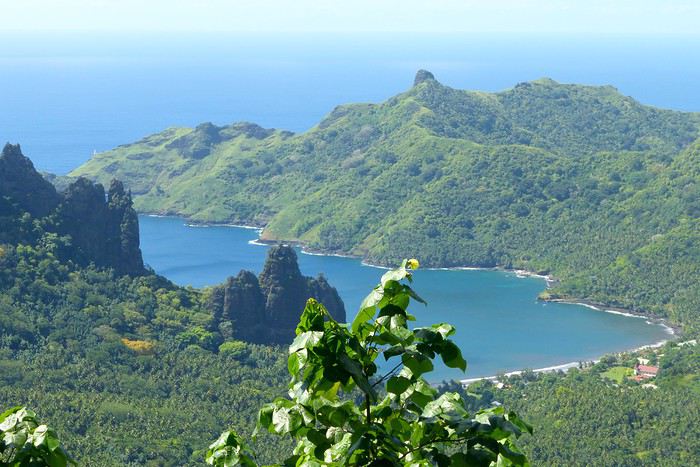
**A LITTLE GEOGRAPHY** Nuku Hiva (NH) is located about 1,500 km from Tahiti, in the north of French Polynesia. At 387 km², it’s the second-largest island in French Polynesia after Tahiti. It was formed by incredible volcanic phenomena and cataclysms between 1 and 6 million years ago, which lifted the island thousands of meters above the sea. Even after millennia of slow erosion, collapses, and settling, NH remains the most majestic of the Marquesas, with its sheer cliffs, deep valleys featuring immense waterfalls, and black walls that were once the inner walls of enormous volcanoes.

**A LITTLE HISTORY** The first contact between NH’s inhabitants and Europeans was in 1595 with Spanish navigators who only stayed briefly. It wasn’t until the late 18th century that Europeans arrived in greater numbers on NH (and the other Marquesas Islands), disrupting a very fragile social and cultural balance. It’s believed that nearly 100,000 people lived on Nuku Hiva at that time—a population decimated over the decades by epidemics, diseases brought by Europeans, and alcohol used for barter. The disastrous result: by the 1930s, only 2,500 people remained, having largely lost their identity and living in poverty. Today, the island has about 2,600 inhabitants spread across several villages, with Taiohae as the main one.

**NUKU HIVA IN LITERATURE**

1 / One of the famous writers who visited NH and stayed there was Herman Melville, who arrived in July 1842, the author of *Moby Dick*. The island had just come under French protectorate. Seduced by the enchanting *vahinés* and dazzled by his paradisiacal vision of the place, Melville deserted his ship. He ended up a prisoner of a local tribe, the Taipi, in Taipivai, where he stayed for a month and a half until an Australian ship captain secured his release in exchange for a musket and a roll of cotton fabric! Melville wrote a novel about this tumultuous episode in his life, considered a classic of travel literature. The book, *Typee: A Peep at Polynesian Life*, published in 1846 in the United States, was a huge success.

2 / Another famous Scottish writer, Robert Louis Stevenson, arrived in NH aboard a yacht that anchored in Anaho Bay, the island’s most beautiful, in July 1888. Stevenson was already known for two magnificent novels that marked their era: *Treasure Island* and *Dr. Jekyll & Mr. Hyde*. Stevenson, too, was captivated by the island’s natural beauty, though he also noted the devastating decline in identity, socio-cultural life, and physical health of a population ravaged by disease and alcohol. His account of his stay, *In the South Seas: An Account of Experiences and Observations in the Marquesas, Paumotus, and Gilbert Islands During Two Cruises on the Yacht Casco (1888) and the Schooner Equator (1889)*, was published in 1896 in New York, four years after his death in Apia, Western Samoa, where he had settled. It was also published in London in 1900.

3 / In August 1903, Victor Segalen, a French naval doctor, ethnologist, and archaeologist, landed in NH from the ship *La Durance*, sent to Polynesia to recover the possessions of the painter Paul Gauguin, who had died in April of that year. He, too, was enthralled by the Marquesas but lamented the loss of identity, dignity, and pride of the Māori, alienated by a Christianization that destroyed their culture and customs, denied their gods, and erased their past. He wrote about his experience, doubts, and fears in *Les Immémoriaux*.

4 / In December 1907, Jack London arrived in NH aboard the sailboat *Stark*, following in the footsteps of his illustrious predecessor, Herman Melville. London was in poor physical condition, exhausted from his relentless travels that had taken him from the Klondike in Canada to Japan, Australia, and London in Europe. He was appalled and shocked by Nuku Hiva’s degraded health situation: where Melville had encountered over 2,000 vigorous and healthy Marquesan warriors, London found only 12 suffering from various diseases—the rest had been wiped out by tuberculosis! His approach remained humanistic, and he maintained a sharp geopolitical awareness of these traditional Polynesian cultures, weakened by the inexorable advance of modernity in the early 20th century. He continued his journey to the Tuamotu Islands and Tahiti, publishing *Martin Eden*, the moving account of his initiatory voyage in the South Pacific, in 1911.

5 / Finally, Alain Gerbault, a writer, linguist, ethnologist, and tireless traveler, arrived in the Marquesas via the Panama Canal in December 1933. He was completely exhausted after an endless crossing on a small sailboat, the *Firecrest*. Enthralled by his stay in the Marquesas, he continued to the Tuamotu Islands in 1934, then Tahiti in 1935. Gerbault fought for the preservation of traditions, as well as the songs and dances banned by the Churches and the French Administration (these bans lasted over 50 years, mind you...!!!). Bora Bora remained his favorite island. A staunch Pétainist during World War II, he was forced to flee Bora Bora for Samoa, then Tonga, and finally Timor, a half-Portuguese island and thus neutral during the war. His travel accounts, *In Pursuit of the Sun: Logbook from New York to Tahiti* and *A Paradise Is Dying*, were published in the late 1940s. He died in Timor in 1941, and his ashes were repatriated to Bora Bora.

Back to our trip and stay.

**Day 1: April 27**

Departure from Papeete at 6:30 AM—we had to wake up two hours earlier and reach the airport in the dark. Takeoff at dawn, good weather en route, flight duration: 4 hours.

Arrival around 10:30 AM in Nuku Hiva, the first stop of this trip. We booked two nights in half-board at Pension Koku’u, transfers included. Maybe not such a great idea, those included transfers, especially on this unique island where the airport is located on *Terre Déserte*, on the other side of the mountain, opposite and about 45 km from the main village of Taiohae. They’re charged at a steep price. Expect 6,000 XPF round-trip by taxi, but 15,000 XPF charged by guesthouses or hotels. The difference is notable. It wasn’t the best idea, but we can’t go back. Even for residents like us who know how to travel in Polynesia, the Air Tahiti employee who sold me the Pass couldn’t give any useful advice about the stay itself—probably because he’d never been to the Marquesas. It’s really annoying! In short, the good idea to remember is renting a car (like a Suzuki) to be free to manage your time and stop at leisure. The road signage is a bit basic, but you’ll manage just fine. Our host Alvane waits for us—without a sign (sic!)—and after searching for each other for 5 minutes, we’re off on a journey of over an hour (with photo stops) in a Land Rover with smooth tires (luckily, it’s not raining!). The recently paved and marked mountain road is impeccable. No time to catch our breath at the guesthouse; we leave immediately (not a great idea after waking up at dawn plus 4 hours on a plane) for a half-day hike that was also included in the prepaid stay. A sandwich was provided (really pathetic for the physical effort required), we have water, and we fill a few bottles at the spring near the ceremonial site of Taipivai, our first stop. Then the hike begins in the Hanaheu Valley, descending toward Anaho Bay and its namesake beach. A magnificent and wild spot, a few sailboats anchored, we swim—the water is really warm, over 30°C at the shore. That warm is rare and not necessarily pleasant. We then have to climb a very steep slope; this hike is actually quite tough. The air is still, humid, and stifling under the foliage, there’s a bit of mud, and tiny ants (which don’t bite, I’ll have you know), locally called *fofolles*, running over shoes, ankles, and calves. Not very pleasant...! On top of that, there are mosquitoes to protect against! In hindsight, it seems wise to bring energy bars from Papeete if you plan to hike on the afternoon of your arrival day. We weren’t careful... Result: a moment of weakness for me and a hyperventilation attack climbing back up from Anaho Bay!!! We return to the guesthouse at night. There we find Claudine and her four children—Marquesan-style atmosphere, friendly and casual. We share family life. Very simple room with a bathroom, no mosquitoes, we can sleep with the window open, but the night will be noisy, as is often the case in Polynesia. Roosters are everywhere and don’t sleep, dogs bark or whine. So we end up waking up early... like everyone else.

**Day 2: April 28**

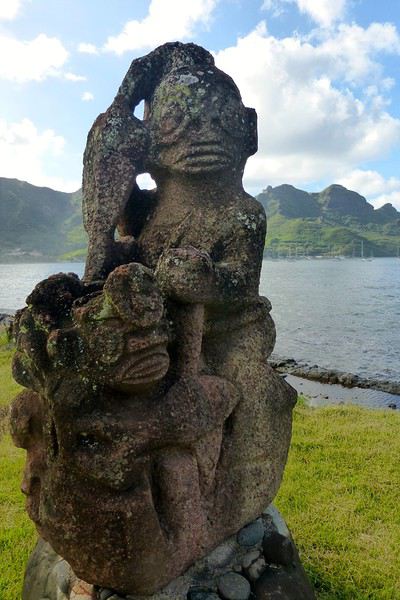
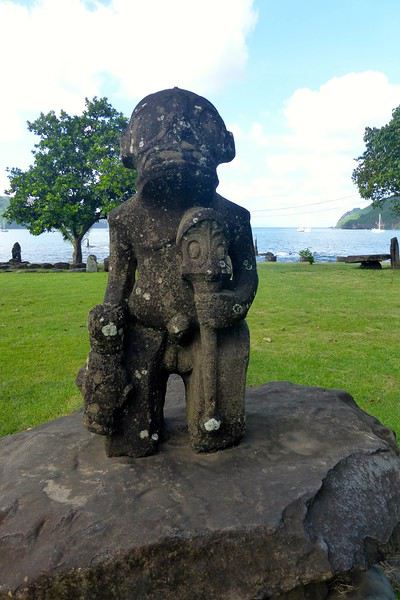
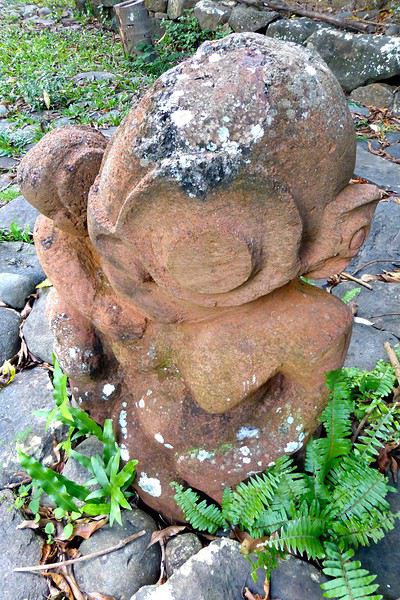
We booked a full-day excursion with Thierry: it starts with a 45-minute boat ride to reach Hakatea Beach, hidden in a small secret bay like many along Nuku Hiva’s coasts. From there, the hike lasts all day—11 km round-trip on flat but also rugged terrain (ancient paved and elevated paths over 1,000 years old)—and river crossings. Bring the right shoes (like plastic Crocs with high socks—not very stylish but practical). We cross the former village of Hakaui, walk along the foundations of dwellings, and there are still weathered tikis in the lush vegetation. The ultimate goal of this hike is to reach the tall Vaipo waterfall. The place is magical, with openings in the vegetation and immense trees allowing photos of the treetops and caves where funeral canoes containing the bones of chiefs or great warriors were once placed. We return the same way to the beach and take another boat ride to reach Taihoae’s port. Back at the guesthouse after a glimpse of Taihoae’s waterfront.
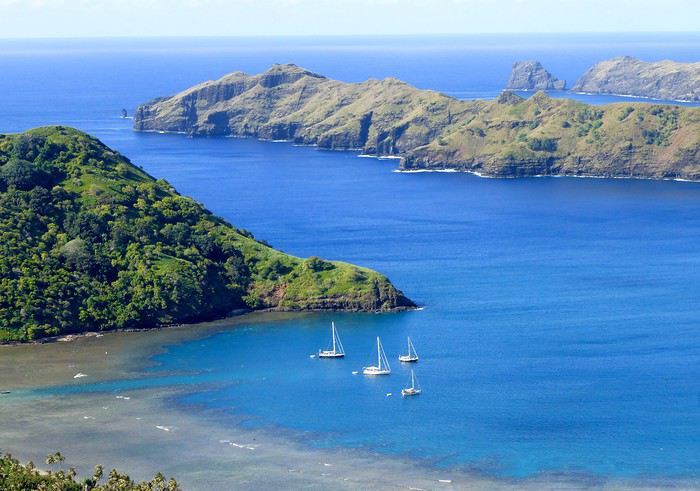
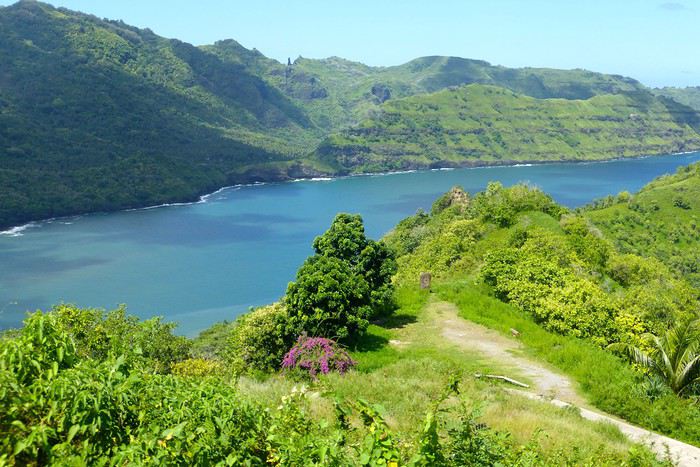
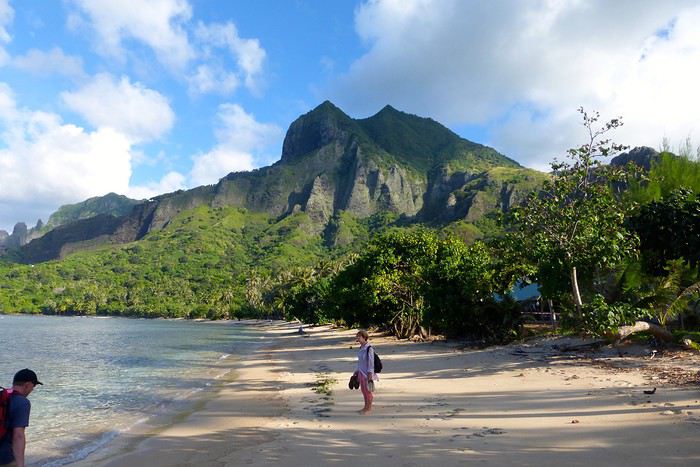
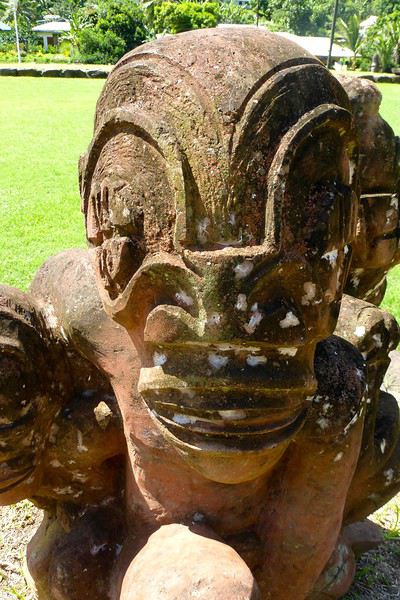
**UA POU**

**Day 3: April 29**

Back to the airport in the late morning for the second flight of the trip to Ua Pou. 20-minute crossing in a Twin Otter (18 seats but only 13 occupied due to cargo between the islands). Beautiful weather, blue sea, nice photos to take upon departure from NH and arrival in UP. We’re greeted by Jérôme, a former military man turned tourism professional, who runs Pension Pukue’e with his wife Elisa, a native of UP. We’re in for two exceptional days. The guesthouse is comfortable, Jérôme and Elisa are very professional and pleasant. Jérôme is also a professional hiker, and Elisa is an excellent cook. We leave quickly for a half-day excursion to Hohoi, after a stop at the archaeological, cultural, and religious site of Maui’a, the Tavaka tribe’s territory. Jérôme is there to explain how Marquesan society functioned at the time and the events that took place on a site still largely buried under vegetation. Then we visit a flower-stone sculptor he knows—the only place in the Marquesas where you’ll find these stones. They’re collected in the river flowing into the sea at Hohoi, sometimes on the beach itself. Back to the guesthouse.

**Day 4: April 30**

A nature hike in the mountains—moderately difficult—toward the Vaiea waterfall is on our program for a good 4 hours. It’s hot, there are mosquitoes, and the dip in the pool under the waterfall (24°C water) is a rare pleasure. Lunch at a friend of Jérôme’s, a former chef for French minister François Fillon, who prepares delicious food. Elisa picks us up by car to return to the guesthouse. Ua Pou is a beautiful and elegant island with its sharp peaks and wild nature. Our favorite, thanks to Jérôme and his wife.
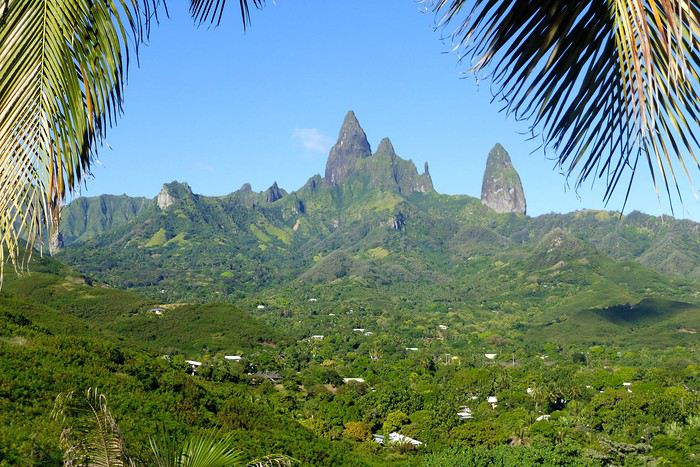
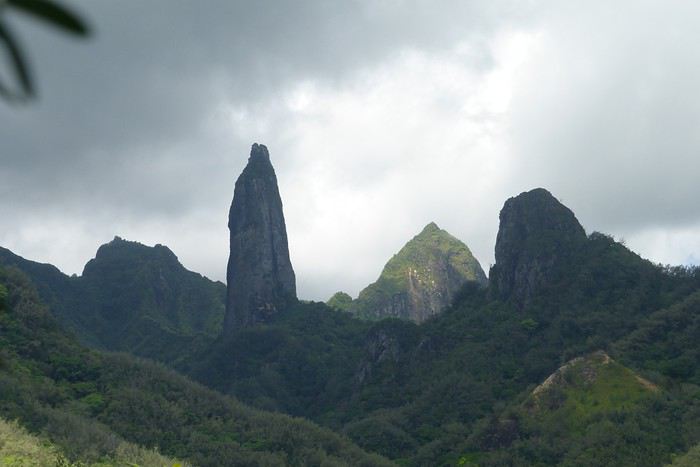
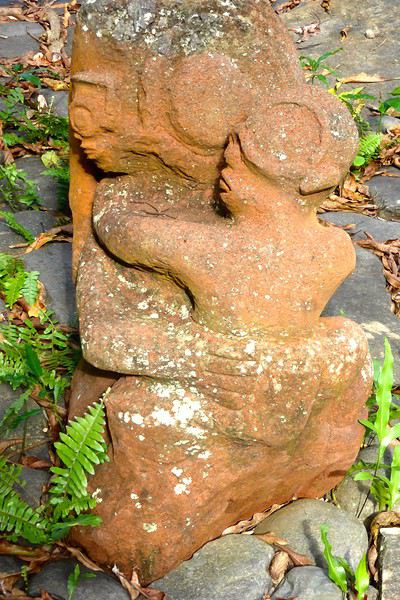
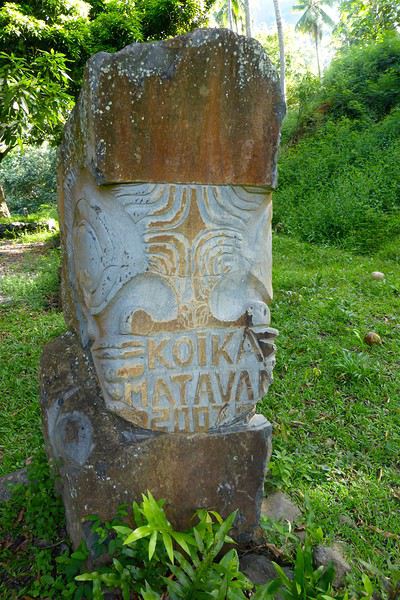
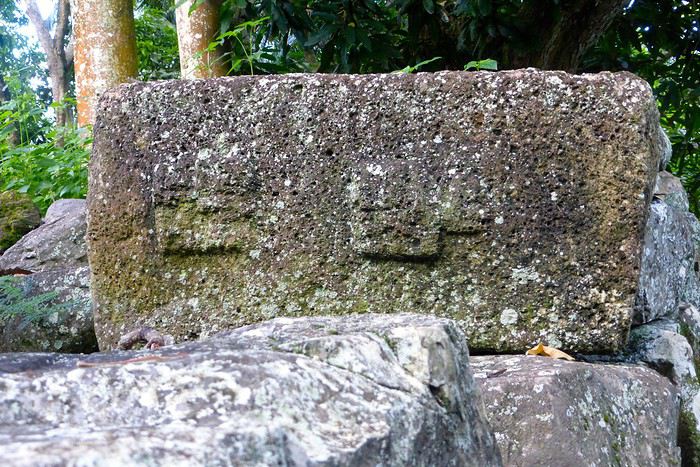
**UA HUKA**

**Day 4: May 1**

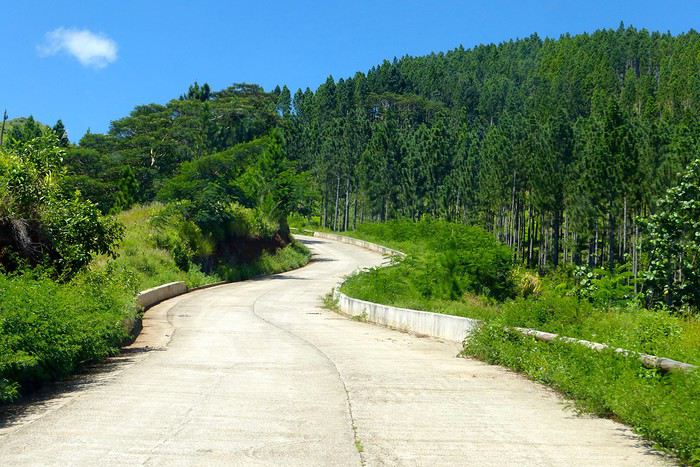
Departure for Ua Huka, the smallest inhabited island in the northern group of the Marquesas, located about 1,300 km northeast of Tahiti. Landing is at the oldest airfield in the Marquesas, built in 1972, between the villages of Vaipaee and Hane. Ua Huka has about 680 inhabitants, according to the last census, spread across 3 villages (since the 1870s): Vaipaee, Hane, and Hokatu. The island peaks at Mount Hitikau at only 884 meters. Its origin: a Hawaiian-type shield volcano that—over a few million years—collapsed to become a caldera (or elliptical depression) in which two small volcanoes appeared, the craters of Tahoatikiau and Teepoepo, now part of the Vaikivi Park. The island is rugged and wild, lower than the others, so less cloud-covered and drier. The bays are jagged, the coastline in ochre tones above the intense blue of the sea, and the beaches are constantly disturbed by the powerful surf. The village of Hokatu is only a few kilometers away (just 14 km of road on the island), but Maurice, our host, drives slowly, and it takes time to go up and down. The road is entirely paved or concreted, which isn’t the case on Ua Pou, for example. The guesthouse is disappointing, perched above the village and thus isolated. Beautiful view of the famous Hane motu and the sparkling sea under the bright sun. Apart from that, there are mosquitoes and cockroaches, the bungalow isn’t clean. Meals are taken with Maurice and Delphine in the village—fine dining isn’t on the menu! Ouch!!! We didn’t luck out...

**Day 5: May 2**

Early in the morning, after breakfast, Delphine takes us to the craft center, which turns out to be a letdown—the items for sale are, in my opinion, crude and poorly carved. Nothing like what’s offered at the Marquesas Fair, held twice a year in Papeete, where you can admire and buy small wonders: wood carvings, flower stone, and coral. Delphine is disappointed we’re not interested, and it shows... She’s a bit sulky! These are items meant for Aranui cruise passengers who land on Ua Huka once every two weeks... Solo travelers like us don’t seem to interest her much. The rest of the day—spent with Maurice—is dedicated to visiting cultural centers and small museums, like the Sea Museum in Hane with its ancient canoes, the municipal archaeological museum on the Te Tumu site above the airfield, the petroglyph house near Hokatu Beach, and finally the Papuakeikaraa arboretum, which gathers endemic plants from all over Polynesia and an impressive citrus collection. No excursion planned to Vaikivi Park, toward the previously mentioned craters that recall the island’s volcanic past. Also missing are the viewpoints, the unique endemic vegetation, and especially the petroglyphs. Too bad... at that price!!! Still, in the evening, we go fishing—with sandwiches and drinks in coolers—with other villagers from the dock at the end of the paved road. It’s cool, windy, no mosquitoes, lots of fish caught, and a great atmosphere. Plus, magnificently starry skies.

Ua Huka is one of the rare islands not invaded by the black rat, which has preserved its birdlife, particularly the ultramarine lorikeet (or *pihiti* in Marquesan), which feeds almost exclusively on flower nectar (banana, coconut, hibiscus, mango, guava trees). A dog imported from New Zealand has been specially trained to detect rats: it inspects cargo unloaded from boats and the docks.

I recommend spending two full days on the island—one for visiting the various museums, the other for hiking in the island’s center park, where the archaeological sites are in their raw state: foundations of agricultural terrace walls, gathering places (or *tohua*), dwelling pavements (or *paepae*), sacred sites (or *me’ae* in Marquesan, *marae* in Tahitian) with their tikis and petroglyphs.

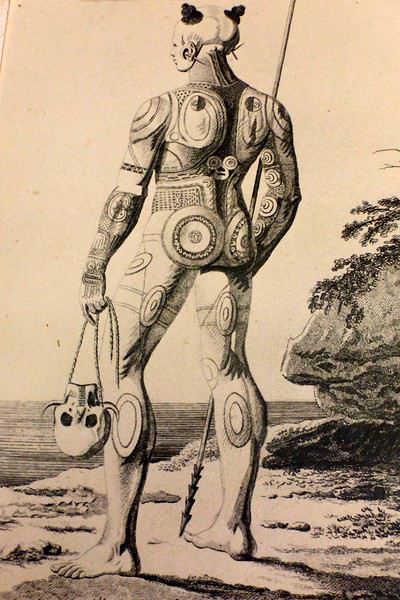
To finish, a bit of info on the island’s name, tied to Marquesan oral culture: according to the legend of the creation of the six Marquesas Islands, Ua Huka is the one that puts the finishing touch on the construction of the god Oatea’s house, each island having a defined architectural function. Ua Huka represents the hole (*ua*) where the god deposits what’s left (*huka* in Marquesan) of the unused materials during construction.
**HIVA OA**

**Day 6: May 3**

Departure in the late morning for Hiva Oa. Maurice—who had other things to do—dropped us off at the airfield 3 hours early... so this stop is a bit of a flop, even if we decided to stay positive! Hiva Oa is the third-largest island in French Polynesia after Tahiti and Nuku Hiva, and before Raiatea in the Leeward Islands. The island is beautiful, lush, verdant, and jagged. The mountains soar into the sky, the sea views are grand, the light is sublime—we’re lucky. Beautiful weather. Tania from Pension Kanahau waits for us at the airport. We’re in for two wonderful days with her. Tania is welcoming, smiling, and dynamic. What a pleasure to be with her, at her place—she cooks divinely and serves the best tuna in the world (the Big Eye reserved for the Japanese) and croquettes made with lobster, shrimp, and crab with breadfruit cubes, for example. Comfortable bungalow, no mosquitoes at night, we can sleep with the window open. It’s fantastic! After settling in, Tania takes us to town in Atuona, a pleasant and well-laid-out little village. We start with lunch—a delicious raw fish in coconut milk—then continue with the must-see attractions: the Catholic cemetery where Paul Gauguin and Jacques Brel’s graves are, overlooking the town; the abandoned Protestant cemetery, reclaimed by the bush, with impressive Marquesan warrior tombs made of huge coral slabs and adorned with a tiki head (harder to find, as no one goes there... ask for directions!); the craft center; the Gauguin Museum (and the Jacques Brel Museum); and the waterfront. While we stroll peacefully, Tania organizes an excursion for the next day, May 4, a full day with Pifa O’Connor, a 36-year-old who knows his island inside out, is passionate about local history, and with whom we’ll hit it off.

**Day 7: May 4**

Pifa arrives at 8 AM sharp at the guesthouse, and we immediately buy sandwiches and water at a small supermarket in Atuona. First, we make a brief stop by the roadside at an unmarked spot, from which we descend a small path through dense vegetation leading to the famous smiling tiki—the only one of its kind in the Marquesas and Polynesia. The place is improbable, the tiki isn’t huge, but it’s beautiful and impressive. Then we’re off on the road that, dizzyingly, runs along and overlooks the island’s northern coast, at the edge of the ancient volcano. Few vehicles pass, the road—now a rocky track—is full of potholes, and we proceed slowly. (Note that this road has been fully paved since 2018.) The panoramas are majestic, with every shade of green against the blue sea. We stop again at the top of a cliff adorned with a huge stone, the *sacrifice stone*, from which young virgin girls were once thrown into the sea to appease angry gods. Another pause for lunch this time, at a small restaurant near the exceptional archaeological site of Puamau. We’ll experience the highlights of this trip during this excursion with our guide, Pifa, who spares no explanations. We discover, on a vast esplanade, the ceremonial complexes of Ta’a Oa and Meae Te I’Ipona, the latter featuring superb tikis, particularly the reclining tiki—or *Maki Taua Pepe*—representing Motherhood, a woman giving birth in a squatting position, as was often the case in many civilizations. Also notable is the *Takaii*, the largest tiki recorded in Polynesia to date. There’s also a huge stone with a now-blunt edge, on which the circumcision of chiefs’ and notables’ pre-adolescent sons was performed. A tough ordeal! But that’s not all! It seems there are more on the mountainside rising steeply behind the archaeological site—overturned tikis, platforms, and, apparently, a giant tiki at the top, which must have fallen but was visible from afar on the sea 30 or 40 years ago, according to the island’s elders. This meeting, worship, and living place—it was actually a small town—is immense. Thousands of people once lived in this part of the island. The site—a religious, social, and cultural sanctuary—would be the size of the largest Mayan sites in Yucatán, but the few concerned owners—two or three families who own the mountainside—don’t want to hear about intensive clearing or tree cutting for now. UNESCO rightly asks for some compliance efforts to grant special treatment to Hiva Oa in particular and the Marquesas in general. We’re not there yet, unfortunately, due to insurmountable local rigidities! This kind of attitude is quite typical in Polynesia: people are afraid to uncover *marae* buried under vegetation—they’re taboo and sometimes said to emit negative and deadly waves, so it’s better not to disturb or anger the ancient spirits or gods who might take revenge. The old religion is never far away in Polynesia, despite the successes of the missionaries.

We return to the guesthouse in the late afternoon. Last night in the Marquesas with Tania, who prepares a fine and delicious meal. Note that dinner costs 2,500 XPF per person.

**Day 8: May 5**

We take the plane as planned, via Nuku Hiva (short stopover). Arrival on time in Papeete.

May this travel journal inspire many of you to visit the Marquesas one day. It’s far, it’s expensive, it’s the trip of a lifetime—it’s unforgettable and unmissable.

Open
MA
Marcelila 7 months ago · Unjourjiraia
Booking Timing for the Marquesas Islands and Shuttle Schedules
Hello! We’re heading to the Marquesas in July-August and I’d love to know if it’s possible, for a fee, to do a leg of the journey on the Aranui—like from Hiva Oa to Fatu Hiva, or Nuku Hiva to Ua Pou, or even Ua Pou to Ua Huka? Sure, there are shuttles twice a week with Codim connecting these islands, but the schedules won’t be known until two months in advance, and I need to book flights and hotels much earlier than that. So, what’s the best way to handle this?

Looking forward to your replies—thanks in advance! Elisabeth Marcel babeth.marcel@yahoo.fr
Open
RA
Rastad 7 months ago · Unjourjiraia
What do you think about Air Caraïbes?
Hi there, I’d like to go to French Polynesia. I found round-trip flights for 650 € with Air Caraïbes. That seems really cheap—anyone here who can tell me about this airline if you’ve flown with them before? Thanks in advance for your help!
Open
CD
Cdave 7 months ago · Kammouraska
Backpacking in French Polynesia
😎Hi there, fellow backpackers in French Polynesia,

I’ll share my personal impressions and some tips for budget backpackers. French Polynesia isn’t just for the rich—I’ve met plenty of backpackers exploring these islands on a shoestring! The biggest expense is definitely the flight ticket. Since the beginning of April 2003, Corsair no longer serves Papeete, leaving only Air France and Air Tahiti Nui (and long live competition!). (AF is ATN’s partner, and a round-trip Paris-Papeete ticket costs at least 1300 € all taxes included.)

"An agreement was signed on 14/08/2002 between the Government of French Polynesia, Nouvelles Frontières Touraventure, Air Tahiti Nui, and Corsair. Corsair’s operation of the Papeete route was scheduled to continue until March 31, 2003. From that date, the Polynesian carrier Air Tahiti Nui would reinforce this route and put two A 340-300s into service."

Before heading to French Polynesia, ask for the brochure *"La petite hôtellerie & l'hébergement chez l'habitant à Tahiti et ses Îles"* (updated every year). Of course, a travel guide from the bookstore is also very useful. Address: Maison de Tahiti et ses îles, 28, bld Saint Germain, 75005 Paris Phone: 01 55 42 64 64 www.voyageatahiti.com This brochure helped me a lot: rates, phone numbers, transfer prices, camping info...

French Polynesia is vast! Which islands do you want to visit? The Marquesas from September to December, and the rest... Two seasons: hot and humid from November to March, and a cooler season from April to October. Note that the rainy season runs from November to April. It can rain for 3 or 4 days straight... but hey, as the Tahitians say: so what! Or, well, plants need rain. In July and August, it gets chilly in the evenings in Tahiti and Moorea (the record is 16°C)!

Things to do on Tahiti: island tour, excursion to the interior, the Pearl Museum, the Museum of Tahiti and its Islands, dinner at the food trucks on the waterfront parking lot (VIP boats), Papeete Market. After that, it’s time to head to the other islands...

Cheapest accommodation right in the center of Papeete: Teamo Hostel (5-minute walk from the market!). Dorm beds cost 2100 CFP (a bit run-down, but hey, we’re backpackers, right?). It’s run by a Chinese grandma married to a Tahitian. (You can’t cook or make coffee anymore because some backpackers stole kitchen utensils.) Apparently, there’s a cheap place to stay near the hospital where you can cook, but I don’t know the address...

Truck fare from FAA airport to downtown Papeete: 130 CFP during the day, 200 CFP at night (runs 24/7). You can eat cheaply at Papeete Market (sandwiches for 300 CFP, takeaway meals from 400 to 700 CFP).

Maritime transport from Papeete to Moorea: Aremiti Ferry, 1060 CFP one way. Truck to Moorea Camping or Nelson and Josiane’s camping: 300 CFP. Rates at Nelson’s: camping 1100 CFP/night/person; dorm 1600 CFP/night/person—clean and much better than Moorea Camping.

At Moorea Camping, the shark tour (feeding sharks and rays + snorkeling) costs 2500 CFP/person for guests and 3000 CFP for others (it’s the cheapest on the island—I did it three times!). Getting around isn’t easy because the truck only runs according to ferry schedules, about 3 or 4 times a day. You’ll need to rent a bike or scooter, but it’s expensive: bike rental for 8 hours is 2000 CFP. For the sporty types, the island tour is 60 km.

I can’t afford to stay at the Sofitel in Moorea, but I know it has the most beautiful beach on the island!

To continue to the other islands, you’ll need to either return to Papeete or take a plane, but since we’re broke, we head back to Papeete to catch the boats at Motu-Uta (the maritime port, a 15-minute walk from downtown). Destinations include: - Tuamotu: Tikehau, Rangiroa, Ahe, Apataki, Manihi, Fakarava... - Austral Islands: Rimatara, Rurutu, Tubuai, Raivavae, Rapa - Leeward Islands: Huahine, Raiatea, Tahaa, Bora Bora, Maupiti - Gambier and the Marquesas Islands: Nuku-Hiva, Hiva-Oa...

You can get maritime schedules from the tourist office (very useful for boat info, schedules, destinations, rates, etc.).

For transport, opt for inter-island ships: schooners or bonitiers (super cheap), but be prepared for long trips with minimal comfort and seasickness... For example, Rurutu to Papeete takes 42 hours at sea! Papeete to Bora Bora is 22 hours!

Update: The cargo ship Dory 2 sank (gasoline explosion), and Vaeanu II is grounded on the reef at Rimatara (Austral Islands).

To be continued in episode (2/)...
Open
GR
Gr12sail last year · Gilmau
Car rental in Moorea
We're heading to Tahiti in October and want to rent a car at the airport to then head to Moorea. Any tips for the rental? Thanks
Open
CO
Corina25 last year · Blackbeard
What guides/websites to prepare a trip to Polynesia?
Hello, and happy New Year to all travelers!

2025 is shaping up to be amazing, as I’m lucky enough to be planning a 6-week trip to Polynesia. I wanted to buy the *Guide du Routard* (my favorite), but I discovered there isn’t one for this destination. And the *Lonely Planet* is from 2022, which I feel is already a bit outdated. So I’m looking for other resources: in your opinion, what’s the best paper guide, and most importantly, what online resources have you used to prepare a trip to Polynesia?

Thanks!
Open
IT
Itineria last year · Groschats
French Polynesia Itinerary
Hello!

I’m planning a solo trip from April 16th to June 2nd!

I have to work for 3 weeks in Papeete when I arrive in French Polynesia, so I can only explore on the weekends (3-day weekends). For my first weekend, I’ll visit Tahiti; my second weekend will be dedicated to Moorea, and the last weekend to Huahine.

After my work period, I’ll continue with my vacation and keep exploring:

Maupiti - 4 nights

Raiatea - 3 nights (including a day trip to Tahaa)

Bora Bora - 3 nights

Rangiroa - 4 nights (could do 3)

Tikehau - 2 nights (could do 3)

Fakarava - 3 nights

For activities, I’m mostly interested in discovering the islands, hiking, and observing wildlife.

I’m not a diver, but I plan to do a beginner’s dive once I’m there. I love snorkeling, though, and I’m wondering if I’m spending too much time in the Tuamotus, which are famous for diving from what I’ve seen.

For travel between the islands, I’ve already looked into the Bora Tuamotu Max pass, which seems like the best option, but I’d love advice on replacing it with one or more ferries.

What do you think? I’m struggling to finalize my itinerary.

Can’t wait to read your replies!

Thanks!!

Celia
Open
BO
Bonnie53 2 years ago · Djalma
Visiting French Polynesia or other islands?
Hi, When I hear our French friends talk about them, they’re the most beautiful islands in the world. For those of you who’ve traveled extensively, is that really the case? Are the prices for accommodation, even basic ones, justified? Isn’t a room in a family-run guesthouse at 150/200 € a bit much? Are there other islands in Polynesia (non-French) that are just as "paradise-like" but more affordable? I’d love to hear your thoughts.
Open
PT
Ptitemarie80 2 years ago · Jeanpaul9878
Honeymoon in French Polynesia
Hi everyone, A quick introduction. I'm 27, I live in Picardy, and I'm getting married in 2017. We'd like to spend our honeymoon in French Polynesia for 3 weeks. I'm open to all kinds of advice!!! I think we'll use a travel agency because our work schedules don't leave us much time to organize the trip... Unless I change my mind! ;-) But we don’t want our trip to turn into tourist clichés—we really don’t like that. That said, we *do* want to see those postcard-perfect beaches and landscapes! We don’t dive, but I think we’ll try a beginner’s dive, and maybe even get our Level 1 certification, depending on how it goes (I read some comments about it on this forum). Anyway, I’m looking for any information and internet links to make this trip a success. This is THE trip of a lifetime, and it has to be perfect! Thanks for your help! I’m also checking out the different threads about Polynesia on this forum ;-)
Open
CA
Cassolarde 2 years ago · Jeanpaul9878
French Polynesia: inshore fishing, lagoon fishing, or big-game fishing?
Hi there, my husband loves fishing, and during our upcoming vacation in French Polynesia, he’s planning to do two half-day trips. We’ll be staying in family-run guesthouses on the following islands: Tahiti, Moorea, Huahine, Bora Bora, Rangiroa, and Fakarava. Which type of fishing should he choose for the best experience, and on which islands? Thanks in advance for your help! 🙂
Open
SC
Scllr 2 years ago
Tahiti Dutyfree and the Rum Bottle Scam
Hi everyone,

I’d like to share the misadventure I had a few days ago when returning from French Polynesia.

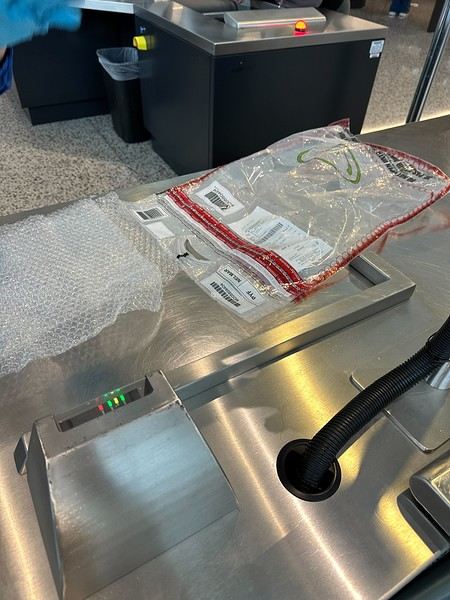
It’s 10:30 PM on October 29, 2024. My wife and I just had an incredible trip and are about to face the gray skies of Paris again. We decide to buy two bottles of Mana'O rum as a souvenir from the Tahiti Dutyfree shop. The staff is charming, the price attractive, everything goes smoothly. They give us our products in a special customs bag—all good. Then my wife has a doubt: we’re transiting through the US, will the bottles make it through customs?

That’s when the trouble starts. I go back to the counter to confirm everything is in order and the products will pass through. They reassure me, explaining that with the special bag, there won’t be any issues. My wife checks customer reviews that say otherwise, so I go back. Again, they tell me there won’t be a problem and that they’ve never received complaints or negative feedback. After half an hour, I return, thinking I’d rather not take the risk. This time, they insist there won’t be a problem and even tell me that if US customs confiscate the bottles, they’ll refund me in full upon presenting the receipt and proof of confiscation: “contact us on Facebook, we’ll refund you.”

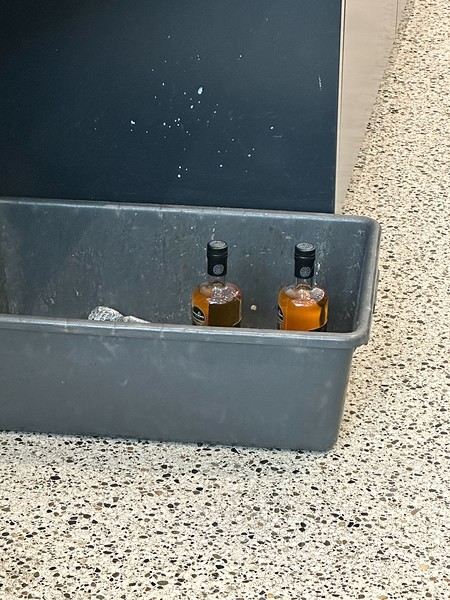
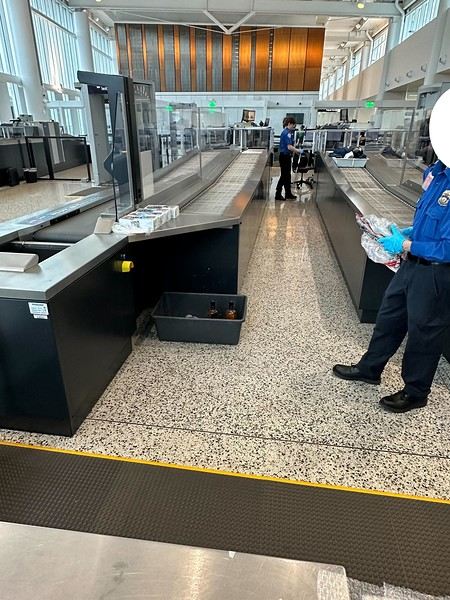
Ten hours later, I’m standing in front of a customs officer who opens the hermetically sealed bag and runs my bottles through some kind of obscure machine. Each bottle is tested three times—each fails. I’m not the only one; many other travelers have their bottles confiscated too. Without hesitation, I grab my phone and document the scene with the officer’s permission.

A few days later, I contact Tahiti Dutyfree, and they refuse to refund the products, claiming responsibility lies with US customs. A misleading response, since it would mean absolving themselves of the responsibility of selling products banned from entering the US to customers who are *required* to bring these purchases into the country.

For the record, it’s impossible that the management of this shop isn’t aware of the issue. They continue selling these items to customers, fully knowing they’ll end up in a trash bin at Seattle or Los Angeles airports.

I’d like to warn Tahiti Dutyfree customers and travelers who might want to bring back this kind of souvenir from French Polynesia, so my experience can help others avoid getting scammed.

If you’ve also been a victim of this, don’t hesitate to reply to this post :) My poor bottles that will end up alone

The official ICAO-STEB duty-free bag

The US customs officer who let me capture this sweet moment
Open
HE
Herodotos 2 years ago · UnaMilanese
Dream Islands: Greece, French Polynesia, Mauritius...
Hello,

Who among us hasn’t dreamed of having a ticket to Tahiti, Bora Bora, or the Marquesas in their pocket—preferably a one-way ticket to “paradise”?

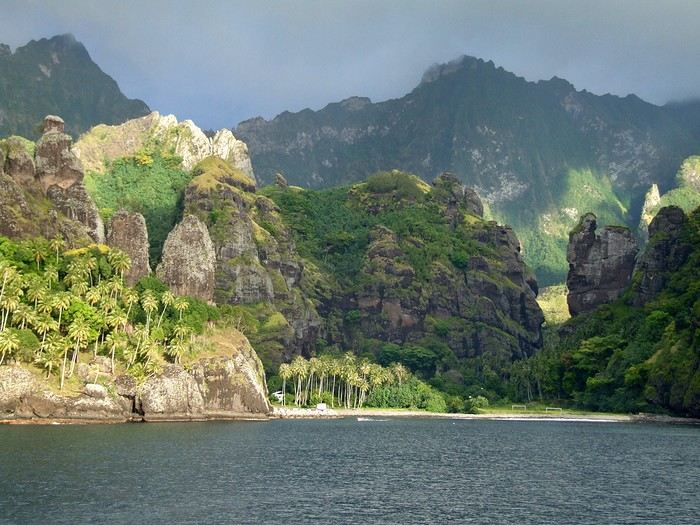
Idyllic landscape of a dream island, but difficult to access: the Bay of Virgins in Fatu Hiva, Marquesas Islands
Among the values conveyed by literature, tourism, and advertising is the quest for “elsewhere,” for a change of scenery, in the truest sense of the word—that is, the need to leave one’s country. This need for otherness, for difference, is projected onto dreamlike, idealized, even mythicized places. In our imaginary world, the island is often that place.

Yet we forget that islands have also been ideal prisons. The examples are numerous: Elba and Saint Helena, Alcatraz and Poulo Condor, If and Yeu, the Devil’s Islands and Leros. The latter, located in Greece in the Dodecanese, hosted a sinister forced labor camp during the colonels’ dictatorship as well as a psychiatric hospital. Despite the beauty of its bay, tourism has remained marginal there due to its bad reputation, unlike the neighboring island of Patmos.

I’d like to share a selection of about a dozen islands from across the world’s seas and oceans. For dreaming...

°°°°°°°°°°°°°°°

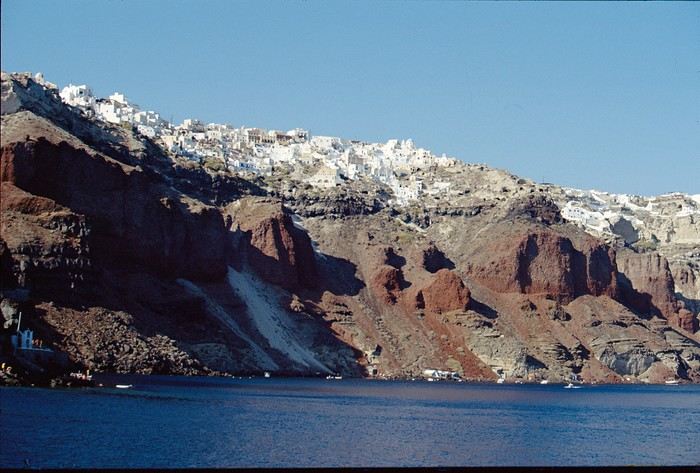
SANTORINI


July 27, 1967

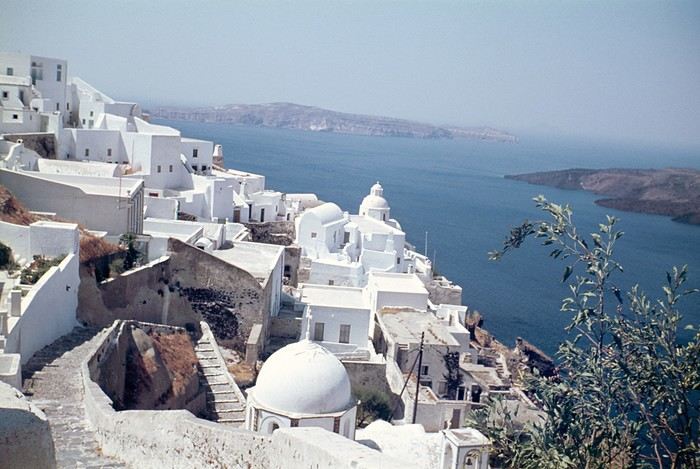
At dawn, the ferry from Agios Nikolaos (Crete) enters the immense caldera of Santorini. From the ship’s deck, Rainer, my travel companion, and I are left in awe by the sight of these towering, multicolored cliffs looming over us. We disembark and begin the steep climb on foot via the winding mule path up to the village of Fira, the capital perched above the cliff. Though it’s still very early, we head to the youth hostel. There wasn’t a soul in the alleys that morning—or rather, there were only cats! I have a fond memory of that encounter with Santorini: a sensory shock, a breathtaking volcanic site, a harmony of blue, ochre-red, and white. A welcoming island, as it was traditional to welcome the xénou, an island that hadn’t yet fully recovered from the terrible 1956 earthquake, a Cycladic architectural marvel where local life was still preserved.

It’s easy to see why, in antiquity, the island was named Kallisté (καλλίστη), “the most beautiful,” as it’s nearly impossible to resist gazing at this landscape shaped by tectonic forces. Indeed, a massive volcanic cataclysm—the Minoan eruption—shaped this scenery in the 17th century BCE, creating a caldera that was quickly filled by the sea. The enormous tsunamis that followed reached Crete, leading to the disappearance of the Minoan civilization.

A cliffside path along the caldera leads us to the peaceful village of Oia, at the northern tip of the island. Blue-domed churches and flower-filled villages with whitewashed houses line the way. This walk is a continuous marvel, offering splendid views of the caldera and the neighboring islands formed by the breakup of the ancient volcano (Thirissa, Nea Kameni). Oia is a large, picturesque village, like Fira perched on the cliff’s edge, which was severely damaged by the 1956 earthquake, and its scars are still visible. Its cave-like houses with vaulted roofs haven’t yet been turned into luxury hotels or shops. Absolute tranquility reigns here.

Oia in 1967—a peaceful village overlooking the caldera. But where are the pools and trendy bars?
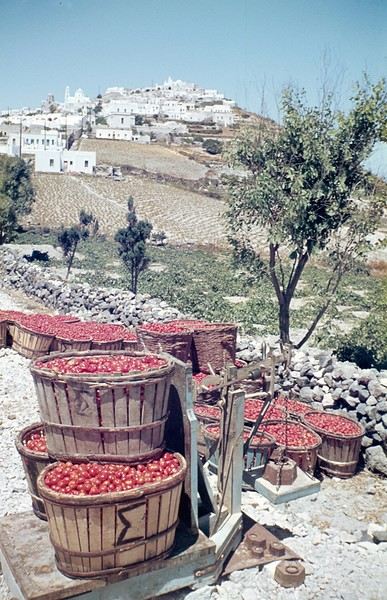
A lush countryside covered in olive trees and vineyards welcomes us for a pleasant hike, interrupted by the kindness of a friendly islander who gives us a lift in his truck for a few kilometers. He’s off to harvest his tomatoes, which he grows at the foot of Pyrgos Hill. The delicious little cherry tomato of Santorini earned an EU Protected Designation of Origin (PDO) in 2013. We climb up to the village of Pyrgos, perched on a hill and dominated by the elegant bell tower of its church. Finally, we reach the black sand beach of Kamari on the island’s eastern coast to enjoy a swim.

{...} To be continued


°°°°°°°°°°°°°°°°°

RAIVAVAE (French Polynesia)


November 15, 2007

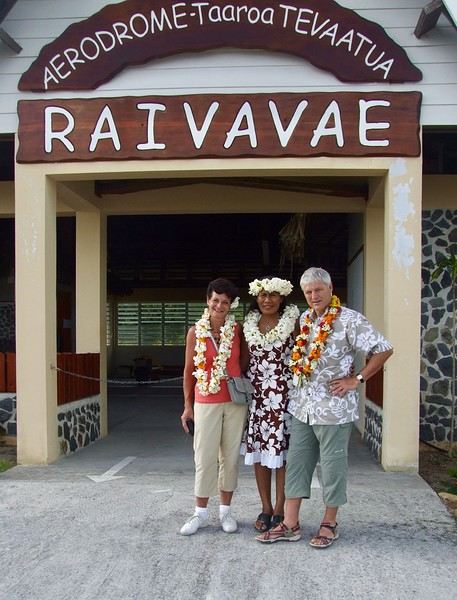
Éléonore from Pension Tama welcomes us with traditional flower leis, as if she’d been waiting for old friends she hadn’t seen in ages. The small airport terminal is lively, the atmosphere warm—people hugging, rejoicing in reunions, all under kilos of flowers. Then, just as quickly, the place empties until the next flight... in a few days.


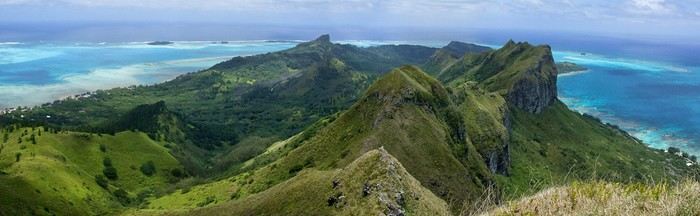
In the Austral Islands, a ninety-minute flight from Tahiti, Raivavae is a world away from the frenetic pace of Papeete or the tourist crowds of the Leeward Islands. The true paradise of the South Seas can still be savored here—it’s a bit like Bora Bora half a century ago. Our first feeling upon arriving on this island is wonder, with smiles that could melt even the gloomiest among us, landscapes so stunning they take your breath away, and above all, a sense of disorientation and fulfillment. Picture a mountainous island, about ten kilometers by three and a half, encircled by a coral reef and wild motu, cradling a lagoon with shades of blue that would make Bora Bora green with envy.

The roughly one thousand inhabitants of Raivavae are spread across four villages around the island. Children are everywhere, as is typical in Polynesia, and they greet you with open, genuine smiles. Here, ancestral values have survived progress. The predominantly Protestant population is very devout, as evidenced by the several temples built across the island. Religious fervor sets the rhythm of daily life. Sundays are reserved for worship and Sunday school (catechism). Work is forbidden on that day, and tourist activities are suspended. These rules are strict and respected.

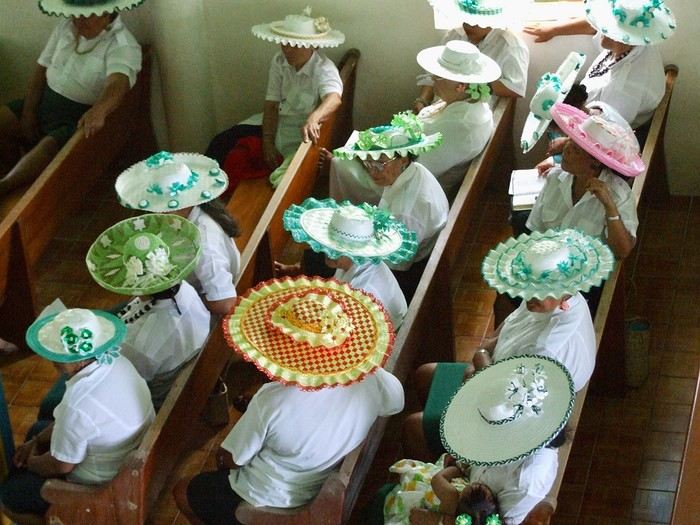
Hat contest for the worship celebration
Yet a sense of resignation is ever-present. The people of Raivavae know they are—and will remain—isolated. Despite the construction of an airstrip in 2004 and a few weekly flights to Tahiti and its nearest neighbor, Tubuai (200 km away), the island remains on the fringes of the world. One painful aspect is the separation of children from their parents when they leave for middle school in Tubuai starting in fifth grade. Television brings daily images of a world the islanders will likely never know, but one they often aspire to.

We are privileged. We have the pristine white-sand beaches of the motu and some of the most beautiful bays in Polynesia all to ourselves. The jewel in the crown, the island’s emblematic spot, is the “motu-pool,” about twenty minutes by boat. A natural, exquisite basin with crystal-clear water, gradients of blue, and white sand. And best of all, there’s almost no one there. In fact, lounging on the beach is frowned upon, especially for young women. Religion looks very unfavorably on sunbathing and lazing around. And yet, everything here leans toward that philosophy of life.


The "motu-pool"

{...} To be continued
Open
GA
Galbord 6 years ago · DKliptus
Court séjour aux Marquises: comment l'organiser?
Bonjour à tous, nous partons à 4 couples de navigateurs louer 3 semaines un catamaran aux îles sous le vent fin octobre. Vous vous doutez qu'avec le Covid il faut et il a fallu jongler avec les reports de vol et les locations. Tout cela avait été finalisé fin d'année dernière mais il a fallu tout revoir au fur et à mesure que la date du vol (28/10 Frenchbee) approchait. Après le bateau nous passerons une semaine entre Moorea (4 jours) et Tahiti (2 jours). Initialement nous partions ensuite pour la Nouvelle Zélande où nous avions réservé un camping-car à 2 couples pour 3 semaines mais la N.Z. nous a fermé ses frontières. Pour remplacer cette dernière escapade, tant qu'à être en Océanie, nous pensons passer 8 jours aux Marquises du 25/11 au 3/12. J'ai prévu d'être du 25 au 29 à Hiva Oa avec une visite le 28 à Tahuata et du 29 au 3/12 à Nuku Hiva. Comme ce sera rapide je ne voudrai pas rater l'essentiel et je m'adresse donc à vous pour des bons conseils, nous aimons randonner et pour se faire vaut-il mieux louer un véhicule ou s'adresser à un guide? Merci surtout de m'indiquer les sites incontournables.
Open
DR
Dropraoul 6 years ago
Périple pour des jours meilleurs en Polynésie
Bonjour, Je viens d'annuler une croisière aux Marquises mais j'ai très envie de retourner en PF quand la situation sera meilleure et surtout que l'on n'aura pas besoin de porter un masque pendant 24 heures de suite pour le voyage, en espérant que cela arrive un jour .... Peut-être Novembre 2021, on peut toujours rêver. Cette croisière passait aussi dans des îles que nous avions déjà visitées donc changement de cap, nous allons voir seulement les îles qui nous intéressent et voyager en avion. J'ai l'habitude d'organiser nos voyages mais j'avoue que là avec le casse tête des vols d'Air Tahiti, je n'ai pas envie de le faire moi-même donc j'ai contacté une agence de Papeete qui a bonne réputation et m'a proposé un programme conforme à ce que je lui ai demandé mais que je souhaite modifier.

Programme proposé : Tahiti : 2 nuits Raivavae 3 nuits Tahiti : 1 nuit Hiva Oa : 4 nuits Nuku Hiva 3 nuits Tahiti : 1 nuit Rangiroa 3 nuits Fakarava 4 nuits Tahiti 2 nuits

Programme souhaité: Tahiti : 1 nuit Raivavae 3 nuits Tahiti : 1 nuit Hiva Oa : 3 nuits Nuku Hiva 3 nuits UaPou 2 nuits Tahiti : 1 nuit Tikehau 3 nuits Fakarava 4 nuits Tahiti 1 nuit J'aimerais avoir l'avis de personnes qui connaissent ces îles quant à mes changements d'une part et d'autre part à Fakarava quel est le mieux entre le Pearl lodge et la pension Viaiama. Mon mari est plongeur et moi je fais du snorkeling donc les Tuamotu sont incontournables mais j'ai peur que Rangiroa soit un peu trop fréquentée donc Tikehau me semble plus adaptée à ce que nous aimons. Je vous remercie d'avance pour vos suggestions. Cordialement. Edith
Open
MI
Micther 6 years ago
Formulaire ETIS pour la Polynésie
Bonjour, Couple Retraités partons le mois prochain (octobre20) en Polynésie pour y passer 5 mois dont 1 mois pour visiter les Îles . Sur l'imprimé ETIS il faut indiquer les dates d'arrivée en Polynésie et la date de départ . Dans les FAQ du site Etis , il est précisé que le formulaire est valable uniquement pour le présent séjour en Polynésie avec un délai maximum de 3 mois de séjour de ce fait je ne sais si nous recevrons le récépicé pour pouvoir embarquer . Quelqu'un s'est-il déjà trouvé dans ce cas là depuis l'application sanitaire et si oui que faut-il faire ? Merci d'avance pour vos réponses . cordialement Michel
Open
NI
Nimou74 6 years ago
Vos retours sur la compagnie aérienne French Bee
Bonjour,

En ces temps incertains, nous maintenons notre projet en PF en été 2021, suivi d'une dizaine de jours en Australie. Je commence à regarder les billets d'avion pour Papeete et les prix pour un simple aller sont prohibitifs pour l'instant avec Air France et ATN: 4200euros...😕 Les tarifs de French Bee sont nettement plus abordables et nous envisageons prendre des billets "Prenium". Quelqu'un parmi vous aurait-il des retours récents sur cette compagnie ? La classe "Prenium" est elle vraiment plus confortable ? Est-il possible par exemple de pouvoir bien incliner son siège pour dormir ? Merci d'avance pour vos infos.
Open
PA
Pacoderable 6 years ago
Qualité des connexions internet à Tahiti
Bonjour a tous, Nous envisageons de venir passer deux mois en louant une maison et aimerions savoir qu'elle est la qualité des connexions internet sur l'ile en general. Quelle est la vitesse standard d'upload and download et surtout la fiabilité du réseau.

Merci beaucoup, Francois
Open
NI
Nimou74 6 years ago
Tergiversations diverses à propos d'un périple en Polynésie
Bonjour 🙂

J'avais ouvert une discussion sur cette destination il y a un an, mais comme mes préoccupations ne sont plus tout à fait les mêmes, je préfère créer un nouveau post... Nous envisageons un voyage en PF pour l'été 2021 (en espérant que la situation s'améliorera d'ici là 😇). A vrai dire j'ai déjà réservé les 4 seules nuits disponibles au Maupiti Lodge début juillet. Maupiti est une priorité pour nous. Nous disposerons d'environ 3 semaines. Les billets ne sont bien sûr pas encore réservés. Donc s'il faut ajouter ou supprimer un jour par ci ou part la, cela ne pose pas vraiment de problème.

L'itinéraire serait le suivant: Arrivée Tahiti / Maupiti / Raiatea & Tahaa / Bora/ Fakarava (ou Fakarava + Tikehau)/ Moorea / Tahiti

En tenant compte de la rotation des vols d'îles en îles, je me heurte à plusieurs ( tout petits) problèmes et j'ai besoin de vos avis...

Rester 5 nuits à Raiatea n'est ce pas un peu trop long ? Ne serait il pas préférable de couper la poire en deux et de passer 2 nuits sur Tahaa, puis 3 (ou 2) nuits à Raiatea ? ou encore 4 nuits uniquement à Raiatea ? Nous aimerions bien avoir de la place au Sunset beach.

Nous envisageons 3 nuits à Bora. Peut être le Mataï ou encore le Blue Heaven... ?

Maintenant concernant Fakarava...Nous ne sommes pas plongeurs et J'ai lu des avis contraires sur cette destination. Certains disent qu'il vaut mieux être plongeurs et d'autres disent que la destination se prête bien aussi au snorkeling. C'est la beauté de cet atoll qui nous attire. Concernant le logement, nous avons pensé au Haivaki Lodge si nous restons 4 nuits . Une autre idée serait de rester 2 nuits à Tetamanu pension et Haïvaki 3 nuits. Qu'en pensez-vous ? ou encore Fakarava 3 nuits et Tikehau 3 nuits.

Nous comptons passer quelques jours à Moorea, probablement aux Tipaniers. 4 nuits sont-elles suffisantes ? Nous prévoyons 2 jours pleins à Tahiti avant le départ.

C'est un peu long et j'en suis désolée... Un grand merci d'avance !
Open
YA
Yannrolly 6 years ago · CaroletDavid
Bateau de Papeete à Nouméa
Bonjour, Une amie habitant Papeete, cherche une place sur un voilier (ou tout autre navire) partant de Papeete à Nouméa, à partir du mois de novembre 2020. Merci de votre réponse. Yann
Open
AV
Avionna 6 years ago
Connaissez-vous Tubuaï dans l'archipel des Australes (Polynésie)
Bonjour Vaikeaiti

J'espère que vous et votre entourage se portent bien et êtes épargnés par le fléau.

Mon 4eme voyage en Polynésie sera aux Austales.

Connaissez vous Tubuaï ? Je recherche un maximum d'informations sur la vie sur l'ile car j'aimerais y vivre pour 1 an ou 2 (humble projet culturel privé). Les seules informations obtenues sont pour les touristes et ce n'est pas ce dont j'ai besoin. Auriez vous quelques conseils/tuyaux pour moi pouvoir progresser ? J'attend que les conditions se normalisent avant de pouvoir faire des réservations depuis l'Espagne - passport est français.

Je me renseigne auprès de la Maison de Tahiti à Paris et la mairie de Tubuaï et j'attend... j'attend leurs réponses........ ( Le Tuhaa Pae lV m'a répondu)

Je vous remercie d'avance, Cordialement Avionna
Open
GA
Galbord 6 years ago · Bairrovoyage
Air New Zealand ne nous remboursera pas
Bonjour, au mois d'octobre prochain nous devrions réussir à aller à Papeete avec French Bee s'il n'y a pas de problème de dernière minute. Nous restons en PF un mois avec 3 autres couples en louant 3 semaines un catamaran aux îles sous le vent.

Nous pensions poursuivre vers la Nouvelle Zélande où nous avons loué un camping-car 3 semaines. Nous avons pris nos billets Papeete-Auckland avec Air New Zealand et ce vol vient d'être annulé et nous devrions recevoir un avoir.

J'ai essayé de savoir si cet avoir pouvait être remboursé même après plusieurs mois et voici leur réponse :

"Oui il existe un règlement européen, le UE 261/2004. Il concerne les retards et les annulations de vols ne vols opérés à partir d'un pays de l'UE ou exploités par un transporteur de l'UE. Votre réservation avec nous étant à partir de Papeete, ces règles ne s'appliquent pas. Bien que Tahiti soit un territoire français, il n'est pas considéré comme un pays de l'UE. Les conditions du tarif s'appliquent donc. Pour répondre à votre question, vos billets basés sur des tarifs non remboursables, resterons non remboursables."

Pensez vous que cette réglementation puisse évoluer?

Notre retour devait se faire par Singapour avec Singapore Airlines, nous risquons d'avoir le même problème.
Open
LI
Liseblanc 6 years ago
De Tahiti en Nouvelle-Zélande en bateau-stop
Papeete, Tahiti - Vendredi 30 août 2019

Je m’installe à bord du Mariposa dans l’après-midi. Mon amie Danièle m’emmène à la marina. Je lui dis au revoir avec le pincement au cœur, comme toujours... Sur Mariposa, je fais la connaissance d’Anne-Sophie et de Daniel, qui ont fait la traversée avec Pierre depuis la France. Ils sont absolument adorables. Le bateau est splendide. C’est un outremer de 51 pieds. Je n’en reviens pas ! À moi la mer, l’horizon, les coucher et lever de soleil sur le bleu de l’océan. L’occasion de me laisser bercer par le bruit des vagues et de parcourir des îles reculées de tout. Et entre deux vomissements (car j’ai le mal de mer, bien entendu) apprendre un peu la voile.

Raiatea – Mercredi 4 septembre

Départ pour Niue ! Mal de mer déjà au bout de 2 heures de navigation. Je m’allonge et observe les nuages dans le ciel. « Attendre que « ça passe. » Paraît-il... Dans l’attente, j’ingurgite deux « mer calme ». Ces putains de médocs m’assomment. Je passe la nuit dans la cabine bâbord arrière, ça tabasse bien moins qu’à l’avant. Merci capitaine !

Niue - lundi 9 septembre

Je me réveille avec un magnifique lever de soleil sur l’île de Niue. L’île se présente plutôt grande, et verte. On scrute les baleines à l’horizon. Mais où sont-elles, bon sang ? Il fait beau, il fait chaud. Mariposa avance à 1 nœud et en attendant que les autorités nous donnent leur ok, moi, je me jette à l’eau. J’ai 1’000 m. de vide bleu entre les jambes. Superbe ! Le bleu est beau, il est aussi immense qu'intense. L’eau est bonne. La visibilité doit être d’au moins 30 mètres. L’océan se fait sublime. Je demande à Pierre de me rejoindre parce que ça me rassure toujours d’avoir quelqu’un avec moi dans l’eau. Lui, il n’en a pas peur, de l’eau... Il fait quelques apnées. Je le regarde, hésitante. Je nage, je l’observe. Je stresse puis je déstresse... Ça me fait toujours bizarre, toute cette vastitude... Puis je finis par le suivre. Mon canard est nul, mais je descends un peu, puis un peu plus. Ça fait tellement longtemps que j’ai pas retenu ma respiration dans l’océan. Au moins 8 mois. Et tout à coup, le grandiose se produit... Je lève la tête, et je regarde à la surface. C’est tellement beau ! Putain j’avais oublié à quel point c’est merveilleux, là-dessous... Le fond m’attire. Merde, j’ai plus envie de remonter. Cette tranquillité, cette paix, ce calme... Et à nouveau cette question qui n’avait alors pas franchi la barrière de mon conscient depuis des mois me traverse soudainement en un éclair :" Suis-je vraiment obligée de remonter là-haut ?" "La vie est faite de choix", dit toujours mon père. Ce choix-là ne tient-il qu’à moi ? Intérieurement, je soupire. Ce n’est pas le moment de penser à quoi que ce soit. D’ailleurs, je ne pense à rien. Je suis juste là, posée en apesanteur au milieu de l’océan, émerveillée par les rayons de soleils qui le transpercent. Mon trop-plein de CO2 dans le sang me rappellent pourtant qu’il faudra que je respire à nouveau rapidement. Et me voilà à m’observer en train de palmer en direction du monde des humains... Tant pis, et tant mieux, aussi. En remontant sur le bateau, je fais un petit bilan hygiénique : J’ai pris qu’une douche en six jours et ça doit faire 48 heures que je ne me suis pas brossée les dents. Le mal de mer m’a tuée. Je file me brosser les dents. La douche ? Je dis à Pierre : "Le plouf dans l’océan, c’était ma baignade du mois !" Il me regarde, les deux mains posées sur les hanches, un sourcil haussé et secoue la tête en me répondant : "J’y crois pas, t’es encore pire que moi... !" Je ris. Je suis trop heureuse d’être là. Nous mettons le bateau au corps mort puis allons à terre avec nos papiers. Le mal de terre ne se fait pas trop sentir et je suis super heureuse de mettre mes pieds nus dans l’herbe. On mange, on choppe internet, on trouve une bagnole à louer pour le lendemain. Le soir, je décide de dormir dehors, sur le trampoline. La lune se fait belle et est presque pleine. La vie est belle.

Archipel de Vava’u, Tonga - dimanche 15 septembre

On arrive tôt le matin. Surprise ! C’est dimanche. Apparemment, on a passé une des lignes de changement de dates. Encore une invention humaine à laquelle je ne comprends pas grand chose. On passe vite fait en ville, tout est fermé. On remonte sur Mariposa et partons plus au sud. On passe dans une passe d’une vingtaine de mètres de large : c’est chaud chaud chaud !! Mais une fois passée... Qu’est-ce que c’est beau ! On y a trouvé un coin de paradis pour y passer la fin de journée et la nuit. Au programme de cet après-midi : sieste et snorkeling. Ce soir, nous avons droit à un incroyable lever de pleine lune. (Même deux levers de lune : un dans le ciel et un à bord de Mariposa. (Comprendra qui pourra... Merci Eric ! ). Après quelques rhums (pour les copains) et un coca (pour Lise), bain de minuit et rire à n’en plus finir. Je lis un moment et m’endors sur le trampoline. J’arrête pas de me dire que la vie est trop belle. Merci la vie, merci !

Port Vila, Vanuatu - jeudi 3 octobre

La paperasse est en ordre: je peux débarquer quand je veux. Demain, normalement... Pierrot et Éric vont monter sur Espiritu Santo, puis sur la PNG. Je fais un peu de shopping aujourd’hui et je profite d’Internet dans un bar. Tout le monde regarde le match de rugby, il y a une bonne ambiance. Je ne me soucie pas trop de trouver un embarquement sur Lifou ou Nouméa. Ici, il y a plein de bateaux et je ne suis qu’à quelques miles de la Nouvelle-Cal...

Pahia, Bay of Islands, Nouvelle-Zélande - lundi 18 octobre

Terre en vue ! Gros vent et grains à l’approche des côtes. Ah, enfin un peu d’action, mon moussaillon ! J’ai un big smile sur la face, à moi la NZ ! ​ Nous arrivons à 16h tout juste. Timing parfait, puisqu'on a le temps de faire la paperasse et de converser avec les autorités. Je crains qu’ils me demandent une preuve de sortie du pays, mais ils tamponnent mon passeport sans piper mot. 3 mois de visa touristique donc, superbe ! Je le prolongerai en temps voulu. On décide d’aller au restau de la marina pour fêter notre arrivée. On y va et j’ai a peine fais deux pas dans le restaurant que j’entends un « Hey, Lise ! ». Je me retourne et qui c’est que je vois pas ? Mon pote James ! Putain, James est là ! "Mais c’est, celui-là ? » C’est un mec en or, un Australien Skipper qui est passionné par son job et qui m’avais contactée sur FB suite à l'annonce que j’avais posté lorsque je cherchais un bateau pour le pacifique sud. On s’était croisé dans un restau (par hasard) à Raiatea et sommes restés en contacte depuis. Je suis trop refaite de le retrouver ici !

Je lève le pouce, tout sourire. J’ai une sensation grisante de liberté et ne pourrais être plus heureuse qu’en cet instant. Le soleil brille dans un ciel dénué de nuages. La vie coule dans mes veines, je transpire de bonheur et respire la joie de vivre. J'ai des guilis dans le ventre, quand je pense à l’aventure qui m’attend. Il me reste de la route à faire, avant de marcher, mais déjà, l’idée du Te Araroa rempli tous mes sens d’allégresse et de béatitude. Y’a plus qu’à !

Vous voulez découvrir d’autres aventures autour du globe ? Rejoignez-moi sur ma page FB Lise Blanc @lesvoyagesdelise ou sur mon blog https://www.lesvoyagesdelise.com
Open
VA
Vaikeaiti 6 years ago
Retour aux Marquises: les îles méridionales Hiva Oa, Tahuata et Fatu Iva
INTRO En ces temps épidémiques troublés, la Polynésie Française - et en particulier l' archipel des Marquises - ont des atouts exceptionnels en matière de tourisme. A ce jour, l' épidémie de Coronavirus a juste effleuré le Territoire -presque uniquement Tahiti et Moorea - dont les îles éloignées ont été strictement confinées dès le départ, les offres sanitaires et hospitalières sur place étant très limitées. Pour l' instant, la situation est sous contrôle. Le tourisme retrouve lentement ses marques depuis la mi-juillet. Il s'agit actuellement plus de tourisme local que de tourisme international, bien que la destination Polynésie / Marquises soit attirante : beauté et unicité des paysages, authenticité d'un archipel, certes situé à 4 heures d'avion ATR de Tahiti, mais que l' on peut facilement découvrir en solo et donc en dehors de la très onéreuse croisière sur l' Aranui, sécurité physique mais aussi sanitaire. Les Européens - dont une majorité de Français - arrivent... Ils avaient déjà leurs billets depuis des mois et l' entrée sur le territoire est facilitée. Nous devions faire ce second voyage aux Marquises en mai dernier, mais il fut annulé jusqu'à la reprise progressive des vols en interne. Nous avons simplement acheté un billet Air Tahiti en ligne, sans utiliser le Pass Marquises qui ne permet pas de visiter les deux îles les plus méridionales, à savoir Tahuata et Fatu Iva, dépourvues d'aéroport. On ne peut y aller qu' en bateau, en excursion à la journée ( ou plus bien sur ) pour Tahuata et en navette municipale au départ de Hiva Oa pour aller à Fatu Iva. Les horaires changeant fréquemment, la première chose à faire est de se renseigner sur les jours de passage vers Fatu Iva. En ce moment, il y en a trois : le lundi ( départ à 2 heures du matin ), le mardi ( départ à 6 heures ) et le samedi ( départ à 6 heures également ). Mais tout cela aura peut-être changé dans 3 mois. Il faut donc une stratégie d'approche ! On peut rajouter la visite de ces deux îles à celles qui sont incluses dans le Pass, à savoir Nuku Hiva, Ua Pou, Ua Huka et Hiva Oa. Prévoir alors une extension de 8 jours environ, à partir de Hiva Oa. Pourquoi vouloir absolument visiter ces deux îles peu accessibles ? Justement parce qu'il faut les mériter ! Elles demeurent très différentes. L' une, Tahuata, a un lagon, des plages de sable blanc, des falaises abruptes, des baies échancrées ourlées d'une végétation luxuriante, des couleurs uniques dans les bleus et turquoise et culmine à plus de 1000 mètres. L' autre, Fatu Iva , est une beauté sauvage et altière avec ses à-pics qui dévalent vers l' océan bleu outremer ( ou 'moana' en tahitien ), connue surtout pour sa fameuse baie des Vierges, considérée par beaucoup - en particulier les navigateurs - comme la plus belle île de Polynésie. Dans mon premier carnet sur les Marquises, j' avais déjà mentionné notre séjour à Hiva Oa, un peu trop court. Cette fois, entre notre arrivée et notre retour, nous passerons 4 nuits à Hiva Oa et 4 nuits à Fatu Iva. Une journée et demie sera consacrée aussi à Hiva Oa. Avant de partir à la découverte de ces îles polynésiennes lointaines et peu visitées, quelques chiffres édifiants qui montrent que les Marquises ont échappé de peu à l' oubli, à la perte de leur identité singulière et à la disparition de leur culture. L' archipel comptait 20000 habitants en 1842, seulement 2000 en 1920, environ 8000 actuellement en 2020. Au début des années 1920, c'est grâce à la politique nataliste du Dr Rollin, administrateur des Marquises de l' époque, que la situation commença lentement à s' améliorer. Ensuite et paradoxalement, ce fut un évêque, Mgr Lecleac'h, qui s'érigea en animateur engagé du réveil identitaire, via la sauvegarde du patrimoine, la reconnaissance de la langue marquisienne ( et non tahitienne ), les danses ( jugées trop lascives par les missionnaires ), les chants, le tatouage, enfin l' artisanat inspiré des motifs et des symboles de la culture ancienne. L' icône du renouveau marquisien est sans conteste le tiki, demi-dieu et créateur de l' homme. En lui réside la divinité et les ancêtres légendaires.


TAHUATA ou Île Lumière

DANS LA LEGENDE DES MARQUISES C' est la plus petite île habitée des Marquises dont le nom signifie l' aube en marquisien. J' aurai, plus tard, l' occasion de revenir sur la légende de la création des Marquises : dans cette légende, Tahuata représente le dernier acte de la construction avant l' aube. La symbolique de son nom est liée à l' arrivée de la lumière du jour, signifiant la fin de la construction de la 'Grande Maison', alias l' archipel des Marquises.

UN PEU DE GEOLOGIE Tahuata et Fatu Iva sont soeurs géologiquement parlant. Ce sont des îles plus jeunes que celles du nord de l' archipel ( de 5, 5 millions d'années au Nord-Ouest à seulement 1,2 million d'années au Sud-Est ) L' activité volcanique passée s' est matérialisée sous la forme de volcans dits boucliers, différents des volcans hawaiïens ou tahitiens, qui , suite à des secousses sismiques violentes et répétées, se sont peu à peu effondrés, disparaissant sous les flots de la moitié voire davantage des boucliers initiaux. Résultat : les calderas sont imbriquées l'une dans l' autre , la caldeira initiale étant dotée d'un volcan interne plus petit et plus récent. C 'est le cas à Fatu Iva par exemple.

UN PEU DE GEOGRAPHIE

Située à seulement 4 kms de Hiva Oa , on ne peut rejoindre Tahuata que par mer après 40 à 60 mn de navigation selon le temps ( il existe un catamaran communal, le Tahuata Nui mais qui est souvent en panne pour une durée indéterminée... ). On choisira entre l' excursion à la journée ou le passage simple en speedboat privé, assez cher. Ou si l' on doit résider à Tahuata, on s'arrangera au préalable avec la pension de famille choisie pour discuter des modalités et du prix de la course aller-retour entre Tahuata et Hiva Oa. Le canal dit du Bordelais qui est emprunté par les bateaux peut être extrêmement agité par des courants violents et rallonger un peu la course. (Petite digression sur ce fameux canal du Bordelais... Qui est donc ce Bordelais ? Un certain Joseph Capri ( ou Kabri ou Kabris ), originaire de Bordeaux même, initialement matelot de son état sur un bâtiment baleinier qui fait naufrage sur la côte de Nuku Hiva. Kabri , capturé par les guerriers du roi anthropophage de NH, s'apprête à mourir et à finir rôti à la broche, mais est sauvé in extremis par la fille du roi qui demande sa grâce. Celle-ci est accordée, il épouse la belle dans la foulée, le roi tatoue son gendre lui-même, lui offre des parures en tapa et mousse et le nomme grand juge du pays. Il tue, torture, garrotte, découpe en morceaux. Il pacifie à sa manière ! La vie est douce et belle, il a six enfants de sa princesse marquisienne ... Et puis un jour où il sommeille dans la nature, il est kidnappé par le navigateur russe Krunsenstern qui, à coups de knout, le ramène au navire puis à St Petersbourg pour y être interrogé et jugé. Kabri parvient à s' échapper vers Paris, demande à rencontrer Louis XVIII qu'il traite comme son cousin. Ce dernier - contre toute attente - le reçoit et lui donne un peu d'argent, mais la chance a définitivement tourné pour Kabri qui se retrouve à Valenciennes, gagnant son pain comme bête de foire. Il mourra à 42 ans, épuisé et sans avoir pu repartir vers son île marquisienne et vers sa famille nombreuse. Les autorités lui éviteront post mortem l' infamie d'une exhumation et d'un empaillage, son tatouage corporel et facial ayant conquis un amateur !!! JB Kabri le Tatoué, dessin publié dans le livre de Von Langsdorff

Retour à Tahuata... L' île n'est entourée que partiellement de récifs coralliens ( comme Mangareva aux îles Gambier ) , et est agrémentée de magnifiques plages de sable blanc, en particulier celle de Hanamoenoa. Avec ses versants escarpés se terminant en falaises, des vallées étroites et profondes ouvrant sur des baies échancrées à la végétation dense telles celles jumelles de Iva Iva Nui et de Iva Iva Iti, Tahuata surprend et attire. ' C'est une des rares fois où j' eus le désir de posséder de la terre ', écrivit en son temps le navigateur Alain Gerbault, conquis par une île qu'il qualifiait d'enchanteresse. Son relief est très accidenté et les communications terrestres - sur des pistes improbables - entre les vallées sont difficiles. L' île culmine au Mont Tumu-Mea-Ufa à 1050 m. Sa superficie est de 60 km2, avec une population de 650 à 700 habitants environ. L' île comporte 4 villages : Vaitahu, petit port historique, avec son église aux murs de galets et un magnifique vitrail, son musée d'art et d'histoire, et sa proximité avec des sites archéologiques; Hapatoni, autre village avec sa voie pavée ou ' allée de la reine ', construite sur ordre de la reine Vaekehu II au 19ème siècle, bordée d'arbres centenaires de tamanu plantés par les anciens , et ses ' me'ae ' ( ou ' marae ' en tahitien). Egalement Motopu et Hanatetena, deux plus petits villages. Il y a d'autres chemins pavés dans l' île, à Hapatoni en particulier, et des pétroglyphes à Hanatahua. On peut donc passer plus d'une journée à Tahuata, y séjourner dans l' une de ses pensions. Les chemins et pistes de l' île se prêtent parfaitement à la randonnée pédestre.

UN PEU D HISTOIRE

Plusieurs édifices du village de Vaitahu commémorent un passé souvent tragique. On peut y voir les trois stèles érigées en souvenir de l' arrivée des Espagnols en 1595, puis de celle de militaires français en 1838 et enfin de la prise de possession de l' archipel par l' amiral Abel Dupetit-Thouars en 1842. Alvaro de Mendaña y Neira jeta l' ancre à Vaitahu en 1595, un premier contact avec ceux que l' on appelait à l' époque dans les mers du Sud et ailleurs ' les naturels ' qui tourna rapidement au massacre par les soldats espagnols de 200 villageois, guerriers et civils mélangés. On peut comprendre, dans ce contexte, que l' arrivée d'Occidentaux au 18ème siècle et au début du 19ème siècle ait suscité beaucoup de méfiance, d'animosité et d'hostilité de la part des habitants de Tahuata, et des autres îles également. Les premières tentatives d' évangélisation protestante d'abord en 1797 puis catholique en 1839 se soldèrent par un échec retentissant ( le gouvernement français avait l' habitude d'envoyer les missionnaires en éclaireurs afin de tâter le terrain.. ). Le religieux ayant failli à sa mission, il restait donc le politique et le militaire : l' expédition Dupetit-Thouars arrive en vue de Tahuata mi - avril 1842. Les Français sont dans un premier temps plutôt bien reçus par le chef / roi Iotete qui a récemment subi la pression de la marine américaine et qui se dit que la France le protégera. On attribue donc un terrain en hauteur aux Français pour la construction d'un fortin et d'une garnison. Dupetit-Thouars veut aller vite et propose à Iotete de se mettre sous la protection du roi de France, Louis-Philippe. Iotete accepte et, le 1er mai, est organisée une cérémonie pour la prise de possession officielle des îles Sud de l' archipel des Marquises - et par extension de tout l' archipel - par la France en présence des missionnaires et du neveu de Iotete, Maheono, également chef de Hanatetena. Et puis rapidement, un malaise grandissant s'installe, l' ambiance se dégrade, Iotete devient peu accommodant et versatile, ne supportant pas de se voir privé de son autorité de chef incontesté. Il fugue dans la montagne, organise la résistance aux Français que l' on vient pourtant de fêter, et finit par assiéger le fortin à moitié achevé avec ses guerriers. Résultat : des morts et des blessés des deux côtés et un chaos inattendu. Après palabres et promesses, l' amiral, fidèle à sa stratégie initiale, convainc Iotete - contacté et ramené à la raison par son neveu - de revenir à la table des négociations, et les termes d' une paix durable sont établis définitivement. Iotete a tenté de lutter mais a perdu et la guerre et son pouvoir, son ' mana '. Il mourra l' année suivante, une fin triste et sans avenir pour un chef qui ne sera pas élevé au rang de dieu le jour de ses funérailles.

Prise de possession officielle de Tahuata De g. à d. : Maheono, Iotete ( en habit militaire d'apparat à galons d'or époque Louis XV ), le père Baudichon, Abel Dupetit-Thouars

Iotete le 1er Mais 1842 ( portrait par Max Radiguet ) Iotete le 1er mai 1842 ( portrait par Max Radiguet )

Maheono, neveu de Iotete et son saisissant tatouage facial
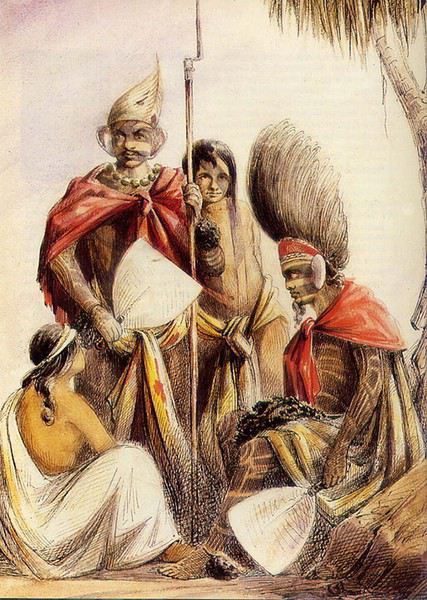
Guerriers marquisiens 19ème siècle
L' amiral repart bientôt sur son navire La Reine Blanche vers Tahiti où il va obtenir le 9 septembre 1842 de la reine Pomaré IV son acceptation formelle de placer son île sous protectorat français. C' est ainsi que Les Marquises alias La Terre des Hommes ( ou Te Fenua Enata en marquisien ) devient la première colonie française dans le Pacifique Sud un peu avant Tahiti.

FAUNE ET FLORE Depuis sa disparition de Hiva Oa, suite à l' introduction malheureuse d'un rapace nocturne, le grand-duc de Virginie ( ou Bubo Virginiasus en latin ), la seule population survivante de ' pahi ' ou martin-chasseur des Marquises, vit à Tahuata, en grand danger d'extinction, car en déclin lent mais constant. il ne resterait que 300 individus au mieux. La destruction du grand-duc est autorisée à cause de son impact fatal sur la faune aviaire locale. Des excursions à pied et à cheval, en excursion à la demi-journée ou à la journée entière, à la découverte du ' pahi ' sont possibles. Contacter le comité de tourisme de Tahuata.

ACTIVITES TRADITIONNELLES

Il y a à Tahuata plusieurs centres d'artisanat et ce dernier est le plus réputé des Marquises, en particulier pour la sculpture sur os. Dans l' île, on est souvent sculpteur de père en fils; les hommes travaillent le bois de rose, l' os de cheval, de chèvre et de mouton et le rostre d'espadon. Dans la vallée d'Hapatoni, ce sont surtout d' expertes sculptrices qui sont à l' oeuvre, souvent depuis des années. Au travail de l' os ou du rostre d'espadon, elles ajoutent la confection de bijoux originaux. La culture du coprah est bien présente à Tahuata et permet aux agriculteurs de gagner un revenu fixe. Les cultures vivrières et les récoltes d'agrumes tels les pamplemousses, très réputés permettent l' autosuffisance alimentaire des habitants de l' île et un peu d'exportation vers le marché et les supermarchés de Papeete ( via la diaspora marquisienne installée à Tahiti ). Pêche et chasse participent également, pleinement, de ce désir d'autosuffisance. La nature est généreuse et tout pousse à profusion et l' on vit simplement mais plutôt bien à Tahuata comme ailleurs aux Marquises, d'autant que désormais, les cargos mixtes apportent régulièrement de Tahiti ce qui manque aux îliens.

Fatu Iva L' île de tous les superlatifs / L'île érotique


Guerrier marquisien tatoué originaire de Fatu Iva 19ème siècle On notera sur sa poitrine les motifs reconstitués d'une tête de tiki, que l' on retrouve aussi sur la crosse du casse-tête ( ou ' u'u ' en marquisien ), arme réservée au guerrier. Cette tête est supposée augmenter le ' mana ' ( alias la puissance ), les yeux en amande évoquent cette puissance surnaturelle tandis que la bouche étirée où apparaissent parfois langue et dents, est censée défier l' adversaire.

SELON LA LEGENDE Dans la légende de la construction de l' archipel des Marquises, selon laquelle chaque île est partie intégrante de la Maison des Dieux, Fatu Iva représente la toiture faite de 9 ( Iva ) tresses ( Fatu ) de feuilles de palmier. Elle s'est aussi appelée Santa Magdalena, nom donné par Alvaro de Mendaña en l' honneur de la sainte du même nom.

UN PEU DE GEOGRAPHIE Fatu Iva est une île située à 75 kms de Hiva Oa, d'une superficie de 84 km2. Longue de 10 kilomètres et large de 4, elle a la forme d'un croissant ou d'un haricot. Elle culmine au Mont Touaouoho à 960 mètres et héberge une population d'environ 600 habitants. C' est l' île la plus australe de l' archipel, la plus isolée aussi car il est impossible d'y construire un aéroport en raison du relief accidenté ou même un aérodrome comme à Ua Pou par exemple. C' est aussi la plus pluvieuse, étant la plus proche du tropique du Capricorne. Les pluies étant abondantes, l' île est recouverte d'une végétation luxuriante en particulier en son centre où prospère une forêt primaire tropicale dense. C' est aussi l'île la plus sauvage et la plus spectaculaire de l' archipel. Géologiquement parlant, elle est constituée de deux caldeiras volcaniques enchâssées l' une dans l' autre. La première date de 2 millions d'années environ, la seconde, deux fois plus petite est née d'une énorme éruption, comme en témoignent les massives chandelles basaltiques qui montent au ciel tout autour de la baie de Hanavave, dite baie des Vierges. Initialement appelée baie des Verges par les Marquisiens, elle a été rebaptisée par de pudibonds missionnaires, effarouchés par l' imagerie locale et ses sous-entendus. Fatu Iva n' a que deux villages situées chacun sur le bord extérieur des deux caldeiras : Hanavave aux colonnes basaltiques et Omoa, chef-lieu de l' île , village surplombé par un piton rocheux qui surprend par son profil rappelant la tête d'un moai de l' île de Pâques.

UN PEU D'HISTOIRE Comme les autres îles de l' archipel, Fatu Iva fut initialement peuplée par des Polynésiens venus de l' ouest. Les rivalités entre tribus étaient au départ incessantes et donnèrent lieu à des batailles sanglantes. C' est en juillet 1595 que l'île - tout comme celle de Tahuata - fut abordée pour la première fois par un occidental, le navigateur espagnol Alvaro de Mendaña de Neira , le premier du genre à avoir établi des contacts avec des populations polynésiennes. Mais il n' y débarqua pas. Il crût tout d'abord avoir découvert les Iles Salomon, le but ultime de son voyage, mais se rendit rapidement compte qu' il avait découvert une nouvelle terre dans un archipel d' îles auxquelles il donna le nom de ' Marquesas de Mendoza ' pour remercier le Vice-Roi du Pérou - alias Garcia Hurtado de Mendoza y Maurique, IV marquis de Cañete - qui l' avait aidé à monter et financer son expédition, et pour honorer en même temps son épouse et ses filles. En 1935, l' anthropologue norvégien Thor Heyerdahl - et futur aventurier du Kon Tiki - aborda Fatu Iva avec l' idée bien ancrée d' en faire son éden. Il y vécut un an avec sa femme, d'abord à Omoa, puis à Ouia, une vallée inconfortablement située sur la côte au vent et désormais retournée à l' état naturel, ayant été abandonnée par ses quelques habitants. Heyerdahl avait à l' époque avancé l' hypothèse erronée que les Maori descendaient des Indiens d'Amérique du Sud alors qu'ils sont originellement arrivés en pirogue de l' Asie du Sud-Est, et plus particulièrement de Taïwan. ( Je vous renvoie à mon carnet sur Taïwan où j' aborde ce sujet )

De 1960 à 1966, une majorité d'hommes de Fatu Iva partirent travailler au CEP de Mururoa, participant ainsi de l' émigration économique ayant commencé à l' époque, et s'étant poursuivie jusqu'à nos jours, les perspectives en termes d' emploi étant plus que limitées si l' on ne veut pas rester ou devenir agriculteur ou coprahculteur comme ses parents ou grands-parents.

FAUNE ET FLORE L' île est une terre d'abondance pour les agrumes, les fruits en général et les fleurs... Tout pousse ou presque. Elle possède une espèce endémique très menacée aujourd'hui : le Monarque ( ou oma'o ke'eke'e en marquisien ', dont il ne restait il y a peu que 6 couples au monde ! Le rat noir et le chat haret ont littéralement décimé cette espèce, dévorant oeufs, oisillons et même femelles en couvaison. Un programme de sauvegarde de l' espèce a été mis en place, avec des résultats encourageants, le nombre de couples ayant augmenté ces dernières années.

ECONOMIE L' île est ravitaillée uniquement par bateau. Une unique route partiellement bétonnée des deux côtés, et partiellement à l' état de piste, et longue de 17 kilomètres relie les deux villages. On peut également aller d'un village à l' autre par la mer en un quart d'heure de navigation. Le secteur primaire prévaut à Fatu Iva, en particulier la culture du coprah, et puis la pêche au thon, à l' espadon et au thazard. On y a cultivé le noni à outrance à une certaine époque mais celle-ci est un peu révolue, les bienfaits miraculeux du noni n' ayant pas vraiment été prouvés scientifiquement. Comme à Rurutu, on a abandonné la culture du café qui était pourtant prometteuse il y a une quarantaine d'années. En revanche, on trouve davantage de vergers et des vanillières. La chasse aux cochons et aux chèvres permet l' auto-suffisance en viande quand le ravitaillement venu de Tahiti vient à manquer ou arrive irrégulièrement. L' artisanat s'est développé grâce au tourisme et aux expositions semestrielles organisées à Papeete. La spécialité - principalement féminine - de Fatu Iva est le tapa dont les dessins s'inspirent des anciens tatouages marquisiens. La sculpture sur bois ou os ou noix de coco est plutôt réservée aux hommes, nourrie des anciennes figures et des symboles centenaires : tikis sculptés en bois de rose ou en bois noir, casse-tête, plats de présentation.

Suivez-moi en page 2.....
Open
LE
Lecoeurestun 6 years ago · Jhet
Île de Nuku Hiva en Polynésie
Bon, je reviens à mes premières amours. Il y a un an, mon premier choix s'était porté sur Nuku Hiva. Ce we j'ai pris le temps de potasser mes guides et de faire des recherches sur le net car comme je resterai trois semaines dans la même pension il vaut mieux qu'elle soit bien. Je pense avoir trouvé ce qui me convient. Il s'agit de la pension Mave Mai. Les prix sont abordables pour une pension complète. J'ai demandé une ristourne. J'aime beaucoup marcher et Nuku Hiva permet de belles rando paraît il.

N'hésitez pas à m'enrichir par vos connaissances.

Merci d'avance.
Open

Recommended for you

Previous Page 1 of 54 Next