Bonjour
Je prépare actuellement un voyage d'au moins 1an en russie et en asie . Je prevois de partir uniquement avec un sac à dos.
Je souhaiterais acheter un mini ordinateur (pas de tablette ou pc hybride ) mais je n'y connais pas grand chose 🤪
Voici mes critères:
10 pouces dans l'ideal
Une bonne autonomie
SSD
Assez solide qd mm.. .
Pour le syteme d'exploitation, je ne sais vraiment pas ce qui est mieux pour moi. sachant que l'ordinateur sera surtout pour donner des nouvelles et surfer. Mais j'aimerais aussi pouvoir consulter des cartes sans connexion (si qq'un connait qq chose!) Et dernière chose, je voudrais aussi avoir la possibilité d'insérer des cartes SIM prepayées que j'acheterai dans les differents pays ( cest pas cher à ce qu'il parait ...)pr avoir une connexion s'il n'y a pas la possibilité de capter un reseau wifi. Pour ça on m'a parlé d''une carte usb dans laquelle tu peux insérer une sim...
Voila voilà! Je suis un peu perdue parmi ttes ces offres et mes critères, merci d'avance pr votre aide!
Sept ans c'est bien peu de chose, c'est juste un septennat, ce n'est même pas un dixième de l'espérance de vie moyenne d'un mâle français. Et pourtant c'est énorme dans ma courte vie de voyageur. Il y a sept ans, ce n'était pas mon premier voyage, ce n'était pas non plus mon premier voyage seul, ce n'était pas non plus mon premier voyage seul en Chine, et ce n'était pas non plus mon premier voyage seul en Chine où je sois tombé amoureux de ce pays. Mais pour des raisons que je m'explique mal, c'est probablement le voyage qui m'aura le plus marqué, n'ayant jamais ressenti autant de bonheur à visiter une terre étrangère, et ne pensant pas connaître à nouveau un bonheur aussi intense, hélas. C'est donc un souvenir heureux dont j'entretiens méticuleusement la mémoire, me rappelant souvent de tel ou tel visage ou anecdote au détour d'une rue de Shanghai, ou à l'écoute de certaines musiques.
C'était aussi mon plus long voyage: 5 semaines en tout. Pour certains ça peut paraître peu, mais à cette époque où j'étais étudiant, je pouvais me permettre un voyage que je considère aujourd'hui comme d'une longueur à faire rêver. Il y a sept ans jour pour jour, j'étais encore dedans, et à l'approche du cinquième anniversaire de mon immigration en Chine, je me dis qu'il est peut-être enfin temps de coucher cette expérience par écrit, chose que je ne faisais jamais à cette époque où VF n'existait pas.
J'ai longtemps hésité sur le style à adopter. Il est évident qu'avec sept ans de recul et une expérience chinoise beaucoup plus solide, je ne vois plus les choses de la même façon. Mais je vais malgré tout essayer de faire transparaître l'état d'esprit qui était alors le mien. Je pense aussi me souvenir assez précisément de la plupart des détails de ce voyage, ainsi que de leur chronologie approximative, exploit dont je suis parfaitement incapable pour mes autres voyages de la même époque, où je ne prenais pas non plus de notes. Mais puisque je me suis payé le luxe d'attendre sept ans avant d'écrire tout ça, je vais quand même aussi m'offrir le petit plaisir de l'autocritique et du regard neuf. Il serait dommage de ne pas en profiter!
C'était aussi mon plus long voyage: 5 semaines en tout. Pour certains ça peut paraître peu, mais à cette époque où j'étais étudiant, je pouvais me permettre un voyage que je considère aujourd'hui comme d'une longueur à faire rêver. Il y a sept ans jour pour jour, j'étais encore dedans, et à l'approche du cinquième anniversaire de mon immigration en Chine, je me dis qu'il est peut-être enfin temps de coucher cette expérience par écrit, chose que je ne faisais jamais à cette époque où VF n'existait pas.
J'ai longtemps hésité sur le style à adopter. Il est évident qu'avec sept ans de recul et une expérience chinoise beaucoup plus solide, je ne vois plus les choses de la même façon. Mais je vais malgré tout essayer de faire transparaître l'état d'esprit qui était alors le mien. Je pense aussi me souvenir assez précisément de la plupart des détails de ce voyage, ainsi que de leur chronologie approximative, exploit dont je suis parfaitement incapable pour mes autres voyages de la même époque, où je ne prenais pas non plus de notes. Mais puisque je me suis payé le luxe d'attendre sept ans avant d'écrire tout ça, je vais quand même aussi m'offrir le petit plaisir de l'autocritique et du regard neuf. Il serait dommage de ne pas en profiter!
Quels médicaments seraient bons à avoir déjà dans mes bagages pour trois semaines en Chine et deux en Australie ?
Evidemment : -Dafalguan -Pansements -Pastilles pour la gorge
Mais est-ce que je devrais demander aussi à mon médecin des antibios d'avance si angine ou autre ?
Je voyagerai en Novembre.
Evidemment : -Dafalguan -Pansements -Pastilles pour la gorge
Mais est-ce que je devrais demander aussi à mon médecin des antibios d'avance si angine ou autre ?
Je voyagerai en Novembre.
L'Amour... Comme nombre de mes semblables, ce mot m'a toujours fait rêver et depuis ma tendre enfance, je rêvais de le connaître, de pouvoir associer un vécu, des souvenirs, des expériences à ce mot si magique. Car à 31 ans, je ne l'avais jamais connu l'Amour avec un grand A, celui que seule une petite minorité de terriens a pu un jour connaître ou tout simplement effleurer. Et si du haut de mes quelques années de vie et de voyages j'ai déjà pu accumuler un certain nombre d'expériences intéressantes, l'Amour restait encore quelque chose pour moi de mystérieux et d'inconnu.
Une semaine de vacances plus ou moins imposées au dernier moment en cet été 2007 allaient représenter une chance unique de partir à la découverte de l'Amour. Et à ce quasi-dépucelage voyagiste allait s'ajouter une autre première en ce qui me concerne: j'allais voyager avec des amis, ce qui était une véritable révolution pour le voyageur solitaire que je suis en général. Un couple d'amis français de passage en Chine, que je désignerai sobrement par les initiales H. et K., étaient tout à fait disposés à m'accompagner dans cette quête de l'Amour. Je savais que je ne risquais pas grand chose en voyageant avec eux. Habitués aux rythmes effrénés, et partageant bon nombre de centres d'intérêts avec moi (surtout H.), ils allaient être les compagnons idéaux pour ce voyage initiatique.
Inutile de préserver le suspense plus longtemps, l'Amour, je peux maintenant dire au terme de ce voyage que je l'ai rencontré. Mais j'y reviendrai plus tard. Si l'Amour était effectivement le but principal de ce voyage, il n'y a quand même pas que ça dans la vie, et il s'est passé bien des choses pendant ces 9 jours, avant et après la rencontre avec l'Amour. Je savais instinctivement que c'est dans le nord-est de la Chine, dans l'ancienne Mandchourie, que je rencontrerais l'Amour. Dans la province du Heilongjiang que je n'avais encore jamais explorée pour être exact, ce qui tombait très bien car en cet été caniculaire, elle devait être une des plus agréables de Chine, d'un point de vue strictement climatique.
Ce voyage a donc commencé un beau et chaud samedi matin par un vol en direction de Pékin où m'attendaient mes amis avec qui nous devions rejoindre ensemble Harbin, capitale de la province du Heilongjiang, un peu plus tard. Arrivé sans encombres à l'hôtel, j'ai retrouvé H. et K. puis nous nous sommes mis en quête d'un billet de train pour Harbin, ce qui s'est avéré être une opération plus difficile que prévue (ils avaient déjà échoué la veille). Mais ce voyage à la découverte de l'Amour allait être placé sous le signe de la chance, et une aubaine miraculeuse nous fit décrocher trois places en couchette molle le soir même pour Harbin, à un horaire parfait. Cela ne me laissait qu'une demi-journée pour profiter de Pékin, une ville où j'étais déjà allé à plusieurs reprises, mais souvent en coup de vent, et où j'avais plusieurs choses à faire. La première, et aussi bien H. que K. ne pouvaient que m'encourager à assouvir ce vice, consistait à aller déguster un délicieux canard laqué au Yawang, le roi canard, un des restaurants les plus en vue de la ville pour cette spécialité. On a beau rechercher l'Amour avec un grand A, ce n'est pas une raison pour étouffer l'amour de la bonne bouffe!
Une semaine de vacances plus ou moins imposées au dernier moment en cet été 2007 allaient représenter une chance unique de partir à la découverte de l'Amour. Et à ce quasi-dépucelage voyagiste allait s'ajouter une autre première en ce qui me concerne: j'allais voyager avec des amis, ce qui était une véritable révolution pour le voyageur solitaire que je suis en général. Un couple d'amis français de passage en Chine, que je désignerai sobrement par les initiales H. et K., étaient tout à fait disposés à m'accompagner dans cette quête de l'Amour. Je savais que je ne risquais pas grand chose en voyageant avec eux. Habitués aux rythmes effrénés, et partageant bon nombre de centres d'intérêts avec moi (surtout H.), ils allaient être les compagnons idéaux pour ce voyage initiatique.
Inutile de préserver le suspense plus longtemps, l'Amour, je peux maintenant dire au terme de ce voyage que je l'ai rencontré. Mais j'y reviendrai plus tard. Si l'Amour était effectivement le but principal de ce voyage, il n'y a quand même pas que ça dans la vie, et il s'est passé bien des choses pendant ces 9 jours, avant et après la rencontre avec l'Amour. Je savais instinctivement que c'est dans le nord-est de la Chine, dans l'ancienne Mandchourie, que je rencontrerais l'Amour. Dans la province du Heilongjiang que je n'avais encore jamais explorée pour être exact, ce qui tombait très bien car en cet été caniculaire, elle devait être une des plus agréables de Chine, d'un point de vue strictement climatique.
Ce voyage a donc commencé un beau et chaud samedi matin par un vol en direction de Pékin où m'attendaient mes amis avec qui nous devions rejoindre ensemble Harbin, capitale de la province du Heilongjiang, un peu plus tard. Arrivé sans encombres à l'hôtel, j'ai retrouvé H. et K. puis nous nous sommes mis en quête d'un billet de train pour Harbin, ce qui s'est avéré être une opération plus difficile que prévue (ils avaient déjà échoué la veille). Mais ce voyage à la découverte de l'Amour allait être placé sous le signe de la chance, et une aubaine miraculeuse nous fit décrocher trois places en couchette molle le soir même pour Harbin, à un horaire parfait. Cela ne me laissait qu'une demi-journée pour profiter de Pékin, une ville où j'étais déjà allé à plusieurs reprises, mais souvent en coup de vent, et où j'avais plusieurs choses à faire. La première, et aussi bien H. que K. ne pouvaient que m'encourager à assouvir ce vice, consistait à aller déguster un délicieux canard laqué au Yawang, le roi canard, un des restaurants les plus en vue de la ville pour cette spécialité. On a beau rechercher l'Amour avec un grand A, ce n'est pas une raison pour étouffer l'amour de la bonne bouffe!
Bonjour j'ai acheté un billet pour aller aux phillipines via canton le mercredi 21 janvier 2015 avec la compagnie chinasouthern avec ma carte bleu le paiement a bien eu lieu. J'ai recu les billets electroniques donc pour l'instant tout va bien.
Mon problème et qu'il y a 15 jours j'ai perdu cette carte depuis j'en ai une nouvelle donc pas de souci mais j'ai vu que en bas de la confirmation de commande il est mentionné "Merci d'utiliser votre propre carte de crédit pour cette transaction. Dans tous les cas vous devez figurer parmi les passagers de cette transaction. Il vous ai demandé de présenter lors du check-in à l'aéroport la carte de crédit utilisée pour l'achat de votre billet. Si le détenteur de la carte ne peut présenter cette même carte utilisée pour reserver la transaction, le transporteur se reserve le droit de refuser l'accés à bord à moins que le passager n'achète un nouveau billet"
Ma question est : Avez vous déja pris cette compagnie ?? Vous ont il demandé la CB du paiement à l'enregistrement?? Vais je risquer de me faire refuser??
Je n'ai pas souvenir d'avoir déjà présenté ma CB lors d'un enregistrement, la chine a t elle sa propre réglementation concernant ceci. J'ai demandé une attestation à ma banque au cas ou il me la demande et j'hésite à aller à Roissy ce week end pour tatter le terrain.
En tout cas merci d'avance pour vos réponses si vous en avez.
Mon problème et qu'il y a 15 jours j'ai perdu cette carte depuis j'en ai une nouvelle donc pas de souci mais j'ai vu que en bas de la confirmation de commande il est mentionné "Merci d'utiliser votre propre carte de crédit pour cette transaction. Dans tous les cas vous devez figurer parmi les passagers de cette transaction. Il vous ai demandé de présenter lors du check-in à l'aéroport la carte de crédit utilisée pour l'achat de votre billet. Si le détenteur de la carte ne peut présenter cette même carte utilisée pour reserver la transaction, le transporteur se reserve le droit de refuser l'accés à bord à moins que le passager n'achète un nouveau billet"
Ma question est : Avez vous déja pris cette compagnie ?? Vous ont il demandé la CB du paiement à l'enregistrement?? Vais je risquer de me faire refuser??
Je n'ai pas souvenir d'avoir déjà présenté ma CB lors d'un enregistrement, la chine a t elle sa propre réglementation concernant ceci. J'ai demandé une attestation à ma banque au cas ou il me la demande et j'hésite à aller à Roissy ce week end pour tatter le terrain.
En tout cas merci d'avance pour vos réponses si vous en avez.
voila , on y est .Dimanche départ pour la Chine .25 jours de voyage , de Pekin à Shanghai en passant par Datong , Pingyao, Xi'an, Guilin, Hangzhou, les HuangShan et Shanghai .tous les hotels sont réservés et deux vols interieurs , pour le reste on verra sur place .
demain on fait les valises et à nous l'aventure (maitrisée).
From Beijing to Khiva: China, Kyrgyzstan, Tajikistan, Uzbekistan
Chronicle of anecdotes, highlights, and other adventures that marked this eight-week journey in 2018.
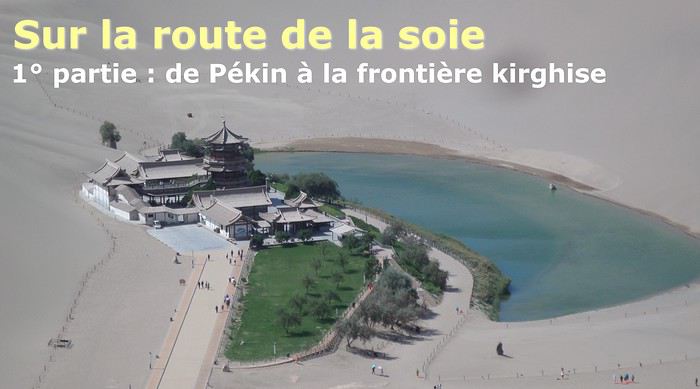
The Chinese Far West More than 30 years after my first trip to eastern China, I finally fulfilled an old dream: traveling solo from Beijing to the far west, discovering Xinjiang, the Uyghur people and the oppression they endure, the oases of Turpan and Kashgar, the Taklamakan Desert, the end of the Great Wall... The route was covered by train.
MENU PART 1: CHINA
1- Beijing (Jiankou) : the authentic Great Wall, without tourists 2- Cycling in Beijing, the best way to get around 3- Beijing : departure for the far west 4- Jiayuguan : getting by without English 5- Jiayuguan : scams and heritage 6- Dunhuang : abundance in the middle of the desert 7- Turpan : the Uyghurs under heavy surveillance 8- Kashgar : love at first sight for the old city 9- Kashgar : China’s recipe for controlling the populace 10- Tashkurgan : what on earth was I thinking going there! Kyrgyz border: a surreal epic Photo album from the 80s, contributions from other travelers (page 2)
1- JIANKOU Finding the authentic Great Wall, without tourists or a guide Friday, August 24, 2018 Thirty years later, I didn’t feel like revisiting the Great Wall at Badaling or any other overcrowded site. I chose to explore it at Jiankou, in its wildest, most authentic, and unrestored section, starting from a lost village deep in a valley—though it wasn’t *that* lost, since it had everything for communication.
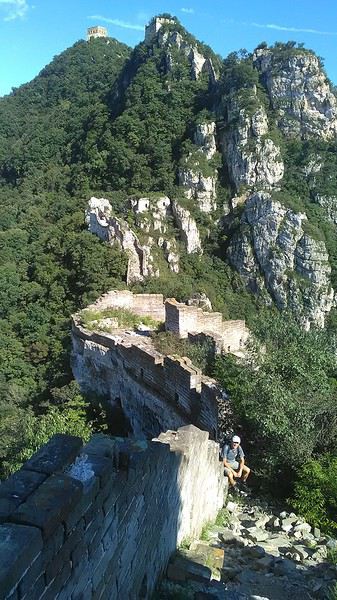
No need to pay for a taxi to get there—by timing it right, you can take the bus for just a few yuan. You have to get off at Xizhazi, the bus terminus. Be careful, there are only two buses a day in each direction. At the Xizhazi bus stop, I met a young couple who’d arrived with zero information about what to expect. We hiked the three of us toward the restored section of Mutianyu.
Still, be cautious With GPS and a topographic map (OpenTopoMap), you can set off without a problem or guide. The trail up to Jiankou is easy and well-marked. The trails down are too. But be careful—once you’re on the Wall, it’s real mountain hiking, with easy but dangerous climbing sections (over sheer drops). Not for amateurs or those afraid of heights! But what a reward. The Wall all to yourself, where it’s at its most daring. Truly mesmerizing.
More photos...
2- BEIJING The best way to get around the capital Sunday, August 26 The best way to explore the city is still by bike. Most are in a bike-share system, but you need to use an app—WeChat, the app that does everything, like monitoring your every move. No way I was installing that.
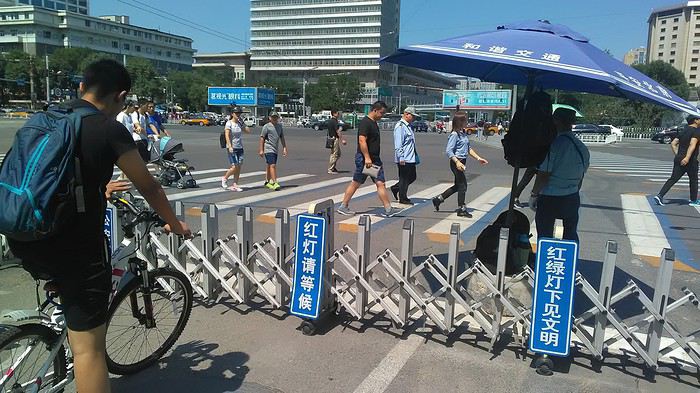
I found one at a rental shop near the hostel. The key is to quickly learn local traffic customs to minimize risks. Bike lanes are wide along the avenues.
But you still have to: - Watch out for anything parked on the bike paths—the most annoying are people napping or talking on the phone in their cars - Keep an eye on everything coming the wrong way—the list is long - The worst is right turns on red, which in Chinese traffic rules seem to have priority Once you get the hang of it, it’s fine. The city is huge but flat, so you can just wing it.
3- BEIJING By train to the far west Sunday, August 26 Beijing West Station is the size and operates like an airport. With your e-ticket from the agency, you first have to pick up your ticket at the special "English" counter, after passing through security. With your ticket in hand, you have to exit and enter through the boarding waiting area—not the platform—after a second security check.
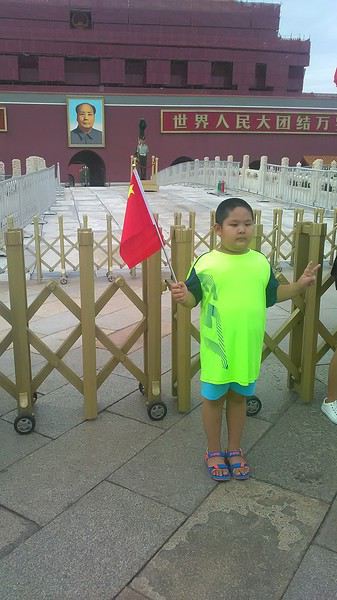 Then you find the right hall and wait for the sign to finally access the platform. In the end, it works pretty well given the incredible number of passengers to manage. Everywhere in Beijing, I saw that the Chinese have mastered crowd flow management.
Nice surprise: second-class carriages are clean, air-conditioned, and bright. Perfect, since I was in for 20 hours. One uniformed attendant per carriage, mobile meal service—luxury! Small downside: no luggage space. Hauling your suitcase up to the top bunk is quite a workout. I was in the middle, so it wasn’t too bad. The landscape, though, whether rural or urban, is pretty bleak. That should change once we leave the eastern plains.
Of course, I got my first police visit, with a thorough passport check and bag search. I was warned—going to the Chinese far west exposes you to this kind of hassle. But they were polite and respectful.
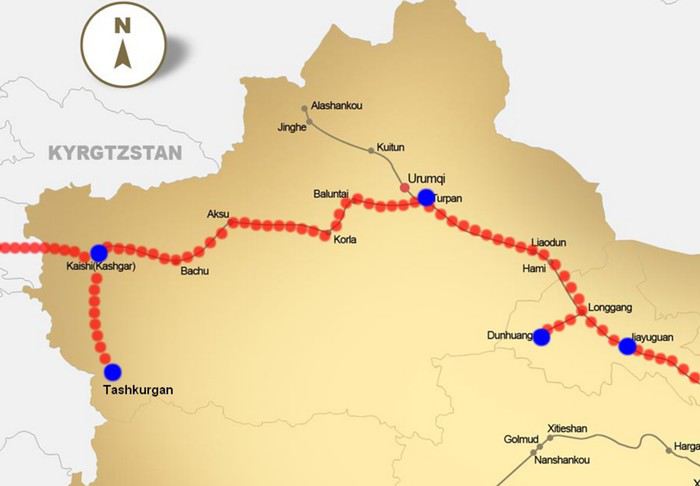 The Chinese Far West
4- JIAYUGUAN Getting by without English Monday, August 27 At the gates of two deserts (Gobi and Taklamakan) and at the foot of the Tibetan highlands, the Great Wall ends at Jiayuguan. Here, I found the deeper China I’d somewhat rediscovered during my bike ride, even if now everyone gets around on electric bikes and I’m no longer stared at like an alien.
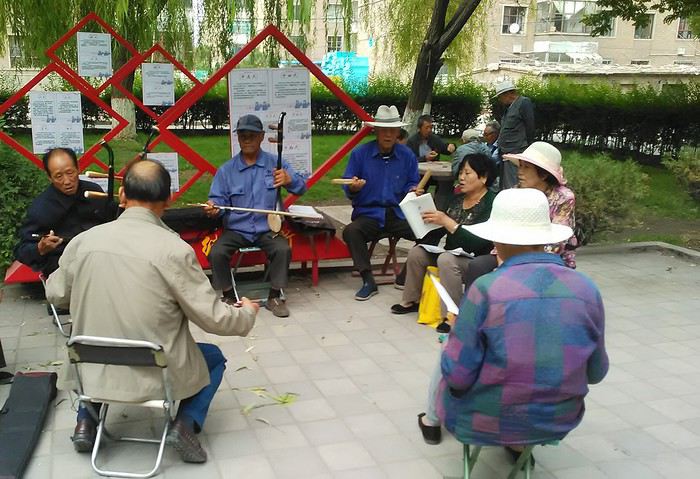
Prices are nothing like Beijing: you can find a full meal for 2 €, and my bike cost 7 € for two days. Plus, few people speak English—neither the owner of the HI hostel where I stayed, nor the ticket sellers at the sites, let alone the servers at the small eateries where I ate. Everything is written in Chinese. So I had to use the little Chinese I know to communicate about essentials. It makes the locals laugh to see a European trying to speak their language, but it earns respect. With Google Translate’s help, I managed.
Rant: With their avenues blocked for construction for kilometers without warning, and new roads not yet on maps, I must’ve taken 15 km of detours. More photos...
5- JIAYUGUAN Scams and heritage Tuesday, August 28 The Great Wall doesn’t exactly end at the fort I visited yesterday but 10 km further, at the entrance to a river gorge at the foot of the mountains. All that’s left is a badly damaged tower (more like a mound of earth) and a section of clay wall, similar to the one I biked yesterday.
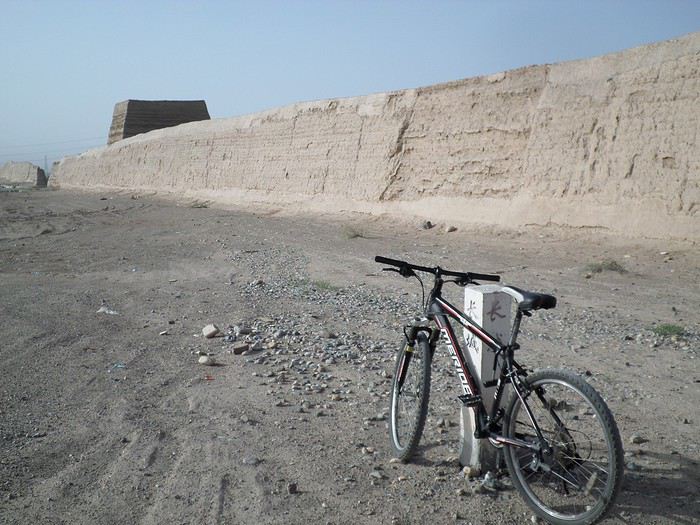
This morning, I hopped on my bike, determined to venture into the desert to see this highly symbolic site. First, you access it via a wide, brand-new road with not a soul in sight. Just before the site, I came across a grand welcome gate, very period-style, but it’s actually the inevitable toll booth.
Behind the gate, the road continues straight to the site, which you can see in the distance—at least 2 km away—the remains of the tower and wall. I had to leave my bike here. Fine. I went to the ticket counter and asked the price: 120 yuan! I couldn’t believe it—over 15 € for a simple mound of earth.
I showed my displeasure to the attendant, who couldn’t care less, and immediately turned back. 120 yuan—that’s the price for a new road, a fancy gate planted 2 km before the site just to force you to take a shuttle, and employees with nothing to do all day... Now I understand why I didn’t meet anyone!
Heritage China is a bit pricey Generally, sites are expensive for the country’s standard of living, but travelers are supposed to have money, so why hold back? I even gave up on the Forbidden City—reservations required days in advance (or on the black market at an impossible price). I prefer to keep the memory of my first visit, when entry must’ve cost a few dozen cents, and there were only a handful of visitors.
This morning, I took a taxi to see remarkable tombs of common people from the 3rd to 6th centuries. They’re small vaulted caves made of painted bricks, depicting scenes of daily life. Very pretty and moving. But even here, though the price was more reasonable, I was left wanting—only one of the 16 tombs is open to visitors, and it’s apparently not the most beautiful.
The authentic China—at least what’s left of it... Wandering the impersonal avenues of the city, you stumble upon a market. There, you still find traditional China—small shops with questionable hygiene, Go players, musicians, and even a dental prosthetist. The last refuge for those untouched by modernity. More photos...
6- DUNHUANG Abundance in the middle of the desert Wednesday, August 29 Well, I thought the landscape would be less bleak as I headed west. Nope. The only distraction in this expanse of dark, clayey sand is the forests of pylons and wind turbines, plus wild camels racing each other.
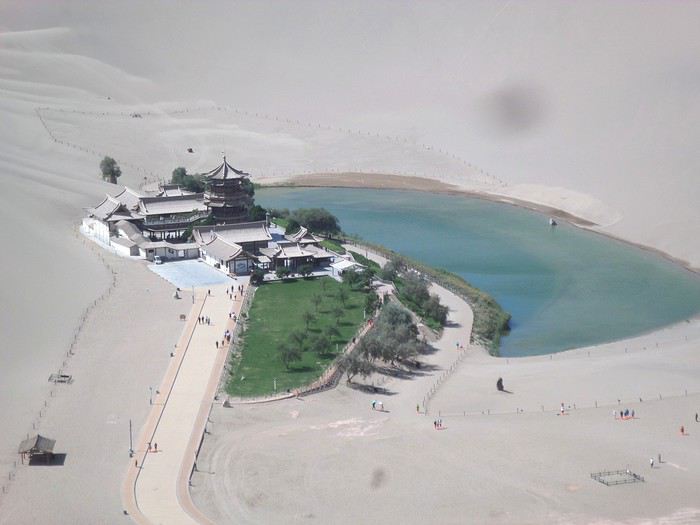 However, Dunhuang, the gateway to the Taklamakan, is by far the most pleasant Chinese city I know. There’s a real city center you can explore on foot. It’s hot but not unbearable, with a light, dry breeze. Much nicer than Beijing. The Han Chinese are still the majority, but the Muslim Uyghurs are more numerous, and the muezzin’s call to prayer echoes around the mosque.
The most surprising thing is the abundance and diversity of fruits and vegetables. You wonder how it all grows here. Well-irrigated, the desert sands are very fertile. Here, raisins have subtle, mysterious flavors, and the lamb really tastes like lamb.
Today, I visited the must-see Mingshashan, a dune complex next to which Pila is a molehill. The Basque Country, but covered in sand... More photos...
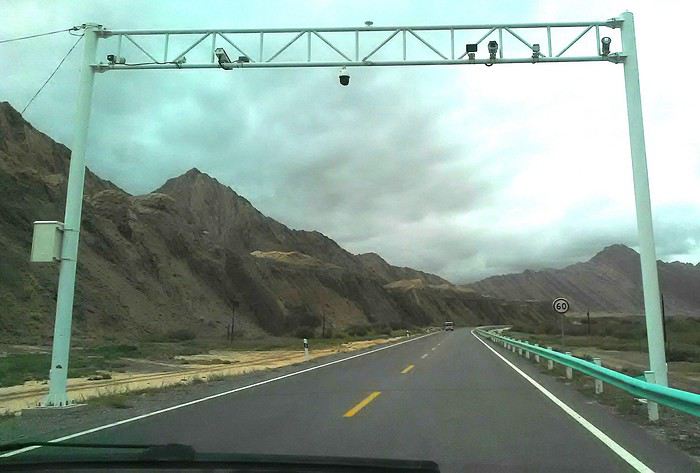
7- TURPAN The Uyghurs under heavy surveillance Friday, August 31 Surveillance cameras everywhere in the city, armed police stationed at intersections, in front of public buildings, at the entrance and inside tourist sites, police stations on every corner, patrols on foot or by car, khaki uniforms even for middle schoolers... here, the Han Chinese are in the minority, and you can feel it. Turpan feels like a city under siege.
To enter the youth hostel where I stayed, there’s even a security gate, and the receptionist (a Han, like everyone in tourism) wears a bulletproof vest! Reassuring. Still, you don’t feel particularly threatened here, especially as a European. The troublemakers are the Chinese, not the Uyghurs. Generally, China is a very safe country for visitors.
Smile, you’re on camera! I was biking on an avenue when the car in front of me got flashed for driving slowly. I quickly understood why when I got flashed too.
Here, the official time is Beijing time, but it gets dark two hours later. It’ll be even worse in Kashgar. Trickier to manage: everything is displayed in Chinese and Arabic. Nothing in English. Choosing a menu is a shot in the dark. Apart from a few young Chinese, no one here speaks English, and my Chinese doesn’t seem very understandable...
Mogao, the end of the road for the Han Yesterday, near Dunhuang, I went to Mogao, a complex of decorated caves with Buddha sculptures and paintings. Stunning, but so crowded! Luckily, here in Turpan, Chinese tourists barely venture out. So I visited a Silk Road ghost town with only a handful of other visitors and under a howling wind.
The modern Chinese city is swallowing up the old Uyghur neighborhoods—only a museum-like district remains in the center, and pockets of resistance on the outskirts are doomed to disappear soon. More photos...
8- KASHGAR A (relative) love at first sight for the old city Sunday, September 2 After three overnight trains, here I am in the far west of China, nearly 4,000 km from the capital. Despite the omnipresent police and an old city preserved UNESCO-style, Kashgar is my Chinese love at first sight.
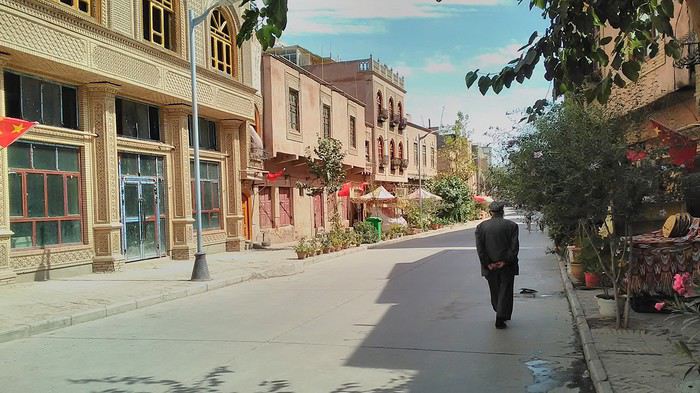
Finally, Chinese... well, sort of, because we’re in Uyghur territory here—a Turkic people with nothing culturally in common with the Han, the eastern Chinese. It started badly yesterday at Turfan station, where after three security gate passes, at least five passport checks, and a bag search, three adorable policewomen confiscated my antibacterial lotion because it had a flammable logo...
Then came the welcoming committee of armed cops at Kashgar station. Once all that was over, they left me alone—except you still have to go through security checks like everyone else to enter the old city, the bazaar, the livestock market... The further west you go, the more the siege mentality is evident. Luckily, the border isn’t far...
Despite the inevitable destruction-reconstruction, the city center has been well preserved. Thankfully, because it’s a very original style, a mix of local and colonial. I love it, even if it’s a bit too artificial, sanitized, and watered-down, and rather empty of residents. On the Silk Road, the city was famous for its great food. And it still is—rarely have I seen such richness and abundance of food! And not just scorpions or snakes. More photos...
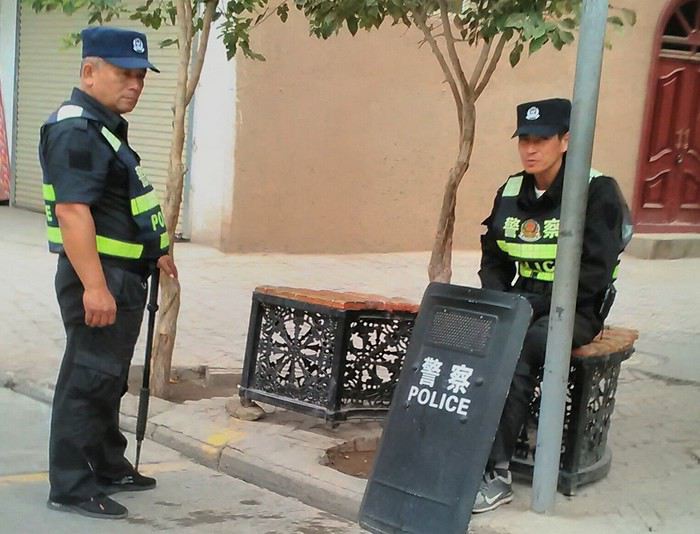
9- KASHGAR China’s recipe for controlling the populace Saturday, September 1 Xinjiang, along with Tibet, is a "sensitive" area of rebellion in the eyes of Chinese authorities. As a result, the state has these regions and their populations under total control. Tourists also feel the consequences, even if they’re not at risk of re-education camps.
 - Putting barbed wire and anti-ramming barriers around sensitive sites (schools, big hotels, government buildings...)
- Installing traffic surveillance gates with cameras and photo flashes (for all vehicles passing, including bikes) throughout the city and even in the countryside
- Posting uniformed guards with tasers, batons, or huge baseball bats every 100 meters
- Training the Han population (ethnic Chinese) in self-defense with sticks, preferably in the morning on the street. Men and women of all ages
- Starting school with the national anthem, doing military exercises, and receiving political indoctrination, all neatly lined up in the courtyard. (The dream school for any teacher)
- Placing a snitch in uniform (a pseudo-guard) in public gathering places, like youth hostels. Mine spends the day loafing around the courtyard
- Putting Chinese flags everywhere on the streets to remind everyone who’s in charge
- Installing security gates at every entrance to areas frequented by tourists (thanks for that) but not just there
- Never photographing cops, or else! I tried, but it’s not easy...
- Putting barbed wire and anti-ramming barriers around sensitive sites (schools, big hotels, government buildings...)
- Installing traffic surveillance gates with cameras and photo flashes (for all vehicles passing, including bikes) throughout the city and even in the countryside
- Posting uniformed guards with tasers, batons, or huge baseball bats every 100 meters
- Training the Han population (ethnic Chinese) in self-defense with sticks, preferably in the morning on the street. Men and women of all ages
- Starting school with the national anthem, doing military exercises, and receiving political indoctrination, all neatly lined up in the courtyard. (The dream school for any teacher)
- Placing a snitch in uniform (a pseudo-guard) in public gathering places, like youth hostels. Mine spends the day loafing around the courtyard
- Putting Chinese flags everywhere on the streets to remind everyone who’s in charge
- Installing security gates at every entrance to areas frequented by tourists (thanks for that) but not just there
- Never photographing cops, or else! I tried, but it’s not easy...
With all that, you can stroll around safely Not much crime! As for the amount the Chinese state spends to maintain such a system, it’s staggering! A third of the Han living in Xinjiang work in security. Today, I wandered freely around old Kashgar, which is quite large after all. More photos...
10- TASHKURGAN What on earth was I thinking going there! Wednesday, September 5 First, there’s the taxi—pretty crappy, with a driver who doesn’t speak a word of English and won’t stop smoking. Over six hours in that... shared with a completely out-of-it American.
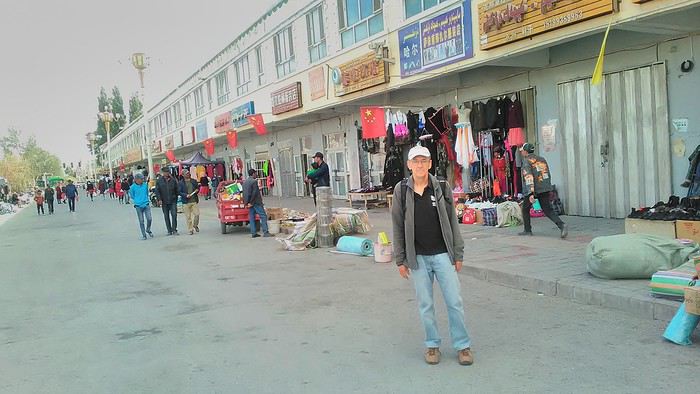
Then there are all the checkpoints along the way. I won’t go on—you know the drill by now.
After that, there’s Tashkurgan—a town with nothing to see, nothing to do. Deserted as soon as night falls. There’s this huge youth hostel and a few lost Chinese tapping away on their smartphones, chain-smoking. This lost American-European crowd, swapping tips on how to enter Pakistan or Tajikistan.
Luckily, there’s the Chinese Pamir Highway, lined with peaks over 7,000m. There’s the feeling of no longer being in China, with a population whose features are Middle Eastern. And these Tajik women with their stunning hairstyles and vibrant costumes. There’s the fact of having reached the westernmost Chinese city, far from crowds and tourist sites. A sort of end of the world. More photos...
11- KYRGYZ BORDER A surreal epic Thursday, September 6 The road from Kashgar to the Kyrgyzstan border is a little over 200 km and passes through beautiful landscapes of colorful, desert-like mountains with acrobatic folds. That’s the bucolic part of the trip.
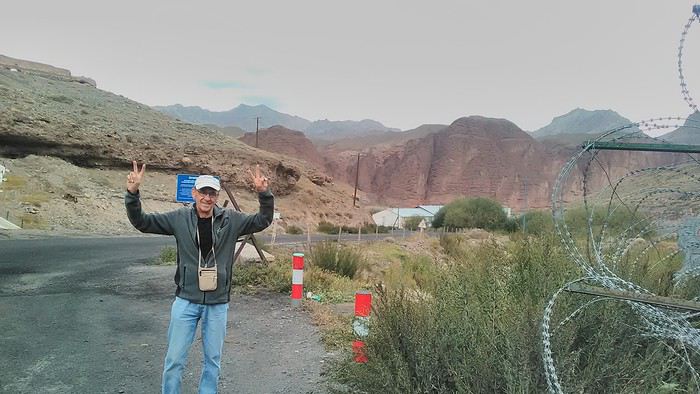 Yesterday, I managed to gather four people to rent a minibus to reach the border more easily: a Spaniard and an Argentine I’d already met in Turpan, and two New Zealanders who responded to the ad left at the hostel.
Absurdity and paranoia of Chinese authorities The highlight was crossing the town of Wuqia, 50 km past Kashgar. After tallying up with my fellow sufferers, we must’ve passed about ten checkpoints with: - Passport checks: 14 times, sometimes by two cops side by side - Bag checks: 4 times - Smartphone checks: 2 times, with deletion of "non-compliant" photos, and registration of your IMEI in the exit log!... Absurd and surreal at the same time, since my camera stayed in my bag, my apps are in French, and my photos have been online for ages...
With all that, we arrived just as the last checkpoint before the no man’s land marking the border between the two countries was on lunch break. And bam! Another 1.5-hour wait, alongside truckers who were much more used to this than we were.
What to think? The cops themselves aren’t fooled. They play the role they’re asked to, but sometimes you can coax a smile out of them—they realize how ridiculous the situation is.
What’s the point? That’s the big question my companions and I were tempted to answer with "to piss people off." To show you your place isn’t here, but with the other tourists, over there in the east, in Shanghai, Xi’an, or Guangzhou.
As for you, a traveler from a democratic country, you really experience this as aggression, humiliation, a violation of your private space. And yet, I’m respected, they speak to me properly. Today, I better understand what a Palestinian or a citizen of an occupied country might feel daily. A unique experience! Thanks, China.
And to top it off, the cherry on the cake! It’s still this glowing button you press to rate your passage after clearing the last obstacle before the exit stamp. I was so surprised it turned off before I could react. The Spaniard, with great humor and irony, had time to vote "excellent." In the end, he wasn’t wrong—you can hardly do better!
PS: I ditched my buddies at the border. They didn’t want to pay for a taxi to continue. So I took a direct taxi to Osh. The first 100 km are fabulous. I couldn’t take many photos, but I’ll be back on Monday to go to Tajikistan.
More photos...
The rest of the Silk Road, Part 2, in these travel journals: Kyrgyzstan, Tajikistan, Uzbekistan.
The Chinese Far West More than 30 years after my first trip to eastern China, I finally fulfilled an old dream: traveling solo from Beijing to the far west, discovering Xinjiang, the Uyghur people and the oppression they endure, the oases of Turpan and Kashgar, the Taklamakan Desert, the end of the Great Wall... The route was covered by train.
MENU PART 1: CHINA
1- Beijing (Jiankou) : the authentic Great Wall, without tourists 2- Cycling in Beijing, the best way to get around 3- Beijing : departure for the far west 4- Jiayuguan : getting by without English 5- Jiayuguan : scams and heritage 6- Dunhuang : abundance in the middle of the desert 7- Turpan : the Uyghurs under heavy surveillance 8- Kashgar : love at first sight for the old city 9- Kashgar : China’s recipe for controlling the populace 10- Tashkurgan : what on earth was I thinking going there! Kyrgyz border: a surreal epic Photo album from the 80s, contributions from other travelers (page 2)
1- JIANKOU Finding the authentic Great Wall, without tourists or a guide Friday, August 24, 2018 Thirty years later, I didn’t feel like revisiting the Great Wall at Badaling or any other overcrowded site. I chose to explore it at Jiankou, in its wildest, most authentic, and unrestored section, starting from a lost village deep in a valley—though it wasn’t *that* lost, since it had everything for communication.
No need to pay for a taxi to get there—by timing it right, you can take the bus for just a few yuan. You have to get off at Xizhazi, the bus terminus. Be careful, there are only two buses a day in each direction. At the Xizhazi bus stop, I met a young couple who’d arrived with zero information about what to expect. We hiked the three of us toward the restored section of Mutianyu.
Still, be cautious With GPS and a topographic map (OpenTopoMap), you can set off without a problem or guide. The trail up to Jiankou is easy and well-marked. The trails down are too. But be careful—once you’re on the Wall, it’s real mountain hiking, with easy but dangerous climbing sections (over sheer drops). Not for amateurs or those afraid of heights! But what a reward. The Wall all to yourself, where it’s at its most daring. Truly mesmerizing.
More photos...
2- BEIJING The best way to get around the capital Sunday, August 26 The best way to explore the city is still by bike. Most are in a bike-share system, but you need to use an app—WeChat, the app that does everything, like monitoring your every move. No way I was installing that.
I found one at a rental shop near the hostel. The key is to quickly learn local traffic customs to minimize risks. Bike lanes are wide along the avenues.
But you still have to: - Watch out for anything parked on the bike paths—the most annoying are people napping or talking on the phone in their cars - Keep an eye on everything coming the wrong way—the list is long - The worst is right turns on red, which in Chinese traffic rules seem to have priority Once you get the hang of it, it’s fine. The city is huge but flat, so you can just wing it.
3- BEIJING By train to the far west Sunday, August 26 Beijing West Station is the size and operates like an airport. With your e-ticket from the agency, you first have to pick up your ticket at the special "English" counter, after passing through security. With your ticket in hand, you have to exit and enter through the boarding waiting area—not the platform—after a second security check.
Then you find the right hall and wait for the sign to finally access the platform. In the end, it works pretty well given the incredible number of passengers to manage. Everywhere in Beijing, I saw that the Chinese have mastered crowd flow management.Nice surprise: second-class carriages are clean, air-conditioned, and bright. Perfect, since I was in for 20 hours. One uniformed attendant per carriage, mobile meal service—luxury! Small downside: no luggage space. Hauling your suitcase up to the top bunk is quite a workout. I was in the middle, so it wasn’t too bad. The landscape, though, whether rural or urban, is pretty bleak. That should change once we leave the eastern plains.
Of course, I got my first police visit, with a thorough passport check and bag search. I was warned—going to the Chinese far west exposes you to this kind of hassle. But they were polite and respectful.
The Chinese Far West4- JIAYUGUAN Getting by without English Monday, August 27 At the gates of two deserts (Gobi and Taklamakan) and at the foot of the Tibetan highlands, the Great Wall ends at Jiayuguan. Here, I found the deeper China I’d somewhat rediscovered during my bike ride, even if now everyone gets around on electric bikes and I’m no longer stared at like an alien.
Prices are nothing like Beijing: you can find a full meal for 2 €, and my bike cost 7 € for two days. Plus, few people speak English—neither the owner of the HI hostel where I stayed, nor the ticket sellers at the sites, let alone the servers at the small eateries where I ate. Everything is written in Chinese. So I had to use the little Chinese I know to communicate about essentials. It makes the locals laugh to see a European trying to speak their language, but it earns respect. With Google Translate’s help, I managed.
Rant: With their avenues blocked for construction for kilometers without warning, and new roads not yet on maps, I must’ve taken 15 km of detours. More photos...
5- JIAYUGUAN Scams and heritage Tuesday, August 28 The Great Wall doesn’t exactly end at the fort I visited yesterday but 10 km further, at the entrance to a river gorge at the foot of the mountains. All that’s left is a badly damaged tower (more like a mound of earth) and a section of clay wall, similar to the one I biked yesterday.
This morning, I hopped on my bike, determined to venture into the desert to see this highly symbolic site. First, you access it via a wide, brand-new road with not a soul in sight. Just before the site, I came across a grand welcome gate, very period-style, but it’s actually the inevitable toll booth.
Behind the gate, the road continues straight to the site, which you can see in the distance—at least 2 km away—the remains of the tower and wall. I had to leave my bike here. Fine. I went to the ticket counter and asked the price: 120 yuan! I couldn’t believe it—over 15 € for a simple mound of earth.
I showed my displeasure to the attendant, who couldn’t care less, and immediately turned back. 120 yuan—that’s the price for a new road, a fancy gate planted 2 km before the site just to force you to take a shuttle, and employees with nothing to do all day... Now I understand why I didn’t meet anyone!
Heritage China is a bit pricey Generally, sites are expensive for the country’s standard of living, but travelers are supposed to have money, so why hold back? I even gave up on the Forbidden City—reservations required days in advance (or on the black market at an impossible price). I prefer to keep the memory of my first visit, when entry must’ve cost a few dozen cents, and there were only a handful of visitors.
This morning, I took a taxi to see remarkable tombs of common people from the 3rd to 6th centuries. They’re small vaulted caves made of painted bricks, depicting scenes of daily life. Very pretty and moving. But even here, though the price was more reasonable, I was left wanting—only one of the 16 tombs is open to visitors, and it’s apparently not the most beautiful.
The authentic China—at least what’s left of it... Wandering the impersonal avenues of the city, you stumble upon a market. There, you still find traditional China—small shops with questionable hygiene, Go players, musicians, and even a dental prosthetist. The last refuge for those untouched by modernity. More photos...
6- DUNHUANG Abundance in the middle of the desert Wednesday, August 29 Well, I thought the landscape would be less bleak as I headed west. Nope. The only distraction in this expanse of dark, clayey sand is the forests of pylons and wind turbines, plus wild camels racing each other.
However, Dunhuang, the gateway to the Taklamakan, is by far the most pleasant Chinese city I know. There’s a real city center you can explore on foot. It’s hot but not unbearable, with a light, dry breeze. Much nicer than Beijing. The Han Chinese are still the majority, but the Muslim Uyghurs are more numerous, and the muezzin’s call to prayer echoes around the mosque.The most surprising thing is the abundance and diversity of fruits and vegetables. You wonder how it all grows here. Well-irrigated, the desert sands are very fertile. Here, raisins have subtle, mysterious flavors, and the lamb really tastes like lamb.
Today, I visited the must-see Mingshashan, a dune complex next to which Pila is a molehill. The Basque Country, but covered in sand... More photos...
7- TURPAN The Uyghurs under heavy surveillance Friday, August 31 Surveillance cameras everywhere in the city, armed police stationed at intersections, in front of public buildings, at the entrance and inside tourist sites, police stations on every corner, patrols on foot or by car, khaki uniforms even for middle schoolers... here, the Han Chinese are in the minority, and you can feel it. Turpan feels like a city under siege.
To enter the youth hostel where I stayed, there’s even a security gate, and the receptionist (a Han, like everyone in tourism) wears a bulletproof vest! Reassuring. Still, you don’t feel particularly threatened here, especially as a European. The troublemakers are the Chinese, not the Uyghurs. Generally, China is a very safe country for visitors.
Smile, you’re on camera! I was biking on an avenue when the car in front of me got flashed for driving slowly. I quickly understood why when I got flashed too.
Here, the official time is Beijing time, but it gets dark two hours later. It’ll be even worse in Kashgar. Trickier to manage: everything is displayed in Chinese and Arabic. Nothing in English. Choosing a menu is a shot in the dark. Apart from a few young Chinese, no one here speaks English, and my Chinese doesn’t seem very understandable...
Mogao, the end of the road for the Han Yesterday, near Dunhuang, I went to Mogao, a complex of decorated caves with Buddha sculptures and paintings. Stunning, but so crowded! Luckily, here in Turpan, Chinese tourists barely venture out. So I visited a Silk Road ghost town with only a handful of other visitors and under a howling wind.
The modern Chinese city is swallowing up the old Uyghur neighborhoods—only a museum-like district remains in the center, and pockets of resistance on the outskirts are doomed to disappear soon. More photos...
8- KASHGAR A (relative) love at first sight for the old city Sunday, September 2 After three overnight trains, here I am in the far west of China, nearly 4,000 km from the capital. Despite the omnipresent police and an old city preserved UNESCO-style, Kashgar is my Chinese love at first sight.
Finally, Chinese... well, sort of, because we’re in Uyghur territory here—a Turkic people with nothing culturally in common with the Han, the eastern Chinese. It started badly yesterday at Turfan station, where after three security gate passes, at least five passport checks, and a bag search, three adorable policewomen confiscated my antibacterial lotion because it had a flammable logo...
Then came the welcoming committee of armed cops at Kashgar station. Once all that was over, they left me alone—except you still have to go through security checks like everyone else to enter the old city, the bazaar, the livestock market... The further west you go, the more the siege mentality is evident. Luckily, the border isn’t far...
Despite the inevitable destruction-reconstruction, the city center has been well preserved. Thankfully, because it’s a very original style, a mix of local and colonial. I love it, even if it’s a bit too artificial, sanitized, and watered-down, and rather empty of residents. On the Silk Road, the city was famous for its great food. And it still is—rarely have I seen such richness and abundance of food! And not just scorpions or snakes. More photos...
9- KASHGAR China’s recipe for controlling the populace Saturday, September 1 Xinjiang, along with Tibet, is a "sensitive" area of rebellion in the eyes of Chinese authorities. As a result, the state has these regions and their populations under total control. Tourists also feel the consequences, even if they’re not at risk of re-education camps.
- Putting barbed wire and anti-ramming barriers around sensitive sites (schools, big hotels, government buildings...)
- Installing traffic surveillance gates with cameras and photo flashes (for all vehicles passing, including bikes) throughout the city and even in the countryside
- Posting uniformed guards with tasers, batons, or huge baseball bats every 100 meters
- Training the Han population (ethnic Chinese) in self-defense with sticks, preferably in the morning on the street. Men and women of all ages
- Starting school with the national anthem, doing military exercises, and receiving political indoctrination, all neatly lined up in the courtyard. (The dream school for any teacher)
- Placing a snitch in uniform (a pseudo-guard) in public gathering places, like youth hostels. Mine spends the day loafing around the courtyard
- Putting Chinese flags everywhere on the streets to remind everyone who’s in charge
- Installing security gates at every entrance to areas frequented by tourists (thanks for that) but not just there
- Never photographing cops, or else! I tried, but it’s not easy...With all that, you can stroll around safely Not much crime! As for the amount the Chinese state spends to maintain such a system, it’s staggering! A third of the Han living in Xinjiang work in security. Today, I wandered freely around old Kashgar, which is quite large after all. More photos...
10- TASHKURGAN What on earth was I thinking going there! Wednesday, September 5 First, there’s the taxi—pretty crappy, with a driver who doesn’t speak a word of English and won’t stop smoking. Over six hours in that... shared with a completely out-of-it American.
Then there are all the checkpoints along the way. I won’t go on—you know the drill by now.
After that, there’s Tashkurgan—a town with nothing to see, nothing to do. Deserted as soon as night falls. There’s this huge youth hostel and a few lost Chinese tapping away on their smartphones, chain-smoking. This lost American-European crowd, swapping tips on how to enter Pakistan or Tajikistan.
Luckily, there’s the Chinese Pamir Highway, lined with peaks over 7,000m. There’s the feeling of no longer being in China, with a population whose features are Middle Eastern. And these Tajik women with their stunning hairstyles and vibrant costumes. There’s the fact of having reached the westernmost Chinese city, far from crowds and tourist sites. A sort of end of the world. More photos...
11- KYRGYZ BORDER A surreal epic Thursday, September 6 The road from Kashgar to the Kyrgyzstan border is a little over 200 km and passes through beautiful landscapes of colorful, desert-like mountains with acrobatic folds. That’s the bucolic part of the trip.
Yesterday, I managed to gather four people to rent a minibus to reach the border more easily: a Spaniard and an Argentine I’d already met in Turpan, and two New Zealanders who responded to the ad left at the hostel.Absurdity and paranoia of Chinese authorities The highlight was crossing the town of Wuqia, 50 km past Kashgar. After tallying up with my fellow sufferers, we must’ve passed about ten checkpoints with: - Passport checks: 14 times, sometimes by two cops side by side - Bag checks: 4 times - Smartphone checks: 2 times, with deletion of "non-compliant" photos, and registration of your IMEI in the exit log!... Absurd and surreal at the same time, since my camera stayed in my bag, my apps are in French, and my photos have been online for ages...
With all that, we arrived just as the last checkpoint before the no man’s land marking the border between the two countries was on lunch break. And bam! Another 1.5-hour wait, alongside truckers who were much more used to this than we were.
What to think? The cops themselves aren’t fooled. They play the role they’re asked to, but sometimes you can coax a smile out of them—they realize how ridiculous the situation is.
What’s the point? That’s the big question my companions and I were tempted to answer with "to piss people off." To show you your place isn’t here, but with the other tourists, over there in the east, in Shanghai, Xi’an, or Guangzhou.
As for you, a traveler from a democratic country, you really experience this as aggression, humiliation, a violation of your private space. And yet, I’m respected, they speak to me properly. Today, I better understand what a Palestinian or a citizen of an occupied country might feel daily. A unique experience! Thanks, China.
And to top it off, the cherry on the cake! It’s still this glowing button you press to rate your passage after clearing the last obstacle before the exit stamp. I was so surprised it turned off before I could react. The Spaniard, with great humor and irony, had time to vote "excellent." In the end, he wasn’t wrong—you can hardly do better!
PS: I ditched my buddies at the border. They didn’t want to pay for a taxi to continue. So I took a direct taxi to Osh. The first 100 km are fabulous. I couldn’t take many photos, but I’ll be back on Monday to go to Tajikistan.
More photos...
The rest of the Silk Road, Part 2, in these travel journals: Kyrgyzstan, Tajikistan, Uzbekistan.
Bonjour,
partant pour le chine et la Thaïlande cet été, mon coeur balance entre l'acquisition d'une caméra go pro, ou d'un reflex numérique.
La go pro, est légère et plus facile à emporter partout qu'un réflex mais n'est ce pas un peu juste niveau photo?
A l'inverse, on peut filmer avec le reflex mais moins facilement...?
Si vous avez testé, merci pour vos impressions!
Bonne journée!!
Si vous avez testé, merci pour vos impressions!
Bonne journée!!
Bonjour à tous,
Je me rends pour 10 jours en chine début novembre, et suis comme beaucoup désireux de rapporter un maximum d'images. Mon souci tient à la taille de mon camescope (SONYFX1000) qui ressemble à un camescope professionnel. Ce format peut-il me poser quelques problèmes ? (douane, autorisations.... Certains d'entre-vous ont-ils cette expérience ?
Je suis preneur de vos avis.
Merci d'avance.
Je me rends pour 10 jours en chine début novembre, et suis comme beaucoup désireux de rapporter un maximum d'images. Mon souci tient à la taille de mon camescope (SONYFX1000) qui ressemble à un camescope professionnel. Ce format peut-il me poser quelques problèmes ? (douane, autorisations.... Certains d'entre-vous ont-ils cette expérience ?
Je suis preneur de vos avis.
Merci d'avance.
Bonjour à tous !
Je m’appelle Sabrina.Je suis une étudiante de français en 3ème année à l'Université des études de Guangdong . Et comme la foire du Canton s'approche, je voudrais chercher d’un travail comme interprète de français-chinois, et à la fois anglais.
En mai 2008 j'ai réussi dans l'examen TSF-4(diplôme de Français comme spécialité du Niveau 4)avec une excellente note.Je parle couramment français. Je peux parler aussi anglais, et j'ai passé le teste d'anglais CET-6(College English Test of Band 6).
Maintenant je suis un cours d'économie donc je connais un peu de disciplines économiques
Si vous avez besoin d’interprète de français-anglais-chinois, contactez-moi par e-mail : sabrinabean1005@gmail.com
ou MSN:sabrinabean1005@hotmail.com
Merci pour votre attention !
Hi,
I’m heading to China at the end of March and I’ve got the question in the title.
Chinese airlines only sell the most expensive tickets on comparison sites or their websites outside China. For the best prices, tickets need to be bought in China. Has anyone ever bought a domestic flight there through a local agency or online? Same question for trains.
Thanks
Chinese airlines only sell the most expensive tickets on comparison sites or their websites outside China. For the best prices, tickets need to be bought in China. Has anyone ever bought a domestic flight there through a local agency or online? Same question for trains.
Thanks
Bonjour à tous,
Peut-on acheter notre billet de train guangzhou-HK dans l'aéroport de guangzhou ?
Je remercie d'avance à tous ceux qui vont me répondre 🙂
Peut-on acheter notre billet de train guangzhou-HK dans l'aéroport de guangzhou ?
Je remercie d'avance à tous ceux qui vont me répondre 🙂
Bonjour,
je vais deux semaine et je vais prendre le TGV entre pékin et shangai
sur quelle site officielle peut -on acheter son billet ou sais t-on le prendre le jour même en gare si la différence de prix est pas trop grande ?
merci
David
Ce message est pour toi si tu as dernièrement traverser la frontière entre la Chine et le Vietnam.
J’aimerais savoir s’il est possible/facile de changer des yuans chinois en Dong vietnamien à la frontière ?
Nous entrerons au Vietnam, depuis la Chine, par la frontière terrestre de Lao Cai.
Il est plutôt difficile de se procurer des Dong directement à Kunming, où nous sommes actuellement
Merci pour ton aide !
J’aimerais savoir s’il est possible/facile de changer des yuans chinois en Dong vietnamien à la frontière ?
Nous entrerons au Vietnam, depuis la Chine, par la frontière terrestre de Lao Cai.
Il est plutôt difficile de se procurer des Dong directement à Kunming, où nous sommes actuellement
Merci pour ton aide !
Bonjour
Je me rends en famille en Chine de mi-juillet à mi-Aout. Je voudrais acheter des billets de TGV entre Pekin et Schangai et des billets de train entre Schangai et Hong Kong.
Peut on acheter des billets sur le site des chemins de fers chinois (comme pour la SNCF) ou faut il passer par une agence ou un site spécialisé qui va bien sur prendre une commission. Quelle est la meilleure formule ?
merci de vos réponses Jean Pierre
merci de vos réponses Jean Pierre
bonjour, peut on acheter des billets de bus en chine en avance par l'intermédiaire d'une agence située en france ou en chine
merci de votre réponse
Bonjour à tou.t.e.s
Je pense faire un voyage d'environ 6 mois en Chine à partir de mi-octobre et mon but est de voyager lentement, à pied principalement (je réfléchis à peut-être acheter un vélo sur place mais ça je me dis que c'est l'expérience de la marche qui en décidera) et de camper sauvagement la majeure partie du temps. Comme ce sera la première fois que je ferais un tel voyage je n'ai aucun équipement et je me disais que le plus judicieux serait d'essayer d'acheter une grande partie du matériel en Chine (tente, sac de couchage, matelas, popote...) pour profiter de tarifs moindres qu'en France.
Qu'en pensez vous ?
J'arriverai à Pékin et je pensais passer quelques jours pour faire ces achats avant de partir vers le Yunnan. Est-ce que certains parmi vous auraient de bonnes adresses de magasins aux "prix chinois"?
Merci d'avance pour vos conseils.
Michael
bonjour,
Je voudrais acheter des scooters occasions (en gros), et je suis prêt à voyager à Japon ( Osaka) , ou en Chine. Mais je ne sais pas où est ce qu'on trouve les lieux exactes. je voudrais connaître aussi les procédure
merci de votre aide
Je voudrais acheter des scooters occasions (en gros), et je suis prêt à voyager à Japon ( Osaka) , ou en Chine. Mais je ne sais pas où est ce qu'on trouve les lieux exactes. je voudrais connaître aussi les procédure
merci de votre aide
Bonjour,
Nous irons voir la F1 à Shanghai en avril 2017. Est-ce que vous avez déjà acheté vos billets pour l'événement en ligne sur le site officiel? C'est l'option que je préférerais, mais je n'arrive pas à trouver le bon site web... Merci pour votre aide. Si vous avez des recommandations de places à réserver.
Merci à vous
Nous irons voir la F1 à Shanghai en avril 2017. Est-ce que vous avez déjà acheté vos billets pour l'événement en ligne sur le site officiel? C'est l'option que je préférerais, mais je n'arrive pas à trouver le bon site web... Merci pour votre aide. Si vous avez des recommandations de places à réserver.
Merci à vous
Bonjour à tous,
Je serai très prochainement en transfert à l'aéroport de Hong Kong au terminal 1. Durée de transfert inférieure à 3 heures. Est-il possible d'acheter à un prix intéressant un IPhone 6 ou un Samsung S6? Si oui, avez-vous un magasin à me conseiller? Existe-t-il un risque incompatibilité pour un téléphone acheté en Asie avec une utilisation en Europe?
Merci d'avance.
Je serai très prochainement en transfert à l'aéroport de Hong Kong au terminal 1. Durée de transfert inférieure à 3 heures. Est-il possible d'acheter à un prix intéressant un IPhone 6 ou un Samsung S6? Si oui, avez-vous un magasin à me conseiller? Existe-t-il un risque incompatibilité pour un téléphone acheté en Asie avec une utilisation en Europe?
Merci d'avance.
Bonjour,
Est-il possible de trouver des téléphones portables à bas prix en Chine ? Du genre 20 Euros ? Je n'ai vraiment besoin que de quelque chose de très simple, un téléphone pour téléphoner quoi !
Si oui, quelle compagnie choisir pour la carte sim ?
Je serai dans le nord du Yunnan, mais j'aurai une longue escale à Canton (une bonne occasion pour l'acheter à l'aéroport ?).
Merci à tous,
Est-il possible de trouver des téléphones portables à bas prix en Chine ? Du genre 20 Euros ? Je n'ai vraiment besoin que de quelque chose de très simple, un téléphone pour téléphoner quoi !
Si oui, quelle compagnie choisir pour la carte sim ?
Je serai dans le nord du Yunnan, mais j'aurai une longue escale à Canton (une bonne occasion pour l'acheter à l'aéroport ?).
Merci à tous,
bonjour je voudrais part vautres aide avoir une idée sur lâchât des voitures d occasion en chine ou japon les prix svp
Bonjour
le vais faire un voyage en chine en septembre en passant d`abord par hong kong.
si j achete du materiel informatique ou un smartphone faudra t il que je les declare en rentrant en chine.
Pour avoir lu de nombreux posts, je sais que le sujet a été abordé à plusieurs reprises et j'ai eu l'occasion de voir une traduction écrite en chinois pour un achat de billet de train couchette dure molle etc..
Je n'arrive plus a retrouver ce post et j'en aurai bien besoin pour la préparation de mon voyage en Octobre prochain
Quelqu'un pourrait il m'aider ?
Merci d'avance
Merci d'avance
Bonjour à toutes et à tous,
Ça y est, le billet est réservé, et mon ami et moi commençons les préparatifs de notre premier voyage en amoureux. Une petite question me taraude à ce sujet.
J'ai lu qu'aucun visa n'était nécessaire pour un transit à Shanghaï de moins de 48 heures pour les ressortissants français, s'il s'agit bien d'un transit et que nous sommes en possession des billets pour la destination finale (ce qui est bien notre cas). Cependant, devons-nous également être en possession du visa Indonésien avant le départ? Ou pouvons-nous sortir de l'aéroport de Shanghaï et acheter notre visa à l'arrivée à Denpasar?
J'ai déjà fait des recherches à ce sujet sur ce site et plus largement sur Internet, mais je n'ai pas trouvé de réponse à ma question.
Je vous remercie par avance de votre réponse, et vous souhaite une bonne soirée!
Sibylle
Ça y est, le billet est réservé, et mon ami et moi commençons les préparatifs de notre premier voyage en amoureux. Une petite question me taraude à ce sujet.
J'ai lu qu'aucun visa n'était nécessaire pour un transit à Shanghaï de moins de 48 heures pour les ressortissants français, s'il s'agit bien d'un transit et que nous sommes en possession des billets pour la destination finale (ce qui est bien notre cas). Cependant, devons-nous également être en possession du visa Indonésien avant le départ? Ou pouvons-nous sortir de l'aéroport de Shanghaï et acheter notre visa à l'arrivée à Denpasar?
J'ai déjà fait des recherches à ce sujet sur ce site et plus largement sur Internet, mais je n'ai pas trouvé de réponse à ma question.
Je vous remercie par avance de votre réponse, et vous souhaite une bonne soirée!
Sibylle
Bonjour, je voudrais me lancer dans le commere de bijoux fantaisies.Quelqu'un pourrai-il me donner des conseils la dessus?je compte me rendre soit en Thaïlande ou en chine pour en acheter mais j'ai besoins de vos conseils et les adresses des grossistes ou fabricants.
Merci d'avance.
Brabraham.
Bonsoir !
Je pars en Chine dans une semaine et il me faudrait un appareil de photo : j'ai cherché et le Canon 600D me convient question usage et budget. Avant de l'acheter en France, je me demandais si certains d'entre vous ayant l'habitude des aéroports pouvaient me dire s'il est avantageux d'acheter un appareil (question coût) en duty free ? J'ai la possibilité de l'acheter par les aéroports de Dubaï ou de Hong Kong. Est ce que ça vaut le coût ? Et sinon, peut-il être moins cher en Chine qu'en France ?
Merci de vos réponses !
Je pars en Chine dans une semaine et il me faudrait un appareil de photo : j'ai cherché et le Canon 600D me convient question usage et budget. Avant de l'acheter en France, je me demandais si certains d'entre vous ayant l'habitude des aéroports pouvaient me dire s'il est avantageux d'acheter un appareil (question coût) en duty free ? J'ai la possibilité de l'acheter par les aéroports de Dubaï ou de Hong Kong. Est ce que ça vaut le coût ? Et sinon, peut-il être moins cher en Chine qu'en France ?
Merci de vos réponses !
Bonjour,
Nous prevoyons de voyoger en Chine et sur Pekin vers les mois de Decembre/Janvier (2013-2014). Comme nous le faisons dans le cadre d'un tour du monde, je ne sais pas si l'on aura la place de stocker nos affaires de ski dans les sacs à dos au long du voyage. Ma question est donc : est il facile de s'équiper en vêtement chaud à Pekin (nous serons 2 adultes et 2 enfants) ou est il préférable de s'équiper dans notre pays précédent (l'australie ou ça sera l'été..aie aie)
Merci de vos retours !
Céline
Nous prevoyons de voyoger en Chine et sur Pekin vers les mois de Decembre/Janvier (2013-2014). Comme nous le faisons dans le cadre d'un tour du monde, je ne sais pas si l'on aura la place de stocker nos affaires de ski dans les sacs à dos au long du voyage. Ma question est donc : est il facile de s'équiper en vêtement chaud à Pekin (nous serons 2 adultes et 2 enfants) ou est il préférable de s'équiper dans notre pays précédent (l'australie ou ça sera l'été..aie aie)
Merci de vos retours !
Céline
Bonjour,
Nous partons début octobre en Chine. Après avoir visité la Grande Muraille et Beijing nous comptons rejoindre Chengdu par avion. Selon vous, est-il préférable d'acheter notre billet d'avion en France (Site ou Agence de Voyage) ou sur place ?
Merci.
Nous partons début octobre en Chine. Après avoir visité la Grande Muraille et Beijing nous comptons rejoindre Chengdu par avion. Selon vous, est-il préférable d'acheter notre billet d'avion en France (Site ou Agence de Voyage) ou sur place ?
Merci.